• Donate
  • Our Purpose
  • Contact Us
Executive Magazine
  • ISSUES
    • Current Issue
    • Past issues
  • BUSINESS
  • ECONOMICS & POLICY
  • OPINION
  • SPECIAL REPORTS
  • EXECUTIVE TALKS
  • MOVEMENTS
    • Change the image
    • Cannes lions
    • Transparency & accountability
    • ECONOMIC ROADMAP
    • Say No to Corruption
    • The Lebanon media development initiative
    • LPSN Policy Asks
    • Advocating the preservation of deposits
  • JOIN US
    • Join our movement
    • Attend our events
    • Receive updates
    • Connect with us
  • DONATE
Editorial

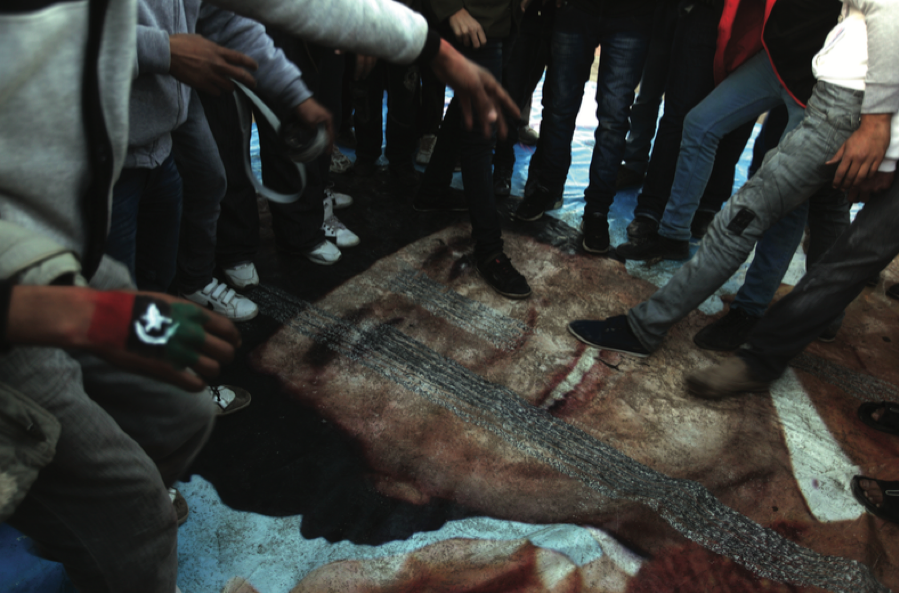
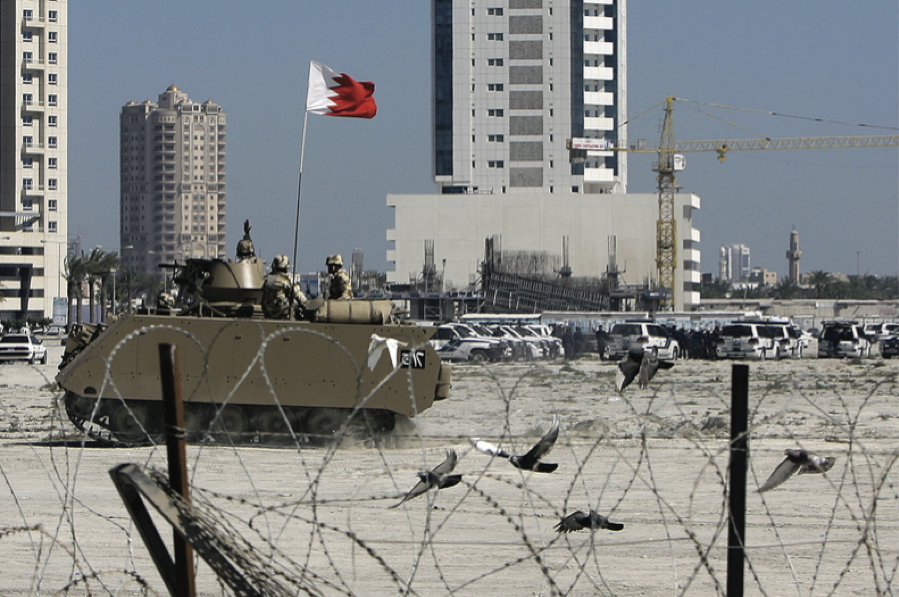
Revolt against flawed reform

by Yasser Akkaoui March 21, 2011
written by Yasser Akkaoui

Since the first revolts erupted in the region, economists in Executive’s research department have been busy number crunching, running regressions and trying to find correlations between raw economic data and current events.

In doing so, an interesting observation stood out: the first serious uprisings were in many ways a response to the recent economic liberalization measures undertaken in many parts of the Middle East and North Africa. Regimes across the region began introducing policy reforms in the last decade — some to try and save themselves from the winds of change that blew in following the Iraq and Afghanistan invasions, others to show that they were in line with global trends.

Although the reforms were welcome, their implementation was a reminder that everything we learned in “Economics in developing countries 101” was correct. The people in power and their nepotistic benefactors were already rich from milking the resources of their countries and monopolizing the main productive sectors; by the time the reforms were implemented, decades of bad policy prevented the people from benefiting from the new open systems. With the absence of human development programs and resources, they were shut out from the economic growth that followed.

But one good thing happened, and it has manifested itself in recent events; with more openness came more information, especially through the Internet. People became more aware of their social and economic situation. They caught the scent of what was preventing them from achieving their potential. Entrepreneurs empowered with ambition began to chip away at the barriers of red tape, bureaucracy and corruption standing in the way of their self-realization.

This year they saw an opportunity, and they seized it.

March 21, 2011 0 comments
0 FacebookTwitterPinterestEmail
Economics & Policy

Singing the praises of an oft-slighted OPEC

by Roudi Baroudi March 5, 2011
written by Roudi Baroudi


In September 2010, the Organization of the Petroleum Exporting Countries (OPEC) marked its 50th anniversary, but most of the world’s leading social, economic and environmental bodies did not join in the celebrations.

The milestone provided what should have been a fitting backdrop for recognition of the very real accomplishments of OPEC’s past and present and the role it is likely to play in the future. The organization’s resources and policies have evolved to the point where it is now an indispensable partner on multiple levels: its determination to maintain security of supply contributes to world economic stability, its dominant position in the energy industry gives it vital influence over measures to protect the environment, and closer coordination with it could help multilateral institutions to better serve human development around the globe.

Despite all that OPEC has done on these and other fronts, the organization’s contributions remain largely unheralded. The mainstream media typically dismisses the group as a crude (in both senses of the word) cartel. This unflattering assessment is broadly shared by everyone from individual consumers of oil products to the heads of states and major corporations.

OPEC’s image problems may stem from its own public relations. For far too long, the organization and its members have been both loath to accept blame for mistakes and, bizarrely, unwilling to trumpet successes. The result was a familiar one to anyone who studies the contemporary Arab world: those who refuse to define themselves are instead defined by various — often hostile — others.

An unfair reputation

OPEC was founded with the overall aim of liberating its member countries’ hydrocarbon assets from foreign domination, thereby making more of the proceeds from their sale available for promoting economic development, providing better education and healthcare for their populations and sharing the wealth with less fortunate peoples.

Admittedly, not all or even most of the organization’s member states have consistently pursued these goals with sufficient rigor. We all know the reputation of the “oil sheikh”, the spoiled prince who squanders millions on a luxurious lifestyle. For decades there was more than a grain of truth to the stereotype.

But it is not within OPEC’s purview to impose standards on the governance of sovereign member states or on the personal behavior of their rulers; its primary task, again, is to help them make more money from their primary natural resource, and in this it has succeeded beyond anyone’s expectations.

Recent years have witnessed a marked improvement in the handling of energy wealth, a fact demonstrated by the proliferation of massive development and infrastructure projects, tremendous improvements in areas such as education and healthcare, and by the gargantuan holdings accumulated by some countries’ sovereign wealth funds — Abu Dhabi’s alone, according to some estimates, is thought to control assets in the range of $1 trillion.

In addition, as the oil trade has matured, OPEC has sought to fulfill a regulatory function when possible and to ensure flows of supply and transparency in the petroleum trading system. Its efforts on these fronts flow through numerous channels, including its central role in the International Energy Forum and its support for the Joint Oil Data Initiative.

It undertakes these endeavors despite the risks attached to the heavy investments necessary to ensure the robustness and readiness of the entire supply chain. The maintenance of price levels that justify the running of such risks is a major reason why the world’s economies always have access to the fuel they need. And as OPEC frequently stresses, the sky-high rates for hydrocarbon products in many countries have little to do with its own practices.

Instead, they often stem from factors entirely outside OPEC’s control, including taxes levied in affluent consumer nations, the expansive profit margins of major oil companies based in several of the same countries, speculators who operate there and — it has to be said — the politico-military policies pursued by some Western governments in and around the world’s principal oil-producing region, the Middle East.

Despite OPEC efforts, global energy markets have suffered periodically from a lack of cooperation between the producing nations and the consuming ones, to the detriment of both, but at the same time it is OPEC who has actually done something to alleviate the repercussions of poor cooperation.

Far from being a one-trick pony concerned solely with its own commercial interests, OPEC increasingly attends to the long-term welfare of the consumer nations by, among other things, working for the development of an effective and coordinated energy framework and enabling exchanges on petroleum issues of common interest.

In the past two years, with much of the world economy suffering the after-effects of the global financial crisis, OPEC also was instrumental in limiting the damage and fueling the recovery: it raised output to keep prices reasonable, availed itself of existing spare capacity and accelerated programs for capacity expansion in order to discourage speculation and was always there to facilitate dialogue and cooperation.

After displacing the major international oil companies as the primary determinant of crude production, OPEC and its member states have become key players on the global economic stage. The organization is now a crucial interlocutor with bodies like the G8, the G20, and the European Commission, and it has begun to participate in efforts to combat poverty and environmental degradation.

Oil aid

Across the developing world, the OPEC Fund for International Development (OFID) uses its resources to provide significant financial and other resources to support social and economic projects and to ensure affordable energy prices for the poor. All told, the agency pledged more than $500 million in grants and soft loans over the past year. The scope of these funds ranges from the battle against HIV/AIDS to improving supplies of clean water to emergency humanitarian relief.

As of October 2010, OFID’s cumulative commitments to provide easy credit for public sector entities in less developed countries had reached almost $9 billion, more than $5.4 billion of which had already been disbursed.

On top of this, recent years have also seen OPEC get serious about protecting the environment. As climate change and other green issues have gained their rightful spot on the global agenda, the organization has begun to do its part.

In 2010 alone, for instance, OFID earmarked support for a variety of environmental causes, including grants for the International Conference on Food Security and Climate Change in Dry Areas in Amman, the 3rd Annual Conference of the Arab Forum for Environment and Development in Beirut, organic agriculture training in East Africa and an effort by Green Globe to train 300 campaigners tasked with raising awareness of environmental issues.

While accepting that the global energy mix will change in the coming decades, OPEC has been instrumental in supporting research aimed at reducing emissions in the here and now, especially carbon capture and sequestration technologies pioneered at the In Salah operation in central Algeria. It also has adopted active roles in multilateral groupings, including the World Bank’s Global Gas Flaring Reduction Partnership, as well as the International Energy Agency’s Greenhouse Gas Research and Development Program.

For the positive socioeconomic influences it exerts on today’s world, and for all of the prescient preparations it has begun to make for tomorrow’s — including measures to mitigate the effects of its members’ lifeblood — the group deserves some credit. Provided it gets better at explaining itself, it might even receive a few long-overdue cheers when its Diamond Anniversary rolls around in 2020.

March 5, 2011 0 comments
0 FacebookTwitterPinterestEmail
Real Estate

Q&A – Ali Rashed Lootah

by Thomas Schellen March 3, 2011
written by Thomas Schellen


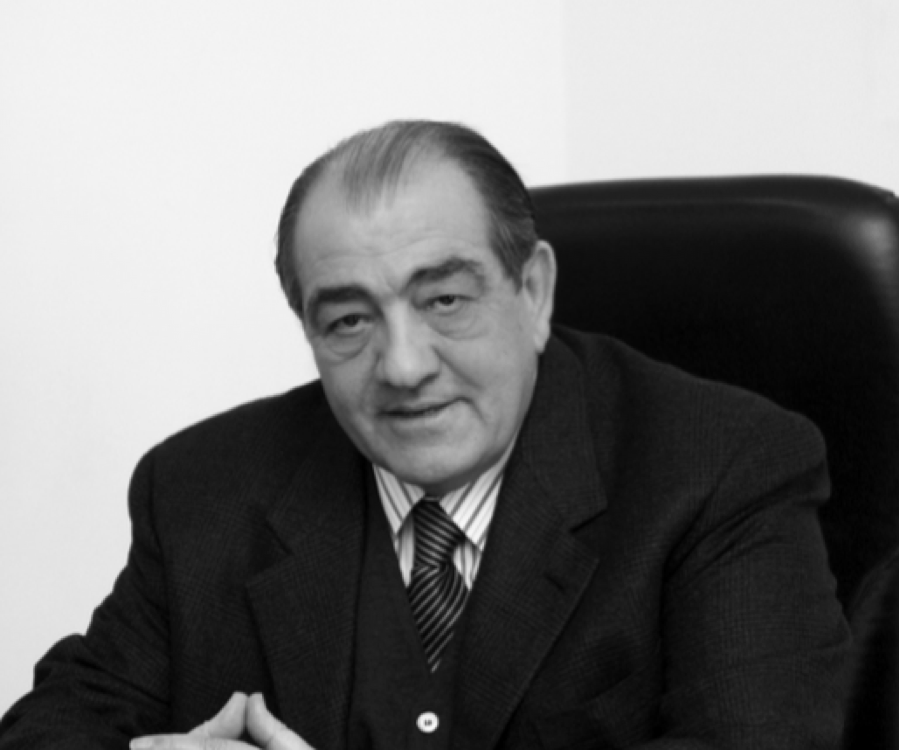
Nakheel, the master developer of Dubai’s trademark Palm Islands and many other ambitious projects, has recently restarted a portion of its developments after a difficult period of two years. Fully owned by the state of Dubai via parent company Dubai World, Nakheel had to restructure and refinance. The restructuring is near completion, with separation of the company from Dubai World planned before the end of this quarter. Nakheel Chairman Ali Rashed Lootah agreed to elaborate on the scope and pace of the company’s turnaround in an exclusive interview with Executive.

In the past few months, Nakheel has announced the resumption of work on several developments. What is the rationale behind this?

As a real estate company, we are committed to deliver what we have promised to [our] investors. After the approval of our restructuring and the approval of our business plan by the authorities, we had to go ahead and implement it. That is the rationale behind it.

In restarting your projects, how much could you restore the confidence of your investors and of the market?

We have different partners. From the side of our contractors, who are partners with us, I am sure there is trust in Nakheel. We are paying them ahead of time and the most important thing, you know, is to pay people.

In all of the projects that we have re-launched, most of the contractors are back. I can tell you that 90 percent of our contractors have not changed. We offered them a lot of incentives, we gave them additional advance payments to bring them back to the sites, but for the 10 percent with their own problems we had to find alternative contractors to complete the projects and enable us to deliver to our investors. We had, to my recollection, only two cases where a contractor could not go back. By now we have about a 9,000-person labor force on site.

Did the large number of contracting relationships and the involvement of numerous developers and sub-developers cause extra pressures or increase your cost in restarting the projects?

Let me say one important thing: without the support of the government we would not have been able to restart. The government gave us financial support, legal support, all the support we need. That enabled us to meet all our requirements. We don’t have any financial issues. The government is committed and we are meeting all our obligations. But some of the sub-developers are having some issues and don’t want to meet their commitments. We are trying to accommodate them as much as possible, giving them different scenarios, different payment plans, but they have to be committed to their contracts. There is give and take, but up to a certain extent.

You said previously that Nakheel is preparing to become a stand-alone entity by the end of this quarter. What is the reason for this revision of your corporate structure?

It is public knowledge that we will be separated from Dubai World. The reason is that Nakheel on its own is a real estate entity and I think, simply speaking, that the best way to manage Nakheel is to have it totally separated, financially and practically.

Will the restructuring affect ownership in any way?

There will be no change in ownership through this restructuring and the shareholders won’t be changed.

The board of directors will be chaired by you?

Yes, and the board will remain as it is.

Nakheel is so big in the real estate sector of Dubai that people tend to blame you for everything, from a leaking faucet to a swimming pool that has not been maintained or a parking lot that is not clean. How do you deal with this?

I take this always in a positive way. If we are talking about our clients, to me the customer is always right. We have to make them happy. People will not complain unless there is some ground for the complaint. They might exaggerate the complaint but there cannot be groundless complaint. Some people have suffered in the previous three years because of the stand still situation and they think things will change overnight. That is not possible. But the feedback we are getting includes a lot of communication from our customers where they thank us and recognize that there are changes.

What has Nakheel done to mitigate risks for investors going forward, such as global risk, local risk or internal controls risk?

The global risk was not about Nakheel; it stemmed from what you can call the global incident. I think the solution we are offering the people is really an excellent solution. Nakheel, or the government, had the choice of declaring [our company’s] bankruptcy. We didn’t choose to go that way.

How do you view opinions that the underlying risk existed before the crisis and should have been managed differently?

In a free economy you cannot control anything.

But when we look back at 2006 — 2007, many research reports on the real estate outlook for Dubai were published and all of them were positive, to the point that they sounded like they were trying more to please than to assess…

I will disagree and agree with you. If the Lehman Brothers case didn’t happen we might still be going at the same rate as before. The Lehman Brothers crisis triggered the global economic crisis and if the United States government dealt with it in a different way we might still have the same abnormal growth. Dubai was cheaper and still is cheaper than any destination, so people were willing to take this so-called risk, if you want to call it that.

Dubai is certainly more competitive today than during the final bubble period before the global crisis…

Yes. It was crazy and it was a good thing that there was a cleaning up. Only the serious people will stay.

People who purchased villas and homes in Nakheel developments before the crisis included both individual buyers and large-scale investors who bought properties for financial gain or even speculation. How do you differentiate in treating the two groups?

To individual investors who bought homes we are giving alternative solutions. We are giving them alternative properties.

How many buyers have accepted the proposal for shifting to a different property than they originally signed their contracts for?

We have actually managed so far to relocate about 50percent. About 50 percent of the people in what we call long-term projects have accepted to be relocated into short-term projects. I think we mitigated over4.5 billion dirhams ($1.22 billion).

Do you see yourself as setting an example for the whole real estate sector in Dubai in your practice of mitigating and relocating people?

I don’t know about that. I cannot speak about [other developers]. But if we can manage to relocate such a big number, people are happy, and keep in mind it was done in less than one year. The restructuring started in early April [of 2010] and that is a short period for 4.5 billion dirhams in transactions.

What is your vision for 2015 – 2020?

I think we can say the worst is over. We have achieved the business plan and are doing much better than what is envisioned in that plan. I am confident to say that.

In the portfolio of your long-term projects, you cancelled some, such as the Trump Tower.

I probably said canceled in the last brief but it is, in the current market situation, not logical to go and develop more real estate.

So the reason was not the cost of any individual project but the market?

The market for sure. We have to be realistic and see the market.

Do you expect that projects like Trump Tower or Tiger Woods Golf Course could be implemented five or 10 years from now?

I doubt it. 

So you were appointed because you have the strength…

…Of saying ‘No’. I am going after people to collect money(laughing). But believe me, I’m not after the individual investor. I am really very sympathetic toward the individual investor and I am sometimes even harsh on my people because I always put myself in the poor investor’s place. But [the individual buyers] have to also accept that they could have faced a worse scenario. The government really did a good job by keeping the commitment of Nakheel. At the end of the day, the reputation of Dubai is at stake.

And the reputation and credibility of Dubai…

…That’s our capital. I feel there is a positive feeling in the city. I think there were a lot of speculators in the city and they have runaway. As I said, Dubai is here to stay. If you exclude the real estate, other sectors in the economy are really growing.

There was talk of some new developments?

We will be developing retail business on the Palm and the Dragon Mart; we are planning to drastically increase the size of the mall, more than doubling it. On the Palm, a mall is needed. We will be tendering all these projects in the second half of the year.

What are the biggest challenges you see in the coming 18months for the real estate market in Dubai?

I think the big challenge is to cope with the existing oversupply and encourage more people to move to Dubai. I think this is happening by having the real estate value reduced by 50 percent. That is really encouraging a lot of people to move. I don’t really know the size of the oversupply — nobody can really have a figure — but the good thing is that there are no new projects.

From what you are saying, now is the time to buy in Dubai.

For sure.  We are also really working hard to bring our service charges down. That will also make Dubai more affordable. We are in negotiations with all our services’ providers.

Do you have a target figure in percentage reduction of service charges?

I am squeezing my people every day. They come with a proposal and I reject it. I keep challenging them because I always put myself in the investors’ shoes. People will be happy if you reduce [service charges] by 10 or 20 percent, but I want people to be even happier

Have you stepped up the Emiratization of Nakheel’s staff?

The percentage [of Emirati employees] is higher because if we have redundancies we release expatriates whom we don’t need. We are identifying the good ones whom we have to keep. Practically speaking, I am dealing with Nakheel in the same way in which I would be dealing with my private business; when it comes to business, you keep only the people you need. 


March 3, 2011 0 comments
0 FacebookTwitterPinterestEmail
Comment

Upheaval and institutional capital

by Fabio Scacciavillani March 3, 2011
written by Fabio Scacciavillani

In an article published in the July 2010 issue of Executive, I wrote that although economic reforms that foster an entrepreneurial spirit are important for improving the livelihood of emerging countries, the critical ingredient for sustainable growth and the strengthening of social cohesion is the institutional capital of a country.

By that I meant the complex tangle of governance tools, primarily in the legal and judicial areas, which form the foundations of a level playing field for all — not only for those who happen to be in a position of privilege and have access to decision makers. It is interesting to note that the countries being swept by public unrest, or where political opposition is gaining strength, had been quite resilient to the global financial crisis thanks to the effects of structural reforms during the past decade. In a number of cases they had enjoyed a rather successful record in terms of macroeconomic indicators, such as gross domestic product, foreign investment, currency stability and central bank reserves.

The macroeconomic picture, however, tends to hide a grimmer reality. For example, the gains in efficiency in privatized companies and banks translate into job losses as the state-owned companies, which are traditionally overstaffed, slim down. If new jobs are not created in other sectors, the overall effect on the general population is dim. In other words, there are asymmetric effects of economic reforms that need to be addressed to create a broad-based improvement in living standards.

For political stability it is crucial that the improvements reach the lowest income brackets and guarantee a real chance for social mobility. People are more willing to accept sacrifices if they bear fruit for themselves or for their families; less so if they are perceived as perpetuating a permanent hopeless condition.

The process of liberalization must not favor a few to the detriment of many. To avoid widespread resentment, small enterprises must be nurtured; above all, social services, health and education must improve. Redistributive measures through public handouts, on the other hand, are the typical response to popular angst: in Egypt, civil servant wages doubled between 2005 and 2009. But such moves tend to favor selected groups already seen as beneficiaries of patronage while at the same time nurturing a culture of dependence.

The political backlash of resentment and cynicism can be delayed where rulers are not subject to a voting public, but the lid cannot be kept on indefinitely. The Tunisian uprising that triggered the “Arab Spring” was brewing for years; it took a relatively minor detonator with powerful emotional impact — a street vendor’s self-immolation — to ignite the popular anger.

Economic and financial liberalization represents a necessary condition to promote opportunities and welfare, but hardly a sufficient one. To ensure that everyone has a concrete possibility to benefit from the progress, an adequate system of economic governance must be established, in particular an efficient and independent legal system. When individual rights, property rights and access to a legal system are denied, economic freedom is meaningless and is perceived as perpetuating an oligarchy.

In Egypt, few homeowners have property titles; very few households have a bank account, let alone a credit card. A social safety net is virtually non-existent; most are subject to the greed of corrupt officials and law enforcement is arbitrary. These factors help make up the frustration that turned into visible manifestations of anger. Now that Mubarak and Ben Ali have abandoned the scene, a new phase can begin. But pragmatism should be observed because the illusion following the upheaval is dangerous. Remember the fate of the orange revolution in Ukraine; years of convulsion ended up with the power returning to the ousted autocrat.

In Egypt, where the military retains its political clout and economic influence, as well as in Tunisia and other countries that are shaking off serfdom, the road toward real enfranchisement will be long and bumpy. Rights and freedoms need to be nurtured continuously. Entrenched privileges enjoyed by the elite will not disappear unless they are put in check at every step.


Fabio Scacciavillani is chief economist at the Oman Investment Fund


March 3, 2011 0 comments
0 FacebookTwitterPinterestEmail
Comment

Israel’s preference for Arab oppression

by Riad Al-Khouri March 3, 2011
written by Riad Al-Khouri


The drastic changes in Egypt, and the unrest throughout the region, have left Israel with a new sense of strategic vulnerability. Though the Egyptian military says that Cairo will respect existing international treaties, alarm in Israel over the fate of the 1978 Camp David accords is evident.

Israel has not been in a rush to forge new peace agreements since its 1994 treaty with Jordan, believing the continuation of the status quo to be tolerable. Now, however, Cairo’s uncertain political direction has Israelis questioning their external security.

These feelings were evident at the prestigious Interdisciplinary Center (IDC) Herzliya Conference in early February. IDC, established in 1994 as Israel’s first private university, has for the past 11years hosted this annual policy gathering, which brings together Israeli and international politicians, policymakers and analysts to discuss regional security challenges. The tone for this year’s event was set by Knesset Foreign Affairs and Defense Committee Chairman Shaul Mofaz, who said that “the Egyptian affair reveals a grave mistake [by the United States in giving military aid to Arab regimes].”

On the future of the Middle East peace process, Mofaz added that Israel had been caught off guard by the wave of protests that shook the region in recent weeks. “Israel and the world were taken by surprise by the earthquake that began in Tunisia, Egypt and the rest,” he said.

As if to prove his point, a look at the preliminary conference schedule released weeks before showed a focus on Iran. After the Tunisian uprising, a regional panel was altered in January to discuss destabilization and reform in the Arab world. Then came Tahrir Square, and perceived threats to the Camp David 1978 peace accord — the cornerstone of Israel’s regional strategy — permeated the conference. In the end, almost every panel discussion touched on the subject of Egypt. Israelis are concerned that Cairo’s re-orientation will bring back the era before Camp David when a quarter of Israel’s gross national product went to the military (as opposed to 9percent today).

 The implications of the largest of Israel’s neighbors returning to a status of belligerency, or even Turkish-style tacit support for resistance against Israel, would have an enormous effect on the Israeli economy. For example, as military costs rise, spending on social services might be cut, with potentially grave consequences. Former Israeli minister Yitzhak Herzog’s opening remarks at the conference angrily criticized a 20 percent poverty level in Israel (mostly among Arabs) that has not been sufficiently addressed.  The overarching theme at Herzliya this year was hostility to Arab democracy, based on the assumption that it will lead to heightened dangers for Israel. “In the Arab world, there is no room for democracy,” Israeli Major General Amos Gilead told the conference, adding: “We prefer stability.”  Israelis brag that their country is the only democracy in the Middle East and, as Matthew Duss wrote in The Nation, “from the reaction at Herzliya to Egypt’s freedom fever, it’s clear that quite a few influential Israelis would prefer to keep it that way.” 

The problem is that “stability vs. democracy” is a false choice; in reality, democracy comes much closer to producing real stability. Supporting dictators may work for a time, but democracies can adapt better to changing times and the aspirations of the people. The US now rightly asserts that the regional status quo is unsustainable. However, Martin Kramer of Israel’s conservative Shalem Center (echoing other speakers) suggested to the conference that, “In Israel, we are for the status quo,” adding that “not only do we believe [it] is sustainable, we think it’s the job of the US to sustain it.”   True, Israeli reliance on the status quo is only possible in the long-term with US assistance, but the terms of that support will change in light of the new regional reality. A reality which may be leveraged to make Israel soften its intransigence in regard to negotiations with the Palestinians.

Instead of denying the sea change, perhaps the next conference can consider how to strengthen Arab democracy so that Cairo and others can become true partners in a just, lasting and comprehensive peace.

RIAD AL-KHOURI is dean of the business school at the Lebanese French University in Erbil, and a senior economist at the William Davidson Institute in the University of Michigan 


March 3, 2011 0 comments
0 FacebookTwitterPinterestEmail
Comment

Spinning a revolution

by Gareth Smith March 3, 2011
written by Gareth Smith


Early last month, the website of Mir-Hossein Musavi, co-leader of Iran’s opposition Green Movement, presented two pictures. One from Egypt showed police beating a protester, under the heading ‘heroic’. The second was a similar scene in Iran, from the 2009 anti-government protests, under the heading ‘agent of imperialism’. Musavi and his ally, Mehdi Karrubi, have compared Egypt’s elections of recent years, won by the Hosni Mubarak’ National Democratic Party, to Iran’s 2009 presidential election, after which the Greens disputed the victory of Mahmoud Ahmadinejad. They have also highlighted the role of new means of communication used by protestors in both countries.

But the implications for Iran of events in Egypt and Tunisia are not straightforward: if the demise of presidents Hosni Mubarak and Zine el-Abidine Ben Ali has unnerved the rulers of Saudi Arabia, Sudan, Syria, the United Arab Emirates, Yemen and even the West Bank, the authorities in Tehran have visibly relished the discomfort of so many Western-inclined Arab regimes.

At the outbreak of protests in Cairo and Alexandria, Ayatollah Ali Khamenei, Iran’s supreme leader, insisted that Egypt was experiencing an Islamic Revolution of its own, marking what he called the “irreparable failure for the American and the Zionist regimes [and]… an earthquake” that would undermine “arrogant governments” across the region. Addressing Friday prayers in Tehran, Ayatollah Khamenei was jubilant in noting that the Egyptians “begin their movements from Friday prayers and mosques, and they shout religious slogans, especially ‘allahu akbar.’”

The irony was not lost on the Green Movement, which adopted rooftop shouts of “allahu akbar” in 2009 when street protests were outlawed and dispersed by security forces.

The animosity of Iran’s current leaders toward the Egyptian regime stems from the friendship between former Egyptian President Anwar el-Sadat and the late Shah of Iran, Mohammad Pahlavi, in the 1970s, when both embraced the United States and Israel. Diplomatic relations between the two ended after Iran’s 1979 Islamic Revolution; after Sadat was assassinated in1981 the Iranian authorities named a central Tehran street after his assassin, Khaled Islambouli.  Since the 1979Islamic Revolution, Iran’s rulers have been more successful than Egypt’s infusing nationalism with egalitarianism, and in mobilizing the population behind goals of defense and development.

But the main prism through which Iranian leaders view the world has been their rivalry with the US and opposition to Zionism. The Green Movement rejects this, arguing that Iranian politics can no longer be shaped solely by resistance to the US and Israel. But ardent loyalists of Ayatollah Khamenei and supporters of President Ahmadinejad are more and more convinced regional developments are moving in their favor, and that a more assertive foreign policy, including the nuclear program and support for Palestinian resistance, is popular both at home and in the wider Muslim and Arab worlds.

This is not entirely a matter of faith. One calculation in Tehran is that more representative Arab governments would be less hostile to Iran. American diplomatic cables leaked last year by the WikiLeaks website suggested that leaders in Saudi Arabia, Bahrain and the UAE were sympathetic to US military attacks on Iran — whereas a poll by the Washington-based Brookings Institution found that only 10 percent of respondents in the general population of Egypt, Saudi Arabia, Morocco, Jordan, Lebanon and the UAE viewed Iran as a threat.

Public officials, along with the Iranian media, have also expressed a positive view of Mohamed El Baradei, the Egyptian opposition figure who, as head of the United Nation’s International Atomic Energy Agency, resisted much US pressure to condemn Iran’s nuclear program. They have also been supportive of the Muslim Brotherhood, which has had a close relationship with Iranian Islamists since as far back as the 1970s.  One Brotherhood official, Kamal al-Halbavi, warmly welcomed Ayatollah Khamenei’s Friday prayer sermon and also told the BBC Persian service he wanted Egypt to have “a good government, like the Iranian government, and a good president like Mr Ahmadinejad, who is very brave.”

Gareth Smyth is the former Tehran correspondent for the Financial Times


March 3, 2011 0 comments
0 FacebookTwitterPinterestEmail
Comment

Trial of the secular sentinels

by Peter Grimsditch March 3, 2011
written by Peter Grimsditch


“Oh, what a tangled web we weave, when first we practise to deceive.”

These famous lines, first penned by Sir Walter Scott for his soap opera poem “Marmion” in 1808, have been given new meaning by the twists and turns of Turkey’s Ergenek on trial, which grows messier by the day.

In Scott’s otherwise-largely-forgettable tale, Lord Marmion fancies a rich woman, Clara de Clare, and, with the help of his mistress, a lascivious nun, he forges documents implicating Clare’s fiancé in treason, successfully sending him into exile. In the end, Marmion’s mistress confesses to the forgery, the Lord is killed on the battlefield and Clare is reunited with her knight.

The convoluted deception and double-dealing has been mirrored in the Turkish courts — although to this point without the treacherous nuns — since a plot was discovered in 2003 to allegedly overthrow the government of the Justice and Development Party (AKP).

More than 400 people, mostly military officers and journalists, are accused in the scheme designed to sew mayhem throughout Turkey by blowing up mosques and shooting down a Turkish military aircraft — an attack that would have been blamed on Greece. Increasingly, the mass of evidence introduced in the trial is being called into question, making a tidy conclusion a la Scott’s “Marmion” seem less and less likely.

Dani Rodrik, son-in-law of retired General Cetin Dogan, supposedly the mastermind of the plot, claims that some of the information on the prosecution’s “11th CD” — one of many disks containing trial evidence — has to have been planted by authorities after Dogan’s arrest. Despite the fact that the plot was discovered in 2003, according to Rodrik there is mention of a pharmaceutical warehouse that did not operate under that name until 2008, along with references to people who were not employed in 2003 by the institutions with which they are associated on the disk.

Dogan, former commander of Turkey’s 1st Army, maintains the evidence has been distorted to depict a routine military contingency plan as a genuine plot to overthrow the government. With three coups since 1960, the claim of another military intervention in Turkey is less outrageous than it might initially sound and even Rodrik admits some questionable comments were made during a recorded meeting about the military drill. That would leave the only explanation for doctoring the “11th CD,” if true, as a clumsy attempt to guarantee Dogan’s conviction.

It is not the only example of alleged evidence tampering in the case. Police confiscated a mobile phone belonging to another of the accused, Lieutenant Mehmet Ali Celebi and added 139 new numbers to its contacts. Celebi is accused of joining Hizb ut-Tahrir, a group of mostly Salafists intent on establishing a global Islamic caliphate. Many of the newly inserted numbers belonged to members of the group, two of which were labelled in the phone’s address book as “my wife” and “my mother-in-law” to disguise their true identities. Such a ruse, whether by Celebi or the police, wasperhaps not too well thought out given that Celebi is not married. He maintain she infiltrated the group “to defend the republic and hand its members over to the justice system.”

The lieutenant surrendered to police on September 18, 2008after discovering he was being investigated in relation to the Ergenekon case. The following day, his phone was sent on to the Istanbul Police Department. According to a court-ordered telecommunications report, the mobile was switched on that night for one minute and 23 seconds, with signals coming from the same location as the police department. In response, police said the phone had been switched on for technical staff to register its data in official records. It was possible, a statement added, that the 139 numbers, identical to those on a phone belonging to a known member of Hizb ut-Tahrir, had been added “by mistake.”

The case against journalists accused of involvement in the plot has also been rife with abnormalities. Prosecutors claim that a bomb attack on the offices of Cumhuriyet newspaper in 2007 was planned by its own Editor-in-chief Ilhan Selcuk, so other murky forces could be blamed. Selcuk, however, is safe from the tangled Ergenekon web. He died of natural causes last June at 85.

Peter Grimsditch is EXECUTIVE’s Istanbul correspondent


March 3, 2011 0 comments
0 FacebookTwitterPinterestEmail
Comment

Big Oil’s polluted profits

by Peter Speetjens March 3, 2011
written by Peter Speetjens


The mainstream media reported it rather matter-of-factly, no questions asked: Due to the soaring oil price, the world’s leading energy firms in 2010 recorded sky-rocketing profits. Exxon-Mobil, Chevron and Shell, for example, reported annual profits of $30.5 billion, $19 billion and $18.6billion respectively.

BP would normally also rank among the big rollers, but ended the year with a $4.9 billion loss, as a result of the Gulf of Mexico oil spill. The worst manmade environmental disaster in history could cost the firm a whopping $40 billion. Strangely, even though the event occurred less than a year ago, it seems largely forgotten today.

As BP magically made the oil disappear by sinking it to the ocean floor with the help of thousands of tons of chemical “dispersants,” so the accident vanished from the public eye. See no evil, hear no evil. It just illustrates how the environment remains a non-issue for big corporations and for the media reporting their results.

While the oil firms spend a small fortune on glossy commercials portraying themselves as pioneers in making the world a “greener” place, quite the opposite is true. In fact, only a fraction of their revenue goes toward developing alternative energy sources, while the Center for American Progress Action Fund (CAPAF) last year showed how Big Oil and other special interest groups spent some $500 million dollars lobbying to defeat new United States legislation to promote the use of clean energy.

Meanwhile, nearly all major oil firms have so far invested some$50 billion in exploiting Canada’s tar sands, a mixture of sand, clay and petroleum. Known as the “New Kuwait,” the 3,000 square kilo meter area only a decade ago consisted entirely of a mountainous landscape of lakes and forests, yet today it lies barren, scarred by deep mines and toxic waste ponds.

“This is the dirtiest source of oil anywhere in the world and there are barely any regulations,” researcher Simon Dyer told The Guardian newspaper. Not taking into account the felling of forests and the polluting of water streams, Dyer estimates that the energy needed to extract one barrel of oil from the sands releases three times more greenhouse gasses than producing a barrel of conventional oil. The low-grade oil also needs heavy refining. Never the less, the industry is looking at expansion. Today, some 1.3 million barrels a day are mined, which is set to increase to 5 million barrels a day by2030.

Canada’s tar sands are hardly the only example of Big Oil destroying the environment and trying to get away with it. On February 14, after an 18-year legal marathon, an Ecuadorean court ordered Chevron to pay $9billion in damages for the behavior of its daughter company Texaco, which allegedly dumped 180 billion gallons of untreated wastewater into the jungle during three decades of drilling. Chevron has called the verdict “extortion,” sought and was granted an injunction in US courts and has filed a racketeering law suit against the plaintiffs’ Ecuadorean lawyers.

Another example of malfeasance is Shell’s ongoing presence in Nigeria, which accounts for an estimated 25 percent of the company’s annual revenue. Following decades of drilling, the Niger delta is an environmental disaster zone, while the native Ogoni people living there are penniless. In1994, the Head of Environmental Studies for Shell Nigeria, Bopp van Dessel, resigned because he felt his “professional and personal integrity was at stake.” Two years later he stated on British TV: “It is clear to me that Shell was devastating the area.”

Just how Shell gets away with such behaviour was illustrated in a US embassy cable issued by WikiLeaks, in which Shell’s former Vice-President for sub-Saharan Africa Ann Pickard, boasted “that Shell has seconded people to all relevant ministries [in Nigeria] and consequently had access to everything that was being done in those ministries.”

This list is hardly complete and does not aim to be. The point is that we no longer live at the start of the industrial revolution, when the sky seemed the limit. Today we know that the coin called “progress” has a flipside; it is about time that the media stop mindlessly parroting the end-of-year results and start asking how, where and at what human and environmental cost these profits were made.

PETER SPEETJENS is a Beirut-based journalist


March 3, 2011 0 comments
0 FacebookTwitterPinterestEmail
Comment

Saudi Arabia’s oily ambiguity

by Paul Cochrane March 3, 2011
written by Paul Cochrane


While the cache of diplomatic cables recently released by WikiLeaks may have caused a number of international stirs, the majority have been largely ignored, causing little political, diplomatic or economic fallout. The revelations in early February that Saudi Arabia overstated crude oil reserves by up to 40 percent falls in the latter category, generating little more than newswire buzz. But should that have been the case?

With Saudi Arabia a top oil producer, the cable could have sparked a reaction on the world markets, driving the price of oil even higher and causing havoc with future oil supply projections. The kingdom itself would have had its position as the de-facto head of the Organization of the Petroleum Exporting Countries (OPEC) challenged, and its sovereign risk ratings would have been battered, given the country’s overwhelming dependency on hydro carbons to balance the books.

But there was no reaction on the markets, nor was there a flurry of stories in the press querying Saudi Arabia’s oil reserves and reigniting the debate about “peak oil.” The only reaction from the Saudi side was by the man who told United States diplomats in 2007 that the reserves were overstated. Sadad al-Husseini, a former vice president and head of exploration at Aramco, Saudi Arabia’s oil monopoly, said he had been “misrepresented” by the diplomats and the press and “did not question in any manner the reported reserves of Saudi Aramco.”

Major economic publications also dismissed the revelations: Petroleum Intelligence Weekly, considered “the bible” of the energy industry, called the cables a “false alarm” while a Wall Street Journal (WSJ) blog downplayed concerns because of Husseini’s apparent volte-face.

So is the cable just an example of US diplomats playing a game of what the WSJ referred to as “Chinese whispers?” Or was Husseini pressured into denying his original statements, meaning Aramco really has fiddled with the figures? It is, of course, hard to know, and that is the crux of the problem. Even if the contents of the cables are false, Aramco has not been transparent with its figures since the company was nationalized. According to a former Aramco employee, only the company’s nine-member executive committee is privy to the actual figures, despite the need of departments to have access to such information to carry out research, implement long-term plans and so on.

Like Aramco employees, the world is expected to believe what the company tells us, as they have always delivered enough oil to the market; but should we, in the same way the world took at face value the kingdom’s stated gold reserve until the Saudi Arabian Monetary Agency revealed last year it had 180 tons more than it originally accounted for? After all, Aramco is still peddling the lie that it is the world’s largest producer of oil. Exporter yes, producer no. In fact, Russia became the world’s biggest producer in 2009, according to the BP Statistical Review of World Energy 2010, with an average output of 10 million barrels per day (bpd), or 12.9 percent of total production worldwide, whereas Saudi produces 9.7 million bpd.

A primary reason the cable didn’t result in a media frenzy was that the revelations were nothing particularly new. Many oil experts have queried Aramco’s figures before, noting in particular that 90 percent of all the oil that Saudi Arabia has ever produced has come from seven giant fields that are now maturing, three of which are more than 50 years old.

In the case of these US embassy cables, the debate centers around Husseini questioning Aramco figures that put Saudi Arabia’s reserves at716 billion barrels, of which 51 percent are recoverable. It is the recovery figures that are the questionable part, as the global recovery average is some 30percent, which suggests Aramco is being overly optimistic about what it will be able to extract. The real estimates need to be revealed. If Aramco’s numbers do come up short, the ramifications on the world economy of a Saudi oil shock would be devastating. Perhaps the best solution would be for the world to start moving more quickly toward alternative fuels rather than relying on debatable recovery estimates.

PAUL COCHRANE is the Middle East correspondent for International News Services


March 3, 2011 0 comments
0 FacebookTwitterPinterestEmail
Comment

Changing of the guard

by Jonathan Wright March 3, 2011
written by Jonathan Wright

After the euphoria of Egypt’s revolution comes the more tedious work, and the devil is in the details. Egyptian society hovers between the yearning for stability through cobbling together the surviving fragments ofthe state and the urge to eliminate the remnants of a dilapidated autocracy riddled with corruption, brutality and incompetence.

The military council that took over from President Hosni Mubarak on February 11 stands firmly in the middle and is disputing both sides of the argument. It is appealing for people to set aside their professional and personal grievances and go back to work, while promising that it will uphold the demands of the revolution and root out corruption.

The council’s latest proposed cabinet shuffle reflects its ambiguous stance: Prime Minister Ahmed Shafik, a former air force officer and one of Mubarak’s younger protégés, will stay, as will Foreign Minister Ahmed Aboul Gheit, one of Mubarak’s most loyal defenders and a diehard opponent of the revolution until defeat was inevitable. Others have not been so lucky: threeformer ministers are in detention for questioning, along with Ahmed Ezz, the steel magnate and ruling party official who oversaw the rigged parliamentary elections of 2010.

Even Hosni Mubarak is in limbo, surrounded by old retainers in comfortable retirement in the Red Sea resort of Sharm El Sheikh — an ominous reminder to some revolutionaries that their work is unfinished. Egypt’s most venerable wise man, journalist Mohamed Hassanein Heikal, says his presence in Sharm El Sheikh is a threat to the revolution.

The committee assigned to redraft the constitution, in whose hands lies the future of the Arab world’s most populous nation, also straddles the divide: Will it merely rescind the most authoritarian constitutional amendments or propose a radical overhaul to give Egypt a system of government fit to last into the 21st century? The military council says it is in a hurryto cede power to elected civilians but the most Egyptians can expect for now is a constitutional provision requiring the next elected government to make the long-term changes.

In the meantime, ambitious Egyptians are launching into the brave new world of political pluralism, forming parties and organizing in a way that was unimaginable during Mubarak’s police state and the reign of his National Democratic Party. After 15 years of fruitlessly seeking recognition under Mubarak, the Wasat Party won it through the courts eight days after Mubarak’s fall. With its recognition of Egypt’s Islamic heritage and its commitment to equality for all citizens in a civil society, Wasat has an ideology that could strike a chord with Egyptian voters in free and fair elections.

In the south of the country, reinvigorated members of the old Gama’a Al Islamiya, which waged war on the state in the 1990s, are meeting openly to plan for a future as a peaceful political party. The Muslim Brotherhood, the largest and best-organized political force in the country, has taken steps in the same direction. The young secular liberals who launched the revolution on January 25 are also jockeying for position in a new environmentof competing political ideologies, despite their distrust of hierarchy and their inexperience in conventional campaigning.

Above the fray looms the military council, inscrutable as the Sphinx, combining the sternness and the benevolence of a patriarch. While foreigners fret over the army’s allegedly vast vested interests in the status quo, especially its network of privilege and patronage, Egyptians tend to give the military the benefit of the doubt, trusting their promises to withdraw from the scene in six months when their task is complete. In the interim, the military may be an effective deterrent to any excess, especially on the law-and-order front.

With the world watching, speculation is rife as to what the revolution will bring about. Will Egypt’s next leaders, like Hosni Mubarak, cooperate with Israel and the United States against Hamas, Iran and their other regional enemies? Will they reconsider the neoliberal economic policies that brought Egypt high growth but a widening gap between rich and poor? Most important of all, what role will Egypt play in what could well be a constellation of newly democratic Arab governments seeking, in their relations with the United States and Europe, a third way between submission and confrontation?

Jonathan Wright is managing editor of Arab Media and Society


March 3, 2011 0 comments
0 FacebookTwitterPinterestEmail
  • 1
  • …
  • 388
  • 389
  • 390
  • 391
  • 392
  • …
  • 686

Latest Cover

About us

Since its first edition emerged on the newsstands in 1999, Executive Magazine has been dedicated to providing its readers with the most up-to-date local and regional business news. Executive is a monthly business magazine that offers readers in-depth analyses on the Lebanese world of commerce, covering all the major sectors – from banking, finance, and insurance to technology, tourism, hospitality, media, and retail.

  • Donate
  • Our Purpose
  • Contact Us

Sign up for our newsletter

[contact-form-7 id=”27812″ title=”FooterSubscription”]

  • Facebook
  • Twitter
  • Instagram
  • Linkedin
  • Youtube
Executive Magazine
  • ISSUES
    • Current Issue
    • Past issues
  • BUSINESS
  • ECONOMICS & POLICY
  • OPINION
  • SPECIAL REPORTS
  • EXECUTIVE TALKS
  • MOVEMENTS
    • Change the image
    • Cannes lions
    • Transparency & accountability
    • ECONOMIC ROADMAP
    • Say No to Corruption
    • The Lebanon media development initiative
    • LPSN Policy Asks
    • Advocating the preservation of deposits
  • JOIN US
    • Join our movement
    • Attend our events
    • Receive updates
    • Connect with us
  • DONATE