• Donate
  • Our Purpose
  • Contact Us
Executive Magazine
  • ISSUES
    • Current Issue
    • Past issues
  • BUSINESS
  • ECONOMICS & POLICY
  • OPINION
  • SPECIAL REPORTS
  • EXECUTIVE TALKS
  • MOVEMENTS
    • Change the image
    • Cannes lions
    • Transparency & accountability
    • ECONOMIC ROADMAP
    • Say No to Corruption
    • The Lebanon media development initiative
    • LPSN Policy Asks
    • Advocating the preservation of deposits
  • JOIN US
    • Join our movement
    • Attend our events
    • Receive updates
    • Connect with us
  • DONATE
EntrepreneurshipQ&ASpecial Report

Finding scarcity

by Nabil Makari December 31, 2020
written by Nabil Makari

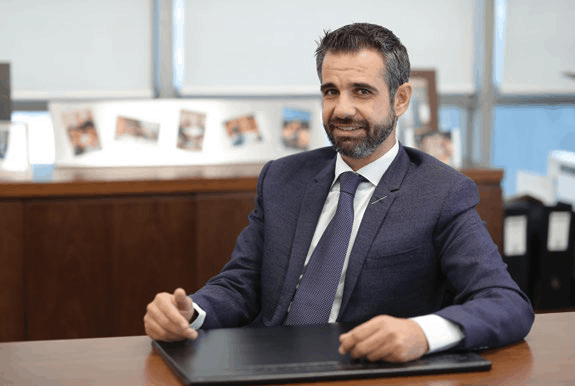
Executive visited with Naji Boutros, a Lebanese economic mind whose expertise and passion spans from investment banking and identification of opportunities in venture capital (VC) and private equity, to nurturing entrepreneurship in Lebanese agro-industry, viticulture, and hospitality. 

You have been involved in a wide spectrum of local entrepreneurship in non tech-dependent ventures, which as you tell me range from cultivation of high-end cuisine and restaurants, to the facilitation of micro-entrepreneurs who use local recipes and ingredients in baking very tasty Lebanese cookies. A few months ago, you tackled entrepreneurship in tech as the chair of Nucleus Ventures, the early-stage seed program and entrepreneurship support enterprise that evolved out of the UK Lebanon Tech Hub. In light of seeking an economically sustainable future, how do you describe the situation after Nucleus Ventures has been in operation for a few months?

One thing that these guys [at Nucleus Ventures] are focusing on now is education, making technological education accessible to all, because the best way to get somebody out of poverty is to teach them in the most efficient way the skills [they need]. We are involved with Steve Wozniak (co-founder of Apple), in education in Lebanon and that is what Nucleus will roll out now, [an education program]. Another subject that they are working on and that we see a lot more of is e-commerce, assisting Lebanese companies sell overseas. In today’s environment, this makes so much sense.

How much do you trust the infrastructure for doing such things out of Lebanon, especially when looking at uncertainty of electricity supply or internet stability, etcetera?

I don’t think that it is anymore a big problem [with regard to electricity and the internet]. The Lebanese have adapted and are making do with the infrastructure that they have, [such as] payment gateways, internet speed, etcetera, They know when to turn the generator off, what window has a better reception, [and] who to talk to regarding global payment gateways. The percentage of [entrepreneurial] energy that they have used to adapt to this environment could have been better used elsewhere, but they have adapted to [infrastructure shortcomings by] mainly relying on networks and family connections and community support. 

Without talking politics, how do you evaluate 2020 economically from the experience of a Lebanese investor and an individual passionate about this country?

It is the year of perfect storms. I am involved in many sectors in Lebanon, in logistics, in food production, in technology, in wine-making and hospitality. Lebanon got hit with so much and I don’t need to enumerate it, because you lived through the [blast], through the revolution, [and through] the banking crisis which cost tremendous liquidity. I believe that the winners [will be] those who have a marathon attitude, those who are able to go through this period of uncertainty and adapt to it. Almost every company that I am involved with has opened bank accounts outside, lines outside. [Many a company] has [been successful in] obtaining financing of accounts receivables from non-Lebanese entities, so this is in a way really good for them because their business model has become much more resilient. So when you look at the Lebanese sector overall, [companies] have gone outside of Lebanon, so their business models have become more resilient. That is very good because it will help them weather the next storm. 

Can Lebanon still become a hub for startup listings and be a conduit for financing of knowledge economy ventures? 

I think that the financial industry has been dealt a very hard blow and will not recover from it for a very long time. As you know, the foundation of business, especially when it comes to custodianship of money, is trust. Trust has been shattered. So if I were running a Lebanese bank and would have benefited from years and years of profitability and high interest rates, I would have brought the money – or at least a big chunk of the money – back to Lebanon and reinjected it in the Lebanese banks. This is a long-winded way of saying that the main support base of Lebanese financial institutions and trust has been shattered. I do not believe that anything reliant on them will succeed any more. It will be a long time before you see that. On the other hand, reestablishing a parallel platform with new players, preferably with some kind of European sponsorship, could go a long way to reestablish this capital markets platform. 

When it comes to the startup scene, you have two parts. You have the human element, [such as entrepreneurialism], creativity etcetera. This [human element] until now has been reliant on Lebanese institutions – academic institutions – and I think the Lebanese will continue succeeding in this. Because of their DNA. But one thing was taken away from them, and this is the finance at the seed level and VC level. This will need to be reinvented. What we need to think of very seriously is some kind of a tokenization of the remittances and funds inflows from Lebanese expatriates [and] take it “over the counter” to a level where every Lebanese expat [can be involved]. Lebanon has always survived because of the [expats], through their remittances.We need to rethink or re-engineer their remittances to make them reconnect with the products in Lebanon, whether these products are something they eat, something they consume intellectually, or startup financing. 

Would you mean doing something like a diaspora cryptocurrency? Or perhaps a digital currency that is not organized and managed by the central bank? 

I don’t know if I would use the term cryptocurrency. The term needs to be a bit romantic, because [what] appeals first and foremost to the Lebanese about their home country is romance. It is nostalgia. But I absolutely feel that [there should be such an electronic tokenization system] – and definitely not run by the central bank. I fault the central bank – and I don’t want to get into the politics – in a major way. Two major problems of Lebanon today are that we are occupied – let’s face it – and [that] our allegiances are not for the benefit of Lebanon. 

Tokenization might not be the most sexy term for such a project but is what you are talking about basically a digital layer of financial communication? 

I think we need to have a trusted global marketplace, one that brings everybody together, all the Lebanese expats with the Lebanese users that share the need [for a tokenized marketplace]. 

Would that be run by the World Bank or a multilateral agency of that global sort or an entity like an NGO, or a Lebanese bank? 

Perhaps it will be several NGOs but certainly not Lebanese financial institutions or the central bank. 

With the future of Lebanese entrepreneurship in mind, what is your view on the utilization of national assets through a public asset management company, as envisioned in the government’s proposal, a fund such as the Government Debt Defeasance Fund concept of ABL (Association of Banks in Lebanon), or comparable designs proposed by several economists? 

I am tempted to say the best asset of Lebanon is the diversity of the Lebanese and their intelligence. I think that is certainly something that Lebanon can bank on, because at a time of shifting global allegiances Lebanon can be friends with everybody. That is certainly something [of great value] but that is unfortunately also a movable asset, because you can take the Lebanese out of Lebanon – and then Lebanon will be left without them. So when we think of Lebanon we must not think of a place but we must think of a nation. It is almost a state of mind. But the one immovable asset that Lebanon has – and that I firmly believe and have invested a lot of money in – is the Lebanese nature. It is [the diverse natural environment] with 24 climatic zones. 

This means we can be almost self-sufficient when it comes to the most important staple foods and exotic foods. You can have the bananas on the coast, the apples on the mountains. This is also very important because this is the foundation of eco-tourism. We need to pay attention to this. But when you think of the Lebanese food industry, whether it is the wine that we are making at Chateau Bellevue or the chickpeas and hummus that we are making… or the jams – everything can come from Lebanon. The benefit of [producing locally] is to take [food] out of the commodity scene. So when we talk about digitization, we need to get what is called in this industry traceability of the product, identifying a product that comes from Bikfaya as a unique peach or a karaze from Hammana as a unique cherry. That is what people pay a premium for. Lebanese expats will pay a premium for a Lebanese product.  

Would something like the Mckinsey plan – Lebanon Economic Vision (LEV) – have been adequate to address these opportunities if implementation of this plan had ever been achieved?

I remember, [from discussions related to the LEV], thinking: “What is this?” People talked about the benefits of medical Cannabis – [although] I am all for this. Then [they were talking] about gas and oil – I am not really for that because I think the perception of the wealth created by gas and oil is bad for the work ethics of our people. For me gas and oil will have almost no economic benefit going forward; the only real economic benefit of it being our own usage of gas and oil so that we reduce our import bill. For me the groovy thing is around the next corner, meaning the plot of land where you can plant olives or grapes or bananas or chickpeas or whatever for your local production. 

It sounds like your approach to the use of productive land would imply a lot of entrepreneurship. Am I correct to assume that, if done right, such an entrepreneurial use would not be only farming? 

It is value-added farming.  

This reminds me of an interview where you spoke about the principle of scarcity, at that time referring to real estate on the island of Sardinia. The concept of scarcity referring to anything of high value and limited in number, be it real estate or nature. Do you think the concept of scarcity has been internalized and capitalized on in Lebanon?

Not yet. Exactly, Lebanon has not internalized this yet. The most expensive hams come from Parma, or [Spain, as] jamon de Serrano. People still talk about Iranian caviar although the quotas are so limited now. Or Balik salmon, which is made at a specific [location] in Switzerland and based on an old Russian recipe that [was used in the smokehouses of] Czar Nikolas [II]. Lebanon can do the same. We need a big marketing vision for the country, and I think this [vision] has to be based on the scarcity [principle]. There needs to be a major study about scarcity. [We have to study] what is unique about Lebanon and market the heck out of it. But polish it. None of the guys that have run [consulting studies on] Lebanon have thought about this. All they have been wanting to do is import a model made outside of Lebanon, into Lebanon. That is wrong. It is not adapted to our country. [We need to be] digging deep and polish the diamond that is called Lebanon. That is what the Italians did with Sardinia. 

So sitting here in Bhamdoun on a very sunny afternoon in late 2020, are you depressed about the Lebanese short-term outlook? 

No. I am depressed that there is a [harsh] short-term outlook because people have lost so much – especially when I see old men at the banks. It breaks my heart to see this. But I am extremely hopeful for Lebanon because the puss has been brought out of the wound – the shit has hit the fan as they say in colloquial English. The Lebanese now understand that it is not all groovy and dandy as they have been told before, and that this [collapse] is here – and kudos to economist Toufic Gaspard who I, 20 years ago, heard talking about this collapsing Ponzi scheme. We must go back to the original Lebanese hard-work ethics, respect for each other, care, and faith. Because if you don’t believe that you are going to get out of it, that is very depressing. 

Talking in the short term, and especially with regard to entrepreneurial finance, it seems that a few companies in the knowledge economy have been able to mobilize international investments, but compared to what Lebanon would need, this does not seem to be enough for mobilizing new economic growth. What are the chances that any entrepreneurship project or startup would gain investor support and access to finance in the intermediate term, let’s say between now and mid-2021?

The foundation [of investments in the knowledge economy] has to be the judicial system. At this current moment, nobody trusts the judicial system. I do not expect money coming to Lebanon to finance projects, whether from donor agencies and governments or individual Lebanese [in the diaspora]. That is not going to happen until you get rid of the mafia ruling over Lebanon. Nevertheless, there is a lot of money trapped in banks in Lebanon, and that money is looking for a home outside of banks. To the extent that you can get a project financed with lollars, or local lebanese dollars, or Lebanese pounds, I think you can find a lot of money. 

If I name a few sectors of entrepreneurial activity, would you give me very brief yay or nay evaluations if investing in these sectors would be interesting? 

Okay. 

Let’s start with Fintech. Would this sector have potential E  in Lebanon? 

Yes. By the way, on Fintech, one of our iSME (the entrepreneurship fund associated with the Lebanese Kafalat loan guarantee corporation) entities was just sold to a Hong-Kong based player. Fintech is definitely interesting. 

Even Fintech made in Lebanon? 

Yes, because the Lebanese are working globally in financial institutions. It is not the archaic Lebanese system that taught them this way. 

How about networking or social media startups, like TikTok? Would you invest?

No. 

Home office operations, remote work organization etcetera. Do you think Lebanon has an edge in developing any solutions? 

Yes. I do, [when considering] hardware plus software. We are doing well in this and [cloud computing infrastructure company]. Multilane is one example. 

Gaming industry?

Absolutely. 

Online media and content of high journalistic quality? 

I am tempted to say yes but you would know more about this than I do. But along perhaps the same line I definitely think that online education and adaptability of foreign curriculums to the Arab world is huge and keeps growing [as opportunity].

Any specialty in e-commerce? Online shopping malls, direct from producer to consumer, intermediary platforms and marketplaces? 

I think we definitely can be leaders in e-commerce. For example if you think of luxury fashion, that is something that we are good at. Taking that regionally and perhaps even globally, you need a mart, some kind of a mall. Lebanese food, taking Lebanese cuisine globally. It could have the same impact as pizza had in America after World War II, when GIs came back after tasting Italian pizza. Lebanese food will become a big hit in the US, and in Europe too, I believe. 

Corona awareness apps? 

No, we don’t take it that seriously. 

Any other sector where you would feel that Lebanese startups will have a natural edge or would be attracting you immediately? 

I think we covered most of it. 

“The foundation of business, especially when it comes to custodianship of money, is trust. Trust has been shattered.” 
“[We have to study] what is unique abut Lebanon and market the heck out of it…. [We need to be] digging deep and polish the diamond that is called Lebanon.”

December 31, 2020 0 comments
0 FacebookTwitterPinterestEmail
BusinessOverview

Banking sector 2020 overview

by Nabil Makari December 31, 2020
written by Nabil Makari

Where does one even begin? From the inability to withdraw deposits, to the depreciation of the Lebanese currency, and the default on the  Lebanese Sovereign Debt (held in big part by the banking sector), Lebanese banks’ balance sheets have suffered a blow, in addition to self-imposed capital controls on withdrawals.

 The future of the Lebanese banking sector is puzzling: mandated or voluntary mergers of commercial banks, bankruptcies, restructuring, haircuts on deposits… All of these proposals have been put on the table in 2020, though discussions with the International Monetary Fund have been halted on the side of the Lebanese Government. What appears as a financial crisis has a strict political component: it is difficult to separate economics from politics in Lebanon.

Capital controls and bank runs

As soon as the October revolution began, panic hit Lebanon. The Lebanese rushed to banks to retrieve their deposits. The October revolution shook whatever remaining confidence people had in the Lebanese economy. The turning point can be said to be August 2019. A Fitch report downgraded the rating of the Lebanese sovereign debt to CCC, a term signaling that the country is currently vulnerable and dependent on favorable business, financial, and economic conditions to meet its financial commitments. During this time, the US State Department’s Office of Foreign Assets Control (OFAC) also listed Jammal Trust Bank, a Lebanese bank, on the US Sanctions list – signaling that the bank was sanctioned by the State Department for allegedly providing support to Hezbollah. These events helped erode confidence in the Lebanese banking sector. In fact, since early 2019, Lebanese commercial banks had recorded a higher than usual series of outflows, highlighting a lack of depositor confidence.

 Due to Lebanese banks’ lack of available liquidity, supplying the Lebanese with their money held as deposits proved impossible. Deposits are held as loans, investments and deposits at the Central Bank of Lebanon (BDL). Immediately then, banks had to impose controls on withdrawals, and depositors could only retrieve a portion of their savings.

The situation is close to bank runs occurring in different countries over the years (such as Iceland and Cyprus), and reminiscent of the bank run that had hit Intra Bank (the largest Lebanese Bank in the early 1960s) in 1966. This has cast doubts as to the amount of liquidity available in the banking sector as a whole.  Depositors since then have been wondering whether they will ever see their money again. 

Under the Basel III requirements set up by the Basel Committee On Banking Supervision, banks must maintain a certain liquidity ratio, calculated as sufficient high-liquid ratios over total net liquidity outflows occurring during 30 days. According to Nassib Ghobril, Chief Economist at the Bank Byblos Group, liquidity ratios vary according to banks, with some having a higher level of liquidity than others prior to the crisis, and it is therefore misleading to not look at individual instances in the sector. With 80% of deposits being in foreign currencies, mostly dollars, the dollarization rate of the Lebanese economy is extremely high. “It’s a psychological result of the experience of the 1980s,” says Ghobril, referring to the rapid depreciation of the Lebanese Pound in the 1980s and the beginning of the daily use of US dollars for transactions (as the Lebanese Pound was depreciated in the 1980s, the Lebanese started to transact in dollars, deemed a safer currency).

 In most bank runs, the sense of panic is such that there is not enough liquidity to cover a higher than average withdrawal demand. A typical solution in this situation is for governmental authorities to impose temporary limits on withdrawals: capital controls. Such a measure has until now, not been taken by the government and had added to pressure on banks, to handle the crisis on their own. 

“Definitely there is a need for official capital controls, since September 2019,” says Ghobril. “We are not the first country to have a bank run, and not the last”. In 1966, within a week of the liquidity crisis of Intra Bank, capital controls had been imposed, only to be lifted about one month later which helped banks resume normal operations and restore confidence. For Ghobril, the lack of trust in the financial sector can be blamed in part on inaction on the part of the government. Had a capital control law been enacted at the start of the crisis, he argues, accusations regarding the flight of capital since October 2019 would not have occurred.

 The need for a capital controls law has been a key demand of economists and various politicians. Lack of such law could result in various lawsuits from depositors, and this has been happening lately as many Lebanese alpha banks (top Lebanese banks with more than $2 billion dollars in deposits) have been sued by foreign depositors unable to withdraw deposits. 

As a result, trust in the banking system has been severely hit, with many fearing that their deposits are mere accounting entries. Depositors have been channeling money into real estate since November 2019 and for most of 2020, but also into consumer goods such as cars, watches, paintings, statues, and others, due to the fear of a haircut, especially after the government defaulted on its foreign obligations and issued its financial plan. Very little of this money, according to Ghobril, was channeled into investments such as agriculture and industry. With regards to pre-crisis deposits in USD, these dollars can only be withdrawn at an e-board rate (currently of LBP 3,900 to one USD) and in limited quantities.

 Some banks have prioritized liquidity and asset quality over the expansion of their balance sheet over the years  according to Ghobril, who stressed the need not to generalize with regards to the health and outlook on the banking sector. Overall, the real health of the banking sector will be better assessed in February 2021, as it would have reached a milestone: compliance with BDL circulars regarding the need to recapitalize banks at 20 percent, and the need to insure a minimum of 3 percent of liquidity to equity. At this moment, banks that would have been able to recapitalize would be known as those that are safer, while others will probably not reach that milestone, and will have to face the possibility of halting operations.

Non-performing loans

The issue of non-performing loans has also been at the forefront. With a depreciation of the Lebanese Pound and the poor economic climate, many activities do not reward investors with high or even any yields, and many companies facing severe difficulties, threatening the health of banks’ loan portfolio. 

According to a World Bank report dated December 1, 2020, there is a sharp deterioration of credit performance at Lebanese banks, reflected as a measure of non-performing loans (NPLs). These NPLs are estimated at 30 percent of total loans, of which 50 percent of NPLs to total loans are related to contracting and construction. If true, this would be a heavy drag on the banking sector, as banks are required to take provisions equal to the value of these NPLs. 

For Ghobril, there are many question marks, as the World Bank report has a distinct anti-banking flavor, and, in his opinion, is indifferent to the plight of the banking sector. Since October 2019, the fear of a haircut on deposits has resulted in a rush to buy real estate and land, which in turn, has resulted in benefits for companies in the construction and real estate sector. Consequently, many have settled their loans before maturity, and the level of NPLs has been brought down in these sectors. The report, on the other hand, mentions a spike in the NPL ratio between October 2019 to June 2020, from 13.3 percent to 28.3 percent – hence Ghobril’s doubt as to the validity of the report.

Eurobonds cross-default 

On May 8, 2020, Lebanon cross-defaulted on its Eurobond obligations (sovereign debt labeled in US dollars), a first in its history. This default resulted in a complete stop in payments by the Lebanese Government to debt holders, and it massively affected banks’ liquidity, as $11 billion worth of Eurobonds are held by local banks. As these payments were made to banks, the default highly affected the latters’ liquidity, adding pressure on the sector.

 The decision to default in itself was controversial. Lebanon defaulted on a $1.2 billion issuance due March 16, 2020, but the government could have avoided a default had it agreed on restructuring terms with coupon holders prior to the non-payment. This would have required the approval by vote of 75 percent of holders of each Eurobonds series.

In principle, Lebanon could have requested such a negotiated default by entering into negotiations with the holders of this issuance to reschedule and/or restructure it without affecting the other payments of issuances. In this case, failure to act in time resulted in a cross-default that affected all Eurobonds issues. 

As a result, Eurobonds are currently trading on average at 15 cents per dollar, in default mode, and have heavily hit the balance sheet of banks: according to International Financial Reporting Standards (IFRS-9) published by the International Accounting Standards Board, banks have to take provisions on such issuances according to their market value. Also, these payments of Eurobonds were a main source of liquidity for banks, and such default resulted in limiting liquidity available for banks. 

According to Khalil Toubia, a political consultant and activist, the decision was premeditated. “The whole scenario is premeditated, and it is the same as the vacuum from 2014 to 2016,” related to the election of current President Michel Aoun, which was the result of the Free Patriotic Movement and Hezbollah willingly boycotting the presidential election session in parliament and avoiding a quorum to be held, therefore making it impossible for an election to take place. 

Eurobonds do not constitute the whole of sovereign debt, as T-Bills (sovereign debt labeled in Lebanese Pounds) are also auctioned and held by banks and qualified investors. Unlike Eurobonds, T-Bills are labeled in Lebanese Pounds and therefore less potentially subject to a default, as the BDL can print the currency and reimburse creditors (at the risk of greater inflation). 

Many accusations have surfaced on the consequences of the Eurobond default, with many considering that this has resulted in cutting Lebanon from access to financial markets. On the other hand, prior to this cross default, Lebanese Eurobonds were trading at 40 cents to the dollar. This was already a signal that Lebanon may default due to its worsening credit rating and fears in regards to its ability to service its debt.

To date, negotiations with the IMF have been halted since August. According to Ghobril, the government’s disorderly default on its foreign obligations has been “a historical mistake, as the entire economy has been suffering from it”. In addition, according to him, “the executive branch has not taken a single decision since the start of the crisis to restore confidence or to stop the deterioration of socio-economic and financial conditions”, signaling paralysis on the level of government and the lack of political will among major political parties.

How would Lebanon be able to access international markets again and repay Eurobonds Holders? It would be feasible to restart negotiations with the IMF and to agree to restructure the dollar-denominated sovereign debt: at this stage, BDL Circular 567 requested banks to set aside amounts equal to 45 percent of provisions on the Eurobonds. According to IFRS-9 auditing standards, provisions should be relative to the trading price of such debt: eurobonds are as of December 21st, 2020, trading 15 cents to the dollar, and so in principle provisions should reach an 85 percent level. 

Certificates of Deposits

The main issue that might affect banks in the long run is the treatment of certificates of deposits  (CDs) held at the Central Bank. The accounting for certificates of deposits is in itself complicated: they are mentioned as assets on the balance sheets of banks, and have not matured yet, with first maturities starting in 2022. The BDL in fact, in its Intermediate Circular 567, dated August 26, 2020, has asked banks to take provisions on certificates of deposits at a much lower rate than for eurobonds, and does not consider them to be in default. Nevertheless, from October 2019 to August 2020, BDL lowered interest rates offered on banks’ LBP and USD deposits by 556 and 553 basis points (5.56 percent and 5.53 percent) respectively, signaling a lack of liquidity.

Starting in 2016, there was an increased desire by banks to deposit money at the BDL, in part due to attractive interests offered by the BDL, and BDL’s balance sheet accounts for $108 billion of financial sector deposits ($72 billion and the rest in Lebanese pounds). Then again, each bank had its own strategy, according to Ghobril, with some having chosen a more conservative approach and maintaining higher levels of liquidity. CDs also have long maturities (6-8-10 years) and it is therefore difficult to assess their financial soundness. 

This rush to deposits at the central bank was also a consequence of changes at the regional level: starting in 2013, with Hezbollah’s entry in the Syrian civil war, inflows from the Gulf countries started dropping, and from 2011 until now, with the exception of 2016, Lebanon’s balance of payment has been negative. A negative balance of payment usually results in depreciation of a country’s currency. In order to defend the peg and attract dollars to Lebanon, the BDL launched its financial engineering in 2016, by which banks were lured into depositing their money held abroad in correspondent banks to the BDL in exchange for attractive interest. This resulted in a bigger concentration of deposits held at the BDL in general; not taking into account certain banks that had been more skeptical of the move. 

The balance sheet of the BDL as of December 15, 2020, reports $108 billion as financial sector deposits (in USD and LBP), of which 72 billion are estimated to be in dollars. On the assets side of the balance sheet, the BDL reports $17.5 billion as reserves. Overall, this results in a net negative financial position of around $54 billion. This negative position reflects badly on the financial soundness of the CDs. Though the BDL does not publish income statements, it is difficult to assess how this negative position came to be, and it has been estimated that a lot of this money has been used to defend the peg of 1,507 LBP to the dollar, for example on transfers to Electricite du Liban (averaging $1.5 billion per year in the past 15 years to import fuel for electricity plants).

 At this stage, it is difficult to assess how, with such a negative financial position, BDL would be able to repay the CDs to banks. One way would be to reimburse them in LBP, but with the depreciation of the latter, even if CDs were to be reimbursed at market rate, this could result in more inflation and therefore a haircut on deposits. 

Restoring confidence could, in theory, help attract foreign deposits and investments to Lebanon. Such attraction was the norm before Hezbollah’s interference in both the Syrian and the Yemeni civil wars. As a result, a political decision was taken by Gulf countries authorities, amongst others, to restrain from such investments in a show of non-confidence towards Lebanese authorities. Such an attraction of investments and remittances from the Gulf amounted in billions annually, and such inflows to the Lebanese banking sectors in the form of deposits could help bolster bank liquidity, according to Toubia. 

IMF Negotiation and Politics

According to the December 1st, 2020, World Bank report, net losses for the banking sector are estimated at $44 billion. Inflation, cross- default on dollar-labeled sovereign debt, bankruptcies, and other factors, make it necessary to reach out to the IMF for financial support to put Lebanon on the path to economic recovery. In the case of the banking sector, February will be an important milestone, as it will be known which banks have been able to recapitalize and which have not.

 Consolidation of banks will be necessary and has been mentioned in a report by the World Bank. Though many banks will avoid being merged, having already limited their exposure to the Central Bank, sold foreign assets (for example, Bank Audi is in the process of selling its Egyptian operation for a reporterted $600 million) and/or recapitalized. Nevertheless, the fact is many banks might not be able to reach the necessary milestones. In this scenario, many banks might consider merging to strengthen their equity and reduce operating costs (by closing down certain agencies and reducing their workforce). Many banks are currently in the process of closing down regional agencies and reducing their workforce. However, there is a lot of uncertainty and it is not clear which banks have been able to strengthen their equity.

This restructuring of the banking sector cannot occur outside of clear macroeconomic solutions. The situation of the banking sector cannot be separated from the cross-default on sovereign debt, its exposure to BDL, but also from the much-needed negotiation with the IMF. Negotiating with the latter would help provide much-needed foreign liquidity that could help stabilize the LBP and unlock a series of reforms that would bring Lebanon back on the road to economic growth.

 The situation with the IMF is nevertheless not so much economic as it is political. According to Toubia, the government’s decision to default was part of Hezbollah’s plan, as any reform engaged with the IMF would result in reforms aimed at ameliorating transparency, fighting corruption and downsizing the state of the public sector, objectives that are not necessarily in Hezbollah’s interests. 

Any reform package agreed on with the IMF would include reforms of governance of ports, the airport and customs, taking into account that Hezbollah has been accused of profiting from smuggling into Syria. In Toubia’s view, President Aoun and the current government are protecting Hezbollah’s interests, a view that  has been echoed in diplomatic circles and foreign media. Hezbollah spokespersons have mentioned in the past that Hezbollah was open to negotiations, but under certain conditions, as long as it would not harm “national interest”, according to Hezbollah Secretary General Hassan Nasrallah, in a televised speech on March 10, 2020. 

Hezbollah is not the only party accused of helping stall the negotiations, as civil society activists are more prone to consider that reforms are not welcome by most of the political class, which they deem corrupt. French President Emmanuel Macron even mentioned being “ashamed” of the Lebanese political class, accusing Lebanese politicians of “collective betrayal”. In addition, any IMF negotiation package would entail an application of four United Nations Security Council resolutions (resolutions 1559, 1595,1680 and 1701) related to the dissolution of all militias and border controls, according to Toubia. 

In conclusion, the banking sector’s future rests on foreign aid that would allow for economic reforms in Lebanon, but also on a much-needed restructuring that could include mergers and even a possible haircut on deposits (akin to the case of Cyprus), or even a possible bail-in (an exchange of depositors’ money for shares in their bank). 

Lebanon as a whole cannot exist without a well-functioning and effective banking sector, where trust is an important element. Restoring the banking sector from an economic standpoint may appear the easiest, but trust will need to be rebuilt. 

Such trust is cross-sectorial and depends on much-needed reforms related to governance and integrity on the part of the political establishment. 

On May 8, 2020, Lebanon cross-defaulted on its Eurobond obligations, a first in its history. It massively affected banks’ liquidity, as $11 billion worth of Eurobonds are held by local banks. 
Restoring confidence could help attract foreign deposits and investments to Lebanon. This was the norm before Hezbollah’s interference in both the Syrian and Yemeni civil wars.

Many banks might consider merging to strengthen their equity and reduce operating costs.

In conclusion, the banking sector’s future rests on foreign aid that would allow for economic reforms in Lebanon. This could include mergers, a haircut on deposits, and/or a bail-in.

December 31, 2020 0 comments
1 FacebookTwitterPinterestEmail
AnalysisEnergyOverview

How long will the lights stay on?

by Nabil Makari December 31, 2020
written by Nabil Makari

The current state of the energy sector in Lebanon is worrying. Daily power cuts coupled with Electricite du Liban (EDL)’s chronic budget deficit, which has contributed to more than half of Lebanon’s public debt, makes it clear why reforming the sector is a top priority for the international community, and why it cannot be separated from the macro-economic  reform package being negotiated with the International Monetary Fund (IMF).

The reform of the electricity sector rests on two pillars: improved governance and the transition to sustainable, efficient and clean power production. Given the central bank’s dwindling hard currency reserves that make the long-standing subsidies of electricity impossible to maintain , the main challenge for the current government is keeping the lights on.

Energy production

Annual transfers from the government to EDL have averaged 3.8 percent of Lebanon’s gross domestic product over the last ten years, amounting to half of the annual fiscal deficit. Over the last 10 years, the annual subsidy from the government to EDL to support fuel purchases has averaged $1.5 billion. Despite these heavy subsidies, which aim to lower the price of electricity for the Lebanese population as a whole, the combined average cost of electricity for consumers is estimated to be approximately 18.8 cents, USD, per kW (kilowatt) – compared to 22 cents per kW in France, and 11.1 cents per kW in Jordan, due to the fact that electricity needs are largely being met by private diesel generators. Indeed, EDL has until now only managed to supply between 55 and 64 percent of Lebanon’s electricity needs according to a recent World Bank report published on December 1, 2020. 

According to the “Electricity Sector Reform Notes” published by Bank Audi on June 27, 2019, energy supply is currently insufficient to meet demand, with a shortage of 1.5 Gigawatts (GW), with peak demand in 2018 reaching 3.45 GW, and power generation only reaching 2 GW. This gap is filled with diesel-fired private generators charging on average 30 cents per kW according to the World Bank report. The total cost of electricity is estimated at 21cents/kW per hour for every kW sold, while the tariff remains unchanged at EDL since 1994 at 9.5 cents/kW.

 Lebanon only produces around 2GW, of which approximately 390MW are being supplied by rented barges owned by Turkish company Karadeniz, 850MW by the two power plants in Zahrani and Deir El Ammar, 220 MW by the new Zouk and Jieh power plants, around 800MW by old and obsolete plants in Zouk, Jieh, Tyre, Baalbeck, and 200 MW split between some hydro plants and purchases from Syria. In 2018, the average cost of production to EDL stood at around 14 cents per kW. When administrative costs and maintenance costs and losses on the grid, EDL’s cost of electricity exceeds 21 cents/kW; explaining the huge loss on electricity supply incurred on a yearly basis. 

EDL sells each kW at a loss. The high cost of production is a combination of high fuel costs due to the usage of heavy fuel oil (HFO) and diesel to power its fleet, and to high network losses in theft and technical losses on the grid. With peak demand at 3,450 Megawatts (MW), the gap on average is between 1,400 and 1,500 MW, resulting in significant daily electricity cuts being filled by costly and polluting private generators. 

By 2030, electricity demand is forecast to increase to 4,700 MW, taking into account yearly growth of 4 to 5 percent with population growth; and up to date, no plan has been put in motion to meet this demand. The situation has been aggravated due to the devaluation of the Lebanese Pound (LBP) and the lack of dollars for fuel imports, which may threaten to plunge Lebanon into darkness.

Missed Payments and Devaluation

The LBP having fluctuated at rates exceeding 7,000 lira to the dollar in late 2020 (as of December 17, it depreciated to 8,400 LBP per USD)  devalued to 8,400 to the dollar at black market rates on December 17th, EDL has to rely on the support of the Central Bank to meet its dollar commitments – mostly for imports. These include: 1) purchase of fuel oil; 2) payment to the rented barges (Karadeniz); 3) payment to the maintenance contracts of the power plants; 4) payment to the Distribution Service Providers (DSPs), the last two relying on imported equipment to maintain the generation and distribution assets. While the Central Bank has been procuring the necessary funds from its thinning reserves for fuel oil, it has stopped payments towards other obligations (see list numbers 2, 3 and 4). The unpaid amounts exceed $300 million to date.

EDL owes around $175 million to Turkish company Karadeniz, which is refusing to be paid in Lebanese pounds, while the Lebanese government is not able to access dollars without great cost. For the moment, the Turkish company is still providing electricity according to the contract, which covers around 11 percent of Lebanese’s current energy usage, but with no extension being discussed for the latter, Lebanon may very well, before the end of their contract in 2021, lose around 390 Megawatts of electricity – losing around 3 hours of electricity per day in Lebanon as a whole.

 In addition, EDL owes around $110 million to the electricity sector distribution service providers, due to the latter having to import spare parts and cables. Due to the devaluation of the currency, providers are threatening to shut down their activities. Lebanon as a result could fall victim to more power cuts.

 The government in 2017 had managed to cap the billing by private generators at 30 cents per kW. Private generators rely on imported diesel which is currently subsidized, but a small part of the billing is related to spare parts that have to be imported and are not subsidized. Prices for the consumer have gone up due to the devaluation, as private generators have to obtain dollars on the black market in order to import said parts. 

EDL’s deficit is already growing: with a fixed average tariff  of 9.5 cents per kW, the devaluation has hit EDL’s budget as it charges its prices to consumers at a rate of LBP 1,500 to the dollar, and so by taking into account the devaluation, EDL is effectively billing consumers less than 2 cents per kW, for a total cost of electricity exceeding 21 cents per kW. Though most of its costs (a large part being fuel) is at the moment subsidized by central bank reserves, the lifting of subsidies is approaching every day and may threaten the continuation of EDL’s operation.

  According to Carol Ayat, head of Energy Finance at Bank Audi, the solution is not limited to the sector itself, but to the economy as a whole, and dependent on macro-economic reforms. “You need to rebuild trust and confidence and stabilize the economy to attract the needed investments in the sector.” 

The creditworthiness of the Lebanese government following the default on its Eurobonds, as well as the convertibility and transferability of the currency have become real impediments to any new investments in the country. These impediments can be overhauled with the negotiation of an IMF package, which comes with a list of prerequisites and reforms at the government level, and second with the appointment of the Electricity Regulatory Authority (ERA), which has become a key prerequisite of the international community. Law 462 envisioned the creation of an independent and autonomous Electricity Regulatory Authority to provide regulation and oversight over the electricity sector in Lebanon. 

The IMF deal would also ensure that government finances are placed on a sustainable path forward. Once confidence is restored, this would unlock the funding from the international community and CEDRE donors to the sector. This also includes the rebuilding of the damaged EDL assets such as the National Control Center, the Achrafieh substation and the EDL building following the August 4 blast.

Energy Sector Governance

The Ministry of Energy and Water (MEW) proposed amendments last year to law 462 for the formation of an independent regulator. Said amendments, according to the World Bank, would limit the regulator’s independence by requiring them to be part of the ministry. This, according the World Bank report, “raises questions as to the regulator’s ability to maintain its administrative independence”. The same report highlighted the need to appoint the members of the ERA in a transparent manner that would send a signal as to the independence and transparency with regards to energy sector regulation. 

Tariff reform and increased generation

The other necessary reform is to restore EDL’s financial stability. With electricity tariffs at an average of 9.5 cents per kW, unchanged since they were set in 1994, compared to a cost of electricity exceeding 21 cents per every kW sold by EDL, the electricity sector is in clear deficit. Indeed, according to the Bank Audi report dated June 27, 2019, when added, the losses from the uncollected bills, the tariffs barely cover a third of EDL’s operating costs. 

In order to ensure the financial viability of EDL, it is imperative that the tariff structure is revised, and becomes cost effective. This tariff revision would need to be paired with the reduction of the cost of electricity supply with the switch to natural gas. In addition, it is necessary to reduce network losses, and provide for a social safety net to protect the most vulnerable population from price hikes. According to the MEW electricity reform plan in 2019, the average tariff was forecast to increase to 14.4 cents/kW in line with the increase in generation to rebalance EDL’s financial viability. This would come with the elimination of the private generator bill, resulting in a decreased cost to the consumer.

 Analysis also indicates, according to the World Bank, that at least 1500-2000 MW of additional capacity is needed just to eliminate or at least minimize Lebanon’s reliance on diesel-fueled private generators. 

Increasing generation capacity is by no means easy. It is therefore necessary to immediately launch  tenders (the procedure by which offers by private contractors are evaluated) for thermal power plants to produce 1800 to 2000 MW, to bridge the gap in electricity generation, taking into account that the barges will be disconnected in the near future. The size and choice of plants, according to Ayat, need to be based on a “least-cost generation plan,” which would ensure the plants are built in the most cost-effective manner. At this stage, the government owns available land in Deir El Ammar and Zahrani to host new power plants. 

A third power plant in Selaata may be needed, especially if it is in replacement of the old and obsolete plants like the old Zouk and Jieh (costly from financial and environmental perspectives). The choice of this site would need to adhere by the least cost generation plan. These plants are also critical to provide the base load power required to manage the additional stress on the grid from the increased share of renewable energy.

 High losses in transmission and distribution are also a drag on the financial soundness of EDL, amounting to 34 percent in 2018, which are split between technical losses of 17 percent and non-technical losses of 21 percent. 

Technical losses are standard in electricity generation and therefore cannot be completely eliminated. According to Ayat, reaching a level of around 10-12 percent of technical losses would be in line with international benchmarks. On the other hand, non-technical losses are mostly due to theft and uncollected bills, and can be reduced with the installation of smart meters coupled with a strong political decision and support to disconnect the contraveners. 

The original government plan, which had been reviewed last in 2019, mentioned the installation of 1 million units of smart meters by 2021 by the DSPs to facilitate better collection, but for the moment, this has been put on hold. According to the World Bank report, to date, billing lags approximately 12 months in some areas, and cash receipts for 2016 and 2017 reflect a collection rate of 74 and 66 per cent respectively.

Switching to natural gas

In light of cost and environmental concerns, Lebanon would have to reduce its fuel cost by using natural gas. According to the World Bank, it is estimated that switching from liquid fuels to natural gas would save the electricity sector up to $200 million a year, given the significance of fuel to EDL’s operating costs. At the moment, Lebanon imports diesel and heavy fuel oil to power its generation plants. “Gas is less polluting” says Ayat. “It’s more efficient in terms of cost and the environment”.

 The transition from fuel and diesel-powered stations to gas-powered is not without hurdles, but is very feasible if a plan is put in place. 60 percent of EDL existing power generation assets can be switched immediately to natural gas.

 Such gas procurement can be obtained via a Floating Storage Regasification Unit (FSRU), which is a Liquid Natural Gas (LNG) storage stationary marine vessel that has an onboard regasification plant capable of returning LNG back into a gaseous state and then supplying it directly into the power plants. 

 According to Mona Sukkarieh, a political risk consultant and co-founder of Middle East Strategic Perspectives, there are two main ways to import gas: via pipeline or in liquified form as LNG.  “Lebanon is connected to neighboring countries via one pipeline, the Arab Gas Pipeline (AGP),” Sukkarieh explains. “But there are obstacles that stand in the way of importing gas via the AGP to Lebanon.” This is because the AGP passes through Syria, and the Lebanese Government has had difficulties until now dealing with the Syrian regime. 

Egypt has expressed the desire to export gas to Lebanon, which could either be in liquefied (LNG) form, which would require special facilities such as an FSRU, or via the AGP, which is sensitive due to the difficult relationship with the Syrian regime. Overall, according to Sukkarieh, reaching a decision with Syria is a political issue, which will depend on the policy a Lebanese government would adopt towards Syria. In addition, to import LNG, Lebanon would need special terminals, the FSRUs, which it does not have at this stage.

 Another possibility would be to import natural Gas in a compressed form directly from Egypt via ships, a solution defended lately by member of Parliament Neemat Frem after a meeting on July 20, 2019 with the former Minister of Water and Energy, Nada Boustany. Nevertheless, there are questions with regards to the feasibility of this option according to Sukkarieh. As to date there is only one project using this technology, in Indonesia, according to a World Bank report.  

 Questions arise regarding the possibility to use Lebanese gas, should any be discovered. At this stage, Lebanon has not made any gas discoveries, and it would be difficult to assess when and if a commercial discovery will be made, according to Sukkarieh.  

Renewables

 “There is no more denying that the future of energy is green, and we need to invest in the future.  Lebanon is blessed with strong solar, wind and hydro resources,” affirms Ayat, head of Energy Finance at Bank Audi SAL. “Prices of solar panels have dropped by more than 90% in the last 10 years, so much that solar is today more competitive than thermal power in many parts of the world.” 

Once perceived as an environmentally friendly initiative, today, renewables provide undeniable benefits. The first round of wind farms in Lebanon were priced at 9.6 cents/kW and the first round of solar farms in the Bekaa at 5.7 cents/kW. Both tariffs are well below the average cost of production of EDL at 14 cents/kW in 2018. 

In addition, these electricity generation costs are fixed, and do not fluctuate with the price of oil, offering clear advantages in terms of price stability and security to the country. 

The wind farms project, which would procure about an additional one hour of clean electricity to Lebanon per day, had received financial approval by the European Investment Bank “EIB” on November 14, 2019, but the disbursement of the loans was halted following the crash of the Lebanese economy. The funding is still pending, its disbursement resting on the same conditions highlighted above: improved governance and the transition to sustainable, efficient and clean power production. 

Renewables are also environment-friendly, capital intensive, bring developmental benefits and create more jobs than thermal energy. Once Lebanon adopts a least cost generation plan, the share of renewable energy in the energy mix will have to be substantial. Lebanon has already committed to the Paris Agreement to generate 30 percent of our energy production from renewable energy by 2030.

 To help the government reach such a target, the private sector can play a significant role. Due to the high cost of electricity supply in Lebanon stemming from the reliance on expensive private generators, the private sector is highly incentivized to invest in decentralized solar power. Such solutions provide a cheaper, cleaner and more efficient source of electricity. This however would require the enactment of certain regulations and laws to allow for peer-to-peer trading of electricity and net metering with EDL.  

  Overall, Lebanon is at risk of plunging into the dark as early as February 2021, should the government fail to initiate macroeconomic reforms, electricity reforms and negotiations with the IMF. Such reforms primarily need political will to be put in place, and one can only hope that they are initiated imminently due to the urgency of the situation.

Lebanon may lose 3 hours of electricity per day if EDL fails to pay the $175 million it owes to the Turkish company, Karadeniz; the contract covers around 11% of Lebanon’s current energy usage.
EDL owes around $110 million to the electricity sector distribution service providers, due to the latter having to import spare parts and cables.
The IMF deal would also ensure that government finances are placed on a sustainable path forward. 
According to the World Bank, at least 1,500 – 2,000 MW of additional capacity is needed just to eliminate or at least minimize Lebanon’s reliance on diesel-fueled private generators. 
“There is no more denying that the future of energy is green, and we need to invest in the future.”

December 31, 2020 0 comments
0 FacebookTwitterPinterestEmail
AnalysisBeirut Port explosionOverviewTrade

Vivisection of a trade heart

by Nabil Makari December 31, 2020
written by Nabil Makari

The short story of Lebanon’s vital trade of 2020 has three chapters but no resolution at the end. The tragic and dramatic lead character of the story is the Beirut port, which is revealed throughout the year as, in a succinct synopsis of this ballad, the open secret and potential epitaph of the Lebanese economy in its overwhelming dependence on external trade.

In the story’s first chapter, external trade was hit by the worst economic headwinds that stakeholders in Lebanon’s trade have experienced in years, due to severely restricted imports and port activity. The second chapter of the story starts out bloody and brutal, opening with one port warehouse’s gigantic explosion on August 4. The immediate fallout of this unimaginable catastrophe was a perfect storm of an elite-induced humanitarian and economic emergency, and the people’s justly outraged response; a cataclysm that has swept away a – by that time already shockingly ineffective – 20-member government that had been in office for 202 days but was never truly in power. The yearlong narrative’s third chapter overlaps with the existential pain felt by the myriad direct and indirect blast victims in the latter part of the year but, from the perspective of trade and container operations at Beirut port, actually constitutes the resilience part of the story. The narrative’s conclusion, however, is a cliffhanger of unanswered questions and tensions leading into the next year. 

The opening chapter

In the first six months of the year, activity at the country’s existential point of entry for goods and gateway for exports – the Port of Beirut – saw a 47 percent contraction of imports. Already in the prior year of 2019, the port had seen a modest weakening of its business, but “2020 is the first real contraction and it is a drastic one” in the experience of Samih El Zein, marketing manager of shipping industry stalwart Mediterranean Shipping Company (MSC) Lebanon, part of the five decades old Europe-based MSC shipping empire. 

As Zein told Executive in an interview in the second half or July, the worrying contraction in the number of standard containers – the so-called twenty-foot equivalent units or TEUs – processed at Beirut Port between January and July was overshadowed by the risks of misfortune that would befall Lebanon’s vital imports if there ever was a systemic breakdown of crucial port equipment, especially of the huge Chinese-made gantry cranes that have been working 24/7 as the physical backbone of the port’s container terminal for the past two decades. “We are at risk of losing everything that the industry built over many years,” he said. 

Both, the contraction of shipping activity in the first 6 months of 2020 (by over 50 percent when compared with the port’s longer term performance over the same periods in the past four years), and the perception of excessive risk if crucial equipment failure would occur, were unsurprisingly rooted in Lebanon’s economic meltdown and the debilitating restrictions on transferring funds abroad. 

As a side note to the problem, the outlook for the global logistics industry in the middle of the year appeared momentarily uncertain and gloomy, exacerbated by the coronavirus lockdowns in various countries and the supply chain and logistics disruptions of spring. Whereas cargo arrivals to Lebanon from the distant manufacturing hubs of China in the first half according to Zein were mere “ghosts of the past” and container shipment flows already reflected changes in Lebanese consumer behaviors and prioritization of basic necessities, cheaper goods and shorter international supply chains by importers, Zein expected inflows of containers through Beirut port to continue at reduced levels but not to dry up in the remainder of the year. The paramount concern on his mind, before the blast, for the near-term horizon was the specter of the Beirut port becoming unable to pay for equipment repairs due to transfer restrictions in combination with the rapidly weakening Lebanese lira.

The epic drama 

While the global shipping and logistics industries were adjusting their ways to the global trade realities and emitted first signs of returning freight volumes and profits by the beginning of the year’s third quarter, the second chapter of the 2020 Lebanon trade story unfolded on a sunny Tuesday evening in Beirut. Out of the blue, first a fiery roar, then a fireball, and then a devastating blast-wave raced through the streets and buildings of Beirut in neighborhoods near to the exploding, ammonium-nitrate filled warehouse of the centrally located port.  

In itself, this part of the port’s story was as short as it was destructive. This “Beirut Blast” was reported extensively in the hours following the catastrophe. The human cost, traumatic stresses, medical and survival needs and livelihood impacts on hundreds of thousands have been recorded and the responses documented over the following months. In parallel to those valid human interest stories, much has been opined, analyzed and speculated about everything and everyone who was ostensibly involved or morally responsible for the catastrophe, so much so that it does not need to be repeated here. 

In the context of the Lebanese trade story, the explosion’s dramatic chapter of humanitarian needs and amazing human solidarity does not have the central role. Therefore, just one encouraging recent piece of information might be noted: the latest update (No 15) in the regular situation reports by the United Nations Office for Coordination of Humanitarian Affairs, (OCHA) that covers the Beirut port explosion and aid responses, the UN flash appeal for relief funds has lately been revised downward to $196 million and was noted to have been funded to 80 percent. 

This is notable for both the important funding success of the flash appeal and for the downward reassessment of emergency needs by almost 45 percent when compared with the appeal issued at the end of August (an even earlier iteration of the appeal on August 14 contained an estimate of $566 million in total need, covering eight needs categories from food security and shelter to medical and education. The December 2020 situation report by OCHA thus can be read, among other things, as testimony to the amazing international and local solidarity with the people of Lebanon – notably, it bears repeating that the volunteerism and solidarity among the people of Lebanon excelled over months after the catastrophe – that has made considerable strides towards healing the city.  

While this human narrative wrote itself, the economic story of trade continued developing and did so, as usual in the Middle East, inclusive of regional and political overtones. Firstly, detailed numerical analysis of first-half and nine-month container traffic at Beirut Port showed that altogether, import shipping operations by the top five shipping companies and freight forwarders – which handle close to 80 percent of goods moved into Lebanon – through the port reached 110,033 TEUs in the first nine months of 2020, a 48.8 percent drop from 215,011 TEUs in the same period of 2019. The announced revenues of Port of Beirut clocked in at $84.8 million over the nine months, which shadowed the drop in activity through a contraction of 44.5 percent when compared with the same period last year. 

The Lebanon This Week publication of Byblos Bank further noted that by the end of Q3, 2020, the five largest shipping companies Mediterranean Shipping Company (MSC), Merit (CMA CGM), Maersk, Gezairy Transport, and Tourism and Shipping Services handled 35,569 TEUs (13%), 28,606 TEUs (10.3%), 20,339 TEUs (7.3%), 14,104 TEUs (5%) and 11,415 TEUs (4%), respectively. These five shipping companies and freight forwarders furthermore accounted for 89 percent of exported Lebanese cargo and 18 percent of the total export freight market, including trans-shipments through Lebanese ports. Maersk registered a year-on-year increase of 15 percent in export shipping in the first nine months of 2020, the highest growth rate among the top five companies. Indicative of the volatile exporting situation, the companies’ export-shipping operations increased by 70.8 percent in September 2020 from the previous month, following a decline of 25.4 percent in August 2020.

For the political and strategic angle of trade in the eastern Mediterranean, the news of rapprochements between various Arab countries and Israel was the autumn period’s defining news. No wonder that the question of competition between Lebanese and Israeli ports was occupying local minds in Lebanon. With Beirut port still in transition from arrested managers to their replacements and being consumed by investigating the blast, making repairs, and clearing up many messy questions over political responsibilities, operational negligence, possible terrorist implications, old-fashioned stupidity, destructive self-interests and handy scapegoats, attention for a while turned to the Tripoli port and its capacity. 

With regard to the Tripoli port’s utilization in short term substitution of the Beirut port, analysts recorded year-on-year increases of shipping volumes for the month of August. Those were reported as 55 percent increase in the number of vessels that called at the port and 79 and 99 percent increases in total shipping volumes and importation of goods, respectively. However, the number of TEUs processed at the port rose by a less spectacular 23 percent and analysts pointed out that Tripoli’s very modest container terminal cannot serve as a sustained alternative to Beirut. 

As far as the question if the port might be at risk of losing business to Israel’s Haifa port under a changed political paradigm of commercial ties between some Arab nations and Israel, the Tripoli port director Ahmad Tamer responded that he has no fears of the Haifa port competing against Lebanese ports, on grounds that Lebanese ports would be able to count on the support of the Arab states to Lebanese exports. “We are not afraid [of such competition] since our ports have a distinguished geographical location. Besides, the Arab always stand with Lebanon and its exports,” he tells Executive. 

However, Elie Zakhour, the head of the International Chamber of Navigation in Beirut, sees the competition of the Haifa port as a serious concern. “The Haifa port is not only a competitor to its Beirut counterpart but also to the Suez Canal.” This view is based on buzz, first created in mid 2019, over creation of rail links between Israel and the United Arab Emirates and Saudi Arabia and also on the signing of a memorandum of understanding between the UAE’s Jebel Ali Free Zone Authority and the Israeli chambers of Commerce, a move aiming to build new partnerships and allow data exchange. Zakhour further pointed to agreements between Dubai Ports Authority and Israel to revamp the ports of both countries, something which he considered as posing large competitive threats to the Beirut port.   

The resilience tale of the Beirut container terminal

While pundits chase catchy labels for the problems of the Beirut port – the “cave of Ali Baba and his 40 thieves” was a hit – the resilience chapter of the port’s return to operations and facilitation of imports and exports must be accounted for in the year’s trade narrative. 

Contrary to the initial cries of alarm that the people in the city and country would be largely derived of bread and all existential goods, which could no longer be off loaded at the devastated port, the operational recovery of the port’s trade heart – the container terminal with its towering cranes that have been defining the Beirut seaside since the beginning of the century – was achieved by August 10, the start of the next workweek after the devastating explosion.

Situated between 1.3 and 2.3 kilometers from the warehouse where the irresponsibly stashed store of ammonium nitrate had blown up, the damages to the all-important container terminal ranged from destruction of a spare parts warehouse containing 100,000 items to far slighter damages to the most distant equipments and facilities, including the quayside cranes. Several department heads in the management team of the Beirut Container Terminal Consortium (BCTC), the public-private partnership (PPP) company that has been operating the concession for the terminal and yard under a 15-year contract that actually expired in 2020 and was put up for a new tender in March, recounted their experiences in the days after the explosion in a meeting with Executive. 

The first hours were filled with shock and implementation of evacuation plans in the operation that numbers 650 employees and has about 150 on shift at any time of day and night. Safety, quality, and efficiency, in that order, are the three top priority objectives of procedural management that govern BCTC operations at any time, explains Terminal Manager Sarah Haidar. The safety, evacuation, and emergency response plans at the container terminal – a district in the port that is in a tight customs enclosure – thus were implemented within minutes of the blast. Search for employees on the ground commenced. Combining their efforts, uninjured managers and employees from all departments soon were heading to the hospitals all over Beirut’s conurbation, checking for injured colleagues. Phone trees were implemented to verify the safe whereabouts of every employee in the chaotic first two days after the blast. The team of BCTC suffered 10 fatalities and 42, partly major, injuries. The last two missing bodies could be found and recovered only after a week.  

The next action steps included setting up an outdoor emergency operations node in the parking lot, checking the integrity of containers with dangerous materials, finding of temporary electricity solutions for hooking up containers that depend on refrigeration in the heat of the Lebanese summer, retrieving one existential piece of equipment from the BCTC administration building – the server – and starting to sort through the debris, all in organized and orderly fashion to the extent possible.

Making a really long story short, the 99 percent Lebanese workforce of BCTC, returned the container terminal to partial operating functionality by August 7 and resumed the terminal’s activity on August 10, following safety checks of the port area and basins by the Port Authority and Lebanese security agencies. Up until the end of November, operational capacities were further recovered in increments.  

And then what?

If the past year has reinforced any trade knowledge, this must be the knowledge that external trade is inseparable from the economic success of this country. For a century, there have been and still persist man-made challenges for the geographic edge-and-transit country of Lebanon; these will not vanish until the global neighborhood of the Near East finds, if not outright peace (we dream of it, along with dreams of good national governance and 24-hour electricity, etcetera), but contractual and orderly coexistence which pays non-war dividend. 

The Tripoli port is a fine example. According to its director Ahmad Tamer, one week of Beirut Port closure saw 4,000 containers rerouted via the northern gateway to Lebanon, translating into temporary increases of general cargo volumes by 50 percent and containers by 10 percent during the period. But the real significance of the Tripoli port and development ideas for locating maritime transport hubs away from Beirut is the stunted regional gateway potential of such facilities. “The Tripoli port’s main aim is to serve external trade, but unfortunately the transit routes through Syria were closed when the civil war began in this neighboring country,” Tamer says, pointing furthermore to the border closures between Syria and its other Arab neighbors. 

The self-interests of countries in the Mashreq region and the impediments of ongoing conflicts are not the only barriers that constitute historical challenges to greater cross-border economic utility of Lebanese ports. In any case, Israeli-Arab rapprochement or not, it stands to reason that ports located on the eastern and northeastern Mediterranean and the Red Sea and Gulf/Shatt Al Arab coasts will have to compete for business in the wider Middle East where transportation infrastructures and emerging sea-land bridges are bound to re-shape the long-term equations of economic transit between Europe and Asia. 

In the short term, the Beirut container terminal operation is far from a comfortable situation because of the stresses on the economic equation that are caused by capital controls, need to maintain the expensive equipment, and downside risks on Lebanon’s importation volumes. As the concession for operating the terminal has this year been renewed in piecemeal extensions of three months at a time, question marks loom over the operation and the today very questionable proposition to reach another multi-year concession agreement with a qualified operator. This all endangers what in the words of BCTC general manager Ziad Kanaan was the successful creation of an industry. He tells Executive enthusiastically, “This project has in our opinion been the most successful PPP project in Lebanon.” 

One could easily argue that any further deepening of the past year’s economic policy and financial liquidity problems besetting Lebanon’s external trade can only be detrimental for the future trans-regional and international trade position of Lebanon if the ongoing challenges for finding better governance and national maritime coordination among Lebanese ports remain unsolved. The last two decades of gains in the utilization of the well-managed Beirut container terminal are an asset that must not be eroded.  

Journalist Walid Sleiby contributed to this story. 

Shipping activity in the Beirut port contracted by 50 percent in the first 6 months of 2020 when compared to the port’s performance over the same periods in the past four years.
The operational recovery of the port’s trade heart was achieved by August 10, the start of the next workweek after the devastating explosion.

December 31, 2020 0 comments
0 FacebookTwitterPinterestEmail
AnalysisBusinessOverviewRetail

Retail on the run

by Thomas Schellen December 31, 2020
written by Thomas Schellen

From the perspective of consumer markets in Lebanon today, there are two classes of people: 1, those who can no longer carry out basic transactions in a consumer economy, and 2, those who are lucky enough to still go shopping, without knowing how long their luck will last. The large and growing first group includes those residents who depend to varying but overall increasing degrees on food aid, and those store keepers who have been forced by the economic crisis to shutter their small stores. The number of destitute families today is innumerable in exact terms but assumed to be in the hundred thousands; the store shutdowns by many estimates are reaching up to 10,000 points of sales, numbering between one third and 40 percent of traditional retail outlets. Their retail experience is existentially nil.

The second group, those who are still in luck of having access to printed paper currency (the perception these days is that of paper, more than that of currency) still includes many city dwellers in Beirut and elsewhere, judging by the visual evidence of crowded streets, socially distanced holiday fairs, and supermarkets in the Christmas season of 2020.

However, from a perspective of retail shopping as the quintessential modern activity in pursuit of economic satisfaction, the experience of the shopping class today is a rather sad mixture of opportunism – a combination of bargain-hunting and hoarding of basic food and household items in bounded rationality – and frustrations, from the sudden disappearance of brands and items that used to be abundant on the shelves to having to frantically calculate costs and compare prices against the available real budgets. Those personal wallets after all look deceptively large in lira amounts but have next to no purchase power when compared to the relative stable purchase power of the last 5 or 10 years. Ergo, the average retail experience this year is either absent or, in the fortunate case, a mixed bag of pains and excesses.

From the vantage point of profit-seeking retailers, consolidated retail turnovers have posted a sharp decline in the past 12 months, between third quarter of 2019 and third quarter in 2020, with all sectors of retail witnessing a “continued – and even worsening deterioration”, as stated by retailers and trade analysts in statistical documents that are rife with very disturbing numbers. The Beirut Traders Association – Fransabank index of retail activity in Lebanon (BTA-Fransabank Retail Index) in this regard paints a picture of steady erosion of retail volumes over the ten years between the beginning of 2011 and the third quarter of 2020.

THE RETAIL INDEX

The index fluctuated from the starting line of 100 points in the first quarter of 2011 – a quarter that predated the Arab Spring unrest and recurrent malfunctions of the political system and top institutions in Lebanon. By third quarter of 2019, the nominal index had receded to 49.57 points and the inflation-adjusted index to 45.04 points. While seriously worrying, both the nominal and inflation-adjusted index readings at this point in time one year ago were comparable to the two previous quarters in 2019 and also the first two quarters in each of 2016, 17, and 18 when the index had dipped below the 50 points mark. 

Over the four following quarters – Q4 2019 and the first three quarters of 2020 – however, the index fell off the cliff, dropping to less than 40 points (nominal) in the fourth quarter of 2019, then deteriorating successively further to 31.5 (Q1), 21.8 (Q2), and 21.9 points by the third quarter of 2020. While the nominal index thus suggests a near stabilization at low-level between the second and third quarter of this year (20 retail categories were still shown as receding quarter on quarter by between 5 and 90 percent, but the three retail categories of stationary/office supplies, used vehicles, and medical equipment reported increases when compared to the second quarter), the inflation-adjusted index number collapsed to 5.52 points in Q3 of 2020, down from 33.96 points a year earlier. In combination with the failures of negotiations and absence of government action except for valiant attempts to stem the rise of Covid-19, the report’s wholly cheerless opening line was that the third quarter of this year for Lebanon “was catastrophic in all aspects”. 

Khoury Home, confirmed to Executive not long ago that the chain adjusted to the challenges of 2020, even before the full extent of the crises could be anticipated. The company of then 450 employees, according to its chairman Romen Mathieu, decided to downsize in the summer of 2019, shift more into e-commerce and change the retail model. “It was hard to let go of about 200 employees at the time, closing over five showrooms, and right-size the administration. But every single employee got his full benefits at the time, with commitment to every employee that they would have the first right to rejoin the company if it were to expand again. When the thawra started, our competitors had big issues because they had large expenses [at a time of] slow business. We were already up to speed in e-commerce and terms of organization and flexibility,” he says.

“After the thawra, the economic crisis and the failure of the Lebanese lira, the banks, the Beirut blast etc, we have been sustaining a very good business adapted to the situation and ready to pull up again – not like before, the business model will be different to not only cover Lebanon but hopefully also a number of countries around Lebanon, with the knowledge that we have developed,” he tells Executive.

TRADITIONAL VS MODERN

One changed reality appears to be that modern retail and traditional retail have been thrown into a new dynamic, one that is reducing the role of traditional players in favor of more professional operators. The sudden death of so many small retailers in Lebanon – think “traditional retail” to be represented by a standalone shop or small family-owned network – is a huge problem for Lebanese society. 

About this, even the country’s largest supermarket operator, the Grey Mackenzie Lebanon Group that owns Spinneys, is adamant. By the destruction of 10,000 or 15,000 retail points of sales in Lebanon, “we will create oligopolies and monopolies. This is exactly what nobody wants. We have talked about free competition and having as much competition as we can, and this was working before all of this started. Now, due to inflation and [because many traditional retailers were] not making all the right decisions, or being forced not to make the right decisions because the circumstances are extreme, everybody as a sector is looking at traditional trade to make sure that they are able to survive. We hope that we can help,” says Hassan Ezzedine, the chairman and general manager of Grey Mackenzie.

For big players in modern retail – think chain stores or supermarkets – the crisis forced them to work much harder to keep their shelves filled with goods that the consumers would accept and could somehow still afford. But the changing retail landscape also means that there are opportunities for the swiftest and best capitalized players to acquire market share and expand, where, before the crisis many expansion attempts had been unsuccessful.

The challenge now is to reinvent Lebanese retail paradigms, as behavior changes have been forced on consumers and as the country is by necessity shifting towards more rational solutions of modern retail at the expense of cherished shopping habits. New business models with inclusion of salient online and offline strategies and considerations of exports (including brands of agro-foods that are really produced in Lebanon and not just packaged or labeled here) will indubitably be challenging to implement from the tiny Lebanese market base, but the retail crisis of 2020 does not preclude that some groups will convert these challenges into platforms of growth. 

By the destruction of 10,000 or 15,000 retail points of sales in Lebanon, “we will create oligopolies and monopolies. This is exactly what nobody wants.”

December 31, 2020 0 comments
0 FacebookTwitterPinterestEmail
BusinessQ&ARetail

2020: Spinneys successes, challenges and outlook

by Thomas Schellen December 31, 2020
written by Thomas Schellen

The Gray Mackenzie Retail Lebanon group took over the local supermarket chain, Spinneys, three years ago next spring, acquiring the brand from Abraaj Capital in the United Arab Emirates. Today, the group portfolio includes 16 Spinneys super and hypermarkets, 5 discount stores under the Happy brand, and 11 convenience marts under the Grab’n’Go label. Sitting down with Executive for an extensive conversation, Gray Mackenzie Executive Chairman Hassan Ezzedine describes how the group has been handling the economic crisis of 2020 and is positioning itself for the future. 

Due to Covid-19, according to Ezzedine, the supermarket has become a one-stop destination for shoppers, who expect to find everything they could possibly want in one place. In response, the Mackenzie retail group is now working on developing as many consumer categories as possible. This includes the introduction of food courts and the development of online delivery to plans for cross-border expansion as well as production and exports of new food brands. 

Before the inflation of 2020, supermarkets in Lebanon had a lot of competition, and price wars drove down the price of goods. Now, that the Lebanese pound has devaluated so fast, from 1,500 L.L. to above 8,000 L.L. in Q4 of 2020, consumers are facing a new reality: prices are going up fast.

There has been great stickiness to traditional retail [think family-owned business] in Lebanon. Modern retailers [think hyper and super markets] have not taken more than a third of the market. How is the split between traditional and modern retail looking today? 

Traditional trade has shrunk. Today, according to many of our suppliers, and Nielsen Data also shows this shrinking of traditional retail, we are at 50:50 [between modern and traditional]. For some [suppliers], it is 60:40, but this also depends on the supplier. Modern trade has definitely taken a big chunk out of traditional trade during the economic crisis. Inflation has not helped traditional trade, or wholesalers, and increased the size of modern trade. Now it is up to modern trade to decide how to take this further. As I told you earlier, if I am looking at tier two and tier three [regions, further distant from the main coastal population centers] and start going up into these areas, then we will take an even bigger chunk. I think there are huge opportunities for modern trade in these [rural] areas.

Would you disclose how much of the market you have in terms of volume?

Pre-economic crisis, according to Nielsen we were 7 percent of the total trade, modern and traditional. 

By volume?

By value at the time [when the  group took over Spinneys]. We made a few improvements and one year and a half after we acquired, we improved two [percentage] points. I thought that was a very good achievement that we made. The changes that we made bore fruit. During the crisis I think that we reached 30 to 35 percent of modern trade, if we used to represent 20 percent of modern trade. This is based on numbers that we have seen from our suppliers when they share with us how much we represent from their turnover. 

How has the overall import quota of things on the shelves of your average Spinneys shifted between mid-2019 and mid-2020?

It depends on the category. There are categories that have lost demand, let’s say imported water, to give an example. Because the price of the [imported] product has increased, the quantity [of that product] decreased. The price of Perrier increased 40 percent, the volume decreased 40 percent. The category, however, has either maintained its level or has grown [as buyers switched to other, cheaper brands]. So, as a total per category, continuing with this example, there was not a contraction of sales of bottled mineral water.

Has there been a major shift from imported to local items of daily consumption? 

Definitely, in areas where Lebanese are in this category. 

Take wine and cheese as two of my favorite digestive exercises. 

Let’s start with wine. Two to three years ago, I decided that the wine category at Spinneys needed a total renovation. We did a type of [joint venture] with Vintage and we took [our wine selection] down from 2,000 references to 200. We depleted the old stock that we had, and we worked on certain price points for each type of wine and what values we were getting. When the inflation happened, everything obviously went down the drain, all price points were blown out of proportion. With the inflation, we still had a consumer that wanted our wine, but we also had great demand on Lebanese wine, because the price suddenly was more attractive. Lebanese vineyards have good wine. In certain years, great wines. 

How much of your turnover in red wines is in Lebanese wines versus imports, compared to one year ago? 

[The ratios] have totally flipped. If it was a 70:30 [in favor of imports before], it today is at 30:70. If it was two to one, it is two to one to the other side now. 

How is the situation with imported cheese such as French cheeses versus Lebanese cheese? 

We cannot compare between French cheese and Lebanese cheese. We always had a huge reliance on foreign cheese. We can make Halloumi and similar but we don’t have the capacity to make all the cheeses like Brie, Roquefort, and all the rest. 

How did the employee headcount develop over the past year? 

We are stable. At the end of the day the number of shops that we have [determines the headcount]. However, we had a lot of changes at the beginning from the management perspective. Many left us, but the main core [members] of the company are here and have more responsibility today. 

You had renovations and re-designations of stores in the last 24 months. Did you open any new Spinneys stores in that period?

We opened Signature in the Beirut Souks. That was TSC before and we called it Signature [because] we opened something above what Spinneys had [in terms of upmarket targeting] and we will go with this concept into other parts of the world. 

More affluent locations, you mean?

Exactly. 

The location in the Beirut Souks was impacted in the blast but Signature has reopened?

We are open. The blast has affected us in five stores and one warehouse. The team was able to fix everything to make it operational within two days. Tilal [located in Furn el Hayek, Achrafieh] took several more days because it was hit harder than others. 

The Grab’n’Go in Gemmayzeh?

It was totally destroyed. We got it back. All of our stores  are back. We lost one employee in [Spinneys] Mar Mitr in the blast. It was terrible but it brought us even closer together. We helped each other out. 

Has the payroll of your 2,200 employees been maintained at nominal level? 

First of all we [each employee an amount equivalent to half their salary] as bonus about five months ago. Then we are distributing every two to three months a voucher that is equivalent  to 22-23 percent of the payroll, which employees can spend at Spinneys or Happy. We have done this three times and are doing it again at Christmas. In January or February we are looking to do an increment for the whole company. The level has to be studied. The problem is that we cannot tell right now what level of turnover we are going to be working with. 

Can you say something about how your bottom line profit margin compares today to what it was a year ago?

We maintain it, but if you correspond it to the real dollar value, it is divided by eight. 

So it has dropped?

The emphasis this year has been on two things: maintaining our working capital and [reducing] our payable days [target for paying invoices]. Spinneys had 90 payable days; today it has 30. We were able to pay our distributors and suppliers to make sure that they stay afloat. We were able to pay bonuses. Today, it is time to survive and the main concern in January is that we cannot hold back any longer. We need to increase salaries, it is not enough to give food vouchers. We are helping as much as we can but people have lost their purchasing power and we have to find ways to bring it back. 

As you have mentioned, this year has been full of hiccups – sometimes overnight a supplier announces that they can no longer supply Spinneys. Is there a lot of pressure on the management team, such as your procurement and branch managers?

There is, definitely. But we have a super team. 

How many persons are in the management team?

Let me put it this way: we have 70 people that steady the ship from the operational and commercial perspective.   

If, hypothetically, there were an international investor who would want to acquire the group and offer you what you paid for the company plus a 20 percent premium on the acquisition, would you sell?

No, because I feel there is a lot more potential in this company. We have many plans to expand it whether at home or in Syria and we have created brands that we want to take outside. Also, you become an addict to retail and FMCG. I think I found my calling. It would be very hard to lure me away from it. 

How has your platform for e-commerce and home delivery been performing in 2020 and how are you planning to work on it?

We renovated the whole platform. We still have a few areas to tackle. We renovated how the platform is perceived by the consumer, but there are many things that have to be done in the background. We still have a few logistics issues that we want to fix. 

Do you have a key performance indicator for the group on what your delivery time should be?

We are working on time slots. So that means that whenever you pick a two-hour time slot, we have to be there. If you choose a time slot like 8 to 10, 10 to 12, etcetera, we have to be there within that time slot. Today we are being late by 20 minutes or half an hour, but we are working on it. 

Will you seek to corporatize the home delivery into an independent unit that would also serve third-party delivery needs from other stores or restaurants?

What we are trying to do – and we are following this model for Grab’n’Go, Happy and Spinneys – is that each concept has to make money on its own. All these stores are using the purchasing power of the group, and online, we will be able to use that purchasing power to create the margins required [for every entity to function individually]. But it has to make money as an entity itself before we expand and drown ourselves with investments that are not giving us any return. What I see is that Amazon is converting to brick and mortar. So what has happened is that both cannot live without each other. As brick and mortar I need my online platform and the online platform needs brick and mortar. 

Did the covid lockdowns generate a spike in online delivery? 

In the first lockdown that happened in [spring] we did not yet have our new platform ready. So we saw an increase, but if you want me to compare it to what our brick and mortar was selling – and [that is the case] even with the new platform when we got the new lockdown in November and sales were comparable [to those from March and April], the representation of online in comparison to what the brick and mortar was doing, was negligible. That does not mean that we will not enrich this channel and enhance it as much as we can. 

[Delivery] will grow slowly and gradually with time, there obviously is demand for it. Through Grab’n’Go we will go for fast deliveries, and through Spinneys, we will be creating a full marketplace. But we would like to perfect our logistics, our dark stores, do everything so that when we fully engage the consumer, they get the best experience that they expect when they come to Spinneys. 

But it will be a Spinneys platform, not branded differently under some corporate identity? 

It will always be Spinneys. We believe Spinneys is a great brand name in Lebanon, it has the equity and the trust of the consumer, and we would like to develop and build on it. 

“During the crisis…we reached 30 to 35 percent [of Lebanese market share] of modern trade. This is based on numbers that we have seen from our suppliers.”
“Today, it is time to survive and the main concern [is that] we need to increase salaries, it is not enough to give food vouchers.”

December 31, 2020 0 comments
0 FacebookTwitterPinterestEmail
Leaders

Existential warfare: The year of truth and shock

by Thomas Schellen December 31, 2020
written by Thomas Schellen

Sadly, but also realistically, one could not blame an economic analyst for pronouncing Lebanon a lost cause in 2020. The numbers are not only disturbing, but unrestrainedly disastrous. Moreover, these numbers not only exist in arcane accountancy details, but they prevail wherever one cares to look, whether that is the macro-economy or fiscal realities. And the reforms are talked about. They go round and round, these reform promises, like a little white elephant on a dream-like carousel.

Yet even in the depths of the deepest currency troubles, one can postulate an upside. Hyperinflation, for example, was but a moment in July. The rest was severe, but technically, regular inflation. Note, remittances to developing countries are down globally, according to international estimates, but not by as much as had been feared earlier this year. In the context of contracted GDP and the exchange rate, the contribution of diaspora remittances to GDP is now thought to be above 30 percent. 

Additionally, not every producer of foodstuff in Lebanon was shamelessly extorting every last lira from their customers’ pockets, or pressing the blood out of their employees’ emaciated bodies. Not even landlords, or digital landlords – publishers and editors – are fated to be that cruel. Neither do local producers, traders and retailers rob their customers blind, nor hike prices beyond any moral restraint and enlightened self-interest. 

About the self-interest of our servants – the politicians – we can only say that they didn’t even successfully slip into Santa costumes this year, to bring the people tidings of their new incarnation into a cabinet for Christmas. Anyhow, despite their best efforts, the Lebanese people have prevailed as a not totally dysfunctional society. 

Forgive us, we are alive

In short, Lebanon as a society has survived this year where an assembly of economic men and economic women would have practiced perfectly rational self-extermination. This does not mean that the economic numbers and social realities are not depressing. They are even more depressing, because one can rail for months against the walls of this numerical economic prison, but cannot change the warden. Executive editors pray you to look for the numbers yourself, and analyze them. We have done it at the turn of every virtual and physical page of our magazine not just this year, but for more than 20 years.

 What we ask of you now is that after having chosen your numbers and analyzed them, choose the concrete measures to change Lebanon’s realities, one step at a time, as they famously say. To assist you in picking the solutions that have meaning, might appeal most to you and make you take up your weapons of truth and justice, we have reviewed the Executive Roadmap. For our 4.0 edition of this collaborative and consultative effort, Executive editors have selected 36 milestones, or targets, for you to pick from and invest your personal energy in, in 2021. We need to achieve those milestones. Lebanon needs to implement as many of the targets as we can push for. 

The historic perspective

History is perception. From a perception of Lebanese attitudes and experiences in the pivotal years of 2019 and 2020, one can call 2019 the year of delusion and protests, but also the year of righteous calls for the dream of a new society. 2020 was the year of despair and tragedy, but also the year of finally and inescapably accepting reality. The reality that this society has lost almost 30 years to inner corruption and external power plays. It is self-explanatory from the numbers that 2021 will be the year of economic pain and sacrifice. But will it also be the year of fairer opportunities and new endeavors in economy and society? We, the people, are the building blocks for this. Will we exert our will to be what we hope for? 

“If we believe that most people are decent and kind, everything changes,” writes contemporary Dutch historian Rutger Bregman. His reasoning is that fake addictions to cultural nocebos (opposite of placebo), veneer theories, and assumptions of human inadequacies, have prevented us from taking a realistic view. A view that simply says, we are not that bad, neither collectively nor individually. 

The realistic picture of Lebanese people in this sense is that they are amazing, and have proven themselves as a more coherent society than could have been expected throughout the trials of 2020. As true representative of the Lebanese spirit, former first lady Nayla Mouawad said in a quiet conversation in October about the development after the port explosion, “We can be unhappy with everything in this country, but not with the young Lebanese people.”

What we can predict with certainty for 2021 is that Lebanon will not fix itself. It cannot. We have been living off our reserves this year, many consumables – in the allegory of a car for example, our tires, battery, windshield wipers, brake fluids, and shock absorbers – have not been replaced. If our windshield showed a crack, it was not replaced, if our brake pads were run down, we let it ride and screech. The modern economy has its advantages, one of them that we have accumulated many things. But we cannot run on the reserves and neglect the replacement of wear and tear parts or the maintenance of society for any number of years. The risks of doing so are cumulative. We, the decent people, need to build a decent society in a decent state and we need to start today, not next year.  

Ceterum censeo (existential warfare)

In closing, one of history’s larger than life figures was the Roman military man, farmer and political leader, Marcus Porcius Cato. Of him, whose oratory skill and fame outshone even the presidential Lebanese orators of this generation, it is well known that he ended every speech with his core conviction: the demand that the enemy of Rome, Carthage must be eliminated. His oratory phrase went down in literary and political history as his, “ceterum censeo”. 

Our ceterum censeo at the end of 2020 is that the enemies of Lebanon’s democracy, the corruption and political self-interest of the country’s most powerful, have to be eliminated. Executive has repeated this often, not quite in every editorial and opinion leader, but time and again since its first issue went to print in the late 1990s. We are saying it again as this pivotal year of 2020 is drawing to a shameful close. Shameful because the only thing that this country, over the past 12 months, has seen that has been more severe than inflation and cost of living, has been vile and empty rhetoric and insincere promises of reform, whether it be political structural, or fiscal.

Reform is our right. We want reform now. 

December 31, 2020 0 comments
0 FacebookTwitterPinterestEmail
Editorial

100 years young

by Yasser Akkaoui December 31, 2020
written by Yasser Akkaoui

2020 has proven to be one the most tumultuous and unrestrained years in this little nation’s 100 year existence. Twelve months of continuous and unexpected predicaments of the worst kinds, all endured with exemplary dignity and integrity. The extent of empathy, generosity and care offered so selflessly by the people is simply humbling. Look in the eyes of healthcare professionals and youths turned saviors in explosion devastated areas and you will understand. It is this sense of pride that allowed for people to repair their homes, renew their shops and pick-up the pieces of their lives

The beginning of the second century in the history of modern Lebanon coincides with the beginning of another fight between two sets of socioeconomic models. Lebanon will either move forward or be stuck in the past. Lebanon will either contribute to the world of knowledge, and the knowledge economy, or will watch the world progress.  Lebanon will either let corruption devastate its society and environment, or it is going to unite for what is right. History taught us that Lebanon is not a nation that can be held hostage for long.

This magazine will always believe in a Lebanon that can rebuild and reform its economy, strategize its healthcare and education, combat poverty and corruption, and develop entrepreneurship and its diaspora.

Lebanon has greedy enemies, within and without. We now understand more than ever who our enemies are and what they are after, and there is a lot we can do besides being dragged into violence.

For many, 2020‘s events seemed desolately out of sequence. But after being thrown abruptly into this new reality, we know that this is the new order of things, and we have risen to the challenge.

It is our national pride that is frightening.

Lebanon will defeat and outlive its enemies.

December 31, 2020 0 comments
10 FacebookTwitterPinterestEmail
LaborSpecial Report

Full interview with investment expert Romen Mathieu

by Thomas Schellen November 3, 2020
written by Thomas Schellen

In the context of Lebanon’s existential crisis, Executive inquired about the country’s new economic and social barriers – a mountain of problems formed around a nexus of poverty, unemployment, and colossal need for investment, that at first (and second) sight appear impossible to scale. In seeking to chart financial and economic pathways across this agglomeration of challenges, Executive sat down with Romen Mathieu, co-founder and managing partner of regionally active EuroMena Funds. 

E  From your perspective as an expert on management and investment, is there potential to create jobs in Lebanon given the current situation, or would that be chasing a vain dream?

I do not think the question today is if the country is able to create jobs in the forthcoming period. The real question is whether the country is able to preserve existing jobs. [We need to] forget about creating new jobs and find ways to preserve jobs. With regard to our situation, I believe that we are today in the heart of the storm. The government was due to be formed [in late September]. It didn’t happen. Ad hoc we are hoping that the government will come up. The worst thing that can happen is that this government does not show up for the coming month, [October]. If we live in a country that will have no government in the coming month – which is a possible scenario because in Lebanon anything is possible – and if we see the first rains [of the winter season] and nothing done, I think the country will be in a catastrophe mode.

E  What would this scenario of no government imply and what do you see as better, alternative scenarios?

So if there is no government in the month [of October], I think the harm of the coming 30 or 45 days will be tremendous, even if one month from now we have a good government. It will take years to get back to where we are now – which by the way is much lower than where we used to be. If there is a government, and a respectable government as per international standards, [meaning] an independent government that will be able to pull in very quickly the IMF, Cedre, and the international institutions that can bring money and confidence back to the country, then the country will be able to preserve the existing jobs at least for the coming three, four, five months and then eventually be able to create new jobs afterwards.

E  Do you regard the need for using this small window to start a recovery more as a mental challenge or a financial challenge?

I am not sure that [the problem] for Lebanese people is mental. I am 50. I have lived 42, no sorry, 47 years of my life in war or a warlike situation. I never knew a Lebanon without a war or a crisis. So my mental [constitution] is very strong. I can assure you. [If we take the situation] after the Beirut blast – and I was there; my family was in it – I am not sure if there are many countries that could [make a comeback] after that. It is a major catastrophe, and insurances are not paying, the government is absent, and officials are not to be seen. And yet, people are starting to build back, shops are opening back up, etcetera. It is not a question of mental [resilience]. No one can say that the Lebanese population have a weak mental constitution. I am sure that we have the most powerful mental [resilience] in the world.

E  So the urgent challenge is financial?

What is missing now is solid ground on which to build. If money and support does not come before the first rains to Mar Mikhael, Geitawi, and all those areas, if the port facilities and logistics companies are not supported very quickly, and if the hotels, restaurants and service companies are not supported very quickly to build back, you will have tens of thousands of jobs that will be erased completely. [This is] because these young people that were working there are today either already out [of Lebanon] or applying to be able to leave at the first occasion.  And once they leave the country this time, you will not fool them again – they will not come back. So [the challenge] is about bringing very quickly the financial support to these companies, small SMEs, to be able to reopen shop, bring back their employees and start [operating].

E  How is that best done from your perspective as a private equity player?

We as EuroMena [Fund] have proposed an initiative to our DFIs, our development finance institutions, that are our shareholders – International Finance Corporation (IFC), the European Investment Bank EIB (EIB), [France’s] AFD Proparco, [Germany’s] KfW [Group], the CDC [Group of the] UK, all of these. We told these DFIs that the businesses which we are talking about do not want grants. Grants are for individuals who have no one to help them. A business in Lebanon doesn’t need a grant. It needs support. These businesses most probably each would need a very-long-term loan with a small interest rate and the possibility to convert [residual debt] into equity. If whatever remains of this loan is not paid back after six or seven years, it is converted into [lenders’] equity in the small businesses. And then we would have a premise for building a stock market for SMEs in Lebanon. That will create liquidity and create the ability for these small companies to take money from the stock market, bring in new investors, etcetera. This is what Lebanon needs today.

This is the proposal that we are working with today with our institutions, in order to be able to take [such long-term lending] very quickly to the largest number of companies. I do not know if it will happen; it depends on the availability of funds and this means it mostly will depend upon if we have a respectable government or not. If we do not have a respectable government, not one dollar will come. If there is a respectable government, there are huge funds that are willing to come to Lebanon with large amounts to support the economy, sustain the existing jobs and create new jobs.     

E  How far has your proposal been developed? Is this still in the design phase or have the international funds and DFIs received it, and have they responded? 

It has been received and has generated a very good echo. I think it now is about waiting to see which track the country will take. Will it take the dark track – then there is nothing – or will it take the track of light? Then we definitely will have the support that we and others can bring. We as EuroMena are committed to [deploy] all the necessary efforts and all the needed human resources to be able to in the first stage maintain [jobs] and then create the largest number of jobs possible. This is how we will keep our Lebanon standing up.

E  Do you have a target for how large this investment fund should be?

There is no minimum and no maximum. We know the amounts that are needed. It will take from $50,000 to a few hundred thousand dollars per company, for tens of thousands of companies. When you have a situation like this, you don’t count anymore. Whatever comes is welcome and whatever comes, you employ very quickly and put it to work. With this effort, you will save as many jobs as you can. It also depends on the ability of the [funding] institutions to move quickly. 

E  Assuming for a moment there is money, a good government, and international institutional support for the scheme that you are advocating, what eligibility criteria would you use for Lebanese companies that want to benefit from a convertible loan?

We talked a lot about that. I think there is no time to make a proper assessment of valuation [of an applicant company] with due diligence, lawyers, etcetera. A normal investment ticket for us is $50 million and above. But for the specific situation, we are looking at investments ranging from $50,000 to a few hundred thousand dollars. You will furthermore have to roll out [these investment amounts] as fast as possible to save the largest number of companies [and] businesses. We found that the best solution would be to make standard agreements whereby you probably would give a convertible loan to these companies, which is a loan with a long-term tenor of perhaps seven years. Also, because you are giving money in dollars, whereas most of these companies are local and their business is in Lebanese lira, or in lollars, they have to pay you in lollar – meaning you give them hard money and they have to pay you grosso modo in monkey money. Since you cannot ask them to pay you back in dollars in two or three years, you have to spread it out, hoping that – in the best case scenario – in the coming two or three years, things get back to normal and the lollar becomes a dollar and that the companies have the means to pay you back.

As they cannot start [making loan payments] immediately, you probably have to give them a holiday period of 12 or 18 months so that they start generating money as the country picks up and they will have the ability to pay you. You would probably charge a small interest, not a large interest. 

I do not believe in free money – what comes easy is what you lose easy. So there has to be a small interest [charge of] one, two, [or] three percent. Most importantly, if there is a remaining amount that has not been paid after the [maturing of the loan] – whatever period it is, five, six, or seven years – the entrepreneur should know that this is not forgiven. This means that he will have to give up equity in his company towards the entity that gave him the money. That entity becomes his partner and enters the board.

Meanwhile, throughout this entire period, our duty is to upgrade these companies and [equip] them with an investment grade corporate governance, accounts, transparency, [and compliance with] ESG and AML [standards on environmental, social and governance and anti-money laundering principles], educating them in all this. So that at the end, if you [obtain] equity in these companies, and list this equity on a stock market, [these newly listed companies] are eligible and attractive enough so that investors are coming in and you create liquidity for small enterprises in Lebanon.

E  Would this be a singular endeavor and fund where EuroMena would lead or would it be more of a consolidated effort involving everybody in town who has the requisite financial, investment and governance skills? Would a public-private partnership be involved?

EuroMena is a regional private equity fund. We invest in the Middle East and Africa. Lebanon is one of 22 countries that we invest in. But it happens that we are here in Lebanon; we used to be in Lebanon because the environment was good, the sky was blue and you had nice food and nice people around you and a good banking system and a good tax system. Except the people who are still nice, all this is out. There is no banking system, no regulation, the sea is polluted and the mountains are not green; nothing anymore. When you, today. tell people that you are in Lebanon, they look at you [and say hmm, okay]. But we have to give back to the country that has hosted us, for what the country has given us for 15 years. What we can give this country is the platform of EuroMena. We manage hundreds of millions of dollars and so are capable today to manage a specific envelope for the urgent matter of Lebanon. We will enter the special alliances and special partnerships that we need on the ground to do that. But what we are saying is that EuroMena will not make money from this.

E  There are capable people in Lebanon who have knowledge and experience in structuring investments, assessing companies and so forth. Would you invite them to be part of the team for this effort of providing convertible loans to a large number of Lebanese enterprises?

We would definitely be partnering with institutions that would be complementary to us and contribute to deploying these amounts in a faster and more efficient way. That is the objective. Again, this does not have the objective of publicity nor of making money. It has the objective of giving support to a country that has given us a lot and giving back to that country whatever is needed, while preserving the financial needs of our shareholders. Again, we are not into grants or throwing money down the drain. We are into investing responsible money with responsible people and responsible investors in order to sustain or create the largest number of jobs possible and make [Lebanon] pull up again.

E  How many jobs could a long-term, convertible loan sustain for each $100,000 invested by one of your institutional partners?

One million dollars could save on average 10 companies, and every company within that range would have on average ten jobs. What I am therefore saying is that a million dollars would probably save around 100 direct jobs but these [100] direct jobs would probably save 500 indirect jobs.

E  So we are hearing that around 600 jobs, a combination of direct and indirect jobs, could be saved over a period of three to five months, which would be a bridge period to reach a point where these companies will return to operational safe ground in economic terms?

That is one million dollars. So if you think $50 million, you are really talking about something  very important.

E  How large would an investment team have to be to facilitate this wave of convertible lending, in terms of assessing companies, or even just signing the necessary paperwork? Could the latter process be automated?

It takes a partnership with a law firm with a standard agreement, so that they know as much as possible. And it probably would require another agreement with a financial institution – not a bank but a quasi-bank – to use the IT systems of these [institutions]. We at EuroMena have the DNA of investors and so we are completely capable to serve this task, but we will definitely increase our team by capable young people. I think we have many in the young generation who today cannot find jobs outside [of this country] although all of them have degrees from great universities. They are prisoners today in Lebanon so there will be a great opportunity to put them to work.

E  So there would be an element of job creation in this endeavor, generated by your own organization.

I think so, yes.

E  Would you have a priority list of eligibile industries or sectors, or would it be across all sectors?

It depends on the willingness of the funders but I think there are no limitations; every dollar that is invested into something that creates a job, is a responsible dollar to invest. You have to see it from this angle. The objective is not the financial return – the objective is to save the largest amount of SMEs and jobs as fast as possible.

E  If we were to go below the SME range of enterprises to micro, small, and medium enterprises (MSMEs) and investments by micro-finance institutions (MFIs) into micro and nano businesses – meaning those enterprises that can benefit from micro-finance loans and employ very few or no persons outside the micro-entrepreneur’s family – could micro-finance entities with loans in the range of a few thousand dollars plug into the platform that you are proposing?

I do not know. I cannot answer you on this question today. I think in this situation you have to be open to anything that can create jobs and sustain jobs and preserve at least the capital of the investment, not the financial return. But I would not say yes and would not say no; it depends on who is the counterpart, what is the proposal, and how we can put hands together.

E  If a Lebanese saver with many old dollars in their bank account would want to invest with the scheme of convertible loans at low-interest long range tenors, would the platform facilitate this participation?

We will be definitely creative enough to use every single lollar, Lebanese lira, or dollar to save jobs.

November 3, 2020 0 comments
0 FacebookTwitterPinterestEmail
Editorial

Pyromaniacs

by Yasser Akkaoui November 3, 2020
written by Yasser Akkaoui

The discourse of the reformist groups has changed after the massive August 4 explosion. The depth of hatred, spite, corruption and incompetence we are dealing with, embodied by our so-called political establishment, is beyond the most horrific, dystopian imagination.

Never have I come across so many frightened eyes as since the Beirut blast. Eyes that were hopeful before. Eyes that had left jobs and lives abroad to try and rebuild Lebanon, the Lebanon that they had heard their parents’ parents talk about. Look at what it has become.

Little did we know that we are dealing with pyromaniacs at the helm of this country, absorbed by ego and self-interest. They are sailing this boat into one sea of fire after another. Against all odds, we are soldiering on. Regardless of the repeated destruction of our lives and livelihoods, we will keep shoulders tightly together until we finally build the country we deserve.

On October 17, 2019, the revolt, the thawra, successfully made its voice heard. It isolated our political class, and demonstrated how irrelevant they have become, how distant, and how oblivious they are to Lebanese aspirations. In a normal world, they should have all resigned. Predictably, they did not. They chose to cling to sectarian and geopolitical manipulation to remain in power. Both excuses do not resonate anymore, their grand theft and negligence is unforgivable.

A year ago the first steps of the march for change started. Today, every free citizen, though tired, is willing to bite their wounds and continue on the journey of sacrifice, despite financial, socioeconomic, and health concerns, increasingly pushing the Lebanese psyche to the brink. With little left to lose,  the chance to reclaim Lebanon depends on this last burst of hope that remains. 

Today, we see family, friends, and neighbors grab first flights out of Beirut, wrenched from the ambition they had allowed themselves to feel; wrenched from their fight for the possibility of a better tomorrow despite the pain of today.

The tears at airports are different this time, as our loved ones look back at us knowing they have left us in a hell waiting to implode, knowing the chances of their return are as vaporous as post-bomb dust.

Those of us who stay, drive back grateful that loved ones are safe wherever they escape to. Now we have to take our revenge, to fight for the Lebanon we deserve, hoping one day these fires will turn into suns, and our children will return to us.

Whatever these pyromaniacs cook among themselves is doomed to fail, as every recipe of theirs has failed over and over – yielding bread that does not rise and does not nourish its people. It’s impossible for them to regain our trust, let alone the trust of the international community. 

It’s no longer about trust, we must hold these criminals accountable.

The march goes on. 

November 3, 2020 0 comments
0 FacebookTwitterPinterestEmail
  • 1
  • …
  • 39
  • 40
  • 41
  • 42
  • 43
  • …
  • 689

Latest Cover

About us

Since its first edition emerged on the newsstands in 1999, Executive Magazine has been dedicated to providing its readers with the most up-to-date local and regional business news. Executive is a monthly business magazine that offers readers in-depth analyses on the Lebanese world of commerce, covering all the major sectors – from banking, finance, and insurance to technology, tourism, hospitality, media, and retail.

  • Donate
  • Our Purpose
  • Contact Us

Sign up for our newsletter

    • Facebook
    • Twitter
    • Instagram
    • Linkedin
    • Youtube
    Executive Magazine
    • ISSUES
      • Current Issue
      • Past issues
    • BUSINESS
    • ECONOMICS & POLICY
    • OPINION
    • SPECIAL REPORTS
    • EXECUTIVE TALKS
    • MOVEMENTS
      • Change the image
      • Cannes lions
      • Transparency & accountability
      • ECONOMIC ROADMAP
      • Say No to Corruption
      • The Lebanon media development initiative
      • LPSN Policy Asks
      • Advocating the preservation of deposits
    • JOIN US
      • Join our movement
      • Attend our events
      • Receive updates
      • Connect with us
    • DONATE