• Donate
  • Our Purpose
  • Contact Us
Executive Magazine
  • ISSUES
    • Current Issue
    • Past issues
  • BUSINESS
  • ECONOMICS & POLICY
  • OPINION
  • SPECIAL REPORTS
  • EXECUTIVE TALKS
  • MOVEMENTS
    • Change the image
    • Cannes lions
    • Transparency & accountability
    • ECONOMIC ROADMAP
    • Say No to Corruption
    • The Lebanon media development initiative
    • LPSN Policy Asks
    • Advocating the preservation of deposits
  • JOIN US
    • Join our movement
    • Attend our events
    • Receive updates
    • Connect with us
  • DONATE
Economics & PolicyEducation

Lebanon’s experience with distance learning

by Nabila Rahhal June 11, 2020
written by Nabila Rahhal

As students across the world got ready for their first day back at school last fall, they could not have known that they would be spending almost all of the last trimester at home, communicating virtually with their teachers and deprived of the usually enjoyable social elements of campus life such as recess or after-school activities. Graduates of the class of 2020 who were looking forward to their proms and graduation ceremonies could never have imagined that those would be happening remotely, over a screen.

Much like it did with many aspects of modern life—be it social interactions, work, or even grocery shopping—COVID-19-related lockdown measures have upended the current academic year with 134 country-wide school closures and 1.1 billion learners affected by the pandemic, according to June figures published by UNESCO. At the global peak of the pandemic in early April, there were 194 country-wide school closures affecting 1.3 billion students or 91.3 percent of total enrolled learners, according to UNESCO’s figures.  

To ensure at least some continuity of education, and following a period of adjustment, many schools worldwide set up distance learning programs. This was achieved through several channels, from elaborate interactive online classes to broadcasting lessons on national TV stations, depending on what was feasible, in terms of access to technology, for each country.

Lebanon first shut down its schools on February 29, a week after the first case of coronavirus was detected in the country, and made the switch to distance learning on March 17 (see timeline box below). Given the discrepancies both in the income levels of the Lebanese and in the quality of education in the country’s schools, the success of distance learning programs was not uniform (see article for an early take on the switch to distance learning). With schools not reopening this academic year, Executive has investigated how Lebanese schools approached distance learning and what were the main lessons learned.

Timeline of school closures

On February 28, a week following the discovery of the first coronavirus case in Lebanon, the Ministry of Education and Higher Education (MoEHE) announced, through Circular 8, the closures of all educational institutions from February 29 to March 8.

On March 8, Circular 11 postponed the reopening date until March 15 but on that day, the government announced a lockdown and the full closure of all public institutions and businesses. Despite a series of later retracted re-opening dates for schools (as the number of coronavirus cases remained on the rise), school premises in Lebanon essentially remained closed for the remainder of the school year. On June 1, the MoEHE announced that the last day of distance learning for the 2019/2020 academic year would be on June 13; the end of the school year for teachers and admin was set for June 25. 

Students who were supposed to sit for official exams, namely Brevet and Baccalaureate students, were given an automatic e’fa or pass. Should students return to school in 2020/2021 academic year, the MoEHE says it is in the process of preparing a plan that would ensure that learning lost in the last trimester of this academic year will be covered. 

The case of Lebanon

Many schools in Lebanon as of March 2020 were already familiar with distance learning, with students having spent an average of at least fifteen school days at home pre-COVID-19 lockdown due to the closures during the thawra (revolution) at the end of last year. The number of school closure days depended on whether the school was located in an area that was affected by the protests, according to Shukri Husni, chairperson of the board and director general of the Learner’s World International Schools (LWIS), which operates four schools across Lebanon catering mainly to middle- and high-income families. “We were well-trained, the social unrest period helped in that (laughs), so when corona came we were ready,” he says, adding that the LWIS network was in full operation the day after the school campuses closed down.  

Father Boutros Azar, secretary general of the General Secretariat of Catholic Schools and coordinator of the Association of Private Educational Institutions in Lebanon, also tells Executive that Catholic schools in Lebanon were “pioneers in distance learning and experienced it early in the academic year because of the hirak (movement).” He acknowledges, however, that thawra-related closures were not nationwide (schools situated away from the protests operated as usual) or continuous (like the COVID-19 school closures) and so some schools did not have distance learning programs already in place when coronavirus hit.

Studying by any means

Realizing that schools would not continue as usual this year, the Ministry of Education and Higher Education (MoEHE) announced a national distance learning strategy on March 17, two days after national lockdown was announced (but almost two weeks after education institutes had closed). According to the MoEHE’s May 15 report on the findings of its distance learning initiative (seen in advance of its publication by Executive), this strategy was guided and supported by “multilateral agencies such as UNESCO, UNDP, WHO, bilateral donor partners, and external partnerships with the global education community.”

The strategy had three recommended pathways or channels for distance learning, as per the report. The first channel was through television broadcasting whereby lessons for students in the Brevet and Baccalaureate classes were filmed at the MoEHE and the Center for Educational Research and Development (which goes by its French acronym CRDP) and aired on the state television station, Tele Liban, a schedule of which was communicated to the parents by the individual schools. 

The second channel was online through interactive e-learning platforms that public school students could access through the CRDP’s dedicated digital learning website—the website features on-demand interactive resources for the Lebanese curriculum that could be browsed by topic as well as an “international libraries” page that features lessons from a variety of international educational technology (edtech) platforms such as Rosetta Stone, a language app, or Britannica Digital Learning. 

The third was a low tech option, referred to as “communication via traditional means” in the report, where parents arranged to pick up hard copies of assignments from the school.

Learning from behind a screen

Of the different channels of remote learning, ones that rely on edtech have the potential to be the most interactive and therefore the most effective. International adoption of edtech was on the rise—with global investments reaching $18.66 billion in 2019—even before the onset of COVID-19 created a “significant surge in usage” of online learning tools such as language apps, virtual tutoring, and video conferencing tools, according to the World Economic Forum.

While there are no official or collated figures regarding the number of private schools in Lebanon that provided their students with online learning tools, Azar says the majority of Catholic schools in his network used online education channels through Microsoft Teams, a unified communications platform that allows for group chat, video meetings, file sharing, and storage (he was unable to provide an exact percentage of the schools who followed online programs). “We, the General Secretariat of Catholic Schools, already had a contract with Microsoft for some of the schools in the network,” he says. “I don’t recall what we paid them at the time but it was not a big sum because it was done through us and not the individual schools.” Azar explains that post COVID-19 school closures, Microsoft opened up their Teams platform free of charge for all the schools within their network that wished to benefit from it and provided free training sessions for teachers as well.

Some curriculums followed by private schools in Lebanon, such as the International Baccalaureate (IB) or French Baccalaureate programs, are more conducive to online learning than the Lebanese curriculum, as they are based on research and inquiry learning, both of which are tech reliant, says Husni. Students who attended these schools, typically those that belong to medium- and high-income families, smoothly transitioned to distance learning through online tools, he says, giving the example of his four schools having “no problem transitioning to online learning since we are already tech-based schools.”

Digitally divided

The problem with online learning, however, is that it is a victim of the digital divide, defined as the gulf between those who have ready access to computers and the internet, and those who do not. The digital divide in relation to coronavirus is a global issue with the World Economic Forum reporting that 3.7 billion people do not have access to the internet and are unable to work or study from home.

Lebanon is no different, and schools in remote areas that cater to low-income families used low-tech methods of distance learning as opposed to e-platforms. According to statistics from the MoEHE’s regional education offices, based on surveys they conducted in their areas and published in the report, TV broadcasts was the most used channel of distance education among public school students across Lebanon in Baccalaureate classes, with 67 percent of those surveyed saying they used it versus 26 percent who used the CRDP recommended e-platforms. For other public school grade levels, statistics on the breakdown of channels were not available in the report.   

Marjoyoun National College (MNC), located close to the border in south Lebanon, used WhatsApp to communicate with its students and send them their assignments, although it was not a very systematic process, according to Murad Jurdak, president of the board of MNC and professor of mathematics education at the American University of Beirut. “In rural areas, families do not have computers at home and the internet is weak,” he says. “We basically don’t have the necessary infrastructure in our community to have an effective online program. Even if we want to apply it, some students will be at a disadvantage.”

Azar mentions the high cost of internet in Lebanon as a barrier to online education among low-income families. The daily power outages, a common occurrence in Lebanon that can last from three to 12 hours depending on the area, were also detrimental to students with no subscriptions to private generators and who had to attend classes at a certain time. As such, Azar says, those schools in his network that did not have access to online learning either followed the televised lessons or had parents physically pick up students’ assignments.

COO of Geek Express on coding and STEM skills in Lebanon and the MENA region

COVID-19 related school closures and the switch to distance learning has changed our thinking of education and opened it up to new channels of acquiring the skills needed for a viable future. One of those channels for learning is online where students can interact live with their teachers in a virtual classroom. This mode of learning has in turn further highlighted the importance of technology in our daily lives. 

Executive sat with Rayan Najdi, the COO of Greek Express, an after-school tech education platform that offers both online and in-location courses in coding and other STEM (science, technology, engineering and math) skills, to discuss how COVID-19 has impacted their startup.

What are the most in-demand skills in your menu of offerings?

To be frank, coding is the main element. One, because we basically advocate for its importance very much as we believe it is highly needed. And two because parents, especially nowadays, are starting to understand its importance. COVID-19 came to accelerate this understanding. In fact, during the crisis, as a startup, we grew in market share. We have our financial struggles of course, but in terms of market share we grew by 50 percent.

What do you see as the factors behind this rapid growth?

The element of confinement played an important role.
But also parents, witnessing how their whole lives were disrupted—be it education of their children, their careers, or their health—started to embrace technology and understand how important it is in the future. This weakness we had in the Arab region where we use technology as passive consumers and not active creators was highlighted in the COVID-19 times.

I have to say that it is not the same across all the MENA region and we have some beautiful initiatives around. The UAE are doing fantastically well because they were ready and they were advocating for the use of technology in education.

In Lebanon, this critical move toward technology was scary for parents and they have started to understand the importance of coding and moving toward that.
 
As a startup which deals with edutech, what is your opinion about the distance learning initiative launched in Lebanon as a response to the COVID-19 lockdown measures?

Unfortunately, in Lebanon, save for few schools and universities, we have not adopted online education yet. We reacted fairly well to the situation. But when you take a lesson from an offline curriculum and you run it over Zoom, with the teacher lecturing the students over camera, we do not consider this online education. Online education has to be through an immersive curriculum with teachers who are trained in presenting content through this channel and the students themselves have to be trained.

To achieve proper tech and online education, we need a change in curriculum. Our curriculums are not relevant to what is happening in the world and where the future lies for one. Second, they are outdated and are unable to move toward online education. If lockdown is resumed in September, we will suffer from the same problems with online education again, unless we have a significant shift in curriculum.
  
How has COVID-19 and the economic crisis in Lebanon affected you as a company?

COVID-19 came to boost our brand awareness but financially, as a startup, we are looking at hardships from now until the end of the year. But the good thing is that we have a local community of supporters who are with us all the way.

From a business perspective, it has become very hard to run a business in Lebanon because you end up working as a sarraf (exchange dealer). Between the lollar, dollar, fresh money, and Lebanese lira we have four currencies in circulation nowadays in Lebanon. This is not normal and unfortunately a lot of startups are already closing down.

Spot the difference

Online access aside, distance learning was met with several other challenges, one of which was lack of parental involvement in their children’s education. Jurdak believes this due to income discrepancies and social inequality. “This social inequality is a problem by itself,” he says. “Some families have a good education and can help their children benefit from online education, while others cannot do so. This equity is a problem not only for us but for public schools as well.” 

Indeed, the MoEHE’s report mentioned that a “lack of educational qualifications or technical expertise constituted a major obstacle to work on the online platform which prompted many schools to work across WhatsApp groups where the participation rates among students was much higher.”

Parents across the Arab region have struggled with their children’s online education, according to initial findings of an opt-in survey conducted by UNESCO. According to Mona Betour el-Zoghbi, a consultant working with the Education Programme at UNESCO Beirut Office, “almost 55 percent of respondents think that online education is more stressful for the parents than for the students or the teachers, and more than 33 percent report feeling overwhelmed and tired” (see UNESCO article).

Azar believes that stress and uncertainty of the pandemic lockdown played their part in distracting families from learning, with low-income families being more likely to be worried about the ongoing economic crisis in Lebanon as well. “The pressure that families are facing in the lockdown is not easy and also disrupts education,” he says. “Children too are suffering; they cannot go out and play or have a normal life, they spend their day on the screen.” Azar adds that when and if children return to school next fall, there will have to be a period of time in which teachers will need to pay extra attention to the emotional and social wellbeing of students in their post-lockdown adjustment.

Husni says schools that cater to low- and low- to middle-income level families, which he believes constitutes the vast majority, tend to favor traditional methods of learning and have not integrated technology into their programs. “There is no culture of online education [in these schools], nor do they have the ability or resources to provide it,” he says, giving the example of a school he visited in Akkar, north Lebanon, which provided its elementary level students with only one YouTube video a week as its online learning offering.

Lessons learned

As the school year draws to a close, it is the perfect time for stakeholders in education to look back and assess Lebanon’s experience with distance learning. This is especially important if a second wave of cases is detected in the fall, and schools need to resort to distance learning once again, or if we will have cyclical waves of closures and reopenings over the next few years.

Azar says further training is required for all involved in online education. “For online to have succeeded better, it would have been better to have more training before usage and here I don’t mean only training for teachers or admin but also for the parents to be able to help their child,” he says. “Even students should have been mentally prepared that they will be pursuing their education online. But things were forced upon us suddenly.”

Husni says there are few online resources for Arabic education, which hindered students’ progress in this subject matter during the trimester they spent behind a screen. “It is hard to find online resources for Arabic,” he says. “We’ve developed our own distance learning program based on videotapes and are in the process of sending a full sample of it to the ministry of education in hopes of them adopting it (for free). We believe that Arabic is very important for us since it is our native language, it is a very marketable skill for every Lebanese student and it is a beautiful language.”

Assessment measures regarding whether key learning objectives were met through distance learning were lacking in many schools and weak in the schools they were found in, according to the MoEHE report, which cites this as a reason why many students did not take distance learning seriously and did not consistently participate in online classes. Even in schools where there was testing for acquired skills, parents anecdotally reported that they were helping their children out to ensure a higher grade for them. As such, MoEHE’s report says that “it is clear that, if distance learning is to continue, work will need to be done to support monitoring, evaluation and quality assurance of materials.” The report also mentions that teacher training and support of families and teachers in “adjusting to new channels of education” are priorities to tackle should distance learning continue.

The comeback

It is still unclear as of mid-June whether students in Lebanon will return to school in the fall. In late April, UNESCO, UNICEF, the World Food Programme, and the World Bank jointly released a Framework for reopening schools with guidelines for schools to follow when deciding whether or not to reopen their premises. The framework also includes detailed points to consider for the schools that do reopen, including everything from health and safety issues, such as having enough handwashing stations, to implications of the lockdown on students’ wellbeing and equipping teachers to deal with students’ mental health upon their return.

Based on this framework, the MoEHE’s report puts forward several factors to consider when thinking of reopening schools and says it will follow the World Health Organization and UNESCO’s recommendations in deciding how to proceed. Points included in the report are whether it would be prudent to thin out classroom capacity by dividing classes into smaller groups that would come to school on alternate days, how to identify an infection before the child comes to school, how to maintain safety at school, and what measures to have in place should an infection be identified in a school. All of these are valid questions with no answers at this point.

Although stakeholders in education are surely also in need of a break from a tough year—probably spent learning new online communication skills and adapting their teaching amid difficult professional and personal circumstances—there is still much work that needs to be done. Now is the time to work on preparing the 2020/2021 academic year, be it from a distance or physically in school premises, and to make sure to learn from the challenges and experiences of this academic year moving forward.  

June 11, 2020 0 comments
0 FacebookTwitterPinterestEmail
Coronavirus CloseupEconomic ImpactEconomics & Policy

In pictures: Protests and clashes in Downtown Beirut

by Executive Editors & Greg Demarque June 7, 2020
written by Executive Editors & Greg Demarque

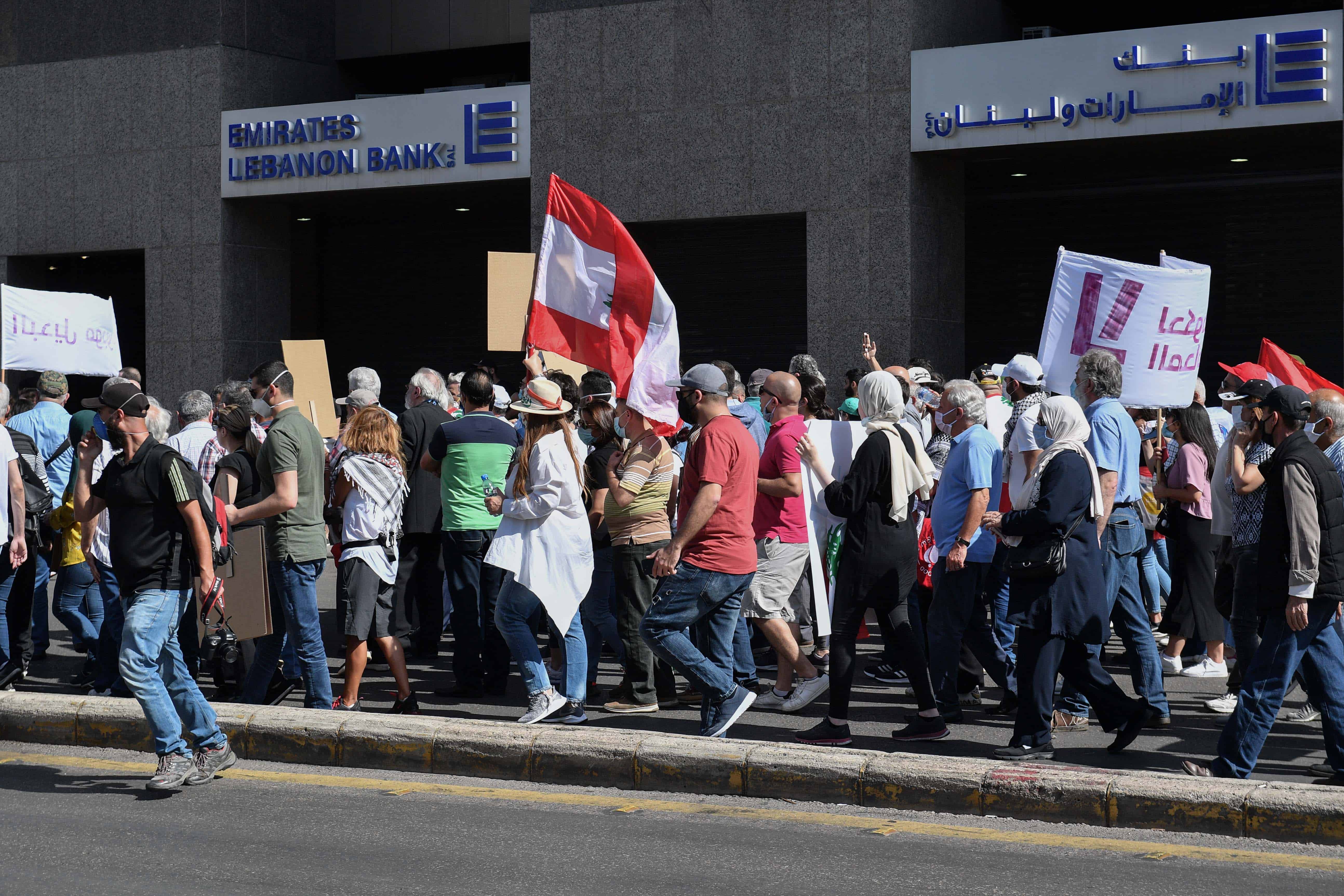
On June 6, thousands of protesters gathered in Downtown Beirut starting at 3 p.m. in the largest protest since the COVID-19 lockdown went into force. Demonstrators were protesting the impacts of the ongoing economic and coronavirus crises that have seen the value of the local currency plummet.

Initial peaceful protests soon became heated as supporters of Hezbollah and the Amal Movement attempted to reach the crowds but were blocked by the Lebanese Army.

For several hours, Downtown Beirut became the focal point of the confrontations, as riot police used large amounts of tear gas as well as rubber bullets and the army and security forces cleared protesters from the area.

According to the Lebanese Red Cross, 48 were injured during the course of the clashes.

June 7, 2020 0 comments
0 FacebookTwitterPinterestEmail
Economics & PolicyEducation

The impact of Lebanon’s economic woes on schools and parents

by Nabila Rahhal June 5, 2020
written by Nabila Rahhal

Lebanon’s fee paying private schools—which cater to 52.6 percent of the student body in Lebanon or 564,446 students out of 1,073,141 as per the 2018-2019 statistical bulletin compiled by the Center for Educational Research and Development—are in grave danger of falling victim to the ongoing economic crisis plaguing the country. As Executive reported back in August 2019, administrations of private schools had been struggling to accommodate the 40 percent increase in each teacher’s salary—mandated by Law 46 (2017) for public sector employees and applied by private institutions—in an environment where parents were already struggling financially and could not bear a hefty increase in tuition fees.

Given that this was the case before the salary cuts, layoffs, banking restrictions, and increased price of consumer goods witnessed since the last quarter of 2019 to date, as a result of the economic and now coronavirus crises, the situation for parents today and therefore for private schools in Lebanon can only be worse.

Paying the bills

In the early 20th century, schools in Lebanon’s villages were largely free of charge and parents compensated teacher’s efforts in educating their children with home grown gifts such as basket of fresh eggs or a pail of laban (yoghurt), recounts Father Boutros Azar, secretary general of the General Secretariat of Catholic Schools and coordinator of the Association of Private Educational Institutions in Lebanon. The times are different nowadays, he says, as education in Lebanon is governed by laws that regulate private schools’ budgets, teachers’ salaries, and tuition payment terms.

Law 515 (1996) is one such law, which dictates that 65 percent of a private school’s budget should be spent on salaries and the remaining 35 percent on school development (including maintenance and operating costs). Tuition fees are then calculated based on this budget, Azar says, by dividing the total amount over the number of students. The tuition fees payment schedule also falls under this law and says that payment needs to be divided across the three calendar quarters in the academic year (from October to June). Because the school’s budget must be submitted to the Ministry of Education and Higher Education (MoEHE) by January 31 of every year, the first quarter tuition payment is set by Law 515 at 30 percent of the previous academic year’s tuition.

When the price is too high

No matter how they are calculated, the reality is that many parents have barely been able to afford their children’s tuition fees for several years now, as the economic situation in the country gradually declined. “For the past two years, we already had a problem with our financial situation because of low enrollment and because parents couldn’t afford the tuition so tuition collection was low,” says Murad Jurdak, president of the board of trustees of Marjoyoun National College (MNC) and professor of mathematics education at the American University of Beirut, explaining that the school had benefited, back then, from the high interest rates on its bank deposits that allowed the board to dip into emergency funds to close the deficit.

Azar says many schools have tried to keep tuition fees down by eating into the portion of the budget designated for school development. “I strongly believe that, in the past five years, only 10 percent of the schools were able to actually use the 35 percent for development,” he says. “The rest of the schools are reducing that percentage to 30, 25, or even 20 [percent]. Why? So they can maintain tuition fees without too much of an increase. The school sacrificed development needs to keep tuitions down.” Keeping tuition artificially low through eating into the development funds at schools will have likely had an impact of the quality of the education provided.

Despite the above, the academic year 2019-2020 (due to end June 13 as per the latest ministerial decision) may be the toughest year yet, financially speaking, for parents and schools in recent memory. The academic year started with disruptions in learning and school closures, brought on by the onset of the thawra (revolution), and with a tightening noose around parents’ necks as many lost their jobs or saw their salaries cut as the effects of the economic crisis began to accelerate (see Executive’s coverage on unemployment). It also ended with nationwide school closures courtesy of COVID-19 response measures and a shift to distance learning (see upcoming article on distance and online learning).

In this context, settlement of tuition dues further declined, especially in the last trimester when some schools did not have a viable distance learning program. “We did a quick survey of the schools in our network to see what percentage of parents were able to pay the tuition,” Azar says. “By the first quarter, only 36 percent had paid it, 19 percent of parents paid the second quarter [January through March], and corona happened in the third quarter so we don’t expect the outcome to be good. This is not the norm at all.”

The further away schools are from populous cities, the more likely are parents to struggle with tuition payment, says Azar, giving an illustrative example of schools in Zahle having less issues with tuition collection than schools in remote areas of the Bekaa Governorate. In line with Azar, Jurdak says that MNC, located close to the border in south Lebanon, had not been able to collect any tuition fees for the last quarter of the current academic year. 

Distance learning for the past three months did save schools some costs such as electricity and water, according to those interviewed for the article, but not enough to make a big dent in the budget and therefore in the tuition. “Going distance learning would decrease the cost of physical books, transportation, electricity etc, but ultimately the biggest expense of a school are the salaries, which are officially 65 percent of the budget but often go up to 72 percent when you include caisse [the retirement fund] and taxes,” says Shukri Husni, chairperson of the board and director general of the Learner’s World International Schools (LWIS), which operates four schools across Lebanon. “You also still have to pay rent for the school premises regardless of the frequency of usage.” In his interview with Executive in mid-May, Azar says there would be discussions with the parent committees of the schools in his network to see how much can be deducted from the tuition, based on what was saved during the last trimester of the school year, but that the amount is “very minor.”   

A vicious circle

Since tuition fees are the main source of revenue for schools, parents being unable to afford full tuition payments means schools struggle with securing their teacher salaries.

Jurdak recounts how, at first, MNC had just enough cash reserves to afford only 50 percent of their teachers’ and staffs’ salaries from April until the next academic year in September when hopefully parents would be able to pay tuitions again. But then, through fundraising efforts by the board and a donor, they were able to supplement this with an additional LL200 million. “We are very happy to have been able to secure 80 percent of the salaries of teachers and staff from April until September,” he says. “This is something noteworthy because many schools we know of are not able to pay the full salaries for their teachers.”

Indeed, similar to many institutions operating under the ongoing economic crisis, Azar says a portion of schools within their network, which employs a total of 22,000 teachers and staff across its 331 schools, can no longer afford to pay full salaries. “From October to mid-February, when the lockdown started and schools closed, 80 percent of our teachers got 100 percent of their salaries and the remaining 20 percent were getting paid from 40 to 80 percent of their salary depending on the school (some free private schools in our network in the north did not secure any payment, for example, and could not pay their salaries),” he says. “Today this has changed, parents are not paying the full tuition, and this is why we said that for March and April, we will pay an average of 50 percent of teachers’ salaries, again depending on the situation in each school.” Azar could not provide Executive with figures regarding what percentage of schools could afford full salaries.

Teachers’ salaries are not the only expense that schools have to contend with; school resources (text books, tablets, stationary supplies, etc) and running costs factor within the 35 percent of the budget designated for school development. As Husni explains, almost all of these expenses—save for fuel and electricity, which are subsidized—come from imported supplies that are paid for in dollars at the market exchange rate. This leaves schools wondering how they will secure revenue for these costs in the current economic climate. “I assume the financial situation will be worsening over the next five years,” he says. “Let us assume that teachers accept that their salaries will stay the same—which is a loss for them in terms of purchasing power—one would assume, in that case, that tuitions would not increase. But school books and supplies such as stationery items and tablets are imported and paid for in dollars. In this case, you have at least half of the 35 percent that has been multiplied by three. The repercussions of this would mean an additional 30 percent on the school fees. Solve this if you can.”

A big mess

With parents unable to afford an increase in tuition fees and teachers’ salaries rapidly becoming too little to deal with the increased cost of living, private schools are stuck between a rock and a hard place. “Increasing salaries will only deepen the problem and decreasing them is impossible given the fact that there is inflation in the country, so the 35 percent of the non-teaching costs will go up,” Husni says. “You cannot eliminate profit from the private schools because you would remove their raison d’etre. We are going toward a disaster.” 

Azar says the economic situation is affecting everyone. Within the Catholic schools’ network, four schools located in remote areas have announced they will close by the end of this academic year, while schools that cater to medium- to high-income communities such as Collège Notre-Dame de Jamhour have also announced they are struggling financially and might not last beyond this June.

Private school closures have implications not only on the teachers left jobless and the students left scrambling for an alternative, but also to the economy of a community, especially in rural areas. “What will happen to the people who are depending on good schools to stay in rural areas?” Azar asks. “Schools bring economic activity to a village, whether it’s the bookshop that sells school supplies or the furn (bakery) that children buy their manakish from.”

Going public

The financial situation has also led private school students whose parents can no longer afford tuition make the transition to the public school system. Both Azar and Husni separately tell Executive that around 100,000, roughly 14 percent, of students from private schools have moved to the public school system in the academic year 2019-2020 and that double this number are expected to do so the next academic year.

Fadi Yarak, director general of the Ministry of Education and Higher Education (MoEHE), says that no figures have been confirmed yet regarding an influx of new students to public schools and that registration for new students will open at the end of the current academic year in June. Based on the forthcoming numbers, Yarak tells Executive that the MoEHE “is developing contingency plans and will be ready to welcome all students to the public school system if they make the shift.” Examples of elements of this plan, according to Yarak, include a hotline to direct parents to the nearest public school in their area and a strategy to distribute teachers according to areas of the country with the highest student demand.

Some of the educators Executive spoke with believe the situation calls for a restructuring of the education system in Lebanon. “I don’t believe there is still room for adapting to these circumstances—it is time to wake up and smell the coffee,” Husni says. “Private schools will soon not exceed 10 percent of the total schools [in Lebanon]. In other countries, students go to public schools and only the elite go to private schools but here the quality of the public education is so low that most students prefer private schools.” Husni adds that he questions the ability of public schools to develop well-rounded students equipped with 21st century skills.

Azar says that it is high time for a collaboration between private schools and the MoEHE through what he calls a “student card,” which is currently a proposal painted in broad strokes where parents would have access to a predetermined funding amount under the MoEHE umbrella. The card, with a yet to be determined funding mechanism, would enable parents to direct a fixed entitlement to pay all or part of their child’s cost of attendance at either a public or private school of their choice. As the basic cost of education—which Azar estimates to be LL3 to 5 million per school year—will be provided via the card regardless of the school type, parents can use this amount toward paying tuition at a private school if the have the means to cover the school’s additional tuition charges out of their pocket. Private schools would still be free to set their own tuition but parents could use the card to supplement education in more expensive private schools, or find a school where the MoEHE covered amount is enough—Azar says that within his network in 175 of 330 schools the LL5 million per student would be sufficient. Yarak confirms that this idea has been proposed by the Association of Private Educational Institutes but says “it is not as simple as flipping on a light switch” and needs the passage of laws and the securement of a budget.

In the grip of these economic and coronavirus crises, it is difficult to make any solid plans for the future of anything, let alone the future of private education in Lebanon, which has been struggling financially for the past several years. Yet, if the situation continues as is without intervention, Lebanon would be in danger of losing one of its main assets and most successful exports: the brains of its well-educated citizens. The country would also be losing whatever chance it has left to rise out of the economic crisis and build a better nation for the next generation—without schools that teach students not only 21st century skills but also citizenship and tolerance, what hope is there for Lebanon?

June 5, 2020 0 comments
0 FacebookTwitterPinterestEmail
LaborLast WordOpinion

RAMCO strike a key moment for labor rights in Lebanon

by Aya Majzoub June 4, 2020
written by Aya Majzoub

In early April, about 400 foreign employees of RAMCO, a Lebanese construction, facility, and waste management company, went on strike to demand payment in US dollars and better working conditions. The strike, believed to be the first of its kind among foreign laborers in Lebanon, could set an example for other groups of workers demanding social and economic rights. 

Although RAMCO’s foreign workers have contracts in US dollars, workers say that since November, the company had been paying them in Lebanese lira at the now-defunct official exchange rate of 1,500 Lebanese lira to the dollar. Between October 2019 and May this year, the lira has lost more than 60 percent of its value on the parallel exchange market, meaning that their families back home are now unable to afford basic necessities. Walid Bou Saad, RAMCO’s director, confirmed to Human Rights Watch (HRW) that the company was paying workers in Lebanese lira, saying that this was because the company itself was receiving its payments from the Lebanese government in the local currency. 

The workers eat and sleep on company premises and say RAMCO retains their passports and other identification documents; HRW confirmed the latter with Bou Saad. The workers also say that they are denied the minimum wage and days off. Bou Saad tells HRW the workers are receiving one day off per week as the labor law stipulates, and that their average salary is $400 per month—the legal minimum wage in Lebanon is LL675,000 ($450 at the official exchange rate). 

The workers called the strike on April 2. When RAMCO employees blocked roads outside company premises on May 12 and prevented the garbage trucks from leaving, riot police were called in. Videos circulating on social media show the riot police launching tear gas and beating the workers. A small number of workers appear to have destroyed company property. A week later, on May 20, the Bangladeshi embassy in Beirut announced that RAMCO had negotiated a temporary deal with the workers for an increase in their salaries, details of which remain unclear. 

Although Lebanese labor law does not specifically exclude foreigners, the protections it affords workers have not been consistently applied for migrants. Like Lebanese workers, foreign workers are entitled to the minimum wage, one day off per week, and two weeks of paid holiday per year, yet many employers do not abide by these standards. Migrant workers subject to the kafala (sponsorship) system are particularly vulnerable to abuse as their visas are tied to their employers,  meaning they cannot leave or change jobs without their employer’s consent—putting them at risk of exploitation. HRW routinely documents reports of abuses against migrant workers, including non-payment of wages, forced confinement, refusal to provide time off, and verbal and physical abuse.   

The labor law also discriminates against foreign workers with regard to union membership. While article 92 of the labor code allows some foreign workers to join unions and associations, they are denied the right to elect or be elected as union representatives. Lebanon has arrested and deported migrants who engaged in organizing around migrant worker rights. Such practices violate international human rights law, which requires all countries to respect the rights of everyone in their territory to freedom of association, without discrimination. 

The RAMCO workers’ strike was unprecedented. Lea Bou Khater, a labor movement specialist, says that, “in Lebanon’s history, there has never been a strike like this among foreign workers, both in terms of the number of workers involved and the length of the collective action,” arguing that it could be significant for the entire private sector. She tells HRW that a variety of factors, including restrictive labor market features, Lebanon’s legal framework, and the internal organization and structure of the General Confederation of Lebanese Workers help explain why less than 6 percent of Lebanon’s labor force are represented by this umbrella union and why such strikes are rare in Lebanon.  

Lebanon’s October Revolution was largely driven by the struggle for social and economic rights. If the most marginalized workers can organize around their shared interests, then other groups can too. Workers and professionals have already started to create alternative syndicates and unions—with their own by-laws and organizational structures—to consolidate the gains of the revolution and to bypass existing ineffective unions that have been widely co-opted by political elites.  

This cross-sectarian, interest-based mobilization may be the best method to dismantle a corrupt, sectarian-based ‘spoils system’ and achieve social justice. This should begin with ensuring that the most marginalized workers are empowered, including by abolishing the abusive kafala system.  

June 4, 2020 0 comments
0 FacebookTwitterPinterestEmail
AutomotiveIndustry

Futures in question as losses hit Lebanese car importers

by Thomas Schellen June 3, 2020
written by Thomas Schellen

Citing a 91 percent year-on-year drop in registration numbers of new motor vehicles in April 2020, member companies of the AIA Lebanon (Association des Importateurs d’Automobiles au Liban) fear widespread business closures that could lead to losses of about 10,000 direct jobs. Naming financial barriers, the AIA in a letter of alarm points to “impossibility of opening documentary credits” and “impossibility of converting cash” as major reasons for the precipitous contraction of new car sales but acknowledged in conversation with Executive the exacerbating impact that the coronavirus crisis had on existing uncertainties in multiply distressed Lebanon.  

AIA member companies, which over the past two years imported about 55,000 new cars representing about 60 European, Japanese, Korean, US, and Chinese automotive brands to Lebanon, had already  seem worrisome sales contractions for full-year 2019. As per the AIA’s December 2019 report, new car registrations in FY 2019 were down 33.4 percent to 21,991 vehicles when compared with 2018. Moreover, beyond the country’s internal crisis, the AIA importers are caught in what is shaping into a global tradeoff between digital and physical mobility as historic automobile manufacturers and car rental giants are entering a cycle of creative destruction (Nissan, France, Hertz). Thus, just one year after Lebanon’s automotive sector endeavored upon first steps toward more hybrid and electric mobility at the Beirut e-motor show in April 2019, this spring inundates the sector with signals that will not be ignored—signals of radical changes to the 20th century dream of individual vehicular freedom.   

June 3, 2020 0 comments
0 FacebookTwitterPinterestEmail
AgricultureEconomics & PolicyWater

Impacts of the Greater Beirut Water Supply Project

by Dima Rachid June 1, 2020
written by Dima Rachid

The planned Bisri Dam and reservoir is but one component of the World Bank-funded Greater Beirut Water Supply Project (GBWSP) that claims it will increase short-term supply of potable water to Greater Beirut by 250,000 cubic meters per day (m3/d) with approximately 1.6 million residents expected to benefit, including 460,000 low-income residents. The GBWSP goes beyond Bisri to draw water from two independent watersheds, the Litani River watershed and the Awali River watershed, in so doing multiplying the impact outside of Bisri. While conveying water from one watershed to another (inter-basin water transfer) is common practice, it is normally applied only when the waters are abundant in the source area and a portion can be transferred to the target area where it is less available. 

Why does this matter?  

A watershed, also called a drainage basin, refers to the total area of the terrain that channels rainfall and snowmelt to creeks, streams, and rivers, and eventually to outflow points such as reservoirs or the sea. It consists of surface waters as well as groundwater. The natural processes of water capture, water storage, and water release that take place within the watershed are essential to the balance in the hydrological cycle, to the quality of soils, and to the supply of freshwater. Any man-made disruptions upstream, that is to say closer to the source of water, can compromise on the quality, quantity, and availability of water downstream. It can also compromise the ecosystem services that water provides such as nutrient cycling, fish production, sediment flow, and biodiversity. 

As per the map below, the World Bank-funded project aims to draw 50 million cubic meter (MCM) of water from Lake Qaraoun in the Litani Watershed south to Lake Markaba, where it meets assumed 14-41 MCM water coming from Ain Zarka Spring. It will then be channelized in an existing 26 km tunnel into the Awali River Watershed at Anane Reservoir, where it is intended to meet an estimated 60-100 MCM water collected at the Bisri Dam Reservoir, originally coming from Awali/Barouk River. The water will then be conveyed in an existing tunnel to the Joun Reservoir. Another tunnel then takes the water to Wardanieh Water Treatment Plant before it is conducted across the Damour River Watershed to Khaldeh then to the Hadath and Hazmieh reservoirs, before it is finally distributed in the Greater Beirut network. From Lake Qaraoun to Beirut, the water would have travelled no less than 50 km.  

Figure 1: Diagram showing the planned route of the GBWSP, diverting water from the Litani River Watershed 
Courtesy of Dima Rachid

But what is the pre-existing condition of our Litani and Awali rivers’ watersheds? Will there be water sufficient to meet the domestic, agricultural, and industrial demands within the watershed itself, today and in the near future, with surplus to be dragged outside of its natural system for consumptive domestic use elsewhere?  

GBWSP and climate change  

The Ministry of Environment (MoE) and UNDP’s climate change projections for Lebanon predict that by 2040 we will face a 40 percent reduction in annual snow cover. Snow residence time, which refers to the time between snow accumulation and melting, will decrease from 110 days to 45 days.

The Litani River and the Awali River, whose waters are intended to supply Greater Beirut, are in fact both charged by springs that erupt from the saturated snowcaps of Mount Lebanon (the snow caps are saturated when the snow residence time has allowed enough infiltration of melted snow into the ground). A reduced annual snowcap, reduced precipitation, and increased evaporation will reflect negatively on the availability of water in the Litani River watershed, therefore impacting the water volume assumed to be collected in Qaraoun Lake and similarly in the Bisri Dam Reservoir. In the absence of adaptative actions, the MoE predicts that the cost of climate change impacts in the form of reduction in water supply for agricultural, domestic, and industrial use will be around $320 million by the year 2040.

The Litani River, the largest river in Lebanon with a watershed that forms 20 percent of the Lebanese territory, is currently expected to serve no less than 240 urban areas (not counting refugee settlements) and to irrigate the largest contiguous agriculture production surface in the country. The river, however, suffers from high levels of water pollution through direct dumping, excessive algal growth from fertilizer runoff, unregulated urbanization, and over extraction via illegal wells. Adding to that the impacts of climate change projections makes the watershed more vulnerable to erosion and desertification and therefore less capable of meeting the domestic, agricultural, and industrial needs for water upstream and downstream. The Litani River watershed’s contribution to the national economy as the largest national producer and exporter of potato and cereals is thus in jeopardy.  

The absence of regulations and national policies toward land planning and resource management threaten the Litani River valley’s long-term viability as a major socio-economic engine. Diverting the waters of Litani River through the GBWSP to supply Greater Beirut’s domestic water, therefore, not only deprives people and land downstream Lake Qaraoun of their share of the waters, it will also present yet another short-term and long-term threat to this major food production landscape.

Figure 2: Diagram showing the land use and land over of the Litani River Watershed, with starting point of GBWSP   
Courtesy of Dima Rachid

Lebanon is undergoing an unprecedented economic crisis. There is an urgency for investing in local food production today. Therefore providing a sufficient share of water for food and livestock farming across the nation’s fertile lands should be the government’s priority. This applies to the waters of the Awali and Litani rivers that are both indispensable for agriculture, each in their respective watershed.

Watershed planning and nature-based solutions 

Today, and in light of contemporary threats like climate change, the world is adopting alternative means of managing, storing, and using water resources, namely through nature-based solutions (NBS). By definition, NBS is a proactive management approach to the rehabilitation of performance of natural systems or the integration of natural systems in constructed ones. While the World Bank itself promotes NBS as a cost-effective and flexible infrastructural approach to water resource management, it is worth questioning why it continues to fund expensive, irreversible, and inefficient concrete-based infrastructure systems (grey infrastructure).  

At watershed scale, the ecological rehabilitation and protection of the watershed is a fundamental nature-based approach that helps ensure sustainable supply of potable water. Rethinking our agricultural practices from an ecological perspective improves soil quality, reduces compaction, and enhances recharge of groundwater as natural storage. Integrating agro-forestry restores the fragmented landscape, enhances water circulation, retains rainwater, and helps combat land degradation and desertification. Vegetative cover and constructed wetlands increase biodiversity, filtrate water, and contribute to reducing pollution downstream.  

Watershed planning of land and land use distribution provisions a balanced water system in terms of surface flow, ground recharge, and water quality. It regulates direct human-induced land use changes such as overgrazing, building, deforestation, pesticide application, well extraction, dam erection, among others to ensure sensible water supply capacity.    

Resolving the crisis requires political will

Our water crisis is a national crisis. It is not localized in Greater Beirut area. The Bekaa is equally vulnerable to water shortages and water challenges. The $600 million Bisri Dam project will not only jeopardize 600 hectares of forests and agricultural land, threaten biodiversity, disrupt livelihoods, and dismantle more than 50 archeological sites within Bisri. By diverting water from its natural flow, the GBWSP compromises on the water supply downstream and on ecological losses that cannot be compensated. Resolving one area’s shortage by transferring water from a struggling one is unreasonable. Placing more pressure on an already fragile watershed and ecosystem is unacceptable. Draining the food production landscape of the country from its pressing water needs is impermissible. 

Our water crisis is not that of lack of innovation nor exclusively a management problem. It is also a political one. It takes political will to regulate urban planning upstream to mitigate flooding downstream, to penalize violators of public water quality, and to enforce a wastewater management scheme. It takes political will to commit to implementing climate mitigation measures that urgently respond to water challenges. Continuing with business as usual by implementing short-sighted, expensive, outdated mega-projects will only exhaust Lebanon of its finite waters, meager money, and grappling ecosystem services. 

June 1, 2020 0 comments
0 FacebookTwitterPinterestEmail
Economics & PolicyMediaMOUPartnership

Executive Magazine and FNF MENA sign memorandum of understanding

by Executive Editors May 29, 2020
written by Executive Editors

Comprehensive efforts for the development and advocacy for economic reforms in the MENA region are being driven by a first-of-its-kind cooperation between Executive Magazine and the Regional Office Middle East and North Africa of Friedrich Naumann Foundation for Freedom (FNF MENA).  

On May 21, Executive Magazine and FNF MENA agreed to launch their cooperation by signing a memorandum of understanding (MoU) on the Mediterranean Economic Roadmap (MER) project.  

The MER initiative is an ongoing process of research, action, and advocacy. The roadmap aims to identify what to combat, what to support, and what to improve in the Euro-MENA region. The first report will be published by the end of 2020 and will provide seed content for an interactive platform to be developed within the coming years. 

With this project, both organizations are seeking to redirect the discourse on economic development and progress, and promote economic inclusiveness in the Mediterranean area. For the year 2020, the study will focus on four North African countries: Tunisia, Egypt, Algeria, and Morocco.  

Executive Magazine is committed to delivering quality and critical journalism to address pressing issues in the MENA region. The magazine is an English language monthly that covers trans-regional socioeconomic and policy developments.  

Dirk Kunze, regional director of FNF MENA, expressed his enthusiasm about this initiative saying that it feeds into the foundation’s overarching strategic mission to promote regional cooperation. Kunze added that, “Formalizing the partnership is an opportunity for both organizations to think together on a long-term plan to further explore the potentials of this project.”  

Yasser Akkaoui, editor-in-chief of Executive Magazine, expressed his commitment to the partnership and the timely and purposeful initiative. Akkaoui added, “This partnership will enable much-needed collaborative cooperation among stakeholders with the objective of finding alternative solutions to socioeconomic challenges in the face of an ever changing Euro-MENA landscape.” 

To know more about the project, follow Executive Magazine (Twitter, Facebook, Instagram, and LinkedIn) and FNF MENA (Twitter, Facebook, and Instagram) on their social media channels.  

About the Friedrich Naumann Foundation for Freedom 

The Friedrich Naumann Foundation for Freedom is a creative platform for innovation, with the aim of enhancing the popularity of liberalism. As a German non-governmental institution, we work with our partners in the region of Middle East and North Africa, to support the strengthening of rule of law, social market economy, democratic institutions, and the participation of civil society. 

About Executive Magazine 

Executive is an English language monthly business and policy magazine published in Beirut, Lebanon. For the last twenty years, Executive has been engaging with and conducting comprehensive research, analysis, and advocacy on economic and financial matters across the Middle East and North Africa (MENA). We have also been seeking to effect change in policies, laws, and regulations that impact people’s livelihood and ensuring, to the best of our abilities, that decisions are followed by implementation.

For further inquiry contact Yara Asmar, FNF Regional Strategy Manager Email: [email protected], Phone #: +961 70214186 

May 29, 2020 0 comments
0 FacebookTwitterPinterestEmail
BusinessOpinionQ&ASpecial Report

Q&A with Riad Obegi, chairman of Banque BEMO, on banking sector challenges

by Thomas Schellen May 28, 2020
written by Thomas Schellen

At a time when banking is materially challenged by economic and financial stresses, and is faced with extreme criticism from distressed depositors and the explosion of economic commentators and activists of all colors in the country, Executive wanted to know what local banking leaders have to say about the quagmire and the way forward. Riad Obegi, chairman and general manager of Banque BEMO, was ready to answer.  

Where is the banking sector situated in terms of the short-term crisis and of the long-term economic recovery, rescue, or revival of Lebanon?

Let me start with a more basic consideration of banking. Any economy is based on trust and banks are traders of trust. People prefer to put their money in a bank rather than lending it directly to persons who need the money. So you have people who have savings and people who need funds for investing in the future. To put those two together, you need someone of trust in the middle. When you have lack of trust, or lack of trusting this middleman, the whole system is compromised. 

In Lebanon specifically, the situation in my opinion is not really a question of total bankruptcy. There is no bankruptcy, but there is a lack of trust. Unfortunately, the people whose role it is to [instill] trust, are in fact doing the opposite. Everybody is a little guilty—[including] banks of course. They made a mistake closing for two weeks [last October]; they made a mistake by not expressing themselves clearly; they made a mistake in not being very transparent in their policy, and they made a mistake not defending themselves when they were attacked. 

Only the banks? 

Banks are a little bit guilty but the government is extremely guilty. I am not talking about the previous governments. This present government is saying we are bankrupt and cannot do anything without the International Monetary Fund (IMF). It says: ‘The IMF is requesting that we do a haircut and we are going to do a haircut. We don’t know how much but we are going to do it.’ So they are creating uncertainty. Uncertainty does not generate trust. Adding to that is that they are saying there are too many banks in Lebanon. Forty is too much, 20 is better, they say. Why should it be bad for Lebanon to have the second [highest] ratio of deposits to GDP in the world? The first country in this regard is Luxembourg and I don’t think it is bad for any country in the world to aim to be like Luxembourg. They have the highest GDP per capita in Europe. 

When the government is saying that banks are bad or banks should close, I think it is destroying the trust and also destroying the possibilities of recovery. In the theory of [American economist Ben] Bernanke, the Great Depression of 1929 was so deep and so long because the authorities in the United States allowed banks to go bankrupt and disappear. This has crippled the credit channel. The information [stored] in the banks disappeared and the recovery took much longer. This is very well known but apparently not by our government and not by the advisors of this government. 

What can be done as an alternative to having our finance and economy exposed to the state?

I think the most important thing is to bring back trust. I don’t know what the government is going to do but if he [Prime Minister Hassan Diab] does a haircut, I don’t think trust will come back very soon. This [government narrative] is very absurd because he, and experts around him, say we do a haircut and decrease the debt of the government and then the IMF is going to give us money, and then people are going to trust us. I am a banker. If a client [takes a loan] and then finds ways not to pay me back, I am sure that I am not going to lend to him again. Not only am I not going to lend to him again, bankers usually have a long memory and they talk together. I do not expect this recovery plan, except for picking [funds] from one pocket to the other, to give good results. 

If we are looking at the proposed recapitalization of banks, do you think banks will be interested in adopting the government’s idea on recapitalization?

The government is saying: ‘Do recapitalization.’ Suppose you have just been robbed by the Mafia and then the Mafia tells you: ‘This is the last time. Come back, bring in your money again.’ I don’t know. I am not sure. 

It seems that some of us do not care to reflect on how we as consumers have been benefiting from the elevated value of the lira in the past decade. Could we blame the banks for making us consume? 

There is something that is more serious in that the government should normally be an entity that creates coordination between people, not cause problems among people. This government is saying there is this category of people; these are bad people. Thus they are creating animosity between the people. 

We could debate for hours if banks are just the intermediaries between savers and investors or if banks have a societal role to play beyond this function.

They do of course. They are the depositories of trust. 

What is the role of banks today in recovering and protecting assets of the Lebanese people, not just financial assets in the short term but also environmental assets, assets of civil peace among diverse population groups, or assets of Lebanese identity?

I think the Lebanese banks don’t have much of a say in these things now. They cannot do much.

But they could?

Yes.  Again, let us go back to the assumptions of the government of Lebanon. These assumptions are that the state of Lebanon is bankrupt, that Lebanon is bankrupt, that the Lebanese lira is overvalued, and that the banks are bankrupt. Everything is bankrupt, and whatever we do, it doesn’t matter. We cannot do anything. For us, this is wrong because the state of Lebanon is not bankrupt. It has assets. [We should tell the world:] ‘The state of Lebanon has liquidity problems but it has the assets and can pay—however, not now. We are not the type who does not pay our obligations.’ If we can make this point, everything goes up.

Even the lira?

Even the lira. Another assumption [of this government] is that Lebanon is consuming much more than it is producing. This assumption is based on wrong figures that do not make sense. We are importing $20 billion dollars in goods and exporting $3 billion in goods. But the services are not counted in this equation. If, for 50 years, we had been consuming more than we were producing, we would not be here. You can see from the figures in the banks that savings are increasing year after year since we are producing more than we are consuming. In the last few years, because of the financial engineering, we perhaps received some money that was opportunistic but over 50 years or 70 years? This does not make sense. It is impossible. 

Based on these wrong assumptions [the government] concluded with our foreign friends that the Lebanese lira should be devalued. I think this is a political decision in order to take back from the public servants what was given to them perhaps somewhat too generously. But there is no reason [for a devaluation because it would help us to export more], because we are mainly exporting services and services are not very elastic in terms of price changes. If you are a lawyer you are not going to get more business if you are going to say my hour is no longer costing $200 but only $100 from now. People would ask: ‘What type of lawyer are you when you are pricing yourself at $100?’

In that sense it is almost a Veblen good (based on the theories of American economist and socialist Thorstein Velben) where the demand and price are positively correlated.

Exactly. So I think that it is a wrong decision; wrong assumptions and wrong decisions. What can banks still do? I will tell you what we as bank [BEMO] are doing. I cannot talk for all other banks. We decided that we will lend again to our clients because our job is to take deposits and lend money. 

You resumed lending actively as of when?

We resumed lending as of April. 

How much demand did you encounter?

There is not a lot of demand, frankly, because people feel uncertain. But there are still people who are saying: ‘They are lending to me at a lower price than the bank from whom I am borrowing now, so let me go to them.’ All of this is progressing little by little as we decided to lend. 

How much of a percentage contribution to GDP do you see banks make by 2025?

The progression of loans follows the progression of GDP everywhere in the world. You might have temporary distortions, but on the long term, you see a very strong link between progression of GDP and progression of loans and as everything is going to reduce bank loans [in Lebanon], you have to expect a reduction of GDP. What can banks do? I think that banks, as much as possible, should resume lending. This is what we have done. 

Are there other things banks can do beyond their core financial business?

Banks can also help their clients to become more productive. How can they do this? I think that one of the weaknesses in Lebanon is that people do not like to work together. So we have to push them to work together, to make partnerships. Not necessarily to become public [as listed companies] but at least to partner together. I think the current situation pushes people to work together and also to try and look outside of Lebanon, because Lebanon is not [a territory of] 10,000 square kilometers; it is much more. You have Lebanese everywhere and Lebanese companies everywhere. They are using Lebanon as a base. The government does not like that, but that does not matter. [People] will continue working until this government goes away and somebody else comes and understands what Lebanon truly is. As banks, we need to help our clients to become more efficient, not necessarily to hire more people. 

We need to help [with regard to] the basis of the wealth of Lebanon, which is education. Today, universities and schools have very big problems in collecting tuitions. So we are going to develop financial products where tuitions are going to be financed partly by our bank and paid back over a long period of time. This [type of education finance] does not really exist now but we are going to do that. We are also going to—and are announcing this week—support mediation. This is because we have to expect a lot of bankruptcies very soon, which means that the judiciary system, which is already not very efficient, is going to be overburdened. What we as bank would do is encourage mediation, which might solve 20 to 30 percent of the problems [which otherwise would end in court]. It won’t solve all of them; mediation is not the judiciary. 

Would that be mediation in the sense of an arbiter or perhaps offer mediation to people who seek extensions of loan maturities?

A mediator is not a judge and not an arbitrator. He just puts people together and helps them to close the distance between their positions. A mediator gets active when there is a conflict, for example you call a mediator when there is a conflict between you and your banker who is saying I will not finance this need etcetera. So you call a mediator and the bank should accept this mediator who asks both sides what they can offer and tries to facilitate the dialog between the conflict parties. A mediator has a moral authority; however, he has zero power to force anything on you or the second party. There are universities that teach mediation. We are partnering with the Professional Mediation Center at Saint Joseph University (USJ) in Beirut. We are a bank but we can support mediation and push our clients perhaps to have a mediation clause in their contracts.

May 28, 2020 0 comments
0 FacebookTwitterPinterestEmail
Coronavirus AnalysisEconomics & PolicyHealthcare

Testing for COVID-19 in Lebanon

by Lilian Ghandour May 22, 2020
written by Lilian Ghandour

This pandemic has been described as the defining global health crisis of our time. The novel coronavirus or SARS-CoV-2 is the cause of a deadly respiratory disease called COVID-19, currently affecting all continents, except Antarctica. Worldwide, at the time of writing, the virus has infected more than 5 million individuals and resulted in more than 300,000 deaths. From early in the pandemic, scientists raced to develop a vaccine, and many countries rushed to implement public health non-pharmaceutical interventions (such as local and national lockdowns, closure of academic institutions, and wide-scale social and physical distancing) to slow the spread of the virus. Since mid-March, the Director General of the World Health Organization (WHO) Dr. Tedros Adhanom Ghebreyesus has been stressing the importance of testing, testing, and more testing. Since lockdowns cannot go on forever (for social, economic, and mental health reasons), scaling up testing, isolation, and contact tracing to sustain the flattened curve in Lebanon (slowed transmission of the virus to ensure hospitals are not overrun) must be an integral component of a larger holistic national exit strategy.  

Still, testing is not one size fits all. There are different types of tests, as well as different ways of testing. Testing policies, which vary across countries and over time within countries, also define the function and outcome of the testing procedure. In the initial phases of the epidemic in Lebanon, for example, the focus was on testing symptomatic individuals and key groups (elderly, individuals with severe symptoms or returning from an infected country, or those who have possibly encountered a confirmed case). The goal of that “targeted testing” has been the identification and isolation of cases and their contacts to suppress transmission. Early in April, the Lebanese government expanded its testing capacity, and fifteen additional testing sites were added to Rafik Hariri University Hospital (RHUH), the primary and only governmental center offering free testing services since the beginning of the epidemic. On April 5, Lebanon began the first phase of repatriation of Lebanese nationals stranded abroad, and naturally, the number of tests began to increase (with daily fluctuations in test numbers). Official reports are published daily documenting separately the results for residents versus returning expatriates to monitor the number of “imported cases” vis-à-vis “local cases,” the latter being more of an indicator of local transmission (though the burden on the local health care capacity is bound to be affected by the number of all infected cases, regardless of source). On April 20, the Ministry of Public Health began population screening or what they called “random testing” (though it is not so random, see below) in different areas of Lebanon. The open public testing was a step toward identifying asymptomatic cases (those who are shedding the virus without showing symptoms). With the gradual easing of lockdown measures since April 27 and the continued repatriation of expatriates, it should not be surprising if the numbers of new confirmed cases begins to rise again (especially if suspected cases are not quarantined, and people are not practicing social distancing). With the lifting of restrictions, the role of mass testing becomes even more critical for the containment and suppression of the virus spread. With that in mind, what do we need to know about testing? 

Current mass testing is not so massive  

As of May 22, Lebanon has carried out approximately 60,000 polymerase chain reaction (PCR) tests in an estimated population of 6 million, so about 10,000 tests per 1 million. While the country’s testing capacity has been significantly improving and the ratio of total number of tests conducted thus far per million inhabitants is close to the world average (10,500 per million), it is still far from the ratios calculated for other countries such as the neighboring United Arab Emirates, which has a 15-fold greater ratio (150,000 tests per a million, among the highest globally). The number of daily tests conducted in Lebanon is variable, generally lower on weekends, and averaging in the 10 days up to May 22 around 1,400 tests per day (though there is no official target, local experts have suggested the need for 2,500 to 3,000 tests per day in Lebanon).

Current random testing is not so random  

Population screening can be done on a “self-selected” or a “random” group of people. When a group of individuals chooses to be tested, regardless of their symptoms or contacts, they will constitute a self-selected sample or a biased sample of the population from which they come (they came forward for personal reasons). The majority of that same population will remain untested, and within that group, some self-suspecting cases may not come forward for various purposes including access (most centers are in urban areas), cost (the test is free in RHUH only, and costs LL150,000-200,000 in other centers), stigma (fear of being labeled), or simply a lack of perceived need (asymptomatic case). This is what random testing aims to resolve. The standard dictionary definition of selecting subjects at random would be “without definite aim, direction, rule, or method.” This is far from the epidemiological definition of random sampling, which is very much methodical. In random sampling, a pool of people are identified (could be residents of a particular area), and each resident has a known, non-zero probability of being selected. When a random sample is tested for COVID-19, the percentage positive can then be extrapolated to represent the percentage of people affected in that community (with a certain standard error). This is not the case with the percentage derived from self-selected samples that represent only the tip of the iceberg. When testing capacity is limited, targeted testing is more justified to identify cases, trace contacts, and suppress spread. Without random testing, however, epidemiologists and public health officials in Lebanon can only hypothesize or predict (via mathematical modeling) but never truly know the true virus infection rate (nor the true case fatality rate) in the country. Random testing may be conducted nationwide, but amidst limited resources, they can begin to take place in selected areas or clusters, or targeted groups that may be considered most vulnerable such as the elderly or people with chronic conditions, or those groups whose conditions are less known to authorities, such as people living in rural areas or refugee camps. 

Different tests tell a different story  

The American Center for Disease Control (CDC) currently lists two types of tests for COVID-19: a diagnostic viral test and an antibody test. The most common diagnostic test is the molecular (RT-PCR) test (typically based on a nose or throat swab) that identifies active infections (people who are infected at the time of the test). Identifying and isolating active COVID-19 cases and tracing their contacts is necessary for providing treatment for those infected, and reducing the transmission of the virus from those infected to others. Still, the RT-PCR can neither tell us if the person was infected in the past  (and recovered) nor guarantees immunity in the future. The RT-PCR test is typically highly accurate but concerns of false negatives have been reported for various reasons (for example, swab was not taken or stored adequately). Serological tests (or an antibody test on drawn blood) identify persons who were infected in the past and recovered (and ideally developed an immune response). Serological tests can provide insight on the evolution of the epidemic and whether the threshold for herd immunity has been reached. Serological testing in Lebanon is not yet recognized. The U.S. Food and Drug Administration (FDA) describes other newer diagnostic tests with their sets of benefits and limitations (e.g., rapid, point-of-care diagnostic antigen tests; at-home collection tests). Besides differences in their utility, existing tests also vary in their availability, cost, how the sample is taken, and the time needed to get the results back, and these aspects continue to evolve as test developers work to streamline the testing process.

It only counts if you count it 

Bottom line, if you do not count it, it will not count. Epidemiological surveillance of COVID-19 allows us to understand the local dynamics of the virus, evaluate the containment of the spread, and make predictions. Surveillance data also informs local policies and interventions and allows stakeholders to re-evaluate their decisions continuously. As of May 22, Lebanon has recorded 1086 confirmed COVID-19 cases and 26 deaths, and the epidemic curve had been flattened until the surge in cases starting early May. Of course, conclusions are as valid as the numbers—and ours have largely been based on findings of known cases via targeted testing. Assuming a much higher number of undetected mild or asymptomatic cases in the community (which is likely the case for Lebanon), massive testing and epidemiological surveillance are integral to monitoring the actual spread of the virus in the community and to preventing transmission from asymptomatic persons to vulnerable individuals.  

Testing may be the backbone but is useless alone  

Testing is part of a holistic strategy to identify cases, trace their contacts, and isolate for precaution. Testing alone is futile and contact tracing without an effective plan to quarantine positive cases/isolate suspected cases is similarly useless. At the time of writing, 53 percent of the cases in Lebanon are due to contact with a confirmed case; moreover, 3 percent have an unidentified exposure. Mass testing strategies for COVID-19 have been described as central to lifting confinement restrictions, necessitating that significant logistics and capacity constraints are contextually addressed.  

As we learn how to co-exist with COVID-19 in this new normal, we must have in parallel a plan to avoid new peaks and keep infection rates suppressed to avoid overburdening our healthcare system. This is until a vaccine or effective treatment is found. Mass testing (at least targeted, at best both targeted and random) needs to continue, and significantly improve in number and distribution to build a better and transparent information system about the presence, distribution and transmission of COVID-19 in the country and its various communities. On May 22, Lebanon recorded 62 cases (59 locals and 3 expatriates), the highest number recorded in locals since the start of the epidemic (with a 3 percent infection rate considering 2,100 tests were conducted). With the current easing of lockdown measures, resuming of economic activities, repatriation of expatriates, and potential re-opening of land borders and Beirut International Airport, Lebanon is in need of a national strategy and perhaps additional local measures that consider the country’s particularities (limited resources and the prevailing economic crisis). This strategy must be evidence-informed, contextualized, and reflect a concerted, coordinated effort between government officials from various ministries, local epidemiologists working on COVID-19, and other stakeholders. Otherwise, we risk going back to square one.  

May 22, 2020 0 comments
2 FacebookTwitterPinterestEmail
Economics & PolicyEducationOpinion

UNESCO survey exploring remote learning experiences during COVID-19 lockdowns

by Mona Betour el-Zoghbi May 21, 2020
written by Mona Betour el-Zoghbi

According to the initial results from a May survey being administered by the UNESCO Regional Bureau for Education in the Arab States (UNESCO Beirut Office), more than half of the parents of schoolchildren in the Arab region consider current online studying (whether using an online platform, mobile application, etc.) to be “inefficient” when compared to the traditional approach (face-to-face in a classroom). In addition, more than 80 percent of the parents are concerned that homeschooling is not providing the necessary education for their children.  

The survey, which targets parents of schoolchildren currently residing in all countries across the Arab region, was launched this May by the UNESCO Beirut Office, as part of its multi-pronged response to the COVID-19 pandemic and its impacts on the educational system. This response includes the formation of an Arab Regional Task-Force for COVID-19 Educational Response to support member states in deploying equitable distance learning solutions and to build more resilient, innovative, and open education systems. It also encompasses the formulation of a regional communications strategy to raise awareness on relevant topics amongst various target audiences such as teachers, students, and policy-makers through producing brochures, videos, and social media messages, as well as circulars and policy papers on topics such as higher education in the Arab states and technical and vocational education and training. 

The main aim of the survey is to explore the needs, challenges, and priorities of parents and children during the current COVID-19 pandemic, and to identify the most important lessons and takeaways from this experience to help guide future educational planning and design in the region. The opt-in survey, running throughout May, has been widely disseminated online (on our website, and via email and social media) in both English and Arabic versions, through the multiple networks and partners of the UNESCO Regional Bureau for Education in the Arab States.  Over 750 responses to the survey have been garnered from more than 18 Arab countries (see chart); with almost half of these responses from Lebanon, Syria, Egypt, Jordan, and Kuwait combined, and the other half dispersed across the remaining Arab countries. While this was an exploratory survey, the response rate thus far suggests that this online, opt-in survey format has provided a much-needed platform for parents to voice their concerns and share their experiences during these critical times of transformative change in the region and the world.   

Chart 1: Overview of Response Rate per Arab Country (as of May 20, 2020)

The data generated by May 20 provides important insight into what parents and students are thinking about remote learning and how they assess their experience with it. (These are initial findings; a deeper data analysis will not be possible until all responses have been gathered.) One of the main recurring issues that was raised amongst parents who reported that their children are utilizing online learning platforms was the difficulty of securing good internet access at home. The data indicated that such difficulty was faced both in terms of availability of infrastructure and connection, as well as the sufficiency of the limited quota for such extensive daily usage. Many respondents called for the provision of free or facilitated internet access to households during these times of remote learning. Some also raised the need for the government to provide free access to a homeschooling curriculum and supplementary material and tools that can offer guidance and assistance to both students and their parents, especially for poor households or for public schools that might not have internet access or the digital tools (such as Edmodo, Zoom, Socrative, or Google Classrooms) necessary for adequate online learning.

Other challenges facing families with regard to remote learning and home study range from the technical to the practical. Over 60 percent of responding parents thus far report that their children have too many distractions at home and so have difficulty keeping a regular study schedule. In terms of the user friendliness of remote learning, just 30 percent of parents report that their children are capable of using an online platform, by, for example, coordinating timings and classes, and maintaining concentration. Many respondents emphasize the need to benefit from technology for more timely and efficient feedback to students so they can better evaluate and regulate their learning. Others also call to simplify lessons and reduce online classes so that students are not overwhelmed. Lack of access to good educational online resources in the Arabic language was raised by 15 percent of respondents.

The main dilemma facing parents seems to be that of balancing work and homeschooling. Almost 55 percent of respondents think that online education is more stressful for the parents than for the students or the teachers, and more than 33 percent report feeling overwhelmed and tired. The implications of these initial survey responses suggest not only a need for greater technical and digital support for households participating in online learning, but also, and equally important, the provision of psycho-social support and guidance to both children and their parents for enhanced well-being. Some respondents even recommend that, in parallel to the regular academic classes online, supplementary courses and orientation should be provided for students as well as for parents on how to study online and best utilize technological applications and search for resources online, for a more efficient and useful learning experience. 

With regards to the parents’ perspectives regarding online teaching in particular, around 45 percent indicate that teachers need to be better trained and equipped to administer and lead online classes. Special focus is placed on the need for these lessons to be more interactive, to ensure student understanding and concentration through innovative prompts and methods, and to generate better instructional design for a more friendly and facilitated learning process. Overall, the survey responses so far seem to emphasize the importance of promoting teacher training for online classes, student training for remote and autonomous learning, and parental support for overall health and well-being of the family household. 

In projecting the eventual transition back to school, over half of the parents report being “very worried” about the impact of coronavirus on their kids. They indicate the need for ensuring proper awareness for children on how to deal with other students and people in public (such as proximity and hygiene), as well as psycho-social support and physical activity after a prolonged period of confinement. In terms of educational content, many parents see a need for schools to administer additional classes to make-up for lost time and to incorporate blended learning through a combination of online and face-to-face learning methods.

As for the main policy measures that survey respondents would like governments to take, more than half of the respondents so far agree on facilitating or even canceling official examinations, whereas many others call for prioritizing learning objectives and reducing the curriculum requirements for moving to the next grade. The provision of financial support to families who lost their income was also amongst the top answers, along with providing practical guidelines for parents and students to support distance learning. In addition, many of the survey respondents voice concern with regard to vulnerable students, including poor households as well as the refugees and displaced. They call on their governments to develop educational resources for autonomous learning for children who are unable to access online platforms, and to promote a more inclusive educational response with special focus on households and children living in rural and remote areas. 

Finally, the survey also highlights the need for Arab countries to maximize the benefit from technological innovations and digital tools for improving the online learning experience for students and learners in general. Many respondents call for the development of a comprehensive online platform that contains all necessary services such as online classes, new assessment and assignment tools such as the smart-board or the point-based system, and free educational resources and guidebooks. Others point to the need to develop good software, applications, and online platforms for hands-on/practical lessons, such as science classes, laboratory classes, or technical and vocational education and training, and for incorporating artistic and physical education activities into online learning in a more methodical way. 

Ultimately, the challenge for the Arab region remains developing sustainable solutions to educational provision that is also equitable and inclusive, and which leaves no one behind. In line with the insights generated through this survey, UNESCO remains committed to supporting governments for distance learning as well as for access to science, knowledge, and culture-sharing for the Arab region. The key targeted reprogramming efforts entail a priority focus on supporting countries and learning institutions in school reopenings, with main pillars of health and safety, quality of education, inclusivity, and overall well-being. In addition, increased emphasis is being placed on building the capacities of educators and teachers for remote learning, especially using online resources, as well as for developing tools for crisis-sensitive planning and curricula. A more long-term outlook poses questions on rethinking education amid the implications of COVID-19 for the education sector policy reforms in the Arab region, and developing a long-term strategy for strengthening e-learning in the region, including needs assessment of distinct countries and their capabilities in implementing e-learning. 

The UNESCO response is also set within a wider UN system framework to comprehensively address the needs and responses in both the short and long term. At the global level, one of UNESCO’s most immediate responses to the COVID-19 crisis was the launch of a Global Education Coalition with three flagship programs on gender, teachers, and connectivity. In addition, UNESCO provided policy and technical support to member states, established communities of practice in direct coordination with ministries of education, and organized global and regional webinars on different topics. Overall, UNESCO’s core areas of action have focused on main pillars, which entail rebuilding educational systems, promoting environmental sustainability, recognizing cultures in economic recovery, securing access to reliable information for all, and preventing discrmination to achieve social cohesion whilst reaching out to vulnerable countries and populations.

UNESCO continues to work at the forefront of the educational response to COVID-19 to ensure that quality education is sustained in both public and private educational institutions, and that learning never stops.  

May 21, 2020 0 comments
2 FacebookTwitterPinterestEmail
  • 1
  • …
  • 46
  • 47
  • 48
  • 49
  • 50
  • …
  • 696

Latest Cover

About us

Since its first edition emerged on the newsstands in 1999, Executive Magazine has been dedicated to providing its readers with the most up-to-date local and regional business news. Executive is a monthly business magazine that offers readers in-depth analyses on the Lebanese world of commerce, covering all the major sectors – from banking, finance, and insurance to technology, tourism, hospitality, media, and retail.

  • Donate
  • Our Purpose
  • Contact Us

Sign up for our newsletter

    • Facebook
    • Twitter
    • Instagram
    • Linkedin
    • Youtube
    Executive Magazine
    • ISSUES
      • Current Issue
      • Past issues
    • BUSINESS
    • ECONOMICS & POLICY
    • OPINION
    • SPECIAL REPORTS
    • EXECUTIVE TALKS
    • MOVEMENTS
      • Change the image
      • Cannes lions
      • Transparency & accountability
      • ECONOMIC ROADMAP
      • Say No to Corruption
      • The Lebanon media development initiative
      • LPSN Policy Asks
      • Advocating the preservation of deposits
    • JOIN US
      • Join our movement
      • Attend our events
      • Receive updates
      • Connect with us
    • DONATE