• Donate
  • Our Purpose
  • Contact Us
Executive Magazine
  • ISSUES
    • Current Issue
    • Past issues
  • BUSINESS
  • ECONOMICS & POLICY
  • OPINION
  • SPECIAL REPORTS
  • EXECUTIVE TALKS
  • MOVEMENTS
    • Change the image
    • Cannes lions
    • Transparency & accountability
    • ECONOMIC ROADMAP
    • Say No to Corruption
    • The Lebanon media development initiative
    • LPSN Policy Asks
    • Advocating the preservation of deposits
  • JOIN US
    • Join our movement
    • Attend our events
    • Receive updates
    • Connect with us
  • DONATE
Comment

Our cyber susceptibility

by Paul Cochrane October 3, 2008
written by Paul Cochrane

Over the summer the spectre of cyber warfare gained international significance, spurred on by reports of cyber attacks that crippled Georgia’s infrastructure in the wake of Russia’s ‘intervention’ in South Ossetia.

Reportedly carried out by nationalistic Russian hackers rather than by the Kremlin itself, the incident has shown how vulnerable a country’s critical national infrastructure (CNI) is to cyber attacks. Even presidential campaigns are open to attack, with senators John McCain and Barack Obama’s systems allegedly hacked into by the Chinese.
The dark side of technology has also come to the attention of the private sector in the Middle East, with a handful of banks in Dubai hit by ATM card theft and fraud in September. Furthermore, cyber crime continues to rise in the region, with some 50 million incidents of hacking against the public and private sectors in March, up from 15 million in December 2007, according to a study by internet security firm Trend Micro.
How seriously Middle Eastern governments are taking cyber crime is difficult to gauge however, particularly in terms of prevention and awareness. Additionally, businesses and governments are reluctant to announce cyber attack incidents so as to not cause concern to shareholders and the public, while statistics like the one above need to be taken with a pinch of salt as internet security firms have a vested interest in making out that cyber crime is worse than it may actually be.
Nonetheless, last year’s Virtual Criminology Report by NATO, the FBI and other agencies stated that cyber spying is one of the biggest security threats nations face, with 100 countries having experienced some form of cyber warfare. Britain’s secret service, MI5, went as far as saying the country was “four meals away from anarchy” if there was a serious interruption to CNI and the distribution of food.
That countries are starting to take the threat seriously was highlighted at a conference I attended in Crete in September organized by the European Network and Information Security Agency (ENISA), which was set up in 2005 to investigate internet security problems and make recommendations for EU member states on how to protect themselves. What struck me was how long the EU has taken to tackle the issue on a collective basis, and that between three to five years are needed for all EU countries to be at a common level of protection. Furthermore, in a speech given by Jorgo Chatzimarkakis, German Member of the European Parliament (MEP), he said that he “couldn’t understand politicians who doubt the importance of this endeavor” to tackle cyber crime. ENISA itself was at risk of not even getting established at one point, while few MEPs know much about cyber crime. Meanwhile, a speech by Lord Toby Harris stressed how ambivalent Britain’s political establishment is about information security, with less than ten out of the 1,400 members of the House of Commons and the House of Lords taking a serious interest in the subject. In a country where six government departments have reported system compromises over the past year, many multiple times and identity theft is estimated at $3.4 billion a year, this almost beggars belief. But while the EU is starting to take on the challenge of improving cyber protection for governments, businesses and consumers, the fact that ENISA’s budget is only $11.5 million a year indicates that more needs to be done and for regulations to be enacted.
Naturally, I started to think about how the Middle East is prepared for this phenomenon when so many EU countries are just setting up Computer Emergency Response Teams (CERTs) and Disaster Recovery Plans (DRP). The picture is not overly rosy, with the International Data Corporation estimating that total internet security spending in the region will only touch $9.3 million by 2009, with the UAE, Saudi Arabia, Kuwait, Qatar and Bahrain the top five investors. When you consider that security systems for small networks of 100 computers cost roughly $15,000, and those involving 1,000 computers $30,000, the region’s spending is woefully inadequate to protect CNI and businesses. What is being done on the legal front also needs to be addressed.
For instance, how protected are governments and businesses from cyber attacks when European countries do not have a Data Breach Notification Law? Are there units of law enforcement adequately trained to take on e-crime? And are there DRPs and CERTs in place for when the seemingly inevitable happens?
Such questions need to be asked as the region gets more connected, and will gain further importance if many Arab countries go ahead with plans to build nuclear power plants (NPPs). After all, a NPP in Baxley, Georgia, was shut down for 48 hours in March after a software update was installed on a single computer, and in 2003 a NPP in Ohio had its safety monitoring system disabled by a virus.
National responses to the problem and heightened regional cooperation are undoubtedly necessary to protect CNI and citizens from what is a global phenomenon that will only continue to grow.

PAUL COCHRANE is a freelance journalist based in Beirut

October 3, 2008 0 comments
0 FacebookTwitterPinterestEmail
Comment

Nuclear non-state reality

by Claude Salhani October 3, 2008
written by Claude Salhani

Amid fears of nuclear proliferation in the Middle East, as Iran appears to be on track to develop its nuclear capabilities and other countries are certain to follow, is it still feasible to dream that nuclear weapons may one day be abolished altogether? Some experts still believe it is.

Yet we are entering a new era where the poles of power as we knew them are shifting. I call this the post-nuclear exclusivity era, where the monopoly once held by the Big Five — the United States, the Soviet Union, China, Britain and France — no longer holds. Today you can add to that list Israel, India, Pakistan, North Korea and very possibly Iran.
Libya admitted to having invested in trying to develop a bomb with North Korean help. But spooked by the US invasion of Iraq and nudged on by Muammar al- Gaddafi’s son, Saif al-Islam, Libya turned over its bomb-making kit to the Americans in exchange for better relations with Washington — and it worked. Libya has stopped trying to blow planes out of the sky and just last month US Secretary of State Condoleezza Rice flew to Tripoli to meet with al-Gaddafi.
But now there is also another name that may be added to this list, that of non-state entities. And here lies the real danger when it comes to nuclear weapons.
The one nuclear story with a happy ending is South Africa which voluntarily dismantled its program under the supervision of the International Atomic Energy Agency after Apartheid was ended, getting rid of two evils in the same decade.
While the Big Five held the monopoly on nuclear technology the dangers associated with them were minimal. Throughout the decades of the Cold War, with the US possessing more than 10,000 nuclear warheads and the Soviets some 8,000 and each pointing at the other side’s major cities, none were ever fired. There were one or two tense moments — such as the Cuban missile crisis in the 1960s when the Soviet Union deployed missiles to Cuba and President John F. Kennedy threatened to take them out — but luckily the worst was averted.
In essence, nuclear weapons of mass destruction acted more as deterrence as no country, the logic went, would attack another if it possessed nuclear weaponry. This quite possibly is what today keeps India and Pakistan from fighting another war.
Iran realized this when it was confronted by Saddam Hussein’s Iraq in the 1980s in a “conventional war” lasting eight years and claiming 500,000 Iranian lives.
However, non-state entities — groups such as al- Qaeda — are trying to obtain weapons of mass destruction not for deterrence, but rather with the intent to maximize the damage caused and inflict the greatest number of casualties possible.
So when it comes to the powers possessing WMDs today, is its still feasible to believe that those countries would be at greater risk of being attacked if they didn’t possess nuclear weapons? This is the question George Perkovich, vice president for studies at the Carnegie Endowment for International Peace and director of its non- proliferation program, and James M. Acton, a physicist by training who lectures at the Department of War Studies at King’s College London, ask in the latest issue of the Adelphi Paper (No. 396) published by the London-based International Institute for Strategic Studies.
The authors believe the following to be the case: “None of today’s nuclear-armed states would fall prey to major aggression if they all eliminated their nuclear arsenals,” they wrote. Indeed, who would attack the US, Russia, France, Britain or China today, with or without a nuclear arsenal?
And if India and Pakistan managed to retain cool heads despite their differences and their border disputes, perhaps, just perhaps, they could get rid of their WMDs?
Countries with nuclear weapons are not the danger here, and although many analysts in the West may disagree, the danger does not come from so-called “rogue” states, either real of imagined members of President George W. Bush’s “Axis of Evil.”
Assuming for a moment that Iran were to develop nuclear weapons, and assuming its leadership was adventurous enough to use them, the rulers in Tehran know full well what the reply would be like.
So today’s real concern has more to do with terrorist groups trying to acquire weapons of mass destruction: not only nuclear, but also chemical and biological, too.
As Brian Michael Jenkins — who has just recently released the book Will Terrorists Go Nuclear? — wrote, “There is no doubt that the idea of nuclear weapons may appeal to terrorists.”
Today, it is that new threat that ultimately will prevent the abolishment of nuclear weapons — at least until the threat of nuclear terrorism dissipates, and that may be a few years still.


Claude Salhani is editor of the Middle East Times in Washington and a political analyst

October 3, 2008 0 comments
0 FacebookTwitterPinterestEmail
Comment

Pakistan’s president: Mr. 10%

by Peter Speetjens October 3, 2008
written by Peter Speetjens

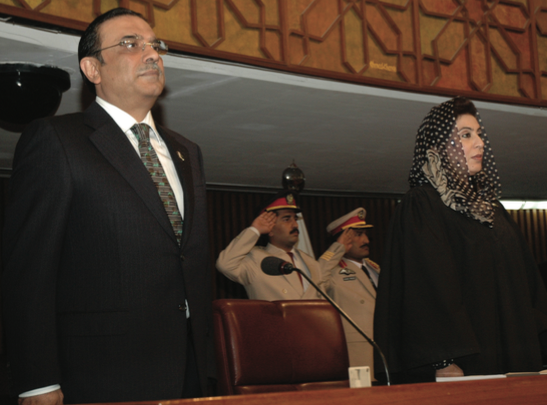
In its urge to fight the forces of evil, Washington seems ready to dance with the devil in nuclear-armed Pakistan. In the latest chapter of a tragic political saga, Asif Ali Zardari was elected president on September 6, a feat welcomed by Condoleezza Rice as “a good way forward.” The US Secretary of State praised Zardari’s will to fight terrorism and his warm words of friendship towards the US.

Zardari’s affability towards the US should not come as a surprise. Were it not for Washington, the 53- year-old would still be behind bars. His resurrection at the helm of troubled Pakistan is the icing on the cake of a very colorful career and must go down in history as one of the most dramatic political comebacks ever.
Born in Karachi as the son of a wealthy businessman, Zardari’s path to glory started with his marriage to the late former Pakistani Prime Minister Benazir Bhutto. Prior to that, his name was featured as a polo-playing playboy in the local gossip pages. His (arranged) marriage to Bhutto was widely seen as one of mutual convenience. He had his father’s money, but no name. She could do with the money, while a husband on her side greatly advanced her political prospects in conservative Pakistan.
Widely known as “Mr. 10%,” Zardari owes his nickname to the hundreds of millions of dollars he allegedly received in kickbacks on major defense deals and privatization schemes completed during his wife’s reign. The money trail leads well beyond the Pakistani border, as Bhutto and Zardari own a string of bank accounts and houses around the world, including a nine- bedroom mansion, complete with an indoor swimming pool and helicopter landing pad, in Rockwood, UK.
While never formally convicted in Pakistan, a Swiss judge in 2003 ruled that Zardari and Bhutto had accepted $15 million in bribes from two Swiss firms. Bhutto however, appealed the verdict. In Britain, Lord Justice Collins judged that there was a “reasonable prospect” that the Pakistan government would be able to prove that Rockwood had been bought and furnished with “the fruits of corruption.”
Interestingly, Zardari only avoided an embarrassing appearance in British courts by claiming dementia. Fortunately, according to his doctor, his mind is working just fine again. A comforting thought, as Bhutto’s widower presides over a nation in great political and economic turmoil, as well as a big red button saying “Doomsday.”
Other serious accusations against Zardari include having attached a remote control bomb to the leg of a businessman to force him to pay his 10% and the 1996 murder of his brother in law, Murtaza Bhutto, who had openly humiliated Zardari and called for his resignation. Zardari spent a total of 11 years in jail. He was only released in 2004, thanks (indirectly) to a US-brokered power-sharing deal between Bhutto and former military leader Pervez Musharraf.
Until then, the US administration had firmly supported Musharraf, yet grew increasingly frustrated with the latter’s tactics on the North Western Frontier, where al-Qaeda and the Taliban have found refuge. Musharraf refused to send in the Pakistani army in an all- out assault and refused to let American soldiers operate on Pakistani soil. And so, Washington decided he had to go.
Gradually, Musharraf was no longer portrayed as a steadfast partner in the war against terror, but as the military dictator he had been all along. Back came the call for democracy. Back came Bhutto. Having been ignored for years, she was dusted off and saddled up for a glorious return to her native country. In return, she was said to be greatly concerned about the rise of Muslim extremism and the need to tackle the safe havens near the Afghan border, which was no doubt one reason for her assassination in late 2007, arguably on the orders of tribal leader Baitullah Mehsud.
Her death came hardly as a surprise for Musharraf, who knew all too well how unhealthy it is to be considered pro- American in Pakistan. Nicknamed “Busharraf,” he survived several assassination attempts. In addition, the ousted military leader was well aware that the Taliban were, to a large extent, created by the Pakistani army, elements of which do not want to see their baby thrown out with the bathwater.
Finally, a significant part of the Pakistani population support or sympathize with their Muslim brethren near and across the Afghani border. In short, taking on Pakistan’s western tribes is likely to lead to a stepped-up bombing campaign within Pakistan, which could threaten the state’s very survival.
Add to this the opportunist Zardari with his alleged taste for easy money. Officially, he is only a caretaker until his son graduates from Oxford, yet many fear he may prove unwilling to give up his seat. He is yet to abolish the extra powers Musharraf had created for the presidency and is yet to re-install Iftikhar Muhammad Chaudhry and other judges, who aimed to tackle the country’s abysmal corruption record. Many analysts fear that Pakistan got rid of military rule, only to get a civilian dictatorship in return.

Peter Speetjens is a Beirut-based journalist

October 3, 2008 0 comments
0 FacebookTwitterPinterestEmail
Banking & Finance

Investment – Lawsuit for losses

by Executive Staff October 3, 2008
written by Executive Staff

The recent economic crisis that has shaken America to the core has only put forth the many underlying problems major US institutions are confronted with. Last month, prior to the crisis, Abu Dhabi Commercial Bank (ADCB) announced that it had filed a major lawsuit against American financial brand names such as Morgan Stanley, the Bank of New York Mellon and ratings agencies Moody’s and S&P.

The lawsuit, which was filed at the US district court in Manhattan, targeted Cheyne Structured Investment Vehicle (SIV), a complex financial structure previously highly rated. The statement provided by ADCB said that the legal action alleges, amongst other things, that “ADCB was misled about the quality of the underlying mortgages in which the Cheyne SIV would invest.”
In spite of the fact that the Cheyne Finance fund had been selling investments and had enough cash to repay commercial paper due through November, Standard & Poor’s cut Cheyne Finance’s ratings on August 28 by six notches, quoting the deteriorating market value of its assets as a main motivator to its decision.
The scandal stems from a previous valuation on August 15 by Standard and Poor’s, which described the Cheyne notes as one of the highest investment grade. The downgrade seemed to take place at a spiraling speed, with prices deteriorating over a very short period of time. Reports of the downgrade prompted questioning in the financial community regarding the quality of the overall ratings process.
Cheyne Finance is one of dozens of structured investment vehicles, known as SIVs, considered to be playing a pivotal role in the fixed income markets. Such vehicles usually operate by issuing commercial paper, thus borrowing money using short term notes and then investing the money in longer term securities that boast higher returns.
However, the subprime crisis that took over the world and the subsequent liquidity crunch plaguing the markets have weighed heavily on companies that depend on commercial paper. They were thus faced by daunting funding shortages, with investors increasingly wary of advancing any funds in such a volatile context. Many SIVs were rumored to be selling off bank some of their assets in order to reimburse investors.
ADCB said in its statement that “it had also held talks with other banks and investors in the six-member Gulf Cooperation Council about joining its class action and based on these conversations, it expected additional investors to join or support the legal action as required.”
“This is the next step in a process aimed at recouping the losses ADCB has already incurred, and additionally, this is an important step in paving the way for other GCC investors to ensure they are provided an opportunity to recover their own losses. This is the right thing to do and ADCB has taken a proactive early lead to protect itself and other investors,” said Eirvin Knox, ADCB’s CEO.
The bank brought the action on behalf of all investors who bought investment grade Mezzanine Capital Notes which were issued by Cheyne Finance, a wholly owned subsidiary of Cheyne Finance Capital Notes.
ADCB seeks unspecified money damages and class-action or group status on behalf of everyone who invested in the vehicle launched by Cheyne Finance Plc from October 2004 to October 2007.
Bloomberg reported on August 25 that “Cheyne’s structured investment vehicle, premised on short term borrowing to buy higher-yielding assets, collapsed last year. Investors have recovered about 55 percent of the face value of their holdings in an auction of Cheyne’s assets.” It also added that the SIV had owed about $5.7 billion in senior debt, according to its receivers at the accounting firm of Deloitte & Touche.
Also named as defendants in the lawsuit are two units of the New York-based credit ratings firm Moody’s Corp, as well as the Standard & Poor’s Ratings Services, a unit of the McGraw Hill Companies Inc.
ADCB is a full-service commercial bank which offers a wide range of products and services such as retail banking, wealth management, private banking, corporate banking, commercial banking, cash management, investment banking. It is owned to 64.8% by the Abu Dhabi government through Abu Dhabi Investment Council and its shares are traded on the Abu Dhabi Securities Market.
This lawsuit might further impede investors’ confidence of the US market, something that US companies are not in need of in the light of the very unsettling financial context.

October 3, 2008 0 comments
0 FacebookTwitterPinterestEmail
Banking & Finance

GCC – The markets that bind

by Executive Staff October 3, 2008
written by Executive Staff

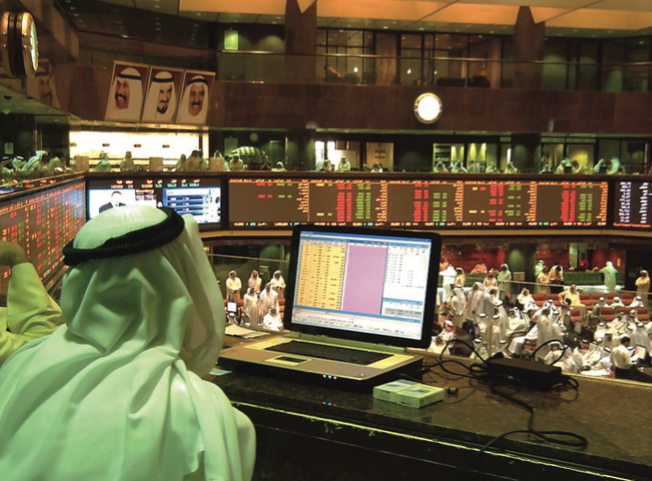
In order to meet clients’ demands to trade shares of companies anywhere, at a faster pace, across different asset classes and for less money, stock markets around the world are under a great deal of pressure to merge or buy stakes in each other. The seven stock markets in the Gulf, which had a combined capitalization of $995 billion before the onset of market turmoil that took place last month, appear to be feeling this pressure too, as there is a great deal of talk about a GCC common market and a unified currency amongst the Gulf states. This evolution is important for the Gulf to secure its place in the complex, elaborately interwoven web of global stock exchanges.

With the exception of the UAE, which has two stock markets, one in Dubai and another in Abu Dhabi, each GCC country hosts a single stock exchange, all of which are state owned and regulated. Because these markets are still under the control of their respective governments, the process whereby an external entity is allowed to merge with or buy stakes in a particular market is highly complicated, and thus at present unfeasible. Alternatively, markets in the GCC opt for memorandums of understanding (MoU), which facilitate an agreement between parties regarding their markets, without the legally binding power of a contract.

Several MoUs have been established in past few years, including those between the Bahrain Stock Exchange and Dubai Financial Market, Dubai Financial Market and Pakistan’s Karachi Stock Exchange, and Abu Dhabi Securities Market and England’s FTSE. Such agreements are evidence of the efforts taken by GCC stock markets to support and develop the investment environment in the region in a way that will benefit all parties. MoUs aim to strengthen and expand cooperation between two markets, especially in the areas of mutual expertise and exchange of information relating to market developments. They also intend to spread awareness regarding the legal infrastructure available in both markets as well as investment opportunities. Furthermore, cooperation agreements encourage cross-listing and collaboration between brokers in both markets, thus enhancing synergies between markets, and increasing competitiveness in a way that will make investments more profitable.


Bucking the trend

Until present, the only exception to this unspoken rule is the strategic partnership between the Qatar and NYSE Euronext, which was announced in June 2008. Under the agreement, which has yet to materialize, NYSE Euronext is to purchase a 25% stake in the Doha Securities Market for $250 million in cash. If achieved, the partnership will constitute the largest investment ever made by NYSE Euronext in a foreign exchange, and will establish Doha as a Middle Eastern business hub for NYSE Euronext.

Though outside parties experience much difficulty coming into GCC markets, Gulf markets can easily buy stakes in a foreign stock exchange, as exemplified by rivals Doha Securities Market (DSM) and Borse Dubai. Established in August 2007 in an effort to consolidate Dubai’s two stock exchanges, one-month old Borse Dubai hit the ground running by entering a $4.9 billion deal with New York’s Nasdaq to buy Stockholm’s OMX. According to the terms of agreement, Dubai would hand OMX over to Nasdaq in exchange for a 19.9% stake in the new Nasdaq/OMX company; it would also acquire Nasdaq’s existing 28% stake in the London Stock Exchange (LSE). Simultaneously, Borse Dubai’s rival Qatar Investment Authority (QIA), the country’s sovereign wealth fund, snapped up a 20% stake in LSE and raided the market in Stockholm, buying up almost 10% of OMX’s shares. In order to end the bitter rivalry between the two, which originated out of both parties’ involvement in the LSE, Borse Dubai later sold its stake in LSE to QIA.


The rest of the pack

Comparatively, the remaining Gulf exchanges appear to be operating quietly. This is ironic, however, considering all of the necessary preparations that should be underway regarding the launch of a GCC common market and a possible monetary unification across the six Gulf states. Since the decision was made to move forward with the implementation of the GCC common market in January 2008, there has not been as much forward movement as one might expect. When considering the 15-year time frame used in Europe for the implementation of its own single currency, it is difficult to imagine that the Gulf will accomplish the same by its projected end date, which is only 14 months from now. 2010 is just a stone’s throw away in the macroeconomic forum, and there are many things to be considered, including the location of the central bank, the operational structures and standards, and various other technical issues.

The issue of currency alignment appears much less complex, simply because the majority of currencies in the Gulf are pegged to the US dollar. Presumably, when the currency union begins in the Gulf, the new unit will be tacked to a basket of currencies, similar to what has happened in Kuwait. This, however, is not as straightforward as it seems. Pegging the new unified currency to a basket of currencies removes a lot of decision-making room from the new local central bank. In other words, if the new unit is pegged to foreign currencies, policy decisions are no longer in the hands of the Gulf central bank, but rather belong to the central bank in the US, the central bank in Europe, the central bank in Japan, and so on. Various players with various interests will have a measured amount of control over the new currency and thus will issue constraints upon it. So, why not de-peg the new currency? The answer is that de- pegging would significantly risk the element of stability, which may result in consequences far worse than the current inflation.
Amongst other roadblocks stalling the currency unification are the unique natures of each of these six sovereign nations. Naturally, the central bank of each country will follow its own rather specific interests. Saudi Arabia’s chief economic interest is derived from a completely different set of fundamentals than that of Dubai, or Bahrain, or Qatar. Though it is true that oil and gas, to a certain extent, are commonalities, there are many other factors to be considered, and many conflicting interests to be appreciated and reconciled. Oman has already announced that it will, for the time being, not participate in the common Gulf currency.

Also, since the majority of trade conducted by the Gulf states takes place outside the GCC, the benefits of adopting a unified currency are considerably lower than those enjoyed by the Euro-zone, where 70% of trade is internal. There needs to be an advantage to the new currency that can aptly counter the probable sacrifices that each country will have to make by subscribing to it.

In a related development, lately various indices are being compiled on the Gulf markets. Indices, like those of FTSE, Van Eck Global, and Dow Jones, play a critical role in helping people (mostly financial experts and investors) to understand the movements of stocks. They document the historic movements, trends, averages — various factors that provide a better understanding of what is happening in the market, and are helpful when making investment decisions. Now, why do new indices on the Gulf keep cropping up this year? A larger number of credible indices on Gulf markets catch the eyes of foreign investors and urge them to take another look.

If the Gulf achieves monetary unification and a common market, it could open the door for outsiders to come in and buy stakes in the new market, thus resulting in an influx of money, more trading opportunities and more liquidity. Breaking down the existing barriers between stock exchanges and currencies, and doing it in a meaningful way, is a giant step in the right direction.

October 3, 2008 0 comments
0 FacebookTwitterPinterestEmail
Financial Indicators

Global economic data

by Executive Staff September 27, 2008
written by Executive Staff

Employment in manufacturing and services in affiliates under foreign control

As a percentage of total employment, 2005 or latest available year

Source: OECD

The shares of foreign affiliates in manufacturing employment show considerable variation across OECD countries ranging from under 15% in Denmark, Italy, Portugal, Switzerland, Turkey and the United States to 35% or more in the Czech Republic, Luxembourg, the Slovak Republic and Ireland. Employment in service sector foreign affiliates is lower in all countries although as noted above, comparability is affected in several countries by the exclusion of employment in banking and insurance services. In the period from 1999 to 2005, employment in foreign-controlled manufacturing affiliates grew or remained stable in all countries for which data are available except Spain and Ireland, where the rate slightly fell and in Belgium, Luxembourg and the United States where the shares have remained fairly stable. Particularly sharp increases were recorded by the Czech Republic, Norway, Poland, Sweden and the United Kingdom. Over the same period, employment in foreign-controlled service affiliates grew or remained stable in all countries for which data are available, except Belgium. The biggest increases were recorded in the Czech Republic, Ireland, Poland and Sweden.

Share of ICT in value added

Share of ICT manufacturing and ICT services value added, 2003

Source: OECD

The ICT sector grew strongly in OECD countries over the 1990s. For the 1995-2003 period the share of ICT services has grown most in Ireland, Finland, Hungary and Sweden. In 2003, Finland’s ICT manufacturing sector’s share of manufacturing value added represented 22% of total manufacturing value added. In 2003, the ICT manufacturing sector represented between 1.2% and 22.2% of total manufacturing value added in OECD countries. The average share for the 25 OECD countries for which data are available was about 6.5%. The Telecommunication services sector is largest, as a percentage of business services value added, in Hungary, Portugal, Australia and Finland. It is smallest in Greece, Korea and the Netherlands.

Obese population aged 15 and above

As a percentage of population aged 15 and above, 2005 or latest available year

Source: OECD

Half or more of the adult population is now defined as either being overweight or obese in no less than 15 OECD countries: Mexico, the United States, the United Kingdom, Australia, Greece, New Zealand, Luxembourg, Hungary, the Czech Republic, Canada, Germany, Portugal, Finland, Spain and Iceland. By comparison, overweight and obesity rates are much lower in the OECD’s two Asian countries (Japan and Korea) and in some European countries (France and Switzerland), although overweight and obesity rates are also increasing in these countries. Focusing only on obesity, the prevalence of obesity among adults varies from a low of 3% in Japan and Korea to over 30% in the United States and Mexico. Based on consistent measures of obesity over time, the rate of obesity has more than doubled over the past 20 years in the United States, while it has almost tripled in Australia and more than tripled in the United Kingdom. The obesity rate in many Western European countries has also increased substantially over the past decade. In all countries, more men are overweight than women, but in almost half of OECD countries, more women are obese than men. Taking overweight and obesity together, the rate for women exceeds that for men in only two countries — Mexico and Turkey.

OECD renewable energy supply

Million tons of oil equivalent (Mtoe)

Source: OECD

In OECD countries, total renewables supply grew by 2.3% per annum between 1971 and 2006 as compared to 1.4% per annum for total primary energy supply. Annual growth for hydro (1.1%) was lower than for other renewables such as geothermal (5.8%), combustible renewables and waste (2.7%). Due to a very low base in 1971, solar and wind experienced the most rapid growth in OECD member countries, especially where government policies have stimulated expansion of these energy sources. For total OECD, the contribution of renewables to energy supply increased from 4.7% in 1971 to 6.5% in 2006. The contribution of renewables varied greatly by country. On the high end, renewables represented 78% in Iceland and 39% in Norway. On the low end, renewables contributed only 1% to 2% of supply for Korea, Luxembourg and the United Kingdom. In general, the contribution of renewables to the energy supply in non-OECD countries is higher than in OECD countries. In 2005, renewables contributed 40% to the supply of Brazil, 31% in India, 15% in China, 11% in South Africa and 3% in the Russian Federation.

September 27, 2008 0 comments
0 FacebookTwitterPinterestEmail
Financial Indicators

Regional equity markets

by Executive Staff September 27, 2008
written by Executive Staff

Beirut SE  (1 month)

Current Year High: 3,470.63  Current Year Low: 1,761.53

The Beirut Stock Exchange’s numbers, as tallied by BLOM Bank’s BSI, pointed lower in August. The BSI closed at 1,855 points on August 22, falling back under the 2,000 points line but still up 23.5% from the start of the year. Real estate company and market cap leader Solidere led the market down, dropping 13.43% from the end of July to Aug 22. Analysts pointed to profit taking as reason for the steady index losses throughout the review period. In a bit of a change, headlines on the BSE in August were not entirely dominated by politics. One factor that influenced the market was the recurrence of tales on uneasy merger discussions between Audi Saradar Group and its shareholder, Egyptian investment bank EFG Hermes. According to media reports in London, the Audi Saradar Group issued a statement on August 22 saying that it appointed Georges Achi as chairman after Raymond Audi stepped down because he accepted a post in the government. 

Amman SE  (1 month)

Current Year High: 5,043.72  Current Year Low: 3,003.07

While the short-term picture for the Amman Stock Exchange index was no better than that for the GCC bourses, the ASE could stay above water when compared with performance of international exchanges since the start of 2008. Closing at 4,186.44 points on August 24, the ASE index lost 9.57% from the end of July but is still almost 14% up from the beginning of the year. Jordan Phosphate Mines and Arab Potash Co, industrial stocks that had been high flying in earlier months on hunger by Arab investors, came crashing with share price losses of 29.6% and 36.9%. Despite these reversions of their fortunes, the two companies ended the review period at share prices that were higher than three and five months ago, respectively. As the ASE authorities noted, share ownership by non-Jordanian investors at the end of July 2008 represented just under 51% of the cumulative market value of all companies on the ASE.

Abu Dhabi SM  (1 month)

Current Year High: 5,148.49  Current Year Low: 3,398.33

Nothing permitted the Abu Dhabi Securities Exchange an escape from the August down-drag. At 9.25% loss from July 31 to Aug 24, the ADX general index was less than half a percentage point better off than its sister exchange in Dubai and closed at 4,496.39 points for the last session of the review period. For the third time in 2008, the ADX was in the red at the end of a month when compared with its reading at the start of the year. For every gaining scrip, the ADX saw 4.4 stocks on the losing side. Among sub-indices, insurance lost the least, about 1%, and real estate by far the most, a whopping 16.96%. Of 10 companies that could achieve gains during the review period, five were insurers and two were foreign telecommunications companies. The real estate heavyweights Aldar and Sorouh were twinning at the bottom of the performance record at more than 18% down each, outdone only by a 23.16% drop of Fujairah Building Industries. In plans for increasing its appeal, the ADX intends to introduce derivatives trading toward the end of next year. 

Dubai FM  (1 month)

Current Year High: 6,291.87  Current Year Low: 4,162.97

As observers attributed the slump in Arab markets on anything from lower oil prices allegedly causing some institutional investors to book share profits in the Gulf for compensation to corruption uncovered in Dubai real estate companies and to having too many shady analysts, investors in the Dubai Financial Market could pick their favorite explanation why they were suffering — but suffer they did with index close at 4,883.15 points August 24, representing a 9.74% loss when compared with the last close in July. Debutant Dar al Takaful was joined only by another insurance company and an investment firm in the positive list while red splashed over almost all other stocks. The real estate sector was shaken by international investment bank Morgan Stanley hinting at the possibility of a weakening Dubai property market by 2010. Then real estate got whacked by new investigations into corruption at developers, some of which were not even publicly traded but tied in with Dubai Holding. Three majors, developer Union Properties, mortgage firm Tamweel, and construction group Arabtec Holding all ended the period more than 23% lower. Market heavyweight Emaar Properties shed 11.43% and closed August 24 at a 52-week low.

Kuwait SE  (1 month)

Current Year High: 15,654.80            Current Year Low: 12,039.00

In the first part of August, the Kuwait Stock Exchange was tested by a 553-point slide. Although the middle of the month brought some stabilization to the KSE, the index lost 2.38% by its August 25 close at 14,620.70 points when compared with the last session in July. The industrial index fared best during the period and was able to add 2.64% whereas the non-Kuwaiti stocks sought the bottom with a drop of 7.49%. The runner-up in underperformance was the real estate sector whose sub-index moved 5% lower after being among the KSE’s better bets in the weeks before. By adding more than 54%, Burgan Group, a holding with interests in services, food, and lasting consumer goods, was the best gainer on the KSE. Among companies at the tail end of summertime  performance, engineering firm Heisco and, of the non-Kuwaiti stocks, investment bank Shuaa Capital were notable victims of selling pressure with share price losses of at least 20% each.

Saudi Arabia SE  (1 month)

Current Year High: 11,895.47            Current Year Low: 7,697.24

Whilst retaining the red lantern in GCC stock market action in 2008, the Saudi Stock Exchange bucked the Gulf markets’ summer slippage trend. With a close at 8,899.27 points on August 24, the TASI added 1.81% from the end of July. The insurance sector, just about the most volatile performer on the SSE in the past 18 months, provided the two strongest gainers with 24% (Tawuniya) and 15.75% (SABB Takaful) in the review period. The banking sector sub-index paced the overall gains of the SSE by adding almost 5%, ahead of the insurance sector’s 3.6%. The bourse’s regulators had important news for the world in August. First, the SSE started applying a new level of disclosure by publishing for each listed company the names and shareholdings of investors whose stakes are larger than 5% — which was seen by some analysts as factor that led to instinctive selling after the new rule was announced in July. In a second step, the Capital Markets Authority allowed foreigners to invest in shares through swaps. This indirect opening to non-resident investors was perceived positively by international analysts who saw it as step toward full market access.

Muscat SM  (1 month)

Current Year High: 12,109.10            Current Year Low: 6,641.63

The index graph for the Muscat Securities Market showed the same V-cut in mid-August that afflicted other regional markets. With a 4.57% loss from end of July, the MSM index also was far from doing well in the review period which it closed at 10,245.89 points on August 24. Freshly floated, Sohar Power Company was the market leader with a 28.83% gain since its August 18 listing date. A long distance back in second place with a 9.96% share price leap was The National Detergent Co. — a scrip that, volume-wise, had been rather high on thin suds for the past six months. The banking index, down by 1.66%, scored the least losses in the review period while the services and industrial sub-indices on the MSM ended 7.73% and 10.35% lower. It serves to remember, however, that the latter two indices did well in 2008 to date, with gains of 25% and 28% compared with the start of the year.

Bahrain SE  (1 month)

Current Year High: 2,902.68  Current Year Low: 2,520.19

Scarcely a bright day on the Bahrain Stock Exchange, except for two positive sessions on August 13 and 14. The BSE index closed the August 25 session at 2,703.52 points, 3.3% in the red from the end of July. The market thus ended our review period over 200 points down from its year high in mid-June. Banking and services were at the low side of the market with drops of 3.77% and 3.74% but investment stocks did not do much better and only the insurance and hotels & tourism values ended the period nearly unchanged. Gulf Finance House, which had reported $220 million in first-half earnings in late July, was the worst performer and dropped 15.05% between July 31 and August 24, followed by Nass Corporation which shed 8.3%. On the top, Al Baraka Banking Group gained 18%, leading the mere six climbers of August.

Doha SM  (1 month)

Current Year High: 12,627.32            Current Year Low: 7,484.19

The bears were sniffing out the peninsular heat of Qatar last month as the Doha Securities Market’s general index erased a good portion of earlier increases and closed at a level it was last at in mid-April: 10,858.60 points on August 24 represented a 6.13% weakening from the end of July. A total of 19 stocks recorded drops of at least 5% over the period, many big names among them, from The Commercial Bank of Qatar (5.58% down) and Industries Qatar (6.57% lower) to United Development Co (minus 12.57%) and Barwa Real Estate (the period’s biggest loser, at minus 17.77%). No sector was spared from the slaughter, although the insurance index was about 3.3 percentage points better than the general index. The top gainer of the period was Qatar Cinema and Film Distribution Co, which added 17.65%. At about rank 43 out of 43 DSM-listed companies by market cap, the company in the entertainment business experienced a solo August rally after announcing 87% higher H1 2008 profit.

Tunis SE  (1 month)

Current Year High: 3,252.00  Current Year Low: 2,445.51

The Tunis Stock Exchange spoiled investors with the best performance of regional exchanges in the review period and the Tunindex added a touch above 6% at its close of 3,220.50 points when compared with the July 31 close. Gainers outnumbered losers by almost six to one and the best performance arose from newcomer Poulina Group Holding. The conglomerate with a strong leg in food industries started trading on August 18 and its share price appreciated 40.5% by August 22. Insurance firm Astree was the period’s underperformer; it saw almost 21% of its share price erased.

Casablanca SE  (1 month)

Current Year High: 14,925.99            Current Year Low: 11,394.32

The Casablanca Stock Exchange slumbered with a daily average turnover in the review period that was about a third lower than the average daily turnover since the start of 2008. Index developments were downward but modestly so and the bourse’s general index closed at 13,904.43 points on August 22, which constituted a drop of 1.63% from the July 31 close. While losers outnumbered gainers 2 to 1, share price losses were mostly unspectacular when compared with those in other regional markets; only three companies saw their shares drop by more than 10%. Market heavyweight Maroc Telecom reported an 18% increase in first-half profit to $590 million.  

Egypt CASE (1 month)

Current Year High: 11,935.67            Current Year Low: 7748.97

After a third straight month of index losses, the Cairo and Alexandria Exchanges have turned into a souk full of presumably great deals, with a price to earnings ratio of 10.4 times that is currently the lowest in the MENA region. One must expect, however, that this attractive status in pricing will offer little consolation to investors who were struck by the Egyptian bourse’s 11.91% negative journey from July 31 to August 24, not to mention the significant share price losses in June and July which added up to a 26.3% drop between the end of May and the market close on August 24. Chores of companies saw their market cap dwindle by half of more during those 12 weeks. On a sordid allegation to the side, the murder of a former Lebanese singer in Dubai was said to have driven down the share price of one major company on CASE, due to rumors that the dastardly crime was instigated by the company’s chairman.

September 27, 2008 0 comments
0 FacebookTwitterPinterestEmail
Banking & Finance

Money Matters by BLOMINVEST Bank

by Executive Staff September 26, 2008
written by Executive Staff

Regional stock market indices

Regional currency rates

Qatar gas company raises $1.5 billion for tanker purchase

Qatar Gas Transport Company (Nakilat) has raised $1.5 billion from banks to finance the construction of 25 new liquefied natural gas (LNG) tankers. Sumitomo Mitsui Banking Corporation arranged the deal with 12 banks providing the debt. Nakilat is also expecting to raise a further $1 billion from the bank market in the next 18 months. The debt was split between a 17-year $925 million senior bank facility, a 17-year $125 million subordinated debt facility, and a 12-year $450 million bank facility provided by export credit agency Korea Export Insurance Corporation (KEIC). Nakilat’s second quarter profit in of 2008 was $14 million, an increase of 63% compared to the same period in 2007.

Zain launches $4.5 billion rights issue

Kuwaiti mobile giant Zain launched a $4.5 billion rights issue on August 17. Existing shareholders have until September 18 to take up the rights issue. The extra capital will be used to finance future expansion plans and meet financial commitments. Zain has expressed interest in one of the two mobile phone operators in Lebanon that are expected to be privatized in spring 2009. The company is also planning on buying stakes in state-owned operators in Algeria and Iran by the end of 2008. Governments in both countries have given their approval to sell their respective stakes in Algeria Telecom and Telecommunication Company of Iran.  

Tunisia prepares for ‘Open Skies’ with Europe

Tunis is negotiating with the European Commission (EC) for an ‘Open Skies’ deal and expects to reach an agreement by the end of 2009. The accord stipulates that Tunisia harmonize its air traffic management system with the EU, introduce new safety and security standards and comply with standards set by the International Civil Aviation Organization (ICAO). Meanwhile, the EC is launching a one-year study to harmonize air traffic management with members of the Euro-Mediterranean Aviation Group, which includes Algeria, Egypt, Israel, Jordan, Lebanon, Morocco, the Palestinian Authority, Syria, Tunisia and Turkey. The EC is preparing individual plans for each country to bring their aviation practices up to EU standards. Europe is seeking to establish bilateral agreements with each country, with a view to eventually extending the European Single Sky to the eastern and southern Mediterranean. Discussions with Tunisia and the Euro-Mediterranean Aviation Group follow the successful 2006 Open Skies deal with Morocco. Tunisia’s efforts to become a hub between Europe and North Africa also saw Tunis Air order new Airbus planes worth $2 billion, including three A350-800s, three A330-200s and 10 A320s.

September 26, 2008 0 comments
0 FacebookTwitterPinterestEmail
Banking & Finance

The National Investor’s take on Mashreq Bank

by Executive Staff September 20, 2008
written by Executive Staff

Mashreq Bank is one of the oldest and largest private banks in the UAE. The bank has seven revenue generating business lines, the main contributors being retail and corporate, which collectively accounted for 62% of the total revenue in 2007. Originally established as Bank of Oman in 1967 in Dubai, it is 87% owned by the Al Gurair family with the remaining 13% free floating.

Currently, the bank’s seven subsidiaries deal in Islamic and conventional financing, brokerage, insurance and investment services. The bank provides retail, commercial, treasury and capital markets, besides other support divisions such as credit risk management, risk review and corporate affairs. The diverse range of products and services offered include credit cards, consumer lending, trade finance, project finance, electronic funds transfer at points-of-sales, automated teller machines, call center, treasury, correspondent banking, online banking and GSM banking.

Business segments

Mashreq’s corporate banking division has been delivering exceptional growth in terms of revenues on the back of growing demand for credit. In addition, it introduced new product lines such as wealth management, business finance, cash management and structured finance to further bolster revenues from this segment. New initiative and renewed focus towards corporate banking segment resulted in an increase of 40.9% in revenues in 2007. The corporate banking segment accounted for 30% of the total revenues in 2007.

Mashreq has one of the most liquid balance sheets with a strong deposit franchise. The bank’s capital adequacy ratio was 17.8% at the end of 2007 as against the industry average of 14.4%. The bank is adequately capitalized and well positioned to support strong growth in risk-adjusted assets.

Asset quality

Mashreq has done a commendable job in ensuring that asset growth is not at the cost of asset quality. It has one of the highest coverage ratios in the sector, which stood at 284.7% at end of 2007, and has adequately protected itself to mitigate the risk of deteriorating asset quality, in case of an economic downturn. Despite a growth of 25.7% in the loan book, the NPL/gross loans declined to 1.0% in 2007.

Non-interest income

Non-core income continues to register strong growth on the back of increasing business volumes, buoyant capital markets and underwriting profits on insurance. The significant improvement in fees and commission income was driven by healthy growth in business services, which is in line with the management’s strategy to increase its fee related income. Going forward, we believe that the clearing agent, asset management, broking, corporate advisory, IPO financing and insurance segments are likely to be the key focus areas giving a further fillip to fee income growth.

Q2 2008 results analysis

Sequentially, Mashreq Bank’s balance sheet size remained flat at $25.6 billion in Q2 2008, although it was up by 33.2% year-on-year. The changing composition of asset mix in favor of loans resulted in net loan to assets ratio increase from 47.4% in Q1 2008 to 54.5% in Q2 2008. Aggregate loan book (including Islamic advances) increased by 15.0% quarter-on-quarter and 54.8% year-on-year to reach $14 billion in Q2 2008. The Islamic loan segment registered strong growth, up by 65.0% quarter-on-quarter and 277.6% year-on-year to $1.5 billion. 

Income from core banking activities increased by 66.7% year-on-year to $131.6 million in Q2 2008 due to change in asset mix. The non-interest income grew by 26.2% year-on-year to $230.7 million in Q2 2008 on the back of $44 million gain on revaluation of investment properties. Adjusted for the revaluation gain, the non-fund income grew by only 2.2%. Fees and commission income increased by 4.4% year-on-year to $84.4 million, which is much lower compared to its peers. 

Valuation

The National Investor (TNI) forecasts that Mashreq’s net profit is likely to grow at a compound annual growth rate (CAGR) of 21.5% during 2007-2011. In order to arrive at a fair value, we applied two valuation approaches: a long-term EVA model and a Warranted Equity Valuation. Taking the average of the one-year forward valuations implied by these two approaches, we set our target price for Mashreq at $68.9 per share, a downside of 9.6%.

At the current market price of $76.2, the stock is trading at 16.9x 2008E and 13.6x 2009E earnings. On a PB multiple, the stock is trading at 3.5x 2008E and 2.8x 2009E book value. On our target price, the implied PB multiple is 3.1x 2008E and 2.6x 2009E book value. The implied PE multiple at our target price is 15.3x 2008E and 12.3x 2009E earnings.

Mihir Marfatia is a bank analyst at The National Investor (TNI)

The National Investor (TNI) is a privately owned regional investment and merchant banking group. The firm comprises six strategic business units covering investment banking, private equity, asset management, real estate, principal investments and investment research. In addition, the firm has an associate company, Gulf National Securities Centre (GNSC), which provides brokerage services as a registered member of the Abu Dhabi Securities Market (ADSM), the Dubai Financial Market (DFM), and Dubai International Financial Exchange (DIFX).

September 20, 2008 0 comments
0 FacebookTwitterPinterestEmail
Consumer Society

TSC’s Beirut foray

by Executive Staff September 20, 2008
written by Executive Staff

In April of this year TSC, a Kuwaiti public retailer that is part of the Sultan Center, had signed an Asset Purchase Agreement (APA) with ADMIC, the owner of the BHV/Geant/Monoprix stores in Lebanon, and this August the handover took place.

Sultan Center was founded in 1976 as a family business, owned by the Sultan family, and two years later moved into the retail sector. In 1996 the company went public and listed on the Kuwait stock exchange, part of a plan to expand beyond Kuwait. In 1999 it moved into Oman and in 2003 bought the Safeway stores in Jordan.

Lebanon had been part of TSC’s expansion plans right from the start. Indeed, in 1997 the company had begun talks with Solidere about a store in the Beirut Souks project, which is part of the Downtown Beirut reconstruction. But the political instability kept delaying the opening of the Beirut Souks and thus TSC looked for other opportunities in Lebanon, and ADMIC was one of them. “We actually started talking to them one month before the July 2006 War, and nevertheless kept going until we signed the APA,” said Abdul Salam Bdeir, Managing Director Retail at TSC.

For ADMIC, the deal was one with both an investment and commercial aspect. “On the investment side, it was a good exit strategy, and out of the offers, TSC presented the best one. On the commercial side, we decided to sell Admic’s food division, but retain the department store division, in line with our plans to continue the business in Lebanon and expand it in the region,” said Michel Abchee, Chief Executive Officer and General Manager of ADMIC, adding that, “we will soon open a Galeries Lafayette in Dubai.”

As with TSC the Sultan Center has its own brand and did not want to get involved in paying royalties for the Geant and Monoprix brands, it only bought the stores without the names.

Now it will have to convince the Lebanese public that the brand TSC is providing at least the same, if not better, service as the Lebanese were used to receive from Geant and Monoprix. Bdeir is very confident that TSC will soon gain the consumer’s trust. “The existing variety will not only remain but we will add to it. With the exception of the Monoprix-branded products, for which we do not have the license, we will carry all the leading brands from Europe and the US. Already before the handover of the stores we ordered tens of containers from abroad, so that we can immediately fill the shelves.” A full PR campaign is also in the works, which will educate the Lebanese customers about TSC.

The company differentiates its stores into four categories. As Bdeir explained it, “TSC Wholesale is like a warehouse-type store, where you have palettes on the concrete floor and a limited assortment at extremely low prices. Today, this chain accounts for 50% of our retail business in Jordan, Kuwait and Oman. TSC Discount is a discount store, which carries the known brands but at discount prices. TSC Express are the stores one finds at gas stations. TSC Plus, our main format in Lebanon, is a premium store with four pillars: service, variety, quality and value, i.e. a very good quality/price ratio. We even have a program called ‘just ask’ where the customers can ask for anything they want, and we will deliver it to them, even if we do not normally carry it. One person even ordered a boat — and we got it.”

In Lebanon, the four ex-Monoprix stores in Ashrafieh, Verdun, Jnah and Baabda will be TSC Plus whereas for the Geant store in City Mall, TSC has come up with a new concept: TSC Mega. As Bdeir clarified, “It will be the same concept as the previous Geant store, but with different branding and color coding. And in the TSC Mega we will have much more competitive prices.”

Eventually, TSC plans to move beyond the Beirut area. “We are thinking of opening TSC Wholesale stores most probably outside Beirut, perhaps in the Dahye, in the South, the North, or the Bekaa,” said Bdeir.

In acquiring ADMIC’s stores in Lebanon, TSC also took all the employees and their contracts, including the end of service indemnities. TSC is at pains to point out that it provides job security and, as a regional company, of course also management training in its regional branches.

TSC’s plans for Lebanon go beyond supermarkets. “As every country operation has a CEO and management, HR management, IT management and so on, the corporate headquarter does not have to be in Kuwait and we are seriously thinking to move it and the 150 people of the corporate team to Beirut,” Bdeir said, adding that, “Lebanon has the perfect location as it is close to our operation in Jordan, and close to Syria and Egypt, into which we want to expand, and close to Europe from where we import, and from the HR and management point of view Lebanon has the best job market in the region so if you want to recruit really good caliber at a good price around the region, Lebanon is it.”

September 20, 2008 0 comments
0 FacebookTwitterPinterestEmail
  • 1
  • …
  • 508
  • 509
  • 510
  • 511
  • 512
  • …
  • 696

Latest Cover

About us

Since its first edition emerged on the newsstands in 1999, Executive Magazine has been dedicated to providing its readers with the most up-to-date local and regional business news. Executive is a monthly business magazine that offers readers in-depth analyses on the Lebanese world of commerce, covering all the major sectors – from banking, finance, and insurance to technology, tourism, hospitality, media, and retail.

  • Donate
  • Our Purpose
  • Contact Us

Sign up for our newsletter

    • Facebook
    • Twitter
    • Instagram
    • Linkedin
    • Youtube
    Executive Magazine
    • ISSUES
      • Current Issue
      • Past issues
    • BUSINESS
    • ECONOMICS & POLICY
    • OPINION
    • SPECIAL REPORTS
    • EXECUTIVE TALKS
    • MOVEMENTS
      • Change the image
      • Cannes lions
      • Transparency & accountability
      • ECONOMIC ROADMAP
      • Say No to Corruption
      • The Lebanon media development initiative
      • LPSN Policy Asks
      • Advocating the preservation of deposits
    • JOIN US
      • Join our movement
      • Attend our events
      • Receive updates
      • Connect with us
    • DONATE