• Donate
  • Our Purpose
  • Contact Us
Executive Magazine
  • ISSUES
    • Current Issue
    • Past issues
  • BUSINESS
  • ECONOMICS & POLICY
  • OPINION
  • SPECIAL REPORTS
  • EXECUTIVE TALKS
  • MOVEMENTS
    • Change the image
    • Cannes lions
    • Transparency & accountability
    • ECONOMIC ROADMAP
    • Say No to Corruption
    • The Lebanon media development initiative
    • LPSN Policy Asks
    • Advocating the preservation of deposits
  • JOIN US
    • Join our movement
    • Attend our events
    • Receive updates
    • Connect with us
  • DONATE
Editorial

Fighting words

by Yasser Akkaoui March 7, 2008
written by Yasser Akkaoui

This month’s Private Equity report represents not only a first for Executive in terms of size, content and execution, but I believe it has propelled the way regional business is reported to a new level. In essence, Executive has set a new benchmark.

We want the regional businessman — the chairman, the CEO, the fund manager, and the business owner — to see Executive as his magazine — the name after all is not a coincidence. We want Executive to be a magazine that monitors his/her business environment; that engages him/her on a personal level; that offers an open forum for discussion and encourages transparency in an increasingly transparent world. We will not so much judge as moderate.

The nature of communication has changed and so must the way we communicate. The media might remain the same but the methods of disseminating new data and telling the new business story must embrace the new dynamism that stretches from New York to Beijing via the increasingly important Middle Eastern gateway.

In this new and exciting era, awareness is high and business is changing, especially in the Gulf, where change is effected at a phenomenal rate. Yet the region is small and intimate and one of the deliberate aims of this and future special reports is to reflect this intimacy. To bring together the key players and accurately report how they perceive doing business in their own words; the new front line dispatches if you like. We want to be the magazine of record for those who shape business.

In doing this we have had to set new standards for ourselves. We must be extra diligent if we want to connect with the business community on its level. We can not rest on our laurels nor can we allow ourselves to just “get by”, month after month, as long as annual projections are satisfied. A good business will not operate like that and a business magazine that wants to maintain a keen edge cannot either. To truly report business it must abide by the same standards, and work under the same pressure as the people it reports.

Fighting words?

You bet.
March 7, 2008 0 comments
0 FacebookTwitterPinterestEmail
By Invitation

UK-Lebanese trade setting sights on a better future

by Dominic James March 3, 2008
written by Dominic James

July 2005. London. Applying for trade postings in British embassies in Damascus, Beirut and Amman, I am delighted to get my first choice — Beirut. Despite the instability sparked by the assassination of Rafik Hariri that year and a spate of subsequent attacks, Lebanon seems a good choice for a commercial posting. I have been visiting the country since 2003 and been impressed with Lebanese business professionalism. There is energy and dynamism in the air, and a feeling of excitement that Beirut could once again become a true business hub for the region. There is a good team at the embassy, and from my visits it is clearly also a great place to live — the nightlife, natural beauty, skiing, the food, the people. I can’t wait — I have five months to prepare for a January 2006 start.

February 2008. Beirut. July 2005 seems a long time ago. It hasn’t quite worked out as expected. I have learned new and unexpected skills — evacuating our nationals in July 2006, counselling businesspeople trapped by riots in January 2007, emergency business planning in response to cancelled events, and dealing with regular disruption to everyday life. Thankfully, my job is not to analyze Lebanese politics, but I share the frustrations of the local business community at the seemingly endless stalemate which holds them back. It affects me personally, too — I say reluctant goodbyes to Lebanese friends leaving for better paid jobs in more stable countries, and feel sorrow for those who have lost immeasurably more than just their business.

For UK companies it has also been a difficult time. Along with other western countries, Britain advises against all but essential travel to Lebanon. This affects insurance cover and is a major factor for potential visitors. Some international companies have left for more stable environments, and even mentioning the words ‘Lebanon’ or ‘Beirut’ to some people seems to awaken almost dormant fears from the bad old days. It is demoralizing for my team, so I can only imagine what it is like for those Lebanese who have worked so hard to build up their businesses only to see their hopes of success and prosperity dashed.

So what’s the point of being here at all? The surprising truth is that British exports continue to do extremely well in Lebanon and UK-Lebanon business links are growing. Although final figures are not yet available, it looks as though 2007 will be an all-time record for UK-Lebanon trade — with two-way commerce approaching $500 million (up well over 15% in 2005 — which was itself a record year). And in a complicated political and economic environment, companies making decisions about working in Lebanon need our advice more than ever. And there are still companies who have identified new opportunities and are seeking to enter the market.

Like Lebanese businesses, my section — known as UK Trade and Investment (UKTI) — has adapted to the ‘situation’. We try to ignore political and security events outside our control and concentrate on where we can make a difference. We focus less now on promoting the Lebanese market in the UK — where potential exporters have a wide choice of easier options. We have also reduced our focus on major set-piece events (trade missions, exhibitions, etc.) which we cannot say with any certainty will be able to go ahead.

Instead we have started to develop much better contacts with British companies already in the region, mainly in the Gulf. Once successfully established in the Middle East, these companies start to look at opportunities in other markets in the region. UK companies see Lebanese companies and franchises flourishing in the Gulf, and want to take a closer look at Lebanon — to see beyond the newspaper headlines. In my last trip to Dubai in late January, I had no fewer than 24 pre-arranged meetings with UK companies visiting the Arab Health exhibition who wanted to talk to me about the Lebanese healthcare market. Many of these are following up with specific requests for further information or planning to visit.

But it is not so easy for a UK company to come to Lebanon in the current circumstances. So we often find ourselves commissioned to undertake a piece of work on behalf of a British company — to find an agent or distributor, or to do a piece of research which they would normally do themselves. We have successfully linked several British companies with local partners without them needing to set foot in the country. And we are developing better links with other regional UK embassies to provide a more joined-up service to UK companies already in the region. Beyond this we are still taking key Lebanese businesspeople to the UK to meet UK suppliers. In 2007, this included delegations from the power sector, the environment (solid waste) sector, ICT, financial services and security sectors.

The bottom line is that the Lebanese consumer has, despite everything, continued to consume UK products and services — in greater quantities than ever before. This could be specialist building supplies to feed the booming real estate market, consultancy for the banking sector, security consultancy, or simply medical supplies or food and drink — nearly $20 million of Scotch whisky is exported to Lebanon each year! And the big infrastructure projects such as power stations, refineries, water and wastewater, etc., will all need to go ahead at some point, so we try to position UK companies to be ready for when these are launched.

The recent strategy devised by UKTI HQ in London has been to focus on high-growth emerging markets, moving away from the traditional European and North American areas. The big names are obvious — China, India, Brazil, etc., and in the Middle East the focus is on the UAE, Saudi Arabia and Qatar. But other smaller markets are not ignored — and the potential in markets like Lebanon is clear. Although conflict and other incidents have sometimes scuppered plans to hold normal business activities, in reality the show goes on regardless. For local businesses, despite the fact that the economic situation is extremely difficult and many have been forced to close, others have been extremely successful. We need to be here to advise British and other companies to position themselves to meet the shifting demands.

Economically, as the IMF recently pointed out, Lebanon is ‘atypical’. Such a high debt-GDP ration should, according to standard models, have produced a debt crisis years ago. But the unique factors (strength of the banking sector, the state’s record in never defaulting, and the loyalty of depositors and investors) give Lebanon an advantage. Unless something drastic breaks the equilibrium (which cannot of course be ruled out), Lebanon will continue to maintain relative stability, and investors will continue to maintain a medium to long-term view. We try to bring these factors across to UK companies who are looking at the potential of the country.

One of the fallouts from the July 2006 conflict was that it forced the postponement of a visit that month from the Lord Mayor of the City of London after months of preparation on both sides. The Lord Mayor is one of Britain’s most prominent commercial representatives, representing the financial services industry in the UK. As Lebanon’s financial sector continues to develop a key role in the region, this visit would have brought the highest profile British commercial delegation for many years to Beirut. I take comfort from that fact that London is taking a relaxed view, and that the visit has been postponed rather than cancelled. I have no doubt that it will go ahead when the timing is right. Both Beirut and London have good stories to tell as hubs for financial and insurance services, and it is right that contacts are developed at the highest levels for the commercial benefit of both countries.

We also see a good future in the development of the creative industries, where again both London and Beirut are key centres of advertising, design, media and fashion, and we are working with our colleagues in the British Council to develop a strategy to move this work forward. Already in the last few months one British graphic design company, “afishinsea”, has successfully established itself in Beirut with UKTI help, and we are looking to assist more such ventures. We are also focusing on construction, power (especially renewable energy technology), healthcare and ICT, the latter of which should offer great opportunities in future years assuming the privatization of Lebanon’s telecoms sector goes ahead.

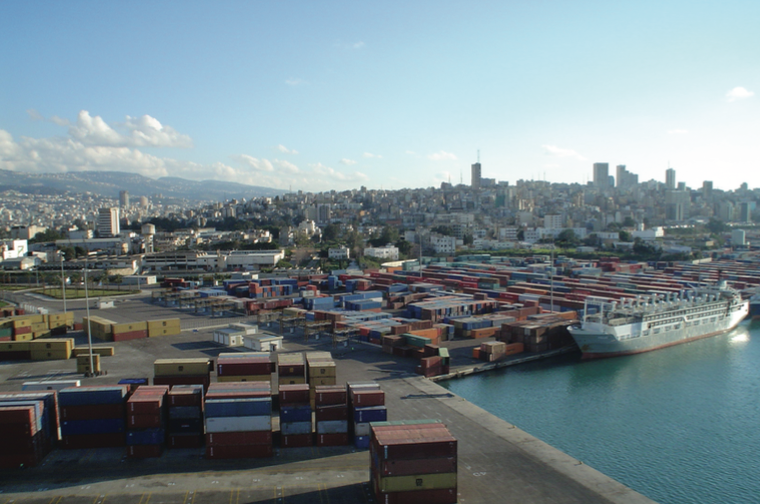
We have good support. While our Ambassador, Frances Guy, is necessarily focused on the political arena, she is also extremely enthusiastic about commercial work. In recent months she has been 45 meters up a crane at the Beirut Container Terminal (a real success story — run by a Lebanese-British consortium), visited the offices of several major importers from the UK, and toured several factories. We also work closely with key individuals from the British Lebanon Business Group — an informal network of British and Lebanese businesspeople which includes some of Lebanon’s most influential commercial decision makers.

So, am I optimistic about the future? The answer has to be ‘yes, but…’! I was lucky enough to be here in the first-half of 2006 when Lebanon really seemed to be booming. New mega-projects were being announced on a weekly basis, and while there were problems, it was possible to imagine that Beirut could regain its pre-civil war status as a financial and trade hub for the region. Much has been lost, and whatever happens it will take time to regain that momentum. But the underlying skills, dynamism, and creativity are still here, and there is significant pent up energy from investors waiting for better times. It is not a market for the fainthearted, but the rewards could be substantial.

Dominic James is the head of Trade and Investment at the British Embassy in Lebanon.

March 3, 2008 0 comments
0 FacebookTwitterPinterestEmail
By Invitation

Trouble brewing beyond the oil fields

by John Defterios March 3, 2008
written by John Defterios

It does not take much to rattle the commodity markets these days. Despite a dramatic slowdown in the United States and within Western Europe, there is certainly enough demand and enough speculation to have a new record close for oil this week, above $100 a barrel.

The trigger for the final close above that benchmark was a refinery explosion. Fingers were also pointed at the falling dollar, potential unrest in Nigeria and Hugo Chavez’s unpredictable nature as the overseer of Venezuelan crude.

With the strong growth underway in the Middle East region for this year and the mammoth construction boom, prices for everything from iron ore to make steel, to Arabica coffee beans to make cappuccinos, are at record highs.

There is a whole basket of so called soft and hard commodities skyrocketing — and for good reason. Demand outside of the Group of Seven countries remains strong and minor “events” create reasons for speculators to drive prices higher.

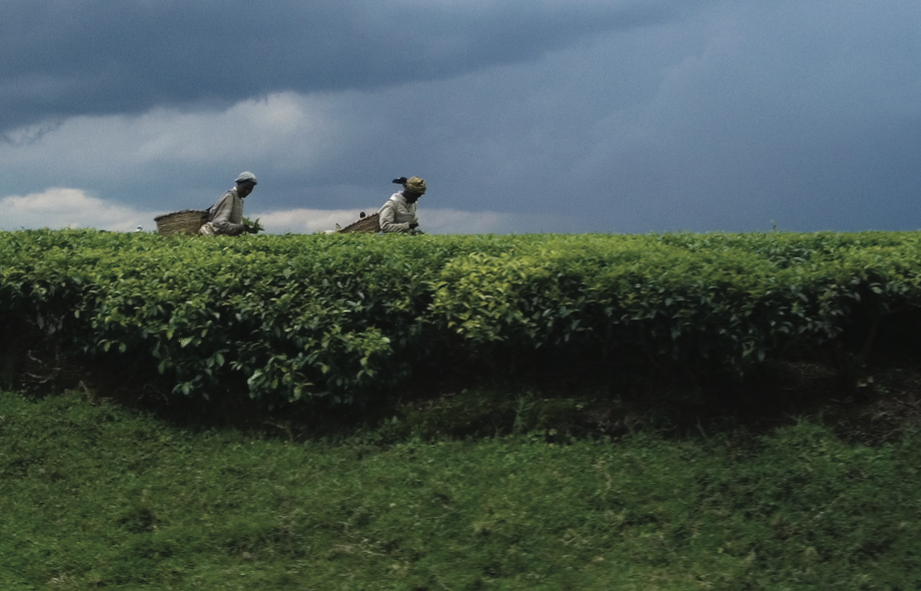
Take Kenya and the prolonged negotiations over the power sharing talks with President Mwai Kibaki and renewed fighting in Sri Lanka between the government and the Tamil Tigers in the north. Together those two countries represent 50% of tea exports. Tea demand is up 12% over the last year. Again don’t look to the traditional tea houses in London for the answer, but places, like India and China who cannot meet domestic demand.

Last week, prices for high quality Arabica coffee beans soared to a 10 year high, after prices climbed 36% in 2007. Cocoa prices hit a 24 year high after surging 45% last year. Upcoming elections and civil unrest in the Ivory Coast provide plenty of “grist for the mill” (or reasons to speculate) if you are a trader of cocoa beans.

I don’t know if you are a daily scanner of the commodity section of your preferred newspaper, but right now they make for interesting reading beyond the daily staples of our diet. Platinum, iron ore, gold are all in record territory. We are seeing that major steelmakers are settling on contracts for raw supplies that are up more than 70% over last year. No doubt, the construction companies of the Middle East will be paying higher prices for steel plates and wire, only adding to the inflationary pressure we are seeing for real estate in the region.

The sum of all the parts is this: The rise across the board of this basket of commodities is not esoteric, “does not affect me” kind of stuff, but the real deal. While a slowdown in the West may slightly correct the imbalance of supply and demand near term, it will not solve the problem created by prosperity and a more globalized world. One thing I am not reading between the lines is the potential for the extra supplies coming onto the market to curb these prices. This applies to both quality coffee and quality crude.

Which leads me back to the recent rise of oil. Doing some quick math on Saudi Arabia, at roughly 9 million barrels a day, the Kingdom brings in $6.3 billion a week in revenues from oil production; $325 billion a year. That is a great deal of money for a population of just 27 million. The government is in the midst of reallocating that money with a whole set of new economic cities, airports and universities. They don’t want to see a replay of the 1970’s boom and bust scenario. There is an effort underway to build a foundation for future growth, beyond the barrel if you will.

We’ll take a closer look at that effort next week while on the ground at the Jeddah Economic Forum.

John Defterios is the presenter of CNN’s Market Place Middle East

March 3, 2008 0 comments
0 FacebookTwitterPinterestEmail
By Invitation

Privatization: As public as it gets

by Ramsay G. Najjar March 3, 2008
written by Ramsay G. Najjar
If you walk down the streets of Beirut on any given day, chances are you will hear a passer-by cursing the sub-par quality of Lebanon’s mobile networks and services and the “exorbitant” prices levied on consumers by the two GSM providers. Yet when you ask many members of the public if they support privatizing the same network, they will adamantly disagree.

This dichotomy epitomizes the problem with obtaining the buy-in for privatization: its benefits are concrete, but they have to be clearly communicated to be understood by the public.

Lebanon is just one side of the privatization spectrum, where political quarrels and a skeptical public have slowed down the process to the detriment of citizens, who have been facing deteriorating mobile and electricity services among others.

On the other side of the spectrum, however, there are numerous case studies in countries where privatization has been a success, in large part due to the communication behind the initiative that drew citizens’ attention to “what’s in it for them” and helped gain their backing for this alternative way of running the economy.

Margaret Thatcher’s reforms in England during the 1980s and 1990s, for example, have become an international benchmark of successful privatization for their effectiveness in transforming the debilitated electricity, postal and railway systems in the country. The ‘secret’ behind this achievement was the British people’s endorsement of the project once they understood that it would lead to greater efficiency, higher quality, lower prices and more service offerings.

Thatcher’s success is even more striking when contrasted with the failure of Communist governments, during the same period, because of their attempt to force a system on their people by claiming that citizens must accept it for the ‘good of the state,’ at the expense of individual rights and benefits. This is where governments must understand that instead of drowning in a sea of rhetoric, they can build a bridge through communication that reaches across the gap between what’s good for the state and what’s good for the citizen.

Failure in securing public support for privatization will also persist as long as the misconception that privatization is equal to handing public property over to private corporations is perpetuated. Instead, communication needs to position privatization as a deeply-rooted partnership between the public and private sectors that is ultimately in the benefit of the citizen. In fact, “public-private partnership” is the new word for privatization — a genuine partnership where the public sector safeguards the sovereignty of public services and upholds the public interest and where the private sector brings in its dynamism, business sense and innovation to ensure viable, quality services and competitive prices.

Regionally, we only have to look as far as Saudi Arabia, Egypt and Jordan to witness citizens reaping the benefits of privatization, in the form of lower mobile prices and a more reliable phone network. As these countries and others expand privatization to touch other sectors, such as utilities and transport, it is important that they ride the wave of popular momentum by pointing to the jobs created and the overall efficiency of operations that answer to consumers instead of being artificially propped up by citizens’ tax dollars.

Weak or inappropriate communication, on the other hand, most often backfires and destroys campaigns of economic reform. Just take the example of Bangladesh. In the 1990s, the Bangladeshi government decided to resist popular discontent with its plans to privatize a coastal warehouse, by undertaking the project in secret. Sure enough, a potential investor came to visit the warehouse site only to be threatened to be killed by a guard, reflecting the public’s fear of privatization and leading to several years of delay in the process.

Cloak-and-dagger secrecy and messages that do not effectively target stakeholders, can make governments look like they have something to hide, as well as failing to shed light on how this partnership will touch their lives and bring a solution to their every day problems. This adds fuel to the fire of local hostility and misconceptions about private interests wanting to take advantage of state wealth and public goods, rather than highlighting how such a reform would contribute to improving their quality of life.

Yet, while secrecy leads to disaster, highlighting the transparency of the privatization process, in terms of each step of the bidding process and the clear-cut rules and regulations, is not the proper remedy. Authorities have spent too much time and effort on taking the public step-by-step through the nitty-gritty of privatization, when these explanations are far too technical and removed from the population’s deepest concerns and needs.

To avoid such pitfalls, a communication strategy must be carefully balanced between relaying the long-term vision behind economic reform and managing people’s expectations, which involves an explanation that for every job lost more will be created. That privatization actually bolsters and catalyzes economic growth and that competition in any sector means more variety and better prices for consumers. In fact, privatization not only creates jobs, it also fosters better working conditions and benefits for employees and promotes a higher level of productivity and innovation. What’s more, many privatized sectors lead to IPOs that consumers can literally be a part of and profit from as an investment.

Communicating these messages begins with highlighting the transparency of the process and reaching out to the different stakeholders, from regulatory bodies to members of the public. But the key to successful communication in this case is to focus on a two-way dialogue with the public, based on understanding their needs and expectations and tailoring the messages to each and everybody’s question: “What’s in it for me?”

After all, who is more convincing: a dietician who lists each and every food you’ll be deprived from on your diet or one that tells you that by following the diet, you can go back to wearing your favorite outfit or a sexy swimsuit on the beach? Of course, the crucial element in effective communication is not just being heard, but saying something that people will listen and respond to — in this case that they will benefit from privatization.

Ramsay G. Najjar, chairman of S2C

March 3, 2008 0 comments
0 FacebookTwitterPinterestEmail
Capitalist Culture

Politics of – Entertainment

by Michael Young March 3, 2008
written by Michael Young

Fairuz does not have much in common with the United Kingdom’s Olympic authorities. However, both found themselves in a similar conundrum recently, and it was not particularly pleasant.

In January, Fairuz traveled to Damascus for a concert, the city having been named the Arab cultural capital for 2008. Before leaving, politicians from Lebanon’s anti-Syrian March 14 coalition urged her not to go. In an open letter, one parliamentarian, Akram Shuhayyib, wrote: “People who sing for freedom, for Jerusalem, for the Arab conscience and dignity do not sing for the tyrants of Damascus … You are our ambassador to the stars, you have painted our Lebanon as a free, independent and sovereign nation, so don’t sing for those that don’t even recognize our nation.”

In February, the British Olympic Association (BOA) came under similar fire, when it admitted that athletes attending the summer Olympic Games in Beijing would have to sign a contract with a clause forbidding them to comment on China’s poor human rights record. Those refusing to sign would be banned from the games. To justify the move, the contract referred to Section 51 of the International Olympic Committee Charter, which “provides for no kind of demonstration, or political, religious or racial propaganda in the Olympic sites, venues or other areas.”

Consciously or not, Fairuz and the BOA hid behind a familiar defense: that there are certain domains that should remain isolated from politics. But more generally, they were trying to achieve an understandable if somewhat self-centered objective: to dodge ambient political bullets so as to emerge personally or institutionally better off.

In that sense, Fairuz and the BOA were right. When political matters infiltrate anything, they often polarize attitudes. And when that happens, a professional is forced to take sides. Yet the point of many professions, particularly artists or sports personalities, is to appeal to as many people as possible. Fairuz had no interest in alienating part of her audience by refusing to travel to Syria; and the BOA had no interest in damaging its Olympic prospects by allowing athletes to deflect public attention toward matters not essential to Britain’s sporting performance.

At the same time, however, such calculations are naïve, even counterproductive. In not wanting to alienate her Syrian audience, Fairuz alienated part of her Lebanese audience. As a noted Lebanese blogger wrote, with great bitterness: “Fairuz the singer died when her voice tragically aged. But her art was kept alive by the people who worshipped her as a symbol of their existence, and as a nostalgic reminder of home. Today, she betrayed them, and their memories. Syrian media hailed her ‘return to her people.’ Let them have her. Many of us will pretend that she died in the war, like many other people and things of value.”

Similarly, the BOA, in wanting to ignore politics, only compelled critics to look up comparable cases in the past. The Daily Mail, for example, ran a photo of the England football team saluting Nazi-style at the 1938 Olympic Games in Berlin, a showpiece for Adolph Hitler, over a caption reading “a memory which critics do not want to see recalled in China.” Was this disingenuous? Plainly, since China is hardly Nazi Germany. But that’s irrelevant. The real issue is that the BOA carelessly thought it could isolate itself from this kind of political one-upmanship.

Is there any solution to this dilemma? No. Culture, like professional sports, has always been fundamentally political, as are most kinds of public activity. National sporting rivalries, even if they do not overtly involve politics, reflect issues of solidarity or hostility and say a lot about how a country views itself. Culture that is entirely apolitical is terribly limited in scope, and many forms of expression, from poetry to painting to jazz, only found their true resonance when expanding into themes that were in some way political by challenging existing conventions.

But then a famous example of this involves Fairuz herself. In the 1980s, her son Ziad Rahbani staged a brilliant play titled Shi Fashil (Failure). It was about a theater troupe trying to stage a play similar to the theatrical musicals written by the Rahbani brothers (notably Ziad’s father Assi), which had turned Fairuz into a star. The biting comedy line came from the fact that the play being rehearsed in the play was supposed to be apolitical and reflect the basic unity of the Lebanese, even as the theater troupe was riven by political differences. Ziad’s message was that the apolitical, idealized musical worlds created by his father and highlighting his mother were mostly a sham; politics were everywhere in Lebanon.

Fairuz should have revisited Ziad’s play before agreeing to go to Damascus. She may have been justified in singing to her admirers there, but she couldn’t have seriously expected it wouldn’t provoke controversy.

Michael Young


March 3, 2008 0 comments
0 FacebookTwitterPinterestEmail
Comment

Going nuclear

by Peter Speetjens March 3, 2008
written by Peter Speetjens

As Chernobyl’s 1986 radioactive cloud has gradually vanished from the public eye, nuclear energy is firmly back on the political agenda. Industry advocates and politicians, the world over, present the nuclear option as a kind of magic mushroom, which at once will help decrease the ever rising fuel bills and reduce greenhouse emissions. If only it were that simple …

Despite its problematic nuclear past, Britain is among the frontrunners in the world’s drive for an atomic future. The Labor government has given the green light for the construction of an additional 15 nuclear power plants. “It would be for the private sector to initiate, fund, construct and operate new nuclear plants, and cover the costs of decommissioning and their full share of long term waste management costs,” stated Britain’s chancellor of the exchequer, Alistair Darling.

Britain is by no means alone in its nuclear desires. The US, the world’s biggest producer of nuclear energy, plans to build an additional 30 plants, while Europe’s nuclear giant, France, is constructing its 59th.

Most countries in the MENA region have also expressed a wish to go nuclear. In 2006, Tunisia signed a nuclear cooperation agreement with France and aims to complete a 600 MW nuclear facility to produce electricity and desalinize water by 2020. Libya and Morocco followed suit. Algeria has had atomic ambitions since 1982 and recently signed a nuclear energy agreement with the US. Egypt aims to construct four nuclear reactors by 2020. Saudi Arabia, Jordan, Yemen and the UAE also have nuclear ambitions, while Iran seems well underway to complete its first nuclear power plant.
 

Advocates claim nuclear energy is a clean and cost effective solution, yet that remains very much to be seen. Sure, operating a nuclear power generator produces no greenhouse gas emissions and thus helps counter global warming. Yet the environmental argument comes across as rather cynical, knowing that the highly toxic nuclear waste requires to be stored in abandoned salt mines for tens of thousands of years, while the 1986 Chernobyl disaster caused radioactivity levels to rise even in Sweden.

Britain should be all too well aware of the dangers, as the world’s biggest nuclear disaster after Chernobyl took place in 1957 at its Windscale facility, today better known as Sellafield. A fire in the nuclear reactor produced radioactive fumes and waste water. The authorities immediately declared the fallout posed no public health hazard, yet within days heightened levels of iodine were found in local milk, while elevated radiation levels were reported in France.

But that is something of the past, some may counter. Not so. In 2005, Sellafield workers discovered that a pipe had leaked 83,000 liters of radioactive waste into a concrete chamber. Fortunately, the latter was especially constructed for such an incident, yet it had taken a stunning nine months for the leak to be noticed. If this can happen in Britain, what — with all due respect — is to be expected in a country like Yemen?

In addition, it is not at all guaranteed that nuclear power generation is cost effective. True, once built, a nuclear facility is much cheaper to operate than a traditional power plant. But building a 1,000-MW nuclear power plant costs a whopping $2-2.5 billion, while a modern combined-cycle gas turbine costs about one-fifth of that sum.

More importantly, the costs of nuclear waste disposal and the decommissioning of plants, once production stops, are enormous and hard to predict. In 2005, Britain’s Nuclear Decommissioning Authority (NDA), which oversees the dismantling and clean-up of closed nuclear reactors and reprocessing facilities, estimated that the operation would take up to 100 years and cost $110 billion. Today, the bill has increased to $146 billion.

Nevertheless, Industry Minister Darling is confident that private nuclear power operators are willing and able to make such investments, and still produce cost-effective electricity. The Brown government’s unfaltering belief in the blessings of the free market is all the more remarkable, in the light of Britain’s privatization of the nuclear sector, which has hardly been a success story.

In 1996, eight of Britain’s most modern nuclear power plants were consolidated into one private company, British Energy (BE). Six years later, the government was forced to step in with a taxpayers’ cash injection of $7.9 billion to save BE from bankruptcy. For both health and financial reasons, the nuclear option rather resembles a game of Russian roulette.

Instead of following Britain’s example by pouring tens of billions of dollars into private nuclear power generators, the MENA region, which is blessed with ample sunshine and remaining hydrocarbon reserves, should rather follow in the footsteps of Germany, which has vowed to shut down all nuclear plants by 2020, while investing in energy saving measures and truly sustainable energy sources, such as wind and solar power. After all, let’s not forget that the earth’s uranium reserves are as finite as its oil.

Peter Speetjens is a Beirut-based journalist.


March 3, 2008 0 comments
0 FacebookTwitterPinterestEmail
Comment

Syria moves ahead

by Riad Al-Khouri March 3, 2008
written by Riad Al-Khouri

Syria’s current economic performance is strong, as the country benefits from growth in exports and inflows of private investment, which helped the economy to grow at a rate of 6.2% in 2007, compared to 5.1% registered in 2006. American sanctions are not a major impediment to the Syrian economy. In fact, gradual globalization helps to push numerous US products in Syria, from fried chicken franchises to a major sugar refinery. Far from helping to achieve purported US regional goals, such as isolating the Iranians, the effect of American sanctions on Syria has been counterproductive, opening the door to greater influence on Damascus by regional powers — including Iran, itself seeking stronger Middle Eastern ties to counter America.

Tehran has thus partly filled the gap created by sanctions. Taking advantage of some economic possibilities; and new Syrian-Iranian economic joint ventures in Syria include among many others: an oil refinery (to be built in partnership with Venezuela), two factories to make Iran-designed family cars, and a plant to produce 1 million tons of cement annually and help meet the demands of Syria’s building boom. This is part of the Syrian strategy of improving relations with its neighbors. Cold-shouldered by America, and to some extent by Europe (the Syrian Euro-Med agreement has been initialed but not signed), Damascus has for the past few years looked to the region for economic and business collaboration.

In that respect, notable developments recently include a rapprochement with Jordan, as well as positively evolving links across much of the rest of Syria’s neighborhood. After a frosty period caused by the perception that Amman sided with the US and its other allies in the region against Syria, the visit to Damascus by Jordan’s King Abdullah in November has helped to improve relations between the two neighbors. The pace of co-ordination between the two countries has quickened since then. In among other spheres, movement of passengers and goods between the two countries is huge and growing. Coming south are Syrian and other goods destined for Jordanian factories and consumers (as well as to Saudi Arabia and neighboring economies) and large numbers of Syrian workers seeking employment in Jordan. Headed in the other direction are increasing numbers of Jordanian and GCC tourists. The vast majority of these people and goods cross the border by road, though a small number also travels between the two countries by air, with flights between Jordanian and Syrian cities increasing. At the same time, although the two countries had neglected their railways in recent years, over the past few months Jordan and Syria have agreed a new railway project to link the two countries.

From the east, Iraqis liked Damascus so much that up to 1.5 million of them are living there and in other Syrian cities, by far the largest number of Iraqi refugees accepted by any state in the region. Since most of these are neither poor nor uneducated, they are a source of increased business between the two countries over the longer term, though in the short run the refugees have strained Syrian production capacity in various sectors and pushed some prices up. Another factor linking the two countries is water, which along with Turkey they share through the Tigris-Euphrates system. Syria had to contend with drought recently, making even more significant the recent meeting (the first in many years) between Damascus, and Baghdad, along with Ankara, to talk about their shared river basin.

In the same vein, Syria asked the Turks in January to release more water from their dams on the Euphrates to build up supplies for irrigation. In November, Ankara also underlined its co-operation with Damascus in another sphere, when Syrian plans were unveiled, to import natural gas from Iran via a pipeline running through Turkey. Coupled with these and other infrastructural developments was the launching of numerous joint ventures between the two neighbors, as well as an increasing flow of people and goods across their borders.

Finally, regarding Lebanon, economic relations between Beirut and Damascus are far too important for the current crisis between the two neighbors to have a serious impact. The alternative for the Lebanese, to normal relations with Syria, is normalization with Israel, but the latter will not happen coercively, and on any case not before the former. Syria on the other hand cannot properly deal with the employment implications of its population growth without the safety valve of the Lebanese labor market absorbing hundreds of thousands of Syrian workers. In other words, the two countries need each other too much for rifts to continue long. Meanwhile, Syria continues to pursue a regional strategy, opening up to other countries of the Middle East.

Riad al Khouri is a visiting scholar at the Carnegie Middle East Center, and Senior Fellow of the William Davidson Institute, University of Michigan.


March 3, 2008 0 comments
0 FacebookTwitterPinterestEmail
Comment

A change in US Mideast policy?

by Claude Salhani March 3, 2008
written by Claude Salhani
 
To be able to say that there is a shift in US policy regarding Syria, one has first to assume that there was indeed a coherent policy on how to deal with Damascus in the first place. Yet for the most part Washington’s policy regarding regimes that the Bush administration disagreed with has been to: A) refuse to talk to them, and B) to berate them at every chance. Washington’s stance regarding Damascus was a typical example of such policy. Could that policy be changing so late in the game? Possibly. But then again, more likely not.

In his final State of the Union address President George W. Bush was quite forthright in his accusations aimed at Iran and its leaders. Bush issued a stern warning to the leadership in Tehran, warning them that the United States would not stand idly by, in view of what he deemed was, Tehran’s aggressive policy in the region.

The president devoted a sizeable portion of his address to the Middle East, particularly focusing on the situation in Iraq and on what he likes to call “the war on terror.” Bush stressed the importance of “confronting enemies abroad and advancing liberty in troubled regions of the world.” He spoke of witnessing “stirring moments in the history of liberty.” He spoke of images of liberty that have “inspired us,” such as Iraqis voting in free elections for the first time. He also spoke of “images that sobered us.” He referred to “[passenger] trains in London and Madrid ripped apart by bombs,” a bride in a blood-stained dress at a wedding party in the Jordanian capital, and people carrying coffins in Lebanon.

There was, in effect, nothing new to what should have been a landmark speech, his last, after two terms in the White House and two wars in the Middle East. This speech will, after all, be the one that historians will remember most and will in years to come be compared it to those of other presidents.

On second thought, however, there was indeed an important new element to the president’s speech; the novelty was not so much in what was said, but more in what was left out of the presidential address. If Bush continued to view Tehran as representing a clear and present danger to the security of the United States, repeating that all options remained on the table when it came to Iran, the president was conspicuously silent when it came to Syria.

In retrospect, this silence seems rather odd when compared to previous speeches summarizing the situation in the Middle East. Until now, members of the Bush administration had no qualms about accusing Damascus of interfering in the affairs of its neighbor to the west, as well as those of its neighbor to the east.

Could it be that Washington has decided to engage Damascus in dialogue rather than continue its previous policy of shunning those that it disagrees with? Besides the Iraqi imbroglio, which Washington says Damascus has been involved in, facilitating the transit of weapons and fighters through its territory. The Bush administration has also clashed with Damascus over the political tug of war in Lebanon, more recently over the question of the Lebanese presidency.

Is this sudden silence concerning Syria an indication that Washington and Damascus are talking to one another? If so, both sides have been very discrete and successful in maintaining a complete media blackout, a near impossibility in a city such as Washington.

Hiam Nawas, a political analyst in Washington, follows Syrian affairs with a keen interest. She believes that if we are to resolve the Lebanon issue, “engaging Syria is crucial.”

True words. But other than the president’s silence there is no other indication of a thawing of relations between Syria and the United States. Rather, all indications seem to hint at Damascus having “given up” on attempting to deal with the Bush administration, instead focusing on how to do business with the next administration, now less than a year away.

Indeed, if Washington has lacked a coherent policy on how to deal with Syria, on the other hand the policy applied by Damascus when dealing with an intransigent Washington has been quite simple: Wait until a new administration moves into the White House.

Not pressured by the same four-year electoral cycle under which US presidents operate, Syria’s rulers — as well as a number of other leaders around the world — have learned to retrench and sit out the remaining time left to an administration they disagree with. This has long been the strategy practiced by President Hafez al-Assad and it continues to be the method of choice of his son and successor, Bashar.

Claude Salhani is editor of the Middle East Times.


March 3, 2008 0 comments
0 FacebookTwitterPinterestEmail
Comment

Iran’s mutually assured destruction

by Paula Schmitt March 3, 2008
written by Paula Schmitt

Like a cheap war pamphlet prodding a very susceptible bully president, the weekly The Economist, had on its January 31 cover the question-headline “Has Iran won?

”The Economist has lost much of its respect and has ceased to be a sober reference (remember the cover just before the Iraqi invasion saying “Why war would be justified?”) but the magazine’s articles on Iran are important because they spill the beans on the reasons for an attack — a rationale that is as irrational as it can get. There are several fallacies in The Economist’s article, and I am using the piece precisely because it repeats the average, lowbrow arguments with which we have been swamped in the days leading to the IAEA report on Iran. Let us not belittle the importance of a biased press — while not giving us the truth, they dutifully authenticate and spell out the day’s agenda. If recent news articles are any indication, we are no more than months away from an attack on Iran. Now, I have little fondness for Islamic republics or any religious republic for that matter. And yes, I would rather live in a world without nuclear weapons. But in the current setup of weapons distribution, Iran is only doing what it politically should, and what it is legally entitled to.

The Nuclear Non-Proliferation Treaty is the most widely accepted arms control agreement in the world. According to the NPT, only five countries are entitled to own nuclear weapons: USA, China, Russia, France and the United Kingdom. It is no coincidence that these countries are the permanent members of the Security Council — they are the most capable of destroying the world, and thus keep it on a leash. What happens if one of the permanent members wants to attack another? That is prevented, or so one hopes, by the principle of MAD, Mutually Assured Destruction. Countries are deterred more efficiently, it seems, by the certainty of their destruction. This logic is laid clear by the chronology of weapons acquisition. Allegedly out of fear of Nazi Germany, America was the first country to develop a nuclear weapon, efficiently tested on the Japanese. The US was then made, ad hoc, the world’s police not based on its prudence and justice, but on its power — and willingness — to destroy. Yet fear breeds dread and four years later Russia started building its own nuclear arsenal, as a defense against a possible US attack. Three years later, fearing the proximity of Russia, the United Kingdom also chose to have nuclear weapons, then it was France and then China. It’s worth noticing that this logic is at the core of the very right to bear arms in the US: Citizens should have the means to defend themselves — even against their own government. If the monopoly of power was left in the hands of the state, citizens could be made hostage to an illegitimate ruler.

Now, if the US government can be seen as a potential threat even to its own people, it was therefore very naïve to imagine that in a multi-polar world all the rest of the non-nuclear countries would be fine with having five nuclear states dictating the rules. Hence, since the exclusive club of nuclear states was closed for membership, countries that wanted to go nuclear simply chose to not sign the treaty. To protect itself against China and Russia, India got its nukes. Pakistan felt threatened and started developing its own weapons program. Israel, which feels menaced by its neighbors, got its own nuclear warheads, also refusing to sign the NPT. Why, in this scenario, is Iran considered a rogue state, or, to borrow The Economist’s appalling words, should be made to “quake in its boots?” Here is where the whole story of nuclear proliferation gets even more sinister.

Iran is a subscriber to the NPT, and according to the IAEA, as of yet, has never failed to comply with the treaty itself. On the other hand, India, who did not sign the NPT, was rewarded by the American Congress with transfer of civilian nuclear material. The USA also mocks the NPT when it violates its first article by providing nuclear weapons to Belgium, Italy, Turkey, Germany and the Netherlands, under the official excuse that those weapons are “under constant and complete custody and control” of the United States, being there only for storage. In fact, Iran started its nuclear program precisely when it was on good terms with America, under the shah’s government. Why is Iran now considered a bigger threat than Israel? What qualifies a state as ‘rogue’? Is it its ruler? Its people? Its rhetoric and pathetic rants? Shouldn’t a country’s actions, rather than words, determine its level of threat to the rest of the planet? Haven’t we learned that governments, even in supposed democratic states like the US, do not always represent their people, and sometimes are not even actually elected? How can one think America is the same America under Bush as it was under Jefferson, or under Carter, to find a more recent comparison?

Mohammed ElBaradei is doing a decent, technical and honest job at the IAEA, despite all the external pressure. A lawyer by formation, he has refused to skip due process and is sticking to the letter of the treaty. It is not his, or America’s job, to guess the ‘motivation’ of countries. Israel believes its soil belongs to the Jewish people, and that they have been chosen by God. This type of religious premise is as horrifying, though more dangerous, than India calling its first nuclear test the “Smiling Buddha” or Ahmadinejad denying the Holocaust — something more pathetic than harmful. In politics, words mean very little. Actions, on the other hand, mean a lot. It is the IAEA, not the US, which has the means, competence and independence to decide Iran’s nuclear future. America doesn’t have the legal mandate to decide, much less the moral right.

Paula Schmidtt is a correspondent for Radio France International and Rolling Stone Brazil.

March 3, 2008 0 comments
0 FacebookTwitterPinterestEmail
Comment

Lebanon’s tremors

by Nicholas Blanford March 3, 2008
written by Nicholas Blanford

The recent earth tremors felt in Lebanon served as a timely reminder of the volatility of the land mass on which Lebanon rests. The good news is that, unnerving though it is to experience an earthquake — even minor tremors such as those that shook Lebanon in February — they are a reassuring sign that the fault systems beneath are feet are moving as they should. Indeed, a prolonged absence of seismic activity in an earthquake zone is far more troubling, as it suggests that a fault is jammed. Pressure builds up and is eventually released in one convulsive and destructive shock.

Lebanon has a long history of major earthquakes, which have destroyed Beirut at least twice and helped shape Lebanon’s current coastline.

The country lies at the nexus of three continental plates: the African, the Arabian and the Eurasian. The African plate is heading south-west and the Arabian plate north-east at approximately two centimeters per year. The Dead Sea rift between the African and Arabian plates runs up the Red Sea, through the Gulf of Aqaba, along the Jordan valley and into Lebanon where it becomes known as the Yammouneh Fault following the western side of the Bekaa.

However, Lebanon’s dilemma does not center solely on this one major fault but on the dozens of others running throughout the country. As an example, Beirut has at least five recognized faults. One follows the Beirut River, another called the Town Center Fault begins at Normandy and heads through downtown, another fault is in Ras Beirut, and two faults follow the Beirut coastline and bisect just off Ras Beirut. Geologists believe that it is these last two faults that created the Beirut peninsula by forcing the sea bed above the surface of the sea.

Other than the direct action of shockwaves, earthquakes can also generate other phenomena such as tsunamis and soil liquefaction.

A tsunami is a wave generated by an earthquake the epicenter of which is located beneath the sea bed. They can travel at speeds of 750 km/h at a height of 30-40m and can deliver on average 100,000 tons of water per 1.5 sqm of coastline. According to two Jesuit priests, Fathers Plassard and Kogoj, who conducted an extensive survey of Lebanon’s seismic record in the 1960s, Lebanon’s coastline has been hit by tsunamis 14 times over the last 2,500 years.

Soil liquefaction occurs in areas of loose earth, such as sand or silt, which also contains a high water content. With repeated shaking the soil develops the consistency of water completely undermining foundations with the result that buildings can topple over in one piece like felled trees.

Many seismologists believe that earthquakes are cyclical, occurring at regular intervals throughout history. Given this information, as well as a detailed knowledge of the faults themselves, some believe that earthquakes can be loosely predicted over the long term.

Lebanon is fortunate in this regard, as earthquakes have been documented over the last 2,500 years. By contrast, the notorious San Andreas Fault in California has records extending back only 250 years.

If anyone is in any doubt as to the impact earthquakes can have on Lebanon, one only needs to consult these records: 525 BC — Tyre destroyed; AD 349 — most of Beirut destroyed; July 6, 551 — total destruction of Beirut, massive damage to Tripoli and Tyre, coastline altered, part of Ras Chekka falls into the sea; 1170 — destruction of Tripoli; October 30, 1759 — destruction at Quneitra and Safad, 2,000 dead; November 25, 1759 — Beirut and Damascus destroyed, more than 40,000 dead. The above are only the major earthquakes, more have been chronicled.

An earthquake of a similar magnitude to the one of November 1759 would today be a national catastrophe. One earthquake in Lebanon could cause as much damage in a few minutes as was sustained by 16 years of war.

Although earthquakes cannot be avoided, their impact can be mitigated through prior planning, specifically the enforcement of strict seismic building codes for new construction. Unfortunately, the vast majority of Lebanon’s buildings constructed over the past 40 years lack any seismic qualifications. The near ubiquitous design of a reinforced concrete frame filled in with cinder block walls offers little protection against an earthquake.

The difference between cities that have incorporated seismic building codes and those that have not is shown by comparing recent earthquakes. The 1994 Northridge earthquake in California, with a magnitude of 6.8, killed 33 people. Yet the 2003 earthquake in Bam, Iran, with a magnitude of 6.6, killed 30,000 people. The 1995 earthquake at Kobe, Japan, had a magnitude of 7.3 and caused 4,600 casualties but the 1999 earthquake at Izmit in Turkey with a magnitude of 7.5 cost the lives of 45,000. California and Japan were prepared, Iran and Turkey were not.

When I last discussed the earthquake threat to Lebanon with an expert, I was told that Lebanon experiences a very strong quake exceeding a magnitude of seven approximately every 200 to 250 years. The last big earthquake was in 1759. Given that it is impossible to accurately predict the timing of earthquakes, the expert said that there was a 60-70% probability of a destructive earthquake occurring in Lebanon over the next 50 years. The bad news is that conversation took place 11 years ago.
 

Nicholas Blanford is a Beirut-based journalist and author of “Killing Mr. Lebanon – The Assassination of Rafik Hariri and its Impact on the Middle East.”


March 3, 2008 0 comments
0 FacebookTwitterPinterestEmail
  • 1
  • …
  • 543
  • 544
  • 545
  • 546
  • 547
  • …
  • 696

Latest Cover

About us

Since its first edition emerged on the newsstands in 1999, Executive Magazine has been dedicated to providing its readers with the most up-to-date local and regional business news. Executive is a monthly business magazine that offers readers in-depth analyses on the Lebanese world of commerce, covering all the major sectors – from banking, finance, and insurance to technology, tourism, hospitality, media, and retail.

  • Donate
  • Our Purpose
  • Contact Us

Sign up for our newsletter

    • Facebook
    • Twitter
    • Instagram
    • Linkedin
    • Youtube
    Executive Magazine
    • ISSUES
      • Current Issue
      • Past issues
    • BUSINESS
    • ECONOMICS & POLICY
    • OPINION
    • SPECIAL REPORTS
    • EXECUTIVE TALKS
    • MOVEMENTS
      • Change the image
      • Cannes lions
      • Transparency & accountability
      • ECONOMIC ROADMAP
      • Say No to Corruption
      • The Lebanon media development initiative
      • LPSN Policy Asks
      • Advocating the preservation of deposits
    • JOIN US
      • Join our movement
      • Attend our events
      • Receive updates
      • Connect with us
    • DONATE