• Donate
  • Our Purpose
  • Contact Us
Executive Magazine
  • ISSUES
    • Current Issue
    • Past issues
  • BUSINESS
  • ECONOMICS & POLICY
  • OPINION
  • SPECIAL REPORTS
  • EXECUTIVE TALKS
  • MOVEMENTS
    • Change the image
    • Cannes lions
    • Transparency & accountability
    • ECONOMIC ROADMAP
    • Say No to Corruption
    • The Lebanon media development initiative
    • LPSN Policy Asks
    • Advocating the preservation of deposits
  • JOIN US
    • Join our movement
    • Attend our events
    • Receive updates
    • Connect with us
  • DONATE
Comment

Lebanon’s tremors

by Nicholas Blanford March 3, 2008
written by Nicholas Blanford

The recent earth tremors felt in Lebanon served as a timely reminder of the volatility of the land mass on which Lebanon rests. The good news is that, unnerving though it is to experience an earthquake — even minor tremors such as those that shook Lebanon in February — they are a reassuring sign that the fault systems beneath are feet are moving as they should. Indeed, a prolonged absence of seismic activity in an earthquake zone is far more troubling, as it suggests that a fault is jammed. Pressure builds up and is eventually released in one convulsive and destructive shock.

Lebanon has a long history of major earthquakes, which have destroyed Beirut at least twice and helped shape Lebanon’s current coastline.

The country lies at the nexus of three continental plates: the African, the Arabian and the Eurasian. The African plate is heading south-west and the Arabian plate north-east at approximately two centimeters per year. The Dead Sea rift between the African and Arabian plates runs up the Red Sea, through the Gulf of Aqaba, along the Jordan valley and into Lebanon where it becomes known as the Yammouneh Fault following the western side of the Bekaa.

However, Lebanon’s dilemma does not center solely on this one major fault but on the dozens of others running throughout the country. As an example, Beirut has at least five recognized faults. One follows the Beirut River, another called the Town Center Fault begins at Normandy and heads through downtown, another fault is in Ras Beirut, and two faults follow the Beirut coastline and bisect just off Ras Beirut. Geologists believe that it is these last two faults that created the Beirut peninsula by forcing the sea bed above the surface of the sea.

Other than the direct action of shockwaves, earthquakes can also generate other phenomena such as tsunamis and soil liquefaction.

A tsunami is a wave generated by an earthquake the epicenter of which is located beneath the sea bed. They can travel at speeds of 750 km/h at a height of 30-40m and can deliver on average 100,000 tons of water per 1.5 sqm of coastline. According to two Jesuit priests, Fathers Plassard and Kogoj, who conducted an extensive survey of Lebanon’s seismic record in the 1960s, Lebanon’s coastline has been hit by tsunamis 14 times over the last 2,500 years.

Soil liquefaction occurs in areas of loose earth, such as sand or silt, which also contains a high water content. With repeated shaking the soil develops the consistency of water completely undermining foundations with the result that buildings can topple over in one piece like felled trees.

Many seismologists believe that earthquakes are cyclical, occurring at regular intervals throughout history. Given this information, as well as a detailed knowledge of the faults themselves, some believe that earthquakes can be loosely predicted over the long term.

Lebanon is fortunate in this regard, as earthquakes have been documented over the last 2,500 years. By contrast, the notorious San Andreas Fault in California has records extending back only 250 years.

If anyone is in any doubt as to the impact earthquakes can have on Lebanon, one only needs to consult these records: 525 BC — Tyre destroyed; AD 349 — most of Beirut destroyed; July 6, 551 — total destruction of Beirut, massive damage to Tripoli and Tyre, coastline altered, part of Ras Chekka falls into the sea; 1170 — destruction of Tripoli; October 30, 1759 — destruction at Quneitra and Safad, 2,000 dead; November 25, 1759 — Beirut and Damascus destroyed, more than 40,000 dead. The above are only the major earthquakes, more have been chronicled.

An earthquake of a similar magnitude to the one of November 1759 would today be a national catastrophe. One earthquake in Lebanon could cause as much damage in a few minutes as was sustained by 16 years of war.

Although earthquakes cannot be avoided, their impact can be mitigated through prior planning, specifically the enforcement of strict seismic building codes for new construction. Unfortunately, the vast majority of Lebanon’s buildings constructed over the past 40 years lack any seismic qualifications. The near ubiquitous design of a reinforced concrete frame filled in with cinder block walls offers little protection against an earthquake.

The difference between cities that have incorporated seismic building codes and those that have not is shown by comparing recent earthquakes. The 1994 Northridge earthquake in California, with a magnitude of 6.8, killed 33 people. Yet the 2003 earthquake in Bam, Iran, with a magnitude of 6.6, killed 30,000 people. The 1995 earthquake at Kobe, Japan, had a magnitude of 7.3 and caused 4,600 casualties but the 1999 earthquake at Izmit in Turkey with a magnitude of 7.5 cost the lives of 45,000. California and Japan were prepared, Iran and Turkey were not.

When I last discussed the earthquake threat to Lebanon with an expert, I was told that Lebanon experiences a very strong quake exceeding a magnitude of seven approximately every 200 to 250 years. The last big earthquake was in 1759. Given that it is impossible to accurately predict the timing of earthquakes, the expert said that there was a 60-70% probability of a destructive earthquake occurring in Lebanon over the next 50 years. The bad news is that conversation took place 11 years ago.
 

Nicholas Blanford is a Beirut-based journalist and author of “Killing Mr. Lebanon – The Assassination of Rafik Hariri and its Impact on the Middle East.”
 

March 3, 2008 0 comments
0 FacebookTwitterPinterestEmail
Lebanon

Micro-credit – In Abundance

by Executive Staff March 3, 2008
written by Executive Staff
 
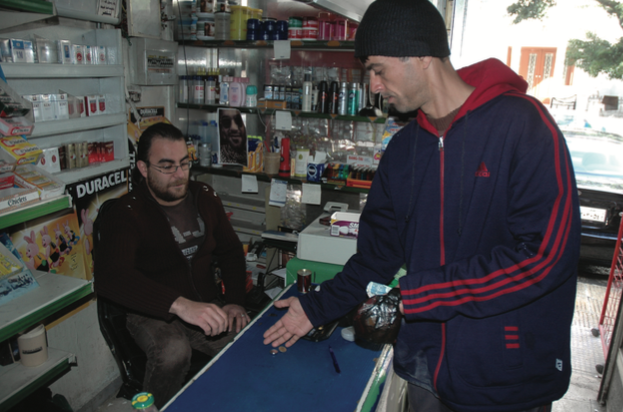
Sporting funky glasses, a hipster beard and a ponytail, Muhammad Ali Mansour stands proudly in front of his modest convenience store in urban Beirut. He had been an employee in this store for seven years before he decided to buy and run the establishment himself. Having been approached by an AMEEN credit officer based at the local Credit Libanais Branch he decided to apply for credit. Eight months ago, Muhammad received a $1,500 loan, which he used to help finance the purchase and expansion of his supermarket. “The expansion definitely brought more customers,” he says.

Nobel Prize winner Muhammad Yunus offered his first micro-credit loan in Bangladesh 32 years ago, using $27 from his own pocket. Since then, the concept of micro-finance has spread around the world. Lebanon’s version is dominated by a lending house known as Access to Micro-finance and Enhanced Enterprise Niches (AMEEN), which got its start as a pilot program in 1999 under the international non-governmental organization CHF. In that same year, AMEEN forged a deal with Jamal Trust Bank to get lending operations underway. AMEEN would provide the advertising and out-reach while Jamal Trust would provide the technical support. Both partners equally split the capital to be lent, the profit and the risk.

The micro-finance house chose to partner up with Jamal Trust Bank because “it believed in the mission. It supported the idea and had the right network of branches,” said Ziad Halaby, general manager of AMEEN. Later on, three other banks have joined as partners: Credit Libanais in 2001, Lebanese Canadian Bank in 2004, and most recently FRANSABANK in February 2008. Phillipe al-Hajj, Fransabank responsible for the AMEEN relationship, commented on the new partnership saying, “FRANSABANK’s branch distribution in north Lebanon and the Bekaa will be a big benefit for the lending house.”

AMEEN provides the outreach for its partner banks. It has 56 credit officers going door-to-door, introducing the concept of micro-finance to possible borrowers. This type of personal outreach is extremely important to the project as potential borrowers are usually from an income bracket that has no previous contact with the banking industry. The credit officers are always from the target community because they know the local needs best.
 

Going forward

After contact has been established and an individual has applied for a loan, a joint committee of AMEEN and partner bank personnel review the application. Although collateral is rarely a requisite, cosigners are often needed for approval. If the loan is approved, the partner bank contributes 50-100% of the capital, depending on its arrangement with AMEEN. The borrower then repays the loan by monthly installments, including 14-15% interest compounded annually. This is a relatively high interest rate compared to more traditional “macro” loans. However, macro- and micro-loans have distinctly different profit margins.

Assuming the same interest rate, the profit from 100 loans worth $1,000 each is the same as the profit from one $100,000 loan. But the labor and administrative costs are almost 100 times as expensive. These excess administrative costs, in addition to the resources required for outreach and education, justify the higher interest rates.

Since its inception, AMEEN and its four partners have given out more than 50,000 loans worth over $67 million. The average loan size is $1,400. Roughly 80% of recipients are male and over 40% of loans have been made to residents of South Lebanon. AMEEN’s Ziad Halaby explained that these discrepancies are predominantly related to the branch locations of its early partner banks and the current aim of the lending house is a more even distribution of borrowers throughout the country. Adnan Youssef, assistant general manager of Jamal Trust Bank, said that the micro-loans his bank facilitates are “targeted at all Lebanese citizens throughout Lebanon” and all 22 branches of Jamal Trust Bank are moving towards that goal.

Currently, AMEEN has 9,300 active loan portfolios. This burgeoning success can only be a good thing for potential borrowers. Halaby suggested that more loans mean higher aggregate profits, which should in turn allow lenders to decrease their interest rates. But he also pointed out that, despite the relatively high interest rates, surprisingly few recipients default on their loans. AMEEN has recorded a less than 1% default rate since opening its doors. And it’s not as if borrowers throw off the bonds of debt with the payment of their last installment, never to look back. Many recipients of micro-loans return for more. In fact, over 18,000 loans were to repeat borrowers. Banks also seem to be happy with the system. Not only has AMEEN been able to attract four partner banks giving out loans between $300 and $5,000, rumors of expansion abound.

Results

AMEEN and its partner banks consider the facilitation of micro-finance a part of their corporate social responsibility to society. Some critics say the positive benefits of micro-finance are hard to assess. Halaby agreed, saying “The main anticipated result for this type of project is capacity and material increase. These are difficult to measure in dollar amounts.” And although AMEEN occasionally conducts client surveys, Halaby averred that the high number of repeat borrowers is the best testament to the program. He suggested that the very fact the loan recipient returns to take another loan means that jobs are being sustained. Adnan Youssef of Jamal Trust Bank added that the existence of repeat borrowers means “we are achieving our primary goal. And that is to fight poverty.”

Back at the supermarket, Muhammad Ali Mansour is contemplating expansion. He has plans to take out a $3,000 loan in the near future to grow his shop into a second floor. And if that goes well, he says, why not another loan to buy a new location entirely?


March 3, 2008 0 comments
0 FacebookTwitterPinterestEmail
Lebanon

Port of Beirut – A Trading Culture

by Executive Staff March 3, 2008
written by Executive Staff
 
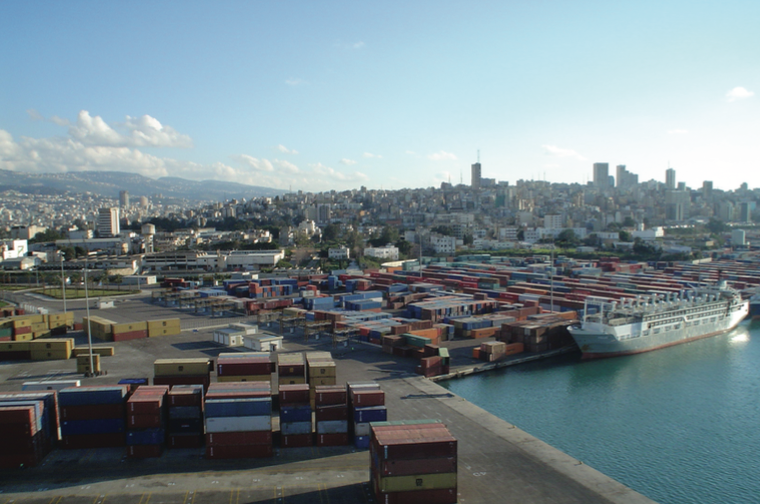
The Beirut Container Terminal, the center of Lebanese maritime trade, located in the Port of Beirut has an illustrious history to live up to. As the motto of the port reads, it is “An Ancient Port for the Future” and the figures for last year certainly live up to it. In 2007, port revenues reached $114 million, up $32 million from the previous year, and custom revenues achieved $736 million, an increase of $118 million. The economic buoyancy of the terminal has clearly not followed that of a seasick Lebanon. This is apparent in the fact that it was in 2005 that the Beirut Container Terminal began its rapid growth. Even the 2006 war could not keep the terminal at bay. Although during the war the port was closed for two months, within 24 hours of re-opening all the major shipping lines were back and queuing three to four days to get back into the port, according to Elie Zakhour, president of the International Chamber of Navigation.

It was June 2005 that the Beirut Container Terminal Consortium (BCTC) and the Port Authority (PA) announced that, for the first time in the history of the port, the container terminal would begin to handle transshipment vessels. Transshipment being the process, in which a large mother vessel comes into the container terminal, unloads its containers and then these containers are loaded on to other smaller ships for distribution to other regional ports. The Mediterranean Shipping Company (MSC) — “the second biggest shipping company in the world,” according to Muhammad Fakhreddine, vice president of MSC Lebanon — began a transshipment line that directly connected Singapore to Beirut and the Lebanese capital to Antwerp (Belgium). MSC entered into an agreement with BCTC to transship 250,000 TEUs (20-foot equivalent units: a container 20ft long and 8ft wide) per year through the terminal. Soon after MSC signed a transshipment agreement with the port things got even better, when in February 2006 CMA-CGM, also one of the biggest shipping companies in the world, began to use the port for transshipment and signed a contract with BCTC to handle 100,000 TEUs per year.

The success in attracting these two globally operative shipping companies to the container terminal has meant that the port is running at almost full capacity, thus delaying local shipment. Fouad Bawarshi, the vice president of local shipping line Gezairi, told Executive that toward the end of 2007 there was severe congestion at the port and thus the Port Authority had to open two of the old quay terminals. Joseph Farhat, the PA’s study manager, informed Executive that “currently we have 947,000 TEUs and the limit is 1.2 million using the old area. However this area is not fit for use, so we need to have a new quay with new equipment, such as gantry cranes to lift the containers.”
 

Expanding horizons

The rapid growth in the number of TEUs coming through Beirut’s port has been articulated by the fact that Quay 16, which only became operational in 2005 at the cost of $150 million, has already reached full capacity. Farhat told Executive that when the economic study for the new Quay 16 was carried out in 1997, it concluded that by 2010 the container terminal could reach 500,000 TEUs. “All the studies said that we would not get a transshipment line to the terminal, but we got it!” Due to the introduction of transshipment the target of half a million TEUs came four years early, in 2006. As a result, expansion of the Quay 16 is on the way. “We plan to extend Quay 16 to the east by 170 meters to be completed in two year’s time. This extension will give us 130 meters of extra space and allow roughly an extra 200,000 TEUs a year. The cost of this extension will be around $55 million,” Farhat explained.

Despite this, shipping line owners want more and have become frustrated by the increasing traffic at the port. Elie Zakhour, president of the International Chamber of Navigation and managing director of Uniship, told Executive that the planned 170 meter expansion is insufficient. He pointed out that two other transshipment companies, which he was not allowed to name, were interested in coming to the port but were unable to do so because of a lack of capacity. “The PA has the possibility to extend the port up to Beirut River and double the length of Quay 16, with a 600 meter extension. Unfortunately, due to other situations the government has agreed to extend this quay by only 170 meters.”

Although many shipping lines have been left frustrated by the decision to only extend Quay 16 by 170 meters, the Port Authority is defending their decision, as it is they who will be left with the bill if the transshipment companies leave. Adding to this argument, Farhat explained that, “if we extended as far as the Beirut River we don’t know how much it will cost as there is loose material 40 meters down, near the river.” Ammar Kanaan, chairman of the BCTC, however, agrees with the government’s decision. “The 170 meters was needed to respond to the immediate requirements. There was a serious [business] risk of building an additional 600 meters and not having anyone coming to use it. I think that the way forward should be to expand to the 600 meters and maybe more but to do that with a commitment from the private sector to use this capacity.” However, as Kanaan admitted, in the current political environment getting commitments for the future from these private companies maybe expecting too much. There is a pronounced risk that the current success may only be short-term as Kanaan explained, “The transshipment business is very unfaithful and un-loyal. Unlike the local traffic that is always going to be here, transshipment can easily go away.”

Making it alone

So how did the container terminal achieve the feat of convincing two of the world’s biggest shipping lines to set up regional hubs for transshipment in what is perceived of as an extremely volatile area? Everyone agrees that luck was a major factor. The container terminal acts as a great hub because of its geographical location and the 15.5 meter draft of Quay 16. The draft is especially important because it means that the large mother vessels of the transshipment companies, which have a length of 335 meters and can carry 9,000 TEUs at a time, could use the port. The depth of the draft has really set Beirut’s container terminal apart from its regional competitors and made the it attractive to large shipping companies, MSC’s Muhammad Fakhreddine explained. Added to this, Fakhreddine relayed to Executive the fact that because of the weather conditions in Lebanon, the port can be open 24 hours a day, 365 days of the year, which is also very attractive. Luck also came in the form of incompetence from competitors, Kanaan explained. “When MSC first started working with us, as a transshipment hub, it was because they had problems in Greece. [They] were looking for a quick alternative and we were efficient, had infrastructure and were available.”

The government must also take credit for utilizing the inherent benefits of the port in building a modern deep water terminal and setting up a public private partnership with a US-British-Lebanese consortium to create the BCTC. The success of the BCTC has been an important element in attracting transshipment to Lebanon, specifically because of their efficient operations. Kanaan outlined the way BCTC attracted major transshipment to the Port. “A mother vessel has a charter of $80,000 per day, so when BCTC saves them half a day in terms of productivity I am saving them $40,000. And our rates are very low and among the cheapest in the world. So when you’re saving $100,000 per vessel, you will come to Beirut. Your insurance is no doubt up by $20,000 but you are saving still $80,000 [a day].” Everyone seems to agree that the low rates have been essential in attracting companies such as MSC, except MSC itself. “BCTC made an offer to MSC, we gave a counter offer and reached an agreement. It is not the real issue if the Port of Beirut is less or more than other ports,” said Fakhreddine. However, he does agree that the efficiency attained and maintained by BCTC and the PA has made the port attractive to companies such as his.

Achieving this efficiency has not been a painless process. Automation has been a major way in which the BCTC has achieved gains in efficiency and a tighter control of its income streams. But this has not been well received by some at the container terminal. Kanaan explained to Executive that automation is unpopular because it narrows down the possibility of revenue leakage and has led to strikes from those trying to resist this process. Strikes are a huge issue for the port and the low level of strikes was one of the reasons that MSC came to the Port of Beirut. The BCTC therefore has had to undertake a careful balancing act of reforming the terminal at a pace that its employees are willing to take, while attaining a level of efficiency that is not only regionally but globally competitive.

Is transshipment really that beneficial?

BCTC have not just been upsetting the truckers. “Some members of the shipping community are always complaining because priority is being given to transshipment, but the reason priority is given to transshipment is obvious,” said Bawarshi of Gezairi. Ammar Kanaan has become increasingly frustrated at the criticism leveled against Beirut becoming a transshipment hub and sees it as nothing less than a triumph. “Sure, the congestion might have affected negatively the few shipping companies that are not doing transshipment in Lebanon. But when two of the top three shipping lines in the world use Beirut as a transshipment hub, then Beirut all of a sudden is getting direct services from the Far East and northern Europe. It probably used to take 40 days to get a box from the Far East, and now it is 17 days. So the savings are enormous and the competitiveness of the Lebanese trader has increased because of this.” Elie Maamary, the export manager for Ksara, agrees with Kanaan in that it has been easier for them to export since the arrival of the big shipping liners. However, Maamary and others complained that the major problem for them currently with the port is the cost of exporting. “The price of shipping a container constitutes a major figure in our costing price. Each container costs about $700 and that’s a lot more than at other ports.”

Despite the complaints of local traders however, local traffic has been robust. In 2007, it consisted of 444,165 TEUs, up from 339,174 in 2006. According to Kanaan, the reason for this growth has been unexplainable. “You can explain total volume of the port to be high because of transshipment but why local traffic is high, while people are complaining about the economy, I don’t know,” he said. It is especially surprising since local overland transit traffic has dropped dramatically over the years, mainly due to the situation in Iraq, which “has always been the number one partner of the Port of Beirut, and secondly because neighboring countries, for example Jordan and Saudi Arabia, now have their own ports,” according to Bawarshi.

Here today, gone tomorrow?

Competition is now getting intense and for how long the benefits of transshipment will last is yet to be seen. Ports around the region in Turkey, Greece, Cyprus, Egypt and Syria are all having major infrastructure upgrades. While none of them have the depth of draft as the Port of Beirut, they are building up their competitiveness. Subsequently, Kanaan argues that the major challenge for the Port of Beirut is “building more capacity and signing up more contracts with global lines” in this increasingly competitive environment. Of course, how competitive the Beirut port remains relies on a large part on Lebanon’s political stability. Although the political situation has been largely circumvented in terms of the effect it has had on the economic vitality of the container terminal, concerns still remain. “I am not afraid of the political problem but we need security. If anything is shut in the port we will not survive,” said Elie Zakhour. As usual for Lebanon, the Port of Beirut has a chance to make or break. Or, as Kanaan told Executive, “Lebanon has a serious chance of making it into the major leagues of maritime transport. Already, in the Mediterranean we are up there. If people refrain from going mad we can do it, but clearly if the political situation continues as it is, sooner or later these shipping lines will go. I can almost guarantee it.”


March 3, 2008 0 comments
0 FacebookTwitterPinterestEmail
Lebanon

BLOM Cedars Balanced Fund – For Lebanese, by Lebanese

by Executive Staff March 3, 2008
written by Executive Staff

Recently, BLOM Invest has launched an investment fund, the BLOM Cedars Balanced Fund. The fund is an open-ended mutual fund with weekly subscriptions and redemptions. It is a balanced fund in that it combines two asset classes: Fixed income from bonds, which comprise 75% of the fund, and a maximum of 25% invested in stocks. The fund will invest only in Lebanese securities, both stocks and bonds. Executive talked to Michel Chikhani, head of Asset Management, and Bechara Bardawil, portfolio manager at BLOM invest to discuss this new entry into the family of Lebanese funds.
 

What is so unique about this fund?

Bardawil: It is unique in that it is the only all-Lebanese fund that actually has a component that invests in Lebanese equities. The previous funds in Lebanon all invested in fixed-income securities only. The idea behind the fund is to enable our retail customers to participate in the Lebanese capital markets with minimum capital, starting at $5,000. They would participate in this basket and take advantage of any recovery that these capital markets should enjoy in case the situation in Lebanon stabilizes and would enter into a phase of catch-up with the rest of the region. Basically, this is a way to boost the return they are getting on their deposits especially in the climate of declining interest rates on the US Dollar.

Chikhani: Features such as weekly redemption and subscription allow investors to move into the fund more frequently, and eventually, if they want to move out from the fund, they can. In terms of the process of management, the risk management is very different because you have two asset classes — one of them is equities and the way we deal with equities is very different from how we deal with fixed income.

There are three aspects that are immediately striking: The low buy-in rate, the focus on Lebanon and the weekly redemption. Can you expand on these three aspects?

Chikhani: Concerning the low buy-in rate there are a lot of people that have savings and who are depositors. These people are potential investors, but unfortunately no one is addressing them as such. These potential investors are not able to take advantage of any of the opportunities that an investment could bring, instead they are just putting their money in bank deposits. If you take into consideration any country where you have people with small amounts of money, they still have access to investment vehicles. We started with $5,000 because any amount less than that we don’t see as being an investment.

We have two tranches of units, which is another unique aspect of this fund — one of them capitalizes and another distributes. Currently, people know more about interest rates and the bond market but very few understand the stock market. If one looks at the stock market from the perspective of the BLOM Index then it was very rewarding to stay invested in the Lebanese stocks. We don’t have a lot of Lebanese stocks but their performance has been significant for any one wanting to invest in them. However, in order to approach these markets you need professional people in terms of investing and this is what BLOM Invest is offering in this fund.

Was a weekly redemption approach taken so investors could easily get in and out?

Chikhani: It is much more to get in than to get out, because if someone has money he does not wait until the end of the month to decide to enter into an investment. People don’t want to lose time waiting for an opportunity. If they believe they have to invest, they want to do it now and this fund will give them the opportunity. All are liquid investments and as this is an open ended mutual fund there is no need to place money on a monthly basis. The weekly redemption is also for those that want to get out. If someone wants to redeem units to the fund, most likely the client needs this money for something else, so why should he wait a month to get his money out?

What is the recommended amount of time that people should leave their money in for it to properly mature?

Chikhani: As long as it takes to realize the expected annualized return. Otherwise, we recommend two to three years, the optimal being three years. Also, it is important for this fund that, since it has opened a window to the equity side, it will accompany the investment universe of the equity for the next 15 years. So basically, if we have more stocks that are going to be listed on the Beirut Stock Exchange or Lebanese stocks that are going to be listed abroad, it is going to be able to give access to the development of the financial markets as well. It is not to be restricted to what is available today in the market only.

Now, the proportion of 25/75 is one that we think is the most conservative knowing that the universe of stocks is very limited and quite correlated. However, with time we may change this within the prospective of the fund, or launch other funds once the underlying proportion has changed. We give the investor the opportunity to invest in everything that is available through a balanced formula, which we believe is conservative. And over the long run, we continue to offer investment vehicles that portray the Lebanese market universes in terms of liquidity, availability and instruments.

Bardawil: Although a lot of high net-worth individuals were interested in this fund, the bulk of people that this fund is aimed at are not the type of investors who would invest overseas, say in the US, Europe or China. The people attracted to this fund, psychologically, like to be close to where their money is invested. They know Solidere and the major banks and are living the economic and political situation everyday. For them it makes sense to invest in their own country.

Chikhani: We are very keen for the investors to know exactly what they are investing in. We don’t want people to think that we are offering something that we are not. That is why we kept the proportion of fixed income at a high level to protect the capital, although we don’t think the stocks will fall to zero. We took the maximum the stocks are going to fall, which would be a theoretical zero, and made sure it was protected. Although many investors have a lot of money, they are not the main target of this fund. We think that the retail market needs to be more educated and the road is long. What we are doing is conservative, heavily controlled but at the same time not static and forward looking, and certainly it is for the benefit of our customers.

It is very interesting that you focus on the Lebanese market. Is it not a high risk and unstable environment to invest in currently?

Chikhani: There is still a very wide gap between interest rates, the differentials between what we can get inside Lebanon and outside. Investors in Lebanon are all invested indirectly in the same instruments that we are talking about. We are talking about the fund that invests in securities in which the underlying investment is $30 billion already held by Lebanese whether this is eurobonds, directly or indirectly through the banks, or it is the stock market. So we are not trying to find some illiquid markets that we want to be in. We think that there is a sufficient underlying state in the market, which is already held by Lebanese and or institutions in and outside Lebanon that can justify the launching of a fund with such instruments. Now concerning the instability, the Lebanese market has proven resilient and uncorrelated to other markets. The volatility of the market is quite controllable and very low. We have seen major events taking place in summer 2006 without too many incidents on the market. If we take into consideration the risk of the instruments that we are involved in, we take into consideration liquidity risk, or counter value risk, or default risk, each component, whether fixed income or equity, has a different risk. We believe that by investing with deposits on the one hand, through papers from the central bank and commercial banks, through papers issued from the Lebanese government and through equities that are not held by the Lebanese government we are offering a nice combination for investors, which is 40-50% invested inside the government debt. We are betting on the dynamics of Lebanese corporations and their momentum outside the country, namely Solidere, and the main banks as well as other companies that may step in. We have valued many banks and see that their PE ratio and price book ratio are much lower than at other banks in the region, and so they are at attractive prices despite the unstable political situation. All the companies on the Beirut Stock Exchange have the desire to expand internationally, so it makes sense to include them in the portfolio.

Thus, although the political situation is unclear, many other issues have been quite stable in the country, in terms of development of business and the international development of business. The valuation is still low and we believe that all these criteria mean that it makes sense for investors to step in. We believe that the assets in which we are investing today are under-priced. The question is not just “Why now?” It is a question of valuation in a certain point in time, how much we want to value our investments in stocks and equities. The whole environment gives us a very decent price to step in.

What rate of return do you expect?

Chikhani: We believe it to be a between 8% and 12% plus.

Bardawil: This is annualized over a period of three years.

Chikhani: The benchmark is to be able to exceed the deposit rate and to give something that will compensate for the inflation rate, while also keeping this investment liquid, which is why it has a weekly redemption. For us, 8-12% is a very decent return.

How has the fund been received so far? 

Chikhani: The initial subscriptions have been more than expected and we are continuously receiving new ones.

Bardawil: There have also been very few redemptions, which means that people are not getting cold feet about this. Hopefully, our efforts, at BLOM, to instill in our retail customers the culture of long-term investment are succeeding.

Chikhani: But this is also because people know why they are investing as well. We have provided enough awareness in our branches and our staff to convey the message to our customers. And now we are moving broadly toward the market, but the product is not just dedicated to be sold in the Lebanon, but around the world.


March 3, 2008 0 comments
0 FacebookTwitterPinterestEmail
Lebanon

Recycling – The potential of garbage

by Executive Staff March 3, 2008
written by Executive Staff

Garbage is a nuisance. It threatens public health and nature, as well as sticking around for generations to come. Disposing of it is an issue with which every country has difficulties, and only few have a handle on the problem. Burning trash and open landfills are part of the regular practice of most waste management services but for many reasons, neither of these is a good solution. However, waste can be controlled, and what we toss into bins as rubbish could be a money maker and even help the environment. All that is needed are the right governmental policies and the creativity of ingenious entrepreneurs.

Consumption behavior in Lebanon is different than the West. A typical Lebanese garbage bag is filled with nearly 70-80% organic matter, mainly food remains and paper. This can be compared to the trash content of New Jersey, where organic material makes up only 40%, according to Ziad Abichaker, CEO of waste management company Cedar Environmental. The remaining 20-30% of local trash consists of plastic, glass, metals, textiles, and miscellaneous material. Of the total waste content, only textiles — which account for less than 10% — are currently not recyclable in Lebanon, nor can they be sold to recycling centers abroad.

State of affairs in waste regulations

Waste collection, or the hiring of a collection service, is under the authority of the municipalities. However, regulations have not caught up with the times. As Abichaker pointed out, open dumping remains the main disposal method not only in Lebanon but in the whole of the Middle East. Open dumping, or landfills, means that all garbage, including recyclable materials and organic substances, is simply thrown together in one area. He explained, “They are used to the idea that garbage is waste, something to be disposed of.”

Not only is it a shame to waste materials that could be used again, this approach is an environmental hazard that leads to sink holes, methane gas explosions and fires from the organic materials rotting away.

Sukleen is the largest waste management service in Lebanon and operates within Greater Beirut and Mount Lebanon, with the exception of Jbeil (Byblos). Ill-equipped and under-

funded, most other municipalities are getting buried by their own waste. Jacopo Monzini, technical officer for the Italian Cooperation for Development, a general directorate of the Italian Ministry of Foreign Affairs, said that as 90% of municipalities are not covered by the Sukleen contract and therefore must deal with waste removal themselves, “They don’t know what to do with their waste nor have they any idea how to treat it.”

Ali Darwish, president of Green Line, a Lebanese environmental NGO, thinks that this is a national problem and thus requires a policy at the national level rather than policies that are decentralized and individualized for each municipality.

Currently, only an estimated 5% of recyclables (plastic, glass, metals) are being recycled and less than 20% of organic items are turned into compost, according to Wael Hmaidan, executive director of IndyAct, the League of Independent Activists. And, he said, at present cities such as Saida and Tripoli do not have recycling programs.

The Saida “garbage mountain” is a good example of an open landfill and its ramifications. The garbage site, 45m high and 150m long, has a total volume of around 1 million cubic meters. The landfill is a mixture of municipal solid waste but also contains industrial, hospital, and slaughter waste. Pockets of methane gas are formed inside the mount from the decomposing organic material and regularly catch fire.

The garbage mountain is a travesty both in terms of public health and the environment. Besides being an eyesore on the coastline and the terrible smell, the mountain is leaking chemicals into the ground water used for drinking and garbage regularly falls into the sea. Just in February alone, as a result of a winter storm the garbage mountain dumped an estimated 150 tons of trash into the sea.

Unfortunately, aggregate statistical information remains unattainable. According to Sukleen’s own estimation Lebanon produces 4,000 tons of waste per day, with Greater Beirut and Mount Lebanon alone accounting for 2,300 tons, but nobody knows for sure. The Italian Cooperation, through its Ross Program, has been working to collect data to fill this void. “If you don’t know how much waste you are producing, it’s impossible to plan,” explained Federico De Nardo, project coordinator at the Italian NGO. “You have to know how much raw material you are getting.” The Italian Cooperation is also collecting data on the amounts of material collected by the municipalities to forecast needs and help them to manage their waste and recycling. A major effort is the reorganization of recycling programs that previously had been random, and often resulted in potentially recyclable material to become unusable for recycling companies. By correcting this problem, the waste has also become more valuable.

Several NGOs have called attention to solid waste management and lobbied for stronger regulations and more efficient collection processes. However, most of their cries have gone unheard. In the past, development aid to Lebanon had included waste management. USAID has funded several facilities, but once the project had been completed these proved to be unsustainable. The Italian Cooperation is now rehabilitating five of those facilities to make them sustainable and restart recycling in the south.

NGOs are also battling the perception of many in the government that recycling is neither profitable nor worth the effort. But as Green Line’s Darwish pointed out, one perfect counter-example is the fact that hundreds of people are living from individual recycling collection efforts in the suburbs.

Out of the high density polyethylene (HDPE) plastic that makes up most plastic objects like, shampoo bottles, vegetable containers and flower pots are made. PET plastic, used in most drink bottles, is also recycled locally. Metals have to be shipped abroad to be recycled because of the high energy needs of their recycling plants.

With per-ton prices at $1,000 for aluminum, $400 for HDPE plastic, $250 for PET plastic, and $90 for other metals, the informal sector has become involved in picking through trash bins for extra cash. “The informal sector you see collecting cans and cardboard are now actually organized companies,” explained Hmaidan.
 

Sorting at the source

Sorting garbage is a multi-stage process. The most effective takes place at the source, i.e. when you throw your garbage away. Several projects are aiming at getting citizens to sort their waste at the bins themselves. In South Lebanon and the Bekaa, the Italian Cooperation has begun a public awareness campaign and provides public trash bins dedicated to organic and inorganic waste. “It’s very important for the municipality, as they can more efficiently separate the recyclables and get some income from recycling,” explained De Nardo. However, sorting bins is not a national policy and there are few working sites despite calls for more.

Composting

After sorting the organic from other materials, the waste is then processed in two ways. The recyclable materials go to specific recycling plants and the non-

recyclables make their way to landfills or are burned. The organic matter that should not be in landfills is converted into compost to be used by farmers as a soil enhancer and goes through an approval process for agriculture use. The Italian Cooperation, for their part, complies with European standards for composting. De Nardo insisted that there is a demand for compost in the South because of soil depth and mineral deficiencies as well as the lack of animal farming.

The business model for setting up a waste management plant is difficult. Cedar Environmental’s Abi­chaker explained that for the municipalities, setting up a recycling plant rests solely on the part of the investor as they operate under the assumption that the investor puts up all of the money for the plant (around $400,000) and they give the plant the garbage for free. However, he explained, “It’s not profitable now because if I have to put up the initial investment and operational costs, the break-even point takes between 7-8 years while the lifespan of the project is only 10 years.”

According to him, when Europe and the US faced the same problem with waste management they instituted what became known as a “tipping fee”: The public sector gives the plant a flat rate per ton of waste collected. With the tipping fee, the break-even point is shortened to that of a normal industrial plant of 3-4 years.

Getting paid by ton

The tipping fee isn’t without its critics. For Darwish, however, being paid by weight gives very little incentive to separate the refuse for recycling without stricter recycling policies in place but instead lends itself to collecting more and more. “When you get paid by the ton, you have more interest in collecting more tons to dump into your site.”
 

This situation, he said, has led to the problem with the Naameh landfill just outside Beirut. Instead of separating the waste and landfilling only those parts that could not be recycled or composted, the focus moved to simply collecting more. The landfill had initially been projected to run for 10 years. Because of open landfill policies in place the dumping ground reached its capacity halfway through and had to be expanded.

Lebanon’s most famous waste collection and recycling company, Sukleen, is a giant operation with around 1,200 regular employees and 1,800 cleaning operators. Its activities are handled by two main departments: City Cleaning Operations for the municipal solid waste collection, street sweeping, recycling, in addition to special operations, and Vehicle Maintenance & Repair. Both departments operate with the common objective of providing the best quality services for the community, in conformance with the ISO 9001: 2000 quality standard. The City Cleaning Operations units work around the clock. Sukleen keeps abreast with the latest technology in the waste management sector through, for instance, the implementation of the Fleet Management (FM) system, which is a monitoring system to evaluate the drivers’ performance and the vehicles parameters. As part of the FM, all vehicles have Global Positioning System (GPS) units that allows routes audit, planned versus actual routes comparison, and thus increases operations efficiency.

Sister company to Sukleen, Sukomi Waste Treatment runs four plants using a state-of-the-art technology for sorting. The final disposal of waste rejects and bulky items takes place at two different sanitary landfills, operated and managed by Sukomi. Both landfills were designed and constructed, and are operated, managed and controlled as per the British waste management standards and codes of practice. Both Sukleen and Sukomi are owned by Averda, one of Lebanon’s largest companies. Unfortunately, data for revenue is not available to the public.

Cedar Environmental operates nine facilities on a small, decentralized model in communities of around 25,000 people — located mainly in the south in Naqoura, Aitaroun, Jbaa, Queia, Qabrikha, Khirbit Siyum, Chakra and Kfarsir, and two in the north (Douma and Jbeil) — which makes for easier manageability and cuts transportation costs. Yearly revenue is around $1-2 million. The waste management company sorts out the recyclables into their different categories. Plastics are then further sorted by type, shredded and sold to other recycling plants. Organic materials, as usual, are made into compost. By using their odorless “Dynamic Composting Technology” in the process, Cedar Environmental has not faced the same NIMBY (not in my backyard) problems with which other operations have to contend. Altogether, Cedar Environmental is able to recycle 98% of the waste.

In order to be profitable, the company had to find innovative ways outside of the low tipping fee provided by municipalities and the recycled materials they sold. As a major innovation, Cedar Environmental has been able to produce a fertilizer out of their compost that has been authorized for use in organic farming. The quality of the compost can fetch $100 per ton instead of the non-

profitable regular compost.

Abichaker is working on an awareness campaign for farmers to make the switch to organic farming, which can get double the price of ordinary produce. Cedar Environmental is also doing a bit of its own organic farming to use as an example of just how profitable making the change can be.

He avers that “the switch is going from a quantity paradigm to a quality paradigm.” If farmers would come on board, he argued, Lebanese produce achieve value added and could serve the growing, very lucrative market for organic food. “Ultimately, I believe, we could be leaders in this kind of agriculture.”


March 3, 2008 0 comments
0 FacebookTwitterPinterestEmail
Lebanon

Extraordinary risk insurance – Playing it safe in a dangerous world

by Executive Staff March 3, 2008
written by Executive Staff
 
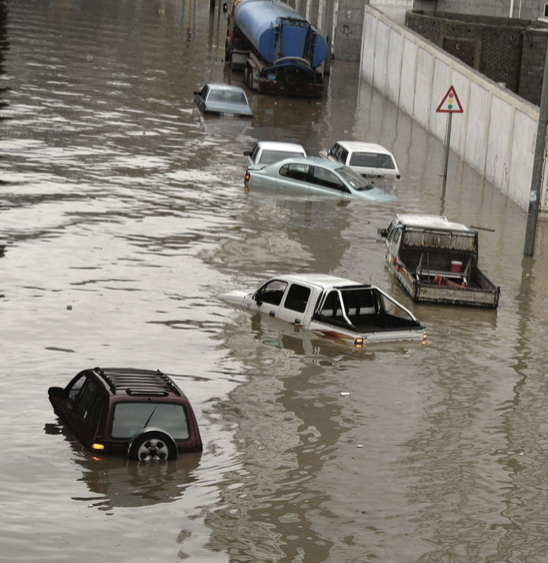
February was an unsettling month in Lebanon and not just on the political front. On February 15, the country experienced a earthquake that registered 5.1 on the Richter scale, according to the Bhannes Center for Seismic and Scientific Research. And although just a few injuries were recorded, it was definitely a reminder that danger can come from other than the political sphere. Every year catastrophes and disasters kill tens of thousands of people around the globe. In 2006, the most recent year for which precise numbers are available, the Zurich based reinsurance giant Swiss Re estimated that 213 manmade disasters and 136 natural catastrophes killed 31,000 people worldwide.

Earthquakes caused the most damage. In Indonesia alone, two earthquakes claimed 6,600 lives. The financial losses from these events were not small either, amounting to a whopping $48 billion in total. Other natural catastrophes accounted for most of the damage checking in at $11.8 billion, whereas manmade disasters cost $4 billion.

In a world this dangerous it makes sense to have insurance. Yet only one-third of the losses mentioned above had been insured. And in Lebanon, this number would have been much lower — just 20%. This does not bode well for the country as the number of disasters and catastrophes around the world appears to be rising in the long term, putting Lebanon more at risk every year.
 

Extraordinary risk insurance

Earthquakes are just one type of insurable risk categorized as “extraordinary risk”. This type of insurance covers events that either have high aggregation potential, like the fall-out from a big earthquake, or an exceptionally high probability of occurring, like the assassination of a Lebanese politician.

According to Maroun Corm at the Beirut-based Libano-Suisse Société D’Assurances, there are two main types of extraordinary risk insurance, acts of God and political violence. Acts of God are divided into three aspects: flood, earthquake and tidal wave (tsunami). Usually, all three can be simply added on to a fire policy. Earthquake and tidal wave insurance are often slightly more expensive due to their higher aggregation potential. It is also interesting to note that geographic location within Lebanon does not affect premium rates for earthquake coverage, so cost is the same no matter where you are in the country.

Interviewed by Executive, Jean Hleiss, associate general manager at ADIR insurance, said that although February’s earthquake caused little damaged, now is a good time to purchase earthquake insurance as it is likely reinsurance providers will increase their rates next year. He explained that a typical earthquake add-on to a standard fire insurance policy for a $1 million building would amount to a $500 annual premium.

Political violence insurance

The second type of threat covered by extraordinary risk insurance is political violence, and can also be divided into three groups. The first type, SRCC, protects against strikes, riots and civil commotion. An example of this would be the January 27 riots in Mar Mikhail. Second is insurance against terrorism. The random bombing campaign that targeted Beirut in 2005 best represents this category. The third category is war insurance, which appears to be straightforward at first glance but can be divided into both war and civil war by some insurance companies. Premiums and deductibles for all insurance guarding against political violence are much higher than those for acts of God.

Depending on the company, all three can be purchased separately or as a package and can be added onto a pre-existing standard fire policy. Unlike a standard fire policy, however, premium rates swing wildly. They can range from 1% of the property value up to 10%. As always, it is best to purchase a policy when the political situation is calm to take advantage of lower initial rates. Although premiums do change with the political situation, a long-term client will likely get much more favorable rates when things do go sour. It is also important to keep the higher deductibles in mind, which often start at a minimum of $500,000 for war damages. Other factors are worth considering as well. Location, for example, can affect premium. If your building is next to the headquarters of a political party in Beirut you will certainly pay more due to increased risk.

Due to the significantly higher premiums and deductibles, very few insurance policies, protecting against terrorism and war, are sold. Of the five insurance companies Executive interviewed for this article, three said that they had not sold a policy of this type in the last year and the other two had sold less than 10. This does not keep some insurance companies from advertising, however. For example, Medgulf’s promotional brochure on personal accident insurance has two schemes, Plan A exclusive and Plan B inclusive of passive war coverage.

Assassination insurance

But apart from property, how do people insure themselves against political violence? Again, due to high premiums and deductibles this type of insurance is generally very rare and is usually sold on a case by case basis, in direct contradiction to Medgulf’s plan B system. Hisham Barraj of Arabia Insurance Company explained that his company does not offer a standard coverage because “each person has to assess his own value. A human life is not a material that can be appraised by someone else.”

Libano-Suisse’s Corm said that recently he had written a policy of this type for the chairman of a prominent Lebanese business. The client had himself insured for up to $500,000 against kidnapping, ransom and terrorism (although he is not covered against personal assassination). His premium is 10% of the total insured or $50,000 per year. It is important to note that the rate is not that high because of the client’s job but to the territoriality limit, as he frequently travels to Iraq.

It appears that for some, policies for businessmen headed to Iraq are big business. Hleiss of ADIR said his firm has written no-less than 500 policies in total to insure clients against kidnapping and ransom, and added that from those policies his company had only seen two or three claims. However, those can be costly: ADIR recently paid out $3 million on a claim resulting from an assassination in Beirut.

Read the fine print

Farid Chedid, managing director of Chedid Re, pointed out what a lot of people neglect — the details. He said that one major problem with insurance in Lebanon is that the contracts here are based on European wordings. For example, in Europe a standard SRCC contract specifically states that “rioters” are unarmed people.

Unfortunately, when this standardized contract is used in Lebanon unmodified, damage incurred would often not be covered as it is not unusual for rioters in Lebanon to carry weapons. Therefore, it is important to use an insurance company that is particular about contract wording and has a good reputation for honoring claims.

When looking for a policy, one should also keep exclusions in mind. Most policies will not cover damage incurred during nuclear, chemical or biological attacks, or in a war between any two of the world’s five superpowers.

Of course, for local and regional residents, these particular instances are rather unlikely, and give no reason to avoid purchasing insurance altogether. In fact, with a little bit of common sense and preparation, the astute client will be able to insure himself well against the extraordinary risks of our uncertain world.


March 3, 2008 0 comments
0 FacebookTwitterPinterestEmail
Banking & Finance

IPO Watch – Rosy outlook

by Executive Staff March 3, 2008
written by Executive Staff

Regional companies are running toward their local public markets, leaving a trail of prospectuses behind them and welcoming individual and institutional investors from across the Middle East and abroad to partake in the region’s new found stable equity markets. The IPO market in the GCC continues to experience a flurry of new IPO announcements and, in the month of February, analysts say that a new record of announced, planned or in progress IPOs are in the works.

Starting with the region’s largest economy, Saudi Arabia, had five IPO announcements in February. Although in terms of value, the announcement s are not big, the number of companies jumping on the IPO bandwagon speaks a lot about the current psychology and mood in the kingdom’s stock market. Most worthy IPO news is the announcement by the kingdom’s fixed-line telecommunication companies, who won the licenses in late 2007, revealed their plans to offer 25% of their shares to the public in the second quarter of 2008. Atheeb Telecom, Optical Communication Co. and Al-Mutakamila who have a combined capital of more than $801.1 million, did not provide additional information on the offering.

In the food sector, the Saudi-based Herfy Food Services, a unit of Savola Group, announced plans in mid-February to sell 30% of its shares in an initial public offering. Herfy which has a capital of $27 million is expected to receive the regulator’s approval for the IPO, in March. In the transportation sector, Al-Bassami International said it will offer 30% of its shares to the public, in the second half of 2008. The company said it plans to raise its capital to $106.8 million. Saudi-based National Air Services, better known as NAS, said that it plans to launch an IPO by the end of 2008, in an effort to raise around $4.5 billion to expand its fleet over the next five years. Although NAS did not disclose more information on the offering, analysts expects this IPO to create a lot of excitement on the market and even some controversy. Meanwhile, in the petrochemical industry, Saudi Industrial Investment Group launched, on February 23, a $600 million rights issue to double its capital to $1.12 billion. The move comes as part of the company’s plan to acquire a petrochemical firm. Saudi Industrial Investment offered 225 million shares at $2.67 each to existing shareholders subscription. The IPO is expected to close on March 5.

Moving to the region’s hottest economy, the UAE came in second this month with three IPO announcements. The newly-established Islamic lender, Ajman Bank, said it will raise $149.9 million by offering 550 million new shares or 55% on the Dubai Financial Market in April. The price per share will be $0.27, valuing the bank at $272 million. Subscription opened on February 17 and the closing date is scheduled for February 27. In Abu Dhabi, Al-Rayan Investment said that it will launch an initial public offering in 2008. But the company’s chairman, Fardan al-Fardan, refused to provide further details until the full plan for the IPO is complete.

In tiny Bahrain, Voltamp Manufacturing Company, a producer of power transformers and switchgear, said it will launch a $88 million IPO, sometime in April. The company has fixed the share price at $1.40 with a nominal value of $0.26. Voltamp is 57.42% owned by Al-Anwar Holdings, an investment company listed on the Muscat Securities Market. Krishna Kumar Gupta, CEO of Al-Anwar Holdings, told reporters that Voltamp’s enterprise value is estimated at $70 million.

In the Levant, two noteworthy announcements were made in February. The first being Lebanon’s Fransabank, which revealed on February 26 its Damascus-base unit, Fransabank Syria, has launched an IPO valued at $12.1 million. Fransabank Syria is offering 1.26 million shares or 36% of its total shares at $9.87 each. The share price consists of the par value without an issue premium. The IPO is expected to close on March 13. The second IPO, is Jordan’s Darat Jordan Holdings, which plans to offer 26.6% of the or 4 million shares to the public starting on March 3rd. Darat who has appointed Jordan Investment Trust as the lead manager is looking to raise around $28 million. The company said the proceeds will be used to expand its real estate portfolio.

The favorable outlook for the IPO market in 2008 has heightened interest of individual, institutional and foreign investors in the region’s markets. Of course the GCC markets continue to garner the largest share of investment, but analysts say North Africa is not doing too bad. In the Levant there is still much more development and maturing to do, but once political stability is realized the Levant is set to catch up quickly to its neighbors. Observers say that the overall performance of the IPO market in 2008 so far has been promising and many are betting on a new record year.
 

March 3, 2008 0 comments
0 FacebookTwitterPinterestEmail
Sudan

Room for growth

by Executive Staff February 27, 2008
written by Executive Staff

Mobile phone usage has exploded in Africa over the last decade, with 197.4 million mobile phone users in 2006, up from just 25.3 million in 2001, according to the UN’s International Telecommunication Union. The growth was so spectacular that some of the bigger markets like South Africa and Nigeria have already shown signs of consolidation. But analysts say there is still plenty of room for growth in Sudan.

Ahmed Haroun’s tiny newspaper stand in the middle of Khartoum is plastered with mobile phone posters and strings of pre-pay cards, wallpapering the back of the shack and hanging down in front of customers like festive decorations.

Outside, the street is cluttered with advertising urging passersby to sign up with state-run Sudani, South Africa’s MTN or Kuwait’s Zain. Even the rubbish on the pavement is littered with bent and used up mobile phone scratch cards, most of them in the smallest denomination of five Sudanese pounds ($2.50). It is a scene repeated endlessly across Sudan’s dusty capital, on street corners and roadside shacks, each of them a front line in the fierce battle for mobile phone customers currently raging across Africa.

Sudan, the sixth biggest African country by population, came to the growth game relatively late. It missed out on much of the early days of the telecom boom, thanks to the turmoil of more than 20 years of civil war, compounded by an illiberal telecom market and crippling economic sanctions imposed by the US.

The world’s telecom companies, encouraged by a welcome liberalization in the national market, have been rushing into Sudan to scoop up as many new customers as they can get their hands on. There are now three established players in Sudan — Sudani, MTN and Zain.

Canar, a fixed-line group owned by UAE’s Etisalat, has also been negotiating for a fourth national mobile license over recent months. The market has become so crowded that Zain’s chief executive in Sudan warned that the granting of yet another license would force him to reconsider a huge expansion package. “We definitely think that the market can continue to grow,” said Andrawes Snobar, senior research analyst at Jordan’s Arab Advisors Group.

“The presence of three mobile operators in the market right now means there is plenty of competition. That will lower prices and increase the number of services offered to new subscribers. And that will increase the number of subscribers. “The mobile phone penetration is also very low in the country compared to regional standards and absolute levels.” Devine Kofiloto, principal analyst at UK-based Informa Telecoms & Media, agrees. “Sudan is a very interesting case, based on the parameters of low penetration and high population,” he said.

Near virgin territory for operators

At the end of 2006, just over 13% of Sudan’s 40 million-strong population had access to a mobile phone, according to the latest figures released by the Arab Advisors Group. Investors would have to search far and wide to find an equally sizable market and attractive penetration statistics elsewhere in the region.

Three out of Africa’s six biggest countries by population — Nigeria, Egypt and South Africa — already have mature mobile markets. No outside operators are allowed into Ethiopia, where the huge and inefficient Ethiopian Telecommunications Corp holds a state monopoly. That only leaves the Democratic Republic of the Congo — with its 60 million inhabitants, of which only 9% have mobiles phones, according to Informa — to rival Sudan in the investment stakes. Analysts thus concur: There are plenty of opportunities for expansion in the country.

Khartoum may have plenty of handsets and mobile phone masts. But huge areas of the country — from Darfur in the west, to the Red Sea coast in the east, remain near virgin territory for operators. If new mobile licenses prove hard to come by, there are always other ways in. Sudatel floats on the Bahrain and Abu Dhabi stock exchanges.

Another largely untapped opportunity lies in South Sudan with two mobile licenses of its own, currently held by the tiny operators Gemtel and NOW. Both could be tempting acquisition targets. Big names that are still on the sidelines without a stake in Sudan include the Anglo-South African Vodacom and Egypt’s Orascom Telecom.

Guilt by association

As in all markets, there are also risks. One of the biggest, especially for any operators with ties to Europe or the US, is the possibility of getting tainted through association with the festering conflict in Darfur. Human rights campaigners have mounted huge publicity campaigns against foreign companies suspected of propping up the Sudanese government or supporting atrocities in Darfur. German engineering giant Siemens, which has a sizable telecommunications division, pulled out of Sudan last year citing “moral and political” reasons. France’s Alcatel-Lucent has also been forced to defend its business interests in Sudan, following campaigns by divestment and human rights groups.

Most affected of all has been Sudan’s own national operator Sudatel, controller of the Sudani mobile brand. The company was one of 31 Sudanese groups barred from doing any business with US companies last year, after the White House accused it of “contributing to the conflict in Darfur.” But even that exclusion from the world’s biggest economy has not prevented Sudatel from finding its own opportunities for growth. In December, it snapped up a 70% stake in Intercellular Nigeria Limited. Three months before that, it spent $200 million on a mobile phone license in Senegal.

When Sudatel’s CEO Emad Ahmed was asked by reporters what impact America’s sanctions were having on his business, he replied: “The sanctions do not affect Sudatel at all. We are still dealing with the main builders of telecommunications … except American companies. The technology is available everywhere: it is available in Europe, it is available in the Far East and China, especially in China.”

February 27, 2008 0 comments
0 FacebookTwitterPinterestEmail
Sudan

The waiting game

by Executive Staff February 27, 2008
written by Executive Staff

Never good, the dusty red roads of South Sudan’s capital, Juba, have been further potholed and haphazardly widened by the steady increase in traffic since peace between north and south was signed in 2005, ending Africa’s longest running conflict.

In the same three years sprawling markets filled with crockery, cloth, never-before-seen vegetables and thousands of bright, cheap Chinese motorcycles have sprung from areas that formerly housed soldiers, half-buried mines and unexploded ordinances.

Small hills of the side-products of peacetime plenty — Ugandan water bottles, Congolese plastic bags, milk powder packets from Mombasa — pile up on every street corner. Foreign journalists dropping in have called the former garrison, miserably cut off during the long years of civil war, Africa’s new “boom town”.

But while Juba has plenty of northern Sudanese, Somali and Kenyan wholesalers, thousands of Ugandan traders and a fair share of Chinese restaurateurs, it is hard to find a new southern businessman.

“They are not used to business, but to war,” Ahmed al-Nour explained. He works in a north Sudanese-owned hardware shop whose shade attracts a few of Juba’s increasing street children, squinting up at that sun with their hands outstretched for coins.

And, al-Nour says, although the armed conflict that killed 2 million people and displaced a further 4 million is over, there is a strong sense that the struggle for the South still continues.

He explains that the most important thing for southerners is to hold on until 2011 when, under the terms of the peace deal, they will have their chance to vote for independence in a referendum.

“They (Khartoum) have not made unity attractive, the south will separate,” al-Nour said.

“We are just waiting, every year,” echoed Paul Amoko, an unemployed ex-soldier desperately looking for work in Juba’s crowded hospital in another part of town. Like many, he has looked instinctively to the new government for a job and not the private sector.

The secession vote is just one part of the three year-old North-South peace deal that also gives the South 50% of revenues from the oil-rich region and enshrines democratic transformation of the country together with wealth and power sharing.

The largest of the former southern rebel groups, the Sudan People’s Liberation Movement (SPLM) who signed the deal with Khartoum’s leading National Congress Party, now leads the semi-autonomous southern government, headed by President Salva Kiir, who is also the First Vice President of Sudan.

Lack of trust

Part of the mandate of the two signatories to the Comprehensive Peace Agreement (CPA) is to make unity attractive. Although, confusingly, many members are open secessionists, the SPLM in theory stands for union with northerners; based on the choice of the South’s population, probably standing at around 10 million people.

But after more than 50 years of on-off war over ethnicity, religion, ideology and in more recent years, oil, many southern Sudanese believe independence is the only path to freedom, a coming of age from southern anxiety to the normalcy that is a pre-requisite for real development.

“I, even, am one of the ones who will remain reserved until 2011,” Elizabeth Majok, head of the Employees Justice Chamber said. 

She agreed that southerners, who also have little experience, have missed out on many of the business opportunities that arrived with peace because they are waiting and not acting.

Majok argued that after many broken promises for southern equality by various northern governments, and what she sees as a distinct lack of commitment to the new peace deal by Khartoum, southerners are throwing themselves behind the promise of independence, not the current peace.

A long and troubled journey

Both sides have accused the other of violating the CPA deal and slowing down its implementation. Scuffles over oil agreements with foreign companies and occasional armed hostilities have contributed to keeping tension high between the former foes.

But international alarm peaked following a decision by the SPLM to pull its ministers out of a Government of National Unity in October, protesting the failure of northern soldiers to redeploy out of the South and their lack of real influence in the coalition.

The former southern rebels accused Khartoum of unwillingness to implement the deal, saying they were purposely dragging their feet.  

However, SPLM ministers went back to work in December, ending the crisis after Sudan’s President Omar Hassan al-Bashir agreed to some of the demands by the SPLM ministers. He reshuffled the cabinet and re-funded the delineation and demarcation of the contentious North-South border. But new deadlines for the late withdrawal of northern troops out of the South have been missed since. When fighting broke out along the border in December between southern soldiers and armed northern nomads  President Kiir said the nomads are supported by Khartoum, exciting tensions. 

The SPLM is also accusing President al-Bashir of withholding cash due to the southern government, leaving much crucial work in the South behind schedule. The southern government is almost wholly dependent on their share in Sudan’s 500,000 barrel per day production. Officials frequently complain there is a lack of transparency in how figures are calculated and say Khartoum is claiming wells beyond the border as theirs.

South Sudan’s Minister for Presidential Affairs Luka Biong said that the South is missing $1 billion from the oil-rich Abyei area alone, which both North and South fiercely contest as their own.

In a speech during southern celebrations of the third anniversary of the peace deal earlier this year, Kiir said that given the struggles in implementation so far, a much better relationship between the signatories is needed to get through a national census, democratic elections, and the 2011 referendum.

The pre-fab problem

From the road, the Beijing Juba Hotel looks almost as grand as its name. With its two stories and gold pillars guarding the entrance and sitting on prime Juba land it looks a world away from the tumbled-down cement houses and huts that makes up most of the southern capital.

But the lettering is cut from polystyrene and painted black and the building itself is pre-fabricated, put together from a giant kit over a few weeks by the Chinese owners. Pieces from the lurid blue and green mosaic floor inside are already chipping away.

Providing accommodation for the sudden in-rush of thousands of international aid workers and government employees that suddenly massed in the small capital, the Beijing Juba Hotel is even more expensive than most of the some 35 other tented or pre-fab camps that sprang up after the peace deal.

Like the dozens of restaurants that cater to internationals and former rebels flushed with government job cash, almost all of them are owned by foreigners.

Charging up to $200 a night, the owners hope to make back their investment in five years, after which the giant, presumably sun-worn prefab will be given to the southern government as a “gift”. 

It is not only southerners, Majok said, who are waiting for 2011; international investors, nervous about war breaking out again, are also “one foot in and one foot out”.

“Perhaps after 2011 there will be more investment, when people know what is going to happen,” she said. The US has also put sanctions down on Sudan and although the South is technically exempt, some think proper separation would make the region more attractive.

John K. Pan Paguir, director-general of trade at the South Sudan Trade and Commerce Ministry, said that none of the foreign businesses that have registered with the ministry have fulfilled long-term investment promises. All, he said, are in it for the quick money.

These investors, like the thousands of east African traders, are taking their money back out of the country. According to Majok, the short-term mentality — together with the habit of employing foreign staff — is not doing anything to contribute to stability in the South.

“Food is being brought in from outside, there is no real construction, no tax that is equivalent to the millions they are getting. We are not benefiting. At least the workers should be Sudanese.”

An Indian-owned hotel sitting right next to the beautiful and empty blue of the Nile is typical; while 10 or so local girls have been hired for cleaning and to wash clothes, all waiters and bar staff, kitchen staff, many construction staff and all of management are foreigners.

It is Kiswahili as often as Arabic that is spoken under the mango trees.

Four-wheel drives and salaries

Paul Amoko, who spent most of his life in the army before being demobilized, will soon be joined by 45,000 men and women, who the former rebel southern Sudan People’s Liberation Army — struggling with a massive 70,000 parade payroll — want to reintegrate into society.

With the flame of the South’s entrepreneurial spirit still small and with little or no access to cash, many of them will look to the government for jobs, not the private sector.

Although the civil service is already swollen and eating up more than 70% of the government’s $1.5 to $1.7 billion a year in oil revenues, it is obvious why it attracts southerners: it is those in the government who are benefiting from peace most.

For those without a government, or almost equally prized NGO or UN salary, life is tough. According to joint UN and government figures, the South has the world’s worst maternal mortality rate with one in 50 women dying during delivery. Some 10.2% of newborns die in childbirth. Only 2.7% of those who survive to childhood are fully immunized.

Little has changed for the rural peoples who make up most of the southern population, said the parliament’s economic and development head Barri Wanji, adding that so far there’s been little effort at promised decentralization. He explained that parliament had a difficult time last year getting cash out of central control for rural development projects. “[Ministers’] priorities are different from rural areas … where the emphasis is on high salaries, emphasis is on getting cars, emphasis is on building good houses.”

But even these high salaries are not staying in the South. Majok explained that she — like all of the South’s top officials — has her family outside, which is where she spends most of her salary on the schools and other services the South still struggles to provide.

And, she added sadly, even those with the backing to get loans from the Nile Commercial Bank — of unclear ownership but propped up with government funds — are probably spending it investing outside of the country.

Growing dissatisfaction at home

While southerners say they are confident that the SPLM will try to maintain peace, there is also a growing discontent with the party’s ability to deliver services to underdeveloped communities and deal with corruption within its ranks.

“Even [with] the roads, nothing is happening,” said John Mabior, a soldier, who added that money was being lost to corrupt politicians rather than reaching the people. “It is now a very big problem in southern Sudan.”

A report from the government’s Anti-Corruption Commission on government contracts in mid-2007 is still not available to the public but one government official described the contents as showing “shocking … overspending.”

And it is unclear whether investigations are still moving forward or not in what has become a test-case for Kiir’s zero-tolerance on corruption, said an MP. Over $70 million was spent on government vehicles, bought at twice the market rate. Most never arrived.

But no other southern party has yet challenged the SPLM’s supremacy. And as one Juba citizen put it, in their current position, waiting for independence, southerners have little choice. “There is room to play, to discuss with the SPLM. With the North, there is no room.”

February 27, 2008 0 comments
0 FacebookTwitterPinterestEmail
North Africa

The other oil

by Executive Staff February 27, 2008
written by Executive Staff

Olive oil may be overlooked as a commodity in the world economy, but for Tunisia it is the largest export earner and it provides livelihoods for hundreds of thousands of its people. The government has undertaken a concerted program to boost production and improve the earning potential of areas already under cultivation by improving irrigation and encouraging organic farming. These developments should help the sector surmount issues it faces such as trade limitations and an undeservedly shaky reputation in some countries.

Tunisia will produce 1.1 million tons of olives and 200,000 tons of oil from them in 2007-2008, the Tunisian agriculture ministry announced last December. This will make this year the fifth in a row that it has produced this amount, placing it as the world’s fourth largest producer of olive oil, after Italy, Spain and Greece. The government has set its sights on boosting production further, to ensure that other growing producers such as Turkey do not overtake it — and if possible to improve Tunisia’s ranking further.

As part of this policy, the government will encourage the planting of an additional 30,000 hectares of olive fields every year to boost oil production to at least 210,000 tons annually. Some 130,000 tons will be exported. As harvests have in the past been affected by droughts — production fell to 30,000 tons of oil in 2001-2002 and 70,000 in 2002-2003, the government is also increasing spending on irrigation.

Tunisia has around 56 million olive trees planted on 1.6 million hectares, a third of the country’s total cultivated area. The bulk of production is in the center of the country, where 52% of the country’s olives are grown, with smaller amounts from regions in the north (33%) and south (15%).

The economic and social importance of the olive oil industry cannot be overstated. Olive oil is the main source of income for more than 500,000 families from Tunisia’s population of 10 million, according to the Office National d’Huile; it accounts for around 50% of export revenues.

There is considerable scope for export growth, if some hurdles can be overcome. Despite its large output, Tunisia has a relatively low profile as an olive oil producer among consumers, as most of its overseas sales are in bulk, rather than through brands.

The European Union, which is a major importer of many Tunisian goods, currently limits the entire bloc’s purchases of Tunisian olive oil to an annual average of 50,000 tons a year, due to pressure from the EU’s own olive oil manufacturers. Competition from Turkey and Syria on the EU market also makes life tough for Tunisian exporters.

The sector has also received some negative publicity of late, with scandals involving the relabeling of Tunisian oil as local produce in Italy and Spain, doing little to improve their image abroad — even though Tunisian exporters themselves were not necessarily implicated.

Tunisia’s olive oil does have some competitive advantages. Most Tunisian olive growers use little or no chemical fertilizers and pesticides, so much output can be classified as organic, and giving access to a growing niche market and moving it up the value chain. So far 35,000 hectares have either been certified as producing organic olives or are actively in the process of acquiring this status.  Additionally, the government is encouraging better promotion of Tunisia’s olive oil in growing markets, such as Asia and North America as well as Europe.

Tunsia’s Maghreb neighbor Morocco is also looking to develop its olive oil industry, boosting production and improving technology. Its oil production sector is in need of revitalization, and will not become as large as Tunisia’s — the government’s target is production of 30,000 tons of oil within the next few years — but could play an important role in the economy of some rural areas. Currently, some 500,000 hectares are cultivated for olive trees, and the government hopes to double this figure by 2010.

In September, the first, of a wave of 10 new 1000-hectare olive groves, was planted in the Beni Hellal region in west central Morocco. The project to develop new export-oriented farms has been launched by Oléa Capital, a joint venture between Crédit Agricole du Maroc and the Société Générale Asset Management.

Crédit Agricole president Tariq Sijilmassi has said that the fund will help bring a sector “in need of success stories” up to date and introduce “a modern financial framework.”

However, demand for olive oil continues to grow, so Oléa’s founders have seen the potential for exports from modern farms and plants in Morocco. Oléa hopes to lead the way in showing how Morocco’s olive oil production can develop and prosper.

February 27, 2008 0 comments
0 FacebookTwitterPinterestEmail
  • 1
  • …
  • 544
  • 545
  • 546
  • 547
  • 548
  • …
  • 696

Latest Cover

About us

Since its first edition emerged on the newsstands in 1999, Executive Magazine has been dedicated to providing its readers with the most up-to-date local and regional business news. Executive is a monthly business magazine that offers readers in-depth analyses on the Lebanese world of commerce, covering all the major sectors – from banking, finance, and insurance to technology, tourism, hospitality, media, and retail.

  • Donate
  • Our Purpose
  • Contact Us

Sign up for our newsletter

    • Facebook
    • Twitter
    • Instagram
    • Linkedin
    • Youtube
    Executive Magazine
    • ISSUES
      • Current Issue
      • Past issues
    • BUSINESS
    • ECONOMICS & POLICY
    • OPINION
    • SPECIAL REPORTS
    • EXECUTIVE TALKS
    • MOVEMENTS
      • Change the image
      • Cannes lions
      • Transparency & accountability
      • ECONOMIC ROADMAP
      • Say No to Corruption
      • The Lebanon media development initiative
      • LPSN Policy Asks
      • Advocating the preservation of deposits
    • JOIN US
      • Join our movement
      • Attend our events
      • Receive updates
      • Connect with us
    • DONATE