• Donate
  • Our Purpose
  • Contact Us
Executive Magazine
  • ISSUES
    • Current Issue
    • Past issues
  • BUSINESS
  • ECONOMICS & POLICY
  • OPINION
  • SPECIAL REPORTS
  • EXECUTIVE TALKS
  • MOVEMENTS
    • Change the image
    • Cannes lions
    • Transparency & accountability
    • ECONOMIC ROADMAP
    • Say No to Corruption
    • The Lebanon media development initiative
    • LPSN Policy Asks
    • Advocating the preservation of deposits
  • JOIN US
    • Join our movement
    • Attend our events
    • Receive updates
    • Connect with us
  • DONATE
Cover storyEconomic rescueEconomics & Policy

Experts tackle Lebanon’s dilemmas with a plethora of rescue plans

by Thomas Schellen February 7, 2020
written by Thomas Schellen

IN BRIEF

  • The implications of Lebanon’s current fiscal crisis are grave, but not fated to be devastating. 
  • Economic rescue plans circulating remain in the pro-private and neo-liberal economic modes of thought.
  • As a result, there is a reassuring amount of overlap but little efforts to explore solutions outside these paradigms. 

At the beginning of 2020, Lebanon’s socio-political landscape lay in mental chaos. Void as before the first day of a creation process. The most elusive sight was solid economic ground and a stable future. From the lira exchange rate in the parallel market and inflation of consumer prices to the vapid statements of political intent for government formation plus the correlated vain media speculations, everything looked unhappily fluid. Even the weather fell in line, with an overload of cold, drenching rain that extended over the New Year into the second week of January.

To add to it, the thawra (revolution)—by early January appearing increasingly amorphous to the observer—seemed to vacillate in wild contradictions between justified political outrage on one day, a destructionist approach to, admittedly easily criticized, political efforts the second, and violent rioting in apparently instigated attempts to smash civil peace on the third.

The most solid prospects at hand in the middle of all the shakiness curiously appear to have the substance of paper. More precisely, a hope of solidity for the country emerged in form of economic rescue plans. Such plans have been presented in the past weeks in the public debating square—and arguably the discussion of these papers has become the biggest opportunity for progress in rescuing the country.

This is because both the political camp and the protest camp—at least until the middle of the third week of the month—seemed to have only a universal failure to deliver working solutions for the economy in common, as long as the former kept playing the usual power distribution game and parts of the latter stayed enraptured in drumming out-of-the-world demands for the immediate change of everything.

Careless or sincere?

Although many of the new proposals have been penned by impressive collectives of economists in collaboration with private sector stakeholders or by individuals with excellent credentials, questions necessarily arise about their content, approach, and compatibility. Being presented with a variety of action plans, emergency solutions, and salvation concepts for the political economy does, in this sense, constitute its own element of risky fluidity—there is a great need for assessment and comparison.

Assessing a wide variety of plans would be easy and enjoyable if it did not come with the backdrop of a serious and life-threatening affliction for Lebanon. These plans do not just speculate about an impending large recession in the way that economists everywhere do at least once each quarter by virtue of their trade. Before they offer their medicine for Lebanon’s economic resuscitation, the plans raise specters of an economic meltdown and even greater social disaster. The issue is not about personal taste, but about determining—to the best of stakeholders’ ability—which formula for economic salvation is the one with the best chances of working.

This need is made no less challenging by the realization that there is no room for trying out which rescue plan might be the perfect one. All would-be rescuers of the country’s economic and social state have only one desperate shot to find the remedy that delivers the best results.

A matter of variables and approaches

The first large variation between the economic plans exists in the proportions to which analysis of “what went wrong” is juxtaposed with descriptions of impending threats and the proposed remedy. Some plans give very short shrift to the discussion of reasons for the crisis of 2019. A paper published on January 6 by 10 individual signatories under the umbrella of the Carnegie Middle East Foundation, for example, dedicates approximately 30 percent of its content to descriptions of the current problems and possible disastrous outcomes, over 60 percent to its remedy proposal, and less than 10 percent to its assessment of what led to the crisis.

As to the latter issue, the authors declare the crisis categorically to be “as its core, a governance crisis emanating from a dysfunctional sectarian system that hindered rational policymaking and permitted a culture of corruption and waste.” They proceed to say—in many ways accurately, but also in somewhat simplified manner—that Lebanon, “led by the public sector, lived beyond its means,” and they blame the economy’s high debt and “bloated banking sector” on this model having been pursued
over decades.

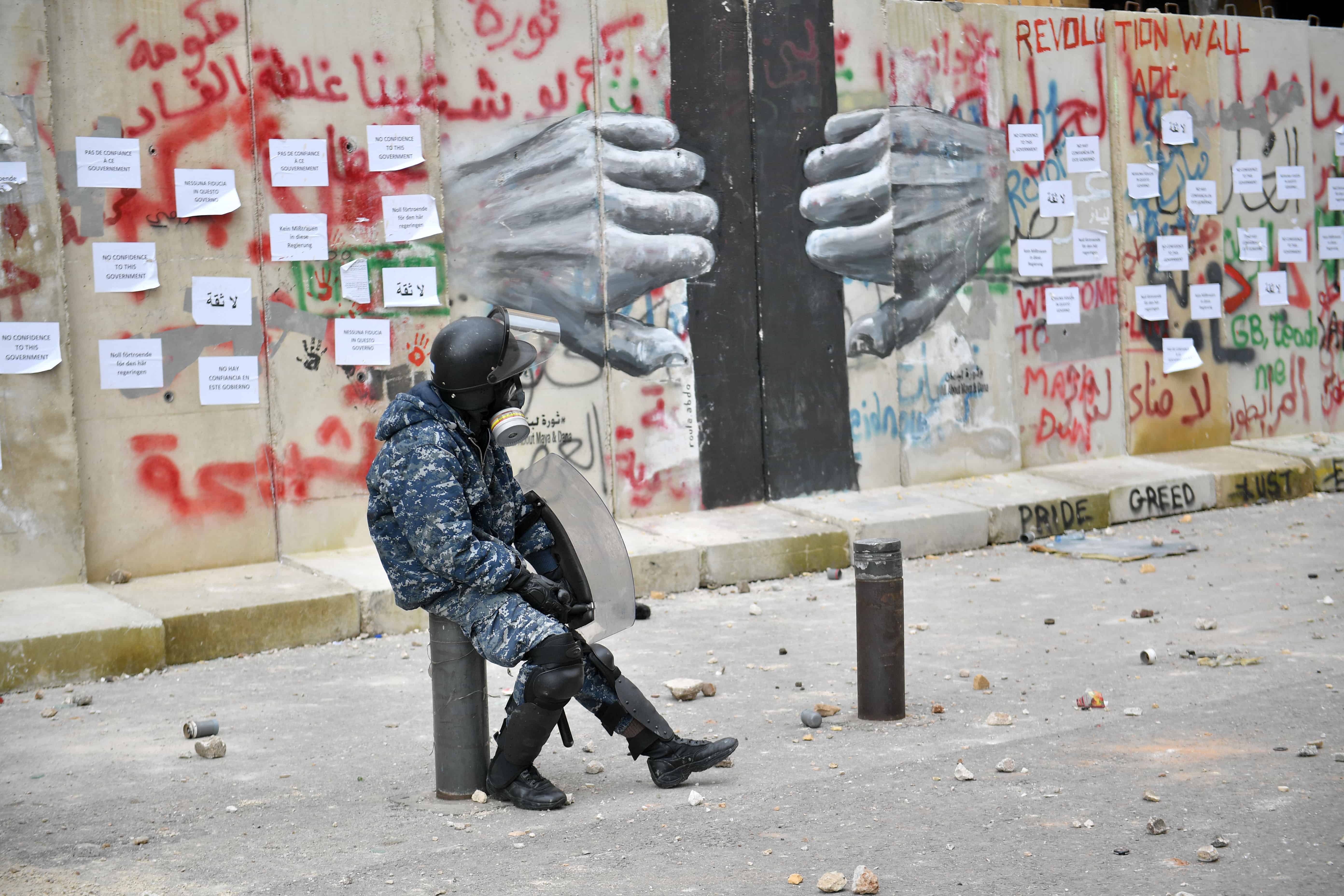
Photo by Greg Demarque

Barely more elaborate on the deep background of current misery, the Lebanese International Financial Executives (LIFE) organization says in its economic rescue paper, published in October 2019, that “Lebanon appears to be heading towards an economic meltdown with severe consequences for Lebanese citizens of all walks of life.”

While emphasizing that it promoted approaches to solve the crisis for the past two years, LIFE highlights that current challenges to Lebanon “include a large and increasing debt load, spiraling fiscal and current account deficits, waning investment confidence, increasing political gridlock and external liquidity shortages,” but does not venture further into the history that led to their rise.

By contrast, presentations by some economists delve into financial detail of analysis concerning the debt buildup and the mechanics of the unconventional measures that were used at Banque du Liban (BDL), Lebanon’s central bank, in the past decade and specifically since 2016. Economist Freddie Baz, until earlier in 2019 the chief strategist of Bank Audi, outlined three scenarios in a presentation delivered on December 12 at the Université Saint Joseph. Firstly, an inflection point; reached in 2016 through divergence of monetary and financial policies resulting in erosion of foreign currency (FX) reserves. Secondly, a stalling point; incidents of market disruption and loss of investor confidence. Finally, a tipping point; when the foreign currency crisis scenario in September 2019 became meshed with a financial crisis and a liquidity crisis. Backing his views up with plenty of data references, Baz traces the problems of the Lebanese trajectory ultimately back to the 1990s. He notes the accumulation of financial distortions between 1992 and 2019, such as a cumulative trade deficit of $281 billion versus gross inflows of $290 billion and a cumulative public finance deficit of $82 billion over the period.

Marwan Mikhael, until end of last year heading economic research at Blominvest Bank, has provided two analyses (both first published in Executive in October and December of last year). In the second, he outlines his vision for a prudent economic course to overcome the current situation that he describes as “an economic recession combined with a liquidity drought that is unsustainable beyond the short term.” 

Mikhael voiced his view on the genesis of the current crisis in his October contribution to Executive, where he observed that the partial dollarization of the bank deposits in Lebanon has a history that goes back to the 1960s. While governments in the past 30 years were unable to restore investor confidence to levels seen before the Lebanese Civil War, the increase of stress in financial markets in recent years and current crisis, according to Mikhael, can be understood as resulting from the extraordinary length of the problematic situation as an uninterrupted accumulation of multiple shocks, which began in 2011. This is juxtaposed to earlier shocks—in a country over-rich with shocks—as occurred in the 1990s, 2005, 2006, and 2008.

His narrative of successive overlapping shocks in the 2010s in the closer and wider region—from the Syrian conflict’s impact on Lebanese trade to the ISIS insurgence, the drying up of regional investments as result of weakened oil economy in the Gulf, and war pressure in Yemen, added to domestic confidence shocks through a long presidential vacancy and the prime ministerial resignation of 2017—portrays a rather convincing buildup to the 2019 situation without pointing to any alleged single cause.

Some opinion-makers, before prescribing any recipes for rescue, focus their search for reasons on the side of blame, seeking to name and shame financial actors for the debt handling patterns, dollar movements, and financial engineering numbers that have played a role in the crisis’ exacerbation. Nasser Saidi, a former vice-governor of BDL and economy minister in the late 1990s—and a signatory to Carnegie’s rescue plan—addressed the crisis in a number of op-ed newspaper columns. For him, a “Ponzi-like scheme” in the Lebanese financial sector was key to the problem.

Lebanese consultancy Triangle expounded on the topic to greater length in a study titled “Extend and Pretend: Lebanon’s Financial House of Cards,” which ominously states that dollar inflows to Lebanon have been “recycled for decades” by Lebanon’s fiscal, monetary, and banking players “to create a regulated Ponzi scheme, which has benefited the banking sector and left the Lebanese people to foot the bill.”

In Triangle’s analysis, this scheme involved the state (cabinet leadership and treasury), BDL, and commercial banks as core actors, and the resident population as the primary victims of the arrangement. Under this perspective, the study did entertain the question, however, of how much the resident population’s advantages of the past three decades—artificially heightened purchase power of the Lebanese lira and the state’s low collection rate of taxes from average incomes—were measuring in the bottom line against the distortional effects of regressive taxation, unmitigated inequality, lack of social safety networks, and the tax payers’ bill for debt financing interest paid by the state to BDL and, indirectly, commercial banks.

Contrasting through emphasis on wider political and regional contexts with the above mentioned purely financial or very brief general treatments of the roots and causes of Lebanon’s economic problems, a paper for its “LeadersClub” by Lebanon Opportunities asserts that the backstory of the economy’s highly troubled situation is rather complex. Whereas most analyses of the lead up to the crisis have emphasized on “past fiscal policies, a lack of economic vision, corruption, and ineffective public administration,” the paper admonishes that these views have either fully neglected or mostly ignored the “local and regional political dimensions” of the deterioration process.

Citing specifically the “Hezbollah component” for making the Lebanese crisis unique, the paper speculates that economists’ and other opinion leaders’ neglect might have been due to fear of repercussions, lack of political insights, or myopic preoccupation with blaming corruption for all problems in the Lebanese economy. The Lebanon Opportunities paper does not, however, venture into further analysis of the backstories behind the situation and merely asserts: “Whatever the reasons, the economy
has crashed.”

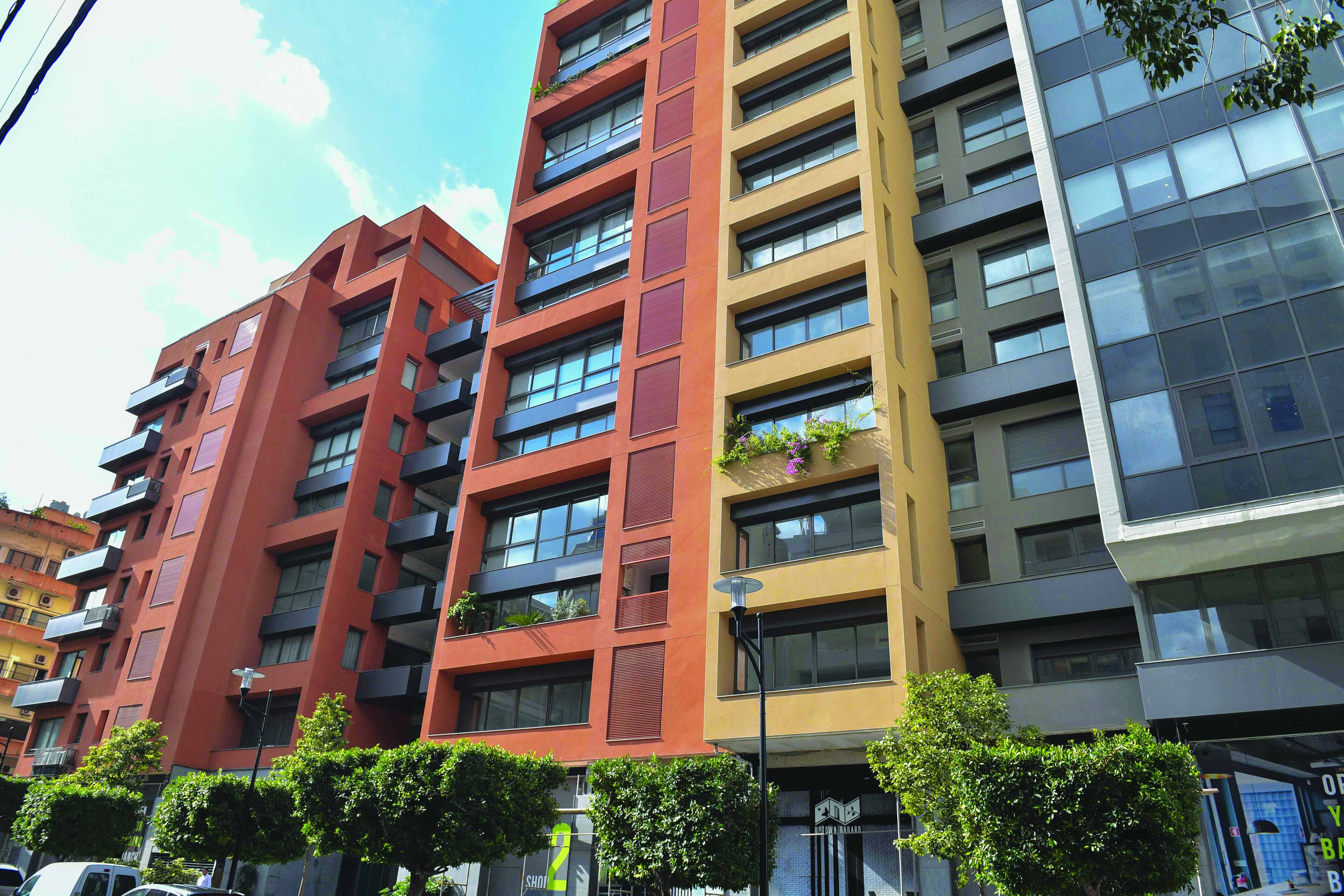
Photo by Greg Demarque

Warnings of doom

Whereas some of the publicized economic rescue plans do not add new perspectives to the discussion of the crisis’ roots and genesis, a joint element across plans is the pronouncement of dire warnings to act quickly, and the alternative of economic and social catastrophe if the downward spiral is not brought under control.

The Carnegie paper lists several such consequences if the approach to the crisis is not improved. A deep recession in the economy, with continuing business closures, salary reductions in the private sector, and retrenching in the public sector, will translate into a double-digit drop in GDP in 2020, the authors predict. Other consequences will be serious depreciation in the lira value and subsequent price inflation, increasing controls of capital movements by banks, destruction of wealth and expansion of poverty, and possibilities of political unrest. All this will become a “lost decade,” meaning the paper prophesizes a 10-year long economic crisis for the Lebanese economy. The authors further argue that without deep reforms in Lebanon, international financial support will not be large enough to revive the economy.

Similar to Carnegie’s collaboratively produced doom alerts, the papers by LIFE members and by Lebanon Opportunities radiate with a certain intensity on the disastrous outlooks if there is no radical change to national policy. According to LIFE’s gloomy estimate, in addition to the country heading toward an “economic meltdown” with “severe consequences,” they are “concerned that failure to tackle current problems immediately and comprehensively could result in spiraling unemployment, uncontrollable inflation, more social unrest, civil strife and a severe deterioration in public health services and other basic resources.” Lebanon Opportunities’s “Economic Revolt” papers—which notably admits sole authorship of proposals, information, and opinions expressed in the study—predicts that “a worst-case scenario has become reality. Each pillar of the economic temple is toppling. It is too late for a rescue plan. What is needed is a ‘Revival Plan.’” Thankfully, the plan presented to the LeadersClub provides precisely the draft of a “Plan for Revival.”

Individually written plans appear to dedicate proportionally less effort on outlining details of economic and social pain if no new plan for treatment of the country’s malady is initiated promptly. Baz mentions three major macroeconomic challenges lying ahead, namely unsustainable public debt dynamics, unsustainable external debt dynamics, and erosion of FX reserves at BDL. While not explicitly advocating an economic rescue plan, he sees three possible courses of action in a self-made rescue attempt, a collaboration with a “club of friends” or a program under International Monetary Fund (IMF) tutelage. Whichever course is chosen, in his view, avoidance of hard landing of the economy will depend on the speed and magnitude of addressing public financial imbalances, the availability of $30 billion in urgent international financial assistance, regulatory capacity to quickly address banking sector issues, and the banks’ ability to again start attracting financial inflows. He cautions that any decisions on the rescue course will be difficult due to inter-linkage of the balance sheets of the government, BDL, and commercial banks and also due to the possibility of further social and political disruptions by popular protests.

Mikhael, who (writing prior to Diab’s government) notes that the crisis perception is prone to spark self-fulfilling prophecies of economic disruption in a vicious cycle with lost confidence as its starting point, says that unless a government is formed and reforms put on the way, restrictive policies—presumably by banks—will increase, and the parallel exchange market will see a larger depreciation of the Lebanese lira. The cash economy will flourish as depositors will avoid putting money at banks.
Whether highly elaborate or neutrally descriptive, all the narratives of threatening doom have their purpose that emerges when reading on into the core concern of each plan. The warnings, alarmist or not, serve to set the stage to make their readers receptive to the subsequent assurance that other, better approaches are within reach for a determined and united polity.

Assurances of rescue potential

To start with the individually produced rescue concepts, the most important initial step toward rescue in Mikhael’s view, and also according to a brief comment by Saidi, is government formation. Writing in the first week of January, Saidi calls for immediate empowerment of a “credible and effective government” with abilities to implement unpopular reforms and approach the international community with requests for financial help as the first step in a six-point plan to “rebuild Lebanon’s economy.” Mikhael, in his “roadmap to recovery” published in December stipulates that “the first step before getting into any future economic plan is to form a government”—which was finally delivered on January 21 as a government of 20 ministers, but at the time of writing with an unfathomable outlook.

For Mikhael, the second urgent step prescribes restoration of investor confidence by measures that include debt restructuring by lengthening of maturities but under utmost avoidance of either a currency devaluation or a so-called haircut on deposits. The third key step would be acceleration of Lebanon’s recovery through an agreement with the IMF. For Saidi, the five other steps for the economy entail fiscal reform and cutting of subsidies (especially those to Electricité du Liban [EDL]), restructuring of public debt, reforming of commercial banks, scrapping of the dollar peg, and entry into an IMF program.

In Obegi’s view, like that of other bankers, a haircut or a compulsory conversion of foreign currency deposits to local currency should be excluded from any possible financial rescue package lest these measures be detrimental to future investor sentiments.

According to Baz, the rescue steps need to incorporate the implementation of structural reforms within one year or less, recalibration of banking and monetary policies to address solvency issues, setting of disciplined deficit and debt targets, formalization of capital controls, reduction of imports by about 40 percent, collaboration with the IMF to determine the real exchange rate, soft debt restructuring in line with short-term liquidity needs, and the provision of social buffers for the poor.

Referring to an August 2019 evaluation by the IMF, Baz further stipulates upside as well as downside risks and patterns that could influence the country’s situation. Upside risks include reconstruction of Syria and gradual return of refugees as well as a commercial discovery of oil/gas but are juxtaposed with downside risks of government failure to implement reforms, exacerbation of political and social tensions, and regional geopolitical deterioration besides accentuation of deficits and bubbles.

Also to be noted as part of the private initiatives to sketch out a better course for Lebanon are rescue ideas that their authors have spread out by putting their proposals into a series of newspaper and magazine comments. Riad Obegi, the chairman of Bank BEMO, made this effort with several partners, publishing together with Fouad Zmokhol, president of the Association of Lebanese Business People in the World, and on another occasion with consultants Myrna Sabbagh and Claude Khayat.

In Obegi’s view, like that of other bankers, a haircut or a compulsory conversion of foreign currency deposits to local currency should be excluded from any possible financial rescue package lest these measures be detrimental to future investor sentiments. He adds a perspective that Lebanon’s gold reserves, which are protected by law, should be authorized for renting out or use as collateral in obtaining a credit line of $10 billion.

For other measures, the articles propose a revision of Lebanon’s industrial policies and suggest to support 10 industrial activities through tax benefits, standard setting, and other pro-industry measures. The 10 sectors on the list of industries to be supported extend from information technology and finance, to design, education, healthcare, and various service specializations. Recommended in an article jointly produced by Obegi, Sabbagh, and Khayat are measures to monetize Lebanon’s publicly owned assets, from privatization of ports and airports to telecommunications, water, electricity, Middle East Airlines, and resource extraction of oil and gas.

As for the collaborative concepts, the rescue model of LIFE calls firstly for creation of fiscal space, meaning revenue and cost reduction measures (most prominently elimination of EDL subsidies with all their consequences), initiation of pension reform, and launch of privatization. Second on the LIFE list are measures to strengthen transparency and judicial independence; then a review of debt servicing and management that includes voluntary obligations by banks; enhancements of governmental communication and coordination; and, finally, no less than adoption of a new economic model that is not based on exported brains and import-fueled consumption, but places emphasis on growth potentials such as identified in the Lebanon Economic Vision (LEV), otherwise known as the McKinsey report.

The LeadersClub itemization of the road to revival similarly sets the first step at reduction of the fiscal deficit and production of a primary surplus. Numerous tools are suggested for achieving this aim, from a “large-scale transfer of public employees to the private sector” to “immediately stopping production of electricity” until the rehabilitation or privatization of power generation to debt renegotiations or cancellations (of state debt to BDL), and a “temporary” tax system adjustment that replaces direct taxes with value-added tax (VAT). Further proposed revival pillars address foreign exchange, monetary and banking policies, measures for stimulation of economic growth, implementation of CEDRE and McKinsey’s LEV, as well as confidence restoration with the help of a, presumably media, campaign.

The paper circulated under the Carnegie Middle East umbrella describes the first item on its 10-point priority list as designation of an “empowered economic emergency steering committee,” and other priorities consisting of formalized and centralized capital and banking controls, decisive action on public debt, credible fiscal reform, and plans to deal with private debt. The list of priorities includes repairing BDL’s balance sheet and restoring banking sector health as points six and seven; this leaves as concluding list items a focus on preservation of social peace, rethinking of FX/monetary policy mix, and finally seeking an international fund of about $25 billion—LIFE’s estimated need of Lebanon—which the plan discreetly calls “a multi-year Stabilization and Structural Reform Facility.”

The proposals in Mikhael’s December contribution similarly portray three reform pillars as crucial for rescuing the Lebanese economy. As his first pillar, he ascertains that macroeconomic stabilization in the state’s economic performance needs to entail the two fiscal sub-pillars: 1) revenue improvement through better tax collection and 2) a solution for the fiscal drainage by the electricity utility EDL. An additional sub-pillar in the macro context Mikhael names is a social one: the increase of state spending on the poorest Lebanese. Offering further overlap to the views of others—both individual economic thinkers and collectives—Mikhael’s second main reform pillar is induction of structural measures and the third lies in gaining access to new financing from the international community—implying most possibly an IMF program—that will give Lebanese reforms time to work.

The downside implications of Lebanon’s current political economy situation are grave but not fated by any historic power to be as devastating as they are painted in the exceedingly dystopian narratives that are in circulation in the public squares.

A read through the various reform plans thus reinforces a threefold impression: 1) the downside implications of Lebanon’s current political economy situation are grave but not fated by any historic power to be as devastating as they are painted in the exceedingly dystopian narratives that are in circulation in the public squares; 2) it should not be assumed that the economic rescue plans are independent from the generally pro-private and known economic approaches that have been dominant in Lebanon during the past three decades; and consequently, 3) the rationales of economic rescue concepts currently in circulation have a large amount of reassuring overlap with each other, but at the same time, somewhat concerningly, are not—even if sometimes asserting the opposite—exploring all heterodox economic approaches.

As the big unknowns of thumping through pages and pages of paper in physical or electronic form, the final and biggest note of concern, however, occurs to be if the respective powers of state—the new Council of Ministers—and newly recalcitrant society—Lebanon’s protesters of many diverse identities—will take it upon themselves to diligently research and commit to pursuit of an actionable economic rescue plan on the part of the government, and to abstain from empty rejectionist populism.

February 7, 2020 0 comments
0 FacebookTwitterPinterestEmail
LeadersOpinion

Reflections on the Lebanese revolution

by Executive Editors February 7, 2020
written by Executive Editors

When crowds began to gather in Downtown Beirut on that fateful evening on October 17, 2019, few could have predicted that, a 100 plus days later, Lebanon would be still in the furrows of a revolt with almost daily protests across the nation, several clashes between protesters and party shabiha, and with riot police—and road closures, not as common but still very much in the protesters’ arsenal.

It is a testimony to the determination of the Lebanese and their unrelenting hope for a better tomorrow—namely to live in a country where their basic rights are guaranteed—that the thawra (revolution) is still alive and kicking.

Over the course of its 100 days lifespan, Lebanon’s revolution has achieved a lot of which to be proud. Those successes include: the resignation of then-Prime Minister Saad Hariri’s cabinet; the cancellation of the November 19 parliamentary session with a controversial general amnesty law on the agenda; the people’s Independence Day parade on November 22, when thousands of Lebanese gathered for a real celebration of their country; and the victory of independent candidate Melhem Khalaf in the Beirut Bar Association’s presidential election. Most importantly, the uprising has allowed a large percentage of Lebanese from all parties and sects to transcend their narrow political beliefs and awaken to their power to hold any corrupt politician accountable.

But the thawra has also had some disappointments, especially in this new year. Against the objections of many protesters, Prime Minister Hassan Diab’s Council of Ministers was formed (see leader) and the 2020 budget was passed by Parliament (see comment), despite questions over its constitutionality. Police brutality was on the increase in January (see Last Word), and there are very real efforts by both this government and the previous caretaker one to quell the demonstrations. Rumors that the uprising has been funded or hijacked by those who don’t have the revolution’s interests and priorities at heart abound, and indeed are sometimes true—although the vast majority of protestors remain the same sincere and committed group as day one. Thawra fatigue is also a threat as a growing number of people who are disheartened by the latest events and fearful for their economic future—a fear that underpins the cautious decision by many to give Diab’s government a chance to address the financial crisis.

This coming period is therefore critical for Lebanon’s uprising and is its most difficult test yet. Protesters survived the first four months on an adrenaline rush of accomplishments and unity, but the next phase won’t be as easy. Lebanon’s protesters must not lose hope, and must remind themselves of their accomplishments and their power to effect change through persistence.

They should also keep in mind their core demands have not changed. The first, the resignation of Hariri’s government, was achieved early. The second, for a small, transitional cabinet of independent technocrats was not, and protests continue against Diab’s government. In Executive’s view, however, it is advisable that protesters save their energy for their final demand: a new electoral law and early parliamentary elections.

While Diab’s government leaves a lot to be desired, working toward its resignation would only waste time that we no longer have. Protestors cannot entrust the same people they deem corrupt to form a government that does not look like them. They have already failed to do so once, and there is no reason to believe they would do better the second time around. Lebanese should instead continue to call and pressure for early parliamentary elections under a law that would ensure fair representation. It is then that they can put their money where their mouth is and run for elections or vote in parliamentarians that truly represent their voices. Changing the system from within has proven the world over to be more effective than overthrowing it without providing alternatives, and so this is where the next phase of the thawra should be heading.

The road to a successful revolution is a long and winding one. Things don’t need to look the way they did on day one or even day 50 for them to still be on track. Contrary to the views of some, the revolution is not weakening because it is not manifesting itself in daily protests and road closures as it did in the first week. While protesters know they will always have these very effective tools in their box, it is ok for them to decide to monitor the situation and use them only when needed. It is also perfectly acceptable, even necessary, for some of them to choose to work within the system, pushing for parliamentary elections, and then legislating for a Lebanon where all citizens can live with dignity.

February 7, 2020 0 comments
0 FacebookTwitterPinterestEmail
LeadersOpinion

Lebanon’s new government must focus on priorities

by Executive Editors February 7, 2020
written by Executive Editors

Lebanon has a new Council of Ministers. This is, from one perspective, a clear and present improvement. Having a government as a sovereign state is an absolute and total prerequisite to function as a country in the global concert of nations. In this sense, the serial failures of Lebanon to swiftly move and empower new governments have been a harmful systemic factor.

In 2020, however, any repetition of the mistake of dismissing the importance of a government or revolting against the idea of political authority while striving for systemic change could be fatal for Lebanon.

Does the designation of Hassan Diab and the new government meet the demands of the thawra (revolution)? The answer is a resounding no. Cabinet formation was not independent from the embedded wrangling of power factions. The 33 days it took to form—and the 84 days without a government in a time of national economic crisis—are a testament to that.

Questions of legitimacy aside, this government must now tackle the immediate emergency of Lebanon’s financial crisis.

In the minds of Executive editors, there is actually no full confidence that this government will be able to achieve this highly challenging task and live up to the economic rescue needs that are to the greatest part the outcome of past mismanagement of the political economy and the failure to navigate regional circumstances and global policy challenges. However, Executive editors are fully affirmative that no economic rescue for Lebanon can be mounted without a government.

Without a baseline rescue, neither a revival of economic growth nor a sustainable level of basic social security are in reach for an unpredictable number of years. Consequently, also no valid, peaceful, and sustainable new social and political contract can be achieved, if Lebanon fails to mount an economic self-rescue with the aid and supportive infusion of policy discipline from the international community. Therefore, we call for the government to be empowered—but watched at all times, and prodded by society toward longer-term implementation of due systemic innovations.

Constant vigilance

Furthermore, we see that this dynamic mandates to engineer a transition from ministries as token castles under secto-political fiefdoms to mission-oriented and topically driven ministries whose importance is determined by the changing needs of the entire polity. This means, in turn, that many ministries, which have crucial functions for social development, longer-term economic growth, and the improvement of living conditions for all Lebanese (e.g., ministries covering needs from health, culture, social affairs, labor, and education to ministries entrusted with urban planning, transport, agriculture, industry, digital transformation, and tourism) are not the ministries that warrant most scrutiny in the immediate term. Scrutinizing and reforming these ministries will be a priority in the mid-term—if the Diab government lasts that long.

For many Lebanese citizens—including notable priorities by members of the wider Executive team—the ministries of justice, interior, and defense have vital roles that warrant the people’s near-term attention, a fact that, in our views, obliges the respective ministers to improve their interaction with the public and become highly accountable.

The ministries that are the front line wardens of any economic rescue efforts with international involvement, however, are, in the immediate term, and besides the prime minister’s office, the ministries of finance, foreign affairs, and—with some lag—economy.

Noting the need for a salvation without individual savior—which in 2020 is a clearer and different understanding of the national need than what existed three decades ago at the start of the Hariri years—the current priorities for Executive editors are to have a government, to understand that not all ministerial portfolios in this government are created equal, as some are existential for economic survival, and to pursue the priorities that need to be met.

In a sane country with a high-efficiency government, there are as many ministries as needed and their number is infrequently adjusted according to foreseeable needs of the polity. Rational design of ministerial portfolios, by contrast, has not been the case in most, if not all, of the more than 60 Lebanese governments of the past 77 years. Certainly, during the last 30 years, responsibilities and distribution of line ministries and minister or state positions were determined in power allocation contests.

To depart from this unproductive past, today’s practical route toward having an efficient government should, in Executive’s opinion, start with understanding the priority needs of the country and emphasizing on the ministries that can fulfill these needs, instead of arguing over the technocratic qualifications or hopefully incorruptible characters of ministerial position holders that have a substantial chance at disappearing from the political responsibility scene without having made deep impact—as can be the case in governments elsewhere.

Given the primacy of economic rescue, and the indispensability of a government for dealing with international rescue partners, Executive vows that it will maintain scrutiny on actions by the ministries that deal with these matters. We further call upon the advocates of sustainable change and thawra stakeholders in the fight against governmental waste, inaction, and corruption to exert top scrutiny on every minute action by those currently crucial ministries and hold off from wasting time on moves criticizing the government generically or re-uttering demands that cannot in practice be tackled while the country economically is under the current extreme duress.

February 7, 2020 0 comments
0 FacebookTwitterPinterestEmail
EditorialOpinion

Look to the people

by Yasser Akkaoui February 7, 2020
written by Yasser Akkaoui

If anything is bankrupt in this country, it is the establishment. Their incompetence is so vulgar and obvious that there is nothing they could do to convince us otherwise.

The verdict is out, they know it, everyone knows it—locally, regionally, and internationally. We are all watching them clinging to the power they still think they have, and that they will cling onto until their last breath—at the expense of what little patience we have left. As the establishment tries to paddle on the back of its new government the distance keeps growing further. The disconnect is terminal.

The awakening we have witnessed through these past few months of protest has brought forth engaged and intelligent young men and women who understand the concepts of sovereignty, purpose, independence, productivity, and efficiency. Lebanon is full of potential, potential that can only be reached once we free ourselves from those local and international inhibitors who have been busy extracting our wealth of knowledge, talent, and creativity for their own benefits and agenda.

We don’t necessarily have to agree with any of the economic rescue plans discussed in this issue. The mere fact they exist is proof that Lebanese at home and among the diaspora are a pool of talent more than capable of reviving the hope of the new country to which we aspire. One that will allow us to believe in a future for Lebanon free of our past mistakes.

Meanwhile, as new geopolitical cards have been dealt, we have to be vigilant. This vacuum is convenient to those who thrive during uncertainty. They expand their control and strengthen their grip in an effort to drag us to positions that suit them. One that will increasingly undermine our sovereignty and weaken our markets.

The divergence between these awakened reformists and the befuddled establishment cannot endure much longer. Lebanon is in desperate need of change—fundamental and long lasting.

This change will come. Look to its people, through them Lebanon will have a future worth fighting for.

February 7, 2020 0 comments
0 FacebookTwitterPinterestEmail
Access to rights & informationExecutive Roundtables

People outclass politicians on women’s rights, expression rights, and responsibilities

by Executive Editors December 28, 2019
written by Executive Editors

The fourth discussion in Executive’s roundtable initiative was comprised of two broad topics: access to rights, with particular focus on the rights of women, and access to information, with additional focus on freedom of expression and media responsibility. Both topics were deserving of roundtables in their own right and had initially been planned as separate before timing constraints necessitated they be brought together.

The fourth roundtable took place on November 20, with participants asked to consider the following topics in advance: 1) The empowerment of women and minorities, in corporations, in small and medium sized enterprises, in politics and public administrations, and in civil society organizations, 2) the breaking of glass ceilings and challenging existing social structures, 3) legal measures against domestic violence and exploitation, 4) implementing the access to information law, 5) data ownership and privacy, 6) the role and responsibility of media and digital networks as countermeasures to fake news, and 7) the dangers of surveillance and manipulation in a digital society.

Participants came from a range of backgrounds and expertise, but while discussions on the day were clearly delineated between the two broader topics, with the moderator inviting those with backgrounds on the subject at hand to take the lead, there was passionate and dynamic debate among all participants.

The women’s revolution

To kickoff the roundtable, participants were asked for their views on the role of the government in ensuring gender equality and the legal measures necessary to guarantee protection from violence and discrimination. This led to two main considerations around the table: the importance of culture versus legislation when tackling equality issues, and the importance of a unified personal status law under a non-sectarinized system that would ensure equality for women under the banner of civil rights for all.
There was a general consensus that the perception of women’s roles had shifted as a result of the then-month long civil thawra (revolution), in which women had taken prominent leadership roles, organizing protest marches and creating human chains on the frontlines of protests to act as a barricade between security forces and male protesters.

It was in this context that it was argued by one participant that discussions about capacity building and empowerment were no longer relevant—women were empowered and acting as leaders within the protests—instead, what was lacking was access to equal opportunities and resources, which was tied by several participants into the need to ensure that women have equal rights as citizens. Among the legal steps cited were laws that would grant women the right to grant their children the Lebanese nationality, further protections against sexual harassment, and guarantees that women are treated equally in matters of inheritance.

There was debate around the table about the extent to which women’s equality could be legislated, given that many of the issues being discussed were linked to cultural and social norms. To two participants, achieving gender equality did not necessarily need to be tackled through legislation. Instead, since gender inequality was a cultural issue in their perception, it could be countered through education and awareness raising for society to accept women as equals, especially when it comes to equal pay. Financial independence for women, they argued, would go even further than legislation in achieving gender equality.

Others linked the idea of addressing cultural issues back to the thawra by noting that women suffered most under a political system that was tied to patriarchal norms, but argued that society and Lebanese culture at large was supportive of equal rights for women—seen through women’s leadership and participation in the protests—and as such, the people were more advanced than the political elite, and so changing the political system would be the entry point to securing equality for women.

Participants had differing views over the roles of quotas in ensuring female participation in the government and in boardrooms. Several participants believed that quotas were necessary to ensure women were granted opportunities that society would otherwise not accept, another raised concerns over inequality of representation in rural or impoverished areas. Another disagreed entirely with the premise that there was gender inequality in terms of high ranking positions in Lebanon, citing female ministers and department heads within ministries—this was met with significant opposition from around the table, with other participants noting that there were few female representatives within syndicates or the judiciary, and that women in prominent roles—such as activists or journalists—were often subject to online harassment and bullying tactics.

Amid disagreements among those present, one participant made a note that the perspectives of those around the table—educated women (and men) in high ranking positions—may differ from those of women from rural or impoverished areas in which rights that were being taken for granted by those present may not exist in practice. This, it was argued, was why legislation on the national level was necessary, particularly revisions of laws on personal status, nationality, and minimum age for marriage.

Other participants called for the bigger picture to be addressed, arguing that without the fall of the current sectarian system, it would not be possible to achieve progress in women’s rights. It was argued that there needed to be a direct link between the state and the citizen in order to ensure citizen’s rights outside of the clientelistic sectarianism in which sectarian leaders act as middlemen. What is needed, argued one participant, was a direct link between citizens and a state that could provide them with social welfare, subsidized education, housing plans not based on loans, and employment opportunities, and that, by removing the middlemen, women would be able to claim more independence. As such, one participant called for a unified personal status law for all citizens so that no one would need to go to their sect to obtain their rights.

While there was passionate disagreement among participants at the table, debate was generally carried out in a respectful and constructive manner—with one notable exception. On the issue of nationality rights for women, in particular women being able to pass on Lebanese citizenship to children with Palestinian or Syrian hertiage, there were strong disagreements between participants. When some participants argued that this issue was not related to gender discrimination, this was met with strong opposition from another participant who noted that while these points of view were common, they were based on a false premise. The participant went on to reference research undertaken by their organisation on the impact of the nationality law on women and their foreign spouses and children, and the way in which it impacts their access to education, healthcare, and residency. More specifically, it was noted that the numbers often cited by parliamentarians—that giving women nationality rights would tip the demographic balance by granting Lebanese nationality to some 100,000 – 200,000 Palestenians and Syrians—were inaccurate and amounted to little more than fear mongering.

The participant went on to explain that according to General Security, 21,796 non-citizen children and spouses of Lebanese women obtained legal residency in 2017. But a 2016 census of Palestinians in Lebanon found just 3,707 cases of a Palestinian head of household married to a spouse of a different nationality, and a 2009 United Nations Development Program-backed study found that there were only 18,000 marriages between Lebanese women and foreigners in Lebanon between 1995 and 2008. The participant noted that while these figures may not be 100 percent accurate, they are indicative that the numbers cited in political discourse were—even at the low end—massively inflated. When presenting these numbers, the participant was frequently shouted down by others at the table who were in disagreement; the moderator was forced to intervene.

In terms of practical steps moving forward, there was a three-part call by one participant for the government to first understand and ensure they are aligned with the obligations they were undertaking when signing international treaties such as the Convention on the Elimination of All Forms of Discrimination Against Women (CEDAW). The second call was for these commitments to be translated into a strategy on the empowerment of women, complete with a budget and a set of indicators, and the third call was for equality for all on the basis of their citizenship alone. This was positively received by the other participants.

Differing interpretations

The focus of the roundtable then shifted to discussions on Law 28 (2017) on access to information and the difficulties of implementing it, as well as the broader issue of data collection in Lebanon.

Two participants discussed the access to information law in detail, explaining that there were two schools of interpretation when it came to its implementation: for NGOs and some administrations the law was being applied, but for many other bodies, the lack of implementation decrees and Anti-Corruption Commission (ACC) was being used as a pretext to ignore the law.

One of the participants pointed to the mixed success their organization had in trying to obtain data using the access to information law. In their first attempt last year, only 34 out of 133 administrations replied. Of those, only 18 had appointed an information officer—15 on request of the organization—and many were unaware the law existed. A second report, released in September 2019, had more success with 68 out of the 133 contacted admininstations responding, yet, of those, only 33 complied with requests to view their fiscal budgets. Many administrations cited the lack of implementation degree as the reason why they were not complying with the law, with only some reversing this decision when shown documents from the Committee of Legislation and Consultation at the Ministry of Justice that stated the law was applicable without implementation decrees. According to the participant, the Office of the Presidency of the Council of Ministers even went so far as to say that those who had provided information were in violation of the law.

According to one of these participants, the parliamentary session that had been due to take place the day prior included several amendments that would have guaranteed the law should be implemented regardless of further decrees and the formation of the ACC, and would have increased its efficiency. This, they said, was a required step in the short term. In the short to long term, the new government, when formed, needed to issue implementation decrees to help facilitate the law and make it more efficient. Here it was noted by both participants that the current draft implementation decrees are actually problematic, as they restrict the use of the law to stakeholders with interest in the information, despite this being in violation of international agreements as well as the Lebanese Constitution and the access to information law itself. It was noted that in the course of trying to seek information through the law a common question was, “Who are you, why are you asking?”

A further consideration, one deemed easy in the short term, was for all administrations to appoint an information officer. Moving forward, a practical and necessary step, according to one participant, was to pass the law on combating corruption in the public sector and to form the ACC. It was noted that the ACC had been passed by Parliament in July 2019, but sent back with around 12 objections by President Aoun. Of these objections or remarks, there was concern over the issue of whether judicial appointments to the ACC should be elected, with the participant arguing for the latter to increase judicial independence. It was further noted that the ACC law needs to be passed as its holdup has prevented effective full implementation of four other laws: Law 28 (2017) on access to information, Law 83 (2018) on whistleblower protection, Law 84 (2018) on transparency in oil and gas transparency, and Law 154 (2009) against illicit enrichment.
Digitization of data and the creation of an e-platform/referral system for active disclosures necessitated by the law—such as budgets—was under process and needed to be continued, it was argued.

In the long term, several participants noted that a lot of work needs to be done on awareness raising among citizens on their rights regarding transparency and accountability as well as capacity building for civil servants. There was, however, some disagreement on this from one participant who argued that the thawra had shown that citizens were engaged and aware of their rights.

The dearth of data
The lack of available data was an issue raised throughout the roundtable initiative, though none more so than in the discussion on access to information. When debating the issues with data collection and subsequent digitalization, one participant noted that the problem was much worse than realized. There was, according to this participant, no good classification of data, no standardization between administrations, integrity issues with the data itself, and duplicate data across various government agencies. Beyond that, it was argued, civil servants need to be educated on their responsibilities, and there needed to be agreement on what data should be collected and what can be disseminated. A practical step, according to this participant, would be to start digitizing services that would not change, such as healthcare services.

Other participants noted that if the initial data was incorrect, this would not be solved by digitalization. Further dimensions considered by participants regarding data included the need for trust between citizens and public administrations, political considerations—such as the Central Administration of Statistics allegedly being kept away from the refugee file as politicians did not want accurate data—and that digitization was yesterdays’ news and without it Lebanon would lack behind on the world stage.

Crackdown on free speech

During a discussion on freedom of expression, it was argued that the perception that from 2015 to the onset of the thawra freedoms had been under increasing attack was borne from data. One participant noted that attempts to quantify the number of defamation/insult cases in that period using the access to information law proved to be an interesting experience, and their organization had opted to get numbers from the Cyber Crimes Bureau (CCB)—which most cases were referred to—to get a sense of the scale. Between 2015 and May 2019, the CCB had recorded 3,559 defamation cases—only 60 – 80 of which had made it into media reports.
The participant went on to argue that these cases—an increase of 325 percent from 2015 to 2018—were problematic for a number of reasons: firstly, they argued, the law itself was an issue as by international standards, peaceful speech should not be criminalized, and so, defamation cases should be tried as civil not criminal cases; secondly, that truth was not a defense under Lebanese law; and thirdly, that public officials were offered greater protections under current defamation laws when this was against the public interest. Beyond that, it was alleged that there were abusive practices in place, including threats or acts of violence, summons without giving cause, and people being pressured to sign pledges with no legal bearing. It was suggested that public persecutors, who have control over these security investigations should make very clear the need to abide by the code of criminal investigation. The participant further suggested that there should be training for judges to eliminate alleged bias in proceedings.

Countering rumors amid revolt

In the last minutes of the roundtable, the discussion moved to the media’s role in countering the rapid dissemination of propaganda, particularly in times such as the ongoing uprising in Lebanon.
One participant said that in Lebanon there was no independent media; 12 political families own the media in Lebanon and so, they argued, the national media is little more than media arms from political parties. In this context, it was noted that support for truly independent media was necessary.

Participants also argued that due to the revolution media was playing a huge role now, yet lacked in-depth journalism and analysis. There was also criticism of public administrations for not providing information and so allowing rumors to spread. Again, the lack of data was raised as a barrier to analysis by the media. There was, however, some hopes raised by participants that the civil thawra and citizen journalism from it could play its role in creating an independent media in Lebanon.

December 28, 2019 0 comments
0 FacebookTwitterPinterestEmail
Timeline

Not so merry go-round

by Sarah Shaar December 24, 2019
written by Sarah Shaar

2016

October 20

Saad Hariri endorses presidential bid of Michel Aoun.

October 31

Aoun, backed by Hezbollah, is elected president of Lebanon, ending a two-year stalemate.

November 3

Hariri named as prime minister, promises a new, just electoral law.

December 19

Hariri begins his second tenure as PM, forming a 30 minister cabinet that includes all political parties with the exception of the Kataeb party.

2017

March 23

Cabinet approves first budget in 12 years.

April 4

PM Hariri attends Brussels Conference I  on Supporting the Future of Syria and the Region to receive international aid for refugees in Lebanon.

June 16

New electoral law passes.

October 20

Cabinet commissions McKinsey & Co. to develop the Lebanese Economic Vision for the value of $1.3 million in time for the Paris donor conference (later named CEDRE) in April.

October 25

US Senate passes new sanctions against Hezbollah. 

October 30

PM Hariri visits the crown prince of Saudi Arabia Mohammad bin Salman.

November 3

PM Hariri meets with international affairs advisor to Iranian Supreme Leader Khamenei. 

November 4

Reading a televised statement, Hariri resigns as PM of Lebanon from Riyadh citing the overextension of Iran in the region and fears of assassination.

November 12

PM Hariri is interviewed by Future TV on the reasons behind his questionable resignation adding he will be returning to Lebanon shortly.

November 17

After spending a fortnight in Saudi Arabia allegedly discussing Iran’s policies in Lebanon and the region, President Emmanuel Macron invites PM Hariri and his family to France to discuss the region’s political climate.

November 21

PM Hariri arrives to Lebanon after meeting with Egyptian President Abdel Fattah el-Sisi in Cairo.

November 22

After meeting with President Aoun, PM Hariri postpones his resignation.

December 4

PM Hariri withdraws his resignation stating that this decision is based on the agreement that all members of the government stay out of the affairs of other Arab countries.

December 8

PM Hariri attends a meeting with the International Support Group for Lebanon (ISG), chaired by the United Nations and France.

2018

January 12

PM Hariri states that the 2018 budget will not include new taxes.

February 18

Council of Ministers forms committee headed by Hariri to study budget figures.

March 12

President Aoun signs draft state budget decree referring it to Parliament.

March 14

Rome II donor conference is held to secure funding from France aimed at empowering the Lebanese Army and other national security institutes.

March 29

Lebanon passes 2018 budget.

April 6

> PM Hariri attends CEDRE in Paris, with the government’s Capital Investment Plan in tow. 
> Donors pledge $11 billion dollars toward infrastructure projects in Lebanon, On condition of fiscal reform.

April 18

President Aoun signs 2018 state budget law.

April 24

> PM Hariri attends Brussels II to meet with EU officials who pledged to grant Lebanon part of 560 million euros in refugee aid.
> President Aoun calls caretaker-speaker Nabih Berri to reconsider article 49 of state budget law which provides temporary residency for foreigners who buy property in Lebanon.

April 26

Constitutional Council suspends article 49 of budget law.

May 6

Parliamentary elections take place under new electoral law.

May 7

> Electoral results give Gebran Bassil’s Free Patriotic Movement (FPM) the biggest bloc in Parliament, with 29 seats.
> Future loses seats, securing only 20.

May 12

PM-designate Hariri dissolves Future Movement’s electoral body, electoral machine, coordinating branches in Beirut, Western and Middle Bekaa, Koura and Zgharta.

May 22

Cabinet approves plan to save electricity sector in accordance with Energy Minister’s proposals.

May 23

Nabih Berri is reelected as Speaker of Parliament, Elie Ferzli as his deputy.

May 24

PM-designate Saad Hariri commissioned to form new government.

May 28

Deliberations to form new government begin.

July 17

Parliament elects 17 committees.

August 9

PM-designate Hariri and Parliament Speaker Berri meet to discuss cabinet formation. Hariri states after the meeting that delays in government formation have been the result of a competition for shares in the coming cabinet.

September 3

PM-designate Hariri announces that a national unity government lineup has been handed to President Aoun.

September 10

President Aoun from Strasbourg: Government will be formed soon as a balanced formula is reached. No sect should monopolize representation or marginalize any side.

October 9

PM-designate Hariri says that Lebanon’s economic situation calls for the immediate formation of the government within the next 10 days. The FPM and Lebanese Forces continue to argue over their shares.

December 14

After seven months of political deadlock, members of the Sabaa Party block the entrances of the ministries of labor, social affairs, and industry to protest the delay in government formation.

December 16

Around a thousand people march from Hamra to Riad el-Solh protesting against government policies and the economic situation in a demonstration organized by the Lebanese Communist Party and the Popular Nasserite Organization. 

2019

January 7

McKinsey’s LEV is made public by Caretaker Minister of Economy and Trade Raed Khoury, as a push from the ministry to accelerate government formation. Says the delay in publishing is the result of the delay in government formation.

January 19

The Arab League Economic and Social Development summit takes place in Beirut despite rumors of postponing due to disputes between Lebanese parties over the normalization of relations with the Syrian government.

January 31

PM Hariri forms a new 30-minister government, after eight months of deliberations.

February 18

First meeting after government formation is held with the Economic and Social Council to tackle the next steps into implementing CEDRE which included discussions of a 22-point economic plan needed to unlock funds.

February 25

First ever EU and Arab League Summit in Egypt kicks off with PM Hariri heading the Lebanese delegation in Sharm el-Sheikh.

March 5

Ministry of Finance hands over all the statements and documents necessary for the Court of Audit to audit the public accounts starting from 1993 until 2017.

April 8

Council of Ministers adopts a new electricity policy paper, aimed at reforming the sector.

April 17

PM-Hariri calls for the implementation of a harsh austerity budget for 2019.

July 9

The US sanctions Hezbollah lawmakers. 

July 19

State budget with austerity measures is passed, four months past its deadline.

September 20

PM Hariri suspends Future TV due to financial troubles. Over 350 workers lose their jobs after being on strike since July 30 for not receiving their salaries for 24 months.

September 26

Interchangeable currency transactions on ATMs are stopped with no official statement from the Association of Banks.

September 30

The New York Times publishes an article on Hariri gifting South African model Candace van der Merwe $16 million in 2013.

October 13

125 wild fires break out across Mount Lebanon over two days with around 1300 acres burned. Three Sikorsky firefighting helicopters donated to the government in 2009 could not be used as they were not maintained.

October 17

Reports of a WhatsApp tax ignite nationwide protests, reports of burning tires and road closures across Lebanon. 

October 18

> Protests continue nationwide with schools and banks ordered to close until the early hours of the next morning, when security forces start firing tear gas and protesters move out of Downtown.
> PM Hariri holds a press conference announcing a 72-hour deadline for the passing of the long overdue economic
reform plan.
> Protests continue nationwide calling for the fall of the regime.

October 19

> Hezbollah addresses protesters saying that Lebanon cannot afford the time to form a new government.
> Lebanese Forces announces the resignation of its four ministers, marking the first tangible success of protesters’ demands.

October 21

PM Hariri announces a list of 17 reforms approved by cabinet that propose to cut the deficit and expedite administrative reforms without increasing taxes on the people.

October 24

President Aoun addresses the public for the first time since the beginning of the protests pushing the idea that PM Hariri’s economic reform plan will save Lebanon.

October 29

PM Hariri resigns.

October 31

President Aoun addresses the nation with a televised speech vowing to work toward a civil state and promising to implement a unified Personal Status law.

November 1

Banks open their doors.

November 3

> President Aoun and son-in-law Minister of Foreign Affairs Gebran Bassil address Pro-FPM demonstrators gathered in front of Baabda palace in large numbers.
> Tens of thousands of anti-establishment protesters gather in Downtown Beirut and all around the country.

November 5

> Moody’s Investors Service downgrades Lebanon’s credit rating from Caa1 to Caa2.
> Road closures were forced open by the Lebanese Army on the 20th day of protesting. 

November 6

> US Secretary of State Mike Pompeo: Iraq and Lebanon deserve to set their own courses free from Iranian Supreme Leader Khamenei.
> School and university students embark on nationwide protests after a threat that came from the headmaster of a school in Saida against student participation, citing repercussions would be expulsion and the inability to sit for their official exams.

November 7

Ex-PM Fouad Siniora questioned for hours about $11 billion missing from state funds. 

November 8

Lawsuit filed against Caretaker FM Gebran Bassil for charges of embezzlement, money laundering and illicit enrichment. 

November 12

President Aoun: “If they [protesters] do not like it and there is not a single decent person in power, then they should go and emigrate.” Thousands take to the streets in anger after Aoun’s televised interview to denounce the emigration statement made, with one protester, Alaa Abou Fakhr shot dead during an altercation with an army colonel and the driver of the colonel’s car. 

November 15

Ex-Minister MohammadSafadi is touted as a candidate for PM, he is rejected by anti-establishment protesters.

November 17

> Melhem Khalaf, an independent candidate is elected president of the Beirut Bar Association.
> Uprising’s one month anniversary.

November 19

Protesters block all entrances to Parliament and prevent a legislative session they deem unconstitutional. The session was to include passing of a controversial general amnesty law. 

November 22

> In celebration of National Independence Day, protesters organize a civil independence parade, marching from several meeting points in Beirut toward Martyr’s Square. 
> In the official celebration, a military parade is held on Ministry of Defense grounds in the Beirut suburb of Yarze in presence of President Aoun, House Speaker Berri, caretaker-PM Hariri, and General Joseph  Aoun, commanding officer of the Lebanese Armed Forces. 

November 25

Pro-Hezbollah and Amal protesters violently clash with anti-establishment protesters on the Fouad Chehab bridge, known as “the ring” and burn down their tents in Martyr’s Square. 

December 6

Businessman Samir Khatib withdraws his candidacy for PM just three days after he received public support from Caretaker PM Hariri and FM Bassil and one day prior to a consulations to select a new PM.

December 19

Former education minister Hassan Diab is named PM after securing 69 MP votes in the Parliamentary consultations. Diab is supported by Hezbollah, FPM, and the Amal Movement.

Sources: The Daily Star, NNA, and Megaphone

December 24, 2019 0 comments
0 FacebookTwitterPinterestEmail
Reflection

Reflections during tumultuous times

by Executive Editors December 24, 2019
written by Executive Editors

The year-end holiday season is a time for self-reflection and goal setting. We at Executive are no different, and so as we prepare to bid 2019 goodbye, we are looking backward to recognize our achievements this year—despite the trying circumstances—to understand what we could have done differently, and to explore ideas and opportunities for growth that we will attempt to embark on in 2020. However, there is a big obstacle. No one with a stake in Lebanon’s economy, including media organizations and journalists, can plan for the coming year with any amount of certainty. In terms of any rescue concept, the equation contains too many variables. Even the scenarios of collapse that have been discussed in the waning weeks of 2019 involve mountains of speculation. 

Throughout its 21 years of history, Executive has kept a watchful eye on the Lebanese economy, applauding successes while also warning of troubling indicators in hopes they would be addressed. At the end of 2018, Executive warned of an economic meltdown (on its end of year cover) and was proactive in publishing an economic roadmap to reboot Lebanon. Lebanon’s situation did not improve as 2019 continued, and this was reflected in Executive’s coverage.

In this and the previous issue of Executive, editors dedicated substantial coverage to the protests and their impact on the economy. In November, our main focus lay in providing a platform for comments and contributions from experts in addition to our own analysis and reporting. The validity and relevance of these efforts to foster dialogues on saving Lebanon will be made clear in the year 2020, which is certain to be decisive for the country. The thawra of 2019 brought on an avalanche of fake and politicized news from two opposite directions—those who resisted calls to relinquish power and return looted assets, but also those who wanted to get rid of the old regime at any cost. Uncorroborated stories, extreme accusations, and unsubstantiated allegations flooded virtual Lebanon, facilitated by the ease of sharing information digitally on social media and WhatsApp. People no longer knew what to believe or who to trust. Thus, at this historic juncture and turning point, Lebanon more than ever before needs and deserves as many independent and responsible journalistic voices, on the levels of media organizations and individuals in the profession, as possible. Executive is well aware of the need for analytical business and economic journalism as a crucial facilitation factor in securing the future of this country. Editors are resolved to maintain and further increase the magazine’s contribution to improve the fortunes of all groups and social strata in Lebanon that are committed to make this country the dignified home of all its people. 

The last quarter of 2019 bought with it a lot of changes, some positive, such as the political elite falling from their pedestals in the eyes of many, and the Lebanese recognizing their own power as citizens. Negative changes were the economic situation that has forced people to survive under a new financial reality. Executive is in no way immune to the winds of economic and financial change sweeping the country. 

Looking forward to 2020, what is certain is that change is the only constant. In plain language, this means that management and editors will collaboratively seek new funding and revenue sources in the coming year. The magazine will also explore its digital development options. Executive’s many committed readers—whom editors use this moment to thank and wish the best in their endeavors—and our—hopefully vastly growing numbers of opportunity-based readers—will be witnessing the results of our efforts: new paths to convey our quality content, and new ways to interact with audiences all over the world, as well as new coverage. We will keep exploring all these possibilities and put all ideas on the table, but what will not be up for debate, ever, is our mandate for responsible, transparent, and independent journalism. 

As our wish for Lebanon, and with a bow to the paradigmatic narrative on what the year-end holiday season means in its most intercultural and constructive sense for a bunch of economic writers at this particular time, we borrow from Charlies Dickens our wish that in 2020 every scrooge will find the economic health to tell every Bob Cratchitt “I am about to raise your salary!” in the recognition that shadows of things that have not yet happened can lead to different ends if courses are changed, even within a hair’s breadth, to a path that is “open, generous, and true.” 

December 24, 2019 0 comments
0 FacebookTwitterPinterestEmail
Executive RoundtablesFinancial reality

Transition scenarios and their bleak alternatives

by Thomas Schellen December 24, 2019
written by Thomas Schellen

For the roundtable on financial reality, monetary needs, and trade and energy issues, the discussion brief invited debate on the role and responsibility of the central bank, the banking sector, the insurance sector, and capital markets in Lebanon, coupled with exploring the country’s circumstances with regard to trade and remittances, its interdependency on international financial markets, the prospects for international participation in infrastructure investing, and the national impact of global financialization. For the initial question, Executive editors asked if Lebanon has its own capacity to devise an economic plan for near, medium, and long-term economic rescue and progress.

In the realization of the financial reality roundtable, this initial query was expanded by the moderator into four questions: namely if an economic plan could still be viable in light of the ongoing uprising and economic shocks experienced since mid-October 2019, what the best course of action was in regard to the monetary course and international financial obligations of Lebanon, how trade patterns had to be changed and interactions with international markets developed, and if resource exploitation could contribute to the rescue of the economy.

Toward light or dark

The discussion of Lebanon’s financial reality was opened with the juxtaposition of two extreme scenarios in the near term. As the scenarios were first painted and later reviewed around the table, a distinction was made between a “white” scenario and a “black” scenario, the likelihood for which was 5 percent for the former and 95 percent for the latter, according to the instigator of the comparison. 

The white scenario would unfold via the designation of a government that gains popular consent, and then would progress by recovering embezzled public funds, gaining active support from friendly governments and international agencies, and implementing investments laid out at CEDRE—and would receive a positive economic shock via a sizable offshore oil/gas discovery. Under a multi-year perspective, this scenario would incur both public-private partnerships (PPP) and private investments.

By stark contrast, the black scenario, with a horizon of unfolding on very short time frames from a few weeks to three months in the opinions of several roundtable participants, would see many families without living incomes due to full or significant partial failures in receiving their salaries, causing anger, despair, and violent conflicts on the streets of Lebanon. Bank depositors would add to the violent crowds because of the loss of their deposits from abysmally dysfunctional banks.

Under this prediction of maximum socioeconomic gloom, import capacities would be extinguished, and the banking system in near entirety would implode, resulting in an accelerated scenario of social unrest that would further be reflected in the organization of communal fiefdoms by Hezbollah, while in other parts of Lebanon only a handful of private investors with access to external banking services would be able to enact financial activities. A parallel system of finance would emerge and recovery from this systemic implosion of the Lebanese financial system would require 10 years.

Debating the probability of such a scenario, participants noted that other possible pathways would not involve a collapse of the banking system. Confidence having admittedly vanished from the system, the removal of ultra-dollarization, along with impositions of capital controls and eventually the reduction of imports related to foreign exchange controls, and action to overcome tax evasion and waste in public expenditure could function toward Lebanon’s stabilization. However, under such views, the rapid designation of a government was the precondition for a benign scenario in Lebanon’s financial reality over the coming months and improving credibility scores with the population and international partners would be a key factor.     

Another participant concurred that, at the time of the discussion, no confidence existed in the Lebanese system while the central bank was unable to meet financial needs for importation and banks were experiencing runs on deposits. Restoration of confidence was only possible on basis of a government’s appointment, proceeding from which the only path to recovery would exist through involvement of the International Monetary Fund (IMF) that would enter an agreement with Lebanon and also act as catalyst for mobilizing international support.

The rapid designation of a government was the precondition for a benign scenario in Lebanon’s financial reality over the coming months.

The Lebanese economy in this perspective should first embark on simple reform measures, such as filling the void at regulatory authorities in telecommunications and civil aviation, increasing electricity tariffs, taking one-two steps toward increasing taxes and social safety provisions for the poor, attempting to reign in the external imbalance in payments and trade, and doing what the IMF would do—even if for political reasons the direct help of the IMF was not sought. Proposals to restructure the economy from a rentier to a productive one with increasing agricultural and industrial exports were presented in this context (a concept further spelled out in the position paper by economist Marwan Mikhael, first published in full
on Executive’s website).  

Moving further into the discussion of realities and possible solution ideas, other stakeholders at the table argued that there are too many variables involved in the unfolding of the current crisis for planning efforts to be adequate at this time but expressed that things will be messy, noting that many measures should have been embarked on years ago, such as a move by the central bank to reinstitute a crawling peg of the Lebanese lira instead of applying the policy of a fixed exchange rate.  Recent decisions on monetary action in the attempt at securing imports such as fuel and medicines were, however, sharply criticized. Under the perception that a new 15-year cycle was about to unfold in the story of Lebanon, the sixth of its kind, there was, however, hope from participants that the coming cycle would induce a better Lebanon.  

Trading in complexity

With a view to trade and the guidance of imports and exports, it was noted that two aspects of the negative trade balance involve the shrinking of exports over the past 20 years as well widening of the trade deficit due to increasing imports. The export capable sectors of the Lebanese economy over many years have suffered from deficient infrastructures and also lacked governmental interventions to make producers more competitive and increase exports. Private sector actors in credit insurance have a mission to support companies in building abilities to increase sales and export, but the government’s role in this context cannot be fully substituted through private initiatives, it was argued. That companies in Lebanon need more support in becoming export-ready, was raised as part of these discussions.

From the perspective of Lebanese industry, it was noted that a quick increase in export volumes was not likely to be achievable for local companies, given their high comparative costs relative to regional peers, and the fact that they were not commodity exporters but rather had their main potential in exports of complex products. In this regard, the complexity of the Lebanese economy was more on par with European countries than with regional neighbors and emerging markets producers. While this was a very positive factor offering economic gain potentials in the long term under international collaboration scenarios with higher cost developed economies, the development of such potentials required time. Therefore, a shorter term adjustment of trade imbalances of Lebanon was more readily achievable by import reductions and substitution with locally produced goods, it was argued.

On the financial side, proposals from the industry stakeholders entail conversion of bank deposits held by investors. Two special vehicles or funds were on the drawing boards in this regard, the first was a mechanism for industrial sector investments and lending that entails capital guarantees from the Lebanese central bank and also at the international level. The triangular process envisioned by industrialists would ease interest costs of industrial loans, remove part of deposit interest burdens from the books of banks as well as liberate funds that have been locked under provisioning needs, and provide long term benefits to investors who cannot access their deposits in absence of economic sanity.

A similar but somewhat simpler mechanism would, in the view of industrialists, also be enacted in the sphere of unsold property stock in Lebanon. It was noted that the envisioning of such scenarios would have room for the activation of special-purpose banks in the country. Pointing out that many banks have exhibited substandard behavior and unsatisfactory communication performance as the Lebanese economic crisis began to unfold, industry representatives at the financial reality roundtable agreed nonetheless that it would not be feasible in the short term to depart from Lebanon’s monetary policy patterns of a peg to the US dollar.

Yet another very noteworthy scenario elaboration at the sixth roundtable was presented with a baseline assumption of 80 percent agreement with the “black” scenario presented at the start of the discussion. This scenario, however, argued that the time window for embarking on a determined financial rescue operation would not close within weeks, but rather a few months. Under this variant of “black,” the rise of social tensions and job-loss related unrest in combination with investment losses would loom in the first half of 2020.

Attempts to avert this chain of events would have to include an, albeit costly, defense of the dollar peg because failure to do so would translate into a factor four exchange value deterioration of the lira. Currency support under this recipe would have to be maintained until an organic restabilization of the lira was achieved at, or near levels of, the current official exchange rate, from which point on unpegging of the currency could be implemented.

This scenario also assumed the need to have a viable departure point in an agreement on a government and a negotiated political settlement. In pursuing a rapid agreement on government formation, however, the scenario assumed that a significant share of governmental power would fall to the opposition, which would henceforth restrict the ability of establishment politicians to act with previously existing impunity. As such, incorporation of opposition in governmental functions would work toward gradual transition to an entirely new government.

Lessons learned

Part of this transition process would be the activation and continuation of economic councils within the framework of the uprising. Such agora transparency, it was argued, would prevent politicians from maintaining corrupt patterns. At the same time, recovery of embezzled funds/elimination of financial gaps in the political economy of Lebanon (in electricity, telecommunications, customs, and other realms) would work for reestablishing a rule-based and compliant political economy system. As further part of the starting setup, it was argued that authority over the Lebanese streets must be restored to the point of not allowing protesters to lock down economic activity in the country.

The rise of social tensions and job-loss related unrest in combination with investment losses would loom in the first half of 2020.

Efforts to recover looted funds would have to follow but were likely to be of limited effect under this scenario’s assumptions, the reason being that most of the funds that were diverted from serving public interests were “stolen in lawful ways,” i.e. under imposition of legislation that was permissive of politicians’ self-interests. However, once a new government has reclaimed partial trust of citizens and partial trust of the old political stakeholders, it would become possible to approach the international community with a request to disburse a first tranche of money allocated under the CEDRE framework and Lebanon could then begin to implement a reexamined and eventually improved Lebanon Economic Vision, the plan devised in 2018 by the McKinsey consultancy firm.

Even as the proponent of this scenario noted that reliance on CEDRE lending would not have been advisable just one year ago, the participant pointed out that such inflows would be needed under the rescue scenario in addition to inflows from Lebanese diaspora sources that would be contingent upon implementation of
a good government.  

Despite the need for external funding, a pivot of the system away from seeking to attract deposits and financial inflows into an economy that prioritizes venturing into industrial and agricultural production activities was embedded in this rescue scenario. The argument in this regard was that the country must be equipped with an economic policy by the government and a monetary policy by the central bank. The central bank would decrease interest rates in 2020 (note: a circular to that extent was released a few days after) and stepwise governmental easing of tax burdens on companies then would support industry and agriculture in conjunction with the implementation of an inter-ministerial initiative labor market initiative. The former needed to entail guidance for youth into constructive employment. Industrial and economic growth would subsequently cause confidence in the Lebanese economy and currency to improve.

No savior in oil

Included within the financial reality theme of the sixth roundtable were perspectives on the energy sector, with an opening comment that painting Lebanese oil exploration as the solution to the country’s economic problems was not reflective of reality. Oil cannot save a country, it was emphasized. The ongoing process of development of regional infrastructures without current Lebanese participation was noted, as well as the need for a clear vision on the domestic or export usage of an
eventual discovery.

However, it was further emphasized that the chances of a commercially usable discovery at the speculated size of 1.7 trillion cubic feet gas was at 25 percent and that revenues from exploitation could not be expected before eight to nine years. In the intermediate time, no more than necessary expenditure was warranted, for example in tendering for a single floating storage regasification unit (FSRU) that would be employed until a gas discovery transitions into commercial use. Besides the need to allocate funding to an FSRU unit, challenges for implementing new energy infrastructures for natural gas usage in electricity generation were the need for civil works and the acquisition of the liquefied gas. A review and revision of energy exploitation policy and eventual gas purchasing contracts was also required.

With regard to electricity provision by the state utility Electricité du Liban (EDL), better planning and tariff setting were required in order to tackle unsustainable electricity subsidies. However, current plans would increase the price of electricity for end uses and need examination, otherwise the risk of a vicious cost cycle at levels of end users exists.

From an industrialist’s perspective, a participant added that some solutions could be implemented immediately, due to economic opportunities—such as decentralization of electricity production—created by cost differentials. Also it could be advantageous for a company to have reliable electricity supply from EDL, even if prices are hiked significantly, because reliable supply would allow manufacturing plants to avoid allocating three electricity budgets: one for state electricity, one for private generation, and a third for costly backup batteries to keep things running during the switch. Thus, even at double the current rates for industrial usage of state electricity, removing inefficiencies from the EDL system would suffice to make it operationally viable, although not thriving, as a starting line for a privatization process, it
was argued.

Also critically mentioned were legal barriers that prevented private sector producers from selling electricity into the national grid as well as undesirable behavioral effects on end users by having introduced generator metering at the wrong time. A proposal for immediate substitution of state subsidies for electricity provision at the private household level would be to hike tariffs and effectively institute a redistributive levy in the area where households have the least need to buy additional generator services, namely in the Beirut area, because residents there benefit from low cost provision of power at rates not hiked in over
20 years.  

Discussions at roundtable six, which like the other events in the series deliberately did not involve politically-entwined individuals nor the “1 percent,” reflected the presence of “leftwing” and “rightwing” perspectives in the current search for a better economic and fiscal direction. In agreements across such barriers, however, all participants concurred that it was paramount to continue dedicating time and energy to emancipation of Lebanon from paradigms of a society with a weak state, widespread corruption, a large and expansive public sector with entrenched social entitlement niches but poor economic efficiency, and sub-standard social justice and safety nets. Empowering Lebanon will require many interrelated efforts and have to show measurable results as far as monetary stability at emergency speed and structural reforms in the near term, but also produce determined and conciliatory economic mindsets for liberating a country that for many years was frozen in socioeconomic immobility with growing economic informality
and unmitigated poverty.

December 24, 2019 0 comments
0 FacebookTwitterPinterestEmail
Executive RoundtablesTaxation

The search for a fairer, more redistributive tax system

by Thomas Schellen December 24, 2019
written by Thomas Schellen

The roundtable covered in this piece was dedicated to economic angles of fiscal reform and taxation. Thus, in the context of Executive’s mission and coverage focuses, both it and the accompanying sixth roundtable on financial reality were a hardcore expression of this magazine’s existential paradigm to cover the Lebanese economy to the best of its ability. Both roundtables were conducted on November 21 under sole content authority of Executive editors.

The discussion brief for the fifth roundtable stipulated that participants would be discussing ways to shift to redistributive taxation structures, to identify opportunities to tax economic rents with no detrimental impacts on overall economic participation, to improve tax collection in fair and equitable ways, and to introduce new transparency to fiscal and tax institutions.

On taxation and fiscal reform

The roundtable on the implementation of the fiscal reforms and taxation entailed a pivot away from highly technical tax questions, such as requests for proposals on effective and ethical taxation of economic rents or the implementation of schemes to enable economic transfers from highly developed economic metropolises to disadvantaged communities. Questions at the table re-focused on participants’ recommendations for fiscal reform measures, on the best and most fair approach to the taxation of banks, and on ways to migrate toward more efficient tax collection, to increase the ability of productive sectors to comply with international market requirements, and to achieve more formality in the economy.

As a baseline of the fiscal reforms and taxation roundtable, participants had zero disagreements in saying that Lebanon in recent years—and in context of 2019—has shown no evidence of any fiscal policy, but that fiscal actions have been comprised wholly of fiscal measures without any discernible vision or strategy. Haphazard measures in recent years were aimed at increasing state revenues through tax law revisions (e.g. 2017), but were implemented without necessary impact assessments. Equally undisputed were comments that taxation policies—which over years were only adjusted in minor ways, even when the national value-added taxation program was enacted from 2002—needed to pivot from indirect and regressive to direct and progressive. A shift from indirect to direct taxation would favor social equality.

It was depicted as prudent to recognize that personal and corporate incomes in Lebanon are taxed rather mildly in international comparison.

However, the organization of society toward being more inclusive and fair would also have to come with behavioral reforms of the economic system whose current structure supports rent seeking, wealth-derived gains, and the concentration of wealth under strong protection for rich individuals.  

Strongly criticized were taxation decisions in the 2010s that were described as reallocations of market-generated incomes to the “black hole” of an increasingly unproductive public sector. Less than universally agreed, however, were the perspectives which participants espoused in assessing existing realities of poverty prevalence versus the concentration of wealth in the country, the most appropriate ways to gauge banking performance and profit rates achieved in the sector, and productive paths for ethical and efficient taxation of incomes and economic rents.   

Arguments that private concentration of deposits in bank accounts was extremely high were challenged with reference to Lebanon’s banking secrecy, which was argued would not facilitate collection of such information for the entire banking sector. Disagreement over the right approach to taxing bank profits—juxtaposing nominal profit levels of Lebanese banks in recent years with the return on equity ratios highlighted by bank economists—also remained very noticeable.

Advocacy for the general removal of banking secrecy in the Lebanese system was voiced as the path toward income transparency and removal of tax evasion incentives for individuals in the liberal professions who engage in diverse economic activities and hold several bank accounts, but do not declare all their incomes. Also proposed was to increase pressure to implement tax compliance of companies that operate on the border of informality by not paying their dues, ranging from VAT and corporate income taxes to national social security fund contributions for all their employees. It was argued that the enhancement of governance in tax collection and fight against tax avoidance should be achieved before attempting a discussion on the economic order of Lebanon, including questions over the desirability of a welfare state or an economy with a very large public sector. 

With regard to the question of the economic system and the course of Lebanon, it was argued that a very big problem in the country existed in having governments but not an efficient state. The apparent dwindling of the Lebanese middle class in the past 30 years and the continued influence of militia structures and militia persons who had been able to transition into political roles were pointed to as other obstacles in need of remedying in order to achieve a more effective state. Furthermore, voices around the table drew attention to the need of achieving a balance of private sector growth and implementation of laws by an empowered state. A participant argued that unfettered activities of the central bank and commercial banks had led the country to the difficult place that it found itself in this year.  

Attesting to the necessity of looking beyond taxation when seeking to address social inequality and poverty prevalence in Lebanon, several participants emphasized the importance of social expenditures from quality spending on education and health to liberating the poor from cost burdens and improving the labor market. It was further emphasized by participants that young companies with growth and job creation capacities are faced with taxes and levies that do not make sense and, suffering greatly under indirect taxation burdens, are in want of government policies and incentives that compensate them for their contributions to economic opportunities and keep them in Lebanon.

Toward inclusiveness

Besides acknowledging the problems of persistently regressive taxation and the need to change these practices, it was depicted as prudent to recognize that personal and corporate incomes in Lebanon are taxed rather mildly in international comparison. The major challenge in the fiscal constitution from this perspective are problems on the other side of the fiscal balance sheet, such as irrational hiring in the public sector, indiscriminate expenditure, haphazard spending, and other wasteful deficit drivers. Participants argued that increasing expenditures and heightening deficits led to higher interest rates that blocked economic growth, on top of which the long existing exchange rate peg and low productivity made Lebanon noncompetitive. This malaise was further exacerbated by absence of business friendly regulations, weakening in the Gulf markets, the conflict in Syria, and the Lebanese government shift to borrow in US dollars. All this was contrasted with governmental economic rescue propositions that were badly insufficient.

There were divergent views on whether wealth in Lebanon is highly concentrated or not to the extents believed by some.

It was acknowledged around the table that tax policies need to incorporate elements of societal guidance and be grounded in a national economic vision on what sectors in the economy should be promoted and how spending of fiscal revenues should be targeted. In the case of Lebanon, participants noted that this translates into a question on how to move from an extractive economic model to an inclusive one.

A resurging factor of irritation and divergence in the discussion arose from the—universally acknowledged—lack of reliable data on the Lebanese economy and the actual performance of its economic agents. Insistence on the deficiency of hard data in areas ranging from poverty to income concentrations was juxtaposed with passionate emphasis of visual evidence of high poverty levels, for example. There were divergent views on whether wealth in Lebanon is highly concentrated or not to the extents believed by some. In the perception of Executive, this discussion once again pointed to the utter importance of initiating a national socioeconomic census under any government seeking to design policies that can achieve socially meaningful targets.

Reforming taxation

Concrete measures in the area of taxation needed to involve closing tax loopholes by reforming the frameworks under which offshore companies operate, unifying income tax, and simplifying tax codes, it was suggested. Newly anchoring the system on progressive taxation was a priority need in the perception of numerous participants. Other areas of note from a taxation perspective according to participants were succession taxes and the need to make the entire tax and fiscal system more transparent to tax payers. In this and other regards, digitization and introduction of e-government functionalities was viewed by participants as an enabler for improvement.

Application of essential rules on tax equity—such as taxing personal or corporate incomes equally and protecting tax payers from arbitrary changes in their tax burdens—was emphasized in the discussion, as was the importance of taxing productive sectors and banks on basis of principles of equality and fairness. Emphases for fiscal development were reiterated as restructuring of expenditures and elimination of wasteful practices in the public sector. The fiscal mission was described as a combination of moving from waste to productivity in the public sector, reducing the public sector, putting public finances in order by fighting tax evasion, increasing transparency, and instituting internal auditing as a constituent factor in public and private sector economies.

The majority of participants did not think that experiments with new public sector entities aimed at better management of economic cycles, such as a publicly-owned investment bank, would be applicable given Lebanon’s over-politicization of political economy institutions. Issues such as the idea of a digital currency under central bank management, as discussed in some countries, were not perceived as being of current importance for Lebanon. 

In evaluation of the overall fiscal and taxation discussion, and in the conclusion of roundtable five, participants stated that the public finance problem was also a political problem that originated from the unchecked existence of conflict of interest issues engulfing political actors and that, likewise, the determination of a national government was indispensable for devising practicable solutions in the fiscal and taxation space. 

December 24, 2019 0 comments
0 FacebookTwitterPinterestEmail
EducationExecutive Roundtables

Reinventing Lebanese education for an uncertain future

by Nabila Rahhal December 24, 2019
written by Nabila Rahhal

The third discussion in Executive’s roundtable initiative was designed to cover a broad selection of topics—regarding health, education, and labor—under the banner of social development. Already a dense focus, the third roundtable was further restrained when it became clear to Executive’s editors that plans to carry out 10 roundtables over the course of November 18 – 22 would be scuppered by two events scheduled to take place that week—the first, a rescheduled parliamentary session that was intended to take place on November 19 amid intense opposition, and the second, Lebanon’s Independence Day celebrations on November 22. 

Folded into the discussion in the organizing phase then was the impact of pollution on human development and—in a last minute move due to the withdrawal of several participants, the focus of a planned roundtable on poverty alleviation was also folded into the mix. It was, by anyone’s standards, an overloaded and ambitious discussion list. Prior to the roundtable, which was held in the early afternoon of November 20, participants were encouraged to consider the following topics: the organization and provision of healthcare, pensions, and education; the development of labor statistics and labor markets; incentives for highly qualified graduates and professionals to work in Lebanon; the need to re-evaluate the labor law; environmental protections, and the impact of pollution on human development.

It was perhaps due to the overloading of this roundtable, along with logistical challenges on the day, that discussions instead were centered on education and the labor market as related to university graduates. Executive’s Economic Roadmap, however, has sections dedicated to developing strategies for improving education and healthcare, a section on combating poverty and pollution, and a section on developing labor. This is born out of our belief that all these elements of social development and capacity building are essential to move the economy—and indeed the country—forward. When applicable, the roadmap has been amended to reflect relevant points submitted by email or form by both participants and the wider public.

The quality of education 

The discussion began with a reflection on education for the 21st century and how, in the views of the moderator, students in Lebanon’s schools were not being equipped with the tools and skills they needed to excel in the jobs of the future—which the moderator said required education in creativity, curiosity, collaboration, and communication. Participants were then asked for their reflections on these opening remarks. 

Several of those at the roundtable believed that, contrary to the views of the moderator, private education in Lebanon was of high quality and had kept up with the changing needs of the students to become more skill-based than knowledge-based, with one citing various real life examples found in their own work. Participants also noted that Lebanese students have successfully taken the skills they have learned at educational institutions in Lebanon and used them to excel abroad. The issue lay, according to one participant, in the inability of students to apply these learned skills in Lebanon—something it was believed was in the process of being changed through youth participation in the thawra.

It was noted that quality assurance measures do not exist at the school level in Lebanon, which creates an uneven landscape for students upon entering higher education.

There was, however, some agreement with the moderator’s premise, with one participant saying that time is running out and Lebanese schools need to catch up fast by teaching the skills needed for life in the 21st century, starting with primary school children. 

It was noted that quality assurance measures do not exist at the school level in Lebanon, which creates an uneven landscape for students upon entering higher education. To resolve this, it was suggested that there should be a regulatory body—made up of both public and private schools and the Ministry of Education and Higher Education—that should set a new educational system, with indicators that would focus on teaching the skills needed for the 21st century. This view was echoed by several participants. The responsibility of the state was seen in terms of standardization, one participant argued that there needed to be a program that would be followed by all educational institutions in the country that was decided upon at the state level.  

The discussion then flowed on to public schools and the vital need for elevating the quality of the education to produce more competitive graduates that would help rebuild Lebanon. A participant suggested that instead of the government draining itself running the public schools, its role should be to simply manage them through inspections and ensuring they adhere to certain standards. This could also be achieved through a public-private partnership, according to some participants. 

The mismatch between education and labor

The mismatch between education and the labor market was also raised by those around the table. One participant noted that an investment in quality education was very costly—estimating it to be $500,000 from pre-school to university—and questioned how many years of work in Lebanon it would take to recoup that investment. This argument was furthered by another participant who said that there needed to be an understanding of the cost relative to the returns in order to be table to address both. While the costs of private education are known, it was argued that data on the cost per student to the state of public schooling or a degree from the Lebanese University was lacking. It was also suggested that a study should be taken to survey the incomes of students of private education institutions from the past five years to determine the average income in relation to the upfront cost of their education.  

The discussion on the mismatch between the skills of Lebanese graduates and their labor opportunities continued, with one participant noting that Lebanon suffers from a nonproductive economy whereby we have 30,000 graduates every year, and yet only create around 3,000 to 4,000 jobs, which are mostly in the public sector and so are relatively low-skilled. 

Beyond this, they continued, the mismatch was impacted by two interlinked phenomena: corruption and clientelism. It was argued that in Lebanon it was immensely difficult to open a business, complete official paperwork, or get a good job—one for which you were qualified—without wasta or being from the right sect or political party. What was needed was a reorganization of the political system into one that could move Lebanon toward a productive economy and open up the labor market with equal access to all those qualified, participants argued.

What was needed was a reorganization of the political system into one that could move Lebanon toward a productive economy.

There was also a consensus around the table on the need to obtain data on labor market outcomes to guide strategies in education development. Several participants noted that in order for the discussion to move forward and practical measures to be agreed upon, it was necessary to know the baseline from which we were starting in order to determine key indicators of success. Lack of data to assess the current situation and, therefore, its needs was a theme raised throughout the roundtable initiative. 

Hopes & dreams

Beyond this, participants also questioned what the goal of education was, with one quesstioning whether they believed education was a means to an end, or an end in itself, noting that there were other outcomes to education beyond economic ones, including improving citizen engagement and civic education. It was noted that if a goal of education was to produce engaged citizens, then students’ and youths’ participation in the thawra was evidence enough of the benefits of the Lebanese education system—though this idea was challenged by another participant who thought that civic education was lacking
in Lebanon.

Also raised by those at the table were questions on what problems were being addressed through the discussion—was it reach of education, consistency across schools, the outcome of education, or its cost? Defining the problem clearly was seen as a necessary first step to
tackling it. 

Amid closing comments, it was asked that the Ministry of Education and Higher Education apply existing regulations when it came to the inspection of institutions of higher education, and especially when it came to issuing of
graduate degrees. 

Another closing remark was a practical suggestion related to the strengthening of students’ skills versus their knowledge base, which recommended extracurricular activities between private institutions of education and civil society (charitable organizations for example) whereby students could learn a variety of real life skills.  

This roundtable highlighted the value all participants placed on education as a vital building block for almost all pillars of a functioning
country.

December 24, 2019 0 comments
0 FacebookTwitterPinterestEmail
  • 1
  • …
  • 53
  • 54
  • 55
  • 56
  • 57
  • …
  • 697

Latest Cover

About us

Since its first edition emerged on the newsstands in 1999, Executive Magazine has been dedicated to providing its readers with the most up-to-date local and regional business news. Executive is a monthly business magazine that offers readers in-depth analyses on the Lebanese world of commerce, covering all the major sectors – from banking, finance, and insurance to technology, tourism, hospitality, media, and retail.

  • Donate
  • Our Purpose
  • Contact Us

Sign up for our newsletter

    • Facebook
    • Twitter
    • Instagram
    • Linkedin
    • Youtube
    Executive Magazine
    • ISSUES
      • Current Issue
      • Past issues
    • BUSINESS
    • ECONOMICS & POLICY
    • OPINION
    • SPECIAL REPORTS
    • EXECUTIVE TALKS
    • MOVEMENTS
      • Change the image
      • Cannes lions
      • Transparency & accountability
      • ECONOMIC ROADMAP
      • Say No to Corruption
      • The Lebanon media development initiative
      • LPSN Policy Asks
      • Advocating the preservation of deposits
    • JOIN US
      • Join our movement
      • Attend our events
      • Receive updates
      • Connect with us
    • DONATE