• Donate
  • Our Purpose
  • Contact Us
Executive Magazine
  • ISSUES
    • Current Issue
    • Past issues
  • BUSINESS
  • ECONOMICS & POLICY
  • OPINION
  • SPECIAL REPORTS
  • EXECUTIVE TALKS
  • MOVEMENTS
    • Change the image
    • Cannes lions
    • Transparency & accountability
    • ECONOMIC ROADMAP
    • Say No to Corruption
    • The Lebanon media development initiative
    • LPSN Policy Asks
    • Advocating the preservation of deposits
  • JOIN US
    • Join our movement
    • Attend our events
    • Receive updates
    • Connect with us
  • DONATE
LeadersOpinion

Come together to further one of Lebanon’s favorite exports

by Executive Editors October 7, 2019
written by Executive Editors

In a country where it feels there is often little to be proud of, the Lebanese wine industry has offered us quite a few reasons to hold our head high—and could offer us even more if the industry learns to collaborate on a wider scale. 

The wine industry has seen a lot of growth over the past decade—there are currently 54 wineries registered with the Ministry of Agriculture (MoA), up from around 20 in 2009. This growth of more than 150 percent is only in terms of operator numbers, however. Many of the new wineries are on the boutique side, meaning total national production volume has not increased significantly from the 9 million bottles quoted by the Union Vinicole du Liban (UVL). The owners of wineries Executive spoke with say consumers’ curiosity has been piqued through new Lebanese wineries entering the market, and this has translated into an increase in enotourism and general awareness of Lebanese wine. The negative perception of Lebanese wine among some local consumers (that it is headache inducing and expensive) is also changing.

Wineries that export all have their individual strategies targeting international markets, but most of them have recognized the value of collective marketing, and as such work together to spread the name of Lebanese wines in these markets. For example, UVL member wineries, and some individual wineries, regularly exhibit in international wine fairs together under one pavilion named “Wines of Lebanon.” Their lobbying, and the undeniable growth and efforts of the sector, have encouraged the public sector to support the industry despite their limited funds. The MoA organizes an annual day of Lebanese wine in a different city every year (it will be held in Copenhagen, Denmark, on November 4 this year) while the Ministry of Foriegn Affairs and Emigrants promotes Lebanese wine through the Lebanese embassies.

But the wine industry has developed in a way that this sporadic cooperation is no longer enough. Lebanon’s winery owners need to carry their commendable collaborations beyond attending a few international fairs as one group, only to return to Lebanon and work as individual wineries. If they don’t, then the industry will likely stagnate at this level of “almost there but not quite.”  Those in the wine industry need to come together and ask the tough questions that global consumers will certainly be asking, such as: What is Lebanese wine? What distinguishes it from any other wine?

Here again, efforts that we can be proud of have already been made. Answering to global consumer demands for a story and identity behind the products they buy, Lebanese wineries have been experimenting with and producing wine out of local grape varieties, reviving ancient techniques of winemaking, and trying to prove that Lebanon is one of the oldest wine producing countries—and that, in fact, wine was first traded from Lebanon at the time of the Phoenicians.

But the problem is that, for the most part, this is being done at the level of individual wineries and not at a collective level, significantly slowing down results. Developing a grape-based identity for wine takes decades, as harvest and experimentation can occur only once a year, and so wineries need to come together and share findings regarding their research on different grape varieties and techniques—they can take a page from Napa Valley,  the US’s playbook to see how fast a wine industry can grow through teamwork.

Once an identity is forged, it is time to build a compelling narrative or story around it. The increase in the number of wineries has brought with it new owners and winemakers who are eager to see the sector grow. Some of these players come from a business background, or have creative minds that can be put to use in forming a narrative that sells. They can bring their expertise to the table and work together with representatives of other wineries, especially the new crop of young Lebanese winemakers, to develop a narrative for Lebanese wines that would allow it to seriously compete at an international level. Whether they decide to build that narrative on our indigenous grapes or on Lebanon’s history with wine, or even come up with a narrative as to how winemaking is more of a family business in Lebanon is up to them to decide—the bottom line is that a unique identity and captivating narrative are needed to answer consumer demand and give Lebanese wine its competitive edge. And it needs to be done together.

Those in the wine industry should stop calling for state support and using its absence as an excuse for why the industry is not growing. It is no secret that the government’s budget is restricted, but the wine sector has shown us what happens when industry players work together to advance their sector instead of seeing each other as competitors. The UVL and wineries need to carry this collaboration out of the international fairs into Lebanon, and together develop a common identity and narrative to grow the sector to its full potential. While it would not be logical to expect Lebanon to compete with other wine producing countries in quantity, nothing should prevent it from developing a collective narrative that would significantly grow its sales figures both locally and internationally, and to then compete on the quality versus price ratio side. Now that would be another reason to be proud.
October 7, 2019 0 comments
0 FacebookTwitterPinterestEmail
Last Word

The dangers of e-waste disposal in Lebanon

by Gaby Kassab September 17, 2019
written by Gaby Kassab

Electronics are becoming more disposable. Indeed, built-in obsolescence, high cost of repair, as well as leaps in technology have shortened their lifespan. The Global E-waste Monitor 2017, a study on electronic waste (e-waste) undertaken through a collaboration of the United Nations University, the International Telecommunication Union, and the International Solid Waste Association, found that in 2016 there were 44.7 million metric tonnes (Mt) of e-waste globally—the equivalent to 4,500 Eiffel towers worth. By 2021 it predicted there would be 52.2 million Mt of e-waste globally. The shortened lifespan of electronics has brought about a whole new environmental crisis.        

Unknown fates            

E-waste can be categorized into six groups, according to the study: cooling and freezing equipment, such as freezers or air conditioners; screens/monitors, such as TVs and laptops; lamps, such as fluorescent or LED lamps; large equipment, such as washing machines or electric stoves; and small equipment, such as vacuums and calculators. Each product has potential environmental and health impacts if recycled improperly. Unfortunately, that is more often the case than not. Based on the study’s findings, only 20 percent of global e-waste is even recycled, and data on how e-waste is disposed of is lacking. “The fate of a large majority of the e-waste (34.1 Mt) is simply unknown. In countries where there is no national e-waste legislation in place, e-waste is likely treated as other or general waste. This is either land-filled or recycled, along with other metal or plastic wastes,” the study reads. “There is the high risk that the pollutants are not taken care of properly, or they are taken care of by an informal sector and recycled without properly protecting the workers, while emitting the toxins contained in e-waste.”

This is reflected here in Lebanon, one of the 34 percent of countries that have no legislation to tackle e-waste. The 2015 garbage crisis—which was never actually resolved and looks set to return—gave rise to more informal recycling efforts in the country, but these are not monitored. The informal processing and improper recycling of e-waste can lead to toxic chemicals and heavy metals leaking into the soils in landfills and other “unofficial” dumping grounds, and the accompanying disintegration will generate ground water, surface water, and air pollution.  

Health impacts

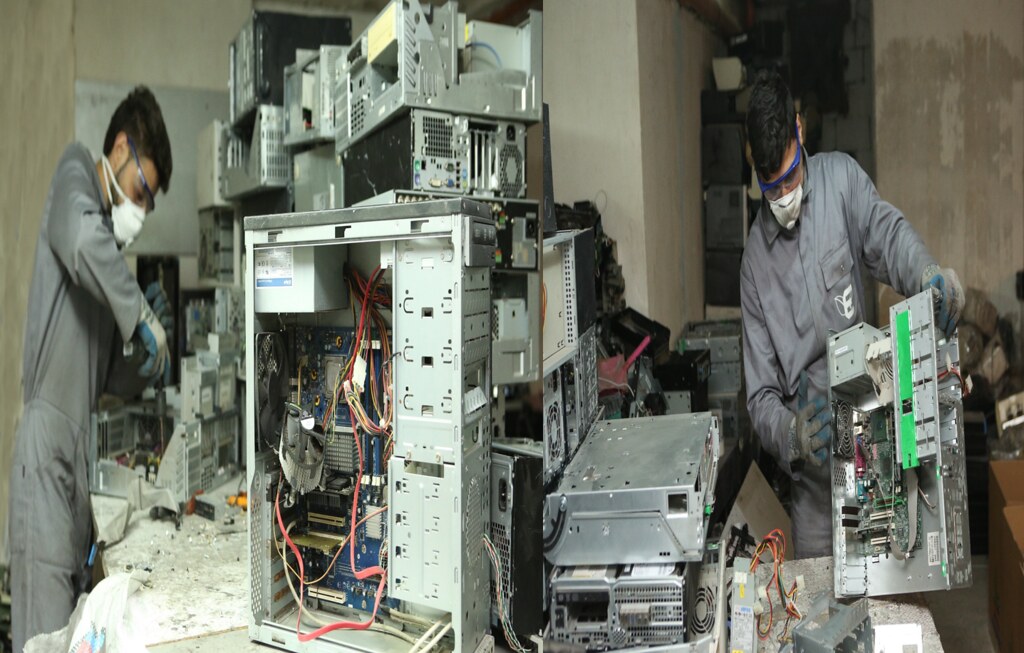
When e-waste is discarded into landfills or incinerated, it has disastrous effects on its surroundings. Scavenging for materials on the electronic board level releases highly dangerous toxins that directly impact human health. Modern electronics can contain up to 60 different elements; many are valuable, some are hazardous, and some are both. The most complex mix of substances is usually present in the printed wiring boards (PWBs). Unfortunately, PWBs are the main target of local recyclers, due to their high concentration of heavy metals. However, to extract these requires highly sophisticated chemical and controlled heat processes that are not available in Lebanon. So those who attempt to do so use methods that release all sorts of poisonous toxins in the air, soil, and water. 

Most developing countries lack a standardized framework for treating e-waste as well as the environmental awareness of how to treat it. In Lebanon, solid waste companies are neither mandated, nor do they have the capability to properly dispose of e-waste, which often ends up crushed at scrap facilities with no environmental safety measures. In order to raise awareness of the dangers of e-waste disposal, our non-profit organization, ECOSERV, was established in January 2018. Our aim is to lead by example on how to safely dispose of and recycle e-waste. 

To that end we are working on an initiative to change e-waste disposal habits in Lebanese communities through increased social awareness at universities, schools, and municipalities. On the individual level, we have set up over 50 drop zones across Lebanon where people can bring their e-waste to ensure it will be properly disposed of, and recycled where possible.

ECOSERV aims to create a sustainable social impact on the national level. Proper processing of e-waste is essential to ensure that toxic materials are not released into the environment. We need collective action from all stakeholders—municipalities, private and public institutions, universities and schools, and households—in dealing with the e-waste challenge. 

September 17, 2019 0 comments
0 FacebookTwitterPinterestEmail
EntrepreneurshipInvestment

VCs call for more updates to regulations and legislation to attract foreign investment

by Lauren Holtmeier September 17, 2019
written by Lauren Holtmeier

It has been six years since Banque du Liban (BDL), Lebanon’s central bank, announced Circular 331, designed to boost investment in the knowledge economy. Now entrepreneurs seeking seed-stage funding, and those operating VC funds in the country tell Executive that while more capital is available for startups seeking follow-on funding, seed or early stage funding is harder to come by. While some investments are being made to seed and early stage startups, the number of deals has slowed. Following the mid-2018 collapse of Bookwitty, which had received funds guaranteed under Circular 331, rumors swirled that its failure had caused financial flows facilitated by 331 to slow. Players in the entrepreneurship scene now place a new emphasis on attracting private capital to keep the startup ecosystem on its feet and moving forward.

When BDL announced Circular 331 in August 2013, it was designed to inject a potential $400 million into the Lebanese enterprise market; it was raised to $650 million in 2016. Measuring its impact is difficult, however, as, despite Executive having asked, there is still no consolidated figure on how much banks channeled into VC funds, and how much of this money was deployed, lost, or is still active. The VC fund CEOS and managers that Executive spoke with cited a positive aspect of Circular 331 as being the growth of the ecosystem and its relative security over these past six years. However, they say much must still be done to make Lebanon more investment friendly, and in turn see a maturation of the ecosystem that would hopefully drive increased confidence of foreign investors. Those Executive spoke with highlighted, among others, the need for further updates to the legal framework, and for the government to cut down the red tape required to set up a business in Lebanon.

One of the biggest hurdles to attracting foreign investment is creating a modernized legal framework—and some steps have been taken recently to address this, such long-awaited updates to the code of commerce that went into effect July 1. Measures such as allowing people to set up a single partner limited liability company (SARL) and allowing companies to issue preferred shares are small steps to ease doing business in Lebanon—in 2018, Lebanon’s ease of doing business rank deteriorated to 142 from 133 in 2017.

More change needed

Other legislation recently passed that aims to ameliorate some challenges include the judicial mediation law, Law 82 (2018), which was published in the Official Gazette on October 18, and mandates judges to offer for would-be court proceedings to be handled in mediation and should help clear the backlog of cases and speed up adjudication processes.

Currently being studied in Parliament’s finance committee are laws on insolvency and secure lending, the latter of which is important for SMEs, says Yasmina el-Khoury Raphael, head of business environment and innovation at the Office of the President of the Council of Ministers, as it will allow companies and SMEs to take out collateral on movable assets. Currently only immovable assets, like land or buildings, can be used as collateral. Finally, a law on private equity and venture capital presented by Prime Minister Saad Hariri has been approved by cabinet and is waiting to be presented to Parliament.

But more still needs to be done. While Law 81 (2019) helped make gains in modernizing the digital infrastructure by introducing e-transactions and data protection, those Executive spoke with point to what is still lacking, such as e-identification. Walid Hanna, CEO of Middle East Venture Partners says that introducing e-identification would be a big starting point for modernizing digital infrastructure, as many other countries have it. Beyond this, efforts for continual development should include the greater automation in administration and governance, such as digitization of documents.

VC fund and investment managers point to a slew of challenges still faced, despite recent modest progress on these fronts. Further cries for updates include the need for an economic free zone to ease business, the way a VC fund is legally defined (all are registered as holding companies), the lack of bankruptcy laws and challenges with closing a business, and the high cost of launching a business (startups start paying taxes as soon as they launch), and the lack of a sandbox (a sort of digital testing space for fintechs). The list goes on.

Khoury Raphael acknowledges that there is much to be done, and tells Executive that a ministerial committee, headed by Hariri, was established to oversee the digital infrastructure file. Currently, it is forming a roadmap for the digital economy in Lebanon. The intent is to have something official on this front by the end of 2019.

Taking steps

Positive steps can also be seen in attempts to tackle one of the most-oft heard woes of Lebanese entrepreneurs, the time and effort required—think trips to multiple ministries—to set up a company in Lebanon. Khoury Raphael says her department is working on setting up a “one-stop shop to register a company at the commercial registry” that will eventually be able to be done online. However, the timeline on this is 18 to 24 months before it is operational, she says, meaning companies will have to muddle through the current system for a while longer.

While the private sector waits for modernized laws and regulations, some are losing faith in the ability of the government to effectively aid the sector. “In Lebanon the government has never been there,” Corine Kiame, investment manager at IM Capital says. “The private sector always picks itself up. The government knows exactly what they need to do, but they’re not moving their feet.”

Those Executive spoke with seem motivated to get the ecosystem running on its own. If they can move forward in parallel with the government, with a couple of exits to improve perception, modernized regulation, and digital infrastructure, this will help attract foreign capital flows inward. But only time will tell if the government can make the necessary changes in the near future. For now, nascent startups and those seeking follow-on funding should expect to face continued challenges attracting foreign funding, at least in the short term.

September 17, 2019 0 comments
0 FacebookTwitterPinterestEmail
EntrepreneurshipProfiles

Profiles of two facilities management companies in Lebanon

by Lauren Holtmeier September 16, 2019
written by Lauren Holtmeier

Buildings do not run themselves. Lights must be changed, air conditioner units must be fixed, accounts kept in order, invoices sent, and so on. The list is long and tedious, and, in some cases, outsourced to a facilities management company. Facilities management is not just about lights and air conditioner units, however, it also encompasses the more complex aspects of energy management through identifying potential ways to reduce energy costs and increase efficiency. Globally, the sector “is forecast to record good growth, particularly in the Middle East and Asia-Pacific,” according to the 2018 Global Facilities Management Market Report (GFMM). The report estimates the total global facilities management market to be worth $1.15 trillion, with the outsource facilities management market at $466.5 billion. However, the GFMM does not include Lebanon, surveying only stronger Gulf economies, such as Saudi Arabia and the UAE, and attributing their growth to increased construction and an outsourcing culture. A report by the London-based market research company Technavio estimates the Middle East market specifically will grow by $29.9 billion from 2019 to 2023. Questions of how much sector growth can be expected in Lebanon arise when recalling the country’s real estate sector saw a decline at the end of 2018. (Real estate transactions dropped by 17.44 percent in 2018 compared to 2017. In Q1 2019, they fell 5.05 percent from the previous year). Other factors include the general sluggishness of Lebanon’s economy and expected growth rates under a single percentage point this year. From Executive’s own research, evaluating the potential market penetration of facilities management companies that would seek to enter the Lebanese market is complicated by the fact that both companies surveyed below derive their business from captive units.

Facilities management in Lebanon is not a new trend. A 2014 BankMed report noted that there was a “rising demand for complex services including facilities management,” while companies like Operators and Sodeco Gestion have been around since the early 2000s. But to this day, the facilities management market remains relatively small, with many buildings still managed informally with a natour or concierge handling day-to-day operations. What has changed in the past five years, is that those companies that are operating formal facilities management have begun to integrate sophisticated technology, like drones and the Internet of Things into their operations. 

The companies Executive surveyed focus primarily on retail and commercial spaces. In terms of maximizing efficiency, these companies, and companies globally, look at ways to monitor and reduce energy use, and so have developed and integrated sophisticated technology to help them monitor, manage, and facilitate transactions and maintenance requests online. 

Tech seeping in

Technology for the companies surveyed below has already begun to replace some human capital costs as drones now perform inspections, and the presence of maintenance request apps eliminates the middleman. Given the lack of data available, it is impossible to gauge a sector ratio between the cost of low-skilled labor and high-skilled staff, such as engineers, and cost of tech. While technology can include high initial investments, these companies tell Executive that they have seen good returns. Technology never tires, and it is more lucrative to have one employee making sure drones are flying or monitoring the condition of air vents through the Internet of Things than it is to have four or five workers checking and maintaining these things on a scheduled basis. With technology seeping into every aspect of modern life, it is no surprise it has found its way into facilities management, and as it continues to reshape how humans live their lives and how business is done, technology will likely continue to mold the facilities management industry—and those who can effectively utilize the latest tech will have a competitive edge over their less advanced competitors.

Enova, based in Dubai and operational in seven countries in the region, has three major contracts in Lebanon including City Centre Beirut, Carrefour, and WaterFront in Dbayeh. In Lebanon, nearly all of Enova’s portfolio is comprised of companies at least partially owned by Majid Al Futtaim, which operates Enova. Facilities management demands a heavy hands-on presence to make sure day-to-day operations run smoothly, but Operations Director Amin el-Najjar tells Executive that Enova has invested heavily in technology that helps eliminate human capital costs and streamline the workflow in the field. While he declined to specify how much has been invested in new technology, he says that they expect to see a return on investment in two to two and a half years. Through the Hubgrade monitoring system, all facilities are observed at one central location in Dubai. When a request is made through the central system, a technician receives a notification and is dispatched to perform maintenance. Even for certain maintenance aspects once performed by contractors, Enova relies on technology. For example, thermal imaging drones are responsible for ensuring solar panels are properly functioning. Part of facilities management is identifying areas to reduce costs, and this often includes energy costs. “The cheapest energy is unused energy,” says Najjar. He says that during audits they first identify ways to reduce energy use, and then try to supplement use with green energy—and in this region solar is often the answer. Enova has begun implementing condition-based maintenance, a type of maintenance in which repairs are only made when indicators show wear-and-tear rather than scheduled fixes. Najjar says that this is done by connecting their systems through Internet of Things and has reduced maintenance costs significantly. On the costs associated with integrating such advanced technology he says, “Technology drastically reduces the number of people required to do a job, and it makes it easier for us.” From monitoring to maintenance, technology is an integral part of Enova’s operations. Further, a digital dashboard gives building administrators access to data online that includes a building’s energy use and open requests. For tenants, an app is available on which they can request maintenance projects and cleaning services.

LifeQuo

For three generations, the Mouawad family has been active in the construction and development sector. Paul Mouawad, LifeQuo’s founder, says his grandfather started the family line of business during reconstruction after the Lebanese Civil War. The second generation followed with real estate development, and the youngest of the three Mouawads took over the facilities management side of operations. “We had to think of long-term sustainability, so we developed a facility management [aspect] to take over the projects the previous generations built,” Mouawad says. Originally, the facilities management service was part of Mouawad Investment Group, but LifeQuo was a natural splinter from its sister company under the Moawad Investment Group holding company and is owned in full by the youngest Mouawad. Currently, they manage around 15 properties in the Beirut Central District, of which nearly 80 percent are buildings that the Mouawads built. Mouawad says that while they are actively expanding their portfolio, they are being selective in their projects and seeking to have more clients in Downtown. He says this is in part because he knows clients in this area will make payments on time, and this target market is more familiar with the concept of facility management than in some other areas. The other part, he says, is that LifeQuo is focusing on providing high-quality services and boosting recognition, rather than focusing solely on making money. He says that by building a solid reputation, this will hopefully, in turn, help in raising profits in the long term. LifeQuo is split into three parts that include management of the entire building, the umbrella of the organization, service provision, and a real estate brokerage component. Mouawad says where other companies make money on the services provided by hiring subcontractors, LifeQuo has an internal servicing company to do maintenance directly. Maintenance requests are handled through an app, launched in 2016, that Mouawad says he developed when trying to identify how to give his company a leg up on others in the field. He adds that while the app is currently for LifeQuo’s clients’ use, they are devising a marketing campaign and intend to make it public.

September 16, 2019 0 comments
0 FacebookTwitterPinterestEmail
Budget 2019Economics & Policy

Lebanon releases the 2019 citizen budget

by Lamia Moubayed Bissat September 12, 2019
written by Lamia Moubayed Bissat

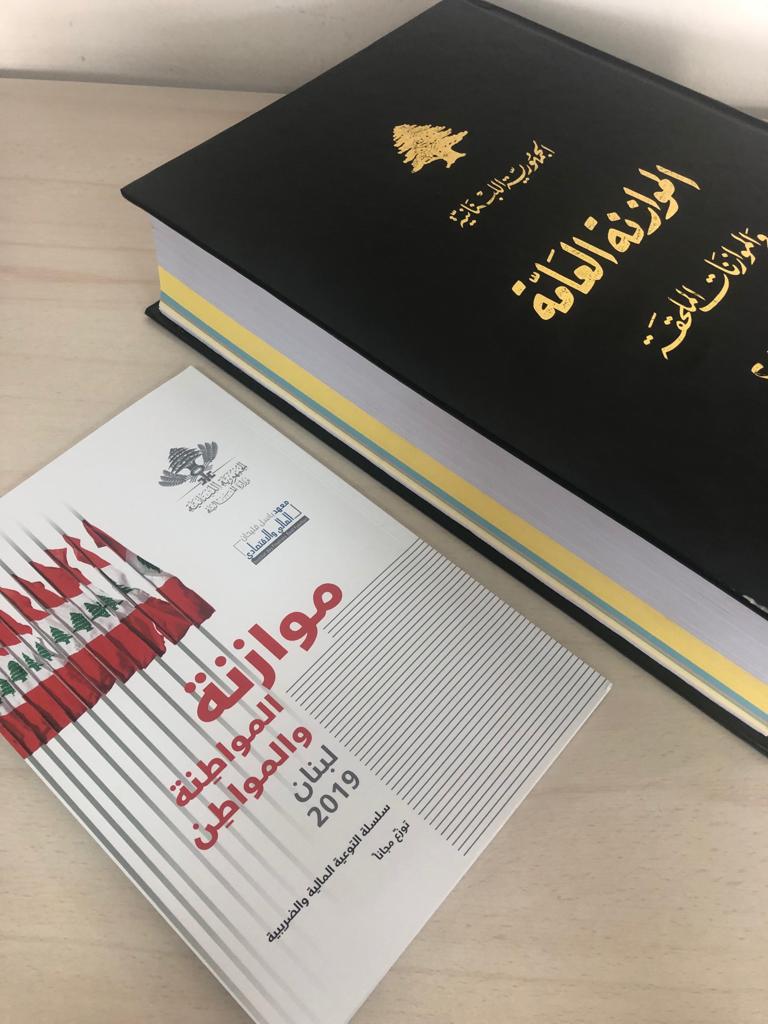
The 2019 budget law was subject to long debates that left citizens wondering about the ways the budget would affect their lives. It is a daunting task to make sense of the 1,000 plus black and white pages filled with complex tables, numbers, and graphs.

To help non-specialists understand the information in the budget law, for a second consecutive year, the finance ministry has committed to releasing a  “citizen budget” that breaks down the country’s fiscal situation. The 2019 document is scheduled to be accessible as of early September on the Ministry of Finance’s website and the website of the affiliated Institut des Finances Basil Fuleihan. It is also available in hard copies in Arabic, French, and English at the institute’s Library of Finance.

The citizen budget presents the following four core considerations in easy-to-understand language: economic assumptions underlying the 2019 budget—expectations about economic growth and inflation, and predictions about whether the budget will run a surplus or deficit; revenue collection—where the government’s money comes from; spending allocations—how the money is being spent and why (shown from three different angles, administrative entities, e.g. ministries; economic sector, e.g. salaries and benefits; and function, e.g. education and health); and significant policy initiatives and projects—an explanation of sizable increases or decreases in revenue or spending and of main projects planned.

The document also includes information about the budget calendar, how the budget is formulated and executed, and who is responsible at each stage. Practically speaking, this is the only document developed by the government exclusively for the public on this particular theme.

Value of a citizen budget

For governments, citizen budgets are an opportunity to enhance public knowledge about key financial information, communicate policy, improve budget transparency, and engage public participation, all with a view of strengthening the relationship of trust between the citizen and the state. For citizens and civil society, citizen budgets significantly enhance participation in policy debates around tax policies, fiscal decisions, and the spending habits of their governments, and they hold them accountable for how public money is managed.

This is particularly important for Lebanon, which scores just 3/100 on the budget transparency index published in 2017 by the International Budget Partnership (IBP), compared to a global average of 42. Citizen budgets are one way to improve this ranking, as seen in Egypt which moved from a score of 13 in 2012 to 41 in 2017 following the introduction of a citizen budget. 

Improving Lebanon’s ranking is not the ultimate goal, however. By favoring more transparency, the government seeks to strengthen the credibility of the country’s fiscal plans and boost confidence. The government committed to undertaking major financial governance reforms in order to unlock funding pledged by international donors at CEDRE last year. Fiscal transparency is one instrumental pillar in moving forward on the commitments made.

The International Monetary Fund (IMF)’s 2019 fiscal transparency code states that “fiscal forecasts and budgets should be presented in a way that facilitates policy analysis and accountability.” Many international organizations, including the IMF and the Organization for Economic Cooperation and Development promote access to budgetary information and financial literacy as key elements of transparency, accountability, and good financial governance.

This accountability requires commitment. Minister of Finance Ali Hassan Khalil’s ministerial decision to publish a yearly citizen budget (No. 1/110 dated March 4, 2019) reaffirms the commitment made to improve citizens’ access to information, promote transparency, and enhance accountability.

This task was delegated to the Institut des Finances Basil Fuleihan. Translating such a complex document and financial jargon into accessible language was a daunting challenge to our team who learned by observing, doing, and comparing to international practices. The learning facilitated by the IMF’s Middle East Regional Technical Assistance Center and IBP was instrumental. Visualizations and illustrations helped us articulate key information. 

The challenge for the period to come is for citizens and civil society to make the most of this work, and to partner with us to disseminate the Citizen Budget 2019 as widely as possible, across all forms of media, so that Lebanese citizens are aware of and have access to information fundamental to their understanding of how the state is financed.

September 12, 2019 0 comments
0 FacebookTwitterPinterestEmail
BusinessQ&A

New ABL chair talks adjustments to state budgets and his views on banking

by Thomas Schellen September 12, 2019
written by Thomas Schellen

As the banking sector is, for the umpteenth time in the last quarter century, the litmus test for Lebanon’s economic survivability and hopes of prosperity, Executive sat down with Salim Sfeir, chairman and chief executive officer of Bank of Beirut and chairman of the Association of Banks in Lebanon (ABL).

E   At the time of Parliament’s vote on the budget in July, you spoke in an interview to Reuters of positive sentiments about the budget coming from the market. Some time has passed and the budget has been published in the Official Gazette. At this point, what is the position of ABL on the budget? What are your expectations?

Our expectations are positive. The process of this budget should lead to a much better budget for the year 2020 that offsets the weakness of the present budget. Although this budget is positive by decreasing the deficit from 11.5 to 7.5 [percent of GDP], it has a long way to go in order to be better accepted by the international [entities] interested in assessing the economic situation in Lebanon. However, decreasing the deficit from 11.5 to 7.5 is an achievement.

E   But isn’t this reduction a target figure? Wouldn’t you agree that the decrease is not yet guaranteed?

It is not guaranteed, but the vision, the outlook, the good will, and the aim to achieve [this deficit reduction target] are not only in the air, but [affirmed] in the program of those who are in command. Thus, we are now looking forward to see a much better budget in 2020, also substantially decreasing the deficit of the budget.

E   You mentioned that you see weaknesses in the present budget. Are there specific points that you want to see addressed and implemented in the 2020 budget? 

[There are points that the budget] should amend. This [2019] budget relies a lot on the banking sector, but it is not to the advantage of the government to put too much weight on [it]. Each step in one or other direction has an impact on the [economic] rewards. The weakness of this budget in my view is threefold. The first [weakness] is how [the budget makers] emphasized reliance on the banking sector. Emphasizing reliance on the banking sector [for financing the budget through taxation] has an impact on the extent to which the banking sector is committed to assist the private sector.

The private sector is the engine of the economy, of welfare in the country, and the engine of employment in the country. We now have 40 percent unemployment among our youngsters. We [the banks] cannot serve the private sector to our full extent as 50 to 60 percent taxes on our income are being imposed on us. The politicians have a negative assessment [view] of how the profits of the banks are distributed. The profits of the banks are distributed to best serve the economy of this country. At the end of it, what goes into the pockets of our shareholders does not exceed 4 to 5 percent [of profits], and the rest is distributed over the economy and to what I would call the welfare of the economy.  

E   So you are seeing a tradeoff between the bank’s mandate to serve the private economy and the government obliging the banks to contribute more in service to the fiscal balance and public finance?

Yes, indeed.

E   From your perspective, is it then correct to say that the banking sector is more than any other sector in the economy taking the brunt of the burden linked to the new budget, which seems to me to have been designed as very basic exercise in scarcity management?

This [observation] is right in terms of numbers, in terms of outlook, and in terms of easiness. Despite all the economic, security, and political challenges, my wish is to see the government prioritize the economy. For the past 25 years, we have been serving the country. We are here to reinforce and strengthen our private sector that is behind the economic vitality of the country.

E   You mentioned three weaknesses in the budget and talked about the first one, over-reliance on the banking sector. What are the other main weaknesses in the 2019 budget in your assessment?

The other major weaknesses are that [the budget makers] have neglected the recommendations by the IMF, which represent the recommendations of the international regulators, rating agencies, and the international community. As Lebanon, we are not independent in today’s environment. We belong to an international market, be it political, environmental, or financial, and be it in terms of credibility.   

E   What should be different in the 2020 budget?

My personal wish for the 2020 budget is to see our decision-makers taking the international recommendations into consideration, [implementing them] if not from day one then at least over a period of two to three years.

E   How about expectations of the Lebanese people? The sentiment on the street on the 2019 budget seems indifferent or mostly negative. One rarely hears positive comments, whether about the budget or about the banking sector and the profits of banks. Should there be efforts to change this perception, and is this sentiment a problem?

No, it is not a problem. Historically speaking, the banking sector has been on the defensive. It has never dealt with the fact that it has to preserve its image. It went without saying that [banking] was a service industry that existed to best serve the interests of its customers. Whoever wanted to criticize the banking industry had a very easy task, day after day, and month after month. The positive [public view] of the banking sector disappeared; the image of the banking sector [has changed to a negative view] that it is taking advantage of its customers and of the people of Lebanon.

With due respect to our customers, who are our friends, our family, and our supporters, the reality of our sector is that almost 70 percent of our profits are distributed to our customers, according to the percentage to which they participate in the activity of the bank. So we have to be clear on this and perhaps now clarify the picture that we are a service industry working to the best benefit of the people of Lebanon.

E   Cost of capital has been a concern of bankers in the past. What is the outlook for cost of capital and profitability distribution to shareholders in the current environment?

If you compare Lebanese banks with the banks in the region, and even to the international banks, and then decide in which bank you should invest, our ratios, our liquidity, our [ratio of] deposits versus our loans, our Cook ratios (a solvency ratio dating from Basel I and defined as capital to risk-weighted on-balance sheet assets plus off-balance sheet exposures) are the best. We are the only liquid banking industry in the region.

E   Are you worried that the profitability of Lebanese banks will stay the way it is?

We are worried about the way in which [the government] are dealing with our profitability without our [consent] because they have implemented triple taxation. This is hurting the future investments of the banks very badly. We are hoping that in the 2020 budget, the government will take into consideration the double taxation. 

E   One aspect of the last few months seemed to be that the government reduced payments or deferred payments to contractors, service providers, and suppliers. Is this creating stress for banks because the government is changing their payment morale?

If we want to be fair, we should compare the behavior of our Ministry of Finance (MoF) in Lebanon in terms of payment with [that of] each ministry of finance in the region. The situation [of deferred settlements by governments] is a common practice. There is always a delay for several months, and in other countries [of the region] even a couple of years. However, our Lebanese government and MoF have failed at no time to pay their dues. It is not the time to criticize it now. It now is time to strengthen what is strong in the economy.

E   When one looks beyond Lebanon, stories from global markets testify to many challenges for banking. Just in some of the latest unsettling developments, interest rate decisions in the US saw Wall Street disappointed with the Fed’s cut as limited to 25 basis points, and then there were the trade tensions between the US and China that have this summer germinated into talk of currency wars. From Brexit to global scenarios, it seems that the world is not a supremely secure place right now for investment decisions. What does this mean for Lebanese banks?

Allow me to correct the last part of your statement. The world remains a secure place for investment. However, there is a change in the economic structure of the world. The world is getting more competitive for the first time in our contemporary history. Nations are challenging each other for their rate of growth and the impact of their growth rate on their own economy versus competitors who were their friends in the past. This is positive, not negative. My personal wish is to ask our politicians to acquire the feeling [of competitive vigor] that other heads of state have for their economy versus other economies. People in charge of the economies of each and every country are in competition with each other. Thus, their first challenge within their nations is to reinforce their economy and their private sector, which is not the fact in Lebanon.

E   In going back to the discussion on the Lebanese specificities, there have in recent months, and even years, been rumors about the currency, rumors targeting the sustainability of the Lebanese lira and the dollar peg, along with rumors about politics. Is the investor community of Lebanon as unfazed by those rumors as it sometimes appears when one looks at the size of monetary flows, or are people very nervous and call you in the middle of the night because they are worried about their wealth and money?

The rumors are the viruses of the economy and each body is affected by virus [attacks]. The effect of the virus is the heavier, the stronger this virus is, and nobody is immunized.

E   So there is an effect on the investors and their confidence?

There is a negative effect on everybody, and I would only hope that the people of Lebanon would focus on their own personal and individual productivity more than dwelling on their nation’s productivity.

E   Do you have a recommendation to what course and method the government and MoF should pursue when it comes to issuance of debt instruments? Discussions about zero-interest bonds or one-percent bonds and similar shenanigans seem to have been going in circles and are not constructive. What is the best way for Lebanon to handle their need for issuance of debt?

My wish is to see our politicians in charge of finance and the economy of this country to be more focused on the values of the international community when it comes to economics and finance, rather than focus on what the people would think. Managing the financial sectors of the economy, managing of the economic indicators of a country, should be independent from public opinion. It should belong to an international value system, because we are part of an international world, especially financially, especially banking-wise, credibility-wise, and compliance-wise. All those matters should be considered [with regard to] international values.

E   You had told me in an interview a few years ago that you are not interested in politics and said the best thing people could do was pray for our politics. Do you have any advice about politics?

The best advice I can give on politics is that the people managing the finance and the economy should be independent and technocrats.

E   Today, many models for organization of a society are being put on the table again for discussion globally, from liberal democracy à la Americaine to nationally focused ones. Is there an economic and political economy model that, in your view, Lebanon should orient itself on to go through the coming years of austerity and change?

Lebanon is Lebanon. We are independent and liberal by nature. However, I think Lebanon is thirsty for peace and thirsty for opening its atmosphere to our real wealth. Our real wealth: that is our intellect, our innovation, our creativity, our ambition, our resilience.

We are tired of defending our values. We want our values to be implemented. For that purpose, we need to give to Lebanon an economic stability and an economic strength that would guarantee the economic welfare of our citizens. In order to reach this we need to focus more and strengthen our economic indicators. Whatever system you will apply, if it respects those values, it will be the right system for Lebanon. 

September 12, 2019 0 comments
0 FacebookTwitterPinterestEmail
Book review

Book review: Aftermath, Seven Secrets of Wealth Preservation in the Coming Chaos

by Thomas Schellen September 11, 2019
written by Thomas Schellen

American economic writer James Rickards has delivered his fourth book on dystopian economics in a series that started in 2011 with the publication of The Currency Wars. Aftermath, released in July, promises to fortify readers for coming economic and societal chaos with not-so-esoteric economic knowledge of seven secrets of wealth preservation. 

The author presumes that some content of Aftermath will “shock the most seasoned readers” but also equip them against the events of the coming years. Moreover, he declares that his quartet of books on the international monetary system has thematic resemblances to the four horsemen of the Apocalypse.

This makes it actually quite simple to summarize Aftermath in terms of its central myth—“Doom is now”—and the narrative options it serves up. Besides the biblical allusion to the four horsemen, a reader can immerse themselves into varied imaginative scenarios, including: Odysseus’ journey; a debt history of the US and its predicted debt apocalypse; a Frankensteinian description of bad nudging; a scenario of passive-investments-driven markets meltdown; specters of bad monetary theories; a vision of a global monetary conference hosted by President Trump; a Godzilla moment that theorizes monstrous banks breaking down under their own weight and destroying finance; and an ever-more gaping wealth disparity horror that decimates the middle classes.

Economic narrative of doom

Aftermath is an engaging read of dystopian economics, and, at certain points, very timely. The sum of Rickards’ economic doomsday prophecies is that everything done by the Federal Reserve in the past 10 years was a result of the Great Recession, but that the Fed was not able to achieve its three existential targets: to avert collapse of capital markets, to revive self-sustaining growth in the US economy, and to end its own interventionism. Because the Fed failed in these presumed tasks, the Great Recession has never really ended. “All the Fed proved in recent years is that they really couldn’t exit extraordinary policy intervention without disruption,” Rickards writes. “The Fed has been storing up trouble for another day. That day is here.” 

However, this day of trouble in Rickards’ narrative is better read as an imprecise prediction of an economic tipping point that will arrive at some time, possibly.

Despite the book’s overall length that does not suffice for an in-depth examination of the issues raised, but at the same time is far too long for the essay-worthy discussion, Aftermath, throughout its first pages and last two chapters, is a timely and unsettling op-ed. Its narrative and message on the American economy is not necessarily less credible, but definitely far more entertaining than the worn narrative construct of a “favorable place” that Fed Chairman Jerome Powell delivered at the end of August in his message to the Jackson Hole crowd of central bankers and global economists. Although saying that the American economy is in this favorable place, Powell assured everyone that the Fed is working to sustain those conditions “in the face of significant risks we have been monitoring.” 

However, when one juxtaposes such official talk with the historic reality of bad calls in the economic professions, any elaborate prophecy of economic doom, like the one presented by Rickards, is a welcome departure.

Reading Aftermath from the perspective of a reader in a small economy and country that has no power to influence Fed decisions and American debt trajectories, puts the dimensions of Lebanon’s economic problems into better perspective. It is weirdly comforting to see evidence that the problems of the biggest economies are not all that different from the turmoil felt by the weakest. Moreover, reading it with Lebanese realities in mind, an exploration of Aftermath is a great opportunity to ponder the question—exaggerated in local debates—if Lebanon is really the worst place on earth to live from the perspective of preserving personal wealth and/or the worst place ever to commit trust and investments to. In the views of this journalist, it is neither.

September 11, 2019 0 comments
0 FacebookTwitterPinterestEmail
Special ReportWealth management

The opportunity of peer-to-peer lending in Lebanon

by Roxana Mohammadian-Molina September 11, 2019
written by Roxana Mohammadian-Molina

Through conversations with Lebanese entrepreneurs, business owners, bankers, and politicians, I have had a number of eye-opening discussions into the challenges and opportunities faced by Lebanon’s SME ecosystem. Given the country’s long-standing tradition in financial services and its large banking sector, I believe fintech—with solutions such as peer-to-peer lending, machine learning to personalize insurance solutions, and the use of artificial intelligence for wealth management—stands as a serious contender to unlock the funding challenges faced by Lebanon’s SMEs. 

Opportunity for Lebanon 

So, what exactly are the factors that could see fintech—in particular peer-to-peer lending—transform Lebanon’s SME and digital ecosystem? Lebanon has several interlocking strengths, namely: its strategic location, its favorable tax system and free-trade zones, its entrepreneurial spirit, a good network of highly successful diaspora around the world, its local talent pool, and an educated and multilingual population.

SMEs, particularly micro-enterprises, are the main economic drivers in Lebanon. They constitute 95 percent of companies and account for 50 percent of employment. Yet, access to finance represents a major constraint; 42 percent of Lebanese SMEs struggle to get finance, according to the 2014 World Bank Enterprise Survey.  

Despite having a relatively large financial and banking sector, credit in Lebanon is mostly channeled to a small number of large firms, while SMEs struggle to access finance. Bank loans represent a modest source of real financing to SMEs with only 17.5 percent having access to this funding channel, often against mortgages and guarantees required by Lebanese financial institutions. Since financing of SMEs via the stock market is nonexistent and informal loans are not commonly used, self-financing is the main source of funding for the short- and medium-term. As a result, a large number of SMEs have disconnected from the banking sector altogether, and by doing so have lost growth opportunities. 

Peer-to-peer lending could be the solution to the financing problems faced by Lebanese SMEs. In the US and the UK—the two largest peer-to-peer markets in the world by volume—the emergence of the peer-to-peer lending sector has been in response to difficulties in accessing finance in the aftermath of the global financial crisis. The model is a way to allow people to invest in small businesses belonging to their friends and peers. By comparison, the Middle East has one of the highest savings rates in the world, yet people do not use a lot of credit, and there are not many investment opportunities. The peer-to-peer model has the potential to place Lebanon at the receiving-end of savings to be channeled into a dynamic and exciting SME and startup ecosystem.

While Lebanon has more than its fair share of complex and long-term challenges, I truly believe that the country holds the potential to become the “Silicon Valley” of the Middle East. Of course, serious work still needs to be done. Lebanon still needs to continuously improve and enhance its business environment (mainly in infrastructures, world-rankings, ease of doing business,  and legal system transparency). 

The government has to play a pivotal role in further advancing the startup industry with measures such as: tax cuts for tech companies, removing bureaucratic obstacles to encourage hi-tech mergers, the creation of public-private partnerships to support homegrown venture capital, and high-tech incubator programs to support the sector. Entrepreneurial education is also an important component, and Lebanon’s top universities need to increasingly focus on running entrepreneurship programs to look internationally for talent and target underrepresented local populations. Other initiatives, such as a visa pilot for foreign entrepreneurs, must also be considered. 

Yet, underpinning it all is the emergence of a peer-to-peer lending sector that represents a serious opportunity to provide much-needed oxygen to Lebanese SMEs and help build a world-leading startup ecosystem. It also represents a practical solution to some of Lebanon’s funding challenges. 

September 11, 2019 0 comments
0 FacebookTwitterPinterestEmail
Asset ClassesSpecial ReportWealth management

Currencies, bonds, gold, and emerging assets

by Thomas Schellen September 9, 2019
written by Thomas Schellen

The mundane reality of human wealth advisories is keeping investors in the purgatories of risk. Thus, it seems proper for the investor to track the evolutions of asset classes in a world where comprehensive wealth narratives begin with traditional asset classes—gold, bonds, and cash—and also venture into non-traditional stories of investing in infrastructure, entrepreneurship, and environmental, social, and governance (ESG) assets.  

Gold, bonds, and currencies are classics in representing the asset classes of commodities, fixed income, and cash. They differ widely in their characteristics, and being cogent of them is good for anyone interested in wealth management.

Whereas the asset classes of equities and real estate can be reasoned to have significant local provinces for retail investors with interests in Lebanon, global trends determine investment strategies for commodities, fixed-income, and cash asset classes to such a degree that local wealth holders need to stay 100 percent observant of developments in the respective international markets.

Gold

For gold bugs, but also for international commodities consultants, the outlook for gold prices has strong upsides that, as of the middle of 2019, are expected to be realized earlier than previously thought—in tandem with economists’ recent expectations (see the National Association for Business Economics [NABE] survey coverage) that a global recession could be impending in 2020 or 2021. In a recent newsletter by German precious-metals firm Degussa, its head economist Thorsten Polleit says an increasing number of factors suggests that globally “the upward trend in prices of gold and silver” will continue, and he advises investors with long-term orientations to expand their positions. Lebanese wealth management professionals concur. “We believe in gold, and we think the upward trend of gold has started and is far from ended,” Jean Riachi, the chairman and general director of FFA Private Bank, tells Executive.

“Many analysts believe today that gold will rise, and it does not have to be a doomsday scenario to believe so. Gold trend is up because of geopolitical risks and the issue of trade war,” says Fadi Osseiran, the general manager of Blominvest. He notes that a fund product designed by Blominvest’s asset manager a while ago with 30 percent bonds, 50 percent equities, and 20 percent allocation to gold has been outperforming because of gold.

Youssef Dib, general manager for private and investment banking at Saradar Bank, explains that three of the most highly used portfolio strategies in the bank’s offerings today include relatively strong proportional allocations to gold at 5 percent. 

Cash

When it comes to cash, often-cited data points to a near-term disappearance of physical banknotes and supports the interests of financial services corporations facilitating electronic transfers and other stakeholders that stand to benefit from physical money’s decreased use. While expectations for the great cashless global society tend to ignore or downplay countertrends, the businesses of trading and speculating in currencies are not predicted to experience death until the world’s end.

It is logically no shock that Lebanese wealth managers see strong prospects of currencies as an asset class for local investors. “In terms of currencies, I would again stress diversification,” Dib says.  “We are in a dollar-based country in Lebanon and also in a dollar-based [region] area of the world. But as one sees volatility in the dollar, one can [observe] that safe-haven currencies and [precious] metals are going up, and [diversify one’s portfolio into] Swiss Franc, Japanese Yen, and gold.”

Raja Abdallah, the investment adviser of Beirut-based currency trading specialist Royal Financials, says that currency trading offers sufficient sophistication and choices so that investors see currencies as an asset class in itself. “[As a banker working in Switzerland], I had clients who played nothing but currencies for managing their wealth, either in the form of speculation or hedging,” he explains, adding that Royal Financials is in the process of launching a capital-protected structured product linked to foreign exchange. “We have a track record at our trading desk that has outperformed many indices for a long while; as this is our forte, [Royal decided] to offer a yield-enhanced structured product that can potentially beat the bank yield of deposits in Lebanon, and do so with capital protection,” he tells Executive. 

Bonds

The expectations for international bond markets appear to shift in ways not yet seen in this century. “On bonds, I think we are reaching the end of the long bull market that started in the early 1980s under [then Federal Reserve Chairman] Paul Volcker when he increased rates dramatically to tame inflation,” Saradar’s Dib says. “What followed was a cycle of almost 40 years during which the interest rates were coming down, a period of deflation trends, [to the point that] now there are $14 trillion [worldwide] of negative-yielding bonds. I would be careful with bonds now, especially given that liquidity [in bond markets] today is less than in 2007 and 2008.” 

For Charles Salem, assistant general manager and global director of private banking at Banque Libano-Française, there are pro-bond arguments due to their reputation as safe-haven assets despite their yields at historical lows across the board. In his view, investors could nonetheless leave this market for greener return pastures if turnarounds in the global Purchasing Managers’ Index (PMI) and other signals point to improving growth. “With a continued slowdown in global growth on the horizon, the bond market is hovering around current levels,” he says. “In the case of a reversal in the current downward trend of global PMIs and renewed confidence and growth occur, we would expect a shift from bonds to higher yielding equity markets.” 

Royal Financials’ Abdallah sees the first and central question on bond markets in investors’ need to gauge the state of mind at America’s Federal Reserve. He argues this is because interest rates determined at the Fed influence bond pricing in many parts of the world, before he alludes to underdeveloped bond innovation potential among emerging markets issuers. “I would like to see emerging markets become more creative rather than offer [bonds] that are either very speculative or very boring,” he says.

The significant others

Some asset classes other than the big ones mentioned above could suddenly rise to local prominence and help produce social benefits and good returns for investors in Lebanon. One that would require national reform before entering into the market is private investing in infrastructure projects.

Internationally, infrastructure investment is an asset class that has captured the imagination of investors in positive correlation with the tendencies of governments around the world to open infrastructure developments to private participation mainly through public-private partnerships (PPPs) but also via partnerships with multilateral development banks (MDBs). As a 2017 World Bank blog notes, the potential of unblocking private capital for infrastructure investments in emerging economies is great and, in the context of the UN’s 2030 sustainable development goals agenda “an asset class approach could open a door to massively employing the financial markets to promote sustainable development, especially in rapidly-growing urban centers in emerging markets.” 

With hoped-for PPP schemes for infrastructure investment projects in Lebanon, the future thus might see local and expatriate investors presented with infrastructure investment opportunities via financial markets and also see Lebanese investment bankers and wealth professionals rise to important facilitators in realization of the envisioned infrastructure assets in a country that sorely needs them.

The first two investment ideas to be assessed in the realm of private sector entrepreneurship are investments into the private equity/venture capital sphere and direct investments in knowledge economy enterprises and startups. A main consideration before investing is the riskiness of the activity. “Tech startups carry a high amount of risk, as fast burgeoning ideas do not always make it to operating profit and market expansion,” explains Toufic Aouad, the general manager of Audi Private Bank, noting a preference for diversified funds over direct investments due to the difficulty of determining success in the early stages of a startup. “The BDL Circular 331 initiative has encouraged the setup of new funds and has fueled job creation, with the objective of supporting private sector initiatives, especially tech startups,” he says. “We have been exposed to such managers who have managed to attract suitable clients able and willing to bear the risk, liquidity, and time horizon constraints of such investments.”

For Riachi at FFA, the path of investments in the tech ecosystem is not only less-trodden but should remain so. Lamenting the track record of tech investment, he notes: “Most companies in the ecosystem did not make it, and some [became] big messes. Investing in startups is not for everybody, and we do not recommend our clients invest in startups. We do not even recommend investing in venture capital funds as we do not think this investment is suitable for most people. Yes, if you are a huge family office with 100s of millions of dollars, you can allocate part of this to the area of venture capital and investing in startups. But otherwise, I do not think it is a good idea.”

Private equity and startup investing takes a nuanced approach for Blominvest head Osseiran. According to him, the bank generally sees the best way for such entrepreneurship investments for a rich person in Lebanon is in taking the route of specialized funds rather than placing direct investments, but there are some investors in Lebanon where an approach for direct investments is right. “We are not advising clients to invest directly in startups, but we are helping some startups in raising money,” Osseiran says. “As private banker I do not advise my clients to invest in startups directly, but as an investment banker, I go and look for investors. However, I only [seek out] very sophisticated ones who are more educated than private banking clients need to be.” He adds that such potential investors could be a family office with its own due diligence procedures to assess such an investment opportunity. “I can do that, but this is not an advice to a private [banking] client. For me, VC [investing] and startup equity has potential as an asset class in Lebanon, but this is still early,” he says.

Attracting potential

Fawzi Rahal is a stakeholder in the entrepreneurship ecosystem as managing director of Flat6Labs in Beirut, a startup program and seed fund of $20 million. In his experience, the idea of attracting investors to the funds in the ecosystem—prudent as the financing modalities created under the system of Circular 331 need increasing supplementation and replacement in the coming years—has so far seen first positive impulses of funding inflows through negotiations with MDBs. “To attract investor money into the Lebanese ecosystem would not be a proposition of an economic benefit for the investor, due to our situation in Lebanon, as much as a proposition for a business benefit because of the value that Lebanese startups are capable of creating,” Rahal says. He adds that it was feasible, in his experience, to channel what were small commitments for tech funds abroad into startup tech companies in Lebanon or organize contributions from international institutional investors into a fund like Flat6Labs’ Lebanon Seed Fund, but that some foreign investors encountered technical barriers and regulation-related difficulties when trying to deposit funds into an account of a startup in Lebanon.

As Rahal explains it, diaspora investors and expatriate high-net-worth-individuals are not currently showing a lot of desire to invest in the Lebanon Seed Fund, but potential for attracting such investments could be developed further. Possibilities include initiatives such as a diaspora network of business angels, and credible, attractive return propositions. Presenting Lebanese entrepreneurship as an asset class could be worthwhile as the ecosystem is slowly maturing and would benefit from positive exit stories, such as a very recent one that was realized by Flat6Labs in Egypt, Rahal says. “We are giving commitment to our [limited partners] that we will give them anywhere from 20 to 25 percent [internal rate of return], and the way we do it is through the tried and tested model that we apply, which entails seed [funding of startups] and then follow up [funding],” he explains. “To use the example of the [mid-August] Harmonica exit: Harmonica is a matchmaking startup from Cairo and its acquisition by [US-based site] Match allowed Flat6 to get 16x returns—600 percent IRR.”   

Cryptic on cryptocurrencies

Most wealth management experts who Executive spoke with said that they are not touching cryptocurrencies for the time being. FFA’s Riachi shared his skepticism by explaining that to him, the top entry in the crypto industry, Bitcoin, and similar concepts are not really currencies, and that the proposed cryptocurrency, Facebook-led Libra, is a payment system where it has to be seen what happens with it. “Why do you want to buy cryptocurrency? Go buy gold; it is the same thing. If you think that commodities will go up, then buy the commodity that exists since 3,000 years and that everybody knows, and where everything is clear about the way you transact and the way you safeguard [your investment],” he says.

Currency exchanges all over the world are facing new risks. (Picture: Shanghai)

“As for cryptocurrencies, we believe they are still at early stages. This nascent asset class should, however, become part of asset allocation in the next years,” says Audi’s Aouad. “So far, their complex nature coupled with regulatory authorities’ rejection do not help wider adoption by the general public. Also, widely known companies such as Facebook are looking to enter the space (despite initial negative reactions by governments and officials), which is growing awareness about cryptos. It is though too early to have a proper basis for analysis, predictions, and recommendations at this stage.” 

The impact buds

A final realm that seems historically and presently underrepresented in the portfolio strategies of local wealth managers is impact investing, which can take several directions. According to a brief description by the International Finance Corporation, this activity is described as investing “with the intent to contribute to measurable positive social, economic, and environmental impact alongside financial returns.” In the perspective of Saradar Bank’s Dib, microfinance in Lebanon can be regarded as an asset class in this very context of ESG commitments and their growing global appreciation. “We have a growing sensitivity to impact investing among the younger generation, and there is hope in microfinance. There is a need for microfinance that banks do not address. We have good experience in the area, and there is real added value and also strong impact on advancing women in the workforce,” Dib adds, referring to microfinance activities that are supported under the umbrella of Saradar Group on whose website it is classified as a sister company to Saradar Family Office.

The BLOM Bank group is experimenting with impact investing through a startup entrepreneurship initiative and competition, the Hult Prize. According to Osseiran, the prize has two ESG dimensions by its being directed at university students and by its coordinated theme that is the same all over the world. “When one watches impact investing, it is important and growing all over the world, [including] Lebanon, but the field is also still early here,” he says. “If VC investing in Lebanon is still small and early, I would say that impact investing is the same, and even more so. Impact investing might gain track in Lebanon because so many things are socially needed, and in this sense impact investing is not far from mainstream thinking, but the entire VC investing realm is still distant from Lebanon investment perspectives.”

September 9, 2019 0 comments
0 FacebookTwitterPinterestEmail
Economics & PolicyWaste Management

Lebanon’s struggle to implement a coherent waste management strategy

by Lauren Holtmeier September 9, 2019
written by Lauren Holtmeier

Calls for a sustainable solid waste management plan in Lebanon have not abated over the four years since the last garbage crisis left Beirut’s streets littered with trash in 2015. Its presence is very much still felt—or at the very least, smelt. Such calls, in fact, date to when the first series of emergency measures were implemented beginning in 1997—see timeline below—but successive attempts over the past decades have failed to find a solution to Lebanon’s trash problem. This last year has seen renewed efforts with the passage of Law 80 (2018) on integrated solid waste management, a law that had stagnated in Parliament for six years prior. Just 11 months after passing Law 80—which mandated the environment ministry to develop a national waste management strategy, albeit within six months—Minister of Environment Fady Jreissati’s proposed 10-year solid waste management roadmap was adopted by cabinet on August 27. 

Any tangible progress is a long way off, even allowing for the minimum time needed to start implementing the new roadmap, measures of which at the time of writing had not been agreed on in full. The impetus for the special meeting of cabinet that approved the roadmap was the threat of another crisis that Jresissati had warned could start as soon as September 1, if concrete steps were not taken—it remains to be seen how agreeing on his roadmap will impact things on the ground within the space of days. 

Experts tell Executive that the time is ripe to implement a sustainable, long-term plan whereby public and private actors work in tandem to properly manage the country’s waste, and that the current system of approaching waste management as a crisis situation and implementing stopgap measures must be binned. While this new roadmap seems like a solid step in that direction, these experts question its feasibility. One of the sticking points in the roadmap was its attempt to implement a new financial recovery mechanism to reduce the debt incurred by the sector, which has been passed by the cabinet to the ministries of finance and environment to study over the next month. For now the sector remains, like the streets and coasts, a mess.

Incinerator debates

When initially presented to Prime Minister Saad Hariri in June, Jresissati’s roadmap was met with some minor protests as it calls for environmental impact assessments (EIAs) on two locations for proposed incinerators. The idea of incinerators has sparked heated debate in Lebanon since they were first proposed in 2010 as part of the last efforts to implement a long-term plan. 

Primarily the debate around incinerators focuses on Lebanon’s garbage composition. Those opposed to their use say that if a country has high levels of organic waste, like Lebanon, incineration is often not the best choice because the waste composition is incompatible with incineration. Others have made objections on the level of governance, arguing that Lebanon does not have the capacity to properly regulate incinerators. Samar Khalil, an environmental management specialist and member of the Waste Management Coalition in Lebanon tells Executive that further concerns include Lebanon’s already high levels of air pollution—in May, levels double EU limits for air pollution were recorded in Beirut—and the logistical challenges associated with exporting or disposing of hazardous waste produced from the incinerators. 

The net amount of energy that could be gained from incineration, if gains are even possible, also seems negligible, according to those Executive spoke with. Incineration occurs at temperatures above 850 degrees Celsius, and because of the wet nature of Lebanon’s garbage—it has a moisture content of 60 percent—the amount of fossil fuel required to raise the temperature to that degree may be more than what would be recovered, says Anwar al-Shami, solid waste management expert and data analyst at American University of Beirut Nature Conservation Center (NCC). 

Regarding governance, concerned experts, such as Najat Saliba, director at the NCC, point to stringent and layered regulatory mechanisms in places like the EU that ensure hazardous materials that can be emitted during incineration are properly handled. Khalil concurs, pointing to the general ineffectiveness of government regulation in Lebanon. A Ministry of Environment (MoE) official, who asked to remain anonymous, says that the EIA contains guidelines on implementing proper legislation and adds that they are proposing a compliance monitoring system in which other stakeholders would be engaged. In June, Jreissati had asked the EU to inspect emissions from proposed incineration facilities. In an email to The New Arab, EU political section attache Elin Danielsson said “The European Union as of today [June 27] does not support incineration solutions in Lebanon, not least due to the absence of a satisfactory regulatory and institutional framework. It is not the role of the European Union to oversee or regulate sectoral policies in third countries.” The EU delegation to Lebanon confirmed this statement was accurate to Executive. 

Though one of the main sources of debate, EIAs on incinerators are the last aspect of this four-part roadmap. It first calls for more immediate measures, like the 25 sanitary landfills to be established in each kaza—only 10 of which are already established—and tenders to be issued for maintenance and operations of waste management facilities. Environmental engineering experts Executive talked to say that without recent EIAs—the last comprehensive study was done in 2006—there is no way to be sure of the feasibility of these proposed locations. Currently, there are nearly 1,000 informal dumps scattered across the country that, combined with landfills, receive 75-80 percent of generated garbage. The roadmap sets an ambitious target of just 20 percent to be landfilled in 10 years, one which the MoE official says may be unattainable without incineration. 

Why such an ambitious target? There are no international standards that Lebanon is currently mandated to follow. Khalil explains that some countries landfill only 2 percent, but those rely on heavy incineration and have less organic waste. A 2018 World Bank report reads, “Incineration is used primarily in high-capacity, high-income, and land-constrained countries.” Lebanon meets only the latter of these criteria. It notes that upper-middle income countries, which Lebanon classifies as, have the highest percent of waste in landfills, at 54 percent (which seems like a more reasonable target for Lebanon than 20 percent). 

Sort at source

Another way to reduce waste is from sorting at source, a process in which citizens are responsible for dividing waste into various categories; only 6 percent of waste in Lebanon is currently sorted in homes. A decree in the roadmap commits the government to enforce mandatory sorting at source. According to the decree, bins are to be provided by municipalities, who will also be responsible for collection and transfer to treatment centers. But all this costs money, and details on proposed financing remain murky (see box below). Past efforts to implement sorting at source have gone awry due to municipalities’ inability to finance them.

The funding issue lies on two levels: the state level and the municipality level. Law 80 encouraged decentralization, putting the impetus on the municipalities to fund and implement solid waste management policies, but most lack the funds to take up the helm. In a survey conducted by the MoE in 2018, nearly all municipalities who responded favored partial decentralization—but these represented only 30 percent of all municipalities. Whereas Beirut—which has its own plans for an incinerator—can be considered a wealthy municipality, others, according to the MoE official, are so lacking in funding that they struggled to buy proper bins to implement a MoE circular (No. 7/1, designed to encourage municipalities to sort at source). And with funds being withheld from the independent municipal fund, it remains unclear how municipalities can be expected to finance this measure in the near future.  

Immediately following the end of Sukleen’s waste management contract in 2015, the central government started withholding around 40 percent of fees municipalities paid into the independent municipal fund, a move it said was to pay the debt incurred from the Sukleen era. Sukleen, a subsidiary of Averda, was the country’s largest waste manager from the early 1990s until 2015. Disbursements from the fund, which is comprised of revenue from taxes and fees—like levies on telecommunications and electricity—are intended to provide local services, help run local administrations, and fund local development projects. These disbursements are distributed by the Ministry of Finance (MoF).

In 2016, the United Nations Development Programme estimated that around 70 percent of municipalities receive 90 percent of their total annual income from the fund, if the funds are received. Municipalities did not receive their allotments in 2017 and 2018, and The National News Agency reported in April that Finance Minister Ali Hasan Khalil said municipalities would receive the 2017 funding in May. This did not happen. On August 26, Khalil said the 2017 funds would be released by the end of the month—at time of this writing it remains to be seen if this will be the case. Allocations from the fund are based on the size of local population and contribution to the pool; the size of the fund is unknown, but is said to be worth billions. According to a 2018 article in UAE-based daily The National, the independent municipal fund’s deficit in October of that year amounted $2 billion after cabinet used it for measures aimed at fixing the waste problem. With so much of a municipality’s annual revenue derived from the fund, and the disbursements irregular and stalled, municipalities have little means to implement their own waste management solutions.

Need to break the mould

At the state level, the 2018 draft law had a section on finance included in the text; when Parliament passed the law, it cut the financial recovery provision section, says the MoE official. Without this provision, the sector risks becoming a drain on state coffers, like the electricity sector that accounted for 40 percent of the country’s fiscal deficit at the end of 2019, she adds. The MoE official had no data on how large the waste management sector’s current deficit accounted to, telling Executive to approach the MoF. When asked, a MoF employee told Executive they were not responsible for this information. Whether or not there is someone within the government aware of the size of the deficit generated by waste management remains to be seen.

Without funds to decentralize and seek privately operated waste management or even local government solutions, municipalities must rely on the central system for treatment and disposal, which is and has been for decades rife with problems. 

Only time will tell if this new roadmap will be implemented or if, like the 2006 master plan that divided Lebanon into four service areas and left municipalities responsible for their own waste management—including bearing the cost—it will be discarded and rendered ineffective. The 2006 plan fell to the wayside due to political turmoil at the time, set off in part by the assassination of former Prime Minister Rafic Hariri the year prior, says Khalil. Recent delays in cabinet meeting because of political bickering, while not as strongly reminiscent of 13 years ago, are still indicative of a government more concerned with party squabbles than much needed reform and progress, and this will likely affect the implementation of this roadmap. 

If the plan’s loose ends are tied up, i.e. the second incinerator location set, the landfill locations confirmed, and the financing mechanism reevaluated by their allotted deadlines, this would indicate perhaps more serious government intentions than past efforts have seen. But whatever this roadmap may be able to achieve, one certainty is that an overhaul is long overdue, and the decades-old pattern of patching a broken system as crises arise must be abandoned.

September 9, 2019 0 comments
0 FacebookTwitterPinterestEmail
  • 1
  • …
  • 59
  • 60
  • 61
  • 62
  • 63
  • …
  • 707

Latest Cover

About us

Since its first edition emerged on the newsstands in 1999, Executive Magazine has been dedicated to providing its readers with the most up-to-date local and regional business news. Executive is a monthly business magazine that offers readers in-depth analyses on the Lebanese world of commerce, covering all the major sectors – from banking, finance, and insurance to technology, tourism, hospitality, media, and retail.

  • Donate
  • Our Purpose
  • Contact Us

Sign up for our newsletter

    • Facebook
    • Twitter
    • Instagram
    • Linkedin
    • Youtube
    Executive Magazine
    • ISSUES
      • Current Issue
      • Past issues
    • BUSINESS
    • ECONOMICS & POLICY
    • OPINION
    • SPECIAL REPORTS
    • EXECUTIVE TALKS
    • MOVEMENTS
      • Change the image
      • Cannes lions
      • Transparency & accountability
      • ECONOMIC ROADMAP
      • Say No to Corruption
      • The Lebanon media development initiative
      • LPSN Policy Asks
      • Advocating the preservation of deposits
    • JOIN US
      • Join our movement
      • Attend our events
      • Receive updates
      • Connect with us
    • DONATE