• Donate
  • Our Purpose
  • Contact Us
Executive Magazine
  • ISSUES
    • Current Issue
    • Past issues
  • BUSINESS
  • ECONOMICS & POLICY
  • OPINION
  • SPECIAL REPORTS
  • EXECUTIVE TALKS
  • MOVEMENTS
    • Change the image
    • Cannes lions
    • Transparency & accountability
    • ECONOMIC ROADMAP
    • Say No to Corruption
    • The Lebanon media development initiative
    • LPSN Policy Asks
    • Advocating the preservation of deposits
  • JOIN US
    • Join our movement
    • Attend our events
    • Receive updates
    • Connect with us
  • DONATE
Hospitality & TourismQ&AQ&ATourismTourismTourism and HospitalityTourism Lebanon

Bright, hospitable lights are blinking by comparison: A Q&A with Haitham Mattar

by Thomas Schellen March 5, 2025
written by Thomas Schellen

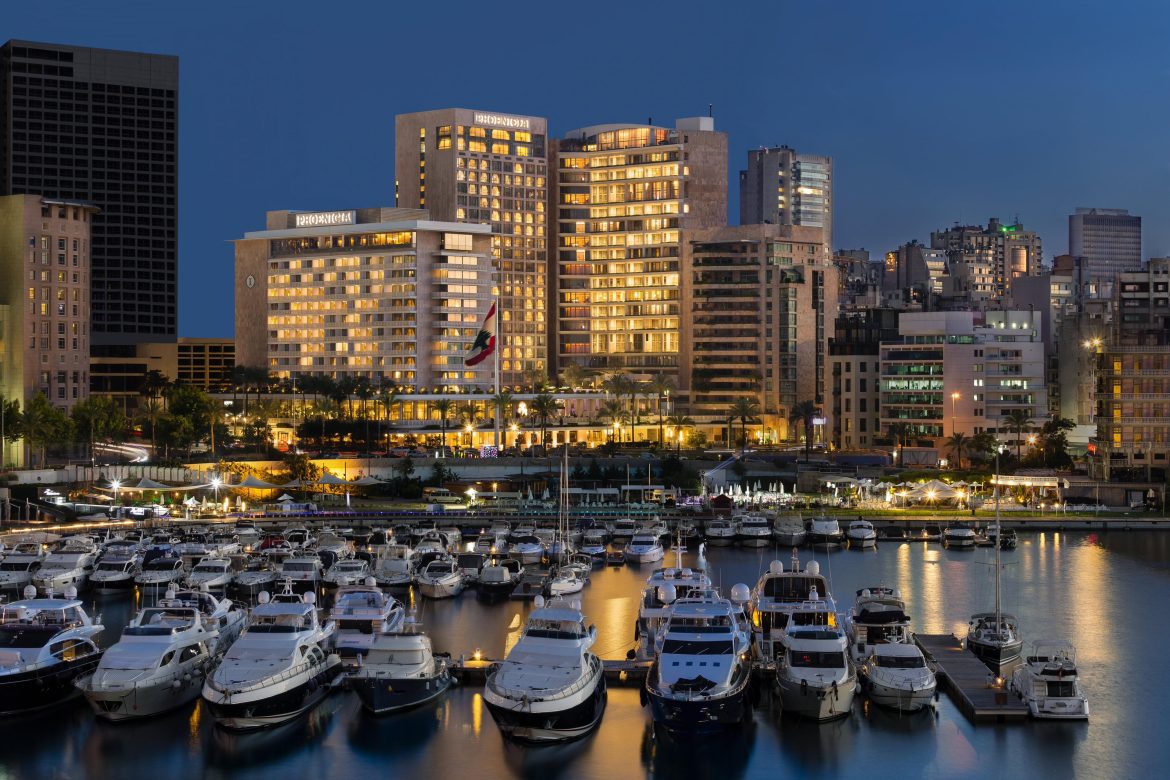
Sustainable tourism is one important vertical under the United Nations Sustainable Development Goal (SDG) 8, for achieving decent work and economic growth. While the clock is ticking hazardously for all SDGs across all countries, the barriers are both regional-context specific and structurally high in Lebanon when the country aims at achieving the ninth sub-target of SDG 8, which is to “devise and implement policies to promote sustainable tourism that creates jobs and promotes local culture and products.” To discuss the sustainable tourism prospects of Lebanon, Executive sat down with Haitham Mattar, the managing director of hotel operator IHG Group (locally carrying the fame of the Intercontinental Phoenicia hotel) in the India, Middle East and Africa (IMEA) region. Mattar is a Lebanese hospitality sector executive who visited Beirut on the occasion of a new hotel brand’s arrival in the heart of the Beirut hotel district.

How are you going to reposition the property that you have opened last November, still during the latest war on Lebanon, and how difficult do you consider the Lebanese tourism market to be?

Like any market around the world, when you have stability and security [you have good operating conditions], and can add to that the natural assets of a destination. As you know, Lebanon is a destination that is very rich in history, culture, and gastronomy, with beautiful natural assets. Also, tourism is not something new to Lebanon.

Indeed, when you look here across the street you see the hotel Phoenicia which has been in relationship with Intercontinental starting over 60 years ago, correct?

We signed the relationship with the Phoenicia in 1961 and now we have added this Voco and very delighted to enter partnership with its owner Hani Sheet. He had a vision for this hotel [formerly Monroe hotel] which had a legacy and traded very well when it was open for many years but he wanted to take it a level up with an international brand.

Voco is a newish brand that is only seven years old but it has accelerated in growth. We have the largest Voco in the world in Saudi Arabia with 4500 keys in Makkah, and we recently opened a Voco in Jeddah with 750 keys. It is an up and coming brand that is liked not only by guests but also by investors, because it offers great returns on investment.

The short brand name with its appellative Latin word origin may enter the memory quickly. But how is the brand positioned in the order of IHG Group brands, vis a vis the Intercontinental and the Crown Plaza brands for example?

It is above Crown Plaza and just below the Intercontinental. It is a five-star brand but it is also young and at the border of a lifestyle hotel. It is not a full lifestyle brand but very close. It is informal. When compared with the Crown Plaza which focuses more on events and some groups, here [at the Voco] you have more individual travelers and families. You also might have small meetings and small groups, unlike the Crown Plaza. It is just below the Intercontinental which is our luxury brand.

I understand that the IHG Group has some 375,000 people in its workforce globally, and some 6,600 hotel properties under operation. How many hotels are based in the region that you oversee?

That is correct. 220 [hotels] and 33,000 employees are in my region, and we have four offices, in Dubai, Delhi, Riyadh, and an office in Johannesburg looking after Africa.

This means your region covers all of Africa, plus the Eastern Mediterranean, plus the Arabian peninsula, plus the Indian subcontinent?

India, Seychelles, Nepal, Sri Lanka, Bangladesh, and Pakistan are all in my region, and all of the Middle East and Africa. Those are 42 countries.

If I rank these 42 countries by business volume and by difficulty in terms of managing the market, where would Lebanon emerge?

Let us talk about the ease of doing business. Lebanon is one of the countries where the ease of doing business is somewhat challenging. If you do not have the right connections, it is difficult for you to get a license, especially if you are bringing people to work here from outside the country. But we have seen that in recent years the business environment has been improving very much. And yesterday I met his excellency, President Joseph Aoun of Lebanon. He is clear on his vision in terms of safety and security of the people of the country but also focused on driving the economy. He is also focusing on hospitality and tourism as being drivers of the economy. We talk about the ease of doing business and it is also a key priority for his new team and him to improve the processes of doing business and getting licenses and permits here in Lebanon. He was very optimistic, and we left the meeting feeling very optimistic about the discussion with him and also about the coming summer which he said would be great for tourism in Lebanon. We were very comfortable.

Over the past three decades, Lebanon was a market with two strong seasons, the summer and the year-end holiday seasons. Other times were much weaker and down seasons were difficult to manage. These circumstances were hard for many operators, on top of which there were extreme times in 2021, after one year when the hospitality sector was apparently the hardest hit by the Covid19 pandemic and lockdowns as well as the impacts of the Beirut Blast. The stabilization of this market was challenging even before the weakening of tourism by 32 percent now in 2024. That leads me to ask you how difficult this market is for strategic planning and development?

It is not difficult for strategic planning. In Lebanon you have long stretches of beaches and beautiful mountains, ski resorts, agri-tourism, culture and heritage, so there are great foundations. I do not see any difficulty per se, however, I will tell you what is required to avoid these dips in seasonality that you rightly mentioned. What you need [in tourism] is a 365-day business. You cannot run everywhere at 80 percent occupancy all of the time but if the city can run at 70 to 75 percent occupancy, this is very healthy. We have two busy quarters of the year. The rest of the year will need the efforts of the tourism ministry to thrive through activations and through events. This requires full collaboration between all ministers to make sure that you have the right infrastructure, not just roads and parking, so that participants have a pleasant experience when you have a conference of a reasonable size. Think about it: all of Lebanon has 6,000 hotel rooms, of which 2,000 plus are in Beirut.

What is the market share of IHG Group brands out of this total Lebanese hospitality market with an estimated direct tourism contribution to GDP in the 7 percent range between 2015 and 2020, according to UNWTO data?

We are the largest hotel operator in Lebanon. We have probably more than 50 percent of international brand hotel rooms. If you take the 6,000 rooms in Lebanon, [IHG Group brands] have at least 1,500 rooms.   

And IHG Group has already many years ago divested from hotel ownership into the operator-only model, so all of these hotel rooms are operated under the portfolio of brands, including now Voco, but you don’t have any ownership stakes in these hotels, is that right?

We don’t have any ownership anywhere in the world.

You mentioned your collaboration with investors. How long is the average contract duration under which you operate a property? And regionally, how many Voco hotels are today up and running and how many are in the pipeline?

The minimum is ten years and the average is about 15 years. That is the same also for the Voco brand. Under this brand, we have now 11 Voco hotels operating in the IMEA region and 15 in the development pipeline.

In Voco, you have a brand under expansion. What is your main selling point to investors?

The brand started out as a conversion brand. When a hotel that operates a certain brand is leaving, we come to the owner [of this real estate] with a very efficient conversion plan that allows the owner to save costs on their conversion and [align their property with the international brand]. We offer solutions with Voco to allow the owner to invest into the areas which are most guest-facing. We focus on the impacts on guest experience as a priority. We de-prioritize other areas and we plan [developing these areas] for a future time. So, for example we do a three to five year plan with the owner to convert to a new brand. Plus, [it is an attractive investment] because this brand is an informal brand that targets young business travelers and young families.

While there were a few years in the past twenty years which saw tourism blossom to the point of Beirut being added as destination of cruise liners, there were immediate downsides to the visitor boom, such as food price inflation in the downtown hospitality sector and aggressive hawkers of tourist trap restaurants lining Maarad Street in downtown. You are an expert on sustainable tourism. What would you recommend for ministries of Lebanon, such as the Ministry of Tourism or the Ministry of Economy and any other ministry with a stake in hospitality and economy,  for developing the tourism sector sustainably beyond the seven or eight percent contribution of tourism to GDP that were reported in the latter part of the 2010s? Where would you see the country going in sustainable tourism?

Lebanon is a country that has been deprived of energy for a very long time. I think we have seen a decline in energy supply since the time of the first civil war. Renewable energy will play a key role in Lebanon’s future. No investor wants to put money and continue to pay for diesel and generator. The emissions and the impact on the environment that these generators have, makes it a third world country. Renewable energy is very important for the country to focus on.

Also, when you look at sustainable tourism development, it’s anything that engages the community. When you see countries like Spain and Greece complain about over-tourism, one of the main reasons is that the residents of the country don’t feel the benefit from tourism. They feel that the tourists come and go but only occupy our buses, our streets, our restaurants, giving us traffic and inflation but do not give us benefits. If the communities are engaged and feel that they are being consulted and offered opportunities to contribute to the tourists, whether selling them goods or experiences, the communities and tourism will grow together.

Also, a big trend today is that people are looking for agri-tourism. Lebanon is a country that has a wealth of farms and orchards, whether it is oranges or peaches or apples, and people love to have that experience today. Lebanon must focus on these kinds of experiences that people are yearning for today. They take long trips and travel abroad in order to be able to walk through an orange field or a vineyard. We have vineyards and vineries that have been long established, so I would say the foundation for tourism is there. The biggest need for solution is one, for stability, and two, is for all ministers to come together as one and focus on driving tourism. Then that seven percent [of GDP from tourism] can easily become ten and twelve.

How can you drive tourism when the Ministry of Tourism has a budget that can cover only the salaries of its public servants and keep the lights on at the ministry and depends on the good will of the advertising industry when it comes to producing even a promotional video filled with long-held cliché images? Would you as the largest branded hotel room operator in the country be willing to invest into a promotion campaign for Lebanon as tourism destination?

All our hotels, here or around the world, pay what we call a marketing contribution. This marketing contribution allows us to market a hotel on our channels to our loyal members. We have 140 million loyal members. This is part of what we do to promote our hotels globally. Of course, when the war is there and there is no stability, there is nothing really to promote in Lebanon. We hold back on this. But we are ready to reactivate this [marketing effort] as soon as we feel what we felt today in meeting with the President [Joseph Aoun] who is giving us this confidence. We activate these promotions for our Lebanon hotels again through our hotels globally and through our loyal member and our rewards programs, our website and our applications. We reactivate our Lebanon events.

But that is only one part. You need the destination management and marketing. This is really critical, and unless the two are working together, [it will not function]. I cannot promote the destination; I can promote the hotels [of IHG Group] and the neighborhood but I need help from somebody to promote the destination. So, if the [Ministry of] Tourism has not enough budget, the Middle East Airlines has to come on board. I am sure that they want more capacity on their flights. So if you want to fill your airlift, you must promote the country, you must promote through the destinations and the routes. All together, the eco system can work together. You cannot promote tourism alone or the country. We all have to come together, hospitality, airlines, which are the lifeline of tourism. MEA has a great reputation and good planes, and decent service.

In the past few years, hotels and hospitality operators in Lebanon faced many unexpected financial troubles even in the face of insured business interruption events. Did you face difficulties of managing the cost of the Lebanon operation during recent years?

 Like any other hotel company, we have gone through ups and downs. The hospitality industry has gone through very challenging times, not only in Lebanon but across the world. If you recall the 2008 financial crises, it impacted the whole world and places like Dubai had a major share of impact and losses. But I always say that hospitality is too big to fail and very resilient. People by nature love to travel and by nature always want to reconnect. If you remember how it was said during the Covid [19 pandemic] that [travel] will never happen and we all will be on screens; group travel will never happen again, business travel is gone. But you see immediately after that we are creatures of habit and everybody goes back to their normal life. This is what makes us resilient.

When measured against the SDG 8, achieving sustainable tourism, the sector is globally faced with climate dangers as well as challenges related to migration, trade conflicts, political barriers, etcetera. Many of these barriers are not found in the Middle East region, however.  Is the biggest challenge for tourism in this region the reputation of countries in general terms?

I would say the biggest challenge is stability, all around, not just in Lebanon. Look, Syria is the cornerstone of the region. If anything happens positively in Syria, it will explode outwards, positively. If it is negative and it implodes internally, that still has a negative impact on the entire region. So how Syria will pan out and come to be a real democratic system, will impact the entire region.

This was actually my next question. To go beyond Lebanon, do you still operate the Intercontinental in Damascus?

Not for many years.

But you signed in 2024 for the Holiday Inn in Damascus?

We signed for the Holiday Inn near the central Souq Al Hamidiyeh but the site hasn’t opened yet because of the lack of stability. But I envision that in a democratic Syria, where safety and stability return to the country, [Syrian hospitality will shine as] another country that is very rich in culture, natural assets, and beaches, and that today lacks hotel properties. Even in Damascus you don’t have the [room capacity] and outside, like in the beach cities such as Latakia and historic cities such as Aleppo, there are no hotels.

In the past few decades, development of cross-border tourism in Lebanon was severely hampered by the fact that it was either very difficult or at times impossible to visit nearby countries and so people visiting Lebanon for leisure and cultural travel, were stuck here. Now, with Syria opening up from perspectives of both construction and business but also tourism and hospitality, would you see Lebanon as a base for people from international companies to stay at IHG properties in Beirut and commute to Damascus? Is your Syria development strategy related to the local market in Lebanon? What are you planning for the opening of Syria?

We do not have any plans for Syria yet. The plans will start when you have closure on where Syria is going in terms of governance and when we know for sure that there will be stability in Syria. That is what we wish for, hope for, and pray for. After that, we will seek opportunities in building hotels, as soon as these countries are classified as safe countries and safe business locations.

Some easing of EU sanctions on Syria have been recently announced, especially in areas of transport and energy, so this should be good for you, and I would assume that you have already some connections with investors.  

As soon as the sanctions are [lifted], we will probably be among the first to enter Syria. We have connections with investors and the brands that investors seek. I think everybody is waiting for things to happen. What I imagine is people coming to Lebanon and enjoying Lebanon’s offerings but then to be able to rent a car and drive through to Syria and have the same experience and stay in our hotels as by cross-selling between hotels in Lebanon, Syria, and Jordan. That could be wonderful. Stability is the key component for tourism. Tourism is a force of good.

So if we look to an optimistic scenario for Syria, how many Voco hotels would I be able to stay at in the Syrian countryside?

I don’t know, hopefully many. But the beauty of having our brands is that once we know that the opportunities are open for us in Syria, we will start a market strategy that allows us to study the entire country and see which of our brands fit where. Then we will seek investors’ interest where we want to go, whether it is a city hotel, budget hotel, or luxury brand, or a resort. In this we work with stakeholders on the ground but also with other investors, which could for example be investors from the [Arabian] Gulf who are interested to build hotels in Syria. 

What is the role of the conference and event business. How are F&B, the food and beverages and events business shaping up when compared with room rentals? Is the mix healthy?

It is more geared towards rooms, se we have more [accommodation] business than F&B because we still need the wedding business to come back and we also still need the catering, the big conferences and events. If you say F&B, it is all of food and beverage and especially banquets. This has not revived so much yet but this hotel [Voco] has done so far two conferences and so I can see that the small to medium event business is coming back. The large events business is still not back.

How can Beirut hotels again attract large conferences, perhaps near-future conferences focused on reconstruction in the Eastern Mediterranean countries, and important events on building a sustainable Syria or potent civil society? How can you help in pulling them into Lebanon instead of seeing events on Lebanon and Syria take place in Cyprus, Dubai, or a European city?

This also needs to be a collaboration between us and the government and the convention center. You need the expo center to be able to bid for some of these conferences, noting that the bidding process for some of these large conferences is such that they are booked already five or ten years in advance. They already go to destinations, so the sooner Lebanon starts to bid for these conference, the sooner we can secure some of them. Here I am talking about events that are city-wide, that fill our hotels as well as anybody else in the city. I see great opportunities and healthy competition for tourism in this city.

March 5, 2025 0 comments
0 FacebookTwitterPinterestEmail
GCC

Dubai Sour-Sweet Trading Dreams

by Executive Contributor February 17, 2025
written by Executive Contributor

After years of planning, the Dubai Mercantile Exchange (DME) opened for trading on June 1 with its flagship Omani crude futures contract. It’s a collaborative effort bringing together Tatweer, a unit of Dubai-government-owned Dubai Holdings, the New York Mercantile Exchange (Nymex) and the Sultanate of Oman.

The DME’s mission statement and declared rationale is to bridge the gap between international pricing mechanisms for sweet, or low-sulfur, crude and the Gulf’s more sulfuric (sour) oil, especially for trade with Asian oil buyers.

The price of sour crude from the Middle East is currently set in reference to inappropriate benchmarks — futures contracts for very different products traded on the world leading commodities exchanges, Nymex and London-based Intercontinental Exchange (ICE).

The idea of establishing a platform for setting its own benchmarks, enhancing profits, and managing risk in the trade of Middle Eastern oil is not new, it has just never worked before.

Part of Dubai’s goal as financial center

This dream to host the oil futures benchmarking is tied to Dubai’s goal of claiming the role of financial center between East and West through the Dubai International Financial Centre (DIFC). At its inception in 2002, the DIFC was labeled as tool to boost the contribution of the financial industry to the emirate’s GDP from 11% in 2001 to about 20% in 2010. While the DME makes reference to this target in documents on its website, it did not state how large a role the exchange aspires to play in this mission.  

Being the center for sour crude futures trade could prove to be lucrative, given that the DME’s fees per trade are around $1. Brent (ICE) and West Texas Intermediate (Nymex), currently see daily volumes average around 150,000 trades.

The value of having a role in the futures contracts for Middle East oil was underscored by the ICE when it beat the DME to the punch by launching a similar contract on May 21 to directly compete with the DME. There is, however, a major difference in that the ICE sour crude contract is cash-settled whereas the DME’s contract is physically — actual barrels — settled and backed by the governments of regional oil producers. (Although only about 5% of physically-settled futures contracts result in the buyer actually taking the physical product).

High daily volumes are the backbone of a futures contract, which is essentially an agreement to buy a commodity later at a locked-in price. Therefore the 100 contracts, or lots, a trader buys on Monday at $68 each can be sold on Tuesday if the commodity’s price climbs.

Any futures exchange is, however, extremely volatile and contracts are traded quickly, often to maximize profit (as opposed to investors in the equities market who typically hold an investment for a longer period of time). Traders want to be able to get in and out of contracts at a moment’s notice.

This liquidity, however, is the element previous Middle East oil contracts have failed to grasp. Muted trader interest that kept liquidity low killed the first sour crude futures contract launched in Singapore in 1990. The flops that followed have either completely failed or traded in such low volumes they have not reached the status of a price benchmark.

A Nymex solo attempt at a sour crude contract, launched in 2000, only saw two days of trading but remained listed for a year. The DME partnership is Nymex’s fourth sortie into the sour crude futures arena, while the ICE is making its first dash into this market, although it did, however, acquire the International Petroleum Exchange in 2001, whose attempt at a Middle East crude futures contract had turned sour in 1991.

On the DME, contracts are traded for delivery two months in the future. In its first month of trading, 39,571 Oman crude oil futures contracts changed hands — the equivalent of nearly 40 million barrels. This was slightly lower than the rival contract launched by ICE, which saw over 50,000 futures contracts, equal to over 50 million barrels, trade in its first month.

In an attempt to avoid the plague of illiquidity that downed other contracts, the DME has instituted a market maker program. This common practice brings industry heavyweights (like traders and investment banks) to boost liquidity levels, offering cash incentives to increase daily trading volumes to the 20,000 mark, after which, according to the DME’s website, the program will tail off.

Still too early to tell

“The initial target figure mentioned by the DME was 20,000 lots per day and while volumes were reasonably promising to start with, liquidity has since declined to under 1,000 lots on some days,” commented Paul Young, executive oil pricing editor for Asia with the commodities pricing firm Platts. “But it’s still way too early to give an overall verdict on the success of the contract and the DME is launching new initiatives intended to improve liquidity.”

“The Asian market welcomes the DME as a more transparent benchmark for pricing purposes. I think liquidity level at this point remains an issue, but it is still early days for the exchange,” Victor Shum, a Singapore-based energy consultant with the firm Purvin and Gertz, told Executive. “I think the general sentiment seems to be, ‘Well, let’s take a wait and see attitude.’ I think the DME has the elements there to be successful. I think most traders would like to see rising liquidity.”

Gary King, DME’s chief executive office emphasized the contract’s innovative elements when giving his outlook on the contract’s future. “We decided to align ourselves with a Middle East oil producer,” King told Executive a few days before the June 1 launch. “No one’s ever done that before.”

King said market research revealed customers who wanted a physically delivered contract and not the traditional cash-settled contracts and the contract launched in May by ICE. This offers a direct link between the paper market of the futures contracts and the physical commodity. In a bid to meet what King described as market demand, the DME set out to find a producer to partner with for the physical delivery.

Oman announced before the contract’s launch that it would base the price of all of its crude on the DME contract price, starting this month. In late June, in a move apparently timed to offer one last burst of good PR before the launch, the Dubai government, which essentially has about a one-third stake in the bourse, made the same announcement regarding its oil contracts two days before trading began.

Government backing from producer nations for the contract will certainly help lend it credibility, but the exchange has only rallied two middle-weights — Oman and Dubai — in a region of heavy-weights, John Sfakianakis, chief economist with Saudi Arabia’s SABB bank, told Executive.

Oman has 5.5 billion barrels of oil, according to estimates from the U.S. government’s energy information agency. That’s the second lowest level of reserves of the six Gulf Cooperation Council countries behind Bahrain with less than one billion barrels.

The agency’s figures estimate the UAE has 97.8 billion barrels, but UAE government websites put Dubai’s share near 4 billion in 1991. Abu Dhabi sits on an estimated 94% of the nation’s reserves.

Some are being left out

“I’m a little bit skeptical because Abu Dhabi should be a natural participant in this,” said Sfakianakis said. The DME has approached other regional producers, but came back scant on direct commitments.

“We’ve talked to all of them, and I think the proof is as we go forward, the goal is to get the contract accepted as regional benchmark and overall the ultimate goal is to get it accepted as a global benchmark,” King said in an interview the day the exchange opened.

“I think what’s accepted is that it’s important to get first three contracts trading, demonstrate they trade in a robust fashion, that they’re liquid and that you get effective price discovery,” he added, referencing the two cash settled futures contracts that are spreads between the Oman crude price and the prices of WTI and Brent.

But what of Saudi Arabia, the 800-pound gorilla, which holds the second-largest oil reserves in the world? “At the moment you can safely say that Saudi Arabia is not involved,” Sfakianakis said.

An exchange of their own

Given the goals of other GCC nations to power up their own financial hubs, it is possible that bigger producers have not shown the urge to commit to the DME sour crude contract, because they would like to run a benchmarking exchange themselves .

One contender is Qatar’s IMEX, which has just appointed its first CEO. The exchange has been rumored to look longingly at sour crude contracts, in addition to jet fuel and liquefied natural gas futures. IMEX, just like DME, is not yet letting on what futures it plans to introduce in the coming months.

Competitive pressures notwithstanding, Dubai’s financial services sector is an undisputed pillar for the economies of both the emirate and the GCC, now and in future. The question is if it will be the Gulf’s sole central financial market place. According to numbers released in June by the Dubai Chamber of Commerce and Industry, finance in 2006 contributed to about 10% of the emirate’s rapidly expanding GDP — and thus would have to significantly outpace other growth sectors within Dubai if it really is to supply 20% of the emirate’s GDP in the next decade. 

The DME’s immediate concerns will be for developing its products and client base beyond the discounts it offered traders in the startup phase. Since early 2006, there’s been talk of a jet fuel futures contract, and King has said in interviews during the DME launch that this could be running by year’s end. He added that the exchange is keen on trading other commodities but was reluctant to give details.

“The market doesn’t take prisoners. We’re holding most of those ideas close to our chests at the moment,” he told Dow Jones on June 1.

Diversifying or bringing other producers on board or simply securing pricing agreements would be a boon for the nascent exchange, but is not an absolute make or break necessity. In the end, analysts argue the market is ready for change, but is there room in the market for two or more sour crude contracts?

“Not really,” says Michael Davies, senior analyst with the London-based futures brokerage firm Sucden. “At this early stage, there needs to be a focus on one.”

February 17, 2025 0 comments
0 FacebookTwitterPinterestEmail
Gglobal indicators

Youth inactivity  

by Executive Contributor February 17, 2025
written by Executive Contributor

 On average, across the countries for which data are available, around 7.7% of teenagers were neither in school nor at work in 2004. Differences across countries are large: in Denmark, Germany, Iceland, Luxembourg, Netherlands, Norway and Poland less than 4% were in this situation while the shares exceeded 10% in Portugal, Spain, the United Kingdom, Mexico and Turkey.

For the OECD as a whole, there has been a decline in the percentages of all teenagers who are neither in employment nor education, but the decline has been most marked for females. The fact that young people, and particularly females, spend more time in education than they did a decade ago has contributed to this.

Several features of the labor markets and training systems affect the ease of transition from school to work. OECD reviews of youths’ transition from school to work have identified Nordic and English-speaking countries as those where this process is smoother than in countries in Continental and Southern Europe countries. Beyond waste of human capital and risks of marginalization in the labor markets, delays in settling into jobs will lead many youths to live longer with their parents and defer the formation of independent families, further compounding fertility declines.

Middle East Tourist Number Forecasts

By Country, in Millions of tourists per year

Saudi Arabia, owing to ever-increasing numbers of

hajj pilgrims, is set to overtake Turkey as the country with the highest visitor numbers in absolute terms. By 2010, Iran expects the number of tourists to double (from roughly 2 Million to over 4 Million per year) and both the UAE and Lebanon plan to almost triple their numbers, the first from currently 7 Million to 20 Million and the second from 1.5 Million to 4 Million tourists per year. Yemen has the most ambitious forecast, aiming for an over 400% growth in the numbers of visitors from currently under 500,000 to 2 Million by 2025.

Traditional destinations Turkey, Egypt and Jordan foresee significant increases as well, each estimating their numbers to rise by at least 50%, to 30 Million, 16 Million and 12 Million, respectively.

Gross domestic expenditure on R&D

Percentage of GDP, 2005 or latest available year

Since 2000, R&D expenditure relative to GDP (R&D intensity) has increased in Japan, and it has decreased slightly in the United States.

In 2003 and 2004, Sweden, Finland, and Japan were the only three OECD countries in which the R&D-to-GDP ratio exceeded 3%, well above the OECD average of 2.3%. Since the mid-1990s, R&D expenditure (in real terms) has been growing the fastest in Iceland and Turkey, both with average annual growth rates above 10%.

R&D expenditure for China has been growing even faster than GDP, resulting in a rapidly increasing R&D intensity, growing from 0.9% in 2000 to 1.3% in 2005.

Global chocolate consumption

Kilogram per person 2005

n The biggest consumers are manufacturing countries Belgium, Switzerland, and the UK, whose citizens eat 10 kg or more of chocolate each year. Germany and, surprisingly, the four Scandinavian countries follow close behind, whereas such European countries like France (4.66 kg/person) and the Netherlands (2.94 kg/person) are below the EU average of 5.23 kilogram of chocolate per person in 2005.

Chocolate consumption thus is not directly related to GDP or average income levels, but more influenced by culinary tradition, visible in the fact that Japanese consume only 1/5 of the amount of chocolate that Belgians do.

Source: International

Confectionary Association

February 17, 2025 0 comments
0 FacebookTwitterPinterestEmail
EconomyLebanonLebanon 2025

Cautious hope and determination:

by Executive Editors February 13, 2025
written by Executive Editors

Holding our new leaders accountable

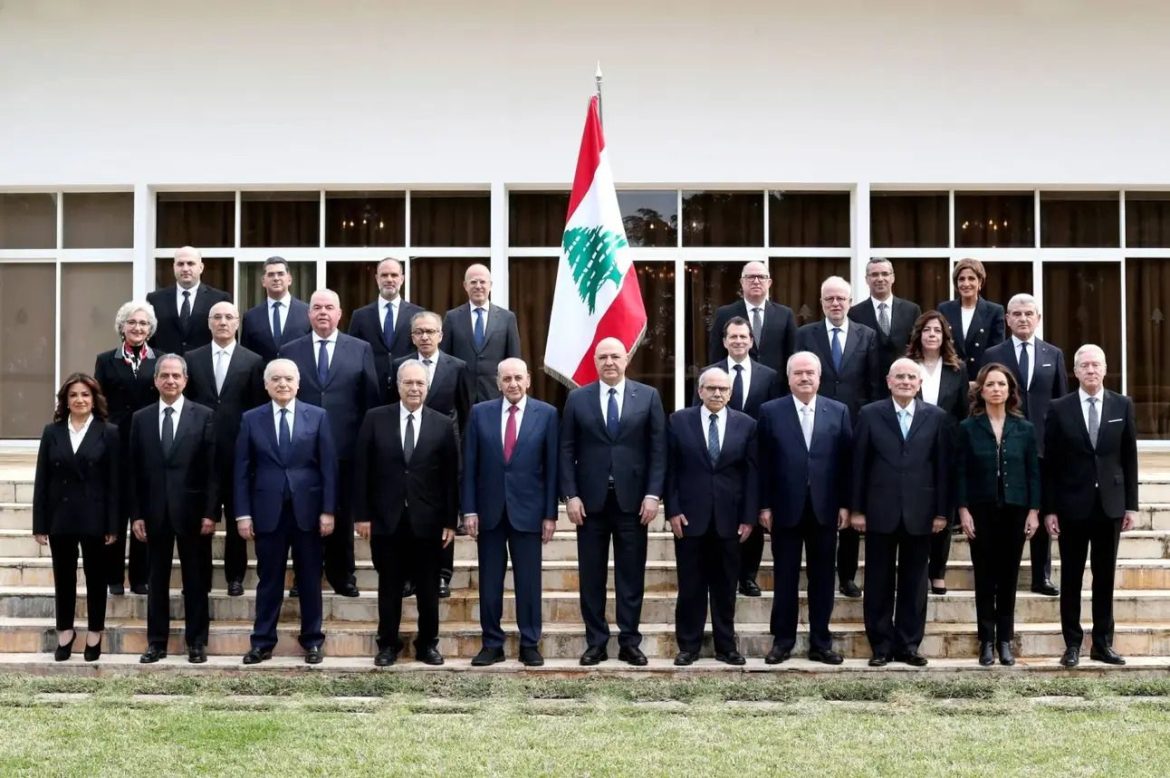
On Saturday, February 8th, 2025, Nawaf Salam and Joseph Aoun signed a decree for the formation of a new government after two years of political paralysis and vacancy. The new council of ministers faces the daunting task of restoring sovereign trust and rebuilding the country’s neglected institutions and beleaguered industries.

In our responsibility to uphold freedom of expression as part of the Fourth Estate, Executive has developed an Economic Roadmap in collaboration with stakeholders from economic and social sectors across the country over the last eight years. This comprehensive, data and research-driven framework represents the hopes and ambitions of the Lebanese people and provides members of parliament with pragmatic solutions and policy proposals as they are tasked with responding to our long overdue demands. It is our duty to hold our leaders to account.

As an independent media, we are also responsible for empowering the public with information on our governing body. Executive has had numerous conversations and received contributions from at least 11 of the 24 new ministers, including Prime Minister-elect Nawaf Salam.  As our nation moves forward with cautious optimism and determination, it is critical to learn about our representative ministers’ roles, perspectives, and areas of expertise through the years. This knowledge will help us hold our new leaders to account as they take up the arduous work of “Rescue and Reform.”

Here are contributions to Executive from our new ministers throughout the years, alphabetized by first name:

Fadi Makki: Minister of Administrative Development

2021 comment on how applied behavioral science can help inform COVID-19 lockdown measures

2018 comment on the integration of behavioral science and policy-making

Fayez Rasamny: Minister of Public Works

2009, 2010, 2014 interview contributions to analyses on the car dealership industry in Lebanon

Haneen Sayed: Minister of Social Affairs

2024 comment on Lebanon’s trials and opportunities as a refugee-hosting country

2020 comment on why direct support to those increasingly impoverished in post-crisis Lebanon can be more effective than subsidies

Joe Saddi: Minister of Energy

2015 comment on how the Middle East professional service firms can entice emigrants to return to the region

Kamal Shahedeh: Minister of Displaced Persons

Shares his 2003 opinion on the development of telecommunications infrastructure, the importance of creating technical availability for broadband and eliminating access barriers in Lebanon

Nawaf Salam: Prime Minister

2013 Q&A with then ambassador to the UN, Nawaf Salam, on Lebanon’s seat in the security council, the importance of national unity, and the case for recognition of Palestinian statehood

Nizar Hani: Minister of Agriculture

2017 interview contribution to an analysis on the offerings of the Shouf region, and specifically, on the ecotourism potential of the Shouf Biosphere Reserve and the ecosystem of the surrounding area

Paul Morcos: Minister of Media

2020 Q&A on judicial capacity and accountability

2019 comment on freedom of the press

Tamara El Zein: Minister of the Environment

2023 interview contribution to an analysis on how investment in research and education can improve public health and the fight against diseases in Lebanon

Tarek Mitri: Deputy Prime Minister

2014 Q&A on the reopening of the Sursock Museum and the need for a balance between preservation and innovation in Lebanon’s urban and cultural development

2010 Q&A on journalistic and press freedoms in Lebanon

Yassine Jaber: Minister of Finance

2009 Q&A as a then-member of parliament sharing his views on the partial privatization of Èlecticitè du Liban, the importance of pursuing Lebanon’s offshore oil and gas resources, and strengthening of public schools

February 13, 2025 0 comments
0 FacebookTwitterPinterestEmail
Regional outlook

Middle East 2006

by Executive Contributor February 11, 2025
written by Executive Contributor

Winners and Losers

Aspecter is haunting the Middle East. A little more than a quarter century after the Shah’s fall, Ayatollah Ruhollah Khomeini’s wildest dreams seem to be coming true throughout the region, from the Gulf to the eastern Mediterranean. Where Iran has not engineered Washington’s failures, it has profited from them, and the regime means to ensure its role as the regional power and leader of the Muslim world with the bomb.
The momentum shifted too fast for the Bush administration. After all, just a year ago, the White House felt vindicated if not triumphant as it watched its democratization program on the march throughout the Middle East. Syrian troops had withdrawn from Lebanon, the Iraqi insurgency appeared manageable, and Cairo and Riyadh were slowly bending to Washington’s desire to reshape the region in its own liberal, pluralist and democratic image. But when the Palestinians voted for a party that the US State Department has designated a terrorist organization, the White House was left sucking wind.
Iran and Qatar were the winners this year (for entirely different reasons), while Syria, Hizbullah, Egypt and Jordan broke even. The United States was the big loser, along with pretty much anyone who was banking on Washington to push for pluralism, liberalism and democracy in the Middle East. Here’s how the region’s major players fared in 2006.

Lebanon: Loser
It is almost two years now since the assassination of former Prime Minister Rafik Hariri, and still no one has been indicted for the crime, even though the investigation into his death plunged the country into a dangerous spiral. Assassinations and bombings were less common this year than last, but Syrian allies threatened to bring down the government to stop the formation of an international tribunal that would hand down indictments. But if there is no real mechanism to arrest any regime figures named in Hariri’s death, why has Damascus allegedly killed again and again just to avoid being named a killer? Perhaps it is just a matter of a prestige, legitimacy and saving face. After all, it’s worth remembering that as Syrian troops left Lebanon at the behest of the international community, they would presumably like to return in the same fashion, invited in, just as they were 16 years ago. Meanwhile, the Siniora government seems to have finally realized that it is in an existential fight for the future of Lebanon.
After Hizbullah single-handedly dragged the country to war this summer, many of those same youth who took to the streets in spring 2005 to demand their freedom, sovereignty and independence are wondering if their beautiful, beloved country can escape the fate that its enemies, both foreign and domestic, have designed for it. Some of the rising generation is leaving, some have already apparently enlisted in what may be the next bloody round of conflict; others are hopeless. It is a dark hour for Lebanon.

Hizbullah: Even
Since their bookkeeping is a closed affair, only the party of God knows how many of its fighters were really killed in this summer’s war and how much Iranian money has really been handed out for reconstruction. But if Hassan Nasrallah says the victory was divine because he personally survived an onslaught that ravaged his community, then what’s several billions of dollars in damage and lost tourism receipts? Resistance is never having to say you’re sorry. To be sure, the muqawama is readying for the next round against Israel, but you don’t have to read biographies of Zionist officials past and present to know that Israel is preparing as well, and has no intention of being fooled again. On the domestic front, the country’s other confessional leaders assume that Nasrallah understands the price to be paid for violating Lebanon’s consensual system. Maybe he does and maybe he doesn’t care; after all, all his rivals have right now is each others’ word, while the resistance can count on two ascendant foreign powers happy to arm and rearm it.

Syria: Even
Surprisingly, Western diplomatic circles, policy-makers and journalists are still curious to know if Damascus can be pried loose from Tehran and forced back into the “Sunni fold.” It is a piece of speculation that fails to credit Bashar Assad for Syria’s strategic re-orientation, or revolution: He has bet the house on Tehran and can’t afford to walk away from the table. In tying his own fate to Iran’s, Bashar has indicated that he is not the calculating realist and balancer-of-powers that his father was, but rather an ideologue, a true believer and someone who chooses to work without a safety net. For years, Saudi Arabia virtually floated Damascus; and as an Alawi president of majority Sunni Syria, Hafez knew better than to burn such bridges. Could he have imagined his son’s daring gambit? Maybe not, but he surely reckoned the consequences of guessing wrong.
On closer inspection, it seems that Bashar himself is of two minds about the future of the Middle East. With the mayhem he has abetted in Iraq and Lebanon, young Assad argues that the region is best understood and manipulated through its inexorable sectarian issues. However, by siding with Iran and Co., he appears to believe that fighting Israel and the West can create heretofore unimagined alliances, a cross-sectarian culture of resistance. Well, it’s true that his regime became popular both at home and throughout the region through his steadfast support—and re-supply—of the Islamic resistance during its recent war. But he should perhaps recall Abu Musab al-Zarqawi’s parting shot at Hizbullah, delivered a week before the al-Qaeda man’s death: the Shia are protecting the Zionists from the genuine Sunni resistance. Memories can be fungible in the Middle East, but history is long and that particular intra-Muslim fight is over a millennium old.
That is to say, Bashar has lit the torch at both ends—one way or another, he’ll get burnt. Maybe the Hariri tribunal will indict him and/or regime relatives, but the US and Europe have been reluctant to make him pay for his violence in Lebanon, Iraq, Israel and Palestine. The Israelis, however, may be a different matter. If there is another round in the Israel-Hizbullah war, the IDF may include Syria on its target list, and the regime’s survival could depend on whether it decides to fight or absorb the punishment. And then there is one other issue Bashar ought to be turning over in his head: Given Damascus’ apparent lack of concern for its Lebanese allies, it should entertain the possibility that Tehran regards his regime in the same fashion. Syria is an Iranian ally, not a vital interest and as such is expendable given the right circumstances.

Iran: Winner
Since the Bush administration never mustered a clear definition of its post-9/11 war, it missed the bigger picture taking shape since 1979. Sure, Tehran has been a major state sponsor of Islamic terror for a quarter century, but it is also playing old-time power politics, and the goal is what Washington feared the Soviets wanted in the Cold War—to drive the US out of the Persian Gulf. To achieve that, the Islamic Republic is pushing for a nuclear program that would fortify its position in the Gulf, if not make it unassailable.
Washington is wondering if it should engage Iran, while Tehran believes there is nothing to discuss, except the US’ terms of surrender. Given the regime’s various centers of power—the president, the supreme leader, the revolutionary guard—it is hard to know whether or not the Islamic Republic is fundamentally rational or stark-raving mad. Here’s a hint: when Mahmoud Ahmadinejad expresses his desire for a world without Zionism, he is saying he does not know the red-lines of a Jewish state created three years after the Holocaust, or does not care. It is a rational regime insofar as it follows the messianic logic of a Mahdi who will redeem the world through blood.

Iraq: Loser
First the good news from the land of the two rivers: Zarqawi is still dead. The bad news is that his replacement is staying on message—kill the Shia. You know it’s bad when American policymakers in the so-called “Realist” camp argue that Iraq’s neighbors have an interest in stabilizing the country. If Iran and Syria wanted calm and tranquility in Iraq, then they wouldn’t be promoting chaos there. If the US believes it can show its enemies where their true interests really lie, then they are not doing diplomacy but missionary work. The standard Realist take, historically favored by the State Department and CIA, is to find a strong man. Iraq has no shortage of hard men, but the strongest one is likely to be hanged in the next year for crimes against his own people. The next strongest is Moqtada al-Sadr, who has opposed the US every step of the way and aligned himself with Tehran, Damascus and Hizbullah. Former Prime Minister Iyad Allawi might be back in the picture—if the US does draw down troops, this might present a way to hand Iraq to Tehran with some qualifications, and not outright, which is what a triumphant Mahdi army means. The good news is that the Kurdish region is in good shape. The problem, however, is that as the rest of Iraq deteriorates, the Kurds will be more tempted to abandon the project altogether and opt for an independent Kurdish state, regardless of how much that puts them at odds with Turkey.

Saudi Arabia: Loser
A rising Iran has led to a strange year for Riyadh. The kingdom is finished talking to the Syrians, who weren’t listening anyway, and now even the American who is perhaps closest to the House of Saud seems to be ignoring the ruling family. Former Secretary of State James Baker wants to talk to Syria and Iran. What do the Saudis think about that? It is easier to guess what they said when they allegedly met with Israeli officials: Crush Hizbullah. Perhaps that Jewish-Muslim comity shouldn’t seem that odd, given that there is actually a Quranic precedent for such an alliance, and according to the Sunnis the Shia have no status as “people of the book.” Obviously, the kingdom’s major concern is whether or not the US intends to do something about that large and cocky Shia, Persian power in the Gulf. And if the US or Israel does go after Iran’s nuclear program, what effect might that have on Shia populations throughout the Gulf, especially Bahrain and Kuwait, and of course Saudi Arabia’s own Shia minority in the oil-rich eastern province? On the upside, the Saudis seem to have gotten their domestic jihadi problem in hand, partly, according to US intelligence sources, through better police work, and partly the old-fashioned way—by sending troublemakers abroad, to Iraq.
Qatar: Winner
Doha put its money where Aljazeera’s mouth is and showed it was much more than just another glossy Gulf sheikhdom. Holding a seat on the UN Security Council until the end of next year, the Al Thani clan tried their hand at diplomacy and reached out to the Palestinians and Damascus. While nothing came of it, Qatar managed to project more power than the size of its population or economy seems to warrant and in the process annoyed several Arab rivals, especially Saudi Arabia. What looked merely like a Dubai knockoff is poised to become a Gulf spoiler: Qatar is the new Syria.

Israel: Loser
In the first week of January, a stroke left then-Prime Minister Ariel Sharon in a coma, and the year never got any better. Ehud Olmert inherited control of the ideologically incoherent Kadima party as well as two major problems, one that his predecessor had set in motion, and another that Sharon had ignored: disengagement in Gaza, and Hizbullah in the north. Thus there was fighting on two pre-’67 borders and Israelis across the ideological spectrum agreed that both wars were just, given that they were started from territories Israel no longer occupied. However, when a cabinet with thin military and security credentials showed they were incapable of drawing conclusive victories against either Arab resistance front, the nation turned on its leadership. Olmert, whose history of alleged corruption has come to the fore, is especially vulnerable given Likud’s surge in the polls as Bibi Netanyahu waits in the wings. While Iran threatens, Hizbullah re-arms, Syria preens and a cast of Arab ideologues boast of defeating the Jewish state once and for all, Israel is quietly assimilating the lessons of the past year. That the Jewish state is anxious to re-establish its deterrence might be disquieting news for everyone in the region.

Palestinians: Loser
In trying to save face after the disastrous elections that brought Hamas to power, the Bush administration explained that the Palestinians had really voted against a corrupt Fatah leadership. No doubt the keepers of Arafat’s flame are inept when they are not criminal, but the Palestinians did not elect a reform ticket. At the very least, “good government” means not seeking war against the largest economy and most powerful military in the region, but this electorate opted not for liberals or technocrats, but rather the outfit they think has the best chance of winning such a war. In response, Washington cut off aid to make the Palestinians accountable for their democratic choice. The exercise was pointless given that, one, the strategic goal was to hand the reins back to weakling President Mahmoud Abbas; and, two, PA officials smuggled in millions of dollars earmarked for arms. And so this year at least, the Palestinians and their leaders made it clear they prefer guns to butter, never mind a negotiated settlement. The peace process, effectively over since 2000, has become a parody of itself, a way for the Europeans to puff their chest, and a file for the Iranians and Saudis to fight over. Still, it could be worse—and will be if Hamas and Fatah wage war in earnest.

Egypt: Even
The Bush administration’s stalled democratization program was meant to give Arabs a voice in their own government, but Egypt represents a conundrum: is it an index of Washington’s failure or success that there is still a huge gap between the masses of ordinary Egyptians and the few who rule them? For instance, the opposition group Kifaya launched a petition demanding an end to the peace treaty with Israel and hoped to get a million signatures. That treaty is one of the US’s singular accomplishments in the Middle East and its annulment one of Washington’s recurrent nightmares. And so the White House will almost surely bless Cairo’s most important, perhaps only, strategic goal—to pass the regime on to Mubarak’s second son. The State Department likes the ostensibly reform-minded and US-friendly Gamal, which might be a problem. Not only is the future rayess lacking security and military experience, he has none of the organic, populist roots this regime has cultivated since Nasser’s 1952 coup d’état. That is, the “Westernized” Gamal has all the drawbacks of an Arab liberal, without any obviously liberal inclinations. Even if the succession comes off smoothly, in several years the most populous Arab nation of almost 80 million will likely become the region’s most daunting concern.

Jordan: Even
The Shia crescent that King Abdullah II warned of two years ago has come to fruition and a government that he never could have imagined has come to power next door in the West Bank and Gaza. Still, predictions of the Hashemites’ imminent loss of influence are one of the few constants in the region’s political climate, and the fact is that relative to the tenure of his father and great-grandfather, Abdullah is on much surer ground. What may complicate the kingdom’s future is if a Jordanian solution becomes the key to a Palestinian-Israeli settlement, as many observers—Arab, Israeli and American—are now suggesting. In the meantime, “Jordan First” is still the operative principle as construction continues apace in West Amman, which war in Iraq has paved with gold and primed as a less glamorous Beirut, an option that will turn more profitable should Lebanon succumb to its furies.

February 11, 2025 0 comments
0 FacebookTwitterPinterestEmail
AnalysisAnalysisAnalysisFinanceFinanceFinance & Economy

Betting on Lebanon: The high stakes game of bonds, stocks, real estate, and bank rates

by Sherine Najdi February 3, 2025
written by Sherine Najdi

Lebanon is at a defining moment—a fragile economy teetering between recovery and collapse. “People are hopeful now, but the problem is, people are poor,” says Khalid Zeidan, founder and chairman/general manager at Capital EE, a regional financial advisory firm based in Beirut. “Five years of draining wealth, followed by war, have left individuals and businesses in survival mode,” he says.

Lebanon was once a destination for financial opportunities and investments in the Middle East. On the one hand, it now finds itself in a state of confusion, where speculation runs rampant, markets remain volatile, and the fate of investment depends on urgent and decisive action. On the other hand, resolution of the country’s crisis presents a once-in-a-generation chance. “There is an important opportunity that we need to grasp,” says Marwan Barakat, chief economist at Bank Audi. “Lebanon is operating far below its full economic potential, but with recent political stability, it has a chance to change that,” he adds.

Lebanon’s over many years untapped potential for economic growth has after the January 9 election of President Joseph Aoun been captured in measurable market responses, specifically in increases of demand for Eurobonds, for the Lebanese currency, and for listed equities at the Beirut Stock Exchange (BSE).  However, experts warn of unqualified optimism. Nassib Ghobril, chief economist at Byblos Bank, cautions that “Without structural reforms and a clear financial roadmap, any recovery will be fragile and unsustainable.”

Bank economists tell Executive that Lebanese Eurobonds – which crashed after the March 2020 default on a payment and have languished at a fraction of their nominal value – have risen in the secondary market from 00.6 to about 0.16 in late January. Shares of The Lebanese Company for Development and Reconstruction of Beirut Central District – better known by its French acronym Solidere – have been noted in the 109-110 range on mid-day of January 31, 2025, up from $90 on November 27, the first day after agreeing on a ceasefire with Israel. 

The obstacle course to recovery

As Eurobonds rally despite uncertain restructuring, Solidere stocks reach new heights, and real estate fluctuates between revival and instability, investors are eyeing Lebanon with a mix of optimism and caution. The rise in these securities presents an illusion of recovery, unsupported by current data. The country’s financial dynamics are shifting rapidly, but beneath the surface lies an inescapable reality: without sustainable reforms, any recovery may be fleeting. Lebanon’s postwar economy and new opportunity to form a government may indicate the start of a new era for the country, but a look into the dynamics of the main drivers of speculation and mania of false optimism needed. 

Economic fundamentals of the Lebanese economy and especially public sector performance and political economy are far from cheerful. The loss of over $72 billion accrued by Lebanon’s financial sector since 2019 has led to continued withdrawal restrictions for depositors, many of whom are only able to access limited amounts of their own funds. In the public sector, the continued human resource crisis means that many public services are either unavailable or significantly delayed, while public employees are underpaid in Lebanese lira.  

Lebanon’s depressed economic activity has, of course, been compounded by geopolitical turmoil following October 7, 2023, and the beginning of a mass displacement surge as a result of the Israeli aggression against the Lebanese southern border, which escalated into open war in September 2024. Over 14 months of conflict—that continued to a lesser extent beyond the November 26th, 2024, ceasefire—disrupted most industries to varying degrees, with the agro-food and tourism industries being some of the hardest hit. 

The 2024 Investment Climate Statement on Lebanon released by the US State Department in April 2024—notably before the war’s most significant escalation period—notes that prior to these hostilities, Lebanon’s real GDP was expected to grow modestly by 0.2 percent in 2023, after previous contractions of 0.6 percent in 2022 and 7 percent in 2021. However, it noted that due to ongoing conflicts, GDP was projected to decline further by 0.6-0.9 percent in 2024. Lebanon’s economic downturn deepened in 2024, with the World Bank’s Fall 2024 Lebanon Economic Monitor estimating a 6.6 percent GDP contraction in 2024, bringing the cumulative decline since 2019 to over 38 percent. This contraction has been driven by mass displacement, destruction of infrastructure, and a severe decline in private consumption. The economic losses equate to approximately $4.2 billion USD in lost consumption and net exports since the beginning of the attack on Oct 7, 2023significantly affecting household spending and business investment. Before the conflict intensified in mid-September 2024, Lebanon’s economy was expected to grow modestly by 0.9 percent, but those projections have since reversed according 2024 Investment Climate Statement.

Furthermore, The International Monetary Fund (IMF) and the Lebanese government reached a staff-level agreement in April 2022 for a loan of $3 billion USD across four years, contingent on the government implementing eight key yet controversial reforms. However, as of April 2024, Lebanon had only made limited progress on these reform-related actions, delaying any potential financial assistance from the IMF. This was due in part to two years of political paralysis and the government’s caretaker status, which has only begun to change in January 2025 with the election of President Joseph Aoun and the appointment of Prime Minister Nawaf Salam. With these vacant seats now filled and hopes high for the formation of a government, there has been a rise in morale within the Lebanese community. The country benefits from a highly educated workforce, a historically strong though volatile tourism sector, and a large diaspora that continues to send remittances back to Lebanon, offering a potential foundation for renewed investment if political and economic conditions improve. This was observed as the country witnessed an influx of diasporic flow into the market in the recent holiday season as a result of the ceasefire agreement.

Jean-Christophe Carret, the World Bank’s Middle East Country Director, emphasized the urgency of implementing reforms and targeted investments, stating, “The conflict has inflicted yet another major shock to Lebanon’s economy, already in a severe crisis. It is a stark reminder of the urgent need for comprehensive reforms and targeted investments to avoid further delays in addressing long-standing development priorities.”

Reading the coffee grinds of Lebanon’s fiscal future

The Lebanese pound’s exchange rate stability, maintained since August 2023, has relied on increased revenue collection and fiscal restraint, but this approach remains fragile. The World Bank warns that without structural reforms, Lebanon risks exhausting its foreign reserves or further increasing its money supply, which would undermine economic stability and intensify inflationary pressures. Damages from the conflict are estimated to exceed half the country’s GDP, leading to economic stagnation and pressure across most sectors. However, the realization of a ceasefire, combined with the fall of the Syrian regime and promising presidential elections, has ignited cautious optimism.

Lebanon’s monetary data for 2024 offered a glimmer of hope: a real balance of payments surplus of $1.6 billion by October. This was largely driven by an increase in the central bank’s net foreign assets, which grew by $7.38 billion, held by rising gold values. Despite these gains, the banking sector remains fragile, with fresh liquidity continuing its post-crisis decline. 

Lebanon’s Eurobond market witnessed a dramatic turnaround in 2024. Prices jumped from 6 cents per dollar in late 2023 to 12.75–13.65 cents by the end of 2024 and further climbed to 17–17.80 cents by early 2025. This rebound reflects growing investor bets on political stability and future debt restructuring. However, Barakat states that this hike is not expected to cross a ceiling of 25 cents value, an assumed ceiling that has been diagnosed by recent international investment banks and advisory firms.

Ghobril remains cautious. “This price surge is largely speculative, driven by hopes of short-term profits rather than concrete reforms,” he notes. Institutional investors see a potential recovery value of 25 cents on the dollar but achieving this will depend on political and economic developments.

The Lebanese government faces the pressing challenge of addressing its $90 billion sovereign debt while balancing economic revival efforts. The probability of a full-scale debt restructuring remains high, and international institutions like the IMF have stressed the need for comprehensive fiscal reforms before any assistance can be provided.

Moreover, the Beirut Stock Exchange (BSE) continued its upward momentum in 2024, posting a 24.7 percent gain for the year. Solidere stocks dominated, crossing $120 per share for the first time in history. This surge reflects their role as a haven for depositors looking to escape banking sector uncertainty.  Solidere’s shares now account for over 92 percent of market activity.

“The rise in Solidere prices is not driven by fundamentals,” Ghobril explains. “Instead, it’s a result of depositors reallocating their funds from banks to Solidere shares using checks.” Despite its allure, the company reported losses of $32 million in 2023, underscoring the speculative nature of its current valuation.

This highlights a broader problem—an overreliance on speculative investment rather than genuine economic growth. With limited confidence in banking institutions, capital is being funneled into a narrow segment of the stock market, raising concerns over potential volatility in the coming months. 

One of the most significant developments in Lebanon’s financial landscape in 2024 has been the sharp rise in interbank rates. As liquidity tightened and banks sought to stabilize their financial positions, they were forced to increase interest rates on Lebanese lira (LBP) deposits. This move was not necessarily aimed at attracting long-term savings but rather as a mechanism to access funds at a lower cost than alternative financing options. This was mainly driven by the hike in interbank interest rates reaching over 120 percent as stated by Barakat.

Explainer: Interbank Lending 

Interbank interest rates are the rates at which banks borrow and lend money to each other. These rates are important because they help banks manage their money and keep their operations running smoothly. They also affect the interest rates that regular people and businesses pay on loans.

At times, certain banks, while perfectly healthy, face shortages of liquidity – money – to meet their daily needs, while other banks have extra money. To solve this, banks lend money to each other in the interbank market. The cost of borrowing this money is reflected in the interbank interest rate. This rate depends on how much money is available, central bank policies, and the overall economy. Central banks, like Lebanon’s Banque du Liban, can raise or lower these rates to make borrowing easier or harder.

Interbank rates were created to help banks share money and keep the financial system stable. They make sure banks have the money they need, even during tough times. These rates also serve as guides for setting the interest rates on loans and savings accounts for individuals and businesses.In Lebanon, where these rates play a critical role, banks depend heavily on deposits from people living abroad. Despite the high interbank interest rates resulting from the financial and banking crisis that erupted in 2019, interbank rates in Lebanon are still used as indicators of how much money is available and how risky the banking system is. These rates also help determine the cost of loans and savings, though adjustments are made to account for the country’s high inflation and currency issue.

Barakat explains, “The interbank market witnessed increasing strain, leading banks to aggressively raise deposit interest rates to source liquidity. This allowed them to use the funds to meet their financial obligations at a lower cost compared to external borrowing.” This strategy helped banks manage their short-term obligations but also introduced additional volatility into the financial system.

Furthermore, the monetary policies of Lebanon’s central bank played a crucial role in limiting excessive liquidity in circulation, which, combined with higher deposit rates, led to a temporary stabilization of the LBP exchange rate. However, financial analysts warn that without meaningful structural reforms, this approach will not provide long-term stability.

Lebanon’s real estate sector paints a mixed picture. Property sales values fell by 59 percent in 2024, with average property values declining by 74.5 percent. The market has become heavily cash-based, making transactions increasingly inaccessible for many locals. Meanwhile, internal displacement from the war inflated rental prices, especially for furnished apartments, although these have begun to stabilize post-ceasefire.

Beyond economic uncertainty, structural inefficiencies in Lebanon’s real estate market present additional challenges. The lack of clear regulatory frameworks, combined with widespread property speculation, has contributed to price distortions that make housing affordability an ongoing issue. As the country grapples with reconstruction efforts, ensuring a balanced approach to property development will be essential to fostering long-term economic stability.

Stumbling forward

Lebanon’s financial landscape remains fraught with challenges. The rebound in Eurobonds and equities, alongside a stable exchange rate, suggests that investor optimism exists. However, the absence of meaningful reforms and credible governance could derail this momentum. Ghobril sums it up aptly: “The opportunities are there, but they require a cohesive government, targeted recovery plans, and international support to materialize.”

Moving forward, Lebanon’s policymakers will need to prioritize fiscal responsibility, rebuild investor confidence, and enact structural reforms to create a more sustainable economic future. Without decisive action, the country risks continued financial instability, further exacerbating socioeconomic disparities and limiting growth potential.

As Lebanon looks to 2025, its ability to implement structural reforms, attract foreign investment, and restore economic stability will determine whether it capitalizes on this moment of opportunity or succumbs to renewed financial distress. Investors and policymakers alike must remain vigilant, balancing short-term market gains with long-term economic resilience. The next few months will be crucial in determining Lebanon’s financial trajectory—whether it ascends toward recovery or sinks further into economic instability.

Lebanon’s financial recovery remains highly speculative, with market gains masking deeper economic instability. Nassib Ghobril warns that the rise in Eurobond prices and Solidere stocks is largely sentiment-driven rather than reflective of actual economic improvement, emphasizing that without structural reforms, these trends are unsustainable. Marwan Barakat echoes this concern, stating that while there are opportunities for economic stabilization, the lack of reform progress and continued political paralysis have stalled IMF assistance and discouraged foreign investment. He stresses that Lebanon’s financial sector remains burdened by capital controls and mounting debt, despite some positive signals in the markets. Khalid Zeidan adds that the real estate and stock market surges are artificially driven by depositors seeking safe havens for their money rather than real business growth. He warns that unless governance improves and economic reforms are enacted, Lebanon risks deeper financial instability. Collectively, these experts agree that any temporary financial improvements seen in 2024 could be short-lived without meaningful policy changes, leaving Lebanon vulnerable to further economic deterioration.

Ultimately, Lebanon must prove that its financial system can support sustainable growth, attract responsible investment, and provide economic stability to its people. If the necessary political and economic changes are not enacted, the country risks prolonging its crisis and missing a rare opportunity for economic revitalization. Will the newly filled government vacancies be our salvation? This is yet to be seen. 

February 3, 2025 0 comments
0 FacebookTwitterPinterestEmail
Economics & PolicyQ&AQ&A

You have acted as the Lebanese Ambassador to the Untied Nations during very exciting times, when political and economic powers have been shifting worldwide. What can you tell us about the changes you have witnessed?

by Yasser Akkaoui January 28, 2025
written by Yasser Akkaoui

There is only one Arab seat on the 15-member United Nations Security Council, which rotates every two years among the 22 Arab countries. That means Lebanon is offered the seat only once every 44 years. It can only be called serendipitous, then, that when the most sweeping change to come to the Arab world in the modern era began in early 2011, Lebanon was in this seat. Nawaf Salam, the permanent representative of Lebanon to the United Nations, sat with Executive in New York to discuss what it was like being privy to, and influential in, the international power plays that took place in constructing the collective global response to these historic times in our region.

They are indeed exciting times. First… it was a big challenge. You may recall the Lebanese political establishment was divided as to whether we should go for the seat in the Security Council or withdraw our candidacy. Not running at the last moment would have sent the worst signal, I think: that we are incapable of making decisions, that we are a failed state. I was supported by President Sleiman and [Fouad] Siniora, who was then Prime Minister, to see this as an opportunity to prove to the world that we are a state that is recovering and rebuilding its foreign policy, and also to project a different image of Lebanon, far from the images of a battle ground or divided country. 

Related articles: Eight top Lebanese on Wall Street

When the Lebanese aimed for the stars

Two: the exciting times were mainly because of the Arab Spring, and I was on the council when it started in Tunisia and the fall of Egypt. In both cases, the council didn’t interfere but in Libya, the council played a critical role and Lebanon, being the only Arab member in the council, was the most critical country in the council.

[Also], we had to present, as the only Arab country in the council, the Palestinian case for membership in the UN, and so we had to develop the legal and political briefs in defense of Palestinian statehood and the right to be a full member in the UN.

Finally, we had to handle Syria. I think the lessons to be drawn from the handling of Syria are in the disassociation policy we ended up adopting and are important to the future of Lebanese foreign policy. 

You represent a Lebanon, whether on the council or not, that is divided into extremes. How do you manage this equilibrium when it comes to, for example, the ousting of former Libyan leader Colonel Muammar al-Qadhafi?

Qadhafi was easy for the world, easy for the Arabs and easy for Lebanon. Syria was much more difficult. Yemen was not very easy. Qadhafi was easy because he managed to antagonize everyone: the Americans, the French, the Russians were not very happy. He also isolated himself in the Arab world to the point where it was really easy… for the Arab League to decide to suspend Libya’s membership. 

Domestically, the unity against Qadhafi was easy, despite of his Arab alliances… because of the Musa Sadr affair. Libya is actually a good example because it shows you that when you have a united domestic front, your margin to maneuver becomes significant and we were really able to play a leading role on the Security Council and in the Arab group because I had the clear support back home.

On other issues, yes Lebanon is divided, but we are not an exception as many countries are divided — Belgium, Bosnia… we are not a unique situation. However, because the situation was so polarized in Lebanon, we had a much more difficult time than others, but the general rule is the following: despite the outcome of unity you see in positions of any state, foreign policy is the result of two processes, domestic negotiations and international negotiations. 

Within each and every state there are different domestic players with different interests who seek to influence the decision of their country… for example, [with regard to] Iran, where Lebanon was divided, I voted for abstention, though Lebanon was divided on that and we were not alone in abstaining… our main agenda is to protect the interest of our country, to preserve our national unity and stability… These are the most important factors for us and there is no shame in that. Lebanese are not used to thinking like that. We always think of the interests of other countries, but the unity of this country is the most important.

How difficult was taking a stand in Egypt compared to Libya and Tunis?

We did not have to take a position in the council regarding Egypt as it never reached the council since it ended in 18 days and [President Hosni] Mubarak fell.

Libya was hard in several places. It was the first time that the responsibility to protect involved the use of force. [Qadhafi] was heading to Benghazi so how do you stop him? The use of force was authorized [by] all members. The Russians and Chinese [abstained]. What turned it into an operation was that NATO took the lead. In the referral to the International Criminal Court, we were seeking to influence Qadhafi’s entourage more than Qadhafi himself. But here we had Qadhafi and his son Saif who said they will show “rivers of blood”. It was not a hypothetical issue and the end game is known on his part. 

The reaction of the international community after the assassination of [Lebanese security chief] Wissam el-Hassan seemed to show a determination to preserve the then government and that it is not our turn for change, until Syria’s situation is over. Are there winds of change coming toward Lebanon?

There are winds of change blowing in the region. They are good winds because they shook the stagnation that has been there for so long. But what really has changed between before [former Tunisian President Zine El Abidine] Ben Ali and Mubarak and after Ben Ali and Mubarak? Under them, it was more of the same and there was no perspective whatsoever, nothing was possible. Now everything has become possible, post Mubarak and Ben Ali. These transitions are going to see ups and downs, of course, but you now have real empowerment of the people and this is irreversible: the genie and people are out of the bottle. They may not get it right from the beginning or consistently but there is a mechanism that will auto-correct. 

You witnessed the Palestinian quest to become a member country in the United Nations and the powers within the U.N. for and against. What are the lessons learned?

It’s true that I followed the bid for statehood from day one. I spent hours with them and they are both unprepared and facing a tough lobby. But, big scale, it shows that though slowly and in an incremental way the question of Palestinian statehood and its recognition, and ultimately its membership in the UN, has been put on the right track and it is very difficult to stop. 

Even though it is a state under occupation, it is still recognized as a state. They have all the requirements of a statehood: people, territories, government… the problem is that it is a state under occupation but that does not undermine its statehood but places a burden on the international community to end its occupation and grant it a full membership in the UN.

I think that the elements of a final solution are known, whether what to do with the settlements (two percent [of built-up area]) or frontiers (the 1967 borders, plus or minus). Jerusalem will remain united but the capital for two states and with a sort of internalization of the Holy Land. 

There is more than one formula to address the refugees and the right of return to Palestine… what is missing are two things: the right package of frontier and security and international guarantees to the two parties. The only player that can do this is the American administration; they have to show leadership. They need an end-game package deal approach. Step-by-step confidence building will take us nowhere today. 

Putting the parties on the same table and getting them to talk will lead to nothing as they have been talking since Madrid, for 20 years, and yet nothing has really happened to close the deal… Without the [United States], this will not be achieved and yet the US, left to its own devices, will not do it. So here you need the European community and you need greater Arab involvement [to pressure the US]. I really believe in this. 

January 28, 2025 0 comments
0 FacebookTwitterPinterestEmail
Editorial

When Winds Change…

by Yasser Akkaoui January 15, 2025
written by Yasser Akkaoui

The year 2025 is off to the most promising start. At long last we got the leaders that we have always wished for. Their declarations are coherent, their statements clear and frank about Lebanon’s sovereign rights and the critical imperatives of sovereignty, from the inviolable rule of law to the state monopoly on the legal use of force. And in accordance with their words, I fully expect our new President and Prime Minister (as of yet designate) to understand and support the crucial role of the private sector and the freedom of the press.

As a committed optimist on Lebanon, I wish that our country is finally, albeit after four ambiguous presidential terms and many political vacuums desperately, welcoming democratic leaders who will be moral and convincing throughout and who will carry the torch of our sovereignty in a way that makes me forget the leadership disappointments of the past.

But blind optimism is a luxury that we cannot afford. Giving the benefit of the doubt and offering our taxes and professional support to the state and government is the most rational thing to do. But trust I do not at this point. The litmus test of our internal and external sovereignty will be if Lebanon, despite our new leaders best intentions, remains at the mercy of militia leaders turned politicians—products of the Taef Accord— who have consistently failed to uphold the fundamental principles of sovereignty, independence, and national unity.

Shall we continue to bear with leaders who after five years of the port explosion, the de-facto bankruptcy of the state and the banking sector still deny the people the right to live in dignity?

The 14th presidency is time to call out and hold criminally accountable all corrupt and self-serving officials who have plundered lives and wealth during and after the civil war. One thing must be clear: the people will not forget who is responsible for the desperate state we find ourselves in today.

With the winds of change reshaping the region, Lebanon today finds itself in a moment of calm and hope. We are in the eye of the storm. As the buzz of the MK drones continues to torture us with their humming, lets not forget our vulnerability and sovereign weakness. Yet this time, the distress caused by the invasive drones compels us to face our demons and collectively demand true independence, reclaiming the sovereignty that we have for so long denied ourselves.

January 15, 2025 0 comments
0 FacebookTwitterPinterestEmail
JournalismMedia

Weaponized words: an appeal for integrity in journalism

by Marie Murray January 11, 2025
written by Marie Murray

Over the course of the last several weeks, I’ve been compiling war data to take stock of the past year and observe how conflict has coincided with and shaped the experiences covered in our end of year issue. Included in this compilation of data is a month-by-month list of all casualties and injuries in both Palestine and Lebanon, as well as Israeli casualties from the terrorist revolts on October 7th, 2023. Watching a spreadsheet of human numbers rise month by month and then grow to include massacres of children (well over 13,000 in Gaza, over 170 in the West Bank, and at least 240 in Lebanon), and children who have lost one or more parents (over 35,000 in Gaza) is an experience that renders global commitments to human rights and international law to nothing more than smoke and mirrors.

As I sifted through media reports to draw up a timeline of horror, patterns of language became increasingly evident and often contrasted quite dramatically with the real lived experience of the events they covered. The past year has made it clear that the language of aggression dresses in the sheepskin of righteous justification. Of course, many in this region, and Palestinians in particular, have known this to be true for decades.

September 17th, 2024 was the day that Israel drastically ramped up the back-and-forth conflict that had been playing out over the past year, with Hezbollah sending up to hundreds of near-daily rockets toward—and occasionally into—northern Israel “in solidarity” with Hamas and Palestine (though many would argue that this show of support did little to nothing to actually assist Palestinians), and Israel destroying lives and infrastructure—often civilian—in south Lebanon in return.

I had decided that afternoon to pick up my two younger daughters from our neighborhood school and bring them to collect the oldest from her school in Beirut. Since I was coming from home, I took a different road than I usually take when driving from work, and I parked on a different street. After dismissal, I let them play in the open outdoor play area of the school.

Above the noises of the city, I began to hear the near constant sirens of ambulances. At first I thought it was only unusual, but when the rush of ambulances increased and when one flew up in the wrong direction on the narrow one-way street where I usually park, a false-calm state of action took over: checking my phone to figure out what was going on (no answers yet), taking the girls to the car, driving purposefully to our house in the quieter mountains above Beirut while sirens were still incessant.

Once home I learned what was happening. Pagers used by Hezbollah members—civilian as well as combatant— had detonated throughout the country where their owners were going about their days. In living rooms and kitchens and bedrooms and bathrooms, in grocery stores, in cars and on motorcycles, in small elevators, on busy roads, on streets full of pedestrians. These communication devices had been covertly planted with explosives in an attack that was  over a decade in the making, triggered into action by a distant hand. It happened again the next day with walkie-talkies: detonations, panic, ambulances, hospitals filling and filling, everywhere the dread of confirmation that no part of our lives here in this country is unviolated by an omniscient and malevolent eye that watches all our movements, always calculating and preparing.

In the following weeks, walking past the hospital where all three of my children were born, I passed men—but also women and children—with bandages on their faces, hands, and hips. The area outside the hospital was full of families standing together. All in all, there were over 3,000 injuries and 35 deaths including the killing of two children. In the news I read words that would come to be sickeningly familiar: “targeted,” “sophisticated.”

The 1999 International Convention for the Suppression of the Financing of Terrorism defined terrorism as “any . . . act intended to cause death or serious bodily injury to a civilian, or to any other person not taking an active part in the hostilities in a situation of armed conflict, when the purpose of such act, by its nature or context, is to intimidate a population, or to compel a government or an international organization to do or to abstain from doing any act.” The majority of those injured and killed by the pager attacks, including those who may have been combatants, were not “taking active part in the hostilities in a situation of armed conflict” on September 17th and 18th, and on the many days that followed. But the Lebanese population was terrorized.

The language of the aggressor is always neat, sanitary and self-validating: “targeted strike on terrorist operatives,” “successful operation,” “limited ground incursion.” Words conveniently and dutifully serve the aims of war; language itself becomes a weapon with the purpose of minimizing imagined impact and creating such a distance between the audience and the victim, that the victim ceases to exist. Afterall, is a “terrorist” a victim? Is a “Hezbollah stronghold” not a legitimate war target?

On the flipside, the experience of aggression is not cerebral but visceral; language becomes cheap and grossly inadequate. The following are unpunctuated messages and voice notes—a few have been translated from Arabic—from chat groups I’m part of, and from friends during the war, none of whom are combatants:

“My house is shaking”

“My kids are hiding under the table”

“The building next to ours came down”

“My parents’ home is gone. After living their whole lives they have nothing now.”

“I can’t feel my legs”

“I can’t breathe”

“Ya Allah make this stop”

“I don’t know how I will go on without him. We were together every day.”

“People are stuck in traffic and can’t get out

That’s why we didn’t escape

People are screaming”

“My god did you hear that”

“They bombed the last homes in my village. The whole village is gone.”

These are the choked and terror-filled words of war. They are inherently scant to convey the depth of loss of life and livelihood. There is a particularly unspeakable evil in the destruction of places that hold layers and layers of history, often land that has been passed down through family lineages for centuries.

The language of aggression—which is also the language of power—masks as the language of peace, and uses false, unwanted assurances to deceive and divide. “We are liberating you.” “We are destroying Hezbollah strongholds.” One woman on a chat group explained that her daughter had been in one such “Hezbollah stronghold” when it was bombed for the first time in January 2024. She recalled insisting that it was just the local area where they spent every afternoon, that the label must be a mistake. The language of strongholds justifies every aggression. But these “strongholds” are neighborhoods belonging to families, friends, shops, sports clubs.

“Haret Hreik [a heavily hit neighborhood in Dahieh] is my crafting stronghold,” joked one woman.

“Hadath [another heavily bombed Dahieh neighborhood] is where my OBGYN’s office is,” I responded. “My baby gestation stronghold.”

Bir Hassan is my running stronghold, etcetera, etcetera, etcetera. These are places where I can spend time—but what of the thousands of families who live there? A friend showed me photos of her home, which she and her husband had just renovated last year. The building is still standing, though it may no longer be structurally sound. The windows and doors are blown in and glass is shattered all over the floor. I saw shards of it sticking out of her son’s teddy bear. Right outside is a gargantuan pile of the rubble from twelve buildings—most belonging to families on her street.

What of the medical workers, hospitals, and civil defense centers that became deliberate targets during the war? What of the journalists who were killed and UNIFIL workers who experienced repeated attacks meant to intimidate?

Those of us whose work involves language and the manipulation and construction of words for story, can quite easily become complicit in the justification of evil by parroting instead of unmasking the narrative of the aggressor that perpetuates the types of sanctioned and funded brutality that international law and declarations of human rights claim to categorically oppose. Israel recently announced a $150 million dollar increase to their “Hasbara,” or propaganda budget. A war of unctuous words can smooth over genocide, starvation, land theft and war crimes. But regardless of the propped-up narrative of the day, violence is violence, violations are violations. Globally agreed upon principles still exist, regardless of whether they are adhered to, conveniently forgotten, or unapologetically stamped underfoot. Journalists in these cases are the message bearers who can choose either to protect the powerful or elevate the voices of the vulnerable.

January 11, 2025 0 comments
0 FacebookTwitterPinterestEmail
Economics & PolicyEducation plan

Against every barrier: building future platforms of education

by Thomas Schellen January 11, 2025
written by Thomas Schellen

In spite of undeniable realities of human capital erosion and structural weakening as well as moral and financial bankruptcy of the increasingly unequal education sector, the narrow but extremely important education segment of Lebanon’s top universities represents a counterfactual to the defeatist sentiment that local education is desolate and degraded beyond short or medium term perspectives of recovery.

Moreover, examples of resilience in crisis, such as the example of the American University of Beirut (AUB) – one of the region’s highest reputed academic institutions, validate the notion that Lebanon cannot be fully comprehended when approached as a naturally diverse but tiny territory (0.002 percent of the world’s surface) with a socially diverse but micro-sized population (estimated 0.07 percent of world population), 90 percent dysfunctional institutions, and an organizationally 99 percent deficient polity.

Rather, with the studious Lebanon of ardent learning and the literary Lebanon of prophets and poets at the forefront, the cultural refresher course and civilizational lesson of the year 2024 is that there are multiple variations of the Lebanon of minds. This intangible and yet historically remarkable iteration of the national polity is one that cannot be bombed into submission and stripped of dignity by invasion.

The events of the past few months, while the Lebanese polity was still deeply enmeshed in the throes of war, show how the spatial and operational advantages of AUB, an educational institution that like its home country was tested time and again by adversity, played out under pressure.

According to AUB Provost Zaher Dawy, the university entered 2024 while still in the process of recovering from the shocks of previous years, namely the economic crisis, Covid, and the Beirut Port blast. Actively recovering from those disruptions, AUB continued to advance in its projects and initiatives throughout the first half of last year, including a very strong student recruitment cycle, despite the uncertainty and safety concerns created by the Gaza conflict escalations and altercations involving Israel. 

“Student and faculty recruitment last year were promising. Very interestingly, [something] which I cannot explain fully, our student recruitment cycle was at a record high in terms of number of applications for students who would join this September,” Dawy tells Executive in an interview at the end of October.

Enrollment by new undergraduate students who were accepted by AUB and confirmed their attendance for the fall 2024 term, rose to about 2050 to 2100, a significant departure from the first year of the economic crisis and aftermath of the Beirut Port Explosion when enrollment regressed by some 25 percent over a single year, from about 1,850 in 2019 to 1,400 who newly entered the university in the fall semester of 2020.

Enrollments into the fall semester of 2024 showed similar trends for graduate and undergraduate programs, signaling a U-shaped recovery from the trough of recruitment seen during the acute economic crisis phase. Forward looking optimism last year also translated into very active faculty recruitment of over 70 new local and international faculty members.

“The new students started classes on August 26 and the total student population, which was around 8200 in the 23-24 [academic] year, rose to close to 8600,” Dawy notes, adding that the total student body size, being composed of newly and previously enrolled cohorts of active learners, was still below the immediate pre-crisis phase.

Both student and faculty recruitment for the 2024-25 academic year were not only so abundant that it surprised even the university’s administration but also astonishingly impervious to immediate brain drain pressures. The resilience of enrollment numbers in the face of the war was to a large part because students had been attending classes and settling in before the middle of September. “When you are four weeks into your fall term, it is not easy to move anywhere,” Dawy opines.

According to him, AUB from the first escalation of Israeli hostilities was immediately responsive to the disrupted living conditions and safety concerns of students and faculty. The administration made provisions for internal displacement and external travels but also undertook efforts to make studies on campus reconvene quickly. “The main focus [of AUB’s support] was on academic wellbeing, mental health, and accommodation,” he says, additionally highlighting that AUB has a much-tested academic continuity framework which defines how the institution works in times of crisis.

In the middle of the fall semester, student body resilience was reflected in the rapidity of students returning to campus life. As daily rates of student presence on the main campus rushed from 900 in the first week of in-person return in the middle of October to 1,500 in the second week and around 2,100 towards the end of the month.   

Irrespective of this testimony to the importance and value that AUB students place on their attendance and campus experiences, there are indications that the painful wartime traumas will not be without impact on overall number of students in the coming terms. As Dawy concedes, starting from the spring term of 2025, some students may review their choice of university based on worsening influences of either safety fears or further deteriorated economic circumstances, or both.

Rethinking future human capital

Whereas AUB is an intrinsic component of today’s socially stratified and historically fragmented field of education made in Lebanon, no observer can overlook the university’s importance for the real and financial economy, as a place where many noted bankers, entrepreneurs, medical practitioners, engineers, designers and marketers have acquired their education.

During an informal meeting in a Beirut jazz garden before Israel’s unleashing of open war, a veteran Lebanese practitioner in international development finance institutions told Executive that the Gaza conflict was indeed a portend of educational alarm. “During conflicts, the poor are the worst off in terms of education attainment, but unless policy makers are sensitized to this and want to make a difference, I don’t think much will happen in terms of education reform,” said the expert on condition of not being cited by name. He added, with a sigh of exasperation, “The political system here needs to understand that one of the most precious [economic] values is human capital of the Lebanese.”

With dire needs for a new generation of female and male economic leaders and pioneers visible on the horizons of country and region, universities such as AUB are necessary platforms from which to work towards successes in developing a sustainable future economy that can be anchored on a just social contract. Provost Dawy says the university is fully embracing this mission, and doing so ever more after witnessing the pain of economic crises and conflicts that the country has suffered since 2019. “At AUB and AUBMC (formerly known as AUB hospital, ed.), we are everyday about building human capital and at the same time caring and healing. To our mind, these are the two prerequisites for any good future and this is why we feel that our role is so central to the future of Lebanon,” he emphasizes.

From this perspective, it is also very noteworthy how the long episode of national liquidity drains and socioeconomic turbulences has impacted AUB’s structure of financing the studies of current student cohorts. According to Dawy, close to 25 percent of students in the 2023-24 academic year were in situations of receiving full tuition support by either an external fund or the institution and paying zero tuition themselves. Another 40 percent of students enjoyed partial tuition support. That left only a, although sizeable, minority of remaining students to pay AUB’s full and by local standards very considerable tuition fees. Having a large proportion of the student body receive full funding under a merit-based system has become a very significant target for AUB, Dawy says: “This is essential for the overall fabric of the university that you want to have”.

Fundraising efforts and the building of networks with partner organizations are prominent on the minds of the university’s leadership, as shown in many examples during the term of current AUB President Fadlo Khoury, the latest of which was a 40-day tour across several continents that he embarked on while Lebanon was still witnessing daily warfare.

Needed: good policies, good examples, and new icons

Leading by example is a mark of distinction on all tiers of education systems. Following AUB’s example of investments in its academic quality and in its credo of raising global citizens of their country, region, and world might be a way forward for providers of education on all tiers of Lebanese private and public education systems toward generating human capital more equitably.

Yet despite AUB’s commendable efforts at expanding their social scope, no single university in Lebanon can impose national policy for reshaping the fragmented national education systems and achieve greater epistemic equality against the strong currents of under-funding and institutional deficiencies. What impresses as a testimony to the resilience of made-in-Lebanon education approaches, is rather how AUB has recently been crafting a new gem of education – that is still somewhat hidden from public attention – among the vistas of a renowned vacation island. 

The Cypriot town of Paphos sports a dense village core that is equipped with touristy trappings from seniors-friendly cafes to a hip handicrafts market. The old town overlooks an appealing string of sandy beaches. At first impression, it is a typical Eastern Mediterranean beach vacation destination with a bonus feature of antique sites, a place that has been sustaining itself for decades on its appeal to, mainly European, sun, sea, and culture seekers. But when AUB identified Paphos as the location best suited among several options for its first campus outside of Lebanon, it found a most welcoming host.

AUB Mediterraneo first opened in September 2023 but inaugurated its permanent home, on a converged picturesque and hyper-smart campus with 14,000 square-meter (sqm) built-up space and additional 9,000 sqm of parking, with apparently well-deserved pomp and circumstance in the first week of September 2024.

The campus, which hosts 25 research laboratories, has been completed last summer and is fully operational and complete, except for a sports facility that is under construction. The university moved to the new location after one year of operations in a temporary abode, a highly functional facility built a few years ago as an innovation center and provided by the city of Paphos to AUB Mediterraneo for a nominal fee, explains AUB Mediterraneo Rector Wassim El Hajj.

At its important milestone of inaugurating the permanent campus, AUB Mediterraneo could welcome almost 100 new students from 26 different countries (with Lebanese students accounting for approximately 40 percent), almost twice its entire population of 53 students from 12 countries in the 23-24 academic year. Notably, the first student cohort in 2023 had included Lebanese coming from Lebanon as well as the Gulf region alongside seven Jordanian and five Cypriot students, thus comprising numerous students from AUB’s historic clientele who would not have enrolled in Beirut due to reported episodes of unrest in Lebanon during the 2010s and early 2020s.

Another measurable number denoting the interest of prospective students and their families was the receipt of 1,199 applications for the 2024-2025 academic year, consisting of 944 undergraduate and 255 graduate applications, with an acceptance rate of approximately 60 percent. The number of received applications approximately doubled between the first and second years of AUB Mediterraneo operations.

Diligence, serendipity, hurdles

According to Hajj, the development of the top-ranked Lebanese university’s first overseas campus is not just the fulfillment of a strategic dream but also the fruit of a serendipitous merging of visions of the Lebanese academic institution and the municipality of Paphos, which equipped the coastal town with the trappings of a smart city. “It has in recent years moved from a village to a city with good infrastructure, that is clean and has beautiful resorts, [but also a city] where innovation is happening. We like to be here in this environment and grow together,” Hajj tells Executive while still situated in the temporary campus during my curiosity-driven exploratory visit in late spring of 2024.

The strategic ambition to expand AUB into an international satellite location goes back to 2016 when incoming president Fadlo Khoury (see interview with Executive here) put the plan on the agenda. But it was the impetus of early concerns over Lebanon’s economic health in 2019 that motivated AUB leadership to move the overseas campus to the top of the project queue and commission a well-known international consultancy to actively seek a suitable location by evaluating education destinations in the Arabian Gulf and five countries around the Mediterranean.

“The idea was not to go far away but have another source where students can go,” Hajj explains. While AUB’s due diligence process was still under way, the mayor of Paphos reached out to AUB under his vision for developing the city, and the successful match was made. “We connected in this way, which was not really planned. We were thinking in this way, he was thinking in this way, and we connected,” he adds. 

The two partners of municipality and academic institution agreed that the former’s contribution would be in the form of a 100-year low-cost land lease and the latter’s contribution would be in bringing its manpower and expertise to the city. Project details were discussed in 2021 and Hajj relocated to Paphos as project director in August of that year, at a time when no other facet of the academic dream was yet materially in place.

From the moment of reaching the agreement with the municipality of Paphos and Hajj’s move into the city, AUB Mediterraneo’s structures had to be adjusted in order to meet Cypriot and EU legal and academic requirements and thus come to a confluence of academic cultures between the liberal and legal traditions of American universities and the European public university-themed path to scholarly excellence.

According to Haji, hurdles soon emerged due to legal stipulations for establishing a private university. The US-practices based operating model of AUB is outside of the for-profit model practiced by other private universities in Cyprus. Having a mode of operations more akin to a public university than a private one, the AUB team needed to acquire much administrative knowledge on the requirements and process of opening in Cyprus.

Substantial legal and massive advocacy efforts were also needed to gain acceptance of the university’s system of governance – under Cypriot law, university officials are elected instead of appointed and AUB Mediterraneo can be owned by AUB but has to be self-governed – and succeed in adjustments of laws with regard to the status of tuition receipts and the applied tax regulations.

On the side of offered courses, AUB Mediterraneo and its academic programs (initially five undergraduate and two graduate programs) had to achieve Cypriot accreditation from Cypriot and EU-level evaluators on a very tight schedule. The institution got evaluated on 14 different applications. On the side of all this, there was the construction of a campus to oversee, nitty-gritty of a new operation to solve, and awareness of a to European perceptions newly minted university to build.  

When the first moment of successful creation arrived in September 2023, it was rewarding for Hajj to know that AUB Mediterraneo started on time, fulfilled the wishes of the AUB board, and had crossed many hurdles. “We overcame big challenges. There are many difficulties ahead of us but we achieved the first major milestone and [many things] that we had to do,” he reflects.

Indeed, it is heartening for the future of Lebanese education to speculate that this culture’s love of education is resilient since times of antiquity and at present remains a strong focus of belief in the human potential. As AUB’s Dawy comments, “When we look at Paphos, [contemplating] when and under what conditions did the project start, how fast it was implemented, and how it is growing today, it is a bright example of how institutions can be antifragile in the sense that you do not break under pressure but under pressure you create and reinvent yourself.”

Long list of new challenges to epistemic systems

While all of us beneficiaries of globalization and technique are assumed to love the dream of education as win-win-win ladder of growth and opportunity, we average humans have nonetheless to admit, under universal consideration of what education has achieved for humanity up to the year of 2025, that all schooling from kindergarten to executive MBA courses is also a battleground. Seen through the lens of institutional power, education systems anywhere are constantly at risk of becoming nodes of epistemic injustice in the moment that distorted social contracts, deliberately or intrinsically, are cast under the strategies and tactics of unequal “zero sumness”.

Saying today against the documented background of last year’s increasing belligerence and incidents of violence, not only in the conflicted Middle East region, that education is safe and on a stable path to greater equality and human enlightenment is as smart as pretending that stupidity is not a universal force and that people with PhDs in fields such as computer engineering and material sciences will never allow themselves to be involved in cybercrime or the construction of landmines. 

Economically, against a global background where the World Development Report of 2024 notes a) the total population of the 34 middle-income economies that transitioned to high-income status since 1990 is less than 250 million; b) that prospects of advancement to high income have worsened for middle-income societies during the last decade; and c) that the outlook for advancement of middle-income countries within in one or two generations is “dismal”, egalitarian education remains a perhaps viable but far from certain dream.

Also, in terms of longing for peaceful communities from the smallest town to the community of nations, the world continues to witness how education attainment does not translate organically into non-violence, let alone positive peace. We are forced to acknowledge how being educated contributes to endeavors of engineering new weapons of mass destruction, new tools of oppression and control against the freedom of thought, AI-augmented propaganda of belligerent regimes, etcetera. In worst case scenarios of 21st century early education, young pupils learn not merely to compete academically and socially in their school environments but have by necessity to be taught how to dive under tables in a school-shooting lockdown situation.

January 11, 2025 0 comments
0 FacebookTwitterPinterestEmail
  • 1
  • …
  • 7
  • 8
  • 9
  • 10
  • 11
  • …
  • 707

Latest Cover

About us

Since its first edition emerged on the newsstands in 1999, Executive Magazine has been dedicated to providing its readers with the most up-to-date local and regional business news. Executive is a monthly business magazine that offers readers in-depth analyses on the Lebanese world of commerce, covering all the major sectors – from banking, finance, and insurance to technology, tourism, hospitality, media, and retail.

  • Donate
  • Our Purpose
  • Contact Us

Sign up for our newsletter

    • Facebook
    • Twitter
    • Instagram
    • Linkedin
    • Youtube
    Executive Magazine
    • ISSUES
      • Current Issue
      • Past issues
    • BUSINESS
    • ECONOMICS & POLICY
    • OPINION
    • SPECIAL REPORTS
    • EXECUTIVE TALKS
    • MOVEMENTS
      • Change the image
      • Cannes lions
      • Transparency & accountability
      • ECONOMIC ROADMAP
      • Say No to Corruption
      • The Lebanon media development initiative
      • LPSN Policy Asks
      • Advocating the preservation of deposits
    • JOIN US
      • Join our movement
      • Attend our events
      • Receive updates
      • Connect with us
    • DONATE