• Donate
  • Our Purpose
  • Contact Us
Executive Magazine
  • ISSUES
    • Current Issue
    • Past issues
  • BUSINESS
  • ECONOMICS & POLICY
  • OPINION
  • SPECIAL REPORTS
  • EXECUTIVE TALKS
  • MOVEMENTS
    • Change the image
    • Cannes lions
    • Transparency & accountability
    • ECONOMIC ROADMAP
    • Say No to Corruption
    • The Lebanon media development initiative
    • LPSN Policy Asks
    • Advocating the preservation of deposits
  • JOIN US
    • Join our movement
    • Attend our events
    • Receive updates
    • Connect with us
  • DONATE
DrugsEconomics & Policy

Retribution over rehabilitation

by Jeremy Arbid May 11, 2016
written by Jeremy Arbid

Drug use in Lebanon is said to be prevalent but remains difficult to define. An estimate from a 2012 report by the Institute of Health Management and Social Protection at Saint Joseph University in Beirut suggested that the “number of drug users in Lebanon ranges from 10000 to 15000 and that this figure is continuously increasing.” The leading drugs of choice are heroin, cannabis and cocaine, the report concluded, and statistics corroborate a high incidence of those drugs among arrested users. Looking at the statistics on user-related arrests gives a tip-of-the-iceberg snapshot of the problem but gaps in the data obscure its real size and challenges efforts to push progressive alternatives, like rehabilitating drug users instead of jailing them, forward.

When arrested, anecdotes by drug users describe maltreatment during detainment at the hands of the Lebanese police. One such story was recounted by Sadecc Choucair who admits, in his self-published book, he was under the influence of alcohol at the time of his detainment – a fact that may have altered his recollection of the incident. In telling his story Choucair alleges entrapment and wrongful detention by the Internal Security Forces, Lebanon’s national police, although Executive could not corroborate this.

On Christmas Eve 2013 Choucair was having drinks at his neighborhood watering hole when he received a telephone call from a close friend in search of a quick fix. In ten minutes I’ll be there, the friend said, though Choucair had told him he wasn’t carrying any weed. Not a dealer, Choucair was a university student that smoked recreationally with no prior run ins with the law. What transpired next, according to his recount, was less a friendly catch up and more an ambush planned by the authorities. The police arrested Choucair and hauled him down the street to the drug unit’s holding cells at Makhfar Hobeish (Ras Beirut police station). There, detectives questioned Choucair, coercing an admission of drug use and forcing him to spill the names of his dealer and others he knew who smoked. 

[pullquote]Studies from other countries show strong correlation that rehabilitating users is cheaper than incarcerating them[/pullquote]

Local advocates say Lebanon’s drug control regime is repressive, the judicial process opaque, with little emphasis on harm reduction and quality of life for drug addicts. There are significant gaps in the data for several important indicators: the number of drug use-related prosecutions, the number of individuals incarcerated for drug offenses, the number of rehabilitated users, and the efficacy of treatment programs in terms of cost and success rates, and the effect of rehabilitation, instead of incarceration, on crime rates. While data for Lebanon is limited, studies from other countries show strong correlation that rehabilitating users is cheaper than incarcerating them, that crime rates drop when drug offenders are treated for addiction instead of sent to jail and that personal lives improve significantly when the government focuses on harm reduction over criminal punishment. Advocates in Lebanon point to small victories that have advanced the issue but say significant obstacles remain.

Entrapment

Choucair’s account falls in line with the findings of torture and abuse in Lebanon’s police stations and detention centers by the Human Rights Watch (HRW), a global watchdog. In a 2013 report HRW interviewed 52 individuals arrested for drug offenses, prostitution or homosexuality. The report highlighted personal accounts of aggressive interrogation tactics and mistreatment in the prisons – 19 of the interviewees, detained for drug use or prostitution, gave testimony to HRW while in pretrial detention. “Seventeen former detainees reported being denied food, water or medication when they needed it, or of having their medication confiscated. Nine individuals reported being handcuffed in bathrooms or in extremely uncomfortable positions for hours at a time. Eleven said ISF personnel forced them to listen to the screams of other detainees in an effort to scare them into cooperating or confessing. Twenty-one women we spoke with reported that police had subjected them to some form of sexual violence or coercion,” HRW found.

In response to allegations of abuse, the ISF in 2014 launched a pilot project to boost public trust in the police, revamping the image of the Ras Beirut police station, where the drug enforcement unit is headquartered, and introducing new training methods to the police force. The ISF also launched a complaint system for citizens to record ill treatment by the police.

But Karim Nammour, a lawyer and member of the Legal Agenda, a judiciary watchdog advocating for reform of Lebanon’s drug control regime, say the police’s reforms have not eased the heavy-handed tactics that drug users face. Users, Nammour says, are the weakest link because they often do not have the financial resources or political clout that others in the drug trade might leverage to avoid trouble.

[pullquote]Counting its victories where it can, the ISF and judiciary hit hardest at those who are weakest, throwing users down a deep hole they must climb out of[/pullquote]

To the police they are the low hanging fruit in a drug version of the Garden of Eden, a quick score to pad the numbers for results. Nammour’s criticism lies in what he says is an imbalance in who is targeted and arrested  and statistics from the drug enforcement unit of the ISF back up the notion that the police aggressively pursue drug users. In the last four years, 2012 through February 2016, the police arrested 11,038 drug users – 6,057 of those were for hashish use – compared to 2,169 street level dealers and 992 individuals closer to the source (growers, manufacturers and distributors).

Then again the arrest numbers also suggest, as Nammour points out, a pervasive culture within law enforcement and the court system viewing drug use as a criminal offense instead of an issue of public health, in contrast to a global outlook that favors harm reduction and civil infractions over incarceration.

Counting its victories where it can, the ISF and judiciary hit hardest at those who are weakest, throwing users down a deep hole they must climb out of. From arrest through protracted legal battles in the courts the deck is stacked against users, particularly the more vulnerable of those who have crossed the invisible line into the dark world of addiction. They say they want to go to rehab but the system says no, no, no.

Think of the money

“In Lebanon it is not allowed to use or buy drugs,” says Colonel Ghassan Chamseddine, chief of the drug enforcement arm of the ISF. True, the use and possession of all narcotics is against the law, not to mention the sale, distribution and production. But for users the law offers a path to avoid a criminal record and get the help they need to break addiction: rehab.

According to Nammour’s calculations less than 3 percent of the some 8,700 arrested drug users since 2013 were actually sent to rehab. The math is not exactly accurate, he acknowledges, because it is based on arrests rather than cases that are prosecuted. It is incredibly difficult to obtain statistics from the judiciary because access is limited (Executive’s multiple requests to judiciary officials and to the Ministry of Justice were declined or remain unanswered). Most cases are sealed because they are ongoing investigations, are classified secret because of the nature of the investigation, or involve a minor. The judiciary also has no centralized information system so lawyers, like Nammour, must go to each court and build connections with clerks to obtain case information – it will never be accurate, he says.

There are findings of financial and societal benefits of rehabilitating drug users instead of sending them to jail. In Western countries studies have found the cost of incarcerating drug users greatly outweighs the cost of rehabilitating them. Data also show a correlation in a fall of crime rates when drug offenders are rehabilitated rather than imprisoned. But there are no figures available on the cost of incarceration in Lebanon’s prisons and there is also a dearth of data on the cost of drug rehabilitation provision to the country’s users and addicts.

Greg Demarque

A 2013 tally by the Central Administration of Statistics found Lebanon’s incarcerated population totaled nearly 73,000, up only slightly following the parliament’s ratification of law 216 in 2012, shortening the annual prison calendar to 9 months to ease overcrowding in the country’s 21 prisons, suggesting incarceration bills may be high [ed. note: the 2012 budget ceiling – Lebanon has not passed a national budget since 2005 – for the Ministry of Interior and Municipalities did not separate the expenses of the police force and prison system, it totaled almost $535 million].

A 2008 Ministry of Public Health case study of drug rehabilitation treatment estimated some 1000 drug users were incarcerated (though not necessarily for drug offenses) at Roumieh prison, Lebanon’s largest jail. But the study only noted the high financial costs of offering such treatment within the prison; it did not break down what those cost amounts were nor did it give a figure of the total amount needed. Executive could not find the number of prisoners in jail for drug offenses, and the outdated studies do not allow a comparison of the cost of incarceration to that of drug rehabilitation.

In Western countries the financial cost of imprisonment is high. A 2012 study by the Vera Institute of Justice in the United States found, in a survey of prisons in 40 US states, the annual average cost to taxpayers was $31,286 per inmate. A European Council survey of 47 of the union’s prison administrations found that the average per day cost for each inmate in 2011 was 103 euros ($116).

[pullquote]Despite the found benefits, little has been accomplished to help users receive the treatment they need to break addictions and avoid prison time[/pullquote]

The National Institute on Drug Abuse (NIDA) in the United States estimated the average cost to rehabilitate heroin addicts with methadone treatment for a full year was nearly $4,700 per patient. NIDA also found that in several estimates “every dollar invested in addiction treatment programs yields a return of between $4 and $7 in reduced drug-related crime, criminal justice costs and theft. When savings related to healthcare are included, total savings can exceed costs by a ratio of 12 to 1.” Deloitte, a for-profit consulting firm, found a dramatic reduction in Australia of AUD 111,458 ($84,604) in total financial savings when diverting drug offenders from prison to inpatient rehabilitation.

Correlations between rehabilitation and a fall in crime rates are also positive. For example, The Economist reported that Texas spent $241 million in 2007 on alternatives to prison for nonviolent drug offenders, including rehabilitation treatment, and that in the period between 2003 and 2011 violent crimes dropped by 14.2 percent.

Theoretical alternatives

Despite the found benefits, little has been accomplished to help users receive the treatment they need to break addictions and avoid prison time. Some users (there are few indicators other than anecdotal) who do go to rehab in Lebanon do so voluntarily, before the police pick them up, at non-profit treatment centers like Skoun or Oum el Nour or with specialized practitioners in hospitals. Joseph Khoury, an addiction psychiatrist at the American University of Beirut Medical Center (AUBMC), says most of the users he treats come to him on a voluntary basis, instead of for court ordered rehab.

The alternative of rehabilitation instead of jail time is but a theory. Since its ratification in 1998 this aspect of the law remains largely ink on paper. Nammour argues that prosecutors wrongly interpret the law when going after drug users. “The law states that a person using drugs, an addict – that’s the term used – is to be penalized unless this person states that he or she wants to undergo treatment. So you have two components of the crime – being an addict or refusing to undergo treatment. If one of these components doesn’t exist you don’t have a crime,” Nammour tells Executive. He says their justification for arresting users is to generate leads gleaned from interrogating them, that prosecutors pit users and street dealers against each other to widen the cast of their net. Lumping users into investigations pervades the notion amongst law enforcement and prosecuting officials that users are also criminals, Nammour argues.

Judges point out that users can receive rehabilitation treatment once their case reaches the court but Nammour says no, this is a wrong reading of the law that disincentives users from seeking treatment because it punishes them upfront. Rehabilitation is meant to be an alternative for drug users to avoid jail time, but because they are used as bait they are not afforded this option until it is too late. “This person will feel that [they’ve already been penalized] and at the end of the case – this is a pattern I’ve seen in almost every case – they don’t want to go to rehab anymore. What’s the point? When we tell them the point is so that you keep a clean criminal record (because if you finish treatment the judge should close the case with no marks on their record), they’ll tell me that ‘I don’t care about my criminal record, I just want this over with. I don’t want to go through anymore’,” Nammour says. Faisal Abdullah, a defense lawyer, says he’s had clients that have been incarcerated multiple times only to later die of an overdose because they did not receive the treatment they needed to break addiction.

But referrals for rehabilitation are also hindered because the government lacks the ability to treat the large number of arrested users. Lebanon’s 1998 drug law established a Counter Addiction Committee (CAC) meant to identify user cases that qualify for rehab. Though the CAC is up and running it does not have the necessary means to be effective in providing the alternative to incarceration. “There are very real obstacles prohibiting the CAC from referring [users for rehabilitation] – to refer 3000 users per year, it’s a huge number,” Nammour says. For one the sheer number of drug users arrested per year overwhelms the committee. Centralized in Beirut, Nammour argues the caseload should be diffused across several committees spread throughout the country. But an appointment to the CAC is an unpaid commitment that piles an additional full time caseload on already overworked judges (the same is true for others appointed to the committee, government officials plus doctors and civil society representatives). That the committee hardly functions is “a major gap” in the provision of rehabilitation, says Khoury, the addictions psychiatrist at AUBMC, a gap that “actually undermines its purpose because the government, the police or the legal profession don’t take this committee seriously enough.”

Then there’s the issue of too few treatment centers in the country. “Because the government did not accredit rehab centers – you have a committee created by the law that is completely disabled because it doesn’t have accredited rehab centers to send users to,” Nammour says.

Long road to recovery

Advocacy by civil society, led by the Legal Agenda and Skoun, has produced small but tangible victories. Last year the Ministry of Public Health published a five year plan to improve mental health care in the country, including substance abuse. The Ministry of Justice, the responsible authority, has accredited three rehabilitation centers to treat drug addiction but the spaces available are yet inadequate given the numbers arrested.

[pullquote]Last year the Ministry of Public Health published a five year plan to improve mental health care in the country, including substance abuse[/pullquote]

More recently, the Ministry of Public Health issued a memo (the ministry provided the memo but declined to comment) barring the medical community from calling the police when overdosing users show up at hospitals. Allegedly, hospital administrators or their staff acted as a network of informants for the police, but Nammour could not provide evidence supporting this allegation citing fear of defamation lawsuits and Executive was not able to independently corroborate the claim. On whether the ISF has informants in hospitals Chamseddine tells Executive that, “No police [officers] from the drug enforcement agency are working in hospitals. I don’t care about arresting people overdosing, I care about their safety and their rights – we prefer they are treated to become well to avoid loss of life.” When the police are called about overdoses, he says, they are contacting nearby police stations and not his unit. Chamseddine also adds that hospitals are obligated, as per a 2006 memo by the general prosecutor, to call the police when a patient is a victim of crime, such as a gunshot wound. Nadya Mikdashi, Skoun’s executive director, points to the misinterpretation of this 2006 memo as enabling the reporting of overdosing patients. For whatever reason, calling the cops on patients, Nammour says, at least compromised doctor-patient confidentiality, a violation of Article 7 of their medical code of conduct (Lebanon’s Hippocratic Oath). In any case, the new memo from the Ministry of Public Health is a welcome step forward but one that Skoun says it will closely follow to observe its application.

Nammour says the way ahead is straightforward yet challenging – apply the law, focus on enabling the CAC and accrediting treatment centers so that users who need rehabilitation have a place to go. But the key area that would resolve a number of issues is the period when a drug user is arrested and investigated, where users become disillusioned with the system and first encounter the obstacles they must hurdle to avoid prosecution and receive rehabilitation treatment. “There is a lot of work to be done because we’re speaking about the most rigid part of the judiciary looking at drug users [as criminals],” he says. Short of decriminalization or full on legalization of narcotics, Nammour says Lebanon can best serve its drug using population by rehabilitating them and expanding harm reduction programs, an outcome that Executive has previously advocated.

May 11, 2016 2 comments
0 FacebookTwitterPinterestEmail
Entrepreneurship

Going it alone, together

by Matt Nash May 9, 2016
written by Matt Nash

Samar Ibrahim doesn’t like her current office. Since February, necessity has forced her into a small space in the bowels of ABC Mall, Ashrafieh. She suggests meeting for an interview instead at Urbanista on the top floor. It’s fitting that she’s chosen a coffee shop as a setting – she sounds like her own ideal client. Ibrahim manages the temporarily closed Coworking +961, a shared workspace. An 11-year-old concept with activism in its genesis mythology, co-working is gaining popularity from Los Angeles to Singapore and even boasts its own unicorn in WeWork (valuation as of writing: $16 billion).

There are many co-working proponents whose blood will boil when reading this article. Both Executive’s in-house stylebook and the much more influential Associated Press (AP) stylebook call for spelling co-working with a hyphen. True believers argue the hyphen should go. As Carsten Foertsch – founder of Deskmag – argued in 2011, “the voluntary nature of coworking requires it to be differentiated from the relationship between two involuntary co-workers,” i.e. people working for an “old-fashioned company” with a “contractual obligation” to work “alongside people they would rather not be with.” He ended his argument with a tweet readers could send AP demanding a change.

Disrupting work

In 1989, Mark Dixon observed demand. The official Regus story has it that Dixon saw so many people in Brussels working from coffee shops and hotels, he opened a serviced office business. The idea was simple: the professionally homeless (be they travellers in town for a few days, the self-employed or a small business who cannot afford a long-term lease) need a professional place to work. A private desk (or desks, depending on the size of the venture), shared office equipment, meeting rooms for rent, flexibility and reduced overhead costs were the main value propositions. And it worked. Regus went public in 2000 and reported 1.9 billion GBP ($2.77 billion) in group revenues for 2015. In 2005, Brad Neuberg was working for a startup company out of a Regus location and thought of a way to change the model: socializing. He called it “community” in a 2012 interview with Deskmag, a publication that dedicates most of its coverage to Neuberg’s increasingly successful concept. He was pitching work meets activism in a casual setting with a startup mentality, not a business center with beanbags and an open bar. When a reporter with the left-leaning US magazine The American Prospect covered co-working in 2007, there were but 12 or so co-working spaces globally (all in the US, compared to the estimated thousands around the world today). The author described a social movement, not a business model. Taking a dig at ‘fly-by-night commercial coworking spaces,’ the author questioned how long the “communities” being created would remain authentic, warning that “relentless commerce is the solvent that loosens the ties that bind us.”

The “community” aspect of co-working is still an integral part of the concept. A “Coworking Manifesto” – which explains that the people who use these spaces “envision a new economic engine composed of collaboration and community, in contrast to the silos and secrecy of the 19th/20th century economy” – continues to garner signatures, but disdain for the co-working space as a profit center seems to be on the wane. There’s no shortage of advice online about how to make a co-working space commercially viable. Karly Nimmo, founder of a failed space in Australia, offers concise guidance on the importance of marketing: “Build it and they will come is bullshit,” she writes on Deskmag.com. Lying just below the surface of Nimmo’s advice is again the notion of creating the right sort of “community” for the space one is operating.

As for interior design, co-working spaces tend to be open plan. The “community” is all about mingling, sharing ideas, networking and, for some, generating new business. Many spaces bill themselves as ideal launching pads for startups and a market study on nurturing the “knowledge economy” in a region of the US state of Wisconsin argues that co-working spaces are integral to building an entrepreneurship ecosystem. Co-working is part of the “new economy.” The “sharing economy.” Think Uber and Airbnb.

The business side

As a business model, both co-working spaces and business centers are at least partially a real estate proposition. The owner of an office can potentially earn more from the property by renting small portions of it – say 5 square meters per desk – to a large number of separate clients on a short-term basis than renting the whole space to one client on a long-term basis. Consider a simplified, hypothetical example: Executive found a 200 sqm office for rent in Verdun on ultimatebrokerage.com. It’s listed at $45,000 per year. If the owner rents the office to one client for five years, the property will generate $225,000 in steady, fixed payments over the course of the lease. If our property owner divides the space into 25 co-working spots available for $350 per month (ignoring for the moment alternate revenue streams), in five years it could generate $525,000 if operating at full capacity. The cashflow is not as stable, and that last “if” concerning operating at full capacity is a big one at the very heart of a co-working space’s commercial viability. Flexibility is a big co-working selling point. One can rent space by the day, month or year, particularly helpful for startups that may have fluctuating space requirements in their first few years or for those new companies that are not even sure they will exist next month or next year. Clients can pay for “undedicated space” – meaning there might not be an open desk to use – or spend a bit more on dedicated space. Many co-working spaces offer private offices as well, and are accessible 24/7. This flexibility is a draw for clients, but a risk for space operators.

Fuzzy numbers

Popularity of the co-working concept is undoubtedly growing. Deskmag produces a yearly “Global Coworking Survey” launched in 2011. The 2016 edition forecasts the number of co-working spaces worldwide to surpass 10,000 by the end of this year. Considering there was exactly one back in 2005, that’s arguably impressive growth. We must add, however, that Deskmag does not regularly publish a methodology for its survey, so Executive is not certain just how “global” the survey really is. It also doesn’t include a margin of error, nor are the exact same questions repeated year-on-year. For example, one of the most interesting questions (Is your co-working space profitable?) seems to have been asked only once in 2012 for the survey’s second edition. The one-time result, however, is promising. Slightly over 70 percent of surveyed co-working spaces self-reported reaching profitability after “more than two years in operation.” Respondents also noted that around 40 percent of their revenues came from services other than a desk with an internet connection (events, tickets to events, rentable meeting rooms and food and beverages, for example). In reporting the results of this one-time line of survey questioning, Deskmag notes it only offers data from privately held companies – meaning that even if the respondents were known, their answers could not be verified. Anyone trying to argue for the profitability of the model, however,  would no-doubt skip the survey results and point to the outlier: WeWork. Founded in the US in 2010, the company closed a $430 million investment round in March, according to the Wall Street Journal, that will help it push into Asia.

[pullquote]Slightly over 70 percent of surveyed co-working spaces self-reported reaching profitability after “more than two years in operation”[/pullquote]

Co-working in the local context

To date, co-working spaces have not been widely profitable in Lebanon, but part of that is by design. Ibrahim, manager of Coworking +961, explains that the company is a partnership between the Bader Young Entrepreneurs Program and the MIT Enterprise Forum for the Pan Arab Region. She says Coworking +961 is more about serving the country’s entrepreneurship ecosystem than being a successful business in its own right. At the end of January, the venture left the building near the Sursock Museum it had been renting since July 2013 in search of more stable lease conditions, she tells Executive. They found a new, 250 sqm spot in Saifi Village (on the edge of the Beirut Central District) with a five year lease and expect to open after around $50,000 in renovations are finished, Ibrahim adds.

AltCity – which used to operate a co-working space in Hamra – also temporarily closed its doors. While founder David Munir Nabti was not available for a full  interview, in a brief exchange he offers: “[Co-working spaces are] great for the community and the [entrepreneurship] ecosystem, but it’s hard to make them profitable.”

Richard Azoury, head of Solidere’s business development unit, tells Executive that the real estate company’s co-working space – Cloud 5 – is typically not even self-sufficient. It covers its own cost at 100 percent occupancy, he says, noting that is “very rare,” with occupancy typically around 70 percent. The space holds around 50 people, he says. Profitability of Cloud 5 is not exactly the goal, he explains. The space is limited to small companies or individual workers in the information and communication technologies (ICT) field and aims to be a home to startup companies that grow into businesses that require more traditional office space (ideally in a Solidere property). Walking through the all-but-deserted Maarad district of Downtown (surrounding the parliament and, since the middle of 2015, accessable only via military checkpoint), Azoury argues that the empty street-level storefronts that used to house restaurants and shops could be a techy business hub. While the prospects of that happening any time soon look remote, it’s the argument you might expect from a real estate company. Mouhamad Rabah, general manager of ZRE, makes the same argument. ZRE manages the Beirut Digital District (BDD), and Rabah sees the same kind of pipeline potential in a co-working space. That said, the district currently does not offer any co-working space. He explains that ZRE left the management of co-working in BDD to Berytech, ZRE’s partner, along with the Ministry of Telecommunications, in the development. Instead of opening a co-working space in BDD, Bertytech used the space to open Speed@BDD, a startup accelerator, Rabah says. Berytech operates its own co-working space outside of Beirut – the Digihive – but the person responsible was not available for an interview. That said, in an email exchange to try arranging a meeting, Executive did learn that “Digihive as a concept is being relaunched by Berytech.”

New entrants

Up in Byblos, Tarek Matar is soon to launch a new co-working venture called “Neopreneur.” And he speaks the social movement language as well. Referring to friends with entrepreneurial enterprises, he says the co-working space idea was born in part because, “they want an open space to share ideas and discuss.” He’s renting space in a hotel with the aim of hosting a co-working space alongside a hybrid incubator/accelerator for startups. Three new companies are already onboard to join, but he insists the space is “a social initiative. The model of co-working isn’t profitable. You can’t make a high return on investment. You barely break even. But the programs are profitable.”

[pullquote]“As more new startups were coming up, the real estate [market] was not responding to the needs they had.”[/pullquote]

Some beg to disagree. While recognizing the need to create a vibrant community, profit and scalability are key deliverables for Zina Dajani, co-founder of Antwork – a new co-working space set to open this summer on Spears Street, near the Hamra district. Antwork is a member of the DNY Group, of which her husband Tarek is chairman. The new co-working space has a long-term lease (10 years, renewable for another five) and anchor clients from DNY Group that will take up “30 to 40 percent” of the 5,200 sqm. These anchor clients will help limit the volatility risk inherent in such a venture, let Antwork start with “a healthy cash flow,” and provide “traction” for the space, she explains. Investment into the space (which includes renovation and some new construction) should be recouped in the middle of year two, Dajani estimates, citing WeWork in describing Antwork’s growth plans (being present in 20 countries in 10 years). And unlike many of the local co-working spaces that came before it, Antwork will understand the opportunity to make a little more.

“All our services are revenue streams,” Dajani says.

The more the merrier?

Reliable statistics, as always, remain a problem in Lebanon. Dajani sounds a bit like Regus’ Mark Dixon when talking about the growing number of Lebanese working from coffee shops and new startups being created with support from central bank circular 331. She admits she has no hard numbers on Antworks’ potential client pool, but it doesn’t phase her. Middle East Venture Partners – which is managing a $70 million fund of 331-compliant bank money – invested in DNY Group, so she believes this relationship may help feed clients into Antwork and the anchor clients – themselves all startups – she thinks will help kickstart the community Antwork wants to create. Dajani comes from a real estate background, and offers market insight she says also plays in the space’s favor. “As more new startups were coming up, the real estate [market] was not responding to the needs they had. One of which is the agility, the quick access to more or less space when you need it,” she says. This agility is exactly what co-working spaces offer and why they are arguably ideal workspace models for young companies.

Solidere’s Azoury and ZRE’s Rabah are less convinced. Azoury says he simply hasn’t seen a big enough boom in new startups to justify the creation of significantly more co-working space in Lebanon. Rabah declares, “Do we need 10 co-working spaces? No.”

Facts on the ground, of course, will prove who’s right on the demand side, but there appears to be no disagreement on the overall purpose of these spaces. While Executive did not ask if they read it, everyone interviewed for this article seems to agree with the first two sentences of the “Coworking Manifesto”: “We believe that society is facing unprecedented economic, environmental, social and cultural challenges. We also believe that new innovations are the key to turning these challenges into opportunities to improve our communities and our planet.”

This article was amended on May 13. We mistakenly misnamed Solidere’s co-working space and neglected to clarify that AltCity plans to re-open soon. Executive regrets the errors.

May 9, 2016 1 comment
0 FacebookTwitterPinterestEmail
Agriculture 2016ProfilesSpecial Report

Farming for the future

by Nabila Rahhal May 6, 2016
written by Nabila Rahhal

Entrepreneurship in Lebanon is typically associated with technology – generally app development or a high tech startup – but is rarely associated with farming and agriculture. Yet, within the agriculture sector, there is a rising number of business people who deserve to be labelled as entrepreneurs. They are introducing new and unusual food products to the Lebanese food market, bringing innovation to the sector and broadening the range of foods typically produced domestically. From unique food products made from fresh local fruit or vegetables, to introducing new vegetable varieties to the country, to raising different types of livestock for the production of new delicacies, each of these entrepreneurs has contributed to some extent to the betterment of the livelihood of farmers within their community and have demonstrated ideas that could go national with some extra backing.

La Ferme St Jacques: Lebanese produced luxury French cuisine

1

La Ferme St Jacques produces 22,000 ducklings per year

Foie gras, the creamy food product made from the liver of specially fattened ducks, is mired in controversy, with many shunning it because of its links to animal cruelty (it generally involves force feeding a duck or goose to fatten its liver) and yet others still love its taste and associate it with images of Parisian bistros or the French countryside. Globally, 20,000 tons of foie gras are produced per year with France producing 70 percent and consuming 85 percent of that total.

It is for these reasons that it is surprising to learn that La Ferme St Jacques (LFSJ) has been producing this typically French delicacy, along with a line of 42 other duck products, right here in Batroun, Lebanon, since the year 2000.

As LFSJ’s Marketing and Communications Manager Maria Chedid recounts, the Younes family, the company’s founders, thought of the project because they wanted to contribute to the development of the district of Batroun – by potentially creating job opportunities that would keep people in the area instead of them migrating to Beirut, which was the case prior to their venture. Today 80 percent of LFSJ’s 35 employees are from the Batroun are. They consist of workers on the facility itself and some working on marketing, sales and distribution.

The Youneses established La Ferme St Jacques, investing $500,000, secured through personal funds and a loan from Kafalat, into the machinery, hangars and ducks. Chedid says the Youneses built the duck farm and facilities from scratch on land they rented close to the Monastery of St. Jacques, hence their name. As the facility developed, investors joined the Younes family and today there are five shareholders: Ziad Younes, Jihane Feghali, Philippe Grondier, Joe Nasnas and Dory Younes.

Originally, all the ducklings were imported from France with the production of the duck delicacies taking place in Lebanon. Following the July War in 2006, which prevented the company from importing ducklings that summer, they now only import fully mature ducks from France twice a year for mating – as the duck variety common to Lebanon is not suitable for food production, according to Chedid – and the ducklings are then bred and processed in Lebanon. La Ferme St Jacques produces 22,000 ducklings per year with an annual turnover of $1,500,000.

LFSJ covers all parts of the operation, from the breeding of the ducks to the processing, packaging and distribution. Producing 240 kilograms of duck liver a week, the farm started with only this delicacy but has since diversified its line to include 42 products ranging from raw duck fillet to processed duck breast stuffed with duck liver and tins of duck pate.

LFSJ’s competitive edge over the imported, industrially produced French duck products is in the lower price and the artisanal manner in which they work. The ducks at LFSJ are bred according to free range principles and the food products are produced by hand; this, according to Chedid, leads to a better taste than industrially made foie gras. La Ferme St Jacques’s products also have a 30 percent lower selling price than the imported variety.

[pullquote]The Youneses established La Ferme St Jacques, investing $500,000, securedthrough personal funds and a loan from Kafalat[/pullquote]

Aside from their specialized retail store on Rue Du Liban, Achrafieh, La Ferme St Jacques is distributed locally in the hospitality and retail sector. Chedid says the hospitality sector is a stronger market for them locally: “The hospitality sector is stronger because duck is not a part of Lebanese food culture and traditions, and therefore is not bought much from the supermarket, although over the past two years there’s been increased interest in duck products.”

She attributes this increase to the marketing they have been doing as a company, namely through digital and traditional advertising, participation in local food exhibitions, workshops and trainings for chefs on how to use their products.

Regionally, LFSJ has been distributing to Dubai, Qatar, Bahrain, Saudi Arabia, Kuwait and Jordan since 2004 and can be found in most of the Carrefour stores in the Middle East. They are also present in the hospitality sector regionally, with the percentage of hospitality to retail sales depending on the distributor in each country.

Chedid lists being alone in this industry in the region as one of their main challenges. “We are pioneers in this in the Middle East and it is a challenge because we are introducing people to this new variety of duck products.”

Lebanese Treasures Land: From snail slime to gold

1

Most snails are exported to Italy with less than 1 percent staying in Lebanon

A snail doesn’t seem that powerful as it glides along. But Naufal Daou, general manager of Lebanese Treasures Land (LTL), sees in it the potential to revitalize the Lebanese economy in a similar fashion to what the silkworm did for Mount Lebanon back in the days of the 17th century ruler Emir Fakhreddine.

A year prior to the postponed 2013 parliamentary elections Daou, who was planning to run as a Member of Parliament and who has a background in media, studied several investment projects that would have a social and economic development angle – which he could include on his electoral program – and could generate jobs in rural areas, keeping people on their land and in their homes, thereby lessening the effects of centralization.

In order for the selected project, out of the several proposed ones, to provide real added value, Daou first wanted it to be innovative – so as to not compete in a market already saturated with products like olive oil or apples and not create wasted surplus. Secondly, he wanted to have a readily available market beyond the confinements of a relatively small country like Lebanon.

The choice fell on snail farming thanks both to its compliance with Daou’s criteria and to the added advantage of being easy to produce and even easier to store for up to a year; an advantage when and if export routes close down. Heliculture, or scientific snail farming, is on the rise, according to Daou, with 500,000 tons of snails sold globally last year at an average of 4.5 euros per kilogram, with the number of snails sold expected to multiply by five within the next ten years. Aside from being consumed as a food product in Ghana, Cambodia and many parts of Europe, especially France (escargot anyone?), the slime that snails produce is used in cosmetics and skin treatments globally.

Despite the elections ultimately being canceled, Daou decided to go through with the project as a private sector venture and contacted the International Snail Farming Institute (ISFI) and Euro Helix, both Italian companies specialized in snail farming. In 2014, with an initial investment of $500,000 – spent on trips to Italy for training and introduction purposes, setting up offices here and on establishing the training center for office staff and future farmers – which he says he secured through personal funds, Daou established Lebanese Treasures Land, which would be the Lebanese and Middle Eastern agent of snail farming for both the Italian companies.

[pullquote]Heliculture is on the rise, with 500,000 tons of snails sold globally last year…with the number of snails sold expected to multiply by five withinthe next ten years[/pullquote]

Based on the terms of the agreement, the ISFI and Euro Helix would provide LTL with the techniques and basic equipment and would guarantee the purchase of the entire production from the Lebanese farmers, so long as they meet internationally set criteria.

For the Italians, explains Daou, sourcing even a small percentage of their snail production to Lebanon, when it comes to wholesale purposes, is economically efficient as labor is cheaper here than in many parts of Europe. The Lebanese climate is also ideal for the particular snail variety which is the most widely sold wholesale – about 85 percent of the volume of traded snails – the aspersa müller.

The LTL’s central office has thirteen people working on the team, divided between agricultural engineers, marketing, logistics and management. Being an agent or representative, LTL does not have a snail farm under its name, but currently works with 18 farms which are located mainly in the Bekaa, where agricultural land is plentiful, with a recent addition of farmers in Zgharta and Enfeh, north Lebanon. Daou estimates that the 18 farms they currently work with employ around 50 farmers all in all, but says they are adding more farms now that people are hearing about them – mainly via word of mouth, but also through the workshops they host in educational institutions, agricultural NGOs and local municipalities.

In exchange for a comprehensive list of services, LTL takes an annual fee of 10 percent of the final production. “What we do is we give the farmers the know-how and training. We also supervise and monitor the farms through visits every 15 days. We organize shipments and often compile snails from different farms into one shipment to cut down costs for the farmers. We also help them secure loans from loan guarantor Kafalat and the banks by preparing their feasibility studies,” explains Daou, who says Kafalat has given loans to 12 of the farms under LTL so far.

2

A total of 200,000 sqm of land is currently dedicated to snail farming in Lebanon and Daou says that each 1,000 sqm translates into a ton of snails per year, which are sold wholesale at $4.5 to $5.6 per kilogram. Daou believes snail farming has huge potential in Lebanon and says that an added advantage is that a 10,000 sqm snail farm needs only one person to maintain it, so the project has the potential to be a family run business. He outlines the process of snail farming as planting the appropriate vegetation for the snails to feed on, setting a reproducer snail free to roam on the land to reproduce, monitoring them and then harvesting them when mature and finally storing them in a well-ventilated place.

Daou places the initial investment for a 10,000 sqm farm at $70,000 for the vegetation, fertilizer, reproducer snail, the nets, snail pen and other material needed, and says that it generates a profit of $25,000 per year for the farmer.

Currently the Lebanese produced snails under LTL are exclusively exported to Italy, a very small percentage (less than 1 percent) are informally distributed by farmers, at the individual level, to restaurants in Lebanon. Daou says they are working on developing a Lebanese market for their producers under a common brand name which will be found in supermarkets, farmers’ markets and the hospitality sector. “We are currently researching international best practices of doing so because in this way part of our produce could be sold in Lebanon, which could open the market for smaller scale producers who don’t want to export,” explains Daou.

Daou, who has yet to return his initial investment in the project (he estimates he will return it within the next two years) says growth is slow. “It will happen but it will be slow, especially since it is an individual and private sector effort and not a national level one,” he says, explaining that while the Ministry of Agriculture has been helpful in facilitating and providing the necessary paperwork needed for export to European Union countries, it couldn’t support snail farming financially as their budget is too small.

Despite the slow pace, Daou continues to believe in and work for the potential of snail farming to the agriculture sector in Lebanon, and to the Lebanese economy as a whole, one snail at a time.

Franje mushrooms: room for fresh fungi?

1

Five other “main growers” have entered the market since Hobeika first began his business

It all started six years ago when, on a business trip to a fashion retail exhibition in Milan, George Hobeika came across a workshop on mushroom growing and attended largely out of curiosity.

Despite his main business being fashion – Hobeika has been operating a fashion brand outlet store called Solderie Des Marques in Lebanon since 1996 – the workshop intrigued him enough for him to conduct an informal feasibility study to evaluate the project’s potential in the local market. “I found that there was a high demand in the market for fresh mushrooms, most of which were being imported from the Netherlands with a small percentage coming from Syria,” says Hobeika. He adds that, while there were existing businesses producing mushrooms in Lebanon, he didn’t think they were well developed and he therefore felt that he’d be able to significantly contribute to the market.

[pullquote]Today, Franje employs 15 people full time and has eight 18 meter squared mushroom production rooms[/pullquote]

With an initial investment of $1.5 million secured through a loan from Kafalat Plus from Kafalat – the Lebanese financial company which provides guarantees for loans to small and medium enterprises – and private investors, Hobeika and his brother Elie established Franje, Agriculture Trading Company sal, in 2011.

They brought the equipment and materials needed from the Netherlands and hired Dutch consultants to work with them for two years, helping them launch the project and set it on the right track. They also signed a joint venture with the Mushroom Office in the Netherlands through which their mushrooms were certified as meeting quality control criteria such as not using fungicides.   

Substantial investment in materials and equipment aside, Hobeika, who took a year and a half long online course on mushroom growing which culminated in exams that he sat for in the Netherlands, stresses that the most important aspect of this venture is the grower’s expertise. “It’s not enough to have a lot of money to invest in the project’s initiation, you have to invest it in the right grower. This is because the quality of mushrooms depends on the skill and dedication of those who grow them. It’s that simple but it’s also that complicated,” he explains, adding that mushroom growing requires patience and precision.

Not magical, but still delicious

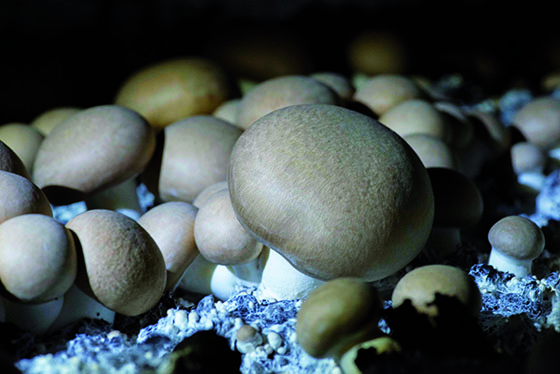
Today, Franje employs 15 people full time and has eight 18 sqm mushroom production rooms yielding an average of 30 tons of mushrooms per month. Ninety percent of the production is white button mushrooms, which Hobeika explains are the most affordable for consumers and the most in demand in Lebanon. Hobeika also produces oyster mushrooms and portobello mushrooms, which are mainly sold to French and Italian restaurants. More recently, he introduced shiitake mushrooms to Franje’s portfolio, with Japanese restaurants being his main clients.

Franje mushrooms are distributed in supermarkets, grocery stores, restaurants and hotels with the percentage share of hospitality venues versus retail markets depending on the season, according to Hobeika, who gives an example of retail being more active in the winter when at-home celebrations abound versus hospitality grabbing the larger percentage share in the summer with the wedding and tourism season. 

[pullquote]Five years into this venture Hobeika says he has yet to return his initial investment, explaining that the mushroom business is difficult and growth is slow[/pullquote]

Five years into this venture Hobeika says he has yet to return his initial investment, explaining that the mushroom business is difficult and growth is slow. At the same time, Hobeika says other operators have entered the market, identifying five as “main growers”. Among them, they have almost saturated the local market needs, and are driving the selling price down. “It is not highly profitable anymore as the selling price of mushrooms has become low and they have a short shelf life of five days maximum. So you end up having to decrease your price to be able to sell your growth, especially since the market is saturated, and you end up hurting the other growers as well,” laments Hobeika, who says that when they first began operating, they were “much more comfortable” as they were almost alone in the market.

According to Hobeika, the Ministry of Agriculture helped form an association of mushroom growers in Lebanon around three years ago, although it did not take off and was later abandoned. “It would have helped us be more organized in terms of unifying the price of mushrooms, and also in applying to and receiving grants from international institutions,” says Hobeika.

Operational costs are also high, with the biggest expenditure being the cost of energy necessary to keep the rooms at the right humidity and temperature level. According to Hobeika, the cost of the compost used, which needs to be imported, is also quite hefty.

Despite these obstacles, Hobeika says he is not discouraged, explaining that since the market in Lebanon is small, they began exporting to Kuwait and Dubai in 2014. He plans to add two more rooms to his business within the next two months with the aim of increasing exports to the Gulf, which he calls a “steady and consistent” market.

Adonis Valley: the road from organic fresh produce to organic food products

1

25 tons of tomatoes can be turned into three tons of organic sun-dried tomatoes

Adonis Valley, a producer of organic food products (certified organic by the Italian Certification Body, the IMC) was conceived out of Fady Daw’s passion for natural production and agriculture. 

Although his family’s business is in advertising, Daw paved his own path early on by majoring in agricultural engineering with a focus on food processing. He joined the non-governmental organization Green Line, which works to preserve nature, and began working on promoting the organic market in Lebanon as early as 1998 when the term was still uncommon to Lebanese consumers. 

In 2000, Daw, who was initially producing honey, also started growing organic fruits and vegetables alongside the honey. Soon after, he began experimenting with the surplus of his fresh produce and started making organic long term shelf products such as tomato paste and jams, although his operation was small scale and unbranded.

At the same time, Daw started experimenting with innovative food products that were uncommon in Lebanon, and that he could produce using organic products. “The idea for sun-dried tomatoes came in 2005 after I had developed my tomato paste, ketchup and tomato sauce, but all these were traditional items and I wanted to complete the tomato range with something more creative and unconventional. I discovered that in Lebanon we import sun-dried tomatoes from Italy, and I thought that I could easily produce them here, knowing that the kind of tomatoes I use for the paste works very well for sun-dried tomatoes,” recounts Daw.

In 2006, Daw decided it was high time to make his venture branded and official; he received a bank loan and relied on private funds to secure an initial investment of “at least $120,000” to establish Adonis Valley in Fatri, Adonis, in the Mount Lebanon region.

[pullquote]Today, sun-dried tomatoes constitute30 percent of Adonis Valley’s total sales[/pullquote]

Today, in addition to the traditional organic food products line, Adonis Valley is the only producer of organic sun-dried tomatoes in Lebanon and Daw proudly boasts that some highly reputable chefs in Lebanon favor Adonis Valley products over the imported variety. He explains that his sun-dried tomatoes’ competitive edge is that they are softer and less chewy than the imported ones and so can be consumed on the spot instead of having to be softened in water first.

Another positive factor, according to Daw, is that although the imported and local varieties are sold for almost the same price of $11 per kilogram, his are more cost efficient since he doesn’t soak them in oil, which takes up weight and volume that could otherwise be fitted with more tomatoes.

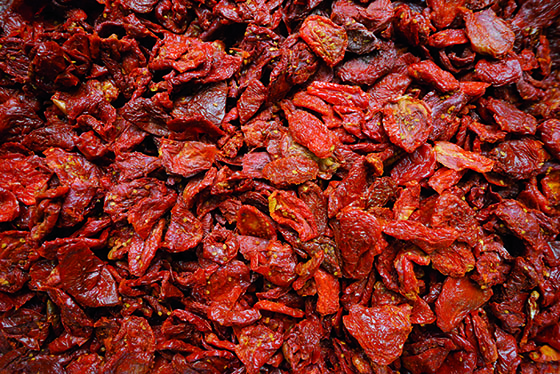
Today, sun-dried tomatoes constitute 30 percent of Adonis Valley’s total sales. Daw says they have an annual harvest of almost 25 tons of tomatoes which they dry into three tons of organic sun-dried tomatoes. Although the operation started in the Adonis Valley farm in Fatri in 2006, it quickly outgrew its space and in 2008 Daw moved production and the growing of all the tomatoes to the northeastern Lebanese border town of Arsal (Packaging still takes place in Fatri). Other reasons cited by Daw for the move include that Fatri does not get enough sun and labor is more expensive there.

2

Adonis Valley is based in Fatri, Adonis

Daw calls the business model he follows in Arsal a fair trade one. As a first step, he contracted a farmer called Mahmood, organically certified his land, provided him with the proper organic tomato seedling variety, the right techniques to grow them and guaranteed that he would buy his entire produce at harvest time in return for an agreed upon sum. Daw argues that this process saves the farmer from the uncertainty of whether his conventionally planted crop will be sold or not and the hassle of having to display them in the fruit and vegetable market. Then, he approached a women’s collective where he trained 14 women on the modern techniques of drying tomatoes. Packaging is still done in Fatri.

Daw replicated this model in 2008 with his caper growing and production line, sourcing it to growers and a women’s cooperative in Hermel, and, more recently, around three years ago, with his freekeh (green wheat) production line which he sources in Bint Jbeil, south Lebanon. “This is my [corporate social responsibility] as I am contributing to the development of businesses in rural areas,” says Daw proudly.

In addition to the sourced employees and contractual seasonal ones, which Daw says are “many”, Adonis Valley has four permanent staff members working on management and marketing and an extra five employees who help with the packaging during the summer. 

Adonis Valley’s sun-dried tomatoes are distributed to both the retail and hospitality sector in Lebanon with 60 percent of products being sold to the hospitality sector and the remaining percentage to organic and healthy lifestyle stores across the country. Part of the production is also exported to Dubai and Kuwait. 

Daw is also currently working on the construction of the first certified green building and farm on his land in Fatri and is investing a total of $150,000 into the project which he hopes to launch this summer.

Good Earth Produce: innovation in local production of fruit and vegetables

1

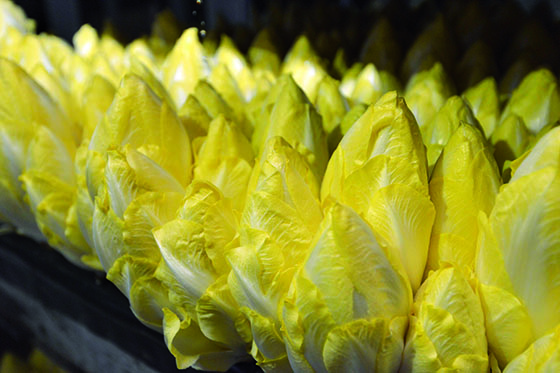
Good Earth Produce grows 75,000 kilograms of endives per week

When you have built a career around distributing locally grown and imported fruit and vegetables, it seems only natural that you would reach a point where you start considering the possibility of growing some of these imported varieties in your homeland.

Elie Maalouf’s history with fruit and vegetables began over forty years ago with his company Liban Fruits, a wholesale distributor of ISO 2200 certified imported and locally grown fresh fruit and vegetables exclusively sold at wholesale fruit and vegetable markets. In 2000 he launched a distribution company which sold produce to hotels, restaurants and some main retail chains to be able to provide smaller quantities and have more targeted distribution.

Ten years ago, recounts Maalouf, the demand for mushrooms and endives was very high in Lebanon, owing to the wide variety of Italian, and to a lesser extent, French restaurants. This demand, especially for mushrooms, gradually spread from the hospitality sector to consumers’ households.

At the time, all the mushrooms and endives on the market were imported from the Netherlands and France and were quite expensive so Maalouf, together with his son Marc, saw potential. “The demand was high and so was the cost of export, so their selling price was high as well. We saw the opportunity to begin growing them in Lebanon and started the Good Earth Produce in 2011 to grow different varieties and colors of mushrooms and endives,” says Maalouf.

Other than saving on the cost of importing these items, which is a crucial factor, Maalouf believes the locally produced variety tastes better because the products are picked daily and delivered the same day, as opposed to the imported variety which takes up to 48 hours to arrive by air freight.

The Maaloufs invested $1.2 million into securing the necessary equipment and the raw materials for mushroom production and the services of a consultant from a Netherlands based company who remains in daily contact with the production team. They consider the growing of endives to be part of this investment, as endives and mushrooms are basically grown in the same manner – in stacks in rooms with digitally controlled humidity, the only difference being that endives are grown in the dark to prevent chlorophyll from turning it green – and so need the same major equipment such as generators and electronic humidifiers.   

Good Earth Produce has six 700 sqm rooms for mushroom production, which currently produce 30 tons of mushrooms per month, with that number increasing during times of peak consumer demand such as the holy month of Ramadan. “We have the capacity to produce two tons per day but we don’t do so because there is no high demand currently. When you work with fresh produce, you have 24 hours to sell to retailers and the hospitality sector because fresh items have a short shelf life and they might already be staying with them for two days until they get sold or used,” explains Maalouf.

Fresh mushrooms seem popular among Lebanese consumers, with even neighborhood grocery stores selling them, and Maalouf says the market penetration of locally produced fresh mushrooms is around 90 percent (versus imported mushrooms) with around six main mushroom farms growing them in Lebanon.

[pullquote]Other than saving on the cost of importing these items, Maalouf believesthe locally producedvariety tastes better[/pullquote]

Endives have not fared as well as mushrooms in Lebanon, despite their earlier popularity. Good Earth Produce is the only company that grows it locally and Maalouf says its market penetration is 35 percent as compared to imported endives. Good Earth Produce currently grows 750,000 kilograms of endives per week but says that it goes up to 2 tons per week when the consumer demand is high such as, again, during Ramadan or the summer months when it is used by wedding caterers.

Maalouf blames the current relatively lower popularity of endives (when compared to mushrooms) on a smaller market, where it is mostly consumed in restaurants or special occasions at home, and on Lebanese consumers’ constantly changing taste in lettuce, which has moved from romaine to endives to lollo rosso and, most recently, to kale.

Still, the fact that there is a local production of endives – sold at $5 per kilogram instead of $7 per kilogram for the imported ones – has had some impact on increasing its consumption in Lebanon. “In the fruit and vegetable wholesale market, the fact that there are local endives at a price less than the exported variety made this product more accessible and caused retailers to be more excited about buying it. The same is the case for the hospitality sector, where you find endives on more menus,” says Maalouf.

Endives and mushrooms grown by Good Earth Produce are sold through Liban Fruits in the wholesale fruit and vegetable market for retail, and they distribute directly to the hospitality sector and some retail chain supermarkets through their distribution company (instead of supermarkets buying them from the wholesale market).

2

Good Earth Produce has six rooms of 700 meter squared each for mushroom production

In the hospitality sector, Maalouf says many chefs are switching from the imported endives and mushrooms to the ones grown by Good Earth Produce and today they have more than 90 clients among chain restaurants and hotels.

While Liban Fruits does export locally produced fruit and vegetables to the Gulf countries, Maalouf says a negligible number of their clients there ask for Lebanese produced mushrooms and endives. Maalouf explains that it is more efficient for their Gulf clients to import these items from Europe where they are produced en masse, and would therefore be priced lower than the ones at Good Earth Produce, which are produced in smaller numbers than in Europe.

Another reason for the export price variance between Lebanese produced mushrooms and endives and European ones is the higher cost of producing them in Lebanon – where, according to Maalouf, energy is the highest expense.

In considering locally producing niche items – such as mushrooms and endives, Massoud says they first determine how big the local demand is and then balance that against the cost of import to see whether or not it would make economic sense to develop the product in Lebanon. They recently added locally grown kale and colored varieties of cherry tomatoes to their portfolio at Liban Fruits.

Maalouf says they are more successful than they expected with Good Earth Produce, but that one of the reasons we are not seeing such niche items go national is due to the fact that they are not basic food products in Lebanon. “Growing such niche items requires a lot of advance planning because when instability rocks the country, these are the first products that people would stop buying,” he explains.

May 6, 2016 1 comment
0 FacebookTwitterPinterestEmail
EditorialOpinion

Enough brand confusion

by Yasser Akkaoui May 6, 2016
written by Yasser Akkaoui

I’m confused. Every time we write about the country’s entrepreneurship ecosystem, our researchers and fact checkers conduct extensive investigations in an attempt to once and for all classify central bank circular 331 in the right policy framework. They always come to the same conclusion: it’s an equity guarantee. The whole purpose of this policy instrument is to mitigate the high risk of the “valley of death” or when there is a high probability that a startup firm will die off before a steady stream of revenues is established.

With all due respect, the handful of venture capital (VC) funds currently deploying guaranteed capital are not serving that purpose. They’re thirsty for revenues such as private equity (PE) funds, not value creation such as VCs. They’re all looking at ticket sizes of $1 million or more in companies that are past the proof-of-concept stage and starting to see some real cashflows. These aren’t seed tickets and definitely don’t need a guarantee. Don’t get me wrong, growth-stage companies in Lebanon were startups back when the ecosystem was smaller, functioning with little institutional support and starving for capital. They are more than worthy of investment but in a manner that allows limited partners (LP)’s or shareholders to enjoy the risk and rewards that come with financing a limited liability company (LLC).

No wonder funds are complaining of lack of deals. But what about the young companies that have graduated from Bootcamp, Speed and the UK-Lebanon Tech Hub? This equity guarantee is for them. It’s meant to help them and many, many others that are still not even aware that 331 exists to help them make it to the other side of the “valley of death” so they too can one day welcome the big tickets and stay in Lebanon instead of looking elsewhere.

For seed funding to start finding the right targets we need many more accelerators, co-working spaces and marketing tactics to discover and nourish all the remaining scattered talent. There are many excellent opportunities that are equally tech and scalable; in this issue, for example, we bring to you a selection of entrepreneurs in the agro sector.

Banks and investors that make the leap of faith to support accelerators should have the first right of refusal to invest in graduates of these programs and not the other way around. Only those investments are worthy of an equity guarantee.

As 331 money gets allocated quickly, it is not too late to reconsider the structure and rewards of existing funds with special attention to carried interest arrangements. The time is now to give our only working policy its rightful purpose. Let’s reprioritise our goals so that everyone can benefit from a just share in the pie.

May 6, 2016 0 comments
0 FacebookTwitterPinterestEmail
Agriculture 2016Special Report

Growing an organic Lebanon

by Nabila Rahhal May 5, 2016
written by Nabila Rahhal

Rooted in a 2007 project to grow organic fruits and vegetables at the Massoud family farm in Batroun, North Lebanon, for their own consumption and distribution to relatives and friends, Biomass has since become one of Lebanon’s biggest producers and distributors of organic products.

Soon after establishing the company, the Massouds found that their farm was too small to meet market needs for more volume and a wider variety of produce. To remedy this, they established collaborations and partnerships with over 40 organic certified farms in Lebanon whereby they supply these farmers with raw material, such as organic seedlings, depending on the particular agreement with each farmer, in exchange for produce.

Today, Biomass covers the entire chain of operation: farming, packaging, sorting, production and distribution in retail spaces. They have four lines of products – fresh produce, fresh eggs, dry grocery goods and frozen goods – with 95 percent of their items produced in Lebanon and the remaining five percent of goods, such as cocoa, quinoa and organic frozen chicken breasts, imported from abroad.

Having been credited with promoting the organic sub-sector in Lebanon, where fresh organic produce now has its own shelf space in supermarkets, Executive sat down with the executive manager of Biomass, Mario Massoud, to understand how their business model works and how organic farming can help the development of the agricultural sector in Lebanon as a whole.

Mario Massoud (Photo: Greg Demarque | Executive)

Mario Massoud (Photo: Greg Demarque | Executive)

E   Organic produce, largely due to its higher price when compared with conventionally farmed produce, is still somewhat niche in Lebanon. What drives the price up?

Today there are two main factors which affect the price of organic produce. The first is that the yield at the farm level is relatively low, which is normal for organic but can be improved through modern farming techniques which we should be applying. The scale of the farms is another issue. Today most of the 40 plus farms we work with are small scale farms, from 1,000 to 10,000 square meters, so you don’t have big operators at the farming level operating organic farms. Also, most of the farms are multi-crop farms which reduces the risk of losing one’s entire harvest, but at the same time drives the costs a bit higher. This affects the volume of crops produced, while the more volume is generated, the less costly the product will be.

E   What is your target for closing the price gap?

Today, depending on the season and the crop, the gap varies between 50 to 300 percent price-wise. Ideally, we would like to have a gap ranging between 30 to 70 percent.

E   Are you trying to add more farms to your portfolio?

We are adding three to five farms each year, and many of these farms are bigger in terms of farmed land. But when organic farming was launched in Lebanon, it was introduced to the very small farms so that they could generate value in their farms when competing with the bigger farms.

E   Quality wise, how big is the gap between an organic operation  and conventional Lebanese agriculture? Is there a prevalence of Genetically Modified Organisms (GMO) products used by Lebanese farmers?

I don’t know what conventional operators use and do. In my opinion, conventional farming should be more controlled, and you have different systems for conventional farming that should be used in Lebanon which allow for the use of chemicals and pesticides but in safer ways.

E   How much has the overall market for organic foods developed in terms of total market share?

I don’t have market share but I estimate it to be roughly five per million. I don’t believe that we are in the 1 percent level yet.

E   Can you specify the growth rates here at Biomass?

We’ve been growing at an average annual rate of 30 to 40 percent, which is especially interesting since there is a growing awareness of the benefits of organic produce among consumers. We’re actually producing less than what the market is demanding for organic products.

E   On the margin side, for the farmer, how much can they expect in terms of percentage of the retail price?

It depends on the crop and the season. Today, we buy from the farmers at 50 to 300 percent more than they would sell in conventional farming produce.

E   When you compare that to the cost the farmer has in raising the crop, how high is the cost of entry?

If you have virgin land, which has not been conventionally farmed before, the cost of entry is relatively low. There are no pesticides which means you don’t spend on costly pesticides, so effectively it’s cheaper since the farmer doesn’t pay that much to enter. But since the yield generated is lower, it drives the cost up and the farmer also has to pay for the annual certification fee.

E   Within the distribution chain, there is the component of transportation and storage where you wonder how hygienic they are, especially when you hear all the stories…

Our products are tested when we take them from the farmers and again when the product is sent to the supermarkets. We operate the entire chain.

E   How much did you invest in all this?

The investment is quite big and until today not profitable. Our objective as a company is to grow the organic sector in Lebanon for companies like us to have a space in the food sector and be sustainable and profitable.

E   So how do you balance your financing?

Until today we have raised several rounds of capital to finance the company and have just completed our second round of capital increase. We are also hoping to increase the volume at the production and export level to generate enough volume for us to reach profitability.

E   Where does the increase in capital come from?

From investors. So far we haven’t had any fund related to the company, though we have looked into [private equity] and venture capital funds. But the capital was mainly from private Lebanese and foreign investors who believe in the organic sector. We tell our investors that it is a long term project whereby we are creating an industry in Lebanon that was virtually nonexistent seven years ago.

E   What is the growth potential of the market?

Back in 2010 when we started we were present at not more than 20 stores. Today, we are present in 250 outlets divided between supermarkets, dedicated organic shops, delicatessens, small groceries, hotels and restaurants.

E   How much of the share is specialized restaurants and hotels?

It’s not big; they’re 5 percent of the total market but they are growing. It is expensive to have all organic items in the kitchen, so what we are trying to do is create one dish in the kitchen that is organic or use a small number of ingredients; whatever is most feasible for the kitchen operator.

E   In terms of your exports, what are your current rations and potentials?

In 2015 we exported 60 percent of our supply in value to the Gulf. We try to export to new countries, and exported once to France, but mainly focus on the Gulf. Export is a real issue with the Syrian crisis because of the extra rush on all the air freight cargo space making it difficult to find the space to export. We need this space because our products are fresh and so exporting is quite a challenge.

E   From your perspective, how much of a role could the organic sector play in Lebanon by the year 2020?

We hope to get 3 to 4 percent of the market share, which is six times the growth of my current estimate. I believe there is a lot of room for growth in the organic sector in Lebanon. For the past five years, our role as Biomass was to introduce an organic produce sector to Lebanon and now we are moving on to the next step which is to make it more accessible.

E   At the level of integrated operators that have both farming and distribution, do you have competitors?

We have competitors although we don’t really believe we’re competing since the market is growing and there is enough space for everyone there. There’s a lot of collaboration between these operators, but you have companies other than Biomass producing organic.

E   Over 80 percent of cereals consumed in Lebanon are imported. On an overall agricultural level is there food security?

I think Lebanon can increase the contribution agriculture makes to the overall economy. There is a role for the government, which needs to make farms more modern and in line with international best practices and techniques, such as the use of pest control. I think it will result in a good economic model in addition to serving the Lebanese people’s interests.

E   Are you exploiting yourself? Meaning the opportunity cost of how much more you would have made had you considered a career other than the executive officer of Biomass?

I never thought that I would be in this role, but now I really believe in it and love it. It’s a new challenge for everyone on the team because there’s no organic expertise in Lebanon so we’ve created through trial and error and are learning from our own mistakes. It’s also a challenge for all of us to succeed in what we are doing now and that’s the exciting part. So, am I exploiting myself? Yes, I am.

May 5, 2016 2 comments
0 FacebookTwitterPinterestEmail
Agriculture 2016Special Report

Lebanon: land of plenty?

by Nabila Rahhal May 4, 2016
written by Nabila Rahhal

Based on our geography textbooks, Lebanese school students grow up learning that Lebanon has a strong agriculture sector with practically each region excelling at growing a certain type of fresh produce – from the citrus fruits in Sidon and Tyre to the olives in Koura, North Lebanon and South Lebanon to the many crops in Bekaa Valley and Akkar.

Once out of school, however, we see that the reality is not quite so simple or rosy. We learn that agriculture in Lebanon contributes to only 5 percent of growth, and that Lebanon actually imports up to 80 percent of its food needs – this according to a yet to be published report acquired by Executive and prepared for the United Nations Economic and Social Commission for Western Asia (ESCWA) entitled “Strategic Review of Food and Nutrition Security in Lebanon”. This situation does not have to be permanent, though, and Lebanon’s agricultural sector has the potential to be modernized and improved, as demonstrated by some efforts on the level of educational institutions and private sector operators.

While it may have been the land of plenty in the 1960s and 1970s – our parents tell us stories of how Lebanese presidents used to gift our fresh produce of citrus fruits to visiting ambassadors – today the agricultural sector is plagued with many difficulties, from a lack of natural resources to a lack of planning and innovation.

Nothing without water

To begin with, Lebanon is a small country with only 250,000 hectares of agricultural land, the rest being mountainous or rocky land. Rainfall is generally the heaviest for three months of the year and, as a result, rainfed agriculture is limited to that period as well, explains Isam Bashour, professor of agriculture at the American University of Beirut (AUB). Meanwhile, continues Bashour, irrigated land, from lakes and some underground wells, amounts to a mere 70 to 80 thousand hectares of the total agricultural land.

The irrigation system in practice is also problematic, as the Strategic Review outlines: “Lebanon’s irrigation system remains traditional, and comparatively inefficient flood irrigation accounts for more than 70 percent of irrigation activity.”

Indeed, Bashour cites the lack of structured access to water for irrigation as one of the main impediments to development in the agricultural sector. “If the country goes into a program that would improve the availability of water through building dams and such, it would reflect positively on the agricultural sector because that is the limiting factor,” says Bashour.

According to the Strategic Review, Lebanon drafted a National Water Sector Strategy in 2012 which would expand irrigation schemes around the Litani River basin and therefore boost agricultural land in the South and Bekaa Valley, although the plan has yet to be implemented due to political deadlock.

Living on fruit and vegetables

While Lebanon’s climate allows farmers the advantage of growing a variety of produce – one could plant bananas at sea level, apples in the mountains and wheat crops in the Bekaa for example – the limited availability of irrigated land causes farmers to go for the produce that they can sell at the highest price while using the least amount of water which, in this case, is fruit and vegetables. “In terms of agriculture in Lebanon, we have mainly fruit trees and vegetables; forget about grains and wheat, we produce less than 10 percent of our needs from those and that’s it. Irrigated land will go to vegetables as farmers make more money from them than they would on wheat and barley, and they need less water,” says Bashour.

Lack of Planning

Fruit and vegetables are all well and good, but lack of planning and coordination at the ministerial level leads to farmers planting the same thing at the same time which causes a surplus. “Planting needs planning on what to grow, where to grow it and what to import, depending on what is fresh in the country at the time in order to protect what we produce. But no one is doing this and the same areas are planting the same products at the same time. This is a huge job but it should be done and the farmers alone don’t know what to do,” says Wael Lazkani, owner and chef of the restaurant Jai – who is an example of restaurant owners that, out of personal initiative, work with local farmers to supply their restaurants. Lazkani explains how he is working with some farmers to use their surplus of certain fruits and vegetables to develop innovative food products. These products, says Lazkani, would have novelty as a competitive advantage, giving the example of his recent work with a farmer to make cider out of his surplus of apples, in addition to the traditional apple jams and juices which the farmer used to make, and his idea to use tomatoes to make chutney in addition to the traditional tomato pastes.

[pullquote]Within the agricultural sector, a mixture of a lack of regulations and weak implementation of existing ones has led to a chaotic market with no certifiable quality assurance standards[/pullquote]

Jungle market

Within the agricultural sector, a mixture of a lack of regulations and weak implementation of existing ones has led to a chaotic market with no certifiable or measurable quality assurance standards to reassure consumers – whether locally or in export markets – of the safety of the food they are eating.

The Strategic Review prepared for ESCWA points to regulations being applied by the Ministry of Agriculture (MoA) on the importation of pesticides and fertilizers and on imported seeds (including certificates of origin and import permits), but generally sees government imposed and created regulations as currently being weak and ineffective.

Mario Massoud, executive manager of Biomass – a Lebanese producer and distributor of organic fruits and vegetables – explains that Biomass had to get their organic farming certification from an Italian certification body with offices in Lebanon, Instituto Medditerraneo di Certificazione (IMC), as there are no government or local certifying bodies for organic produce (see Q&A page 34). Indeed, the IMC has certified all of the organic products produced in Lebanon in line with European Union regulations.

Liban Fruits, which is ISO 2200 (an international food safety management system certification) certified, speaks of the difficulty it faces in convincing local farmers to grow their products in accordance with the ISO 2200. The obstacle, explains owner Elie Maalouf, lies in the chaotic market which leads to farmers refusing to spend the 10 percent extra money it takes to grow the ISO certified way, while their fellow farmers are growing in a haphazard manner – such as using any fertilizers to increase yields or using unsanitary water for irrigation – thereby spending less money but with both of them selling their produce at the same price.

“Today half the vegetables in Lebanon have no taste; this is because there is no regulation or monitoring. Farmers are looking for profitability and are trying to develop big yields at the price of the taste,” says Maalouf, who adds that the solution is to have regulations and monitoring, at the ministerial level, ranging from what pesticides should be used (and in what quantity) to the quality of water used. “When this happens, the quality of the product will improve and prices will be more leveled,” explains Maalouf.

Greg Demarque | Executive

Greg Demarque | Executive

Post-harvest woes

Both Bashour and Gumataw Kifle Abebe, visiting professor of agriculture at AUB, mention post-harvest as another challenge affecting the agriculture sector in Lebanon, leading to unnecessary waste and loss.

“Most of the pre-harvest practices are predictable and relatively easier to manage. In contrast, post-harvest management is more complex as it involves a number of actors at the different stages of the supply chain, with each actor likely to have a varied level of risks and rewards. Post-harvest losses vary depending on product handling, storage and treatment conditions as well as the production region,” says Abebe.

Food for everyone

It is clear that the agricultural sector in Lebanon is aging. As the Strategic Review outlines: “Despite its favorable climatic position in the region, agriculture’s value added in percent of GDP has declined to an estimated 5.5 percent in 2014. This decrease can be attributed to patterns of mass urbanization which already began in the 1950s and 1960s. Back then rural populations constituted around half of Lebanon’s population. Another reason for this retrenchment is likely that public investment targeting the sector’s development remains relatively low, something evident in the share of the budget allocated to the MoA,” which – at 0.5 percent of the total budget – is five times less than neighboring countries.

[pullquote]“Most of the pre-harvest practices are predictable and relatively easier to manage. In contrast, post-harvest management is more complex”[/pullquote]

Despite its low contribution, many believe this 5.5 percent of Gross Domestic Product (GDP) should be maximized to its full potential, if only to be more food sufficient (producing enough food for local consumption) than we are now – not to mention having a competitive edge in export markets. “25 to 30 percent of the people live off of agriculture, plus it’s creating a lot of business. I always give the example of California where their agriculture is very advanced but they produce only 2.8 percent of their GDP; do they stop producing? They keep supporting it because if you kill agriculture, you kill your economy and then you become 100 percent dependent for your food on other sources,” argues Bashour.

Indeed, on aggregate, Lebanon is only self-sufficient when it comes to fruit (147 percent) and almost self-sufficient when it comes to vegetables (93 percent), according to the Strategic Review. However, it imports up to 80 percent of its remaining food needs.

In terms of export, fruit and vegetables constitute the majority of agricultural exports from Lebanon – potatoes being the largest export crop with a 55 percent share of vegetable exports – although export volumes remain low when compared to production and import numbers.

While Lebanon’s size does not allow it to be fully food-sufficient, it could be producing a wider variety of produce and be more competitive than it is now, as the Strategic Review notes.

Back to the future

The essence of what is needed to revitalize this sector, and be competitive with our neighbors, is applied research and development of modern ways of farming, says Bashour. “We have to come up with new ideas and grow different things; we cannot grow what Egypt or Jordan are growing at the same time as them. We have to be ahead of everyone around us somehow by learning more, by applying new technology and by being smarter in production and post-production,” says Bashour.

Farmers should not be expected to do this research on their own, and as such Bashour says it’s the job of the government with the collaboration and input of civil society and educational institutions to do so.

Greg Demarque | Executive

Greg Demarque | Executive

He stresses that research alone is not enough and that outreach, through training and workshops for farmers, is key. “We have to transfer this information to the farmer. Some money is being spent on research but it’s not enough. We need more money and effort for the research and much more on relaying this to the farmer,” emphasizes Bashour. He goes on to explain that the MoA does have outreach offices in farming areas, and has been hiring people – several from AUB – to work with them on outreach, but that more could be done to make it more effective and far reaching, noting that real change will be slow.

[pullquote]While Lebanon’s size does not allow it to be fully food-sufficient, it could be producing a wider variety of produce and be more competitive than it is now[/pullquote]

Relatively recently, a crop of agricultural entrepreneurs (see profiles starting page 24) have seen the potential in Lebanon’s land, and started working with local farmers on introducing fresh produce or food products which are innovative and unusual to Lebanon, demonstrating the potential Lebanon has for similar projects with the proper research and training of farmers.

Time to connect

Lazkani speaks of a disconnect between the small farmers and end consumers (be it restaurant owners or people in their homes) noting that such communication is necessary to allow small farmers more contact with local market needs, and therefore potentially be able to provide more competitive produce.

Farmers markets, such as Souk el Tayeb or Souk el Ard, are ideal for small farmers or agricultural entrepreneurs testing out the market for new produce, says Lazkani, who visits every week to see what’s new for his restaurant.

Massoud’s Biomass says they started out in Souk el Tayeb, introducing their line of organic fruit and vegetables and getting feedback directly from the consumer. Biomass outgrew Souk el Tayeb, but Massoud believes in it as a platform for small farmers while saying that, in Lebanon, supermarkets are the main places where people purchase food.

Lazkani also admits that chain supermarkets have taken over the way people purchase food all over the world, but takes heart in the relatively recent global trend towards going back to buying local and reducing the size of their carbon footprints.

He has seen this trend slowly take root in Lebanon with more people visiting Souk el Tayeb than when it first started, and as such believes that more farmers’ markets spreading across Lebanon could be beneficial to the country’s farming community.

Going forward

According to the Strategic Review, Lebanon has developed a plan called The Ministry of Agriculture Strategy 2015-2019, with eight courses of action which, if implemented, could go a long way toward improving the agricultural sector in Lebanon.

The agricultural industry has too much potential to be left without attention. “We have many basic points in agriculture that limit us, such as irrigation or limited land availability. But with new technology and the right education and research, these resources can be utilized in a much smarter way,” concludes Bashour. For Lebanon’s sake, let’s hope we do.

May 4, 2016 0 comments
0 FacebookTwitterPinterestEmail
LeadersOpinion

A sector worth saving

by Executive Editors May 4, 2016
written by Executive Editors

“Pity the nation that eats a bread it does not harvest,” wrote Gebran Khalil Gebran back in 1934. Lebanon, which today imports up to 80 percent of its food needs (according to a yet to be published report prepared for ESCWA,) is far from harvesting its own bread and is in dire need of redesigning and modernizing its agriculture sector.    

While it is unlikely Lebanon will ever be 100 percent food sufficient (producing enough food items to feed its own people) due to a variety of reasons ranging from its small size to the high cost involved in reaching that level of sufficiency, the potential to be more competitive, closer to food self-sufficiency and less food insecure (see Last Word page 104) is too big to be squandered.

Lebanon has a unique climate and topography compared to the rest of the region, allowing it to accommodate the planting of different produce at different altitudes. While the country has 250,000 hectares of agricultural land, only around 70,000 hectares of it is currently irrigated: the rest is therefore not being maximized to its full potential.

Today agriculture contributes only 5.5 percent to Lebanon’s GDP but even within that percentage, a lot can, and should, be done to maximize its impact on the country and on the livelihoods of the people working within that sector. These workers account for 20 to 30 percent of the population and are generally of a low socioeconomic level, according to Isam Bashour, professor of agriculture at American University of Beirut.

The potential is there but it is being buried under a lack of planning and management. Moreover, there is chaos across the farming industry as a result of a lack of regulation and monitoring of anything, ranging from what and how much pesticide to use to the quality of water used in irrigation, to post-harvest control (see overview page 16). 

Before the sector can develop any further, the farming industry needs regulations to ensure the quality and safety of produce: there should be national guidelines and procedures across all levels of the farming process. More importantly, a ministerial monitoring body needs to be put in place to make sure these regulations are enforced, with consequences if they are not. Those in the agriculture sector, from farmers to wholesalers, need to know that “cutting corners” will not be tolerated anymore and consumers need to be able to trust that locally-grown produce, even if not internationally certified, is still safe to eat.

The sector would also benefit from a long-term strategic plan that would outline its development of more modern methods of farming and a more diverse range of produce, instead of most farmers planting the same crops every year, such as potatoes and apples, which is largely what is happening now. This would also make Lebanese produce more competitive within the export market and improve the livelihood of farmers by bettering the ways in which they currently work. The good news is Lebanon already has a five year plan for the development of the agricultural sector. The Ministry of Agriculture Strategy 2015-2019 report has eight courses of action ranging from sustainable development, to modernizing farming, to getting more youth involved in the sector. If this strategy is implemented to the fullest it could mean a lot of positive changes within the agriculture sector. But with a ministerial allocation of 0.5 percent of the state’s total budget, and with previous experience of government-led initiatives, progress is most likely to be stilted or slow.

The developing and reinforcing of regulations, and the creation of a nationwide strategic plan for the sector, is the role and responsibility of the government through the Ministry of Agriculture. But in Lebanon, the private sector and institutions have always had a role to play in the development of the country and agriculture should be no exception.

Already, educational institutions around the country are involved in applied research projects on the utilization of innovative farming techniques in the country. Within the past five years, there has been a rise in private sector entrepreneurial initiatives within the farming sector, whether through introducing new crop varieties to the country or new products derived from existing produce (see profiles starting page 24) or simply the betterment of the quality of existing produce (see Biomass Q&A page 34). These entrepreneurs have demonstrated the opportunities that exist within the farming sector, developing a local and export market for their produce, and have shown us what can happen when innovation and new ways of thought are applied to this sector. 

Such private sector investments should be highlighted and more of them should be encouraged through incentives. Kafalat should be commended for the work it has done in supporting small and medium enterprises, many of which are within the agricultural sector, but similar loans need to be offered for larger-scale operations if they are to grow to a national level.

In short, the agriculture sector in Lebanon has been neglected for too long. If we want to improve our resources and maximize the very real potential we have right here on our soil then it is time to rethink our approach to the sector and to join the modern farming world.

May 4, 2016 0 comments
0 FacebookTwitterPinterestEmail
CommentOpinion

Beirut Madinati

by Karim El Mufti May 3, 2016
written by Karim El Mufti

Berytus Nutrix Legum, or Beirut as cradle of the law in its Latin expression, has lost all meaning in times such as these, when our national institutions have become decrepit due to the decay of the political culture of the ruling class. As a result, local authorities (municipalities and federations of municipalities) are one of the few remaining legitimate institutions in the country, making it even more crucial, for the future of democracy in Lebanon, to hold the municipal elections in their due phase.

It is in the name of democracy that Beirut Madinati (Beirut My City) has emerged as a political campaign to run in elections for the Municipal Council seats in Beirut. The negligence of past municipal councils in managing local prerogatives and taxpayers’ money has for many people engraved the idea that municipalities have little to no power and that decisional mechanisms strictly lie at a national level. This is simply not true.

The Municipal Act governing the organization of municipalities in Lebanon (Decree-Law 118 dated 1977 and amendments) lists an impressive set of prerogatives. The “Municipal Council shall be in charge, without limitation” of the budget, loans and donations, as well as “planning, improving and expanding the streets, establishing gardens and public places… establishing shops, parks, racing places, playgrounds, toilets, museums, hospitals, dispensaries, shelters, libraries, popular residences, wash houses, sewers, waste drainage and others” and much more in terms of transportation, economic development, education, culture and heritage.

[pullquote]The Beirut Madinati campaign is out to convince the 470,000 Beirut registered voters to upset the power balance at the local level through the vote[/pullquote]

With over 800 million dollars in budget surplus admitted by the present mayor of Beirut in Executive magazine in December 2014, and regardless of the transfers of the problematic Independent Municipal Funds, very little was actually invested in the city’s livability and the well-being of the people.

Committed to responding to the needs and necessities of those living, working, studying and transiting in the capital, Beirut Madinati has presented an alternative to those inefficiently running the city, in order to restore the municipality’s prerogatives. To that end, this political campaign, led by independent and non-partisan citizens and supported by a multitude of experts and specialists, has developed a comprehensive municipal program and vision for the city.

Concretely, this will mean establishing a suitable working relationship with the governor (or mohafez), the actual head of the executive authority in Beirut – a unique configuration unlike the other municipalities in the country. What is considered by many an obstacle to implementing projects in Beirut in fact simply represents the result of a lack of political will in building professional institutional bridges between the different offices that should be cooperating for the benefit of public interest in the capital. If elected, a Beirut Madinati-led Municipal Council would adopt decisions and regulations in line with the current law and legislation, aimed at achieving local human and socio-economic development, all of which do not constitute any grounds for obstructive strategies by the governor who is bound by law to enact the public good.

On the level of economic development, a Municipal Council run by Beirut Madinati elected officials would work on confronting the growing rate of unemployment and urban poverty. In the short term, the Municipal Council would institute a lasting communication channel with inhabitants’ representatives through existing condominium committees and to-be-established neighborhood committees, thereby voicing priorities and specific needs in terms of social and economic development.

In the long run, throughout the six year mandate, improving basic infrastructure in areas such as roads, traffic safety and housing needs, highlighting cultural and natural landmarks (Dalieh for instance), restoring public spaces and green areas, and establishing community centers and public libraries will create jobs in both public and private sectors and stimulate the local economy and cultural enhancement. The municipality will also contribute to reducing the cost of doing business in the capital, especially for young entrepreneurs and start-ups in strategic sectors (tourism, technology, ecology, etc.) through the provision of quasi-free and subsidized working sites. Commercial streets with local shops, merchants, craftsmen and artisans will be supported through urban design planning strategies providing sidewalks, parking spaces and a comprehensive public transportation system that will greatly improve access and mobility to these areas. Fiscal incentives, lawful and possible within existing mechanisms, will also relieve some costs for the private sector entities sharing the municipality’s vision for a sustainable and greener Beirut.

The Beirut Madinati campaign is out to convince the 470,000 Beirut registered voters to upset the power balance at the local level through their vote. By focusing on dealing with the daily problems of the people in the capital through responsible, transparent and participatory means, the campaign aims to purge the realm of local governance from controversial and divisive issues that capture the entire attention and interests of both the March 8 and March 14 political formations and beyond.

It is time for an independent generation of political militants to step up in order to tend to the basic concerns of the citizens that keep being disregarded by those in charge (the waste crisis being the most recent illustration). Beirut Madinati aspires to contribute to the emergence of a new Lebanese breed of respectable and upright policymakers, achieving a better future for the next generations in Beirut and the country.

May 3, 2016 1 comment
0 FacebookTwitterPinterestEmail
Hospitality & Tourism

The intricacies of sushi

by Greg Demarque & Nabila Rahhal April 27, 2016
written by Greg Demarque & Nabila Rahhal
“The restaurant Mitsu-ya translates to the house of Mitsu, named after its Japanese chef. It follows the Omakase style of sushi, which is more personal and relies on the chef’s skills, creativity and even his mood.” (Fady Achkar, co-owner of Mitsu-ya)
Le Sushi Bar, Shogun and Mitsu-ya are among the few sushi restaurants in Lebanon that use fresh wasabi, which is a root and has a rough texture. Most use a powder mixed with horseradish, mustard and other spices.
“The easiest way to tell the quality of the sashimi or sushi is to eat it plain, without wasabi or soy [sauce]. If it has a metallic aftertaste, chances are the fish is not fresh.” (Aref Saade, owner of sushi restaurants Tropical Bamboo and Shogun)
“Some of the more popular makis were invented by Le Sushi Bar. ‘Crazy’ was called so because of its crazy hair look; ‘Naked’ because there was no nori around it and ‘Volcano’ because it’s spicy. These became staples of Lebanese sushi restaurants.” (Mario Junior Haddad, owner of Sushi Bar)
“Most of the sushi consumed in Lebanon is salmon based, unlike in Japan where 80 percent of the world’s tuna is consumed. Salmon is also a favorite worldwide.” (Mario Junior Haddad)
“Restaurants are experimenting with sushi, introducing new twists to familiar dishes, such as Yabani’s new style sashimi, which includes scallops with truffles.” (Ramzi Adada, general manager of Yabani)
“Some Japanese like to roll the sashimi in green leaves called shiso, along with some wasabi and pickled ginger, and eat it with their hands for an added, close to minty, flavor.” (Aref Saade)
“Bluefin tuna is sold at auctions in Japan. The most expensive Bluefin tuna fish weighed 220 kilograms and was sold for 1,850,000 euros. Bluefin tuna can be found on Lebanon’s shores during May and June.” (Aref Saade)
“Crab sticks or surimi are made from crab meat and other products. They are sold wholesale from $2 to $7 per kilogram depending on the amount of fresh crab meat used.” (Nicolas Rebeiz, sushi restaurant manager and supplier)
“Sushi restaurants mainly work with Scottish salmon because its meat is firmer if you want to use it in sashimi. They also use farmed salmon as wild salmon, which is only available in May and June, is chewier and less buttery than the farmed variety.” (Aref Saade)
April 27, 2016 0 comments
0 FacebookTwitterPinterestEmail
Hospitality & Tourism

What’s in a nationality?

by Nabila Rahhal April 26, 2016
written by Nabila Rahhal

Walk into most restaurants serving sushi in Lebanon and you will almost certainly not see a local rolling up your makis. Though the majority of sushi chefs in Lebanon hail from the Philippines, Vietnam or Thailand, there are two or three restaurants that boast Japanese chefs preparing your Japanese meal.

Restaurant owners Executive spoke to all agreed that hiring a Japanese chef for their sushi restaurant is simply too expensive. “In Lebanon, the salary of a non-Japanese chef is around $1,000. If I hire a Japanese chef, whose salary is much higher, how can I compete with the restaurants around me who don’t have Japanese chefs and pay them much less, given that our other expenses are the same? It’s just not cost effective for us,” explains Shogun owner Aref Saade, adding that a Japanese chef would likely find it hard to deal with the way Lebanese eat their sushi all at once mezze style instead of the slow, piece by piece style that Japanese culture is used to.

Moreover, Ramzi Adada, Yabani’s general manager, suggests that Japanese chefs are expensive because the quality of life in their country is so good that they don’t feel pressured to seek employment abroad.

Tsunami co-owner Rita Ekmekjian says that a typical sushi restaurant employs around 10 chefs, so bringing them all from Japan, knowing that the average salary for a Japanese chef is $5,000, is simply not feasible.

Fady Achkar, whose restaurant Mitsu-Ya is one of the only sushi restaurants in Lebanon that employs a Japanese chef, believes it’s an expense worth investing in. “Ok, they are much more expensive, but when people invest $1.5 million to make a sushi restaurant, they should definitely invest in a Japanese chef. At the end of the day, I don’t go to a restaurant to check out the artwork,” he says.

When asked why Lebanese chefs are not employed as head sushi chefs in Lebanon, the answers among restaurant owners varied. Some believe that, perception-wise, Lebanese customers are more confident in the chef’s skills when they see an Asian chef behind the sushi bar rather than a Lebanese, regardless of their rolling skills. 

Others insist that Filipinos, for example, understand fish better than the Lebanese since they live on islands and have many Japanese restaurants in their country.

Restaurant owners interviewed say it would be easier for them to get Lebanese chefs for their sushi outlets as they wouldn’t have to do paper work for them in terms of sponsorship, but for the time being, Asian chefs remain in charge of sushi restaurants.

April 26, 2016 0 comments
0 FacebookTwitterPinterestEmail
  • 1
  • …
  • 124
  • 125
  • 126
  • 127
  • 128
  • …
  • 685

Latest Cover

About us

Since its first edition emerged on the newsstands in 1999, Executive Magazine has been dedicated to providing its readers with the most up-to-date local and regional business news. Executive is a monthly business magazine that offers readers in-depth analyses on the Lebanese world of commerce, covering all the major sectors – from banking, finance, and insurance to technology, tourism, hospitality, media, and retail.

  • Donate
  • Our Purpose
  • Contact Us

Sign up for our newsletter

[contact-form-7 id=”27812″ title=”FooterSubscription”]

  • Facebook
  • Twitter
  • Instagram
  • Linkedin
  • Youtube
Executive Magazine
  • ISSUES
    • Current Issue
    • Past issues
  • BUSINESS
  • ECONOMICS & POLICY
  • OPINION
  • SPECIAL REPORTS
  • EXECUTIVE TALKS
  • MOVEMENTS
    • Change the image
    • Cannes lions
    • Transparency & accountability
    • ECONOMIC ROADMAP
    • Say No to Corruption
    • The Lebanon media development initiative
    • LPSN Policy Asks
    • Advocating the preservation of deposits
  • JOIN US
    • Join our movement
    • Attend our events
    • Receive updates
    • Connect with us
  • DONATE