• Donate
  • Our Purpose
  • Contact Us
Executive Magazine
  • ISSUES
    • Current Issue
    • Past issues
  • BUSINESS
  • ECONOMICS & POLICY
  • OPINION
  • SPECIAL REPORTS
  • EXECUTIVE TALKS
  • MOVEMENTS
    • Change the image
    • Cannes lions
    • Transparency & accountability
    • ECONOMIC ROADMAP
    • Say No to Corruption
    • The Lebanon media development initiative
    • LPSN Policy Asks
    • Advocating the preservation of deposits
  • JOIN US
    • Join our movement
    • Attend our events
    • Receive updates
    • Connect with us
  • DONATE
Agriculture 2016Special Report

Lebanon: land of plenty?

by Nabila Rahhal May 4, 2016
written by Nabila Rahhal

Based on our geography textbooks, Lebanese school students grow up learning that Lebanon has a strong agriculture sector with practically each region excelling at growing a certain type of fresh produce – from the citrus fruits in Sidon and Tyre to the olives in Koura, North Lebanon and South Lebanon to the many crops in Bekaa Valley and Akkar.

Once out of school, however, we see that the reality is not quite so simple or rosy. We learn that agriculture in Lebanon contributes to only 5 percent of growth, and that Lebanon actually imports up to 80 percent of its food needs – this according to a yet to be published report acquired by Executive and prepared for the United Nations Economic and Social Commission for Western Asia (ESCWA) entitled “Strategic Review of Food and Nutrition Security in Lebanon”. This situation does not have to be permanent, though, and Lebanon’s agricultural sector has the potential to be modernized and improved, as demonstrated by some efforts on the level of educational institutions and private sector operators.

While it may have been the land of plenty in the 1960s and 1970s – our parents tell us stories of how Lebanese presidents used to gift our fresh produce of citrus fruits to visiting ambassadors – today the agricultural sector is plagued with many difficulties, from a lack of natural resources to a lack of planning and innovation.

Nothing without water

To begin with, Lebanon is a small country with only 250,000 hectares of agricultural land, the rest being mountainous or rocky land. Rainfall is generally the heaviest for three months of the year and, as a result, rainfed agriculture is limited to that period as well, explains Isam Bashour, professor of agriculture at the American University of Beirut (AUB). Meanwhile, continues Bashour, irrigated land, from lakes and some underground wells, amounts to a mere 70 to 80 thousand hectares of the total agricultural land.

The irrigation system in practice is also problematic, as the Strategic Review outlines: “Lebanon’s irrigation system remains traditional, and comparatively inefficient flood irrigation accounts for more than 70 percent of irrigation activity.”

Indeed, Bashour cites the lack of structured access to water for irrigation as one of the main impediments to development in the agricultural sector. “If the country goes into a program that would improve the availability of water through building dams and such, it would reflect positively on the agricultural sector because that is the limiting factor,” says Bashour.

According to the Strategic Review, Lebanon drafted a National Water Sector Strategy in 2012 which would expand irrigation schemes around the Litani River basin and therefore boost agricultural land in the South and Bekaa Valley, although the plan has yet to be implemented due to political deadlock.

Living on fruit and vegetables

While Lebanon’s climate allows farmers the advantage of growing a variety of produce – one could plant bananas at sea level, apples in the mountains and wheat crops in the Bekaa for example – the limited availability of irrigated land causes farmers to go for the produce that they can sell at the highest price while using the least amount of water which, in this case, is fruit and vegetables. “In terms of agriculture in Lebanon, we have mainly fruit trees and vegetables; forget about grains and wheat, we produce less than 10 percent of our needs from those and that’s it. Irrigated land will go to vegetables as farmers make more money from them than they would on wheat and barley, and they need less water,” says Bashour.

Lack of Planning

Fruit and vegetables are all well and good, but lack of planning and coordination at the ministerial level leads to farmers planting the same thing at the same time which causes a surplus. “Planting needs planning on what to grow, where to grow it and what to import, depending on what is fresh in the country at the time in order to protect what we produce. But no one is doing this and the same areas are planting the same products at the same time. This is a huge job but it should be done and the farmers alone don’t know what to do,” says Wael Lazkani, owner and chef of the restaurant Jai – who is an example of restaurant owners that, out of personal initiative, work with local farmers to supply their restaurants. Lazkani explains how he is working with some farmers to use their surplus of certain fruits and vegetables to develop innovative food products. These products, says Lazkani, would have novelty as a competitive advantage, giving the example of his recent work with a farmer to make cider out of his surplus of apples, in addition to the traditional apple jams and juices which the farmer used to make, and his idea to use tomatoes to make chutney in addition to the traditional tomato pastes.

[pullquote]Within the agricultural sector, a mixture of a lack of regulations and weak implementation of existing ones has led to a chaotic market with no certifiable quality assurance standards[/pullquote]

Jungle market

Within the agricultural sector, a mixture of a lack of regulations and weak implementation of existing ones has led to a chaotic market with no certifiable or measurable quality assurance standards to reassure consumers – whether locally or in export markets – of the safety of the food they are eating.

The Strategic Review prepared for ESCWA points to regulations being applied by the Ministry of Agriculture (MoA) on the importation of pesticides and fertilizers and on imported seeds (including certificates of origin and import permits), but generally sees government imposed and created regulations as currently being weak and ineffective.

Mario Massoud, executive manager of Biomass – a Lebanese producer and distributor of organic fruits and vegetables – explains that Biomass had to get their organic farming certification from an Italian certification body with offices in Lebanon, Instituto Medditerraneo di Certificazione (IMC), as there are no government or local certifying bodies for organic produce (see Q&A page 34). Indeed, the IMC has certified all of the organic products produced in Lebanon in line with European Union regulations.

Liban Fruits, which is ISO 2200 (an international food safety management system certification) certified, speaks of the difficulty it faces in convincing local farmers to grow their products in accordance with the ISO 2200. The obstacle, explains owner Elie Maalouf, lies in the chaotic market which leads to farmers refusing to spend the 10 percent extra money it takes to grow the ISO certified way, while their fellow farmers are growing in a haphazard manner – such as using any fertilizers to increase yields or using unsanitary water for irrigation – thereby spending less money but with both of them selling their produce at the same price.

“Today half the vegetables in Lebanon have no taste; this is because there is no regulation or monitoring. Farmers are looking for profitability and are trying to develop big yields at the price of the taste,” says Maalouf, who adds that the solution is to have regulations and monitoring, at the ministerial level, ranging from what pesticides should be used (and in what quantity) to the quality of water used. “When this happens, the quality of the product will improve and prices will be more leveled,” explains Maalouf.

Greg Demarque | Executive

Greg Demarque | Executive

Post-harvest woes

Both Bashour and Gumataw Kifle Abebe, visiting professor of agriculture at AUB, mention post-harvest as another challenge affecting the agriculture sector in Lebanon, leading to unnecessary waste and loss.

“Most of the pre-harvest practices are predictable and relatively easier to manage. In contrast, post-harvest management is more complex as it involves a number of actors at the different stages of the supply chain, with each actor likely to have a varied level of risks and rewards. Post-harvest losses vary depending on product handling, storage and treatment conditions as well as the production region,” says Abebe.

Food for everyone

It is clear that the agricultural sector in Lebanon is aging. As the Strategic Review outlines: “Despite its favorable climatic position in the region, agriculture’s value added in percent of GDP has declined to an estimated 5.5 percent in 2014. This decrease can be attributed to patterns of mass urbanization which already began in the 1950s and 1960s. Back then rural populations constituted around half of Lebanon’s population. Another reason for this retrenchment is likely that public investment targeting the sector’s development remains relatively low, something evident in the share of the budget allocated to the MoA,” which – at 0.5 percent of the total budget – is five times less than neighboring countries.

[pullquote]“Most of the pre-harvest practices are predictable and relatively easier to manage. In contrast, post-harvest management is more complex”[/pullquote]

Despite its low contribution, many believe this 5.5 percent of Gross Domestic Product (GDP) should be maximized to its full potential, if only to be more food sufficient (producing enough food for local consumption) than we are now – not to mention having a competitive edge in export markets. “25 to 30 percent of the people live off of agriculture, plus it’s creating a lot of business. I always give the example of California where their agriculture is very advanced but they produce only 2.8 percent of their GDP; do they stop producing? They keep supporting it because if you kill agriculture, you kill your economy and then you become 100 percent dependent for your food on other sources,” argues Bashour.

Indeed, on aggregate, Lebanon is only self-sufficient when it comes to fruit (147 percent) and almost self-sufficient when it comes to vegetables (93 percent), according to the Strategic Review. However, it imports up to 80 percent of its remaining food needs.

In terms of export, fruit and vegetables constitute the majority of agricultural exports from Lebanon – potatoes being the largest export crop with a 55 percent share of vegetable exports – although export volumes remain low when compared to production and import numbers.

While Lebanon’s size does not allow it to be fully food-sufficient, it could be producing a wider variety of produce and be more competitive than it is now, as the Strategic Review notes.

Back to the future

The essence of what is needed to revitalize this sector, and be competitive with our neighbors, is applied research and development of modern ways of farming, says Bashour. “We have to come up with new ideas and grow different things; we cannot grow what Egypt or Jordan are growing at the same time as them. We have to be ahead of everyone around us somehow by learning more, by applying new technology and by being smarter in production and post-production,” says Bashour.

Farmers should not be expected to do this research on their own, and as such Bashour says it’s the job of the government with the collaboration and input of civil society and educational institutions to do so.

Greg Demarque | Executive

Greg Demarque | Executive

He stresses that research alone is not enough and that outreach, through training and workshops for farmers, is key. “We have to transfer this information to the farmer. Some money is being spent on research but it’s not enough. We need more money and effort for the research and much more on relaying this to the farmer,” emphasizes Bashour. He goes on to explain that the MoA does have outreach offices in farming areas, and has been hiring people – several from AUB – to work with them on outreach, but that more could be done to make it more effective and far reaching, noting that real change will be slow.

[pullquote]While Lebanon’s size does not allow it to be fully food-sufficient, it could be producing a wider variety of produce and be more competitive than it is now[/pullquote]

Relatively recently, a crop of agricultural entrepreneurs (see profiles starting page 24) have seen the potential in Lebanon’s land, and started working with local farmers on introducing fresh produce or food products which are innovative and unusual to Lebanon, demonstrating the potential Lebanon has for similar projects with the proper research and training of farmers.

Time to connect

Lazkani speaks of a disconnect between the small farmers and end consumers (be it restaurant owners or people in their homes) noting that such communication is necessary to allow small farmers more contact with local market needs, and therefore potentially be able to provide more competitive produce.

Farmers markets, such as Souk el Tayeb or Souk el Ard, are ideal for small farmers or agricultural entrepreneurs testing out the market for new produce, says Lazkani, who visits every week to see what’s new for his restaurant.

Massoud’s Biomass says they started out in Souk el Tayeb, introducing their line of organic fruit and vegetables and getting feedback directly from the consumer. Biomass outgrew Souk el Tayeb, but Massoud believes in it as a platform for small farmers while saying that, in Lebanon, supermarkets are the main places where people purchase food.

Lazkani also admits that chain supermarkets have taken over the way people purchase food all over the world, but takes heart in the relatively recent global trend towards going back to buying local and reducing the size of their carbon footprints.

He has seen this trend slowly take root in Lebanon with more people visiting Souk el Tayeb than when it first started, and as such believes that more farmers’ markets spreading across Lebanon could be beneficial to the country’s farming community.

Going forward

According to the Strategic Review, Lebanon has developed a plan called The Ministry of Agriculture Strategy 2015-2019, with eight courses of action which, if implemented, could go a long way toward improving the agricultural sector in Lebanon.

The agricultural industry has too much potential to be left without attention. “We have many basic points in agriculture that limit us, such as irrigation or limited land availability. But with new technology and the right education and research, these resources can be utilized in a much smarter way,” concludes Bashour. For Lebanon’s sake, let’s hope we do.

May 4, 2016 0 comments
0 FacebookTwitterPinterestEmail
LeadersOpinion

A sector worth saving

by Executive Editors May 4, 2016
written by Executive Editors

“Pity the nation that eats a bread it does not harvest,” wrote Gebran Khalil Gebran back in 1934. Lebanon, which today imports up to 80 percent of its food needs (according to a yet to be published report prepared for ESCWA,) is far from harvesting its own bread and is in dire need of redesigning and modernizing its agriculture sector.    

While it is unlikely Lebanon will ever be 100 percent food sufficient (producing enough food items to feed its own people) due to a variety of reasons ranging from its small size to the high cost involved in reaching that level of sufficiency, the potential to be more competitive, closer to food self-sufficiency and less food insecure (see Last Word page 104) is too big to be squandered.

Lebanon has a unique climate and topography compared to the rest of the region, allowing it to accommodate the planting of different produce at different altitudes. While the country has 250,000 hectares of agricultural land, only around 70,000 hectares of it is currently irrigated: the rest is therefore not being maximized to its full potential.

Today agriculture contributes only 5.5 percent to Lebanon’s GDP but even within that percentage, a lot can, and should, be done to maximize its impact on the country and on the livelihoods of the people working within that sector. These workers account for 20 to 30 percent of the population and are generally of a low socioeconomic level, according to Isam Bashour, professor of agriculture at American University of Beirut.

The potential is there but it is being buried under a lack of planning and management. Moreover, there is chaos across the farming industry as a result of a lack of regulation and monitoring of anything, ranging from what and how much pesticide to use to the quality of water used in irrigation, to post-harvest control (see overview page 16). 

Before the sector can develop any further, the farming industry needs regulations to ensure the quality and safety of produce: there should be national guidelines and procedures across all levels of the farming process. More importantly, a ministerial monitoring body needs to be put in place to make sure these regulations are enforced, with consequences if they are not. Those in the agriculture sector, from farmers to wholesalers, need to know that “cutting corners” will not be tolerated anymore and consumers need to be able to trust that locally-grown produce, even if not internationally certified, is still safe to eat.

The sector would also benefit from a long-term strategic plan that would outline its development of more modern methods of farming and a more diverse range of produce, instead of most farmers planting the same crops every year, such as potatoes and apples, which is largely what is happening now. This would also make Lebanese produce more competitive within the export market and improve the livelihood of farmers by bettering the ways in which they currently work. The good news is Lebanon already has a five year plan for the development of the agricultural sector. The Ministry of Agriculture Strategy 2015-2019 report has eight courses of action ranging from sustainable development, to modernizing farming, to getting more youth involved in the sector. If this strategy is implemented to the fullest it could mean a lot of positive changes within the agriculture sector. But with a ministerial allocation of 0.5 percent of the state’s total budget, and with previous experience of government-led initiatives, progress is most likely to be stilted or slow.

The developing and reinforcing of regulations, and the creation of a nationwide strategic plan for the sector, is the role and responsibility of the government through the Ministry of Agriculture. But in Lebanon, the private sector and institutions have always had a role to play in the development of the country and agriculture should be no exception.

Already, educational institutions around the country are involved in applied research projects on the utilization of innovative farming techniques in the country. Within the past five years, there has been a rise in private sector entrepreneurial initiatives within the farming sector, whether through introducing new crop varieties to the country or new products derived from existing produce (see profiles starting page 24) or simply the betterment of the quality of existing produce (see Biomass Q&A page 34). These entrepreneurs have demonstrated the opportunities that exist within the farming sector, developing a local and export market for their produce, and have shown us what can happen when innovation and new ways of thought are applied to this sector. 

Such private sector investments should be highlighted and more of them should be encouraged through incentives. Kafalat should be commended for the work it has done in supporting small and medium enterprises, many of which are within the agricultural sector, but similar loans need to be offered for larger-scale operations if they are to grow to a national level.

In short, the agriculture sector in Lebanon has been neglected for too long. If we want to improve our resources and maximize the very real potential we have right here on our soil then it is time to rethink our approach to the sector and to join the modern farming world.

May 4, 2016 0 comments
0 FacebookTwitterPinterestEmail
CommentOpinion

Beirut Madinati

by Karim El Mufti May 3, 2016
written by Karim El Mufti

Berytus Nutrix Legum, or Beirut as cradle of the law in its Latin expression, has lost all meaning in times such as these, when our national institutions have become decrepit due to the decay of the political culture of the ruling class. As a result, local authorities (municipalities and federations of municipalities) are one of the few remaining legitimate institutions in the country, making it even more crucial, for the future of democracy in Lebanon, to hold the municipal elections in their due phase.

It is in the name of democracy that Beirut Madinati (Beirut My City) has emerged as a political campaign to run in elections for the Municipal Council seats in Beirut. The negligence of past municipal councils in managing local prerogatives and taxpayers’ money has for many people engraved the idea that municipalities have little to no power and that decisional mechanisms strictly lie at a national level. This is simply not true.

The Municipal Act governing the organization of municipalities in Lebanon (Decree-Law 118 dated 1977 and amendments) lists an impressive set of prerogatives. The “Municipal Council shall be in charge, without limitation” of the budget, loans and donations, as well as “planning, improving and expanding the streets, establishing gardens and public places… establishing shops, parks, racing places, playgrounds, toilets, museums, hospitals, dispensaries, shelters, libraries, popular residences, wash houses, sewers, waste drainage and others” and much more in terms of transportation, economic development, education, culture and heritage.

[pullquote]The Beirut Madinati campaign is out to convince the 470,000 Beirut registered voters to upset the power balance at the local level through the vote[/pullquote]

With over 800 million dollars in budget surplus admitted by the present mayor of Beirut in Executive magazine in December 2014, and regardless of the transfers of the problematic Independent Municipal Funds, very little was actually invested in the city’s livability and the well-being of the people.

Committed to responding to the needs and necessities of those living, working, studying and transiting in the capital, Beirut Madinati has presented an alternative to those inefficiently running the city, in order to restore the municipality’s prerogatives. To that end, this political campaign, led by independent and non-partisan citizens and supported by a multitude of experts and specialists, has developed a comprehensive municipal program and vision for the city.

Concretely, this will mean establishing a suitable working relationship with the governor (or mohafez), the actual head of the executive authority in Beirut – a unique configuration unlike the other municipalities in the country. What is considered by many an obstacle to implementing projects in Beirut in fact simply represents the result of a lack of political will in building professional institutional bridges between the different offices that should be cooperating for the benefit of public interest in the capital. If elected, a Beirut Madinati-led Municipal Council would adopt decisions and regulations in line with the current law and legislation, aimed at achieving local human and socio-economic development, all of which do not constitute any grounds for obstructive strategies by the governor who is bound by law to enact the public good.

On the level of economic development, a Municipal Council run by Beirut Madinati elected officials would work on confronting the growing rate of unemployment and urban poverty. In the short term, the Municipal Council would institute a lasting communication channel with inhabitants’ representatives through existing condominium committees and to-be-established neighborhood committees, thereby voicing priorities and specific needs in terms of social and economic development.

In the long run, throughout the six year mandate, improving basic infrastructure in areas such as roads, traffic safety and housing needs, highlighting cultural and natural landmarks (Dalieh for instance), restoring public spaces and green areas, and establishing community centers and public libraries will create jobs in both public and private sectors and stimulate the local economy and cultural enhancement. The municipality will also contribute to reducing the cost of doing business in the capital, especially for young entrepreneurs and start-ups in strategic sectors (tourism, technology, ecology, etc.) through the provision of quasi-free and subsidized working sites. Commercial streets with local shops, merchants, craftsmen and artisans will be supported through urban design planning strategies providing sidewalks, parking spaces and a comprehensive public transportation system that will greatly improve access and mobility to these areas. Fiscal incentives, lawful and possible within existing mechanisms, will also relieve some costs for the private sector entities sharing the municipality’s vision for a sustainable and greener Beirut.

The Beirut Madinati campaign is out to convince the 470,000 Beirut registered voters to upset the power balance at the local level through their vote. By focusing on dealing with the daily problems of the people in the capital through responsible, transparent and participatory means, the campaign aims to purge the realm of local governance from controversial and divisive issues that capture the entire attention and interests of both the March 8 and March 14 political formations and beyond.

It is time for an independent generation of political militants to step up in order to tend to the basic concerns of the citizens that keep being disregarded by those in charge (the waste crisis being the most recent illustration). Beirut Madinati aspires to contribute to the emergence of a new Lebanese breed of respectable and upright policymakers, achieving a better future for the next generations in Beirut and the country.

May 3, 2016 1 comment
0 FacebookTwitterPinterestEmail
Hospitality & Tourism

The intricacies of sushi

by Greg Demarque & Nabila Rahhal April 27, 2016
written by Greg Demarque & Nabila Rahhal
“The restaurant Mitsu-ya translates to the house of Mitsu, named after its Japanese chef. It follows the Omakase style of sushi, which is more personal and relies on the chef’s skills, creativity and even his mood.” (Fady Achkar, co-owner of Mitsu-ya)
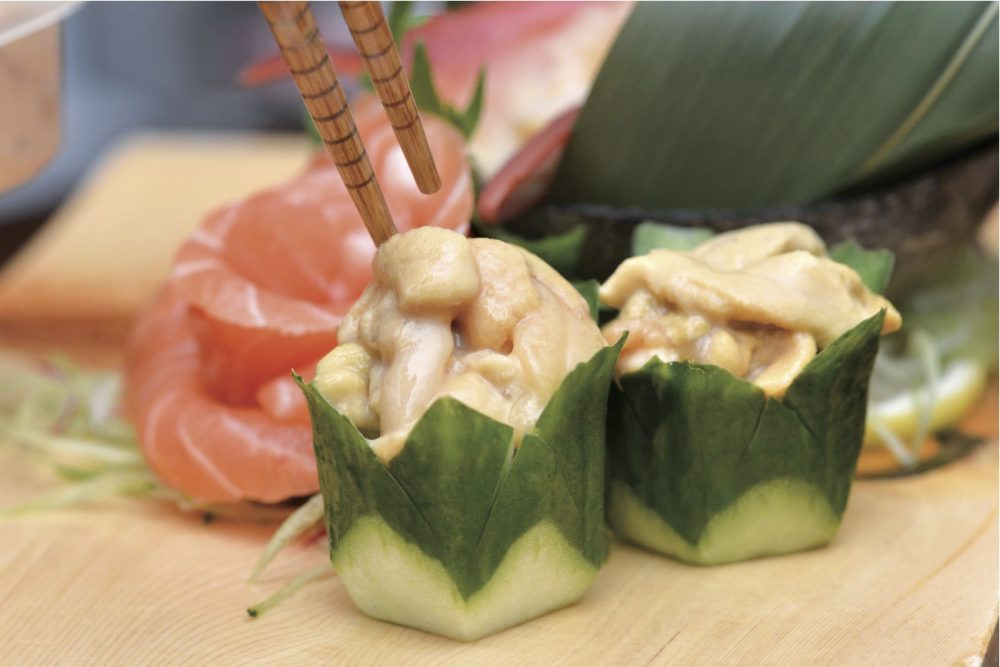
Le Sushi Bar, Shogun and Mitsu-ya are among the few sushi restaurants in Lebanon that use fresh wasabi, which is a root and has a rough texture. Most use a powder mixed with horseradish, mustard and other spices.
“The easiest way to tell the quality of the sashimi or sushi is to eat it plain, without wasabi or soy [sauce]. If it has a metallic aftertaste, chances are the fish is not fresh.” (Aref Saade, owner of sushi restaurants Tropical Bamboo and Shogun)
“Some of the more popular makis were invented by Le Sushi Bar. ‘Crazy’ was called so because of its crazy hair look; ‘Naked’ because there was no nori around it and ‘Volcano’ because it’s spicy. These became staples of Lebanese sushi restaurants.” (Mario Junior Haddad, owner of Sushi Bar)
“Most of the sushi consumed in Lebanon is salmon based, unlike in Japan where 80 percent of the world’s tuna is consumed. Salmon is also a favorite worldwide.” (Mario Junior Haddad)
“Restaurants are experimenting with sushi, introducing new twists to familiar dishes, such as Yabani’s new style sashimi, which includes scallops with truffles.” (Ramzi Adada, general manager of Yabani)
“Some Japanese like to roll the sashimi in green leaves called shiso, along with some wasabi and pickled ginger, and eat it with their hands for an added, close to minty, flavor.” (Aref Saade)
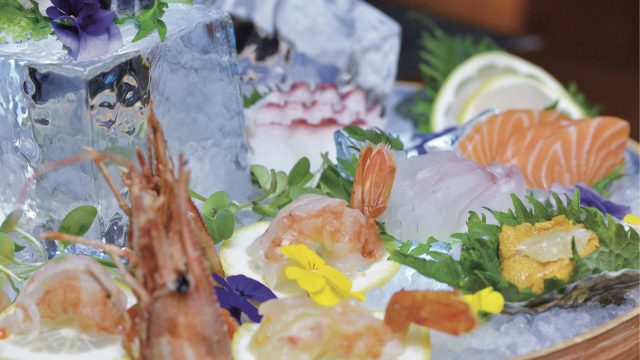
“Bluefin tuna is sold at auctions in Japan. The most expensive Bluefin tuna fish weighed 220 kilograms and was sold for 1,850,000 euros. Bluefin tuna can be found on Lebanon’s shores during May and June.” (Aref Saade)
“Crab sticks or surimi are made from crab meat and other products. They are sold wholesale from $2 to $7 per kilogram depending on the amount of fresh crab meat used.” (Nicolas Rebeiz, sushi restaurant manager and supplier)
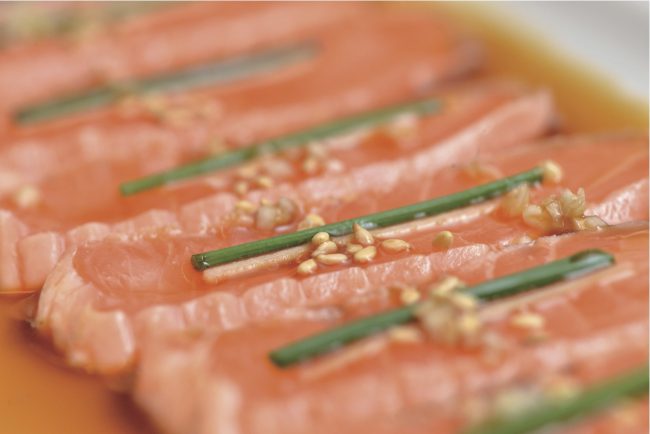
“Sushi restaurants mainly work with Scottish salmon because its meat is firmer if you want to use it in sashimi. They also use farmed salmon as wild salmon, which is only available in May and June, is chewier and less buttery than the farmed variety.” (Aref Saade)
April 27, 2016 0 comments
0 FacebookTwitterPinterestEmail
Hospitality & Tourism

What’s in a nationality?

by Nabila Rahhal April 26, 2016
written by Nabila Rahhal

Walk into most restaurants serving sushi in Lebanon and you will almost certainly not see a local rolling up your makis. Though the majority of sushi chefs in Lebanon hail from the Philippines, Vietnam or Thailand, there are two or three restaurants that boast Japanese chefs preparing your Japanese meal.

Restaurant owners Executive spoke to all agreed that hiring a Japanese chef for their sushi restaurant is simply too expensive. “In Lebanon, the salary of a non-Japanese chef is around $1,000. If I hire a Japanese chef, whose salary is much higher, how can I compete with the restaurants around me who don’t have Japanese chefs and pay them much less, given that our other expenses are the same? It’s just not cost effective for us,” explains Shogun owner Aref Saade, adding that a Japanese chef would likely find it hard to deal with the way Lebanese eat their sushi all at once mezze style instead of the slow, piece by piece style that Japanese culture is used to.

Moreover, Ramzi Adada, Yabani’s general manager, suggests that Japanese chefs are expensive because the quality of life in their country is so good that they don’t feel pressured to seek employment abroad.

Tsunami co-owner Rita Ekmekjian says that a typical sushi restaurant employs around 10 chefs, so bringing them all from Japan, knowing that the average salary for a Japanese chef is $5,000, is simply not feasible.

Fady Achkar, whose restaurant Mitsu-Ya is one of the only sushi restaurants in Lebanon that employs a Japanese chef, believes it’s an expense worth investing in. “Ok, they are much more expensive, but when people invest $1.5 million to make a sushi restaurant, they should definitely invest in a Japanese chef. At the end of the day, I don’t go to a restaurant to check out the artwork,” he says.

When asked why Lebanese chefs are not employed as head sushi chefs in Lebanon, the answers among restaurant owners varied. Some believe that, perception-wise, Lebanese customers are more confident in the chef’s skills when they see an Asian chef behind the sushi bar rather than a Lebanese, regardless of their rolling skills. 

Others insist that Filipinos, for example, understand fish better than the Lebanese since they live on islands and have many Japanese restaurants in their country.

Restaurant owners interviewed say it would be easier for them to get Lebanese chefs for their sushi outlets as they wouldn’t have to do paper work for them in terms of sponsorship, but for the time being, Asian chefs remain in charge of sushi restaurants.

April 26, 2016 0 comments
0 FacebookTwitterPinterestEmail
Hospitality & Tourism

Sushi nation

by Nabila Rahhal April 26, 2016
written by Nabila Rahhal

Back in 2003, T-shirts with the slogan: “Sushi: Traditional Lebanese Dish” were spotted being worn by young fashionistas across Beirut, illustrating the glowing success of this staple Japanese dish in Lebanon.

Thirteen years later and the Lebanese passion for sushi does not seem to be ebbing away. On the contrary, the estimated number of restaurants serving sushi in Lebanon has to date reached close to a hundred individual outlets.

The early years

Japanese cuisine has been present in Lebanon, to some extent, since the 1980s. First through the restaurants Tokyo in Manara, which was operated by a Japanese woman, and Nippon Mare in Jounieh, according to Nicolas Rebeiz, partner and managing director of the seafood and sushi restaurant and supplier Oceanus, who adds that these restaurants were not focused on sushi.

Aref Saade, owner of Tropical Bamboo, a company which offers supplies, consultation, menu development and recruitment for Asian cuisine restaurants in Africa and the MENA region, recalls that when he returned to Lebanon from Saudi Arabia in 1992, sushi was not common in Lebanon, despite it being a global trend. At the time, Chinese cuisine was more in demand.

Slowly, says Saade, young expats returning to Lebanon from Canada and America who had tried sushi abroad began asking around for it, prompting restaurateurs to open their eyes to this opportunity. In 1995, Boubess Group decided to open a Benihana restaurant in their Commodore Hotel and utilized Tropical Bamboo’s services, serving sushi as well as the teppanyaki that Benihanas are globally known for.

The takeoff

But it was with the opening of Le Sushi Bar in Ashrafieh that the sushi craze took flight.

[pullquote]Young expats returning to Lebanon who had tried sushi abroad began asking around for it[/pullquote]

Mario Junior Haddad, who hails from the cinema business, decided to open Le Sushi Bar in 1998 out “of a passion for food” and because there were no restaurants at the time “that focused solely on sushi even though it was an international trend.” He explains that his concept was a bar where people would sit around the chefs and be served sushi that had been prepared in front of their eyes.

Haddad recalls that restaurant openings were not as common as they are today, so people flocked to Le Sushi Bar to discover the new outlet as well as the new concept, generating quite a buzz. “It hit a chord as well because the place was unusual and worth discovering,” says Haddad.

Five years later, in 2001, Yabani opened on Monot Street, then an area booming with clubs and bars. This stylish underground outlet, designed by the renowned architect Bernard Khoury, cemented sushi’s appeal as a trendy cuisine, explains Ramzi Adada, Yabani’s general manager.

3

For the love of rice and raw fish

Indeed, these days sushi in Lebanon can be found on many a menu, including international cuisine restaurants or coffee shops, and can even be consumed alongside your argeeleh in a Lebanese café or bought pre-packaged at some local supermarkets.

Rita Ekmekjian, co-owner of the sushi restaurant Tsunami which has four outlets across Lebanon, says that when they first opened Tsunami in Kfardebian, Faraya, in 2003 (the outlet was closed two years later when they moved to the busier area of Ashrafieh) there were only nine sushi restaurants in Lebanon. Today, she estimates the number has grown to 75 pure sushi outlets in Lebanon. If you include the cafes and catering companies which serve sushi, as well the individual branches of chain sushi outlets, Adada places this number at 150.

These sushi outlets are mainly concentrated in Greater Beirut and Mount Lebanon with only a few outlets in the North and South of the country, says Alain Haddad, sales manager at Royal Gourmet, a wholesale supplier of fish used in sushi (mainly salmon), adding that his company only supplies two sushi outlets in Sidon, for example.

Supply and demand

In parallel with the increase in outlets serving sushi is the increase in suppliers of dry goods and raw fish used for sushi. “At first there was only us supplying the ingredients, the consultation, menu development and chefs for Japanese restaurants from 1992 to 1998 when we stopped our supplying activities in Lebanon to open Shogun,” says Saade who currently owns two Shoguns in Lebanon and a few others in the region while running Tropical Bamboo in the countries where Shogun is not in operation.

[pullquote]In 2003 there were only nine sushi restaurants in Lebanon. Today, the number of pure sushi outlets has grown to 75.[/pullquote]

Le Sushi Bar’s Haddad estimates there are 10 to 15 suppliers of sushi related items today, refuting the popular notion that only one or two companies supply all sushi restaurants in Lebanon. Saade adds that existing food product suppliers also began importing sushi related products when they saw the increased demand for them.

Adada explains that, just as with any other cuisine, choice of supplier would depend on the ingredient, adding that at Yabani they sometimes work with different suppliers for the same ingredient so as to ensure a continuous supply and also to maintain good relations with all suppliers.

2

Sushi for everybody

Sushi has indeed become one of the most prevalent foods in Lebanon. According to Saade and Haddad, one of the reasons for sushi’s popularity in Lebanon is its perception as a healthy cuisine. Ekmekjian explains that sushi remains a global trend and since Lebanese generally follow trends, they continue to enjoy sushi. She adds that since traditional Lebanese cuisine includes raw meat, the idea of eating raw fish was not too much of a transition, culturally speaking.

Adding to sushi’s popularity is its availability across all income brackets, with restaurants serving maki as low as a dollar a piece and as high as ten dollars a roll for the rarest items.

As Le Sushi Bar’s Haddad puts it: “I think it overflowed the boundaries of the elite; everybody wanted to eat sushi, and this is why a lot of places have mushroomed at all levels and they are all working.  It’s democratized, just like burgers,” he says in answering the question of why sushi is so popular in Lebanon.

Having sushi for a dollar a piece, especially when raw fish is involved, sounds risky to many. However, as Saade puts it, not everyone can afford the high-end variety while everyone wants to enjoy sushi. “People want to eat sushi and those who can’t afford it will go for the cheap option of a dollar per piece,” he says adding that in all cases, consumers’ main concern should be hygeine and cleanliness when it comes to consuming raw fish.

Saade, who is also the treasurer of the Syndicate of Owners of Restaurants, Cafes, Night-clubs & Pastries in Lebanon, says that at the onset of the food safety inspections in restaurants initiated by Minister of Health Wael Abu Faour, along with the Ministry of Health and Boecker and GWR Consulting (two companies specialized in food safety), hard work was put into ensuring that Lebanese sushi restaurants were in line with hygiene standards, organizing food safety and preparation seminars across the country as well as encouraging them to send samples of their fish in for inspection.

Cutting corners

While low cost sushi and maki might not make you ill, there still is often a big difference in the quality and taste between them and the more expensive sushi.

To begin with, restaurants can decrease costs by using lower quality dry ingredients, such as substituting Japanese rice with Egyptian rice, according to Saade, or using Chinese dry goods (such as seaweed or vinegar) which are also cheaper, according to Fady Achkar, co-owner of Mitsu-Ya, a high-end sushi restaurant in Gemmayzeh.

Such lower end restaurants can also use larger quantities of rice, avocado and cucumbers than raw fish, thereby appearing generous but stuffing clients with the cheap items, explains Rebeiz. Another cost cutting technique which some restaurants employ is to use frozen instead of fresh fish, explains Adada.

Achkar, who also supplies major supermarkets in Dubai with packaged sushi, calls sushi made from frozen fish “fast food” and explains that it relies on four main and comparatively cheap fish. “They use crab sticks or imitation crab, mayonnaise, avocado, cucumber, treated tuna which comes in fillets, salmon and frozen shrimp, which people love. But, you have to stick to these four products. There is nothing wrong with it, but it’s different quality and not comparable to authentic sushi,” he says.

1

All fish are not created equal

Even among those four items, the standards of sushi, and therefore prices, differ according to the quality and cut of the fish. The most important factor when it comes to fish quality is its freshness, according to Haddad of Royal Gourmet, who explains that they receive four shipments (by airplane) of salmon per week with some restaurants buying from them on a daily basis. Salmon wholesale prices range from $13 to $20 per kilogram for a whole fish, depending on the cut and country of origin, and around $25 per kilogram if cut and cleaned by the supplier into fillet chunks.

While the restaurants Executive spoke to all said they use fresh fish, a lot of the fish used in Lebanon, especially tuna and eel, is frozen for cost efficiency, although the taste is sacrificed. “A kilo of fresh tuna is $30 to $40 while you can get it at $20 frozen. It is more cost effective that way for them because the fresh tuna is three to four kilograms while with frozen tuna, one can buy smaller portions and defrost them, which is good because tuna can quickly darken and go bad,” explains Haddad, adding that Royal Gourmet sells only fresh tuna, mainly to high-end sushi restaurants with a high turnover.

The type and cut of fish also varies with different prices for the belly and under belly of the tuna, which are the more expensive parts of the fish since they are fattier and less chewy, explains Saade. He adds that while the Bluefin tuna is the best type quality wise, it is the yellow fin tuna that is most used in sushi restaurants because it is less pricy.

Whether it’s from the low or high-end variety, or whether packed with rice or made up of only slices of raw fish, it seems the sushi craze is in Lebanon to stay, rivaling hummus and tabbouleh as some of Lebanon’s favorite foods.

April 26, 2016 0 comments
0 FacebookTwitterPinterestEmail
BusinessCompanies & Strategies

The Uni-leader

by Yasser Akkaoui April 25, 2016
written by Yasser Akkaoui

When Lebanon-based Fattal Holding, agents and distributors for numerous global brands in six countries of the Middle East and North Africa region, celebrated the 80th anniversary of their partnership with consumer goods multinational Unilever, the occasion was auspicious enough to bring Unilever Chief Executive Officer Paul Polman to Beirut. Executive used the rare opportunity to squeeze an interview into Polman’s hyper-busy schedule.   

E   I would like to start with a macroeconomic question. Multinational producers of fast moving consumer goods (FMCG) are affected by global economic challenges more and earlier than other types of multinationals. How is Unilever dealing with macroeconomic challenges across the globe?

At this point in history, whether we like it or not, we have to deal with an economic system that produces slow growth and many companies are challenged by that. In Europe there is deflation and a geopolitical environment which is seeing more conflicts than we have in a long time; the [Middle East] is unfortunately one example, but there are many others too.

Then we have the effects of climate change which are coming through at an increased rate. All of that causes a social dissatisfaction that we also have to deal with, and all these forces don’t make it easy.

If you think of that at a high level, of what you can do if you are in my position, the first thing is to be sure that your organization is driven by a strong purpose because the stronger your purpose is, and the more people are aligned with it, the more it will permeate these short term volatilities.

The second thing you need to do is be sure that your organization has a certain level of agility. It is now much more difficult to anticipate all these changes that are going to happen. With a company like Unilever, it means creating four different business units; we are more decentralized, driving decision making down, delayering organizations.

The third thing to do [in tandem with creating] agility, which is the ability to react quickly, is to build up resilience. Agility and resilience have to go hand in hand if you want to be a top performing company. So as a company we spend a lot of time building that resilience and one of the ways in which we do that is to look at our leadership development and what type of leaders we need.

E   In their governance, companies today are looking more and more at bottom-up approaches, embarking on inclusive visions and missions, as compared to a top-down approach. How successful were you in migrating Unilever to this culture?

Changing the culture is the most difficult thing for a financial market to understand and it’s also the most difficult thing to do. In many companies, the top level implements something and thinks the rest of the company will behave which is not true; it takes a long time. For every layer in the company, you will need a year to change the culture. And culture is also influenced by many other things. What is happening is that people are looking for a deeper level of job satisfaction. They are discovering that happiness comes from positively influencing others and leaving the world a better place.

When we moved to the Unilever Sustainable Living Plan [ed.: a transformation project aiming to double the business while improving environmental and social impacts], I took a year to first be sure that our internal organization was aware of what we are doing, because they had to be comfortable with the idea. We don’t incentivize people too much which is interesting, it is not in our bonuses or something like that. We just expect people to join us and the more people join us and are there for that reason, the quicker we can advance our cultural journey.

E   Lately we’ve witnessed a shrinking emerging market which contributed to 57 percent of your revenues a few years back. As an executive committee, when you submit your strategy for the next year to the board, to what extent is the board reasonable or unreasonable in terms of market expectations?

In fact we don’t make forecasts for one year; I don’t think they are very useful. You have to continuously work with the board and make them part of the change process that you are applying in the company. As CEO I am part of the board myself. Board members come from a broad variety of backgrounds, from their knowledge base or region of origin, and they only meet six times a year. Because this world is changing so fast and there are many issues, such as cyber security, digitization of society [and] changing emerging markets, you have to spend a lot of time educating and updating the board [on issues such as] why we have the Unilever Sustainable Living Plan, and why this is our business model. The board, on its end, has to be very confident in the CEO and his management team; after all, the main responsibilities of the board are succession plans, governance and protection of the culture. A lot of the other things are actually delegated to management but the way we work is to engage them as if they are part of the company; I believe this is the best way.

E   To what extent do you think shareholders have taken note of the environmental, social and governance (ESG) concerns as factors in evaluating their investments and do they assess you on your ESG?

The answer is, not enough, but the positive thing is, increasingly so. For example, there is an enormous divestment movement worldwide in the financial markets on carbon. So if you take this specific topic, carbon and climate change, the financial committee has been majorly aware. The reason is that if you want to stay within the two degrees [of global temperature increase] which was a clear signal in Paris, this basically means we have to leave in the ground about two thirds of the carbon stock that has been discovered. These are now called “stranded assets”, so all of a sudden the financial markets are interested.

[pullquote]A company like Unilever reaches two billion consumers a day in 119 countries and has a value chain that influences tens of millions of people[/pullquote]

The other reason, on the business side, is that people are starting to discover that the cost of not acting is becoming higher than the cost of acting. A good example is the insurance companies. Over the last ten years [insurers] paid $2.7 trillion more in response to natural disasters than the normal average; 14 of the last 15 years in history have been the hottest years on record, [and] the sea level has risen. Some people are starting to see this as enormous risk that needs to be dealt with. [Also,] the costs of mitigating [climate change risk] are coming down rapidly because of technology; solar is a good example. You have forty countries in the world where green energy is already cheaper than fossil energy.

So we need to change some things like market mechanisms. We need to price in carbon, we need governments to start developing rules and regulations, we need subsidies in many parts of the world to accelerate this process and the financial markets are taking notice of all this.

The other reason why ESG investment is going well is because 75 percent of the money that is invested by these institutional investors is your or my pension money; it’s the money of us all and society is starting to wake up to the need for change. So the ESG investment itself is the fastest growing. People are subscribing to the UN Global Compact and Principles of Responsible Investing (PRI). We are definitely on the right curve and for good reasons; my main concern is how fast we are [acting]. [To achieve] what we signed in the sustainable development goals and [at the COP21 conference] in Paris, we have to accelerate.

E   To which extent can a company like Unilever be an agent in reinforcing this commitment to the ESG?

A company like Unilever reaches two billion consumers a day in 119 countries and has a value chain that influences tens of millions of people who are directly or indirectly working for us. So we have a longer term view. To implement the sustainable development goals (SDGs), it’s going to cost the world between $2 trillion and $3 trillion a year. This is a low investment compared to the global economy and certainly one that would be a good payout to eliminate poverty in the most sustainable and equitable way, but the overseas development aid from all countries is $140 billion – so where is the money going to come from? It has to come from the private sector.

It’s also really difficult now to depend on the governments alone because most of the institutions that have been designed to deal with the global issues of governance were designed at Bretton Woods when 85 percent of the world’s economy was in Europe and the United States. I am talking about the IMF, the World Bank and the OECD. Today it’s so difficult to forge global agreements when governments come together because we haven’t figured out what the governance is in this increasingly interdependent world, and we are living off a system that is over 70 years old. Business needs to step up because there is no business case in enduring poverty. We need to be sure to forge what I call these partnerships for the common good. When developing the SDGs we insisted on goal 17 which is about partnerships, but these are not partnerships working together on products or on technology; they are partnerships for the common good. If we can rise to that level, we can solve any problem; we just need human willpower which is actually a renewable resource. That is why I often say we need more leaders and we need more trees.

April 25, 2016 0 comments
0 FacebookTwitterPinterestEmail
Entrepreneurship

Locking up the key

by Thomas Schellen April 22, 2016
written by Thomas Schellen

Identity protection is a huge and ever growing need in the knowledge economy. Ki, which was initially conceived as a hardware authentication token for password storage by its founders Priscilla Elora Sharuk and Antoine Jebara, is a Lebanese solution for identity protection. Executive caught up with Sharuk to see how the startup has progressed since we last met.

E   When we met to evaluate Ki for the 2014 entrepreneurship list, you were about to travel to Helsinki for an accelerator program called Startup Sauna and were a bit worried about the Nordic temperatures there. How was your experience as a budding Lebanese entrepreneur there and what has happened since?

PES: I survived the cold and the program was wonderful. It is one thing to gain credibility here and an entirely different thing to get it abroad, especially when it comes to a field like identity protection. Seeing the concept given credibility by people who have worked in this space internationally and hear them say ‘you are onto something big’ gave me the guts to come back and say that this deserves to be done all-out. From that point I went full-time myki, which is how we renamed ourselves from Ki for legal incorporation reasons and also to make it more personal. The biggest thing that happened since was a massive pivot from hardware to software.

E   In what way?

Ki was a hardware device, a token where I would swipe my fingerprint and select the service from a screen [for storing passwords]. Prototyping and editing the tokens here [in Lebanon] would take time and we found that it was very difficult [for logistics reasons]. In addition, our market research showed that people understood the value of the product but said they didn’t want to carry an extra token in their wallet. So we thought, why not take the same technology and incorporate it into the one item that you always have with you – your mobile phone.

E   How did the change to a software solution impact your business proposition and costs?

We are now totally focused on enterprise software as a service – SAS. This represents different challenges from hardware solutions but it is definitely easier to manage the challenges on the software side rather than dealing with the manufacturing which is a very difficult thing to do, especially when you do not have enough talent around you meaning that you have to outsource [manufacturing]. Not having to produce hardware devices means that I am free.

E   Production of the tokens in Lebanon was never on the table?

It was never an option.

E   What were the main challenges that the shift has brought?

One of the biggest challenges that we noticed in the region is education. Once people see the product they ask, ‘when can I have it?’ But can I say that people understand the value and the risk of a cyber breach in MENA as much as they do in Europe and the United States? No.

[pullquote]It is one thing to gain credibility here and an entirely different thing to get it abroad[/pullquote]

E   Do you see limits of growth and is it your strategy to serve mainly the MENA market or do you want to go global?

No, we are not focused only on MENA and of course we want to go global. We would like to be the leading identity management platform on the market.

E   You have succeeded in gaining equity participations, one of which was announced last month. Can you tell us who the partners are and how much capital they are injecting?

The investment is for $600,000 and comes from B&Y Ventures here [in Lebanon] and BECO Capital in Dubai.

E   The participation is equal between the two?

Yes. We initially wanted to go with one investor but because Dubai is an important market for us, it was strategic for us to have an investment from Dubai and say this is an entry into a new market and access to a new network and more support for the team. Until last year, we were two [people], Antoine and myself. We have since grown to seven. So it is moving at a pretty rapid pace and when we talk about moving global, we are starting here as a test market and then into Dubai and then Europe, the United States and the rest of the world.

E   Was the equity deal driven by Circular 331 or outside of the framework?

The B&Y part of the participation is part of the 331 framework; the BECO portion is not, because it is money coming in from Dubai.

E   Do you already anticipate undertaking later funding rounds?

When doing that round we were looking at an 18-month runway but we already have two VCs who are saying, ‘When you raise again, we would like to be a part of it’. One of them is a Lebanese VC and the other is a Silicon Valley-based VC.

E   Where do you see myki’s future?

A multi-billion dollar company.

E   You want to be a multi-billion dollar company?

We will be a multi-billion dollar company.

E   Moving along that road, where and at what valuation do you expect to be in five years?

That is a very big question. If you ask me where I will be in five years and ask me about a value, that is a question I cannot answer but I know that it is going to be massive. That is what I work for.

April 22, 2016 0 comments
0 FacebookTwitterPinterestEmail
Business

Video: Global Finance through Lebanese eyes

by Natacha Tannous April 21, 2016
written by Natacha Tannous

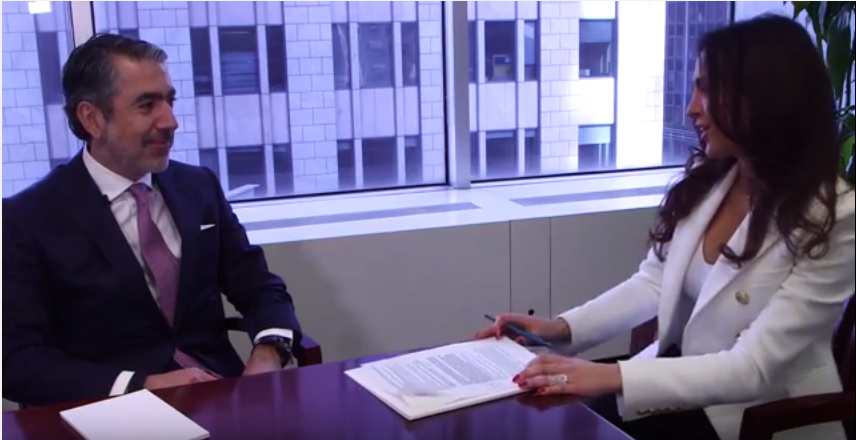
Natacha Tannous interviews Marc Malek of Conquest Capital and L.I.F.E


April 21, 2016 1 comment
0 FacebookTwitterPinterestEmail
Entrepreneurship

Sharp Minds

by Thomas Schellen April 21, 2016
written by Thomas Schellen

Antoine Saab and Nadia Moussouni are the entrepreneurs behind Energy24, a power storage solution which they claim is suited to solving the most challenging electricity supply problems. Since being recognized as a Top 20 entrepreneurial company by  Executive in 2014, their company Sharp Minds has added a solar energy component to its electricity storage product.

E   What has happened at Sharp Minds since we met in October 2014 to discuss the Energy24 project for the Executive Top 20 Entrepreneurs?

Antoine Saab (AS): First, 2015 was a year of stabilizing a version of one of our products. We reached a point where we technically finalized this V1 and moved to another product, version two, in a process of continuous development.

Nadia Moussouni (NM): We perfected V1 and have included all the controls that will help people avoid doing stupid things with it; it is almost unbreakable.

AS: The second issue on which we worked in 2015 was funding on both the equity and the debt side. We reached a deal with CreditBank under which our customers can finance their Energy24 units and made an agreement on our credit lines with the same bank. Also on the debt side, we signed a deal with Kafalat to obtain the highest possible financing amount available under the Kafalat Plus program. On the equity side, we closed our first round of funding through Leap Ventures. The year was basically fundraising.

NM: We finished 2015 with enough funding to look forward to further acceleration and started recruiting. Compared to being only two to three people at the end of 2014, we have since increased to almost 15 and we will be about 50 people by the end of this year.

E   How far has the solar component developed in 2015?

AS: Our portfolio is now almost 50-50 between solar and storage. Half of our customers have storage units only, the other half have batteries plus solar. Since we offer hybrid solar, the half [of our customer base] that has hybrid solar is injecting enough power into the grid to compensate for what the other half is using. If you want, our customer base is grid-neutral in this way.

E   How much has your customer base expanded?

AS: We had a growth rate of about 300 percent year over year between the end of 2014 and the end of 2015, and we think that we might reach about 400 percent this year.

NM: We currently don’t have any salespeople and are only selling thanks to our reputation.

E   But you told me that this is going to change soon.

AS: We are now building our sales force. We have rented a 700sqm office in Sin el-Fil where we will soon be moving. Besides the 15 people that make up our current team, we have just hired five to six people who will join us to build our sales force, starting April 1. Today I signed a lease for our first outlet in Sidon which will be operational on June 1. By the end of 2016 we expect to have two outlets toward the south, in Khalde and Sidon, and one in the Bekaa, plus our outlet in Sin el-Fil. In 2017, we will hopefully tackle Keserwan and North Lebanon.

E   What was your experience in raising funds?

AS: I first have to say that I think that Banque Du Liban (BDL), Lebanon’s central bank, has done a great job. I have looked at how many countries handle startups and I think [BDL Governor] Riad Salameh has really done amazing business. [Circular 331] is a bold move and an approach that many other countries should follow.

NM: In administrative terms, the system in Lebanon is a bit tedious and quite complicated. It took us a year to finish the paperwork. But overall we are very happy with the deal we have made. It gives us a completely new perspective and opens up prospects for reaching much larger numbers much faster. We think we will be able to develop products and are already developing products that can go global. This would have been just an impossible dream without the investment into our equity.

E   This was the investment by Lebanese venture capital firm Leap Ventures?

AS: Yes. It is a relatively small investment but as you know, as a startup you should neither over-raise nor under-raise funds. We got offered lower funding, which we didn’t accept and got offered higher investments, which we did not take; we took exactly the funding that we viewed as adequate. We expect Leap to announce the size of the investment soon and want to leave it up to them to do so.

E   Are you already strategizing for the medium-term future?

AS: Absolutely. From the growth that we are seeing and the way we are looking at the market and how it is developing, we think that this company has a good chance of becoming a very large business. By the seventh year we will probably have had a couple of fundraising rounds, perhaps three. Pessimistically speaking, we believe that the company will be a $300 million business [at year seven]. At that level we don’t see a problem replacing the funding [guaranteed under Circular 331] 331 with traditional investors.

April 21, 2016 0 comments
0 FacebookTwitterPinterestEmail
  • 1
  • …
  • 125
  • 126
  • 127
  • 128
  • 129
  • …
  • 691

Latest Cover

About us

Since its first edition emerged on the newsstands in 1999, Executive Magazine has been dedicated to providing its readers with the most up-to-date local and regional business news. Executive is a monthly business magazine that offers readers in-depth analyses on the Lebanese world of commerce, covering all the major sectors – from banking, finance, and insurance to technology, tourism, hospitality, media, and retail.

  • Donate
  • Our Purpose
  • Contact Us

Sign up for our newsletter

    • Facebook
    • Twitter
    • Instagram
    • Linkedin
    • Youtube
    Executive Magazine
    • ISSUES
      • Current Issue
      • Past issues
    • BUSINESS
    • ECONOMICS & POLICY
    • OPINION
    • SPECIAL REPORTS
    • EXECUTIVE TALKS
    • MOVEMENTS
      • Change the image
      • Cannes lions
      • Transparency & accountability
      • ECONOMIC ROADMAP
      • Say No to Corruption
      • The Lebanon media development initiative
      • LPSN Policy Asks
      • Advocating the preservation of deposits
    • JOIN US
      • Join our movement
      • Attend our events
      • Receive updates
      • Connect with us
    • DONATE