• Donate
  • Our Purpose
  • Contact Us
Executive Magazine
  • ISSUES
    • Current Issue
    • Past issues
  • BUSINESS
  • ECONOMICS & POLICY
  • OPINION
  • SPECIAL REPORTS
  • EXECUTIVE TALKS
  • MOVEMENTS
    • Change the image
    • Cannes lions
    • Transparency & accountability
    • ECONOMIC ROADMAP
    • Say No to Corruption
    • The Lebanon media development initiative
    • LPSN Policy Asks
    • Advocating the preservation of deposits
  • JOIN US
    • Join our movement
    • Attend our events
    • Receive updates
    • Connect with us
  • DONATE
Economics & Policy

Damage control

by Jeremy Arbid April 7, 2016
written by Jeremy Arbid

New legislation in the United States targeting Hezbollah has Lebanese government and banking officials shuttling between Beirut and Washington, not to rush to its defense but to assess the level of damage heading this way. Remembering the forced closure of the Lebanese Canadian Bank in 2011, local officials are more than a little concerned at the prospect of not just one bank as a victim but the entire sector.

Ratified into US law in December, the Hezbollah International Financing Prevention Act (HIFPA) is a continuation of the United States’ war on terrorism, an American policy that dates back to the Bush Administration. It is also a consequence of the P5+1 nuclear agreement with Iran (the Iran deal) and the lifting of that country’s sanctions. Those opposing the Iran deal – Republicans and American allies in the Gulf and Israel – have focused their residual fury at Hezbollah. They fear that the lifting of sanctions against Iran will allow it to float more money and aid to Hezbollah and other proxies in the region.

A pawn in US domestic politics

The Americans allege Hezbollah is a key player in global narcotics trafficking and money laundering networks, using front companies to access local and international banking services to finance its military operations – charges vehemently denied in December’s “show me the evidence” speech by Hezbollah leader Hassan Nasrallah.

Cabinet officials in the Obama Administration and Congress – the Senate plus House of Representatives – both agree on the need to curtail Hezbollah’s access to Lebanese and international financial systems. But the message that the Administration has portrayed – in statements and through meetings with Lebanese government and banking officials of shielding Lebanon’s banking sector and economy does not exactly jive with that of the Congress.

There is not a discrepancy between the White House and Capitol Hill on the question of targeting Hezbollah, says Alain Aoun, a Member of Parliament representing Hezbollah’s ally, the Free Patriotic Movement. He told Executive following February meetings with representatives from both that it’s not yet clear how aggressive the implementation rules will be for the HIFPA. “It’s a question of implementation so as not to provoke any collateral damage – this was the message we [emphasized],” Aoun said.

Shielding Lebanon’s financial institutions, banking sector and economy has been the key point reiterated by Lebanese government and banking officials in trips to Washington. Amal Movement MP Yassine Jaber, another Hezbollah ally, told Executive in early March that the Americans were puzzled by all the meetings Lebanese officials were taking in DC. “Their reaction was to ask why [is Lebanon] panicking? We told them, well, the perception in Lebanon is that it’s going to be crazy,” Jaber said. Lebanese concern regarding HIFPA implementation is that the law will disrupt the country’s banking sector, blowing up the Lebanese economy in the process, with individuals and businesses that come into contact with Hezbollah, even if not facilitating financial transactions or involved in alleged illicit activities, as collateral casualties.

The Obama Administration has been quick to point out that it is only Hezbollah that the Americans are interested in. Following meetings with US officials, Jaber told Executive that “[The Americans] have no intention of neither hurting the Lebanese economy nor the Lebanese banking sector, nor of targeting any community or religious group. This is about [specific] individuals, entities and companies.” Following his mid-March visit to Washington, Minister of Finance Ali Hassan Khalil stated that Assistant Secretary for Terrorism Financing at the Treasury Department, Daniel Glaser, clearly confirmed “that the regulations will not target the Shiite community or any groups in general.”

The Obama Administration does not want to push Lebanon further toward chaos says Ibrahim Warde, an expert on terrorism financing at Tufts University. According to his reading of the situation, at least some departments in the Administration do not want to instigate a breakdown of Lebanon’s banking sector. “Certainly someone like John Kerry and the State Department institutionally, don’t want to see the collapse of the Lebanese banking sector because they are well aware of the fact that it is one of the few things left standing in Lebanon,” Warde told Executive.

Preserving the integrity of the banking sector is a point underlined by Obama’s nominee for ambassador to Lebanon, Elizabeth Richard. Richard testified to Congress in her nomination hearing in mid-March that shielding Lebanon’s banking sector and economy from Hezbollah infiltration is a top priority for the Administration. “Our goal,” she said, “is to dismantle Hizbollah’s international financial network while supporting Lebanese institutions and the Lebanese people. The success of the Lebanese banking sector, a backbone of the country’s economy, relies on upholding an already excellent reputation. Both Lebanon and the United States have an interest in ensuring Hizbollah cannot penetrate the Lebanese financial sector.”

But Congress is taking a much more hardline approach in the lead up to writing the law’s implementation rules. The case being made to Congress by partisan academic experts is that, since the signing of the Iran deal, Hezbollah’s financial latitude to purchase weapons and military technology has expanded. That is, according to testimony in front of the House of Representatives’ Foreign Affairs Middle East and North Africa subcommittee in late March by Matthew Levitt of the Washington Institute for Near East Policy, because the lifting of Iranian sanctions has “Increased Iranian spending… likely to benefit Hezbollah’s regional and international operations.”

Critics of the Iran deal have labored over the question of whether the removal of sanctions would provide more money for terrorist funding – Exhibit A being Hezbollah, Warde told Executive. From his perspective, “The way in which the Obama Administration has tried to deflect that kind of criticism was to go along with [HIFPA] in December… the [Iran deal] had been under very strong attack by the Republicans, Gulf countries and Israel.”

The advice presented to Congress during that subcommittee hearing was to go hard at Hezbollah, whatever the cost. Tony Badran of the Foundation for Defense of Democracies recommended that “Congress should push the Administration on the implementation of H.R. 2297 [HIFPA], targeting Hezbollah’s criminal and financial activities. It’s important not to be dissuaded by the argument that pushing too hard would break Lebanon’s economy.”

The subcommittee is chaired by Florida Congresswoman Ileana Ros-Lehtinen – a known hawk on Syria and self-declared supporter ‘of the state of Israel.’ She stated during the hearing that it was a near certainty the Iran deal will strengthen its regional proxies. “Hezbollah receives financial and material support from Iran and now with the regime receiving this financial windfall of over $100 billion it is not only reasonable to expect that Iran will increase its support of its proxy, but it is as near of a guarantee as one can have,” Ros-Lehtinen said.
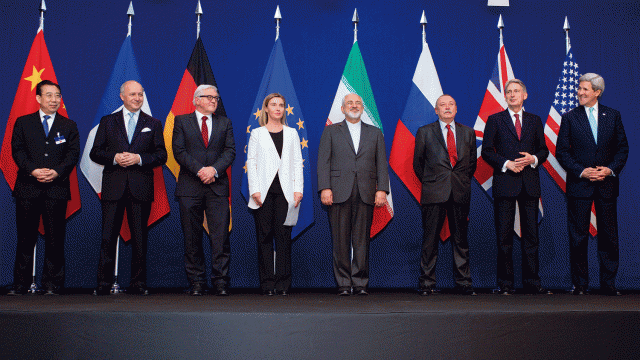
P5+1 leaders negotiated with Iran to halt its nuclear missile program in exchange for lifting sanctions | CC 4.0

P5+1 leaders negotiated with Iran to halt its nuclear missile program in exchange for lifting sanctions | CC 4.0

Republicans, Gulf countries and Israel

Republican leaders, like Ros-Lehtinen, are pushing to target Hezbollah because the measures will serve as a counterweight to the Iran deal. Republicans as well, especially on the far right, have for a long time questioned Obama’s commitment to Israel. To many voters in the Republican primaries, Obama is considered a Muslim, and his fumbling of the America-Israel alliance, in their view, is part of an Islamic conspiracy to push Israel into the sea. The president has at times publicly feuded with his Israeli counterpart, Benjamin Netanyahu, but Obama has not veered far from US policy norms concerning issues like the Israel-Palestine peace process. Ros-Lehtinen subscribes to this critique of Obama and the narrative has played well among 2016’s Republican presidential candidates.

That HIFPA is politically driven legislation is underscored in small part by the 2016 presidential election cycle in the US. Then Republican presidential candidate Marco Rubio, a key sponsor of the bill in the Senate and one-time protégé of Ros-Lehtinen, had leveraged other important issues, such as immigration, as a way to spring up the political rungs of his career ladder. Rubio’s tendency, as a recent article pointed out in Rolling Stone, an American magazine covering music, pop culture and politics, has been to pursue issues and political alliances that best benefit his quest for power until they don’t.

America’s Arab allies fear that an Iran flush with cash will pursue regional goals more aggressively, leading one Saudi Arabian diplomat to describe the deal as “extremely dangerous,” The Washington Post reported in July 2015. Several sources tell Executive that Saudi Arabia’s decision to pull its $3 billion aid package to Lebanon’s army, the designations of Hezbollah as a terrorist group by the Gulf Cooperation Council and Arab League, as well as recent measures taken by several GCC countries to deport Lebanese nationals because of alleged ties to Hezbollah are designed to show anger over, or to blunt the impact of, sanction lifting.

Criticism by Arab governments that view Iran as competition agree that the Iran deal will enable it to give more aid to its proxies, particularly Hezbollah. More money for Hezbollah, they say, will allow it to increase military capabilities on multiple fronts in the region, strengthen Hezbollah’s alleged terrorism, narcotics and money laundering networks across the globe, and restore and expand social services to its constituency in Lebanon, allowing it to further entrench itself in domestic politics. The position Israel has taken on the Iran deal has been clear for some time: Iran represents an existential threat to the Jewish state with Hezbollah in the position to execute this threat both directly and covertly.

Partisan policy advice

The arena of power battles includes the use, by all combatants, of not only politics but also partisan think tanks. Gulf countries have bought political influence by funding think tanks in Washington. A 2014 investigation by The New York Times found that “More than a dozen prominent Washington research groups have received tens of millions of dollars from foreign governments in recent years while pushing United States government officials to adopt policies that often reflect the donors’ priorities.” The investigation linked Arab funding to several well known think tanks including the Brookings Institution, the Center for Strategic and International Studies and the Atlantic Council.

Israeli interests influence think tanks in DC too, Warde says, like the Washington Institute for Near East Policy (WINEP) and the Foundation for Defense of Democracies (FDD). “This constituency has always been quite powerful. It is especially clear whenever you have the experts testifying, it’s always the same names and affiliations – WINEP, FDD – these kinds of groups always send their ‘experts or pseudo-experts’ to just say all sorts of bad things about Hezbollah,” he tells Executive.

FDD is a think tank that describes itself as a non-partisan foreign policy and national security institute, but it does not publish its financials or donor lists. In 2011 ThinkProgress, a left-leaning policy advocacy organization, published FDD’s Form 990s, a tax document required of nonprofits by the United States Internal Revenue Service, accounting for nearly all of the organization’s funding from 2001 to 2004. ThinkProgress concluded that: “Most of the major donors are active philanthropists to ‘pro-Israel’ causes both in the US and internationally. With the disclosure of its donor rolls, it becomes increasingly apparent that FDD’s advocacy of US military intervention in the Middle East, its hawkish stance against Iran and its defense of right-wing Israeli policy is consistent with its donors’ interests in ‘pro-Israel’ advocacy.”

WINEP is the alleged policy think tank of the American Israel Public Affairs Committee (AIPAC), its critics say. In a 2010 blogpost for Foreign Policy, Stephen Walt, a professor of international affairs at the Harvard Kennedy School of Government, suggested that foreign policy officials in the White House at that time held convictions closer in line to Israeli policy than to America’s, prompting an indignant rebuttal by WINEP director Robert Satloff labeling Walt a McCarthyite, one who makes accusations of treason without evidence – an underhand way of calling Walt an anti-semite.

Israel has the added weight of supposedly non-partial academic policy organizations with that of pro-Israeli lobby groups. According to opensecrets.org, a website compiling records from the US Senate Office of Public Records, AIPAC was one of the pro-Israel organizations that paid for lobbying in 2014 and 2015 against loosely wording the text of HIFPA. Lebanon had one organization, the Association of Banks in Lebanon, that lobbied on its behalf both years. (The association declined to comment for this article). Organizations like AIPAC hold a lot of weight in Washington, and American leaders often speak in front of it to push their policy agenda or to gain support for political appointees.

In March, for example, Deputy Secretary of State Antony Blinken addressed AIPAC to garner congressional votes in favor of Obama’s nominee as the next undersecretary of the Treasury Department for Terrorism and Financial Intelligence, Adam Szubin. Blinken told AIPAC that Szubin is the right person for the job because in his sleep he dreams “about how to maintain and sustain the pressure we need on Iran” and that “every senator who has called for more sanctions should be pushing for, not delaying, his confirmation.”

Likewise, Democratic presidential candidate Hillary Clinton also addressed AIPAC in March. She told the pro-Israeli lobby group that the US “must work closely with Israel and other partners to cut off the flow of money and arms from Iran to Hezbollah.”

Underrepresented in Washington

When compared with Arab countries and Israel, Lebanon commands exceedingly insignificant influence in Washington. Diplomatic presence – the ambassador retired in December – was described to Executive as “pretty weak” and “not sufficient to do what is required.” MP Alain Aoun said that “the embassy is understaffed for such an important country like the United States. Where many decisions concerning the whole world are taken, we are so underrepresented that we are almost completely absent. One congressman is probably staffed better than our embassy.”

Compared to that of America’s Middle East allies – countries of the Gulf plus Israel – MP Yassine Jaber told Executive that, “We have really been sitting on our butts – if you compare two countries in the region, Lebanon and Jordan, we have more burden fighting terrorism, and vis-à-vis the refugees. But Jordan has a lot more attention, a lot more money, a lot more support because they’re [actively present in Washington],” adding that Lebanon has virtually “no bilateral engagement” with the United States.

The conundrum for Lebanon in all this is its perception in Washington as a problem country because of Hezbollah, an image it has little latitude to alter. Lebanon is underrepresented diplomatically and is outspent in its lobbying efforts. Ultimately, Lebanon has little ability to articulate its position, drowned out by America’s Arab allies plus Israel, on American policy in the Middle East, leaving its national concerns to go virtually unheard.

April 7, 2016 0 comments
0 FacebookTwitterPinterestEmail
Celebrating 200 issuesSpecial Report

A letter to Gracy

by Executive Editors March 29, 2016
written by Executive Editors

Dear Gracy,

Over the past few years, Executive has dedicated considerable editorial efforts to identifying entrepreneurs running young businesses that deserve attention. In particular, we have strived to highlight the exceptional but often under-appreciated work of Lebanese business women.

Finding and acknowledging these people has been one of the most rewarding tasks for us as journalists and editors. Every time we nominate a top 20 entrepreneurship listing or switch off the dictaphone after an inspiring interview, we feel confirmed in thinking that Lebanon has a future worth sticking around for. It’s a pleasure to venture across the country to find and honor inspiring people.

But all this time, a walk across the hall into the Executive business office would have provided us with an interviewee who is both an intrapreneur and a leader with a talent for helping others to be the best they can be.   

You worked full-time with Executive longer than any of us. Attracted by the content and quality that you saw in the “zero issue”, you joined the advertising sales team and very quickly became the head of our marketing department. Until a few weeks ago, you were the face of Executive for our advertisers. Year on year, despite the Lebanese market’s many limitations, you stayed true to your commitments and delivered the growth figures that you promised. Executive’s presence as the English-language magazine at the top of every media plan is your achievement, and you equally deserve credit for communicating our mission and values to all the corporate heads in the market.

In tandem with delivering economic results, you always remained cheerful and gave all your energy to maintaining the best relations with clients, whether they happened to have a budget for advertising or not. We don’t think we ever heard a single shout of anger from the business office in over 17 years. In training your team and leaving a legacy of being on top of the market, you proved yourself as a leader from whom everyone can learn.

You started exploring personal entrepreneurship six years ago, spending evenings planning an interior design venture with your sister. It was your dream and you called it Itsy Bitsy, or, in prosaic business language, “a one-stop shop that provides parents-to-be and young families with room concepts for babies and children of all ages.”

We will always be journalists, so we have to ask: Was it because you had personally chosen to merge motherhood and work life from before the births of your two children, or because of your first-hand experience of witnessing how so many colleagues were combining parenthood and careers as part of the Executive family? We know that we are the magazine with the highest share of delivering analytical insights in the national market, but we strongly suspect that we are also the team with the highest number of childbirths. In this one instance we want to forget about keeping all entrepreneurial stories at arm’s length and tell you from our perspective of being young parents: we certainly appreciate the idea of an interior design service for kids.

You said that you needed to take your business forward and that your family, which has been supporting you in your career, deserves much more attention. You also said that you hesitated to leave your Executive family but knew that the day would have to come. You used an opportune moment.

Like you, we feel that you still belong, totally, and we appreciate very much that you act as if the magazine is still a part of you. We will keep your guidance in mind and work much more on the online edition, including the commercial and marketing platform. Yasser has promised that he won’t just rush into something when he comes up with one of his many great new ideas.

You said that you have lost hope in the Lebanese government. We all have. The reason why Lebanon has a future is people like you.

A great thank you from your Executive family,

March 29, 2016 0 comments
0 FacebookTwitterPinterestEmail
Business

The real cost of regulations

by Thomas Schellen March 29, 2016
written by Thomas Schellen

In our relentless pursuit to unravel the equities markets’ mysteries of 2016, Executive sat down for a further conversation with Paul Donovan, the managing director, Global Economics at UBS Investment Bank.

E   What do you make of market behaviors in the first six weeks of 2016?

One always expects some volatility but market volatility in 2016 has been very unusual. There is no economic justification for what we are seeing. So why do we have these problems? I think it is partly because equity markets and economies are not the same thing. Equity markets are biased towards energy and manufacturing; economies are service centric. Equity markets are [populated by] large companies, while economies are small companies. Equity markets are export focused; most economies are not. If we go back 20 or 30 years, the S&P [Standard and Poor’s index] was roughly like the United States economy; today it is nothing like the US economy. I think this has surprised people and there is still a belief that equities and economies are one and the same.

E   But there surely had to be short-term factors involved in causing the amount of upheaval we have seen?

The severity of the oil price move has also been a surprise for the markets. The difficulty now is in looking at the rest of the year and asking to what extent will economies influence markets and to what extent do other factors influence markets. Things like positioning, regulations [and] political risk are of course all important factors and I think these will be the next challenges for us.

E  Can such developments still be discussed in terms of market dynamics or is everything simply human behavior?

I think there is a market issue here. [The recent period] has been the first really significant movement in markets since the crisis of 2008/9 and, perhaps more importantly, since the regulation that followed the crisis. The issue with regulation is of course that there is always some unintended consequence; this is now a world where banks provide less support to the markets than they used to do. This is because they are more regulated. I am not saying regulation is bad, but this is a consequence of where we are. So when I look at the markets, we are now perhaps seeing some of the true costs of regulation come through with this increase in market volatility. We should perhaps not be surprised. The question now is  if this is an acceptable price to pay for the benefits that regulations give us, or do we need to reconsider [this strategy].

E  Does the belated emergence of the cost of regulations explain all that we are seeing in markets?

In terms of behavioral economics, I think it is a mixture of behavioral issues, regulations and market pressures that have created this push to quite short-term investment [horizons].

One of the things in defense of markets is that economic data has become less reliable and subject to larger revisions. We saw an example just today with US retail sales in December being corrected from minus 0.2 [percent] to plus 0.3. This is not a small change, shifting from saying that consumers are not buying anything to saying they are actually buying quite a lot. Over the past six years, GDP data in the US has been revised up 74 percent of the time. Markets are dealing with less reliable data and that perhaps represents a confused picture. On the behavioral side as well, because we are in a low-return environment, I think a lot of people in markets are very nervous.

E  Do fears come out stronger in times of uncertainty?

The problem we have is that to understand what is truly happening in the economy, we need to take a very broad approach, but this requires a lot of effort, looking at lots of different data items and understanding them. What I find is that we economists are often asked to name five key economic indicators to watch for in the US or Germany. The [real] answer is you shouldn’t look at five because three of these indicators might need a revision next month and then you are looking at the wrong signal. Many people working in markets have grown up with a mindset of paying attention to certain favorite data releases. That can be a very hard habit to break. People fixate on an individual data release or several indicators rather than on the big picture and that perhaps creates the problems that we see now.

E  In your view, is it true that potentials for cascading risks, as described in the World Economic Forum’s latest Global Risks Report, are on the rise? There are potential economic impacts, even if the top perceived risks are not economic ones such as the failure to mitigate climate change or involuntary mass migrations, with the Fourth Industrial Revolution as an added factor – what do you think? As we face such complex risks and cannot accurately assess and deal with their interconnectedness, should we as humans perhaps just hand management over to robots?

The whole issue of the impact of the Fourth Industrial Revolution is going to be quite significant. We did a white paper on this for Davos in which we ranked a number of economies according to their likelihood to succeed in light of the coming changes. What this test revealed is that while many developed economies are doing very well, countries like China, Brazil and India are positioned very poorly.

[pullquote]Many people working in markets have grown up with a mindset of paying attention to certain favorite data releases. That can be a very hard habit to break.[/pullquote]

E  What are the critical factors deciding the propensity for success or failure?

The criteria for success, and this applies to countries as well as companies, are having a relatively highly skilled labor force and a flexible labor force. You have no benefit from engineers who have memorized text books – you need to train people on how to change and how to be able to adapt. Other important factors are innovation and the rule of law. In a world where I export a computer code, not a finished product, I need to be confident that you can’t steal my code and that if you do, I can sue you and get my money back.

E  Would you see any Middle Eastern economies on the “likely to succeed in the Fourth Industrial Revolution” list?

In looking at issues surrounding the Fourth Industrial Revolution we have to be honest: many Middle Eastern economies are not well positioned. [A country like] the Lebanon is perhaps better positioned to be able to adapt. The Lebanese had to adapt a great deal in the past 30 years. But when we look at some of the Gulf states, we see countries where the middle class is not getting a very flexible education enabling them to adapt. These are countries which, for the past 40 years, have remained single-commodity countries, focused on oil and petrochemicals. Despite the opportunity to change, many of these countries have remained structured around a single product.

E  Looking to developed markets, are doomsday scenarios impacting your thinking, such as predictions that United Kingdom GDP would suffer severely with a Brexit?

We have obvious tail risks in the economy. The political risk is quite prominent, I would say. We have risks in this region and from this we have the refugee crisis which has changed policies in Europe. Now we have fears that if [German] Chancellor [Angela] Merkel were to leave, this would increase uncertainties in markets, given her leadership role in Europe. There are a variety of risks and you have to assign probabilities to them. A UK exit from the European Uunion is a moderate risk in terms of both likelihood and severity; our base case is that the UK remains in. If the UK exits, then the question is what sort of exit? If the UK were to exit against our expectations, it would be what we call a soft exit; it would be negotiated so that there would not be a great deal of disruption. However, there would be consequences which would be moderately negative for the UK and negative for Europe. Without being too British about it, I think if the UK leaves it will lessen Europe.

E  Have you noticed any new questions, shifts in attitudes, any rise in fears in behavior of your Lebanese clients?

There have been some interesting issues, such as the discussion of the oil economies. In that context there has been discussion of repatriation flows from Lebanese working overseas as they are impacted by the lower oil price. But in talking with the entrepreneurs in the region, it is very interesting that many of them are saying: “While markets have been messy, we are not seeing our businesses being affected.” Demand for our products remains relatively firm from Europe and indeed from the Gulf. The Gulf has yet to cut back spending significantly, at least not on the sort of products that Lebanon has been selling in the Gulf. It is worthwhile to keep monitoring the situation very closely, but so far it seems that Lebanese entrepreneurs have been cautiously upbeat about how their companies are performing regardless of how the equity markets are performing.

March 29, 2016 0 comments
0 FacebookTwitterPinterestEmail
Tourism and Hospitality

Making an exhibition

by Nabila Rahhal March 28, 2016
written by Nabila Rahhal

Hospitality Services, an event management and publications company, was launched in 1993 by Nouhad Dammous and his daughter Joumana Salame. The company’s first event was HORECA, a trade exhibition for professionals in the hospitality sector.

Hospitality Services, which today has a team of 30 employees, created a trade publication, Hospitality News, a few years after the first HORECA when Salame says they felt there was a need for a voice of “the industry”.

The company has also diversified its portfolio, from the business to business activity of HORECA and Hospitality News to consumer activities, developing a series of exhibitions such as The Garden Show and Spring Festival, Beirut Cooking Festival and the franchise of Salon Du Chocolat, as well as magazines such as Taste and Flavors and Lebanon Traveler.

In light of HORECA 2016, set to run from April 5-8 at the Beirut International Exhibition & Leisure Center (BIEL) Executive sat down with Joumana Salame, Hospitality Service’s managing director, to get her perspective on the Lebanese hospitality sector today and on HORECA’s latest updates.

E   You have franchised HORECA to local partners in the Kingdom of Saudi Arabia (KSA), Kuwait and Jordan. In KSA and Kuwait specifically, there is a lot of competition from similar trade exhibitions such as Gulf Food; can you tell us how you differentiate yourselves as HORECA?

We have our own rules and our own systems, and we work closely with all the stakeholders to build each individual event and be the place where all stakeholders network and exchange ideas. HORECA in the region has the same structure as in Lebanon and it is slowly growing as a culture which we are sharing with our licensees.

E   Is the presence of many fellow Lebanese in the Arab hospitality sector beneficial for you in organizing your trade shows?

Yes it is, especially in KSA and Kuwait where Lebanese are everywhere in the hospitality industry. In Jordan, however, the locals are heavily involved in hospitality and the impact of Lebanese is less felt.

E   These days you see more and more Lebanese in hospitality working abroad.

This has always been the case; the country and market is too small for us. This is our strength, not our weakness as Lebanese.

E   Let us talk a little about HORECA Lebanon 2016. What is the sector expecting from your 23rd edition?

We have a nice event shaping up. As we speak (mid-February), we are almost fully booked knowing that we have space for 300 plus exhibitors.

The industry is evolving and professionals want to see something beyond the typical exhibition stands: they want to interact, network and attend meaningful activities revolving around the exhibition.

[pullquote]The industry is evolving and professionals want to see something beyond the typical exhibition stands[/pullquote]

There are so many events happening within it: you have the conferences, the contests, the workshops…we have more than 25 experts [from different areas of the hospitality sector such as chefs or wine experts] coming from abroad to be involved in HORECA. And these professionals can connect with and benefit from event attendees and eventually end up doing business with them. 

So basically, if you are a hospitality professional, in one afternoon, you can see what’s happening in your field and network with the key players.

E   Have the educational programs, such as the ones exhibiting or giving courses in HORECA, as well as hospitality programs like those at Lebanese American University, improved the quality of hospitality services in Lebanon?

It makes the industry evolve and grow, getting more professional. It is an industry which has a lot of challenges, and we are passing through hard times, and we need to adjust. When you are in a crisis management situation, you sometimes start cutting corners which affects service and this is our challenge as an industry: how not to fall victim to cutting corners.

E   What are some of the other challenges facing the hospitality sector and what are its key accomplishments, in your opinion?

In times of crisis, only the strong remain. So this helped the industry in a certain way and forced it to become very professionally organized to be able to survive.

But we have done great things: the initiative to promote rural tourism has been amazing and this has no doubt positively affected the hospitality industry. We are using the downtime, as a hospitality sector, to upgrade our services and so when the situation improves, we are prepared and ready.

E  From the exhibitors signing up for HORECA, what do you feel will be the newest trends in hospitality in Lebanon?

Going back to the source, our traditions and food. Sourcing the products is now very important as people are becoming very conscious of what they eat. The Lebanese kitchen is finally getting the recognition it deserves.

March 28, 2016 0 comments
0 FacebookTwitterPinterestEmail
Economics & PolicyHealthcare

Addressing medical errors in the Lebanese healthcare system

by Fadi El-Jardali, Racha Fadlallah & Lamya El Bawab March 28, 2016
written by Fadi El-Jardali, Racha Fadlallah & Lamya El Bawab

Worldwide, medical incidents occur in 10 percent of hospitals, and 50 percent of those incidents that result in patients’ deaths are due to preventable medical errors, according to data from the World Health Organization. In Lebanon, more than one thousand complaints related to medical malpractice were filed to the Order of Physicians between 1996 and 2013. Investigations of medical incidents by the order however, focus mostly on physicians and fail to assess the problem from a macro perspective, where incidents may occur due to failures of complex healthcare systems.

Despite the fact that concerned stakeholders are leading initiatives to resolve this crisis, the associated implications and debates about causes, responsibilities and accountabilities are ill-informed, and in many cases, do not lead to real improvements in patient safety practices.

What are the challenges affecting patient safety in Lebanon?

One way to improve patient safety is by encouraging healthcare providers to report on medical incidents. In Lebanon, research shows that 60 percent of providers refrain from reporting medical errors and near misses. This is because 81.7 percent feel that their mistakes, if reported, will affect them negatively and will be held against them. Also, 82.3 percent of providers are concerned that incidents occurring, even if related to problems in the organization’s system, will be kept in their personal files instead of being used for performance improvement.

There are clearly structural problems that lead to medical incidents, and these problems make improving patient care and safety challenging. Some of these are related to problems at governance level. In Lebanon, there is still no explicit national policy related to quality improvement and patient safety that specifies goals and indicators, clarifies roles and responsibilities, and identifies incentives. There is also no policy in the Lebanese healthcare system that allows for the re-licensing of practitioners. It should be pointed out, though, that there have been some achievements to improve patient safety, notably implementing the national accreditation system by the Ministry of Public Health (MoPH). The system, however, still has some gaps and is currently under revision. Some of the gaps include: outdated standards, non-renewal of accreditation “status” on a regular basis, the absence of mechanisms to ensure quality is sustained post-accreditation and lack of certified national auditors.

Within healthcare organizations, there are gaps and dysfunctions in the area of clinical governance that are affecting the quality of care provided and hence patient safety, allowing medical errors to occur. Gaps include inadequate clinical audits and documentation, inaccurate assessment of performances and processes, and below standard education, training and performance appraisals of providers. Also, the limited use of evidence-based guidelines is affecting the quality of care provided within organizations.

The financing of health care in Lebanon is another critical area that should be improved to enhance patient safety and prevent medical errors. In April 2014, the MoPH established its new financing arrangement for reimbursement of services provided by contracted private and public hospitals. Despite the new system in place, there is still room for further improvement to enhance the financing system and establish links between accreditation status, performance indicators, regulations and contractual agreements. These improvements will engage healthcare organizations and personnel in quality improvement and patient safety initiatives.

At the delivery system level, a patient safety culture, and training of providers on how to lead, implement and follow up on quality improvement and patient safety initiatives are essential, but still not instilled in the day-to-day operations of Lebanese healthcare organizations. This promotes a punitive environment within organizations, and is a major reason why healthcare providers hesitate to report medical errors. The shortages of staffing, especially of nurses, the work overload observed in most healthcare organizations and miscommunication within and across organizations, are additional barriers to endorsing a patient safety culture.

Evidence-based practices: a global perspective

Initiatives from other countries to control incidents of medical errors consist of enhancing clinical governance, integrating anonymous incident reporting, implementing accreditation systems and empowering patients.

[pullquote]Empowering patients increases the efficiency of the healthcare system, helps improve the quality of care and reduces errors[/pullquote]

Enhancing clinical governance to improve performance and quality of care has been achieved through: integrating evidence-based clinical guidelines that set standards on how clinical procedures should be performed, continuing education and training of providers, and carrying out regular audits and appraisals of providers’ performances to improve their work and enhance patient safety.

Developing anonymous incident reporting systems in environments that do not have disciplinary implications have been shown to be effective in reducing medical errors. Systems in England and Wales have been found to be effective in identifying errors at a micro level to enhance patient care and safety at a national level. In practice, this work includes raising awareness, doing research, audits, training initiatives, curriculum changes and developing specific guidelines. This approach allows providers to freely report on medical errors, and builds a culture where organizations can learn from one another to improve patient safety and the delivery of care.

Accreditation systems are playing an important role in reducing medical errors. They integrate patient safety goals, indicators and training requirement into their standards. This promotes an increase in staff engagement and communication, an improvement in organizational efficiency and progress in leadership and staff awareness about continuous quality improvement. Linking the accreditation status to reimbursement is an effective mechanism that makes the business case for accreditation.

Empowerment work with patients and their families is being implemented by developing educational material, such as medical flyers and brochures, and conducting awareness campaigns. These tools reduce the knowledge gap between healthcare providers and patients, which result in an increase in agreement and shared decision making.  Empowering patients thus increases the efficiency of the healthcare system, helps improve the quality of care and reduces errors and readmission rates.

Implications for Lebanon

Rather than reacting to errors after they have occurred, proactive concrete action should be taken to prevent such errors from occurring in the first place.

Healthcare executives and policy makers in Lebanon should consider the following evidence-based strategies in order to tackle medical errors in Lebanon. The current accreditation system should be revised, patient safety indicators mandated, and a system of incentives that links contractual agreement, regulations, accreditation status and performance indicators should be created.

A national council on clinical governance – including representatives of syndicates, orders, academic institutions, the public and private sectors as well as international bodies like the World Health Organization – should be created. The council should be divided into four committees, each responsible for the following: clinical governance development, including the drafting and implementation of evidence-based guidelines; education and training of healthcare providers; audit and feedback; and performance appraisal.

Context specific evidence-based clinical guidelines should be developed and implemented at the national and organizational levels. Incident reporting systems should be developed, within the first three years at the organizational level and the following years at the national level.  Incident reporting should promote non-punitive response to errors and ensure that lessons are derived from errors to prevent them from happening again.

Curricula of healthcare students and trainees’ should include patient safety and quality improvement. Internal medical audit and feedback, performance appraisal, continuing medical education and providers’ recertification should be performed regularly.

Patients and their families should be empowered by conducting awareness campaigns and educational materials should be developed to empower patients and their families. Raising the awareness of media and building their capacity should be done to report on medical errors in an evidence-informed way.

March 28, 2016 0 comments
1 FacebookTwitterPinterestEmail
Celebrating 200 issuesSpecial Report

Snapshots of a world in turmoil

by Executive Editors March 24, 2016
written by Executive Editors

From the mountains of Afghanistan to the battlefields of Syria and the refugee camps of Lebanon, Executive’s photojournalists have covered some of the most pressing stories of our time through their camera lenses. As part of our special 200 issues feature, Executive provides our readers with a selection of the most powerful images our photojournalists have captured over the years.

Afghanistan, The road to Khost. February 2011, issue 139 (Adam Pletts)
Libya, A view to a rebellion. April 2011, issue 141 (Sam Tarling). Following NATO’s fateful decision to provide air support to Libyan rebels and turn the tide of the conflict, Executive visited the newly liberated east of the country to further understand the hopes and struggles of people living in the midst of a revolution.
Libya, A view to a rebellion. April 2011, issue 141 (Sam Tarling)
Libya, Game over. September 2011, issue 146 (Sam Tarling). In what was a major moment in Libya’s popular uprising, Libyan rebels captured the capital Tripoli in August 2011. Executive was there on the front lines to witness the fall of the Qadhafi regime.
Libya, Game over. September 2011, issue 146 (Sam Tarling)
Syria, Lebanon's fault line. October 2011, issue 147 (Sam Tarling). As the famous saying goes, “When Syria sneezes, Lebanon catches a cold.” In 2011, competing demonstrations expressing support and antipathy towards opposing sides in Syria’s then-nascent uprising spread across Lebanon, significantly raising political tensions in the country.
Syria, Lebanon's fault line. October 2011, issue 147 (Sam Tarling)
South Sudan, The face of a new nation. March 2012, issue 152 (Sam Tarling). Executive traveled to South Sudan soon after it gained independence from Khartoum’s rule in the north. Promise and fear were both palpable in the world’s newest nation-state.
South Sudan, The face of a new nation. March 2012, issue 152 (Sam Tarling).
South Sudan, The face of a new nation. March 2012, issue 152 (Sam Tarling)
Syria, Rendezvous with the rebellion. April 2012, issue 153 (Sam Tarling). Thirteen months after the first demonstrators took to the streets in Syria, Executive visited rebel-held territory to view efforts to overthrow the government of Bashar al-Assad firsthand.
Syria, Rendezvous with the rebellion. April 2012, issue 153 (Sam Tarling)
The forgotten poor. March 2014, issue 176 (Greg Demarque). A look at some of Lebanon’s most underprivileged residents paints a clear picture of state neglect and lack of safety nets in the country.
The forgotten poor. March 2014, issue 176 (Greg Demarque)
Out in the cold. February 2015, issue 187 (Greg Demarque). With winter storms battering Lebanon, Executive highlighted the dire conditions that many Syrian refugees are subject to.
Out in the cold. February 2015, issue 187 (Greg Demarque)
March 24, 2016 0 comments
0 FacebookTwitterPinterestEmail
Celebrating 200 issuesSpecial Report

The regional touch

by Thomas Schellen March 23, 2016
written by Thomas Schellen

The story of Executive’s first 200 issues would be incomplete without the regional angle. While the magazine was conceived with a clear focus on the economic development of its home country, the fortunes of the Lebanese are entwined with many host countries. The notion of expanding into a regional business publication was compelled by relational, journalistic and market rationales.

In relational terms, the long-standing presence of Lebanese in Arab countries made it a natural objective that the magazine would cover the stories of these expatriates, represent their concerns and at the same time provide them with analyses of the business stories that mattered at home.

In journalistic terms, the region offered far wider hunting grounds to capture exciting corporate tales than an ambitious business writer could uncover in Lebanon – plus, from an angle of development journalism the region was, and still is, thirsting for quality media to the point of total dehydration.   

Covering a boomtown

From the market’s perspective, finally, the undeniable truth is that Lebanon is but a tiny sliver of the regional landscape. Target audiences of anglophone business leaders and academics, institutions offering business curricula in English, commercial and advertising opportunities, and just the plain size of Arab economies in the Levant, the Maghreb and the Gulf region represented greater potential than Lebanon in every direction that no alert publisher would overlook.

There also was the lure of Dubai as the new regional business hub. When Executive was founded, Dubai was still a locale with very limited attractions. The transportation and hospitality infrastructures were unimpressive, sand was the dominant element as soon as one ventured out of town and in terms of business temptations, it was a one-tradeshow town where the technology fair Gitex was the single event of note.   

But, with then-Crown Prince Sheikh Mohammed bin Rashid al-Maktoum announcing the Dubai Internet City project at the 1999 Gitex on a one-year development agenda, Dubai became a Klondike on the Creek. With its free zone, high rises and mega-mall projects, it entered the third millennium as a boomtown with a dynamism which the Middle East might not have seen since those medieval days when Baghdad and Damascus were top centers of culture and science, more advanced than Paris and London.

[pullquote]With the increaseing prescence, our way of independent yet passionately pro-local business writing started to draw attention[/pullquote]

As Dubai soared, it became the automatic target for opening a second editorial base of Executive. So from November 2006, the magazine first added more stories from around the region and then, from September 2009, went two-track, producing two editions per month under a common issue number with partly distinct, partly shared content lineups. Regional stories were initially covered by Beirut-based writers and several freelancers. Executive opened its Dubai office and dynamic staff member Soraya Darghous moved there from Beirut as bureau chief to build contacts and arrange for coverage opportunities. A Lebanese-owned media agency on Sheikh Zayed Road represented our advertising interests in the Gulf Cooperation Council and from 2011 journalistic work was coordinated on the ground by yours truly. 

Slow growth, home and away

With the increasing presence, our way of independent yet passionately pro-local business writing started to draw attention. Some advertisers wanted to communicate their messages into the high-end niche we serve. Magazine sales at newsstands showed healthy increases in percent, although from low counts. And the Dubai bureau chief’s efforts resulted in some exclusive coverage projects where our brand of journalism could prove itself. 

This is not to imply that the market was easy. Editorial efficiencies still needed a way to grow, selling ads was bone-crunching work and the two-track production at an unchanged headcount put extra strains on the magazine’s staff. Also, Dubai was not everyone’s darling in the editorial ranks back in Beirut. Some team members felt no affinity whatsoever to the emirate’s Simcity aspects; others felt outright antipathy because of unhappy work experiences in the boomtown. 

But in the end it was the tie-in with Lebanon’s fortunes that forced Executive to refocus on the core coverage market and put the GCC edition into suspension in February 2013. Lack of growth in the economy and slowing growth of advertising revenues in the home market meant that funds became tighter and tighter. We learned that leveraging our approach into new markets is intrinsically linked to our ability to splice passion for these markets into our editorial DNA. All reasons for realizing a greater regional reach for our publication remain valid and the changes and non-changes of the past three years underscore the need for journalism that can help in contributing towards equitable business growth. For the moment, we need all our efforts focused on attending to the unsolved problems of the Lebanese economy. While repetitive and not in sight of any solution, they demand as much attention as a patient in the emergency room. 

March 23, 2016 0 comments
0 FacebookTwitterPinterestEmail
Economics & PolicyUnderground finance

Gray Money

by Jeremy Arbid March 23, 2016
written by Jeremy Arbid

In late January, French authorities, at the behest of the United States Drug Enforcement Administration (DEA), busted a European drug trafficking and money laundering cell. The DEA alleged that this cell was responsible for overseeing a Hezbollah narcotics trafficking and money laundering network. “These drug trafficking and money laundering schemes utilized by [Hezbollah] provide a revenue and weapons stream for an international terrorist organization responsible for devastating terror attacks around the world,” acting Deputy Administrator of the DEA, Jack Riley, said in a statement.

The DEA alleges that the drug trafficking carried “large” amounts of cocaine between the United States, South American suppliers and Europe, the proceeds of which partly transited through Lebanon and then back to South America to be delivered to the drug cartels. This illegal transaction followed the same principle as Hawala, which in many cases is not used for criminal purposes. Hawala is defined as “money transfer without money movement.”

Cash transfers via Hawala networks are legal but scrutiny into their use to remit cash has grown in recent years as countries, including Lebanon, tighten their cash transfer regulations. Hawala can enable illicit money transfers because the system is informal, and, without recording transactions, the potential for crime is heightened. In 2013, Banque du Liban, Lebanon’s central bank, amended its cash transfer rules to require approved exchange institutions performing Hawala cash transfers to keep records for a minimum of five years. Transfer amounts were limited to $20,000.

Hawala cash transfer networks do serve as a legitimate alternative to electronic fund transfers, utilized legally by economic migrants to transfer money to family members back home. Hawala can be a preferred method to transfer paychecks and sums of cash as remittances because of its ease of use, particularly for individuals who are sending money to relatives located in rural areas where banks or money exchangers may not be present. In some cases there is an element of exclusion from the traditional banking system because of inaccessibility in terms of proximity but also due to cost and convenience. Hawala often is a more convenient service to remit money because transfer fees can be cheaper than wire transfers and cash delivery.

Here’s a rough example of how a legal Hawala network might work: an economic migrant working in country A wants to send a portion of their paycheck to family members that live in a rural area with no access to a bank or money exchanger in country B. The economic migrant speaks to a Hawala provider in country A who coordinates with a business partner in country B to facilitate remittance delivery to the family members. Rather than sending cash, the Hawala provider and their business partner might collect remittances to finance the purchase of goods (for example foodstuffs, consumer products, electronics) in country A for export to the country of remittance. A portion of the proceeds from the sale of those goods in country B would then be delivered as cash to the economic migrant’s family. At face value this example transaction appears completely legitimate and involves individuals that only wish to remit cash to support their family.

But it is not impossible for illicit transactions to slip through and there are multiple entry points for them to do so. Hawala providers may unwittingly – because of front companies – or knowingly accept cash from shady sources. This exposes those who legitimately participate in Hawala cash transfer networks to law enforcement agencies. Agencies like the DEA might suspect illicit activity because of a lack of documentation of the transfer. As cash moves from the pocket of the remitter through the network, it becomes unclear whether the paycheck was sent to family or used to finance terrorism, and the mere hint of illicit activity by any individual or entity involved in the Hawala network, or at any point in the cash transfer, can expose the whole network to investigation.

To learn more about how Hawala-type networks function and how governments build cases against those suspected of using cash transfers in an illicit manner, Executive spoke with Mark Jenner, a United Kingdom based forensic accountant. Jenner specializes in tracking cash transfers through Hawala networks and works with governments to investigate illicit money flows. He also helps with client defense, explaining in court how these systems work and tracing cash.

E   How might governments become suspicious of Hawala-type cash transfer networks?

Traditional Hawala is still the trusted local representative who sends your money to a link abroad. But a lot of ethnic transfers are now done by simple money remittance companies and we still refer to them as Hawala businesses. The problem stems from the fact that Hawala has grown into a buzzword used by authorities for more widespread and large-scale transfers.

The issue is that when you’re building a case very often the word Hawala or money remittance is used as an excuse and the person may be accused of money laundering, but no, it’s just a simple Hawala transaction. Whichever side I was working for I would say ‘well fine, but I need to trace where that money actually came from and that is the first and most important step – can you say where the money came from? In a lot of cases where people have received bags of cash they can’t say where it came from but if they are an innocent party they would be able to demonstrate that they’d perhaps sold a house in another country and were expecting the money to come in. Unfortunately, in this business, crooks will highjack the system or they will set up similar systems and use innocent parties to receive money unbeknownst to them.

E   When there is illicit use of a Hawala cash transfer network and there is limited documentation, how do governments or law enforcement agencies build their case?

In the UK, the Proceeds in Crime Act allows the government to assume that money is from an illegitimate source, so you have to prove that it came from somewhere legitimate and they don’t [investigate] very deeply into the foreign transaction. So [the government] will say ‘well look you’ve been caught with money here, it is illegitimate unless you can prove otherwise.’ So I find myself in the position to say to the defendant: ‘Well look, they’ve made an assumption because they’re allowed to. Now we have to prove that it comes from a legitimate source.’

Very often, in the circumstances I’m involved in, [the government] will have some sort of intelligence which allows them to pounce on my client and catch them receiving money. That money has come from criminal sources whereas my client has no idea about [it], or says he has no idea, because he’s expecting the money from the sale of a property in his home country.

E   Are the rules in the UK, for example, sufficient to regulate this kind of money transfer system, curbing its illicit use?

In my view the rules are very weak and haven’t addressed the problem fully yet. The reason I say that is because it is relatively easy to set up a remittance business in the UK and I know that some of the banks are refusing to work with some of these remittance companies. However, the remittance company is monitored and governed by our Financial Conduct Authority and HM Revenue & Customs (HMRC) and the [regulators] visiting the company that is meant to be a legitimate remittance company will not look at anything other than accounting control systems and they miss the fact that the money often comes from a legitimate source.

E   The impression is that a lot of economic migrants who are using this type of money transfer system are doing so basically because they’re effectively excluded from traditional banking because of costs, rural locations or just because they have never used anything but cash.

Sometimes I have to explain to a court why someone would use the Hawala system. There is a very strong motive for a legitimate person to use these systems and I do find people having to go through them because of the quite stringent exchange controls and monetary controls in the destination or receiving country. In India, which has become more relaxed in recent years, is still quite hard to send lots of money abroad. At one stage you couldn’t do it at all so [Hawala] systems grew and became familiar to people who still use it. The other problem is that a lot of these cultures will be very comfortable using cash, even [purchasing] a property [with cash] may be acceptable. In the UK of course it wouldn’t be and so it becomes a very suspicious transaction at this end whereas maybe the person taking part in the transaction, a migrant in this country, will see no harm in it and individuals can be excused or should perhaps be given more leniency for dealing that way.

Companies shouldn’t. And I think if businesses are still receiving cash deposited into their bank accounts, they should not be surprised when the authorities start questioning their motives.

I had one case in Afghanistan. A lot of money was being sent there and the way they balanced the books was by transferring the money not to Afghanistan but to factories in China that were supplying Afghanistan with commodities, and that was [because] China couldn’t be paid by Afghanistan for the purchases. So you have a triangular movement of money there for a very good reason – money had to get from the people in the UK to their family. The money was actually going to China to pay the companies that were dealing with Afghanistan so you have the books all balanced – everyone is getting what they should be getting. But in amongst that the money launderers are moving cash and it all gets lost in the system. So you have a legitimate reason for things happening but then you’ve got the illegitimate transactions mixed up in it, which is why you’ve got to trace the money – where it’s coming from, where it’s going to, and the reasons for each individual transaction, and where you can’t do that in large sums you start to see why the suspicious authorities hone in. If you can’t explain the sources and trace the money, then that’s where money laundering lives.

E   So in some cases, at some level, these two worlds of legitimate cash transfers and money laundering collide?

They do and I think it’s down to the difficulties that the authorities have with policing the remittance system. They recognize that there must be a remittance system but it becomes a relatively soft target for the criminals. I deal with a lot of money that is laundered through the conventional banking system so all systems are used, but it appears that Hawala and similar ethnic transfer systems have become a particularly big target for the money launderers.

E  Is there any measure of the amount of cash transferred through Hawala-type networks?

I don’t think anybody knows the figures because of the gray line between underground transfers and any sort of conventional transfers. There is no real knowledge of the amount and people variably try to estimate them but I would say, as in any fraud, that nobody really knows what’s going on because it’s hidden and that’s the whole point isn’t it? It’s a hidden activity and it’s the amount that we don’t know about that we need to know, and if we knew about it, it wouldn’t be a problem.

March 23, 2016 0 comments
0 FacebookTwitterPinterestEmail
Celebrating 200 issuesSpecial Report

A two-way street

by Executive Editors March 22, 2016
written by Executive Editors

In the age of digital media Executive continues to circulate a print magazine to subscribers and newsstands every month. The reason why is straightforward: our readers still demand a physical copy of the magazine in supplement to our online content. And it is they who motivate us to deliver the best, most impactful, quality journalism. Thanks to our readers, Executive Magazine is the premier English business publication in the country.

There is no doubt that our readers are our main stakeholders and we appreciate them for keeping us going. And, when we walk into the offices of decision-makers and policymakers, of corporations, law firms, financial institutions, academia, development and civil society organizations, local and international governments, advertisers and media, Executive is certainly well known. We target not a mass audience but an educated one – people who need to know how policy works, how economic or financial decisions being made can affect businesses, government and the community at both the micro and macro levels.

We are often recognized as the best in what we do when we talk to business leaders. Our coverage of entrepreneurship and business, finance, economics, real estate and government policy help readers make informed decisions on how to guide their organizations into the future. And this is in appreciation of you as both subscribers and people who buy the magazine from newsstands, be it to read along with a cup of coffee or  waiting at the airport while traveling on business.

We have a group of long-term subscribers that have been loyal to the magazine for more than 10 years, and we were very curious to hear feedback from this group. So, we sent them a short questionnaire and, through their responses, we learnt that they like the diversity in our coverage and valued our company bulletin because of its brief and straight to the point information. Chady Issa, senior account manager at Ericsson Lebanon Communications, told us that our coverage keeps him abreast of the latest business news in Lebanon. The editorial opinions of the magazine include well articulated and persuasive arguments, and subscribers agree that government officials take notice. Executive’s emphasis on statistics was the most important point of reference, one business leader wrote. Another told us that Executive Life, first published in the summer of 2015 and now featured every month in the magazine, was a breath of fresh cultural air. Hoda Azzam, finance manager at Debbane Group, cited several Executive opinions and articles in the last year that were particularly persuasive including IDAL: Just go (January 2015), To fee or not to fee (July 2015), A port policy for all (July 2015), and Working with & against financial sanctions (August 2015).

The editorial team at Executive Magazine would like to thank our long-time subscribers for their loyalty and support, and we also want to thank the many daily visitors to the Executive Magazine website and its subsidiary Executive Life and Executive Bulletin sites. Your input is immensely valuable and encouraging through both traditional feedback loops and via online comments. We look forward to continuing to provide you with the highest quality of business news coverage.

March 22, 2016 0 comments
0 FacebookTwitterPinterestEmail
Economics & PolicyUnderground finance

Caught in the headlights

by Jeremy Arbid March 22, 2016
written by Jeremy Arbid

They were under surveillance for at least a year until the door was kicked in. Business was good, product was moving quickly and the cash was flowing, enough so to catch the attention of multiple international law enforcement agencies. But on the last Thursday of January the jig was up. Two individuals, Mohammad Noureddine and Hamdi Zahereddine, and their front company, Trade Point International sarl, were hit with financial sanctions by the United States Treasury Department. The signal to move in came only a couple of days later. At least four individuals, including Noureddine and Zahereddine, were arrested by French authorities based on leads developed by the United States Drug Enforcement Administration (DEA). On the first day of February, the DEA announced the arrests as part of “Project Cassandra,” an operation targeting what the agency alleges is a global drug trafficking and money laundering network overseen by Hezbollah.

The DEA suspects that hundreds of millions of dollars in drug proceeds in Europe were washed through a network of underground cash couriers, a cash disbursement system commonly coined “Hawala” (see story page 102). A large portion of the money, says DEA spokesman Rusty Payne, passed through Lebanon, where Hezbollah allegedly took its cut of the cash to purchase weapons for its fighters in Syria, before forwarding the remaining amount onto drug traffickers in Latin America. The bust, the DEA says, stems from leads uncovered during the investigation into the Lebanese Canadian Bank back in 2011, and is a logical continuation of America’s financial war on terror that has Lebanese authorities deeply concerned.

Turning point

It only took a matter of days for American authorities to assign responsibility for the September 11, 2001 attacks on the World Trade Center in New York City’s lower Manhattan to Osama bin Laden’s Al Qaeda. Recognizing that military options alone would not effectively disrupt the Al Qaeda network and other groups like it that spanned the globe, the United States introduced sweeping new legislation to target and freeze the financial assets of those it suspects of financing terrorism.

“Today,” American President George W. Bush said in September 2001 when announcing Executive Order 13224, “we have launched a strike on the financial foundation of the global terror network.” The order authorized the Treasury Department, through its Office on Foreign Asset Control, to designate and block the financial assets of specific individuals or organizations that provided support to or were otherwise affiliated with the terrorist organization. A month later, the PATRIOT Act was born.

Among its many facets, the PATRIOT Act strengthened anti-money laundering rules and expanded the resources and tools available to US government agencies in pursuing those suspected of abetting terrorism financing. In 2011, the DEA and the Treasury Department invoked the PATRIOT Act in their investigation of alleged laundered drug proceeds at Lebanese Canadian Bank.

The DEA and the Treasury Department in recent years have designated a number of affiliates supporting alleged Hezbollah drug trafficking and money laundering activities. Notable cases in the last year singled out two individuals connected to Lebanese financial institutions. In June 2015, the Treasury Department sanctioned then-chairman of Middle East & Africa Bank (MEAB) Kassem Hejeij. In a statement announcing the sanctions, the US  government stated, “Hejeij has helped open bank accounts for Hizballah in Lebanon and provided credit to Hizballah procurement companies.” Hejeij was sanctioned as an individual but the bank was not mentioned. Covering the fallout of the sanctions, Executive reported that “MEAB and other companies under Hejeij family ownership were excluded from American action and thus it was prudent to protect the economic assets from being sanctioned by association. Advised by legal experts and central bankers, Kassem Hejeij immediately decided to step down and fully divest his shares in the bank he had founded in the early 1990s.”

In October 2015, the Treasury Department froze the assets of another individual connected to the banking community, this time Lebanese businessman and former IBL Bank board member Merhi Ali Abou Merhi. The US government alleged Merhi enabled a money laundering and drug trafficking network benefiting Hezbollah, but again no finger was pointed at the bank.

Compliance

The sanctioning of individuals with close ties to Lebanese financial institutions is concerning, but protecting the integrity of Lebanon’s financial system has been at the center of the Banque du Liban, Lebanon’s central bank, agenda for some time, driven more by financial rather than political concerns. In early 2015, a new law to strengthen anti-money laundering (AML) and counter-terrorism financing (CTF) rules was submitted to Lebanon’s Parliament, but an impasse in the legislature delayed the law’s ratification until November 2015. Lobbying by the central bank pointed out that the law was an absolute necessity, that without it Lebanon might be blacklisted and barred from the international financial system. For Lebanon’s central bank skirting international compliance rules is a red line. Best practice set forth by the Financial Action Task Force (FATF), the international body coordinating reforms of countries’ AML/CTF rules, prescribes money laundering as a criminal offense. The new law amends previous rules to widen the definition of money laundering and further empowers the central bank to trace questionable transactions and freeze assets. The law was preceded by a 2014 central bank decision requiring banks to appoint AML/CTF compliance officers, and a 2013 central bank decision tightening cash transfer rules.

The focus of Lebanon’s central bank, in conjunction with the Association of Banks in Lebanon (ABL), has been to assert that the local banking environment and framework are compliant with international standards and that Lebanon can be a safe and attractive banking location. ABL has allocated resources toward the implementation of AML/CTF compliance in terms of training Lebanese banks employees. According to its 2014 annual report, the latest available, ABL organized a conference on money laundering compliance that attracted 117 bank representatives. The ABL says it also organized 13 intensive workshops and 19 in-house sessions on the issue, training 263 and 453 participants respectively. ABL did not disclose the amount of money it spent training and educating Lebanese bankers on AML/CTF compliance that year.

[pullquote]Protecting the integrity of Lebanon’s financial system has been at the center of the central bank’s agenda for some time, driven more by financial rather than political concerns[/pullquote]

While the new laws and rules for banks seem to satisfy international standards, it is not yet fact. Following February’s FATF plenary meeting, Central Bank Governor Riad Salemeh said that FATF “asserts that Lebanon complies with all the legal and implementation requirements in terms of fighting money laundering, terrorist financing … and that it [the central bank] will not be submitted to any surveillance or follow-up.”

Salameh’s statement is misleading because, according to FATF spokesperson Alexandra Wijmenga-Daniel, the FATF “did not discuss Lebanon at the meeting, and the FATF has not comprehensively reviewed Lebanon’s compliance with FATF standards. Therefore, we are not in a position to indicate Lebanon’s current overall level of compliance with the FATF standards.”

His statement does, however, make sense when considering the motives of the different stakeholders. What Americans and the FATF are doing are not exactly the same, so what Salameh may be referring to is the general relations with the FATF as opposed to the consensus in the United States. FATF is political, but in an institutional way, while in the US the issue is political in the sense that representatives and senators jockeying for position have legislated the issue, driven by the sentiment of revenge and to placate political rivals that object to rapprochement with Iran.

So that may be the logic behind the governor’s statement, and the FATF might not want to talk about Lebanon because of America’s involvement in the standard-setting body – one can easily imagine that US politics would have an interest in influencing FATF attitudes.

American pressure    

A flurry of activity and travel to the United States in the opening months of 2016 by Lebanese government and banking officials indicates Lebanon’s mounting concern over the implementation of terrorism financing legislation by the United States, specifically the Hezbollah International Financing Prevention Act (HIFPA), ratified into US law in December 2015. The law may be driven more by American politics rather than regulatory need, says Ibrahim Warde, an expert on terrorism financing at Tufts University. He tells Executive that “because the deal with Iran was succeeding, I think [HIFPA] was a way of silencing those critics of the Iran deal. They [US legislators] were saying that once sanctions against Iran are removed, they’ll be flush with cash that [Iran] might give to terrorists.”

The stated purpose of the HIFPA legislation is two fold. The first intention is to prevent Hezbollah’s worldwide logistical and financial networks from operating, thereby curtailing available funding for its activities. The second intention is to make available all tools and resources to US agencies in order to block Hezbollah from the international financial system.

Lebanese officials have sought to curb the impact of such legislation on Lebanon’s financial system. ABL leaders are rushing to the US, as well as leaders at the Union of Arab Banks (UAB), because there is a regional risk for Arab banks, including those in Lebanon. UAB, along with ABL, have been very concerned since 2002 about US anti-terrorism finance regulations that have targeted Arab banks. Through 2015, ABL spent a tidy sum lobbying the US government. ABL does not publish its budget, but according to opensecrets.org, a website that compiles lobbying reports from the US Senate’s Office of Public Records, ABL has spent over $2 million since 2012 lobbying the US Government on bank regulatory issues, international banking issues and, specifically, on the HIFPA.

In a statement following a mid-February meeting between American Chargé d’Affaires and interim Ambassador Richard Jones and Speaker of Parliament Nabih Berri, Jones stated that a parliamentary delegation would visit the United States to discuss “the impact on Lebanon of the implementation of the Hizballah International Financing Prevention Act of 2015 (HIFPA).”

[pullquote]ABL has spent over $2 million since 2012 lobbying the US government on bank regulatory issues, international banking issues and, specifically, on the Hezbollah International Financing Prevention Act[/pullquote]

According to a report by Lebanese television channel LBC, the delegation traveled to the US in late February to meet with officials from the White House, the Treasury Department, the National Security Agency and members of Congress to discuss American financial sanctions legislation. The delegation reportedly included parliament deputies Yassine Jaber, Alain Aoun, Mohammad Qabbani, Robert Fadel, Bassam al-Shab, as well as Ali Hamdan, advisor to Speaker of the Parliament Nabih Berri. Minister of Finance Ali Hassan Khalil reportedly also has plans to visit the United States but a ministry spokesperson could not indicate when the trip would happen or who the minister would meet with by the time Executive went to print.

Unknown implications

The position that Lebanese officials might put forth can be summarized thusly: that Lebanon is in full compliance with international banking standards and that the legislative framework and central bank AML/CTF rules are being implemented to curb money laundering activity. But implementation of HIFPA will further pressure Lebanon’s financial institutions because the law places responsibility on banks to not knowingly facilitate financial transactions for Hezbollah. Because American financial intelligence – and to what extent information is shared with Lebanese counterparts is not clear to Executive – indicates that front companies are often used to open accounts, identifying connections to Hezbollah is difficult. What the impact of the HIFPA legislation will have on Lebanon’s financial system is opaque. It will depend on testing in actual conflict scenarios that hopefully never come. This is an issue that Executive will continue to monitor.

What is known about HIFPA at this point concerns Lebanon’s financial institutions because, the US says, Hezbollah drug proceeds are flowing in and out of Lebanon. And the law may hold serious ramifications for Hezbollah. By mid-April, Congressional committees will be briefed on the activities of Hezbollah-related to narcotics trafficking worldwide. Already designated as a terrorist organization by the United States, Hezbollah could soon be listed under the Kingpin Act as an international trafficker of narcotics. If that comes about, the Treasury Department’s power to sanction the assets of Hezbollah and its affiliates will be expanded with unknown but potentially significant consequences.

March 22, 2016 0 comments
0 FacebookTwitterPinterestEmail
  • 1
  • …
  • 127
  • 128
  • 129
  • 130
  • 131
  • …
  • 691

Latest Cover

About us

Since its first edition emerged on the newsstands in 1999, Executive Magazine has been dedicated to providing its readers with the most up-to-date local and regional business news. Executive is a monthly business magazine that offers readers in-depth analyses on the Lebanese world of commerce, covering all the major sectors – from banking, finance, and insurance to technology, tourism, hospitality, media, and retail.

  • Donate
  • Our Purpose
  • Contact Us

Sign up for our newsletter

    • Facebook
    • Twitter
    • Instagram
    • Linkedin
    • Youtube
    Executive Magazine
    • ISSUES
      • Current Issue
      • Past issues
    • BUSINESS
    • ECONOMICS & POLICY
    • OPINION
    • SPECIAL REPORTS
    • EXECUTIVE TALKS
    • MOVEMENTS
      • Change the image
      • Cannes lions
      • Transparency & accountability
      • ECONOMIC ROADMAP
      • Say No to Corruption
      • The Lebanon media development initiative
      • LPSN Policy Asks
      • Advocating the preservation of deposits
    • JOIN US
      • Join our movement
      • Attend our events
      • Receive updates
      • Connect with us
    • DONATE