• Donate
  • Our Purpose
  • Contact Us
Executive Magazine
  • ISSUES
    • Current Issue
    • Past issues
  • BUSINESS
  • ECONOMICS & POLICY
  • OPINION
  • SPECIAL REPORTS
  • EXECUTIVE TALKS
  • MOVEMENTS
    • Change the image
    • Cannes lions
    • Transparency & accountability
    • ECONOMIC ROADMAP
    • Say No to Corruption
    • The Lebanon media development initiative
    • LPSN Policy Asks
    • Advocating the preservation of deposits
  • JOIN US
    • Join our movement
    • Attend our events
    • Receive updates
    • Connect with us
  • DONATE
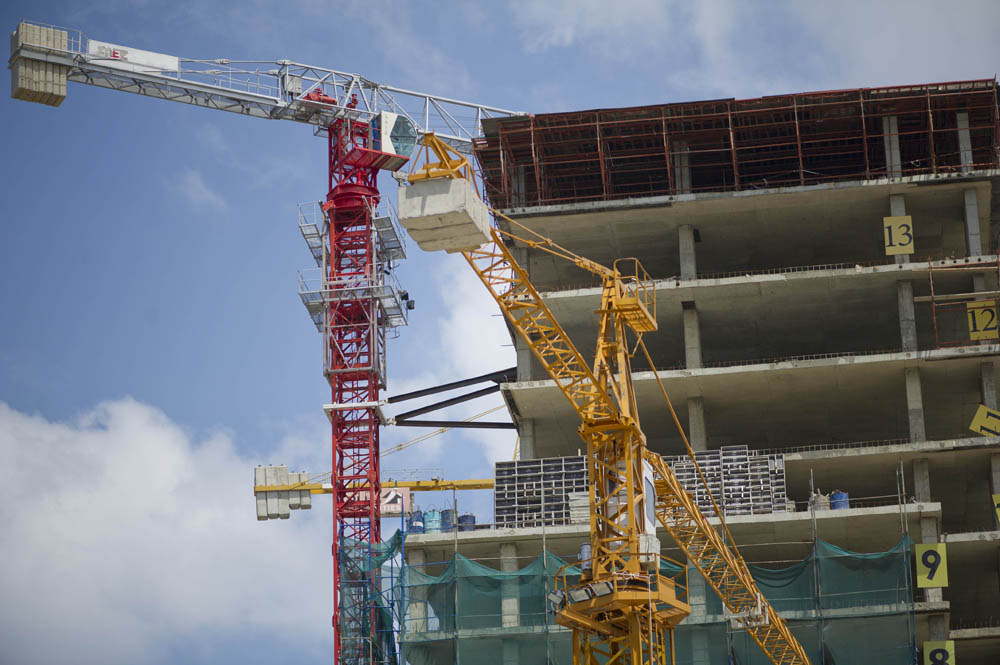
Plus properties construction works in Ashrafieh Beirut.
Real Estate

Misleading law on measurements

by Karim Makarem June 5, 2014
written by Karim Makarem

Lebanon has witnessed an upheaval in recent months over the new law liberating old rental contracts. Inflamed, people took to the streets, some for — some against. While the rental law reopened the public debate over the implications of real estate legislation on social equity, the need for fair and adequate property legislation is hardly limited to the issue of rents.

A different real estate law is, in our opinion, very misleading to potential homebuyers and should be revised: the law on accounting for the metric size of a residential unit.

The homebuyer ends up receiving two different sizes for the apartment: the official size mentioned on the property deed and the size communicated by the developer. The official size on the property deed only accounts for the gross inner living area including shafts, the thickness of the walls, planters and flower beds, and the size of the balconies. Developers, however, add to this the common areas (staircases, landings, elevators, fire escapes etc.). Of course, every square centimeter of built-up area communicated by the developer gets billed at the going market rates.

Walk through the numbers

At the moment, a two-bedroom apartment — the minimum requirement for a young couple buying their first home — counts at least 120 square meters. Despite developers’ attempts to maximize living spaces, much of the space sold goes to areas other than net living space (i.e. carpet area). Regardless of the total final size of the apartment, homebuyers are always forced to pay for space that they will never actually use.

An example of a project currently under construction in an Ashrafieh neighborhood illustrates the problem well. The developer communicates apartments in this project as measuring  260 sqm. Of that total area, the net living space — including the thickness of the inner walls and balconies, which can then be closed — effectively measures 163 sqm.

The difference is staggering: about 37 percent of the space sold to homebuyers is unusable. These 97 sqm are divided among the different non-living spaces: the staircases, elevators, flower beds, fire escape, shafts and exterior walls.

Based on the developer’s listed value of $3,700 per sqm and the “official” size of 260 sqm, buying the apartment requires a total budget of $962,000. Effectively, however, the new owner of this apartment would be paying a whopping $81,400 just for the shafts — a perfectly empty space.

Who gets the shaft?

It is unfair and misleading to sell homebuyers square meters that they will not see or utilize in order to give buyers the impression that they are provided with a valuable property that posts a lower cost per square meter than what they actually end up paying. This highlights a legal loophole where the current law allows for discrepancies between the size of an apartment recorded on the property deed and the size at which the unit is advertised. Such discrepancies make it more difficult to eliminate the potential for fraud in real estate sales. Even in the standard case of honest transactions, this legal provision does not serve the interests of either homebuyers or the real estate market. 

The Lebanese law on the metric size of residential units should mandate developers and property sellers to be much more transparent. Homebuyers have the right to know exactly how much carpet area they are buying. This has been done elsewhere; France adopted the Carrez Law in 1996 to specifically address this issue, protecting property buyers’ right to accurate information.

Such a law does not change the total price of an apartment or make living in Beirut more affordable. It will increase the value per square meter attributed to the carpet area being sold.

If such a measurement law were to be applied to our Ashrafieh apartment example, prices would take on a different appearance. The apartment would still be sold at the same total price of $962,000. However, this would only be applicable to the 163 sqm of living space. This means that the effective unit sales price would be of $5,902 per sqm instead of $3,700.

A new measurement law would naturally boost the price of the inhabitable square meter. After adjustment, prices in many neighborhoods of Beirut would probably list higher than in some districts in Paris. This would more accurately reflect the value of property in the Lebanese capital. And that’s a better deal for everyone.

June 5, 2014 1 comment
0 FacebookTwitterPinterestEmail
The Buzz

Measuring anguish

by Thomas Schellen June 4, 2014
written by Thomas Schellen

Remember happiness? When the Positive Experience Index (PEI) of 138 countries was released last month by global opinion surveying organization Gallup, Executive noted how Syria’s war had wrecked havoc on its people’s positive emotions and sense of happiness.

Now we have the pain test. In its just-released Negative Experience Index (NEI), Gallup measured the prevalence of negative emotions, and it shows a very clear and unenviable clustering of bad vibes in the Middle East and North Africa. According to the 2013 NEI, half of the ten most emotionally downtrodden countries — where people told surveyors they felt anger, stress, pain and worry the day prior — were in MENA. The rest of this unenviable top ten list was comprised of one country in each Asia and Africa, and three jurisdictions in Europe’s eastern Mediterranean.

Iraq led the ranking on negative experiences, followed by Iran. Egypt and Greece were tied in third place, ahead of Syria. Lebanon made the tenth spot in the NEI, where a higher rank indicates that more people felt negative emotions.

In similar fashion, the PEI had ranked countries by translating the number of ‘yes’ answers to positive-emotions questions into an index score. The two indices are not, however, inverses of each other. Syria’s fifth place finish in the NEI did not mirror its last place finish in the PIE; similarly, while Iraqis reported more negative emotions than anyone else, they also reported more positive emotions than those in 23 other locations.

In presenting the NEI findings, Gallup placed a strong emphasis on Iran’s lack of happiness, opining that “Iranians have every right to feel negative, given the high unemployment coupled with high inflation in their country that has crippled their ability to provide for their families, along with international sanctions over their nuclear program that have hurt their livelihoods.”

But while Iran ranked highly on the NEI, the Islamic republic actually scored 63 points in the PEI, placing it in the lower middle field of countries and tied with Luxembourg, South Korea, Kazakhstan and Czech Republic. It clearly underperformed on a global scale, but within the region compared favorably to both Syria and Iraq.

In short, emotions are complicated — and at times, seemingly contradictory.

June 4, 2014 0 comments
0 FacebookTwitterPinterestEmail
Banking 2014: Looming taxesFinance

Minding the moneylenders

by Livia Murray & Thomas Schellen June 4, 2014
written by Livia Murray & Thomas Schellen

Each year the observers and analysts of Lebanon’s banking performance eagerly await the publication of Bilanbanques, a wholly numbers-driven compendium of data and performance ratios on the banking sector produced by Bankdata Financial Services. Executive sat down for an interview with Dany Baz, Bankdata’s general manager, to enhance our understanding of the latest developments in the sector.


What is your most striking impression from recent data on banking in Lebanon?

What strikes me first is once again the resilience of the banking sector that was able to maintain a satisfactory performance despite the increasingly tough operating conditions. The banks that have chosen to expand regionally have handled the downturn in neighboring countries with minimal impact on their financial strength and performance, while banks that focused on the domestic market have had to face the slowdown of the Lebanese economy and the increasingly competitive operating conditions and have also managed to keep up.

Another striking fact is that there are pockets of opportunities for banks domestically, as some segments are under-borrowed; the SME [small and medium enterprise] sector for instance has also shown resilience versus the economic slowdown. Many of these enterprises have also decided to go cross border and have done so successfully.


How does the under-borrowing of SMEs affect us?

On a global level, the economy is running at a much slower pace than it should be. Companies in the category of small and medium enterprises, meaning SMEs with more than 5 and up to 150 employees, number approximately 20,000 companies that generate around $5 billion of annual turnover. If you take into consideration that there are something like 200,000 registered establishments, this shows that these 10 percent of enterprises generate around 10 percent of Lebanon’s GDP [of $43 billion]. Interestingly, only over a third of these SMEs are borrowers and their borrowings amount to around $2 billion of various loans and facilities. If this ratio is raised to 50 percent, it would represent about $600 million of untapped business for banks over the upcoming years.


[pullquote]There is quite a lot that the banks are doing for the economy and they should not be penalized because of the transparency they have adopted. [/pullquote]

Currently, with debates over profits and taxes of banks, it seems that the banker is everyone’s favorite villain. Do they deserve it?

Banks are traditionally the driving force behind economic growth and consequently contribute to the welfare of citizens. Obviously, banks are profit-oriented organizations and are definitely into improving their profitability and shareholder value. But I think you can say that of any venture and in some businesses, like the food industry where you can poison people, you have many more ethical concerns than in the money or service business.


Are banks paying enough taxes? 

They are the biggest taxpayers in the country. They contribute more than one third of all taxes on profit and bank employees contribute nearly 30 percent of all payroll taxes in Lebanon. Banks settled about $400 million in taxes in 2012. Tell me one sector that is doing the same. I think banks are the number one employer, the number one taxpayer, and they don’t even recoup VAT [value added tax]. There is quite a lot that the banks are doing for the economy and they should not be penalized because of the transparency they have adopted. Tax evasion is estimated at $3 billion yearly, i.e. 7 percent of GDP — this is where the real change should take place.


In your opinion, would a permanent increase in the taxation rate of banks impact the economy?

I honestly don’t think that raising [VAT] by 2 percentage points is going to rock the boat. The problem is that the economy is in a slowdown and there is very little leeway for the government today. In a different context, I don’t think 2 percent would make a difference. But today nothing [in terms of tax increase] is acceptable.


That is on VAT in general. But how about the specific taxes on banks that have been proposed?

When you have a sector that is vital for the economy, you don’t want to burden it in times such as these. In my view, everything that was discussed is acceptable and I am sure even the banks will say that — but is it acceptable today? No.


What would you consider as a minimum healthy growth rate and prudent performance indicator for the banking sector?

The IMF estimates a 5 percent growth in customer deposits is the minimum required to finance public and private borrowing needs. I wouldn’t take the growth of assets as a measure for the health of banks. I would take the return on equity. Today we are at just over 12 percent in return on equity and this is low if we take a look at other financial sectors in MENA countries. Everybody will expect the ratio to be closer to 20 percent.


[pullquote]Tax evasion is estimated at $3 billion yearly, i.e. 7 percent of GDP — this is where the real change should take place[/pullquote]

Bankdata is the organization that initiated categorization of banks according to deposits. What is the rationale for making the distinction between alpha, beta, gamma and delta group banks?

Segmentation helps external people and the bankers themselves to benchmark against banks of the same size with comparable operating conditions in terms of network and staff, for instance. You have to compare apples to apples: the purpose was to facilitate comparisons.


You raised the threshold of financial size for the alpha banks to $2 billion in deposits quite a while back. When was that and why is it prudent to keep it at that level still today?

We raised it in 2004 so it will be ten years this year. We review it every year to see if a change in the definition of categories is warranted but if the difference [between the old and new deposit size benchmark] is around 10 percent, it is not worth [changing] it. The issue is to have a look at the even distribution of the four categories and not just the top banks.


Your company is regarded as the authority on measuring the performance of Lebanese banks. Should that be done by a private sector company, or rather by a government agency?

I don’t think it is the purpose of the regulator to publish market shares and ranks but rather to monitor compliance and follow up on performance. We are much more flexible in our approach and have two-way communication with the banks, which is not something that you would have if you were addressing this from the public sector.


How confident are you that the information you publish is accurate, especially on some highly watched ratios where people might want to look better than they are?

They cannot because we have our own controls, both specific and general. Of course there are human errors and if we see a growth rate by a bank that is incoherent on any criteria, even if it is a small item on the balance sheet, we immediately call the bank. And if there is a correction in one bank, we call 70 banks to align. This is our added value.


How many items do you check each time when you review the banking performance?

That is an interesting question and I have never looked at it this way. (Consults briefly with staff.) We review 410 items times 70 banks times two because we control two years in every edition [of the Bilanbanques yearbook]. That means we cover 57,000 pieces of data for every edition.


Do you do that for the love of numbers?

No, for the love of credibility.


How did the concept occur to you?

This is a company that was founded by my husband, Freddie [Baz]. He started it 32 years ago because this is his forte and I learned the job. The methodology and the continuous enhancement and update of the methodology rely a lot on him but I have been running the show.


[pullquote]Some banks provide unpublished figures and if they request for them not to be published, they will never be published or made available to anybody[/pullquote]

Are there any conflicts of interest for Bankdata because of the fact that your husband is a senior executive at the top bank in Lebanon?

When he first started with [Bank] Audi, he was merely an adviser and there was no particular drawback. At some point, perhaps other banks might have felt a conflict of interest but they have realized that this is not the case. We cannot twist figures in any way. In addition, the fact that he combines macro and micro views and experience are a plus to continuously update and enhance our methodology.


So you would not provide information exclusively or faster to one bank than any other?

I would be shooting myself in the foot, honestly. The open climate that we have with the banks is based on them knowing that we are very keen on preserving [confidentiality]. They trust us with their figures. Some banks provide unpublished figures and if they request for them not to be published, they will never be published or made available to anybody.


What valuation do you attribute to the company that you manage?

Bankdata is a profitable company, but it is not a company that will crush records of profitability. We are a service company and also do consulting and have very decent revenue. We have invested into our platform but if I were to value the qualitative part of it and not the multiples, the benefit to the sector is really priceless.


Are you a family business?

Yes, we are.


Do you have succession planning?

We should (laughs). Probably [the succession] will not be in the family, so we would have to transform.


June 4, 2014 0 comments
0 FacebookTwitterPinterestEmail
ArabNet Dubai 2014Business

Serious about games

by Livia Murray June 4, 2014
written by Livia Murray

Regional gaming startups now have a champion in the form of MEGAplay — the Middle East Gaming Alliance, an organization dedicated to nurturing regional gaming startups. The launch was announced Tuesday by David Munir Nabti, CEO of Lebanese startup space AltCity.

Choosing the afternoon of the first day of ArabNet Digital Summit 2014 in Dubai to unveil the new group, Nabti explains that MEGAplay is an initiative to help Middle Eastern startups take advantage of the appetite for games in the Middle East. “Gaming is a huge sector regionally, but startups are not tapping into that,” he says.

Nabti announced that MEGAplay will provide various support to gaming startups. It will offer workshops — both online and offline — using expert know-how to put regional companies on a more competitive footing in a global market worth perhaps $70 billion. The idea is “to help people start games [and] develop new concepts that are at the leading edge of trends, rather than behind the curve,” says Nabti. It will also hold competitions and help connect startups to investors.

MEGAplay is the brainchild of AltCity, with seed funding from the Netherlands Embassy in Lebanon. The initiative builds on AltCity’s involvement in gaming events in Beirut, as well as its lighter dabbling in the region. One such event was the group’s Beirut hackathon on May 3, which brought together developers, designers and entrepreneurs to build mobile apps and games within a 12 hour time frame.

But gaming is also a notoriously tough industry. An often cited example is the story behind Angry Birds, where Finnish developer Rovio failed 51 times at creating a viral game before producing an overnight success. This makes gaming startups inherently risky.

And regionally, the sector is quickly evolving, with promising names such as Jordan’s Taktek fizzling. Walid Hanna, managing partner at regional venture capital firm Middle East Venture Partners, told Executive in December that while the group had invested in gaming startups, they were trying to refrain from investing in them in the future because of the uncertainty of business.

When presented with these concerns, Nabti remains convinced of the potential of the market. He explains that the volatile nature of the business makes it all the more important how companies build themselves, learn to appreciate risk and increase their chances of success by developing the best methods.

“Gaming is already a huge market, and is becoming more connected to people’s lives,” he says, even to the point of overtaking cinema and TV.

June 4, 2014 1 comment
0 FacebookTwitterPinterestEmail
ArabNet Beirut conference in 2010
ArabNet Dubai 2014The Buzz

Dubai: the next step

by Livia Murray June 3, 2014
written by Livia Murray

All Lebanese businesses must seek regional expansion — or so it is drilled into the heads of local entrepreneurs. A typical Lebanese business model is to test a product in Lebanon before scaling to the region. This reflects at once the limits of the very small Lebanese market, but also the increasing nature of seeking solutions that cover the entire Arab world.

Besides catering to the region, Lebanese companies are increasingly drawn to Dubai, an important regional hub for big businesses and the Middle Eastern capital of marketing and advertising. The move is a logical expansion for a Lebanese company — some relocating their businesses there altogether.

Likewise, ArabNet — a hub and conference organizer for digital entrepreneurs and professionals in the Arab world — expanded from its birthplace in Beirut to Dubai. The move was very successful: its Dubai event is now larger the original Beirut conference. This is due partly because of the political situation in Lebanon and partly because Dubai, being the business hub that it is today, is an attractive destination for regional companies to mingle. When Executive caught up with ArabNet founder Omar Christidis before March’s ArabNet Beirut, he explained that while the Lebanon event focused on the local Levantine market as a production hub for the region, the Dubai event would be more focused on big business.

Indeed, the conference will highlight many aspects of big businesses — the latest trends in e-commerce, marketing and advertising from industry leaders. But entrepreneurs also have a selection of talks to choose from for promoting startup ecosystems in the region — with the government-owned tech park Dubai Silicon Oasis, local i360 accelerator’s space The Cribb and the digital startup incubator Afkar among others represented.

Exhibitions and a digital showcase will highlight businesses big and small, creating opportunities for the two to liaise. Larger companies such as transportation and logistics company Aramex, market research company IPSOS and online payment gateway Gate2Play will be represented alongside smaller ones. Some of these smaller businesses were present at the Beirut event, such as animation company Wezank and social media topic analyzer tool Crowd Analyzer — which made the list of Executive’s favorite startups from ArabNet Beirut.

The combination of panels where industry leaders share best practices and startups showcase the newest technological innovations makes ArabNet the epicenter of tech and entrepreneurship in the region for the next three days. Stay tuned for Executive’s coverage of ArabNet Digital Summit Dubai.

June 3, 2014 0 comments
0 FacebookTwitterPinterestEmail
Tarek Khalife, Chairman at Credit Bank Lebanon
Banking 2014: Looming taxesFinance

A Lebanese lender’s philosophy

by Thomas Schellen June 3, 2014
written by Thomas Schellen

Creditbank Chair Tarek Khalife explains his views on banking and the roots of his strategy to prioritize lending to the private sector. Last week, Executive published a longer piece about Creditbank.


The impression from our conversation on Creditbank is that you neither aim to be the richest banker in town nor are angling for the biggest bragging rights. Why are you a banker?

I don’t regard myself only as a banker. If you think of yourself as a banker, you reduce yourself to calculating your margin on every transaction. I like to think of myself as a common denominator in the business world where people need a financier.


How do you define the difference? 

Being a financier is more than being a banker. People think of a banker as someone who gets a lick of every deal that passes under his nose. This is not the picture that I have. If you asked me what I think of Creditbank, I would tell you that Creditbank is catering to people who are producing. If you are involved in banking in Lebanon today and like it, it is because you think everything is undervalued.


Undervalued in what way? 

I think everything in Lebanon could be at a higher and better value. This is the confidence that we have in this market and this is why we still lend to people in this market. If we didn’t believe that tomorrow would be brighter than today, we would not be taking the exposure to the private sector [that we are taking]. By taking private sector exposure, we are saying “I would rather take the upside of the private sector than the fixed return I can get on sovereign risk.”


How does the risk of private sector exposure correlate with your strategy for seeking growth?

Going to a restaurant, hospital, clinic and retailer [as their lender] is saying that I am investing in the goodwill of all these operations and in their relationship with me. When [these businesses] are going to be bigger and more successful, I will grow [with them] because I have taken the risk in the bad days. It makes sense to us because we believe that there is an upside to the market. Lebanon can only [go up] in the future and the private sector is going to benefit from many things. We believe in this economy and the people that are the talent and the resource. As a bank you have to have the right morality vis-à-vis the client and the right productivity to reply to his needs. If you have those two, then you have a success.

June 3, 2014 0 comments
0 FacebookTwitterPinterestEmail
The Lebanese Canadian Bank fiasco is fresh on the minds of Lebanese bankers racing to fully comply with FATCA
Banking 2014: Looming taxesFinance

Lebanon’s financial sector braces for FATCA

by Paul Cochrane June 3, 2014
written by Paul Cochrane

The countdown is on, with just a month to go before the United States’ Foreign Account Tax Compliance Act (FATCA) goes live on July 1. Aimed at curbing tax evasion by American citizens, an estimated 26,000 foreign financial institutions (FFIs) around the world will have to be FATCA compliant or be shut out of the US financial system. As a result, FFIs — primarily banks — are scrambling to be ready to report to central banks or directly to the US’s International Revenue Service (IRS), depending on governmental agreements.

[pullquote]“In substance, the threat is to be cut off from the US financial system.”[/pullquote]

In the MENA region, Lebanon is considered by local bankers to be ahead of the pack, followed by Jordan, Saudi Arabia and other Gulf countries. “We’re really well prepared to meet FATCA, and I think with all modesty, the most prepared in the MENA today, because we started at the beginning — some three years ago — and have carried out intensive training,” said Makram Sader, secretary general of the Association of Banks in Lebanon (ABL). “But very few FFIs will be on time in MENA.”

The Lebanese banking sector has been preparing for FATCA like the teacher’s pet not because it is a major advocate of reining in tax havens — Lebanese law explicitly allows companies set up with offshore tax status — or greater taxation transparency and new tax laws in the country. Rather, the sector is exceedingly wary of international regulators, specifically of falling foul of the US Treasury. This is due to Lebanon’s immense exposure to American leverage: some 70 percent of local deposits are held in US dollars; banks need to keep good relations with correspondent banks in the US and elsewhere; and no one wants a repeat of the 2011 Lebanese Canadian Bank fiasco, when the bank was accused by the US of money laundering and subsequently closed its doors. 

“Banks want to avoid the danger of having another [Lebanese Canadian Bank] right now, as it would affect the sector as a whole, so all banks are being careful that FATCA will be properly applied,” said Malek Costa, head of compliance at BLOM Bank. “In substance, the threat is to be cut off from the US financial system.”

[pullquote]“I don’t believe any Lebanese bank will not be compliant, and if there are mistakes, it will be in the details not the general direction.”[/pullquote]

Compliance has become a major concern for the sector, pushed by the central bank, Banque du Liban (BDL), which issued two circulars — 126 and 128 — in 2012 and 2013 for banks to abide by international regulations and establish compliance departments, respectively. Indeed, compliance with anti-money laundering and counterterrorism financing regulations — with FATCA the latest such addition — is being taken so seriously that Sader conceded that he has spent about 20 percent of his time over the past two years on compliance issues alone. 

That said, Sader claimed Lebanon is well positioned to capitalize on providing financial services related to FATCA. “Maybe we can prepare other MENA countries to implement FATCA by exporting that skill. For example, we are supporting the Association of Iraqi Banks, as there are 11 Lebanese banks there, by educating our bank partners and supporting the Central Bank of Iraq,” he said.

Legal issues

However, that the banking sector has prepared for FATCA so early can be read as a further indication of the country’s inability to defy US demands. Indeed, as one compliance officer put it off the record, “It is ridiculous that it takes a foreigner to come here and say you have to apply regulations, and we do it, but not because we are afraid of the Lebanese regulator.” 

FATCA has been a problematic law to apply globally, with governments having to amend domestic legislation — in Lebanon’s case to allow for US clients to waive banking secrecy. Moreover, the act was met with political resistance and a lackluster uptake by many jurisdictions, so much so that the IRS had to delay FATCA’s rollout multiple times. Adding to the law’s problems, none of the rising BRICs (Brazil, Russia, India or China) have signed up yet. However, there has been a flurry of jurisdictions signing intergovernmental agreements (IGAs) with the US just in the past few months as the IRS went on a global push, fearing that FATCA’s effectiveness could be undermined before it even started.

Another potential reason for the push was to end the current period in which Americans can renounce their citizenship without paying back taxes. “There are around 3,000 renunciations a year of US citizenship and there is growing interest, but they don’t say if it’s because of FATCA or a travel risk element, but certainly FATCA has an impact because of the complexity of banking in this world,” claimed Armand Arton, president and CEO of global financial advisory business Arton Capital.

Loss of business?

[pullquote]“We are working as if FATCA already exists”[/pullquote]

BDL opted to not go for an IGA with Washington but rather for banks to report directly to the IRS, concerned that if it signed an IGA there would be the remote possibility of the US freezing BDL money in the event of non-compliance. “It was a political reason, to not be an agent of the IRS,” said a senior source at BDL speaking on the condition of anonymity.

Yet while many jurisdictions have not yet signed up to FATCA, and some are unlikely to at all — Russia is a prime example — and certain MENA countries lag behind, the Lebanese banks are more than ready. “We are working as if FATCA already exists,” said Abdul Razzak Achour, chair and general manager of Fenicia Bank. “We are contacting all FFIs that we do business with and checking if [they are] FATCA compliant; if not, we will act accordingly.”

But herein lies the primary problem with the law. How will FATCA compliant Lebanese banks deal with what the IRS calls “recalcitrant” FFIs? And does the sector stand to lose business by not dealing with non-participating FFIs in say West Africa, Algeria or China? No one interviewed by Executive could give a clear answer.

“I’m not sure if we’ll lose business. Even the worst country in Africa has clean businesses and wants to do business with good banks,” said Sader. “Yet in terms of business, [Lebanese banks are] in 30 different countries, and maybe five, six or seven countries will not comply [with FATCA].”

Practical short game, long term worries

[pullquote]In the MENA region, Lebanon is considered by local bankers to be ahead of the pack, followed by Jordan, Saudi Arabia and other Gulf countries.[/pullquote]

Joseph El Fadl, a managing partner at Deloitte, which was contracted to draw up a FATCA implementation manual for the ABL, believes the IRS will initially be pragmatic once FATCA goes live. “The IRS acknowledges it’s not going to be a piece of cake and indicates it is not going to be difficult with FFIs in the early stages,” he said. “We’ve seen that international banks want compliant FFIs, but what will be the reaction? We may have two layers, big banks refraining from doing business with non-participating FFIs, and medium banks applying withholding tax, but we don’t know yet.”

Initially, FATCA will be implemented in two phases. “The first is to screen all existing accounts with a threshold of over $1 million, so not a big task [in Lebanon] as that’s not more than 2 to 4 percent of customer deposits. Then it will move to thresholds of $50,000 and above, and about documentation and questions, with a short list of who could fall under FATCA,” said El Fadl.

This second stage will prove the most trying, as banks will have to sift through all bank accounts for possible US indicia — citizenship, residency, addresses, etc. — with Sader estimating there could be as many as three million accounts to go through.

Elsewhere in the region this may be more challenging. For example, Syria is requiring banks to be FATCA compliant, including Lebanese banks operating in the country. “There’s a large number of displaced Syrians, so it will be a challenge as a number of clients are outside the country, and there may be a mismatch between addresses on record and current addresses because of the security situation,” said Chahdan Jebeyli, who wears several hats as chief legal and compliance officer at Bank Audi, chairman of the ABL’s anti-money laundering committee, and the Union of Arab Banks’ head of compliance.

If clients are not cooperative, banks will have to decide whether to close an account or withhold 30 percent of interest returns in tax, as stipulated by FATCA. “The main issue banks will face is confronting pre-existing customers to make them fill out the necessary documents,” said Costa. “For example, if a client having US indicia showing in the core banking system or customer file says, ‘No, I am not a US citizen,’ we’ll say, ‘Prove it within 90 days or we’ll close the account, or withhold.’”

What is expected is that the financial sector will essentially police itself by dealing with only compliant FFIs. “You will see banks across the world asking other banks if [they are] FATCA compliant, asking about the Global Intermediary Identification Number [GIIN — to be registered with the IRS] and it will be a main factor in evaluating the continuing relationship,” said Jebeyli. “I don’t believe any Lebanese bank will not be compliant, and if there are mistakes, it will be in the details not the general direction.”

June 3, 2014 0 comments
0 FacebookTwitterPinterestEmail
Egypt's election deflates the Egyptian Exchange
Finance

Presidential plummet

by Thomas Schellen June 2, 2014
written by Thomas Schellen

In an inverted image from the previous week, Gulf markets roared and Egypt flopped in the 22nd week of the year. However, the factors underlying the market movements remained unchanged: Influences of MSCI classification drove three markets in the Gulf while political developments ruled in Egypt. On the weekly balance, four MENA exchanges were flat, six were up and two dropped.

Egypt’s election

The Egyptian Exchange traded up at the start of the week and reached a new post-Arab Spring high intraday on Monday before retreating. After the market closed on Tuesday, the EGX 30 weakened further on Wednesday while the predicted presidential win of former army leader Abdel Fattah al-Sisi was sealed on an unplanned third day of voting. Indications such as provision of free public transport on that day and threats of fines for non-voters suggested that the voting period was extended in order to increase participation and strengthen the appearance of legitimacy of Sisi’s mandate.

With Sisi’s win, the EGX 30 started Thursday with gains but then reversed, ending the day with a 3.5 percent drop due to news that the cabinet was preparing to levy a 10 percent capital gains tax on stock market investors. Media reports on Thursday gave the impression that the information arrived out of the blue, first spread in local media and then confirmed by finance minister Hany Dimian in an interview with Reuters.

The same day, the Egyptian Exchange posted an announcement it attributed to the finance ministry. The one-sentence statement said “Reference [sic] to what has been circulated about imposing taxes on capital gains achieved in the Egyptian Exchange, ministry of finance confirmed that the calculation of the tax on profits will be on the net value of the market capitalization portfolio by the end of year, compared to its value at the date of approving that law regardless of the purchase date preceding this law, taking into consideration to relay any losses achieved by the investor for the coming 3 years.”

Curiously, attempts to introduce a capital gains tax first on initial public offerings and then on incomes from share sales were twice announced and dropped in Egypt’s recent past — in December 2012 and March 2013 — both by the government of former President Mohammed Morsi.

Investors in the Egyptian bourse were confused and outraged by the latest tax announcement as much as by the announcement’s disorganized presentation and timing on the day when expectations were focused on the outcome of presidential elections. On June 1, the Egyptian Exchange was still in upheaval and trading was suspended from 11:20 am until 11:45 am. By market close at 2:30 pm the EGX 30 was nonetheless down 4.2 percent for the day.

MSCIng the thrills

Compared with the drama on the Cairo financial scene, the market movements in the rest of North Africa and the Levant could not fascinate. The Moroccan, Tunisian and Jordanian markets each fluctuated by less than 2 percent to the downside, but all three recouped that ground and closed the review period flat when compared with the end of the week prior.

The Beirut Stock Exchange, however, ended a period of small index movements with a 20 points gain on May 29–30, which looked to be the biggest two-day rise in the BLOM Index since mid-January. According to the BSE Bulletin, Bank Audi and Solidere were the key gainers on each of the two days. Daily gains ranged from 1.3 percent to 2.2 percent for the two share classes of the real estate company. Bank Audi GDRs rose 3.1 percent on May 29 and the bank’s common shares advanced 3.8 percent the following day.

Massive trading volumes drove the markets in Qatar and the United Arab Emirates on May’s last trading day as the much discussed MSCI Emerging Markets index’s inclusion of 19 stocks from across the three markets triggered share buying by international funds. This drove the ADX General Index 6.6 percent higher on the week, followed by gains of 5.3 percent in Qatar and 4.6 percent in Dubai. The QE Index’s rise brought it to a new all-time high.

Passive activity

Index tracking or ‘passive’ funds hold stock portfolios whose composition mirrors that of an index. When compared with active funds, whose managers pick stocks based on a fund’s respective criteria and buy and sell shares according to their own research, passive funds offer investors much lower operating costs.

One can think of passive funds as financial markets’ equivalent of Carrefour and Walmart, while active funds are akin to Neiman Marcus or Harrods. Active funds will dote on investors with a taste for tailored products in exchange for a hefty fee, but in terms of value for cost, the passive funds occasionally deliver more.

As May 29 was the first day for passive funds to compulsively adjust their portfolios in accordance with the revised MSCI EM index composition, their demand pushed share prices for 12 out of the 19 index entrants from the UAE and Qatar up by more than five percent each. However, the market dynamics also saw stocks go up which were not part of the MSCI selection.

In Abu Dhabi, eleven companies rose by between five percent and the daily limit of 15 percent on Thursday, of which four were driven higher by the MSCI EM siren song. These four were National Bank of Abu Dhabi, Abu Dhabi Commercial Bank, First Gulf Bank and Aldar. NBAD, which experienced extreme demand when compared with its average trading volumes, and ADCB rose at the upper limit; Aldar and FGB respectively gained 7.3 percent and 5.6 percent. The seven other ADX gainers of more than 5 percent included one bank, one insurer, two agricultural firms, a construction materials company, a services company and the cross-listed Qatari telco Ooredoo, which is an entrant to the EM index.

On the Qatar Exchange, however, Ooredoo was only a small gainer on Thursday, moving up just 0.6 percent. In Doha, the companies with share price gains of more than 5 percent each included MSCI EM entrants Vodafone, Barwa, Al Rayan Bank and Qatar Islamic Bank. Of the six other Qatari entrants, including Ooredoo, three saw their share prices go up while three dropped. Elsewhere on the QE, the Qatar National Cement Company’s 6.4 percent gain made it the one strong riser that was not part of the MSCI selection.

On the Dubai Financial Market, some of the EM debutants showed strong gains, as did several others. Emaar Properties and Arabtec pushed 7.2 and 6.3 percent higher while Dubai Islamic Bank added 6.2 percent. The one stock in Dubai to climb at the daily limit was the stock market operator, DFMCO. Outside of the debutant group, Ajman Bank gained 7.1 percent, Dubai Investment Co 5.8 percent and Shuaa Capital 9.6 percent.

Gulf media cited both analysts and research into behavior of reclassified markets to caution that the passive funds — in comparison to active funds’ far smaller assets under management — must not be expected to inject further massive amounts into the UAE and Qatari markets and that post-upgrade, further gains in the markets should not be speculated on.

Of the four other GCC markets, Oman’s MSM 30 was the strongest gainer with 1.7 percent, followed by Tadawul with 0.7 percent. The Bahraini bourse index was flat and the KSE Index gave up 0.8 percent in a trading week that was cut one day short.

June 2, 2014 0 comments
0 FacebookTwitterPinterestEmail
Editorial

The real bad guys

by Yasser Akkaoui June 2, 2014
written by Yasser Akkaoui

When Lebanon was on its descent into civil war in 1975, some militia bosses sicced the ‘poor’ upon the ‘rich’, telling their followers to loot the Spinneys store in Ramlet el-Baida. I remember watching the riot from our balcony — the first to drive up to the deserted store were the warlords and their top goons. After they carried off the store’s fine wines, caviar and quality foodstuffs in their luxury cars, they allowed their disheveled band of followers to raid what was left. Only after their departure, poor people from the area were able to pick through the little that the professional looters had left behind. I saw a child that took away a can of dog food.

The warlords had plundered a private business, then left the scraps to the poor. But that was only the beginning. Those same villains began to spread a destructive thought among the Lebanese: that success should be punished and that those who had worked hard did not deserve their riches. That taking was more important than making. We all know what followed.

Today, the private sector — specifically the banks — again finds itself attacked by crooks. To pay for a public sector wage hike, the government needs money from somewhere. But more bank taxes are being mentioned for one reason alone: they’re easy to take. Banks are transparent and profitable. They already pay taxes and must publish a wealth of financial information. Hiding your profits is hard if you’re a bank in Lebanon.

And once again, we hear echoes from Lebanon’s past — from those who would tax bankers out of envy. The idea is the same as it was in the early 1970s: anyone that is successful is one of the bad guys. Although the logic is tortured, it has an implicit populist appeal.

This, however, is a clever misdirection. It is not the bankers who are denying public sector workers a living wage. It is those same corrupt leaders who champion the wage hike, knowing they will never have to pay for it because they never pay taxes. These are the real bad guys, and our country is full of them.

The real bad guys would love for us to point our fingers at anyone but them. And astonishingly, they are succeeding in vilifying the only transparent sector in Lebanon.

We cannot allow such character assassination to take place. But more importantly, we must direct blame where it truly lies: with corrupt leaders and politicians. We must hold them accountable — and the only way to truly do that is through their finances, by making them pay the taxes they owe.

Otherwise, we will all be left with only dog food to eat.

June 2, 2014 0 comments
0 FacebookTwitterPinterestEmail
Banking 2014: Looming taxesFinance

Ambassadors of Citi

by Livia Murray June 2, 2014
written by Livia Murray

International banks have been leaving the Lebanese market or selling off some of their operations. Last year, HSBC reported that they were to discontinue any sale of their investment and wealth management products in Lebanon as part of their global strategy to exit their less profitable branches. Similarly, the recent bidding process between local banks over who will acquire Standard Chartered’s retail banking operations is nearing completion, according to a source close to Standard Chartered. Most recently, reports emerged that Lebanese franchise of Jordanian-owned Ahli International will be acquired by the Lebanese Fransabank.

[pullquote]Citi’s main activities in Lebanon include acting as a US dollar correspondent, performing transactions abroad on behalf of Lebanese banks and financial institutions[/pullquote]

Lebanon has witnessed many waves of international banks exiting the market since its pre-civil war glory days where it enjoyed the status of being the banking hub of the Middle East. Many banks left during the civil war only to be re-established after it ended. But recent cases of banks exiting or divesting from Lebanon raise the question of what would motivate an international bank to maintain a presence in Lebanon.

Both local and strategic

Despite recent exits, the decision of these international banks to stay or leave the country doesn’t depend entirely on the Lebanese environment for banking. Their overarching corporate strategy is a large determinant in whether or not these continued operations make sense.

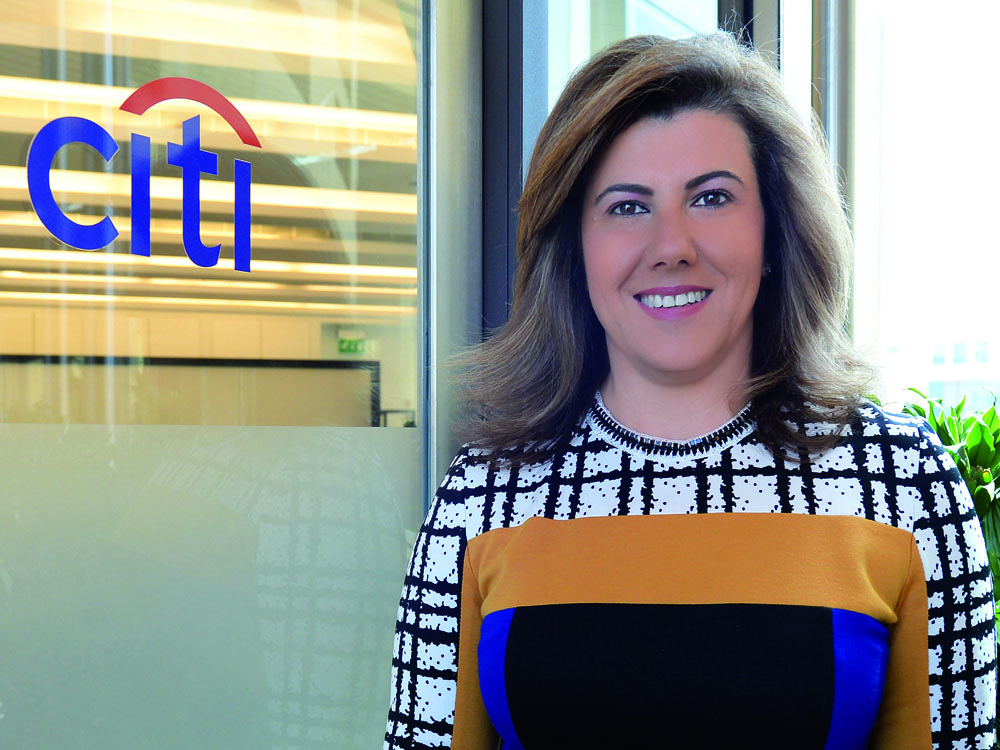
Citi's managing director Elissar Farah Antonios

Citi’s managing director Elissar Farah Antonios

In the case of the Lebanese unit of global financial group Citi, managing director Elissar Farah Antonios explains that having a far-reaching global presence is one of the bank’s top priorities. “This is something that we’re not going to change as a strategy, not only for Lebanon but globally,” she says, claiming that Citigroup’s presence in roughly 160 countries includes some that have much more challenging economies than Lebanon.

Registered locally as Citibank, the group first came to Lebanon in the 1950s, where its Beirut office used to be the hub for the region, explains Farah Antonios. Though they were forced to leave during the civil war, they re-established the branch in 1996.

Farah Antonios describes Citi’s presence in Lebanon as “part of our global footprint.” She adds, “As long as it makes sense for us to be doing business in the country … as long as we can run our business with an acceptable efficiency ratio, we’re going to be here.”

Citi is determined to stay in Lebanon and Farah Antonios sees no reason why they would want to leave any time soon. She claims that the branch has an efficiency ratio of 38 percent, meaning for every dollar made it costs 38 cents. “It does very much justify us being here,” she adds.

[pullquote]As few foreign banks are left in Lebanon, they remain one of international companies’ few options to be serviced by a bank with a large global presence[/pullquote]

Citibank’s asset growth affirms the commitment of the parent company of maintaining a branch in Lebanon. Their assets for 2010, 2011 and 2012 grew to $174.1 million, $180.8 million and $207.2 million, respectively, according to Bankdata. This constituted an increase of 3.7 percent between 2010 and 2011 and 12.7 percent between 2011 and 2012. Citibank claims that their assets increased a further 43 percent between 2012 and 2013, but this could not yet be verified by Bankdata.

In 2013, Citigroup made $13.7 billion in profits worldwide, its largest take since the 2007–2008 financial crisis, according to its annual report.

When it comes to Lebanon, Farah Antonios explains that the country represents added value for their institutional client group — international clients who would bank with Citi anywhere in the world. This institutional client group includes financial institutions, large corporations and governments. According to Farah Antonios, Citi’s main activities in Lebanon include acting as a US dollar correspondent, performing transactions abroad on behalf of Lebanese banks and financial institutions, servicing Lebanese businesspeople who do business outside of Lebanon, as well as servicing the public sector — a very active business ever since the Ministry of Finance launched its Eurobonds.

In addition, Farah Antonios explains that the branch plays an important role acting as “ambassadors” of Citi, whereby if a client requests a product or service not available locally, they can outsource it to the bank’s regional headquarters in London. “We’re only 30–40 employees, so we clearly don’t cover all the products that Citi has.”

Though Beirut is no longer Citi’s main hub for the region, they still see it as an important foothold. “We’ve lost some global clients to Dubai, but it still justifies servicing out of Beirut,” says Farah Antonios.

As few foreign banks are left in Lebanon, they remain one of international companies’ few options to be serviced by a bank with a large global presence.

June 2, 2014 0 comments
0 FacebookTwitterPinterestEmail
  • 1
  • …
  • 196
  • 197
  • 198
  • 199
  • 200
  • …
  • 707

Latest Cover

About us

Since its first edition emerged on the newsstands in 1999, Executive Magazine has been dedicated to providing its readers with the most up-to-date local and regional business news. Executive is a monthly business magazine that offers readers in-depth analyses on the Lebanese world of commerce, covering all the major sectors – from banking, finance, and insurance to technology, tourism, hospitality, media, and retail.

  • Donate
  • Our Purpose
  • Contact Us

Sign up for our newsletter

    • Facebook
    • Twitter
    • Instagram
    • Linkedin
    • Youtube
    Executive Magazine
    • ISSUES
      • Current Issue
      • Past issues
    • BUSINESS
    • ECONOMICS & POLICY
    • OPINION
    • SPECIAL REPORTS
    • EXECUTIVE TALKS
    • MOVEMENTS
      • Change the image
      • Cannes lions
      • Transparency & accountability
      • ECONOMIC ROADMAP
      • Say No to Corruption
      • The Lebanon media development initiative
      • LPSN Policy Asks
      • Advocating the preservation of deposits
    • JOIN US
      • Join our movement
      • Attend our events
      • Receive updates
      • Connect with us
    • DONATE