• Donate
  • Our Purpose
  • Contact Us
Executive Magazine
  • ISSUES
    • Current Issue
    • Past issues
  • BUSINESS
  • ECONOMICS & POLICY
  • OPINION
  • SPECIAL REPORTS
  • EXECUTIVE TALKS
  • MOVEMENTS
    • Change the image
    • Cannes lions
    • Transparency & accountability
    • ECONOMIC ROADMAP
    • Say No to Corruption
    • The Lebanon media development initiative
    • LPSN Policy Asks
    • Advocating the preservation of deposits
  • JOIN US
    • Join our movement
    • Attend our events
    • Receive updates
    • Connect with us
  • DONATE
AnalysisFood InfrastructureSpecial Report

Targeting the resilience factor

by Thomas Schellen December 2, 2022
written by Thomas Schellen

Investing into an agricultural stock or an agricultural infrastructure system is intensely unlike dreaming of instant financial gratification, for example by becoming a financial markets jock. Imagine being a day trader on multiple stock exchanges or feeling the hourly thrills of seeing your crypto-wallet bursting at its virtual seams with a million dollars or three, made (and lost) in speculative bets on Bitcoin, Ether, Tether, et al.

Now shudder and think about agricultural stocks, from publicly listed farming cooperatives to fertilizer and equipment multinationals. Investments can be rewarding and seem rather safe – agriculture and its distant cousin of consumer staples are among the prime defensive sectors in the terminology of stock markets – but come with agrarian risks and reward profiles. This path to prosperity is staid and slow by the nature of agriculture as a business.

The only investments guaranteed to keep your heartbeat safer from rapid increases and undue exhilaration than stock portfolios in agriculture, would be investments into agricultural infrastructure and systems. Returns of a direct investment into an agro-system are many growing and harvesting seasons away. In financial terms, neither are investments into publicly traded agricultural corporations as addictive as playing the conventional or virtual financial markets, nor are returns on direct investments into agricultural infrastructures and privately held agricultural enterprises, typically as high as those in tech and healthcare companies. At least during boom times.

Yet, the world is not living in boom times anymore, and it is a sign of these recessionary times that the value of the agro-production system and agro-food economic sector is going through the roof. Add in the importance of being able to differentiate between value and price, and while you are at it, also rethink and recalibrate your profit orientation by pricing in previously ignored, value-annihilating externalities.

Noting that the distinction between value and price has been demonstrated most impressively in Lebanon’s recent but already legendary economic and monetary crisis, you may arrive at the point of reappraising your entire framework and mindset of productive investment into the real economy in the context of agriculture and livelihoods in rural Lebanon.  

An overdue development order

Against the background of global and local crises in the 2020s, the need to develop Lebanon’s agriculture-based economic ecosystem – with its incomplete and dilapidated infrastructures – is dire. Not only have public and private investments into this system over decades been too small by orders of magnitude, but new development projects also face limitations in size, economies of scale and short-term return potential, along with barriers to funding, planning and management capacities, and community acceptance. Thus, equipping rural farmers with an incentive-rich agro-food production system that will encourage them to continue producing and tending the land, while also contributing to the establishment of rural business opportunities, is a tall order indeed. Such a quest needs “time, trust, and lots of effort,” socio-economist and agricultural livelihoods expert Elias Ghadban notes.

Ghadban is involved with the design and supervision of one such development program that is currently being undertaken not by a for-profit corporation or public sector entity, but by a charitable organization, the Order of Malta in Lebanon (OML), under what resembles a public-private-community partnership, or civil society, community, and public partnership. Ghadban speaks to Executive as technical advisor and volunteer board member of an agro-humanitarian program that was initiated at the cusp of the Lebanese crisis by OML, a unit in the 900-year-old Sovereign Military Hospitaller Order of Saint John of Jerusalem, of Rhodes and of Malta.

The agro-humanitarian program of OML started with a small project that the organization initiated soon after Lebanon’s commercial banking channels were paralyzed early on in the financial and economic crisis, which brought down a system of rural credit between suppliers and farmers. Under the hitherto functioning system, farmers would obtain seedlings at planting time from commercial providers and pay for them several months later out of revenues generated from their harvests. [inlinetweet prefix=”” tweeter=”” suffix=””]The conditions during the financial crisis left farmers with the sole option to pay for seedlings with hard cash-on-hand.[/inlinetweet] In this livelihood emergency, the agro-humanitarian project endeavored to provide small-hold and part-time farmers with inputs – seedling – that had become impossible for these farmers to obtain. From this point of origin, transforming rural livelihoods has become the gist of OML’s agricultural approach.

Under its initial agro-humanitarian thrust, OML has been providing a stopgap answer to this problem through the distribution of seedlings that allowed more than 8,600 farmers to plant enough crops to secure subsistence nutrition for their families and additionally achieve some supplemental income from selling part of their crops. Five vulnerability assessments were undertaken to identify the eligible farmers. “We said that we will target the farmers that are linked to the primary healthcare center in the catchment area of each center [and], working next to the center in close collaboration, will support farmers with seedlings depending on summer or winter season, with organic matter, and irrigation systems,” Ghadban explains.

According to him and his colleague Adel Ghandour, who manages the OML agricultural services team, more than 11 million seedlings with an aggregate value of $370,000 were distributed between 2020 and the third quarter in 2022. This represents 43 percent of the target clientele of 20,000 farmers that the charity aims to reach by 2025.

The 2025 target is based on an extensive network for OML services provision which includes mobile units, supported centers, and proprietary centers. Catchment areas of services centers are extensive and provide the base for the organization’s agricultural support nodes called Services Provision Units (SPUs). Five of these units have been developed to date, out of a targeted total of seven that are to be built on 130,000 square meters (sqm) of land, according to a fact sheet provided by OML.

This distribution model, however, is not a long-term solution. “Because the context has changed, we are moving from the humanitarian distribution, to [targeting] a resilience factor where you support the farmers to continue [farming] but also create economic opportunities in rural areas,” Ghadban explains. In practical terms, this means that the agro-humanitarian project is advancing into its second and third phase, which entails further training and community development efforts. But the project is anchored by horticultural nurseries in a communal operation, and by to-be-implemented processing units for the key crops at SPUs co-located with OML operated or supported centers, found from Kobayat and Ras Baalbek in the north, to Yaroun and Rmeich in the south.

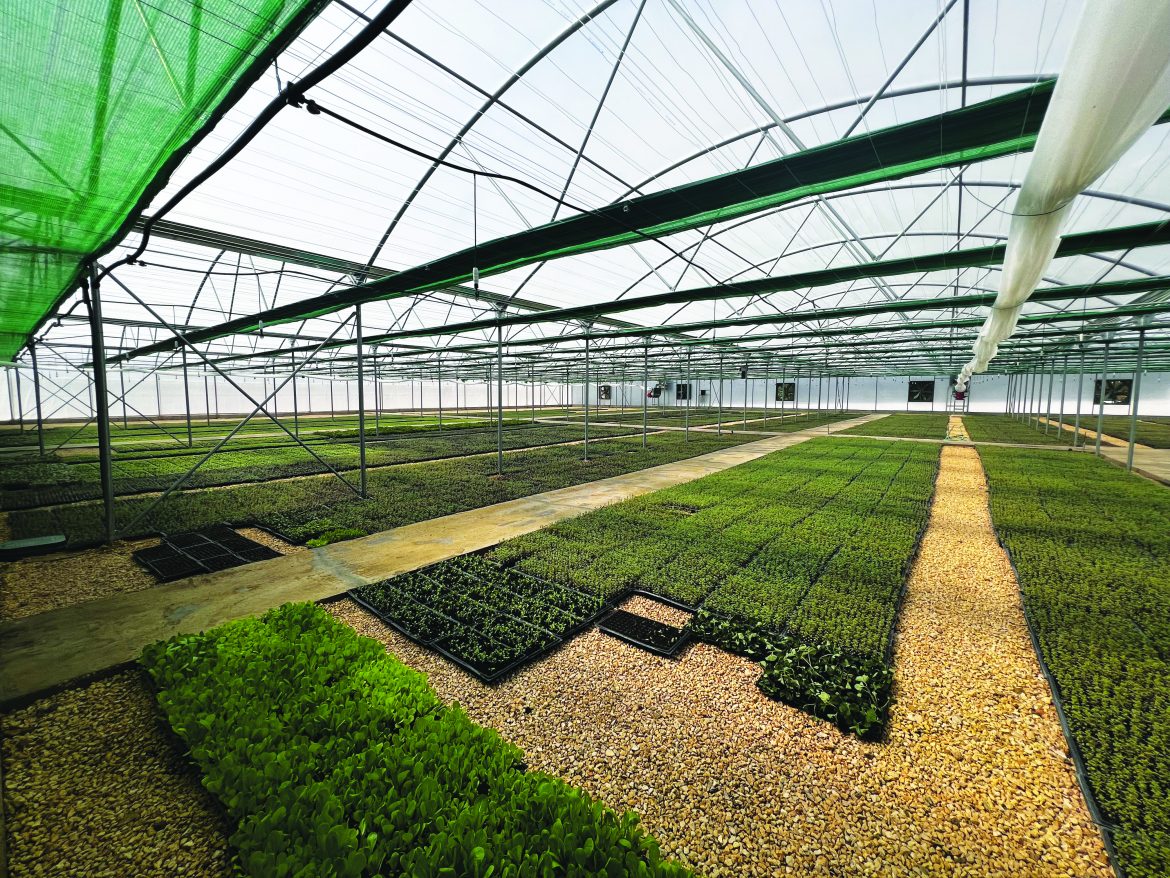
The horticultural nurseries, include a batch of operating nurseries which have to date produced over 2 million seedlings. By the first quarter of 2023, the number of nurseries will be eight, each with projected capacity of around 7 million seedlings per year. “This satisfies around 15 percent of demand, which is significant for us, because this is a pilot project,” Ghadban says. According to him, the first batch of nurseries already provides seedlings at comparable or better quality than those offered in the commercial market, at a price to farmers that is lower by 40 percent when compared with the for-profit market.

They are complemented by crop processing units with equipment for roasting freekeh, or young wheat, and presses for oils and essences. Of the processing units, a pilot freekeh facility has become operational in Yaroun. The investment budget for creation of processing units has been put at $250,000 to $300,000 per SPU and a consultative evaluation of further processing unit establishments between OML and farming stakeholders has been initiated. However, such collaborative decision making is a time-consuming undertaking, Ghadban explains. Both components in the food value chain, the nurseries on the upstream side and the processing units in the post-harvest realm, will operate on basis of a resilience principle by offering their services to farmers at break-even prices, he adds.   

The fact sheet on the OML agro-humanitarian program says that it was launched in 2020, “establishing the beginning of the Association’s involvement in agriculture, after 60 years of presence in the country through its network of community health centers.” [inlinetweet prefix=”” tweeter=”” suffix=””]According to Ghadban, the program was initially devised as a small initiative under the accessibility pillar in the food security matrix [/inlinetweet]and was called agro-humanitarian because it was created in response to a humanitarian crisis in access to food in Lebanon.

From the program’s emergence early in the crisis, it is not entirely clear if OML’s venturing into agricultural system building came into existence in the form of a sound instinctual reaction to the crisis or had a strategic aim from the start, but the key to the entire project is a deep-rooted and long-planning relationship. In developing its SPUs, OML built on both its track record as an operator of primary health care centers in the services to the needy and elderly in rural communities and its partnerships with religious orders, universities and public sector entities.

OML could leverage these bonds of trust and its commitment to building rural resilience into leases for the land plots upon which the SPUs are situated. “The centers will be there for 20 years and all centers were built in partnership with monasteries or public organizations such as [the] Litani Water Authority. The [lands] were taken for free for 20-year leases based on the intention to provide services to farmers at break-even cost,” Ghadban says.

He estimates the values of the plots that were made available for free at seven to ten times the constructed SPU infrastructure, and says the depreciation of SPU assets is calculated on a ten-year horizon. However, he elaborates further that the organization’s efforts under its long-term approach and community presence would not stop if the projects in the current timeline were completed before implementation of a governmental strategy for agricultural development were to commence. 

Clear strategy for the sector

Latest at this point it becomes evident that besides the above cited factors of time, trust, and effort – which in the context of tight farming communities and a cautious rural mentality can be described as core social requirements for winning acceptance – projects aspiring to long-term improvements of agricultural and rural communities will equally depend on a healthy budget, a smart plan, a functional financial and governance infrastructure, and a good organizational infrastructure. “Agriculture needs investment, I mean. [inlinetweet prefix=”” tweeter=”” suffix=””]If you don’t have [funds] to invest, agricultural growth will remain very restricted [/inlinetweet]and be limited to the people who have cash and can invest,” Ghadban acknowledges.

Asked for his estimate on the growth rates and timeframe of an agricultural renewal, he responds: “I would say that giving a time for phasing out of the crisis would be just throwing a number unless there is a clear financial system. But as someone who has worked in conflict areas,[inlinetweet prefix=”” tweeter=”” suffix=””] I cannot see a vibrant agricultural sector in Lebanon unless there is clear orientation from the government[/inlinetweet].” By his reckoning, this will not come to pass before ten years.

The Order of Malta is present cross the Lebanese territory
Source: Lebanese association of the Knights of Malta

The program’s time line illuminates a notable difference in capacity and approach between OML, as a long-term charitable organization, and the comparatively young civil society organizations in Lebanon. All functioning humans are partial to something; ergo, the agendas of success are driven by determined minorities with partisan interests. In the wake of the Syrian crisis and Arab Spring enthusiasm of the early 2010s, many international NGOs and their local units and derivative local CSOs have emerged onto the Lebanese scene, altering the composition and expanding the focuses of the historic sector of charitable, religious, and social welfare organizations that existed before the dawn of the millennium and its United Nations-determined Sustainable Development Goals.

But while often less media savvy and less outspoken on fashionable causes than their international NGO peers, who are concentrating on rights that were drawn up since the Universal Declaration of Human Rights was adopted by UN member states, the religious charities and legacy organizations of goodwill have continued to play constructive roles in care for the proverbial widows and orphans, the sick, the poor, and almost all who have been economically and socially disadvantaged and overlooked by those in power. OML stands in this deep tradition in the Lebanese space and thus is both predisposed and well positioned for the pursuit of a project that is as challenging and slow-paced as agricultural transformation and recovery of real rural economy as a conduit of stewardship and resilience.

“Strategically, agriculture as a sector will be the main sector creating jobs for economic recovery as well as for business recovery in rural areas,” Ghadban opines confidently, pointing out that by adoption a resilience point of view means that free distribution of services and seedlings has to be replaced with services that are provided on basis of break-even prices. 

He says, “Looking at agriculture from a resilience point of view, means the need of addressing the challenges that have existed pre-2019 while taking into consideration the needs of post-2019, through long term approach to change rural communities and make the agricultural system more resilient and feasible.”  
December 2, 2022 0 comments
0 FacebookTwitterPinterestEmail
Food InfrastructureOverviewSpecial Report

Infamous infrastructures

by Thomas Schellen December 2, 2022
written by Thomas Schellen

The future of farming will involve escalations of aquaculture and urban farming. These are ancient forms of food cultivation that are or can be decoupled from soil. As such, they have become increasingly viable and important in a world that has limited resources, while it is populated by billions of humans, in addition to the gazillions of micro-organisms that have always been around as the vast and silent majority of life species. Yet, from the limited perspective of the contemporary human specimen, we still associate the bulk of food production with soil-based cultivation. In this sense, one can think of land as the ultimate infrastructure of agriculture, the prefix “infra” meaning that what is beneath.

However, for our human ability to feed ourselves in the billions, rich soil that is able to guarantee subsistence to those who work it does not suffice as agricultural infrastructure (otherwise Lebanon with its soil and accommodating climate and microclimate situation would be one of the most food-secure areas on the planet). Agriculture in the 21st century involves and depends on a range of interconnected infrastructures, hard ones and soft ones, or in broad terms, on systems for the economic and sustainable production of food as physical and mental assets.

The overriding problem of agricultural infrastructure in Lebanon is the impact of the economic and social crisis in its manifestations of power cuts and water supply shortages. This combination of high cost and insufficiency in the most basic supplies is as debilitating as it is obvious for households, but it is also extremely bad for agriculture. This is because demand increases and supply bottlenecks for water, energy, and food can translate into destructive synergies where high demand for energy – a top resource needed in food production – and high demand for water, also a leading input – endanger food supplies and make food prices balloon.

High demand for food likewise can translate into price increases of water and energy, in a triangle of interdependence where agriculture and food production gobble up water and energy (according to some reports to the tune of 69 percent of global fresh water consumption and 30 percent of global energy consumption). At the same time, [inlinetweet prefix=”” tweeter=”” suffix=””]energy production requires massive water inputs, and some forms of water production are highly energy-intensive.[/inlinetweet]

Not accounting and strategizing for what is known as the Water, Energy and Food Security (WEF) Nexus exacerbates the interconnectedness of water, energy and food production and can transpire as a fateful cycle of negative interdependence. In Lebanon’s case, understanding the WEF Nexus gives us the reason why the economic shocks of power cuts and the high cost and low availability of water translate into problems with food security. And that is even without mentioning other cost boosters, such as the suboptimal means of transportation and bad roads.

Delivering food to the markets

Getting food to the people in a market economy requires logistics and the expense of transportation costs. Spiking fuel costs are reportedly responsible for more than 12 percent of product prices on supermarket shelves (see interview with the director general at the Ministry of Economy and Trade in Executive’s special report on Food Security in Lebanon). But the transportation infrastructure dilemma is not only domestic, nor is it limited to a function of the fuel price shock that was generated by the withdrawal of socially and economically detrimental fuel subsidies.

The transportation problem for export-seeking agricultural and agro-industrial producers has historically extended to underperforming export infrastructures, most notably the vital port operations. Since 2000, container terminal construction and its development under a private operator at the port of Beirut actually was improving incrementally to a level of comparatively high performance, until the 2020 catastrophe of the port blast.

Although the blast did not impact the container terminal as badly as other portions, while a partial recovery of the container handling capacity was achieved within days and expanded over the following months, the loss of capacity was immense. This relative added cost burden on exporters, many of whom are agricultural and agro-industrial producers, has actually recently been measured in the performance rankings of container ports around the world.

A comparison of the World Bank affiliated Container Port Performance Index (CPPI), which covered over 350 large, medium, and small container ports, the port of Beirut’s CPPI position in the inaugural report of 2020 was very respectable, by a metric called administrative performance that saw Beirut in 66th place worldwide. Under a second, and perhaps even more relevant metric of statistical performance, Beirut’s container terminal even ranked near the top of the world – in 11th place out of 351 measured ports.

That, however, is history. In the 2021 CPPI, which was released earlier this year and is based on performance values in the year 2020, Beirut’s position collapsed to 356 out of 370.  Some ports in North America and Africa performed worse – the Los Angeles and Long Beach port pair were the worst of all container terminals due to pandemic-related disruptions; reasons for the bottom performances of several major African ports were alleged by African and international media to point towards corruption.

But the blast-hit Beirut port was the worst performing container operation in the Europe and Mediterranean region for the whole year. The CPPI ranking of Tripoli port, classified as a small operation by global throughput versus Beirut port’s medium size, also deteriorated but by a much smaller margin, slipping from positions in the 60s and 70s, to positions in the 90s. 

The performance of a container port is a major influence on the cost of shipping. This means that agricultural exporters in developing countries will see their international competitive positions suffer because of bureaucratic hurdles, and worsen further if the infrastructure in their main national ports is enmeshed in corruption.

Problems of corruption and bureaucracy were obviously not the factors that devastated Beirut’s container handling performance in 2020. But one has to assume that the steep slide in performance did add to the other cost drivers that agriculture and agro-industry has had to cope with; impediments that will persist over the term of several years, even if the CPPI performance values of Beirut port in the coming years will not remain as depressed as they were in 2020.

The granular picture

In the emerging post-crisis economy of Lebanon, one can also detect improvements of agricultural infrastructures. Springing up as renewable energy installations in rural areas, these improvements appear as evidence of agriculturalists’ coping practices in the short term but more importantly, they are promising with regard to the long-term sustainability transition of the sector. Renewable energy deployment, a prime requirement under a constructive strategy for taming the WEF Nexus and a core need for better management of climate risks in the decades to come, has in the past two years not been happening under governmental master-plans. [inlinetweet prefix=”” tweeter=”” suffix=””]Renewable energy matters existed before the economic crisis, but were aborted [/inlinetweet]and for now can be judged with skepticism until they are fully and finally implemented. The overwhelming visual evidence can be seen during any excursions into rural Lebanon in the form of new solar photovoltaic (PV) installations and even the occasional wind turbine.

Moreover, renewable energy statistics by the Lebanese Center for Energy Conservation (LCEC) – a rare institution in that it has maintained a high profile of awareness building and apparent transparency – show that the increase in deployment of solar PV capacities in the past year has been the strongest in the agricultural sector, when compared to industrial, commercial, and residential sector deployments. Accounting for 17 percent of last year’s added total solar PV capacity, the agricultural sector leapt, according to the latest LCEC State of Solar report, from 10.33 to 15.57 megawatts peak.

New solar PV installations were implemented in all sectors, to an extent of an estimated increase – from the 100 megawatts that had been implemented in all of the preceding decade – by over 100 percent in 18 months from the beginning of 2021. This increase in renewable energy capacities happened with such speed because of the pressures of a vanishing state electricity supply. In the agricultural sector, informality is considered to be the highest among all economic sectors, and exceeds 80 percent. This could be interpreted as an example of the agro-sector need to replace Electricite du Liban’s power supply, which has led to renewable energy capacities being installed even beyond the measurable context of the formal economy, though not always in line with highest standards nor top efficiencies in solar electricity generation.

Such vagaries pale, however, against the certainty that in the past two years a litany of promises for an improved state supply turned out to be hot air. Public sector promises have lost every last ounce of credibility and the economic pressure of having to replace the absent supply seems here to stay, giving reason to think that decentralized renewable energy in rural economic use will grow stronger in the future. For the recklessly daring, there can be the additional hope that Lebanon, as a renewable energy republic, can achieve further dramatic improvements when utility-scale solar farms are finally realized, which would allow the impoverished population such luxuries as widespread usage of fridges and electric lighting, while simultaneously the country would be delivering on its Nationally Determined Contributions to climate risk mitigation under the United Nation’s COP framework.

While nurturing such dreams, the positive renewable energy perspective still cannot detract from the shadier reality that the problems of agro-food sector infrastructure do not end with transportation, export systems, and WEF Nexus problems that have been amplified during the past three years. There are also problems with hard infrastructures specifically for the agro-food sector. For example, deficiencies in the supply of cold storage facilities and lack of sophisticated agricultural equipment for harvesting and transporting crops at maximum levels of efficiency and quality preservation. This deficiency, according to farmers and agro-experts, impairs values of anything that is grown from bananas and citrus fruit in the lowlands, to apples and cherries that thrive, against an international comparison, at high elevations.

[inlinetweet prefix=”” tweeter=”” suffix=””]Stakeholders in the agro-food sector further testify to inefficiency, inactivity, and undersupply when it comes to testing labs and research facilities.[/inlinetweet] Likewise, on the supply end of the food value chain, seed banks and nurseries need to be developed much further. In the matter of the most needed and potentially most useful agro-industrial infrastructure, special economic zones for agro-industry or any other manufacturing industry can be spotted in the Bekaa valley. And, to name just two examples of downstream holes in the food value chain, the producers on the farms are forced to contend with a systemic lack of fair and efficient market organization, at the level of distribution and wholesale.

This entire anti-system of dysfunctional infrastructures, which in soft infrastructures also includes paucity of vocational training, lack of insurance, historical under-investment and since the economic crisis completely insufficient access to capital, is too vast and too fragmented to be the result of some powerful conspiracy. The anti-system also is far too deeply entrenched to have been produced by the economic crisis of the past three years – which, by the way, had the ambiguous function of exacerbating the woes of agriculturalists and agro-industrialists, but at the same time opening new economic opportunities to agile stakeholders in the agro-food sector.

Digging up the GDP evidence

Short-term comparisons of agricultural export data between 2019 and 2021 show strong increases when seen through the lens of an internationally funded initiative called Business Innovation and Enhance Exports for Lebanon (BIEEL). Predicting an expansion of agro-food exports of products “in BIEEL scope” – covering live animals and animal products, vegetable products, prepared foodstuffs, beverages and tobacco, and animal or vegetable fats and oils – by $50 million at the end of 2023 in comparison to a 2019 baseline, the initiative said that exports in these four categories showed an improvement of $387 million: from $627 million in 2019 to $1.01 billion in 2021, a 62 percent increase.

However, BIEEL conceded that exports in the category of prepared foodstuffs experienced a juxtaposition of decrease in volume and increase in value. It also acknowledged that export achievements to EU markets have been limited by qualitative and quantitative restrictions and noted that 50 percent in agro-food exports in 2019 went to a total of seven countries, four of which are in the Gulf region and two in the Mashriq, with the geographic destination outlier being the United States.

While promising as indications of agro-food export potentials, such short-term numbers may be questionable from sustainability and data integrity angles. They also reveal little to nothing on the background and role of infrastructures in the sector’s efficient and sustainable performance of churning out agro-food products and delivering them to domestic and international markets.

Digging into the history of the Lebanese pre-conflict, conflict, and contemporary post-conflict economy uncovers how the present weakness of dedicated agricultural infrastructures appears to have been caused by the preoccupations with the development of mercantile services, especially financial intermediation. This is the known mindset of the post-conflict period of the 1990s which has lingered since reconstruction, and illuminates but does not explain the degree of attention that was withheld from the agriculture sector. This disregard for real economy can be traced through things such as budget allocations, investments, and the contribution of agriculture to the GDP.

The contribution of agriculture to Lebanese GDP shows a somewhat counterintuitive trajectory for a country that is part of the global south. The trajectory seems more congruent with a small and ambitious services-driven economy that has somehow not succeeded to break into the top ranks of upper middle-income countries. But perhaps the fluctuations in the Lebanese Gross National Agricultural Product (GNAP), as displayed in a paper authored by Riad Saade, the founding president of the Centre De Recherches et d’Etudes Agricoles Libanais (CREAL), have to be seen firstly in the context of a country that was at an epicenter of regional and geopolitical tensions during the Cold War, while also being situated in a bridge position between overdeveloped Europe, struggling Africa, and rapidly developing Arabia.

CREAL numbers say that between 1962 and 1966, the GNAP of Lebanon increased by 48 percent. This was during a period when agricultural productivity in developed countries was progressing by scientific leaps and bounds, due to the introduction of new farming techniques and high-yield crop varieties (wheat, rice, maize, and others). But shortly thereafter, at the time when crop yield transformations along with corporate dominance over agriculture were spreading from developed countries to emerging markets in the late 1960s, Lebanon seems to have experienced a phase of stagnation or stabilization. For several years before the outbreak of internal conflict in the mid-1970s, Lebanese GNAP remained approximately at the 1966 level.

From the mid-1970s, during Lebanon’s cantonization over 15 years of externally induced, internal conflict, the contribution of agriculture to GDP seems to have reached output levels never seen before or after. But in the waning years of the Lebanese conflict, GNAP crashed in 1988, leading Saade to conclude in his writings that destruction of the agricultural sector was taking place during the war. Indeed, a comparison of GNAP in 1988 against 1976 shows a significant drop, despite the peaks of the intervening years when agro output appears to have been easily twice that seen in 2002 or 2004.

The GNAP performance in the post-conflict decades has been fluctuating, with agricultural performance perhaps being in line with the volatility of GDP growth for the country overall. There was a relative peak in GNAP in the first part of 2010s, a crash in 2020, and a chaotic situation thereafter. The post-conflict period saw a country with population growth that was below that of many other emerging markets, especially that of large neighbors such as Egypt, Yemen, Syria, and Iraq. Against this subdued demographic development, Lebanese agriculture approached a societal position emulating those seen in developed markets, but without the very high agro-food sector productivity gains seen in Western Europe. In summary,[inlinetweet prefix=”” tweeter=”” suffix=””] agriculture was clearly playing a lesser and lesser role in the priority lists of Lebanese political and economic decision makers when compared to services and financial intermediation.[/inlinetweet]

The state’s relative disinterest in the achievement of agricultural productivity increases apparently affected both agriculture and agro-industry, which aligns with the narrative that all manufacturing industry during the post-war years was handicapped by increasing comparative disadvantages when compared to peer countries. On top of internal and regional economic and policy competitiveness impediments of all industries, the public administration and institutional integrity of Lebanon were sinking into patterns which were increasingly bad for doing business.

Corruption either had been present since Ottoman Empire days or crept in during the late 1960s, followed by bad institution building and bureaucratization, which in turn preceded the total absence of effective public administrative power from the agro-food sector in the 1970s and 80s, and into the 90s. “Since 1992, the launching year of Lebanon’s reconstruction, and until today, in 2021, the Lebanese agriculture has been literally ignored by the state of Lebanon and even considered as unnecessary by certain political currents,” Saade opined last year.

According to his more recent introduction to CREAL’s report for agricultural production in 2021, last year saw farm gate prices influenced adversely as well as advantageously by factors ranging from good harvests in Lebanon to a crop crisis in Syria which restricted outflows of produce to Lebanon. The combination of “random export markets” and demand conditions that were “shamefully exploited by the domestic wholesale markets” increased the sector’s fragility, Saade lamented.

Although the value of crops in agriculture improved by 19 percent between 2020 and 2021, they remained, according to CREAL, below the valuations achieved in 2017, ‘18, and ‘19. On the side of animal husbandry, the results in 2021 remained on a worsening trajectory, with a 35 percent loss over 2020 and a halving when compared to 2019. “This affected all sectors from poultry to cattle, sheep and goats. Only beekeeping benefited from an exceptional year in 2021, confirming the economic and biological importance of this production,” the organization’s yearly report on Lebanese Agriculture for 2021 said. In terms of total value of production in crops and animals last year, it stated a contraction of 8 percent and a continuing downward trend.

A good percentage?

It is anyone’s guess if agriculture will rise in the wake of the economic crisis to contribute more than the current 3.1 percent to the Lebanese economy – which must be assumed to have a very significant margin of uncertainty due to the informality in the sector. It is also anyone’s assumption what would be an optimal level of agricultural GDP for this country with all its historic and current contradictions and peculiarities.

There are 183 countries for which official but not necessarily perfect data for the role of agriculture in GDP – given the intrinsic weakness of the GDP gauge and the substantial presence of informality in agriculture that exists not just in Lebanon – is easily available. Among these 183 countries, the average contribution of agriculture to GDP is 9.9 percent (world average) and the median value, with half of the countries above and half below, is 6.4 to 6.5 percent.

Developed countries – whose populations may have suffered in their cultural integrities more than recognized in their decoupling from their agrarian and pastoral roots – are mostly in the approximate third of countries that show below 1 percent of agricultural contributions to GDPs. Some of the countries that achieve between 10 and 60 percent of GDP through agriculture, are tragically unable to feed and give decent livelihoods to all their people. Could there be a sweet GNAP spot, perhaps located somewhere between the global median and average rate for the ratio of agriculture to GDP?

The questions and collective human survival challenges that underlie the quagmire of what an optimal agricultural contribution to GDP might be, are related to the latter two-thirds of the word “agriculture”. [inlinetweet prefix=”” tweeter=”” suffix=””]Societies have to define what structures they want to exist in, and how far the “culture of the field” should take precedence [/inlinetweet]over patterns of behavior that are detached from the land through a breakdown of societal communication in traps of digital anonymity, and the embrace of virtual dreamscapes fraught with dangers of isolating people from their social contracts and existences. All the while, globalized man is still caught up in old blind races for economic growth in industrial and also agricultural outputs which have contributed massively to the need for 21st century climate action and correction attempts. 

Irrespective of the many infrastructure barriers that exist, the agricultural and agro-industrial landscape of Lebanon has been marked from the beginning of the crisis years with entrepreneurial energies (an energy that is not subject to the WEF Nexus dilemma) in well-established agro-industrial minds and a vibrant startup scene concentrated in highly visible innovation centers that have been supported by international networks, away from dependency on the whims of corrupt bureaucracies, dysfunctional institutions and an impotent state. How innovative agriculturalists, agro-industrialists, and vibrant entrepreneurial startups will prevail against rising global challenges is impossible to predict.

But even if they evade climate disaster, corruption and systemic perils, a wide-ranging infrastructure reboot is a change that has to come. This departure from the old system has to involve the state as a stakeholder and large international enterprises and accountable state-owned enterprises, and joint venture companies in the construction of strategic infrastructure assets from utility-scale renewable energy plants and strategic new grain silos, to distinct facilities such as functioning labs and affordable warehousing of harvests. It is the move from the infamy of an infrastructure that consists of nothing but gaps, to one that can carry agricultural production and reduce unnecessary losses of food.  

December 2, 2022 0 comments
0 FacebookTwitterPinterestEmail
Food securityLeaders

A declaration of interdependence

by Thomas Schellen December 2, 2022
written by Thomas Schellen

Language becomes a tool of fools when it simplifies complex systems and developments into slogans such as democracy and revolution. One blatant case of language confusion that today dogs many discussions of food security in a worldwide context, is the depiction of hunger as a sudden global crisis that needs to be tackled with grand politics and tools of international diplomacy.

The alarmist use of terms like the “global wheat crisis” and “international food crisis” runs afoul of the contradictory evidence of previous complacency over food wastage, and threats of food insecurity around the world. Moreover, the sensationalist and political grandstanding seen in the past few months contains the danger of chasing quick fixes for politically useful food insecurity.

Fixes that remove artificial barriers to exports by warring parties and throw money at balance of trade disruptions can address the moment, but will in all likelihood fade in the next year. The politically and economically hyped wheat crisis of 2022, having turned into yesteryear’s narrative and exhausted national attention spans, will then distract from the need to tackle the deep-running climate, conflict, food distribution and utilization challenges which are entwined with the coming winter’s predicted famine in parts of Somalia. And that is without considering the persistent problems in equitable production of food in a world that is, according to United Nations’ (UN) projections, heading from being 8 billion strong at the end of this year towards a global population of 9 billion around 2037.

On a smaller scale, this dilemma of juxtaposed, unresolved, systemic problems and overemphasized temporary factors plays out as its own drama in Lebanon. When compared to fears over the availability of food, which appeared to have been aggravated by sudden new barriers to the importing of Ukrainian and Russian wheat (including speculative price peaks that railed global commodity food markets during this summer) and by the loss of the silos at Beirut port, the politics behind the domestic social safety net design, and the depreciation of the Lebanese pound, continue to be the major driver of food insecurity in Lebanon. These problems have been ignored either deliberately or incompetently but, in any case, recklessly.

Lebanon is a tiny but fertile country. The incongruence between historic reality and inflated problems of food insecurity today is another, more serious contradiction of note. Tiny countries can have huge problems in comparison to their demographic or geographic scale. But as long as they are properly run, tiny countries are good at developing solutions for their own problems.

Taking Lebanon as a system and man-made paradigm rather than a territory, this polity is equipped, or one can say cursed, with a governance system of questionable provenance. Today, the Lebanese governance system is rooted in an imperially and colonially malformed past, and in recent decades has deteriorated into a discordant anti-system of state organization.

Territorial reach is an important component to land and sea-based food production, however. Lebanon is an intriguing case of systemic behavior, but still a very small country. It is the 37th smallest among almost 200 countries, not counting unresolved or partly autonomous territories. Both aspects, the systemic and territorial one, have consequences for national food security.

When engaging in as much international discourse about food security as affected stakeholders, like how the public in Lebanon and Executive are doing this year, profound changes of food systems in national economies and a targeting of global food sovereignty have to be put on an emergency action agenda which also includes the management of increasing intra-national and international conflicts, as well as inequality and mitigation of climate risks.

Food, in this context, is both a crucial base for human sustenance and perhaps the most powerful agent of constructive transition available to mankind. But this transformational power has to be understood and used without ideological partisanship, beginning from the terminology attached to food and agriculture.

On a conceptual level, it defies conventional wisdom to speak of the revolution of anything in an agricultural context. It is a misnomer, but also seems unhelpful for thinking about the path of future agricultural transitions when past centuries’ ideological framing of scientific research have labeled long periods of gradual innovation and transitional development in the system of agriculture as “revolutions”, even though they are changes that are organic in every sense of the word. Consider the “first agricultural revolution” with its 20th century host of associated theories, the so-called Arab and British agricultural revolutions, or the last century’s “green revolution” that occurred under the increasing grip of corporatized cultivation of soil, and the degradation of diverse rural cultures of soil-based tribes and families.

Interacting with the seasons, the land, and nature’s inputs, plus investing the human labor needed for agricultural productiveness, is a fundamentally conservative act – in the sense of ‘conservare’, the Latin verb meaning “to keep safe” or “to preserve”. Revolution expresses the very different intention of rolling back a status quo perceived as failed; it is the act of turning everything and nothing around, whatever the cost and violence that comes with it.

Food sovereignty 

For the purpose of a better discussion on the integrated future of agriculture, in a global system of human physical and mental sustenance on the level of a species that has created the Anthropocene, let us discuss what might be called planet-wide food sovereignty; the world-encompassing achievement of food security with all that it entails, implemented by a global network of interdependent national food systems.

Then let us discuss democratic food sovereignty. Drawing on definitions devised earlier in this century, this refers to the right of peoples to define their own food system and agriculture: the system of producing and making accessible culturally rooted and ethically accepted food on the level of a clearly defined national or sub-national realm, while maintaining respect for nature through the use of ecologically and economically sound, sustainable methods.

Thinking of the more than six million people who have made their home in this country, let us propose that Lebanon needs a micro-to-macro “agroconservalution” aimed at food sovereignty. This is to declare that a solution in agriculture and in food system construction on the famously fertile Lebanese soil would never be a revolution, but more of an incremental series of interconnected innovations and system building.

The neologism proposed here is not seeking to enter the dictionary as much as it wants to be a reminder for the harmonization of conservation (“conserva”) and revolution (“lution”), or actually innovation in a holistic management of everything, “agro”.

A Lebanese food security solution would be microeconomic; from an entrepreneurial ground-up sense, with digitally advanced startups and initiatives that are found along the entire food value chain, from inputs to production, to testing, packaging, branding, marketing, distribution and equitable social access. For better micro interaction with the supply side, Executive calls to elevate building awareness for agro-food entrepreneurship among the public.

Even more importantly, we ask for higher awareness and attention from economic and policy decision makers. From the rise of freekeh as a Lebanese superfood, to the potential for biomass utilization, there are many emerging subsectors of the agro-economy which warrant such attention.

In suggesting an effort among the private sector for improving awareness and market access, [inlinetweet prefix=”” tweeter=”” suffix=””]Executive calls on retailers, especially leading supermarket chains, to promote domestically produced processed foodstuffs,[/inlinetweet] and donate prominent shelf space and awareness campaigns to small local producers and quality food processing startups.

The new food security solution has to be macroeconomic in equal measure. This could be achieved, if the state, as partners in a new real economic focus, was achieving regulatory and supervisory diligence, and finally providing strategic support to food security by governmental entities that work in a synergistic concert.

Instead of asking for another internationally funded and conducted study, or presenting projects with high corruption risk, or devising the third or fourth iteration of an agricultural strategy that is overflowing in the right words and underwhelming in presenting budgetary possibilities and all numerical assessments, a homegrown consolidated environmental, cultural, agro-industrial, and agricultural strategy is in order.

The insufficiency of public systems underlying food safety and upholding food security targets was evidenced this autumn by the cholera outbreak. It made for an epidemic that was avoidable, considering cases were heaviest among population groups who could least protect themselves by using simple means of hygiene and uncontaminated water because they cannot access such luxuries.

To sum up the idea of “agroconservalution”, micro and macro solutions such as above would be constituent components of global food sovereignty in alignment with the understanding that nations’ contributions to international peace are not achievable by striving for preeminence with economic, military or political means, but by seeking to contribute to global self-sufficiency at a time of new challenges of planetary proportions.

On the national scale of Lebanon, a new key performance indicator of “agro-conserva-lution’’ would be agro; in the sense of comprising agricultural, agro-industrial, and food industry stakeholders in hospitality, delivery, and humanitarian services. It would conserve; rebuild and improve soil and social and economic structures of an historic small-holder rural system and the famed Lebanese culinary tradition and healthy diet. It would change; radically from the roots up – innovate primary, secondary, tertiary, and vocational agro-sector education, rural inclusiveness, access to finance, social safety, interaction with markets, and most of all the legislative approach and real-economy mindset of the state.

The change and innovation trajectory from the short term onward would include continued expansion and diversification into specialty production segments from wine and goat’s cheese, to healthier alcoholic beverages and high-in-demand organic fruit and vegetable preserves, to herb and spice mixes. It would be a fitting dream for a country that has nothing to lose but the abysmal dysfunctionalities of its previous governance and economic systems.

December 2, 2022 0 comments
0 FacebookTwitterPinterestEmail
Editorial

Handout culture

by Yasser Akkaoui December 2, 2022
written by Yasser Akkaoui

It is bewildering to watch international humanitarian organizations donate food packages to Lebanon – the Middle East’s most fertile lands. One can only wonder: What prohibits the Lebanese from investing in the richness of the land under their feet and enjoying the abundance it can produce? 

I can still remember how amazed I was watching the harvest in Marjeyoun’s fields as a child when visiting my grandparents in the summer. These valleys used to feed more than thirty-five villages located around them, and more. Today, these same valleys are left uncultivated and neglected. Worse, the whole ecosystem that used to exist no longer exists; the cultivators, the harvesters, the flour mills, the olive presses, the colorful wholesale market and of course, the entrepreneurs who introduced innovative techniques to increase and improve the crop.

Since Lebanon’s independence our top-heavy and rentier minded government system has favored the capital, as well as the hospitality, tourism and services sector over the primary industry. With agriculture having been denied attention over three successive generations, the rural to urban migration boosted the services sector and increased jobs in the city, but precious agricultural knowledge was lost. Almost nobody cared, however, because the urban demand for cheap food was filled with produce from neighboring Syria and imports from more distant lands – a structure that over time contributed to the negative balance of trade and compounded in an economic loss for Lebanon. 

But even this imbalance was not something that the state cared enough about. Negligence in meeting international export standards has been exacerbated by the unhindered smuggling of drugs under cover of agricultural produce. This loss of elementary protection against abuse got a telling monetary value attached to it when Saudi Arabia banned the import of Lebanese agriculture products to its market in spring last year. The Lebanese food industry suffered an estimated $370 million market loss.

Many argue that the crisis triggered the revival of the sector. This renewed interest in the land can be considered as an awakening; one that is fueled by private initiative, promises safety and security, but threatened by greed and malpractice. 

On the pages of this issue, we take a deep dive into the good, the bad, and the vast spectrum of opportunity that could become of our home-grown reborn sector with the hope that one day we will maybe reach food safety and security. 

December 2, 2022 0 comments
0 FacebookTwitterPinterestEmail
Food securityPhoto EssaySpecial Report

On the value of Lebanese olive oil

by Thomas Schellen & Marc Fayad November 17, 2022
written by Thomas Schellen & Marc Fayad

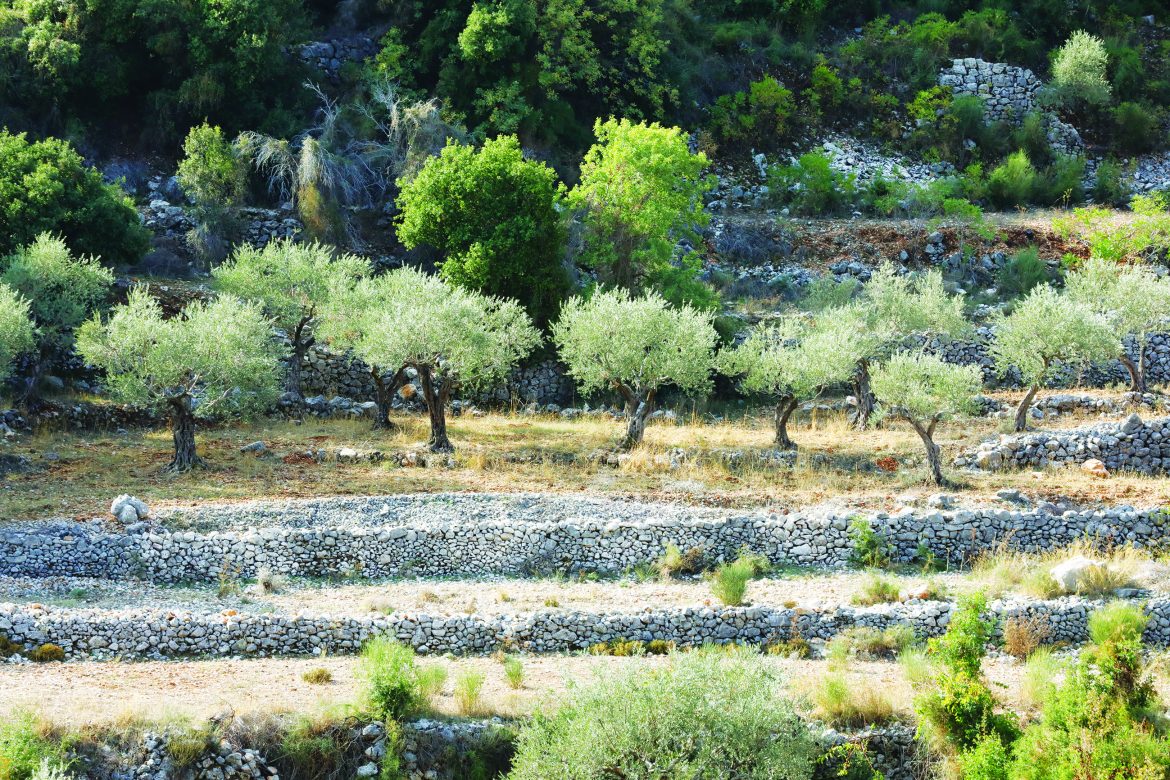
Olive trees have their homes around the Mediterranean Sea. Britannica says they are cultivated commercially in two world-spanning climate belts between approximately the 30th and 45th latitudes North and South. Hundreds of varieties have been recorded and are grown for table use and olive oil production. For increased fruit bearing productivity, varieties are subjected to human involvement in their propagation, yet have spread across borders without prejudice of nation or race. Northern olive farmers tell Executive that the number of extant varieties in Lebanon and their ratios per growing region are not known but say the small and resilient local “Airouni” variety coexists in the same groves with Italian and Spanish peers. For our photo essay, Executive photo journalist Mark Fayad visited groves in Chabtine (above), Kfifan, and Kfar Helda in the hills east of Batroun. The operational base of olive oil farmer Rouhana Bassil, who was interviewed for this essay, is in the village of Smar Jbeil.    


Many parents involve their school-age children, treating the orchard as the classroom of life and perhaps telling their offspring that backbreaking work is fun

Seasonal laborers have arrived for the harvest. Women and men work in teams that divide the labor between shaking fruits from the trees, and picking up and bagging the olives from tarpaulins spread out beneath the trees. 


Men with harvesting tools – the mechanized shakers seen here – command the higher daily compensation rate of LL400,000, or around $10/day at the parallel market exchange rate in October/November 
Gathering the fruits from the tarpaulin 

A harvest season tends to be around two months long per growing region and requires six to seven hours a day of strenuous efforts. According to farmer Bassil, the compensation is between LL350,000 to 400,000 per day during this season. 

The sorting of the fruits from the chaff

he post-harvest processing of olives takes place at one of several presses that are distributed around the villages. Presses are commercial operations. Some of the presses in the Batroun district are operated for the sake of the farming communities by non-governmental organizations such as the Rene Moawad Foundation or by monasteries, of which the region is rich. Religious entities also own much of the land cultivated with olive trees, and Bassil says he prefers harvesting from those lands, because the monks care well for their trees and refrain from using pesticides.

Presses do not all employ the latest technology but functional in the second stage of cleaning the fruit before crushing them into a fine mesh that includes stones and fruits. 

The mesh is called khouwass and generated by an olive mill that exerts pressures of 200 tons. It is spread out mechanically on a mat (above). During the oil extraction preparation stage, the khouwass is traditionally layered into mahbass towers of mesh sitting on round mats (top right).  

This steady stream of olive oil still contains residues in varying shares. The first oil that is extracted from the mahbass without prior additions of chemicals or without heating might be marketed as extra virgin once it arrives in a gourmet store, but as it runs into a water-filled basin used for separation of oil and residues, labels such as virgin and extra virgin are just marketing mumbo jumbo. Nonetheless, the cold pressed and organically produced oil is liquid health with low-carbohydrate, high-monounsaturated fat content and anti-inflammatory and anti-oxidant properties.  

Modern equipment is good for the production of quality oil and used by farmer Bassil in his own workshop for further refinement of the oil that comes from the presses. Bassil bought Italian-made machinery made from stainless steel, which he says lasts for “a very long time”. He regards it as more reliable than domestically manufactured equipment and uses his equipment to reduce the residue content of his oil by a further 500 grams per 16-liter batch, before it is ready for sale. Bassil’s family has been in the business for more than 30 years, and he retains a personal, religiously informed perspective on the value of the olive tree and its fruit. “Jesus prayed in the olive grove and one of our rituals as Christians on the feast of Shaanine is to hold olive branches. This makes me feel that this tree is God’s great blessing and I love it.”

November 17, 2022 0 comments
0 FacebookTwitterPinterestEmail
Food securityQ&ASpecial Report

The official trade and security angle

by Thomas Schellen November 16, 2022
written by Thomas Schellen

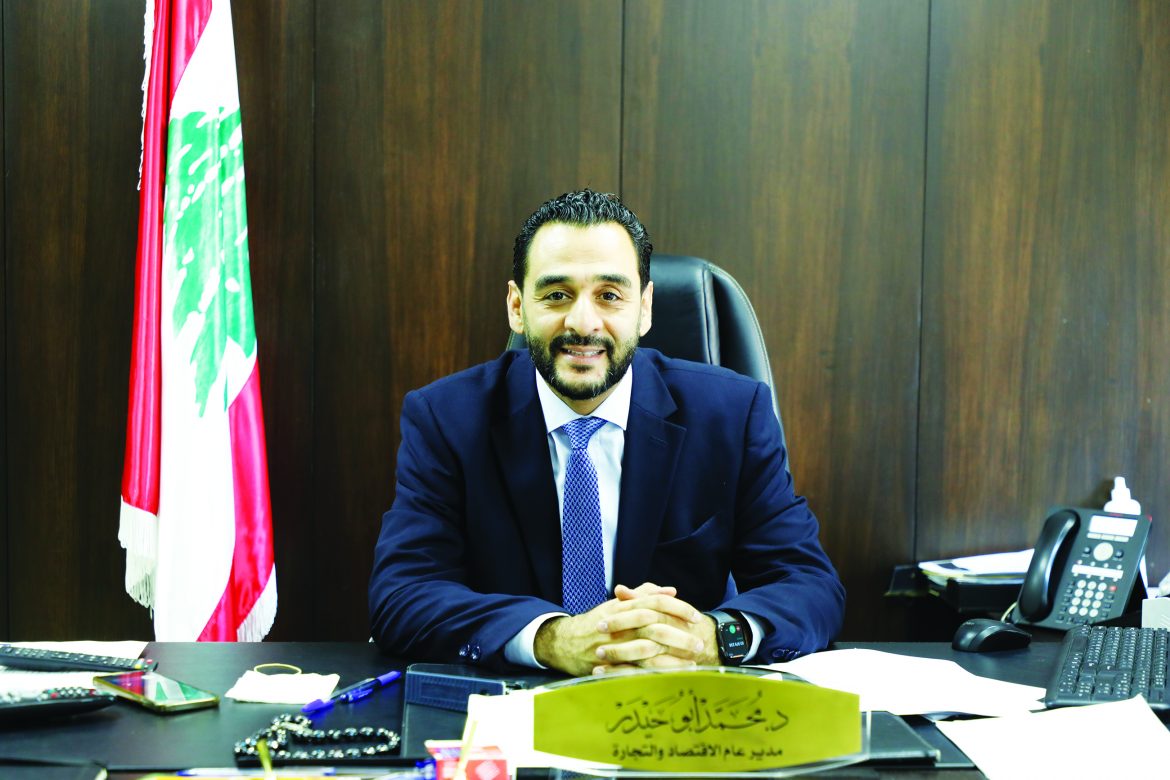
Along with other ministries, the Ministry of Economy and Trade (MoET) constitutes the administrative framework of enabling institutions for food security in Lebanon. To understand the MoET’s recent initiatives in promotion of agro-food exports, the ministry’s strategic approach to food security, and its ongoing activities relating to agro-industrial enterprises and entrepreneurs, Executive sat down with Mohamed Abou Haidar, the general director of Economy & Trade at the MoET. 

E  The 2022 edition of a leading European trade show, the SIAL International food exhibition held in Paris in October, included Lebanese participation. Is it correct that you have participated and have been promoting Lebanese agro-food sector exports at this trade show?  

Yes

E  What is the Ministry of Economy and Trade doing to promote agricultural and agro-industrial exports in this ongoing phase of the Lebanese recovery process?

Besides SIAL, we have also participated in Expo Dubai for six months, and I need to recognize the efforts of the Dubai government who provided the pavilion to us. There were more than 900,000 visitors to the Lebanese pavilion. Among other sectors, such as IT startups, Expo Dubai was a hub for the Lebanese agro-food, especially noting that the Lebanese cuisine is very famous in the GCC countries. At SIAL Paris, Lebanese industrialists [were organizing a Lebanese pavilion] in collaboration with NGOs such as René Moawad Foundation and [Business Innovation and Enhance Export for Lebanon program] Bieel Fairtrade. Also in collaboration with the Ministry of Agriculture, and the Ministry of Industry, and the Ministry of Economy and Trade, we provided this pavilion to the Lebanese [food industries] in order to enhance exports to the EU. We did this since we can assure that those [agro-industrial products from Lebanon] are now up to standards of quality, [such as] the standards of the Codex Alimentarius (international food standards of the FAO/WHO, ed.) and the Libnor standards. These products of good quality were [at SIAL] and we [organized business to business] meetings for importers and exporters. This is because Lebanese importers can find a different diversity of products, and we believe that competition corrects the price. It is a good opportunity for [importers] to get a diversity of products in very good quality and very good price in order [for import products] to be available to the consumers in Lebanon. So we have two situations, [one] to enhance exports and get fresh dollars into Lebanon, and at the same time [the opportunity] to enhance diversity for Lebanese consumers. 

E  After the initial collapse of the Lebanese economy over two years ago, the hot topic debated in relation to food imports was substitution of imports by local foodstuffs. Importing opportunities had been getting scarcer because of the implosion of the Lebanese purchasing power and sudden payment obstacles. But when one exports for example potatoes, the consumers in the country will not be able to eat them. From your perspective, how should we evaluate this relation of imports, exports, and substitution? 

As you know, 86 percent of our food is imported. At the same time, after the crisis, due to the [depreciation] of the Lebanese currency and the decreasing of the purchasing power, most of the [agro-industrialists] in Lebanon are trying to export, in order to recompense for what they may be [supplying at a loss] in our country. They are trying to recompense [their heightened local costs], especially if we take into consideration the high cost of fuel. [inlinetweet prefix=”” tweeter=”” suffix=””]The direct cost on food is now between 12 and 14 percent – and this is unbelievable. [/inlinetweet]

E  So out of each 100,000 lira that consumers have to pay in the supermarket, there are 14,000 lira that go to transport and fuel?

That’s it. Thus the industrialists try to export in order to get the fresh money, in order to import raw materials, and at the same time in order to [retain] the families [and] workers who are still working in their factories and industries. As we know, some of them have left Lebanon.

 E  In talking about ratios of agro-food exports in relation to imports and the promotion of Lebanese exports, were there actually any exporting contracts that were signed between the Lebanese and foreign importers at the SIAL or EXPO time? 

This is a private sector [issue]. We did the B2B meetings for both of them and we left them to do their own business. Our targets are to enhance exports and to promote our products. At the end, the Chambers of Commerce, Association of Lebanese Industrialists, and some syndicates have their own business [dealings] and we do not interfere in these since they are private sector [activities], but provide the hub for them. 

 E  Executive has been told that the Ministry of Economy and Trade has requested a multi-year strategy for food security to be developed for Lebanon with the support of the FAO and EBRD, the European Bank for Reconstruction and Development. What would the focus points of such a food security strategy be for the MoET? 

As you know, after the August 4 blast [in 2020], there are today no silos in Lebanon. This means there is no strategic [storage] of wheat. The Minister of Economy and Trade, Amin Salam, got in touch with the World Bank and we got the approval for $150 million as a loan within the food security support framework that you mentioned. This is in order to provide wheat at the proper prices to the Lebanese citizens, knowing the Central Bank will no longer be able to subsidize this import. And it seems that during the upcoming days, we will start this program. This is in regard to a major part of food security strategy, especially since the start of the war between Russia and Ukraine. As you know, 80 percent of Lebanese wheat was imported from Ukraine and the rest from Russia. Also the crude [edible] oil also came from Ukraine and Russia. Packaged [edible] oil [was sourced] to 34 percent from Turkey; [however], Turkey was importing the crude oil from Ukraine. Although some of the peak prices of commodity food have since moderated, the cost of the [shipping in] vessels has increased and the cost of insurance has increased, so that we were facing a food security problem, worldwide and at the same time locally. But I have to highlight that some industrialists during the crisis had opportunities to start creating new products of high quality that will be available to our population. Regardless of the crisis, I think the agro-food sector and industrialists were in a good and safe situation. 

 E  Food security indeed seems to be the topic of the year all around the world. What is the strategy that will address food security in Lebanon beyond the Ukraine crisis and the problems over the availability of wheat? 

The Syndicate of Food Importers and the Association of Industrialists are finding alternatives. For example, during the first weeks and months of the crisis, they went to Croatia, Moldova, Romania, in order to get substitutes. They find solutions. We did not miss out on anything, but it was a matter of price. As you know, in Lebanon, the private sector is importing, not the government. 

 E  Is it correct that at the Ministry of Economy and Trade you neither have a budget for import subsidization or for such things as paying for pavilions at international food fairs?

We were trying to promote exports at EXPO and I have to again thank the Dubai government for their support. At SIAL, the private sector and Fairtrade were supporting us. This is a success story for the [partnership] between the public sector and the private sector. This is what is most important for all of us. And we have to benefit also from the triple P law that was implemented in our Parliament. [inlinetweet prefix=”” tweeter=”” suffix=””]We need the public-private partnerships and this is a success story that the public and the private sector can do very good [things] if they work together. [/inlinetweet]

 E  But was the PPP law from its inception, and also the applications that had been discussed at the CEDRE conference and in other partnership plans before the crisis, not mostly related to infrastructure and transport?

Yes, I know but [my point here] is about the concept of jumelage, and affiliation between the public and the private sector. 

 E  Is there any specific design for PPPs in, let’s say the construction of silos at Beirut or Tripoli port? I know that EBRD did the per-feasibility study for silos at Tripoli port. 

I need to tell you that we have two directorates in our ministry, the directorate of economy and trade and the directorate of grains and wheat. This is under the patronage of the other directorate. Frankly speaking, [I have] no idea. 

 E  I have heard that there was a roundtable on food waste in the hospitality sector at the end of September, organized by the Lebanese American University, in which you participated. 

Yes, [this event] was very good.

 E  Taking a look at the study on food wastage in the hospitality establishments that the roundtable was basing its discussion on showed me that the study’s data were collected by LAU researchers prior to the economic crisis. 

LAU and AUB, and I announced during the roundtable a new competition for students for developing a proper awareness campaign, a video campaign, for raising awareness among citizens to reduce the waste of food, especially as they mentioned [in the study] that 35 percent of our food was lost. 

 E  My question is actually about changes in food waste ratios since the crisis, and how the shocks on affordability of restaurant meals and access to food in general might have already been impacting behaviors. Given that the underlying data of the study were collected in 2018 and early 2019, wouldn’t it be very interesting for public and private stakeholders to gain insights into trends in this area that have emerged since the crisis?

I totally agree. I recommend that you keep in touch with the center of studies at LAU, Dr. Hussain Hassan, and with Dr. Mohammed Abiad at AUB. 

 E  But you at the MoET don’t have newer data on this issue? 

Frankly speaking, no. 

 E  With regard to the collaboration between the Ministry of Industry, the Ministry of Agriculture, and the Ministry of Economy and Trade, also noting that you mentioned the two directorates that are working at the MOET, and knowing that there are other departments such as the commission for regulation insurance that would have a role to play in securing our food sustainability at the country level, is there a standing committee in charge of collaboration, or an established procedure for the coordination between all these public institutions? 

I am in good collaboration between the Ministry of Economy and the Ministry of Industry, especially on the level of the [Director Generals] and with the Ministry of Agriculture, and with all public sector [institutions], and also especially with the Chamber of Commerce when there is any issue regarding food security. We have also to take into consideration that the minister [Salam] is the head of the governmental subcommittee on food security. So he will usually give me the updates and instructions on things that need to be done. At the same time, I am working with my colleagues, the DGs, on this matter and find solutions whenever there is a need. 

 E  For how many years have you served in the role of DG? 

Two years. 

 E  And before that, you were overseeing the consumer protection unit at the MoET?

[Consumer] Protection and Quality. I was for five years working with UNDP in the Ministry of Economy and Trade. 

 E  So from your experience, how is the Consumer Protection Unit able to function today when it comes to price supervision and quality of food that is for sale in the Lebanese markets? Some people tell me that they buy food as cheaply as possible but don’t always know where it comes from and have had quality issues.

First of all, the Consumer Protection Directorate is working with not more than 60 inspectors, while we have 22,000 mini-shops, 180 supermarkets, and 160 bakeries [to supervise] and [outside of the food retail market] over 4,000 private [electricity] generators and 3,000 gas stations. [inlinetweet prefix=”” tweeter=”” suffix=””]With regard to food security, everything that is imported could not be in the market unless we get the proper laboratory test [results]. [/inlinetweet]If it is up to standards, it will be in the market. Before imported food is in the market, it should be cleared, and this is what is happening. 

 E  Can you exclude that gray imports would come in across the land borders, such as smuggling of poultry or tomato products? 

We are checking everything. Everything is checked either under the umbrella of the Ministry of Agriculture, Ministry of Public Health, research labs, or the Ministry of Economy and Trade. Regarding the internal products, the Ministry of Industry is doing a good job with the industrial [establishments] in order to organize and supervise their activities. At the same time, the Ministry of Agriculture, also in collaboration with us, is trying to compensate for the lack in our staff. We also addressed a letter to the syndicate of supermarkets in Lebanon and told them not to accept any new Lebanese product that is published for the first time, before informing us and getting the results of the lab tests. Also the Ministry of Industry informed them that they have to obtain the certificate that the company is registered at the Ministry of Industry, in order to avoid those fraud industries. 

 E  I had the opportunity of interviewing the then-Minister of Economy and Trade shortly after the Lebanon Economic Vision, or McKinsey plan, was released a few short years ago. In the context of providing the Lebanese producers with guidance on export opportunities and promoting agro-food products abroad, is the McKinsey plan of help to you today? 

What happened before 2019, is not 100 percent applicable now. But in the end, in the McKinsey [plan], there is a solid infrastructure regarding high-tech, agro-food, industry; everything was put. For sure, this is very good. We have to take it into consideration and perhaps have to do some fine-tuning about this part. There are also new studies published with the minister in collaboration with ESCWA. I think all those studies need one keyword: execution. They have to be executed. 

 E  In the international arena, there have been some controversies about the concept of food sovereignty, meaning the need and ability of countries to develop their own local foods and small indigenous agro cultures, versus the issue of food security, which is sometimes associated with corporate control of agribusiness, genetically modified organisms, and dominant roles of multinational groups. What is your personal view on such controversies? Do you prefer for Lebanon to be champion in food sovereignty or a success in food security?

We need both of them. Since [the country] is trying to move from a rentier business model to a productive business model, I think you first need to secure the security of your population. At the same time, since our raw materials are imported and we are historically importing everything, we need to be exporting, so I think we need both. 

November 16, 2022 0 comments
0 FacebookTwitterPinterestEmail
CommentSpecial Report

Land of milk and honey?

by Alexis Baghdadi November 16, 2022
written by Alexis Baghdadi

In 2019, ‘Honeyland’, a documentary produced in a little-known country in what the United Nations calls East Central and South-East Europe, earned wide critical acclaim and won international awards. It tells the poignant story of one beekeeper in North Macedonia. In the documentary, greed and the lure of easy profit swiftly eradicate traditional knowledge and respect for nature, ending in tragedy for both Man and Honeybee.

Contrary to widespread perceptions, it most probably was not Albert Einstein who predicted that humanity would die if bees went extinct. But the cause-effect relationship is true nevertheless. Surely you have heard the saying that if you teach a person how to fish, you feed them for a lifetime? The saying makes sense – at least until our seas and rivers can no longer provide enough fish for a sprawling and hyper-consuming human race. The same is true about teaching people to grow food or keep honeybees; how long before the planet is unfit for both our crops and our honeybees?

Now, consider that crops and honeybees cannot exist without each other. Honeybees have been here for millions of years, and primitive beekeeping dates back at least 10,000 years. But only a century ago did scientists begin to understand the true gift of bees: pollination, and why we would die without it. [inlinetweet prefix=”” tweeter=”” suffix=””]Around three-quarters of our crops depend on pollinators like honeybees to yield fruit and vegetables.[/inlinetweet]

So yes, we should be very worried about going hungry. As the 2022 United Nations Climate Change Conference takes place, agriculture and food security find themselves once more on the sidelines of top discussions, and honeybees are nowhere to be heard. A silent spring without these striped pollinators would spell the end of food security faster than anticipated.

Magic seeds and other grim tales

This scenario is not based on conjecture or fantasy. In the past two years, the number of people facing food insecurity worldwide has almost tripled to reach 345 million, according to the United Nations World Food Program. While conflicts, COVID-19, and climate shocks have exacerbated this food crisis, it is becoming more apparent that the fault lies with the currently prevailing food system.

For the past 50 years, what started as the “green revolution” has promoted industrialized agriculture as the solution to world hunger. The model for this food system relies on intensive practices of planting large monocultures of single crops, supported with fossil-fuel based and chemical fertilizers, pesticides, and other “ides.” Initially, this model concerned food crops, but it soon spilled over into non-food crops like cotton, cattle feed, biodiesel raw materials, and so on. And what if the production of these crops is threatened by conflicts? Pandemics? Climate change? Use more chemical inputs or more resistant seeds, says “Big Agriculture” and its minions. As recently as September 2022, Bill Gates pitched bioengineered (read: genetically modified) “magic seeds” able to resist climate change as the only solution to world hunger. Who would control these seeds? Can they really solve hunger? We are not sure.

We are even less sure about the fate of honeybees. We have witnessed industrialized agriculture initiatives like the Alliance for a Green Revolution in Africa fail to alleviate hunger. What we should now start worrying about is how it actually destroys ecosystems that nurture honeybees and other pollinating insects, but also birds, bats, microscopic organisms, and even larger mammals – all of which make up the ecology of natural life-sustaining systems.

Problems abuzz

[inlinetweet prefix=”” tweeter=”” suffix=””]The Syrian honeybee (Apis mellifera syriaca) is the native honeybee subspecies of Lebanon, Jordan, Palestine, and Syria.[/inlinetweet] It is ideally adapted to dry climates, resistant to pests, and blessed with a profusion of endemic nectar-bearing plants. Today, the Syrian honeybee is all but gone. Over the past century or so, it has been replaced or cross-bred with imported Carniolan honeybees (Apis mellifera carnica), a subspecies of bees from Europe that is much tamer than its local cousin. Recently, other “immigrant bees’’ have been flown in from Egypt and the United States, promising higher honey yields and less stings.

Why is this a problem? Mainly because of a lack of education or responsibility. Few beekeepers or project leaders acknowledge that the close proximity of beehives from different producers makes bees susceptible to disease and loss of genetic traits. First, female queen bees mate with any male drones brave enough to approach them (the mating ritual is intense and lethal for males). A pure-bred queen may take on undesirable traits from a male. Beekeepers often have to buy queens from specialized breeders (local or overseas) to ensure their bee stock stays pure.

Second, newly introduced bee species are less resistant to diseases and pests, requiring beekeepers to import expensive treatments and equipment. Worse, if bees are not treated for these diseases, they can easily contaminate beehives of other beekeepers. By the time beekeepers realized the benefits of the Syrian honeybee’s resilience and sought to cross it with their own weaker breeds, the original subspecies breed had been largely diluted or gone.

Third, the number of beekeepers continues to swell through well-intentioned livelihoods programs financed with foreign aid. This means more bees competing for food in decreasing natural spaces due to rampant urbanization and climate change, leading to lower honey yields each year. The old-timey solution of feeding “sugar-water” to bees as an alternative to flower nectar is no longer economically viable due to the devaluation of the Lebanese pound and rising commodity prices. More outlandish solutions from misinformed beekeepers included planting such exotic species as eucalyptus trees to feed bees.

Meanwhile, illegal hunting, spraying, and burning of green spaces is seriously reducing biodiversity. In such unbalanced ecosystems, there are fewer animals, birds, and insects to cull honeybees’ natural predators like wasps and hornets.

The bee road ahead

The main takeaways from above can be summarized as another bullet point in Lebanon’s rising food insecurity. A comprehensive analysis of the problem would entail a treatise on botany, zoology, agriculture, sociology, and climate change, but there is neither time nor space here.

The sad reality is that the life of honeybees around the world is growing more precarious by the day. Even as internationally-funded programs continue to position honey production as a means to ensure food security or improve livelihoods through exports, the appeal of beekeeping is dwindling.

If things are left unchecked, the best scenario we can hope for is one where only the most resilient (read: US dollar-backed) beekeepers remain in operation to produce a luxury product: Lebanese honey. This would of course require strict regulations on honeybees’ health and honey quality to be able to position this product among global competitors like Yemeni or Manuka honey. For the sake of sustainability, this would ideally require reintroducing the native Syrian honeybee and limiting honeybee and beehive imports, the way Europe is trying to protect its near-extinct black honeybee (Apis mellifera mellifera). Even so, we would only be treating the symptoms of the problem, not its root causes.

Threats to honeybees and to food security cannot be dealt with separately, nor independently of the threat of climate change. In our interconnected world, no place is indefinitely safe from conflict or contamination by disease to the Honeybee, Livestock, Crop, or Man. And even the most adapted and adaptive species – humans included – cannot stave off climate change forever. Worsening climate disasters and extractive industries have brought the stingless honeybee (Melipona beecheii) of Mexico’s near-isolated Yucatan Peninsula to the brink of extinction.

The only way to address food security effectively is through the lens of agroecology. This approach involves science, practice, and a social movement, and considers food systems as both social and ecological systems, from production to consumption.

What this means is that Lebanon is not out of the woods yet – not by a long shot. But we can allow ourselves to imagine a coalition of farmers, beekeepers, shepherds, dairy workers, economic and social activists, lawyers, journalists, environmentalists, researchers, and more coming together to discuss solutions. Their perspectives may seem different, but once they understand that these all fall under the same principles that agroecology upholds, perhaps a movement can be born and join global voices to preserve our planet with its previous humans, bees, animals, plants, soils, water, and natural resources.

November 16, 2022 0 comments
0 FacebookTwitterPinterestEmail
CommentFood securitySpecial Report

Circular agriculture

by Carl Safi November 16, 2022
written by Carl Safi

Circularity is an approach that has been intensively studied over the past ten years. It is based on three main principles: designing out waste and pollution; keeping products and materials in use; and regenerating natural systems. It fundamentally differs from the traditional linear economy where products are produced to ultimately become, after being used, low-value products or waste (Figure 1). Whereas in the case of an ideal circular model, the products enter into a closed-loop where each component of the product will be valorized and reinjected into the cycle for similar or different use in the market. Therefore, no waste is generated, the value of the product does not decline, and it has a positive environmental impact. The circularity approach applies across a range of industries such as agriculture, textile, construction, energy, plastic, furniture, alcohol, and many others. However, before diving into circular agriculture, it is worthwhile spotlighting on a plausible example that is in line with the circular economy: the refurbishment of electronics. Refurbished items are reconditioned, verified, tested and given a second or even third life in the market. They are affordable, as efficient as new items, and most importantly, the environmental footprint associated with refurbished electronics manufacturing is significantly lower. Undoubtedly, a perfect circular process is not realistic for every single sector given that some waste is expected and thus fresh new feedstock will always be required, but to a much lesser extent (Figure 1). Therefore, another challenge for the optimal system is to source the inflow of resources from sustainable sources and use the residual flows leaving the circle low value applications (energy, compost) or in other sectors if possible (Figure 1).

In addition to its positive environmental impact, the circularity approach has promising economic prospects. According to McKinsey and the Ellen MacArthur Foundation,[inlinetweet prefix=”” tweeter=”” suffix=””] the economic potential of a circular economy is estimated at $1 trillion globally.[/inlinetweet] That potential has led to the emergence of many startups across the Middle East and North Africa (MENA) region that focus on disruptive ideas as alternatives to traditional approaches.

Consequently, in the first half of 2022 alone, nearly $2 billion was raised from startups in the MENA region. Despite its disastrous situation on all levels, Lebanon held the second position after the United Arab Emirates in terms of fund raising. The implications of this ranking confirm that Lebanese entrepreneurs are resilient, knowledgeable, and surely capable of overcoming the unprecedented struggles that Lebanon is currently facing.

Maximum value from agricultural residues

Agriculture plays an important role in the Lebanese economy. It is vital that it adopts the circularity approach in order to be sustainable and increase the value of its crops. Therefore, an optimal processing cascade to valorize the agricultural side streams or leftovers will certainly increase the value of the crops, thereby closely integrating the circular model. In agriculture, it is important that the circularity model takes into consideration the cascading process that will first valorize the valuable components into high-end applications and the remaining into low-value applications (Figure 1).

Among the main Lebanese agricultural industries are grape, apple, potato, orange, lemon, tomato, carob and olive. All these resources have been present in the Lebanese market for decades. However, they generate large leftovers or side streams which are not well managed. In most cases, they are either disposed or burned, or transformed into compost to fertilize fields. This indicates that Lebanese agriculture complies more with the linear approach that the Ellen MacArthur Foundation, a charity advocating for a circular economy, often describes in three main stages: take (harvesting of raw material), make (item production), and waste (use and ultimate disposal of the item). [inlinetweet prefix=”” tweeter=”” suffix=””]Using agriculture residues as fertilizer and soil enhancer is already a form of circularity. [/inlinetweet]This is already a step forward in sustainability to synthetic fertilizers. Nevertheless, this approach underestimates the true potential of agricultural leftovers. Agricultural residual streams are loaded with a wealth of valuable components that can be used for food, feed and biobased materials. Among these components are proteins, fibers, nutrients, unsaturated fatty acids, polyphenols, starch, sugars, fructose, sucrose, and the list goes on. This implies that a number of valuable applications can be developed and an additional line of revenues can be sustainably generated. Therefore, Lebanese agriculture should adopt a more modern approach to valorize its agricultural leftovers and avoid selling its raw material at a cheap price. In addition,[inlinetweet prefix=”” tweeter=”” suffix=””] agricultural residues should not be looked at as a burden but rather as an economic and environmental opportunity.[/inlinetweet]

Let us take the example of carob; a bean legume with an industry that generated $802 million in 2020, and is forecasted to grow at a compound annual growth rate of 6.4 percent within the next eight years. Every year, Lebanon produces around 4,000 tons of carob that is either used to make molasse or a carob-based milk beverage, or cheaply exported ($1,000 per ton) abroad. However, given the growing interest in carob constituents and their health benefits, multiple applications have been created from carob and their leftovers that go beyond the production of molasse. Accordingly, industries are interested in Locust Bean Gum, a natural thickener that can be found in carob seeds and used in food applications, nutraceuticals, cosmetics and other biobased materials. There is also an interest in carob powder as a cocoa alternative.
Therefore, a simple economic extrapolation (Figure 2) shows that the benefits of adopting the circularity approach by valorizing these high value components outweigh the benefits of the traditional approach by 10 to 30-fold after including the costs associated to the production of these applications.

Sustainable generation of profit

Lebanese farmers and producers have the edge when it comes to carob because these trees grow in the Mediterranean region. Given that the interest in carob ingredients is rising exponentially across the globe, Italy, Spain, Portugal, and Cyprus have started to intensify the cultivation of carob trees in order to gain a bigger market share and properly valorize this crop. Lebanese farmers should follow the example of these countries to take part in this growing industry and benefit from Lebanon’s perfect geographical location to grow carob trees. Moreover, Lebanese farmers should start to think big by producing and selling the (intermediate) products rather than the raw materials.

Lebanese grape production is another example that should adopt the circularity approach, especially when it is associated with wine production. A large amount of grape pomace is generated after producing wine. It is estimated that 1 kilogram of pomace is generated for every 6 liters of wine. Overall, Lebanon has produced 9.7 million liters of wine so far in 2022, which implies that around 1,620 tons of pomace have been generated. The price of grape pomace compost is estimated at $4.5 per kilogram. Grape pomace is composed of grape skins, grape stalks, and grape seeds. Polyphenols range from $5 to $100 a kilogram depending on purity, and pectin from $25 to $35 a kilogram, are abundant in all of these fractions. The seeds are also rich in polyunsaturated fatty acids (from $5 to $35 per kilogram) and proteins, whereas the stalks are rich in fibers that are suitable for biochar production at $2.5 per kilogram. However, despite these facts, Lebanese farmers in general are still selling grape pomace as compost or disposed of, thereby neglecting its true value in a linear form. Thus, rather than simply transforming grape pomace into compost, it will be worthwhile adopting the circularity approach to properly valorize this side stream and sustainably generate ten times more profits. The same approach applies on other Lebanese crops like olives, acorn, apples, tomatoes, potatoes, lemons, and oranges.

Agriculture in Lebanon should not be seen as a low value domain but rather as an opportunity in which new technological advancements and approaches should be incorporated. Nevertheless, a major change of mindset should be established by starting from basic education up to advanced education in order to increase awareness and provide guidance in how to develop Lebanese agriculture. The circular economy model is the fruit of over a decade of research that validated its efficiency in a world that is witnessing major ecological shifts, and it is a true economic potential for Lebanon. Major corporations across the globe have adopted the circularity approach, and many startups are following the same model by creating new ideas that gravitate around circularity. In a lot of economically thriving countries like The Netherlands, such models and innovations are strongly encouraged and facilitated by investing in research, education and subsidizing projects. Unfortunately, due to the lack of financial resources and supporting governance, the Lebanese government does not have the means to support such initiatives. Alternatively, the private sector, NGOs, foundations, associations, the Dutch embassy in Beirut, agencies like USAID and UNDP are very active in Lebanon and they must lead the way to make a positive impact with such development projects. Furthermore, Lebanese people are very ambitious, educated, driven, courageous, and willing to embark on new disruptive ideas that will make a positive difference and contribute to Lebanon’s self-sufficiency and sustainability. The combination of private sector, non-profit organizations and Lebanese people will certainly put things on track for a better valorization of agricultural leftovers.

November 16, 2022 0 comments
0 FacebookTwitterPinterestEmail
CommentFood securitySpecial Report

Less hype,more hope

by Thomas Schellen November 16, 2022
written by Thomas Schellen

It was a sequence of electrifying experiences for a kid from the German provinces. It began with
looking in awe around the grand movie theater in no less than Leicester Square, London, and soon went on to being captivated by the cinematic depiction of abject misery of children in a workhouse, and then to being shaken by the hymnal intensity of one of the first English songs that this youngster heard and actually understood – at least the words “food” and “glorious.” Ergo, the imprinting of memes from seeing the musical “Oliver!” while on vacation around the time of having had the first English lessons in high school, for yours truly, still makes for one very strong chain of associations when the word “food” comes to mind and food security is on the table.

This year, food has surged to the top of international concerns. Political and civil society agendas have been filled with statements on food security, respectable magazines are putting the topic on their covers, and the International Monetary Fund at the beginning of October added a one-year “Food Shock Window” to its emergency response toolkit. The first disbursement from $1.3 billion worth of Special Drawing Rights was made to Ukraine in response to imperilment of the country’s balance of payments due to wheat export revenue losses.

One has to note with both surprise and conviction that what the simple word food, and even more so the inconspicuous word combination “food security” means and stands for in 2022, is actually as laden with contradictions as it was some fifty years ago. And that was at a time when the modern narrative of food security was empowered by the development of high-yielding, corporate involvement supporting crops.

Moreover, the perils of food insecurity are in many parts of the developing, and even the developed, world today as present as they were in Europe almost 200 years ago when Charles Dickens wrote his stirring novel “Oliver Twist”, adapted for film in 1968, about the dichotomous social realities that existed at the time of Britain’s adoption of the poor law amendments. It serves today to remind us of two things: that food is vital for social peace and coexistence and that food crises keep haunting the world to the point that calling
food security both a great need and a contentious issue, is an understatement.

Existential contradictions

Food is full of contradictions. Nutrition is vital for human bodily sustenance and mental health but food is also sensual, emotive and cultural. This is the first contradiction. We cannot hope to cover the cultural value of food by addressing the – indispensable – issue of improving nutrition and lowering food insecurity.

The second contradiction is that the economy of food has been expanding tremendously and that this economic cosmos of food, which includes food expenditures of households as well as the aggregate GDP contributions of agriculture, agro-industry, and industries that are food related, such as beverages, hospitality and restaurants, are riddled with economic dichotomies. For example, whereas in 2022 food insecurity has globally been rising for four years and still is rising precipitously for millions under the specter of future climate trouble and global recession, the world’s largest food com pany and the largest restaurant multinational, are doing very well. Nestle and MacDonald’s, have recently reported better than projected results for the first nine months of the year, with nine-month organic revenue gains of 8.5 percent in the case of Nestle and third-quarter 10 percent improvements in global comparable sales for MacDonald’s.

A third, enduring food contradiction relates to fair and principled access. [inlinetweet prefix=”” tweeter=”” suffix=””]More wheat is being harvested around the world than ever before, and there is more than enough food to feed all [/inlinetweet]– but the amount of food that goes to waste around the world each year in our highly educated, highly networked, and supposedly efficient global economic system, is staggering. The United Nations World Food Programme says that almost one third of food produced each year does not get eaten. The 1.3 billion tons of unconsumed food, according to the United Nations Food and Agriculture Organization’s (FAO) website, entails loss ratios of estimated 14 percent between harvest and retail and 17 percent at the retail and consumer level, whereby an 11 percent household-level wastage of food is the primary culprit of the estimated 17 percent of total global food production that goes to waste each year. “Food that is lost and wasted accounts for 38 percent of total energy usage in the global food system,” the FAO laments.

Zero hunger, responsible consumption and production goals

In this emerging third decade of the century, the obscene historic inability to match food needs and supplies is newly exacerbated by humankind’s oldest enemies: ourselves and the forces of nature. Climate and war and diseases – of plant and animal and people – seem in the last few years to have been threatening our planetary food security to degrees that policy makers and activists may not have not been thought imaginable 22 years ago, and again only 7 years ago when they debated and devised the declarations of Millennium Development Goals (MGDs) and their successors, the Sustainable Development Goals (SDG).

In the first and second decade of the century, [inlinetweet prefix=”” tweeter=”” suffix=””]hopeful aspirations for the eradication of poverty and “zero hunger” were adopted as global targets by the UN[/inlinetweet], first in the Millennium Declaration of 2000 and reiterated and expanded as SDG 1 and 2 in the Sustainable Development Goals of 2015, with SDG 2 calling upon nations to “end hunger, achieve food security and improved nutrition, and promote sustainable agriculture.” This year’s worries over short-term and longer-term increases in acute food insecurity, which have been triggered by the Ukraine conflict but are in the long run interrelated with deep climate fears, are departures from this previous SDG optimism.

Moreover, SDG 12, which postulates a shift towards responsible production and consumption patterns, listing food first among the areas where production and consumption are far behind a responsible and productive equilibrium. Available data on food waste and loss are inconclusive with regard to measurable reduction of the numbers such as the billions of tons of unconsumed food. A 2018 report on progress toward SDG 12 from the year 2000 up to that point, notes that there has been progress in the development of policies and in research but admitted that “the application and implementation of these to foster concrete and tangible changes in practices and impacts remains limited.”

The impressive agreements on the MDGs and SDGs shine as peak expressions of optimism during a long cycle of political calm and economic peace after the end of the Cold War, a period when faith in human capacities and good will were burgeoning. But the current immersion of SDG optimism into deep water suggests some of the SDG enthusiasm towards the later 2010s fed into a wave of cornucopian beliefs which celebrated themselves under disregard of serious warnings over the longterm shameful fiasco of humanity in managing our own species, and the planet that it inhibits.

This is to say that in the global risk aggregation of the past few years, humanity could have witnessed the epitome of divergence between a pious wish for no poverty and zero hunger and a reality of a world being treated to willful and continued denials of environmental and climate costs. These costs have throughout the capitalist era and into the present time been externalized by industries, ignored by policy makers, and underrepresented in modeling by economists who were more interested in coming up with theories that would accelerate or preserve growth than with developing models that showed the risks of human economic activity.

An underappreciated report

Perhaps the purest expression of this culture conflict between dogmas of growth and warnings of human risk was the debate over the population bomb, and the modeling of global resources exhaustion detailed in the “Limits to Growth” book lead-authored by American scientist Donella Meadows. The 1972 original study famously endeavored to warn of unencumbered growth in industrialization, resource depletion, pollution, food production and population, auguring on the basis of a novel computer model that on unchanged trajectories of those factors, “limits to growth on this planet will be reached sometime within the next one hundred years” – a maximum deadline that passed to 50 percent at the advent of this year.

If one continues along this logic of a dialectic of growth and risk, the part desperate and part overoptimistic bent of UN debates at the time when the MDGs were designed and announced as achievable in the year 2000 could be read as antithetical positions to what Meadows and her co-authors concluded in their revised edition, “Limits to Growth: The 30-Year Update” (NLTG). But this dialectic is lessened at first glance by the fact that in some of the ten scenarios that Meadows – shortly before her death due to cerebral meningitis – and her team explored under an adaptation of the World3 computer modeling framework used in Limits to Growth, there is a spark of sustainability.

Diverging from the greed-as-usual and consumption-as-usual presuppositions that rule more than half of the NLTG scenarios, in only one scenario, (and from timing perspective nonimplementable) key sustainability policies are introduced already in the 1980s. Meadows et al conclude that their World3 model’s assumed goals or industrial goods per capita cannot be reached for a world population greater than 7 billion people – an amount which has been passed in the last decade – and that delays in introducing fundamental change to human behavior “reduces the options for humanity’s long-term future.” In full cognition of this dilemma, the NLTG authors still see open pathways for a global transition to a sustainable society, which to them is a society that sustains “the needs of the present without compromising the ability of future generations to meet their own needs.”

The first “future generation” envisioned in NLTG, has already been born and is presently aspiring to shape society to their needs. It is a digital-native generation of more-educated and more-connected-than-ever youngsters who have experienced immense exposure to ahistorical and absolutist ideologies, fake news, and virtual pressures disseminated through faulty social networks. They are confronted by the climate risk mitigation failures of the two preceding generations, plus have to grapple with their unexpected and mentally unshielded vulnerabilities to pandemics, wars, and extremist and populist leaders of all ideological colors and non-compromise persuasions.

This does not bode well for utopian optimism. Jorgen Randers, one of the co-authors of the original “Limits to Growth” and its 20- and 30-year follow-up publications: “Beyond Limits to Growth” and “Limits to Growth – The 30-Year Update”, has commented discouragingly on the worldwide outlook on the 50th anniversary of the original study’s publishing date of March 1972.

“Fifty years later, we know that the world has followed the scenario predicted in the book – broadly speaking,” Randers opined, and prophesied that over the coming decades, human wellbeing will decline with a “too- little, too-late” scenario continuing in response to a dual threat of overshooting nature’s support capacity and of rising social tensions. “In effect, I believe that regional social collapse will precede global environmental
collapse,” he lectured darkly.

Perpetual oscillation between misery and happiness

But even if the propositions of SDG 1 and 2 have been losing momentum to the point of reversing, learned pessimism is not necessarily the view that prevails in the end. The Malthusian trap is not inescapable and what Thomas Robert Malthus believed to be an obvious truth, that “population must always be kept down to the level of the means of subsistence,” has been dismissed by human progress in terms of population and food supply in the past two centuries since the insightful parson and economic thinker published his speculative work, “An Essay on the Principle of Population”.

The disproving of Malthusian population risk dynamics notwithstanding, the correlated polar juxtaposition of Malthusian and Cornucopian views on the fate of society, of which the latter belief stipulates that the future will always be saved by economic means or technological innovation, and which has been clashing throughout the modern ages with the former’s skepticism on human superiority, cannot be disregarded. It should rather be acknowledged that this dialectical contest of wits in what Malthus described as debate between those who claim that “man shall henceforth start forward with accelerated velocity towards illimitable, and hitherto unconceived improvement” and those who see the fate of the species as “condemned to a perpetual oscillation between happiness and misery” in their chase after an unattainable perfect society, lately seems to have again been moving towards the Malthusian corner.

But it is exactly this point where lies the best Lebanese move in the worldwide mental tournament on food security: the country may be best advised in taking a contrarian, anti-cyclical route that steers clear of Malthusian philosophy. Whereas the global route of SDG over-enthusiasm has been curtailed by climate concerns and widening social fault lines, and whereas the threat of food insecurity is escalating in many developing countries, it stands to reason that Lebanon can still be elevated into a comparably comfortable situation with regard to food security – if it only applies the food security insights, SDG wisdoms and rational agrosector development strategies that have not been implemented in this country during the 20 years between 2001 to 2020.

There are certainly limits to the national food security potential if considered in a narrow sense; Lebanon will not be able to create large-scale agriculture that produces millions of tons of commodity crops. In terms of food safety – an important and currently weak pillar of Lebanese food security -[inlinetweet prefix=”” tweeter=”” suffix=””] the presence of cholera is urgent but only the latest warning shot signaling that the combination of crowding people into deprivation zones with substandard infrastructure[/inlinetweet] creates kill zones for epidemics.

However, Lebanon to this day has an uppermiddle-income country’s capacity for healthcare and could have a clear path to food safety if it were to improve critical infrastructure and implement, supervise, and enforce regulations more thoroughly. On the side of securing the nutrition needs of the population, much has been theorized about the creation of social safety nets that even the filing cabinets in the concerned public sector institutions must be able to answer all questions about their essentials.

Finally, as a country with excellent food production potential but efficiency deficits in food production – such as shortfalls in advanced harvesting equipment, good testing, storage, and packing infrastructure – Lebanon can do much to lower food loss. The economic conditions of widespread poverty bring with them a chance to educate consumers on avoidance of food waste and on healthy, inexpensive nutrition. In economic terms, with all appreciation of the increase in food security that by local standards large processors and branches of multinationals bring to Lebanon, the best path to food security is indirect and based on small but sophisticated and institutionally incentivized agriculture and agro-processing.

This indirect path should be trodden by implementing the applicable global standards, developing the identities and brands that appeal in foreign markets, and moving out of ethnic niches. But at the same time strengthening food sovereignty – in sum, by producing more for export markets and by modernizing the amazing native food culture. Then, by contributing to constructive global food interdependence – which conceptually negates the contradiction between food as physical sustenance and food as a cultural asset and trove of sensual treasures – food security might cease to be a concern in the sense that zero hunger can be achieved in Lebanon.

November 16, 2022 0 comments
0 FacebookTwitterPinterestEmail
AnalysisFood securitySpecial Report

To rise from ruins

by Thomas Schellen November 16, 2022
written by Thomas Schellen

The Souk El Tayeb farmers’ market on Beirut’s Armenia Street has an established feel to it. There are many regulars to be seen on both sides of the small stands. Regular customers are crowding the isles on the main market day, which is a Saturday. Facing the customer streams are market traders peddling fresh produce, flowers, preserves, nuts, hot sauce, chocolate, manakeesh, and an eclectic mix of village goods. Their display tables tend to be crowded, too, as the growers and purveyors of artisanal or small-scale agro-food products make the most of the presentation space that they lease from the market operator – the Souk El Tayeb social organization – for a fee of $12 per day.

The organization does not collect exact visitor stats, but managing partner Christina Codsi estimates that over half of the market’s patrons on an average Saturday are locals and regulars. Although, she notes that during the summer, the market also sees many tourists and visitors from the Lebanese diaspora, in addition to a heightened influx of foreign expatriates who reside in Beirut. According to Codsi, the farmers’ market started out as a social venture in the mid-2000s on a rationale of providing market access to small scale – usually not land-owning – farms with produce and agro-food products.

Neither Codsi nor her social co-entrepreneur, Kamal Mouzawak, have a farming or food trading background. They wanted to allow farmers to bypass wholesale markets that then and now dominate the distribution segment of the agricultural value chain, but cut into farmers’ earning margins while being organizationally opaque and obscure in standards and rules. “When we studied this back in 2004, we realized that a lot of potential for small farmers existed in accessing urban markets,” Codsi tells Executive.

Souk El Tayeb has not always looked as solid as it does nowadays. The twice-weekly affair not only has a stable home in a covered hall with an adjacent, small management tract, but is co-located with a “farmer’s kitchen” restaurant – Tawlet – and a rural-to-urban retail outlet called Dekenet which is especially strong in food preserves and processed items such as jams, molasses, and oils. Both are parts of the Souk El Tayeb organization, which also includes guesthouses and a community kitchen. By contrast, during its first 15 years, the Souk El Tayeb market led a nomadic existence, popping up in open-air locations around Beirut’s affluent neighborhoods.

A tale enhanced by shocks

Whereas there are no exact metrics for comparison of same-stand sales at Souk El Tayeb for daily, weekly, monthly, and annual visitor numbers at the current location, Codsi confidently confirms the market’s growing reach in its urban catchment area. Vendors have told her they are increasing their sales in the past 12 months, while she has also observed that the location has been working well. “We know that demand is strong because the farmers run out of stock all the time. Since day one after opening last year, we had an invasion of people,” she says.

And this is where the Souk El Tayeb venture tale turns Lebanese-metaphorical. “The past three years were turbulent and many things happened,” Codsi says, an epic understatement. As she continues her narration, she mentions three disruptions to the operation in less than two years, shocks that were also key moments in shaping the nation’s mindset.

These disruptions began with the nomadic market’s closure during the thawra protest waves of October, November and December 2019, which continued with the Covid-19 induced lockdown periods of spring and summer 2020. Finally, there was the total disaster in August 2020, when what became the current site of the organization, quite literally was blown to shreds.

This is to say that Armenia Street in its entire length is situated in the area that was hardest hit by the August 4, 2020 port explosion, and the present, permanent location of the Souk El Tayeb is in one of the most devastated parts of the central-northern section of Beirut, which was turned into an urban disaster zone by multitier criminal negligence.

“These moments make you think of the end of the world but then there comes a moment when you know that you need to move on,” Codsi reflects. The market vendor’s reported increase in their sales, and the growing footfall at the operation has to be seen against the backdrop of the restart of Souk El Tayeb at the Armenia Street site less than two months after the catastrophe.

[inlinetweet prefix=”” tweeter=”” suffix=””]Metaphorically, it is a rise from the ruins of a dysfunctional system that has been dealt the final blow by inaction and corrupt indifference.[/inlinetweet] In economic terms, the increase in revenues – which is not an increase in profitability – demonstrates the viability of a new, and copied, direct-to-consumer niche in the Lebanese food market. As well, it shows the great need – and profound opportunity – to work towards and eventually achieve consolidation and sustainability.

Codsi sees a number of factors in play in driving consumer interest in farmers’ markets and shopping local products, rather than being obsessed with branded imports. These factors in her estimate included changing price structures: “Imports started being very expensive,” she says, as well as the growing awareness “of the importance of eating local, clean, and authentic Lebanese foods” among the organization’s target audience, and also the pandemic-induced trend towards cultural introspection, under which people started paying more attention to what is being produced in their locality.

Some specifics of a social market operator

The room for growth, need to realign food value chains, and improve market efficiency, or more importantly blur social efficiencies, is unmistakable when Colsi points out that the Tawlet hospitality operation at the central location has seen stable revenues, alongside a 10 to 15 percent increase in sales volume at three locations outside of Beirut in 2021. A further sales improvement is expected for FY 2022 due to a booming summer season. However, this is juxtaposed with the fact that the menu prices at the central Tawlet, for example, had to be slashed by 20 or more percent in dollar terms versus the pre-crisis offer.

Thus, while the success of the market speaks to the ability of improving food availability, producers’ direct market access and food security, the economic sustainability model has to be vastly improved to make this example of the direct-toconsumer niche become a pillar of local food security. Just as transportation costs are challenging farmers who want to bring produce to any farmers’ market in Beirut, rising costs put a lot of pressure on the bottom line of the Beirut operation of the Souk El Tayeb organization, despite the benefits from consolidating the market, store, and hospitality outlet under one roof.

Energy costs consume half of the revenues of the market, and the $12 per day stand fee has not been set with a profit motive, according to Codsi. “The cost of functioning is greatly increased. We cover costs of Souk El Tayeb jointly with Tawlet and Dekanet operation. The restaurant and shop have been doing good sales, but it is a constant fight to maintain limited profit,” Codsi says.

On the social equity side, the organization’s initiative at the time of its opening in Armenia Street led to setting up of the Matbakh El Kell community kitchen with 2,500 meals per day capacity, in partnership with foreign funders, local charities, and NGOs. It is an example of how Lebanon’s plunge into crises has been triggering community-level support responses which are inadequately accounted for in ubiquitously cited estimates of food insecurity. But at the same time, the charitable activity underscores the persistent lack of food security on a national level, and the need for developing overdue safety nets. “We thought that we would operate it for a year and close it again but then realized that the demand is actually growing,” Codsi explains.

As it is with retail markets in general, the reality of a previously overvalued currency and unsustainable consumption on household and institutional levels loom large in the promising economic niche where farmers access urban markets. This distorted past screams from margin and price deterioration pressures for Lebanese producers and food services providers, when present price levels are compared against the “fresh” dollar, which is de-facto predominant in all segments of the food value chain.

The situation on the side of conventional retail

In the wider retail market segment of medium-to-low end supermarkets, the challenges of contributing to food security are expressed in ways that put the narrative of the substitution of food imports by locally produced foodstuffs into a more realistic perspective, and reveal how the crisis might have engendered market concentration shifts in favor of the biggest players.

As to the progression of food imports substitution, Hussein Bashir, procurement and operations manager at Bashir Business Center, first thought that the Lebanese market would be “flooded with Lebanese products,” but it did not turn out so, he tells Executive. Bashir runs the 1,000 square meter wholesale and retail enterprise and supermarket in Choueifat, south of Beirut. Consumers can find more than 2,000 stock-keeping units (SKU, a codified number that represents specific items available for sale) in the supermarket’s food section.

Instead of a surge in local products, however, markets frequently down-shifted on price points by substituting brand imports from Western Europe and North America with imported processed food from more competitive producer countries which undersell local agro-industrial manufacturers, Bashir confirms. He says some consumer needs, such as detergents and household disinfectants with variable quality, are today supplied locally. But others, such as budget-price sweet biscuits and chocolate wafers which have a domestic manufacturing history going back to the 1950s, are not the cheapest in the market since they are challenged by wafer products made in Turkey.

In examples as diverse as beer, confectionery, and pasta, an alert consumer may indeed have encountered situations where imported products, sold under the house brands of large retail chain, as well as products sourced from agro-food producers in countries with large populations, were equally priced or sometimes significantly underselling local brands.

Retail with a conscience

Another observation of market-influencing change, which is especially notable in the context of reported extreme poverty rates, comprises of revealing consumer preferences. “Sales are still low as a total number but are reverting to the ways things were [before the crisis] in terms of consumer behavior. They show a mentality of ‘if I want it, I will get it’,” Bashir notes. The instant gratification demand, according to him, has caused items which stopped selling during the crisis to sell in a stable way. “The consumers would for example at some point have considered a Mars bar to be a luxury, but now they are putting them again into their shopping carts. Even though it costs a lot [in relation to lira incomes], consumers are willing to spend this much,” he says.

This is opposed by extreme price-consciousness of consumers on other parts of their shopping lists. Strategizing to cope with competition continues on a marginally or even hypothetically supervised playing field. For several years prior to the crisis, Bashir Business Center was developing two house brands: one for canned fish and one for canned vegetables.[inlinetweet prefix=”” tweeter=”” suffix=””] In the environment of depleted purchasing power, however, the customer base is hunkering heavily after the most cut-rate cans on offer.[/inlinetweet]

“We have a can of tuna that retails for $1.5, one for $1, and one for $0.5. Consumers are seeking out the cheapest one,” he explains, but points out that these price tiers represent quality differences in the fish, with consumers apparently not prioritizing that consideration if the lowest priced-can satisfies their nutritional needs. “In some retail markets today, you see certain products that are dubious or not worth buying, and it is hard to compete in a market where such products are present,” he says.

He adds that he has in a personal capacity recently conducted market research on zaatar (thyme) for a friend who, like himself, hails from South Lebanon, and discovered that not everything sold as a budget mix of the healthy herb was containing much zaatar at all.

“You might buy a cheap brand of zaatar and find that it mostly is made from wheat. [Traditional quality mixes] usually contain sumac, zaatar and sesame.[inlinetweet prefix=”” tweeter=”” suffix=””] What the low-end producers are putting, is citric acid, a lot of salt, and some broken wheat like burghul that is passed on as sesame. [/inlinetweet]There also are mixes with a high share of crushed semolina that is passed on as zaatar. These are locally packaged products of questionable origin in either Lebanon or Syria.”

Markets face challenges in balancing the consumer search for the cheapest offer, with their interest to gain customer loyalty and satisfaction by providing budget products of reasonable quality. What Bashir describes confirms that food security and quality can be an issue for both cheap imports and local cut-rate products. Against the dangers of fake products and unhealthy ingredients, many retailers know that they have an important social and economic interest in directing their customers to the best-available quality products at differing price points, yet they cannot perform this function without the regulatory and supervisory function of public institutions.

A pile of further challenges and then problems of market concentration

On top of factors such as having to cruise the aisles to assess price displays for accuracy, and initiate changes in accordance with rather imprecise information on the Lebanese currency, and the latest supply chain impacting events, retailers suffer further from labor supply and engagement issues. “We have more labor, but we have less quality labor,” Bashir says.

According to him, the most qualified persons are no longer in Lebanon, even at the level of farm labor and retail store labor. “What we used to get done by one worker, we have now to use two to three untrained and unmotivated helpers. These days, not only workers but even managers are unmotivated, even owners are unmotivated. It is getting hard for everyone to find motivation to work. I don’t know how to motivate my workers when it is hard for me to be motivated,” he muses pensively.

The competition with what Bashir calls three “whales” in the Lebanese retail space – chains with very strong market power concentrations in modern retail in comparison to competitors – has possible short-term impacts which are detrimental to impoverished persons’ access to food and also more longer-term implications of potential gloom.

“During the crisis, suppliers have given these whales many benefits, which helped them grow and eat a lot of market share,” Bashir says. He alleges that suppliers were accepting banker’s checks from the mega-chains at times when these were not accepted from other retail companies and also would have priority in seeing their stock orders filled at times when supply was constrained to a minimum. “They would get bigger portions in comparison to competitors, so that consumers would find everything at [their supermarkets]. This was harming business for everyone, and I hope that this will rebalance at some point,” Bashir says.

In evaluating the role of retail markets in the economic context of access to food, it is finally important to note that factors which impact food security on the consumer side have arisen on the fronts of inflation and external threats.[inlinetweet prefix=”” tweeter=”” suffix=””] “I wake up every day and check the news to see if Russia has done this or that. Then I go to the store and, if necessary, raise the price of imported sunflower oil,”[/inlinetweet] Bashir comments, describing a new routine that he says never before existed.

Inflation spikes imperil food security, but hit retailers in their revenues and margins, he testifies, and inflation adjustments – by evidence seen in the local food-retail sector in either direction – are therefore often hesitantly implemented and with time lags at the retail level. All efforts notwithstanding, however, the impact of supply chain risk, currency risk, and sovereign risk on Lebanon will find no other final outlet than these food insecurity risks with the retailer or the consumer, and the despondency devil proverbially takes the hindmost.

In the end, the food security and food safety situation of Lebanon from the markets’ perspective is conflicted. Social ventures appear to be in a better position to contribute to food security through different channels they are attuned to when compared to conventional retail. However, conventional retailers do not operate without consciences and regard for their long term economic sustainability. The markets have not failed, in the sense of their ability to deliver products to people who can afford them. There are new opportunities and open windows to growth for retail markets just as they exist for food entrepreneurs, artisans, and industrialists, but these opportunities are juxtaposed with systemic gaps, inefficiencies and shortfalls. All of the latter combine into a system of failures that is very costly and stands against the potential of the retail sector to ultimately, even if indirectly, enhance the food security of the Lebanese people and restore it to the levels that existed before the economic collapse.

November 16, 2022 0 comments
0 FacebookTwitterPinterestEmail
  • 1
  • …
  • 19
  • 20
  • 21
  • 22
  • 23
  • …
  • 689

Latest Cover

About us

Since its first edition emerged on the newsstands in 1999, Executive Magazine has been dedicated to providing its readers with the most up-to-date local and regional business news. Executive is a monthly business magazine that offers readers in-depth analyses on the Lebanese world of commerce, covering all the major sectors – from banking, finance, and insurance to technology, tourism, hospitality, media, and retail.

  • Donate
  • Our Purpose
  • Contact Us

Sign up for our newsletter

    • Facebook
    • Twitter
    • Instagram
    • Linkedin
    • Youtube
    Executive Magazine
    • ISSUES
      • Current Issue
      • Past issues
    • BUSINESS
    • ECONOMICS & POLICY
    • OPINION
    • SPECIAL REPORTS
    • EXECUTIVE TALKS
    • MOVEMENTS
      • Change the image
      • Cannes lions
      • Transparency & accountability
      • ECONOMIC ROADMAP
      • Say No to Corruption
      • The Lebanon media development initiative
      • LPSN Policy Asks
      • Advocating the preservation of deposits
    • JOIN US
      • Join our movement
      • Attend our events
      • Receive updates
      • Connect with us
    • DONATE