• Donate
  • Our Purpose
  • Contact Us
Executive Magazine
  • ISSUES
    • Current Issue
    • Past issues
  • BUSINESS
  • ECONOMICS & POLICY
  • OPINION
  • SPECIAL REPORTS
  • EXECUTIVE TALKS
  • MOVEMENTS
    • Change the image
    • Cannes lions
    • Transparency & accountability
    • ECONOMIC ROADMAP
    • Say No to Corruption
    • The Lebanon media development initiative
    • LPSN Policy Asks
    • Advocating the preservation of deposits
  • JOIN US
    • Join our movement
    • Attend our events
    • Receive updates
    • Connect with us
  • DONATE
AnalysisFood securitySpecial Report

Bad market, good market

by Thomas Schellen November 15, 2022
written by Thomas Schellen

Markets were the first places where food security was achieved in a commercial context. It can be philosophically presumed that the other conduits of prehistoric food security consisted of charitable sharing, in the context of group solidarity and religious belonging, and of the intra-familial or tribal organic sharing economy which existed millennia before idle intellectuals and ambitious wordsmiths ever coined terms like “sharing economy”.

The rest of what can be said about individual subsistence living and group living in prehistoric human communities is mostly conjecture and speculation. The entire narrative of the “agrarian revolution” is endlessly suspect in view of recent archaeological discoveries and anthropological theses. The relationship between markets and food security has been acknowledged in research as a component of societal existence whereby the former is empowering the latter, by providing availability of food and making food accessible on the terms of the market. In this regard, the principle of competition and [inlinetweet prefix=”” tweeter=”” suffix=””]the need for market actors to woo customers by meeting their demand helps people access and afford food.[/inlinetweet]

The Food Aid Convention of 1999 and the World Food Assistance Convention of 2012 set standards for food security support for vulnerable populations, but referred to markets more by a way of negative delineation from markets. The 2012 Convention’s second article, on principles governing food assistance, includes stipulations that food assistance must not negatively impact markets. Food assistance must be provided in a way that does not “adversely affect local production, market conditions, marketing structures and commercial trade,” states Article 2a. It is also a principle that the parties to the convention abstain from using food assistance for their “market development objectives,” as per Article 2b.

After the Great Recession of 2007-09 shook the world out of free-market complacency for a while, the moral impulse for seeking recovery from a man-made financial crisis, in combination with then-thriving international enthusiasm for global development goals and species-wide concerns, led to new international declarations and programs that expanded on the work of the four United Natoions (UN) world food and food security summits of the 1990s and 2000s.

In the 2010s, markets were acknowledged as contributing systems in food security. The United States (US), in the context of the Obama administration’s commitment to a global response against hunger and food insecurity, established the 2010 Feed the Future initiative, aimed at assisting 19 food insecure countries in the Global South. Concepts for the use of markets under food security objectives were developed in correlation, one of which was laid out in a study by the Washington DC-based Center for Strategic and International Studies (CSIS).

As a compilation of policy trends and thoughts at the time, the CSIS study advocated in strong support of the US’s determination to fight hunger through market-relevant policies and actions. This was despite that it was at a time, when in hindsight the world was financially challenged, but yet comparatively unperturbed by massive challenges like a health pandemic, wars, or climate trouble, all of which have made this decade much more costly. One recommendation was for reducing supply-side constraints by implementing trade agreements with US partner countries and also lowering protectionist barriers. Other recommendations called for the US to be fostering regional integration in other parts of the world, pushing for reform of international agricultural trade systems, and acting towards the improvement of hard and soft infrastructures in countries which are ridden with corruption, inefficiency, and excessive trade costs.

In the recent peak attention to food security issues in context of the crises of the 2020s, the UN issued the Roadmap for Global Food Security–Call to Action which advocated for seven points of action, four of which were directed at “member states with available resources” and three addressed to all UN member states. These three points included references to the roles and responsibilities of governments in food markets, beginning with an appeal for states “to keep their food and agricultural markets open,” and further calling for states to increase their investments in relevant research and development, and “closely monitor markets affecting food systems, including futures markets, to ensure full transparency, and to share reliable and timely data and information on global food market developments.” It may read somewhat abstract and state-centric, but at least markets were mentioned under a global list of priorities.

The forces of the market, however, are neither known for obeying governments nor are they social per se. Markets appear to have forever (certainly since their conceptual discovery by economists), worked in favor of the resourceful. This makes for a complicated relationship with food security because of the fact that wants are served well in markets if the wants are backed by purchasing power, but needs without the presence of such means, are not.

Rights, as a category of human self-definition and philosophical debate, have been entering markets as an evolving moral category for less than one hundred years. Not inherent in markets, economic rights have gradually been codified from principles of freedoms of conscience and broad economic imperatives, such as the freedom from want into a series of moral and economic rights, like the right to labor and the right to food.

The new millennium’s expansion of moral concepts with economic relevance, such as the Sustainable Development Goals and the UN Global Compact, today provide a joint mental framework with the economic concepts of stakeholder capitalism and corporate citizenship. Forward-looking companies with long-term profit perspectives as well as defined social agendas have become beholden to sustainability and the responsibilities that determine the societal embeddedness of a business.

Notes informed by the Lebanese market dilemma

Lebanon has a peculiar system of societal organization that combines entitlements of quasi-dynastic or familial, tribal, and religious-based entitlements. This combination produces a predilection to maximize economic opportunities through social networking and the exchange of goods. The system’s immersion in the recent crisis illuminates many aspects of the market system which have implications beyond the very painful crisis experience. In this sense of abstract evaluation, [inlinetweet prefix=”” tweeter=”” suffix=””]the crisis has demonstrated impressively that markets react to all interventions.[/inlinetweet] They can be distorted by well-meaning subsidies, but also by charitable interventions that in turn create black secondary markets.

On a very important, constructive note, markets are extremely resilient and the lingering crisis emphasizes how markets, from regulated to gray, and the blackest of black markets, favor not only those who are financially resourceful – in the form of purchasing power – but they also smile on those who excel in negotiations and the uncovering of new opportunities. Markets in this way have self-regeneration capacities which can be indifferent to state actions, and extend far beyond governmental intentions and inferences.  

It is a lesson from the global experience with inflation –  a novel shock for the G7 economies in comparison to their experiences of the past forty years – which shows that concentration of corporate market power in times of inflation makes it easier for the strongest to set prices at will. Customers lose sight of the price logic and are confronted with information deficits on the validity of price increases. High-powered market players can use bouts of inflation to pass own cost increases onto consumers and even increase prices further than justified by cost hikes.

In this regard, in a comparison with developed markets’ far more intense inflation rate, and the complex inflation shocks exposed to Lebanese consumers shows on one hand how severely weak public controls and ill-managed, understaffed consumer protection systems will amplify the market power of the dominant players. In the markets of food security, it will worsen the divergence between powerhouses and lower-powered stakeholders, but also cause a widening of the societal market sphere through the entrance of non-commercial and social orientation.

On a general level, Lebanon is a prime example to show that markets will be stifled in artificial complacency under conditions of imbalanced monetary and market distortions from cronyism. While the departure from such a situation becomes more painful the longer the distorted system has been practiced, freeing the market from illogical and unsustainable restraints, such as the removal of subsidy schemes and forced abandoning of artificial monetary stability, opens new windows for the rebalancing of market shares, product availability and prices.

This removal of stability under a construed status quo can be marginally beneficial to new entrants and detrimental beyond measure for too many stakeholders in food markets. But in decentralized and informal markets, the beneficial effects of entrepreneurial market forces in the essential good markets might come to play out more quickly than in centralized, highly supervised, or concentrated markets – up to a point.

Markets can incur inordinate divergences in the ability to satisfy wants, but markets in the context of an intact social fabric and a tradition of mutual solidarity can perform better than economic models in the satisfaction of needs. Moreover, as crises reshape the economic playing field, markets seem to have the capacity to eventually produce unexpected benefits for the realization of economic rights and unleash new and socially constructive, economic energies.
November 15, 2022 0 comments
0 FacebookTwitterPinterestEmail
AnalysisFood securitySpecial Report

Falling food safety standards have left a population sick

by Rouba Bou Khzam November 15, 2022
written by Rouba Bou Khzam

Access to sufficient quantities of safe and nutritious food is a basic right, yet in Lebanon, such access can no longer be guaranteed. The three-year old economic crisis, which quickly expanded into a socio-economic crisis, has radically changed the lives of citizens up and down the country. Priorities have switched: how does a mother choose whether to buy meat for her children or sanitary pads for herself? Filling the car with gasoline, or buying medicine? Such ever-present dilemmas have forced many to resort to purchasing cheaper items, which is leading to a higher risk to consumer health and safety. 

In Lebanon, slipping food safety standards is a by-product from a range of external deteriorations: widespread electricity shortages, depreciation of the Lebanese pound, the dwindling state subsidy, and so on. As food inflation has reached among the highest in the world, consumers have turned to cheaper items where safety standards cannot be guaranteed. The electricity blackouts have posed a major challenge for shop owners and restaurateurs, who have been forced to chuck out huge quantities of spoiled meat and dairy produce, together losing revenues and customers. 

 Lebanon’s reliance on imports for 80 percent of its foodstuffs has been exposed during the last three years of economic downturn. The dependence has been to the detriment of the population, as US dollar shortages left the government scrambling to subsidize wheat, grains, oils, and other food items deemed essential. It forced a change in the food market and lower quality products have filled the shelves of shops. 

Food Quality and Safety Standards 

 Agro-food engineer and food safety specialist, Sabine Chahine, tells Executive that a high-quality product conforms to local or international standards which take into account aspects such as: product components, nutritional content, prohibited and permitted substances and their percentage, external shape, color, taste, thickness, acidity, and pollutants. 

 She defines food safety as food free from contamination risks which might lead to food poisoning, a malady many of Lebanon’s residents will have found themselves familiar with over the past twelve months. Possible risks range from biological (germs), chemical (sediments, agricultural pesticides, and antibiotics), physical (hair), allergic risks (wheat), and food-borne diseases, which are especially dangerous to people with compromised immunity, like the elderly or the very young, pregnant people, those chronically ill, or those undergoing chemotherapy treatment. 

Absent Checks 

The economic crisis has led to long-term repercussions and successive crises across sectors. One of the more tangible aspects has been the rise in cases of food poisoning, a direct consequence of the breaking down of basic services like electricity and water. [inlinetweet prefix=”” tweeter=”” suffix=””]Daily blackouts mean food in fridges and freezers cannot be kept at required temperatures[/inlinetweet], which has caused a surge in bacteria growth and sickness, though it is difficult to gauge the precise amount of cases aside from anecdotal evidence, as the Ministry of Public Health does not publish regular figures. 

 “Nowadays, controlling the quality and safety of products in the Lebanese market is no longer as effective as before,” Chahine says, explaining that citizens are no longer able to afford products from reputed international brands with ensured safety standards. 

 “We are witnessing an increase in cases of diarrhea that usually appear in the summer season as a result of the high temperature, but this increase is due today to the power outage that leads to the multiplication of bacteria in foods. As we know, food must be stored and preserved at temperatures below 5 degrees, especially cheese, dairy, meat, raw chicken and eggs… These foods, if they carry bacteria and are placed at normal room temperature, will lead to the proliferation of bacteria and cause food poisoning.” 

 Chahine also notes that salmonella bacteria are most commonly found in foods in Lebanon, as well as other types of bacteria spread through contaminated surfaces. “The roads are full of waste, which causes a gathering of rats, flies and mice, which carry germs with them and distribute them wherever they are,” Chahine says. 

 The economic crisis and subsequent deterioration of living standards has caused a rise in public health concerns, resulting from slacking food safety standards among the responsible government departments. Elie Bteich, chief executive officer of Byscon Consultancy, a local firm specializing in all food safety, quality, health and environment management systems, notes that an absence of proper supervision and safety checks has led to more people buying “corrupt” materials for their lower price. “The spread of spoiled meat is the result of poor preservation or the presence of bacteria in it, which is usually sold at low prices after some traders refuse to dispose of it and seek to resell it,” Bteich says. 

 Some meat and dairy items are entering Lebanon in an illegal manner, according to Bteich, and as such are averting necessary quality control checks. “[The food is] either not fit for eating or spoiled, as a result of being transported in unrefrigerated cars and in very bad conditions, or in warehouses that lack electric current and that do not meet the safety requirements,” he says. 

 Earlier this year, the Bekaa Health Department was forced to shut down four butchers after 50 residents were struck with food poisoning from eating raw meat, and subsequent testing found four separate butchers were selling contaminated meat. 

Bteich notes that among Lebanon’s dairy and cheese factories, while there are “very reliable and respectable factories,” there are also some which are “not subject to any supervision and the quality of their products cannot be ascertained.” 

Careful Consumers 

 Over the last year, many Lebanese have been discovering different ways to avoid food poisoning; buying items and cooking the same day, going vegan or simply choosing to purchase cupboard items which do not rely on refrigeration. Sabine explains that “food remains edible for four hours after a power outage, but after this period some foods spoil quickly, and they must be disposed of immediately, such as raw foods like chicken, meat and fish.” 

 She also says that consumers must be aware of the meat’s color, smell and texture. “It must not have a sticky substance on it because this means that it has begun to spoil. As for chicken, when pressing on it, there should be no traces of fingers on it.” Any animal-based products, like dairy and eggs, Chahine also advises to take similar precautions with, like buying in small quantities at a time. 

Looking at the larger picture, changing mentalities by improving education should also be included as a method to improve food safety among the population. [inlinetweet prefix=”” tweeter=”” suffix=””]Bteich recommends increasing consumer awareness through training seminars[/inlinetweet], or even television campaigns. However, he says that on a government level “a full plan from laws including importation, to distribution chains, storage and food handling should be implemented on all levels.” 

Measures Taken  

 The growing absence of health and safety standards among Lebanon’s food is an ongoing challenge for society and the state, and has already come at a great cost to the wellbeing of citizens, just at a time when the health sector is juggling its own shortages and financial woes. Earlier this year, the Ministry of Public Health launched an action plan for food safety, following a tumultuous previous summer of food-related sickness. Caretaker Prime Minister Najib Mikati called the issue a “top priority” for the reputation of the industry and for the safety of citizens. The ministry’s absence of a central laboratory, which the Health Minister called “one of the most important controls for the issue of food quality and medicine,” will remain one of the major hindrances to safer standards for residents. 

Like many of Lebanon’s other sectors, the support of the international community is necessary to improve standards and services through training and education, equipment and expertise. However, unlike many other sectors, the health of the population is dependent on the quality of the food industry, and as that quality falls, so too does the wellbeing of the individual. 

November 15, 2022 0 comments
0 FacebookTwitterPinterestEmail
AnalysisFood securitySpecial Report

Lebanon’s food security in crisis-mode

by Rouba Bou Khzam November 15, 2022
written by Rouba Bou Khzam

The latest chapter of Lebanon’s compounded and overlapping disasters has emerged in the shape of a bleak and multifaceted food crisis. As if a hard-hitting dose of COVID-19, the Beirut port explosion of 2020, and a crashing economy was not enough, this year, world-wide economies were shaken by Russia’s war in Ukraine which triggered unprecedented global food security fears. 

For Lebanon, the crisis has exacerbated social hardships among an increasingly poor nation, which has disproportionately impacted poor and vulnerable households, and reinforced inequality. [inlinetweet prefix=”” tweeter=”” suffix=””]Every week, more and more families are resorting to cut staple items from their shopping lists[/inlinetweet] as food inflation rates rise uncontrollably, while politicians idly stand by. Lebanon’s food sector, insecure prior to the economic crisis, now has all its weaknesses exposed. 

 Yet the war in Ukraine and its global ramifications are not only to blame. There are multiple factors which contribute to food insecurity in Lebanon; some have been born out of the crisis, while others have plagued the sector for years, like neglect of agricultural investment, local and regional political instability, and financial mismanagement. 

 Food Availability 

 Lebanon’s position as a net importer of food has been uncovered as a major vulnerability in light of the global disrupted grain supply chain, which is  aggravating existing difficulties in maintaining adequate stocks. In addition, as the Lebanese pound has collapsed, the Central Bank’s foreign exchange reserves are dwindling, and consequently its ability to subsidize essential foodstuffs. 

 The Ukraine-Russia conflict continues to exert pressure on international wheat prices and threaten future harvests for the two fighting countries, both renowned for their grain output. This is particularly concerning for the Middle East, where many countries rely on Ukrainian and Russian wheat to feed societies reliant on bread as a daily food. In Lebanon, around 78 percent of imported wheat comes from the two countries. 

 Prior to this year’s global wheat disruption, Lebanon’s food accessibility had already dealt a major blow in 2020, when the country’s main grain silos were blown apart in the huge port blast in Beirut. With a capacity to store 120,000 tons of grain to meet a consumption rate of 50,000 tons a month, the disaster was a major hit to the core of the country’s food security. 

Meanwhile, Lebanon’s oligopolistic food importers, who hold control over prices and stocks, have worked to the detriment of supplies. Supermarket shelves filled with an array of American and European brands have been emptied and instead stocked with Turkish and Syrian products, as suppliers struggle to access US dollars.  

 Despite rich soil and an apt Mediterranean climate, decades of poorly managed economic affairs led to inefficient use of arable lands. Cultivated land represents less than 25 percent of the country’s total landmass, according to a country profile report on Lebanon from United Nation’s Food and Agriculture Organization. Land ownership is also highly unequal and fragmented. The agricultural sector itself is dogged by poor financial access, partly from the financial crisis and also from unsophisticated production processes. In addition to the high cost of production, it leads to a weaker competitiveness for Lebanese products.  


Food Access 

 Several international reports have proven the impact of the economic crisis on food security in Lebanon. Recently, the World Bank published findings showcasing Lebanon’s food inflation rate: the second highest nominal inflation rate in food prices globally during the first eight months of 2022. This was also matched by a report from International Information, a Beirut-based research and consultancy firm, which detailed a 500 percent rise in the cost of living from the beginning of 2020 until the end of August 2022, as the prices of imported goods increased by more than the rise in the exchange rate of the lira to the dollar, as well as the price of locally produced goods.  

 On a day-to-day level, the deterioration of food security has forced a change in local eating habits and citizen’s health. Speaking to Executive, Maha Hoteit, member of the National Scientific Committee for Food Safety of the Ministry of Public Health and professor at the Lebanese University, explains that over half the Lebanese population suffer from poor dietary diversity and are eating less than two meals a day. 

 Food security requires “food availability, food access, proper food utilization, and stability or consistency in these components,” she says. “The biggest challenge today is not in securing food commodities, but in the ability of citizens to pay for them, especially after the dollar exchange rate approached LL40,000 and the purchasing power of citizens decreased further.” She also mentioned that people have been forced to abandon meat and dairy foods since prices jumped, creating potential health vulnerabilities and deficiencies in essential nutrients.  

 “Oftentimes, people are quitting breakfast to eat mankousheh or a falafel sandwich for lunch, and in the evening, they eat sweets to withstand hunger to the next day,” Hoteit says, before adding that such a diet can harm a child’s mental and physical development. Hoteit says the quality of food has been negatively affected by the country’s economic collapse, while underlying poor standards have exacerbated it: “Poor packaging and preservation of foods, especially proper cooling, has caused problems in the digestive system of some, in addition to an increase in poisoning rates, and its symptoms including vomiting, [and] diarrhoea.” 

 Over the past twelve months, a surge in the number of food poisoning cases was reported widely in local media, as the hot temperatures of the summer combined with power outages have impacted refrigeration and food hygiene. 

As for whether the focus on grains is sufficient as a substitute for other items in the diet, Hoteit answers: “Sufficient amounts of proteins that are usually consumed from fish, white and red meat can be obtained if the majority of dishes are from Lebanese cooking characterized by a mixture of ingredients, especially grains and vegetables. As for vitamins, minerals and fiber, they are all available in Lebanese dishes and cereals, thus focusing on them in the diet is more beneficial for human health without meaning that we should completely abandon meat, chicken and fish in our diet.”  

A recent study by the American University of Beirut also demonstrated the changing nature of local food habits. Some 91 percent of households (among a survey of 931) have had to reduce the quantity of non-staple foods that they buy, and 33 percent of adults were skipping meals more than once a week.  

Need for Immediate Action 

Perhaps the worst part of the current food insecurity cycle is that it was predictable. For decades, the international community has warned that without a real long-term food and nutrition security strategy, Lebanon’s next food crisis would be deeper and existentially damaging. 

 Despite the urgency of the situation, the government is still struggling to pass a comprehensive economic recovery plan which could mitigate parts of the crisis. The paralysis has forced the mobilization of civil society and the extensive Lebanese diaspora to meet the growing desperation. Multiple grass-roots organizations, like Food Blessed or Matbakh el Balad, have since emerged and their thousands of volunteers are delivering food packages and warm meals across the country. But this remains a glaringly short-term emergency solution, and does not address root causes, which lie in the hands of the government. 

 In August, the United States announced a $29.5 million humanitarian aid package to Lebanon, which will target vulnerable populations in light of rising food insecurity. Within the package, $14.5 million will support vegetable and grain farmers with seed and seedling supplies to help local food production, among other projects for local producers. 

Lebanon has the highest proportion of arable land per capita in the Arab World, yet its agricultural sector is neglected. Nonetheless, the agricultural sector alone is no miracle cure. Only the adoption of a broader set of economic reforms will help restore confidence in the country and promote financial stability, thus prompting the international community to step up their assistance. Essentially, the world will help Lebanon when Lebanon helps itself. 

November 15, 2022 0 comments
0 FacebookTwitterPinterestEmail
Food securityOverviewSpecial Report

Food made in Lebanon: Buzzing with diversity and contradictions

by Thomas Schellen November 15, 2022
written by Thomas Schellen

The village of Kfarmishki in the western Bekaa hugs a hillside. Its apparent central intersection, whose main features include a roadside bench and a resilient donkey, takes three seconds to traverse and less to fade into memory. 

 Kfarmishki is not exciting in the picture-book sense of some other Lebanese villages. If there were such a thing as, however staid, a national competition for village beautification (the kind that once upon a time motivated villagers around Western Europe to embark on gardening and decorating frenzies), a crafty public relations copywriter might call Kfarmishki the jewel of the Bekaa or the pearl on the hill. They would be lying – except from the angle that it is an average village in a land where villages have deep-rooted, and thus intriguing, identities and communal histories. 

There are a few routes for getting to Kfarmishki from Beirut or any of the coastal traffic centers. Yet, whatever route and mode of land transport one selects, getting to this village will require a couple of hours travel on bad roads and there is no direct public transport link from pretty much anywhere. Also in this regard, it is a typical Lebanese village in the deep hinterland. But if the copywriter were to attach one or other glorifying epithet to this remote aggregation of humanity, our hypothesized PR wordsmith would actually be speaking truth when portraying Kfarmishki as a village that is looking for a sustainable future, and doing so with foreign financial support – in an initiative that is developing up from the vine-roots (the grass-roots allegory seems misaligned with the agricultural geography in the area) because of its enterprising denizens. 

As an expression of their entrepreneurial vigor and after a two-year interruption, the Kfarmishkites (or Kfarmishkians?) organized their 4th Mouneh and Grape Festival in September 2022. The festival turns the dusty square in front of its church into a stage for young dabkeh performers, and the adjacent street into a lively market with two rows of booths displaying local products; from fresh organic fruits to a large range of “mouneh” or preserves/pickles, as well as wine (“Domaine Pierre”) and arak. The occasion of the festival also makes for an affordable opportunity (exceptionally on this weekend, there is a dedicated bus service from Beirut) to get a first-hand feel for the economic mood among the farming community. 

Wissam Ek-Khoury, the head of Kfarmishki’s local farmers cooperative

 This year, the harvest festival has seen some weakening in the number of urban visitors, Wissam El Khoury, head of the local cooperative, tells Executive. “There have been difficulties in organizing the festival because everything has changed from 2019 until today. The crisis has affected Kfarmishki and all farmers are affected by it,” he acknowledges.  

The agriculturalists struggle to succeed against the same pressures facing the urban majority of Lebanon, like the loss of subsidies, inflation, depreciation, and shrinking purchasing power. Yet, when compared to Beirut and the other large cities, Khoury nonetheless sees a better proposition for sustenance where he is. In his view, [inlinetweet prefix=”” tweeter=”” suffix=””]agriculture is less vulnerable to the economic and political situation than other sectors.[/inlinetweet] “In Beirut, it is more difficult and so we prefer to live in Kfarmishki. Farmers are resorting to plant their produce and meet their own [food] needs from this. It is somehow easier than existing in the city,” he elaborates in a mixture of Arabic and English, with the active translation support of his daughter.

According to Khoury, [inlinetweet prefix=”” tweeter=”” suffix=””]a group of farmers set up the village co-op in 2013 and since then developed a local support farming infrastructure [/inlinetweet]that included trucks and other equipment, which were acquired with the help of Lebanese and international NGOs. The co-op has 25 members among Kfarmishki’s agriculturalists, of whom there are about 100 in total.

Photovoltaic renewable energy capacity was installed on the roof of the village school well before the collapse of electricity subsidies, as well as in the co-op’s most recent initiative, a central mouneh kitchen, which was implemented this year. However, the open-air irrigation water dugout reservoirs down the hill are mostly empty this September, because of high fuel costs that impede the transportation of water, Khoury says. Other infrastructure needs, such as cold storage facilities, require costly transportation, while the farmers’ markets in Beirut are too far away to access regularly. A platform for marketing the village’s agro-food outputs is desirable and being thought about, but absent. 

Within the boundaries of their rural circumstances, the farmers have adopted an ambidextrous mix of practicing subsistence and export orientation. “We plant all kinds of fruits and greens and vegetables on our lands to secure our existence. We use only pesticides that are certified and permitted when shipping products to the world and the co-op has adopted the [European] Global G.A.P. [farm management] standards. We export all our grapes. Our biggest challenge is in developing our competitive advantage versus countries that produce the same [fruits and vegetables] as we do,” Khoury says. 

Hearing a co-op leader talk about competitive advantages and learning that international standards are known and professed to be at the level of Lebanese village farming should not surprise in the least. Assuming agriculturalists to be ignorant, despite their position as economic actors in an ever more interconnected and competitive world would be an insult to the intelligence and development of rural communities anywhere, and certainly in Lebanon with its high-middle-income background and predilection for innovation and advancement.     

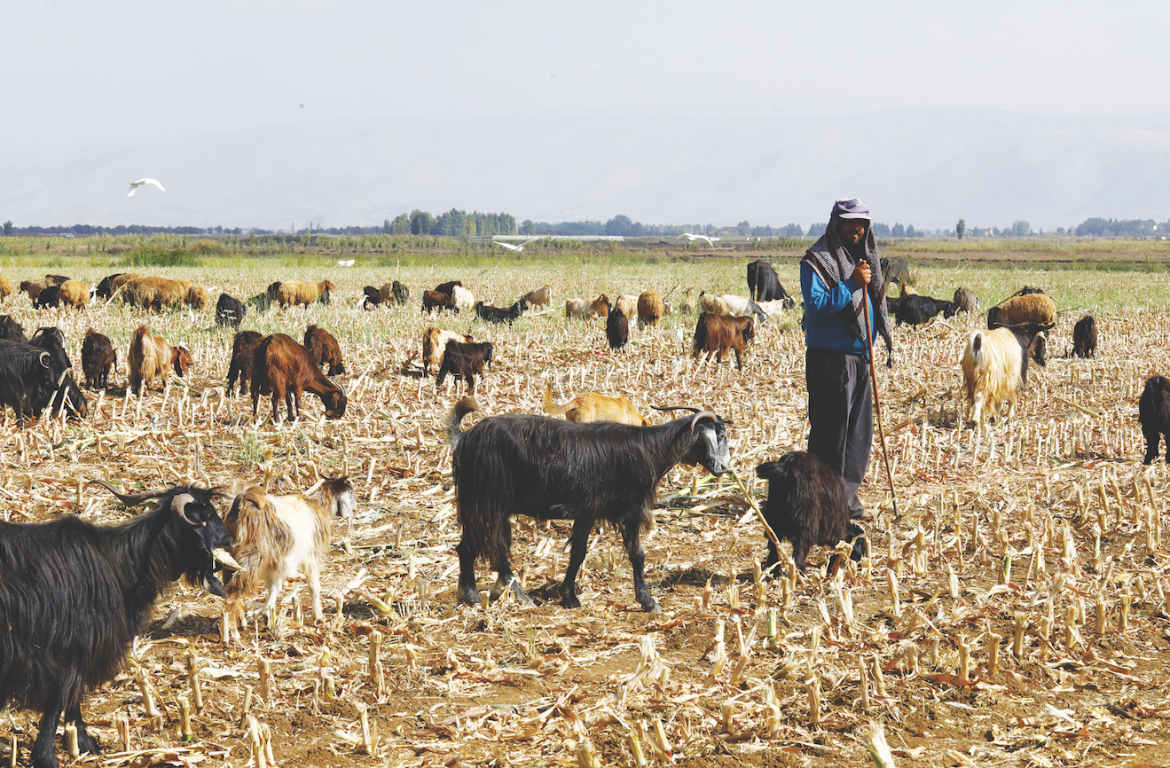
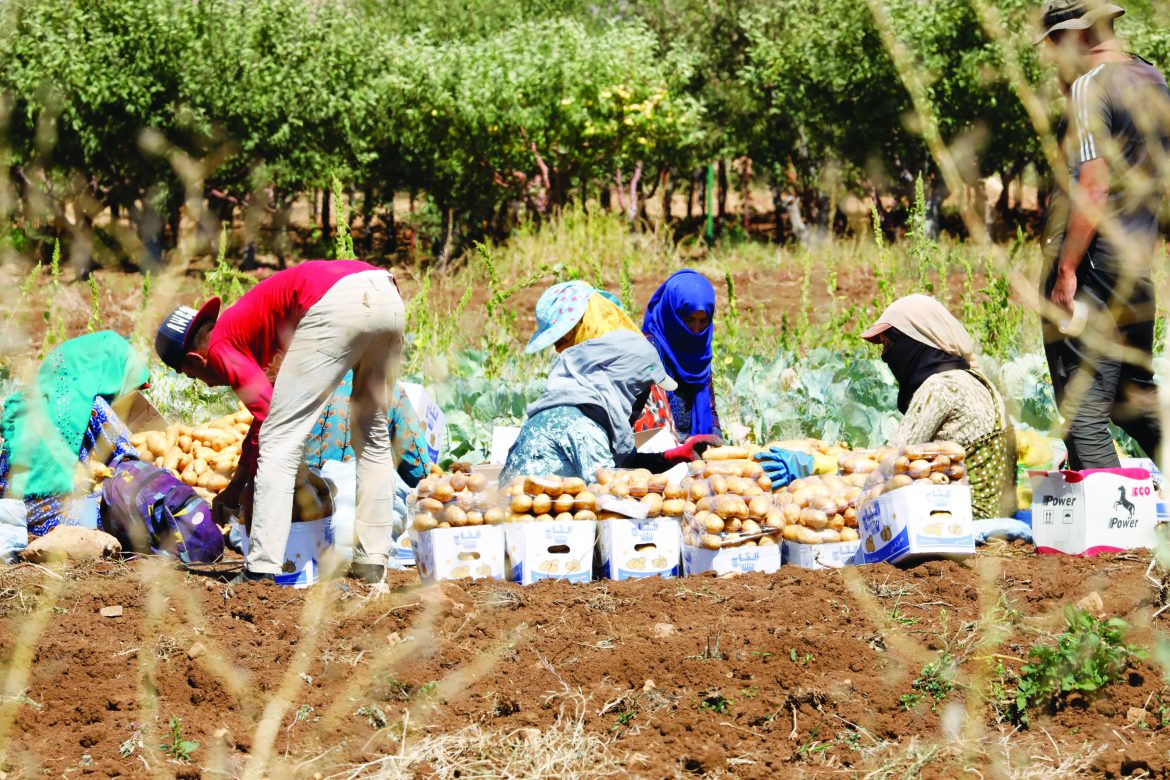
Leaving Kfarmishki and crossing the Bekaa plains on the return trip to Beirut, images of ripening crops in field after field, interspersed with fields where groups of seasonal workers are engaged in harvests, reinforce the impression of a highly fertile plateau that is a base for agriculture and sustainable agro-industry. Lebanon, despite its high degree of urbanization and an estimated rural population of about 11 percent, is a country of many villages where economic hardships have assuredly intensified due to three crisis years but where solutions, evidenced most visibly in new renewable energy installations, are in process. 

Journeying past Bekaa villages is finally a reminder that clusters of people have been living on these fertile lands since Neolithic times and those blessed with living here have regularly been producing food far in excess of their subsistence needs. In comparison to the norms of the period, high agricultural productivity has been the prevailing reality already when Josephus, the Jerusalem based, Roman-era historian of the first century AD, saw “not a parcel of waste land” in his military forays into the “Galilee” region between Mount Carmel and the Litani river. 

Some commentators on Josephus’ exuberant descriptions have supposed exaggeration in his praise of a Levantine territory that is partly in modern Lebanon, as one being “everywhere so rich in soil and pasturage and produces  such variety of trees, that even the most indolent are tempted by these facilities to devote themselves to agriculture.” However, save for man-made food catastrophes (most famously the Mount Lebanon famine in World War I), during the past 20 centuries since the scribe of the Roman empire reported from Galilee, [inlinetweet prefix=”” tweeter=”” suffix=””]territories in Palestine and Lebanon have to this day been absent from the long list of famines around the world.[/inlinetweet] Intense and extensive life-threatening disruptions of this agro-system’s productivity have been few and entwined with human failures to let each other live.

Peeling away misperceptions  

The Levant was noted as one of the original interactive habitats of wheat and human by five American University of Beirut researchers in a 2019 paper: “Cereal culture, including cultivated strains of wheat and barley, originated in the Levant and expanded northward… into central Europe in the 6th millenium BC.” But even without agonizing over the irony, it is doubly counter-intuitive to think that this thriving landscape, albeit entangled into a negative cycle of diminishing water, energy and biodiversity resources, would fall into a severe wheat production crisis in the third decade of the 21st century.

It also comes at a time when global wheat cultivation has been producing yields which have fluctuated in annual and multi-year terms, but for half a century have moved along an upward trend line to unprecedented magnitudes. 

Not only run against the historical evidence of the agricultural fecundity of Lebanese lands, and against this year’s harvest season’s evidence of the Lebanese productivity having survived the most intense crisis years that any rational economists could have imagined, such assumptions generate an obligation to check the facts and weed out the exaggerated allegations related to food in Lebanon, and the general size of the food insecurity threat.  

The community of nations officially adopted the goal to eradicate acute food insecurity and hunger along with poverty in 2000 with the establishment of the United Nations Millennium Declaration. When 15 years later, the Millenium Development Goals were expanded into the Sustainable Development Goals (SDGs) the target of “zero hunger” became the second of the 17 SDGs. Against a background of progress towards achieving SDG 1, eradication of poverty, and 2, zero hunger, in the 2000s and much of the 2010s, two things must be recognized: firstly, progress towards SDG 2, according to the UN, has been slipping away since 2015; secondly, only after Russia’s invasion of Ukraine did the topic of food security come to dominate the global debate. 

One cannot ignore that many speeches and passionate declarations about the risk or even certain coming of a “global food crisis” during the past eight months have been driven by politics. The sudden rise of “panicky headlines” about a global wheat crisis was not based solely on the facts, as noted by Sarah Taber, a crop scientist and contributor to US publication Foreign Policy. She wrote that a regional supply crunch of wheat was clearly present for countries that source wheat from Eastern Europe (such as Lebanon and other Middle East and North Africa countries), but argued that this was not the same as a global wheat crisis. According to her, record crops in Australia, India and elsewhere were indicating that globally, “there was enough to feed everyone” – but only if the transport and distribution questions are addressed.    

And yet, the evidence suggests that the politicization of the wheat issue immediately after the Russian invasion of Ukraine has been more than a layer of propaganda warfare. The slinging of mutual accusations of “weaponization of food” by parties with direct and indirect stakes in the Ukraine conflict – the latter including the US  and the European Union and a host of international organizations – has drawn the attention of leaders, global financial organizations (the IMF created a food shock window), and influencers to a food crisis that would otherwise not have received the attention that it needs. The eruption of the Ukraine conflict into a regional supply crunch of wheat and edible oils is a wake-up call in alerting the world to the return of hunger on an epidemic and devastating level. 

In its latest report on the state of food security and nutrition, the danger of hunger has been quantified by the UN Food and Agricultural Organization (FAO) as afflicting nearly 830 million people in 2021. On the occasion of World Food Day this October, the UN World Food Program (WFP) said food crises have this year been escalating in vulnerable countries such as Sri Lanka and Pakistan. Moreover, the organization announced that it was “holding back famine” in five countries: Afghanistan, Ethiopia, Somalia, South Sudan and Yemen. “Things can and will get worse unless there is a large-scale and coordinated effort to address the root causes of this crisis,” warned WFP Executive Director David Beasley. 

 In a search to gain an accurate perspective by starting from the most afflicted area, the acute food insecurity and danger of famine in parts of Somalia stands out through its horrendous dimension. Estimates read that 6.7 million people are suffering acute food insecurity,  and 300,000 lives will be at risk of starvation at the end of 2022, among a population of 16 million. Recent analyses by various scientists, including social scientists, say that the current crisis marks the third famine event in Somalia since 1990. Analyses of Somalia’s large-scale famines of 1991 and 2011/12 stipulate that long periods of drought underlying the catastrophes are linked to long-standing climate phenomena in the past, and to climate change today. 

In a comparison of numbers of victims of starvation in Somalia and Ethiopia in the past decade, other academic researchers have demonstrated the importance of state capacity and governance in keeping famine at bay. Scientists noted the absence of mitigating factors in Somalia, where a quarter of a million people starved in 2011/12, versus Ethiopia, where very few fatalities occurred in a severe drought in 2015. The factors that kept famine in Ethiopia in check included the presence of improved capacity by the state to deliver services and unencumbered use of international aid. 

This is a clarion call to tell all of humankind that the ethos of conflict resolution must prevail against the increasing social and political rifts between and within nations, while diplomacy has to be intensified and international solidarity cannot stop. As the highly divergent food crisis outcomes in countries at the Horn of Africa in the 2010s have shown, provisions of international aid, but also inter-communal and intra-communal support networks of expatriates and families contribute greatly to lowering levels of acute food insecurity and famine. Extension of aid to tribes and ethnic groups that suffer from being ostracized serves food insecurity mitigation needs. Control of unrest and mitigation of underlying factors such as racial hatred and social exclusion of ethnic groups are vital in averting famines, as they can lead to, at least temporary, cessation of internal warfare by militias and a reduction in conflict exposures of aid workers. 

Tackling the obstacles 

The facts (scientifically confirmed) of agricultural capacity and production on the ground are that the world is producing more food than ever before. The moral consensus view of academic and activist food security advocates is that in 2022, no one should suffer from lack of food, let alone extreme starvation.  The issues entwined with the politics and economics of food in the current global setting should leave no mind in doubt that food crises, up to the threats of acute food insecurity and famine – the difference between the two being contained in degrees of severity of malnutrition and the mortality rates in an affected population – are correlated with issues of human behavior, such as war, wastage, and an overweight of anonymized financial greed. 

What does this imply for the food crisis of the tiny country of Lebanon? Like it is for all countries, [inlinetweet prefix=”” tweeter=”” suffix=””]the global rise in food insecurity is also a local wake-up call. [/inlinetweet]This year’s intense declarations of unfolding food security emergencies, whether in drought-hit countries or countries inundated by floods, require looking at the problems of equitable access to food and agro-industry products as the unsolved catastrophe at the core of food insecurity. And so it is in Lebanon. “The four main pillars of food security are food safety, and the availability, accessibility, and utilization of food. Among these four pillars, accessibility relates less to producers but is found on the consumer side, where it is threatened,” Marc Bou Zeidan, a microbiologist and manager of the Qoot food innovation cluster, tells Executive. 

According to him, the economic crisis has impacted food security of the Lebanese people in a tangled way. The local market could not provide hard-currency income to producers and both farmers and agro-industrialists were inextricably drawn to export markets. As these markets are highly demanding in terms of quality, reliability, branding and regulation, smart agriculturalists and agro-industrialists secured certifications and focused on quality for exports. “The crisis has shifted the interest of producers towards exports and neglect of the local market. [This shift] is very important for the sustainability [of producers] but very bad for food security in the local context.[inlinetweet prefix=”” tweeter=”” suffix=””] We are exporting all that is good and all that remains here in Lebanon is what is of lower quality. [/inlinetweet]Although I don’t want to be rude [in saying so], what is left here in Lebanon is risky in terms of food safety. This is a very dangerous result of the shift towards exports.” 

The contradiction between the need to export for economic sustainability and the need to serve the population in the country with safe and healthy foodstuffs, points to the importance of strategies that develop the Lebanese agro-sector from within, under the inclusion of international funding and advisory partners, rather than being imposed from an administrative distance or, as seen early in the 2000s, imported as wholesale concepts that get stuck in the traps of corrupt bureaucracies and centers of political power.  

According to the food security experts and agricultural stakeholders met by Executive, markets and multinational corporations in the agro-industry must not be shunned but a balance of food sovereignty and food security in an overall framework of food interdependence needs to be targeted. Opportunities based on certification, compliance with quality standards such as Global G.A.P., grass-roots collaboration among agro-sector members – of which the Qoot cluster, according to Bou Zeidan, has seen amazing examples in its five years of operations to date – and smart use of natural food export windows, abound. Doing all this while applying partnership strategies that are constructed from the bottom-up and are inclusive of top-down and administrative and regulatory buy-in, will allow the production of an agro-food earnings pie which will be worth multiples of the annual food export earning currently achieved, and that will boost food security for the Lebanese. 

November 15, 2022 0 comments
0 FacebookTwitterPinterestEmail
PodcastsSpecial Report

Food security & food safety

by Thomas Schellen, Atef Idriss & Marc Bou Zeidan November 10, 2022
written by Thomas Schellen, Atef Idriss & Marc Bou Zeidan

In Lebanon, 46 percent of households are food insecure – a figure likely to rise in the coming months as state subsidies on essential imports like cooking oil, bread and rice, come under strain as the government struggles to provide foreign currency. As Lebanon’s ability to import goods reduces, it is necessary to turn inwards and assess the ability of the local agriculture industry in meeting the country’s growing needs.

With that in mind, Executive talks to Atef Idriss, CEO of the Middle East and North Africa Food Safety Associates, and Marc Bou Zeidan, a cluster manager at Qoot, a Lebanese agri-food cluster, to discuss efficiency gaps in the sector, while exploring feasible solutions and sustainable opportunities.


November 10, 2022 0 comments
0 FacebookTwitterPinterestEmail
Brand Voice

Exclusive Interview with Ali N. Karaman

by Philip Morris Lebanon November 4, 2022
written by Philip Morris Lebanon

He has been with PMI for 23 years, and now, Ali N. Karaman is Philip Morris’s newly appointed Managing Director for Egypt & Levant. In an exclusive interview with Executive, Karaman takes us through PMI’s plans for the next coming years in fulfilling a smoke-free transformation, the value in Lebanon’s market, and PMI’s new vision in today’s fast changing world.

Prior to his appointment as MD of Philip Morris Egypt & Levant, Karaman served as the Director of Smoke Free Products for the Middle East cluster, where he led the commercialization of Smoke Free Products in many Middle East markets while establishing deep industry knowledge and strong commercial expertise across various complex markets. 

  1. Can you discuss the transformation taking place at PMI and the company’s new vision?

PMI’s global business transformation is about delivering on our vision to create a smoke-free future. To make our vision a reality, we are transforming and staking our entire future on scientifically substantiated smoke-free products that are a much better alternative for all adult smokers who would otherwise continue smoking. Getting away from cigarettes would be the most significant, positive disruption for the estimated 1.1 billion adult smokers worldwide—and we have the means to achieve this in the not-too-distant future. 

  1. Why is the Lebanon considered an important investment market for Philip Morris? 

Despite the endured multiple crises including economic, financial, political and security crises, Lebanon remains a dynamic country. I’m impressed by the resilience of the Lebanese people and their ability to remain forward looking and progressive despite the many challenges they have faced. 

PMI has always been present in Lebanon, even during the turmoil of the civil war. In 2018, we took our partnership with the Regie to the next level when we started Marlboro medium production locally at the Regie’s facilities. We invested in new lines that are still operational and remain committed to Lebanon and further development of our business relationship with the Regie. 

  1. Why is it so important for Philip Morris to develop smoke-free products, especially in a country like Lebanon with high smoking rates? 

Since 2008, we have invested more than USD 9 billion to develop, scientifically substantiate, and commercialize smoke-free products for adults who would otherwise continue to smoke, with the goal of completely ending the sale of cigarettes, as smoking is the cause of serious diseases, and the best way to avoid the harms of smoking is never to start or, for those who smoke, to quit. That is why PMI is now actively working to expand its purpose and evolve into a broader lifestyle, consumer wellness and healthcare company, extending its value proposition and innovative capability to commercialize products that go beyond tobacco and nicotine. 

In Lebanon, there are more than 1.4 million smokers, and has one of the highest smoking incidences in the region. Therefore, Lebanon is an important market for our smoke-free vision. The latter, combined with the dynamic and progressive nature of the Lebanese people, it was imperative to introduce our smoke-free vision in Lebanon. We have launched IQOS back in February 2020, just one year later we have launched Lil, a more affordable and accessible device. We have increased our offering to the Lebanese consumer and are constantly looking for ways to help Lebanese smokers switch to better alternatives.

  1. Can you explain, in your own words, why heated tobacco products cause less harm that traditional cigarettes which require burning? 

The available information about heated tobacco is not a matter of theory or speculation. It is substantiated scientifically and through tests and practical use. Heated Tobacco products emit on average 90% lower levels of harmful chemicals compared to cigarette smoke, but that does not mean 90% reduction in risks as Heated Tobacco products are not risk free. In heated tobacco products, the tobacco is heated at a controlled temperature without burning it, in order to release a nicotine containing aerosol. In the aerosol of a heated tobacco product, water and glycerin form approximately 90% of the aerosol mass, there are no solid particles, and the levels of toxicants are reduced on average by 90% compared to cigarette smoke.

  1. What can you share about PMI’s long-term goals 5-10 years down the line in the region? 

In 2015, our CEO Andre Calantzanpoulos made a bold statement announcing the ambition of the company to replace cigarettes with smoke-free products. Since then, Millions of adult smokers have already switched to our smoke-free products and given up cigarettes completely—and this is just the beginning. One of our key strategic priorities is to develop, assess, and commercialize a portfolio of innovative tobacco and other nicotine-containing products. We draw on the expertise of a team of world-class scientists from a broad spectrum of disciplines to help us reach our goal of replacing cigarettes with less harmful alternatives. Replacing cigarettes with less harmful alternatives is at the core of our business strategy and sits atop our sustainability priorities.

In our region, there is a high smoking prevalence with little awareness on the available alternatives to smoking. However, I strongly believe a smoke-free future is attainable, and the benefits it can bring to the people who would otherwise continue to smoke, and hence to public health, are enormous. However, the company cannot succeed alone. Together with governments and civil society, we can maximize this opportunity by achieving a consensus that smoke-free alternatives, when subject to proper government oversight and regulation, are part of a sound tobacco policy.

  1. How do PMI’s Environment, Social, and Governance (ESG) goals come into play in Egypt and the Levant? 

To meet environmental, social and governance (ESG) issues it is necessary to employ adequate governance practices. PMI’s plans seek to take into consideration sustainability and social impact strategies, which are very important, especially in Egypt and the Levant. Our company principles of turning words, intentions and commitments into action are going to be translated into cooperation with organizations and institutions to achieve a positive impact and try to make a difference with regard to many aspects of ESG issues.

  1. Why do you think it is critical to be launching a new vision characterized by EPPIC disruption in today’s world? 

In today’s fast-changing world, you can always choose to do nothing. Instead, we’ve set a new course for the company—we have chosen to do something really big. We’re creating a PMI that will be remembered for replacing cigarettes with a portfolio of revolutionary products. This the EPPIC disruption in our opinion as it is characterized by five main criteria, which is being Efficient, Purposeful, Pro-social, Inclusive, and Constructive. 

PMI’s new vision reflects the company commitment to society, which expects us to act responsibly. We are doing just that, by delivering a smoke-free future. Our vision is critical as millions of adult smokers are looking for less harmful, yet satisfying, alternatives to smoking. Our mission is to give that choice while keep warning them about the risks that could be associated with any of our products.

  1. What do you anticipate will be the biggest challenge in your new role as the Managing Director for Egypt & Levant? 

The region has been very welcoming to me so far. I also consider myself lucky to be working alongside a very motivated and exceptional team in Lebanon. Throughout the years, this team has been able to achieve a lot of successes and drive the business forward. Our people are our main asset that will help us to deliver exceptional results and maintain our successful relations with our stakeholders, business partners, consumers and regulators.

I believe a big management challenge in any place is to have a clear vision and strategy. Fortunately, this is exactly the advantage of working with PMI. The company vision and strategy are obvious, and my role as Managing Director is to communicate them to consumers in the region I work in. The challenge is to make the smokers see and feel the benefits of our policy of smoke-free products, to convince them of switching to “less-harmful” products or to quit smoking completely.

This article was provided by Philip Morris Lebanon.

November 4, 2022 0 comments
0 FacebookTwitterPinterestEmail
Podcasts

Banking & Finance

by Thomas Schellen, Diana Menhem & Khaled Zeidan October 3, 2022
written by Thomas Schellen, Diana Menhem & Khaled Zeidan

Unrest among depositors and citizens has taken new shapes in recent weeks. Tempers are out of control in the face of inactive decision makers and silent banks. The current time is pivotal not only for political decisions, but also for hopes of economic reform and legislation to put the country on the road to recovery, after years of major disruption to Lebanon’s banking and finance sector.

With that in mind, Executive talks to Diana Menhem, managing director of Kulluna Irada, a local NGO advocating for reforms, and Khaled Zeidan, general manager of Capital-EE, a corporate advisory firm, about the future needs of and options for Lebanon’s financial markets.

October 3, 2022 0 comments
0 FacebookTwitterPinterestEmail
Banking & FinanceCommentSpecial Report

A weak position in the undeclared cyber war

by Rudy Shoushany September 28, 2022
written by Rudy Shoushany

We live in a time when hardly a day goes by without hearing about a cybersecurity incident. The need for a safe and secure digital world significantly grew after the COVID-19 pandemic, as human behavior merged online even more than before, and remote working became an everyday reality. Lebanon is no different to this escalating threat.

Since 2019, however, Lebanon has undergone an economic meltdown; a financial and monetary crisis alongside the challenges related to the health pandemic. Perhaps most importantly, Lebanon witnessed the collapse of its main economic pillar: the banking sector.

Out of all sectors, Lebanese banks had the biggest budgets to invest in cyber defense. As such, they invested significantly on infrastructure, technology, and awareness to reach what was deemed an acceptable protection level. On the other hand, the public sector was left under protected by a budget unable to guarantee a robust and proper digital transformation and cyber defense. What is more, the public sector was mainly dependent on international donors, since there was no national priority to step into the 21st century of a citizen-focused digital experience.

Many local institutions, particularly in 2018, have suffered attacks and breaches. Unfortunately, it is far too easy to access various entities in the public and private sectors. As a result, a secure transformation is greatly called for.

Lebanon’s Cybersecurity Status

[inlinetweet prefix=”” tweeter=”” suffix=””]Lebanon is ranked 109th in the world and 12th regionally in the ITU Global Cybersecurity Index 2020. Lebanon is expected to drop further in the new upcoming index.[/inlinetweet] Earlier this year, in May, the Lebanese Cybersecurity Empowering Research Team, a group of ethical white hackers, found major cyber-attacks on Lebanon. More than 2.5 million attacks had been conducted within 21 days; an alarming amount.

Various public sectors, businesses, educational institutes, and the banking sector suffer from an absence of coordination and implementation of a cyber security risk strategy. The banking sector, which was once considered the forefront of digital innovation and cybersecurity spending, is now suffering from the devaluation of the Lebanese pound, and subsequent inability to pay monthly or yearly software and hardware contracts, hindering its ability to stay up to date. There is a high possibility of software expiring without being replaced, which would arouse further dangers.

Today, Banque du Liban’s Circular 144 of November 28, 2017 regarding the protection of banks against cybercrime, is not ranked as a high priority for implementation or enforcement vis a vis the financial crisis.

The migration of cybersecurity talent or human capital, skills shortage, and inadequate salaries in the private and public sector bring a lot of challenges in maintaining and enhancing cyber security operations in Lebanon, creating a climate of “low-hanging fruits” for cyber-attacks.

The Internal Security Forces are the official body responsible for combating and investigating cybercrime, but they are in dire need of new skills, the latest technologies, legislative changes and even reliable electrical power. It is worth noting that Lebanon lacks specialized judges or lawyers in the field of information technology. In addition, from a legal framework perspective, Law 81/2018 relating to electronic transactions and personal data, has yet to be enforced despite being approved by the Cabinet four years ago.

Although, the ten-year Digital Transformation Strategy was approved in May 2022. Needless to highlight that implementing this strategy is a big challenge, regarding a lack of commitment, funding, adopting simplified and standardized measures in a Lebanese national data center, as well as a waste of time and financial resources.

2019 Cybersecurity Strategy 

After lengthy work, the three-year National Cybersecurity Strategy was published on August 29, 2019 by the government, two months before the October 17 uprising and the beginning of the economic downfall (technically the strategy should have been implemented by now).

Even though different international grants are actually supporting the strategy, having a well-planned implementation framework supported by state authority is crucial for robust coordination with the 2022 Digital Transformation Strategy. 

The strategy aims to protect government assets, markets, commercial sectors, and citizens from cyber threats and attacks. It is composed of two main sections: 1) preparation of a cybersecurity strategy and 2) establishment of a national cybersecurity agency.

The first part rests on eight pillars:

1.Defend, deter, and reinforce safeguards against external and internal threats

2. Foster international cooperation in the field of cybersecurity

3. Expand state capacity to support the development of ICT

4. Bolster Lebanon’s educational capacity within the realm of cybersecurity

5. Build up industrial and technical capacity

6. Promote exports and the global expansion of Lebanese cybersecurity companies

7. Strengthen collaboration between the public and private sectors

8. Expand the role of security and intelligence services in cybersecurity while boosting cooperation and coordination among the agencies with the support and supervision of higher authorities

Future Outlook

Lebanon has a chance to bounce back with the implementation of both the Digital Transformation Strategy and the National Cybersecurity Strategy, by strengthening its position and focusing on digital economy opportunities and citizen services.

The country is a greenfield environment for cyber developments, especially on the public sector side, since not many e-Government services are established or implemented. It actually lays the foundations to secure the right design to the full implementation, while focusing on citizenship centricity alongside contingency plans to ward off local, regional, and international threats.

Cybersecurity General Recommendations

Since the Cybersecurity Strategy was approved, there is an opening for Lebanon’s digital transformation, and with it comes an urgency for cybersecurity, like fighting cybercrime, maintaining good standards for data security, system integrity and preventing high-profile breaches. Such improvements will place Lebanon in a better position and give the country a chance to improve its position on the ITU Global Cybersecurity Index.

Lebanese National Datacenter

For a successful digital transformation, a national data center is not just an option but rather a necessity to host both the public and private sector; particularly considering the range of challenges like electricity cuts and high operating costs. There is fragmentation across the board at present, including within the banking sector; demonstrating the need for the cooperation of security information and critical security data sharing.

A national datacenter will (a) resolve the data residency problems, (b) provide 24/7 operations, (c) ensure business continuity, (d) secure better solutions, (e) centralize the management, (f) allow efficient security analysis and response and, (g) most importantly assure lower cost.

Cooperation Across All Sectors

A public private community partnership should be enabled; particularly to help empower the cybersecurity strategy and have a new business model to move away from outdated and inefficient systems.

Locally developed solutions coming from the private sector and the community can bridge the gap of accessing new affordable solutions; like licensing, upgrades, and more cost-effective management, whilst at the same time boosting the national digital economy.

Outdated Systems

The worsening economic situation and lack of foreign investment is significantly affecting the delivery of basic services and management of digital resources. [inlinetweet prefix=”” tweeter=”” suffix=””]Major capacity constraints are increasing the prevalence of old systems (hardware and software) with an outdated maintenance status.[/inlinetweet] It is important to note that such obsolete systems increase vulnerabilities for hacking attacks directly or indirectly. Among the objectives of both national cybersecurity and digital transformation strategies is to realize the best approach for addressing this emerging deficiency in financial resources. 

Governance and Legislation

Despite the government’s approved Cybersecurity Strategy and with it the establishment of a ‘National Commission against Cybercrime and for the Strengthening of Cybersecurity’, efforts need to be taken towards the actual formation of this commission and other relevant groups. Such a commission is essential to monitor the effectiveness of proposed interventions, sharing of data among various agencies and planning further initiatives to address the impacts of cybercrime. The commission can compel other administrations to comply with decisions or coordinate with automation projects. In this regard, a sustainable institutional framework with comprehensive mandate for co-ordination of all cybersecurity activities and interventions is also critical, and is currently lacking.

However, implementation of the strategy with appropriate human and financial resources are required for the effective enforcement of the Law 81/2018. In addition, implementation decrees for the management of cybersecurity interventions need to be formulated as soon as possible. 

The legal and technical approach should also be enhanced, with the main goal of identifying penal responsibilities throughout the investigation phases, while efficiently implementing actions and measures to combat cybercrimes.

One of the main challenges is to formulate a modern legal framework and to strengthen the law enforcement agencies: Army, Internal Security Forces, General Security, and State Security to provide an updated and comprehensive security system and to establish a national Community Emergency Response Team.

Cybersecurity Skills and Research

The shortage in human resources with cyber skills is contributing further to a national vulnerability for cybercrimes. As such, capacity building and knowledge are indispensable to meet cybersecurity provisions in both public and private sectors. In addition, raising awareness and providing formal training in cybersecurity for all employees who deal with any system in any capacity is necessary to win the undeclared cyber war.

Higher education institutions, like universities, can take a lead role to direct careers towards filling the skills gap, and most importantly be at the forefront of cybersecurity research and development for arising innovation in the field. 

Lastly, Being Proactive, Not Reactive

A proactive approach seeks to prevent cyberattacks from occurring in the first place which can lead to a much higher benefit, strong continuity of operations, return on investment and excellent reputation.

The only way to combat all of the above cyber threats and attacks is through the establishment of a nation-wide system capable of orchestrating a coordinated response within a unified framework incorporating technical and legal aspects.

September 28, 2022 0 comments
0 FacebookTwitterPinterestEmail
Banking & FinanceCommentSpecial Report

No Legal Legs to Stand On: Mikati’s Plan for the Financial Crisis

by Mounir Rached September 28, 2022
written by Mounir Rached

Since the start of Lebanon’s financial woes at the end of 2019, the government has proposed several measures to address the liquidity crisis in banks. Yet all the suggested measures signify blatant infringements on the financial assets and deposits of individuals as well as those of institutions. This means there is a possibility that measures, if adopted, will trigger judicial procedures. Such court action might arise from Lebanese expatriates and it could also harm relations with the countries where these expatriates reside, including in the Gulf and European nations. In another flaw, the plan does not address the fate of deposits in Lebanese pounds and the huge losses incurred. 

Furthermore, while representing major infringements to depositors, the government’s plan does so without providing convincing justifications. The failure of Banque du Liban (BDL) and the state to service its debts to commercial banks and depositors is a violation of the Constitution, and the Code of Money and Credit. In fact, these funds deposited with BDL by commercial banks amounted to around $71 billion, of which $58 billion has been spent by the state in financing its deficit and subsidies with hard currency, and over the past two years, used by BDL to manage the fluctuations in the parallel market rate.  

The $71 billion estimate is a residual figure calculated from the balance sheet of the central bank and the commercial banks. BDL intervened in the currency market with its negative net foreign exchange positions. Under such circumstances, it must have abandoned the policy of pegging the exchange rate of LL1,500 to the dollar to save deposits and the banking sector. 

The financial rescue plan composed by Caretaker Prime Minister Najib Mikati and approved by the Council of Ministers in May 2022, just before the government dissolved prior to the parliamentary elections, targeted the write-off of all categories of deposits, even the smallest ones. The write-off and discounts of depositor’s money can be summarized below. However, it should be noted that these figures, though lifted from the government’s plan, have to be viewed with room for error.

Mikati’s plan for the distribution of $104 billion in losses is as follows (all exchange rates are hypothetical):  

• $16 billion is to be converted to deposits in Lebanese pounds (LBP) at the exchange rate of LL5,000/$1, and this amount can be withdrawn by the respective depositors over a period of 15 years. When using an exchange rate of LL20,000 to the dollar for calculation of the aggregate loss of this action to depositors, the result is $12 billion, which means that the equivalent of $4 billion will be preserved as LBP. This amount’s present value, at a 7 percent discount, is $2 billion. 

• $35 billion, also withdrawable over a period of 15 years, will be converted into deposits in Lebanese pounds calculated on an exchange of LL12,000/$1. This would be the equivalent of $21 billion, so the loss will be $14 billion on the exchange rate. Its current value is $10.6 billion. 
• $25 billion will be paid in dollars on deposits below $150,000. With a ceiling per deposit of $150,000, these deposits would also be withdrawable over a 15-year period. This tranche’s current value is $12.5 billion. 
• $6 billion dollars will be paid for deposits between $150,000 and $500,000 and transferred in lira at the rate of LL20,000/$1 and paid within 15 years. Its current value is $3 billion. 
• Perpetual bonds, without checking their current value, will be subjected to bail-in at $22 billion turned into bank shares ($12 billion) 
• Perpetual interest-bearing bonds (unspecified) from banks ($10 billion) 

 The total that will be converted into Lebanese pounds is $79 billion out of $104 billion ($104 billion minus $25 billion). The present value of all deposits after these measures reaches only $28.2 billion. By excluding stocks and bonds, only $12.6 billion in dollar deposits will remain of the total $104 billion, and the remainder is converted into the lira, and its current value reaches the equivalent of $15.6 billion. Therefore, 88 percent of dollar deposits will be written off.  

What the plan fails to address

The calculation of the accumulated interests since 2015 includes all the interests that exceed a certain percentage (which has not been specified). As such, there are many unanswered questions: Does it include the interest that was transferred abroad and if so, why is it not included? Are those who transferred their money abroad required to return the excess interest? And does this, therefore, mean that whoever kept his money in Lebanon will bear the burdens of money transferred outside by others? 

The fault, of course, is not on the part of the depositor, but on the part of the banks and BDL, the latter is responsible for showering the markets with high interest rates. These interest rates accordingly tempted deposits, which were then deposited at BDL by banks with high interest rates. 

As for the deposits that were converted into US dollars (estimated at $35 billion), $14 billion will be lost through the exchange rate of LL12,000 to the dollar. Although, it is possible that this money was originally converted from dollars to pounds and then to dollars. How are we going to deal with it? 

The amount of $91.4 billion has been written off from deposits (calculated by deducting $12.6 billion in current value from $104 billion), is equivalent to 88 percent of the total. Therefore, only 12 percent of the dollar accounts will remain and 88 percent of all dollar deposits will be subject to be converted into Lebanese pounds. All the money converted into pounds and the rest in dollars will be withdrawn from banks over a period of 15 years. This means more write-offs are incurred due to the regressive time value of money.  

It is necessary to review the risks of this plan because the government intends to place the burden on the depositors. It should be noted that Caretaker Prime Minister Mikati has reiterated on several occasions that the biggest burden will be on the citizen and announced that the cancellation of deposits will be mostly for accounts exceeding $100,000, but in fact, the write offs of deposits impact all categories of accounts. 

A write-off for the economy

Old empty wallet in the hands of women. Poverty concept.

[inlinetweet prefix=”” tweeter=”” suffix=””]The economic impact of this measure will be devastating[/inlinetweet]; depleting citizen’s purchasing power, alongside the lost trust in the state and the banking system. There are simple alternatives to this that are useful and confidence-building in the economy. The most important of which is the complete liberalization of the exchange rate, which in turn will contribute to reducing the deficit, which must be reduced to the lowest levels in the first year, and then move towards balance afterwards. Public sector debts, as well as the assets and liabilities of banks must be rescheduled based on the practices that prevailed before the crisis. This will allow deposit holders to withdraw from their deposits in dollars or in pounds from dollar accounts on the free currency rate if the dollar is not available in sufficient quantity. 

September 28, 2022 0 comments
0 FacebookTwitterPinterestEmail
Banking & FinanceCommentSpecial Report

An infamous debt build up

by Mounir Rached September 28, 2022
written by Mounir Rached

Lebanon’s fiscal policy over the past decades has been in most years very expansionary. Fiscal deficits at the end of the civil war relied heavily on domestic currency financing. Foreign exchange had been largely depleted by disruption to trade, while inflows declined as families immigrated. Due to the scarcity of financing in US dollars, combined with a need to start reconstruction, the government started to rely to a larger extent on borrowing domestically and internationally in dollars. 

Central bank reserves in the 1990s were quite low as the war years depleted Banque du Liban (BDL) of its foreign exchange. Relying only on domestic markets for foreign currency financing was perceived to exert further pressure on the exchange rate. Borrowing in dollars was prompted by two factors: the need to finance reconstruction and the need to have sufficient FX to maintain the peg that was adopted in 1997.

During that period, the Lebanese pound (LBP) interest rate was quite high, in the double-digit range, which also contributed to the worsening of the deficit. The government was attracted to foreign borrowing to secure needed foreign money for the budget, ease pressure on the exchange rate, as well as lowering its cost. The higher return rate provided by Lebanese banks, relative to regional and international markets, attracted increased inflow of FX into Lebanon; and banks discovered it as a lucrative channel to borrow from international markets through short-term deposit inflows and lend locally at a good interest rate with differential margin in its favor. This process made it easier for the government to borrow in dollars without straining the FX market. The government then made an official arrangement to issue Eurobonds under the jurisdiction of the state of New York later on in 1990s.

Political division and the absence of clear fiscal and debt policy encouraged the government to expand its spending as long as financing was available and its service was guaranteed by further borrowing. It created a vicious circle – borrow to finance FX needs and borrow again to service FX debt.

As is well known, public debt is generated by fiscal deficits, and even in years when a primary surplus was achieved, it served as an illusion that current operations excluding debt service provided a sustainable debt scenario. Only a manageable deficit, preferably with a primary surplus, a low interest rate, and a high growth rate can provide debt sustainability, which means placing the debt to GDP ratio on a declining trend. These ingredients were not stable and also difficult to attain in Lebanon due to several factors. Government spending for the most part was current in nature, capital spending was sustained at a very low level and priority was being given to current spending, while cost of capital remained at a high level.

The sustainability of debt has to have reliable ingredients and based on the determinants of the debt ratio to GDP. It is presented in this simple relationship:

D=(1+i-g) *D-1 – PS
Where D is debt to GDP ratio i is the effective real rate of interest rate on debt, g is real growth rate and PS is primary surplus as a ratio of GDP. The growth rate of the economy, the primary deficit, and interest cost are the three dominant outcomes used to determine the debt outlook and sustainability. These variables can be displayed in nominal terms as well but the substance of the analysis remains the same.

Debt increases whenever a real interest rate exceeds growth, and with a negative primary balance (overall deficit without interest payment). The primary balance comprises total revenues less total current expenditure (excluding interest) and capital spending. Current spending contains mostly wages and salaries and spending on goods and services. 

The distinction between primary balance and total balance (deficit) is largely connotative. When a surplus is realized in the primary budget it means that, had the debt of a country been nonexistent and there was no debt service, then the budget could have realized a surplus. It is meaningful when a country has a potential to undertake a debt rescheduling; reducing interest payments or spreading them over a longer period. It could help the country either to significantly reduce its deficit or even achieve a balanced outcome. Therefore, the larger the primary surplus, the better the sustainability outlook, as part of interest cost can now be covered from the primary balance. 

The post-war strategy of Lebanon was based on several critical choices that led to a rapid accumulation of fiscal deficits and debt.  These included the need to accelerate growth, enhance security, law and order, provide social services, rebuild infrastructure, recover trust in the Lebanese currency, and improve living conditions.

This vision required increased spending at all levels while the room to advance tax collection remained limited with a weak tax base in an economy emerging from 15 years of war. At that time, the government perceived that it was essential to increase public wages, including retirement compensation for the civil and security service, increase spending on infrastructure, health and education, and allocate funding to return refugees to their towns and villages. The government’s vision to boost spending despite a limited tax base, necessitated embarking on a grand borrowing scheme from internal and external sources. The monetary policy then strived, without success, to lower interest rates in order to pacify the escalating debt service cost while maintaining Lebanon as an attractive destination for capital inflows. The challenges facing the economy limited the opportunities created by foreign borrowing under the umbrellas of Paris I and II conference in 2001 and 2002.

To have a declining debt ratio, the real growth in the economy should be greater than the real interest rate, and revenues should exceed expenditures. Debt sustainability is interpreted as the condition that stabilizes the debt ratio which is satisfied if the ratio of excess revenue to GDP is at least equal to the excess of interest rate over growth. In simplified words, the debt ratio is stable when change in debt to GDP ratio becomes zero. 

Debt progression 2011-2019

In spite of political turmoil that prevailed following the assassination of former Prime Minister Rafic Hariri in 2005, successive governments had been able to arrest economic deterioration; growth rebounded, the balance of payments (BOP) achieved significant surpluses, and interest rates stabilized. Exceptional performance was recorded between 2007 and 2010. Growth was recorded in the range of 8 percent for four consecutive years (2007-2010), and the debt ratios declined for the first time in a decade. Certainly, external aid under Paris II and III aided in lowering interest rates and in improving the debt dynamics. Fiscal deficits reductions were supported by growth rates, lower interest rates, and stable expenditure.

[inlinetweet prefix=”” tweeter=”” suffix=””]Following 2011, the period witnessed political and economic terrain change for the worse[/inlinetweet], alongside the backdrop of political instability in Syria, growth rates declined as well as state revenues, and interest rates started rising again, leading to higher deficits. Debt accumulation escalated since then and the BOP recorded large deficits.

Several factors have pointed to the fact that the beginning of 2011 was a turning point for both the fiscal and the balance of payments. In 2011 and 2012, a commitment was made to increase wages and retirement payments by more than 10 percent. But at the same time, no revenue measures were taken to compensate for the wage increases. Resultingly, deficits started escalating due in part to irregular recruitment on  a contractual basis without recurrence to official standards. Increased spending and deficits coincided with a slower pace of growth. Deficits continued to rise in excess of 7 percent of GDP in most years.

In 2017, another decision was taken to increase wages and retirement payments by more than 20 percent, though it was not implemented until the following year.  Electricity sector subsidies, especially in years of higher oil prices, posed an additional burden on spending and the deficits. 

The debt profile was on an unsustainable path even before the beginning of the crisis in 2019.[inlinetweet prefix=”” tweeter=”” suffix=””] Lebanese banks were already hesitating to lend to the government in the ten years prior. [/inlinetweet] The central bank with induced interest rates became the major debtor to banks, instead of the government. Higher interest rates attracted banks to lend their foreign exchange reserves that were placed in international markets to BDL and benefit from their higher interest rates. BDL became a main source of financing for the government and most domestic debt was financed by BDL, as well as a sizable portion of the dollar debt issued as Eurobonds.

Debt profile (Billion LL) using official exchange rate of LL 1506.5 to the Dollar

Banks then would deposit most of their dollar reserves with BDL and in turn BDL would lend the government. The higher interest rates, inducing slower growth, contributed to the worsening of the fiscal and debt outlook. Banks did not respect prudential guidelines nor did the Banking Control Commission impose any. Nearly 70 percent of bank deposits were channeled to BDL and the government, in violation of the guidelines of the Code of Money and Credit. Banks, as well as depositors, came under the absolute control of BDL. Higher interest rates were provided for longer maturity CDs, which made bank operations rather simple but involving much higher risk, due to the concentration of their loans in the public sector at a time when net reserves of BDL were declining.

The government’s access to easy financing, in spite of its higher cost, lured it away from engaging in genuine reform. To the contrary, it continued its pattern of high spending without any concern for the consequences.

Certainly, the debt build-up that evolved to a crisis level in October 2019 reflects mismanagement of the economy on every level. Expenditure strategy and government plans were not designed to achieve a clear framework objective. Often economic targets were disengaged from the needed policies to achieve them, while government budget responded to the needs of politicians.

The major causes of debt build up and derailed debt policy can be summed up as follows:

• The political spectrum revealed deep divisions that ended in a protracted formation of the legislative body as well as the executive body. Formation of parliaments suffered a cumulative delay of 2,321 days between 2006 and 2018.  

• The parliament which was supposed to end its term in December 2006 was extended until June 2013, and the parliament that ended it term on June 20, 2013 was extended until the May 6, 2018.  Government formation at the Council of Ministers level during the same period took 1,449 days. 

• Presidential elections were delayed 1,073 days in 2007-08 before the election of President Michel Suleiman and in 2014-16 before the election of President Michel Aoun.

• The continued deficit in the power sector.

• The size of the debt itself.

• The previous two actors absorbed  nearly 90 percent of the debt service.

• The number of public sector workers  has expanded exponentially during the past decade.

• Currency stabilization often required higher interest rates to attract a continued inflow of capital, which constituted an increased cost.

The confrontation between the public and government came heads on when, on October 17, 2019, a proposed policy to impose levies on voice-over-IP calls of the popular application, WhatsApp, was the climax in a culmination of mismanagement and state distrust.  The public expressed its anger in a nationwide protest movement demanding political upheaval and revealing major state and governmental mistrust.

Fiscal and debt problems peaked when the government defaulted on its Eurobond debt in the spring of 2020.The default induced banks to sell Eurobonds in order to generate liquidity as BDL announced that it no longer supports the peg. 

As the government suspended payment of debt amortization and interest on Eurobonds to domestic and foreign holders, debt accumulation built up. Since then, arrears on debt service have been accumulating and the debt issue has worsened today. The issue of debt service in dollars resulted in sizable balance of payments deficits since 2011 and the decline in BDL reserves. Under pressure to preserve foreign exchange as much as possible, BDL took the decision to terminate the exchange rate peg prematurely. At that time, June 2019, BDL still held a comfortable level of reserves at $34 billion, sufficient to finance the BOP for another several years; although the net reserve position of BDL was negative even before then. There was concern that in the absence of any corrective fiscal adjustment and potential to correct the BOP deficit, BDL took a pre-emptive decision to terminate its commitment to finance banks. Then, over $60 billion were held as FX liabilities to banks.

It’s apparent that sovereign debt is on an upward trajectory due to continued fiscal deficits and accumulation of arrears on Eurobond principal and accrued interest.

The depreciation of the currency has certainly changed the debt profile. The total debt in dollars shrank from $100 billion to $42 billion, as the pound lost 95 percent of its value. Since GDP data in dollars remains dubious (according to the World Bank it is in the $25 billion range), the debt ratio is about 168 percent. The debt profile did not change much from the pre-crisis period as a result of gains recorded in Lebanese pound debt which compensated significantly for the dollar drop in GDP.

The profile of debt financing sources has changed since the crisis. Banks reduced their financing of the government in both domestic and foreign currencies. Commercial banks financing of the government in Lebanese pounds declined from LL25 trillion at the end of December 2019 to LL18 trillion at the end of April 2022.  Domestic debt held by BDL grew and its holdings of treasury bills increased from LL51 to LL59 trillion. 

Foreign currency debt holdings of banks dropped sharply from LL20 trillion or $13 billion, to LL6 trillion in an attempt by banks to obtain foreign exchange as the supply line of BDL dried up. Most of the decrease was absorbed by international financial institutions. These bonds were offered at a highly discounted price; ranging from 15 percent to 25 percent in the later transactions. Foreign financial institutions, in spite of the government default, wanted to increase their holdings to above 40 percent of total issues in order to maintain a decisive role in a resettlement or rescheduling agreement.

Need to change

The view of successive governments, especially those of the numerous Councils of Ministers headed by Prime Minister Rafic Hariri between 1992 and 2005, did not foresee the complications that face Lebanon: the limited administrative capacity, weak government institutions, widespread corruption, deep political divisions, and the long-term damage exerted by the pegged exchange rate. The latter actually was strongly supported as an anchor of stability, ignoring the high cost of debt service that accompanies massive borrowing schemes. All these factors have hindered the planned progress of any government.

The elder Hariri built his vision for Lebanon’s reconstruction and development in the 1990s on the assumption that peace in the Middle East is inevitable and substantial aid could flow into Lebanon in compensation for settling the Palestinian issue and the return of internally displaced Lebanese to their towns and villages. However, none of these optimistic scenarios was fully realized. Lebanon was provided with European financial support thanks to several Paris agreements under the auspices of French President Chirac. But ineffective successive governments did not make full benefit of such generosity. Billions of dollars were wasted due to both mismanagement and corruption. Policies were never fully implemented and many were not in the proper frame for Lebanon. It became apparent that debt build up would continue year after year, into the future. Since the current crisis began, no significant reform has taken place and debt has reached the LL152 trillion.

To get out of its dilemma, Lebanon has to embark on a serious and massive reform plan first, rather than reschedule its debt without it. Reform has to take place in all branches of the public sector, fiscal, monetary, civil service, and the public enterprise sector. The energy sector alone has been a major cause of foreign currency debt accumulation. Simply rescheduling debt is not enough to place Lebanon on a sustainable debt track.

September 28, 2022 0 comments
0 FacebookTwitterPinterestEmail
  • 1
  • …
  • 20
  • 21
  • 22
  • 23
  • 24
  • …
  • 689

Latest Cover

About us

Since its first edition emerged on the newsstands in 1999, Executive Magazine has been dedicated to providing its readers with the most up-to-date local and regional business news. Executive is a monthly business magazine that offers readers in-depth analyses on the Lebanese world of commerce, covering all the major sectors – from banking, finance, and insurance to technology, tourism, hospitality, media, and retail.

  • Donate
  • Our Purpose
  • Contact Us

Sign up for our newsletter

    • Facebook
    • Twitter
    • Instagram
    • Linkedin
    • Youtube
    Executive Magazine
    • ISSUES
      • Current Issue
      • Past issues
    • BUSINESS
    • ECONOMICS & POLICY
    • OPINION
    • SPECIAL REPORTS
    • EXECUTIVE TALKS
    • MOVEMENTS
      • Change the image
      • Cannes lions
      • Transparency & accountability
      • ECONOMIC ROADMAP
      • Say No to Corruption
      • The Lebanon media development initiative
      • LPSN Policy Asks
      • Advocating the preservation of deposits
    • JOIN US
      • Join our movement
      • Attend our events
      • Receive updates
      • Connect with us
    • DONATE