• Donate
  • Our Purpose
  • Contact Us
Executive Magazine
  • ISSUES
    • Current Issue
    • Past issues
  • BUSINESS
  • ECONOMICS & POLICY
  • OPINION
  • SPECIAL REPORTS
  • EXECUTIVE TALKS
  • MOVEMENTS
    • Change the image
    • Cannes lions
    • Transparency & accountability
    • ECONOMIC ROADMAP
    • Say No to Corruption
    • The Lebanon media development initiative
    • LPSN Policy Asks
    • Advocating the preservation of deposits
  • JOIN US
    • Join our movement
    • Attend our events
    • Receive updates
    • Connect with us
  • DONATE
Food securityOverviewSpecial Report

Food made in Lebanon: Buzzing with diversity and contradictions

by Thomas Schellen November 15, 2022
written by Thomas Schellen

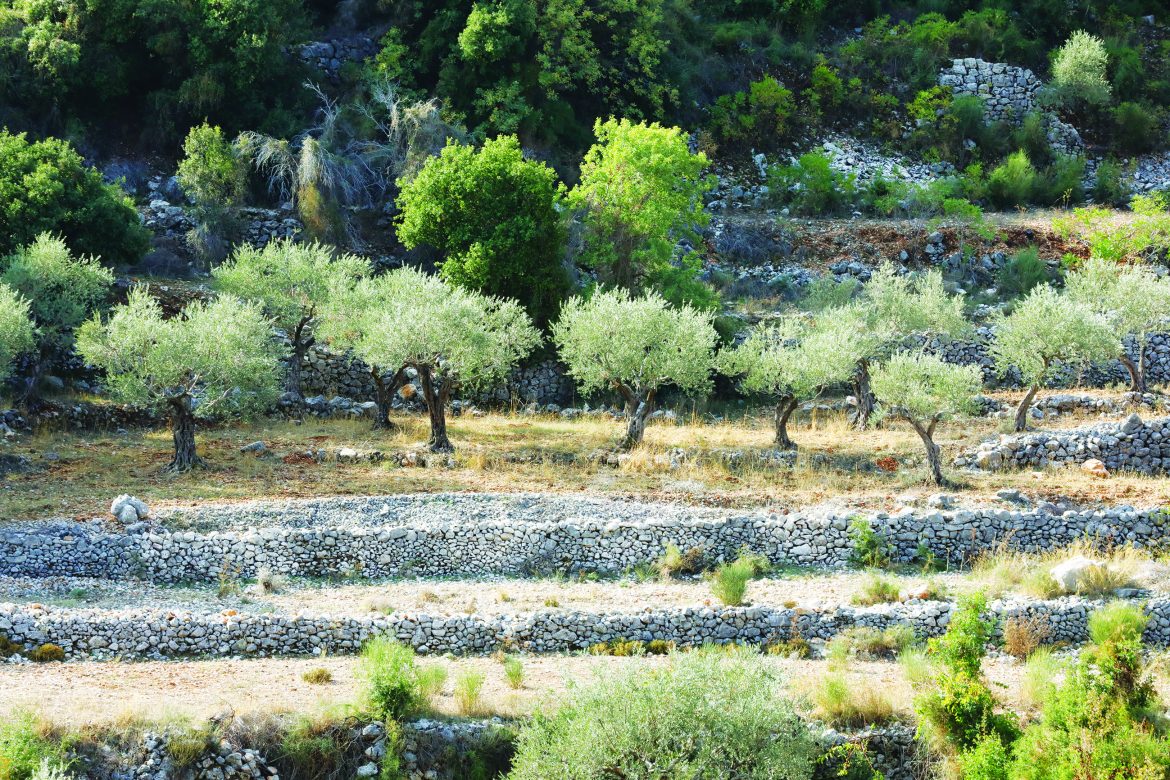
The village of Kfarmishki in the western Bekaa hugs a hillside. Its apparent central intersection, whose main features include a roadside bench and a resilient donkey, takes three seconds to traverse and less to fade into memory. 

 Kfarmishki is not exciting in the picture-book sense of some other Lebanese villages. If there were such a thing as, however staid, a national competition for village beautification (the kind that once upon a time motivated villagers around Western Europe to embark on gardening and decorating frenzies), a crafty public relations copywriter might call Kfarmishki the jewel of the Bekaa or the pearl on the hill. They would be lying – except from the angle that it is an average village in a land where villages have deep-rooted, and thus intriguing, identities and communal histories. 

There are a few routes for getting to Kfarmishki from Beirut or any of the coastal traffic centers. Yet, whatever route and mode of land transport one selects, getting to this village will require a couple of hours travel on bad roads and there is no direct public transport link from pretty much anywhere. Also in this regard, it is a typical Lebanese village in the deep hinterland. But if the copywriter were to attach one or other glorifying epithet to this remote aggregation of humanity, our hypothesized PR wordsmith would actually be speaking truth when portraying Kfarmishki as a village that is looking for a sustainable future, and doing so with foreign financial support – in an initiative that is developing up from the vine-roots (the grass-roots allegory seems misaligned with the agricultural geography in the area) because of its enterprising denizens. 

As an expression of their entrepreneurial vigor and after a two-year interruption, the Kfarmishkites (or Kfarmishkians?) organized their 4th Mouneh and Grape Festival in September 2022. The festival turns the dusty square in front of its church into a stage for young dabkeh performers, and the adjacent street into a lively market with two rows of booths displaying local products; from fresh organic fruits to a large range of “mouneh” or preserves/pickles, as well as wine (“Domaine Pierre”) and arak. The occasion of the festival also makes for an affordable opportunity (exceptionally on this weekend, there is a dedicated bus service from Beirut) to get a first-hand feel for the economic mood among the farming community. 

Wissam Ek-Khoury, the head of Kfarmishki’s local farmers cooperative

 This year, the harvest festival has seen some weakening in the number of urban visitors, Wissam El Khoury, head of the local cooperative, tells Executive. “There have been difficulties in organizing the festival because everything has changed from 2019 until today. The crisis has affected Kfarmishki and all farmers are affected by it,” he acknowledges.  

The agriculturalists struggle to succeed against the same pressures facing the urban majority of Lebanon, like the loss of subsidies, inflation, depreciation, and shrinking purchasing power. Yet, when compared to Beirut and the other large cities, Khoury nonetheless sees a better proposition for sustenance where he is. In his view, [inlinetweet prefix=”” tweeter=”” suffix=””]agriculture is less vulnerable to the economic and political situation than other sectors.[/inlinetweet] “In Beirut, it is more difficult and so we prefer to live in Kfarmishki. Farmers are resorting to plant their produce and meet their own [food] needs from this. It is somehow easier than existing in the city,” he elaborates in a mixture of Arabic and English, with the active translation support of his daughter.

According to Khoury, [inlinetweet prefix=”” tweeter=”” suffix=””]a group of farmers set up the village co-op in 2013 and since then developed a local support farming infrastructure [/inlinetweet]that included trucks and other equipment, which were acquired with the help of Lebanese and international NGOs. The co-op has 25 members among Kfarmishki’s agriculturalists, of whom there are about 100 in total.

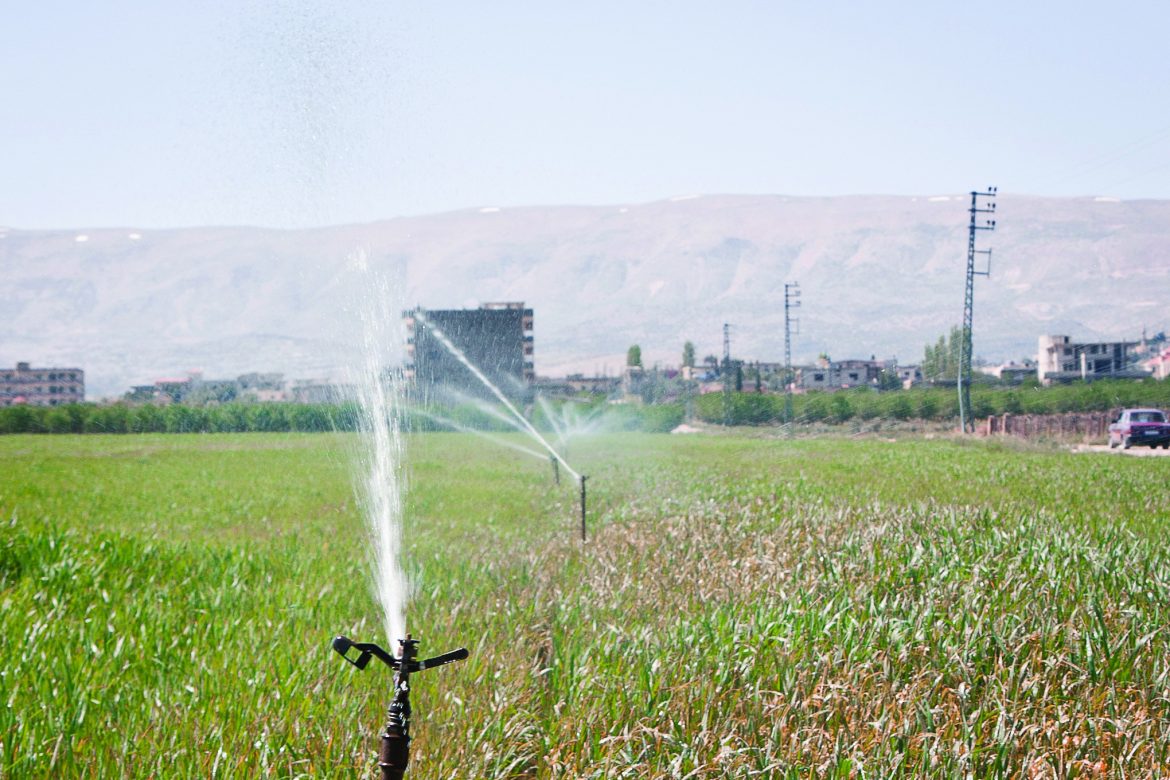
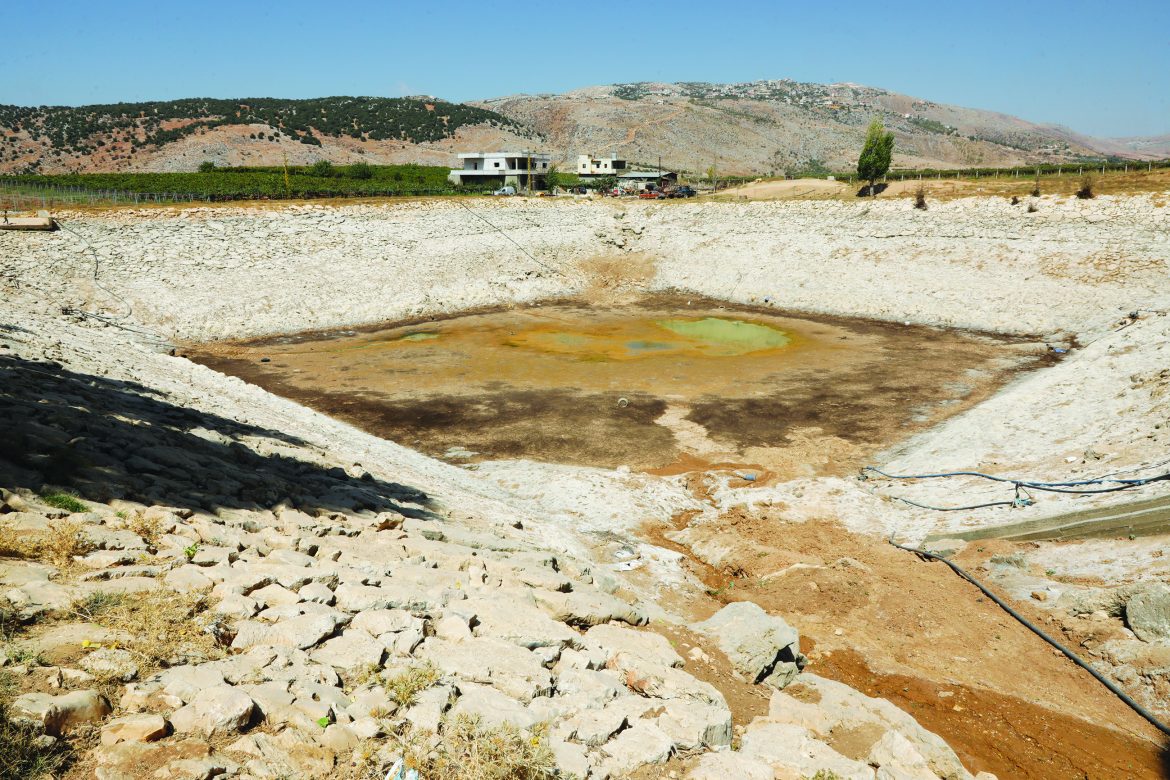
Photovoltaic renewable energy capacity was installed on the roof of the village school well before the collapse of electricity subsidies, as well as in the co-op’s most recent initiative, a central mouneh kitchen, which was implemented this year. However, the open-air irrigation water dugout reservoirs down the hill are mostly empty this September, because of high fuel costs that impede the transportation of water, Khoury says. Other infrastructure needs, such as cold storage facilities, require costly transportation, while the farmers’ markets in Beirut are too far away to access regularly. A platform for marketing the village’s agro-food outputs is desirable and being thought about, but absent. 

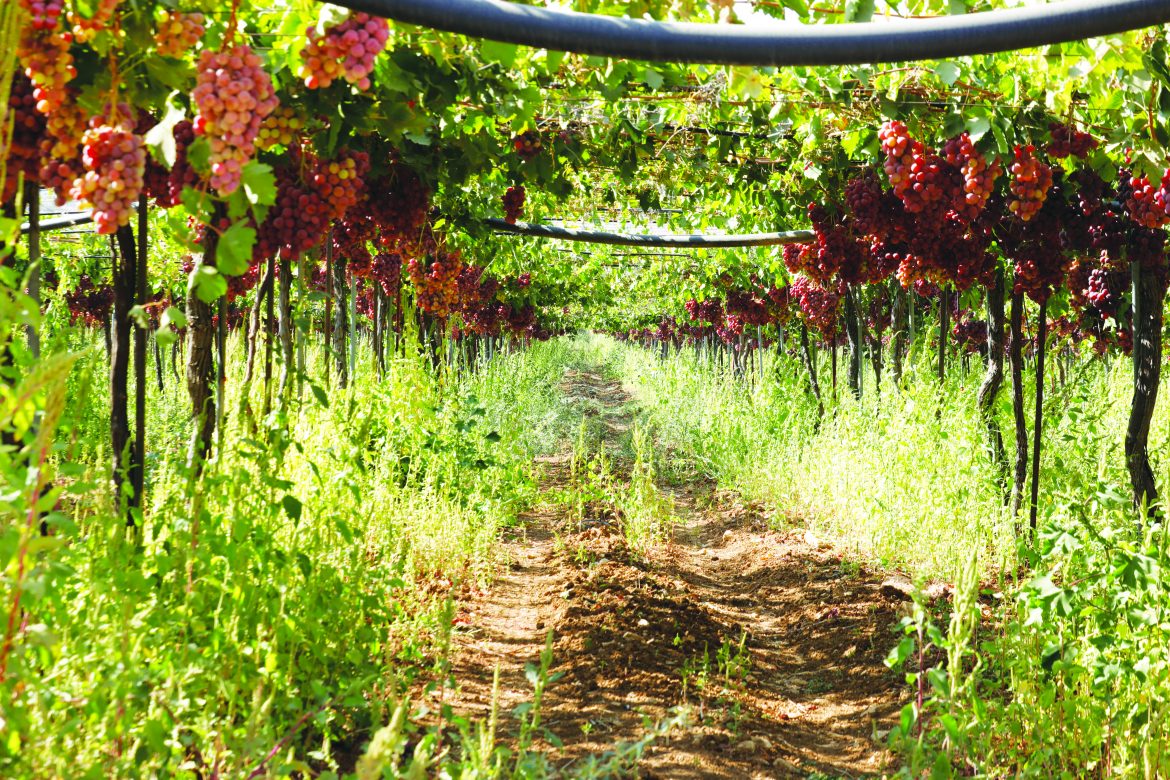
Within the boundaries of their rural circumstances, the farmers have adopted an ambidextrous mix of practicing subsistence and export orientation. “We plant all kinds of fruits and greens and vegetables on our lands to secure our existence. We use only pesticides that are certified and permitted when shipping products to the world and the co-op has adopted the [European] Global G.A.P. [farm management] standards. We export all our grapes. Our biggest challenge is in developing our competitive advantage versus countries that produce the same [fruits and vegetables] as we do,” Khoury says. 

Hearing a co-op leader talk about competitive advantages and learning that international standards are known and professed to be at the level of Lebanese village farming should not surprise in the least. Assuming agriculturalists to be ignorant, despite their position as economic actors in an ever more interconnected and competitive world would be an insult to the intelligence and development of rural communities anywhere, and certainly in Lebanon with its high-middle-income background and predilection for innovation and advancement.     

Leaving Kfarmishki and crossing the Bekaa plains on the return trip to Beirut, images of ripening crops in field after field, interspersed with fields where groups of seasonal workers are engaged in harvests, reinforce the impression of a highly fertile plateau that is a base for agriculture and sustainable agro-industry. Lebanon, despite its high degree of urbanization and an estimated rural population of about 11 percent, is a country of many villages where economic hardships have assuredly intensified due to three crisis years but where solutions, evidenced most visibly in new renewable energy installations, are in process. 

Journeying past Bekaa villages is finally a reminder that clusters of people have been living on these fertile lands since Neolithic times and those blessed with living here have regularly been producing food far in excess of their subsistence needs. In comparison to the norms of the period, high agricultural productivity has been the prevailing reality already when Josephus, the Jerusalem based, Roman-era historian of the first century AD, saw “not a parcel of waste land” in his military forays into the “Galilee” region between Mount Carmel and the Litani river. 

Some commentators on Josephus’ exuberant descriptions have supposed exaggeration in his praise of a Levantine territory that is partly in modern Lebanon, as one being “everywhere so rich in soil and pasturage and produces  such variety of trees, that even the most indolent are tempted by these facilities to devote themselves to agriculture.” However, save for man-made food catastrophes (most famously the Mount Lebanon famine in World War I), during the past 20 centuries since the scribe of the Roman empire reported from Galilee, [inlinetweet prefix=”” tweeter=”” suffix=””]territories in Palestine and Lebanon have to this day been absent from the long list of famines around the world.[/inlinetweet] Intense and extensive life-threatening disruptions of this agro-system’s productivity have been few and entwined with human failures to let each other live.

Peeling away misperceptions  

The Levant was noted as one of the original interactive habitats of wheat and human by five American University of Beirut researchers in a 2019 paper: “Cereal culture, including cultivated strains of wheat and barley, originated in the Levant and expanded northward… into central Europe in the 6th millenium BC.” But even without agonizing over the irony, it is doubly counter-intuitive to think that this thriving landscape, albeit entangled into a negative cycle of diminishing water, energy and biodiversity resources, would fall into a severe wheat production crisis in the third decade of the 21st century.

It also comes at a time when global wheat cultivation has been producing yields which have fluctuated in annual and multi-year terms, but for half a century have moved along an upward trend line to unprecedented magnitudes. 

Not only run against the historical evidence of the agricultural fecundity of Lebanese lands, and against this year’s harvest season’s evidence of the Lebanese productivity having survived the most intense crisis years that any rational economists could have imagined, such assumptions generate an obligation to check the facts and weed out the exaggerated allegations related to food in Lebanon, and the general size of the food insecurity threat.  

The community of nations officially adopted the goal to eradicate acute food insecurity and hunger along with poverty in 2000 with the establishment of the United Nations Millennium Declaration. When 15 years later, the Millenium Development Goals were expanded into the Sustainable Development Goals (SDGs) the target of “zero hunger” became the second of the 17 SDGs. Against a background of progress towards achieving SDG 1, eradication of poverty, and 2, zero hunger, in the 2000s and much of the 2010s, two things must be recognized: firstly, progress towards SDG 2, according to the UN, has been slipping away since 2015; secondly, only after Russia’s invasion of Ukraine did the topic of food security come to dominate the global debate. 

One cannot ignore that many speeches and passionate declarations about the risk or even certain coming of a “global food crisis” during the past eight months have been driven by politics. The sudden rise of “panicky headlines” about a global wheat crisis was not based solely on the facts, as noted by Sarah Taber, a crop scientist and contributor to US publication Foreign Policy. She wrote that a regional supply crunch of wheat was clearly present for countries that source wheat from Eastern Europe (such as Lebanon and other Middle East and North Africa countries), but argued that this was not the same as a global wheat crisis. According to her, record crops in Australia, India and elsewhere were indicating that globally, “there was enough to feed everyone” – but only if the transport and distribution questions are addressed.    

And yet, the evidence suggests that the politicization of the wheat issue immediately after the Russian invasion of Ukraine has been more than a layer of propaganda warfare. The slinging of mutual accusations of “weaponization of food” by parties with direct and indirect stakes in the Ukraine conflict – the latter including the US  and the European Union and a host of international organizations – has drawn the attention of leaders, global financial organizations (the IMF created a food shock window), and influencers to a food crisis that would otherwise not have received the attention that it needs. The eruption of the Ukraine conflict into a regional supply crunch of wheat and edible oils is a wake-up call in alerting the world to the return of hunger on an epidemic and devastating level. 

In its latest report on the state of food security and nutrition, the danger of hunger has been quantified by the UN Food and Agricultural Organization (FAO) as afflicting nearly 830 million people in 2021. On the occasion of World Food Day this October, the UN World Food Program (WFP) said food crises have this year been escalating in vulnerable countries such as Sri Lanka and Pakistan. Moreover, the organization announced that it was “holding back famine” in five countries: Afghanistan, Ethiopia, Somalia, South Sudan and Yemen. “Things can and will get worse unless there is a large-scale and coordinated effort to address the root causes of this crisis,” warned WFP Executive Director David Beasley. 

 In a search to gain an accurate perspective by starting from the most afflicted area, the acute food insecurity and danger of famine in parts of Somalia stands out through its horrendous dimension. Estimates read that 6.7 million people are suffering acute food insecurity,  and 300,000 lives will be at risk of starvation at the end of 2022, among a population of 16 million. Recent analyses by various scientists, including social scientists, say that the current crisis marks the third famine event in Somalia since 1990. Analyses of Somalia’s large-scale famines of 1991 and 2011/12 stipulate that long periods of drought underlying the catastrophes are linked to long-standing climate phenomena in the past, and to climate change today. 

In a comparison of numbers of victims of starvation in Somalia and Ethiopia in the past decade, other academic researchers have demonstrated the importance of state capacity and governance in keeping famine at bay. Scientists noted the absence of mitigating factors in Somalia, where a quarter of a million people starved in 2011/12, versus Ethiopia, where very few fatalities occurred in a severe drought in 2015. The factors that kept famine in Ethiopia in check included the presence of improved capacity by the state to deliver services and unencumbered use of international aid. 

This is a clarion call to tell all of humankind that the ethos of conflict resolution must prevail against the increasing social and political rifts between and within nations, while diplomacy has to be intensified and international solidarity cannot stop. As the highly divergent food crisis outcomes in countries at the Horn of Africa in the 2010s have shown, provisions of international aid, but also inter-communal and intra-communal support networks of expatriates and families contribute greatly to lowering levels of acute food insecurity and famine. Extension of aid to tribes and ethnic groups that suffer from being ostracized serves food insecurity mitigation needs. Control of unrest and mitigation of underlying factors such as racial hatred and social exclusion of ethnic groups are vital in averting famines, as they can lead to, at least temporary, cessation of internal warfare by militias and a reduction in conflict exposures of aid workers. 

Tackling the obstacles 

The facts (scientifically confirmed) of agricultural capacity and production on the ground are that the world is producing more food than ever before. The moral consensus view of academic and activist food security advocates is that in 2022, no one should suffer from lack of food, let alone extreme starvation.  The issues entwined with the politics and economics of food in the current global setting should leave no mind in doubt that food crises, up to the threats of acute food insecurity and famine – the difference between the two being contained in degrees of severity of malnutrition and the mortality rates in an affected population – are correlated with issues of human behavior, such as war, wastage, and an overweight of anonymized financial greed. 

What does this imply for the food crisis of the tiny country of Lebanon? Like it is for all countries, [inlinetweet prefix=”” tweeter=”” suffix=””]the global rise in food insecurity is also a local wake-up call. [/inlinetweet]This year’s intense declarations of unfolding food security emergencies, whether in drought-hit countries or countries inundated by floods, require looking at the problems of equitable access to food and agro-industry products as the unsolved catastrophe at the core of food insecurity. And so it is in Lebanon. “The four main pillars of food security are food safety, and the availability, accessibility, and utilization of food. Among these four pillars, accessibility relates less to producers but is found on the consumer side, where it is threatened,” Marc Bou Zeidan, a microbiologist and manager of the Qoot food innovation cluster, tells Executive. 

According to him, the economic crisis has impacted food security of the Lebanese people in a tangled way. The local market could not provide hard-currency income to producers and both farmers and agro-industrialists were inextricably drawn to export markets. As these markets are highly demanding in terms of quality, reliability, branding and regulation, smart agriculturalists and agro-industrialists secured certifications and focused on quality for exports. “The crisis has shifted the interest of producers towards exports and neglect of the local market. [This shift] is very important for the sustainability [of producers] but very bad for food security in the local context.[inlinetweet prefix=”” tweeter=”” suffix=””] We are exporting all that is good and all that remains here in Lebanon is what is of lower quality. [/inlinetweet]Although I don’t want to be rude [in saying so], what is left here in Lebanon is risky in terms of food safety. This is a very dangerous result of the shift towards exports.” 

The contradiction between the need to export for economic sustainability and the need to serve the population in the country with safe and healthy foodstuffs, points to the importance of strategies that develop the Lebanese agro-sector from within, under the inclusion of international funding and advisory partners, rather than being imposed from an administrative distance or, as seen early in the 2000s, imported as wholesale concepts that get stuck in the traps of corrupt bureaucracies and centers of political power.  

According to the food security experts and agricultural stakeholders met by Executive, markets and multinational corporations in the agro-industry must not be shunned but a balance of food sovereignty and food security in an overall framework of food interdependence needs to be targeted. Opportunities based on certification, compliance with quality standards such as Global G.A.P., grass-roots collaboration among agro-sector members – of which the Qoot cluster, according to Bou Zeidan, has seen amazing examples in its five years of operations to date – and smart use of natural food export windows, abound. Doing all this while applying partnership strategies that are constructed from the bottom-up and are inclusive of top-down and administrative and regulatory buy-in, will allow the production of an agro-food earnings pie which will be worth multiples of the annual food export earning currently achieved, and that will boost food security for the Lebanese. 

November 15, 2022 0 comments
0 FacebookTwitterPinterestEmail
PodcastsSpecial Report

Food security & food safety

by Thomas Schellen, Atef Idriss & Marc Bou Zeidan November 10, 2022
written by Thomas Schellen, Atef Idriss & Marc Bou Zeidan

In Lebanon, 46 percent of households are food insecure – a figure likely to rise in the coming months as state subsidies on essential imports like cooking oil, bread and rice, come under strain as the government struggles to provide foreign currency. As Lebanon’s ability to import goods reduces, it is necessary to turn inwards and assess the ability of the local agriculture industry in meeting the country’s growing needs.

With that in mind, Executive talks to Atef Idriss, CEO of the Middle East and North Africa Food Safety Associates, and Marc Bou Zeidan, a cluster manager at Qoot, a Lebanese agri-food cluster, to discuss efficiency gaps in the sector, while exploring feasible solutions and sustainable opportunities.


November 10, 2022 0 comments
0 FacebookTwitterPinterestEmail
Brand Voice

Exclusive Interview with Ali N. Karaman

by Philip Morris Lebanon November 4, 2022
written by Philip Morris Lebanon

He has been with PMI for 23 years, and now, Ali N. Karaman is Philip Morris’s newly appointed Managing Director for Egypt & Levant. In an exclusive interview with Executive, Karaman takes us through PMI’s plans for the next coming years in fulfilling a smoke-free transformation, the value in Lebanon’s market, and PMI’s new vision in today’s fast changing world.

Prior to his appointment as MD of Philip Morris Egypt & Levant, Karaman served as the Director of Smoke Free Products for the Middle East cluster, where he led the commercialization of Smoke Free Products in many Middle East markets while establishing deep industry knowledge and strong commercial expertise across various complex markets. 

  1. Can you discuss the transformation taking place at PMI and the company’s new vision?

PMI’s global business transformation is about delivering on our vision to create a smoke-free future. To make our vision a reality, we are transforming and staking our entire future on scientifically substantiated smoke-free products that are a much better alternative for all adult smokers who would otherwise continue smoking. Getting away from cigarettes would be the most significant, positive disruption for the estimated 1.1 billion adult smokers worldwide—and we have the means to achieve this in the not-too-distant future. 

  1. Why is the Lebanon considered an important investment market for Philip Morris? 

Despite the endured multiple crises including economic, financial, political and security crises, Lebanon remains a dynamic country. I’m impressed by the resilience of the Lebanese people and their ability to remain forward looking and progressive despite the many challenges they have faced. 

PMI has always been present in Lebanon, even during the turmoil of the civil war. In 2018, we took our partnership with the Regie to the next level when we started Marlboro medium production locally at the Regie’s facilities. We invested in new lines that are still operational and remain committed to Lebanon and further development of our business relationship with the Regie. 

  1. Why is it so important for Philip Morris to develop smoke-free products, especially in a country like Lebanon with high smoking rates? 

Since 2008, we have invested more than USD 9 billion to develop, scientifically substantiate, and commercialize smoke-free products for adults who would otherwise continue to smoke, with the goal of completely ending the sale of cigarettes, as smoking is the cause of serious diseases, and the best way to avoid the harms of smoking is never to start or, for those who smoke, to quit. That is why PMI is now actively working to expand its purpose and evolve into a broader lifestyle, consumer wellness and healthcare company, extending its value proposition and innovative capability to commercialize products that go beyond tobacco and nicotine. 

In Lebanon, there are more than 1.4 million smokers, and has one of the highest smoking incidences in the region. Therefore, Lebanon is an important market for our smoke-free vision. The latter, combined with the dynamic and progressive nature of the Lebanese people, it was imperative to introduce our smoke-free vision in Lebanon. We have launched IQOS back in February 2020, just one year later we have launched Lil, a more affordable and accessible device. We have increased our offering to the Lebanese consumer and are constantly looking for ways to help Lebanese smokers switch to better alternatives.

  1. Can you explain, in your own words, why heated tobacco products cause less harm that traditional cigarettes which require burning? 

The available information about heated tobacco is not a matter of theory or speculation. It is substantiated scientifically and through tests and practical use. Heated Tobacco products emit on average 90% lower levels of harmful chemicals compared to cigarette smoke, but that does not mean 90% reduction in risks as Heated Tobacco products are not risk free. In heated tobacco products, the tobacco is heated at a controlled temperature without burning it, in order to release a nicotine containing aerosol. In the aerosol of a heated tobacco product, water and glycerin form approximately 90% of the aerosol mass, there are no solid particles, and the levels of toxicants are reduced on average by 90% compared to cigarette smoke.

  1. What can you share about PMI’s long-term goals 5-10 years down the line in the region? 

In 2015, our CEO Andre Calantzanpoulos made a bold statement announcing the ambition of the company to replace cigarettes with smoke-free products. Since then, Millions of adult smokers have already switched to our smoke-free products and given up cigarettes completely—and this is just the beginning. One of our key strategic priorities is to develop, assess, and commercialize a portfolio of innovative tobacco and other nicotine-containing products. We draw on the expertise of a team of world-class scientists from a broad spectrum of disciplines to help us reach our goal of replacing cigarettes with less harmful alternatives. Replacing cigarettes with less harmful alternatives is at the core of our business strategy and sits atop our sustainability priorities.

In our region, there is a high smoking prevalence with little awareness on the available alternatives to smoking. However, I strongly believe a smoke-free future is attainable, and the benefits it can bring to the people who would otherwise continue to smoke, and hence to public health, are enormous. However, the company cannot succeed alone. Together with governments and civil society, we can maximize this opportunity by achieving a consensus that smoke-free alternatives, when subject to proper government oversight and regulation, are part of a sound tobacco policy.

  1. How do PMI’s Environment, Social, and Governance (ESG) goals come into play in Egypt and the Levant? 

To meet environmental, social and governance (ESG) issues it is necessary to employ adequate governance practices. PMI’s plans seek to take into consideration sustainability and social impact strategies, which are very important, especially in Egypt and the Levant. Our company principles of turning words, intentions and commitments into action are going to be translated into cooperation with organizations and institutions to achieve a positive impact and try to make a difference with regard to many aspects of ESG issues.

  1. Why do you think it is critical to be launching a new vision characterized by EPPIC disruption in today’s world? 

In today’s fast-changing world, you can always choose to do nothing. Instead, we’ve set a new course for the company—we have chosen to do something really big. We’re creating a PMI that will be remembered for replacing cigarettes with a portfolio of revolutionary products. This the EPPIC disruption in our opinion as it is characterized by five main criteria, which is being Efficient, Purposeful, Pro-social, Inclusive, and Constructive. 

PMI’s new vision reflects the company commitment to society, which expects us to act responsibly. We are doing just that, by delivering a smoke-free future. Our vision is critical as millions of adult smokers are looking for less harmful, yet satisfying, alternatives to smoking. Our mission is to give that choice while keep warning them about the risks that could be associated with any of our products.

  1. What do you anticipate will be the biggest challenge in your new role as the Managing Director for Egypt & Levant? 

The region has been very welcoming to me so far. I also consider myself lucky to be working alongside a very motivated and exceptional team in Lebanon. Throughout the years, this team has been able to achieve a lot of successes and drive the business forward. Our people are our main asset that will help us to deliver exceptional results and maintain our successful relations with our stakeholders, business partners, consumers and regulators.

I believe a big management challenge in any place is to have a clear vision and strategy. Fortunately, this is exactly the advantage of working with PMI. The company vision and strategy are obvious, and my role as Managing Director is to communicate them to consumers in the region I work in. The challenge is to make the smokers see and feel the benefits of our policy of smoke-free products, to convince them of switching to “less-harmful” products or to quit smoking completely.

This article was provided by Philip Morris Lebanon.

November 4, 2022 0 comments
0 FacebookTwitterPinterestEmail
Podcasts

Banking & Finance

by Thomas Schellen, Diana Menhem & Khaled Zeidan October 3, 2022
written by Thomas Schellen, Diana Menhem & Khaled Zeidan

Unrest among depositors and citizens has taken new shapes in recent weeks. Tempers are out of control in the face of inactive decision makers and silent banks. The current time is pivotal not only for political decisions, but also for hopes of economic reform and legislation to put the country on the road to recovery, after years of major disruption to Lebanon’s banking and finance sector.

With that in mind, Executive talks to Diana Menhem, managing director of Kulluna Irada, a local NGO advocating for reforms, and Khaled Zeidan, general manager of Capital-EE, a corporate advisory firm, about the future needs of and options for Lebanon’s financial markets.

October 3, 2022 0 comments
0 FacebookTwitterPinterestEmail
Banking & FinanceCommentSpecial Report

A weak position in the undeclared cyber war

by Rudy Shoushany September 28, 2022
written by Rudy Shoushany

We live in a time when hardly a day goes by without hearing about a cybersecurity incident. The need for a safe and secure digital world significantly grew after the COVID-19 pandemic, as human behavior merged online even more than before, and remote working became an everyday reality. Lebanon is no different to this escalating threat.

Since 2019, however, Lebanon has undergone an economic meltdown; a financial and monetary crisis alongside the challenges related to the health pandemic. Perhaps most importantly, Lebanon witnessed the collapse of its main economic pillar: the banking sector.

Out of all sectors, Lebanese banks had the biggest budgets to invest in cyber defense. As such, they invested significantly on infrastructure, technology, and awareness to reach what was deemed an acceptable protection level. On the other hand, the public sector was left under protected by a budget unable to guarantee a robust and proper digital transformation and cyber defense. What is more, the public sector was mainly dependent on international donors, since there was no national priority to step into the 21st century of a citizen-focused digital experience.

Many local institutions, particularly in 2018, have suffered attacks and breaches. Unfortunately, it is far too easy to access various entities in the public and private sectors. As a result, a secure transformation is greatly called for.

Lebanon’s Cybersecurity Status

[inlinetweet prefix=”” tweeter=”” suffix=””]Lebanon is ranked 109th in the world and 12th regionally in the ITU Global Cybersecurity Index 2020. Lebanon is expected to drop further in the new upcoming index.[/inlinetweet] Earlier this year, in May, the Lebanese Cybersecurity Empowering Research Team, a group of ethical white hackers, found major cyber-attacks on Lebanon. More than 2.5 million attacks had been conducted within 21 days; an alarming amount.

Various public sectors, businesses, educational institutes, and the banking sector suffer from an absence of coordination and implementation of a cyber security risk strategy. The banking sector, which was once considered the forefront of digital innovation and cybersecurity spending, is now suffering from the devaluation of the Lebanese pound, and subsequent inability to pay monthly or yearly software and hardware contracts, hindering its ability to stay up to date. There is a high possibility of software expiring without being replaced, which would arouse further dangers.

Today, Banque du Liban’s Circular 144 of November 28, 2017 regarding the protection of banks against cybercrime, is not ranked as a high priority for implementation or enforcement vis a vis the financial crisis.

The migration of cybersecurity talent or human capital, skills shortage, and inadequate salaries in the private and public sector bring a lot of challenges in maintaining and enhancing cyber security operations in Lebanon, creating a climate of “low-hanging fruits” for cyber-attacks.

The Internal Security Forces are the official body responsible for combating and investigating cybercrime, but they are in dire need of new skills, the latest technologies, legislative changes and even reliable electrical power. It is worth noting that Lebanon lacks specialized judges or lawyers in the field of information technology. In addition, from a legal framework perspective, Law 81/2018 relating to electronic transactions and personal data, has yet to be enforced despite being approved by the Cabinet four years ago.

Although, the ten-year Digital Transformation Strategy was approved in May 2022. Needless to highlight that implementing this strategy is a big challenge, regarding a lack of commitment, funding, adopting simplified and standardized measures in a Lebanese national data center, as well as a waste of time and financial resources.

2019 Cybersecurity Strategy 

After lengthy work, the three-year National Cybersecurity Strategy was published on August 29, 2019 by the government, two months before the October 17 uprising and the beginning of the economic downfall (technically the strategy should have been implemented by now).

Even though different international grants are actually supporting the strategy, having a well-planned implementation framework supported by state authority is crucial for robust coordination with the 2022 Digital Transformation Strategy. 

The strategy aims to protect government assets, markets, commercial sectors, and citizens from cyber threats and attacks. It is composed of two main sections: 1) preparation of a cybersecurity strategy and 2) establishment of a national cybersecurity agency.

The first part rests on eight pillars:

1.Defend, deter, and reinforce safeguards against external and internal threats

2. Foster international cooperation in the field of cybersecurity

3. Expand state capacity to support the development of ICT

4. Bolster Lebanon’s educational capacity within the realm of cybersecurity

5. Build up industrial and technical capacity

6. Promote exports and the global expansion of Lebanese cybersecurity companies

7. Strengthen collaboration between the public and private sectors

8. Expand the role of security and intelligence services in cybersecurity while boosting cooperation and coordination among the agencies with the support and supervision of higher authorities

Future Outlook

Lebanon has a chance to bounce back with the implementation of both the Digital Transformation Strategy and the National Cybersecurity Strategy, by strengthening its position and focusing on digital economy opportunities and citizen services.

The country is a greenfield environment for cyber developments, especially on the public sector side, since not many e-Government services are established or implemented. It actually lays the foundations to secure the right design to the full implementation, while focusing on citizenship centricity alongside contingency plans to ward off local, regional, and international threats.

Cybersecurity General Recommendations

Since the Cybersecurity Strategy was approved, there is an opening for Lebanon’s digital transformation, and with it comes an urgency for cybersecurity, like fighting cybercrime, maintaining good standards for data security, system integrity and preventing high-profile breaches. Such improvements will place Lebanon in a better position and give the country a chance to improve its position on the ITU Global Cybersecurity Index.

Lebanese National Datacenter

For a successful digital transformation, a national data center is not just an option but rather a necessity to host both the public and private sector; particularly considering the range of challenges like electricity cuts and high operating costs. There is fragmentation across the board at present, including within the banking sector; demonstrating the need for the cooperation of security information and critical security data sharing.

A national datacenter will (a) resolve the data residency problems, (b) provide 24/7 operations, (c) ensure business continuity, (d) secure better solutions, (e) centralize the management, (f) allow efficient security analysis and response and, (g) most importantly assure lower cost.

Cooperation Across All Sectors

A public private community partnership should be enabled; particularly to help empower the cybersecurity strategy and have a new business model to move away from outdated and inefficient systems.

Locally developed solutions coming from the private sector and the community can bridge the gap of accessing new affordable solutions; like licensing, upgrades, and more cost-effective management, whilst at the same time boosting the national digital economy.

Outdated Systems

The worsening economic situation and lack of foreign investment is significantly affecting the delivery of basic services and management of digital resources. [inlinetweet prefix=”” tweeter=”” suffix=””]Major capacity constraints are increasing the prevalence of old systems (hardware and software) with an outdated maintenance status.[/inlinetweet] It is important to note that such obsolete systems increase vulnerabilities for hacking attacks directly or indirectly. Among the objectives of both national cybersecurity and digital transformation strategies is to realize the best approach for addressing this emerging deficiency in financial resources. 

Governance and Legislation

Despite the government’s approved Cybersecurity Strategy and with it the establishment of a ‘National Commission against Cybercrime and for the Strengthening of Cybersecurity’, efforts need to be taken towards the actual formation of this commission and other relevant groups. Such a commission is essential to monitor the effectiveness of proposed interventions, sharing of data among various agencies and planning further initiatives to address the impacts of cybercrime. The commission can compel other administrations to comply with decisions or coordinate with automation projects. In this regard, a sustainable institutional framework with comprehensive mandate for co-ordination of all cybersecurity activities and interventions is also critical, and is currently lacking.

However, implementation of the strategy with appropriate human and financial resources are required for the effective enforcement of the Law 81/2018. In addition, implementation decrees for the management of cybersecurity interventions need to be formulated as soon as possible. 

The legal and technical approach should also be enhanced, with the main goal of identifying penal responsibilities throughout the investigation phases, while efficiently implementing actions and measures to combat cybercrimes.

One of the main challenges is to formulate a modern legal framework and to strengthen the law enforcement agencies: Army, Internal Security Forces, General Security, and State Security to provide an updated and comprehensive security system and to establish a national Community Emergency Response Team.

Cybersecurity Skills and Research

The shortage in human resources with cyber skills is contributing further to a national vulnerability for cybercrimes. As such, capacity building and knowledge are indispensable to meet cybersecurity provisions in both public and private sectors. In addition, raising awareness and providing formal training in cybersecurity for all employees who deal with any system in any capacity is necessary to win the undeclared cyber war.

Higher education institutions, like universities, can take a lead role to direct careers towards filling the skills gap, and most importantly be at the forefront of cybersecurity research and development for arising innovation in the field. 

Lastly, Being Proactive, Not Reactive

A proactive approach seeks to prevent cyberattacks from occurring in the first place which can lead to a much higher benefit, strong continuity of operations, return on investment and excellent reputation.

The only way to combat all of the above cyber threats and attacks is through the establishment of a nation-wide system capable of orchestrating a coordinated response within a unified framework incorporating technical and legal aspects.

September 28, 2022 0 comments
0 FacebookTwitterPinterestEmail
Banking & FinanceCommentSpecial Report

No Legal Legs to Stand On: Mikati’s Plan for the Financial Crisis

by Mounir Rached September 28, 2022
written by Mounir Rached

Since the start of Lebanon’s financial woes at the end of 2019, the government has proposed several measures to address the liquidity crisis in banks. Yet all the suggested measures signify blatant infringements on the financial assets and deposits of individuals as well as those of institutions. This means there is a possibility that measures, if adopted, will trigger judicial procedures. Such court action might arise from Lebanese expatriates and it could also harm relations with the countries where these expatriates reside, including in the Gulf and European nations. In another flaw, the plan does not address the fate of deposits in Lebanese pounds and the huge losses incurred. 

Furthermore, while representing major infringements to depositors, the government’s plan does so without providing convincing justifications. The failure of Banque du Liban (BDL) and the state to service its debts to commercial banks and depositors is a violation of the Constitution, and the Code of Money and Credit. In fact, these funds deposited with BDL by commercial banks amounted to around $71 billion, of which $58 billion has been spent by the state in financing its deficit and subsidies with hard currency, and over the past two years, used by BDL to manage the fluctuations in the parallel market rate.  

The $71 billion estimate is a residual figure calculated from the balance sheet of the central bank and the commercial banks. BDL intervened in the currency market with its negative net foreign exchange positions. Under such circumstances, it must have abandoned the policy of pegging the exchange rate of LL1,500 to the dollar to save deposits and the banking sector. 

The financial rescue plan composed by Caretaker Prime Minister Najib Mikati and approved by the Council of Ministers in May 2022, just before the government dissolved prior to the parliamentary elections, targeted the write-off of all categories of deposits, even the smallest ones. The write-off and discounts of depositor’s money can be summarized below. However, it should be noted that these figures, though lifted from the government’s plan, have to be viewed with room for error.

Mikati’s plan for the distribution of $104 billion in losses is as follows (all exchange rates are hypothetical):  

• $16 billion is to be converted to deposits in Lebanese pounds (LBP) at the exchange rate of LL5,000/$1, and this amount can be withdrawn by the respective depositors over a period of 15 years. When using an exchange rate of LL20,000 to the dollar for calculation of the aggregate loss of this action to depositors, the result is $12 billion, which means that the equivalent of $4 billion will be preserved as LBP. This amount’s present value, at a 7 percent discount, is $2 billion. 

• $35 billion, also withdrawable over a period of 15 years, will be converted into deposits in Lebanese pounds calculated on an exchange of LL12,000/$1. This would be the equivalent of $21 billion, so the loss will be $14 billion on the exchange rate. Its current value is $10.6 billion. 
• $25 billion will be paid in dollars on deposits below $150,000. With a ceiling per deposit of $150,000, these deposits would also be withdrawable over a 15-year period. This tranche’s current value is $12.5 billion. 
• $6 billion dollars will be paid for deposits between $150,000 and $500,000 and transferred in lira at the rate of LL20,000/$1 and paid within 15 years. Its current value is $3 billion. 
• Perpetual bonds, without checking their current value, will be subjected to bail-in at $22 billion turned into bank shares ($12 billion) 
• Perpetual interest-bearing bonds (unspecified) from banks ($10 billion) 

 The total that will be converted into Lebanese pounds is $79 billion out of $104 billion ($104 billion minus $25 billion). The present value of all deposits after these measures reaches only $28.2 billion. By excluding stocks and bonds, only $12.6 billion in dollar deposits will remain of the total $104 billion, and the remainder is converted into the lira, and its current value reaches the equivalent of $15.6 billion. Therefore, 88 percent of dollar deposits will be written off.  

What the plan fails to address

The calculation of the accumulated interests since 2015 includes all the interests that exceed a certain percentage (which has not been specified). As such, there are many unanswered questions: Does it include the interest that was transferred abroad and if so, why is it not included? Are those who transferred their money abroad required to return the excess interest? And does this, therefore, mean that whoever kept his money in Lebanon will bear the burdens of money transferred outside by others? 

The fault, of course, is not on the part of the depositor, but on the part of the banks and BDL, the latter is responsible for showering the markets with high interest rates. These interest rates accordingly tempted deposits, which were then deposited at BDL by banks with high interest rates. 

As for the deposits that were converted into US dollars (estimated at $35 billion), $14 billion will be lost through the exchange rate of LL12,000 to the dollar. Although, it is possible that this money was originally converted from dollars to pounds and then to dollars. How are we going to deal with it? 

The amount of $91.4 billion has been written off from deposits (calculated by deducting $12.6 billion in current value from $104 billion), is equivalent to 88 percent of the total. Therefore, only 12 percent of the dollar accounts will remain and 88 percent of all dollar deposits will be subject to be converted into Lebanese pounds. All the money converted into pounds and the rest in dollars will be withdrawn from banks over a period of 15 years. This means more write-offs are incurred due to the regressive time value of money.  

It is necessary to review the risks of this plan because the government intends to place the burden on the depositors. It should be noted that Caretaker Prime Minister Mikati has reiterated on several occasions that the biggest burden will be on the citizen and announced that the cancellation of deposits will be mostly for accounts exceeding $100,000, but in fact, the write offs of deposits impact all categories of accounts. 

A write-off for the economy

Old empty wallet in the hands of women. Poverty concept.

[inlinetweet prefix=”” tweeter=”” suffix=””]The economic impact of this measure will be devastating[/inlinetweet]; depleting citizen’s purchasing power, alongside the lost trust in the state and the banking system. There are simple alternatives to this that are useful and confidence-building in the economy. The most important of which is the complete liberalization of the exchange rate, which in turn will contribute to reducing the deficit, which must be reduced to the lowest levels in the first year, and then move towards balance afterwards. Public sector debts, as well as the assets and liabilities of banks must be rescheduled based on the practices that prevailed before the crisis. This will allow deposit holders to withdraw from their deposits in dollars or in pounds from dollar accounts on the free currency rate if the dollar is not available in sufficient quantity. 

September 28, 2022 0 comments
0 FacebookTwitterPinterestEmail
Banking & FinanceCommentSpecial Report

An infamous debt build up

by Mounir Rached September 28, 2022
written by Mounir Rached

Lebanon’s fiscal policy over the past decades has been in most years very expansionary. Fiscal deficits at the end of the civil war relied heavily on domestic currency financing. Foreign exchange had been largely depleted by disruption to trade, while inflows declined as families immigrated. Due to the scarcity of financing in US dollars, combined with a need to start reconstruction, the government started to rely to a larger extent on borrowing domestically and internationally in dollars. 

Central bank reserves in the 1990s were quite low as the war years depleted Banque du Liban (BDL) of its foreign exchange. Relying only on domestic markets for foreign currency financing was perceived to exert further pressure on the exchange rate. Borrowing in dollars was prompted by two factors: the need to finance reconstruction and the need to have sufficient FX to maintain the peg that was adopted in 1997.

During that period, the Lebanese pound (LBP) interest rate was quite high, in the double-digit range, which also contributed to the worsening of the deficit. The government was attracted to foreign borrowing to secure needed foreign money for the budget, ease pressure on the exchange rate, as well as lowering its cost. The higher return rate provided by Lebanese banks, relative to regional and international markets, attracted increased inflow of FX into Lebanon; and banks discovered it as a lucrative channel to borrow from international markets through short-term deposit inflows and lend locally at a good interest rate with differential margin in its favor. This process made it easier for the government to borrow in dollars without straining the FX market. The government then made an official arrangement to issue Eurobonds under the jurisdiction of the state of New York later on in 1990s.

Political division and the absence of clear fiscal and debt policy encouraged the government to expand its spending as long as financing was available and its service was guaranteed by further borrowing. It created a vicious circle – borrow to finance FX needs and borrow again to service FX debt.

As is well known, public debt is generated by fiscal deficits, and even in years when a primary surplus was achieved, it served as an illusion that current operations excluding debt service provided a sustainable debt scenario. Only a manageable deficit, preferably with a primary surplus, a low interest rate, and a high growth rate can provide debt sustainability, which means placing the debt to GDP ratio on a declining trend. These ingredients were not stable and also difficult to attain in Lebanon due to several factors. Government spending for the most part was current in nature, capital spending was sustained at a very low level and priority was being given to current spending, while cost of capital remained at a high level.

The sustainability of debt has to have reliable ingredients and based on the determinants of the debt ratio to GDP. It is presented in this simple relationship:

D=(1+i-g) *D-1 – PS
Where D is debt to GDP ratio i is the effective real rate of interest rate on debt, g is real growth rate and PS is primary surplus as a ratio of GDP. The growth rate of the economy, the primary deficit, and interest cost are the three dominant outcomes used to determine the debt outlook and sustainability. These variables can be displayed in nominal terms as well but the substance of the analysis remains the same.

Debt increases whenever a real interest rate exceeds growth, and with a negative primary balance (overall deficit without interest payment). The primary balance comprises total revenues less total current expenditure (excluding interest) and capital spending. Current spending contains mostly wages and salaries and spending on goods and services. 

The distinction between primary balance and total balance (deficit) is largely connotative. When a surplus is realized in the primary budget it means that, had the debt of a country been nonexistent and there was no debt service, then the budget could have realized a surplus. It is meaningful when a country has a potential to undertake a debt rescheduling; reducing interest payments or spreading them over a longer period. It could help the country either to significantly reduce its deficit or even achieve a balanced outcome. Therefore, the larger the primary surplus, the better the sustainability outlook, as part of interest cost can now be covered from the primary balance. 

The post-war strategy of Lebanon was based on several critical choices that led to a rapid accumulation of fiscal deficits and debt.  These included the need to accelerate growth, enhance security, law and order, provide social services, rebuild infrastructure, recover trust in the Lebanese currency, and improve living conditions.

This vision required increased spending at all levels while the room to advance tax collection remained limited with a weak tax base in an economy emerging from 15 years of war. At that time, the government perceived that it was essential to increase public wages, including retirement compensation for the civil and security service, increase spending on infrastructure, health and education, and allocate funding to return refugees to their towns and villages. The government’s vision to boost spending despite a limited tax base, necessitated embarking on a grand borrowing scheme from internal and external sources. The monetary policy then strived, without success, to lower interest rates in order to pacify the escalating debt service cost while maintaining Lebanon as an attractive destination for capital inflows. The challenges facing the economy limited the opportunities created by foreign borrowing under the umbrellas of Paris I and II conference in 2001 and 2002.

To have a declining debt ratio, the real growth in the economy should be greater than the real interest rate, and revenues should exceed expenditures. Debt sustainability is interpreted as the condition that stabilizes the debt ratio which is satisfied if the ratio of excess revenue to GDP is at least equal to the excess of interest rate over growth. In simplified words, the debt ratio is stable when change in debt to GDP ratio becomes zero. 

Debt progression 2011-2019

In spite of political turmoil that prevailed following the assassination of former Prime Minister Rafic Hariri in 2005, successive governments had been able to arrest economic deterioration; growth rebounded, the balance of payments (BOP) achieved significant surpluses, and interest rates stabilized. Exceptional performance was recorded between 2007 and 2010. Growth was recorded in the range of 8 percent for four consecutive years (2007-2010), and the debt ratios declined for the first time in a decade. Certainly, external aid under Paris II and III aided in lowering interest rates and in improving the debt dynamics. Fiscal deficits reductions were supported by growth rates, lower interest rates, and stable expenditure.

[inlinetweet prefix=”” tweeter=”” suffix=””]Following 2011, the period witnessed political and economic terrain change for the worse[/inlinetweet], alongside the backdrop of political instability in Syria, growth rates declined as well as state revenues, and interest rates started rising again, leading to higher deficits. Debt accumulation escalated since then and the BOP recorded large deficits.

Several factors have pointed to the fact that the beginning of 2011 was a turning point for both the fiscal and the balance of payments. In 2011 and 2012, a commitment was made to increase wages and retirement payments by more than 10 percent. But at the same time, no revenue measures were taken to compensate for the wage increases. Resultingly, deficits started escalating due in part to irregular recruitment on  a contractual basis without recurrence to official standards. Increased spending and deficits coincided with a slower pace of growth. Deficits continued to rise in excess of 7 percent of GDP in most years.

In 2017, another decision was taken to increase wages and retirement payments by more than 20 percent, though it was not implemented until the following year.  Electricity sector subsidies, especially in years of higher oil prices, posed an additional burden on spending and the deficits. 

The debt profile was on an unsustainable path even before the beginning of the crisis in 2019.[inlinetweet prefix=”” tweeter=”” suffix=””] Lebanese banks were already hesitating to lend to the government in the ten years prior. [/inlinetweet] The central bank with induced interest rates became the major debtor to banks, instead of the government. Higher interest rates attracted banks to lend their foreign exchange reserves that were placed in international markets to BDL and benefit from their higher interest rates. BDL became a main source of financing for the government and most domestic debt was financed by BDL, as well as a sizable portion of the dollar debt issued as Eurobonds.

Debt profile (Billion LL) using official exchange rate of LL 1506.5 to the Dollar

Banks then would deposit most of their dollar reserves with BDL and in turn BDL would lend the government. The higher interest rates, inducing slower growth, contributed to the worsening of the fiscal and debt outlook. Banks did not respect prudential guidelines nor did the Banking Control Commission impose any. Nearly 70 percent of bank deposits were channeled to BDL and the government, in violation of the guidelines of the Code of Money and Credit. Banks, as well as depositors, came under the absolute control of BDL. Higher interest rates were provided for longer maturity CDs, which made bank operations rather simple but involving much higher risk, due to the concentration of their loans in the public sector at a time when net reserves of BDL were declining.

The government’s access to easy financing, in spite of its higher cost, lured it away from engaging in genuine reform. To the contrary, it continued its pattern of high spending without any concern for the consequences.

Certainly, the debt build-up that evolved to a crisis level in October 2019 reflects mismanagement of the economy on every level. Expenditure strategy and government plans were not designed to achieve a clear framework objective. Often economic targets were disengaged from the needed policies to achieve them, while government budget responded to the needs of politicians.

The major causes of debt build up and derailed debt policy can be summed up as follows:

• The political spectrum revealed deep divisions that ended in a protracted formation of the legislative body as well as the executive body. Formation of parliaments suffered a cumulative delay of 2,321 days between 2006 and 2018.  

• The parliament which was supposed to end its term in December 2006 was extended until June 2013, and the parliament that ended it term on June 20, 2013 was extended until the May 6, 2018.  Government formation at the Council of Ministers level during the same period took 1,449 days. 

• Presidential elections were delayed 1,073 days in 2007-08 before the election of President Michel Suleiman and in 2014-16 before the election of President Michel Aoun.

• The continued deficit in the power sector.

• The size of the debt itself.

• The previous two actors absorbed  nearly 90 percent of the debt service.

• The number of public sector workers  has expanded exponentially during the past decade.

• Currency stabilization often required higher interest rates to attract a continued inflow of capital, which constituted an increased cost.

The confrontation between the public and government came heads on when, on October 17, 2019, a proposed policy to impose levies on voice-over-IP calls of the popular application, WhatsApp, was the climax in a culmination of mismanagement and state distrust.  The public expressed its anger in a nationwide protest movement demanding political upheaval and revealing major state and governmental mistrust.

Fiscal and debt problems peaked when the government defaulted on its Eurobond debt in the spring of 2020.The default induced banks to sell Eurobonds in order to generate liquidity as BDL announced that it no longer supports the peg. 

As the government suspended payment of debt amortization and interest on Eurobonds to domestic and foreign holders, debt accumulation built up. Since then, arrears on debt service have been accumulating and the debt issue has worsened today. The issue of debt service in dollars resulted in sizable balance of payments deficits since 2011 and the decline in BDL reserves. Under pressure to preserve foreign exchange as much as possible, BDL took the decision to terminate the exchange rate peg prematurely. At that time, June 2019, BDL still held a comfortable level of reserves at $34 billion, sufficient to finance the BOP for another several years; although the net reserve position of BDL was negative even before then. There was concern that in the absence of any corrective fiscal adjustment and potential to correct the BOP deficit, BDL took a pre-emptive decision to terminate its commitment to finance banks. Then, over $60 billion were held as FX liabilities to banks.

It’s apparent that sovereign debt is on an upward trajectory due to continued fiscal deficits and accumulation of arrears on Eurobond principal and accrued interest.

The depreciation of the currency has certainly changed the debt profile. The total debt in dollars shrank from $100 billion to $42 billion, as the pound lost 95 percent of its value. Since GDP data in dollars remains dubious (according to the World Bank it is in the $25 billion range), the debt ratio is about 168 percent. The debt profile did not change much from the pre-crisis period as a result of gains recorded in Lebanese pound debt which compensated significantly for the dollar drop in GDP.

The profile of debt financing sources has changed since the crisis. Banks reduced their financing of the government in both domestic and foreign currencies. Commercial banks financing of the government in Lebanese pounds declined from LL25 trillion at the end of December 2019 to LL18 trillion at the end of April 2022.  Domestic debt held by BDL grew and its holdings of treasury bills increased from LL51 to LL59 trillion. 

Foreign currency debt holdings of banks dropped sharply from LL20 trillion or $13 billion, to LL6 trillion in an attempt by banks to obtain foreign exchange as the supply line of BDL dried up. Most of the decrease was absorbed by international financial institutions. These bonds were offered at a highly discounted price; ranging from 15 percent to 25 percent in the later transactions. Foreign financial institutions, in spite of the government default, wanted to increase their holdings to above 40 percent of total issues in order to maintain a decisive role in a resettlement or rescheduling agreement.

Need to change

The view of successive governments, especially those of the numerous Councils of Ministers headed by Prime Minister Rafic Hariri between 1992 and 2005, did not foresee the complications that face Lebanon: the limited administrative capacity, weak government institutions, widespread corruption, deep political divisions, and the long-term damage exerted by the pegged exchange rate. The latter actually was strongly supported as an anchor of stability, ignoring the high cost of debt service that accompanies massive borrowing schemes. All these factors have hindered the planned progress of any government.

The elder Hariri built his vision for Lebanon’s reconstruction and development in the 1990s on the assumption that peace in the Middle East is inevitable and substantial aid could flow into Lebanon in compensation for settling the Palestinian issue and the return of internally displaced Lebanese to their towns and villages. However, none of these optimistic scenarios was fully realized. Lebanon was provided with European financial support thanks to several Paris agreements under the auspices of French President Chirac. But ineffective successive governments did not make full benefit of such generosity. Billions of dollars were wasted due to both mismanagement and corruption. Policies were never fully implemented and many were not in the proper frame for Lebanon. It became apparent that debt build up would continue year after year, into the future. Since the current crisis began, no significant reform has taken place and debt has reached the LL152 trillion.

To get out of its dilemma, Lebanon has to embark on a serious and massive reform plan first, rather than reschedule its debt without it. Reform has to take place in all branches of the public sector, fiscal, monetary, civil service, and the public enterprise sector. The energy sector alone has been a major cause of foreign currency debt accumulation. Simply rescheduling debt is not enough to place Lebanon on a sustainable debt track.

September 28, 2022 0 comments
0 FacebookTwitterPinterestEmail
AnalysisBanking & FinanceSpecial Report

The legality and the perceptions of banking based in Lebanon

by Thomas Schellen September 28, 2022
written by Thomas Schellen

To the interest of anyone who is not a part of the political and banking power ensemble, an absurd theater of dance and song is being played out on the nation’s institutional public stages. But this year’s summer theater is being performed in rationality-defying ways; as if the goal was an emulation of an ancient Athenian tragedy whose protagonists’ immersion into inescapable misfortune and his aims at catharsis are available only on the basis of divine intervention.

These are some of the acts in which the legal drama has been progressing: After a staff-level agreement between the Lebanese government and the International Monetary Fund (IMF) was announced on April 7, the choirs of politicians were immediately intoning praises and hymns with promises of rapid action. Even the Association of Banks in Lebanon (ABL) congratulated the government on the staff-level agreement in a letter, calling it “a crucial first step towards the implementation of an IMF program.” But then the progress towards actually signing an IMF agreement over the following five months resembled a play of double-talk, twists and intrigues. It invited the thought of how social media, or today’s Erinyes – the epitome of vengeance for broken promises – will be busy for years. It would give any ancient Greek tragedian a run for their money.

The bewildering performance in the national theater has been commented upon by a chorus of media and civil society voices attempting to vocalize the hidden agendas and unspoken fears of the main actors to the spectator. In one example of the chorus-worthy drama, the presidential signature for the banking secrecy law was reportedly held back in August, because of pending evaluatory responses to a revised draft. In September, news agency Reuters reported that the IMF uncovered “key deficiencies” in the recent modifications by Lebanese lawmakers to the draft of the banking secrecy law. The law is one of several prerequisites for the IMF agreement.

Another such prerequisite is the capital controls law, which by September 2022 is approximately 35 months late. Local media site, Naharnet, reported on the last day of August that a joint session of involved parliament committees “agreed on finding a capital control solution that would both preserve the rights of depositors and the ‘existence’ of banks.” No decisions were reported from the joint committees’ meeting. [inlinetweet prefix=”” tweeter=”” suffix=””]Government representatives, however, have been waxing wisely that the country is at a crossroads and has to go toward reform or further collapse.[/inlinetweet] Soon after, advocacy organization Legal Agenda added its two cents by commenting: “The Government, like parliament, is still unable or refusing to take any step on the road to reform or exit from the crisis, which puts the whole country in front of risks whose limits are difficult to predict.” The group also decried that along with the failure to produce a capital controls law, a governmental economic rescue plan has been debated to no avail on three occasions during the eight-month period up to September 2022. 

And so, throughout this summer it has continued; a now three-years-long charade of conferences, plans, law discussions, expressions of absolute determination, and non-implementation of anything decisive, least of all honest reforms and laws prerequisite for an agreement with the IMF. The local audience of this charade, long mired in disbelief of political assurances, in the meanwhile is held captive to a macabre dance of depreciation of the local currency, alongside domestic, pass-through, and now global inflation, and desperate struggles for their livelihoods. A dance of a slow economic death that is separating the haves-of-a-few-real-dollars from the haves-of-near-worthless-lira by an ever-widening gulf of inequality.

A clear list of legislative and organizational needs

One perspective shared by virtually every economist and expert heard by Executive throughout this year is that Lebanon will not recover without a viable financial sector. Although, the views of these experts vary regarding important nuances; nevertheless economically relevant laws are necessary to the foundation on which to rebuild banking and the economy. Driving this point home in an interview on the legislative priorities and the legality of banks’ behaviors, lawyer and former minister Ziad Baroud leaves no doubt that the legal requirements make room for any ambiguity. “The IMF staff level agreement is very clear in envisaging a package deal of at least four laws to be voted [in]: [laws on] the budget, capital controls, bank restructuring, and banking secrecy,” he tells Executive.

Noting that laws on banking secrecy and capital controls have been initiated, while a budget is the minimum that any country should commit to and legislate in a timely manner, Baroud elaborates on the order of these laws’ importance. In his view, the bank restructuring law deserves the utmost attention. “In my reading, the number one priority is the restructuring of the banking sector because the other three laws would not create much impact unless you restructure the banking sector. And if you don’t have banks, you don’t have an economy,” he explains.

There are many contentious issues in local debates about all banking-related laws however. These debates show how crucial the legality of bank actions is for the current and future relationship between banks and their depositors, and even their imagined stakeholders. Here, uncertainties and misconceptions abound over issues such as the use of reserves at the central bank, along with the baseline liabilities and responsibilities of politicians, central bank, and commercial banks. “But before talking about reserves and the legality of their use, I want to say that deposits are protected by law. Thus, everything that has been happening since Oct 2019, is de facto not really legal,” Baroud emphasizes.

According to him, the mandatory or compulsory reserves is an instrument granted to Banque du Liban (BDL) by virtue of the Code of Money and Credit, Article 76, paragraph D, according to which the central bank can deposit with banks up to 15 percent of their respective obligations. “Such reserve is provided in order for the BDL to perform its operational tasks in terms of liquidity and – for instance – credit policy. Therefore, it cannot be regarded as deposits’ guarantee; this is a common blunder. It’s a tool in the hands of the central bank, which can consider the Treasury Bonds as part of said compulsory reserves as per the law,” Baroud clarifies.  

This seems divergent to positions expressed by ABL in 2021, under which the association blamed the central bank for submitting – when it lowered the reserve requirements by a percentage point – to pressures from “the political authorities, contrary to the Monetary and Credit Law where the purpose of the mandatory reserves is limited to the needs of the banking sector.” However, as to whether the mandatory reserves are actually fixed at an exact level of 15 percent, Baroud explains that this is a ceiling set in the Code of Money and Credit, and the central bank can lower it.

A quick headline query on the subject of reserve requirements by central banks shows that comparable steps to the one enacted by BDL in 2021 have been taken by many central banks elsewhere, or that such requirements in developed economies commonly range in the low single digits, in terms of what central banks require from commercial banks. For example, the European Central Bank (ECB) tells online visitors: “Reserve requirements are a standard monetary policy tool in central banking, but are not required by all central banks,” citing as examples of the latter Australia, Canada, and Sweden. According to the ECB, banks in the eurozone had to hold a minimum of 2 percent of relevant liabilities as reserves in accounts at national central banks until 2012, after which time the rate was halved to 1 percent.

For Lebanon, dealing with the commercial bank’s unsecured deposits, the lawyer points out that as the regulator of the banking sector, the central bank has a huge supervisory obligation. Moreover, it is not some private enterprise but part of the Lebanese Republic, and therefore carries responsibility on par with those who hold political responsibility. As a combination of economic and monetary factors, together with a lack of transparency, have engendered the crisis, the problem over the use of reserves is essentially interlaced with central bank independence, discretionary power, and responsibility. “The main problem we are facing is linked in my reading to the lack of transparency in the operations pertaining to the reserves and more specifically to the undefined and open-ended boundaries between the needs of the government and the margins of maneuver of the BDL,” Baroud says. “In any case, compulsory reserves are definitely not the guarantee for deposits, at least from a legal perspective, although [they are] viewed as such by the depositors at large.”

Perceptions and self-perceptions

As Baroud further notes, banks have historically been transparent and compliant enough when interacting with correspondent banks and counterparties abroad. Yet they also went to great lengths – and successfully so – to conceal their real data from public scrutiny and local stakeholders. [inlinetweet prefix=”” tweeter=”” suffix=””]“We need more transparency in the banking sector, better monitoring by the regulator and by the shareholders and boards of directors,”[/inlinetweet] he says, adding that under a 1994 law, each bank in Lebanon should appoint at least one independent, non-executive board member.

The demand for improved governance and transparency at Lebanese banks is well known to the readers of Executive magazine. Today, it resonates even larger, as for the past two years banks have done astoundingly little to communicate their real situations, both relating to meaningful data and staff welfare factors.

Despite conducting previous interviews with multiple leaders of ABL, like Salim Sfeir, the organization’s current president, he did not accept Executive’s invitation to be questioned for this issue. Sadly, nixing our hope to understand his current views on the resilience of banks.

In our most recent in-depth interview with him in the summer of 2019, Sfeir had acknowledged a wave of deliberate social media assaults on the banking sector which occurred in the second half of the 2010s. At the time, however, he opined dismissively about the sector’s reputation problems, “no, it is not a problem,” displaying with hindsight an unseeming confidence that banking was valued in society as the “services industry that existed to best serve the interests of its customers.” 

Two mid-tier banks that responded affirmatively to our interview requests, however, provide glimpses into the mindsets of bankers who are battered by the furies of public opinion. Marwan Kheireddine, the chairman of AM Bank confesses that he has gathered overflowing experience in being misunderstood, and much of that on purpose.

“Because I am visible in the media, I constantly get attacked,” Kheireddine says as he meets Executive in his office in Hamra. An hour earlier, further down the street, a chaotic scene had been unfolding involving protestors, a bank, and one shotgun-wielding depositor demanding access to his money. “In reality, I am defending the free market economy,” he says.

“Bankers in general feel bullied, feel threatened, and feel that they are [made to bear] responsibility for something that they did not do. [Bankers] find it very hard to have an educated conversation with society overall as they have been under attack for two and a half years,” Kheireddine says of the experiences of his peers. Though, he admonishes that on their part, banks failed to create a lobby to defend against attacks in the media or on social media, which have morphed from unpredictable moments into much more harmful incidents.

“My message to banks is that they should be more courageous,” agrees Riad Obegi, chairman and general manager of Banque BEMO. For him, the role of banks in society is not limited to financial markets, and not even limited to their contribution to the economy. “Banks are like a symbiotic virus. If our host dies, we die as well. If we are becoming too strong, our hosts become too weak. There must be an equilibrium. We need to help our hosts become stronger so that we become stronger,” he tells Executive.

Quarrels over the liability of banks between depositors and banks as their debtors have been playing out in cycles of varying intensity over the past three years, with emotive peaks of distress and litigious energy. There are no improvements to date as far as restoration of trust between the Lebanese people and their government or their banks. 

Irrespective of the depressing short- and medium-term pecuniary realities that are prevailing in the country, alongside the backdrop of evading accountability attempts by actors responsible for the ongoing tragedy, there may be no reason to expect that banks will be resolved lastingly of their moral and legal obligations in the ultra-long-term.

Today’s examinations bring to mind how the realms of long-delayed accountability for past misdeeds across the globe have lately been expanding in time. We have been seeing judicial reckonings of corporate crimes involving apologies and financial payouts by religious and civil organizations to victims of abuse, national governments scrambling to restitute art treasures to former colonies, inner-European legal conflicts over claims for reparations 70 years after World War II, and struggles of ethnic groups for compensations from their ancestors’ slave masters. Accountability may be coming late, but its arm is proverbially long and getting longer. Moreover, in the even longer run, the unknown does rule and other challenges will beckon, raising questions that are as likely to remain unsolved as all big questions of humanity but these questions will render today’s worries and preoccupations of bankers and depositors, as ever, absurd.

September 28, 2022 0 comments
0 FacebookTwitterPinterestEmail
Last Word

Thinking financial inclusion

by Alexander Reviakin September 28, 2022
written by Alexander Reviakin

Financial inclusion is a cornerstone of sustainable development. The basic premise being that zero or poor access to financial services makes life a lot more complicated for people trying to grow a business, take care of a family and access the services they need in day-to-day life. By improving the quality of financial services and connections for underserved populations, we can help reduce poverty, improve economic resilience, encourage innovation and close equity gaps. As a start, financial inclusion creates access to a transaction account, allowing money storage and to send and receive payments. But it also covers a whole range of client-facing services, like savings, insurance, lending, as well as broader issues such as financial literacy, digital identity and financial technology. 

There are various industries that are pushing the needle forward on financial inclusion. In the Lebanese context, the microfinance sector has been a powerful driver; providing financial services to micro and small businesses, and low-income populations unable to access traditional banking services. Key to the success of the industry has been the networks of agents and committed loan officers who build strong relationships with end-beneficiaries. This often comes along with a suite of non-financial services that microfinance institutions (MFIs) provide, such as technical training on household income management or agronomic support for smallholder farmers. Before the onset of Lebanon’s multiple crises towards the end of 2019, the Lebanese microfinance sector had consistently proven itself capable of performing on par with or better than global benchmarks, demonstrating strong opportunities for growth while maintaining its commitments to its end clients and international partners. According to the Lebanese Micro-Finance Association, the sector reached a portfolio of $220 million in 2018 while serving 153,000 clients.

However, the economic crisis has crippled the industry; and today it operates at a fraction of its capacity. This is first and foremost because the unfolding crisis, compounded by the COVID-19 pandemic, has put microfinance clients – a large number of whom are women – under severe financial stress. A study on the direct impact of Lebanon’s economic and COVID-19 crises on microfinance clients by CGAP, a think tank housed at the World Bank, indicated that turnovers of 90 percent of microfinance clients has decreased and that 40 percent of businesses have closed. Moreover, 40 percent of microfinance clients are unable to meet their basic needs, with 60 percent cutting back on essential foods in 2020. Since these figures relate to two years ago, we can make a safe bet that these percentages would be far greater now.

A Shrinking picture?

As a result of the downturn, the asset quality of MFIs has deteriorated and the number of non-performing loans has significantly increased. In addition, MFIs are facing severe liquidity shortages and large mismatches of their assets and liabilities in foreign exchange, particularly as the economy becomes dependent on dollars. Many MFIs are not deposit taking and depend solely on resources and borrowing in US dollars from foreign lenders. This is posing serious risks to the sustainability of the microfinance sector and its operations, with some MFIs already facing insolvency. 

However, in that same CGAP survey, 93 percent of microfinance borrowers said that they would resume borrowing once economic conditions allowed. This is remarkable in these unstable times. The MFIs still in operation are leveraging their relationships with development organizations to explore new channels to bolster economic resilience, despite the challenging conditions of a financial meltdown. 

Stakeholders from the international donor and lender community such as the World Bank, European Bank for Research and Development, USAID, and others are doing their best to support the sector in the face of political and regulatory intransigence. The technical assistance and grant funding they continue to provide is vital to buoying the sector. However, it does not solve the existential issue of liquidity. MFIs must find a way to unlock new funding and capital for the sector, which at present is being financially excluded.

This will require reform and new regulations, but microfinance stakeholders can also actively help their partners in-country by exploring alternative sources of funding, beyond traditional debt financing. For example, financial technologies, bond initiatives and crowdfunding across the private and public sector could provide liquidity solutions that could even grow into new development finance models for countries in crisis. Such innovative thinking and crowding of expertise is necessary to ensure that the sector is able to regain its position and once again provide tangible, realistic economic opportunities to large swathes of the population.

September 28, 2022 0 comments
0 FacebookTwitterPinterestEmail
Banking & FinanceCommentSpecial Report

One path to survival with no forks in the road

by Marwan Marshi & Samer Marchi September 28, 2022
written by Marwan Marshi & Samer Marchi

Lebanon’s socio-political-economic cancer has metastasized through critical levels of political corruption and nepotism, with flagrant economic and social exploitations, from politicians, their institutions, and the elitists who surround them. The country’s fiscal and monetary platforms need a thorough overhaul, which stand as the formal starting point to remedy the state’s inherent calamities.

Earlier this year, on June 22, Marshi & Partners (MAP) presented a comprehensive Reform Plan (RP) for Lebanon. MAP’s newly designed financial system is presented in Exhibit I (below). Its primary focus is simple – creating robust, independent divisions with the necessary knowledge, and checks and balances, legislated by a judicial infrastructure. Every successful nation across the globe employs similar processes.

The proposal provides executable solutions for the majority of the catastrophes that plagued Lebanon since its days of prosperity in the early 1970s. Lebanon’s self-inflicted problems resulted from actions and decisions bordering on deliberate and institutional fraud. They destroyed the moral identity, integrity, and dignity of the nation, disrespecting our citizens, while abandoning future generations with shameful legacies that require too long to heal.

MAP designed a restructuring of Lebanon’s financial system, consistent with best practices. The proposed new financial structure analyzes three pillars: (A) Ministry of Finance (MOF); (B) Banque du Liban (BDL); and (C) Commercial Banks. The primary emphasis is on BDL, as it is the most critical component of the system today, marred with a current convoluted and haphazard structure, compounded by irresponsible input from MOF and commercial banks (A and C). Once the state is serious about restructuring; we could see ripples of confidence and trust in nine months to a year.

Republic of Lebanon (ROL)
Bank Du Liban (BDL)
Commercial Banks

It is practically impossible to establish sustainable solutions for around 95 percent of Lebanon’s population – primarily middle-class and lower-class citizens, and those below poverty lines – unless fiscal and monetary financial discourse is fixed first. The approach must include fiscal control of governmental expenditures, efficient tax collection, along with monetary actions to inject confidence in the local currency, control inflation, lower unemployment, and expand GDP.

In developed, prosperous, and democratic countries, whenever political and financial problems collide, financial solutions usually out-trump politics towards reform. Political agendas ebb and flow and are often overly debated. What may be popular one year may become toxic in another. Alternately, the health of financial markets is always necessary, and it generates an atmosphere of productivity and efficiency.

Lebanon is a developing country, and over the past decades, our government’s political and monetary strategies grew in obstinate directions of sectarian divides, mired by exceptional fiscal embezzlement and corruptibility.[inlinetweet prefix=”” tweeter=”” suffix=””] Lebanon was robbed of its stature and wealth through domineering foreign affairs, mostly found on fraud, malfeasance, and exploitation, against a backdrop of impunity. [/inlinetweet]Decades of financial carnage resulted in the collapse of the commercial banking sector and BDL, the central bank, just before the end of 2019. The civil uprising of October 2019 was the straw that broke the camel’s back, as frustrations and inequalities of the past near decade eventually erupted, in a somewhat peaceful, yet aggressive, nationwide manner, never witnessed before in Lebanon’s modern history. 

Ironically, the savior for politicians against the government’s compounded misfortunes arrived as a result of the outbreak of the global COVID-19 pandemic in January 2020, when protesting was banned for health reasons and became legally and practically prohibited – a significant win for the government to procrastinate, especially as no solutions were agreed to let alone contemplated. 

From the onset of 2020, two of several debacles sent Lebanon reeling further downwards. The first was the announcement of the government’s first-ever international debt moratorium in March 2020 by Prime Minister Hassan Diab, the short-lived replacement after the resignation of Prime Minister Saad Hariri. The second was the heinous Beirut Port explosion in August 2020, the combination of which led to Hassan Diab’s resignation. The country’s woes continue to disintegrate, as the World Bank defined the financial crisis as one of the worst in the world since the mid-19th century.

Let us not forget that since its independence from France in 1943, Lebanon has advanced with the most highly qualified educational, social, and medical institutions in the Arab world, with one of the highest literacy rates in the Middle East. It championed robust, westernized, international banking and commercial organizations, with a cosmopolitan, multi-lingual environment, under a democratic constitution, albeit one that needs restructuring, to appease current times. Lebanon commanded tourism, with a breathtaking, fertile landscape, a complete western Mediterranean coast, countless rivers, ski-high mountains, and deep tree-lined valleys, envied by most nations in the region. The country, with all its problems, has always been a beacon of hope, with resilience under any duress.

Lebanon’s character and history provide a unique opportunity to reengage in principles of fairness and morality, so long as the government abides by its mandate for integrity and fairness. If we fail with solutions in the now, our day of reckoning is around the corner. 

Fiscal Program

In the fiscal part, MAP designed a program to reduce the Ministry of Finance’s total debt outstanding. We investigated all our indentures, covenants, and our Fiscal Agency Agreement, and designed what we termed the Switch Exchange Offer (SEO).

SEO is a unique strategy that allows for the exercise of our Collective Action Clause (CAC), in a manner that applies to all Eurodebt. It allows MOF to restructure the liabilities by extending maturity, lowering interest expenses, and reducing principal outstanding. The restructuring of local debt is not as involved, particularly because it is governed by local law, and the Lebanese pound (LBP) depreciated significantly. In our fiscal phase, we reduce our debt from close to USD 104 billion pre-crisis to around USD 20 billion post-restructuring. The entire process could be completed in less than one year. 

Monetary Program

Since 1997, post the Taif Agreement that ended the Lebanese civil war, the Lebanese pound was pegged to the US dollar (USD) at a constant rate of LBP 1,500/USD 1.00. It was not until 2019 that the Lebanese pound collapsed and by early September, 2022 reached levels as high as LBP 35,000/USD 1.00.

For any return of confidence in our currency, a change in structure is required. A significant portion of problems arose from the careless printing of the pound and irresponsible acts of financial engineering. 

With this in mind, MAP has incorporated a new “benchmark currency” into the strategy, called the Republic of Lebanon Lira (RLL). RLL is not the central theme that restores confidence, but it nevertheless represents a vital ingredient.

MAP proposes the following scenario. [inlinetweet prefix=”” tweeter=”” suffix=””]RLL becomes the new and sole legal tender, the only currency accepted for any transaction inside Lebanon.[/inlinetweet] Concurrently, LBP is confiscated in exchange for RLL. RLL bills for circulation will be newly minted, and RLL will enter the Fedwire system for electronic international transfers, post-conversion to USD, at then-prevailing exchange rates, as defined below. RLL will have two components, a pre-determined amount of USD and a Lebanese Lira-Indexed (LLI) Value. The stapled nature of RLL makes it a single unit that cannot be separated into individual elements and is “collateralized” by them. Cross-border transactions will be dealt with using RLL in local bank accounts, converted to foreign currencies, using reserves at BDL. To apply some level of consistency, RLL should be somehow related to the confiscated Lebanese pounds, and that may be accomplished, albeit at controlled levels of monitored “issuance.”

Assume the following exchange rate equation applies between RLL and USD:

• RLL [1.00] = USD [Y] + USD [1.00 – Y] * [X(0)/X(t)], where

• RLL = New Republic of Lebanon Lira

• USD = US Dollar

• Y = Pre-determined fixed USD amount, for an ‘initial parity condition,’ so RLL 1.00 = USD 1.00

• X(0) = Constant exchange rate, for the initial parity level of legacy LBP to USD 

• X(t) = “Monetary Variable” representing a Lebanon Lira-Index (LLI) to manage monetary policy, to control inflation, unemployment, and GDP. 

When RLL is introduced, at t = 0, RLL 1.00 will equal USD 1.00, by definition. X(0) will be the initial parity level of legacy LBP/USD. As an example, if Y is set at USD 0.70, which appears as a reasonable approximation of the current percentage of Lebanon’s GDP in USD; and X(0) equals legacy LBP 20,000/USD, Lebanon meets its preliminary parity objective, RLL 1.00 = USD 1.00.

If X(t) is changed to LBP 30,000/USD at a future period t, then RLL = USD 0.90. Alternately, if X(t) is changed to LBP 10,000/USD at a future period t, then RLL = USD 1.30.

It is difficult to set the equation parameters presently, without full knowledge of the existing data. Importantly, future BDL monetary changes are instituted through changes in X(t) at time intervals of t. The value of X(t) will be managed by a pre-determined percentage change by several institutions to ensure fairness and transparency. At the outset, and until Lebanon’s economic confidence is retrieved, the International Monetary Fund, the World Bank, BDL, and the MOF will be in charge of setting X(0) and the percentage range within which X(t) can alter periodically, based on extensive historical, economic, monetary, and statistical data, with appreciation of market dynamics and reactions. Eventually, after trust in BDL is achieved with the highest integrity, the value of X(t) will be determined by BDL, as shown on page XX.

Once Y, X(0), and the parameters influencing X(t) are established, RLL is produced. [inlinetweet prefix=”” tweeter=”” suffix=””]Legacy Lebanese pound, LBP, will be translated into RLL and confiscated.[/inlinetweet] All commercial banking deposits will be translated into RLL, through systematic and transparent processes, not described in this article for simplicity. Local transactions will be performed in RLL as the sole currency, while cross border activity is executed through exchanging RLL into USD at prevailing exchange rates through BDL’s FX reserves.

The advantages of replacing the Lebanese pound are numerous. Firstly, any constant peg of LBP would be gone, and with it the outlandish mispricing opportunities in parallel and black markets. The exchange shops, or “sarrafs” would be outlawed, and a limited number of nationally regulated exchange rate entities would be established with offices all around Lebanon. 

BDL would be divided into independent Divisions I and II, with various, yet complementary functions to separate the flows of USD and RLL inside Lebanon. Division II will be tasked with exchanging all USD net transfers across Lebanon (such as proceeds and payments of foreign borrowings, internal remittances and external transfers, and financing current account deficits), in exchange for RLL from Division I at prevailing RLL/USD exchange rates. Division I will be tasked with exchanging all USD net transfers within Lebanon in exchange for RLL with Division II at prevailing RLL/USD exchange rates, and is the only entity allowed to print RLL. In such a manner, all Lebanese constituents, such as merchants, suppliers, and retail bank customers perform USD transactions under the checks and balances between Divisions I and II as follows: To the extent Lebanese constituents require USD transfers outside Lebanon, Division II withdraws RLL from the Lebanese constituents RLL commercial banks accounts and exchanges them into USD from Division I for such transfers. The reverse processes apply for Lebanese constituents’ RLL commercial bank accounts receiving USD from outside Lebanon. While we use USD here to explain the flows between Divisions, any other international currency may be substituted. We use USD as the primary example because a) Lebanon has a predominantly dollarized economy and b) the USD is the reserve currency of the world.

All RLL/USD exchanges between the two Divisions are pre-approved, recorded, and monitored. Divisions I and II, within BDL, operate under different management and are accounted for and monitored separately and independently. Both Divisions jointly establish monetary policy for inflation, labor, and current account stability, and intermediate with the MOF to assess fiscal policy.

The three charts in this comment are our exhibit I, which illustrates the proposal of our new financial system, with emphasis on Part (B), BDL’s operational restructuring. Exhibit I may appear complex, because it is a full and robust description of A, B and C.  In real life, it is simple to develop, given the advances in financial system speed and technology.

There are exceptional advantages to instituting RLL as the new currency. For purposes of illustration below, we set Y at USD 0.70; X(0) at LBP 20,000/USD; and use X to denote X(t).

1. RLL cannot be separated into its individual components; namely, USD 0.70 and the remaining LLI portion of the RLL, and the issuance of RLL is fully monitored and controlled by BDL’s Divisions I and II.

2. RLL will be the sole legal tender accepted in Lebanon, with judicial penalties against any violations. Further, all commercial bank deposits will be denominated in RLL, with fluent access to transact in foreign currencies outside Lebanon, through BDL’s Divisions.

3. RLL is neither a “peg” nor a “free-float” currency; its value can be adjusted based on changes in its variables with the USD: a fixed component, Y, and a tight range-bound variable component, X. 

4. X does not change daily or independently, rather it is altered periodically by BDL and its advisory committees, as and if needed by market conditions.

5. RLL will generally be similar in currency composition to Lebanon’s GDP composition, providing for more efficient stability in Lebanon’s current account.

6. RLL’s volatility is estimated to be less than one-fourth the volatility of the defunct legacy LBP, as a result of the stabilizing impact of a constant Y value, and the tight range-bound X value, offering consumers comfort and stability in valuations and inflation. 

7. RLL’s value for X is limited in reasonably stable markets, and will generally be calibrated such that RLL remains within USD 0.80 to USD 1.20, over a long time period, unless unmitigated conditions warrant otherwise. 

8. RLL’s downside limit is USD 0.70 plus the residual USD value from X’s LLI component. 

9. Unregulated “sarrafs” will be outlawed, and a limited number of nationally regulated exchange rate entities would be established to provide RLL in exchange for USD, for tourism and other small retail transactions.

MAP’s logic is based on history, using the two extremes of currency exchangeability. At one extreme would be the ‘peg concept,’ perhaps at LBP 20,000/USD, or whichever alternate constant figure. At the other extreme, the currency is allowed to ‘float freely’ against other currencies. History has proved that neither extreme would be successful for Lebanon. Hence, MAP applied a point in between, designed to calibrate the local financial environment, by X adjustments. The country can apply specific constraints on RLL allowing it to serve as the common nucleus needed to advance and confront the most critical problem we face. Taken holistically, we believe that along with MOF’s domestic and foreign debt reduction program, RLL’s stated advantages make it an ideal monetary product for Lebanon.

If Lebanon places belief solely behind the sanctity of politics or finance, independently, we will surely fail for several more years, perhaps decades, to come. [inlinetweet prefix=”” tweeter=”” suffix=””]Citizens are exhausted from their collective miseries, observing one of history’s worst brain drains, under a mere two hours of electricity per day. [/inlinetweet]

The will of the people must prevail. With that, the only way to stabilize the nation is by first revamping our financial system, outlawing corruption, and retrieving confidence. Once those are done, political problems and standoffs, whatever their genesis, will be resolved. The Lebanon of the past must retreat from its old processes and mannerisms if we are to save the nation.

September 28, 2022 0 comments
0 FacebookTwitterPinterestEmail
  • 1
  • …
  • 20
  • 21
  • 22
  • 23
  • 24
  • …
  • 685

Latest Cover

About us

Since its first edition emerged on the newsstands in 1999, Executive Magazine has been dedicated to providing its readers with the most up-to-date local and regional business news. Executive is a monthly business magazine that offers readers in-depth analyses on the Lebanese world of commerce, covering all the major sectors – from banking, finance, and insurance to technology, tourism, hospitality, media, and retail.

  • Donate
  • Our Purpose
  • Contact Us

Sign up for our newsletter

[contact-form-7 id=”27812″ title=”FooterSubscription”]

  • Facebook
  • Twitter
  • Instagram
  • Linkedin
  • Youtube
Executive Magazine
  • ISSUES
    • Current Issue
    • Past issues
  • BUSINESS
  • ECONOMICS & POLICY
  • OPINION
  • SPECIAL REPORTS
  • EXECUTIVE TALKS
  • MOVEMENTS
    • Change the image
    • Cannes lions
    • Transparency & accountability
    • ECONOMIC ROADMAP
    • Say No to Corruption
    • The Lebanon media development initiative
    • LPSN Policy Asks
    • Advocating the preservation of deposits
  • JOIN US
    • Join our movement
    • Attend our events
    • Receive updates
    • Connect with us
  • DONATE