• Donate
  • Our Purpose
  • Contact Us
Executive Magazine
  • ISSUES
    • Current Issue
    • Past issues
  • BUSINESS
  • ECONOMICS & POLICY
  • OPINION
  • SPECIAL REPORTS
  • EXECUTIVE TALKS
  • MOVEMENTS
    • Change the image
    • Cannes lions
    • Transparency & accountability
    • ECONOMIC ROADMAP
    • Say No to Corruption
    • The Lebanon media development initiative
    • LPSN Policy Asks
    • Advocating the preservation of deposits
  • JOIN US
    • Join our movement
    • Attend our events
    • Receive updates
    • Connect with us
  • DONATE
AutomotiveVoices

Motor mouths

by Paul Cochrane December 16, 2012
written by Paul Cochrane

“There is a crisis when the market is up 6 percent but the luxury sector is down by over 10 percent.”

Pierre Heneine, Financial Manager at Bassoul-Heneine, dealer for Renault and Dacia

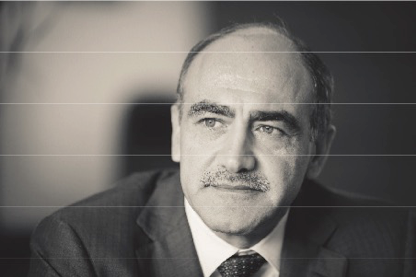
“There is competition in the luxury segment and it is affecting margins.”

Cesar Aoun, General Manager of Gargour and Fils, distributor of Mercedes, Smart, Jeep, Chrysler and Dodge

“It would be stupid to raise VAT as it would kill the market completely, which is already going through a very severe crisis.”
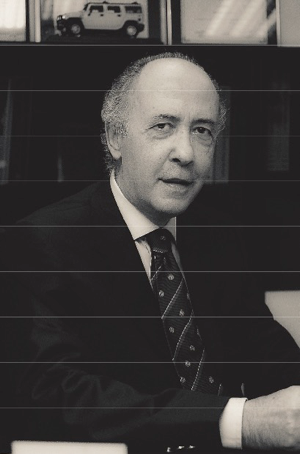
Samir Homsi, President of the Automobile Importers Association (AIA)

“The downturn could’ve been countered if the Beirut Motor Show had not been canceled. The majority of the members of AIA claimed unrest in Lebanon and the economic crisis. My point of view is it was a big mistake. When you have an agenda you follow it, whether it is a success or a flop.”
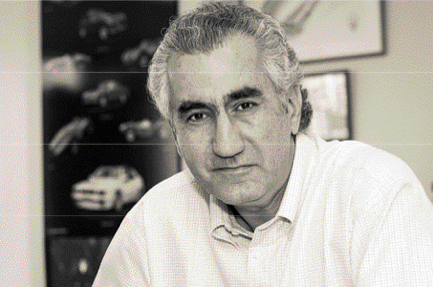
Nabil Bazerji, Managing Director at G.A. Bazerji & Sons, dealer for Suzuki, Lancia and Maserati
December 16, 2012 0 comments
0 FacebookTwitterPinterestEmail
IndustryVoices

Made in Lebanon

by Zak Brophy December 16, 2012
written by Zak Brophy

“We need to be more realistic and enjoy life a little bit. We don’t have to make money every year; there are many nice things to be done in the country.”

Vrej Sbounjian, Minister of Industry

“We are picking up slack not because of Syria so much but due to Turkish suppliers being out of the market. They are now being restricted due to logistics and political reasons, and that trade link has been broken.”

Nizar Raad, General Manager of Universal Metal Products

“We are selling more but there is the problem of cash flow. People are afraid of spending money in the current environment… We are selling for cash not credit as the currency is fluctuating a lot. We sell in Syrian pounds and then transfer on the spot.”

Asaad Saccal, General Manager of generator manufacturers, Saccal Industries, on trade with Syria

“There is a lot more research and development in Lebanon than elsewhere in the region. In Saudi Arabia, Syria, the Emirates, they just copy others.”

Daniel Abboud, General Manager of Lebanese trailer and automotive add-ons manufacturers, Carosserie Abillama

“I am personally worried, not only for the situation of industrialists but also because of the condition of public finance and its impact on the economy and the pressure it puts on the private sector. Our indicators are not good, to say the least.”

Neemat Frem, President of the Association of Lebanese Industrialists

“Before the Syrian crisis, Lebanon was a good transit point for cargo to Iraq. Now there are a lot of doubts. Traders are asking what will happen to their cargo if it gets stuck due to a crisis during transportation in Lebanon or elsewhere.”

Fadi Hadad, General Manager of shipping and logistics firm Masafat International

“I think Lebanese industry is going through its worst period since the end of the civil war. We have never had this agglomeration of domestic, regional and global factors affecting supply and demand.”

Mazen Soueid, economic advisor to former Prime Minister Foud Siniora
December 16, 2012 0 comments
0 FacebookTwitterPinterestEmail
RetailVoices

Shop talk

by Nabila Rahhal December 16, 2012
written by Nabila Rahhal

“Planning in Lebanon has become very difficult. All our brands expect plans and targets from us for next year and the reality is that plans are meaningless when one political incident can alter your course. Realistically, we expect 2013 to be the same as 2012, if the situation remains the same internally and does not escalate. We are saying this because, at the end, Lebanon is affected by the conflict in Syria and it does not seem like it will be resolved in the near future. Again, planning for 2013 therefore becomes difficult in these circumstances.”

Mher Atamian, Managing Director at Atamian

“The number of Arab tourists decreased significantly this summer and the retail sector certainly suffered from this loss of revenues, but we have to deal with it and move on. The more aware and responsible Lebanese are, the more we will be able to have some damage control.”

Sophie Salameh, owner of Sophie’s Choice Boutique in Beirut Souks

“Despite the tough times the country is facing both locally and because of regional spillover, our Lebanese customers remained loyal to our brand. This is mainly thanks to the portfolio of Vertu smartphones, which we launched two years ago and which enjoyed great success among the young clientele, leading to double-digit growth for our business year on year since their launch in 2009.”

Hassan Moustapha, Regional Manager for the Middle East and Africa at Vertu

“Since the launch of the Slowear project a year ago, I certainly had concerns with the overall economic situation and I still have. But we decided to move on, confident in the brand and in our market. 2013 will certainly not be an easy year for the retail industry in general. However, the opening of the new malls around Beirut should bring some dynamism to the market. As for Slowear, we are working on openings in Dubai and Qatar planned for the second quarter of 2013. KSA and Kuwait will follow in 2014.”

Nadim Chammas, Chief Executive of Menawear, distributor of Slowear in the MENA region  

“We rely on our longstanding experience, our know-how, as well as our invested internal strategies for the marketing and development of our luxury division. We will keep on investing professionally regardless of what happens around us. Keeping the crisis in mind, we will continue investing adequately to maintain the proper service to our partners and customers.”

Nadim Chammas, Chief Executive of Menawear, distributor of Slowear in the MENA region  

“The outlook for 2013 is quite challenging as we are facing reduced consumer spending and weak economic conditions. These harsh economic realities are compelling retailers to be more cautious and prudent in their forecasts and local development plans and to seek new paths to stay competitive. Embracing the opportunities offered by the Internet and social media platforms, as well as exploring new and innovative marketing tools, is an essential strategic orientation that retailers need to pursue in order to create more personalized relationships with their customers in 2013.”

Jamil Rayess, General Manager at Hamra Shopping and Trading Company
December 16, 2012 0 comments
0 FacebookTwitterPinterestEmail
Hospitality & TourismVoices

Singing the blues

by Nabila Rahhal December 16, 2012
written by Nabila Rahhal

“We will keep witnessing closures of venues and bankruptcies every month, especially the small, less established outlets. This has always been the case, but [in 2013] the rate of these closures will increase and profitability will drop across the sector.”

Marwan Ayoub, Managing and Founding Partners at Venture Hospitality

“2011 was a very good year for us, one of the best years ever for Sushi Bar. 2012 started well, even better than the previous year, up until May when the drop was kick-started. Depending on the outlet, we are somewhere between 11 percent and 19 percent below last year, which constitutes a substantial decrease, but not a major loss.”

Mario Haddad Junior, owner of Sushi Bar, Falamanki and Jasmine Room

“If the regional situation continues like this, we will be facing a bigger crisis as tourists continue to avoid Lebanon, and overseas expats fear visiting. Already, the high tourist season in Lebanon is getting smaller with barely a productive week of festivities in the winter and a month in the summer, especially with Ramadan now in it.”

Toni Rizk, Managing Partner at TRI Food & Beverage

“The situation around us will not stop us from further diversifying our portfolios because throughout the country’s history there has been turmoil, and things have reached rock bottom often… we use this down time to find good opportunities and when the market picks up we will be ready.”

Hady Fadel, Corporate Marketing Manager at Boubess Group

“The best way to describe the coming period, which actually started a few months ago, is “challenging” — a challenge that could be called survival until we see better days. It is necessary to reduce costs to cope with the consequences of such a delicate situation we are currently experiencing.”

Rana el-Khoury, General Manager at Le Gray Hotel
December 16, 2012 0 comments
0 FacebookTwitterPinterestEmail
Real estateVoices

The crème of ‘concretization’

by Thomas Schellen December 16, 2012
written by Thomas Schellen

“[For the real estate market overall], 2012 was one of the most difficult years since 2005. People are used to ups and downs in this country and have learned to disassociate the political developments from real estate. However, we felt that the recession in the sector was the harshest in a long time, and the harshest on many fronts. Capstone is a different story. We just recently closed a very big deal in real estate, probably the biggest deal in the market in many years. We purchased a plot of 2,500 square meters in a very prime location of Beirut: Sursock, Ashrafieh. Capital in this transaction was two times oversubscribed. This story tells you that there is still appetite in the market for a good product where investors can go in not for the short term but the long term, four or five years. People have hope for the future.”

Ziad Maalouf, Chief Executive of Capstone Investment Group

“Because of the size of Beirut, which is small, and because of the high prices demanded for properties, especially in prime areas, the only way to go [for developers] is vertically. There is very little room to grow laterally and it is very expensive to grow laterally. The issue then becomes how do you do it without terribly impacting the heritage. We have taken the view that heritage to the extent that it is genuine heritage, not just any old building, should be preserved at any price. So we have never attempted to build in areas where there are heritage houses that would have to be demolished for the development. In Sursock we built alongside the Linda Sursock Villa in a way that we have allowed its visibility from all angles and we have intended to wed the new structure to the old structure. Some people obviously like that, some don’t. Some developers have not been conscious enough and have demolished old houses that are of character. That is unfortunate.”

Nabil Sawabini, Chairman and Chief Executive of MENA Capital

“The economy has been really affected by the regional crisis and I think 2013 will be a little quiet, but we are doing fine. In the company we still have three projects [with deliveries] for three years to come and I have told my investors that we will take it easy. We will maintain our clientele, provide all the services and make sure that we will provide [our buyers with] whatever is required. We are not going to be aggressive. We are working on a few new projects that will be something really different in Beirut but we are not actually in a hurry. If we don’t do it next year, we will do it the year after.”

 Ayad Nasser, Chief Executive of Loft Investments

“On the side of sales, the office market will follow the market situation, which is a slowdown on basically everything. However, there is a niche that can be satisfied, which is a luxury office product in a key location with good accessibility and visibility. I believe that there is a market for it and it will endure in 2013. The same goes for office rentals. A lot of supply is coming. Projects in grade ‘A-plus’ office space are usually for larger companies who come here to open regional offices, and the political situation will not be suitable for such projects. But there is a niche for luxury offices of grade ‘A’ or ‘B-plus’; the local Lebanese market will need to buy or rent [such spaces] because Lebanon is where their business is and they believe in the market.”

Houssam Batal, Chief Executive of Premium Projects

“The idea for the association of developers is based on the fact that real estate development today is one of the most important sectors of the economy in Lebanon. We believe that development deserves to have an association. You need to negotiate with the banks, with the central bank about interest rates and with the ministries and municipalities. I also believe that one of the missions of this association should be to secure statistics. If I want to start a new project today in Sin El Fil or Ashrafieh, a good association and secretariat will provide us with some statistics, obtain information from the syndicate of engineers and act as the link between all stakeholders. It must be a professional association, having nothing to do with political [interests] but only defend the interests of developers.”

 George Chehwane, Chairman and Chief Executive of Plus Properties
December 16, 2012 0 comments
0 FacebookTwitterPinterestEmail
Banking & FinanceVoices

Words from the vault

by Maya Sioufi December 16, 2012
written by Maya Sioufi

“Everything else being equal, I don’t foresee better economic conditions than the ones prevailing in Lebanon. If we can sustain the current levels it’s a positive thing. We need to see transformational changes in the region.”

Freddie Baz, Chief Financial Officer of Bank Audi

“We are in Syria for the long term. We see in the medium-to-long term a lot of potential. We expect like everyone else that events will still be very bad and we have no expectations for things to improve in the short term. It will take several years probably before things improve.”

Saad Azhari, Chairman and General Manager of Blom Bank

“Regarding the Financial Markets Authority, of course we need better rules and regulation to avoid further stock manipulation but at the end of the day, we need more companies to list on the exchange.”

Jean Riachi, Chief Executive and Chairman of FFA Private Bank

“I think the government should not be interfering with wages across the board but only ensure the minimum wage rate. For them to be involved in my or your salary is none of their business. At end of the day, businesses will pay what they feel is the market price for X, Y, Z because if you are not paying it [people] will move somewhere else.” 

Anwar Jammal, Chief Executive and Chairman of Jammal Trust Bank

“The biggest challenge this year was the external environment. It was not forecast. The geopolitics of Lebanon this year was worse than we expected. I think despite that we are very positive about the resilience of the economy because history has shown that the banking sector is very resilient.”

Pik Yee Foong, Chief Executive of Standard Chartered Bank Lebanon

“The banks are in a Maronite marriage with the government in terms of financing [the public sector]. Banks have to refrain from being open to new increases in treasury bills. They are happy to continue supporting the government with the current level of debt and refinancing maturing Eurobonds but not to [increase their exposure] significantly.”

Ghassan Assaf, Chairman and General Manager of BBAC

“It’s a love-hate relationship with the private sector for two reasons: it is a small sector with competitive pricing and it [requires] a very time-intensive service. For instance, you service [the chief executive] of a small [or] medium enterprise for $15,000 and you have to see him every couple of days to service him. It’s not like putting that amount in a T-bill and getting the interest once a year from the central bank. This has to do with your readiness to service the private sector. Doing it and saying it are two different things.”

Tarek Khalife, Chairman of Credit Bank

“We are paying very high indirect taxes. The war has been over for more than 20 years now and we still don’t have proper electricity. It’s the biggest bill we are paying. Companies are paying a hell of a lot of money. This is murder; it is a crime for the country. With all our pride of being innovative etcetera, and we can’t solve electricity. It’s a disaster.”

Rami el-Nemr, Chairman and General Manager of First National Bank
December 16, 2012 0 comments
0 FacebookTwitterPinterestEmail
Economics & PolicyVoices

Remarks from the top

by Zak Brophy December 16, 2012
written by Zak Brophy

“We are all one family at MEA but everyone must know that I am the father of the family.”

Mohammad Hout, Chairman of Middle East Airlines, after a strike by pilots

“There is no dispute, we will not compromise on our right to the full 860 square kilometers.”

Gebran Bassil, Minister of Energy and Water, on the contested maritime Exclusive Economic Zone between Lebanon and Israe

“Concerning the election, we are awaiting the law. We can’t say anything before the law. But electorally speaking, everything is possible.”

Ghazi Aridi, Minister of Public Works and Transport, on the potential of Walid Jumblatt breaking the government coalition

“There is oil and gas five kilometers south of our borders — do we think God created a wall  between us and Palestine? All of this area is rich in the Levantine basin.”

Mohammad Qabbani, Head of the Parliamentary Energy and Public Works Committee

“We have reached an economic situation where we are stranded in the middle of a tunnel and there is no end in sight. We are seeing bankruptcies and lots of companies closing down.”

Mohammad Choucair, President of the Lebanese Chamber of Commerce

“We need to work more and produce more and spend less. We need to move away from this culture of debt. This simply isn’t working anymore.”

Charles Arbid, President of the Lebanese Franchisers Association

“There are different sovereign funds and Arab Development Funds that came to the government to fund developments in the electricity sector.  They said, ‘no we don’t need them’. Honestly, they don’t know their ass from their elbow.”

Roudi Baroudi, independent energy consultant and secretary general of the World Energy Council’s Lebanon member committee

“We need a master plan and we need the national accounts on regular terms and clear terms so we can assess our economy on reliable figures and trends and criteria. This is an important place where real change needs to happen.”

Nicolas Nahas, Minister of Economy and Trade
December 16, 2012 0 comments
0 FacebookTwitterPinterestEmail
Economics & PolicyLebanon 2013: The big ideas

Regional councils can help Lebanon grow

by Sami Atallah December 15, 2012
written by Sami Atallah

Lebanon is presented with the most serious challenges it has faced in the past decade. The economy is struggling, the internal security situation deteriorating and the country’s neighbors pose real threats. But amidst everything, there are opportunities — not just in newfound offshore oil and gas but also within the country’s ingenious population.

As we head into 2013, what can be done to help the country unite, to overcome its challenges and ultimately to grow? Over the course of this week, eight influential figures will address seven important topics, each suggesting one proposal to help the country move forward. 

Today, Sami Atallah makes the case for regional councils.


To improve Lebanon’s democracy, we need to rethink our system of devolved government. Right now we have regional municipalities and municipal unions, but neither of them function properly. Instead I propose the introduction of regional councils to connect the country along non-sectarian lines and help it grow.

Municipalities and municipal unions: Failing us all.

Since municipal elections were reinstalled in 1998, they have no doubt reinvigorated local democracy, and provided an impetus for decentralization. However, municipalities remain administratively and fiscally constrained, limiting their service delivery to a fraction of their supposed responsibilities. The number of municipalities in Lebanon, which has mushroomed from 718 in 1998 to 985 in 2012, is too high for 4.5 million people in a tiny country. Croatia, for example, has the same population as Lebanon but five times the surface area, yet it only needs 429 municipalities.

Furthermore, 70 percent of Lebanese municipalities have a registered population of less than 4,000. Almost 400 municipalities do not have a single employee and another 400 have very weak municipal administration. The few municipalities that have the fiscal resources to hire qualified staff face bureaucratic hurdles in their hiring procedures. For instance, it took the municipality of Ba’aklin three years, 73 referrals, and up to 15 signatures to hire a treasurer.

On top of this, they simply do not have the financial ability to do their jobs. The total amount of spending by the municipal sector amounted 6.3 percent of central government expenditure (excluding debt), while their revenue was almost 9 percent. Both of these are significantly lower than the 12 to 15 percent found in many comparable countries.

In effect, municipalities have fallen into a vicious cycle: many of them have no staff to collect fees and taxes and without municipal revenue they are unable to hire staff. Consequently, many are unable to provide services despite the wide range of competencies given to them by law.

On top of these, there are municipal unions, which have become important stakeholders in the context of decentralization. Today, there are 48 unions, of which 35 were established in the last decade. These unions include a total of 680 municipalities as members and are responsible for two-thirds of the population of the country.

Municipal unions are supposed to provide public projects of common interest including roads, sewerage, garbage, slaughterhouses,firefighting, organization of transportation, co-operatives, and markets. Although some have been able to provide services and undertake development projects, their work is constrained by overlapping competencies between municipalities and unions, weak administrative capabilities, excessive procedures to hire municipal staff, and low fiscal resources to undertake developmental projects.

Time for a rethink

I believe it is time to rethink our system of local government. There is a need to redesign the system in an integrated way — helping poorer areas become better-linked to richer ones. This requires a new tier of government on a regional level.

Under such a plan, the central government would be responsible for functions of national concern — such as trade, defense, foreign affairs, criminal and civil law, and industrial policy — while municipalities would focus on hyper-local issues such as street-cleaning and garbage collection. In between, the newly-formed regional administrations would help ensure integrated development.

These councils would be given the responsibility for applying national laws to the regions, thus redistributing the competencies and responsibilities of municipalities, unions, regional councils, and the central government.

More importantly, these councils should be directly elected by citizens. This would enhance democracy, help us move away from sectarianism and break the stranglehold on power of the traditional political groups.

One of the major problems in Lebanon is the inability to directly elect the head of the major political institutions, meaning deals are made behind closed doors. If the heads of these councils were directly elected along non-sectarian lines, they would have a mandate to bring about change.

For these new councils to be effective, they must have the fiscal authority to set the tax rate as well as collect it. Hence there is a need to reallocate some of the taxes and fees currently collected directly by municipalities to regional councils where economies of scale are possible. Regional councils must be endowed with the tax administration to ef?ciently and effectively collect these taxes.

Although direct taxes and fees ensure a degree of ?scal independence, they are unlikely to cover the spending needed for regional administrations. Two additional sources of revenues must be channeled towards them: the first is from the Independent Municipal Fund (composed of 11 taxes which are used to finance municipalities) where a significant portion of its revenue could be transferred to regional administrations rather than spent by the central government on items that do not benefit smaller regions of the country. Second, there is estimated to be at least $1 billion in revenues collected over the years by the Ministry of Telecommunication that was not distributed to municipalities.

Although direct taxes and fees ensure a degree of fiscal independence, they will unlikely cover the spending needed for regional administrations. Two additional sources of revenues must be channeled towards them: The first is from the Independent Municipal Fund (composed of 11 taxes which are used to finance municipalities) where a significant portion of its revenue could be transferred to regional administrations rather than spent by the central government on items that do not benefit smaller regions of the country. Second, there is at least an estimated $1 billion of revenues collected over the years by the Ministry of Telecommunication that was not distributed to municipalities.

The Lebanese often bemoan the state of their democracy, but many feel powerless to help change it. These proposals could make a real difference to all our lives.

Sami Atallah is Director of the Lebanese Center for Policy Studies

December 15, 2012 0 comments
0 FacebookTwitterPinterestEmail
Economics & PolicyLebanon 2013: The big ideas

A green economy could work

by Nada Zaarour December 14, 2012
written by Nada Zaarour

Lebanon is presented with the most serious challenges it has faced in the past decade. The economy is struggling, the internal security situation deteriorating and the country’s neighbors pose real threats. But amidst everything, there are opportunities — not just in newfound offshore oil and gas but also within the country’s ingenious population.

As we head into 2013, what can be done to help the country unite, to overcome its challenges and ultimately to grow? Over the course of this week, eight influential figures will address seven important topics, each suggesting one proposal to help the country move forward. 

Today, Nada Zaarour makes the case for taking the environment more seriously.

A decade into the 21st century, it is about time our citizens and politicians realized the economic, environmental and social benefits to be achieved from moving towards a low-carbon future.

Just mentioning the word ‘green’ brings to the minds of many Lebanese mistaken clichés of tree huggers, reduced economic growth, expensive products and unfeasible styles of living. But to meet the needs of the new technology-driven world, Lebanon has little option but to transform its economy and society into a green one.

It is increasingly clear that escalating climate change is destroying the globe’s natural ecosystem, with forests ravaged and rivers poisoned. Exacerbating the crisis, especially in cities like Beirut, is rapid population growth — not merely in terms of resource use, but also in terms of services and infrastructure. It is hard to avoid the basic conclusion that the ecosystem which underpins the Lebanese economy is shrinking at a rapid pace, leaving the poor particularly vulnerable.

Eventually, Lebanon’s economic development requires a list of financial and government policy-guiding mechanisms to ensure that ample investments are made into crucial areas. These would be tailored to embellish existing natural capital while simultaneously minimizing environmental risks. For these changes to happen, Lebanon will undoubtedly need fundamental reform, and I believe that there are four main steps to doing so.

See also:

Former Labor Minister Charbel Nahas on rethinking the economy

Roudi Baroudi on the country’s oil and gas

British Ambassador Tom Fletcher on foreign interference

Hicham Safieddine on the Syria spillover

Saleh Machnouk on disarming Hezbollah

First, we must develop and promote an efficient and fair transition to a green economy, including establishing fully-fledged fiscal and economic policy measures where market infrastructures encourage new investment. Second, tax reforms that encourage environmental sustainability should be proposed, along with a definite revision of the current inflated taxing measures. Third, we must drive market change through public expenditure, including at an individual level spending our money on environmentally friendly goods, and at a larger level encouraging the government to invest in cleaner infrastructure provisions and sustainable procurement.

Finally, and crucially, we need to foster a new awareness that while reforming the country’s unsustainable economic activity might be politically difficult in the short-term, moving towards a green economy in the longer-term is fiscally advantageous in every way.

Such moves require serious changes to the decision-making processes within institutions like the Ministry of Finance. The many governments that we have had in Lebanon since the civil war have tended to favor short-term, financial crisis strategies, supporting non-renewable energy at the expense of other sectors while continuing to exploit our natural capital. Yet the upcoming challenges are far too big to be dealt with by such short-sighted strategies and we must consider beyond the next few years.

There are benefits to be made as well. Globally, renewable energy investments are expected to reach $630 billion by 2030, up from $162 billion in 2009, and are expected to create an additional 20 million jobs worldwide. What might seem surprising is that many emerging and developing economies are already reaping the benefits of moving towards a green economy. One example, which demonstrates the multiple benefits that can be realized from promoting new green sectors — in addition to greening the traditional brown sectors — is the expected growth of certified biodiversity-friendly agricultural products from $40 billion in 2008 to $21 billion by 2020.

Lebanon must accelerate efforts to shift from this unsustainable ‘brown’ economic system to a low-carbon, resource-rich green economy. A country like Lebanon, blessed with the natural resources of wind and water, could easily lessen excessive dependence on fossil fuels, such as oil, gas and coal. We must not use the very new findings of offshore oil and gas to ignore this issue, as if we do, later generations will have no choices left.

Nada Zaarour is the vice-president of Lebanon’s Green Party

The opinions expressed in this article are the views of the author and not of Executive Magazine

Contribute to the Twitter debate using the hashtag #Leb2013

December 14, 2012 0 comments
0 FacebookTwitterPinterestEmail
The Buzz

Morning briefing: 14 Dec 2012

by Executive Staff December 14, 2012
written by Executive Staff

Economics

Brent crude rose above $108 a barrel on Friday on a brighter outlook for China's economy, the world's second largest oil consumer, but worries about the impact of a possible US fiscal crisis capped price gains.

More from Reuters


Oman is interested in buying weapons systems from the United States in a deal worth $117m.

More from Arabian Business


The Iraqi committee charged with investigation the cancelled Russian arms deal has confirmed that the contract was rife with corruption. However, it will not announce its findings “as it still lacks evidence that is not yet available.”

More from Al-Monitor


Spanish police say they have seized some €28 million ($36.5 million) of assets linked to deposed Egyptian President Hosni Mubarak.

More from Associated Press


The prospects of a lucrative shopping season in Lebanon are better than last year’s poor holiday period, but some businesses have taken pre-emptive measures, cutting prices early, to ensure they meet their targets.

More from The Daily Star


Companies

A Saudi Arabian investment company has set up a joint venture with SAHO, a Siberian grain producer, to ship Russian wheat and barley to the Middle East and North Africa, the two companies have said.

More from Arabian Business


Abu Dhabi National Energy Company (TAQA) has signed a $2.5bn syndicated loan after launching the deal at $2bn in October, the 10 arranging banks have said in a statement.

More from Arabian Business


Qatar Telecom, also known as Qtel, has tapped capital markets with a US$1billion (Dh3.67bn) 10-year bond as it considers expansion in North Africa.

More from The National

December 14, 2012 0 comments
0 FacebookTwitterPinterestEmail
  • 1
  • …
  • 294
  • 295
  • 296
  • 297
  • 298
  • …
  • 707

Latest Cover

About us

Since its first edition emerged on the newsstands in 1999, Executive Magazine has been dedicated to providing its readers with the most up-to-date local and regional business news. Executive is a monthly business magazine that offers readers in-depth analyses on the Lebanese world of commerce, covering all the major sectors – from banking, finance, and insurance to technology, tourism, hospitality, media, and retail.

  • Donate
  • Our Purpose
  • Contact Us

Sign up for our newsletter

    • Facebook
    • Twitter
    • Instagram
    • Linkedin
    • Youtube
    Executive Magazine
    • ISSUES
      • Current Issue
      • Past issues
    • BUSINESS
    • ECONOMICS & POLICY
    • OPINION
    • SPECIAL REPORTS
    • EXECUTIVE TALKS
    • MOVEMENTS
      • Change the image
      • Cannes lions
      • Transparency & accountability
      • ECONOMIC ROADMAP
      • Say No to Corruption
      • The Lebanon media development initiative
      • LPSN Policy Asks
      • Advocating the preservation of deposits
    • JOIN US
      • Join our movement
      • Attend our events
      • Receive updates
      • Connect with us
    • DONATE