• Donate
  • Our Purpose
  • Contact Us
Executive Magazine
  • ISSUES
    • Current Issue
    • Past issues
  • BUSINESS
  • ECONOMICS & POLICY
  • OPINION
  • SPECIAL REPORTS
  • EXECUTIVE TALKS
  • MOVEMENTS
    • Change the image
    • Cannes lions
    • Transparency & accountability
    • ECONOMIC ROADMAP
    • Say No to Corruption
    • The Lebanon media development initiative
    • LPSN Policy Asks
    • Advocating the preservation of deposits
  • JOIN US
    • Join our movement
    • Attend our events
    • Receive updates
    • Connect with us
  • DONATE
Finance

Interest rates on the rise

by Marwan Mikhael December 6, 2012
written by Marwan Mikhael

The Lebanese banking sector has been tested against internal and external shocks many times through recent decades, and it has been tested yet again this year. The sector still enjoys high liquidity ratios, enabling the banks to weather economic turmoil, while the sector as a whole has also been steadily reducing its heavy government exposure — a positive trend amid the numerous challenges Lebanon’s commercial banks have faced in 2012.

The sector remains the main source of financing for the Lebanese government but its exposure to the highly indebted sovereign has been on a declining trend since 2006. Banks’ claims on the public sector constituted 21 percent of their total assets at the end of 2011, down from 28 percent at the end of 2006. Banks hold around $29 billion, or close to 54 percent of the gross public debt, which stood at $54 billion at the end of 2011.

The weight of public debt in the economy, however, whilst still high, has witnessed a large decline since 2005. The ratio of public debt to gross domestic product dropped from 182 percent in 2006 to 135 percent in 2011. This decline was led by high economic growth rates from 2007 through 2010, as well as a lower growth rate for public debt, with the government registering large primary surpluses during the same period. 

Moreover, the relative importance of bank claims on the public sector declined when compared to bank credit to the private sector. While the banking sector continued to lend to the government from 2007-2010, their claims on the private sector increased at a much faster rate, skyrocketing 222 percent from $15.5 billion in 2007 to $34.5 billion in 2010.

Funding the public and private sectors

This economic boom took place in an environment of low interest rates on government debt and helped the banks lower their exposure to the sovereign. When such interest rates are low, banks prefer to lend to the private sector, as the rates charged are higher than the yields banks generate from their government securities portfolio. This is compounded by interest rates on deposits declining less than global interest rates, which has put pressure on banks’ profit margins. Hence banks are turning more and more toward the private sector in order to improve their profitability.

Lowering banks’ exposure to the sovereign reduced the ‘crowding out’ effect, which happens when the government has large financing needs and the available resources are limited — namely, when there is not enough increase in deposits to finance both public and private sectors without enduring an increase in lending rates. In the case of Lebanon, there is a certain growth rate of deposits that has been sufficient to finance government deficit without crowding out the private sector. Total lending needs of the economy including both public and private sectors stands at between $5 billion and $7 billion per year, which means that deposits must grow by 6 to 7 percent in order not to induce an increase in interest rates and consequently a crowding-out effect. Since 2006, there have been enough capital inflows into the country to cater to both the private and public sectors.

A bleak outlook

Growth in bank deposits for 2012 stood at 5.2 percent as of the end of September — similar to 2011 but much lower than previous years, and just enough to provide the necessary financing needs for both the private and public sectors. Going forward, any further reduction in bank deposit growth would mean interest rates would have to increase, with competition between the public and private sectors over the available funds intensifying. Consequently, the cost of servicing the public debt will increase for the government and the cost of new investments will also go up for the private sector; an unwelcome possible scenario for 2013.

December 6, 2012 0 comments
0 FacebookTwitterPinterestEmail
Business

Fall of the factories

by Zak Brophy December 6, 2012
written by Zak Brophy

Lebanon’s economy is dominated by banking, services, tourism and real estate, but there are scores of firms working in the productive sectors that are fighting to hold their own in circumstances that can at best be described as challenging. High operating costs, decrepit infrastructure and a dysfunctional body politic are assured burdens for Lebanon’s captains of industry.

While the enterprising and tenacious producers and traders within Lebanon are well attuned to this ramshackle playing field, 2012 has thrown some hefty additional spanners in the works. “We have reached an economic situation where we are stranded in the middle of a tunnel and there is no end in sight,” warns Mohammad Choucair, president of the Lebanese Chamber of Commerce, Industry and Agriculture. “We are seeing bankruptcies and lots of companies closing down.”

At the dawn of the new-year the International Monetary Fund (IMF) was predicting 1.5 percent growth for Lebanon’s economy during 2012. The reality is that it will be lucky to have flat-lined at 0 percent, with all indicators suggesting that the country slipped into negative growth in the final quarter. This deterioration was compounded by the political establishment’s sadly predictable degeneration into gridlock, which has only served to strip the economy of leadership and amplify the sense of insecurity in the country.

While discussing with Executive the dire straits into which the economy has fallen, the Minister of Industry, Vrej Sbounjian, stated, “We don’t have to make money every year; there are many nice things to be done in the country.” This frank admission perhaps best illustrates how rudderless the government is when it comes to offering meaningful succor to the nation’s business community.

And surely they need it. The World Bank and International Finance Corporation “Doing Business 2013” report ranked Lebanon 115th among 185 countries and 11th among 19 Arab countries in terms of ease of doing business. In almost every category, including starting a business, getting electricity, protecting investors and paying taxes, Lebanon slipped down the rankings from last year’s position. In such a climate, Charles Arbid, president of the Lebanese Franchisers Association, says, “Us Lebanese are used to being crisis managers but today we have to reconsider our way as a nation.”

Golden days past

Lebanon’s industrialists enjoyed a boom from 2005 to 2010, but those days are now a distant memory. Industrial exports nearly doubled in value from $2.17 billion in 2006 to $4.06 billion in 2010 but, “in 2011 it was not a slowdown in growth but a complete stop, and it was the second half of the year that did all the damage,” according to Neemat Frem, president of the Association of Lebanese Industrialists.

The standstill in late 2011 has gone into full-scale retreat in 2012 with figures released by the Ministry of Industry showing that industrial exports totaled $1.9 billion in the first eight months of 2012, constituting a decrease of 12.2 percent from the same period the previous year.

The reasons for this downturn are numerous, including a slump in tourism, which hit demand for agricultural and industrial products, a fall in exports through Syria due to the ongoing violence there and a drop in foreign investment on account of the precarious security and political situation in Lebanon. Furthermore, the already prohibitively high operating costs for Lebanon’s producers were pronounced in 2012 by an escalation in the energy crisis within the country and the implementation of new minimum wage legislation. 

“I can’t stress enough the fact that our economy is inversely correlated to the price of a barrel of oil, as we have no other form of energy other than liquid oil: no gas, coal [or] nuclear,” gripes Frem. “Électricité du Liban (EDL) does not provide any buffer zone like other countries for surges in energy costs, and industrialists are running on their own generators.”

EDL was engulfed in a highly politicized internal labor dispute for much of the summer and the decaying energy infrastructure only deteriorated further, resulting in a ratcheting up of power rationing, with some parts of the country stranded without electricity for up to 22 hours a day.

With industrialists increasingly relying on generators, the global rise in fuel prices was acutely felt on the balance sheet. “Operating costs are so high in Lebanon. Businesses can’t even forecast a budget for the year because the international price of diesel fluctuates so much. It jumped by around a third [in 2012],” explains Nassib Ghobril, head of  economic research at Byblos Bank.


The labor costs incurred in Lebanon are also high in comparison to regional competitors, and when the government bungled its way through the implementation of new minimum wage legislation the private sector cried foul. “The increase in salaries has affected us,” says Daniel Abboud, general manager of Carosserie Abillama, which has a staff of 300 to manufacture trailers and other automotive add-ons that are exported to some 27 countries. “Our products are customized and cannot be mechanized so we rely on labor. Our prices are up 6 percent, so it’s significant.”

As of February 1, “the minimum monthly wage will be fixed at LL675,000 ($450) and the minimum daily wage will be set at LL30,000 ($20), as per articles 1 and 2 of law No. 36/37 issued 15/05/1967,” stipulated the decree published in the government’s Official Gazette. Effectively, employees received a monthly increase ranging from LL175,000 ($116.67) for those earning the minimum wage, up to LL299,000 ($199.33) for those on salaries above LL1.5 million ($1,000).

With Lebanon’s living costs spiraling, reforming the minimum wage was necessary. However, the manner in which it was implemented whiffed of more than a hint of populism, with criticisms from numerous fronts that the proposed legislation would further fuel inflation. Unaccompanied by progressive reforms to taxation and service provision, it is likely the wage shift will do little to really improve the living standards of those on the bottom rungs of the economy, while it will certainly increase the operating costs of employers.

Left out to dry

Lebanon’s private sector is used to operating amid political crisis and under weak governments. However, the elected leaders of the country could easily throw them a few bones to help them get on with keeping the nation in business. There are several key pieces of legislation that would go a long way to energize Lebanon’s business environment, but they are gathering dust in drawers or are lost in the labyrinth of commissions at Parliament.
“We are trying to see that most of the economic decisions are taken in a sane logic and create a more business-friendly environment, and to enhance SME’s [small and medium-sized enterprises] in Lebanon,” says Nicolas Nahas, minister of economy and trade. However, in reality the Lebanese business environment is stacked in favor of a minority of players dominating the markets.
A 2003 report commissioned by the Ministry of Economy of Trade revealed that half the products sold in the Lebanese market come from sectors where there is an oligopoly, under which more than 40 percent of the market is owned by four companies or less. In plain English this is called a cartel. According to the study, three companies own 65 percent of the cement market, 69 percent of the soft drinks market, 77 percent of soap sales, 79 percent of elevator repairs and 85 percent of insulated wires and cables.

Just as Lebanon’s political elite is dominated by a small clique of men, so too is its business arena; the boundaries between the two domains are oftentimes blurred. The prevalence of cartels is damaging to the consumer who suffers from less choice and higher prices while it also hinders competition. It certainly is no friend to the SMEs.

A major step to challenge these oligopolies would be the adoption of anti-trust and competition laws. Such legislation does exist but it has been comfortably squirreled away and virtually never enters the political discourse. Minister Nahas claims the law is in stasis because there is a “constitutional debate” over the legitimacy of any legislation that was introduced during the term of Prime Minister Fouad Siniora (2005-2009).

While technically plausible, this logic is not particularly convincing. Even it were true, the fact that some politicians would hold back important legislation because it was inked from their opponent’s pen is repugnant. The more plausible and distasteful reality is that politicians who have vested interests in the survival of the cartels would rather these laws never see the light of day.
Other vital laws have also been drafted but are held up in the opaque quagmire of Lebanese politics. Perhaps most notable among these are new investment, e-commerce, trade and intellectual property rights bills. With the politicians engaged in a ruinous faceoff over who gets to hold court, they are likely to stay in the dark for some time yet. Indeed, Nahas concedes that none of this legislation will pass as long as the political impasse prevails.

And so it is that 2012 ends on a sour note for Lebanon’s private sector. For those that have persevered through the year’s economic and political crises the closing chapter brings little reason to believe things will get better in 2013. Businesses are going to have to hunker down and hope that at the very least security is maintained so they can stand fast until brighter days return.

December 6, 2012 0 comments
0 FacebookTwitterPinterestEmail
The Buzz

Morning briefing: 6 Dec 2012

by Executive Staff December 6, 2012
written by Executive Staff

Economics and politics

A draft of changes to United Arab Emirates bankruptcy law aimed at simplifying the process and letting failing companies restructure is taking longer than expected and may not be ready until the end of 2013.

More from Gulf Business


Lebanon’s borrowing costs tumbled more than its Middle East peers last month, giving the nation a window to extend maturities on $1.53 billion of bonds even as a civil war in neighboring Syria crimps growth and tourism.

More from Bloomberg


Lebanon ranks as one of the 50 most corrupt nations worldwide, coming 128th out of 174 countries surveyed for perceptions of transparency, a report released Wednesday by an international watchdog showed.

More from The Daily Star


Egypt plunged into a new period of violence last night as riot police were deployed to stop street battles between supporters and opponents of the president, Mohammed Morsi. Three people have died in the clashes.

More from The National


Companies

Bank of America Merrill Lynch has hired Arshad Ghafur, previously with Nomura Holdings, as the country executive for its Middle East and North Africa unit, the US bank said in a statement on Thursday.

More from Gulf Business


A U.S. investigation into whether Barclays Plc paid bribes to win a banking license in Saudi Arabia has spread to other banks that operate in the region, according to a person familiar with the matter.

More from Gulf Business

December 6, 2012 0 comments
0 FacebookTwitterPinterestEmail
Society

Syrians seek God’s shelter

by Preethi Nallu December 5, 2012
written by Preethi Nallu
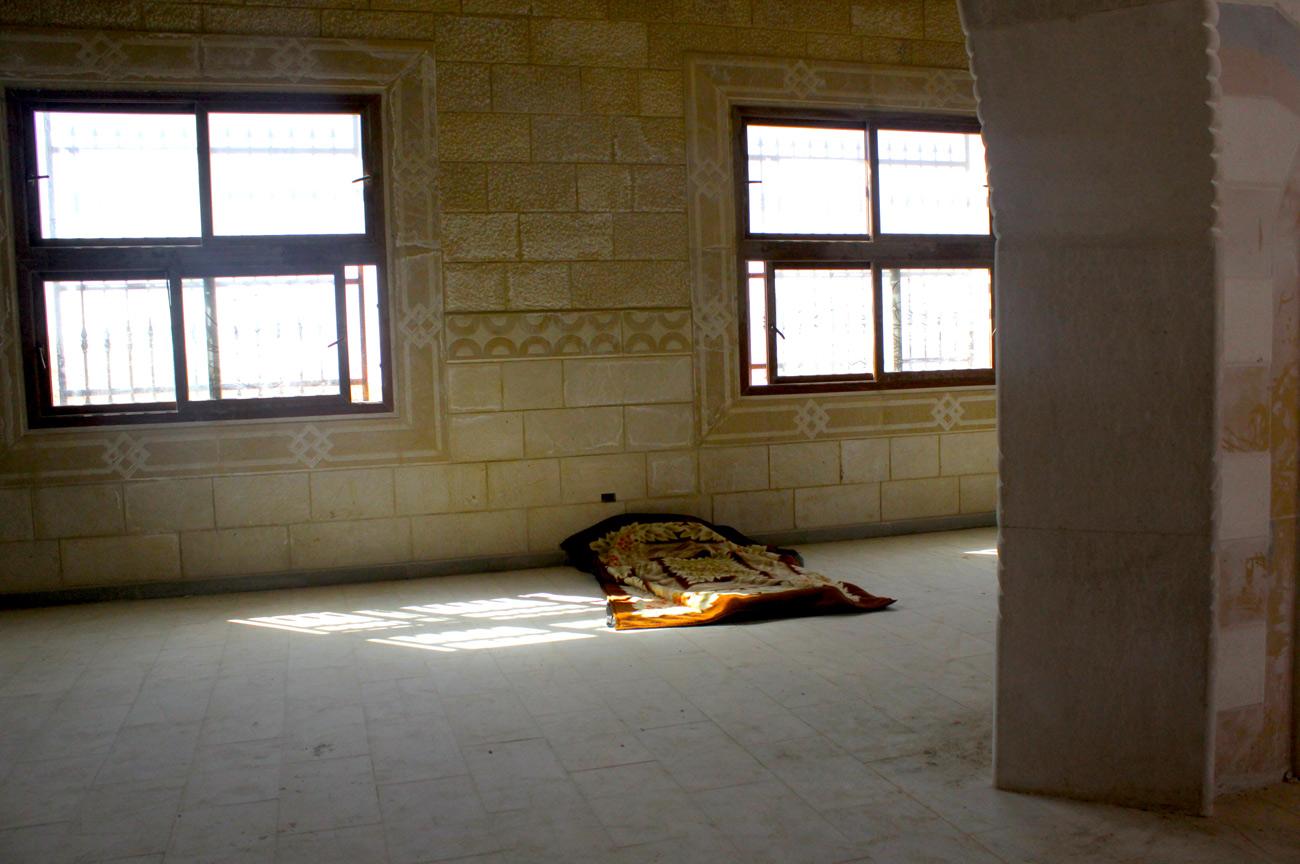
The Esmael al-Hojairi mosque in Arsal, a town in eastern Lebanon near the Syrian border, has become a temporary shelter for dozens of families who have fled the intense fighting [Photo: Executive/Preethi Nallu]
Named after a Lebanese man who died fighting in Iraq, the mosque currently houses between 75 and 100 refugees [Photo: Executive/Preethi Nallu]
A few families are sleeping on the upper level of the mosque, but many are in makeshift shelters in the grounds. With the winter fast approaching, they are in dire need of warm clothing, additional blankets and kerosene for heaters [Photo: Executive/Preethi Nallu]
A young boy looks down as his siblings climb up the stairs. With the start of a new school year, the children are short of many basic school supplies [Photo: Executive/Preethi Nallu]
A Lebanese Imam, who has become the community's spiritual leader, is followed by one of the older female refugees to the upper level of the mosque [Photo: Executive/Preethi Nallu]
Sadly, the residents are all too used to death. Here men gather for the funeral of a rebel fighter who was killed inside Syria but whose body was smuggled across the border for burial [Photo: Executive/Preethi Nallu]
The men line up for funeral prayers led by the Imam. Arsal has experienced regular cross-border incursions and shelling by the Syrian army in the past month [Photo: Executive/Preethi Nallu]
Later the man is buried facing towards Mecca, with marble slabs placed over the body. The funeral is followed by a three-day mourning period [Photo: Executive/Preethi Nallu]
Men from the community attend the funeral and burial, while the women usually gather to mourn at the home of the deceased [Photo: Executive/Preethi Nallu]
A farmer breaks down as he talks of bodies that have arrived from the battlefield and the emotional toll it has taken on families stranded indefinitely at the mosque [Photo: Executive/Preethi Nallu]
With the violence inside Syria intensifying, the chances of the refugees leaving the mosque to return home are slim [Photo: Executive/Preethi Nallu]
December 5, 2012 0 comments
0 FacebookTwitterPinterestEmail
Economics & Policy

Q&A: Nicolas Nahas

by Zak Brophy December 5, 2012
written by Zak Brophy

Buffeted by crises at home and abroad, the Lebanese economy stuttered in 2012 and closed the year unsteadily. Many laws currently stuck in the processes of  government could possibly bolster the country’s business environment and right the ship, but problems abound in passing them through Parliament, let alone their implementation. Executive met with Minister of Economy and Trade, Nicolas Nahas to talk about how he assesses the impasse.

Lebanon has a very high prevalence of market-distorting oligopolies. Why have you not enacted the anti-trust legislation and competition laws?

This law has been drafted and sent to the Parliament. Unfortunately the competition law is one of the 69 laws around which there is a kind of political debate. They were made during Siniora’s term. Now there is a constitutional debate about how to enact these laws and I hope that can be resolved soon.

These laws will challenge a lot of vested interests among the political and business elite. Is this not the real reason they are not progressing? 

You are insinuating there is some lobbying against these laws but I don’t think that is the case here. The law has been drafted and it is on the way. The delay is because of a constitutional debate.

I don’t see how there is a problem with the constitution…

Mr. Siniora’s term has been challenged as unconstitutional by some political parties. Anything that came out of that government is in limbo.

His opponents are in government now. Surely you can push them forward and get them enacted?

This is about a debate among all the different political parties but I think we have reached a kind of agreement on that.

Why aren’t Lebanon’s intellectual property laws properly implemented?

I don’t think they are weakly implemented. I think we are implementing them to the extent of the law.

Many reports and studies including the World Economic Forum’s Global Competitiveness Index suggest otherwise…

It is not just about implementation, but the law itself needs to be revisited and updated. This is going to happen but it is stuck on the same track as the competition laws. There are four laws, which by the World Trade Organization’s (WTO) standards we have to adopt and they are on the same track I mentioned.

It seems Lebanon is just paying lip service to the idea of ascension to the WTO…

Lebanon is committed and we have perhaps finished 90 percent of what is needed but we need to complete these four laws and then we can apply to the WTO.

How much have you been able to achieve in empowering the insurance sector and has it been enough?

It is never enough. We have a very challenging time with the insurance sector and we are trying to bring rules and regulations that vitalize the sector and upgrade the kind of service this industry is giving. This sector is very solid and has huge potential for growth. We hope by next year we can have discussions on a new law that will give more power and capacity to the body that regulates this sector.

The new traffic safety law mandates obligatory third party liability insurance for material damage, but is not able to override the archaic insurance law. Could this be an incentive to finally update the law?

I think they are separate issues. I think the new law under preparation for the insurance sector will take into consideration what has been provided in the traffic law. This law is blocked like the others.

So you’re saying as long as Lebanon is stuck in this political impasse none of these laws will be passed?

Yes, unfortunately so.

You were on the committee that brokered the food safety law. There is an overlap of prerogatives between the Ministry of Agriculture, your ministry and the Ministry of Health, so what actual power will the new food safety authority have?

There is a lack of regulation and law in the food safety sector. There has been a draft law in the parliament for the past four years and in this law the authorities and responsibilities are very mixed. This government has taken back this law and redrafted it. In this new version we are trying to delineate the responsibility of each ministry and each administration. The way the farming is done is under the Ministry of Agriculture, the processing under the Ministry of Industry and the food service and food access to market will be under the new authority.

Considering the budget was stripped of any meaningful reform or progressive measures and is now stuck in the parliament, can its passing be considered any kind of success?

It is not a matter of success, it is a matter of duty. It is something we have to do and we have, and now it is at the parliament.

Isn’t the most important thing that the slate is swept clean from previous spending so we know at least what basis we are starting at?

These are not related. You make a budget and send it to Parliament and then sort out the backlog of the past. We have sent, I think, most of the accounts from 2007 to 2010 to the legal authorities to have a say and then send it back to the parliament. We can’t stop the government because of the backlog of the past.

High operating costs are one of the biggest burdens on Lebanese producers. How do you react to critical sectors, such as electricity, being kicked around like a political football and so irresponsibly handled?

Irresponsibly?

Is it being responsibly handled?

Yes, we have endorsed the vision and the plan of the past government so as to not waste time on arguing on different options. It is under implementation and is the only government that has gone to implementation. Is it my best option? No, but rather than arguing, we acknowledge implementation is the most important step.

Reliable data on Lebanon’s economy are scarce and insufficient. What is being done to address this?

We need a master plan and we need the national accounts on regular terms and clear terms so we can assess our economy on reliable figures, trends and criteria. This is an important place where real change needs to happen.

Lebanon is way behind its potential for e-commerce. What is the situation with the long-awaited e-commerce laws?

These have been drafted and finished and have been agreed on by the Council of Ministers and now are on the way to Parliament. They will be on their desk very soon.

What can you cite as your main achievements while in office?

We are trying to see that most of the economic decisions are taken in a sane logic and create a more business-friendly environment, and to enhance [small and medium-sized enterprises] in Lebanon. We are working on multiple issues regarding basic laws such as food safety, e-commerce and commercial law. We want to bring strategic thinking toward the 20-20 vision, but time has not been enough for us to build this so far. Finally, we are launching web services for the customer. Now the trademark will be online and this is the first step in bringing most of the [Internet protocols] into a direct web service for the customer and the client and will [add to] the kind of service we are giving to the citizen. 

December 5, 2012 0 comments
0 FacebookTwitterPinterestEmail
Entrepreneurship

Emerging talents

by Maya Sioufi December 5, 2012
written by Maya Sioufi


It can be daunting to be an entrepreneur in Lebanon. A lack of solid infrastructure, slow Internet and a lack of proper legal structures put significant pressure on the already stressful event of launching a business. Add to that kidnappings by men in balaclavas, a tragic bomb in the heart of Beirut, travel warnings from regional countries drying up the tourism season and little prospect for economic growth, and the enthusiasm it takes to launch one’s own business might become hard to find.

However, a support system is growing, with an aim of helping entrepreneurs overcome these nerve-wracking challenges. A new incubator launched in 2012, a Beirut-based accelerator began investing in startups, and a handful of venture capital (VC) funds deployed a total of $14 million in equity capital into seven Lebanese startups (as of end of November 2012). 

Happening hubs

In the summer of 2012, AltCity, a space for entrepreneurs to work out of and receive mentorship, set up shop in Hamra. With several activities organized in the past couple of months from entrepreneurs’ breakfast get-togethers  to creative evening workshops, AltCity has been making noise in the entrepreneurial world. 

Just a few blocks from AltCity, another hive of entrepreneurial activity can be found at the offices of accelerator Seeqnce. Founded in 2010, Seeqnce made a lot of noise in 2012, and even featured in an Economist article, when it adopted the model of United States accelerators Y Combinator and TechStars — which landed success stories such as DropBox and AirBnB — and launched an “American Idol” type competition, which ended with the selection of eight startups, each receiving $76,500 in investment; half in cash, and the other half in the form of Seeqnce services, such as a six-month space rental, mentorship and workshops (as described in Executive’s October issue). In exchange for the capital deployment, the eight startups each gave up a hefty 30 percent stake in their newly formed venture. 

Lebanon’s largest real estate developer, Solidere, also jumped on the accelerator/incubator bandwagon, launching a space dubbed “Cloud 5” for entrepreneurs to work out of in November 2012. 

For more established entrepreneurs, Endeavor, a non-profit organization supporting entrepreneurs in emerging markets, increased its support to Lebanese entrepreneurs in 2012. Three companies were added to its network: Mosaic Marble, ElementN and At7addak. Established in Lebanon in 2011, Endeavor had already selected four companies in its first year of operation, and so now counts seven Lebanese companies in its network. These members benefit from Endeavor’s support, including access to a worldwide network of companies in emerging markets, investors,  business leaders and trainees from Ivy league universities. 

Another Lebanese company may be added by the end of 2012, when the Endeavor team in Lebanon fly off to Miami in December to face the international selection panel. Looking forward to 2013, Endeavor says it plans on adding another four to five Lebanese entrepreneurs.  

There have been public sector attempts to support entrepreneurs as well, mainly through the central bank. An online platform for entrepreneurs was launched in 2011 by the central bank aiming at bringing together the different players of the entrepreneurial ecosystem, but it has thus far failed to gain traction in the buzzy entrepreneurial world. “It is not really gaining momentum,” says Saad Andary, the vice governor of Banque du Liban, Lebanon’s central bank, who is behind this initiative. On the website, there is a listing of various entrepreneurial opportunities for investors, funding options for entrepreneurs as well as investors’ information. The platform also offers a list of mentoring and training options for entrepreneurs in Lebanon. 

Financing the idea

Family, friends and fools remain the main source of funding for entrepreneurs in Lebanon. “There are a lot of angel investors in Lebanon and it is hard to quantify them,” says Tarek Sadi, Endeavor’s country manager in Lebanon. 

The Lebanese Business Angels (LBA), part of the Bader organization — a platform launched in 2008 aiming at bringing investors and entrepreneurs closer together — only managed to complete one deal prior to 2012 by helping Ovis Casing, a provider of natural casing for sausages, raise $100,000. 

In 2012, LBA managed to help two companies raise funds: $42,000 for Fresh Natural Products (FNP), a producer of Labneh and Kaak (which featured in Executive’s top 20 entrepreneurs report in November) and $20,000 for an undisclosed mobile gaming company. 

For startups looking for a loan, Kafalat — the government sponsored institution that guarantees private sector loans to small and medium enterprises (SMEs) — remains the main access to external debt, with $109 million deployed into Lebanese SMEs in the first nine months of 2012. Around 15 to 20 percent of these loans are provided to innovative startups according to Khater Abi Habib, chairman of Kafalat. Seven of the entrepreneurs featured in Executive’s ‘Top 20 Entrepreneurs’ received Kafalat loans, two of them in 2012: FNP secured a loan of $133,000 and East Line Marketing of $240,000. As for providing entrepreneurs with further support, Abi Habib told Executive in October that “it is a matter of demand; we are there for them and we have capacity to do it. Let them come”. 

Kafalat is looking to move into equity, and is in advanced talks with the World Bank and the Lebanese government to launch a $30 million equity fund investing in Lebanese startups and complementing the debt support it already provides. The proposal is awaiting approval in Parliament and the fund should be up and running within a couple of months of that approval, according
to Andary. 


The World Bank will be providing the capital in the form of a loan, which a holding company under Kafalat will be responsible for deploying in Lebanese startups, with a maximum ticket of $500,000. “We think it is original and exciting and if we succeed, it could be replicated in the region,” adds Andary.

VC firms have also been more active in the past couple of years with 2012 seeing a small number of deals completed despite the dire economic conditions. 

The $6 million Berytech fund — which in 2008 was the first VC fund to dip its toes in the Lebanese startup market — has extended by a year its four-year mandate to complete investments and plans to deploy the remaining 30 percent of the fund by the first quarter of 2013. With an average ticket size of $700,000, Berytech completed three investments in 2012: PayPlug, a mobile payment application based in France and launched by Lebanese Camille Tyan; Probueno, a crowd-sourcing platform based in the US with Lebanese Michel Rbeiz responsible of product and business development, and Lebanon-based Wixel Studios, a provider of mobile games for the Arab market, in which they co-invested along with Middle East Venture Partners (MEVP), a Lebanon-based VC run by Walid Hanna. 

Berytech is in the process of raising capital for a second larger fund between $20 million and $30 million, which it expects to be up and running by the second quarter of 2013, and which will also be investing in the information and communication technology (ICT) sector “as well as creative companies” says Sami Beydoun, managing partner of Berytech. 

Another Lebanese VC which sealed deals in 2012 was MEVP, with a total of nine rounds of investments throughout the year, of which five were for Lebanese entrepreneurs: Anghami, a provider of online music streaming for the Arab World; Box & Automation Solutions, a cash management, audit and treasury solutions provider; Falafel Games, a producer of online games for the Middle East; PinPay, a mobile banking services provider; Wixel Studios (co-invested with Berytech), and finally Shahiya, a website providing user-generated Arab food recipes. The average ticket per investment stood at $600,000. 

Not all Lebanon-based VCs have been successful in securing deals. With an average ticket size of $500,000 — close to MEVP’s target profile — Cedrus Ventures’ $5 million fund launched in 2011 by Michel Nehme has not been successful. Nehme told Executive in October that he is struggling to find investment opportunities, with his chief concern being the caliber of the people he’s working with, as he is looking for “complete teams ready from the get-go”.

For larger-ticket investments, Riyada Enterprise Development (RED), part of Abraaj Capital, the largest private equity firm in the Middle East, has invested in two companies in Lebanon so far. After deploying approximately $3 million in Nymgo, a telecom provider of international voice-over-IP in August 2011, RED recently completed a second investment in Lebanon through its $50 million Lebanon Capital Growth Fund launched in 2011 in partnership with Cisco and the European Investment Bank. While refusing to disclose the name and size of the second deal, Elie Habib, RED’s Lebanon country manager, stated that it is in the hospitality business with operations in Lebanon and abroad and its size is “significantly larger” than the investment in Nymgo. 

Finally, the fifth VC fund investing in Lebanese as well as MENA startups is Wamda Capital, led by Habib Haddad. Launched in 2011, the fund’s size remains undisclosed as “we are still raising capital” says Habib. With an average ticket size of $300,000, the fund completed 10 investments in 2012 of which two were for Lebanese entrepreneurs: Elie Khoury, founder of San Francisco-based Woopra, a provider of real-time customer analytics and Roy Zakka, founder of Dublin-based Ubanquity, a provider of banking and payment eChannels.

Schools are slacking

On the academic side, many say not enough is being done. “Universities started tinkering a little but it is more show and no go,” says Kafalat’s Abi Habib. 

The American University of Beirut set up the Darwazah Center for Innovation Management and Entrepreneurship in 2010; Balamand University launched its second Youth Entrepreneurship competition in 2012; in 2011, Saint-Joseph University (USJ) teamed up with Berytech to launch the annual regional edition of the Global Social Venture Competition — an international competition in business planning that is partnered with France-based ESSEC Business School. 

While this is a start, universities can do more. Labib Shalak, chief executive officer of Mobinets, a provider of software for telecom operators based in Tripoli, says he believes universities need to teach students more about entrepreneurship and innovation and become less service-oriented. “We have a big resource pool [of graduates in Lebanon] yet at Mobinets we hit a brick wall as we have to invest in [them] for a year,” says Labib. 

More players are venturing into the entrepreneurial space looking to support and monetize Lebanese talent. While lots of activities are taking place and entrepreneurs are feeling the buzz, the space still lacks organization and the ongoing efforts, while encouraging, need to be better channeled and engage more players, from universities to banks to the public sector. For instance, local universities could increase their offering of courses helping would-be entrepreneurs develop business plans and providing startups with a hireable pool of graduates. The public sector has a big role to play by providing the appropriate infrastructure supporting entrepreneurship.

The Lebanese diaspora could also be encouraged to play a bigger role in supporting and financing local talent. For example, in 2011, Lebanese expat and former Google employee George Harik invested $250,000 in a 5 percent stake in Lebanese startup Dermandar. 

As support continues to gain momentum locally and slowly starts attracting attention internationally, a better organizational framework to funnel this support and energy will need to coalesce, and thus allow Lebanese ideas better access to the tools they need to be realized.  

December 5, 2012 1 comment
0 FacebookTwitterPinterestEmail
The Buzz

Morning briefing: 5 Dec 2012

by Executive Staff December 5, 2012
written by Executive Staff

Brent crude was steady around $110 a barrel on Wednesday, nursing losses from the previous two sessions, as investors fretted over prospects for the US fiscal crisis to hurt oil demand, despite supply fears fanned by Middle East tension.

More from Reuters


Egypt has slid in a global league table of perceived official corruption in the past year, and the "Arab Spring" revolutions have yet to produce serious anti-graft action across the region, Transparency International said on Wednesday.

More from Arabian Business


OPEC will probably keep its output quota unchanged for a second successive meeting next week as members judge prices high enough to cover their spending needs, according to a Bloomberg survey.

More from Bloomberg


Lebanon needs to proceed with plans for liquefied natural gas import terminals despite high offshore natural gas prospects, said experts at the conclusion of the Lebanon International Oil and Gas Summit Tuesday.

More from The Daily Star


Turkey does not expect tighter United States sanctions to apply to its natural gas imports from Iran, its energy minister has said, which would mean Tehran will continue to supply and get paid by its biggest gas customer.

More from Reuters


Companies

Akbar Al Baker, CEO of Qatar Airways, believes that the Doha International Airport will not be significantly delayed, despite the new facility missing its anticipated opening date this month.

More from Arabian Business

December 5, 2012 0 comments
0 FacebookTwitterPinterestEmail
Society

Nicholas Chammas assesses 2012

by Nabila Rahhal December 4, 2012
written by Nabila Rahhal

In September, Executive sat down with Nicholas Chammas, head of the Lebanese Traders Association (LTA), to discuss the retail sector’s weak performance following the events this summer, from the warnings against travel to Lebanon by Gulf states, to the kidnappings of foreign visitors and the closures of the airport. Given all this, it was no surprise that the LTA was warning of a major crisis should the situation persist. For our end-of-year issue, Executive sat down with Chammas again to see what, if anything, had changed since our     last meeting. 

Since our last chat with you, the third quarter index has come out. What can you tell us about that?

The third quarter of 2012, in comparison with 2011, saw a drop of 8.5 percent in the LTA-Fransabank retail index. All sectors have been affected but in different proportions. Durable goods [such as electronics and furniture] saw a steeper decline than basic goods [such as clothes, school items, food and drink]… as they are more expensive and are one-off items, while the others are basic staples and everyday consumptions which cannot be really postponed or compressed. 

In fact, the only commodity whose purchasing percentages went up was fuel and oil [up 7 percent], because there is elasticity between the price and demand: when the price falls, the demand increases and this is what happened. Were it not for this, we would have had a double-digit drop in commercial activity. 

How do you see the rest of the year playing out?

We usually have four high points on the trade calendar: the summer season, the Adha holiday period, the Eid al-Fitr holiday period and the Christmas period. This year, three of these points were hit. 

As for the Christmas holiday period, things don’t look good so far because of regional and local tensions. Already half of the fourth quarter has been lost or wasted because of the assassination of Brigadier General Wissam al-Hassan [in October]. We are left with six weeks and if we extrapolate from an earlier period, I am not too optimistic. I hope for the best but fear the worst. If, God forbid, something negative happens in that period, then all will be lost and it will be one of the worst years for the retail sector since the [civil] war ended.

In 2013, the Beirut City Centre Mall will be opening its doors, as well as other malls outside of Beirut, such as the Cascada Mall in Bekaa. Do you think this will return some activity to the sector?

We hope so, but this is on the offer side, which is already dynamic. The offer is there, we have an oversupply even, but we need the other side of the equation, which is the demand. Once it’s there, there is no problem. The local demand is not nearly enough for the expanded offer that we have so we need the expats and the tourists. 

What do you see for the retail sector in 2013? 

There are three segments in the market, the Lebanese locals, the Lebanese expatriates and the Arab tourists, which are represented by a three-legged stool. One leg of the stool, the Arab tourists, has been lost. The second leg, the expats, has been coming more timidly to the country. So the country cannot survive without the three legs.

As for the Lebanese locals, as our report shows, there is shyness in spending and a drop in the purchasing power and disposable income of the Lebanese. So, this is why it is has been so tough. Here we need improvement across the board. We need stability and peace of mind for consumers to come back to Lebanon and spend. 

December 4, 2012 0 comments
0 FacebookTwitterPinterestEmail
Business

Q&A – Saad Andary

by Maya Sioufi December 4, 2012
written by Maya Sioufi

The public sector’s support for entrepreneurship in Lebanon has largely been timid. One public institution that is trying to be active and encourage the country’s enterprising youth is Banque du Liban (BDL), Lebanon’s central bank. BDL has been organizing conferences and launched an online platform in 2011 dedicated to entrepreneurs, but it has failed to gain momentum so far. Saad Andary, vice-governor of Lebanon’s central bank, says BDL has not given up, however, as fostering young talent is essential for the local economy. Executive sat with Andary to discuss BDL’s support for Lebanese talent. 

How will supporting entrepreneurs in Lebanon help spur the local economy?

Lebanon is a mercantile economy and it cannot continue forever like this because we are shedding a lot of talent year in, year out, as we can’t find them jobs. I am trying to reinvent the economy. What we can do here is build on the potential strengths of the economy, that we are a service-based society with human resources, a number of first-class universities and first-class academics. There is a mismatching in human resources so we have to build an economy that matches the talent, since it already exists. The economy should provide jobs for these talents, in medicine, educational services and financial services; in other words, in knowledge-based sectors. 

What is the aim of the online entrepreneurs’ platform launched by the central bank?

We started working on the platform in 2009 and it was launched in 2011. Our aim is to get people to talk to each other. We are working on it. It is not gaining enough momentum though. We are currently speaking to entrepreneurs to help us revamp and redirect the website. We are doing things that are not the norm, not the way the government would expect you to behave. 

Why is the central bank taking the initiative to support entrepreneurs in Lebanon?

As the central bank, it is not our mandate to do this. There is no evidence on the entrepreneurs’ platform that the central bank is behind it. We are the invisible hand that is motivating people to work because it will alienate people in high offices and in the ministries that the central bank is doing things they should be doing and have not bothered to do all these years. I used to go to them [to request their support] but they said they did not have the budget for it. 

What is the central bank doing to help entrepreneurs secure funding?

Young people are always confronted with difficulty in finding funds. Banks won’t fund startups. They fund you if you have already started up, are already established and have guarantees and collateral. So we have to work on creating a capital market capable of providing equity financing, not just debt financing. We have a new financial market authority that has been instituted recently, presided over by the governor of the central bank [Riad Salameh] but it is still early days. Meanwhile, we are working on a project with the World Bank for equity funding. If you go to people who have equity in times of insecurity, they will hold back from deploying their capital. We have to start somewhere so we negotiated with the World Bank for a $30 million loan, which we will transform into equity. 

Where do you stand on the launch of this fund?

We are finalizing it now. It needs approval by Parliament and maybe should be ready in a couple of months. The fund will invest in Lebanese talent in a knowledge-based sector with up to $500,000 per project. Kafalat [the government institution supporting small and medium enterprises in Lebanon by providing loan guarantees] will run it through a holding company. We think it is original and exciting and if we succeed, we can replicate it in the region. 

What do you want from the government?

Before 2009, there was no entrepreneurship ecosystem. Many Lebanese came back from Silicon Valley, from London, from all over and found that the ecosystem is beginning to fall in place. What encouraged them to come back? I don’t know. Maybe our website? Your articles? I am hopeful. You can feel the buzz around you, the energy. We are trying to direct the energy, hopefully with the support of the government, but we don’t want direct intervention from the government nor do we want money or budgetary funds. We just want support to provide such or such a service. 

Do you expect the long overdue electronic signature draft law to pass soon? 

This law is ready. It is in Parliament now in its final stages. It is being discussed in committees… and should be implemented soon. 

How about other laws such as the competition law, also essential to be passed to support entrepreneurs in Lebanon?  

I think what is more essential than the passing of laws is the Investment Development Authority of Lebanon (IDAL) playing a more pivotal role. Ideally we should not be seen doing any of the [aforementioned] things that we have done. It should be the role of IDAL, but they have not done what their equivalent in Turkey has done. IDAL should have a vision and should be the focal point for all investors that are in Lebanon or coming into Lebanon. The prime minister and his office should support it directly; similar to what is done in Turkey. When encountering problems to bring in investments, IDAL could circumvent the red tape confronted when working with a number of ministers, because who is the head of the ministries? The prime minister, and he is best placed to solve any problems that might pop up. 

How about universities — what can they do to support the entrepreneurship ecosystem?

At the conferences we organized for entrepreneurs, we used to invite universities and we were happy to see that universities built on ideas that we discussed. The École Supérieure des Affaires started offering a masters [degree] in entrepreneurship. The dean of business at the Beirut Arab University implemented an institute for entrepreneurs. The American University of Beirut launched a center. 

What is needed for a startup to succeed in Lebanon?  

You need two things to succeed in Lebanon: one is to have an idea that could work and survive in Lebanon, and the other is for the company to operate in international markets. Lebanon is too small to survive on its own; that’s why its youth are struggling. 

What advice would you give to entrepreneurs in Lebanon? 

My advice is that we have to get started, not to waste time thinking about impediments. Get started, plunge in, feel the pain. If you fail, try again. Go for it. 

December 4, 2012 0 comments
0 FacebookTwitterPinterestEmail
Economics & Policy

Downsizing on the dollar

by Paul Cochrane December 4, 2012
written by Paul Cochrane

It has been a year most car dealerships would not like to see repeated. The economic downturn, inflation, high gas prices and political uncertainty have taken their toll on sales, with only a handful of dealers meeting, yet alone surpassing, their sales projections. In short, the automotive sector is yet another segment of the Lebanese economy that can be considered to be in ‘crisis mode’.

At first glance there would seem little cause for concern, with sales stronger than last year’s. In the first four months of 2012, 10,169 new passenger cars were sold, an increase of 12 percent on the same period in 2011, according to figures from the Automobile Importers Association (AIA). While sales slowed down over the summer, by the end of August sales were still up, by 7.6 percent on 2011, and up 2.1 percent on 2010, indicating that unit sales in 2012 would reach the benchmark figure set in 2008 of more than 30,000 new cars sold in one year. As of the end of October, overall sales had reached 29,198 units, up 6.28 percent on the previous year.

“Overall sales of new cars are very close to last year in terms of volume, although it’s not real growth,” said Nabil Bazerji, dealer for Suzuki, Lancia and Maserati, given that these statistics are for volumes, not turnover or dealership profits.

And it is turnover that is giving dealers headaches when they crunch the numbers, as 2012 has proved for the fourth year running that Lebanese are increasingly opting for small cars, with cars under $11,000 now accounting for an estimated 90 percent of all sales according to the AIA. This is important as, while selling a car is arguably, well, selling a car, the difference in margins between a vehicle with a $10,000 price tag and one twice or treble the price is huge, being around just $500 for a compact model; when you consider a dealership’s overheads, advertising campaigns and so on, that profit disappears about as fast as a liter of gas in a Hummer. As one dealer remarked off-the-record, “A mobile phone retailer has a higher margin on a mobile than we do on compact models.”

So, while volumes may be marginally better than last year, it is the smaller cars that are propping up the figures and making the sector seem falsely buoyant.
“There is a crisis when the market is up 6 percent but the luxury sector is down by over 10 percent,” said Pierre Heneine, financial manager at Bassoul-Heneine, dealer for Renault and Dacia. “Consumer confidence has been down for the past two to three years, and is down every month; why would you buy a luxury car?”

Unsurprisingly then, it is the brands with compact models that are having the best sales, and this has resulted in a kind of oligopoly, with seven brands accounting for three-quarters of sales, despite 70 brands being available on the market. Kia, Hyundai and Nissan are the top three sellers, with the Koreans brands accounting for 45.1 percent of the market and Nissan with 15.9 percent, followed by Toyota, Chevrolet, Renault and Volkswagen with a collective 15.46 percent.

“The Koreans have taken over the Toyota empire. Elsewhere in the world Koreans have risen, but they haven’t taken the same share like here,” said Marwan Naffi, general manager of Gabriel Abou Adal and Partners, distributor of Volvo. Kia has 27.2 percent of the Lebanese market, with 7,962 units sold as of the end of October, making Lebanon the only country in the world where Kia is the top-selling brand. Hyundai trails close behind with 17.91 percent of the market, at 5,230 units sold. For Renault, it has been “their best year since 1975,” said Heneine, with sales up 9.67 percent, with 1,066 units sold, and Dacia up 23.81 percent, with 338 cars sold.

Chinese brands have also had a bumper year, up 85 percent on 2011 with 308 cars sold, although accounting for just 1.18 percent of the market. Geely, which entered the market in June and is represented by Rasamny Automotive Industries — also the dealer for Hyundai — sold 143 cars in less than three months, signaling strong demand for low-priced models and raising questions whether Chinese brands could, in the near future, be the next usurper after the Koreans. After all, it was European car designers that turned around Korean brands, and Geely, for instance, has acquired Volvo, from which it is expected to benefit from Swedish design and technology expertise.

A perfect market

The dearth of public transport has driven demand for small vehicles as city run-arounds, and the transport ministry’s plan to introduce 250 public buses in the near future is not likely to dent sales of compacts until a more nationwide plan is, if ever, implemented. High fuel prices are pushing compact sales further, averaging more than $20 for 20 liters this year, and this has also had an impact on used car sales, down 17 percent on 2011 as of September, a trend compounded by dealerships pushing three to five-year warranties and service deals on new wheels. “People are asking about fuel efficiency. With the minimum wage $500 a month, people have no choice but to opt for a small car,” said Dayala Dagher, Natco, distributor of Kia.

There may also be a correlation between the surge in sales of compact cars, the drop in used cars sales and the loss of cheap smuggled fuel from Syria due to the conflict there, a supply loss which has been offset by Lebanon’s imports of oil and mineral fuels surging 89 percent in the first half of the year relative to 2011, to $3.2 billion, according to Bank Byblos data.


Losing the middle ground

Dampened economic sentiment in general has clearly impacted car sales, certainly in the above-$20,000 price bracket, and it has been a bad year for luxury car sales. “There is a crisis in the automotive sector and it is affecting the mid-class car segment, at $25,000 to $90,000, which was the core of the business,” said Bazerji. “Does it mean the middle class is poorer? If so, it is very dangerous for the economy of the country.”

The former cars of choice for Lebanese, German luxury brands such as BMW and Mercedes, while still enjoying relatively good sales, have seen sales of used models plummet; consumers are not just downgrading to cheaper Korean compact models, but sedans and sports models as well.

“Kia can now not be viewed as solely low cost, as people are upping their budgets. Before it was only $10,000 for a Kia, now it is $20,000 to $40,000 plus,” said Dagher. “And mentalities are changing. Former Peugeot, VW and BMW drivers are now switching to Kia as the quality and design has improved.”
In a market where dealers are seeking just a slither of a pie dominated by seven brands, this has resulted in price wars between mid-range and luxury brands, even to the detriment of brand equity. “There is competition in the luxury segment and it is affecting margins. And when a car sells for $55,000 and is then reduced to $38,000, what happens to the resale value and the brand equity?” said Cesar Aoun, general manager of Gargour and Fils, distributor of Mercedes, Smart, Jeep, Chrysler and Dodge. “The other school says ‘introduce the new model at $55,000 and then increase the price, as the customer will be happier as it is more of an investment’. It is like Rolex’s policy to increase prices by 10 to 15 percent every year, and why their watches still have value.”

Sales of Mercedes are down 7.95 percent, as of October, on the previous year, with 567 units sold in 2012, and Jaguar sales are down 18.8 percent, although BMW sales are up 43 percent on last year, to 567 units, attributed primarily to the release of the new 3 Series models.

In commercial sales, it has not been as bad a year as for passenger cars, with sales up 9.29 percent on 2011, from 1,743 units to 1,905 units. Renault-Dacia is this year’s number one in this segment, collaring 23 percent of the market.
Over in the rental sector, things have been far from rosy, due to a dearth of tourists. “It was killer this summer, with no business with rental companies whereas usually it’s a boost,” said Farid Homsi, general manager of IMPEX, distributor for GM, Chevrolet, Cadillac, Hummer and Isuzu.

No-show motor show

In such a downbeat environment, dealers were putting their hopes on a successful Beirut Motor Show in November to raise the sector’s profile, sell more units and offset a lackluster summer. But at a time when the dealers needed every boost they could get, it was decided in September to cancel the show due to political instability. The move has been criticized by dealerships, and some members of the AIA internally conceded in early October that the decision was perhaps not the right one.

“The downturn could’ve been countered if the motor show had not been canceled,” said Bazerji. “My point of view is it was a big mistake. Not only a mistake, a shame because we are not respecting an agenda of having this show every two years. When you’ve an agenda you follow it, whether it is a success or a flop.”

He added that, “Unfortunately the 2010 motor show was 6 years behind the last one, and while I accept 2006 was canceled, a force majeur, but other cancellations? …It is in a period of crisis that a motor show would be of use to the sector.”

Abou Adal’s Naffi also thinks it was a bad idea to cancel in the current doom and gloom. “It was a very bad idea not have the show, as it was needed to change the mood of the people,” he said. “The public have 1,001 things to worry about so we should’ve had the motor show as it would have changed the situation for 10 days and given us a strong sales hook, as the show has the highest traffic of all exhibitions in Lebanon with over 100,000 visitors.”
But other dealers think the costs of being at the show were economically unjustifiable and worth canceling. “In the two months leading up to the show everyone is waiting for it, so people don’t buy, and for two months afterwards you sell, maybe 3 to 5 percent more, but it is expensive to be there,” said Heneine.

“October started well but definitely since the assassination [of intelligence chief Wissam al-Hassan] things have been pretty slow,” said Homsi. “You feel consumers are a bit uncomfortable; we’ve had many potential buyers postpone.  October’s sales were down by 2.21 percent on the same month in 2011, with European and Japanese brands particularly feeling the downturn, slumping by 2.97 percent and 19.63 percent respectively on October 2011.
“You can’t forecast the rest of the year and the market is very much day-to-day,” said Homsi. “I think the last few months of the year will not be that easy and the figures will not be that strong.

Rough roads ahead

The outlook for next year is as unpredictable as sales for the last two months of the year, and there is no crystal ball into which dealers can look. The AIA has projected that the number of imported and registered new and used cars will have dropped to 70,000 in 2012, from 74,000 units in 2011, and 92,000 units in 2010.

“This market is unpredictable,” said Bazerji. “If the situation doesn’t deteriorate further, 2013 will be equal to this year, but it is directly linked to politics and the regional situation.” However, the economic forecast for next year is not overly promising, and there is also not likely to be a fall in oil prices. This is likely to ensure continued strong sales of smaller vehicles and the further marginalization of brands that don’t have compact cars in their line-ups. Dealers are, however, upping marketing campaigns, offering special deals, and opening new showrooms to encourage potential buyers to stop sitting on their wallets.
Dealers are also forecasting that the current market dominance by the Koreans will fade, especially if the Korean won appreciates relative to the Japanese yen. “I think the market is cyclical, and over the next four years people will move back to the European and Japanese heritage brands,” said Heneine. “And I think the trend for buying new small cars will lead to consumers shifting upwards to new, mid-range cars in the B and C segments, between $15,000 to $17,000. But for this to happen we need stability in the country and more consumer confidence.”

In the meantime, dealerships are opposed to a government plan to reintroduce diesel passenger cars, not only because of health hazards — the World Health Organization recently listed diesel as a carcinogen — but also due to the havoc caused in the market when the state changed diesel laws a decade ago, which dealers do not want to see repeated.  Dealerships are even more opposed to a plan to raise value added tax (VAT) by 50 percent on imported cars, from 10 percent to 15 percent. According to the AIA, this will lead to a 30 percent drop in car sales and an aggregate drop of $182 million in government revenues from customs duties, VAT and car registration fees. While the government estimates the VAT rise will lead to an additional $60 million in related tax revenues from imported cars, the AIA estimates that the net loss in government revenues from the VAT rise will reach $122 million in 2013.

“It is the wrong time to do this. The luxury market is down by 10 percent, so if VAT is increased by 50 percent it will completely kill the premium and luxury market,” said Heneine. “If VAT increases, we will have to think about our future strategies, and we won’t be hiring anymore staff.”

Instead of imposing the tax, the AIA is calling for the government to enforce the collection of unpaid road-usage fees, which are estimated at $56 million a year. According to the AIA, 829,000 registered cars, or 64 percent of total registered cars in Lebanon, pay road tax every year while 36 percent, or 467,000 registered cars, do not.

December 4, 2012 0 comments
0 FacebookTwitterPinterestEmail
  • 1
  • …
  • 296
  • 297
  • 298
  • 299
  • 300
  • …
  • 697

Latest Cover

About us

Since its first edition emerged on the newsstands in 1999, Executive Magazine has been dedicated to providing its readers with the most up-to-date local and regional business news. Executive is a monthly business magazine that offers readers in-depth analyses on the Lebanese world of commerce, covering all the major sectors – from banking, finance, and insurance to technology, tourism, hospitality, media, and retail.

  • Donate
  • Our Purpose
  • Contact Us

Sign up for our newsletter

    • Facebook
    • Twitter
    • Instagram
    • Linkedin
    • Youtube
    Executive Magazine
    • ISSUES
      • Current Issue
      • Past issues
    • BUSINESS
    • ECONOMICS & POLICY
    • OPINION
    • SPECIAL REPORTS
    • EXECUTIVE TALKS
    • MOVEMENTS
      • Change the image
      • Cannes lions
      • Transparency & accountability
      • ECONOMIC ROADMAP
      • Say No to Corruption
      • The Lebanon media development initiative
      • LPSN Policy Asks
      • Advocating the preservation of deposits
    • JOIN US
      • Join our movement
      • Attend our events
      • Receive updates
      • Connect with us
    • DONATE