• Donate
  • Our Purpose
  • Contact Us
Executive Magazine
  • ISSUES
    • Current Issue
    • Past issues
  • BUSINESS
  • ECONOMICS & POLICY
  • OPINION
  • SPECIAL REPORTS
  • EXECUTIVE TALKS
  • MOVEMENTS
    • Change the image
    • Cannes lions
    • Transparency & accountability
    • ECONOMIC ROADMAP
    • Say No to Corruption
    • The Lebanon media development initiative
    • LPSN Policy Asks
    • Advocating the preservation of deposits
  • JOIN US
    • Join our movement
    • Attend our events
    • Receive updates
    • Connect with us
  • DONATE
Society

Lonely in Luxury

by Yasser Akkaoui April 3, 2012
written by Yasser Akkaoui

Dipping my head to walk onto an Air France flight at Beirut’s Rafiq Hariri International Airport last month, I suddenly found myself sitting next to some familiar faces. To one side of me I found former telecommunications minister Marwan Hamadeh. In the next row, I saw Bank Audi general manager Marc Audi, who was sitting next to Azmi Mikati, nephew to the Prime Minister, and in the last row sat Progressive Socialist Party leader Walid Joumblatt and his wife Noura. 

Now, I was not overly surprised to find myself in such an assembly, as Paris, more than any other city, is our Lebanese home away from home. We may do business in the Gulf — and nearly everywhere else on the planet — but for savoir vivre, we return to the Seine. What did surprise me was that I fly business class and when I had stepped on board I had glanced to my left and saw that “La Premiere,” the first class, was empty. Should not all these members of the Lebanese uber-elite be sitting in first class instead of hobnobbing in Affaires?    

Curious to find about the first-class Air France service between France and Lebanon, I arranged a press trip with our friends at the airline. Three days later, after I had concluded my business and filled my inner reservoirs with cultural and culinary delights, I stepped out of the front door of my Paris home to find a car from the airline ready to drive me to Charles De Gaulle.

What I arrived to was anything but the clunky Paris hub I was used to. I was recieved in what looks more like a hotel than a terminal. There was no counter to wait at, only a dazzling attendant assinged to you (and only you) wearing the finest bleu, blanc est rouge. The exchange with this lovely French damme is anything but the usual drab airline chitchat, and you barely notice as she takes your documents only to bring them back promptly and whisk you through customs to a dedicated elevator bringing you to the La Premiere Lounge. There, surrounded by a fine art exhibition and served the best French cusine by Alain Ducasse’s own staff I began to understand why, after the fall of the Concord, Le Premiere has become Air France’s alternative offering to the world’s well-heeled. After relaxing in the spa, it was time to board and my personable attendant drove me (in a  French car of course) to the plane. 

I was the last passenger to board, welcomed and escorted to the vestibule of my seat by a flight attendant who was yet another dazzling lady. But the four hours back to Beirut in La Premiere was enough time for me to return to the question: why on earth were the Lebanese elite I saw three days prior flying business class instead of in noble first?

First I thought it was a matter of image. Bankers, even the top brass at the largest banks, may be sensitive to the public perception that demands austerity in harsh economic times. But nobles and princely ‘zaims’ surely do not have to consider those business image factors, so I thought of other reasons. While sitting lonesome in the first-class cabin, I thought maybe isolation is not a Lebanese thing. Lebanese boys  like to show off, but in La Premiere, as you are last-on and first-off, nobody ever sees you, so how can you show off if nobody walks by? 

In the end, I think I figured it out. Every crown has its jewel, and for those gems no price is too high for those who want what no one else has. But while no other airline offers such daily first-class service from Beirut to Europe, and clearly there are enough high-net-worth Lebanese to fill eight, or even 16 seats, do they have the will, or find the worth, in spending $1,000 an hour for the privilege? 

I may have rubbed shoulders with absolute luxury and the finest culture (albeit in splendid isolation), so if I am invited again, or if high demand for business class in the summer narrows the price gap considerably, I will gladly consider La Premiere. But when, as this spring, the return flight on first will mean shelling out about $5,000 after adding taxes, when a business class seat will set me back $2,000 or less, I think I would rather use Affaires and rub shoulders with neighbors.

April 3, 2012 0 comments
0 FacebookTwitterPinterestEmail
Comment

Hezbollah softer on Syria?

by Nicholas Blanford April 3, 2012
written by Nicholas Blanford

Is Hezbollah beginning to dampen its enthusiasm for the regime of Syrian President Bashar al-Assad? The answer is probably no, but that question is being asked in diplomatic circles after indications that Hezbollah has toned down some of its rhetoric on the Syria crisis lately.

Most notably, in a speech in the middle of March, Secretary General Sayyed Hassan Nasrallah declined to repeat accusations that the upheaval in Syria is the work of the West and allied Arab states to weaken a cornerstone of the anti-Israel ‘Axis of Resistance’, the pan-regional alliance that brings together Iran, Syria, Hezbollah, elements in Iraq and some Palestinian groups. Instead, he opted for a more conciliatory tone, stressing that only a political solution could end the bloodshed.

“Since day one, we have called on the Syrians to avoid carrying arms and adopt a political solution… It has been one year since the crisis began and no tangible results have been achieved,” he said. “There is only a political solution in Syria. That is [for both sides to] lay down arms simultaneously within an agreed-upon mechanism, in order to embark upon a clear political solution.”

Referring to a silent plurality in Syria that does not necessarily support the Assad regime but fears an alternative, Nasrallah said, “There are people who want reforms and not a civil war or partition. They want to continue [to resist Israel] and be loyal to Palestine. We are with them.”

When the revolt in Syria erupted a year ago, it posed a serious dilemma for Hezbollah, as well as Iran. Syria is a critical ally of Iran and Hezbollah, the geo-strategic lynchpin connecting the two that serves as a conduit for the flow of arms and provides strategic depth for the Resistance. The loss of Syria threatens the integrity of the alliance. However, offering unvarnished support for the Assad regime risked worsening already strained relations with the region’s Sunnis. Hezbollah has always championed intra-Muslim unity, believing that the schism between Shias and Sunnis distracts from the more pressing goal of confronting Israel. But the hostility of Syrian Sunnis towards Hezbollah has steadily grown over the past year as the uprising has taken on a more sectarian tone.

In dozens of interviews with Syrian refugees, activists and Free Syrian Army fighters, accusations have been leveled against Hezbollah for helping the Syrian government forces stamp out the rebellion. Some claim to have seen men “dressed in black with beards” kept separate from Syrian security forces. Others insist that the suspected Hezbollah men were speaking with Lebanese accents. Yet little concrete evidence has emerged that Hezbollah is fighting alongside Syrian troops to crush the protests.

In the early stages of the uprisings in Tunisia, Egypt, Bahrain and Libya, Hezbollah sided with the rebels. Indeed, Hezbollah officials could barely disguise their glee at the sight of Hosni Mubarak, former Egyptian president and arch critic of Hezbollah, carried into court on a stretcher after his downfall. But when the Arab Spring came to Syria, Hezbollah changed its tune, opening the party up to charges of hypocrisy. Hezbollah, however, makes no apology for its seemingly contradictory stance toward Syria. The argument runs that Syria is deserving of Hezbollah’s support because of its rejectionist stance toward Israel and its support for the Resistance, unlike all the other countries subject to the Arab Spring revolts, which were allies of the West.

Nevertheless, Nasrallah must surely rue the lost opportunity that was available early in the crisis when the Syrian regime could have staunched the protests by embarking upon a genuine reform program, which would have left the regime in place but addressed some of the demands of the protestors. There is an argument, of course, that the Syrian regime cannot implement meaningful reforms without fatally weakening its hold on power.

Either way, Hezbollah has little choice for now but to follow Iran’s lead and continue backing the Syrian regime in the hope that it can eventually prevail. If the Assad regime collapses it will upset the strategic alignments across the region. In the — admittedly unlikely — event of a smooth transition to a Sunni-dominated regime in Damascus that realigns closer to Saudi Arabia and Turkey, Iraq could emerge as the new regional fault line between Iran and the Gulf states. That would leave Hezbollah still domestically strong, but regionally isolated on the shores of the Mediterranean with its Iranian patron on the other side of the Middle East.

April 3, 2012 0 comments
0 FacebookTwitterPinterestEmail
Comment

Mainstreaming extremism

by Spencer Osberg & Ali Sayed-Ali April 3, 2012
written by Spencer Osberg & Ali Sayed-Ali

Last month a new player was born into the world of sectarian politics in Lebanon. Sheikh Ahmad al-Assir, the Imam of Bilal Bin Rabah Mosque in the southern city of Sidon, was for the first time given a national audience, his speech to a rally of some 2,000 Salafist Sunni Muslims in Downtown Beirut on March 5 broadcast across the spectrum of Lebanese satellite TV stations, his words printed in newspapers and websites affiliated with all the country’s sectarian power centers. Overnight, Sheikh Assir became the face of the Salafist movement in Lebanon.

Until last month, the strongest association most Lebanese had with the word ‘Salafi’ was the siege of Nahr Al Bared in 2007, when a group of heavily armed, mostly-foreign Sunni extremists waged a four-month war with the Lebanese army at the Palestinian refugee camp near Tripoli, leaving many hundreds dead and wounded, tens of thousands displaced and the camp leveled. Until last month ‘Salafi’ was synonymous with a vein of religious fanaticism most Lebanese find abhorrent.  

Not unaware of this, Sheikh Assir clearly made moves to legitimize and rebrand the Salafist movement and move it closer to the mainstream. Opening the rally before Assir took the stage was Fadel Shaker — the pop-culture icon most had previously associated more with Lebanon’s glitzy, Champagne-guzzling nightclubs than a literalist Sunni interpretation of the Quran — who crooned an Islamic anthem to bless the ceremonies. Then came Assir’s conciliatory words to the country’s Christians, emphasizing their essential place in a religiously plural Lebanon. He repeated this sentiment the following week in an interview on the nation’s most popular talk show “Kalam Ennas”, on the Christian-affiliated LBC channel. While on air he shrewdly went as far as he probably could to distance himself personally from the extremist label while not alienating his followers when he said that he is, in fact, not a Salafi at all, but at the same time to be a Salafi “is not a crime.”

During this interview, despite saying, “I am not a politician,” Assir made his political ambitions clear: he intends to replace Saad Hariri as the leader of the Sunni sect in Lebanon. That’s ambitious, as Assir’s movement is still small relative to other political parties in the country, with a support base focused mainly around Sidon and Tripoli, but it has gained momentum in recent years. 

Following Hezbollah-led fighters’ effective takeover of much of Beirut in May 2008, many Sunnis were left feeling humiliated and abandoned by their traditional leaders. The enduring absence of Hariri from the Lebanese political scene and the financial troubles battering his business empire have left much of the Sunni populace increasingly adrift for leadership — an opening Assir seeks to exploit.

Assir is also emboldened by the regional gains of the Salafi movement within the context of the Arab uprisings, with Salafi parties making public shows of force at the ballot boxes in Egypt and Tunisia, and the Syrian uprising increasingly becoming a regional rallying cry for Sunni liberation.

There is a fundamental incongruence, however, in trying to take an extremist ideology into the mainstream, and the more Assir’s movement is in the spotlight of scrutiny, the more these inherent contradictions will surface.   

While the rally in downtown Beirut was ostensibly a show of support for the Syrian uprising, the Salafi character of the demonstration played perfectly into the warnings of the Syrian regime that there is actually a sectarian conflict being waged by religious extremists. 

While there will also undoubtedly be a Salafi showing on the next ballot for parliamentary elections in 2013, can a group that explicitly believes non-Sunnis to be ‘infidels’ reconcile this with responsibility to govern fairly over a population as religiously diverse as Lebanon’s?

Perhaps the contradictions are no better embodied than by the man who opened for Assir at the rally, Fadel Shaker. Despite having sung his way out of a youth of poverty and being invited to open the rally precisely because of his famous vocal cords, Shaker said afterward in an interview on MTV’s “Inta Hurr” talk show that — in line with fundamentalist Islamic teachings — he considers singing a sin and was going to retire. He’d decided to postpone his professional exit, however, to use his immoral abilities to support the Syrian revolution — and introduce the nation to its newest religious icon.  

April 3, 2012 0 comments
0 FacebookTwitterPinterestEmail
Comment

Parched policies

by Sami Halabi April 3, 2012
written by Sami Halabi

As Lebanon edged closer to war in the early 1970s, an ambitious project to provide irrigation and drinking water to South Lebanon was launched. At the time what came to be known as the ‘Litani River Project’ (also known to water experts as the Canal 800), was to be the most expansive undertaking to tap Lebanon’s largest — and one of its few — major water storage facilities, the Qaraoun artificial lake. The project aimed to bring potable water to more than 300,000 residents and irrigate 15,000 hectares of farm land in Marjaoun, Bint Jbeil and Yaarin. It never happened.

When war broke out plans were abandoned, only to resurface again a decade ago, and just last month a decision was finally made: the Litani River Project is a go. But whenever Lebanon’s politicians finally agree not to disagree, most often the people end up paying the bill, even if they didn’t get served the drinks. 

At the announcement ceremony chaired by Prime Minister Najib Mikati and Parliamentary Speaker Nabih Berri were swathes of politicians from both sides of the aisle, lending their support to the ‘development of the south’. Amongst them was former PM Fouad Siniora, Future Movement Member of Parliament and Chairman of the Council for Development and Reconstruction (CDR) Nabil al-Jisr, as well as their arch nemesis Energy and Water Minister Gebran Bassil. Rarely, if ever, has their been such consensus in Lebanon; could it be our fractious politicians merely had a change of heart? 

Not likely. As much as the country needs to employ, not to mention develop, its scant water storage infrastructure, going ahead with it now, and in this way, puts politics over policy and does little but allow grandstanders to tout promises, soon to be followed by the distribution of hundreds of millions of dollars to their favorite contractors. In the end they will likely leave us all thirsty, more indebted and sick to our stomachs. 

While the Litani project may have been feasible in the 1970s, since then other projects that use the Qaraoun’s water have been completed and others newly approved. Due to a lack of environmental standards and enforcement, what has also happened is that the lake, and the Litani River that feeds it, have become among Lebanon’s largest sewage dumps. Any water used from it will probably have to be treated for heavy metals that have started to surface, with the cost of such treatment likely making the Litani project financially unfeasible.

Given the lack of alternative sources, the World Bank-funded Awali Project to bring water to Beirut will also draw from the Qaraoun — thanks to a recent cabinet decision. It may also need a treatment that is unaccounted for. Documents and research conducted by Executive all point to the probability that after hundreds of millions of dollars of public money is spent,  the people of Beirut and the South will still have limited access to water because, simply, there will not be enough to go around. That is unless more infrastructure for water collection and storage is built, for which funding and feasibility is questionable at best. It is also important to note that Lebanon’s most productive agriculture region, the Bekaa, is being passed over and the hydroelectric power plants that use the same water could also fizzle out. The entire plan would seem to make no sense, until you remember it is not about people; it’s about politics.

Speaker Berri and his cohorts have been pushing for the Litani project for years to keep their support base in the south happy, Michel Aoun needs to show that his son in law is doing something by bringing water to Beirut and Mount Lebanon, Saad Hariri and Siniora need to use the CDR to contract out projects to their friends, and Mikati, well he’s just the middle-man of Lebanese politics anyway. 

April 3, 2012 0 comments
0 FacebookTwitterPinterestEmail
Comment

Oil in Lebanon: sparring for margins

by Paul Cochrane April 3, 2012
written by Paul Cochrane

There are few sectors of the economy that elicit less sympathy than the oil industry. Thus one has to wonder whether there wasn’t more anger than pity generated last month toward oil-importing companies, truckers and gas stations after their one day strike left those who failed to fill up in time sucking on fumes. The oil industry was crying foul, however, over what it claims are profit margins that are plummeting due to government imposed surcharges and the minimum salary increase. The March 15 protest was the latest engagement of a long running battle with the Ministry of Energy and Water over price structuring. 

To judge whether industry advocates have a case or not, one must understand the basic dynamics of the sector. Every Wednesday the government sets the price for a jerrycan (20 liters of fuel); it is a crucial revenue stream for the country, with tax of 5,500LL ($3.66) and value added tax (VAT) of 2,500LL ($1.66) on every jerrycan ($23.16 as of going to print). For gas station owners, margins used to be 10 percent on a jerrycan, but has been whittled down as oil prices have risen (to $108 a barrel as of going to print) to 4 percent, or 800LL ($0.53), which they claim is not enough to cover infrastructure costs and the newly introduced minimum monthly wage, which went from 500,000LL ($333) to 675,000LL ($450). 

The government did not give in to the strike, saying if it did, prices would rise by $3.33 on every jerrycan. The argument put forward by the Energy Minister, Gebran Bassil, was that the oil sector's demands were “unrealistic and unjust,” he told reporters at a press conference. “How can they claim to be losing money when we see stations opening everywhere and given that Lebanon has the highest number of gas stations per kilometer in the region.”

The minister has a point but he seems to have overlooked the fact that a license freeze on new gas stations was put in place last year, and if new stations are springing up around the country, they have done so illegally, outside the remit of Bassil's own ministry. Indeed, what Bassil did not mention was that out of the 3,250 gas stations in Lebanon, only 1,450 have licenses. Perhaps the ministry itself should start a nationwide process of regulating, even fining, the 1,800 gas stations operating without licenses as part of a project to reform the sector.

Bassil also threw out a figure that the oil importers make $100 million a year. General Labor Confederation Union chief Maroun Khawli went even further by saying the country's 14 oil importers are acting like a cartel and generate $300 million in profits each year. 

However, Bahij Abu Hamzi, the head of Cogico — which owns Levant Oil and Nat Gas — and is the former head of the country’s oil importers syndicate, told me he had no idea where these figures came from. He claimed $1.2 billion in oil is imported each year and profits are 5 percent, or $60 million, which is around LL800 per jerrycan.

While something doesn't totally add up here given discrepancies in the tens of millions of dollars, there appears to be some truth in oil companies not having the high profits commonly assumed, as over the past several years five oil importation companies went bankrupt and the sector is struggling to fund necessary infrastructure upgrades, which has had negative knock-on effects. Safety standards are far from being up to par; there have been reports of oil seeping into the ground water and last year an explosion at a gas station in Beirut left seven dead.

A recent report by global accounting firm PriceWaterhouseCoopers has proposed that margins should be raised to 2,800LL ($1.85) for 20 liters. This is assuredly too high for the government to accept given how high oil prices already are for the public, and even oil importers acknowledge that this is not the right time to raise it to that level. 

A solution needs to be found that placates both parties, as the oil sector has indicated it will once again lock up the pumps if its demands are not met. But a viable solution is not likely unless there is transparency in what the oil sector's profits — or lack there of — really are. Addressing the prices at the pump is just the start of a much needed refinement of an industry that is as opaque as the oil it sells.

April 3, 2012 0 comments
0 FacebookTwitterPinterestEmail
Comment

Remaking Yemen’s military

by Farea al-Muslimi April 3, 2012
written by Farea al-Muslimi

Few in Yemen can remember the last external war their country’s national army fought. For the record, the last time Yemeni troops aimed their artillery at non-Yemenis was the 1934 war with Saudi Arabia. 

Since then, the army’s weaponry has been turned inwards, supporting successive regimes in the suppression of opposition movements across the country. The military, along with the tribes and religious leaders, make up the troika of power in Yemen, and therefore part of the axis of corruption and misery Yemenis have lived with for a very long time. 

Even after this past year of revolution and all the blood spilled, the majority of Yemen’s military to this day remains under the control of the son of Yemen’s former president Ali Abdullah Saleh, as well as his nephews, half-brother(s) and other close ties.  Statistics on the Yemeni military are rare and hard to find, yet there is some consensus that military spending hovers around 5 percent of the country’s gross domestic product, which in 2011 was roughly $36 billion. In 2009 alone, former President Ali Abdullah Saleh signed a deal to buy $1 billion worth of arms from Russia. The flow of American military assistance also increased in the last decade, topping $150 million in 2010. Seeing Yemen solely from a counter-terrorism perspective, American cash and blessings have found their way onto (and under) Saleh’s table since 2001. In return, the US has enjoyed free access to Yemeni airspace. A US diplomatic cable released by Wikileaks reported that Saleh told General David Petraeus that the Yemeni government would continue telling Yemenis, “The bomb is ours,” effectively giving the American military a free pass to launch drone missile strikes against targets it considered linked to Al Qaeda in the Arabian Peninsula — though often resulting in civilian casualties. 

Since the beginning of Yemen’s uprising in early 2011, one of the biggest demands of the protesters was restructuring the army based on national criteria, and replacing Saleh’s relatives with credible military leaders. During the uprising, Saleh relied on two segments of the army — the Republican Guard, led by his son, and the Central Security Forces (CSF), lead by his nephew — to put down peaceful protests. The CSF contains a counter-terrorism unit that had received American military training and equipment, resources it used to great effect against protesters. 

But armies founded on personal interests rather than national ones have indelible fault lines that splinter under pressure, as was the case in Yemen. The First Armored Division, led by Ali Mohsen al-Ahmar — another of Saleh’s relatives — in March declared its support for the revolution and its intent to protect the squares where protesters had set up camp. This lead to battles between it and the Republican Guard, dividing Sanaa into what seemed two different republics. Yemenis lived in a nightmare for months after, afraid that the clashes would lead to civil war, which at times seemed inevitable. 

Among the core provisions of the Gulf Cooperation Council deal that facilitated Saleh’s exit earlier this year was the restructuring of the army over a transitional period of two years. While little has been done, and the likelihood for meeting the timeframe seems slight, remaking the army has become the next popular grievance to target for the revolutionaries. Opposing them is an established military elite, with few of the elderly commanders inclined to cede power to the new structure. The precariousness of the situation becomes more apparent when one takes into account the several hundred thousand soldiers receiving salaries from the government, but who are not part of the regular army. These are salaries funneled through tribal Sheikhs and military leaders each month via a shady, pseudo-mafioso system, which has built and sustained fiefdoms of armed influence and a complex hierarchy of loyalties. 

Yemen faces a humanitarian crisis, more than half a million internally displaced people, multiple armed conflicts and a near endless stream of other imminent catastrophes. Yet the restructuring of the army is arguably the most complicated and crucial task the country must deal with. The hope is that attempting to do so does not simply make things worse for everyone. And even if, by a miracle, the reconstitution of the army occurs without major mishap, it will take decades for the Yemeni military to reconstruct its relationship and image with the people of Yemen. 

April 3, 2012 0 comments
0 FacebookTwitterPinterestEmail
Finance

Fixed income’s online shine

by Henri Chaoul March 27, 2012
written by Henri Chaoul

Over the course of the last decade, electronics have transformed the global markets: virtually all the world’s exchanges are electronic. Access to liquidity and the ability to execute in nanoseconds is routine. The electronic revolution in securities issues has led to greater efficiency, liquidity, price discovery, quicker execution, and productivity for all players: broker-dealers, institutions, and individual investors.

Notably absent from participation in this transformation has been the fixed income market, but that is changing. Driven by regulation, technology, and the need to compete, fixed income markets are catching up – if not soon to surpassing – the electronic capability seen in equities and purely fixed income asset classes.

The regulatory requirements mandated both in the Basel and Dodd-Frank regimes that lay out rules for the financial industry necessitate greater connectivity, transparency and access among fixed income players. Owing to regulation, upcoming trends will include a move from proprietary to agency-based execution, where an individual or a firm is authorized to executive on behalf of the principal, and a further tightening of spreads – all of which harbor well for a centralized connected solution.

In addition, from the competitive standpoint, the previous advantages reaped from bond market opacity are disappearing, meaning that the market is moving to become more efficient. Internet-based technology unavailable only a decade ago enables this efficiency, transparency, and connectivity. And, precisely because the bond markets are delayed entrants into technology, the technologies that are available and which are being deployed are already the most advanced.

Bonds behind the curve

One of the reasons the bond market has lagged behind is a resulting structural issues related to trading. Part of the problem resides in the sheer size of the market and the number of instruments available. In equities, a company has one stock available for trading. In the bond market, a company has different issues, released at different times, under different terms. This creates an illiquid market that is, by definition, ‘hard to trade’. Sourcing liquidity is not only difficult but has to be solicited and, until recently, the only way to find the other side of a trade was to make a number of bilateral phone calls.

Secondly, the way bonds are traded are simply not as easily understood by investors as equities and foreign currencies. But as investors increasingly see a need to diversify (evidenced by the decline in volumes in the equity markets), especially in light of today’s global market uncertainty, bonds become a “must have” in any portfolio. In addition, investors who are now holding large amounts of cash are trying to figure out what to do with it. One answer is bonds. For example, Americans invested $131 billion into taxable bond mutual funds through November 2011, with a concomitant net outflow of $115 billion from stock mutual funds.

What’s more, banks are no longer the sole liquidity providers, which has traditionally been the case. The result is a more liquid and competitive market. The buy side is getting bigger and trader intent will matter less in such an environment. What now matters is the desire to access liquidity and to execute.

The variables and trends in today’s environment call for a more sophisticated approach and technology meets this need, facilitates it, and drives it. The critical gap of the lack of a centralized, connected, and transparent market for interested parties worldwide to meet and transact is now being met. Such a centralized approach will generate maximum liquidity in one place without displacing current relationships but, rather, expanding on them and making them more efficient in time, access to liquidity, prices, and execution. People will not be displaced, but phones will be.

Delivering a centralized platform via technology to traders worldwide, regardless of type or motivation, will connect local market players to the entire universe of instruments available for trading. Local investors in Beirut, Riyadh or Dubai will be able to access any instrument, anywhere. And investors outside local markets will be able to transact in local issues. Interested parties will meet, regardless of time, location, or language.

Demographic issues are also pushing the equation. In the United States, the baby boomers are nearing retirement and are moving into bonds. In European securities, the desire for certainty mandates a move to more predictable asset classes. Younger traders, used to a world of Facebook and EBay, simply work through computers and mobile devices rather than phones, and will demand equivalency in their professional environment. The transformation is upon us.


HENRI CHAOUL is general manager of the Lebanon-based Master Capital Group

March 27, 2012 0 comments
0 FacebookTwitterPinterestEmail
Economics & Policy

The face of a new nation

by Sam Tarling March 26, 2012
written by Sam Tarling
A tribal wrestler poses for a photograph in South Sudan's central Lakes State [Executive/Sam Tarling]
A damaged bridge turns into a diving board in South Sudan's central Lakes State [Executive/Sam Tarling]
Tribal wrestlers walk to an exhibition in Lakes State. Traditional wrestling is being touted by some as both a way to strengthen inter-tribal ties and, through its commercialization, a means to generate some kind of economy in this exceptionally poor country [Executive/Sam Tarling]
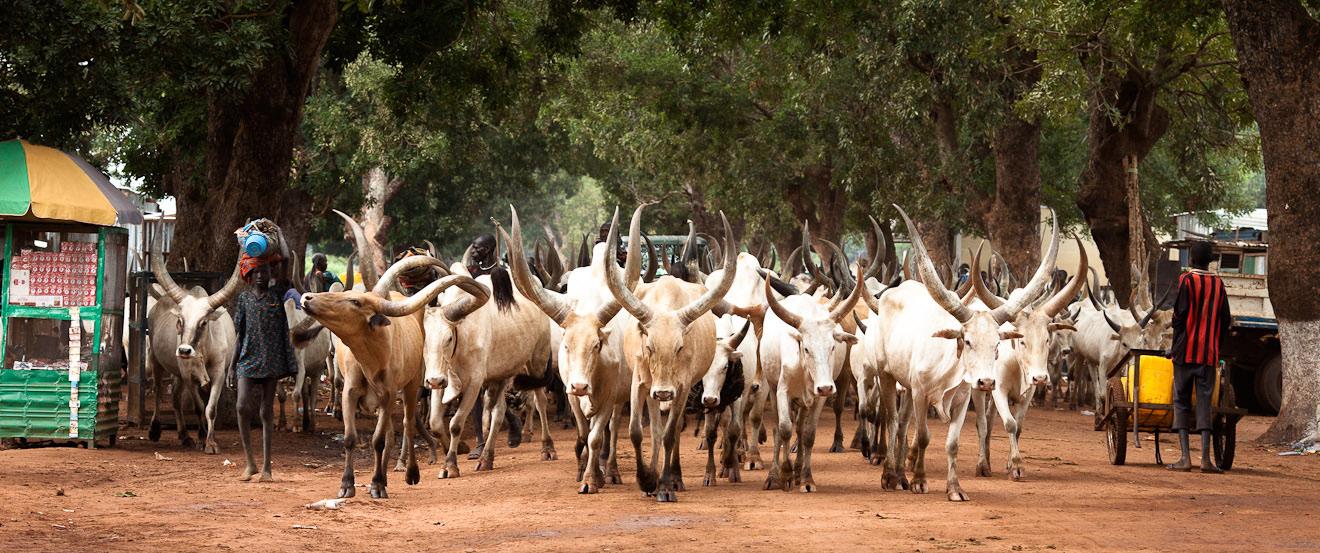
A cattle herder's child walks through a temporary 'cattle camp', where herders live in very basic conditions before moving their cows to new pastures [Executive/Sam Tarling]
Despite boasting vast swathes of fertile land, a stark lack of transport options due to an exceptionally poor road network has stymied South Sudan's agricultural sector. Malnutrition is rife [Executive/Sam Tarling]
Owning cattle is a huge status symbol in South Sudan, where cows are traded for wives and high dowries often force suitors to steal cattle from neighboring tribes. The omnipresence of small arms since the end of the Sudanese civil war means that such raids often leave high death tolls [Executive/Sam Tarling]
A youth participates in traditional dancing in Rumbek, the county capital of Lakes State [Executive/Sam Tarling]
The lack of decent roads makes motorbikes such as these a popular mode of transport [Executive/Sam Tarling]
Children pick up meat at a cattle market's slaughter yard on the outskirts of Juba; despite South Sudan having a great wealth of cattle, a traditional importance placed on owning large herds means that very few are traded [Executive/Sam Tarling]
Guns confiscated during a civilian disarmament program fill one of a number of storage containers at a military base in Juba. The proliferation of arms among civilians is currently amplifying age old tribal disputes into bloody massacres of unprecedented scale [Executive/Sam Tarling]
Juba, the capital of South Sudan, contains very few paved roads and very limited municipal amenities [Executive/Sam Tarling]
On the outskirts of Juba, a woman makes a meagre living smashing rocks into rubble, which is sold to builders [Executive/Sam Tarling]

Photoblog from inside South Sudan, the world’s newest nation.

March 26, 2012 0 comments
0 FacebookTwitterPinterestEmail
Economics & PolicyTechnology

An app a day

by Ellen Hardy March 20, 2012
written by Ellen Hardy

As businesses are working out what mobile applications can do for them, the ways in which connected citizens shop, eat, play, or even participate in activism are also finding new angles through the medium of mobiles. Inevitably, apps for local businesses, or addressing local tastes and concerns, will come to hold a special place in the digital market. Here, Executive takes a looks at seven sectors where homegrown Lebanese mobile applications are beginning to offer consumers new possibilities, and sometimes new powers — although almost without exception, there’s still a long way to go.

Sophisticated shopping sprees

For a multi-brand, multi-venue shopping destination like Le Mall an app can both reflect some of the variety that is part of mall shopping, or help make the experince less painful for customers who see digitization as a way out of an overwhelming experience. The app can search more than 200 stores by category, floor or name, then locate them on a browse-able floor plan. When the device is shaken, it will throw up a daily highlighted event or promotion. 

While innovative, it’s a long way from, say, Selfridge’s in London, whose analysis of Christmas shoppers last year led them to launch a mobile optimized website aimed exclusively at the men who leave their purchases to the last minute, and whose (online) purchases, naturally, could be delivered home or collected in-store. 

For brand-specific retail apps, the move to a mobile interface can be an opportunity to cohere different strands of a business. V World, for example, is the app for Lebanese interior designer Vick Vanlian’s. The welcome screen draws together his style blog, Envy interiors, Galerie Vanlian, Vanlian Developments and Kare Design enterprises. For the present, though, the app remains largely a product showcase.

Appetite for life

Local fast food outlets Crepaway and Roadster Diner have both made their menus and outlet information available in mobile application form, so you can view your order (Crepaway) or shake your device for a random meal suggestion (Roadster). Cute, yes, but neither yet addresses the potential for app-based ordering made famous by American fast food brand Chipotle, launched in 2009, which offers users the chance to build, order and pay for their own burritos without ever speaking to a human being. The service was so popular it crashed servers during its first week and by May 2010 had over 700,000 downloads.

Away from fast food and into the kitchen, digital developers are also celebrating more traditional Lebanese food. Recipe sharing website shahiya.com built a collection of 101 tried and tested recipes for their app Cook Lebanese, which is carefully pitched to international cooks, ensuring that all ingredients are easily available worldwide. Consumers who want some local celebrity color could also choose the Lebanese cuisine app from TV star Chef Ramzi, which, as well as recipes, you can browse by region and type, features video and audio files from the chef and regular recipe updates.

Banking on it

Mobile account services allow smartphone users to process basic account functions on their handsets. Interest in mobile banking is growing worldwide, and despite continuing concerns about security, American mobile banking customers and businesses are beginning to be able to process large sums via their smart phones. The existing Lebanese banking apps cover these bases in a limited way; with Bank Audi’s free audimobile service, you use text messages to request your account balance and last five transactions, and if you have multiple Audi accounts linked up to audimobile, you can also transfer money between them. 

Banque Libano-Francaise’s free app, My BLF, has gone a step further including a nearest branch and ATM locator, and a loan simulator that allows customers to get an idea of new and used car loans, and personal, housing and educational loans at the touch of a button. 

A searching business

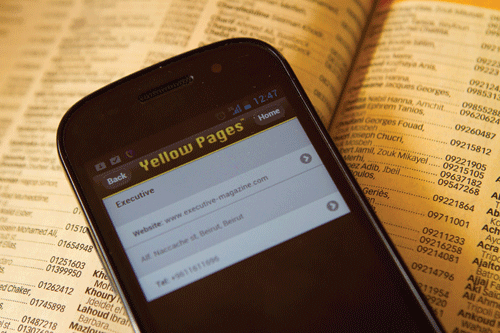
Apps also exist for searching Lebanese businesses online: 5Index and the Yellow Pages provide access to the contact details of a wide range of local services and businesses, through a straightforward search engine or a category search. When you’ve found the business you’re looking for, you can call or email them via their listing page, but there’s little in the way of other information, leaving customers waiting for advanced review, filter and map functions. A sector-specific app that is built on a website that already includes these functions would be perhaps more successful, such as Hotels in Lebanon, which includes star ratings, cut price deals, a map locator and is searchable by area.

Communication stations

Both of Lebanon’s mobile service operators, mtc touch and Alfa, allow users to send free web-to-mobile SMS; local application Foo-me harnesses this capability for smart phones and it also features a chat option and a raft of additional weather and horoscope-checking functionalities. Most of the buzz, however, is reserved for Silicon Valley-based application WhatsApp, that provides free cross-platform messaging and now group chat and is a runaway success that is starting to eat into SMS traffic around the world, which is beginning to decline.

Mobile media

Live TV streaming, episode clips, archives and programme schedules are available from LBCI and MTV, though users on Android Market report frequent crashing and incompatibility problems. Lower bit-rate entertainment can be found via apps like that of the well-known Beiruting.com social website. Beiruting.com allows for storing and sharing pictures of events and parties, but their mobile app draws together a range of functions, including a venue directory, event listings and daily deals. 

Gaming apps are some of the most popular worldwide, though especially in the US, where communications research firm Nielsen reported in June 2011 that gaming apps were the most used apps in the American market, and those consumers are most willing to pay for. Back in Lebanon, the locally developed Arabic language game Birdy Nam Nam was downloaded 250,000 times in its first week of release and ranked number one in the Arab world on the iTunes store, demonstrating the power of a well-made, if derivative, app with a local twist. 

Making a difference?

The power of the technologically enabled citizen has never been more discussed in the Arab world than in the last year, and some companies are using mobile applications to creatively engage smartphone users in corporate social responsibility campaigns. Cheyef 7alak — Lebanese Arabic written in colloquial SMS characters which roughly means ‘Do you see yourself’ — is a concept created by advertising agency Impact BBDO and endorsed by LBCI, which encourages citizens to photograph and share instances of traffic lawlessness (“If attention is what they’re looking for, why let them go unnoticed?” runs the tagline) and corruption. 

As campaigning tools go, so far it’s pretty static. But in a bid to justify some of the most expensive city cleaning fees in the world, Averda, the waste management company behind Sukleen, has boldly proposed an interactive community improvement tool with its iaverda campaign, launched in Abu Dhabi last year and due to eventually to arrive in Lebanon; iaverda invites citizens to photograph instances of waste and post them via the app, from where Averda will locate and clean up the mess, then post a photo of the results in return. 

Finally, with little sign of the government stepping up to the service provision table, sometimes citizens have to use advanced technology to find their own way around a problem. Witness the free Beirut Electricity Cut Off app for Android, which displays a calendar, dynamically updated every day, to keep track of the blackouts in your area or that of your friends and family. Complementary to this, on the way up the stairs in the dark, you can light the way with the various flashlight apps available for most smartphones.

March 20, 2012 0 comments
0 FacebookTwitterPinterestEmail
Economics & Policy

An unsavory policy

by Sami Halabi March 20, 2012
written by Sami Halabi

The slew of food safety incidents that have hit the national news ealier this month, following the discovery of tons of rotting meat in a Sabra factory, do not constitute a new “crisis” — rather, they are the revelation of a reality that has long been present. The spike in public awareness, and consequent flurry of government activity, has simply made salient some uncomfortable truths that have long been with us.

Even in the most advanced societies, food safety is one of the most complex and challenging policy issues facing government. Just last year nearly 50 people died in France and Germany after contaminated seeds from Egypt ostensibly caused an outbreak of E. Coli bacteria. That was a crisis. And that the combined policy framework of both countries’ food safety authorities, and that of the European Union, were unable to contain the outbreak before it turned lethal is a wake up call we should heed.  

Many may wonder why similar incidents haven not emerge in Lebanon, given that our policy framework is written based on the demands of sectarian staffing quotas rather than public health. Some have, tongue-in-cheek, alluded to the inherent Lebanese ‘tolerance’ to contamination. In reality, luck coupled with a lack of transparency and awareness, are what have allowed us to ignore the issue for so long.

Food safety policy can be either reactive or active — but Lebanon’s is neither. Reactive food safety entails tracking a case of contamination from an ill patient to the source, and requires an intricate investigation of the patient’s food consumption, tracking down each source of possible contamination, having the authority to confiscate and test samples, and establishing viable evidence to persecute violators. In Lebanon what happens, more often than not, is that the patient is tended to, the government and hospitals circumvent the lengthy and expensive process of investigation, the issue is ignored and the extent of the problem is covered up.  

Active food safety policy, on the other hand, requires ensuring that local production and imports are up to scratch by conducting snap inspections, covert investigations, treating irrigation water, conducting awareness programs and cracking down on violators. In Lebanon, however, limited authority, resources and overlapping purviews hobble inspections by health ministry and consumer protection agency officials.

Food safety policy must be adopted ‘farm to fork’, but there is currently no single authority to oversee such an approach. The agriculture ministry is responsible for testing farming practices (such as the widespread use of wastewater for irrigation) and conducting inspections at import entry points, in conjunction with the ministry of economy and trade and the health ministry. The health ministry compiles statistics and coordinates with the interior ministry, which, in theory, raids warehouses containing contaminated products. The Ministry of Energy and Water is supposed to see to it that contaminated water does not reach farmers, while the ministry of transport should oversee transportation storage. And, in the end, the finance ministry has to agree pay for everything, whether there is a budget or not.

Of course, none of these ministries are eager to give up their authority to a centralized food safety authority, which was first proposed in a draft law years ago, but has spent most of time since collecting dust on parliamentary shelves. The last time it was discussed at the cabinet table was in 2011 — the agriculture minister objected to it and, after a public outcry, struck a deal with the prime minister that any new food safety law would not dilute his authority.

To his credit, the agriculture minister has been one of the most proactive players regarding food safety. But the agriculture ministry has for decades been under the purview of either Hezbollah or Amal, both of whom rely on their constituency of southern farmers for political support and to hold territory along the border from which to resist Israel when war comes calling. Thus, diluting the ministry’s authority is tantamount to compromising national security in the minds of the South’s political patrons. But political calculations should not trump public health.

Any new food safety authority would need the support and cooperation of the agriculture ministry to be effective. But before reaching that step, a new food safety law needs to be passed by parliament and the cabinet needs to find and appoint five qualified board members from different sects. What real prerogatives the authority would eventually have would be the differentiating factor between reform that actually works or just another toothless government body.

For a country the prides itself on its food, Lebanon has been extremely lucky that its lax food safety has not caused more ill — the needed reforms should happen before the first deadly portions are served at the dinner table.

March 20, 2012 0 comments
0 FacebookTwitterPinterestEmail
  • 1
  • …
  • 338
  • 339
  • 340
  • 341
  • 342
  • …
  • 696

Latest Cover

About us

Since its first edition emerged on the newsstands in 1999, Executive Magazine has been dedicated to providing its readers with the most up-to-date local and regional business news. Executive is a monthly business magazine that offers readers in-depth analyses on the Lebanese world of commerce, covering all the major sectors – from banking, finance, and insurance to technology, tourism, hospitality, media, and retail.

  • Donate
  • Our Purpose
  • Contact Us

Sign up for our newsletter

    • Facebook
    • Twitter
    • Instagram
    • Linkedin
    • Youtube
    Executive Magazine
    • ISSUES
      • Current Issue
      • Past issues
    • BUSINESS
    • ECONOMICS & POLICY
    • OPINION
    • SPECIAL REPORTS
    • EXECUTIVE TALKS
    • MOVEMENTS
      • Change the image
      • Cannes lions
      • Transparency & accountability
      • ECONOMIC ROADMAP
      • Say No to Corruption
      • The Lebanon media development initiative
      • LPSN Policy Asks
      • Advocating the preservation of deposits
    • JOIN US
      • Join our movement
      • Attend our events
      • Receive updates
      • Connect with us
    • DONATE