• Donate
  • Our Purpose
  • Contact Us
Executive Magazine
  • ISSUES
    • Current Issue
    • Past issues
  • BUSINESS
  • ECONOMICS & POLICY
  • OPINION
  • SPECIAL REPORTS
  • EXECUTIVE TALKS
  • MOVEMENTS
    • Change the image
    • Cannes lions
    • Transparency & accountability
    • ECONOMIC ROADMAP
    • Say No to Corruption
    • The Lebanon media development initiative
    • LPSN Policy Asks
    • Advocating the preservation of deposits
  • JOIN US
    • Join our movement
    • Attend our events
    • Receive updates
    • Connect with us
  • DONATE
Society

Complications amass

by Michael Karam April 3, 2012
written by Michael Karam

The message from Baselworld 2012, the watch and jewelry industry’s annual conference in the Swiss town of Basel, was that business is back on track after a few wobbly years. In 2011, Switzerland exported a record $21 billion in watch sales (nearly 30 million units), a 19 percent increase over 2010  due to growth in the Asian and  Middle Eastern markets. China led the charge, overtaking the United States as the nation with the biggest demand for luxury watches. Overall growth projections for 2012 are 7 percent, up from 2011’s 5 percent.

Lebanese importers attended Basel and were not disappointed. “Brands seem to keep surprising us each year by developing more and more complications,” declared Mher Atamian, managing director of Ets. Hagop Atamian, using the industry term for features beyond the normal display of time. “There is just no end to the imagination and development of high-end complicated pieces that will keep the watch aficionados interested.”

According to Simone Tamer, marketing manager at the Tamer Group, the models at this year’s show were defined by quality, technology and price. “The main engine working behind the scenes of these developments are the research and development as well as the design departments,” she said. “Every company is seeking to become partially independent in creating their own movements from their old suppliers.”  

There is also good news for female consumers. “In Basel we noticed a development in the women’s segment, where we saw wider ranges of female products in the collections, especially in brands like Breitling,” explained Tamer. “Today’s woman wants a man’s watch so brands are expanding their women’s collection to incorporate a masculine aspect in both design and mechanism.”

 The watches that caused a buzz during March included the Tudor Heritage Black Bay Diver. Tudor is a brand that has long lived in the shadow of its parent company Rolex, but seems to becoming a high-end name on its own. Many of the previous models looked too similar to their Rolex cousins, but recent designs have been very refreshing, especially the Heritage Chrono, which many believe is destined for iconic status. The Heritage Black Bay Diver, with its stunning cherry red bezel and the achingly elegant snowflake hour hand, sits up there with the Breitling Superocean Heritage, also modern with a design nod to a previous age.

Zenith is another brand that hides its light under a bushel. It is known among watch aficionados for making the El Primero, the most famous chronograph movement ever made. This year, Zenith unveiled the Big Date Special, a pared down, understated aviator chronograph, which is sure to enhance the brand’s status even further.

Another impressive watch was Omega Speedmaster professional. With a manual wind mechanism and a Hesalite Plexiglas glass (so as not to shatter in space), Omega has introduced a limited edition model that resembles the Speedmaster pre-Professional worn in space in 1962 by Walter Shirr.

Elsewhere, TAG Heuer showed off its limited edition Carrera to celebrate the 80th birthday of Honorary President Jack Heuer, while IWC unveiled the Big Pilot’s Watch Muhammad Ali Edition with fantastic red lume in honor of the great man’s trademark gloves, a watch auctioned for the Celebrity Fight Night charity on March 24. 

For those who love a bit of bling, Swiss watchmaker Hublot showed off the most expensive watch at this year’s fair. With a price tag of $5 million, the ‘watch’ was inlaid with more than 1,200 diamonds, including six weighing more than 3 carats. Call me a purist but I’d take the Tudor Black Bay Diver any day.


April 3, 2012 0 comments
0 FacebookTwitterPinterestEmail
Business

Q&A Ghassan Hasbani

by Thomas Schellen April 3, 2012
written by Thomas Schellen

The Saudi Telecommunications Company (STC) currently leads the expansion of telecommunications operators from the Middle East. It also is a main player in the development of regional content offerings both as distributor of content and as 71-percent owner of Intigral, a company focused on the mobile applications and content space. Executive caught up with Ghassan Hasbani, the chief executive of STC International, at the ArabNet Entrepreneurship Summit in Beirut and asked him about the group’s strategies.     

What role do mobile applications play in the STC strategy?

Mobile applications are now at the heart of most of our activities in the region and globally. For mobile applications to be widely spread and available we need to make sure that we do not play a direct role as telecom operators but allow a maximum level of creativity by encouraging the environment for application developers. Our strategy stems from the fact that the people that will make up the economy from now on over the next 30 years are people who were born after 1990. Those people live of applications and a connected world.

When I asked a Lebanese developer of mobile apps what question he has for the international CEO of STC, his question was, 'How can I make more money off them?’

Of course. The answer is simple. It depends what they are developing. If they are a startup they can make money by submitting their business plan to our venture capital [fund] so that we can co-invest with them. If they want to be a supplier, we have an application store where they can upload their applications and share revenues, or we have a company that deals with contents and applications and they can direct their developments towards the needs of that company. This company knows the market very well and interacts with us quite closely on our customer base. They can help the developer in developing the right things or modify their applications to suit the demand in the market, and make more money. These are the three channels we have.

Some people in the industry told Executive that only very few apps control attention while most have trouble to find market share and be profitable. As host of a very large customer base, your company presumably could decide which applications get visibility and which developers will fail to do so. How does STC approach this?

You need to strike a balance between a democratized service and a central command and control enforced distribution. If you have too much interference in enforcing distribution you move more into a socialist type of environment as opposed to a democratized type. In a true democratized environment applications are running based on their attractiveness to the consumer. If you create a randomized accessibility to searches rather than a prioritized accessibility to searches, then the smart applications and the popular applications will end up winning. Our policy is to provide an equal opportunity across the board. Saying democratization of access means that the developer has to be very smart in describing the applications that they are putting in the app store or online. It is about the ability of the developer to market their applications with the right key words, and the right targeting. This is what I call a true democracy.

Today you are described as being one of the top 20 operators worldwide and largest in the Arab markets. When another regional telecommunications operator went into an expansion spree some years ago with a declared aim to become one of the world’s top ten networks, STC was reported to announce similar aspirations to rise to being a top ten operator. Are you still pursuing this type of goal?

We are not saying that we want to be among the top ten telecommunications operators in the world. We want to be an operator – and we are effectively where we want to be – and continue being an operator that contributes to the economy and the society where we invest a higher value than we extract from it. That doesn’t mean we are making losses and we are not actually squeezing every penny out of the market. This is a business discussion. What we are saying is that for every dollar extracted from a specific market we contribute in value to that economy and society much more than one dollar. We believe effectively that for every $700 invested through our infrastructure development investments, a job must be created somewhere in that society whether inside or outside of telecoms.

Is this a benchmark you have devised?

No, this is the World Economic Forum’s benchmark. It was an OECD study on the Mediterranean countries published by the World Economic Forum. I am looking at this as a benchmark. If beyond this, we are looking at the relations to our shareholders, it is not our objective to be in the top ten for the sake of being there. Our objective is to be large enough to create synergies, to create economies of scale, to be able to serve our customers with the best possible prices and the best possible offerings. The objective is to remain profitable from our international investments, to diversify our base, and create enough scale to give us the economies that we are looking for.

On the side of profitability you said here at ArabNet that STC last year generated $100 million in Saudi Arabia in direct billings related to mobile application and content services. Is it correct that a lot of that revenue is created in profit sharing between STC and content developers?

Yes.

I also understand that a lot of content demanded by your customers has specific cultural relevance in Saudi Arabia, such as information of Hajj rites. Where do you see your position between commerce and cultural obligations?

Part of our strategy is always to be culturally sensitive to the market we operate in while preserving our values and our beliefs and our value system. In fact, there is huge demand for content that is Arabized and tailored to the culture that we operate in. That doesn’t mean it contradicts with profit making. For example, among the most popular contents and applications we have are religious contents. That content serves the requirements of the market, is culturally an extremely valuable content, and at the same time provides the right profits for the developer and for the producers and for us as distributors.

If you agree that mobile applications are at the drivers of future growth in the telecommunications industry, one will expect this to be the center of competition. In the past, we have seen for example the previous browser wars. Will the next wars be those of app stores, do you expect a commercial war between the STC store and the Android App market or Apple’s App store?

I don’t see this emerging into a full-fledged war because there is always going to be demand for global type of applications and contents that are useful to everyone. I think what we can do is differentiate on relevance. There could be market specific applications and activities that we can do that complement global international applications. This is what we would encourage developers to focus on and this would also allow those developers to differentiate themselves from the masses of developers in India, in Europe, in China, the US and all over the world.

But there is also the financial element. You are not part of the revenue stream if the app is sold to your customer via the Apple or Android markets.

Let me put it this way: how much is that revenue worth? It is a small portion and that revenue will not exceed ten to 15 percent of the total revenue base. This industry has been there for 150 years and it has been making the bulk of its revenues from connectivity services. I am not just saying connectivity infrastructure but access and capacity.

So you see your role also for the future to be providing access more than building a community and provide content?

I am not saying no but the dominant part of our revenues will still come from selling capacity, access, and quality of service. By being smart carriers we bring value to the industry and continue to build value for the next 150 years because somebody has to create that part of the industry. If we try to pretend that we will turn our business model into applications and contents and go and compete with every developer in the world, which means we will have to develop our own content, it doesn’t make sense because we don’t have the mass.

If someone were to try to convince you to scale up in other ways and add non-telecom capacities by for example buying a bank or buying a handset maker, what would you say?

That would be the biggest mistake because if you buy a bank, you limit yourself to the license of that bank.  If you buy a handset player, you limit yourself to the creativity of that one player. Trying to do other people’s business is wrong. Equally, if Google is trying to become a telecoms operator, it is also wrong. They will fail.

As STC has a growing international profile and has recently been invited to join the International Telecommunications Union’s Broadband Commission, what do you see as your role and contribution in shaping the global broadband culture and its social and socioeconomic performance?

Our position is to turn what today is broadband into the narrow band of the future. [We also aim] to create a differentiated quality of service approach, which is based on the experience of consumers and on the value they extract from it and are willing to pay for as well. This maintains value across the telecommunications industry and enhances the ability of the top players to use the broadband infrastructure effectively and it creates a system by which everyone can happily live for the next 20, 30 years until the next big thing comes up.

What can your specific experience as operator in Saudi Arabia as a market with extremely high mobile phone penetration and at the same time vastly different income groups tell you about the priorities for the development of mobile communications in the coming few years in developing and emerging markets?

Our experience is summarized in one word, competition. Whenever you have fair competition in a market regulated by a transparent, fair and independent regulator with a clear government strategy to enhance and build the ICT sector, knowing full well that this sector will build the entire economy, this is where you get a system that caters to everyone and enhances penetration, provides affordability to everyone, and creates a momentum in the economy and society.  

Is STC planning to grow into any new areas?

We always look for opportunities.

Are there still opportunities for expansion of telecommunications through new licenses or acquisitions?

There are always opportunities and the price is a function of the value to the operator. If it is something you can extract value from, adjacent to a market you have, the synergies, why not? You can pay for it the proper value. It is always based on the right calculations. We always look for opportunities that complement our portfolio and at the same time, on a standalone basis, make a business case. 


April 3, 2012 0 comments
0 FacebookTwitterPinterestEmail
Society

The Tobacco Keeper

by Ellen Hardy April 3, 2012
written by Ellen Hardy

How do you tell the story of modern Iraq? For novelist, film producer and war correspondent Ali Bader, it’s not enough to recount the terrible cycles of violence that have made his country unrecognizable. His fictional account of Iraq in “The Tobacco Keeper” — first published in Arabic in 2008 as “Hareth al-Tabgh” and newly out in English from Bloomsbury Qatar — is filtered through an identity that is as complex and multivalent as history itself. As an idea, it intrigues, but as a finished book, it becomes mired in its own ambition.

The unnamed journalist narrator takes us through 80 years of Iraqi history, with diversions through Israel, Moscow, Iran and Syria. An ambitious and wide-ranging setting for a political tale of the Middle East, Bader’s novel is also an intensely personal and artistic one. Its central character, a musician, reflects after a performance for Saddam Hussein: “There has always been an ego that watched me and made fun of everything I did. Don’t those great politicians possess a similar ego that watches them and makes fun of their acting and role-playing?”

This existential angst — for the artist, and for Iraq itself — underpins the unfolding plot, and with good reason: the musician character turns out to have lived three different identities during his life, all filtered through the political convulsions of Iraq. Born Yousef Sami Saleh in 1926, a middle class Iraqi Jew exiled to Tel Aviv in 1952, he witnesses what, for him, was the key event in the collapse of Iraqi values: the 1941 Farhoud incident, involving a series of violent and murderous attacks against Iraq’s Jews, events Bader describes as “a real turning point in the history of this society, being the first attack of its kind against its own citizens, and opening the door to civil conflict. Although historians have devoted little attention to it and have done nothing to address our collective amnesia, we can safely say that all the subsequent civil strife in Baghdad may be traced back to what happened on that fateful day.”

At moments like these, there is a real sense of atmosphere in the book, and of a fresh analytical perspective that brings internal Iraqi struggles to the forefront of history, but the narrative never settles for one answer. In closing, the narrator muses, “How could we define the identity of the enemy? Sectarianism? Imperialism? Foreign Intervention? Was it the desperate defense of private wealth, the class system, international law, or the conflicts of the governments? How could one label what was happening?”

The character Yousef Sami Saleh avoids labels as thoroughly as his home country. With a forged passport, he escapes Tel Aviv to Moscow and then Iran, returning to Iraq as the Shia Haidar Salman in 1958 after the fall of the monarchy, only to be deported again in 1980 as Iraqis with Iranian affiliations lose their citizenship in the shadow of the Iran-Iraq war. In 1981 Salman changes his identity a third and final time, for that of Kamal Medhat. This was the Sunni character that brought him back to Baghdad for the third and final time — a Baghdad that would, in 2006, claim him — an 80-year-old man kidnapped and murdered by an unnamed armed group. With a characteristic sense of tragedy, the narrator declares, “He thought that identities spelled the end of the world.”

The book is a worthy choice for translation by Bloomsbury Qatar — it was long listed for the Arab Booker Prize, and Bader himself is well known and respected in Arab literary circles. But despite some poignant moments, its overall execution is frustrating. Bader’s often dry, repetitive prose and paper-thin characterizations seem to have suffered from both indifferent translation and uncritical editing, resulting in a text which, while fascinating in set-up, will neither convert new readers to Arab literature in translation nor thrill those already on the lookout for titles previously unavailable in English. The title of the book comes from a poem, “Tobacco Shop” by the Portuguese poet Fernando Pessoa, whose three narrators — the author’s heteronyms — correspond to Saleh’s three lived identities. Again, a fascinating possibility, but the repetitive musing on this connection drags the book down further. At a time when the appetite for voices from the Arab world has never been greater, this is a missed opportunity.

April 3, 2012 0 comments
0 FacebookTwitterPinterestEmail
Finance

Fixed income’s online shine

by Henri Chaoul March 27, 2012
written by Henri Chaoul

Over the course of the last decade, electronics have transformed the global markets: virtually all the world’s exchanges are electronic. Access to liquidity and the ability to execute in nanoseconds is routine. The electronic revolution in securities issues has led to greater efficiency, liquidity, price discovery, quicker execution, and productivity for all players: broker-dealers, institutions, and individual investors.

Notably absent from participation in this transformation has been the fixed income market, but that is changing. Driven by regulation, technology, and the need to compete, fixed income markets are catching up – if not soon to surpassing – the electronic capability seen in equities and purely fixed income asset classes.

The regulatory requirements mandated both in the Basel and Dodd-Frank regimes that lay out rules for the financial industry necessitate greater connectivity, transparency and access among fixed income players. Owing to regulation, upcoming trends will include a move from proprietary to agency-based execution, where an individual or a firm is authorized to executive on behalf of the principal, and a further tightening of spreads – all of which harbor well for a centralized connected solution.

In addition, from the competitive standpoint, the previous advantages reaped from bond market opacity are disappearing, meaning that the market is moving to become more efficient. Internet-based technology unavailable only a decade ago enables this efficiency, transparency, and connectivity. And, precisely because the bond markets are delayed entrants into technology, the technologies that are available and which are being deployed are already the most advanced.

Bonds behind the curve

One of the reasons the bond market has lagged behind is a resulting structural issues related to trading. Part of the problem resides in the sheer size of the market and the number of instruments available. In equities, a company has one stock available for trading. In the bond market, a company has different issues, released at different times, under different terms. This creates an illiquid market that is, by definition, ‘hard to trade’. Sourcing liquidity is not only difficult but has to be solicited and, until recently, the only way to find the other side of a trade was to make a number of bilateral phone calls.

Secondly, the way bonds are traded are simply not as easily understood by investors as equities and foreign currencies. But as investors increasingly see a need to diversify (evidenced by the decline in volumes in the equity markets), especially in light of today’s global market uncertainty, bonds become a “must have” in any portfolio. In addition, investors who are now holding large amounts of cash are trying to figure out what to do with it. One answer is bonds. For example, Americans invested $131 billion into taxable bond mutual funds through November 2011, with a concomitant net outflow of $115 billion from stock mutual funds.

What’s more, banks are no longer the sole liquidity providers, which has traditionally been the case. The result is a more liquid and competitive market. The buy side is getting bigger and trader intent will matter less in such an environment. What now matters is the desire to access liquidity and to execute.

The variables and trends in today’s environment call for a more sophisticated approach and technology meets this need, facilitates it, and drives it. The critical gap of the lack of a centralized, connected, and transparent market for interested parties worldwide to meet and transact is now being met. Such a centralized approach will generate maximum liquidity in one place without displacing current relationships but, rather, expanding on them and making them more efficient in time, access to liquidity, prices, and execution. People will not be displaced, but phones will be.

Delivering a centralized platform via technology to traders worldwide, regardless of type or motivation, will connect local market players to the entire universe of instruments available for trading. Local investors in Beirut, Riyadh or Dubai will be able to access any instrument, anywhere. And investors outside local markets will be able to transact in local issues. Interested parties will meet, regardless of time, location, or language.

Demographic issues are also pushing the equation. In the United States, the baby boomers are nearing retirement and are moving into bonds. In European securities, the desire for certainty mandates a move to more predictable asset classes. Younger traders, used to a world of Facebook and EBay, simply work through computers and mobile devices rather than phones, and will demand equivalency in their professional environment. The transformation is upon us.


HENRI CHAOUL is general manager of the Lebanon-based Master Capital Group

March 27, 2012 0 comments
0 FacebookTwitterPinterestEmail
Economics & Policy

The face of a new nation

by Sam Tarling March 26, 2012
written by Sam Tarling
A tribal wrestler poses for a photograph in South Sudan's central Lakes State [Executive/Sam Tarling]
A damaged bridge turns into a diving board in South Sudan's central Lakes State [Executive/Sam Tarling]
Tribal wrestlers walk to an exhibition in Lakes State. Traditional wrestling is being touted by some as both a way to strengthen inter-tribal ties and, through its commercialization, a means to generate some kind of economy in this exceptionally poor country [Executive/Sam Tarling]
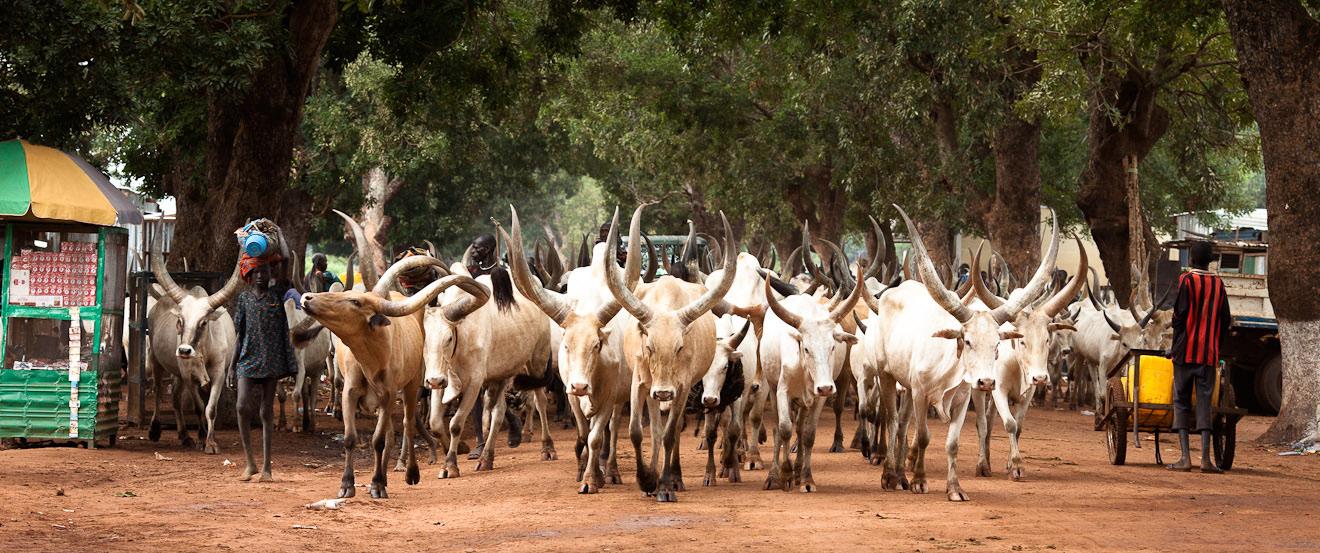
A cattle herder's child walks through a temporary 'cattle camp', where herders live in very basic conditions before moving their cows to new pastures [Executive/Sam Tarling]
Despite boasting vast swathes of fertile land, a stark lack of transport options due to an exceptionally poor road network has stymied South Sudan's agricultural sector. Malnutrition is rife [Executive/Sam Tarling]
Owning cattle is a huge status symbol in South Sudan, where cows are traded for wives and high dowries often force suitors to steal cattle from neighboring tribes. The omnipresence of small arms since the end of the Sudanese civil war means that such raids often leave high death tolls [Executive/Sam Tarling]
A youth participates in traditional dancing in Rumbek, the county capital of Lakes State [Executive/Sam Tarling]
The lack of decent roads makes motorbikes such as these a popular mode of transport [Executive/Sam Tarling]
Children pick up meat at a cattle market's slaughter yard on the outskirts of Juba; despite South Sudan having a great wealth of cattle, a traditional importance placed on owning large herds means that very few are traded [Executive/Sam Tarling]
Guns confiscated during a civilian disarmament program fill one of a number of storage containers at a military base in Juba. The proliferation of arms among civilians is currently amplifying age old tribal disputes into bloody massacres of unprecedented scale [Executive/Sam Tarling]
Juba, the capital of South Sudan, contains very few paved roads and very limited municipal amenities [Executive/Sam Tarling]
On the outskirts of Juba, a woman makes a meagre living smashing rocks into rubble, which is sold to builders [Executive/Sam Tarling]

Photoblog from inside South Sudan, the world’s newest nation.

March 26, 2012 0 comments
0 FacebookTwitterPinterestEmail
Economics & PolicyTechnology

An app a day

by Ellen Hardy March 20, 2012
written by Ellen Hardy

As businesses are working out what mobile applications can do for them, the ways in which connected citizens shop, eat, play, or even participate in activism are also finding new angles through the medium of mobiles. Inevitably, apps for local businesses, or addressing local tastes and concerns, will come to hold a special place in the digital market. Here, Executive takes a looks at seven sectors where homegrown Lebanese mobile applications are beginning to offer consumers new possibilities, and sometimes new powers — although almost without exception, there’s still a long way to go.

Sophisticated shopping sprees

For a multi-brand, multi-venue shopping destination like Le Mall an app can both reflect some of the variety that is part of mall shopping, or help make the experince less painful for customers who see digitization as a way out of an overwhelming experience. The app can search more than 200 stores by category, floor or name, then locate them on a browse-able floor plan. When the device is shaken, it will throw up a daily highlighted event or promotion. 

While innovative, it’s a long way from, say, Selfridge’s in London, whose analysis of Christmas shoppers last year led them to launch a mobile optimized website aimed exclusively at the men who leave their purchases to the last minute, and whose (online) purchases, naturally, could be delivered home or collected in-store. 

For brand-specific retail apps, the move to a mobile interface can be an opportunity to cohere different strands of a business. V World, for example, is the app for Lebanese interior designer Vick Vanlian’s. The welcome screen draws together his style blog, Envy interiors, Galerie Vanlian, Vanlian Developments and Kare Design enterprises. For the present, though, the app remains largely a product showcase.

Appetite for life

Local fast food outlets Crepaway and Roadster Diner have both made their menus and outlet information available in mobile application form, so you can view your order (Crepaway) or shake your device for a random meal suggestion (Roadster). Cute, yes, but neither yet addresses the potential for app-based ordering made famous by American fast food brand Chipotle, launched in 2009, which offers users the chance to build, order and pay for their own burritos without ever speaking to a human being. The service was so popular it crashed servers during its first week and by May 2010 had over 700,000 downloads.

Away from fast food and into the kitchen, digital developers are also celebrating more traditional Lebanese food. Recipe sharing website shahiya.com built a collection of 101 tried and tested recipes for their app Cook Lebanese, which is carefully pitched to international cooks, ensuring that all ingredients are easily available worldwide. Consumers who want some local celebrity color could also choose the Lebanese cuisine app from TV star Chef Ramzi, which, as well as recipes, you can browse by region and type, features video and audio files from the chef and regular recipe updates.

Banking on it

Mobile account services allow smartphone users to process basic account functions on their handsets. Interest in mobile banking is growing worldwide, and despite continuing concerns about security, American mobile banking customers and businesses are beginning to be able to process large sums via their smart phones. The existing Lebanese banking apps cover these bases in a limited way; with Bank Audi’s free audimobile service, you use text messages to request your account balance and last five transactions, and if you have multiple Audi accounts linked up to audimobile, you can also transfer money between them. 

Banque Libano-Francaise’s free app, My BLF, has gone a step further including a nearest branch and ATM locator, and a loan simulator that allows customers to get an idea of new and used car loans, and personal, housing and educational loans at the touch of a button. 

A searching business

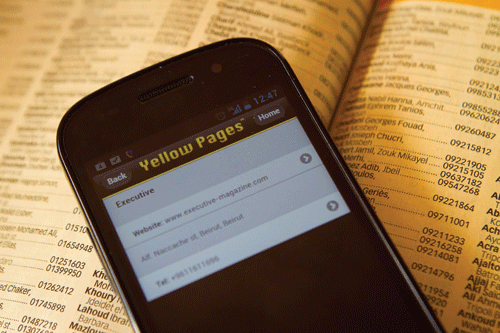
Apps also exist for searching Lebanese businesses online: 5Index and the Yellow Pages provide access to the contact details of a wide range of local services and businesses, through a straightforward search engine or a category search. When you’ve found the business you’re looking for, you can call or email them via their listing page, but there’s little in the way of other information, leaving customers waiting for advanced review, filter and map functions. A sector-specific app that is built on a website that already includes these functions would be perhaps more successful, such as Hotels in Lebanon, which includes star ratings, cut price deals, a map locator and is searchable by area.

Communication stations

Both of Lebanon’s mobile service operators, mtc touch and Alfa, allow users to send free web-to-mobile SMS; local application Foo-me harnesses this capability for smart phones and it also features a chat option and a raft of additional weather and horoscope-checking functionalities. Most of the buzz, however, is reserved for Silicon Valley-based application WhatsApp, that provides free cross-platform messaging and now group chat and is a runaway success that is starting to eat into SMS traffic around the world, which is beginning to decline.

Mobile media

Live TV streaming, episode clips, archives and programme schedules are available from LBCI and MTV, though users on Android Market report frequent crashing and incompatibility problems. Lower bit-rate entertainment can be found via apps like that of the well-known Beiruting.com social website. Beiruting.com allows for storing and sharing pictures of events and parties, but their mobile app draws together a range of functions, including a venue directory, event listings and daily deals. 

Gaming apps are some of the most popular worldwide, though especially in the US, where communications research firm Nielsen reported in June 2011 that gaming apps were the most used apps in the American market, and those consumers are most willing to pay for. Back in Lebanon, the locally developed Arabic language game Birdy Nam Nam was downloaded 250,000 times in its first week of release and ranked number one in the Arab world on the iTunes store, demonstrating the power of a well-made, if derivative, app with a local twist. 

Making a difference?

The power of the technologically enabled citizen has never been more discussed in the Arab world than in the last year, and some companies are using mobile applications to creatively engage smartphone users in corporate social responsibility campaigns. Cheyef 7alak — Lebanese Arabic written in colloquial SMS characters which roughly means ‘Do you see yourself’ — is a concept created by advertising agency Impact BBDO and endorsed by LBCI, which encourages citizens to photograph and share instances of traffic lawlessness (“If attention is what they’re looking for, why let them go unnoticed?” runs the tagline) and corruption. 

As campaigning tools go, so far it’s pretty static. But in a bid to justify some of the most expensive city cleaning fees in the world, Averda, the waste management company behind Sukleen, has boldly proposed an interactive community improvement tool with its iaverda campaign, launched in Abu Dhabi last year and due to eventually to arrive in Lebanon; iaverda invites citizens to photograph instances of waste and post them via the app, from where Averda will locate and clean up the mess, then post a photo of the results in return. 

Finally, with little sign of the government stepping up to the service provision table, sometimes citizens have to use advanced technology to find their own way around a problem. Witness the free Beirut Electricity Cut Off app for Android, which displays a calendar, dynamically updated every day, to keep track of the blackouts in your area or that of your friends and family. Complementary to this, on the way up the stairs in the dark, you can light the way with the various flashlight apps available for most smartphones.

March 20, 2012 0 comments
0 FacebookTwitterPinterestEmail
Economics & Policy

An unsavory policy

by Sami Halabi March 20, 2012
written by Sami Halabi

The slew of food safety incidents that have hit the national news ealier this month, following the discovery of tons of rotting meat in a Sabra factory, do not constitute a new “crisis” — rather, they are the revelation of a reality that has long been present. The spike in public awareness, and consequent flurry of government activity, has simply made salient some uncomfortable truths that have long been with us.

Even in the most advanced societies, food safety is one of the most complex and challenging policy issues facing government. Just last year nearly 50 people died in France and Germany after contaminated seeds from Egypt ostensibly caused an outbreak of E. Coli bacteria. That was a crisis. And that the combined policy framework of both countries’ food safety authorities, and that of the European Union, were unable to contain the outbreak before it turned lethal is a wake up call we should heed.  

Many may wonder why similar incidents haven not emerge in Lebanon, given that our policy framework is written based on the demands of sectarian staffing quotas rather than public health. Some have, tongue-in-cheek, alluded to the inherent Lebanese ‘tolerance’ to contamination. In reality, luck coupled with a lack of transparency and awareness, are what have allowed us to ignore the issue for so long.

Food safety policy can be either reactive or active — but Lebanon’s is neither. Reactive food safety entails tracking a case of contamination from an ill patient to the source, and requires an intricate investigation of the patient’s food consumption, tracking down each source of possible contamination, having the authority to confiscate and test samples, and establishing viable evidence to persecute violators. In Lebanon what happens, more often than not, is that the patient is tended to, the government and hospitals circumvent the lengthy and expensive process of investigation, the issue is ignored and the extent of the problem is covered up.  

Active food safety policy, on the other hand, requires ensuring that local production and imports are up to scratch by conducting snap inspections, covert investigations, treating irrigation water, conducting awareness programs and cracking down on violators. In Lebanon, however, limited authority, resources and overlapping purviews hobble inspections by health ministry and consumer protection agency officials.

Food safety policy must be adopted ‘farm to fork’, but there is currently no single authority to oversee such an approach. The agriculture ministry is responsible for testing farming practices (such as the widespread use of wastewater for irrigation) and conducting inspections at import entry points, in conjunction with the ministry of economy and trade and the health ministry. The health ministry compiles statistics and coordinates with the interior ministry, which, in theory, raids warehouses containing contaminated products. The Ministry of Energy and Water is supposed to see to it that contaminated water does not reach farmers, while the ministry of transport should oversee transportation storage. And, in the end, the finance ministry has to agree pay for everything, whether there is a budget or not.

Of course, none of these ministries are eager to give up their authority to a centralized food safety authority, which was first proposed in a draft law years ago, but has spent most of time since collecting dust on parliamentary shelves. The last time it was discussed at the cabinet table was in 2011 — the agriculture minister objected to it and, after a public outcry, struck a deal with the prime minister that any new food safety law would not dilute his authority.

To his credit, the agriculture minister has been one of the most proactive players regarding food safety. But the agriculture ministry has for decades been under the purview of either Hezbollah or Amal, both of whom rely on their constituency of southern farmers for political support and to hold territory along the border from which to resist Israel when war comes calling. Thus, diluting the ministry’s authority is tantamount to compromising national security in the minds of the South’s political patrons. But political calculations should not trump public health.

Any new food safety authority would need the support and cooperation of the agriculture ministry to be effective. But before reaching that step, a new food safety law needs to be passed by parliament and the cabinet needs to find and appoint five qualified board members from different sects. What real prerogatives the authority would eventually have would be the differentiating factor between reform that actually works or just another toothless government body.

For a country the prides itself on its food, Lebanon has been extremely lucky that its lax food safety has not caused more ill — the needed reforms should happen before the first deadly portions are served at the dinner table.

March 20, 2012 0 comments
0 FacebookTwitterPinterestEmail
Economics & Policy

Billions beyond budget

by Zak Brophy March 19, 2012
written by Zak Brophy

Headlines in the Lebanese press over recent weeks have been dominated by the mudslinging between politicians over the controversy surrounding some $22 billion in extra-budgetary spending. However, while the nation’s elected leaders cynically jostle for political points, most of the Lebanese people are left none the wiser as to exactly how the country’s accounts got into such a shameful mess in the first place.

The roots of the problem stretch back to the political crisis that crippled the government in 2006, with the ensuing paralysis of Lebanon’s body politic stranding the country without a budget to this day. According to legal attorney and lecturer in constitutional law Wassim Manssouri, the country is left in a state of “continual illegality.”

The Lebanese constitution clearly lays out the process for the creation and implementation of the budget. Article 83 specifies that during its October session the parliament must discuss and vote upon the budget that has been presented by the council of ministers. However, if the nation’s lawmakers fail to reach a consensus then an extraordinary session is held lasting until the end of January.

If by the end of this session there is still no agreement, then according to article 86 of the constitution, “the council of ministers may take a decision on the basis of which a decree is issued by the president giving effect to the [budget] estimates in the form in which they were submitted to the chamber.” That is to say, the council of ministers can bypass the parliament and adopt its budget.

However, for this to be legal the budget estimates need to be submitted to the chamber at least 15 days before the session begins. As this was never done the country was left in the pitiful predicament of not having a budget.

Due to its failure to pass a general budget law the government carried on its business based on a clause in the constitution called the “provisional twelfth,” which essentially amounts to the adoption of the last legal budget. As the name suggests the “provisional” twelfth is meant to be a temporary measure but as Manssouri explains, “These provisional measures seem to have become permanent.” And so it is that in 2012 Lebanon still runs on its 2005 budget.

However, reality dictates that the government will need to spend more from one year to the next, whether it be to fund reconstruction after the 2006 war, pay increased salaries to government workers, service the national debt or subsidize Lebanon’s growing burden from imported fuel. And herein lies the controversy of the billions spent in excess of the 2005 budget from 2006 until today.

Manssouri explains, “The problem with the provisional twelfth is that normally the money needed each year is more than the year before. So what can they do to get this extra money. The government must send any new expenses to the parliament for approval.”

However, with speaker of parliament Nabih Berri declaring the cabinet as unconstitutional in November 2006 the chord of communication between the cabinet and the parliament was cut. “There was a huge political problem. Berri did not get anything from the government and they did not ask for anything. The parliament did not do anything and the government did not present anything,” says Mohammad Chamseddine, analyst at Information International.

Under the Siniora governments from 2005 to 2009 it is estimated some $11 billion was spent in excess of the 2005 budget and under the Hariri government in 2010 such spending is believed to have amounted to around $5billion. It is this money that the Mikati government now wants to see the receipts for.

The feuding is fuelled by the efforts of the current government to legalize their excess spending of around $6 billion in 2011 but not that of the previous governments. They claim they have presented their detailed accounts whilst their predecessors have not. The opposition cries foul play.

In any case, as long as the playground antics in the parliament persist Lebanon is cursed to remain without a budget. “According to article 87 of the constitution we cannot publish a new budget unless we close the accounts on the old expenses, and in order to close the accounts on the other years we need to send all of the papers to the parliament, and the audit court,” explains lawyer Manssouri, referring to the nation's financial oversight body. 

After such a prolonged period of accounting-by-whim it is highly doubtful that this gargantuan task could actually be completed. “We cannot solve this problem by a financial, legal and technical route. It would take several years to solve because it is so extremely complicated,” reasons Chamseddine.

So why the recent fever of accusations leveled by Aoun and Hariri, and their respective followers?

“Now there is mutual pressure between the March the 14th and March 8th powers so Mikati and Berri are putting pressure on Hariri and Siniora to try and influence their stance,” argues Chamseddine.

As the squabbling coterie of men that control Lebanon continue to treat the nation’s finances as a bat with which to beat each other around the face the mere talk of a budget remains a fantasy. Public institutions will continue to languish in their pitiful state of malaise, Lebanon will likely remain on the lower rungs of global transparency ratings and the Lebanese people will stumble on in dark over how their money will be spent.

March 19, 2012 0 comments
0 FacebookTwitterPinterestEmail
Economics & PolicyLebanon 2013: The big ideas

Lebanon and outsiders: Time for some benign disassociation

by Tom Fletcher March 12, 2012
written by Tom Fletcher

Lebanon is presented with the most serious challenges it has faced in the past decade. The economy is struggling, the internal security situation is deteriorating and the country’s neighbors pose real threats. In these circumstances the very fact that the country continues to operate can be seen as a success. And amidst everything, there are opportunities — not just in newfound offshore oil and gas but also within the country’s ingenious population.

As we head into 2013, what can be done to help the country unite, to overcome its challenges and ultimately to grow? Over the course of this week, eight influential figures will address seven important topics, each suggesting one proposal to help the country move forward. In this article, British Ambassador Tom Fletcher urges foreign powers to allow Lebanon the space to develop.

Lebanon remains a country of staggering complexity, potential and vulnerability. Over the years, external influences have always played a disproportionate part in shaping its history, perhaps inevitable given the geography.

You only have to stand on the rubble of 17 civilizations in Byblos to feel humbled by the way that the country has absorbed the changes around it — you can still see the tidemarks of empires as they have ebbed and flowed on these shores. Now, in a turbulent 21st century, Lebanon again has its geography to thank (or blame) for its position at the nexus of international interests and influences, a vector for regional instability. As an anxious state in a tough neighborhood, there is always someone outside to blame. 

Political factions in Lebanon often define themselves on the basis of their international allies. We on the international side have tended to encourage this. It is a habit that we all need to break.

I hope that one positive of the change in the region is that the Lebanese will look less to outsiders, and more to their own extraordinary talents. The 2013 election should be about policies, not personalities, a vision for Lebanon based on Lebanese interests, not those of any of the rest of us. The elections should be an opportunity to hold leaders to account, and to demand delivery on the issues that matter to all Lebanese, not to any individual faction.

So as Lebanon braces itself for challenges ahead, it needs to extend the policy of disassociation from the situation in Syria, to disassociation from the region more widely. I hope we will see Lebanese leaders challenged to set out their vision of #Leb2020, based on the interests of Lebanese citizens rather than external players.

As the international community, we have to play our part too. We need to deliver a stronger consensus that regional and international players should avoid any action that undermines Lebanese stability. We should be guided by a simple principle: get the international community and Lebanese leaders to start treating Lebanon as an independent state with its own interests, rights and responsibilities, not eternally seen through the Syrian prism. 

This isn’t to say we should stand silent when abuses of human rights and democratic principles occur. We will always continue to support Lebanon as it develops towards a stable, sovereign and pluralistic society. But what that society looks like and how to get there is a vision for the Lebanese people, not for us outsiders. We in the international community should resist the temptation to come up with our answers, and give Lebanon the space to do so itself. Maybe we need to do some benign disassociation of our own.


Tom Fletcher is the British Ambassador to Lebanon

@HMATomFletcher

Contribute to the Twitter Debate using hashtags #Leb2013 and #Leb2020

March 12, 2012 0 comments
0 FacebookTwitterPinterestEmail
Consumer Society

For your information

by Executive Editors March 6, 2012
written by Executive Editors

Bentley boom

Luxury car manufacturer Bentley is looking to capitalize on its success in the Middle East in 2011 by investing up to $9 million in the next six months on expanding operations, it announced at the Qatar International Motor Show. Bentley saw 3 percent growth last year to 566 cars sold in the Middle East — the second most successful year to date for Bentley in the region. The company now plans to open its largest workshop worldwide in Dubai, and new showrooms in Abu Dhabi and Jeddah. The Middle East remains one of the brand’s most important markets for the new Continental GT and the Bentley Mulsanne, and continued demand for these cars this year, together with the arrival of the new GTC, is expected to give Bentley double-digit growth in 2012, according to the company.

Art in the desert

Funding for the stalled $27 billion Saadiyat Cultural District project in Abu Dhabi has been approved, the Abu Dhabi Executive Council has announced. The project, which includes four new museums and a performance centre, has attracted some of the biggest names in art and design in the world. The scheduled openings include Jean Nouvel’s Louvre Abu Dhabi (in 2015), the Zayed National Museum designed by Lord Norman Foster (2016), and the Guggenheim Abu Dhabi designed by Frank Gehry (2017).  As yet unscheduled projects include a performing arts centre, designed by Zaha Hadid. The project is to be overseen by the Tourism Development and Investment Company, the state-owned company charged with turning Abu Dhabi into a global destination for arts and culture.

Bustling book fair

The Middle East’s largest annual literature festival will take place from March 8 to 12 at the Al Mamzar & InterContinental Hotel in Dubai Festival City. The Emirates Airline Festival of Literature was founded in 2009 and is expected to attract over 30,000 visitors. More than 100 Arab and International authors are scheduled to participate, including David Nicholls, AC Grayling, Palestinian poet Hind Shoufani and Lebanese novelist Dania el-Kadi, whose first full-length novel “Summer Blast”, set in the 2006 war in Lebanon, was released in 2011. In other literary news, the 2011 edition of the Prize for Arabic Literary Translation, now in its sixth year, has been awarded to Khaled Mattawa for his translation of “Adonis: Selected Poems”, published by Yale University Press. The four judges — novelist Joan Smith, professor of American literature Sarah Churchwell, lecturer in Arabic literature and the media Christina Phillips and editor of Banipal magazine Samuel Shimon – were unanimous in their decision to award Mattawa the prize, which is worth £3,000 ($4,738). Runner up for the prize was Barbara Romaine for her translation of Radwa Ashour’s “Spectres”, and commended is Maia Tabet for her translation of “White Masks” by Elias Khoury.

Reviving retail

According to the 2012 Global Powers of Retailing report by Deloitte, retailers in the Middle East have shown the strongest growth worldwide in a year that saw the annual sales of the world’s largest retailers increase by more than 5 percent. Middle Eastern and African retailers also reported the highest compound annual growth rate of all regions over the 2005-2010 period. Of the 195 companies that disclosed their bottom-line results, 183 operated at a profit in 2010, with net profitability increasing overall. Despite this growth, the Eurozone crisis and tighter fiscal policy worldwide has led Deloitte to predict slower growth in 2012. But retailers are encouraged to look ahead to the long term. Ira Kalish, director of Consumer Business for Deloitte Research, said: “Even though the economic environment in 2012 will be difficult, the long-term outlook for the global economy remains good. China will continue to grow while other emerging markets such as India, Brazil, Turkey, Indonesia, and parts of South America, sub-Saharan Africa and the Middle East offer the possibility of stronger growth as well as new opportunities for the world’s leading retailers.”

Designs on Dbayeh

Launched on February 15, ABC Dbayeh has introduced a new ‘Lebanese designer corner’ to its third level. The 205 square meter space will promote the collections of 18 home-grown designers for three months. Inspired by the commercial success of the 75 limited edition gifts created by Lebanese designers for ABC’s 75th anniversary, ABC will also offer the designers their operational expertise and marketing support. The participating designers are Atelier Nanou, Atelier S/Z, Boho, Cocoa & Co, En Ville, Hirafouna/A4C, Joanna Dahdah, Jojoba, Madame Rêve, Mojo, Nada Talhame, Nada Zeineh, Oumnia, Sarah’s Bag, Syma Beydoun, Smartiz & Co, Sunflowers and Yasmeen Farah. The designs cover accessories, handbags, shoes, clothing and homecare.

Sushi splash downtown

This summer will see a high profile new partnership between the celebrated contemporary Japanese restaurant Zuma and Beirut’s famous boutique hotel Le Gray. Zuma has been in operation in Dubai for three years, and the opening in Beirut is part of a planned series of restaurants across Middle Eastern cities. It will be the first Asian restaurant to open at Le Gray and one of very few in the Downtown area, offering high-end sushi and modern interpretations of traditional dishes.

Cream of the cupcakes

Having first come to the world’s attention as one of the addictions of Sex and the City character Carrie Bradshaw, the New York-based Magnolia Bakery has announced that it has signed franchise deals to open in Kuwait, Saudi Arabia, Lebanon and Qatar this year. The company’s first overseas outlet opened at Bloomingdales in Dubai in 2010. In Lebanon, they will be joining successful local enterprises like Sugar Daddy’s and The Cupcakery, who have tapped into a global craze for cupcakes and adapted it to the domestic market. According to an email statement from CEO and owner Steve Abrams, Magnolia Bakery will stick to its current classic American menu with a few specific items developed for the new locations.

Big boat boasts

The rankings of website superyachts.com have shown that of the top 10 largest yachts in the world, six are owned by Middle Eastern boat lovers. While the top spot was taken by Russian billionaire Roman Abramovich’s 164-meter Eclipse, the number two yacht in the world for sheer size is Dubai, owned by Sheik Mohammed bin Rashid al-Maktoum, at 162 meters long. It includes seven decks, a mosaic swimming pool and several Jacuzzis. Other top ranking Middle Eastern boats include the Emir of Qatar’s 133-meter Al Mirqab at number 10, Saudi Arabian Defence Minister Prince Sultan bin Abdul Aziz’s 139-meter Al Salamlah at number seven, and the Egyptian Presidential yacht, El Horriya, at 145.72 meters, owned by the Egyptian Navy.

Och aye!

According to a new report by the Scottish government, exports of food and drink from the country to the United Arab Emirates saw a 55 percent rise in the first two quarters of 2011 compared to the same period in 2010, to a value of £50.1 million ($78.7 million). The Middle East is also now the largest market for smoked salmon outside the EU, with an increase of 48 per cent to a value of £2.5 million ($3.9 million). Whisky exports to the UAE also saw an increase of 29 percent. The importance of this market for Scotland is compared to a global increase of 29 percent in food and drink exports, from £1.81 billion ($2.84 billion) to £2.34 billion ($3.69 billion). UAE diners are showing a particular penchant for smoked salmon – while exports of fresh salmon to the Emirates have remained steady at just over 500 tons, the volume of the smoked variety has gone up from 174 tons to 257 tons, up 48 percent.

March 6, 2012 0 comments
0 FacebookTwitterPinterestEmail
  • 1
  • …
  • 339
  • 340
  • 341
  • 342
  • 343
  • …
  • 707

Latest Cover

About us

Since its first edition emerged on the newsstands in 1999, Executive Magazine has been dedicated to providing its readers with the most up-to-date local and regional business news. Executive is a monthly business magazine that offers readers in-depth analyses on the Lebanese world of commerce, covering all the major sectors – from banking, finance, and insurance to technology, tourism, hospitality, media, and retail.

  • Donate
  • Our Purpose
  • Contact Us

Sign up for our newsletter

    • Facebook
    • Twitter
    • Instagram
    • Linkedin
    • Youtube
    Executive Magazine
    • ISSUES
      • Current Issue
      • Past issues
    • BUSINESS
    • ECONOMICS & POLICY
    • OPINION
    • SPECIAL REPORTS
    • EXECUTIVE TALKS
    • MOVEMENTS
      • Change the image
      • Cannes lions
      • Transparency & accountability
      • ECONOMIC ROADMAP
      • Say No to Corruption
      • The Lebanon media development initiative
      • LPSN Policy Asks
      • Advocating the preservation of deposits
    • JOIN US
      • Join our movement
      • Attend our events
      • Receive updates
      • Connect with us
    • DONATE