• Donate
  • Our Purpose
  • Contact Us
Executive Magazine
  • ISSUES
    • Current Issue
    • Past issues
  • BUSINESS
  • ECONOMICS & POLICY
  • OPINION
  • SPECIAL REPORTS
  • EXECUTIVE TALKS
  • MOVEMENTS
    • Change the image
    • Cannes lions
    • Transparency & accountability
    • ECONOMIC ROADMAP
    • Say No to Corruption
    • The Lebanon media development initiative
    • LPSN Policy Asks
    • Advocating the preservation of deposits
  • JOIN US
    • Join our movement
    • Attend our events
    • Receive updates
    • Connect with us
  • DONATE
Editorial

Revolt against flawed reform

by Yasser Akkaoui March 21, 2011
written by Yasser Akkaoui

Since the first revolts erupted in the region, economists in Executive’s research department have been busy number crunching, running regressions and trying to find correlations between raw economic data and current events.

In doing so, an interesting observation stood out: the first serious uprisings were in many ways a response to the recent economic liberalization measures undertaken in many parts of the Middle East and North Africa. Regimes across the region began introducing policy reforms in the last decade — some to try and save themselves from the winds of change that blew in following the Iraq and Afghanistan invasions, others to show that they were in line with global trends.

Although the reforms were welcome, their implementation was a reminder that everything we learned in “Economics in developing countries 101” was correct. The people in power and their nepotistic benefactors were already rich from milking the resources of their countries and monopolizing the main productive sectors; by the time the reforms were implemented, decades of bad policy prevented the people from benefiting from the new open systems. With the absence of human development programs and resources, they were shut out from the economic growth that followed.

But one good thing happened, and it has manifested itself in recent events; with more openness came more information, especially through the Internet. People became more aware of their social and economic situation. They caught the scent of what was preventing them from achieving their potential. Entrepreneurs empowered with ambition began to chip away at the barriers of red tape, bureaucracy and corruption standing in the way of their self-realization.

This year they saw an opportunity, and they seized it.

March 21, 2011 0 comments
0 FacebookTwitterPinterestEmail
Economics & Policy

Singing the praises of an oft-slighted OPEC

by Roudi Baroudi March 5, 2011
written by Roudi Baroudi


In September 2010, the Organization of the Petroleum Exporting Countries (OPEC) marked its 50th anniversary, but most of the world’s leading social, economic and environmental bodies did not join in the celebrations.

The milestone provided what should have been a fitting backdrop for recognition of the very real accomplishments of OPEC’s past and present and the role it is likely to play in the future. The organization’s resources and policies have evolved to the point where it is now an indispensable partner on multiple levels: its determination to maintain security of supply contributes to world economic stability, its dominant position in the energy industry gives it vital influence over measures to protect the environment, and closer coordination with it could help multilateral institutions to better serve human development around the globe.

Despite all that OPEC has done on these and other fronts, the organization’s contributions remain largely unheralded. The mainstream media typically dismisses the group as a crude (in both senses of the word) cartel. This unflattering assessment is broadly shared by everyone from individual consumers of oil products to the heads of states and major corporations.

OPEC’s image problems may stem from its own public relations. For far too long, the organization and its members have been both loath to accept blame for mistakes and, bizarrely, unwilling to trumpet successes. The result was a familiar one to anyone who studies the contemporary Arab world: those who refuse to define themselves are instead defined by various — often hostile — others.

An unfair reputation

OPEC was founded with the overall aim of liberating its member countries’ hydrocarbon assets from foreign domination, thereby making more of the proceeds from their sale available for promoting economic development, providing better education and healthcare for their populations and sharing the wealth with less fortunate peoples.

Admittedly, not all or even most of the organization’s member states have consistently pursued these goals with sufficient rigor. We all know the reputation of the “oil sheikh”, the spoiled prince who squanders millions on a luxurious lifestyle. For decades there was more than a grain of truth to the stereotype.

But it is not within OPEC’s purview to impose standards on the governance of sovereign member states or on the personal behavior of their rulers; its primary task, again, is to help them make more money from their primary natural resource, and in this it has succeeded beyond anyone’s expectations.

Recent years have witnessed a marked improvement in the handling of energy wealth, a fact demonstrated by the proliferation of massive development and infrastructure projects, tremendous improvements in areas such as education and healthcare, and by the gargantuan holdings accumulated by some countries’ sovereign wealth funds — Abu Dhabi’s alone, according to some estimates, is thought to control assets in the range of $1 trillion.

In addition, as the oil trade has matured, OPEC has sought to fulfill a regulatory function when possible and to ensure flows of supply and transparency in the petroleum trading system. Its efforts on these fronts flow through numerous channels, including its central role in the International Energy Forum and its support for the Joint Oil Data Initiative.

It undertakes these endeavors despite the risks attached to the heavy investments necessary to ensure the robustness and readiness of the entire supply chain. The maintenance of price levels that justify the running of such risks is a major reason why the world’s economies always have access to the fuel they need. And as OPEC frequently stresses, the sky-high rates for hydrocarbon products in many countries have little to do with its own practices.

Instead, they often stem from factors entirely outside OPEC’s control, including taxes levied in affluent consumer nations, the expansive profit margins of major oil companies based in several of the same countries, speculators who operate there and — it has to be said — the politico-military policies pursued by some Western governments in and around the world’s principal oil-producing region, the Middle East.

Despite OPEC efforts, global energy markets have suffered periodically from a lack of cooperation between the producing nations and the consuming ones, to the detriment of both, but at the same time it is OPEC who has actually done something to alleviate the repercussions of poor cooperation.

Far from being a one-trick pony concerned solely with its own commercial interests, OPEC increasingly attends to the long-term welfare of the consumer nations by, among other things, working for the development of an effective and coordinated energy framework and enabling exchanges on petroleum issues of common interest.

In the past two years, with much of the world economy suffering the after-effects of the global financial crisis, OPEC also was instrumental in limiting the damage and fueling the recovery: it raised output to keep prices reasonable, availed itself of existing spare capacity and accelerated programs for capacity expansion in order to discourage speculation and was always there to facilitate dialogue and cooperation.

After displacing the major international oil companies as the primary determinant of crude production, OPEC and its member states have become key players on the global economic stage. The organization is now a crucial interlocutor with bodies like the G8, the G20, and the European Commission, and it has begun to participate in efforts to combat poverty and environmental degradation.

Oil aid

Across the developing world, the OPEC Fund for International Development (OFID) uses its resources to provide significant financial and other resources to support social and economic projects and to ensure affordable energy prices for the poor. All told, the agency pledged more than $500 million in grants and soft loans over the past year. The scope of these funds ranges from the battle against HIV/AIDS to improving supplies of clean water to emergency humanitarian relief.

As of October 2010, OFID’s cumulative commitments to provide easy credit for public sector entities in less developed countries had reached almost $9 billion, more than $5.4 billion of which had already been disbursed.

On top of this, recent years have also seen OPEC get serious about protecting the environment. As climate change and other green issues have gained their rightful spot on the global agenda, the organization has begun to do its part.

In 2010 alone, for instance, OFID earmarked support for a variety of environmental causes, including grants for the International Conference on Food Security and Climate Change in Dry Areas in Amman, the 3rd Annual Conference of the Arab Forum for Environment and Development in Beirut, organic agriculture training in East Africa and an effort by Green Globe to train 300 campaigners tasked with raising awareness of environmental issues.

While accepting that the global energy mix will change in the coming decades, OPEC has been instrumental in supporting research aimed at reducing emissions in the here and now, especially carbon capture and sequestration technologies pioneered at the In Salah operation in central Algeria. It also has adopted active roles in multilateral groupings, including the World Bank’s Global Gas Flaring Reduction Partnership, as well as the International Energy Agency’s Greenhouse Gas Research and Development Program.

For the positive socioeconomic influences it exerts on today’s world, and for all of the prescient preparations it has begun to make for tomorrow’s — including measures to mitigate the effects of its members’ lifeblood — the group deserves some credit. Provided it gets better at explaining itself, it might even receive a few long-overdue cheers when its Diamond Anniversary rolls around in 2020.

March 5, 2011 0 comments
0 FacebookTwitterPinterestEmail
Comment

Saudi Arabia’s oily ambiguity

by Paul Cochrane March 3, 2011
written by Paul Cochrane


While the cache of diplomatic cables recently released by WikiLeaks may have caused a number of international stirs, the majority have been largely ignored, causing little political, diplomatic or economic fallout. The revelations in early February that Saudi Arabia overstated crude oil reserves by up to 40 percent falls in the latter category, generating little more than newswire buzz. But should that have been the case?

With Saudi Arabia a top oil producer, the cable could have sparked a reaction on the world markets, driving the price of oil even higher and causing havoc with future oil supply projections. The kingdom itself would have had its position as the de-facto head of the Organization of the Petroleum Exporting Countries (OPEC) challenged, and its sovereign risk ratings would have been battered, given the country’s overwhelming dependency on hydro carbons to balance the books.

But there was no reaction on the markets, nor was there a flurry of stories in the press querying Saudi Arabia’s oil reserves and reigniting the debate about “peak oil.” The only reaction from the Saudi side was by the man who told United States diplomats in 2007 that the reserves were overstated. Sadad al-Husseini, a former vice president and head of exploration at Aramco, Saudi Arabia’s oil monopoly, said he had been “misrepresented” by the diplomats and the press and “did not question in any manner the reported reserves of Saudi Aramco.”

Major economic publications also dismissed the revelations: Petroleum Intelligence Weekly, considered “the bible” of the energy industry, called the cables a “false alarm” while a Wall Street Journal (WSJ) blog downplayed concerns because of Husseini’s apparent volte-face.

So is the cable just an example of US diplomats playing a game of what the WSJ referred to as “Chinese whispers?” Or was Husseini pressured into denying his original statements, meaning Aramco really has fiddled with the figures? It is, of course, hard to know, and that is the crux of the problem. Even if the contents of the cables are false, Aramco has not been transparent with its figures since the company was nationalized. According to a former Aramco employee, only the company’s nine-member executive committee is privy to the actual figures, despite the need of departments to have access to such information to carry out research, implement long-term plans and so on.

Like Aramco employees, the world is expected to believe what the company tells us, as they have always delivered enough oil to the market; but should we, in the same way the world took at face value the kingdom’s stated gold reserve until the Saudi Arabian Monetary Agency revealed last year it had 180 tons more than it originally accounted for? After all, Aramco is still peddling the lie that it is the world’s largest producer of oil. Exporter yes, producer no. In fact, Russia became the world’s biggest producer in 2009, according to the BP Statistical Review of World Energy 2010, with an average output of 10 million barrels per day (bpd), or 12.9 percent of total production worldwide, whereas Saudi produces 9.7 million bpd.

A primary reason the cable didn’t result in a media frenzy was that the revelations were nothing particularly new. Many oil experts have queried Aramco’s figures before, noting in particular that 90 percent of all the oil that Saudi Arabia has ever produced has come from seven giant fields that are now maturing, three of which are more than 50 years old.

In the case of these US embassy cables, the debate centers around Husseini questioning Aramco figures that put Saudi Arabia’s reserves at716 billion barrels, of which 51 percent are recoverable. It is the recovery figures that are the questionable part, as the global recovery average is some 30percent, which suggests Aramco is being overly optimistic about what it will be able to extract. The real estimates need to be revealed. If Aramco’s numbers do come up short, the ramifications on the world economy of a Saudi oil shock would be devastating. Perhaps the best solution would be for the world to start moving more quickly toward alternative fuels rather than relying on debatable recovery estimates.

PAUL COCHRANE is the Middle East correspondent for International News Services


March 3, 2011 0 comments
0 FacebookTwitterPinterestEmail
Comment

Changing of the guard

by Jonathan Wright March 3, 2011
written by Jonathan Wright

After the euphoria of Egypt’s revolution comes the more tedious work, and the devil is in the details. Egyptian society hovers between the yearning for stability through cobbling together the surviving fragments ofthe state and the urge to eliminate the remnants of a dilapidated autocracy riddled with corruption, brutality and incompetence.

The military council that took over from President Hosni Mubarak on February 11 stands firmly in the middle and is disputing both sides of the argument. It is appealing for people to set aside their professional and personal grievances and go back to work, while promising that it will uphold the demands of the revolution and root out corruption.

The council’s latest proposed cabinet shuffle reflects its ambiguous stance: Prime Minister Ahmed Shafik, a former air force officer and one of Mubarak’s younger protégés, will stay, as will Foreign Minister Ahmed Aboul Gheit, one of Mubarak’s most loyal defenders and a diehard opponent of the revolution until defeat was inevitable. Others have not been so lucky: threeformer ministers are in detention for questioning, along with Ahmed Ezz, the steel magnate and ruling party official who oversaw the rigged parliamentary elections of 2010.

Even Hosni Mubarak is in limbo, surrounded by old retainers in comfortable retirement in the Red Sea resort of Sharm El Sheikh — an ominous reminder to some revolutionaries that their work is unfinished. Egypt’s most venerable wise man, journalist Mohamed Hassanein Heikal, says his presence in Sharm El Sheikh is a threat to the revolution.

The committee assigned to redraft the constitution, in whose hands lies the future of the Arab world’s most populous nation, also straddles the divide: Will it merely rescind the most authoritarian constitutional amendments or propose a radical overhaul to give Egypt a system of government fit to last into the 21st century? The military council says it is in a hurryto cede power to elected civilians but the most Egyptians can expect for now is a constitutional provision requiring the next elected government to make the long-term changes.

In the meantime, ambitious Egyptians are launching into the brave new world of political pluralism, forming parties and organizing in a way that was unimaginable during Mubarak’s police state and the reign of his National Democratic Party. After 15 years of fruitlessly seeking recognition under Mubarak, the Wasat Party won it through the courts eight days after Mubarak’s fall. With its recognition of Egypt’s Islamic heritage and its commitment to equality for all citizens in a civil society, Wasat has an ideology that could strike a chord with Egyptian voters in free and fair elections.

In the south of the country, reinvigorated members of the old Gama’a Al Islamiya, which waged war on the state in the 1990s, are meeting openly to plan for a future as a peaceful political party. The Muslim Brotherhood, the largest and best-organized political force in the country, has taken steps in the same direction. The young secular liberals who launched the revolution on January 25 are also jockeying for position in a new environmentof competing political ideologies, despite their distrust of hierarchy and their inexperience in conventional campaigning.

Above the fray looms the military council, inscrutable as the Sphinx, combining the sternness and the benevolence of a patriarch. While foreigners fret over the army’s allegedly vast vested interests in the status quo, especially its network of privilege and patronage, Egyptians tend to give the military the benefit of the doubt, trusting their promises to withdraw from the scene in six months when their task is complete. In the interim, the military may be an effective deterrent to any excess, especially on the law-and-order front.

With the world watching, speculation is rife as to what the revolution will bring about. Will Egypt’s next leaders, like Hosni Mubarak, cooperate with Israel and the United States against Hamas, Iran and their other regional enemies? Will they reconsider the neoliberal economic policies that brought Egypt high growth but a widening gap between rich and poor? Most important of all, what role will Egypt play in what could well be a constellation of newly democratic Arab governments seeking, in their relations with the United States and Europe, a third way between submission and confrontation?

Jonathan Wright is managing editor of Arab Media and Society


March 3, 2011 0 comments
0 FacebookTwitterPinterestEmail
Comment

Mikati’s mire could solve itself

by Nicholas Blanford March 3, 2011
written by Nicholas Blanford

It is popularly believed that when Najib Mikati’s new government takes office, one of its first priorities will be to separate Lebanon from the United Nations tribunal investigating the assassination of former Prime Minister Rafiq Hariri. This, the reasoning goes, is the price Mikati will have to pay in recognition of the support he won for the premiership from Hezbollah and its allies in the former opposition. Such a move would risk a serious confrontation with the UN and Western powers, which would doubtless regard any attempt to cripple the Special Tribunal for Lebanon (STL) as the work of Hezbollah, Syria and Iran, and would act accordingly. However, if Mikati plays his hand carefully, he might succeed in buying some time and possibly even neutralizing the tribunal altogether.

Mikati is not looking for a quarrel with the international community, and in return has been given the benefit of the doubt — for the time being — by the United States and Europe, based on his reputation as a moderate politician and an influential businessman.

The watershed moment for Hezbollah was the handing over of the first set of indictments from the tribunal’s prosecution to the pre-trial judge last month. The imminent transfer of the indictments and the evident reluctance of Saad Hariri to disavow the tribunal spurred Hezbollah’s move to topple the government.

Although speculation has centered on the release date falling some time in March, there are indications that the indictments may not appear for several months. In the meantime, Mikati could table a vote in government to re-open the debate over the protocol between Lebanon and the UN on which the tribunal was established.

The protocol was never approved by parliament nor ratified by the president because of the political deadlock in the months following the 2006 war. In the end, the tribunal was adopted by the UN Security Council under the Chapter Seven mandate, circumventing the need for formal Lebanese approval.But Mikati could argue to the international community that the tribunal is a deeply sensitive issue for the Lebanese, and given the lack of unanimity in the country on the issue, it deserves a re-examination. The government could establish a parliamentary committee to look into the protocol.

The tribunal, of course, will continue working, but Lebanon could stall a response to a release of the indictments by citing the parliamentary review. Alternatively, the Lebanese judges sitting on the tribunal may choose to resign, citing the intolerable pressure they face in such a politically charged case. It is entirely possible that the Mikati government won’t need to do anything if the judges independently tender the irresignations. Given the circumstances, who among Lebanon’s judiciary would volunteer to step into their shoes? If the judges quit and no replacements are found, or if Lebanon continues to stall or decides after a period of time to suspend its cooperation with the tribunal, eventually it will end up in the hands of the UN Security Council.

This is where the debate over the tribunal could become very interesting. If Lebanon chooses to halt cooperation with the tribunal or the Lebanese judges resign, the STL’s mandate will have to be amended from the current Lebanese-international hybrid into a purely international entity. Indeed, there has been talk that the tribunal could end up as a permanent international terrorism court. Yet, it is far from clear how many countries would support such a move.

Some may balk at extending the life of a highly controversial tribunal that owes its existence to the political interests of the US and France and was set up to investigate not acts of genocide or war crimes but essentially the murder of one man. China and Russia, in particular, must be aware that they could be setting a precedent that could backfire on them in the future if the tribunal was charged with investigating, say, human rights abuses in Tibet, or war crimes in Chechnya.

Critics within the Security Council could argue with some justification that it is impermissible to prolong such a tribunal, especially when even the Lebanese themselves appear to no longer want it. Bear in mind that UN Resolution 1757, which established the tribunal in May 2007, squeezed through by a margin of only one vote — 10 in favor and five abstentions (UN Security Council resolutions require at least nine votes for approval). You never know: if Mikati is patient, the UN Security Council may end up doing the dirty work for him.


Nicholas Blanford is the Beirut-based correspondent for The Christian Science Monitor and The Times of London


March 3, 2011 0 comments
0 FacebookTwitterPinterestEmail
Comment

The pearl’s shine bloodied

by Joshua Colangelo-Bryan March 3, 2011
written by Joshua Colangelo-Bryan


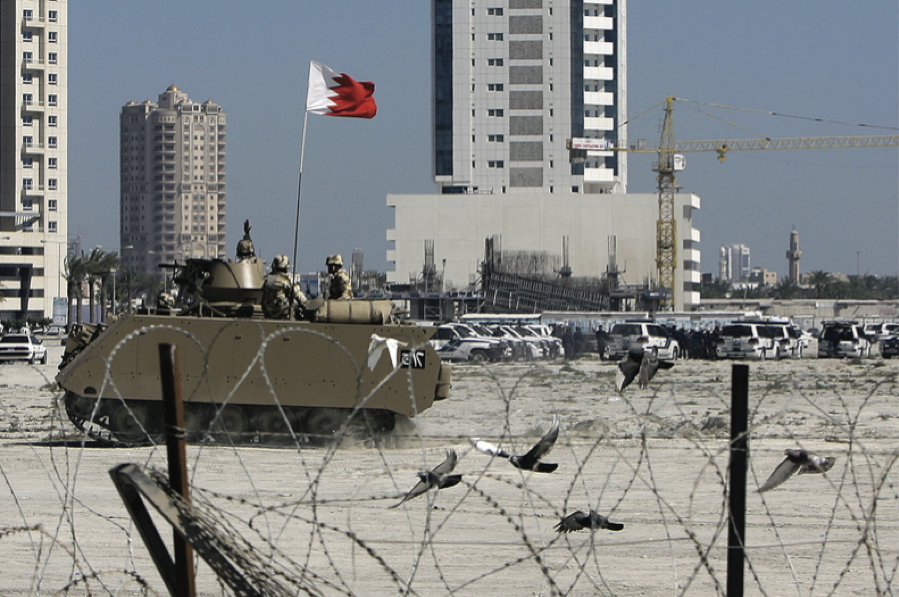
The world watched with horror as security forces in Bahrain killed at least seven peaceful protesters and wounded hundreds more. The protesters were seeking a measure of political accountability from the ruling Al Khalifa family and an end to discrimination against Shia Bahrainis.

For the past decade Bahrain has promoted itself as a liberal state in an authoritarian neighbourhood, on the basis of reforms by King Hamadal-Khalifa, who took power in 1999.  These reforms included holding elections — though for a parliament that lacked authority — and largely abolishing torture.

United States officials went out of their way to burnish Bahrain’s image. In December, Secretary of State Hillary Clinton raved, “Bahrain has demonstrated that multi-ethnic, multi-confessional societies can address their challenges through peaceful reform and representative institutions.”  Cables by US diplomats claimed that King Hamad “understands that Bahrain cannot prosper if he rules by repression.”

Such endorsement can be attributed to the fact that Bahrain hosts the US Navy’s Fifth Fleet. The Bahraini government also insinuates whenever possible that its Shia citizens, upwards of 65 percent of the population, would turn Bahrain into an Iranian client state if so allowed.

But independent observers have for several years been raising concerns about the country’s return to the dark practices of the past.

In February 2010, Human Rights Watch released a report documenting the revival of torture. A trove of reports by government doctors backed up victim accounts that security forces were again suspending detainees by their arms and legs and using electro-shock devices. In August, the government instituted a crackdown that began with arrests of opposition activists on charges of being part of a “terror network” and soon extended to the arrests of hundreds more, including children, many on vague or non-existent charges. The government dissolved the board of a human rights group that had suggested detainees should not be abused. Authorities blocked websites of opposition parties, including Al Wefaq, which won a majority of votes in the October elections.  

As for the “terror network,” the testimony of government agents regarding information allegedly provided by unnamed sources made clear that the defendants were being tried for political opinions rather than for any criminal acts. Authorities denied these defendants access to counsel or their families, and most defendants alleged that security officials abused them to elicit confessions.

The government denied these allegations, but hasn’t explained the defendants’ wounds displayed in open court, some of which I observed first hand. Several other prosecutions recently collapsed after independent evidence disproved coerced confessions. In one case, the editor of a pro-government newspaper testified that the defendants who “confessed” to assaulting him bore no resemblance to the attackers. When I interviewed one of those defendants last December, he said, “It’s better to confess before they break everything.”

This is part of the background to the protests that erupted on February 14. By all independent accounts, demonstrators peacefully demanded reforms. After riot police killed two protesters on February 14 and 15, King Hamad expressed condolences, leading many to believe that the government might honor its citizens’ right to peaceful assembly. Riot police shattered that illusion on February 17, assaulting men, women and children, many of them sleeping, in a public square, killing several and wounding hundreds. The next day, security forces opened fire on people mourning those killed. The king has again ordered these forces off the streets, but the casualties from the February 18 ambush have yet to be counted.

The government has careened between indiscriminate violence and temporary accommodation, making it impossible to predict how the crisis will resolve. But clearly the US should no longer view Bahrain with rose-tinted glasses, whether due to concerns about Iran, the Fifth Fleet or anything else. There is no evidence of Iranian involvement in the protests, or of any appetite among Bahrain’s Shia to emulate Iran’s authoritarian regime. Nor have protesters expressed antipathy toward the US or questioned the US naval presence.

Bahrain should no longer be allowed to masquerade as liberal even by local standards. Rather, Bahrain has a lot of work to do to persuade its own people, and the rest of the world, that it is anything other than a police state.

Joshua Colangelo-Bryan is a lawyer in private practice in New York and a consultant for Human Rights Watch.


March 3, 2011 0 comments
0 FacebookTwitterPinterestEmail
Society

Secret Affairs: a book by Mark Curtis

by Paul Cochrane March 3, 2011
written by Paul Cochrane


Britain has played a nefarious role in the Middle East’s history. We all know that London re-drew the region’s borders after World War I as part of a “divide and rule” strategy, but few are aware of Britain’s divisive and often contradictory efforts in the region that have remained a core part of its foreign policy. Instead, the United States and Israel tend to get all the “credit” when it comes to the dark arts of Machiavellian political subterfuge.

In ‘Secret Affairs: Britain’s Collusion with Radical Islam,’ author Mark Curtis uses declassified official documents and leaked reports to lay bare Britain’s policies of destabilization and the political-economic ties Britain developed to ensure energy security and financial co-dependence. What Curtis exposes is as damning to Britain as the WikiLeaks US embassy cables have been to Washington, revealing the decisions made away from public scrutiny and what really makes up official policy.

“It is clear that Britain has an interest in divide and rule in the Middle East. If it sounds conspiratorial, it is there, spelled out in the planning files,” Curtis told Executive.

Shady goings-on

‘Secret Affairs’ is an eye opening read that charts the beginnings of British collaboration with radical Islamic forces, a relationship that began during the occupation of India over 150 years ago, was used extensively post-1945 and continues to this day. Britain worked with Islamist groups, particularly the Muslim Brotherhood, and friendly authoritarian Islamic regimes in Egypt, Syria, Saudi Arabia, Iran, Iraq, Bosnia, Indonesia, Pakistan and Afghanistan to ensure that communism, nationalism, pan-Arabism and anti-Western policies didn’t take hold.

Britain would cultivate relationships on both sides of the political fence, showing a willingness to work with essentially anyone, whether the Mahaz-i-Milli Islam (National Islamic Front of Afghanistan), the Libyan Islamic Fighting Group or the ayatollahs in Iran, to achieve short-term goals, irrespective of the longer-term implications, in order to maintain a balance of power.

“In [my] analysis of British foreign policy, it is not all down to economics,” said Curtis. “The collaboration with Islamist groups in the Middle East has been about power status, to not be relegated to a bit player on the fringes. It has seen those groups as essential allies in a region where Britain has often lacked dependable allies. In a lot of the episodes where Britain collaborated with Islamic groups, it was essentially to do the dirty work that the US couldn’t do due to Congressional oversight and the fear of being found out.”

The dirty deeds include assassination attempts – for example on Egypt’s Gamal Abdel Nasser, Libya’s Muammar al-Qadhafi, and Lebanon’s late Ayatollah Mohammad Fadlallah – military assistance and the dissemination of propaganda tools, such as Korans and Islamic literature. British operatives also orchestrated “false flag” operations, such as the one in Iran in 1953 when mosques and public figures were attacked by agents and paid supporters appearing to be members of the communist Tudeh Party. British intelligence also worked in collaboration with Ayatollah Kashani, the mentor of Ayatollah Khomeini, to stir up sentiment against nationalist Prime Minister Muhammad Mossadiq.

Alongside maintaining its power status and ensuring energy security, Britain also worked to make sure oil-producing countries invested their petro-dollars in London to shore up the city’s global financial position. To do so, Britain needed to maintain its status as a power broker and to curry favor with regimes, regardless of the means. One example of this is the “fabricated invasion” of Kuwait by Iraq in 1958, during which Britain intervened to protect its newly-independent former colony against a threat that they had themselves concocted, as British files explicitly show. “Britain wanted to exaggerate the threat to Kuwait so [Britain] would continue its protection and Kuwait would keep investing revenues in the British banking system,” said Curtis.

Blow back

Such covert operations — all documented in ‘Secret Affairs’— have been just one part of Britain’s foreign policy that has gone against London’s purported democratic ideals. The backing of Islamist forces, and its hidden alliance with two chief state sponsors of radical Islam, Saudi Arabia —which has spent more than $50 billion to spread the Wahhabi brand of Islam around the world and is a major sponsor of Islamist groups — and Pakistan, have also had major negative repercussions.

By preventing independent and secular governments from coming to power in much of the Islamic world, Britain’s policies have nurtured the current socio-political malaise and resulted in what the late Chalmers Johnson famously termed “blow back,” when the very forces the West aided and abetted came back to bite the hand that once fed them. Curtis shows how Britain in the 1990s allowed Islamist groups to operate out of London, which they believed could be used to destabilize governments in, among other places, Syria, Iraq and Libya. This was possible through a ‘covenant of security’ between radical Islamists and the security services.

A former Cabinet Office intelligence analyst explained: “The long-standing British habit of providing refuge and welfare to Islamist extremists is on the unspoken assumption that if we give them a safe haven here they will not attack us on these shores.”

This pact meant Britain could keep tabs on such groups’ memberships and finances, and enabled British intelligence access to groups linked to militancy from Afghanistan to Yemen. Even Al Qaeda had an office, the Advice and Reformation Committee, in London until 1998.

Alongside the US and Saudi Arabia, Britain equipped and bankrolled Islamist groups in Afghanistan, Pakistan and Bosnia that were later involved in the September 11 attacks in the United States, terrorist attacks in Saudi Arabia, and the July 7, 2005 bombings in London. Indeed, as Curtis’s research shows, the history of the ongoing “war on terror” is rooted in covert support for the Afghani Mujahedin in its fight against the Soviets and for the terrorism infrastructure co-established with Pakistan’s notorious Inter Services Intelligence (ISI), which trained fighters for operations in Central Asia, India, Bosnia, the Middle East and elsewhere.

It also goes further back in time, to the British-backed partition of India in 1947, which led to the creation of the Islamic Republic of Pakistan and the current imbroglio in Kashmir. Curtis quotes former Indian Ambassador Narendra Sarila as saying, “Many of the roots of Islamic terrorism sweeping the world today lie buried in the partition of India.”

More than 60 years later, Britain is still using divide and rule as a strategy and is contending with the repercussions of what in many ways its foreign policy has created. “There is still this resort to rely on particular Islamist forces to achieve objectives, whether in Southern Iraq[post-2003], where Britain worked with Islamist forces and now [has] a de-facto working arrangement with the Taliban, in the sense that Britain is reliant on them for an honorable exit from Afghanistan,” said Curtis. In a previous book, Curtis called Britain’s foreign policy a “web of deceit.” In his latest, he has further shown how that web was spun and, crucially, how British foreign policy has anurtured global terrorism and instability.


March 3, 2011 0 comments
0 FacebookTwitterPinterestEmail
Society

Executive Insight – S2C

by Salem Osseiran, Zeina Loutfi & Ramsay G. Najjar March 3, 2011
written by Salem Osseiran, Zeina Loutfi & Ramsay G. Najjar


There has been much commotion in Beirut in recent months over the installation of a network of radars on Lebanon’s roads. Though not a new endeavor in the region, this certainly presents an interesting case study on the unique social features of Middle Eastern society and how governments seek to regulate the behavior of citizens.

Within Lebanon, the presence of these radars has deterred most people from speeding, and a testament to its effectiveness has been the drop in the number of fatalities by almost half, according to the interior ministry. This method of regulation is contingent on a fear of punishment as people are coerced into a change in behavior, begging the question of whether this approach is the most effective method to dissuade society from adopting a certain behavior.

The carrot beats the stick

Governments have always used legislation and regulations to create the boundaries of legally acceptable behavior. If an individual crosses that line, they are punished accordingly.

This relies on two assumptions: First, that the general public will be dissuaded from committing such an act because they are too afraid of the consequences; and second, if the act is committed, they will not be able to get away with it because effective enforcement will ensure that the law is upheld. If the radars were removed, would everyone continue to drive in the same restrained manner? Of course not.

This suggests that attempts to make real changes to behaviour only through fear are futile. Methods that rely on incentives are likely to fail in producing something sustainable. The answer may be in combining such methods with an appreciation and understanding of the damage that negative behavior, such as speeding, causes society. More efforts should thus be targeted at influencing the underlying attitude that leads to this behavior, complementing coercion and reward with persuasion. 

In 2007 the government of New South Wales launched an anti-speeding communication campaign to discourage young drivers from speeding. It suggested that young men who speed had limited sexual prowess, effectively debunking the belief, through ridicule, that speeding attracts the attention of the opposite sex. The campaign succeeded in changing behavior and encouraging young men to slow down, as demonstrated by the figures that showed fatalities caused by young drivers speeding decreased by 45 percent over the following year.

It seems obvious that communicating to the general public with the aim of shaping attitudes and beliefs can produce more sustainable results for governments than a one-sided threat of punishment. Although this approach requires more patience and carefully thought out effort, the change at the attitudinal level is more cost effective for society. For example, problems such as heart disease can be dealt with through medication and surgery, but the costs of such measures on society are greater than efforts aimed at encouraging people to adopt healthier lifestyles.

Shaping behavior through successful persuasive communication demands a nuanced and insightful understanding of local mindsets, norms of interaction and culture. Only through a deep-seated appreciation of cultural idiosyncrasies can one develop effective messages that resonate and identify the delivery channels that strike the right cord with the target audience.

Getting the word out

The government of Sweden put in place a ‘Vision Zero Initiative’, which sets targets for road safety by 2020. The campaign is a holistic effort that combines infrastructure and regulatory changes with communication efforts aimed at demonstrating government dedication. The main message behind their communication efforts has been to shape attitudes toward road safety by reinforcing a neglected reality, namely that human beings die whilst driving. To deliver this message to as wide an audience as possible, they proceeded to develop a communication campaign that entailed a series of initiatives such as a website, a brochure, a Facebook page, and even a Vision Zero Academy aimed at improving road safety.

Private sector initiatives have also constituted an important source for novel ideas. “The Fun Theory” initiative developed by Volkswagen is an example that tried to change people’s behavior through, simply, fun.

Contestants were asked to submit ideas that would motivate people to change certain behaviors because they would enjoy doing so, not because they were afraid of the consequences. In 2010, the winner proposed “The Speed Camera Lottery”, the goal of which was to get more people to obey the speed limit by giving positive incentives. Instead of having traditional radars only taking pictures of drivers who were speeding, this camera would also take pictures of those within the speed limit and enter them in a lottery funded by the money generated through speeding tickets. Volkswagen subsequently developed a communication campaign around this idea; testing in the first three days following the launch showed a reduction of 22 percent in average speed.

The playwright George Bernard Shaw once said, “The single biggest problem in communication is the illusion that it has taken place.”Governments need to take this to heart. They cannot assume that their policy efforts will achieve sustainable results without coupling them with coherent communication initiatives. 

A persuasive approach does not exclude coercive or incentive-based methods; it merely proposes a means to amplify their effectiveness through the use of communication to shape attitudes.

It is time for all governments to realize that understanding the belief behind the behavior could become the shortest path to changing it.


March 3, 2011 0 comments
0 FacebookTwitterPinterestEmail
Mobile internet dongle
Economics & Policy

State sponsored execution

by Sami Halabi March 3, 2011
written by Sami Halabi

The Lebanese are in the unfortunate position of empathizing with Vladimir and Estragon, the aimless dramatis personae from Samuel Beckett’s legendary “Waiting for Godot,” over their own absurdist Internet tragicomedy. Recently, signs have emerged that the country could be on the cusp of reaching a solution to its telecommunications purgatory. But, with the usual governmental skulduggery abounding, should Lebanon’s Godot actually arrive he may more resemble the Grim Reaper for the country’s private internet providers.

3G in the news

On January 28, Caretaker Minister of Telecommunications Charbel Nahas announced that his ministry was undertaking a project to bring third generation (3G) mobile services to the country over a period of seven months. Third generation technology is a means of incorporating high speed Internet with mobile devices such as “smart phones,” but subscribers will also be able to attach a simple device called a “dongle” to their computers and use the service the same way they currently use other wireless Internet products on the market such as the pervasive Mobi and Wise Box.

If the project goes as planned, users will be able to transfer data over mobile devices at speeds of up to 21 megabits per second (mbps). When compared to the current average speed of 0.1 mbps using the general packet radio service (GPRS), the upgrade undoubtedly constitutes nothing less than a game changer in the Lebanese Internet arena.

The projects will leapfrog the fixed digital subscriber line (DSL) Internet market, which is still waiting for a fiber-optic backbone to be built.

As part of the plan, the state-owned telecom companies Mobile Interim Company One (MIC1), managed by Orascom Telecom’s Alfa, and Mobile Interim Company Two (MIC2), managed by Zain telecom’s MTC Touch, will build an almost completely new network. Contracts to do so have already been signed with the Swedish company Ericsson to build MIC1’s network for $36.2 million, and with the Chinese Huawei to build MIC2’s network for $25.6 million. Nokia-Siemens will build a $2.7 billion control center.

Almost immediately after the announcement the elation was palpable, with many in the media and business community heralding the upgrade as the beginning of the end of the country’s Internet woes. However, those in the industry’s private sector were less enthralled, fearing that the projects could lead to a complete “nationalization” of the country’s already widely state-owned telecommunications sector — an understandable concern given the private sector’s often contentious past with the government.

Lebanon's internet infrastructure

DSL’s overhang

In 2006, when DSL Internet was being introduced to the market, the telecommunications ministry, then under Marwan Hamade, signed a memorandum of understanding (MoU) with private sector players, known as Data Service Providers (DSP) and Internet Service Providers (ISP), stating that the government intended to compete with them on a level playing field. Data and Internet provision is currently the only area in which the private sector is allowed to participate in the telecommunications sector.

The need for an MoU stemmed from the fact that Lebanon’s telecommunications legislation (Law 431 was passed in 2002) had at that time not yet come into effect due to the fact that the institutions it mandated — the Telecom Regulatory Authority (TRA) and Liban Telecom, a government-owned body with a corporate framework that eventually is supposed to replace the telecommunications ministry — had not yet been appointed by the Council of Ministers, Lebanon’s cabinet.

The MoU was also required because the government, through Ogero, Lebanon’s state-owned fixed-line telecommunications monopoly operator, had an inherent competitive advantage over the private sector. At the time, Ogero owned the infrastructure needed for DSL, particularly at the “central offices” (COs), distribution centers in each neighborhood that are needed to dole out DSL to customers. Even with a legal framework in place to promote the private sector’s participation in the industry, the government broke the agreement and shored up its control.

“Ogero initially started its DSL in 35 ‘central offices’ and let the private sector [use] 34, with the one in Solidere off limits,” says Imad Tarabay, secretary general of the Lebanese Telecom Association (LTA), which represents Lebanon’s private-sector data and Internet providers. “Since then, Ogero expanded from 35 to 171 [COs, which] the DSPs were not allowed [to use].”

Tarabay, who doubles as chairman of Cedarcom, which owns the Mobi wireless service, explains that because Ogero knew in advance when a neighborhood was ready for DSL they would call the subscribers in the area — naturally, they already had their numbers — and offer them DSL before the private sector could have a chance to offer them the service. “They shaved everyone,” he quips, slicing his hand across his desk.

According to the LTA, the result of what they call “unfair practices” caused the DSL environment to become even more lopsided in favor of the government, which they now estimate controls almost 80 percent of the market. Last month, Cedarcom and another DSP, Broadband Plus, filed lawsuits against the telecommunications ministry, stating that the companies had bought and deployed equipment around the country in preparation for DSL’s launch in 2007 but were prevented from operating them by Ogero.

“The Ministry of Telecommunications [MoT] gave permits to Cedarcom to install DSL equipment in 34 exchanges (COs), issued a decision [that it would] link the 34 exchanges to [Cedarcom’s] headquarters and then refrained from linking them for no reason whatsoever,” says Tarabay [see graph]. “This led Cedarcom to have zero DSL clients, while Ogero has an estimated 200,000 and other Data Service Providers (DSPs) have 40,000.”

When asked whether these practices were fair, Mahassen Ajam, commissioner and board member of the TRA, Lebanon’s telecommunications regulator that is legally mandated to promote competition in the market, sympathizes with Tarabay. “No, it’s not fair… the major rules of fair competition were never applied by the ministry.” The telecom ministry did not respond to Executive’s request for comment.

Fiscal fumble

According to official figures, last year the government made more than $2 billion in revenues from the sector with 58 percent of it in the form of taxes on the consumer.

What most people don’t realize is that 20 percent of the revenues that DSPs garner from their operations go to the government under the conditions of their “interim transitory licenses” that are only valid for one year, thus discouraging the DSPs from making long term investments. The DSPs also pay around $66,300 per year for the frequencies they use to transmit their Internet signal. They also pay net income taxes, dividend distribution tax, site rentals, $2,700 per 2.048 mbps of bandwidth (the government pays less than $100) and a $41 dollar installation fee for a DSL line at a customer site. The government pays practically none of these fees [see table; click to enlarge].

Table: public vs. private sectors

In October 2010, Lebanon’s four private DSPs paid $438,638 to the TRA in license fees. That figure is greater than the 25-year license fees for all four operators in Finland, where broadband Internet has been considered a human right. According to LTA, the amount of taxes they pay amounts to 59 percent of their operational revenue, a tax figure similar to that paid by citizens for telecommunications services. At least in this respect it seems the government is treating everyone equally.

The 3G hatchet

Given this fiscal disadvantage, it’s a wonder to many how the private sector keeps its head above water. It has done so ostensibly because it is able to offer value added services to customers on a competitive basis. But now that 3G services are about to hit the market, they are predictably crying foul.

Their fear is that if MIC1 and MIC2 enter the market with such a large fiscal and technical imbalance between them and the licensed service providers, there will be absolutely no way for the existing operators to survive.

Currently, licensed providers offer wireless Internet for prices of around $40 per month to cover their costs and taxation. If you remove taxation, as has happened with MIC1/MIC2, that figure becomes something like $20 per month. What’s more, licensed service providers can presently offer a maximum speed of around 0.5 mbps, which is nothing close to what 3G could bring. Furthermore, MIC1 and MIC2 have an existing subscriber base of more than 2.5 million customers to draw on while the licensed providers have around 80,000. Despite the market’s lopsidedness, introducing 3G without leveling the playing field is exactly what the telecom ministry is planning to do.

“We are in a dominant position, which is very normal given the size we have in the country,” says Marwan Hayek, chief executive officer of Alfa, which manages MIC1 on behalf of the government. “If we had a 100 percent private license, and we were not dependent on the MoT, the same scenario would happen,” he adds, stressing that the private sector maintains the advantage of being able to manipulate prices, while he has no such luxury.

“Failure to ensure fair competition between Alfa and MTC (MIC1 and MIC2) and licensed operators, given all the advantages that Alfa and MTC have, will lead to the eminent annihilation of licensed ISPs/DSPs, meaning the extinction of the private sector operators in the Telecommunication Sector in Lebanon, and in parallel, the creation of three state owned operators, which is contrary to the principles of Law 431,” says Tarabay.

If that comes to pass, the fate of more than 950 highly skilled employees working with the licensed providers will be put into question, according to the LTA. “What is the government asking us to do? To shut down and open businesses in another country,” asks Tarabay rhetorically.

Alfa’s Hayek believes that the situation is not so dire. “Even within the 3G deployment, [private sector companies] will have a role to play because, if you listen to the minister, he wants them to [be] a distribution VNO [Virtual Network Operator] type of business,” he says. A VNO can take many different forms but is basically an arrangement between the owners of a telecom asset and a company whereby it performs services, ranging from complete resale with separate branding to merely offering a back office service such as billing. An MVNO (Mobile Virtual Network Operator) refers to such an arrangement in the mobile telecom market.

“In terms of the ‘dream’ of offering an MVNO, whether they offer it or not it doesn’t mean we will let go of our rights, nor does it mean that the MVNO fixes the [fiscal] imbalance between Alfa/MTC and the Data Operators,” responds Tarabay.

“There are over seven levels of MVNO and we have been dialoguing with the TRA and MoT for over a year, whether as a company or the Lebanese Telecom Association. We have never received any feedback. Negotiating and discussing an MVNO is a process that can take months and there has not even been a draft to [outline] the guidelines,” he adds.

In theory, the licensed providers could opt to build their own networks with their interim licenses and compete with MIC1 and MIC2. This would cost them tens of millions of dollars, however, and be very risky from an operational continuity point of view given their temporary licenses. In the end, they would still have to get the telecom ministry’s approval to install networks that would compete with the state’s new 3G offering, which it plans to spend $80.3 million to build.

Bearing in mind the government’s recent history of boxing out the private sector from the market, that scenario seems highly unlikely. “I hear their concerns; I wish I could do something to help [the private sector] on the regulatory front or the licensing scheme because definitely they have the right to get a long- term license,” says Hayek. “We cannot help them. I wish I could but it’s not in our hands.”

To regulate or not to regulate?

To steer clear of any such conflict, the logical thing to do would be to place all market players on equal footing and allow them to compete against each other to drive the market forward and push prices down. The framework for such a state of affairs already exists in Law 431, whereby it assumes that all service operators will be licensed and regulated by the TRA in order to ensure fair competition.

The law, however, is rife with loopholes; when certain operators are not licensed their operations can only be regulated by the government through the MoT, and not by the TRA. Not surprisingly, the unlicensed parties in this case are the state-owned MIC1 and MIC2.

Both MIC1 and MIC2 were created in the early-2000s by the government, when Lebanon’s mobile telecommunications were tipped for privatization, with the intention of being sold within a period not exceeding six months. Since then they have existed as unlicensed privately registered companies owned by the government.

With 3G capabilities, Smartphones will be able to provide what others in Lebanon cannot: speed

“Before MIC1/MIC2 have the ability to do the 3G projects they need some type of license, because even though they are owned by the government they are privately held companies, they are SALs, they are registered and they are, at the end of the day, operators because they are invoicing,” says a legal expert in public law who supports the private sector’s position, speaking on condition of anonymity.

According to Minister Nahas, it is not necessary for MIC1 and MIC2 to be subject to the same licensing conditions as private operators.

“It is said that the matter requires a license, in spite of the fact that the state does not need a license and does not give licenses to itself. It is legitimate in and of itself,” he said at a June 28, 2010 press conference. “The funds are part of the revenues of private companies making investments to develop operations, just as Middle East Airlines [majority owned by the Central Bank] makes investments, keeping in mind that it is state-owned.”

However, the Lebanese Civil Aviation Authority, Lebanon’s civil aviation regulator, licenses Middle East Airlines to operate in the Lebanese market, albeit also in a monopolistic manner.

Law 431 lays out the conditions for any new project to be conducted under Article 19, which dictates that a license is to be issued by the cabinet according to terms of reference prepared by the TRA for “new categories of licenses for providing public telecommunications services.”

Chart: ownership of DSLAMs

The law also states that the TRA is to issue licenses for “Internet services,” and “data services,” both of which apply to the 3G projects. The issue of licenses is particularly divisive for several reasons; licensed operators are subject to TRA regulations, meaning that the MoT would exercise less control over these entities. This also means that these entities must conform to TRA regulations that pass from the TRA to the telecom ministry and are then forwarded to the Majlis Shura, or the State Council, Lebanon’s highest judicial authority. There they are ratified and enacted into law upon publication in the Official Gazette.

Another reason that licensing is crucial in Lebanon is because the TRA specifies the spectrum a provider can use to offer a service. Spectrum is a specific range of frequencies, measured in hertz, that all telecommunications services — including radio, TV and Internet — need to use to transmit signals.

Hence, if MIC1 or MIC2 are granted spectrum, which they have been, by law they should be licensed and the process should be conducted by the TRA. Indeed, the last time these two companies required spectrum to expand their mobile networks and add capacity for more subscribers in 2008, the TRA allocated it to them. At the time, the cabinet approved the expansion and it was published in the Official Gazette, which confirmed that the TRA was the sole entity empowered to grant spectrum. Then, in December 2009, under the current minister’s tenure, they were again granted spectrum by the TRA.

In these cases, however, the TRA decided to grant the frequencies without licenses. “We granted frequencies because, at the end of the day, the TRA would like to see the mobile networks developing,” says Ajam. “We didn’t go into the legal aspect of being licensed or not. Now we have the same situation with 3G,” she says, adding that if they receive a request from either the minister, MIC1 or MIC2, they will follow the same course. “We will not take a stand against the interests of the country. You have to split things between the country’s needs and the needs of market dynamics.”

Who is significant?

Another way the TRA could impose fair market competition in the upcoming 3G market is by applying the already legal “Significant Market Power” (SMP) regulation, which is designed to enforce a competitive playing field between large corporations in a particular industry.

MIC1 and MIC2 would certainly qualify as such in the 3G Internet market. The regulation protects against cross-subsidizing services, such as using a voice market to leverage data customers, a likely practice if 3G is given solely to MIC1 or MIC2. Again, however, the issue comes full circle. “You can use it when someone is licensed, [but] the MoT is not and neither is MIC1 or MIC2. So the legal approach is very tough,” says the TRA’s Ajam. To issue its own licenses the TRA needs a “licensing regulation,” which it has forwarded to the ministry to send to the State Council. A resolution has yet to occur and the regulation is now collecting dust. “To go [directly] to the State Council there needs to be a conflict and the ministry is not issuing its own licenses, hence there is not conflict,” says Ajam. “If they do give their own licenses then we will go to the State Council and wait for its decision.”

The minister’s missing policy

The minister can legally maintain that he has the right to uphold the regulations he chooses because he is also empowered by the law to set the “general rules for the regulation of telecommunications services in Lebanon,” according to Law 431.

The minister prior to Nahas, Gebran Bassil, who is from the same party, actually published a policy paper setting “General Rules for Regulating the Telecom Market,” whereby he advocated issuing long-term licenses to existing service providers, as well as to MIC1 and MIC2, in addition to introducing 3G. As such, the current situation is difficult to frame as being purely politically motivated.

Despite previously stating that he would issue his own policy, Minister Nahas has since reneged and removed the policy paper from the ministry’s website. Last December his advisor told Executive that the only policies the minister would call for would be lower pricing and an end to the state monopoly over telecommunications.

“The policy of the ministry is not a matter of paper, it is a matter of practice,” said Nahas in November at a press conference.

In any case, the TRA can hardly afford to anger the minister. Their budget comes from the treasury and has to have the minister’s approval before they can receive it. This year the staff at the TRA went four months without receiving pay because the ministry did not approve their budget.

Taking care of business

It is worth noting that the contracts signed by the telecommunications ministry were done so when the cabinet was in “caretaker mode,” after he and others resigned from the cabinet on January 12. The legal debate over ministers’ powers while they are “caretakers” is an open one.

“Administrative law is in essence not a written law. The principles of administrative law are prescribed by the practice and by the decisions of the State Council,” says the legal expert. “Caretaker status is a restrictively interpreted concept which talks about making sure that the usual basic everyday business carries on. When the minister is either empowered by the Council of Ministers or parliament to do something prior to entry into the caretaker period it would be normal for the minister to go on with the process of doing so.”

The lawyer agreed that the minister had the right to start the tendering process but deemed that the issuance of purchase orders and signing of contracts were beyond the purview of caretaker ministers.

Alfa’s Hayek confirmed that the negotiations with vendors occurred subsequent to the government’s collapse but shifted the burden of proof as to whether this action is legal away from his company. “We don’t really question the legality of such actions or steps taken by the government because it’s their worry, not ours,” he said. Still, Minister Nahas believes the contracts are “100 percent legal.”

“Construction and equipment are among the ministry’s normal tasks, in addition to the fact that this operation began before the government’s resignation,” he said on January 28. “It is incumbent on the telecommunications minister to not stop natural work that is part of two private companies’ operations, especially if they are state-owned. It is not permissible for public ownership to be an obstacle to the people’s service.”

Land of no law

Executive has learned that several members of the private sector are preparing to file lawsuits against the MoT in response to the announcement of the 3G projects. This move follows letters sent to both Caretaker Prime Minister Saad Hariri and Prime Minister Designate Najib Mikati, asking them to remedy the situation.

As far as the ministry is concerned, however, there is little to worry over, as Minister Nahas has stated, Law 431 serves as little more than a recommendation.

“Law 431 makes its application dependent on the fulfillment of its conditions,” said Nahas last year. “This law is still inapplicable because its conditions are not completely fulfilled. This matter is clearly stipulated in one of the law’s clauses.” Indeed there are several clauses that refer to the applicability of the law, starting with Article 51, which states that previous legal and regulatory provisions remain effective until law goes into effect. Article 52 states that “technicalities regarding the implementation of the present Act [Law 431] shall, if needed, be determined by the Council of Ministers upon the proposal of the competent Minister.”

By default the minister has the power to assess what is needed. According to the legal expert, since the TRA was appointed by the Council of Ministers upon the request of a minister preceding Nahas, its functions and prerogatives are applicable. That would mean that the TRA can legally issue regulations, such as the licensing regulation that the minister is keeping from reaching the State Council. Ironically, he is empowered to do so by the very law that he deems inapplicable.

“We respect the point of view of the minister, however the TRA has been appointed in March 2007 as a direct application of Law 431, so this means that Law 431 is in effect,” says the TRA’s Ajam. “We will defend the TRA, the TRA’s role and the law and we will continue to assume our responsibilities as defined in Law 431.”

Uncertain future

Whether the issue ever gets to the State Council is uncertain. Until then the 3G project is moving forward, as are the cases against the ministry and efforts to assemble a new cabinet that may see the present minister stay or go. Whatever the result, the contentious disputes over the basic structure of the telecommunications market is putting into serious doubt on the future of the country’s Internet reform.

“One hand cannot clap by itself,” says Ajam, recounting an old Arabic proverb. “We need all the concerned parties, especially the decision makers, to be involved in this, otherwise no one will succeed — not us, not the private sector and not the country.”


Clarification: The figure $438,628 quoted above as license fees paid by the DSPs in 2010 includes the fees for licenses paid to the TRA and the telecom ministry, including revenue sharing and import permits. The TRA charges a one-time license fee of $20,000 to DSPs along with a $1,000 yearly renewal fee per service provider per year. (Added 12:33 pm, June 3, 2011)

March 3, 2011 0 comments
0 FacebookTwitterPinterestEmail
Real Estate

Q&A – Ali Rashed Lootah

by Thomas Schellen March 3, 2011
written by Thomas Schellen


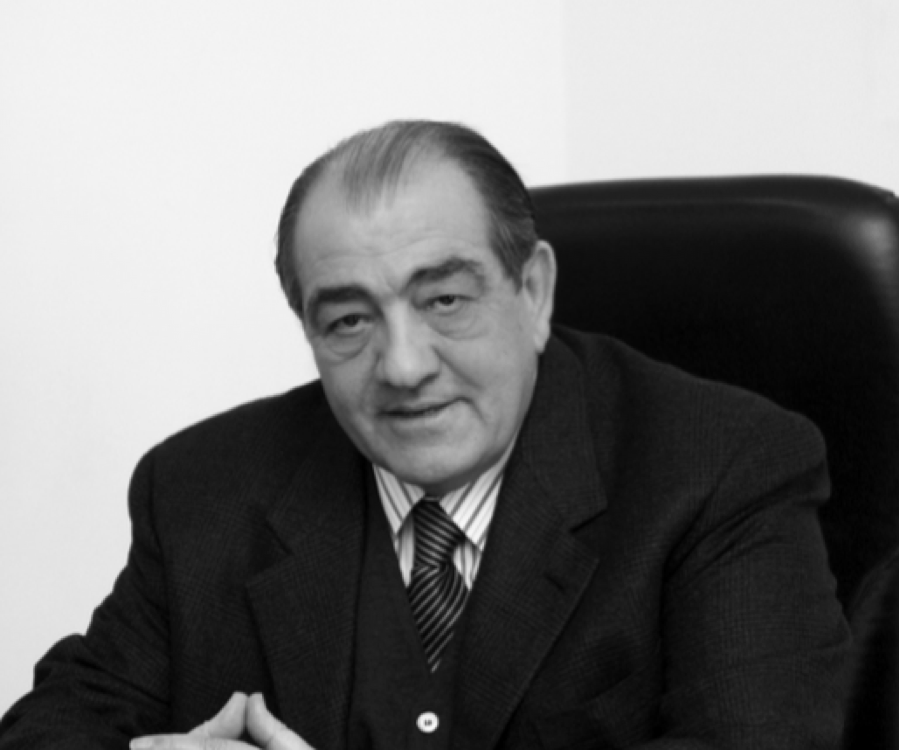
Nakheel, the master developer of Dubai’s trademark Palm Islands and many other ambitious projects, has recently restarted a portion of its developments after a difficult period of two years. Fully owned by the state of Dubai via parent company Dubai World, Nakheel had to restructure and refinance. The restructuring is near completion, with separation of the company from Dubai World planned before the end of this quarter. Nakheel Chairman Ali Rashed Lootah agreed to elaborate on the scope and pace of the company’s turnaround in an exclusive interview with Executive.

In the past few months, Nakheel has announced the resumption of work on several developments. What is the rationale behind this?

As a real estate company, we are committed to deliver what we have promised to [our] investors. After the approval of our restructuring and the approval of our business plan by the authorities, we had to go ahead and implement it. That is the rationale behind it.

In restarting your projects, how much could you restore the confidence of your investors and of the market?

We have different partners. From the side of our contractors, who are partners with us, I am sure there is trust in Nakheel. We are paying them ahead of time and the most important thing, you know, is to pay people.

In all of the projects that we have re-launched, most of the contractors are back. I can tell you that 90 percent of our contractors have not changed. We offered them a lot of incentives, we gave them additional advance payments to bring them back to the sites, but for the 10 percent with their own problems we had to find alternative contractors to complete the projects and enable us to deliver to our investors. We had, to my recollection, only two cases where a contractor could not go back. By now we have about a 9,000-person labor force on site.

Did the large number of contracting relationships and the involvement of numerous developers and sub-developers cause extra pressures or increase your cost in restarting the projects?

Let me say one important thing: without the support of the government we would not have been able to restart. The government gave us financial support, legal support, all the support we need. That enabled us to meet all our requirements. We don’t have any financial issues. The government is committed and we are meeting all our obligations. But some of the sub-developers are having some issues and don’t want to meet their commitments. We are trying to accommodate them as much as possible, giving them different scenarios, different payment plans, but they have to be committed to their contracts. There is give and take, but up to a certain extent.

You said previously that Nakheel is preparing to become a stand-alone entity by the end of this quarter. What is the reason for this revision of your corporate structure?

It is public knowledge that we will be separated from Dubai World. The reason is that Nakheel on its own is a real estate entity and I think, simply speaking, that the best way to manage Nakheel is to have it totally separated, financially and practically.

Will the restructuring affect ownership in any way?

There will be no change in ownership through this restructuring and the shareholders won’t be changed.

The board of directors will be chaired by you?

Yes, and the board will remain as it is.

Nakheel is so big in the real estate sector of Dubai that people tend to blame you for everything, from a leaking faucet to a swimming pool that has not been maintained or a parking lot that is not clean. How do you deal with this?

I take this always in a positive way. If we are talking about our clients, to me the customer is always right. We have to make them happy. People will not complain unless there is some ground for the complaint. They might exaggerate the complaint but there cannot be groundless complaint. Some people have suffered in the previous three years because of the stand still situation and they think things will change overnight. That is not possible. But the feedback we are getting includes a lot of communication from our customers where they thank us and recognize that there are changes.

What has Nakheel done to mitigate risks for investors going forward, such as global risk, local risk or internal controls risk?

The global risk was not about Nakheel; it stemmed from what you can call the global incident. I think the solution we are offering the people is really an excellent solution. Nakheel, or the government, had the choice of declaring [our company’s] bankruptcy. We didn’t choose to go that way.

How do you view opinions that the underlying risk existed before the crisis and should have been managed differently?

In a free economy you cannot control anything.

But when we look back at 2006 — 2007, many research reports on the real estate outlook for Dubai were published and all of them were positive, to the point that they sounded like they were trying more to please than to assess…

I will disagree and agree with you. If the Lehman Brothers case didn’t happen we might still be going at the same rate as before. The Lehman Brothers crisis triggered the global economic crisis and if the United States government dealt with it in a different way we might still have the same abnormal growth. Dubai was cheaper and still is cheaper than any destination, so people were willing to take this so-called risk, if you want to call it that.

Dubai is certainly more competitive today than during the final bubble period before the global crisis…

Yes. It was crazy and it was a good thing that there was a cleaning up. Only the serious people will stay.

People who purchased villas and homes in Nakheel developments before the crisis included both individual buyers and large-scale investors who bought properties for financial gain or even speculation. How do you differentiate in treating the two groups?

To individual investors who bought homes we are giving alternative solutions. We are giving them alternative properties.

How many buyers have accepted the proposal for shifting to a different property than they originally signed their contracts for?

We have actually managed so far to relocate about 50percent. About 50 percent of the people in what we call long-term projects have accepted to be relocated into short-term projects. I think we mitigated over4.5 billion dirhams ($1.22 billion).

Do you see yourself as setting an example for the whole real estate sector in Dubai in your practice of mitigating and relocating people?

I don’t know about that. I cannot speak about [other developers]. But if we can manage to relocate such a big number, people are happy, and keep in mind it was done in less than one year. The restructuring started in early April [of 2010] and that is a short period for 4.5 billion dirhams in transactions.

What is your vision for 2015 – 2020?

I think we can say the worst is over. We have achieved the business plan and are doing much better than what is envisioned in that plan. I am confident to say that.

In the portfolio of your long-term projects, you cancelled some, such as the Trump Tower.

I probably said canceled in the last brief but it is, in the current market situation, not logical to go and develop more real estate.

So the reason was not the cost of any individual project but the market?

The market for sure. We have to be realistic and see the market.

Do you expect that projects like Trump Tower or Tiger Woods Golf Course could be implemented five or 10 years from now?

I doubt it. 

So you were appointed because you have the strength…

…Of saying ‘No’. I am going after people to collect money(laughing). But believe me, I’m not after the individual investor. I am really very sympathetic toward the individual investor and I am sometimes even harsh on my people because I always put myself in the poor investor’s place. But [the individual buyers] have to also accept that they could have faced a worse scenario. The government really did a good job by keeping the commitment of Nakheel. At the end of the day, the reputation of Dubai is at stake.

And the reputation and credibility of Dubai…

…That’s our capital. I feel there is a positive feeling in the city. I think there were a lot of speculators in the city and they have runaway. As I said, Dubai is here to stay. If you exclude the real estate, other sectors in the economy are really growing.

There was talk of some new developments?

We will be developing retail business on the Palm and the Dragon Mart; we are planning to drastically increase the size of the mall, more than doubling it. On the Palm, a mall is needed. We will be tendering all these projects in the second half of the year.

What are the biggest challenges you see in the coming 18months for the real estate market in Dubai?

I think the big challenge is to cope with the existing oversupply and encourage more people to move to Dubai. I think this is happening by having the real estate value reduced by 50 percent. That is really encouraging a lot of people to move. I don’t really know the size of the oversupply — nobody can really have a figure — but the good thing is that there are no new projects.

From what you are saying, now is the time to buy in Dubai.

For sure.  We are also really working hard to bring our service charges down. That will also make Dubai more affordable. We are in negotiations with all our services’ providers.

Do you have a target figure in percentage reduction of service charges?

I am squeezing my people every day. They come with a proposal and I reject it. I keep challenging them because I always put myself in the investors’ shoes. People will be happy if you reduce [service charges] by 10 or 20 percent, but I want people to be even happier

Have you stepped up the Emiratization of Nakheel’s staff?

The percentage [of Emirati employees] is higher because if we have redundancies we release expatriates whom we don’t need. We are identifying the good ones whom we have to keep. Practically speaking, I am dealing with Nakheel in the same way in which I would be dealing with my private business; when it comes to business, you keep only the people you need. 


March 3, 2011 0 comments
0 FacebookTwitterPinterestEmail
  • 1
  • …
  • 388
  • 389
  • 390
  • 391
  • 392
  • …
  • 686

Latest Cover

About us

Since its first edition emerged on the newsstands in 1999, Executive Magazine has been dedicated to providing its readers with the most up-to-date local and regional business news. Executive is a monthly business magazine that offers readers in-depth analyses on the Lebanese world of commerce, covering all the major sectors – from banking, finance, and insurance to technology, tourism, hospitality, media, and retail.

  • Donate
  • Our Purpose
  • Contact Us

Sign up for our newsletter

[contact-form-7 id=”27812″ title=”FooterSubscription”]

  • Facebook
  • Twitter
  • Instagram
  • Linkedin
  • Youtube
Executive Magazine
  • ISSUES
    • Current Issue
    • Past issues
  • BUSINESS
  • ECONOMICS & POLICY
  • OPINION
  • SPECIAL REPORTS
  • EXECUTIVE TALKS
  • MOVEMENTS
    • Change the image
    • Cannes lions
    • Transparency & accountability
    • ECONOMIC ROADMAP
    • Say No to Corruption
    • The Lebanon media development initiative
    • LPSN Policy Asks
    • Advocating the preservation of deposits
  • JOIN US
    • Join our movement
    • Attend our events
    • Receive updates
    • Connect with us
  • DONATE