• Donate
  • Our Purpose
  • Contact Us
Executive Magazine
  • ISSUES
    • Current Issue
    • Past issues
  • BUSINESS
  • ECONOMICS & POLICY
  • OPINION
  • SPECIAL REPORTS
  • EXECUTIVE TALKS
  • MOVEMENTS
    • Change the image
    • Cannes lions
    • Transparency & accountability
    • ECONOMIC ROADMAP
    • Say No to Corruption
    • The Lebanon media development initiative
    • LPSN Policy Asks
    • Advocating the preservation of deposits
  • JOIN US
    • Join our movement
    • Attend our events
    • Receive updates
    • Connect with us
  • DONATE
MENA Cristal AwardsSpecial Section

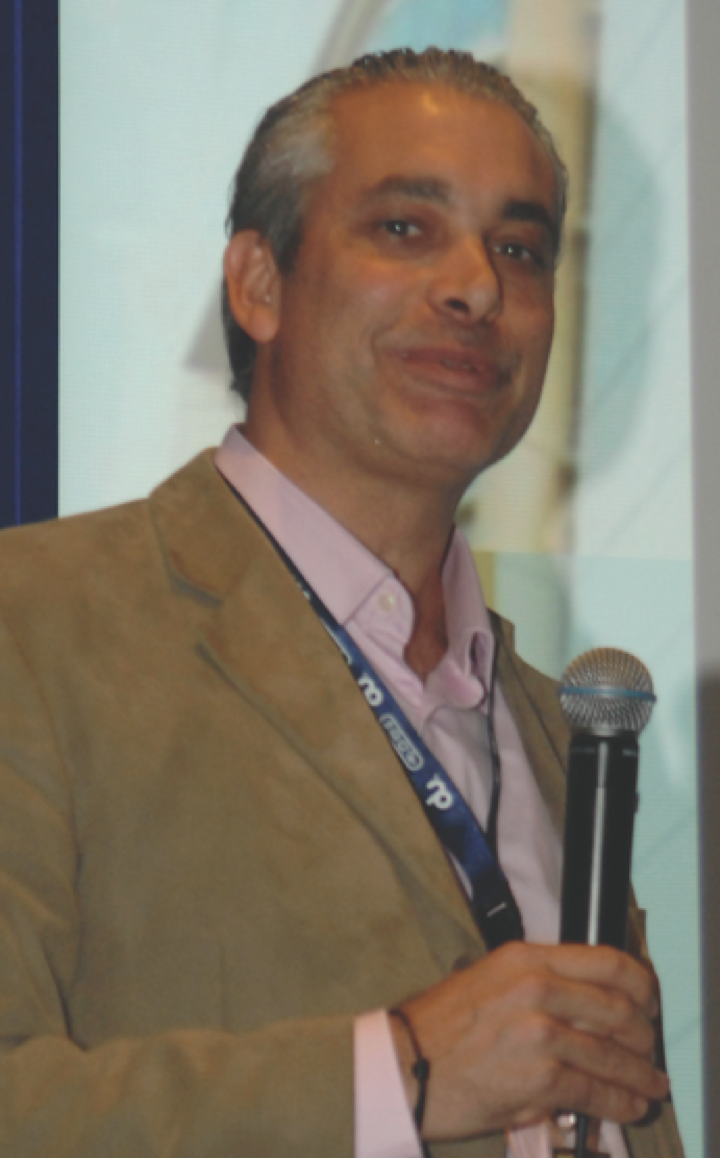
Tarek Daouk – Q&A

by Executive Staff February 22, 2009
written by Executive Staff

With more than 100 offices in 67 countries, Starcom MediaVest Group is one of the biggest advertising agencies in the world. Starcom MediaVest Group’s MENA executive vice president Tarek Daouk sat down with Executive on the fringes of the MENA Cristal Awards to offer up an expert’s perspective of the advertising market in the region.

E We are in the middle of a financial crisis, with not as much money being thrown around and there have been reports of a substantial number of delayed payments related to campaign completions in the advertising industry. Have you witnessed any of these occurrences as of late?

Of course. It has happened and it’s mainly not the multinational clients but more the local clients. The reason is that it [the crisis] was a shock; the whole thing took everyone by surprise. When surprises like this happen, usually people freeze and adopt a wait-and-see attitude. We haven’t faced an issue of payment with any of our clients. No one is saying ‘I will not pay you’ and no one is discussing invoices. Rather, what we are discussing with them [clients] is when exactly payments will be made. We want to be partners in acknowledging that there is a problem. So you can take two stands; say ‘I don’t care I want it now’ or to say ‘I want it now but let’s see how we can handle this appropriately’.

E Do you think that advertisers need to be understanding of clients’ defaulting in light of the crisis in order to forge better relationships?

I think that both parties need to be understanding because agencies and advertisers will now look into how they can help in this [payment] process. At the same time you have media [outlets] that need to pay their employees. So I think that both parties should be looking into each other’s interests otherwise things will not work. Keep in mind that the financial system of any agency is much smaller than big clients so you cannot sustain the same kind of cash flow as tier-one clients.

E Do you think that the focus of advertising agencies will now be on international clients knowing that they have the cash flow and the capacity, instead of trying to get the smaller fish?

I don’t think agencies have lost focus because no one can afford to lose focus irrespective of how much multinationals spend because of the relationships, the people, the money and the years of doing business together. What happened is the increase in investment from local businesses inflated some of the expectations of media that you didn’t have locally. Its [local clients] a growth sector in the industry which is a good thing and you have to manage this now when growth is slowing down significantly. So no one lost focus it’s just that you had a bigger pie and you were just trying to cope with it.

E Looking out onto the horizon, new campaigns in 2009 are reportedly down in some agencies by up to 50 percent. How are you dealing with this and how do you expect the industry to restructure — especially in terms of staff reallocation — in order to cope with this challenge?

We haven’t done it yet but the principle of reallocating our resources to where the business is, is a sound business principle. We haven’t done it not because we don’t agree with the principle, but we haven’t yet faced the need. If you look at our business over the past few years, the increase in our volume has been significantly greater than that of our headcount, hence we don’t have too much ‘fat’ in our structure. We are not facing any staffing issues but if a disaster happens we will have a reality check. When it comes to media relationships and negotiations, we are looking at how we can develop alternative sources of revenue. If we used to do things one way and this year we cannot get the same revenue out of it there are always other things that the client can benefit from that will bring in money for us and these are the things that we are exploring.

E The advertising market in Dubai has been booming for around a decade. Now we see Qatar emerging and Saudi Arabia constituting a strong and liquid market. Do you view these countries as potential market hubs for the advertising industry now that Dubai has reached somewhat of a critical mass?

I don’t think that there is an answer that will stand forever. Today Dubai is in a tough economic situation but the economy could get better. When and how this will happen we don’t know, but expectations are that Dubai will come out of it [the crisis] sooner than the rest of the world. Dubai has the right infrastructure. So when you look at it, most of the infrastructure that the government needed to borrow money to build has already been borrowed and at cheap rates. For me 2009 is finished and you can’t talk about it anymore. The first half is done for, then Ramadan comes in and afterwards you have the summer. So 2009 will be an extremely bad year for the local media in Dubai. In Saudi there is no change as it has always been the focus and has never lost it. It’s the biggest market for all our clients. If you put aside the local UAE Real Estate developers, 80 percent of our clients’ businesses are in Saudi Arabia.

E In terms of profit margins and new campaigns, is the industry trying to be more competitive piece-wise and consequently decreasing the bottom line for advertisers?

Frankly, I don’t think there is anymore room for price cutting. If you look at most of the commissions that are placed in pitches, they have already decreased to, in some cases, unsustainable levels. So it’s impossible to cut margins further because you will be running a business at a loss and no one can do that. However, if you sweeten your portfolio with different services that have better margins, your margins will improve.

E There is a lot of talk about new media and social networking in the industry, is this something you are focusing on and do you think it is feasible in the Middle East given the infrastructure constraints that persist in the region?

You would be surprised. Digital is no longer ‘new media’. There is a difference between us and the Western markets but the pace of change is much faster in this region. We have more than a 100 percent mobile penetration rate in the region. If you look at what we did with MBC online in Saudi, we launched a video that got one million viewers. Saudi Arabia has 20 million people in it and half of them are under 15; hence you cannot include them in research. So out of 10 million people [surveyed], 10 percent used the most sophisticated mode of communication — broadband download. With ADSL launched in Lebanon it will get there in no time. Technology is relatively cheap in terms of fixed costs, it’s fast and it’s available. I am not saying that the industry should take its money off established media and dump it into digital. People want to consume and an increasing number of people want to consume differently.

February 22, 2009 0 comments
0 FacebookTwitterPinterestEmail
MENA Cristal AwardsSpecial Section

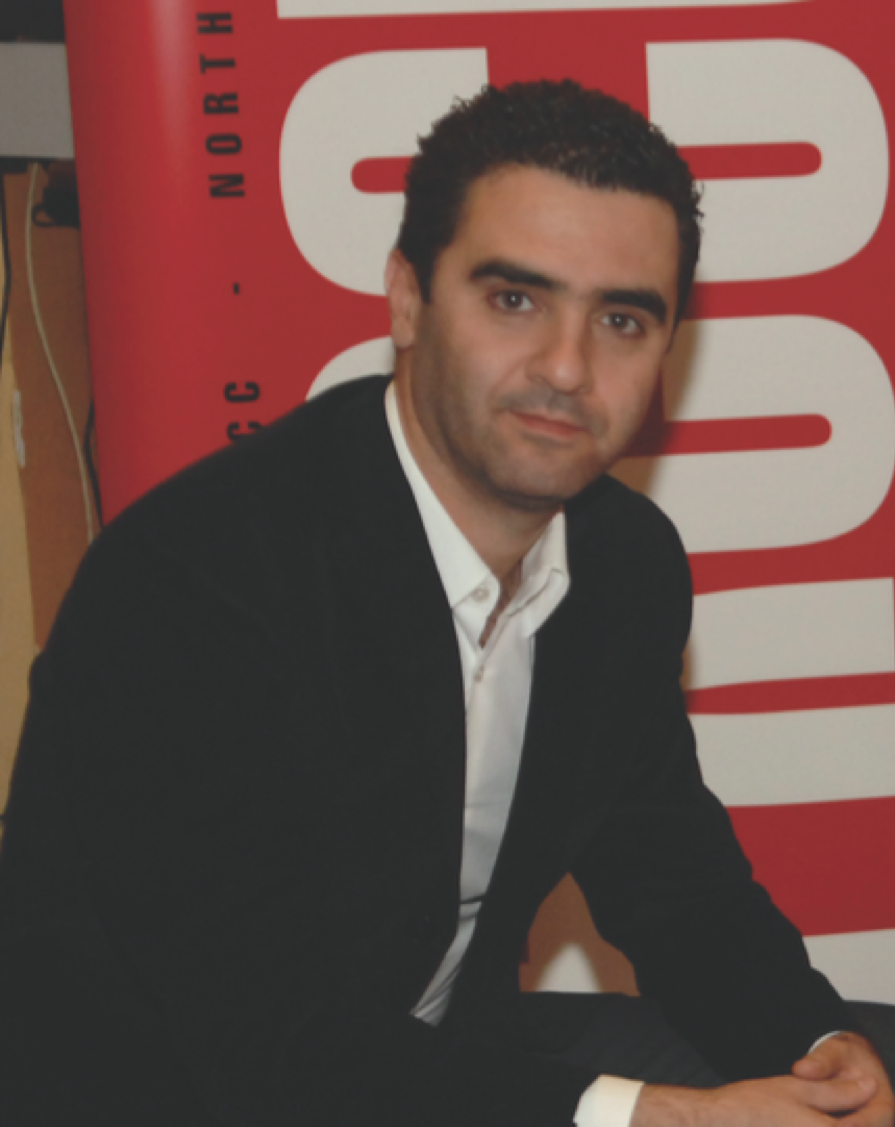
Paul Boulos – Q&A

by Executive Staff February 22, 2009
written by Executive Staff

Paul Boulos joined Drive Communication in early 2008 with an 11-year track record in the advertising and marketing industry. Almost a decade ago he helped set up the Leo Burnett office in Riyadh, Saudi Arabia and was then appointed deputy managing director of the agency’s Kuwait operation. Drive joined the Dentsu advertising network in 2005. Executive Magazine recently caught up with Boulos at the MENA Cristal awards.

E The regional advertising world has historically perceived Saudi Arabia through a number of stereotypes. Why have these agencies been unable to break free from this narrow view?

I have been in the advertising business for 12 years, but I was fortunate enough to step out of the advertising business for two years. I was in broadcasting with LBC, so I was obliged to see communication from a holistic perspective. You have to see from a holistic perspective. You can’t just think as an ad man anymore. For example, there is another face of Saudi today. This does not mean that the conservative part of Saudi is not there, don’t get me wrong. But today, when you have a population of five or six or seven million, or when you have youth making up 60 to 65 percent of the population, you cannot ignore them anymore. You need to attend to them. First, acknowledge that they exist and understand their habits. The industry has been too caught up with itself and its been done in a one-to-all communication. What I am trying to show is the opposite. It is the underground of Saudi, but it is real and it is coming from the audience. One of the key strategic questions that needs to be attended to is about content. Should the advertisers dictate content, or should the audience?

E You alluded to the fact that advertising agencies in the Middle East spend half a percent of their budgets on research. They are basically flying blind. Why has there been this reluctance to embrace analytical information?

It is really a question of belief. In our culture, we don’t really believe in numbers and figures. Also, in the advertising industry you see a lot of attitude. If someone comes out with a figure, the other person always thinks of it in a negative way or in a political way and that does not have to be the case. There are also different kinds of research, qualitative and quantitative. You don’t need to spend tons of money to do it. But the advertising industry does not move easily. I ask them to rethink their business model as advertising agencies.

E The advertising industry has been slow to adopt this type of change, especially in Saudi Arabia. Do you think their reluctance is based on their perception of Saudi as a place where things cannot change due to things like restrictions on freedom of speech by the government? Do you think that advertisers will not try to challenge this status quo because it might be detrimental to their business?

This is partially true. But the other truth lies with the mindset of the advertising agencies. Let’s ask the flip side of the question. How many of these companies has tried to do so. Who has tried and been blocked. Yes, there could be exceptions. Yes, there could be a challenge. I am not saying it is going to be an easy ride. All I am trying to say is that we need to try and approach the business in a different manner and to look at Saudi in a different way.

E Many advertisers in the West have tried to penetrate the digital market by targeting certain niches and clusters as defined by social networking websites like Facebook and others. But this hasn’t worked for many advertisers and some analysts are suggesting that the strategy be abandoned. Why do you think that this is the way forward in this region?

First is the international best reference, the benchmark, which is the US market. This year, online advertising spending [in the US] surpassed spending for outdoor advertising. This is a landmark change. But in the Middle East, online spending is .1 percent of the total budget, simply because agencies aren’t doing their job. Online advertising is the future of advertising for two reasons. One, it is a form of alternative self-expression and will continue to be. Two, the number of users is said and done. What does not exist is how to deal with it and how to profit from it. This will absolutely be the biggest growth area in the next three to five years.

E We are currently in the middle of a global financial crisis. There is less money to go around. We have seen a substantial number of unsettled payments in the industry. We have seen 2009 advertising budgets cut by more than 50 percent for some of the big players in things like real estate. How long will this continue to affect the industry?

In our business, the client determines the budget. The client can be in any sector today: automotive, retail, telecommunications, real estate… in any sector. There is more responsibility from the communication industry, from the media profession, to think responsibly about how to allocate budgets and not just how to make profits. This gives us one more reason to think about alternative media and new media like mobile or SMS advertising, sponsorship of different kinds of events, different ways of communicating the brand.

E There has been a lot of relocation of staff within the industry lately. Agencies have been moving out of the hubs and into markets that were previously untapped like Jordan, North Africa and the Levant. How do you think this will pan out in the end? Will new hubs emerge?

The industry has become mature enough. It is beyond the merger and acquisition stage. Today, what we see is something more or less called the top 10. It is not a big mystery as to what they will do. Beirut is seen as a creative center of talent. That will continue to be the case, whether on the shuttle approach or a standard axis. So you can have your team in Beirut and service a client in Nigeria. This pragmatic approach ultimately makes agencies more efficient.

February 22, 2009 0 comments
0 FacebookTwitterPinterestEmail
MENA Cristal AwardsSpecial Section

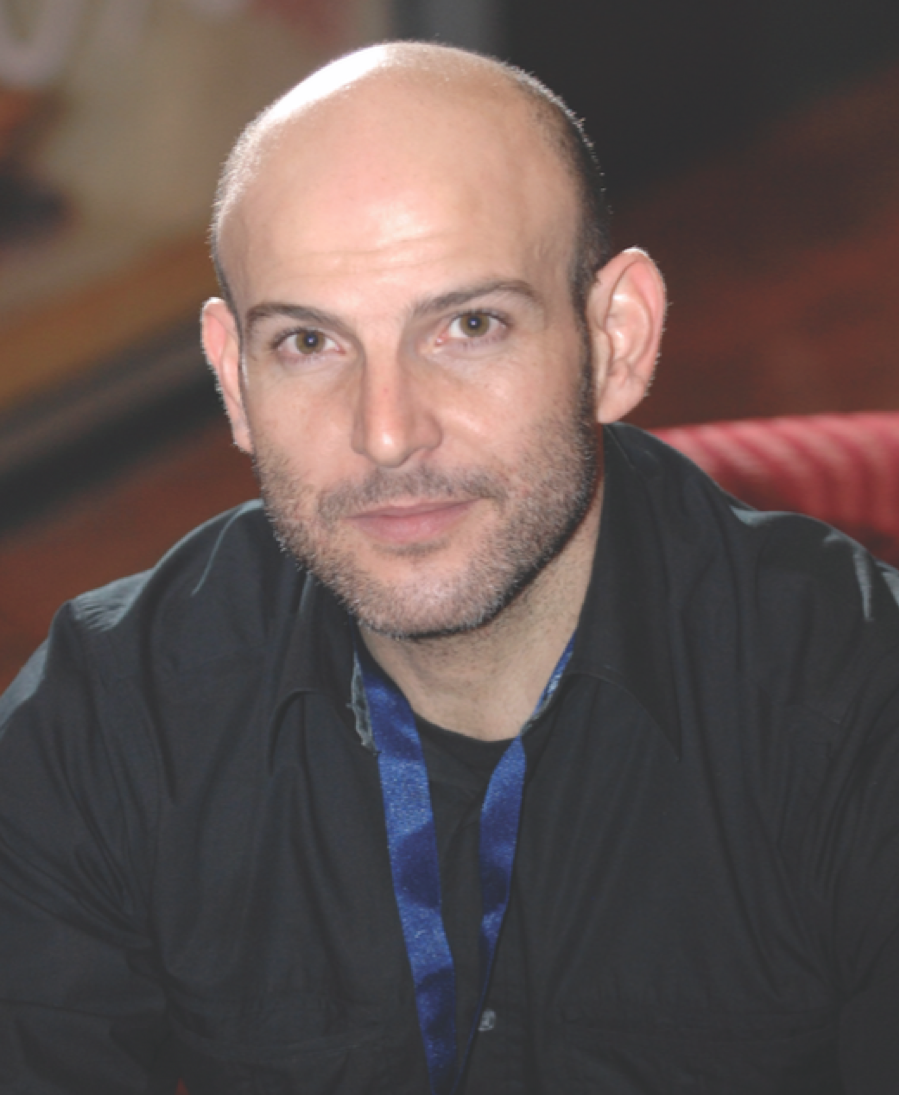
Farid Chehab – Q&A

by Executive Staff February 22, 2009
written by Executive Staff

Executive sat down for an interview with Farid Chehab, the chief creative officer (CCO) and chairman of Leo Burnett CEEMA. Renowned in the advertising industry, Chehab began his career in 1970 at Young and Rubicam in Beirut, moving on to co-found H&C Advertising in 1974. Later in 1991, H&C formed a partnership with Leo Burnett and Chehab was appointed chairman and CCO of Leo Burnett ME. Today, he oversees the general orientation of the company and its creative output.

E Recently, there have been a substantial number of unsettled payments subsequent to the campaign completions. Have you witnessed any such occurrences in the industry?

Fortunately, no, we have good clients. Of course a lot of agencies have witnessed situations of non-payment. It’s a serious problem — whenever they don’t pay, it’s serious. The problem is especially in the media houses, because there is a mass amount of money that goes back and forth.

E How can this problem be solved?

You have to start from the beginning. For a long time agencies have not been able to elevate themselves to the rank of being partners and consultants to clients. It’s our fault that we have reached a point whereby we are mistreated by some clients for non-payments. Can you envisage non-payments when you talk to consultants? It never happens. Whenever it happens with agencies, it’s because the market — the industry — has been giving and giving and giving to the client and saying “don’t pay now, pay later.” So how do I cure that? We have to start doing it ourselves. We have to start getting ourselves to become more respected by the client so that this never happens. We have to recognize our role as idea agencies, idea companies — not just trading space in newspapers. Today, the economic situation is pushing clients to start looking at creativity because without creativity you don’t have any affect anymore. Whether you pay it or not, there is no more money now to be spent so you really need something that is more effective. Today with online communication you can measure the effectiveness of your idea in terms of upload clicks and the viral effect. So the client now knows whether his campaign is working or not. Hence, I think slowly we are going to go into a virtuous circle, not a vicious circle.

E New campaign deals in 2009 are reportedly down by more than 50 percent in the Gulf. How are you restructuring your strategic objectives and budget considering this downturn? 

First, we don’t know how much we’re going to lose; we don’t know what the drop will be. We are waiting for the end of March. I think that from now till the end of March we will have a bigger and better picture of the situation. I do not consider the situation to be lethal. There are going to be corrections; clients now want to have value for their investments and this is going to translate into better communication. It’s going to be sharper and savvier. Agencies that cannot survive a crisis like this will die and this is good; it’s a correction. I’m not looking at it from a negative perspective — I don’t think it’s the end of the world. As long as people keep consuming, you’re going to keep on selling. The wheel of the world is not going to stop. It’s a crisis, we’re going to have corrections and we’ll start all over again. Leo Burnett, for example, was born in the middle of the Great Depression. Leo Burnett opened his agency during the 1930s in the midst of chaos!

E A lot of companies are cutting costs and downsizing, how will this affect the staffing situation in the MENA region?

There might be downsizing by necessity, but we’re not sure. There will be downsizing in the industry, definitely, but I don’t know how much. Relocating will not help a lot. We don’t have plans to relocate. This crisis is going to generate a new way to work because we are not in a situation where we can spend lavishly. Most probably we’re going to be forced to be much more online. In so many cases today we’re still spending lavishly. The whole crisis is going to create a vacuum. The job losses are going to be a plague on all fronts, so people must find a way now to re-adapt. There will be problems for some and opportunities for others. It’s the survival of the fittest.

E What challenges has Leo Burnett faced since the financial crisis began taking its toll on the region?

Lots of budget restrictions. Budgets are the biggest challenge. We have been preparing ourselves for some time now to adapt to the new givens of modern economy, i.e. using more online communication, understanding that it’s a people era and that if you do not talk to people, you are not doing your job properly. This crisis is going to bring up the people era more than ever because restrictions are going to push everybody online. Online is people, it is one-to-one. So we have been educating our people to face it. We don’t have any problem with this crisis [happening]. The only problem we’re going to face with others is the fact that budgets are going to shrink because of the situation.

E What sectors of your clients do you think will be most adversely or positively affected? Will it be the financial clients, real estate, etc.?

The consumer goods will not suffer a lot. Definitely real estate is going to suffer. We are blessed to have very solid financial clients like Bank Audi. But we have financial clients that will suffer albeit not significantly or as much as real estate [clients]. The only area that is very hurt is real estate and we don’t know how the sales are going to move. We’re in a situation where we review it every month, sometimes every two weeks.

E What do you see as the key element to give a competitive advantage to advertisers to weather the economic downturn?

Creativity, creativity and creativity. We are more than ever an idea culture. In order to have a competitive edge, knowing that clients do not have budgets to spend, what do we do? We tell the client, ‘I’m going to give you ideas that are so powerful, that when you put them in the face of people, they’re going to be the ambassadors for your brand.’ That means we now have a duty to produce creative advertising that delivers on this. Before, we didn’t have this necessity because with mass media you bombard consumers with ads and you didn’t know whether or not your campaign is good or not. Agencies are going to start asking clients, ‘Let me give you the opportunity to show you how viral you can become. Let me show you how many clicks we can make people deliver for you.’ Clients will take that because they, first, don’t have the money, and second, because they can benchmark. Then we as agencies will be paid as consultants, we’ll be paid for the power of the idea. We’ll become like actors who have their box office. That’s how we’re going to move on the requests of the client and I think this is very good.

February 22, 2009 0 comments
0 FacebookTwitterPinterestEmail
MENA Cristal AwardsSpecial Section

Antonio Vincenti – Q&A

by Executive Staff February 22, 2009
written by Executive Staff

As a leader in outdoor advertising, Pikasso operates in Jordan, Lebanon, Iraq, Algeria and Egypt. At the MENA Cristal Awards, Executive enjoyed a one-on-one chat with the CEO of Pikasso, Antonio Vincenti, to discuss the role of outdoor advertising in the Middle East.

E The Middle East is witnessing a kind of ‘billboard overdose’, so to speak. In your opinion, how can outdoor advertisers increase the quality of billboards while decreasing the quantity?

The only thing to do is to work hand-in-hand with municipalities to convince them of the importance of the environment. The thing is that if we campaign too much on the environment, then the decision from the authorities is very harsh. We have already lived though that in 1995, but we cannot let the situation continue.

E Of the countries that Pikasso operates in, which one presents the most challenges for you?

I’ll tell you something — in Jordan and Algeria there is the rule of law, and it is respected 100 percent. In Egypt it’s chaos, because they are not granting permits anymore. In Iraq they are in war, so we cannot judge. In Lebanon you have the worst and the best.

E Do you think media in the MENA region lacks creativity? Why hasn’t this part of the world embraced new media?

Yes and no, depending on the countries. Now to embrace or adopt the new things you need the financial means. When you see the unit price we are selling in Lebanon and compare it to Amman or Algeria, it’s ridiculous. We sell a billboard today in Lebanon at a price five times lower than in Jordan. It’s abnormal! Why is it? They [Lebanese] don’t have the means.

E What about with the financial crisis — have you noticed that your clients’ budgets have been affected?

No, no. We are not touched by the crisis in our region. I don’t think  our [operating] region — Lebanon, Jordan, Iraq, Algeria and Egypt — was affected. Maybe very slightly in Jordan, but I have doubts about it, I don’t think so.

E Do you have real estate and banking clients?

No, real estate was never important for us. In Lebanon as a sector they were not important for us. They were not advertising a lot.

E Regarding advertising research, you’ve mentioned that it is not really taken seriously in this region. How do you think that it will start to make a difference in the industry?

I think that with the worldwide crisis now and with the media booking companies, more and more we’ll move towards more demands from clients. They will ask for more research. Today we can lose a campaign over $2. I mean [clients] say they want to pay $80 and we say for example that we won’t sell for less than $82. But for us, $2 is a lot in Lebanon. If you have 3,400 billboards, it’s a $6,800 per week difference and [multiplied] by 52 weeks it makes $300,000 so it’s a real, significant amount.

E At the Cristal awards, you mentioned an example of polluting natural landscapes like Faqra, Lebanon with billboards. When do you, as a company, decide to draw the line to not invade the space of your consumers?

I’m telling you I do it because it’s in my guts, it’s in my principles. I feel that it’s a taboo; we’re not authorized to go beyond a certain point. But whenever we do that, I feel frustrated from a business perspective. I say, ‘Well look at all those [advertisers] installing here in Faraya and Faqra, we’re the only stupid dummy people?’ This is what I’m telling you, people come to spend the weekend and relax… it’s not that they want to come and feel invaded by ads. This is it.

E What challenges have you faced in the past few months?

Nothing, nothing. I told you no because anyway we fly low, we don’t fly high. In Lebanon it’s not that you fly high, let’s be realistic.

E Is there anything else you would like to add?

We are creating syndicates of outdoor companies, I’m working a lot on that. I have high hopes. I think that after the elections, the minister of interior will have time to dedicate in order to regulate outdoor advertising seriously.

February 22, 2009 0 comments
0 FacebookTwitterPinterestEmail
MENA Cristal AwardsSpecial Section

Patrick Ehringer – Q&A

by Executive Staff February 20, 2009
written by Executive Staff

As the president for DDP Middle East and Africa, EVP, COO and chief people officer DDB Europe, Mr. Patrick Ehringer is a man of many hats. Responsible for ensuring that local and senior managers maintain a desired business focus and achieve the network’s objectives, Ehringer is also a strong promoter of DDB Travel & Tourism and DDB Matrix — the DDB tool for measuring marketing mix investment impact on sales. In 2007, the French prime minister appointed him foreign trade counselor of France. Executive had the pleasure of sitting down with Ehringer for a candid discussion about the advertising industry and its role amidst the global financial downturn.

E In your opinion, what constructive role can the advertising industry play in the financial crisis?

I can start with a little example, which will help you understand what kind of role we can play. The crisis is driven by three main activities in this region. The ones who will suffer the most from the crisis are obviously real estate, financial institutions and maybe telecom. The big two are financial institutions and real estate. Before, people were putting real estate products in the market and they were basically pre-sold, because of the speculation. Our role was actually minimal. But now [things] have changed completely, because if they bring the product on the market, they will need communication and need to explain why their product is better than the other one. Then we actually go back to our initial role, which consists of being on the consumer side and explaining to the consumer what is the benefit for them. Now for all the products — whether its FMCG or others — we are back to our role, which consists of providing the communication and the information for the consumer to buy the product. The competition will be higher because the one who will resist the crisis will definitely be stronger. We have to contribute. One of the aspects mentioned in [CEO Chuck Brymer’s book] is the fact that because our world has changed, now we’re in a situation where everything is a beacon for communication, the acceleration of all the phenomena during the past 10 years is amazing. The individual, even if he’s still individualist, he belongs to a community. When he belongs to a community, he belongs because he has common characters or choices and he usually belongs to a community because he loves the same things as other members of the community. If you’re talking about brands — and that’s what we’re doing, we’re building brands — we’re going one step further and are building communities of brand lovers. Now if we, in the crisis, can play a role of putting a little bit of optimism and making the people understand that there are opportunities because now the best will survive, and there are opportunities for the consumer to get the best product among what used to be mass, then we’ll play our role.

E Does it force your agency to become more creative when your clients’ budgets are more restricted? Perhaps the optimism you mentioned is able to shine via creativity in times of financial downturn.

Definitely, yes. A couple of things — first, it is very easy for an advertiser to decide that communication budgets can be cut, because there is no immediate impact except for the PNL. In other words, the first thing you do if you want to match your objectives and you have difficulties because of the crisis, the first reflex — I’m not saying it’s a good one — could easily be cutting the communication budget; it’s like a tanker, the brand will still continue on their values. It is, of course, a mistake because if you do this, the cost to re-launch the process is much higher than the benefit you’re getting on the very short-term, which means that in the middle and long-term you’re losing. The clever advertisers are the ones that are able to keep the budget at the moment the others are cutting because they’re getting a leading position. Now we can help, because we’re supposed to be a business solution provider, we provide creative solutions to business issues our clients may have. We owe our clients more creative ideas on how they can go through this crisis — either on the way they have to communicate or on the way they have to make their product evolve around their own resources. We actually help and one of our processes consists of co-creating together, which means that with their input and our expertise, together we can be on top of the crowd.

Let me give you another example. If we are approached by advertisers to communicate and they have a low budget — now we have a range of vehicles for communication which allows us to become more creative in our recommendation in order to touch the consumer — the net is a less expensive way to approach the consumer and it’s more interactive, one-to-one. We can reach people on a larger scale. This idea of swarming as a herd, like a school of fish — it’s not one fish suddenly telling the fish to go right or left, no. It’s just one that has seen something like food or danger who is reacting and giving the information to the next one and giving the information to the next one. Nowadays, technology allows us to have this kind of application if you want – that’s why there is a similarity between what is happening in a school of fish and what is happening in our world with the Internet. It means that if you are not there, in order to watch what is happening on the net, then you can miss an opportunity or even sometimes be in danger.

“The net is a less expensive way to approach the consumer and it’s more interactive one-to-one”

E Other than FMCG what kind of clients do you have? Do you have financial or real estate clients?

We were not touched at all by the real estate crisis. I know some other networks that had a lot of problems because they have bigger clients, but our clients in the region have not been affected. Honestly, for the moment we’re not concerned by any big crisis among our clients.

E Have the budgets of your clients been affected at all?

Honestly, no. You have to understand… there is a kind of ambiance where most of the companies are actually taking measures in advance and the reason why they’re doing this is because of the uncertainty of the future. It’s natural. It is important to make the people understand — I’m having the same discussion with my team from the Levant later on in order to give my recommendation for 2009. I have no recipe and I am unable to predict what will happen in 2009, but we can make ourselves a bit more prepared in order not to be surprised by the future.

One of the aspects is, of course, that we have to become even more creative and be even closer to our clients and we have to keep some kind of optimism. It’s like the story of the glass — do you see it half full or half empty? Now, I can be prudent, I can anticipate difficulties, uncertainties…I can also decide that instead of being pessimistic, I’ll be optimistic because I trust my people, I trust the team and I trust our ability to fulfill our obligation vis-à-vis the client. To become even more creative, to have more, to provide the client with a solution every time they are in trouble or have an issue. They can count on us to actually think with them about the way to get out of this uncertainty. But I can be optimistic because I know that we all lead the passion we have for the brand of our client and that’s key. It means that overall, we didn’t have big cuts but we have in front of us prudent clients and we have the same attitude and it’s fine. It’s a natural process. The only thing I’m recommending all of us to keep in mind is the fact that if you are pessimistic, you’re not really helping. If you’re overly optimistic you’re not really helping. The only thing I’m asking our troops here is to keep in mind that we must be on alert and take any opportunities for our client and for ourselves. We need to lead the change.

If you want to talk, generally speaking, about the situation it’s very interesting. The situation is very different between what is happening in the Gulf and what is happening in Lebanon. Lebanon benefited from the past years. If you look at the interviews or the press releases made by the people from the communication sector, it’s obvious that Lebanon considers 2008 as a good year. But it was a good year because the past one was not that good. We are in a growing trend here.

E What about the notion of new creative media? Is there a reason that Arab media hasn’t embraced the practice of creative media?

I’m not sure I agree with you that it’s not embraced. It is used. I’m a member of the corporate jury [for the MENA Cristal Awards] and we saw the campaign [for the Gran Prix] and it’s a great cause campaign for women. It’s a very interesting campaign because it’s a real integrated campaign. Now what is interesting is the fact that they’re using new media and it’s not only the web, it’s street marketing. You know what the best medium is now? It’s the consumer. The consumer is the best medium. The consumer is actually the one communicating on the Internet with somebody else, who tells somebody else. It is word of mouth. In one night, you can promote or kill a brand. It is the same thing here in the same way. You may not have the same penetration level, but you have the same use of the new medium. It is definitely something you have to take into account in addition to traditional media, especially here in Lebanon.

E What countries in the MENA region do you think present the most opportunity for growth in 2009?

Most people will answer the countries having money and producing oil or gas: Saudi Arabia, Abu Dhabi and Qatar. The position of Dubai and Beirut will change. Beirut is the experience, the history of having a leading position. It suddenly lost a bit of this position because Dubai took over some of the former role Beirut was playing. It’s interesting to see that if we keep this country stable, some headquarters may come back. Everybody is talking about Coca Cola coming back to Beirut to relocate their headquarters here. It’s interesting because I think we’ll have a more balanced position between three big capitals — Beirut, Dubai and Cairo. The North African countries will come a little bit later. I was talking to somebody over the phone who is close to a real estate company in Saudi Arabia, they make their plans on the basis on around $40-45 per barrel, which is about what the price is now. This is the acceptable range and they are actually building their plans on this basis, which means that if they stay on this range the money will come and they will actually re-build their treasury opportunities. They will be the ones helping the other countries. Dubai is known to be somewhat helped by Abu Dhabi. Qatar has a lot of opportunities.

“Talent is key in our business. we have no assets in our business, we only have people”

E  In terms of the advertising industry, which countries have the opportunities for growth this year?

Talent is key in our business. We have no assets in our business, we only have people. The values of DDB are creativity and humanity. Humanity just because of the way we look at the consumer and decide that behind the consumer, behind the person you actually want to touch there is a human being. You need to have the proper insight in order to approach him. We consider humanity because we consider ourselves a human network. Now for priorities, we have people, products, performance, ownership…all these in that order. These people will work from Dubai. Most of our agencies do not have any territorial exclusivity anymore. We go where the clients are.

February 20, 2009 0 comments
0 FacebookTwitterPinterestEmail
MENA Cristal AwardsSpecial Section

Dani Richa – Q&A

by Executive Staff February 20, 2009
written by Executive Staff

With more than 20 years  experience in the advertising industry, Dani Richa currently holds the presidency of the International Advertising Association’s Lebanon Chapter and is the chief operating officer of Impact BBDO Levant, North Africa and Saudi Arabia. At the MENA Cristal Awards, Executive spoke to Richa to get an insider’s view of the regional advertising industry and its future during a period of financial turmoil.

E As the region begins to cope with the global economic downturn, what do you project in terms of the bottom line for advertisers in the year to come?

Unfortunately, the most affected market is going to be the UAE and especially Dubai, which stands to suffer the most. The media and ad agencies in Dubai have essentially two markets; the Dubai market and the regional market out of Dubai. The Dubai market, I hate to say, will experience a severe cut that could go up to 50 percent, slashing advertising budgets in half, which is massive. It’s really dramatic because in Dubai, the biggest spenders are real estate companies and given that the real estate sector is in trouble, as a lot of projects [have been] stopped or slashed in half, and the financial institutions which are linked to the real estate sector [are] cutting their spending. I foresee a big cut. Now, people will continue to eat and drink so fast moving consumer goods will be alright.

These categories mainly deal with pan-Arab satellite communications out of Dubai and this will be hit by a maximum of 20 percent. Which means that on average, if you balance the regional with the local advertising sector as a whole, it could suffer a cut of 20-25 percent. That said, a lot will depend on the price of oil. If the price of oil goes up everything will be fine. If it continues to drop or stagnate they [Gulf countries] will have a difficult year and the repercussions on our industry will amount to cuts of around 10-15 percent in the Saudi market, which is steep because this is the market driving the whole region.

E We have seen a lot of examples of staff layoffs and reallocation of resources. Some advertisers have even moved their base of operations out of Dubai to places like Beirut. Do you see this as a trend that is going to continue in the regional advertising industry?

There are tough times ahead but let’s not forget that companies were hiring like there is no tomorrow and increasing headcounts like crazy, so I don’t see companies losing a lot of people in the sector because the hiring has stopped. Some companies will use this opportunity to get rid of some dead wood. Obviously in some sectors that have really been hit, good people will have to leave. We all know that Dubai was a very attractive location in the region and it was very difficult to get people to go to other countries in the Gulf. Now is an opportunity to get good talent spread across the region, so relocation is definitely something we look at. In our case, we opened two or three offices last year and we are opening some more so we need people for the offices we have opened in Abu Dhabi, Qatar and Algeria as all of these are start-ups. They are emerging economies; they need people. We were having a lot of difficulty getting people because the industry grew very fast and this is why we had to import talent from outside the region. When I hear that thousands of people are coming back to Lebanon I don’t think it’s that dramatic. A lot of people may be leaving Dubai but they are going to other places in the region like Abu Dhabi, Saudi or Kuwait.

E So where do you think the new hotspots are in the region, given that places like Qatar are still expected to grow during times of global recession?

A country like Qatar has a lot of wealth in natural resources between gas and oil so they are not really looking at manufacturing and consumer sales as a basis for their economy. The countries that are more reliant on oil will suffer the least, especially if the price of oil goes up. This is why places like Dubai which are more commerce based economies stand to be hit the most. In the region, I think that multinationals have had disproportionate [advertising] interests in the GCC versus the rest of the region. The amount of profits that were being made in the Levant and North Africa pale in comparison to those of the GCC. Now, the trend is shifting to not putting all of your eggs in one basket in order to achieve a diversification of risk as well as looking at emerging markets in the region. In terms of Lebanon, I think we will probably be affected the least, even though we don’t depend on oil. We have been out of the game for so long that we didn’t really benefit from the boom that was happening in the GCC. By the same token, we won’t be affected as much by the crisis that has happened there. Lebanon is an introverted economy and we could even stand to benefit from this crisis. If you look at the advertising industry as a whole, Lebanon has been struggling with around $80-100 million for the last 15 years. Last year was one of the better years but it was far from being the best possible because we are so far behind in terms of the total advertising spent in the MENA region, which is about $3 billion. Hence, we have a lot of catching up to do and I am not just talking about a 10 percent year-on-year growth. We need a major adjustment to get where we want to go.

E Staying with Lebanon, we have already seen a lot of electoral ad campaigns for political parties in light of the upcoming elections in June. What do you think the consequences for the advertising industry will be in terms of taking up ad campaigns for candidates?

We are forecasting good growth and this growth is mainly coming from electoral campaigns. Even though a lot of these parties have their own TV channels, outdoor is a key medium because it’s in the streets and is by nature a populous medium. It’s like launching 250 new brands because there are at least 250 candidates that will promote themselves and I expect an average investment of $200,000. This could mean up to $50 million in additional revenue for the ad industry, which is a massive jump up from $100 million. Even if it is half of that, it is already major. I think that outdoor will stand to benefit most. But because outdoor is going to be so saturated, there will be an overspill that could benefit different media. Especially since active commercial brands won’t find availability in the outdoor medium so they will have to go look at alternative media. Lebanon lost its role as the center of the Middle East a while ago and we almost lost our role as the center of the Levant to Amman over the past few years. I think that if we in Lebanon are smart and if we have one or two good years, we can reclaim our role as a hub for the Levant and North Africa.

February 20, 2009 0 comments
0 FacebookTwitterPinterestEmail
MENA Cristal AwardsSpecial Section

Christian Cappe – Q&A

by Executive Staff February 20, 2009
written by Executive Staff

Mr. Christian Cappe is the president of the 2C Associés, CEO of the MENA Cristal Awards and general director of the Méribel Ad Festival. Based in France, 2C Associés is among the top ranked event agencies specializing in the imaging and audiovisual domains. In addition to the MENA Cristal Awards and Méribel Ad Festival, 2C Associés has produced and organized many events such as the China Cristal Awards and the European Corporate Responsibility Festival. Executive had the opportunity to enjoy an interview with Cappe at the MENA Cristal Awards in Faraya, Lebanon.

E When were the MENA Cristal Awards inaugurated and what was the idea behind them?

The MENA Cristal Awards were created four years ago with the same aim of Méribel Ad Festival, which was launched in 2001. The concept is to put together the clients, agencies, media and production houses in a very cool place for networking. They have lunch and dinner together, go to conferences, and also see the best works of advertising.

The first year it was in Morocco. We tried to find a ski resort and hotel in the Arab world, but there are not many solutions… so here, in Lebanon, the infrastructure is exactly what we want.

E Is that the only reason why you chose Lebanon?

Firstly, because of its ski resort and secondly because Lebanon contributed to the launch of the advertising industry in the Middle East. Dubai is certainly the hub of the region in advertising, but the talents and educational systems in Lebanon make the people very well trained and prepared.

E Did you have any difficulties preparing for the MENA Cristal Awards in Lebanon in previous years?

It has been in Lebanon for the last three years, and it was very challenging. When we organized the second edition of MENA Cristal Awards — for the first time in Lebanon — in January 2007. It was five months after the war. On July 12, 2006 when the war began, we were negotiating the partnership in the Middle East’s head office at eleven o’clock in the morning, but I stayed [in Lebanon]. Later, I went home to France through Syria but came back to see the hotel [Mzaar Intercontinental in Faraya]. In the beginning, it was a little bit difficult — not to organize, because the Lebanon people are so nice — but the people coming from abroad were a little bit anxious about coming here. The last two years, some people decided not to come at the last minute. This year, it is quite the opposite. Cécilia Attias, Dominique Baudis, president of the Arab World Institute, Osman Sultan, CEO of Du and Michael Maedel, the president of JWT Worldwide, as well as many other important people are participating.

E During recent years, how has the innovation, creativity and quality of the advertising industry evolved?

For me, what I can say is that two years ago, we were very impressed by the quality of works at an international level. It has improved over the years because all agencies are becoming a kind of a melting pot; people are coming from everywhere and that mélange boosts creativity. So it becomes more creative every year. It [advertising] is at a very high level in the region and it is very difficult to cater to all the different environments — communication varies in Egypt, Saudi Arabia, Abu Dhabi, Dubai and Lebanon. There are many markets and they are quite different.

E Due to the current global financial chaos, what are the major challenges that advertising agencies are facing right now?

I think that the most important thing is to see what clients need; they need specificity in communication, they need to emerge and that is the reason why the creativity is the most important target of the agencies now. After that, they have to use new media so the clients can precisely identify their return on investment. Digital media is now developing rapidly. The challenges and budget constraints are there but it depends on when and where. For example, Dubai is definitely suffering a lot since they are cutting their budgets, but when you cut the entire budget, you have to begin all over again. So it is sort of a new departure and I think that the next six months will be difficult but then it will be pushed up again. I have heard that next year people expect oil prices to go up to $100 because the trend is to get the barrel price higher than the actual price. That is the reason why I think that the crisis here is quite temporary; it will be violent, but temporary. But it is not the same thing in Lebanon; Lebanon will be affected a little bit but not as much because the banking sector is very secure and there is a strong entrepreneurial spirit. The Saudi market is very dynamic and it is the chief market in the region. Saudi is not affected as much as the UAE. The foundations of the Saudi market are very strong. Some people told me that they are suffering and there is a lack of liquidity, but they have not stopped operating. We still need TV and magazines and perhaps more digital advertising, like mobile communication. That is the reason why Osman Sultan is here, as we want to demonstrate that through mobile technology, we can push advertising innovation.

E Is there anything else you would like to add about the awards?

We have seven main media awards and each award is appraised on different parameters. The most important aspect is that the awards need maximum credibility. The MENA Cristal Awards, perhaps with the Méribel Ad Festival because they share the same concept, are the most credible in the world. First of all, the people are voting electronically. Secondly, there is a mixed jury of clients and agencies, so the clients do not have the same targets as the agencies concerning the outcome of the awards. The agencies are coming from all over the world, they vote by secret ballot for the winners of each competition. That’s the reason why I think it is so credible; no one knows exactly who is winning and that is the most important thing because the market needs credibility. In the same way, people need to analyze their work to promote rankings across the industry. It is the reason why we push the Gunn Report here, which is the worldwide ranking of the best ads in the world.

February 20, 2009 0 comments
0 FacebookTwitterPinterestEmail
MENA Cristal AwardsSpecial Section

Intro

by Executive Staff February 20, 2009
written by Executive Staff

 “Celebrating Innovation and Young Talent” was the slogan of this year’s forth-annual MENA Cristal Award ceremony. A mix of advertising agencies, clients, producers, directors, media, survey companies and TV producers came together to celebrate and reward the region’s best advertising creations. Inspired by the Méribel Ad Festival in France, the event was held in Lebanon for the third consecutive year — the first having been held in Morocco. Event participates took advantage of the unique Mzaar Faraya Ski Resort venue from January 26 to January 29 by hitting the slopes and après ski scene, in addition to the festival. Many conferences, cocktails, lunches and dinner parties were also held in conjunction with the event.

Many key international figures and more than 400 professionals representing 20 countries attended the festivities. Cecilia Attias, the president of the Cecilia Attias Foundation for Women and former first lady of France, received an award of honor for her foundation. Osman Sultan, the CEO of du, received the Media Businessman of the Year award. 

The MENA Cristal Awards reward the region’s best creativity with its famous Cristal prize, within different media categories — television, press, magazine, Internet and others. The jury, headed by Milka Pogliani, chairperson and executive creative director EMEA of MC Cann Worldgroup in Italy, consists of creative managers, agency managers and advertisers who vote by secret ballot. In Mzaar Faraya, Executive had the chance to glean insights from several industry leaders regarding the festival, the advertising  industry and the current challenges that the industry is facing due to the global economic downturn.

February 20, 2009 0 comments
0 FacebookTwitterPinterestEmail
North Africa

Connection comes calling

by Executive Staff February 3, 2009
written by Executive Staff

Just four years on after decades of conflict, South Sudan’s economy is still nascent and officials from the region — desperately under-developed when compared to neighboring Kenya and Uganda — have struggled to attract foreign investment.

But mobile telecommunications have steamed ahead and the past year has seen hundreds of new towers erected across some of the swampiest parts of the south. Two companies, MTN and one of the world’s biggest operators, Kuwait-based Zain, have opened for business this year. Since Zain’s launch in April, the company has left all other operators behind in tower-construction, telecommunication ministry officials say.

Zain’s CEO, Khaled Mutahdi, said the company planned to spend up to $150 million in the region. MTN have also embarked on rolling out from main towns to smaller population areas. Although only a miniscule number of offices have working land lines, most of Juba’s civil servants, businessmen and politicians move about town with between two and four phones at all times. Not one of them has reception all of the time. After four-wheel drives, mobiles are easily the number one peacetime accessory. But despite the gadget-obsessed passion for mobile telephones, operators are racing to provide improved services to survive in an environment of increased competition. A new player will enter the market shortly in the form of Vivacell.

“The launch will be very soon,” said Joe Audi, the company’s marketing manager in Juba. Audi was unable to provide details of the total value of the investment. Vivacell is essentially a re-branded Network of the World (NOW), one of two South Sudanese companies that emerged out of the region’s 21-year insurgency. In 2007, senior officials in the south’s telecommunications ministry said NOW was at least partly owned by the Government of Southern Sudan (GoSS) and that they were trying to find a buyer to take over the license. More recently they have said the ministry had nothing to do with the sale. Part of the company is still owned by southerners, Audi said.

“Vivacell has operations in Armenia, but those are now partially owned by Russia’s MTS operator,” Audi added. Vivacell-MTS has 1.7 million Armenian customers according to the company’s website. New Ericsson equipment has since been installed with initial plans to cover four of the South’s larger towns of Juba, Yei, Bor and Torit. The company will begin by selling SIM cards, but will also eventually provide GPRS systems that will mean customers can access the Internet on the move. “We’ll start with prepaid services through a distributor,” Audi explained, adding that tens of towers would be installed by the end of this year and eventually Vivacell will have at least 100 employees running the GSM system.

Who’s ringing in?

NOW has been little more than a name since members of the south’s rebel movement established it during the war. During peace negotiations both Khartoum and the rebel Sudan People’s Liberation Army/Movement (SPLA/M) had to bring all existing telecommunication contracts to the table. Khartoum presented Areeba (now MTN), Canatel, Sudatel (now Sudani) and Mobitel (now Zain). The southern rebels got Gemtel and NOW recognized. All companies have until 2010 before either side can sign any new contracts.

Ambiguity in the peace accord over whether or not Gemtel and NOW would be allowed to work in south Sudan led to many months of disagreement between Khartoum’s telecommunication ministry and Juba. A 2007 memorandum between north and south Sudan re-established the right of the four northern companies to spread across the south, but did not return the favor to the two southern companies, which must stay south of the border. Northern companies were given access to start building or re-building their operations in the south. In return the southern government was allowed to build and run its own gateway. The gateway contract was won by Ericsson and will be completed early next year at the cost of $17 million, said Stephen Juma from the south’s Ministry of Telecommunications and Postal Services.

With the new gateway, the south will be able to monitor calls made in the south and make money directly from operators who use it. All operators interviewed said that they have agreed to use the separate southern gateway for southern calls. This will also drive down prices from government-owned Gemtel, which still uses a gateway in Uganda as opposed to Khartoum. Southern politicians did not want Sudan’s capital to be able to control calls. In order to place a call to any one of roughly 20,000 Gemtel users from another operator in Sudan, one must wait while a Hong Kong satellite beams the call back via Uganda, explained Gemtel manager Sam Mitwe. Uganda also charges South Sudan’s government $50,000 a month for the gateway usage. As a result, phone calls are enormously expensive and 2008 saw many subscribers switch over to MTN and Zain in order to save money.

“When we get the gateway, our dialing code will change to +249 and prices will go down drastically,” Mitwe said. Gemtel SIM cards are just $22. But unlike Zain, this year’s other newcomer MTN, does not offer a deal in which to purchase a telephone as well. MTN’s Kenyi Ali, head of sales in the south, said the company has distributed SIM card packs across Juba as well. The bright yellow boxes are noticeable in many small, tin shacks, which also sell beverages and daily necessities. Zain, on the other hand, registers all users in its Juba office. Both new customer care officers are busy for most of the day with new subscribers. Most lines in Juba are still not operating at 100 percent. Operators have blamed this on undisciplined use of the spectrum, with some operators barging into others’ sections and causing interference.

A tough call to make

Whatever the reason for the poor line quality in the South, people with enough cash try and increase their chances of getting through by keeping two or three mobiles on them at all times. Sudani, Zain and MTN offer a handset (Samsung for Sudani, Nokia for Zain and Huawei for MTN), as well as a SIM card, for less than $45. South Africa FIFA sponsor MTN, which started work in the south in April, has also introduced three tariff plans.

Ali said that MTN had already begun raising its profile in the south, sponsoring cultural and other events. Like Zain, Gemtel and Sudani, MTN towers cover most of the south’s big towns already and, like other operators, they are expecting to enter more rural areas this year. Up to 30 MTN towers are already up across the south, with six out of a planned eight in Juba itself. MTN has provided a cheaper service to the numerous southerners who have families and friends in neighboring East Africa, where millions of southern refugees fled during the war and where the company already has a good customer base.

In 2007 the company recorded over 44 million users in 21 countries, according to its website. MTN-to-MTN callers get a 50 percent discount on international calls to Uganda, Kenya, Tanzania and Rwanda. The largest proportion of Gemtel’s clients are in the south end of South Sudan. Many of those have relatives and work in next-door Uganda and Kenya. In the northern parts of the region, mobile phone users tend to have closer connections in Khartoum.

Mitwe said the company is also introducing new technology to try and keep its customers from joining the new companies. Heavy rains or even strong sunlight sometimes affects the satellite technology used to transmit calls across the region. Hence, a more reliable microwave link system, in which a series of towers transmits calls, is being built and several towns are already linked in this way. “We’re the first to do this,” Mitwe said.

February 3, 2009 0 comments
0 FacebookTwitterPinterestEmail
North Africa

New to the nuclear parade

by Executive Staff February 3, 2009
written by Executive Staff

Tunisia has joined the growing list of countries turning to nuclear energy to provide a dependable and secure source of power. Becoming a member of the select nuclear club follows signature of a 20-year cooperation agreement drawn up with France in mid-2008, during the visit of French President Nicholas Sarkozy to Tunisia. The agreement has also been given the go-ahead under the guarantee system operated by the International Atomic Energy Agency (IAEA).

Approval of the Franco-Tunisian deal means that Tunisia can develop nuclear energy for peaceful means. During a recent visit by a senior delegation of officials from the IAEA, a spokesman declared the agency’s willingness to help Tunisia build an electricity generating plant by 2020, as well as in assisting in training qualified personnel to manage it.

Production of electricity in Tunisia is increasingly dependent on natural gas as a primary source of fuel. The gas is pumped from the country’s own offshore installations, operated by BG and supplemented by royalties taken from the trans-continental pipeline that delivers Algerian gas from Hassi Rmel to Italy, which comes on shore at the island of Sicily. Although Tunisia is operating a successful energy management program, many feel that it is only a short-term solution and that over the long-term, an alternative source of energy that does not rely on ever-depleting national resources or foreign production is vital. Industry experts say the demand for electricity could almost double to 30 billion kilowatt hours by 2020. Nuclear energy would satisfy up to a quarter of additional demand.

The need for nuclear energy will also increase as Tunisia seeks to meet the growing demand for clean drinking water. A French study compared four nuclear power options with combined-cycle gas turbines and found that nuclear desalination costs were about half those of the gas plant for multiple effect distillation technology, and about one-third less for the reverse osmosis process. Small and medium-sized nuclear reactors are suitable for desalination, often with co-generation of electricity using low-pressure steam from the turbine and hot sea water fed from the final cooling system. The main opportunities for nuclear plants have been identified in the 80-100,000-cubic-meters-per-day and 200-500,000-cubic-meters-per-day ranges. In the meantime, 14 new standard desalination plants are to be built in southern Tunisia. Work has already started on three in the Tozeur area, which will have capacity of 6,000, 4,000 and 650 cubic meters per day, respectively. Total investment in the three projects will be about $13.3 million. The state water utility, Société Nationale d’Exploitation et de Distribution des Eaux (SONEDE), is preparing international tenders for the remaining 11 plants.

Energy for everything

For Tunisia, the production of nuclear energy would not only be a means to satisfy the ever-growing demand for electricity or to desalinate seawater for drinking purposes, but would also have applications in the fields of industry, agriculture and medicine. For France, signature of the agreement signifies yet another successful operation in the Maghreb, where it has already negotiated nuclear cooperation agreements with Algeria, Libya and Morocco. Morocco is expected to have nuclear power by 2016 and Algeria a couple of years later. A major producer and consumer of nuclear energy for its own national needs, France has also concluded agreements with Arab states in the Gulf region, many of which are looking to acquire nuclear technology for energy diversification, electricity needs and water desalination.

Under the joint Franco-Tunisian agreement, Tunisia’s state power and gas utility, Société Tunisienne de l’Electricité et du Gaz (STEG), will carry out technical and economic feasibility studies into the construction of a nuclear power plant, with a target date of  2020. STEG’s administrative affairs director, Mohamed Ben Ftima, said that although the program is only in is early stages, “STEG staff have already been sent to France to start basic training on nuclear programs.”

The cooperation program will also cover fundamental and applied research, safety and security regarding nuclear energy development and the valorization of uranium resources in Tunisia, the management of nuclear waste, legislation for a development framework and preparation of a public information program designed to alleviate scaremongering regarding the safety of nuclear energy.

February 3, 2009 0 comments
0 FacebookTwitterPinterestEmail
  • 1
  • …
  • 482
  • 483
  • 484
  • 485
  • 486
  • …
  • 685

Latest Cover

About us

Since its first edition emerged on the newsstands in 1999, Executive Magazine has been dedicated to providing its readers with the most up-to-date local and regional business news. Executive is a monthly business magazine that offers readers in-depth analyses on the Lebanese world of commerce, covering all the major sectors – from banking, finance, and insurance to technology, tourism, hospitality, media, and retail.

  • Donate
  • Our Purpose
  • Contact Us

Sign up for our newsletter

[contact-form-7 id=”27812″ title=”FooterSubscription”]

  • Facebook
  • Twitter
  • Instagram
  • Linkedin
  • Youtube
Executive Magazine
  • ISSUES
    • Current Issue
    • Past issues
  • BUSINESS
  • ECONOMICS & POLICY
  • OPINION
  • SPECIAL REPORTS
  • EXECUTIVE TALKS
  • MOVEMENTS
    • Change the image
    • Cannes lions
    • Transparency & accountability
    • ECONOMIC ROADMAP
    • Say No to Corruption
    • The Lebanon media development initiative
    • LPSN Policy Asks
    • Advocating the preservation of deposits
  • JOIN US
    • Join our movement
    • Attend our events
    • Receive updates
    • Connect with us
  • DONATE