• Donate
  • Our Purpose
  • Contact Us
Executive Magazine
  • ISSUES
    • Current Issue
    • Past issues
  • BUSINESS
  • ECONOMICS & POLICY
  • OPINION
  • SPECIAL REPORTS
  • EXECUTIVE TALKS
  • MOVEMENTS
    • Change the image
    • Cannes lions
    • Transparency & accountability
    • ECONOMIC ROADMAP
    • Say No to Corruption
    • The Lebanon media development initiative
    • LPSN Policy Asks
    • Advocating the preservation of deposits
  • JOIN US
    • Join our movement
    • Attend our events
    • Receive updates
    • Connect with us
  • DONATE
Comment

India‘s fusion with US power

by Paul Cochrane November 3, 2008
written by Paul Cochrane

Over the last 1,000 days India has been trying to get its nuclear status green-lighted by the United States despite not being a signatory to the Non-Proliferation Treaty (NPT) or the Comprehensive Nuclear Test Ban Treaty.

The US Senate’s ratification in October of what is known in India as the ‘123 Agreement’ — in reference to Section 123 of the US Atomic Energy Act — will cause a profound shift in geo-politics for Asia, the Middle East and the West. For behind the deal is big power politics involving the two giants of Asia, China and India, the region’s basket cases, Afghanistan and Pakistan, and Washington’s perennial thorn-in-its-side, Iran. There is also the US- led ‘war on terror’ to consider.
In inking the 123 Agreement, India now has access to nuclear reactors, fuel and technologies from the US — 34 years after New Delhi first conducted a nuclear test in the Rajastani desert. The deal has also put the US top of the list to supply the nuclear technology, valued at $100 billion over the next 20 years and will enable India to develop 200 nuclear warheads as well as indigenously designed nuclear submarines. Sizeable arms deals and economic cooperation agreements have also been inked, with the US expected to get the proposed $10 billion Multi Role Combat Aircraft deal and replace Russia as India’s biggest weapons supplier.
But in the bigger picture, what the bilateral agreement has achieved for Washington is a new ally in Asia that can pressure Iran, with whom India has energy agreements yet still little desire to see Tehran become another nuclear power in the neighborhood. India can also act as a bulwark against the emerging dragon, China. Just over the border from India, in the Tibetan Autonomous Region, are an estimated 500,000 troops of the People’s Liberation Army (PLA), as well as Intercontinental Ballistic Missile (ICBM) bases. It has long been a trigger point and could be again, with numerous skirmishes occurring between the PLA and Indian troops over disputed border areas high in the Himalayas.
By bringing India — the world’s largest democracy at some 1.2 billion people and counting — onboard the US has a country that borders other states of concern whose democratic credentials are dubious at best: Pakistan, Myanmar, and Bangladesh.
The agreement may also well be the Bush administration’s last positive foreign policy achievement. It certainly put a smile on the face of American president when Indian Prime Minister Manmohan Singh told Bush that “India loved him.” But while the agreement is advantageous for Washington, it yet again sends signals of hypocrisy and double standards to the world. There are only four countries that are non-participants in the NPT: Israel, India, Pakistan and North Korea; but with the exception of Pyongyang, whose nuclear arsenal is still in an embryonic stage, the US has strong relations with the first three. Iran on the other hand, which is cooperating with the IAEA, is continuously under pressure to rein in its nuclear program.
The thawing of relations between New Delhi and Washington have, however, come at a time of heightened terrorist attacks within India by Islamists. Although homegrown, the attacks have links to Pakistan.
Islamabad was, after all, fingered as a perpetrator of the terrorist attack on the Indian embassy in Kabul in July, and there are allegations of financial support for Indian jihadists coming from Pakistan and Bangladesh. The deluge of fake Indian Rupees, which are a contributor to inflationary pressures, have also been traced to state-of- the-art printing presses in Pakistan. Furthermore, during meetings at the White House Bush and Singh reportedly discussed the prospect of Pakistan imploding and its notorious Inter-Services Intelligence (ISI) becoming “a state within a state.”
New Delhi is now mulling a beefed up anti-terrorist law and its National Security Agency has been briefed by the US Department of Homeland Security on how to set up a similar body to better integrate its intelligence services which, according to one analyst I spoke to in New Delhi, are still operating with a World War II mindset. Additionally, the Indian press has reported growing pressure on New Delhi to send troops to Afghanistan.
In the global ‘war on terror’, India clambering onboard the US train can been seen as a boon, but for the more skeptical, India has sold out in this new alliance and Washington DC has once again shown its Janus face when it comes to nuclear issues. Iran and China are the biggest losers in this, while the world has become an even more uni-polar place.

PAUL COCHRANE is a freelance journalist based in Beirut


November 3, 2008 0 comments
0 FacebookTwitterPinterestEmail
Comment

President Palin? God help us

by Claude Salhani November 3, 2008
written by Claude Salhani

The gossip around Washington these days compares Republican vice presidential candidate Sarah Palin to a ‘post turtle’. Not familiar with the term? Don’t worry, most urban folks aren’t.

Say you’re driving in the countryside and you see a turtle sitting on a post. First, you know it didn’t get there by itself. Second, you know it doesn’t belong up there. Third, it doesn’t know what to do while it’s up there. And fourth, you wonder what kind of dumb-ass put it up there to begin with.
The frightening reality is that this ‘post turtle’ could end up being the next vice president of the United States of America. Even more worrying is that she could also be president.
Republicans, or at least the ones who placed Palin on the post, believe she is highly qualified for the job. The reason is that she is so politically hollow inside that she can easily be molded by the neocons. Think Bush II, but far easier to influence and control. In defending Palin many Republicans have said she is qualified for the vice presidency (and therefore possibly the presidency, especially when the president is 72 years old and has a history of heart problems) because “she lives next door to Russia.”
Republican Party big shots and their supporters have gone on record with that statement, as unbelievable as it might sound; Fox News was the first to announce that Sarah Palin was knowledgeable in foreign affairs because “she is right up there in Alaska right next door to Russia.”
Frank Gaffney, a syndicated columnist, said that Palin has picked up foreign policy “by osmosis” as a result of Alaska’s geographic location.
The governor’s office in Alaska’s capital Juneau, where Palin works, is about 1,230 miles from the closest point in Russia. My office for the good part of the last 15 years was only 0.19 miles from the White House. Does that qualify me for the presidency? At least I could actually see the White House from my office.
Still, McCain’s wife, Cindy, told ABC News’ George Stephanopoulos that “Alaska is the closest part of our continent to Russia. It’s not as if she doesn’t understand what’s at stake here.” Appearing on ABC’s Charlie Gibson, being questioned about Palin’s lack of foreign policy experience, McCain was asked if in all honesty he could feel confident having on board someone who is as green in international affairs (about the only time anyone is likely to call Palin “green”) as his running mate. Until a year ago Palin had never applied for a passport or travelled outside the United States.
McCain replied that one of the key elements to America’s national security requirements are energy and that Palin “understands the energy issues better than anybody I know in Washington, D.C., and she understands Alaska is right next to Russia. She understands that.”
Hmmm.
Well, glad she got the geography part right, ‘cause she sure flunked in economics. When asked by CBS anchorwoman Katie Couric how the $700 billion economic bailout package the Bush administration and Congress negotiated would help taxpayers, this is how she replied: “What the bailout does is help those who are concerned about the health care reform that is needed, to help shore up our economy, helping… oh, it’s got to be all about job creation too, shoring up our economy and putting it back on the right track, so health care reform and reducing taxes and reining in spending has got to accompany tax reduction and tax relief for Americans and trade, we have to see trade as opportunity not as competitive, scary thing, but one in five jobs being created in the trade sector today, we’ve got to look at that as more opportunity, all those things under the umbrella of job creation, this bail out is a part of that.”
Wow! Yes, she sure is ready.
Kathleen Parker, a well-respected conservative columnist had this to say in the National Review website after watching the interview: “A candidate who is clearly out of her league,” adding that “If BS were currency, Palin could bail out Wall Street by herself.”
Just how clueless Palin is and how controlled she is by her Republican minders was made all the more obvious in the vice presidential debate where it was more than obvious that the governor of Alaska was getting immediate feedback and directives on her portable telephone via text messaging.
I wonder if the fact that Governor Palin “lives next door to Russia” will facilitate any dealing she may have with the Machiavellis of foreign politics? How would she stand up to negotiators with such as Russian Prime Minister Vladimir Putin, a former KGB officer?
The Palin saga has of course has provided late night talk shows with a gold mine of ammunition. Jon Stewart of the Daily Show cut to the chase, describing a Fox News commentator who supported the “living close to Russia” thesis as a “moron.”
Steve Benan, writing in the Washington Monthly described it as “the dumbest argument I’ve ever heard.”
“Palin and McCain are a good pair,” said the Tonight Show’s Jay Leno. “She’s pro-life and he’s clinging to life.”

Claude Salhani is editor of the Middle East Times and a political analyst in Washington.

–


November 3, 2008 0 comments
0 FacebookTwitterPinterestEmail
Comment

Dire straits for food & finance

by Peter Speetjens November 3, 2008
written by Peter Speetjens

As world leaders have their eyes fixed on the global financial crisis, which has seen western governments spend trillions of dollars to keep banks and financial institutions afloat, British aid organization Oxfam on October 16 issued Doubled Edged Prices, an alarming report about the ongoing global food crisis.

According to Oxfam, average prices of staple foods such as rice and cereals have risen up to 300% in some countries, which have pushed an extra 200 million people to the edge of starvation, bringing the worldwide total to nearly one billion. Key drivers of the crisis are increased demand, which includes increased demand for bio- fuels and meat; reduced supply due to an increase in extreme weather conditions; the hike in energy prices and financial speculation in commodity markets.
Hardest-hit are poor urban dwellers who spend up to 80% of their daily income on food and mainly live in food- importing countries in Africa, Asia and Latin America. The Middle East has not escaped the ordeal. According to the Arab NGO Network for Development (ANND), the price of corn and rice in Egypt has risen by more than 70% between 2007 and 2008, while in Sudan the price of wheat increased by 90%. In Lebanon, the average price of imported food has increased by 145%. Experts warned that an estimated 30% of Lebanese live under the poverty line, which could increase to 40%.
Massive bread riots in Egypt earlier this year showed what the political consequences of an empty stomach can be. The Egyptian government is currently paying billions of dollars to subsidize cheap bread production. Following years of drought and bad harvests, the Syrian government may soon be forced to start importing wheat. Meanwhile, Oxfam observed, the crisis is not a setback for everyone, as large agricultural corporations and supermarket chains have recorded soaring profits.
Interestingly, a BBC survey last summer found that 60% of respondents in 26 countries said higher food and energy prices had affected them “a great deal.” Dissatisfaction with their government in terms of tackling the crisis was greatest in Egypt, where 88% of respondents said to be unhappy with their leaders, followed by the Philippines (86%) and Lebanon (85%).
At first sight, the world’s financial and food crises could not be more different. While the first has so far mainly been felt by Wall Street bankers, boardroom directors and shareholders, the second predominantly hurts the poorest of the poor, who break their backs for a few dollars a day and for whom a 30% price increase on a loaf of bread is quite literally a matter of life and death. International aid organizations have warned that the crisis is most acute in Ethiopia where six million people survive through emergency food hand-outs, up from two million last April.
However, the crises have at least one thing in common: far-reaching deregulation and market liberalization appear have aggravated the suffering. Lack of overview and transparency in the US allowed banks to build an elaborate financial pyramid on what were essentially bad mortgage loans. In terms of food and agriculture, countries that have followed the wishes and international guidelines set by donor countries and global financial watchdogs have been hit harder than countries such as India and Brazil, which have stuck to a more protective agricultural policy.
“The trend in agriculture, as in international finance, has been towards deregulation and a reduced role for the State,” said Oxfam director Barbara Stocking. “This has had devastating effects and innocent lives have been blighted by exposure to market volatility. In countries where governments have invested in agriculture and put policies in place to target vulnerable or marginalized groups, the impacts of food price inflation have been less severe. In contrast, where there has been unmanaged trade liberalization, underinvestment in agriculture and little support from government, the effects have been devastating.”
For decades, financial organizations like the World Bank and IMF have pushed for free trade, open markets and deregulation, despite the fact that the US and Europe themselves have proved unwilling to stop paying billions of dollars in agricultural subsidies to domestic farmers. It was these same subsidies that caused the latest round of Doha free trade talks to collapse.
Haiti is an often-cited example of how open markets and free trade may in fact help create poverty. In 2007, some five million Haitians lived on less than a dollar a day, while almost half the population was undernourished — a situation only aggravated by recent price hikes and bad weather. Ironically, Haiti once was a significant rice producer, yet urged on by free trade ideologists the country opened its markets to allow for cheap imports to arrive, which caused a decline in local production and job creation. Later on, global food prices increased and thus became unaffordable for the increasingly impoverished population.
One thing is certain: less than two decades after the collapse of the Soviet Union, which prompted some conservative enthusiasts to hail the end of history, the world’s food and financial crises have painfully shown the shortcomings and limitations of the free market ideology.

Peter Speetjens is a Beirut-based journalist

November 3, 2008 0 comments
0 FacebookTwitterPinterestEmail
Comment

Too much to flush

by Claude Salhani November 3, 2008
written by Claude Salhani

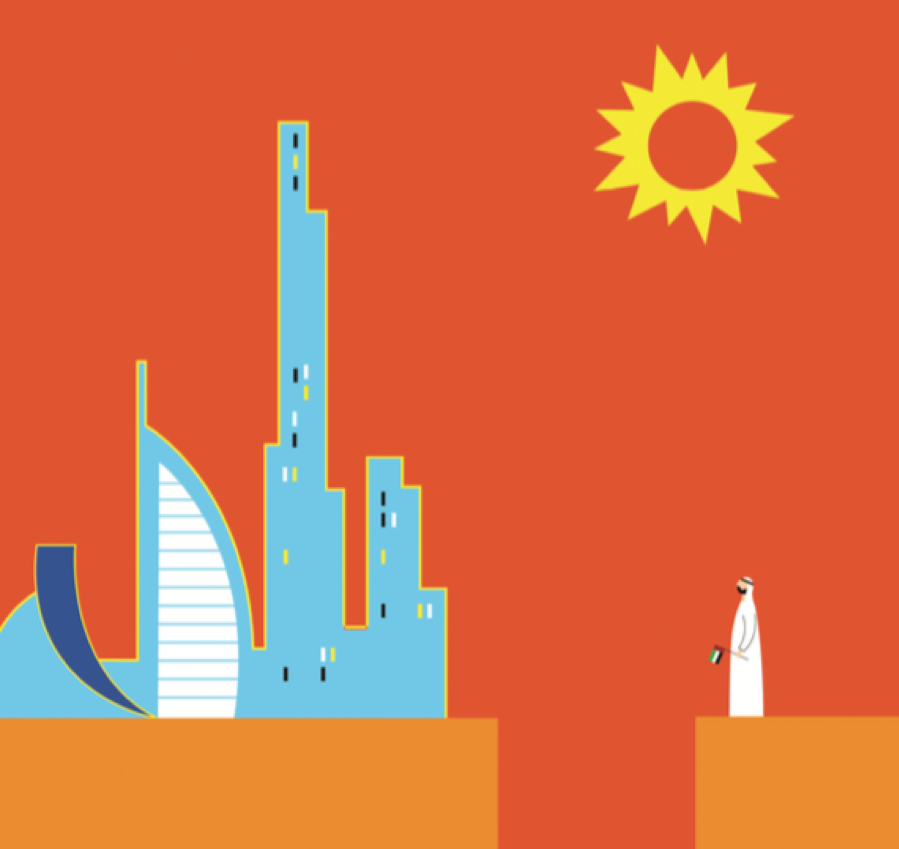
For over a month now the headlines in the local press have been all about illegal sewage dumping on Dubai’s beaches and the risks to swimmers. Illegal dumping is nothing new in the Emirates and when it occurred in the desert, nobody seemed to take notice or care. But now that the beaches in the upscale neighborhood of Jumeirah are contaminated, the alarm bells are sounding. Jumeirah is not only home to luxury villas and trendy shops, but this beach front is also known for its five-star hotels, most notably the world famous Burj al-Arab.

The levels of sewage have become so high in the sea that the municipality has put up barricades and posted numerous signs warning of the dangers. Many beaches along the stretch are affected. Recently, an international sailing regatta had to be canceled at the Dubai Offshore Sailing Club, one of the hardest hit areas. Tests of the affected sea water have shown levels of human feces three times higher than normal and traces of the e-coli bacteria which can cause everything from ear infections to Typhoid fever and Hepatitis A.
Dubai’s rapid growth has not always been friendly on the environment. It seems that every few weeks we hear of another ecological disaster in the works. One week there is a campaign to get rid of plastic bags because they are killing camels in the desert; the next week the ruler issues a decree to plant more trees in order to purify the air. However, the sewage problem seems to be hitting a particularly raw nerve in a city that prides itself on its modernity and glamour.
Any visitor to the UAE can see that the country’s infrastructure is not equipped to handle the throngs of people who continued to move here seeking better opportunities. The massive traffic gridlocks are the most blatant example of this overload. Another problem, which has been brewing underground, may be less apparent but no less critical. In the past, sewage water tankers made their rounds in the city picking up waste water from septic tanks and delivered it to the sewage treatment plant. Up until around five years ago everything went relatively smooth. Then Dubai embarked on a number of mega projects, including the Burj Dubai, which is the tallest structure in the world. Overnight the demand for guest laborers rose and so did temporary accommodations and other facilities like portable toilets, showers and containers to hold liquid waste. Work camps began sprouting up as fast as building sites and before anyone could take notice, Dubai’s already fragile sewer system was on the verge of imploding.
To confront the sudden increase in waste water, sewage water tankers were rerouted to labor camps. Realizing there were not enough sewage water tankers to pick up both the city’s and the labor camp’s waste, more were added to the fleet, but this only created additional congestion and longer lines at Dubai’s only treatment center. Suddenly, the wait time jumped from one to two hours, to a day. What aggravated the drivers even more than waiting was the fact that they only got paid per load of waste they carried. The more loads they picked up, the more money they earned — simple mathematics.
As a way to avoid the long lines and increase their runs, truckers began driving out on empty roads and dumping the waste water in the desert. However, as more empty areas, in and around Dubai, were turned into to construction sites, truckers were forced to either drive further out into the desert or look for an alternative solution. Enter Dubai’s storm drains.
During the winter months Dubai sees only a little rain, but each time there is a downpour the effects are felt for weeks if not months afterwards. Water in this desert environment does not run off but rather just sits in puddles and small shallow lakes until it eventually evaporates or is pumped out by machines. Storm drains were dug at strategic places throughout the emirates to divert some of the rain water back into the sea. The storm drains may be needed only twice a year but their role is essential in keeping Dubai and the other emirates from sinking in flood water.
As a way to avoid long lines or driving way out into the desert, sewage waste tanker drivers began dumping their waste water in storm trains. In the beginning there were only a few culprits but over time other drivers caught on.
In a way to combat this illegal practice, the authorities have imposed a series of measures, which includes fines of 100,000 Dirham ($27,250), confiscation of the tankers for a period of time and suspension of the trade license of sewage waste transporting companies.
Recently, a reader submitted a photo to one of the local papers showing a group of men swimming in the sea just off Jumeirah Beach. In the background one can see a yellow barricade which stretches along the shore and a sign which reads “Sorry for Inconvenience.” This barrier, supposedly put up to prevent people from swimming, did not seem to have the desired effect. It may be that the men decided to ignore the dangers or they simply misunderstood the sign thinking instead that it was an apology for having to step over the barricade.

Norbert schiller is a Dubai-based photo-journalist and writer


November 3, 2008 0 comments
0 FacebookTwitterPinterestEmail
Consumer Society

Cyprus – History distilled

by Executive Staff November 3, 2008
written by Executive Staff

Olvia Haggipavlu stopped to take in the huge concrete vats at Etko, the Cypriot winery her family founded in 1844. “These tanks used to fill ships that would carry bulk wine all over the world, to Sudan to Russia and to Sierra Leone.”

Etko is Cyprus’ oldest winery and, along with three other producers, until 20 years ago dominated the Cypriot wine sector. The “big four,” — Etko, Geo, Sodap and Loel – as they were, and are still, known produced tens of millions of liters of wine that were sold in bulk to the world, though mainly to the former Soviet Union.
The vats are now empty and bulk wine is no longer the mainstay of the Cypriot winemakers. The collapse of the USSR, a decline in Cypriot grape growing culture, a severe drop in the annual rainfall — there was none in the 2008 season — and huge demand from thirsty tourists, mainly British and Russian holidaymakers, and the emergence of over 50 small producers making modern wines, have all contributed to a revolution in Cypriot wine in the last two decades. The result has been a dramatic increase in the quality, presentation and range of wines.
Meanwhile, Cypriot producers are recognizing that they must emphasize making wines using indigenous grapes, such as the red Maratheftiko and the white Xynisteri, if they want to succeed in what is a cutthroat international market. If all goes according to plan, Cyprus threatens to be the next boutique destination for wine lovers seeking something different from the run-of-the-mill Chardonnay and Syrah that, while hugely popular on a global scale, have created a sense of ennui among discerning tipplers. In fact, October saw Cypriot winemakers attempt to make inroads into the Lebanese market, one that has seen a noticeable rise in the popularity of wine. On October 10, Etko and the Fikardos Wineries held a seminar in Beirut for the Lebanese hospitality sector. More tastings are scheduled to be held around the country, but it remains to be seen how much of an impact, they will have on what is a market still in its infancy.
That does not mean that Cypriot wines will be alien to the regular drinker. All the recognizable ‘international’ varieties — Cabernet Sauvignon, Merlot, Syrah, Grenache, Mourvedre, Chardonnay, Muscat and Semillon and the like — are grown on the island. The trick is how to use them to their maximum commercial potential while still striving to create a Cypriot identity.

Three-pronged approach
At the moment Etko produces over 3 million bottles and carries nearly 30 wines. It may seen excessive for such a modest (by global standards) production level but it typifies the dilemma faced by the Cypriot producers “We are selling to three defined sectors,” explained Haggipavlu. “The local consumers are still in awe of the international grapes, so we have to make wines for them. Then we have the Russians and British who will drink anything if the price is right so we make wines that target this niche, and then we have our international customers who want wines made with indigenous grapes and who don’t want to hear about Chardonnay and Merlot from Cyprus.”
Wine is gaining popularity among young Cypriot drinkers too. “Wine is fashionable among the young, whereas before they preferred whisky, brandy or the local Zivinia,” said Yiannis Kyriakides, who, with his brother, owns the Vasilikon Winery in Pathos. Kyriakides is putting his money where his mouth is and investing millions in new premises that will house the winery, cellars, F&B area and company offices. Established in 1993 and now producing around 350,000 bottles per year, Vasilikon is among the bigger of the new generation producers, but unlike many who produce less than half of his output but have over a dozen labels, he only makes three wines: two reds and a white. “We know our market and we know what our customers want,” said Kyriakides as yet another car with the back seats down pulled up outside the winery. “Got any white left?” enquires the young Englishman eagerly.
In nearby Panayia, Andreas Kyriakides, owner of the Vouni Panayia winery, is also investing millions in a new state of the art winery, wine tourism and conference center. It is in essence a one-stop shop for the wine tourist. Founded 21 years ago, the winery and Kyriakides are considered pioneers in the new Cypriot industry. “We have come a long way since the mid-80s, when the emphasis was on bulk wines and there was little or no competition.”

A huge history
For the record, Cyprus has been making wines for about 6,000 years and lays claim to being among the oldest wine producers and exporters. Its most famous wine is Commandaria, a sweet white made from Mavro and Xinisteri grapes, which has been made in Cyprus since 800BC and which today can only be made in the 14 villages in the Trodos Mountain region. Even though it is essentially a liqueur, many producers see Commandaria as the wine that can take Cyprus into the modern international market. “It is the first wine of Christianity,” said one local winemaker proudly.
Today, Cyprus produces some 15 million bottles (although it is impossible to get an accurate figure) each year, 95% of which are sold on the local market that boasts consumption of 26 liters per capita per annum (compare this to 1 liter per capita per annum in Lebanon). So why the need to export? The island’s admission into the EU in 2004 saw a drop in tariffs and a quick browse of the shelves in any major Cypriot supermarket will reveal that foreign wine producers with greater volume can undercut homemade wines. If Cyprus wines are to be profitable they need to wow the foreign drinker.
The Keo winery is one of the big four that has had to adapt to this new order. The winery, the biggest Cypriot producer, used to be located in Limassol but this proved too far from the vineyards to make serious wines. The grapes that would arrive from the vineyards in the mountains in the screaming heat would have already started to ferment in the lorry.
“We moved here after we realized the days of bulk wines were over,” said George Metochis, Keo’s winemaker, speaking from its current winery set in the Trodos Mountains, where the company has invested around $5 million in making sure it is a competitive player in the new, more diverse wine sector. “We have to fight for our identity. We have to fight for the uniqueness of Commandaria and we have to make people pay for the privilege of drinking wine made from Cypriot grapes, especially the Maratheftiko.”

A grape with promise
Mara-what? The Maratheftiko stands on the cusp of international greatness, provided enough of it can be harvested and vinified. It is Cyprus’ prized red grape. It is difficult to grow and work with but with some love and care the results in the bottle are magnificent. Only 146 tons of Maratheftiko were harvested this year, less then the 184 tons picked in 2007 and the 208 tons picked in 2006. Nonetheless, Cypriot producers are convinced that this grape can take Cyprus to a wine world starved for a new grape with a new flavor and a new identity.
Others are placing their money on the more common but equally illustrious Lefkada, which is less of a headache to work with. “The Maratheftiko is a great grape but it is difficult to handle and is very temperamental. My money is on the Lefkada,” said Tim Whitrow, an Australian winemaker working at the Zambartas Winery.
And if that weren’t enough it is not the easiest of words to market. “Maratheftiko is not easy to pronounce if you are not a Greek speaker and this may be a problem for foreigners,” admitted Michael Constandinides, owner of the Ezouza Winery in the hills above Pathos.

Use what you have
“The OIV has always told to insist on being different to use what we have. In the 80s we didn’t know about the possibilities,” explained Akis Zambartas, whose Zambartas Winery, also in the Trodos Mountains is making wines that blend local and international varieties. Zambartas, who is the former boss of Keo, believes that wines with international and local grapes — such as his three reds that blend Maratheftiko with Syrah, Levkada with Syrah, Levkada with Cabernet Franc and a white that pairs Xinisteri with Semillon — offer the best formula for any export drive. “The consumer knows he is getting something different but he feels safe knowing that there is also a grape he knows.”
It is a view that is echoed by Costas Tsiakkas owner of the Tsiakkas Winery. “You can give personality to the wine but you must also listen to the market. We don’t have the resources [like the Australians] to make cheap Cabernet Sauvignon and we don’t have the experience [like the French] to make expensive Cabernet Sauvignon, so we’ve got to play to our strengths.”
Understanding the consumer tastes is also crucial. “Gone are the days when it was okay to make heavily oaked wines, big wines which need years to age,” said Nicos Nicolides, owner of Domaine Nicolides. “They want something to drink now.”

Challenges
If only getting the right blend was the only challenge. Rain and a declining rural economy also threaten to thwart any progress. “By and large, the vineyards are not owned by the wineries so the wine producer has to rely on the judgment of the local grape grower for the quality,” said Tsiakkas. “There is no sense of partnership and this affects quality. Furthermore, there is no youth left to carry on the tradition so we need to make planting vineyards a priority. There is no one left in the villages; we have a human resources problem.”
Christakis Lambouris of the Lambouri Winery gets around this problem by buying half of his grapes from members of his extended family who own vineyards. He acknowledged he is lucky and to acquire the other half he has had to take on land owned by grape growers who have basically given up. “They get subsidies from the government of between 160 and 180 euros per 1,000 square meters,” he explained. “In reality, they take the money and we take on the land.”
Then there is the water issue. “Add to this is the fact that we have no rain, so we have to ask ourselves where will the best place for these vineyards? At high altitude or low altitude? Should they face north? All this needs to be studied if we are to move forward,” explained Tsiakkas, who also sounded a note of optimism. “These changes might force our hand in the kind of direction we need to go in especially if we find out that native varieties are better suited to our soil and need less water.”
The challenges have not stopped enterprising producers like Lambouris from finding foreign customers. Not only are his wines served in Lufthansa’s business class but he even makes a kosher wine (wine made under strict rabbinical supervision during all stages of production) for the Israeli market. “They wanted at least one Cypriot wine as a tribute to their biblical tradition,” explains Lambouris.
So what of the future? Zambartas, like almost all the local producers, knows he is being squeezed by international competition and needs to play to his strengths. “I see a sector with lots of boutique wineries producing less than 100,000 each. This number is easy to control in a country like Cyprus where the structure of landowning is small. People are drinking less but they are drinking better quality. We have 60,000 British living on the island and they are very demanding.”
Back at the Etko Winery, Olvia Haggipavlu entered the vast warehouse where the huge wooden vats of Kamandaria are stored. “I am proud to be carrying on this tradition,” she said staring up at the huge casks. “It’s a shame to waste so much history.”


November 3, 2008 0 comments
0 FacebookTwitterPinterestEmail
Consumer Society

Food – Making the cheddar

by Executive Staff November 3, 2008
written by Executive Staff

The largest food company in the United States and the second largest worldwide, Kraft Foods, has become not only a common household name, but also synonymous with success in the world of fast moving consumer goods. Although the company is best known for its cheese products, Kraft maintains a diversified portfolio with hundreds of well- known brands covering every category from ketchup to chocolate. Patrick Satamian, vice president and area director of Kraft Foods Middle East and Africa, explained how the company has managed to establish and maintain its position as a global leader in the industry. “Kraft is a company that focuses very much on quality, on integrity, on the way our products are manufactured, the way we distribute our products, the freshness of our products; there’s a combination of factors which explain why we are in the leadership position in various categories,” he said.

The cornerstone feature of fast moving consumer goods, like those that Kraft manufactures, is that they are sold quickly at a relatively low cost. With a significant increase in commodities costs, this past year was a difficult one for both producers and consumers of goods. “At a certain point this year, most commodities — like wheat, flour, sugar, cocoa, you name it — reached their historical price-point peak,” Satamian described. As a result, consumer habits have had to adapt. People are more conscious of their spending and are often avoiding unnecessary purchases. Yet, indulgences like Toblerone chocolate, one of Kraft’s luxury chocolate brands, are still selling because the company has managed to keep not only attractive products, but also attractive prices.
According to Kraft’s second quarter results for the Middle East and Africa region, the company recorded double- digit organic net revenue growth at 13%, resulting in a combined organic net revenue growth of 17% for developing markets. Satamian cited successful brand and marketing investments, as well as favorable product mix and pricing that more than offset higher input costs as primary drivers for Kraft’s impressive performance.

Taste of success, hunger for more
Kraft’s success in the region has driven its plans to continue expanding here. April of this year saw the opening of Kraft’s sixth manufacturing facility in the region, located in Bahrain. The company derives some of its core strength from having its factories and organizations on the ground, Satamian explained. “It’s a big asset and advantage. We can produce products that really meet consumer needs, we can produce products which are fresher and we are faster when reacting to consumer trade dynamics,” he outlined. He elaborated on another benefit of operating locally, as opposed to shipping all products from abroad, which is that it creates opportunities for local talent. This, in turn, gives Kraft an invaluable competitive edge because it immediately brings in new and loyal customers, and makes the company much more effective in communicating with its customer base and satisfying their needs.
Aside from several factories on the ground, Satamian pointed to Kraft’s people as one of the chief reasons for the company’s long-standing success. “Getting the right people with the right skills is most important. With this you take the business to another level,” he stated. The multinational company strives for diversity amongst its employees because bringing together different tastes and points of view fosters more creativity, more flexibility, an open-minded attitude; it allows the company to extend its reach across various nations and cultures. When Kraft recently acquired the biscuit division of Danone, it accepted the existing French business culture of the company and simultaneously introduced certain elements of its own way of doing business. “It’s always a balancing act between diversity and integration. You need to accept diversity and welcome different ways of thinking, but at the same time you need to integrate,” said Satamian.
With so many iconic products like Tang, Oreo, and various cheeses, it is obvious why Kraft maintains leading positions is all the categories in which it operates. Aside from the taste and quality of its products, Kraft has the business experience and strategy, the right people behind the brand names and as Satamian put it, “Kraft products make you dream.”

November 3, 2008 0 comments
0 FacebookTwitterPinterestEmail
Banking & Finance

Private equity – Liquidity flows

by Executive Staff November 3, 2008
written by Executive Staff

This October, emerging market equities sank to an all time low. Dominated by few firms and largely composed of infrastructure-related companies, capital markets in the Middle East and elsewhere could not provide the liquidity needed to boost stocks. While similar effects will continue across regional bourses and affect the short-term valuation of firms, the region’s private equity industry will remain shielded because of the inherent nature of the asset class and the deal types most popular in the Middle East: buyouts and growth capital.
At the fundraising stage, private equity fund managers will continue to enjoy high liquidity for another quarter, until prospected declines in oil revenues are realized and futures contracts expire. Sovereign Wealth Funds (SWF) still have capital to deploy and will continue to partner with private equity firms for attractive buyouts in the region and abroad as company valuations sink and smart investors can invest in firms with untapped value. SWFs and private equity are best positioned to do this as they enjoy longer-term outlooks — typically five to seven years — until they exit investments. These investment horizons — coupled with the fact that most funds have recently completed fund raising and are now looking to deploy capital — make private equity a source of much needed liquidity in both the Middle East, as oil prices drop, and elsewhere, as financial intermediaries are squeezing credit flows to businesses.
Owing to the large size of most family-owned firms in the Middle East and North Africa (MENA), private equity houses have structured their funds to invest in buyout deals and offer companies growth capital. According to Amr Al Dabbagh, governor of the Saudi Arabian General Investment Authority (SAGIA), private equity investment opportunities in the region are on a scale “never seen before.”

Buy and build
Private equity buyout funds follow the traditional deal and exit structure of a private equity firm. A fund manager will scout out an attractive company, buy out the firm, build its business by adding assets or cutting costs, and exit investments to strategic investors or competitors, a secondary sale to another private equity investor, or via an initial public offering (IPO) on capital markets.
Several buyout funds are targeting MENA-wide deals and three of the most notable funds recently completed investments. Abraaj Capital’s Buyout Fund II (ABOF II) along with Waha Capital acquired a 49% stake in
GMMOS group, helping Waha Capital build a regional maritime business through its Al-Waha Maritime Group. Both maritime businesses plan to use the deal to further expansion agendas. Abraaj set itself up for a strategic deal after purchasing 100% of GMMOS Group in 2007. In this deal, Abraaj Capital partnered with the strategic buyer at the investment stage and will doubtlessly exit its remainder in the deal to Waha Capital after strengthening GMMOS Group’s corporate governance.
In another series of deals, Ithmar Capital has targeted construction and infrastructure-related buyouts. The private equity player made a recent investment in the UAE- based Dewan Architects and Engineers, a mid-market architecture, engineering, and consulting firm. Ithmar Capital’s buyout investment came amidst falling equity values and, consequently, a time when undervalued firms are attractive to long-term investors like private equity houses and SWFs.
Global Investment House (Global) has also fostered a burgeoning buyout business in the Middle East. It has recently closed its Global Buyout Fund with limited partner capital commitments, as well as additional financing by Dubai Islamic Bank and Millennium Capital, to the tune of $615 million. Additionally, Global closed another tranche of its buyout business for its $500 million Islamic Buyout Fund targeting sharia-compliant investments across the Middle East, North Africa, South Asia, and Turkey (MENASAT).
Global recently made a buyout deal through its standard buyout fund, by taking a stake in Al Sawani Food and Industry Supply Company, a food and beverage franchising operation based in Saudi Arabia with locations across twelve countries.
Abraaj Capital also made a recent buyout purchase in Nas Air with the aim of expanding the firm’s fleet of five aircraft to 18 by 2010 and eventually 167 by 2012. This buyout deal would make Nas Air the fastest growing private aviation fleet in the Middle East.
Not all MENA capital will be spent in the region. Much of it will be used for global buyouts in undervalued firms in the Asia, Europe, and the US. Credit-sapped firms in the US and elsewhere looking for long-term finance can find it in Middle East private equity shops. One deal in which this dynamic was apparent is Istithmar World Capital’s buyout of US-based Gulf Stream Asset Management, a financial services provider with $3.8 billion in assets.
GrowthGate recently achieved a final close for its $100 million buyout fund focusing on buy and build deals. With the plethora of spare capital committed lying dormant in these funds, they will be an important source of liquidity for the right firms looking to sell off their businesses.

Growth capital
While buyout funds are popular in the MENA region, growth capital continues to dominate the strategies of private equity shops. Growth capital proves the more popular of the two because it is a well-received investment style for entrepreneurs, and especially family firms. The reasons for this are clear. Instead of buying a firm, restructuring it, and exiting it via a secondary sale to another private equity shop, a strategic sale to a strategic buyer or competitor, or via an IPO, growth capital investments provide liquidity to firms with an established track record, possible areas for growth to different sectors or country, and a fairly sound corporate governance structure.
Entrepreneurs looking to private equity are essentially asking for investors to partner with them over several years to help grow the business and receive a substantial rate of return for helping develop the growth. Family firms are particularly worried about the potential for private equity to erode businesses, so growth capital remains an avenue through which families can find an investor but retain the business after a period of growth.
A recent investment has illustrated the process of growth capital private equity. Ithmar Capital purchased Panceltica, a Qatar-based, regional housing firm. Although the terms of the financing were not disclosed, the private equity shop provided capital for Panceltica’s growth and expansion strategy out of Ithmar Capital’s Fund II. Ithmar Capital’s Faisal Belhoul noted at a press conference that his fund is “uniquely placed to provide Panceltica with innovative investment and business development strategies to tap into the phenomenal growth potential of the region.” With most major cities sharing a high demand for the cranes to create buildings and the workers needed to operate them — from Doha to Dubai — Ithmar Capital’s investment and expertise enables Panceltica to grow its business across the region to build onsite steel structure for housing and other projects, which is eight times as fast to construct.

In search of growth opportunities
Additionally, private equity firms are looking to provide growth capital to firms which complement portfolios. In several instances, private equity managers are looking to create an integrated portfolio where the common tie to the private equity house can foster relationships between firms looking for business. Ithmar Capital, having recently acquired Panceltica and looking to help grow its business, might look in another high- growth economy in the region, perhaps in Saudi Arabia, Egypt, or the UAE, where another firms are looking to expand into equally high-growth economies. Ideally, Ithmar Capital can line up a firm that complements Panceltica and build some synergy between business and package its portfolio with perhaps a steel smelter, which could provide Panceltica with the downstream supply needed or with a property developer that could offer Panceltica an upstream market to supply temporary housing and storage solutions for large-scale developing businesses. Ithmar Capital’s holding of Gulf & World Construction might provide the sort of portfolio synergy necessary to build the relationships on a vertical level.
Buyout funds, growth capital funds and private equity in general offer large-scale companies a stable source of finance over the course of several years. For instance, a fund launched in 2005 did, on average, achieve a series of closes over 2005 and 2006 before achieving a possible end- of-year close in 2006. Once the fund achieves its first close it can start investing and will usually have deals in the pipeline. The holding period can also last several years for each investment and the fund itself will invest deliberately over a three to four year period, so a fund launched in 2005 with a first close in the same year can still invest in 2009, provided they have some capital left over. If a fund makes its last investment in 2009, then it has a few more years until closing, perhaps to 2012 or 2013, giving the fund a life of eight years. For funds with recent closes like Abraaj and GrowthGate, investments can continue over the next three to five years, enough of a gap to weather the currently credit-sapped business cycle.

November 3, 2008 0 comments
0 FacebookTwitterPinterestEmail
Consumer Society

Al Taameer – Najeeb al Saleh (Q&A)

by Executive Staff November 3, 2008
written by Executive Staff

Al Taameer, the Kuwaiti company boasting assets in excess of $150 million in 11 countries, is positioning itself in the lucrative hospitality and leisure markets. On a visit to Lebanon for the launch of its first Ramada hotel in Beirut, Al Taameer’s vice chairman Najeeb al-Saleh sat with Executive Magazine to discuss the company’s latest venture.

E Al Taameer has recently acquired the franchise for Ramada hotels in the Middle East. What motivated your decision to open your first hotel in Beirut?
The Ramada franchise deal, which was signed in June last year, encompasses six countries — Lebanon, Egypt, Morocco, Libya, Jordan and Iraq. We decided to pick Lebanon as our first destination because we had an excellent opportunity with this venue, which is located in downtown Beirut. Another reason is that Lebanon’s hotels can be positioned on both segments of tourism and business hospitality, contrary to other countries where either business or leisure hospitality activities are emphasized. Here at Ramada we tend to focus on both aspects. Another essential reason lies in the very nature of the Lebanese people who are generally multicultural and multilingual, which makes the Land of the Cedar a good place to headhunt and train qualified staff to supply our new Ramada chain. Not many countries offer a workforce at ease with so many languages!

E How many hotels do you plan to open and how much will your company invest in each venue?
We plan to open some 35 hotels all over the region in the next years. Earlier this year we also bought another Ramada hotel in the Moroccan city of Fez. We are also currently negotiating seven more hotels, including two in Libya and another two in Iraq. The Beirut venue comes with a price tag of $20 million; each investment will however vary depending on the size of the project and its location.

E What prompted the decision of Al Taameer to branch out from its real estate activity into the field of hospitality? What added value does the hospitality segment bring to your real estate activity?
Al Taameer is a publicly listed Kuwaiti company that is owned by Al-Masaleh real estate (also a publicly listed company), which focuses on the development of commercial and residential buildings. As a real estate development company, Al-Masaleh decided it would diversify into the hospitality industry using Al Taameer. Al-Masaleh is very clever when it comes to identifying locations, negotiating acquisitions and construction, while Al Taamer excels in the field of property management.

E Do you believe the economic crisis and the resulting credit crunch will affect your new hotel business?
The possibility of an adverse economic context motivated our decision to enter the hospitality business by acquiring a four-star hotel chain, which will be best able to weather the crisis. If worse comes to worst, people will not stop from vacationing or doing business and a four-star hotel is thus perfectly well positioned to tap into various market segments. This unfavorable environment might provide us with excellent opportunities: good locations at reasonable prices.

E What type of customers does the new Ramada chain target?
Ramada is a reputed brand; it belongs to a hotel chain that boasts some 6,500 hotels worldwide. The chain’s particular positioning on both tourism and business hospitality levels will allow its various venues to operate efficiently all year round. We offer an excellent service at the right price and our hotels are ideally located.

E What type of structure have you adopted in terms of management? Will your company run all the Ramada hotels in the Middle East?
We will not necessarily own the 35 hotels we intend to open, which will be run based on a management contract or rental agreement. We might also resort to branding existent three-to-four-stars hotel. Such agreements will certainly cut our investment costs. However, we intend to buy two or three hotels in each country.

E What type of growth do you expect Al Taameer to achieve in the next few years?
We had full occupancy during the summer and the Eid holidays, which bodes well for us. We have also witnessed encouraging results with our first Moroccan venue and expect about a 20% growth every year for the overall company.

E How long before each project breaks even?
We are targeting a five to seven year bracket, depending on the project.

E Where do you believe lie the main areas of growth in the MENA region?
Egypt and Morocco show potential when it comes to tourist destinations, while Libya and Iraq as well as Jordan are excellent markets in terms of four-star business hotels. I believe our territories are all very attractive and well diversified.

E Some of these territories, like Libya and Iraq, are considered to be risky business environments…
Recent history has proven that risk might lurk in the most unusual places as witnessed in the recent economic crisis. We believe that markets such as Iraq and Libya, although risky, offer excellent opportunities, in spite of a possibly trickier initial launch.

E Who are Ramada’s direct competitors in the Middle East?
The first one that comes to mind is Accor, the French chain, which also features Ibis and Novotel hotels. The segment Ramada is currently targeting remains, however, relatively untapped in the Middle East.

E With what type of support did local governments provide you?
We were able to obtain funding from local banks in Lebanon; a tourism fund providing subsidized loans has been also made available by the central bank. In Morocco and Egypt, governments have been also offering tax breaks for tourism projects.

November 3, 2008 0 comments
0 FacebookTwitterPinterestEmail
Banking & Finance

Egypt country report & outlook: Executive summary

by Executive Staff November 3, 2008
written by Executive Staff

Egypt is now in its second economic renaissance, which started in 2004. This follows a first renaissance that was shallow and short lived, lasting from 1992 to 1999, and based largely on external debt relief and macroeconomic stabilization policies. This time around, the reforming government is more bent on structural reforms that aim to unleash Egypt’s potential and to take advantage of its supporting regional environment. The reform has touched almost all aspects of Egypt’s economy, covering tax and tariff reforms, bank privatization and consolidation, the investment and business environment and the conduct of monetary policy.

The result has been an increase in investment confidence, both externally and internally. Between 2004 and 2007 investment increased from 18% to 23% and FDI doubled to more than $10 billion. Exports also increased, marked by a rise in gas and manufacturing exports that were in turn driven by efforts to exploit Egypt’s primary resources and its free trade and QIZ arrangements, besides its efforts at industrial modernization. Domestic demand was also aided by higher public and private consumption, the culmination of which is that GDP growth is hovering at around 7% if not more — and is expected to stay there in the foreseeable future. But the price of these developments has been a surge in inflation to rates abetted by higher commodity prices and exceeding 10% in early 2008. And although unemployment fell to less than 10%, there is a widespread feeling that the boom’s fruits could have been more equally shared, with poverty rates still at a stubborn 17%.
Perhaps the best performer has been the external sector. In addition to better exports and FDI performance, favorable tourism and Suez Canal receipts and labor remittances all contributed to healthy current account surpluses at 1% of GDP, and helped accumulate more than $30 billion in foreign reserves covering about seven months of imports in 2007. This naturally led to a better outlook for the exchange rate, whose managed level saw an appreciation of close to 10% between 2004 and 2007. And with both GDP growing and the BOP service account in decent surplus, external debt as a ratio of GDP and its service as a ratio of exports of goods and services improved to 29% and 6% respectively.

Positive stats
The financial sector also witnessed some major improvements aimed at developing both its market-based and bank-based institutions. Besides undertaking the privatization of Bank of Alexandria and initiating the privatization of Banque du Caire, the stock market has been rationalized and upgraded to international standards. The quantitative results of these improvements saw bank assets increase by a third to $168 billion and stock market capitalization to more than double as a ratio of GDP to 115% during 2004-2007. The conduct of monetary policy has also undergone a face lift with the introduction of an interbank market for foreign exchange and the preparation for an inflation targeting monetary framework. However, work still needs to be done on strengthening the transmission mechanism between policy rates and yields on financial instruments and bank rates, and on cleaning up the banking system whose NPL remain at 25%
Although the fiscal sector underwent major revenue side reforms — increasing both tax and non-tax yields by 80% to $22.6 billion between 2004 and 2007 — expenditure side reforms were lacking. This is because these reforms relate to the subsidy and transfer schemes to basic commodities and ailing public enterprises, which carry significant political and social implications. Their absence or delay thus aims at keeping a “human face” on the reform program and at not jeopardizing its public legitimacy. But the downside, of course, is that they have left the government with a deficit of 7% of GDP and a rising domestic public debt
The outlook for Egypt, an emerging market with a diversified economic base, looks good especially given the regional boom that does not look to be subsiding any time soon. Challenges remain, though. These relate to the ability to control inflation, to reduce budget deficits and to trickle down the gains from growth. That will not be easy, however, given the continuing increase in commodity prices, the importance of subsidies for maintaining social stability, and the fact that economic growth needs time to reduce poverty, let alone reduce income inequality. Add to these the potential for political instability arising from regional tension and presidential succession, and the challenges multiply.
The best answer to these challenges is not to suffer ‘reform fatigue’, but to continue with the economic reform agenda especially as it relates to financial policy, expenditure rationalization and industrial modernization. Growth and a better management of its process — if at a lower, more sustainable rate — will prove an antidote to these challenges.

See the full report at www.blom.com.lb

November 3, 2008 0 comments
0 FacebookTwitterPinterestEmail
Banking & Finance

Capitalism – The new world economy

by Executive Staff November 3, 2008
written by Executive Staff

It is easy to be pessimistic. Especially when the president of the United States, the supposed beacon of prosperity in the world, concedes that “this sucker could go down.” The question becomes, how far down can we go? Around the world, analysts, thinkers and social commentators have predicted the end of the financial and economic environments as we know them… and they are probably right. The resulting financial landscape that will prevail will be inherently different than what we knew before this all started. The financial earthquake that began in the US real estate sector has inevitably resulted in tremors being felt throughout the world’s markets. These tremors come as a stark reminder that, unchecked, the greed that caused this crisis to occur has severe ramifications for the global economy.
In the minds of most analysts the current global financial crisis has erased any doubt that the world is on its way to several years of recessionary growth rates. What remains to be seen is the magnitude of how long and hard the fall will be. “The financial crisis is a major event that has had repercussions that have brought about a [global] recession,” said Fadi Osseiran, head of BLOMINVEST Bank. “The depth and length of this financial crisis will affect the shape of this recession and it is really premature to try to understand the full impact this will have.” Marwan Barakat, head of research at Bank Audi, stated that the IMF has recently adjusted that global growth estimates for 2008 down to 3.9% from a previous estimate of 5% and predicts a 3% growth rate for 2009, indicating the commencement of a global recessionary period.
Looking out the window in the Middle East. however, one can see that the sun is still shining. And like the annual spat of rain that tarnishes the windows of the Gulf’s high- rises, this storm will soon blow over — albeit leaving a few clouds in its wake. The wider Middle East in general has managed to weather the global economic downturn of the past year relatively well. Barakat explained that this is mostly due to vast amounts of liquidity available linked to petrodollar revenues, the diversification of investments, and the conservative nature of regional banking.
On the other hand, the culmination of the subprime mortgage saga seems to have had a humbling effect on initial statements by many who previously attested to the region’s relative immunity to the crisis. What has transpired in regional markets lately shows that the troubles battering major financial institutions in the US and EU have indeed affected the status of a number of financial institutions in the region. “The Gulf markets have been hit hard,” said Mounir Rached, vice-president of the Lebanese Economic Association and former senior economist at the IMF. At the time of publication, the markets of Dubai and Saudi Arabia had thus far taken the worst beating, down by about 40% each, and the MSCI of Arabian Markets Index is down by a third year-to- date. “Regional investors and funds in general were negatively affected by the global financial crisis,” added Ziad Shehadeh, instructor of Monetary Economics at LAU and head of the Credit Department at Arab Investment Bank.
All in all, however, in these times of global recession the economies of the region look to be better off than most as the effects of the global financial crisis continue to emerge.

Liqidity flowing from the desert
The region’s massive sovereign wealth funds (SWF) and wealthy investors stand high above the dry valleys of the US and Euro-zone markets like massive reservoirs ready to burst open and inundate western markets with a flood of much needed capital. The UAE alone is estimated to hold a massive $875 billion in its SWF, followed by Saudi Arabia (at some $330 billion) and Kuwait (approximately $213 billion). SWF investment strategy has also recently been focused on diverse investment aimed at increasing capacity and a substantial amount of this investment has already gone into buying up equity in western financial institutions. Last November, the Abu Dhabi Investment Authority (ADIA), the world’s largest SWF, bought 4.9% of Citigroup for $7.5 billion. Earlier this year Citi sold off a further 7.8% ($14.5 billion) to a group of investors that included Saudi Arabia’s Prince Al Waleed bin Talal and the Kuwait Investment Authority (KIA – Kuwait’s SWF). Merril Lynch also sold a special class of stock to KIA for a price tag of around $2 billon. Both Citi and Merril stocks have been heavily damaged in recent months with KIA losing $270 million on its Citi group investment. As Executive went to press, Citi’s market price had declined by more than 50% since the SWF investments.
Despite these losses, the region’s SWFs do not seem to be pulling out of western markets anytime soon. The nature of their investment strategy is regarded as long-term, and there is an expressed notion that regional governments and their SWFs are not in the business of bailing out the ailing western financial institutions that spawned the global financial crisis. “We are not responsible for saving a bank, an economy or anyone,’’ said Bader Al-Saad, managing director of the KIA in an interview with Al- Arabiya. “We are long-term investors and we have long term social and economic obligations to our country.’’

Shoring up the markets
The obligations that al-Saad was referring to have already been fulfilled to some extent, and not just in terms of monetary policy. The moves by regional governments to shore up confidence have also come at a sizeable cost. Although minuscule in relation to the infusions of developed nations, the UAE central bank has recently promised to inject a further $19 billion into its markets, bringing the total to $32.7 billion, with other regional SWFs such as ADIA, KIA, and the Qatar Investment Authority (QIA) following suit. More importantly, we are seeing assurances being made by regional governments and their respective SWFs to maintain the infrastructure and operations of financial institutions throughout the region. Mirroring the actions of many developed countries, the UAE has issued a federal guarantee of all savings and deposits in their markets, as well as guaranteeing inter- bank lending. QIA has also announced that it would contribute between 10% and 20% to the capital of local banks in order to boost their capacity to finance developmental projects. Saudi Arabia, the region’s largest economy, also made $40 billion available to its banks and cut interest rates. While these actions are indicative of a major issue in regional markets, it has been widely accepted that there is enough liquidity, and the will to inject it, to keep the Middle Eastern markets healthy and wealthy for some time to come. “I don’t think there is a [liquidity] problem. They have enough liquidity to step in when needed,” said Osseiran, “they have accumulated reserves for a while now as a result of oil revenues.”
With everything more or less taken care of on the home front, the issue of SWFs influence and standing in a global economy is now increasingly becoming the question, as opposed to a question on the minds of politicians and economists the world over. The idea of large chunks of the American and European economic and financial landscape being bought up by regional governments is in itself an idea that is politically problematic. Even al-Saad conceded that “disasters in the United States, Europe, and Asian nations do create interesting investment opportunities, especially in the real estate and financial industries.” It is not rocket science to assume that these regional governments could use their influence over western and specifically US financial institutions to leverage their own economic, political, and strategic interests on a global stage. “The West, broadly speaking, will have to come to the realization that the global economic power equation is shifting,” said Sven Behrendt, visiting scholar at the Carnegie Middle East Center.
In order to pacify those critical of the nature of SWF investment and ownership being used for political purposes, ADIA and the IMF established the International Working Group of Sovereign Wealth Funds (IWG) in May of this year. The group, composed of a wide range of SWFs, recently published their “Generally Accepted Principles and Practices” outlining their “Objectives and Purposes”. In short, this document touts the financial impetus for the actions of SWFs but stops short of saying that SWFs will not use their influence for political ends. “The IWG report focuses heavily on SWF internal governance issues and often prescribes measures that appear to be self- evident,” Behrendt said. “They do not address the fears that western economies have with regards to foreign government intervention in their economies.” Instead, the report focuses on increased transparency and corporate governance and states that “if investment decisions are subject to other than economic and financial considerations, these should be clearly set out in the investment policy and be publicly disclosed.” This is hardly the language of reassurance that developed countries were looking for.
As this new economic power paradigm begins to take shape, the question is: what will the global financial landscape look like once the dust has settled? With western economies in, or on the brink of recession, and larger growth patterns in emerging markets such as the Middle East and the BRIC (Brazil, Russia, India, China) economies, it is becoming increasingly evident that things will never be the same again. “One of the things happening now is a realignment of the world economy, making the US relatively less important,” said Riad al-Khouri, co- founder and principal of KryosAdvisors.
Nonetheless, the retrenchment of the traditional players, in terms of economic power, should be taken with a grain of salt. According to Behrendt, the estimated value of the world’s SWFs is around $1-1.5 trillion, including assets managed by central banks. Moreover, Morgan Stanley estimates that the total size of SWFs could reach $12 trillion by 2015, about $2 trillion dollars less than the GDP of the US in 2007. The sheer size of western financial institutions and the amount of real output they produce will ensure that the US and the Euro-zone will remain at the forefront of the world economy in the foreseeable future. “For the time being, the US will maintain its spot at the top [of the financial world] in general as there is no real viable alternative to the US market that can sustain the global economy,” Shehadeh said.

Back to oil
Being an oil-based regional economy has certainly helped the Middle East cope with the effects of the global economic downturn and the recent financial crisis. Now that the price of oil is on the decline many observers are drawing parallels between this decrease and a worsening economic situation in the region. Indeed, the effect of a decrease in the price of oil will have a direct impact on the revenues of the regional players. “The Gulf countries will be affected by oil prices, in terms of price and volume,” Rached said. “They are going to sell less at a lower price and will behave differently with less money from oil.” However, these decreases need to be put into perspective. “All the government budgets of the GCC countries were made according to the oil price of $60 last year,” Barakat pointed out.
With oil having reached levels of close to $150/barrel it is simple mathematics to deduce that surpluses are ever present in the coffers of the oil rich states in the Middle East. Even with these surpluses, oil is still seen as the premier conduit in which the global financial crisis seeps into the real economy of the region despite the fact that governments have been diversifying their wealth in order to reduce dependency on oil revenues. “It is still the case that the overwhelming importance of oil and gas in the region mean that higher revenues from hydrocarbon exports will cause a boom and lower prices and lower exports will create a problem,” al-Khouri said. “Gulf countries have diversified their economies but they are still dependent on oil,” added Osseiran.
In any case, this substantial decrease in prices is not expected to last forever and does have good effects for the global economy as a whole. OPEC nations have called for an emergency meeting that is to be held shortly, in which supply is expected to be cut. According to Deutsche Bank estimates, different countries in OPEC require different price levels in order to balance their budgets in a time of a global financial crisis. Iran and Venezuela both require oil prices of $95/barrel, whereas Saudi Arabia needs $55/barrel. “The price of oil will go down and probably oil exports will go down,” al-Khouri said, “but not by too much because there are still parts of the world that are growing and will pay higher prices for oil and/or import larger amounts.”

Lebanon
The conservative nature of the Lebanese banking sector, guided by the central bank’s Riad Salameh, has allowed it and Lebanon’s economy to sidestep many of the direct effects of the global financial crisis. Barakat explained that tight regulations and conservative investments have allowed Lebanon to avert the worst of the global financial crisis and maintain the financial infrastructure to deal with the situation. Regulations in Lebanon pertaining to the restrictions on structured products, leverage requirements, and a high rate of deposits are seen to have pre-empted widespread exposure to the global financial crisis. Moreover, the ownership model of banks in Lebanon has contributed to more conservative investment models. “Banks [in Lebanon] are owned partially or totally by their managers which means that usually they are not looking for short term profits,” Osseiran pointed out. “These owners have an intrinsic stake in the bank.”
Despite a global recession in the works, Lebanon is expected to see growth of around 6% in real GDP for 2008 and around 5% in 2009, according to IMF figures. Such growth rates in times of global recession are indicative of the unique situation in which Lebanon finds itself. Much of this growth can be attributed to the recent political settlement in Lebanon that has increased confidence across the board. “According to the signals we are getting, regional investors are looking at Lebanon more and more in this period because of the political settlement that we had this year,” Barakat exclaimed. “Now Lebanon is back on the radar screen.”
Despite the advantages that come with Lebanon’s unique situation, not all of the news is good. Lebanon is expected to see a decrease in exports across all sectors due to a decrease in demand from trading partners. “There is no doubt that our exports will be affected,” Rached stated. “Exports to Europe, whose share is about 30%, will decline.” However, since the relative scale of exports is not considerable, and accordingly the Lebanese economy can manipulate it with relative ease, this potential problem will be looked upon as rather secondary in nature. “Our share in the world export markets is so tiny, it won’t make any difference really,” Osseiran said. “The Lebanese are able to adjust their products according to markets and prices.”

Who is paying and with who’s money?
Since this crisis began to take shape, there have been unprecedented calls for global coordination by presidents and prime ministers alike. “No country — not even the biggest — can make it just on their own at a time like this,” stated British Prime Minister Gordon Brown on the back of an emergency EU meeting. “We are all in it together and we have to work to solve it together,” the PM concluded. Yet, despite these words of encouragement and the rallying of global markets subsequent to actions of governments, including regional ones, by and large it is the people of the world who have to pay the bill for the greed of investment bankers.
The majority of the bail-outs have come from taxpayers’ pockets and there have been reports of money being printed and freed up by central banks and the Federal Reserve. As Suheil Kawar, senior lecturer at the American University of Beirut, pointed out, “The Bank of England has made facilities worth £50 billion pounds [$79 billion] to individual banks and the Federal Reserve is just printing money now.” According to Rached, “We have a contraction. Money is not growing in the US and this is a situation that is more important than inflation.” Add lower interest rates to this equation and the global economy is left with a situation that applies a great deal of inflationary pressure on the already prevalent problem of increasing global inflation. The UK, for instance, has recently reported a 5.2% increase in its consumer price index for the month of September, the highest level recorded since March 1992. The US has also registered a similar increase of 5.4% for the month of August, even before the major bailouts began to occur. Moreover, with all the mergers, takeovers and acquisitions taking place, issues relating to monopolies have been tossed aside as an unimportant consideration in times of crisis. “Issues related to government monopolies are not a priority now. The major concern is to provide stability,” Shehadeh explained. “The mergers we are likely to see are going to be cross-border and global in nature.”
All of these factors are contributing to the creation of a global financial environment with fewer players and less purchasing power to go around. How the world’s population ended up paying for the mistakes of investment bankers on Wall Street is a matter that will be discussed for decades to come; especially the next time a financial instrument like a toxic mortgage back security comes along and breaks the back of the world’s financial institutions. For the Middle East the next few years will be essential in proving to itself and the world that it can weather a global financial crisis, the resulting recession, and play a more relevant role in the global economy. “The challenge will be to continue to handle things better because we are just at the beginning of the economic crisis,” Osseiran said. “[Regional] governments will have to adjust themselves to the new era of lower oil prices, how much they are going to spend and how they can sustain budget deficits.”
That challenge, if overcome, will have a galvanizing effect on the region’s economy and set the stage for a Middle East that may start to set the rules of the financial world rather than follow them.

November 3, 2008 0 comments
0 FacebookTwitterPinterestEmail
  • 1
  • …
  • 501
  • 502
  • 503
  • 504
  • 505
  • …
  • 685

Latest Cover

About us

Since its first edition emerged on the newsstands in 1999, Executive Magazine has been dedicated to providing its readers with the most up-to-date local and regional business news. Executive is a monthly business magazine that offers readers in-depth analyses on the Lebanese world of commerce, covering all the major sectors – from banking, finance, and insurance to technology, tourism, hospitality, media, and retail.

  • Donate
  • Our Purpose
  • Contact Us

Sign up for our newsletter

    • Facebook
    • Twitter
    • Instagram
    • Linkedin
    • Youtube
    Executive Magazine
    • ISSUES
      • Current Issue
      • Past issues
    • BUSINESS
    • ECONOMICS & POLICY
    • OPINION
    • SPECIAL REPORTS
    • EXECUTIVE TALKS
    • MOVEMENTS
      • Change the image
      • Cannes lions
      • Transparency & accountability
      • ECONOMIC ROADMAP
      • Say No to Corruption
      • The Lebanon media development initiative
      • LPSN Policy Asks
      • Advocating the preservation of deposits
    • JOIN US
      • Join our movement
      • Attend our events
      • Receive updates
      • Connect with us
    • DONATE