• Donate
  • Our Purpose
  • Contact Us
Executive Magazine
  • ISSUES
    • Current Issue
    • Past issues
  • BUSINESS
  • ECONOMICS & POLICY
  • OPINION
  • SPECIAL REPORTS
  • EXECUTIVE TALKS
  • MOVEMENTS
    • Change the image
    • Cannes lions
    • Transparency & accountability
    • ECONOMIC ROADMAP
    • Say No to Corruption
    • The Lebanon media development initiative
    • LPSN Policy Asks
    • Advocating the preservation of deposits
  • JOIN US
    • Join our movement
    • Attend our events
    • Receive updates
    • Connect with us
  • DONATE
AnalysisEconomics & Policy

Lebanon’s 2025 Municipal Elections: Democratic hope clashes with realism on the ground

by Sherine Najdi May 30, 2025
written by Sherine Najdi

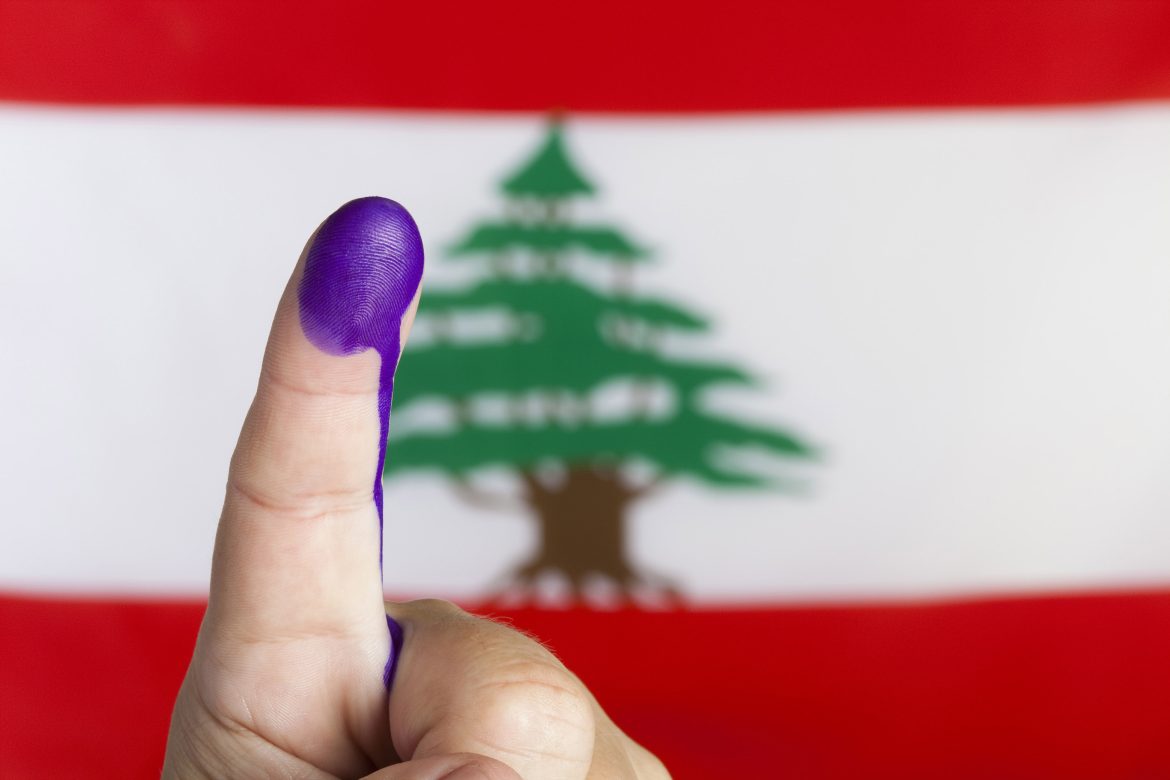
The municipal elections of May 2025, in which three out of four geographically determined rounds have been completed by time of this writing, suggest that the country’s mosaic of highly nuanced local challenges and strong communal peculiarities continues to dominate voter behavior and their municipal choices.

The municipal elections, held on a six-year schedule with a three-year delay this time, were described by government officials as orderly and thus far conducted largely without issues, although some anti-establishment and civil society contenders for municipal roles spoke differently and have lamented violations. When seen against a backdrop of crisis and recent war, the secure environment offered citizens the first opportunity for a response to the state of the political system in an environment with recent governmental activism and a parliamentary election on the horizon for the coming year.

 After the economic distress and violent conflict that Lebanon has faced since 2019, many local analysts shared expectations that the 2025 municipal elections are occurring at a pivotal time to support the country’s governance system. But for those members of civil society who had regarded the 2016 municipal contest – especially in the capital Beirut – as a turning point towards broader and more inclusive patterns in local politics, the finishing line of universally practiced civic duties and active voter engagement, has not moved nearer. Nonetheless, amid logistical constraints, post-conflict recovery, and a highly fragmented political environment, observers, reporters and civil society organizations closely monitor each district, not just for outcomes, but for what they reveal about the state of local governance.

Three key aspects shape this year’s municipal contests: the need for voter and civic engagement, the usually person-centric campaign platforms and political strategies of candidates, and the challenges which municipalities face, particularly those in war-affected or underserved areas. As much as the presence of “challenges” and restraints in human capital and budget power is a common factor among municipalities of all sizes and compositions, the spectrum of local needs and wants stretches from the reconstruction and safety concerns of southern towns that are still recovering from recent conflict to the complex demographic and service delivery problems found in the Beirut conurbation and northern cities.

Issues at Stake: Participation, Representation, and Reform

Beneath all current challenges lies a pressing need to restore trust in the democratic process and rebuild a sense of political relevance at the local level after a long period of growing distrust and disengagement. The Lebanese Association for Democratic Elections (LADE), a non-partisan civil society organization founded in 1996 that works to promote transparent and inclusive electoral processes, has placed a strong emphasis on electoral integrity, transparency, and fair access, especially for women and marginalized groups.

Raji Keyrouz, communications coordinator at LADE, tells Executive that the stakes are especially high in municipal elections because of their proximity to daily life. “Local councils are where roads are paved, water networks are repaired, and neighborhoods are planned. Yet many people vote in towns they don’t live in anymore, which weakens representation and leads to a deep disconnect.”

In its preliminary report on the Mount Lebanon phase of elections, LADE documented breaches of electoral silence, ballot secrecy violations, and poorly trained polling staff, underscoring systemic flaws that persist despite administrative efforts.

The situation is particularly complex in Beirut, where debates over sectarian parity remained high throughout the electoral process. “Although the law doesn’t require sectarian balance in municipal lists, the political class insists on enforcing it informally,” Keyrouz explains.

Civil society groups like Afaal, a civic organization formed in the aftermath of Lebanon’s October 17, 2019 “civil thawra” eruption of anti-establishment protests are focusing on voter participation. “One of the biggest stakes is simply getting people to believe again that voting matters,” says Reem Dika, a board member at Afaal. “After everything the country has been through, economic collapse, COVID, the port explosion, many people have disengaged entirely.”

That disengagement is reflected in the numbers. According to the Ministry of Interior, turnout of voters in the North Lebanon municipal election round has been as low as 7.9 percent in Tripoli to just under 25 percent in Batroun. While several districts and highly watched races from the Beirut suburbs to the largest municipalities in the Bekaa saw voter turnouts of well over 40 percent, the voter turnout of 18.4 percent in Beirut was nearly as discouraging as it had been in municipal elections of 2010 and 2016. It also is to be noted that, as in previous municipal contests, a share of municipal councils anywhere in Lebanon was agreed upon by acclamation, in absence of genuine competition for seats.

Beyond voter apathy and electoral irregularities, structural inefficiencies in Lebanon’s local governance framework remain a major point of concern. Lebanon’s municipal landscape is composed of over 1,000 local councils, many of which are too small or under-resourced to function effectively.  Reformers argue that this fragmentation contributes to inefficiency, duplication, and corruption—a view supported by findings from the Lebanese Center for Policy Studies (LCPS). In their 2015 report Assessing Decentralization in the Arab World, researchers Mona Harb and Sami Atallah found that the sheer number of small, under-resourced municipalities in Lebanon undermines service delivery and accountability. The report advocates for stronger fiscal and administrative decentralization, including the formation of regional federations that can better manage resources and planning. However, such reforms remain politically contentious due to fears of disrupting entrenched local patronage networks.

Campaign promises of services, transparency, and inclusion

Municipal candidates across the country campaigned on a wide range of platforms, though most revolve around service provision, infrastructure, and transparency. In war-affected areas such as Tyre and its surrounding villages, the political discourse is deeply shaped by post-conflict recovery needs.

In Srifa, a town part of the Tyre district, Mohammad Abel El Hussein Najdi (a distant relative of the writer), candidate for mukhtar who was elected on May 24th, describes how political campaigns in his village are more about influence and community ties than programs or policy. “It’s not about visions or reforms,” he said more than a week ahead of the May 24 election date in the community. “It’s about who your family is, who your allies are, and what resources you can promise. Some candidates even claim they’ll provide solar power to every house in the village, things no local council can realistically afford”.

What is seen by reform advocates as an encouraging sign in this election cycle is the rise of independent and younger candidates calling for structural reforms and transparency in municipal governance. These new candidates often emerge from civil society or local activist movements and are motivated by a desire to challenge entrenched clientelist systems.

This shift has reinvigorated electoral debates in several towns where previously uncontested lists dominated. Civic-backed lists and community coalitions are increasingly framing their campaigns around public service improvement, transparent budgeting, and participatory planning. These dynamics suggest that, despite widespread voter fatigue, there remains a demand for candidates offering clear, program-based alternatives. Despite this, Amal and Hezbollah won overwhelmingly in the south, while voter turnout was significantly lower in 2025 than in 2016 throughout all districts in south Lebanon. Hasbaya turnout dropped from 16 percent in 2016 to nine percent in 2025, and Bint El Jabal dropping from 17 percent to seven percent, reflecting the war’s devastation as well as ongoing security risks for voters from Israel’s ongoing bombs and drone attacks.

Still, civil society groups like, Afaal, have trained over a hundred aspiring candidates, many of them women, on how to build credible, people-focused campaigns. The organization’s Dika says that their workshops covered topics from digital outreach to legal frameworks, aiming to move beyond clientelist politics. Although it was yet too early to give a complete tally, she adds that these trainings have had tangible results as several candidates who participated in their workshops won municipal or mukhtar seats this year, demonstrating that community-led capacity building can successfully translate into electoral victories. One such initiative—’Light Up Baabda’—was not only a literal infrastructure project involving sustainable lighting, but also a symbolic act to ‘illuminate’ civic consciousness.

“Women especially need support to push through community pressure not to run,” Dika explains. “We work to make sure they know they’re not alone and that their leadership is needed,” adding that “women don’t just need training — they need to know they’re not alone. That sense of solidarity is critical.” According to Afaal, this is part of a self-chosen mission to create durable support networks for female candidates, especially in regions where patriarchal structures remain strong.

Afaal’s strategy was multigenerational: older voters were reached through community meetings, while younger audiences were mobilized online. On the ground, Afaal volunteers accompanied elderly voters and disseminated materials to ensure citizens were informed and empowered.

From campaigning to governance

If campaigning is difficult, governing may be even harder. Dozens of municipalities, particularly in southern Lebanon and parts of the Beqaa, are still dealing with the fallout of recent Israeli bombardments. Entire neighborhoods have been damaged, public buildings destroyed, and roads rendered impassable. In some villages, elections are being held in tents due to the lack of functioning infrastructure.

“There are areas where nothing is left,” says LADE’s Keyrouz. “No polling centers, no municipal offices, yet elections are going forward. That tells you a lot about how patchwork and reactive the process is.”

The Ministry of Interior has attempted to mitigate these issues by relocating polling stations and promising future support. Ministers of Interior and Defense personally oversaw polling in several high-risk regions, including Akkar and North Lebanon, in an effort to bolster transparency and security.

Still, local actors remain skeptical. As the Najdi observed, “If the state hasn’t even started clearing rubble, how are we supposed to believe that change is coming from a new municipal council?”

Security concerns also continue to disrupt the process. In Minieh-Dennieh, the National News Agency reported that elections were suspended in the town of Safira following violent disturbances at a polling station. LADE has recorded several instances where polling centers were improperly secured or where staff were inadequately trained to manage tensions.

These governance gaps are compounded by long-term structural issues. Many municipalities are unable to deliver basic services because of debt, mismanagement, or political interference. Calls for reform include not only restructuring municipalities but also granting them greater fiscal autonomy and establishing mechanisms for citizen oversight.

In the sense that municipal elections offer citizens different and often more direct opportunities to interact with their community, especially more direct when compared to the presidential election in January of 2025 but also when compared with parliamentary elections, the 2025 municipal elections in Lebanon are not just an administrative formality. They are a mirror reflecting the country’s crises, ambitions, and slow push toward reform.

May 30, 2025 0 comments
0 FacebookTwitterPinterestEmail
BusinessEconomyFinance

Lebanon and the IMF: New baseline with clarity of intent

by Thomas Schellen May 27, 2025
written by Thomas Schellen

If you have read Executive’s 4-part explainer (see I, II, III, and IV) on Lebanon and the International Monetary Fund (IMF), you may have gained some new insights on the nature, history and aims of the fund as well as on which types of economies tend to benefit from IMF loans and which tend to end up in greater debt, increased inflation, and with little to no long-term improvement.

Now, halfway through the second quarter of 2025, a new government is taking charge of a tentatively post-war economy. The region and the world have dramatically diverged from the realities of just two years ago. With changes occurring at what some perceive as a rapid rate and what others view as too slow, Lebanon is ready for economic and political progress. The question remains as to whether that progress would be accelerated or slackened by an agreement with the IMF. Lebanon is a country with a wealth of resources but a bad management record of late; the choice now is whether to increase the country’s productivity or the country’s debt, two paths that require very different focuses.

The 2022 origin story

Even as the cocktail of Lebanese social and economic problems and complexity remains as inflammable as ever, the country is no longer in the state of 2022, when IMF negotiations first commenced. In April of that year, negotiating parties trumpeted that a staff level agreement for a four-year, $3 billion Extended Fund Arrangement had been reached, only to be followed by the end of the term of President Michel Aoun without a trace of an actual IMF agreement.

The IMF was not amused. A 2023 review of measures taken by the Lebanese government acknowledged some improvement in fiscal performance, particularly in revenue collection, but warned that these steps were insufficient to resolve the crisis. The IMF emphasized that “delay in implementing comprehensive reforms will only deepen Lebanon’s already acute economic and social challenges.”

Comments by IMF regional staff on the sidelines of the World Bank and IMF meeting in Marrakesh in October 2024 did not offer any new solutions, merely reiterating the litany of preconditions that the Lebanese government had committed itself to in the April 2022 document, namely banking and finance sector restructuring, fiscal reforms and debt restructuring measures for reaching debt sustainability, reform of State-owned enterprises, establishment of a transparent exchange rate regime, and improvement of anti-money laundering, legal frameworks, and governance at the central bank.

The same, as yet to be delivered measures of systemic change were flagged earlier this spring in IMF statement following a staff visit to Beirut. The statement of March 13 notes that Lebanon has made little progress in enacting required reforms. However, in the past two month there has been movement.  This change of economic and political will may be perceived as the shift from a mind numbingly reiterative central bank assertion – even heard in 2020 – that “the lira is stable” to the reality of 98 percent depreciation over the course of two short years. The old governmental game play, representing a long refusal of tackling the state debt problem, has lately been replaced by willingness to ask for real help.

New decisions to be made

Lebanon’s newly appointed government has signaled a willingness to re-engage with the IMF as documented in the Ministerial Statement delivered by Prime Minister Nawaf Salam in late February 2025 (“The government will negotiate a new program with the International Monetary Fund”). 

Logically, the approach of accepting the need for an IMF agreement seems a fortuitous mentality adjustment of the Lebanese government. The mindset would firmly be moving from denial of the problem’s severity towards a rational and pragmatic approach of seeking solutions that are in the interest of the Lebanese people – if the negotiation with the IMF is coupled with the assumption of responsibility for the fiscal and fiduciary failures of multiple Councils of Ministers from the mid 1990s to the early 2020s.

In an alternate interpretation, however, the urgent desire of concluding an agreement simply shows that the desperation over the Lebanese situation has become so monumental that the privileged elites at the top of the sectarian-political fiefdoms and parties are losing their stranglehold. 

 Under the former hypothesis, the combination of crises and victimization of sovereignty has redemptive educational value for the Lebanese polity and its elites. This would suggest that the experience of the historic meltdown and debt disaster will instill readiness for uncertainty, improve resilience in the face of eventual deep changes in global systems, and nurture the art of planning for shocks and contingencies.

Yet despite the crisis having hopefully strengthened Lebanese virtues, two things that no moral intent can change are first the country’s desperate need for a IMF deal and second, the principled conundrum that a single global institution with a past of many unresolved issues and doubtful success rates is the gatekeeper of international trust. Desperation is a great motivator but a poor advisor. It is better for the Lebanese government to consider the common good and the constitutionality of the proposed measures that it will have to agree to.

Can the past predict the future?

According to one meta-study on the efficacy of IMF programs, the fund’s approach tends to work best in countries with relatively stable political systems and functioning institutions. Lebanon, however, has been facing persistent political gridlock and institutional weakness as well as a new round of uncertainty in necessary elections in the coming year. Moreover, Lebanon’s instability is not just limited to corruption and economic instability, but also risks of outsider aggression and attacks, like the recent and ongoing Israeli war. Although backward speculation of the what-if school is as pointless as any future speculation, one can theorize that the implementation of an IMF agreement from 2022 would have been imperiled by that invasion and provided funding at least in important parts rendered pointless.  

While there is no certain timeline on the state’s ability to adopt and implement even the most urgent legislation reforms – in a May 7 speech at an AUB conference on restoring financial trust, deputy prime minister Tarek Mitri reiterated the need for an IMF deal but also conceded that of three critical laws, to date only one has been passed and the others are more controversial – the attention of the government has to turn to comprehending the implications and risks of the IMF’s debt sustainability approach and to presenting a credible focus on governmental social responsibility and sovereign authenticity, all the while enabling economic growth with smart and productive laws and fiscal measures.

In the meanwhile, the recovery of entrepreneurial energy in the Lebanese industry and private services sector has been quietly and sometimes visibly rising, with growing consciousness of the values of human and social capital that can and must be mobilized to the benefit of Lebanon, developments for which an IMF agreement will be congenial rather than pivotal and omnipotent. 

Laying new conditions for success

If an IMF agreement is to be reached, it needs to become a platform for self-improvement in the political system, part of a baseline that will satisfy the requirements of economic democracy and withstand the pressures of parliamentary elections in 2026. The big “however” in such an upbeat speculation is that the IMF cannot reliably be assumed to be Lebanon’s best-interest arbiter above all other factors. 

The country needs administrative reforms, fiscal discipline, efficacy of tax collection, redistributive justice, social contracts inclusive of suitable safety nets for the precariat and the middle classes (although probably not any of our dollar millionaires and billionaires), coherent monetary sovereignty and exchange rate regimes that are as much as humanly possible impervious to manipulation and abuse. With all of these objectives, receiving technical assistance and even hand holding under an IMF agreement will contribute to the quality of life in a Lebanon under peace.   Yet the constitutional economic rights of Lebanese depositors – all depositors except for those proven to be guilty of punishable illicit acts in relation to the obtaining of their liquid assets – do not allow members of this Council of Ministers, as in Mitri’s recent AUB address, to claim that “all Lebanese people are equal but all depositors are not equal.” It is in awareness of this approach on the Lebanese side and its counter-insistence on alleged debt sustainability on part of the IMF that Executive has compiled a position paper emphasizing the primacy of depositor rights and the principled approach to sequencing the systemic financial development and systemic reforms in Lebanon. 

May 27, 2025 0 comments
0 FacebookTwitterPinterestEmail
Economic rescueEconomics & PolicyEconomyEconomy & FinanceFinance & EconomyPublic finance

Lebanon and the IMF: Savoring the flaming Lebanese cocktail with a fin de siècle vibe

by Thomas Schellen May 19, 2025
written by Thomas Schellen

Any lender asks a lot from and about their borrowers. The story is familiar to any Lebanese parent who ever needed to take out a loan of a few thousand dollars to pay their children’s school or university fees: the retail banker ought better to know your boss before they even sit you down with a customary cup of coffee in their office. But even then, receiving the loan could take about half an hour of signing contracts and initialing IOUs after weeks of waiting for the bank to consider your supplication, or what felt as such. This was the rule even in highly profitable years before 2010 when the Lebanese banking sector was amassing liabilities (your deposits) and bombarding consumers with supposedly low-interest education loan offers to quench their hunger for assets thus equally hungry for assets (the money lent to you).

Many Lebanese banks in those distant days proudly would pretend to distressed citizens that their arcane bureaucracy was a result of their conservatism and diligence. In this sense, the Lebanese state should not be all surprised to be asked many questions and have to commit to deep reforms when negotiating with the IMF. The current interactions with the fund, of which Lebanon has been a member since 1947, bears the marks of a distressed country seeking an agreement for the maximum amount that it is eligible to borrow in its time of need. But what may be even more sensible, and is not done as much as it should be done, is for the prospective borrower to diligently investigate and question their lender before entrusting them with their need and dependency.

Does the lender understand my needs and abilities to pay my obligations? Could I be lured into a perennial debt trap? What are the main objectives of the organization that I am interacting with and the possible hidden agendas? With regard to Lebanon’s future relationship with the IMF – peer country experiences show that a long-term exposure under recurrent agreements cannot be excluded – it is furthermore especially prudent to ask where the fund is heading politically, policy wise and in terms of geoeconomic direction. One simply must attempt to assess the gathering existential systemic quagmires that have to be faced by the global community, including the IMF and Lebanon, as the world as we have known it since the end of the Cold War, is shaking.

The globe that just doesn’t stop spinning 

Money, realists say, makes the world go round. The global propensity of burdening future generations with financial and ecological obligations has been trending up for at least two generations, or 40 to 60 years. This behavior of humanity, as translated into the long money and credit cycle, has meant increasing ratios of debt to GDP since the 1980s, with a particular spike during the Covid 19 recession. It also has transpired into financialization of the real economy. This hyper-charging has been both expanding and intensifying and can be tracked in the heightening of the financial meta-economy relative to the real economy. Notably, the two phenomena have reshaped the global operating environment of markets for all countries – developed, emerging, frontier, or failing.

For some market theorists, such phenomena, which have become explosive in the 21st century to date, coincide or perhaps causally correlate with the downturn phases of a market empire’s long economic waves. This correlation would make the contraction phase of the “American century” super-cycle of economy and civilization that started in the middle of the 20th century, a dire signal of warning of its last days as hegemonic civilization.

Humanity over the past 60 to 80 years has also been witnessing a long wave of relative peacefulness, a hunger for peace that has been informed by shocks of destruction and the insanity of war at the origins of this wave. Unfolding perhaps between a pole of want for security and search for power on one side and a pole of actively seeking for stable coexistence among all human nations, classes, and group identities on the other side, the classical inflection points of this long historical wave include relatively brief episodes of intense conflict but in their mass unfold externally (between nations or empires) as receding and strengthening assertions of power.

Lately, however, the super-cycle of capitalist civilization has seen aspirations to expand power by any means, including military means that reek of genocide and war crimes. In their economic impact, aspirations for safety come at the expense of alleged enemies or threatening opponents. Market actors will experience this propensity of sparking conflicts in a variety of forms, from cutthroat tech competition and trade wars to territorial conquests and ambient warfare driven by fear factors. If and when their accumulation comes to dominate risk perceptions of business deciders, as has been in the past two years, they contribute to uncertainty and hesitancy to invest. The correlated other long wave, the economic super-cycle of money and credit, currently seems to further destabilize the global status quo by entering the phase where the lifespans of global systemic institutions and the US dollar as the global reserve currency of the 20th century both appear waning and are questioned.

Opinionated searches for super-cycle formulas and solutions

As the American century has been aging, the search for safe and sustainable economic and financial pathways has been in overdrive for nearly 20 years, driven by tech innovation and informed and alarmed by unjust widening of inequality, detrimental climate trends, and other widely perceived threats to popular economic safety such as migration, as well as wars in Europe, the Middle East, Central Asia, and Africa. Societies are further shaken by shocks such as the Great Recession and the Covid-19 pandemic and recession, but also by emerging technology challengers of digital transformation and acceleration of machine learning and AI agents that have been expressed as labor anxieties and livelihood upheavals. These societies strongly wish for new technique and tools of economic safety and invest great hopes and capitals in their development.

Framed by the cycle of technology fears and tech innovation, in addition to the cycle of money and credit, politicians, ideologues, economic theorists and practitioners have recently proposed new models and solutions for the global economic system that have been ranging from the most brainy and theoretical to the emotive and deeply impulsive. Specific ideas and intellectual attempts have been stretching from socialist debt cancellation, or alternatively the rebirth of a scriptural jubilee year to comparable effect of debt forgiveness, to applications of modern monetary theory whereby states spend first before taking in taxes and whereby spending on the aggregate level is alleged to produce societal income and create wealth.

Economic actors, opinion makers and various groups of stakeholders in the global system furthermore have placed their trust in social constructs such as distributed cryptocurrency creation, transformation of central banks from lenders of last resort to pawnbrokers of last resort, establishment of a Bretton Woods 3 system – including imposition of neo-Keynesian institutions that would seek to ascertain rebalancing of unhealthy trade surpluses and deficits by using top-down currency tools – or the partisan declaration of a national “record trade deficit emergency” by a simplistic decree. 

Universal but deeply uncertain impact

The world’s history books are full of holes and partisanship but there is overwhelming evidence that civilizations, cultures, and empires have limited lifespans. At the same time, predictions on the vitality and demise of large social bodies are nothing other than speculations born of either fear or wishful thinking, or a mixture of both. This explains why fin-de-siecle debates and theories, while wildly reverberating across global forums and sometimes gaining entry into papers by international financial and development institutions (IFIs), could at all times shake the minds of journalists, intellectual observers and historians far more than change the behaviors of imperial institutions and royal courts.

This observation applies to technocratic economic institutions of the present age, such as the World Bank and IMF. These entities of a bygone age have persisted in their entrenched patterns and duties, the latter conducting Article IV consultations and presenting projections on worldwide economic and financial developments, in manners that sometimes remind of ritualistic ceremonies of reasserting totemic certainties in front of captive audiences.

Yet beneath their seemingly calm authority, institutions can become fragile. Totems and rituals have historically been proven vulnerable and perishable as soon as they keep living solely in computer models but cease in being reinforced by the trust of real people. Even more notably, this conceptual fragility then spreads to the institutions that administer rituals and are beholden to tangible or invisible dynastic, political, or economic totems.

Since ritual-free human behavior seems to invariably drift toward adoption and practice of behavioral rituals, the damaging calcification of rituals affects not only social entities and institutions that are ideological or conviction driven but also impacts scientific and secular institutions. Ergo, by long trends of mindsets in waning empires and aging civilizations, those cultural environments provide natural markets to researchers of doom as well as evangelists of technological salvation and preachers of urgent repentance and behavior change.

Passing through complexification of global affairs over eight decades, the IMF has been resilient in face of recurrent and sometimes peaking criticism. In the mid 2020s, it remains standing strong as a global systemic institution and de-facto conditional lender of last resort to needy states. This notwithstanding, the fund’s role is tied to the increasingly unpredictable fate of the hegemonic system that it is a pillar of. Some of the IMF’s very founders and most influential powers speak of having lost their trust and reducing their own commitment to the fund. Uncertainty over the IMF’s future becomes therefore of necessary concern for the countries that are relying or seeking to engage with the fund.

The granular impact challenge

What rules the IMF is not a principle of equality. Voting power is concentrated and determined by member countries’ economic power and annual contributions, rules that remind of a plutocracy. This makes it all the more prudent for Lebanon, a minuscule, economically-challenged cell in the global community, whose sovereignty is severely under threat, to take a look at the state of the dominant hemispheric system before setting a strategy for economic recovery on basis of an agreement with the finance and policy behemoth IMF.

The starting environment of discussions was the opposite of benign. For years, the strategy of getting inflows of funds into the country’s financial system was both market based and relationship based. Despite consistent trade deficits, the balance of payments was propped up. Financing that was needed and could not be drawn in as foreign deposits became a fundraising goal, presented in conferences to diaspora, friends of Lebanon, and the international private sector and donor community in conferences from Washington DC to Paris.

This system looked sustainable to its beneficiaries until it was unmasked for its perilous flaws at the end of the 2010s. A systemic liquidity shock then triggered ineffectual or counterproductive, frantic and desperate measures, including the search for an IMF agreement, as international financial institutions with offices in Beirut declared with vehemence that they would not provide a penny to a Lebanese public entity without the conclusion of this agreement.  

May 19, 2025 0 comments
0 FacebookTwitterPinterestEmail
Economics & Policy

IMF 2025 outlook: Critical junctures of uncertainty and risks

by Thomas Schellen May 16, 2025
written by Thomas Schellen

The IMF is the primary publisher of brainy perspectives on the economies of countries, regions, and the world. The latest series of IMF assessments of the global economy –namely The World Economic Outlook (WEO) and the Global Financial Stability Report(GFSR), both of April/May 2025 – open with the acknowledgment that “policyuncertainty” is testing “global resilience” (WEO). It notes that several fragilities, albeit already observed last year, “could amplify adverse shocks, abruptly tightening financial conditions” (GFSR).

Customarily, the first WEO chapter, under the standard title of Global Prospects andPolicies, puts emphasis on basic advice to all 188 member countries. This year, the recommendations and their indented main target audiences are not very new, but in global context, stinging. This WEO advice of April 2025 can be subsumed under the message that there is “a rise in uncertainty that is once again testing the resilience of the global economy” and that, therefore, the “global economy is at a critical juncture.” Further advices and detailed observations in the World Economic Outlook include positions on well-defined up-and-coming geoeconomic “prospects”, which zoom in on new challenges such as the management of the AI shock and associated high increases in electricity needs of developed economies, or the particularities of the advanced-age (“silver”) economy and the global migrant economy.

In its comments on rising uncertainty, the IMF specifically mentions the big MAGA- related surprise of a resetting of the global trade system by major policy shifts, pointing first to the new tariff regime announced by the United States. The WEO seeks to mentally counter this unexpected backward turn in development of the global real economy by emphasizing the values of active trade, global productivity gains, and central bank independence as anchor points of the global system. Having stood as core enabler and guardian of the world’s legacy economic system of the past 80 years, the IMF leadership predictably warns of economic downside ramifications of hampering with these parameters.

When it comes to this year’s regional outlook for what is arguably the world’s least stable geopolitical region between Kazakhstan and Mauritania, which includes Lebanon, the picture is both unwieldy and mostly discouraging. Assessments include 32 countries in the Middle East, North Africa, Caucasus and Central Asia, (MENA-CCA) which are regionally and analytically grouped into numerous sub-strata that overall betray more divergences than commonalities between all 32 countries and even between countries in the same sub-stratum, e.g. non-GCC oil exporting states Algeria, Iran, Iraq and Libya.

For this overlarge and unequal region, the message of uncertainty is even more upfront and ominous than for the world as a whole: a “spike in global economic uncertainty in the first months of 2025 is starting to affect the economies of the Middle East and North Africa (MENA) and Caucasus and Central Asia (CCA)”, the IMF regional economic outlook for MENA and CCA says, confessing that in comparison to its views from only six months ago, “expectations of weaker growth and wider economic imbalances than foreseen at the time of the October 2024,” due to, among other factors, “a slower-than- anticipated resolution of conflicts in the region”.

In terms of numerical GDP development, the data table for the MENA countries shows2.6 and 3.4 percent growth projections in 2025 and 2026, which represent downside revisions of 1.4 and 0.8 percentage points from last October. For the sub-group of emerging market, middle-income, oil importing MENA (theoretically meaning Egypt, Jordan, Morocco, Tunisia, Palestine and Lebanon but de-facto projecting only data for the first four countries), the downside revisions since last October are 20 and 50 basis points to new projections of 3.6 percent growth in 2025 and 4.0 percent in 2026.

A contraction of 50 basis points in projected GDP growth for the sub-region may not sound huge but it has to be recognized that this estimate would not include Lebanon, nor the Palestinian territories of West Bank and Gaza, for which the IMF wisely abstains from speculating on GDP development numbers over the coming years. As the statistical appendix to the WEO notes, data shown for Lebanon since 2022 are staff estimates and “estimates and projections for 2025–30 are omitted owing to an unusually high degree of uncertainty.” While consisting of data uncertainty a tiny nutshell, this seems to be the most pertinent information that the World Economic Outlook offers on Lebanon.

The press conferences at the spring meeting in Washington and the regional meeting in Dubai were no more committal on the peace building needs and grievances of Middle Eastern Arabs than the shocked statements at the Marrakesh World Bank Group’s meeting in October 2023. References to economic downside potentials of conflict risk in MENA and CCA countries made by IMF representatives when discussing the 2025 regional outlook in Dubai at the beginning of May, although not emphasized in blunt words, outweighed tangible recommendations for countries in the region’s conflict areas and specific new insights on solutions for conflict-hit economies.

When one searches what else the Regional Outlook has to say about Lebanon, one finds a similar number of mentions as for Egypt (28 versus 31), of which about half are in tables and footnotes. Perhaps ironically, a particular mention of past IMF engagement with the country’s financial sector, is saying that in the post-2006 conflict environment of Lebanon, “the IMF provided capacity development to improve public financial management, assess banking sector soundness, and improve government finance statistics”.

On a side note, while the primary commonality between WEO and Regional Outlook publications is the concept of “uncertainty”, with unpredictable downside risks (elaborating mostly on dangerous impacts of uncertainty but not dedicating much energy to the distinctive definitions of uncertainty versus risk by economist Frank Knight a century ago, or the uncertainty-related theories of John Maynard Keynes), the Regional Outlook features a second chapter that is dedicated to this concept and its economic implications.

The two-pronged adverse impacts of uncertainty on economic behavior, according to the IMF academics, entail increased price volatility and borrowing costs in a (financial) “market channel” and decreased consumption and decreased investment in a “real channel”. When compared with the rest of the world, domestic uncertainty shocks – such as wars and conflicts – in the MENA and CCA regions have “larger and longer- lasting effects on the real economy”.

The chapter draws on data from an index developed in 2022 that according to the IMF is based on “counting the frequency of the word ‘uncertain’ (or the variant) in Economist Intelligence Unit country reports.” Perusing this index’s page on Lebanon, the WUI reveals nothing less (or more) than a record high EIU perception of Lebanese uncertainty in the summer of 1964, as well as smaller spikes in the quarterly EIU report’s usage of the term uncertain or a variant thereof that in descending order of recorded magnitude occurred in 2018 (third quarter), 2013 (first and third quarter), 1967 second quarter), 1987 (second quarter) and 1995 (fourth quarter).

By a derivative gauge, a pedestrian accounting of mentions of “uncertainty” in WEO reports, the rise of uncertainty in the world is indeed severe: while at the, largely by the IMF unforeseen, brink of the Great Recession of 2007-09, the number of mentions in the anecdotally examined Global Prospects and Policy chapters of the WEO was below 20, the 2025 first WEO chapter contains the word 76 times, an increase of around 350 percent from 17 mentions in spring 2007. Uncertainty generally is something that most economists consider as escaping attempts of quantification.

May 16, 2025 0 comments
0 FacebookTwitterPinterestEmail
Banking & FinanceBusiness

Lebanon and the IMF

by Executive Editors May 15, 2025
written by Executive Editors

If one happens to be a government, which by global financial concord cannot go bankrupt, states can very well fall into this or that debt trap and run up a debt to GDP ratio that far exceeds the 80 or 100 percent that little more than a decade ago were theorized to be the limit of sound economic health. In such situations, instead of tightening the belt and suffering in poverty, a contemporary government is more likely to take the collections bowl – along with a huge stack of paperwork, statistics, and reform plans – on the road.
Yet instead of presenting cases to international investors (like a friends-of-Lebanon bash, private equity fundraiser, or public-private partnership roadshow) at a self-organized or just any IFI conference, a destitute government in the global capitalist age under Western hegemony will migrate to a meeting such as the annual spring meeting of the International Monetary Fund (IMF) in Washington DC. Before that, one requests a visit from an IMF team with a relatively small purse and a very large appetite for numbers and painful commitments.

The regional landscape

The interactions between the IMF and the Arab region since the 1990s were not the largest and not the most successful. One stalwart Middle Eastern ally of US policy making, Jordan, entered its first of 11 IMF agreements to date in 1989. By the 2000s, according to scholar Julie Miller, 15 years of the IMF-recommended structural adjustment programs have “done little to boost the overall economy, and actually made the lives of the poorest people worse”.

From a geopolitical neighborhood perspective, Egypt offers a frequently cited recent case of how the IMF operates in the 2020s. According to an IMF press release from March 2024, Egypt signed a 46-month Extended Fund Facility (EFF) agreement with the IMF in 2022 worth $3 billion. The program, augmented to $8 billion in March 2024, was aimed at addressing Egypt’s chronic fiscal deficits, managing inflation, and reducing the state’s outsized role in the economy. 
To secure IMF backing, Egypt was required to devalue its currency in order to achieve exchange rate flexibility, cut energy subsidies, and increase interest rates—moves that sparked inflation and pushed many Egyptians into poverty as their purchasing power was greatly reduced.

In late 2024, President Abdel Fattah el-Sisi signaled a possible reevaluation of the IMF
agreement due to mounting social pressures and regional turmoil, highlighting the political volatility that often accompanies IMF reforms. Still, Egypt has been largely praised for adhering to its program. In March 2025, the IMF approved another $1.2 billion disbursement under the EFF, noting “steadfast implementation” of agreed-upon reforms, and consumer price inflation that is expected – by the IMF’s reckoning in the spring 2025 regional economic outlook – to recede from estimated over 33 percent to 19.7 percent in 2026.

Mirror of wider concerns

The projection of positive and prosperity generation outcomes of such interaction with the IMF, however, is hairy, not to say highly uncertain. As a Chinese scholar argued in a 2023 comment piece , the allocation for financial relief in connection with Covid-19 was, albeit formally in line with avowed IMF principles, highly unequal in favor of G7 countries versus African economies. Many developing countries have been finding that “the borrowing rules for the IMF and the World Bank have increased their debt burden, and the ‘debt sustainability framework’ used by these two institutions for assessment has also been marked by the hegemonic will of the US.
In Lebanon’s past, increased exposure to the will of hegemonic powers has not really been a
decisive concern. The first harrowing occurrence of unsustainable public debt, during the skyrocketing of the public debt to GDP ratio from around 100 percent in the late 1990s to above 180 percent in the mid 2000s, resulted in the Beirut debates circuit raising the question if
Lebanon was in danger to become “another Argentina”, mirroring that country’s dependency on the IMF.

The specter of an IMG agreement had at the time been held at bay as the chosen Lebanese
path to finance remained issuance of debt instruments such as Eurobonds and treasury-bills, and roll-over of more and more such “paper”. But – as the meltdown of the Lebanese economy in 2020 demonstrated – the hammer of indebtedness continued to hang on an invisible thread over Lebanon throughout the following two decades of unresolved, rolled-over, and at the end escalating public debt.

This notwithstanding, the fate of Argentina, a comparatively wealthy country in the middle of the last century but since, and for decades, tumbling from one crisis and episode of currency meltdown to the next moment of popular unrest and painful austerity, is one that no local IMF agreement considerations can dismiss off hand.

Argentina: cautionary tale of chronic borrowing 

Argentina is the country with the largest exposure to IMF deals, coming to a total of now
nominally $177 billion over an ongoing history of 23 IMF agreements. The often controversial
story of Argentina’s indebtedness with the fund spans 67 of its 69 years of IMF membership and programs that commenced with a $75 million program in 1958. Its latest incarnation is a $20 billion agreement with the government of President Javier Gerardo Milei, an economically
IMF-affine and US-administration-cheering libertarian.

The story has many chapters, with the $20 billion latest deal by far not the biggest and most controversial. To many, it is a cautionary tale of insight into how IMF programs operate in complex environments. In one incident with perhaps exemplary political connotations from 2018, the Argentinian economy was flailing under the policies of then-President Mauricio Macri, elected in 2015.

At the time, according to a video published by rightwing news site Infobae in July 2020, Mauricio Calver-Carone, former IMF Executive Director and senior advisor to US President Trump, claimed the US president pushed for an IMF deal to help Macri’s reelection with the hope that the unpopular Argentinian leader would side with the US on its Venezuela policies. It was consequent to Mr. Trump’s push, Calver-Carone claims, that Argentina received its most substantial IMF loan of $57 billion.

The program aimed to stabilize the economy, reduce inflation, and rebuild investor confidence.
However, economic conditions worsened due to internal challenges and external shocks.
Inflation remained high, public debt increased, and social unrest grew in response to austerity
measures, to a degree such a heightened degree that the IMF has become widely unpopular in the country. For many Argentinians, the IMF cure is perceived as far worse than the economic disease. 

In 2022, a year in which inflation rates averaged at 74 percent according to data from Focus
Economics, Argentina renegotiated the terms of its agreement with the IMF to ease repayment conditions and modify some of the required reforms. This case highlights the importance of tailoring IMF programs to a country’s political and economic realities. It also shows the potential consequences when reforms outpace a government’s capacity to implement them or fail to account for public resistance.

On April 8, 2025, just in time for reaping fruits of the Argentinian administration’s strategic and
ideological alignment with both the IMF and the US government of President Donald Trump,
Argentina reached a staff-level agreement for a 48-month EFF of $20 billion.

May 15, 2025 0 comments
0 FacebookTwitterPinterestEmail
EconomyFinanceUncategorized

Lebanon and the IMF

by Executive Editors May 14, 2025
written by Executive Editors

The Lebanese journey of, and into, uncertainty is continuing, for the fifth consecutive year – and the nth time in the century-long history of this republic. Albeit under new management, the state remains stuck between a mountain of debt, a sea of social and economic inequalities, and a black hole in place of once efficient (more or less) institutions. No local or global stakeholder disagrees on the baseline: the country urgently needs tangible trust and solidarity – in form of investments and loans – as much as extreme determination to have a chance of escaping this maelstrom.

Thus in spring 2025, the Lebanese search for a sustainable path leads once again to the doors of potent investors, wealthy expatriates, friends, and international financial institutions (IFIs). But in contrast to the struggle for independence or the post-conflict landscape of 1992, the path this time appears to inescapably meander through a bureaucratic financing archipelago with a map owned by a “long John Silver” that acts as gatekeeper of any international trust: the International Monetary Fund.

Going to the IMF is neither unusual for vulnerable, productivity-impaired economies, nor for politically fragile or threatened states (Lebanon is all of that). To the contrary, venturing on a begging pilgrimage to Washington has become the default governmental journey for the poorer states of the world. The decades-long travelogue of visits by IMF negotiation teams to dysfunctional economies and battered states reads like the Who’s Who of the (geographically imprecise) “global south” from Afghanistan to Sri Lanka and Suriname to Zambia.

Among IMF program recipients, the outstanding debt numbers reveal the long dependency of countries with financial and governance deficits and the gap between developed and impoverished world. The 46 countries with the heaviest recurring use of IMF programs, according to a list compiled in the mid-2010s by Cuban-American economist Carmen Reinhart, who from 2020 for two years served as World Bank chief economist, fit two descriptions. First, they show lengthy spells (lasting from 12 to 29 years) in uninterrupted exposure to programs.

Secondly, they are overwhelmingly, with the exception of South Korea, comprised of countries in the global south and post-communist Eastern Europe.

By the IMF’s latest list of its debtors with outstanding credit at the May 2, 2025, 97 countries are in the hole for a collective 117.9 billion Special Drawing Rights (SDR), the – albeit imperfect – foreign currency reserve assets that the IMF allocates. The US dollar equivalent of these 117.9 billion SDR is $163.4 billion. Total SDR disbursements within the month of April were 9.25 billion SDR to Argentina (9.1 billion) and Mali; total repayments amounted to, by comparison to total outstanding credit, a paltry 1.8 billion SDR from altogether 37 debtors over the one-month period.

The overwhelming majority of countries with outstanding IMF credit are so-called emerging and frontier economies in the global south and central Asia, apart from Ukraine and the handful of European borrowers from the disadvantaged south-east. Given this borrower profile, it is hard to read IMF credit data as anything other than the ledger of a low-cost but stricture-happy and by definition unforgiving lender to the distressed.

All this reinforces the notion that in the contemporary arts of begging and borrowing, one does not sit with a flower bucket on a highway ramp, solicit marginal donations from shop to shop, or offer washing car windows to unwilling motorists at congested urban stop lights. When poor, one has no alternative but harass the IMF. If one is a state, that is.

Nuances and names do change but baselines stay The IMF was established in 1944 at the United Nations Monetary and Financial Conference in Bretton Woods, USA —a major international meeting where delegates from 44 allied nations came together to plan the post-World War II economic system. The headline influencers at the conference were Harry Dexter White, a US treasury official, and John Maynard Keynes, the British economist.

The original system, in hindsight usually called Bretton Woods 1, was tailored to perfectly serve the interests of the Atlantic Alliance of Western powers. Under it, the Bretton Woods institutions pursued objectives that included aiding countries in speedy reconstruction from the damages of World War II, with the IMF taking on the mission of promoting open markets and maintaining a hegemonial, pegged foreign exchange rate system that was anchored upon US dominance in ownership of global gold reserves. These IMF targets and tools adopted at the 1994 conference remained stable until Bretton Woods 1 was abruptly dissolved by a US decision to switch from a gold standard to a fiat currency in 1971.

In later years, specifically after the end of the Cold War, the system kept running in a derivative

form under the label of post-Bretton Woods system, Washington Consensus, or Bretton Woods

  1. Wherever the label, the system continued on the hegemonic path of Bretton Woods 1, as

developed countries and specifically the US maintained their dominance over the functionality of the global financial system, and with it the IMF, in a environment of fiat currencies. The IMF’s trend of hegemonic allegiance has been remarkably resilient, despite policy adjustments and some surface diversification (try finding a dissenting opinion or egalitarian proposal in an IMF mission’s concluding statement) in the composition of the fund’s considerable workforce of 3100, many of whom are economists whose alma maters are mainstream US business schools.

Some of the harsher policy dictates of the early IMF, such as myopic focuses on austerity in lending regimes, were adjusted on basis of market experiences. However, debt sustainability, which for many recipient countries might translate into perpetuation of their chains of indenture, was a paradigm that continued to predicate the fund’s behavior.

Pressure for redesign under new global priorities Calls for the reform of the global financial system have increased in the aftermath of multi- country shocks such as the Great Recession of 2007-09 and the Covid-19 recession. From the Great Recession until the time of this writing, academic, activist, and political critics have been urging for creation of a system to replace Bretton Woods 2 and radically reform its institutions.

Many of the latest arguments for such a step, such as the reasoning for a new trade paradigm and monetary regulative, date back to the controversies at time of the original Bretton Woods negotiations. To its detractors, the global financial system of the past 80 years has failed the mission of improving economic mobility of nations. The powerful and rich countries got only more powerful and richer, as critics of the IMF and hegemonic developed/Western powers have been lamenting vigorously since at least 1982.

At various times, civic or even violent protests erupted over issues from alleged IMF violations of democratic and sovereign principles to willful harming of environmental and social sustainability. In the 21st century to date, the global poverty trap and what is euphemistically called the middle-income trap have become less, not more escapable. While there were timely adjustments and additions to the IMF analysis of problems and catalog of proposed solutions – climate and environmental, social, and governance (ESG) priorities probably being the leading ones – the IMF in the view of many scholars has remained most useful for the continuation of the prevailing geopolitical, financial, and economic dichotomies after the end of the cold war.

Despite all ethical criticism and more recent debates on the current system’s exhaustion (up to the point of the 2025 US administration’s musings about withdrawal from their global role of the last 80 years), the IMF presently comprises 191 member countries and powerfully wields a set of tools that include financial support, surveillance, and technical assistance. Its core mandate is to ensure the stability of the international monetary system. It achieves this by monitoring member economies, providing temporary financial assistance to countries in crisis, and offering policy advice and training aimed at strengthening economic management.

May 14, 2025 0 comments
0 FacebookTwitterPinterestEmail
ExplainerMunicipalities of Lebanon

Municipalities in Lebanon: Understanding their history, structure, and function 

by Sherine Najdi April 30, 2025
written by Sherine Najdi

Municipal governance forms the first link between citizens and the state. In Lebanon, municipalities are key to delivering services like infrastructure maintenance, waste management, urban planning, and local development. With municipal elections scheduled to begin in early May 2025 after years of delay, attention is turning to how local governments function and the reforms needed to enhance their role. Ahead of municipal elections, a closer look at how municipal governance works (and how it doesn’t) and what voters should expect from their municipalities can give a step up to a more participatory relationship between municipal leaders and citizens.   

Municipal governance in Lebanon dates back to the Ottoman Empire but expanded significantly after independence in 1943. The number of municipalities in Lebanon has increased significantly over the last few decades—from just over 700 in the late 1990s to more than 1,000 today—often due to political considerations rather than clear administrative planning. However, many were established to satisfy political demands rather than administrative needs, resulting in significant disparities in capabilities. Many of the municipalities today remain inactive or under-resourced. 

Municipal governance is structured by Decree-Law No. 118 of 1977, which grants municipalities administrative and financial autonomy as independent legal entities. Municipalities are responsible for sanitation, public health, infrastructure, zoning, and licensing local construction. Councils are elected every six years and composed of 9 to 24 members depending on the locality’s population size. Despite this legal framework, municipalities are subject to oversight from the Ministry of Interior and Municipalities, which must approve budgets, hiring, and major projects. This supervisory role often limits the autonomy municipalities are meant to enjoy. 

Municipal elections in Lebanon use a winner-takes-all majoritarian list system, in which the list receiving the highest votes gains full control of the council seats. While there are no formal sectarian quotas at the local level, outcomes typically reflect Lebanon’s confessional political structure. Municipalities generate revenue from local taxes and fees and receive transfers from the Independent Municipal Fund (IMF). In terms of service provision, municipalities are tasked with waste management, road maintenance, zoning, and basic urban development. Yet, according to a 2022 UNDP and UN-Habitat report on municipalities as enablers of local economic development, many municipalities lack sufficient human resources and technical expertise, limiting their ability to meet these obligations effectively. 

Decentralize and unionize: the keys to success? 

The issue of administrative centralization is one that comes up whenever there is talk about how to improve municipal governance. Although municipalities possess theoretical autonomy, the Ministry of Interior retains extensive authority over key decisions, influencing local governance dynamics. Centralization also affects responsiveness to local needs. Because municipalities must seek approval for most spending and development initiatives, delays often arise, discouraging proactive policymaking at the local level. The absence of financial predictability also inhibits strategic planning, which is likely to push municipalities to prioritize short-term fixes over more long-term aims, like, for example, projects in line with sustainable development goals.  

Municipal elections, initially scheduled for 2022, were delayed due to financial and logistical issues. In April 2024, Parliament extended municipal mandates to May 2025 due to the steadily escalating war between Hezbollah and Israel. Efforts to promote decentralization include proposals to transfer more tax authority to municipalities, to allow them to create local revenue streams, and to establish administrative courts to manage disputes at the local level. Decentralization is seen not only as a way to strengthen service delivery but also as a mechanism to reduce clientelism by anchoring governance closer to citizens.

Proposals for electoral reform, including proportional representation and gender quotas, seek to enhance representativeness and correct imbalances, particularly given that, according to a UNDP report, “Women in Municipal Elections 2016 – Key Results”, women constituted only 5 percent of elected municipal officials in the 2016 cycle despite comprising over half the electorate. 

Municipalities across Lebanon differ markedly in their administrative capacity, financial resources, and political leverage. Larger municipalities, such as Beirut and Tripoli, benefit from more substantial tax bases and donor engagement, allowing them to support broader service delivery functions. In contrast, smaller and rural municipalities often operate with limited staff, modest budgets, and basic infrastructure. In some cases, municipalities form municipal unions, athadat el baladiyet in Arabic, to share resources, coordinate service delivery, and undertake projects that would be unfeasible individually. Successful unions have demonstrated that pooling technical expertise, financial resources, and planning capacity can dramatically improve performance. For example, according to the 2022 UNDP – UN-Habitat report, waste management and road rehabilitation projects have been more effectively implemented by unions than by individual municipalities acting alone. Political dynamics also shape municipal performance. Nevertheless, strong local leadership, active civil society engagement, and transparent governance practices often enable municipalities to improve services regardless of their financial position. 

What to expect now 

The municipal elections scheduled for May 2025 will be staggered by region, beginning with Mount Lebanon on May 4 and concluding with South Lebanon and Nabatiyeh on May 25. After nearly nine years without local elections, the upcoming cycle presents an opportunity to renew democratic practices at the municipal level. Municipal elections also offer a chance to test new political dynamics and strengthen the relationship between citizens and local institutions. Civil society organizations highlight the importance of holding timely, fair, and inclusive elections as a step toward reinforcing local democratic governance and institutional credibility. Beyond the immediate electoral exercise, successful elections could pave the way for broader governance reforms. Transparent, competitive municipal elections can encourage local governments to become more accountable, citizen-responsive, and development-oriented in the medium term. 

Municipalities play a central role in Lebanon’s governance landscape, providing services closest to citizens and fostering local development. Strengthening their performance requires a combination of timely elections, administrative reforms, and genuine decentralization. The 2025 municipal elections, supported by independent election observation, present an opportunity to revitalize local governance structures and reinforce public confidence in democratic processes. Over the longer term, ensuring municipalities have both the autonomy and the capacity to fulfill their mandates will be essential for building a more resilient, inclusive, and effective model of governance across Lebanon. 

April 30, 2025 0 comments
0 FacebookTwitterPinterestEmail
BusinessReal estateReal Estate

Rent Liberalization: A New Balance to Be Found in Lebanon

by Walid Moussa April 29, 2025
written by Walid Moussa

The recent publication of the law on the liberalization of non-residential rentals in the Official Gazette marks a crucial turning point in the evolution of Lebanon’s real estate sector. This change goes far beyond a technical adjustment — it sends a strong message in favor of redefining the relationship between landlords and tenants, based on fairness, economic vitality, and social stability.

For decades, the “old rent” regime was based on a 1963 law that froze rents for contracts signed before July 23, 1992, effectively paralyzing the market and depriving many landlords of the full use and value of their properties. The financial crisis and the collapse of the Lebanese Lira only worsened this reality. The new law, passed by parliament in December 2023, aims to correct this imbalance.

Although it took over a year for the law on commercial leases to come into effect, this rent liberalization now gives essential room to maneuver for investors and property owners. It also places responsibility on the state to oversee this transition with fair and effective mechanisms, preventing speculative abuse or negative social consequences.

Two Pillars

The goal is not to favor one group over another, but to establish a new balance, based on two fundamental pillars: the protection of everyone’s rights and the creation of an investment-friendly environment, without harming urban cohesion or deepening inequalities.

One of the most debated aspects of the new law is the determination of annual rent at eight percent of the market value of the property. In today’s economic conditions, that rate is considered high, especially for small businesses already struggling to survive. A more balanced rate closer to five percent might have better protected both investment returns and tenant sustainability.

But more important than the percentage is how the property’s market value is calculated. It is vital to rely on well-trained, independent professionals to avoid market distortion or manipulation.

Market Benefits

In the medium term, this reform could generate several positive effects. The expected increase in rental supply especially in Beirut could drive prices down and improve housing access for many families. Apartments previously locked under old lease contracts would return to the market for sale, often at more accessible prices, helping a new generation acquire property, even in older buildings. This would contribute to urban reintegration and slow the exodus to suburban areas.

Gradually vacated buildings would also free up urban land for development. This could lead to a decrease in land prices and allow more viable real estate projects particularly in underserved neighborhoods with limited new construction.

Another anticipated benefit is the restoration of heritage buildings. Previously neglected due to low profitability, these structures could now regain economic value, encouraging renovation and preservation. This would support the protection of Lebanon’s architectural heritage rich, but often forgotten urban landscape.

Urban and Fiscal Impact

More broadly, rent liberalization could improve the visual and structural quality of our cities. With more realistic rental returns, landlords would have the financial means to maintain their properties, resulting in a more attractive and functional urban environment.

There would also be positive economic and fiscal repercussions. As properties are revalued and new contracts reflect actual market prices, government tax revenues from property and rental income will increase. These additional funds could be reinvested into infrastructure, public services, and housing programs.

A Missed Opportunity Without a Vision

However, this reform will only succeed if it is accompanied by a clear national vision. It requires serious leadership, effective regulation, and a genuine political will to integrate this reform into a broader strategy for social and urban recovery.

One urgent priority is the creation of a Ministry of Housing, capable of planning and implementing policies that reflect both citizen needs and market realities.

Rent liberalization should not be seen as a threat, but as an opportunity: to modernize our laws, stimulate investment, revive our cities, and guarantee a basic right — the right to dignified housing in a structured and sustainable framework.

April 29, 2025 0 comments
0 FacebookTwitterPinterestEmail
CultureEventsFilm

Cut to Reality: Lebanese film makers driven by purpose

by Marie Murray April 25, 2025
written by Marie Murray

Nadine Labaki, arguably Lebanon’s most renowned filmmaker, is currently working on writing and directing a new feature length film. Emblematic for Lebanon, it is her first since the 2018 release of Capernaum, which, according to its IMDB page, won 37 awards and received 55 nominations, including an Oscar nomination. For Labaki, the “against all odds” characterization of the film industry mirrors the tired praise of Lebanese resilience in the face of chronic crises. “I think we try so much to adapt to every situation that we are in and to live day by day, that we’ve never made any long-term plans … We don’t know how to do that. We don’t know how to see into the future, so we don’t know how to plan.” Labaki does sense that Lebanon’s post-war environment and new government might indicate positive changes and a rush of new energy for the film industry. But she is wary of trusting any promises of lasting stability. “We know the drill. We know it’s only a phase, a transition…We’re always on standby mode in this country.” The day after Labaki shared these thoughts, Israel bombed Beirut for the first time since the November 2024 ceasefire.

Doris Saba, the Executive Director of the non-profit Beirut Film Society (BFS), says that the organization was founded in 2006 as a student film competition at Notre Dame University. “We did the first cultural event directly after the war, so it was kind of our way to say, we are still here, we are resilient.” Then, like now, the message is the same: “We really don’t want war, we want to live…We want Lebanon to be on the map of cultural events and international events.” Saba joined BFS in 2017, the year it was officially registered as a non-profit. This year, Beirut Shorts International Film Festival, one of the events organized by BFS, became an Oscars qualifying film festival in three categories, meaning that if a film wins in one of these categories, it goes directly to be nominated in the Oscars. BFS is currently preparing another major event, Beirut International Women Festival, which will commence on April 27th and screen around 100 films.

The underdog persistence of Lebanon’s film industry is nothing new. Despite systemic challenges including funding scarcity and inconsistent infrastructure, filmmakers are steadily producing work that is both technically ambitious and culturally grounded. Rather than relying on grand narratives of resilience, many are focusing on sharper, more intimate portrayals of life in Lebanon, often with limited resources but a clear sense of purpose. Operating in a tentatively post-war and crisis-hit local environment, while broader culture wars continue to suppress or sideline certain stories internationally, the work of these filmmakers is here to offer more than just entertainment. The result is a scene that, while fragmented, is marked by experimentation, collaboration, and a growing presence on the international film circuit.

Craft and conviction

Over the years, Labaki has honed a signature method of filming which involves long periods of research and gaining intimate knowledge of the subject matter, and then an abundance of patience in the filming process that allows untrained actors to develop enough trust to bring their own stories to life in the script. Whereas in most films the cameras and actors conform to the scene and screenplay, Labaki describes her method as more of “a dance, a choreography around the actors. We [the crew, cameras, etc.] adapt to them, not the other way around.” In typical filmmaking, life stops around the set which becomes the locus of action. “In this case,” says Labaki, “it’s the complete opposite. We try to be as invisible as possible.”

Without the backing of a robust film industry, Lebanese film makers need a tenacious team and an incredibly strong sense of purpose to propel them forward. Labaki notes how these two factors are inherently intertwined in her work. “When I am with my actors or my crew, it’s really about the honesty of whatever story we are telling. Why are we telling this story? Why is it important that this story is out there, or that people need to know about this specific story? The why is so important.”

Andrew Dawaf, an emerging yet prolific filmmaker with a resolute ambition to “make good films,” has seen Labaki’s film Capernaum “at least 15 times” and looks to her as a role model. He shares a similar sentiment and notes a difference between the films created in this region versus much of the work coming from film-saturated environments like Hollywood, for example, which he sees as overly polished. “I don’t feel hit by a truck when I watch a film that’s not Arab. I don’t feel that my heart is breaking.” While acknowledging that films of all genres have their place, as a viewer he often finds himself wondering “Are you interested in digging deep in the human heart to make people feel something? To change something? Do you have something to say or is it really becoming just popcorn?”

Currently, Dawaf has something to say and is working on writing and directing a short film that he has titled Mazmour Miyeh Wahde w Khamsin, or Psalm 151. There are only 150 psalms in the Bible. Reluctant to specify exactly what the film will be about, Dawaf says that while the message might be controversial for some, he believes that the goal is not to make people comfortable.

When asked about what work has been like over the past year, Dawaf says that his friends abroad can easily misjudge life in Lebanon, believing that people are either under constant bombs or else “living in lala land.” The reality, he says, is that “we live in a rollercoaster.” While there is an inundation of films and series screened from abroad, the reverse has never been true—most Arab films and series are enjoyed only by an Arab audience—and there is a paucity of knowledge on what life in Lebanon (and the region) is actually like. This gap in knowledge from abroad has long worked to the advantage of governments who wish to stir up public support for their agendas in the region. Since October 7th, 2023, the brutal wars in Palestine and Lebanon have escalated in parallel to a frenzy of culture wars and aggressive political narratives.

High stakes for truth tellers

Carol Mansour, Palestinian Lebanese founder of Film Forward, a production house that focuses on documentaries with a social justice bent, finds that the culture wars—especially around the topic of Palestine—have spurred a high-stakes atmosphere for Palestinian filmmakers who simply wish to share their reality.

As one example of culture wars in the current context, artists who express any sort of solidarity with Palestinians or criticism of Israel’s actions face punishing consequences in many European countries such as having their art removed from exhibitions, losing funding, and even being prohibited from entry to certain countries. On March 24th, Hamdan Ballal, an Oscar-winning director of No Other Land—a film that documents settler and IDF violence in the West Bank, all filmed before October 7th, 2023—was assaulted by a group of Israeli settlers and IDF soldiers outside his home in the Masafer Yatta area of the West Bank, and then detained overnight. Despite its accolades, the film is not being streamed in the United States. At the same time, prominent American universities such as Colombia, Harvard, Princeton, and University of Pennsylvania, are being handed ultimatums by the Trump administration to either crack down on student protests, install greater oversight of Middle Eastern studies departments, and shut down student bodies advocating for the protection of human rights in Palestine, among other demands, or face the loss of up to billions in federal funding.

Mansour’s latest film, State of Passion, documents the genocide in Gaza through the eyes of the surgeon, Dr. Ghassan Abu Sitta. While the past year was a dud for most filmmakers in Lebanon whose projects were stalled by the war, Mansour and her producing partner Muna Khalidi seized the opportunity to tell Abu Sitta’s story. They first travelled to meet him in Amman after he fled Gaza in November 2023, and later worked with him in Beirut. “We didn’t even think about the money,” she says. “We travelled, Muna and myself, … we just booked our flights, paid our tickets and started to film.” It was only afterwards that they began collecting the money to cover the film’s budget through crowd-sourcing efforts, which, Mansour says, came quickly because many people were eager to donate towards such a cause. Despite a bipolar environment for such films—many of which are applauded and suppressed in equal measure depending on the audience—Mansour says that State of Passion has been the most well-received film that she and Khalidi have made. It has since been shown in film festivals in the region and in Europe, with almost all screenings fully booked.

A revival of film tourism with a dose of education?

Saba of Beirut Film Society notes that the videos shared by content creators on social media became main sources of news during the war in Lebanon and Gaza. The viral sharing of videos served as a reverse education—instead of Western media and films flooding the region, there was more of a two-way flow. One tenet of BFS’ mission is to promote responsible filmmaking. Saba explains that this means “trying to make a certain impact, using our platforms and festivals to promote a positive language between people.”

It also includes economic impact and building a “film friendly Lebanon” that supports film-induced tourism. Saba cited the popular 2025 Lebanese Ramadan series Bil Dam, which brought in tourists to Batroun where much of it was filmed, as an example of what successful film tourism can look like if given a chance to thrive in coordination with municipalities. She says that compared to other countries, Lebanon is already a friendlier film environment in some ways. As one example, the processes for acquiring filming permits are far less bureaucratic. “Abroad you need around three to six months while here you can solve it in a phone call. So those negative factors are sometimes positive.”

Although Lebanese directors and producers often find themselves muscling through obstacles to pull their budgets together and crossing their fingers that war or protracted crises won’t sabotage their work, the filmmaking industry has enormous economic potential for the country. Beyond its cultural value, the industry has the capacity to generate jobs, attract regional investment, and position the country as a creative hub in the Middle East. Gulf countries are scrambling to capitalize on this potential in their own countries. A 2024 Arab News article by journalist Ziad Belbagi claims that the 2018 lifting of a 35-year cinema ban in Saudi Arabia and investment in the country’s film industry has generated nearly $1 billion in revenue with a 25 percent annual growth rate. According to a 2014 paper by academic Alia Younes published in Cinej Cinema Journal, the United Arab Emirates have also identified the film industry as a tool for both nation building and economic growth. 

But Lebanon’s creative and cultural offerings are very distinct from those of the Gulf.  For one, Lebanon has a longer history of cinema—and one that has never been flooded with government funding. Although censorship on religious and political grounds does occasionally limit which movies are allowed in theaters, the state has never co-opted the film industry as a means of promoting a national image. It is the filmmakers themselves who take on that role, whether intentionally or not. Lebanon’s history, socio-political diversity, varied geography, and the high interaction between its local and worldwide expat population all make it a viable hub for filmmaking, series production, and film tourism. Its potential is soaring—seemingly as high as the obstacles against it.

With or without better days

Individual filmmakers rely on the private sector and international sponsorship for funding. Labaki, Mansour, Dawaf, and Saba all said that funding for each project is different, but that private donors play a large role. In many cases, there is a leap of faith that must be made — films often begin production before all the necessary funding is guaranteed. The act of staying in Lebanon as a filmmaker is, as Labaki says, “a mission. Because nothing goes the way it should. And if you decide to be here, it’s because you have a purpose alongside an anger or frustration that you want to transform to something good.”

Saba says that BFS’ Beirut Shorts Film Festival took place during the height of the past year’s war when Beirut was under intense attack before the ceasefire. “We were in the cinemas, and we did it. Despite everything, we did it.” Saba says that although ensuring security for participants is critical, there is no sense in waiting for stability in the country. “Our core mission is to continue doing what we do despite everything,” she says, adding that turning crises into opportunities has become a central tenet of the organization.

The power of filmmaking is not only the power of storytelling, but the collaborative power of the industry to reach for something more. The final result is that the audience is also pulled in and the stories on the screen become a collective experience. Some might even call them a tool of nation-building – one that is unfettered by crises, political quagmire, or external aggression.

April 25, 2025 0 comments
0 FacebookTwitterPinterestEmail
AnalysisBusinessCommentCommentCommentCommentCommentCommentCompanies & StrategiesEconomics & Policy

Bridging Lebanon’s Governance Gap: A Dual Perspective from Public and Corporate Reform

by Carmen Geha & Zeina Zeidan March 28, 2025
written by Carmen Geha & Zeina Zeidan

Lebanon stands today not only at the edge of economic collapse but also at the center of a profound governance crisis. The financial meltdown that began in 2019 unveiled structural failures in public institutions—failures rooted in decades of opacity, fragmented authority, and weak accountability. Governance in Lebanon is neither inclusive nor effective; it does not serve the public interest, nor does it inspire confidence.

Rebuilding the country requires more than financial aid or technocratic fixes. It demands a fundamental rethinking of how decisions are made, who is at the table, and how institutions—both public and private—are held accountable. As governance experts from public and corporate spheres, we argue that Lebanon’s recovery depends on bridging these domains. The public sector can learn from corporate governance’s discipline and structure, while the private sector must embrace transparency, public service, and inclusion traditionally associated with democratic institutions.

Governance in a Complex Political Landscape

Lebanon’s sectarian power-sharing system complicates governance reform. Political deadlock and elite capture have stalled national strategies, and fragmented authority has weakened both horizontal and vertical accountability. Yet regional benchmarks show that progress is possible. Tunisia’s post-revolution decentralization law, Jordan’s SOE performance dashboards, and Morocco’s e-Gov portals for fiscal transparency offer instructive models. Lebanon must contextualize reform but also benchmark itself against regional peers to restore credibility and effectiveness.

Lebanon ranks 154 out of 180 countries on Transparency International’s 2023 Corruption Perceptions Index. The 2020 Beirut Port explosion and the financial collapse have revealed how lack of oversight, weak institutions, and impunity led to national tragedy. The World Bank’s 2021 Lebanon Economic Monitor described the crisis as one of the worst globally since the 19th century, citing over $70 billion in banking sector losses.

Transparency International Lebanon (TI-LB)’s work has demonstrated that localized integrity frameworks—such as municipal anti-corruption units in Zahle and Jbeil—can improve procurement oversight and rebuild citizen trust. These models should be institutionalized through legislation and scaled through national adoption.

Corporate Governance: Accountability and ESG reform

The collapse of Lebanon’s banking sector also reflects corporate governance failures: weak risk controls, opaque ownership, and conflicts of interest. The 2020 Alvarez & Marsal forensic audit of Banque du Liban revealed systemic breaches of financial governance and reporting standards.

According to a 2021 report from the Organization for Economic Cooperation and Development (OECD) on state-owned enterprises (SOEs) in the region, applying International Finance Corporation (IFC) guidelines on board independence, risk oversight, and stakeholder rights could improve governance across Lebanon’s 140 SOEs and family-owned businesses. Private sector actors must move beyond compliance toward transparent operations grounded in long-term value creation.

As ESG standards become global norms, Lebanese companies must embrace public governance values: inclusion, long-term planning, and civic legitimacy. The World Economic Forum’s Stakeholder Capitalism Metrics and the OECD’s Principles of Corporate Governance both emphasize accountability to a broader set of stakeholders.

Public governance tools—such as open budgeting, civic consultations, and whistleblower protection—can help companies build social capital and mitigate reputational risk.

UNDP’s 2023 report on gender equality in politics and decision making found that women occupy less than 5 percent of board positions in Lebanese listed companies⁵ and only 4.6 percent of ministerial posts. Recent 2025 studies by the Lebanese League for Women in Business (LLWB) confirm structural exclusion across sectors, despite overwhelming evidence that gender-diverse boards enhance decision-making quality and organizational resilience.

The IFC’s 2020 Lebanon Women on Boards report and TI-LB’s advocacy for gender-sensitive governance both call for legal quotas, mentorship pipelines, and transparent nomination processes.

Toward a Unified Governance Code for Lebanon

To bridge public and corporate reform, we propose a unified governance framework based on international best practices and local adaptation:
1. Transparency – Mandate real-time disclosure of financials and board decisions through centralized e-platforms.
2. Accountability – Create independent oversight bodies modeled after Jordan’s Audit Bureau and Morocco’s Court of Accounts.
3. Participation – Institutionalize participatory policymaking through municipal and sectoral councils.
4. Oversight – Require all SOEs and public agencies to adopt independent boards and annual audits.
5. Gender Inclusion – Enforce a minimum 30 percent gender quota in all governance bodies by 2026.

We recognize resistance from political elites, fragmented enforcement, and resource constraints. However, reform is possible through a phased approach:

– Phase 1 (0–6 months): Enact procurement transparency laws and appoint interim SOE boards.
– Phase 2 (6–12 months): Establish civic monitoring platforms with civil society partners and introduce gender inclusion laws.
– Phase 3 (12–24 months): Launch a governance academy in partnership with local universities and donor agencies.

This strategy draws on UNDP’s Governance Acceleration Framework and World Bank implementation sequencing models.

Lebanon’s recovery hinges on governance

There can be no recovery without governance reform. The private sector must be accountable, the public sector must be efficient, and all institutions must reflect Lebanon’s full diversity.

Our work through TI-LB, LLWB, and international partnerships shows that reform is not only necessary—it is feasible. With political will and civic engagement, Lebanon can rebuild on a foundation of trust, transparency, and inclusion.

March 28, 2025 0 comments
0 FacebookTwitterPinterestEmail
  • 1
  • …
  • 4
  • 5
  • 6
  • 7
  • 8
  • …
  • 685

Latest Cover

About us

Since its first edition emerged on the newsstands in 1999, Executive Magazine has been dedicated to providing its readers with the most up-to-date local and regional business news. Executive is a monthly business magazine that offers readers in-depth analyses on the Lebanese world of commerce, covering all the major sectors – from banking, finance, and insurance to technology, tourism, hospitality, media, and retail.

  • Donate
  • Our Purpose
  • Contact Us

Sign up for our newsletter

[contact-form-7 id=”27812″ title=”FooterSubscription”]

  • Facebook
  • Twitter
  • Instagram
  • Linkedin
  • Youtube
Executive Magazine
  • ISSUES
    • Current Issue
    • Past issues
  • BUSINESS
  • ECONOMICS & POLICY
  • OPINION
  • SPECIAL REPORTS
  • EXECUTIVE TALKS
  • MOVEMENTS
    • Change the image
    • Cannes lions
    • Transparency & accountability
    • ECONOMIC ROADMAP
    • Say No to Corruption
    • The Lebanon media development initiative
    • LPSN Policy Asks
    • Advocating the preservation of deposits
  • JOIN US
    • Join our movement
    • Attend our events
    • Receive updates
    • Connect with us
  • DONATE