• Donate
  • Our Purpose
  • Contact Us
Executive Magazine
  • ISSUES
    • Current Issue
    • Past issues
  • BUSINESS
  • ECONOMICS & POLICY
  • OPINION
  • SPECIAL REPORTS
  • EXECUTIVE TALKS
  • MOVEMENTS
    • Change the image
    • Cannes lions
    • Transparency & accountability
    • ECONOMIC ROADMAP
    • Say No to Corruption
    • The Lebanon media development initiative
    • LPSN Policy Asks
    • Advocating the preservation of deposits
  • JOIN US
    • Join our movement
    • Attend our events
    • Receive updates
    • Connect with us
  • DONATE
Economics & PolicyQ&A

Ethical Financing of End-of-Service Payments

by Jamile youssef September 23, 2025
written by Jamile youssef

The Lebanese Private Sector Network (LPSN) is a coalition of business leaders, professionals, and organizations committed to safeguard Lebanon’s formal economy and promote sustainable growth. It operates through two main pillars: first, advocacy, which issues policy positions and engages in reform debates. Second a policy-to-action, represented by Lebanon Works, it aims to turn policy ideas into tangible initiatives that promote employment and growth.

In recent years, LPSN in collaboration with other private sector actors, has been actively advocating for reforms and practical solutions to the End-of-Service Indemnities (EOSI), managed by the National Social Security Fund (NSSF).

Following the 2019 economic collapse and the sharp currency devaluation of the Lebanese pound, in February 2024, the NSSF issued memo 740 updating the exchange rate used to calculate EOSI benefits accumulated over a 20-year period. The new calculation now applies an exchange rate of 89,500 LBP. However, throughout most of that period, employers made their contributions based on the official exchange rates at the time, which were first 1,500 LBP and later 15,000 LBP per one USD. This shift has created a significant challenge to Lebanon’s private sector due to the gap between the value of contributions made and the compensation now to employees. Executive spoke with representatives of LPSN to discuss the pressures the formal private sector is currently facing, the risks on businesses, employees, and the whole economy, and the unresolved question of how to finance the gap.

The interview was conducted with the following representatives of the Lebanese Private Sector Network (LPSN):

  • Rima Freiji – LPSN President | Tanmia – Chairwoman
  • Riccardo Hosri – LPSN Treasurer & Economic Security unit lead | SACOTEL – CEO
  • Nay El Hachem – LPSN Board member | El Hachem Law Firm – Managing Partner
  • George Abboud – LPSN Co-lead Economic Security unit | Earth Technologies – CEO & Co-owner
  • Naeim EL Zein – Mira-Clé Training – Founder & Managing Partner

The responses to each of the questions reflect the views and insights shared by the network’s representatives during the interview.

What is the end-of-service indemnity in Lebanon, and what is happening with it today?

The EOSI is a lump sum that employees are entitled to at the end of their service. It is calculated by multiplying an employee’s last monthly salary by the total number of years worked. Employers contribute 8.5 percent of salaries to the NSSF’s EOSI branch, on a monthly basis. When an employee claims their end of service compensation, the last employer is responsible for covering any missing amount between total contribution made and the amount the employee is entitled to.

For decades, contributions were declared in Lebanese lira at the fixed official rate of 1,500 LBP per USD. Today, under NSSF memo 740, settlements are calculated at 89,500 LBP per USD. This change means earlier contributions cover only a fraction of the current required settlement, as there is no acknowledgment of earlier payments made at the old rate. This leaves employers responsible to cover the complete huge missing amount at the new rate.

The fund continued applying the law literally and issuing new memos, disregarding previous paid obligations at the exchange rate at that time and the extraordinary conditions created by the collapse in the country.

For firms with long-serving employees, EOSI settlements may now reach hundreds of thousands of dollars, a severe burden that might threaten companies’ survival. As a private sector, we have already met our obligations in the past, yet are effectively forced to pay again the missing amount which is at inflated exchange rates and ignore the reality of the downturn situation.

Why do you describe this as unfair to the formal private sector? What are the risks if this continues?

The formal private sector is now paying the price for compliance. Companies that consistently declared salaries, paid taxes, and contributed 8.5 percent to the NSSF are now accountable for the full weight of EOSI shortfalls. While in parallel, informal businesses, estimated to represent around 60 percent of Lebanon’s economy, avoid such burdens entirely and remain untouched. This creates unfair competition. Formal companies bear the full cost of compliance, whereas informal businesses carry none of these burdens and dismiss employees without any consequence.

Additionally, by 2024, formal private sectors had systematically worked to restore salaries to their original pre-2019 USD value, despite the economic crisis and currency devaluation. This effort is to retain and shield employees from the unfolding crisis.

The issue is not only seen financially but structurally as well. The NSSF has not conducted regular audits of its accounts, transparency is absent, and the Court of Audit has failed to publish reports. This leaves the fund in a fragile position, with little trust and accountability to contributors or beneficiaries. We have already made our previous contribution at the exchange rate at that time, and it was the state’s role to safeguard those funds. Our conscience is clear. We pay what the law requires, adjusted salaries, and support our staff, yet are treated as though those payments never happened.

In its current form, in case of default to fulfill its financial and legal commitments, which includes covering EOSI shortfall amount, the NSSF can block companies from importing, exporting, or completing corporate procedures through the “disclaimer clearance” (براءة الذمة). Such action paralyzes businesses, even those that have paid their contribution for decades. The company’s activity, operation, and survival are linked to a systemic problem beyond our control.

There will be a lot of risks if continuing down this path. Such overwhelming obligations of this scale threaten the survival of even well-established businesses. This is not a problem limited to one employer or one employee, it is a systemic issue across the entire formal private sector, due to currency devaluation. Companies with staff who have long service records face settlements that can wipe out years of revenue, while smaller firms are at equal risk of collapse under liabilities they could not anticipate or control. The issue of end of service compensation does not apply to a single company, but to the country’s productive formal economy as a whole. If this continues, the result is a wave of bankruptcies and shutdowns in the formal sector, leading to widespread job losses, accelerating informality, and weakening of the social protection system that EOSI is meant to safeguard.

Faced with these risks, who should shoulder responsibility for closing the EOSI gap? Should it fall entirely on compliant employers, or should the cost be shared more fairly across government, businesses, and employees?

The solution cannot be through pushing the entire cost of the shortfall onto employers. The legal private sector has already complied with the law and paid their contribution, but the state failed to safeguard these amounts. Now, those who follow the law and have adjusted their employees’ salaries are penalized, while letting non-compliant sectors escape. Ironically, during the past five years of crisis, the only real safety net employees witnessed came from the formal private sector itself. Businesses continued to support staff and sustain operations at a time when neither the state nor the NSSF provided meaningful protection.

It is the NSSF and the government responsibility to find a solution. We are willing to contribute, but only in a realistic and predictable way that considers previous contributions and does not threaten our survival. A balanced framework, under state oversight and within a response that recognizes the crisis as national rather than individual, could distribute responsibility more equitably and give both employers and employees a degree of security.

How does the new pension law change things? Is the private sector ready to embrace this pension system?

The new pension law, Law 319, passed in late 2023, seeks to replace the lump-sum EOSI with a pension system. Pensions will be paid monthly, rather than in a single lump sum. However, the exact employer contribution rates and the necessary implementation decrees are still very unclear.

On paper, this model addresses several flaws of the EOSI system. Yet for it to become a real solution, it must be implemented effectively, cover both employers and employees in the formal economy, and be paired with genuine reforms to address unresolved EOSI gaps. Without these conditions, the shift risks being another policy without delivering the stability and fairness needed for long-term viability.

Concerns remain. Higher contributions mean higher labor costs, and unless the system is applied nationwide, including to informal businesses, compliant firms will be at a greater disadvantage. Without stronger regulation, monitoring, and enforcement, the gap between the formal and informal sectors will widen further, and businesses will be at risk. They are already at risk. Moreover, pension system implementation decrees have not yet been issued, and the NSSF itself remains financially unstable and administratively weak.

It is unrealistic to move forward with pension reform while the unresolved EOSI gap remains. Switching to the new system without first settling the pre-crisis gap is not reasonable. If firms are forced to absorb the missing amount and then higher future contributions, they will simply collapse, leaving no private sector to fund the new pension scheme. In that case, the very system designed to provide secure retirement benefits would fail before it even begins.

What is your advice to employers, employees and the state?

The formal private sector is the backbone of the economy. Formal firms pay taxes, customs, and NSSF contributions, and provide additional benefits such as medical insurance, if they collapse under impossible obligations, employees will lose their jobs and protections, while also, the state loses a critical source of revenue. Therefore, moving into informality may offer relief to employers and over time this will weaken worker protections and destabilize the economy.

Employers in the formal private sector are committed to formality, and cannot not declare salaries and pay NSSF contributions, and continue to ensure that employees keep their rights. The EOSI missing amounts are systemic and not the fault of individual companies. Hence, NSSF should stop using the disclaimer clearance as a tool to pressure companies. Currently, companies can be blocked from importing, exporting, or carrying out corporate procedures if they cannot cover EOSI gaps from the sharp currency devaluation. You cannot stop a company’s trade activity because of a systematic problem. This practice risks shutting down long-established businesses and will be a back turn to employees as well as employers.

There should be a clear cut-off point between pre and post crisis years, recognizing contributions made before the collapse. It is unreasonable to say everything paid before is now nothing. There must be a legal settlement. Only a government-led framework can restore fairness and protect employers, employees, and the economy.

September 23, 2025 0 comments
0 FacebookTwitterPinterestEmail
CommentReal estate

Lebanon’s Coastal Real Estate

by Massaad fares September 16, 2025
written by Massaad fares

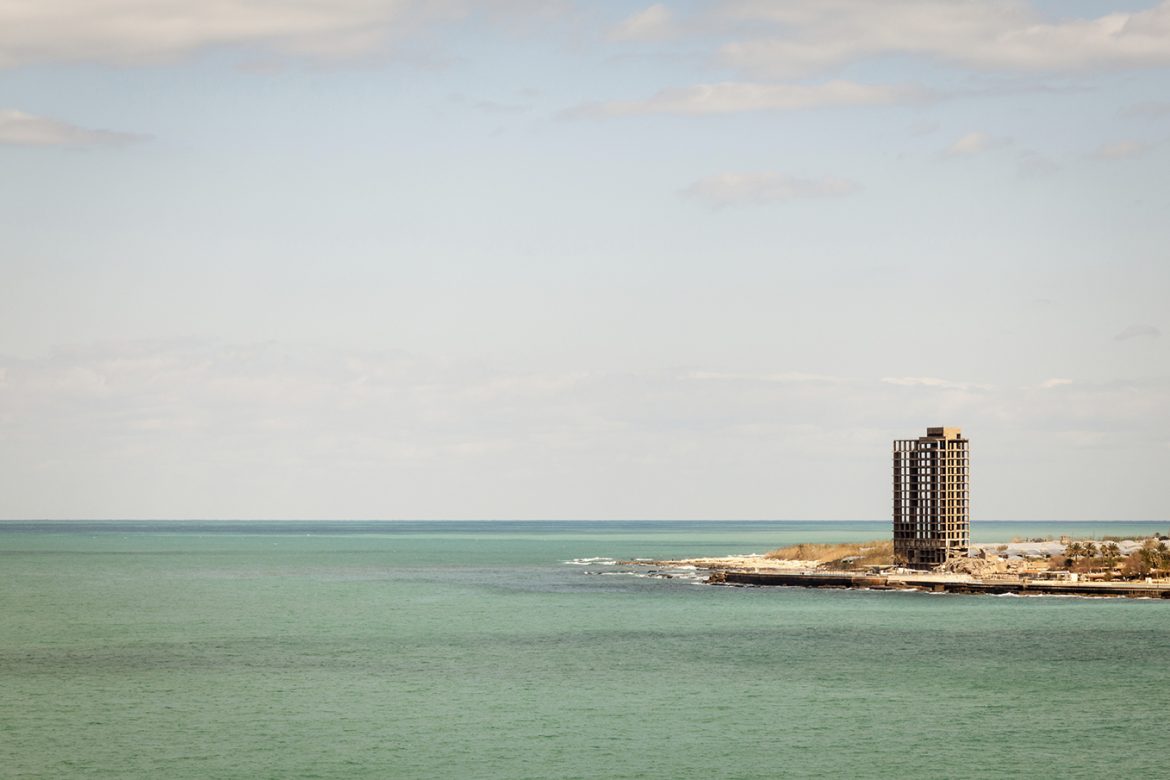
Lebanon’s coastline is one of our greatest assets, but it has also been the scene of decades of neglect, disputes, and short-term exploitation. With over 220 kilometers of Mediterranean shore, it should be a national driver of economic growth, tourism, and public well-being. Instead, we too often see projects that are speculative, unregulated, or closed off from the public. At a time when Lebanon is desperate for growth and stability, the question is whether developers can truly help balance private investment with public interest.

Public Access and Coastal Rights

The tension between public and private rights on the coast is not new. From the Ramlet el Bayda beach in Beirut, where citizens fought to keep the last natural beach accessible, to the Dalieh of Raouche, where access to a heritage site was blocked, people have witnessed how unregulated development can harm the public domain. In Keserwan, long stretches of the shore have been fenced off by resorts that charge entry fees to what should be open coastline.

Developers can change this picture. With clear rules and incentives, projects can reserve space for public boardwalks, promenades, or landscaped areas. The Dbayeh marina, for example, shows how a development can allow the public to walk along the waterfront while also hosting private clubs and restaurants. Byblos has managed to preserve open access around its old harbor while still attracting private investment. These are models that can be applied more widely.

As for reclaimed lands, or projects aimed at improving agricultural productivity and, more controversially, expanding coastal and urban areas, the issue has been left unresolved for too long. Many of these areas are occupied illegally or rented at symbolic rates. If legalized under strict regulation—with fair pricing, defined usage, and revenue directed to jobs and infrastructure—they can become productive assets instead of points of conflict. Otherwise, disputes will only deepen, and the state will continue losing both income and credibility.

Environmental Protections

Pollution is another major challenge. Everyone knows that untreated sewage and industrial waste are still being dumped into the sea along large parts of our coast. This damages not only the environment but also the long-term value of real estate projects themselves.

Developers have an opportunity to lead where the state has failed. By investing in on-site wastewater treatment, solid waste management, and renewable energy, they can ensure their projects are sustainable and attractive to both residents and tourists. Imagine if every new resort or marina on the coast was required to have a proper sewage treatment plant, solar power generation, and waste recycling facilities. The cumulative impact would be enormous.

Globally, investors demand environmental, social, and governance (ESG) standards. Lebanon cannot afford to lag behind. A developer who takes these steps not only does the right thing but also increases the marketability and resilience of their project.

Beyond Pure Investment Value

One of the biggest problems is that coastal real estate is often treated only as a speculative asset. Land is bought, subdivided, and flipped without adding any productive activity. This benefits a few but creates little for the economy.

But the reality is that every hectare of coastal land, if developed with a vision, can generate hundreds of direct and indirect jobs. Projects that include hotels, wellness resorts, marinas, serviced apartments, cultural spaces, or even sports facilities bring in tourists, foreign exchange, and sustainable employment.

Recent numbers confirm that there is still life in the real estate sector. Credit Libanais reported an increase in transaction values in the first half of 2025, despite the broader slowdown. Demand for coastal property remains strong, especially when there is a clear plan for long-term use rather than short-term speculation.

Avoiding Past Mistakes

We cannot ignore the history of disputes. Ramlet el Bayda, Dalieh, the closures of stretches of beach in Keserwan—all of these left scars. If developers want to gain trust, they must actively avoid repeating these mistakes. That means leaving a portion of the waterfront open to the public, coordinating with municipalities on infrastructure, and being transparent about land use.

Some municipalities are already experimenting with public-private partnerships where developers build facilities but also maintain public walkways and lighting. This approach could be replicated elsewhere. The message is simple: development does not have to mean exclusion.

Shared Responsibility

Of course, none of this can happen without the state stepping in. Zoning must be enforced, reclaimed lands legalized transparently, and revenues reinvested in infrastructure. Municipalities should be given more authority to make sure developments serve local communities. Civil society has a role in keeping watch and ensuring access and heritage are respected.

But developers should not always be seen as the enemy. They can be part of the solution if given the right framework. The state must provide the rules, but developers can deliver the projects that balance profit with public value.

Lebanon’s coast does not need to remain a battleground between private interests and public rights. It can become a shared space where investment, environment, and society come together. We already have examples that work on a small scale. What we need is the vision and courage to apply them across the coastline.

The choice is clear. Either we repeat the mistakes of unregulated, exclusive projects that serve a few and exclude the many, or we build a new model where coastal development genuinely supports Lebanon’s future. Developers, the state, and the public all have a role. If we get it right, the coast can once again become one of Lebanon’s greatest strengths.

September 16, 2025 0 comments
0 FacebookTwitterPinterestEmail
Brand VoiceBusiness

Ankr Development Partners with Chaddad Group and RACE Sarl to Realize MONOT 95

by Executive Editors September 2, 2025
written by Executive Editors

Ankr Development is pleased to announce the appointment of Chaddad Group and RACE Sarl on MONOT 95, a landmark residential tower in Achrafieh brought to life by Bejjani Engineering & Contracting (BEC).

Located in the heart of Achrafieh, MONOT 95 represents a bold step forward in redefining urban living in Beirut. Developed by BEC (Bejjani Engineering & Contracting) , in partnership with the MONOT 95 SAL and designed by acclaimed architect Charles Hadife, the tower fuses contemporary design with the soulful elegance of Beirut’s heritage.

MONOT 95 is one of six ongoing residential and commercial projects exclusively managed, marketed, and sold by Ankr Development in Lebanon. It marks the company’s first development of its kind in the area, reflecting a growing commitment to investing in Beirut’s urban renewal through thoughtfully designed, high‑impact spaces.

At the core of this project are trusted partners:

● Chaddad Group, led by Managing Partner Patrick Chaddad, serves as the main contractor, drawing on its record of major developments across Lebanon and Egypt.

● RACE Sarl, led by Founder and Managing Director Roy Akl, brings regional leadership in MEP contracting, ensuring every system, from mechanical to electrical, meets the highest standards of performance and durability.

“MONOT 95 is more than a building, it’s a symbol of resilience, recovery, and the enduring spirit of Beirut,” says Patrick Chaddad.

“We’re proud to support a project that embodies Beirut’s future. Being entrusted with the MEP works for MONOT reflects our team’s commitment, expertise, and the strong partnerships we’ve built,” says Roy Akl.

“MONOT 95 speaks to a new generation. Through design, I want to nurture a deeper sense of community and inspire people to stay because Lebanon is a beautiful place to call home,” adds Charles Hadife.

Founders Kamal Bejjani and Jean Ramia of Ankr Development emphasize the project’s broader impact on job creation, sustainability, and driving forward economic momentum for Lebanon’s ongoing real estate recovery, expressing their enthusiasm for what this partnership means for the future of Beirut and its people.

“We consider this a prime location and are eager to collaborate with Charles on this project and future developments. We have great confidence in Lebanon’s real estate potential as well as its people, and we remain committed to contributing meaningfully to the country’s continued recovery and growth,” said Jean Ramia, co-founder of Ankr Development.

Construction is now underway, and MONOT stands as a testament to “home, heritage, and hope”, an invitation to experience the future of Beirut, rooted in its past and built for tomorrow.

Media Contact:

Ankr Development

📧 [email protected]

📱 +961 71 09 88 88

🌐 www.ankrdevelopment.com

September 2, 2025 0 comments
0 FacebookTwitterPinterestEmail
Analysis

Rebuilding Beirut:

by Jamile youssef August 14, 2025
written by Jamile youssef

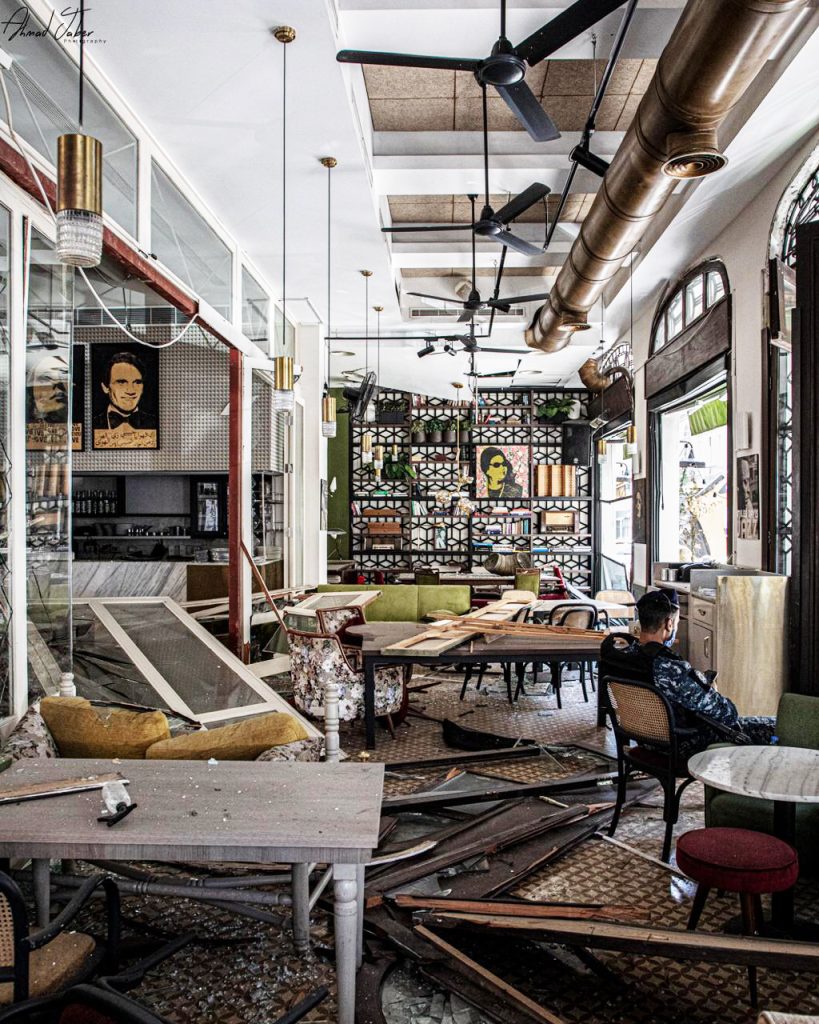
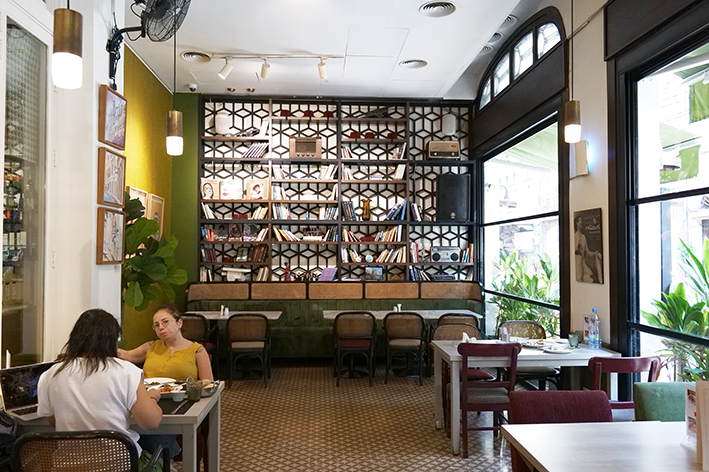
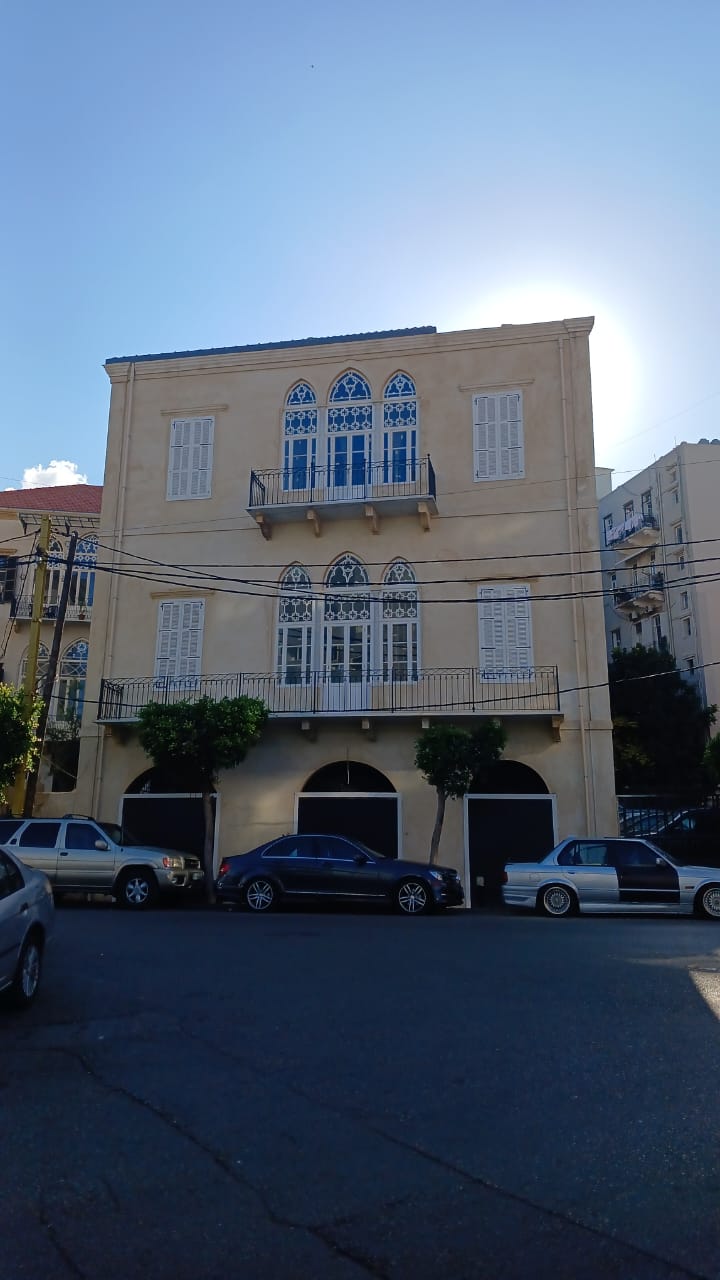
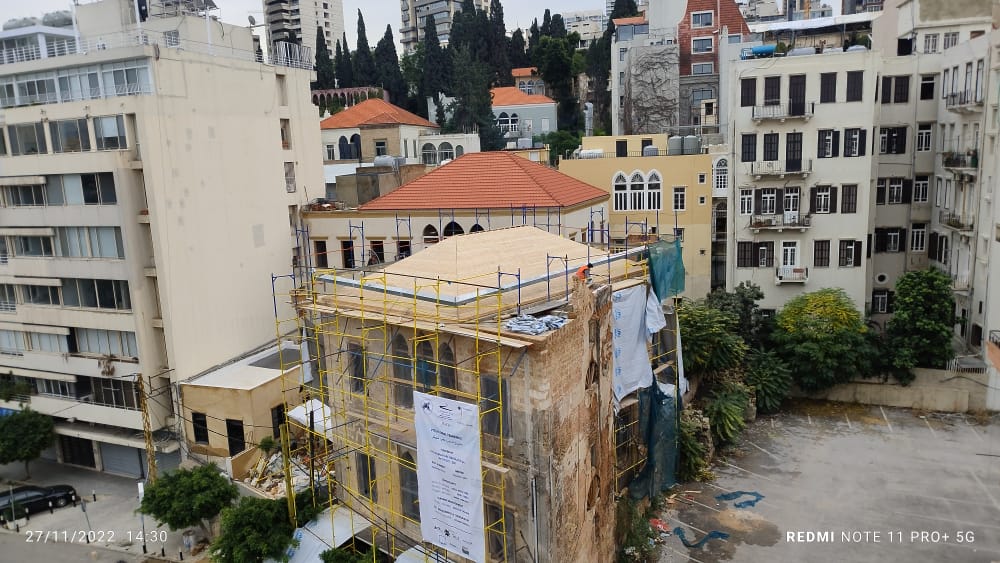
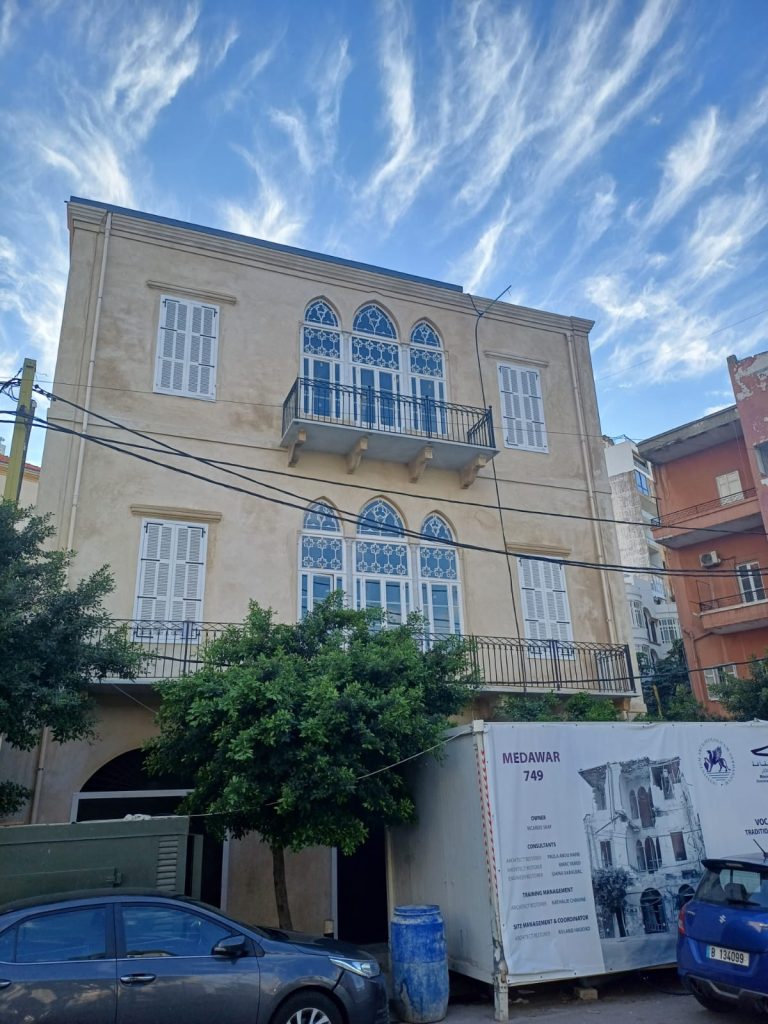
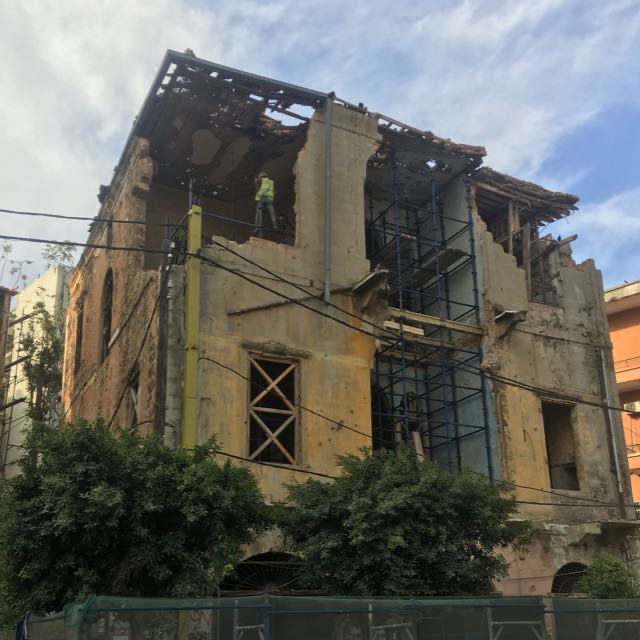
Five years have passed since the devastating blast at the Beirut Port and many of the areas of Mar Mikhael and Gemmayze appear to have been restored, as evidenced by summer scenes of residents, expats and tourists exploring and sipping cocktails in new cafes, pubs and restaurants. Yet a walk through these same streets confirms the blast’s lasting impact. Some heritage buildings are still under construction, with scaffolding in front of them, while others are empty, quiet, and untouched.

Beyond the physical repairs and the reopened businesses, there are other questions about what was lost, what was saved, and what has changed. Over the past five years, the neighborhoods hit hardest by the blast have undergone much of the same frenetic transformations that mark the rest of a city undergoing economic crisis and experiencing both periods of growth and periods of turmoil in fits and starts. Today, those working to restore and preserve heritage sites face challenges of waning economic commitments and shifts in both governance and demographic gentrification.

When the blast hit

At 6:07 PM on August 4, 2020, a massive explosion, now considered one of the largest and most devastating in modern history—rocked the city of Beirut triggered by tons of unsafely stored ammonium nitrate in Beirut port. The pressure and heat wave from the blast killed 218 people, injured more than 6,500, and left over 300,000 without homes. Nearby residential and commercial areas witnessed severe damage.

Physical destruction spread in areas near and far beyond the port. According to a September 2020 Beirut Explosion Impact Assessment by Strategy&, the explosion caused approximately 3.12 billion U.S. dollars of damage in housing, healthcare, education, businesses, and culture. The cultural and historic sector alone accounted for 286 million U.S. dollars, across 60 city districts, representing how much of Beirut’s identity was lost.

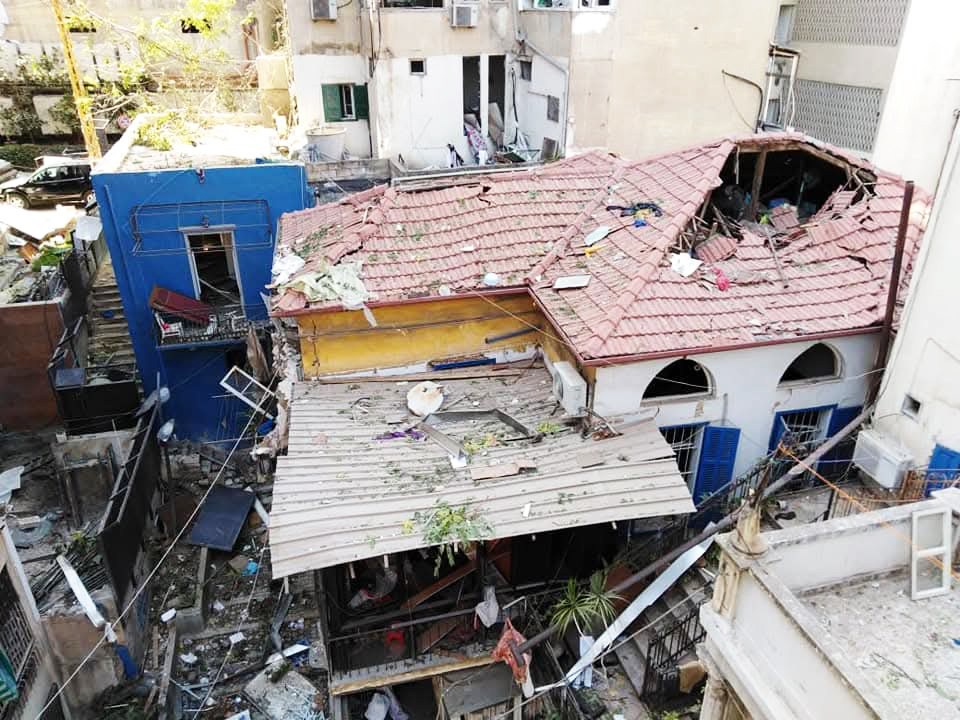
Photo credit: Beirut Built Heritage Rescue

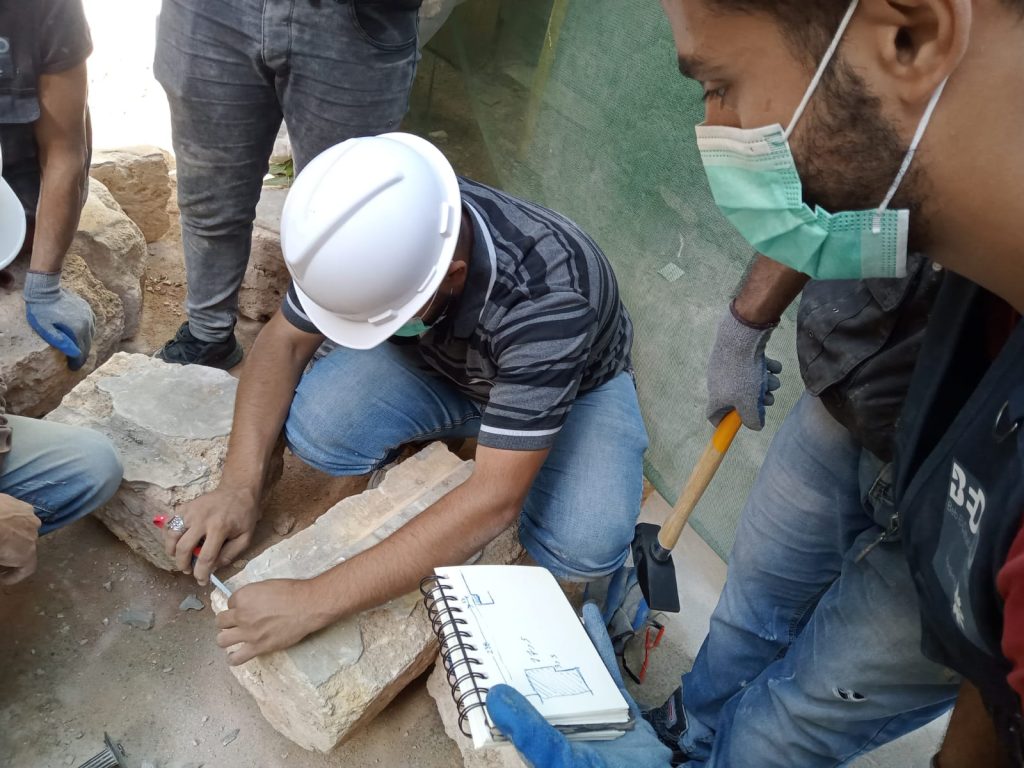
In neighborhoods like Gemmayze, Mar Mikhael, Achrafieh, and Karantina, modern-heritage homes from the period between 1920s to 1970s, suffered from shattered windows and door damage. Older traditional architecture buildings, from Ottoman-era to French mandate (1860s-1920s), were more severely damaged. Many of these buildings lost their signature Pirani wood roofs, signature stairs, and stained glass, elements which make these buildings irreplaceable to the city’s heritage and architectural identity. “The most painful part of the damage was to our traditional homes; we lost rare materials that we only find in older homes. This kind of detailed craftsmanship is difficult to recapture,” says architect and co-founder of Beirut Heritage Initiative, Joy Kanaan. The Beirut Heritage Initiative is an independent collective dedicated to restoring Beirut’s built and cultural heritage damaged by the blast.

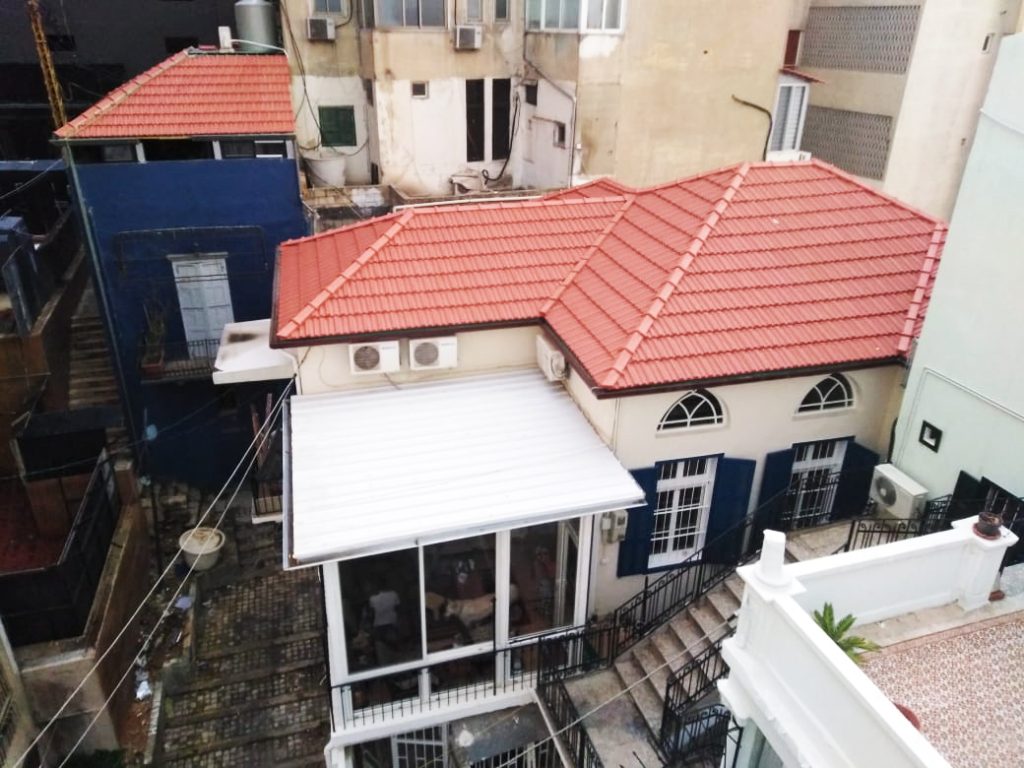
Photo credit: Beirut Built Heritage Rescue

A rush of rescuers

Within 48 hours after the blast, 40 restorers and engineers-initiated Beirut Built Heritage Rescue to support the Lebanon Directorate of Antiquities to assess the damage. Soon afterwards, 200 architectural students, graduates and teachers joined the initiative as volunteers. Together, 1,600 heritage buildings were assessed and categorized based on risk: those at high risk of collapse requiring urgent and early intervention, those with significant damage but no immediate danger of collapsing, and buildings listed in ‘green’ or ‘blue’ zones with only minor damage. “One hundred heritage buildings were in a state of extreme danger; at high risk of collapsing entirely, these buildings were very close to the port… We acted and consolidated these most vulnerable buildings before the winter,” explains Nathalie Al Chabab, an architect and cultural heritage expert.

Since day one, countless volunteers and civil society groups stepped in and supported the affected areas by clearing streets and removing rubble, helping with shattered glass, distributing food and water, offering shelter, and helping to repair damaged homes and businesses. This was believed to have drawn international and donor attention. “Once they saw us working … funds came,” Al Chabab recalls, referring to support from donors including the European Union, Canada, Qatar, World Bank, UN agencies, UNESCO, ALIPH foundation, the German Archaeological Institute, and various NGOs. Kanaan praises the effort of the extraordinary people that worked together to rebuild the neighborhoods “by the people and for the people.”

Thanks to this mass collective effort, none of the 100 buildings categorized as high risk collapsed. “What happened was a miracle” Al Chabab says. “All countries and construction companies now take the Beirut blast as a case study in heritage reconstruction, as nothing similar had ever happened.” Nevertheless, damage is still visible in the nearby neighborhoods. Rehabilitation efforts are still ongoing by UN-Habitat and the World Bank and are expected to soon be completed.

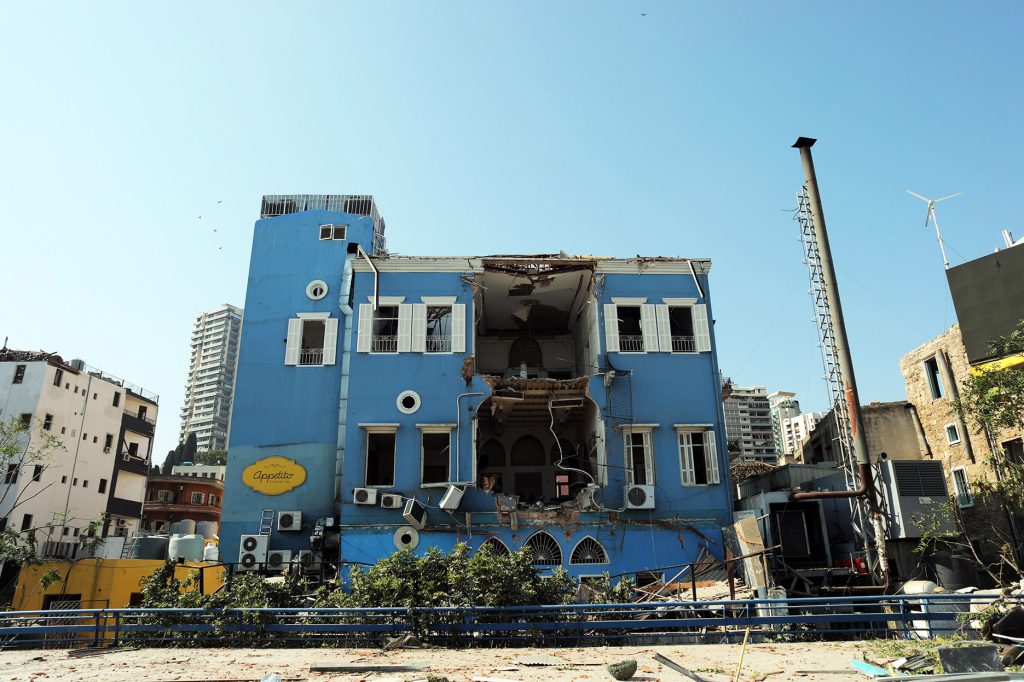
In other cases, some of these buildings have been abandoned for years or even decades, with multiple inheritors unable to agree on what to do with the property. These houses are only structurally consolidated; temporarily supported to avoid collapse but not rehabilitated. Al Chabab warns that such support can last for two to five years, but after that, intervention is critical. Kanaan says that some of these buildings still are in need of repair and others are on the market to be sold. She adds that right now, the biggest threat to modern and traditional heritage is that many of these buildings sit on large blocks and have gardens around them, which raise their real estate market value. On the other hand, she notes that some of the rehabilitated buildings have benefited from the post-blast restoration efforts. Before the explosion, many of these heritage homes had been neglected in cases where owners could not afford maintenance amid Lebanon’s economic crisis and the fluctuation of the Lebanese lira. Although the blast was devastating, it brought attention and funding that allowed some neglected buildings to receive needed repairs, and regain civic, state, and international attention.

Photo credit: Beirut Built Heritage Rescue

The Airbnb effect

As buildings were enhanced and brought back to life, short-term rental markets such as Airbnb accelerated. Restored homes and buildings become prime assets and attractive not only for their architectural charm but also for their profitability. Airbnb listings began replacing long-term residential rentals at higher rates. “We know houses that were restored and had tenants but are now listed on Airbnb,” says Al Chabab, citing cases of landlords who took advantage of the new opportunity provided post-rehabilitation. In this climate of increased gentrification brought on by the short-term rental market, families, many of whom had lived in these heritage homes for years, found themselves unable to afford to live in their own neighborhoods.

Georges Shaaer, a shop manager who has worked in the same Mar Mikhael store since 1987, reflects on the area’s transformation. “Before 2020, this was a commercial and residential area; there were shops like mine, AC repair, auto parts. For three to four years after the blast, the area was dead. Now it’s all pubs. Maybe just me and two other shops remained in this street after the blast.” He adds: “Many didn’t come back. Renters left. These houses were turned into Airbnb; there are a lot of them in this area today.” As of mid‑2024, data from AirDNA, a platform that tracks global Airbnb performance, shows more than 2,200 listings in Beirut, many in traditional residential areas like Mar Mikhael. Following the blast and the economic collapse, more landlords saw Airbnb as an opportunity to earn income in U.S. dollar during the currency devaluation.

This trend, which did not begin in the aftermath of the blast but was arguably accelerated by the explosion—reflects more than just a shift in residents; it changed how the neighborhood feels and works. Gemmayze and Mar Mikhael were once known for having close communities, where neighbors knew each other, and local craftspeople ran small family businesses. Today, many of those families and small businesses are gone. In their place there are vacation renters and tourists, giving the area a more transient and less rooted feeling. Even so, some argue that Airbnb and similar models injected much-needed life and revenue into a paralyzed economy, especially during Lebanon’s economic, financial, and social collapse. But the lack of rental regulation, coupled with limited affordable housing alternatives, has made the situation hard for many.

How much recovery is real?

Internationally, recovery is often measured in terms of aid delivered and physical reconstruction projects. But real recovery must go beyond infrastructure and include restoration of homes, streets, and cultural landmarks that carry identity, collective memory, and meaning. Lebanon’s heritage architecture is a nation identity; its loss could deepen the national crisis.

After the blast, Law 194 was enacted in October 2020, which ceased the sale or modification of heritage buildings in blast-affected areas without approval from the Ministry of Culture. This measure aimed to prevent sales and protect Beirut’s architectural identity from uncertain real estate transactions and market-driven redevelopment. But unfortunately, the law expired in October 2022, and no similar law nor protections have been enforced since.

Kanaan warns that without clear laws or financial compensation and help; many owners are left with impossible choices. Maintaining a heritage structure is expensive, especially in a country

facing high inflation and ongoing multi-sectoral crises. “Many would rather sell or build high-rises to earn better income than leave an old house on a valuable plot” she says. The reason behind such decisions is often driven more by survival than greed in an environment where maintaining these buildings has become nearly impossible without support.

Even buildings officially classified as heritage by the Directorate General of Antiquities are at risk and often a burden for their owners. These owners can’t demolish or renovate them freely, yet they receive no technical or financial help to restore them. “They’re stuck,” Kanaan adds. “They can’t fix them, they can’t sell them, and they’re not supported by any governmental program.” She stresses the need for creative solutions. Cultural centers, museums, or NGOs could adopt these homes, use them, maintain them, and compensate the owners. Otherwise, the city risks losing more than just buildings, it risks losing pieces of its identity and soul.

Photo credit: Beirut Built Heritage Rescue

But the challenges run deeper than just laws or funding gaps. Lebanon’s political and economic instability make it hard for anyone, either local or international, to invest and commit to long-term cultural projects. “We understand the situation is difficult,” Kanaan says, “but unless institutions like the Honor Frost Foundation [a nonprofit organization that promotes the research and preservation of maritime archaeology, with a focus on the Eastern Mediterranean] or others adopt these buildings as offices, galleries, or cultural spaces, we will keep losing them.”

Trauma beyond the rubble

For many, the emotional scars of the blast remain open. “Psychologically? Of course we did not recover,” Al Chabab says; “the trauma is not over.” Mar Mikhael shop owner Shaaer agrees. “The country stands on a thin line. Another explosion, another wave of war, we just keep going and working.”

“The damage is not just physical; it is emotional and psychological. It was an absolutely devastating explosion,” says Kanaan. She emphasizes that true recovery requires more than fixing and repairing buildings, arguing that the area will recover completely when there is security, economic stability, and when heritage buildings are not only protected, but alive and part of the urban environment.

August 14, 2025 0 comments
0 FacebookTwitterPinterestEmail
Economics & PolicyQ&A

Talk about smart buying

by Thomas Schellen July 23, 2025
written by Thomas Schellen

For conscientious merchants, panic buying is a menace. Generally, there are few things that individual merchants can do to discourage people from hoarding of essential goods. But when fears over the danger of yet another vile regional Middle Eastern war started to run hot in June of 2025, one fairly young and very ambitious Lebanese retail chain decided that it was the right moment to try some anticyclical action.

“After the recent escalations, having seen that people are in a state of fear and might go into panic buying, we decided to send a clear message to all our customers and the retail industry that Tawfeer is here and that we will invest in decreasing prices”, says Rami Bitar, the CEO of both Capital Partners, an internationally active trade group, and supermarket chain Tawfeer. In what according to Bitar was “the complete opposite” of fearful customer expectations, the Lebanese supermarket chain lowered the prices for more than 1,000 items on its shelves as of June 18, while Lebanon’s fears of a new level of armed conflict between Israel and Iran were running very high. Lowering prices and proactively communicating them to consumers would send a strong signal to alter the people’s perceptions of impending political and macroeconomic instability and inflation, hoped Bitar.

As things unfolded over the twelve days of armed exchanges between Israel and Iran, the retail sector problem of over-purchasing was averted later in June, along with many much greater dangers. However, discussing the counterintuitive June 18 pricing measure in context of Tawfeer’s business model and wider expansion strategy suggests that theirs is much more than a one-time tactic of mobilizing customer attention.

Challenging assumptions of what is possible, profitable, and prudent in local retail appears to be the core strategy of the supermarket chain, which, after having opened a 1,000 square meter market as its third store in Saida as of July 10, says that it operates 36 stores across Lebanon under a soft discounter model. This platform, which has in recent years expanded at a faster pace than a few local retail directories have kept up with, ties in with a new central logistics center, a solar power equipped warehouse that can accommodate up to 50,000 pallets of goods.

The warehouse, the construction of which was finalized earlier this year, according to Bitar represents an investment of $23 million. With its storage and distribution capacity that allows for optimization of human resources and streamlining of financials, accounting, and product distribution, is a cornerstone of Tawfeer’s current, and recently upscaled, expansion plan of targeting about 500 outlets – in two categories of discount supermarket and discount neighborhood store – by 2030 and moving from just under 1,000 staff members today to a retail headcount of 3,500.

“We are not comparing ourselves to [high-price supermarkets present in Lebanon] which are catering to A- and B-type consumer categories, nor are we comparing ourselves to [existing] chains that cater to B- and C-type consumers. We provide ourselves as solution for inflation, a solution of smart buying,” Bitar tells Executive. According to him, the discounter concept of Tawfeer is captured in the consumer philosophy of: ‘why pay more when you can get the same quality as in a higher-end market but pay less?’

An internationally successful business model

A soft discounter is positioning itself with a combination of proprietary store brands or value product lines, where it seeks to significantly undercut the prices of competitors and their legacy brands – Bitar says by 15 to 20 percent – and an additional modest selection of branded products that are offered at similar price points as found at competing markets. By number of stock keeping units (SKU, the individual codes that distinguish each item and its price) in its assortment, a soft discounter is situated nearer to a hard discounter – a retailer that carries an even more limited range of basic, store-branded goods – than to a conventional supermarket with ten thousands of SKUs from dozens of brands. The assortment in Tawfeer stores according to Bitar will be limited to 8,000 SKU that cover consumers’ preeminent demands without loss in quality.

Marketers anywhere conventionally and historically like to target customers (A-type consumers) that are affluent and can be attracted to very profitable brands – such as imported store brands that might even be considered budget brands/value lines in their home markets but can be sold at a premium to an import-happy Lebanese consumer. Or they bet on customers (B-type consumers) that mostly base their buying decisions on appearance and habit rather than undertaking sharp price-value calculations or paying much attention to product information.

Habitual bargain hunters as well as people forced by circumstance into various coping strategies, or highly aware, information seeking and data comparing customers are not the types of consumers that marketers for the longest time have been prioritizing. Traditional retailers worked as standalone sellers with strong relationships but weak organization and limited consistence. Only in the last century, the prevalence of traditional retail regressed in developed markets such as European trade of fast-moving consumer goods (FMCG).

While modern retail made forays in Lebanon from the latter part of the 20th century, modern retail behemoths did not achieve all their proclaimed goals from the early 2000s, such as winning market dominance by way of opening hypermarkets in the 10,000 square meter size range. This notwithstanding, traditional retail has been more sticky than expected by foreign market entrants over the years. Also, as Bitar describes it, affinity to traditional retail is still the rule in the behaviors of Lebanese consumers. Yet in his perspective, the Lebanese retail market with a fragmented load of small, more likely than not inefficient, neighborhood stores (dekkaneh), a smattering of pricey hypermarkets, and provincial/communal chains with affiliations to consumers’ historic loyalties, has become in post-crisis Lebanon overripe for the kind of consumers’ behavior change that drives discount retail successes around the world. 

“Our 2013 decision on the opening of Tawfeer was due to the fact that we are a third-generation family business, which my grandfather established 80 years ago. As we were selling to more than 15 countries in Europe, including Germany, Spain, Austria, in the EU as well as Eastern European countries, we saw the huge rise of discounters in Europe. We saw this all over, whether in high-income countries, or in low-income countries,” Bitar says.

As he experienced it, besides the rise of ecommerce, international growth trends in physical retail have focused in recent years on discounters and neighborhood stores, rather than very large supermarkets with sheer endless isles. Thus, in his opinion, the Lebanese market today is rife for the arrival of the discount store concept that Bitar discusses with a tone of admiration – recalling the story of German discount pioneer ALDI – and has experience with from working for over ten years in the trade and discount retail business in Eastern and Western Europe.

Usual challenges and a “secret sauce”

By Bitar’s estimation, Tawfeer is already the third largest retail chain by its market position early in the second decade of its presence as multi-store operator. Moreover, in terms of annual market share changes, it is the market’s leading disruptor in terms of market positions. The largest annual growth in the retail sector “is coming from Tawfeer, every year now. That is why everybody is watching us and chasing us. We have the financial power and have the determination and are risk takers,” says Bitar.

The chain’s initial 20 stores – rolled out between 2015 and 2021 – had been designed on basis of a single pilot store’s success between 2013 and 2015. After a one-year interruption of adding new stores because of the Covid19 crisis, about 40 percent of the current portfolio – which also includes stores operated under franchise – have been established since January of the first post-pandemic year 2022.  Not only did the company stay the course of applying its business model consistently during the years of social crises and economic pressures, its newly announced goal of 500 stores by 2030 has upped its previous, already ambitious, target by a factor five.

Means used in pursuit of this new target include its own training facility, called Tawfeer Academy; vertical integration of value chains, acquiring for example the group’s own industrial bakery and planning for a slaughterhouse; leveraging of its own importing capacity when making deals with existing wholesalers and importing agents; besides the aforementioned cutting down on overheads by use of a smart, centralized logistics hub that offers several advantages over the conventional picture of multiple delivery trucks with invoice-waving drivers lining up on urban streets next to supermarkets.

Fundamental requirements of and challenges to the operation, on the other hand, exist in form of substantial and hard to reduce operating costs (composed mainly of store rents, utilities, and employee costs) and threefold core concerns: stock management, employee supervision, and customer relations management.

Failures in these three areas – in form of product mismanagement, waste, internal theft, and customer theft – add greatly to the cost base of a retailer. A current study of the German retail environment by a specialized research institute named EHI has for example quantified total losses from these problem at about 1 percent of the retail sector’s turnover in the country. This seemingly small percentage translates into an actual annual damage of 4.95 billion euros, with theft by customers – including organized theft by criminal gangs that even feed stolen products into online retail – amounting to 2.95 billion euros, followed by theft by own employees and employees of suppliers to the tunes of 890 million and 370 million euros. On top of theft in its different forms, stock management problems accounted for about 750 million euros in losses discovered at inventory in 2024. 

Tawfeer, like all retailers, has to contend with economic forces beyond their control (such as inflation) but aspires to reduce the impact of inflation on the consumer. In terms of meeting the future core challenges of the sector, however, it is betting on the all-new miracle technology of artificial intelligence. AI cameras that monitor store shelves, function in conjunction with electronic shelf labels and alert employees to discrepancies for shelving plans, will help optimize stock management at Tawfeer stores in what Bitar calls “a revolution of shelf monitoring”. AI cameras will also be used for employee monitoring and reduction of internal theft. Customer monitoring via AI tools are intended for even wider uses, by creating heatmaps of customer behavior, measuring their facial expressions, and time spent at different shelves.

“All of this will allow us to gather big data, whether from products, from employees, or from clients, and will allow us to customize our ways to better serve clients,” Bitar enthuses. For him, the future of marketing indubitably is “targeted promotions based on AI-generated customer knowledge”. He is, however, cognizant of the risk of being an early adopter of a technology whose flaws have yet to emerge in practical operations and has widened the organization’s time window for expected amortization of investment into AI to double the 18 months recommended by consultants. This is a risk he is willing to take because of huge competitive advantages that he anticipates for retail innovation leaders.

“We have a plan, an aggressive investment plan, for the coming five years. We believe that we will be spending not less than $5 million on AI in the coming five years, and so we are budgeting at least $1 million a year for different software [products] and developments that will make our business easier, quicker, and more efficient,” Bitar says, adding that the improvements expected from AI tools will apply across different departments of the operation, not just in stores.

In the human development aspect of the expansion plan, he on the other hand emphasizes the role of partnerships with small and micro retail players. In a belief that the Lebanese market has plentiful room for the concept of a neighborhood store of 200 to 300 square meters, Bitar wants to see hundreds of current dekkaneh operators become franchise partners that adhere to the same price policy as a Tawfeer discount supermarket. 

“The traditional dekkaneh operators do not have a future. We want to integrate them to become part of Tawfeer. We need them, and they will need us because of changes in the market,” he says, adding that these franchisees would remain owner-operators of their stores but become better equipped to face challenges from competitors.  This concept, branded as Tawfeer Express, according to Bitar will carry a message for every small, traditional operator: “I don’t want to see you go out of business, so let’s partner.” 

In an economy that is based less on scarcity and more on need for fair distribution, panic buying is an anachronistic and mysterious but very real occurrence. The associated phenomena of sudden but needless shortages and price gouging for essential goods can become very dangerous, especially for those of us who have to count every penny twice when going to the neighborhood store, grocer, or gas station. But nonetheless, in times of impending catastrophes (both natural catastrophes and man-made ones, or the deep worry over either), narrow social strata of the somewhat affluent and easily fearful descend into archetypical hoarding, putting over-purchasing pressure on modern supply chains.

For conscientious merchants, panic buying is a menace. Generally, there are few things that individual merchants can do to discourage people from hoarding of essential goods. But when fears over the danger of yet another vile regional Middle Eastern war started to run hot in June of 2025, one fairly young and very ambitious Lebanese retail chain decided that it was the right moment to try some anticyclical action.

“After the recent escalations, having seen that people are in a state of fear and might go into panic buying, we decided to send a clear message to all our customers and the retail industry that Tawfeer is here and that we will invest in decreasing prices”, says Rami Bitar, the CEO of both Capital Partners, an internationally active trade group, and supermarket chain Tawfeer. In what according to Bitar was “the complete opposite” of fearful customer expectations, the Lebanese supermarket chain lowered the prices for more than 1,000 items on its shelves as of June 18, while Lebanon’s fears of a new level of armed conflict between Israel and Iran were running very high. Lowering prices and proactively communicating them to consumers would send a strong signal to alter the people’s perceptions of impending political and macroeconomic instability and inflation, hoped Bitar.

As things unfolded over the twelve days of armed exchanges between Israel and Iran, the retail sector problem of over-purchasing was averted later in June, along with many much greater dangers. However, discussing the counterintuitive June 18 pricing measure in context of Tawfeer’s business model and wider expansion strategy suggests that theirs is much more than a one-time tactic of mobilizing customer attention.

Challenging assumptions of what is possible, profitable, and prudent in local retail appears to be the core strategy of the supermarket chain, which, after having opened a 1,000 square meter market as its third store in Saida as of July 10, says that it operates 36 stores across Lebanon under a soft discounter model. This platform, which has in recent years expanded at a faster pace than a few local retail directories have kept up with, ties in with a new central logistics center, a solar power equipped warehouse that can accommodate up to 50,000 pallets of goods.

The warehouse, the construction of which was finalized earlier this year, according to Bitar represents an investment of $23 million. With its storage and distribution capacity that allows for optimization of human resources and streamlining of financials, accounting, and product distribution, is a cornerstone of Tawfeer’s current, and recently upscaled, expansion plan of targeting about 500 outlets – in two categories of discount supermarket and discount neighborhood store – by 2030 and moving from just under 1,000 staff members today to a retail headcount of 3,500.

“We are not comparing ourselves to [high-price supermarkets present in Lebanon] which are catering to A- and B-type consumer categories, nor are we comparing ourselves to [existing] chains that cater to B- and C-type consumers. We provide ourselves as solution for inflation, a solution of smart buying,” Bitar tells Executive. According to him, the discounter concept of Tawfeer is captured in the consumer philosophy of: ‘why pay more when you can get the same quality as in a higher-end market but pay less?’

An internationally successful business model

A soft discounter is positioning itself with a combination of proprietary store brands or value product lines, where it seeks to significantly undercut the prices of competitors and their legacy brands – Bitar says by 15 to 20 percent – and an additional modest selection of branded products that are offered at similar price points as found at competing markets. By number of stock keeping units (SKU, the individual codes that distinguish each item and its price) in its assortment, a soft discounter is situated nearer to a hard discounter – a retailer that carries an even more limited range of basic, store-branded goods – than to a conventional supermarket with ten thousands of SKUs from dozens of brands. The assortment in Tawfeer stores according to Bitar will be limited to 8,000 SKU that cover consumers’ preeminent demands without loss in quality.

Marketers anywhere conventionally and historically like to target customers (A-type consumers) that are affluent and can be attracted to very profitable brands – such as imported store brands that might even be considered budget brands/value lines in their home markets but can be sold at a premium to an import-happy Lebanese consumer. Or they bet on customers (B-type consumers) that mostly base their buying decisions on appearance and habit rather than undertaking sharp price-value calculations or paying much attention to product information.

Habitual bargain hunters as well as people forced by circumstance into various coping strategies, or highly aware, information seeking and data comparing customers are not the types of consumers that marketers for the longest time have been prioritizing. Traditional retailers worked as standalone sellers with strong relationships but weak organization and limited consistence. Only in the last century, the prevalence of traditional retail regressed in developed markets such as European trade of fast-moving consumer goods (FMCG).

While modern retail made forays in Lebanon from the latter part of the 20th century, modern retail behemoths did not achieve all their proclaimed goals from the early 2000s, such as winning market dominance by way of opening hypermarkets in the 10,000 square meter size range. This notwithstanding, traditional retail has been more sticky than expected by foreign market entrants over the years. Also, as Bitar describes it, affinity to traditional retail is still the rule in the behaviors of Lebanese consumers. Yet in his perspective, the Lebanese retail market with a fragmented load of small, more likely than not inefficient, neighborhood stores (dekkaneh), a smattering of pricey hypermarkets, and provincial/communal chains with affiliations to consumers’ historic loyalties, has become in post-crisis Lebanon overripe for the kind of consumers’ behavior change that drives discount retail successes around the world. 

“Our 2013 decision on the opening of Tawfeer was due to the fact that we are a third-generation family business, which my grandfather established 80 years ago. As we were selling to more than 15 countries in Europe, including Germany, Spain, Austria, in the EU as well as Eastern European countries, we saw the huge rise of discounters in Europe. We saw this all over, whether in high-income countries, or in low-income countries,” Bitar says.

As he experienced it, besides the rise of ecommerce, international growth trends in physical retail have focused in recent years on discounters and neighborhood stores, rather than very large supermarkets with sheer endless isles. Thus, in his opinion, the Lebanese market today is rife for the arrival of the discount store concept that Bitar discusses with a tone of admiration – recalling the story of German discount pioneer ALDI – and has experience with from working for over ten years in the trade and discount retail business in Eastern and Western Europe.

Usual challenges and a “secret sauce”

By Bitar’s estimation, Tawfeer is already the third largest retail chain by its market position early in the second decade of its presence as multi-store operator. Moreover, in terms of annual market share changes, it is the market’s leading disruptor in terms of market positions. The largest annual growth in the retail sector “is coming from Tawfeer, every year now. That is why everybody is watching us and chasing us. We have the financial power and have the determination and are risk takers,” says Bitar.

The chain’s initial 20 stores – rolled out between 2015 and 2021 – had been designed on basis of a single pilot store’s success between 2013 and 2015. After a one-year interruption of adding new stores because of the Covid19 crisis, about 40 percent of the current portfolio – which also includes stores operated under franchise – have been established since January of the first post-pandemic year 2022.  Not only did the company stay the course of applying its business model consistently during the years of social crises and economic pressures, its newly announced goal of 500 stores by 2030 has upped its previous, already ambitious, target by a factor five.

Means used in pursuit of this new target include its own training facility, called Tawfeer Academy; vertical integration of value chains, acquiring for example the group’s own industrial bakery and planning for a slaughterhouse; leveraging of its own importing capacity when making deals with existing wholesalers and importing agents; besides the aforementioned cutting down on overheads by use of a smart, centralized logistics hub that offers several advantages over the conventional picture of multiple delivery trucks with invoice-waving drivers lining up on urban streets next to supermarkets.

Fundamental requirements of and challenges to the operation, on the other hand, exist in form of substantial and hard to reduce operating costs (composed mainly of store rents, utilities, and employee costs) and threefold core concerns: stock management, employee supervision, and customer relations management.

Failures in these three areas – in form of product mismanagement, waste, internal theft, and customer theft – add greatly to the cost base of a retailer. A current study of the German retail environment by a specialized research institute named EHI has for example quantified total losses from these problem at about 1 percent of the retail sector’s turnover in the country. This seemingly small percentage translates into an actual annual damage of 4.95 billion euros, with theft by customers – including organized theft by criminal gangs that even feed stolen products into online retail – amounting to 2.95 billion euros, followed by theft by own employees and employees of suppliers to the tunes of 890 million and 370 million euros. On top of theft in its different forms, stock management problems accounted for about 750 million euros in losses discovered at inventory in 2024. 

Tawfeer, like all retailers, has to contend with economic forces beyond their control (such as inflation) but aspires to reduce the impact of inflation on the consumer. In terms of meeting the future core challenges of the sector, however, it is betting on the all-new miracle technology of artificial intelligence. AI cameras that monitor store shelves, function in conjunction with electronic shelf labels and alert employees to discrepancies for shelving plans, will help optimize stock management at Tawfeer stores in what Bitar calls “a revolution of shelf monitoring”. AI cameras will also be used for employee monitoring and reduction of internal theft. Customer monitoring via AI tools are intended for even wider uses, by creating heatmaps of customer behavior, measuring their facial expressions, and time spent at different shelves.

“All of this will allow us to gather big data, whether from products, from employees, or from clients, and will allow us to customize our ways to better serve clients,” Bitar enthuses. For him, the future of marketing indubitably is “targeted promotions based on AI-generated customer knowledge”. He is, however, cognizant of the risk of being an early adopter of a technology whose flaws have yet to emerge in practical operations and has widened the organization’s time window for expected amortization of investment into AI to double the 18 months recommended by consultants. This is a risk he is willing to take because of huge competitive advantages that he anticipates for retail innovation leaders.

“We have a plan, an aggressive investment plan, for the coming five years. We believe that we will be spending not less than $5 million on AI in the coming five years, and so we are budgeting at least $1 million a year for different software [products] and developments that will make our business easier, quicker, and more efficient,” Bitar says, adding that the improvements expected from AI tools will apply across different departments of the operation, not just in stores.

In the human development aspect of the expansion plan, he on the other hand emphasizes the role of partnerships with small and micro retail players. In a belief that the Lebanese market has plentiful room for the concept of a neighborhood store of 200 to 300 square meters, Bitar wants to see hundreds of current dekkaneh operators become franchise partners that adhere to the same price policy as a Tawfeer discount supermarket. 

“The traditional dekkaneh operators do not have a future. We want to integrate them to become part of Tawfeer. We need them, and they will need us because of changes in the market,” he says, adding that these franchisees would remain owner-operators of their stores but become better equipped to face challenges from competitors.  This concept, branded as Tawfeer Express, according to Bitar will carry a message for every small, traditional operator: “I don’t want to see you go out of business, so let’s partner.” 

July 23, 2025 0 comments
0 FacebookTwitterPinterestEmail
Editorial

A flower dares to bloom

by Yasser Akkaoui July 16, 2025
written by Yasser Akkaoui

It may have been the most pivotal period in changing the fortunes of Lebanon, definitely in the last 30 years, and perhaps in all my lifetime. The past eight or nine months have turned our local world on its head, militarily, economically, and politically.
We have suffered continued violations of our sovereignty and deep disregard for the principles of peace. We have witnessed, without being able to put any stop to them, tides of airplanes, drones, and missiles cross our skies with the most ill of intents. Yet we have also witnessed the lifting of sanctions on Syria, signals of structural reform in our regional and national economy, and new investment blossoms. We have been reassured that our Lebanese democracy, flawed and vulnerable as all democracies are, is
alive and kicking on national and municipal levels.
But what puts our compunction even more into perspective of global risks are vast increases in global military spending – reported as 9.4 percent over recent years, reaching a record high of over $2.7 trillion in 2024 – and pivots away from development funding and humanitarian funding, such as a tripling in the European Investment Bank’s defense-related lending to €3.5 billion.
As nations focus on military build-up and self-reliance, commitments to multilateral institutions are weakening. The net effect of escalating defense spending and conflicts is a troubling retreat from the globalization of the past 35 years. Nations are becoming more selective, fragmented, and security conditioned, fundamentally altering the economic logic that drove global integration. The global consensus needed for climate finance, debt relief, and coordinated health responses could fragment, making global problems harder to solve.
Meanwhile in Lebanon, we see today more flares of hope even as we know that badly needed reconstruction funding and investment for growth and productivity still fall far short of reclaiming what has been taken from us in war and economic meltdown.
We cannot put our heads in the sand: our domestic policy process needs far greater diligence and care or our society’s constituents. But we have enough tested and proven
talent for pursuing a simultaneous social and economic miracle.
The most urgent issue today is that we cannot be sure if our process is now on a stable national path in its regional envelope. Will any visitor from the seats of global powers have our best interest at heart? Will our elected leaders be resilient against the old culture of corruption? Will our political system become a conduit of reform and balance?
Our small signs of hope need reassurance. Can we coexist in a global neighborhood, where our enemies constantly show us that they do not treat us as their equals? And how will the integration project of Lebanese and neighboring economies come into fruition? How can we avoid costly design mistakes and planning errors in a regional context of multiple uncertainty?
Nothing is certain in this region, not even uncertainty. But our little Lebanese flowers are blooming in the craters torn by bullets and bombs.

July 16, 2025 0 comments
0 FacebookTwitterPinterestEmail
Last Word

The dangerous masculinization of public life

by Marie Murray June 30, 2025
written by Marie Murray

In recent years, and more dramatically in recent months, global politics has seen a notable shift toward ‘masculinized’ messaging —brash, combative, performative, and increasingly authoritarian. This isn’t just a narrative shift away from an equitable, egalitarian, and respectful tone or about who holds office, although that greatly determines political course. It is a dangerous drift of how leadership is enacted: power over empathy, dominance over cooperation.

Nowhere has this shift been more visible, or more influential, than in the United States, where the state is employing war language against migrants at home while funding wars abroad. This political tone, set by the U.S., is currently echoing far beyond its borders, reshaping the language and posture of power around the world.

I am writing this from the US, where I am visiting my family for the first time in two years and where evidence of this shift in political tone was on display at JFK airport. Upon arrival, my family of five (only one of whom is not a US-citizen) were instructed to stand in the border control line for non-citizens. When we reached the desk, my Lebanese husband was instructed to take our children to collect our luggage while I was taken aside because my “passport needed to be verified.” I was brought to another room and after a 15-minute wait, I was questioned for 30 minutes. I was asked about my family members and my husband’s family members: their places of residence and their occupations. I was asked about my life in Lebanon: my home, work, my children, and why I lived there. I was asked about why I came to Lebanon in the first place and why I wanted to come to Lebanon: my motivation for pursuing a masters degree, my relationship with my husband. I was asked about all the trips I had taken in the last several years.

In the same room, an American student from Columbia University, also in questioning, asked why he had been selected for interrogation and was also told that his passport needed to be verified.  Another man traveling with his elderly mother from Jordan (citizenship unclear to me) explained that he had accompanied her to help her while she visited family members. He was told flatly that he should have stayed home—she didn’t need help. I don’t know what purpose this use of resources and information gathering served—but I do know that those of us in that room were treated like suspects by virtue of—as far as I could tell—the countries we travelled from or universities we attended.

Across continents, leaders have either borrowed from or attempted to shirk this style of vilifying opponents and reducing policy to tweets and threats. In this new arena, space for complexity shrinks and democracy becomes a game of chest-beating rather than service.

One of the most devastating outcomes of this shift has been the sidelining of the care economy. In the U.S., investment in education, healthcare, humanitarian work, and environmental care has withered –ostensibly to decrease public debt, though the Trump administration’s ‘one big beautiful bill’ (the chest thumping resounds) which increases national debt by upwards of four trillion makes a lie of that priority. While budgets for care have been gutted, billions continue to flow into the military-industrial complex. Trump’s proposed budget –yet to pass in the senate—would bring military spending to over $1 trillion in the coming year.

American-made and U.S.-funded bombs still drop on Gaza, Lebanon, Yemen, and now Iran, even as that same region is cut off from American humanitarian aid. The most hopeful development in this scenario came after two weeks of mutual aggression: further escalation is in nobody’s interest. But despite of this loudly proclaimed win of voluntary restraint of masculine power politics at the brink of the abyss of total war, the geopolitical lessons from the first half of this year have been clear: aggression will not be thwarted but acclaimed; destruction is funded; dignity is not. Reversing this course means redefining leadership as responsibility first and foremost, and it means restoring the moral balance between what we build and what we break.

June 30, 2025 0 comments
0 FacebookTwitterPinterestEmail
Q&A

Diminishing the USAID shock at Lebanon’s hillfort of innovation

by Thomas Schellen June 20, 2025
written by Thomas Schellen

Developmental disruptions are piling up on the liabilities side of the world’s sustainability balance sheet in 2025. For the tiny, battered country of Lebanon, each of this year’s new shocks – be it a financial or geo-economic tremor, a disruption that is climate-related or technological, a political imperialist insanity or an illicit military aggression – weighs in heavily on the liability side of the national reform and development balance sheet. Each shock increases the risk of deterring needed investments and speaks of new danger in public and private institutional paralyses. This magazine’s perception at the start of 2025, of experiencing a deceptive calm in the eye of a regional and even broader, multi-level “perfect storm,” has in every imaginable and many non-imaginable regards been borne out in the first half of the year.

The only question is which global storm system, apart from the obvious hurricane of regional militarist aggression and war of identities, has the severest impact on this fragile economy and its towering social investment needs. Two outstanding candidates are changes in humanitarian and developmental funding – on global scale highlighted in June by a massively downward revised and re-prioritized OCHA appeal for humanitarian aid due to imperiled fundraising success in the year to date – and Lebanon’s continuing drift to the bottom in the fostering of entrepreneurship when compared (on the 2025 Global Startup Ecosystem Index) to the region’s growing startup ecosystems of Arab countries from the UAE and Saudi Arabia to Jordan and Qatar. 

A notable intersection of both factors, Lebanese innovation and entrepreneurship institution Berytech, is an outlier in the two crucial regards of keeping the proverbial Lebanese entrepreneurial spirit strong and expansionary on the one hand and digesting the shock of seeing a once dominant source of funding – the United States Agency for International Development – vanish in Trumpian mists from February. Executive sat down with Nicolas Farhat, the deputy general manager of Berytech, to inquire about the state of the institution whose academic lair atop a hill in the Beirut conurbation inspires allusions to a hillfort, those settlement habitats that not only in form of Epipaleolithic tells but also in present, digital times stand out as bastions of civilization and development.  

Interview with Nicolas Farhat

Walk me, if you would, through the inflection points in the story of Berytech from the initial idea of an academia-induced technopole through the association with bank funding, involvement of the private sector, the subsequent integration with BDL’s circular 331 ecosystem, and then the switch to donor funding.

It is true that Berytech at its start wanted to replicate the model of the French Sophia Antipolis technopole and incubator in Lebanon. When Berytech was established in 2002, the original entity included the commercial banks of Lebanon participating with a seed investment in form of an indirect social enterprise called in French société en commandite, where profits get reinvested to a certain extent to support the ecosystem. We also back then received funds from the Agence Française de Développement (AFD) to build this building. When the Berytech 1 Fund was created in 2007, it was funded by big US tech companies, not the banks. In 2015 the fund was under the circular 331 and in 2018 and onward, IM [Capital] was anchored by USAID. Simultaneously, all programs were funded by sponsors and partner donors which majorly are EU-funded programs and programs funded by European countries.

The funding pipeline of Berytech, which has been in existence since the 2000s, has in recent years drawn upon diverse sources, notably development grants. What share of your funding and financial pipeline today comes from European partners?

The core [operation] of Berytech is of course to support the ecosystem of entrepreneurship and innovation. But how do we go about this? We can say that we do it along three verticals. The first vertical, which was started in 2002, is having an incubator. One incubator is here at this building [in the USJ Mar Roukos campus] and another one is in [Beirut’s] Mathaf neighborhood facing the French embassy. There also is a plan to open a new facility in [the north-central Lebanese town of] Amchit in 2026.

Our second vertical is the programmatic part. In the past few years, we have deployed over 40 programs, with a total programmatic funding of about $93 million. We have been working with all international donors, such as the EU, Netherlands, USAID, and UN agencies. We also work with international NGOs, agencies like AFD, and Development Finance Institutions (DFIs) such as the World Bank and others. Our third vertical is the investment arm. We created the Berytech Fund 1 in 2007, Berytech Fund II in 2015/16, and then the IM [Capital] and IM Ventures funds. Also, you will hopefully see new funds being launched in the coming year or two.

Let’s talk about this third vertical, your investment arm and the funds you are working on in your collaboration with what I believe was originally a Berytech brainchild today branded as IM Fndng. Will such funds be applying a Private Equity (PE) or Venture Capital (VC) philosophy, with their expectations on return on investment?

What we are envisioning for forthcoming funds is innovative financing mechanisms, not the traditional PE or VC vehicles. They will also not be vehicles such as the Berytech [I and II] Funds of the past. I note here that the IM [Fnding] was among the first to use an innovative funding mechanism. It did this by matching public funding, i.e. USAID funding, as guarantee in securing private capital. To its SoLR & Renewable Energy Fund, IM also recently attracted CMA-CGM, the giant shipping company, to come in and propose a financial product that is affordable for the Lebanese private sector.

The key word to look at in the forthcoming funds is going to be affordable finance. If you look at the SME sector and the ecosystem of startups over the last four, five years, the system was mainly relying on grants, ether in cash of in kind. All the funding that came to the private sector, however, did not really make a dent in the real funding needs of SMEs and startups. This funding was also focused on [specific criteria] and many SMEs were not included.

Most funding that will be coming to Lebanon in 2025, will be addressed to micro-credit institutions, lending to Nano enterprises with a cap of 30 to 50 thousand dollars per ticket, and probably high interest rates. What we are looking at is catering to the private sector in MENA with focus on SMEs. We therefore have two vehicles that we are actively working on, in partnership with DFIs. We experienced a setback [in setting up those funds] when the project was delayed due to last year’s war. But we are hopeful today that it might materialize at an accelerated rate now. One fund will focus on social, environmental and economic impact by SMEs. It is not sector-agnostic but it is not only focused on circularity and green economy. An SME that promotes import substitution and can enhance local production and meet local demand and later on export, which will be improving the trade balance and the balance of payment of Lebanon, could tap into this vehicle.

When USAID announced their 90-day moratorium on funding while programs were being reviewed from the start of the second Trump presidency in the US, nobody was eager to talk about what was indubitably a shock, whether it might have been a disruptive negative shock or even a healthy shock in favor of greater self-sufficiency. Now, as the USAID cuts have been implemented, how large was the shock and what was your learning out of this at Berytech?

This question is a great one that comes at a very sensitive time. What put Berytech in a better position when compared with other USAID partners or implementing bodies, is that we always had diversified sources of revenues for funding its programs. We also always had a mix between donor funded and revenue generating activities. When you consider USAID’s role in this entire mix, it did not represent the majority of our funding. It was, however, a significant source of funding and a shock for us [when this funding vanished] but we were able to adapt quickly.

One of the main programs that had been funded indirectly by USAID – by which I mean that USAID used to act as the intermediaries between European donors and implementing partners such as Berytech – was the Water and Energy for Food (WE4F) program for the MENA region, which we were leading. We were lucky in that when we received the “stop work” order, when there was a disruption and later on termination of this program, one of the donors – the Swedes, i.e. the Swedish International Developmental Cooperation Agency – were able to transfer to us a small funding directly, which would allow us to wrap up our activity in a responsible manner and address to the extent possible the needs of our stakeholders, which were SMEs in Lebanon and MENA, plus services providers and subcontractors. This allowed us to safeguard 4.5 years of activities under the WE4F program. So today we are in the final stages of discussion to launch a 2.0 version of this program directly with the donor partners.

In terms of funding, how would the 2.0 version of this program compare to the first edition? Would it be equal in size, larger, or smaller?

The 2.0 version has an additional component that tackles the risk of experiencing a shortage in funding as we all need to be aware that at a certain point donor funding may not last. Thus the 2.0 version in total program size will be 50 percent in terms of grants to start with on top of a buy-in component. When Syria opens up – and we are mapping the Syrian ecosystem today in an exercise that will be finished by end of this month – we will have room to conduct those additional activities as part of our mandate, with funding on top of the existing mandate. But the main catch of the WE4F 2.0 program is that it is setting the ground for a regional fund that will have the mandated facilities that I mentioned in the beginning of this interview. This money is supposed to indirectly de-risk this fund in anticipation of having an anchor investor join.

This will be a complete and sustainable exit from a donor funded program. If we get WE4F 2.0, we will be able to operate over the next three years by continuing to do what we have done while simultaneously preparing the launch of the regional impact fund that, if profitable, hopefully will sustain our regional activities over a long period of time.

So the regional fund would be larger than the original WE4F funding allocation?

Absolutely, significantly larger.

Looking at the regional dimension of development, much potential might be directed towards our esteemed neighbor country that is nether nominally nor de facto at war with us, which is Syria. Recent large partnership and investment announcements for Syria involved large port developments with CMA CGM and even larger power station Build-Operate-Transfer agreements with a Qatari-led consortium. What will Berytech’s strategy be to assert your early mover advantage and competitive edge as an innovation hub that has a history and track record of almost 25 years?  How will you compete if external actors or Gulf-based entrepreneurship actors get active in Syria?    

Development in Syria and the size of it is a delicate issue. We also have to be realistic about the size and capacity of Berytech. We certainly position ourselves as a potential major player in the development of the ecosystem of entrepreneurship and innovation in Syria. We are today mapping the ecosystem in Syria, for which we have received funding from some of the donors…based on some geographies that were pre-selected as safer regions where an ecosystem can be developed. I do not think that anyone can predict how fast things will happen in this development. There are many uncertainties in Syria. It is a “wild card”. But Berytech certainly will have a role to play in the ecosystem there. We do not know how things will play out with everything around us being reshuffled but we are hopeful and see a new phase for Lebanon, Syria, and the whole region.

What are the next steps from this hopeful but uncertain current situation? You have referred to the need for functional and advanced infrastructure in order to keep startups in Lebanon. My impression from the first companies who set up at this Mar Roukoz facility in the 2000s was that they were attracted to this location because the new locale of Berytech was one of the few places in Beirut where you could convene an online meeting with an international correspondent. But what is your edge today?

We still have this resilience and track record. For the past four years, despite of all the adverse events in Lebanon and the crisis, this facility specifically did not have a shortage in electricity for a single minute. Even during the last war, when there was a risk of seeing the telecom cables hit so that we would be disconnected from the whole world, we had satellite internet connection installed in less than 48 hours as backup. This retained many of the current tenants that we have, because of this location. What we offered in 2002 as a luxury and as advanced service, what we offered over the last 5 years, is resilience and business, especially given that many of our tenants cater to markets outside Lebanon.

It seems that the mindset of a full-service provider against all odds has served you well. Do you have a contingency plan for any eventuality, from a regional military conflict to a global trade war?

You can say in a nutshell that we are very agile in managing and mitigating risks to the extent possible. One of the interesting aspects when talking about resilience of Berytech and Lebanon is this example for me: when the war started last year, we saw that many of the donors that we were working with started shifting their support from private sector and SMEs in the agri-food sector towards humanitarian aid and towards filling food boxes. For over four years these donors had invested into food security in this particular sector [of agri-food]. So when a shock and adverse event happened, we said that the local sector could somehow cater in terms of food production.

As the war started, our team was stuck here, as many of our colleagues lost access to their homes, were displaced. Some of them were working remotely, others passing by the office, and you can see we had a direct view of everything [that happened in the war on the suburbs]. At the same time, it was the busiest period of the year including in the WE4F program’s four-and-a-half year run.

On top of this pressure, we were finding that everyone had started with filling food boxes, so we made an appeal to donors requesting to support the companies that are working in Lebanon. Some donors said they could not accommodate the request because they needed to act under a top-down decision and did not have time. Some donors, however, such the WE4F Program donors, allocated a funding to us for selection of 15 food processors working in the safer part of Lebanon that could ramp-up production in a very fast way, while also meeting requirements such as using less water and relying on sustainable energy solutions, if they can get a small grant.

This is what we did. We were able to close this call in record time, less than six weeks, selecting the top 15 companies from hundreds of applications, and provided them with cash grants of up to 25,000 dollars to adjust their working capital needs and ramp up food production. This is the intra-entrepreneurial staff of Berytech, the talent, the dedication that enabled us to address an issue in a timely manner an issue that happened in the country. Nobody had to do it but everyone volunteered. We worked overnight and on weekends to wrap it up.

So just to assess the dimension of this support, we are talking about 15 companies receiving up to 25,000 each, so much less than a million dollars.

Less than one million but this was calculated on basis of working capital needs for two to three months, which was affected by supply chain disruption and cash shortfall. During the war, cash is king. The money coming as working capital allowed them to increase their production very fast. This was large in terms of impact and it was also done to raise awareness about the importance of supporting producers in times of crisis, and not just buy staple food and put it in boxes and distribute it. It is the idea of sustainable investment.

For the coming years until 2030 in this very volatile region, do you have set KPIs on annual growth of your funds, or of your programs, or the tech startup nourishment activities?

Every program and every fund has its own set of KPIs, and their own monitoring and evaluation framework. On an aggregated basis, the Berytech annual report captures indicators such as the number of entrepreneurs served, the number of SMEs, and the number of technical assistance provided, the investment raised, numbers of jobs created directly and indirectly, along with segregation by gender and age group. To give you a small example that we are doing well, we have supported more than 6,000 entrepreneurs over the past five years, more than 1,000 startups, and more than 1,300 m-SMEs in Lebanon alone. We have conducted more than 93 million dollars worth of programs and raised investments of more than 38 million. Although the whole landscape of donor funding is changing, we are not at a crossroad today. [This is because] we are looking at things strategically from the question of how we can activate our revenue generating activities while keeping a certain number of programs running for another three or four years, until [the economy] picks up again.

June 20, 2025 0 comments
0 FacebookTwitterPinterestEmail
CommentHospitality & Tourism

The Lebanese vibe

by Hamad Elias June 18, 2025
written by Hamad Elias

It’s not just creativity—it’s the Lebanese vibe: a spirit forged in adversity, expressed through authenticity, adaptability, and connection, and now re-emerging as one of the country’s most undervalued strategic assets. It’s the lived rhythm of a people who transform collapse into reinvention, and scarcity into innovation—again and again. These traits underpin a sector with the potential to drive recovery: Lebanon’s creative economy. Rooted in design, film, fashion, digital media, and cultural production, this ecosystem is a functional response to systemic breakdown that generates livelihoods, exports identity, and captures global audiences.

Internationally, these sectors are classified as Cultural and Creative Industries (CCIs)—a rapidly growing segment that has consistently outperformed traditional sectors in times of disruption. Lebanon is well-positioned to harness this momentum, drawing on its creative human capital, entrepreneurial instinct, and extensive diaspora networks. As Managing Partner of SRM (Socially Responsible Management), a Lebanese social enterprise dedicated to bolstering the capacity of organizations through managerial support, institutional development, and operational optimization, I’ve had the privilege of witnessing firsthand how these Lebanese vibes translate into real-world impact. SRM’s work in Lebanon, the MENA region and Europe, has consistently demonstrated that the pillars of adaptability, connectivity, authenticity, synergy, and influence are operational principles that drive measurable change. However, to harness these pillars for economic recovery, there are critical steps stakeholders must take to bolster Lebanon’s creative economy.

Adaptive cultural resilience drives Lebanon’s creative economy

Before the 2019 collapse, Lebanon’s CCIs contributed an estimated $2.3 billion USD—nearly 5 percent of national GDP—surpassing agriculture and construction and employing approximately 75,000 people (4.5 percent of the workforce). The film industry alone recorded a 675 percent increase in production over a decade, while artisanal exports—ranging from jewelry and furniture to traditional crafts—were valued at nearly $500 million USD. In today’s contracted economy, achieving similar output would represent an even larger share of GDP, making CCIs one of the few scalable levers for equitable, post-crisis recovery.

But this transformation will not be driven by slogans or donor templates. It will be built, as it always has been, by filmmakers, designers, musicians, artisans, and tech-savvy storytellers who continue to create relevance under pressure. Yet this resilience operates within an ecosystem that actively undermines its own potential. From unreliable power and prohibitively expensive internet to fragmented governance and a lack of formal creative industry recognition, Lebanon’s environment is not built to support creators. Weak intellectual property protections and a playing field skewed by unregulated competition not only erode trust but also choke the space for genuine innovation. Across the region, countries like the UAE and Saudi Arabia are institutionalizing creative ecosystems—with tax incentives, copyright enforcement, export hubs, and fully equipped production zones. Lebanon’s creators, by contrast, navigate without a map: no unified licensing, no CCI-specific incentives, and minimal IP protection. The result? Global-quality content built on local improvisation—but with no safety net, and little scalability.

Despite this, Lebanese creativity is remarkably generative. Startups have bypassed local banking collapse through fintech. Digital agencies have sustained content pipelines by partnering with global platforms like Netflix and Shahid. Marketing firms have delivered region-leading campaigns with minimal budgets—fusing global fluency with cultural nuance.

Resilience is one of Lebanon’s few scalable economic levers. But for it to translate into growth, it must be met with structure. In the short term, the Ministries of Culture, Economy and Trade, Information, Tourism, and Finance must jointly establish a clear policy framework for the creative economy. This includes licensing creative professionals, enforcing digital rights management, and offering targeted tax relief for cultural production and exports. Medium-term priorities should focus on building adaptive infrastructure—production hubs, content labs, and creative zones with reliable utilities and digital access. Long-term competitiveness depends on a national strategy that recognizes cultural and creative industries as an essential pillar of economic recovery, backed by legal protection, fiscal incentives, and export integration.

Lebanon’s diaspora network: an economic and creative lifeline

For generations, Lebanese migration has established a global network of professionals and entrepreneurs whose connections, funding, and market access continue to prop up the creative sector back home. But let’s not sugarcoat it. This strength faces real, structural headwinds. Domestic instability and limited opportunities have driven talent out, while infrastructure gaps, high operational costs, and fragmented export pathways turn even the most promising ideas into uphill battles. While diaspora networks offer vital external support, Lebanon has yet to build the frameworks needed to turn these connections into a scalable, sustainable advantage.

And yet, digital agencies and content producers are already tapping into diaspora partnerships to deliver high-quality marketing campaigns, content, and multimedia solutions for international clients. Lebanon needs a phased, intentional strategy to harness this comparative advantage —one led by private sector actors from both Lebanon and the diaspora: start by launching diaspora-led co-production funds and virtual creative hubs in the short term. Build on that with government-backed export partnerships in the medium term. And invest in digital infrastructure that makes scalable, efficient export models a reality in the long term.

Differentiation as survival

Lebanese producers have long mastered the art of embedding creativity into commerce, using storytelling, design, and cultural cues to elevate products beyond their functional value. But the sector’s potential is stifled by distribution bottlenecks and fragmented market access that leave even the most compelling brands struggling to reach their audience. Investment in scalable content production is inconsistent, and support structures for emerging brands are inconsistent at best. In the short term, invest in immersive storytelling and brand-led content marketing that draws consumers into the Lebanese narrative. Lebanese entrepreneurs, talented creative professionals, and CCI firms—building on the initiative-driven spirit that defines the Lebanese vibe—should lead this charge. In the medium term, they should collaborate to develop regional distribution hubs and export accelerators that give brands the logistical muscle they need. In the long term, a cooperation-focused government vision should elevate and amplify these private sector initiatives—deepen cross-border partnerships and expand regional networks to cement Lebanon’s creative products as premium offerings on the global stage.

Inclusive creative clusters and collaboration

Lebanon’s creative clusters have emerged organically, often without government design or regulatory frameworks. From artisans perfecting their craft in workshops in Bourj Hammoud, Tripoli, or Saida, to digital media startups experimenting in converted studios across Beirut, these ecosystems reflect grassroots energy—not industrial policy. However, startups and artisans often struggle to access financing, while fragmented markets and inequitable support systems hold back scale. Uneven quality controls erode competitiveness in high-value markets.

To unlock the economic potential of these clusters, Lebanon must shift from recognition to support. In the short term, this means formalizing these clusters through legal frameworks, quality assurance systems, and intellectual property protections. In the medium term, shared production facilities and mentorship platforms can give creators room to grow. And in the long term, targeted public policy—designed to stimulate cross-sector collaboration and anchored in regional competitiveness—can position Lebanon as a true hub of creative commerce in the Arab world.

Narrative power in creative economy

The country’s narrative strength is recognizable: a richly layered, cosmopolitan identity that draws on heritage to generate meaning, relevance and global appeal. Cultural policies, too often ad hoc and reactive, fail to provide the infrastructure needed to transform diversity into shared purpose. Too much of Lebanon’s global cultural output—particularly in cinema—still remains tethered to stories of war, trauma, and sectarian fracture. The opportunity now is to reposition Lebanon not merely as a country that has endured, but as a country that enables: a hub of creative energy, emotional fluency, and cultural design.

The role of national institutions is not to dictate this narrative, but to protect the creative space where it emerges—to convene, enable, and elevate. In the short term, this means supporting creators to define and tell authentic stories that resonate globally. In the medium term, it requires building the digital infrastructure, creative clusters, and export pipelines to deliver Lebanon’s creative voice to the world. And in the long term, it demands a national narrative framework—one that unites Lebanon’s diverse identities into a cohesive story.

The Lebanese vibe as strategy, not sentiment

From my position as Managing Partner of SRM, I’ve had the privilege of working alongside some of Lebanon’s most visionary creators. Through our support to NGOs, community-based organizations, and businesses across the arts, cinema, cultural heritage, ecotourism, design, film production, digital communication, and web development, I’ve seen closely how the Lebanese creative pulse converts into global relevance and measurable impact. SRM’s work has consistently shown that the five core traits of Lebanon’s creative economy—Resilient (Adaptability), Globally-Rooted (Connectivity), Authentic (Cultural Identity), Synergistic (Collaboration), and Influential (Narrative Power)—can be levers of economic transformation when embedded into policy frameworks and operational strategies.

Three urgent economic priorities that are observable from our work are the following:

  1. Retain and Recirculate Creative Talent: Lebanon must reverse its creative brain drain by deploying four strategic levers: establish Creative Tax Haven Zones to ease operational costs, launch Diaspora Co-Investment Funds to attract global Lebanese capital, implement Sectoral Fellowship and Buyback Programs to incentivize return, and build Creative Clusters with Infrastructure Subsidies to anchor talent in key sectors like film, design, fashion, and digital media. We need to make staying in Lebanon—or returning from abroad—not just a sentimental choice, but a viable economic one. In doing so, we could retain or repatriate up to 20,000 creative professionals, with a potential GDP impact of over $500 million annually.
  2. Export the Lebanese Vibe as a Cultural Intelligence Service: Beyond products and content, Lebanese creators offer something rare: the ability to translate culture into emotional intelligence. Our creative professionals can deliver adaptive, culturally attuned services to global markets—particularly across the Gulf, Francophone Africa, and diaspora hubs. With targeted policy recognition, IP protection, and export pipeline development, Lebanon could establish a $750 million annual industry rooted in narrative power and cultural fluency.
  3. Build a Cross-Sector Production Ecosystem: Lebanon has the raw ingredients to become a destination for global film and media production—geography, climate, competitive costs, and an emotionally rich creative workforce. But without equipping country-wide support sectors—construction, hospitality, logistics, crafts, fashion—with the standards and capabilities required by international production houses, this potential will remain theoretical. Through targeted incentives, creative clusters, and bundled service offerings, Lebanon could unlock $2 billion in cumulative inbound production over the next decade.

The Lebanese vibe is not a nostalgic brand—it’s a strategic national export. It encapsulates emotion, depth, adaptability, and elegance—the kind of intangible capital that can’t be replicated by industrial scale or petro-dollars. It is an ultimate comparative advantage: a high-value, low-capital asset rooted in people, not pipelines. In an era where differentiation, cultural relevance, and emotional resonance define global competitiveness, Lebanon’s creative economy stands uniquely positioned to deliver what others cannot. But for it to scale, we must shift from improvisation to intentionality—from isolated brilliance to coordinated infrastructure. We must export not just culture, but meaning—packaged with purpose, backed by policy, and aligned with national development. The cultural and creative economy is no longer Lebanon’s hidden asset—it is its loudest signal, and its most promising path forward.

Hamad Elias is a Managing Partner at Socially Responsible Management

June 18, 2025 0 comments
0 FacebookTwitterPinterestEmail
CommentHealthcareHealthcare in LebanonLebanese Healthcare

The case of Non-Communicable Disease

by Serop Ohanian June 16, 2025
written by Serop Ohanian

Often times, when someone is diagnosed with a chronic illness, whether it is a severe or mild one, the first thought that comes to mind is, “Only if I’ve acted earlier and done medical checkups or medical screening tests earlier.” Chronic diseases are illnesses such as cardiovascular disease, hypertension, cancer, diabetes, and chronic respiratory disease. These Non-Communicable Diseases (NCDs) require long-term treatment and continuity of care throughout an individual’s lifetime. Although NCDs are not contagious, they are a burden to an individual who carries them and requires long-term treatment and comprehensive and regular follow-ups. This in turn results in costs to both the individual and the healthcare system.

The Karagheusian Primary Healthcare Center (K-PHC), as a private, non-governmental organization and not-for-profit center, has been operational in Lebanon since 1946 and then as of 1991 has been an integral part of the Lebanese Network of Primary Healthcare Centers that operate all over Lebanon. K-PHC is located in Bourj Hammoud and serves to the people and communities within its area, providing an affordable, attainable, accessible and sustainable health services. The Center has been awarded the World Health Organization (WHO)’s recognition related to sustainable development goal three of non-communicable disease prevention.  Part of the K-PHC’s mission is to provide affordable and accessible screenings for NCDs, and to make such preventative practices routine for the Lebanese population.

Prevention before treatment

According to the WHO, non-communicable diseases are responsible for almost three-quarters of all deaths worldwide, totaling at 41 million in 2019. Of these, 17 million deaths were premature (occurring to people younger than 70 years old), with the vast majority occurring in low-and-middle-income countries. In Lebanon, the burden of NCDs remains the largest component of the country’s health profile, with 91 percent of all deaths attributed to NCDs as reported by a 2021 study published by the medical journal Conflict and Health.

Scientists and healthcare professionals have developed various recommendations to prevent, delay, and even treat NCDs when detected and diagnosed early. Early detection can be achieved through various medical screening methods that healthcare professionals advise and recommend. These screening phases of NCDs can start as early as childhood years and it can be altered within its trajectory if it is properly screened and detected early. It is recommended that people start screening and testing for NCDs at the age of 40. This age threshold has been established because many NCDs become more prevalent as people age, though higher risk individuals are advised to begin screenings earlier.

The challenge of behavioral change

There is evidence that some people do not want to change and or to step out of their comfort zone by early screening for their NCDs. People live with a mistaken belief that they are completely healthy and don’t need testing nor screening. A lack of willpower to act is one reason and another is that people simply do not know where to start. Some say that they do not have the means or know where or how to access medical screening care within their surroundings, or that they lack time and postpone it.

In Lebanon, K-PHC is part of the Lebanese National PHC Network. Under K-PHC’s mission to provide accessible, affordable, attainable, sustainable and inclusive primary healthcare services, more than 15,000 monthly beneficiaries receive comprehensive care. In addition to treating, the K-PHC is committed to the early detection and screening of NCDs for all beneficiaries over 40 years old in the area it serves in Beirut.

These beneficiaries include anyone in need of primary healthcare services or a physician’s consultation. Any person, Lebanese or not, has access to see a physician and then, if needed, a specialist provides care within the K-PHC. The Center has a variety of physicians and functions in according to the Lebanese Ministry of Heallth’s Primary Healthcare Unit’s guidelines, policies and procedures as well as under its direct partnership. The physicians vary from the pediatrician, family medicine doctor, obstetric and gynecologists, ophthalmologists, endocrinologists, cardiologists, internal medicine doctors, dermatologists, physical therapists, psychiatrists, radiologists, lab physicians, and dentists. The patient participates with a nominal fee that varies in according to the specialists from $5 to $20 per consultation.

The Karagheusian Primary Healthcare Team

The early screening process at K-PHC involves a multidisciplinary team of healthcare workers including a registered nurse and a primary care physician who ask a simple questionnaire. Then, after taking the vital medical signs of the beneficiary, blood diagnostic tests are ordered. After the test results are available, a complete diagnosis is made to the beneficiary, with a follow-up session explaining the behavioral changes that need to be made such as changes in lifestyle such as nutrition intake physical exercise, or even medication if needed.

The Center also offers various medications for managing chronic conditions like diabetes, hypertension, and other cardiovascular diseases, including beta blockers, Angiotensin-Converting Enzyme inhibitors, ACEI, Angiotensin II Receptor Blockers, insulin therapy, metformin, and sulfonylureas. These medications are provided through the Lebanese Ministry of Public Health for free and are all available on a monthly basis to patients with a valid prescription from a K-PHC.

K-PHC is funded through the Karagheusian Foundation as well as through various humanitarian organizations and institutions and both local and international NGOs. A large portion of “in-kind” contribution of mediations, medical supplies, vaccines and insulin is provided by the Lebanese Ministry of Public Health – Primary Healthcare Division, as well as from the World Health Organization, UNICEF, European Union and UNHCR, and International Medical Corps.

Success stories

Countless stories from K-PHC’s experience demonstrate that prevention, education and follow-up are as important as cure.

In one case, a healthy 41 year old woman was accompanying a patient to the K-PHC. A community screening nurse reached out to her for screening. After conducting the proper blood diagnostic tests, it was found out that she had high glucose levels in her blood and was diagnosed with prediabetes.  Within three days, the same nurse contacted her and referred her to consult an endocrinologist physician where she was diagnosed and educated on preventative behavioral changes.

In another case, a 66-year-old man was contacted by a K-PHC community nurse while waiting for his son to complete a dental visit. The visitor, known to have coronary artery disease (CAD) a type of NCD, and hypercholesterolemia, was able to have his vital signs taken and was given one-on-one awareness to highlight the importance of a healthy diet and yearly check-ups. When his vital signs indicated concerns, he was administered an electrocardiogram immediately and was then referred to a physician, diagnosed with hypertension, and put on medication. Note that, untreated hypertension can lead to complications including, heart failure and stroke.

These are two of countless examples where both patients and community members were able to prevent the escalation of medical conditions either by initiating a visit to K-PHC or by showing up for a consultation at the recommendation of K-PHC’s medical staff. The medical consequences of not screening and detecting NCDs early have various negative outcomes on livelihood, from reduced quality of life to early and preventable death.

It’s Not Too Late, Act Now

Now is the right moment to take care of your health through early screening, detection, and treatment if needed, such as lifestyle modification or medications, preventing possible complications, or invasive procedures such as surgeries, or dialysis. If you are above 40, live in Beirut, Lebanon, and have not been previously screened, take this as your sign to pursue a consultation. A personal goal of yearly screenings is enough to prevent the spread of numerous NCDs. Early detection saves lives. Don’t wait – act now, your health can’t afford delays.

June 16, 2025 0 comments
0 FacebookTwitterPinterestEmail
  • 1
  • …
  • 3
  • 4
  • 5
  • 6
  • 7
  • …
  • 685

Latest Cover

About us

Since its first edition emerged on the newsstands in 1999, Executive Magazine has been dedicated to providing its readers with the most up-to-date local and regional business news. Executive is a monthly business magazine that offers readers in-depth analyses on the Lebanese world of commerce, covering all the major sectors – from banking, finance, and insurance to technology, tourism, hospitality, media, and retail.

  • Donate
  • Our Purpose
  • Contact Us

Sign up for our newsletter

[contact-form-7 id=”27812″ title=”FooterSubscription”]

  • Facebook
  • Twitter
  • Instagram
  • Linkedin
  • Youtube
Executive Magazine
  • ISSUES
    • Current Issue
    • Past issues
  • BUSINESS
  • ECONOMICS & POLICY
  • OPINION
  • SPECIAL REPORTS
  • EXECUTIVE TALKS
  • MOVEMENTS
    • Change the image
    • Cannes lions
    • Transparency & accountability
    • ECONOMIC ROADMAP
    • Say No to Corruption
    • The Lebanon media development initiative
    • LPSN Policy Asks
    • Advocating the preservation of deposits
  • JOIN US
    • Join our movement
    • Attend our events
    • Receive updates
    • Connect with us
  • DONATE