• Donate
  • Our Purpose
  • Contact Us
Executive Magazine
  • ISSUES
    • Current Issue
    • Past issues
  • BUSINESS
  • ECONOMICS & POLICY
  • OPINION
  • SPECIAL REPORTS
  • EXECUTIVE TALKS
  • MOVEMENTS
    • Change the image
    • Cannes lions
    • Transparency & accountability
    • ECONOMIC ROADMAP
    • Say No to Corruption
    • The Lebanon media development initiative
    • LPSN Policy Asks
    • Advocating the preservation of deposits
  • JOIN US
    • Join our movement
    • Attend our events
    • Receive updates
    • Connect with us
  • DONATE
Economics & PolicyQ&A

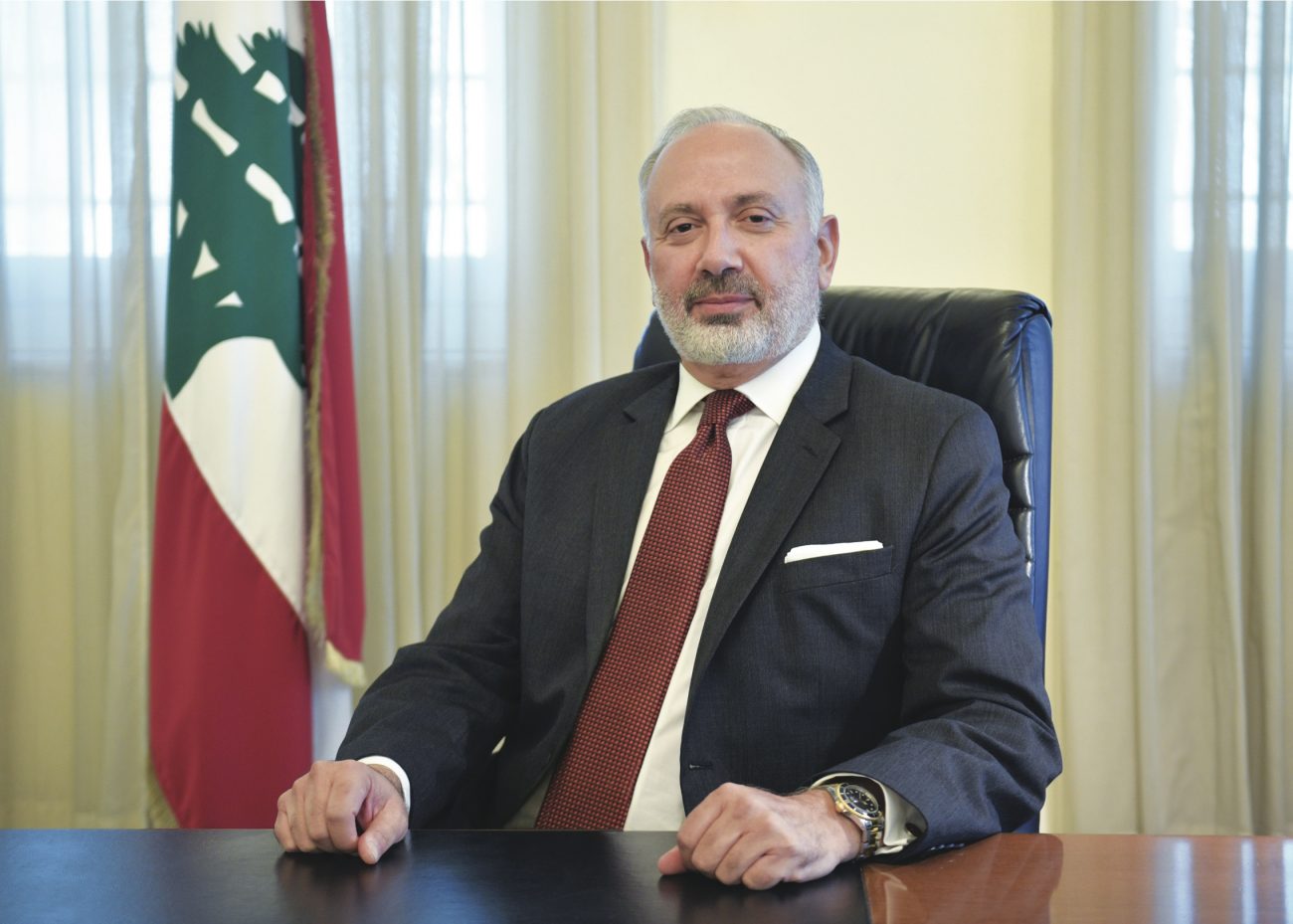
Interview with Ziad Hayek, Secretary General of the High Council of Privatization and PPP

by Thomas Schellen November 8, 2018
written by Thomas Schellen

One observation that the World Bank’s latest economic monitor publication for the Middle East and North Africa conveyed to its faithful readers was that the internet infrastructure in MENA countries needs to be brought up to speed in order to facilitate better transitions into the digital economy. Published in early October, the monitor highlighted the need for “digital public goods,” first among them reliable and fast broadband internet access. It chastised markets in the region for not providing enough high-speed internet access at low cost and for containing barriers that limit data centers and “hurt the environment for a data-driven economy.”

Lamentations over the weakness of national internet infrastructure are very common in Lebanon and many failures in the implementation and growth of online businesses over the past two decades must be attributed to the poor and politicized state of this particular infrastructure (if you do not know this, you have missed years of Executive’s analysis). However, several remedial actions have appeared on the map and some of them, stakeholders in the internet and communications sectors tell Executive, will be felt as early as next year. Others are slated to become reality further down the road.

While there appears to be no reason for Lebanese businesses and households to expect an impending tsunami of internet infrastructures, allocation of blame on the absence of such infrastructures as all-purpose excuse for delivering a business project late or missing an important spec can  no longer be the go-to.

What should strike happiness into collective hearts, however, is what the arriving framework of public-private partnership projects on the national scene has in store. One of the first three PPP projects under preparation is a national data center, which appeals both in terms of affordability and positive implications for the digital transition and entrepreneurship in Lebanon. Executive was eager to learn more from Ziad Hayek, the secretary general at the High Council for Privatization and PPP (HCP). 

(Details for the other two PPP plans—a $500 million construction of Terminal 2 at Hariri Airport and the implementation of a $3 billion toll road from the southern edge of Beirut all the way through to the Nahr Ibrahim area—also solidified in October, and will be covered in the end-of-year outlook next month).    

E   When compared to these two projects of airport expansion and toll road construction—which are rooted in historic transportation knowledge and structures—the project of a national data center is perhaps a little different, given that it pertains to digital economy infrastructure, which has a history of around 10 years for most of its global iterations. What is your approach to the national data center?

We talk a lot about building the knowledge economy in Lebanon, and this makes a lot of sense because we all know that Lebanon has good education [systems], people that are multilingual, and that—from designers of [leading global tech products] to owners of major mobile networks—Lebanese are involved in the tech industry all over the Middle East, not to say all over the world, in a big way. The [question] is: How can we enhance the knowledge economy in Lebanon? One way to do this is to provide Lebanese companies with access to data center services that are close to them, whether for co-location, or so that people can have [nearby] access to their servers or their disaster recovery, but do so in a professional way. Today, most Lebanese companies are either small, and therefore have their data stored outside of Lebanon on some website or something—but these are not the companies that are providing employment. If we look at larger companies today, they are inadequately served. They either have in-house servers, but you do not always know if you have the best technical people [in in-house IT departments], or you are hosting with a small data center that may or may not provide you with all the services that you need.  We, thus, are looking to build a world-class data center that can provide multiple levels of encryption and that has multiple redundancies so that you have safety and security for storing your data, that can withstand earthquakes up to a magnitude of 8.5 [on the Richter scale], and that has multiple high-speed fiber connections. You are firstly looking to provide Lebanese companies with a better service. Secondly, such a data center, with people in customer service that can speak Arabic, could serve neighboring countries, where the same level of ability might not exist to create and manage data centers. Thus, this would be a contribution to the region. Thirdly, we think that such a data center is an infrastructure that can create jobs and contribute to growth in the private sector. For all these reasons, we need that data center.

E   Can you say anything about the planned dimensions, such as server capacity? 

Right now we are thinking obviously about having multiple locations, so maybe two or three locations to facilitate better securing the data. Overall, we are looking at the combined capability to account for about 6 megawatts in power consumption, and at power utilization efficiency to be about 1.6 times. We are looking for [the data center] to have about 500 [server] racks, and to be Tier 3 plus, meaning Tier 3 as a minimum. With power supply, it should be Tier 4 level, if not better. At minimum, we are looking for it to provide IAS, which is infrastructure as a service, but also additional things. We are establishing certain criteria that are not yet set in stone and will not be until we have a chance to not only go to the Council of Ministers, but also to discuss these issues with potential investors. What we do in the feasibility study phase is to try to figure out what the size of the market is, what technology is to be used, etcetera. While they are not final, these are the points where we are heading, more or less.

E   You are saying that the data center will serve corporate Lebanon and the private sector, but one would assume that it would also be intended for public sector usage. Do you have a ratio or mix of public and private usage that the data center would aim to achieve?

It will compete for business, and hopefully will be attractive enough to various government entities and provide enough security for these government entities as well as the private sector. But we don’t have a preset view [on the ratio of government usage].

E   There seem to be many issues that need to be considered from the perspective of cybersecurity when building and operating such a center. Some might claim that using contractors from certain countries might result in them installing back doors in your data center. Is this not a totally new field for Lebanon, as far as developing cybersecurity?

This is exaggerated. People think that when somebody builds a data center they have access to the data. This is not true. There are many technical aspects to this, but to put it in the simplest form: At a data center, you have your servers in a room, the key to the room, and the key to the servers, with your own encryption keys. If somebody wants to get access to your data, they can by hacking into it, but hopefully your encryption levels at a data center are much more secure than at a server in the basement of your building. The risk is not that the data center operator would have access to your data. The threat is hackers getting access to your data. In this regard, you will be more secure at the data center than at your own premises.

E   However, when talking about cybersecurity, isn’t it true that we do not even have all the requisite legislation in place regarding cybersecurity in Lebanon?

We are working on that.

E   And we also don’t yet have a national cyberattack threat detection center or response center in Lebanon, with all the required experts on 24/7 basis. Will a sort of national cybersecurity protection system, or threat and intrusion discovery and response system, be included when a data center is created?

The data center will have the capability to detect threats. This is not the problem. But in terms of legislation, let me point out that we already have the law for data privacy and for e-transactions, which is very good.

E   These were passed in September?

Yes. And we are working with lawyers as we speak, and there might be some enhancements that we can bring into this and suggest additional legislation.

E   If one considers the political sensibilities that exist in the fragmented Lebanese political and communal landscape, would you expect to see demands that one portion of a distributed data center has to be built in the Druze mountains, another section in Akkar or in the south or in Keserwan, or wherever?

I don’t doubt that the minds of many people who are not well informed, and who tend to politicize everything, will tend to have that angle. But anybody who knows what they are talking about will know that it makes no sense to say [the data center] has to be built in such or such area. The important thing is that it is built where there is access to proper power supply, to redundant fiber optic connections, and so on.

E   Power supply is important in a country with the climate of Lebanon, since it relates to the need for cooling the servers, as well as to the power needed for running them and all adjacent infrastructures. In Lebanon, power supply is, to date, not an easy topic. So if we are talking of 6 megawatts for the data center, how will this additional power be supplied? Will it be integrated in the national grid under a plan with EDL?

Ideally, there would be some contract with EDL for 24/7 power supply. It would probably be at higher rates [compared with supply to households], as we are not looking to get electricity cost subsidies for the center. But of course such a center would have to have a redundancy power supply of its own that has to be up at 99.99 percent of the time under service level agreements. Power supply is a challenge, and it is more expensive compared with power supply in other countries, but on the other hand, having a data center has other advantages, of being in the region, of having customer service in Arabic, and all those things.

E   Would ownership of the data enter under the PPP contract be shared between the public and private investors?

No, ownership would be 100 percent private, as with all other PPP projects. The government is not a shareholder, and they are not sitting on the board. It is meant to be a 100 percent private project where the government is providing land that is located where access to fiber optic connections is best, and our role [as the HCP] is to facilitate the building of such a facility in Lebanon. The benefit of this facility to the government is largely economic, as opposed to financial. In other words, the government is not necessarily looking to achieve a [financial] return on this as much as to facilitate [economic benefits].

E   As Executive understands it, there are many mandates and requirements in order for CEDRE-supported PPP projects to activate and tap into credit lines. Do any of the three projects have conditions that are related to requirements for specific reforms?

Not much. CEDRE was mostly about pledging money for Capital Investment Plan projects—with the majority of funding going through the government. Perhaps $1 billion of the amount pledged would be used to enhance credit for PPP projects. Whether the data center project would benefit from any concessional financing or not, I don’t know. We will see.

E   In terms of timeline, are you looking at the data center project to be implemented in between the airport expansion and the toll road construction, or concurrently with one of them?

It would be earlier.

E   When do you think it will start?

We are hoping that we could tender it by the end of next year, or perhaps early the following year.   

E   So we would have a tender possibly in late 2019, and would add three years in construction time?

Perhaps two years. It can be [built] quickly as it is not heavy infrastructure. [The project will involve] basically constructing a building to certain specifications and then putting in certain equipment.

E   Where else in the Middle East do we currently have capacious data centers?

Mainly in the Gulf, but we don’t have any in the area [directly around Lebanon].

E   Would you aim to have clients from all of MENA using the data center?

No, but first I have to say that it is a private sector enterprise, and it will be [up to] the private sector operator to go after business, whether in Lebanon or other countries. What we are saying is that there is potential for regional size.

E   Have you made any quantification of this potential in monetary terms?

No, and we are not able to do all that today. We can say that we are sizing the Lebanese market, but there is other potential, icing on the cake. If you want to build something that is modular and can grow, you will not make all investments from day one, so you will make a small investment for Lebanon and a certain part of the Lebanese market and grow the data center as needed.

E   So we are not talking about investments worth billions of dollars, as is common for large data centers in China and the developed world? What will the Lebanese data center cost?

We estimate it at about $100 million. But again, you don’t have to build a big thing all at once.

E   Right, small and smart is beautiful, and big is not always necessary. But it seems from what is being built around the leading data center markets, like China, that these are the largest infrastructures in the emerging digital era.

The demand is there, and we will see more and more data centers being built around the world. Data keeps increasing, it is not decreasing, as we are always storing and archiving more.

E   And all over the world we see increases in cloud computing and have artificial intelligence coming up. Are you planning for AI capacity in this data center?

We are not planning [for specific capacities]—we are putting minimums [that have to be met], and the market will dictate to what level we go.

E   Did you size the Lebanese market for its potential? How much is that?

Yes, but we are not talking about the financial modeling at this point. We keep this information to ourselves. This relates to our own ability to judge those [PPP] proposals.

E   What is the HCP’s perspective on the involvement of civil society, with organizations such as the Lebanese Transparency Association (LTA) monitoring PPP implementation?

This [inclusion of civil society] is my own personal initiative. We are not obliged to do this, but I have always been pro-openness to civil society and transparency. I thus took the initiative upon myself to call LTA and say that I would like to form a committee to audit our work, for transparency and fairness, from civil society, but I do not want this only to  involve the LTA; I want them to lead it because they are the [main] transparency association[in the country] and have links to Transparency International. I want other parts of civil society involved in this effort, but we have not yet reached a decision on the shape or form of this. But I invited civil society, at least the LTA, to the kickoff meeting for the airport project this month, for them to start early on this journey with us. There is a learning process that they need to go through to better understand what PPP is, and the difficulty of tendering PPP projects. Hopefully we will work with LTA and other NGOs on this.

E   Lastly, on the digital transformation of the Lebanese economy: How much of a role can the data center project—and improvement of knowledge economy infrastructures—play in the needed transition of the Lebanese economy into a digital economy? The Word Bank recently saw the need for a strong concerted effort in transitioning MENA countries toward the digital economy, but citizens, governmental, and private sector stakeholders on various levels of the Lebanese economy appear to be moving at different speeds toward a digital economy.   

The data center will be an enabler—perhaps the most important one, but one enabler. Another enabler is speed of connectivity, fiber optic to the home, etcetera. A third enabler is the development of content to get more people online and have them finding something interesting. We cannot say that one thing will be the magic wand to achieve the objective [transition to the digital economy]. The data center is an enabler, and we think that Lebanese society is at a level of maturity in technology and science and knowledge to benefit from something like it. We have reached a level in Lebanon where this is now needed.

E   How important do you personally think the transition to the digital economy is for Lebanon?

For Lebanon, it is huge. One major thing that the Lebanese complain about is corruption. By using technology, whether in e-transactions or for disintermediation in providing access to information, etcetera, we can hopefully combat corruption. I think this is the only way that we can combat corruption at this point in time, and the [data center project] is very important in this sense. In a second sense, it is very important to grow the Lebanese economy through digital [technology]. Our neighbor to the south has huge capabilities in IT and focused on some IT areas in ways that made them world leaders. There is nothing that prevents us [from achieving something equal]. We have no less qualified people, [no less] networked or connected people, and no less creative people. There is no reason why we can’t have [a great digital economy]. What we need is a concerted effort to provide our people with the systems, the infrastructure, and the enablers. That is what we are trying to do.

November 8, 2018 0 comments
0 FacebookTwitterPinterestEmail
Economics & PolicyThe triple frontier

The curious case of Assad Barakat

by Peter Speetjens November 8, 2018
written by Peter Speetjens

There is a thin line between fact and fiction in discussions of the Triple Frontier, a border area between Paraguay, Argentina, and Brazil that is rumored to be a Hezbollah hotspot. More than one year has passed since US President Donald Trump stood on the White House lawn and promised an answer to the “menace” of Hezbollah. The Americans have long had Hezbollah in their crosshairs, but the change in occupancy at the White House brought expectations of a change in strategy. Instead, the US has renewed its focus on disrupting alleged Hezbollah financing networks by profiling  the Shiite diaspora in Latin America.

“Brazilian police arrest alleged Hezbollah financer,” read a Reuters headline on September 21. Lebanese-born businessman Assad Ahmad Barakat was taken into custody after an arrest warrant was issued against him by the Paraguayan authorities for “declaring an incorrect nationality and omitting information about loss of nationality.”

Argentinean authorities also accused the 61-year-old of attempting to launder $10 million through a casino in Puerto Iguazú, a city in Argentina. According to the US Treasury Department, Barakat is “a high-ranking Hezbollah financier” and one of the organization’s “most prominent and influential members.”

Numerous publications around the globe ran the Reuters story. Some, however, omitted the term “alleged.” A crucial term, since everyone should be presumed innocent until proven guilty, and  especially so in the case of Barakat—he has seen and heard it all before.

Following a series of reports portraying him as Hezbollah’s main operative in South America, he spent seven years behind bars in Paraguay for tax evasion.

An ongoing saga

“Every year or two we are confronted by a wave of allegations about Hezbollah and the terrorist threat in the region,” says Ali Farhat, a Lebanese businessman and part-time journalist who has lived in the Brazilian state of Paraná for some 18 years and works in the city of Ciudad del Este, across the border in Paraguay. “We are tired of it.”

“The latest charges against Barakat are just ridiculous,” Farhat says. “The authorities claim his Paraguayan passport was canceled 15 years ago. Hence, the charges. Yet he has worked in Ciudad every day since he was released from prison without any problems. Local police now say they were never notified Barakat’s passport had been canceled. I am convinced it is the same story all over again.”

In 2009, Farhat co-authored a book in Portuguese called “Terrorista por Encomenda” (Terrorist to Order), in which he and Brazilian researcher Fernanda Regina da Cunha Giulian investigated Barakat’s first conviction and the way in which he was made a symbol in the global war on terrorism.

Born in 1967, Barakat left Lebanon for Paraguay in 1985. By then one of his brothers had been killed in the civil war, while the other was running a small car repair shop. The youngest of the three, Barakat was determined to carve out a better future abroad. He opted for Paraguay as it offered one of the few visas easily obtainable by Lebanese. Gradually he built up a business, which primarily imported electronics from China.

“The problems started with a commercial dispute in the late nineties,” says Farhat. “Barakat had secured the rights to a popular electronic game (Brick Game), which a well-connected competitor had also wanted. It is then that the Hezbollah accusations were first heard.”

These accusations resurfaced in 2001, shortly after 9/11 and George W Bush’s announcement of the “Global War on Terror.” On October 6, 2001, the Paraguayan daily Ultima Hora ran a story reporting that the Paraguayan authorities eyed Barakat as the “alleged head of Hezbollah fundraising and the principal agent of Holy War in the Triple Frontier.”

This turned out to be only the opening salvo in a relentless media campaign. Citing anonymous government sources and experts, numerous other publications followed the tone set by Ultima Hora and with every published article, Barakat became synonymous with Hezbollah.

Farhat is convinced Barakat got caught in a perfect storm. He argues that despite the original accusation of Barakat’s links with Hezbollah being motivated by a business dispute, the media became enamored with the story of Hezbollah and terrorist financing, while the authorities were keen to prove their worth in the emerging global war on terror.

Brazilian police eventually arrested Barakat in Foz do Iguaçu, the city in which he was living, on June 22, 2002.  Although they admitted to having “nothing on him,” they extradited Barakat to Paraguay on November 17, 2002.

He stood accused of financing Hezbollah by selling counterfeit products, drugs, and even arms, but was ultimately sentenced to seven years behind bars for tax evasion.

“They did not have any evidence,” Farhat says. “Barakat owned video material of Hezbollah fighters training or in action against Israel, and he had made some donations to the Al-Shahid Social Welfare Association. Very general stuff. So, in the end they could only convict him for tax evasion.”

Another major question emerged when Barakat was released in 2009. Hezbollah’s alleged leading man in South America, now shorn of his supposed cover, did not return to Lebanon to receive a hero’s welcome. Instead Barakat returned to his Brazilian wife and three sons in Foz, where he lived, away from the limelight, until his arrest on September 21.

A lack of evidence

This does not mean Barakat definitely did not act on behalf of Hezbollah. He might have. But it was never proven. The US Treasury Department, however, still lists him as a “high-ranking Hezbollah financier,” and one of its “most prominent and influential members.” Barakat’s only conviction—tax evasion—is not even mentioned, while media-fuelled suspicion is presented as fact.   

South America expert Christopher Sabatini, adjunct professor at the School of International and Public Affairs at Columbia University and executive director of the non-profit organization Global Americans, declined to comment about the Barakat case specifically, as he was not fully versed on the details. However, he says he has been “closely following the dossier on the alleged presence of Hezbollah and other Islamic or terrorist organizations in the Triple Frontier since the mid-1990s, and so far there has not been a single case that proves the many wild accusations that have been made since.”

These “wild” accusations include but are not limited to: Hezbollah running training camps in the Paraguayan jungle, Hezbollah cooperating with Al-Qaeda to prepare attacks on American soil, and Hezbollah being in bed with Primeiro Comando da Capital, Brazil’s largest and most notorious criminal organisation.

Barakat is not the only alleged Hezbollah operative to be arrested in the Triple Frontier. In June 2010, Paraguayan police arrested 37-year-old Moussa Ali Hamdan for providing “material support to Hezbollah.” He allegedly transferred to the group the proceeds from the sale of stolen goods, including cellular phones, laptops, Sony Playstation 2s, second hand cars, and counterfeit Nike shoes.

In 2013, 30-year-old Wassim Fadel was arrested for sending a 21-year-old Paraguayan girl to Europe with 1.1 kilograms of cocaine in her stomach. She was arrested in Paris. The media immediately portrayed Fadel as Hezbollah’s very own Pablo Escobar in Paraguay.

Unlikely stories

“But these cases are peanuts,” Sabatini says. “If Hezbollah were to smuggle cocaine, would they really be interested in one kilo? Would they not send a container?”

Other elements in these stories about alleged Hezbollah activity do not add up. Hamdan was a dual citizen of the US and Lebanon living in Pennsylvania. He only entered the alleged Hezbollah financing scheme after being offered stolen phones by an undercover FBI agent. He even bought two fake passports from the same cop to settle an outstanding debt.

Regarding Fadel, Paraguayan police claimed that he had transferred funds to bank accounts in Istanbul and Damascus, which were owned by “Hezbollah members involved in the group’s financial operations.” The allegations are very specific, yet the names were never released.

Fadel had become a fugitive in 2008, when customers of his car parts company in Paraguay filed a fraud complaint. Would a Hezbollah kingpin really have been trying to make an extra buck by selling fake car parts?

“I’ve talked to several intelligence officers over the years and among them there seems to be a consensus that drug trade and money laundering in South America are not central to Hezbollah operations,” Sabatini says. “Let alone that the continent is used as a platform to train fighters and launch attacks on the US.” And if this were the case, US intelligence would presumably know. “Numerous State Department, Central Intelligence Agency, and embassy investigations have scoured the area so much that it must be one of the most studied areas by the US intelligence community in the Western Hemisphere,” Sabatini adds. It should not come as a surprise then, that the US embassy in Paraguay has downplayed the suspected Hezbollah presence in Ciudad. In 2007, Wikileaks published a US diplomatic cable acknowledging that illicit activities “including trafficking in drugs, arms, and counterfeit goods, as well as document fraud and money laundering” had taken place in the Triple Frontier, but also states: “Hezbollah has a small, direct, non-operational presence on the ground, but most Lebanese in the Tri-Border Area are Hezbollah sympathizers, if not financial supporters.”

The cable specifically refers to the donations made at the Shiite Mosque of the Prophet in Ciudad. Local Lebanese, however, swear these donations are only used for projects such as the local school. But even if some are sent to Lebanon, some sense of proportion is necessary. The same US cable mentions how in the Merchants Bank/Valley National Bank case, $3.7 billion was moved from the Tri-Border Area through the United States. Another case involved New York financial service provider Beacon Hill, which moved $13 billion in six years through 40 different JP Morgan/Chase bank accounts. Beacon Hill was successfully charged as an unlicensed money transmitter, while JP Morgan/Chase paid a hefty fine.

Another US cable published by Wikileaks concerns Paraguayan bank Banco Amambay and claims “80 percent of money laundering in Paraguay moves through that banking institution.” The bank is owned by Horacio Cartes, (the man the DEA suspects of cigarette and cocaine smuggling), who from 2013 to 2018 served as president of Paraguay.

“I have the impression the Hezbollah and terrorist threat in Ciudad del Este is predominantly a political issue,” says Sabatini. “It is a way for Latin Americanists and other parties to get the attention of the White House. That could concern defense budgets, jobs, or the conflict between Israel, Hezbollah, and Iran.”

So, why did the Paraguayan authorities again issue an arrest warrant for Barakat on the rather vague grounds of “declaring an incorrect nationality and omitting information about loss of nationality?” The clue lies in timing. The warrant was issued shortly after the inauguration of Paraguay’s President Mario Abdo Benítez on August 15. Paraguay is a close US ally and a participant in the State Department’s (lucrative) Antiterrorism Assistance program. Could it be that the 46-year-old newcomer merely aimed to offer a gesture of goodwill toward the White House?

We may never know for sure. What we do know is that some 50,000 Lebanese live and work in the Tri-Border Area, who are currently  all tarred with the same brush. The flurry of allegations from US and Israeli politicians, the media, and think tanks about Hezbollah’s alleged links in South America since 2001 has been relentless, and so far backed up by very little proof. There will be bad apples among the Lebanese in the region. Some may operate on behalf of Hezbollah. Yet, there is little doubt that the vast majority of these people left Lebanon to have a better future. Many succeeded and have helped make Foz and Ciudad into the tourism and shopping havens they are today.

And among these expats is Assad Barakat, who remains in custody awaiting possible extradition to Paraguay. Is he a Hezbollah financial mastermind, as some have claimed for years? Or is he an innocent father of three? One thing is certain: It will matter little when he is extradited—the story will no doubt repeat itself.

November 8, 2018 0 comments
0 FacebookTwitterPinterestEmail
Economics & PolicySanctions

‘America First’ is a risk to Lebanon and the Middle East

by Jeremy Arbid November 8, 2018
written by Jeremy Arbid

Last month marked the 35th anniversary of the deadliest attack against US forces since World War II: the bombing of the US Marine barracks in Beirut on October 23, 1983 that killed over three hundred people, including 241 US military personnel. The official US line now is that elements of what would later become Hezbollah, backed by Syria and Iran, were responsible for the attack—although all three parties continue to deny involvement. During an event marking the anniversary, US President Donald Trump, with his customary love of theatrical moments, signed new legislation targeting Hezbollah. The first response from Lebanon was defiant.

For a long time the United States has pitted itself against Iran and, by extension, Hezbollah. Since the Islamic Revolution at the end of the 1970s in Iran and, later, Hezbollah’s inception during the Lebanese Civil War, the Americans have hunted the two in a remarkably consistent way. This has not changed under President Trump; American strategy, however, has shifted. It has been influenced by a fundamental repositioning of US policy vis-a-vis the entire world—a mindset most commonly referred to as “America First.” The Trump administration has been more aggressive in removing itself from or renegotiating existing treaties, and seems content with exercising a much more risk-friendly foreign policy. To understand how this new policy of Trumpism has affected Hezbollah, Lebanon, or Iran, looking at the realities on the ground is somewhat pointless. To understand these changes, one should instead examine Trump’s version of reality. This is not a new phenomena when regarding the foreign policy of America, but under Trump it has become particularly acute.

Trumpism writ large

The Trump paradigm, which is not an openly declared policy, is that the US will do what it likes and what suits it, with little regard to how it impacts other nations—allies included. This has had huge global implications. How many treaties has Trump made redundant, or at least announced his intention to scrap? In less than two years Trump has, for example, exited a landmark international climate change agreement, unilaterally walked away from the Iran nuclear deal, and, most recently, indicated he would junk an arms control agreement with Russia. Every foreign policy decision under Trump’s direction is a wild card.

Trump’s targeting of Hezbollah comes as part of a shift in America’s Middle East strategy to more closely reflect the policy goals of Israel and, to a lesser extent, Saudi Arabia—both hellbent on countering Iranian influence across the region. So far, Trump’s administration has sought to counter the group by targeting its financiers. This is not a radical departure from the previous administration, but it seems that Obama during his second term was less interested in pursuing Hezbollah and more amenable to working with the group’s patron, Iran.

In 2008, at the outset of the Obama administration, the Drug Enforcement Administration (DEA) launched a law enforcement campaign, code-named Project Cassandra, to disrupt Hezbollah’s alleged global drug trafficking and money laundering network. Following its investigation into Hezbollah’s sources of funding, the DEA alleged that the group reaped $1 billion per year laundering money from drug proceeds.

Near the end of Obama’s first term, drawing on evidence from the DEA investigation, the US Treasury blacklisted local financial institution the Lebanese Canadian Bank (LCB). According to the original indictment issued in the Southern District of New York US Federal District Court, LCB was involved in a tri-continental money laundering operation that stretched from South America to North America and West Africa. A money exchange entity in a West African country that was a subsidiary of LCB was accused of channeling the proceeds, but the money came mostly from manipulation of the used car market, including pre-owned vehicle dealerships in the US, with smaller amounts coming from Latin America. Allegedly, LCB was also involved in the financing of Hezbollah activity, but the actual affiliation of LCB was never visible, above the level of individual branch managers having some connections to the group. There was never a smoking gun linking bank executives to Hezbollah, and, in 2013, LCB’s board and all shareholders agreed to a settlement of over $100 million on the condition of no admission of guilt.

That year, discussions began in earnest between the Obama administration and its counterparts on the UN Security Council, plus Germany and the EU, that ultimately led to negotiations on an Iran nuclear deal framework. In pursuit of a drawdown of Iran’s nuclear weapons capability, the Obama administration began quietly withdrawing support for Project Cassandra, a Politico investigation published last December reported. The Politico investigation concluded that the Obama administration sidelined the operation because it feared DEA investigations and Treasury actions would jeopardize negotiations with Iran.

Ramping up sanctions

It was only 15 months ago, in August 2017, that Lebanon’s prime minister, Saad Hariri, stood on the White House lawn as Trump declared a forthcoming answer to the “menace” of Hezbollah. At the time, we did not know what Trump had in store.

In May, Trump withdrew the United States from the Iran nuclear deal, in part on the implied notion that Iran was using the country’s economic recovery from sanctions relief to fund Hezbollah. The Americans see Iran’s support for Hezbollah as a destabilizing force, in both a political and security sense, away from the interests of the US and its allies in the region. The Iranians see Hezbollah as a useful tool extending Persian political influence and its interpretation of Shiite Islam, Waliyat al-faqih, serving as a resistance and counter to Israel and, in recent years, securing mutual interests in Syria.

In August, the US reapplied a first phase of sanctions, and in early November reimposed a second phase of sanctions targeting key Iranian trading and energy activities, namely the nation’s petroleum exports. The US is targeting Iran’s economy to alter its political influence and military behavior in the region, and to temper Iranian financial support to Hezbollah.

Back in 2015, after the Iran deal was concluded, Congress passed a law—the “Hizballah International Financing Prevention Act” (HIFPA)—meant to kneecap the group financially and isolate it from the banking system worldwide. The legislation may have been driven more by America’s political environment rather than regulatory need, Executive reported in 2016, placating conservatives and war hawks in the Congress enraged by the agreement with Iran. It is, however, unclear what practical effect that law had in cutting Hezbollah off from the international financial system. HIFPA required the Obama administration to report to Congress on Hezbollah’s alleged narcotics trafficking and alleged transnational criminal activities, but if that was done the reports were never made public.

Amendments to HIFPA had been rumored to be in the works since mid-2017, as Executive reported, and finally, at the end of October, as America’s renewed clampdown on Iran was set to begin, Trump signed new legislation amending HIFPA,  the “Hizballah International Financing Prevention Amendments Act of 2017” (HIFPAA).

Congruently, throughout 2018, the US Treasury has sanctioned nearly 40 individuals and entities, “pursuant to the Hizballah Financial Sanctions Regulations.” In October, the US Department of Justice (DOJ) named Hezbollah as one of the “transnational organized crime threats” to the United States, alongside four Central American cartels. The DOJ move comes nearly 10 months after it formed the Hezbollah Financing and Narcoterrorism Team, tasked with “investigating individuals and networks providing support to Hezbollah, and pursuing prosecutions,” according to a DOJ statement. The statement also added that the new DOJ unit will work to “restrict the flow of money to foreign terrorist organizations as well as disrupt violent international drug trafficking operations.”

Through sanctions and the law enforcement actions, it seems a case is being built that could lead to indictments in US courts of Hezbollah officials and entities, or their affiliates. As of yet, we do not know how strictly the US will pursue Hezbollah on these fronts, how widely the US will cast its net, or whether there will be collateral damage. But what is clear so far is that the Trump administration is coming hard for Hezbollah, and this pursuit will likely intensify.

Diplomacy no more

The main difference between the Obama and the Trump administration in all this is that the former was pursuing Hezbollah while easing off its patron, Iran, while the latter is going full throttle after both. Under Obama, the US pursued a diplomatic solution to the prospect of an Iranian nuclear weapon, whereas now the US is seemingly on a path toward military confrontation with Iran and its allies—if Iran does not change course in its regional influence campaign.

At the moment, Iranians—and arguably the world at large—are content to wait out Trump. We do not know what impact the reapplication of sanctions on Iran will have on economies in the region, nor what will happen to the price of oil. If the Iranian oil supply to the market is disrupted, it could cause price shocks and keep the cost per barrel high. These dynamics will start to emerge toward the end of the year, in time for the next OPEC/Non-OPEC meeting, in December. We also do not know what these American actions mean for Iran’s patronage of Hezbollah, and the country’s regional ambitions. Neither do we know Trump’s endgame—assuming he has one—if Iran and its allies do not capitulate to American demands.

How all of this will affect Lebanon remains to be seen. We know that past experience with US law enforcement and Treasury sanctions forced the closure of LCB in 2011, and when the HIFPA legislation was implemented in 2016, a local bank was bombed. That summer, Lebanon’s central bank had ordered commercial banks to comply with the US law. After they did, the head office of Blom Bank, one of Lebanon’s largest banks, was targeted. There was no claim of responsibility for the bombing and local law enforcement did not publicly reveal the results of an investigation into the event, if one was even conducted.

Hezbollah might assume important ministerial positions in Lebanon’s next government, namely the portfolio of the Ministry of Public Health. Suggestions that a Hezbollah-run health ministry would jeopardize foreign funding to the ministry’s programs is the next game of who will blink first. By now we know it is not beyond Trump to manipulate American soft power at multilateral institutions, in diplomatic or financial form, to get what he’s after, and in truth those were carrots long before Trump was elected. But what will happen if America’s implicit threat is ignored—either by Lebanon, Hezbollah, or Iran—is an unknown, as the world at large continues to react to this wild card president.

November 8, 2018 0 comments
0 FacebookTwitterPinterestEmail
CommentEntrepreneurshipEntrepreneurship 2018Special Report

Social entrepreneurship in Lebanon

by Maya Wakim November 8, 2018
written by Maya Wakim

Anyone with any knowledge of Lebanon knows that the country is perpetually described as teetering on a cliff’s edge, frequently stuck in political stalemate, and with infrastructure that leaves much to be desired. And yet, amid all this insecurity is the trope of the entrepreneurial Lebanese. Because, despite the difficult living standards, rampant corruption, and resignedness of citizens who must deal with the country’s various problems, there are a fraction who find themselves inspired by the situation around them into creating solutions for societal problems—and making some cash at the same time. And there is nothing wrong with that. Social enterprise is described in Forbes Magazine as for-profit businesses with “a mission to tackle global issues, such as alleviating hunger, improving education, and combating climate change.” In order to achieve these goals, these businesses “might fund specific programs, partner with governments or existing philanthropic entities, or follow a one-for-one donation model, and work on either the local or international level.” This is what we are seeing in Lebanon today.

In the past few years, Lebanon has witnessed a wave of startup ecosystem actors—including venture capital funds, investors, accelerator programs, and other financial and advisory entities—seeking to help Lebanese entrepreneurs go from ideation to a financially sustainable and profitable enterprise. These entities have focused on startups’ early-stage ideas and later stages of growth. Groups such as makesense, as well as Berytech and Fondation Diane, were established to equip citizens with the necessary innovation tools and design-thinking expertise to help social entrepreneurs achieve their mission.

The social entrepreneurship movement was born of a need to sustainably power changemakers, who would in turn would pass down their expertise, creating an expanding network of people using business to enact social change. It is a way to introduce a revenue-generating engine to social initiatives and make them self-sustainable. What differentiates social entrepreneurship from nonprofits and NGOs that are actively working on solving world challenges is that the latter model is one based on constant fundraising—and this, more often that not, is unsustainable. In other words, if the money runs out, the work stops and its impact with it. This is not to say that nonprofits and NGOs are not important—they are vital part of efforts to alleviate poverty, stall climate change, and solve other challenges. Social entrepreneurs would argue, however, that these groups need to be supported by similar yet self-sustaining initiatives like social entreprises. As they are less well-known than NGOs, it may not be clear to some what a social enterprise encompasses. Put simply, revenue plus impact equals social entrepreneurship.

Social entreprise initiatives drive impact and are based on a business model designed to spread that impact and make it more sustainable. In Lebanon, as elsewhere, this means using a business approach and utilizing the resources available for startups to creatively solve various societal issues, ranging from lack of transportation to gaps in the medical field. Having a financial engine behind it allows a social enterprise to scale up, grow, and spread across different regions. Meanwhile, an allocated budget permits the social enterprise to sustain its impact and gives the team behind it the chance to solve new challenges and adapt their business model based on the community’s needs.

People across the world are facing similar problems. Local changemakers are working on plans that would help solve challenges their communities are facing, and what they require is communication links with like-minded individuals elsewhere. Such contact would allow ideas and solutions to travel across borders. Global platforms, such as change.org and onebillionrising.org, help create these links by sharing content that brings attention to critical civic issues and sheds light on successful social enterprises around the world. The fact that many challenges are simultaneously global and local makes such platforms imperative for inspiring change in far-flung communities.

Establishing a social enterprise

In order to set up a social business, you need two things: a sustainable business model, and a challenge to be solved. A good starting point is the UN’s Sustainable Development Goals (SGDs), a blueprint to address comprehensive local and global issues by bringing multiple stakeholders together to take action. These 17 SDGs address universal challenges. However, assessing how best to tackle them is difficult. This is why makesense and other community-based actors were formed, in order to create the networks needed to tackle these global challenges by using social entrepreneurship to equip citizens with a platform, creative design thinking tools, and inspiration to take action. This civic movement has allowed entrepreneurs to connect to an extensive network of citizens for multiple purpose collaboration and customer reach. By creating this interconnected world under the umbrella of social entrepreneurship, many successful, sustainable ideas are traveling across borders. Changemakers do not need to be based in their country’s capital or tech hubs, they just need to be trying to create a solution to local issues. Most successful ideas were assessed based on impact, trial and error, and community support.

An opportunity for Lebanon

The list of challenges faced by the Lebanese is overwhelming. In Beirut, complaints over water shortages and the daily electricity cuts are frequent—yet those living outside the capital have it much worse. Traffic congestions, slow internet speeds, and poor infrastructure are just some of challenges that the Lebanese must navigate on a daily basis.

While the concept of social entrepreneurship might appear new to some, many are in fact practicing it within the scope of their work, without realizing they are doing so. In Lebanon there are different social entrepreneurial support systems scattered across the country, from the Tripoli Entrepreneurs Club (TEC), in the north, to the Jubaili Workhub, powered by Antwork, in the south. Such networks are well aware of the many problems that exist in Lebanon and are looking into impact-driven ideas backed by business models. Now is the chance for Lebanese citizens who are fed up with the way issues are being handled in the country to confront the status quo, while making a living from it. In the past eight years or so, financial support from different international and local funders has been given to ideas bringing change, at least enough to establish themselves in order to proceed. The financial sources are available in Lebanon, the challenges are very much in evidence, the motivating anger felt by citizens is intense, and the ideas are here. So why not go for it?

Lebanon has witnessed the rise of many social enterprises: FabricAid, the first second-hand clothes collector and distributor in Lebanon, which collects donated clothes, cleans and fixes them, then sells them at a lower price through pop-up stores around the country; Caesar Cider, an apple cider beverage sold around the country that emerged from the apple crisis in Lebanon, in which 40 percent of farmer’s apple crops were rotting due to the inaccessability of land export routes via Syria; and CIVVIES, a Lebanese eco-friendly brand that works with vulnerable communities to produce uniquely designed sustainable fabrics from recycled polyester and natural linens. All three social enterprises have won multiple awards and competitions since their inception, and have been supported by my organization, makesense Lebanon, mainly through tailored brainstorming workshops. They are sustainably assisting Lebanese communities and benefiting the environment by recycling products, among other methods.

Meeting the social entrepreneurs behind these ideas and listening to their stories and the impact they are making, motivates others to at least ask how to take the first step and make a difference. An observation that has been made by makesense over the years is that people around the world do want to make a change, but they do not know how to start. This is where a community plays an important role—its power lies in the knowledge shared during discussions. Lebanon, given its small size and tight-knit communities, has an advantage. People residing in Lebanon are more often than not connected to someone who could offer useful advice to someone else. Bringing these social dynamics into a local community of social entrepreneurs and citizens would empower and support the community. People all over the world want to make an impact on their societies, all while ensuring financial sustainability in order to survive. As risky as it might sound, there are many success stories out there that deserve to be heard. If social enterprise booms, the idea of a better Lebanon wouldn’t only exist in dreams and in ‘what if’ conversations, but would start appearing in our everyday lives. Many challenges are yet to be met with ideas, and many great ideas are yet to be heard. Social entrepreneurship in Lebanon has room to embrace numerous solutions and has developed enough to support ideas along the way. Perhaps teaching this notion in schools and emphasizing it in universities could create a new generation of social entrepreneurs. One can only highlight the importance of raising the next generation of citizens to become not just job seekers, but job creators and solution makers.

November 8, 2018 1 comment
0 FacebookTwitterPinterestEmail
CommentEntrepreneurshipEntrepreneurship 2018Special Report

Entrepreneurship and youth in lebanon

by Sally Hammoud November 8, 2018
written by Sally Hammoud

Lebanon may be officially classed as an upper-middle-income country by the international community, but it lags far behind other countries of a similar status. Serious deficiencies in the dynamics of the labor market—where youth unemployment is almost 40 percent, and women account for less than 25 percent of the workforce—are largely to blame.

It is hard to get a clear picture of unemployment in Lebanon. Statistics on unemployment are notoriously inaccurate, with official numbers putting the level of unemployment in 2018 at just 10 percent. Unofficial figures frequently reported in the media, however, put the level of unemployment at 25 percent. And it is the Lebanese youth who are most likely to be affected; finding job opportunities is challenging due to high competition and the unstable economic situation.

Lebanese youth are highly educated, with a large number of young people graduating from universities with higher degrees, such as a masters or a PhD. Yet, some reports say that an average of one Lebanese youth in three is unemployed.

One solution for tackling this high level of youth unemployment would be to equip young people with the skills they need to become entrepreneurs. Entrepreneurship has the potential to help countries achieve both internal and external targets. Several of the UN’s Sustainable Development Goals (SDGs), including sustainable education and environment, and the eradication of poverty, could all be benefited by entrepreneurship. In Lebanon’s case, there are several intersecting opportunities that could be taken up by civil society organizations, schools, and universities, along with the government and the private sector, to establish proactive strategies to stop the brain drain and bolster the country’s economy.

There is a huge need to equip the next generation with the skills needed to bring about sustainable growth. Strategies to do so should go beyond education, focusing also on building capacity to provide youths with labor market opportunities. This need is becoming more urgent by the day, equal to the need for education, to help current and future generations get through difficult times and weather massive economic, social, and political challenges. Youth empowerment is essential—at its core, it is the incubation of human potential. By empowering Lebanon’s youth, we will bring considerable economic, social, cultural, and human benefits to our country at all levels.

Entrepreneurship for all

What draws youths toward entrepreneurship is their belief that it allows for creative freedom, unencumbered by obsolete organizational structures. Research on American millennials in 2014 found that 94 percent want to use their skills to benefit a cause. Social entrepreneurship attracts millenials  because they want to engage in their community and become efficient global citizens. This is why social entrepreneurship is becoming more common in Lebanon. Youth are looking for solutions that can do for their community what the government is unable to do. But they lack the guidance to become young social entrepreneurs, as these kinds of skills are so far only being taught to those studying business or entrepreneurship itself. These skills should be taught to everyone, and at a young age. With a base in entrepreneurship those Lebanese university graduates currently struggling to find work at home despite their expertise could find their own solutions and work toward improving the Lebanese economy.

There are many possible routes that could benefit the youth and country as a whole, but the most feasible ones are education, media, and civil society. Education systems require constant improvement at all levels: curricula, educators, administrators, and students, as knowledge-based technology is intersecting with every aspect of our lives. Educational institutions must introduce entrepreneurship to students at an early age to enhance their creativity. Some institutions are adopting this approach, but it is not enough to cover the current needs of the market. Such a curriculum would provide students with better career orientation, which would help them in selecting their major at university.

For the past few years, my organization, Loyac, which works to promote youth development,  has hosted several groups of school students from Kuwait, and enrolled them in school entrepreneurship programs with a mandate to assess, design, and implement solutions for underprivileged youth. This peer-to-peer approach has so much impact on communities. Teaching design thinking from a young age, as well as promoting peer-to-peer learning, comes with several benefits. It allows for active learning, and helps reinforce these skills through the teaching of them to peers, benefiting all sides of the equation.

Networks for innovation

Partnership between educational institutions and civil society is also vital. Civil society is the ecosystem for social change, as civic engagement helps youth observe, assess, and understand societal problems. This fosters empathy and an eagerness for change, encouraging youths to care about each other, and the planet. When engaging in civil society, they learn how to design their thinking to find pragmatic, sustainable solutions.  According to the 2017 Global Entrepreneurship Monitor (GEM) for Lebanon, one in six adults in Lebanon cited fear of failure as preventive factor for starting a business; incubating youth at early age would perhaps help them counter these fears in later life.

With all the challenges that Lebanon is facing, entrepreneurship is one of the keys to stabilizing the economy. Of the eight MENA countries that participate in the GEM, Lebanon had by far the highest level of women-driven startups, almost twice that of the next highest, while, for both male and female entrepreneurs, most starting or running a new business were under 35 years old. Indicators such as these are worth celebrating and sustaining. Injecting entrepreneurship skills through education, civil society, and media literacy can help work miracles.

November 8, 2018 0 comments
0 FacebookTwitterPinterestEmail
EntrepreneurshipEntrepreneurship 2018Entrepreneurship 2018OverviewSpecial Report

Entrepreneurship and the digital economy in Lebanon

by Thomas Schellen November 7, 2018
written by Thomas Schellen

When making the rounds through the Beirut Digital District (BDD) to assess how Lebanon’s entrepreneurship system is developing, there is a lot to observe. Over the past five years, there have been several exercises—usually with significant self-promotion and marketing—to map this emerging system in all its components. Invariably, such exercises seemed incomplete by the time they were done, simply because the entrepreneurship realm was changing and expanding faster than it could be mapped.

Driven into existence by the initiative of Banque du Liban’s Circular 331, from the moment of the circular’s publication in August 2013, the ecosystem has grown with each passing year (with Executive committed to publishing annual observations on its progress). This year is no exception. Regardless of the months of political wrangling in the halls of the Grand Serail and Parliament, and also regardless of deteriorating conditions in key sectors of the real economy and intense propaganda-mongering about alleged crises in the Lebanese currency, the BDD at the end of the third and beginning of the fourth quarters of 2018 emits energy, optimism, and innovation.

The first vision of this year’s progress in the system was provided by accelerators, who presented their graduating startups in September and October. Flat6Labs and Smart ESA, two programs that stepped onto the Beirut startup support scene less than two years ago, both organized their second demo days. The professional organization of the events made a strong impression, as did the high quality of the programs’ new graduates.

In talking to the two accelerators, the picture sharpens. Mira Zeidan, project manager in the Smart ESA team, tells Executive that the accelerator—which demonstrates the importance of the role that academic institutions can play in the entrepreneurship realm, especially if they have good relationships with the local and international corporate sector—has seen considerable improvements in the quality of participating startups in its short history. “There might be lower numbers of applicants, so less quantity, but definitely higher quality,” Zeidan says. “This is also reflected in the quality of service provided by the support organizations. When you have better people working on realizing startups, you will require better quality support systems. This is a learning curve that we all are on, accelerators and startups, and this learning curve is confirmed by the improvement in quality of startups that we saw in 2018.”

Perceptions of what it means to embark on entrepreneurial journeys are also maturing, as more and more people understand how much it takes, and those not up for this immense effort orient themselves toward different trajectories. “The ecosystem started with people having the image of the startup being something built in a garage by someone who had dropped out of college,” Zeidan says. “There was a lot of mythology in that. A startup means very hard work, and people are realizing this more and more. Entrepreneurship is starting a business and requires hard work, dedication, and commitment.”

Over at Flat6Labs, managing director Fawzi Rahal tells Executive his observations on the direction of Lebanese entrepreneurship. He, too, notes that locally one sees “many more refined solutions, much more refined technology and much more refined entrepreneurs, when compared with just a few years ago,” characterizing the ecosystem’s development trajectory as “a game of numbers and a game of time.”

Improve financing efficiencies

Operating an accelerator that also integrates elements of a venture capital (VC) and seed funding operation, Rahal says that the Lebanese ecosystem needs to evolve to include efficiency gains in its financial flows. According to him, regulatory and legislative frameworks are not fully tuned for optimal entrepreneurship support, given that the current taxation regime and fee mandates draw funds from the system right back into the state’s fiscal cycles, even though the funding of startups is strongly based on funds that enjoy subsidization from the public through Circular 331.

When Flat6Labs supports a startup’s path through formal incorporation, it encounters layers of time-and money-consuming fees, such as an annual $100 fee that is to be paid to the Beirut Stock Exchange. This adds up to a considerable financial burden when a batch of eight or ten new startups goes through the process of properly establishing themselves as joint-stock enterprises—burdens that startups would not have to bear, Rahal says, if they had gone the dangerous route of non-limited liability companies.

This drains away funds that had entered the ecosystem as subsidies for startup companies in the knowledge economy .“This is not a very efficient way of transferring money. With this in mind, I am saying the intentions are there, but the regulations are not,” Rahal says. He notes, however, that there is a silver lining: probable improvements in the ecosystem’s financing efficiencies, as political and institutional stakeholders, such as the prime minister’s office, the Ministry of Labor, and UNDP, have more actively engaged with the ecosystem’s constituents in order to research how many jobs are being created and how regulations can be optimized.

“From the understanding that money inserted in digital ecosystem is coming back by way of adding to GDP growth, every penny spent on capacity-building [with an] entrepreneur, and every time we, as VC, invest the second time [with such an entrepreneur], the odds of a startup succeeding become higher and the capacity in the ecosystem improves,” Rahal says. “This is an impact that you can see [at the BDD] and it is a general direction that BDL is big believer in.” To his way of thinking, the impact of the ecosystem will improve by another great leap, once there are exits that grab real attention.

Exit with style

“Money is something that everybody will get the message of, from entrepreneurs to governments,” he says. “This will be seen the minute when we have our first [very large] exit. If a startup like [music platform] Anghami were to be acquired for a billion USD, you would suddenly have people that have a billion in cash, and if such an amount landed in Lebanon, it would get attention from people who would ask how we can get more of these companies. This kind of money is no joke, even with a prime minister or a governor of a central bank, and will make them ask how to assure that the least portion of this money is leaked via fees or other outflows, and how we can create a system that generate more such amounts.”

Positive entrepreneurial energy in the BDD in autumn of 2018 is in no way only concentrated in the accelerators that staged their demo days in September and October. Sami Abou Saab, the chief executive of accelerator Speed@BDD, was with a delegation of 13 Lebanese startups in Dubai in October, and told Executive upon his return that the entrepreneurs from Beirut were able to shine on the international stage.

“It is a very small ecosystem in Lebanon and we really care for the whole Lebanese startup ecosystem to be highlighted on the international scene,” Abou Saab says, noting that the decision to attend the Future Stars competition at Gitex was based on the positive experience of Lebanese startups at the event a year earlier. The success of teams from Beirut on the Gitex stage, surrounded by enormous competition (140 startups in 2017 and over 230 this year), was, for Abou Saab, another validation of Lebanon’s entrepreneurial capacity. “We have strong local talent and have seen the value of our talent being highlighted and able to shine on those stages,” he says.

Just one notch below the acceleration of amazing new startups, the graduation of coding seminars at SE Factory last month added another paving stone to Lebanon’s road toward the transition to a digital economy that must extend far beyond just the biotope of tech startups. Fadi Bizri, one of the co-founders of SE Factory and a partner in venture capital firm B&Y Partners, tells Executive that over the coding program’s existence of more than two years, interest from banks and companies in the wider economy has increased, and been reflected in the hiring of graduates by all sorts of enterprises, from startups and software houses to some large companies. Bizri says that some explanations that local corporate players used to give for their reticent approach to digitization are no longer convincing. “We think that Lebanon is an ideal place to skill digital talents, and not only local companies agree with that but also foreign companies. I do not buy into the argument anymore that there is not enough internet availability in Lebanon.”

The many positive developments in the tech entrepreneurship realm are not diluted by the observations—shared by many stakeholders in the ecosystem with whom Executive spoke—that much development is yet to be achieved, and that the enthusiasm for this new system, which on occasion boiled over into vapid and sometimes counterproductive hype during the past five years, is most effective in moderation. As Nicolas Rouhana, general manager of IM Capital, puts it, there are issues that make the use of the term “ecosystem” for the entrepreneurship space in Lebanon somewhat questionable.

“It is a landscape with missing parts. There are parts in place but others are missing and we need to keep growing them and tie them together so that they can all together form an ecosystem,” Rouhana tells Executive, noting the sector’s need for more and better mechanisms for exits, as well as a more complete legal and regulatory framework, mechanisms for channeling funds into early stage startups, and research and development. “Universities need to have bigger roles [and we need] more innovation labs. What we are somehow doing well in is the middle stretch of the startup road,” he says.

Digital transformation

Other essentials that are not yet fully developed in the context of Lebanese entrepreneurship are governance and communication, specifically constructive communication in case of problems that arise in any entrepreneurship environment. There is plenty of room in the local entrepreneurship culture for the construction of much better ways to settle financial disputes that are inevitable in these risk-rich realms. This year provided a lesson in that regard, as the failure of one enterprise with a—by local standards—large investment of BDL-backed VC money is still unfolding (see report on the Bookwitty case on page 20).     

One big concern that relates to the need for improving risk culture in Lebanon is which paths the stakeholders in the national economy, and, critically among them, the traditional corporate stakeholders and family groups, will choose in transitioning into the inescapable digital economy. Not a single person inside and outside of the entrepreneurship realm uttered any misgivings that this transition is coming and needs to be supported from many angles (see interview about the data center, and its importance in digital infrastructure, on page 50).

From the perspective of BDD insiders, there is much potential for tech entrepreneurs and successful startups to contribute in important ways to the country’s digital future. IM Capital’s Rouhana notes that the Lebanese corporate sector and legacy business community is lagging severely in moving toward the digital world, and emphasizes the urgency of cultural change. The extant corporate culture, he says, is becoming a major hurdle. Companies need to change their mindset and be put in a position to see that the choice to commit to digital transformation will determine whether they remain relevant.

As Flat6Lab’s Rahal sees it, there are many ways for the economy to advance into the digital era, but such a move cannot be orchestrated solely by entrepreneurs left to their own devices. “There is potential and there are intentions to utilize the BDD entrepreneurship ecosystem as a lever for speeding up digital transformation, and the only institution I can name that is wholly behind this is BDL,” Rahal says, adding: “It would be fake news if I said the youth can take this nation forward into the digital transformation of the economy if you just give them the space to do so. A lot more has to happen, on a regulatory, infrastructure, and cultural basis. However, that does not devalue the fact that you have to start somewhere. And that [ability to begin this digital transformation] is where I see the power of the entrepreneurs.”

For the perspective of a successful business group contemplating the digital future, Executive spoke with Hisham Itani, chairman and chief executive of RGH group. RGH is invested in using digital capacities in areas that a few decades ago were ruled by traditional methods and mindsets. “Digital transformation in Lebanon is manifested through several entities, such as BDD and other incubators and accelerators,” Itani says. “For the last 10 years, it has been growing steadily through the private sector as well, and more precisely technology-based companies in the country. RGH is one of the companies that invests in technology startups and entrepreneurs, and we are constantly on the lookout for opportunities that drive the digital transformation in Lebanon.”

Itani agrees with the stakeholders in the BDD entrepreneurship system that tackling the legal and regulatory framework is a matter of urgency, to prepare the ecosystem for digital transformation. “We are pushing for this with the government along with other stakeholders. [The  country] is going in this direction, and applications are now being deployed very fast. We are looking at important projects that the new government is poised to implement … including the digitization of Lebanon’s civil registry, which contains files that date back to 1932,” he says. “With this achievement, Lebanon is taking a leap into the future. It is the cornerstone for any regulatory reform in the digital transformation.”

Itani goes on to conclude: “We have to think outside the box to create examples and set standards that others will follow, and this in return will create a better ecosystem. The story is not about competing [with other Lebanese players in the same sector or specialty]. Once you create the entrepreneurship ecosystem, you create a nation-level tech hub, and this is my dream.”   

November 7, 2018 1 comment
0 FacebookTwitterPinterestEmail
LeadersOpinion

Opportunites for new startups abound

by Executive Editors November 6, 2018
written by Executive Editors

Near the center of Beirut sits the heart of Lebanon’s startup ecosystem, the Beirut Digital District. It is mainly here that Lebanon’s entrepreneurs gather to pitch and develop solutions to problems that are uniquely Lebanese, and others that are less so.

The country’s entrepreneurship ecosystem today faces challenges that are not insurmountable, and there are opportunities that may not be quite the stature of a “unicorn”—the rapid ascent to a  valuation of at least $1 billion—but are attractive and exciting nonetheless. Executive has examined the companies jostling for these opportunities in its profiles of this year’s batch of new startups, a survey the magazine conducts annually.

On the one hand, we see the ecosystem advancing and evolving in good ways. Interspersed with that is the fact that the entrepreneurship ecosystem is still incomplete. The sector’s most needed financial elements, in this magazine’s view, are more allocations of risk-friendly capital and better exit options, at the early and late stages, respectively, of a startup’s journey.

The ecosystem also needs stronger and more sophisticated regulatory support and improvement of rules, regulations, and arbitration. All stakeholders—from the ecosystem’s initiator, the central bank, to commercial banks and venture capitalists, all the way to entrepreneurs—understand the pattern and readiness to “fail fast,” but learn faster out of failures than anyone else, but this ethos has yet to be fully incorporated into the ecosystem’s cultural DNA. Lebanon’s first significant homegrown proof that entrepreneurship is indeed risky, the Bookwitty collapse, demonstrates the importance of improving the acceptance of failure, as much as it shows the perils of ego, and highlights the value of investing in sincere and honest dialog. This should be a priority for all stakeholders.

On the other side of our entrepreneurial landscape, Executive adds its voice to the call for increased commitments from academic institutions. We can see progress when we compare the involvement of universities today with two years ago, but, in the eyes of Executive editors, more could be done. It is crucially important for the future of the Lebanese economy that we develop and exponentially increase the ability of our entrepreneurs to nurture Lebanon’s digital economy transformation, and understand that tech entrepreneurship is the natural core driver for Lebanon’s transitioning into a digital future. 

The urgency of transitioning the Lebanese economy into a digital economy has been acknowledged, but there must be renewed vigor and support on the part of the state. While we have seen some progress—for example an e-transactions law that should help expand Lebanon’s online commerce—there is still much to be done.

The next government, yet to be formed when Executive went to print, must renew efforts to upgrade infrastructure necessary for the success of local startups, the ecosystem as a whole, and Lebanon’s transformation to a digital economy. Public stakeholders have indicated support for the digital economy and building infrastructures, but this can really only happen if Lebanon has a government equipped to meet its obligations to the country and national economy, and not the parochial interests of some actor, party or group.

The digital economy, just like the entrepreneurship ecosystem, will surely develop better going forward if the impulse to cohesion is emphasized over and above that of ego and partialities. If, instead, young Lebanese entrepreneurs can bury any such lingering mentalities and turn them into the legacy corporate environment and public sector decision making, then the ecosystem can aspire to be a cultural rocket with the power to propel the national transformation into a digital economy—a transformation much needed for Lebanon, in 2018 and beyond.

There are indications, or stated intentions at least, that a civil registry, health card digitization, and other examples of digital infrastructure rollout are coming. But long overdue initiatives also linger—such as the Beirut Stock Exchange’s electronic trading platform, an overhaul of the Capital Markets Authority’s regulatory capability to oversee capital markets, as well as legal frameworks and judiciary infrastructures to enable the digitization of the economy.

It is also necessary to reassure the private sector, and further connect it with the digital economy. One project that could solidify the relationship is the planned national data center, which is still undergoing technical preparations as a public-private partnership. This center, and other projects, would allow the private sector to expand the mindset that considers the digital economy not an impossible mission, but something that Lebanon has the human capital to work on and achieve.

Lebanon has so much knowhow in the digital sphere and ITC sector that could be applied to the transformation to a digital economy, but it has not fully realized or applied this expertise at home. There is some political will within the government, from certain actors, but overall this political energy is still lacking. All state entities need to work together to continue nurturing the ecosystem and set the country on a path to digitalization. On this path, there is much to be done.

November 6, 2018 0 comments
0 FacebookTwitterPinterestEmail
EditorialOpinion

You can’t handle the truth

by Yasser Akkaoui November 6, 2018
written by Yasser Akkaoui

Our naive and simple minds have proven time and time again to be susceptible to transparent excuses. They shield us from accepting the facts on the ground and allow us to orbit in an imaginary reality instead—one that suits our ambitions and aspirations. Sometimes reality is so unacceptable, it needs to be absorbed and digested, repressed and denied, before we can carry on.

Jamal Khashoggi’s murder last month obliges us to stop and face the bitter reality. His death was so horrendous and flagrant that it awakened many from the illusions of their blinding virtues. In the interest-driven world that we live in, only greed, ego, ignorance, disrespect for human dignity, and disregard for integrity prevails. It is the interests of nations and greed, amplified by leaders’ superegos, that decide our fate.

This disruption to the global order makes clear how immature our political elite are in assessing the regional geopolitical situation and its impact on Lebanon. Their political failure is no different from their economic ignorance and disinterest. Their reliance on the promise of greater nations to ensure the stability of Lebanon does not specify what the definition of stability means and whom this stability serves. If this current status is the definition of stability, we do not want it. It only serves others’ interests, above our sovereignty. It does not permit for any progressive thinking about development and change.

To zoom in further, our naive entrepreneurs are exactly in the same rut. While living in their bubble, mimicking Silicon Valley, they expose their vulnerability to the greed and self-interest and entitlement that surrounds them. There is a worrying status-quo that is settling in—one that lacks accountability and a commitment to best practices.

Unless we open our eyes and deal with reality, we will remain a vulnerable, unsovereign nation, unable to protect entrepreneurial youth.

Wake up.  Watch your back.

November 6, 2018 0 comments
0 FacebookTwitterPinterestEmail
Artists

Art in the Instagram age

by Nayla Kai Saroufim October 22, 2018
written by Nayla Kai Saroufim

The growth of social media has changed the way people experience and share parts of their lives, from instagramming each meal to finding a relationship via an app. Art is no exception. Social media has, without a doubt, widened the arts community. With over 700 million users worldwide, Instagram has developed into the leading photo-based media platform on the web, and for artists navigating this modern world, an Instagram account has replaced the canvas, portfolio, and private gallery—and become a prime tool when pursuing a career in art.
How many Instagram followers you have is becoming the new standard of popularity, and a prerequisite for art curators serving millennial clientele and searching for emerging artists. According to the European Fine Art Foundation (TEFAF)’s 2017 art market report, the internet is the second most fruitful platform for meeting new clients; half of the art dealers reported making contact with 40 percent of their new buyers on the web. This is something myself and fellow artists have noticed happening more and more. My own client base is increasingly growing through social media, and a high percentage of my painting and installation sales are initiated through Instagram.

I now find myself spending more time on my phone than ever before, and my Instagram inbox pings far more often than my three email accounts, with inquiries about painting sizes, installation material, and prices. Social media has replaced traditional communication channels and developed into a new platform for artists like me to interact with fans and clients. Instagram specifically has gained fame among artists for its emphasis on visuals and lack of words. “The platform strips away all the pretense and bullshit, and forces artists to make cases for their art with little or no hype,” explains art consultant Alan Bamberger in an article for his website, Art Business. The simplicity of Instagram’s medium allows art lovers to engage with art and its creators directly.
In the art world, as in most industries, social media has become about more than exposure. Artists and buyers are using it as a tool for art sales—an approach made even more valuable in the era of social media influencers. According to Artprice, a French online art price database, the total auction value for art globally reached $14.9 billion in 2017, an increase of 19.8 percent from 2016. Online art sales, meanwhile, according to insurance company Hiscox’s 2018 report, reached an estimated $4.22 billion in 2017, up 12 percent from the previous year. While online art sales are small scale compared to auctions, finding art through social media and buying it online has a clear generational divide. According to the TEFAF report, more than 40 percent of 18-24 year old consumers in the US discovered art through social media and over 50 percent in that age bracket would buy art online. Compare this to the 55-64 age bracket where less than 9 percent discovered art through social media, and just under 23 percent would buy art online. The argument can be made that social media and online buying are trends set to increase as millennials come of age.
My own eureka moment with Instagram came when I installed an artwork for a prominent social media influencer who ended up posting to her feed a picture of her living room that included my installation. I woke up the next morning with hundreds of additional followers and a barrage of messages asking about my work and where it could be bought. This eventually resulted in increased sales. It was this experience that helped me understand the power of social media.
Having a digital interface has allowed me to dedicate more time to the creation process than the marketing process. From 2005 to 2010, I worked to be present at every art fair and exhibition in Lebanon and Dubai to promote my work and gain peer recognition. Today, I tend to exhibit in select galleries in London and Singapore, and use Instagram as the main showcase of my work, and as the primary communication channel with agents and clients. And I am not alone.
To catch-up with the trend, even reputable art websites such as Artsy and Saatchi Art are offering guides on how to market art on social media. Tips range from identifying which hashtags to use and at which times to post, to the captions to write and the people to follow—all aimed at helping artist increase visibility and rise to fame.
One of the most successful examples of using social media as a trampoline to success was the Museum of Ice Cream (MOIC), which opened its doors in 2016 in New York after months of online hype and anticipation. With more than 400,000 followers on Instagram, the museum became the “it” place to see and be seen, with hundreds of selfies posted each day alongside #museumoficecream. After a three-month wait for an $18 entry ticket, I had the chance to visit the museum’s Los Angeles location with my three children. All of us enjoyed the museum. While definitely not on the scale of the Museum of Modern Art (MoMA), with its 3.8 million Instagram followers and prestigious curation, the MOIC is part of a new generation of exhibition areas and art spaces that specifically target millennials as a desirable new audience. One of the gimmicks of the MOIC is that you are only allowed to spend three minutes in each gallery—enough time to take a quick selfie. And let’s face it, if it weren’t for social media and the buzz generated online, the New York MOIC would only have been visited by local students on field trips and curious locals. Instead—in less than a year—the MOIC has had over 500,000 visitors and has opened locations in Los Angeles, Miami, and San Francisco.
Social media not only assists with the promotion and sale of art, it has also begun to shape it. As Carolina Miranda wrote for the Los Angeles Times in 2016: “The relationship between art and social media is a tricky one. The former is about pushing boundaries; the latter, enforcing them.” She goes on to argue that social media is “quietly shaping the way art is produced and shown.”
Social media often drives artists to worry more about accumulating likes and followers than creating beauty, sharing emotions, and raising voices via their art. While it has made it possible for many artists to have greater access to the world, it has also lowered the threshold to becoming recognized as an artist. Anyone can call themselves an artist on Instagram; no one can bestow the title upon them, or take it away. And while this means greater access to talented people, it also means that less-than-talented individuals are able to thrive and prosper. As the street artist Plastic Jesus pointedly preached in a 2013 slogan stenciled across the city of Los Angeles: Stop making stupid people famous.

Nayla Kai Saroufim is a Lebanese art director and illustrator. For a decade now, she has been engaging in creative expression through her work, which embodies her attraction to colors and interest in varied forms of expression, especially steel installations. You can see her work at: www.naylasaroufim.comlations.

October 22, 2018 0 comments
0 FacebookTwitterPinterestEmail
Last wordOpinion

Peace for those left behind

by Christophe Martin October 5, 2018
written by Christophe Martin

“Just a bone,” she said. “All I need is one bone for me to put his memory at peace.” On the International Day of the Disappeared, at an event organized by the International Committee of the Red Cross (ICRC), a woman from the crowd took the floor and reminded us again why, year after year, we commemorate those who have gone missing: For each family, the day their loved ones went missing is as fresh as yesterday, and they need answers to find peace.

Despite the tragic circumstances that surround this commemoration every year, the country has never been closer to bringing answers to those who lost a son, a mother, or a loved one. A draft law on the missing has been passed in Parliament’s Human Rights and Justice and Administration committees. If this law is approved by the full legislature, it will set up a legal framework establishing a humanitarian, independent mechanism charged with finding answers about those who went missing during the Lebanese Civil War.

The 15-year civil war has distorted the collective memory of a nation. It bears a heavy toll not only on the relatives of those still missing, but on the country as a whole. The transgenerational burden needs to be lightened for Lebanon to move forward. Since 2012, the ICRC has been working on a number of initiatives with purely humanitarian ends, such as collecting ante-disappearance data and biological reference samples of family members. Experts in forensic science and human identification, anthropologists, and archeologists are being trained in order to form a network of expertise. ICRC has also been supporting the families in their efforts to revive the memories of their missing relatives and to mobilize themselves back into action.

However, the ICRC can only go so far to address the needs of the families of the missing. It is, rather, the government’s responsibility to make sure that the fate and whereabouts of the missing are known, and their families are informed. That said, after years of work, the tools to provide answers to families are in place. With the passage of the Law on the Missing, a legal framework would be established that would allow for the work to reach its completion: The fates of the missing would be uncovered and with it, Lebanon could turn a new page. We are halfway there.

A few years ago, Um George, the mother of a missing person, passed away without any news about her son, who was last seen in 1983. Before she passed away, Um George told her daughters that she’d look for their brother up there, in the skies. But she also tasked her daughters to look for him on Earth, and to knock on her grave once they have found him.

If the Law on the Missing passes in Parliament, thousands of families like that of Um George’s will finally be delivered from decades of living in uninterrupted grief. Some claim, however, that by initiating a process to clarify the fate of the missing, Lebanon would reopen a wound better left closed. But the 3,000 family members that we have visited will tell you that the wound is not closed for them. Rather, legislation such as the Law on the Missing has the power to exhume individual trauma, ascribe it with collective meaning, and ultimately archive the event. And until traumas of the Lebanese Civil War are collectively processed, the present will continue to be shackled to the past.

The International Committee of the Red Cross requests that the Lebanese Parliament passes the Law on the Missing and gives long-awaited answers to families on the fate of their loved ones.

October 5, 2018 0 comments
0 FacebookTwitterPinterestEmail
  • 1
  • …
  • 76
  • 77
  • 78
  • 79
  • 80
  • …
  • 691

Latest Cover

About us

Since its first edition emerged on the newsstands in 1999, Executive Magazine has been dedicated to providing its readers with the most up-to-date local and regional business news. Executive is a monthly business magazine that offers readers in-depth analyses on the Lebanese world of commerce, covering all the major sectors – from banking, finance, and insurance to technology, tourism, hospitality, media, and retail.

  • Donate
  • Our Purpose
  • Contact Us

Sign up for our newsletter

    • Facebook
    • Twitter
    • Instagram
    • Linkedin
    • Youtube
    Executive Magazine
    • ISSUES
      • Current Issue
      • Past issues
    • BUSINESS
    • ECONOMICS & POLICY
    • OPINION
    • SPECIAL REPORTS
    • EXECUTIVE TALKS
    • MOVEMENTS
      • Change the image
      • Cannes lions
      • Transparency & accountability
      • ECONOMIC ROADMAP
      • Say No to Corruption
      • The Lebanon media development initiative
      • LPSN Policy Asks
      • Advocating the preservation of deposits
    • JOIN US
      • Join our movement
      • Attend our events
      • Receive updates
      • Connect with us
    • DONATE