• Donate
  • Our Purpose
  • Contact Us
Executive Magazine
  • ISSUES
    • Current Issue
    • Past issues
  • BUSINESS
  • ECONOMICS & POLICY
  • OPINION
  • SPECIAL REPORTS
  • EXECUTIVE TALKS
  • MOVEMENTS
    • Change the image
    • Cannes lions
    • Transparency & accountability
    • ECONOMIC ROADMAP
    • Say No to Corruption
    • The Lebanon media development initiative
    • LPSN Policy Asks
    • Advocating the preservation of deposits
  • JOIN US
    • Join our movement
    • Attend our events
    • Receive updates
    • Connect with us
  • DONATE
Hospitality and tourism 2018Public BeachesSpecial Report

The people’s beaches

by Nabila Rahhal July 5, 2018
written by Nabila Rahhal

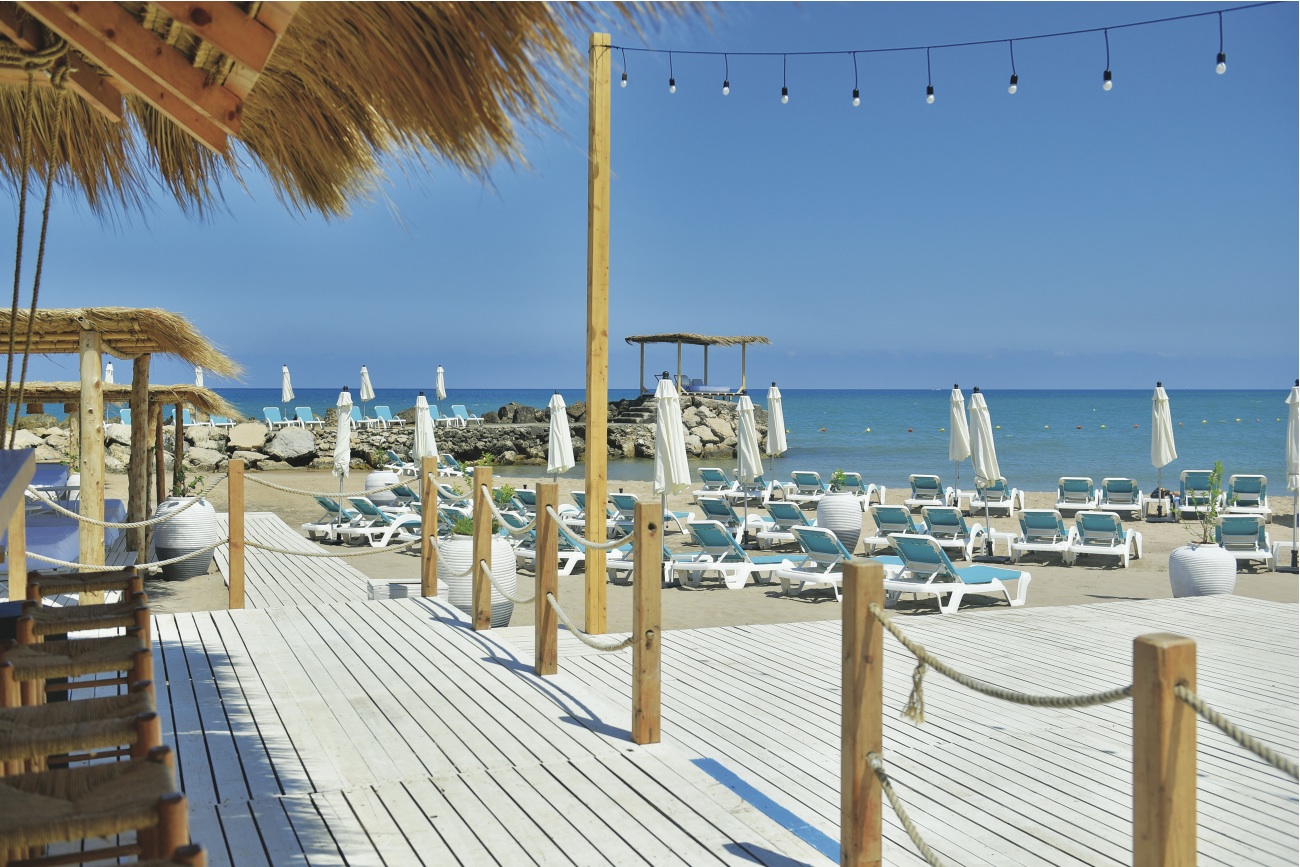
The French Riviera, Italy’s Amalfi Coast, and the shores of Greece’s Mykonos all have something in common: the existence of luxury private beach resorts and glitzy beach clubs alongside pristine and well-managed public beaches that are free for all. The presence of proper public beaches in a country is a significant contributor to its appeal to tourists—and hence its economy—not to mention a way to improve quality of life for the country’s residents.

While Lebanon has an abundance of private beach clubs and resorts, ask most Lebanese to name a public beach they would gladly visit—without being harassed by security guards from private beach resorts demanding they leave their “property,” or tripping over garbage—and they will be hard pressed to come up with an answer besides the Tyre Coast Nature Reserve.

Who’s responsible?

Lebanon’s coastline falls under the jurisdiction of the Ministry of Public Works and Transport (MoPWT), specifically the Directorate General of Land and Maritime Transport. It is thus the ministry’s responsibility to protect and manage the country’s public beaches.

All beaches on Lebanon’s coast are, by law, public beaches, but only some of them are designated by the MoPWT as beaches for public use and therefore managed as such. The rest of Lebanon’s beaches are either neglected or used by private beach resorts as an extension of their projects. While no one can stop you from spreading a towel on any beach in the country, you may be harassed for doing so, if not prevented initially by gates and entry fees.

According to Iffat Idriss of Operation Big Blue (OBB), an activist network that seeks to protect the Mediterranean coast, in 2001 the MoPWT developed a strategy that designated fourteen coastal areas in various Lebanese cities as public beaches. The plan proposed to receive bids from NGOs and institutions to manage these beaches on the ministry’s behalf. That strategy never saw the light of day, she says. (The MoPWT did not respond to multiple requests from Executive to confirm the existence of such a plan, or other information provided by sources for this article.)

Jean Beiruti, the head of the syndicate of seaside resort operators, claims that only seven truly public beaches remain today, and that the MoPWT had been working on managing and developing these beaches before its budget was recently reduced. This means that operational expenses, such as hiring lifeguards, maintaining the beaches’ cleanliness, and constructing bathrooms, can no longer be funded, explains Beiruti, and without a budget to fund the maintenance of public beaches, there may soon be none left.

The public beaches that are still maintained today are either run by a city’s municipality or—in the case, for instance, of Ramlet el-Baida—by an organization on behalf of the MoPWT. Executive met with three public beach operators to learn more about the different models of managing a public asset like a beach, in a way that ensures all stakeholders’ rights are respected while providing a well-run facility attracting locals and tourists alike.

Ramlet el-Baida

The only public beach in Beirut is in Ramlet el-Baida, one of Lebanon’s more expensive areas in terms of real estate—as evidenced by the lavish residential buildings facing the beach. The 1,300m long strip of beach was popular in the 1960s and early 1970s, before the civil war took over and transformed it into an abandoned dump. Idriss recalls that when OBB formed to help clean Lebanon’s coastline in 1997, Ramlet el-Baida’s shore and seabed was covered in meters-deep trash that had accumulated during the war.

It was while cleaning up the beach that OBB discovered that sea turtles lived in these waters, laying their eggs in Ramlet el-Baida’s sand. They requested and received permission from the director general of land and maritime transport at the MoPWT, Abdel Hafeez el-Kaissi, to monitor the turtles and make sure they are protected. This led to a good relationship between OBB and the maritime transport division, and so, when the MoPWT put the management of public beaches out to tender in 2001, OBB won the right to manage Ramlet el-Baida.

At the time, explains Idriss, the beach had acquired a reputation as a dangerous place because it was unmonitored and fights regularly broke out on it. The beach was also polluted, and despite OBB’s cleaning efforts, people continued to use it as a dumping ground. To counter this, the first thing OBB did when it took over management was to develop a strategy for running an eco-beach. This strategy took into consideration four main elements: service management, which included all basic services, such as a clean bathroom and shower area and lifeguards on duty; environment management, which ensured the cleanliness of the shore through proper waste management and a plan for sewage treatment; raising awareness among beach users on the importance of protecting the environment, through activities and signage; and statistics and information management, whereby OBB gathered data on beach and water quality. 

With this strategy in hand, OBB took over Ramlet el-Baida, divided it into physical areas to better manage people’s interest in and expectations of a public beach. These divisions remain today, splitting the beach into several different pockets: one for sunbeds that beachgoers can rent for a small fee; one for women who would rather be secluded from other beach goers; one with tables and chairs for rent; and another for free use, to which people can bring their own picnics, tables, and chairs. A final area was due to be designated for argileh and barbecues, to lower the likelihood of beach goers burning their feet on hot coals buried in the sand. The only restrictions OBB enforces are on alcohol and public indecency (suntanning topless or naked), which are both against the law in Lebanon. (Consuming alcohol in public is against the law in Lebanon, according to lawyers Executive spoke to, though this law seems to be enforced only rarely).

Photo by: Greg Demarque/Executive

Managing such an operation requires a budget for annual maintenance and the setting up of tents, lifeguard posts, and other equipment, as well as the means to finance the salaries of the 60 employees who work on the beach (lifeguards, security guards, and others). The ministry does not have a budget to support Ramlet el-Baida public beach, says Idriss, and OBB thus covers its expenses by selling snacks and water at the kiosk on the beach as well as  renting out sunbeds, chairs, and tables. The organization also relies on various kinds of donations, for example furniture, which they revamp and use to beautify the beach as much as possible.

While OBB has good intentions, it is working with limited  available resources and a tight budget since the MoWT does not have the financial means to support it. It does not help that the beach water is polluted with unregulated sewage disposal, according to multiple sources. And yet, approximately 2,000 people still access Ramlet el-Baida on a busy day, according to Idriss, swimming in the sea in spite of multiple warnings about the poor quality of the water.

Anfeh

Anfeh’s public beach, Tahet el-Rih, got its name due to its  protection from the wind. A rocky beach known for the blue and white walls of the structures around it (the result of a joint agreement between the municipality and the owners, struck more than a decade ago), Tahet el-Rih is reminiscent of Greek coastal villages.

Prior to the Lebanese civil war, according to Anfeh municipality lawyer Kamel Anjoul, some  residents acquired permits from the public works ministry to develop salt mines along Tahet el-Rih, as Anfeh was then known for salt mining. During the war years, salt mining was no longer a lucrative business and so many of these people converted their salt mines into small chalets for personal use.

In 2014, says Anjoul, some of these people remodeled their chalets again, this time into small restaurants to cater to those who were accessing the public beach. At the same time, he says, Anfeh’s seawater was gaining a reputation for being among the cleanest in Lebanon. This came just in time for Lebanon’s garbage crisis, when beach lovers were desperately seeking unpolluted beaches in which to dip their toes. Anfeh’s reputation drew in more visitors, encouraging more chalet owners to convert their chalets into restaurants, which, in turn, drew in more visitors. Anfeh’s popularity was also aided by social media, as user-generated photos of scenic blue and white houses by the sea inspired more visits.

Anfeh’s public beach today boasts around a dozen restaurants and snack shops, and attracts around 400 people per venue on a busy day, Anjoul says. This means that, on such a day, close to 5000 people might visit Tahet el-Rih—placing a lot of strain on waste management. When the chalets were for private use, their sewage went directly into the sea, but at low volume, since chalet owners tended to only use these properties during the day. But with the development of Tahet el-Rih as a tourist destination, this system was no longer feasible. Restaurants also generate more solid waste than a private chalet, and some of them were throwing this waste into the sea. The municipality had to intervene, Anjoul says. “The municipality mandated that the chalet-turned-restaurant owners develop a sewage network specifically for Tahet el-Rih, and this is what happened.” The sewage is now directed into a big tank that is drained daily, Anjoul says, with the system paid for by the owners and facilitated by the municipality.  “If the beach is no longer clean, we will lose the attraction which drew in the tourists to Anfeh in the first place,” he says.

Photo by: Greg Demarque/Executive

Tahet el-Rih’s restaurants are a tourist attraction that has the potential to bring heightened economic benefit to Anfeh over time, especially as the municipality is working on several projects to attract other forms of tourism to the area. “A lot is being done to develop tourism in Anfeh, but we need funding for that, and we are trying to secure that from NGOs,” Anjoul explains. “But it takes time to prepare the needed documents and studies for such funding. We want to provide more for tourists to do when they come to Anfeh than just go to the beach for lunch and then go home. … If we are able to develop [it] in the way we want and have people spend a longer time in Anfeh, it will have a good impact on the economy overall.”

But one cannot escape the fact that these restaurants, despite their attractiveness and economic value, are in violation of the law, because they are built on a public beach. The municipality is aware of the sensitivity of this issue. Anjoul explains, “The current municipality is looking at the situation from a pragmatic perspective, saying that it is something that has already happened and so should be dealt with from that starting point, without looking at the past. So from now on, no one is allowed to build anything on the public beach. The municipality’s main goal is to protect the environment and ruins of Anfeh, while trying to manage the existing situation and make the best out of it.”

Sour

Sour’s beach was decreed a natural reserve in 1998 by the public works ministry, through Law 708/98, and officially named Tyre Coast Nature Reserve. The reserve is 3.5 kilometers long—from Rest House Tyr to the Ras el-Ain area—and stretches over an expanse of 3,300,000 square meters, making it the widest shore on Lebanon’s coast. It is managed by the Tyre Coast Nature Reserve Committee, which is made up of different ministerial representatives and a representative from the municipality, who is typically made head of the committee. The committee is  supervised by the Ministry of Environment (MoE), since the beach is part of a natural reserve.

The reserve is divided into three sections, one of which is for agriculture and is located next to Ras el-Ain. The second section is designated as a sanctuary for sea turtles, fauna, and migrating birds, since it contains “wetlands of international importance,” as per the 1971 Convention on Wetlands. The third section is the public beach, which is 900 meters long. Every year, the Municipality of Sour submits a request to the MoE for a permit to manage that section of the reserve as a public beach for the summer season (May 15 – October 15), though at this point this has become more of a formality, explains Hassan Dbouk, the head of the Union of Tyre Municipalities. 

During the summer season, a 150 meter long stretch of the public beach contains 49 tents situated at a distance from the waves,  serving food and drinks to beachgoers. Those who sit under the tents or use the chairs provided by these establishments must pay for what they consume—some tents have a minimum consumption charge—and those who prefer not to pay can sit closer to the sea or in another section of the public beach, where they can use their own beach equipment and enjoy a picnic.

Photo by: Greg Demarque/Executive

Every year, permission to set up tents is granted to the same 49 individuals who have run these tents since 2001, says Dbouk. While he wishes they could open the area to newcomers, he claims that this is not possible under the current system. A big tent rents for $660 per month while the smaller ones cost close to $580. Aside from renting out the tents, the municipality also makes money from the beach via parking lot fees, which are set at $2 a day. Dbouk says 45 percent of the total revenue goes to the Tyre Coast Nature Reserve Committee and the rest is used by the municipality to cover their expenses, including maintenance and supervisory work.

At the start of every season, the municipality levels the sand on the public beach and removes the accumulated waste. They then check the infrastructure, which includes running water and the sewage system—the municipality has developed a sanitation network with two small pumping stations for the tented area only. The municipality also supervises the tents to make sure there are no violations to the rights of the public (infringing on the area designated for free public use) and that basic appearances and safety standards are met (clean kitchens and no broken furniture, for example). Finally, the municipality, in cooperation with the public works ministry, ensures the presence of lifeguards and other staff, while the Red Cross has a tent on the beach to treat any injuries.

While Sour’s public beach was always an attraction—the tents have existed in one form or another since the 1970s, says Dbouk—the past five years have seen a significant increase in the number of visitors, reaching up to 20,000 on a busy day (usually on Sundays and they have around ten such days per season). Dbouk says the beach could host even more, if its capacity were increased by adding a small section of the protected area to it—something he is against. He believes this growing popularity is due to Sour’s reputation for clean sea water and its proper management. It is a place, he says, where people can enjoy a day on a free beach without feeling they have compromised their standards of comfort and services.

This influx of visitors has become a bit of a challenge, explains Dbouk, although the municipalities union is happy with the boost to Sour’s economy from the visitors. Still, managing waste on the public beach has become more difficult, and this year the municipality plans to add additional bins in an effort to control this. Controlling the wildlife sanctuary area of what is, after all, a natural reserve, is also starting to become difficult, since the volume of visitors means that the protected area is sometimes encroached upon by wandering beachgoers. Dbouk plans to raise this issue with the reserve’s committee to reach a satisfactory solution for all parties.
July 5, 2018 0 comments
0 FacebookTwitterPinterestEmail
Beach resortsHospitality and tourism 2018Special Report

The livin’ is easy?

by Nabila Rahhal July 4, 2018
written by Nabila Rahhal

A quick online search for ‘Lebanon in the 1960s’ reveals dozens of photographs celebrating Mediterranean leisure. Some show people lazing on the sand in what appears to be a public beach, others are of smiling women water skiing with a backdrop of the glittering sea and an equally glittering resort, and others still are of those enjoying a swanky beach club—defined as properties where one pays an entry fee to access a pool area and services—and five star resort pools, which are the same concept but with a hotel by the sea.

It is clear that the sea was one of the major attractions for tourism in Beirut back in the day. Today, a few of the beach clubs and resorts from the 1960s are still operational and many others have entered the arena, outgrowing the boundaries of Beirut to spread across a significant portion of Lebanon’s 225 km long coast—pretty much wherever is not occupied with agricultural or industrial areas.

While these outlets had their years in the sun, lack of proper planning, sea pollution, a highly competitive market, and a dearth of tourists have all taken their toll on beach resorts and clubs—and hence on beach tourism in Lebanon.

Back to the beginning

In the late 1950s, saints ruled Beirut’s coast starting with Lebanon’s first resort hotel Saint Georges (located in downtown Beirut) and moving on to beach clubs Saint Simon and Saint Michel, both of which were in Ouzai, on the southern outskirts of Beirut—which was back then the “it” location for beach clubs in Beirut. “The concept of beach clubs was popular historically and the most beautiful and biggest beaches were in Ouzai and Jounieh. Jounieh served more as a public beach, but Ouzai was where the best clubs were: St. Simon, St. Michel; Pepe Abed also had a beach there and it was “the” place by all means. When planes would come to Lebanon [tourists] would see that, and the first thing they would do is book a hotel in Ouzai,” recounts Roger Edde, owner of Eddésands Wellness and Beach Resort in Jbeil. This proliferation of saintly resorts led people to affectionately call Ramlet al-Baida’s public beach Saint Balesh (Saint Free). Sporting Beach Club was another successful beach club of that period, and it remains in operation to date, banking on its now vintage and nostalgic appeal.

Between the late 1960s and 1978, several resorts opened their doors, including Riviera, which opened as a hotel in 1956, and then got a permit to develop its beach in 1968. Summerland opened its doors as a resort in 1978, while La Siesta, a resort in Khalde, launched in the 1970s. “La Siesta was among the best resorts in the country. In July 2017, the owners decided to reopen it and bring back fond memories to many,” says Walid Yammine, the resort’s current general manager.

The intensification of the civil war in Lebanon brought an end to all these midsummer night dreams and Ouzai’s glitzy resorts became home to those fleeing the war, while other resorts and beach clubs in areas heavily exposed to bombing were temporarily—or permanently— shut down.

While the civil war brought the shutters down on Beirut’s resorts, it brought a new dawn to coastal properties starting from Nahr el-Kalb to Safra, and gave birth to the concept of chalet clubs or private beach resorts where one has to own a chalet—or be a guest of someone who does—to enter. Such chalets were often used by their owners as a refuge from the war (see box page 25 for more on modern day chalet projects).

The rebirth of resorts

With the end of the civil war in 1990, investors once again turned their eyes to the shore to study the feasibility of recreating the heydays of Lebanon’s beach tourism. Ouzai had changed demographically and was no longer suitable for beach clubs, so investors headed further south to the sandy beaches of Jiyeh, on the outskirts of Saida, with Bamboo Bay beach club opening in 1999 and Voile Blue, also in Jiyeh, in 2003 (it later moved to Jbeil).

But it was not until 2003 that beach resorts—complete with a hotel and multiple F&B outlets—made a comeback in Lebanon with international brand Mövenpick opening in Beirut’s Raouche, and newcomer Eddésands opening first as a beach club then as a hotel two years later. In explaining his decision to open a beach resort in Lebanon, Edde says he wanted to somehow recreate, in his hometown of Jbeil, the beautiful surroundings and quality of life he enjoyed when living on the shores of south of France. What began as a small rustic project that mainly catered to family and friends soon expanded: “In 2003, we decided to go big and go for something that would compete with the likes of Nikki Beach [one of the first luxury beach resort concepts] when it comes to funky nightlife and a beach bar,” he says.

At the time, large scale hospitality projects by the beach—especially in a then remote area like Jbeil—were rare and Edde says his intent of enticing people to come from Beirut to Jbeil for the resort was met with outright skepticism. But he says he knew the project would be a success for several reasons: “I knew it would work in Lebanon because, when [living] in the south of France, I met many Lebanese who had come back to Lebanon and were looking for fun activities like they had abroad, so I thought that if I made a good offering, people like me would come. Second of all, the Arabs, the European elites, and the Americans back then were in the south of France. Why? Because it is on the Mediterranean, they have the good weather and fun facilities. So I thought a good idea would be to have another destination like that, but in Byblos [Jbeil],” recalls Edde, adding that his idea worked and the resort was wildly successful during its peak years.

An unsettled sea

The political situation being what it is in Lebanon, beach clubs and resorts would have a couple of great years before a crisis hit and business slowed down only to skyrocket the following season. During the 2000s, investments continued to be made in coastal areas—mainly in Jiyeh and Rmeileh in the south and Jbeil in the north—but they were more in beach clubs than resorts.

With the onset of the Syrian crisis in 2012, tourism in Lebanon went into a steady decline (see overview page 16). As result, many beach clubs have either shut down or re-conceptualized their experiences to stay afloat in a competitive market (for more on beach clubs, see article page 41). On the other hand, beach resorts—with their hotels—seem to be more equipped to weather a stormy sea.

Hotels remain operational throughout the year, therefore sustaining a resort property during the winter. “Veer opened in 2012 as a beach club with only a few bungalows. The next year we opened a hotel property with 31 rooms. The original plan was just to have a beach club, but beach clubs are purely seasonal, so we decided to go into the hotel business to be able to work year-round although there is still a difference between the volume of work in the summer and in the winter,” says Adella Bassim, operation manager at Veer, adding that in winter they work on low-season rates and mainly  cater to corporate accounts in their vicinity in by hosting conferences and events.

Indeed, all resort operators Executive interviewed spoke about the conferences and events they host on their properties during the winter. General manager of Mövenpick Chadi Gedeon speaks of his hotel as being a “five star business hotel with resort facilities,” while the general manager of Kempinski Summerland Hotel and Resort Daniele Vastolo says they attract pharmaceutical companies who come for conferences and reserve hotel rooms.

For Nizar Alouf, board member of Riviera Hotel, the beach club and hotel complement each other. “Having a hotel really helps us in summer, and the beach adds value to the hotel as well. Tourists have a wide variety of hotels in Lebanon to choose from, so when looking among them they choose Riviera because of the pool, especially in the summer. In winter, they come for the service and also for the beach because we have good weather in Lebanon year-round and foreign tourists appreciate that,” he explains.

At first, the 86 chalets in La Siesta were planned to be rented out on an annual or seasonal basis, but the market demand was more in weekly or weekend usage, explains Walid Yammine, general manager of La Siesta, so they re-conceptualized them as hotel rooms that people can book on a nightly basis. Yammine says they were fully booked for the Eid weekend and expects to have a strong summer for the chalets, driven mainly by local Lebanese and expats looking for a getaway.

Another day in paradise

To maximize their revenues, many of these resorts allow for day visitors to access the property by paying an entrance fee, just like they do at a beach club. “The beach club is more economically beneficial for us because we have daily entrance fees, whereas we only have 35 rooms in our property. But they support each other in that we have many people who come spend the weekend in the summer—30 percent of those who come to Veer stay in the hotel. In the summer we have an occupancy of 85 to 100 percent,” says Bassim.

Three months after its re-opening in 2017, Kempinski Summerland Hotel allowed day passes, which at first were for a limited number of people to ensure quality service, but then gradually the number of guests increased. “We decided to have this because we did not want to be seen as a lonely entity; we want people to enter. Summerland was very popular with the Lebanese in the 80s and 90s, so how would they feel if they cannot access it?” asks Vastolo, explaining that the hotel also has 500 privately owned cabins whose owners are allowed to bring four guests each. This and the day passes support the hotel by bringing in more business to their F&B outlets, he says.

Managing a budget

The slowdown in tourism, the dwindling purchasing power among locals, and the increased cost of doing business have created a situation where resort operators are feeling the stress. Edde says, “One of the biggest expenses we are paying is electricity because we can’t use the Lebanese government supply—when it is available—because it is not regular and will damage our sensitive machinery. And then you have to put an entrance fee which is comparative [to the region], and when you do that, you are losing money,” adding that their costs end up being higher than the revenues generated from their clients.

Alouf also mentions taxes, explaining that since Riviera is located in an upscale area they have to pay more maritime taxes than neighboring resorts or beach clubs in Beirut. “When Riviera is paying a certain amount of money to the state, and beach B is paying less than that, what shall we do? Shall we make customers pay more than they do in beach B? It is a real problem,” says Alouf, explaining that they finally decided to increase their entry fee while improving their services in order to distinguish themselves from other resorts in proximity. Still, with a short season and lower resort occupancy during weekdays compared to the weekend, Alouf argues that operating a resort is not as profitable as people assume. “We have the taxes, electricity, services, treatment of water, and maintenance, which is very costly being exposed to sea air and water. People think what they are paying is pure profit, but it is not the case,” says Alouf.

La Siesta’s Yammine says maintenance of their 20,000 square meter resort is the biggest expense. “Fixed expenses are the highest; as for operational costs we try to manage by having the right staff at a good salary. We try to cover our fixed costs during the summer when we have the high season,” he says, explaining that they have managed their profit by creating affordable options for their customers that include packages that combine both entry fees and some F&B expenses, and affordable F&B choices.

Waves of pollution

Whether it is a resort or a beach club, the impact of the waste crisis and subsequent ministerial decisions on sea water, and thus on beach resorts, cannot be overemphasized. All resorts operators Executive spoke with, no matter where they were located in Lebanon, said that the fact that the sea is polluted with both visible and invisible waste has negatively impacted their business.

Vastolo says the sea is more of a liability than an asset for them at Kempinski, which is located in Jnah on the border of Ouzai. “For us it is very frustrating because we are very close to the sea, and this should be one of our strengths, and instead it is something we cannot really capitalize upon because of the sea pollution. We are very happy that there is a neighboring hotel which will open its doors soon, and we actually hope that with the opening of this hotel, the government will be more sensitive to the fact that people will come here to enjoy the sun and sea, but unfortunately next to it there is open sewage overflowing on the sand and going straight into the water. It definitely affects the quality of the water, and this is something you cannot run away from. We have a red flag displayed constantly on the sand and when our clients ask us why, we have to be very transparent and tell them,” he complains. Gedeon says that at Mövenpick they constantly monitor their online reviews, and complaints about the quality of sea water are increasingly prominent.

Yammine says that not only are E. coli levels in the sea water near their resort constantly high—they run regular checks—but they also suffer from visible garbage which they have to clean several times per day to maintain the quality of their shore. “When you are by the beach and see a piece of a garbage the first impression you will get is that our resort is dirty, even if the garbage is not from us, so we are trying to avoid reaching that point. The waste crisis that happened only two years ago is not something to take lightly since a lot of garbage was thrown [out] haphazardly during that period,” he says.

Veer suffers from both visible garbage and the near constant emissions from the Zouk power plant, putting a damper not only on guests’ experience, but also on their outdoor furniture—which has to be cleaned daily or will turn black—and on the quality of the sea water adjacent to them.

Even in areas where sea pollution is low, people’s impressions regarding the sea water in Lebanon leaves them hesitant to take a dip. “People love to come to Eddésands, but they spend most of their time in the pools. I tell them ‘I swim every day and drink water from the sea,’ but they don’t believe me. They don’t even dare to come into the sea when we have a fabulous sandy beach where you can walk for 50 meters in the sand and you cannot benefit from it. You are really fighting a difficult war,” Edde says.

All of the resort operators Executive met with say that as a result of the sea water pollution, they put in extra efforts into their pool experiences either by having additional pools or by providing pools with distinctive features.

A brighter horizon

Despite these challenges facing resort operators in Lebanon, it seems not all hope is lost for a stronger beach tourism offering in Lebanon. Investments are being made into resorts in several areas along the coast, which indicates that people still see potential there.

Existing resort operators are keeping the faith knowing that, with the proper master plan and real intent for change, things could turn around. “As hoteliers, we would love the government to take a stand and say, ‘You know what? We have a coast line, so let us capitalize on that.’ This is what Italy did in the 1980s when they were in the same condition as well, but the government decided to take a stand and make the coast attractive. Italy is just the same as Lebanon in that we have good food, history, fun, and mountains, but Italy has invested so much money and commitment from generation to generation to be more attentive, and we are getting the results now,” says Vastolo, who is Italian. For the sake of beach tourism in Lebanon, let us hope we decide to do things the Italian way.

[/media-credit] Click on image to enlarge

[/media-credit] Click on image to enlarge

July 4, 2018 0 comments
0 FacebookTwitterPinterestEmail
Hospitality and tourism 2018Overview

A good summer?

by Nabila Rahhal July 4, 2018
written by Nabila Rahhal

The celebration of Eid el-Fitr on June 16 marked the beginning of summer 2018 in Lebanon. As the season kicks off, all those in the tourism industry are speculating over whether it will be as good a season as summer 2017, or whether tourism will take a turn back to the bleak summer days of 2012 to 2016. Despite a rocky end to 2017—with current Prime Minister-designate Saad Hariri’s since-rescinded resignation at the start November—the first quarter of 2018 was off to a good start. According to the Ministry of Tourism, the total number of tourists in Lebanon rose from 345,168 in the first three months of 2017 to 362,398 in the same period in 2018. This jump was led mainly by tourists from Europe and America, who together constituted 49.56 percent of all visitors to Lebanon in the first quarter. Performance numbers for the second quarter of 2018 are not yet available, but since summer has become the main touristic period for the country, all eyes will be on the next two months to determine what to make of 2018.

Of summers past

Tourism in Lebanon—the success of which had always been a roller coaster ride, dependent on internal and regional stability—was set on a downwards trend with the onset of the Syrian crisis in 2012, before  taking a slight upwards turn in 2017, most likely as a result of the election of Michel Aoun as president at the end of 2016, and the resulting increase in political stability. However, this upturn was nothing to write home about, according to those in the hospitality industry, and was not comparable to the tourism witnessed in Lebanon in summers before the Syrian crisis. So far, according to those in the industry, it seems that 2018 is shaping up to be a repeat of the preceding summer.  “Summer 2017 was a very good one compared to the previous year [2016], but not to be compared to the strong summers like 2008, 2009, and 2004. We are still very far from those summers. [Summer] 2018 is shaping up to be hopefully the same as 2017, but not better,” says Chadi Gedeon, general manager of Mövenpick Hotel and Resort Beirut.

Indeed, the dismal touristic seasons of recent years have lowered the expectations of Lebanon’s hoteliers. “We are seeing a light [at the end of the tunnel] this season, with better reservations so far in the year, and [we] are seeing more foreigners in the city,”  says Nizar Alouf, board member at Riviera Hotel. “We hope that finally June, July, August will be good for Lebanon, and of course for us. The hotel industry these days is not looking to make money but to break even or not to lose money compared to the loss of money in past years.”

Will they or won’t they? 

Although 2017 was marked by the slow but steady return of tourists from the Gulf, Hariri’s resignation announcement in November 2017 caused regional tensions to rise again, explains Daniele Vastolo, general manager of the Kempinski Hotel.

Whether summer 2018 will see more visitors from the Gulf to Lebanon is a subject of speculation amongst Lebanon’s five star hoteliers. “Every business today in Lebanon is suffering, in my opinion, from the boycott of the Gulf and Arab tourists over the last few years,” Roger Edde, the owner of the Eddésands Hotel and Resort, says. “This [boycott] is supposed to be formally lifted this year. What may help us is that there are serious tensions between Turkey and the GCC countries because of Turkey’s connection with the Muslim brotherhood and Qatar, and so many who had deserted us for Turkey might change their minds.” He continued: “Besides, Turkish people don’t speak Arabic, while Lebanese do. Lebanon is a small country that [Gulf nationals] know very well. They miss Lebanon.”

Gedeon says Movenpick had seen an increase of Arab Gulf visitors over this year’s Eid, as compared to the same period last year, but that with travel advisories cautioning nationals from some GCC countries against visiting Lebanon not yet officially lifted, he is not expecting a drastic increase in their numbers. Thus, business continues as usual and hoteliers must keep looking to develop other markets while keeping a longing eye on the Gulf.

Going local

For Beirut’s Kempinski Hotel, local Lebanese looking for a “staycation” have grown into a significant market this year. “In the last few months, we have been very strong with the Lebanese market itself, and 40 percent of our guests are Lebanese,” Vastolo says. “You have expats coming to visit their family, and, as a new market, we are having Lebanese coming from the south or the north for a little retreat here.” Moreover, he noted, new Kempinski hotels in Africa would likely make African guests a future growth market for Kempinski Lebanon.

Gedeon says that expatriate Lebanese have become the country’s main leisure tourists. “Ideally, our occupancy is supposed to be a 50/50 division between leisure and business, but these days, unfortunately, it is 70 percent business,” he says. “This is because there is no real leisure segment in Lebanon yet. We have the Lebanese expats who come back for the summer and this is our leisure market: they come for two weeks and don’t want to open their house or sometimes they don’t have houses in Lebanon. It is a strong segment but it is not enough.”

Widening the net

For the past few years, most of the people making up the tourism crowds in Lebanon have been Lebanese expats, residents of Lebanon, and Europeans. The tourism industry has thus had to diversify its offerings to cater to these groups of tourists, whose expectations of a vacation may differ from those of a tourist from the Arab Gulf—which had prior to 2012 been the main market to which Lebanon catered. As such, alternative tourism segments such as rural, religious and food tourism have been developed, bringing significant advantages to the communities in which they have been established.

Driven by the search for non-polluted beachesnd the high entry fees of most private beach clubs and resorts, beach tourism has been developing on public beaches like Sour’s, and Anfeh’s Tahet el-Rih, and is attracting Lebanese and European tourists alike. Beach bars, where one can enjoy a drink steps away from the water and without paying an entry fee, are also gaining popularity and have attracted seasoned hospitality investors. Meanwhile, beach resorts and clubs are coming up with innovative packages and concepts to attract new customers, but are struggling to stay abreast amid mounting costs and encroaching marine pollution, which works against their best efforts to provide a refreshing escape for those who choose to pay entry fees.

Only time will tell what summer 2018 will bring to the Lebanese tourism industry, but stakeholders in the sector will hopefully have learned their lesson, and will continue to work on the country’s nascent alternative tourism options and on the new markets that have opened to Lebanon—while not forgetting about our neighbors, the tourists from the Gulf.

July 4, 2018 0 comments
0 FacebookTwitterPinterestEmail
LeadersOpinion

It starts with you

by Executive Editors July 4, 2018
written by Executive Editors

A driver throws a sandwich wrapper from his car window onto the street. A pedestrian casually tosses an empty plastic bottle into the sea during his daily morning walk on the Corniche. A family enjoys a lovely day picnicking on the beach or in the mountain and thinks nothing of leaving their trash behind. These are frustratingly and sadly daily occurrences in Lebanon, and they must stop. Now.

It is often said that the Lebanese have been spoiled by domestic help and tend to think that there is always somebody to clean up after them—hence littering with no afterthought—but this does not explain why the same Lebanese who walk the extra mile to place a piece of garbage in the bin in a foreign country think nothing of tossing it on the street in their own. This issue runs deeper. It seems that Lebanese do not feel a sense of ownership when it comes to public spaces, and while maintaining a sparkling clean home, they are apathetic toward littering on the street, beach, or mountain—public spaces to be enjoyed by all residents of Lebanon.

It is not a stretch to say that the vast majority know that littering is bad, but many do it anyway. There is a clear disrespect for public spaces in Lebanon. One factor could be the lack of civic education among many Lebanese. Civic education was only included in the Lebanese curriculum in the early 2000s and, therefore, the generations before that year were not taught to respect Lebanon, or their collective rights and responsibilities as Lebanese to maintain a clean and healthy environment. The generation educated from the year 2000 onwards have learned about the importance of collective responsibility, so hopefully they can share these ideals with their parents, teaching them not to litter rather than learning from them how to ruin Lebanon’s natural environment.

But until a real social contract is adopted, the environment in Lebanon will continue to suffer immeasurably. Our shores are drowning in waste while a significant portion of our seawater is heavily polluted. All of the beach operators—whether of public beaches or private resorts and clubs—who spoke with Executive said that the biggest challenge they face is littering, despite regularly cleaning the shore, sometimes multiple times per day. There are many factors that contribute to this waste onslaught—including the ongoing garbage crisis—and the eradication of littering will not be a panacea to all of our environmental problems. But we have to start somewhere, and the best place to start is with ourselves. It is arguably easier to get someone to walk a few extra steps to dump a piece of garbage in a bin instead of throwing it on the street than it is to get those in authority to solve the country’s waste management problems.

This does not mean the government should not intervene to force citizens to reduce littering. Civic education is the first step toward doing so, as it is only through the proper education of our youth that we can implement future change. For those who are beyond the age of civic education, a national awareness campaign against littering is needed to encourage people to treat public spaces like their homes and stop their rampant littering. Both of these steps, however, may be not enough of a deterrent against littering for some people and this is why some punitive measures should be introduced. It was only when driving without a seatbelt in Lebanon became a fineable offense that people began to strap in.  Personal consequences for actions are the only thing that works for a wide number of people, and, as such, a fine should be imposed on those who are caught littering in public spaces.

Not littering may seem like a small step to take, but indeed, the longest journeys begin with a single step. If we want to save Lebanon’s beaches and make them enjoyable for both tourists and locals alike, then it is time to take that step. Right now. No excuses.

July 4, 2018 0 comments
0 FacebookTwitterPinterestEmail
Last wordOpinion

Access to information in Lebanon

by Ghassan Moukheiber July 4, 2018
written by Ghassan Moukheiber

The same questions come up often: “How can I use the Access to Information Law (A2I)?” or “Can I use it at all, or has it joined the ranks of the dozens of good laws that are not enforced in Lebanon?” Lebanese citizens, once hopeful that transparency in the country would be heightened with the passing of the A2I Law on February 10, 2017—after years of preparation—are now disappointed by the many unfortunate examples that show how difficult, or seemingly impossible, it is to actually enforce. The latest in the series of such disappointments was the delay in releasing a copy of the naturalization decree, ultimately published after significant pressure on the website of the interior ministry. So, is the A2I Law dead?

To all such citizens, take comfort that the A2I Law is alive, but requires a stronger will and better means for enforcement. The law is an important milestone on the road to preventing and fighting corruption in Lebanon, but not an end of the road by itself—it requires citizens to monitor and promote its full enforcement. Below are some facts to illustrate issues that are not always well understood:

The A2I Law is in full force and effect. It does not require any implementation decree to become obligatory, as is falsely believed in good or in bad faith, by citizens and administration alike. All entities listed in the law, collectively referred to as “the Administration,” must abide by all its provisions without false excuses, such as waiting for an implementation decree that is in the making. However, all should make sure that such a decree—albeit useful if properly drafted and enacted—should not modify or limit the very broad and powerful rights provided by the law.

Enforcement remedies are available. Many administrations responded positively to requests for information. Others, unfortunately, did not. In such cases, in addition to the legitimate, if not necessary, political blaming and shaming—and until the National Anti-Corruption Commission is established by law—the reluctant administration can be subject to a judicial injunction passed by the judge of urgent matters of the Shura Council. This was successfully done in the past and citizens are encouraged to seek such remedy in the future.

The law is about more than just access to information. Many, including politicians and lawyers, overlook the fact that the law also provides new provisions: to protect private personal data and to mandate a written rationale for all individual administrative decisions, under the sanction of annulment. Both subjects were in debate over the naturalization decree. The following caveats must be noted: First, the protection of personal data should not be an excuse for not providing access to personal decrees; and second, judges and lawyers should be encouraged to strike down non-motivated administrative decisions using the A2I Law in order to force a change in behavior of reluctant administrations.

Automatically published information is more important than access to information upon request. This includes; annual activity reports, regulatory administrative decisions, and, most importantly, information about funds, within 15 days of their expenditure. The challenge remains to have all the above appropriately written and published on dedicated webpages for each administration. Many supportive initiatives are underway. The law further exposes the counter-trend decision of the government to put the electronic version of the Official Gazette behind a paywall. This measure is in violation of the general principle of transparency underpinning the A2I Law, and therefore requires a reversal through the development of a free, fully-fleged legal web portal. Also, the same general legal principle of transparency, and article 56 of the constitution, mandate that all administrative decrees and decisions be automatically published in the Official Gazette, including, but not limited to the so-called individual decrees, such as naturalization and pardon decisions.

As the saying goes in the legal world, “You win your case twice: once when the judgment is passed, and then again when it is enforced.” The same applies to laws. We won first, after many years of effort, when the A2I Law was enacted. The challenge now, for citizens and politicians alike, is to keep-up the efforts of another nature, to win again, by making sure that the law is properly enforced by all concerned administrations.

July 4, 2018 1 comment
0 FacebookTwitterPinterestEmail
CommentEconomics & Policy

Let’s have a serious talk about drugs

by Joseph el-Khoury July 4, 2018
written by Joseph el-Khoury

The cannabis debate never completely goes away in Lebanon. This is not surprising, given that the country is a major producer and consumer of the psychoactive plant. Everyone who is anyone has an opinion on the drug, usually expressed through impactless sound bites. The discussion was reignited on June 18 by an Internal Security Forces (ISF) Facebook post reporting a “drug bust” that led to the arrest of three teenagers, accompanied by a picture showing rollups, a plastic bag with a small amount of hash, and one joint. The post drew widespread mockery online, with comments from Facebook users thanking the police for “saving” them and making them feel much “safer.” Beneath the sarcasm,  the inadequacies of our drugs laws were duly exposed.

Retribution or rehab?

This viral ISF misfire was followed by an official, theoretically binding, circular issued by Attorney General Judge Samir Hammoud on June 26—World Drugs Day—urging his colleagues to immediately refer drug users to the Drug Addiction Committee, in accordance with article 199 of Law 376 (1998). Since the law was passed 20 years ago, judges have had the option of referring individuals arrested for drug possession to a rehabilitation committee based in the Ministry of Justice. However, a survey released earlier this year by SKOUN, a local non-profit outpatient therapeutic center, found that a very low number of arrested drug users had been referred. There are a number of explanations for this, stigma and ignorance being obvious ones. But for years the committee has also received no political backing, remaining chronically underfunded and understaffed.

The value of the rehabilitation offered via this committee is questionable, even to those arrested and referred to it as “addicts.” The term addiction has itself lost popularity in clinical circles as it does not account for the wide variety in patterns of use and the impact on the physical and mental health of the user.  Evidence from a multitude of studies worldwide suggests it is likely that the majority of those arrested for possession of cannabis, or even harder drugs, are not addicted to them and do not require intensive treatments like detoxification and residential rehabilitation. Most drug use is recreational, though some remains problematic and can lead to loss of functionality, mood disorders, and psychotic illnesses in the absence of physical dependence.

The traditional structure of rehabilitation in Lebanon focused on the tail end of heavy drug use: mostly opiate-dependent young men who had fallen by society’s wayside. Some organizations, such as Oum el-Nour, did evolve, and now offer a more diverse approach, such as community programs and specialist centers for women.  In 2012, the Ministry of Public Health launched its opiate substitution program, which widened Lebanon’s treatment horizons, but also widened the rift between the proponents of total abstinence and the advocates of harm reduction.

Despite an absence of reliable statistics, patterns of illegal substance abuse in Lebanon continue to evolve. New drugs have come onto the market—such as spice, salvia, and ketamine—and are often sold mixed together and laced with toxic contaminants. The use of cannabis is also on the rise, with studies revealing a wider public tolerance and increased use amongst the younger generations. The electronic dance scene has also exploded, with Beirut becoming an international destination for techno-fueled nights out. With this reputation came MDMA and a variety of stimulants, expanding the inventory of party drugs, which was long-dominated by cocaine.

Each country has an idiosyncratic drug ecosystem responsive to social, political, and economical factors that regulate supply and demand. In Lebanon, the establishment has realized that action needs to be taken, yet they and the public seem incapable of having a mature debate on which drug policies to adopt.

Shifting policies

Whether you think drugs are harmless entertainment or the affliction of our generation, it is hard to find a convincing argument for putting adolescents in jails that fail to rehabilitate. Outside of Lebanon, the drug problem has been approached in a more innovative manner, with an emerging trend toward decriminalizing or legalizing some or all drugs. All policy options carry risks and have caveats. But generally, a body of evidence is building to support this liberal perspective. Portugal, the Netherlands, Uruguay, the US, and—most recently—Canada have all been more than willing to experiment with this approach.

Decriminalizing is usually the least problematic first step, as it involves the state foregoing the use of incarceration for drug use. It does not require a significant shift in philosophy, as prison sentences could be replaced by fines and investment in prevention and treatment efforts.

Legalization, however, carries with it a logistical nightmare. It requires a strong state apparatus able to guarantee the sources of production and distribution of drugs. I do not believe the Lebanese government would be able to regulate a legal drug production and retail industry. For example, calls to legalize cannabis for medical purposes—recently backed by the MPs of Baalbek-Hermel—ignore the fact that the overwhelming majority of cannabis is used for recreational purposes in Lebanon. Exporting Lebanese cannabis for medical use would mean depriving recreational users of a cheap local supply. This might be welcome to some, but the counter effect would be an even greater reliance on criminal networks to source and sell cannabis to recreational users.

Politicians, bloggers, and advocates have too often used populist discourse to gain the support of a large section of the population, while dismissing the basics of drug economics and global experience. It is worth mentioning that the US is only now investing millions in researching the impact of cannabis on mental health, in particular psychosis.

As its stands, the takeaway message has to be that the drug conversation should continue, in a transparent and honest way. Supporting liberal laws for dealing with drug production, dealing, and use should not automatically mean support for recreational drug consumption. Cannabis is not a harmless path to achieve happiness. In the event that it is legalized, it should be put at least on an equal footing with alcohol. Limitations on who can use it and under which circumstances should be enforced. Legal or not, substance abuse in all its forms should be discouraged, especially for those still in the developmental stage before adulthood.

July 4, 2018 1 comment
0 FacebookTwitterPinterestEmail
CommentEconomics & Policy

Refugee rights not up for debate

by Bassam Khawaja July 4, 2018
written by Bassam Khawaja

In the past month, Lebanon has seen a number of troubling developments regarding the presence of Syrian refugees, with leading politicians heightening calls for the return of refugees to Syria and making unfounded accusations of an international conspiracy to settle them in Lebanon.

As countries around the world have turned their backs on refugees, Lebanon is hosting an estimated 1.5 million Syrians, by far the highest number of refugees per capita in the world. At the Friends of Syria donor conference in Brussels in April, Lebanon made important commitments to refugee rights, including on residency status, education, legal protection, and nonrefoulement—the prohibition on returning people to places where they are in danger. These could have a real and positive impact on the lives of Syrians in Lebanon—if they are  carried out. But since then, things have taken a turn for the worse.

Following Brussels, Lebanon’s president, speaker of parliament, and foreign minister slammed a joint EU-UN statement that mentioned a “choice to stay,” saying that it suggested permanent settlement in Lebanon. But that phrase was part of a recommendation that only related to people displaced within Syria, not to refugees in Lebanon.

Just after Lebanon recommitted in Brussels to not forcibly returning refugees, politicians turned up the volume for their return. Although not calling outright for forced returns, President Michel Aoun said he would seek a refugee “solution” without the UN. He also called on the United Arab Emirates, Saudi Arabia, and Egypt to help facilitate refugee returns. The Foreign Ministry, meanwhile, summoned the UN refugee agency’s country representative and accused the agency of scaremongering after UNHCR put out a neutral statement saying it was not involved in the return of 500 refugees to Syria in April.

Most recently the caretaker Foreign Minister Gebran Bassil gave UNHCR two weeks to develop a strategy for refugee returns and alleged that it is trying to discourage returns to Syria. He then froze residency permits for UNHCR staff in Lebanon—without the  government’s backing—accusing UNHCR of hindering the return of Syrian refugees by “spreading fear.”

Bassil claimed that by interviewing Syrians prior to their return, UNHCR was causing refugees to fear returning to Syria. But these interviews are part of UNHCR’s core mandate to protect the rights of refugees and ensure they are aware of the conditions in Syria so they can make an informed choice about whether to return at this time. UNHCR cannot “encourage” or facilitate returns of refugees before it has assessed that conditions in Syria are safe.

The attacks on UNHCR are a troubling escalation of pressure on refugees. Since the beginning of the crisis, Lebanon has generally respected the international prohibition on refoulement, and has—with some exceptions—not forcibly returned refugees to Syria. But while there is no evidence that recent returns of Syrians have been forced, Human Rights Watch found that returns from Arsal last year were not voluntary, but were the result of harsh living conditions, largely as a result of Lebanese policies that have restricted legal residency, work, and freedom of movement.

Refugees who want to return to Syria voluntarily are free to do so. But under international law, Lebanon cannot force or coerce refugees or asylum seekers who have a well-founded fear of persecution in Syria to return. Lebanese politicians have claimed that areas in Syria are “safe,” but this ignores the volatile nature of the Syrian conflict, in which more than 900,000 people have been displaced within Syria in the first four months of 2018 alone.

And aside from generalized conflict, many refugees fear arrest, torture, and forced conscription if they return. These fears are well founded. Human Rights Watch has for years documented widespread patterns of arbitrary detention, torture, and deaths in Syrian government custody. If Lebanese politicians are so eager for refugees to return, they should stop using UNHCR as a scapegoat and focus their efforts to addressing the real barriers to  return, including Syria’s unlawful detention practices and the government’s use of urban planning laws to seize private property without due process or compensation.

Lebanese politicians have justified these calls for return by claiming that Syrians are hurting Lebanon’s economy—arguments made largely without evidence. The presence of Syrians has certainly put a strain on services including waste management, electricity, and education, but these services have also been bolstered with international aid in response to the crisis. And while the war in Syria has certainly taken a toll on Lebanon’s economy, there is little concrete evidence that the presence of refugees has done the same. Meanwhile, refugees contribute to Lebanon’s economy, paying for rent, phone bills, and shopping in Lebanese stores—aside from the billions of dollars in humanitarian aid to Lebanon.

But despite aid to Lebanon, the international community’s striking failure to resettle meaningful numbers of refugees has contributed to the crisis here. Syrian refugee admissions to the US have dropped almost to zero. The European Union is still hiding behind the EU-Turkey deal  to keep refugees out of Europe.

There is an urgent need for a fact-based discussion around the issue of refugees in Lebanon. The government should keep the commitments it made in Brussels and end attacks on the international community and baseless speculation about an international plan to settle refugees in Lebanon. Meanwhile, the international community should step up both humanitarian aid and resettlement of refugees to demonstrate that Lebanon has not been abandoned to bear this burden on its own.

July 4, 2018 1 comment
0 FacebookTwitterPinterestEmail
EditorialOpinion

Trickle down trash

by Yasser Akkaoui July 4, 2018
written by Yasser Akkaoui

The destructive nature of the Lebanese never ceases to bewilder. While we claim to be the most civilized nation in the Levant, we have managed to slowly hollow out our mountains, toxify our rivers, turn our seaside into landfills, and contaminate our air with heavy metals and cancerous fumes—and we do not even care. With perennially selective vision, we turn a blind eye to the floating decapitated cows’ heads, human feces, and plastics, and just dive straight in among them.

To observe this willful blindness, all one needs to do is go and watch our fishermen on Beirut’s Corniche reeling in their dinner from the murky sewer water. These images rightly belong to far less developed nations, but now this reality is ours.

There has been a stunning degradation in our civil behavior. While Lebanese brag about how clean their homes are, they have total disregard for anything beyond their doorstep.

Why would they care? Successive governments have failed to develop policies, strategies, or indeed any plan that will preserve the only truly valuable national asset that we have—our nature. These same government officials are the first to acquire licenses to chew up our mountains, or bicker over garbage contracts to fatten their pockets while they tan in ostentatious villas built on public coastal land.

All this did not happen overnight. Ours is a decadent culture contaminated by more than 40 years of increasing ignorance and deteriorating awareness and leadership.

The garbage is up to our necks and it will drown us—unless we open our mouths, taste the scum­­, and renew our calls for an environmental policy that is quickly developed, implemented, and reinforced. One that is free of loopholes, self-interest, and corruption, and one that must make amends for years of contemptible negligence toward our natural environment.

July 4, 2018 2 comments
0 FacebookTwitterPinterestEmail
Lifestyle

Neuro-leadership

by Samah Karaki June 19, 2018
written by Samah Karaki

In numerous reports questioning the gender gap in the workplace, particularly the gap further up the leadership ladder, one persistant argument points to differences in men and women’s confidence. This has led many to address how women can be empowered in the workplace. Such steps are necessary at all professional levels, as even some very high-powered women can feel as if they do not deserve their positions, having the so-called “imposter syndrome.” But confidence is not a panacea; solving the gender gap is a complex issue requiring an equally complex approach.

In a report published recently in the Harvard Business Review, data analysts from management consulting company McKinsey & Co. and workplace analytics company Humanyze tested the argument that women’s behavior is to blame for the dearth of female leaders. For this landmark study, researchers spoke with 70,000 workers from 222 companies that employ more than 12 million people. Of those, 44 percent said that unconscious bias among male managers is a significant barrier to gender diversity in the workplace. This indicates that arguments about changing women’s behavior wrongly place the onus on internal rather than external factors. Based on the results of this study, one cause of gender inequality is the unconscious bias that men are more creative, smarter, and better leaders.  Which raises the question: Are they? What does the science actually say about gender differences in leadership? Do men and women have different brains that could reflect different abilities? If so, whose is better suited for the workplace?

Some are uncomfortable with a biological account of human behavior, feeling it underestimates the influence of the social and cultural forces that shape who we are. It is almost certainly true that our personalities partly develop from cultural expectations around traditional gender roles. But over the past 15 years or so, new technologies have generated a growing pile of evidence that there are inherent differences in how men and women’s brains are wired and how they work. We do know now that some differences are innate: at seven months female babies focus more on faces than male babies, and even male baby monkeys prefer playing with cars.

The left side of the brain stores and uses what is known and deals with facts, with information in isolation, while the right brain is constantly on the look-out for what is new and engages with emotional information, with concepts as a whole. Sometimes the left side is referred to as “the male brain,” and the right side as “the female brain,” but this is a misleading oversimplification. A 2014 study found that the two hemispheres of a woman’s brain talk to each other more than a man’s do. Women’s brains consistently showed more strongly coordinated activity between hemispheres, while the men’s brain activity was more tightly coordinated within local brain regions.

There are a number of conclusions crucial to women being valued in organizations that can be drawn from these observations. Men, because of their brain activity, focus on problem-solving and outcomes, not readily taking the broader picture into account. Women may appear to lack focus, but the suggestion here is that they are scanning wider horizons. When applied to the workplace, this ability would be “big picture thinking,” seeing the impact of decisions on a large number of stakeholders, and taking relationships into account when solving a problem. This way of thinking is not lacking in focus, but rather a strength that can bring huge value to a team.

If the future of excellence in organizations and their capacity to retain talent lies in the quality of relationships and trust among employees, then it could be that women have a more intuitive understanding of such processes.

Power and testosterone

Dominance and power are often connected with the hormone testosterone. It is true that high-power alpha males in primate hierarchies have high levels of testosterone, and powerful and effective leaders also have high testosterone that makes them more motivated by competition and more optimistic when it comes to risk-taking. Women, on the other hand, have less testosterone, and a large number of studies have concluded that they are more risk-averse than men. Women approach risk while paying attention to facial expressions, body language, and unspoken words. In other words, they have more empathy when they take decisions.

In challenging times, however, high testosterone can actually undermine leadership by reducing this empathic accuracy and driving men toward over-optimism, most notably during the 2008 global financial crisis. A recent study used experimental games to examine how power and testosterone levels affected leader corruption over time. The study showed that those who had high levels of testosterone were most corrupt when they had high levels of power. In other words, power interacted with endogenous testosterone in predicting corruption. As you might suspect, women, who have lower levels of testosterone, were more resistant to corruption than their male counterparts.

This is not to say that any conclusions on whether women are “better” than men in leadership roles or vice versa should be drawn. Challenging situations demand leaders that have the flexibility to utilize an array of leadership qualities that includes risk-taking and high confidence, but also reading other people, listening to employees’ concerns, and then making one’s own decisions, along with guiding, inspiring, and protecting the group.

This points to the need for women to stay true to their own skills and values to be authentic. When we hear about empowerment in the workplace, what is often suggested is that to reach these levels of power women must act more like those who have long been historically empowered: men. Women are expected to embody the characteristics we often attribute to men in the workplace, as if these are the only characteristics that can contribute to professional success. But diversity in leadership is key to business success. Globalization has intensified the pressure and demands for competition and change, so companies that want to survive these challenging times need to find the way to spark innovation by harnessing the power of different ideas from diverse groups of people and tapping into a range of opinions, ideas, and experiences.

The final thing to remember is that it is very easy to hold gender as the marker for diversity within an organization, but it is not the only form of diversity. There is also cultural background, age, sexuality, disability, and most overlooked, diversity of thought and experience.

June 19, 2018 0 comments
0 FacebookTwitterPinterestEmail
Book ReviewEconomics & Policy

Inside the global economy

by Riad Al-Khouri June 12, 2018
written by Riad Al-Khouri

In publishing a “practical guide” to the global economy, American economic researcher Andrew Vonnegut provides a toolset for better understanding the ways in which it is prone to be influenced by “big shifts.”

According to Vonnegut, such shifts can be demographic or ecological, but can also involve issues related to inequality, information technology, and emerging markets. Viewing some or all of these shifts through a unified global economy lens can beneficial in analyzing the present geo-economy or preparing for future movements in it.

The book would be  of interest to readers in countries that cannot shape the world to satisfy their particular  national economic interests—a reality faced by most, if not all. Other approaches often use individual (national) economies as their starting point and then model the global system as interactions among them. Vonnegut considers the global economy as a whole, not simply a sum of national parts, providing a framework that is not extrapolated from national perspectives of international economics.

Vonnegut’s writing drew on his academic expertise teaching a course on  global economics at the University of California Santa Barbara (UCSB), and his practical experience as a consultant working in emerging markets finance and policy (with a stint in the Middle East, where this author met him).

Contemporary economic phenomena in my view can be explained using Vonnegut’s approach. An example of this is the global impact of the United States tax reform that was adopted by the  Congress at the end of last year.

According to a report released in February by UNCTAD (the United Nations Conference on Trade and Development), US corporations may bring in up to $2 trillion under the new tax regime by repatriating cash from foreign affiliates. As analysts describe it, the reform ends a system whereby companies defer tax on foreign earnings until the repatriation of funds. Instead, the new measure treats those earnings as if they were being repatriated, with an 8 percent tax on non-cash assets and a 15.5 percent tax on cash.

UNCTAD noted that the last similar US tax move—the 2005 Homeland Investment Act—resulted in the repatriation of $300 billion from abroad, and that funds available for repatriation in 2018 are seven times larger than in 2005. With $3.2 trillion in US overseas retained earnings, including about $2 trillion held in cash, this amount is today equal to half of US-owned foreign direct investment. Consequently, the UN body said, “repatriations could cause a large drop in the outward FDI stock position of the United States.”

Such a shift in FDI stock is expected to have significant effects on global investment patterns. The implications for developing economies are not wholly clear as they comprise a wide range and also depend in part on the reactions of other countries. Using the tools provided by Vonnegut would be of value in assessing these inter-relations and the ramifications of US and others’ policies beyond their borders.

However, Vonnegut’s analysis of the global economy as more than a grouping of domestic economies could fruitfully be taken even further by adding a geopolitical framework. Andrew Vonnegut’s famous cousin, the novelist Kurt Vonnegut, once wrote that US President George W. Bush had “gathered around him upper-crust C-students who know no history or geography.” Inside the Global Economy, as it stands today, could do with a geopolitical component and would benefit from being beefed up with perspectives on history and geography. Regardless, the world is changing so fast that a second edition of this book should not be far off. I give the current global system another decade before a very different world starts to replace it.

Also, it has to be mentioned that Inside the Global Economy pays little attention to Arab countries. This is deplorable because this otherwise fine book could have much to say in clarifying the context of regional turmoil in this part of the world. Introducing, for example, the case of Qatar’s dispute with Saudi Arabia, within the context of the Iran-US clash, would provide a more shrewd analysis of energy markets. If the geopolitical element is woven into Vonnegut’s analysis, this comprehensive book will be of even greater value to readers seeking to understand the global economy, from the Arab world and beyond.

Khouri was assisted in this book review by Emily Silcock.

June 12, 2018 0 comments
0 FacebookTwitterPinterestEmail
  • 1
  • …
  • 83
  • 84
  • 85
  • 86
  • 87
  • …
  • 701

Latest Cover

About us

Since its first edition emerged on the newsstands in 1999, Executive Magazine has been dedicated to providing its readers with the most up-to-date local and regional business news. Executive is a monthly business magazine that offers readers in-depth analyses on the Lebanese world of commerce, covering all the major sectors – from banking, finance, and insurance to technology, tourism, hospitality, media, and retail.

  • Donate
  • Our Purpose
  • Contact Us

Sign up for our newsletter

    • Facebook
    • Twitter
    • Instagram
    • Linkedin
    • Youtube
    Executive Magazine
    • ISSUES
      • Current Issue
      • Past issues
    • BUSINESS
    • ECONOMICS & POLICY
    • OPINION
    • SPECIAL REPORTS
    • EXECUTIVE TALKS
    • MOVEMENTS
      • Change the image
      • Cannes lions
      • Transparency & accountability
      • ECONOMIC ROADMAP
      • Say No to Corruption
      • The Lebanon media development initiative
      • LPSN Policy Asks
      • Advocating the preservation of deposits
    • JOIN US
      • Join our movement
      • Attend our events
      • Receive updates
      • Connect with us
    • DONATE