• Donate
  • Our Purpose
  • Contact Us
Executive Magazine
  • ISSUES
    • Current Issue
    • Past issues
  • BUSINESS
  • ECONOMICS & POLICY
  • OPINION
  • SPECIAL REPORTS
  • EXECUTIVE TALKS
  • MOVEMENTS
    • Change the image
    • Cannes lions
    • Transparency & accountability
    • ECONOMIC ROADMAP
    • Say No to Corruption
    • The Lebanon media development initiative
    • LPSN Policy Asks
    • Advocating the preservation of deposits
  • JOIN US
    • Join our movement
    • Attend our events
    • Receive updates
    • Connect with us
  • DONATE
Cover storyq&aWomen's empowerment

A community effort

by Nabila Rahhal & Jeremy Arbid March 12, 2018
written by Nabila Rahhal & Jeremy Arbid

Executive sat down with the country’s first-ever minister of state for women’s affairs, Jean Oghassabian. The ministry was launched one year ago with a mandate to empower and protect women and promote and develop gender equality in Lebanon.

E   This is the first term for you as minister of women’s affairs and, in fact, the first time that a women’s affairs ministry has existed in Lebanon. Why was there a need for such a ministry?

This ministry was formed because Prime Minister [Saad Hariri] is convinced that [women’s rights] need to be put in the spotlight [as issues] related to human values and respect for all people. This ministry is showing that women’s rights are the responsibility of the whole society, and men should participate on many levels to reach complete equality because, for me, women’s issues are not limited to women only. For that reason, the prime minister, with the approval of the president of the republic, decided to establish this ministry.

What I tried to do [during my term in office to date] is to create momentum all over the country. I always wanted to prove that the Lebanese woman has huge capacity and potential. As she has succeeded in the private sector in all levels and industries, she also has the capability to succeed in [state] institutions. For the upcoming elections, we have a campaign [to increase] female involvement in politics. We conducted a conference, and [recently] organized a workshop for [female] candidates in the elections, [both for] candidates representing political parties and for independent candidates. We have a media campaign, “Half of society and half of Parliament,” and, so far, I have attended maybe 15 to 18 conferences everywhere in Lebanon to promote the idea that women in Lebanon have potential. When we talk about half of society, it’s not a question of number; it’s a question of power. It is a question of the future. If you don’t have women in Parliament, it’s not [only] a loss for women; it is a loss for Parliament, a loss for the government, and a loss for the whole country, because the country is not benefiting from a big part of the potential [that exists].

E   You say that there has been progress, but what guarantees do the Lebanese people have that this ministry will continue to exist after the elections and the formation of the new cabinet?

This is a question that is even asked by different stakeholders in Lebanon working on women’s issues, such as UN agencies, NGOs, embassies, and donors. I could perhaps accept such a question if upon my appointment as minister I had said, “Okay, I am a minister now, [so] I will have one assistant and [do the bare minimum] of work on my own.” [In such a case], the new government might just say, “We don’t have a [real women’s affairs] ministry,” and it would be completely neglected [after the next elections]. But this is not the case. Actually, we have established a complete ministry with staff, with a budget, and with a lot of projects in process of being implemented. We have a lot of upcoming projects with international donors such as the World Bank, UN, ESCWA, UN Women, and many embassies. We have so far [presented] six amendments to [existing] laws and [drafted] new laws.

E   Aside from the promotion of female candidacies in the upcoming parliamentary elections, what has the ministry been doing to encourage and develop greater participation of women in the overall public sector in Lebanon?

I proposed to the prime minister and to the government to have a quota in all the nominations of the boards in different institutions. To date, in all these nominations issued under the current cabinet, we [had a] minimum [of] 25 percent of women nominees in security institutions. The judiciary [and] the committee controlling the elections have  28 percent women, and in the Economic and Social Council of Lebanon we have 27 percent female representation.

E    That is achieved by having a quota system?

It’s not by law, but it’s a decision taken by the government because I pushed this issue, and we are following up on that. Every time [the government] has to make appointments to any public position, we should have minimum 30 percent women; we reached 25 to 27 percent, but we are going up.

E   And are there any data indicators that you look at for measuring the achieved progress in ensuring women’s rights?

Now we are working with ESCWA Women, UNFPA, the Ministry of Justice, and with the Central Administration of Statistics [to establish] indicators, and also to study the impact of [gender-based] violence on society, as a societal issue and as an economic and educational issue.

E   So, if we talk about crimes against women, have you seen an increase in the number of reported cases?

Yes. Many more people are now reporting, but we may have [incidents of] violence that nobody knows about, because, in some societies or some families, [people] don’t want to talk about [such incidents]. This goes back to cultural issues, and it is for this reason that I decided to educate primary school children from the ages of 10 to 12, or even eight years old, on the negative effects that violence against women has on family relations. We prepared the concept note and are talking to various [potential] donors about it.

E   Is it correct to say that this is a project that is not yet being implemented today, and that you are looking for funding from international sources?

We are looking for funding, and we can find it, because, as I mentioned in the beginning, there are a lot of donors who are willing to fund [projects of] this ministry. The budget that I have from the government is only a working budget: I can cover  salaries and some small expenses, but the projects are financed by donors. I decided to establish this ministry as a UNDP program. For that reason, I [was able] to move quickly in everything. This [collaboration] also gives me credibility in front of international agencies and donors. I had the ability to [organize] all this in a short time because I was the minister for administrative reform in 2005. [The Office of the Minister of State for Administrative Reform] is also a UNDP program which gets working capital from the government and ensures the funding of the other projects from donors.

I also worked with international donors in the private sector on many projects related to public sector improvement. This gave me some knowhow to move quickly, and also to benefit from all assets that are available inside the country. But if they had brought somebody that is not “in the business” as a minister, he would have taken time to learn all these issues. I think that we have a lot of achievements that will guarantee that this ministry will be permanent and sustainable. As a lot of involvement in many projects with international donors is at hand today, I think that any consideration [to terminate the ministry] by the coming government would be a mistake and send a very bad message to the international community.

E   Moving forward, what is the ministry’s legislative roadmap?

I do my homework. So far, I succeeded in getting the approval of the government for three amendments. The first is to punish sexual harassment. It has not been approved by the Parliament yet, but it is not easy to get approval. It will take three to four months because it has to be approved by all ministries and by Ministry of Justice and the legislative council. This one was approved by the cabinet, [as was] the amendment to eliminate discrimination in the provisions of the social security law. [Also] we have the three-day paternity leave. People told me it doesn’t work. I said for me it is not question of three days; it’s a question of creating a new culture and convictions that the father has the same responsibilities as the woman when the child is born and not only logistical responsibilities. 

March 12, 2018 0 comments
0 FacebookTwitterPinterestEmail
Economics & PolicyOil and gasSpecial Report

Troubled waters

by Mona Sukkarieh March 12, 2018
written by Mona Sukkarieh

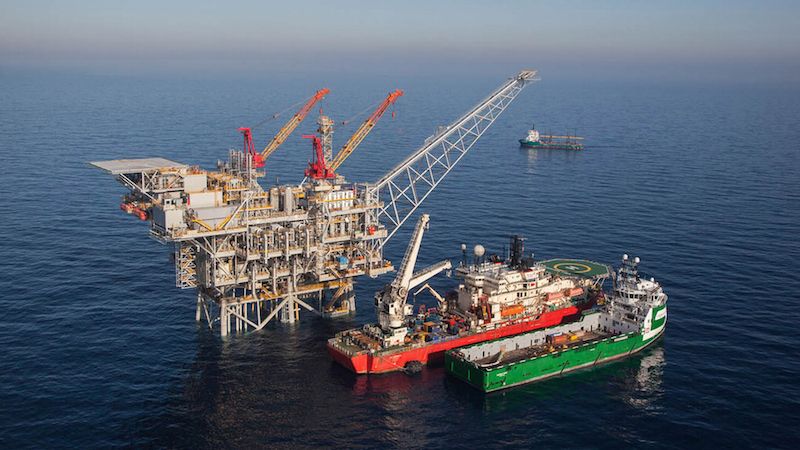
A comment made by Israeli Defense Minister Avigdor Lieberman at a Tel Aviv conference on January 31 sparked outrage in Lebanon, bringing the issue of the maritime border dispute between Lebanon and Israel back into the spotlight and catching Washington’s attention once again.

The Obama administration started mediating between Lebanon and Israel to help contain the dispute in 2012, but little happened on this front after President Trump took office in 2017. It seemed to all parties that mediation was no longer a priority for the US. Then, in October, during Lebanon’s first oil and gas licensing round, a consortium of companies led by France’s Total bid on Block 9, which includes a disputed maritime area. The bid rekindled interest in the dispute, but the buzz was discreet, confined to experts and diplomatic circles, until it was thrust out in the open again when Liberman described Lebanon’s offshore tender as “very provocative” and urged international companies not to bid on it, about a month and a half after licenses were awarded (see timeline).

Moving borders

The dispute goes back to December 2010, when Cyprus and Israel signed a maritime border agreement that was denounced by Lebanon because it encroached on parts of its exclusive economic zone (EEZ). On July 10, 2011, the Israeli cabinet approved a map of Israel’s northern maritime border, and two days later, the Israeli mission to the UN included a list of coordinates delimiting the northern end of Israel’s territorial sea and EEZ. Some of these coordinates overlapped with the Lebanese EEZ.

But to understand how we got here, we must go back to 2007. On January 17 of that year, Lebanon signed a maritime border agreement with Cyprus. It followed the standard procedure outlined in the UN Convention on the Law of the Sea, or UNCLOS, marking a series of points that are equidistant from Cyprus and Lebanon known as the median line. Point 1 was used to mark the southernmost point along this line, while Point 6 marked its northernmost point. The agreement included a standard clause specifying that the coordinates of the first and last markers—in this case Points 1 and 6—may be adjusted in light of future delimitation of the EEZ with other neighboring states, since a bilateral agreement cannot define the borders of third states.

The agreement was never ratified by the Lebanese Parliament, largely because of pressure from Turkey, which denounces all maritime border agreements signed by the Republic of Cyprus with its neighboring countries. As such, the agreement never entered into force.

It wasn’t until April 2009 that a Lebanese commission tasked with defining the coordinates of Lebanon’s EEZ completed its work, identifying Point 23—17 km south of Point 1—as the southernmost point of Lebanon’s EEZ. The coordinates were approved by the cabinet on May 13, 2009 and by Parliament on August 4, 2011. In accordance with UNCLOS, Lebanon submitted the relevant charts and lists of coordinates to the UN in July and October 2010 and in November 2011. Just like Israel’s 2011 submissions, these were unilateral determinations and do not amount to border delimitation.

The question is: Why did Lebanon sign a border agreement with Cyprus in 2007, more than two years before it had a precise definition of the borders of its EEZ?

israel’s opening

While the Lebanon–Cyprus agreement was never ratified and did not reflect Lebanon’s final position on the southern boundary of its EEZ, it did provide Israel with an opening. In December 2010, Israel signed a similar offshore border agreement with Cyprus. This deal ignored the coordinates that had been declared by Lebanon and sent to the UN a few months prior, instead using Point 1—the southernmost marker referenced in the 2007 Lebanese–Cypriot agreement—as the northernmost marker in the Israeli–Cypriot agreement. It allowed Israeli Prime Minister Benjamin Netanyahu to say in July 2010 that “the outline that Lebanon submitted to the UN … conflicts with the line that we have agreed upon with Cyprus and—what is more significant in my eyes—it conflicts with the line that Lebanon itself agreed upon with Cyprus in 2007.”

While Israel objected to the southernmost coordinates submitted by Lebanon, less known is the fact that Syria also objected to the delineation provided by Lebanon. In a letter transmitted to the UN Secretary-General on July 15, 2014, Syria stated that the delineation does not have “any binding legal effect on other states. It remains only a notification, and one to which the Syrian Arab Republic objects.” This could open Lebanon to similar dispute with Syria in the future.

Of course, the Israeli–Cypriot agreement, like the Lebanese–Cypriot agreement before it, included the standard clause specifying that the geographical coordinates of the first and last markers may be adjusted in light of future delimitation of the EEZ with other neighboring states. This left room to maneuver.

The overlap is a triangle around 856 square kilometers in size that widens as it goes further out to sea. According to Frederic Hof, the first US mediator to be involved in the EEZ disagreement, disputes of this nature are common, and “both sides acted professionally in their calculations and performed in ways fully consistent with customary international practice.”

American mediation

Because Israel is not a signatory to UNCLOS and because of the political situation between Lebanon and Israel, a third-party mediation was the optimal choice to try to find a solution to the dispute. Cyprus offered its services a couple of times, but the Americans were the first to submit a potential resolution to the impasse. Hof presented a plan in May 2012 to create a provisional but legally binding maritime separation line and a buffer zone with no petroleum activities. According to media reports, it acknowledged that around 500 square kilometers of the disputed area belong to Lebanon. It received mixed reactions in Lebanese media but was neither approved nor officially rejected at the time.

Amos Hochstein, the deputy US assistant secretary of state for energy diplomacy, took over Hof’s mediation efforts at the end of 2012. In Beirut, the handoff was seen as an opportunity to put Hof’s plan aside and seek more favorable proposals. In November 2013, Hochstein reportedly submitted to Lebanese officials a plan to draw a maritime “blue line” similar to the one established by the UN in June 2000 to demarcate the Lebanese-Israeli land border. The line would be temporary in nature and was meant to curtail tension between the two countries by prohibiting any exploration within the disputed area until a solution is reached. The plan made room for a limited role for the UN, acknowledging a Lebanese demand to involve the UN in the process. It was seen as a good starting point in Lebanon but was not met with enthusiasm in Israel. Frequent power vacuums in Lebanon did not help. By the time Lebanon had fully functioning institutions, with a new president in Baabda in October 2016 and a new cabinet in December 2016, the end of the Obama administration was only weeks away, bringing with it the end  of Hochstein’s mediation. The Trump administration had other priorities, and didn’t actively involve itself on the subject until recently. A week after Liberman’s comments in December 2017, Acting US Assistant Secretary for Near Eastern Affairs David Satterfield visited Lebanon in preparation for Secretary of State Rex Tillerson’s visit to Beirut on February 15. The US appeared to be dusting off the Hof plan, and Beirut was not thrilled. Lebanon made a counter-proposal to demarcate the border via a trilateral committee including Lebanese, Israeli, and UN representatives, in addition to experts and American diplomats—a procedure similar to the one used in 2000 to demarcate the land border known as the Blue Line. (The offshore extension is now being referred to as the White Line.) But both the US and Israel prefer to keep any UN role minimal.

For now, there is a lack of urgency in Beirut to settle the dispute—or, more precisely, to move forward with plans that seem unfavorable to Lebanon, now that Block 9 has been awarded and actual escalation is not expected, given that it is likely not in the interest of any party. The awarding of Block 9 and the upcoming exploratory activities within it were what triggered the Israeli comments at the end of January.

Block 9 covers 1742 square kilometers, out of which around 145 square kilometers (around 8 percent) fall within the disputed area. At the official signing ceremony for the exploration and production agreement on February 9, Total’s Stéphane Michel confirmed that the company’s target for drilling in Block 9 is going to be in the northern part of the block, some 25 km away from the disputed area. It is hoped that this will contain tension and allow the company to proceed with its work undisturbed. But will it be enough? Total has committed to drilling at least one well in Block 9. Failing to drill will incur a penalty worth tens of millions of dollars. But it’s not uncommon for a company to take that hit if it estimates that a penalty is less costly than drilling. In fact, in early 2015, just before the discovery of Zohr, a large natural-gas field off the coast of Egypt, reignited interest in the region, Total failed to proceed with its commitments in Cyprus and relinquished Block 10 without drilling any well.

Until next year, then, all eyes will be on the political actors in this tale.

March 12, 2018 1 comment
0 FacebookTwitterPinterestEmail
Cover storyProfilesWomen's empowerment

The countdown to political progress

by Nabila Rahhal & Thomas Schellen March 8, 2018
written by Nabila Rahhal & Thomas Schellen

This year will see some economic actors sitting in the sun. It does not require special astrological powers to predict that the first half of 2018 will be good for the bottom lines of local advertising companies, social media platforms, billboard operators, pollsters, and audiovisual companies. Driving down any urban highway or country road and browsing through their favorite media, the Lebanese political consumer is being bombarded with messages about the upcoming parliamentary elections. 

State institutions set the stage in late 2017 by booking advertising and media space for several public awareness campaigns to encourage voting. Also, since early this year, campaigns by political parties, new movements, and individual candidates are coming out in increasing numbers, as contenders enter the contest for winning public attention, and ultimately, voters. This, too, is only normal, and even gives room for hope that the next Parliament will enjoy a double blessing of greater diversity and less stagnation and political paralysis.

The May 6 vote will be important for economic and social peace and development. Lebanon’s first elections in almost a decade will be conducted under a new election law, and marks—for the first time in most citizens’ political memory—an opportunity to challenge an equilibrium of interest-mongers that has blocked the nation’s advancement internally almost as much as the external phenomena of regional violence and international power plays.   

Within the mix of election campaigning and politicians’ positioning to look attractive to voters, one novelty stands out, and could even be more hopeful than the general bombardment of promises. It is the presence of female candidates in the elections. More women have announced their candidacies—or at least their strong intent to run for Parliament—than in 2009, when the last elections were held, or in any previous election in living memory. According to figures from the Inter-Parliamentary Union, only 1.7 percent of the candidates for parliamentary elections in 2009 were women.

While no assessment of registered parliamentary candidates can be made before the official lists are published after the March 7 registration deadline, political officials in Lebanon have spoken out publicly and in interviews with Executive for more women in Parliament (the Ministry for Women’s Affairs adopted the slogan, “Half of society, half of Parliament;” see interview with Minister Oghassabian, while other sources within the political class have for several months been speaking of expectations that more women will run. No one interviewed for this article placed the figure lower than 80 women candidates.

Executive reached out to women who had announced their candidacy for the upcoming parliamentary elections in early February in an effort to gain a deeper of understanding of what motivated them to run for Parliament, and of their experience in what some prejudiced parts of society have viewed as a men’s arena for far too long.

Not new to the game

Hayat Arslan, a candidate for the Druze seat in the Chouf, says she has worked for women’s political empowerment since 2001 through an NGO called the Committee for Women’s Political Empowerment, which she founded that year to lobby for a quota for women in politics. As one of the NGOs encouraging women to run for the elections in 2013, which were later postponed, the organization counted 40 female candidates at the time, including Arslan. She says that some of these women stepped up to the plate again as soon as the current elections were announced.

Many of the female candidates that Executive spoke to built up public experience doing social work at charity organizations or NGOs, while others got their start in municipal politics. Victoria Zwein, a candidate in the Metn district, was one of the first women to run for—and win—a municipal council seat. She was elected to the municipal council in Sin El Fil, a district adjacent to Beirut, in 2004. Adding to her experience were activities in the areas of urban development and women’s empowerment, as well as projects with the international UN body ESCWA.

A breakthrough into politics on the municipal level also provided an important stepping stone for Josephine Zgheib. She is currently a municipal council member in Kfardebian, in the mountain area to the north of Beirut, where she was the first woman to win a seat, she tells Executive. Her biography also contains experience in the NGO field, through an organization she founded.

Nada Zaarour enters her race with experience in the national political scene: She is a candidate in Metn, and one of four parliamentary contenders—two women and two men—nominated in four different electoral districts by the Green Party of Lebanon. Zaarour is in her second-term as president of the Green Party of Lebanon, which was founded in 2004 to advocate for environmental protection and sustainable development, as well as human rights.

Breaking point

It is perhaps these women’s interaction with their communities’ challenges through public service work, and with the challenges of their own daily lives, that drove them to decide to run for Parliament. Kholoud Wattar, a candidate for Beirut 2, recounts an incident that occurred during her charity work, where she was trying to raise money for someone who needed urgent medical care and had to sweet-talk a certain politician to secure his help, despite the fact that healthcare is a basic right for citizens. “I decided to run for elections because I never again wanted to be in a position where I had to beg for my rights in my country,” she says. Wattar tells Executive that she aims to assemble a complete women’s list that can compete for the seats allocated to Beirut 2.

Every female candidate who spoke to Executive identified the country’s dire economic, environmental, and social state as the main motivation for their candidacies. “It’s a sin if we don’t run for Parliament in these elections because the situation in the country has become very dangerous. The level of pollution is extremely high, there is no greenery in the mountains to speak of, [and] our constitution is not being respected. We can no longer watch from the sidelines,” says Zgheib.

According to the candidates, it would be futile to complain about the political establishment’s performance without providing voters with an alternative. “The situation [in the country] has deteriorated badly, and no one has the boldness to stand up against the establishment and say enough is enough. We have reached a critical point where we either initiate positive change through this election and give future generations hope in the country to work further for it, or continue [on our current path], with generation after generation of people in the establishment holding on to power,” says Paula Yacoubian, a former political show presenter for Future TV who is running in Beirut 1 with Sabaa, a party formed last year.

Most of the women Executive profiled say they are running as independents on lists that are not from establishment political parties—groups with current representation in Parliament—but rather have been put together by coalitions of “anti establishment” political actors who come from civil society, protest movements such as the anti-garbage groups of 2015, or political backgrounds that are otherwise separate from the mainstream establishment.

While establishment political parties spoke positively about the potential increase in female candidates in the early run-up to the elections, several of them announced candidate lineups in late February that did not include a single woman. Of the three parties who announced their candidates at that time, one—Hezbollah—had already stated that it did not consider fielding female candidates to be coherent with its positions; another, the Druze-dominated Progressive Socialist Party, presented a female-free list; and the third, the Shia Amal party founded by cleric Musa al-Sadr in the 70s and for decades led by Speaker of Parliament Nabih Berri, announced a sole female candidate, sitting Minister of State for Administrative Reform Inaya Ezzeddine.

The difficulties that female candidates face in the machines of political parties were further illuminated at a Beirut conference about female candidacies in late January, where the overriding tenor of established parties was revealed to be power-centric, prioritizing their perceived short-term chances to win or defend parliamentary seats over the idea of diversifying their candidate lists by including more women.

Some women who were still contemplating their candidacies when they spoke to Executive said, speaking on condition of anonymity, that they had been pressured by political parties when discussing the possibility of running. One businesswoman with NGO experience who was leaning toward running as an independent revealed that a political party had pressured her to either join its list or not to run at all. This sort of behavior by political parties is hardly surprising, given that power pressures and entrenched practices in systems all over the world rarely fully deserve their “democratic” labels, but it seems specifically noteworthy in the Lebanese context because of two factors.

First, many female candidates relate more to independent agendas and feel more represented and equal in the political company of other independent candidates. “Women and men are equal as activists outside of this circle or club of politicians,” says the Green Party’s Zaarour. And Zwein, who began her political career in 2004 with the National Liberal Party that was established by the venerated politician Camille Chamoun in 1958 and has been led by his son Dory—today an octogenarian—since 1990, said she can no longer identify with a party which revolves around a patriarchal leader.

Zwein declares that she will be running with Sabaa in the parliamentary elections. “I’m a person who believes in political parties as major stakeholders for positive change in any country. But I couldn’t find any party in Lebanon which I believe I can work with. Most of the time, it’s a family business or a family political party, or it’s really extreme religion. It’s hard to believe that political parties will actually allow women to be present as ministers or as candidates, and the proof is that till now there are no women on the parties’ lists,” says Zwein.

Secondly, in cases where political parties do embrace female candidacy, the support structures for women aspiring to political roles appear to need much more development. Rindala Jabbour, a high-ranking member of the Free Patriotic Movement who won the party’s internal elections to run for parliamentary elections in West Bekaa–Rashaya, tells Executive that men and women are treated as equals in the party, but that she would have hoped for affirmative action to support qualified women like herself. “In some areas, you feel there is no difference between men and women, and it’s all about having the right personality [and skills] for politics, such as being able to negotiate and present your ideas clearly. In other regards, however, you feel that there should be some positive discrimination,” she says.

“Today, we’re fighting for women’s representation in politics in Lebanon. Thus, as a party, you should support your female members, and maybe give them some privileges over men to level the playing field, so to speak. I believe there should be some initiatives to support qualified women within their parties to help them rise to power. This is not the case, and you run for party elections like a man,” Jabbour elaborates, adding that one such initiative could be to assist female candidates with campaign financing, as she herself comes from a working-class background and not from a rich family.

Outside old boxes

Beyond the internal realities of anti-establishment movements and political parties alike, the rise of independent women in Middle Eastern politics is noteworthy on another level. This level is the political context of a region where many countries that are not equipped with one of two conventional power-transmission mechanisms.

Conventional wisdom in past research of women’s entry paths into political arenas worldwide was that overcoming gender barriers in parliaments required either the support of a political party or the presence of a gender quota, said Bozena Welborne, a researcher and professor of Middle Eastern politics and the role of women in politics at Smith College in the United States, at a conference panel on political inclusion hosted by the American University of Beirut’s Issam Fares Institute at the end of January. Curiously, this perception matrix is not necessarily as applicable in the Middle East, she explained. “The Middle East and North Africa lead the world in terms of the number of women who have been elected as independents,” she said. 

Her findings about independent female MPs in the Middle East showed that they succeeded in many countries of the region because of quotas, but without any party support. Welbourne later elaborated by email. She and a student had conducted research into the allegiances of parliamentary women in countries around the world between 2015-17.

That MENA leads the world in this regard, when seen in the context of the often weak roles of political parties in the formation of popular will in MENA countries, suggests that highly educated women with well-developed personal social networks (educators, for example) who compete for office in countries with flexible, parallel, or mixed electoral systems (thus outside of completely closed-list electoral systems), have a comparatively higher chance of succeeding as independents.

In the wider context of ongoing change in the political environments of professed democracies, the increasingly effective use of social media hints at an evolution in politics where non-party-dependent agenda-setting mechanisms and access roads to politics are gaining importance, functioning either as an alternative to or in conjunction with political parties.

Underrepresenting women in their lists might backfire on political parties, but so too might any attempts to use women as insincere tokens of pretend-equality, or stooges of interests of whatever partisan group, tribe, or sect, and not as equal decision makers. When such attempts of utilization or political exploitation of female authority are made, they are not missed by politically astute women. “Parties are choosing dull women who are not prominent in their communities to be on their lists because they don’t want women to challenge them or compete with them on the preferential vote,” Wattar notes with disdain. “These parties need to show that they have women to appear as ‘politically correct,’ but who are these women?” she asks.   

Support a sister

While encouragement for women’s participation in Lebanon’s political life has come a long way since 2004, it still has some way to go. Zwein was pregnant when she ran for municipal elections in 2004, and she recalls people telling her that she should go take care of her family instead of campaigning. Zgheib was single when she ran for municipal elections in 2010—she was the only female candidate—and people attempted to discourage her by asking her what she would do if she got married and left town. Wattar says that when she told her family that she had registered for the 2013 elections, her husband was shocked and her seven brothers threatened to disown her. For these women, things have changed a lot: Now, the three of them have the full support of their families and communities, and Zgheib proudly recounts that four women ran for the Kfardebian municipal elections in 2016.

Confirming a philosophical maxim from Friedrich Nietzsche—a man perceived as deeply misogynistic but perhaps also an indiscriminate hater of homo sapiens—that says, “What does not kill us makes us stronger,” Lebanese women in politics say they have turned the opposition to their dreams into whetting stones to hone their individual strengths. Wattar says she feels certain that she can influence a whole legislature of men just as she turned her own male relatives from opponents to supporters of female participation in politics.

 The women profiled for this article say they were largely supported by the women in their communities when they announced their candidacy. Jabbour says she was worried about the response from other women inside the party because she had the misperception that women tended to be jealous of each other’s successes, but the response was the exact opposite, and she counts the women of the FPM as her biggest allies and supporters.

[media-credit id=2635 align=”alignright” width=”590″][/media-credit]

“Being aware of our role and power as women started with the 2013 elections, and many of the same women are running today for Parliament. So we have already started to work together and have already decided that we will empower each other. Although some of these women are from contradicting parties, we are working together for the welfare of women, and it’s amazing,” explains Wattar.

Despite progress, elements of a patriarchal mentality still abound in Lebanon, and despite the vocal support they have been given, some of the candidates Executive spoke with worry that the prevailing cultural environment will sway voters into voting for male establishment types. “Voters say they want to vote for women, but so far, the fearmongering has been stronger in instilling fear in these people that they should vote according to their sect so that the za’eem will not lose. This mentality is stronger than the motivation to have more women in Parliament and to vote for women,” says Yacoubian.   

The road of women candidates to Election Day on May 6 is by no means easy. “There are many handicaps for women running for elections. To begin with, women are not rich in their own right; their husbands, fathers, or male relatives are rich, and they prefer to spend [money] on men who are running. You also have the patriarchal mentality that still prefers men to run, not women. And you also have the media, which is very partisan and controlled by the politicians,” cautions Arslan.

The bottom line is whether female candidates—be it as full independents, anti-establishment, or establishment members—will have succeeded very convincingly or only “fought respectably” in this good fight for increased presence in Parliament.

Hopefully, Lebanon will at least move forward enough to no longer be among the countries ranked lowest for female representation in their national legislatures, a ratio that neither reflects the skill and leadership abilities nor the many achievements of Lebanese women over the decades in different areas.

The upcoming election will be a step toward better governing if it results in higher rates of  inclusion for women. Hopefully, the bedtime stories that the first-time Lebanese voters of 2018 will one day tell their granddaughters and grandsons about the political dominance of men in Parliament and cabinet will all start with, “Once upon a time … ”

March 8, 2018 0 comments
0 FacebookTwitterPinterestEmail
Lifestyle

Raising voices, raising women

by Em Khalil March 7, 2018
written by Em Khalil

Some of the world’s most prominent companies are led by women. These accomplished female business leaders include Sheryl Sandberg, the COO of Facebook; Indra Nooyi, CEO and chair of PepsiCo; Ginni Rometty, the chair, president, and CEO of IBM, and first woman to head the company; and Diane Von Furstenberg, president of the Council of Fashion Designers of America.

What is the difference between these women and business women in Lebanon? Nothing at all. In fact, as impressive and accomplished as these women are, I’d wager I could find a woman who’s as much of a whiz at diplomacy and negotiation while haggling with a store manager in Bourj Hammoud on a Tuesday as any of the more high-positioned ladies referenced above.

The dismal number of women in the upper echelons of Lebanon’s business world has nothing to do with a lack of talent, determination, ambition, or smarts, and everything to do with lack of opportunity. The sad truth is that the playing field is not level for women here. Time and time again, an up-and-coming female talent starts out at full speed, but soon afterward, her male counterparts breeze on by as she struggles to push her boulder up the mountain.

It’s all about opportunity—but opportunity is the exception for most women in Lebanon, and will remain so unless something is done to turn it into an expectation. That something is the passing of laws and regulations to make gender equality in Lebanon a reality.

You might be thinking, “Sure, why not?” But for the situation to change, people need to do more than just agree. Laws don’t just magically appear. It’s a matter of supply and demand. Without a change of mindset—without people demanding, lobbying, and even badgering those who wield the power of the legislative pen—the only thing women can look forward to is a career of swimming upstream in a raging river. That might work for salmon, but it definitely will not work for us.

Here’s another list: Callie Khouri, who won an Oscar for writing the screenplay of Thelma & Louise; Mayssa Karaa, a Grammy-nominated singer; Sara Ganim, CNN journalist; Donna Shalala, former US Secretary of Health and Human Services; Amal Clooney, lawyer at Doughty Street Chambers specialising in international law and human rights; and Ayah Bdeir, CEO of littleBits, a company that produces educational electronic toys. All of these women are of Lebanese origin, and all of them have achieved success in countries that gave them the tools, the inspiration, and the opportunities that so many of their counterparts living in Lebanon do not have.

We can do better as a country. We can protest, we can petition the powers that be, especially in the run-up to elections; we can put into place a system to empower women and achieve equality in the decision-making process in politics and public life; we can advocate for public awareness of violence against women and challenge the negative attitudes that perpetuate the cycle of harm; we can start it all by educating the public at large and the upcoming generations about the necessity of equality as a human right; and most importantly, we can build a strong women’s movement, which studies have consistently shown is the most effective way to achieve real change. There is so much that we can do, and more crucially, that we should do. And it starts with you and me, right now.

It is past time to unleash half (if not more) of the nation’s power. The next time a Lebanese woman decides to challenge the current, it should be because she wants to, not because she has to.

Em Khalil is Bou Khalil Supermarket’s counter brand, the voice that tackles gender-associated laws and societal stereotypes in Lebanon. For more of Em Khalil’s thoughts, follow her on Instagram: @therealemkhalil

March 7, 2018 0 comments
0 FacebookTwitterPinterestEmail
Cover storyOverviewWomen's empowerment

Moving into a new world of parliamentary participation

by Nabila Rahhal & Thomas Schellen March 7, 2018
written by Nabila Rahhal & Thomas Schellen

At the end of February 2018, German women did it again. Chancellor Angela Merkel—supposedly the most powerful woman in the world, if one believes Forbes—won her Christian Democratic Union (CDU) party’s election overwhelmingly to form a coalition government with the Social Democratic Party (SDP), which had been hotly debated at the party and national level for months. Also, the candidate for the CDU’s powerful general secretary position, Annegret Kramp-Karrenbauer, was elected by party delegates with a democratic majority of 98.87 percent. (If she ever comes to Beirut on a political visit, her name will be another tongue-twister for Lebanese anchors.)

Moreover, only days before the CDU met on February 26, Merkel had announced the names of CDU ministers in the coalition government (which at time of this writing still required internal approval of the SDP party) and named three women to be among the six CDU ministers. The SDP, meanwhile, is also led by a woman, Andrea Nahles.

When will Lebanon have a Council of Ministers with a female prime minister, a female minister of defense, and 50 percent or more women in ministerial posts?   

Let’s keep things in perspective. Numbers, it is said, do not lie. That is very useful for keeping things in perspective, especially when it comes to issues that are extremely contested and fraught with partisan interest, like gender in politics and gender relations in general. Anyone who claims to be free of bias in the issue of men and women at best deceives themselves. Men are biased in gender issues. Women are biased in gender issues. This shouldn’t surprise any woman or any man, given that the overwhelming majority of people identify themselves as either female or male, and identifying oneself is, in essence, to be biased.

As opposed to the many ideologies and biases in gender matters, simple numbers can quickly clarify a few things. Even allowing several percentage points for marginal biological and self-identification driven exceptions, global gender proportions differ only in the most minute terms among countries. At birth, boys outnumber girls by a very small margin—around 1.05 to 1—and with increasing ages, the balances slowly shift until they tilt in favor of women for groups above 55.

The equality mandate

In the big-picture sense, half of the estimated 7.5 to 7.6 billion people on earth are women. By these ratios, there is every reason for the female share of political representation and decision making to be equal to that of males in a county that is proud of its democratic system—like Lebanon, if you ask any of its overwhelmingly male political leaders. But although the two genders are about equal in numbers, women neither globally nor locally enjoy full equality in terms of healthcare, education, labor, and politics.

For the humanly foreseeable future, it is to be expected that biological gender roles will remain distinct. That, according to the ruling cultural perspective of the 21st century, makes it even more important that gaps between the genders are closed and unjust discrepancies brought down in healthcare, education, labor, and politics. Of these four realms, where gender gaps have been measured annually since 2006 in the World Economic Forum’s Global Gender Gap Report (GGGR), the area with the most pronounced gender inequality is politics. In the GGGR’s four categories, education and healthcare have the lowest gaps and show the most countries with inexistent or very small differences in equality. The distances increase for labor, but they are by far the largest in politics.

Put numerically, the distance between the countries with the smallest and the largest gender gap on national terms in healthcare is merely 0.062 points on a scale from zero (total inequality) to one (total equality). The gap in education attainment is for most countries similarly small and stands at 0.092 points, between 28 countries with full parity score of 1 and Malawi, ranked 126th. Between the top countries and lowest-ranked Chad (144th), the gap is much more significant, at 0.428 points.

In the labor realm, where economic participation and opportunity are measured, the distance between top country Burundi’s 0.911 score and 126th-placed Mali is 0.393 points. However, across the 18 countries with the lowest index rankings, the economic participation and opportunity gap amounts to another 0.244 points, which translates into a total top-to-bottom gap of 0.673. In the political field, the gap is a whopping 0.736 points between Iceland, topping the sub-index at 0.750 points, and 144th-ranked Yemen, with a dismal 0.014 points.

At the same time, politics is the realm where women need the most support and arguably can affect the most to change the status quo and improve realities—and relatedly, conflict management and reconstruction. This is reflected in the adoption of a resolution by the United Nations Security Council, Resolution 1325, in the year 2000 (see box). This resolution was not only approved in a unanimous vote by the 15 Security Council members at the time, it has also been translated into National Action Plans adopted by over 70 UN member countries as of the end of 2017, according to the NGO Women’s International League for Peace and Freedom.

Under the influence of Resolution 1325 and also of the UN’s Millennium Development Goals (adopted in 2000 for a 15-year timeframe) and Sustainable Development Goals (adopted in 2015 for the 15 years till 2030), concerted global efforts for mitigating gender inequality, in the political spheres of UN Member States and the world organization itself, have visibly increased and shown numerically measurable results.

An organizational effect on the UN level was the creation of UN Women as the international body’s consolidated entity working for the empowerment of women. Another effect was the boosting of the political participation of women in the parliaments and cabinets of member countries around the world. The Middle East and North Africa region, which had lagged behind the rest of the UN’s regions in terms of political participation of women, actually showed the largest gain percentage-wise in the political participation of women in this period, at nearly 400 percent (see graph).

Lebanon in global gender context

By the ratio of female MPs, Lebanon is one of the countries with the lowest female representation. This is fact. But whether it will remain so is very much in question. For all its specificities, communal juxtapositions, and cultural diversity, Lebanon is no different from other countries when it comes to gender ratios at birth. The question of whether the country is disadvantaged in closing the gender gap because of its political structures, or if it is merely slower than most other countries, including many Arab neighbors, in adapting to the 21st century’s global gender realities, is a matter of perspective.

Sofia Saadeh, a professor of political science at the Lebanese University and a lifelong advocate of women’s political inclusion, sees it is almost impossible for qualified and independent women to make it into Parliament under Lebanon’s confessional system of governance with patriarchal organization. “Historically, so far, we have had very few women in Parliament, and those who are there are not really there on their own merit. This is because we don’t have modern parties, but sectarian parties which are based on a patriarchal system, so unless the patriarch wants you, you are not in. In the patriarchal system, those who vote are mainly male, or [are] led by a male, so they will not easily vote for a woman,” she tells Executive.

Women who registered to run in the upcoming parliamentary elections have no misgivings about the challenges they face, and the extra barriers that stand in their way, from the lack of a quota system to the high costs and missing support that female candidates have to deal with even when registering their candidacies. But as campaigns have been getting underway for the 2018 elections, women nonetheless are appearing in unprecedented numbers and with extreme determination, sharing in interviews with Executive their aims and ambitions (see story).

There is also the matter of international support and the extension of the global pro-political participation mindset and organizational framework to Lebanon. The Special Representative of the Regional Director at UN Women, Begoña Lasagabaster, conversed with Executive in the new UN Women office across the street from the Lebanese Parliament. According to Lasagabaster, UN Women, working in coordination with the whole UN system, seeks to accompany all stakeholders in member nations, from national institutions and the public sector to civil society, and academia. This appears, in the case of Lebanon, to involve developing the national action plan for implementing UN Security Council Resolution 1325, which calls for greater participation of women in security forces, peacebuilding, prevention of conflicts, and efforts to protect weak or disenfranchised strata of society.

In spite of Lebanon’s political system, which as Lasagabaster acknowledges, complicates the achievement of change, she expressed having a sense that the stakeholders in Lebanese institutions and society all fundamentally know that things in the country have to change in favor of increased female political participation. In her view, a transformational attitude is present in Lebanon, and change is therefore a very real possibility, as long as it is approached with sensitivity to stakeholders’ need to maintain political equilibriums and implemented in small steps—which according to her, does not need to take a lot of time.

A struggle of more than 100 years

The philosopher Aristotle said that “man is by nature a political animal.” The concept of politics has indeed been ingrained in human societies since the days of the ancient Greeks—but so has the human struggle of comprehending the sexes and their political equality. The very example of Aristotle illustrates this, as he thought men superior and rulers by nature and women inferior and men’s objects. His views on women and their political inferiority to men influenced (other male) thinkers in the advancement of male-centric civilizations over many centuries.

When the political systems that today are called liberal democracies began to take shape in the 19th century, the battle for equality had its form in the quest for female voting rights. It helps explain the enormous difficulty of this struggle that it took what were considered to be the most advanced countries of the age half a century or longer to establish female voting rights.

[media-credit name=”Ahmad Barclay & Thomas Schellen” align=”alignright” width=”590″][/media-credit]

In Great Britain, it took decades of protests and demonstrations for women to win these political rights. In Finland and the Nordic nations, which are leaders in female political participation to this day, female voting rights were established beginning in 1907. In Germany, active and passive voting rights of women were first instituted in 1918. In the United States, it took from the 1870s until 1920 for a proposed constitutional amendment prohibiting discrimination in suffrage on the basis of gender to be adopted. Even when one discounts outlier countries among parliamentary democracies that were comparatively early or late in introducing them, the implementation of female voting rights came to pass from the aftermath of World War I up to the period right after World War II.     

[media-credit name=”Ahmad Barclay & Thomas Schellen” align=”alignright” width=”590″][/media-credit]

[media-credit name=”Ahmad Barclay & Thomas Schellen” align=”alignright” width=”590″][/media-credit]

Compared to the length of the struggle for political equality in terms of women winning the right to vote, the ongoing momentum in the development of female political participation with the UN, international civil society, and many national governments as proponents, appears to be deeper, wider, and much more comprehensive than in previous periods of societal evolution.

The question is thus: Will Lebanon and its sovereign, the people, remain in denial of the many advantages that significant progress toward greater women’s inclusion in Parliament and the Council of Ministers can realize? Or, will Lebanon implement greater equality in political decision making, furthering national progress and giving hope that solutions could be found to problems that have not been solved under previous political structures? This spring, the people will give us their answer, and the world will take note.

March 7, 2018 0 comments
0 FacebookTwitterPinterestEmail
Oil & GasSpecial Report

A roadmap for 2018

by Mona Sukkarieh March 6, 2018
written by Mona Sukkarieh

This article was originally published in print on February 2, 2018 as part of Executive’s special report on oil & gas.

At the end of January, Lebanon signed oil and gas Exploration and Production Agreements (EPA) with a consortium of companies composed of France’s Total (as operator), Italy’s Eni, and Russia’s Novatek. The consortium had placed two separate bids on October 12, 2017 for Block 4 and Block 9, the only bids received in Lebanon’s first offshore licensing round. With the contracts signed, Lebanon can now look forward to the exploration phase. The consortium has committed to drill two wells in 2019, one in each block. But what can Lebanon expect prior to drilling?

The Council of Ministers approved the award of exclusive petroleum licenses for exploration and production in these two blocks to the consortium in a cabinet meeting on December 14, 2017. This is what the EPA refers to as the “effective date,” and our starting point to map out the road ahead in 2018.

Two separate issues will be dealt with in this article. The first, larger section focuses on the companies’ obligations arising from their exploration and production licenses; the second sketches out the Lebanese state’s petroleum program in 2018.

By the end of January, the three companies forming the consortium should have established a legal presence in Lebanon, each staffed and able to carry out its rights and duties. In addition, they should have established a management committee to authorize and supervise petroleum activities. Each one of the companies has the right to appoint at least one representative in this committee. Lebanon may also be represented in this committee: The energy minister and the Lebanese Petroleum Administration (LPA) are entitled to appoint representatives, though these will only have an observer status.

The exploration phase will extend over a maximum period of six years, divided into a first period of three years and a second period of two years, which may be extended for an additional year. The consortium is expected to submit the initial exploration plan to the energy minister and the LPA within 60 days of December 14, 2017 (the effective date). The plan should be approved within a maximum period of 60 days, if it meets all the criteria specified in the EPA. On the day it is approved, the exploration phase will have officially started.

On or prior to the signature date, the companies must have provided work-commitment guarantees to safeguard the state in case of their failure to fulfill the minimum work commitment specified in the EPA. These are the tasks that the consortium is required to perform (excluding an event of force majeure). In the first exploration period, which starts on the date the exploration plan submitted by the consortium is approved and extends over a period of three years, the required tasks include conducting surveys and drilling exploration wells, starting in 2019 in Block 4 and then in Block 9.

Within 60 days of the effective date, the companies must prepare a detailed work program and a budget for exploration activities, consistent with the requirements of the exploration plan, and submit it to the LPA. The regulatory body will either approve the work program and budget within a period of 30 days, or reject it, in which case the decision must be explained to the companies in writing so that the companies may submit a revised version.

The exploration and production agreements between the consortium and the state include local-content clauses designed to benefit the Lebanese economy. Among these is a requirement to give preference to Lebanese goods and services in awarding contracts, even if the local company makes offers that are up to 5 percent (goods) or 10 percent (services) more expensive then offers by foreign companies.

The consortium companies are also required to recruit 80 percent of their workforce from among Lebanese nationals. As it may be difficult to source talent at the beginning of their activities, the legislation allows a certain flexibility. The consortium is expected to devise a detailed recruitment and training program within six months after the EPA’s approval. An updated program for recruitment and training will have to be submitted to the LPA by December 31 of each year. If the consortium at first cannot meet the 80 percent threshold, they will be required to submit a written explanation on their own behalf, and on the behalf of their contractors, detailing the reasons and requesting an exemption. In addition, the companies are  expected to assign a budget for training public sector personnel working on the oil and gas sector, starting with $300,000 per year, with a 5 percent increase each year, until the beginning of the production phase, at which point the amount will increase. These costs are recoverable costs for the companies.

A state of affairs

For the Lebanese state, 2018 will be equally busy. Parliament will be busy discussing new oil and gas legislation, including an onshore petroleum resources law and a law codifying transparency measures for petroleum activities. These two pieces of legislation have a reasonable chance of being passed this year. Two other draft laws are expected to draw intense debate inside and outside Parliament this year: A law to establish a national oil company—although Article 6 of the 2010 Offshore Petroleum Resources Law provides for the establishment of a national oil company only “when necessary and after promising commercial opportunities have been verified” and indicates that the company would be established by the Council of Ministers—and a law to establish a sovereign wealth fund (see story page 50), in addition to establishing a General Directorate for Petroleum Assets within the Ministry of Finance. In both instances, as anyone would expect, the limits of the debate will not be confined to sectorial considerations, and are likely open to political meddling or outright obstruction.   

In addition, Lebanon is planning to update the 2012 Strategic Environmental Assessment, an environmental policy-planning tool to guide decision-making and predict how the environment is expected to be affected by different scenarios. An  updated version should be completed by end of Q2 2018.

In 2018, as in 2017, power generation is going to be among the government’s biggest concerns. Lebanon’s various political factions do not see eye to eye on this front, and progress has been painfully slow. Plans to acquire floating storage and regasification units and to import liquified natural gas for power generation, a project that has been repeatedly postponed since 2013, could be reactivated this year. Two tenders, one for the regasification units and another one for gas imports, are currently being studied, but there are no indications as to when exactly they will be launched.

A big question on everybody’s mind this year is the maritime border dispute between Lebanon and Israel. Despite the occasionally heated rhetoric, the area has been stable for over a decade. Is the US planning to resume mediation efforts? Is the United Nations considering an intervention on this front? By awarding Block 9, which includes an area that is claimed by Israel, Lebanon is once again bringing attention to this subject.

Another critical milestone this year is the expiry of the LPA board’s mandate in December 2018. The current board was appointed in 2012 for a period of six years, renewable once. It is not clear at this point if its mandate is going to be renewed or not. If it is not, it remains unknown how the next board will be selected. When the current members were appointed in 2012, local media reported that they had been selected according to a procedure valid once, suggesting that the appointment of the next board might not follow the same procedure. These questions should be clarified reasonably well in advance, because, whether the mandate will ultimately be renewed or whether a new board will be appointed, these are political decisions, and every step of the process requiring a political decision is a potential obstacle. More importantly, there are EPA obligations this year (see the timeline) and beyond that require LPA participation or oversight. Better to anticipate than defer.

If Lebanon wants to send a positive and symbolic signal early in the year, a good starting point would be to publish the two contracts that were signed at the end of January with the Total-Eni-Novatek consortium. Failure to publish the contracts would undermine efforts to build a clean and transparent Lebanese oil and gas industry.

[/media-credit] (Click on image to view full timeline)


March 6, 2018 0 comments
0 FacebookTwitterPinterestEmail
BDL subsidiesReal estate

No stimulus, no problem

by Scott Preston March 6, 2018
written by Scott Preston

Since 2013, Banque du Liban (BDL), Lebanon’s central bank, has announced over $6 billion in annual stimulus packages to prop up the country’s faltering economy. A range of sectors, from energy to education, have benefited from stimulus-facilitated credit, but none more so than the real estate market. Year after year, property developers and consumers have grown to expect and rely on the disbursement of BDL-subsidized mortgages, which have attracted the lion’s share of the government’s stimulus money.

For years, bankers and real estate executives have said that the market is driven almost entirely by purchases with subsidized loans. Perhaps this is why the latest billion-dollar stimulus package caused such a stir following its anticipated but delayed announcement. On February 2, new measures were introduced through Circular 485 that hiked mortgage interest rates, tightened qualifications, and shortened maturities on subsidized housing loans for certain banks. For the first time, BDL predetermined a $500 million tranche of the stimulus package to be distributed among banks for 2018. But on February 23, BDL’s governor, Riad Salameh, revealed that several banks had already nearly exhausted their quota of stimulus funds for the year. Furthermore, Salameh added that he would not grant a follow-up stimulus package to the banking sector as he had the year before.

While the restriction of mortgages and the early depletion of ear-marked subsidies may sound alarming to prospective home buyers, others welcome the notion of a real estate market uninfluenced by BDL’s supplementary financing. Opponents of the stimulus package say that government interventions enable buyers to afford expensive real estate and sustains housing prices out of the reach of many consumers.

“In terms of supply, buildings are being built and projects are being developed, but demand is being inflated by these subsidies,” explains Walid Marrouch, associate chair of LAU’s department of economics. “In economics, we call it demand-side management. You can intervene in the market in two ways—demand-side management and supply-side management—or you can do nothing. Usually, demand side-management doesn’t help the buyers. It helps the sellers. It doesn’t allow prices to go down. So who benefits? The banks and sellers; the developers.”

A recent master’s thesis by Jamila Youssef, a 2017 graduate of the Lebanese American University’s applied economics program, tracked the effect of monetary policy on housing prices from 2000 to 2016. Under Marrouch’s advisory, Youssef created a proxy for real estate prices by dividing the total value of real estate transactions, supplied by the Order of Engineers, with the total number of transactions from the Central Administration of Statistics. Using import values as a control variable, she studied the new, monthly price-per-transaction figures against interest rates and the loans to the private sector.

Youssef’s modeling produced two main findings. First, a 1 percent increase in subsidized loans to private sector developers increased the average price of one real estate transaction by 0.18 percent. Second, a 1 percent decrease in interest rate increased the prices by 0.37 percent.

Observing the results of the study, Marrouch feels confident that BDL’s policy aimed to prevent housing prices from declining. “When you look at the time series of the data between 2000 and 2016, you notice there’s a change in the trend [of evolving real estate prices],” he says, in reference to the graph of interest rates and housing prices. “Between 2000 and 2006, there’s a relatively flat trend; between 2006 and 2011, the trend changes and becomes steeper. Then, after 2011, after the Syrian crisis started, it started to flatten out. But then, when you look at the intervention of the central bank with these circulars to subsidize loans and other things, they start to occur when [prices] start to flatten … It seems that the intervention was there to support the price.”

Ali Termos, a professor of finance at the American University of Beirut, charted price-per-transaction figures using similar data for a study commissioned by the Ministry of Environment. He notes that the proxy seems to reflect actual market activity fairly accurately. Although Byblos Bank maintains an index of housing demand, he says Lebanon still does not have a proper, national housing-price index that tracks the value of individual properties over time.

RAMCO Real Estate Advisors monitors the prices in Beirut’s downtown area for projects starting at $3,000 per square meter, and has found marginal declines under 2 percent in recent years. However, these are asking prices, and are not representative of the market as a whole. Anecdotal reports acknowledged by RAMCO suggest that developers are offering substantial discounts of up to 30 and 40 percent in order to liquidate their stock.

The price problem

In light of the reductions of final asking prices, some economists have cast doubt on the inflationary effect of the stimulus packages. Nassib Ghobril, chief economist at Byblos Bank, says, “Housing prices declined since 2011 after the boom years, and the market was stagnating, so mortgages were taken for specific sizes for small apartments in general. We have been in a buyers’ market for real estate, so there was no risk of price inflation because of the stimulus. It was a way to generate demand in a very stagnated real estate market, and the demand generally remained in the small-size—sometimes medium-size—apartments.”

On the other hand, Jihad Hokayem, a lecturer in real estate investment strategy at the Lebanese American University, believes that the country is in for an impending wave of price declines due to a slump in oil prices from 2016. Citing his own research, Hokayem tells Executive that the falling value of hydrocarbon resources has weakened oil-dependent economies in the region where Lebanese expats often work. As a result, remittances to Lebanon will eventually decrease as well, reducing local purchasing power and eroding housing demand. By October of next year, Hokayem predicts that prices could fall as much as 55 percent from their peak in 2011. This, he says, creates a dilemma for BDL.

“The central bank has to decide whether to defend the Lebanese pound or to defend the Lebanese market, because it doesn’t have enough funds to defend both. We cannot keep on pumping money,” Hokayem tells Executive. “[The] real estate sector is [worth] trillions of dollars. You cannot prevent its crash. So let’s acknowledge the problem.”

Unproductive employer?

Supporters of the stimulus packages, like Massad Fares, a representative of the Real Estate Association of Lebanon, say that keeping the real estate sector afloat is important for the functioning of the economy as a whole. “To make a building, you need 70 different trades. It activates the whole economy. It activates industry; it activates workmanship, the aluminum, the tiles, the import, the export, everything,” says Fares. “When there’s no construction, [none] of these people are working.” Fares adds that real estate developers will lobby the government to implement its own stimulus measures amid concerns that BDL can no longer afford the subsidies.

The central bank claims that stimulus packages—and the real estate sector they subsidize—have been key to sustaining the economy since they were first introduced. According to comments published in The Daily Star, Salameh stated in 2016 that the incentives contributed to approximately 67 percent of GDP growth, which the World Bank estimates at 1.8 percent that year. By 2018, he said that 120,000 people had benefited from subsidized loans since the first stimulus package in 2013, as reported by LBCI in February. Economists disagree on the accuracy of these figures but say that it is difficult to make an independent assessment without data from BDL.

Regardless of the stimulus’ current economic impact, some critics believe that subsidies would be better applied to other sectors. While real estate sales may generate high revenues, those profits are accrued through one-time transactions, explains Marwan Mikhael, head of research at Blom Bank.

“[The stimulus] is contributing to year-on-year growth but its not increasing the potential GDP, which makes it, to a certain extent, unproductive. If you had a stimulus, for example, for a certain industrial sector, and the investment is increasing potential GDP, then at a certain time you stop the subsidy, and the system is able to generate growth in the future, sustainably. But for real estate, the sector by definition does not create sustainable growth,” says Mikhael.

If the stimulus were to be cut off, Hokayem thinks that prices would have no choice but to readjust in line with local purchasing power. Subsequently, the extra cash available to Lebanese households would be reinvested in other sectors.

“Instead of allocating 30 percent or 20 percent of my salary to pay my monthly installment for real estate, I can just pay 15 percent, and [with] the remaining, I go more to restaurants, I change the furniture of my house. I’m going to make a certain cycle in the economy,” Hokayem says. “There will be [a] multiplier effect and GDP is going to increase. So you have to bear in mind that the decrease in real estate is beneficial for the Lebanese economy.”

Whether housing prices would deflate in line with local purchasing power, and how long that would take, is anyone’s guess. In 2018, BDL’s demand-side management continues to inject liquidity into the market, albeit in a restricted form. The disbursement of subsidized loans may be set to abate, but low interest financing will remain available through other lending institutions, such as the Public Corporation for Housing and Banque de l’Habitat. Prices could continue to drop as offers from commercial banks dry up, but, for the short term at least, consumers should plan to budget within their means.

March 6, 2018 0 comments
0 FacebookTwitterPinterestEmail
Economics & PolicyWaste Management

What’s the deal with garbage decentralization?

by Scott Preston March 6, 2018
written by Scott Preston

Over the past 10 years, the government has attempted and failed to implement plan after plan to end the country’s smoldering trash crisis. With each iteration, politicians criticize government inaction, while disagreeing on what to do with and where to put the garbage. On January 11, Lebanon took another swing at resolving this impasse, when the cabinet endorsed the Policy Summary on Integrated Solid Waste Management. The policy is intended to complement a draft law, which has been studied and refined since 2012 and is currently making its way through Parliament. If passed, it would be the country’s first legal framework specifically dedicated to solid waste management.

Together, these documents outline a waste plan that places responsibility in the hands of local governments. Speaking at a press conference, Minister of Environment Tarek Khatib dubbed the approach “administrative decentralization,” the latest buzzwords among stakeholders throughout the capital. But what this term will mean in practice has confounded both academics and public officials, as most municipalities have long been legally obligated to deal with their waste while being left to their own devices without adequate support from the central government.

“In a way, responsibility was given to municipalities without any prior training, without any preparation, and without any clear vision,” says Majdi Najem, assistant professor of civil and environmental engineering at the American University of Beirut. “So now, municipalities are overly confused. They cannot commit [to investments] for the long term because the ministry did not give them a long-term ultimatum to manage solid waste. At the same time, they don’t have the capacity; they don’t have the necessary skills.”

Municipal councils are hindered by a number of administrative, technical, and financial limitations made worse by their small sizes. A paper by Democracy Reporting International from April 2017 states that Lebanon has 1,108 municipalities, “an extremely high ratio [in terms of population and surface area] by international comparison.” Villages are often too small to raise the funds necessary for proper waste disposal, and may not produce enough rubbish to attract the interest of private sector contractors.

Khalil Gebara, advisor to the minister of interior and municipalities, notes that, “For the past two years, we sent, five times, and [at] different periods, requests to municipalities to inform us whether or not they have any potential plans for a decentralized solid-waste management policy. The answers we received from municipalities don’t exceed 20 out of the 1,100 municipalities in Lebanon. So municipalities, even if they are interested, lack the capabilities to do anything about that.”

The cycle of centralization

The policy summary calls for the Ministry of Environment (MoE) to survey the financial and administrative capacities of every municipality in Lebanon and assess their ability to manage their waste without government intervention. Management practices must meet new guidelines established by the ministry, which entail sorting at the source, street sweeping, and garbage collection. Municipalities shall also be at least partially responsible for waste treatment in their service areas.

Currently, only a few municipalities are independently managing their waste without resorting to open dumping, which would be criminalized by the draft law. In order to address common challenges such as garbage disposal, local administrations often join together in municipal unions, which enables them to pool their resources. Those that launch their own waste projects often rely on stipends from the Independent Municipal Fund (IMF), which is made up of revenues from several local taxes and fees from participating municipalities.

Despite this grant system, municipalities find it difficult to cover the costs of their operations. They frequently complain that IMF disbursements are insufficient and can be delayed by months at a time, undermining their ability to budget for long-term investments or make payments to service providers. The municipal fund itself may struggle with financial pressures from local governments that sign on to waste management contracts they cannot afford. Some waste-related expenses are four or five times higher than the municipalities’ IMF allocation according to Norma Nissir, president of the IMF. Despite this shortfall, the Council of Ministers, which approves disbursements, requires the fund pay the difference.

In order to avoid funding irregularities and finance the high costs of solid waste treatment infrastructure, municipalities and unions have often resorted to tendering their projects through the state, which fronts the necessary capital. In the absence of an institutional framework for solid waste management, this role has largely fallen to the Council for Development and Reconstruction (CDR), an executive body initially established for post-war infrastructure construction and rehabilitation. The most notable of CDR’s contracts were with the collection and treatment companies Sukleen and Sukomi, covering Beirut and, formerly, Mount Lebanon/Chouf.

Over the years, the Office of the Minister of State for Administrative Reform (OMSAR) has also become a major channel for European Union-funded waste management investments across the country. In June, EU Ambassador Christina Lassen declared that the intergovernmental organization has poured over 77 million euros (approximately $94.7 million at the time of writing) into Lebanon’s solid waste sector. Mohamad Baraki, the solid waste program’s project manager at OMSAR, told Executive that if the ministry wasn’t stepping in to pay for the operation and maintenance costs, these municipal waste facilities would be forced to close.

Inside the strategy

Paradoxically, the new plan to decentralize waste management could pave the way for even more centralized operations across the country. Local administrations that are deemed unfit to manage their own waste will be included in state-tendered programs.

In an effort to organize the tendering process, the MoE has established a council of industry stakeholders that includes ministerial, private sector, and academic representatives. The governing body is meant to oversee the implementation of the plan and standardize terms of reference documents for various waste-related services. These documents would also be used by municipalities that attempt to launch their own projects.

Naji Kodeih, an environmental consultant and the lone civil-society appointee to the council, reports that the representatives began convening on February 13. Theoretically, the council will now begin to replace OMSAR and the CDR as the state contracting agency.

Beyond the extension of waste services to villages nationwide, the policy summary features several additional cash-intensive agenda items. Sorting facilities in Karantina and Aamroussieh would be rehabilitated. A composting plant in Burj Hammoud would be upgraded. A national recycling program would be initiated. The almost 940 open-air dumps counted by the MoE around the country would be closed. A MoE  official with knowledge of the new plan says that the ministry estimates the cost of these closures to be $170 million alone. Furthermore, the plan calls for the formation of three interim waste storage facilities for hazardous waste. The MoE source, who was not authorized to speak to press, confirmed that this proposal refers to an expansion of existing landfills in Burj Hammoud and Costa Brava.

Asked how the ministry expects to pay for all of these operations, the source claims that a waste fund would have to be established, financed by the imposition of a new tax regime. Some of these funds might be used to subsidize tipping fees charged to municipalities for the usage of regional treatment facilities offered by the government.

Mixed signals

During the cabinet meeting on January 11, government officials also approved measures that would allow for the use of state-owned incinerators across Lebanon. This has contributed to further confusion among stakeholders who claim that the expansion of publicly owned infrastructure is in contradiction with the principle of decentralization.

According to Najem, who frequently consults with mayors on their solid waste practices in his role as a project manager at AUB’s Nature Conservation Center, municipal leaders feel stuck. On the one hand, the MoE is encouraging them to move forward with their own waste solutions. On the other hand, some municipalities are hesitant to explore long-term investments when the government might build an incinerator in their area later on.

Despite the seemingly mixed signals from the Council of Ministers, the government’s latest plan has earned the guarded blessings of both civil society and legislators for the first time in years. “The Ministry of Environment in Lebanon worked in the last months on an integral strategy,” says Kodeih. “The goal of this strategy is to recuperate or to recover the lost opportunity cost of waste. This is good. We are okay with this concept, but at the level of details, we are not okay with some options, like incineration.”

For now, the potential impact of the plan and the feasibility of passing additional taxes, upon which the MoE’s new approach may depend, remain open questions. The source at the MoE advocates for partial decentralization but remains skeptical about its implementation. “With every new plan or new policy, you have excitement because it’s new. [The government] want[s] to do something. Every minister wants to prove themselves, but at the end I’m not really optimistic about the results. They probably want to do something now to tell the people that they want to do something just for the elections.”

March 6, 2018 0 comments
0 FacebookTwitterPinterestEmail
EditorialOpinion

Mother Lebanon

by Yasser Akkaoui March 6, 2018
written by Yasser Akkaoui

Beirut is depicted as a woman by many renowned artists, like Palestinian cartoonist Naji al-Ali, who—during the 1982 Israeli invasion—drew a caricature of his iconic character Handala offering a flower through a hole in the wall to a woman that he named Beirut. She is the patient carrier of our painful history, she is the healer of our wounds, and she has decided to step out of the rubble, grab the flower, and turn her city into the thriving, progressive place that it deserves to be.

Beware the Lebanese mother, she is nurturing, enduring, and wise. Her overwhelming love for her children knows no bounds. She yearns for them to get along and is willing to do whatever it takes for that to happen. She scolds when needed and showers her affection always. She is a relentless realist, capable of forgiveness, but she can also bring the biggest man to his knees with a single glance. She watches her sons self-destruct, disappointed by their endless ability to hate, segregate, sabotage, but she will now roll up her sleeves to fix all that was broken through her strength of wisdom, born from the pains she bore.

It is about time that people acknowledge the powerful, confident, and assertive women that our great Mother Lebanon has conceived. Women that have been holding their own in positions of power in all sectors. Women that we trust to lead the real reconciliation and reconstruction of Lebanon.

Handala’s Beirut is a woman. A man would not be able to bear or repair the harm that he himself created.

March 6, 2018 0 comments
0 FacebookTwitterPinterestEmail
Craft BeerHospitality & Tourism

Cheers for the beers

by Nabila Rahhal February 16, 2018
written by Nabila Rahhal

Compared to the ancient history of beer in the Middle East, Lebanon’s small craft breweries are extremely new on the scene. The earliest evidence of beer brewing was found in Mesopotamia some 6,000 years ago, while the world’s oldest brewery, which was located in Egypt, dates to around 3400 BC. Beer eventually made it to Europe in the Middle Ages, where consumption of the brew flourished among the masses.

Beer’s popularity has showed no sign of fading since, with global beer production reaching 1.96 billion hectoliters (hl) in 2016. China leads in beer production (460 million hl produced in 2016) followed by the US, which produced 221.25 million hl of beer in 2016.

In the last few years, the demand for craft beer—defined by the US Brewers Association as beers produced by small, independent, breweries in a traditional or innovative way—has increased significantly, both in Europe, and in the US. For example, the number of operating craft breweries in the US rose from 1,596 in 2009 to 5,234 in 2016 according to the Brewers Association, while the number of microbreweries has tripled in Europe since 2010. Paul Choueiry, manager of Les Caves de Taillevent and its recently opened craft-spirits bar, The Backroom, says, “The trend in Europe really flourished four or five years ago. I travel to Ireland almost every year, and I see that existing craft beer breweries are doubling their volume year-by-year, and new breweries are opening year-by-year.”

In Lebanon, the demand for craft beer has been growing steadily, with the last few years bringing more local success stories and a maturing market. 

It’s all about timing

For generations, the local beer market in Lebanon was dominated by Almaza, a brewery that dates back to 1933 and is estimated to produce 24 million liters annually, according to a 2013 report by BLOMINVEST titled “Lebanese Beer Market Yet to Brew.” Likewise, the range of imported beers available in Lebanon in the 1990s and early 2000s was dominated by Heineken, Corona, Efes, and Budweiser.

Craft beers were virtually unheard of in Lebanon up until 2006, when Mazen Hajjar and his partners started a microbrewery and introduced 961 to the market. (Mazen Hajjar has since sold his shares, and today the active main partner is Kamal Fayyad.) While 961 garnered a lot of attention at its launch, consumption did not pick up quickly: According to the BLOMINVEST report, 961 had only 5 percent of the total beer market in Lebanon in 2013. Speaking for 961 today, its Chief Commercial Officer Iyad Rasbey says local consumption of the beer is now at approximately 15 percent of total beer consumption in Lebanon. Rasbey explains that 10 percent of 961’s production is sold in Lebanon while the rest is exported to 12 countries across the globe, including the US.

Omar Bekdache, a former partner at 961 and current co-managing partner at Brew Inc., a brewpub in Badaro, believes the beer market in Lebanon was not mature enough back in 2006. “At that time, the majority of Lebanese consumers were not aware that there was such a wide variety of beers. Perhaps because of influence under the French mandate, Lebanese tend to drink more wine than beer, so our consumption of beer per capita is quite small when compared to most other countries, especially back then,” he recalls. According to the 2013 BLOMINVEST report, statistics placed the consumption of beer per capita in Lebanon at 5.5 liters, which is small when compared to average beer-drinking countries such as France or Italy (30 and 29 liters per capita respectively back in 2013).

Bring in the craft

Several developments have set the stage for a more dynamic beer market in Lebanon. 961 is unanimously credited with opening Lebanese eyes to the concept of craft beer. Bekdache believes it drove Almaza to diversify its beer varieties and to introduce Almaza Malt, a darker alternative to its ubiquitous pilsener, and later Almaza Light and Al Rayess beer.

When Jamil Haddad launched Colonel Beer in 2014, he says few people believed he would succeed given the small beer market in Lebanon. Haddad decided to go about things in a different way and focus on the experience as much as the product. “I focused on creating a concept around the beer, which included the beer garden, live bands, a transparent glass separated brewery, an ecofriendly setup, a bike station, a beach bar,” he says. “For me, a microbrewery should come with a concept and be an experience to succeed. When you come to Colonel, you come for the beer, as well as the experience, and this is very important.”

Haddad’s vision was realized, and today he says that Colonel, which has a capacity of 1,300 people, is full on weekends and very busy on weekdays all year long. Colonel has also made an impression among others in the industry: The Backroom’s Choueiry called the venue a “dream for a master brewer,” and Bekdache noted that “Colonel created a nice buzz around craft beer. Its setup and location really did a nice job, since they created something new.”

Kassatly Chtaura launched Beirut Beer the same year as Haddad’s Colonel, and while it is a commercial beer—not a craft one—it also played a role in expanding the Lebanese beer market. “Beirut Beer’s launch campaign was very aggressive, creating a beer buzz in Lebanon, while also adding a new variety of beer,” Bekdache says. “This variety makes consumers more willing to try new beers. I believe all this [vibe around beer] led to a bigger consumption per capita, and interest in beer. Once this interest started, distributors started looking into bringing more imported beer varieties to Lebanon.”

Rasbey says the craft beer market in Lebanon only really picked up three years ago, attributing the uptick to the young generation that travels a lot and is generally more willing to try new things.

Foreign craftiness

The introduction of new beer brands in Lebanon and the explosion of the craft-beer trend in Europe and the USA—plus the Lebanese tendency to adopt trends from abroad—created an increased demand for craft beer in Lebanon. Spirit distributors took notice. “Although we don’t have a big beer culture in Lebanon, a growing number are enjoying craft beer. We acquired new craft-beer brands, and we sell them at The Malt Gallery and have a limited distribution of them in the on-trade,” said Anthony Massoud, the managing director and owner of Etablissements Antoine Massoud. (On-trade is the alcohol that is sold in restaurants, bars, and cafes.)

Through The Backroom, which is owned by Fattal Holding, Choueiry says he is hoping to grow the craft-beer trend in Lebanon and says Fattal is importing craft beers from Ireland to sell on site and to distribute in bottles as well. The problem with serving imported craft beer on tap in Lebanon, explained Choueiry, is that the equipment is expensive and most bars cannot afford it. Even the bottled variety of imported craft beers is considered expensive, with prices starting at $8 per bottle and going up to $16. While craft beer is globally more expensive than commercial beer, due to its artisanal nature and to the higher-quality ingredients used, in Lebanon the price of importing it is added to the mix.

Meanwhile, locally produced craft beer is also on the expensive side. Bekdache explains that the extra price is for the premium quality of the beer. “Doing something artisanal means you cannot do mass volume. For example, craft beers need 15 to 30 days to brew properly and be ready for consumption, while commercial breweries need three days. If I produce commercial beer,  I will have to compromise my quality and will have to sell at a lower price,” he says. Bekdache also explains that the extra overhead expenses unique to Lebanon (such as double electricity and water bills) drive his costs up further—which is reflected in the price.   

Nevertheless, the number of bars serving imported bottled craft beer in Lebanon is on the rise, as more and more consumers demand the beverage. Locally produced craft beer, like 961, Colonel, and those produced in Brew Inc., are also finding a solid consumer base. While the trend of craft beer in Lebanon is still small, its potential seems to be quite real.


February 16, 2018 0 comments
0 FacebookTwitterPinterestEmail
  • 1
  • …
  • 88
  • 89
  • 90
  • 91
  • 92
  • …
  • 685

Latest Cover

About us

Since its first edition emerged on the newsstands in 1999, Executive Magazine has been dedicated to providing its readers with the most up-to-date local and regional business news. Executive is a monthly business magazine that offers readers in-depth analyses on the Lebanese world of commerce, covering all the major sectors – from banking, finance, and insurance to technology, tourism, hospitality, media, and retail.

  • Donate
  • Our Purpose
  • Contact Us

Sign up for our newsletter

[contact-form-7 id=”27812″ title=”FooterSubscription”]

  • Facebook
  • Twitter
  • Instagram
  • Linkedin
  • Youtube
Executive Magazine
  • ISSUES
    • Current Issue
    • Past issues
  • BUSINESS
  • ECONOMICS & POLICY
  • OPINION
  • SPECIAL REPORTS
  • EXECUTIVE TALKS
  • MOVEMENTS
    • Change the image
    • Cannes lions
    • Transparency & accountability
    • ECONOMIC ROADMAP
    • Say No to Corruption
    • The Lebanon media development initiative
    • LPSN Policy Asks
    • Advocating the preservation of deposits
  • JOIN US
    • Join our movement
    • Attend our events
    • Receive updates
    • Connect with us
  • DONATE