• Donate
  • Our Purpose
  • Contact Us
Executive Magazine
  • ISSUES
    • Current Issue
    • Past issues
  • BUSINESS
  • ECONOMICS & POLICY
  • OPINION
  • SPECIAL REPORTS
  • EXECUTIVE TALKS
  • MOVEMENTS
    • Change the image
    • Cannes lions
    • Transparency & accountability
    • ECONOMIC ROADMAP
    • Say No to Corruption
    • The Lebanon media development initiative
    • LPSN Policy Asks
    • Advocating the preservation of deposits
  • JOIN US
    • Join our movement
    • Attend our events
    • Receive updates
    • Connect with us
  • DONATE
Oil & GasSpecial Report

A roadmap for 2018

by Mona Sukkarieh March 6, 2018
written by Mona Sukkarieh

This article was originally published in print on February 2, 2018 as part of Executive’s special report on oil & gas.

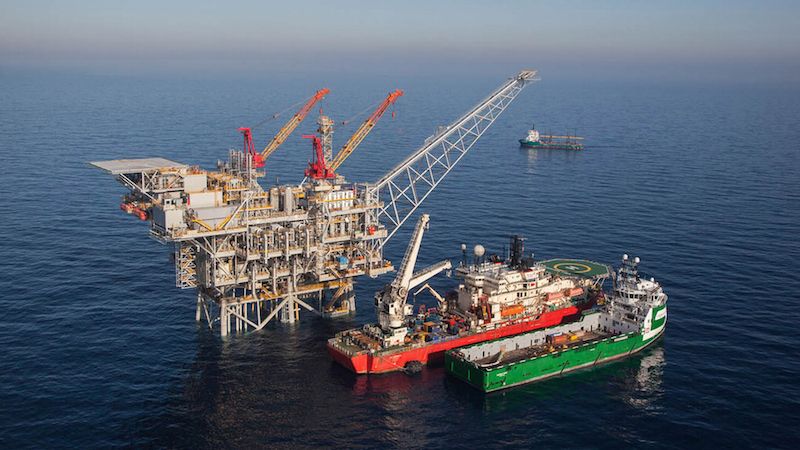
At the end of January, Lebanon signed oil and gas Exploration and Production Agreements (EPA) with a consortium of companies composed of France’s Total (as operator), Italy’s Eni, and Russia’s Novatek. The consortium had placed two separate bids on October 12, 2017 for Block 4 and Block 9, the only bids received in Lebanon’s first offshore licensing round. With the contracts signed, Lebanon can now look forward to the exploration phase. The consortium has committed to drill two wells in 2019, one in each block. But what can Lebanon expect prior to drilling?

The Council of Ministers approved the award of exclusive petroleum licenses for exploration and production in these two blocks to the consortium in a cabinet meeting on December 14, 2017. This is what the EPA refers to as the “effective date,” and our starting point to map out the road ahead in 2018.

Two separate issues will be dealt with in this article. The first, larger section focuses on the companies’ obligations arising from their exploration and production licenses; the second sketches out the Lebanese state’s petroleum program in 2018.

By the end of January, the three companies forming the consortium should have established a legal presence in Lebanon, each staffed and able to carry out its rights and duties. In addition, they should have established a management committee to authorize and supervise petroleum activities. Each one of the companies has the right to appoint at least one representative in this committee. Lebanon may also be represented in this committee: The energy minister and the Lebanese Petroleum Administration (LPA) are entitled to appoint representatives, though these will only have an observer status.

The exploration phase will extend over a maximum period of six years, divided into a first period of three years and a second period of two years, which may be extended for an additional year. The consortium is expected to submit the initial exploration plan to the energy minister and the LPA within 60 days of December 14, 2017 (the effective date). The plan should be approved within a maximum period of 60 days, if it meets all the criteria specified in the EPA. On the day it is approved, the exploration phase will have officially started.

On or prior to the signature date, the companies must have provided work-commitment guarantees to safeguard the state in case of their failure to fulfill the minimum work commitment specified in the EPA. These are the tasks that the consortium is required to perform (excluding an event of force majeure). In the first exploration period, which starts on the date the exploration plan submitted by the consortium is approved and extends over a period of three years, the required tasks include conducting surveys and drilling exploration wells, starting in 2019 in Block 4 and then in Block 9.

Within 60 days of the effective date, the companies must prepare a detailed work program and a budget for exploration activities, consistent with the requirements of the exploration plan, and submit it to the LPA. The regulatory body will either approve the work program and budget within a period of 30 days, or reject it, in which case the decision must be explained to the companies in writing so that the companies may submit a revised version.

The exploration and production agreements between the consortium and the state include local-content clauses designed to benefit the Lebanese economy. Among these is a requirement to give preference to Lebanese goods and services in awarding contracts, even if the local company makes offers that are up to 5 percent (goods) or 10 percent (services) more expensive then offers by foreign companies.

The consortium companies are also required to recruit 80 percent of their workforce from among Lebanese nationals. As it may be difficult to source talent at the beginning of their activities, the legislation allows a certain flexibility. The consortium is expected to devise a detailed recruitment and training program within six months after the EPA’s approval. An updated program for recruitment and training will have to be submitted to the LPA by December 31 of each year. If the consortium at first cannot meet the 80 percent threshold, they will be required to submit a written explanation on their own behalf, and on the behalf of their contractors, detailing the reasons and requesting an exemption. In addition, the companies are  expected to assign a budget for training public sector personnel working on the oil and gas sector, starting with $300,000 per year, with a 5 percent increase each year, until the beginning of the production phase, at which point the amount will increase. These costs are recoverable costs for the companies.

A state of affairs

For the Lebanese state, 2018 will be equally busy. Parliament will be busy discussing new oil and gas legislation, including an onshore petroleum resources law and a law codifying transparency measures for petroleum activities. These two pieces of legislation have a reasonable chance of being passed this year. Two other draft laws are expected to draw intense debate inside and outside Parliament this year: A law to establish a national oil company—although Article 6 of the 2010 Offshore Petroleum Resources Law provides for the establishment of a national oil company only “when necessary and after promising commercial opportunities have been verified” and indicates that the company would be established by the Council of Ministers—and a law to establish a sovereign wealth fund (see story page 50), in addition to establishing a General Directorate for Petroleum Assets within the Ministry of Finance. In both instances, as anyone would expect, the limits of the debate will not be confined to sectorial considerations, and are likely open to political meddling or outright obstruction.   

In addition, Lebanon is planning to update the 2012 Strategic Environmental Assessment, an environmental policy-planning tool to guide decision-making and predict how the environment is expected to be affected by different scenarios. An  updated version should be completed by end of Q2 2018.

In 2018, as in 2017, power generation is going to be among the government’s biggest concerns. Lebanon’s various political factions do not see eye to eye on this front, and progress has been painfully slow. Plans to acquire floating storage and regasification units and to import liquified natural gas for power generation, a project that has been repeatedly postponed since 2013, could be reactivated this year. Two tenders, one for the regasification units and another one for gas imports, are currently being studied, but there are no indications as to when exactly they will be launched.

A big question on everybody’s mind this year is the maritime border dispute between Lebanon and Israel. Despite the occasionally heated rhetoric, the area has been stable for over a decade. Is the US planning to resume mediation efforts? Is the United Nations considering an intervention on this front? By awarding Block 9, which includes an area that is claimed by Israel, Lebanon is once again bringing attention to this subject.

Another critical milestone this year is the expiry of the LPA board’s mandate in December 2018. The current board was appointed in 2012 for a period of six years, renewable once. It is not clear at this point if its mandate is going to be renewed or not. If it is not, it remains unknown how the next board will be selected. When the current members were appointed in 2012, local media reported that they had been selected according to a procedure valid once, suggesting that the appointment of the next board might not follow the same procedure. These questions should be clarified reasonably well in advance, because, whether the mandate will ultimately be renewed or whether a new board will be appointed, these are political decisions, and every step of the process requiring a political decision is a potential obstacle. More importantly, there are EPA obligations this year (see the timeline) and beyond that require LPA participation or oversight. Better to anticipate than defer.

If Lebanon wants to send a positive and symbolic signal early in the year, a good starting point would be to publish the two contracts that were signed at the end of January with the Total-Eni-Novatek consortium. Failure to publish the contracts would undermine efforts to build a clean and transparent Lebanese oil and gas industry.

[/media-credit] (Click on image to view full timeline)


March 6, 2018 0 comments
0 FacebookTwitterPinterestEmail
BDL subsidiesReal estate

No stimulus, no problem

by Scott Preston March 6, 2018
written by Scott Preston

Since 2013, Banque du Liban (BDL), Lebanon’s central bank, has announced over $6 billion in annual stimulus packages to prop up the country’s faltering economy. A range of sectors, from energy to education, have benefited from stimulus-facilitated credit, but none more so than the real estate market. Year after year, property developers and consumers have grown to expect and rely on the disbursement of BDL-subsidized mortgages, which have attracted the lion’s share of the government’s stimulus money.

For years, bankers and real estate executives have said that the market is driven almost entirely by purchases with subsidized loans. Perhaps this is why the latest billion-dollar stimulus package caused such a stir following its anticipated but delayed announcement. On February 2, new measures were introduced through Circular 485 that hiked mortgage interest rates, tightened qualifications, and shortened maturities on subsidized housing loans for certain banks. For the first time, BDL predetermined a $500 million tranche of the stimulus package to be distributed among banks for 2018. But on February 23, BDL’s governor, Riad Salameh, revealed that several banks had already nearly exhausted their quota of stimulus funds for the year. Furthermore, Salameh added that he would not grant a follow-up stimulus package to the banking sector as he had the year before.

While the restriction of mortgages and the early depletion of ear-marked subsidies may sound alarming to prospective home buyers, others welcome the notion of a real estate market uninfluenced by BDL’s supplementary financing. Opponents of the stimulus package say that government interventions enable buyers to afford expensive real estate and sustains housing prices out of the reach of many consumers.

“In terms of supply, buildings are being built and projects are being developed, but demand is being inflated by these subsidies,” explains Walid Marrouch, associate chair of LAU’s department of economics. “In economics, we call it demand-side management. You can intervene in the market in two ways—demand-side management and supply-side management—or you can do nothing. Usually, demand side-management doesn’t help the buyers. It helps the sellers. It doesn’t allow prices to go down. So who benefits? The banks and sellers; the developers.”

A recent master’s thesis by Jamila Youssef, a 2017 graduate of the Lebanese American University’s applied economics program, tracked the effect of monetary policy on housing prices from 2000 to 2016. Under Marrouch’s advisory, Youssef created a proxy for real estate prices by dividing the total value of real estate transactions, supplied by the Order of Engineers, with the total number of transactions from the Central Administration of Statistics. Using import values as a control variable, she studied the new, monthly price-per-transaction figures against interest rates and the loans to the private sector.

Youssef’s modeling produced two main findings. First, a 1 percent increase in subsidized loans to private sector developers increased the average price of one real estate transaction by 0.18 percent. Second, a 1 percent decrease in interest rate increased the prices by 0.37 percent.

Observing the results of the study, Marrouch feels confident that BDL’s policy aimed to prevent housing prices from declining. “When you look at the time series of the data between 2000 and 2016, you notice there’s a change in the trend [of evolving real estate prices],” he says, in reference to the graph of interest rates and housing prices. “Between 2000 and 2006, there’s a relatively flat trend; between 2006 and 2011, the trend changes and becomes steeper. Then, after 2011, after the Syrian crisis started, it started to flatten out. But then, when you look at the intervention of the central bank with these circulars to subsidize loans and other things, they start to occur when [prices] start to flatten … It seems that the intervention was there to support the price.”

Ali Termos, a professor of finance at the American University of Beirut, charted price-per-transaction figures using similar data for a study commissioned by the Ministry of Environment. He notes that the proxy seems to reflect actual market activity fairly accurately. Although Byblos Bank maintains an index of housing demand, he says Lebanon still does not have a proper, national housing-price index that tracks the value of individual properties over time.

RAMCO Real Estate Advisors monitors the prices in Beirut’s downtown area for projects starting at $3,000 per square meter, and has found marginal declines under 2 percent in recent years. However, these are asking prices, and are not representative of the market as a whole. Anecdotal reports acknowledged by RAMCO suggest that developers are offering substantial discounts of up to 30 and 40 percent in order to liquidate their stock.

The price problem

In light of the reductions of final asking prices, some economists have cast doubt on the inflationary effect of the stimulus packages. Nassib Ghobril, chief economist at Byblos Bank, says, “Housing prices declined since 2011 after the boom years, and the market was stagnating, so mortgages were taken for specific sizes for small apartments in general. We have been in a buyers’ market for real estate, so there was no risk of price inflation because of the stimulus. It was a way to generate demand in a very stagnated real estate market, and the demand generally remained in the small-size—sometimes medium-size—apartments.”

On the other hand, Jihad Hokayem, a lecturer in real estate investment strategy at the Lebanese American University, believes that the country is in for an impending wave of price declines due to a slump in oil prices from 2016. Citing his own research, Hokayem tells Executive that the falling value of hydrocarbon resources has weakened oil-dependent economies in the region where Lebanese expats often work. As a result, remittances to Lebanon will eventually decrease as well, reducing local purchasing power and eroding housing demand. By October of next year, Hokayem predicts that prices could fall as much as 55 percent from their peak in 2011. This, he says, creates a dilemma for BDL.

“The central bank has to decide whether to defend the Lebanese pound or to defend the Lebanese market, because it doesn’t have enough funds to defend both. We cannot keep on pumping money,” Hokayem tells Executive. “[The] real estate sector is [worth] trillions of dollars. You cannot prevent its crash. So let’s acknowledge the problem.”

Unproductive employer?

Supporters of the stimulus packages, like Massad Fares, a representative of the Real Estate Association of Lebanon, say that keeping the real estate sector afloat is important for the functioning of the economy as a whole. “To make a building, you need 70 different trades. It activates the whole economy. It activates industry; it activates workmanship, the aluminum, the tiles, the import, the export, everything,” says Fares. “When there’s no construction, [none] of these people are working.” Fares adds that real estate developers will lobby the government to implement its own stimulus measures amid concerns that BDL can no longer afford the subsidies.

The central bank claims that stimulus packages—and the real estate sector they subsidize—have been key to sustaining the economy since they were first introduced. According to comments published in The Daily Star, Salameh stated in 2016 that the incentives contributed to approximately 67 percent of GDP growth, which the World Bank estimates at 1.8 percent that year. By 2018, he said that 120,000 people had benefited from subsidized loans since the first stimulus package in 2013, as reported by LBCI in February. Economists disagree on the accuracy of these figures but say that it is difficult to make an independent assessment without data from BDL.

Regardless of the stimulus’ current economic impact, some critics believe that subsidies would be better applied to other sectors. While real estate sales may generate high revenues, those profits are accrued through one-time transactions, explains Marwan Mikhael, head of research at Blom Bank.

“[The stimulus] is contributing to year-on-year growth but its not increasing the potential GDP, which makes it, to a certain extent, unproductive. If you had a stimulus, for example, for a certain industrial sector, and the investment is increasing potential GDP, then at a certain time you stop the subsidy, and the system is able to generate growth in the future, sustainably. But for real estate, the sector by definition does not create sustainable growth,” says Mikhael.

If the stimulus were to be cut off, Hokayem thinks that prices would have no choice but to readjust in line with local purchasing power. Subsequently, the extra cash available to Lebanese households would be reinvested in other sectors.

“Instead of allocating 30 percent or 20 percent of my salary to pay my monthly installment for real estate, I can just pay 15 percent, and [with] the remaining, I go more to restaurants, I change the furniture of my house. I’m going to make a certain cycle in the economy,” Hokayem says. “There will be [a] multiplier effect and GDP is going to increase. So you have to bear in mind that the decrease in real estate is beneficial for the Lebanese economy.”

Whether housing prices would deflate in line with local purchasing power, and how long that would take, is anyone’s guess. In 2018, BDL’s demand-side management continues to inject liquidity into the market, albeit in a restricted form. The disbursement of subsidized loans may be set to abate, but low interest financing will remain available through other lending institutions, such as the Public Corporation for Housing and Banque de l’Habitat. Prices could continue to drop as offers from commercial banks dry up, but, for the short term at least, consumers should plan to budget within their means.

March 6, 2018 0 comments
0 FacebookTwitterPinterestEmail
Economics & PolicyWaste Management

What’s the deal with garbage decentralization?

by Scott Preston March 6, 2018
written by Scott Preston

Over the past 10 years, the government has attempted and failed to implement plan after plan to end the country’s smoldering trash crisis. With each iteration, politicians criticize government inaction, while disagreeing on what to do with and where to put the garbage. On January 11, Lebanon took another swing at resolving this impasse, when the cabinet endorsed the Policy Summary on Integrated Solid Waste Management. The policy is intended to complement a draft law, which has been studied and refined since 2012 and is currently making its way through Parliament. If passed, it would be the country’s first legal framework specifically dedicated to solid waste management.

Together, these documents outline a waste plan that places responsibility in the hands of local governments. Speaking at a press conference, Minister of Environment Tarek Khatib dubbed the approach “administrative decentralization,” the latest buzzwords among stakeholders throughout the capital. But what this term will mean in practice has confounded both academics and public officials, as most municipalities have long been legally obligated to deal with their waste while being left to their own devices without adequate support from the central government.

“In a way, responsibility was given to municipalities without any prior training, without any preparation, and without any clear vision,” says Majdi Najem, assistant professor of civil and environmental engineering at the American University of Beirut. “So now, municipalities are overly confused. They cannot commit [to investments] for the long term because the ministry did not give them a long-term ultimatum to manage solid waste. At the same time, they don’t have the capacity; they don’t have the necessary skills.”

Municipal councils are hindered by a number of administrative, technical, and financial limitations made worse by their small sizes. A paper by Democracy Reporting International from April 2017 states that Lebanon has 1,108 municipalities, “an extremely high ratio [in terms of population and surface area] by international comparison.” Villages are often too small to raise the funds necessary for proper waste disposal, and may not produce enough rubbish to attract the interest of private sector contractors.

Khalil Gebara, advisor to the minister of interior and municipalities, notes that, “For the past two years, we sent, five times, and [at] different periods, requests to municipalities to inform us whether or not they have any potential plans for a decentralized solid-waste management policy. The answers we received from municipalities don’t exceed 20 out of the 1,100 municipalities in Lebanon. So municipalities, even if they are interested, lack the capabilities to do anything about that.”

The cycle of centralization

The policy summary calls for the Ministry of Environment (MoE) to survey the financial and administrative capacities of every municipality in Lebanon and assess their ability to manage their waste without government intervention. Management practices must meet new guidelines established by the ministry, which entail sorting at the source, street sweeping, and garbage collection. Municipalities shall also be at least partially responsible for waste treatment in their service areas.

Currently, only a few municipalities are independently managing their waste without resorting to open dumping, which would be criminalized by the draft law. In order to address common challenges such as garbage disposal, local administrations often join together in municipal unions, which enables them to pool their resources. Those that launch their own waste projects often rely on stipends from the Independent Municipal Fund (IMF), which is made up of revenues from several local taxes and fees from participating municipalities.

Despite this grant system, municipalities find it difficult to cover the costs of their operations. They frequently complain that IMF disbursements are insufficient and can be delayed by months at a time, undermining their ability to budget for long-term investments or make payments to service providers. The municipal fund itself may struggle with financial pressures from local governments that sign on to waste management contracts they cannot afford. Some waste-related expenses are four or five times higher than the municipalities’ IMF allocation according to Norma Nissir, president of the IMF. Despite this shortfall, the Council of Ministers, which approves disbursements, requires the fund pay the difference.

In order to avoid funding irregularities and finance the high costs of solid waste treatment infrastructure, municipalities and unions have often resorted to tendering their projects through the state, which fronts the necessary capital. In the absence of an institutional framework for solid waste management, this role has largely fallen to the Council for Development and Reconstruction (CDR), an executive body initially established for post-war infrastructure construction and rehabilitation. The most notable of CDR’s contracts were with the collection and treatment companies Sukleen and Sukomi, covering Beirut and, formerly, Mount Lebanon/Chouf.

Over the years, the Office of the Minister of State for Administrative Reform (OMSAR) has also become a major channel for European Union-funded waste management investments across the country. In June, EU Ambassador Christina Lassen declared that the intergovernmental organization has poured over 77 million euros (approximately $94.7 million at the time of writing) into Lebanon’s solid waste sector. Mohamad Baraki, the solid waste program’s project manager at OMSAR, told Executive that if the ministry wasn’t stepping in to pay for the operation and maintenance costs, these municipal waste facilities would be forced to close.

Inside the strategy

Paradoxically, the new plan to decentralize waste management could pave the way for even more centralized operations across the country. Local administrations that are deemed unfit to manage their own waste will be included in state-tendered programs.

In an effort to organize the tendering process, the MoE has established a council of industry stakeholders that includes ministerial, private sector, and academic representatives. The governing body is meant to oversee the implementation of the plan and standardize terms of reference documents for various waste-related services. These documents would also be used by municipalities that attempt to launch their own projects.

Naji Kodeih, an environmental consultant and the lone civil-society appointee to the council, reports that the representatives began convening on February 13. Theoretically, the council will now begin to replace OMSAR and the CDR as the state contracting agency.

Beyond the extension of waste services to villages nationwide, the policy summary features several additional cash-intensive agenda items. Sorting facilities in Karantina and Aamroussieh would be rehabilitated. A composting plant in Burj Hammoud would be upgraded. A national recycling program would be initiated. The almost 940 open-air dumps counted by the MoE around the country would be closed. A MoE  official with knowledge of the new plan says that the ministry estimates the cost of these closures to be $170 million alone. Furthermore, the plan calls for the formation of three interim waste storage facilities for hazardous waste. The MoE source, who was not authorized to speak to press, confirmed that this proposal refers to an expansion of existing landfills in Burj Hammoud and Costa Brava.

Asked how the ministry expects to pay for all of these operations, the source claims that a waste fund would have to be established, financed by the imposition of a new tax regime. Some of these funds might be used to subsidize tipping fees charged to municipalities for the usage of regional treatment facilities offered by the government.

Mixed signals

During the cabinet meeting on January 11, government officials also approved measures that would allow for the use of state-owned incinerators across Lebanon. This has contributed to further confusion among stakeholders who claim that the expansion of publicly owned infrastructure is in contradiction with the principle of decentralization.

According to Najem, who frequently consults with mayors on their solid waste practices in his role as a project manager at AUB’s Nature Conservation Center, municipal leaders feel stuck. On the one hand, the MoE is encouraging them to move forward with their own waste solutions. On the other hand, some municipalities are hesitant to explore long-term investments when the government might build an incinerator in their area later on.

Despite the seemingly mixed signals from the Council of Ministers, the government’s latest plan has earned the guarded blessings of both civil society and legislators for the first time in years. “The Ministry of Environment in Lebanon worked in the last months on an integral strategy,” says Kodeih. “The goal of this strategy is to recuperate or to recover the lost opportunity cost of waste. This is good. We are okay with this concept, but at the level of details, we are not okay with some options, like incineration.”

For now, the potential impact of the plan and the feasibility of passing additional taxes, upon which the MoE’s new approach may depend, remain open questions. The source at the MoE advocates for partial decentralization but remains skeptical about its implementation. “With every new plan or new policy, you have excitement because it’s new. [The government] want[s] to do something. Every minister wants to prove themselves, but at the end I’m not really optimistic about the results. They probably want to do something now to tell the people that they want to do something just for the elections.”

March 6, 2018 0 comments
0 FacebookTwitterPinterestEmail
EditorialOpinion

Mother Lebanon

by Yasser Akkaoui March 6, 2018
written by Yasser Akkaoui

Beirut is depicted as a woman by many renowned artists, like Palestinian cartoonist Naji al-Ali, who—during the 1982 Israeli invasion—drew a caricature of his iconic character Handala offering a flower through a hole in the wall to a woman that he named Beirut. She is the patient carrier of our painful history, she is the healer of our wounds, and she has decided to step out of the rubble, grab the flower, and turn her city into the thriving, progressive place that it deserves to be.

Beware the Lebanese mother, she is nurturing, enduring, and wise. Her overwhelming love for her children knows no bounds. She yearns for them to get along and is willing to do whatever it takes for that to happen. She scolds when needed and showers her affection always. She is a relentless realist, capable of forgiveness, but she can also bring the biggest man to his knees with a single glance. She watches her sons self-destruct, disappointed by their endless ability to hate, segregate, sabotage, but she will now roll up her sleeves to fix all that was broken through her strength of wisdom, born from the pains she bore.

It is about time that people acknowledge the powerful, confident, and assertive women that our great Mother Lebanon has conceived. Women that have been holding their own in positions of power in all sectors. Women that we trust to lead the real reconciliation and reconstruction of Lebanon.

Handala’s Beirut is a woman. A man would not be able to bear or repair the harm that he himself created.

March 6, 2018 0 comments
0 FacebookTwitterPinterestEmail
Craft BeerHospitality & Tourism

Cheers for the beers

by Nabila Rahhal February 16, 2018
written by Nabila Rahhal

Compared to the ancient history of beer in the Middle East, Lebanon’s small craft breweries are extremely new on the scene. The earliest evidence of beer brewing was found in Mesopotamia some 6,000 years ago, while the world’s oldest brewery, which was located in Egypt, dates to around 3400 BC. Beer eventually made it to Europe in the Middle Ages, where consumption of the brew flourished among the masses.

Beer’s popularity has showed no sign of fading since, with global beer production reaching 1.96 billion hectoliters (hl) in 2016. China leads in beer production (460 million hl produced in 2016) followed by the US, which produced 221.25 million hl of beer in 2016.

In the last few years, the demand for craft beer—defined by the US Brewers Association as beers produced by small, independent, breweries in a traditional or innovative way—has increased significantly, both in Europe, and in the US. For example, the number of operating craft breweries in the US rose from 1,596 in 2009 to 5,234 in 2016 according to the Brewers Association, while the number of microbreweries has tripled in Europe since 2010. Paul Choueiry, manager of Les Caves de Taillevent and its recently opened craft-spirits bar, The Backroom, says, “The trend in Europe really flourished four or five years ago. I travel to Ireland almost every year, and I see that existing craft beer breweries are doubling their volume year-by-year, and new breweries are opening year-by-year.”

In Lebanon, the demand for craft beer has been growing steadily, with the last few years bringing more local success stories and a maturing market. 

It’s all about timing

For generations, the local beer market in Lebanon was dominated by Almaza, a brewery that dates back to 1933 and is estimated to produce 24 million liters annually, according to a 2013 report by BLOMINVEST titled “Lebanese Beer Market Yet to Brew.” Likewise, the range of imported beers available in Lebanon in the 1990s and early 2000s was dominated by Heineken, Corona, Efes, and Budweiser.

Craft beers were virtually unheard of in Lebanon up until 2006, when Mazen Hajjar and his partners started a microbrewery and introduced 961 to the market. (Mazen Hajjar has since sold his shares, and today the active main partner is Kamal Fayyad.) While 961 garnered a lot of attention at its launch, consumption did not pick up quickly: According to the BLOMINVEST report, 961 had only 5 percent of the total beer market in Lebanon in 2013. Speaking for 961 today, its Chief Commercial Officer Iyad Rasbey says local consumption of the beer is now at approximately 15 percent of total beer consumption in Lebanon. Rasbey explains that 10 percent of 961’s production is sold in Lebanon while the rest is exported to 12 countries across the globe, including the US.

Omar Bekdache, a former partner at 961 and current co-managing partner at Brew Inc., a brewpub in Badaro, believes the beer market in Lebanon was not mature enough back in 2006. “At that time, the majority of Lebanese consumers were not aware that there was such a wide variety of beers. Perhaps because of influence under the French mandate, Lebanese tend to drink more wine than beer, so our consumption of beer per capita is quite small when compared to most other countries, especially back then,” he recalls. According to the 2013 BLOMINVEST report, statistics placed the consumption of beer per capita in Lebanon at 5.5 liters, which is small when compared to average beer-drinking countries such as France or Italy (30 and 29 liters per capita respectively back in 2013).

Bring in the craft

Several developments have set the stage for a more dynamic beer market in Lebanon. 961 is unanimously credited with opening Lebanese eyes to the concept of craft beer. Bekdache believes it drove Almaza to diversify its beer varieties and to introduce Almaza Malt, a darker alternative to its ubiquitous pilsener, and later Almaza Light and Al Rayess beer.

When Jamil Haddad launched Colonel Beer in 2014, he says few people believed he would succeed given the small beer market in Lebanon. Haddad decided to go about things in a different way and focus on the experience as much as the product. “I focused on creating a concept around the beer, which included the beer garden, live bands, a transparent glass separated brewery, an ecofriendly setup, a bike station, a beach bar,” he says. “For me, a microbrewery should come with a concept and be an experience to succeed. When you come to Colonel, you come for the beer, as well as the experience, and this is very important.”

Haddad’s vision was realized, and today he says that Colonel, which has a capacity of 1,300 people, is full on weekends and very busy on weekdays all year long. Colonel has also made an impression among others in the industry: The Backroom’s Choueiry called the venue a “dream for a master brewer,” and Bekdache noted that “Colonel created a nice buzz around craft beer. Its setup and location really did a nice job, since they created something new.”

Kassatly Chtaura launched Beirut Beer the same year as Haddad’s Colonel, and while it is a commercial beer—not a craft one—it also played a role in expanding the Lebanese beer market. “Beirut Beer’s launch campaign was very aggressive, creating a beer buzz in Lebanon, while also adding a new variety of beer,” Bekdache says. “This variety makes consumers more willing to try new beers. I believe all this [vibe around beer] led to a bigger consumption per capita, and interest in beer. Once this interest started, distributors started looking into bringing more imported beer varieties to Lebanon.”

Rasbey says the craft beer market in Lebanon only really picked up three years ago, attributing the uptick to the young generation that travels a lot and is generally more willing to try new things.

Foreign craftiness

The introduction of new beer brands in Lebanon and the explosion of the craft-beer trend in Europe and the USA—plus the Lebanese tendency to adopt trends from abroad—created an increased demand for craft beer in Lebanon. Spirit distributors took notice. “Although we don’t have a big beer culture in Lebanon, a growing number are enjoying craft beer. We acquired new craft-beer brands, and we sell them at The Malt Gallery and have a limited distribution of them in the on-trade,” said Anthony Massoud, the managing director and owner of Etablissements Antoine Massoud. (On-trade is the alcohol that is sold in restaurants, bars, and cafes.)

Through The Backroom, which is owned by Fattal Holding, Choueiry says he is hoping to grow the craft-beer trend in Lebanon and says Fattal is importing craft beers from Ireland to sell on site and to distribute in bottles as well. The problem with serving imported craft beer on tap in Lebanon, explained Choueiry, is that the equipment is expensive and most bars cannot afford it. Even the bottled variety of imported craft beers is considered expensive, with prices starting at $8 per bottle and going up to $16. While craft beer is globally more expensive than commercial beer, due to its artisanal nature and to the higher-quality ingredients used, in Lebanon the price of importing it is added to the mix.

Meanwhile, locally produced craft beer is also on the expensive side. Bekdache explains that the extra price is for the premium quality of the beer. “Doing something artisanal means you cannot do mass volume. For example, craft beers need 15 to 30 days to brew properly and be ready for consumption, while commercial breweries need three days. If I produce commercial beer,  I will have to compromise my quality and will have to sell at a lower price,” he says. Bekdache also explains that the extra overhead expenses unique to Lebanon (such as double electricity and water bills) drive his costs up further—which is reflected in the price.   

Nevertheless, the number of bars serving imported bottled craft beer in Lebanon is on the rise, as more and more consumers demand the beverage. Locally produced craft beer, like 961, Colonel, and those produced in Brew Inc., are also finding a solid consumer base. While the trend of craft beer in Lebanon is still small, its potential seems to be quite real.


February 16, 2018 0 comments
0 FacebookTwitterPinterestEmail
Hospitality & TourismSpirit Industry

In high spirits

by Nabila Rahhal February 16, 2018
written by Nabila Rahhal

Behind that flute of prosecco or gin-based cocktail enjoyed at a bar after a long day—or even the single malt whisky or bottle of wine recommended by a premium specialty liquor boutique—there is an intricate distribution chain.

Executive sat down with Lebanon’s major spirit importers and brand owners to discuss the Lebanese drinks of choice for 2017, the drinks consumption trends, how they were consumed, and by whom.

Reasons to celebrate

Spirit distributors had several reasons to toast in 2017. Diageo marked its 20th anniversary with various promotional activities, which introduced Lebanese consumers to the company behind well-known brands like Johnnie Walker whisky and Dom Pérignon champagne. “We wanted to highlight Diageo’s contribution to the business in terms of elevating the standards of service, building markets, growing the trade, [and] providing leadership for the industry,” says Ziad Karam, MENA corporate relations director for Diageo. Lebanon, he added, is among the key sales markets for Diageo worldwide.

Having acquired and re-launched the Edrington Group portfolio in Lebanon early in 2017, Carlo Vincenti, the owner of G. Vincenti & Sons, says its brands—in particular The Famous Grouse blended Scotch whisky and Macallan single malt whisky—had record growth. “The Famous Grouse had an almost 50 percent increase in sales in 2017 when we took over, and is now the preferred brand in [bars and restaurants]. The Macallan also had a record year in 2017, with an almost 100 percent increase from 2016: For example, we sold a Macallan Lalique bottle,” says Vincenti, referring to a 65-year-old limited-edition bottle priced at $36,000.

In fact, all the spirit distributors who spoke with Executive say 2017 was an overall growth year compared to 2016. “It was a very good year for spirits, with an overall double-digit growth across most of our spirits portfolio,” says Jeanine Ghosn, managing director of Gabriel Bocti.

Etablissements Antoine Massoud (EAM) also reports a positive 2017 for both its spirits-distribution arm and its retail arm, The Malt Gallery, which completed its third year of operations early in 2018. “The growth rate for EAM spirits arm is 10 percent, while for The Malt Gallery it’s 40 percent. The Malt Gallery has become an important component of our business and constitutes almost 14 percent of our sales,” says Anthony Massoud, EAM’s owner and managing director, adding that while whisky is a major contributor of sales in The Malt Gallery, wine and craft beer are becoming important components as well (for more on craft beer see article).

Is it party time in Lebanon?

Sales flourished last year despite the usual obstacles, both in the on-trade (hospitality venues such as restaurants and bars) and off-trade (retail spaces such as supermarkets or specialty stores) sectors.

Summer 2017 saw the opening of several new rooftop bars and clubs, much to the delight of spirit distributors, who see them as an opportunity to showcase their brands. “The summer was very good for the industry—especially for on-trade, since a lot of new places opened, and they were all very active and fully booked on weekends. Such clubs have a 1,500 [person] capacity, so it’s very good for business. However, these clubs usually have exclusivity deals with spirit distributors, so while profitability shrinks, it’s still a showcase for our brands,” says Roy Diab, marketing manager for Fawaz Holdings. Diab explains that brands that are marketed successfully in the on-trade sector eventually become popular and more consumed off-trade, and, as such, the on-trade sector is an important marketing tool for distributors.

While summer 2017 may have been a good season for the on-trade sector, some spirit distributors believe that the political uncertainties of November 2017 (the resignation and susequent return of PM Saad Hariri) put a stopper in the drinks on-trade market and led to a slight downturn in December’s performance. “In the on-trade, we were depending on end-of-year sales, and those were not as good as expected because tourists didn’t come to Lebanon for New Year’s,” says Ziad Nacouzi, head of the spirits distribution division at Neo Comet KFF Food and Beverage.   

Gabriel Bocti’s Ghosn explains that the length of Lebanon’s tourism season—which used to be the whole month of December for end-of-year festivities, and July and August for the summer—is becoming shorter and shorter, which means the periods of high-frequency alcohol consumption are becoming narrower.

Vincenti also complains about the seasonality in on-trade due to low domestic consumption. “The HORECA performance is very much linked to the seasonality and festive timings, because it relies on expats and Arab tourists who are still not coming [to Lebanon] in big volumes, except for [during the] holidays,” he says, using an acronym for the food-service industry. “Domestic consumption spending is too small and doesn’t even cover 30 percent of the HORECA potential considering the number of venues in Lebanon and the number of people who go out.”

Price wars

Although distributors agree that December was a good month for the off-trade sector—largely driven by holiday gifting and increasingly lavish home celebrations—they say that the dwindling purchasing power among average consumers has become an issue. “Lebanese are still struggling with their purchasing power, the perfect example being when there were a lot of price cuts on alcohol in supermarkets in December,” says Samer Nassar, head of marketing at Diageo. “People are either moving to the more accessible categories as compared to the standard, or going to premium, but standard is still the biggest category.”

Indeed, starting in mid-November 2017, alcohol consumers were bombarded with text messages promoting major retailers’ promotions on all varieties of alcohol. Supermarket aisles were crowded with significant discounts on many alcohol brands and holiday promotions, such as free glasses with every bottle purchased. Major retailers were competing to provide the most attractive deals on alcohol, which would lure consumers into their spaces and get them buying.

For Diab, the problem with these price wars is that they negatively impact a premium brand’s perception. “The issue is that price reflects image, value, and position in the market, so when the price of a premium brand starts fluctuating downward in the market, questions may arise among consumers on the legitimacy and authenticity of the product from one end, as well as the image perception from the other end,” he says, explaining that since Fawaz Holdings has good relationships with these retailers, they usually reach an agreement to restrict the price cuts.

Ongoing trends

Trends in spirits consumption among Lebanese consumers did not change much in 2017. “A trend is not a fashion or a fad, and it lasts for a while—for almost 10 years. So today, we’re still in this trend of premierization, crafts, and cocktails,” explains Massoud.

Indeed, all the distributors Executive spoke to said they continued to see growth in their premium or high-end brands across all categories. Nacouzi says he saw an increase in sales of 10 percent and above in his company’s premium whiskies portfolio, mentioning that it recently released Dewar’s 25 into the market—priced at $225 a bottle—to positive feedback from consumers.

Likewise, despite an overall stagnation in the standard vodka category, the high end has been doing well. “Although consumption of regular vodka has slowed down, super-premium vodka continues to grow ,and Grey Goose saw a 20 percent increase,” says Nacouzi, explaining that since vodka is associated with partying, its growth is related to the new high-end bars and clubs that opened this summer.

Like Nacouzi, Diab says Absolut Vodka saw 8 percent growth compared with 2016—lead by an increase in off-trade consumption following two major holiday engagements for the brand in 2017—which, he says, is a significant increase given it already has a large volume base.

Of gins and single malts

The trend of gin consumption also continued through 2017. “Although it remains a small segment of the spirits industry, contributing less than 1 percent of its total value, it’s definitely the fastest growing,” says Diageo’s Nassar.

Speaking for Bocti, which distributes Hendrick’s gin, Ghosn says bottles of gin are now being offered on tables in nightclubs (for consumers to drink with their mixer of choice), while Fawaz Holdings’ Diab says gin consumption is still going strong both on- and off-trade.

“Beefeater, our core gin brand, is still doing strong in the on-trade and is growing in the off-trade because home consumption is increasing. People are growing more accustomed to creating their own cocktails at home or getting bar catering for their private events,” he explains, adding that super-premium gin is also growing solidly. Monkey 47, a super-premium gin made with 47 botanicals, is doing so well, Diab says, that Fawaz Holdings had to revise and increase the volume allocation for Lebanon twice in 2017.

Likewise, single malt whiskies are increasingly popular, and Nacouzi says his sales in that category have increased by 25 percent in 2017. Vincenti explains that the strength of the single malt whisky trend is in its value. “I would say the total single malt consumption in Lebanon increased by 30 to 40 percent [since the trend started in 2015], and it’s still driving the whisky category upwards in volume to some extent, but more importantly, in value. To give you a small example, in 2017, we sold five bottles of Bowmore 50 Year Old for $20,000 for each bottle [in our retail showcase store. The Cask and Barrel], which would have never been possible three years ago. This shows that there is a serious single malt fan base developing in Lebanon,” he says, adding his company has a waiting list on limited edition bottles.

Sparkling is better

Meanwhile, a new trend of prosecco consumption emerged in 2017. “Women primarily drive this category in both the on-trade and off-trade segments. Today, on the supermarket shelf you can find a large number of prosecco brands, while three years ago, you would only have seen a few brands,” says Diab.

The distributors Executive spoke to tried to explain prosecco’s rising allure. “Prosecco was growing slightly in 2016, but exploded in 2017.  It’s a global trend that we’re following. It’s also smooth to drink, and the price compared to champagne is also attractive. There is a difference between a bottle of champagne sold for between $40 and $60, and a bottle of prosecco, which you can find for $10 to $12. There’s a big three-digit growth in some cases in this category,” says Ghosn.

Massoud explains that while champagne has always been an occasional drink in Lebanon and mainly associated with celebrations, prosecco is today more accessible and regularly served in bars and clubs.

[media-credit id=2635 align=”alignright” width=”590″][/media-credit]

Who’s drinking?

Distributors agree that these trends are driven by well-traveled Lebanese in their mid-20s and above, who are social media savvy. “The new generation and young drinkers have more curiosity and are more exposed to social media, and so you feel they want different drinks than the older generation used to consume. With them, it’s more about the experience and the journey. When we introduce niche new brands to the market, there is curiosity from the consumer where before we were met with resistance,” explains Ghosn.

To Nacouzi, this means less volume, but more value. “People are upgrading what they drink: Instead of going out every night they go out less, but consume higher-quality, and hence, more expensive alcohol. It’s also a sign of prestige to bring premium alcohol to a party or to a house party one is catering. Also, some on-trade outlets use the premium brands as their go-to pouring [brand] to distinguish themselves from the competition,” says Nacouzi.

Distributors also give credit to their own marketing efforts which, they say, support these trends and sustain them through a variety of events, including tastings for consumers, training for bar staff, and social media campaigns. “We’re very dedicated and aggressive in events, visibility in the trade, in promotions, and a lot of tastings across the whole market. All our competitors are also doing this, and we have common platforms like the Whiskey Live event or dedicated platforms like Malt Gallery. We’re all working on further exposing these brands to the consumers,” says Ghosn.

All in all, 2017 was another good year for Lebanon’s spirits importers and brand owners, and while concerns over the increased end price of imported alcohol, and the low purchasing power of the domestic market continue to worry those in the industry, it looks like 2018 will be another good year for spirits. 


February 16, 2018 0 comments
0 FacebookTwitterPinterestEmail
Q&AReal Estate

Bringing order to the Order

by Scott Preston February 16, 2018
written by Scott Preston

After living in France for 30 years, Jad Tabet, an architect and urban planner, returned to Lebanon early last year to run for the presidency of the Order of Engineers and Architects of Beirut (OEA), an independent trade syndicate covering all Lebanese regions bar the North. Tabet campaigned as an independent against Paul Najem, a Free Patriotic Movement candidate that was backed by several of Lebanon’s most powerful political groups. Having secured an unlikely victory in May, he is turning his attention to several ambitious goals for his three-year term, including reforming the organization and increasing employment for members in new sectors. Executive sat down with the new president in January to discuss his plans for the OEA.

E   Tell me about your platform, and why you think you were able to come out on top.

In the last few years, there has been a large civic movement, with people raising different issues related to the question of garbage, electricity, water, pollution, etc. My platform was based on several things. The first thing was the participation of engineers in the large issues that concern the public. We think that all these issues are related, from electricity to transportation to pollution to the preservation of heritage, forests, natural heritage, etc. All of these issues [fall under the purview] of engineers and architects. We have technical solutions for these things. So one of the first points on my platform was that the order should play a role in these issues. This was not the case before, so since September, we have launched a series of conferences during which all these issues were debated, and we invited people from the government, from different administrations, to come and discuss these issues with us.

The second thing that we raised was the role of the engineers and architects in the market. The problem is that the market is shrinking. Traditionally, Lebanese engineers and architects worked not only in Lebanon but across the whole Arab region. We have 52,000 engineers and architects registered in the order. Obviously, the Lebanese market cannot provide opportunities for everyone, so what [has] happened since the 50s [is that] Lebanese engineers and architects [have] worked in the Arab region—mainly in the Gulf—but also in Africa. Now, we know that the market in these regions is shrinking, and this is creating a big problem for us, for engineers. Moreover, the real-estate situation in Lebanon is also shrinking, and we know through the number of buildings permits for the year [that] 2017 was not a good year, and we’re not expecting 2018 to be better. So this also raises a problem for the engineers [trying] to find work.

E   What are your main priorities for 2018?

We are raising two issues. The first one should be a real transformation in the practice of engineering and architecture in this country. I deeply believe that there is general trend everywhere in the world toward what I call the environmental revolution—I think we’re entering  a new phase of  human history, protecting the environment is becoming a major issue, and our engineers and architects in Lebanon should be trained for this.

I think this will open new initiatives and new work possibilities for them everywhere in the world, if we train our engineers and architects [in environmental protection] and green buildings…this will open new [opportunities] for them. I deeply feel that [in] the next 10 or 20 years, the issue of the environment will be [commonplace]. Everywhere in the world today, environmental protection [is] becoming [a] major issue, and [at the moment] we in Lebanon [have not yet caught up]. We should give much more importance to this and we should train our engineers and architects for it.

The other issue is [the] internal organization of the order. The order now has [just over] 50,000 members, but it is still working  as a small club. So one of the main issues I’m [pursuing] is transforming the order into a modern institution, and to have it [rated by the International Organization for Standardization, or ISO]. With 52,000 engineers, we should become a real modern institution with very clear rules of governance. This is not the case today.

We should have a real structure that functions well: How do you [expect] the order to really serve the engineers if the structure does not function well? The other thing that I really want is to have very strict rules of governance with no conflict of interest possible. This is very important to me.

When I was elected, I did two things immediately. First of all, I [issued] a declaration of what money I owned in accounts in the banks, as houses [in] real estate, etc. [I] put in a sealed envelope [the information about] all I owned. This envelope is sealed, and it can be opened at any time in order to have  real transparency.

The other thing I [issued was] an official conflict of interest declaration. I [used the] example of what is done [by] international organizations. You know when you have UNESCO, [the] United Nations, [its necessary for] key staff to [release a statement] on conflict-of-interest. I did it, and I want to generalize it for all the elected people in the order. I think this is very important. Having a very clear rule of transparency is something that, in a country like Lebanon, is very important.

E   What are some specific examples of the structural shortcomings you’ve alluded to?

For the time being we don’t have an HR department—we have 140 employees, but we don’t have an HR department. [At the moment], it’s the director of the order and the president who are acting as HR managers, which is not [acceptable]. This is one example. We have really to [create] a real structure. We have, for example, a very light and poor communications department, which is not acceptable. We have to [improve the] communications department with new technologies, etc. The website of the order is very bad. So all these things should be transformed and changed, and for this reason we should probably hire new people—but I don’t want to hire people before the whole evaluation and the whole new structure is done.

E   What are your next steps in achieving this ISO certification?

We are now launching a tender among international companies to help us establish a new [internal] organization, to first of all do an evaluation of the situation of the administration in the order today, then propose a new organizational chart that will allow us to have an order that is organized based on international standards, so that we can apply to have the ISO certification. We’re launching it in the following months.

E   What is your expected time frame?

The whole process will take around one year [or] one year and a half, and in that case I want to do it before I leave the order. I want to have the order certified ISO before I leave. We got the approval of the [OEA] council.

E   You’ve spoken about environmental training programs to help Lebanese gain employment abroad, but what can be done for those engineers and architects that hope to make a living while remaining in Lebanon?

I think also in Lebanon this is a very important issue. You know that more and more environmental issues in Lebanon are becoming very important. You have a lot of pollution; it’s becoming [a] major environmental issue. It’s [a] health issue also.

What we can do is basically training first and then raising awareness—raising awareness and exerting pressure on the government and on [the] public sector to issue laws and regulations for environmental protection. We did something; now it has become a nest for all big projects that are examined by the higher council of urban planning. All big projects that are examined by the higher council of urban planning should have an environmental approach.

We have started [a] training center in the order. We have started to do training sessions on environmental issues. We’re preparing the engineers, for example, to become LEED [Leadership in Energy and Environmental Design] registered engineers. You register in the order [for] the program of training and then once you [finish] with the program you can go to the LEED and present your [qualifications] to become LEED certified.

E   Architects and engineers frequently report that they are underpaid in relation to the fees recommended by the OEA. What can be done to improve their wages?

This is true. Look, I will tell you something. We’re in a free market. Lebanon is a free market, and you can’t intervene. The percentage put in the order is a sort of incentive, it’s a direction that is given, but you cannot force [it]. You can’t force the owners, the developers, to apply these things. [For example, the Tripoli OAE said fees paid to members should be paid at the order at fixed rates. But members started to reimburse part of their salary to developers to remain competative.]

E   Architects and engineers also report issues of overregulation associated with technical control offices that were established a few years ago.

It’s not the order that installed this; [it was] the government. It’s a governmental decree imposing this issue of technical control, which is something that came from France. It’s a copy of what happens in France. I think the decree has a lot of things that do not work. It’s not well applied in Lebanon; it’s not adapted to the Lebanese case. We are now discussing [it] with these [offices]. [Currently] you have seven bureaus of control, technical offices. We’re talking with them to try to set up some rules for their work.

We want to organize these technical control offices, because we’re getting a lot of complaints from engineers that they take money, [but] they don’t do what is really important, and what is their real function. They don’t go to the site, etc. So we want to [impose some] sort of control on them. We hope that the decree will be changed. We’re trying to work on a committee that would propose amendments to the decree to the government and to the minister of public works.

E   When you ran for the presidency of the OEA, a few parties said they backed you, including Beirut Madinati, Kataeb, and the Progressive Socialist Party. Do you identify with any of these parties?

No. In fact, I will tell you exactly what happened. I had been living in France for 30 years, and in December 2016, I got a phone call from a former student of mine [who] told me, “We want to have somebody that runs for the presidency of the order, that could be backed by the civil society, who would not be affiliated to any political party … You are a figure, a professional figure. We want you to run for this post.” I told them, “Look, I don’t think we have [a good chance of winning], but, if you want, I will do it just to do campaign that raises major issues.” We did the campaign, I was backed by several [groups]: Beirut Madinati, but not only [them], by other civil-society groups [as well]. The backing by Kataeb and [the] Progressive Socialist Party only came [in] the last week. I will be very frank with you. The whole campaign was done with the civil society, not only Beirut Madinati. 

E   So you were not, and are not, a member of Beirut Madinati?

I’ve never been a member of Beirut Madinati. Never. I have friends in Beirut Madinati. I have people with whom I work, but I’m not a member of Beirut Madinati.

E   When you were elected, you won by a narrow margin of only 21 votes. How would you describe your relationship with the OAE council and other members now that you’re the president?

You know that the council of the order is sort of [a] reduced example of the Council of Ministers. You have all political parties there. It’s not always easy. I always say that, well, I’m not against political parties. I’m not against engineers and architects being affiliated to political parties, but what is important is that when they are in the order, they basically act as [such], having in mind the interest of engineers and architects. And what I told them, what I always tell [them], is that they should take these interests and concerns and [raise them with] their political parties, and not the reverse. Not the interest and concerns of their political parties the order. This is very simple to say, but it’s very difficult to apply. It’s not easy. I’m trying to work with this. We’ll see.

(This interview has been edited for length and clarity.)

February 16, 2018 0 comments
0 FacebookTwitterPinterestEmail
Banking & Finance

Is Lebanon technologically ready to tackle growth?

by Paul Karam February 16, 2018
written by Paul Karam

In March 2017, The Economist reported that Intel, the giant American chipmaker, paid $15.3 billion for Mobileye, an Israeli firm at the forefront of developing autonomous-car technology. The deal was not the first to involve an Israeli tech firm attracting foreign buyers, but it was the biggest yet. The Mobileye acquisition is an example of how Israel’s technological edge has strengthened its economy, and a reminder of the crucial role that technology and production efficiency play in the growth process of any economy today.

Of course, very few countries have the necessary elements to create an edge in technology—especially if they are a developing country, and more so if they go through recurrent political instability. Lebanon is generally known to have an educated workforce, and during the postwar rebuilding period it benefited from considerable capital accumulation. But it has also been subject to political setbacks that have sapped its energies.

One way to understand Lebanon’s growth process and the role of technology in its economic development is  to examine what the American economist Robert Solow called the sources of growth, or the factors that contribute to gross domestic product (GDP): human labor, physical capital, and total-factor productivity (TFP). TFP measures the contribution to GDP that cannot be explained by labor or capital—in other words, it captures extra factors that affect the overall efficiency of production, like political stability, technology, human capital, governance, institutional quality, and cultural traits.

Research published in 2003 by Barry Bosworth and Susan Collins of the Brookings Institution shows that for developed economies, TFP contributes close to 40 percent of growth in output, making growth an “intensive” process that is dependent on technology and the quality of inputs. But in developing countries, TFP contributes no more than 10 percent to growth, clearly indicating that growth is still heavily reliant on the quantity of inputs.

The picture is worse for Arab countries, where the contribution of TFP has been zero and sometimes negative, according to 2007 research by Aamer Abu-Qarn and Suleiman Abu-Bader published in the journal “World Development,”  which implied that TFP has held back production efficiency and economic output due to technological underdevelopment, political instability, and institutional weakness. These outcomes did not spare the buoyant, modernizing countries of the Gulf Cooperation Council (GCC). Evidence compiled by Raphael Espinoza in a 2012 research paper for the University of Oxford shows that TFP growth was negative for all GCC countries between 1990 and 2009, and only positive for three countries when non-oil output is considered: Kuwait, Oman, and UAE, which had an annual TFP growth of 0.9, 0.8, and 0.2 percent respectively.

The two glaring exceptions to the international picture are China and Israel. China has returned to the world economic stage with gusto, averaging an annual GDP growth rate of 9.2 percent between 1978 and 2004, and, just as importantly, an average TFP growth of 4 percent—translating into a TFP contribution to output growth at 43.5 percent, which is even higher than that of developed economies. While less advertised, Israel’s experience has been equally notable: GDP growth in the same period averaged 4.3 percent and TFP growth 1.97 percent, indicating that the TFP contribution to output growth was at 45.8 percent.

Politics affects growth

What about Lebanon? The table, from research done by the Lebanese economist Ali Bolbol, displays the growth accounting numbers for Lebanon between 1992 and 2015, and for four consecutive sub-periods within these 23 years. Overall, GDP growth was 4.69 percent, but TFP growth was 0.52 percent annually, thus contributing only 11.1 percent to growth.

Growth was driven mostly by physical capital accumulation at 2.43 percent, which thus contributed more than 50 percent to growth. Interesting patterns emerge in the sub-periods: During the rebuilding period of 1992–1998, growth was notably characterized by TFP at 1.95 percent, but more so by capital accumulation at 3.21 percent. A slowdown period followed, which was characterized by political bickering and culminated with the assassination of Prime Minister Rafik Hariri in 2005. TFP dropped precipitously during that period, robbing from growth at the rate of 2.33 percent annually.

The subsequent 2007–2010 period was underpinned by the Doha Accord of political reconciliation. TFP did well, growing at 2.24 percent, but the construction boom in the real estate sector had the biggest effect, with capital growing at 5.49 percent and contributing more than 50 percent to growth. The last period, 2011 to 2015, was the most dismal, marked by internal political paralysis and the Syrian war. TFP contracted at a rate of 1.77 percent annually, and even capital accumulation suffered due to the dearth of investment, growing at only 0.98 percent. Labor growth saved the day, growing at 2.85 percent, thanks in part to inflows of low-cost Syrian labor. It contributed more to Lebanon’s GDP growth during this period than capital growth and TFP combined.

Overall, post-war Lebanon has fared better than its Arab counterparts. Capital accumulation explained slightly more than 50 percent of its growth, whereas TFP growth was positive and contributed close to 12 percent to growth. But compared to countries like China and Israel, Lebanon has done poorly as far as TFP is concerned—that is, in terms of technological development and the quality of inputs.

It was always quite evident that political stability matters greatly to growth; now, we can put an approximate number on it. As reflected in TFP, we saw that between 1999 and 2006, political instability denied the economy 2.33 percent annually in growth, whereas between 2007 and 2010, political stability added 2.24 percent. This is the minimum impact, since instability can also affect labor utilization and capital investments.

But TFP captures more than the impact of politics. What Lebanon needs is not only continuous political stability, but also a climate that fosters innovation and technological growth. Focusing on technological growth is one of the most effective ways to boost TFP, and, with it, overall growth. In this respect, Banque du Liban, the central bank of Lebanon, took a welcome step in the right direction with Circular 331, an initiative to channel bank investments into “knowledge economy” entrepreneurs establishing companies in Lebanon through direct investment or via a locally based venture capital (VC) outfit. However, this was an isolated event within a sector that lacks momentum and a VC culture, in an overall environment that still remains cumbersome to invest in, because of a lack of modern regulations and good governance. The government must clear the way for investing, and the private sector must seize these incentives and take on investments that can ultimately transform the economy into a modern, technology-driven economy.

The private sector will need first and foremost an educated labor force to carry out these structural changes. The popular perception that the Lebanese education system is extraordinary may not hold water: TFP growth in post war Lebanon has been low, and the contribution of education small. A 2016 UN report on Lebanon, “Mind the Gap,” argues that the country should design an educational system that focuses more on new technologies and applied sciences, reverses the widening skills gap, and exploits cooperation between universities and the private sector.

Lebanon’s comparative advantage no longer lies in services, given the emerging and competing centers in the region, like Dubai. Technology is now  the undeniable driving force behind growth and the rise of modern economies. Post-war Lebanon is still lacking in this respect, as apparent in the country’s relatively low TFP. It can reverse this pattern by maintaining political stability, enriching human capital and talent, and improving governance and the business environment. If it fails to do so, the country will lag increasingly behind its peers, and move toward a dimmer future.

February 16, 2018 0 comments
0 FacebookTwitterPinterestEmail
CommentCover storyCryptocurrency

Legal aspects of digital currencies

by Nicole Purin February 16, 2018
written by Nicole Purin

In the virtual Wild West of the digital economy created by the internet revolution, the emergence realm of cryptocurrency represents an important legal frontier. The rise of cryptocurrencies can be thought of as a digital-money revolution. Cryptocurrencies have the potential to transform the way people view money, how they transact, and even the overall structure of the financial system, starting from individuals all the way up to central banks and sovereign states.

Individual central banks and governments in different countries are considering new regulations and legal frameworks to rein in the wild horses of Bitcoin and other digital currencies. In the new year, the regulatory debate widened with remarks from the German central bank when Joachim Wuermeling, a member of the board of Germany’s Bundesbank, said national rules may struggle to contain a global phenomenon.

“Effective regulation of virtual currencies would … only be achievable through the greatest possible international cooperation, because the regulatory power of nation states is obviously limited,” Wuermeling said at a January event in Frankfurt, the German financial hub and seat of the European Central Bank,  according to Reuters.

Roughly at the same time as the German banker’s statement, French media reported that Bruno Le Maire, the French economy minister,  announced the creation of a working group to develop cryptocurrency regulations. According to the French financial daily Les Echos, he said the working group would be responsible for proposing guidelines and drafting a framework for cryptocurrency regulations aimed at preventing abuse of the technology and curbing speculation.

Given that South Korea, Japan, and China also sought to calm the waters of cryptocurrency speculation by talking publicly about introducing regulations, the number of people seeking to sell their cryptocurrency holdings has leapt upward, judging from market developments as well as media reports. There appears to be growing assumptions—which for some are mounting concerns—over the acceleration of globally coordinated cryptocurrency regulations: perhaps beginning with a meeting about the rise of Bitcoin planned for March, when the G20 finance ministers and central bank governors will convene in Buenos Aires, Argentina. Hosted for the second time by a Latin American nation since the inaugural G20 summit in 2008, G20 meetings this year are scheduled to include several meetings of finance leaders and a digital-economy working group before the G20 general summit at the end of November.

The current state of cryptocurrency

At present, cryptocurrency is governed mostly by financial-crimes regulations designed to cover money laundering, terrorist financing, and other financial wrongdoings. Tax regulations on cryptocurrencies and on digital-currency exchanges are also important factors in this novel legal structure.

The United States Internal Revenue Service defines cryptocurrencies as a digital representation of value that function as a medium of exchange, a unit of account, and a store of value, yet which does not have legal tender status in any jurisdiction. The legal framework applicable to the buyers, sellers, and users of cryptocurrencies is very basic, and it relies on existing legal concepts pertaining to commodities as well as value and exchange.

The central question is whether in a specific jurisdiction a cryptocurrency may be classified as money or not. Answers have been legally inconsistent due to the hybrid nature of digital currency as a means of exchange. Also, different countries have adopted conflicting regulatory and legislative responses, some supportive and others restrictive, depending on the classification of the cryptocurrency either as a commodity or a currency.

Categorizing Bitcoin and other cryptocurrencies from a legal perspective is complex because unlike electronic money, for example, a cryptocurrency does not legally represent a “claim” on the issuer. It is a rather fluid and versatile concept, and its legal status is open to a broad interpretation. Arguably, authorities and legislators have not fully come to grip with all of the ramifications of cryptocurrencies, and this lack of governance has led to a general reluctance to accept cryptocurrencies.

Legal Framework in the US and EU

In the US, cryptocurrencies are permissible. Bitcoin and cryptocurrencies have been classified as convertible decentralized virtual currencies and the Commodity Futures Trading Commission treats Bitcoin as a commodity like gold, judging that it should be taxed on this basis.

There have been some attempts to regulate the cryptocurrency market in the US. In 2014, Benjamin Lawsky, then the New York state financial services chief, took a conservative stance on cryptocurrencies, mainly due to money laundering and terrorist-financing considerations, and spearheaded the historic regulatory framework for Bitcoin, referred to as BitLicense.

A BitLicense is essentially a business license for virtual-currency activities issued by the New York State Department of Financial Services for New York companies and residents. Crypto-economy startup Ripple, operator of a “digital asset” called XRP, the fastest and most scalable digital asset enabling real-time cross-border payments, and Coinbase, a cryptocurrency exchange platform headquartered in the US, were both successful in obtaining BitLicenses in 2016 and 2017, respectively. Members of the cryptocurrency community have criticized New York’s interventionist regulatory provisions, as many of them hold the view that the cryptocurrency market should remain unregulated to avoid harming the potential for long-term innovation.

The European Union also lacks a solid cryptocurrency and blockchain regulatory regime. This is not surprising, as the technology is very new. However, the legal status of digital currencies has been analyzed and considered by the European Central Bank, the European Parliament, and the European Commission. The Court of Justice of the European Union was asked to opine on applicability of Value-Added Tax (VAT) to Bitcoin, and it concluded that Bitcoin is a currency and not a commodity (unlike the approach adopted by the US Commodity Futures Trading Commission) and hence it is exempt from VAT.

It appears that for the moment there is no clear consensus on whether Bitcoin should be treated as a currency or as a commodity. This distinction is important, because if it is treated as currency, it would fall under the jurisdiction of a central bank, and if it is a commodity, it would fall under the relevant commodity authority and face tax implications such as VAT.

The emergence of cryptocurrencies has caught markets unprepared. In 2016, the European Parliament voted for the establishment of a task force to develop financial regulations designed to harmonize the market. However, until the harmonization process is in place, each country is taking its own measures.

While the situation is very much in flux and new discussions on regulations may erupt every day, the general position in Europe at the time of writing is that cryptocurrencies and ancillary activities that derive from it are legal. Le Maire, the French economy minister, said that a working group headed by Jean-Pierre Landau, the former deputy governor, the country’s central bank, had been established to propose regulations and parameters designed to ensure that cryptocurrencies are used within the limits of the law and not to abuse the tax and payment systems, Les Echos reported recently.

France has been very active in this sector, passing regulations for Bitcoin market transparency in 2014 which require Bitcoin distributors to identify their customers and the applicability of capital gains tax to digital currencies, according to an official press release. In the UK, digital currencies are treated as “private” money and they are subject to taxation based on profits from sales.

European and UK regulators have issued warnings against cryptocurrency investments and are pushing for stricter regulations. Due to the secrecy around cryptocurrencies, the expectation is that the UK and the European governments will pass legislation in 2018 to regulate cryptocurrencies, aligning them anti-terrorism and money-laundering legislation. This might not be counterproductive, as it is likely to create legitimacy and credibility for the digital market.

Legal Framework in the Middle East

Central banks and governments in the Middle East have been very cautious in supporting cryptocurrencies. Although the Saudi Arabia Monetary Authority has not banned Bitcoin specifically, it has encouraged dealers not to use it due to its highly speculative nature. Banque du Liban, the central bank of Lebanon, has decreed that banks and exchanges cannot transact in virtual currencies. In Jordan, the central bank has also discouraged the use of cryptocurrencies, which it does not consider legal tender, and it forbids financial institutions, financial companies, and exchanges from dealing in cryptocurrencies.

In the United Arab Emirates, trading cryptocurrencies is legally prohibited pursuant to the Regulatory Framework for Stored Value and Electronic Payment Systems issued by the Central Bank of the UAE in January 2017. A one-sentence provision in this regulation (Provision D.7.3) reads, “All Virtual Currencies (and any transactions thereof) are prohibited.”

In spite of this prohibition, Bitcoin trading, according The National, occurs on a regular basis, and it has become what appears to be a “tolerated practice” according to several legal advisors. Several real-estate brokers and entrepreneurs last fall announced their willingness to receive property payments in Bitcoin. Strengthening this view, local media last year repeatedly cited Mubarak Al Mansouri, the governor of the UAE central bank, as saying in January 2017 that the aforementioned new regulations do not cover digital currency, “defined as any type of digital unit used as a medium of exchange, a unit of account, or a form of stored value,” and “do not apply to Bitcoin or other cryptocurrencies, currency exchanges, or underlying technology such as blockchain.”  He also stated that digital currencies are currently being reviewed and new regulations will be issued in due course. However, in remarks made later in the year, Governor Al Mansouri warned about volatility risks related to trade in cryptocurrencies. At present, it is not clear if Bitcoin can be used a form of payment or for money transfers in the UAE.

State-backed digital currencies: the way forward?

Estonia presented a proposal back in 2013 designed to launch its own state-managed digital currency, estcoin, but this was strongly dismissed by European Central Bank President Mario Draghi. More recently, Venezuela, under tremendous financial pressure, announced a plan for a sovereign oil-backed digital currency that was criticized by many international experts. However,  state-backed digital currencies could be in the cards in the GCC and the wider Arab region. There has been ongoing discussion that Saudi Arabia and UAE may create a cryptocurrency for cross-border transactions under the umbrella of the two central banks via blockchain technology.

In 2016, the Dubai Future Foundation established the Global Blockchain Council, indicating that the technology is being studied and not dismissed out of hand. The challenge is significant. “Technology advances such as blockchain are causing massive shifts to the way we use financial services,” noted Abdul Basitt Qayed, managing director of private investment firm Ghaf Capital, “but regulations are struggling to keep pace with the rate of change in new technologies for the past decade, and by the time they build new laws and regulations for such technology, [they] will be outdated, because a new technology will appear to replace the old one. Since technology [is] outpacing human development, regulators need to learn technologies faster and increase their ability to adapt.”

Riad Salameh, the governor of Lebanon’s central bank, has also suggested that the government is looking at the possibility of a state-backed cryptocurrency (see overview and interview). These are highly significant developments for the region, although a timeline for implementation has not been set. A distinction is being made between central bank transactions and the use of cryptocurrencies for individuals. Certainly, validation by UAE and Saudi central banks might influence other countries in the region.

Many observers are predicting that it is only a matter of time before central banks across the world will launch their own cryptocurrency and move toward a cashless society. Banks are embracing blockchain technology across different sectors, including derivatives.

In the next 18 months, a global regulatory framework for the sector must be developed, but in order to be successful, it will need to balance intervention and innovation. It appears that there is no stopping the digital financial economy, and the players who fail to assimilate and adapt to this new system risk becoming obsolete.

February 16, 2018 0 comments
0 FacebookTwitterPinterestEmail
Cover storyCryptocurrencyStartup

Lebanon hops on the crypto train

by Thomas Schellen February 16, 2018
written by Thomas Schellen

Antoine Yazbek and Zaki Soubra are budding Lebanese cryptocurrency entrepreneurs, and they radiate seriousness in their endeavor. As a journalist, one is inclined to consider an entrepreneur serious if they answer a series of probing interview questions without losing their temper at the intrepid—or sometimes just intractable—media type across the table. A more general measure of seriousness in business, especially in a new fintech startup, is if the enterprise is founded with personal money.

Yazbek and Soubra pass the test on both counts. They set aside over an hour to detail their value proposition and enterprise development plan to Executive, and last year, they invested their own money into their first cryptocurrency venture: a cryptocurrency mine­—a facility with serious computing power that is dedicated to the production of cryptocurrency coins in—of all places cold and far, Iceland.

They do not disclose how much capital they committed to the venture—the partners only volunteer that their investment was 100 percent their own, and “above six digits and below seven digits” in dollar terms. Nor do they agree to disclose where they incorporated their offshore company for their initial foray into the global cryptocurrency realm, but it is clear that this tech startup has not been kissed by funding under the provisions of the famous Circular 331 from Banque du Liban, the Lebanese central bank.

“You have to put your money where your mouth is when you want to talk with an investor,” Soubra says, explaining the pair’s funding strategy. His partner, Yazbek, adds that they both learned the importance of an entrepreneur’s personal financial commitment when they were working in asset management for large Middle Eastern conglomerates and sitting on the buy side of the table, across from entrepreneurs looking for investment. 

Rather than divulging further details about the legal and financial information related to their first venture, the partners instead emphasize that they are determined to develop a new brand, under which they want to bundle as many as six diverse cryptocurrency-related services. “We have just registered our new brand under the name Crypten. This will be the umbrella for all that we aim to do; it is designed to stand for confidence and transparency, and the brand name will stay with us even as our verticals evolve. Above all, we want to build a brand that will inspire trust as we strive to be the continuous partner in crypto for stakeholders,” Yazbek tells Executive when confirming the launch of their corporate identity upon registration of their new brand in the last week of January, two weeks after the initial interview. 

During the first interview, he had explained that the facility they established in Iceland constitutes the first of six pillars, or business units, that they want to build under their brand. The other pillars will range from consultations on crypto assets for asset managers, high net-worth individuals, family offices, and financial professionals, to the for-profit provision of education and information seminars on the cryptocurrency economy.

Gate to crypto

Yazbek and Soubra chose to invest in Bitcoin mining and cryptocurrencies as their initial pillar because they perceived it as “a more stable business model” and value proposition than other segments of the cryptocurrency realm. They also reasoned that their mine would provide traditional investors with an “entry gate” to the crypto world, as it involves tangible investments into hardware that are well suited for presenting to prospective investors and clients, and because operating their own mining facility gives them the opportunity to acquire hands-on experience in this realm.

Going forward, the business plan is for the mining facility to grow organically and be kept under Soubra and Yazbek’s full ownership. The plan, however, includes added options for mining. One option is to rent out mining capacity to clients who want to produce their own cryptocurrency coins without exposing themselves to the  large investment expenditures required to set up their own mine. Other possibilities are to develop and manage a custom mining facility for a single investor on the side of the existing one, or to build an additional mine through a Crypten fund, attracting investors who are not necessarily interested in cryptocurrencies but are involved in tech investing.

The two partners say they became friends while studying economics at the American University of Beirut in the late 1990s. After having acquired about 15 years of experience in the finance field since they graduated in 1998, they separately discovered their passion for the crypto-economy about two to three years ago. When they reconnected in Beirut in 2016, they decided to team up.

“We truly believe in the advantages of cryptocurrencies and are both in it for the long term. This specifically means Bitcoin, but [beyond this] all cryptocurrencies in general. However, when I say this, I want to exclude many of the initial coin offerings, or ICOs, and new tokens that are just coming out. These are mostly rubbish because their underlying aspects are not strong enough,” Yazbek explains. (See glossary of cryptocurrency terms). Soubra adds, “Cryptocurrencies have real advantages, and sooner or later, even though there will be road bumps and some people will get burnt, the advantages of cryptocurrencies will impose themselves.”   

Their skepticism about the current ICO hype notwithstanding, the partners are not opposed in on principle to initial coin offerings. They envision creating an ICO consultancy as one of the pillars that they want to develop—possibly later—as part of the Crypten brand. “We believe that if ICOs are better regulated with a better framework, more companies are going to want to go [the ICO route]. We want to help these companies conceptualize their own tokens, write a white paper, and go to market. Crypten would perhaps underwrite part of the tokens and help them find investors in their tokens,” they explain.

They estimate that rollout of an ICO consultancy might still be a few years away and come after the crypto economy has acquired some greater regulatory maturity. Other pillars of the new Crypten brand might see the light sooner, and initially as tech consultancies. According to Yazbek, the planned asset-management pillar will initially provide technical advice and research, but will refrain from giving investment advice in the manner of a private bank. “We want to help any asset manager to understand [cryptocurrency] technology better, and we want to explain to them all different ways how to invest. So think of us as tech consultants for asset managers,” he emphasizes.

The second pillar, labeled as a brokerage pillar, will likewise commence as a consultancy, with a focus on solving problems people have in relation to cryptocurrency trading. Yazbek points out that it is very difficult for many people, locally and in other jurisdictions, to find out how to go about this business. The plan for the brokerage pillar is to show clients how they can participate in the cryptocurrency market and place even small amounts without succumbing to hype and scams or engaging in wild speculation. Another activity under this pillar will be the provision of storage for cryptocurrency wallets, either as “hot” or “cold” storage, meaning with or without online access to a client’s coins.

Like other experts on the matter, the pair found themselves spending a lot of time explaining to people what the whole crypto realm was about. They were confronted with a contradiction, or even paradox, when they would encounter people who were greatly under-informed about the crypto realm, but were already involved or wanted to get involved. This is the story behind the new brand’s pillar for providing training and education. “There is a huge gap in information and knowledge [among potential Crypten clients]. If we want to make a business out of cryptocurrency involvement, we realized that we have to bridge this gap through education. We need to educate our clients before we can have a large number of interactions about the crypto world with them. This is where the idea of [a consultancy] originated,” Yazbek says.

A vision to bridge gaps

The brand’s overall governing philosophy will stress objectivity, Soubra explains. “We want to be perceived [to be] as objective as possible because the whole thing we’re building is a trustworthy brand that is not partisan for one coin or the other,” he says. As to their competitive advantage in an area of economic activity that is expected to rapidly fill up with providers, Soubra says, “We feel that our main advantage is that we’ve been involved with the crypto world and with the younger, tech-savvy generation for a while now. We feel that we speak their language. At the same time, we speak the languages of traditional financial institutions because we both come from this background.”     

Soubra and Yazbek are setting their primary sights on winning clients among asset managers and high net-worth individuals, in family offices, finance houses, and banks. “We will be open to retail [clients] but we are not here for the hype. The goal is to take our knowledge and skill and use it to handhold potential investor clients or institutions interested in allocating funds to crypto,” in what they perceive as an unfolding paradigm shift in the entire world of finance, Yazbek says.

The ability to bridge the communication chasm between the new tech world and existing financial market leaders will be especially tested in the fifth Crypten pillar. This pillar is planned as blockchain consultancy with a mission to offer to financial institutions all the resources to understand how evolutions in the new technology affect them and which blockchain applications apply to them.

Knowing the importance of performing within the highly fluid environment of this paradigm shift, Soubra and Yazbek point out that the verticals or pillars of Crypten are not immutable. The venture’s organizational chart is not set in stone at this point, and verticals might be adapted and developed in response to market conditions. They are likely to also evolve along with the planned acquisition of licenses that the enterprise will need in order to give investment advice and move beyond a tech-consulting focus for some of the brand’s pillars. Some pillars might even be totally changed over the coming few years, the company founders acknowledge.

To them, flexibility is crucial, as no one can be certain how and in which direction the entire crypto realm will evolve. However, they are certain in their determination to build a trusted brand and also firmly convinced that cryptocurrencies will survive and stand tall, after having emerged from the expected phase of brutal adaptation. On top of that, they see cryptocurrency development as a chance for Lebanon to strengthen its economy, provided that the government adopts a proactive regulatory regime that sits well with the Lebanese central bank. “Let there not be a void; let the regulators decide on what they are comfortable with under the level of risks they see, but let there be something,” Yazbek states empathetically.

As Yazbek and Soubra see it, Lebanon has benefited greatly from BDL’s fostering of the country’s entrepreneurship ecosystem. This entrepreneurial edge, in conjunction with the country’s well-known competencies in the fields of banking and finance could, in their view, be developed into a powerful and fortuitous triangle by adding in the beam of virtual money. Says Soubra, “We feel that adding the field of cryptocurrency into the Lebanese mix will give us in this country a huge edge compared to our competitors, wherever they are.”

February 16, 2018 0 comments
0 FacebookTwitterPinterestEmail
  • 1
  • …
  • 89
  • 90
  • 91
  • 92
  • 93
  • …
  • 691

Latest Cover

About us

Since its first edition emerged on the newsstands in 1999, Executive Magazine has been dedicated to providing its readers with the most up-to-date local and regional business news. Executive is a monthly business magazine that offers readers in-depth analyses on the Lebanese world of commerce, covering all the major sectors – from banking, finance, and insurance to technology, tourism, hospitality, media, and retail.

  • Donate
  • Our Purpose
  • Contact Us

Sign up for our newsletter

    • Facebook
    • Twitter
    • Instagram
    • Linkedin
    • Youtube
    Executive Magazine
    • ISSUES
      • Current Issue
      • Past issues
    • BUSINESS
    • ECONOMICS & POLICY
    • OPINION
    • SPECIAL REPORTS
    • EXECUTIVE TALKS
    • MOVEMENTS
      • Change the image
      • Cannes lions
      • Transparency & accountability
      • ECONOMIC ROADMAP
      • Say No to Corruption
      • The Lebanon media development initiative
      • LPSN Policy Asks
      • Advocating the preservation of deposits
    • JOIN US
      • Join our movement
      • Attend our events
      • Receive updates
      • Connect with us
    • DONATE