• Donate
  • Our Purpose
  • Contact Us
Executive Magazine
  • ISSUES
    • Current Issue
    • Past issues
  • BUSINESS
  • ECONOMICS & POLICY
  • OPINION
  • SPECIAL REPORTS
  • EXECUTIVE TALKS
  • MOVEMENTS
    • Change the image
    • Cannes lions
    • Transparency & accountability
    • ECONOMIC ROADMAP
    • Say No to Corruption
    • The Lebanon media development initiative
    • LPSN Policy Asks
    • Advocating the preservation of deposits
  • JOIN US
    • Join our movement
    • Attend our events
    • Receive updates
    • Connect with us
  • DONATE
Cover storyOverviewPublic finance

Getting the books back in order

by Jeremy Arbid November 3, 2017
written by Jeremy Arbid

On paper, the Lebanese state should function. The constitution—frequently ignored as it may be—envisions a rational budgetary process that allows for planning, checks and balances among different branches of government, and an annual allocation of resources based on anticipated needs. In simple terms, every year the government should ask Parliament for the legal authority to collect and spend money. Parliament’s “yes” comes in the form of the budget law. A given year’s budget law should be passed before the year begins (meaning Parliament should have just legislated the budget for 2018—not, as it did, for 2017).

Lebanon’s constitution also says that before a new budget is passed, the previous year’s budget should be audited by the courts, ensuring the numbers all add up and that red flags are raised overanything that seems suspicious. Parliament has the power to then accept or reject the yearly audit (or closure of accounts, see below). But, Parliament cannot constitutionally pass a new budget before approving the audit of the previous budget.

None of this has happened in years. But for the first time since 2005, Lebanon’s Parliament last month approved a state budget (albeit for 2017).

Why Parliament went 12 years without authorizing the government to spend and collect money via a budget law is very difficult to understand. After over a decade, that might be the point: To the public, the budget saga is almost too convoluted, too politically messy, and too technical to make sense of—and if they can’t understand it, how can they hold politicians accountable? Or make any sense of how, in that period without a budget authorizing spending, the government was able to spend nearly $130 billion.

Technically, it’s political

Politicians refer to different spending figures and different time periods over the last 12 years, complaining about public expenditures during the governing tenure of the opposite power. The figures floating around also do not consider the revenues from the entire period, and downplay the total amount of money spent and collected outside an approved budget. A 2013 book published by the Free Patriotic Movement (FPM) argues that government auditors cannot approve accounts from past years and charged that past officials—namely Future Movement leader Fouad Siniora, who twice served as Lebanon’s finance minister and once as prime minister—allegedly embezzeled the treasury to the tune of $11 billion. Of course Siniora has repeatedly denied the allegation: At a legislative session this April, during a televised session of Parliament, Siniora said, “The disbursement of every penny of the $11 billion is registered at the Ministry of Finance,” and asked why the finance ministry had not referred the accounts to the court. The Future Movement ended up also publishing its own book on the issue in 2013, but scholars of public finance say the arguments put forth by both books are far from solid gold.

In general, there are three political time periods in the last decade that help explain why passing a budget was not a top priority. In the first period, 2004 to 2008, there was one parliamentary election, but three resignations of government, one assassination of a prime minister, one occupation of downtown, and a war. Between 2014 and 2017, there was a long vacancy in the presidency and a period of non-performance in terms of the cabinet, as well as the Syrian refugee crisis, Daesh, and other security concerns. So compared to the preceding and following periods, the Sleiman presidency from 2008 to 2014 was somewhat politically stable.

But the functionality of all the institutions needed to pass a budget was at times there and at times was not. The interaction of the institutions during Sleiman’s presidency was better than the periods before and after, and a budget should have been passed—but it was not, and we have never been told why.

Politically, it’s technical

While the reasons Lebanon has not had a budget for the last 12 years are largely political, there was a technical obstacle that ended up hindering passage of a state budget: auditing.

Every year, the Ministry of Finance is supposed to forward the accounts of spending and revenue collection from the previous year to the Court of Accounts for an audit (see infographic timeline and explainer on the budget process). This audit, when done annually, is termed a closure of accounts. Parliament must approve the audit before a new budget can be passed. A new budget, therefore, cannot be passed until the accounts of the previous budget have been closed.

Herein lies the nature of the technicality: Because there has been no budget for 12 years, there can be no closure of accounts. Because Parliament was not authorizing the government to collect and spend the money it projected in the form of a budget law, there has been no legal document to compare the projections against what was actually spent and collected.

While spending and revenue transactions have been recorded for the past 12 years—and could be audited—scrutinizing these transactions is not technically a closure of accounts.

In an interview, the president of the Court of Accounts, Judge Ahmad Hamdan, told Executive that the court has not received the yearly accounts from the Ministry of Finance, and has not performed the closure of accounts since the 2005 budget. Alain Bifani, director general of the Ministry of Finance, confirmed this in an email to Executive. Back in December 2015, Bifani had told Executive in an interview that all but two of the financial accounts were completely finished, and the remaining accounts were at an advanced stage. Has the ministry now finished the remaining accounts? Bifani, in an October email to Executive, answered, “No, not yet. Work in progress. Very tough and complicated,” without elaborating.

After 12 years without a budget, the question last month was what would be more unconstitutional: continuing without a state budget, or passing one without an audit? Parliament chose the latter, and inserted a clause in its budget law pushing any audit down the road until after next spring’s parliamentary elections. If that audit actually happens, it could cover some or all of the years that Lebanon went without a budget, but for now, no one has an answer. There’s also a chance the budget law would be challenged at the Constitutional Council (see story on the looming showdown over public finances), but its fate was not clear as Executive went to print.

How the government spent without budget authorization

The budget is the document where the government projects expenditures and revenue, and Parliament gives its approval of this plan by voting it into law. Without voting a budget law for 12 years, Parliament essentially did not authorize the government to collect or spend any money. So how did the government spend nearly $130 billion in over a decade? It did so in three ways: through a budgetary rule allowing for temporary spending, advances from the treasury, and extrabudgetary laws.

On the last day of January 2006, Parliament voted the 2005 budget into law. It took lawmakers the full legislative session plus the January extension, a one-month period allowed by article 86 of the constitution, to get the 2005 budget on the books. That temporary, one-month extension, needed to be paid for somehow, because the government must continue operating, and that costs money. To pay for this, the same article of the constitution allows for a one-month allocation of spending, in case Parliament is slow on voting a budget. The one-month spending allocation is called the provisional twelfth rule, and it allows the government to fix its expenditures based on the previous year’s budgetary figures.

When Parliament ratified the 2005 budget at the end of January 2006—over a year late—it also passed another law, 717/2006, extending the provisional twelfth rule until a new budget is passed. This froze spending of every ministry and state institution at 2005 levels (LL10 trillion, or around $6.6 billion), ignorant of both changing needs and inflation.

Shortly after adopting the provisional-twelfth rule ad infinitum, Lebanon found itself at war, and 2006 ended without a budget to cover that year nor the year to come. To cover spending beyond what was allocated in 2005, the government turned to the treasury, drawing advances to pay for the spending it said it needed. When spending allocations became insufficient, the government transferred money from budget reserves and added allocations through treasury advances. These were made legal by government decrees and approved by Parliament.

In 2012, tactics changed. With 2005 getting further in the rearview mirror, Parliament began passing laws raising the 2005 spending cap instead of having the government rely only on treasury advances to meet increased needs. There were at least five extrabudgetary laws passed, adding LL12 trillion to the 2005 spending level.

We do not know how much money was channeled through each of these three mechanisms, but we do know how much in total was spent. Every month, the Ministry of Finance publishes its Public Finance Monitor (PFM), which, among other indicators, gives a total amount of spending for the month. (The PFM does not breakdown spending by institution, but by type of expenditure, for example, current or capital). Adding the figures from 2006 to 2016 (the full figures for 2017 are not yet available) shows that the government spent LL206 trillion ($130 billion) in total.

We also know, in general, where public money goes. A significant amount goes to debt servicing; another sum to operations such as paying salaries and pensions for public sector workers and security forces; a third chunk goes to social expenditures, for example as subsidies to the Ministry of Public Health; and a fourth to subsidize Electricite du Liban. What’s left is available for investments and other expenses.

What we do not know about the $130 billion in public spending between 2006 and 2016 is whether the numbers are inflated. There have been allegations in the past of ghost-staffing at different ministries, just as there have been allegations of bloated contracts. We also cannot say if any of the LL140 trillion ($93 billion) in collected revenues over the same period were mismanaged. These answers will only come from an audit of the books, which in the words of Alain Bifani at the finance ministry are not yet fully tallied, and are definitely not publicly available.

November 3, 2017 0 comments
0 FacebookTwitterPinterestEmail
LeadersOpinionPublic finance

Return to sanity now

by Executive Editors November 3, 2017
written by Executive Editors

After years without a state budget, Parliament met in October and voted the 2017 budget into law. What Parliament should have done is pass the 2018 budget, because the current fiscal year is almost over.

There are also allegations that Parliament broke the law and violated the constitution: To pass a budget an audit must first be performed, and there are both political and technical reasons why Lebanon has not audited its books since the 2005 budget (see overview).

Parliament could have required an audit of all the financial accounts since the 2005 budget, but it did not. The constitution requires an annual audit that must happen before a new budget can be legislated. Parliament worked around this constitutional requirement by inserting a clause in the 2017 budget law that allowed the state to delay the audit for 12 months. This arguably violated the constitution. If the constitution is not upheld we are at risk of losing the identity of the state.

Held to account

Leaders have not yet abandoned the audit but this could still happen at a later date. We must double our vigilance to make sure this audit happens. We want to know whether the $130 billion in public spending between 2006 and 2016 is inflated and whether any of that money was wasted, fraudulently spent, or stolen. We want to know whether any of the $93 billion in collected revenues over the same period were mismanaged. And if there was negligence or criminality in how our public finances were managed, we want to exercise our right as citizens to hold those responsible to account.

Accounting is more than tangentially related to accountability. We don’t need accounting if there is no accountability afterward. The Ministry of Finance has found so many huge anomalies and mistakes that they have spent years trying to trace back to zero, the ministry’s director general told Executive on more than one occasion.

Whenever there is a situation where money is invested there is also an automatic incentive for people to take advantage of that money and, depending on their personal set of convictions, take as much as possible. We need to establish accountability by implementing the accounting process with all its regulatory and legal consequences and repercussions. Auditing, cost control, and cost supervision are at the heart of this process and usually a government would have a two-tier audit, internally and externally.

That’s at the procedural level. The absence of a budget for 12 years certainly interplayed with and possibly strengthened an atmosphere where waste, fraud, and theft could more readily occur.

Past time

According to Georges Corm, who served as Lebanon’s finance minister from 1998 to 2000, there were a lot of problems rebuilding the institutional capacity of the Ministry of Finance after the civil war. The same can be said more broadly of the government and the national economy.

In the years from 1992, Lebanon had a prime minister with practically zero experience in Lebanese politics, but a wealth of knowhow in business. Rafiq Hariri came into government with the assumption of working with anyone still standing, whether warlord or not, and dealing with different groups holding special interests, attempting not to upset anyone, and trying to get the country back on exponential growth trajectories enshrined in the vision 2000 documents. In that situation, Hariri was allocating whatever money there was to mobilize the economy. In the two decades since, Lebanon does not have the same excuse. The infighting of 1997 is not so relevant in 2017.

But the lack of accountability since 2005 was a sustained effort. For a very long time, despite knowing that something was wrong, efforts were never made to rectify and bring the budget process back on track. And this willful non-accountability continues today, despite the obvious that in times of relevant and unassailed peace Lebanon was mandated to have a government and not some type of militia rule living in palaces. The sustained non-accountability in the system for at least the last 12 years, if not the last 25, brings us to a point where we, the people, shall give no pardon.

November 3, 2017 0 comments
0 FacebookTwitterPinterestEmail
Economics & PolicyTaxes

Stalled progress

by Executive Editors October 26, 2017
written by Executive Editors

Public workers were protesting at the end of September out of fear the government might not honor legislation ordering an increase to their salaries and benefits. The protesters feared that the government might suspend the salary increase because the revenue it expected to cover the new spending was struck down by a court ruling. The Constitutional Council, Lebanon’s highest constitutional authority, annulled a tax law passed in August by Parliament that would have brought in revenue to cover the deficit expected from the salary increase. If the Lebanese government and Parliament had just passed a budget, which it has unconstitutionally failed to do since 2005, then we would not be in this mess.

The Constitutional Council ruled in favor of an appeal, brought forward by 10 MPs that argued the tax law violated Lebanon’s constitution. In its ruling decision—that cannot be challenged—the court said it annulled the tax law for several reasons:

(1) The vote violated Parliament’s voting rules—they should have called a roll call vote, but instead, the vote was tallied by a raise of hands;

(2) The tax law violated Article 83 of the constitution because new revenues and expenditures must be included in the budget for the next fiscal year and violated Article 87 of the constitution that says the government must close its financial accounts at the end of each fiscal year with parliamentary approval;

(3) The ruling also took issue with Articles 11 and 17 of the law. The former concerned the taxation of illegal coastal properties, which the court ruled contradicted the constitution because the tax was not clearly defined. The latter raised the tax on the interests on deposits, which the court ruled violated the principle of equality vis-a-vis the tax burden.

On the court’s first point, it is surprising that Parliament—whose Speaker has held the position for 25 years, and whose members, thanks to twice extending their own terms, have served for at least eight years—cannot properly vote on a law.

On the second point, in March the Cabinet approved the budget for 2017 and referred it to Parliament, which has yet to vote on it. Still, the 2017 process was an improvement on the 11 previous years, in which Lebanon went entirely without a state budget—for reasons that are quite beyond rational explanation. The closure of public accounts was an impediment, but according to Alain Bifani, director general of the Ministry of Finance, public accounts have been reconciled back to 1997. The government should now be finalizing the 2018 budget and sending it over to Parliament to vote on.

On the third point, the court’s remarks on Article 11 and 17 of the tax law are being addressed by the government, according to a Ministry of Finance statement, without elaboration. Local reports tell of an expedited tax law, which is unlikely considering the court has just ruled that taxes cannot be legislated in the absence of a state budget. Hopefully, the ministry’s statement was referring to amendments to those articles that will be included in the budget, but at time of publication the government’s intention was not clear.

After the court issued its decision, some officials attacked the court’s ruling, arguing it infringed on Parliament’s right to legislate the new taxes, while other officials called for suspending Article 87 of the constitution. “If they’re cornered, let them search for a solution to the problem that they’ve created instead of attacking the Constitutional Council’s decision,” president of the court, Judge Issam Sleiman, said in a statement to local media. The “solution [is] approving the state budget and the necessary auditing because their absence for more than 10 years opens the door for the waste of public money and the spread of corruption across all the junctions of the state,” he added.

Unless somebody challenges a law in front of the Constitutional Council—which requires 10 MPs’ signatures­—the court will not review a law on its own initiative. If that is the case, which it seems to be, the Constitutional Council was acting as a safeguard, not an initiator. The question then is, if Parliament retooled the tax measures, would they be challenged again, or would the measures be safe if added to the budget? At the end of September, as Executive went to print, it was not yet clear what, if any, alternative would be pursued.

What this publication demands is a return to budgetary discipline and an orderly budgetary process in cabinet and in Parliament. Parliament should debate a budget’s merits transparently, not keep it hidden from the people.

On the question of tax fairness, because it seems the issue was at least a part of the appeal to, and ruling of, the court, at this point it is difficult to say which taxes would be fair, or which would be adequate. The debate was not transparent—the public did not know for sure which taxes would be levied until they were published as law in the Official Gazette. Executive cannot issue any recommendation on which taxes were good or detrimental because no statistical data has been disclosed that would allow the Lebanese sovereign—the people—to evaluate such taxes. The Ministry of Finance said they ran simulations, but those were not made public before, during, or after the taxes were ratified. Elected and public officials must eliminate partisan politics as much as possible from the tax debate by elucidating the statistical base that is available. If the tax law will be amended, or if the revenue measures are to be included in next year’s budget, then due process, proper procedure, transparency, and study of the implications—rather than gamesmanship or distorted claims—must be followed.

October 26, 2017 1 comment
0 FacebookTwitterPinterestEmail
Hospitality & Tourism

Hugged more tightly

by Thomas Schellen October 17, 2017
written by Thomas Schellen

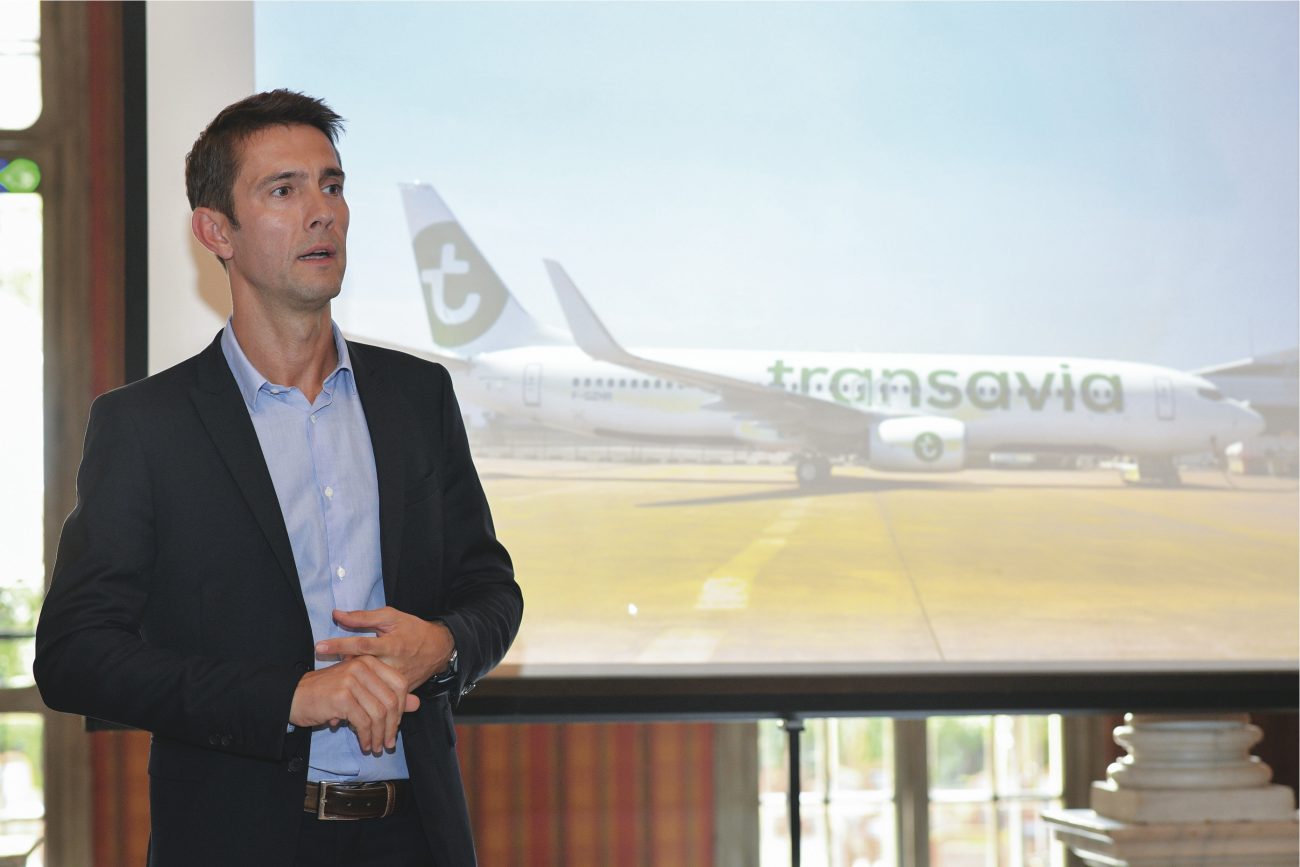
Their corporate identity and logo look like a crossbreed of Dutch over-the-counter laxatives and a new French social media venture. The green color theme of its livery, interior seating, and uniforms is located somewhere between forest serenity and conservative living room furniture. They are Transavia. Their strategy and business model is that of a budget airline, and they have just entered the Lebanese aviation market with about 600 seats of weekly capacity in each direction (distributed over three flight pairs on a 189-seat Boeing 737-800) on the route Paris Orly­—Beirut.

The last few years have seen gradual intensification of low-cost-carrier (LCC) or other similarly structured and affordable air-travel options between Lebanon and Eastern Europe and Turkey, with the most recent option being offered by Cyprus-based Cobalt Air, which opened its Larnaca—Beirut link at the beginning of the summer. Cobalt, which describes its business model as hybrid LCC, provides travelers from Beirut with options to go on to France, Germany, Spain, and the UK, and—supposedly starting in late 2017 and 2018—to destinations such as Russia and China.

Within this growing supply of flexibly priced seats, the market entry of Transavia as the LCC in the Air France–KLM Group adds to Lebanon’s integration into the European air-travel envelope. While LCC connectivity from Beirut mostly does not yet exist on daily schedules, or extend directly to important European aviation hubs, point-to-point LCC flight options to the EU core markets France and Germany (through AF-KLM’s Transavia and privately owned Germania), as well as Spain (through Vueling, a daughter of British-Spanish aviation group IAG) are now on offer with a higher flight frequency than ever before. 

Executive conducted a brief interview with Herve Kozar, the deputy chief commercial officer of Transavia, who had just stepped off the carrier’s maiden Beirut flight and into a press conference to promote the airline to Lebanese customers.

E   Transavia is a low-cost carrier using single-aisle aircrafts all throughout its network. What is your rationale for adding Beirut to your list of destinations at this time?

As you rightly said, we operate only one type of aircraft, which is the [Boeing] 737-800 with 189 seats. We knew from the beginning that Beirut could only be a success. Traffic rights between [Lebanon and France] are regulated, and when we heard that [the process] to apply for rights was open, we were the first to apply. It’s nice for us to have Beirut in the portfolio: We have North African routes and because it’s a city-break destination as well. We have those kind of passengers on board Transavia flights, and thus, it made complete sense to us to open Beirut.

E   Service to Lebanon has not been the easiest in the past due to seasonal patterns and various external disruptions. Some European carriers entered this market, but had to pull out after one crisis or another. Given that the Lebanese government has recently decided to raise airport departure taxes and that latest euro exchange rates are moving against the US dollar, to which the Lebanese currency is pegged, where do you see the formula for Transavia’s profitability in the Beirut market?

We have the advantage in the community. Lebanon and France have strong links, and there are many Lebanese people who live in Paris and obviously fly between France and Lebanon. This potential [of bilateral Lebanese travel with France] may be higher than with any other European country. What we have seen just now was that the first flight [to Beirut] was completely full. We had 189 passengers on board. We launched sales on this route not long ago, at the beginning of July, and bookings that we’re seeing today are really dynamic.  For September we’re close to a 90 percent seat-load factor. For us, this is one of the best starts on a new route, and we’re confident.

E   In going from Beirut to Paris Orly and vice versa, are you targeting mainly travelers whose destination is France, or are you aiming to feed passengers from Beirut into a European or global network?

What we think is that it’s mainly local traffic from Beirut to Paris, not connecting [traffic]. Air France is [offering] the connecting traffic to the world. We don’t. Our business model is more point-to-point traffic. This is working quite well in tourist and leisure travel and also for business—we today have around 10 percent of passengers who are flying for business purposes.

E   Do you have business class in your cabins?

No, it is business passengers who have restrictions on their budgets and want to fly low cost.

E   What is the distance between the highest price point that one could see for a seat on Transavia and the standard economy seat on the same route in Air France or KLM?

We are starting at 109 euros for a one-way flight [from Beirut] to Orly and what we typically see in our network is a range from one to five [hundred euros], meaning that [the one-way ticket] is up to 500 euros maximum when demand is really high in specific peak periods, such as Christmas, but not much higher.

E   In Beirut, one often sees Air France round-trip flights to Paris advertised online for 350 or 400 dollars. That would make your 109 euro tickets, when multiplied by two for a roundtrip, appear not vastly lower in cost, especially if a passenger under your business model also has to buy luggage allowance separately.

I’m talking one way for 100 [euros], which on return basis is 200, versus 350 or 400 [dollars round-trip on Air France], but it’s not the same product. We fly the 737, whereas Air France has a 777 product that is really nice. It’s clearly two different segments, and that’s why we open [in markets] where our mother Air France is present. We think there is space enough for both of us. It’s a different set of customers, and we’re better and stronger together.

E   Are you mostly interested in marketing the new Transavia flights to Lebanese passengers, or are you also promoting Beirut as destination in France?

It’s both, and we are very happy that it’s sold already 20 to 25 percent here in Lebanon. We’re not known here, and we have a marketing budget to increase our awareness toward the Lebanese customer. It’s both: We are trying to promote Beirut in France, but also Paris here in Beirut.

E   Do you regard competition for Transavia more from the group perspective, such as AF-KLM and their daughters versus airlines in the IAG or Lufthansa groups, or do you see yourself competing mainly with LCC operators, such as Ryanair and easyJet in Europe?

When you look at the Transavia network, you see that there are low-cost carriers and also legacy carriers on all routes, so we fight with both of them. We, of course, benchmark with all [of our competitors], but we’re trying to have the right price for the customer, and our focus is more on the customer.

E   You started your Beirut service in September, at the tail end of the peak travel season for this city. Was that a strategic decision or an opportunistic one?

It was an opportunistic decision, [and made] because all our aircraft were busy this summer.

October 17, 2017 0 comments
0 FacebookTwitterPinterestEmail
EcotourismHospitality & Tourism

Destination: Shouf

by Hani Bathish October 13, 2017
written by Hani Bathish

The verdant Shouf, famous for its unspoiled green vistas, is rapidly evolving into a popular tourist hotspot for Lebanese from across the country, as well as vacationing expatriates, Arab tourists, and even foreign visitors. The area is located southeast of Beirut and comprises many tourist must-sees, from the historic towns of Beiteddine and Deir Al Qamar to the Shouf Biosphere Reserve. The reserve is a designated protected area covering 440 square kilometers, straddling three governorates (Mount Lebanon, the Bekaa, and South Lebanon) and encompassing 22 villages and three ancient cedar forests: Barouk forest, Maasser Al Shouf, and Ain Zhalta. The forests are home to the largest single concentration of cedrus libani in Lebanon, accounting for 25 percent of the remaining cedar forests in the country. Undoubtedly, the reserve is the single biggest tourist attraction in Shouf, but along its periphery are many things to see and do as well. With an increase in visitors and a rise in the number of fully loaded Pullman buses trundling up to the cedar forests on any given Sunday, visitors are seeking places to stay, places to eat, activities to do, and local crafts and artisanal foods to buy. Local businesses, municipalities, and reserve officials are beginning to respond to these tourists’ needs.

Visitor numbers go up

Last year, the reserve registered 85,966 visitors compared to 72,411 in 2015. Visitor numbers have shown a steady increase since 2010 when they are numbered just 58,073, according to the reserve’s latest annual draft report released to Executive. This year, visitor numbers have gone up between 15 to 20 percent, according to Nizar Hani, the general manager of the Shouf Biosphere Reserve. Income from reserve visitors’ entrance fees in 2010 was just LL242.8 million, whereas last year entrance fees totaled LL524.8 million, according to the report. “Most visitors—95 percent—are Lebanese. The rest are foreigners living in Lebanon; we also got some Iraqis visiting this year too,” Hani says. The reserve is also helping promote local businesses by offering visitors discounts at local restaurants. “What few visitors know is that the ticket you buy to enter the reserve entitles you to a 5 to 10 percent discount at selected local restaurants in the area,” he says.

The reserve and local municipalities are doing all they can to help promote the region as a complete package. On weekdays, tickets to enter the reserve are discounted to encourage visitors. “This year we introduced horse-riding in the Ain Zhalta forest. Among the other tourist activities in the area we have hiking and camping, we have snowshoeing in winter, we have the Assaf sculpture museum and the Rachid Nakhle Cultural Center, which commemorates the man who wrote the lyrics to our national anthem,” Hani says. The reserve is a treasure house of unique flora and fauna, including 520 species of plants; it is also a designated Important Bird Area (IBA), and ecotourism area. “The reserve is the southernmost extent of cedrus libani and has 296 species of birds and 32 species of mammals,” Hani says.

[pullquote]The reserve is a treasure house of unique flora and fauna, including 520 species of plants[/pullquote]

Ecotourism investment opportunities

The Shouf Biosphere Reserve represents an important bolster to the ecotourism sector in the Shouf, according to Investment Development Authority of Lebanon’s website, which notes that the reserve provides “opportunities for ecotourism that remain untapped.” According to a 2015 Shouf Biosphere Reserve report, the reserve generates an average of $19 million annually in revenue from a range of activities, from ecological and food production to ecotourism. Tourism alone generates $700,000 annually in and around the reserve, while biomass charcoal production generates up to $1 million annually, honey production generates $450,000, and hydroelectric power generates $1.3 million. Water bottling generates up to $3.3 million, not counting grid water provision, which generates up to $12.2 million in revenue. Hani says that only 10 percent of ecological services at the reserve can be monetized. “While the reserve is the main attraction, many things are needed to help economic growth in the region, like developing and improving quality of ecotourism services,” Hani says. The Shouf is the largest district in Mount Lebanon, it has a population of over 200,000 and a high literacy rate. The district has over 64,000 hectares of permanent agricultural land, 51 percent of which is dedicated to olive-tree plantations, although the mountains are draped in picturesque vineyards, there are only two operating wineries in the Shouf.

Social media driven

The region is getting very social-media savvy when it comes to promoting its attractions. The website authenticshouf.com promotes the reserve and gives useful information about the region’s flora and fauna and its many tourist offerings. The reserve’s Facebook page almost doubled in followers from just 11,000 in 2010, to 19,300 last year. The Jabalna Festival’s Facebook page is also helping promote and expand the region’s cultural activities. In September, the festival organized the National Dabke Day under the motto “The Dabke Must Go On” at Maasser Al Shouf cedar forest, which had 8,000 people in attendance, according to Hani.

“To attract tourists, we rely on the Authentic Shouf website, which promotes the whole of Shouf. Other than that, we rely on private sector initiatives,” says Elie Nakhle, mayor of the municipality of Barouk-Freidiss. He says that his municipality and others in the region do not have the funds or resources to undertake massive promotional campaigns on their own. Among the entrepreneurs that have embraced social media as a promotional tool is the Moukhtara-based restaurant Shallalat Nabeh Merched. Established in 1965, the eatery is nestled in the shade of the opening of a natural cave, under a rock formation from which a natural spring gushes out. The location attracts summer visitors looking for a cool spot to relax and have a meal. The restaurant began promoting itself online three years ago.

Majed Hussam Eddine, the owner and manager of Shallalat Nabeh Merched, says online promotion helped put the eatery on the map, but that he has not seen any improvement in visitor numbers this year compared to the previous two years. “Several things helped us draw in visitors: our location, the fact that our river in Moukhtara is clean and not polluted, and our proximity to the Shouf Biosphere Reserve. The first thing people visiting the cedar forests ask is where can they eat afterwards,” Hussam Eddine says.

Protecting the ecosystem 

The goal of ecotourism is to maintain the very ecosystem that draws in the tourists. The Barouk mountain gets a lot of snowfall in winter, but many traditional winter sports popular in other parts of the country can damage the precious trees, some of which are over 2,000 years old. “It’s not possible to do skiing here because we are a nature reserve, but we try to do other activities,” says Nakhle. Snowshoeing, for example, is easy to learn and affords visitors the opportunity to see the reserve in its snowy white winter blanket. “Our main objective as a protected area is to protect the reserve,” Hani points out. “Activities like ATVing, for example, aren’t allowed, as such activities would damage the forest. We encourage ecotourist activities: Outside the forest we have campsites and horse-riding, and we arrange activities with the local municipalities.”

Some activities do not require any equipment. “We organize walks through the villages to introduce visitors to the area, its people, and their local products,” Hani says. The Bkerzay Village project, a popular destination in the Shouf,  began life as a pottery studio offering traditional pottery handicrafts and classes for the public. “Initially Bkerzay started in 2009 as an exchange between local people and city dwellers. We started with pottery and wanted it to be self-sustaining, so we got the idea of setting up guest houses, which was becoming a trend,” says Karim Salman, one of the founders of the project. The guest houses were built in a traditional style, designed by the architect Ramzi Salman. The whole project is ecofriendly and green, powered almost entirely by solar energy, and built without cutting down a single tree. “We built around the trees,” Salman says. The guest houses only opened for business in late August, with a grand opening planned for some time in March next year. In addition to pottery, the project has a restaurant, a pool, and will soon open a spa.

In the shadow of a mountain

Each area in the Shouf has its own approach to tourism. Barouk, Hani says, focuses more on traditional tourism, with mostly old-school Lebanese restaurants. “Some local eateries are up to date and use social media to promote themselves; others work in a traditional, classical way and wait for guests to come to them. We help those who can’t do it alone and teach them how to work effectively,” he says.

Barouk mostly gets weekend visitors, according to Nakhle. He notes that the area gets many foreign visitors, mostly Europeans who take nature walks in the forest, while Arab and Lebanese visitors like to sit for a meal at its many eateries. The municipality organizes a festival every July to draw in tourists. “We also have a few hotels operating—four for now­—as well as 20 guesthouses. The hotels we have are small: just 10 to 15 rooms each,” says Nakhle. One of the hotels, located just a few hundred meters from the entrance to the Barouk forest, is the Calmera Hotel and Restaurant, owned by Shawki Mahmoud. The property is barely three years old, but Mahmoud says that the past two years were better than this year. “We used to get Iraqi, Kuwaiti, and Saudi guests, but this year we didn’t. Even expatriate Lebanese didn’t come this year with a few exceptions.” Mahmoud says, hinting at deteriorating political relations with the Gulf had led to the slowdown. Saturdays and Sundays are the busiest for the hotel, which has a total of 16 rooms, eight of them suites, and charges $100 per night for suites and $50 per night for regular rooms. Mahmoud says that in spite of the reduced number of guests they still have 80 percent occupancy. Among the activities visitors can enjoy, in the shadow of Barouk mountain is an amusement park, which this year added an 800-meter-long karting track.

[pullquote]We used to get Iraqi, Kuwaiti, and Saudi guests, but this year we didn’t. Even expatriate Lebanese didn’t come this year with a few exceptions[/pullquote]

Room for improvement 

Businesses and local officials agree that the area needs to work more to offer a better overall experience in terms of their quality of services and food, the range of activities, and the conditions of the roads, if they are to attract the demanding international tourist. “As restaurant and hotel owners, we need to work on ourselves more. Many owners of restaurants in the area haven’t improved their establishments since the days of their fathers,” Mahmoud says. The Shouf Biosphere Reserve management recognizes the need to strengthen partnerships with the private sector and ecotour operators, as well as with the local people in the villages surrounding the reserve. “Not all private sector tourism enterprises have the same quality of services,” Hani admits. “For this reason, we have introduced the quality mark, a checklist of services to examine the quality of raw materials used and workers employed by establishments. We try to build capacity of service providers and encourage services that are part of the local environment.” Hani adds that the quality mark serves the interests of local development and environmental protection, such as consumption of electricity and water.

Seasonality issues

There are several obstacles to attracting year-round visitors to an area as remote as Shouf, namely the harsh winters and poor access by road. “We close one month a year in winter. While we are only 700 meters above sea level and any snow quickly melts, the high season for us is definitely the summer,” says Bkerzay’s Salman. Tourist eateries are also limited by the changing seasons. “We get four to five months that are very bitterly cold, so seasonality is an obstacle for our business,” explains Hussam Eddine. However, he is planning to continue to operate in winter in the future by building heated glass-enclosed areas at Shallalat Nabeh Merched.

For now, however, he still closes in winter, but he continues to pay his staff. “The government has to do more. The power cuts cost us money in generator bills, and every time there is a storm, we lose power,” he says. Bkerzay also plans activities around the year. “We have events like corporate retreats in the spring and fall; we’re planning a New Year’s event as well, and we will probably have an event in March, a grand opening,” Salman says. He adds that the region is on the rise because it is protected and preserved, something municipalities must not lose sight of. “But on the negative side, the quality of food and services is generally lower than elsewhere, and the roads aren’t very good,” he says.

The complete package

Wandering through the area’s thick cedar forests is often described as a spiritual experience. The serenity of the place, the earthy scents wafting on the breeze—especially after the first rains—offer a unique experience. The area includes several hiking trails in the reserve’s cedar forests, and there are also walks through local villages and hiking trails in the many other pine forests in the area, like Horsh Baakline. But the rest of Shouf is just as magical and captivating. The picturesque Moukhtara village, the seat of the Jumblatt family and their magnificent 450-year-old palace, offers green vistas dotted with red tiled roofs reminiscent of southern Italy. The Beiteddine Palace, built in the early 19th century by Emir Bachir Chehab II, is a masterpiece of architecture, with opulently decorated wood-paneled and marble-encased rooms that once communicated the might and wealth of the rulers of Mount Lebanon to their subjects and foreign visitors. It remains a summer residence for the president, and includes many fascinating paintings and portraits. The Marie Baz wax museum in Deir Al Qamar is another must-see, a place where you can come face-to-face with the founding fathers of the republic, and its presidents and prime ministers.

There is a wide range of hotels from the five-star traditional opulence of the Mir Amin Palace Hotel in Beiteddine, to the eco-friendly Bkerzay Village project and the many other guesthouses dotted around the Shouf that are supervised by the reserve’s management team.

From the banana groves of Damour to the peaks of Barouk and the old palaces of the Maan and Chehab dynasties, Shouf has much to offer.

October 13, 2017 0 comments
0 FacebookTwitterPinterestEmail
Real estate

Passion and profit in Lebanon

by Thomas Schellen October 11, 2017
written by Thomas Schellen

Carlos Ghosn, who is Brazilian-Lebanese, is the chairman and chief executive of the French automotive group Renault, chairman and chief executive officer of the Nissan-Renault Alliance, and chairman of the board at Nissan Motor Corporation. During a recent visit to Lebanon, he participated in the launch of a real-estate project that will be based in the cedars region and found a few minutes to answer questions from Executive by phone. 

E   Thank you for taking time to talk with Executive. In your capacity as chairman of a globally leading car manufacturing group, you’ve been interviewed about the future of cars, the art of leadership, and about transforming and running a global corporation. How do you make time in all your busy schedules to talk about Lebanon?

I obviously have very few occasions to talk about Lebanon, usually at a moment when I am taking a few days of vacation and am visiting the country. It would be fair to say that there is a lot of interest in Lebanon, its investments, economic activity, and development, and I think it’s a responsibility for anybody who is attached to this country to contribute a little bit of time to try to enlighten the public about what can be done and what cannot be done.

E   It’s known in Lebanon that you have had connections to this country for many years, including consulting and advisory roles, but I understand that specifically this month there was the launch of a real estate project called Cedrar, of which you are a board member and investor.

Yes.

E   Is your investment in Lebanon more of a passion investment, or does it come with a profit motive?

It’s both. The most important contribution that people of Lebanese origin who are living and working abroad can give to the country is to invest in the country. This is because investment is about job creation, about development of the country, [and] about valorizing the assets in the country, whatever these assets are: land, or quality, or anything else.

[This investment] is not about optimizing profit, because we know that there’s a lot of risk included in investing in Lebanon. The benefit of an investment contribution is very important [when] people like me, and other people, are each investing at their own level. This being said, these investments aren’t just about [making a financial] contribution, or about passion. Like any business, you want to make sure that you make a profit at the end of the day. Profitability is about ensuring that this business is going to stay and will not collapse. Profitability is ever-present in the mindset, to make sure that whatever you do, for whatever motive, the operation is sustainable.

E   Do you have a specific message through this investment, above what you said before, to your peers in the expatriate Lebanese community around the world?

The only message is: Don’t listen to what I say, look at what I do. The only way in which we can help Lebanon in this difficult economic period is through investment, but [it has to be] a well thought-out, long-term investment. This isn’t a social investment. It’s a business investment, but it has to take into consideration the necessity to be long-term, involve employment [creation], and the valorization of the assets. This is the message. It’s not about lecturing anybody. It’s talking about what I do at the request of many people, and it will perhaps [inspire] some people who might be tempted to make investment but need some kind of encouragement by looking at others.

E   What I saw from the information material about the Cedrar project was a description of a gated community that’s “a short helicopter ride” away from Beirut. To me, that sounds like a veiled way of saying there are many traffic problems in Lebanon.

Which is true.

E   Turning, therefore, for a moment to your expertise in the automotive sector, is there any suggestion that you would have for solving the traffic problem in Lebanon?

I think technology is going to allow for solving at least part of the problem. Autonomous cars facilitate a lot of traffic decongesting because cars are going to be driven most of the time by computers, which will optimize not only fuel consumption, but also the time to drive from one point to the other, through mapping. This isn’t only for Lebanon; this is for everywhere.

The second part is about infrastructure, and this is in the hands of the public sector. Necessary investments in infrastructure need to be done in order to allow not only better quality of life, but also allow the car sector to perform normally as a function of the growth of the population. Like in many other things, this is going to happen by each one doing their part. I don’t think any problem can be solved only by the public sector, or only the private sector. Each in his own area of competence is needed for this to be solved, and sometimes through consultation between the public sector and the private sector.

So, I would say traffic congestion in Lebanon will be partly solved by new technology, which is going to be very effective—not only in Lebanon, but in many cities—and through some basic investment in infrastructure to decongest some of the big traffic areas.

E   This sounds like you’re in favor of the public-private partnership methodology for infrastructure development, and of the PPP law that has recently been adopted in the Lebanese Parliament.

Yes.

E   From the perspective of an international investor with Lebanese roots, what do you consider to be the best assets and opportunities for investing in Lebanon?

The first asset of Lebanon is obviously its workforce. You find very good people at all levels, such as workers, engineers, [and] very good marketers. You can find these people, and if you cannot find them locally, they will come. There’s a very large Lebanese diaspora who are not [working in the country] because there is a lack of opportunities. But they are in the Gulf countries, in Europe, and in many other countries. If they have an opportunity and a decent life in Lebanon, they will come back.

Secondly, this is a country that has been built on the services sector. Lebanese people know what quality service is. I don’t say that quality of service is a given in Lebanon, but people [here] who are properly trained have the mindset and the mentality to deliver high-quality service in different sectors, whether we’re talking about health or about hospitality, and anything in these areas. I can, unfortunately, not talk about [capitalizing on] the ideal geographical positioning of Lebanon because it’s, in a certain way, handicapped by the lack of infrastructure and the lack of investment. But this [geography] would become a huge asset if we had an appropriate investments into telecommunications and all the services around 3G, 4G, etc … Unfortunately, all of this is not at the level [needed to] valorize the geographic position of Lebanon.

E   To inquire more about the Cedrar project, the description emphasized respect for the cedar tree and the environment. One would assume that the project will have green buildings and will pay great attention to protecting the immediate environment.

Exactly.

E   But is there also a planned aspect of rural development or job creation involved in the project, beyond the usual spinoff for the local economy in the area, which in the economic context of Lebanon is quite remote?

There is a constraint that was put by the shareholders for the people managing the project. Anything we do should be totally compatible with respect for the environment, number one, and not only respect of the existing environment, but also promote [improvements to the environment]. The management of the project announced that they made an agreement with an NGO that is in charge of replanting cedars in Lebanon. Cedrar will be supporting efforts of replanting a huge area in Lebanon with cedar trees. It’s these kinds of activities where you not only promote development that is compatible with respect for the environment, but also where you’re taking some initiatives because of this project, which will make the environment better, because the environment has been abandoned for so many years. This is at the essence of the project. This is not just about doing business, but sustainable business and sustainable business has to be done with high standards in terms of respect for the environment.

E   So there is a reforestation component tied to the project?

Yes.

E   Allow us to conclude with a more personal question. As CEO of an international company there can be no doubt that you have great skills in negotiation, marketing communication, and leadership. Some of these skills are often seen as characteristics for people of Lebanese descent. This brings me to ask if there are sometimes imperfect business traits that you discover in yourself and would attribute to your Lebanese heritage. What would these be, and how will you control them?

I don’t know. It’s very difficult for one person to make your own analysis about what [in your personality] is coming from Lebanese roots, what is coming from your Brazilian birth, and what is coming from your French education. Frankly, I don’t spend too much time trying to say what is coming from what, but without any doubt, part of my trading skills have their roots in Lebanon. I don’t know if it’s the good part or the bad part—that’s up to people to judge.

The Lebanese, as you know, are business people, and have been business people for such a long time. There have been great people and not so great people. You have a mixed bag of a lot of talent, which people develop with different intents. And in a certain way it is intent that makes [the usage of skills] good or bad. But I think that what is important is that, independently of the intent, the skill is there, the ability to find common ground, make agreements, and to find win-win situations. This is something that Lebanese know how to develop and, as you know, we have many examples of people who have developed these [skills] with good intent, and also unfortunately people who developed these kind of skills with bad intent.

E   Is it correct to assume that you have no interest in becoming a Lebanese politician?

Exactly, I have zero interest.

October 11, 2017 0 comments
0 FacebookTwitterPinterestEmail
Automotive 2017Special Report

The other side

by Khalil Hariri October 11, 2017
written by Khalil Hariri

Mar Mikhael usually evokes images of a buzzing nightlife and hip restaurants; what few of the neighborhood’s visitors realize, however, is that there is more to Mar Mikhael than Armenia Street. Even fewer are aware that Mar Mikhael is not bordered by Charles Helou Avenue, but that it in fact splits it in two. 

Located in Medawar in east Beirut, Charles Helou Avenue was constructed in 1958 to link Beirut’s northern entrance to the Beirut–Tripoli highway. Highways and roads were central to planners’ attempts at shaping the city and managing urbanization. In fact, prior to the 1964 master plan for Greater Beirut, written by the French architect and urban planner Michel Ecochard, the only plan that was approved by the government was the 1954 one, which was a little more than an network of intersecting roads with no zoning regulations and high densification factors.

Ecochard himself was famous for his numerous highway projects, the most famous of which is the Lebanese coastal highway, built in the 1930s. He thought increasing the vehicular capacity of existing roads would facilitate the transport of workers into the city. This modernist approach to planning was common in the West in the first half of the 20th century; engineers conceived highways according to traffic trends to maximize the efficient circulation of goods and people.

Torn communities

In theory, highways reduce transportation costs, allow for specialization in production, and enable regions to develop a competitive advantage. In practice, however, in addition to producing congestion and pollution, highways hollow out the communities they cross through. There is also evidence that suggests that highways are disproportionately routed through underprivileged neighborhoods. In the United States, former transportation secretary Anthony Foxx has claimed that most of those displaced by highway projects were low-income African Americans. Road projects destroyed 1,500 buildings and 200 businesses in the now-vanished neighborhood of Brooklyn in Charlotte, North Carolina, while inner-city highways led to a 30 percent decrease in the population of Syracuse, New York.

Similarly, the construction of Charles Helou Avenue meant that the efficient circulation of automobiles was prioritized over the wellbeing of Medawar’s communities. Parts of Nour Hajin, an Armenian camp in the north of Mar Mikhael, were wiped out as the camp shrunk from 25,000 to 18,000 square meters. The Saint Therese Church was demolished to make way for the avenue. The avenue also stood as an obstacle for those living north of it, as they were now blocked from reaching Mar Mikhael Church by foot.

Residents of Mar Mikhael’s port side recalled in the first few decades after the avenue was built  that hundreds had died attempting to cross the avenue over to the other side where most shops, such as convenience stores and butchers, were located. According to the same long-time residents, those crossing the avenue were also easy targets for snipers located in towers in nearby Saifi during the civil war, further disconnecting the two sides. The only pedestrian bridge linking the two halves of Mar Mikhael was built more than 30 years after the avenue itself.

To cross from the south side of Mar Mikhael to its north side by car, one has to drive to Corniche El Nahr, turn westward near Forum De Beyrouth, and drive along Charles Helou Avenue. This means that the north side is not only hard to reach by foot, but also by car, especially during peak hours. Residents explained how the north side of the neighborhood is now an “isolated island.”

[pullquote]The only pedestrian bridge linking the two halves of Mar Mikhael was built more than 30 years after the avenue itself[/pullquote]

This isolation has had drastic impacts on the economy, identity, and development of the north side of Mar Mikhael. It has remained strictly linked to port activities, as most firms located in the area belong to the logistics and transport sectors. In its southern part, on the other hand, Mar Mikhael has witnessed drastic economic changes, as it has attracted pubs and restaurants, alongside the arts and crafts industry, transforming into one of the city’s major nightlife hubs. The only high-end restaurant that opened in the north side was Harbor 201, which recently went out of business. This is despite land prices being considerably cheaper in the northern side due to the difference in demand.

The stark contrast in economic fortunes between the two parts has also led to a difference in their identities. Whereas the southern side has attracted expats, foreigners, and young professionals, the north side has witnessed an exodus of its younger generation, leaving mostly long-term, impoverished, and elderly residents in the area. The only school in the area closed four years ago, according to one of the area’s mukhtars, or local officials.

People not cars

As Charles Helou Avenue undergoes renovation, the junctions leading to Mar Mikhael have been blocked, further isolating the north side from the rest of the city. Despite promises from Beirut’s governor to build a bridge or a tunnel that connects the north side of Mar Mikhael to Geitawi, the area has failed to attract developers, as evidenced by its numerous empty lots in the area. Northern Mar Mikhael’s isolation also seems to have amplified the negative externalities of the highly polluting Sukleen, Sukomi, and port trucks. Things are only expected to get worse for the area if a waste incinerator is built in nearby Karantina. 

As Beirut continues to choke on car traffic, Dr. Mona Fawaz, coordinator of the Masters in Urban Planning program at the American University of Beirut, explains that “car mobility has reached its limits, and it’s time to rethink the role of highways.” Not only have inner-city highways become outdated, but they also encourage the use of private cars. Despite that, city and state officials continue to push for projects like the Fouad Boutros highway that would cut through dense neighborhoods. State officials have resorted to the outdated 1964 Ecochard plan to justify the highway, and the municipality is already expropriating land even though the environmental and traffic impact studies are still ongoing. In fact, Fawaz says that the impact studies may not have even taken place without pressure from civil society, despite the fact that the law states that highway projects cannot be executed without them.       

There are other examples of bridges and highways that have had a negative impact on their surroundings in Beirut, such as the Yerevan bridge in Bourj Hammoud and the Hawd Al-Wilaya bridge in Basta, which also cleared neighborhoods in two. Through the effect of the multiple highways and bridges that cut through its neighborhoods, Beirut has been shaped by the needs of its cars rather than its residents. To counteract their effects, improving public transportation and promoting walking and cycling are essential to turn Beirut into a more livable and vibrant city.    

October 11, 2017 0 comments
0 FacebookTwitterPinterestEmail
Automotive 2017Special Report

Going nowhere

by Nassib Khoury October 5, 2017
written by Nassib Khoury

The latest move to encourage the use of electric vehicles (EVs) in Arab markets came in Dubai. Last month, the Dubai Electricity and Water Authority announced incentives for EVs that include exemption from road tolls and registration fees at the Road and Transport Authority, and free charging and parking at specially assigned locations.

The emirate expects to have some 32,000 EVs and hybrids on the road by 2020, and 42,000 by 2030. For Dubai, this actually seems a somewhat small proportion, given that data from the past few years showed that vehicle sales were around a million, and vehicle density is one of the highest in the world at 540 registered vehicles per 1,000 residents in an emirate with 2.8 million inhabitants. However, when compared with other countries in the region, such as Lebanon, Dubai’s EV initiatives appear strong.   

Lebanon was once a pioneer in terms of the import and sale of cars in the Arab world. Agents, dealers, and distributors played a valuable role in the introduction of the automobile to Lebanon and the entire Arab region in the beginning of the 20th century.

Today, about 100 years after the combustion engine started its worldwide conquest, the automotive era is changing radically with the introduction of hybrid and electric cars. This alternative fuel story began in the 1990s, when personal transporters (like the electrically powered chairs for seniors) and light EVs were patented, and a range of hybrid cars was envisioned and produced.

The grandfather of hybrids was the Toyota Prius, which combined a combustion engine with an electric powertrain. It penetrated markets around the world, and its success was most noticeable in countries where governments were aiming to reduce air and noise pollution by offering tax benefits and other incentives for buying “green” cars.

The race toward wide adoption of electric cars got a decisive second kick around 2010, when Nissan and Tesla demonstrated that plug-in electric cars could appeal to diverse audiences. More and more manufacturers jumped on the electric-mobility bandwagon around that time. The migration to electric mobility got a third, and probably decisive, boost last year, when a pile-up of embarrassing emission scandals created huge political pressure, and an increasing number of manufacturers and national policy makers began talking about phasing out the production of combustion engine vehicles over the next 10 years, or even sooner. Researchers suggested recently that the production of EVs, which has doubled every 15 months since 2011, would overtake production of traditional gas-powered vehicles in the coming 10 years.    

No incentives for EVs

Lebanon is lagging behind the global push toward EVs. Car importer BUMC, Lebanon’s Toyota and Lexus distributors, brought the Prius into local market in 2010, despite it not being provided with any advantage by the Lebanese government. Without tax benefits or other state incentives for low emissions, the Prius proved to be too expensive for the middle class.

Executive contacted 10 distributors and dealers to ask about the existence or availability of tax advantages or incentives for green cars. All the dealers confirmed the total absence of a legal framework that would boost the import and sales of hybrid cars or EVs.

One of the biggest obstacles to adoption is that electric cars are registered as fuel-powered cars, using a mostly abandoned system for taxing cars based on their engine capacity called fiscal horsepower. The Renault Twizy, for example, was registered in Lebanon in 2017 as a 10 fiscal-horsepower car, despite being an 100 percent electric plug-in car that is powered by a battery, weighs around 450 kilograms, and measures less than three meters long.

EVs are silent, do not emit any polluting gasses, and do not consume any fuel

Ultra-compact urban EVs, such as the Twizy can change the experience of the city, with lower noise pollution in the city center. In some countries, they can be driven with special licenses, and they are often incentivized by governments in various ways. EVs are silent, do not emit any polluting gasses, and do not consume any fuel.

While there are no legal prohibitions against EVs in Lebanon, the state offers no incentives for buying one. For any of the hybrid or electric cars in Lebanon, like the Toyota Prius, the Hyundai Ioniq, hybrid Porsches, or the Mercedes S400 Hybrid, the only advantage to the buyer is lower fuel consumption. But in terms of budget, these cars are more expensive than the same manufacturer’s equivalent models with combustion engines, and indeed more expensive than gas-powered cars with comparable performance.

The tiny Renault Twizy, for example, sells for approximately $20,000 in Lebanon, while in Europe it is sold for approximately $8,000. The high price makes it a luxury, defying the concept of an affordable electric car.

Even if one wanted to buy an EV here, such cars, especially affordable ones, are hard to find. Beyond the lack of government incentives, the other big barrier in front of the import and sales of electric cars is the absence of necessary infrastructure. In addition to the lack of recharging stations for EVs—which is a major hurdle in the transition to electric mobility in many markets—there is Lebanon’s notorious lack of a 24-hour electricity supply.

Hybrids already on Lebanon’s roads

All in all, the absence of a legal framework, infrastructure, and incentives for EVs make it easy to imagine why automotive importers like Natco and Sidia, which represent Kia Motors and PSA (Peugeot and Citroën) respectively, are very reluctant to invest in them. But these agents tell Executive that they are still planning to import Chinese hybrid or electric cars, noting that China is emphasizing the development of EVs in its automotive industry. They mentioned models like the BYD F3, Qin, and Tang, which are hybrids, and the BYD E6, Song and T3 electric models. The agents even plan to import electric buses, an area where Chinese products have an affordability advantage over European or Japanese EVs, which could at least partly make up for the lack of Lebanese governmental incentives for import customs or registration costs.

Executive contacted other dealers like T. Gargour et Fils, which sells Daimler-Benz and Smart cars, and Gargour Automotive Company which is part of the Fiat-Chrysler group.  Gargour Automotive Company noted that they are still reluctant to have more electric or hybrid cars in their showrooms, given that the Fiat-Chrysler group does not have an aggressive hybrid or electric cars strategy.

By contrast, Daimler-Benz and Smart already do, with vehicles like the Mercedes-Benz EQ, the S400 Hybrid, and the E400 Hybrid. Smart also introduced the fortwo and fortwo cabrio electric drive, which have a range of 100 kilometers.

In the hypercars and supercars sector, wealthy Lebanese have, or will have, access to hybrid supercars like the Ferrari LaFerrari, the Porsche 918 Spyder, and the McLaren P1. While doubts over the role of supercars in the advancement of electric mobility are in order, hybrid hyper- and supercars prove the appeal of this automotive technology to tech-loving locals with super-deep pockets.

[pullquote]There is not only need for a legal framework and an incentive framework, but also for a new frame of mind among consumers[/pullquote]

A new legal framework for EVs

Case in point: The Porsche Centre Lebanon has delivered four of the 918 Spyder’s total production run of 918 units. Taxes reportedly boost the local price tag of these hybrid supercars from somewhere around $900,000 to about $1.5 million. When Executive asked Selim Saad, advisor to the Automobile Importers Association in Lebanon (AIA), if there was a legal framework in sight that might boost hybrid and electric cars, he confirmed that the government has not sent any encouraging signals on incentives for EVs.

For hybrid and even fuel-combustion engines, Saad noted that Lebanon still has work to do to bring its fuel up to Euro 6 emission standards, as currently fuel used in Lebanon—petrol and diesel—is at Euro 3 standards, meaning it emits a far higher level of sulfur into the air. The Lebanese government is working with UNDP to make the market compliant with its international climate change agreements.

Distributors, consumers, and the AIA are working together through public-relations channels, and by  importing hybrid and electric cars to modernize the automotive frame in Lebanon. There is not only need for a legal framework and an incentive framework, but also for a new frame of mind among consumers. All evidence today suggests that the Lebanese government will have to embrace and adopt the hybrid and electric cars within a few short years, or else Lebanon will be left behind.

October 5, 2017 0 comments
0 FacebookTwitterPinterestEmail
IssuesMay 2017

May 2017

by Executive Editors October 5, 2017
written by Executive Editors
space

EDITORIAL

The donkey strategy


LEADERS

Don’t sweat the details

Things are moving, but too often behind closed doors

COVER STORY

Self absorbed

Time to get back on a horse

SPECIAL REPORT
OIL & GAS

Into the blue

Lebanon’s oil & gas sector nearly open for business

Troubled waters

Lebanon seeks to join its neighbors in oil & gas exploration

Russian expansionism

Moscow’s interest in East Med gas resources

Investment expectations

What would oil & gas mean for Lebanon? Hard to predict
Maximizing oil & gas potential
Lebanese Petroleum Administration plans ahead

Transparency cookies are in the oven

Lebanon takes step towards clean oil & gas sector

ECONOMICS & POLICY

Full of gas

A lot of talk but little detail on plan to tackle electricity shortage

Unleash the speed

Ogero flips a switch and local internet transforms

Glittering in the shadows

Lebanon’s gold trade

BANKING & FINANCE

Q&A with Makram Azar

Chairman of banking EMEA and chairman of Barclays Bank PLC

COMPANIES & STRATEGIES

Visions of community

Translating passion into a career

HOSPITALITY & TOURISM

And the livin’ is easy

Lebanese travel agents talk summer destinations

Le Gray grows

Expansion opens doors to untapped market segments

BOOK REVIEW

Knowledge production in the Arab World

On regional research

LAST WORD

Rethinking the world

Lebanon redefined
October 5, 2017 0 comments
0 FacebookTwitterPinterestEmail
Economics & PolicyPPP Law

A marriage of convenience

by Jeremy Arbid October 5, 2017
written by Jeremy Arbid

After a nearly decade-long wait, Lebanon’s legislature finally ratified a law encouraging private-sector investment in public infrastructure. The new framework for public-private partnerships (PPP) could allow the private sector to deliver some public services at lower prices than those currently available, says Peter Mousley, the program leader for trade and competitiveness, finance and markets, and PPP at the World Bank’s Beirut office. Lebanon’s commercial banks, Mousley says, have signaled their readiness to diversify away from mostly purchasing treasury bills, and an appetite for investing in public infrastructure.

E   What’s the difference between privatizing public services and public-private partnerships?

One way of looking at it is [that] privatization is a divorce and PPP is a marriage. They’re two very different things. One is where a government sells assets to the private sector; the other is where, under certain terms, a government makes assets available to the private sector to deliver public services, but the assets remain owned [by the state]. What they’re primarily trying to do with a public-private partnerships is distribute risk to get a more cost-effective service delivered. So, if the private sector [is more] willing to take the risk under a PPP model, you try to incentivize them to take that risk.

E   Should countries new to PPP exercise caution, or begin with a trial project?

Yes, you take time. This is a skill that is not immediately created, and the [Lebanese] Higher Council for Privatization and the line ministries that want to do PPPs are going to have to develop the right expertise to manage the process. It’s very different from public procurement, so if they build up a pipeline of PPPs, it will be done over a long timeframe.

E   What can go wrong?

Well, you can do bad analysis about what the allocation of risks are. You can underestimate or overestimate the revenue base. There are so many elements to it. Usually, in preparing a PPP, you do an initial prefeasibility [analysis], which sort of says: Okay, this is a sector that has revenue flow. And if it doesn’t have revenue flow, [the private sector can be] confident that the government entities that would be making revenue, if it’s not the end user, are creditworthy and are able to make the payments to the private sector. And if it isn’t going to be based on end user [revenue], then does the government have the fiscal capacity to honor what is called “availability payments,” which is often how these are financed? Bearing in mind, what you’re essentially doing is asking the private sector to [take on] front-end risk in the investment in capital development against a long-term flow of revenue. So they need to have confidence that long-term revenue is coming from a creditworthy source.

E   Lebanon has witnessed almost seven years of sluggish economic growth, for many factors, but elected and public officials arguably did little in that period to facilitate or ease the challenges of the private sector. Is the PPP law an example of legislation that can help Lebanon’s economy, and does the World Bank advise other legislation or regulatory fixes?

Look at the World Bank’s Ease of Doing Business rankings for Lebanon and you [will] know there are areas that, if you deal with these things, you’ll generate more investment. [Foreign direct investment] flows have been declining, [and] there are lots of reasons for that: political security as overriding. We did a survey a couple of years ago, [and] the significance of political insecurity as a disincentive for investment had gone right up relative to previous surveys. Then there is a host of investment-climate items, from starting up a business to creating a more inclusive financial system, through legislation Parliament has in draft form. So there is a whole range of things the country could do to move forward, and in terms of generating more private sector investment. In the back of the Spring 2017 edition of LEM [Lebanon Economic Monitor—a World Bank publication], we list a lot of the policy priorities that we recommend. Frankly, I don’t think any of these ideas are unknown to the government—the reason they haven’t gone forward is they haven’t got very clear awareness of the importance of these. PPP is a great one and is a good start, but there are many others that arguably have been pending parliamentary approval or implementation for a few years. Cumulatively, they would all make a huge difference.

October 5, 2017 0 comments
0 FacebookTwitterPinterestEmail
  • 1
  • …
  • 96
  • 97
  • 98
  • 99
  • 100
  • …
  • 685

Latest Cover

About us

Since its first edition emerged on the newsstands in 1999, Executive Magazine has been dedicated to providing its readers with the most up-to-date local and regional business news. Executive is a monthly business magazine that offers readers in-depth analyses on the Lebanese world of commerce, covering all the major sectors – from banking, finance, and insurance to technology, tourism, hospitality, media, and retail.

  • Donate
  • Our Purpose
  • Contact Us

Sign up for our newsletter

[contact-form-7 id=”27812″ title=”FooterSubscription”]

  • Facebook
  • Twitter
  • Instagram
  • Linkedin
  • Youtube
Executive Magazine
  • ISSUES
    • Current Issue
    • Past issues
  • BUSINESS
  • ECONOMICS & POLICY
  • OPINION
  • SPECIAL REPORTS
  • EXECUTIVE TALKS
  • MOVEMENTS
    • Change the image
    • Cannes lions
    • Transparency & accountability
    • ECONOMIC ROADMAP
    • Say No to Corruption
    • The Lebanon media development initiative
    • LPSN Policy Asks
    • Advocating the preservation of deposits
  • JOIN US
    • Join our movement
    • Attend our events
    • Receive updates
    • Connect with us
  • DONATE