• Donate
  • Our Purpose
  • Contact Us
Executive Magazine
  • ISSUES
    • Current Issue
    • Past issues
  • BUSINESS
  • ECONOMICS & POLICY
  • OPINION
  • SPECIAL REPORTS
  • EXECUTIVE TALKS
  • MOVEMENTS
    • Change the image
    • Cannes lions
    • Transparency & accountability
    • ECONOMIC ROADMAP
    • Say No to Corruption
    • The Lebanon media development initiative
    • LPSN Policy Asks
    • Advocating the preservation of deposits
  • JOIN US
    • Join our movement
    • Attend our events
    • Receive updates
    • Connect with us
  • DONATE
EditorialOpinion

Enough empty promises

by Yasser Akkaoui November 6, 2017
written by Yasser Akkaoui

Their crimes must not be forgiven again. For 11 years, Lebanese politicians spent some $130 billion without an audit. To pass the 2017 budget, our lawmakers defied the constitution by promising the audit will come next year instead of now. I’m not holding my breath.

Let’s not lie to ourselves: Audits can be manipulated. We had a regular budgetary process throughout most of the 1990s, but everyone in this country still believes there was waste and theft during that period. That said, at least there were tangible results from the spending: a new airport, improved roads, telecom networks, etc. Since 2005, however, what has really changed? New traffic lights and parking meters? Where are our reliable supplies of electricity and water?

An annual audit is like our state’s conscience reminding itself of the sins of the past year. By silencing our conscience, we’ve slid deeper into immorality. The likelihood that spending from the last 11 years will be audited is next to zero, as all indications suggest that the theft of public money has only increased during that time—with devastating effect.

Our economy is in tatters. People are struggling to survive, and there’s no light at the end of the tunnel. Our warlords and militiamen pardoned themselves for taking the lives of around 150,000 and the livelihood of a whole nation during their civil war. While recent economic crimes are by no means equal, the level of devastation is undeniable. We must not allow them to do it again.

Our politicians must be held accountable, and we must find a way to break this cycle of crime and pardon. They’re so far removed from their real purpose—to serve the nation—that they justify their every wrongdoing by convincing themselves that their personal gain somehow benefits their tribe. In reality, they’re creating dependencies that a functioning state would render obsolete, believing the lies they tell themselves about their roles as protectors.

We don’t need them, we don’t want them, and yet, praying that they will just disappear is a fool’s dream. Our political class has ruined this country, corrupting the entire system to its core as they cling to undeserved power.

We can no longer turn a blind eye, no longer accept the corruption at the heart of our country. Our politicians must be held to account.

November 6, 2017 1 comment
0 FacebookTwitterPinterestEmail
EntrepreneurshipEntrepreneurship in LebanonSpecial Report

Still starting up

by Matt Nash November 6, 2017
written by Matt Nash

Over the past four or five years, it has been conceived, announced, born, developed, mapped, hyped, challenged, expanded, reassessed, praised, mapped again, hyped to excess, and questioned. But all the talk makes it hard to assess the true state of Lebanon’s tech entrepreneurship ecosystem in 2017.

Finance—in form of the funds mobilized under Circular 331, an initiative by Banque Du Liban (BDL), Lebanon’s central bank, to invest in startups—has been the driving force behind transforming a loose collection of tech entrepreneurs into a budding ecosystem, and fund managers say that ecosystem is quietly thriving. Established funds see their portfolios developing nicely, and do not anticipate the pipeline of interesting startups to run dry any time soon, pointing as an example to recent demo days at Smart ESA, an accelerator that was launched in 2016. Flat6Labs and Azure, two new venture capital funds, have experienced more interest than they had expected. As Flat6Labs’ Fawzi Rahal explains it, “Clearly, it’s a disadvantage in being late to the game [by setting up several years after others], but we’re not sure [the] game was ready if we were earlier. [The] pipeline is better than it was years ago. I’m not sure that will stay true two years from now, but it’s better today than it was. All other accelerators have been increasing the numbers they accept year on year.”

Angel investors are stepping in to plug the funding gap between acceleration and raising the first round of VC funding, known as the valley of death (see story). Foreign interest in the ecosystem’s development has not waned, as demonstrated by the UK’s willingness to support the UK–Lebanon Tech Hub, an international initiative kick-started by a collaboration with BDL and the UK government through the British Embassy in Beirut. But foreign investors are not making unrealistic gambles: Although its original goal was to create 25,000 jobs in the tech sector and entrepreneurship directly, the UK has revised its aim down to 25,000 jobs related to the entrepreneurship sector, of which about 5,000 will be directly in tech, and the other 20,000 induced jobs in more traditional areas, such as food delivery and printing.

Growing pains

All of this speaks to more stability in the ecosystem. Those working within it say the reduction of the hype of previous years is both understandable and welcome. The ecosystem is becoming “a bit more rational and organized,” according to Jad Salameh of the venture capital fund Phoenician Funds. As Executive was investigating this month’s series of articles about entrepreneurship, the World Bank offered an assessment of Beirut’s technology scene, finding that the “tech start-up ecosystem in Beirut is an early- to middle-stage ecosystem that has passed its nascent growth phase, but is still far from maturity,” an evaluation no one interviewed saw as off the mark.

Stakeholders describe a generally collaborative environment with many funds co-investing on deals, leading to increased transparency, if only for those on the inside. While the funds know what each are doing, many either do not have websites or do not update them with detailed information about their investments, making following the money from the outside difficult. And BDL, the author of Circular 331, has not published any figures or reports detailing how the nearly $650 million in public money the circular made available is being spent.

It is clear, however, that the ecosystem has experienced financial excesses of varying kinds and severities, including overhyped events, inflated funding demands, large honorariums to external consultants, a lack of transparency, audit challenges, governance issues, and even creative accounting or allegedly fraudulent practices. The central bank has made attempts to curb abuses, issuing circulars addressing these alleged problems. One regulation, for example, required funds and players who have been sitting at the table for a few years to intensify their reporting practices. While this is sometimes useful, it can also be over the top, such as the new mandate to report net asset value at the end of each quarter. “We have 20 days max after the end of the quarter to submit a report. If the quarter ended September 30, how do you expect to get a [profit-and-loss] or balance sheet in five days?” asks Zeina Rouphael, a senior analyst with the Azure fund.

At the same time, the ecosystem is impaired by design flaws and the inherent limitations of the Lebanese market and its human-capital pipeline. Companies and their investors feel the need to market their products outside the country, which is difficult because central bank regulations restrict the use of funds to expenditures in Lebanon. It is not easy to market to the EU or the US from Lebanon without at least having an office—and preferably direct human presence—in the target market. And while the human-capital pipeline in Lebanon is remarkably strong, it is strong by the standards of a small country, and when compared to the talent pool in a small place. In order to grow, the human capital available locally may have to be augmented, but it is very difficult to import top talent into a small local company because of various labor market restrictions and bottlenecks.

In the past, questions of strategy were placed at the feet of the industry’s sugar daddy, the central bank, which not only guaranteed 75 percent of funds for approved startups, but also fed some companies with 100 percent guarantees, contributing to the formation of what some people called an “ego-system” within the new ecosystem.

Moreover, BDL put its name in bright lights as organizer of the annual event designed to make the Lebanese tech ecosystem internationally visible. However, the vanishing act which BDL Accelerate pulled off in 2017 begs questions on whether the  event’s postponement or cancellation was done for strategic reasons, and what BDL plans to do next. A press-relations representative for BDL said only, “It’s just a personal reason. Nothing to do with economy or elsewise,” to explain why Accelerate will not transpire in 2017. The jungle is not rumbling because of this year’s cancellation, however, and individual strategies are of the “keep on keepin’ on” variety.

Serious money

Several sources interviewed for this article said the ecosystem needs some big success stories, as well as the follow-on funding to grow startups into such stories in the next few years. A few admitted they do not see any unicorns—startups with a $1 billion valuation—in the Lebanese stable at this point. Walid Hanna, a founder of Middle East Venture Partners, said “the largest company [I expect to see] is $300,000 to $400,000, which is not bad in the three to four years” following the publication of Circular 331. Henri Asseily, a partner with Leap Ventures, however, sees one potential unicorn in Leap’s portfolio: a software logistics company called Keeward, which received an earlier investment from MEVP and is currently subject of a legal dispute between MEVP and Keeward’s founders. Leap invested $10 million in the company and is hoping for a $50 million round to be raised abroad in the coming months.

As the Keeward example illustrates, growing young companies into unicorns will require follow-on funding for those that recently raised or are raising capital. Bassel Aoun, the project manager of the iSME program at the state-backed loan guarantee corporation Kafalat, notes that funding rounds tend to grow by multiples of three to five, meaning serious money will be needed to sustain the ecosystem moving forward. Circular 331 freed up $650 million for investing in tech startups—approximately half of which has been committed but not fully deployed—but that money, while mostly guaranteed, comes from local commercial banks that everyone in the ecosystem suspects are losing their appetite for this asset class. If the banks no longer want to bite, and private money does not fill the gap, desertification overtaking the ecosystem would not be far behind.

November 6, 2017 0 comments
0 FacebookTwitterPinterestEmail
Cover storyPublic finance

Ball in their court

by Jeremy Arbid November 3, 2017
written by Jeremy Arbid

This summer, after years of procrastination, Lebanon passed a law increasing salaries for public sector workers. To help offset the salary increase, Parliament approved new taxes. But, in a surprising move, a group of parliamentarians challenged the constitutionality of the tax law in front of Lebanon’s highest court, the Constitutional Council, which ruled in their favor by annulling the new taxes.

Since then, Parliament has re-legislated the tax law, postponed full implementation of the salary scale, and legislated a budget. But Parliament legislated the budget through measures that may have broken the Public Accounting Law of 1963 and violated Lebanon’s constitution. In the event of a challenge, the high court’s previous ruling on the tax law could set the stage for a showdown between lawmakers and the judiciary over public finances.

Pistols at dawn

For much of 2017, as Executive has reported, Lebanese officials did little to explain to the public what new taxes they wanted to impose or increase, and muddled their function: The taxes were not designed for financing the salary increase, but for covering the deficit that was made bigger by the increase.

In August, both the salary scale and the taxes went into effect, and the latter was challenged via the Constitutional Council by 10 members of Parliament. (Article 19 of the constitution, which established the high court, lays out a very narrow pathway to challenge legislation, allowing only a limited number of officials to appeal a law to the Constitutional Council. These officials are: the Speaker of Parliament, a minimum of 10 MPs from Parliament, the President of the Republic, the Prime Minister, or, for cases related to religious matters, the respective leaders of religious communities. The statute of limitation is short: Laws can only be challenged within 15 days after their publication in the Official Gazette).

The Constitutional Council ruled in favor of the appeal, Executive reported in October, finding that the tax law was unconstitutional.

The high court ruled that Parliament violated its own internal voting rules when ratifying the law, passing it via a show of hands rather than a roll call. “We do not have any idea who voted for or against the law,” says Nizar Saghieh, head of the Legal Agenda, a non-profit organization advocating for the rule of law. The Constitutional Council also ruled that Parliament could not legislate new taxes when it was not giving the government permission to collect the taxes already on the books. Karim Daher, a public-finance lawyer and managing partner at Haddad Baroud Daher-Tria Law Firm, told Executive, “The high court ruled that [Parliament] cannot vote any new tax and [the government] cannot collect any tax without authorization, only provided by virtue of the budget law.” The budget is the document where the government projects expenditures and revenue, and Parliament gives its approval of this plan by voting it into law. Failing to vote on a budget for 12 years meant that Parliament essentially did not authorize the government to collect or spend any money (see overview story on why there has been no budget, and how the government spent money while it was not authorized to do so).

It was a landmark decision, says Mireille Najm-Checrallah, a lawyer who specializes in constitutional law at Najm Law Firm, describing the Constitutional Council’s ruling as its most important in its nearly 30-year history. The high court “could have cancelled the law for formal reasons, without going so deep in its interpretation of the violations,” she says. “In this decision, the Constitutional Council condemned the political class for their omissions since 1993. It’s a first, and that’s why its ruling was so disturbing to the political class. If you see the reactions, from [Prime Minister} Hariri to [Minister of Public Works Youssef] Fenianos to [Parliament Speaker Nabih] Berri, stating that the [Constitutional Council] overstepped its mandate,” Najm-Checrallah told Executive. Before the high court was established in the mid-1990s, there was no oversight of Parliament. “Now you have an authority counterbalancing, the so-called checks and balances in a democratic system, and really one of the first times it does so.”

A perfect design for a screw-up

In mid-October, Parliament met for its second legislative session and ratified Lebanon’s first state budget in 12 years. But the budget law passed with a similar pattern of violations as that of the tax law, and barely half of parliamentarians voted on the final bill. To circumvent the constitutionally required closure of accounts, Parliament inserted a clause in the budget law allowing it to delay any audit for 12 months (well after parliamentary elections next spring). That is if the budget law is not challenged at the Constitutional Council.

In speeches during the session before the vote, a small number of MPs opposed adoption of the 2017 budget law for different reasons. Some MPs refused to approve the budget without an audit of spending and revenues for all the years Lebanon was without a budget, saying this would violate article 87 of the constitution. Other MPs rejected a vote on the 2017 budget because the fiscal year has almost passed,  and much of the money has already been spent or collected: They argued that Parliament, if it were to vote on any budget, should have legislated the 2018 budget, and charged that failing to do so would be a violation of article 64 of the constitution. Others protested the order of business that Parliament conducted in the legislative session. On the first day of the session, Parliament elected committee members, which dissenting MPs argued violated article 32 of the constitution, which states that in Parliament’s second legislative session it should first deal with the budget before voting on any other matters. Complicating things further, the re-legislated tax law was published in the Official Gazette on October 26; at the time of this writing, the budget law has not been published. The publication of the tax law, which makes official that the new taxes are now being levied, appears to be a disregard of the high court’s ruling because the taxes went into affect before the budget did. It was not clear as Executive went to print whether or not the budget would be challenged at the high court. Some of the MPs who brought the suit over the tax law were considering challenging the budget law in late October, but as Executive went to print, fewer than 10 were supporting such a move publicly. Should Paliament’s recent fiscal legislation proceed unchallenged, it would represent a triumph of parliamentary dealmaking over the court’s objections.

November 3, 2017 0 comments
0 FacebookTwitterPinterestEmail
Cover storyInfographicPublic finance

Lebanese budget preparation and approval

by Jeremy Arbid & Ahmad Barclay November 3, 2017
written by Jeremy Arbid & Ahmad Barclay

Click on image to enlarge

November 3, 2017 0 comments
0 FacebookTwitterPinterestEmail
Cover storyExplainerPublic finance

A multilateral tale

by Jeremy Arbid November 3, 2017
written by Jeremy Arbid

For 12 years, Lebanon did not ratify a state budget, and politicians have never offered an adequate reason to explain why. To understand what went wrong, we need to understand the process. Who should be doing what, and when should they be doing it? What does it actually take to create and ratify a budget, according to Lebanon’s constitution and the Public Accounting Law?

The budget approval process can generally be broken into three phases, which involve four distinct institutions: the drafting of the budget proposal by the Ministry of Finance, the auditing of public finances by the Court of Accounts, and the endorsement of the audit and the draft budget by the Council of Ministers before ratification of both into law by Parliament.

How the budget train derails

In April of each year, the Ministry of Finance issues a circular asking all other ministries and public institutions—a total of about 120 different directorates across the government—to prepare their spending requests and revenue projections for the coming fiscal year, which begins January 1 and ends December 31, according to article 7 of the Public Accounting Law. Also in April, the Ministry of Finance’s budget team, led by budget director Carole Abi Khalil, meets with the finance minister for direction and instruction on what cabinet wants to focus on, and to draft a budget with a clear vision and targets for the next year.

By the end of May, the ministries and public institutions are supposed to send their budget request back to the Ministry of Finance, which then compiles them into one administration-wide budget proposal. Throughout June and July, the budget team meets one-by-one with the rest of the administration to iron out differences on spending priorities and to reconcile discrepancies between previous spending or revenue and the future projections.

On August 1, after compiling all budget requests into one document, Abi Khalil’s team writes a report to the finance minister summarizing the items requiring the minister’s approval. The report might point out where spending could be cut, for example, or how to resolve unjustified spending. With the minister’s decisions in hand, Abi Khalil’s team begins drafting the budget that is submitted to the cabinet by the end of August.

While the draft budget is being prepared by the Ministry of Finance, the Court of Accounts works on closing accounts from the preceding year. This is where the process becomes confused. To close the accounts—in other words, to audit the preceding year’s budget—the court needs to receive that year’s budget numbers from the accounting directorate of the Ministry of Finance in the middle of August. As an example, in 2017 the state should have audited 2016’s public finances so that it could ratify 2018’s budget. The approval process this year obviously did not play out according to the budgeting and auditing provisions in the constitution and the Public Accounting Law. As for the court to close the accounts, Parliament must first have authorized the government to spend and collect money, in the form of a budget.

That way, the court has a legislated budget to work from when making its comparison with what the government was allowed to spend and collect, and what it actually did. Since 2005, there has been no budget, so the court was not closing accounts each fiscal year. Court of Accounts Judge Bassem Wehbe told Executive that after 12 years without a budget, “There’s no longer a closure of accounts as linked to the permission issued by the Parliament to the government in the form of an approved budget, but rather an account in which there is a period where there was revenue and expenditure, and which should be audited. It’s similar to a closure of accounts, but it’s not [the same].” In other words, without a budget there is no way to perform the closure of accounts as outlined legislatively. However, there are still records of what was spent and what revenue was collected, which can be audited. The closure of accounts—an audit that begins in the middle of August—is the point in the preparatory timeline that the proverbial budget train derails every year, and there are both technical and political reasons for why the court has not been auditing public monies (see overview story on why there has not been a budget, and how the government spent money while it was not authorized to do so).

A road map in theory

Theoretically, the Court of Accounts should, by September 1, finish its audit of the preceding year’s finances. By that date, the court would send a report of its work back to the Ministry of Finance, which would then present the closure of accounts result to the cabinet. According to Article 197 of the Public Accounting Law, the cabinet should endorse the audit report of the Court of Accounts before the first of November and forward it on to the Finance and Budget Committee at Parliament for debate, before submitting to the plenary for a vote approving the audit, a constitutional prerequisite (according to article 87) for ratifying the budget.

By September 1, the Council of Ministers should receive both the closure of accounts report and the draft budget from the Ministry of Finance. The cabinet should debate the merits of the proposed budget, adjusting spending and revenue projections to meet its goals and expectations for fiscal performance in the next year. After the cabinet has agreed on the draft budget, it goes to the finance and budget committee at Parliament before the first Tuesday after October 15 for parliamentarians to begin debate. Once the committee agrees on the draft budget, it submits it to the plenary for a last round of oversight. Parliament has until the end of the year, from receiving the draft budget in October until the last day of December to ratify it—although there is a clause, called “the one-twelfth rule,” allocating spending for one month in case the Parliament debate stretches into the next year. Parliament in 2005 made use of this allocation, voting the 2005 draft budget into law on the last day of January 2006. And though the One-Twelfth rule is legally only good for one month, in the absence of a budget for 12 years it was utilized to allow the government to continue spending at 2005 numbers (see story on how this rule works).

Now that Parliament has ratified the 2017 state budget, the question reverberating across Lebanon is whether this signifies the return of fiscal responsibility. That cannot be answered yet, because there is still a chance the law may be challenged in front of the Constitutional Council, which could strike down the new budget (see story on tax law rebuke). But if the 2017 budget law enters into effect upon publication in the Official Gazette, at least at the procedural level, Lebanon should be able to stick to the process as prescribed by law and the constitution going forward.

November 3, 2017 0 comments
0 FacebookTwitterPinterestEmail
Cover storyOverviewPublic finance

Getting the books back in order

by Jeremy Arbid November 3, 2017
written by Jeremy Arbid

On paper, the Lebanese state should function. The constitution—frequently ignored as it may be—envisions a rational budgetary process that allows for planning, checks and balances among different branches of government, and an annual allocation of resources based on anticipated needs. In simple terms, every year the government should ask Parliament for the legal authority to collect and spend money. Parliament’s “yes” comes in the form of the budget law. A given year’s budget law should be passed before the year begins (meaning Parliament should have just legislated the budget for 2018—not, as it did, for 2017).

Lebanon’s constitution also says that before a new budget is passed, the previous year’s budget should be audited by the courts, ensuring the numbers all add up and that red flags are raised overanything that seems suspicious. Parliament has the power to then accept or reject the yearly audit (or closure of accounts, see below). But, Parliament cannot constitutionally pass a new budget before approving the audit of the previous budget.

None of this has happened in years. But for the first time since 2005, Lebanon’s Parliament last month approved a state budget (albeit for 2017).

Why Parliament went 12 years without authorizing the government to spend and collect money via a budget law is very difficult to understand. After over a decade, that might be the point: To the public, the budget saga is almost too convoluted, too politically messy, and too technical to make sense of—and if they can’t understand it, how can they hold politicians accountable? Or make any sense of how, in that period without a budget authorizing spending, the government was able to spend nearly $130 billion.

Technically, it’s political

Politicians refer to different spending figures and different time periods over the last 12 years, complaining about public expenditures during the governing tenure of the opposite power. The figures floating around also do not consider the revenues from the entire period, and downplay the total amount of money spent and collected outside an approved budget. A 2013 book published by the Free Patriotic Movement (FPM) argues that government auditors cannot approve accounts from past years and charged that past officials—namely Future Movement leader Fouad Siniora, who twice served as Lebanon’s finance minister and once as prime minister—allegedly embezzeled the treasury to the tune of $11 billion. Of course Siniora has repeatedly denied the allegation: At a legislative session this April, during a televised session of Parliament, Siniora said, “The disbursement of every penny of the $11 billion is registered at the Ministry of Finance,” and asked why the finance ministry had not referred the accounts to the court. The Future Movement ended up also publishing its own book on the issue in 2013, but scholars of public finance say the arguments put forth by both books are far from solid gold.

In general, there are three political time periods in the last decade that help explain why passing a budget was not a top priority. In the first period, 2004 to 2008, there was one parliamentary election, but three resignations of government, one assassination of a prime minister, one occupation of downtown, and a war. Between 2014 and 2017, there was a long vacancy in the presidency and a period of non-performance in terms of the cabinet, as well as the Syrian refugee crisis, Daesh, and other security concerns. So compared to the preceding and following periods, the Sleiman presidency from 2008 to 2014 was somewhat politically stable.

But the functionality of all the institutions needed to pass a budget was at times there and at times was not. The interaction of the institutions during Sleiman’s presidency was better than the periods before and after, and a budget should have been passed—but it was not, and we have never been told why.

Politically, it’s technical

While the reasons Lebanon has not had a budget for the last 12 years are largely political, there was a technical obstacle that ended up hindering passage of a state budget: auditing.

Every year, the Ministry of Finance is supposed to forward the accounts of spending and revenue collection from the previous year to the Court of Accounts for an audit (see infographic timeline and explainer on the budget process). This audit, when done annually, is termed a closure of accounts. Parliament must approve the audit before a new budget can be passed. A new budget, therefore, cannot be passed until the accounts of the previous budget have been closed.

Herein lies the nature of the technicality: Because there has been no budget for 12 years, there can be no closure of accounts. Because Parliament was not authorizing the government to collect and spend the money it projected in the form of a budget law, there has been no legal document to compare the projections against what was actually spent and collected.

While spending and revenue transactions have been recorded for the past 12 years—and could be audited—scrutinizing these transactions is not technically a closure of accounts.

In an interview, the president of the Court of Accounts, Judge Ahmad Hamdan, told Executive that the court has not received the yearly accounts from the Ministry of Finance, and has not performed the closure of accounts since the 2005 budget. Alain Bifani, director general of the Ministry of Finance, confirmed this in an email to Executive. Back in December 2015, Bifani had told Executive in an interview that all but two of the financial accounts were completely finished, and the remaining accounts were at an advanced stage. Has the ministry now finished the remaining accounts? Bifani, in an October email to Executive, answered, “No, not yet. Work in progress. Very tough and complicated,” without elaborating.

After 12 years without a budget, the question last month was what would be more unconstitutional: continuing without a state budget, or passing one without an audit? Parliament chose the latter, and inserted a clause in its budget law pushing any audit down the road until after next spring’s parliamentary elections. If that audit actually happens, it could cover some or all of the years that Lebanon went without a budget, but for now, no one has an answer. There’s also a chance the budget law would be challenged at the Constitutional Council (see story on the looming showdown over public finances), but its fate was not clear as Executive went to print.

How the government spent without budget authorization

The budget is the document where the government projects expenditures and revenue, and Parliament gives its approval of this plan by voting it into law. Without voting a budget law for 12 years, Parliament essentially did not authorize the government to collect or spend any money. So how did the government spend nearly $130 billion in over a decade? It did so in three ways: through a budgetary rule allowing for temporary spending, advances from the treasury, and extrabudgetary laws.

On the last day of January 2006, Parliament voted the 2005 budget into law. It took lawmakers the full legislative session plus the January extension, a one-month period allowed by article 86 of the constitution, to get the 2005 budget on the books. That temporary, one-month extension, needed to be paid for somehow, because the government must continue operating, and that costs money. To pay for this, the same article of the constitution allows for a one-month allocation of spending, in case Parliament is slow on voting a budget. The one-month spending allocation is called the provisional twelfth rule, and it allows the government to fix its expenditures based on the previous year’s budgetary figures.

When Parliament ratified the 2005 budget at the end of January 2006—over a year late—it also passed another law, 717/2006, extending the provisional twelfth rule until a new budget is passed. This froze spending of every ministry and state institution at 2005 levels (LL10 trillion, or around $6.6 billion), ignorant of both changing needs and inflation.

Shortly after adopting the provisional-twelfth rule ad infinitum, Lebanon found itself at war, and 2006 ended without a budget to cover that year nor the year to come. To cover spending beyond what was allocated in 2005, the government turned to the treasury, drawing advances to pay for the spending it said it needed. When spending allocations became insufficient, the government transferred money from budget reserves and added allocations through treasury advances. These were made legal by government decrees and approved by Parliament.

In 2012, tactics changed. With 2005 getting further in the rearview mirror, Parliament began passing laws raising the 2005 spending cap instead of having the government rely only on treasury advances to meet increased needs. There were at least five extrabudgetary laws passed, adding LL12 trillion to the 2005 spending level.

We do not know how much money was channeled through each of these three mechanisms, but we do know how much in total was spent. Every month, the Ministry of Finance publishes its Public Finance Monitor (PFM), which, among other indicators, gives a total amount of spending for the month. (The PFM does not breakdown spending by institution, but by type of expenditure, for example, current or capital). Adding the figures from 2006 to 2016 (the full figures for 2017 are not yet available) shows that the government spent LL206 trillion ($130 billion) in total.

We also know, in general, where public money goes. A significant amount goes to debt servicing; another sum to operations such as paying salaries and pensions for public sector workers and security forces; a third chunk goes to social expenditures, for example as subsidies to the Ministry of Public Health; and a fourth to subsidize Electricite du Liban. What’s left is available for investments and other expenses.

What we do not know about the $130 billion in public spending between 2006 and 2016 is whether the numbers are inflated. There have been allegations in the past of ghost-staffing at different ministries, just as there have been allegations of bloated contracts. We also cannot say if any of the LL140 trillion ($93 billion) in collected revenues over the same period were mismanaged. These answers will only come from an audit of the books, which in the words of Alain Bifani at the finance ministry are not yet fully tallied, and are definitely not publicly available.

November 3, 2017 0 comments
0 FacebookTwitterPinterestEmail
LeadersOpinionPublic finance

Return to sanity now

by Executive Editors November 3, 2017
written by Executive Editors

After years without a state budget, Parliament met in October and voted the 2017 budget into law. What Parliament should have done is pass the 2018 budget, because the current fiscal year is almost over.

There are also allegations that Parliament broke the law and violated the constitution: To pass a budget an audit must first be performed, and there are both political and technical reasons why Lebanon has not audited its books since the 2005 budget (see overview).

Parliament could have required an audit of all the financial accounts since the 2005 budget, but it did not. The constitution requires an annual audit that must happen before a new budget can be legislated. Parliament worked around this constitutional requirement by inserting a clause in the 2017 budget law that allowed the state to delay the audit for 12 months. This arguably violated the constitution. If the constitution is not upheld we are at risk of losing the identity of the state.

Held to account

Leaders have not yet abandoned the audit but this could still happen at a later date. We must double our vigilance to make sure this audit happens. We want to know whether the $130 billion in public spending between 2006 and 2016 is inflated and whether any of that money was wasted, fraudulently spent, or stolen. We want to know whether any of the $93 billion in collected revenues over the same period were mismanaged. And if there was negligence or criminality in how our public finances were managed, we want to exercise our right as citizens to hold those responsible to account.

Accounting is more than tangentially related to accountability. We don’t need accounting if there is no accountability afterward. The Ministry of Finance has found so many huge anomalies and mistakes that they have spent years trying to trace back to zero, the ministry’s director general told Executive on more than one occasion.

Whenever there is a situation where money is invested there is also an automatic incentive for people to take advantage of that money and, depending on their personal set of convictions, take as much as possible. We need to establish accountability by implementing the accounting process with all its regulatory and legal consequences and repercussions. Auditing, cost control, and cost supervision are at the heart of this process and usually a government would have a two-tier audit, internally and externally.

That’s at the procedural level. The absence of a budget for 12 years certainly interplayed with and possibly strengthened an atmosphere where waste, fraud, and theft could more readily occur.

Past time

According to Georges Corm, who served as Lebanon’s finance minister from 1998 to 2000, there were a lot of problems rebuilding the institutional capacity of the Ministry of Finance after the civil war. The same can be said more broadly of the government and the national economy.

In the years from 1992, Lebanon had a prime minister with practically zero experience in Lebanese politics, but a wealth of knowhow in business. Rafiq Hariri came into government with the assumption of working with anyone still standing, whether warlord or not, and dealing with different groups holding special interests, attempting not to upset anyone, and trying to get the country back on exponential growth trajectories enshrined in the vision 2000 documents. In that situation, Hariri was allocating whatever money there was to mobilize the economy. In the two decades since, Lebanon does not have the same excuse. The infighting of 1997 is not so relevant in 2017.

But the lack of accountability since 2005 was a sustained effort. For a very long time, despite knowing that something was wrong, efforts were never made to rectify and bring the budget process back on track. And this willful non-accountability continues today, despite the obvious that in times of relevant and unassailed peace Lebanon was mandated to have a government and not some type of militia rule living in palaces. The sustained non-accountability in the system for at least the last 12 years, if not the last 25, brings us to a point where we, the people, shall give no pardon.

November 3, 2017 0 comments
0 FacebookTwitterPinterestEmail
Economics & PolicyTaxes

Stalled progress

by Executive Editors October 26, 2017
written by Executive Editors

Public workers were protesting at the end of September out of fear the government might not honor legislation ordering an increase to their salaries and benefits. The protesters feared that the government might suspend the salary increase because the revenue it expected to cover the new spending was struck down by a court ruling. The Constitutional Council, Lebanon’s highest constitutional authority, annulled a tax law passed in August by Parliament that would have brought in revenue to cover the deficit expected from the salary increase. If the Lebanese government and Parliament had just passed a budget, which it has unconstitutionally failed to do since 2005, then we would not be in this mess.

The Constitutional Council ruled in favor of an appeal, brought forward by 10 MPs that argued the tax law violated Lebanon’s constitution. In its ruling decision—that cannot be challenged—the court said it annulled the tax law for several reasons:

(1) The vote violated Parliament’s voting rules—they should have called a roll call vote, but instead, the vote was tallied by a raise of hands;

(2) The tax law violated Article 83 of the constitution because new revenues and expenditures must be included in the budget for the next fiscal year and violated Article 87 of the constitution that says the government must close its financial accounts at the end of each fiscal year with parliamentary approval;

(3) The ruling also took issue with Articles 11 and 17 of the law. The former concerned the taxation of illegal coastal properties, which the court ruled contradicted the constitution because the tax was not clearly defined. The latter raised the tax on the interests on deposits, which the court ruled violated the principle of equality vis-a-vis the tax burden.

On the court’s first point, it is surprising that Parliament—whose Speaker has held the position for 25 years, and whose members, thanks to twice extending their own terms, have served for at least eight years—cannot properly vote on a law.

On the second point, in March the Cabinet approved the budget for 2017 and referred it to Parliament, which has yet to vote on it. Still, the 2017 process was an improvement on the 11 previous years, in which Lebanon went entirely without a state budget—for reasons that are quite beyond rational explanation. The closure of public accounts was an impediment, but according to Alain Bifani, director general of the Ministry of Finance, public accounts have been reconciled back to 1997. The government should now be finalizing the 2018 budget and sending it over to Parliament to vote on.

On the third point, the court’s remarks on Article 11 and 17 of the tax law are being addressed by the government, according to a Ministry of Finance statement, without elaboration. Local reports tell of an expedited tax law, which is unlikely considering the court has just ruled that taxes cannot be legislated in the absence of a state budget. Hopefully, the ministry’s statement was referring to amendments to those articles that will be included in the budget, but at time of publication the government’s intention was not clear.

After the court issued its decision, some officials attacked the court’s ruling, arguing it infringed on Parliament’s right to legislate the new taxes, while other officials called for suspending Article 87 of the constitution. “If they’re cornered, let them search for a solution to the problem that they’ve created instead of attacking the Constitutional Council’s decision,” president of the court, Judge Issam Sleiman, said in a statement to local media. The “solution [is] approving the state budget and the necessary auditing because their absence for more than 10 years opens the door for the waste of public money and the spread of corruption across all the junctions of the state,” he added.

Unless somebody challenges a law in front of the Constitutional Council—which requires 10 MPs’ signatures­—the court will not review a law on its own initiative. If that is the case, which it seems to be, the Constitutional Council was acting as a safeguard, not an initiator. The question then is, if Parliament retooled the tax measures, would they be challenged again, or would the measures be safe if added to the budget? At the end of September, as Executive went to print, it was not yet clear what, if any, alternative would be pursued.

What this publication demands is a return to budgetary discipline and an orderly budgetary process in cabinet and in Parliament. Parliament should debate a budget’s merits transparently, not keep it hidden from the people.

On the question of tax fairness, because it seems the issue was at least a part of the appeal to, and ruling of, the court, at this point it is difficult to say which taxes would be fair, or which would be adequate. The debate was not transparent—the public did not know for sure which taxes would be levied until they were published as law in the Official Gazette. Executive cannot issue any recommendation on which taxes were good or detrimental because no statistical data has been disclosed that would allow the Lebanese sovereign—the people—to evaluate such taxes. The Ministry of Finance said they ran simulations, but those were not made public before, during, or after the taxes were ratified. Elected and public officials must eliminate partisan politics as much as possible from the tax debate by elucidating the statistical base that is available. If the tax law will be amended, or if the revenue measures are to be included in next year’s budget, then due process, proper procedure, transparency, and study of the implications—rather than gamesmanship or distorted claims—must be followed.

October 26, 2017 1 comment
0 FacebookTwitterPinterestEmail
Hospitality & Tourism

Hugged more tightly

by Thomas Schellen October 17, 2017
written by Thomas Schellen

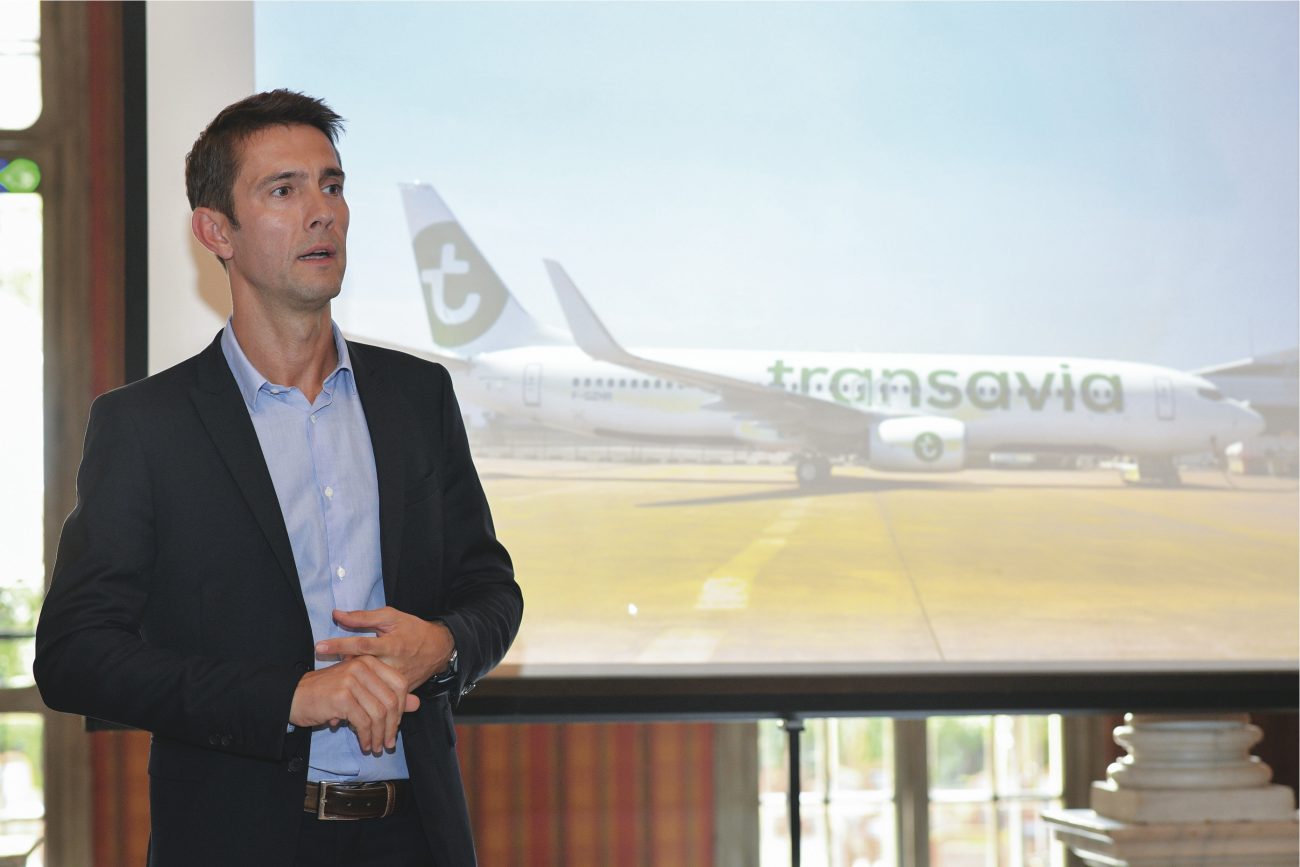
Their corporate identity and logo look like a crossbreed of Dutch over-the-counter laxatives and a new French social media venture. The green color theme of its livery, interior seating, and uniforms is located somewhere between forest serenity and conservative living room furniture. They are Transavia. Their strategy and business model is that of a budget airline, and they have just entered the Lebanese aviation market with about 600 seats of weekly capacity in each direction (distributed over three flight pairs on a 189-seat Boeing 737-800) on the route Paris Orly­—Beirut.

The last few years have seen gradual intensification of low-cost-carrier (LCC) or other similarly structured and affordable air-travel options between Lebanon and Eastern Europe and Turkey, with the most recent option being offered by Cyprus-based Cobalt Air, which opened its Larnaca—Beirut link at the beginning of the summer. Cobalt, which describes its business model as hybrid LCC, provides travelers from Beirut with options to go on to France, Germany, Spain, and the UK, and—supposedly starting in late 2017 and 2018—to destinations such as Russia and China.

Within this growing supply of flexibly priced seats, the market entry of Transavia as the LCC in the Air France–KLM Group adds to Lebanon’s integration into the European air-travel envelope. While LCC connectivity from Beirut mostly does not yet exist on daily schedules, or extend directly to important European aviation hubs, point-to-point LCC flight options to the EU core markets France and Germany (through AF-KLM’s Transavia and privately owned Germania), as well as Spain (through Vueling, a daughter of British-Spanish aviation group IAG) are now on offer with a higher flight frequency than ever before. 

Executive conducted a brief interview with Herve Kozar, the deputy chief commercial officer of Transavia, who had just stepped off the carrier’s maiden Beirut flight and into a press conference to promote the airline to Lebanese customers.

E   Transavia is a low-cost carrier using single-aisle aircrafts all throughout its network. What is your rationale for adding Beirut to your list of destinations at this time?

As you rightly said, we operate only one type of aircraft, which is the [Boeing] 737-800 with 189 seats. We knew from the beginning that Beirut could only be a success. Traffic rights between [Lebanon and France] are regulated, and when we heard that [the process] to apply for rights was open, we were the first to apply. It’s nice for us to have Beirut in the portfolio: We have North African routes and because it’s a city-break destination as well. We have those kind of passengers on board Transavia flights, and thus, it made complete sense to us to open Beirut.

E   Service to Lebanon has not been the easiest in the past due to seasonal patterns and various external disruptions. Some European carriers entered this market, but had to pull out after one crisis or another. Given that the Lebanese government has recently decided to raise airport departure taxes and that latest euro exchange rates are moving against the US dollar, to which the Lebanese currency is pegged, where do you see the formula for Transavia’s profitability in the Beirut market?

We have the advantage in the community. Lebanon and France have strong links, and there are many Lebanese people who live in Paris and obviously fly between France and Lebanon. This potential [of bilateral Lebanese travel with France] may be higher than with any other European country. What we have seen just now was that the first flight [to Beirut] was completely full. We had 189 passengers on board. We launched sales on this route not long ago, at the beginning of July, and bookings that we’re seeing today are really dynamic.  For September we’re close to a 90 percent seat-load factor. For us, this is one of the best starts on a new route, and we’re confident.

E   In going from Beirut to Paris Orly and vice versa, are you targeting mainly travelers whose destination is France, or are you aiming to feed passengers from Beirut into a European or global network?

What we think is that it’s mainly local traffic from Beirut to Paris, not connecting [traffic]. Air France is [offering] the connecting traffic to the world. We don’t. Our business model is more point-to-point traffic. This is working quite well in tourist and leisure travel and also for business—we today have around 10 percent of passengers who are flying for business purposes.

E   Do you have business class in your cabins?

No, it is business passengers who have restrictions on their budgets and want to fly low cost.

E   What is the distance between the highest price point that one could see for a seat on Transavia and the standard economy seat on the same route in Air France or KLM?

We are starting at 109 euros for a one-way flight [from Beirut] to Orly and what we typically see in our network is a range from one to five [hundred euros], meaning that [the one-way ticket] is up to 500 euros maximum when demand is really high in specific peak periods, such as Christmas, but not much higher.

E   In Beirut, one often sees Air France round-trip flights to Paris advertised online for 350 or 400 dollars. That would make your 109 euro tickets, when multiplied by two for a roundtrip, appear not vastly lower in cost, especially if a passenger under your business model also has to buy luggage allowance separately.

I’m talking one way for 100 [euros], which on return basis is 200, versus 350 or 400 [dollars round-trip on Air France], but it’s not the same product. We fly the 737, whereas Air France has a 777 product that is really nice. It’s clearly two different segments, and that’s why we open [in markets] where our mother Air France is present. We think there is space enough for both of us. It’s a different set of customers, and we’re better and stronger together.

E   Are you mostly interested in marketing the new Transavia flights to Lebanese passengers, or are you also promoting Beirut as destination in France?

It’s both, and we are very happy that it’s sold already 20 to 25 percent here in Lebanon. We’re not known here, and we have a marketing budget to increase our awareness toward the Lebanese customer. It’s both: We are trying to promote Beirut in France, but also Paris here in Beirut.

E   Do you regard competition for Transavia more from the group perspective, such as AF-KLM and their daughters versus airlines in the IAG or Lufthansa groups, or do you see yourself competing mainly with LCC operators, such as Ryanair and easyJet in Europe?

When you look at the Transavia network, you see that there are low-cost carriers and also legacy carriers on all routes, so we fight with both of them. We, of course, benchmark with all [of our competitors], but we’re trying to have the right price for the customer, and our focus is more on the customer.

E   You started your Beirut service in September, at the tail end of the peak travel season for this city. Was that a strategic decision or an opportunistic one?

It was an opportunistic decision, [and made] because all our aircraft were busy this summer.

October 17, 2017 0 comments
0 FacebookTwitterPinterestEmail
EcotourismHospitality & Tourism

Destination: Shouf

by Hani Bathish October 13, 2017
written by Hani Bathish

The verdant Shouf, famous for its unspoiled green vistas, is rapidly evolving into a popular tourist hotspot for Lebanese from across the country, as well as vacationing expatriates, Arab tourists, and even foreign visitors. The area is located southeast of Beirut and comprises many tourist must-sees, from the historic towns of Beiteddine and Deir Al Qamar to the Shouf Biosphere Reserve. The reserve is a designated protected area covering 440 square kilometers, straddling three governorates (Mount Lebanon, the Bekaa, and South Lebanon) and encompassing 22 villages and three ancient cedar forests: Barouk forest, Maasser Al Shouf, and Ain Zhalta. The forests are home to the largest single concentration of cedrus libani in Lebanon, accounting for 25 percent of the remaining cedar forests in the country. Undoubtedly, the reserve is the single biggest tourist attraction in Shouf, but along its periphery are many things to see and do as well. With an increase in visitors and a rise in the number of fully loaded Pullman buses trundling up to the cedar forests on any given Sunday, visitors are seeking places to stay, places to eat, activities to do, and local crafts and artisanal foods to buy. Local businesses, municipalities, and reserve officials are beginning to respond to these tourists’ needs.

Visitor numbers go up

Last year, the reserve registered 85,966 visitors compared to 72,411 in 2015. Visitor numbers have shown a steady increase since 2010 when they are numbered just 58,073, according to the reserve’s latest annual draft report released to Executive. This year, visitor numbers have gone up between 15 to 20 percent, according to Nizar Hani, the general manager of the Shouf Biosphere Reserve. Income from reserve visitors’ entrance fees in 2010 was just LL242.8 million, whereas last year entrance fees totaled LL524.8 million, according to the report. “Most visitors—95 percent—are Lebanese. The rest are foreigners living in Lebanon; we also got some Iraqis visiting this year too,” Hani says. The reserve is also helping promote local businesses by offering visitors discounts at local restaurants. “What few visitors know is that the ticket you buy to enter the reserve entitles you to a 5 to 10 percent discount at selected local restaurants in the area,” he says.

The reserve and local municipalities are doing all they can to help promote the region as a complete package. On weekdays, tickets to enter the reserve are discounted to encourage visitors. “This year we introduced horse-riding in the Ain Zhalta forest. Among the other tourist activities in the area we have hiking and camping, we have snowshoeing in winter, we have the Assaf sculpture museum and the Rachid Nakhle Cultural Center, which commemorates the man who wrote the lyrics to our national anthem,” Hani says. The reserve is a treasure house of unique flora and fauna, including 520 species of plants; it is also a designated Important Bird Area (IBA), and ecotourism area. “The reserve is the southernmost extent of cedrus libani and has 296 species of birds and 32 species of mammals,” Hani says.

[pullquote]The reserve is a treasure house of unique flora and fauna, including 520 species of plants[/pullquote]

Ecotourism investment opportunities

The Shouf Biosphere Reserve represents an important bolster to the ecotourism sector in the Shouf, according to Investment Development Authority of Lebanon’s website, which notes that the reserve provides “opportunities for ecotourism that remain untapped.” According to a 2015 Shouf Biosphere Reserve report, the reserve generates an average of $19 million annually in revenue from a range of activities, from ecological and food production to ecotourism. Tourism alone generates $700,000 annually in and around the reserve, while biomass charcoal production generates up to $1 million annually, honey production generates $450,000, and hydroelectric power generates $1.3 million. Water bottling generates up to $3.3 million, not counting grid water provision, which generates up to $12.2 million in revenue. Hani says that only 10 percent of ecological services at the reserve can be monetized. “While the reserve is the main attraction, many things are needed to help economic growth in the region, like developing and improving quality of ecotourism services,” Hani says. The Shouf is the largest district in Mount Lebanon, it has a population of over 200,000 and a high literacy rate. The district has over 64,000 hectares of permanent agricultural land, 51 percent of which is dedicated to olive-tree plantations, although the mountains are draped in picturesque vineyards, there are only two operating wineries in the Shouf.

Social media driven

The region is getting very social-media savvy when it comes to promoting its attractions. The website authenticshouf.com promotes the reserve and gives useful information about the region’s flora and fauna and its many tourist offerings. The reserve’s Facebook page almost doubled in followers from just 11,000 in 2010, to 19,300 last year. The Jabalna Festival’s Facebook page is also helping promote and expand the region’s cultural activities. In September, the festival organized the National Dabke Day under the motto “The Dabke Must Go On” at Maasser Al Shouf cedar forest, which had 8,000 people in attendance, according to Hani.

“To attract tourists, we rely on the Authentic Shouf website, which promotes the whole of Shouf. Other than that, we rely on private sector initiatives,” says Elie Nakhle, mayor of the municipality of Barouk-Freidiss. He says that his municipality and others in the region do not have the funds or resources to undertake massive promotional campaigns on their own. Among the entrepreneurs that have embraced social media as a promotional tool is the Moukhtara-based restaurant Shallalat Nabeh Merched. Established in 1965, the eatery is nestled in the shade of the opening of a natural cave, under a rock formation from which a natural spring gushes out. The location attracts summer visitors looking for a cool spot to relax and have a meal. The restaurant began promoting itself online three years ago.

Majed Hussam Eddine, the owner and manager of Shallalat Nabeh Merched, says online promotion helped put the eatery on the map, but that he has not seen any improvement in visitor numbers this year compared to the previous two years. “Several things helped us draw in visitors: our location, the fact that our river in Moukhtara is clean and not polluted, and our proximity to the Shouf Biosphere Reserve. The first thing people visiting the cedar forests ask is where can they eat afterwards,” Hussam Eddine says.

Protecting the ecosystem 

The goal of ecotourism is to maintain the very ecosystem that draws in the tourists. The Barouk mountain gets a lot of snowfall in winter, but many traditional winter sports popular in other parts of the country can damage the precious trees, some of which are over 2,000 years old. “It’s not possible to do skiing here because we are a nature reserve, but we try to do other activities,” says Nakhle. Snowshoeing, for example, is easy to learn and affords visitors the opportunity to see the reserve in its snowy white winter blanket. “Our main objective as a protected area is to protect the reserve,” Hani points out. “Activities like ATVing, for example, aren’t allowed, as such activities would damage the forest. We encourage ecotourist activities: Outside the forest we have campsites and horse-riding, and we arrange activities with the local municipalities.”

Some activities do not require any equipment. “We organize walks through the villages to introduce visitors to the area, its people, and their local products,” Hani says. The Bkerzay Village project, a popular destination in the Shouf,  began life as a pottery studio offering traditional pottery handicrafts and classes for the public. “Initially Bkerzay started in 2009 as an exchange between local people and city dwellers. We started with pottery and wanted it to be self-sustaining, so we got the idea of setting up guest houses, which was becoming a trend,” says Karim Salman, one of the founders of the project. The guest houses were built in a traditional style, designed by the architect Ramzi Salman. The whole project is ecofriendly and green, powered almost entirely by solar energy, and built without cutting down a single tree. “We built around the trees,” Salman says. The guest houses only opened for business in late August, with a grand opening planned for some time in March next year. In addition to pottery, the project has a restaurant, a pool, and will soon open a spa.

In the shadow of a mountain

Each area in the Shouf has its own approach to tourism. Barouk, Hani says, focuses more on traditional tourism, with mostly old-school Lebanese restaurants. “Some local eateries are up to date and use social media to promote themselves; others work in a traditional, classical way and wait for guests to come to them. We help those who can’t do it alone and teach them how to work effectively,” he says.

Barouk mostly gets weekend visitors, according to Nakhle. He notes that the area gets many foreign visitors, mostly Europeans who take nature walks in the forest, while Arab and Lebanese visitors like to sit for a meal at its many eateries. The municipality organizes a festival every July to draw in tourists. “We also have a few hotels operating—four for now­—as well as 20 guesthouses. The hotels we have are small: just 10 to 15 rooms each,” says Nakhle. One of the hotels, located just a few hundred meters from the entrance to the Barouk forest, is the Calmera Hotel and Restaurant, owned by Shawki Mahmoud. The property is barely three years old, but Mahmoud says that the past two years were better than this year. “We used to get Iraqi, Kuwaiti, and Saudi guests, but this year we didn’t. Even expatriate Lebanese didn’t come this year with a few exceptions.” Mahmoud says, hinting at deteriorating political relations with the Gulf had led to the slowdown. Saturdays and Sundays are the busiest for the hotel, which has a total of 16 rooms, eight of them suites, and charges $100 per night for suites and $50 per night for regular rooms. Mahmoud says that in spite of the reduced number of guests they still have 80 percent occupancy. Among the activities visitors can enjoy, in the shadow of Barouk mountain is an amusement park, which this year added an 800-meter-long karting track.

[pullquote]We used to get Iraqi, Kuwaiti, and Saudi guests, but this year we didn’t. Even expatriate Lebanese didn’t come this year with a few exceptions[/pullquote]

Room for improvement 

Businesses and local officials agree that the area needs to work more to offer a better overall experience in terms of their quality of services and food, the range of activities, and the conditions of the roads, if they are to attract the demanding international tourist. “As restaurant and hotel owners, we need to work on ourselves more. Many owners of restaurants in the area haven’t improved their establishments since the days of their fathers,” Mahmoud says. The Shouf Biosphere Reserve management recognizes the need to strengthen partnerships with the private sector and ecotour operators, as well as with the local people in the villages surrounding the reserve. “Not all private sector tourism enterprises have the same quality of services,” Hani admits. “For this reason, we have introduced the quality mark, a checklist of services to examine the quality of raw materials used and workers employed by establishments. We try to build capacity of service providers and encourage services that are part of the local environment.” Hani adds that the quality mark serves the interests of local development and environmental protection, such as consumption of electricity and water.

Seasonality issues

There are several obstacles to attracting year-round visitors to an area as remote as Shouf, namely the harsh winters and poor access by road. “We close one month a year in winter. While we are only 700 meters above sea level and any snow quickly melts, the high season for us is definitely the summer,” says Bkerzay’s Salman. Tourist eateries are also limited by the changing seasons. “We get four to five months that are very bitterly cold, so seasonality is an obstacle for our business,” explains Hussam Eddine. However, he is planning to continue to operate in winter in the future by building heated glass-enclosed areas at Shallalat Nabeh Merched.

For now, however, he still closes in winter, but he continues to pay his staff. “The government has to do more. The power cuts cost us money in generator bills, and every time there is a storm, we lose power,” he says. Bkerzay also plans activities around the year. “We have events like corporate retreats in the spring and fall; we’re planning a New Year’s event as well, and we will probably have an event in March, a grand opening,” Salman says. He adds that the region is on the rise because it is protected and preserved, something municipalities must not lose sight of. “But on the negative side, the quality of food and services is generally lower than elsewhere, and the roads aren’t very good,” he says.

The complete package

Wandering through the area’s thick cedar forests is often described as a spiritual experience. The serenity of the place, the earthy scents wafting on the breeze—especially after the first rains—offer a unique experience. The area includes several hiking trails in the reserve’s cedar forests, and there are also walks through local villages and hiking trails in the many other pine forests in the area, like Horsh Baakline. But the rest of Shouf is just as magical and captivating. The picturesque Moukhtara village, the seat of the Jumblatt family and their magnificent 450-year-old palace, offers green vistas dotted with red tiled roofs reminiscent of southern Italy. The Beiteddine Palace, built in the early 19th century by Emir Bachir Chehab II, is a masterpiece of architecture, with opulently decorated wood-paneled and marble-encased rooms that once communicated the might and wealth of the rulers of Mount Lebanon to their subjects and foreign visitors. It remains a summer residence for the president, and includes many fascinating paintings and portraits. The Marie Baz wax museum in Deir Al Qamar is another must-see, a place where you can come face-to-face with the founding fathers of the republic, and its presidents and prime ministers.

There is a wide range of hotels from the five-star traditional opulence of the Mir Amin Palace Hotel in Beiteddine, to the eco-friendly Bkerzay Village project and the many other guesthouses dotted around the Shouf that are supervised by the reserve’s management team.

From the banana groves of Damour to the peaks of Barouk and the old palaces of the Maan and Chehab dynasties, Shouf has much to offer.

October 13, 2017 0 comments
0 FacebookTwitterPinterestEmail
  • 1
  • …
  • 96
  • 97
  • 98
  • 99
  • 100
  • …
  • 691

Latest Cover

About us

Since its first edition emerged on the newsstands in 1999, Executive Magazine has been dedicated to providing its readers with the most up-to-date local and regional business news. Executive is a monthly business magazine that offers readers in-depth analyses on the Lebanese world of commerce, covering all the major sectors – from banking, finance, and insurance to technology, tourism, hospitality, media, and retail.

  • Donate
  • Our Purpose
  • Contact Us

Sign up for our newsletter

    • Facebook
    • Twitter
    • Instagram
    • Linkedin
    • Youtube
    Executive Magazine
    • ISSUES
      • Current Issue
      • Past issues
    • BUSINESS
    • ECONOMICS & POLICY
    • OPINION
    • SPECIAL REPORTS
    • EXECUTIVE TALKS
    • MOVEMENTS
      • Change the image
      • Cannes lions
      • Transparency & accountability
      • ECONOMIC ROADMAP
      • Say No to Corruption
      • The Lebanon media development initiative
      • LPSN Policy Asks
      • Advocating the preservation of deposits
    • JOIN US
      • Join our movement
      • Attend our events
      • Receive updates
      • Connect with us
    • DONATE