• Donate
  • Our Purpose
  • Contact Us
Executive Magazine
  • ISSUES
    • Current Issue
    • Past issues
  • BUSINESS
  • ECONOMICS & POLICY
  • OPINION
  • SPECIAL REPORTS
  • EXECUTIVE TALKS
  • MOVEMENTS
    • Change the image
    • Cannes lions
    • Transparency & accountability
    • ECONOMIC ROADMAP
    • Say No to Corruption
    • The Lebanon media development initiative
    • LPSN Policy Asks
    • Advocating the preservation of deposits
  • JOIN US
    • Join our movement
    • Attend our events
    • Receive updates
    • Connect with us
  • DONATE
Economics & PolicyElectoral law

At long last…

by Matt Nash January 4, 2018
written by Matt Nash

Guarded optimism from a variety of anti-establishment groups, political movements, and individuals followed the mid-2017 approval of a new electoral law. Lebanon’s Parliament has thrice extended its own term since the last elections in 2009, ostensibly twice because lawmakers had failed to agree on a new law to govern new polls. After the most recent extension was granted to prepare for elections in spring of 2018, an Executive survey of newcomers running against the country’s established political parties found hope amid fears the vote would once again fail to be held.

The new electoral law uses proportional representation to allocate Parliament seats for the first time in Lebanese history. Such a mechanism allows more opportunity for smaller parties to secure seats. As Executive queried new political entities throughout the summer, all agreed that the anti-establishment movement would fare best if it was just that: a unified national movement.

When we checked back in with those we spoke to during summer 2017, the few who responded confirmed that meetings continue, and unity remains elusive. Putting ego aside and sticking to a consistent, hopeful message of change will arguably be the biggest challenge for anti-establishment candidates—if elections are held on time in 2018­—but committing to implementing a detailed program and refusing to compromise on core principles will be the equally daunting challenges facing reformist candidates, should they become reformist representatives.

While some of the terminology is the same, in 2018 Lebanon will have an electoral system unlike anything it has ever seen. The new electoral law, approved by Parliament in June, features changes to electoral districts and introduces two new components: proportional representation (PR) and preferential voting. It is certainly more complicated than the electoral systems used in the past, but Executive has prepared a guide to help readers understand both how to cast ballots and how their votes will be counted.

New districts

For administrative purposes, Lebanon is divided into governorates (mohafazat) and districts (kadat). Traditionally, each administrative district has also been an electoral district. In 2009, there were only a few exceptions (Baalbek and Hermel were merged into one electoral district, as were Miniyeh-Danniyeh, West Bekaa-Rashaya, and Marjayoun-Hasbaya).

In 2018, the electoral map will not be drastically different. While the previous 26 electoral districts have been reduced to just 15, the number and sectarian division of seats remains largely unchanged. This means that those electoral districts that have been combined retain the number of seats and the divisions they had in 2009. For example, Bcharre, Batroun, Koura, and Zgharta combined become one electoral district with 10 seats: seven Maronite and three Greek Orthodox. Six of the 2009 electoral districts reappear unchanged.

Beirut underwent the biggest makeover. The city was divided into three electoral districts in 2009. In 2018, it will be two electoral districts. The district known in 2009 as Beirut 2 is gone, with the Medawr neighborhood (see map) now merged with 2009’s Beirut 1 (Ashrafieh, Saifi, Rmeil). The Port (Marfaa) and Bachoura neighborhoods are now part of the remainder of the city in 2018’s new Beirut 2. The city’s upcoming electoral division quite nearly mirrors the so-called “green line” of the civil war. The former Beirut 2’s two Armenian Catholic seats went to Beirut 1, as did the evangelical seat representing Beirut 3 in 2009. Beirut 2’s one Sunni and one Shiite seat each remain in 2018’s Beirut 2.

The lists

In past Lebanese elections, political parties would strike alliances to form lists of candidates in an electoral district. However, there were no pre-printed ballots at voting stations. What this meant is that voters either entered the polling stations with party-printed lists to place in their voting envelopes, lists they wrote at home (i.e., creating their own lists by choosing their favorite candidates among the competing lists) or nothing, using the blank pieces of paper and pens in the voting booth to handwrite a list of their chosen candidates. The electoral list was a marketing concept, not a legal requirement. Candidates were free to register and run in a constituency even if they were not part of a list, and voters could mix and match among the lists. However, election results proved that most voters opted to choose entire lists. Many argue that this often led to unfair results as a result of close elections (i.e., a list that garnered 51 percent of the votes saw all of its candidates elected, while candidates who attracted 49 percent of voters got nothing).   

Under the new law, lists will be legally set in stone (meaning no more mixing and matching and no more individual candidates), and voters will be handed pre-printed ballots by electoral officials when they enter a polling station. There is no limit for the number of lists that can run in an electoral district; however, there are some rules. Lists can be either complete or incomplete, meaning if an electoral district has 10 seats, the list can either have 10 candidates (a complete list) or fewer (an incomplete list). An incomplete list, however, cannot be a one-person show. Any incomplete list must have at least three candidates or more, up to a minimum of 40 percent of the seats in an electoral district, and— in electoral units comprised of more than one administrative district— one candidate from each kada.

Proportional representation

The new electoral law also introduces proportional representation, an attempt to better represent voters. Tallying the votes and determining how many seats each list will receive is a three-part process. First, all votes cast in an electoral district are counted and then divided by the number of seats to reach an “electoral quotient” (for example, 100,000 votes cast in a 10-seat electoral district means 10,000 votes is the electoral quotient). Second, the number of votes for each list will be measured against the quotient, and lists below the quotient will be disqualified (in our example, even a list with 9,999 votes wouldn’t make the cut). Third, once lists below the quotient are disqualified, the votes from those lists are subtracted from the overall total of ballots cast and the quotient re-tabulated with seats then distributed to the lists based on the new quotient (see sample ballot). 

When allocating seats based on the quotient, the math typically won’t produce “round” numbers. A list will be allocated 3.567 seats, for example. To handle remainders, lists are first allocated their whole number of seats and the list or lists with the largest remainders get any remaining seats (in a 10-seat district, imagine List 1 gets 4.921 seats; List 2 gets 3.896 seats and List 3 gets 1.895 seats, the final allocation will be: List 1: five seats; List 2: four seats, and List 3: one seat).

Voting systems vary across the world, and there is no absolute best practice for determining an electoral quotient (or threshold) in a PR voting system. In some countries that use party list systems, a percentage of total votes cast is used (any list with more than X percent of the vote gets at least one seat, with more popular lists getting more seats). This percentage can be high—10 or 20 percent—which disfavors parties or candidates with limited popularity. It can also be low—5 percent—to favor the inclusion of less popular parties/candidates. Lebanon’s chosen method of calculation results in varied threshold percentages across the country (i.e., seat distribution is not well-aligned with population distribution, at least according to the imperfect lists of registered voters, meaning that some electoral districts have “more” seats than others based on the comparative populations — (see chart).

Preferential votes

The new law also introduces preferential voting, meaning voters can choose their favorite candidate on the list they vote for (provided the candidate is running in the kada where the voter is registered). It’s as if voters get to vote twice, first for a full list of candidates representing the entire district and second for a specific candidate representing the kada in which the voter is registered. For example, the new electoral district of Batroun-Bcharre-Koura-Zgharta has 10 seats, so the district will see lists with between 4 and 10 candidates. Once a voter has chosen a list representing the entire district, he or she then chooses a favorite candidate from his or her kada (for example, voters registered in Koura can only cast a preferential vote for candidates running in Koura).

Once all lists passing the threshold have been identified and allocated their number of seats, the job of actually filling the seats comes down to the preferential votes. This, again, involves some math. To seat candidates, they are ranked in order of their popularity (calculated by dividing the number of preferential votes received by the total votes cast in each administrative district (kada), not the wider electoral district). Candidates are then ranked based on these percentages and allocated seats. Because seats are still allocated to religious communities, this does not necessarily mean that the most popular candidates on a list will actually get elected (see sample ballot). If there were no seat allocations for religious communities, the strongest candidates on each list allocated seats would win. Community allocations complicate that, however. Imagine a constituency with two Sunni seats and three lists. List 1 received the most total votes and has the most popular Sunni overall (the Sunni candidate with the most preferential votes from his or her kada). List 2 received the second-most total votes, and one of its Sunni candidates received the second-most preferential votes. List 3, meanwhile, received the least number of votes, yet the list’s most popular candidate is a Sunni (i.e., one of the list’s Sunni candidates received more preferential votes than any other candidate on list 3). List 3’s star Sunni is guaranteed to lose because the two more popular Sunnis will get the seats first, and all other Sunni candidates will be disqualified once the two Sunni seats are filled.     

An uphill climb

Civil society organizations have long called for proportional representation as a means to wrest some power from the country’s established political parties. This law certainly gives newcomers a better chance at getting elected than all previous electoral laws. However, it arguably is written in a way to decrease that chance as much as possible. While this law is unlikely to result in drastic changes to the parties and interests filling the seats of Parliament, it offers those hoping to challenge the establishment a fighting chance.

January 4, 2018 0 comments
0 FacebookTwitterPinterestEmail
Economics & PolicyTelecom

Missed connections

by Matt Nash January 3, 2018
written by Matt Nash

Their approaches have been as different as fresh fallen snow is from the salty splash of the sea. Abdel Moneim Youssef, former head of the Lebanese state-owned telecom provider Ogero, was cold. Elusive, even. He avoided questions by dissecting them and firing queries back at his interviewer. Imad Kreidieh—who replaced Youssef after the latter was removed from office amid corruption allegations he was later cleared of—has taken to Twitter to tout accomplishments more often than Donald Trump.

Blame for abhorrently slow internet download speeds in Lebanon often fell at Youssef’s feet. Ogero controls the country’s fixed-line telephone network, which includes a fiber-optic backbone—now fully operational—and connections between individual users and the internet, which happen at Ogero centrale around the country. Ogero is also a key decision-maker for telecom policy along with the Ministry of Telecommunications (MoT), which owns all of the country’s mobile-phone network infrastructure. (The country’s two networks, branded in the market as Alfa and touch by operators Orascom and Zain, are managed on behalf of the MoT). Among other complaints, Youssef allegedly kept internet connection speeds at the centrale slow. The veiled accusation here is that the beneficiaries of slow internet are illegal providers, who serve an estimated 50 percent of the market. Regardless of the reasons, by the third quarter of 2017, Ogero had resolved bottlenecks at the central offices, and internet speeds were indeed much faster for many users—we are talking jumps of download speed from 2 megabits per second (mbps) to near 30 mbps.

A faster future?

Ogero spent most of 2017 tendering new projects designed to speed up the internet for as many users as possible. Ongoing projects include upgrading switching technologies to maximize efficiency from the existing copper telecom network, installing “cabinets” across the country to bring fiber as close to homes as economically feasible, and installing new wireless connections to bring fast speeds to users in remote areas. At a conference in late 2017, Kreidieh went so far as to promise that Lebanon will soon have the world’s fastest network. (He later took to Twitter to clarify that users will not necessarily have the world’s fastest connections, just that the network would theoretically be capable of providing them).   

Many internet users in Lebanon have a copper wire somewhere between their device and the actual internet. Internet via mobile phone is now entirely wireless and fiber—home connections, however, are another story. Most buildings are internally wired with copper, meaning even ‘heavy users’ such as universities, banks, and military installations, which are today connected to the fiber backbone via fiber most likely have copper carrying connectivity from the on-site fiber landing site to individual users spread across campus, or dispersed among dozens of floors in an office building. Copper can achieve 30 mbps speeds, provided the distance it is serving is only a few meters. As distance increases, however, quality and speed decrease.

Ogero aims to alleviate the distance problem by deploying fiber cabinets. Instead of having copper wires stretch several kilometers between end users and the nearest centrale, the cabinets will stand in between, with one fiber line connecting the cabinet to centrale, and copper connecting users a shorter distance between their home and the cabinet.

Kreidieh insists the work is ongoing, although he did not respond to an interview request for this report. A potential storm on the horizon, however, first appeared on the radar in October 2017 when telecom minister Jamal Jarrah (who also did not reply to an interview request) accused Kreidieh of corruption. Whether the accusations will continue, and whether or not a management crisis could derail ongoing projects is unclear, but if there’s one thing that years of empty promises have no doubt taught Lebanese internet users, it is that the proof will be in the streaming.

January 3, 2018 0 comments
0 FacebookTwitterPinterestEmail
Economics & PolicyWater

Lebanon’s mismanagement strikes again

by Matt Nash January 3, 2018
written by Matt Nash

Lebanon is an oasis. In a region synonymous with desert, the only significant stretches of sand in the tiny, water-rich country are along its 220-kilometer Mediterranean coast. It is the only place in the Middle East with a natural ski season, yet it still does not take on-the-ground snowfall measurements—assessments have been done by studying satellite photography and extrapolating estimates. For all its natural blessings, however, the outlook is bleak for Lebanon’s water sector.

Data is admittedly scarce—one cannot manage what is not measured and monitored—but available indicators suggest that key sector management issues, like overexploitation of groundwater resources and gross mismanagement of wastewater, were not adequately addressed in 2017, nor will they be anytime soon.

Lebanon’s current national water and wastewater strategy was written in 2010 and received cabinet approval in 2012, but it remains largely unimplemented. The Ministry of Energy and Water’s 2017 annual report—compulsory under the access to information law approved in February 2017—has not been published at time of writing, and the ministry did not respond to an interview request for this article.

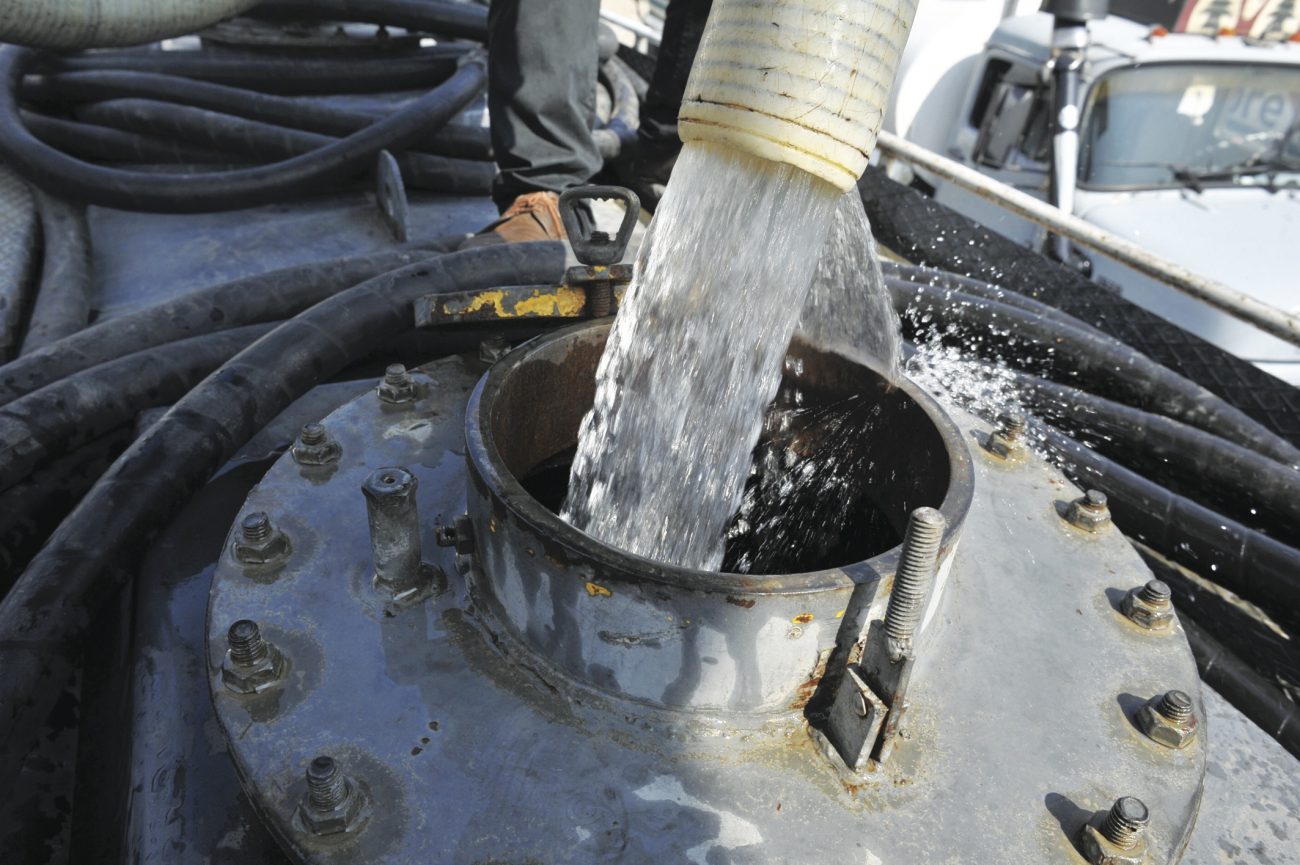
Problems in the water sector are well-studied, if still largely unaddressed. Five decentralized, regional “water establishments”—administrative offices still not fully endowed with their legally mandated decision-making and financial independence—are supposed to supply their regions with safe drinking water, continuous access to “utility water” for showering and cleaning, and wastewater-collection and treatment services. Three of the five water establishments are underfunded, and all of them are understaffed. The country’s drinking and utility water infrastructure is ageing: An estimated 20 percent of its households are not connected to the water network, and Lebanon’s wastewater infrastructure is barely complete, treating only 8 percent of the country’s wastewater, according to estimates from 2010.

The agriculture sector generally relies on inefficient flood irrigation, moving water from source to field through aged canals, compounding water loss. The country suffers annual water shortages, typically during the end of summer. Illegal wells are widespread, estimated to number nearly 60,000 in a country of only 10,000 square kilometers. Two studies on groundwater in Lebanon—one from UNDP in 2015 and another conducted by the American University of Beirut from 2013 to 2014—show seawater intrusion in coastal aquifers. The UNDP study suggested that all of the country’s most heavily relied-on groundwater sources were stressed.

Quality is also a concern. A 2016 study from UNICEF found that only 47 percent of the drinking water provided by Lebanon’s water establishments is free from E. coli bacteria. The study has not yet been published, but some of its findings are available in the 2017 Lebanon Relief Plan report, a document compiled by multiple government agencies with input from various aid organizations.

Each of these studies, however, provides only a snapshot most relevant to the time data was collected. Continuous measurement and monitoring are the only ways Lebanon will be able to evaluate its water resources in order to properly manage them. For this to happen, the water sector must become a priority.

Wastewater is the best example of an easy-to-neglect sub-sector that proves how far down the list of policy priorities the water industry appears.

Lebanon has treatment plants, but resource-starved water establishments do not have the money or workforce to operate and maintain them. Worse, several of the country’s treatment plants are not connected to wastewater-collection networks because these networks can cost thousands of dollars per meter to build, and neither donors nor the government have ponied up the cash to do it.

As the country perhaps enters a new era as an oil and gas producer, it cannot continue to neglect this far more precious natural resource that causes such traffic problems the first time it returns each year.

January 3, 2018 0 comments
0 FacebookTwitterPinterestEmail
Economics & PolicyOil and gas

The saga of Lebanon’s first licensing round

by Mona Sukkarieh January 3, 2018
written by Mona Sukkarieh

At the end of 2017, politics once again threatened the completion of Lebanon’s first offshore oil and gas licensing round. More than four years ago, former Prime Minister Najib Miqati resigned the very day his cabinet was set to discuss two decrees needed to open the bid round. Those decrees finally passed in January 2017, and this year saw development after development that made it seem as though the oil and gas sector was finally a top priority for the government.

However, just as the first licensing round was drawing to a close—following a positive recommendation from the Lebanese Petroleum Administration in favor of awarding licenses for Blocks 4 and 9 to a consortium made up of France’s Total, Italy’s Eni, and Russia’s Novatek, and right before one final government approval—Prime Minister Saad Hariri announced his resignation from Riyadh, Saudi Arabia, on November 4, 2017.

The Ministry of Energy and Water tried to be reassuring. On the sidelines of the Abu Dhabi International Petroleum Exhibition and Conference on November 14, Energy Minister Cesar Abi Khalil put forward a “business as usual” attitude, claiming that the political crisis would not delay the licensing process.

Awarding an exploration and production agreement requires the approval of the Council of Ministers, which authorizes the Minister of Energy and Water to sign, on its behalf, an exploration and production agreement with the winning consortium. This process would likely be impossible under a caretaker government. According to the Constitution, a caretaker government does not exercise its powers “except in the narrow sense of managing day-to-day affairs.” The idea is that a caretaker government cannot take measures that would place a burden, financial or otherwise, on the subsequent government. This would appear to rule out signing exploration and production agreements.

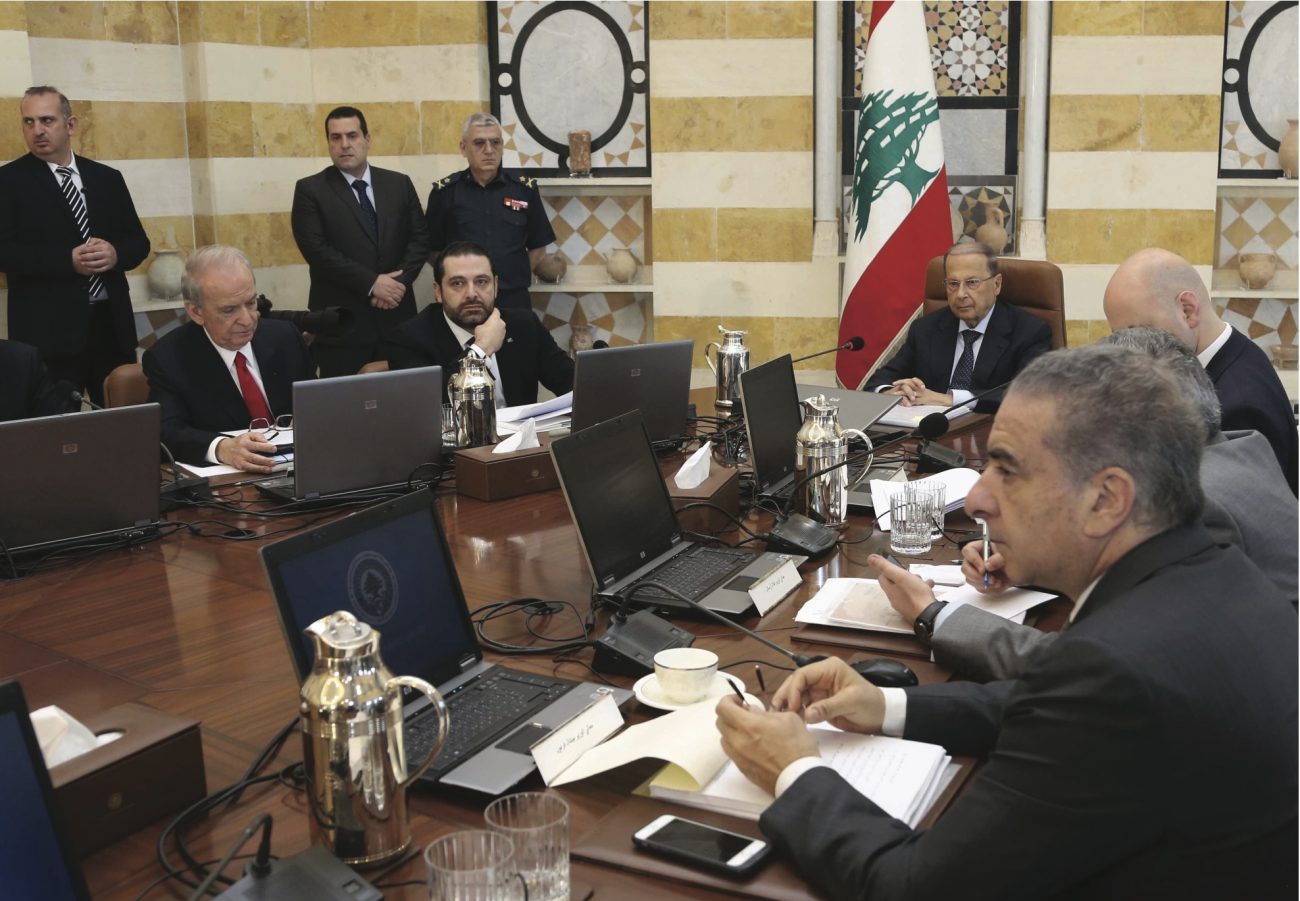
Luckily for Lebanon, events unfolded positively, because the political crisis could have derailed the licensing process. Hariri put his resignation on hold after returning to Beirut on November 22, following a request from President Michel Aoun. The president had previously refused to accept the resignation until Hariri returned to Lebanon to submit it. A prime minister who has not resigned is still an active prime minister, and his government is in its full capacity. A series of consultations among various political factions led to a dissociation policy toward regional conflicts that was unanimously approved by the government and resulted in Hariri revoking his resignation at the beginning of December. 

The government is now expected to resume normal activity. If the government’s priorities remain unchanged —and it appears they are­—it would be reasonable to expect that awarding  EPAs will be on cabinet’s agenda in the coming period. In the meantime, and parallel to the political crisis, the Ministry of Energy and Water, along with the Lebanese Petroleum Administration, successfully concluded a three-day negotiation at the end of November with the Total-Eni-Novatek consortium over the technical part of their offer for blocks 4 and 9. The energy minister will detail the results of the negotiations and the bids put forward by the companies in a report that will be submitted to cabinet for approval. If cabinet approves the offers, the minister will be authorized to sign the exploration and production agreements with the consortium.

Although the situation appears to be less alarming now, this is not an open-ended issue. There are deadlines to take into consideration. According to the tender protocol, an application is valid for a period of 180 days after submission, which took place on October 12, 2017. The energy minister can extend the deadline for up to 90 days based on a recommendation from the Petroleum Administration. Further extensions are possible, but subject to the approval of the consortium.

The saga of the first licensing round has been riddled with one crisis after another. By early December, four and a half years after its launch, it seems to be nearing conclusion. But even at this stage, political decision-making still affects the process. This latest episode confirms what was already obvious: Every step of this process that requires a political decision to move forward is a potential obstacle. This also applies to future licensing rounds. Though the political factor will always be at play, it will probably be less predominant in the post-licensing phase, where other technical and financial considerations will become apparent.

The good news is that the investors that have made the decision to come here are aware of the political risk involved and have factored it in. This tempers the need for crisis communication designed to reassure them. Verbal assurances can only go so far when your interlocutors are fully aware whether a potential threat is serious enough to bring the process to a halt.

[/media-credit] (Click on image to enlarge)

Ahmad Barclay & Jeremy Arbid
January 3, 2018 1 comment
0 FacebookTwitterPinterestEmail
Economics & PolicyElectricity

In need of new energy

by Jeremy Arbid January 3, 2018
written by Jeremy Arbid

Lebanon’s electricity sector was not saved in 2017, despite an emergency plan from the Ministry of Energy and Water (MoEW) endorsed by the cabinet earlier in the year. While the electricity needs for much of the country did not improve much this year, the outlook for 2018 and beyond looks a little brighter.

Lebanon currently has a maximum electricity-generation capacity of 2000 megawatts (MW), far less than the 2017 summer peak demand of 3400 MW. In the coming year, the government could license almost 1200 MW of new electricity-generation capacity. Of those megawatts, 400 could come from the construction of clean, renewable energy. Wind power would generate up to 200 megawatts in a blustery area in north Lebanon, and solar photovoltaic (PV) could produce up to 180 MW across different parts of the country.

Wind farms were originally tendered in 2013, but have faced repeated delays. According to news reports published in summer 2017, the government awarded licenses in 2017 to three companies: Hawa Akkar, Sustainable Akkar, and Lebanon Wind Power. The price at which the companies would sell the electricity to Lebanon’s public utility, Electricite du Liban (EDL), was reported at 11.3 cents USD, but a power purchase agreement (PPA) was, by early December 2017, not yet signed. For solar PV, the government received 42 bids at the end of October 2017. The plan is to build 12 solar plants across four districts of Lebanon—three each in South Lebanon, Mount Lebanon, the Bekaa Valley, and North Lebanon.

Pierre Khoury, head of the Lebanese Center for Energy Conservation (LCEC), an organization attached to the MoEW and responsible for renewables, laid out what should happen next for solar PV and wind at the International Beirut Energy Forum in September 2017. The PPAs for wind must be signed before the end of 2017, the deadline for the government to negotiate the kilowatt price at which it will purchase wind-generated electricity from each of the three companies. Khoury said commercial operation of the wind farms was expected by 2020, and the government would, in 2018, open a second licensing round to construct additional wind farms. As for solar PV, the LCEC was yet to announce its evaluation of the 42 bids as of early December 2017. Khoury told the conference audience he expected solar PPA signatures by the middle of 2018, with electricity from the 12 solar farms being fed to the grid starting sometime in 2020. The government, Khoury says, also plans for a second PV licensing round in early 2019. By the end of 2016, Lebanon had installed 23 MW of solar generation capacity, according to UNDP’s Small Decentralized Renewable Energy Power Generation Project (see PV treemap below).

Government low on energy

Of the 1200 megawatts of potential new capacity in 2018, 800 MW could come in the form of new electricity barges, but the government was—for much of 2017—not able to agree how to tender these. If the government is able to sign contracts for the new electricity barges in 2018, they can be deployed and relatively quickly connected to Lebanon’s electricity grid. Lebanon already has two electricity barges that came online in 2013, adding 367 MW of generating capacity, but the contract for those was renewed once and expires in late 2018, after which it cannot be extended again. Those megawatts will be subtracted from Lebanon’s generation capacity by the end of next year, and it is not clear if the government plans to replace them with a new tender.

By end of April 2018, Lebanon must also figure out what it wants to do in terms of governing the electricity sector. Law 462 of 2002 was supposed to organize the electricity sector and establish the National Electricity Regulatory Authority (NERA), which would be responsible for licensing new power generation, and which, to date, has never been established. In the absence of NERA, Parliament has passed a series of laws giving cabinet the power to award licenses for electricity production, Ramy Torbey, the managing partner of Aziz Torbey Law Firm, tells Executive. Law 775 was passed in 2006, granting cabinet a one-year period to award licenses, but that law was never used. In 2014, Parliament passed Law 288, giving the government the ability to license power plants for a two-year period until April 2016. In 2015, the government was still unable to constitute the regulator, so Parliament passed another law that extended cabinet’s licensing authority from 30 April 2016 to 30 April 2018. “Parliament either has to extend the 2015 law if it feels that the government is not in a position to constitute NERA, or the government will need to create this authority [to license new power producers and distributors] and organize the sector,” Torbey told Executive in a November 2017 interview.

Public officials, like Ministry of Finance Director General Alain Bifani, have been calling for electricity reform since 2015, thanks to a fall in oil prices that cut treasury subsidies to EDL annually by about half. According to the government’s electricity plan from 2010, “The failure of the GoL [government of Lebanon] to reform the electricity sector is causing an annual deficit of $1.5 billion on the public purse and losses on the national economy estimated at not less than $2.5 billion per year.”

No hope for sector reform

In October 2017, the government agreed in principle to import a cheaper source of fuel in the form of liquefied natural gas, and the MoEW indicated it might announce a call for proposals for floating storage regasification units, facilities needed to return liquefied natural gas back to its gaseous form for power plants to burn. But these ideas have languished on the books since at least  the 2010 electricity plan.

It seems unlikely elected officials will have the appetite to reform the electricity sector, either through lower public spending or by fixing the legal framework, ahead of parliamentary elections scheduled for spring 2018. But Lebanon could license the new electricity barges sometime in 2018, adding megawatts to the country’s generation capacity, or it could start building the renewable plants. Those new megawatts will still leave Lebanon far below the power-production capacity it needs to supply 24-hour electricity, and the renewable megawatts would not come online until sometime in 2020 at the earliest, but incremental progress is better than none.

[media-credit name=”Ahmad Barclay & Jeremy Arbid” align=”alignright” width=”945″][/media-credit]

January 3, 2018 0 comments
0 FacebookTwitterPinterestEmail
Economics & PolicyFiscal policy

Fiscal performance and the debt outlook

by Mounir Rached January 3, 2018
written by Mounir Rached

There has been quite a lot of concern regarding Lebanon’s recent fiscal performance  and its debt outlook. In its Article IV reviews for Lebanon, the International Monetary Fund has repeatedly alerted officials that the debt burden could derail the government from attaining its economic objectives and could be the prime risk source on financial stability, stressing that a sustained and balanced fiscal adjustment is essential.

The election of a president and the appointment of a new prime minister in 2016 set the stage for a revitalization of Lebanon’s policy making framework. The passage of the 2017 budget, the first in 12 years, indicated a new policy direction and added to the overall confidence and the potential for improved economic performance.

But fiscal performance was strongly affected by the crisis in Syria, which ushered in new challenges. The tax base stalled as economic growth nearly came to a halt, and the revenue share of GDP dropped from 22 percent in 2010 to 20 percent in 2016, further weakened by the removal of the VAT on diesel fuel in 2012.

At the same time, expenditure was burdened by a cost-of-living adjustment in 2012 that raised wages in that year by over 20 percent and maintained them at a higher level of GDP. Wages and salaries of public-sector workers have been rising annually by nearly 8.5 percent on average, a higher rate than that of any other expenditure component, accounting for 33 percent of total spending. Spending on debt servicing, which constitutes another major item of total spending at 32 percent, has been increasing with the rise in gross debt and the increase in interest rates. The recent wage increase will show its full impact in 2018. Subsidies to the public utility, Electricite du Liban (EDL), have benefited in recent years from the decline of oil prices in international markets—with transfers declining by over 50 percent—but remain a serious fiscal burden. Lebanon’s capital spending has been quite low, at less than 5 percent of total spending, and is plagued by slow execution and managerial problems.

The 2017 approved budget adopted a number of tax-raising measures linked to new public spending via the wage increase rather than to an effort to address the fiscal imbalance. The international community has repeatedly warned of the seriousness of the fiscal outcome and the need to place it on a sustainable footing through both raising taxes and trimming spending. The recent move received broad international support.

In spite of the bleak performance and significant spending rigidities—mainly related to salaries and debt service—Lebanon’s fiscal outlook has an optimistic side. A primary surplus (calculated by deducting interest payments from the overall fiscal balance) has been recorded since 2014, aided by the reduced fuel subsidy to EDL and occasional increases in non-recurrent transfers from telecommunications. During the first half of 2017, the primary surplus reached LL2.4 trillion ($1.5 billion). This, however, does not preclude the need for further adjustment, as Lebanon’s public debt burden will continue to rise, adding to existing vulnerabilities and ultimately crowding out essential public investment and social spending.

Fiscal outlook

The recent wage increases, estimated annually at LL1.5 trillion ($1 billion), will further burden the spending bill, but the tax measures, at LL1.7 trillion ($1.13 billion), are estimated to generate enough revenues to exceed the wage-increase expenditure. The most prominent tax increases raise the corporate profit tax rate to 17 percent from 15 percent, raise the tax rate on interest income from deposits and LL treasury bills and bonds to 7 percent from 5 percent, raise VAT to 11 percent from 10 percent, and raise property capital-gains tax and a host of other fees and charges.

These measures were welcomed by the IMF because without them, the fiscal outlook could worsen significantly. Although the corporate tax hike has been criticized by some local businesses, the increase will raise the corporate tax contribution from a low 7.6 percent of total revenues to just 12 percent. Lebanon’s dependence on direct taxation has traditionally been quite limited—the country has relied mostly on indirect taxation, which constitutes less than 4 percent of GDP and only 20 percent of total revenues. Compared to countries with equivalent income levels, Lebanon has a disproportionate dependence on regressive taxes.

The tax rate on earned interest has been effective in generating a higher direct tax rate, as Lebanon does not apply a global income tax and these earnings were largely exempted. VAT taxes, although raised to 11 percent—with extensive exemptions on spending of low income groups—are expected to have less of a regressive impact than has been predicted.

A key potential reform on the spending side would be to trim subsidies, especially to the power sector. This sector receives significant financial subsidies: EDL’s fuel purchases are capped at $25 per barrel of oil, with the treasury covering the excess cost. EDL also sells electricity at the average fixed rate of 75 LL ($0.05) per kilowatt-hour to distributors, while subscribers are charged on average 133 LL ($0.09). This has resulted in a sector that is plagued with shortages and mismanagement. There is an immediate need for reform in the sector, which remains a large drain on the budget and a key bottleneck to improved competitiveness and equity. Other subsidies also constitute an added strain on the budget, mainly subsidies to NGOs providing supposedly social functions and loan interest subsidies in housing and other sectors, which bring total subsidies to over 10 percent of total spending—equivalent to one-third of the total deficit.

These indicators demonstrate that fiscal improvement with a positive impact on the economy could be introduced over a short period of time, and that it’s quite feasible to cut the deficit in half by 2020. With a combination of spending cuts and revenue-raising measures, Lebanon can halt the slippage in fiscal finances and revert into a more solid and sustainable fiscal position. Lebanon has a revenue potential that can reach 25 percent of GDP by 2020 from the current 20 percent. With public investment and social spending remaining steady at 29 percent, this implies a significant cut in the deficit—to 4 percent of GDP.

Furthermore, there has been sustained international concern with the debt dynamics of Lebanon, but these concerns have been overstated. Lebanon’s debt stands at 145 percent of GDP, down from 175 percent in the early 1980s. Certainly, as noted above, a major concerted effort is needed to cut the growth of the debt dynamics. As is well known, the absolute debt, which is estimated to reach the equivalent of $80 billion by 2017, increases annually by the size of the deficit. Lebanon’s debt service is one-third of total spending and 10 percent of GDP. However, the unique quality of Lebanon’s debt is that it’s predominantly due to Lebanese creditors, both local banks, and resident creditors, in Lebanese lira (60 percent) and US dollars (40 percent). This implies that the large debt service is received primarily by Lebanese investors, constituting an internal transfer process, which in turn eases the exposure of the debt to external shocks. The banking sector realizes that preserving the government’s financial stability is crucial for its overall credit rating and profitability.

The most important task before the government is to stabilize the debt-to-GDP ratio and gradually decrease it with growth-oriented policies, as was done during the first decade of the millennium. One main reason for the recent escalation of the debt ratio is due to the subdued growth that was triggered mostly by the Syrian crisis, plus a period of low inflation rates. Debt ratios increase when price deflators are low.

The government has to make fiscal reform its top priority to reduce financial risk in the banking sector, and to ease pressure on the exchange rates.

January 3, 2018 0 comments
0 FacebookTwitterPinterestEmail
Economics & Policy

Political maneuvering

by Jeremy Arbid December 28, 2017
written by Jeremy Arbid

According to elected officials, 2017 was a year of achievement for the Lebanese state. After years of political polarization that prevented even basic governance, lawmakers made progress this year by passing the first state budget in 12 years, appointing officials to fill vacant positions in security, judicial, and other state institutions, and ratifying a new electoral law ahead of parliamentary elections scheduled for May 2018.

But these developments might not mean that Lebanese politics have fundamentally changed. Sami Atallah, the director of the Lebanese Center for Policy Studies, a Lebanese think tank, says the state’s efforts in 2017 were probably more opportunistic than altruistic. Atallah says that Lebanese politicians are primarily looking to bolster their records ahead of next spring’s elections, and that he does not foresee an opening for non-traditional party candidates in the coming election, unless they succeed in framing the debate on socioeconomic issues and offer serious solutions to address them.

E   In November 2017, the parliament approved the first budget since 2005. What does this mean for law and policy-making?

First and foremost, it’s about time that the government submit a budget and the parliament approve it. Putting aside the content of the budget in terms of spending priorities and fiscal reform, the fact that the country was operating without a budget for the last 12 years indicates a governance failure par excellence. While the government was unable or unwilling to put together a budget, the parliament also failed to uphold its responsibility of compelling the government to submit one. In fact, the parliament has facilitated the improper behavior of the government by approving many laws of a fiscal nature, despite the absence of a budget. In effect, the parliament was giving the government a carte blanche and became an accomplice by further undermining public finance management. Through such a prism, one can see how the parliament, which ought to represent and protect public interests, seems at best incapable of doing so—not because of lack of authority, but because it chose to give up on its responsibilities and succumb to political paralysis that governed the period.

E   But does the adoption of a budget suggest adherence to a more sound fiscal policy?

No, it does not. Adopting a budget is a necessary action by the government and Parliament. Not doing so is a violation of the country’s laws. Just because they passed a budget, it doesn’t really mean that it carries any fiscal reform with it. It only means that the political elite have agreed on spending allocation and how to finance them.

Any serious fiscal reform should tackle some of the following: For one, they could revise the tax system in a way that reduces the tax burden on middle and low income groups. They could address the expenditure side of the budget. Although spending on public salaries and wages as percentage of GDP is not much higher than the international average, the public bureaucracy suffers from poor productivity. This is largely the doing of the same elite who were complaining about adjusting the salaries of the same people they recruited into the public administration for clientelistic reasons.

Any serious reform could also streamline social spending, which is mired with problems. Consider that several public ministries and agencies allocate money to the same sector, which undermines efficiency. For instance, the Ministry of Education, the Office of the Prime Minister, and the Council of the South can allocate resources to public education. Furthermore, social spending is not commensurate with outcomes. According to a study by Herera and Pang (2005), Lebanon utilizes 25 percent more input to “produce the same health outcomes [as] best practices countries” and “13 percent more input for education”.

Fiscal reform could also allocate public resources based on equity rather than political considerations. The government could begin evaluating the efficacy of spending on various programs, including those at the Ministry of Social Affairs, whose budget is mostly allocated to charitable organizations. If it’s serious about reform, the government could strengthen the public procurement process and reduce; if not, eliminate corrupt deals that have infested the public sector. It could also review the government’s public properties and assess the extent to which the state is getting its fair share.

If serious about reform, the government could also adopt institutional reforms, including what is referred to as budget comprehensiveness, where all government spending is integrated into the budget. Currently, a fifth of such spending takes place outside the budget and without much scrutiny, consequently undermining efficiency and accountability. The government could also adopt a more transparent budget classification. There are already serious concerns about the credibility of the numbers that have yet to be addressed. These are some of the measures that the government or Parliament can adopt to demonstrate a commitment to reform. However, none of these were seriously brought up. In the last parliamentary debate, some MPs have managed to put on a show highlighting corruption concerns, but effectively, nothing happened. In brief, we’re very far off from any reforms. 

E   Do you think the tax law and the salary-scale adjustment will begin to redistribute income and wealth in Lebanon?

I do not believe the governing elite had redistribution of wealth in mind. Instead, they passed the legislation out of the imperativeness of the coming election. It’s not a coincidence that previous salary-adjustment bills were passed prior to parliamentary elections. Lawmakers needed to pass the salary-scale adjustment, and the new public spending had to be financed. Imposing regressive taxes would have been counterproductive politically and electorally, so they needed to come up with a compromise. Politicians were stuck between satisfying their electoral bases at the expense of taxing the capitalists who they are very close to, if not from the same circle. Something had to give, so they imposed indirect taxes, like the Value-Added Tax [VAT] increase, but also increased taxes on capital in order to raise more funds to cover the gap of the salary adjustment bill.

We should keep in mind that in the past, lawmakers have favored legislation which indeed redistributed wealth, but in favor of the wealthy. Consider that tax reform in 1993 reduced the highest bracket on income from 45 percent to 10 percent, hence reducing the tax burden on those with high incomes. They have helped the rich avoid paying inheritance tax by exempting the selling, buying, and transferring of shares in real estate companies—which are often set up as holding companies for the family’s assets—from taxes.

Rather than making income tax progressive, the government relied on indirect taxes and fees to finance its budget. In 2003, the government introduced a VAT of 10 percent. The burden of the sales tax, which is paid by consumers, ends up falling disproportionately on the lower income groups. By 2011, the VAT became a significant source of revenue, making up almost one-quarter of total government revenue. These are just few examples to show how the government opted for taxing consumption rather than capital, hence reducing the tax burden on the rich while taxing those with limited income.

E   Will fiscal and taxation policy, or other good governance issues, be important to voters in next spring’s parliamentary elections? And, in your opinion, will any of the non-traditional political parties or non-establishment candidates stand a chance of picking up seats in Parliament?

It’s all about how you frame it. These independent movements could succeed in framing issues in such a way that they address people’s concerns and needs head on. This would require a full understanding of the concerns and needs of voters, not just simply running on an anti-corruption platform. They would need to adequately articulate such a message to the people, which requires that the media be on board. They will also have to be ready to respond to or counter the narrative of traditional political parties, which will try to shift the debate to somewhere else, to sectarianism or the disassociation policy or Hezbollah’s weapons, all in order to divert attention from the real issues that matter to Lebanese.

If the elite succeed in maintaining control, then there is very little chance for the independent movements to have a breakthrough. However, if independents can show that they’re up to the fight, at least in terms of highlighting Lebanese people’s concern, then the elite will find themselves in a battle they can’t win because they have consistently failed to deliver basic services.

Many of our traditional leaders have no clue how to address these issues. This is not to romanticize civil society, because it needs to be up to the task of articulating solutions. Sometimes, I find civil society organizations and non-traditional independent politicians to be shallow in how they approach politics. Just because you’re a new face and you’re not corrupt doesn’t mean you have a solution, so this is frustrating, too. Independents or civil-society activists who want to run for elections need to clearly articulate why they are running and the solutions they will be pushing for.

December 28, 2017 0 comments
0 FacebookTwitterPinterestEmail
Economics & PolicyOverview

Where do we go now?

by Jeremy Arbid December 28, 2017
written by Jeremy Arbid

At the end of 2017, Lebanon does not know exactly where its economy stands because there is a lack of publicly available quantifiable data to suggest what direction Lebanon is headed in the coming year and beyond. We know that the economy is in a bad way, thanks to a few high-level indicators like stagnant economic growth and rising levels of poverty. But we do not know whether or not we are on the cliff’s edge, staring down into the darkness of the abyss that is an economic collapse. Rather, it seems our viewing lense is situated just far enough back to see that there are fundamental flaws within the economy, but the angle is not wide enough to know precisely where such fissures really are or how deep they go.

At the legislative level, 2017 saw several laws passed by Parliament that will directly impact the economy, such as tax increases, salary increases for public workers, and a state budget—as well as laws that will indirectly affect the economy, like an election law that should usher in the first parliamentary elections since 2009. And there have been political events, like the November 2017 resignation-turned-non-resignation of Prime Minister Saad Hariri that is hard to quantify in terms of its effect on the nation’s economy. To be sure, the laws, decisions, and events of 2017 will affect the confidence of investors and consumers alike, but they will leave their mark in ways that are not easy to forecast. It does not seem likely that Lebanon’s economy will churn more powerfully in 2018, but the legislation at least does provide the bricks that are necessary for any country in the 21st century to build a brighter economic future.

Despite the current and foreseeable difficulties that Lebanon faces, 2017 was a successful year for the government—at least in terms of providing the bare necessities of a functioning state. After such a long period during which the state was non-functioning, putting in place necessary fundamentals, such as regular elections and an annual budget, was good progress.

Maintaining momentum

This return to basic governance after a long absence can have a positive effect on the economy, if the government’s work ethic is carried over into 2018 and beyond. Ahead of parliamentary elections scheduled for May 2017, certain Lebanese politicians must decide that what they really want is to govern, or decide that they do not, and resign.

[pullquote]Lebanese politicians must decide that what they really want is to govern, or decide that they do not, and resign[/pullquote]

Local politicians have for years ignored the country’s economy, disregarding its weaknesses and providing no economic vision and no fiscal policy. With the passage of a state budget, the first in 12 years, Lebanon now has what it needs to begin articulating that vision and policy. But most politicians seem unwilling or incapable to make that a cornerstone of their electoral platforms for the 2018 elections, says Sami Atallah, director of the Lebanese Center for Policy Studies, a Lebanese think tank. Instead, the traditional political parties seem more content to rehash the political messaging of the last decade, which has proven to be uncreative, unproductive, and detrimental to the state of Lebanon and its citizens. Atallah says that when it comes to campaigning ahead of the elections, the traditional political parties “will shift the debate somewhere else, to sectarianism or the disassociation policy or Hezbollah’s weapons, to divert attention from the real socioeconomic issues that matter to the people.”

For Nicholas Chammas, chairman of the Beirut Traders Association, a political crisis like the one instigated by Saudi Arabia in early November 2017 could spell doom for the Lebanese economy next year. Chammas told Executive in a November 2017 interview that the Saudi–Iranian conflict “is reverberating across the Lebanese economy.” Chammas added that the Hariri affair has already, in the month since, had a perceived negative economic impact. “People today are afraid to consume, let alone invest,” he said. “And this is very deplorable because it is happening during the fourth quarter, which is most important [period] for the economy and the trade sector: It typically represents something like 35 percent of our yearly turnover. So if we lose momentum in the fourth quarter, it will be a dire sign heading into 2018.” Any drop in economic productivity could not be solely blamed on the political crisis, and its impact cannot be isolated because the situation is fluid. But was the economic outlook bright for 2018 to begin with?

[/media-credit] (Click on image to view timeline)


The central bank steps in

Riad Salameh, the governor of Banque du Liban (BDL), Lebanon’s central bank, told a conference audience in November 2017 that he expected Lebanon’s economy would finish 2017 with 2.5 percent growth, according to remarks published in The Daily Star. In September 2017, the director general of Lebanon’s Ministry of Finance, Alain Bifani, told Executive that the ministry estimated that GDP growth for 2018 would “hopefully” reach 2.5 percent.

Following Hariri’s shenanigans in early November, the Institute of International Finance downgraded growth projections for 2018 from 2.9 percent to 1.8. And the International Monetary Fund, which calculates its projections using government figures, expects only 1.5 percent growth for 2017, with its 2018 estimate coming in at around 2 percent.

Atallah pointed out, the government has, in 2017 and in recent years, articulated no economic vision, and the recently passed budget—while necessary—does not begin to set out fiscal policy.

[pullquote]The Lebanese state has no plan for where to take the country economically in 2018 and beyond[/pullquote]

Enter BDL, which has for several years propped up the economy through its stimulus packages. Its latest package came in October 2017 in the form of Circular 475, which makes available up to $1 billion of financial facilities to local banks at the borrowing rate of 1 percent interest, if denominated in the local currency, or at interest rates up to the upper limit of the US Federal Funds Rate for dollar-denominated loans. The latest stimulus package, like previous ones was geared toward Lebanon’s housing-related economic activity. The 2017 package is the fifth from the central bank since 2013. That year, BDL announced a stimulus worth up to $1.5 billion, followed by $800 million in 2014, and packages in 2015 and 2016 each worth up to $1 billion.

The central bank has increasingly taken on the role of a quasi-fiscal policy maker through the issuance of its stimulus packages. The stimulus packages provided by BDL are according to its priorities, which may not be redistributive but are aimed at maintaining monetary stability and keeping Lebanon’s banks liquid. BDL’s mandate by law is to maintain currency stability and to protect the banking sector, to maintain solvency, and to ensure overall growth conditions for the economy. Growth equality is not in its purview.

Rudderless

The Lebanese state has no plan for where to take the country economically in 2018 and beyond. Without such a vision for the national economy, set down in the form of a high-level and multi-year document, it will be difficult to articulate fiscal policies like spending priorities and where to maximize revenue collection.

In August 2017, Parliament passed a law that increased taxes and introduced new ones, including a 1 percentage point increase to the Value Added Tax (VAT) that brought it to 11 percent, a 2 point increase to the corporate tax rate that brought it to 17 percent, tax increases on interest of deposits and on dividends, and an increase in the capital-gains tax. The constitutionality of the tax law was challenged at the Constitutional Court, Lebanon’s highest court, and was struck down in September, only to be re-legislated by Parliament with minor amendments in October. But in arguing their case to the public ahead of the high court’s decision, self-proclaimed opposition lawmakers claimed that the taxation scheme affected Lebanon’s lower class the most. At the time, Executive’s editors fact-checking the lawmakers’ claim found the opposite: The new tax burden would hit mostly idle wealth. The editors concluded that “those who are blocking the tax measures are defending the rich by sticking up for the poor.”

[pullquote]I hope the Lebanese consumer won’t panic when these VAT increases are implemented, because it will probably be absorbed into the system[/pullquote]

Spinneys CEO Michael Wright told Executive in a November 2017 interview that most of the cost of the VAT raise, which will go into effect at the start of 2018, will be internalized by retailers. He opined that retailers will try to downplay the impact of the VAT raise, referring to what happened in 2002 when the VAT was first introduced in Lebanon. “In most cases, except for cars, it was a re-regulation of taxation policy, and a trade-off between implementation of VAT and a reduction of import duty, which in most cases ended up in a [price-]neutral position. Despite the neutrality of the price change, the consumers reacted terribly. [Sales] volumes dropped by 20 percent and never recovered, even though there was no change in prices. So I hope the Lebanese consumer won’t panic when these VAT increases are implemented, because it will probably be absorbed into the system,” says Wright.

The new tax measures have already negatively affected consumer confidence, according to third-quarter results from the Byblos Bank/American University of Beirut Consumer Confidence Index, which were released in December 2017. In a press release, Byblos Bank’s head of research, Nassib Ghobril, explained, “The steep decline [of the index] in July, and its continuing decline in August and September, show that the negative impact of the tax hikes on sentiment is a lot more significant than any potential positive impact of the public-sector wage increase.” Ghobril added, “The results clearly show that the massive tax hike will offset the much-hyped positive impact of the public-sector wage increase on consumption and, by extension, on economic activity.”

In reality, nobody knows how taxes will play out over time, because they were not studied by the government or non-partisan organizations, and statistical modeling appears to not have been done. No one can determine who will benefit and who will be hurt, because there is no data.

The ad-hoc taxation impact might be felt in two years, and it has been driven by political interests and expectations, but not by modeling. No one can say how many households will be affected, because the government has no idea how many people live in Lebanon: No census has been carried out since 1932, and there are no reliable figures on the size of the tax base, the number of individual taxpayers or corporate taxpayers, or the size of the informal economy. Because there are so many variables and unknowns, the impact of taxation on the national welfare situation is not at all predictable.

Similarly, there is no statistical modeling of how the long-overdue salary increase for public sector workers will impact its beneficiaries, or of what will happen to the state’s finances because of this new spending. Proponents of the new taxes argued that they were necessary to finance the new state spending, which came in the form of the salary increase. Alain Bifani, director-general of Lebanon’s Ministry of Finance, told Executive in a September 2017 interview about how many households would benefit, but Bifani was not accurately able to quantify the figure because some households have multiple members in the public sector, and there is not a clear segregation of households and individuals that benefit from the salary increase. What the government’s figures can show is the number of beneficiaries counted as individuals, but the government cannot compute that into a number of households. If the tax base is calculated using the number of households and not the number of individuals, it will be inaccurate.

Also starting in 2018, commercial entities will not only have to pay the increased tax for corporations, but they may be subjected to payment of an annual fee to keep current the commercial registration of their entity. According to lawyers Executive spoke with in November 2017, Law 20, which passed earlier in the year, requires payment of an annual lump sum for every business location, including its branches and points of sale. Offshore and holding companies are exempt, and the lump sum fee is not tax-deductible and is due even if the company makes losses. The law was an amendment to previous laws that went unimplemented, so its impact is unclear, and the number of companies that would be affected is not known, making revenue estimates unpredictable.

Grim employment numbers

Even if the effects of new taxes, of the salary increase for public workers, and of the proper projection of state spending and revenue collection in the form of a budget for 2017 do begin to be measured in either quantifiably positive or negative ways, the economic feeling of many Lebanese citizens and non-Lebanese residents can be described as overwhelmingly anxious.

In the years since 2011, Lebanon’s national economic growth has plunged to negligible rates, because of a region-wide economic depression and the disruption of trade routes with Lebanon’s Arab neighbors due to the civil war in Syria. Lebanese exports have dropped by over $1 billion  in the course if five years when comparing year-on-year numbers from 2012 to September 2017. In the same period, Lebanon’s hospitality and tourism sectors have also been negatively affected because of of local political instability, security threats, and a travel boycott by some Gulf countries to Lebanon. While 2017 tourism numbers did signal a better year for Lebanon’s hotels, Pierre Achkar, president of both the Lebanese Federation for Tourism Industries and the Lebanese Hotel Association, told Executive in a November 2017 interview that tourists have “started coming back in small numbers, and we did indeed see an increase in the number of Gulf tourists over the previous year—but it was nowhere near the numbers in 2010 and before.”

The economic bleeding that is visible at the national level pales in comparison to the pain individuals felt in 2017, and they can expect no quick medicine to alleviate their economic suffering in the coming year. The downturn in Lebanon’s economic output has pushed more people into unemployment or underemployment, and poverty rates have risen.

[pullquote]The downturn in Lebanon’s economic output has pushed more people into unemployment or underemployment, and poverty rates have risen[/pullquote]

According to an International Labour Organization (ILO) model, estimates of the total unemployment rate among Lebanese nationals has hovered at just under 7 percent between 2011 and 2017. In the same period, total labor participation for Lebanese nationals older than 15 increased by one percentage point to 47 percent, with the number of people in the labor force rising to 2.2 million by 2017. Unemployment for Lebanese youth, which the ILO defines as the ages between 15 and 24, has climbed steadily to almost 22 percent.

While the employment figures might not seem great for Lebanese nationals, labor participation among the over 1 million UNHCR-registered Syrian refugees in Lebanon is outright bad. According to 2017’s Lebanon Crisis Response Plan (LCRP), the ILO projected the size of the Syrian labor force in Lebanon at 384,000, and estimated that 36 percent were unemployed. The LCRP document also gives ILO figures showing that only 4 percent of Syrian workers reported to be working in Lebanon are skilled workers. Most Syrian refugee workers are employed in three sectors: agriculture (24 percent), services (27 percent), and construction (12 percent).

Mireille Girard, head of the UNHCR in Lebanon, told Executive in a November 2017 interview that the Lebanese economy is not generating enough jobs to absorb Lebanese workers into the labor force, not to mention Syrian refugees. She says competition between Lebanese nationals and Syrian refugees for jobs that would classify a laborer as underemployed (being below their level of education or trade skill, for example) has exacerbated the labor market’s shortcomings, diminished earnings and household spending power, and has put relations between Lebanese and refugees on edge. “The level of Lebanese vulnerability has also increased in that there is very serious unemployment, because the economy is not generating jobs, and skilled jobs are really not created, there is less construction and tourism, [and] there are [fewer] jobs in many sectors. People are going more and more into unskilled labor. This is creating a competition between the Syrian refugees and Lebanese, and this creates tension.”

Girard told Executive that most Syrian refugees are underemployed, working on average only half the month. “The number of [refugees] that have secured a fulltime job is quite small. [At the] start of the month, [refugees] don’t know how many days they will be able to work, which is extremely destabilizing, because they don’t know if they will earn enough to pay for rent. We know refugees on average pay $200 for rent, $35 to $50 for electricit, and about $30 for water, per month. These are running costs, no matter what. For education, the costs are covered for Syrian and Lebanese in public schools, but there are transportation costs, clothes for children, and a number of other expenditures. If a refugee works two weeks a month and the daily labor rate is about $12 per day, that will be about $177 per month.”

[pullquote]Ten calendar months of functioning governance were a welcome change after years of policy stagnation, but as 2017 came to a close, Lebanon was once again pushed from outside toward the unknown[/pullquote]

The figures on poverty rates for Lebanese are not pretty. The first target of the United Nations Sustainable Development Goals for Lebanon is to reduce the poverty rate to zero by 2030. Lebanon is far from achieving this goal, as the available statistics show. UNDP is preparing to update numbers on Lebanon’s poverty rate, but the latest numbers are not yet available. What is available are 2008 poverty stats from a Ministry of Social Affairs and UNDP joint study, showing that then “28.5 percent of the Lebanese population (or 1.07 million individuals) were estimated to be poor, living on less than $4 per day. About 300,000 individuals were considered as extremely poor, living on less than $2.4 per day, and unable to meet their most basic food needs.” A second study from 2015 from the Central Administration of Statistics, Lebanon’s public statistician, found that before the Syrian refugee crisis began in 2011, “poverty in Lebanon was estimated at 27 percent.”

As for Syrian refugees, the Human Rights Watch researcher Bassam Khawaja told Executive in a November 2017 interview that nearly 70 percent of the population lives below the poverty line only $3.84 per day, and that while data is limited, “all the assessments are that things are getting worse instead of better.” Girard told Executive that worsening poverty and extreme poverty rates for Syrian refugees have made life increasingly desperate. “Between 2014 and 2015, 50 percent of Syrian refugees were below the poverty line; now it has become 70 percent. Twenty-five percent were below the extreme poverty line, or survival line, and that is now 50 percent. The level of vulnerability has increased dramatically.”

U-ncertainty looms again

It is rare to meet a resident of Lebanon who thinks that planning is possible in this country. Ten calendar months of functioning governance were a welcome change after years of policy stagnation, but as 2017 came to a close, Lebanon was once again pushed from outside toward the unknown. With an increasingly vulnerable refugee population, rising resident poverty, stagnation in economic growth, and external dangers creeping up on the economy’s best-performing sector, it is nearly impossible to forecast what may come next. 

December 28, 2017 0 comments
0 FacebookTwitterPinterestEmail
Hospitality & TourismHotels Overview

The comeback year

by Nabila Rahhal December 20, 2017
written by Nabila Rahhal

After five long years, it seems the dark stormy clouds of dwindling tourist figures and empty rooms have finally cleared from the sky of Lebanese tourism. 2017 was reported by those in the industry to be smooth sailing, for the most part.

There may still be some ominous weather ahead—the fallout from Prime Minister Saad Hariri’s resignation and subsequent retraction remains to be seen—but industry figures are confident the sector will continue to see gains.

A good year

Figures from the Ministry of Tourism show that 1,592,301 visitors entered Lebanon so far in 2017 (until October 2017) compared to 1,365,845 in 2012, the year tourism in Lebanon started to decline.

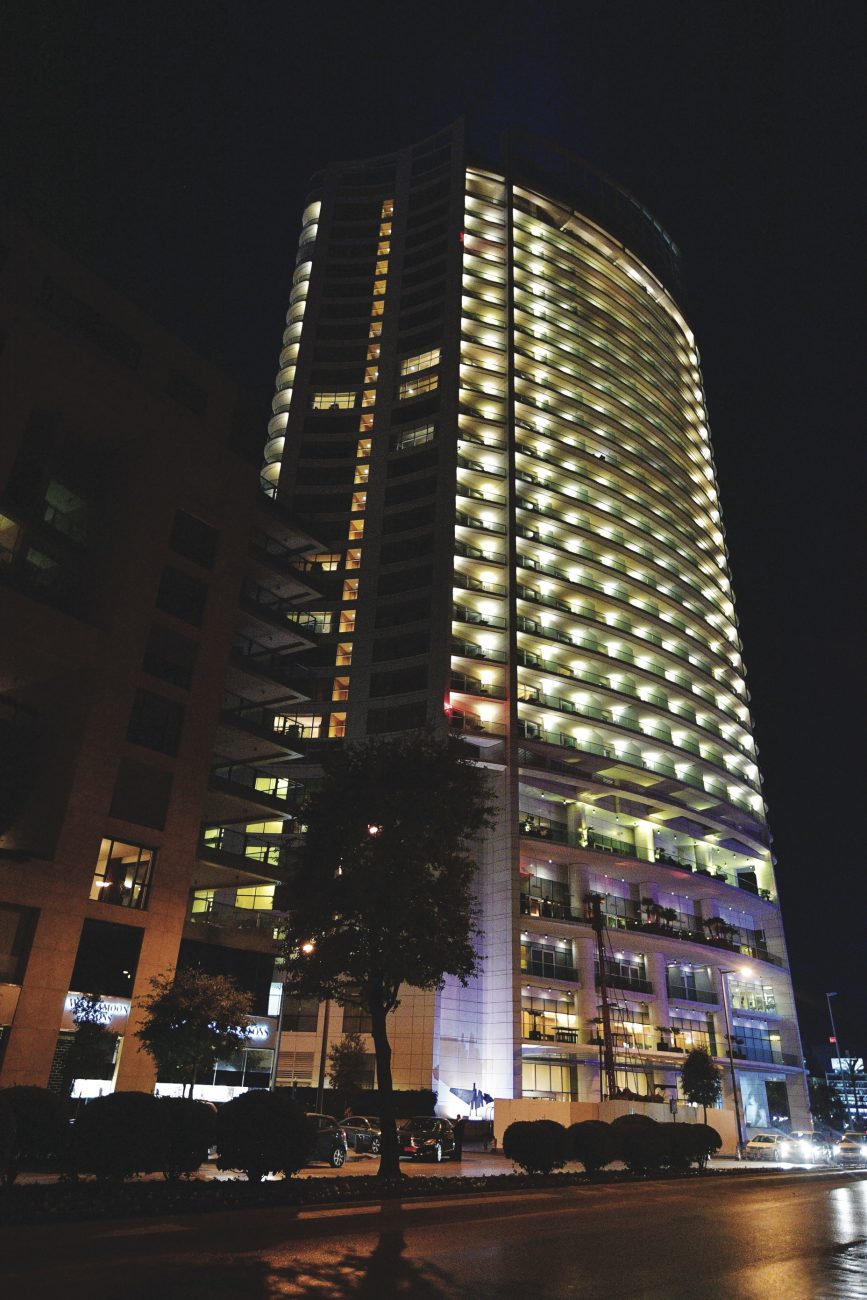
The boost in tourist numbers this year was reflected in the performance of Beirut’s five-star hotels, all of which reported an increase in room occupancy and revenues from 2016, along with an increase in average room rates. “We closed 2016 with 56 percent occupancy, while this year—comparing year-on-year—we’re at 73.4 percent occupancy with a 17 percent increase in average rates. So it was a fantastic year; one of the best in the last six years,” says George Ojeil, general manager of Le Gray, admitting that while 2017 was not as profitable as 2010, which he described as a “record year,” it did come close.

Maha Atieh, director of sales and events at Phoenicia Hotel, says 2017 was better than 2016 in all aspects. Occupancy grew by 23 percent from 2016, an increase she calls significant.

The Four Seasons also had a good year, with General Manager and Regional Vice President Rami Sayess saying that business significantly increased in 2017 compared to previous years. “The year was not just good—it was great. In terms of business performance, 2017 for us as Four Seasons Beirut was the best year since the hotel opened in 2010. It really showed us that this country has a lot of potential,” he says.

Kempinski Summerland Hotel & Resort also reported a successful first year of operation. “In terms of numbers and occupancy, as the first full operating year, we’re happy with our 2017 performance, despite the last two months negatively affecting our occupancy,” says Daniele Vastolo, Kempinski’s general manager. “Our business growth was very steady since the opening, and we have managed to establish, in a very short time, our place in the market, as well as gain a fair share of the business amongst our competitors.”

Why now?

Hotels’ solid performance in 2017 was the result of several factors, and if these trends continue, Lebanon will again be a viable player on the tourism map.

To begin with, the election of President Michel Aoun in October 2016 set a reassuring tone for the tourism sector. “The positive performance of the last quarter of 2016 contributed to a very strong [Q1] 2017. The fact that Lebanon was no longer on the news in a negative way—but instead positive news was being shared—really helped,” says Sayess, explaining that the image of Lebanon portrayed through the media has a significant impact on tourism.

Some hotels also had individual factors contributing to their growth in 2017. Le Gray, for example, inaugurated an expansion—which included 16 additional rooms, a new lobby lounge, a ballroom, and five conference rooms—and welcomed an increase in corporate and social events. “The demand was very good; on the rooms level the demand was very positive, and occupancy did not drop below 80 percent starting from Eid El Fitr [in June] until the first week of November. Banquet and events became busy mid-September,” says Ojeil.

It takes a village

Efforts made by the hospitality sector to diversify the Lebanese tourism market also contributed to its positive performance in 2017.

When the Gulf Cooperation Council (GCC) countries first advised their citizens not to travel to Lebanon in late 2012, the tourism sector suffered from the loss of a major market. But by mid-2015, the sector was compensating for the lack of Gulf tourists by developing alternative tourism markets for Lebanon.

One of these efforts was the Visit Lebanon Forum, held in May 2017. The business-to-business forum was organized by the Ministry of Tourism, in collaboration with members of the hospitality sector, from travel agents to hotels. The event brought 150 international tour operators, event agencies, and tourism corporations to Lebanon for the first time to network with industry specialists and see what the country had to offer.

All of the hotel representatives interviewed for the article said the forum had a positive impact on business, noting in particular a significant increase in visitors from Europe, where the invitees were from, to their properties. “I truly believe there were many people who were curious about and really wanted to come to Lebanon but were waiting for stability and to hear more about the country. So what the Ministry of Tourism did was very beneficial. Visit Lebanon 2017 was a very smart idea driven by the Minister of Tourism, which tried to do the maximum [it could] in a very short period with limited resources,” explains Sayess.

Another contributing factor was the Ministry of Foreign Affairs’ efforts in reaching out to the Lebanese diaspora through the fourth annual Lebanese Diaspora Energy conference held in Beirut in May, and the related events held worldwide in regions with a large Lebanese immigrant population. “The presence of this conference all around the world—and its annual occurrence in Lebanon—encouraged the Lebanese diaspora to come visit Lebanon and discover their roots. We’re projecting that, in 2018, this market will be a big focus for us because, while [expats and the diaspora] are surely affected by the security situation, they are not affected by political tensions or travel bans,” explains the Phoenicia’s Atieh, adding this market’s strength is that guests tend to stay for at least 10 days—often after a long flight—and usually visit with extended family, booking multiple rooms to fit all the cousins.

All hotel management interviewed said the Lebanese diaspora was a major market feeder this year. “This year we had guests from diverse markets such as the Latin American market—a purely leisure market which comes in the summer. North America and Australia were major markets as well,” says Ojeil, adding that the European market was also active this year.

Hotels played a major role in promoting Lebanon overseas as a destination, and their properties as the place to stay. Hotel representatives told Executive about their promotional efforts within their international chain or sister properties, and of their participation in global travel forums. “We have to work this way because, unfortunately, we don’t have a lot of support on the official level—many countries have representative offices all over the world, which we don’t have. So it depends on us and our connections to bring people to Lebanon,” says Atieh.

(Click on image to enlarge)

Alternative tourism rules

The Ministry of Tourism launched a rural tourism strategy in 2015 to develop alternative forms of tourism including ecotourism, enotourism, and gastro-tourism, among others, and the influx of European visitors have been drawn to these new options. “Foreign visitors are increasingly interested in staying in rural and provincial areas, and at L’Hôte Libanais, we actively encourage them to spend part of their stay at guesthouses and boutique hotels out of Beirut,” says Orphée Haddad, founder of L’Hôte Libanais (see guesthouses box).

Beirut five-star hotels say they fully support these alternative tourism trends, explaining that any activities that promote Lebanon as a destination ultimately benefit their hotels as well. “What is important for us is to see the number of visitors to Lebanon going up; for me, the destination is more important than the hotel. The rural tourism trend is making people talk more about Lebanon, and this will help [encourage] more people to come to the country. Out of 1,000 travelers to Beirut, not everybody can afford the Four Seasons, so we just want our fair share,” explains Sayess.

Atieh notes that tourists who come for rural tourism one summer and stay in guesthouses out of Beirut, or budget hotels in Beirut, may end up choosing the Phoenicia or another hotel in Beirut for their next corporate meeting.

Work, work, work, work, work, work

The stability in Lebanon starting in late 2016 brought back markets that had been largely absent for the previous five years.

One such market is corporate travel and the meetings, incentives, conferences, and exhibitions (MICE) segment. “MICE made a good comeback this year: As a hotel of 446 rooms, we need big groups to really fill them, so it’s our traditional main feeder. Pharmaceuticals, regional banks, NGOs, and multinationals were considering Lebanon for their cycle meetings and annual client meetings. All those companies that were going to Dubai, Turkey, and Amman now want something different,” says Atieh, explaining that regional and international conferences and activity relating to oil and gas, or rebuilding Syria, were significant contributors to Phoenicia’s revenues in 2017.     

Le Gray took advantage of its expansion to fully open up to the MICE segment, and Ojeil says it plans to continue doing so while going forward. Sayess also reported an increase in corporate guests, noting that “Beirut is becoming a destination,” with several weddings for regional visitors held at the hotel in 2017. 

(Click on image to enlarge)

Nothing compares to you

GCC nationals began to visit Lebanon again in 2017, and all the hotel management Executive spoke to boasted of an increase in their numbers when compared to 2016. “Regardless of the various roller-coaster events in the country, 2017 was, for us, remarkable: We hosted a wide variety of nationalities with a strong presence from GCC countries, led by Saudi Arabia,” says Kempinski’s Vastolo. Atieh says year-on-year growth from the Saudi market at Phoenicia was 164 percent, and 119 percent from the Kuwaiti market from January to October.

However, these numbers fell short of those of in 2011, before the GCC issued travel warnings for Lebanon. “In 2017, business from the Gulf wasn’t [as strong] as expected, but the European business and other markets that came to Lebanon really compensated for this. Of course, if we can have this, plus the Gulf, it’s even better,” says Sayess.

Although the Lebanese hospitality sector is moving away from its reliance on the Gulf tourism market and toward greater diversification, those in the industry say Gulf nationals will remain a main market for Lebanon. “We’re building for the Lebanese diaspora, but still they’re seasonal travelers and need long vacations to come to Lebanon, while those from the Gulf used to come every weekend to Lebanon, and we used to notice that because our occupancy rates would go up from Wednesday to Saturday and on their holidays, such as the January school break in KSA,” says Atieh.

Sayess says he has high hopes for a return to pre-2011 levels of visitors from the Gulf. “Those from the Gulf are our natural guests because of their proximity to Lebanon. Besides, language is easy for them here, and many even have homes here. They will come back; it is just a matter of when,” he explains.

As unpredictable as tourism in Lebanon

Hariri’s resignation in early November 2017, its retraction, and the subsequent fallout shook the tourism sector. The management Executive spoke to reported cancellations of corporate conferences, as well as individual and group room bookings at their hotels in the two weeks that followed his resignation.

Those interviewed say they will end 2017 on a positive note, noting that activity in December is typically fueled by locals and visiting Lebanese expats. Ojeil says Le Gray is preparing for a festive December and will be hosting international bands and events throughout the month.

What comes next is less certain. “With the new situation and the happenings in Lebanon during these last two months, the year 2018 doesn’t give us the business clarity that we wish to have in order to plan accordingly. This is why, as a hotel, when it comes to business strategy and results, we have taken a very conservative approach, with the hope that the situation in Lebanon will turn positive and help us in proper planning,” says Vastolo.

Ojeil says that with the potential absence of Gulf tourists, the hospitality sector will once again have to focus on the local market. “If we don’t have a [political agreement] soon, we must shift our focus to the local dynamics and try to generate revenue from more local corporate business, weddings, and social events,” he says, adding that Le Gray will also focus on emerging markets such as Latin America, Europe, and Russia.   

Sayess also believes that focusing on the European market is an option. “It may be hard to count on the Gulf market in 2018, but if we have a repeat of 2017, where the European market was coming, we will be fine until [tourists from the Gulf] hopefully come back,” says Sayess.

Once again, the Lebanese tourism sector finds itself at the mercy of politics—and only time will tell if skies will remain blue next year.

[media-credit name=”Ahmad Barclay & Nabila Rahhal” align=”alignright” width=”620″][/media-credit]

[media-credit name=”Ahmad Barclay & Nabila Rahhal” align=”alignright” width=”620″][/media-credit]

December 20, 2017 0 comments
0 FacebookTwitterPinterestEmail
Economics & PolicyWaste Management

Lebanon’s waste: another ongoing saga

by Matt Nash December 20, 2017
written by Matt Nash

The long-term effects of Lebanon’s 2015 waste-management crisis will likely linger for years, and chances that the experience will be relived in the medium-term remain high. Incineration is the approved future for nearly half of Lebanon’s waste, despite the fact that opposition has repeatedly derailed incineration plans in the past and opponents to government waste management plans remain adamantly opposed to incineration.

For nearly eight months in 2015, municipal solid waste (MSW) in Beirut and most of the Mount Lebanon governorate (excluding the Jbeil district) was not being collected. Municipalities in this service zone—where waste management, from collection to treatment and landfilling, was conducted by Sukleen and Sukomi, children of parent company Averda—turned to open dumping of trash in the absence of another solution. It also prompted a considerable increase in waste-burning. When the crisis, which was sparked by the closure of the country’s largest sanitary landfill, abated with the reopening of that landfill, Sukleen retrieved waste generated during the crisis from 59 percent of the municipalities it served, the company told Executive in 2016.

A report published in late 2017 sheds light on just how damaging the waste crisis was in Lebanon. In 2011, the Ministry of Environment commissioned a study to determine how many open waste dumps littered the country. That report’s authors found 504 open MSW dumps, 122 of which were not operational at the time. The ministry updated the report with new field research in 2016. This time around, authors found that the number of operational open MSW dumps has actually decreased, but the total number of MSW dumps climbed 22 percent, while the estimated volumes of trash in all of the country’s open dumps jumped 49 percent to over 5.7 million tons (see waste map below).

The temporary solution

To fix this mess, the government took a number of decisions. First and foremost, in 2016, the state launched tenders to award Averda’s work to new companies. Averda did not charge extraordinarily high prices for its work in Beirut and most of Mount Lebanon; in fact, the company’s rates were in line with World Bank estimates for waste management in a middle-income country. But, unusually, it was given a monopoly on waste management, from collection to treatment and landfilling, largely through no-bid contracts. Waste managers tend to handle only one part of the garbage-treatment cycle in a given market (i.e., only collection, only treatment, or only landfilling).

Horizontal integration allows for maximizing efficiencies and can result in profit margins slightly higher than possible without said integration. The result of the government tenders was a continuation of horizontal integration, but by a different company and on a slightly smaller scale. A joint venture between Lebanon’s Ramco and Turkey’s Altas won a collection contract for the Metn and Kesrouwan districts, formerly the northern part of Averda’s service zone. A joint venture between Lebanon’s Al-Jihad for Commerce and Contracting and Bulgaria’s Soriko won a collection contract covering the Baabda, Chouf, and Aley districts. That joint venture also won contracts to operate and maintain sorting and composting facilities, as well as two offshore landfills, the temporary waste disposal sites that will be replaced by incinerators in four years, as per the last government-approved plan of 2016.

Uncertain future

The city of Beirut is handling its waste alone, Municipality President Jamal Itani told Executive in an October interview. The city already tendered a collection contract (won by Ramco-Altas) that will be implemented in the first quarter of 2018 and plans to tender a waste-incineration plant before the end of 2017, with hopes it will be operational by mid-2020. When Executive spoke with Itani in October, details such as total project cost or financing mechanisms were not discussed. That same year is when the temporary, offshore landfills should reach capacity. This means that in two short years, Lebanon must find the land to build enough incinerators to handle its waste stream or 2015 could be repeated all over again.

[media-credit name=”Ahmad Barclay & Matt Nash” align=”alignright” width=”945″][/media-credit]

December 20, 2017 0 comments
0 FacebookTwitterPinterestEmail
  • 1
  • …
  • 94
  • 95
  • 96
  • 97
  • 98
  • …
  • 691

Latest Cover

About us

Since its first edition emerged on the newsstands in 1999, Executive Magazine has been dedicated to providing its readers with the most up-to-date local and regional business news. Executive is a monthly business magazine that offers readers in-depth analyses on the Lebanese world of commerce, covering all the major sectors – from banking, finance, and insurance to technology, tourism, hospitality, media, and retail.

  • Donate
  • Our Purpose
  • Contact Us

Sign up for our newsletter

    • Facebook
    • Twitter
    • Instagram
    • Linkedin
    • Youtube
    Executive Magazine
    • ISSUES
      • Current Issue
      • Past issues
    • BUSINESS
    • ECONOMICS & POLICY
    • OPINION
    • SPECIAL REPORTS
    • EXECUTIVE TALKS
    • MOVEMENTS
      • Change the image
      • Cannes lions
      • Transparency & accountability
      • ECONOMIC ROADMAP
      • Say No to Corruption
      • The Lebanon media development initiative
      • LPSN Policy Asks
      • Advocating the preservation of deposits
    • JOIN US
      • Join our movement
      • Attend our events
      • Receive updates
      • Connect with us
    • DONATE