• Donate
  • Our Purpose
  • Contact Us
Executive Magazine
  • ISSUES
    • Current Issue
    • Past issues
  • BUSINESS
  • ECONOMICS & POLICY
  • OPINION
  • SPECIAL REPORTS
  • EXECUTIVE TALKS
  • MOVEMENTS
    • Change the image
    • Cannes lions
    • Transparency & accountability
    • ECONOMIC ROADMAP
    • Say No to Corruption
    • The Lebanon media development initiative
    • LPSN Policy Asks
    • Advocating the preservation of deposits
  • JOIN US
    • Join our movement
    • Attend our events
    • Receive updates
    • Connect with us
  • DONATE
CommentHospitality & Tourism

Breaking new grounds

by Christine Assouad January 12, 2018
written by Christine Assouad

Entrepreneurship is about dreaming, and making those dreams come true. This has been my story for the past 20 years.

I started my Dunkin adventure at the age of 20, not thinking for a second that I would still be here 20 years later, still passionate and excited about the brand as if I had opened my first branch yesterday. For me, this is key: I love what we are doing, especially the fact that, with coffee and donuts, we are spreading happiness every morning in 35 branches across Lebanon. Making sure we are putting a smile on people’s faces has been my driving force for the past 20 years.

Semsom is another passion of mine. Inspired by a conversation I had 10 years ago with an American taxi driver who had no idea what Lebanese cuisine could offer, I was determined to spread the joys of our food to the world. I like to think that if he knew what we had achieved since, he would be really proud. We have opened branches in Beirut, Jeddah, Kuwait, Muscat, Dubai, and New York, and the best is yet to come.

I get a lot of questions about my New York experience. It has been very challenging, but very rewarding as well. The main difference with the MENA is that New Yorkers do not know what Lebanese cuisine is.

[pullquote]While our guests knew what hummus, shawarma, and falafel were, they did not associate them with Lebanese cuisine[/pullquote]

We purposefully did not open in areas with a high density of Lebanese because education has been our main mission. One challenge we faced was that while our guests knew what hummus, shawarma, and falafel were, they did not associate them with Lebanese cuisine. Another challenge is that most guests do not like to take risks, especially on their lunch. They have 30 minutes, and they have their favorite spots or numerous options, either on their block or through delivery, to choose from. The risk is not financial, as our meals are around $10, but it is more that they do not want to be disappointed with a meal. So we did a lot of sampling, office tours, and neighborhood parties to introduce them to Semsom because once they taste our hummus—which is made with my grandmother’s recipe—they are hooked and keep coming back: More than 20 percent of our guests visit more than once a week. But, the biggest challenge has been real estate: We had to visit more than 100 locations to finally get a lease. The main reason was that we compete with major global brands such as Pret A Manger, Chipotle, and Starbucks, so it was difficult to get a landlord to give us a space. We had to change all our cooking techniques to be workable at hoodless outlets. We knew going in that the first outlet would be challenging, but it was a way to get our foot in the door.

Overall, it was a challenging two-year learning curve to fully understand how the market worked. We are in a much better place now with three outlets, a pop-up store at Goldman Sachs, great catering deals with major brands, and two more stores in the pipeline. We will be ready as of 2018 to start expanding into other cities.

I have not yet discussed how being a woman factors into all of the above. Perhaps it is because I actually do not label myself a “woman entrepreneur,” but rather, simply, a passionate entrepreneur. It is a challenging world out there for all of us, women and men. The highs and lows are the same for both. And teaching this to young women entrepreneurs through mentoring has been one of the most rewarding experiences for me. I thrive in helping others flourish, in ensuring that they dare to dream, and more importantly, in guiding them to equip themselves with the tools to realize their dreams.

January 12, 2018 0 comments
1 FacebookTwitterPinterestEmail
Hospitality & TourismQ&A

More than one way to cluster

by Nabila Rahhal January 11, 2018
written by Nabila Rahhal

Rabih Saba and Marwan Ayoub are the founders of Venture Group, a development and consulting group known for its hospitality clusters.The group developed Uruguay Street in 2012, followed by The Village Dbayeh and The Backyard Hazmieh. Saba and Ayoub sat down with Executive to discuss their new venture, Restos St. Nicholas, as well as their future plans for developing more diversified clusters.

E   Can you tell our readers more about your newest project, Restos St. Nicholas, in Ashrafieh?

The project was a joint venture with the landlord [Emile Sabbagha], who is the owner of Sabbagha Development, a land and real estate development group. We would say it’s one of our most strategic and harmonious partnerships, not in the least because Emile is an engineer himself, and so was integral in the development process.     

Starting with this partnership, we developed what we like to call a boutique cluster that complements Ashrafieh. We’re answering a particular need: While in the evening people [in the area] usually go out, in the daytime, there is a high presence of commercial spaces like banks and offices, which require such F&B clusters.

E   How does St. Nicholas differ from your other hospitality clusters?

It’s more integrated with its environment. There are three access points on three different streets, so you can walk through it without sitting in any outlet or feeling that you’re entering a cluster.

Our other projects are introverted, but in this one, the facades are on the street, and you can see those dining. So, you see, there is a different concept development process for every cluster and every location we work with.

E    Looking back on your experience in cluster development, what are the lessons you have learned?

We started with F&B because this is our background, and where we come from. But we learned through experience that what we’re doing is much more than just having restaurants and bars; it’s about developing real estate properties, have them make revenue, yet retain their owners. So now we see our kind of cluster development from a different angle, which may not involve restaurants at all.

E   How does the cluster model operate at a wider level?

It works on the economics of proximity and answers a need. For example, we go into a rural city in Lebanon with a certain purchasing power and a certain understanding of a given service, like healthcare, and say that we’ll bring them expertise that they usually commute to the capital to access—for example, a medical center with a couple of floors for children’s healthcare and other types of clinics, with the same value they usually get in the capital.

E    So is that your outlook moving forward in your development projects?

That’s the next thing for us. There’s certain ceiling to what the F&B industry can accommodate in Lebanon. Now, we’re developing F&B clusters in Ramlet Al Baida, Zahle, Beit Mery, Ajaltoun, Saida [Sidon], and Sour [Tyre].

We’ll adapt the clusters based on the areas I mentioned because they are, in some sense, not as mature as the capital—with the exception of Ramlet Al Baida—so we’ll go with brands that are more affordable for the purchasing power of the area, and so on.

But again, there would be a certain ceiling. We’ll be developing these six to seven projects in the coming three years, and then what? We’re into development, so going forward we’ll look at other industries, as we have started doing.

E   So in total, you’ll be developing and managing around nine hospitality clusters? Isn’t that spreading yourself too thin?

On the contrary, our business model works better when there are many projects because it operates on economies of scale and scope. This is where an experience in one cluster would benefit the other.

E   What type of industries are you considering for your future developments?

We’re looking into a couple of concepts now, basically in the line of an office park and healthcare. But again, we’ll only develop value-added conceptual projects. You won’t see Venture Group develop a building with offices—it has to be a full experience: a compound where you get parallel activities, just like what we did with the restaurants.

You can see that our clusters have complementing services which cater to everything but shopping. So they are more community centers than a collection of restaurants or bars.

E    What makes a good location for a cluster from your experience?

It depends on the industry. For F&B, it has to be accessible and visible, and the proximal market or catchment area has to have a need for such a project. There are many factors we consider. We look into the build-up area designated by law, and as such, if it would be feasible financially to have a project.

E    How do you decide which industry would perform best in a certain location?

We consider the local market needs and the maturity of the area. We would not develop an F&B project with places to drink and dine out if there isn’t a lifestyle which suits such outings.

We, as Venture Group, would start with F&B because it’s a sure thing so far that we’ve done. If the F&B is not adequate—either because we already have a project in the area or the area doesn’t need an F&B-focused project—we would be looking at other industries.

E   On what basis do you select your tenants?

It’s product and price related. It depends on which F&B brands are willing and have the investment capacity to penetrate a certain area. They know better than us somehow, those big brands, where they want to go because they are more in touch with the consumers than us, and actually that’s how we test the market. From 10 phone calls, we can almost know whether a location in Zahle is good enough or not because these brands would tell us if they have potential clients in the area or not.

E   Lebanese are notorious for their short attention spans when it comes to F&B locations. How do you keep your existing projects viable, knowing that you celebrated The Village Dbayeh’s two-year anniversary in November 2017?

It’s all based on keeping them “happening.” There are two angles. The first is the normal dynamics of the consumer: You wouldn’t see a Hazmieh resident in The Backyard Hazmieh in August, but you would see many Lebanese expats there instead.

The other angle is how we add value to the project by having a calendar of events. These events keep people coming back. You visit an F&B cluster either because it’s within your community, or because there’s something happening, and that’s why events are important.

E   Last time we spoke, in 2016, you were developing F&B projects in Egypt. Can you update us on these projects and your expansion plans?

We signed projects in Saudi Arabia and Dubai, but our core presence as a company with a full set-up is in Egypt. We have a couple of projects there that we’re already working on, and a couple more in the pipeline. We also have our eyes on growing stable markets at the touristic level, such as Cyprus, but we want to grow organically and not burn ourselves by moving too fast.

January 11, 2018 0 comments
0 FacebookTwitterPinterestEmail
Hospitality & TourismQ&A

Diversifying Lebanon’s tourism

by Nabila Rahhal January 11, 2018
written by Nabila Rahhal

Executive spoke with Pierre Achkar, president of the Lebanese Federation for Tourism Industries and the Lebanese Hotel Association, who says the tourism industry has learned the hard way the dangers of relying on one market.

Although no single market can replace the Gulf tourists, he says, the tourism sector is developing alternative markets and new revenue streams to try and make up for the decreasing number of visitors from the Gulf.

E   Lebanon’s tourism industry has been largely reliant on tourists from the Gulf. Was that still the case in 2017?

For the past 50 years, Lebanon has been reliant on the Gulf market for tourism. And this is normal, whether in Lebanon, Europe, or America: It’s called proximal tourism. France can’t have its touristic boom if its neighbors, Germany and Italy, boycott it, for example. This doesn’t mean that we in Lebanon aren’t developing other markets such as Europe, Russia, and China. But these markets demand stability in Lebanon and need a long-term strategy. Also, some of these countries require infrastructures that don’t exist in Lebanon.

E   Can you give some examples?

I’ll give you an example of my recent trip to Russia with Jean Abboud, the president of the Association of Travel and Tourist Agents [in Lebanon]. We learned that Russian tourists want to stay in beachfront resorts where they can swim in the sea. While we have a few resorts like that in Lebanon, we don’t have enough volume to satisfy a large demand. What is needed today are beach resort hotels in touristic areas such as Beirut, Jounieh, Byblos, and Batroun.

E   What is stopping us from developing such properties?

We, in the hotel industry, are working on this. We would need at least 3,000 rooms on the seashore to create this resort tourism, and the locations of these properties would have to be in well-developed touristic cities with restaurants, nightlife, and [other] activities.

But the problem is that the cost of land is very high in these areas, and the area available to be developed only allows for a small number of rooms. Therefore, it would take an extremely long time to return one’s investment, so it doesn’t make financial sense to develop such projects in the current circumstances—unless one owns the land.

Russia, Germany, Scandinavia, and all those cold countries that want beach tourism constitute a major tourism market, with 700,000 Russians visiting the beaches of Turkey this summer. Capturing this market would allow us to diversify our tourism portfolio and reduce our reliance on tourists from the Gulf—but we have to prepare and be ready for it. Lebanon has to decide if it wants to adjust the building laws to accommodate resorts. This is just one example of the tourism diversifications that we’re working on.

E   What about tourism from other European countries?

The lack of stability in Lebanon is discouraging European travel agents from proposing Lebanon as a destination to their clients.

The past 10 years in Lebanon have been filled with internal turmoil. Many European travel agents invested in promoting Lebanon during this period, and even sold travel packages to groups, only to have an incident happen that would cause cancellations.

When this happened several times, these agents removed Lebanon from their product offerings, and now they would only put it back if we had four to five years of continuous and consistent stability in the country.

Meanwhile, the tourists from the Gulf were still visiting Lebanon despite the internal security situation. This is why we say that Gulf tourists not coming to Lebanon in recent years is a political statement, and not out of fear for their security.

E   But following the election of President Aoun in November 2016, they returned to Lebanon, correct? Many in the sector are saying that 2017 was a good year for tourism overall. 

They started coming back in small numbers, and we did indeed see an increase in the number of Gulf tourists over the previous year—but it was nowhere near the numbers in 2010 and before. This is because the political tension didn’t ease up completely, despite the election of President Aoun.

On the surface, however, the situation looked positive, especially since security in the country has been well controlled over the past three years, thank God, contrary to most countries in the world.

We also have the Lebanese Diaspora Energy initiative, and the events it hosted in the countries [with high levels] of Lebanese immigration. It also organized a large conference, which was held in Beirut and was attended by 2,000 visitors [who will in turn encourage family and friends to visit].The Ministry of Foreign Affairs and Emigrants had a big role to play in activating this Lebanese diaspora market, which has huge tourism potential; the improvement in tourism that we saw in 2017 was thanks, in part, to this market.

Other factors that contributed to a positive outlook in 2017 are the security and the alternative tourism streams that we had developed.

But, the big difference [between these tourists and those from the Gulf] is in the length of stay. When Gulf tourists used to visit Lebanon, their average stay was 10 days. Meanwhile, the average stay of European tourists, for example, is three days. So while this year we had a big volume of tourists, their shorter stays meant less profits and lower room rates [because more empty rooms need to be filled].

This is not to mention that the Gulf tourists spend more than other tourists, and also they tend to invest in Lebanon or in Lebanese F&B concepts, which they take back to their own country. This doesn’t happen with tourists from other parts of the world.   

E   You mentioned alternative tourism. Can you elaborate on what that means, and what you, in the hospitality industry, have been doing to develop this?

When you’re faced with a problem in the country, and your main touristic market is not visiting, then you’re forced to seek alternative forms of tourism to attract different nationalities and markets of tourists.

So, we started developing alternative tourism streams in Lebanon, from medical to religious to beach tourism. This is something we should have begun working on 10 years ago, instead of waiting until now. But today, we’ve become so desperate for business and, as they say, “necessity is the mother of all inventions.”

E   At the end of 2017, because of the political crisis surrounding Prime Minister Saad Hariri, the tourism situation was back to being uncertain. What’s the outlook for 2018?

We have entered a new scenario which is definitely harmful for the hospitality sector. The few thousand Gulf tourists who were visiting Lebanon again will stop doing so.

If you ask me if their visits since the end of 2016 were that impactful to the sector, my answer would be no. Because, as I said earlier, they had not come back to Lebanon in big numbers yet. Also, those who were visiting Lebanon this past year largely had their own homes, so they were not that significant to the hotels.

But what is harmful is what is being circulated in the international media about Prime Minister Hariri and potential armed conflicts in the country [at the time of interview in November 2017]. Everybody has access to news these days, and what they are reading and seeing is discouraging for tourism, especially for European tourists.

The only nationalities which wouldn’t be affected by such news are the Arabs: The situation in Syria, Iraq, and Egypt is worse than Lebanon, and so they would continue to visit Lebanon for vacations. But they are not enough to build a tourism market on.

Up until now, everything is uncertain. If the current crisis is the beginning of a solution, then all will be good for tourism. If it’s going to escalate further, then we’re in trouble—the whole economy will be in trouble, but the first to be affected in tourism are hotels and furnished apartments.

The positive point is that tourism in Lebanon is very resilient, as history has shown: The minute a crisis is resolved, hotels are fully booked the next day.

January 11, 2018 0 comments
0 FacebookTwitterPinterestEmail
F&B OverviewHospitality & Tourism

A mature market

by Nabila Rahhal January 11, 2018
written by Nabila Rahhal

Lebanon’s food and beverage (F&B) industry is finally getting the kudos it deserves: Beirut was named Travel and Leisure Magazine’s Best International City for Food in 2017, and the country has recently been recommended in many global publications for its food, wine, and nightlife.

The country is developing into an F&B haven, as more establishments step out of the box with their culinary concepts. Meanwhile, Lebanon exports  nightlife trends to the region. Despite this, those who work in the industry still have to cope with the challenges of an increasingly competitive and unregulated market, and with consumers’ decreasing purchasing power.

Summer Lovin’

The F&B operators Executive spoke to say summer 2017 was a good one, almost reminiscent of 2010—a record year for many in the industry. “We really felt a difference [compared to the last three years]: Everybody in the sector was working, hotels were fully booked. If it were only the Lebanese expats that had come back for the summer, it would’ve been enough for us. But on top of that, many tourists—especially Kuwaitis—came, too,” says Tony Haber, CEO of Addmind, a Lebanese F&B and nightlife management company, explaining that Lebanon is resilient and quick to rebound from a crisis.

In his bars, TRI Concepts CEO Toni Rizk noticed a relatively new trend. “The good thing about Lebanon this summer is that we got a lot of European tourists who are actually residing in the Gulf but came to Lebanon for a quick getaway, since they find it authentic and have read about its food and nightlife in the press,” he says.

Seasonal escape

Summer is when many take a break from the city’s heat and head to the beach or mountain bars that pop up during this season. The past year saw more such venues mushroom across Lebanon, venturing into new territories or reviving familiar ones such as Qlayaat, Aley, and Jounieh.

Established locations continued to be an attraction this year, with around 10 new F&B venues setting up shop in Broummana, and some, such as Roadster, Starbucks and Zaatar w Zeit, establishing year-round venues. “We opened a seasonal Trumpet Cocktails Food and Tunes in Villa Printania, Broummana, and it was very good exposure and experience. Everybody in the summer wants a change from Beirut and escape to the beach areas or cool mountains. So, if you open a seasonal project that caters to them, you’ll have a good market,” says Rizk, explaining that the cost is relatively high for such projects because rent is calculated over three months, and because salaries are higher in the summer when demand is higher and operators have to do their calculations carefully, or they might end up losing money.

Rabih Fakhreddine, CEO of 7 Management, says that while seasonal outlets come and go, the real business is in Beirut. “The year was good for us, despite many places opening this year. The expansion is happening geographically—with venues opening in different areas across Lebanon—but Beirut will always remain the hub of nightlife, since the main purchasing power is here; it’s the showcase for the country,” he says.

A dog-eat-dog market

New F&B venue openings were not restricted to the summer, and it seemed as though there was a new concept opening every week this year, with almost the same number shutting down. “The rule of F&B in a mature market is that you have many venues that enter the market, but almost an equal number that exit it. This is the case in London and New York, for example. But in Lebanon, it has gone out of control,” says Haber, noting that Beirut’s mature F&B market means that those who want to open new establishments need to know what they are doing in the face of high-quality competition.

While Lebanon is a free market, Rizk says some regulation would benefit the whole sector. “There are so many new outlets that it’s not a healthy market anymore; there needs to be some control in this. It’s the role of the municipality and the Ministry of Tourism to regulate this [market], but there is no coordination or common strategy among them: They wait until residents complain of noise or traffic before they take action. They can control this through increasing the price of [the operating] license, since it is very cheap here,” says Rizk, explaining that F&B in markets abroad is generally regulated through costly licensing.

When the going gets tough

This increased competition, coupled with consumers’ dwindling purchasing power, is making it challenging to operate an F&B outlet in Lebanon. “The market is tighter, the average check is dropping, spending power is getting lower year after year, and the economy is not helping at all. It’s not easy for us operators because we have to maintain a certain level of quality and consistency. All this comes at the expense of our profit margins,” says Fakhreddine.

Rizk also speaks of the projected impact of recent tax increases on the F&B sector. “With the tax increases, expenses will be higher at a time when the purchasing power is even lower: Average salaries are low in Lebanon, and so people will barely have any money to spend. Over the long run, if the situation continues like this, it will affect our sector. It’s too soon for the effects to show now, but they will gradually,” he says.

This situation has led to a market where both differentiation and value are key. Snack and fast food F&B concepts are growing in popularity. At the same time, almost all F&B concepts from the casual diner to the medium-end restaurant to the neighborhood bar are promoting offers and formulas aimed at attracting customers through reduced pricing and value meals.

The Orient expression

When it comes to nightlife, differentiation is often in the entertainment. Theme nights or themed concepts from latin to jazz to oriental have become commonplace. The most enduring trend is the oriental or Lebanese one.

Fakhreddine claims his groups are pioneers when it comes to oriental-themed concepts and were among the first to introduce Arabic songs in their playlists back in 2012 with their Hamra venue February 30. According to him, they were also the first to introduce shisha in nightclubs in their Mar Mikhael summer venue Sayf Feb 30. “Shisha is becoming trendy, and not just in Lebanon—clubs in London and Paris are introducing shisha to their menu. The trend is everywhere, so we capitalized on this while trying to provide a unique experience. It’s the young people who are driving the trend of shisha, which is interesting because it’s usually the older crowds who like it,” he explains, adding that they sell 300 shishas per week in Sayf Feb 30, which is good for a club.

The oriental or Lebanese concept is also reflected in the many Lebanese cuisine cafes that entered the market this year—or expanded into prime locations, such as Falamanki in Raouche. Fakhreddine says his Lebanese café concept, Kahwet Beirut, located in Downtown, has a capacity of 400 and has been full almost every night since its launch in October 2016—allowing him to return his $500,000 investment in less than a year.

A foodie destination

Whether it is poke, ice-cream rolls, oysters, chicken burgers with innovative sauces, lobster rolls, or barbecued pork, Lebanese F&B operators went all-out this year with their adaptations and personal interpretations of global culinary trends.

There is a newfound appreciation among Lebanese consumers for good quality food. “More and more restaurants are now focusing on the food rather than just trying to impress people through the way the restaurant looks. This is because people are developing more of a palate and an understanding of where the food comes from, so there’s more focus on farm-to-table or seasonal food,” says Karl Naim, cofounder and CEO of ChefXChange, an online platform for people to book culinary experiences that also offers menu consultations for restaurants. Naim also founded Lobster Society, a “passion-project” restaurant with a focus on lobster-based dishes.

Riad Abou Lteif, a chef and co-owner of Ferdinand, a neighborhood bar in Hamra, and Meats & Bread Hardcore BBQ, a restaurant in Gemmayzeh, says the Lebanese are quick to adopt trends and have taken an interest in niche fresh food. “When it comes to niche food, people will go to places that cater to their tastes. Those that usually like sushi will go to the new poke places, for example. As long as the product tastes good, [a venue] will survive and have its clientele among the Lebanese,” Abou Lteif says, adding that he believes ramen noodles, soul food, and stews with a twist will be the upcoming food trends in Lebanon. 

Food has even become an important aspect of business in bars, which are not typically known for their mouthwatering cuisine. “There is more of a general interest in food in Lebanon, even in nightlife, and one of our bars, Trumpet, has had an increase in footfall because it’s becoming known for the good food we serve in it,” says TRI Concept’s Rizk.

Operators who used to solely be into nightlife developments are now branching into F&B. Fakhreddine says his positive experience with Kahwet Beirut has encouraged him to venture more into F&B in 2018 through the planned opening of a Japanese restaurant, and a snack concept called El Kbeer.

Meanwhile, Haber says Addmind will also be venturing into F&B, with a twist (see box above). “Nightlife has always been much more developed in Lebanon than other countries. But I think today, the market is changing in that sense, and that’s why we are changing with it and going more into F&B concepts with an element of fun,” he says.

What the future holds

Many of Lebanon’s F&B operators have their eye on markets beyond Lebanon. Naim says that once Lobster Society completes its first year of operation, he will look into taking it to the Gulf.

Some of Fakhreddine’s venues will also be going regional next year. “We tested the market, gathered a database, and made a very solid name and equity for our brand through the Antika nights we used to host in hotel ballrooms in Dubai.  Now is the time to capitalize on that. Although Dubai is in recession, 7 Management’s strategy is to target the mid-sector, and we are investing in a calculated and smart way,” says Fakhreddine, who plans to launch Seven Sisters rooftop in Dubai by the end of January 2018 and Antika Bar in August 2018.

Whether it is through food or nightlife entertainment, Lebanon’s F&B operators continue to find ways to keep their consumers happy despite the obstacles currently in their path—and those that will surely arise in the future. That is the Lebanese way, after all. 

[media-credit name=”Ahmad Barclay & Nabila Rahhal” align=”alignright” width=”945″][/media-credit]

January 11, 2018 0 comments
0 FacebookTwitterPinterestEmail
Big dataEntrepreneurship

Predictive analytics and TMI syndromes

by Thomas Schellen January 11, 2018
written by Thomas Schellen

Too-much-information (TMI) syndrome is a chronic affliction of contemporary existence. The affliction is growing, without an app that can alert us to its threats and update us on the speed with which the disease of big data is invading ever more of our lives. Other IT buzzwords with mystifying potentials are artificial intelligence (AI) and fintech, short for financial technology.

For corporations, the disease of TMI takes the form of an addiction. Everyone seems to need big data, without necessarily having found a way to understand its specificities and implications. But there is a very human coping strategy that says, “If you can’t beat them, join them.” In local entrepreneurship, this maxim manifests itself through startups that catch on to external trends and produce a locally designed version of an app that is expected to benefit from the trend—in this case, the desire to analyze and benefit from big data.

Technical challenges related to big data give rise to extensive research needs and very costly development efforts for data storage and processing solutions on the scale of petabytes and exabytes, the latter term having recently been added to our vocabulary in order to describe a quintillion of bytes. Quintillion is what comes after million, billion, trillion, and quadrillion. Clear? (Not to this writer, sorry). Blessed are those who understand the mathematics needed for managing such numbers, but the business of capturing and managing these information volumes seems to be cut out for larger corporate entities rather than the typical two to four-person startup.

Startups that use big data in Lebanon wisely seem to concern themselves mainly with the more recent interpretation of the term—analyzing previously inaccessible data volumes for predictive analytics of customer behaviors to improve corporate performance in customer responsiveness. As such, big data apps represent the digital workshop of attention merchants and marketing magicians who nudge people to behave in ways that are most profitable to the company they serve, whether it is a manufacturer, distributor, specialized retailer, or large provider of commercial healthcare, insurance, or finance.

Restraints

Besides the requirements for large capacities on the tech side of big data, what also restrains the space for specialized Lebanese startups in the areas of fintech, big data, AI, and Blockchain or cryptocurrencies, are cultural and legal factors such as the conservatism of the financial industry and regulators. In conferences that promote Lebanese investment and economic potential, such as the Lebanese Diaspora Energy (LDE) event in late spring of 2017, fintech was touted as promising field of entrepreneurship, but the numbers of successful independent startups in this area are limited. Digital currencies were—until recently—officially disavowed by the central bank,  and enabling distributed-ledger technology (Blockchain) apparently means that the ecosystem has yet to produce startups with a track record of operations in this realm.

Despite this local reality, there is absolutely no reason to question findings by global consulting groups that show a huge boost in fintech investments from Q1 to Q2 in 2017, reaching a total of $12 billion during that period—$8.6 billion of that was in Q2 alone, according to KPMG, says a December 2017 note by Arabnet. The note also quoted another report, by CB Insights, saying that venture capital (VC) investments in fintech in Q2 of 2017 reached $5.2 billion globally.

The numbers for MENA are next to nothing in comparison. Arabnet cites “over $24 million” in fintech investments in 2017, and refers to just three investment deals that are supposedly fintech-related. They actually add up to $24.96 million, with the largest of these investments being a $20 million injection by undisclosed parties into a three-year-old payment gateway called PayTabs that in an earlier round got funding from Aramco Investment Ventures. The other two fintech startups cited with funding in 2017 are based in Dubai. It is hard to imagine how MENA fintech investments might even have reached 1 percent of global fintech funding over the years, as Arabnet suggested.

When endeavoring to profile startups in areas such as AI, fintech, and big data, Executive was treated to a number of incomplete leads, rumors, and less-than-coherent startup narratives that suggested deficiencies in the communication strategies of these entities and their partners in the ecosystem. Also, this magazine has yet to see impressive numbers of new startups relating to AI or fintech that are not iterations of companies that we profiled in one of our previous annual reviews on Lebanese entrepreneurs—but Executive has to admit that its investigative capacity has been recently somewhat impaired  because of human resource attrition. (A core editorial team member had to invest immense personal efforts into a near-term repatriation to the land of his birth; Matt, thank you for years of good work at Lebanon’s discerning voice of business and entrepreneurship!)

A big data startup sampler

Thus, in this 2017 roundup of entrepreneurship companies, Executive offers profiles of only two startups that are active in the space of big data retail analytics. The companies share a specialization in data collection from in-store environments for the purpose of predictive analytics and marketing optimization. What is striking about their differences, however, is that they represent diametrically opposite professional backgrounds in the small field of big data retail analytics entrepreneurs.

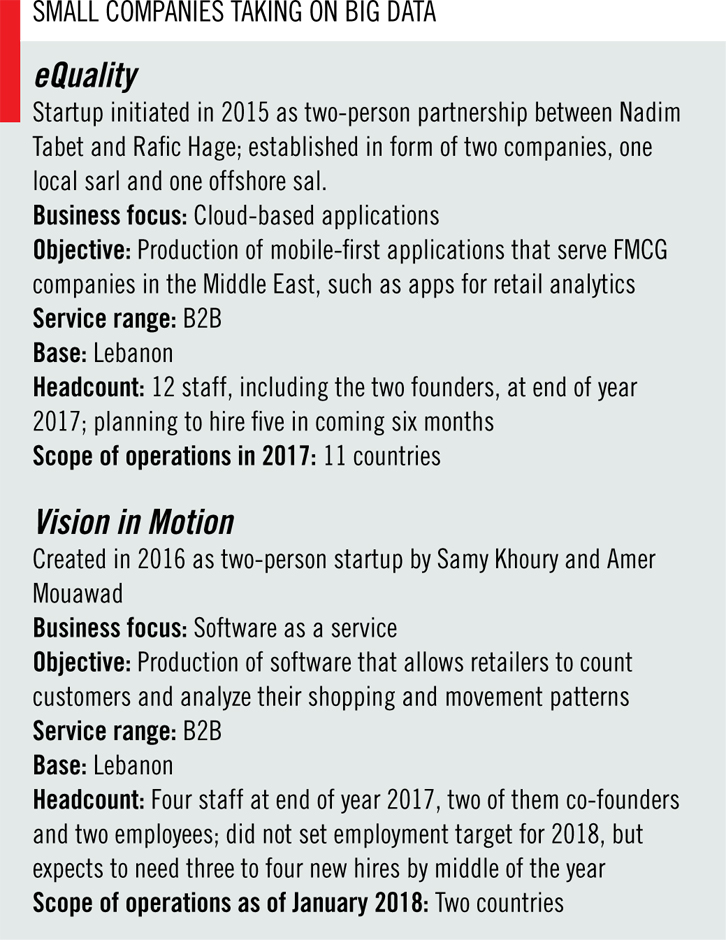
One company, Vision in Motion (ViM), is the brainchild of a fresh entrepreneur with no personal experience managing a fast-moving consumer goods (FMCG) enterprise. In fact, having started the company while still working toward his Lebanese high school baccalaureate, 19-year old Samy Khoury embarked on his venture with no enterprise management experience whatsoever.

He was an achiever that had been recognized in 2015 as young innovator at an international competition in Warsaw, Poland, but his entry into entrepreneurship came in the form of a lucky break. To join the Speed Beirut Digital District (BDD) acceleration program in 2016, he was required to have “a technical co-founder,” Khoury tells Executive. Not having found the required partner until the day before the application deadline, Khoury called a friend who owns a small grocery in Ashrafieh.  As Khoury tells his startup tale, the friend answered, “I don’t know any programmers,” but a customer in her store said, “Yes, you know a programmer. He’s your friend from school.” This chance connection à la Libanaise led to a phone call between Khoury and this programmer, who established their partnership in the last minute to qualify for joining the Speed program.

The other company, eQuality, tilts to the other extreme in terms of the typical startup founder’s age and professional track record. Nadim Tabet incorporated the company in his mid-50s, and already had 30 years of experience in the FMCG game, 16 of them as a management consultant. “I’m a management consultant by profession, and [I] specialized in the FMCG business, where I worked with Procter & Gamble and managed companies that relate to the FMCG business,” he tells Executive.

His professional journey to set up eQuality included stations in the United States and Dubai before establishing himself in Lebanon. Here, Tabet met his co-founder, a computer engineer named Rafic Hage, through a work relationship. Hage, 37 years old and seasoned as founder of several IT startups, explains how he developed his passion to serve an industry with lack of technology in specific niche areas.

“I was attracted to FMCG because it was new to me. I have been in IT ever since I graduated and have started three companies, which means I was always in this scope of responsibility such as finding resources, hiring resources, setting up plans, scoping projects, and leading developments from scoping to delivery. What was interesting in the partnership with Nadim in particular was to do IT solutions for businesses within a specific vertical,” Hage tells Executive.

`ViM’s path in entrepreneurship last year involved three months of participation in the Speed@BDD program, and one month immersed in Silicon Valley upon invitation through Speed. The accelerator injected $30,000 cash and provided other benefits in exchange for a 10 percent equity stake in ViM. This year, the team won a number of competitions at Arabnet in Beirut and Dubai, coming to an agreement there with PepsiCo under which ViM will implement a test project in one or two Dubai supermarkets from January 2018, with an eye to expanding the relationship if this test goes well.

eQuality progressed on its own financial power and did not participate in any incubation or acceleration program. Tabet says that the startup is oriented to the sophisticated end of the market, and its trilingual app comes with upmarket flair when compared with competitors. He is exploring the use of image-recognition software for future applications, but describes the technology in the market as currently too costly and not yet mature. Hage says eQuality is geared toward using artificial intelligence: “In any project involving AI, you start with collecting data. You need a large set of information for you to mine,” he explains. “For the past two-and-a-half years, our customers have been collecting data, and now we have enough data to start coming up with the proper analytics and predictive analysis.”

According to Tabet, since eQuality entered business with a target of serving large corporate customers, 25 client companies in the FMCG space signed on for its first product, a “merchandising intelligence application.” Under the name eye2, it offers FMCG distributors and suppliers a new way to assess their products’ merchandising status inside hypermarket store environments. While data is entered through interconnected devices, processed in the cloud, and immediately displayed on a dashboard, data-collection and entry methods are not the core strength that eQuality is focused on. Rather, the type of data collected and its fast translation into percentage-share visuals displayed on a dashboard are what Tabet describes as particular strengths of eye2. He claims that the dollar turnover of his company is already in “the high six digits,” and puts seven digits to the value of company, though he has not commissioned a formal valuation exercise. “Today, we are still self-financed, but we are considering different options [of future investments from VCs or strategic partners], because we want to expand dramatically,” he says.   

Neither company is yet at the stage of offering predictive analytics, but they are working to develop the capacity, with some built-in assurances of customer anonymity. According to Khoury, the English-language ViM is a comparatively affordable solution, because it uses data from security cameras that are already installed in stores. “The data we provide our customers is aggregate data, not specific data,” he says, so ViM could not be employed to identify individual customers and build personal behavior profiles. “We don’t show faces, we don’t show anything [individual]. It is basically a picture of an empty shop with a heat map on top of it. People are already filmed for security purposes and there is no invasion of privacy here,” he argues.

Despite of this limitation by design, ViM rose in less than two years to an estimated corporate worth in the millions of dollars. Khoury says ViM recently did a valuation exercise with a person in the retail industry who was interested in buying a stake or even all of the startup. “Value was estimated to be anywhere between $2 million and $4 million,” he says.

Both startup examples imply that Lebanon-based entrepreneurs can use the future of big data to aim for considerable business success, even if they begin their journeys to big data and predictive analytics while still working on the requisite capabilities. While neither is currently involved in formal valuation exercises with potential investors, both see themselves as million-dollar enterprises in year three after launch, and both are aggressively optimistic about their future. But beyond this sample, what will be the role of big data for local companies?

Some critical notes on big data

The term “big data” has been in use for 20 years and has been defined by three sets of challenges: One challenge is the technical side, where information is accumulating faster. It is today faster than it ever was before, faster and more varied than predicted even during the past decade of fast data growth. In the future, the accumulation of data in terms of volume, velocity, and variety will be greater and faster still.

The second challenge is what to do with the growing resource of raw information: How to analyze it correctly and put the insights to use, and how to protect people from exploitation of their data that is able to overpower them through manipulation or destruction of what used to be their privacy.

The third challenge is the gap between data reality and human assumption, the propensity of humans to think that quantity affects quality. This is what has been called a mythology problem with big data.

New information is supplied much faster than it can be consumed. That is true for unidirectional outbound media (such as this magazine), for bidirectional communication (all verbal and nonverbal chats on mutual media such as communication channels and social networks), and essentially also unidirectional inbound information channels where data from cameras equipped with facial recognition software and computerized communication-monitoring tools amass data volumes that are preserved and remain indefinitely accessible.

In the distributed non-collective data processing sphere of the past few millennia, also known as human memory, the oversupply of such data was a given, and one can blindly assert that it was growing permanently. But it was not a problem because the data from human eyes and ears went no farther than the individual brain, and was limited by a mix of individual data-handling limits (a.k.a. cognitive capacity) and forgetfulness—a blessing, after all.

To tackle the mythological assumption that big data is going to change everything beyond imagination, an ancient paradox is helpful. The sentence, “all Cretans lie,” has been used to confuse unwary students of logic for at least a century. But it is much older. Antiquity attributed the phrase “Cretans are always liars, evil brutes, lazy gluttons” to a pre-Socratic thinker from Crete by name of Epimedes. This dude lived—exact timing is as unknown as the real number of expatriate Lebanese shoppers globally—some five, six or seven centuries before Christ. (The before-Christ part is sure, because the semantic paradox of a Cretan saying that all Cretans lie was quoted by St. Paul in a moralizing tweet to a follower residing on the very island). 

Apparently, disinformation is not a new idea at all. Even in the book of psalms, one statement says, “All men lie.” So what is new about big data when the best thing that an economist-cum-data analyst can come up with after several years on the job at Google, sifting through the world’s largest available data stacks, is a 2017 book titled, “Everybody Lies”? 

This is not a book review, so issues such as the leading body-perception concerns, unexpected racial stereotypes, origins of media biases, the success of advertising, and questions asked about internet porn by male and female Google users will, unlike in the book by Seth Stephens-Davidowitz, not be addressed.

There is much reason to believe that future influencers will be data-savvier than their contemporaries, and Stephens-Davidowitz concludes that “the future of data analysis is bright,” asserting his belief that every future influencer—every coming Kinsey, Foucault, Freud, Marx, and Salk—is likely to be a data analyst. But so were intellectual influencers since antiquity, from Archimedes and Plato to the original Sigmund Freud and Karl Marx, and certainly also the pre-Google economic shakers and thinkers, from Astor and Vanderbilt to Carnegie, the Hearst and the Koch families, and from Adam Smith to Keynes and Greenspan.

Early in his book, Stephens-Davidowitz concedes that a major reason for the value of Google searches is not so much the large quantity of mined data, but the honesty of people who undertake them, thinking they search unobserved. But will humans adapt their behavior in an age when big data analytics is known to everybody?

One can only wonder when the big data analytics providers for retailers will spot the first data anomalies caused by GPS-tracked legions of pretend-customers, dispatched by interested parties to roam supermarket aisles with the explicit mission of influencing the data that are being collected.

Big data and AI together will improve aspects of economies. But what one should be prepared for, especially anyone presently under 70, is that with the near-term confluence of advanced surveillance technology, and a new intensity of data analytics, the tiny niche of individual human freedom will be even harder to claim than ever.

January 11, 2018 0 comments
0 FacebookTwitterPinterestEmail
Industry & Agriculture

Agriculture & industry

by Ahmad Barclay & Nabila Rahhal January 11, 2018
written by Ahmad Barclay & Nabila Rahhal

[media-credit name=”Ahmad Barclay & Nabila Rahhal” align=”alignright” width=”620″][/media-credit]

[media-credit name=”Ahmad Barclay & Nabila Rahhal” align=”alignright” width=”621″][/media-credit]

[media-credit name=”Ahmad Barclay & Nabila Rahhal” align=”alignright” width=”620″][/media-credit]

[media-credit name=”Ahmad Barclay & Nabila Rahhal” align=”alignright” width=”621″][/media-credit]

[media-credit name=”Ahmad Barclay & Nabila Rahhal” align=”alignright” width=”620″][/media-credit]

[media-credit name=”Ahmad Barclay & Nabila Rahhal” align=”alignright” width=”945″][/media-credit]

January 11, 2018 0 comments
0 FacebookTwitterPinterestEmail
CommentIndustry & Agriculture

TAQA is a living product

by Soumaya Merhi January 10, 2018
written by Soumaya Merhi

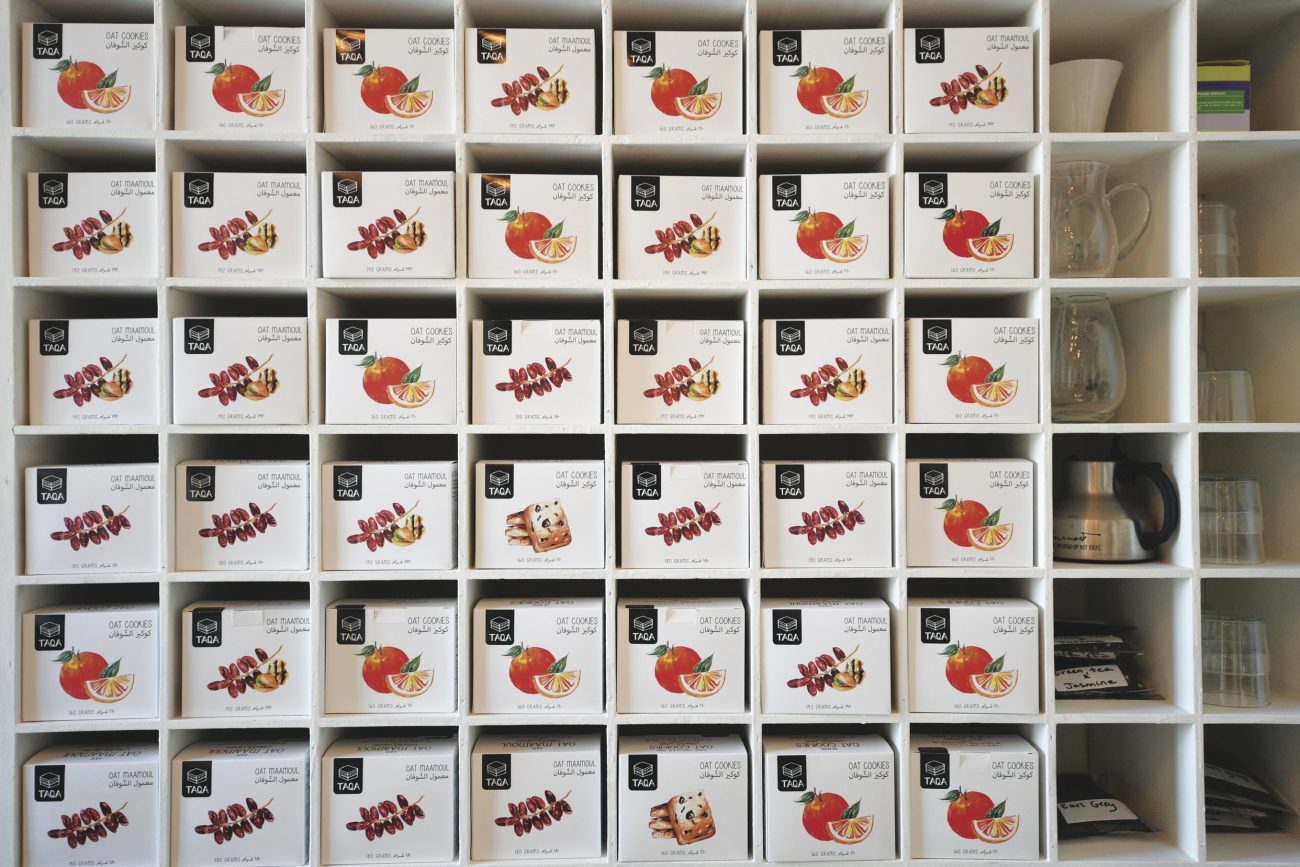
TAQA is a Tripoli-based wholesale bakery that produces and manufactures health snacks, such as cookies, maamoul, and dried fruit and nut bars. TAQA’s snacks are all wheat-free, GMO-free, palm oil-free, and vegan. We started out as an artisanal bakery called Bread Basket Square and progressively transitioned into a manufacturing facility with automated lines.

A business plan came eventually, but we certainly did not start out with one. Selling our cookies would prove to be a struggle, one that provoked self-ambition and discovery. It started with a farmer’s market, and a hunger for a food revolution. I wanted to give meaning back to a consumer good. I wanted the product to be transparent: What you see is what you get.

Today, only 10 companies control almost every large F&B brand in the world; these behemoths are dictating your diets and nutritional intakes with colorful packaging that is overwhelming on supermarket shelves.

TAQA is part of something different, and harder to achieve. As food becomes more specialized, branding is taking center stage. However, the more specialized food there is, the more costly supply chains will become; hence, mega food manufacturing facilities are on the decline. The more specific the food industry aspires to become, the tighter and leaner the manufacturing map will have to be.

Initiation to business

Two years ago, a normal day in my life included driving from Tripoli to anywhere from Barbir, Beit Mery, Corniche El Mazraa, Zouk Mosbeh, or Batroun, and back to Tripoli. Zapping morning radio shows, quick, stolen hellos, and senseless hours spent in traffic were my first experiences into distributing my products in the Lebanese market.

With sales routing came a sharpened mind and fine tuned observation. A quality, honest health snack at an affordable price was needed in Lebanon. With a focus on a fair and profitable business model and a three-year track record of proof of concept, I was ready to launch a proper manufacturing facility. Over time, the refined business pitch started bringing in funds, which facilitated my head-first dive into transitioning the product from niche market share to modern trade.

Help from friends and family, supportive suppliers, committed investors, and loyal customers are all sound pillars of TAQA. My initiation to a streamlined ‘business’ was the daunting task of proving myself.

Initiation to manufacturing

Running a manufacturing facility is about confidence and modesty. It is about balancing ambitions with the market’s potential, and relentlessly believing that the product will succeed.

Shifting from an artisan bakery to a certified ISO 22000:2005 manufacturing facility required no less than a culture shock. Implementing a food management system, training, procedures, regulations, traceability, and recruiting a dedicated team is an indefinite process constantly evolving. 

I believe skilled workers and simplified supply chains will eventually be the driving forces of manufacturing and, in the future, will replace outsourcing and low-cost mass labor. Small tweaks in our processing lines helped me and my team reach optimal scalability. As a manufacturing facility, TAQA is still on a learning curve and has much to overcome, but what is important is that procedures are in place to be able to absorb and adapt quickly to new changes.

TAQA as a living brand

I tend to define TAQA as more than a product: It is how we think. and how we share our product. Any output from the factory—be it a product or a photo on social media—is a true and genuine reflection of what we do. We are not a fan of generic material, packaging, or products. TAQA has dedicated itself as a brand to support many different communities in Lebanon, notably the athletic and outdoors community. I want TAQA to deliver an honest message about lifestyle and healthy snacking.

This has been a rollercoaster of a journey, with many milestones achieved along the way.  Having to tap into distinctively varied skillsets like sales and marketing, distribution, and production management; to getting deep into the nitty-gritty details of paperwork, pitching to investors, and acquiring a food-management system; and perfecting soft skills for customer service, as well as hiring and training employees have made this journey the most exhilarating one that renders you humble and appreciative of anyone that cares to do something of meaning in the Lebanese market place. 

January 10, 2018 0 comments
0 FacebookTwitterPinterestEmail
Industry & AgricultureQ&A

Food for thought

by Nabila Rahhal January 10, 2018
written by Nabila Rahhal

Executive sat with Mounir Bissat, secretary of Syndicate of Lebanese Food Industries, to talk about the challenges and opportunities in front of the agro-industry subsector experienced in 2017. 

E   What are the main challenges facing the industry sector in general, and the agro-industry specifically, in Lebanon?

The first challenge is instability in the country. The current situation [concerning Prime Minister Saad Hariri] is worrisome. Almost 60 percent of our exports are to Arab countries, so anything that endangers this relationship will backfire very badly on the industry sector as a whole and on the food subsector specifically.

In the Arab markets, the “made in Lebanon” [brand] has a premium for which consumers pay good money. The Lebanese agro-industry in these markets is well developed, because some of the big Lebanese companies have been present there for over 30 years, and put in a lot of effort and investment to establish their brands and presence in retail spaces in a professional manner.

It would be a pity to lose this work and these markets over the turbulence that is occurring now.

E   Have exports to Arab markets managed to overcome the hurdle of road closures due to the conflict in Syria?

Yes, we were able to adapt rather quickly and export through sea instead of land. The impact at first was on the pipelining, because it used to take up to 15 days to reach Oman, which is the farthest destination [we export to] by land, while today, by ship, it takes a month or 35 days.

This is not to [mention] that the paperwork and formalities at land borders are faster and more efficient than at seaports.

This all negatively affected the sector, but we persevered and continued. But until when? This is a big question mark, especially if the Arab markets are further affected.

E   Let us go back to the challenges facing the sector.

A challenge the industry sector suffers from—regardless of the political situation—is overhead and operational costs, which are very high in comparison to our competitors in the region.

Many of the traditional foods we produce are also made in other Arab countries such as Syria, Jordan, Egypt, Turkey, and Saudi Arabia. These countries have an advantage over us in that the industry sector receives government support and subsidies, which we don’t have in Lebanon.

The high cost of energy and of labor affect the competitive advantage of Lebanese exports in these countries.

If we want to talk about challenges in the agro-industry specifically, I think it is high time to invest in research and development (R&D).

E   Why are we not doing so already?

Eighty percent of companies in the agro-industry are [small and medium enterprises], and family businesses, so most of them to do not even have a R&D department; they cannot afford to invest in one.

It is true that Lebanon is excelling in developing high-quality food products, but to innovate on a traditional recipe or develop a new one is not easy.

E    But recently, we have seen more entrepreneurs in this sector modernizing traditional recipes or innovating them.

It’s happening at a small scale, but not at the industry level.

This is an essential need for the agro-industry to continue on the right path. We should invest in new products, or variations of the existing ones.

E   Does this innovation have to be done through an R&D department? Or are there other ways?

We can outsource it, because many universities in Lebanon have the research centers to do this. But up until now, we have not been able to formulate a link between academia and private food companies.

E    Why not?

Because it is expensive, and we cannot cover the costs if there are no subsidies or support. For example, the money companies spend on R&D is not tax deductible.

Also, the mindset of academia in Lebanon is not business-oriented, [where] internationally, the success of the food industry is due to collaboration between it and the research done in universities.   

E   What are the strengths of the Lebanese agro-industry?

The Lebanese agro-industry is export-oriented, which helps us survive the challenges mentioned. Regardless of the local economic situation, the market in Lebanon is small and exporting is natural for growth anyway.

What helps the export market is that the Lebanese diaspora and expats are spread around the globe, and they are the main consumers of our food products. Wherever expats are, they tend to establish Lebanese cuisine restaurants, and this automatically opens up markets for our food products.

The agro-industry is the subsector with the most diversification and diversification in export destinations, with around 70 destinations across the globe.

E   But doesn’t being consumed mainly by Lebanese abroad limit the market for our agro-industry?

Unfortunately, yes. Lebanese food across the world is still labeled as ethnic food and is mainly consumed by Lebanese and Arabs. Europeans and Russians who try Lebanese food in a restaurant love it, but they rarely buy Lebanese food products from a supermarket.

This is a challenge where R&D and marketing could play a role [in finding a solution]. Let’s take hummus bil tahini, which is an estimated $1 million market in the USA; Lebanon has less than 0.1 percent share of this market.

The role of R&D here would be marketing Lebanese products in a manner resembling the way that hummus has been marketed and exploited by other countries [that produce it].

It may be too late for Lebanon and hummus, but we could, for example, promote pomegranate molasses as a healthy salad dressing. If this is something we can achieve, it would be a great success story for the Lebanese agro-industry.

E   Who would be responsible for doing so?

It should be a joint effort with a team leader. The private sector has the dynamics for that but lacks the means. A task force should be created which includes research centers, agro industrialists, and the concerned ministries with a team leader.

But the question is: Who will the team leader be? The public sector will not accept that a member of the private sector be the leader, and the private sector’s confidence in the public sector is low.

E   Is the agro-industry reaching out to new markets?

The subsector achieves growth because the market is increasing locally and internationally, due to a trend toward Middle Eastern cuisine being perceived as healthy. This creates more demand for Lebanese food products.

However, as I said earlier, if we want to achieve real growth in the export markets, we have to go mainstream and not remain in the ethnic market. If we stay in the ethnic market, we will continue to grow in modest percentages. The international market has already become saturated and the foods we produce in Lebanon are now being produced internationally.We are competitive on quality and are well established in the international markets we are present in, but other countries compete with us on price.

E   What can be done to support this sector?

It’s high time the government develops an economic strategy and decides if they want Lebanon’s economy to be built on services or the banking sector or something else. Logically, all the pillars of the economy should be almost equally developed.

After the end of the [2006] war, factories that were not damaged resumed work the next day, while it took up to a year for tourism and services to recover. I am not saying that industry will contribute 60 percent to GDP, but if we are supported to reach 30 percent, it would solve many of the problems the government is suffering from today, such as unemployment, [low] foreign direct investment, [an unfavorable] trade balance, and [meager] cash flow.

Also, there should be some subsidies for the cost of production—especially the cost of energy. Factories in Lebanon buy fuel derivatives at market price, while all neighboring countries have subsidized rates. So you can imagine the difference in production costs. The government could also support the agro-industry with transportation costs and through legislation facilitating our work and reducing our expenses.     

January 10, 2018 0 comments
0 FacebookTwitterPinterestEmail
Industry & AgricultureWine Industry

Of reds, whites, and rosé

by Nabila Rahhal January 10, 2018
written by Nabila Rahhal

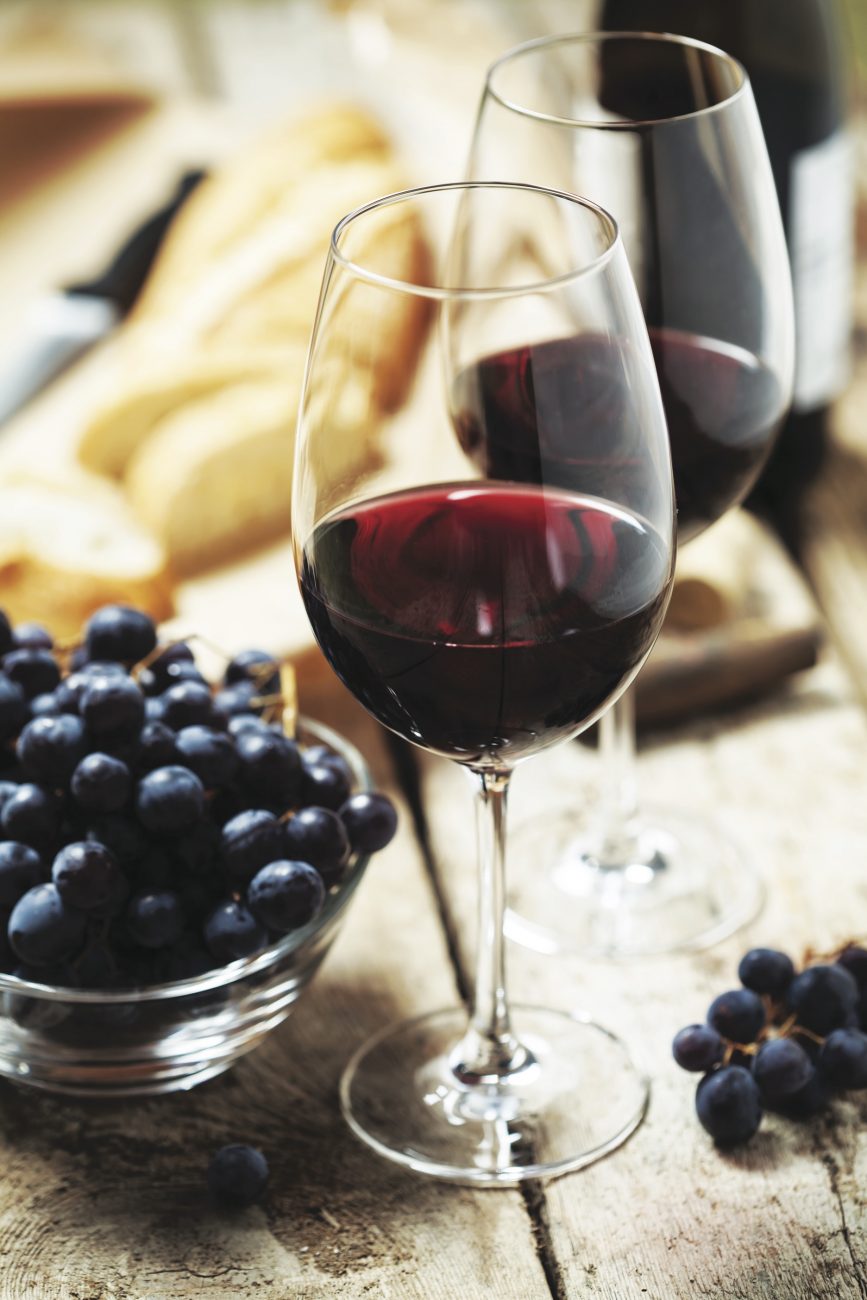
There is a lot to raise a glass to when it comes to Lebanese wine. 2017 saw several new wineries entering the market, with a few more slated to launch their first vintage in 2018, raising the total number of wineries to 49.

Demand for Lebanese wine has grown internationally as well, with over 40 countries indulging in it across the globe, as opposed to a decade or so ago. The popularity of local wines among Lebanese consumers is also rising as the enotourism trend has helped educate them about wine.

All the winery owners and managers that Executive spoke to said they had experienced growth in sales, markets, and production size. “Our market share grew to 40 percent—meaning 1.8 to 2 million bottles. Our premium portfolio is growing, and we’re appealing to more consumers,” says Dikran Ghazal, the general manager of Château Ksara.

Rise to fame

Exporting a portion of production is the natural path for agro-industrialists in a market as small as Lebanon. Lebanon has been doing so ever since the Phoenicians were shipping their wine off to nearby Mediterranean cities, but also more recently, since the late Serge Hochar took Château Musar to London during the Lebanese Civil War.

Wineries in Lebanon formed the Union Vinicole du Liban (UVL) in 1997, with the sole objective of “consolidating and building on Lebanon’s image as a wine producing country by highlighting its proud history and promoting its potential.”

As more wineries entered the market, it was understood that the only way to acheive growth was for  wineries to work together on promoting Lebanon as a winemaking country. As such, starting six years ago, the UVL began to aggressively promote Lebanese wine abroad through generic campaigns—such as the one done in the UK in 2012—and participation in international wine fairs, such as Megavino in Brussels and ProWein in Germany, under one pavilion named “Wines of Lebanon.”

The public sector has played its part in promoting Lebanese wine abroad, through the Ministry of Agriculture’s organization of the annual Lebanese Wine Day—the first edition of which was held in Paris in 2013. The Chamber of Commerce, Industry, and Agriculture of Beirut and Mount Lebanon also contributes an annual sum to the UVL, which supports its budget for international fairs and helps the smaller wineries who do not have a budget participate in these foreign exhibitions.

Sipping on the fruits of success

These efforts have paid off. “For five to six years, we’ve been [making] lots of noise everywhere, and since today, people are bored of drinking the same [types of] wine, they find Lebanese wine exciting. Also, Mediterranean food and wine is now a global trend, and this helps us,” explains Faouzi Issa, winemaker and co-owner of Domaines des Tourelles, adding that his wine entered new markets in 2017, including Malta, Côte d’Ivoire, the Dominican Republic, and Réunion.

In agreement, Ghazal says there are a number of reasons why Lebanese wine is getting the international recognition it deserves. “There have been efforts made by the wineries’ export teams, and over the years, these pay off. On the other hand, the quality of Lebanese wine is getting better every year, due to the climate and manipulation of the soil and [developments in] how we store the wine and harvest the grapes. Plus, there are more activities happening in key markets abroad, such as trade events and wine tastings, which [spread] the word. There is curiosity [among international consumers] for wines of the new world, and Lebanon has a history with wine which big companies like us work on developing,” says Ghazal, mentioning China as a booming new market this year for Château Ksara.

Some producers feel that the international consumption of Lebanese wine would further increase if there was additional government support or subsidies, like the support available in wine producing countries like Argentina, South Africa, or Chile. “The market is huge outside Lebanon: If we just add 20 percent to the notoriety of Lebanese wine abroad, we would all run out of wine. Our market share is increasing, but we’re moving in baby steps because we need government support; private investment alone cannot create international recognition,” says Hady Kahale, general manager of Ixsir, explaining that for Lebanese wine to truly succeed globally, it needs to build a name for itself out of Lebanese restaurants and ethnic markets.

All in a day’s work

Growing exports takes more than shipping the wines off in crates, says Ghazal. “You have to follow up and build relationships, and it’s quite an investment of time and money. Thirty to 35 percent of our budget goes to exports, and there are less margins in it, since prices are competitive internationally,” says Ghazal.

“It takes more effort than the local market because you need to travel and promote the wine in order to support your distributors,” explains Edouard Kosremelli, chairman and CEO of Château Kefraya, adding that the winery exports 40 percent of its production abroad.

To Issa, penetrating new markets where Lebanese wine is relatively unknown, such as the US, requires an investment of time and energy. “It’s been three years that I have been investing in the US market, and today, my wine is in 15 states, including New York. It requires a lot of effort and mobility, though, since you have to be there personally and consistently. They don’t know what Lebanon is, so you need to introduce the country, and what you’re doing, and then it snowballs,” he says, comparing it to the UK market, where Lebanese wine is already established and where, he says, Domaines des Tourelles is highly appreciated.

Nothing like home

Although Lebanese wine is widely acclaimed internationally, the same cannot easily be said for its popularity here at home. Lebanese consume two liters of wine per capita, according to those interviewed for this article, which is significantly lower, than, for example, the US, where consumption is 13 liters per capita.

Of those domestic consumers, many prefer foreign wine, assuming it is of better quality than the Lebanese—which frustrates Lebanese winemakers. “It’s unfair to say that imported wine is better than local wine because our grape varietals are largely French, our terrior is as good as Europe, if not better, and we have the right climate. The local market should appreciate this,” says Ghazal.

Kosremelli notes that if Lebanese wine was not of high-quality, it would not be so successful in export markets. “The more the consumer in Lebanon becomes wine-educated, the more they will see and understand that these are misconceptions. Our success with exports helps with the Lebanese market, since local consumers see Lebanese wines being promoted abroad. Also, the recent increase in wineries also helps increase consumption because it evokes curiosity,” he says.

To Ixsir’s Kahale, a generic campaign is needed to promote Lebanese wine locally. “The way forward is really working on the image of wine, both locally and abroad. I’m one of those who believe a generic campaign in Lebanon should be done, although it needs a time commitment from us. We have great wine, but people have preconceived notions about ‘made in Lebanon’ not being so good, which will take time to change. People have to know: We have some of the best wines in the world,” he insists.

Joe Assaad Touma, winemaker at Château  St Thomas, says the UVL is considering such a generic campaign. “As UVL, one of our aims is to promote Lebanese wine, not only abroad, but in Lebanon itself. We really have great wines that can compete with the imported wines that exist in Lebanon. We’re planning to promote this more as a generic campaign. At the same time, we try to encourage all restaurants to have at least half of their wine list be Lebanese. We can see this is improving, but still, there are [a] few restaurants that don’t have any Lebanese wine on their list, which is shameful,” he says.

Touring wines

The increasing popularity of enotourism in Lebanon goes a long way into promoting its wines. “Wine is about a way of life, and you have to meet the people who are making the wine to understand it—no wine producing region is successful without enotourism. When people visit our wineries, they see the level of sophistication we have in them, and they understand much more about wine. When they understand wine, they will consume Lebanese wine happily,” explains Kahale, noting that visits to Ixsir’s winery increased by 20 percent in 2017.

Kosremelli says Château Kefraya had a 7 to 10 percent increase in the number of visitors to its winery, explaining that more foreign visitors are now interested in such experiences and ask their tour operators to help them book enotourism excursions.

Château Ksara benefits from its 2000-year-old cave in attracting visitors who are interested in both history and wine. “We expect to close the year at 80,000 visitors. This is the case for two reasons: the brand is 160 years old and has a solid reputation where trust has been built, and no one has a natural cave like ours in Lebanon or in the world. Once people visit the winery, they almost always buy [our wines] because they see the story behind it,” says Ghazal, adding that their sales in the winery shop have increased by 20 percent in 2017.

Having a winery restaurant not only complements the enotourism experience, it also increases sales. “One year into our opening, Château  Khoury restaurant became and still is the biggest client for my wine. Most of the people who come here drink wine with their meal, and for us, this is the best way to promote our wine. Tourists who come to eat here buy wine from our winery shop and Lebanese do so during the Christmas period as gifts,” says Jean Paul Khoury, winemaker and co-owner at Château Khoury.

Wine-related activities such as grape harvesting also help consumers experience winemaking in an enjoyable way. “We have the harvest event that we have been doing since 2000. It’s getting more popular, and lots of people come on an annual basis. This year, we had around 200 people, mainly families. The idea behind it is to educate people on what it takes to produce a bottle of wine. People want to experience this and get involved in the process of winemaking. When they leave here, they appreciate more every glass of wine they drink because they know the labor that went went into it,” says Château St. Thomas’ Touma.

Lebanon clearly has the potential to take its place among the best global wine producing countries slowly, but surely, and with more governmental support. If anything is worth raising a glass to, that would surely be it. 

[media-credit name=”Ahmad Barclay & Nabila Rahhal” align=”alignright” width=”945″][/media-credit]

January 10, 2018 0 comments
0 FacebookTwitterPinterestEmail
Overview

Improving on tradition

by Nabila Rahhal January 10, 2018
written by Nabila Rahhal

Fall is peak season for Lebanon’s agriculture sector, as farmers are busy harvesting olives, grapes, apples, thyme, pine nuts and apples. These products are then used to make traditional goods such as olive oil, zaatar, jams, and syrups. Lately, a number of non-traditional goods, such as apple cider or chutney have been thrown into the mix, diversifying the market and adding potential to an industry that already has much to offer. While there is still room for growth, the sector has been held back by a variety of factors, notably the high cost of production, a lack of education in modern practices, and little government support. However, over the past few years, entrepreneurial agro-industrialists have managed to overcome these obstacles and produce innovative foods that bring dynamism to the sector.    

An important subsector

According to Mounir Bissat, the secretary of Syndicate of Lebanese Food Industries, agro-industry is a major subsector of industry. “Among the industry subsectors, agro-industry is the one with the most industrial establishments in Lebanon: There are around 960 companies working with food products in Lebanon. It’s the second[-largest] subsector in terms of exports, and the first in terms of added value, since the raw material used is grown or found in Lebanon,” says Bissat.

Agro-industry has an estimated workforce of 20,607 people and accounts for 25 percent of the industrial sector workforce, making it the biggest employer in the industry sector, according to the website of the government-run Investment Development Authority of Lebanon (IDAL).

The Syria effect

The ongoing crisis in Syria has had a mixed impact on the agro-industry. To begin with, according to Bissat, the influx of refugees at the onset of the war meant more mouths to feed, increasing demand for and consumption of food products in the local market. This meant that international NGOs working on food programs for refugees, such as the UN World Food Programme, bought from local retailers, spurring activity in the sector.

Moreover, Lebanon’s exports to Syria have increased during the war. According to IDAL, there has been  a compound annual growth rate of 27.3 percent in Lebanese exports to Syria between 2012 and 2016.

Bissat says Lebanon’s international exports also experienced a minor breakthrough as a result of the war: “When the crisis first started, many Syrian food factories were unable to produce. Our market share in the export market grew, due to demand from some Eastern European countries which used to import food products from Syria or Turkey,” recounts Bissat. But the growth was not sustainable in the long run, Bissat said, because the price of Lebanese goods was not competitive enough.

Despite these positive outcomes, the war had a negative impact on Lebanon’s agro-industry. “Later—because the presence of Syrian refugees in Lebanon was not regulated—it backfired on the agro-industry. Some of the Syrian factories reopened in Lebanon illegally, while the big companies reopened in Turkey, Egypt or Jordan, where there is better infrastructure, and we were not able to capture them and financially benefit from their presence,” explains Bissat.

An expensive enterprise

One of the main challenges facing the agro-industry is the cost of production. Land and labor in Lebanon is expensive in comparison to the rest of the region, while the cost of energy is through the roof. Bissat says that, while governments in the region support their industry sector—subsidizing the cost of energy, for example—Lebanon’s industry sector receives no such support.

Bissat says the cost of energy has an indirect effect on agro-industry as well. To illustrate this, he pointed to Soliver, which was Lebanon’s largest  glass factory until it shut down in mid-2017 because the cost of energy needed to update its equipment did not justify the investment into it. “Soliver asked for the government to subsidize its energy cost, and had it agreed to do that, it would have reflected positively on us in the agro-industry in that we would have been able to get our glassware for less, thereby decreasing our cost of production,” explains Bissat.

The need for innovation

Indeed, because of the high cost of production, Lebanese food products are higher in price than their counterparts in the region, reducing their competitiveness. To compensate for these high prices, Bissat says the industry could offer high-quality, innovative, and alternative food products.

While Lebanon has the high-quality part down, innovation—whether in product packaging and promotion, or in the production of new items—is still rather slow. Bissat says almost 90 percent of the companies in the agro-industry are family-run small and medium-sized enterprises with limited budgets, making it difficult to invest in modernizing traditional recipes or innovative design, explains Bissat. Nevertheless, he insists  that investment in research and development is a necessary way forward for the sector.

Frank O’Brien, Chief of Party of the Lebanon Industry and Value Chain Development (LIVCD) program in the United States Agency for International Development (USAID), agrees that such investment is key, but explains that the ongoing political uncertainty discourages most private companies or farmers from making additional investments, especially in non-essential capital.

However, he argues that such investments may be cost-efficient in the long-run. “Quite often, businesses are reluctant to invest, not knowing that in the short to medium-term, it can be more costly not to do so. The perceived savings [from] not investing can be lost in the future, when it’s not possible to supply a preferred product or crop of a certain quality or standard, thereby resulting in a downward spiral of reduced competitiveness,” O’Brien explains. The USAID-funded LIVCD  program aimed at improving Lebanon’s economic stability and providing income-generating opportunities for small business while creating jobs for the rural population, in particular women and youth according to their website- has supported the agro-industry sector in a variety of ways, including by co-funding modern equipment and needed supplies for factories, and working with farmers to modernize their growing techniques to improve quality and yields.

The LIVCD program is in its last year of implementation, and it is hoped that the support the program and other similar NGO funded projects has offered the sector will carry through in the years to come as the agro industry stands on its own two feet and considers investing into innovation at a larger scale.

January 10, 2018 0 comments
0 FacebookTwitterPinterestEmail
  • 1
  • …
  • 92
  • 93
  • 94
  • 95
  • 96
  • …
  • 691

Latest Cover

About us

Since its first edition emerged on the newsstands in 1999, Executive Magazine has been dedicated to providing its readers with the most up-to-date local and regional business news. Executive is a monthly business magazine that offers readers in-depth analyses on the Lebanese world of commerce, covering all the major sectors – from banking, finance, and insurance to technology, tourism, hospitality, media, and retail.

  • Donate
  • Our Purpose
  • Contact Us

Sign up for our newsletter

    • Facebook
    • Twitter
    • Instagram
    • Linkedin
    • Youtube
    Executive Magazine
    • ISSUES
      • Current Issue
      • Past issues
    • BUSINESS
    • ECONOMICS & POLICY
    • OPINION
    • SPECIAL REPORTS
    • EXECUTIVE TALKS
    • MOVEMENTS
      • Change the image
      • Cannes lions
      • Transparency & accountability
      • ECONOMIC ROADMAP
      • Say No to Corruption
      • The Lebanon media development initiative
      • LPSN Policy Asks
      • Advocating the preservation of deposits
    • JOIN US
      • Join our movement
      • Attend our events
      • Receive updates
      • Connect with us
    • DONATE