• Donate
  • Our Purpose
  • Contact Us
Executive Magazine
  • ISSUES
    • Current Issue
    • Past issues
  • BUSINESS
  • ECONOMICS & POLICY
  • OPINION
  • SPECIAL REPORTS
  • EXECUTIVE TALKS
  • MOVEMENTS
    • Change the image
    • Cannes lions
    • Transparency & accountability
    • ECONOMIC ROADMAP
    • Say No to Corruption
    • The Lebanon media development initiative
    • LPSN Policy Asks
    • Advocating the preservation of deposits
  • JOIN US
    • Join our movement
    • Attend our events
    • Receive updates
    • Connect with us
  • DONATE
Cover storyOil & Gas

Tick tock

by Matt Nash October 5, 2017
written by Matt Nash

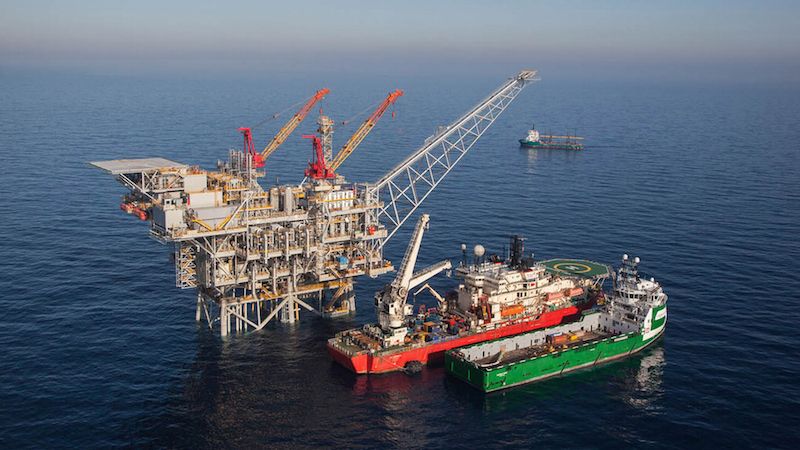
Some view it as a race against Israel Our neighbor—which is definitively not stealing Lebanon’s gas—closes its first offshore licensing round on November 15. Israel had previously awarded exploration licenses directly.Lebanon just postponed the close of its own first round—yet again—from September 15 to October 12. The new deadline, however, actually seems to have been chosen this time based not on the usual insistence of local officials, but on comments from Dharmendra Pradhan, India’s oil minister.

The curious case of ONGC

In July, after a meeting with Lebanon’s Minister of Energy and Water Cesar Abi Khalil, Pradhan tweeted: “The meeting was important in the context of @ongcvideshltd participation in the upcoming bid round for offshore gas fields in Lebanon.” ONGC Videsh Ltd is India’s national oil company, which had prequalified as an operator in Lebanon’s first offshore licensing round in April. In September, however, Pradhan told Reuters, “We will definitely bid for Israel’s oil and gas blocks.” It is unclear, however, how much capital the company has to deploy in either jurisdiction, let alone both. The Mediterranean Sea gets deep fast off the shores of both Lebanon and Israel. Drilling in water more than 1,000 meters deep is expensive, and the Indian company said in an August interview that its planned $150 million exploration budget will focus on Colombia, Kazakhstan, and Bangladesh.

Assuming ONGC is seriously contemplating bids in the Eastern Mediterranean, if Lebanon closes its round before Israel, it could capture ONGC’s bid at a time when officials admit the possibility that not many offers will come rolling in. If Lebanon closes after Israel, however, ONGC could bid to the south, complicating a later bid in Lebanon from a political—and possibly even a legal—perspective (Lebanon still technically has a boycott office at the Ministry of Economy). The Lebanese Petroleum Administration (LPA) would not comment specifically on ONGC (or any other bidder), but LPA president Wissam Chbat told Executive in an interview that “we might end up in this situation” (of having only one bid), but “we haven’t been expecting [only] one bid.”

Infographic by: Ahmad Barclay

While 51 companies are prequalified to bid in Lebanon, all but five went through the prequalification process back in 2013. It is difficult, therefore, to predict how many will actually bid, especially given that Lebanese law requires companies to form consortia with a minimum of three members  in order to submit bids; each consortium must include an operator, and there are only 13 prequalified operators. This means that even if many non-operators want to bid, they cannot do so without wooing one of the 13 operators. On the one hand, extensive seismic surveys that look promising, coupled with big natual gas discoveries nearby, suggest that Lebanon should be attractive as a greenfield investment. On the other hand, the industry currently has a suppressed appetite for the expensive deepwater drilling required to prove whether or not Lebanon has oil and/or gas reserves. Executive has repeatedly reached out to the prequalified companies for comment on their plans in the past and has been repeatedly reminded that companies do not comment on such matters. In a statement released shortly after the most recent postponement the LPA said that part of the reason for the delay was to allow companies to form consortia—suggesting bids are indeed being prepared.

What to expect on the big day

Once bids are submitted, Chbat says the LPA will have three days to report back to the cabinet about which companies bid on which blocks. The LPA will then evaluate the offers. For the commercial offers, this means running nine different simulations (which include three volume assumptions and three price assumptions) and taking an average of the results. Companies will also be scored on their technical offers, and based on both outcomes, Chbat says, the LPA will choose provisional winners for each block. The list of winners will be provisional because the government/LPA can negotiate with companies on their technical offers, which include proposals for additional surveys of Lebanese waters, as well as the number, location, and depth of the wells they plan to drill. The offers are negotiable, Chbat explains, because requesting slightly more surveying, or a slightly deeper well, results in more valuable information for the state.

The LPA has slated one month for evaluating offers and choosing provisional winners before sending that recommendation to the cabinet, which will ultimately approve which contracts, if any, to sign. While the LPA announced in April that contracts should be signed by November, legally the government has a full six months after bids are received to sign an award. Chbat says the bidders will be announced when the LPA submits its report on the subject to cabinet. Until then, it is a waiting game.

October 5, 2017 0 comments
0 FacebookTwitterPinterestEmail
Economics & PolicyOverview

Sharing the risks

by Jeremy Arbid October 5, 2017
written by Jeremy Arbid

A new law passed this summer could help facilitate sorely needed investment to fix the country’s infrastructure. The legislation, a framework for public-private partnerships (PPP), puts into law new options for sharing risks between companies and the government when investing in, building, and operating new public works.

Ziad Hayek, secretary general of the Higher Council of Privatization (HCP), tells Executive that Lebanon needs at least $6 billion to revitalize its infrastructure. The country’s roads are jammed with traffic, it has no long-term garbage solution, and its electricity supply is unreliable. Amongst other proposed infrastructure projects, the government has recently announced intentions to expand capacity at Beirut’s airport and to re-open Tripoli’s Rene Mouawad Air Base to passenger traffic.

Lebanon has had difficulty structuring PPP projects, and the new legal framework should help clean up that process. Lebanon has already had a few PPPs: Jeita Grotto, the waste treatment plant in Saida, and LibanPost. But judging their success through the lens of the new PPP framework, Hayek says, those examples—at least in the case of LibanPost—have deviated from the terms and conditions of their contracts, and are not great examples. “We want to make sure that when we talk about PPP, we really have fully successful projects that live up to the letter of [the] contract, that provide periodic reports on operation and how they are meeting key performance indicators, that are held responsible for [meeting those] indicators, where any payment from the government is dependent on their meeting those indicators.”

Weak finances

Prime Minister Saad Hariri stressed Lebanon’s desperate need for new infrastructure at an April aid conference in Brussels. There, he asked donors to fund a $12 billion “large-scale capital investment program (CIP)” to help Lebanon rebuild its economy and continue supporting the more than 1 million UNHCR-registered Syrian refugees living in the country. Since then, the government has not articulated any infrastructure investment plan, but has indicated that it wants around 25 percent of financing for the CIP to come from PPP approaches, says Peter Mousley, a PPP specialist at the World Bank’s Beirut office (see Q&A page 30). “We’re anticipating the government will move forward with this CIP, [and] that they will be wanting to reach out more to potential private investors,” he tells Executive.

While the government has known for years that it needs to fix its infrastructure, it has not been able to set much money aside for capital expenditures. According to the most recent numbers from the Ministry of Finance, only 4.4 percent (or less than $600 million) of the more than $13.5 billion in total public spending for 2015 went to capital expenditures, a percentage that has not varied much since at least 2011. Last year, Lebanon spent almost $5 billion more than the revenue it brought in; about a third of that went to interest payments on debt, public worker salaries, benefits, and pensions, and to cover losses by the nation’s electricity utility, Electricité du Liban. The country covers its deficit by issuing debt, which totals nearly $77 billion as of July. In August, Moody’s, a credit rating agency, downgraded Lebanon’s borrowing grade to a B3 rating, indicating that it considers Lebanon’s finances to be weak. In a press release, the company stated, “The principal driver of the downgrade is the rise in the country’s debt burden. Moody’s estimates Lebanon’s 2018 government debt to reach close to 140 percent of GDP […] government debt will remain close to 700 percent of government revenues next year.”

Would Lebanon’s credit rating be an obstacle to financing a PPP project? For the government, such a project can be cash-neutral because it could participate with an in kind contribution, such as land. But when the government contributes financing, it does so by issuing bonds, not debt. The downgrade could have an impact on pricing, says Iyad Boustany, managing director of local investment firm FFA Private Bank. Low credit ratings mean the bond issuer, here the government, offers higher premiums to the investors buying the debt issue. A rating downgrade would “increase cost of funding, as investors would want higher returns for their investment,” Boustany wrote to Executive in an email. The HCP’s Hayek hopes the new law will help Lebanon issue securities and develop a capital market, as the government sells bonds to pay its share of financing a PPP project. Rather than straight debt, bonds are tradeable, and can be moved in a secondary market. For Lebanon, that could mean a reinvigoration of dormant and always-demanded capital markets.

PPP financing, Mousley explains, typically includes equity. “There’s a lot of liquidity in the market, [and] the financial sector is very robust here. But the indications from a lot of the commercial banks here is that they would like to diversify, and PPP gives them that opportunity,” he tells Executive.

Risk, then, is another reason why Lebanon has not poured money into fixing its infrastructure. Hayek tells Executive that PPP is “a partnership in risks.” What he means is that the private company winning the PPP tender, depending on the terms of the agreement, might take on the risk of financing, constructing, and operating the project, while the government deals with revenue guarantees to the company, political risk, or environmental risk. “For each of these risks, then, [comes] a conversation about how you’re going to mitigate it,” Hayek says, adding that transparency is important in the tender process. Companies do not want to invest heavily to prepare bids—designing the project and negotiating financing options with banks can be costly—if the evaluation methodology is not made public and the selection process is opaque. “Obviously [local banks] want to take informed risks,” Mousley says. “Doing it in a PPP framework that takes proper account of the risks involved is liable to create a more enabling environment for infrastructure investment.”

[pullquote]Risk, then, is another reason why Lebanon has not poured money into fixing its infrastructure[/pullquote]

Transparency has two parts, according to Hayek. First, the process of preparing to tender the PPP project should involve an open consultation with all stakeholders, public and private, so that expectations regarding deliverables and compensation are determined upfront. “No longer can [tendering] be a black box within a ministry,” he says. Open information matters too: Companies should know how their bids are evaluated, and the model contract should be publicly accessible. Hayek says these conditions are all spelled out in the framework, adding that “transparency is paramount for PPP success.”

The HCP is now scaling up to meet the demands of the new PPP legislation, and Hayek says that it will have the capacity to coordinate up to three projects in the foreseeable future. That is okay, says Mousley of the World Bank. The takeaway from other countries’ experiences with PPP, he says, is that it is best to move slowly and build a pipeline of PPP projects over a long period of time.

As for the HCP’s first PPP project, that depends on the government’s priorities. For now, it has yet to outline a long-term infrastructure investment plan, and the projects it wants—and needs—to undertake. There is an ongoing tender for wind and solar power plants that could benefit from the new PPP framework, though Hayek says the electricity sector is not an area the HCP would recommend—there are too many competing interests to make it a successful first project. Instead, Hayek says that while the HCP has not agreed on which projects it will recommend to the government, his preference is to start with a project related to transportation, a public building like a hospital or school, or a project to rehabilitate a sports facility. “I think one of these will be the way to introduce PPP to the nation,” he says.

October 5, 2017 0 comments
0 FacebookTwitterPinterestEmail
IssuesOctober 2017

October 2017

by Executive Staff October 4, 2017
written by Executive Staff
space


[media-credit id=2635 align=”alignright” width=”246″][/media-credit]

EDITORIAL

Licence to steal


LEADERS

Stalled progress

Whatever taxes come next must be transparent

A storm is coming

The car industry braces for impact

Quit clowning around

Incompetence in the sector is no longer funny

COVER STORY

Tick tock

Let the bidding commence

Icing on the cake

New oil and gas tax law completes sector’s fiscal regime

Lebanon’s fiscal conundrum 

What would make a good deal for Lebanon?

ECONOMICS & POLICY

Sharing the risks

Lebanon’s infrastructure could get a much needed boost from PPP

A partnership in risk

Ziad Hayek, secretary general of the HCP, explains what’s changing

A marriage of convenience 

The World Bank’ Peter Mousley talks benefits and risks of PPP

SPECIAL REPORT

Drive … At your own risk

A close look at the driving environment and the car market in Lebanon

Going nowhere

Lebanon is ill-prepared for electric mobility

The other side

How highways divided Beirut’s neighborhoods

McLaren lands in Beirut

Q&A with McLaren Automotive CEO Mike Flewitt

REAL ESTATE

Passion and profit in Lebanon

Q&A with Carlos Ghosn

HOSPITALITY AND TOURISM

Destination: Shouf

From ancient forests to grand palaces

Hugged more tightly 

Another European budget line targets Beirut

AGRICULTURE

Show me the honey

Lebanese bee keepers discuss growing their industry despite challenges

LAST WORD

Lebanon needs to clean up its act

The country lacks a long-term waste management strategy
October 4, 2017 0 comments
0 FacebookTwitterPinterestEmail
EditorialOpinion

License to steal

by Yasser Akkaoui October 4, 2017
written by Yasser Akkaoui

The Ottomans taught us too well. In exchange for a minimum level of freedom, the rulers of the Empire empowered (and armed) local leaders and tasked them with collecting taxes. Policy makers and stability maintaining were the domain of the central government in Constantinople. This worked brilliantly for the Empire, but in the case of Lebanon, it helped create a mindset that valued rent-seeking over productivity. Hundreds of years later, we are a nation ruled by feudal tax collectors and have lost the policy making and security that once came with it. Our political class has still not learned how to build, develop, and improve a nation, let alone build and bolster a productive economy. Regrettably, our political hierarchy views the state as a cash-cow to milk. Nothing more.

Look no further than our tired roads, clogged with an ageing fleet of vehicles which contribute to the country’s poor air quality. Where is urban planning? Where is a coordinated and regulated public transport strategy? I would venture and ask about electric cars, but with a solidly unreliable supply of electricity, the question answers itself. Our leaders do not make policy. They drain and exhaust us with ever higher import taxes on new cars.

I fear that this situation will not improve, even with the new public-private-partnership (PPP) law, which would have injected an energizing ray of hope for the transport sector. We worry we won’t soon see a new era of nation-building under the PPP law because those who will implement it are more concerned with devouring payoffs than studying  key performance indicators when it comes to public works. To effectively benefit from PPPs, we need a new mindset, not a new law.

Most worrying is the fate of any oil and gas the country may have. Politicians have been playing games with this not-yet-established sector for years now. Those games will  continue, and the Lebanese people will be defrauded as a result.

Our politicians have pursued extractive, not inclusive, economic planning–enriching themselves and leaving the rest of us out in the cold.

October 4, 2017 0 comments
0 FacebookTwitterPinterestEmail
CommentEconomics & PolicyOil and gas

Strengthen our environmental protections

by Diana Kaissy September 27, 2017
written by Diana Kaissy

As Lebanon gears up to explore for offshore oil and gas resources, it is critical that environmental protection is a front and center priority. Oil and gas development activities have high environmental risks that could impact Lebanese communities living along the coast, as well as businesses working in the fishery, tourism, and shipping sectors.

To adequately protect Lebanon’s environment throughout the exploration and extraction phases, it will be necessary to revise Lebanon’s strategic environmental assessment (SEA).

An SEA is a report filed according to international standards and best practices, which offers governments a comprehensive view of environmental constraints and the potential impacts of developing a resource extraction sector in their country. It is used to develop solutions to potential environmental risks, guide the development of tailored regulations of petroleum companies’ operations, and create a formal platform to engage all appropriate stakeholders, including civil society, in the process. In short, an SEA is a critical assessment tool required for proper policy and environmental planning, which Lebanon should have as it develops its oil and gas sector.

Recognizing this, the Lebanese Oil and Gas Initiative (LOGI) is renewing a call it first made in May 2017 for a complete review of Lebanon’s SEA. LOGI is an independent NGO focused on developing a network of Lebanese experts in the global energy industry. It aims to educate policy makers and citizens on building an oil and gas industry that benefits all citizens, while avoiding the resource curse.

The Lebanese government commissioned an SEA in 2011, and published it in 2014. LOGI, in partnership with Publish What You Pay and the Friedrich Ebert Stiftung, as well as third-party international experts, reviewed the approximately 800-page document to synthesize and release their findings to the wider public. LOGI found that Lebanon’s SEA, although a step in the right direction, fell short of meeting international standards. Of particular concern is the fact that the SEA was compiled with minimal input from ministries and concerned citizens, did not conform to existing environmental legislation in Lebanon, and featured outdated or incomplete data. In fact, the SEA did not address questions that were directly, and publicly, posed to the team that compiled it.

Ticking clock

This gap presents a range of problems, but also opportunities, which must be seized upon with the assistance of concerned civil society organizations and the public at large.

LOGI shared its findings in May 2017 with the Lebanese Petroleum Administration (LPA), the Ministry of Environment, the Ministry of Tourism, as well as other government agencies and several civil society organizations.

LOGI’s key recommendation is that Lebanon’s SEA be revised to improve the protection of the environment and decrease the likelihood of significant impacts. What should be apparent is that LOGI is not seeking a wholesale remake of Lebanon’s SEA. In fact, quite the opposite. It is our firm belief that Lebanon should move to establish its petroleum sector at a vigorous pace, particularly as licensing was stalled for years.

A review and revision of the SEA should not hamper this process, which is why LOGI and its partners have advocated for a review in parallel with the first licensing round (with the bid submittal deadline fast approaching on September 15). Such a process has been carried out with success in Montenegro and Croatia, where clauses were inserted into licensing round conditions, stating that the given SEA is under review, and its findings, conclusions, and mitigation measures will be binding on all operators. In fact, Lebanon has already adopted similar language that binds all operators to any new mitigating measures.

Based on LOGI’s recommendations, the LPA decided to undertake a revision of the SEA in May 2017. We are now in August, and the process is progressing at a slow pace. Our call to renew the SEA is time sensitive. LOGI renews its call and urges all decision makers and citizens to pay close attention to this matter. We need a revised SEA to inform our environmental regulations in Lebanon’s oil and gas sector. The time is now.

September 27, 2017 0 comments
0 FacebookTwitterPinterestEmail
Economics & PolicyOil and gas

Inching closer to the edge of our seats

by Matt Nash September 26, 2017
written by Matt Nash

Regardless of what local banks keep proclaiming, Lebanon has no oil or gas. There’s reason to believe it does, but the process of finding out is only just beginning. On September 15, companies will bid for rights to explore for oil and/or gas offshore Lebanon. Executive takes a look at what that means, what to expect next, and answers other commonly asked questions.

How much oil do we have?

Only drilling will tell what Lebanon does or does not have. At the moment, it has blurry renderings of earth below the Mediterranean Sea. There’s much, “Wow, that could be something,” but until contracts are signed with companies capable of drilling to find out just what that “something” is, we simply will not know.

Why does everyone seem to think Lebanon is rich in oil and gas?

There is a lot of natural gas in the Eastern Mediterranean (East Med), and a general understanding of where it comes from (ancient sediments, and — only recently proven in this area — ancient coral). Huge natural gas discoveries (Israel’s Leviathan in 2010 and Egypt’s Zohr in 2015) have fueled and sustained interest in the East Med, despite a price environment over the past three years that is disfavorable toward drilling $100 million wells in “ultra-deep” waters. Lebanon can likely expect some big industry names to bid for drilling and production rights, but that has not actually happened yet. The country was supposed to accept bids in 2013, but the process got subsumed in political bickering until January of this year.

[pullquote]Only drilling will tell what Lebanon does or does not have[/pullquote]

Where are we now?

Fifty-one companies are pre-qualified to bid. A 2010 law requires they form partnerships of three or more companies to bid for exploration and production rights. This means they will offer the government a cut of revenues from whatever resources are found, in return for finding and extracting said resources. If the winners find nothing, the government will not have to reimburse the exploration costs incurred. Bids are due on September 15.

Will Lebanon get a good deal?

There is a lot of misinformation regarding what Lebanon might get from a revenue standpoint. Lebanon is following international best practice by using a model contract with certain specified criteria, related to the government’s cut of revenues. clearly defined. It is impossible to say now whether or not the country will secure a good deal, but it is on the right track toward doing so.

Who’s going to bid?

No one can predict the future. Some of the companies prequalified in Lebanon recently bid in a licensing round that Cyprus organized in 2016, which could indicate they will bid in Lebanon too. That, however, is far from certain, and will only be known when bids are submitted.

How public will the bid evaluation be?

In interviews with Executive in both January and April this year, Wissam Chbat, president of the Lebanese Petroleum Administration (LPA), said that once bids were received, the LPA would announce which companies bid on which offshore blocks (Lebanon has 10 offshore blocks, five of which can be bid on in the first licensing round). Chbat also said that the LPA would take one month to evaluate the bids (evaluation is based on technical criteria — further geo-physical studies like seismic surveys, the number of wells companies commit to drilling and the depth of those wells, and the companies’ financial offers).

The commercial offer is worth 70 percent of the evaluation, with the technical offer representing the remaining 30 percent. The commercial offer will be set in stone once submitted, but Chbat explained that the technical proposal can be subject to further negotiations (i.e., pushing companies to drill slightly deeper, for example). After the assessment and negotiations, Chbat said that the winners would also be announced publicly. Signing the final contract depends on a decision from the Council of Ministers. The political timeframe for the evaluation process sees contracts signed by November 2017, but the model contracts that will govern the relationship between contractors and government allow a total of six months between bid submission and contract signature.

September 26, 2017 1 comment
0 FacebookTwitterPinterestEmail
Economics & PolicyEnvironment

Going shades of green

by Jeremy Arbid September 25, 2017
written by Jeremy Arbid

Lebanon could license the construction of nearly 380 megawatts (MW) of renewable energy plants as early as this summer, a Ministry of Energy and Water (MoEW) official tells Executive. This would mean a rise in generation capacity of just over 20 percent — a far cry from satisfying the country’s demand for power. This clean electricity, generated through new windmill installations and solar farms, would, however, help Lebanon reach its 2020 target of 12 percent renewable energy in the national power mix. Companies would need to raise capital to finance construction of the projects, a not-so-difficult prospect thanks to a 2010 central bank incentive and spurred on by last year’s Paris Agreement on climate change.

(Click on image to enlarge)

Wind’s picking up

It is in a blustery part of north Lebanon that the government envisions construction of three windfarms. Near Akkar, in the country’s wind corridor, rotating turbines would generate some 200 MW of clean electricity if the government finally licenses their construction.

The MoEW began the tendering process back in 2013, shortlisting three bids. Four years on, “We’ve hopefully come to the last steps,” says Pierre el-Khoury, head of the Lebanese Center for Energy Conservation (LCEC), the technical body at the MoEW responsible for renewables.

Electricity Law 462, ratified in 2002, stipulated that a regulator would license new power plants, but the government never got around to appointing that body. Instead, Parliament passed legislation in 2014 and 2015 to get around the legislation by allowing cabinet, on the recommendations of the MoEW and the Ministry of Finance, to decide when the private sector could build power plants. Now, Khoury tells Executive, the windmills are waiting for approval from the Minister of Finance so that both ministries can ask cabinet for the permits.

In addition to the 200 MW of wind energy, the MoEW also wants to license up to 180 MW of solar. At the beginning of 2017, the ministry asked for expressions of interest (EOI) for the construction of 12 solar farms, consisting of three projects each in the districts of South Lebanon, Mount Lebanon, Bekaa Valley, and North Lebanon. The EOI call resulted in 265 project proposals submitted by 173 companies, Khoury says. “Based on this high rate of replies, the MoEW finalized the tender documents and sent a request asking [companies] to submit detailed offers.” Khoury says the deadline to submit bids is mid-August, adding that the ministry needs to move quickly. “It will take us some time to review these offers. But we need to finalize the whole process before April 2018,” as that is when Cabinet’s mandate to license new private sector power plants expires.

A new dawn approaches

If the Council of Ministers does end up licensing the windmills this summer, and the solar projects before April 2018, then companies will need to finance the cost of construction.

That does not seem like much of an obstacle. In 2010, Banque du Liban (BDL), Lebanon’s central bank, moved to spur investment in renewables by creating a funding mechanism known as the National Energy Efficiency and Renewable Energy Action (NEEREA). FFA Private Bank, a local investment firm, recently announced a $1 billion investment vehicle they have termed the “Lebanon Infrastructure Fund” to pour money, at least initially, into renewables.

While the cost of constructing the wind and solar projects would be financed by the private sector, the terms to sell that electricity to Lebanon’s public utility, Electricité du Liban (EDL), will be governed by a power-purchase agreement (PPA). For wind, an official cost figure has not been disclosed because it would affect the government’s negotiating leverage, but media reports speculate costs could range from $120-150 million; for solar Khoury says that it is “important to have 180 MW costing $300 million.” The government, on behalf of EDL, will enter a PPA with companies to buy electricity for point x dollars per kilowatt hour over 20 years — the idea, Khoury tells Executive, “is to have a 20-year PPA contract at a fixed price.” PPA terms are still being finalized for the wind project, but once they are, companies will have three months to sign. Companies will then have 18 months to complete all the necessary legal, administrative, and logistical issues to have a completely ready-to-build situation.

PPAs could be costly to the government if power prices decrease because they lock prices in over a long period of time. Companies will look for assurances that the government will pay up if, for some reason, the utility cannot take in the electricity, termed a “take or pay clause.” The clause is typical of PPA contracts as it reduces the risk to companies, reflected in lower cost premiums. The clause could cost the government $55.1 million for wind and $25 million for solar upfront, but alongside  other derisking measures, could save the treasury hundreds of millions of dollars over the term of the contract, Vahakn Kabakian, Lebanon’s Climate change portfolio manager at the United Nations Development Programme (UNDP), argued in an April 2017 op-ed for Executive.

(Click on image to enlarge)

If Cabinet licenses the projects on time, then clean electricity could begin flowing to Lebanese homes and businesses before 2020. Now that Parliament has, after eight years and two extensions of its mandate, finally figured out a new electoral law (see vote law infographic), the hope is that it will vote on the Paris Agreement. Lebanon would then be required by law to meet its renewable energy promises and the climate change pledges it put forward at Paris.

Local meteorologists are forecasting strong breezes and a lot of sun.

September 25, 2017 0 comments
0 FacebookTwitterPinterestEmail
Economics & PolicyTaxes

Salary adjustment

by Sami Atallah September 20, 2017
written by Sami Atallah

So much has been said about the salary adjustment. While many people are opposed to it over the perception that it imposes higher taxes, public sector employees and teachers think that an adjustment is long overdue. For one, their salaries have been adjusted only twice — in 2008 and 2012 — since 1997, and these salaries have failed to maintain their purchasing power. That is, the rise in prices of more than 120 percent over 20 years has eaten up part of their income in real terms, and reduced their standard of living.

Public debate has simmered for five years over how to finance the salary adjustment bill. Twenty-two taxes were signed into law on August 21, but are currently under review by the Constitutional Council. They include an increase in VAT, stamp duty tax, an air transport exit fee, as well as capital gains on the disposal of fixed assets, corporate income tax, and taxes on interest, among others, to cover additional spending.

As many can get caught up in choosing sides, it is important to reflect on how the issue was framed over the last few years, how the debate took place, and how and why it was settled now. It is through this that we can better understand the intentions and priorities of the political elite.

Let us start with the issue at hand, namely, why was the salary adjustment bill presented as a separate expense that requires additional financing? The fact that state revenues have increased over the last 20 years, partly as a result of the rise in prices, suggests that salary adjustment ought to be financed from revenues. In other words, the increase in public sector salaries should be treated like any other expense in the budget, and revenues should not be viewed as being earmarked to finance a particular expense. Hence, what is required from the government and Parliament is a study of revenues and spending in the budget together — often referred to as unity of the budget — to figure out ways to address the fiscal situation in the country. The government should have examined public salaries, current spending, and capital spending to reduce expenditures in addition to its revenue stream, including public property management and taxes, some of which are under-collected.

In other words, the salary adjustment bill should be framed as part of total spending and revenues in the budget, rather than isolating additional salary expenses. The latter has resulted in muddying the debate over salary adjustment and made the beneficiaries a target for a general public that pays taxes to finance public workers’ salaries, among other state expenses. In reality, the public is shouldering more of the tax burden to make up for public finance mismanagement on the part of the government and Parliament, both of which have failed to prepare, debate, and approve a budget for the last 12 years to ensure fiscal discipline, and effective, efficient spending. The absence of such a credible process hardly fosters requisite trust between the political class and voters.

Another common argument in the public sphere centers on the assertion that a salary adjustment is undeserved because Lebanon’s bureaucracy is overstaffed, unproductive, and it is fiscally draining on the treasury. This does not hold water for two reasons: One, while some state agencies are overstaffed, many are understaffed, casting doubt on the policies that subsequent governments are pursuing in terms of wanting to build a professional bureaucracy. Public sector reform that addresses tasks, salaries, and merit criteria is sorely needed. Lest we forget, the government has tasked the Office of the Minister of State for Administrative Reform with reforming the public sector administration, which remains as elusive as ever, since the problems lay first and foremost with the same people who are asking to reform it: political parties who are using government agencies to deliver services to and hire people who are politically loyal, and serve their political and electoral ends.

Any serious reform to the bureaucracy cannot be carried out through denying a salary adjustment to public sector employees that is not based on merit, but rather, on salaries’ purchasing power. Furthermore, asserting that all public staff do not deserve a salary adjustment on equal terms fails to distinguish between those who are productive from those who are not, and fails to recognize that they are entitled to the adjustment under Lebanese law.

One thing that is clear is that the political elite — both in government and Parliament — are unwilling or incapable of raising revenues and curbing spending by tackling waste, mismanagement, and corruption in the public sector. There are many public allegations about unnecessary spending or state properties being stolen or underinvested. What is worse is that many parliamentarians are content making speeches about corruption in parliamentary oversight sessions, but rarely follow it up with action. Others manage to unearth corruption deals after a bill has passed, and not before. The fact that the government is not increasing revenues or lowering spending by tackling mismanagement and corruption indicates clearly that they are unwilling or incapable of threatening the interests of cronies, either due to collusion or fear.

The easiest route to shore up public revenue is to increase taxes. While their instinct is to impose indirect taxes that fall disproportionately on middle and lower income groups, they have opted to actually distribute the burden between consumers and capital. In fact, the increase in VAT from 10 percent to 11 percent will make up about 18 percent of the total of new revenues. The increase in interest tax from 5 percent to 7 percent will make up 25 percent of new revenues.

Despite the fear mongering rhetoric of the private sector about the implications of new taxes on the economy, such new taxes include a capital gains tax, corporate income tax, property sales, and interest tax, which in total cover half of new spending from the salary increase. As modest as it is, some of these taxes can rectify the burden that usually falls on consumers, rather than on capital, businesses, and other types of rents that are left untaxed. The government’s tax policy since the end of the civil war has favored indirect rather than direct and progressive taxes, in the process, favoring the rich over the poor.

It may very well be of no coincidence that tax legislation was passed after the electoral law, and with the election season just around the corner, as it is becoming the norm that salary bills like the one in 2008 and 2012 are made before scheduled elections. Over the last five years, no government or Parliament established a proper process to deal with how to finance a salary adjustment. As contentious as the issue is, the political elite could have studied it as part of the budget, figured out how to cut waste and tackle corruption to finance it, and then studied its impacts on various sectors and the public. This is what any decent government or Parliament should have done if they care about the public. In fact, this is how one would go about gaining back the people’s trust.

September 20, 2017 0 comments
0 FacebookTwitterPinterestEmail
Economics & PolicyTaxes

Myopic taxation

by Georges Corm September 19, 2017
written by Georges Corm

The package of tax measures recently signed into law and published in the Official Gazette was characterized by a lack of any fiscal and economic vision. It does not proceed from a well-designed tax policy addressing the various gaps and imbalances that characterize our fragmented and complicated set of taxes. As we all know, our tax system relies heavily on indirect taxes. Many sources of income are untapped, and there is no single overall income tax rate for individuals, as we are still living under the old-fashioned French “cedular” system of income tax, whereby each source of revenue is assessed and taxed separately with different rates. In fact, one of the most urgent tax reforms should have been to replace this old fragmented income tax system with a unified single rate applying by tranches to the total of all combined revenues for each individual. This is a system that could yield substantial amounts to the treasury, while making the life of taxpayers much easier, as just one tax return would have to be filed by them. It will also make life much easier for the Tax Administration Directorate.

As for the increase in VAT by 1 percent, this does not make much sense. It would have been more efficient to leave all essential goods at the rate of 10 percent, while creating a new rate for luxury goods at the level of 14 percent or 15 percent. The yield to the treasury would have been much higher, while for the poorer part of the population there would have been no increase in the price of essential goods. There is no doubt that the trade sector will take advantage of the 1 percent increase in VAT to raise prices by several percentage points, especially for goods imported from Europe, as the euro is on an ascending trend vis à vis the US dollar.

This increase in the VAT rate will also be amplified by the numerous increases in stamp duties, as well as in public notary fees. It should be noted here that most countries canceled stamp duties when they introduced a VAT system, but Lebanon did not, keeping old dating duties and excises taxes.

Missed opportunities

The increase in the tax rate for revenues of companies from 15 percent to 17 percent is not a bad measure, but it could have been raised up to 18 percent or even 20 percent, given the needs of the treasury to reduce the ever-increasing gaps in public finance, and to avoid future changes in the level of companies’ rate of taxation.

On the other hand, the increase in the tax on interests paid on deposits, or on state treasury bills in Lebanese lira from 5 percent to 7 percent, could have been advantageously replaced by a decline in interests paid by the treasury on its borrowings in Lebanese lira and US dollars, or by the decline in the central bank payment of high interests on the certificates of deposits it issues for subscription by local banks. In this regard, it is important to note that a 1 percentage point decline in interest rates paid by the state on its total debt of $75 billion, represents a decline in its annual debt service of $750 million, a huge amount indeed. It is also worth mentioning here that interest payments by the state on its public debt is the second largest item in budget expenditures, and therefore, there is a need to reduce the cost of servicing the debt. It would be preferable to reduce the present level of interest paid on Lebanon’s public debt, instead of increasing taxation on all deposits, either belonging to residents or to non-residents. After all, our national debt is being refinanced through an increase in deposits in the banking system accruing from the annual flow of emigrant remittances. Therefore, taxing interest revenues is not a very healthy measure. In any case, it would have been adequate to exempt small deposits from paying this tax. 

As for the fines that the new law has imposed on those that have infringed the law on exploiting the state maritime domain, I do not believe that the treasury will collect large amounts of unpaid rents and fines. This is because the basis of the rents to be paid are still determined according to a 1992 decree by the then-government, which states the square meter value of rented land along the coast by region at prices that are no longer relevant, given how much real estate prices have been going up during the last few decades.

One should not be surprised by the heteroclite nature of all these tax measures, considering that for years successive Lebanese governments have had no vision or plan on how to reform Lebanese public finances, except for the short period of the Hoss Government in 1999-2000 which produced a detailed fiscal consolidation plan for 1999-2004. It might be time for Lebanon to seriously plan an escape from the vicious economic and financial circles the country has trapped itself in. Until such a plan emerges, we remain enclosed, increasing anxiety in public opinion about our economic and financial stability.

September 19, 2017 0 comments
0 FacebookTwitterPinterestEmail
Economics & PolicyTaxes

Finally, some clarity

by Jeremy Arbid September 16, 2017
written by Jeremy Arbid

After deliberating for much of 2017, Parliament met in late July to ratify new taxes. The legislation then sat on the desk of President of the Republic Michel Aoun for nearly a month, while he contemplated whether or not to sign the taxes into law. In late August, he finally inked his name, briefly ending a period of public uncertainty and frustration around lawmakers waffling on the issue. But, adding a fresh layer of confusion, as Executive went to print the Constitutional Council issued a freeze on the tax hike pending further review.

The measures had, when first announced in the opening months of this year, led to street protests against a hike. Throughout the year, there was much confusion over which new taxes would be introduced or increased, how much more people and businesses would have to pay, when the new measures would enter into force, and what the revenues would actually be used for. It did not help that conflicting narratives from both  sides of the aisle skewed the public conversation, confusing — intentionally or not — the details of the taxes and necessity of the measures. In an effort to make sense of the discourse at the time, Executive reported in April that opaque decision making made for confused tax policy.

Public perception then was that the new taxes would pay for a salary increase for public sector workers, but that is not accurate, as Director General of the Ministry of Finance Alain Bifani pointed out more than once and reiterated in an interview with Executive (see page 44). The legislation does not allocate the added revenue that the new taxes would generate. Instead, that money will head to the treasury toward covering the deficit. Deficit spending is set to increase because of the salary increase estimated at $1.2 billion — a figure that could grow or not depending on public sector recruitment — and that  new spending needed to be covered by revenue that did not exist, hence taxes. So yes, it is true that the new spending is correlated to the new taxes, but the new revenue is not specifically allocated to pay for the wage increase.

According to the Ministry of Finance all taxation money is fungible and not tied to a specific purpose. That is the principle. This principle is practically invisible to the public, and has not been properly explained by MP’s and ministers. It also seems that some members of the Lebanese Parliament might not know the term fungible, or have little understanding of taxation, so even they have linked the new taxes to the salary scale. But the reality is that these taxes are not designed for paying the wage scale increase, but for filling a hole (the deficit), which is being made bigger by the wage increase.

For much of the year, the government did little to correct this narrative with the general public. Since  the new taxes were announced, Executive has sought to understand their mechanics, and though the topic had come up in a March interview with the Ministry of Finance, the answer then was that the ministry was not yet in a position to detail the proposed taxes.

All but two of the new taxes (see box list of taxes) entered into effect immediately upon publication of the legislation in the Official Gazette on August 21, 2017 — though are now frozen.

An increase of the Value Added Tax (VAT) to 11 percent will not take effect until the start of the fourth fiscal quarter of the year, October 1, the law reads. The rate at which corporations will be taxed was increased to 17 percent to be applied at the start of next year, January 1, 2018. 

The Ministry of Finance estimates the new taxes together will generate additional revenue of LL410 billion ($272 million) for the remaining months of this year, and in 2018 estimates collection of LL 1.6 trillion (more than $1 billion), excluding the new alcohol tax revenue as the Ministry of Finance expects that measure to be revisited.

September 16, 2017 0 comments
0 FacebookTwitterPinterestEmail
  • 1
  • …
  • 98
  • 99
  • 100
  • 101
  • 102
  • …
  • 691

Latest Cover

About us

Since its first edition emerged on the newsstands in 1999, Executive Magazine has been dedicated to providing its readers with the most up-to-date local and regional business news. Executive is a monthly business magazine that offers readers in-depth analyses on the Lebanese world of commerce, covering all the major sectors – from banking, finance, and insurance to technology, tourism, hospitality, media, and retail.

  • Donate
  • Our Purpose
  • Contact Us

Sign up for our newsletter

    • Facebook
    • Twitter
    • Instagram
    • Linkedin
    • Youtube
    Executive Magazine
    • ISSUES
      • Current Issue
      • Past issues
    • BUSINESS
    • ECONOMICS & POLICY
    • OPINION
    • SPECIAL REPORTS
    • EXECUTIVE TALKS
    • MOVEMENTS
      • Change the image
      • Cannes lions
      • Transparency & accountability
      • ECONOMIC ROADMAP
      • Say No to Corruption
      • The Lebanon media development initiative
      • LPSN Policy Asks
      • Advocating the preservation of deposits
    • JOIN US
      • Join our movement
      • Attend our events
      • Receive updates
      • Connect with us
    • DONATE