• Donate
  • Our Purpose
  • Contact Us
Executive Magazine
  • ISSUES
    • Current Issue
    • Past issues
  • BUSINESS
  • ECONOMICS & POLICY
  • OPINION
  • SPECIAL REPORTS
  • EXECUTIVE TALKS
  • MOVEMENTS
    • Change the image
    • Cannes lions
    • Transparency & accountability
    • ECONOMIC ROADMAP
    • Say No to Corruption
    • The Lebanon media development initiative
    • LPSN Policy Asks
    • Advocating the preservation of deposits
  • JOIN US
    • Join our movement
    • Attend our events
    • Receive updates
    • Connect with us
  • DONATE
Special ReportWealth management

Talking about wealth

by Thomas Schellen September 15, 2017
written by Thomas Schellen

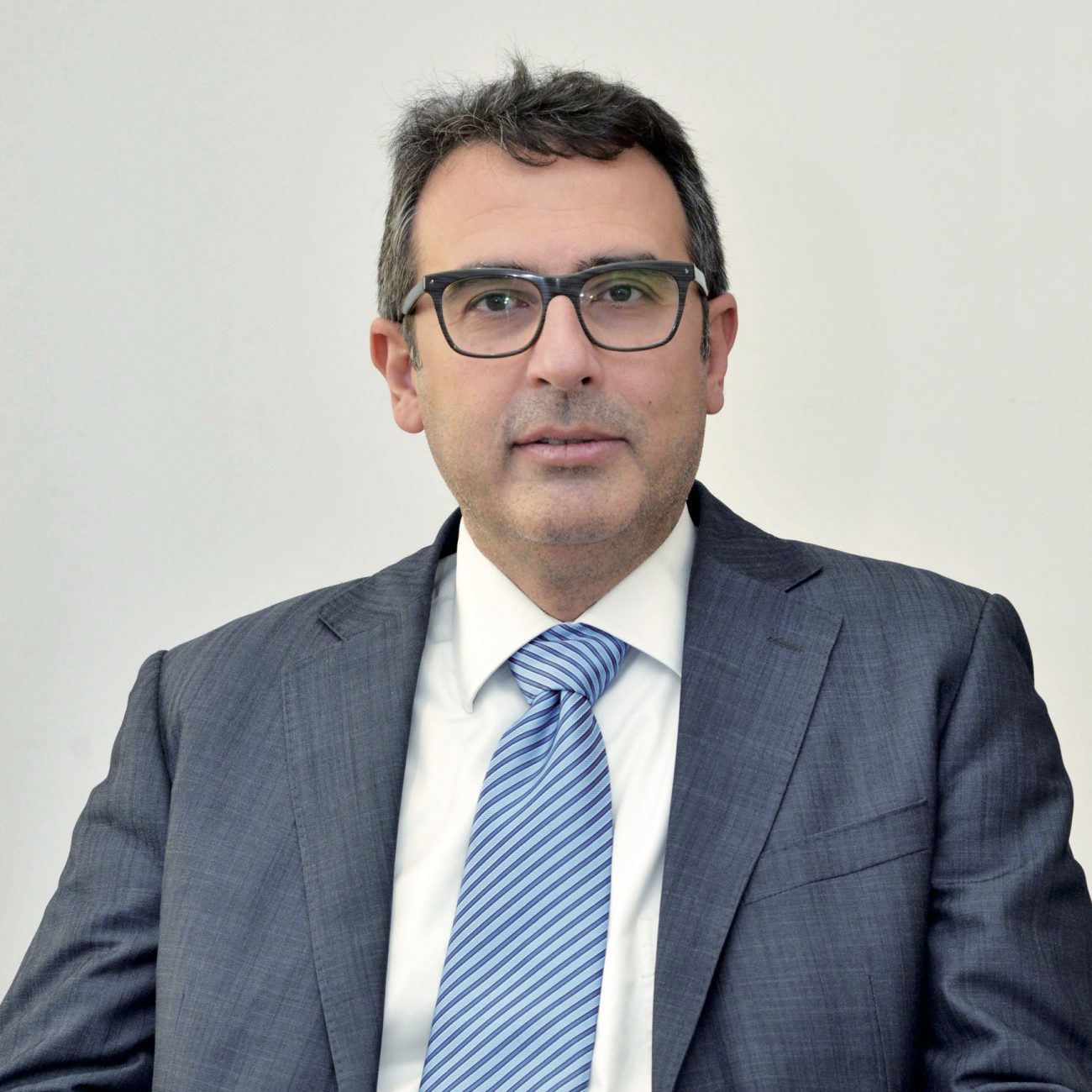
Wealth is a contentious issue when seen through the lens of social improvement. Viewed from the position of social equality, it is a recipe for dissatisfaction and, sometimes, disaster. How does a private banker reconcile obligations to clients with social responsibility and ambitions for national improvement? Executive sat down with Jean Riachi, chairman of FFA Private Bank, to discuss.

E   Statistics on the latest developments in global wealth in 2016 suggest that the number of high-net-worth individuals (HNWIs) and families is increasing again worldwide and that, for the wealthy, the pain of the recession and post-recession years has passed. How do you see the global wealth management landscape from the Lebanese vantage point?

I agree that the rich are getting richer. This is an effect of globalization but also of something else that has been happening since the early 1990s, which is the increasing concentration of wealth. Numbers are large and growing, for the rich as well as for the middle class. In Asia for example, business people and entrepreneurs are making large fortunes in countries where the middle class is growing. This is because successful entrepreneurs are finding bigger markets for their products.

E   How is it in Lebanon? How much private wealth and concentration of wealth are we talking about in this country?

I don’t know if there are real statistics and I have always wondered how many people you would have in Lebanon whom you would call high-net-worth, high-net-worth being above $1 million in liquid assets, or ultra-high-net-worth individuals (UHNWIs), meaning liquid assets above $30 million. We [at FFA Private Bank] have 2,000 clients and I am sure we don’t have everybody in Lebanon [who is a HNWI or UHNWI]. Almost 95 percent of our clients are HNWIs, and a good chunk are UHNWIs. So I would say, yes, there is wealth in the Lebanese community, and we are talking traditional wealth, not even new wealth or suspect wealth.

E   So the rich in this country are getting richer, as you alluded to before?

I’m not sure that the rich are getting richer in Lebanon. I was talking about other areas. Lebanon, unfortunately, has been in so many economic and political crises. Also, you have people who made a lot of money in Africa or in [other] Arab countries, but situations [there] have worsened. So you have many Lebanese people who are very wealthy, but [also] have financial troubles of some sort because their businesses are [based] in oil-rich countries, and those countries are suffering.

E   Since the concentration of wealth accelerated globally in the 1990s, and with the recession in the 2000s, some theories of trickle-down wealth have lost credence. From a wealth manager’s perspective, are stories of wealth and getting rich today still encouraging people to believe they can get rich too, or are they getting more fed up with the inequality between the top and the rest of society? 

If we look at what happened recently in the world, with the election of Trump and with Brexit, I think these were signs of some kind of revolt against these inequalities. Although this looks like a paradox in the case of Brexit, which will impoverish Britain, and with Trump being a billionaire — [ordinary] people grab what [opportunities] they can to express their views. There certainly is some kind of frustration in the middle class against inequality. Such behavior, [not accepting unequal treatment] is even observed in experiments with monkeys. So imagine [how it is] with people. Even though I believe that the middle class is benefiting from the growth that has been occurring almost everywhere in the world, it’s clear that the concentration of wealth creates frustration, and we saw that people were ready to sabotage [their own economic standing in protest]. So, yes, inequality is an issue.

E   How does this make your life as wealth manager more difficult?

You know, one has to separate things. We’re dedicated to a certain target [group] of clients. We have a niche, which is serving corporate entrepreneurs for finance and investment banking, and serving high-net-worth individuals and institutions on wealth management issues. We believe our clients are very good people; some of them are very successful entrepreneurs and have businesses where hundreds of families are living off the job opportunities they are giving them. I’m very comfortable with this, and I think [this also applies to] our contribution to society as FFA. We have 120 families living a good standard of life [because their breadwinners work here]. I have people who started working here as trainees in order to pay for their own university tuition. Today, they still work here and have children for whom we are paying university tuition. So, we’re contributing to the social welfare of the country. I don’t believe this story of the divorce of the elites. Yes, we have good people and bad people, but you have rich people who are doing a lot for their community, and rich people who are very egoistic and don’t deserve [to be rich]. But you know, we are not here to judge. If there is a God, he is gonna do it.

[pullquote]It’s clear that the concentration of wealth creates frustration[/pullquote]

E   It seems that as a responsible business leader, you have to not only take economic issues into consideration, but also human behavior, such as the importance of equality.

I agree. In my family, they accuse me of being a leftist, but I am not actually. What I mean is that you have good people and bad people among the rich and the poor, and that’s it. Everyone in his place has to contribute to the welfare of others.

E   You say that FFA has 120 employees today. How many did you have 20 years ago?

We were four.

E   One of the repercussions of the recession years after 2008 was that clients asked for lower fees and took their wealth managers to task for not achieving expected high returns. Some clients even turned away, it seems, to manage their own stock portfolios and so forth. How is the situation today? Are people trusting their wealth managers?

I think that integrity, professionalism, and transparency are the key issues here. We at FFA are not geniuses, but we have good people. They have good education, they are intelligent people — in our recruitment process we have tests because we believe that IQ is important — and more importantly, we value the integrity and moral values of the people we have on staff.

Very often people felt that they were ripped off, not that somebody had stolen money from their account, but that they were mis-sold on some assets because it was in the best interests of the wealth manager or the bank, not in the best interest of the client. They also saw that some of the fees were hidden, not disclosed enough, etc. Of course we have regulations — and in Lebanon, with the Capital Markets Authority and the central bank [Banque du Liban] being active, we have much higher regulations [than many other jurisdictions] in terms of disclosure and separating by category of clients — but you still have a moral obligation. We want to treat our clients fairly and professionally, and give them what we believe is best for them. Very often we are wrong, but at least clients know that we have acted in good faith. They are likely satisfied, because we very rarely lose clients and we still acquire new ones, meaning word of mouth is doing very well for us.

E   But can’t investors manage their own assets, just as well as those using the services of a wealth manager? Isn’t all the information available practically for free if one only looks?

How can you do it yourself? You need somebody to screen the markets for you and identify the right investment opportunities, to follow up on your investments, to execute your transactions — and make sure that every transaction is executed properly — and to safeguard your assets. This is our role, and we need to be paid for that. We are quite flexible but not very flexible on our fees, because people have to understand that we have to pay for our expenses. We’re transparent, and actually, we like our clients to be informed because it makes the conversation better and easier. The more that our clients are aware, well informed, and sophisticated, the better it is for us. We’re here to advise them. We want to have conversations and are happy when they challenge our ideas because when we reach a conclusion and decide to invest somewhere, or do something together, it’s a joint decision, and this is very different.

E   Do you need malpractice insurance as a wealth manager?

There is [such insurance], but we try to avoid malpractice. This is why for us HR recruitment is very important. If there is malpractice, it’s not going to be me personally [who is liable for it] — it is going to be someone in the team who might have misled [a client] or where misconduct might come about. It’s therefore very important to have people who have integrity, and this is where we put a lot of emphasis.

[pullquote]We’re at a stage in Lebanon where we need an active local market. This is an effort that must be carried out by the authorities[/pullquote]

E   We all remember stories of banks like Barings who were ruined by their traders. Do such stories make you worried at night?

[Being] ruined by traders [does not worry me] because of regulations, and because we’re very conservative. There’s nothing that we could do on our own account that could ruin us. But I’m worried about [the possibility] that a broker or private banker would mistreat a client, and that we would therefore have to pay for this [person’s] errors. It’s very important for us that this never happens. And do you know how many lawsuits we have had in 20 years? Five, maximum. This is famous as the industry where you have the most lawsuits on earth. And how many lawsuits did we lose? None. I tell you why.

E   Because of the state of the Lebanese juridical system?

Not at all. The only reason was that when we have made a mistake, we don’t even wait for the client to sue us, we tell them, ‘it’s our fault’ or that it’s a shared responsibility, and we’ll find a way to [rectify the situation]. However, sometimes there are people who undertake a lawsuit as a business decision [to get extra money]; in such a case, we don’t care and pursue the matter to the end. But when we make mistakes, we are ready to pay for them. That’s why we want to minimize mistakes, and very often mistakes originate with people who do not follow rules or regulations, do not follow the procedures, or sometimes from people who do not have the moral fiber. However, I can tell you that today all our people are very professional and very educated. And let me tell you that we not only choose our employees, we also choose our clients. We do screenings of our clients for anti-money laundering and combating terrorism finance etc., but we also look at their background because we don’t want bad people [to be our clients]. Sometimes we were wrong, and we [ended up] firing clients.

E   We also are trying to gauge the development potential of Beirut as a wealth management hub for the Middle East. As far as I understand, there is no central directive or regulator for wealth managers in the region such as the MIFID directive in the EU or the SEC in the US. Does Beirut stand a chance in serving as a wealth management hub for this region?

The KSA is different [from Lebanon in wealth management] because the KSA has a domestic market. A domestic market means domestic securities, bonds etc., which create a lot of activity. This is what we don’t have in Lebanon. We are striving to have it, [but] it’s very difficult. By today, we should’ve had a dynamic stock exchange, but we haven’t [achieved this]. We have an investment banking arm [at FFA], and we’re getting lots of mandates, but we have to refuse mandates of companies that have reached a certain point where they have family issues and need to do something about them. We’re at a stage in Lebanon where we need an active local market. This is an effort that must be carried out by the authorities. One of the sectors that we believe could be a trigger is infrastructure. This is why we’re putting large efforts into the infrastructure sector.

E   In your view, does the newly adopted PPP law play a role in this context?

The PPP law was adopted, and it is a very beautiful law. We have ideas about how the infrastructure in Lebanon has to be financed. We have been lobbying hard for things to happen, and we even managed to get an amendment into this PPP law that allows the use of the securitization law, (Law 705). What we are seeing, [however] is that a small group of people will monopolize and control these infrastructure projects, which will prevent the public offerings that we would like to do. This isn’t very encouraging. These are very lucrative projects; there is a lot of money to be made for investors, for lenders, for mezzanine [debt] holders, for equity holders.

E   But if the infrastructure projects are controlled by a small group, doesn’t that mean that the competitiveness of the biddings would be limited?

Let’s forget about the bidding, [and instead, look at the benefits of the projects]. We already know what is in the market, and there will be very good margins. We see a future in wind and solar, electricity production from fossil fuels, and with FSU (floating storage unit) — those boats that convert liquefied gas etc. These projects are useful for the country and they can bring in FDI. We have a problem in this country, and this problem is the balance of payment. We can solve this fast by getting inflows of investment, and this is not hot money. This is long-term money and will be invested where it’s needed, meaning it will create jobs. Also, there will be economies for the economy, meaning there will be less imports of oil and more gas, so that the [energy] bill will be lower, and there will be renewable energy; you’ll improve efficiency and lower the budget deficit. As you know, the state is paying the difference [between power generation cost and] the electricity tariffs. Also, we have to solve our traffic congestion issue, so we have to do toll roads. All the money [for these investments] can be private. It mustn’t be political money because the politicians do not actually invest. They just share the profits, and get the money from loans, and so on. This is not what they want. We’re really lobbying to, at least, let the public have a share of these projects. There are foreign investors, funds, and institutional investors, who are telling us, ‘bring us the [opportunities for] investments; we have money to deploy in Lebanon on infrastructure.’ Of course there are high returns, at the expense of the state, but this money comes from abroad, and we won’t have small groups benefit from it. We want foreign investment and equal opportunity for the public, where everybody can be [involved], and this can start the stock exchange, we can issue notes, bonds, whatever.

E   Will that be of equal benefit to the wealth management clients in Lebanon?

Of course. Our clients will bring back money from their foreign investments and invest it [here, in Lebanon].  We’re doing some studies for some of the projects, and you can do sub-loans, mezzanine — of course the seniority will go to bank lenders — and then, you have the equity investors. You can have 12 to 15 percent return on those [investments and therefore] people will bring their money back to Lebanon. This is very important. Why would the central bank subsidize everything? No, let’s bring the money, and if there are subsidies, let the subsidies benefit investors, not sponsors. This is a strong message I’m giving because I’m in touch with reality now. This is the first time that we have told people that we have money, and nobody wants our money.

Let’s be positive. We have a huge opportunity, and a lot of good people in Lebanon. We’re talking to people to make them understand that this infrastructure investment is for the good of the country and that the opportunity of infrastructure investment will bring private money from Lebanese expatriates, from Lebanese residents who have money outside of Lebanon, from foreign funds, and from supra-national [institutions]. We talked to them all, and they like our schemes. They say, ‘yes, go and bring the projects.’ This is an immediate opportunity for the country, it’s money flowing in, it’s job creation. We need to do it.

[pullquote]We have a problem in this country, and this problem is the balance of payment. We can solve this very fast by getting inflows of investment[/pullquote]

E   Are there barriers from HIFPA, international politics, or fears about security that still have to be overcome?

Yes of course, but this is why you have high returns. Today, for example, renewable energy in other countries will have a purchase price between three and five cents. It’s going to be much higher in Lebanon, but this is fine because it’s still much better than what we’re doing now, and if you don’t have these profit margins, you don’t get the investments. So the state, meaning the Lebanese people, are going to sacrifice by remunerating [investors] for these projects — let it benefit the country, and let it benefit the public. It’s a very important issue.

September 15, 2017 0 comments
0 FacebookTwitterPinterestEmail
Brand Voice

Rural entreprise

by Victoria Lupton September 14, 2017
written by Victoria Lupton

“Agriculture at the National Museum? No, we don’t have anything about that here.” The answer was definitive. I was visiting the museum in search of traces inscribed in stone or clay of the millennia-old relationship between Lebanon’s people and the land. As it turned out, there is not a single farmer represented in Lebanon’s National Museum. Thousands of years harnessing nature and all we have to show for it is an ancient section of cedar tree and a pre-Common Era terracotta figurine of a child carrying a goose.

This very absence of agriculture at the center of the nation’s heritage is an apt signifier of the state of rural enterprise in Lebanon as a whole: overlooked, undervalued, and yet, fundamental to its history and social fabric.

For millennia, people have worked Lebanon’s land in order to provide for themselves and their families. From the monumental staircases that the Phoenicians carved into the slopes of Mount Lebanon, to the Bekaa Valley, once the granary of Rome, local people have engaged in ecologically sustainable integrated farming. Economic and environmental imperatives have been broadly aligned, as farmers have harnessed Lebanon’s natural resources — difficult but prodigiously generous terrains of steep slopes and red earth — in the knowledge that safeguarding the land’s fertility for future generations is necessary to economic success.

A century and a half of displacement and rural depopulation, changing trade relations, and economic instability have broken down this compact. Agriculture now needs to be environmentally unsustainable in order to be economically sustainable. The source of Lebanon’s sustenance and ubiquitous symbol of belonging to the land — the village — has been hollowed out, leaving communities struggling to support their families, let alone a disastrously deteriorating natural world.

Since 1997, SEAL (Social & Economic Action for Lebanon) has revitalized these communities with small and strategic investments in ambitious and sustainable nature-based social enterprises. For 20 years, the Lebanese diaspora in the US has stood at the forefront of this mission; now it is time for those in Lebanon who have the means to join in.

The challenge

Hundreds of generations of Lebanese farmers have sustained flourishing rural economies by combining ancient techniques with the Lebanese flair for innovation. From fishing along the coast and banana groves lining the southern seafront to olives and citrus fruits in coastal areas, pear and apple orchards rising up steep mountainsides, and mixed cultivation in the Bekaa Valley and vineyards further east, a strikingly diverse mosaic of food production ecosystems are packed into 10,452 square kilometers of land.

It took only a few decades of state underinvestment in rural development, rising land prices, and asymmetric trade terms to create the dire economic conditions faced by rural people today. Lebanon’s adoption of a market-based, services-oriented liberal economy came at a price: the demise of small and medium-sized enterprise farms that are unable to compete with food imports subsidized in their country of origin. These farmers form the vast majority of the agricultural production sector in Lebanon, and instead of being supported by the Lebanese government, agriculture comprises only 0.4 percent of national spending.

To put this 0.4 percent into context: agriculture contributes 4.5 percent of GDP. Agriculture and food production are the primary source of income for 11 percent of the Lebanese.

This has allowed environmental concerns to become unmoored from the economic. Lacking clean water for irrigation due to the absence of proper sewage networks, farmers are pushed to dig illegal wells. Lacking training and market access support, farmers flood their crops with unsuitable pesticides, leading to the proliferation of resistant strains of diseases and affecting the ability of Lebanese farmers to access international markets. And out of desperation linked to dwindling fish stocks, fishermen resort to using dynamite and illegal nets, despite the clear long-term unsustainability of this practice, which has already devastated coastal marine life .

Add to this the closure of the final overland export route through Syria in 2013 (the closure of the Syria-Jordan border at Nasib threatened up to a third of Lebanese agricultural sales, leaving only the option of sea routes that are 10 times more expensive than overland ones), and the profits from agriculture are barely even covering the high input costs. The reality in 2017 is a country where most Lebanese farmers are only waiting to sell their land and live off the proceeds.

Rural rescue

It does not need to be this way. We all dream of seeing a revived Lebanon rising from the ashes of economic stagnation and soaring inequality. And a simple vote of confidence is enough to transform a frustrated would-be migrant into a committed rural entrepreneur, restoring their dignity along the way.

Members of the Lebanese diaspora saw an opportunity to make this a reality. Twenty years ago, a group of highly motivated entrepreneurs from the Lebanese diaspora — themselves all too aware of the pressures compelling Lebanese to leave the country — began to join forces with entrepreneurs in Lebanon’s rural areas to create SEAL. SEAL was born from a dream, to replace a dystopian present with the prosperous and responsible stewardship of natural resources in order to ensure a dignified economic future for the Lebanese who choose to stay on their land.

Supporting rural communities to stay on their lands is effective on at least three levels. First, agriculture is the main source of livelihood for 29 percent of those living below the poverty line. Rural development can ensure a more inclusive national economy that addresses the current crisis of rising poverty and inequality.

This social impact is further amplified by the fact that farmers are an ageing demographic in Lebanon. In the absence of state pensions and a functioning hospice system, nature-based enterprise is a key way for older people to continue providing for themselves and their families into old age.

Second, farmers’ movements are well documented in Lebanon’s history. The peasants of Mount Lebanon began to revolt in 1858 over economic hardship, exploitation of labor, and the decreased availability of land, which continued with the declaration of a republic in 1859 by the peasant leader (and, notably, artisan entrepreneur) Tanios Chahine, enforced by a 1,000-strong militia. The revolt ultimately led to the 1860 Mount Lebanon civil war, which stretched across the Bekaa to Damascus, cost an estimated 23,000 lives, and permanently changed Lebanon’s sectarian makeup.

The protests in 1973 by tobacco farmers from the south — largely overshadowed by the war which broke out in 1975 — were equally important and the result of declining tobacco prices due in part to weak government regulation of import prices, within the context of peasants forced off their land and into cities or into rural wage labor. More recently, we have seen armed conflict between cannabis growers and the army in Baalbek-Hermel, and protests by apple farmers last year, who burnt their produce in the streets in response to the low demand for apples. Uneven development across the territory and rural-urban inequalities continue to form a basis for unrest, and pose a barrier to national stability and unity.

Finally, rural communities are the best guarantors of the land. When properly supported, those working in nature-based social enterprise have the greatest incentives to protect the environment. In the absence of agricultural zoning regulations (restrictions on land use to protect farmlands) by the Lebanese government, rural entrepreneurs are forced to leave their lands, leaving them in the hands of property speculators, whose industrial and residential developments ensure neither the social fabric of our rural areas, nor a regard for the natural environment. Such a situation is a disaster for Lebanon’s poor, for Lebanon’s natural and social environment, and for Lebanon’s food security.

Bringing change

SEAL matches rural entrepreneurs working for the benefit of their communities, and committed to producing good, clean, and fair products locally, with grant financing from private entrepreneurs. Acting in the same way as an investment manager — with an eye to the financial sustainability of the project, the social and environmental impact per dollar, and the viability of the business model — SEAL invests in the most ambitious and under-resourced nature-based enterprises across the country.

Fouad Abdo, the 50 year-old founder of Le Bon Lait cooperative in Akkar (north Lebanon) is a typical SEAL grantee. Enthusiastic and committed to his region, (“something in the air here makes it impossible for me to leave,”) he founded the cooperative in 2007 and makes natural cheese and dairy products. Ten years on, and in one of the poorest areas of Lebanon (53 percent of the population in Akkar lives below the poverty line), Le Bon Lait now hires a mixed group of 13 women and men from different backgrounds.

In 2015, SEAL purchased a refrigerated truck for the cooperative, allowing them to sell to supermarkets as far as Beirut, to confectioners such as Hallab, as well as door-to-door in the local area. This truck — a $34,000 investment — has allowed the cooperative to transport and sell a 50 percent increase in produce (from 20 to 30 tons). Staff have been able to double their earnings from $800 to $1600 per month, and seven new employees were hired as a direct result, including several women who are working for the first time. As Abdo says, “It’s important for women to be productive. Women didn’t used to have any work except helping their husbands with the land, and working in the house. Since the women have started working here, their personalities have changed — they feel they’re productive, they’re important. They’re helping their husbands with the costs of the house.” Abdo’s remarks shows how SEAL’s model of grassroots economic development not only helps people attain economic stability, it also produces a more equal society.

As with all of SEAL’s factory projects, there is a second layer of impact in the form of income for the seven dairy farmers whose produce supplies for the Le Bon Lait factory.

SEAL’s work stems from the belief that it takes only a nudge to move a group of women from net food consumers to net producers, and help them make money to send their children to school. Joumana al-Taki from Wadi el-Taym (Bekaa) is a case in point. At age 29, she decided to enter the workforce for the first time by training to grind zaatar bought from local farmers and setting up a cooperative to ensure that the benefits of the production spread throughout the community. Thirteen years on, 24 women across religious spectrum produce two tons per month of their special zaatar, walnut, and almond mix. SEAL purchased $23,000 worth of industrial equipment including mixers and roasters for the cooperative, and the impact of this investment has been revolutionary. Production has increased by a factor of 10 (from 200 kilograms before their grant), the cooperative regularly sells all of its natural produce at premium prices, and they are planning to start exporting in 2018. The incomes of the 24 women doubled purely as a result of SEAL’s funding, allowing them to contribute to the family purse, build their independence, and support local farmers.

SEAL’s work also extends to Lebanon’s fishing communities (having distributed almost 9,000 nets to fishermen along the Lebanese coast), and to small-scale irrigation projects. The small town of Anjar in the Bekaa was settled in 1939 by several thousand Armenian refugees, and, according to local lore, there was said to have been a single fig tree amid what was a dry, desolate landscape at the time. Almost 80 years later, there are over a million trees in Anjar. However, severe water shortages have recently threatened agriculture in the area. This year, SEAL supported the installation of a drip irrigation system and the deepening of the local well to 120 meters with presidential permission. The new system will lead to water savings of 20 percent, and an increase in earnings for 35 farmers working on the irrigated lands. As Vartkes Khosian, the mayor of the municipality, says, “The situation all over Lebanon is the same; everybody is rushing to urban areas because in villages there is no opportunity. The government doesn’t create job opportunities for young people to stay in their villages.”

Call to arms

In 20 years, SEAL has implemented 125 projects, including almost 40 irrigation initiatives, a major program distributing 92,000 rootstocks to upgrade fruit tree supply chains, an innovative biocoal project creating energy-efficient blocks of fuel from olive pits in the south, and a factory producing orange blossom water that has farmers, who 10 years ago called the blossoms “the black flower,” now planting new orchards. The projects are non-religious, non-politically affiliated, and spread throughout the entire country. They are united by an approach that sees community-based enterprises as viable businesses that need nothing so much as careful incubation, and an injection of liquidity. Because you may need a doctor occasionally, but you need a farmer three times a day.

During times of urgent need in Lebanon, SEAL has been ready to provide strategic and targeted support to those rural entrepreneurs best able to leverage the investment. Directly after the July War in 2006, SEAL acted quickly, raising its largest ever amount of funds, and investing in livelihood rehabilitation clinics across the country, helping rural people, and particularly women, rebuild their lives and empower themselves. Today, Lebanon is at a similar crisis point, with poverty at its highest level since the end of the war in 1990, and Oxfam, an international confederation of charitable organizations focused on alleviating global poverty, estimating an increase in poverty by 66 percent since 2011 alone. In response, SEAL has seen a significant increase in demand for its funds, and is scaling up its activities.

There is enormous opportunity in nature-based enterprise, and in order to maximize its benefit to communities, farmers need the support of like-minded and entrepreneurial individuals across the globe. In this, SEAL’s 20th year, the organization is issuing a call to all entrepreneurial individuals in Lebanon: to join hands with rural entrepreneurs and be ready to participate in breathing new life into our countryside, rather than leaving it to property speculation and rural exodus. It is time for Lebanon to take advantage of its considerable human and territorial capital, and to bring a revived present to its mythological landscape.

September 14, 2017 0 comments
0 FacebookTwitterPinterestEmail
Special ReportWealth management

All the makings of

by Thomas Schellen September 14, 2017
written by Thomas Schellen

It is common to associate wealth management with private banks, family offices, brokers, asset managers, and other financial intermediaries. But the structuring and transmission of wealth also touches upon many that are outside of the financial trade.

Interactions between essential sectors in an economy and smaller surrounding activities are normal. Some globally significant industries, such as the natural resources and mining industry, are known for involving significant ancillary industrial and service activities. Others, like tourism and hospitality, have deliberately nurtured the perception that they not only add directly to GDP, but also do so indirectly, and through vaguely “induced” contributions.

While outside of the real economy, the financial industry is interrelated with practically every sector of it. Thus, as some European asset managers argued publicly in the aftermath of the great recession, professional asset management is a “vital source” of economic growth, by linking investors in search of appropriate savings vehicles with the financing needs of the real economy.

“Total investment fund assets represented 66 percent of the European Union’s GDP at end-2010, whereas total assets professionally managed amount to more than 100 percent of EU GDP,” a 2011 paper in the OECD Journal pointed out as evidence for asset management’s “crucial contribution” to the European economy by enabling capital flows in service of productivity, providing liquidity needed for sound capital markets, and securing tools by which investors could achieve their objectives.

When it comes to wealth management — defined in broader terms than asset management — not all interrelations with the real economy and potentially positive interactions with other sectors may be as obvious, however, nor receive government support for enhancing the value they could bring to a nation’s economic output. If wealth management is regarded from a perspective of its direct and indirect contributions to GDP, the importance of indirect wealth management activities, such as legal services in the structuring of assets, tax and accounting services, and estate planning, jumps out.   

Lebanese advantages

For local law professionals, wealth management is a field of great importance, even if lawyers would not get directly involved in the management of wealth itself, explains Chadia el-Meouchi, managing partner of EBSM (Etude Badri et Salim El Meouchi) law firm in Beirut. “Wealth management is a banking and financial activity, so it’s not something that law firms will typically do. From a lawyer’s business perspective, you support either the investors, or the institutions that are taking those services, so that’s what we do [at EBSM]. We understand the wealth management business very well, and can provide all the legal services and support for that business. We  give a lot of advice on wills and succession issues, as well as on the tax on structuring wealth management assets,” she tells Executive.

In this context, the circumstances for wealth management already seem to offer some potential for growth, as Meouchi points out several legal advantages that exist in Lebanon. One is the fiducie law, which is similar to a trust law. “Under this law, banks and financial institutions can act as a fiduciary, and you can place your assets with them — but not any kind of assets, there have to be conditions. The bank will then manage those assets, with specific instructions as to what happens in case of bankruptcy, or inheritance. Also, under the fiducie law, there is no disclosure on the ultimate beneficiary,” she says.

According to her, favorable circumstances for the management of wealth in Lebanon exist through measures, like the holding law and the offshore law. “We can do a lot of structuring of different assets [under these laws] to put them in the most tax-advantageous vehicles for the clients,” she says, before adding that another major advantage resides in the Lebanese banking secrecy law, even after it has been weakened to accommodate anti-money laundering and combating of terrorism finance. “We are still a country that benefits from banking secrecy, and this is usually quite attractive to clients,” she concludes. 

The legal attractions of placing wealth under the Lebanese jurisdiction are very real, confirms Mohammed Alem, managing partner in law firm Alem Associates. “The system is designed to provide a very good environment for local wealth management. It’s not taxed to have money in Lebanon. You’re shielded from any review by the Ministry of Finance, and even your own laws forbid your tax authority from finding out what your real tax declaration is,” Alem tells Executive, furthermore pointing out that residents enjoy a large amount of freedom in aspects related to taxation or to personal transactions.

No fear of the latest taxes

Even with regard to the latest increases and new measures in taxation, private bankers and law experts seem to see little that could disturb the existing peace in this area. Charles Salem, head of private banking and wealth management at BLF says that the Lebanese measures are merely following an international trend to full tax transparency. He sees this as having positive ramifications for private banking and the wealth management industry, in moving from an off-shore to an on-shore model, and in adapting to a fully transparent and internationally accepted new environment.

“International recognition is very important for your business, especially in private banking today,” he says, reasoning that the transition to full transparency will not be difficult to achieve for private banks. In his view, clients of Lebanese private banks, many of whom are used to operating in transparent environments from other countries they have dealings in, will be more comfortable in a regulated world that resembles what they are used to.

Based on measuring impacts of recently implementing taxation for revenues from foreign investments by Lebanese residents, Toufic Awad of Audi Private Bank does not anticipate major repercussions for private banking, such as significant loss of clients, or withdrawal of assets under management because of new or higher taxation at the rates imposed in 2017. “I don’t think that any investor in today’s world should, or could, avoid taxation altogether,” he says, adding that one has to agree — overall taxation in Lebanon is still reasonable.

EBSM’s Meouchi also sees the Lebanese tax environment as favorable when compared to tax regimes in Europe and many other regions, even as she stresses the importance of having a reliable environment when it comes to imposition of tax duties. “If you keep changing tax regimes, there is uncertainty, and businesses start asking if there are going to be more taxes and additional increases. This creates a sort of instability and discomfort. But relative to other tax systems, our [taxes in Lebanon] are still relatively benign,” she says.

In her understanding, other issues than taxes act as detriments to growth of the wealth management industry in Lebanon. “When you think about the wealth management industry, the real problem is the market as a whole. You might have the best regulations, and the best tax system, whatever you want, however, there are other, very important factors, [namely] if your economy is so unstable, if there is so much corruption, and if there is instability in the judicial sector. These factors are what I regard as the real impediment and obstacle to a flourishing wealth management industry in Lebanon,” Meouchi elaborates.

[pullquote]“You’re shielded from any review by the Ministry of Finance, and even your own laws forbid your tax authority from finding out what your real tax declaration is”[/pullquote]

The challenge that remains

It is critical for wealth management, as for everything else in Lebanon, to set the spotlight onto the need for fundamental reforms, Alem also says. “There is, of course, a lot to be done to develop Lebanon into an international hub [in wealth management], but first we have to re-consolidate the trust in the Lebanese banking system and its financial position. The real threat to the Lebanese financial system is by infrastructure issues, by deep issue how the economy is structured, and how you can maintain a spending level [as we have] with a loss-making operation at all levels,” he confirms.

When approached from angles of the country’s social and economic structure, wealth management in Lebanon is entwined with the strong role of family businesses, says Hania Hammoud, who is a family business and wealth advisor as second generation member in the Hammoud Law Firm in Beirut. Lebanon as a country in the Arab world is influenced by cultural taboos against planning for future, and the Lebanese family is constructed in ways that are close to Arabic culture, she notes.

“This is why western wealth management methods and tools practiced by many large international consulting firms don’t totally respond to the family wealth needs and requirements,” Hammoud tells Executive, arguing that cultural and legal impediments both affect the implementation of the western family wealth management approach in Lebanon. “Therefore, it’s paramount to adapt tools and techniques in a way that fit the family and country’s needs and requirements,” she says.

In her view, this spells out as need for legal action. Family businesses and family wealth management require attention from the Lebanese government and Parliament, by way of changing or amending laws to better protect family wealth and to encourage family businesses to stay in the market, she says. “We urgently need a huge constructive reform of the applicable Lebanese laws, namely [the] personal [status] law, [and the] business and corporate law, which don’t respond to the current and future economic and social needs.”

Family business is the backbone of the Lebanese economy, and this must be taken into account through long-term thinking and incorporation of concepts, such as a family’s emotional commitment to their business, to the management of the family’s wealth, Hammoud emphasizes. “Wealth centricity, by itself, is not enough.”

In the right direction

There is wide agreement in the legal and business communities over the need to modernize and develop the laws that regulate matters stretching from creation of companies and bankruptcy rules to inheritances and equality in questions of citizens’ personal statuses. If legal initiatives reconcile between globally accepted principles and the specificities of the Lebanese terms of existence, measures could be a boost to the — just awakening — Lebanese wealth management industry as to other activities in the economy. And since the financial business of wealth management interacts with other businesses, development of this particular industry appears to have good potential for its own multiplier effect.

[pullquote]“Wealth management is definitely an activity that could grow in Lebanon, but you need an underlying fundamental infrastructure for that, and I would say regulations are very important in this regard”[/pullquote]

When compared with other potential and emerging wealth management locations in the Middle East, the cause of Lebanon seems neither lost, nor destined for automatic perfection. What encourages contemplation of the country’s specific potentials as a wealth management hub is the fact that steps in the right direction have already been taken. As FFA’s Riachi explains, “Wealth management includes many businesses. Usually these are entities that are licensed and have the right to do specific kind of businesses according to their license, such as advising, managing, providing custody, executing, etc. Individuals are not licensed [as wealth managers], but they have to pass certain exams. These are mandated by the Capital Markets Authority (CMA), and the central bank [Banque du Liban]. Today, you have very strict regulations. [As a corporate financial intermediary] you have to be licensed and regulated by the CMA, and you have to apply very straightforward rules and procedures.”

Lawyer Meouchi gives a similar assessment. “Wealth management is definitely an activity that could grow in Lebanon,” she says. “But you need an underlying fundamental infrastructure for that, and I would say regulations are very important in this regard. We’re lucky to have good regulations today, as the Capital Markets Authority is playing a positive and active role.

“From the perspective of a legal mind, the CMA shows flexibility toward foreign investors to the extent that we’ve seen them come up with ‘tolerated practices’ and other things that aren’t written in the law, if the laws do not enable foreign investors. Seen against all the other institutions that we face in Lebanon, both the central bank and the CMA are doing a great job on the level of developing things to encourage foreign investors. I think what we really need to work on is getting a more stable economy, less corruption, and making the country generally more attractive.”

September 14, 2017 0 comments
0 FacebookTwitterPinterestEmail
Cover storyReform

Program for a nation or national myth?

by Executive Editors September 13, 2017
written by Executive Editors

The egg as symbol of rebirth is powerful. It can inspire. In the case of Lebanon, the egg is more than a representation of fertility because it plays into the enduring myth that the constituents of this nation will rise from the ashes of their destruction. This myth also conceals a warning and question, however: Will the new be fundamentally different and better, or is there a danger that the new will be just as vain as the old? This question is rising to  an existential level for Lebanese democracy and its spectrum of—not yet fully formed—anti-establishment political movements, parties, programs, and coalitions.

Without assuming that any type of research, let alone journalistic, can provide more than a rough prediction of the winding story that might lead from the 2016 presidential election to parliamentary elections in the first half of 2018, it still is non-negotiable to try and put such a story together. It is a must-write because this story could turn out to be the largest game changer in the Lebanese state’s history. In other words, it could prove more decisive for the safe future and prosperity of Lebanon than the transition from the French Mandate of the 1920s to independence in 1943, more corrosive to legacy power structures than the upheavals of the 1950s, more advantageous to national wealth creation than the golden years of the 1960s, more confused than the multi-factional serial disputes of the 70s and 80s, and more pivotal than the incompletely implemented Taif Accord of 1989.

Speculatively, a successful 2018 tipping point leading to a sea of change in the Lebanese economic reality, political authenticity, and national identity could, in the hindsight of historic studies commemorating the Lebanese Republic’s 150th anniversary around 2070, be seen as the event that set society on a track of productive development. It would provide the possiblity to overcome and undo all the damage that external interferences, domestic assassinations, governmental vacuums, usurpations of power, and peaks of corruption  have brought upon Lebanon in the 28-and-a-half years between Taif and the 2018 elections.   

The counter scenarios can be as extreme. The elections might not move the status quo by even a single iota. In discussions with Executive, sentiments representative of the anti-establishment—the most politically engaged population group— reflected the whole spectrum. We heard a view that this upcoming election was the chance—with poor odds of winning—of a century; we heard confident opining that the coming election would fulfill or exceed expectations for a productive change; we were also confronted with fears that any elected opposition would be wholly ineffective, or that the elections would be cancelled by existentially threatened leaders under any pretense or self-engineered threat. One opinion leader thought that, because of the deterioration of the Lebanese mindset into an extreme cynicism and acceptance of intolerable national circumstance, such cancellation would even go unchallenged in what he lambasted as a mix of over-assimilation and under-engagement in the majority of civil society.

Opportunity and threat

Ahead of—in the views of some more than in the views of others—an all-decisive election, the anti-establishment forces appear to be moving in three directions that may or may not interrelate productively. One activity that comes from new political movements is the building of election machines: the apparatus to campaign, draw in voters through participatory program-building surveys, fundraise and influence media, assess issues and election districts where majorities can be fought for with a reasonable chance of winning, etc.

The second sphere of activity is the development of political and economic programs, position papers, and codes of ethics. Today’s political aspirants are pursuing this road more than their predecessors, saying that detailed programs will be the only, or most important, competitive edge in the coming elections. The third sphere of activity is talk. A considerable number of hopeful politicos are busy with the perilous task of figuring out who they are and what they want. This is perilous because this still existing indecision and ceaseless debating among anti-establishment actors can turn into a spiral of unproductive introspection. On the other hand, it could provide the training to produce convincing arguments for the coming debates in front of the voting public. It could also help identify and energize people who can credibly sell the arguments of the anti-establishment in public debates. The outcome of the current introspection and retreats among civil society might hinge on one factor: Can this fragmented assembly of individuals overcome the barriers of self-interested competition among wannabe alpha animals that are unwilling to concede claims to top roles? Will some activists confess to, and implement, the will to be political water carriers in opposition campaigns, in exchange for being able to contribute to the campaigns behind the scenes and make an election victory possible?

All of this is in the realm of possibility and is not an exercise in rediscovering the gravity rules of politics. In reviewing scenarios and possible trajectories of Lebanese political and economic realities, one should perhaps resist the temptation to see Lebanon as a standalone case that is not influenced by political trends in Western democracies. It certainly seems true that the Lebanese case is an outlier of democratic societies and has one-of-a-kind aspects, such as institutionalized confessional structures that led to mutual paralysis. But, on the other hand, Lebanese political minds are clearly exposed to, and aware of, the deep changes in the old games of politics: changes that have germinated in the years since the great recession and marinated the populaces and politicians over several years. From changes in the scientific side of propaganda and manipulation of voting outcomes, to changes in the willingness to try out untested solutions. The political worlds tumbled in 2014, 15, and 16, and there is no reason to assume that these changes will be less radical in future—on the contrary, they might only be more pronounced in coming decades.

Non-traditional political actors

This international development is reflected in the names that influence and inform the thinking of local political actors (whether they are imbued with positive or negative connotations is irrelevant in this regard). Names and events, such as Trump, Brexit, Syria, Podemos, Five-Star, Le Pen, De Vos, and Macron made appearances in discussions which Executive had with Lebanese anti-establishment movements and their leading ideologues, or sometimes second-tier representatives.

As UK-based political commentator and journalist Steve Richards theorizes in his recent book, “The Rise of the Outsiders,” people from outside of the political mainstream in many countries have risen to more influence when compared with the pre-recession world. These outsiders “across the democratic world are intimidatingly strong, and yet transparently weak” in a confounding combination of winning power and bringing historic change while at the same time exhibiting silliness, inconsistency, and fragility that make them both vulnerable and dangerous.

This seems to be an apt description of the anti-establishment outsiders in Lebanon as it is for those in Europe. Outsiders are not necessarily elected, but they effect change even if they are kept at bay by mainstream parties. At the same time, they demonstrate the weaknesses, fissures, and fault lines that exist in mainstream parties.

The Lebanese political mainstream is in many ways an oxymoron because core components of the mainstream in Western democracies—institutional party machines and programs—are not among their props. People, specifically dynasties and tribal heirs with legacy communal obligations and loyalties, are. Thus, political programs and ideas are as unhelpful and counterproductive in the traditional political game here as skis on a cow and even political institutionalism only leads to disturbances when a dynastic pattern dictates that a nephew or grandson-in-law of the za’im become the helmsman of the machine.

At the same time, though, the narrative of outsiders versus establishment, of the politically inexperienced against the isolated and self-absorbed elite, with all its sub-plots and narrative twists seen in the admired democracies of the Western hemisphere, is very much the same narrative as exists in Lebanon. This country also has self-proclaimed outsiders taking on the political insiders whose power base is in a state of erosion from disenchantment. This could also be disenchantment with an undeliverable promise, such as full employment for all, reduction of immigration numbers in a country with open borders, or an end to refugee arrivals.

Whether the disenchantment is justified or not is secondary—most Lebanese will of course claim it is strongly justified, but so will protest voters in Europe and the US. What matters is the storyline. The storyline of disappointment with a government that cannot manage to deliver the possible or impossible and the simultaneous counter-story, on part of the outsider, offering an unambiguous improvement of a problem—but simultaneously camouflaging the real dimensions of the problem with bold rhetoric—is what is happening in Lebanon. Voting as means to express displeasure with the ruling elite is of course not new at all. But it is a dangerous gamble that can endanger the stability of a system. On the other hand, as the past few years have shown again from Western states, this gamble can result in fundamental, historic change.

[pullquote]Outsiders are not necessarily elected, but they effect change even if they are kept at bay by mainstream parties[/pullquote]

Thus, with all the peculiarities, anachronisms, and insular behavior molds in Lebanese society, the dynamics of the outsider phenomenon and its impact of effecting fundamental policy change in countries like the UK and the US—there would have been no Brexit referendum without the rise of UKIP, suggests Richards—indicate that the 2018 elections will have a deep impact in Lebanon, even if perhaps in unforeseen and unforeseeable ways.

Even in the scenario with the most optimistic bent from an anti-establishment point of view, however, the essentials of leadership in human relations will not vanish like an anti-establishment party might rise in meteoric fashion and disappear nearly with equal velocity. As Richards notes, political parties only flourish when they have smart leaders, and no party will acquire momentum when a leader cannot lead.

Establishing leaders

What is required of a leader is more than what some executive training courses might be able to deliver over the course of a few weeks, as it includes some skills that need to preexist at least in basic form: a capacity to frame policies with wide appeal and assure that they are consistent with the party’s fundamental values, the skill to communicate these policies via media—and social media—to voters, the ability to unite and rally the party around those policies, and the skill to implement a program when in government while maintaining the flexibility to respond to unexpected events and win electoral battles.

The most daunting task of the anti-establishment opposition in Lebanon may well be to produce such leaders and, thus, the biggest danger may be that those leaders will either turn into the politicians they want to replace or are already dyed in establishment wool under their coats of anti-establishment identities (see leader on page 10).

Party programs, uncommon as they have been in the past, and election machineries are functions of two elements that the Lebanese have been known to mobilize—mind power and money power. It will be a demanding intellectual exercise to create platform and programs that have enough momentum to penetrate walls of disillusionment and cynicism in the Lebanese populaces on the one side, and dissolve traditional links of clientelism and short-sighted self-interest in other voter strata. But it does not look to be an impossible task, given the knowledge, rich heritage of designing concepts, and global reach that the Lebanese have.

Even the ability to coexist—which is the perhaps most enduring form of the elusive characteristic of unity—is strong in the Lebanese and well-trained, despite the country’s experiences with self-induced political paralyses. The idea of a strong unified anti-establishment program platform as the strongest argument and differentiation mark of the new opposition is hardly convincing—by countless foreign examples with desperate searches for unity in opposition movements. Winning elections without credible leaders, on the other hand, looks like mission impossible in a country that is so heartily attuned to the importance of good, old-fashioned identities.   

September 13, 2017 0 comments
0 FacebookTwitterPinterestEmail
Cover storyReform

The anti-establishment

by Matt Nash September 13, 2017
written by Matt Nash

As a nation, Lebanon was doomed from the start. This is the unifying theme of the mainstream anti-establishment message. The country’s sectarian power-sharing arrangement spawned a cancer that prevented the growth of a national identity and crippled state institutions. Today, a “leader” in Lebanon cannot rally the nation. He can rally his community, or a fraction of it. That is about it. And just to be clear, using “he” does not indicate gender insensitivity. There is almost no space at the political top in Lebanon for a “she,” a fact many among the burgeoning opposition are quick to lament.

Lebanon, so the argument goes, must abandon community quotas in all state positions, and its people must see themselves as citizens with equal rights, not serfs begging favors of a lord. How to achieve this, and what to do once in power, of course, are far more complicated questions.

Over the past two months, Executive sat with nine parties, groups, and individuals with political aspirations who self-identify as anti-establishment (a fraction of the 30 or so group sources say are considering parliamentary runs). Nearly all are taking aim at the parliamentary elections slated for the first half of 2018 (two groups were not certain if — or how — they would run, and two groups Executive wanted to speak with declined to talk, as they had not yet decided whether to contest the polls). Those set on running hope to unseat the parties who have held power for the past 27 years, if not longer; parties the new opposition accuses of selling Lebanon to the highest foreign bidder, while ruling with fear and favors in a system where inequality under the law has become an accepted norm. A Lebanon for fully equal Lebanese citizens is the promise on every lip, with only one aspirant, Roger Edde, making full decentralization an absolute public policy priority.

No interviewee believed the task ahead would be easy. In fact, nearly everyone interviewed stopped Executive at one point in the conversation to clarify that the establishment may yet postpone the 2018 elections (which would be the fourth delay for polls originally scheduled for mid-2013). However, when it comes to actually attempting to unseat a political class that has a massive arsenal of name recognition, party mechanics, and clientelist loyalty, visions on how this should be done vary. As do political platforms, most of which have yet to be finalized.

Click on image to enlarge

One thing that is clear: The Western dichotomy of left and right does not seem to apply in Lebanon. Take Citizens’ Movement (CM), a group with a core of 15, still unsure if they will run. Members say they are far left when it comes to personal freedoms (supportive of gay marriage, for example, but cognizant that it would not be a campaign pledge to highlight in every district of the country), yet ranging between center-left and center-right on economic policies, as per their own self-description. Pressed to consider how to sell policy positions that are not consistently “black or white,” Citizens’ Movement Co-founder Elias Abu Mrad offers, “People in Lebanon don’t ask this. Europeans ask this.” Assad Thebian, co-founder of the You Stink movement, agreed, suggesting: “[Lebanese] don’t care if you’re socialist or progressive. All they care about is two things: Who are you and what are you going to do?”

So who are they?

The opposition today roughly resembles a Venn Diagram with three sets. In general, the would-be new political class has a background in civil society, the private sector, or politics. There is a lot of overlap, and especially amid the 2015 garbage crisis, meetings among the different groups were, by all accounts, frequent. Those meetings continue, with crowd size apparently varying (some groups no longer attend, some attend sporadically). Given the electoral law they will presumably be working with, unity makes the most sense, and many are still hoping for — and working toward — it. During interview after interview, however, Executive asked whether egos or policy differences were the larger barrier to unity, with egos being the democratically selected answer to that question.

The path toward unity

Nearly everyone interviewed for this report agreed that part of Lebanon’s governance problem is the unwritten agreement that all decisions be made by consensus. Establishment politicians frequently meet, discuss issues, and make policy choices outside the framework of state institutions (i.e., cabinet or Parliament). The choices that politicians make are not the result of voting in the Council of Ministers, nor the Chamber of Deputies. Choices are made behind closed doors, and only if everyone can be brought onboard with what that choice may be. Whatever policies and platforms establishment parties tout around election time, the critique is that none have solid principles that they stand by and use to guide decision making. A clearly stated and detailed list of principles and policy goals is the only winning value proposition the opposition can offer. Campaigning with a clear platform is the only hope of success, interviewees explain. As Mohammad Alem, a lawyer who has been involved in opposition meetings since 2015 and who helped draft a 2006 electoral law that inspired the current law agreed upon in June, puts it, “We think that the only way out is the creation of a very strong, unified political platform that has the courage to try to take 10, 15, or 20 seats in the election.”

According to Alem, Thebian, and Gilbert Doumit, a management consultant self-described as having a foot in all three of our Venn Diagram circles, efforts toward a unified opposition platform — with a socio-economic focus — is advancing.  Doumit elaborates: “I think everyone is conscious that there’s no way but coming together. There’s a maturing process. Conversation and substance in social movement are maturing. In my experience it’s [now] the first time that people are taking it seriously that there should be an agenda and joint platform. This was not there at previous election times. A different conversation is happening now.”

As individuals, the three say they are involved in attempts to build a unified opposition coalition. Additionally, a group with some 20 members called Alternative Lebanon is also in the mix. Party member Nassib Khoury explains that Alternative Lebanon is in talks with no less than 34 other groups and parties. While Alternative Lebanon seeks parliament seats as a primary objective, Khoury says that the group prioritizes disrupting dysfunctionality in Lebanon through lobbying and fact-checking information the government disseminates. 

But not everyone is waiting to hammer out a unified opposition platform.

The decided

Citizens in a State, a new political party headed by former Labor Minister and long-time critic of government policy Charbel Nahas, has a platform, which it ran on during the 2016 municipal elections, explains Ahmad el-Assi, a group member who says the party received 7-8 percent of the vote in the municipalities where its candidates ran. Assi says Citizens in a State grew frustrated with the attempts at building consensus around a unified platform two years ago, and thus, wrote their own. He says the party will still “welcome anyone who wants to talk to us.”

Assi explains that his party’s economic priorities are making Lebanon more productive and better distribution of wealth through taxation and increasing public-sector wages. He also says Citizens in a State tackles policy issues as they come instead of regularly trumpeting each piece of their party platform (for example, they have an electricity plan, he says, but at the time of the interview, before the public sector wage increase was approved by Parliament, the party focused its messaging only on the wage scale).

Although Citizens in a State has a platform in hand, the party has not decided on a set strategy for contesting the 2018 polls (i.e., running candidates in each district, striking alliances with other opposition groups, etc).    

The Party of Lebanon (PoL), by contrast, has a set goal of fielding candidates for all 128 seats in Parliament, according to its president; Jacques Mechelany. The protests inspired by the 2015 garbage crisis convinced PoL’s core members — around 25 people out of 300 total partisans — that Lebanon was ready for political change, however the party was also frustrated with the lack of clear policy proposals during anti-establishment discussions in 2015. “People were ready to destroy everything, but had no alternative to propose,” he says of the 2015 meetings.

PoL has a 13-point manifesto  that, Mechelany says, represents hope for building a better Lebanon. It is heavy on reform and private-sector involvement as a means to upgrade the country’s crumbling infrastructure, with building a non-sectarian meritocracy at its core. PoL’s platform is its litmus test for creating alliances, and its goal is 1 million members and a parliamentary majority to realize its platform. Mechelany will not set a timeframe for achieving either goal, but is confident that with an estimated 7 million potential voters living in Lebanon or maintaining close ties from abroad, 1 million members and a parliamentary majority is not the stuff of dreams. 

The crowdsourced approach

In October 2016, purple billboards (one featuring many small fish ganging up on a very large fish) were found all over Lebanon. The $60,000 campaign introduced the country to Sabaa, a new political party in the discussion phase of building a platform. Secretary General Jad Dagher explains that Sabaa is still in talks with the various opposition circles to forge a united policy agenda, while also engaging people throughout the country, so that  “citizens participate in this program.” The party has experts to draft position papers, but also wants to ensure its proposals meet local needs.

Like the others, Sabaa eschews right/left labeling. Dagher describes the party as “center” and explains, “We do give priority to the prosperity and welfare of citizens, the happiness of citizens. This is why we base our policies on indices measuring the happiness of citizens, sustainable development, and give less importance to traditional indexes, which measure only the economic activities of the country.”

He insists Sabaa’s goal is a parliamentary majority in 2018, even while admitting that “we are of course realistic, we are doing our calculations in a realistic manner, but I will not lower the bar for the moment.”

The outsider coming from inside

Over a decade ago, Roger Edde, whose brand is ubiquitous in Byblos, founded the Peace Party. Born two years before the Lebanese Republic, Edde is related to the country’s first president post independence, Bechara el-Khoury, through his mother, and former president Emile Edde through his father. As a young man, Edde says he was politically active and retains ties with could-be candidates in districts throughout the country.

The Peace Party has been involved in opposition talks for two years now, he says, and is gearing up for a campaign run on a platform of hope that has yet to be finalized (it will likely entail 10 main points related to privatization, full decentralization and socio-economic priorities). As for opposition unity, he sees the Peace Party as an umbrella various groups will eventually come under. “I will lead the effort 100 percent, and will coordinate it,” he explains, offering his lineage to explain why. “Nobody has my inheritance of leadership.”

While Executive did not query every source on how willing they were to join Edde, the asset he sees in his heritage could actually be a liability. Speaking of some other likely candidates with a history of working within the system, one source described their anti-establishment credentials as “bullshit.” The question of how much exposure to the system can discredit someone attempting to join a unified opposition is likely to receive more intense focus in the months to come.

Still deciding

Everyone interviewed for this article explained that opposition parties are still not yet in full campaign mode, and that strategic decisions are yet to be formally made (i.e., which specific candidates to field, which districts to contest, whether or not and with whom to ally). Some have not formally decided to run, Beirut Madiniti being the most prominent example. Representatives of the group told Executive that, since it began as a city-focused initiative, it has not decided internally whether to shift to a national focus or not. That said, there are lesser known groups, such as Citizen’s Movement, that hope to have an impact on the overall policy discussions in the country, whether they run or not.

Citizens’ Movement (CM) grew out of an initiative called Take Back Parliament that attempted to run in the repeatedly postponed 2013 parliamentary elections. Registered as a political party, along with its core membership CM has a board of five. It has not decided whether or not to run, explains co-founder Abu Mrad, and is focusing on building a platform by doing deep studies of specific issues (public transportation, fair trade, and oil and gas are among the topics on which CM is currently well-versed with specific policy proposals). The party may run in 2018, or may wait until 2022, Abu Mrad says.

Hopeful but realistic

While the final shape of Lebanon’s opposition during the 2018 polls is still unclear, everyone interviewed for this article admitted they face an uphill battle. They anticipate dirty tricks and attempts by the establishment  to delegitimize them. While they all recognize that a parliamentary majority is the only way to implement even parts of their platforms, most realistically expect no more than 20 seats in 2018. Once the exact mode of campaigning is settled, one expects the next challenge will be governing as a minority or continuing to push campaign messages from the outside until the next chance to transform the system.

September 13, 2017 0 comments
0 FacebookTwitterPinterestEmail
Hospitality & Tourism

Bhamdoun’s tourism wasteland

by Hani Bathish September 11, 2017
written by Hani Bathish

It is a depressing sight: closed shops, empty restaurants, and abandoned hotels. Bhamdoun’s main street, once the glittering gem of Lebanon’s golden age, betrays nothing of its polished upscale past. Today, the mountain town’s disheveled appearance, with its dug up main road and abandoned buildings, seems to be conspiring to keep the tourists away. Local business owners admit that a rethink of business strategy is in order. Some believe that the town should focus on attracting more year-round local tourists, rather than waiting for a return in force of Gulf Arab tourists that has not yet materialized.

Bhamdoun is just 20-minutes by car from Beirut, a steep climb that brings you 1,200 meters above sea level. Its cool and dry summer climate, easy access, and proximity to the capital made it a popular summer destination for many coastal dwellers. In fact, before the 1975-90 civil war, the town was famous for its luxury hotels and lavish summer homes built by some of Beirut’s wealthiest families. Summering Kuwaitis rapidly adopted it as their home away from home, buying up property, and even naming hotels after localities in Kuwait.

The golden age of Bhamdoun ended with the start of the civil war in Lebanon and the 1983 mountain battles. Memories of those dark days are still fresh in local minds. “There are as few as 100 Bhamdounis who live up here all year round, I’m one of them,” says hotelier Karam Abou Rjeily. “Many people emigrated abroad and never returned, many more live in Beirut and rarely come up here,” he says. Among the few to return to their native village in the 1990s was Naji Boutros, owner of Bellevue Winery and Boutique Hotel, and Le Telegraphe restaurant in Bhamdoun. An investment banker by profession, Boutros came to Lebanon alongside his American wife Jill with the idea of turning Bhamdoun into Mount Lebanon’s own version of Napa Valley. He began planting his grandfather’s land with grapevines in the mid-1990s. “Today, we have 240,000 square meters of land planted with vines that produce 25,000 bottles of wine per year,” he says. By 2003, Chateau Bellevue’s first vintage won the International Spirits and Wine Competition’s Gold Medal Best in Class award. It turns out that the same weather conditions that long attracted tourists to Bhamdoun also help grow some of the most intensely flavored grapes, excellent for producing exceptional wines.

Abandoned hotels 

“Before the war, Bhamdoun was more important than Beirut, it had 5,000 hotel rooms, and accounted for 60 percent of the country’s tourism GDP,” Boutros says.

The big hotels are still there, all 52 of them, marshalled along a strip of highway in Bhamdoun Mahata, a separate municipal district from Bhamdoun village, built around the old train station or mahata in Arabic. The main thoroughfare was once a vibrant commercial and tourist hub. Today, most of the hotels lie abandoned, neglected, and unrestored, others were rebuilt and refurbished only to be closed back up due to the low visitor numbers that did not justify the high cost of keeping them up and running. Abou Rjeily says that only five hotels, including his own, remain open for business in the town. Most of the hotels that are still operating are owned by Gulf Arabs, who could afford to renovate; many Lebanese hotel owners migrated abroad. “The problem is that any investor would end up paying out millions to restore a hotel, only to operate for, at most, one season a year in the summer,” he says. Nadim Moujaes, an active member of Bhamdoun village’s municipal council, says that since the war in Syria began, tourism has suffered greatly in Bhamdoun, since most of its tourists came overland through Syria from Arab countries, such as Iraq, Jordan, Kuwait, and Saudi Arabia. “When the Gulf countries warned their citizens against traveling to Lebanon, that further impacted tourism. We do get some Europeans coming these days, but they are not high-income earners,” Moujaes says. He adds that while Lebanese expats are coming to Bhamdoun in larger numbers, they often own their own homes and do not benefit the hotel businesses in town.

Poor infrastructure 

Moujaes claims that the government is not doing enough to improve roads and tourism infrastructure in Bhamdoun. “The road, which was built 150 years ago, and which links Beirut to Damascus and the wider Arab region, was once a blessing for us. Today, in its present condition, it’s a curse,” the municipal council member says. The admittedly dangerous, winding road that goes up to Aley and Bhamdoun is often plagued by heavy trucks driven recklessly, making the ride up an unpleasant one at best. Moujaes says that the tunnel built at the upper approaches to Bhamdoun Mahata has been under construction for seven years, and has yet to be completed. In fact, the road surface around the tunnel was being dug up when Executive visited the town.

Boutros says that the government made many mistakes in the area; the first dates back to the 1950s, when all the hotels in Bhamdoun and Sawfar lost their gambling licenses as the-then government concentrated all gaming activities at Casino du Liban. “This reduced hotels’ incomes to just a three-month summer period,” he says. The other mistake was the construction of the so-called Arab Highway that passes above and is clearly visible from the neighboring village of Sawfar and its once iconic Grand Hotel; today the hotel remains an abandoned shell. “No one wants the view or noise of a highway from their summer resort. People come here to leave the noise of the city behind, all they want to hear is the sound of a rooster crowing in the morning,” says Boutros.

According to Moujaes, the municipality in Bhamdoun village has done a lot with its limited resources, planting 500 trees this year, installing street lighting where there was none, refurbishing the local spring, and improving water distribution. “There can be no tourism without investment, and to get investment you need to give investors stability and security. In Lebanon, by contrast, we have a shock every four to five years,” Moujaes says. He added that despite multiple political assassinations, and a war in 2006, the years 2004 to 2008 were still better in terms of tourist numbers than the last few years have been. Since the start of the Syrian conflict, the mood has turned very tense in the town due to political divisions in the country. “Bhamdoun is a mixed area in sectarian terms, we feel strong and confident when the central government is strong, and we feel weak and unsure when the central government is weak,” he says.

Glimmer of hope

Despite the bleak overview, the outlook for the future seems promising. Abou Rjeily notes that this season saw a 10 to 15 percent improvement in business compared to the last few years when Gulf visitor numbers slowed to a trickle as the overland route was closed. “We still get visitors from Kuwait, but now we focus mostly on Lebanese expats who have the purchasing power visiting over the weekend,” he says. The Carlton Hotel currently operates 50 rooms, and Abou Rjeily also owns a popular Italian eatery, Olivo, on the hotel’s ground floor. “Our occupancy rate remains low, 25 percent, at most 30 percent on weekends. Our restaurant is actually sustaining the hotel when usually it should be the other way around,” he says. Despite the current slump, some new properties have emerged and are doing brisk business. Safat Suites hotel apartments, a three-building complex completed in 2011 just as the war in Syria heated up, is one such property. A Kuwaiti group owns the establishment, but a team from the Riviera Hotel in Beirut runs it. Elie Kassouf, operations manager at the Riviera Hotel and general manager of Safat Suites, opened one of the hotel’s three buildings for business this year — 32 apartments out of a total of 90 — he also decided to cut costs down to the bone and lower prices. The plan worked, and today he boasts a 98 percent occupancy rate. “Last month [July] we had a lot of well-to-do Syrians staying, this month [August], we have mostly Kuwaitis and Saudis,” Kassouf says.

This is the first year they have opened for business since construction on the hotel was completed in 2011, and the response has been encouraging. “We realized that we couldn’t charge high prices any more, a hotel room for around $250 wasn’t going to work, so we decided to reduce costs, not offer breakfast or valet service, and instead, offer hotel apartments at affordable rates,” Kassouf said. A two-bedroom apartment at Safat Suites goes for as little as $120 a night. Only their largest suite is priced at $250 a night, and that includes a private jacuzzi. The hotel also offers a gym and children’s play area, and Kassouf supplements the hotel’s income by renting out street level space to three eateries. Lebanese expats are coming to Bhamdoun in larger numbers these days, Moujaes says. “They are often more aware of the real political and security situation than foreign tourists are. Lebanon is also getting a lot of positive press internationally, we have one the highest number of summer festivals per square kilometer anywhere in the world.”

Prescription for success 

Bhamdoun’s main thoroughfare, however, remains depressingly empty. Shops and restaurants are shuttered, and pedestrian traffic is virtually non-existent. Boutros says the problem is that too many people are resting on their pre-war laurels and not looking to move forward and support infrastructure improvements to allow businesses to return and flourish. “Bhamdoun Mahata will recover only if a strategic vision is put together and the area reinvents itself from a [Gulf] Arab destination to a total quality environment suburb of Beirut that is not just a summer resort,” Boutros says. He advises hotel owners to repurpose their closed hotels into student dorms or nursing homes. Bhamdoun Mahata could easily be transformed into a university or healthcare city, he adds.

Abou Rjeily says that for Bhamdoun to attract year-round local tourists, time and money have to be invested in ecotourism. “We need to give people activities to do when they come up here, we can’t expect them to just sit in the hotel all day. We need activities for kids, hiking, all-terrain vehicles; we need promotional campaigns through the news media and on Facebook … Today, we rely on Gulf visitors, but what if they stop coming, what do we do then?” Boutros agrees that for Bhamdoun village encouraging and developing ecotourism activities is its best bet for a brighter future. He feels that his winery, restaurant, and boutique hotel are the seeds of a growing trend. “You need to attract tourists that will spend money on environmental-based products, whether it’s wine or local cheeses or even hiking,” Boutros says, adding that sustainable tourism can only be based around an area’s natural beauty and natural products, supporting the local population.

Boutros bought the former residence of the French Ambassador to Iraq and Iran from the French government, and transformed it into a boutique hotel. Its neatly kept lawns and topiaries and red tiled roof stands in stark contrast to the many still abandoned, burned out and half demolished homes in Bhamdoun. It is a reminder that the town still has a long way to go to heal old wounds and return to its pre-war glory days.

September 11, 2017 0 comments
0 FacebookTwitterPinterestEmail
Economics & PolicyQ&ATaxes

Taxation’s redistribution effect

by Jeremy Arbid September 11, 2017
written by Jeremy Arbid

Alain Bifani, director general of Lebanon’s finance ministry, tells Executive that newly enacted taxation will shore up revenue in the public coffer. During an interview at the end of August (before the constitutional court froze the new tax measures) Bifani detailed the tax measures and discussed their impact on segments of the population and on the economy. He said that the new taxation plus the salary scale increase for public sector workers would lead to a redistribution of wealth, but cautioned that this is only a starting point toward leveling a fair system of taxation, and added that now is the time for lawmakers to seriously reform public spending.

E   One of the early responses to the tax proposals was that an increase in taxation would have a subduing effect on the national economy. Can you comment on this notion from the perspective of the Ministry of Finance?

I think it’s an idea that is a bit simple because any tax hike has a negative impact on the economy. But when the economy is suffering from a high deficit, and an increasing public debt, in addition to many other things, then one should expect that the deficit is brought under control, and that, one way or another, we have the breathing space to enable the economy to grow again.

There is an answer that has to come on the revenue side because the government hasn’t been able to contain the expenditures. To the contrary, we’re seeing a rise in expenditure to debt servicing, a rise in salaries, and a long-awaited wage increase. What can you do to contain the deficit? You either go for tax measures or higher debt. Debt has an even bigger and broader impact on the economy, and on the human beings in this economy. So what do you do?

Second, how about the loopholes in the system, where you have people bringing in lots of profits and not [being] taxed at all, like capital gains on real estate. This is outrageous. Of course these people are allowed to make profits, and we want them to. We want banks to be profitable, we want companies to be profitable, we want individuals to be profitable. But we don’t want biases in the system. There is no reason why someone who buys and sells plots of land wouldn’t be taxed, whereas someone who invests in companies, creates jobs, and creates values would be. This is something that’s not only good for revenue, but also good for the fairness of the system.

There is a kind of redistribution effect when you slightly increase taxes on corporations, and when you bring the banks into the 5 percent tax system now at 7 percent. Ideally, yes, I’d like to decrease taxes, but we have to face reality — we can’t have the salary scheme coming in, an increase in debt services, transfers to EDL that are crazy, hiring thousands of people in the system, and at the same time, saying ‘we don’t want to increase the burden,’ it’s just impossible.

E   How much added burden does the Value Added Tax (VAT) increase to 11 percent translate for low income households?

On the small income layer the VAT increase is going to have an impact of 0.35 percent, [so] very little, up to $40 [over one year]. If you consider they spend mostly on housing, education, health, public transportation, insurance if they can, and basic foods of course — all of this is exempt from VAT. Clothing is not, and there are some food and beverages that are not.

E   New tax revenues have been presented as if they’ll offset spending from the public sector wage increase. Can you tell us the aggregate number that would benefit from the wage increase?

My personal argument is the [tax measures] are not meant to offset the salary increase. There is no allocation of resources, those are resources for the budget as a whole. So it would be unfair to say we are taxing people to pay salaries. We are taxing people because we have a huge deficit and those [salary] increases should’ve happened way before all other expenditures took place and became recurrent. It’s true that the figures are more or less the same, and that was the occasion to pass the tax increase.

Who’s benefiting from [the salary increase]? You have an enormous amount of Lebanese households benefiting — I don’t really have a figure, but it is about 200,000. [Some households have several beneficiaries], roughly 10,000 civil servants, about 53,000 in public education, and about 110,000 in the armed forces, plus about 85,000 pensioners and retirees, you have contractuals, and people who work for public enterprises and municipalities.

It’s unfortunate that we ended up having so many people in the public sector because the private sector is not absorbing the workforce anymore. But this is a fact, they are here, and by law, they are allowed to have this increase. The impact is that, somehow, this is going to contribute to bring them up from below the [poverty] line to some sort of a middle class, which the country needs badly. This will remain not enough until the government takes the proper steps to unleash the potential of the economy, allow the economy to grow again, and the private sector to be able to absorb the workforce especially [those] at the higher [level of] skills. What’s badly missing in the country is that we aren’t able to create high value added jobs, and not even low.

E   Do you forecast growth to the salary scale increase figure of $1.2 billion?

The $1.2 billion will grow or not depending on the pace of recruitment that we’re witnessing in the public sector, which has been extremely high in the last year. For good reasons or bad, it doesn’t matter. But what would the good reasons be? For example, the security situation is forcing recruitment in the armed forces — fine. But this doesn’t mean that the solution is always more people. We can be effective differently, and we have to be because Lebanon simply can’t have half of its workforce in the public sector. It’s not normal, it’s not good for the future, and it’s absorbing too much of the meager resources that Lebanon has.

E   With the salary increase, would the public sector’s share in the economy grow?

No, I’m not saying that necessarily it’s going to grow, but it’s one first step that is legally binding, and also, very important for the economy. If you want to increase consumption, you have to increase the number of consumers. When you provide a scale like that, you’re creating the possibility for many Lebanese households to become consumers again. On the other hand, you’re allowing them to live normally, to have their children go to school, to universities, to be able to create something, and create value. Once you do that in the public sector, the private sector has to realign. You can’t let the private sector realign on its own, it’s unfair when you have a system that doesn’t help it grow and create jobs. You have to help them, not by giving subsidies or anything like that, but by creating the proper environment for corporations to grow.

[pullquote] Lebanon simply can’t have half of its workforce in the public sector [/pullquote]

This is going to be the next challenge. Otherwise, if we really miss that, the load on the private sector is going to be tremendous because those kinds of measures increase the load on them. It’s important on one hand, but it’s very important to have the proper follow up on the other end.

E   Is there a tradeoff effect? Will inflation eat up some of these gains that people are looking forward to, and how will that be balanced by the Ministry of Finance?

Very roughly, if we look at inflation per se the figures look very stable, and they’re not likely to be high. We’re in the midst of a very low inflation period in Lebanon. After the whole operations that took place with the banks, the inflation didn’t really move, this is where logically the offset happened.

Inflation in general terms, won’t matter a lot. What will matter are specific issues that are going to see hikes. For instance, private schools. It’s clear that if nothing happens, they’re going to increase the fees again. This, and many other issues, will probably eat up something like 15 to 20 percent of the increase. This is a rough estimate, but you will still have about 80 percent net increase for those who are benefiting from the salary increase.

E   Are you expecting redistribution of wealth that’s not going to be just on paper?

Between the tax measures and the salary scale, no doubt redistribution is going to happen. Nevertheless, this is a scale that’s far from being ideal, in terms of how fair it is, where and how and who’s getting what. There are plenty of questions and plenty of things that are still not satisfactory. But again, when you want to start something, you have to have the system move, you have to kickstart the whole process hoping that some kind of positive momentum will take place.

E   What kind of GDP growth rate is the ministry calculating for 2018?

We’re hoping to have 2.5 percent growth in 2018, but the figure is not yet final.

E   In an op-ed for the September issue of Executive, a former minister of finance wrote that the Lebanese tax policy of the last two decades was not very coherent. What is your comment?

My comment is that he’s right. We have to admit that it’s not only the tax policy, it’s the whole fiscal policy that wasn’t coherent at all. When you’re making comments, you can say things very clearly because you are commenting, but when you are a player from within, you have to fight to have some kind of coherence and to introduce what you think is required. For instance, in the tax measures just the capital gain on real estate is something that I’ve been promoting for 17 years, since I joined the ministry. And you have to keep fighting. It was very clear from the beginning, we were a system that taxes labor and investment much more than any kind of windfall income. And this is also a fight that’s going to take a long time because you’re fighting the main interests in the system. And yes, when you have weak governance, you can’t all of a sudden have something coherent put in place. It takes ages, but you have to keep fighting and pushing.

[pullquote] When you have weak governance, you can’t all of a sudden have something coherent put in place [/pullquote]

E   Do you see it as your mandate to push for coherence?

One of them, yes. And to tell you that today it’s very satisfactory after all these years? No, it’s far from being satisfactory. We still have a lot to do, but we will keep pushing.

E   One of the things that the business community especially is very sensitive to is tax certainty and predictability into the future. What’s most realistic framework for looking ahead?

What happened now is probably something that won’t witness major changes for at least three years. Which, in terms of predictability, is very good; not to mention that, for the business community, the changes are not huge.

We should keep two things in mind. The first is that we aren’t in tax hell here. The level of taxation is very reasonable. The citizen of Lebanon complains, and he’s right to complain because of the cost of public services. This is what is extremely high. The real burden on individuals in Lebanon is about the cost of utilities, of public services, everything that forces them to take a big cut on whatever is available to them to live properly. Of course they call them taxes because all of this is considered as the cut, but if you really look at the tax burden on low income people, it’s practically nothing.

The second, in addition to predictability, fairness is very important. We’re not yet in a very fair system. We know that and it’s our duty to admit it because if we don’t say how things are, then we won’t improve. But we also have to bear in mind that from 2000 until now, the number of taxpayers in the system has been multiplied by 3.5, which means that the tax authorities are reaching practically everybody now in the system.

Now that we are reaching the margins that we basically have everybody integrated into the tax circle, compliance is also improving. For everybody complaining that the system is not fair and again, she or he are right to complain, and they have to complain because this is how things improve, they also have to realize that the improvement has been tremendous. We’re not coming from nothing, and it’s not still the same system that we used to have.

Those two things in parallel, improving the system as a whole, and improving its administration, are taking place. Maybe too slowly. But at least improvement is taking place on a permanent basis at three levels — policy, administratively, and at the services level. Now you can settle your taxes, check on them using your mobile and e-services. This makes it easy. At the administrative level, we’re reaching roughly everybody in the country, increasing the compliance of most of the sectors and segments of the economy. At the policy level, we’re dealing with the loopholes, bringing more coherence, and decreasing the gap between windfall income and business and labor income.

E   But do you still face challenges like lobbying for or against increases of taxation for products, such as tobacco or alcohol?

Those aren’t really the worst we face, they’re details in the system. Honestly, when it comes to tobacco, it doesn’t have much to do with lobbies. It really has to deal with the fact that the management of tobacco is still very much afraid of smuggling because we had a very tough experience in 1999-2000. At that time, the interim minister was Nasser Saidi, and he decided to increase the rates, and the fall in income was unbelievable. It took us 11 years to come back to the levels of just before the hike. So this is something that is still in their minds, and they can see it. It’s immediate. Whenever you increase slightly, you see flows. Again, the Ministry of Finance is not an island, and we can’t work alone. If the borders aren’t well kept, if the judiciary system doesn’t work well, and if the police isn’t able to enforce the law, then of course you take a hit on your revenue.

Alcohol is different. I believe it’s [the approved tax measure is] not adequate. And the text that was voted was not the text prepared by the ministry, it was amended. And I think it needs to be revisited because it’s harmful to imports and to tourism.

But those aren’t the lobbies that we’re fighting everyday.

E   Which are those?

You have in the system much stronger lobbies who can twist the system to their benefit, just like in any other country. This is part of the game, and we have to admit that it takes a long time to convince, mobilize, and have lobbies facing lobbies.

September 11, 2017 0 comments
0 FacebookTwitterPinterestEmail
LeadersOpinionTaxes

It’s about our purses

by Executive Editors September 11, 2017
written by Executive Editors

As Lebanon celebrates its recent military victory over Islamic State fighters on this side of the Lebanese-Syrian border and mourns over the recovered bodies of nine army soldiers, local politicians are again embroiled in another battle of sorts: one over taxation.

After many months vacillating over whether or not to issue new taxes, lawmakers agreed in July to the measures. The legislation then sat on the desk of the president for nearly a month before the required signature was inked. But on the last day of August, in a surprising move, the Constitutional Council issued an injunction temporarily freezing the tax hike while it studied an appeal challenging the law, effectively delaying the tax implementation – at least until Lebanon’s highest court issues its final decision in September.

The court’s ruling was just the latest twist in what has been a long and winding road of confusion, where along the way, details were obscured on which new taxes would be introduced or increased, how much more money people and businesses would have to pay, when the new measures would enter into force, and what the revenues would actually be used for. The opacity of the tax adoption process allowed for manipulation of the public conversation from many different sides. Citizens should be informed about proposed taxes, and public and elected officials should explain their necessity in good faith, instead of welding the issue to their political or electoral cause. 

For several years, the International Monetary Fund in its annual Article IV paper has argued that tax measures should be passed and that fiscal measures were needed to put the public debt on a sustainable path — irrespective of the salary scale. But the new taxes have been framed to the general public as necessary to pay for a salary increase for public workers — public and elected officials said they needed $1.2 billion for the salary scale, while simultaneously new revenue was being created via increased taxation; it was easy and expedient to link the two. However, tax legislation was not designed to pay the wage scale increase — despite the public narrative and the argument presented to the court — but instead was aimed at shoring up public revenue to close the deficit, which, of course, is being made bigger by the wage increase.

[pullquote] At the highest levels of the Ministry of Finance there is significant awareness of the need for a coherent, and more equal taxation system [/pullquote]

Fix the right problems

Citizens are in the right to complain about the new measures, Director General of the Ministry of Finance Alain Bifani tells Executive in an interview (see Q&A page 44). But Bifani argues the new taxes are necessary for the government to continue treading water financially, that Lebanon’s tax burden is reasonable — though the system could be fairer — and that it is public services that are too expensive. Now that the revenue side has been adjusted, it is time to turn the focus to fixing expenditures and developing a growth environment for the private sector.

The law’s challengers are claiming that the poor will be most affected, when the reality is that much of the new tax burden will hit idle wealth — a capital gains tax on real estate, and a tax on interest. In effect, those who are blocking the tax measures are defending the rich by sticking up for the poor. Whether they genuinely are trying to stick up for the poor cannot be answered, and what the tax blockage will do for the poor in the long run also has no answer. But it is a shame that this is where the battle lines have been drawn rather than focusing effort and political capital on the issue of public finance that matters most: expenditures. And that is a measure of old politics — an initiative that gets shut down by paralysis because buy-in is needed from everyone involved, locking in a situation where there is no progress and all other options are sacrificed by waiting on the first.

Herein lies the crux of the matter. What Lebanon has not had for a long time are clear spending targets and ceilings. The government and Parliament must be transparent in how it plans to and how it spends public money. They must develop and communicate to the general public a strategic perspective on taxes — not moment by moment dealings — and they must set clear spending targets and stick to them. On an institutional level, as much as can be said with due caution, at the highest levels of the Ministry of Finance there is significant awareness of the need for a coherent, and more equal taxation system, and for the situational remedies that are not easy to impose in the short-run. It is not about having bad solutions — those being offered and implemented might actually be relatively close to the best available.

September 11, 2017 0 comments
0 FacebookTwitterPinterestEmail
OverviewSpecial ReportWealth management

Private returns

by Thomas Schellen September 11, 2017
written by Thomas Schellen

International reports suggest that the Middle East is currently the world’s second fastest growing region in private wealth, trailing only Asia. According to a Global Wealth 2017 report published in June by Boston Consulting Group (BCG), an international management consulting firm, the private wealth segment picked up momentum globally in 2016, but with visible regional variations. This means that tailwinds are gathering for private bankers in Beirut. As Toufic Awad, general manager of Audi Private Bank, tells Executive, “This region has a very robust growing pool that promotes the need for wealth management and wealth management services.”

In percentage terms, the average annual rate of change in private wealth between 2014 and 2015 was 4.4 percent,  increasing to 5.3 in the following year. For the period between 2016 and 2021, the rate is projected, in BCG research, to reach 6 percent. In Asia Pacific, the respective rates are 12.8, 9.5, and 9.9 percent, while in the Middle East and Africa, change rates leapt from 1.2 percent in 2015 to 8.5 percent in 2016, and are projected to stay, on average, above 8 percent through 2021.

That may not sound overwhelming in a world prone to believing that double-digit growth is the only truly impressive kind. However, given the large volumes of wealth involved, these projections translate into sizeable figures and substantial increases. Global private wealth increased from $151.4 trillion in 2014 to $166.5 trillion in 2016. From that immense base, the projection assumes that global private wealth, in 2021, will have grown by a nominal $56.6 trillion to $223.1 trillion. For the Middle East and Africa, they project that private wealth will expand by almost half — from $8.1 trillion in 2016 to $12 trillion in 2021.

In other words, while some show optimism about the global economy — last month, European Central Bank (ECB) head Mario Draghi opened his Jackson Hole speech to his central banking peers by saying “the global recovery is firming up” — the gains in global private wealth, by comparison, appear to be inordinately healthy, and more so in the Middle East and Africa than in other world regions.

While the apparent faster growth of private wealth, when compared to overall improvements in the global economy, might seem disturbing to equality advocates in Lebanon, just as anywhere, private bankers will not be complaining. Even if increased accumulation of wealth from domestic business activities in the past six or seven years is questionable (see interview with FFA Private Bank Chairman Jean Riachi on page 34), and even if the economy in Lebanon were to remain locked in the state of “timid improvement” observed in the first half of 2017, these numbers imply that private bankers in this country could still book a growing share of handouts from the goddess Fortuna.

This is a benefit of the diaspora, says Charles Salem, global head of private banking and wealth management at Banque Libano-Francaise (BLF). Citing regional developments in 2009 and 2010 (the years directly after the great recession) and then in 2015, his view is that strong oil prices — as well as the issuance of new equities and infrastructure investment projects in the Gulf and MENA markets — all created new wealth there. This in turn, had an impact on wealth creation in Lebanon.

“The diaspora is active in all these countries and contributed to the global wealth creation in the GCC, MENA, and some African countries. Wealth thus also flowed to Lebanon, but the local infrastructure was not there to manage all this money. Today, the banking industry in Lebanon, and I think this is also due to international regulations, is putting in place all the teams and expertise to manage this money. I think that we can have world class services here — as one can find traditionally in Switzerland, Europe, and the US in private banking — that can be delivered locally today. This is what we are doing here in BLF [Banque Libano-Francaise],” explains Salem, who joined the Lebanese bank earlier this year in continuation of an international career in private banking.

Audi Private Bank’s Awad has a similar perspective. He says, “The Lebanese diaspora is very active in regions like Africa and South America and are still looking to diversify their wealth away from their domestic markets. We have active desks for those markets, for Latin America, Africa, and also the Gulf and the GCC. Most of our Lebanese expat clients are trying to repatriate money from their country of business to Lebanon, because they are not very secured by their political and security environment [in their countries of residence]. Therefore, we are still seeing flows to Lebanese private banks and to Audi Private Bank.”

As Awad acknowledges, the situation, from the private banking perspective, is nonetheless not entirely a bed of roses. “The wealth management industry, as we all know, is in a transition mode in order to accommodate all the increasing regulatory requirements and related costs,” he tells Executive, explaining that private banks have to undertake heavy investments into compliance, management information systems, and other information technology upgrades. “This is why we believe market share is important. Small players in this market will have a difficult time coping with increased requirements,” he adds. 

Private banking may be situated in a sweet spot, when seen from the current macro environment and outlook for wealth, but when seen from a client relations, regulatory, competitive, and technical perspective, players in this industry have no laurels to rest on. In the years of and after the great recession, from 2007 to about 2012, client confidence did not look good. In Europe and the United States, the recent past was filled with an enforced departure from bankers’ notorious secrecy and willful assistance in hiding client assets from tax collectors.

Further, while today’s global economic conditions are regarded as calm and upbeat in comparison to 2016, as illustrated by the Draghi speech, no central bankers’ symposium today is complete without an ominous warning that memories of the 2007 recession are fading.  “We can never be sure that new crises will not occur,” Fed Chair Janet Yellen cautioned in her — politically loaded — Jackson Hole remarks. Unsaid note to private bankers and wealth managers: never expect an easy time. Additionally, new technology — specifically artificial intelligence — is a fourth element that is emerging as both capable and likely to disturb the peace of private banking in the near future. 

Digital advisors?

The primary threat from cyberspace, in the case of private banking, are not viruses but AI-driven robo-advisors, capable not only of storing a client’s risk profile and all relevant market data — and analyzing a client’s whole history of investment choices, but also of giving investment advice that is more objective and immune to human biases, as well as more cognizant of the investor’s preferences. In its report, BCG warns wealth managers  about this new digitization, with the position that wealth managers who wait out such developments and continue with business as usual “are unlikely to prosper as transformation of the industry gains momentum.”

For several years, bankers have been inundated with prophecies about business disruptions from Fintech startups who might hit large banks, like Uber and Airbnb hit the transport and accommodation sectors. Contrary to such hype, research today speaks more of banks which assimilate or outright absorb Fintechs.

The human factor

Asked if he considers statements such as BCG’s to be pertinent analysis or more of a consultancy sales pitch, Awad says he expects the reality to be a bit of both, with changes that might happen faster than many would think possible. “If one reads into what is happening in the area of artificial intelligence and related technology, one can predict that the concept of private banking will be totally different in 10 or perhaps 15 years,” he says, before adding that personal relationships, trust, and friendship play important roles in private banking, and that banks in the Middle East are unlikely to lead the global shift to robo-advisors, if one takes into account the region’s predominantly conservative client mentality. “It’s a major mentality shift and also a generational issue. Perhaps the next generation, with the evolution of what is happening in the world, will be more prone to go for this new sort of private bank,” he says.

BLF’s Salem likewise does not fully buy into predictions of a complete shift to digital in private banking. “Whatever will develop in the wealth management industry, the human factor will stay — discussions, eye contact, personal interactions, etc. But digital is very important because you have to differentiate yourself, meet client expectations, and enhance client experience, but you also have to enhance your value proposition, your advisory proposition, and staff skills,” he says, further noting that digital transformation is also made inevitable by compliance-related practicalities and for the alignment of internal processes.

Coming back to more immediate issues, some paradigms of the wealth management industry in 2017 do not sound different from the recipes of earlier years. Portfolio diversification is advice that has been recited by private bankers in every interview over the last ten or fifteen years; another mantra is to tailor investment offerings according to client needs and risk appetite. In such basics, the industry appears to have its identity and continuity, whether the times and global market conditions are smooth or rough.

Lebanese hopes

As to current hopes for private banking in Lebanon, there is palpably greater enthusiasm in the corner offices of private banks around the city of Beirut. In comparison, a few years ago development of the domestic market investment opportunities fit for private banking was, at best, talked about in tentative terms, as something that would be nice to have.

Now BLF’s Salem is enthusiastic in delivering his view that foreign operators of private banks will tend to move out of the Lebanese market more than come into it, with local private banks being on the rise. “I think the Lebanese market in [the] future will be more for local players who have everything needed to deliver the service locally,” he says. Albeit refusing to disclose the ratios for assets under management  (AUM) in the bank’s two private banking operations in Beirut and Geneva, he continues, “We are developing the private banking activity at BLF and today we are focusing on Beirut and Geneva in developing our advisory skills and all our product capabilities with asset management, continuing along the trend established in recent years to develop solutions and create new products for clients, streamlining their journey.”

Awad is, in part, more forthcoming, as he states the respective AUM sizes of Audi Private Bank in Beirut and Geneva, when he announces that the bank somewhat extraordinarily saw more AUM growth in Beirut than Geneva last year, reaching AUM dimensions of about $4 billion in the former and $6 billion in the latter city. He concedes that this trend of faster AUM growth in Beirut versus Geneva was not repeated in the year to date — without referring to the reasons for the atypical development in 2016, however, which of course gives room for the assumption that this inflow was related to the central bank’s “financial engineering.”

Overall, Awad is also upbeat about Beirut, saying, “As far as restructuring of private banks here in Lebanon, we have been working in the past few years at Bank Audi to set up private banking as a business line. Today we have the operation in Switzerland, the operation here, in Saudi Arabia, and in Qatar. Those are the four main booking centers. One way to go is to create offerings where clients can bank with one bank, Audi Private, and you [as a client] can go into different geographies and according to the risk profile, chose different booking centers. The investment proposition needs to be unified and it is; we have a central investment team. At the same time we cater to clients in different markets and offer them different booking centers. This is the model that we have put in place, and it’s working very nicely for us.”

September 11, 2017 0 comments
0 FacebookTwitterPinterestEmail
Editorial

Absent leadership

by Yasser Akkaoui September 6, 2017
written by Yasser Akkaoui

The new taxes that were finally codified into law late last month have me seriously worried. Not only about the taxes themselves, but the way the issue was handled, and what it suggests. Only upon publication in the Official Gazette was the detailed list of new tax measures made public. It was too late for any well-informed input from journalists, economic analysts, citizens, and businesses. This is absurd. And no sooner did the tax measures officially come to light, when a last minute freeze by the Constitutional Council left us in the dark once again.

This can’t continue. The taxation mess only overshadows in how things can go wrong or be made to go wrong in our country. We’re approaching parliamentary elections that many hope will bring about transformational change. However, for that to actually happen, the reformist groups in this country must find leaders who can rally followers around a coherent, and well-defined vision for saving Lebanon. Today, such a leader remains elusive.

Revolutions tend to come about in forbidden ways, rather than through orderly manners by dedicated reformists that plan and convert followers publicly. Revolutionaries often endure prison and abuse. They stick their necks out, no matter how likely they are to lose their heads in the process. Meeting publicly in luxury hotels to plot the overthrow of the establishment, or quitting at the first sign of pressure, suggests our chances of winning are slim.

Even though members of civil society, journalists, and intellectuals have been assassinated, threatened, beaten, and jailed, the inconsistent push for change makes it absurdly easy for the establishment to ignore. Civil society has indeed seen some sizeable wins; producing a Member of Parliament, pricking the conscience of another parliamentarian into quitting, and even appointing a minister, albeit with too short a term. It also produced two movements; one that shook the streets, while the other convinced us all that change just might be possible. Yet, we haven’t been able to build on these wins and turn them into something bigger. Instead the establishment manipulated them to its advantage each time.

What we need is a full-time, competent hero. Someone honestly willing to live, and die for the cause.

We don’t have that today.

And we are running out of time.

September 6, 2017 0 comments
0 FacebookTwitterPinterestEmail
  • 1
  • …
  • 99
  • 100
  • 101
  • 102
  • 103
  • …
  • 691

Latest Cover

About us

Since its first edition emerged on the newsstands in 1999, Executive Magazine has been dedicated to providing its readers with the most up-to-date local and regional business news. Executive is a monthly business magazine that offers readers in-depth analyses on the Lebanese world of commerce, covering all the major sectors – from banking, finance, and insurance to technology, tourism, hospitality, media, and retail.

  • Donate
  • Our Purpose
  • Contact Us

Sign up for our newsletter

    • Facebook
    • Twitter
    • Instagram
    • Linkedin
    • Youtube
    Executive Magazine
    • ISSUES
      • Current Issue
      • Past issues
    • BUSINESS
    • ECONOMICS & POLICY
    • OPINION
    • SPECIAL REPORTS
    • EXECUTIVE TALKS
    • MOVEMENTS
      • Change the image
      • Cannes lions
      • Transparency & accountability
      • ECONOMIC ROADMAP
      • Say No to Corruption
      • The Lebanon media development initiative
      • LPSN Policy Asks
      • Advocating the preservation of deposits
    • JOIN US
      • Join our movement
      • Attend our events
      • Receive updates
      • Connect with us
    • DONATE