• Donate
  • Our Purpose
  • Contact Us
Executive Magazine
  • ISSUES
    • Current Issue
    • Past issues
  • BUSINESS
  • ECONOMICS & POLICY
  • OPINION
  • SPECIAL REPORTS
  • EXECUTIVE TALKS
  • MOVEMENTS
    • Change the image
    • Cannes lions
    • Transparency & accountability
    • ECONOMIC ROADMAP
    • Say No to Corruption
    • The Lebanon media development initiative
    • LPSN Policy Asks
    • Advocating the preservation of deposits
  • JOIN US
    • Join our movement
    • Attend our events
    • Receive updates
    • Connect with us
  • DONATE
Real estate

Passion and profit in Lebanon

by Thomas Schellen October 11, 2017
written by Thomas Schellen

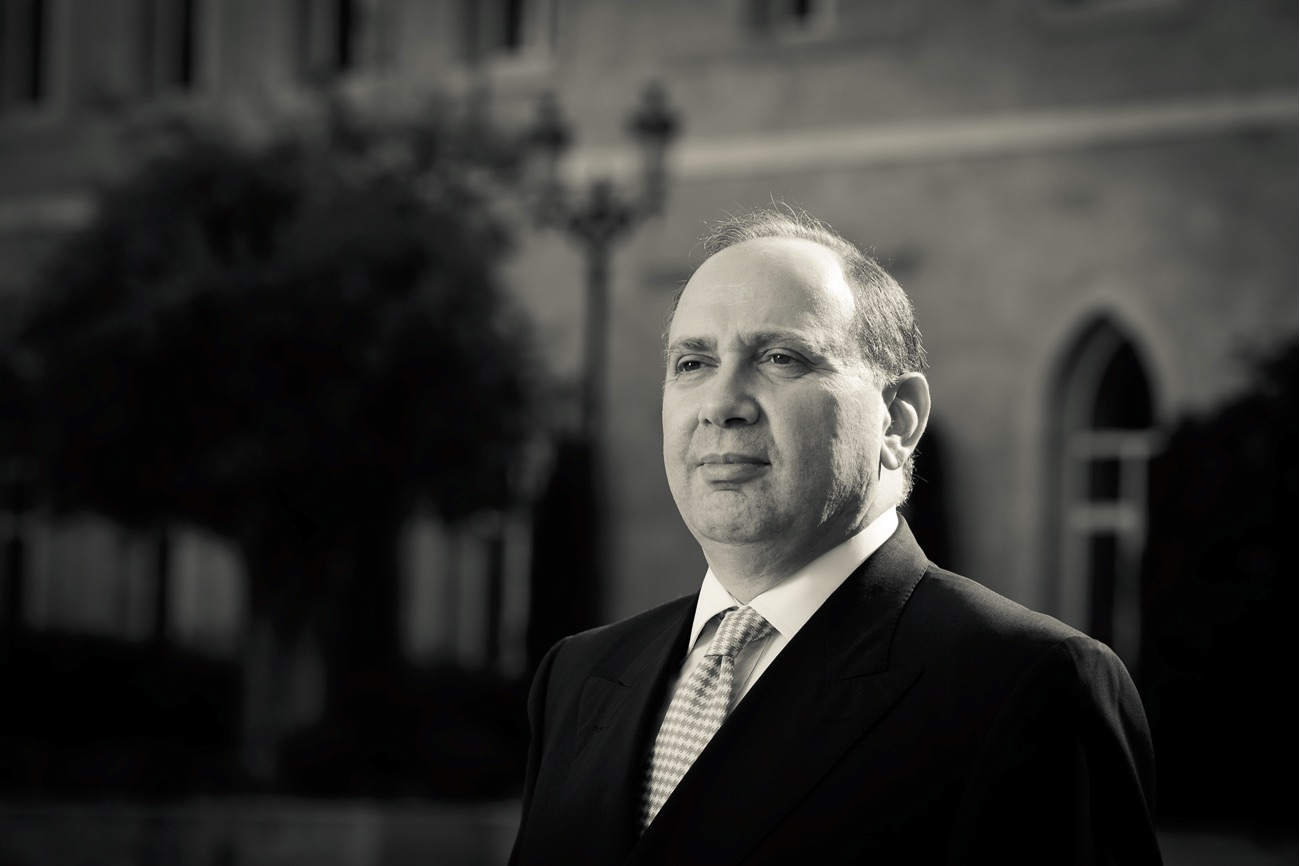
Carlos Ghosn, who is Brazilian-Lebanese, is the chairman and chief executive of the French automotive group Renault, chairman and chief executive officer of the Nissan-Renault Alliance, and chairman of the board at Nissan Motor Corporation. During a recent visit to Lebanon, he participated in the launch of a real-estate project that will be based in the cedars region and found a few minutes to answer questions from Executive by phone. 

E   Thank you for taking time to talk with Executive. In your capacity as chairman of a globally leading car manufacturing group, you’ve been interviewed about the future of cars, the art of leadership, and about transforming and running a global corporation. How do you make time in all your busy schedules to talk about Lebanon?

I obviously have very few occasions to talk about Lebanon, usually at a moment when I am taking a few days of vacation and am visiting the country. It would be fair to say that there is a lot of interest in Lebanon, its investments, economic activity, and development, and I think it’s a responsibility for anybody who is attached to this country to contribute a little bit of time to try to enlighten the public about what can be done and what cannot be done.

E   It’s known in Lebanon that you have had connections to this country for many years, including consulting and advisory roles, but I understand that specifically this month there was the launch of a real estate project called Cedrar, of which you are a board member and investor.

Yes.

E   Is your investment in Lebanon more of a passion investment, or does it come with a profit motive?

It’s both. The most important contribution that people of Lebanese origin who are living and working abroad can give to the country is to invest in the country. This is because investment is about job creation, about development of the country, [and] about valorizing the assets in the country, whatever these assets are: land, or quality, or anything else.

[This investment] is not about optimizing profit, because we know that there’s a lot of risk included in investing in Lebanon. The benefit of an investment contribution is very important [when] people like me, and other people, are each investing at their own level. This being said, these investments aren’t just about [making a financial] contribution, or about passion. Like any business, you want to make sure that you make a profit at the end of the day. Profitability is about ensuring that this business is going to stay and will not collapse. Profitability is ever-present in the mindset, to make sure that whatever you do, for whatever motive, the operation is sustainable.

E   Do you have a specific message through this investment, above what you said before, to your peers in the expatriate Lebanese community around the world?

The only message is: Don’t listen to what I say, look at what I do. The only way in which we can help Lebanon in this difficult economic period is through investment, but [it has to be] a well thought-out, long-term investment. This isn’t a social investment. It’s a business investment, but it has to take into consideration the necessity to be long-term, involve employment [creation], and the valorization of the assets. This is the message. It’s not about lecturing anybody. It’s talking about what I do at the request of many people, and it will perhaps [inspire] some people who might be tempted to make investment but need some kind of encouragement by looking at others.

E   What I saw from the information material about the Cedrar project was a description of a gated community that’s “a short helicopter ride” away from Beirut. To me, that sounds like a veiled way of saying there are many traffic problems in Lebanon.

Which is true.

E   Turning, therefore, for a moment to your expertise in the automotive sector, is there any suggestion that you would have for solving the traffic problem in Lebanon?

I think technology is going to allow for solving at least part of the problem. Autonomous cars facilitate a lot of traffic decongesting because cars are going to be driven most of the time by computers, which will optimize not only fuel consumption, but also the time to drive from one point to the other, through mapping. This isn’t only for Lebanon; this is for everywhere.

The second part is about infrastructure, and this is in the hands of the public sector. Necessary investments in infrastructure need to be done in order to allow not only better quality of life, but also allow the car sector to perform normally as a function of the growth of the population. Like in many other things, this is going to happen by each one doing their part. I don’t think any problem can be solved only by the public sector, or only the private sector. Each in his own area of competence is needed for this to be solved, and sometimes through consultation between the public sector and the private sector.

So, I would say traffic congestion in Lebanon will be partly solved by new technology, which is going to be very effective—not only in Lebanon, but in many cities—and through some basic investment in infrastructure to decongest some of the big traffic areas.

E   This sounds like you’re in favor of the public-private partnership methodology for infrastructure development, and of the PPP law that has recently been adopted in the Lebanese Parliament.

Yes.

E   From the perspective of an international investor with Lebanese roots, what do you consider to be the best assets and opportunities for investing in Lebanon?

The first asset of Lebanon is obviously its workforce. You find very good people at all levels, such as workers, engineers, [and] very good marketers. You can find these people, and if you cannot find them locally, they will come. There’s a very large Lebanese diaspora who are not [working in the country] because there is a lack of opportunities. But they are in the Gulf countries, in Europe, and in many other countries. If they have an opportunity and a decent life in Lebanon, they will come back.

Secondly, this is a country that has been built on the services sector. Lebanese people know what quality service is. I don’t say that quality of service is a given in Lebanon, but people [here] who are properly trained have the mindset and the mentality to deliver high-quality service in different sectors, whether we’re talking about health or about hospitality, and anything in these areas. I can, unfortunately, not talk about [capitalizing on] the ideal geographical positioning of Lebanon because it’s, in a certain way, handicapped by the lack of infrastructure and the lack of investment. But this [geography] would become a huge asset if we had an appropriate investments into telecommunications and all the services around 3G, 4G, etc … Unfortunately, all of this is not at the level [needed to] valorize the geographic position of Lebanon.

E   To inquire more about the Cedrar project, the description emphasized respect for the cedar tree and the environment. One would assume that the project will have green buildings and will pay great attention to protecting the immediate environment.

Exactly.

E   But is there also a planned aspect of rural development or job creation involved in the project, beyond the usual spinoff for the local economy in the area, which in the economic context of Lebanon is quite remote?

There is a constraint that was put by the shareholders for the people managing the project. Anything we do should be totally compatible with respect for the environment, number one, and not only respect of the existing environment, but also promote [improvements to the environment]. The management of the project announced that they made an agreement with an NGO that is in charge of replanting cedars in Lebanon. Cedrar will be supporting efforts of replanting a huge area in Lebanon with cedar trees. It’s these kinds of activities where you not only promote development that is compatible with respect for the environment, but also where you’re taking some initiatives because of this project, which will make the environment better, because the environment has been abandoned for so many years. This is at the essence of the project. This is not just about doing business, but sustainable business and sustainable business has to be done with high standards in terms of respect for the environment.

E   So there is a reforestation component tied to the project?

Yes.

E   Allow us to conclude with a more personal question. As CEO of an international company there can be no doubt that you have great skills in negotiation, marketing communication, and leadership. Some of these skills are often seen as characteristics for people of Lebanese descent. This brings me to ask if there are sometimes imperfect business traits that you discover in yourself and would attribute to your Lebanese heritage. What would these be, and how will you control them?

I don’t know. It’s very difficult for one person to make your own analysis about what [in your personality] is coming from Lebanese roots, what is coming from your Brazilian birth, and what is coming from your French education. Frankly, I don’t spend too much time trying to say what is coming from what, but without any doubt, part of my trading skills have their roots in Lebanon. I don’t know if it’s the good part or the bad part—that’s up to people to judge.

The Lebanese, as you know, are business people, and have been business people for such a long time. There have been great people and not so great people. You have a mixed bag of a lot of talent, which people develop with different intents. And in a certain way it is intent that makes [the usage of skills] good or bad. But I think that what is important is that, independently of the intent, the skill is there, the ability to find common ground, make agreements, and to find win-win situations. This is something that Lebanese know how to develop and, as you know, we have many examples of people who have developed these [skills] with good intent, and also unfortunately people who developed these kind of skills with bad intent.

E   Is it correct to assume that you have no interest in becoming a Lebanese politician?

Exactly, I have zero interest.

October 11, 2017 0 comments
0 FacebookTwitterPinterestEmail
Automotive 2017Special Report

The other side

by Khalil Hariri October 11, 2017
written by Khalil Hariri

Mar Mikhael usually evokes images of a buzzing nightlife and hip restaurants; what few of the neighborhood’s visitors realize, however, is that there is more to Mar Mikhael than Armenia Street. Even fewer are aware that Mar Mikhael is not bordered by Charles Helou Avenue, but that it in fact splits it in two. 

Located in Medawar in east Beirut, Charles Helou Avenue was constructed in 1958 to link Beirut’s northern entrance to the Beirut–Tripoli highway. Highways and roads were central to planners’ attempts at shaping the city and managing urbanization. In fact, prior to the 1964 master plan for Greater Beirut, written by the French architect and urban planner Michel Ecochard, the only plan that was approved by the government was the 1954 one, which was a little more than an network of intersecting roads with no zoning regulations and high densification factors.

Ecochard himself was famous for his numerous highway projects, the most famous of which is the Lebanese coastal highway, built in the 1930s. He thought increasing the vehicular capacity of existing roads would facilitate the transport of workers into the city. This modernist approach to planning was common in the West in the first half of the 20th century; engineers conceived highways according to traffic trends to maximize the efficient circulation of goods and people.

Torn communities

In theory, highways reduce transportation costs, allow for specialization in production, and enable regions to develop a competitive advantage. In practice, however, in addition to producing congestion and pollution, highways hollow out the communities they cross through. There is also evidence that suggests that highways are disproportionately routed through underprivileged neighborhoods. In the United States, former transportation secretary Anthony Foxx has claimed that most of those displaced by highway projects were low-income African Americans. Road projects destroyed 1,500 buildings and 200 businesses in the now-vanished neighborhood of Brooklyn in Charlotte, North Carolina, while inner-city highways led to a 30 percent decrease in the population of Syracuse, New York.

Similarly, the construction of Charles Helou Avenue meant that the efficient circulation of automobiles was prioritized over the wellbeing of Medawar’s communities. Parts of Nour Hajin, an Armenian camp in the north of Mar Mikhael, were wiped out as the camp shrunk from 25,000 to 18,000 square meters. The Saint Therese Church was demolished to make way for the avenue. The avenue also stood as an obstacle for those living north of it, as they were now blocked from reaching Mar Mikhael Church by foot.

Residents of Mar Mikhael’s port side recalled in the first few decades after the avenue was built  that hundreds had died attempting to cross the avenue over to the other side where most shops, such as convenience stores and butchers, were located. According to the same long-time residents, those crossing the avenue were also easy targets for snipers located in towers in nearby Saifi during the civil war, further disconnecting the two sides. The only pedestrian bridge linking the two halves of Mar Mikhael was built more than 30 years after the avenue itself.

To cross from the south side of Mar Mikhael to its north side by car, one has to drive to Corniche El Nahr, turn westward near Forum De Beyrouth, and drive along Charles Helou Avenue. This means that the north side is not only hard to reach by foot, but also by car, especially during peak hours. Residents explained how the north side of the neighborhood is now an “isolated island.”

[pullquote]The only pedestrian bridge linking the two halves of Mar Mikhael was built more than 30 years after the avenue itself[/pullquote]

This isolation has had drastic impacts on the economy, identity, and development of the north side of Mar Mikhael. It has remained strictly linked to port activities, as most firms located in the area belong to the logistics and transport sectors. In its southern part, on the other hand, Mar Mikhael has witnessed drastic economic changes, as it has attracted pubs and restaurants, alongside the arts and crafts industry, transforming into one of the city’s major nightlife hubs. The only high-end restaurant that opened in the north side was Harbor 201, which recently went out of business. This is despite land prices being considerably cheaper in the northern side due to the difference in demand.

The stark contrast in economic fortunes between the two parts has also led to a difference in their identities. Whereas the southern side has attracted expats, foreigners, and young professionals, the north side has witnessed an exodus of its younger generation, leaving mostly long-term, impoverished, and elderly residents in the area. The only school in the area closed four years ago, according to one of the area’s mukhtars, or local officials.

People not cars

As Charles Helou Avenue undergoes renovation, the junctions leading to Mar Mikhael have been blocked, further isolating the north side from the rest of the city. Despite promises from Beirut’s governor to build a bridge or a tunnel that connects the north side of Mar Mikhael to Geitawi, the area has failed to attract developers, as evidenced by its numerous empty lots in the area. Northern Mar Mikhael’s isolation also seems to have amplified the negative externalities of the highly polluting Sukleen, Sukomi, and port trucks. Things are only expected to get worse for the area if a waste incinerator is built in nearby Karantina. 

As Beirut continues to choke on car traffic, Dr. Mona Fawaz, coordinator of the Masters in Urban Planning program at the American University of Beirut, explains that “car mobility has reached its limits, and it’s time to rethink the role of highways.” Not only have inner-city highways become outdated, but they also encourage the use of private cars. Despite that, city and state officials continue to push for projects like the Fouad Boutros highway that would cut through dense neighborhoods. State officials have resorted to the outdated 1964 Ecochard plan to justify the highway, and the municipality is already expropriating land even though the environmental and traffic impact studies are still ongoing. In fact, Fawaz says that the impact studies may not have even taken place without pressure from civil society, despite the fact that the law states that highway projects cannot be executed without them.       

There are other examples of bridges and highways that have had a negative impact on their surroundings in Beirut, such as the Yerevan bridge in Bourj Hammoud and the Hawd Al-Wilaya bridge in Basta, which also cleared neighborhoods in two. Through the effect of the multiple highways and bridges that cut through its neighborhoods, Beirut has been shaped by the needs of its cars rather than its residents. To counteract their effects, improving public transportation and promoting walking and cycling are essential to turn Beirut into a more livable and vibrant city.    

October 11, 2017 0 comments
0 FacebookTwitterPinterestEmail
Automotive 2017Special Report

Going nowhere

by Nassib Khoury October 5, 2017
written by Nassib Khoury

The latest move to encourage the use of electric vehicles (EVs) in Arab markets came in Dubai. Last month, the Dubai Electricity and Water Authority announced incentives for EVs that include exemption from road tolls and registration fees at the Road and Transport Authority, and free charging and parking at specially assigned locations.

The emirate expects to have some 32,000 EVs and hybrids on the road by 2020, and 42,000 by 2030. For Dubai, this actually seems a somewhat small proportion, given that data from the past few years showed that vehicle sales were around a million, and vehicle density is one of the highest in the world at 540 registered vehicles per 1,000 residents in an emirate with 2.8 million inhabitants. However, when compared with other countries in the region, such as Lebanon, Dubai’s EV initiatives appear strong.   

Lebanon was once a pioneer in terms of the import and sale of cars in the Arab world. Agents, dealers, and distributors played a valuable role in the introduction of the automobile to Lebanon and the entire Arab region in the beginning of the 20th century.

Today, about 100 years after the combustion engine started its worldwide conquest, the automotive era is changing radically with the introduction of hybrid and electric cars. This alternative fuel story began in the 1990s, when personal transporters (like the electrically powered chairs for seniors) and light EVs were patented, and a range of hybrid cars was envisioned and produced.

The grandfather of hybrids was the Toyota Prius, which combined a combustion engine with an electric powertrain. It penetrated markets around the world, and its success was most noticeable in countries where governments were aiming to reduce air and noise pollution by offering tax benefits and other incentives for buying “green” cars.

The race toward wide adoption of electric cars got a decisive second kick around 2010, when Nissan and Tesla demonstrated that plug-in electric cars could appeal to diverse audiences. More and more manufacturers jumped on the electric-mobility bandwagon around that time. The migration to electric mobility got a third, and probably decisive, boost last year, when a pile-up of embarrassing emission scandals created huge political pressure, and an increasing number of manufacturers and national policy makers began talking about phasing out the production of combustion engine vehicles over the next 10 years, or even sooner. Researchers suggested recently that the production of EVs, which has doubled every 15 months since 2011, would overtake production of traditional gas-powered vehicles in the coming 10 years.    

No incentives for EVs

Lebanon is lagging behind the global push toward EVs. Car importer BUMC, Lebanon’s Toyota and Lexus distributors, brought the Prius into local market in 2010, despite it not being provided with any advantage by the Lebanese government. Without tax benefits or other state incentives for low emissions, the Prius proved to be too expensive for the middle class.

Executive contacted 10 distributors and dealers to ask about the existence or availability of tax advantages or incentives for green cars. All the dealers confirmed the total absence of a legal framework that would boost the import and sales of hybrid cars or EVs.

One of the biggest obstacles to adoption is that electric cars are registered as fuel-powered cars, using a mostly abandoned system for taxing cars based on their engine capacity called fiscal horsepower. The Renault Twizy, for example, was registered in Lebanon in 2017 as a 10 fiscal-horsepower car, despite being an 100 percent electric plug-in car that is powered by a battery, weighs around 450 kilograms, and measures less than three meters long.

EVs are silent, do not emit any polluting gasses, and do not consume any fuel

Ultra-compact urban EVs, such as the Twizy can change the experience of the city, with lower noise pollution in the city center. In some countries, they can be driven with special licenses, and they are often incentivized by governments in various ways. EVs are silent, do not emit any polluting gasses, and do not consume any fuel.

While there are no legal prohibitions against EVs in Lebanon, the state offers no incentives for buying one. For any of the hybrid or electric cars in Lebanon, like the Toyota Prius, the Hyundai Ioniq, hybrid Porsches, or the Mercedes S400 Hybrid, the only advantage to the buyer is lower fuel consumption. But in terms of budget, these cars are more expensive than the same manufacturer’s equivalent models with combustion engines, and indeed more expensive than gas-powered cars with comparable performance.

The tiny Renault Twizy, for example, sells for approximately $20,000 in Lebanon, while in Europe it is sold for approximately $8,000. The high price makes it a luxury, defying the concept of an affordable electric car.

Even if one wanted to buy an EV here, such cars, especially affordable ones, are hard to find. Beyond the lack of government incentives, the other big barrier in front of the import and sales of electric cars is the absence of necessary infrastructure. In addition to the lack of recharging stations for EVs—which is a major hurdle in the transition to electric mobility in many markets—there is Lebanon’s notorious lack of a 24-hour electricity supply.

Hybrids already on Lebanon’s roads

All in all, the absence of a legal framework, infrastructure, and incentives for EVs make it easy to imagine why automotive importers like Natco and Sidia, which represent Kia Motors and PSA (Peugeot and Citroën) respectively, are very reluctant to invest in them. But these agents tell Executive that they are still planning to import Chinese hybrid or electric cars, noting that China is emphasizing the development of EVs in its automotive industry. They mentioned models like the BYD F3, Qin, and Tang, which are hybrids, and the BYD E6, Song and T3 electric models. The agents even plan to import electric buses, an area where Chinese products have an affordability advantage over European or Japanese EVs, which could at least partly make up for the lack of Lebanese governmental incentives for import customs or registration costs.

Executive contacted other dealers like T. Gargour et Fils, which sells Daimler-Benz and Smart cars, and Gargour Automotive Company which is part of the Fiat-Chrysler group.  Gargour Automotive Company noted that they are still reluctant to have more electric or hybrid cars in their showrooms, given that the Fiat-Chrysler group does not have an aggressive hybrid or electric cars strategy.

By contrast, Daimler-Benz and Smart already do, with vehicles like the Mercedes-Benz EQ, the S400 Hybrid, and the E400 Hybrid. Smart also introduced the fortwo and fortwo cabrio electric drive, which have a range of 100 kilometers.

In the hypercars and supercars sector, wealthy Lebanese have, or will have, access to hybrid supercars like the Ferrari LaFerrari, the Porsche 918 Spyder, and the McLaren P1. While doubts over the role of supercars in the advancement of electric mobility are in order, hybrid hyper- and supercars prove the appeal of this automotive technology to tech-loving locals with super-deep pockets.

[pullquote]There is not only need for a legal framework and an incentive framework, but also for a new frame of mind among consumers[/pullquote]

A new legal framework for EVs

Case in point: The Porsche Centre Lebanon has delivered four of the 918 Spyder’s total production run of 918 units. Taxes reportedly boost the local price tag of these hybrid supercars from somewhere around $900,000 to about $1.5 million. When Executive asked Selim Saad, advisor to the Automobile Importers Association in Lebanon (AIA), if there was a legal framework in sight that might boost hybrid and electric cars, he confirmed that the government has not sent any encouraging signals on incentives for EVs.

For hybrid and even fuel-combustion engines, Saad noted that Lebanon still has work to do to bring its fuel up to Euro 6 emission standards, as currently fuel used in Lebanon—petrol and diesel—is at Euro 3 standards, meaning it emits a far higher level of sulfur into the air. The Lebanese government is working with UNDP to make the market compliant with its international climate change agreements.

Distributors, consumers, and the AIA are working together through public-relations channels, and by  importing hybrid and electric cars to modernize the automotive frame in Lebanon. There is not only need for a legal framework and an incentive framework, but also for a new frame of mind among consumers. All evidence today suggests that the Lebanese government will have to embrace and adopt the hybrid and electric cars within a few short years, or else Lebanon will be left behind.

October 5, 2017 0 comments
0 FacebookTwitterPinterestEmail
IssuesMay 2017

May 2017

by Executive Editors October 5, 2017
written by Executive Editors
space

EDITORIAL

The donkey strategy


LEADERS

Don’t sweat the details

Things are moving, but too often behind closed doors

COVER STORY

Self absorbed

Time to get back on a horse

SPECIAL REPORT
OIL & GAS

Into the blue

Lebanon’s oil & gas sector nearly open for business

Troubled waters

Lebanon seeks to join its neighbors in oil & gas exploration

Russian expansionism

Moscow’s interest in East Med gas resources

Investment expectations

What would oil & gas mean for Lebanon? Hard to predict
Maximizing oil & gas potential
Lebanese Petroleum Administration plans ahead

Transparency cookies are in the oven

Lebanon takes step towards clean oil & gas sector

ECONOMICS & POLICY

Full of gas

A lot of talk but little detail on plan to tackle electricity shortage

Unleash the speed

Ogero flips a switch and local internet transforms

Glittering in the shadows

Lebanon’s gold trade

BANKING & FINANCE

Q&A with Makram Azar

Chairman of banking EMEA and chairman of Barclays Bank PLC

COMPANIES & STRATEGIES

Visions of community

Translating passion into a career

HOSPITALITY & TOURISM

And the livin’ is easy

Lebanese travel agents talk summer destinations

Le Gray grows

Expansion opens doors to untapped market segments

BOOK REVIEW

Knowledge production in the Arab World

On regional research

LAST WORD

Rethinking the world

Lebanon redefined
October 5, 2017 0 comments
0 FacebookTwitterPinterestEmail
Economics & PolicyPPP Law

A marriage of convenience

by Jeremy Arbid October 5, 2017
written by Jeremy Arbid

After a nearly decade-long wait, Lebanon’s legislature finally ratified a law encouraging private-sector investment in public infrastructure. The new framework for public-private partnerships (PPP) could allow the private sector to deliver some public services at lower prices than those currently available, says Peter Mousley, the program leader for trade and competitiveness, finance and markets, and PPP at the World Bank’s Beirut office. Lebanon’s commercial banks, Mousley says, have signaled their readiness to diversify away from mostly purchasing treasury bills, and an appetite for investing in public infrastructure.

E   What’s the difference between privatizing public services and public-private partnerships?

One way of looking at it is [that] privatization is a divorce and PPP is a marriage. They’re two very different things. One is where a government sells assets to the private sector; the other is where, under certain terms, a government makes assets available to the private sector to deliver public services, but the assets remain owned [by the state]. What they’re primarily trying to do with a public-private partnerships is distribute risk to get a more cost-effective service delivered. So, if the private sector [is more] willing to take the risk under a PPP model, you try to incentivize them to take that risk.

E   Should countries new to PPP exercise caution, or begin with a trial project?

Yes, you take time. This is a skill that is not immediately created, and the [Lebanese] Higher Council for Privatization and the line ministries that want to do PPPs are going to have to develop the right expertise to manage the process. It’s very different from public procurement, so if they build up a pipeline of PPPs, it will be done over a long timeframe.

E   What can go wrong?

Well, you can do bad analysis about what the allocation of risks are. You can underestimate or overestimate the revenue base. There are so many elements to it. Usually, in preparing a PPP, you do an initial prefeasibility [analysis], which sort of says: Okay, this is a sector that has revenue flow. And if it doesn’t have revenue flow, [the private sector can be] confident that the government entities that would be making revenue, if it’s not the end user, are creditworthy and are able to make the payments to the private sector. And if it isn’t going to be based on end user [revenue], then does the government have the fiscal capacity to honor what is called “availability payments,” which is often how these are financed? Bearing in mind, what you’re essentially doing is asking the private sector to [take on] front-end risk in the investment in capital development against a long-term flow of revenue. So they need to have confidence that long-term revenue is coming from a creditworthy source.

E   Lebanon has witnessed almost seven years of sluggish economic growth, for many factors, but elected and public officials arguably did little in that period to facilitate or ease the challenges of the private sector. Is the PPP law an example of legislation that can help Lebanon’s economy, and does the World Bank advise other legislation or regulatory fixes?

Look at the World Bank’s Ease of Doing Business rankings for Lebanon and you [will] know there are areas that, if you deal with these things, you’ll generate more investment. [Foreign direct investment] flows have been declining, [and] there are lots of reasons for that: political security as overriding. We did a survey a couple of years ago, [and] the significance of political insecurity as a disincentive for investment had gone right up relative to previous surveys. Then there is a host of investment-climate items, from starting up a business to creating a more inclusive financial system, through legislation Parliament has in draft form. So there is a whole range of things the country could do to move forward, and in terms of generating more private sector investment. In the back of the Spring 2017 edition of LEM [Lebanon Economic Monitor—a World Bank publication], we list a lot of the policy priorities that we recommend. Frankly, I don’t think any of these ideas are unknown to the government—the reason they haven’t gone forward is they haven’t got very clear awareness of the importance of these. PPP is a great one and is a good start, but there are many others that arguably have been pending parliamentary approval or implementation for a few years. Cumulatively, they would all make a huge difference.

October 5, 2017 0 comments
0 FacebookTwitterPinterestEmail
Economics & PolicyPPP Law

A partnership in risk

by Jeremy Arbid October 5, 2017
written by Jeremy Arbid

This summer, Lebanon ratified a new law enabling the government and private sector to share risk in investing, building, and operating infrastructure projects. The legal framework, known as a public-private partnership (PPP), encourages companies to provide services that the government cannot afford to deliver at efficient costs to end users (see article).

To understand the applicability of the new law and its potential, Executive met with Ziad Hayek, the secretary general of the Higher Council for Privatization (HCP), the public agency now responsible for coordinating new PPP projects with the private sector.

E   Lebanon has infrastructure projects that have had at least elements of PPP. What difference will the new law make?

We do not have PPPs that have worked out well. That was the main problem. PPPs are a very special type of procurement, and they really involve a dialogue about the sharing of risks and the mitigation of risks. And they’re done on the basis of the specification of outputs rather than inputs for a particular project. Instead of saying, ‘I want this project to be built by the private sector,’ you say, ‘I want this service to be provided by the private sector,’ so that’s output as opposed to input specification. It’s not a partnership in equity or investment. It’s not a partnership in revenue. It’s not a partnership in profits. It’s a partnership in risk. This is the definition of PPP.

Until now, PPP has been approached in Lebanon like normal procurement. It’s always been done wrong because there’s been a tender to find out the price—who is going to offer the lowest price. This is not what PPP is about. This is what we tried to do in this legislation: insist that from now on, PPP projects have to be subject to international practices in tendering. And the main aspects of that are, first, insistence on transparency because this is paramount for the success of PPP; and second, having an organ within the government that has the expertise to deal with PPP projects and with the private sector—the Higher Council for Privatization.

E   What role will the HCP play, as per the new law?

The HCP’s role is to assist the government in tendering projects that are PPP in nature. We’re still a small team; we’re in the process of drafting the Council of Ministers’ decisions that enable us to increase the size of our team, and adjust our budget so that we can cope with new responsibilities. We couldn’t do that until now because there was no legal basis for us to do this. Now there’s a legal basis for us to have these responsibilities. Until that is done, we have a very small team, so we cannot manage more than three projects at this point in time.

I’d like one of the projects to be related to infrastructure—most likely in transport—and one project to be related to public buildings because that, I think, will be one of the ways to introduce PPP to the nation. And the third project could be what we call people-first PPP, a project having a social dimension like a hospital, or school, or rehabilitating a sports facility, or something like that. But I don’t know what projects they will be. They will have to be presented by the ministries and agreed [to] by the HCP, which is not just me. The HCP [is governed] by a permanent ministerial committee. And I head the staff of that committee.

E   You’ve been the HCP secretary general for nearly 10 years, and the law was in draft form for nearly as long. In Lebanon, there really never is a clear path to legislating, but is there any reason that August 2017 was the month the PPP law was finally ratified by Parliament?

I think it has to do with the nature of PPP. First, it’s not a concept that’s easily understood by people. I faced a lot of objections. The public sector was like, ‘What, you want to let the private sector do such things? This is privatization.’ And the private sector was like, ‘Partnership with the government? You want a government representative to sit on the board with us? We’ll never finish with the  bureaucracy. No, we don’t want anything to do with government.’

It took almost three years to get people to understand [that] when we talk about PPP, no, we don’t mean mixed investment companies. We’re talking [about] the private sector providing a service to the government, which then provides that service to the citizens. And then it took us a long time to get the legal community to agree that it will not violate the constitution—because there’s an article that states [that] you cannot give concessions without a specific law—and [to agree] that PPP is not a concession. Then, it took time to get to the Council of Ministers, and then  [the government] changes all the time. Every time it was presented to cabinet, a committee would form to study it, then the government would change, and then we would wait for another government. Then it took a long time in Parliament.

E   As you put it, the HCP is now scaling up its institutional capabilities to advise the government, and it will take a lot of time to develop potential PPP projects. In doing so, what’s it’s interaction with the private sector?

Presenting a proper PPP offer or bid can cost upward of $1 million, versus the cost of around $10,000 when preparing a bid on a tender under normal procurement rules. [Under procurement rules], if the government is buying a power plant where it will determine all the variables and specify exactly what it wants, it will then offer a tender, and whoever gives the lowest price wins the bid. In this scenario, a bidding company will take the list of what the government is asking, make a few phone calls to get the pricing, add in a profit margin, and present the bid. It costs like $10,000, and if the process is not transparent, at the end of the day somebody wins the bid, but no one knows how; $10,000 is an acceptable cost of doing business when failing to win the bid.

[pullquote]“When we talk about PPP, no, we don’t mean mixed investment companies”[/pullquote]

In PPP it’s not like that. If I’m bidding on a power plant, I don’t know what the power plant is going to be—I just know that the government wants to buy the cheapest electricity possible. How am I going to produce it, and what technology am I going to use; how many turbines am I going to have; how much fuel storage will I use? Consulting firms for designing a power plant is not cheap, and then I have to sit and negotiate with banks because even if I have the same design as a competitor, if that competitor has financing at a quarter percent less than mine, they’re going to win. So I have to negotiate [with] the banks, and to do that, I need financial experts with me to structure the bid, whether this is going to have mezzanine financing or Islamic financing as part of the structure. These cost a lot, and it takes a long time, so when I present my bid, I’m not willing, if I’m a serious participant, to participate in a tender where I don’t know at the end of the day how the bid will be awarded.

E   Is the PPP law a first measure in this path to correction that needs to put in place, and are there other laws that you see could help the private sector flourish again? Regulations?

What makes me excited about PPP is that as you invest in infrastructure, you create jobs in large numbers. A major infrastructure project is going to employ thousands of people, and not all are going to be construction workers. You’re going to have accountants, managers, IT, architects, and engineers. And investing in infrastructure is, by definition, the basis on which you then build your economy. When you invest in infrastructure, you’re investing in things that are going to stay. We ran a study: If we invest $6 billion in infrastructure projects, how many jobs would we create? Our analysis showed—and it depends on the type of projects that you invest in—that we would create more than 200,000 jobs in five years’ time. That’s huge compared to the size of our labor force.

E   Lebanese banks and investors certainly have the capital, and maybe the appetite, to invest in infrastructure projects. Will the PPP law encourage their participation?

We will probably not see this in the first generation of PPP projects, but what I hope for future projects is listing on the Beirut Stock Exchange because then we’re going to be creating a snowball effect. Lebanese companies have, for decades, been obliged to generate capital internally. Having access to an efficient stock exchange to raise money you need means businesses could grow from the level of an SME [a small or medium-sized enterprise] to [the] level of a corporation. And if you’re a corporation, you can generate more jobs than you would as an SME: this is the snowball effect that I’m hoping PPP would start.

October 5, 2017 1 comment
0 FacebookTwitterPinterestEmail
Cover storyOil and Gas

Lebanon’s fiscal conundrum

by Mona Sukkarieh October 5, 2017
written by Mona Sukkarieh

There are two arguments being made today. Both agree the state should maximize its share of benefit, though they do not agree on what is the maximum benefit achievable. Some aim for a bid round that is as competitive as more comparable bid rounds—while others demand a greater level of state participation.

While it is commendable to stand up for Lebanon’s rights, we would all be well advised to avoid misinformed populism. To put it simply, arguing Lebanon deserves a fair share implies the existence of a “share.” This share can only exist if the state contracts partners to explore for and produce potential resources. There are two parties to the deal; the terms must be attractive enough for both sides to commit to signing a contract. If no contract is signed the “share” vanishes, given the absence of indigenous capacity to conduct upstream operations.

Contrary to some claims, perpetuated by a political class that is struggling to manage expectations, current market conditions are unfavorable for Lebanon. The country’s offshore area is mostly deep and ultra-deep waters. Low oil prices since late 2014 means expensive exploration in Lebanese waters is unattractive at the moment. Companies must actually be persuaded to bid by Lebanon offering attractive fiscal terms.

Opponents of how Lebanon is conducting its first licensing round argue: (1) the model exploration and production sharing contract decree is in conflict with the 2010 offshore oil and gas law as it prevents the state from participating in the tender, distorting the system from an originally-intended production-sharing model to a profit-sharing model; and (2) the royalties and taxes, set out in the contract degree and tax law, are too low compared to a “global average.”

In fact, the 2010 offshore law explicitly says the Council of Ministers may establish a National Oil Company (NOC) “when necessary” but only “after promising commercial opportunities have been verified,” which rules out an NOC in the first licensing round as this cannot be verified ahead of exploration. Moreover, the state retains ownership of resources in the ground and a share of the produced hydrocarbons once the company recovers capital and operational expenditures, meaning Lebanon’s chosen model contract is a classic production-sharing system. The distinction some wish to establish between a production-sharing model and a profit-sharing model is non-existent.

As for the fiscal terms, comparing them to a “global average” may seem to lend an air of seriousness and professionalism, but in reality, it is closer to comparing apples to oranges given the diverse range of countries with oil and gas resources. These countries include legacy producers with resources located in a variety of environments and other aspiring producers. One cannot compare a country with proven reserves to a country where drilling has not yet begun. Similarly, one cannot compare countries or provinces where exploration is relatively cheap and easy to countries or provinces where it is expensive and complex. Finally, one cannot ignore Lebanon’s political risk, especially considering the country’s first licensing round is now slated to close more than four years behind its original schedule. These are all elements that affect how attractive a country is to foreign companies. One way to compensate for Lebanon’s relative disadvantage (i.e., no proven reserves in both a high-cost drilling and high-risk political environment) is offering attractive terms for potential investors.

A more coherent approach would entail identifying a group of countries or provinces with similar basins (deep-water offshore, and a more or less comparable status—early exploration or production activity). Ideally, we would also add other elements: A local market that is comparable in size and the existence of little or no export infrastructure, in addition to the sociopolitical environment. By comparing Lebanon to a “global average,” those making this argument have steered the discussion toward unreasonable demands and inflated expectations.

Future licensing rounds will not necessarily be governed by the exact same legal framework. Future exploration and production-sharing agreements (and the royalties included in them) will not necessarily be the same. Fiscal terms are not set in stone. Though regulatory stability is important, they may change in the future to adapt to new realities. Realism is key, whether now or in the future.

October 5, 2017 0 comments
0 FacebookTwitterPinterestEmail
Cover storyOil and Gas

Icing on the cake

by Matt Nash October 5, 2017
written by Matt Nash

It came at the last minute. For two years, the Ministry of Finance and the Lebanese Petroleum Administration (LPA) have been drafting a tax law focused specifically on the oil and gas industry. In late September, Parliament approved it just in time for the law to potentially govern the first oil and gas exploration and production contracts the state hopes to sign during or before Spring 2018 (with bids due October 12).

Contract signature is not a given, but with the passage of the tax law, Lebanon’s oil and gas fiscal regime is finally complete. The new law is tailored for the oil and gas industry and imposes higher tax rates on oil and gas companies than it does on other corporations registered or operating in the country. Corporate income tax, for example, is set at 20 percent in the oil and gas tax law, as opposed to the 15 percent corporate income tax imposed by existing legislation (even higher than the approved but annulled hike to 17 percent).

The oil and gas tax law was initially slated for parliamentary debate in August, but lack of quorum scuttled the discussion. In early September, partially because the law had not yet been passed, the LPA recommended postponing the deadline for submitting bids in the country’s first offshore oil and gas licensing round from September 15 to October 12 (a new deadline officials insist will not change—see story page 16). Model contracts oil and gas companies will use to bid include a so-called stabilization clause, which protects companies from tax increases that come after contract signature. Stabilization clauses are common in the oil and gas industry as a way to hedge tax increase risk given that oil and gas exploration and production contracts typically run 30 years or more in duration. By passing the new oil and gas tax law before signing contracts, the state will increase its tax revenue under any contract, or contracts, signed as a result of the first licensing round.

Targeted tax language

As is common around the world, Lebanon’s new oil tax law is industry-specific, explains LPA board member Wissam Zahabi. Aside from a higher corporate income tax rate for the sector, there are other differences between this tax law and the standard Lebanese tax code. Some differences—such as an unlimited time period for carrying forward losses, as opposed to the three-year limit in the standard tax code—are incentives for the industry. Others, however, are designed to keep oil and gas companies honest when it comes to reporting costs and revenues (key factors that will impact the government’s overall take from potential future revenues from the sector). One example is enshrining the concept of “arm’s length” transactions in the oil tax law. This means transactions between related and affiliated companies are evaluated as if they occurred between unrelated entities in a freely competitive environment. Zahabi elaborates: “[Oil companies sometimes] don’t tell you their right price. Let’s say you buy it from an affiliated company for five, they’ll tell you for six. They’d like to inflate the cost. Or whenever they sell, they sell at a lower price, and they tell you higher. So it goes both ways for cost as well as for revenue. If it’s an expense, they have an incentive to say it’s higher, if they’re selling they’ll say they sold it at a low price to cash in more profit.” This is important because the government’s portion of revenues from the sector is directly related to the costs and revenues of their contractual partners, the oil companies.

Lebanon’s fiscal toolbox

Taxes are only one means of several the Lebanese government will use to capture revenue from the sector. Additionally, the model contracts impose a royalty on both oil and gas production. According to the contracts, the royalty on gas is set at 4 percent and the royalty on oil ranges between 5 and 12 percent based on the amount of production. Royalties can be taken in cash or in kind meaning oil companies either deliver the government oil and/or gas it can use, or sell on its own; they can give the state the requisite cut of commodities the companies sell on their own; or they can do a combination of both.

In addition to royalties and taxes, the government will have a share of hydrocarbon production as well. Like royalties, this share can be taken in cash or in kind, but unlike royalties, the share progressively increases over time. The government’s share is biddable in the model contracts and related to project cash flows. Deepwater drilling is expensive, and the time frame between incurring expenses (drilling) and realizing revenues (production) can stretch to several years. As is standard in the industry, Lebanon’s model contracts allow companies to recover their costs. Production-sharing “payments” from companies to the state (whether in cash or in kind) will be made quarterly. Each quarter, companies can deduct their costs from revenues and the contracts call for a recovery ceiling of 65 percent. This is a biddable item, so companies may well bid lower than 65 percent to produce a more attractive offer from the state’s perspective.

What this means is that until costs are recovered, every quarter that companies generate revenues from oil and/or gas sales they are able to “keep” at least 65 percent of those revenues, splitting the rest with the state. The initial split must be at least 30 percent, according to the contracts. This percentage, however, is also biddable, meaning it can be higher. The other two biddable fiscal components relate to the revenue split percentage after costs are recovered and the point at which this new percentage will be triggered (i.e., once costs have been recovered by a factor of 1.5).

A step in the right direction

Passing the oil tax law was important for the sector because it completed the fiscal regime. The government’s share of benefit from this sector comes from multiple sources—as is current international best practice—and having all of the rules in place from the start is wise from a regulatory perspective. There is still, however, a bit of work to be done in terms of passing a few implementation decrees so the law’s provisions are fully enforceable, Zahabi says. As for how the law stacks up against other global tax laws, Zahabi says the LPA hired consultants to help draft it, referred to OECD guidelines, and benchmarked Lebanon against eight other countries to produce the law. Passing it just weeks before bids are due, he speculates, will not have an adverse impact on how ready companies are to present their bids because they arguably saw this coming. “We’ve already done some presentations about it, so we gave them the general headlines,” he says.

October 5, 2017 0 comments
0 FacebookTwitterPinterestEmail
Agriculture

Show me the honey

by Nabila Rahhal October 5, 2017
written by Nabila Rahhal

Honey might not come to mind when thinking about Lebanese food products. But Lebanon has a deeply rooted history with the gold nectar; it was even mentioned in the Old Testament.

Though honey production may have receded from the forefront of the Lebanese agro-industry since the days of the Bible, it has garnered increased attention since 2012, thanks in part to international non-governmental organizations. And while a lot of work still needs to be done to further develop the honey industry, the past five years have seen many steps in the right direction.

Low cost investment

Beekeeping and honey production are considered to be businesses with relatively low barriers to entry. Nadine Chemali, technical director of marketing and exports at the USAID-funded Lebanon Industry Value Chain Development (LIVCD) project, says, “Our goal is to increase the income of people in rural areas. Honey is ideal for that, because it’s a low-investment project, and you don’t need to own land.”

Beekeepers in Lebanon move their hives three times per year, according to what is blossoming during that season: citrus trees in the spring, honeydew from oak trees in the fall, and wild flowers and thistles in the summer. Chemali explains that most beekeepers ask landowners for permission to place hives on their property, or work out agreements to share a percentage of the honey produced.

Investment in honey-making is also relatively low: The price of one beehive is just $200, according to the beekeepers interviewed for this article. Given that the current yield of a single beehive in Lebanon is around seven to 10 kilograms, and that honey is sold at an average of $33 per kilogram, new beekeepers can theoretically recoup their investment at a fast rate.

Kafalat, a Lebanese financial company that helps small and medium-sized enterprises obtain loans, helps honey producers access funding from commercial banks. A number of the beekeepers Executive spoke with say they have benefited from this program, which covers part of their initial investment, mainly into beehives, equipment, and small workshops.

Gentlemen beekeepers

In addition to the efforts of international NGOs to promote and grow beekeeping in Lebanon among rural families, an increasing number of personal investors have been developing honey production businesses over the past five years.

An architect by profession, Marc Antoine Bou Nassif founded L’Atelier du Miel in 2012  with his brother and a friend. “We wanted to reconnect with nature, and we started thinking of different activities to do that, but the one that really captured our goal was beekeeping, for a variety of reasons,” Bou Nassif says. “Most activities done with nature only connect you with one aspect of it: one season or one region. With beekeeping, it’s all of nature, and all seasons.” L’Atelier du Miel owns 2,000 beehives and works with eight beekeepers.

Roland Kaddoum, (no relation to Kaddoum honey brand) the director of pediatric anesthesia and director of the operating room at the American University of Beirut Medical Center, will launch Le Miel du Nazih by the end of 2017 in memory of his father, who was a reputable beekeeper, and because the activity brings him joy. Kaddoum owns 200 beehives with a yield of 900 kilograms.   

The number of beekeepers in Lebanon rose from 5,546 in 2011 to 6,340 in 2016, and the number of beehives increased from 194,520 in 2011 to 274,390 in 2016, according to the Ministry of Agriculture.

Climate change is here

Despite this growth, Lebanon’s average annual honey production is low compared to other countries. A beehive in France typically yields 40 kilograms of honey, four times more than the average Lebanese beehive. In 2015, when figures were last collected, Lebanon produced just 1,920 tons of honey, up from 1,360 in 2011. That same year, France, a medium-scale honey producer, produced 18,500 tons of honey.

Fady Daw, the founder of Adonis Valley—a Lebanese producer of organic food products, including honey—explains that yield has been low for the past three years because of the effects of our climate change on the environment. “Our dry season has become very long, and sometimes stretches from May to November, while in France, for example, it rains a whole lot more during this period. Also, temperatures in Lebanon are rising up to the 30s very early in the season, which is killing our flowers,” says Daw. Since bees rely on these flowers for their nectar, the high temperatures affect their ability to produce honey. Daw says that Adonis Valley produced a ton and a half of honey this year, slightly more than last year.

Maurice Habib, a longtime beekeeper who sells his honey in both Souk El Tayeb and the Earth Market, says annual production from his 600 beehives has dropped from an average of 16 tons five years ago to just four tons last year because of changes in the weather.

According to Chemali, many beekeepers have not have not formally studied their craft, and are unaware of how to increase the efficiency of their bees so that they naturally produce more honey, or how to make sure they all stay alive during winter. So LIVCD has provided training for 3,600 Lebanese beekeepers, and partnered with professionals to develop queen bees’ production centers to supply the beekeepers with better queen bees, which control their hives and protect them from diseases.

Wading in murky honey

Faced with such low yields, some honey producers resort to dirty tactics to increase their supply.

The most common trick is mixing Lebanese honey with a cheap imported variety—despite a $5 tax per kilo on imported honey, some honey can cost just $1 per kilogram—and selling it as pure Lebanese honey. “How do you compete with that? You can only do so if you continue to follow best practices despite losses,” says Habib, who hopes that his reputation will keep his customers loyal to him.

Oak honey, which is also known as black honey, is the most popular variety  among Lebanese, but it is also the one whose yield is decreasing the fastest. A popular trick to increase its volume, Daw explains, is to feed bees sugar or a synthesized syrup developed in China just before the onset of oak-honey season. The honey produced through this type of feed is then mixed with whatever oak honey is naturally produced so that its dark color is retained, and then sold as Lebanese oak honey. This is an accepted practice, but honey produced this way may have higher traces of sugar and less beneficial enzymes.

Other tricks include heating the honey to give it a looser consistency and more clarity, or exaggerating the amount of honey in jars for sale.

The buzz on quality

While such techniques are not life-threatening, consumers are cheated by being sold a lower quality product under the guise of a superior one—and they miss out on health benefits associated with the enzymes in natural raw honey. “The idea is that the consumer has the right to make well informed decisions about the product they choose. They may choose to buy the cheaper one despite the quality, because it is all they can afford. But you cannot sell the cheaper produced product as [as if it were] a high-quality one,” says Kaddoum. He says these issues motivated him to produce his own honey and prove that “high-quality, authentic, and clean honey can be produced in Lebanon.”

Small-scale honey producers are also affected. “Consumers cannot easily distinguish the difference between quality, well-produced honey and honey that has added sugar. They buy the cheaper one from the supermarket shelf believing they are the same Lebanese honey,” explains Habib.

In an attempt to combat this lack of awareness among consumers, some beekeepers are organizing educational workshops on beekeeping and tours of their beehives and production workshops. Both L’Atelier du Miel and Adonis Valley organize tours (Le Miel du Nazih will do so once their workshop is open), and L’Atelier du Miel is also providing classes.

Wayniyeh el Dawleh?

LIBNOR, the Lebanese standards institution that is a part of the Ministry of Industry, has set some basic standards for honey production that include limits for purity and freshness, assessed using eight simple chemical tests, and provisions on accurate labeling.

However, according to those interviewed for this article, these standards and other international ones only come into play for export markets, and are rarely—if ever—enforced in the domestic market. As Bou Nassif explains, standards are imposed locally only when a consumer makes a complaint through the Ministry of Economy’s Consumer Protection Board.

This leads to a chaotic market where consumers tend to not trust large local producers. Many still prefer to buy their honey directly from beekeepers in their stores or in the markets they exhibit in. (A growing number are buying local honey from organic or healthy-food boutiques due to its increased availability in such stores).

Daw explains that this model has its advantages because there is more accountability when dealing directly with the beekeeper. But he says basic business practices—such as labeling the jar with at least the name of the product, net weight, and contact information—are a must.

Bou Nassif advises consumers who want to buy honey directly from the beekeeper to do so only from those they trust and who have a solid experience in honey production, because inexperienced beekeepers may use antibiotics or pesticides that leave traces in honey.

A worthy product

According to Bou Nassif, Lebanon is one of the few countries where bees can feed naturally throughout the year. “We decided to produce different kinds of honey, and we discovered that in Lebanon we have a very special topography, which allows us, in a very small area, to produce honey all year long,” he says.

He goes on to explain that honeybees in Lebanon are polyfloral, which means they feed on a variety of blossoms in the same space, which is also relatively uncommon and adds more health benefits to the honey.

These characteristics make Lebanese honey high-quality. In 2016, LIVCD organized a national media campaign in collaboration with the Syndicate of Dietitians that promoted the health benefits and superior quality of Lebanese honey in the domestic market. Beekeepers applauded the effort, but Daw says that such campaigns are needed on a more consistent basis.

While Lebanese honey is exported in small amounts to the region, Bou Nassif says its quality can compete internationally, albeit at a boutique level with high prices. He proposes that Lebanon should take a leaf from Australia’s book and its promotion of Manuka honey.

Manuka honey is sold according to a grading system—the higher the grade, the more expensive it is—and Bou Nassif says the Lebanese honey industry would greatly benefit from a similar system that will incentivize beekeepers to produce high-quality honey. “I believe the best way to boost the honey industry in Lebanon is to promote the quality we have and communicate that in the region. This needs marketing at the level of the ministry, but when it has quality grading in place and communicates that well, we can sell honey at premium prices internationally,” Bou Nassif says.

October 5, 2017 0 comments
0 FacebookTwitterPinterestEmail
Automotive 2017OverviewSpecial Report

Drive … At your own risk

by Hani Bathish October 5, 2017
written by Hani Bathish

Our roads are unsafe. A large number of the cars on our roads are inefficient, polluting, and even dangerous to drive. Many go uninspected, as people thumb their noses at the law, and many more are cheap cars that were damaged and repaired badly, bought secondhand on the gray market. On top of everything else, our commercial-vehicle fleet is in desperate need of renewal.

The crisis we face is dire. It was instigated by a shortsighted government tax policy that financially incentivizes people to keep driving their old cars, and effectively discourages them from buying newer, safer, more fuel-efficient models through the imposition of a high tax on even the most compact and affordable vehicles.

What makes matters worse is the fact that the full implementation of the new traffic law continues to be hobbled by political cover for violators, expensive fines that the authorities balk at issuing, a failure to implement parts of the law concerned with training driving instructors, and a failure to impose measures that are designed to change driving behavior rather than impoverish drivers, like the points system and the suspension of driving privileges.

All these elements together contribute to a chaotic and dangerous driving environment in the midst of economically strained times.

A tax threatening our health and safety 

Selim Saad, advisor to the Automobile Importers Association in Lebanon (AIA), says that consumers can expect to pay as much as 43.5 percent of the price of a $9,000 car in taxes, between customs duty, VAT, mechanical tax, and registration fees. “And that’s before we add the dealership’s profit margin,” he says.

According to AIA figures, for a $25,000 car, a customer can expect to pay up to 59 percent of the price in tax, and for a $70,000 car, he or she can expect to pay 70 percent of its value in tax. “As of the end of 2016, we had 1.58 million registered cars on the roads in Lebanon—41.1 percent of them, or 739,000 cars, are over 15 years old; 681,000 are over 20 years old. Out of the total number of cars on the roads, 613,000 didn’t pay mechanical tax or go through periodic inspection to see if they were still roadworthy,” Saad says.

The tax burden on consumers looking to buy a new car is immense, and serves no apparent nor rational purpose—unless its aim is to keep polluting, unsafe vehicles on our roads. Emile Mabro, chief executive officer of the Kettaneh Group, the exclusive dealer in Lebanon for Audi, VW, and Skoda, says that paying $120,000 in tax on a $200,000 car is excessive. “Maybe the high tax policy was initially intended to limit the number of cars on the roads, [or] maybe it was intended to finance the government, but it has opened the floodgates to the gray market,” he says. The gray market, full of imported used cars of unknown provenance and concealed mechanical and electrical faults, has flooded the country with vehicles that have, as Mabro puts it, “issues.”

“This has created a supply of unsafe second-hand cars that is the direct consequence of the high tax and customs duty policy,” he argues. The main issue with the gray market, Mabro says, is that the origin of a vehicle cannot be traced, nor its driving history examined. Most are bought cheaply at auctions abroad and shipped in, some are flood-damaged or have been crudely repaired after being in an accident—problems not immediately apparent to the buyer, but which slowly emerge after intensive usage over time.

Polluting our lives

The government tax policy is flooding the urban ecosystem with deadly gaseous emissions. That is in effect what happens when aging, uninspected, inefficient, fuel-guzzling cars are allowed to drive on our roads, just so that the government can collect as much tax as possible in an attempt to balance its books.

Najat Saliba, a professor of analytical chemistry at the American University of Beirut, found in a 2011 study that vehicle emissions in Lebanon are six times worse than in California. “We measured emissions on the five-lane Jal El Dib highway, and we found 600 milligrams of particulate matter [mpm] per kilogram of fuel burned. When we compared that to the seven-lane I-110 highway in California, we found emissions to be 100 mpm per kilogram of fuel burned,” Saliba says.

“Our road vehicle fleet is emitting far more particulate matter. This is the fine particulate-matter emissions, which are directly correlated to deaths from cardiovascular disease, lung disease, and asthma,” Saliba says.

And it is not just the car market that the government manipulates through its policies—the quality of the fuel our cars burn is also subject to governmental oversight. As the AIA’s Saad notes: “Cars today are produced to meet Euro 6 emissions standards; unfortunately, the fuel used in Lebanon, whether petrol or diesel, is Euro 3 standard, which emits 500 parts per million [ppm] of sulfur.” He adds that LIBNOR, the Lebanese standards institution, has already issued Euro 6 fuel specifications, which require sulfur emissions to be reduced to a mere 10 ppm for both gas and diesel engines. “The law has been issued, but it needs an implementation decree,” Saad says. “It’s an important measure for health.” In the meantime, as we await implementation, we continue to breathe—at our own risk.

Road safety council

The National Road Safety Council (NRSC), which is headed by the prime minister, is the body entrusted with implementing all facets of the new traffic law. Ramzi Salameh, the director of the masters program in management of road safety at Saint-Joseph University, was appointed secretary-general of the NRSC by former Prime Minister Tammam Salam. Salameh says that the traffic law needs decrees of application to be fully enforced and effective, which means a lot of text and drafting. Most of that is under the purview of the NRSC.

To date, however, the council has met only twice: once in December 2015 and again in June 2016. The council is behind on implementing nearly every dimension of the new regulations. “The traffic law calls for the reform of training procedures for new drivers, and to make sure all drivers possess the knowledge, abilities, and attitudes needed for safe driving,” Salameh says. “To date, only the computer-based driving theory test has been approved.”

The part of the law concerning enforcement of fines and penalties does not need new texts or instructions to be enforceable. “However, the level of the fines needs further thorough study, as the legislature placed greater emphasis on the amount of the fine than on the means and procedures to deter drivers from breaking the law,” Salameh says. “[Internal Security Force] policemen have complained about the high value of the fines, which citizens may see as unjust, while at the same time political patronage plays a role in the failure to enforce the law.”

The points system, when implemented, would penalize consistently bad drivers who commit many traffic violations, eventually revoking their driver’s license after repeated offenses. “This system has not yet been put into force. The system is awaiting the implementation of the intelligent [biometric] license,” Salameh says.

A change of driving culture is needed

Salameh says there is a need for deep reform of the driving culture in Lebanon. “The culture here does not respect principles of good, safe driving. “We need a cultural change, a change in mentality on how to use the roads, how to share the roads with others, to be patient, to think of others and not just ourselves.” But even if fully implemented, the law in Lebanon remains deficient. It does not, for example, prescribe airbags as compulsory, only seat belts, whereas in Europe, airbags and various other driver-safety aids like sensors are compulsory on all vehicles.

Salameh says that there is no age limit placed on passenger vehicles that are permitted to use the roads. He feels that proper maintenance is more important than placing an age limit on old cars, pointing to the number of vehicles that fail to submit to periodic mechanical inspection.

The primary duty of enforcing periodic car inspections rests with the ISF, who have the authority to stop any vehicle on the road to check it has passed inspection. “Ultimately, to enforce the law integrally we need a political will from the entire political class and a commitment to deter all violations, including enforcing compulsory annual mechanical inspections,” says Salameh. “But people know that all those who violate the law think they can because they are supported by one politician or another, this deters the policeman from enforcing the law.”

He adds that France, which in 1972 had roughly the same number of collisions per mile driven as Lebanon, managed to change driver behavior. It took time, but France ultimately succeeded in reducing fatalities from road crashes from 18,000 per year in 1972 to 4,000 per year today, a major drop considering the exponential increase in the number of cars on the roads over the past four decades. “Through the introduction of countermeasures, radars, the reform of the driving schools, and the introduction of a points system, the French changed driver behavior,” Salameh says.

Vehicle tax breakdown

The AIA’s Saad says that in most countries, car importers pay either VAT or customs duty on imported new cars—but not both. In Lebanon, however, a customs duty of 20 percent of the value of a car is levied on cars valued at LL20 million ($13,333) or less, while a customs duty of 50 percent of the value of a car is levied on cars valued at over LL20 million. “On top of that, you pay 10 percent VAT, and on top of the registered selling price, the customer pays 5.3 percent of the value of the car as a registration fee,” Saad says, adding that in other countries the registration fee is very low and of symbolic value.

For cars with engines between 11 and 20 horsepower, the mechanical tax ranges from LL53,000   ($35) to LL525,000 ($350). For cars between 41 and 50 horsepower, the mechanical tax is LL2.5 million ($1,666). “Whereas cars that are more than 13 years old pay only LL230,000 ($153) in annual mechanical tax, these older cars are also running on our roads, they pollute more, and cost more to run and repair,” Saad says, describing vehicle tax policy as insane. He adds, “In France, they scrapped the mechanical tax because they found it to be unfair.”

If Lebanon had a well-organized public transport system, Saad believes, people would gladly give up their aging cars. “These old cars, in addition to the health and safety and pollution problems they pose, burden their owners with high repair bills,” he says.

Every car and road tax the government collects goes into a common pot at the treasury, from where the money is distributed to wherever it is needed. Saad suggests it would make more sense if the money at least went directly to repairing and upgrading the country’s roads and bridges, which are in bad shape.

Car-buying behavior changing

Opting to turn their backs to the unreliable gray market, new car buyers in Lebanon are very price sensitive. As the middle class is being pushed into a lower income bracket, smaller, more fuel-efficient and affordable cars are gaining popularity, according to AIA figures. Korean cars continue to lead car sales in the country: Kia sold 4,671 cars in the first half of this year; coming in at a distant second, Hyundai sold just 2,803 cars. Japan’s Toyota holds third place, having sold 2,620 cars in the first half of this year, followed by Nissan, which sold 1,959 cars in the first six months of the year. Chevrolet and Renault hold on to fifth and sixth place, having sold 1,093 and 1,088 cars respectively in the first half of the year.

“The car-buying trend follows the socioeconomic evolution of the population. The middle class in Lebanon is shrinking, which is affecting the car market,” says Kettaneh’s Mabro. “Sales of very cheap cars priced below $20,000, or even below $10,000, are growing, as are sales of very expensive cars priced at $150,000, or even over $200,000. Sales of cars priced between $30,000 and $70,000 have been hit hard,” he  says, adding that overall the new car market only fell by just 1 percent from last year.

This assessment is in agreement with AIA figures. According to the AIA, total new-car sales last year reached 36,300, while new-car sales in the first six months of this year reached 23,559. Saad predicts just a 2 percent drop in sales this year from last year. Mabro says that demand from wealthy customers remains strong: “Even the Audi R8, which is a $300,000 car, is selling well.”

For most new car buyers, affordability and low running costs remain top priorities. Maria Rita Boustany, marketing and human resources manager at Toyota of Lebanon, says that due to the lack of proper public transportation in the country, compact vehicles are in high demand. “There is an ongoing trend as well for compact crossovers, which are rising in popularity. The launch of the Toyota C-HR [a compact crossover] was a tremendous success, as was the Lexus NX, a luxury compact crossover,” Boustany says. A crossover combines features of a sport utility vehicle with those of a passenger vehicle, especially a station wagon or hatchback. Examples of the body type include the BMW X1, Dacia Duster, Nissan X-Trail, and the Korean-made SsangYong Korando. Mid-sized crossovers include the Mercedes-Benz M-Class, Ford Edge, and the Volkswagen Touareg.

Pre-owned cars and competition

Many car dealerships in Lebanon sell pre-owned, refurbished models at their showrooms that sell for much less than brand-new cars. Unlike other used cars, these cars have a dealer’s warranty. Kettaneh sells pre-owned VW, Audi, and Skoda vehicles. “It’s important for us to show that our pre-owned cars are as good as new—for this, we give customers a warranty on pre-owned cars. We need to do this to show we are serious about combatting the gray market,” Mabro says.

Sales of new Toyotas, according to Boustany, exceed those of pre-owned cars. “People are very disinclined to trade in or sell their Toyotas,” she says. As for the competitive environment, Mabro says that the new kid on the block—the Chinese—do not yet pose any serious competitive threat, as the poor quality of Chinese cars overrides their cheapness. “The Koreans are managing to compete well—they are bringing in cars with a lot of extra features like auto-park and cameras—but they are overall of a lower quality compared to German cars,” adds Mabro. He says people are choosing to buy cheap, non-durable cars because of affordability, but said that this was not a good calculation. “Buying a cheap car only makes you happy for a few months,” he says.

Public transport

The World Bank and the Lebanese Council for Development and Reconstruction are preparing an urban transport project to organize public transport in Greater Beirut. The Project Information Document (PID) Concept Stage was updated in January 2015. Included in the project is a bus rapid transit line to connect Tabarja to the north and Jiyeh to the south of Beirut, Saad says, “It will be a closed, dedicated two-way road just for buses.”

However, when such a project will see the light of day is anybody’s guess. For now, the country is faced with a growing number of taxis and minivans as the mainstay transport option for those who cannot afford or choose not to drive in this country. But even as taxis and minivans offer cheap transport options, the fact remains many are unregistered, even dangerous to drive in or near, and offer few to no passenger safety features. “There are a total 33,000 red taxi number plates in Lebanon for approximately 60,000 taxis operating on the roads today; there are 4,000 minivan buses registered in the country for about 20,000 currently operating on the roads, not counting all the cars coming from Syria, which makes the situation quite dire,” Saad says. He adds that investments in public transport boosts the economy, and would create 25 percent more jobs than the same investment going to build roads and highways, as well as help the environment and alleviate congestion. What’s more, a highway for cars is 175 meters wide, a dedicated road for buses is just 35 meters wide, while a metro train line is just nine meters wide, which makes mass transit the better option in terms of land footprint too.

Renewal and a fresh start

Saad says the AIA will continue to lobby the government to institute policies that encourage people to replace their old cars, thereby protecting the environment and people’s health. Meanwhile, Salameh says that the Ministry of Public Works and Transport has a draft proposal for the renewal of the country’s commercial fleet, which suggests introducing tax and financial incentives for operators to replace their aging trucks, busses, trailer trucks, and concrete mixers, among other vehicles.

Renewal and perhaps a fresh approach is needed in Lebanon. The current situation gives people few choices: buy cheap or used cars, keep your old car that is falling apart, or ride in a suicide-machine minibus with a crazy driver at the wheel, or a shared taxi, or pay through the nose for a private taxi. The crisis is not a product of competing interests so much as it is a product of an inability to move forward on any of these issues—or perhaps an unwillingness to do so. People have waited long enough, and they deserve better.

October 5, 2017 0 comments
0 FacebookTwitterPinterestEmail
  • 1
  • …
  • 97
  • 98
  • 99
  • 100
  • 101
  • …
  • 691

Latest Cover

About us

Since its first edition emerged on the newsstands in 1999, Executive Magazine has been dedicated to providing its readers with the most up-to-date local and regional business news. Executive is a monthly business magazine that offers readers in-depth analyses on the Lebanese world of commerce, covering all the major sectors – from banking, finance, and insurance to technology, tourism, hospitality, media, and retail.

  • Donate
  • Our Purpose
  • Contact Us

Sign up for our newsletter

    • Facebook
    • Twitter
    • Instagram
    • Linkedin
    • Youtube
    Executive Magazine
    • ISSUES
      • Current Issue
      • Past issues
    • BUSINESS
    • ECONOMICS & POLICY
    • OPINION
    • SPECIAL REPORTS
    • EXECUTIVE TALKS
    • MOVEMENTS
      • Change the image
      • Cannes lions
      • Transparency & accountability
      • ECONOMIC ROADMAP
      • Say No to Corruption
      • The Lebanon media development initiative
      • LPSN Policy Asks
      • Advocating the preservation of deposits
    • JOIN US
      • Join our movement
      • Attend our events
      • Receive updates
      • Connect with us
    • DONATE