• Donate
  • Our Purpose
  • Contact Us
Executive Magazine
  • ISSUES
    • Current Issue
    • Past issues
  • BUSINESS
  • ECONOMICS & POLICY
  • OPINION
  • SPECIAL REPORTS
  • EXECUTIVE TALKS
  • MOVEMENTS
    • Change the image
    • Cannes lions
    • Transparency & accountability
    • ECONOMIC ROADMAP
    • Say No to Corruption
    • The Lebanon media development initiative
    • LPSN Policy Asks
    • Advocating the preservation of deposits
  • JOIN US
    • Join our movement
    • Attend our events
    • Receive updates
    • Connect with us
  • DONATE
Hospitality & Tourism

Bhamdoun’s tourism wasteland

by Hani Bathish September 11, 2017
written by Hani Bathish

It is a depressing sight: closed shops, empty restaurants, and abandoned hotels. Bhamdoun’s main street, once the glittering gem of Lebanon’s golden age, betrays nothing of its polished upscale past. Today, the mountain town’s disheveled appearance, with its dug up main road and abandoned buildings, seems to be conspiring to keep the tourists away. Local business owners admit that a rethink of business strategy is in order. Some believe that the town should focus on attracting more year-round local tourists, rather than waiting for a return in force of Gulf Arab tourists that has not yet materialized.

Bhamdoun is just 20-minutes by car from Beirut, a steep climb that brings you 1,200 meters above sea level. Its cool and dry summer climate, easy access, and proximity to the capital made it a popular summer destination for many coastal dwellers. In fact, before the 1975-90 civil war, the town was famous for its luxury hotels and lavish summer homes built by some of Beirut’s wealthiest families. Summering Kuwaitis rapidly adopted it as their home away from home, buying up property, and even naming hotels after localities in Kuwait.

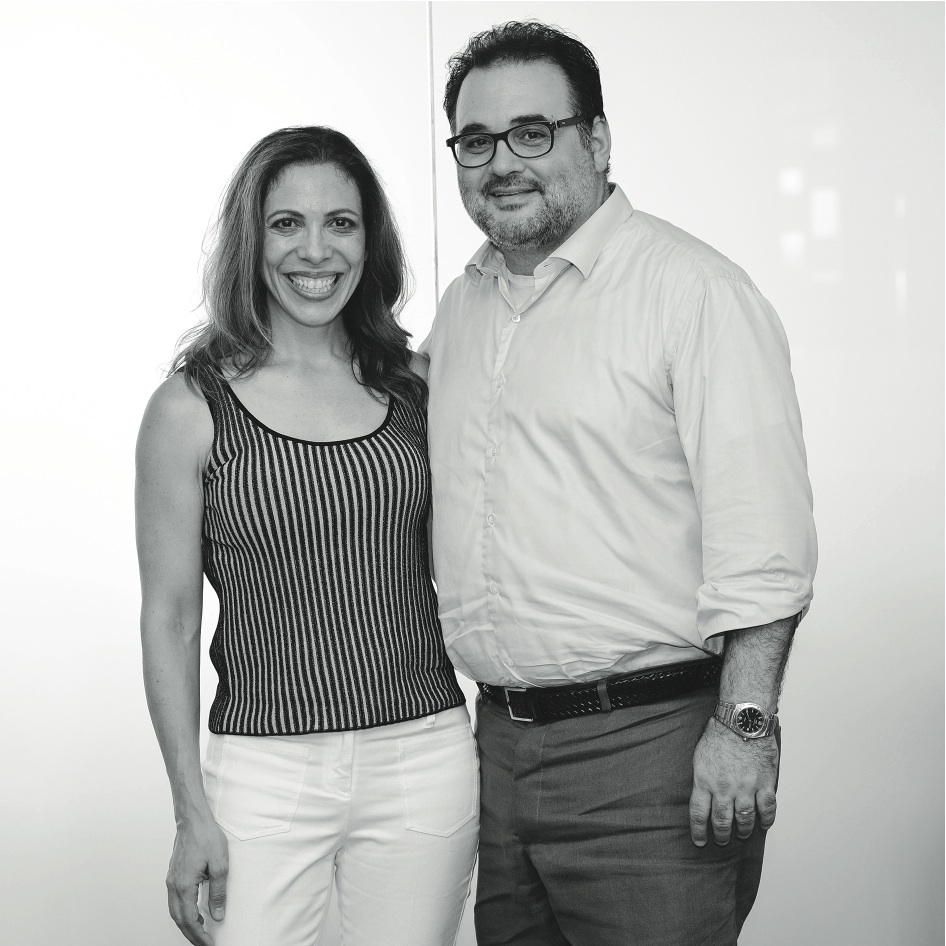
The golden age of Bhamdoun ended with the start of the civil war in Lebanon and the 1983 mountain battles. Memories of those dark days are still fresh in local minds. “There are as few as 100 Bhamdounis who live up here all year round, I’m one of them,” says hotelier Karam Abou Rjeily. “Many people emigrated abroad and never returned, many more live in Beirut and rarely come up here,” he says. Among the few to return to their native village in the 1990s was Naji Boutros, owner of Bellevue Winery and Boutique Hotel, and Le Telegraphe restaurant in Bhamdoun. An investment banker by profession, Boutros came to Lebanon alongside his American wife Jill with the idea of turning Bhamdoun into Mount Lebanon’s own version of Napa Valley. He began planting his grandfather’s land with grapevines in the mid-1990s. “Today, we have 240,000 square meters of land planted with vines that produce 25,000 bottles of wine per year,” he says. By 2003, Chateau Bellevue’s first vintage won the International Spirits and Wine Competition’s Gold Medal Best in Class award. It turns out that the same weather conditions that long attracted tourists to Bhamdoun also help grow some of the most intensely flavored grapes, excellent for producing exceptional wines.

Abandoned hotels 

“Before the war, Bhamdoun was more important than Beirut, it had 5,000 hotel rooms, and accounted for 60 percent of the country’s tourism GDP,” Boutros says.

The big hotels are still there, all 52 of them, marshalled along a strip of highway in Bhamdoun Mahata, a separate municipal district from Bhamdoun village, built around the old train station or mahata in Arabic. The main thoroughfare was once a vibrant commercial and tourist hub. Today, most of the hotels lie abandoned, neglected, and unrestored, others were rebuilt and refurbished only to be closed back up due to the low visitor numbers that did not justify the high cost of keeping them up and running. Abou Rjeily says that only five hotels, including his own, remain open for business in the town. Most of the hotels that are still operating are owned by Gulf Arabs, who could afford to renovate; many Lebanese hotel owners migrated abroad. “The problem is that any investor would end up paying out millions to restore a hotel, only to operate for, at most, one season a year in the summer,” he says. Nadim Moujaes, an active member of Bhamdoun village’s municipal council, says that since the war in Syria began, tourism has suffered greatly in Bhamdoun, since most of its tourists came overland through Syria from Arab countries, such as Iraq, Jordan, Kuwait, and Saudi Arabia. “When the Gulf countries warned their citizens against traveling to Lebanon, that further impacted tourism. We do get some Europeans coming these days, but they are not high-income earners,” Moujaes says. He adds that while Lebanese expats are coming to Bhamdoun in larger numbers, they often own their own homes and do not benefit the hotel businesses in town.

Poor infrastructure 

Moujaes claims that the government is not doing enough to improve roads and tourism infrastructure in Bhamdoun. “The road, which was built 150 years ago, and which links Beirut to Damascus and the wider Arab region, was once a blessing for us. Today, in its present condition, it’s a curse,” the municipal council member says. The admittedly dangerous, winding road that goes up to Aley and Bhamdoun is often plagued by heavy trucks driven recklessly, making the ride up an unpleasant one at best. Moujaes says that the tunnel built at the upper approaches to Bhamdoun Mahata has been under construction for seven years, and has yet to be completed. In fact, the road surface around the tunnel was being dug up when Executive visited the town.

Boutros says that the government made many mistakes in the area; the first dates back to the 1950s, when all the hotels in Bhamdoun and Sawfar lost their gambling licenses as the-then government concentrated all gaming activities at Casino du Liban. “This reduced hotels’ incomes to just a three-month summer period,” he says. The other mistake was the construction of the so-called Arab Highway that passes above and is clearly visible from the neighboring village of Sawfar and its once iconic Grand Hotel; today the hotel remains an abandoned shell. “No one wants the view or noise of a highway from their summer resort. People come here to leave the noise of the city behind, all they want to hear is the sound of a rooster crowing in the morning,” says Boutros.

According to Moujaes, the municipality in Bhamdoun village has done a lot with its limited resources, planting 500 trees this year, installing street lighting where there was none, refurbishing the local spring, and improving water distribution. “There can be no tourism without investment, and to get investment you need to give investors stability and security. In Lebanon, by contrast, we have a shock every four to five years,” Moujaes says. He added that despite multiple political assassinations, and a war in 2006, the years 2004 to 2008 were still better in terms of tourist numbers than the last few years have been. Since the start of the Syrian conflict, the mood has turned very tense in the town due to political divisions in the country. “Bhamdoun is a mixed area in sectarian terms, we feel strong and confident when the central government is strong, and we feel weak and unsure when the central government is weak,” he says.

Glimmer of hope

Despite the bleak overview, the outlook for the future seems promising. Abou Rjeily notes that this season saw a 10 to 15 percent improvement in business compared to the last few years when Gulf visitor numbers slowed to a trickle as the overland route was closed. “We still get visitors from Kuwait, but now we focus mostly on Lebanese expats who have the purchasing power visiting over the weekend,” he says. The Carlton Hotel currently operates 50 rooms, and Abou Rjeily also owns a popular Italian eatery, Olivo, on the hotel’s ground floor. “Our occupancy rate remains low, 25 percent, at most 30 percent on weekends. Our restaurant is actually sustaining the hotel when usually it should be the other way around,” he says. Despite the current slump, some new properties have emerged and are doing brisk business. Safat Suites hotel apartments, a three-building complex completed in 2011 just as the war in Syria heated up, is one such property. A Kuwaiti group owns the establishment, but a team from the Riviera Hotel in Beirut runs it. Elie Kassouf, operations manager at the Riviera Hotel and general manager of Safat Suites, opened one of the hotel’s three buildings for business this year — 32 apartments out of a total of 90 — he also decided to cut costs down to the bone and lower prices. The plan worked, and today he boasts a 98 percent occupancy rate. “Last month [July] we had a lot of well-to-do Syrians staying, this month [August], we have mostly Kuwaitis and Saudis,” Kassouf says.

This is the first year they have opened for business since construction on the hotel was completed in 2011, and the response has been encouraging. “We realized that we couldn’t charge high prices any more, a hotel room for around $250 wasn’t going to work, so we decided to reduce costs, not offer breakfast or valet service, and instead, offer hotel apartments at affordable rates,” Kassouf said. A two-bedroom apartment at Safat Suites goes for as little as $120 a night. Only their largest suite is priced at $250 a night, and that includes a private jacuzzi. The hotel also offers a gym and children’s play area, and Kassouf supplements the hotel’s income by renting out street level space to three eateries. Lebanese expats are coming to Bhamdoun in larger numbers these days, Moujaes says. “They are often more aware of the real political and security situation than foreign tourists are. Lebanon is also getting a lot of positive press internationally, we have one the highest number of summer festivals per square kilometer anywhere in the world.”

Prescription for success 

Bhamdoun’s main thoroughfare, however, remains depressingly empty. Shops and restaurants are shuttered, and pedestrian traffic is virtually non-existent. Boutros says the problem is that too many people are resting on their pre-war laurels and not looking to move forward and support infrastructure improvements to allow businesses to return and flourish. “Bhamdoun Mahata will recover only if a strategic vision is put together and the area reinvents itself from a [Gulf] Arab destination to a total quality environment suburb of Beirut that is not just a summer resort,” Boutros says. He advises hotel owners to repurpose their closed hotels into student dorms or nursing homes. Bhamdoun Mahata could easily be transformed into a university or healthcare city, he adds.

Abou Rjeily says that for Bhamdoun to attract year-round local tourists, time and money have to be invested in ecotourism. “We need to give people activities to do when they come up here, we can’t expect them to just sit in the hotel all day. We need activities for kids, hiking, all-terrain vehicles; we need promotional campaigns through the news media and on Facebook … Today, we rely on Gulf visitors, but what if they stop coming, what do we do then?” Boutros agrees that for Bhamdoun village encouraging and developing ecotourism activities is its best bet for a brighter future. He feels that his winery, restaurant, and boutique hotel are the seeds of a growing trend. “You need to attract tourists that will spend money on environmental-based products, whether it’s wine or local cheeses or even hiking,” Boutros says, adding that sustainable tourism can only be based around an area’s natural beauty and natural products, supporting the local population.

Boutros bought the former residence of the French Ambassador to Iraq and Iran from the French government, and transformed it into a boutique hotel. Its neatly kept lawns and topiaries and red tiled roof stands in stark contrast to the many still abandoned, burned out and half demolished homes in Bhamdoun. It is a reminder that the town still has a long way to go to heal old wounds and return to its pre-war glory days.
September 11, 2017 0 comments
0 FacebookTwitterPinterestEmail
Economics & PolicyQ&ATaxes

Taxation’s redistribution effect

by Jeremy Arbid September 11, 2017
written by Jeremy Arbid

Alain Bifani, director general of Lebanon’s finance ministry, tells Executive that newly enacted taxation will shore up revenue in the public coffer. During an interview at the end of August (before the constitutional court froze the new tax measures) Bifani detailed the tax measures and discussed their impact on segments of the population and on the economy. He said that the new taxation plus the salary scale increase for public sector workers would lead to a redistribution of wealth, but cautioned that this is only a starting point toward leveling a fair system of taxation, and added that now is the time for lawmakers to seriously reform public spending.

E   One of the early responses to the tax proposals was that an increase in taxation would have a subduing effect on the national economy. Can you comment on this notion from the perspective of the Ministry of Finance?

I think it’s an idea that is a bit simple because any tax hike has a negative impact on the economy. But when the economy is suffering from a high deficit, and an increasing public debt, in addition to many other things, then one should expect that the deficit is brought under control, and that, one way or another, we have the breathing space to enable the economy to grow again.

There is an answer that has to come on the revenue side because the government hasn’t been able to contain the expenditures. To the contrary, we’re seeing a rise in expenditure to debt servicing, a rise in salaries, and a long-awaited wage increase. What can you do to contain the deficit? You either go for tax measures or higher debt. Debt has an even bigger and broader impact on the economy, and on the human beings in this economy. So what do you do?

Second, how about the loopholes in the system, where you have people bringing in lots of profits and not [being] taxed at all, like capital gains on real estate. This is outrageous. Of course these people are allowed to make profits, and we want them to. We want banks to be profitable, we want companies to be profitable, we want individuals to be profitable. But we don’t want biases in the system. There is no reason why someone who buys and sells plots of land wouldn’t be taxed, whereas someone who invests in companies, creates jobs, and creates values would be. This is something that’s not only good for revenue, but also good for the fairness of the system.

There is a kind of redistribution effect when you slightly increase taxes on corporations, and when you bring the banks into the 5 percent tax system now at 7 percent. Ideally, yes, I’d like to decrease taxes, but we have to face reality — we can’t have the salary scheme coming in, an increase in debt services, transfers to EDL that are crazy, hiring thousands of people in the system, and at the same time, saying ‘we don’t want to increase the burden,’ it’s just impossible.

E   How much added burden does the Value Added Tax (VAT) increase to 11 percent translate for low income households?

On the small income layer the VAT increase is going to have an impact of 0.35 percent, [so] very little, up to $40 [over one year]. If you consider they spend mostly on housing, education, health, public transportation, insurance if they can, and basic foods of course — all of this is exempt from VAT. Clothing is not, and there are some food and beverages that are not.

E   New tax revenues have been presented as if they’ll offset spending from the public sector wage increase. Can you tell us the aggregate number that would benefit from the wage increase?

My personal argument is the [tax measures] are not meant to offset the salary increase. There is no allocation of resources, those are resources for the budget as a whole. So it would be unfair to say we are taxing people to pay salaries. We are taxing people because we have a huge deficit and those [salary] increases should’ve happened way before all other expenditures took place and became recurrent. It’s true that the figures are more or less the same, and that was the occasion to pass the tax increase.

Who’s benefiting from [the salary increase]? You have an enormous amount of Lebanese households benefiting — I don’t really have a figure, but it is about 200,000. [Some households have several beneficiaries], roughly 10,000 civil servants, about 53,000 in public education, and about 110,000 in the armed forces, plus about 85,000 pensioners and retirees, you have contractuals, and people who work for public enterprises and municipalities.

It’s unfortunate that we ended up having so many people in the public sector because the private sector is not absorbing the workforce anymore. But this is a fact, they are here, and by law, they are allowed to have this increase. The impact is that, somehow, this is going to contribute to bring them up from below the [poverty] line to some sort of a middle class, which the country needs badly. This will remain not enough until the government takes the proper steps to unleash the potential of the economy, allow the economy to grow again, and the private sector to be able to absorb the workforce especially [those] at the higher [level of] skills. What’s badly missing in the country is that we aren’t able to create high value added jobs, and not even low.

E   Do you forecast growth to the salary scale increase figure of $1.2 billion?

The $1.2 billion will grow or not depending on the pace of recruitment that we’re witnessing in the public sector, which has been extremely high in the last year. For good reasons or bad, it doesn’t matter. But what would the good reasons be? For example, the security situation is forcing recruitment in the armed forces — fine. But this doesn’t mean that the solution is always more people. We can be effective differently, and we have to be because Lebanon simply can’t have half of its workforce in the public sector. It’s not normal, it’s not good for the future, and it’s absorbing too much of the meager resources that Lebanon has.

E   With the salary increase, would the public sector’s share in the economy grow?

No, I’m not saying that necessarily it’s going to grow, but it’s one first step that is legally binding, and also, very important for the economy. If you want to increase consumption, you have to increase the number of consumers. When you provide a scale like that, you’re creating the possibility for many Lebanese households to become consumers again. On the other hand, you’re allowing them to live normally, to have their children go to school, to universities, to be able to create something, and create value. Once you do that in the public sector, the private sector has to realign. You can’t let the private sector realign on its own, it’s unfair when you have a system that doesn’t help it grow and create jobs. You have to help them, not by giving subsidies or anything like that, but by creating the proper environment for corporations to grow.

[pullquote] Lebanon simply can’t have half of its workforce in the public sector [/pullquote]

This is going to be the next challenge. Otherwise, if we really miss that, the load on the private sector is going to be tremendous because those kinds of measures increase the load on them. It’s important on one hand, but it’s very important to have the proper follow up on the other end.

E   Is there a tradeoff effect? Will inflation eat up some of these gains that people are looking forward to, and how will that be balanced by the Ministry of Finance?

Very roughly, if we look at inflation per se the figures look very stable, and they’re not likely to be high. We’re in the midst of a very low inflation period in Lebanon. After the whole operations that took place with the banks, the inflation didn’t really move, this is where logically the offset happened.

Inflation in general terms, won’t matter a lot. What will matter are specific issues that are going to see hikes. For instance, private schools. It’s clear that if nothing happens, they’re going to increase the fees again. This, and many other issues, will probably eat up something like 15 to 20 percent of the increase. This is a rough estimate, but you will still have about 80 percent net increase for those who are benefiting from the salary increase.

E   Are you expecting redistribution of wealth that’s not going to be just on paper?

Between the tax measures and the salary scale, no doubt redistribution is going to happen. Nevertheless, this is a scale that’s far from being ideal, in terms of how fair it is, where and how and who’s getting what. There are plenty of questions and plenty of things that are still not satisfactory. But again, when you want to start something, you have to have the system move, you have to kickstart the whole process hoping that some kind of positive momentum will take place.

E   What kind of GDP growth rate is the ministry calculating for 2018?

We’re hoping to have 2.5 percent growth in 2018, but the figure is not yet final.

E   In an op-ed for the September issue of Executive, a former minister of finance wrote that the Lebanese tax policy of the last two decades was not very coherent. What is your comment?

My comment is that he’s right. We have to admit that it’s not only the tax policy, it’s the whole fiscal policy that wasn’t coherent at all. When you’re making comments, you can say things very clearly because you are commenting, but when you are a player from within, you have to fight to have some kind of coherence and to introduce what you think is required. For instance, in the tax measures just the capital gain on real estate is something that I’ve been promoting for 17 years, since I joined the ministry. And you have to keep fighting. It was very clear from the beginning, we were a system that taxes labor and investment much more than any kind of windfall income. And this is also a fight that’s going to take a long time because you’re fighting the main interests in the system. And yes, when you have weak governance, you can’t all of a sudden have something coherent put in place. It takes ages, but you have to keep fighting and pushing.

[pullquote] When you have weak governance, you can’t all of a sudden have something coherent put in place [/pullquote]

E   Do you see it as your mandate to push for coherence?

One of them, yes. And to tell you that today it’s very satisfactory after all these years? No, it’s far from being satisfactory. We still have a lot to do, but we will keep pushing.

E   One of the things that the business community especially is very sensitive to is tax certainty and predictability into the future. What’s most realistic framework for looking ahead?

What happened now is probably something that won’t witness major changes for at least three years. Which, in terms of predictability, is very good; not to mention that, for the business community, the changes are not huge.

We should keep two things in mind. The first is that we aren’t in tax hell here. The level of taxation is very reasonable. The citizen of Lebanon complains, and he’s right to complain because of the cost of public services. This is what is extremely high. The real burden on individuals in Lebanon is about the cost of utilities, of public services, everything that forces them to take a big cut on whatever is available to them to live properly. Of course they call them taxes because all of this is considered as the cut, but if you really look at the tax burden on low income people, it’s practically nothing.

The second, in addition to predictability, fairness is very important. We’re not yet in a very fair system. We know that and it’s our duty to admit it because if we don’t say how things are, then we won’t improve. But we also have to bear in mind that from 2000 until now, the number of taxpayers in the system has been multiplied by 3.5, which means that the tax authorities are reaching practically everybody now in the system.

Now that we are reaching the margins that we basically have everybody integrated into the tax circle, compliance is also improving. For everybody complaining that the system is not fair and again, she or he are right to complain, and they have to complain because this is how things improve, they also have to realize that the improvement has been tremendous. We’re not coming from nothing, and it’s not still the same system that we used to have.

Those two things in parallel, improving the system as a whole, and improving its administration, are taking place. Maybe too slowly. But at least improvement is taking place on a permanent basis at three levels — policy, administratively, and at the services level. Now you can settle your taxes, check on them using your mobile and e-services. This makes it easy. At the administrative level, we’re reaching roughly everybody in the country, increasing the compliance of most of the sectors and segments of the economy. At the policy level, we’re dealing with the loopholes, bringing more coherence, and decreasing the gap between windfall income and business and labor income.

E   But do you still face challenges like lobbying for or against increases of taxation for products, such as tobacco or alcohol?

Those aren’t really the worst we face, they’re details in the system. Honestly, when it comes to tobacco, it doesn’t have much to do with lobbies. It really has to deal with the fact that the management of tobacco is still very much afraid of smuggling because we had a very tough experience in 1999-2000. At that time, the interim minister was Nasser Saidi, and he decided to increase the rates, and the fall in income was unbelievable. It took us 11 years to come back to the levels of just before the hike. So this is something that is still in their minds, and they can see it. It’s immediate. Whenever you increase slightly, you see flows. Again, the Ministry of Finance is not an island, and we can’t work alone. If the borders aren’t well kept, if the judiciary system doesn’t work well, and if the police isn’t able to enforce the law, then of course you take a hit on your revenue.

Alcohol is different. I believe it’s [the approved tax measure is] not adequate. And the text that was voted was not the text prepared by the ministry, it was amended. And I think it needs to be revisited because it’s harmful to imports and to tourism.

But those aren’t the lobbies that we’re fighting everyday.

E   Which are those?

You have in the system much stronger lobbies who can twist the system to their benefit, just like in any other country. This is part of the game, and we have to admit that it takes a long time to convince, mobilize, and have lobbies facing lobbies.

September 11, 2017 0 comments
0 FacebookTwitterPinterestEmail
LeadersOpinionTaxes

It’s about our purses

by Executive Editors September 11, 2017
written by Executive Editors

As Lebanon celebrates its recent military victory over Islamic State fighters on this side of the Lebanese-Syrian border and mourns over the recovered bodies of nine army soldiers, local politicians are again embroiled in another battle of sorts: one over taxation.

After many months vacillating over whether or not to issue new taxes, lawmakers agreed in July to the measures. The legislation then sat on the desk of the president for nearly a month before the required signature was inked. But on the last day of August, in a surprising move, the Constitutional Council issued an injunction temporarily freezing the tax hike while it studied an appeal challenging the law, effectively delaying the tax implementation – at least until Lebanon’s highest court issues its final decision in September.

The court’s ruling was just the latest twist in what has been a long and winding road of confusion, where along the way, details were obscured on which new taxes would be introduced or increased, how much more money people and businesses would have to pay, when the new measures would enter into force, and what the revenues would actually be used for. The opacity of the tax adoption process allowed for manipulation of the public conversation from many different sides. Citizens should be informed about proposed taxes, and public and elected officials should explain their necessity in good faith, instead of welding the issue to their political or electoral cause. 

For several years, the International Monetary Fund in its annual Article IV paper has argued that tax measures should be passed and that fiscal measures were needed to put the public debt on a sustainable path — irrespective of the salary scale. But the new taxes have been framed to the general public as necessary to pay for a salary increase for public workers — public and elected officials said they needed $1.2 billion for the salary scale, while simultaneously new revenue was being created via increased taxation; it was easy and expedient to link the two. However, tax legislation was not designed to pay the wage scale increase — despite the public narrative and the argument presented to the court — but instead was aimed at shoring up public revenue to close the deficit, which, of course, is being made bigger by the wage increase.

[pullquote] At the highest levels of the Ministry of Finance there is significant awareness of the need for a coherent, and more equal taxation system [/pullquote]

Fix the right problems

Citizens are in the right to complain about the new measures, Director General of the Ministry of Finance Alain Bifani tells Executive in an interview (see Q&A page 44). But Bifani argues the new taxes are necessary for the government to continue treading water financially, that Lebanon’s tax burden is reasonable — though the system could be fairer — and that it is public services that are too expensive. Now that the revenue side has been adjusted, it is time to turn the focus to fixing expenditures and developing a growth environment for the private sector.

The law’s challengers are claiming that the poor will be most affected, when the reality is that much of the new tax burden will hit idle wealth — a capital gains tax on real estate, and a tax on interest. In effect, those who are blocking the tax measures are defending the rich by sticking up for the poor. Whether they genuinely are trying to stick up for the poor cannot be answered, and what the tax blockage will do for the poor in the long run also has no answer. But it is a shame that this is where the battle lines have been drawn rather than focusing effort and political capital on the issue of public finance that matters most: expenditures. And that is a measure of old politics — an initiative that gets shut down by paralysis because buy-in is needed from everyone involved, locking in a situation where there is no progress and all other options are sacrificed by waiting on the first.

Herein lies the crux of the matter. What Lebanon has not had for a long time are clear spending targets and ceilings. The government and Parliament must be transparent in how it plans to and how it spends public money. They must develop and communicate to the general public a strategic perspective on taxes — not moment by moment dealings — and they must set clear spending targets and stick to them. On an institutional level, as much as can be said with due caution, at the highest levels of the Ministry of Finance there is significant awareness of the need for a coherent, and more equal taxation system, and for the situational remedies that are not easy to impose in the short-run. It is not about having bad solutions — those being offered and implemented might actually be relatively close to the best available.

September 11, 2017 0 comments
0 FacebookTwitterPinterestEmail
OverviewSpecial ReportWealth management

Private returns

by Thomas Schellen September 11, 2017
written by Thomas Schellen

International reports suggest that the Middle East is currently the world’s second fastest growing region in private wealth, trailing only Asia. According to a Global Wealth 2017 report published in June by Boston Consulting Group (BCG), an international management consulting firm, the private wealth segment picked up momentum globally in 2016, but with visible regional variations. This means that tailwinds are gathering for private bankers in Beirut. As Toufic Awad, general manager of Audi Private Bank, tells Executive, “This region has a very robust growing pool that promotes the need for wealth management and wealth management services.”

In percentage terms, the average annual rate of change in private wealth between 2014 and 2015 was 4.4 percent,  increasing to 5.3 in the following year. For the period between 2016 and 2021, the rate is projected, in BCG research, to reach 6 percent. In Asia Pacific, the respective rates are 12.8, 9.5, and 9.9 percent, while in the Middle East and Africa, change rates leapt from 1.2 percent in 2015 to 8.5 percent in 2016, and are projected to stay, on average, above 8 percent through 2021.

That may not sound overwhelming in a world prone to believing that double-digit growth is the only truly impressive kind. However, given the large volumes of wealth involved, these projections translate into sizeable figures and substantial increases. Global private wealth increased from $151.4 trillion in 2014 to $166.5 trillion in 2016. From that immense base, the projection assumes that global private wealth, in 2021, will have grown by a nominal $56.6 trillion to $223.1 trillion. For the Middle East and Africa, they project that private wealth will expand by almost half — from $8.1 trillion in 2016 to $12 trillion in 2021.

In other words, while some show optimism about the global economy — last month, European Central Bank (ECB) head Mario Draghi opened his Jackson Hole speech to his central banking peers by saying “the global recovery is firming up” — the gains in global private wealth, by comparison, appear to be inordinately healthy, and more so in the Middle East and Africa than in other world regions.

While the apparent faster growth of private wealth, when compared to overall improvements in the global economy, might seem disturbing to equality advocates in Lebanon, just as anywhere, private bankers will not be complaining. Even if increased accumulation of wealth from domestic business activities in the past six or seven years is questionable (see interview with FFA Private Bank Chairman Jean Riachi on page 34), and even if the economy in Lebanon were to remain locked in the state of “timid improvement” observed in the first half of 2017, these numbers imply that private bankers in this country could still book a growing share of handouts from the goddess Fortuna.

This is a benefit of the diaspora, says Charles Salem, global head of private banking and wealth management at Banque Libano-Francaise (BLF). Citing regional developments in 2009 and 2010 (the years directly after the great recession) and then in 2015, his view is that strong oil prices — as well as the issuance of new equities and infrastructure investment projects in the Gulf and MENA markets — all created new wealth there. This in turn, had an impact on wealth creation in Lebanon.

“The diaspora is active in all these countries and contributed to the global wealth creation in the GCC, MENA, and some African countries. Wealth thus also flowed to Lebanon, but the local infrastructure was not there to manage all this money. Today, the banking industry in Lebanon, and I think this is also due to international regulations, is putting in place all the teams and expertise to manage this money. I think that we can have world class services here — as one can find traditionally in Switzerland, Europe, and the US in private banking — that can be delivered locally today. This is what we are doing here in BLF [Banque Libano-Francaise],” explains Salem, who joined the Lebanese bank earlier this year in continuation of an international career in private banking.

Audi Private Bank’s Awad has a similar perspective. He says, “The Lebanese diaspora is very active in regions like Africa and South America and are still looking to diversify their wealth away from their domestic markets. We have active desks for those markets, for Latin America, Africa, and also the Gulf and the GCC. Most of our Lebanese expat clients are trying to repatriate money from their country of business to Lebanon, because they are not very secured by their political and security environment [in their countries of residence]. Therefore, we are still seeing flows to Lebanese private banks and to Audi Private Bank.”

As Awad acknowledges, the situation, from the private banking perspective, is nonetheless not entirely a bed of roses. “The wealth management industry, as we all know, is in a transition mode in order to accommodate all the increasing regulatory requirements and related costs,” he tells Executive, explaining that private banks have to undertake heavy investments into compliance, management information systems, and other information technology upgrades. “This is why we believe market share is important. Small players in this market will have a difficult time coping with increased requirements,” he adds. 

Private banking may be situated in a sweet spot, when seen from the current macro environment and outlook for wealth, but when seen from a client relations, regulatory, competitive, and technical perspective, players in this industry have no laurels to rest on. In the years of and after the great recession, from 2007 to about 2012, client confidence did not look good. In Europe and the United States, the recent past was filled with an enforced departure from bankers’ notorious secrecy and willful assistance in hiding client assets from tax collectors.

Further, while today’s global economic conditions are regarded as calm and upbeat in comparison to 2016, as illustrated by the Draghi speech, no central bankers’ symposium today is complete without an ominous warning that memories of the 2007 recession are fading.  “We can never be sure that new crises will not occur,” Fed Chair Janet Yellen cautioned in her — politically loaded — Jackson Hole remarks. Unsaid note to private bankers and wealth managers: never expect an easy time. Additionally, new technology — specifically artificial intelligence — is a fourth element that is emerging as both capable and likely to disturb the peace of private banking in the near future. 

Digital advisors?

The primary threat from cyberspace, in the case of private banking, are not viruses but AI-driven robo-advisors, capable not only of storing a client’s risk profile and all relevant market data — and analyzing a client’s whole history of investment choices, but also of giving investment advice that is more objective and immune to human biases, as well as more cognizant of the investor’s preferences. In its report, BCG warns wealth managers  about this new digitization, with the position that wealth managers who wait out such developments and continue with business as usual “are unlikely to prosper as transformation of the industry gains momentum.”

For several years, bankers have been inundated with prophecies about business disruptions from Fintech startups who might hit large banks, like Uber and Airbnb hit the transport and accommodation sectors. Contrary to such hype, research today speaks more of banks which assimilate or outright absorb Fintechs.

The human factor

Asked if he considers statements such as BCG’s to be pertinent analysis or more of a consultancy sales pitch, Awad says he expects the reality to be a bit of both, with changes that might happen faster than many would think possible. “If one reads into what is happening in the area of artificial intelligence and related technology, one can predict that the concept of private banking will be totally different in 10 or perhaps 15 years,” he says, before adding that personal relationships, trust, and friendship play important roles in private banking, and that banks in the Middle East are unlikely to lead the global shift to robo-advisors, if one takes into account the region’s predominantly conservative client mentality. “It’s a major mentality shift and also a generational issue. Perhaps the next generation, with the evolution of what is happening in the world, will be more prone to go for this new sort of private bank,” he says.

BLF’s Salem likewise does not fully buy into predictions of a complete shift to digital in private banking. “Whatever will develop in the wealth management industry, the human factor will stay — discussions, eye contact, personal interactions, etc. But digital is very important because you have to differentiate yourself, meet client expectations, and enhance client experience, but you also have to enhance your value proposition, your advisory proposition, and staff skills,” he says, further noting that digital transformation is also made inevitable by compliance-related practicalities and for the alignment of internal processes.

Coming back to more immediate issues, some paradigms of the wealth management industry in 2017 do not sound different from the recipes of earlier years. Portfolio diversification is advice that has been recited by private bankers in every interview over the last ten or fifteen years; another mantra is to tailor investment offerings according to client needs and risk appetite. In such basics, the industry appears to have its identity and continuity, whether the times and global market conditions are smooth or rough.

Lebanese hopes

As to current hopes for private banking in Lebanon, there is palpably greater enthusiasm in the corner offices of private banks around the city of Beirut. In comparison, a few years ago development of the domestic market investment opportunities fit for private banking was, at best, talked about in tentative terms, as something that would be nice to have.

Now BLF’s Salem is enthusiastic in delivering his view that foreign operators of private banks will tend to move out of the Lebanese market more than come into it, with local private banks being on the rise. “I think the Lebanese market in [the] future will be more for local players who have everything needed to deliver the service locally,” he says. Albeit refusing to disclose the ratios for assets under management  (AUM) in the bank’s two private banking operations in Beirut and Geneva, he continues, “We are developing the private banking activity at BLF and today we are focusing on Beirut and Geneva in developing our advisory skills and all our product capabilities with asset management, continuing along the trend established in recent years to develop solutions and create new products for clients, streamlining their journey.”

Awad is, in part, more forthcoming, as he states the respective AUM sizes of Audi Private Bank in Beirut and Geneva, when he announces that the bank somewhat extraordinarily saw more AUM growth in Beirut than Geneva last year, reaching AUM dimensions of about $4 billion in the former and $6 billion in the latter city. He concedes that this trend of faster AUM growth in Beirut versus Geneva was not repeated in the year to date — without referring to the reasons for the atypical development in 2016, however, which of course gives room for the assumption that this inflow was related to the central bank’s “financial engineering.”

Overall, Awad is also upbeat about Beirut, saying, “As far as restructuring of private banks here in Lebanon, we have been working in the past few years at Bank Audi to set up private banking as a business line. Today we have the operation in Switzerland, the operation here, in Saudi Arabia, and in Qatar. Those are the four main booking centers. One way to go is to create offerings where clients can bank with one bank, Audi Private, and you [as a client] can go into different geographies and according to the risk profile, chose different booking centers. The investment proposition needs to be unified and it is; we have a central investment team. At the same time we cater to clients in different markets and offer them different booking centers. This is the model that we have put in place, and it’s working very nicely for us.”

September 11, 2017 0 comments
0 FacebookTwitterPinterestEmail
Editorial

Absent leadership

by Yasser Akkaoui September 6, 2017
written by Yasser Akkaoui

The new taxes that were finally codified into law late last month have me seriously worried. Not only about the taxes themselves, but the way the issue was handled, and what it suggests. Only upon publication in the Official Gazette was the detailed list of new tax measures made public. It was too late for any well-informed input from journalists, economic analysts, citizens, and businesses. This is absurd. And no sooner did the tax measures officially come to light, when a last minute freeze by the Constitutional Council left us in the dark once again.

This can’t continue. The taxation mess only overshadows in how things can go wrong or be made to go wrong in our country. We’re approaching parliamentary elections that many hope will bring about transformational change. However, for that to actually happen, the reformist groups in this country must find leaders who can rally followers around a coherent, and well-defined vision for saving Lebanon. Today, such a leader remains elusive.

Revolutions tend to come about in forbidden ways, rather than through orderly manners by dedicated reformists that plan and convert followers publicly. Revolutionaries often endure prison and abuse. They stick their necks out, no matter how likely they are to lose their heads in the process. Meeting publicly in luxury hotels to plot the overthrow of the establishment, or quitting at the first sign of pressure, suggests our chances of winning are slim.

Even though members of civil society, journalists, and intellectuals have been assassinated, threatened, beaten, and jailed, the inconsistent push for change makes it absurdly easy for the establishment to ignore. Civil society has indeed seen some sizeable wins; producing a Member of Parliament, pricking the conscience of another parliamentarian into quitting, and even appointing a minister, albeit with too short a term. It also produced two movements; one that shook the streets, while the other convinced us all that change just might be possible. Yet, we haven’t been able to build on these wins and turn them into something bigger. Instead the establishment manipulated them to its advantage each time.

What we need is a full-time, competent hero. Someone honestly willing to live, and die for the cause.

We don’t have that today.

And we are running out of time.

September 6, 2017 0 comments
0 FacebookTwitterPinterestEmail
Entrepreneurship

Outside of the Silicon Valley bubble

by Matt Nash August 29, 2017
written by Matt Nash

In the sweltering July heat, entrepreneurs from around the world were in Beirut pitching to join the Endeavor network. Founded in 1997 as a non-profit support network for entrepreneurs (focused on Argentina and Chile), Endeavor is now assisting founders of young companies in 27 countries around the world (including Lebanon since 2011). In 2012, the non-profit adjusted its model by raising investment funds to co-invest in its entrepreneurs alongside lead investors. Executive sat down with Endeavor CEO and Co-founder Linda Rottenberg to discuss the state of global entrepreneurship.

E   Earlier this year, Amazon bought the Saudi-based e-commerce platform Souq.com. Souq had previously raised a finance round, pushing its valuation past the $1 billion mark, and earning it the moniker “unicorn.” The woman who first used this term found 39 unicorns born between 2003 and 2013. In the four years since, there are more than 200, depending on which lists you look at. Are you worried there’s a bubble inflating here?

The problems in Silicon Valley are different than what we see around the world. In Silicon Valley, the valuations got too high. You have [venture capitalists] getting lazy and all fighting for the same deals, and you have people trying to build unicorn companies. And if you’re trying to build a unicorn company, you’re not building a unicorn company. What I see outside the US is amazing talent; still actually low valuations. If anything the entrepreneurs need more equity. We see the capitalization tables are a real problem, where investors are taking way too much equity. The more competition from funds the better, because it will be more entrepreneur-friendly. [Also, outside the US], we’re now seeing serial entrepreneurs who’ve had experience, we’re seeing this c-suite level talent that we didn’t have, and we’re seeing access to markets where you can actually create a multi-country company that is global in nature from the get-go. I believe that going forward, that’s going to become a huge advantage. So I’m really bullish on entrepreneurship outside of the US. So they’re the ones at risk of a bubble [in Silicon Valley], whereas I don’t think we’ve even been able to scratch the surface of the talent-to-capital efficiency here.

E   In the markets you’re involved in around the world, to what extent do you see people simply trying to adapt a successful model to a local/regional market?

First, I do think that these adaptations, the tropicalization of US models, make sense to some extent. Where you don’t have the capital market efficiencies, one potential exit down the road is to have these US companies [buy their local versions].

E   True, but that isn’t a very sustainable model.

Exactly, you have to start somewhere, but we’re seeing two other things. The second thing we’re seeing is some local innovation starting outside the US. I think this is going to happen more and more. I have long had a theory, outside the US, mobile technology is used for everything. Inside the US, it’s still a nice add-on, but people don’t use it for everything. So I actually believe mobile applications are going to be first-generation innovations outside the US and carry over. We’ll see.

Third, what we’re seeing [outside the US], is the opposite of ‘I want to build a unicorn.’ I see, ‘I’m solving a pain point, and I’m using technology to do something that used to be more traditional or family-based, and actually create something that’s more innovative and more scalable.’ So we’re seeing a lot of tech-enabled, rather than tech-centric, businesses in [agricultural technology] in health-tech, [education technology], food-tech. So taking what used to be more traditional industries, and modernizing, creating a layer of innovation. But it’s not just an app, it creates better lives for people at the base of the pyramid or the middle of the pyramid, because they’re closing gaps.

E   You talk about impact a lot on Endeavor’s website. What do you mean by that?

We’re not impact investors, but we’re about high-impact, which for us is also about this growth and the ecosystem multiplier effect [where entrepreneurs give back to the ecosystem by supporting, mentoring, or even investing in younger ecosystem companies]. What I’ve seen around the world is sometimes what people call “impact” investing; they mean there’s trade-offs between growth and the social impact. We at Endeavor don’t believe that. We believe that if you want to achieve high-quality jobs and improve things, you have to scale. What we’re looking at is the entrepreneurs who – rather than seeing everything as a trade-off between investing in the business and achieving the social mission – have to achieve the growth first if they want to improve things. [One of the companies in our network] is training more engineers than any university in Latin America. So even the companies you wouldn’t define as “impact” understand that you can’t build world-class companies in failed societies, and they have a responsibility in their communities to create the best employment.

E   Do you have a set criteria to define what impact companies in your network must demonstrate?

[We don’t have rigid criteria], but what we say to high-growth entrepreneurs and high-impact entrepreneurs is that you can’t check your values at the door. It’s not good enough to create a profitable business that’s good for your investors. If you’re not creating a culture that’s good for employees, if you’re not caring about your customers, if you’re not caring about the people in your communities, eventually it is going to come home to roost, so it all starts with the DNA and the values you instill in your company.

E   Do you see sexism, sexual harassment, and sexual assault as a problem in the global entrepreneurship scene?

We’re seeing marked improvement. About 20 percent [of companies in the Endeavor network are] run or co-run by women, compared to the US, where only around 8 percent of venture-backed companies are run by women. The women in our network are running companies that are incredibly high-impact. We need to tell stories of women that are not micro-credit, but are these high-impact, high-growth companies to inspire others. You need the role-model effect, which is what Endeavor is after.

August 29, 2017 0 comments
0 FacebookTwitterPinterestEmail
CommentEconomics & PolicyOil and gas

The oil & gas waiting game

by Mona Sukkarieh August 28, 2017
written by Mona Sukkarieh

On June 22, Israel’s energy ministry announced that the deadline to place bids in the country’s first offshore licensing round would be pushed back until November 2017. This is the second time the bid round, which opened in November 2016, saw its end date postponed.

With the second extension, it became harder to believe the Israeli energy ministry’s repeated claims that the decision was motivated by an outpouring of interest from international companies and the need to provide them with more time to prepare their bids. A few companies appear to be interested, notably Italy’s Edison and Greece’s Energean, in addition, it seems, to Indian companies, as reported by the Israeli media after a meeting between Yuval Steinitz, Israel’s energy minister and India’s Minister of State for Petroleum and Natural Gas Dharmendra Pradhan, on the sidelines of the 22nd World Petroleum Congress in Istanbul on July 12.

This is in stark contrast with Cyprus’ most recent licensing round, which closed in July 2016 and attracted interest from some of the largest international oil and gas companies, including bids from Italy’s Eni, France’s Total, Norway’s Statoil, and America’s ExxonMobil with partner Qatar Petroleum. This interest is no doubt owed to the “Zohr effect.” The 2015 discovery in Egyptian waters of the largest gas field yet found in the Eastern Mediterranean, dubbed “Zohr” by Eni, has revived interest for exploration in the region. A combination of factors, including location, stability, and regulatory certainty, put Cyprus at the forefront of East Med countries that could benefit from this renewed interest.

Choppy waters

Israeli authorities were hoping that the discovery of Zohr, in addition to the resolution of local anti-trust issues that had hobbled the sector for more than a year, would encourage companies to take part in the first offshore licensing round. But it looks like companies’ interest in the tender was below expectations, prompting a second extension of the deadline to place bids. They hope that this latest four-month extension will change that. We will know more in November, provided the tender is not postponed again.

Lebanon is also currently holding its first offshore licensing round. Over 50 companies qualified for the tender, which will close on September 15. Authorities here are also banking on the “Zohr effect” but might end up attracting an interest that is, in this case as well, below their declared expectations.

That is because companies have not entirely recovered their appetite for offshore exploration yet. Although some of the factors that have contributed to temper international companies’ interest in Israel’s bid round are country specific (regulatory hurdles, a certain apprehension to invest in a country that could impact their activities elsewhere in the region, etc.), others are common to both Israel and Lebanon (global market conditions and difficulties monetizing discoveries).

In a previous article, published in February 2017 after Lebanon announced a new roadmap for the first licensing round, Executive signaled that future interest will depend on two things: global market conditions, and what we offer investors. There isn’t much we can do to affect the first, but there are some things we can do to attract investors — finalize our legal and regulatory framework, offer a competitive fiscal regime, and actively and aggressively promote our energy potential where it matters.

We have yet to finalize our legal framework and adopt the petroleum tax law. And, although the Parliament might adopt it before the bids are due, we are already several months late. It is true we can proceed with the tender through the legislation already in place, but authorities have insisted for years that a new tax law applicable to petroleum activities is in the works; failing to follow through sends the wrong signal. Besides the inadequacy of launching a tender under one set of legislation and completing it with another set, it confirms high-level decision making vis-a-vis Lebanon’s oil and gas sector moves at a slow and erratic pace. This is a risk companies are aware of, but which authorities have yet to fully consider and attempt to mitigate.

Hopeful horizons

On the marketing front, the strategy to promote the tender appears to be more confident than aggressive, relying on the availability of an extensive set of seismic data, which is hoped to de-risk investments. The focus on seismic data, while reasonable, ignores that there are a multitude of other types of risks that may discourage foreign companies.

Furthermore, we took a risk by modifying the blocks on offer, which might affect some companies’ interest in the bid round. Lebanon launched the tender back in 2013 with blocks 1, 4, 5, 6, and 9 open for bid, yet will be completing the round (hopefully on time) with another set of blocks (1, 4, 8, 9, and 10) on offer, mirroring the uncertainties we have seen with the legal framework governing the tender. Not only did this change confuse companies in their preparations (some allegedly gave up after the alteration), but, in a surprising move, four out of the five blocks picked for the auction include areas, of various sizes, that are disputed by neighboring countries (one in the north and three in the south).

Still, authorities appear to be confident that at least two or three operators, out of the 13 operators that pre-qualified for the tender, will be placing bids, including, it seems, India’s ONGC, according to a tweet posted by Minister Pradhan, on July 10, following his meeting with Energy and Water Minister Cesar Abou Khalil at the same conference in Istanbul. If their hunch is confirmed, the tender will indeed be a success, especially as this is Lebanon’s first licensing round, and even more so if we take into consideration the unpredictability, repeated delays, and political deadlock the entire process has experienced. If interest is below expectations, Lebanese authorities and decision-makers must more seriously devise and implement a strategy for the second licensing round.

August 28, 2017 0 comments
0 FacebookTwitterPinterestEmail
CommentEconomics & Policy

Missed opportunities in Lebanon’s industrial sector

by Sami Atallah & Nancy Ezzeddine August 24, 2017
written by Sami Atallah & Nancy Ezzeddine

Lebanon’s productive sectors have been undermined since the end of the civil war in 1990. Like other marginalized sectors, the industrial sector has weakened, becoming a smaller proportion of the economy due in no small part to a history of missed development opportunities. To put this in perspective, the share of the industrial sector out of total GDP has decreased steadily from 24 percent  in 1997 to 14 percent in 2016.

Not unrelated to this, Lebanon continues to register the worst trade deficit in the region, primarily due to its dependency on imports and weak export channels. The trade deficit, $15.65 billion by December 2016, has recorded a 3.56 percent yearly increase (according to BLOMINVEST Bank figures). Exports have also fluctuated in recent years from $4.49 billion in 2008, up to $5.11 billion in 2012, and then down to $2.44 billion in 2015. Development in the industrial sector has been restricted by limited development in industrial policy, limited electricity coverage, and the high cost of production, as well as the effects stemming from the conflict in Syria. The latter has had a clear effect, reducing investments in the country and making exports more expensive by curtailing Lebanon’s sole land export route to the region.

Lebanon’s Product
Space 2000

Potential for sophistication

Despite this seemingly pessimistic picture, looking at microdata through product space mapping suggests that the situation has not been so dismal. Between 2000 and 2008, the Lebanese industrial sector managed to recover, with exports increasing of industrial products from $742 million in 2000 to $2.58 billion in 2008. This steady increase has been accompanied with an increased level of export sophistication, made clear by observing Lebanon’s improved position on the product space. The total number of exported products increased from 898 in 2000 to 978 in 2008. Equally importantly, comparing the distribution of these products, the number of core products increased by 21 percent (from 307 in 2000 to 370 in 2008), while the number of periphery products increased by only 3 percent (from 591 products in 2000 to 608 in 2008), reflecting an increase in the sophistication of Lebanese exports.

Lebanon’s Product
Space 2008

Most stark, however, is that 40 out of the 52 newly produced products in 2008 were a result of “long jumps.” Among these are ceramics, glass pigments, opacifiers, colors, and enamels (HS: 3207), shavers and hair clippers (HS: 8510), and base metal fittings for furniture, doors, and cars (HS: 8302). A long jump suggests that new items were produced despite the lack of prerequisite knowledge or capabilities, given data gathered from the existing export basket. Literature suggests that such phenomena are observed in countries that have undergone structural economic changes. In this respect, Lebanon presents an anomaly to the theory. Despite the absence of a government-led strategy to support industrial growth, the sector managed to improve its industrial standing by producing highly sophisticated products between 2000 and 2008.

Lebanon’s favorable demand shocks

To better understand export diversification in Lebanon, while taking into account highly sophisticated domains of production and an absence of a policy-driven structural change, the literature has attributed changes in sophistication levels in different countries to two key causes: A productivity shock or a demand shock. As Lebanese firms continue to suffer burdensome costs of production and a lack of adequate skills, the increase in Lebanese export sophistication has been largely driven by demand shocks, i.e. the discovery of new markets. The fact that local market capacity is small and saturated impels producers who are aspiring to expand and diversify their production to be outward looking. Lebanese firms, therefore, benefit from their experience, entrepreneurial skills, and connections with foreign markets to overcome demand uncertainties. From 2000 to 2008, for example, several free trade agreements were signed between Lebanon and foreign countries or trade associations such as GAFTA (Greater Arab Free Trade Area). This agreement has instigated a spike in the volume of exports, as exporters were responsive to increased demand opportunities in Arab States. 

Sustaining a positive sophistication surge?

Despite the optimistic period from 2000 to 2008 that signaled a positive wave of industrialization in Lebanon, the lack of government support and the absence of a productivity shock to supplement the demand shock made it difficult for industrialists to sustain a comparative advantage. Additionally, Lebanon’s position on the product space worsened with a drop in total products exported from 978 in 2008 to 896 in 2015. From 2008 to 2015, Lebanon discontinued the production of 82 products previously conquered in 2008. These are interpreted as missed opportunities that warrant special attention, as they might hint to the presence of market failures.

The surge in sophistication from 2000 to 2008 is comparable to the status of the sector pre-war period. In the 1960s and 1970s, the industry faced a similar boom, but had also failed to further develop, namely due to a lack of adequate supportive policies. For example, in 1975, the Lebanese industrial sector had conquered five out of the ten densest products. Accordingly, the level of capabilities in the economy, measured by the Economic Complexity Index (ECI), was highest in 1968. Lebanon’s rank peaked in 1975, when it was ranked 21st in the world. After that, the country’s economic complexity followed an overall declining trend, where it reached a low level of 44th in the world in 1998. By 2008, the country’s rank again improved to 31st worldwide.

Sector-specific industrial strategy

With a history of missed development opportunities, Lebanon needs a supportive industrial policy that is capable of optimizing on industrialization opportunities. This strategy is key to the development of the country in order to produce highly sophisticated jobs and avoid brain drain. Using the product space as a compass, policy makers should tailor specific initiatives that usher in the production of sophisticated products where Lebanon has a clear comparative advantage. One avenue to formulate and implement such policies is through a sustainable mechanism of public-private dialogue (PPD) that increases accountability and transparency of those efforts and processes aimed at enhancing Lebanese industry.

To this end, the Lebanese Center for Policy Studies (LCPS) is convening roundtables to facilitate public-private dialogue between the Ministry of Industry and the Association of Lebanese Industrialists (ALI). LCPS uses evidence-based research to encourage industrialists and policy makers to move beyond narrow transactional concerns to broader issues and opportunities for policy change, export-oriented growth, and institutional reform. This has and continues to allow dialogue participants to better understand which and what mix of specific legal frameworks, regulatory rules, labor training services, market access rules, and infrastructure can significantly promote economic diversification within highly sophistication domains of production.

August 24, 2017 0 comments
0 FacebookTwitterPinterestEmail
DesignSpecial Report

When two passions merge

by Nabila Rahhal August 23, 2017
written by Nabila Rahhal

While it is often said that design talent in Lebanon is plentiful, a substantial percentage of this talent could be going to waste because of the lack of free design education in Lebanon. Enter Sarah Hermez, a Parsons School of Design graduate, and her former Parsons professor Caroline Simonelli, who together founded Creative Space Beirut (CSB). CSB describes itself on its website as “a free school in fashion design providing quality creative design education to talented individuals who lack the resources to pursue a degree at increasingly costly institutions of higher learning.”

An idea is born

Hermez says that she has always been passionate about both creativity and social justice. This led her to move to New York (after growing up mainly in Kuwait) to pursue a double major in fashion design at Parsons and Arts in Context at Eugene Lang College. When she came to live in Lebanon, she hoped to find a way to combine the two passions into one career. “I decided to move to Lebanon because I’m Lebanese and had never lived here before. I wanted to understand what it was to be Lebanese, and also there’s so much work to be done here in Lebanon,” she explains. 

Hermez finally found a way to merge her interests after a conversation she was having with Simonelli, who suggested that she start a free school for fashion design, an idea which made perfect sense to Hermez. “What happens when you go to a tuition based school, like Parsons, is that the tuition is so expensive, it stops becoming about how talented you are and starts becoming about how much you can pay. Most of the talented people can’t afford such universities, and the people that graduate don’t necessarily have to be that talented,” says Hermez.

The beginnings

In 2011 at the age of 24, Hermez set out to establish Creative Space Beirut. She visited refugee camps, community centers, and NGOs in order to convince people to join the free design school. “People were intrigued because I wasn’t attached to an organization. I was just a girl with an idea, although I had Caroline to give me credibility,” she recounts, adding that despite the interest, many parents didn’t want their children to leave their area to come to Beirut, so it took her a while to find five people — which is the average number of students CSB takes per class in order to provide an intimate learning experience — who could commit to the school.

[pullquote]What happens when you go to a tuition based school, like Parsons, is that the tuition is so expensive, it stops becoming about how talented you are and starts becoming about how much you can pay[/pullquote]

How it works

Although the program is fluid in that it is not tied down to a curriculum, it is still very rigorous, with students attending daily classes on weekdays for three years. “It’s a very intense program, but it really gives them an idea of how the fashion industry works and shows them how difficult it is and how hardworking you have to be. It’s a very realistic education in that they are working but also learning at the same time. When you’re not limited to curriculums and bureaucracy, you have more leeway to experiment,” she says.

To give first hand experience and to help sustain costs, the school started a brand called CSB Ready-to-Wear. “The idea with this brand is we produce things, and then we sell them, and the money goes to the school so that we can sustain the program,” explains Hermez, adding that as the label grows they will be hiring more of their graduates to work for it.

Other means through which funds are raised for CSB, which is a non-profit, are donations, individual sponsors who give scholarships to students, fundraising parties, and exhibitions at the end of the year, in which students’ designs are sold. “We’re in survival mode all the time. Having a non-profit is the hardest thing you can do because you are constantly trying to raise funds,” says Hermez.

After graduation

Six years since its creation, CSB has already graduated one class and will graduate another in November 2017.

Aside from an education, CSB also helps ensure their graduates have access to the network needed to develop a good career. “What we offer our students is not only education, we also provide them with the networks that we have to be able to get job interviews because these are students that otherwise wouldn’t have the connections. Our job also is to provide them with the right network to enter the fashion industry, which is very exclusive,” says Hermez, explaining that graduates can work for a CSB brand, start their own label, or work for a designer. 

Looking ahead, and once the fashion design program is comfortably sustained, CSB hopes to be able to build other programs within the design industry, also for free. “This should be offered for free by the government, but we don’t have a functional government,” concludes Hermez. 

August 23, 2017 0 comments
0 FacebookTwitterPinterestEmail
DesignSpecial Report

Hussain Bazaza

by Nabila Rahhal August 22, 2017
written by Nabila Rahhal

Hussein Bazaza did not grow up wanting to be a fashion designer, although he has loved sketching dresses since he was a child. “Everyone who knew me thought I would be a great fashion designer, but I never wanted to be one,” he recalls, noting instead his interest in interior design or filmmaking.

After finishing high school, however, and with his mother’s encouragement, he joined ESMOD Beirut. Although the first year was a struggle for Bazaza — he felt out of place because he was not as well versed in the fashion world as his peers — he ended up learning a lot and loving fashion design.

Upon graduating at the top of his class in 2011, he won internships with both Rabih Keyrouz in Paris, and Elie Saab in Beirut (both of whom are well-known Lebanese designers and creators of internationally acclaimed fashion houses). Three days into his internship with Elie Saab, he was offered a full time job at the company, which helped him learn the practical aspects of fashion design.

Eight months into that job, Bazaza left to join Starch, a non-profit organization that helps launch Lebanese emerging designers. According to its site, “ Starch is an annual program and a rotation of debut collections where four to six young designers are selected each year.” It was there that he started working on developing himself as a brand. “I had already planned on starting my own label when Starch was over and was saving the money I was making from selling my collection in Starch toward opening my own showroom and atelier,” explains Bazaza.

[pullquote]Lebanese don’t have confidence in their own designers, which is ironic because they are highly valued internationally[/pullquote]

At Starch, Bazaza learned a lot about how clients think and what they were looking for in their clothing, which helped him in his designs. During his time at Starch, he and the other designers were invited to participate in Fashion Forward Dubai for the first time through a free fashion show with Rabih Keyrouz (co-founder of Starch). 

“There was a lot of exposure in terms of press and buyers, and that helped us a lot especially in expanding our client base in the Gulf and making sales,” says Bazaza.

After completing the fashion incubator’s yearlong program in 2014, Bazaza set out to achieve his goal of establishing his own space and atelier, having already launched his own label and garnered clients through Starch.

As a young designer just starting out, Bazaza says he ran into some challenges. To begin with, he did not have any experience running a business (while today fashion design schools do offer classes in business, ESMOD Beirut did not when he was a student there).

He also started out alone and was basically a one-man team, largely because of his limited budget. “I had no employees at the beginning, so I had to do everything by myself. Later on, I hired one employee, and the rest of the team developed six months later (today Bazaza has six employees). This was determined by the brand’s growth, but also by how much I was able to afford to pay salaries,” he explains.

This was overwhelming for Bazaza, especially since the brand’s reputation, through unsolicited media coverage, was growing at a fast rate. “I had to be everything myself, and I felt pressured because people thought the brand was much bigger than it was. I had more requests than I could cope with,” he recounts.

Limited startup funds posed another challenge for Bazaza because, as a fashion designer, he had to produce a new collection for every season. “I didn’t have any investors, and there are very few investors in fashion in Lebanon anyway, so I had to pay for everything related to a new collection from my profits,” he says, explaining that his revenues had to be divided between salaries, rents, expenses, materials, and photoshoots for the collection.

Three years into his business, and as the Hussein Bazaza brand grows, Bazaza says things have become a lot easier. “With time, this got better because my number of clients increased. I also started doing bridal wear and this brings in significant revenue. Before, we also didn’t have a lot of boutiques ordering [the ready to wear line], while today we have boutique orders from Kuwait, Saudi Arabia, and Qatar, which also helps in revenue increase,” he explains.

Bazaza says that his focus is on developing his brand as a product and not his name as a designer. “I want to be a brand found in major department stores more than I want to be a fashion designer who does couture for clients,” he says, explaining that he does couture because it rakes in revenue, but he prefers working on his ready-to-wear line, which is available in his showroom in Lebanon and in boutiques in the Gulf.

Bazaza sees some advantages to being a designer working out of Lebanon, the most important being the positive image of Lebanese designers in the region and internationally. However, he has not forgotten the difficulties he faced at the beginning and believes more could be done at the governmental level to encourage and facilitate the work of fashion design startups like his own. “One of the simple things the government can support this sector with is making the official procedures and bureaucratic paperwork related to establishing a company simpler or clearer for young designers like me,” he says. 

He also wishes that the Lebanese exhibited more pride in their country’s local designers, recounting how many local boutiques refuse to carry clothes made by young Lebanese designers. “Lebanese don’t have confidence in their own designers, which is ironic because they are highly valued internationally,” he muses.

August 22, 2017 0 comments
0 FacebookTwitterPinterestEmail
  • 1
  • …
  • 99
  • 100
  • 101
  • 102
  • 103
  • …
  • 685

Latest Cover

About us

Since its first edition emerged on the newsstands in 1999, Executive Magazine has been dedicated to providing its readers with the most up-to-date local and regional business news. Executive is a monthly business magazine that offers readers in-depth analyses on the Lebanese world of commerce, covering all the major sectors – from banking, finance, and insurance to technology, tourism, hospitality, media, and retail.

  • Donate
  • Our Purpose
  • Contact Us

Sign up for our newsletter

[contact-form-7 id=”27812″ title=”FooterSubscription”]

  • Facebook
  • Twitter
  • Instagram
  • Linkedin
  • Youtube
Executive Magazine
  • ISSUES
    • Current Issue
    • Past issues
  • BUSINESS
  • ECONOMICS & POLICY
  • OPINION
  • SPECIAL REPORTS
  • EXECUTIVE TALKS
  • MOVEMENTS
    • Change the image
    • Cannes lions
    • Transparency & accountability
    • ECONOMIC ROADMAP
    • Say No to Corruption
    • The Lebanon media development initiative
    • LPSN Policy Asks
    • Advocating the preservation of deposits
  • JOIN US
    • Join our movement
    • Attend our events
    • Receive updates
    • Connect with us
  • DONATE