• Donate
  • Our Purpose
  • Contact Us
Executive Magazine
  • ISSUES
    • Current Issue
    • Past issues
  • BUSINESS
  • ECONOMICS & POLICY
  • OPINION
  • SPECIAL REPORTS
  • EXECUTIVE TALKS
  • MOVEMENTS
    • Change the image
    • Cannes lions
    • Transparency & accountability
    • ECONOMIC ROADMAP
    • Say No to Corruption
    • The Lebanon media development initiative
    • LPSN Policy Asks
    • Advocating the preservation of deposits
  • JOIN US
    • Join our movement
    • Attend our events
    • Receive updates
    • Connect with us
  • DONATE
Advertising OverviewMedia & Advertising

From the other side of the mirror

by Thomas Schellen January 24, 2017
written by Thomas Schellen

One could argue that the word media is a misnomer. Media, whether on the side of advertising or content production, functions not so much as a channel for communication, or medium, between two parties but as a vexing mirror of society. The images that we receive in all media are a reflection of who we are. And what we consider to be products by creative talent could just be modifications of the images we emanate.

Seeing themselves in this mirror and through the advertising lens is important for journalists and content creators, because from the advertising industry’s experience, audience engagement and demand can be measured and understood in ways that editors and program directors have only very little access to.

To understand how the media industry, the ongoing print media crisis, and the advertising and media forecasts for 2017 look from the professional advertising angle, Executive sat down with George Jabbour, president of the Lebanese Advertising Association (AA) and chief executive officer, Lebanon, of regional communications group Middle East Communications Network (MCN), an affiliate of global marketing communications conglomerate, Interpublic.

[pullquote]

In analyzing the performance of advertising, Jabbour says one must look at every media sector separately

[/pullquote]

Adjusting to change

The first thing to note about the Lebanese marketing communications industry in 2016 is the existence of opposing trends, whereby falling revenues of local communications companies are juxtaposed with stable expenditures by advertising clients. The clients targeting the Lebanese consumer may not have spent substantially less money on advertising this year than they did in 2015, although the advertising industry in Lebanon has been talking about 2016 as a year of falling revenues. Jabbour says: “Something is not really clear when you talk about the advertising industry or market and advertising investments. This is because you have two layers, one layer being what the advertiser is spending and the other layer consisting of what the media gets.

“My opinion, based on my position as president of the Advertising Association and in terms of a communications group, is that advertising investments in Lebanon are not going down. Nobody [in the advertising industry] today has the interest to admit to this, but so many alternatives in advertising have been created throughout the past five years. The advertiser today has many alternatives to going through an agency, the media rep or the classical media. It is no longer a closed market where a Lebanese advertiser should go through a Lebanese agency and a Lebanese media rep to Lebanese media,” Jabbour continues.

In his assessment, the fact that the advertising game may in one scenario involve several intermediaries and in another scenario see direct interaction between advertising clients and media means huge margins of error in estimates of advertising investments. “We are talking that the market in Lebanon is between $150 and $200 million [per year]; this margin is very high and it cannot be considered as [normal] error margin,” he says.

The industry’s performance numbers are not yet available for this year (and advertising numbers in Lebanon are not generally considered to be reliable), but Jabbour estimates that out of the total market of $150 to $200 million, digital platforms such as Google and Facebook account for possibly as much as $20 to $25 million dollars in 2016, and at the very least $15 million. This digital slice is taken out of local advertising investments mainly by the two foreign online heavyweights and their subsidiaries, like YouTube, with only the small change going to Lebanese websites. Moreover, while digital represents a form of advertising expenditure that is fairly recent in Lebanon when compared with first-world markets, it is now growing rapidly – at a rate of 30 to 40 percent from 2015 to 2016 alone, says Jabbour.

Adopting strategies

The thing is that these amounts are spent by local advertisers but directed to outside markets. “While these expenditures are coming out of the pockets of advertising budgets [in or for the Lebanese market], they are not being tracked in Lebanon. So if we take the situation from the side of the Lebanese media, [revenues] are dropping, but if we take it from the advertisers’ side, the budgets are not dropping. The trend [of migration to external media] is dangerous from the perspective of Lebanese media but something that cannot be changed,” Jabbour explains, adding that globalization of the media does not only apply to digital media, but also to local television stations that have to compete with international ones in their programming and shows.

In analyzing the performance of advertising, Jabbour says one must look at every media sector separately. In television, which is still the main conduit through which to attract advertising investment, he sees the market as today divided between three stations: LBC, MTV and Al Jadeed. In earlier times, the distribution of TV advertising income was mostly oriented toward one station or at most two. With three stations that more or less successfully compete and each get a slice in the TV advertising pie, Jabbour says he cannot see how this sector could have gone down overall: “Maybe yes, LBC lost part of their market share but TV as a whole stopped going down,” he says.

Also in the second largest segment, outdoor advertising, he sees indications of a healthy sector. Given that the number of providers seems to be rising ad infinitum, investments in LED advertising screens are increasing, and municipality incomes from establishment of Unipoles and LED screens are going up, he says that the outdoor advertising industry is not in a crisis, but, on the contrary, is estimated to account for $40 to $50 million in ad spending.

Conceding that the next media category, radio, has seen some income shift as outright advertising revenue from spots may have dropped, he says that stations could compensate for this. Radio has succeeded in tapping into other sources of advertising, such as income from collecting money from singers for featuring and promoting their songs. “There are more and more radio stations and when you see that something is increasing in numbers, one can conclude that this sector is making money,” he explains.

Cinemas, he adds, which represent another category in terms of advertising, are not only challenged on the side of getting advertising but also when it comes to attracting paying visitors, as movie watchers have increasing options for home viewing. As a way forward, cinemas can reposition themselves as destinations for dinners or outings, and they are currently working on this process.   

According to Jabbour, that leaves print media. He agrees that print media is facing problems today, but magazines are faring better than daily newspapers. “I believe there is a drop in the advertising revenue made from magazines, but not in business magazines. Business magazines are the last advertising vehicle to be dropped, according to worldwide trends. Women’s and lifestyle magazines are a Lebanese tradition that will not fade easily; they are there and also have other sources of income [like income from covering social events for the initiators or hosts]. The drop in income is in political newspapers and magazines,” he observes.

Political newspapers by his explanation cannot compete in the provision of fresh news and already have a disadvantage in the Lebanese market versus audiovisual channels, as the Lebanese prefer to watch news more than read the papers. Furthermore, Jabbour alleges, Lebanese dailies were resting too much on their laurels and did not pay enough attention to drops in their advertising.

“We saw the storm coming and talked about the drop of print across the world, but papers in Lebanon behaved as if they were vaccinated against this development. When the storm reached them, they were only asking for help to avoid closure, so that ministers at one point said they would initiate legislation to back up the press. This is like protectionism and not the right solution,” Jabbour says.

In his perspective, freedom of speech – which he agrees is vital to a democratic society – is not tied to print media. As evidence, he cites the appearances of print editors on TV shows and their postings on social media. At the same time, he considers advertising and a free press to be mutually dependent on one another, arguing that advertisers need media which is in line with standards for a free press and that such media cannot be sustained without advertising revenue. “The issue is not about freedom of media but about having the right media in order to invest in this media venture. We are in a very scientific business where you need to get your return on investment. It is as simple as can be,” he opines.

[pullquote]

“We saw the storm coming and talked about the drop of print across the world, but papers in Lebanon behaved as if they were vaccinated against this development”

[/pullquote]

Tentative steps forward

As far as the advertising outlook for the full year in 2016 and going forward into 2017, Jabbour regards prospects cautiously and cites that advertising is always the first industry to feel an economic downturn and the last industry to feel the impact of an economic upswing. He agrees that the election of a president was a positive signal and potentially a kickoff for the whole economy, but notes that activation still has to be achieved across the government, cabinet and all political institutions after the country had been in a virtual coma for several years.

Taking into account that summer 2016 was dry for the advertising industry, he expects the Christmas and year-end holiday season to perhaps improve the full-year picture on advertising revenues but not exactly turn 2016 into a year of great performance and success. “We can feel that people are feeling positive about the year to come. If the last two months in 2016 are very positive, they will adjust the number of bookings [for this year] a little bit, because we are evaluating the whole year and this summer was very bad,” Jabbour says.

For 2017, he expects that revenue and performance improvements of ad agencies and communications groups will be driven by campaigns related to parliamentary elections. He points out that previous election years – such as 2009 with parliamentary elections and 2010 with municipal races – were “golden years” for the advertising industry in Lebanon.

In another advertising industry-specific development, the AA should generate a running cash flow from a three percent levy on media bookings. This syndicate fee is, according to Jabbour, a global first in the advertising industry and will be collected from the start of January 2017 and is expected to begin filling the AA coffers from mid-year. After having been successfully established, revenues from this cash flow will be directed into studies of different media with the aim of creating media reports that will be done in conjunction with international auditors and enhance the advertising industry’s transparency. This will be a ‘big project,” most likely to start toward the end of 2017. Jabbour concludes: “Transparency cannot come without credibility and what we are trying to start implementing is this type of credibility in order to achieve the greatest possible transparency in our industry.”

January 24, 2017 0 comments
0 FacebookTwitterPinterestEmail
Interview

Kings of the cluster

by Nabila Rahhal January 21, 2017
written by Nabila Rahhal

Rabih Saba and Marwan Ayoub, the co-founders of Venture Group, certainly have a lot to be proud of. Through leveraging their years of experience in hospitality consultation, the duo developed their first hospitality cluster on Uruguay Street in 2011.

Fast forward to 2016 and they have developed two more clusters in Lebanon: The Village Dbayeh in late 2015 and The Backyard Hazmieh in mid 2016. They are currently completing a cluster in Ashrafieh and have plans for two more clusters in Jounieh and Byblos.

At a regional level, Venture Group has signed a strategic partnership for cluster development and management in Egypt, and is finalizing a similar agreement with a leading hospitality group in Saudi Arabia.

They are also looking to develop Food and Beverage (F&B) private equity funds that would invest in new concepts in Lebanon, where new F&B ideas are road tested before they are taken regionally.

Meanwhile, the landscape for hospitality clusters has also changed, with several other F&B operators looking to develop such projects in Lebanon. While these operators cite motivations such as improving the positioning and footfall of their brand expansion by developing a destination around it, others are wary. They warn that the sector is in danger of becoming saturated. Ironically, the main purpose of such projects is to serve a community that previously had few F&B options.

Executive met with Ayoub and Saba at their offices at The Backyard Hazmieh to get their insight on this competition and the details of their growth into the region.

E   What would you say is one important skill you have gained from your experience with hospitality clusters development?

Ayoub: I think that besides perfecting our knowledge in F&B clusters, we’ve learned the dynamics of real estate development for commercial purposes and we intend to leverage that knowledge.

E   From your experience, how does one sustain a hospitality cluster and keep the momentum going at a stable level of footfall?

Saba: There are two aspects here. One is in always creating value for the consumer for coming in that cluster as footfall. That is usually done through proper positioning and a proper calendar of events to animate the experience of these visitors.

The second part is how to keep a healthy relationship with the tenants by providing them with full support to perform better along the way. Given the fact that we have several clusters, this allows us to have some economy of scale and of scope, so we can create a lot of value to specific tenants across these clusters if we are providing them with proper exposure and location across all clusters.

Most of our tenants go across our clusters. The value that we are bringing in really differentiates us from any other cluster developer in town, given the fact that there isn’t any company in Lebanon that operates the number of clusters that we have.

Ayoub: I would add that the brand mix we choose is dynamic and [they are] always reinventing and upgrading their brands. On one side, we as developers are upgrading our clusters, and on the other side the tenants themselves are upgrading their brands. Our major strength is that we choose the right mix and the right tenants.

E   But in each of your clusters, you have one or two operators who are relatively new to the market.

Ayoub: Yes, we always give one or two newcomers the chance to benefit from the footfall we generate and the market that we set up. It’s Venture’s way of doing things, because if they succeed, we succeed with them and it gives a sense of novelty to the hospitality scene.

E   Several hospitality clusters have been launched in 2016, and it seems there are more in the pipeline for 2017. How do you view this increased number of hospitality clusters in Lebanon?

Ayoub: The business model looks very attractive from the outside, but along the way there’s a lot of traps. It’s not as sexy as it looks from the outside.

The capacity in Lebanon is limited. Just like you see several restaurants opening right next to each other and few of them making money, we have a real concern that this might happen in the cluster industry.

The hospitality cluster model is based on 100 percent occupancy [of tenants] and performance. If this drops down to 60 or 70 percent, developers will no longer make money. Those companies that are developing clusters now are ignoring the fact that this might happen.

Our goal is to have one cluster per region, not one per city or town. We are trying to locate them as far away from each other as possible, so that cannibalization will not be dramatic and not affect profitability. And I say again, when considering a cluster, choose a virgin area with no competition, rather than trying to open one adjacent to another cluster.

We always preach that there should be more regulation in the sector, in that there should be a set number of licenses in each geographical area, taking into consideration the population in each area as well.

E   Tell us more about your expansion into Egypt. How did it happen? And which areas will you be in?

Saba: We chose to develop a presence in Egypt a year and a half ago. We are servicing some clients there in the line of cluster management as part of our management company, and it is progressing well.

We will be developing five clusters across Egypt, the first of which will have 50 outlets and will open its doors in June 2017.

E   Why did you choose to be in Egypt and Saudi Arabia?

Saba: We chose Egypt and Saudi Arabia because they are the two biggest markets in the Middle East in terms of consumption and population.

These two markets provide us with the opportunity to develop destinations where the masses will go, rather than going to Dubai and developing a nightlife venue that would only work for two to three years. It’s not that kind of business in Egypt and Saudi Arabia, but more of a solid model which can be sustained for years.

Surprisingly, the market of franchises in both Egypt and Saudi Arabia is mature enough that you can basically find all the international names. So the tenants are there and they want to expand domestically.

[pullquote]

The business model looks very attractive from the outside, but along the way there’s a lot of traps

[/pullquote]

E   So you are not taking tenants from Lebanon with you?

Saba: We are, but to a lesser extent because a brand that goes from here will need a franchise and an operator. It’s a job they have to do by themselves.

In the same way that we counted on the local players here, we will count on the local players there, but the local players there are international brands.

E   What added value does Venture Group bring to the sector in these countries?

Saba: I think it’s the knowhow that comes in terms of conceptualization, architecture, flow of operations, positioning, tenant mix and management. While they do have this, there is an added value we have in bringing all these elements together. We are better coordinators and managers of this process, so that is where I think we bring value.

E   What is the main difference between the Lebanese and Egyptian market so far?

Saba: The scale! For the same effort, our company will be rewarded more, but it is also important that the value of our platform as a company will be increasing across several markets. The aim is to diversify our exposure to risk and balance that risk, so that if things happen in Lebanon, we will have another revenue source. Our company will always be solid when it comes to operating across the region.

E   What are your expectations for the Lebanese hospitality sector for 2017, specifically in cluster development?

Saba: When it comes to clusters, I think that we will face more challenges from other projects, particularly those targeting the same clientele without studying the proper trends of the market.

Ayoub: Restaurateurs and cluster developers need to really think as businesspeople and calculate the risk, profit and loss in each venture they undertake well. There is room for a lot of work, and we have proved that regional expansion is doing well, so let them think out of the box, assess where the gap is and fill it rather than compete with each other or even themselves.

January 21, 2017 0 comments
0 FacebookTwitterPinterestEmail
F&B OverviewHospitality & Tourism

Too many plates on the table?

by Nabila Rahhal January 20, 2017
written by Nabila Rahhal

In a letter to his son’s teacher, Abraham Lincoln wrote that “only the test of fire makes fine steel”. Lebanon’s food and beverage (F&B) operators have been through several tough tests of fire over the past five years, including a decrease in tourism and dwindling local purchasing power. Nevertheless, they have emerged more seasoned and creative, albeit more cautious than they were in 2010 when Lebanon was experiencing its last boom.

This resilience is reflected in the recognition of Lebanon as a culinary destination in 2016, including being named the number one “International City for Food” by Travel + Leisure magazine and being featured as a top food destination by the international publication Monocle.

Despite this, the local market itself has remained largely unchanged for F&B operators.

Pack your bags and move

Predicting what street or area in Lebanon will be the new “it” nightlife and dining destination has become a game of sorts. From Monot Street in Achrafieh, to Hamra’s revival, to Gemmayze, to Mar Mikhael, to Badaro and this year to Dbayeh and Broummana, it seems that every few years a new area gets its turn in the sun.

The logic behind these frequent relocations is easy enough to understand, as Charles Frem, co-owner and founder of Central Management – which manages five bars including Central Station, Garcia’s and Propaganda Gin Room, as well as Caramel, a boutique hotel in Hamra – explains. “Operators move to new areas because eventually rent in trendy areas goes up and becomes too high. So, for example, in late 2015, an outlet of the same size with a rent of $100,000 in booming Mar Mikhael had a rent cost of $70,000 in Dbayeh – so you are saving 30 percent, which is attractive.”

Pioneering restaurateurs and nightlife operators thus move around the country, chasing lower rents and creating new destinations that, once successful, draw in other operators who also invest in the location to remain competitive and relevant.

“We are still expanding because you have to expand to survive,” says Donald Batal, founder of the restaurant management company Ministry of Food, which operates Classic Burger Joint (CBJ) and Tomatomatic, and which has opened more than four branches of CBJ in Lebanon this year.

A share of the pie

Had Lebanon’s economy been thriving, the popularity of a new area would be a welcome addition to a lively hospitality scene. But with the unstable situation in the country over the past five years – in terms of a dwindling purchasing power and fewer tourists who will go out and spend – the rise of one area often means the death of another.

According to George Achkar, the developer of F&B clusters Printania Villa and Printania Garden in Broummana, and operator of three restaurants within Printania Garden, the problem in Lebanon is that the market has trends, but no sustained growth.

“Whenever an area becomes trendy, everyone moves there and the previously trendy area withers away. Then rent in the trendy area becomes expensive, so they move to another area and so on, but that is because the market is small and there is no growth. This has been the trend for the past five years. If you had growth they would all work, but we don’t have enough people.”

Bye Bye Birdie

As such, the last quarter of 2016 saw downtown Beirut’s Uruguay Street say goodbye to Main Street, the last remaining pub on the street. What had once been a flourishing nightlife destination with around 30 bars crammed into one pedestrian ally now has only one CBJ outlet left standing.

Operators of outlets on Uruguay Street cited the anti-government protests that took place in Downtown in mid-2015, along with the subsequent closure of certain areas by security forces, as reasons for the decline of the street. But others admit that clients simply moved to the more “happening” Mar Mikhael and even Dbayeh, which emerged as a destination in early 2016.

Hamra’s Makdessi Street also witnessed a continued decline in nightlife traffic. This prompted Frem to relocate the Latin themed bar/restaurant Garcia’s to Dbayeh, and Rabih Fakhreddine, CEO of 7 Management, which manages lounge bars including Seven Sisters, Black and Feb 30, to relocate Feb 30 as well (to an as yet undisclosed location in Beirut).

Despite the bar cluster at the beginning of Makdessi Street still doing well on weekends and during happy hour after work, Frem explains that, at the macro level, the street’s nightlife activity has declined over the past couple of years. It now survives on the business of Hamra’s residents and those who work in the vicinity.

Dbayeh, darling

Hospitality streets in Beirut such as Mar Mikhael and Badaro continued a slow expansion in 2016, but it was Dbayeh that witnessed the most dynamic growth.

Talks of F&B operators launching new concepts in Dbayeh had been circulating for three years, but they finally materialized in late 2015 with the opening of The Village, a hospitality cluster project spearheaded by Venture Group.

Following that, a slew of standalone restaurants and clubs launched in the area. The long-standing Blueberry Square hospitality cluster on Dbayeh’s highway reinvented itself and introduced six bars on its ground floor, while the culmination of the year was the opening of Gardens in October 2016, a restaurant cluster concept close to ABC Dbayeh’s exterior entrance.

Putting aside the lower rents that made it an attractive region for investment, a Dbayeh expansion made sense given that the region was previously underserved in terms of bars and restaurants.

“When we decided to invest in Dbayeh, the area did not have many nightlife venues and people living there had to come to Beirut for a night out. So we saw it as a good opportunity, since it is also the midpoint between Keserwan and Beirut and attracts those in Metn and the surrounding areas,” says Toni Rizk, CEO of TRI Concepts, which manages gastro bars such as The Bohemian and Trumpet – which has two branches, one in The Village Dbayeh and the other in The Backyard Hazmieh.

This move to Dbayeh has opened up new markets for Beirut’s F&B operators. “We wanted to diversify our portfolio because previously all our venues were in Hamra or Downtown. We developed a new client base through Antika Bar, as its main customers are from Metn, Keserwan and even Byblos,” says Fakhreddine, speaking of the vintage Lebanese bar his company launched in Blueberry Square in mid-2016.

In comparing Dbayeh’s Gardens experience to his Mar Mikhael venue, Michel Yazbeck, the owner of Mar Mikhael’s Sud restaurant – which recently opened a branch in Gardens, along with two other concepts, La Petite Table café restaurant and Heights bar – says Dbayeh has proven to be a stronger market for their restaurants for a number of reasons.

“Accessibility is better here in that there is no traffic to reach us. Also, the project itself is an attraction in the area and gets a lot of visitors. Finally, the average age [of customers] at Gardens is higher than that of Mar Mikhael, which means they can and do spend more,” he says, citing an average bill per person for Sud Mar Mikhael at $35, compared to $41 at Gardens.

Betting on Dbayeh also proved to be a success for Zahi Rizkallah, owner of Lebanese restaurant Enab and the developer of Gardens, who says they received 30,000 visitors to Gardens in the month following its opening.

Keep it close

Such expansions into areas outside Beirut became the norm in 2016, starting with Dbayeh’s two clusters and numerous standalone venues, and moving on to the F&B cluster The Backyard, also by Venture Group, which launched in Hazmieh in June 2016 and to Printania Villa in Broummana, which opened in July 2016.

Restaurants and bars also opened in substantial numbers in Byblos and Jounieh, not just as the usual seasonal outlets for the beach crowd, but as year-round options for those living in and around the area. This growth out of Beirut is mainly meant to serve the communities in those areas, not those residing in Beirut and looking for a change, according to Batal, who has recently opened CBJ outlets in The Backyard Hazmieh, Byblos and even Ehden and Rayfoun in north Lebanon.

The success of these outlets is attributed to their convenience, both for those who don’t want to drive all the way to Beirut for a drink and for those who feel safer staying close to home when there are security incidents in Lebanon. “The political instability in the country led to a decentralization of outings, where people preferred to go out closer to home rather than coming to Beirut, and now they have a wide variety [of options] close to them, which is comfortable for people,” explains Frem.

Seasons in the Sun

Also successful this summer were the seasonal outlets such as the rooftop bars, beach bars and hospitality clusters that recently opened in the mountains. Fakhreddine says Seven Sisters, his seasonal lounge bar in Beirut’s Waterfront, experienced record sales and boasted 1,200 customers on a busy night. Meanwhile, Achkar cites valet parking figures of 900 cars per day at Printania Villa and Printania Garden, which also operate exclusively during the summer.

The appeal of summer venues lies in their seasonality, which creates a sense of urgency to visit, and also in the overall positive ambiance of the summer season. “Summer is different than winter; people are happy and want to go out every day. Plus, in our clusters, we have a mix of all types of cuisines and vibes so there’s something for all tastes,” says Achkar, adding that tenants in Printania Villa have already experienced a return on their investments because of the high turnover and the relatively low investment figure, since outdoor venues don’t require as much in terms of décor.

Once summer is over, many of these operators open a winter venue, the logic being that they retain their staff and maintain their client base for the winter, according to Fakhreddine, who opens Black in Beirut Souks the weekend after he closes down Seven Sisters. Here again, the short time that these outlets are operational encourages people to visit while they can.

Dog eat dog

Whether in or out of Beirut, and whether seasonal or yearlong, it seemed that every two weeks a new F&B outlet was opening somewhere in Lebanon in 2016, and even more are planned for 2017.

Restaurateurs and nightlife venue owners interviewed all say that would-be investors are attracted to what seems to be easy profits and don’t realize that it takes a lot of back office work and experience to operate a successful restaurant or bar. “Everybody is entering F&B because they think it makes a lot of money, but they don’t know how high the costs are. It is more than just selling food, it’s an industry by itself and a financial drain,” says Yazbeck, adding that the market will eventually self-regulate, but in the meantime, their businesses will be affected by a temporary loss of sales as clients go discover these new places.

[pullquote]

Would-be investors are attracted to what seems to be easy profits and don’t realize that it takes a lot of back office work and experience to operate a successful restaurant or bar

[/pullquote]

F&B woes

This increased competition comes at a time when Lebanon’s F&B operators are working to satisfy a local market with an ever-decreasing purchasing power and an ever-widening scope of options to choose from.

A minimal flow from tourists over the past five years has meant that this local market has become the sector’s bread and butter, and so operators have become experts at providing Lebanese and residents with a good time at an affordable price, while still being cost efficient and at minimum breaking even.

The main problem with serving the local market lies in its relatively low purchasing power. “The issue is that while the volume is there, meaning there are still people who go out and we are all fighting over them, you don’t feel they are going out and spending comfortably anymore. The average bill is decreasing every year,” says Rizkallah, explaining that clients now prefer to go out several times a week and spend less each time rather than spend all their money on one big outing a week.

Changing habits

Not only is the average bill decreasing, but customers are also reconsidering where and how they spend their money. As such, cafés, with their variety of small dishes and an average bill of $30 or less, grew more popular in 2016. Rizkallah, who describes Enab as more of a café than a restaurant, says he has experienced 20 percent growth in Enab Mar Mikhael from last year, while Yazbeck says his café concept La Petite Table has been almost always full since its opening in October.

Clients who used to visit multiple outlets in one evening (having a drink somewhere and dinner somewhere else) are preferring to stay in one place, causing operators to try and provide the complete experience. “We are strengthening our food menu because people are eating more in pubs than before. They see that the vibe is nicer, with music and cocktails, and since they want to go out to only one outlet which has a bit of everything, we are providing them with that,” says Rizk.

Out of Lebanon

Another effect of Lebanon’s narrow market over the past five years is that F&B operators with successful concepts in the country are choosing to take them regionally, and even internationally.

This has been a growing trend for the past three years with success stories like Addmind’s expansion into Dubai with Iris, WHITE and their other nightlife and F&B venues, Burger Co.’s success in London and Semsom’s growth in New York. They have proven to Lebanese operators that they can succeed abroad with the right concept and strategy.   

According to those interviewed, a regional expansion secures a market for their brand that is not only larger than the Lebanese market, but also more stable. While the GCC countries are still the most cited destinations for growth, Egypt is also an area where some operators are looking to expand to. “Our reputation here helped us succeed abroad, especially in the last few years when the majority of tourists in Lebanon came from Egypt, so they know us well,” says Rizkallah, explaining that the Egyptians who visited appreciated the Lebanese food and unique ambiance at Enab, which they plan to replicate in their venues there.

[pullquote]

We survived and did well at the hardest times and learned a lot about managing our business efficiently

[/pullquote]

A bright future

It has been almost five years of fierce competition and adaptation for the country’s restaurateurs and nightlife operators and, as 2017 looms on the horizon, there is a sense that it is finally time to reap the rewards of all the tests of fire they have been through.

“We survived and did well at the hardest times and learned a lot about managing our business efficiently. Now we are ready to benefit from the good times and can’t wait to take advantage of the lessons we have learned over the past few years,” says Fakhreddine, adding that his company 7 Management’s huge investments in Lebanon are a sign that they still believe in Beirut and Lebanon.

As such, many see the increase in the number of outlets in 2016 as preparation for cementing Lebanon’s name as a food destination in the future. “It’s healthy to see more restaurants open, you just need traffic and we are looking forward to that in 2017. We have been recognized on many platforms as an exciting city to visit, and I think the restrictions on coming to Lebanon will be lifted so all these restaurants and pubs will be great to attract people. And we are very well known for our amazing hospitality, concepts and service. I think we have an edge over other areas,” says Batal.

“In my 16 years in the sector, I can say that we have passed through harder times than this, although this is probably the longest stretch of economic instability. But the point is that the hospitality sector in Lebanon always bounces back. We were positive before and we remain positive now,” concludes Rizk. For the sake of all the investments made in this sector, let’s hope they pay off.

January 20, 2017 0 comments
0 FacebookTwitterPinterestEmail
Entrepreneurship

Start me up

by Matt Nash January 19, 2017
written by Matt Nash

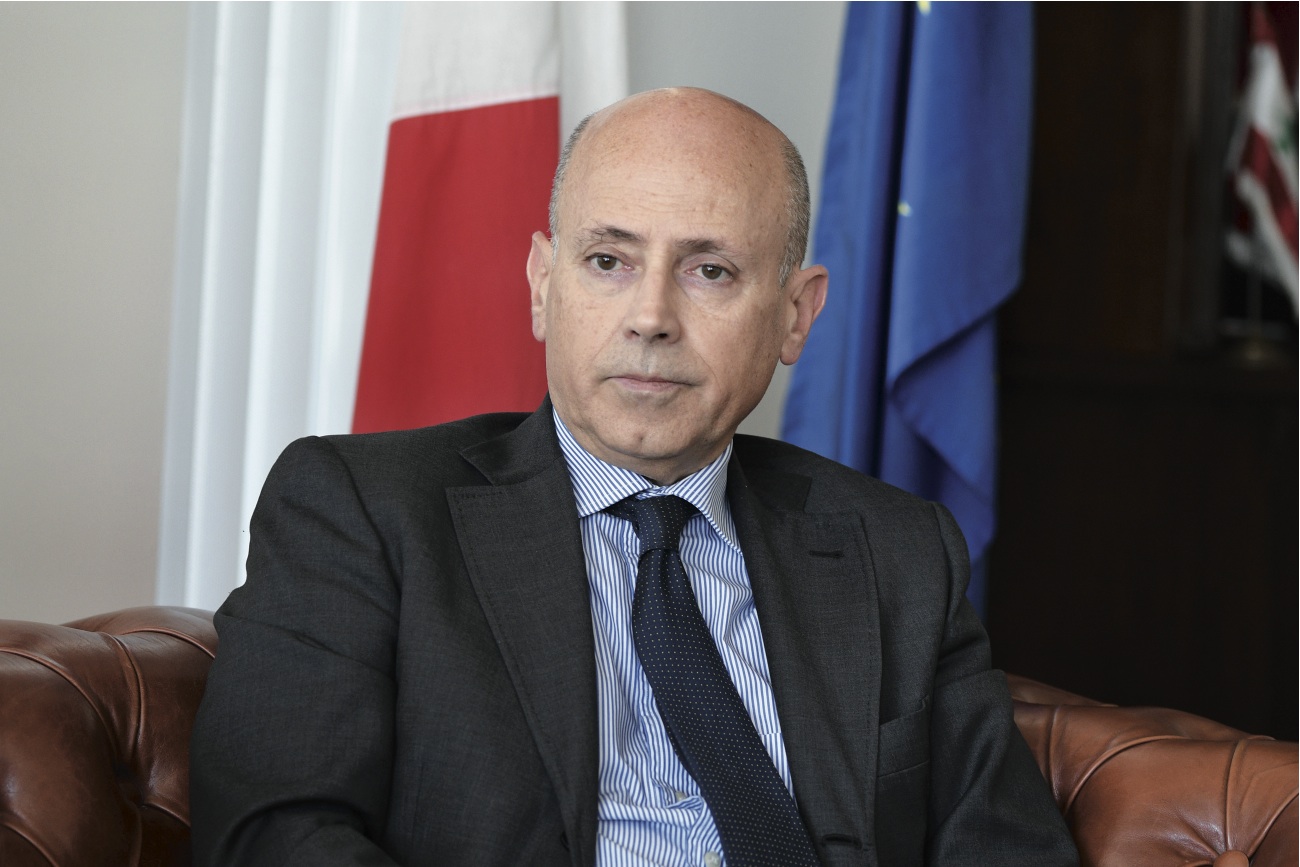
EXECUTIVE interviewed French Ambassador Emmanuel Bonne via email about French contributions to Lebanon’s entrepreneurship ecosystem as well as his country’s assistance to Lebanon.

E   In terms of the economic relationship between the two countries, we’ve heard the French government will be helping to fund and build Smart ESA (École supérieure des affaires). What added value will the government of France bring to this partnership and the wider Lebanese entrepreneurship ecosystem?

France is very active in the development of entrepreneurship and digital technology, namely through its “French Tech” initiative. Launched in 2013, this initiative aims not only to enable French entrepreneurs and innovators to develop and expand internationally, but also to share their expertise and create synergies with entrepreneurs and incubators from other countries. Smart ESA, the new incubator and accelerator of the ESA Business School, aspires to become the relay of French Tech and thus connect France to the entire Middle East.

On May 27, ESA Business School received an extended lease agreement from the French government and launched renovation works on a 3,000 square meter building with a financial donation from Bank Med. The French Minister of State, Jean-Vincent Placé, joined us on this occasion. The new “smart building” is set to be operational in fall 2018. In the meantime, Smart ESA has planned for temporary offices and innovation spaces on campus to welcome the first three batches.

A new initiative, the Smart ESA Business Matching platform, was also launched last September through a strategic partnership with Ville de Paris and Paris & Co; an initiative that was championed by the French embassy. It will eventually be expanded to the rest of France and to all of Europe. “Scale up to compete!”

Smart ESA also took part in the Banque du Liban (BDL) Accelerate Event in November in Beirut, during which it announced its four programs: Ideation, Incubation, Acceleration and a unique “à la carte” option.

From the heart of Beirut, ESA Business School’s campus is now the strategic location from which startups, entrepreneurs and companies at all stages (from seed to growth) will be the actors of Lebanon’s digital transition.

E   What do you see as the potential impact of entrepreneurship on Lebanon’s economy? Will the embassy try to connect French entrepreneurs with Lebanese entrepreneurs? If so, how and what value do you hope this will add?

France is traditionally one of Lebanon’s leading trading partners. Every year, France ranks among the leading suppliers in Lebanon, with a market share of around seven percent, which represents one of our highest market shares in the Near and Middle East. Moreover, Lebanon holds 45 percent of the stock of Middle Eastern foreign direct investments in France.

Lebanon is a small country indeed, but it is destined for greatness, as it is strategically located at the crossroads of East and West. It offers many opportunities for companies, not only for its own market, but also outside its borders, particularly in the Near and Middle East, as well as Africa. Besides, Lebanon has a very large diaspora which directly partakes in enriching the exchanges between our countries. Among  French entrepreneurs, a considerable share are of Lebanese origin, thus contributing to building new bridges between our two countries.

In this landscape, France has a privileged place: it is a partner of choice, maybe even a partner of heart.

The number of French companies exporting to Lebanon has increased significantly in recent years, namely due to the involvement of small and medium-sized enterprises (SMEs). In 2015, over 4,600 French companies exported their products to Lebanon, nearly 14 percent more than 10 years ago. In addition, more than 100 French companies are based in Lebanon today, in various sectors as diverse as wholesale, food processing, financial services, and health and telecoms, to name but a few. French investments are also steadily increasing, jumping from 66 million euros in 2007 to 530 million euros in 2015.

Through our Business France office in Beirut – the trade department of our embassy – we aim to develop links between French SMEs and Lebanese companies. Practically, our efforts can be as varying as raising awareness of and promoting communication on the Lebanese market, establishing direct commercial ties between French and Lebanese entrepreneurs, or organizing theme-based collective operations in Beirut or Paris.

In 2017, several programs will be launched to promote bilateral commercial ties: a symposium on health and hygiene in hospitals, the display of equipment and French food products at the Horeca fair, and the ninth edition of the French pavilion at Project Lebanon, as well as collective assignments of French companies specializing in various sectors related to well-being and the environment. This aim of cooperating and working together strengthens the trade ties between France and Lebanon, which in turn can increase and create new market opportunities and boost mutual investments.

E   What economic hopes do you have for Lebanon in 2017?

We are well aware of the extent of the challenges that Lebanon has to overcome. The Lebanese economy is facing strong pressure from the Syrian crisis, the impact of which is estimated at more than $12 billion. Lebanon’s real GDP has grown 1.8 percent per year on average since 2011, which contrasts greatly with the 9.2 percent average registered between 2007 and 2010.

The main message that France wishes to deliver to the Lebanese people is that of its unwavering friendship. We are standing by Lebanon’s side through this difficult time as we look to further deepen our cooperation with the country’s institutions.

As mentioned earlier, French companies have built trust and long-standing relationships in Lebanon. We wish to strengthen and expand these connections by exploring new partnerships to create more ground for sustainable and inclusive growth. There are many projects in the making to support Lebanon’s economy. For example, the French Development Agency (AFD, Agence Française de Développement) has been assisting Lebanon in developing its private sector for the past 15 years by financing companies and banks through loans, portfolio warranties, investment capital, etc. The AFD’s action also contributes to looking for ways to better exploit Lebanon’s growth potential, as well as the competitiveness of its economic actors, in areas such as vocational training or sustainable development.

We truly hope that Lebanon will see a resumption of economic growth in 2017 and that  financial and monetary stability will be preserved. We also look forward to seeing the government take appropriate measures to control the public deficit, stabilize the public debt and bring about the structural reforms needed to modernize the country’s infrastructure.

E   In terms of assistance pledged specifically to Lebanon at the London Conference in early 2016, how much has France actually deployed to date and where/how was it spent (i.e. focused on any specific sectors/needs)?

The issue of refugees is very sensitive, especially in Lebanon where they have a considerable presence. This is why our aid is directed not only toward Syrian communities, but also toward supporting the Lebanese people who have welcomed them.

Since the beginning of the Syrian crisis, we have spent 90 million euros on humanitarian and development projects in Lebanon – making it the biggest receiver of French aid in the region.

During his recent visit to Lebanon last April, President François Hollande announced that half of the amount pledged by France at the London Conference would be allocated to Lebanon, totalling 100 million euros for 2016-2018, 50 million euros of which would be spent in 2016. We are currently in the process of finalizing the allocation of those grants. This assistance comes in addition to the other actions that France carries out in Lebanon, through our investments in supporting the security and stability of the country. 

As announced during the London Conference, France’s priorities are mainly oriented toward youth and education. We are implementing those priorities by closely working with the Lebanese government, UN agencies, NGOs and local partners such as municipalities. This follows France’s tradition of close educational cooperation with Lebanon.

On top of these priorities, our programs have also targeted other sectors, such as food assistance, access to water, shelter, vocational training, health and the protection of women and children.

Since President Hollande’s visit to Lebanon, France has also tripled its humanitarian resettlement program for Syrian refugees currently in Lebanon. As a result, 3,000 Syrian refugees will be resettled in France in 2016-2017, as we aim to welcome the most vulnerable refugees, such as people in need of urgent medical care.

E   How does the embassy judge the actual impact of this assistance (any metrics/hard numbers would be appreciated)?

We are working hard to maximize our impact.  First, our assistance programs, regardless of the sector, are all designed to support Syrian refugees as well as the host communities in Lebanon, as we are very much aware of the generosity the country has shown in welcoming and hosting Syrian refugees. Secondly, most of our programs combine emergency relief and capacity building, as we look to achieve a long term-impact. Capacity building is addressed both toward Lebanese civil society and the Lebanese government.

Allow me to give one example: one of our programs dedicated to Lebanese NGOs was designed in partnership with the Lebanese Ministry of Social Affairs. This program started with a budget of 600,000 euros and now has a budget of 2.6 million euros. We have adapted it in view of working with as many Lebanese NGOs as possible.

Thirdly, French programs implemented by French NGOs are developed in a way that French expertise is transferred to local stakeholders. This continuum guarantees the efficiency of our humanitarian programs in the long term.

A lot has been done and a lot remains to be done in Lebanon, with Lebanon and for Lebanon. We continue to work for the sake of the long and meaningful friendship that exists between our two countries.

January 19, 2017 1 comment
0 FacebookTwitterPinterestEmail
Entrepreneurship

Is Lebanon’s startup ecosystem sustainable?

by Victor Mulas January 18, 2017
written by Victor Mulas

When I was first introduced to Beirut’s start-up ecosystem in 2011, AltCity was refurbishing its first space, the Seeqnce experiment had just launched, MEVP was one of the few venture capital (VC) firms investing in Lebanon, Endeavor was just opening, and Wamda and ArabNet were nascent.

Fast-forward to 2016 and Beirut is a different city for startups. The support infrastructure for entrepreneurs has expanded with several acceleration programs such as the UK Lebanon Tech Hub, AltCity Bootcamp, Speed@BDD, Smart ESA, and more in the pipeline. Beirut Digital District (BDD) has become the hub of the ecosystem, and Banque du Liban (BDL)’s Circular 331 and other donor-backed funding support programs such as World Bank-Kafalat and USAID-IM Capital have resulted in multiple VC and matching funds for Lebanese entrepreneurs. 

There is no question that Beirut’s ecosystem has expanded significantly in the last five years. A lot of the credit for this should go to the intermediaries that have been working hard to help startups grow and get funded. Circular 331 built on this organic tissue and turbocharged the ecosystem to where it is today.

The work, however, is not done yet. Beirut’s ecosystem is still maturing and there are signals that there may be a startup bubble. When I see the same startups jumping from support program to support program without graduating into funded and sustainable businesses, and the same founders over and over at every ecosystem event, I cannot help but wonder how much of the growth achieved in the last years is sustainable and how much more the ecosystem can grow.

Local startups may get funding under Lebanon’s own set criteria, but they will not become successful nor be able to create growth and new jobs for the country unless they can compete internationally. This is important because these successful startups are a source of sustainability if they end up contributing back to the ecosystem in sufficient numbers.

How can the ecosystem be reinforced and face the challenges ahead? The following are some of the areas we have identified based on the World Bank’s field work over the last five years (particularly through the supporting activities of the Mobile Internet Ecosystem Project (MIEP), which we started preparing in 2011) and research carried out within the ecosystem, including an on-going survey of startup founders we are conducting in collaboration with Endeavor Lebanon and Berytech. We are still refining our findings and will present the final results in a more detailed study at a later date.

1. Maturity of the support infrastructure

There are a number of accelerator and incubator programs in Beirut. The question is, are they providing the quality training and support needed for startups to graduate and compete internationally? How do the programs of these support infrastructure compare to the leading international ones (such as Y Combinator, Techstars, etc.)?

The first step of an ecosystem is to catalyze accelerator and incubator programs. The next step is to create high quality programs and attract internationally competitive talent to support these programs. World Bank research shows that in most emerging ecosystems, accelerators and incubators create quantity, but not necessarily quality, in startups. This is not bad per se, but if the ecosystem wants to achieve sustainability, it needs to develop a sophisticated support infrastructure.  Accelerators and incubators do not necessarily end up producing the startups that will succeed, but they have an important function in training talent for successful startups and other industries developing tech-based products and services. Maturity and sophistication of support infrastructure is key to providing this talent.

2. Home-grown angel investors

Circular 331 and other donor-backed programs have increased the number and size of funds available. While there is still a small number of active angel investors for startups, very few successful startup founders become angel investors who go on to mentor and nurture the new generation of startups.  From research in mature ecosystems, such as New York City, we know that this loop of successful startup founders becoming mentors and angel investors for new startups of the ecosystem is critical to achieving sustainability. Moreover, startups that have been mentored by successful startup founders have a three times greater chance of becoming successful themselves and creating more employment.

These self-grown angel investors are also the most likely to invest in more suitable startup projects, since they have unique insights into the market and are investing their own funds. Home-grown angel investors result in what can be characterized as “smart money” – an investment and mentorship relationship with a founder who “made it,” – as opposed to “dumb money,” an investment with no experienced mentorship involved. The ratio of “smart money” to total funding available matters for developing a robust and sustainable ecosystem.

3. Sufficient and diverse talent pipeline

Many of the startup founders we surveyed in Beirut highlighted the lack of talent to support their projects. In more in-depth conversations, founders pinpointed the need to train university students for their businesses.  However, many of the students that these startups managed to attract from competing job opportunities abroad left soon after they were trained to become entrepreneurs themselves.

This is not a unique problem to Beirut. Every ecosystem I visit, be it New York, Berlin or Santiago, seems to need more talent than it has available. The question is: What is the size of this talent gap?

Based on the responses to our surveys and interviews, there seems to be a large gap between university education and the practical skills required by the ecosystem. There are initiatives, such as AltCity Bootcamp, which are trying to partly address this gap. However, they do not seem to be enough. Moreover, these initiatives focus on “white-collar” tech talent, people who have the education, skills and willingness to be an entrepreneur. Understandably, these people often want to create their own startup, not work for one. That is the reason why talented workers tend to leave as soon as they gain practical and actionable skills.

There are only a couple of nascent initiatives – most notably SE Factory – that focus on “blue-collar” tech skills. These are coding bootcamps that serve as vocational training for the lower educated/skilled population whose goal is to work for a startup or a larger company. This is a large part of the talent that would stay to support startups as they grow. The current production of graduates from these programs seems to be too small for the ecosystem’s needs.

4. Connection with traditional local industries

Beirut’s ecosystem is mostly insulated from the rest of the economy. Startup founders and intermediaries have barely connected with other sectors of the economy beyond sponsorship or funding relationships.  More mature ecosystems tend to create startups that have mutually beneficial relationships with local industries (be it talent previously working in these industries, or formal research and development (R&D) processes of companies, such as open innovation processes). This reinforces the ecosystem by providing talent that is more likely to be successful in a startup venture, with startups that can develop products and services tailored to industry needs. It also opens the possibility of creating mini-ecosystems around these industries (e.g. the London fintech ecosystem around its banking industry).

At the same time, this connection between startups and traditional companies increases the competitiveness of the industrial base of the country, as these companies can absorb new innovation, scale it up and develop new products and services themselves. We can see this virtual cycle at play in places like New York, London or Berlin. However, there seem to be little to no connection or productive relationships between startups and Lebanon’s industries.

The ecosystem would also benefit from expanding its reach beyond Beirut. It is mostly concentrated in the city with little input from, or outreach to, the rest of the country, and as a result misses potential talent, diversity and impact. It could also benefit from addressing social and public challenges by developing social innovation as an area for growth. Interestingly enough, Beirut, and Lebanon as a whole, are not lacking in social and public challenges, but its startup ecosystem is way behind on social innovation when compared to other regions in the world, forfeiting a large area of growth with significant positive network externalities for the country.

January 18, 2017 1 comment
0 FacebookTwitterPinterestEmail
Industry & Agriculture

Italy hopes to expand strategically

by Jeremy Arbid January 17, 2017
written by Jeremy Arbid

For the Italian government, supporting Lebanese manufacturing has long been seen as a key to economic stability and growth. In the last year, Italy financed a feasibility study for the creation of new industrial zones and agreed to fund new infrastructure upgrades supporting the sector. Executive visited the embassy to find out more.

E   With Lebanon electing a new president, how do you view 2017 in terms of the country’s economic prospects?

In the next year there might be, with a new government, an indication on economic policies that would show the international community which direction the country wants to go. The private sector will require some assistance and international partnership to seize new opportunities. In view also of regional evolution, there again will be a larger market for Lebanese exports. Hopefully with peace in Syria there will be conditions for the economy of Lebanon to grow. But the most important factor would be the indication from the government of where the country’s resources will go – renewing infrastructures, incentives for the private sector and for small and medium-sized companies. Depending on the priorities that the government will define, Lebanon’s international partners will better direct their foreign assistance programs to the country.

E   Has the Italian government identified projects or priorities moving forward?

Based on what Italian cooperation has done so far, we have had some positive returns. For example, on urban development, we started several years ago with a feasibility study and subsequently invested $10 million on a program to develop initiatives in five urban areas. The World Bank, based on our assessment, added $60 million more, contributing to the creation of new companies and jobs. That was a dual-donor, multi-year program which contributed to creating new opportunities, developing Lebanese enterprises and improving quality of life. Similarly, programs to protect cultural heritage became a factor in improving tourism.

In 2017, we envisage support for the industrial sector, implementing programs more or less the same way. We are aware that the Ministry of Industry intends to create new industrial parks to facilitate local and foreign investment. Italy financed a UNIDO (United Nations Industrial Development Organization) feasibility study for the creation of three industrial parks and [on November 17, 2016] we signed an agreement with the government of Lebanon, assigning part of an $80 million soft loan to realize the initial infrastructure in these industrial zones. Of course, the project needs more donors to be implemented, and we hope others will join us, similar to what happened in previous programs. We will also consider expanding our assistance programs in order to finance key infrastructure serving the industrial area in Tripoli. There will probably be other donors involved, as it is critical to support a larger manufacturing role for Lebanese enterprises.

[pullquote]

Depending on the priorities that the government will define, Lebanon’s international partners will better direct their foreign assistance programs to the country

[/pullquote]

E   Italy has a larger role in and connection to Lebanon perhaps than other countries in terms of trade and history.

Our cooperation system with Lebanon is a comprehensive one. For Italy, assistance to Lebanon is strategic, which is why it encompasses: security, including our 10-year long participation in UNIFIL and the program of assistance to the Lebanese Armed Forces; cultural heritage; and aid programs to build infrastructure, develop small and medium-sized companies, enhance social programs and improve the environment. We are also trying to expand the lifespan of valuable projects once their first phase is implemented, such as the study on the Orontes River Basin, by trying to attract other donors. That’s why it is key for us to work side by side with the government. Another example is the 1 million euro renovation program of the National Museum’s basement. Italy financed the work, adding valuable expertise that contributed to [expanding] the museum, which will be a worldwide landmark in archaeology and a new point of attraction for tourism that can help generate income. For the next year, we are considering ideas to support small and medium-sized companies, if and when the Lebanese government gives an indication they want to move in that direction.

E   In mentioning an economic vision, hoping that Lebanon comes up with one when it forms a new government, do you think the investments Italy is making are maximized and reaching its targeted beneficiaries?

We saw the recently launched central bank programs as one of the signs that the private sector, [with several] newly born companies, is very active. Lebanon has all the means to promote innovation and adapt the production of goods and services to the evolving market, relying on very skilled individuals present in the workforce and on a very active private sector able to extend their foreign business partnerships. What the private sector sometimes calls for, as we’ve heard, is better services that can reduce production costs. Industrial parks are one solution that might help the private sector. Others, of course, are a regular supply of energy, water management and new infrastructure. Italy, the EU and other European donors will keep on supporting the efforts of the government in that direction.

E    Can you say a little bit about the intensity of trade in 2016 between Lebanese and Italian imports and how bilateral relations are developing?

We have increased our exports to Lebanon, while imports remained stagnant. In order to sell more to Italy, Lebanon has to work with European institutions. We are assisting Lebanon in the processes to bring the quality of certain export products to standards that can facilitate export to the European Union. For example, to export agricultural products, like olive oil, where Lebanon has an advantage, it would be important to target the high control standard required to enter the European food market.

[pullquote]

We are assisting Lebanon in the processes to bring the quality of certain export products to standards that can facilitate export to the European Union

[/pullquote]

E   Was there any increase in the number of Lebanese exports to Italy in 2016, or was it stable?

Estimated figures for 2016 do not show an increase. I think it reflected the general stagnation of the economy. The reduction of exports due to the war in Syria was not compensated by an immediate reorientation of exports to other markets.

E   So for 2017, do you still see more of the same or do you anticipate that there will be more trade intensity in terms of Lebanese exports to Italy?

I don’t see a significant increase. The latest figures show that there was no increase. Reorienting exports will require a bit more time. So unless there are some surprising factors, maybe toward the end of 2017 we might see some better signs for Lebanese exports.

E    From the initiative with the creative cluster (supporting the production of furniture in Tripoli and jewelry in Bourj Hammoud) did you see any measurable results in the last 6 months after helping to open the shop in Gemmayzeh?

We haven’t received any data so far. However, we considered that project [to be] an important capacity building program. It is an opportunity for certain producers to see their businesses in a different way. We do not expect immediate results, but certainly the new approach that has been spreading among the producers will revitalize the sector.

E    Are you not worried that Lebanon might rise up to be a competitor to Italy if we learn everything that Italy – industrial or design wise, in arts and crafts – can teach the Lebanese. Are you breeding your own competitor?

Well, the world is an open competitive market. Certainly there is no interest in keeping a market like Lebanon depressed. We believe that by disseminating capacities we create the conditions to work more and to work together. Elevating the standard of competitors might create new market opportunities for mutual advantage and better terms for new business partnerships. By helping to improve the standards or the production capacity of competitors of a different size, it would be possible to generate partnerships that can work for the benefit of both.

January 17, 2017 0 comments
0 FacebookTwitterPinterestEmail
CommentEconomics & Policy

It is all possible

by Annalisa Fedelino January 16, 2017
written by Annalisa Fedelino

Beirut, December 2026.

For the second year in a row, the number of tourists visiting Lebanon has topped 3 million. They are lured by the country’s historical sites, great food and social scene, as well as by their curiosity to experience the multicultural milieu that makes Lebanon such a unique place, not only for the Middle East, but the entire world.

As of last June, tourists can move around more easily, taking advantage of the new city transit system that has helped make Beirut one of the most accessible and livable cities on the Mediterranean.

Traffic jams and piles of trash, so common only a decade ago, are now long gone. The country has been doing well politically and economically, growing by an average of 5 percent per year in the last five years alone. Elections are taking place within constitutional deadlines and under modern electoral laws. More and more jobs are being created every year, especially for new university graduates who now increasingly prefer to remain in Lebanon rather than emigrate abroad. Opportunities abound in the ever growing service sector (tourism and health care are just two examples), the technology sector and agribusiness.

Lebanon has climbed up the rankings of countries defined by their openness, ease of doing business and innovation. The government has passed a range of groundbreaking legislation that has modernized public administration and created a proper pension system and post-retirement health service for all its citizens. A series of infrastructure projects – a rehabilitated railway system, new bridges and overpasses, a new road network to better connect Lebanon to the rest of the Arab region (and beyond), as well as waste treatment facilities and electricity power plants – have successfully matched the private sector’s ingenuity and managerial skills with the public sector’s vision for improved service delivery.

Progress is perhaps most tangible in the major cities, yet the scope and benefits of Lebanon’s new projects have spread throughout the country, empowering local governments along the way. Internet speed and costs are among the most competitive regionally, and electricity is efficiently produced and now partly exported to neighboring countries. The offshore gas and oil sector, after an unsteady start, is now properly regulated and transparently managed. And after years of investment, proceeds from Lebanon’s natural resources have now started to flow into the government’s coffers. They will partly be used to fund additional capital projects, and partly to reduce the government’s public debt – creating a virtual circle of lower budget deficits, lower debt and interest rates, and more fiscal space to strengthen public services and create an environment where the private sector can flourish, boosting growth and job creation.

It all started about a decade ago…

After a long political impasse, significant changes and reforms were implemented starting in early 2017. The first step was a government of national unity – one that, although short-lived in the run-up to long overdue parliamentary elections – paved the way for progress that subsequent governments embraced and expanded upon.

The first budget in over a decade was discussed and approved in 2017 – and since then, annual budgets have become the norm once again. The government also took some courageous steps. As public debt moved toward 150 percent of Gross Domestic Product (GDP), a package of measures was implemented – starting with fuel taxation that capitalized on low domestic oil prices. This fiscal adjustment came at a cost, particularly as the economy had been weakened after years of political uncertainty and major regional shocks – chief among all, the Syrian crisis and associated refugee flows. At the same time, however, the renewed policy effort also helped revamp confidence, as the Ministry of Finance – supported by the whole government – clearly communicated its strategy and committed to providing better services to taxpayers.

Regulatory authorities were finally activated and empowered – starting in the telecommunication and electricity sectors. A new Public-Private Partnership Law, in line with international standards, was approved after languishing in parliament for many years, creating a modern legal and regulatory framework for the public and private sectors to work together in planning, executing and managing projects. And in a positive nod to the future, Lebanon also became a member of the Extractive Industries Transparency Initiative, underscoring its commitment to transparency and accountability in managing Lebanon’s then nascent offshore wealth. 

As change became visible and gained momentum, confidence started to recover. And the international community – perhaps heartened by the resolve of Lebanon’s revitalized policy-making framework – added to its ongoing support by providing large and reliable multi-year funding to cover the long-term costs of hosting the refugees.


Beirut, December 2016

We will only know in a decade’s time whether the story above is a snapshot of reality or mere fiction. But it is all possible. Lebanon has the potential and the capacity to become a beacon of progress and prosperity. The moment is now, starting by setting aside divisions and embracing a sustainable future that will benefit all. 

January 16, 2017 0 comments
0 FacebookTwitterPinterestEmail
Industry & AgricultureWine

Grapes of success

by Nabila Rahhal January 16, 2017
written by Nabila Rahhal

Lebanese wine has been filling many a glass both locally and globally as the country’s winemakers continue their efforts to grow their market share and as new boutique wineries are launched.

Coming out of the Lebanese Civil War with just eight wineries, the wine industry in Lebanon has grown to over five times that number, with 42 wineries registered with the Ministry of Agriculture in 2016.

Of this total number, 23 wineries are members of the Union Vinicole du Liban (UVL) and account for 95 percent of Lebanon’s total wine production, which is around nine million bottles per year, according to Zafer Chaoui, current head of the UVL and chairman and chief executive officer of Château Ksara.

And yet, Lebanon’s production numbers remain a drop in the ocean in comparison to neighboring wine-producing countries. “Growth is needed. We produce nine million bottles, while Cyprus produces 27 million bottles and it doesn’t have the wine we have because our climate is better,” says Chaoui, explaining that while Lebanon might never be able to compete internationally in terms of volume of production, and therefore in prices, it does produce quality wine and should compete in that category.   

All that glitters

Locally, wine consumption has been on the rise for the past four years, following a global trend due to it being perceived as “healthier” than other types of alcohol, according to Paul Choueiry, general manager of Les Caves De Taillevent.

Unfortunately, there are quite a few Lebanese who assume that imported wine is of better quality and taste than the local variety, although the country’s wine producers insist that this is often not the case. “Lebanon has incredibly good wine, and sommeliers and wine specialists who visit Lebanon are really flabbergasted by this. Lebanese have to know this because we have this kind of snobbery that we should only drink foreign wine. It is not wrong to enjoy foreign wine, but if you do a blind test, the Lebanese wine tastes just as good,” says Hady Kahale, general manager of Ixsir.

The perception of foreign wine being better than local wine is not helped by the many restaurants in Lebanon that boast an extensive imported wine list with only a few local varieties – often at almost the same price as the imported ones – according to the winemakers Executive spoke to. “This is very dangerous because you don’t see it anywhere else in the world, and what also happens is that when customers pay $60 for a bottle of French wine in a restaurant, they think, ‘Why should I pay almost the same amount for Lebanese wine?’” says Kahale, explaining that for a foreign wine to be priced at a high-end restaurant for $60, it would have left the winery at $1.50, making it very unlikely to be high quality.

Although consumption of wine is increasing in Lebanon, many wineries feel more could be done to promote local wine. “Unfortunately, we still find some restaurants that offer more imported wines than Lebanese wines. We should work more on promoting Lebanese wines in Lebanon together with the UVL,” says Joe Assaad Touma, winemaker and co-owner of Château St. Thomas.

It starts at home

Wine producers have indeed been working to improve the perception of local wines among their fellow citizens with the goal of increasing its consumption, which is still relatively low. “If you look at the consumption of Lebanese wine per capita, it’s two to three bottles per year compared to French wine which is 60,” explains Edouard Kosremelli, director general of Château Kefraya. 

Their efforts are slowly but surely bearing fruit with an increasing number of Lebanese feeling pride in their local wine.

The rise in the number of boutique and small wineries also added a much needed dynamism to the sector. “Many small and medium-sized wineries are being established, and they are most welcome because healthy competition improves quality and pushes us to do better, both locally and internationally,” says Chaoui.

Having more wineries also increases the chances of people becoming aware of Lebanon as a wine-producing country, thereby increasing consumption. “With more wineries, consumers have become more curious about their wine and want to try new wines,” says Kosremelli.

Despite struggling to find distribution channels and to make a name for their wine, boutique winery owners have managed to create a niche market where those curious about wine can find a lot to be occupied with. “When you become known, established distributors will ask for the product. But if you want to build a brand, they will never help you out or push it unless you give them incentive; so you do your own marketing and hope that people will ask for it,” explains Jennifer Massoud, co-owner and communications manager at Atibaia, adding that they have seen sales of Atibaia pick up the most in outlets where managers put in the effort to educate consumers on boutique wineries.

A wine tour

The growing trend of enotourism (visiting wineries) has also helped Lebanese discover their country’s wineries and wines.

Château Ksara, with its well-known caves which sheltered those escaping the Ottoman army during World War I, received 27,000 visitors in summer 2016 alone and expects the total number of visitors for 2016 to be around 60,000, according to George Sara, Château Ksara’s Chief Commercial Officer and board member. 

Meanwhile, Château Kefraya reports an increase in visitors to its winery when compared to 2015. Ixsir, too, has done well, having welcomed more than 30,000 visitors in 2016 to its winery and its accompanying Nicolas Audi catered restaurant in the hills of Batroun.

Not only does enotourism help consumers understand how wine is made, it also makes them associate the wine label with the good time they had at the winery, making them more likely to select it next time they go wine shopping, explains Kahale.

Wine selling

Promoting wine locally does not stop with potential customers lunching at wineries, but also involves engaging the consumer with wine production. As such, some wineries have been inviting consumers to help out with the grape picking and to celebrations at the end of harvest season. “Château St. Thomas has been hosting an annual harvest event since 1999, and the idea is to live the experience of harvesting grapes and making wine. It’s very important to have this experience and meet the people who produce the wines,” explains Touma.

Participation in local wine festivals such as the annual Vinifest, which takes place at the Beirut Hippodrome, or others held during the Christmas season also help to increase local consumers’ awareness regarding the quality and variety of Lebanese wine. “It’s important to maintain market presence and grow the consumption per capita level in Lebanon, and Vinifest is typically an event that helps in this direction,” explains Kosremelli.

Kahale thinks that marketing efforts at the local level should be directed at making Lebanese wine trendy in the eyes of consumers, especially when it comes to marketing and advertising. “Exporting is very important, but it is the Lebanese market which is extremely important for us all. Local consumption is very small in Lebanon, but this is the market we have to work with. We need sexy ideas; we need to up our marketing as this will increase the market,” enthuses Kahale, giving the example of Ixsir’s collaboration with young Lebanese artists to design the bottle of their entry range wine brand, Altitude – the first time this was done in Lebanon – and the positive response it drew from consumers. Château Kefraya also mentions their collaboration with local artists to design their labels as a marketing activity, citing Lara Khoury’s label design of the Les Breteches limited edition in 2016 as an example. Meanwhile, Château Marsyas collaborated with designer Nada Debs for their 2017 gift pack.

Sara also speaks of the importance of finding fresh ways of marketing Château Ksara, but says they have to balance that with their long history of winemaking. “We want to bring generations together around our wines, and social media is a great tool to cultivate a following among younger wine lovers. Moving forward, we have to tread a fine line between constantly reminding consumers that we are still here – through our new interactive website and seasonal billboard and radio ads that reflect the Lebanese lifestyle of wining and dining and fun in the sun at the beach – and maintaining our position as Lebanon’s most venerable winery with a history steeped in tradition going back to the Jesuits in the mid-19th century,” explains Sara.

Going global

Lebanese wine first went global with the late Serge Hochar, winemaker and founder of Château Musar. He took Château Musar to the UK amidst the Lebanese Civil War – and garnered a lot of recognition both for Lebanon as winemaking country and for his label as “the wine of the war.” Ever since – and especially now that they are spurred by the challenges brought forth by local and regional instabilities – Lebanon’s wine producers have been seeking greener markets across the globe.

In doing so, wine producers understood that by working together under a common umbrella, they would have a bigger impact than if they marketed their wine individually. “I always say to my colleagues that with exporting we have to overcome small competition. When people talk about Chilean wine, or South African wine, who talks about individual wineries? We all have the same climate, same quality of grapes and we are professionals,” says Chaoui.

In this case the umbrella is the UVL, which for the past few years has concentrated all its efforts in making a name for Lebanese wine abroad. Their efforts caught the attention of the Ministry of Agriculture and the Chamber of Commerce, who have both given the industry their support. “The new dimension that UVL has been taking for two to three years is marketing. Everything that is being done out of Lebanon is being done through UVL, with the support of the Ministry of Agriculture and [the] Chamber of Commerce,” says Kahale.

Recounting the UVL’s activities in 2016, Chaoui speaks highly of the Wines of Lebanon event that took place in New York in November 2016, under the patronage and financial support of the Ministry of Agriculture, and organized by Hospitality Services. “[The organizers] hired a PR company which succeeded in getting local wine professionals to attend this event. For us, this is the key to success because the Lebanese already know our wine. All those who attended were extremely satisfied,” says Chaoui.

The second major event for the UVL, and hence Lebanese wine abroad, was being the guest of honor at Megavino, the biggest wine fair for professionals in Europe which takes place in Brussels. “Megavino was a great event for us because we had the chance to be a guest of honor. The exposure was huge, and many people who have followed the news in the region didn’t even know that Lebanon produces wine,” says Chaoui with a quiet pride, explaining that the 80 percent of the budget for Megavino came out of the annual sum which the Chamber of Commerce gives the UVL, with the wineries covering the remaining balance (including airfare, transport costs for wine and accommodation).

These efforts, coupled with the individual marketing initiatives and follow-ups by individual wineries, has led to Lebanese wines being served at tables as far flung as China, which Château St Thomas cites as a market, or Mexico, where Ixsir recently sent a shipment.

Whether locally or abroad, Lebanese wine is certainly carving a name for the country’s grapes and producers. That’s something we can all toast to.

January 16, 2017 2 comments
0 FacebookTwitterPinterestEmail
Banking & Finance

A promise of wealth

by Thomas Schellen January 13, 2017
written by Thomas Schellen

Oussama Kaissi is the chief executive officer of the Islamic Corporation for the Insurance of Investment and Export Credit (ICEIC), the insurance arm of the Islamic Development Bank (IDB). The IDB is a Saudi Arabia-based multilateral organization which comprises a group of Islamic institutions in the realm of finance. Executive sat down with Kaissi to discuss the role of Islamic banking in Lebanon and the potential of issuing Islamic debt instruments (known as sukuk) for the country.

E   If we talk about the state of the Islamic finance industry in Lebanon, Islamic banks do not seem to have developed strongly here in the past when compared with the conventional finance offers, which local corporate customers have responded to. How do you see this?

There are two Islamic banks here in Beirut. One of them is an offshoot of [GCC-based] Baraka Group, and the other is an Islamic entity of Credit Libanais. They were created to answer the market’s call for a niche product, and I don’t think they have been developing the market much. These banks have not failed – as they are in existence and their offering is normal – but they have not grown. Islamic finance has proven globally that it is a viable product. Any time you have a viable product, the minute that you see that it has failed to grow [you can surmise] this is because of lack of knowledge on the potential of Islamic finance and the lack of knowledge on the part of the consumer. Islamic finance and conventional finance play very important roles on the horizons in the economies where they both coexist. I know there is a huge base here [in Lebanon] of potential customers for Islamic finance and this group ranges from individuals to businesses. It is one of the most vibrant financial sectors in the region. That is why I tell you that the market here is ready. I believe that Islamic finance is an extremely important window for the banks here and for the government to go to the market to procure more debt instruments, finance the debt that they have and even pump some liquidity into the market.

E   When Islamic finance first rose to prominence some years ago, the cost of an Islamic loan used to be higher than the cost of a conventional loan. Is it correct to say that this has changed?

Yes, that is correct.

E   You see cities like London aspiring today to become international hubs for Islamic finance. Where do you see Lebanon fit in with the centers of Islamic finance?

London has taken center stage in terms of being a worldwide hub for Islamic finance, and Dubai is trying to become the regional hub in the Middle East. South Africa is trying to become the regional hub in Africa, and Malaysia and Singapore are important players as well. Thus, on every continent you have somebody who is well-situated to be the regional hub for Islamic finance. With respect to banking in Lebanon and how you view it going forward, and on how to link Islamic finance with the conventional system, Islamic and conventional finance have to be seen as collaborators. There should be a balance, where people still go to the conventional markets for debt and where people can proceed to explore Islamic finance. But [as an Islamic banker] one has to be critical of oneself in the sense that the growth of Islamic finance has not reached its full potential yet, even though the numbers are healthy.

E   What has to be done?

In my opinion, Islamic finance has to be brought to the market in a simplified manner. One of our main mandates as the IDB Group is the promotion of Islamic finance. We have to do more, and we have to be more active in helping Islamic banks to manage their day-to-day activities, go to market and issue sukuk. Sukuk are now an integral part of finance, where you can issue sukuk like bonds and create liquidity. If you go to the markets and see a liquidity squeeze, this does not mean that there is no cash that can be tapped into. The market is flooded with cash, but you need programs for sukuk specifically that can go to these markets and tap into that cash. These programs should be supported with highly rated institutions so that the costs are low and returns are matching what is the going rate. The markets are open for us in all Islamic hubs, whether in London, Dubai, South Africa, Singapore or Malaysia. As far as legislation, we are operating in all legislative environments. Another issue that in my opinion is a positive, not a negative factor, is the diversity of Sharia boards.

E   Is it true that there are no united perspectives from Sharia boards?

To be united is not the issue. There is diversity. From diversity, you can either create conflict or something that is positive and harmonious. I believe that a lot of groundwork has been done and we should not negate the fact that there has been tremendous success. But the challenges are great and there is a big need going forward for us to address liquidity needs, as we are now facing economies that are heavily interacting with major economies in terms of funding and so forth. Countries are retracting now, specifically oil-producing-countries, and they are looking to raise funds in capital markets and are having to go to sukuk markets. For us to raise the capital that is needed to reach what we want, collaboration is needed from London or South Africa or from wherever. A hub can bring together the cash or liquidity that can help economies in our member countries to progress and prosper.

[pullquote]

The sectors of the

Lebanese economy, with the help of the central bank, are capable of pulling the economy out of the slump it is in

[/pullquote]

E   The Lebanese economy going forward has needs, and there has already been talk of a Paris 4 donor conference to finance gaps in the Lebanese fiscal situation. With regards to the possibility of tapping into financial tools from the Islamic side, how realistic in your view would it be to have sukuk issued on behalf of the government?

Lebanon has always had great friendships globally, starting with Europe and the Gulf. Great support for this country has been coming from the Gulf, specifically Saudi Arabia and Kuwait. They spent a lot of money to support Lebanon; specifically through multi-billion dollar support packages and aid given to Lebanon after the Israeli invasion. [Having said this], Lebanon has resilience in its banking sector. This sector is capable and it has the necessary knowhow, relationships and liquidity. The sectors of the Lebanese economy, with the help of the central bank, are capable of pulling the economy out of the slump it is in. It definitely needs to have legislation and you need political stability. Sukuk are the way to go, and I think there are plenty of Islamic banks that will be happy to talk to the government here and see how they can issue sukuk to support the economy.

E   Lebanon is, according to most perceptions, dominated by debt markets with conventional banks playing a very large role. How would sukuk figure in that equation?

It depends what you are raising sukuk for. When issuing sukuk, first we need to get an understanding of the purpose that they are being created for. If the government here wants to raise sukuk, this sukuk should be issued to service the debt or to finance infrastructure projects. In my opinion, Lebanon will hopefully have a government very soon, and it needs to set priorities on where they need to begin jump-starting the economy. If there is a clear understanding of what the purpose behind raising the sukuk is, then sukuk are definitely a viable solution for the Lebanese government.

E   Islamic finance is known for placing emphasis on its ethical dimension. But is it true that the personal integrity of people working in Islamic finance is particularly important, even more so than the ethics of people when they are in conventional finance?

Sukuk are issued by Islamic financial institutions, and I take it at face value that these institutions are well-managed by reputable people and each has a Sharia committee that is supervising their business. On top of all this, you also have the central bank or other regulatory bodies that are supervising such transactions. There should be close scrutiny [of debt issuances], whether Islamic or non-Islamic, to safeguard the interest of the people. When you issue sukuk, you create debt for the people in a country, and therefore regulators and legislators need to look very carefully to protect the interest of their people.

E   From the viewpoint of the IDB, is the Lebanese risk today higher or lower than before?

Lebanon has always been a member country for us, in hard times and in good times. We are there to offer support, and we have an appetite where some other multilateral or conventional entities do not. After all, [Lebanon as a country] are shareholders in the bank and in ICEIC, and we are always here to help.

January 13, 2017 0 comments
0 FacebookTwitterPinterestEmail
Banking & FinanceOverview

A retrospective

by Thomas Schellen January 12, 2017
written by Thomas Schellen

It is understandable that Freddie Baz, the chief strategist of Lebanon’s largest bank, Bank Audi, presented a divergent view from the central bank’s narrative explaining the latter’s financial engineering (see story and infographic). Whereas the analysis picture drawn by Banque du Liban (BDL) focused on the very positive impacts of this quantitative easing measure, Baz emphasizes that there was no crisis that could explain the size of the operation. (He suspects mundane pragmatism to be involved in the operation and to account for the large size to which it has grown.) “It is very opportunistic. If I have to be candid, no central bank will miss the opportunity to beef up foreign reserves when they are available. Because once it needs the reserves, it might not find them,” he says, reasoning that the boosting of reserves is in line with a central bank’s raison d’être.

Although noting that no one is privy to what the strategies of Lebanon’s central bank governor are, Baz speculates, “he [might have] said, ‘as long as there is appetite, let’s do a little bit more [of the reserves-boosting transactions] and since I don’t have any more Eurobonds, [commercial banks] will get certificates of deposits (CD) from the central bank’.”

This perspective appears very logical when seen against the performance of the largest banking group in Lebanon. Bank Audi’s results in 2016 were impressive even before the (not yet audited) income from the bank’s participation in the financial engineering was recognized in the third quarter financial report.

For a view on the bank, it is instructive to revisit what the equity research team of FFA Private Bank wrote about Bank Audi’s half-year results. “Bank Audi posted net profits at USD 115 million (+5 percent QoQ, +13 percent YoY) with diluted EPS at USD 0.27 (+12 percent QoQ, +16 percent YoY), both above our respective $111 million and $0.25 FFA estimates,” the bank observed. The analysts further said that the bank’s results exceeded their expectations in terms of total operating income, and also by “significantly higher” trading & investment income, and, to a lesser extent, in terms of net interest income. Net fees & commissions income, on the other hand, were below FFA mid-year estimates by about 10 percent.

Three months later, FFA acknowledged that Audi’s net profits and operating income still were higher than the analysts’ expectations by a significant margin. FFA also noted a leap in “exceptional fees and commission income,” which stood at $689.9 million and thus greatly exceeded the FFA estimate of $69.3 million, which according to FFA was “resulting from BDL debt swap transactions.”

Making the most

According to Bank Audi’s publicly disclosed numbers, total assets at the end of September 2016 stood at $45.3 billion, up from $42.3 billion at the end of last year. Net-interest income improved 11.4 percent year-on-year to $739.1 million; non-interest income was reported at slightly over $1 billion, which compares to $335.1 million during the first nine months of 2015 (a 201 percent jump); 9 million profits after tax were $541.5 million, versus $280.5 million in the same period of last year; the net profits were $350.3 million, up 15.2 percent year on year – but that must be taken with the knowledge that the bank wrote off $191.2 million in regard to its operations in Syria and Sudan from its after-tax profit. At a 15 percent rate of increase, if this rate or even a few percentage points less in profit growth were to be achieved by year-end, Bank Audi’s net earnings for 2016 currently look like they are going to be the highest in the past five years (2012 was hitherto the year with the highest net, at $384 million) and thus set a new record.

As far as the impacts of the financial engineering in the income statement, the bank identified $642.9 million of its non-interest income as having been generated by BDL exchange transactions and $86.8 million in exceptional tax expenses from the same operation. Overall income tax expenses jumped 111 percent to $164.6 million. In the field of operating expenses, the bank reported a 50 percent increase to $814.7 million, of which it attributed $217.9 million to “exceptional expenses related to good-will expenses and one-offs.”

Whether in presentations of its own main indicators (assets, loans, deposits, earnings and earnings per common share), of other ratios per share, or in comparison of stock market ratios with averages for MENA, emerging markets and the world, Bank Audi looks healthy, solvent and attractive. In Baz’s words, “We have been showing the same magnitude of increases in terms of results. We had increases by two digits in our profits in Q1 and H1 with respect to the corresponding period of last year. I believe that the full year results will be along the same lines of improvement.”

He emphasized that financial engineering was “by definition” forbidden – by way of a central bank circular – to affect the bank’s bottom line. Nonetheless, it seems unmistakable that Lebanon’s largest bank made great use of the central bank’s financial engineering offer, which Baz acknowledges by comparing the banking sector to a family with children of different levels of intelligence, of which Bank Audi was “among the wisest kids.”

Christmas bells may be ringing at Bank Audi in light of these performance results, even if they are not going to be distributed as dividends. What will not be ringing, however, would be alarm bells either at Bank Audi or the other top banks in Lebanon. Both other listed banks covered by FFA, BLOM and Byblos, achieved higher than expected profits according to the Q2 and Q3 reports. In the case of Byblos, the bottom line was helped by a reversal in provisions and in case of BLOM, profit improvements were mainly linked to “higher-than-expected trading and investment income,” which in turn was based on capital gains from BDL debt swap transactions, FFA said.

Affected by the economy’s pains

However, this does not mean that the banking sector was decoupled from the sluggishness seen all over the economy. Whereas financial performance of leading banks in 2016 to date “maintained its good standards,” according to the sector review by Dany Baz (see comment), it was also noted that assets and deposits by the end of June had registered only slow growth (in the low single digits), even as the third quarter saw an acceleration in domestic activity.

This side of the year’s banking picture – that is dominated by subdued performance outside of the exceptional financial engineering environment – is confirmed by Walid Raphael, chairman and general manager of Banque Libano-Française (BLF), which uniformly ranked eighth in the sector by indicators such as assets, deposits, loans and profits, as well as by Tarek Khalife, chairman of Creditbank, ranked 14th in the sector by assets and deposits, but 10th in terms of loans.

[pullquote]With a view to the wellbeing of the Lebanese economy…bankers have their eyes focused on positive elements and potential[/pullquote]

As Raphael tells Executive, 2016 was in line with BLF’s budget and results were in line with the previous year, or slightly better. “It has been a very challenging year in terms of business because of the slowdown of the economy in general and because of the situation across the region, but also worldwide,” he explains. This difficult environment is something that Raphael moreover expects to carry on for another one or two years, even as he credits the central bank’s financial engineering to have been done in a very clever way and to have created a very strong position for BDL.

“The results of 2016 are not yet on the books, but it was a difficult year for all banks in Lebanon. Banking had a slowdown and this affected most financials. Growth in lending portfolios stagnated and this growth is the real indicator of health,” says Khalife, adding that results of the banking sector are only looking better this year because “makeup was slapped on.”

He reasons that banks are not achieving a high rate of return, considering the risk that they have to carry, when compared with other sectors such as the real estate sector. Khalife also says that non-recurrent incomes like those originating from the central bank’s financial engineering are very helpful as a short-term boost, but one should analyze the health of the banking sector without taking non-recurrent incomes into account. “I don’t see a disaster on the horizon in 2017, but we cannot count on non-recurrent events such as financial engineering to boost our results. I hope people in banking won’t depend on it,” he cautions.

Evidently neither the sector’s overall subdued growth nor the exceptional outcomes produced by financial engineering provide the full picture of the sector in 2016, which saw some banks withdraw from the market, while others claimed to have achieved a turning point towards improving their position. One such lender was Banque Misr Liban (BML), whose executive general manager, Fadi Daoud, tells Executive that they have reached exactly this state. “We performed very well with the swaps, [in which] we did well compared to our peer group. In our regular business, we also did well. We will close the year with 25 to 30 percent more profit than last year,” he enthuses.

Daoud acknowledges that BML is still in the second tier, or beta group, in terms of the bank’s size by deposits, but says it has embarked on a steady path of growth with developments of new products, upgrades to its information technology – already having inaugurated a new core banking system in 2016 – and its human capital (including creation of a new communications department and corporate social responsibility program), plus plans to regularly roll out new branches. “We are opening two new branches in 2016. We are continuing our growth by opening two branches per year, so we will be 20 this year and 22 next year,” he says.

Political consensus as hope factor

With a view to the wellbeing of the Lebanese economy, or rather the chance for its improvement in the next year and further into the decade, bankers have their eyes focused on positive elements and potential.

“Political normalization is essential. We always say in Lebanon that we can live with a political vacuum but it is much better without [one]. The fact that the presidential election happened, and now political life is being restored, with the functioning of constitutional bodies, this is definitely a positive development,” Baz exclaims and adds that he does not believe the country’s political, social, and economic environment to be suited for the political gamesmanship of earlier times. “I don’t believe that the environment is supportive for continuing the same political games of the old days. There is something new that happened in the fact that [different political forces and leaders] were all together agreeing on something,” he opines.

“I see two signs that are very important: one is the renewal of the mandate of the central bank governor, which will provide stability, and [secondly] a budget. We expect that we finally will have a budget, and this will definitely help the investors and all players to be more confident. We have been without a [state] budget for over 10 years now and I think this will be the first move to show that there is really awareness and a commitment for change,” declares Raphael.

He adds that banks, in his opinion, will be ready to contribute to solve Lebanon’s economic problems. “We know very well what the problems of our economy are and we also know what the solutions to our problems are. Also, if there is the political will, we have the means to solve the problems and find the right financing,” he adds.

Khalife concurs that all banks are hoping for a positive turn in the Lebanese economy. If there are even just signs of a turnaround, he believes the banking sector will be heartened and gain new courage as it is able to sustain another one or two years until an actual improvement materializes in government finances, due to revenue outlooks from the oil & gas sector and from achievement of structural reforms that will help lowering corruption and improving fiscal incomes.

According to Khalife, banks are lending to the Lebanese state at prevailing rates simply because they have no other choice. Since there is no bank that would refuse deposits, they have to give to the state what they cannot lend. The state’s need for finance in his analysis is a consequence of many factors that are not brought on by the banking sector. “I don’t see why Lebanon has a constant deficit. The Lebanese model is a productive model and there will be a better tomorrow if corruption is cleared out,” he says.

Optimism by bankers about the political turnaround and reconstruction in the country is no wonder, of course. In some sense, the country at the brink of 2017 exudes a profound tiredness with political stalemates and brinkmanship of power cliques and entrenched groups that may have aimed for zero-sum outcomes in their favor (scenarios where they come out as winners of power), but only produced no-win situations for the nation and economy. A continuation of the status quo of 2015 and 2016 is not what any sentient stakeholder in the Lebanese economy wants.

January 12, 2017 0 comments
0 FacebookTwitterPinterestEmail
  • 1
  • …
  • 112
  • 113
  • 114
  • 115
  • 116
  • …
  • 691

Latest Cover

About us

Since its first edition emerged on the newsstands in 1999, Executive Magazine has been dedicated to providing its readers with the most up-to-date local and regional business news. Executive is a monthly business magazine that offers readers in-depth analyses on the Lebanese world of commerce, covering all the major sectors – from banking, finance, and insurance to technology, tourism, hospitality, media, and retail.

  • Donate
  • Our Purpose
  • Contact Us

Sign up for our newsletter

    • Facebook
    • Twitter
    • Instagram
    • Linkedin
    • Youtube
    Executive Magazine
    • ISSUES
      • Current Issue
      • Past issues
    • BUSINESS
    • ECONOMICS & POLICY
    • OPINION
    • SPECIAL REPORTS
    • EXECUTIVE TALKS
    • MOVEMENTS
      • Change the image
      • Cannes lions
      • Transparency & accountability
      • ECONOMIC ROADMAP
      • Say No to Corruption
      • The Lebanon media development initiative
      • LPSN Policy Asks
      • Advocating the preservation of deposits
    • JOIN US
      • Join our movement
      • Attend our events
      • Receive updates
      • Connect with us
    • DONATE