• Donate
  • Our Purpose
  • Contact Us
Executive Magazine
  • ISSUES
    • Current Issue
    • Past issues
  • BUSINESS
  • ECONOMICS & POLICY
  • OPINION
  • SPECIAL REPORTS
  • EXECUTIVE TALKS
  • MOVEMENTS
    • Change the image
    • Cannes lions
    • Transparency & accountability
    • ECONOMIC ROADMAP
    • Say No to Corruption
    • The Lebanon media development initiative
    • LPSN Policy Asks
    • Advocating the preservation of deposits
  • JOIN US
    • Join our movement
    • Attend our events
    • Receive updates
    • Connect with us
  • DONATE
Foreign PerspectiveHospitality & Tourism

Visiting Lebanon

by Nabila Rahhal February 1, 2017
written by Nabila Rahhal

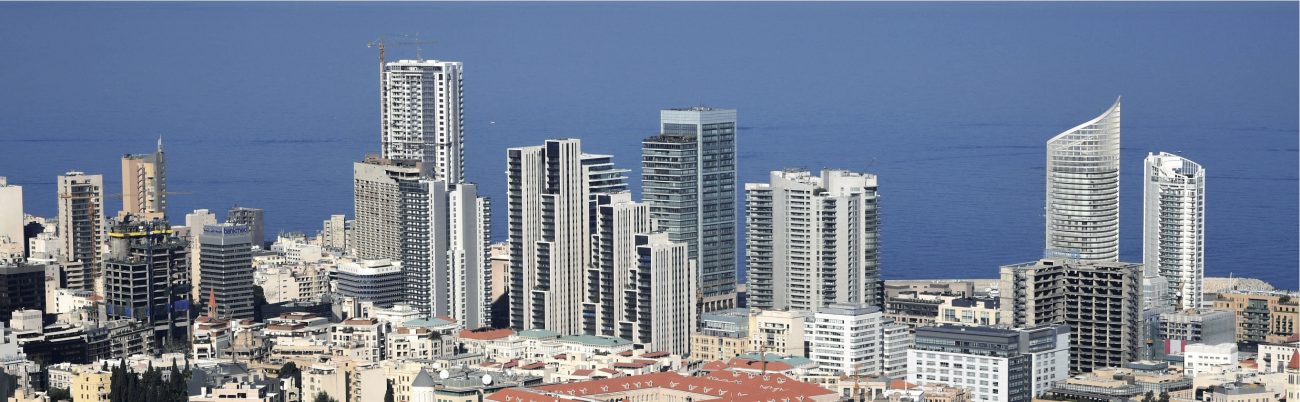
With Lebanon looking to diversify its tourism market away from tourists from the GCC region, China seems to be an obvious choice. According to the China Tourism Research Institute, 120 million Chinese travelled abroad in 2015 alone, spending approximately $104.5 billion.

Although the Chinese embassy in Lebanon was unable to provide us with figures regarding how many of its nationals visited Lebanon, it is safe to assume that the number is rather low. Therefore, it is clearly a market worth tapping into and developing.

Executive corresponded with Ambassador Wang Kejian via e-mail to discuss ways to grow economic and touristic relations between the two countries.

E   Is there an aim or expectation to further intensify economic relations between China and Lebanon in 2017?

This year marks the 45th anniversary of diplomatic relations between China and Lebanon. Ever since the establishment of diplomatic relations in 1971, the economic and trade relations between our two countries have made considerable headway in all fields.

In 2017, I sincerely hope that our bilateral trade and investment will enjoy steady and healthy development, and that our practical cooperation in finance, communication, energy and infrastructure will be further strengthened as well.

E   How aware are the Chinese of Lebanon as a tourism destination? Is Lebanon marketed as a destination in China among travel agencies and such?

In 2008, China and Lebanon signed a memorandum of understanding on tourism cooperation. Amity between the people of both countries holds the key to sound state-to-state relations. Mutual visit[s] can help the two peoples learn more about each other. With the growing friendship between them, I believe that there will be more and more Chinese tourists coming to Lebanon.

E   What could the Lebanese public and private sectors do to market Lebanon as a tourism destination to the Chinese market? What elements/attractions should be highlighted?

To know more about each other is the first step. By enhancing the promotion of various tourism sites and projects, Lebanon is surely going to attract more Chinese travel agencies and tourists.

E   What needs to be improved in Lebanon in terms of tourism infrastructure to make it a more appealing destination to Chinese travellers? Or is it merely an issue of lack of awareness and marketing?

Transportation is of vital importance to tourism infrastructure. Convenient transportation would make the experience better for tourists. Additionally, more Chinese-speaking tour guides, more Chinese restaurants, better security services and diversified Middle East region tour packages that include Lebanon will also make this country more attractive to Chinese tourists.

E   In terms of the retail sector, what could be improved to make it more attractive to tourists from China when they visit Lebanon?

Chinese tourists and their purchasing power have ranked number one in the world since 2013. For them, shopping is an important part in their travel agenda, especially for high-end and exotic culture products. Shopping occupies a large proportion of their overall time. Other than that, recreation and entertainment are also potential areas to attract Chinese tourists’ consumption.

E   Are there any new areas where you see collaboration, FDI, or trade potential?

With [the] political situation and security environment getting better, I think there will be more Chinese companies doing business with Lebanese companies. We also welcome more Lebanese companies to invest in China.

E   Does China see offshore Lebanon as a potential market for Chinese oil and gas service companies?

Energy cooperation is an important part of the ‘Belt and Road’ initiative. China’s oil and gas enterprises keep tracking news of Lebanon’s offshore oil and gas development and they will follow up accordingly.

February 1, 2017 0 comments
0 FacebookTwitterPinterestEmail
Hospitality & TourismHotels Overview

Light at the end of the tunnel?

by Nabila Rahhal February 1, 2017
written by Nabila Rahhal

It has been a long five years for Lebanon’s hotel industry, marked by an ever-dwindling tourism market. With the election of a president in October 2016, however, that period may soon be over.

Just like one would get ready to meet a loved one after a long period apart, Lebanon’s hotel industry is getting ready for the return of tourists. The sense of excitement mixed with cautious anticipation that usually accompanies such reunions is palpable.

After making do with mainly business travelers or local banquets, Beirut’s four and five star hotels can’t wait for the Gulf Cooperation Council (GCC)nationals to once again fill their rooms.

Yet, these hoteliers remain somewhat anxious. Not only has a lot changed in the past five years both domestically and regionally, but internal stability in Lebanon, as a result of regional insecurity, is still fragile and there is the sense that Lebanon’s hospitality sector won’t be able to bounce back as easily as it did before.

A broken record

By now the story of how the onset of the war on Syria in 2011 resulted in travel advisories warning GCC nationals against visiting Lebanon has been recounted many times. Couple this with the internal insecurity that has plagued Lebanon for the past five years – manifesting in countless examples including the assassination of former Minister Mohamad Chatah in 2013, the Duroy Hotel suicide bombing in 2014, the 2015 suicide bombings in Dahieh and most recently the wave of suicide bombers in the Bekaa town of Al Qaa in May 2016 – all of which have taken a huge toll on Lebanon’s tourism market. According to Pierre Achkar, head of the Lebanese Hotel Owners Association, Lebanon lost a huge market of visitors who used to travel by land. “When the war in Syria started, the roads between the Arab countries and Lebanon shut down, and so the first year alone we lost 360,000 tourists who used to come to Lebanon by land, 200,000 of which are Jordanians,” laments Achkar.

The decrease in this revenue stream was coupled with the significant drop in visitors from GCC countries, the largest share of which came from Saudi Arabia, due to “political reasons,” according to Achkar.

A market shift

The decrease in tourists from GCC countries coincided with a significant increase in visitors to Lebanon from Jordan, Iraq and Egypt (see data, page 178). Nevertheless, this increase has not compensated for the loss of tourists from the Arab Gulf, according to a number of hotel operators interviewed.

Four and five star hotels in Lebanon mainly cater to GCC nationals and are therefore the most impacted by their absence. “Hotels in Hamra, with their $110 or so rooms, depend on the Egyptians, Iraqis, and small-time business people. The five star hotels in Downtown depend on more high-end guests and they are not coming,” says Peter Edholm, cluster director of sales and marketing at Le Vendome and Phoenicia Intercontinental Hotels & Resorts.

Edholm goes on to explain that while they welcome any client at the hotel, suite guests – who tend to be GCC nationals – generate much more revenue than standard room guests, not only because of the higher room rate, but also because these guests tend to consume more in the hotel itself through the minibar and dining at the hotels’ various F&B outlets.

Achkar explains that although tourists from Jordan, Iraq and Egypt are positively affecting the sector to some extent, they cannot be compared to GCC nationals when it comes to length of stay and spending power. “The Egyptians, Jordanians and Iraqis who come to Lebanon stay a maximum of five days and an average of three days. The GCC nationals stay a minimum of ten days and take more rooms and suites, and have a higher purchasing power than nationals of every other Arab country,” says Achkar.

Facing such circumstances, many hotels began decreasing their room rates, forcing other hotels to do the same in order to remain competitive. “When the occupancy percentage goes down, price competition is elevated and hotels are forced to decrease prices to such an extent where even if your hotel is full, you are not getting the same room rates that you were getting in the good days,” says Achkar. He explains how some hotels have been gradually dropping their rates over the past five years, so that today they are at an average of 30 percent lower than they were in 2010, and even 50 percent lower in some cases.

[pullquote]

In terms of profit margins, maintaining numbers despite circumstances was the goal

[/pullquote]

More of the same

Despite the continuing negative circumstances, the hotels interviewed for this article reported a stable 2016 when compared to 2015, with no significant drop in occupancy or profits.

The internal security situation in the country was somewhat stable this year, meaning a slight positive impact on the sector. “For the first time in years, Lebanon has seen stability within its hotel industry. Year-on-year Lebanon neither improved nor worsened, which actually gave a sense of optimism,” explains Michel Boulad, director of sales and marketing at O Monot luxury boutique hotel.

In terms of profit margins, maintaining numbers despite circumstances was the goal. “We are slightly below last year in terms of revenue, but I think we managed the hotel here very carefully in order to achieve the same profits that we had in previous years. The ban that was imposed on GCC nationals and the local uncertainty before the election of the president made 2016 a very challenging year, so if you look at our results, personally as a general manager, I am very pleased because it was a tough year,” says Rami Sayess, regional vice president and general manager at the Four Seasons Hotel Beirut.

Wearing different hats

This stability in terms of profits was largely achieved through a diversification of revenue streams, which all hotels tried to identify and benefit from. “It was not about cutting costs, but about finding new ways to generate profit. We thought of ways to introduce new revenue streams such as opening a new F&B outlet on the third floor and opening the roof again in a different style,” says Sayess, giving the opening up of their spa to non-hotel guests as another example of diversification.

With a decrease in leisure travelers, business conferences and events – and the travelers they bring with them – became of added importance to hotel operators. “The corporate market has contributed significantly to our business,” says Boulad, giving an example how O Monot’s location in close proximity to the Beirut Digital District has benefited them in attracting global visitors to the area.

Sayess also discussed the importance of business travelers, explaining how in 2016 Four Seasons Beirut became more open to conferences and group business travelers. “This year, and for the first time, we opened up to groups of business [travelers], which we were a bit hesitant and not very flexible about before since we used to target individual travelers more. But there are some quality groups looking for hotels like Four Seasons,” he explains.

Hotels go all out for private events

Banquets, weddings and private social events also became of bigger value to hotels over the past five years, with the Phoenicia citing close to one hundred weddings and large social events held at their hotel in 2016. Both the Four Seasons Beirut and the Kempinski Summerland Hotel and Resort say their banquet and reception halls are almost fully booked throughout December 2016.

“We are aiming to host 70 weddings. More and more people are coming to Kempinski Summerland and we are fast becoming one of the major players in terms of events such as corporate meetings and dinners, especially considering that we have only been open since September 2016,” says Maha Bourachi, director of sales and marketing at Kempinski Summerland. Bourachi explains how in summer 2017 they plan to target outdoor weddings and social dinners, taking advantage of their outdoor venue which can accommodate up to 1,000 guests, while in winter their goal is to be considered “the retreat or getaway for corporate executives within Beirut.”

As such, F&B outlets and banquet halls are fast becoming a main revenue stream for hotels in Lebanon, which Sayess says is not necessarily a bad thing. “I would say around 45 percent of our current business is coming from F&B while traditionally it should be 40 percent F&B, 60 percent [room bookings]. In F&B and the spa, you really cater to the local market and this is how you make your name in any market. When you look at our corporate business, a lot of it is booked by agencies in Lebanon, so your name, in the local market, is very important for you to make sure you don’t only depend on foreign business,” explains Sayess.

Boulad also speaks of the importance of F&B in attracting corporate business: “We are aware that one of the most important aspect[s] for any hotel in Lebanon is its cuisine, as it increases the hotel’s visibility to local companies and their business travelers, which is why we launched the O Monot Business Lunch.”

[pullquote]

GCC nationals love Lebanon: the country, the food, the language and the weather all play a factor and they have been missing it

[/pullquote]

A foreign affair

In the almost total absence of the GCC market, hotel operators became proactive not only in developing alternative revenue sources, but also in identifying potential previously untapped tourism markets. “We have to start somewhere, so we are tapping into the Russian, Chinese and other markets. It’s all about creating trends or tapping into them. If we had just stopped trying and waited for the president to come, we might as well just have shut down,” says Phoenicia’s Edholm.

Kempinski Summerland also speaks of opening up to the Russian market. “We are looking at the Russian market because we believe that with the luxurious resort we have, we can offer them a lot. It’s only a three and a half hour direct flight which is available three days a week and does not require a visa,” says Bourachi.

Meanwhile, O Monot leverages its membership in the “Small Luxury Hotels of the World” group to attract French and English visitors, according to Boulad.

Mixed feelings

But it seems that not a lot can replace the revenue which tourists from the Arab Gulf regions have brought to Lebanon, because with the first whiff of hope that the election of a president in Lebanon and the imminent formation of a government might bring them back, Lebanese hoteliers hopped into planes to visit those countries and remind them of Lebanon as a tourism destination.

Despite this rush, some hoteliers hesitate to expect too much from Gulf nationals, given how much the region has changed in the past few years. “With the last boom in Lebanon, you had no war in Syria, no war in Yemen, no big refugee issue and most of all you didn’t have an oil price of $40. You now have saving schemes through the Gulf, the Gulf consumer is no longer one who will throw money left and right,” says Edholm.

Reintroducing Lebanon

Hotel operators Executive spoke to say they are promoting Lebanon as a destination on their trips to the region, the logic being that doing so will bring more business to their individual properties. “For me it is more important to promote the destination than my own hotel because when the destination is doing well, everybody will do well. So it’s not really about us alone. We have a lot of work to do,” enthuses Sayess.

As a destination, Lebanon has several advantages over international cities which are currently being frequented by Arab Gulf tourists and which deserve to be promoted. “GCC nationals love Lebanon: the country, the food, the language and the weather all play a factor and they have been missing it. I know this from my regional capacity,” says Sayess explaining that he is counting on the popularity of the Four Seasons brand in the region to attract Gulf tourists to the Beirut property.

Achkar cites price, cultural similarities and proximity factors as added advantages Lebanon has over international cities in attracting GCC nationals. “Prices in general are a lot higher in Europe than they are in Lebanon. Also, today there is hostility in Europe towards veiled women, and this has an impact; we don’t have this problem in Lebanon. We have something to suit every lifestyle here from religious, to leisure, to cultural tourism,” explains Achkar, adding that the GCC countries’ geographical proximity to Lebanon is another advantage.

While GCC nationals who know Lebanon may be eagerly waiting to come visit again with no restrictions, Edholm is worried that the young generation of those nationals are not as acquainted with Lebanon, and that travel agencies there may not know enough to tell them differently. “Those who have been with the same travel agency for many years are very fond of Lebanon of course, but people who have worked in the GCC area for just a few years have no idea what Lebanon is because they never sold it during their time of work there. You have a huge percentage of people in travel agencies who will take the call from clients without having any clue about Lebanon as a destination,” warns Edholm.

 The price wars 

The past few years led many hotels to decrease their room rates to remain competitive, according to Achkar, and raising them back to their original value once tourism picks up again will take time. “Even if the situation in the country dramatically improves overnight, you can’t automatically go back to your pre-2011 prices, you have to gradually go up with the rates. The hotel guest who has been staying at the hotel with the lower rates in the difficult time will expect to be rewarded for their loyalty by having the same low rates now that the situation has improved,” explains Achkar.

Room rates have been decreasing globally as well, which will make it twice as hard to go back to the original rates. “The pricing we have will grow a little bit, but will not go too high. Cairo and Turkey are still great destinations despite the issues [there this year], so you cannot charge $400 for a room in Beirut when it is $200 in these countries. Dubai has also gone down, and we are conditioned by the market in terms of price. They won’t go back to the prices that existed before the oil crisis,” says Edholm.

A positive future?

Despite all of this, hoteliers maintain a positive outlook for 2017, with expectations that even if a smaller number of Gulf nationals visit Lebanon, it will still add some much needed dynamism to the sector and help on its road to recovery from the slump of the last five years – which will not be easy. 

“If tourists come back to the country in droves, we will need six months to a year to start making profits again. And we need at least three to four years to make up for the five years that were lost. And even then, the profits that will be generated will be used to pay off the accumulated hotel debts to the banks, delayed payments, etc.,” explains Achkar.

So while the future may not yet be rosy for Lebanon’s four and five star hotels, there are hopes that the first few steps have been taken to point Lebanon, and consequently tourism, in the right direction once again.

February 1, 2017 0 comments
0 FacebookTwitterPinterestEmail
CommentReal estate

The view from Beirut

by Karim Makarem January 31, 2017
written by Karim Makarem

All of the figures revealed by RAMCO’s research department confirm a slump in Beirut’s real estate market. A finer analysis of these figures yields some hopeful – and other more worrying – conclusions.

Actual drops are higher than recorded

The RAMCO price index, published for the third consecutive year earlier in 2016, reveals two years of consecutive drops in the asking sales prices of residential projects under construction at the time of the study.

Not only have prices dropped two years in a row, they are dropping by a higher rate year-on-year. While prices dropped by a mere 0.7 percent in 2014 (compared to 2013), the recorded drop in official, listed asking prices in 2015 compared to 2014 was of 1.2 percent.

It might be argued that 1.2 percent is negligible. This is certainly no proof of a meltdown in the market, as was often predicted. In no way does the price dip portray a market in crisis or the bursting of a real estate bubble – a term often used to describe the frantic price hikes and activity in the years that preceded the current market stagnation.

Yet these figures are to be taken with extreme caution. It may be that official prices have stayed relatively stable. The fact remains that this is only the second time in the post-Civil War history of the country that prices actually registered a drop. Typically, prices stagnate. The fact that they have been dropping for two consecutive years points to a very real unease in the market.

These figures also hide a deeper, more disturbing truth. The above drops in prices are of official asking prices listed by developers. They do not take into consideration discounts that developers effectively extend to buyers when negotiations reach an advanced stage. RAMCO’s sales & lettings department is involved in sales transactions on a daily basis. The reality is that developers do offer a discount on their official list prices – sometimes a little too eagerly. Discounts vary between five percent and ten percent. In some extreme cases, they can reach up to 20 percent. In reality then, prices have dropped by anywhere between ten percent and 20 percent.

Large stock

The drop in prices is an obvious direct result of the poor economic situation in the country and the region at large. It can also be explained by the growing size of the vacant stock on the market. There were about 385 residential projects under construction in municipal Beirut in 2016, representing a stock of slightly more than 2 million square meters (sqm) of built-up area or about 10,340 residential units. This is a huge stock, 98 percent of which is offered on the sales market. Around 40 percent of it is available for sale as of the end of 2016. There is an additional, non-negligible stock on the market (for which we, unfortunately, don’t have reliable data): unsold units in projects completed prior to 2016 and new units placed on the secondary market.

The full stock of residential units offered for sale is thus much larger than the units accounted for in the study covering residential projects currently under construction. The stock on sale counts units still under construction, unsold units in recently completed projects, and resale units offered on the secondary market.

Latent repercussions

Very few new projects are being launched, but the numbers don’t yet make that clear. In years past, average sized projects in municipal Beirut took between three and four years to be completed. However, beginning in 2011, some projects began remaining “under construction” for six or seven years – sometimes even longer. Market data covering “ongoing projects” thus accounts for all of these projects, even those that should have been completed several years ago, but are still “under construction.”

There were 385 projects currently under construction in 2016, the same as in 2015. The vast majority have been “under construction” for years, and when these projects are finally delivered, the number of “ongoing projects” on the market will begin dropping to reveal the limited number of truly new projects beginning each year, reflecting the real slump in the market.

A few positives

The market hides some high-performing niche pockets. While the general trend is clearly downward, it is not across the entire market. Some projects perform extremely well despite the general gloom. Projects that cater to available budgets in neighborhoods in high demand, offering innovative, functional designs and floor plan layouts at fair market values sell off-plan.

Professional developers with a good sense of the market have adapted well to the market. The figures clearly reveal that apartment sizes have been shrinking as a result of shrinking budgets. The number of projects has remained relatively stable between 2015 and 2016. The overall built-up area that was offered in 2016, however, was 7.4 percent lower than in 2015. At the same time, the number of apartments increased by 2.3 percent between 2015 and 2016. Average apartment sizes have dropped by nine percent between 2015 and 2016, from 238 (sqm) in 2015 to 215 sqm in 2016. In 2010, 3.4 percent of residential projects under construction in Beirut (12 projects out of a total of 350 projects recorded that year) offered apartments smaller than 100 sqm. In 2015, this ratio increased to 7.8 percent (30 projects out of the total of 384 buildings under construction in 2015).

Another encouraging observation is the continued interest professional developers display when looking for new opportunities. Interest in land purchase has never waned, although prices of raw land have remained relatively stable. Landowners are still reluctant to drop their prices. Developers are much more careful about investing in new land, however, as the current market doesn’t forgive mistakes. In a particularly price-sensitive market, any small mistake is fatal. Developers are thus very careful about purchasing land at a price that would make a potential development financially viable. Overpriced land yields expensive apartments that would not find takers on today’s market.

Today, only land posted at financially viable prices, reflecting a financially viable cost of land on the overall project, is interesting to potential developers. Typically, the cost of land used to account for about 30 percent of the overall cost of the project (along with 30 percent of construction costs and the rest as profit margin). Today, the cost of land accounts for around 40 to 50 percent of the total cost of the project, while developer profit margins have shrunk to around just ten percent in some cases.

The high price of land plays a major role in the decreasing number of new projects launched in recent years. An adjustment is needed to make replacement costs of land purchase feasible.

Unequal price changes

Land prices also explain why the price of residential stock has generally remained more stable or even increased in some areas. Neighborhoods in which land prices were still low, either because they were in lower demand by home buyers or because they have a large stock of raw land, keeping prices low, have seen residential prices remain stable or even increase slightly.

Neighborhoods such as Sagesse, Geitawi, Kobayat, Ras el Nabah or Sodeco offer excellent value for money. They are traditional middle-class neighborhoods that are being slightly gentrified with the introduction of new real estate projects. They typically offer projects with the right combination: small family apartments, good quality construction, functional floor plan layouts and basic amenities – all at the right market value.

Some neighborhoods have ample land supply for development, such as Sodeco or Corniche el Nahr. These neighborhoods have seen the introduction of new mega-projects that are modern, innovative and cater to a middle-market clientele.

Other areas retain their value because they are in consistently high demand. Neighborhoods such as Ain el Tineh, Koreytem, Ain el Mreisseh or Manara have a continuous flow of buyers. They are established neighborhoods that attract buyers either for the quality of living they offer, the quality of the views or the surrounding supply of services, particularly schools.

Buyer’s market no longer

2016 was the ideal time to buy. With average discounts standing at around ten percent, buying at a bargain was indeed possible. The price of the average new apartment in municipal Beirut today stands at $1 million. It was therefore possible to negotiate a cut of $100,000 during 2016.

Whether this remains true in 2017 is questionable. Although it is still too soon to detect a real shift in the market, the latest loosening in the two-year-long political stalemate has already injected an air of optimism on the market. While the presidential elections have not yet yielded any tangible change, people are expecting an improvement in the local political scene. It might take a few more months before a change is effectively felt on the market, but the mood is already shifting. And that is often sufficient to encourage landowners and developers to stick to their asking prices. Discounts may not be as easy to negotiate in the coming few months as they were just a few weeks ago.

January 31, 2017 0 comments
0 FacebookTwitterPinterestEmail
OverviewReal estate

The lights are on, but no one’s at home

by Matt Nash January 30, 2017
written by Matt Nash

Property developers with projects in and immediately around Beirut are in trouble. In late November, Massaad Fares – president of REAL, Lebanon’s syndicate for real estate brokers and consultants – explains that a years-long sales slump at the highest end of the market is having a wider economic impact. Developers with too much exposure to the capital can’t pay their bills, leaving suppliers, contractors and even banks in the lurch. The boom years from 2005 to 2010 saw dozens of projects offering large apartment units launched in Beirut at a time when prices of both land and finished property were skyrocketing. Market appetite for these units began waning in 2011 and was all but gone by the end of 2014.

Pretty facade, ugly interior

With this in mind, Fares says he and Namir Cortas – head of the developer’s syndicate (REDAL) – paid Banque du Liban (BDL) Governor Riad Salameh a visit to wish him happy holidays in December 2014. Fares says the two explained the problem and Salameh promised to do all he could. Not that the central bank wasn’t already doing the sector favors. Developers have been building green with the help of subsidized loans which BDL has been offering for the past few years, Fares said. Since 2013, BDL stimulus packages have targeted the real estate sector, with over 75 percent of stimulus-package-related loans facilitating the purchase of first-time homes, a BDL official confirmed during a World Bank event in early November 2016.

In 2015, BDL issued a circular aimed at helping developers with cashflow problems restructure their debt with commercial banks. However, Fares and other developers Executive spoke with since the circular’s publication confirm it is being underutilized.

These measures have helped keep the market moving in Lebanon as a whole, but have done little to benefit developers with large apartments (read: over $1 million) to sell in Beirut and some of its immediate suburbs, Fares argues. He explains that when he met with Salameh in December 2014, he assumed there were around 1,000 apartments over 300 square meters collecting dust on the market. Once the governor expressed interest in helping move some of these units, Fares says REAL and REDAL conducted in-depth market studies to understand the full extent of the problem. He says that BDL conducted its own study as well.

Fares is light on the details of the study’s results (saying they may be made public in the future), but tells Executive that somewhere between $3 billion and $3.5 billion worth of property simply will not sell. According to RAMCO Real Estate Advisors, the average asking price for a new apartment in municipal Beirut is $1 million (see comment, page 136). Prior to the market stagnation that began in 2011, Fares says developers were able to find buyers for apartments with price tags of $2 million and higher. That’s no longer the case, he argues. Offloading units in the $1 million to $1.5 million price range is becoming increasingly difficult, Fares says.

[pullquote]

Offloading units in the $1 million to $1.5 million price range is becoming increasingly difficult

[/pullquote]

Help needed

In June 2016, BDL threw the sector another lifeline with Circular 427, which allows banks to lend to property speculators in certain circumstances. Between 2007 and 2010, property prices in Beirut soared to highs that priced most Lebanese out of the capital. Analysts and developers argued that real demand was the culprit as speculative purchases were minimal. Unlike in other markets, the rules in Lebanon barred bulk apartment sales. Circular 427 opens that door, if only a crack. The circular allows banks to lend to investors keen to buy finished property from a developer in distress. Making use of the circular, a fund can borrow 60 percent of its capital to purchase existing stock on the market, provided that 50 percent of the value of purchased property is already in debt. All purchases under 427 must be re-sold within ten years.   

While they welcomed the circular with open arms, both Fares and Mireille Korab, head of business development at FFA Real Estate, wish it had gone a bit further on the incentives front. Korab notes that lack of language allowing for a preferred lending rate for anyone wishing to raise a real estate fund could suppress appetite for such a thing. She argues that the circular will be equally, if not more, helpful for banks with nonperforming loans held by developers on their books. Pressed on just how large a problem unsold, expensive units are for the sector at large, Korab becomes philosophical. It’s not the actual market impact that matters, she argues. Rather, if one or two well-known developers were to fail, the psychological effect of that news on the market would be more disruptive than the actual bankruptcies.

“I’d be lying if I said we didn’t want subsidies,” Fares offers. “If developers’ money is stuck in these apartments, they can’t do anything else. If the developer has money, they can do more for the market,” he enthuses, pointing specifically to settling arrears and new investments. Asked if he had seen appetite in the market to make use of Circular 427, Fares smiles. In late November “two crazy guys” started work on raising a $1 billion fund. In the short term, the fund’s goal will be “to buy as quickly as possible,” Fares says. When asked if he knows who the “two crazy guys” are, he replies: “Massaad Fares and Namir Cortas.”

January 30, 2017 0 comments
0 FacebookTwitterPinterestEmail
Banking & Finance

Freedom of insurance

by Thomas Schellen January 28, 2017
written by Thomas Schellen

The Lebanese insurance industry seems to be in need of new energy. Not only in terms of its objective to participate in the covers of the future oil and gas industry, but also in its fundamental development of company structures and legal infrastructure.

With low growth in insurance premiums – some 4 percent in 2015 according to the annual report by the insurance association and also 4 percent by the end of the third quarter of 2016 in year-to-date terms – insurers are hanging on, some perhaps by the skin of their teeth. It seems that 2015 and 2016 were two of the most difficult years in terms of growth since the old insurance law was updated – but hardly made fit for modern times – in a lengthy process in the 1980s and 1990s.

An updated law, proposed in the early 2000s to replace the old law with a more adequate and modern version, developed and financed by the World-Bank, has not been approved to date. The insurance sector is still populated with an overabundance of small companies that have not been able to develop scale and, more worryingly, still include an unknown share of opaque providers, which can perhaps only exist in this business because they defer meeting their full coverage obligations.

Despite a clear need for collaboration in raising greater insurance awareness, illuminated sharply by the difficult economic environment of the past two years, the sector’s voice is exceedingly falling behind when compared with the voice of the Association of Banks in Lebanon.

Executive asked Walid Genadry, who headed the Lebanese Insurance Control Commission (ICC) from its inception in 2002 until 2015, and is, since last June, a Distinguished Fellow in the International Association of Insurance Supervisors (IAIS), what he recommends in order to take the Lebanese insurance industry forward from this point.

He told Executive that the lack of a new insurance law is to blame for many shortcomings in developing the sector and for hindering better supervision, and the implementation of this new law would boost the productiveness of insurers.

A 2013 World Bank evaluation of the ICC as part of its Financial Sector Assessment Program (FSAP) was positive, he pointed out, describing the regulator as having developed “an admirable capacity to develop approaches for review and analysis, follow-up, market conduct, intermediary registration and fraud investigation.” However, in Genadry’s view, this positive FSAP judgement has limited value today, merely serving as a sort of encouragement and appreciative tap on the back.

He said: “One needs to look at [the evaluation] more as praise for better than expected results rather than as praise for a very good standing. It is more like saying that you reached a grade of B – when your regulation should not have allowed you to go beyond a C – but the real objective is an A. We are not there and we cannot really get there without a solid law.”

Explaining the role of an insurance supervisory authority and differing concepts of its mandate in some continental European countries, where the first aim of such an institution is customer protection versus Anglo-Saxon countries where the focus is on the promotion of fair and stable insurance markets, Genadry said that the two approaches should be seen as complementary to each other. “The two approaches are equivalent in the sense that you cannot protect customers without the establishment of fair and stable markets and vice versa. In a nutshell, a supervisory authority is needed to protect customers as well as serious insurers,” he elaborated.

According to Genadry, a vibrant insurance sector is of even greater value in a situation such as Lebanon’s today, because it provides a lever that boosts development to a healthy economy. This makes the passage of an insurance law even more urgent, he claims, saying: “Today we have one of the weakest insurance legislation frameworks by international standards, even in comparison to other markets in the Arab region.”

He highlights that gaps in the current law are of special concern with regard to insurance supervision. “What is missing represents a permanent threat to the effectiveness, if not the survival, of an efficient supervisory authority. When you have a law (the present one) that does not respect even the basic core principle [as per international standards] of independence from the political powers and from undue lobbying, the insurance supervisory authority is at permanent risk of being jeopardized. So whatever we build, even if it is properly built, is built on sand. The ICC must become independent, either as a standalone, as part of an integrated supervision [body], or even in the vicinity of the central bank.”

Besides its failure to guarantee the ICC’s supervisory independence, the present law also falls short in other key areas. The list of shortcomings, which Genadry had to deal with in his years as insurance commissioner, is long and starts with the fact that the existing law does not even provide a possibility for setting minimum norms on governance for insurance companies. “A supervisor today cannot oblige companies to abide by basic requirements, such as having independent members on the board of directors. It is also not possible to request that insurers establish a risk committee or have a remuneration policy, compliance committee, or even an internal audit department,” he said.

[pullquote]

The ICC must become independent, either as a standalone, as part of an integrated supervision [body], or even in the vicinity of the central bank

[/pullquote]

Both hands tied

The current weaknesses in the legal and regulatory framework also include a lack of sufficient means for financial control, as supervisors have no power to establish relevant solvency norms or enforce actuarial design of non-life products, or tools to control conduct, such as being able to determine and penalize unacceptable market practice, nor the ability to enforce transparency or even guidelines on transparency.

The ICC further suffers from weaknesses when it comes to powers of intervention to stop wrongdoing or to penalize companies in ways that are in line with the severity of an infraction. “Today two alternatives are granted:  either totally withdrawing a license – something harsh and very difficult to exercise – or the issuance of a very low fine, a maximum of 25 million LBP – that’s not even $17,000 – in limited situations,” Genadry said.

According to him, these two options represent extreme opposites with nothing in between; the first is equivalent to shutting a company down and the second is an insignificant punishment. The name of the game is deterrence, not catching wrongdoing. As a result, means to deter companies from bad practices are very weak overall.

A modern and up-to-date insurance law would empower the authorities to supervise and, if necessary, set conditions for insurance contracts, enforce standards for the selection of external and internal auditors (or at least remove auditors that have been proven to be incompetent), take steps to intervene in the management of insurance companies if deemed incompetent or irresponsible, or make sure that policyholders’ rights are maintained if an insurance company goes bankrupt or has to be dissolved upon loss of its license.

Finally, the current law on insurance has weak and inflexible licensing requirements, inadequate definitions of insurance lines and low minimum capital requirements ($1.5 million) for insurers. It also misses out when it comes to controlling mutual insurers, due to the fact that they are licensed through the Ministry of Agriculture, without any type of formal and professional control.

With such an array of legal insufficiencies and flaws, Genadry says it is extremely difficult for any supervisory authority in Lebanon to reach its objective of protecting both serious companies and policyholders. Asked how he was able to build a supervisory authority under such weak legislation and lack of independence, plus numerous ministerial changes at the Ministry of Economy and Trade, he said some ministers were a real blessing for his work in the ICC, as they encouraged the commission to move ahead and defended it against detractors.

A crisis of credibility

“But that is not enough,” he added. “The reality is that every time a new minister comes, one has to manage a new transition. We have had nine ministers over thirteen years. Ministers upon appointment have a thorough need to develop an understanding of the insurance supervision business. This is not a criticism of any person, as you cannot expect a minister to be competent in such a highly specialized field as insurance.”

According to Genadry, the present law concentrates a lot of powers in the hands of one specific minister as head of the Ministry of Economy and Trade, stipulating that it is his authority to give and withdraw licenses, penalize wrongdoers, pass new regulations and so on. The resulting pressures are not easy to face effectively and in a timely manner.

“Lack of independence also means depending on government crises, during which the supervision activity cannot be as effective. All this makes it such that, overall, the good periods [during my work as insurance commissioner] were smaller in number than the challenging periods, and even the good periods I experienced during my term were often fragmented,” Genadry summed up in his reflection. 

As to the future outlook of the insurance sector in Lebanon, Genadry is at the same time passionate about its potential and cautious due to the risks the sector will face if the new insurance law is not expedited.

“Credibility is a vital element of proper supervision. For this, a supervisory authority needs stability, continuity, clear definition of duties and powers, and above all, competent supervisors who enjoy a reputation of integrity and possess the right tools to do their work and the ability to remain standing despite the fact that it is a profession which is, by nature, ungrateful.”

A high level of morality and competence for the supervisors is crucial. “Without that, even with a good law you do not go far,” he says, emphasizing that there can be no easy success for the supervisory authority without a good collaboration with the sector’s players, without confusing the roles, as the industry members and the supervisor complement one another.

He concludes: “There will be no real protection for serious insurers and policyholders in Lebanon without a well-established supervisory authority that is capable of applying international norms.”

January 28, 2017 0 comments
0 FacebookTwitterPinterestEmail
Foreign PerspectiveMedia & Advertising

A frank, but hopeful, view

by Thomas Schellen January 28, 2017
written by Thomas Schellen

Executive spoke with German Ambassador Martin Huth to follow up on Germany’s aid commitment to Lebanon, the development of bilateral economic relations in 2016 and to chart expectations for 2017.

E   How much of the money pledged in conferences in the beginning of the year did Germany contribute to humanitarian and development needs of refugees and resident populations in Lebanon in 2016?

The figures that we can disclose relate to refugee aid and development aid for Lebanese communities. In terms of the amount pledged at the London Conference [in February 2016], Germany has made more than 300 million euros in assistance available to refugees, as well as to vulnerable populations and host communities in Lebanon. This amount is double the amount that we made available in 2015. If we take only the amounts made available in the past two years, we are nearing a total of half a billion euros.

E   Can you give us details as far as projects that were financed in 2016 and their efficacy?

We are funding numerous programs with this money. I have to highlight the education sector, where you are aware of the program, launched by the [Lebanese] Ministry of Higher Education, called Reaching all Children with Education. We are also assisting with the Lebanon Host Communities Support Program, which is conducted by UNDP (United Nations Development Programme). It mainly consists of small projects in host communities, such as cash for work programs, small building projects of community centers, etc. Next, we took part in the reconstruction of the Nahr al-Bared camp north of Tripoli, making an additional 15 million euros available for this.

We also support the electronic food assistance that is provided by the World Food Programme, which is also covering Lebanese under the National Poverty Targeting Program. The food assistance is quite remarkable, I think, because it started with in-kind distribution and has been transformed into a smart system that uses the Lebanese banking sector and a network of local shops. In this way, refugees are provided with an electronic card that can be used to buy food in these shops. This reduces transaction costs and provides direct stimulus to the local market.

Regarding the Reaching all Children with Education program by the Ministry of Higher Education, Germany and other donors are now covering the school fees of 200,000 Lebanese children and 170,000 Syrian children. The efforts also include school rehabilitation, improving learning environments and possibly further developments of the curriculum. This initiative has led to higher enrollment of Lebanese children, which shows how the national education system is benefiting from this support. I can also mention a number of water projects that we are conducting, notably in the Bekaa.

[pullquote]

Lebanon has increasingly become its own category of a non-performing or non-existing state, contrary to the aspirations of its citizens

[/pullquote]

E   The celebration of the German National Day in Lebanon this October was marked by greater and more elaborate participation by the corporate sector. Beyond that, what were highlights of German-Lebanese economic relations in 2016?

Three EU countries are among the five biggest trading partners for Lebanon. Apart from Germany, these are Italy and France. Talking about figures for Germany, we have projected exports to Lebanon of about 850 million euros in 2016, which represents a slight increase from the average figure of the past four years. What is remarkable is that there has been a steady increase in Lebanese exports to Germany. We have a projected figure of 54 million euros for this year. This is relatively meager when compared with imports to Lebanon from Germany, but it compares very favorably to what Lebanon has exported to Germany in previous years. In 2012, the value of exports was 47 million, then 49, 44, 45 and now 54 million, which is a nice increase [of 20 percent] from last year. I don’t have the details yet, but I surmise that the increase is related to the improvement of quality in agro-industry products.   

E   What are your best-case expectations for 2017, if we assume that the new presidency will bring a boost to the Lebanese economy?

First, we hope that a government will be formed quickly. My hope at this time is that there will not only be a government, but a functioning one, with people at the head of ministries who know their files and dossiers and who are able to fulfill the vision of Lebanon not only having institutions, but functioning institutions in service of Lebanese citizens. If we talk about our own areas of interest with the goal of easing the plight of Syrian refugees in Lebanon, it is important that conditions in Lebanon remain conducive to maintaining or even expanding this assistance. Of course, we have to wait and see how the new Lebanese government positions itself in this field, not forgetting that the government which is being formed now will likely be in office [only] until next year’s parliamentary elections.

E   In being an international partner, there is always a delicate balance between giving aid and asking for compliance with your prerogatives in return, such as values and policy objectives. What can you tell us about any expectations for Lebanon to comply with European views regarding human rights or the right to work for Syrian refugees in Lebanon?

This is a wide range of issues. First, let me say that we have not provided budgetary assistance to Lebanon. Instead, and primarily due to the larger absorption capacities involved, we channel our assistance mostly through international organizations. Regarding greater transparency and implementation of good governance in Lebanon, I think the key is to have good governance and to have institutions that work in the interest of the citizens.

Participation is the one thing that groups everything together in a functioning state, including services that are being provided to citizens and to the fulfillment of citizens’ aspirations and human rights. For participation, you need dialogue, freedom of expression, free media and open discourse that is led with a focus on the common good, rather than a particular interest of a confession or other group. The problem in Lebanon has always been how to define this common good and adopting the notion of a common good that is Lebanon, its state and its citizens. A free press is important in this, and there are an enormous number of media institutions in Lebanon, but it seems to me that these media – TV stations, radio and press – are very often mouthpieces of certain political groups. You have a diversity of views if you look at all of them, but you don’t have dialogue and critical exchange. Some improvement in this field would be a good thing. Civil society also has to be included in the dialogue, not just traditional forces or groups. The potential in Lebanon is there.

E   Do you see a risk of Lebanon ending up as a failed state in the long run?

I think the curve of success of the Lebanese state has been going up and down since the 1960s. Over the last two and a half years, with the presidential vacuum and ensuing political blockade, Lebanon has increasingly become its own category of a non-performing or non-existing state, contrary to the aspirations of its citizens. Now, we again have a chance to improve the situation after the presidential elections and the formation of a government.

What is important in the near future is that Lebanon remains protected from the Syrian crisis so that the war does not spillover into Lebanon. Lebanon will continue to require enormous assistance from the international community in order to cope with the plight of refugees on its territory. It will also need internal reforms, starting with essentials like introducing fast internet and making the banking sector more available to Lebanese citizens. Oil and gas is another important field for development. There is plenty of work to do, but in Lebanon you can always say that the potential is there, and the other side of the weak state has always been the remarkable resilience of the people and the presence of a lot of talent and economic savviness. These are all things that can play out in Lebanon’s favor.

E   Does the German government place any expectations on Lebanon as far as integrating refugees into the country or giving them guarantees of work?

Settling refugees in Lebanon is not an option. This is not what Lebanon wants, nor what we want or what the refugees themselves want. At some point, there has to be a return to Syria. Of course, this has to be in line with international standards and human rights, and the return to Syria has to be safe for those refugees. In my view, this will unfortunately not be possible in the near future, and therefore we are all faced with the challenge of easing their situation for the time being. Some improvements could be made in line with Lebanon’s commitments at the London Conference. These relate to access to the legal system and the labor market, as well as the easing of registration and movement. At the same time, Lebanon’s security needs have to be borne in mind. But, refugees in Lebanon, just as the Lebanese themselves, have the right to live free of fear and want.

January 28, 2017 0 comments
0 FacebookTwitterPinterestEmail
AnalysisBanking & Finance

Analysis of banking sector results

by Dany Baz January 27, 2017
written by Dany Baz

The profitability of alpha banks – those with deposits above $2 billion – has grown in the third quarter of 2016 when measured by the improved return on average equity (ROAE). The ROAE ratio at end of September was almost two percentage points higher than a year earlier.

This insight from quarterly figures released after the end of the third quarter (for details see the table below) is a hopeful sign for the Lebanese economy which, after a challenging year in 2015, showed signs of an even drearier year in 2016. In the midst of a troubled socio-political context, Lebanese banks stood their ground throughout the first three quarters.

In fact, while activity registered modest growth in the first six months, mostly generated in the second quarter, the third quarter witnessed acceleration in domestic activity. The financial engineering operations initiated by Banque du Liban, Lebanon’s central bank, generated significant growth in financial inflows to Lebanon – estimated at 36 percent year-on-year over the first nine months of 2016 – triggering a higher increase in domestic customer deposits. In addition, Lebanese banks maintained their high financial standing and managed to sustain profitability throughout the first nine months of the year.

The analysis below lays out the half-year performance of the 22 banks that constitute the alpha and beta groups, as well as the third quarter performance of the alpha group. The two groups above include 14 and eight banks, respectively, and represent around 95 percent of the Lebanese banking sector. In 2016, there were 48 banks operating in Lebanon, excluding subsidiaries.

At the consolidated level, total assets of alpha and beta banks equaled $219 billion, growing by a mere 1.5 percent, or $3.3 billion, by the end of June 2016. In parallel, customer deposits registered slow growth of 1.1 percent to reach $181 billion, while loans to customers showed more stamina with 3.1 percent growth to $71 billion for the first half of the year.

When looking at domestic activity, the overall trend observed in the past two years remains unchanged; customer deposits represented 84 percent of total deposits, while domestic loans represented 71 percent of total loans. It is worth mentioning that while the activity of foreign entities might be satisfactory, the depreciation of the Egyptian Pound and Turkish Lira have impacted consolidated balance sheet aggregates since Egypt and Turkey remain important foreign markets for some large Lebanese banks in terms of assets.

[pullquote]

Banks undertook significant efforts in the summer to sell Lebanese Eurobonds out of their portfolio holdings to foreign institutional investors

[/pullquote]

Maintaining stability

Domestic deposits stood at $151 billion at the end of June, up by around $3.2 billion since December 2015, compared to an increase of $7.3 billion over the full year 2015. Domestic loans, on the other hand, passed the $50 billion threshold at mid-year, registering an increase of $1.4 billion since December 2015, bearing witness to the sluggish domestic environment. Overall, foreign activity represented 18 percent of assets, 16 percent of deposits, 29 percent of loans and 20 percent of net profits at the end of June.

At the currency level, dollarization of deposits was stable at 63 percent, while dollarization of loans went down to 73 percent at the end of June 2016. In terms of growth, there was a notable 6.2 percent increase in loans denominated in Lebanese Pounds (LBP), reaching around $13.7 billion at mid-year.

Alpha and beta banks operate 1,397 branches and employ 34,011 staff as of June 2016, 70 percent of which are based in Lebanon and 30 percent abroad. In line with the trend observed since December 2014, alpha and beta banks opened 17 new branches and recruited 620 employees during the semester, of which ten branches and 418 employees fell into foreign markets.

The financial performance of alpha and beta banks has maintained its good standards. Compared to an estimated MENA benchmark of 22 percent, overall liquidity remains high at 30 percent, broken down into 20 percent in LBP and 35 percent in foreign currencies at the end of June. The corollary loans to deposits ratio, which stands at 39 percent overall –  25 percent in LBP and 46 percent in foreign currencies – remains lower than regional and world benchmarks (respectively 77 and 87 percent in 2015), indicating more lending flexibility for Lebanese banks once the economic environment improves.

Despite persistent challenges in Lebanon and main regional markets, asset quality reported a slight improvement over the past year. Doubtful loans to gross loans dropped from 5.9 percent to 5.7 percent year-on-year in June 2016, a ratio lower than emerging markets and global benchmarks of 6.8 and 7.1 percent, respectively, in 2015. The prudent provisioning policies of Lebanese banks prompted them to take all needed measures to maintain their good asset quality, which translated into an adequate coverage of doubtful loans of 73.7 percent, compared to a world average of 68 percent in 2015. In addition, alpha and beta banks increased their collective provisions to 1.18 percent of net loans by the end of June 2016.

Modest returns

Last but not least, the first half of 2016 reported a growth in net profits of 8.2 percent to reach $1.1 billion, outperforming the growth in other aggregates such as assets, deposits and loans. Return ratios remained modest as both return on average assets (ROAA) and ROAE edged up slightly compared to June 2015, registering 1.03 and 11.63 percent, respectively. In comparison, the MENA average ratios stood at 1.6 and 12.1 percent, respectively, in 2015.

The major developments of the alpha group of 14 banks as of the end of September 2016 are as follows:

Growth of major aggregates was reinvigorated as assets, deposits and loans witnessed respective increases of 5.1 percent, 3.2 percent and 4.7 percent. The most notable growth was registered in loans in LBP, which reached 9.4 percent, further contracting the loan dollarization ratio and foretelling a gradual restoration of the role of the Lebanese Pound as a borrowing currency. In parallel, loans of foreign entities increased by 6.5 percent.

Growth in lending activity was complemented by stability in asset quality, with gross doubtful loans as a percentage of total loans maintaining its level a year ago at 5.72 percent. Coverage of doubtful loans improved since December 2015 to 74.43 percent, and most importantly, collective provisions as a percentage of net loans reached a record high of 1.27 percent.

Alpha banks remain highly liquid at 33.58 percent and continue to foster economic growth by increasing their loans to deposits ratio to 38.48 percent, broken down into 24.14 percent in LBP and 44.66 percent in foreign currencies. In parallel, banks undertook significant efforts in the summer to sell Lebanese Eurobonds out of their portfolio holdings to foreign institutional investors. Their foreign currency sovereign exposure fell to 13.24 percent of foreign currency deposits and 83.22 percent of shareholders’ equity. At the profitability level, net profits grew by 9.7 percent, reinforcing return ratios at large. The return on average assets rose from one percent in September 2015 to 1.17% in September 2016, while the return on average equity rose from 11.33 percent to 13.05 percent over the same period. In detail, interest margins and spreads remained stable at 2.01 percent and 1.94 percent, respectively, with a notable impact brought by the increase of non-interest income that rose from 0.88 percent of average assets to 1.32 percent year-on-year, which translated into higher asset utilization of 3.26 percent. Coupled with stabilized net operating margins and leverage, return ratios went back to their 2011 levels.

January 27, 2017 1 comment
0 FacebookTwitterPinterestEmail
Banking OutlookBusiness

What to expect from Lebanese banks in 2017

by Thomas Schellen January 26, 2017
written by Thomas Schellen

On the banking sector’s consolidation front, 2016 saw some action. The already conjoined lenders BIT and NECB rebranded as Saradar Bank, and the acquisition of Bank Pharaon and Chiha by Byblos Bank and BLOM Bank’s acquisition of HSBC Lebanon had not only been long in the making, but should also not be put at the doorstep of the local economy. HSBC’s decision to pull out of Beirut was just one more link in a long chain of strategic decisions in its boardroom that was triggered by global regulatory and capitalization requirements with their costs.

BLOM Chairman Saad Azhari confirmed to Executive on the sidelines of the bank’s media lunch in November that “it took some time” to reach the acquisition deal. BLOM Bank and HSBC had entered negotiations for the acquisition at the end of 2015, he said. He specified that “for the last few months, the focus of negotiations was between [HSBC] and their employees,” adding that the acquisition process should be completed in the middle of 2017. 

As for the banks’ plans and outlooks, decision makers at four banks present a wide range of perspectives. Bank Audi’s Freddie Baz politely but firmly sees Lebanon on the backburner in terms of Bank Audi’s internal profits growth. “We will not see an increase in its share of profits growth in 2017, because the trend is for our foreign entities to gain in share”, he explains. He adds that in his opinion, Lebanon’s contribution to the group’s consolidated assets and earnings, which stands at 50 percent today, should go down to one-third four or five years down the road.

“That is not because we have less appetite [for Lebanon], we will still be the largest bank and the leaders, but because we are operating in markets with much higher prospects of growth [such as Egypt and Turkey],” he goes on to say, clarifying that Bank Audi maintains its strategic outlook for the coming year based on the plan that it has pursued for several years now.

Creditbank, which has prioritized lending activity throughout its existence, will continue to be guided by the philosophy of giving credit. Chairman Tarek Khalife notes that the will of banks to extend credit to the private sector has been established over time and is proven by several years of expansion in private sector lending portfolios, but adds that the economic situation today makes it more difficult for lenders, who cannot find asset classes where they have good lending opportunities. “The slowdown of the economy is eating into the credit market. Our loan portfolios are growing, but we see that the rate of increase in lending is slowing and we have to make extreme efforts to find projects or companies to which we can lend with a good conscience,” he says.

Part of this slowing is, in the case of Creditbank, related to the effects of becoming a larger bank, he explains. A slowing of percentage growth over time is only to be expected in a bank that is  growing in real terms, but while six or seven years ago Creditbank was growing its loan portfolios by 20 percent or more from year to year, this growth is now lower. However, the main culprit behind slower lending is the lackluster economy of the past few years, he says: “It has not been competition from other banks that is slowing us down. It is the economy that is slowing us down”.

Banque Libano-Française (BLF) will keep utilizing its existing and tested strategy going forward. “We continue to be a commercial and corporate bank. Seventy percent of our portfolio is in lending to corporate clients. What we are trying to grow, even though this period is very difficult for growth, is business with SMEs (small and medium-sized enterprises). By this, noting that all Lebanese companies by international definition are SMEs, I mean that we are trying to have more and more small businesses as clients and borrowers,” says Chairman and General Manager Walid Raphael.

According to him, the bank has substantially expanded the retail banking side of its business and reached a retail lending share of over 20 percent in its total loan portfolio. However, the composition of retail lending at BLF is still tilted towards housing and car loans, and comprises much less in terms of consumer loans or revolving loans. “We [provide such loans to] our client base where we already have the history with our clients and can be at ease with extending consumer loans. [The process of] acquiring new clients and expanding our client base is through housing loans,” Raphael elaborates.

Banks in the course of 2016 increasingly courted the SME sector, seeing with help from the International Finance Corporation that micro, small and medium enterprise markets have been underserved by their business and corporate banking departments. They continued to invest in the renewal of their ageing IT systems, expanded their digital banking channels, did the customary innovations of launching new cards and marketing assaults on specific target groups, and worked on enlarging their physical presence through new branches and some eye-catching head office projects. A notable example is BLF, which according to Raphael can’t wait to move its head office into the building with an architectural design that was determined earlier this year in a competition.

[pullquote]

Banks in the course of 2016 increasingly courted the SME sector, seeing that micro, small and medium enterprise markets have been underserved by their business and corporate banking departments

[/pullquote]

Spotting cows

A very unconventional ambition in the banking sector comes from Banque Misr Liban (BML). As Executive General Manager Fadi Daoud explains, the bank wants to be perceived as a community bank. To this end, it has positioned a number of products in the course of 2016, most notably a “cow loan.” Used to finance milk producing cows, this extraordinary loan is tailored to demand for economic activity by rural women, but potentially also could target urbanites who want to connect in new ways to the Lebanese countryside and rural economy.

“We wanted people to stay in their villages by giving them the means to earn money, that’s why we have gone with the cow loan as a microfinance initiative,” Daoud says. The ultimate aim of this initiative is for BML to collaborate with municipalities, funds established by municipalities, and the Kafalat loan guarantee corporation in setting up complete agro-industry production chains in certain rural areas. Under this business model, which was launched in 2016 as a pilot project, BML will finance a string of farms and interconnected factories (for agro-industrial production, packaging, logistics, etc.) together with a fund operated by municipalities. According to Daoud, the initiative will also include knowledge transfer, branding and quality assurance, seeking to create Grade-A brands of products from specific rural areas of origin.

Going even further “out of the box” of conventional bank thinking, the cow loan could appeal to city dwellers as an eco-compatible, almost patriotic investment opportunity whereby loans to buy (livestock-insured) bovines could be combined with contracts to have the animals placed at farms under revenue-sharing agreements for the net income produced from milk. Plus, the project could involve emotional bonding options by the creation of an app which enables the cow investor to view her or his animal on their smartphone by way of a farm-mounted camera. “We believe this initiative is good for the villages [and for the bank] as we really have a role to play for our community and we are being paid for that,” Daoud says and enthuses further, “The idea also is to provide city kids with an incentive to watch their cow online and get young people interested to visit the farm and care for the cow.”

Convergence of fortunes

As far as the improved convergence of fortunes between the Lebanese banking sector and the national economy, bankers are convinced that the central bank’s financial engineering will move the country closer to this goal.

Creditbank’s Khalife hopes that the current optimistic sentiment will create the dynamic for a self-fulfilling expectation for positive change.

“We have to have our eyes on structural reforms which will trigger everything else,” Khalife says, pointing out that there is enough potential for foreign direct investment or investments from savings present in Lebanon to warrant a future of unprecedented opportunities. He argues, however, that Lebanon needs to learn how to pull itself up, saying that a Paris 4 donor meeting would be “absurd,” in the sense that one should not expect outcomes to differ when repeating the exact same action.

In this context, he sees a new attitude and approach of self-dependency and seeking to solve the country’s problems without reliance on external help as the best way forward. An increase in lending will be needed for this, and while all alpha banks are effective lenders, not all are efficient in this activity, Khalife notes, saying with a view to Creditbank’s leadership in lending growth, “the market considers Creditbank to be efficient.”

For Bank Audi’s Baz, lending to the private sector is key and has new prospects thanks to Banque du Liban’s measures of 2016. “We look at the banking industry in Lebanon as almost saturated, which is not exactly the case. First, the capacity utilization rate in the private sector is at 75 percent – which means that we have a 25 percent output gap. Closing this gap is only possible through new waves of loans to the domestic private sector, [meaning] corporate and commercial loans and even SME and retail loans. We have started a national campaign this fall on our SME banking services,” he emphasizes.

According to Baz, the second thing to consider is the ratio of retail lending to per-capita income in Lebanon, which is lower than in countries with comparable per-capita incomes. “If we [analyze] loans in Lebanon with a breakdown between corporate, commercial, SME and retail loans, comparing Lebanon to countries like Turkey and Mexico, which are similar in per capita income, the ratio between SME/retail and corporate/commercial loans is over 50 percent of loans extended on the side of SME/retail,” Baz says, whereas the split between corporate/commercial lending and retail lending in Lebanon is still 60:40 or more in favor of corporate/commercial. He concludes, “This means there are many persisting gaps to be filled in SME lending and retail lending. You also have a need to launch new waves of loans to the corporate sector in order to close the output gap.” In short, from the banking perspective, there is potential in Lebanon.

January 26, 2017 0 comments
0 FacebookTwitterPinterestEmail
Journalism

Excursion into Lebanese journalistic futures

by Thomas Schellen January 25, 2017
written by Thomas Schellen

Lebanon has a tradition of freedom of speech. This tradition finds expression in media freedom, intellectual discourse, academic debate and a general atmosphere or spirit that makes Beirut a regional capital of thought and center of attraction for far more people than just journalists and academics. This status is intangible; it cannot be expressed as a contribution to GDP or in terms of capital utilization. Nonetheless, through concentration of intellectual capital, it has bearing on the country’s budding creative and design industries. Moreover, this environment is crucial for Lebanon’s future as an origination point of human capital, which, if one reflects on it, is by definition only productive if it is nurtured in freedom.

Media – and, more specifically, qualified opinion makers, journalists and commentators – are essential in maintaining and keeping up this freedom-of-speech environment. This function of the media has sometimes been undervalued (especially when it comes to remuneration of Arabic-language journalists), and sometimes been impaired by tendencies to convert organs of the Lebanese press into mouth pieces for various – even external – interests and by journalists who sold their skill of opinion making to the highest bidder, and with this sold their conscience.    

In 2016, the chicken of this non-journalism came home to roost and Lebanon’s newspapers were beset by severe money problems and existential crises. It was debated if the print media had to be propped up by state subsidies, or if the funeral announcements and obituaries for the old media should be written in preparation for their impending deaths.

In this time of concern over the future of serious media in Lebanon, however, it seems advisable to widen the scope of debate: it is not just a question of whether print media and political newspapers are endangered, but also a broader consideration about freedom of speech and its new and old incarnations.

First of all, it must be noted in this wider context that the rise of digital communication has resulted in both: attention-grabbing vehicles of communication that are based on the lowest possible common denominators – of animalistic instincts (like exhibition of body parts) or of intellectual non-demand (such as “like” buttons or tweets limited to 140 characters) – and a long tail of online repositories filled with high-value-added material and demanding discourses. In Lebanon, this means the birth of new online media with original thinking and thought-provoking visualizations.

Heritage of martyrdom

One should also not forget that since the beginning of Lebanon’s reconstruction, the country has seen the creation of professional media outlets with commitments to transparency (Executive, we like to believe, is among these) and that critical journalism has therefore found new “conventional” as well as “new media” outlets. Finally, there are the seeds of media freedom and quality improvements that were sown in the very attempts to violently destroy journalistic voices that some powerful entities felt disturbed by in the mid-2000s. These seeds have developed and for five or six years have increasingly produced fruits in the work of institutions like the Samir Kassir Foundation (SKeyes) and the May Chidiac Foundation (MCF). No one can deny that the strongest hopes for the development of better journalism in Lebanon and for the region have been nurtured by the heritage or the legacy of journalists who put their lives on the line and, by being murdered or maimed, paid the ultimate price for their commitment. 

This notwithstanding, the question remains if there is a future for serious journalists. Answers to this question must be sought in universal terms and in a global context, because, as is well known, print media in national markets around the world have experienced one challenge to their economic viability after the other. Two or three years ago, print journalism became one of the professions associated with the least career opportunities in surveys in the United States.

One answer to this existential question may be connected to recent developments toward a new form of global investigative teams of journalists. The background for these developments is actually perhaps a painful realization: the globalization of the economy is going hand in hand with the globalization of wrongdoings. This must be seen as an inevitable development, save for a total ethical and moral upgrading of the human being, which sadly is not currently in sight.

From everyday crimes, especially tax and financial crimes, to violations of nature’s integrity, to classic transnational crimes from simple smuggling of goods to trade in drugs, piracy, selling of illicit weapons, human trafficking and outright slavery, there is a gruesome catalog of evil human deeds. This catalog of crimes has further recent entries through cybercrimes, adding another whole dimension of evil doings that take place in virtual space, but affect real people.

Next, there is the whole realm of governmental intelligence, with its various intrusions into civic rights that also seem inevitable when some people have an abundance of power that affects others. That realm has also been expanding, owing in part to dangers of terrorism, but mostly to the technical evolution that transformed average citizens into “people of glass” whose every action could be traced.

Examples for media on the job

News and investigative media have the dual responsibility of keeping watch over governmental behavior, exposing abuses of power and helping to protect members of society from falling victim to criminals and evils. Within the breathtaking expansion of media, especially when taking into account the proliferation of entertainment and digital gaming, it seems there is a greater need now than ever for investigative and analytical media, seeing as the increasing amounts of information and relevant data on crime and politics have to be reviewed, understood and condensed.

Instead of the news organizations that were providing feeds through centralized filters in the 20th century – the big commercial or state-aligned wire organizations with their networks of correspondents and stringers – a new form of investigative collaborations among media seems to be emerging. At the MCF’s annual conference in Beirut in November 2016, two versions of these emerging journalistic forces were present: the notorious Wikileaks and the International Consortium of Investigative Journalists (ICIJ). Both deal with data and scenarios of global dimensions that were not imaginable even 30 or 40 years ago. And these investigative organization are still in their early days, on rising trajectories with implications for much more work.

Wikileaks, founded just 10 years ago, has not only gained an increasing prominence despite its founder’s troubles with American and Swedish prosecutors, but in 2016 it made new waves by spreading pertinent information during the run-up to the US presidential election (the Podesta emails) and also by uploading 2420 leaked documents from a German government investigative commission on, curiously, leaked information. The Bundestag (the lower house of the German parliament) commission was convened in 2014 on the so-called NSA (National Security Agency) affair, discussing the methods of intelligence agencies and the case of whistleblower Edward Snowden, who was working as a NSA contractor at the time of his disclosures.

Furthermore, in a similar thread of investigation as the one of Panamanian law firm Mossack Fonseca that led to the revelation of the so-called Panama Papers on tax evasion by people all over the world, a Europe-wide journalistic effort was published in December 2016. Its source was an online site called Football Leaks, created a few years ago by a Portuguese whistleblower under the assumed name “John.” Leading German news magazine Der Spiegel and eight other media organizations in Europe established an investigative consortium titled the European Investigative Collaborations (EIC) to cover the leaked documents. The story kept 60 journalists on their toes for seven months, was guarded by tightly secured IT and produced stories that uncovered the dirt in the world’s most popular spectator sports. Based on shifting through 1.9 terabytes of documents and electronic papers, or 18.6 million documents, this investigation showed tax violations of the highest magnitude – by top football celebrities such as Cristiano Ronaldo, the world footballer of the year. 

This project speaks to a pattern. What is emerging is a tendency for whistleblowers to emerge in environments of organized corruption. These whistleblowers provide millions of documents to support their claims. In the case of the Panama Papers, it was an anonymous source who approached two reporters at the largest and most reputed German daily newspaper with 11.5 million documents of varying relevance. The newspaper in 2014 joined hands with a global alliance of similar, reputable media under the auspices of ICIJ, a global network formed in 1997 of more than 190 investigative journalists in more than 65 countries. ICIJ, with a liberal bent and a mission to reveal abuses of power, corruption and dereliction of duty by powerful public and private institutions, had its largest break ever through this investigation. The team took months to analyze the papers, with the process involved sophisticated information technology, high-grade security, vows of secrecy before publication and a big-bang day of revelation.

[pullquote]

It was debated if the print media had to be propped up by state subsidies, or if the funeral announcements and obituaries for the old media should be written in preparation for their impending deaths

[/pullquote]

Space for professional journalism

In sum, the way that journalistic work is heading in these two examples is a tip-off on a scandal (not unusual for classic press work), combined with a truckload of evidence that needs to be sorted, evaluated and transformed into a chain of stories. In this process, it is not enough to dump information and unorganized files into the public arena for all to see – even with corroboration of their authenticity. Tremendous work and hundreds of hours need to be invested to make sense of the material and make it transparent to the public.

Only professional journalists and highly credible media organizations can handle this task. Apparently the effort was so rewarding that the editor-in-chief of Der Spiegel broke out into praise of the profession: no work was as exciting as that of a professional journalist who is engaged in “project enlightenment,” he enthused in a column on the occasion of the start of the Football Leaks story.

Such emanations of professional pride have not recently been frequent among editors. They speak to a renewed sense of purpose in journalism and at the same time to a great societal need for a new type of investigative teamwork by journalists. Instead of the centralized model with a focus on first-world clients and audiences, where raw news was channeled through the filters of editing bureaus with a preoccupation to serve specific audiences and agendas, the future seems to call for large investigative collaborations that involve diverse teams.

Grade A reputation capital, expert journalistic knowledge of niche markets and local conditions, and collaboration in project-centric networks appear to be the three operational necessities for future journalism in those extensive investigations that require teamwork for weeks and months to uncover a series of interconnected secrets or crimes, yielding stories that are of relevance in any number of countries and to distributed audiences.

Serving the purposes of investigations into globalized issues and revealing their findings without being totally vulnerable to pressures by powers that be seems to be far outside the scope and reach of citizen journalists and other new traditions of internet-age journalism. This implies that professional media should focus much more on developing tools for future investigative skills, reputation, relevance and cooperation in multi-anchored networks, rather than worry only about developing new avenues for monetization of their content.

Monetization tools, important as they are, will follow from the creation of relevance, quality assurance, and, on the practical side, better measurement tools to understand their reach and audience. This is not a debate over how many people prefer videos or images over the written word, how may tick the opposite way, if paper is going to coexist with digital or if reading is a dying habit. One can be relaxed about all these issues. What may be on the extinction list is not large media organizations or independent journalism, but inflexible media dinosaurs of all sizes which are failing to innovate and develop new franchises in smaller niches because they are weeping after the newspapers’ past role in (national scale) opinion domination.       

Enhancing relevancy

It is urgent that Lebanese media and Beirut as a regional hub for quality journalism embark on an investigation into themselves with the goal of establishing future relevancy and take immediate steps in toning their skills to meet the objective of relevancy. The good news for Lebanese journalism is that some steps are already being taken.

One example is a new training facility related to journalism. Called the Academy of Leadership and Applied Communications (ALAC), it is an initiative by MCF that will commence operations at the start of 2017. Planned initially are four majors and an intake of between 80 to 200 students, according to a spokesperson for the academy. The programs include online journalism and other media-related offerings organized under a principle of hands-on learning. Perhaps sadly, the academy does have a program dedicated to investigative journalism or classical skills of the profession, at least not yet. It is nonetheless encouraging that future media skills are given a new base in the eastern suburbs of Beirut.

Other new impulses originate in a place that in the past has been associated primarily with the political press and extremely traditional thinking. At the press syndicate, one of two long-existing media-related associations in the country, 2016 marks the arrival of a new initiative and a new spirit. The driving force behind this spirit are a handful of future-minded members of the syndicate’s board, including Yasser Akkaoui, manager of NewsMedia, the parent organization of Executive, and the editor-in-chief of this magazine.

According to Akkaoui, NewsMedia has been pushing for innovation at the press syndicate since NewsMedia took a board seat two years ago. One of these projects calls for the syndicate to embrace entrepreneurship and content development concepts that are related to journalism. “The Syndicate of the Press, as we know it today, represents mainly political dailies published in Arabic. [These media makers] in the syndicate today are aware that what they represent is minuscule when compared with electronic content, bloggers and social media. It took a shock like what happened in spring 2016 for the old dailies to realize that they will be left behind from media developments if they don’t embrace the future of journalism and absorb bloggers, etc.,” Akkaoui says.

Based on the shock of financial troubles in the large news organizations, it was possible for NewsMedia to gain the press syndicate’s board approval for a conversion of the syndicate’s headquarters building into a co-working space for journalists and online media ventures. “We have several options in front of us. Ideally, we would transform the 2,700 square meter (sqm) building of the press syndicate in Ramlet al-Baida into a mega co-working space for journalists, content developers and entrepreneurial media outlets. That space would provide all the offerings of a co-working space, plus an accelerator for media entrepreneurship, and all the equipment that will allow journalists and content developers to do their job, whether this is a cooking channel or one that is dedicated to war reporting and investigative journalism. The purpose is to promote the highest ethical standards in any field of journalism,” Akkaoui says.    

Obstacles to this version of the project exist through the building’s age and location in proximity to a politically exposed area with intense security controls nearby. Therefore, an alternative version of the co-working development project at the press syndicate would be to start out with the creation of a 500 sqm space on the building’s first or second floor, have it rehabilitated, equipped and managed by a company that is specialized in co-working operations, e.g. Antwork, and enter an agreement with this company under which press syndicate members would be entitled to use other facilities that this company maintains in Lebanon. 

This initiative to create a 500 sqm co-working space for media in the short term would aim to create incentives for journalists to use the facilities and would, in a second step, be accompanied by further press syndicate initiatives to organize trainings and talks on both media management and journalism, while also making financing (including financing under central bank Circular 331) accessible to media entrepreneurs. The press syndicate’s board members have accepted this initiative and are trying to understand the entrepreneurship concept and business model. According to Akkaoui, there might be attempts to resist innovation, but the current situation the media finds itself in compels press syndicate board members not to resist because daily newspapers have exhausted all business models, by which until now they have attempted to achieve sustainability.

Other innovation projects that Akkaoui and a few like-minded board members are promoting at the press syndicate are the development of better governance in the organization, with a focus on advocacy of transparency and accountability, and proposing an update to the legal framework that will be fit for the digital age.

Obstacles to create a 21st century culture of investigative journalism in Lebanon similar to that promoted by networks such as ICIJ and EIC exist on several levels, Akkaoui says. Investigative journalism was not possible for several decades in Lebanon because most news organizations practiced self-censorship. As organizations with political sponsors, they had no interest to stir up any mud in the political landscape or investigate their sources of revenue. “While we would be interested to be involved in large investigations and see it as our mandate to provide independent journalism in Lebanon, Executive cannot do it alone. We cannot afford to hire three, four or 10 journalists and have them on our payroll as dedicated to investigative collaborations. But creating this co-working space at the press syndicate will help us identify candidates who practice journalism out of a sense of vocation and who will be interested to give their time and dedication to investigations that could be as big as the Panama Papers,” says Akkaoui. 

January 25, 2017 0 comments
0 FacebookTwitterPinterestEmail
Media & Advertising

The eternal crisis

by Thomas Schellen January 24, 2017
written by Thomas Schellen

Make no mistake about it, it is not a new idea that media types are today’s variant of preachers. Whether they work in advertising or in news media, the profession features a whole gamut of prophets, proselytizers and missionaries. The message about this land according to Amos (the prophet, not the communications satellites) was that its previous inhabitants were “as tall as cedars and as strong as oaks,” promising inbound migrants a fruitful environment (after overcoming various obstacles).

Given the Middle East’s known propensity for starting religions – just think of the “land of milk and honey” that a bunch of tribal nomads were promised millennia ago – it cannot come as a surprise that even within the battered Lebanese economy, the media crisis of spring 2016 caused an uproar of concern. Several newspaper companies announced that they were running out of money and were threatened in their survival.

According to reports, the organizations faced with closure or forced to downsize were the venerable An-Nahar and As-Safir newspapers as well as the Al-Akhbar and Future media organizations. Unconfirmed numbers from the Syndicate of Lebanese Journalists later said that of the 2,600 journalists with membership in the organization, 70 percent were already affected by media closures or at risk to be so in the near term. 

The crisis was exacerbated by the broad failures of media owners to exhibit concerns for their journalists and employees – omitting what AA President Georges Jabbour called a “CSR spirit” (see interview) – and by ham-fisted publisher appeals of the give-us-money-or-death variety. 

The 2016 media crisis occupied the minds of professionals and people interested in the sector throughout 2016, as was shown in November during a media conference when a panel was tasked with discussing if the death or the rebirth of print media was in the Lebanese future.

Putting the topic on agenda was beneficial to move the discussion to open ground and compare the situation in the Lebanese media with that of foreign print media markets, especially the UK and France, according to Bachir Khoury, the Lebanese journalist who moderated the panel. (The two markets were represented on the panel through an editor of Le Figaro and a former Middle East correspondent of The Guardian.)

“I don’t know if the panel brought a lot [in terms of results], but at least the issue was raised publicly. This is important in Lebanon, where it is somewhat taboo to talk about media and their financial difficulties. Media here are very polarized in political and confessional terms and this leads to a situation where [media employees] talk about financial issues only in secret, because they don’t want to hurt the image of their leader,” Khoury told Executive.

This code of silence according to Khoury is adhered to even by media employees who have not received salaries for months or years and are not able to provide for their families. “I liked that panelist Nayla Tueni [the publisher of An-Nahar] said that the paper’s people have not been paid for a year. My personal point of view on this is that the Lebanese media is facing a lot of changes, like in other countries where media have to deal with limitations. But in Lebanon people are still reading newspapers and the problem is more a [demise] of political sponsorship,” he said. 

The lack of local newspapers’ financial means, in Khoury’s view, has some similarities with cases of cash-strapped media elsewhere, but in the case of Lebanon the lack of funds is due to known people who stopped paying for media operations under their wing.

Data on real circulation of different categories in print media – dailies as well as magazines – was sought by Executive but was not available when going to press for 2016 and also questionable in terms of general accuracy.

Zulficar Kobeissi, print media veteran and chairman of Business Journal, which publishes three magazines from Beirut (the Alam Al-Massaref banking magazine, the Al-Khaleej magazine for the Gulf region, and the partly bi-lingual English and Arabic Business Journal magazine) estimates that the daily circulation of all Arabic-language newspapers in Lebanon is as low as 50,000 copies, with return rates of 20 to 30 percent. This means that only about 30,000 daily copies would be absorbed by paying readers.

Kobeissi confirms the entanglements of Lebanese media with various funders and compares local newspapers with diabetics who depend on insulin. “Perhaps one paper or the other today is still getting ‘insulin’ from time to time, but until when? Whether subsidies from Saudi Arabia or the Gulf are based on conviction or blackmail – there are both cases – they are reducing payments by 60 or 70 percent; I have inside information that newspapers face this large a reduction so if a paper got one million dollar[s] per year, they are now down to $300,000 – that is why they get rid of employees and have financial troubles,” he told Executive.

Having worked in banking and journalism his whole life, Kobeissi says he could list 50 reasons why Lebanese media have trouble – practically one reason for every year he has been in the profession, and moreover all homegrown problems that have existed since before the days of the internet.

The root of the problem

He rattles off reasons that include overspending by media owners; too much jealousy and personal pride in paper ownership; overly high street prices for newspapers when compared with people’s purchasing power; failure to rationalize production processes; incompetence of owners who are neither media managers nor journalists; lack of personal impact and relevancy of newspaper stories to readers; inaccuracy, lack of journalistic quality and lack of ethics in newspapers; and general failure to separate publisher positions and editor-in-chief positions.

He is able to maintain his operation based on working on strict budgetary discipline and filling the shoes of editor-in-chief and media manager instead of bringing in paid people, but he is not cheerful about the outlook for print media. “The situation, as it is today, looks as if this business in dying. It is not easy to make dailies survive, because they face a very difficult situation with the economy, journalistically, financially, and in terms of competition. I don’t see that there would be enough light at the end of the tunnel,” Kobeissi says.

But it seems warranted to also look at the Lebanese media crisis in the context of the global business models that have sustained media – from newspapers over audiovisual channels to online and social media today – for nearly two centuries. This model, according to Columbia University Professor and writer Tim Wu, is based on attention arbitration and the principal actors in it are “attention merchants”.

In a nutshell, the business model of the attention merchant is to provide something of lesser value and harvest something in return that can be sold with a profit to someone who recognizes its potential. In terms of trade offs it is the same as giving inexpensive glass beads to tribes in an isolated realm in exchange for metals or ivory that fetch a much higher price in the developed world. In practical terms, the attention merchant offers goods like content (low or high in quality and cost of production), fame, appreciation, or a sense of pride – of belonging, in the case of propaganda – in exchange for attention or, if heightened, loyalty to an idea, state or brand.

Media and the advertising industry have often been in collusion in endeavors to harvest attention and exploit it, often, even without any awareness of their prey. People, according to Wu, give up privacy, data and personal attention without getting much value in return. For Wu, who authored a book that was published under the title “The Attention Merchants” in 2016, the practice of attention arbitrage by media and advertising industry represented a long, dark night in which people’s very awareness was bought cheap and sold at a markup.

This process unfolded in stages that involved technological tools from print media – over radio, television, home computers, portable digital devices to smartphones – and in the future other wearable devices. It was overall, undeterred, although the process saw the pendulum swing between excesses in attention exploitation, using junk as bait, and the emphasizing of privacy and content quality. Because the process is continuing with new tools and is a growing challenge, Wu recommends, “If we desire a future that avoids the enslavement of the propaganda state as well as the narcosis of the consumer and the celebrity culture, we must first acknowledge the preciousness of our attention…”

Within the struggle of Lebanese media to clean out their own blind spots in areas of corruption and dependence on political ‘sponsors,’ with the only perceived alternatives in co-dependence of content media and advertising, it seems high time to be honest about their chosen art. They must engineer and test new business models that cover the whole lifecycle of media, and of preaching truth as best as perceived. 

January 24, 2017 0 comments
0 FacebookTwitterPinterestEmail
  • 1
  • …
  • 111
  • 112
  • 113
  • 114
  • 115
  • …
  • 691

Latest Cover

About us

Since its first edition emerged on the newsstands in 1999, Executive Magazine has been dedicated to providing its readers with the most up-to-date local and regional business news. Executive is a monthly business magazine that offers readers in-depth analyses on the Lebanese world of commerce, covering all the major sectors – from banking, finance, and insurance to technology, tourism, hospitality, media, and retail.

  • Donate
  • Our Purpose
  • Contact Us

Sign up for our newsletter

    • Facebook
    • Twitter
    • Instagram
    • Linkedin
    • Youtube
    Executive Magazine
    • ISSUES
      • Current Issue
      • Past issues
    • BUSINESS
    • ECONOMICS & POLICY
    • OPINION
    • SPECIAL REPORTS
    • EXECUTIVE TALKS
    • MOVEMENTS
      • Change the image
      • Cannes lions
      • Transparency & accountability
      • ECONOMIC ROADMAP
      • Say No to Corruption
      • The Lebanon media development initiative
      • LPSN Policy Asks
      • Advocating the preservation of deposits
    • JOIN US
      • Join our movement
      • Attend our events
      • Receive updates
      • Connect with us
    • DONATE