• Donate
  • Our Purpose
  • Contact Us
Executive Magazine
  • ISSUES
    • Current Issue
    • Past issues
  • BUSINESS
  • ECONOMICS & POLICY
  • OPINION
  • SPECIAL REPORTS
  • EXECUTIVE TALKS
  • MOVEMENTS
    • Change the image
    • Cannes lions
    • Transparency & accountability
    • ECONOMIC ROADMAP
    • Say No to Corruption
    • The Lebanon media development initiative
    • LPSN Policy Asks
    • Advocating the preservation of deposits
  • JOIN US
    • Join our movement
    • Attend our events
    • Receive updates
    • Connect with us
  • DONATE
Economics & PolicyOil and gas

Anti-corruption law needed for oil and gas

by Jeremy Arbid August 9, 2016
written by Jeremy Arbid

Almost a year has passed since Executive first reported on a new draft law aiming to stamp out corruption at various points along the life cycle of an oil and gas project. It is an understandable delay given that parliament has only ratified emergency laws and, after an over three year wait, cabinet has yet to pass two decrees needed to move Lebanon’s first offshore licensing round forward.

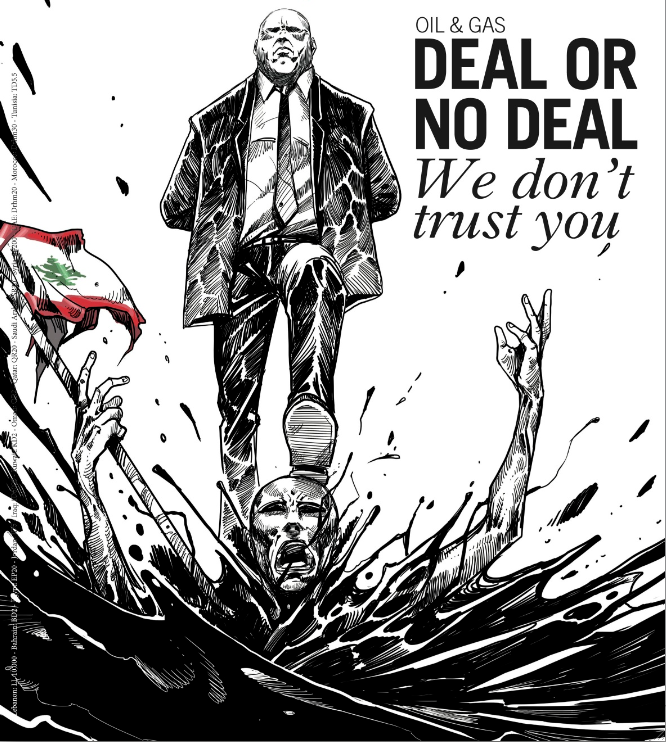
An early July meeting between the country’s Speaker of Parliament Nabih Berri and leader of the Free Patriotic Movement Gebran Bassil, whose party has dominated the early stages of developing the oil and gas file, raised concerns over a possible ‘back-room deal’ [see cover story] over the sector’s future and, possibly, the fate of potential contracts and hoped-for revenues. If the need for strong anti-corruption rules for this sector was not apparent before, it is now.

That there is suspicion over the so-called deal between Berri and Bassil hardly comes as a surprise. This is an industry that has proven mostly opaque in much of the world and Lebanon is a country that, according to a ranking by global watchdog Transparency International, is deemed mostly corrupt. The anti-corruption law, proposed by MP Joseph Maalouf in 2015, promises an injection of transparency on the awarding of bids and subcontracting, as well as revenues flowing to the government’s coffers.

In an interview discussing updates to the draft law, Maalouf tells Executive he will have a formal draft prepared by the end of July to present to the Parliamentary Committee on Public Works, Energy and Water for review and, he hopes, approval. Upon committee approval the proposed legislation would be sent to other committees and joint committees for discussion. Speaker Berri, Maalouf told Executive last year and again now, is very supportive of the anti-corruption law. He hopes that high priority status might be enough to champion the bill as emergency legislation.

E   In the past, the indication was that Speaker Berri wanted the offshore blocks to be smaller and that he wanted to offer all of them at once for bidding. Prior to this interview, we were told that the Speaker has changed his mind and agreed to the blocks as the size that they currently are and agreed to what they call gradual licensing. What’s the distinction?

There’s a difference between gradual licensing and offering the blocks. You can offer all ten blocks and then you license them gradually based on what prequalified companies come back with and based on the terms around each block, and on the various 3D scans that were done. So you would determine based on which company is interested in which block to develop certain prioritization criteria and you would license the blocks accordingly.

E   On the excitement where everyone thought the decrees would be passed by the end of July – our impression has been that it may not be a deal per se but merely to present a positive outlook. Would it be unfair, from an outsider’s perspective, to suspect that there was some sort of under the table handshake?

You’re talking about splitting the pie. Regardless, there are some issues that need to be tightly monitored, there have been some rumors that were circulating around some companies that were squeezed in after the pre-qualification round. Our role as parliament is to monitor that and track it properly to make sure that all the laws that are being enacted are respected.

[pullquote]Hopefully the law we’re proposing will be as foolproof as possible to minimize and eliminate any possibility of corruption through total transparency in the whole system[/pullquote]

E   Last year we discussed an anti-corruption draft bill for the sector. Has any progress been made to formalize this legislation?

It is a proposal of a law that I’m working on with the Lebanese Petroleum Administration whose members have been extremely collaborative. I’m working with a subcommittee now on refining the proposal and what we did was a full-fledged process analysis from the time the blocks will be offered all the way through exploration, production and dismantlement – the full life cycle. We took each step in each of the phases and analyzed how they could be jeopardized and how corruption could seep in. We’re creating transparency measures at each step of the process to make sure that we can control it. Anybody with dubious intentions trying to take advantage of the system is at an advantage because they will always look for loopholes somewhere, somehow. Hopefully the law we’re proposing will be as foolproof as possible to minimize and eliminate any possibility of corruption through total transparency in the whole system.

E   We’ve seen Member of Parliament Samy Gemayal advocating for transparency measures such as the Extractive Industries Transparency Initiative (EITI). Is that enough and does your draft law stipulate reporting requirements?

With all due respect the EITI is not enough for us. Many of the components that EITI suggests, from our perspective, should be mandatory. Divulging information and ensuring transparency will be mandatory in the law that we’re proposing – what we’re doing goes beyond any existing law globally. It’s in a similar direction, but we’re going beyond on a process monitoring level. The intent was there [last time Executive spoke with Maalouf about the proposed law in September 2015] and the actualization of it has become much clearer.

E   How deep does the proposed law go – to service providers and subcontractors?

Subcontracting is the game. That’s where the EITI proposes some things that are useful, but they’re not enough. In terms of going down to the second tier or third tier, that’s where we need to track contractors and subcontractors. [We need specific transparency measures] mandated by law. We’ve done the full fledged process analysis for the whole project life cycle – from granting exploration licenses all the way through dismantlement of facilities. Each step is now much clearer and the points are very well defined.

August 9, 2016 0 comments
0 FacebookTwitterPinterestEmail
Economics & PolicyOil and gas

Legislation in progress

by Jeremy Arbid August 5, 2016
written by Jeremy Arbid

Recent news that rival political parties agreed on a vision for Lebanon’s oil and gas sector was met with worried optimism – an over three year wait for pending decrees to move the first offshore licensing round forward may be nearing an end. Until early July it seemed that oil and gas would continue to languish at the lowest rungs of the government’s priority ladder.

The politically-induced freeze on oil and gas might not be ending anytime soon (see cover story). But if the sector is to move forward the government will need to resolve a number of legislative details. Executive wondered what stage the Lebanese Petroleum Administration (LPA), the sector’s regulator, has reached in preparing necessary decrees and laws, and of its take on the added value of newly available seismic data. It had, after all, been nearly a year since the last time Executive reached out to the LPA for a formal interview. “Are we moving forward?” Executive asks. With technical preparations, yes, says Walid Nasr, head of strategic planning.

E   Up to this point interpretations of the seismic data suggested high prospectivity for offshore Lebanon, but recently new data has emerged. What do interpretations suggest and why is this new data making headlines?

In 2002 TGS [a geoscience data acquisition company] came to Lebanon and did a survey offshore with 2D seismic lines covering most of the Exclusive Economic Zone. Recently the LPA managed to retrieve this data from the company – at that time [TGS] did not have an official contract with the Ministry of Energy. In 2011 Minister Bassil brought a lawsuit against the company to get the data and settle the issue between the company and the Lebanese government. So we retrieved the data from TGS and did our own interpretation. The added value of the TGS data is that it had lines in areas where we did not have any data before, specifically on the border areas. When we interpreted this data we came to the conclusion that we may have common reservoirs with neighboring countries.

E   That data suggests that there could be, but does not establish, reservoirs that stretch into neighboring countries’ waters?

Final confirmation is by drilling, of course. But what it suggests is that we may have reservoirs across borders that have good prospectivity.

E   Is there any update on a pending petroleum tax law?

The petroleum tax law has been prepared by the Ministry of Finance in collaboration with the LPA. Now it’s in the Ministry of Finance and the minister should be able to submit it to the council of ministers and then it should go to parliament for approval.

[pullquote]If the sector is to move forward, the government will need to resolve a number of legislative details[/pullquote]

E   The argument we often hear when you don’t have fiscal and legal legislation set before a licensing round is that companies may be hesitant to bid because the rules of the game are not clear. Are you pushing for the law to be passed before the licensing round moves forward?

That is what we are working on. This tax law is prepared in line with best practices to have a good fiscal system in Lebanon. We are working with the Ministry of Finance and they are eager to have this law passed before the bidding process ends. What is important is to have this law passed by parliament before the actual date of the submission of the bid so companies can design their offer accordingly. However, the two decrees pending can be issued in parallel or before this [petroleum tax legislation].

Worst case scenario – which we wouldn’t like – the current tax law applies [a 15 percent corporate tax rate]. So companies would design their bids based on the current tax law. Even if they bid [based on the current tax law], we have stability clauses within the Exploration and Production Agreement that could address [future changes to the tax law]. Our preference, and we’re working with the Ministry of Finance on this, is to have [the new tax law] issued so that we have a complete fiscal system with a petroleum tax law in place.

E   There’s also the onshore oil and gas exploration law that is still pending. Is that bill under preparation or ready for referral?

The Ministry of Energy and Water is preparing that; the minister has formed a committee comprised of the LPA and the ministry. We are close to a final draft that will be submitted to the minister and he will, in turn, submit it to the cabinet after which it will go to the parliament. It calls for the LPA to manage both onshore and offshore. It’s technically easier to drill onshore, less costly, less risky and faster in terms of development. The main issue onshore is environmental, it’s more critical and we have some concerns, protecting groundwater for example. The draft law aims to address these concerns.

[pullquote]Our preference, and we’re working with the Ministry of Finance on this, is to have [the new tax law] issued so that we have a complete fiscal system with a petroleum tax law in place[/pullquote]

E   We understand the LPA is drafting implementation decrees and is preparing the groundwork for a law to organize a sovereign wealth fund. Are there any updates? 

There are some application decrees that we are preparing that would complement the Petroleum Activities Regulations. One of them is the Petroleum Register, very important, where you have all the companies and the details of the awards, and the production later on, registered in the Register with all the licensees, including beneficial ownership. This is being prepared now and will be ready before the bidding process.

For the sovereign wealth fund we have a lot of time to establish it because actual revenues will not be flowing in the short term. It’s very important to set it up, so now the LPA is doing some assessments but we are not drafting the law ourselves because this is a national topic that needs to be discussed. The law should be based on [commercially extractable] resources and our vision of how these will be managed – we’ll provide the technical support and advice needed to design this law.

August 5, 2016 0 comments
0 FacebookTwitterPinterestEmail
EditorialOpinion

A disappointing win

by Yasser Akkaoui August 2, 2016
written by Yasser Akkaoui

Three years ago, we asked then Minister of Energy Gebran Bassil about how millions of dollars made from the sale of oil and gas data were being managed as part of our coverage of the governance of the nascent industry. He told us it wasn’t important. When we ran an article suggesting such secrecy is a bad thing, he sued us for defamation. This month, we won. What kills me, however, is that our in-depth coverage that exposes with irrefutable truth suspicions of cronyism got overlooked by the general public, civil society and those responsible for investigating such doubts. I welcome the judgment, but the most important questions remain unanswered: where’s the money and what checks and balances are in place to safeguard our interests? The purpose of sticking out our necks quite prominently is not to get shares and likes or even warm handshakes. We demand an investigation.

There is an accountability problem in this country, and it’s about time someone did something about it. Around this time last year, we watched the political class manipulate a popular movement. “The mafias” who we were marching to depose won – let’s not kid ourselves. They used and manipulated street protests as an excuse to cancel waste management deals with the private sector that would have solved the trash crisis across the whole country. We would have had infrastructure and modern solutions. Instead we’re going to throw much of our trash in the sea. The rest will continue to be burned and dumped around the rest of the country. And no one cares.

It’s demoralizing. Our economy is all but dead. We’re sinking. Instead of throwing us a lifeline, our politicians are pushing us under with their dirty deals and gross mismanagement. At Executive, we’re doing our part. Our investigative journalists work tirelessly month after month to explain the most complex of issues in an easy to understand way, pointing out what is being done right and how to improve what is not. We’re doing the hard work and it’s time for civil society to pull its weight as well. Without strong and continuous action, we will never be able to save this country.

August 2, 2016 3 comments
0 FacebookTwitterPinterestEmail
LeadersOil & GasOpinion

Another red flag

by Executive Editors August 1, 2016
written by Executive Editors

On Friday, July 1, two men walked toward a microphone to speak as representatives of their respective political parties, but not in their official capacity as ministers. Following a closed-door meeting, they declared the end to a three-year feud. A bilateral deal had been reached concerning the nation’s potential hydrocarbon resources. Lebanon was set to finally close its first offshore oil and gas licensing round which is a decision cabinet was supposed to make. After reading a statement that any thinking person will tell you means absolutely nothing (unless it’s laced with coded language only true insiders can decipher), a reporter’s request for details was rebuffed with a promise that consultations with the prime minister would be held. With that, the two men left. A fait acompli, in local political parlance. In all fairness, it was probably a stunt and the deal looks dead (see cover story), but either way, the whole thing stinks.

First and foremost, the deal shouldn’t have been discussed in private by two political parties. By law, it is cabinet’s job to set the country’s oil and gas policy. While the “oil deal” meeting is far more egregious, it is sadly the rule for how this sector has been officially discussed in the past two years. Prime Minister Tammam Salam created a ministerial committee to debate oil and gas back in early 2014. The committee met only a few times. Instead of using the official venue on offer, each individual minister had the Lebanese Petroleum Administration (LPA) come for a one-on-one visit to explain the sector and the LPA’s vision for an oil and gas strategy. Oil and gas is a complicated and technical topic. Imagine if the LPA gave the ministerial committee 15 or 20 workshops on the subject, first bringing everyone up to speed on the basics of how the industry works and then outlining different options for a Lebanese oil and gas strategy while weighing the pros and cons of various choices. We would have more informed ministers. The “classroom” environment would help those from rival camps see how the other side thinks, which could help avoid future years-long delays at important junctures as cabinet decides on every step forward in this sector. If these workshops were televised (and made permanently available on YouTube), interested citizens and civil society groups would today be more equipped to oversee this sector as it is born and hopefully grows. Moving forward, this must be our model. There is no legitimate reason for talk on this subject to be secret. All oil and gas discussions must be public.

Equally offensive was the reaction to the deal. Where was civil society? The silence is shameful. Civil society must protest questionable proceedings like these. The method of protest is irrelevant. At least do something – a statement, anything. Except tire burning. Please.

Weeding corruption out of the system is a long-term goal that will take time and effort. It has been growing for decades, and its roots have a strangle hold on nearly every state institution. The nascent oil and gas sector, however, is an opportunity. Three years ago Executive asked how millions of dollars in survey data revenue are being managed. We were answered with a defamation lawsuit (which we won this month, for the record). Two years ago, we noted a flaw in the pre-qualification process that allowed Mohamad Chouqair, head of the Beirut chamber of commerce,  and Mahmoud Sidani, chairman of Unigaz, to participate in the first licensing round. Their company is registered in Hong Kong and they pay a yearly fee to obscure their ownership of it (Panama Papers, anyone?). Perhaps not surprisingly, the disclosure changed nothing. It is time we all wake up. This sector is being built from scratch and we have the chance to get something right. We must not squander it.

August 1, 2016 1 comment
0 FacebookTwitterPinterestEmail
Economics & PolicyOil & Gas

Decoding the oil deal

by Matt Nash August 1, 2016
written by Matt Nash

Parliament Speaker Nabih Berri is having trouble making up his mind. Or so it seems. On July 1, Berri and Foreign Minister Gebran Bassil struck an unexpected deal. The agreement was touted as a bulldozer clearing the final barrier that, for over three years, has blocked the conclusion of Lebanon’s first offshore oil and gas licensing round. The parties, however, have chosen a very odd strategy for building national consensus around their deal. By all accounts, they haven’t shared the details widely, and the terms of the deal coming from the speaker’s side vary depending on what you read. At the time of writing, this looks more like a media stunt than a news development.

Coming to terms

The search for oil and gas under Lebanese territory began before the territory was technically Lebanese. Some five years prior to Lebanon’s 1943 declaration of independence, the Iraq Petroleum Company drilled an onshore well. The company did not make any discoveries, but the search continued (both via drilling and surveying) until the early 1970s. In 1993, the government again began looking for hydrocarbons, commissioning a two-dimensional (2-D) seismic survey off the coast of Tripoli, in the north. Since then, oil stayed on politicians’ brains, but movement has typically been slow, with one exception: Najib Miqati’s 2011-2013 cabinet. With a newly minted offshore hydrocarbon law on the books, then-Energy Minister Bassil clearly made the creation of a Lebanese oil and gas sector a top priority, and the cabinet largely backed him.

[pullquote]Since 2013, it has been quite clear that one of the biggest barriers to getting the decrees passed lies in a disagreement involving Berri[/pullquote]

In December 2012, after securing the cabinet’s approval, Bassil announced the appointment of six board members for the Lebanese Petroleum Administration (LPA), a regulator for the sector, which the 2010 offshore law called for. [By way of contrast, an electricity sector regulator called for in a 2002 law remains ink on paper to this day.] In February 2013 – only 80 days after its board was appointed – the LPA opened a pre-qualification round to select which international oil and gas companies would be allowed to bid in the first licensing round. The pre-qualification process went as planned, and in April 2013, 46 companies were given the green light to participate in the round, scheduled to open the following month. There was only one problem. Miqati had resigned at the end of March before much-needed work on oil and gas was finished. Most pressing were two decrees needed for the licensing round (one delineates Lebanon’s offshore blocks and the other includes a model contract to be signed between the state and companies keen to drill as well as details on how the bidding will happen and how offers will be evaluated). Shortly after Prime Minister Tammam Salam formed a government in February 2014, he tasked a ministerial committee with studying the decrees. They have yet to be approved.

Since 2013, it has been quite clear that one of the biggest barriers to getting the decrees passed lies in a disagreement involving Berri. The speaker wanted to open all ten blocks for bidding. The LPA, meanwhile, recommended opening only five, a position Bassil supported. In either scenario, fewer contracts would be signed than blocks put on offer. Announcing the Berri-Bassil deal, neither Bassil nor Berri’s confidant, Finance Minister Ali Hassan Khalil, mentioned anything about which blocks to open for bids. Speaking to Executive two weeks after the deal was done, Cesar Abi Khalil, a former Bassil advisor (currently counseling Energy Minister Arthur Nazarian), at first reads an amended version of the statement issued after the Berri-Bassil meeting.

“There has been an agreement on [an offshore oil and gas] licensing strategy,” Abi Khalil says. “The licensing strategy should ensure Lebanon’s rights to resources in our subsea, first [vis-à-vis] Israel, second Cyprus and Syria. It should ensure that the Lebanese government will maximize its profit from petroleum activities, and it will ensure the right environment for the licensing round to succeed.” Neither foreign nor finance ministers mentioned “licensing strategy” in their July 1 announcement. Even with that added detail, however, the deal still sounds vague. (Which party would agree to ceding Lebanon’s rights, minimizing the state’s take from potential resources and having an unsuccessful licensing round?) Indeed, Executive’s first question to Abi Khalil was: “So what does that all mean?”

“I think this is clear. This is the extent of the statement,” Abi Khalil replies, before elaborating diplomatically that Berri agreed to abandon an idea he had been promoting for about three years. The actual deal, Abi Khalil says, calls for opening fewer than ten blocks to bidding in the first licensing round.   

Reading the tea leaves

Executive was unable to reach Speaker Berri or anyone who could answer questions on his behalf. On July 9, The Daily Star reported Berri had convinced Bassil to accept opening all ten blocks, the opposite of what Abi Khalil says the deal entails. On July 22, economist Marwan Iskandar wrote in An Nahar that the Speaker told him personally that the deal meant going with the LPA’s strategy of opening fewer than ten blocks, seemingly confirming what Abi Khalil says. Yet that same day, Al Arabiya English ran a piece again claiming the Speaker’s vision of offering all ten blocks had won the day.

Future Movement MP Mohammad Kabbani, who heads the parliamentary committee which deals with oil and gas, explains that his party has not been explicitly briefed on the deal since it was struck, but says his party is on board. “We have agreed to submitting ten blocks for licensing and signing only a few contracts. If this is the real agreement,” he says. According to Abi Khalil, that is not the deal, which seems to throw into question whether or not Future will accept it. Abi Khalil has not responded to follow up questions on why confusion and misinformation seems to be how the parties are communicating their deal.

Why now?

Putting aside the details of the deal for a second, Kabbani and Lebanese Forces MP Joseph Maalouf offered some insight as to why the deal came when it did. For three years now, Berri has been claiming that Israel is stealing Lebanon’s gas. He has never offered proof and the concept always seemed suspect on technical grounds. Lebanon’s neighbor has discovered gas in its offshore acreage. None of those discoveries stretch into Lebanese waters. Therefore, if Israel were truly stealing, the private company doing the actual drilling would have to employ expensive technology to drill past the Israeli fields on a blind, subsea search for Lebanese fields to the north. Not only is this costly and risky (i.e., no guarantee a Lebanese field would be found), if the private company were caught doing so, its reputation would be in the toilet at the very least. The only other way for Israel to steal Lebanon’s gas would be if the two countries shared a reserve and Israel began exploiting it first without agreeing how to split profits with Lebanon. Shared reserves are not uncommon (Iran and Qatar share the world’s largest gas field). None have yet been discovered between Israel and Lebanon. However, new data suggest the two countries may have a shared reservoir. This new data, coupled with fears that an Israel-Turkey reconciliation announced in late June means Israeli gas may soon reach a hungry European market via a pipeline to Turkey, prompted the oil deal, Maalouf and Kabbani say.

Walid Nasr, head of strategic planning at the LPA, refuses to comment on the political deal, but sheds light on the new data. Echoing Kabbani and Maalouf, he explains that in 2002, an American company called TGS conducted seismic surveys of Lebanon’s offshore. The company refused to give the Lebanese government the data back then, Nasr says, because the two did not have a written contract, only an oral agreement between the company and the then-minister of energy. Bassil sued in 2011, and TGS handed the data over recently, Nasr explains. TGS refuses to comment in an email exchange with Executive, but a paper on the company’s website confirms it shot over 2,000 kilometers of 2-D seismic in Lebanon’s offshore in 2002. Interestingly, the map published along with the paper seems to show that Lebanon’s seismic surveys stretch south into Israel’s offshore. Nasr says the interpreted data suggests Lebanon and Israel may have a shared hydrocarbon reservoir (2-D seismic cannot distinguish between oil and gas). Seismic surveys, however, are not perfect tools. They give indications of where oil and/or gas might be. Only drilling confirms what lies below, meaning what today looks like shared resources could prove to be nothing.

Unfinished business

Immediately after the deal, press reports claiming the decrees would be passed imminently were rife. Yet a number of decisions still need to be made. While Abi Khalil insists Berri pivoted from wanting to open all ten blocks for bidding, he admits the exact number was not decided on. Indeed, he repeatedly says “we have no religion” in the matter when asked if the LPA’s strategy of offering five will be the final strategy. Ditto the number of contracts to be signed. Fewer than the number of blocks offered, but how many? “We have no religion in this matter,” Abi Khalil repeats. Finally, given that the pre-qualification round happened three years ago, might another be necessary if some pre-qualified companies have lost interest in bidding or if new companies are eager to invest? Khalil says a second pre-qualification round could be a good idea, but insists his side has “no religion in the matter.” Where and how these remaining points open to negotiation will be discussed is unclear. Prime Minister Tammam Salam has not called for a meeting of the oil and gas ministerial committee to discuss recent developments. Nor has he put the oil and gas decrees on the cabinet’s agenda. In fact, he’s done little more than offer veiled criticism of how the deal was announced. During the July 1 press conference, when a reporter asked Bassil for details, he said that was not important at this stage as the two sides would now begin briefing others to build consensus. If such a roadshow is happening, it is one of the best kept secrets in Lebanon.

August 1, 2016 0 comments
0 FacebookTwitterPinterestEmail
Entrepreneurship

The rocky road from inventor to businessman

by Matt Nash July 27, 2016
written by Matt Nash

Antoine Sayah is learning how to actually build a business. Two years ago, he was an undergraduate studying architecture and working on an assignment for a design class. Students were tasked with building a product that was “useful in your everyday life,” he recalls. A Jounieh native, Sayah loves the beach. He made a foldable beach mattress with a triangular headpiece for comfortable lounging which offers far more than just support. With an embedded 7-watt solar panel, it has USB ports for charging electronics (tablets, mobile phones, etc.) and a small refrigeration system to keep beverages cold (with 2-liter storage on the standard-sized model). For a year after he passed the class, he used his crude prototype to tan in his garden at home, he says. Friends kept encouraging him to make more and sell. By July 2015, he was convinced and started marketing the product – dubbed Beachill – on social media (mainly Facebook and Instagram).

He was overwhelmed by the response and soon drew the attention of local and international media. He received interest from around the world, he says. Indeed, Beachill’s second Facebook post garnered the comment: “Please inbox the price… and is there shipping to Egypt”. Speaking to Executive in mid-May 2016, Sayah explains with a “not-sure-if-you-know-this” tone that shipping individual units with a commercial delivery service is expensive. From a cost standpoint, he would need to ship an entire container, a scale of production he had not yet reached. He did, however, manage to export dozens of units to Australia and the U.S.A., though he concedes that “the shipping cost more than the mattress itself.” Between July 2015 and June 2016, he says production expanded from 21 units per week to 200 per week under a contract with a manufacturer with whom he is friends. Six of the manufacturer’s 50 employees are now working exclusively on Beachill units, Sayah says, noting that raw materials are imported with each unit being hand made in Lebanon.

The exposure helped him learn, he says. Sayah claims that early on, a client in Dubai wanted two cargo containers of Beachills. While he wasn’t able to fill the order, he got a lesson in fabrics. “I learned a lot more about how to develop the product,” he says. With a desire now to focus first on building his brand in Lebanon, his thinking on local distribution has also evolved. In May, he chafed at the idea of distributing through retailers. “They’d have to take their cut,” he said, explaining that the $150 price tag on a Beachill was already a bit high, he felt, and he  had aimed to sell it for more, not less. He spoke of personally manning kiosks at beach resorts or malls, maybe even renting space for his own dedicated outlet. When Executive checked back in with Sayah in late June, he was days away from meeting with a major local retailer in the outdoor goods segment. Explaining that renting involves a long-term commitment (three to five years) and more overhead than the business can afford (especially considering he expects sales to be strictly seasonal), Sayah concludes, “I can give away $10” for the retailer’s margin, “It doesn’t matter if I’m selling more units.”

He’s sold around 500 units to date and is working on building up stock and working out local distribution kinks. He also still eyes expansion to Dubai by September but hasn’t made any concrete moves in that direction yet. Indeed, Sayah says there still isn’t a corporate entity behind Beachill, something that should change soon as he prepares to incorporate with the six-person team of friends he has assembled. To date, Beachill’s sole investor is Sayah’s dad. He’s had plenty of offers from potential investors, he says, but everyone wanted to buy him out, taking more than 50 percent of his company in exchange for a capital infusion. He says he’s keen to pursue debt finance to fuel growth unless he can find a strategic investor with more to offer than cash. “[Potential investors] are only offering money,” he says. “I can take a loan from a bank.”

July 27, 2016 0 comments
0 FacebookTwitterPinterestEmail
Hospitality & Tourism 2016Special Report

As old as Byblos

by Thomas Schellen July 26, 2016
written by Thomas Schellen

Many essential parts of life that we perceive as “can’t do without” are quite recent. Inventions such as the elevator, motor car, air conditioning units, frozen food and of course the dreaded smartphone are between 150 and 15 years of age, at least in their modern mechanized/electronic versions, even as the ideas behind them date back 10 or 20 centuries.

Wellness is an essential living concept that has been around for even longer; Indian and Chinese recipes for making the body and mind unite in a healthy and mutually enriching relationship have a history of up to five millennia. According to the Global Wellness Institute (GWI), Ayurveda and traditional Chinese medicinal treatments have been around since 3,000 years before our Common Era or before Christ (BC), and ancient Greek and Roman therapists began practicing wellness in the fifth and first centuries BC, respectively. That sounds almost as old as Byblos, the pre-Phoenician port that we celebrate as Lebanon’s (and one of the world’s) oldest continuously inhabited city.

[pullquote]“You have trendy words in Lebanon, like detox, which is very fashionable, you have gluten-free, which is trendy, and wellness is now becoming trendy as well”[/pullquote]

Wellness as a consolidated, marketing-savvy international industry by contrast is a new trend – young in global terms and just emerging in these parts of the world. It is even young compared with the first smartphones such as the Communicator by Nokia, the BlackBerry, Japan’s DoCoMo and the first iPhone generation, which were all born in the 1990s or later. A Global Wellness Summit as the precursor of GWI was incorporated ten years ago and its International Wellness Day was celebrated for the first time in 2012 in some countries and last month at the Edde Sands Resort in Lebanon.

“We decided to focus on this global wellness day because it is celebrated throughout the world on the second Saturday in June. You have trendy words in Lebanon, like detox, which is very fashionable, you have gluten-free, which is trendy, and wellness is now becoming trendy as well,” says Alice Edde, co-founder of the resort with her husband Roger.

3

Edde has organized wellness weeks at Edde Sands since 2009. During the past few years her resort has morphed from a top address for summer partying and weddings to a place that is in equal proportions oriented towards weekend relaxation seekers and revelers between May and October and to wellness in the rest of the year. “We started off as a party destination and now we have become a wellness destination and a place for children,” Edde says. This is reflected in the brand, which has expanded its name to Edde Sands Hotel and Wellness Resort. 

For this year’s wellness day the resort invited advisors on issues such as nutrition or pediatrics, and even an optometrist and a life coach to set up booths where they explained to visitors why wellness is important. The exposure was so convincing that a member of the Executive editorial team decided on the spot to make another try at kicking his cigarette habit. 

According to Edde, the occasion was also able to attract two relevant ministries. “We got the minister of health interested in this and the minister of tourism, so we had both their logos on our flyers because they are backing us. This is important for Lebanon. It is a form of diversification of tourism; you have religious tourism, wine tourism, rural tourism and now wellness tourism,” Edde says.

Unsurprisingly, international wellness advocates and operators are full of cheer for the potential of all things wellness with market assessments that speak of trillions of dollars, not just billions. The numbers come from research conducted in 2014 by GWI and it is a reasonable expectation that they are self-serving and possibly exaggerated. They nonetheless leave little doubt that wellness is a sizeable business realm. In GWI’s view, the three largest elements of the wellness market are beauty and anti-aging, worth $1.03 trillion worldwide, followed by healthy eating and weight loss ($574 billion) and wellness tourism, worth a supposed $496 billion. In total, comprising hundreds of billions of additional dollars in sectors ranging from fitness, alternative medicine and lifestyle to wellness real estate and workplace wellness, the sector’s advocates see a global market of $3.4 trillion.

A high-potential destination concept

As a wellness destination, Edde Sands on this Saturday in June mobilizes all the offerings – except crowds, that is. Attractions like Zumba, dance and aerobics exercises performed to energetic music, runs at noon in fitness studios, at 2 pm water gymnastics are held in the pool and at 6 pm there is yoga.

[pullquote]All evidence suggests that the visitor moreover doesn’t have to worry about looking the part of either the proverbial Aphrodite or Adonis to fit in and be accepted[/pullquote]

At the large lunch table for invited guests and celebrities, a three-course wellness meal with greens, fruits, fish filet or veggie burgers and healthy sweets is served in a relaxed and tasty fashion. This is framed by the resort’s calm and easygoing atmosphere where one can sit back and let the soul wander, taking a break from thinking about waste management or other political issues of the day. All evidence suggests that the visitor moreover doesn’t have to worry about looking the part of either the proverbial Aphrodite or Adonis to fit in and be accepted (Adonis and Aphrodite are present, though, but as monikers to denote the facilities.) Although it has strong ties to physical attractiveness, or the longing for it, a wellness seeker here does not have to obsess over fitness and body-shape stereotypes, or particular practices that have come up during the last 100 years of the wellness movement – such as radical vegans, preachers of various abstinences, and prophets of New Age and alternative medicine – that have the tendency to turn into quasi-religions.

1

The look taken by the Edde Sands team is undogmatic. The week-long program is adjusted to local habits, where discipline is not a prominent pattern and food proscriptions aren’t extreme. “Wellness food is not just about dieting. There are so many body types and we prepare our meals to be in line with people’s real needs,” explains Yara Younes, who oversees the wellness operation at Edde Sands.

The number of people who attend this first wellness day celebration at the resort is not large (Ramadan always makes a dent here) but also not impossibly small. The event, according to Edde, aims to give people a taste for wellness whereas wellness week is a serious endeavor during which “you spend nights and you come with a goal like relaxing, or doing detox or losing weight.”

The costs

Such self-improvement goals have a cost. A full stay during wellness week will set a participant’s purse back over $1,600, according to Younes. Attendance of a wellness week depends on the season but participation ranges anywhere between 15 and 40 regulars. “What we have seen over the past few years is that there is a greater awareness of the health benefits of retreats, and those that try our wellness week once tend to become regular clients. This has created a large wellness database,” Younes enthuses, adding, “Our maximum capacity is 25 full-week clients. We prefer providing customized attention and personalized service for a better client experience.”

As Alice Edde acknowledges, a stay in a European wellness hotel will be less pricy than at the resort. She argues that this is because of specializations in Europe where an entire branch of the hospitality industry has already focused on this theme for a long time in countries like Austria, Czech Republic (where the famous Karlovy Vary spa town was established in the 14th century and named after Emperor Charles IV) or Germany. Booking a wellness week at Edde Sands on the other hand is not expensive when compared with a conventional stay at a five-star hotel in Lebanon. “It is not cheap but relatively speaking, it is very reasonable,” Eddie claims.

5

According to Edde Sands marketing manager Nathalie Maljian, the property has two hotels with a current capacity of over 50 rooms and suites, which was developed between 2006 and 2016. The average room rate is $376 and $92 in the high and low seasons respectively, with an occupancy rate at the hotels of 60 percent.

Younes says it is difficult to compare the package cost of a stay during wellness week with an average week during the low season. Including stay, meals, resort entry and various activities, the cost will be $1,627, which can grow higher by purchasing other options. This is juxtaposed with a $825 fee for six days of accommodations alone, in addition to which guests would have to buy meals ($35 for each meal) and treatments for between $15 and $145 each. A single-day complete participation in the wellness program sells for $195, she adds. It is unmistakable, however: a bargain proposition for backpackers, wellness week is not.

[pullquote]For the next wellness week in October 2016 Younes expects to boost revenue by 30 percent from the previous year[/pullquote]

For the next wellness week in October 2016 Younes expects to boost revenue by 30 percent from the previous year. In measures to support economic performance, her targets include attracting a younger clientele and benefiting from new partnerships, such as “a collaborative relationship with the AUB Wellness Center and the AUB Nature Conservation Center”, details of which are to be determined in the latter part of the year.

Alice Edde’s strategy is to develop Edde Sands as a wellness destination in equal parts for domestic and foreign clienteles. She sees wellness tourism as a growth trend with increasing numbers of institutions and operators, like small hotels in the countryside and bed & breakfasts, joining the ranks. “This will be the tourism of the next ten years,” she says confidently.

2

For this upscale resort that has been standing its ground in the challenging Lebanese hospitality landscape for more than ten years now, wellness is a promise to reinvent and upgrade itself in a maturing market. However, while wellness tourism has the potential of contributing to the diversification of tourism in Lebanon and could tie in with other specialties such as medical tourism, this potential will be lessened if known deficiencies in areas such as political stability, infrastructure and security are not addressed. “In their absence, the growth rate will be impeded, but we won’t stop. We believe in what we are doing and we think it is the future,” Edde says. For her, wellness is more than business, she professes with a smile: “It is a lifestyle.”   

July 26, 2016 0 comments
0 FacebookTwitterPinterestEmail
Hospitality & Tourism 2016Special Report

The franchisor and the direct operators

by Nabila Rahhal July 25, 2016
written by Nabila Rahhal

It is part of human nature to be dissatisfied with what we have, always wanting and working to gain more. At the corporate level, this can manifest itself in the growth of one’s enterprise, be it in size, services provided or expansion into new markets. 

Businesses in Lebanon are no strangers to growth into new markets, whether locally or abroad, through the opening of new branches of existing operations. A quick glance at the Lebanese Franchise Association (LFA)’s list of franchisors reveals that businesses of listed members range from retail stores to a children’s daycare center to service providers (such as copy and design services) and even to a gas station.

Who franchises and where

Malik’s, a copy center and services retailer, boasts five franchises in Lebanon since the inception of the concept two years ago and actively promotes becoming a franchise owner through banners displayed at their stores’ entrances.

However, despite examples such as Malik’s, the majority of franchisors and franchisees listed on the LFA website are in the hospitality business, be it eateries or retailers that sell food and beverage (F&B) products. Indeed, Lebanese F&B investors have become increasingly seasoned in developing solid brands whose value increases by opening multiple outlets locally, and often abroad as well. 

The first choice to be made when opening a new branch is location, according to Donald Batal, founder of the restaurant management company Ministry of Food which operates Classic Burger Joint (CBJ) and Tomatomatic, in terms of making sure it’s a high traffic area which would have a good revenue stream. 

4

What works best?

Once the location is set, F&B operators have to decide whether they want to directly operate the outlet or sell it as a franchise. If directly operated, the company invests in constructing the branch and manages it itself, keeping all future profits within the company. As a franchise, the company sells the branch’s license to a franchisee who invests in constructing the venue and managing the outlet. The franchisee then keeps future profits minus the annual royalty fees paid to the brand owner or franchisor.

Within Lebanon, most F&B outlets are company owned and operated, as it is a more profitable model for the owners, according to Marwan Ayoub, copartner in Venture Group. “If your outlet is profitable, and most local chains in Lebanon are, it’s better for the owners to open branches than to sell them to someone else, especially since there are always ways, such a kafalat loan, to support the opening investment,” says Ayoub, adding that such companies tend to grow the value of their brand locally by opening several branches and later consider selling the brand abroad as franchise.

Show me the money

When it comes to profitability, Battal, who is starting to locally franchise CBJ and plans to have Tomatomatic be a purely franchise model locally, believes the two models end up being equally lucrative. “Both models are profitable, [but return] depends on the investment size. When you have a company owned store, you invest money into its construction but you have a higher return. When you sell a franchise you don’t invest but you get royalty fees which are less of a return,” explains Battal.

[pullquote]When expanding abroad, having an operator from the country in question becomes even more important[/pullquote]

Christine Sfeir, CEO of Treats Holding and Meeting Point, which holds the Dunkin Donuts franchise in Lebanon and operates Lebanese eatery Semsom locally, in the region and, most recently in New York, explains that while it takes a lot of time for franchising to be financially lucrative, when a branch becomes successful, the profits roll in. Sfeir says that franchisers put in a lot of effort at the beginning to get their franchisee stores to work. 

Bring in the locals 

For Kababji, direct operation makes more sense since their main catchment area is Beirut and Mount Lebanon, which is an area they know well and is well positioned for their brand, explains its general manager Eddy Massad. “Beyond these markets, within Lebanon, we don’t see Kababji as being well positioned. While it is possible to do so, it’s tricky and has price sensitivities,” says Massad, adding that in this case, since they are unfamiliar with operating in regions outside of Beirut and Mount Lebanon, franchising the concept to an operator from the local area would be an option.

2

Having an operator from the region that would know how to promote the brand among the community is exactly why Battal franchised CBJ to an operator in the north who opened the first branch in Ehden in the summer of 2015 and will be opening branches in Zgharta and Batroun this summer. “We decided to give the north to someone from there who, with a brand like Classic Burger Joint, will attract all the north – and this is what happened. So the match of a good operator from the area and a good brand is a success by itself,” explains Battal.

When expanding abroad, having an operator from the country in question becomes even more important. “I want a local partner in every city because I want an expert in the city; we cannot personally become experts in every city in the United States,” explains Sfeir in describing Semsom’s franchising plans going forward in the US, where the company so far has two directly operated branches in New York through the head office based there. 

What’s in a name?

All franchising F&B operators interviewed for this article stressed the importance of having the franchisee be very experienced in the hospitality business and already operating several eateries. “The experience of franchisor is excellent when you have the right operator as franchisee, meaning one with a background, experience and skills in F&B. Otherwise, it is the worst experience ever. Therefore, the skill lies in finding the right operator,” says Kababji’s Massad.

Indeed, fear of having a franchisee unintentionally harm the reputation of an F&B brand, through bad management or lack of experience, is a reason cited by some of those interviewed by Executive for delaying franchising plans until their company is more structured.

[pullquote]Operators who are franchising their brand have circumvented [possible] risk by investing a lot of time and money into developing their franchise manuals and into following up with their franchisees[/pullquote]

“At this point in Boubess Group we are not franchising for one simple reason: it’s true that we are a big company in hospitality but we are still building and developing our portfolio so when we franchise our brands, our infrastructure as a company will be ready in terms of the system, the brand and manuals,” says Boubess Group’s corporate marketing manager Hady Fadel. Fadel explains that, if the right control does not exist, a franchisee might introduce elements which are not in harmony with the brand, potentially jeopardizing the brand’s name in that country, which in turn would reflect negatively on its overall performance.

The power of control

Operators who are franchising their brand have circumvented [possible] risk by investing a lot of time and money into developing their franchise manuals and into following up with their franchisees. “What we did before franchising is establish a very solid structure: we enrolled in the biggest associations for franchising such as the International Franchise Association and we invested in our operation manuals. We are not worried about losing control of our brand because we have this very solid structure and on top of that we control the quality from A to Z,” says Batal.

According to Sfeir, having experience as a franchisee with Dunkin Donuts has made her a better franchisor. “We are very hands on. For example, we have two mystery shoppers who go twice a month to all venues. We know what is important in order to support franchisees since we are franchisees ourselves,” she enthuses.

3

Skills needed

In terms of soft and management skills needed, some see that being a franchisor requires a different mindset than being a manager of several outlets. “When operating you need to go into detail and be more customer service oriented, while as franchisors you are working as consultants more or less so you need to adapt and be more flexible,” says Sfeir, drawing on her experience both as a franchisor and a direct operator.

Others see that the two models require similar management skills: “Maintaining consistency and quality of the brand is a common challenge between franchisors and direct operators, and requires the same management skills for having the proper systems in the food supply chain and the operational standards,” says Kababji manager Massad, adding that another common challenge is finding qualified employees in Lebanon. Kababji has addressed this by having an in-house professional development system through which both direct staff and franchisee employees must pass in order to advance into key positions.

It is up to the F&B operators to decide whether they want to franchise their brand or develop it themselves, but what is certain is that they will always continue to strive for more growth. It’s only human.

July 25, 2016 0 comments
0 FacebookTwitterPinterestEmail
Business

Finding the funding for big tech dreams

by Yasser Akkaoui July 22, 2016
written by Yasser Akkaoui

Aasim Saied has some unorthodox ideas about how technology entrepreneurs should fundraise and how best to structure a board of directors. Saied founded Akyumen, a self-described “digital products company committed to opening the door to innovation and advancing access to education through state of the art niche products that bring technology directly to your hands.” Executive spoke with him about raising capital and governance.

E   You mentioned barriers of entry to the United States. What are the main or most challenging barriers you have to deal with?

In the beginning the biggest barriers to entry were people. In the US when we spoke to venture capitalist companies, they are the biggest barriers. And in fact we didn’t know better when we were in college about who to go to in order to raise capital. But then, I did meet certain people who told me ‘Venture capitalists are nothing but vultures’. So you go to individual investors, people who understand technology.

E   Corporate or individuals?

Individuals. And not go to venture capitalist firms. Venture capitalist firms are the biggest downside of the entire industry. They trick people and take advantage of them.

E  In what way?

In every possible way. They in fact, are, pump and dump technologies. I figured it out early in life so I was able to avoid them entirely and challenge them to their face. So we were able to break that barrier, through raising money from individual high net worths and take that approach and get rid of the need for having venture capitalists. That was the first barrier to entry.

E   What are the conditions of individual investors? How are they different, in terms of expectations, than venture capitalists?

Individual investors, number one, actually invest in the person, rather than just in the technology itself. Secondly, they understand. They have a want for technology, meaning they like the technology. They invest because they like something. Venture capitalists invest just to make profit. In fact, the individual high net worth investors, they are able to follow you. But venture capitalists, they are like ‘you should follow us’. There’s a difference.

E   How do you find these individual investors, these high net worth individuals?

You need let them find you. So what we did was, we did tradeshows. And then we went into colleges and institutions, we asked around, and did it through word of mouth. So through this people came to us. We didn’t have to approach anybody.

E   When you raise capital, I totally agree that you first go to private investors who have a high propensity to invest. Call them angel investors. But at a certain size, you need bigger investors to come aboard – institutional investors. Whether you call them VC, PE. Are you still able to dodge these and keep on growing with your individual investors?

We used individual investors to start with and after that we went forward with tech funds, which are different than venture capitalists.

E   Tech funds?

Tech funds are totally different than venture capitalists. Technology funds are backed by technology companies who understand the technologies. Venture capitalists are backed by hot air balloons that use other people’s money to invest. Why would we use a venture capitalist firm that uses other people’s money to invest from when we can do that ourselves? However, we did use technology funds at a later stage.

E   But these technology funds, are also interested in taking over your business, aren’t they?

Not at all. They sign our documents. We said ‘take it or leave it’. We have the technology that nobody else does.

E   Okay. So what’s after that? First there are the initial investors, and then there are the technology funds. What’s next?

The thing is our company works differently. We are not following the same route as others. Our route is, we want to manage to the risk of our investors very well. We have implemented strategies in which our shareholders get amazing returns. In fact, our shareholders would make more than if the same investors put their money in top companies in the world like Apple or Samsung in the public market. They have a much better rate of return because we are a growing company. We are not saturated like others. So because of the possibility of growth and the way in which we structured our business model for them to get returns, they badly want to be a part of us. And also, we are very open-minded and a learning company, meaning our company changes it business model according to trends in the market.   We don’t get stuck to just one trend or else we’ll become another BlackBerry. So we have a business model that changes according to trends and we also have several industries spread on our business model, meaning we just don’t stick to one industry. We have over 6 industries that we focus on. So if one industry is going down, another industry is going up. So we have the stability set up within our company. And the investors love it.

E   What is your ambition? To become a technology developer or do you want to develop your own devices and compete with the likes of Samsung and Apple… and Huawei, who is now growing very fast?

There can only be two companies: ones that go for a buyout and ones that buy others out. We want to be the company that buys others out. So we have structured ourselves to grow. One reason we don’t want to be bought out is because we have certain technologies that we want the world to have and enjoy. If we don’t do it, nobody else is going to do it. So these technologies are life changing and life saving.

E   Are you thinking of going public soon?

We are planning on going public in the future. We want to, but however, I won’t use the word soon. I want to do it right. And our team wants to do it right. It’s all about timing and how we do it.

E   For the current ownership structure of the firm, how is the composition of the shareholders today?

We have several shareholders, I hold a majority, and I would say, a lot bigger majority than what Mark Zuckerberg held in his company, and because we don’t use VCs there is nobody who can munch a bigger chunk just to take it public, because we have our strategies that we can do it ourselves.

E   But who sits on your board of directors?

Because its private, I don’t want to name drop them. They are big industry experts. And we have four people on our board.

E   So it’s a board of four. How big is your investment today?

In terms of valuation we are 9 billion dollar company.

E   So $9 billion company and the board is only four people?

Yes. See one of the biggest problems big companies have is they have really irritating people sitting on their boards, poking pins at everybody. From the beginning I made sure we have a board that works together, that understands what we are doing and…

E    Is it a board that says what you say or a board that provides you with advice?

A board that jointly makes good decisions and we look at the users’ point of view, the investors’ point of view and the employees’ point of view. We look at all the stakeholders. It’s a very open-minded and working together problem solving board. And, on top, we have a whole bunch of board of advisors who we get advice from to help us make our decisions.

E   So it’s a two-tiered type of governance?

That’s right. For example, there are lot of venture capitalists who will come to you and say ‘oh I’ll give you $10 million or $20 million but I want that guy to sit on the board’. I’ll say ‘Great. Give us your money and he can sit on as an advisor. We don’t want them on our board because they are too irritating. That’s how we do it.

E   So the board, in your case, is a board of technical people.

No. Each one is an expert in their own industry. A different industry.

E   But they are responsible for strategy formulation? The strategy is set up by four people?

Actually the main strategy comes from me and the board members combined, but also the board of advisors too. The advisors come up with a lot of amazing strategies too.

E   But they don’t have official duties, the advisors?

No. But, however, we listen to people. For example, if a janitor at the company comes up with a better idea than me, I will take that idea. We will not close the door in anybody’s face.

E   And how does this idea make it to the board?

Well, we have a system within our employee pipeline…

E   How many employees do you have?

We have close to 120 employees globally. So we have a system for people to give their ideas and not wait too long. It comes into a system where anybody can see people’s ideas or recommendations. Sometimes the ideas are gold, sometimes they are trash, but sometimes the idea that is trash now might become gold later. So we make sure we have a log of everything. And we chose to implement or not implement.

E   Who’s on your audit committee?

Well, we have our CFO, we have bookkeepers…

E   Any of your advisory committee?

When it comes to your financial side we are very, very strong. The financial arm is the one of the strongest in our company.

E   But who oversees….?

Final decisions are made by me, but we have our CFO and a whole line of bookkeepers and accountants who handle things.

E   Is there anybody independent that sits there, just to make sure?

No, we don’t want those irritating independent people in our company. We like to make decisions that are appropriate and quick. We are a very strategic company.

July 22, 2016 0 comments
0 FacebookTwitterPinterestEmail
Economics & PolicyRefugees

Four years and no longer counting

by Thomas Schellen July 20, 2016
written by Thomas Schellen

It is another anniversary. Four years ago this month the Syrian uprising of 2011 escalated into the civil war phase, with internal conflict officially declared in July 2012 by the International Committee of the Red Cross. Around this time, the outflow of refugees swelled to unprecedented numbers: from thousands and tens of thousands in mid-2012 the human stream of misery has grown to 4.8 million people who are currently registered as refugees outside of Syria, according to UNHCR figures. Among them are half a million people residing in camps. In Lebanon today the Syrian refugee crisis affects, by UN reckoning, an estimated 3 million people: half of them Syrian and half of them Lebanese. 

For some time going on a year now, however, the inflow of refugees into main recipient countries around Syria has moderated. Probably it has not abated as greatly as data suggest in Lebanon simply because the government in Beirut asked UNHCR over one year ago to stop registering new refugees. But in Turkey, Lebanon, Jordan and Iraq the numbers of incoming refugees have all lessened; last of all in Turkey which in absolute numbers has now the highest refugee count at 2.7 million, mostly in urban areas and in camps that witnesses describe as better-run and freer than camps in Jordan.

This assessment was part of what researchers of Ankara-based, and clearly government-friendly, think tank ORSAM, or Center for Middle Eastern Strategic Studies, presented last month in a workshop at the American University of Beirut’s Issam Fares Institute (IFI) and what other academics confirmed. ORSAM had conducted field research and produced a report titled “Effects of the Syrian Crisis on the Neighboring Countries”, assessing among other factors the effects on state structure, on radicalization of human behavior, and on economics in the four neighboring countries: Iraq, Turkey, Jordan, and Lebanon.

The regional role

The report said that radicalization within religious and ethnic groups and negative impacts on state structure as well as social and economic effects of the crisis were evident in all four countries but were met with different responses.

Discussion among academic responders showed that the impacts of the Syrian crisis are clearly influenced by each of the four countries’ economic or historical contexts and also influenced by the interests of regional and international players.

It is not yet clear if the social and political impact wave will amplify around the world in an exponential form or by a slower pattern, but it will widen and at the same time probably dilute. From the vicinity of its focal point, however, we must expect the effects to be impacting the four immediate neighbors with no prospect of ending even in the medium term.

All of us practice denial at different times and with good rationalizations like that one should not hand money over to the children who have been sent to beg at the traffic lights instead of partaking in – however imperfect – schooling, a symptom of what the UN describes as the increasing negative coping strategy on the part of refugees. 

What we can also see now beyond question is that we need billions of dollars in humanitarian and development aid. The funding hole for this year according to UNHCR is 70 percent (or $1.2 billion missing) of the targeted $1.8 billion.

After five years of unrest and four years of civil war in our large eastern neighbor country, it is high time we move into more long-term strategies, which means on the one hand preparing for better times of people returning to Syria without actually waiting for peace to arrive there but rather investing in their capacity building and skills development (as was the message at another IFI conference last month). On the other hand, it means accepting that the problem will be around for much longer and cannot be made to disappear by even the smartest rhetoric or populist but counterproductive “solutions” like barrier residence fees, denial of work or closing entire Lebanese towns to Syrians. 

Nobody needs to lecture the Lebanese on the security risks and social burdens of harboring large refugee populations. Lebanon is the case study for that (and even as the Lebanese carry this burden, they are piling up reputation assets that will be their reward in future). With no end of the crisis in sight, it is time for Lebanese to repeat to themselves that they must not forget and must not deny. They must not forget to remain compassionate and they must not deny our responsibility of active care.

July 20, 2016 0 comments
0 FacebookTwitterPinterestEmail
  • 1
  • …
  • 119
  • 120
  • 121
  • 122
  • 123
  • …
  • 685

Latest Cover

About us

Since its first edition emerged on the newsstands in 1999, Executive Magazine has been dedicated to providing its readers with the most up-to-date local and regional business news. Executive is a monthly business magazine that offers readers in-depth analyses on the Lebanese world of commerce, covering all the major sectors – from banking, finance, and insurance to technology, tourism, hospitality, media, and retail.

  • Donate
  • Our Purpose
  • Contact Us

Sign up for our newsletter

[contact-form-7 id=”27812″ title=”FooterSubscription”]

  • Facebook
  • Twitter
  • Instagram
  • Linkedin
  • Youtube
Executive Magazine
  • ISSUES
    • Current Issue
    • Past issues
  • BUSINESS
  • ECONOMICS & POLICY
  • OPINION
  • SPECIAL REPORTS
  • EXECUTIVE TALKS
  • MOVEMENTS
    • Change the image
    • Cannes lions
    • Transparency & accountability
    • ECONOMIC ROADMAP
    • Say No to Corruption
    • The Lebanon media development initiative
    • LPSN Policy Asks
    • Advocating the preservation of deposits
  • JOIN US
    • Join our movement
    • Attend our events
    • Receive updates
    • Connect with us
  • DONATE