• Donate
  • Our Purpose
  • Contact Us
Executive Magazine
  • ISSUES
    • Current Issue
    • Past issues
  • BUSINESS
  • ECONOMICS & POLICY
  • OPINION
  • SPECIAL REPORTS
  • EXECUTIVE TALKS
  • MOVEMENTS
    • Change the image
    • Cannes lions
    • Transparency & accountability
    • ECONOMIC ROADMAP
    • Say No to Corruption
    • The Lebanon media development initiative
    • LPSN Policy Asks
    • Advocating the preservation of deposits
  • JOIN US
    • Join our movement
    • Attend our events
    • Receive updates
    • Connect with us
  • DONATE
Egypt's election deflates the Egyptian Exchange
Finance

Presidential plummet

by Thomas Schellen June 2, 2014
written by Thomas Schellen

In an inverted image from the previous week, Gulf markets roared and Egypt flopped in the 22nd week of the year. However, the factors underlying the market movements remained unchanged: Influences of MSCI classification drove three markets in the Gulf while political developments ruled in Egypt. On the weekly balance, four MENA exchanges were flat, six were up and two dropped.

Egypt’s election

The Egyptian Exchange traded up at the start of the week and reached a new post-Arab Spring high intraday on Monday before retreating. After the market closed on Tuesday, the EGX 30 weakened further on Wednesday while the predicted presidential win of former army leader Abdel Fattah al-Sisi was sealed on an unplanned third day of voting. Indications such as provision of free public transport on that day and threats of fines for non-voters suggested that the voting period was extended in order to increase participation and strengthen the appearance of legitimacy of Sisi’s mandate.

With Sisi’s win, the EGX 30 started Thursday with gains but then reversed, ending the day with a 3.5 percent drop due to news that the cabinet was preparing to levy a 10 percent capital gains tax on stock market investors. Media reports on Thursday gave the impression that the information arrived out of the blue, first spread in local media and then confirmed by finance minister Hany Dimian in an interview with Reuters.

The same day, the Egyptian Exchange posted an announcement it attributed to the finance ministry. The one-sentence statement said “Reference [sic] to what has been circulated about imposing taxes on capital gains achieved in the Egyptian Exchange, ministry of finance confirmed that the calculation of the tax on profits will be on the net value of the market capitalization portfolio by the end of year, compared to its value at the date of approving that law regardless of the purchase date preceding this law, taking into consideration to relay any losses achieved by the investor for the coming 3 years.”

Curiously, attempts to introduce a capital gains tax first on initial public offerings and then on incomes from share sales were twice announced and dropped in Egypt’s recent past — in December 2012 and March 2013 — both by the government of former President Mohammed Morsi.

Investors in the Egyptian bourse were confused and outraged by the latest tax announcement as much as by the announcement’s disorganized presentation and timing on the day when expectations were focused on the outcome of presidential elections. On June 1, the Egyptian Exchange was still in upheaval and trading was suspended from 11:20 am until 11:45 am. By market close at 2:30 pm the EGX 30 was nonetheless down 4.2 percent for the day.

MSCIng the thrills

Compared with the drama on the Cairo financial scene, the market movements in the rest of North Africa and the Levant could not fascinate. The Moroccan, Tunisian and Jordanian markets each fluctuated by less than 2 percent to the downside, but all three recouped that ground and closed the review period flat when compared with the end of the week prior.

The Beirut Stock Exchange, however, ended a period of small index movements with a 20 points gain on May 29–30, which looked to be the biggest two-day rise in the BLOM Index since mid-January. According to the BSE Bulletin, Bank Audi and Solidere were the key gainers on each of the two days. Daily gains ranged from 1.3 percent to 2.2 percent for the two share classes of the real estate company. Bank Audi GDRs rose 3.1 percent on May 29 and the bank’s common shares advanced 3.8 percent the following day.

Massive trading volumes drove the markets in Qatar and the United Arab Emirates on May’s last trading day as the much discussed MSCI Emerging Markets index’s inclusion of 19 stocks from across the three markets triggered share buying by international funds. This drove the ADX General Index 6.6 percent higher on the week, followed by gains of 5.3 percent in Qatar and 4.6 percent in Dubai. The QE Index’s rise brought it to a new all-time high.

Passive activity

Index tracking or ‘passive’ funds hold stock portfolios whose composition mirrors that of an index. When compared with active funds, whose managers pick stocks based on a fund’s respective criteria and buy and sell shares according to their own research, passive funds offer investors much lower operating costs.

One can think of passive funds as financial markets’ equivalent of Carrefour and Walmart, while active funds are akin to Neiman Marcus or Harrods. Active funds will dote on investors with a taste for tailored products in exchange for a hefty fee, but in terms of value for cost, the passive funds occasionally deliver more.

As May 29 was the first day for passive funds to compulsively adjust their portfolios in accordance with the revised MSCI EM index composition, their demand pushed share prices for 12 out of the 19 index entrants from the UAE and Qatar up by more than five percent each. However, the market dynamics also saw stocks go up which were not part of the MSCI selection.

In Abu Dhabi, eleven companies rose by between five percent and the daily limit of 15 percent on Thursday, of which four were driven higher by the MSCI EM siren song. These four were National Bank of Abu Dhabi, Abu Dhabi Commercial Bank, First Gulf Bank and Aldar. NBAD, which experienced extreme demand when compared with its average trading volumes, and ADCB rose at the upper limit; Aldar and FGB respectively gained 7.3 percent and 5.6 percent. The seven other ADX gainers of more than 5 percent included one bank, one insurer, two agricultural firms, a construction materials company, a services company and the cross-listed Qatari telco Ooredoo, which is an entrant to the EM index.

On the Qatar Exchange, however, Ooredoo was only a small gainer on Thursday, moving up just 0.6 percent. In Doha, the companies with share price gains of more than 5 percent each included MSCI EM entrants Vodafone, Barwa, Al Rayan Bank and Qatar Islamic Bank. Of the six other Qatari entrants, including Ooredoo, three saw their share prices go up while three dropped. Elsewhere on the QE, the Qatar National Cement Company’s 6.4 percent gain made it the one strong riser that was not part of the MSCI selection.

On the Dubai Financial Market, some of the EM debutants showed strong gains, as did several others. Emaar Properties and Arabtec pushed 7.2 and 6.3 percent higher while Dubai Islamic Bank added 6.2 percent. The one stock in Dubai to climb at the daily limit was the stock market operator, DFMCO. Outside of the debutant group, Ajman Bank gained 7.1 percent, Dubai Investment Co 5.8 percent and Shuaa Capital 9.6 percent.

Gulf media cited both analysts and research into behavior of reclassified markets to caution that the passive funds — in comparison to active funds’ far smaller assets under management — must not be expected to inject further massive amounts into the UAE and Qatari markets and that post-upgrade, further gains in the markets should not be speculated on.

Of the four other GCC markets, Oman’s MSM 30 was the strongest gainer with 1.7 percent, followed by Tadawul with 0.7 percent. The Bahraini bourse index was flat and the KSE Index gave up 0.8 percent in a trading week that was cut one day short.

June 2, 2014 0 comments
0 FacebookTwitterPinterestEmail
Editorial

The real bad guys

by Yasser Akkaoui June 2, 2014
written by Yasser Akkaoui

When Lebanon was on its descent into civil war in 1975, some militia bosses sicced the ‘poor’ upon the ‘rich’, telling their followers to loot the Spinneys store in Ramlet el-Baida. I remember watching the riot from our balcony — the first to drive up to the deserted store were the warlords and their top goons. After they carried off the store’s fine wines, caviar and quality foodstuffs in their luxury cars, they allowed their disheveled band of followers to raid what was left. Only after their departure, poor people from the area were able to pick through the little that the professional looters had left behind. I saw a child that took away a can of dog food.

The warlords had plundered a private business, then left the scraps to the poor. But that was only the beginning. Those same villains began to spread a destructive thought among the Lebanese: that success should be punished and that those who had worked hard did not deserve their riches. That taking was more important than making. We all know what followed.

Today, the private sector — specifically the banks — again finds itself attacked by crooks. To pay for a public sector wage hike, the government needs money from somewhere. But more bank taxes are being mentioned for one reason alone: they’re easy to take. Banks are transparent and profitable. They already pay taxes and must publish a wealth of financial information. Hiding your profits is hard if you’re a bank in Lebanon.

And once again, we hear echoes from Lebanon’s past — from those who would tax bankers out of envy. The idea is the same as it was in the early 1970s: anyone that is successful is one of the bad guys. Although the logic is tortured, it has an implicit populist appeal.

This, however, is a clever misdirection. It is not the bankers who are denying public sector workers a living wage. It is those same corrupt leaders who champion the wage hike, knowing they will never have to pay for it because they never pay taxes. These are the real bad guys, and our country is full of them.

The real bad guys would love for us to point our fingers at anyone but them. And astonishingly, they are succeeding in vilifying the only transparent sector in Lebanon.

We cannot allow such character assassination to take place. But more importantly, we must direct blame where it truly lies: with corrupt leaders and politicians. We must hold them accountable — and the only way to truly do that is through their finances, by making them pay the taxes they owe.

Otherwise, we will all be left with only dog food to eat.

June 2, 2014 0 comments
0 FacebookTwitterPinterestEmail
Banking 2014: Looming taxesFinance

Ambassadors of Citi

by Livia Murray June 2, 2014
written by Livia Murray

International banks have been leaving the Lebanese market or selling off some of their operations. Last year, HSBC reported that they were to discontinue any sale of their investment and wealth management products in Lebanon as part of their global strategy to exit their less profitable branches. Similarly, the recent bidding process between local banks over who will acquire Standard Chartered’s retail banking operations is nearing completion, according to a source close to Standard Chartered. Most recently, reports emerged that Lebanese franchise of Jordanian-owned Ahli International will be acquired by the Lebanese Fransabank.

[pullquote]Citi’s main activities in Lebanon include acting as a US dollar correspondent, performing transactions abroad on behalf of Lebanese banks and financial institutions[/pullquote]

Lebanon has witnessed many waves of international banks exiting the market since its pre-civil war glory days where it enjoyed the status of being the banking hub of the Middle East. Many banks left during the civil war only to be re-established after it ended. But recent cases of banks exiting or divesting from Lebanon raise the question of what would motivate an international bank to maintain a presence in Lebanon.

Both local and strategic

Despite recent exits, the decision of these international banks to stay or leave the country doesn’t depend entirely on the Lebanese environment for banking. Their overarching corporate strategy is a large determinant in whether or not these continued operations make sense.

Citi's managing director Elissar Farah Antonios

Citi’s managing director Elissar Farah Antonios

In the case of the Lebanese unit of global financial group Citi, managing director Elissar Farah Antonios explains that having a far-reaching global presence is one of the bank’s top priorities. “This is something that we’re not going to change as a strategy, not only for Lebanon but globally,” she says, claiming that Citigroup’s presence in roughly 160 countries includes some that have much more challenging economies than Lebanon.

Registered locally as Citibank, the group first came to Lebanon in the 1950s, where its Beirut office used to be the hub for the region, explains Farah Antonios. Though they were forced to leave during the civil war, they re-established the branch in 1996.

Farah Antonios describes Citi’s presence in Lebanon as “part of our global footprint.” She adds, “As long as it makes sense for us to be doing business in the country … as long as we can run our business with an acceptable efficiency ratio, we’re going to be here.”

Citi is determined to stay in Lebanon and Farah Antonios sees no reason why they would want to leave any time soon. She claims that the branch has an efficiency ratio of 38 percent, meaning for every dollar made it costs 38 cents. “It does very much justify us being here,” she adds.

[pullquote]As few foreign banks are left in Lebanon, they remain one of international companies’ few options to be serviced by a bank with a large global presence[/pullquote]

Citibank’s asset growth affirms the commitment of the parent company of maintaining a branch in Lebanon. Their assets for 2010, 2011 and 2012 grew to $174.1 million, $180.8 million and $207.2 million, respectively, according to Bankdata. This constituted an increase of 3.7 percent between 2010 and 2011 and 12.7 percent between 2011 and 2012. Citibank claims that their assets increased a further 43 percent between 2012 and 2013, but this could not yet be verified by Bankdata.

In 2013, Citigroup made $13.7 billion in profits worldwide, its largest take since the 2007–2008 financial crisis, according to its annual report.

When it comes to Lebanon, Farah Antonios explains that the country represents added value for their institutional client group — international clients who would bank with Citi anywhere in the world. This institutional client group includes financial institutions, large corporations and governments. According to Farah Antonios, Citi’s main activities in Lebanon include acting as a US dollar correspondent, performing transactions abroad on behalf of Lebanese banks and financial institutions, servicing Lebanese businesspeople who do business outside of Lebanon, as well as servicing the public sector — a very active business ever since the Ministry of Finance launched its Eurobonds.

In addition, Farah Antonios explains that the branch plays an important role acting as “ambassadors” of Citi, whereby if a client requests a product or service not available locally, they can outsource it to the bank’s regional headquarters in London. “We’re only 30–40 employees, so we clearly don’t cover all the products that Citi has.”

Though Beirut is no longer Citi’s main hub for the region, they still see it as an important foothold. “We’ve lost some global clients to Dubai, but it still justifies servicing out of Beirut,” says Farah Antonios.

As few foreign banks are left in Lebanon, they remain one of international companies’ few options to be serviced by a bank with a large global presence.

June 2, 2014 0 comments
0 FacebookTwitterPinterestEmail
Flashing the 'V' sign in front of a poster of the incumbent
The Buzz

Election/rally

by Greg Demarque & Micheline Tobia May 30, 2014
written by Greg Demarque & Micheline Tobia

Tens of thousands of Syrians in Lebanon flocked to their embassy in Yarze, near Beirut, on Wednesday to cast their ballots in the presidential election, the first to take place since the Syrian uprising began in 2011.

Even though there were officially three candidates, at times the elections looked more like a rally for President Bashar al-Assad, who is running for his third term in office. Some voters came by bus with posters of the incumbent pasted on the windows. Some chanted slogans in support of the president. Ballots with the pictures of the three candidates were distributed to people waiting outside the embassy; Assad’s image came first. Polling booths were out in the open, allowing little privacy for voting.

The elections were heavily criticized by some in the Syrian opposition who argued that people went to vote out of fear of retribution. Meanwhile, the March 14 general secretariat called for Lebanese authorities to expel Syrians who voted, claiming participation in the elections nullifies one’s refugee status.

The high voter turnout caused huge traffic jams in the areas around Yarze, stranding some drivers for several hours on the streets. Due to the turnout, the embassy extended voting to Thursday. Those who were unable to vote this week will be able to do so at the border crossing during the national election on June 3.

Thousands of Syrians waited for hours in front of their embassy in Yarze to vote
A crowd waits to enter the embassy
Waiting to enter the embassy
People in the embassy courtyard
It wasn't any less crowded inside
A person distributes ballots inside the embassy
The ballot with the names and pictures of the three candidates.
The ballot with the names and pictures of the three candidates. From right to left, as in Arabic: Bashar Hafiz al-Assad, Hassan Abdallah al-Nouri and Maher Abdul-Hafiz Hajjar
Voters place their ballots in the ballot box
Flashing the 'V' sign in front of a poster of the incumbent
Buses, some with posters of Assad pasted on their windows, brought voters back to Beirut
May 30, 2014 0 comments
0 FacebookTwitterPinterestEmail
Society

La Traviata invites you to Italy

by Nabila Rahhal May 30, 2014
written by Nabila Rahhal

“I want people to walk through that door and feel they are in Italy,” says Christian Bou Chaaya, the owner of the Lebanese branch of La Traviata, a cozy 25-year-old family-run restaurant in Bologna, the culinary capital of Italy. He is proud to have brought the little Italian restaurant across the Mediterranean to Beirut.

Bou Chaaya, who has a background in hospitality and event planning in Qatar, had always planned to open his own venue in his home city, Beirut. On a business trip to Italy, he visited La Traviata by chance and fell in love with its authenticity, immediately deciding that it should be the restaurant through which he realizes his plan.

After some initial research revealed that La Traviata was ranked number one among Bologna’s 360 restaurants on the travel website Trip Advisor, Bou Chaaya was even more convinced of his choice, and he decided to approach the family with the idea of franchising a branch in Lebanon. The matron, Manuela Sabbatino, was easily swayed.“They were happy that someone was interested in expanding their business [even] before knowing my background and what I could provide them with,” he says.

So began a two year stint in La Traviata’s kitchen where Bou Chaaya — who says his knowledge in the kitchen was lacking — learned all of Sabbatino’s recipes, the way she thinks before cooking and how to choose and find the best ingredients. “I needed to know every aspect of the kitchen so I am not affected if a chef decides to leave,” he says, adding that this is the basis of the restaurant business, especially in Lebanon.

With his training complete, Bou Chaaya entered with the family as a 15 percent shareholder in La Traviata Bologna and vice versa. “This was to ensure good faith, coordination and communication,” explains Bou Chaaya. Even today, the two shareholders start their day with email communications deciding on new recipe ideas or ingredients.

Nestled on a corner of Gemmayze’s Pasteur Street, La Traviata’s investment size was close to $400,000. Bou Chaaya admits that the price tag was steep but says no expense was spared in recreating the spirit of the original venue without falling victim to duplicating it exactly and appearing fake. “I even got the tiles on the bar from Italy,” he says.

With a maximum seating capacity of 55 customers when its exterior and interior are combined, La Traviata is indeed a cozy eatery. The outdoor seating area, on the sidewalk under the venue’s red awnings and next to various plants, is reminiscent of Europe’s chic sidewalk cafes even if a little too exposed to Beirut’s honking cars and traffic.

An authentic italian experience

Designed by Lebanese architectural company C-Lab, the interior is charming and indeed no detail, from the classical Italian music playing in the background to the choice of dainty yet simple cutlery used, is spared to create an authentic Italian experience for the customer. The walls are adorned with black and white reprints of people eating strings of pasta in different manners — the same reprints are found in Bologna’s La Traviata — and a large wall painting of a family portrait. To the back of the venue is a red window frame around a TV screen depicting the exact view enjoyed by those sitting in Bologna which changes with the weather and passage of time.

But the highlight of La Traviata is the food, which Bou Chaaya, just like Sabbatino, prepares from scratch on a daily basis. Bou Chaaya explains that he does not have any dry pasta or machinery but prepares and cuts the pasta by hand which is why the menu features only tagliatelle, ravioli and tortellini — three kinds of pasta which don’t need to be machine cut.

La Traviata only has service fridges and no storage space, meaning nothing can be kept for the next day. Leftovers are given to the staff at the end of the day. Bou Chaaya sees this as both a blessing, since it means his food is always fresh, and a curse, as it leads to a higher cost.

“I believe it is not how you cook, but what you buy which makes a good dish; a basic recipe with quality ingredients can be amazing,” says Bou Chaaya, who imports all his main ingredients (except for the olive oil) from Italy either directly or through wholesalers for larger quantities.

Though the recipes were quite simple, the freshness and quality of the ingredients could be tasted with every bite. The meal started off with a selection of Italian wine from the wide, yet affordable, list provided and a complimentary platter of granular Reggiano parmesan cheese and mortadella chunks served with bread.

The bacon wrapped mozzarella cheese we ordered for appetizers was an interesting blend of sour from the balsamic dressing and salty from the melting cheese. As for our ravioli and tortellini main courses, which came highly recommended from our friendly and well-informed waiter, they were perfectly al dente. The right amount of cheese was used in the stuffing so as not to hide the pasta’s taste.

We finished off our meal with strong espressos made from coffee beans that Bou Chaaya imports from an Italian family who make their own special blend.

The total bill was $60, making it an affordable place for the quality it offers.

Verdi bright future

La Traviata currently has an average daily turnover of 65 customers but Bou Chaaya, who has until now relied on word of mouth for promotion, is about to start a social media marketing campaign in an attempt to increase that number. “I wanted it to be the kind of place one discovers alone, but I need to increase the turnover. It’s a business after all,” he says, adding that he hopes to recoup his investment in three years.

Though Bou Chaaya claims to enjoy the competition with other Italian venues in Lebanon, he says all hospitality venues in the country are competing with each other for a very narrow market of people who go out. He is considering expanding the concept to Abu Dhabi, which has lower rents and less competition than Dubai.

As for Lebanon, Bou Chaaya is not done yet. He hopes to one day open a seaside venue outside of Beirut that will appeal to customers in the summer.

May 30, 2014 0 comments
0 FacebookTwitterPinterestEmail
Banking 2014: Looming taxesFinance

Size does matter

by Thomas Schellen May 30, 2014
written by Thomas Schellen

Freddie Baz is a shareholder and board member of Istanbul-based Odeabank. He is also the chief financial officer of Audi Group, Odea’s parent. Most importantly, he is the personification of strategy at Lebanon’s largest banking group. Executive asked him what Audi Group has on its mind.   


You have told us that Odeabank has achieved 110 percent expansion in both the number of customers and new accounts in the first quarter of 2014. How did this unexpectedly high growth impact your targets? Can you tell us what you are aiming for within 2014 and by the end of 2015?

We have a very ambitious business plan. Unfortunately I cannot disclose details because we are listed in London. That means we have legal liabilities and we have developed an ethics [code] to be in full compliance with LSE regulations. So let me put it differently: Our aim is to develop a subsidiary in Turkey which will rank second to [our operation in] Lebanon in the foreseeable future — so not talking long-term — in terms of assets and earnings.


When do you expect to achieve positive results in the Odeabank income statement?

We have reached a stage where in Q1 2014 we have for the first time a balanced monthly P&L [profit and loss statement] before provisioning. In the second step we have to reach a balanced P&L including provisioning and taxes, and then start building the profit base and grow exponentially to achieve our RoE [return on equity] targets.

[pullquote]We are the largest contributor to GDP formation; we generate 1.8 percent of Lebanon’s GDP and we are the largest financier to the domestic economy.[/pullquote]


Can you discuss the Odeabank RoE targets for 2015?

No. In principle our strategy in all markets where we are present is to achieve a sustainable RoE at a premium [against] the country’s cost of equity in order to create value to our shareholders. We have the same target in Turkey.


The next stop on the Bank Audi growth tour is to launch in Iraq. What is the group’s target for Iraq?

Iraq fits within the same scheme [as our move into Turkey] because 25 percent of trade turnover between Turkey and the Arab world is with Iraq. Our decision to expand quickly into Iraq is within our regional expansion strategy but also to help Odea acquire Turkish companies involved in business with Iraq as clients.


Would it be possible for the group to extend services into Turkish–Iranian trade via Odeabank?

We belong to the Arab World and this is why we look at Turkey. We won’t go to a third country [merely] because it has good trade relations with Turkey. But to give you an honest answer, we are developing more and more curiosity toward Iran. But this is not a short-term interest.


Would you be interested in acquiring any bank in the Lebanese market?

I am giving you a conceptual answer which has nothing to do with the reality of the bank: We might consider a mega-merger because any combination among the top ten would make a lot of sense in terms of business and financial synergies — but for the time being, this is something that is not supported by the central bank.


Haven’t you attempted to undertake a mega-merger with a top Lebanese bank before? Why would this be something for you to think about, even in the long term? 

We have tried domestically and regionally, and domestically we tried with almost all of [the other banks]. We believe in synergies and we believe that a mega-merger would provide the country with a lot of advantages by promoting a Lebanese bank into the top five to ten regional banks, something that is not negligible for Lebanon. This would also translate into more involvement domestically, although we are already very happy about our level of involvement. Do you know that we are the largest private sector employer and the largest taxpayer in Lebanon? We are the largest contributor to GDP formation; we generate 1.8 percent of Lebanon’s GDP and we are the largest financier to the domestic economy. We are very proud of our economic and social role in Lebanon, but we still believe that consolidation can provide [advantages].


Wouldn’t a mega-merger with your involvement create a monopoly power?

I don’t look at it as a monopoly. In my opinion you can tolerate a mega-merger by providing restrictions and rules.

May 30, 2014 0 comments
0 FacebookTwitterPinterestEmail
Experts on oil and gas met at the École Supérieure des Affaires in Beirut in May
Economics & Policy

Between vision and mirage

by Jeremy Arbid May 29, 2014
written by Jeremy Arbid

An air of frustration hung over last month’s oil and gas conference at the École Supérieure des Affaires. “It is clear that there is no plan,” vented an industry leader who wished not to be named, referring to the government’s lack of a publicly articulated roadmap for the sector.

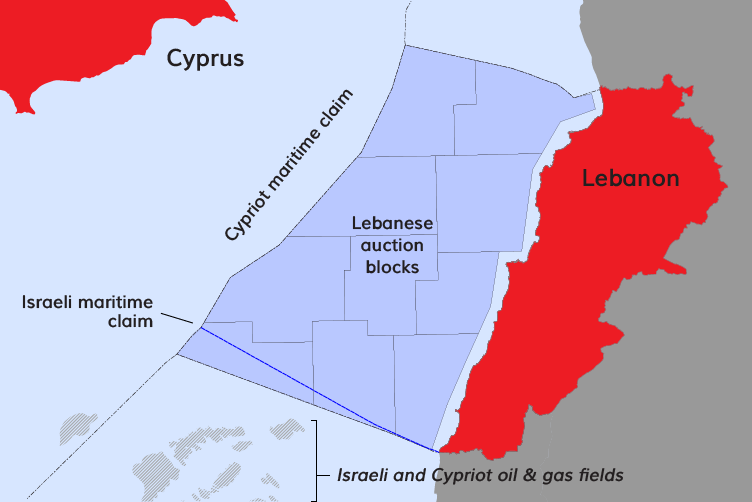
Political hurdles have slowed progress on the development of the sector, despite work by its regulator, the Lebanese Petroleum Administration (LPA), in drafting various recommendations and holding a prequalification round for international companies keen to drill in Lebanese waters. At this point delays in moving forward with offshore exploration are causing confusion and anger.

Planning problems

[pullquote]“due to the several political skirmishes and circumstances, we do not have an energy master plan yet”[/pullquote]

Lebanon has been working on oil and gas exploration since the early 1990s, but “due to the several political skirmishes and circumstances, we do not have an energy master plan yet,” said Roudi Baroudi, an energy expert based in Qatar. According to Baroudi, “Since late Prime Minister Rafik Hariri launched a strategy for a general Master Plan for Lebanon Gas Utilization, the objective of the study was to tackle the upstream, the midstream and the downstream sectors. Unfortunately this study never saw light.”

The government published a petroleum policy in September 2007 outlining the direction for the sector, but never took it seriously. As one local attorney familiar with the details of development in the sector stated, “It was certainly not put to debate, in terms of inviting scholars, economists or legal [experts] in the country to give their opinion … and it hasn’t seen the light yet as an overall strategy.”

In April 2012, then-Prime Minister Najib Mikati’s economic team addressed a draft policy note to the Council of Ministers regarding the direct positive impact that a well-oriented industrial strategy could have for the Lebanese economy, emphasizing on the energy sector and the potential of oil and gas activities and highlighting progress regarding the legal and regulatory framework.

As Baroudi explained, “The good news is that with the creation of the [LPA] things are getting better and I understand that most of the ministries and stakeholders are working on a very sustainable energy plan.” The LPA, appointed in December 2012, is the sector’s de jure regulator. However, the law limits its powers to a point that its primary role is as an advisor to the Ministry of Energy on the development of the sector.

Nearly two years after its six board members were appointed, the LPA has made progress in advancing the legal framework for the oil and gas sector by issuing the Petroleum Activities Regulations, studying the environmental impact of offshore exploration in its (as of yet unpublished) Strategic Environmental Assessment and launching the country’s first offshore licensing round. However, companies have not been able to bid on blocks yet because the Council of Ministers still needs to approve decrees delineating the offshore blocks and laying out a model exploration and production sharing agreement. The LPA has sent its recommendations for the two decrees to the Ministry of Energy and Water (MoEW), which forwarded it to the Council of Ministers, where they have languished since early 2013.

[pullquote]Prospective gas resources in Lebanese coastal waters have the potential to transform the local economy[/pullquote]

Petroleum potential

The reason for the conference-goers’ grumbling is simple: Prospective gas resources in Lebanese coastal waters have the potential to transform the local economy by reducing the heavy energy bill and moving the country not only toward self-sufficiency, but possibly also toward becoming a net gas exporter.

Economist Marwan Iskandar conjectured how some can ask whether Lebanon will be fully able to benefit from this new wealth and how oil and gas revenues would be spent. “We are in a country which has $64 billion in public debt and which needs to organize itself in the next seven years for it not to have a $100 billion of debt,” he said. “Let us begin to use gas for electricity generation which we can do within 18 months and we can save money.”

Nasser Hoteit, president of the LPA, stated that if Lebanon finds less than 5 trillion cubic feet (tcf) of natural gas in its territorial waters it would not export gas. “But if we have between 5 tcf and 10 tcf then we can export to the regional market. However, if we have 10 tcf [or more], we can think of exporting to foreign markets such as Europe and Asia,” he added.

And as Minister of Energy and Water Arthur Nazarian stated during the opening of the conference, “It is probable that we have natural gas in our waters. This is why we should develop the main infrastructure to produce gas.” The MoEW has put forward a plan to construct a coastal gas pipeline stretching from Tripoli to Tyre, which would serve as the backbone of gas infrastructure for the country, yet it is still awaiting funding approval by the Parliament.

Some at the conference even talked of developing a downstream industry utilizing gas to produce petrochemicals, such as fertilizers. However, the proposal faced some skeptics. As economic consultant Kamal Hamdan noted, “Lebanon’s economy lacks a solid industrial component, which could limit the possibility of developing links between the oil and gas industry and the local economy.”

[media-credit id=1966 align=”alignnone” width=”576″]oil&gas conf1[/media-credit]

Vision, but no strategy

Lebanon’s workforce, conferees also noted, needs to be better prepared for the birth of this industry. The Exploration and Production Agreement, which is still awaiting approval from the Lebanese government, requires four-fifths of a company’s local labor force be Lebanese nationals. During his presentation, Peter Gougeon, director of the business school ESCP’s London campus, noted that the 80 percent target could prove difficult to achieve in the early phases of exploration and development due to the lack of a specialized labor force in Lebanon.

This may not be so difficult, however. According to Imad Makhzoumi, an executive vice president with Future Pipe Industries, service companies supporting the oil and gas sector will drive employment — particularly small and medium enterprises (SMEs) — creating low to medium level technical competency jobs. He called for the government to support and articulate an SME strategy to create and build a supportive future for companies that will be the real driving force of employment and servicing the international companies coming to establish operations.

[pullquote]… service companies supporting the oil and gas sector will drive employment — particularly small and medium enterprises (SMEs) — creating low to medium level technical competency jobs.[/pullquote]

While many Lebanese universities have established academic programs to address this issue, there has been little attention to vocational programs. This detail has not escaped the LPA, which has been in discussions with local institutions to establish programs for technicians.

Amongst the most needed certificates highlighted at the forum include: project management and financing; supply chain management; risk management; contract management and negotiation; and energy law.

The MoEW and the LPA have engaged experts to draft much of the legislation and decrees needed to develop the sector framework. The LPA has also coordinated with the Lebanese Center for Policy Studies on multiple roundtable discussions including environmental governance and a policy dialogue session consulting experts for their input and policy recommendations.

Throughout the forum, the government outlined its vision for the sector centered on three main areas: upstream exploration and infrastructure, education and employment preparation, and a downstream petrochemical industry. A comprehensive strategy for this sector, however, is still lacking. And such a strategy cannot be based on premature reserve estimates and valuation amounts often cited in the local media. No one will know for sure what lies beneath Lebanon’s waters until wells are drilled. As such, Mona Sukkarieh, a Beirut-based consultant with Middle East Strategic Perspectives, explained, “A proper ‘strategy’ is based on the results of drilling operations. Because Lebanon lacks exact data ahead of drilling, a ‘vision’ will be prepared. It is on the [LPA’s] agenda for 2014.”

First steps

At the opening of the conference, Nazarian called on the government to pass the two main decrees that are needed for the completion of the first licensing round: “The current government should preserve Lebanon’s credibility in this regard by adopting the two main decrees that are related to the first round of licenses.”

But while technocrats from the Ministry of Finance and LPA were discussing the technical issues for developing the potential offshore resources with experts, the local political climate, dominated by the country’s presidential elections, continues to overshadow the need to push forward with Lebanon’s first licensing round. The LPA’s Hoteit claimed that if the two decrees were passed by Parliament in May, Lebanon would have rigs in its waters starting the end of 2015 or beginning of 2016.

A ministerial committee in Parliament is studying the two oil and gas decrees needed for the licensing round, now scheduled to close for bids August 14; further delays in passing the decrees would unfortunately result in another postponement.

May 29, 2014 0 comments
0 FacebookTwitterPinterestEmail
Banks playing mind games on consumers
Banking 2014: Looming taxesFinance

Mind games

by Nabila Rahhal May 29, 2014
written by Nabila Rahhal

It seems like a no brainer at first: Use your bank card for your purchases and you will eventually receive a free iPhone, a trip to Europe or, perhaps best of all, you will get your hard-earned cash back.

Without studying the fine print, consumers rush to rack up points on their cards, pushing themselves to spend more under the conviction that they are getting back what they spent. However, loyalty programs seem to promise the world, but actually offer considerably less.

What started as airline miles collection in exchange for spending on payment cards rapidly mushroomed into the intricate rewards programs that are offered by the majority of Lebanon’s banks today. “Because all banks have some form of these programs, it becomes almost a defensive action to have them — we can’t afford to not have them,” says Anthony Ussher, e-banking division head at Credit Libanais. Another benefit of reward programs for banks is that they encourage clients to open new accounts while gaining customer loyalty through the perks offered.

Delayed gratification

Rewards offered vary from bank to bank but generally fall into the following broad categories: tangible rewards such as electronics or fashion items, experiential rewards such as travel miles or packages, actual cash automatically added to your account and bank services such as credit card activation or insurance premium payment. According to Ussher, 50 percent of Credit Libanais clients redeem their points for travel; 20 percent opt for bank services and insurance premiums; and the remaining 30 exchange them for gifts.

[pullquote]Cash back programs give clients approximately $10 back for each $1,000 they spend, a theoretical 1 percent return.[/pullquote]

Accumulating points for any type of reward requires that clients use their debit, credit or online card extensively as they receive between 1 and 10 points for each dollar spent, depending on the bank and card used, while redeeming them requires a high number of points for a comparatively lesser value reward. Receiving a free iPhone 5S from Bank Audi would require a customer spend more than $210,000 while a ticket to Larnaca would translate into $22,500. Cash back programs give clients approximately $10 back for each $1,000 they spend, a theoretical 1 percent return.

According to Laurence Leigh, professor of marketing at AUB, marketers of reward programs make their rewards more valuable at the highest levels of point accumulation. “If you have 2,500 points you get a miserable reward, but if you get 50,000, the value goes up exponentially — if you get 500,000 you get a trip around the world let’s say. So, many people hold off redeeming their points in hopes of that big gift and end up not using them,” says Leigh. Given that points have an average expiration date of three years, people aspire for the big rewards but end up with smaller ones.

Scheming for loyalty 

Credit Libanais’ Ussher says that since the bank makes little money off each payment card transaction, it cannot afford to value its rewards any lower and often relies on their subsidiaries, such as insurance companies or travel agencies, to be able to offer the rewards.

Keeping in mind that consumers are essentially getting back very little in comparison to what they spend, it is a wonder that banks say these programs bring them added business.

[pullquote]Rewards schemes will compete and adapt in order to keep customer interest high. [/pullquote]

“Any loyalty scheme is designed in such a way that encourages you to consistently use one particular card. This is playing on consumer psychology where people like the idea that they are getting something for nothing: a gift they will value sometime in the future,” says Leigh, explaining that this falls under the branch of behavioral economics where people don’t necessarily act in the way that a rational economic person should and instead do things which are difficult to fit into the standard microeconomic model. They feel happy with the thought of receiving a gift and forget its actual worth compared to what they spent.

Leigh suggests an alternative to payment card usage when it comes to large purchases: “What would be a more rational thing to do would be to ask the vendor if he would give you a discount for using cash instead of plastic. The cash discount you would get this way would almost certainly be more valuable than the reward.”

Yet consumers still dream of the big free gift, and loyalty programs are here to stay. Rewards schemes will compete and adapt in order to keep customer interest high. Ussher suggests the way forward for loyalty programs is for banks to coordinate with merchants who have greater margins for advertising. With both of them working together, banks can offer consumers double points on certain occasions or merchants can offer them discounted items during low seasons.

Another idea that Credit Libanais is considering is to have instant small rewards — such as a free ice-cream — through the point-of-sale receipts, which again plays on consumer behavior, encouraging them to use their cards more.

“A lot of it is psychology but psychology works and keeps people loyal,” says Leigh.

May 29, 2014 0 comments
0 FacebookTwitterPinterestEmail
The Lebanese Audi Group’s Odeabank in Turkey is a shining success so far
Banking 2014: Looming taxesFinance

The [not so little] bank that could

by Thomas Schellen May 29, 2014
written by Thomas Schellen

Turkey’s newest bank is all but 19 months old and has a single parent, Lebanon’s Audi Group. It goes by the name of Odeabank. Odea is apparently not a Turkish word but a brand name chosen because using the family name-based Audi brand would have collided with the four-ringed German car maker’s rights. But look how the kid has grown.

Assets of $8.8 billion, customer deposits of $7 billion and loans of $6 billion were the cornerstone figures for Odeabank at the end of March 2014. That compares to a practically blank slate for a balance sheet with assets of $300 million in the form of the bank’s capital when management threw open the doors of the first branch in November 2012.

This growth was far beyond anything that Audi had anticipated, says Freddie Baz, the chief financial officer and strategy director of Bank Audi. “If you had asked me in mid-2012, ‘What are your prospects for asset growth two years down the road?’ I would never have told you $8 billion because I couldn’t have imagined that we could achieve this figure,” Baz tells Executive.

[pullquote]The growth was far beyond anything that Audi had anticipated[/pullquote]

Similarly, Odeabank General Manager Hüseyin Özkaya was cited by media reports from early 2013 [The Banker Magazine Feb 2013] as saying that the bank was aiming to become one of Turkey’s top 15 banks by 2017. But a year later, this growth target was no longer valid because the bank’s balance sheet at end 2013 already put it into 14th rank among the country’s 49 banks.

While Baz declines to publicly cite the number of Odeabank account and card holders at end of the first quarter 2014, he puts the growth of the customer base as 110 percent in just this quarter, and not from a low base but a solid five-digit number of account holders that the bank had accumulated as its customer base by end of last year. Similarly, the number of issued cards had almost doubled in the first quarter of this year versus the number at year-end 2013.

These growth metrics are more important in demonstrating the new bank’s future earnings potential than the figures for assets and deposits, Baz says. “Your franchise at the end of the day is the number of customers you have, the number of accounts you have, [and] the number of credit cards you are issuing. We are on the right track to build a solid franchise, a stable franchise [and] a growing franchise. The rest will come.”

Successful rollout

The first-year expansion experience of Odeabank is based on Audi Group investing $1.1 billion into the unit. This entailed the rollout of a branch network of 37 outlets, the implementation of high-grade systems and usage of a substantial war chest to acquire top hires from the Turkish banking sector.

Odeabank’s growth also deserves to be seen in context of its national economic and banking environment. According to Turkey’s Banking Regulation and Supervision Agency (Bankacılık Düzenleme Ve Denetleme Kurulu or BDDK) unconfirmed total banking sector assets grew 31.2 percent between January 2013 and 2014 to TRY 1.79 trillion ($861.8 billion). The sector’s one-year growth rates for deposits and loans were equally impressive, at 24.8 percent and 34.8 percent.

The expansion of Odeabank’s assets, deposits and loans in 2013 were multiples of sector growth rates but, starting from a low position at the end of 2012, looks a bit less extravagant when put in perspective of the overall expansionary banking sector data.

A second factor for consideration is Turkey’s economic profile. The World Bank says Turkey’s GDP reached $789.3 billion in 2012 on its country data page. Per capita gross national income of $10,830 in 2012 is not too far ahead of Lebanon’s $9,190 but the Turkish figure correlates with a population size of an estimated 74 million to constitute an economy that is marked by huge potential and the ambition to become one of the world’s ten largest economies by 2023.

This market size alone is worth an expansion effort for a Lebanese banking group with strong financial and development capabilities. Lebanese equity analyst Nadim Kabbara, who covers Bank Audi under his remit as head of research for FFA Private Bank, says that in hypothetical terms, the 20-times larger Turkish GDP when compared with Lebanon would give Bank Audi a loan portfolio representing “perhaps one fifth of Bank Audi’s balance sheet right there,” if the group captures just 1 percent of an assumed $600 to $700 billion loan market in an $800 billion economy with high loans-to-deposits ratios.

But assumptions are assumptions and then reality offers challenges. The Turkish growth story of the past decade began to stutter quite heftily in 2013, and the Turkish lira had a really bad time. Critics of the Turkish success scenario say that credit and property bubbles have been building up and predict busts of these bubbles and rising rates of defaults in the economy.

According to an April 2014 Economic Outlook by the Turkish Ministry of Economy, the World Bank’s GDP growth forecasts for the country are 2.4 and 3.5 percent, respectively, for 2014 and 2015. However, the Turkish government aims at 4 percent GDP growth this year and 5 percent next year and also seeks to improve the ratio of current account balance to GDP from -7.9 percent in 2013 to -5.9 percent in 2015.

Even if Ankara will be able to manage the disruptions of the country’s political stability and perhaps deflect accusations of corruption as propaganda, Turkey’s economic agenda appears to require a lot of structural adjustments. The World Bank said last month that Turkey needs to increase its market share in global trade if it wants to reach long-term export targets. Key to such improvements would be “a policy agenda that is centered on upgrading Turkey’s physical, human and institutional capital.”

Entry strategy

But this World Bank advice on Turkey’s trade growth strategy might actually be water on the mills of Audi Group, because of its original motivation for entering the Turkish market. In talking Executive through the short history of Odea, Baz emphasizes that the project to establish Bank Audi’s presence in Turkey was not initiated in response to the market turmoils that the two group units experienced in Egypt and Syria starting with the Arab Spring and anti-government protests in 2011 and 2012.

“There is a misunderstanding that Audi went to Turkey to mitigate the rising challenges in the Arab World,” Baz says. “[The decision] was within our regional expansion strategy which aimed at a strategic footprint with respect to the exponentially growing trade, financial and human flows between Turkey and the Arab world that we witnessed at that time. You cannot be a regional player without having a footprint in Turkey and the decision was taken before the first quarter in 2011.”

[pullquote]“There is a misunderstanding that Audi went to Turkey to mitigate the rising challenges in the Arab World” [/pullquote]

The basic calculation was to conquer a share of growing trade finance business between Turkey and the Arab world, which according to Baz reached $50 billion annually in 2013. “Initially from our standpoint as shareholders, our case was built on very solid assumptions of basic economic synergies between Turkey and the Arab world. If we can get 10 percent market share of Arab-Turkish trade-related business, [this means] $50 million in yearly commissions and if we can go up to 15 percent, it is $75 million,” he says.

As such, Odeabank was a child of reason, not emotion; its conception was carefully planned and benefited from an unexpected opportunity, namely the fact that top BDDK officials encouraged Audi Group in 2010 to apply for a new Turkish banking license. This was unexpected by Audi strategists because no new licenses had been granted in Turkey since the days when the country plunged into a series of economic and currency stress phases between 1996 and 2001.

When the group started its search for an entry point into the Turkish market in the mid 2000s, it concentrated its efforts on an entry by acquisition but aborted negotiations with several banks due to the high premiums demanded by prospective sellers.

The opportunity to install a subsidiary from scratch was more than a viable alternative to buying an existing franchise ­— it was far superior because of cost advantages. According to Baz, once the smooth one-year process for application review and license issuance was completed, the next part of the story entailed “no mysteries, no miracles, just strong underlying realities. The main difference between acquiring and getting a license is that when you succeed in getting a license, you are spared the goodwill that you normally pay when you acquire. This goodwill in Turkey easily corresponds to 50 percent of the capital of the acquired institution.”

In other words, Baz views the cost differential between the group’s $1.1 billion investment into Odeabank and the price which Bank Audi would have had to pay for an acquisition of a comparable bank as $500 million — money which can be spent better than handing it over to a seller.

Local talent

According to Baz, this meant that Audi Group could focus on people. “When you can start a business in a new market without incurring any goodwill expense, this provides you with great flexibility in buying talent and allows you to be very competitive in buying the best people in the market.”

The management profiles in Odeabank’s annual report show that the bank’s general manager, Hüseyin Özkaya, has behind him a career of more than 20 years in Turkish banking, mostly with units of HSBC, and was the global bank’s country manager in Russia between 2010 and 2012. He is working with a team of nine assistant general managers who all have backgrounds in high-profile banks, both domestically owned and Turkish units of internationals such as HSBC, ING and BNP Paribas.

[pullquote]“Bank Audi did the right thing in who they hired in Turkey … targeting senior management who would bring in their teams”[/pullquote]

In FFA Bank’s Kabbara’s view, “Bank Audi did the right thing in who they hired in Turkey and in their strategic focus. Comparing with some banks from the Gulf which paid premiums to enter the Turkish markets via acquisitions and who perhaps moved people in who were not cognizant of all risks and circumstances, Audi did some things differently as they built Odeabank from scratch and hired [local] talent — targeting senior management who would bring in their teams.”

In light of the advantage of being a “greenfield” bank, Baz says that the negative bottom line of the first two years of operation, which incurs in both a startup and an acquisition scenario, amounts to $44 million for Odeabank, “well below whatever goodwill we would have paid to acquire an existing bank of the same size.”

He also is not overly worried about the economic challenges that Turkey has started to face in 2013, including the impact that the depreciation of the Turkish lira had on Bank Audi’s financial results. According to him, the size of the negative currency valuation impact moved down from $90 million at the most dire exchange rate to about $50 million at the time of his interview with Executive in May.

The uncertainty over the development of the Turkish economy is not affecting the group’s positive medium-term view on the market, he adds, “but we aim to avoid shocks and pains in the short term.” This, he concedes, “is frustrating for our management there who believe that despite the current environment they can achieve much higher growth.”

When compared with the concerns over the short-term economic outlook, the bigger change in the group’s approach to the Turkish market originated in the hunger of Odeabank’s management team to build a domestic franchise. Bringing their existing relationships with corporate and commercial clients with them, the managers attracted domestic account holders and loan clients, says Baz. “We are building a Turkish franchise thanks to the team there. However, our managers there also like the idea for Audi to become the best Middle Eastern bank in Turkey; so they also want to develop a franchise covering either Middle Eastern corporations established in Turkey or Turkish corporations engaged in business with the Arab world.”

While Odeabank added marketing bells with direct banking services and branding whistles through sponsorship of the women’s basketball team of Istanbul sports club Galatasaray, Baz says that the main focal areas of the bank will be in serving the corporate and commercial segments of the market: “Our ultimate aim is not mass retail. In 80 percent of our network [development] we are driven mainly by business sensitive to our brand.”

For the further growth of Bank Audi into an even bigger regional bank, the group aims to employ a new team of Turkish bankers at its head office in Beirut. “We have an aim to recruit a group of Turkish bankers, mainly corporate and commercial bankers, who will be domiciliated in Lebanon under a group dimension,” says Baz.

Visibility is a key objective for Odeabank and on the day of our interview, the bank’s name certainly received another boost. The Galatasaray Odeabank women’s basketball team won the Turkish League Championship after a 13-year wait and the International Basketball Federation congratulated them on the “most productive season in their history,” which also included the first-ever win of the EuroLeague Women’s title by a Turkish team.

Can any banking performance beat that?

May 29, 2014 0 comments
0 FacebookTwitterPinterestEmail
Double taDouble taxation will kill the banksxation
Banking 2014: Looming taxesLeaders

Don’t kill the banks

by Executive Editors May 28, 2014
written by Executive Editors

In order to fund the proposed public sector wage hike, Lebanon’s Parliament is scrounging for cash. In their desperation, lawmakers have proposed one of the most morally hazardous ideas in public finance: taxing some profits twice. Not only is this an unfair idea, it is fiscally irresponsible and blatantly lacking in forethought.

Double taxation is not only bad for the banks who would have to pay twice, but also for the country. Instituting such an economically unsound principle by legislative fiat would leave a very black smudge on Lebanon’s record as an investor-friendly environment — as if it needed yet another.

At issue is a 7 percent non-deductible tax on interest banks earn on government-issued treasury bills and certificates of deposit. Currently, banks pay a 5 percent tax on these earnings but are then allowed to deduct them from their year-end corporate profits so they are not taxed twice. Making this tax non-deductable is a clever way to disguise a massive tax hike as a small 2 percent rise.

Meanwhile, double taxing profits on government debt could go badly wrong. If investors know they will be taxed more on government securities, they may demand higher returns, sending interest rates higher and making sovereign debt servicing more expensive — the last thing needed in a country with systemic debt-related deficits.

But more broadly, double taxation erodes the legitimacy of the taxation system as a whole. What’s to stop a greedy state from double or even triple taxing more bank profits or those of other businesses? Going down this road is dangerous, leaving any company successfully operating in Lebanon fearful that it might be next while deterring businesses looking to expand here in the future.

The range of other taxation measures the legislature is considering will cut into banks’ profits — as all such taxes do — but these measures are modest, not deceptively packaged, don’t threaten state finances and steer clear of double taxation.

Many bankers are publicly arguing that a hike in corporate taxes from 15 to 17 percent is unacceptable. Further, they argue that they would be hit hardest as they are most transparent about their earnings. It is as if they are being punished for being honest, they argue, and will only encourage tax scofflaws to continue hiding their earnings.

This argument has merit; the Ministry of Finance should be much more aggressive in ensuring all companies pay their fair share. However, the 2 percent increase will not break the banks.

Bankers also argue that a proposed 2 percent hike in the capital gains tax will likely lead to capital flight. Such a scenario is unlikely. First, a World Bank review of interest rates for depositors shows that in 2013, rates in Lebanon were higher than many other countries in the Middle East and North Africa. Despite a higher tax, attractive rates will likely still lure in deposits.

Additionally, no serious amounts of capital flew out of the country when the current 5 percent tax was first introduced. It is doubtful that this increase will have a different effect. Finally, this tax is neutral for the banks themselves as their customers will pay it.

Ideally, the state would make no new fiscal commitments, but Lebanon is in an economic emergency. Wages all around are too low, and teachers and civil servants are being particularly deprived of fair pay. The state must act, and act responsibly by both giving its employees a raise and finding a way to pay for it. This is triage, and greater taxation is simply a necessity.

Modest new taxes should be swiftly approved by parliament, but the MPs must avoid the double taxation proposal. Despite their protests, the banks can afford to pay a bit more. Tax them — don’t kill them.

May 28, 2014 0 comments
0 FacebookTwitterPinterestEmail
  • 1
  • …
  • 195
  • 196
  • 197
  • 198
  • 199
  • …
  • 685

Latest Cover

About us

Since its first edition emerged on the newsstands in 1999, Executive Magazine has been dedicated to providing its readers with the most up-to-date local and regional business news. Executive is a monthly business magazine that offers readers in-depth analyses on the Lebanese world of commerce, covering all the major sectors – from banking, finance, and insurance to technology, tourism, hospitality, media, and retail.

  • Donate
  • Our Purpose
  • Contact Us

Sign up for our newsletter

[contact-form-7 id=”27812″ title=”FooterSubscription”]

  • Facebook
  • Twitter
  • Instagram
  • Linkedin
  • Youtube
Executive Magazine
  • ISSUES
    • Current Issue
    • Past issues
  • BUSINESS
  • ECONOMICS & POLICY
  • OPINION
  • SPECIAL REPORTS
  • EXECUTIVE TALKS
  • MOVEMENTS
    • Change the image
    • Cannes lions
    • Transparency & accountability
    • ECONOMIC ROADMAP
    • Say No to Corruption
    • The Lebanon media development initiative
    • LPSN Policy Asks
    • Advocating the preservation of deposits
  • JOIN US
    • Join our movement
    • Attend our events
    • Receive updates
    • Connect with us
  • DONATE