• Donate
  • Our Purpose
  • Contact Us
Executive Magazine
  • ISSUES
    • Current Issue
    • Past issues
  • BUSINESS
  • ECONOMICS & POLICY
  • OPINION
  • SPECIAL REPORTS
  • EXECUTIVE TALKS
  • MOVEMENTS
    • Change the image
    • Cannes lions
    • Transparency & accountability
    • ECONOMIC ROADMAP
    • Say No to Corruption
    • The Lebanon media development initiative
    • LPSN Policy Asks
    • Advocating the preservation of deposits
  • JOIN US
    • Join our movement
    • Attend our events
    • Receive updates
    • Connect with us
  • DONATE
Economics & PolicyLebanese in advertisingSpecial Report

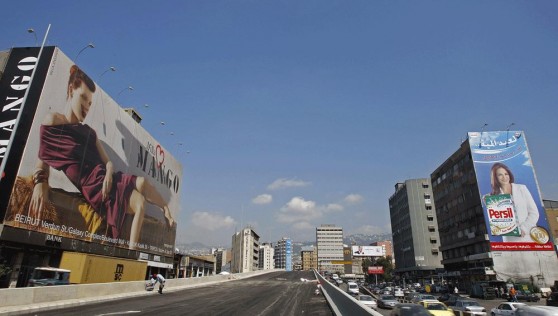
Why the Lebanese rule advertising

by Maya Sioufi & Thomas Schellen March 8, 2013
written by Maya Sioufi & Thomas Schellen

The game of advertising has a paramount survival rule: adaptation. Successful strategies and campaigns inject creativity into marketing messages that are tuned to the demands of clients and the psyches of their customers. Good marketing communications agencies sniff out trends just when they are about to bud and blow them up into big balloons of consumer attention. It is a game that the Lebanese are apt at, to the point of being the industry’s dominant players in the Middle East and North Africa. 

See also: The Middle East’s top advertising agencies ranked

This year, Executive has taken on the mission to highlight successful and influential Lebanese across industries and countries to inspire the country’s youth and start building a global Lebanon. Aware of the immense role of Lebanese expatriates in the regional advertising industry and aided by the MENA Cristal Festival held in the snowy Faraya mountains in Lebanon, Executive kicks off this series of very special reports by meeting with the Lebanese top guns of advertising communications.

A holy trinity

Lebanese leaders in regional communications today constitute a community spanning several generations. The founders’ generation are unforgettable characters, personifications of advertising godfathers and charismatic entrepreneurs who spin great tales of pioneering the Arab advertising market by setting up shop in Kuwait, Greece and Cyprus in the 1960s and 1970s.

A second generation, in their 30s and 40s, are already running numerous advertising agencies and media planning companies, and a third generation of millennial Lebanese are nipping at their heels. 

Members of the founders’ generation, many of whom have been active in the industry for 40 or more years, today are chairmen of regional advertising groups and subsidiaries of global communications conglomerates. Others of these network pioneers have given up their official positions — usually to ‘retire’ into new applications of their skills in cultural, social, environmental and even political spheres.

One will find Lebanese of this generation wherever one looks among the ranks of top executives in regional affiliates of the big four global marketing communications groups: London-based WPP, Paris-based Publicis, and Omnicom and Interpublic from the United States. How the Lebanese ad men (in the founders’ generation, the frontline faces were all male) swept the region with their bravado, charm, wit, entrepreneurship and advertising skills is a question that industry leaders answer in different ways, but they usually refer to two common elements: the openness of the Lebanese to business and the displacement pressure they experienced from conflicts ravaging their home country between 1975 and 1992.

Lebanon’s advertising diaspora

One explanation for Lebanese dominance in the Arab advertising industry, provided by MENA head of British multinational WPP, Roy Haddad, is the country’s choice of adopting a free economic system that encouraged entrepreneurial thinking. Lebanese started setting up their own advertising agencies early on.

With the onset of the 1975 Civil War, several ad men and their clients left the country. Alain Khouri, founder of advertising agency Impact, for instance, fled to Cyprus as the civil war wreaked havoc on the country.

“Automatically, you had clusters of regional clients and agencies operating out of Cyprus,” says Dani Richa, chief executive of Impact BBDO, a company under the Omnicom umbrella. “We had no business in Cyprus, we were all offshore, covering the Middle East from there.” Athens was another hot destination.

As Dubai started gaining importance in the region in the late 1980s and early 1990s, several Lebanese ad agencies started moving their head office to the emirate. And as they moved to Dubai, they continued hiring from Lebanon.
As the Gulf economies developed, their governments needed to hire locals to join the workforce and help build the infrastructure. Large institutions, from banks to insurance companies and with deeper pockets than ad agencies, soon followed suit.

“When it comes to us [advertising agencies], we could not compete with the big boys because [our industry involves] hard work and little money,” says Eddy Moutran, chief executive of Memac Ogilvy — and one of the first Lebanese ad men to move into the region by setting up an advertising company in Bahrain in 1984. “The Gulf people had a choice: work for a bank and earn X or work for an agency, put in 12 to 16 hours a day and earn half of X. That’s why it was practically impossible to recruit locals.”


The increasing attractiveness of regional markets to multinational companies manufacturing anything from soft drinks to luxury sedans meant that the global advertising conglomerates started to hunt for regional partners, and the Lebanese agencies welcomed them.

“A lot of agencies saw the need to partner with multinationals to be able to attract multinational clients, as they tend to work globally with agencies,” says Impact BBDO’s Richa.

This trend, which, in the case of Impact’s partnership with BBDO, went back as far as 1979, built up over the years.

In the early days of the current century, partnerships turned into larger shareholdings by the multinationals, and progressive integration into the global corporate structures and governance patterns of the big companies followed suit.

The second generation

The next generation joined the advertising fray beginning 20 years ago and saw massive changes in their work environments while growing into the business. The leaders of this generation are today highly positioned in operational management. They describe their roles, motivations and targets differently from the first generation in a number of ways.

One significant difference is the replacement of Lebanon’s civil war by the ‘Dubai factor’ as a main motivator to seek regional fortunes. As Tarek Daouk, regional managing director for StarcomMediaVest Group (SMG) puts it, Dubai for him was a career opener and “a destination of hope, like America in the early period of the [last] century when everyone was looking for opportunities in the New World.”

Having had a quality education in Lebanon, Daouk found that there was good work for him in the Lebanese advertising industry, but Dubai provided much broader opportunities. “The size of the business and the whole economy in Lebanon doesn’t allow you to grow as much as you can,” says Daouk.

Shadi Kandil, chief executive of rival media planning agency OMD MENA, sees the shift from international affiliations of regional networks to full ownership by global organizations (SMG is part of Publicis, OMD part of Omnicom) and the awakening to good governance practices as the biggest changes for the middle generation.

“Our preceding generation was a generation of entrepreneurs who passionately loved advertising and owned companies,” Kandil says. “Today, we live with companies that are owned by big conglomerates that are publicly listed on stock exchanges around the globe and driven by governance protocols. We are supposed to be aligned along compliance rules, and there are certain cultures that drive us. [The industry] was entrepreneurial; now it is institutional.”

In his view, Lebanon missed two opportunities; first in the 1990s and again in the past decade when it could have claimed more of a hub role in the regional advertising industry. “As far as the communications industry is concerned, the train left the station a long time ago. Dubai has created such a solid gap that Lebanon can’t compete against it,” he says.

Indeed, the physical evidence of the regional head offices of media groups in Dubai speaks volumes to the growing width of that gap. In February 2011, when Executive made the rounds to advertising and media agencies in Dubai, its visits included quite a few experiences of meandering hallways, darkish meeting rooms and offices that real estate agents politely call “Grade B” spaces. On a similar visit this year, every regional group with a Lebanese DNA component was found residing in a building with their name on top, branded with the group’s regional identity.

Although some of the agencies in Lebanon are nicely done in the creative-welcoming matrix, no agency’s space in Beirut comes even close to what the big agency hubs in Dubai Media City and nearby areas provide, the most recent example being the MCN Hive, a brand-new tower housing the agencies of Interpublic-affiliate MCN.

Talent above all else

The geographical shift of head offices notwithstanding, regional companies still thrive on their strong Lebanese components. As Tarek Miknas, chief executive of agency FP7 and board member of MCI Holding, sees it, Lebanon holds its space in the industry because advertising leaders like to live in the country. “You have the art schools, the new ways of thinking, [and] new young talents like crazy. Lebanon is a source for talent for this industry, no matter where [it is based] in the region.”

An important consensus between the two leadership generations that Executive engaged with was the assertion that this industry is driven by talent, not by nationality, communal affiliation or “flag waving”. According to Miknas, today’s mantra in the Dubai hub is about, “preaching inclusive, participatory cultures. When you look at a CV you don’t look at the name, you look at a person’s portfolio and when you see bloody good work, you say, ‘that is the person we want’”.

Raja Trad, chief executive of Leo Burnett Group MENA, says, “Lebanese are still playing a major role, but it’s not just Lebanese anymore. In Leo Burnett Dubai, there are 38 nationalities in one building; things are changing.”

Nonetheless, around agency offices in Dubai, the realistic chance is that you will find a Lebanese who knows other Lebanese working in advertising. An elevator test demonstrated the idea: sharing a ride down from the office of media agency Mindshare with two people, Executive asked if one of them knew a Lebanese advertising leader of the middle generation and immediately was given two names. The young woman who provided these leads in the Dubai elevator was Lebanese and in advertising.

The Lebanese ranks in regional advertising are joined by European nationals and enterprising global career seekers, as well as Egyptian and Jordanian talents. Integration of more Gulf nationals into the industry is happening, but thus far, as Elie Haber, the Lebanese general manager of Mindshare UAE, tells Executive, “In the way that the media industry is structured in the UAE, 60 or 70 percent of the people are Lebanese.” He adds that the industry has to overcome its deficits in reaching out to universities, attracting young male and female professionals locally, and showing young people in the Gulf how much fun it actually is to work in media and get the satisfaction of sweating out late hours to meet client needs.  

From Executive’s experience covering the industry, ambitious young people who join communications companies in Saudi Arabia are not impossible to find. However, Saudis and Emiratis who join a Dubai agency office are still precious exceptions, birds-of-paradise and hopefully augurs a future where this industry’s opportunities for creativity will motivate more young talents from Gulf countries. 

This unfortunate scarcity of Gulf talents explains the concern of some industry leaders that the emphasis on Saudization and Emiratization by the respective governments could bring in some individuals who are not driven by the passion, skills and experience needed for this job. “They are not there necessarily because they went to a communication school, received training or managed large budgets,” says Ramzi Raad, chairman of TBWA\Raad. “With no proper training, growth in any particular market will be greatly affected by the [potentially deficient] quality of the people running the process. I don’t want to be insulting of young nationals; all I’m saying is that we have to accept that professional training is a must.”

Talent worries in the regional advertising industry have fluctuated in recent years. In the pre-2009 boom period, any newcomer could get hired, however inexperienced. However, after the crisis, firms had to work hard to keep the best talent while restructuring. 

All agencies confirmed in their interviews with Executive that they count young Lebanese among their ranks of promising potential. Lebanese talents of the current, millennial generation will play a role in regional advertising and have the drive to become leaders.

“I am happy where I am today and I obviously hope to get to the top level one day,” says Cirine Mazloum, a Lebanese millennial and American University of Beirut graduate with four-and-a-half years of experience in a media agency.

She definitely can envision herself handling a management role on the regional level. Still, in Cirine’s words, “if you look around in the UAE, you notice that the industry is dominated by the Lebanese, but it doesn’t really matter if you are Lebanese. It matters how good you are… and how passionate you are in this job. You have to like it in order to excel in it.”

March 8, 2013 0 comments
0 FacebookTwitterPinterestEmail
Comment

A disappearing border

by Nicholas Blanford March 8, 2013
written by Nicholas Blanford

The deadly February 1 gun battle in the Bekaa town of Arsal illustrates two dangerous ongoing developments in Lebanon: firstly, the rising sectarian bitterness felt by Sunnis against Shias, and secondly, the volatility of the northern Bekaa. The details of the incident are still shrouded in uncertainty. What is known is that a unit from military intelligence shot and killed Khaled Hmayed, a resident of Arsal, as he was driving to a mosque for noon prayers. What is also known is that a crowd of some 200 to 300 armed residents of Arsal chased the army unit into the wilderness south of the town and caught up with the soldiers when their vehicles became stuck in snow and mud. An officer and a soldier were shot dead in the ensuing firefight.

See also: Mapping Syria's armed opposition

Stop the Syria spillover: towards a security pact

The army subsequently said that Hmayed was a wanted terrorist and had been shot when he resisted arrest. Some townsfolk say that Hmayed fought with Syrian rebels and was “executed” in a hail of gunfire and that there was no attempt to arrest him. They further charge that Hezbollah members were present with the army unit and that an additional four people dressed in civilian clothes were killed in the gun battle. These same townsfolk also suspect that the dead were Hezbollah fighters, pointing to the fact that the army has not disclosed their identities. Hezbollah vehemently denied any role in the fight. 

Still, the ramifications of the incident are of more consequence than the details of what actually happened. The town was surrounded by special forces troops from the Air Assault regiment and a checkpoint was established on the single asphalt road that leads into Arsal. 

Several residents have been detained and arrest warrants for some 35 people have been prepared. But the crackdown on Arsal has deepened already widespread feelings of Sunni grievance over the perceived domineering behavior of Hezbollah, and by extension, the government and army. In the days that followed the army’s restrictive measures on Arsal, Sunni delegations flocked to the town, including from the Future Movement and Sheikh Ahmed al-Assir, the ubiquitous anti-Hezbollah cleric from Saida. When Assir sought to visit Arsal himself, Shia demonstrators in Baalbek blocked the Bekaa highway with burning tires, forcing the cleric to postpone his trip.

Not for the first time, it is the army that finds itself caught in a Catch-22 situation. If the encirclement of Arsal persists, it risks a backlash from the residents. Ali Houjeiry, the mayor of the town, has warned that the patience of residents is finite. The men of Arsal have a well-established reputation for stubbornness and militancy. The town is also an important logistical hub for Syrian rebels, especially those fighting in the Qusayr district just north of the border. 

The army’s measures around Arsal have effectively neutralized the town from war in Syria to the disadvantage of Syrian rebels, further building resentment among the local population.

However, if the army pulls back without apprehending the suspects involved in the shootout, it risks undermining the integrity of the military. Arsal’s leaders are aware that the eyes of the Sunni community are upon them and they feel little pressure to yield fully to government demands.

Furthermore, the northern Bekaa is being gradually sucked into the vortex of Syria’s war that is raging just a few hundred meters from the border. Hezbollah fighters are battling Syrian rebels, including Lebanese volunteers from Arsal and other Bekaa villages, in the Qusayr area. 

So far, both sides have refrained from dragging the conflict into Lebanese territory, seemingly mindful of the consequences that such a step would have on internal stability. But the border is slowly dissolving as the conflict next door intensifies. Syrian rebel forces allege that Hezbollah has been firing Katusha rockets against their positions from Hawsh Sayyed Ali, a belt of orchards north of Hermel on the border. Then mid-February, General Selim Idriss, chief of staff of the Free Syrian Army, issued an ultimatum to Hezbollah — desist from operations in Syria or the FSA will take the war into Lebanon.

Residents of Arsal say that Hezbollah has deployed fighters into the rugged barren mountains east of Ras Baalbek to set up observation posts and ambush points to block rebels from moving between Arsal and the border. If true, clashes can be expected in these remote hills. Even if a face-saving deal is reached over Arsal to resolve the immediate crisis, it is unlikely that the town will stay out of the news for long.


Nicholas Blanford is the Beirut-based correspondent for The Christian Science Monitor and The Times of London

March 8, 2013 0 comments
0 FacebookTwitterPinterestEmail
The Buzz

Morning briefing: 8 Mar 2013

by Executive Staff March 8, 2013
written by Executive Staff

Economics and policy

Qatar will sell QR4bn ($1.1bn) of three-year and five-year bonds and sukuk, its state news agency has said.

More from Arabian Business


Tourist numbers to Dubai increased by 9.3 percent in 2012, with the city welcoming more than 10 million visitors in a year for the first time, according to official figures.

More from Arabian Business


Lebanon’s Union Coordination Committee ramped up its rhetoric Thursday, warning that nationwide sit-ins and strikes would continue until demands to adopt a new salary scale were fully met.

More from The Daily Star


Syrian industrialists escaping their war-ravaged country are queuing up to establish industrial plants in Lebanon, the industry minister has said.

More from The Daily Star


Lebanon’s budget deficit increased to LL5.252 trillion ($3.49 billion), or 28.67 percent of expenditures, in the first 11 months of 2012

More from The Daily Star


Companies and business

Starwood Hotels and Resorts Worldwide has announced the beginning of a month-long relocation of its global headquarters from Stamford in the US to Dubai.

More from Arabian Business


Banks in the GCC are expected to maintain issuance levels this year as they aim to capitalize on investors' global search for higher yields, according to Standard & Poor's.

More from Arabian Business


Etisalat expects 2013 revenue of up to $9.4 billion, according to a presentation the company gave to analysts, with the former monopoly also looking to consolidate its smaller assets.

More from Khaleej Times

March 8, 2013 0 comments
0 FacebookTwitterPinterestEmail
Economics & PolicyLebanese in advertising

TBWA’s Ramzi Raad talks success

by Maya Sioufi March 7, 2013
written by Maya Sioufi

Kicking off his career in advertising in 1967, Ramzi Raad is one of the architects of the industry in the region. Based in Dubai since 1986, Raad is the chairman and chief executive of TBWA Raad, a subsidiary of New York-based advertising agency TBWA. In Faraya, Lebanon for the MENA Cristal Festival, Raad sat with Executive to talk about the prominence of television in the Middle East, the growth of digital advertising and the challenges of the region’s industry.

How did advertising on television become the prominent media avenue in the region?

At one stage in the [Middle East and North Africa] region, back in the 1990s, television was the main communication medium because of the high percentage of illiteracy in large markets such as Saudi Arabia and the Gulf states. Oil money made a lot of consumers have disposable income and become interesting prospects for international clients. At that stage it was government-run TV stations and news was about what the king, the sheikh or the prince did. Then, when Kuwait was invaded by Iraq, we discovered satellite TV as CNN covered the war. Arab TV stations were in a state of denial; no one was covering the fact that an Arab state was invading another Arab state. We woke up and discovered there is a different kind of TV that shows you the world as it is evolving at the moment: live TV. Egyptian satellite TV channels were the first [in the region] as they had huge libraries of material. Then commercial satellite stations proved to be popular because they delivered to the viewer what he or she wanted.

How are the Arab revolutions affecting the advertising landscape?

In the bigger markets in the [Arab region], you don’t have a lot of cultural and entertainment opportunities, so people are accustomed to get entertained by TV. To advertise on TV is expensive and in today’s world, you have to invest and not all advertisers can invest. Local agents don’t have the money to do that. Then came digital media and the Internet and access to new ways of communicating with the public. With the Arab Spring came the realization of the penetration of these types of media, how popular and how much they are used among local populations, and then “poof” everyone moved [to digital advertising].

What are your expectations for the performance of the advertising industry this year?

We are hopeful the growth seen in 2012 will continue. Our region from the dawn of the advertising history has been underspent, so one expects that there should be two-digit growth year after year.

What campaign are you proudest of so far?

The campaign we did this year for the Dubai Shopping Festival. This campaign, which has been going on for a number of years, tried to appeal to everybody but in the process, it was about to lose its distinct identity. Was it a place where you can take the family, was it for entertainment, for discounts? To develop the campaign we ran this year, we brought together all the stakeholders in one room for two days and together we looked at shopping festivals, carnivals and annual events from all around the world. Collectively we tried to come up with what Dubai festival is about.

What are the most significant challenges that the industry is facing?

The industry needs to realize that we need to get together and apply a lot of discipline to the way research [on media in the region] is done. We realized in recent years that the whole system sometimes gets abused. Now there is a move across Gulf states to provide job opportunities for nationals and there are lots of young nationals coming on board and running businesses. They are there because they are young nationals with a general education and not necessarily because they went to a communication school or received [specific] training or managed large budgets. If they are not trained well, growth in any particular market will be greatly affected by the quality of the people running the process. I don’t want to be insulting of young nationals. All I’m saying is that we have to accept that professional training is a must.
 

March 7, 2013 0 comments
0 FacebookTwitterPinterestEmail
Economics & Policy

Assir’s economics

by Joe Dyke & Zak Brophy March 7, 2013
written by Joe Dyke & Zak Brophy

We wanted to avoid talking about Hezbollah, we really did. We entered the room with the intention of carrying out our first interview with Sheikh Ahmed al-Assir where he didn’t mention the ‘Iranian Party’ — as he calls the movement led by Sayyed Hassan Nasrallah. Yet, it was not that simple.

Assir, one of Lebanon’s most divisive figures, has made his name out of Hezbollah. His hostility to the party’s arms and Iran’s influence in Lebanon in general has made Assir the darling of some, the enemy of others and an unpopular character with much of the Lebanese business community.

Before the interview, we had agreed with Assir’s assistants that we would primarily be asking him about his economic views, but it appeared that no one had told the Sheikh. When he greeted us and we explained that we wanted to flesh out his views on financial matters, he was a touch taken aback and said that he was not an expert in this area.

Assir has been a religious leader in Lebanon’s southern city of Saida for a decade, but his star has risen on the national stage since the Syrian uprising began in 2011. He does not describe himself as a ‘Salafist’ as such, preferring to be referred to as simply a ‘Sunni Muslim’, while at the same time he has become the de facto public face of Salafism for most Lebanese. He has proved a vociferous, and some would say sectarian, critic of Syrian President Bashar al-Assad and Hezbollah and this, mixed with a penchant for publicity stunts, has elevated Assir’s brand. Indeed, Assir has previously stated that it was his ambition to become Lebanon’s preeminent Sunni figure.

While eschewing official political office, what is clear is that he is assuming an ever-more politicized role in in the country. To lead people, however, is also to be responsible for them. Assir has demonstrated his ability to rally people around his cause, but Executive wanted to challenge him on his plan to take care of them — does Sheikh Assir have an idea of how to raise living standards and job prospects in his hometown Saida, or a solution to rejuvenate the wider Lebanese economy?

Where all roads lead to

It soon emerges that at the core of every economic principle Assir has is the disarming of Hezbollah. “I believe nobody, regardless of his great economic knowledge, can improve the economic situation,” he says. “As long as [Hezbollah’s] weapons are present, it is not possible.”

For Assir, the dysfunctional and oftentimes corrupt state of the Lebanese economy is purely the result of allowing Hezbollah to maintain its arsenal. “In the recent past until 2006 the economy was thriving in all of Lebanon, and then Nasrallah launched his adventure and kidnapped the two Israeli soldiers [sparking a war with Israel]. Lebanon entered a complete economic disaster,” he concludes grandiosely.

See also: Gasoline prices across the Arab world

Smoking ban struggling in Lebanon

When we interject that the years of unprecedented growth that followed the war seem to dispute his theory, he snaps back: “What made Lebanon stand on its feet again was donations. Is this an economic policy? Where it had been getting better, the reason it degenerated is purely due to the policies of Iran in the region and its party here in Lebanon.”

If Assir is one thing, it is consistent, as again and again when we appear to disarm him with queries on how to solve economic or social woes, he recovers his ammunition by attacking the arms of ‘The Resistance’. When one arrives at one’s status riding enmity for another party, who else is there to blame? But between the diatribes, there are hints that Assir isn’t completely a one-trick pony.

If hostility to Hezbollah can be considered one pillar of Assir’s economic view, piety is the second. What understanding of commerce he has is deeply woven into his religious views. “Islam looks to the economy from a number of perspectives and not in isolation. It treats it through morals and piety — that is to say, a real faith in Islam,” he says. “The source of social and economic solidarity in Islam is based on zakaat [a system of giving a fixed proportion of one’s wealth for redistribution]… If Muslims are not very devout and don’t pay zakaat then there will be economic problems.”

When asked what can be done to improve business in his native Saida, he argues that it is not his role to intervene. “We don’t live in a country under Islamic rule. We live in a country where it is known the responsibility falls on the government.” He admits that up to 40 percent of young people in Saida are unemployed but his solution is woefully lacking in depth. “There needs to be a political situation. We need an emergency plan, if you can call it that.” The grand focus of that plan: disarming Hezbollah.

Behind the beard

Critics may argue it is unfair to highlight how theological figures are not well-versed on the economy — you would not ask the Minister of Finance to quote the Quran. Indeed Islamist parties in the Middle East have historically had relatively little to say regarding business and trade, often appearing unbothered and assuming that business would prosper as a result of an Islamic state.

But, as Assir concedes during our meeting, he is no longer purely a sheikh but a political actor with dedicated followers. His protests in the city of Saida last summer — when he closed off a main road to the southern city for several weeks in a futile attempt to force Hezbollah to disarm — had a crippling effect on local businesses that depend on the constant traffic passing by their doors. Assir’s supporters or their affiliates have also had armed clashes with opponents, and the Sheikh has even flaunted the idea of establishing a military wing for his movement.

More generally in the Middle East, fundamental changes in the past three years have forced religious actors to define themselves economically as much as theologically. In Egypt, for example, the two leading Salafi parties have diverged on economic policies. The powerful Al Nour Party — which has appeared to take a laissez-faire approach to the economy — has faced heavy criticism from a new Salafi grouping called Al Shaab (the people), which is more in favor of government intervention. At least partly as a reaction, Al Nour recently reversed course somewhat and called for an increase of the minimum wage.

For his part, Assir — who says he does not expect there to be a formal Salafi block at this summer’s elections — appears to side with free market principles over heavy state involvement in the economy. “Islam opens the door wide for a free economy. It leaves it to demand and supply,” he says. “An Islamic ruler does not interfere, for example, in price setting. This is to be left to demand and supply, to the highest degree of freedom.”

When asked how he would tackle Lebanon’s national debt, his response shows that he has at least considered the issue: “I sat with some economy specialists and they presented some ideas to me. For example, trading some of Lebanon’s gold reserves to reduce the debt. This is one such idea. We have very large gold reserves — it is not traded or invested.” This is partly true: Lebanon has large reserves of gold, the second largest per capita in the world, and the rising prices in recent years do present opportunities.

The money trail

As Assir has spent so much time criticizing the influence of Iran over Hezbollah, it is perhaps ironic that he has faced claims that he has his own foreign backer, with allegations that he is on Qatar’s payroll. We ask him to deny publicly that he had ever received funding from the Gulf state. His response is emphatic: “This is not at all true. I don’t even know Qatari officials or anything like that and I have never been [to Qatar].”

Executive’s inquiries seemed to concur that the majority of his funding is domestic, with a network of families in the Saida area the biggest bank rollers of Assir and his fundamentalist form of Islam. Among those are the Alaylis, a powerful family that are believed to have made their fortunes in Brazil. “Alayli is a prominent trader and businessman. He supports us and others [do as well],” concedes Assir.

A story that has made the rounds is that when Assir went looking for money to establish a television station, a supporter gave him a plot of land to sell. He chooses not to respond directly when we broach the subject: “If people can support us in different ways — say with a store or land or a house — then yes, they may offer.”

Piety of pragmatism

The revelation that Sheikh Assir has little plan for the economy of Saida is unlikely to embarrass him. He considers himself a theological actor first, who makes his decisions based on religious rather than economic rationale.

But the success of Hezbollah over three decades cannot, as Assir charges, be simply attributed to weapons and Iranian funding. The reality is that the continued support for Hezbollah among its largely Shia constituency is heavily based on the party’s comprehensive political, economic and social programs that enable it to act as a pseudo-welfare state to many that have been failed by the central government.

Assir, however, appears to have learnt little from his foes regarding the necessity of developing a holistic approach. Some disenfranchised Sunnis may feel emboldened by his devout and defiant posturing but the reality is he offers no concrete or coherent plans, on a local or national level, to actually improve their lot in life. Rather, Assir would appear to be a leader polarized between piety and enmity, with little in between.

March 7, 2013 0 comments
0 FacebookTwitterPinterestEmail
Real Estate

Tripoli’s new plot of gold

by Robert Biddle March 7, 2013
written by Robert Biddle

Outside of Lebanon’s second largest city lie the foundations for what soon could be Tripoli’s newest suburb and a new way for banks to cash in on development opportunities. Zeitoun 1589 is a project owned by a company of the same name and currently managed by BlomInvest Bank, a unit of regional financial player, Blom Group. 

Located just south of Tripoli’s Abou Samra and north of the village of Rass Maska, the land under the ownership of Zeitoun 1589 has been re-allotted into just more than 163,000 square meters (sqm) and divided into 85 plots, ranging from 1,500 sqm up to 3,300 sqm. 

Lara Kanj, head of BlomInvest’s real estate unit, said that in 2010, Omar Ouayda, the previous owner, approached the bank about purchasing the land from him, which Kanj said BlomInvest saw as a good opportunity for their investors. “We got the land at a very good price, below the market price,” she said, adding that now that the infrastructure — including roads, sewage and electricity — has been developed, they can sell at the market price. Although she would not disclose the original price of the land or the cost of developing the infrastructure, Kanj did say that the bank expects shareholders in Zeitoun 1589 to realize a minimum return on investments “in excess of 15 percent”.

The expected success of the venture rests on the role that BlomInvest played in overseeing the project’s development. “BlomInvest acted as sponsor of the project, by originating the opportunity and raising the funding,” Kanj told Executive. “The management role is twofold: project and investment management.” As she pointed out, Lebanese law prohibits banks from directly investing into real estate projects, unless they are building bank branches or employee housing. 

To get around this, BlomInvest created the company Zeitoun 1589, thus distancing the bank from direct financial involvement. The bank brought its investors on board, who became the shareholders in the project. Kanj added that members of the Ouayda family also invested in Zeitoun 1589, but exited, being “paid in cash”. 

BlomInvest also contracted North Excellence Real Estate — Omar Ouayda is a co-owner — to develop the land, as well as Socotec and A. Manasseh Ingénieurs as technical supervisors. Providing an idea of BlomInvest’s level of engagement with the project company, when Executive called Zeitoun 1589’s office number listed on the project’s website, an associate at the investment bank picked up the phone.

Since the surrounding area is already developed commercially and with the center of Tripoli only “10 minutes away by car” (discounting traffic), Kanj estimated that 95 percent of the plots would be developed into residential units. 

The prices of each plot currently average around a modest $450 per sqm, depending on the location, market fluctuations and upon the specifications of each plot. Yet she is hopeful that these prices will appreciate, because the region “is going to boom anytime soon”. 

In other words, Kanj expects that Tripoli’s municipality may increase the coefficient of exploitation, from the current 20/80 percent to 20/120 percent, meaning that developers can increase their built-up area. 

Given the general perception in the local investment and development circles that real estate in Lebanon is an ‘un-losable’ money bet, the project appears to be safe even if the area is exposed to further risk factors. Indeed, Kanj was unconcerned about Tripoli’s poor security record and the effects of the civil war next door in Syria.  She argued that since the assets were land-based, risk is low, and investors can “sit on it” for a few years to wait for things to calm down.

When asked if there were other projects in the pipeline for BlomInvest similar to Zeitoun 1589, Kanj said yes, but did not give any details.

March 7, 2013 0 comments
0 FacebookTwitterPinterestEmail
The Buzz

Morning briefing: 7 Mar 2013

by Executive Staff March 7, 2013
written by Executive Staff

Economics and policy

The World Bank has granted Jordan $70 million in financing to help it to extend small loans to young people in depressed rural areas that have suffered most from the country's sluggish economic growth.

More from Reuters


Lebanese Energy Minister Gebran Bassil has the government of failing to do enough with regard to the public sector wage scale as civil servants rallied outside his headquarters.

More from The Daily Star


Saudi Arabia has sharpened its edge in oil trading by leasing oil storage in Fujairah, allowing the producer's new trading arm greater flexibility in both buying and selling oil products.

More from Reuters


The UAE is the US’s largest export market in the Middle East with total trade reaching Dhs91 billion ($24.81 billion) in 2012, up 34.6 per cent compared to 2011.

More from Gulf Business


Companies and business

The overall MEA tablet market in 2012 grew by 90% year-on-year, according to the latest figures from International Data Corporation (IDC).

More from Arabian Business


A sluggish economy and stiff competition from international ad serving platforms will make it difficult for Lebanese websites to boost their advertising revenues this year.

More from The Daily Star


Bahrain sovereign wealth fund Mumtalakat plans a multi-million pound investment in local projects, joining efforts to bolster the local economy after the 2011 pro-democracy protests.

More from Reuters


Abu Dhabi Commercial Bank, or ADCB, and Union National Bank, or UNB, have also repaid debts they obtained from the Ministry of Finance to boost their balance sheet after 2008’s financial crisis.

More from Khaleej Times


Dubai’s port operator DP World Limited has agreed to sell stakes in two container terminals and a logistics centre in Hong Kong for a total consideration of $742 million, it said in a statement on Thursday.

More from Reuters


Banque Libano-Française (BLF) has launched a global bond fund, LF Total Return Bond Fund.

More from Lebanon Business News

March 7, 2013 0 comments
0 FacebookTwitterPinterestEmail
Comment

Teaching dependence

by Nabila Rahhal March 7, 2013
written by Nabila Rahhal

The modern-day obsession with success has hit overdrive in Lebanese schools. While it is a trend that is difficult to quantify, it is obvious to anyone with a child in school or who works in education: students have never been under more pressure to outdo their peers academically.

This pressure is compounded by well-meaning, if sometimes misguided, parents who naturally want the best for their children and resort to any means to ensure what they perceive as their children’s happiness. Those means include hiring the best tutors money can buy to boost grades and secure a spot in a reputable university.

It is the new norm for students as young as seven-years-old to have after-school tutoring in almost every subject. This is a trend that now continues on through university where students regularly pay for tutors to help with their course work.

Private tutoring is not new to Lebanon, but in recent years its scope and the profits it yields has widened to the extent that an entire unregulated industry is being built around it, with a plethora of new companies opening up offering to source tutors for students for any subject they need, in exchange for a percentage cut of the tutor’s fee. Independent tutors, and especially the reputable veteran ones, can easily pull in $100 for a two-hour session. The closer the examination period is, the higher the prices go, but many parents willingly dish out this amount.

“I want the best career for my daughter and I do not believe that our universities here can provide her with the education to achieve this. Ivy League universities are competitive of course and this is why my daughter needs to be in the top 10 of her class; this is why we got her a tutor,” says Maha, the mother of a student at the American Community School of Beirut. Maha pays her daughter’s physics tutor a $100 per session, three times a week, amounting to $1,600 per month. “It is equivalent to a school tuition, but if it means getting into an Ivy League university, then I do it gladly,” explains Maha. 

But the pressure on children is undeniable, regardless of the nature of the tutoring. As a professional educator in my past career, I once tutored an eight-year-old who had three other tutors for different school subjects, one for guitar lessons and another for basketball: his breaks during the day were to eat — while watching “scientific documentaries” — and sleep. Though the boy would have achieved good grades even without all the extra lessons, his parents’ reasoning was that they wanted him to have the most well-rounded and competitive CV possible.

One can try to argue that there is no harm in all this tutoring when it leads to better performing students, who end up in good universities and later good careers. But besides missing out on the simple pleasures of childhood, such as play and leisure time, the danger is that students become too dependent on their tutors and on receiving extra help. This is showing in the attitude that some have in the classroom, with many teachers I know complaining that students who are ‘over-tutored’ become too used to having a second chance to learn what they are being taught, and thus their concentration lags.

To a certain extent, tutoring can be necessary and helpful at the high school level when students are still young and are required to study compulsory topics they might not be good at. At the university level however, students are expected to be young adults studying a topic of their own choice, meaning that they should be able to prepare independently. But when they have been raised to have someone holding their hand at every step, it becomes difficult to wean off that habit and so tutoring thrives. The question is: where does it stop? Will it become acceptable to bring your tutor with you to work? It seems we are raising the next generation to be comfortable with being coddled, leaving the future of independent thinking and creativity — exactly the traits that have made Lebanese so employable in the region and around the world — in doubt.


Nabila Rahhal is Executive's Consumer Society editor

March 7, 2013 0 comments
0 FacebookTwitterPinterestEmail
Society

Not enough Arab billionaires

by Thomas Schellen March 6, 2013
written by Thomas Schellen

On Tuesday, Saudi Arabia’s richest man, Prince Alwaleed bin Talal, publicly complained that he had been done a disservice by the global wealth magazine Forbes. Apparently disgusted that his fortune was tallied at only $20 billion in the new Forbes 2013 rich list — as opposed to his own assessment of $29 billion —Talal accused the magazine of having a negative bias against portfolio valuations on Tadawul, the Saudi Stock Exchange. He then told Forbes that they would no longer be offering them data on his wealth, instead reserving that privilege for rival business news outlet Bloomberg’s ranking of the world’s richest.

Billion dollar cry baby?

While childish his reaction may have appear — though the extra $9 billion would have propelled him from 26th position into the top 10 — does the Saudi billionaire have a point? His statement said “the application of differing standards of proof for different individuals and organizations results in an arbitrary and confusing set of standards that seems demonstrably biased against the Middle East.” While Forbes has issued a full rebuttal, accusing the sheikh of market manipulation, Arabs are not as prominent on the list as you might expect.

The new list includes more names and greater cumulative wealth than ever: some $5.4 trillion shared between 1,426 billionaires. Yet a look at the headcount from the Middle East and North Africa region’s mega-rich suggests underrepresentation. While six men from Lebanon, from the Hariri and Mikati families, are represented, several resource-rich Arab countries including Qatar, Oman and Bahrain suspiciously have no representatives at all. All the Arab countries together have fewer billionaires, according to Forbes, than Turkey.

Looking at the methodology by which Forbes reaches their wealth assessment provides some insight into this. One reason for underrepresentation may be that Forbes is using the dollar as baseline for computing wealth.

As most Middle Eastern economies are closely pegged to the dollar, Lebanese and other regional mega-rich do not see their wealth assessments fluctuate on currencies. However, a strong euro on the day when Forbes takes its net-worth measurements (this year it was apparently February 14) might significantly boost the ranking of a Eurozone billionaire.

While this also affects American billionaires, currencies that are pegged to the dollar are measured by the same standards as Americans without benefitting from the country’s rich economic infrastructure.

On top of this, since stock portfolios play a leading role in the assessment of a billionaire’s net worth, the list effectively ranks equity much more than the average billionaire’s entrepreneurial skills and business acumen. Arab investors such as Talal hold assets in regional stock markets which have seen less appreciation in the past two years than others.

Opening up

Yet there are other, more powerful, reasons why Arabs might be underrepresented on the list, and they reflect more on regional attitudes than on Forbes. Middle Eastern countries are notoriously secretive, with the countries of the region consistently ranked among the worst in terms of transparency. These attitudes are common in business too, with Middle Eastern companies fiercely private.

Not having well-regulated stock markets regimes, which supply a significant stream of information on the wealthiest citizens in developed economies, means that allegations of insider trading abound. Forbes, therefore, may be wary of overestimated Arab wealth.

On top of this some owners are hostile to the notoriety of wealth, which would make them more of a target for anyone from kidnappers and criminal scammers to paparazzi and media. This may partially explain the lack of representation from Gulf countries.

One example of a Lebanese billionaire who was unrecognized by Forbes this year is Fouad Makhzoumi, the pipe manufacturer and owner of Future Group, who told Executive last year that his net worth is $1.5 billion. As he is a private owner and has not had an initial public offering his wealth is likely to be missed.

In realistic terms the Saudi Tadawul is among the most secretive stock markets in the world and there are many barriers against international investors. This isolation and preferential treatment of local investors has drawbacks when it comes to development of wealth on a national level. As such, while Talal has a point about Arab underrepresentation, the opaque-nature of Saudi markets, rather than Forbes’ bias, is more likely the reason for this.

March 6, 2013 0 comments
0 FacebookTwitterPinterestEmail
The Buzz

Morning briefing: 6 Mar 2013

by Executive Staff March 6, 2013
written by Executive Staff

Economics and policy

Egypt's president, Mohammed Morsi, was reportedly mulling a plan to hand over security in the city of Port Said to the military as clashes between protesters and police there escalated for a third straight day.

More from The National


The Central Bank of Bahrain is preparing to crackdown on banks operating in the kingdom, with a set of tougher regulations the governor expects will lead smaller banks to merge and survivors to reduce profit expectations.

More from Arabian Business


Striking Lebanese workers have promised to expand their protests unless their demands are met

More from The Daily Star


The Dow Jones Industrial Average closed at a record high on Tuesday, surging more than 126 points to close at 14,253.80, its highest level since October 2007.

More from Gulf Business


Gasoline prices in Lebanon dropped for the first time in three months, according to data released by the Water and Energy Ministry Wednesday.

More from The Daily Star


Companies and business

Dana Gas has increased its gas production in Egypt by about 10 percent with the start up of operations at two new fields, the United Arab Emirates-based company said on Tuesday.

More from Reuters


The deputy chief executive of Kuwait’s top telecom operator Zain has resigned, the company said in a statement to the local bourse.

More from Gulf Business


Dubai Group's $10 billion debt restructuring will be managed by the head of another state-linked firm while two banks will have a monitoring role to ensure more oversight from creditors, sources aware of the matter said.

More from Arabian Business

March 6, 2013 0 comments
0 FacebookTwitterPinterestEmail
  • 1
  • …
  • 276
  • 277
  • 278
  • 279
  • 280
  • …
  • 685

Latest Cover

About us

Since its first edition emerged on the newsstands in 1999, Executive Magazine has been dedicated to providing its readers with the most up-to-date local and regional business news. Executive is a monthly business magazine that offers readers in-depth analyses on the Lebanese world of commerce, covering all the major sectors – from banking, finance, and insurance to technology, tourism, hospitality, media, and retail.

  • Donate
  • Our Purpose
  • Contact Us

Sign up for our newsletter

[contact-form-7 id=”27812″ title=”FooterSubscription”]

  • Facebook
  • Twitter
  • Instagram
  • Linkedin
  • Youtube
Executive Magazine
  • ISSUES
    • Current Issue
    • Past issues
  • BUSINESS
  • ECONOMICS & POLICY
  • OPINION
  • SPECIAL REPORTS
  • EXECUTIVE TALKS
  • MOVEMENTS
    • Change the image
    • Cannes lions
    • Transparency & accountability
    • ECONOMIC ROADMAP
    • Say No to Corruption
    • The Lebanon media development initiative
    • LPSN Policy Asks
    • Advocating the preservation of deposits
  • JOIN US
    • Join our movement
    • Attend our events
    • Receive updates
    • Connect with us
  • DONATE