• Donate
  • Our Purpose
  • Contact Us
Executive Magazine
  • ISSUES
    • Current Issue
    • Past issues
  • BUSINESS
  • ECONOMICS & POLICY
  • OPINION
  • SPECIAL REPORTS
  • EXECUTIVE TALKS
  • MOVEMENTS
    • Change the image
    • Cannes lions
    • Transparency & accountability
    • ECONOMIC ROADMAP
    • Say No to Corruption
    • The Lebanon media development initiative
    • LPSN Policy Asks
    • Advocating the preservation of deposits
  • JOIN US
    • Join our movement
    • Attend our events
    • Receive updates
    • Connect with us
  • DONATE
The Buzz

Morning briefing: 8 Mar 2013

by Executive Staff March 8, 2013
written by Executive Staff

Economics and policy

Qatar will sell QR4bn ($1.1bn) of three-year and five-year bonds and sukuk, its state news agency has said.

More from Arabian Business


Tourist numbers to Dubai increased by 9.3 percent in 2012, with the city welcoming more than 10 million visitors in a year for the first time, according to official figures.

More from Arabian Business


Lebanon’s Union Coordination Committee ramped up its rhetoric Thursday, warning that nationwide sit-ins and strikes would continue until demands to adopt a new salary scale were fully met.

More from The Daily Star


Syrian industrialists escaping their war-ravaged country are queuing up to establish industrial plants in Lebanon, the industry minister has said.

More from The Daily Star


Lebanon’s budget deficit increased to LL5.252 trillion ($3.49 billion), or 28.67 percent of expenditures, in the first 11 months of 2012

More from The Daily Star


Companies and business

Starwood Hotels and Resorts Worldwide has announced the beginning of a month-long relocation of its global headquarters from Stamford in the US to Dubai.

More from Arabian Business


Banks in the GCC are expected to maintain issuance levels this year as they aim to capitalize on investors' global search for higher yields, according to Standard & Poor's.

More from Arabian Business


Etisalat expects 2013 revenue of up to $9.4 billion, according to a presentation the company gave to analysts, with the former monopoly also looking to consolidate its smaller assets.

More from Khaleej Times

March 8, 2013 0 comments
0 FacebookTwitterPinterestEmail
Economics & PolicyLebanese in advertising

TBWA’s Ramzi Raad talks success

by Maya Sioufi March 7, 2013
written by Maya Sioufi

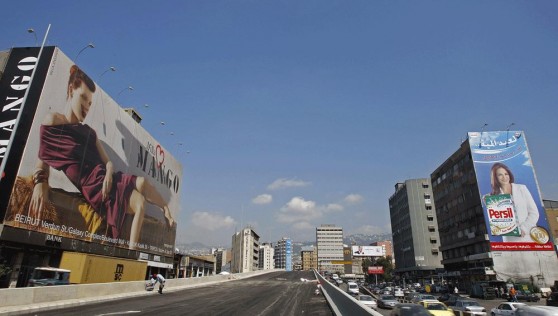
Kicking off his career in advertising in 1967, Ramzi Raad is one of the architects of the industry in the region. Based in Dubai since 1986, Raad is the chairman and chief executive of TBWA Raad, a subsidiary of New York-based advertising agency TBWA. In Faraya, Lebanon for the MENA Cristal Festival, Raad sat with Executive to talk about the prominence of television in the Middle East, the growth of digital advertising and the challenges of the region’s industry.

How did advertising on television become the prominent media avenue in the region?

At one stage in the [Middle East and North Africa] region, back in the 1990s, television was the main communication medium because of the high percentage of illiteracy in large markets such as Saudi Arabia and the Gulf states. Oil money made a lot of consumers have disposable income and become interesting prospects for international clients. At that stage it was government-run TV stations and news was about what the king, the sheikh or the prince did. Then, when Kuwait was invaded by Iraq, we discovered satellite TV as CNN covered the war. Arab TV stations were in a state of denial; no one was covering the fact that an Arab state was invading another Arab state. We woke up and discovered there is a different kind of TV that shows you the world as it is evolving at the moment: live TV. Egyptian satellite TV channels were the first [in the region] as they had huge libraries of material. Then commercial satellite stations proved to be popular because they delivered to the viewer what he or she wanted.

How are the Arab revolutions affecting the advertising landscape?

In the bigger markets in the [Arab region], you don’t have a lot of cultural and entertainment opportunities, so people are accustomed to get entertained by TV. To advertise on TV is expensive and in today’s world, you have to invest and not all advertisers can invest. Local agents don’t have the money to do that. Then came digital media and the Internet and access to new ways of communicating with the public. With the Arab Spring came the realization of the penetration of these types of media, how popular and how much they are used among local populations, and then “poof” everyone moved [to digital advertising].

What are your expectations for the performance of the advertising industry this year?

We are hopeful the growth seen in 2012 will continue. Our region from the dawn of the advertising history has been underspent, so one expects that there should be two-digit growth year after year.

What campaign are you proudest of so far?

The campaign we did this year for the Dubai Shopping Festival. This campaign, which has been going on for a number of years, tried to appeal to everybody but in the process, it was about to lose its distinct identity. Was it a place where you can take the family, was it for entertainment, for discounts? To develop the campaign we ran this year, we brought together all the stakeholders in one room for two days and together we looked at shopping festivals, carnivals and annual events from all around the world. Collectively we tried to come up with what Dubai festival is about.

What are the most significant challenges that the industry is facing?

The industry needs to realize that we need to get together and apply a lot of discipline to the way research [on media in the region] is done. We realized in recent years that the whole system sometimes gets abused. Now there is a move across Gulf states to provide job opportunities for nationals and there are lots of young nationals coming on board and running businesses. They are there because they are young nationals with a general education and not necessarily because they went to a communication school or received [specific] training or managed large budgets. If they are not trained well, growth in any particular market will be greatly affected by the quality of the people running the process. I don’t want to be insulting of young nationals. All I’m saying is that we have to accept that professional training is a must.
 

March 7, 2013 0 comments
0 FacebookTwitterPinterestEmail
Comment

Teaching dependence

by Nabila Rahhal March 7, 2013
written by Nabila Rahhal

The modern-day obsession with success has hit overdrive in Lebanese schools. While it is a trend that is difficult to quantify, it is obvious to anyone with a child in school or who works in education: students have never been under more pressure to outdo their peers academically.

This pressure is compounded by well-meaning, if sometimes misguided, parents who naturally want the best for their children and resort to any means to ensure what they perceive as their children’s happiness. Those means include hiring the best tutors money can buy to boost grades and secure a spot in a reputable university.

It is the new norm for students as young as seven-years-old to have after-school tutoring in almost every subject. This is a trend that now continues on through university where students regularly pay for tutors to help with their course work.

Private tutoring is not new to Lebanon, but in recent years its scope and the profits it yields has widened to the extent that an entire unregulated industry is being built around it, with a plethora of new companies opening up offering to source tutors for students for any subject they need, in exchange for a percentage cut of the tutor’s fee. Independent tutors, and especially the reputable veteran ones, can easily pull in $100 for a two-hour session. The closer the examination period is, the higher the prices go, but many parents willingly dish out this amount.

“I want the best career for my daughter and I do not believe that our universities here can provide her with the education to achieve this. Ivy League universities are competitive of course and this is why my daughter needs to be in the top 10 of her class; this is why we got her a tutor,” says Maha, the mother of a student at the American Community School of Beirut. Maha pays her daughter’s physics tutor a $100 per session, three times a week, amounting to $1,600 per month. “It is equivalent to a school tuition, but if it means getting into an Ivy League university, then I do it gladly,” explains Maha. 

But the pressure on children is undeniable, regardless of the nature of the tutoring. As a professional educator in my past career, I once tutored an eight-year-old who had three other tutors for different school subjects, one for guitar lessons and another for basketball: his breaks during the day were to eat — while watching “scientific documentaries” — and sleep. Though the boy would have achieved good grades even without all the extra lessons, his parents’ reasoning was that they wanted him to have the most well-rounded and competitive CV possible.

One can try to argue that there is no harm in all this tutoring when it leads to better performing students, who end up in good universities and later good careers. But besides missing out on the simple pleasures of childhood, such as play and leisure time, the danger is that students become too dependent on their tutors and on receiving extra help. This is showing in the attitude that some have in the classroom, with many teachers I know complaining that students who are ‘over-tutored’ become too used to having a second chance to learn what they are being taught, and thus their concentration lags.

To a certain extent, tutoring can be necessary and helpful at the high school level when students are still young and are required to study compulsory topics they might not be good at. At the university level however, students are expected to be young adults studying a topic of their own choice, meaning that they should be able to prepare independently. But when they have been raised to have someone holding their hand at every step, it becomes difficult to wean off that habit and so tutoring thrives. The question is: where does it stop? Will it become acceptable to bring your tutor with you to work? It seems we are raising the next generation to be comfortable with being coddled, leaving the future of independent thinking and creativity — exactly the traits that have made Lebanese so employable in the region and around the world — in doubt.


Nabila Rahhal is Executive's Consumer Society editor

March 7, 2013 0 comments
0 FacebookTwitterPinterestEmail
Economics & Policy

Assir’s economics

by Joe Dyke & Zak Brophy March 7, 2013
written by Joe Dyke & Zak Brophy

We wanted to avoid talking about Hezbollah, we really did. We entered the room with the intention of carrying out our first interview with Sheikh Ahmed al-Assir where he didn’t mention the ‘Iranian Party’ — as he calls the movement led by Sayyed Hassan Nasrallah. Yet, it was not that simple.

Assir, one of Lebanon’s most divisive figures, has made his name out of Hezbollah. His hostility to the party’s arms and Iran’s influence in Lebanon in general has made Assir the darling of some, the enemy of others and an unpopular character with much of the Lebanese business community.

Before the interview, we had agreed with Assir’s assistants that we would primarily be asking him about his economic views, but it appeared that no one had told the Sheikh. When he greeted us and we explained that we wanted to flesh out his views on financial matters, he was a touch taken aback and said that he was not an expert in this area.

Assir has been a religious leader in Lebanon’s southern city of Saida for a decade, but his star has risen on the national stage since the Syrian uprising began in 2011. He does not describe himself as a ‘Salafist’ as such, preferring to be referred to as simply a ‘Sunni Muslim’, while at the same time he has become the de facto public face of Salafism for most Lebanese. He has proved a vociferous, and some would say sectarian, critic of Syrian President Bashar al-Assad and Hezbollah and this, mixed with a penchant for publicity stunts, has elevated Assir’s brand. Indeed, Assir has previously stated that it was his ambition to become Lebanon’s preeminent Sunni figure.

While eschewing official political office, what is clear is that he is assuming an ever-more politicized role in in the country. To lead people, however, is also to be responsible for them. Assir has demonstrated his ability to rally people around his cause, but Executive wanted to challenge him on his plan to take care of them — does Sheikh Assir have an idea of how to raise living standards and job prospects in his hometown Saida, or a solution to rejuvenate the wider Lebanese economy?

Where all roads lead to

It soon emerges that at the core of every economic principle Assir has is the disarming of Hezbollah. “I believe nobody, regardless of his great economic knowledge, can improve the economic situation,” he says. “As long as [Hezbollah’s] weapons are present, it is not possible.”

For Assir, the dysfunctional and oftentimes corrupt state of the Lebanese economy is purely the result of allowing Hezbollah to maintain its arsenal. “In the recent past until 2006 the economy was thriving in all of Lebanon, and then Nasrallah launched his adventure and kidnapped the two Israeli soldiers [sparking a war with Israel]. Lebanon entered a complete economic disaster,” he concludes grandiosely.

See also: Gasoline prices across the Arab world

Smoking ban struggling in Lebanon

When we interject that the years of unprecedented growth that followed the war seem to dispute his theory, he snaps back: “What made Lebanon stand on its feet again was donations. Is this an economic policy? Where it had been getting better, the reason it degenerated is purely due to the policies of Iran in the region and its party here in Lebanon.”

If Assir is one thing, it is consistent, as again and again when we appear to disarm him with queries on how to solve economic or social woes, he recovers his ammunition by attacking the arms of ‘The Resistance’. When one arrives at one’s status riding enmity for another party, who else is there to blame? But between the diatribes, there are hints that Assir isn’t completely a one-trick pony.

If hostility to Hezbollah can be considered one pillar of Assir’s economic view, piety is the second. What understanding of commerce he has is deeply woven into his religious views. “Islam looks to the economy from a number of perspectives and not in isolation. It treats it through morals and piety — that is to say, a real faith in Islam,” he says. “The source of social and economic solidarity in Islam is based on zakaat [a system of giving a fixed proportion of one’s wealth for redistribution]… If Muslims are not very devout and don’t pay zakaat then there will be economic problems.”

When asked what can be done to improve business in his native Saida, he argues that it is not his role to intervene. “We don’t live in a country under Islamic rule. We live in a country where it is known the responsibility falls on the government.” He admits that up to 40 percent of young people in Saida are unemployed but his solution is woefully lacking in depth. “There needs to be a political situation. We need an emergency plan, if you can call it that.” The grand focus of that plan: disarming Hezbollah.

Behind the beard

Critics may argue it is unfair to highlight how theological figures are not well-versed on the economy — you would not ask the Minister of Finance to quote the Quran. Indeed Islamist parties in the Middle East have historically had relatively little to say regarding business and trade, often appearing unbothered and assuming that business would prosper as a result of an Islamic state.

But, as Assir concedes during our meeting, he is no longer purely a sheikh but a political actor with dedicated followers. His protests in the city of Saida last summer — when he closed off a main road to the southern city for several weeks in a futile attempt to force Hezbollah to disarm — had a crippling effect on local businesses that depend on the constant traffic passing by their doors. Assir’s supporters or their affiliates have also had armed clashes with opponents, and the Sheikh has even flaunted the idea of establishing a military wing for his movement.

More generally in the Middle East, fundamental changes in the past three years have forced religious actors to define themselves economically as much as theologically. In Egypt, for example, the two leading Salafi parties have diverged on economic policies. The powerful Al Nour Party — which has appeared to take a laissez-faire approach to the economy — has faced heavy criticism from a new Salafi grouping called Al Shaab (the people), which is more in favor of government intervention. At least partly as a reaction, Al Nour recently reversed course somewhat and called for an increase of the minimum wage.

For his part, Assir — who says he does not expect there to be a formal Salafi block at this summer’s elections — appears to side with free market principles over heavy state involvement in the economy. “Islam opens the door wide for a free economy. It leaves it to demand and supply,” he says. “An Islamic ruler does not interfere, for example, in price setting. This is to be left to demand and supply, to the highest degree of freedom.”

When asked how he would tackle Lebanon’s national debt, his response shows that he has at least considered the issue: “I sat with some economy specialists and they presented some ideas to me. For example, trading some of Lebanon’s gold reserves to reduce the debt. This is one such idea. We have very large gold reserves — it is not traded or invested.” This is partly true: Lebanon has large reserves of gold, the second largest per capita in the world, and the rising prices in recent years do present opportunities.

The money trail

As Assir has spent so much time criticizing the influence of Iran over Hezbollah, it is perhaps ironic that he has faced claims that he has his own foreign backer, with allegations that he is on Qatar’s payroll. We ask him to deny publicly that he had ever received funding from the Gulf state. His response is emphatic: “This is not at all true. I don’t even know Qatari officials or anything like that and I have never been [to Qatar].”

Executive’s inquiries seemed to concur that the majority of his funding is domestic, with a network of families in the Saida area the biggest bank rollers of Assir and his fundamentalist form of Islam. Among those are the Alaylis, a powerful family that are believed to have made their fortunes in Brazil. “Alayli is a prominent trader and businessman. He supports us and others [do as well],” concedes Assir.

A story that has made the rounds is that when Assir went looking for money to establish a television station, a supporter gave him a plot of land to sell. He chooses not to respond directly when we broach the subject: “If people can support us in different ways — say with a store or land or a house — then yes, they may offer.”

Piety of pragmatism

The revelation that Sheikh Assir has little plan for the economy of Saida is unlikely to embarrass him. He considers himself a theological actor first, who makes his decisions based on religious rather than economic rationale.

But the success of Hezbollah over three decades cannot, as Assir charges, be simply attributed to weapons and Iranian funding. The reality is that the continued support for Hezbollah among its largely Shia constituency is heavily based on the party’s comprehensive political, economic and social programs that enable it to act as a pseudo-welfare state to many that have been failed by the central government.

Assir, however, appears to have learnt little from his foes regarding the necessity of developing a holistic approach. Some disenfranchised Sunnis may feel emboldened by his devout and defiant posturing but the reality is he offers no concrete or coherent plans, on a local or national level, to actually improve their lot in life. Rather, Assir would appear to be a leader polarized between piety and enmity, with little in between.

March 7, 2013 0 comments
0 FacebookTwitterPinterestEmail
Real Estate

Tripoli’s new plot of gold

by Robert Biddle March 7, 2013
written by Robert Biddle

Outside of Lebanon’s second largest city lie the foundations for what soon could be Tripoli’s newest suburb and a new way for banks to cash in on development opportunities. Zeitoun 1589 is a project owned by a company of the same name and currently managed by BlomInvest Bank, a unit of regional financial player, Blom Group. 

Located just south of Tripoli’s Abou Samra and north of the village of Rass Maska, the land under the ownership of Zeitoun 1589 has been re-allotted into just more than 163,000 square meters (sqm) and divided into 85 plots, ranging from 1,500 sqm up to 3,300 sqm. 

Lara Kanj, head of BlomInvest’s real estate unit, said that in 2010, Omar Ouayda, the previous owner, approached the bank about purchasing the land from him, which Kanj said BlomInvest saw as a good opportunity for their investors. “We got the land at a very good price, below the market price,” she said, adding that now that the infrastructure — including roads, sewage and electricity — has been developed, they can sell at the market price. Although she would not disclose the original price of the land or the cost of developing the infrastructure, Kanj did say that the bank expects shareholders in Zeitoun 1589 to realize a minimum return on investments “in excess of 15 percent”.

The expected success of the venture rests on the role that BlomInvest played in overseeing the project’s development. “BlomInvest acted as sponsor of the project, by originating the opportunity and raising the funding,” Kanj told Executive. “The management role is twofold: project and investment management.” As she pointed out, Lebanese law prohibits banks from directly investing into real estate projects, unless they are building bank branches or employee housing. 

To get around this, BlomInvest created the company Zeitoun 1589, thus distancing the bank from direct financial involvement. The bank brought its investors on board, who became the shareholders in the project. Kanj added that members of the Ouayda family also invested in Zeitoun 1589, but exited, being “paid in cash”. 

BlomInvest also contracted North Excellence Real Estate — Omar Ouayda is a co-owner — to develop the land, as well as Socotec and A. Manasseh Ingénieurs as technical supervisors. Providing an idea of BlomInvest’s level of engagement with the project company, when Executive called Zeitoun 1589’s office number listed on the project’s website, an associate at the investment bank picked up the phone.

Since the surrounding area is already developed commercially and with the center of Tripoli only “10 minutes away by car” (discounting traffic), Kanj estimated that 95 percent of the plots would be developed into residential units. 

The prices of each plot currently average around a modest $450 per sqm, depending on the location, market fluctuations and upon the specifications of each plot. Yet she is hopeful that these prices will appreciate, because the region “is going to boom anytime soon”. 

In other words, Kanj expects that Tripoli’s municipality may increase the coefficient of exploitation, from the current 20/80 percent to 20/120 percent, meaning that developers can increase their built-up area. 

Given the general perception in the local investment and development circles that real estate in Lebanon is an ‘un-losable’ money bet, the project appears to be safe even if the area is exposed to further risk factors. Indeed, Kanj was unconcerned about Tripoli’s poor security record and the effects of the civil war next door in Syria.  She argued that since the assets were land-based, risk is low, and investors can “sit on it” for a few years to wait for things to calm down.

When asked if there were other projects in the pipeline for BlomInvest similar to Zeitoun 1589, Kanj said yes, but did not give any details.

March 7, 2013 0 comments
0 FacebookTwitterPinterestEmail
The Buzz

Morning briefing: 7 Mar 2013

by Executive Staff March 7, 2013
written by Executive Staff

Economics and policy

The World Bank has granted Jordan $70 million in financing to help it to extend small loans to young people in depressed rural areas that have suffered most from the country's sluggish economic growth.

More from Reuters


Lebanese Energy Minister Gebran Bassil has the government of failing to do enough with regard to the public sector wage scale as civil servants rallied outside his headquarters.

More from The Daily Star


Saudi Arabia has sharpened its edge in oil trading by leasing oil storage in Fujairah, allowing the producer's new trading arm greater flexibility in both buying and selling oil products.

More from Reuters


The UAE is the US’s largest export market in the Middle East with total trade reaching Dhs91 billion ($24.81 billion) in 2012, up 34.6 per cent compared to 2011.

More from Gulf Business


Companies and business

The overall MEA tablet market in 2012 grew by 90% year-on-year, according to the latest figures from International Data Corporation (IDC).

More from Arabian Business


A sluggish economy and stiff competition from international ad serving platforms will make it difficult for Lebanese websites to boost their advertising revenues this year.

More from The Daily Star


Bahrain sovereign wealth fund Mumtalakat plans a multi-million pound investment in local projects, joining efforts to bolster the local economy after the 2011 pro-democracy protests.

More from Reuters


Abu Dhabi Commercial Bank, or ADCB, and Union National Bank, or UNB, have also repaid debts they obtained from the Ministry of Finance to boost their balance sheet after 2008’s financial crisis.

More from Khaleej Times


Dubai’s port operator DP World Limited has agreed to sell stakes in two container terminals and a logistics centre in Hong Kong for a total consideration of $742 million, it said in a statement on Thursday.

More from Reuters


Banque Libano-Française (BLF) has launched a global bond fund, LF Total Return Bond Fund.

More from Lebanon Business News

March 7, 2013 0 comments
0 FacebookTwitterPinterestEmail
The Buzz

Morning briefing: 6 Mar 2013

by Executive Staff March 6, 2013
written by Executive Staff

Economics and policy

Egypt's president, Mohammed Morsi, was reportedly mulling a plan to hand over security in the city of Port Said to the military as clashes between protesters and police there escalated for a third straight day.

More from The National


The Central Bank of Bahrain is preparing to crackdown on banks operating in the kingdom, with a set of tougher regulations the governor expects will lead smaller banks to merge and survivors to reduce profit expectations.

More from Arabian Business


Striking Lebanese workers have promised to expand their protests unless their demands are met

More from The Daily Star


The Dow Jones Industrial Average closed at a record high on Tuesday, surging more than 126 points to close at 14,253.80, its highest level since October 2007.

More from Gulf Business


Gasoline prices in Lebanon dropped for the first time in three months, according to data released by the Water and Energy Ministry Wednesday.

More from The Daily Star


Companies and business

Dana Gas has increased its gas production in Egypt by about 10 percent with the start up of operations at two new fields, the United Arab Emirates-based company said on Tuesday.

More from Reuters


The deputy chief executive of Kuwait’s top telecom operator Zain has resigned, the company said in a statement to the local bourse.

More from Gulf Business


Dubai Group's $10 billion debt restructuring will be managed by the head of another state-linked firm while two banks will have a monitoring role to ensure more oversight from creditors, sources aware of the matter said.

More from Arabian Business

March 6, 2013 0 comments
0 FacebookTwitterPinterestEmail
The Buzz

Amid chaos and corruption

by Benjamin Redd March 6, 2013
written by Benjamin Redd

Sitting atop shifting sands, the Mosul Dam in western Iraq is precariously vulnerable to cavities that regularly form beneath it. If the holes grow large enough, they can threaten the dam’s structure, so engineers pump grout to fill them. After the 2003 US invasion, the Americans spent $27 million hoping to improve the situation. But when inspectors visited the site in 2007, they found $19.4 million worth of equipment and materials sitting idle: the money had been wasted.

See also: Interactive guide to US reconstruction funds in Iraq

Five ways to waste funds

1. Over-charging

In September 2007, Anham, LLC was awarded a $300 million contract to operate and maintain two warehouse and distribution facilities.

What SIGIR found

Over 40 percent of costs were unreliable, with Anham subcontractor guilty of “egregious” overbilling, including a bill of $900 for a switch valued at $7.05.


2. Unwanted buildings

In May 2004, American-led forces awarded an $80 million contract to build the Khan Bani Sa’ad Prison.

What SIGIR found

The Iraqi authorities had not wanted the prison and when visited in June 2008 parts of it were labeled for demolition.


3. Constructing mayhem

Around $8.6 million in construction contracts was awarded to companies led by Philip Bloom by head of the coalition forces in Hilla district, Robert Stein.

What SIGIR found

There was considerable evidence of fraud and kickbacks and Stein and Bloom were both later jailed.


4. Ignoring advice

After being bombed in 2003, Coalition forces aimed to rebuild the al-Fatah Bridge.

What SIGIR found

Despite geological surveys showing drilling in the sandy soil would not work, the recommendations were ignored. Over spent $75.7 million was spent without success. Eventually a new contract had to be drawn.


5. Dodgy soldiers

Western military forces were directly involved in awarding contracts, often with the power to make decisions.

What SIGIR found

There was considerable evidence of fraud and corruption, with one of the most serious cases involving Army Major John Cockerham – who was later convicted of receiving more than $9 million in kickbacks.

The dam was one of many projects where waste or corruption undermined development during the US occupation of Iraq. When you spend what adds to tens of billions of dollars unexpectedly and without a plan, there’s bound to be waste and corruption, according to Stuart Bowen.

Between the initial invasion in 2003 and September last year, the US alone spent at least $53.26 billion on reconstructing Iraq, on top of at least $19.8 billion of Iraqi money spent by the US. Bowen, head of the Office of the Special Inspector General for Iraq Reconstruction (SIGIR) since 2004, believes that much of that money was wasted due to a lack of planning. “The program was burdened by its ad hoc nature, that as a result of that ‘adhocracy’, the early years were wasteful and in a perpetual state of flux,” he tells Executive. SIGIR found that $11.7 billion in Iraqi funds spent by the US – more than half the total spent – were vulnerable to fraud, waste and abuse. Overall, the auditor estimates at least $8 billion in US and Iraqi funds were wasted.

SIGIR, set up by the US Congress in the wake of the invasion, had a broad remit: investigate fraud, waste and abuse for all US spending on rebuild Iraq. And after nearly a decade of work, the body released its final report this morning, providing a damning indictment of the US occupation.

Systematic failure

The report’s central conclusion is that the US had no system in place to effectively use the billions of dollars it was spending. A picture emerges of a chaotic revolving door of administrators, generals, ambassadors and other officials setting and changing policy rapidly, often not bothering to fully coordinate with each other or Iraqi officials.

Among the bodies making decisions were the Coalition Provisional Authority, the US Embassy, the US Agency for International Development, Multi-National Forces-Iraq, US Army Corps of Engineers and a litany of other smaller offices. The Departments of Justice, Homeland Security and Treasury, as well as other entities also figured into the flow of operations. The result, as US senator Claire McCaskill told SIGIR, was “a circular firing squad” which undermined reconstruction efforts.

From the Iraqi perspective, there was “an anger…that they weren’t properly consulted about what the rebuilding program should accomplish,” says Bowen. In an interview for the SIGIR report, Minister of Justice Hassan al-Shimari supports this point when he says “there was no real planning done, nor did they consult the Iraqis on what was really needed.”

Bowen has led SIGIR since 2004

When Americans did coordinate, they lacked the capacity to reform a system built to address immediate needs instead of long-term interests. Bowen is careful not to blame administrators, but the lack of a pre-planned system: “The criticism is not of those who developed [the system]; the criticism is of a system that was not well-established beforehand to carry out such operations when they were assumed.”

Following two decades of wars and sanctions, the challenges to rebuilding were daunting. The Coalition Provisional Authority (CPA) that initially ruled Iraq aimed to create a free market democracy but made a series of devastating mistakes. In an act of blind overconfidence, the CPA exacerbated Iraq’s woes by ‘de-Baathifying’ state institutions – essentially gutting ministries and state-owned enterprises of experienced employees – and disbanding the army.

“When you fire the military without giving those in it a future, or fire the first four tiers of Baathist Party membership, they will have no interest in helping you reach your goals…. Such actions only give them incentives to oppose what we were trying to do,” David Petraeus, a former Commanding General of the multi-national force, told SIGIR.

The US spent the lion’s share of the reconstruction money between 2005 and 2009, peaking at more than $25 million per day on average in 2005. But as America gradually handed responsibility to Iraqi officials from 2009-2011, reconstruction firmly shifted to Iraqi hands, in terms of both funding and decision-making.

Universal truths

As the billions of American dollars fostered misuse and corruption, so apparently are the trillions of Iraqi dinars that today continue the reconstruction effort. Former Prime Minister Iyad Allawi told SIGIR that the failure to address corruption early on “was one of the United States’ biggest mistakes.” Prime Minister Nouri al-Maliki now calls it “a second insurgency.”

Bowen echoes these concerns. Corruption “is worse now,” he claims, stressing that all the Iraqi politicians he had spoken to agreed with this assessment. “Money laundering is draining the economy of its lifeblood.”

Last year a report by the Iraqi Board of Supreme Audit (BSA) claimed that the country’s central bank was complicit in laundering up to $800 million per week out of the country. Bowen notes that even if the sum is a fraction of that, it shows levels of endemic corruption.

Following the scandal the central bank governor was removed, with the head of the BSA, Abdul Basit Turki, named to replace him on an interim basis. Maliki’s critics see this ‘anti-corruption’ move as an excuse to centralize power in the prime minister’s office. Bowen, however, isn’t necessarily swayed by the political accusations. “I do have an opinion on [Basit’s] reliability, and it’s very high.”

Building transparency

SIGIR has investigated hundreds of cases, which had led to the conviction of 82 people thus far, and reclaimed nearly $200 million in American and Iraqi funds.

The issue of corruption, like the continuing work of reconstruction, is now in the hands of Iraqis. As SIGIR’s final report makes clear, the US reconstruction venture was plagued by poor planning and implementation. The record of American mistakes – and how to avoid them – may prove a useful but bittersweet consolation for Iraqi planners.

Bowen has some advice for the Iraqis as they seek to avoid repeating history. “Number one, enforce money laundering regulations, which have been largely unenforced for ten years. Number two, empower the inspectors general [or] develop a meaningful system of oversight that they’re willing to support and implement… Number three, reenergize the Commission of Integrity [which investigates corruption], which…has been eviscerated.“

March 6, 2013 0 comments
0 FacebookTwitterPinterestEmail
Comment

‘Qatargate’ breaks open

by Paul Cochrane March 6, 2013
written by Paul Cochrane

When Qatar won the bid to host the 2022 FIFA World Cup back in 2010, football fans around the globe were astounded at the decision. Many were suspicious, given that they could not even place the tiny Gulf peninsula on a map. Few knew Qatar even had a national football team. Moreover, Doha seemed a rather hot location for a summer World Cup. 

Indeed, right from the opening whistle pundits put forth that Qatar bought the bid. Qatar and FIFA have since been trying to make the case that it was merit and not petro-cash that affected the decision. The Qatari diwan and FIFA could not have been happy, then, to see the cover of France Football magazine when it graced stands at the end of January with “Le QATARGATE” emblazoned on the front. What lay inside was a 20-page report laying out how Doha bought the bid and pushing FIFA to remove Qatar as a host.

In what the magazine terms “acts of collusion and corruption,” the exposé shows how Qatar used its generosity to influence members of FIFA’s Executive Committee (EC) to vote in their favor, made donations for youth initiatives through its sports academy Aspire in countries with voters on the EC and provided $1.25 million to “sponsor” the African Confederation congress to win over four Africans on the EC.

On top of that, millions of dollars were offered to reinvigorate Argentinian football to gain a vote, and famous footballers were paid millions to sing Qatar’s praises to the press. 

Some of the most revealing news focused on France itself. France Football reported that in November 2010, then President Nicolas Sarkozy organized a dinner for Qatar’s crown prince, Union of European Football Associations’ President Michel Platini and a member of an investment fund that owned struggling football team Paris Saint Germain (PSG). Possibly coincidental, but certainly eyebrow raising, Platini voted for Qatar at the FIFA bid just weeks later. In 2011, Qatar’s sovereign wealth fund, Qatar Holding, bought a stake in PSG and the remainder in 2012. PSG has since spent more than $250 million acquiring high profile players, including David Beckham with a $1 million per month contract. Added to this, Qatar set up French TV channel beIN Sport and spent $200 million for the rights to broadcast French football until 2016. 

But what does France Football’s expose mean? An investigation has now been started that could strip Doha of the 2022 tournament, which would then be given to the runner up, the United States. There is widespread conjecture that this will not happen though, as it would be exceedingly damaging to FIFA — potentially opening investigations into the transparency of Russia’s bid for the 2018 cup — and would be a crippling blow to Qatar’s image, not to mention its budget plans with a staggering $65 billion to be spent hosting the cup. 

Also, Qatar is pushing for the scheduling of the event to be switched from the sweltering summer to winter time instead. This will face fierce opposition from European football leagues, with whose seasons this would coincide (although perhaps not the French). 

What is very clear is that Qatar is never going to shake off the notion that its petrodollars bought the 2022 World Cup. But whatever happens over the scheduling, and if Qatar actually remains as host, Doha will have to make damn sure it pulls off a spectacular event, which right now is looking a bit wobbly given the infrastructure needed — metros, train lines, thousands of hotel rooms — and that the technology for the much touted air conditioned stadiums has not even been tested yet. 

In the meantime, another “Qatargate” is in the offing: how did the gulf monarchy manage to become an “associate member” in the International Organization of the Francophonie (IOF) last October without going through the observer stage, having less than 1 percent of its population speaking French, and being a British colony until 1971? Curiously, Qatar appears to have intensely lobbied African countries to support its membership in the IOF. 


Paul Cochrane is the Middle East correspondent for International News Services

 
March 6, 2013 1 comment
0 FacebookTwitterPinterestEmail
Society

Not enough Arab billionaires

by Thomas Schellen March 6, 2013
written by Thomas Schellen

On Tuesday, Saudi Arabia’s richest man, Prince Alwaleed bin Talal, publicly complained that he had been done a disservice by the global wealth magazine Forbes. Apparently disgusted that his fortune was tallied at only $20 billion in the new Forbes 2013 rich list — as opposed to his own assessment of $29 billion —Talal accused the magazine of having a negative bias against portfolio valuations on Tadawul, the Saudi Stock Exchange. He then told Forbes that they would no longer be offering them data on his wealth, instead reserving that privilege for rival business news outlet Bloomberg’s ranking of the world’s richest.

Billion dollar cry baby?

While childish his reaction may have appear — though the extra $9 billion would have propelled him from 26th position into the top 10 — does the Saudi billionaire have a point? His statement said “the application of differing standards of proof for different individuals and organizations results in an arbitrary and confusing set of standards that seems demonstrably biased against the Middle East.” While Forbes has issued a full rebuttal, accusing the sheikh of market manipulation, Arabs are not as prominent on the list as you might expect.

The new list includes more names and greater cumulative wealth than ever: some $5.4 trillion shared between 1,426 billionaires. Yet a look at the headcount from the Middle East and North Africa region’s mega-rich suggests underrepresentation. While six men from Lebanon, from the Hariri and Mikati families, are represented, several resource-rich Arab countries including Qatar, Oman and Bahrain suspiciously have no representatives at all. All the Arab countries together have fewer billionaires, according to Forbes, than Turkey.

Looking at the methodology by which Forbes reaches their wealth assessment provides some insight into this. One reason for underrepresentation may be that Forbes is using the dollar as baseline for computing wealth.

As most Middle Eastern economies are closely pegged to the dollar, Lebanese and other regional mega-rich do not see their wealth assessments fluctuate on currencies. However, a strong euro on the day when Forbes takes its net-worth measurements (this year it was apparently February 14) might significantly boost the ranking of a Eurozone billionaire.

While this also affects American billionaires, currencies that are pegged to the dollar are measured by the same standards as Americans without benefitting from the country’s rich economic infrastructure.

On top of this, since stock portfolios play a leading role in the assessment of a billionaire’s net worth, the list effectively ranks equity much more than the average billionaire’s entrepreneurial skills and business acumen. Arab investors such as Talal hold assets in regional stock markets which have seen less appreciation in the past two years than others.

Opening up

Yet there are other, more powerful, reasons why Arabs might be underrepresented on the list, and they reflect more on regional attitudes than on Forbes. Middle Eastern countries are notoriously secretive, with the countries of the region consistently ranked among the worst in terms of transparency. These attitudes are common in business too, with Middle Eastern companies fiercely private.

Not having well-regulated stock markets regimes, which supply a significant stream of information on the wealthiest citizens in developed economies, means that allegations of insider trading abound. Forbes, therefore, may be wary of overestimated Arab wealth.

On top of this some owners are hostile to the notoriety of wealth, which would make them more of a target for anyone from kidnappers and criminal scammers to paparazzi and media. This may partially explain the lack of representation from Gulf countries.

One example of a Lebanese billionaire who was unrecognized by Forbes this year is Fouad Makhzoumi, the pipe manufacturer and owner of Future Group, who told Executive last year that his net worth is $1.5 billion. As he is a private owner and has not had an initial public offering his wealth is likely to be missed.

In realistic terms the Saudi Tadawul is among the most secretive stock markets in the world and there are many barriers against international investors. This isolation and preferential treatment of local investors has drawbacks when it comes to development of wealth on a national level. As such, while Talal has a point about Arab underrepresentation, the opaque-nature of Saudi markets, rather than Forbes’ bias, is more likely the reason for this.

March 6, 2013 0 comments
0 FacebookTwitterPinterestEmail
  • 1
  • …
  • 277
  • 278
  • 279
  • 280
  • 281
  • …
  • 696

Latest Cover

About us

Since its first edition emerged on the newsstands in 1999, Executive Magazine has been dedicated to providing its readers with the most up-to-date local and regional business news. Executive is a monthly business magazine that offers readers in-depth analyses on the Lebanese world of commerce, covering all the major sectors – from banking, finance, and insurance to technology, tourism, hospitality, media, and retail.

  • Donate
  • Our Purpose
  • Contact Us

Sign up for our newsletter

    • Facebook
    • Twitter
    • Instagram
    • Linkedin
    • Youtube
    Executive Magazine
    • ISSUES
      • Current Issue
      • Past issues
    • BUSINESS
    • ECONOMICS & POLICY
    • OPINION
    • SPECIAL REPORTS
    • EXECUTIVE TALKS
    • MOVEMENTS
      • Change the image
      • Cannes lions
      • Transparency & accountability
      • ECONOMIC ROADMAP
      • Say No to Corruption
      • The Lebanon media development initiative
      • LPSN Policy Asks
      • Advocating the preservation of deposits
    • JOIN US
      • Join our movement
      • Attend our events
      • Receive updates
      • Connect with us
    • DONATE