• Donate
  • Our Purpose
  • Contact Us
Executive Magazine
  • ISSUES
    • Current Issue
    • Past issues
  • BUSINESS
  • ECONOMICS & POLICY
  • OPINION
  • SPECIAL REPORTS
  • EXECUTIVE TALKS
  • MOVEMENTS
    • Change the image
    • Cannes lions
    • Transparency & accountability
    • ECONOMIC ROADMAP
    • Say No to Corruption
    • The Lebanon media development initiative
    • LPSN Policy Asks
    • Advocating the preservation of deposits
  • JOIN US
    • Join our movement
    • Attend our events
    • Receive updates
    • Connect with us
  • DONATE
Climate changeCommentEconomics & Policy

Seeking climate consensus

by Mary Awad Menassa February 19, 2019
written by Mary Awad Menassa

The Paris Agreement, adopted in early 2016, aims to reduce the global man-made emissions that are trapping heat in the atmosphere, causing a cascade of extreme weather events due to variations in temperature. The agreement sought to keep the increase in global average temperature well below 2 degrees Celsius, while attempting to limit it to 1.5 degrees Celsius.

Global temperature increase will alter climatic conditions differently in every part of the globe. In Lebanon, climate change will mean less snow, more droughts, desertification, reduced agricultural productivity, less precipitation, and the re-emergence of certain infectious diseases. Some of these climatic events are already being witnessed: flash floods interrupting commutes, and hail as large as golf balls breaking windows like a scene from The Day After Tomorrow. To ensure preparedness for these extreme events, the Paris Agreement also mandates fast adaptation in order to increase the resilience of communities. For Lebanon, this translates into cultivating resilient crops and improving infrastructure to absorb high levels of precipitation and increase protection in the event of sea-level rise.

What does the fight against climate change look like today, three years after the Paris Agreement was adopted? The global system to lower emissions is composed of bottom-up national targets, called nationally determined contributions (NDCs), submitted by every country around the world. The aggregate effort of these targets is supposed to achieve the Paris Agreement temperature goal. The legal-bindingness of the NDC kicks in with the ratification of the Paris Agreement; 184 out of 197 countries have ratified, which shows a strong global movement. However, 13 countries are still behind, and Lebanon is one of them.

More commitment needed

For now, however, the NDCs, which were submitted in 2015, will not—if met—achieve the goal of the agreement. Instead, the sum of all NDCs fails to meet the temperature goal, keeping the world on track toward dangerous climate change. The  solution to this gap is an ambitious update of the targets by 2020, a notion very much present at the 24th Conference of Parties (COP 24), which included representatives from each involved country and took place in Katowice, Poland in December 2018. Political dialogues revolved around a call for action to step up and contribute to the solution more seriously, which is likely to remain the main topic of discussion until 2020.

The two snowy weeks in Poland also involved the conclusion of a three year-long mandate to deliver the Paris Rulebook. If the Paris Agreement was a machine, the rulebook would constitute its operating instructions. Consensus was reached for all countries to periodically and transparently communicate NDCs, report on their progress using the same set of guidelines, provide information on support, and establish a mechanism for review. This is designed to improve the accuracy and understanding of the NDCs’ cumulative impact, which will give the clear signal for countries to further reduce their emissions.

Where does Lebanon stand in all this? For now, it is on track. Lebanon submitted its NDC in September 2015 after a group effort from line ministries. The government pledged to unconditionally reduce its emissions by 15 percent by 2030, as well as generating 15 percent of the power and heat demand via renewable energy sources, and reducing the power demand by 3 percent through energy efficiency measures. Regarding adaptation actions, Lebanon aims to increase the resilience of forests and crops by preventing forest fires and establishing an early-warning system for pests and climatic conditions. Moreover, as a water-stressed country, Lebanon’s NDC prioritizes water management. An inter-ministerial committee responsible for the follow-up of the NDC’s implementation, linkages, and needs has been formed and will start its work in 2019. When it comes to reporting information related to climate efforts and impacts, Lebanon has regularly submitted the required information. One part of the rulebook adopted in Katowice updated the reporting guidelines by which countries must abide, and will come into effect in 2024. The Ministry of Environment is preparing itself for the new guidelines with upcoming projects that are heavily focused on data, and its role in improving decision and policy making. Moreover, the government signaled its NDC update by 2020 in then-Prime Minister-designate Saad Hariri’s speech to the Virtual Summit of the Climate Vulnerable Forum, of which Lebanon is a member, in November 2018. The work toward making Lebanon’s NDC more ambitious has been initiated and will conclude by 2020. Taking this process one step further, the Ministry of Environment is drafting Lebanon’s 2050 low emission development strategy, to direct institutions and the private sector toward low carbon solutions in the long-term.

Lebanon will heavily depend upon international finance to implement its NDC and build sustainable and resilient infrastructure, institutions, and economy. Climate change solutions are day-to-day solutions: clean electrification, efficient transport, readiness to disasters, and resilient agriculture. Strong financial support promises from donors are not quite there, but even so, Lebanon still has a long way to go to absorb the upcoming support in order to implement its NDC by 2030. Since Parliament received the Paris Agreement ratification file in August 2016, it took two years to get the approval of three committees, and it is still not on the general assembly’s agenda to this day. The failure to ratify swiftly will get in the way of receiving support and could halt climate coordination and planning. 

A concentrated effort

Fighting climate change in Lebanon requires the prioritization of climate issues, and for the links to sustainable development to be visible to the country’s  leadership. Only once it is realized  at a high level that climate change is a multiplier of Lebanon’s challenges—be it geopolitical, economic, or environmental—will it be successfully mainstreamed in decision making. Lebanese institutions are requesting international finance, but climate support is becoming contingent on capacity retention in the Lebanese administration, swift implementation, and willingness to legally and institutionally reform. Moreover, the investment risk for renewable energies is still too high for the private sector to engage with on its own. The bottom line is that Lebanon needs to be ready to absorb the received support in an efficient and transparent way.

The implementation issue holds true for many countries; abiding by the Paris Agreement and its rulebook can only succeed with real, tangible emissions reduction and adaptation to the inevitable impacts. There are some promising signs, for example, the price drop for renewable energy technologies has facilitated market penetration, and the clean energy share is growing. Unfortunately, the solutions are still developing disproportionately to the increase in the global level of emissions—which in 2018 was at an all time high. 

We face a deadline before climate change becomes irreversible, and with each scientific report published, that deadline is getting closer. The infrastructure is there: a multilateral agreement, country pledges, and a deadline. However, the climate change problem can only be truly solved with strong political will from every signatory state.

February 19, 2019 0 comments
0 FacebookTwitterPinterestEmail
CommentEconomics & Policy

The Eastern Mediterranean Gas Forum

by Mona Sukkarieh February 19, 2019
written by Mona Sukkarieh

Energy ministers from Egypt, Cyprus, Greece, Israel, Italy, Jordan, and the Palestinian Authority took an important step toward establishing an Eastern Mediterranean Gas Forum (EMGF) on January 14, in Cairo. According to the declaration that followed the meeting, the EMGF will, among other things, assist in the creation of a regional gas market, ensure the security of supply and demand, optimize resource development, facilitate the use of existing infrastructure, and build new infrastructure, if necessary.

The forum’s raison d’être is regional energy cooperation. Almost ten years to the day after the announcement of the discovery of the Tamar field in Israel (January 17, 2009)—the first major gas discovery in the Levant Basin—it has become increasingly clear that regional cooperation is needed to make the most of the region’s resources.

The Eastern Mediterranean’s gas potential is promising. Besides Egypt, the countries in the region face challenges to exploit their resources. First, these resources are mostly offshore, in deep and ultra-deep waters. When found in commercial quantities, their extraction is expensive. Second, the relevant infrastructure to monetize these resources barely exists (outside Egypt). And if this were not enough, the geopolitical risk is high due to a number of factors: conflict in Syria; terrorism; the Cyprus problem; sour relations between Cyprus and Turkey; a constant state of tension between Lebanon and Israel; and deteriorating relations between Turkey and Egypt, and between Turkey and Israel. In 2018, we saw that heightened political tension in this part of the world could quickly evolve into a confrontation, when Turkish warships prevented a drillship from reaching its drilling target in Block 3 of Cyprus’ Exclusive Economic Zone (EEZ).

These challenges largely explain why a number of gas fields in the region have not been developed yet. One way to overcome these difficulties is through regional cooperation, and this is why the announcement of an East Mediterranean Gas Forum is a significant development.

The EMGF will be based in Cairo and will be open for other Eastern Mediterranean countries to join, provided they share the forum’s interests and objectives, and the founders of the forum accept their membership.

Besides Syria, which is still struggling with its civil war, there are two notable absences: Turkey and Lebanon. The presence of Israel in the EMGF is seen as a barrier to Lebanon’s involvement, while poor relations between some of the EMGF founding members and Turkey was another rationale for the forum, beyond energy cooperation. Each of these countries has perceived reasons to complain about Turkish behavior recently:

Cyprus

In addition to the longstanding and unresolved Cyprus dispute, Ankara and Nicosia have been at loggerheads over exploration for hydrocarbon resources in the Cypriot EEZ. Since 2003, Turkey has denounced all the maritime border agreements signed by Cyprus with its neighbors and lobbied these countries to reject them on the grounds that: (1) the current Republic of Cyprus (RoC) does not represent Cyprus as a whole, and thus cannot sign international agreements on its behalf; and (2) that islands should not have the same capacity to generate maritime zones as other states. (Turkey does not recognize that islands should have equal rights in generating maritime zones and claiming full-fledged EEZs.) Turkey, therefore, claims that certain parts of the Cypriot EEZ fall within its continental shelf or under the jurisdiction of the Turkish Republic of Northern Cyprus.

All this explains why Ankara rejects exploratory activity in the Cypriot EEZ. Since 2008, it has made a point to monitor, and sometimes harass, surveyors and drillships conducting operations in Cypriot waters. On at least two occasions, it went as far as blocking their work. Turkey is also threatening to conduct exploratory activity off Cypriot coasts. In addition, there are renewed calls in Turkey for the establishment of a Turkish naval base in Northern Cyprus to protect Turkey’s rights and interests in the Eastern Mediterranean.

Greece

Turkey’s relationship with Greece is similarly tense. Ankara has always pursued a policy of provocation in the Aegean, but President Recep Tayyip Erdogan has taken it to another level, with frequent confrontations at sea, repeated violations of Greek airspace (an incident in April 2018 claimed the life of a Greek pilot), and renewed claims to Greek islands. In his first visit to Greece as Turkish president in 2017, Erdogan declared that the 1923 Treaty of Lausanne must be reconsidered—in effect calling for a redrawing of the borders with Greece—and raised concerns about the Turkish minority in Greece.

Turkey also objects to Greece’s rights to exploit energy resources in certain parts of its waters far from the Greek mainland. Once again using the argument that islands’ capacity to generate maritime zones should be limited, Ankara reportedly tried to undermine Greece’s relations with Libya by claiming that Athens was encroaching on Libya’s continental shelf. According to Turkish media reports, the Turkish defense minister, Hulusi Akar, presented maps supposedly demonstrating this point to the Libyan government that ignored the influence of islands such as Crete (or Cyprus) on marine territory.

Egypt

The ousting of President Mohamed Morsi in 2013 severely strained relations between Egypt and Turkey. Erdogan in effect denies the legitimacy of the current Egyptian regime, arguing that it was established after a coup against a democratically elected president. In August 2013, Turkey called on the UN Security Council to impose sanctions on Egypt. Erdogan continues to express support for the Muslim Brotherhood, sometimes by making the Rabia sign (a hand gesture used to protest the violently suppressed sit-in at Rabia Square in Cairo) and never misses an occasion to call for the release of Morsi and all political prisoners in Egypt. Cairo views such statements and positions as a provocation.

Israel

The once strategic relationship between Israel and Turkey has gradually deteriorated over time, particularly since Israel launched Operation Cast Lead against Hamas in Gaza, in 2008-2009, which was followed by the Mavi Marmara aid flotilla incident in 2010. Relations between the two countries never fully recovered, even after the US-brokered Israeli apology to Turkey in 2013 and the normalization of relations in 2016 (partly motivated by energy cooperation).

The situation deteriorated again in 2018. Last Spring, Israeli forces used live fire and killed over 100 Palestinians in Gaza who were protesting the US decision to move the American embassy to Jerusalem. Erdogan accused Israel of carrying out genocide and expelled the Israeli ambassador from Turkey, withdrawing the Turkish ambassador from Tel Aviv. He later accused Israel of apartheid. This series of statements and actions were viewed as deeply hostile by the Israelis.

It is in this regional context that the East Mediterranean Gas Forum was established. On the one hand, there are offshore resources that—until now, at least—require cooperation to facilitate their exploitation, and on the other, we see renewed geopolitical rivalries in the Eastern Mediterranean.

If we take the second of these considerations, the geopolitical context, it is clear that this alignment is primarily in reaction to what many of the founding members perceive as aggressive Turkish behavior over the last few years. Many Lebanese are ignoring this dimension and feel that this forum, and this alignment, is directed against them.

This Lebanese misreading of the situation would not be an issue if it did not threaten to influence policy making. The first reaction, expressed by certain media and public officials was seemingly knee-jerk, dismissing the forum and its member states, and suggesting we pursue a parallel track with those countries that were not present—Turkey and Syria—in addition to other countries in the region, such as Iraq. For some, this was an impulsive reaction to being left out, leaving little room for rationality. But for others, this was seen as an opportunity to push forward an “isolationist” tendency that advocates that Lebanon should look east for friends and partners, limiting their options elsewhere. The announcement of the EMGF provided them with additional arguments to support their case.

A more thought out approach would be to strengthen relations even further with all regional players, whether in or outside the EMGF (with the exception of Israel, for obvious reasons). A small country like Lebanon does not have the luxury of picking and choosing its friends, with an enemy state to the south, and a Syria mired in conflict along the rest of its border. Membership of the EMGF and good relationships with those outside the forum are not mutually exclusive. Cyprus, Egypt, and Turkey are all very relevant to, and potential partners in, Lebanon’s future gas ambitions, if commercial quantities are found.

For those tempted by an isolationist approach, it is also good to keep in mind that the EMGF is not a closed club either. It is open for other countries in the region to join. It is conceivable that a country that is not a member today, like Turkey, could join it in the future, particularly if a solution is found for the Cyprus dispute (negotiations are expected to resume this year) or if it adopts a less antagonistic approach toward other member states. In this case, would the “non-EMGF club” that some are calling for in Lebanon not look very feeble? In 2013, then-energy minister Gebran Bassil told Middle East Strategic Perspectives (which this writer cofounded) that: “Unlike Israel for example, Lebanon does not face a regional boycott, and we’re not isolated from supply routes to Europe.” Six years later, Israel appears to be less isolated than the minister thought. The challenge is to avoid finding ourselves as isolated as Israel once was; keeping our options open is our best route forward.

Troublesome logistics

Another reaction to the EMGF announcement, expressed last month by then-caretaker energy minister, Cesar Abi Khalil, was to brush off the forum, which has the potential to facilitate the development and monetization of the region’s resources. “Lebanon is not worried about exporting its gas … We have many options to monetize our resources,” Abi Khalil said in an interview on LBCI on January 15, citing the local market, the state’s share of produced hydrocarbons, and possible export routes. Lebanon, he said, could be linked from the north to Turkey and on to Europe through the Arab Gas Pipeline (though the pipeline extension to Turkey through Syria is yet to be built), and from the south to Egypt and its LNG plants, via the Arab Gas Pipeline as well. He also cited a third export option, involving a possible offshore pipeline to Turkey.

However, it is not certain at all that the local market alone would justify developing future resources. This means that export routes are likely needed. Second, the export ideas Abi Khalil listed are only possible options at this point. And they all come with a host of challenges: from prices and commercial viability of some of the projects he mentioned, to political and security risks which might hamper the development of some other projects, and—if we are able to overcome that—there may be issues with the capacity of the infrastructure we are eyeing. These are, in fact, the same challenges that are present in almost every country in the Eastern Mediterranean (save for Egypt), and which largely motivated the institutionalization of regional cooperation, under the EMGF, in an effort to overcome these challenges.

Clearly, the announcement of the East Mediterranean Gas Forum has caused some confusion in Lebanon as to how to deal with being left out of this new regional configuration. It is important to keep in mind that, if there is an alignment, it is not directed against Lebanon. More than any other member state, Egypt has the possibility to reach out to Lebanon. Egypt is the key player in this new configuration, and, as an Arab country that maintains close ties with Lebanon, it can play an important role in reassuring the Lebanese about the project while also seeking to strengthen prospects for energy cooperation between the two countries.

February 19, 2019 0 comments
0 FacebookTwitterPinterestEmail
CommentEconomics & Policy

Currency conundrum

by Talal F. Salman February 19, 2019
written by Talal F. Salman

Two major topics are keeping economists, politicians, academicians, journalists, and others busy nowadays. The first topic is the real value of the Lebanese lira and if the nominal rate must be de-pegged or moved to a lesser pegged value in order to relieve us from our current monetary, economic, and financial misery. The other topic is how Lebanon should protect its currency and economy in the future should petroleum profits start flowing, since any petroleum related legislation we draft today will need to protect us from the famous Dutch disease. The issue that most do not realize is that those two topics are very much intertwined, because Lebanon is already suffering from Dutch disease. What we need to do is to escape a worsening of the disease. The solution is definitely not devaluation; we should rather use the lira to build the proper platform for economic growth.

The Dutch disease

The discovery of the elephant natural gas field in Groningen north of Holland in 1959, changed the lives of Dutch citizens forever—massive amount of revenues started flowing into the coffers of the government as well as into the economy. However, in return, the Dutch witnessed a collapse in investments, an unemployment hike, a drop in industrial exports, and a drop in purchasing power, despite the appreciation of the Gilder, its currency at the time. What happened?

The sudden increase in riches caused a sudden increase in spending by both the private sector and the public sector, whose expenditures reached 50 percent of its GDP at the peak, one of the highest in the world. This increase in consumption led to an increased demand for tradable goods and services, as well as non-tradable goods and services.

Tradable goods and services are those that can be purchased and transferred between countries without barriers such as transport costs or trade restrictions, and as a result their prices become global and not easily influenced by the demand or supply of one country. This means any society with sudden increase in wealth would consume more tradables regardless if they are produced locally or internationally. Most tradables are food products, manufactured goods, metals, stones, petroleum products, and some global services, such as commercial travel and corporate financial services.

Nontradables are not economically feasible to consume across borders, are usually retail and wholesale sectors, restaurants, hotels, local transport, warehousing, communications, public utilities, real estate, retail banking, and most personal and commercial services. This means that even if the price of a haircut, an apartment’s rent, a meal, a phone bill, or ATM fees are cheaper in Budapest, it is not economically feasible for a resident in Amsterdam to travel to Budapest every time she needs to get a haircut, eat, make a phone call, withdraw cash, or sleep.

This also means that the increase in demand on those goods raises their prices locally in Holland, while the price of tradables (local and foreign made) remain the same, since their global nature will not be impacted by the increase in demand by the Dutch.

The resulting relative difference in price between tradables and nontradables means two things:

First, the increase in the price of nontradables will lead to more profits in those sectors, and to an increase in the wages of the workers, which will attract capital and labor on the expense of manufacturing and agriculture (the major tradables).

Second, this relative difference in price leads to an appreciation of the real value of the currency, which leads to an increase in the price of exports for the country’s trading partners.

This is what happened to the Netherlands, colloquially known as Holland, as demand increased locally due to petroleum revenues, leading to an appreciation of the Gilder and the collapse of its pride sector, which was manufacturing. Holland realized the challenge, which became known as the Dutch disease, and learned a lot from it. Its experience set the stage for a new pedagogy in economics and revenue management of natural resources. Today, the Netherlands is one of the most successful economies in the world, while petroleum income represents less than 1 percent of the total government revenues.

Dutch disease, therefore, is a disease that is suffered by any economy that relies on foreign currency inflows into the economy, and which is directed toward consumption rather than investment, resulting in an overpriced services sector (electricity, water, restaurants, communication, transportation, real estate), a drop in its exports, and its industries and farmers suffer the most … welcome to Lebanon. The foreign currency inflows can result from the sale of natural resources, but also from remittances or foreign aid—the result is the same.

The Lebanese lira

The Lebanese economy is always characterized as a rentier economy that ignores productive sectors and revolves around real estate and banks. This is true, but it is not only the result of corruption, wrong economic policies, and accumulation of debt over three decades, but is also a disease that has been around for more than half a century, and which has a cure, and that cure is not devaluation.

When Lebanon decided to peg its currency in the early- to mid-1990s, it was a wise choice economically for a small open economy with free movement of capital. The confidence that the peg provides attracts investments and foreign deposits, however, to avoid the curse of those flows, they should have been directed toward investment in industry, agriculture, and infrastructure, and not consumption and real estate. The lira becomes subject to massive pressures such as the ones we are witnessing today, when those accumulated flows start losing confidence in the financial and economic model of Lebanon, and start exiting. It is true that Banque du Liban (BDL), Lebanon’s central bank, has ample ammunition to defend the lira but we need to ask ourselves: How good is our lira if no one wants to exchange goods and services with us? Turning those flows into 20 billion dollars of imports yearly is the problem, not the exchange ratio; instead they need to be directed to become a powerful force in creating economic growth, employment, and reducing poverty.

Restructuring the Lebanese model

The necessary steps to restructure the Lebanese economic and financial model is to restructure the way we handle those large deposits in the banking sector so they can be a blessing and not a curse:

1) Reduce the deficit of the government immediately through the known solutions of reducing corruption and wasteful spending, reforming the electricity sector, and collecting taxes better. The objective is not only to reverse the debt dynamics and create fiscal space to improve public services, but also to reduce credit risk and consequently reduce the cost of borrowing, so the private sector is incentivized to increase the size of its operations, and as a result its exports and the taxes it pays to the government.

2) Urgently invest in infrastructure to support economic growth and with the least amount of borrowing possible. Off-balance sheet concessionary project financing should be available through CEDRE under PPP structures, and increased borrowing by the government should be avoided. Additionally, mutual funds could be structured, so all Lebanese depositors can participate in infrastructure investing and benefit from the resulting returns.

3) Urgent simplification of government procedures with Lebanon ranked at a pathetic 142 in the world in ease of doing business.

4) Master plan to seriously grow the agriculture and industry sectors and hence their exports.

Petroleum Lebanon

Lebanon is not facing the risk of catching the Dutch disease  should its petroleum exports begin, but it risks the deterioration of its Dutch disease into something worse. Today the country is characterized by a large financial sector full with lazy deposits, and a public sector filled with corruption that leads to poor government services, which in return leads to low investments, low economic growth, small economy, high unemployment, and high income inequality.

The steps above are necessary to get out of our current failed economic and financial model and to get ready for a petroleum Lebanon or else we will fall into the resource curse where things will get much worse and we will suffer like Nigeria, Angola, Iraq, and Venezuela. Avoiding the resource curse lies in the governance and revenue management of the petroleum sector, where countries such as Botswana, Chile, and Norway turned their diamonds, copper, and oil into an accumulation of wealth.

The best way to manage petroleum revenues is to separate them from current spending, especially in countries with weak governance such as Lebanon, and to turn this newly generated financial wealth into three types of capital: human capital through investment in education and healthcare; infrastructure capital, which serves an economy for decades of economic transformation; and financial capital through diversified savings. This method of investing petroleum wealth benefits both the living and future generations, directly and indirectly. The future generation will have a reservoir of education, health, infrastructure, and cash.

The Lebanese Sovereign Wealth Fund has been designed as such to protect the future income generated from petroleum activities by separating this income from current spending, and instead channel it into human capital and productive sectors, in a conditional and forethought way.

We are now left with the duty of real reform and restructuring of our economy and public sector, before a new disease is named after Lebanon.

February 19, 2019 1 comment
0 FacebookTwitterPinterestEmail
CommentEconomics & Policy

Advocating true wisdom

by Thomas Schellen February 19, 2019
written by Thomas Schellen

In Executive’s view of things that happened locally in January 2019, three incidents testified to the presence—and the perils of—irrational expectations. Such expectations actually work in two directions, with different attendant risks: The first direction is that of excessive enthusiasm, very well-known to the economically literate from the last global exposure to “irrational exuberance,” in the build-up to the Great Recession of 2007 —2009. The second, and even greater, danger of irrational expectations comes from the negative: the numbness of despair, the rage induced by fear, and, worst of all, the animalistic blindness of mindless panic.

No one should and nobody—unless working with an ulterior motive—would pretend that there is any serious chance of irrational exuberance when contemplating the future of the Lebanese economy at the start of 2019. Neither does the country today harbor grand messianic expectations of another national political savior, as a conflict-fatigued people did in Lebanon some 27 years ago, when the national perspective shifted from the immense exhaustion of internal conflicts to the enthusiasm of Rafik Hariri’s reconstruction drive and Horizon 2000 plans. The swing from desperation to confidence at the time was memorably reflected in the successful rescue of the Lebanese lira and its shift from radical depreciation before December 1992 to controlled stability ever since the mid-nineties.

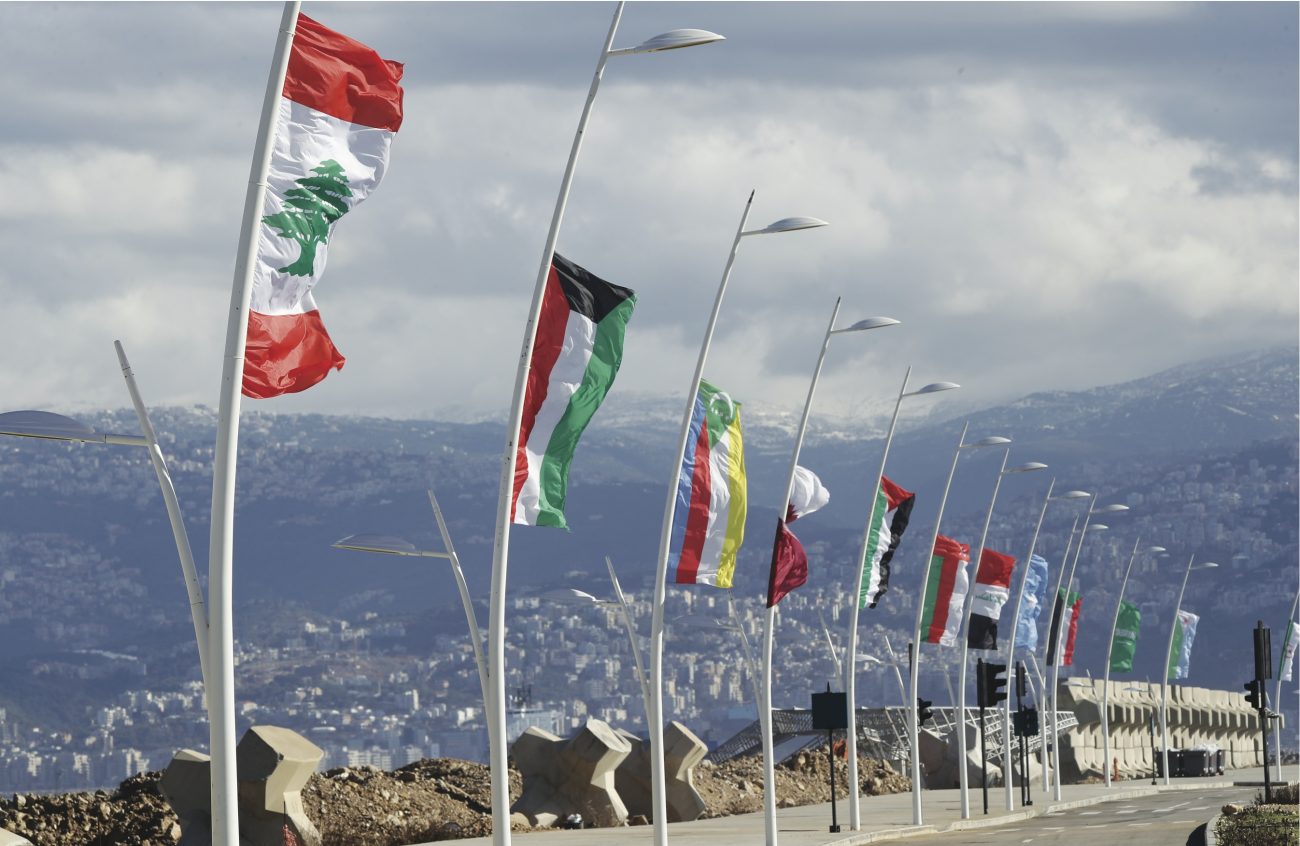
While it would be a waste of time to warn of irrational exuberance in Lebanon at the threshold of what could be a new horizon for the 2020s and beyond, it seems most appropriate and prudent to regard the risks of irrationally negative expectations. Gloomy sentiments are ever-present in the country today, as demonstrated and exacerbated last month by the Arab League Economic and Social Development Summit (AESD Summit), the continuing lack of government and national vision, and the downgrade of the sovereign risk. Containing the spread of irrational negative expectations is a worthy cause, and one that might entail an immunity-building exercise in rational uncertainty.

As a mental approach, rational uncertainty proposes using the toolset of rational evaluation rather than succumbing to ideological gloom, willful propaganda or, God forbid, blind panic, when contemplating the radical uncertainty of Lebanese existence.

The rational uncertainty approach contains two elements: First, the acknowledgement that uncertainty is the only certainty we can ever truly have. Uncertainty cannot be eliminated; it is what remains once we strip off the mental assumptions that one might predict the future from the past or extrapolate unknown pasts from the present. Uncertainty rules universal, and this means that no one can reasonably argue that nothing about the Lebanese state could ever get worse, or that nothing in Lebanon could ever improve.

Second, we should remind ourselves that there is always more than one possibility ahead. It is our rationality that allows and maintains our determination toward building a better future, rather than falling into depression over the possibility of a worse one.

The first and, theoretically, most monumental agenda item for Lebanon last month was the hosting of the AESD Summit. This event was an operational and organizational victory but, in Executive’s analysis, not a significant win.

The not inexpensive gathering produced nothing glorious and report-worthy in terms of either Arab regional progress to a new and better performance of national economies or decisive strengthening of under-designed and overextended social safety networks in Arab League member states. Nor did the assembled dignitaries leave most Lebanese with increased hopes for more regional economic growth through better trade and customs agreements, or for Arab-owned solutions to the Syrian refugee situation and the reconstruction challenges posed by devastation in certain Arab countries.

It is no surprise then that this AESD Summit was barely mentioned in the international press, nor that the only local benefits noted by Executive editors were temporary relief from Beirut’s insane traffic and joy to those children who were given time off from school.

From a local vantage point, it can also be noted that some of the desired elements of the summit—like the presence of Arab heads of states—were not the decisive missing factors that prevented this summit from being successful. In fact, when examined with the toolkit of rational uncertainty, the summit was not hopeless. Uncertainty should allow for the possibility that future efforts for economic and social development in this region still may succeed, just as rational evaluation (based on speeches and closing communiques) finds that the meaningful elements missing from the AESD Summit were analysis, cohesion, debate, compromise, transparency, and a will to change.

The second report-worthy event, in the perception of Executive editors, was the loss of a bet. The substance of this bet, made on the first workday of 2019, was whether government formation would happen before or after January 19. The wager was modest, a stein of draft beer at a local resto pub, which by its diminutive size reflected the sad fact that no serious bet on Lebanese political sanity appeared viable to any of us at Executive. Needless to say, the bet that cabinet would be formed in time for Beirut to host its first regional political summit on Arab League level in almost 17 years was lost.

However, it must be noted here that both bettors felt like winners, because they enjoyed the settling of the bet in the affable company of friends—Lebanon was the real losing party. Executive’s reluctant conclusion was that making any bet and wagering any hope on a moment when strategic political insights would be delivered to political players is not within rational reach.

This suggests for the medium term (even after the surprise cabinet formation on January 31), it is not advisable to have exuberant expectations of an efficient government or reform process. Yet again, the agenda of proposed reforms (see story 20) and the—ever so fanciful and outsourced—national economic vision for Lebanon 2025 and 2035 deserve the benefit of the doubt. Executive is certainly determined to stay on the reform and development ball—including taking our own advocacy and economic plan forward through inclusive discussion and rational passion—in 2019. We will be relentlessly expanding our efforts to support and augment whatever vision we find credible, regardless of its author’s name or affiliation (currently at 230 measures). 

A third event of note on the Lebanese stage of puerile politics reminded Executive editors of the dramatic power of ill-spoken words. Anyone in a stable relationship is—or at least should be—aware that the effort to repair the impact of a carelessly uttered affront to a loved one can be a hundred times as arduous as the effort of uttering the stupid and damaging phrase.

In this regard, modern finance appears to be just as sensitive and vulnerable as the—infinitely more valuable—relationship of stable trust and love in a married couple or between a good leader and the people. Case in point: the ominous two words—“debt restructuring”—that reminded Lebanon and its international partners last month of the importance of sticking to a careful approach of rational uncertainty. At least that was the translation of a comment by Lebanon’s then-caretaker finance minister Ali Hassan Khalil that appeared in English-language media, causing frenzied trading for a period that was short but still far too long. It even appears to have caused panicked comments by normally cool financial observers, seen, for example, in the atypical quick formulation and issuance of a downgrade in Lebanon’s sovereign rating by respected international agency Moody’s.

This serves to emphasize how the power of a bad word in such vulnerable times could generate very bad outcomes, if the country’s internal and external markets and investors succumb to irrational fears instead of maintaining a cool, rational assessment of uncertainty.

An approach of rational uncertainty may even be prudent when looking at the state of the world. It certainly seems appropriate in considering our Lebanese state—which, nota bene, at 99 years of age still has some charms, and not a little potential.

February 19, 2019 3 comments
0 FacebookTwitterPinterestEmail
CommentEconomics & Policy

Arab summit shows a Lebanon at the mercy of disinterested regional powers

by Jeremy Arbid February 19, 2019
written by Jeremy Arbid

The Arab League Economic and Social Development summit hosted in Beirut in late January produced at least one solid takeaway: the reiterated recognition that Lebanon does not hold the keys to its own future and so must ride the bench during this economically and politically pivotal time for the region. With a government finally formed on January 31, Lebanon finds itself engulfed in domestic and regional uncertainties and struggling on a tightrope to maintain its balance.

The mid-January summit was viewed by some observers as an unsuccessful event when measured against hoped-for outcomes for the host country, which included: a resolution to the myriad and competing perspectives on Arab states’ relations with Syria, the provision of financial or other support to refugees, and a decision regarding the general direction for Lebanon in 2019. According to Paul Salem, president of the Washington-based Middle East Institute, in a late-January Weekly Briefing published by the think tank: “The large number of no-shows reflects a general view among many Arab heads of state that Lebanon is too deeply under the political and security sway of Iran and Hezbollah. It might also reflect a slowing down of the momentum to normalize ties with the Assad regime, and a desire to avoid giving political support to the Lebanese president and his allies, who would like to see the Arab League end its suspension of Syria.”

False hopes

Much of the final communique from the summit comprised of reiterations of previous promises, though there was a new proposal for a $200 million technology and digital economy investment fund for the region. Lebanon’s president called for the creation of an Arab Bank for Reconstruction and Development that would serve as a funding structure for the reconstruction of wartorn Arab states, while Qatar committed to purchase $500 million worth of Lebanese sovereign debt.

What is Qatar actually buying with this offer to purchase government bonds? Perhaps it is backdoor access to Arab decision-making. Before 2010, the political influence of Qatar in Lebanon was mainly limited to the former employing a fraction of their surplus petroleum revenues to help rebuild the latter after the 2006 war with Israel. During the Arab Spring, Qatar placed its bet on the Syrian opposition and supported political Islam in the region (both losing wagers), and has maintained ties with Iran to the ire of Arab counterparts—the latter two Qatari decisions, along with inter-GCC rivalries, were the major driving impulses behind the Saudi-led blockade in 2017. Less than a day after the Qatari bond-buying commitment, Saudi Arabia’s finance minister said at the World Economic Forum that the Kingdom was poised to “support Lebanon all the way,” but did not offer specifics.

Should the Lebanese have hoped for more tangible outcomes? The results of this summit have historically been weak, both in terms of effecting change at the regional level, in either a political or economic sense, and in the fulfillment of past promises made.

In 2007, there was a consensus movement by Gulf countries to try to gather the region together, evidenced by the proposal to integrate the region into a monetary union, borne of the traumatic experience of Iraq’s invasion of Kuwait. Plans to form an Arab customs union and integrate scientific research were announced during the 2009 summit, but as soon as the Arab Spring erupted this consensus evaporated, leaving regional integration proposals still on the table.

When compared with other regional political blocs, the Arab League is often characterized as a political tiger that roars, but whose measures rarely have teeth. The regional body has traditionally been propelled on the strength of the Saudis’ financial clout and Egypt’s political persuasion; when the interests of those two countries aligned, the institution worked.

In the current environment, there is an alignment of Egyptian and Saudi interests in countering Iran and opposing Qatar, but when it comes to solutions for Syria’s war and readmittance of Syria into the body, there seems to be disunity. On the question of discourse at a lower level, it appears that the Arab League is still very far from having an interest-driven joint position, and this is visible when one looks at how Lebanon has reacted to issues such as the Libyan question and Syrian conundrum. The Lebanese position has been internally divided and not based on prioritizing national practical interests, but rather on the political positions of individual parties, and the reemergence of decades-old grievances.

Given the unfulfilled promises of past summits, what could the Beirut summit have produced for Lebanon, within a fragmented region, in which multiple countries see increasing inequality, poverty, and specters of civil unrest? One might have hoped that even if only minor economic solutions were on offer to Lebanon, then outside powers could perhaps have spurred on a political agreement to form cabinet prior to the gathering. But any hope of that was dashed by the maneuvering of various political factions in the lead up to the summit.

Tangled loyalties

While there may still be emotional pain in Lebanon over the disappearance of Imam Musa Sadr 41 years ago, Lebanese political factions’ punishment of Libya for the evils of the Gaddafi regime—and Libya’s subsequent boycott of January’s summit—does not bode well for the future improvement of Lebanon’s regional role and interactivity with other Arab states. If there is any potential for Lebanon to be an actor on the regional stage rather than a pawn thrown around by outside forces, can Beirut afford to harbor such extreme resentment over past injustices?

When it comes to relations with Syria, some observers believed Bashar al-Assad was blocking the formation of Lebanon’s government. The fact that this could even be a possibility, that Assad could theoretically exert such pressure on Lebanon, is because the Lebanese state and its representatives are subsidiary to the links between communities and foreign interests. The Lebanese state may not as driven by foreign interests as it was during and after the civil war, but tribal linkages in society and pressure groups still exert a powerful influence capable of incapacitating the state and preventing it from undertaking activity vital for its survival. Because these groups can basically make the state impotent or operationally dysfunctional, how can Lebanon be made more immune to these pressures?

Despite the Qatari offer, Lebanon walks away from the summit with more questions than answers, or solutions. The country is in a difficult position as domestic economic pressures mount and trust in the country’s financial system erodes. Unfortunately, the post-summit sentiment is that nothing will be decided in Lebanon, or for Lebanon, until foreign-sponsored gatherings shape the future political and economic direction of the region.

February 19, 2019 0 comments
0 FacebookTwitterPinterestEmail
Economics & PolicyQ&A

An accumulation of economic woes

by Thomas Schellen & Jeremy Arbid February 18, 2019
written by Thomas Schellen & Jeremy Arbid

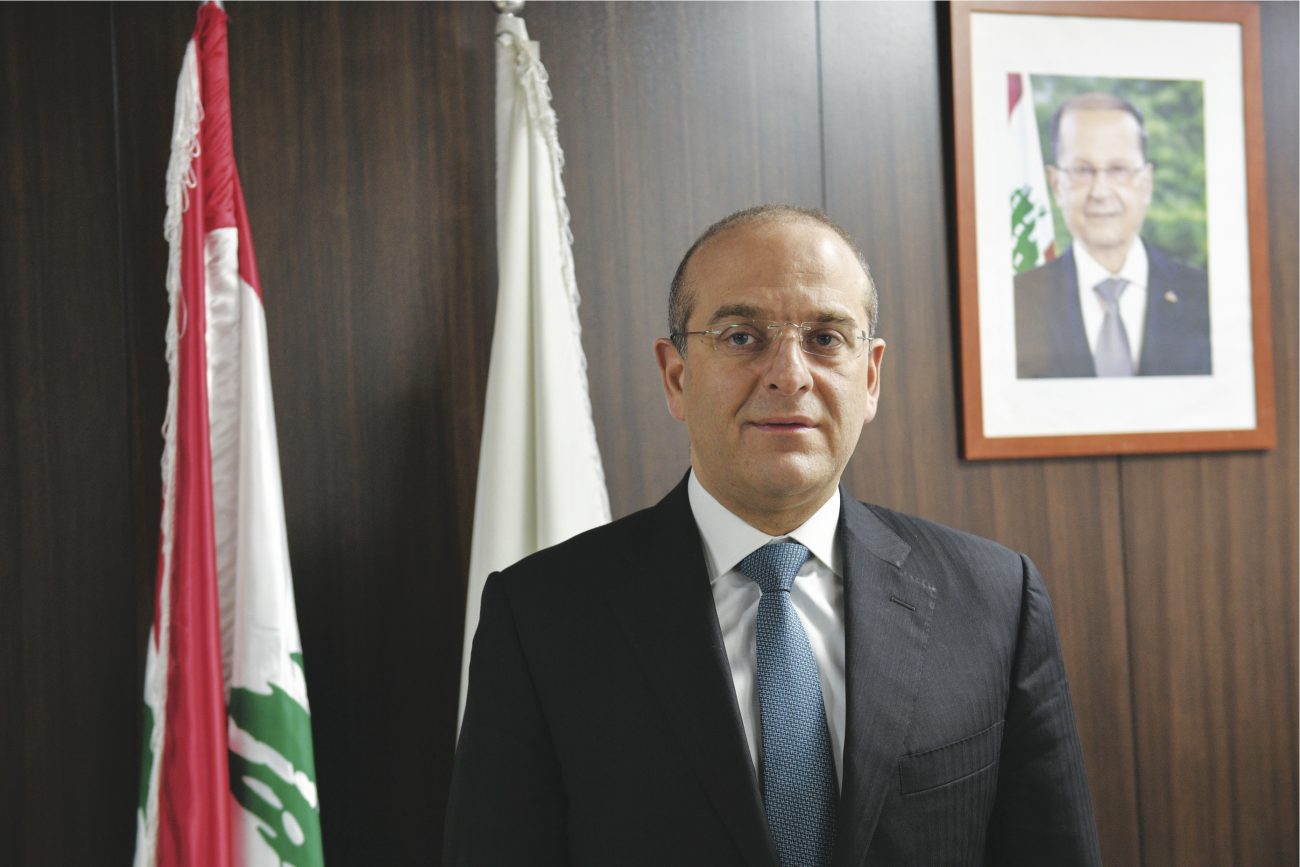
Executive met with then-caretaker Minister of Economy Raed Khoury to discuss McKinsey & Company’s economic vision (commissioned by the government in late 2017 and published in early January), the ministry’s progress in regulating private generation of electricity, and the political and economic situation of Lebanon ahead of mid-January’s Arab League Economic and Social Development summit, which was hosted in Beirut.

E   As the government in its caretaker status is not empowered to make all needed reform decisions, our impression is that ministers such as yourself are trying to keep the public confidence from deteriorating, but that there are many challenges. What can you actually do in this situation?    

There is a tremendous campaign against our economy and our country from internal factors or internal politicians, some media, and there are some external factors, because [various interested parties] know exactly how our economy is so sensitive. The backbone of our economy [relies] mainly on trust and being able to attract foreign deposits and FDIs. And they know our economy is not independent from external factors. If our economy were dependent on internal strengths from industries, agriculture, and technology, we would be more immune to external factors. On the other hand, we cannot ignore the economic problems that have been [accumulating] for the last 25 years, so what we are seeing now is only a result of all of the bad management of the government vis-a-vis the economy, starting with a lack of vision [overall] to the destruction of the productive sectors.

There are many other factors, like the corruption that has been mounting over the years. [This] is a very important negative factor for our economy, because there are a lot of taxes that are not collected, and at the same time it creates a trust issue for any investor [thinking of bringing investments] to Lebanon. There are problems related to the environment, the sewage, and the problem of electricity, to which we have still not been able to find a solution. All of these things have accumulated, and the most important thing, and a result of everything I have mentioned, is the mounting public debt compared to our GDP.

E   Is the idea of an increase in corruption not mainly driven by a self-reinforcing perception that can be likened to a self-fulfilling prophecy? How do you yourself see the problem when, as in a recent accusation leveled against you, allegations of corruption are made, but no mention is made of the fact that you, as a minister of economy, stepped back from your role in an investment bank when you started to serve in a ministerial role? If that is the case, you have actually moved against corruption but the perception of that seems not to be there. Can you do anything to improve the perception of the state and government as corrupt?

I disagree with the perception, because I am probably one of the few fighting real corruption. I cracked down on the generator mafia, which has been a taboo for the last 30 years. We have to face [corruption]. And corruption has many meanings because it has many faces. Corruption could be stealing money and taking contracts. It could also mean a conflict of interest, as you mentioned, and a conflict of interest could also be if I’m going to be nominated to be a deputy and a minister at the same time [because a parliament deputy cannot exercise oversight of themself while also serving in cabinet]. For myself, I did what I needed to do in terms of differentiating between my private job at the bank [and my public office]. [In this regard], managing conflicts of interest is the name of the game. Nothing comes for free. If you’re going to bring in a minister who is a professional, [they likely] have their own business, and this comes with a conflict of interest. But [such a scenario] is better than appointing a minister who does not know what they are doing.

E   In a January television interview you mentioned that over 100 generators have been confiscated, and now 70 percent of generator owners are issuing bills that charge per kilowatt hour usage. What is the main driving force for you in targeting the generators? Is it an issue only of corruption? Or is it an issue of restructuring the value chain of electricity?

There are two electricity providers in Lebanon: the government and the private generators. They are two separate issues, in terms of coming up with a solution. The normal thing is to have the government [meet electricity demand], but the fact is that the government is unable to [do this]. These generator [operators] have been [taking advantage of] the people by giving them the impression that they are so powerful, can do whatever they want, and can charge whatever they want. But they are just taking the people hostage.

So what we are trying to do, and we achieved it, is to crack this mafia for the benefit of the people. It turned out to be true that after they introduced the meters the monthly bill decreased tremendously, for example, from $200 to $60 or $70—and [operators] are still making money. The impact is huge because it affects every individual in Lebanon. The people have felt the difference [since at this time] the most important thing for people is to save some money. Saving this amount of money per month is a huge, huge saving for any household, especially for the poor and the middle class. And at the same time we calculated a margin for these generators. [Because of what we did], operators are still making money, [are able] to pay their costs, [covering] appreciation, fuel, and everything else, and still have a profit margin.

E   Can this be replicated across all the inefficient areas of the economy where pricing is not optimized socially. For example, can you do the same thing with transport or with other private sectors?

No. We were able to control this because generating electricity is the job of the government. So these people are not legal, and given their status of being illegal, we are able to control them. For other sectors it depends, because we are, at the end of the day, a free economy.

E   Do the private generators pay tax on their income from selling electricity?

No, they don’t. They’re outlaws, and the government has accepted that because they fear that they are not able to do their duty of providing electricity.

E   That leads us to the McKinsey report because by first impression the report is assuming the government has a lot of power in directing the economy, which practical experience over the last 20 years indicates Lebanon does not have. What is your economic model for Lebanon to implement?

First, before fighting over how we want to distribute the wealth, we need the economy, and then we will fight over how to divide the wealth, yes? So the idea is that we are going to make the cake bigger and then divide. We took into consideration both, how we want to increase [the size of] our economy, and then how we are going to create jobs, because creating jobs is a social aspect, and we believe that productive people will be rewarded at the end of the day and non-productive people will not be rewarded.

The main part of this [economic vision] is not only the creation of 370,000 jobs, it is also the spread of wealth because the productive sectors are across the whole country not only in Beirut or Mount Lebanon. Second, you can only create a middle class if you create big companies because the middle class is mainly middle management, and that can only exist in big companies, not small ones. In order to have big companies, you have to be competitive so you can grow and be able to pay hundreds of thousands of salaries for the people—and this is the middle class that we have eliminated in Lebanon over the last 30 years.

E    If we listen to the street then there is an accusation that what exists in Lebanon is a rentier economy of unproductive elites that are depriving the work-willing people of economic opportunity. So how is this economic reality and the need to rectify this bad existing “model” reflected in the plan and in your vision beyond the McKinsey plan?

I agree that currently the situation is like this, but you need to understand why it is like this and what we are trying to do; it is useless to describe the situation without understanding the reason. [Lebanon’s economy is currently structured to increase] the gap between the poor and the rich. Creating a productive economy will decrease the gap. Why? [Because of high interest rates, the wealthy class is parking their money in the bank instead of putting it to work by lending it out, while the have-nots are struggling to make ends meet. And there is less borrowing because of the higher interest rates]. [If investments could be channeled] into industries or productive sectors, this turnover of money would have been circulated 10 times in the economy and [would have] created more jobs, creating [and distributing] more wealth. The McKinsey study for the government plan addresses exactly this issue at its core. I hear some magazines or those that call themselves economists describing the situation, and they don’t understand why it is like this or what the benefit is of creating productive sectors. What’s the use of a $100 million deposit in a bank if it benefits one person? But if this $100 million [is channeled] into five to six industries, it creates thousands of jobs, generates more money, and the people make more money. So this needs guidance from the government, and that is what we are trying to do.

E    How do you assess the state of affairs today, in early 2019, versus at the end of 2017, when you commissioned the McKinsey report—before parliamentary elections, before the confidence boost from CEDRE, and before the government deadlock became visible? In terms of ability to implement, do you see structural reforms and economic developments as more likely today than about a year and a half ago, when the decision to commission McKinsey was taken?

If some of the ministers or public opinion at that time didn’t believe in what we are doing, I think now they should believe, given the situation. And I think tackling the core of the problem is the most important thing. We don’t want to take medicine [to mask the symptoms]; we want an operation to solve the problem. [The medicine] probably helps you for a couple of months, and then what will happen? And I really believe if we don’t [do the operation], then we are in deep shit.

E   Do you want everyone in government, Parliament, and the population as a whole to read the McKinsey report on your website?

The stakeholders are everybody—the citizens, the government, the [state] administration, the international community, funds, banks, the World Bank—the report is very global and very reachable for everybody. It’s more than a study; I want to make this a culture in which every citizen understands to a certain level that there’s a government with an economic policy for the productive sectors, and we are moving in the same direction. And this also helps [boost] confidence because you can’t be lost as a citizen, you have to have an identity. It’s not an identity only because you are Lebanese, it is [an] economic identity. If you want to create an economy, this is the way to do it.

February 18, 2019 0 comments
0 FacebookTwitterPinterestEmail
Economics & PolicyLegislation

Lebanon’s parliamentary productivity

by Jeremy Arbid February 18, 2019
written by Jeremy Arbid

At first glance, the legislative output of the Lebanese Parliament impresses with its extreme volatility. To full understand the matter of legislative productivity requires a contextual view that takes political environment into account.

The election of Michel Aoun as president in October 2016 ended almost two and a half years of vacancy in the post, and was the result of an agreement between Lebanon’s political parties to form a government, headed by Saad Hariri, that would oversee negotiations to draft and pass a new electoral law to govern the first parliamentary election since 2009. The beginning of this new era brought changes that were an indication of state productivity, which had been lacking in Lebanon for several years. These changes included: the ratification of two state budgets; the holding of parliamentary elections; the passage of anti-corruption laws; the enactment of anti-torture legislation and other human rights-related measures; the signing of oil and gas exploration contracts; and the appointment of high-level government, security, and judicial officials. 

In considering the output of the state in the last decade, one can discern three distinct political periods. In the first period, 2004 to 2008, there was one set of parliamentary elections, but three resignations of the government, one assassination of a former prime minister, one occupation of Downtown Beirut, and one cross-border war. Skip forward, and we see that between 2014 and 2017 there was the long presidential vacuum and a period of non-performance in terms of the cabinet, as well as the Syrian refugee crisis, the rise of Daesh, and other security concerns. Compared to the preceding and following periods, the Sleiman presidency from 2009 to 2014 was somewhat politically stable, which helps explain the relatively consistent legislative output during Sleiman’s tenure.

Political and economic factors

The low legislative output of Parliament in 2009 might have, in part, been influenced by the global financial events of 2008. The aftermath of the perceived double whammy in 2008 (the burst of the Dubai real estate bubble and the onset of the Great Recession) was expected to have strongly negative impacts on remittances and financial inflows to Lebanon, though the opposite happened. That year also saw local security upheavals that peaked in May 2008 and brought the country to the brink of renewed civil strife. The resolution of the crisis led to the election of Michel Sleiman. The holding of parliamentary elections in spring 2009 or the relationship between the new president, the parliamentary speaker, and the prime minister are also possible explanations for the low number of laws. The failure to organize and hold parliamentary elections was a presumed factor in the low legislative output of 2013, along with the question of who would succeed Sleiman as president when his term ended on May 25, 2014.

It is possible that the extension of the Parliament’s mandate (in 2013, in 2015, and in 2017), and the vacancy of the presidency that began in the middle of 2014 and ended with the election of Michel Aoun in 2016, did not have a significant impact on the quantity of legislative output for the period 2014 to 2016. The quantitative comparison of legislative output allows us to identify distinct periods but does not offer a measurement of the qualitative component of the output. Measuring the quality of legislative output is a challenge because it comprises different streams. For example, legislation related to laws to approve financial transfers to administrative bodies or to conclude official agreements between states depend on procedural or annual conditions, where each transfer or international agreement must be legislated. Although many laws can be passed in a single period, these laws may not have a transformative effect on society, whereas one single law—such as the public sector salary increase or the election law, both passed in 2017—can have a huge societal or economic impact.

[media-credit name=”Ahmad Barclay and Jeremy Arbid” align=”alignright” width=”590″][/media-credit]

[media-credit name=”Ahmad Barclay and Jeremy Arbid” align=”alignright” width=”590″][/media-credit]

February 18, 2019 0 comments
0 FacebookTwitterPinterestEmail
Cover storyMcKinsey

McKinsey’s economic vision emphasizes microscopic details over fundamentals

by Thomas Schellen February 18, 2019
written by Thomas Schellen

Lebanon has no difficulty evoking the idea of a circus, or, as we said in the previous issue of this magazine, a political carnival. Our absurdist theater troupe had seemingly perfected its performance of the tragicomedy with the title “Government without Head.”

But in January, there were two new and hopeful twists added to the script. At the end of month, the drama found a resolution with a new cabinet, while earlier in the month the Ministry of Economy and Trade (MoET) surprisingly released the “Lebanon Economic Vision (full report).” It became an instant holy duty for stakeholders in the Lebanese economy to analyze this concise plan, or at least pour over its severely abridged executive summary, containing a mere 150 presentation pages in PowerPoint format.

In contrast to the political script of “Government without Head,” whose anonymous authorship had resulted in much local speculation (was it written by the Americans, Russians, Iranians, Syrians, Saudis, Mary Shelley, or Dr Totenkopf?), the authorship of the Lebanon Economic Vision (LEV) (including the plan’s not inconsiderable number of typographic errors and internal incongruences) resides entirely with a team from international consulting firm McKinsey. 

The devil is everywhere

Much more pertinent for any analysis of the LEV than small deficiencies such as typos is arguably the inclusive reach—the buy-in from all stakeholders across all strata of society—as well as the mandate and the meat, or content, of the economic vision. In regard to the mandate behind the LEV, McKinsey says that a decree by the Council of Ministers from October 2017 deemed that the “vision would aim to grow GDP and create jobs through selection of productive sectors that could become competitive.” Moreover, the same text pointedly mentions that the vision would aim “to understand the government’s role in that regard,” presumably referring to the state’s role in GDP growth and job creation. 

On the issue of inclusive reach, McKinsey declares that some 200 stakeholders across multiple economic sectors were interviewed. It specifies at the start of the document that “pre-work interviews” were conducted in the first quarter of 2018 with: 15 ministers; 30 director generals and regulators; five members of Parliament; members of the country’s Economic and Social Council (Ecosoc); 10 local and international civil society stakeholders; over 20 international experts; 30 professional organizations, i.e., associations, syndicates, and orders; and 75 “Lebanese private sector leaders.” Further down in the presentation, the authors say they “interviewed 200+ stakeholders over a period of 8 months,” and list, on four pages with a total of about 140 entries, the meetings that were conducted with these stakeholders, identifying the researchers’ most important interlocutors by name and organization, and mentioning the remainder with more general descriptions of their affiliations and roles (e.g. “Dr. Joseph Torbey & team from the Association of Banks in Lebanon”).

This commitment to provide a list of meetings is helpful in allowing discerning readers to gain an initial understanding of the stakeholder interactions involved in the LEV’s production. But blind spots are not universally removed. Namely, the length and intensity of an interview with a Lebanese political or economic figure—as Executive knows very well—can vary greatly, but there is no indication of the depth or quality of the insights gained in those interviews for the LEV. Moreover, McKinsey makes no attempt to explain the methodology used in selecting its interviewees or explain why there are only three or four entries recording meetings with interviewees from each the real estate and health sectors whereas there are over 16 entries for each of the industry, agriculture, and public sectors.

In sum, there is no methodological attempt to indicate the width or depth or diversity of views, nor the intensity of the interaction. Instead, the stakeholders identified indicate a significant alignment of the interviewees with the original core owners that commissioned the report. This in turn strongly hints at likely similar biases and the possibility of mentally closed feedback loops, which could have resulted in incestuous inbreeding of the perspectives that were entered into the LEV’s underlying information base, from which the report was composed.

McKinsey does not address, in the released report, how it approached the problem of unwanted opinion loops and myopic perspectives—given the narrow layer of mutually interconnected stakeholders in the Lebanese economy and its very limited pool of outspoken and transparent personalities. It deserves to be noted that the LEV generally offers very little detail about the methodologies applied in its research processes, data acquisitions and evaluations, rationales for assumptions, margins of error, and such.

Turning to the beef

When examining the content of the LEV, a clearly positive aspect of the plan is that McKinsey has incorporated into the vision a structuring and prioritization of the Capital Investment Plan (CIP) portfolio of approximately 270 projects. When the CIP portfolio was presented by the government nearly one year ago, it seemed disorganized. Less discreetly said, the CIP in its February 2018 iteration was a total mess of holdover ideas (many going back to unfulfilled project ideas from the political heritage of the Rafik Hariri era) and unstructured needs, which were put together as project lists without even a level of cookbook coherence.

Now the CIP evaluation by the McKinsey team says that 11 percent of CIP projects, worth $3.4 billion, are mission critical, another 15 percent are high importance, and 25 percent are marginal. It is well noted that the LEV attempts to structure the CIP portfolio into a more coherent workflow, in terms of  order of priority. On the other hand, the projects McKinsey identifies as top CIP priorities are exactly the same priorities that the government had already flagged.

Also worthy of examination are two projects that McKinsey added to the proposed portfolio of Lebanese infrastructure-esque investment projects. Called “flagship projects” in the LEV nomenclature, the two project ideas that were not CIP projects but mentioned in the plan’s CIP-related pages were a Smart Lebanon Knowledge Hub, including a proposed “Smart Village Beirut,” and an industrial infrastructure proposal for establishing a specialized “construction technology zone on the border with Syria.” These particular LEV flagship projects are elaborated on across almost 100 of the LEV’s 1274 “pages” (PowerPoint slides), at the very end of the document.

Unmistakably aimed at capitalizing on Syria’s reconstruction in the country’s projected peaceable future, the construction technology zone idea emits a “pie in the sky” quality, in our perspective. This is not only because of the unpredictable timeline for this zone, due to the fact that Syria remains in conflict—one already projected plan imagined the onboarding of a developer by February 1, 2019, beginning of the zone’s construction by June 1 this year, and its operability by March 1, 2020—but also because a specialized industrial construction zone would require the Syrian state to welcome Lebanese companies with low customs barriers and low informal internal barriers, among other political prerequisites.

There simply does not appear to be any indication whatsoever in January 2019 that this could be achieved without a tradeoff of sovereignty, i.e. if Lebanon agreed to become a province of Syria, then maybe Bashar al-Assad would allow this. Any other solution that would allow Lebanese construction companies to basically take over the reconstruction of a large portion of Syrian housing needs is questionable.

In the LEV pages outlining the Beirut knowledge village, as part of the proposed “Smart Lebanon Knowledge Hub,” there is a curious map in which Mckinsey imagines where such a village might go. This map displays a large—today partly residential, partly commercial, and largely high-price—area under a headline that says: “The Beirut Knowledge Village could be built as an aggregation of several ‘Districts,’ BDD being one of them.”

Dreaming big is a virtue, but what are the chances—and what would be the costs—of transforming an area that stretches from the southern and eastern BDD borders to the Salim Salam highway in Bachoura, and that in its northern portion includes most of Saifi Village and extends up to the neighborhood of the current ESCWA building? Credibility is important when presenting a big dream, and it is hard to see the  value of this Beirut knowledge village when simply examining the area reveals that it is amongst the priciest real estate in Lebanon, and that it lacks any research facility or even small university.

The third flagship project earmarked in the LEV relates to tourism. Splashed out over almost 50 pages (1145 – 1182), this project aspires to create “a seamless end-to-end tourism journey” for the brave tourists who visit the country. The concept of this wholesome experience is as detailed as the word “seamless” suggests. It entails proposals ranging from the idea of developing a Lebanese tourism brand image (which this writer has heard more than once before) to novel ideas for significantly reducing the “queuing time at immigration,” for a digitized entry card for foreigners, for data capture, for environmental preservation as part of tourism strategy, and much more.

However, this tourism-focused flagship project needs to be seen in the context of McKinsey’s assumptions about Lebanon’s tourism sector and its envisioned trajectory from now until 2035. These aspects of the tourism plan in the LEV are elaborated on earlier in the document, on pages 802 to 851, and are anything but immune to fundamental questions. 

Tourists, tourists everywhere?

The McKinsey team—very optimistically—projects regular incremental annual increases in arrivals of 10 percent, from 1.9 million in 2017 to 4 million leisure visitors by 2025, as well as (presumably also annual) increases of 11 percent overall, to a grand total of 4.2 million tourists (leisure, business, and medical) in that same period. Under the McKinsey vision this number will increase to 6-7 million by 2035. This is not exactly intuitive, given that global tourism growth has been volatile but more on the side of acceleration, making it curious that the projected growth for the ten years of 2025 – 2035 is actually lower in absolute numbers than the seven-year LEV tourism ambition for the 2017 – 2025 period.

The implied drop in percentage increases—from 10 or 11 percent in the years up to 2025 to much lower annual percentage rates between 2025 and 2035—is not explained in the LEV and seems to assume that some sort of negative shock would have to occur, be it at a global (oil price, environmental crash?), regional (Israeli invasion, Islamist revolution, new American sanctions, universal Arab travel ban?) or local (state bankruptcy, mystery epidemic, mass emigration?) level. 

On the 2025 timeline, the excess of the total projected tourist numbers over the number of leisure visitors is explained through business travelers and medical tourists. However, given that the McKinsey plan acknowledges that the actual number of business visitor arrivals in its 2017 baseline for this ambitious tourism growth projection is not known, the reliability of projecting a goal of 200,000 business and 20-30,000 medical visitors for 2025 seems even more tenuous than the 10 percent annual growth projection of leisure tourists.   

The other two building blocks are medical tourism—a hotly contested realm with significant regional competition—and conference tourism. In the latter, known by the stupid acronym MICE (for meetings, incentives, conferences, and events), Lebanon once was a regional center of attraction. But that was in the previous millennium and before the commerce-in-the-desert hub Dubai started to roll out new five-star conference hotels at a speed that relates to Beirut’s hotel construction timeline like the number of lanes on Sheikh Zayed Road to those on Hamra Street.

Promotion of Lebanon for medical tourism was something that this writer interviewed concerned stakeholders on more than a decade ago, at a time when the regional conditions were much more favorable and a competitive advantage of Lebanese medical tourism destinations for European and Western Asian countries seemed almost feasible. In this regard, McKinsey’s vision seems misplaced.

Moreover, the projection of tourism arrivals on a steadily increasing trajectory has been a long-standing fantasy nurtured eagerly by Lebanese tourism stakeholders in the public and private sector. It just never happened, and the past two decades have cemented the understanding that betting on annual tourism growth is a very fickle gamble, even in prominent destination countries in the Southern and Eastern Mediterranean, such as Turkey, Egypt, or Tunisia, which have all witnessed significant fluctuations.

To specify the volatility of tourism streams in Arab countries in the Southern Mediterranean, it suffices to note that Egypt reported fluctuating tourist numbers ranging between more than 14.7 million in 2010 to less than 6 million arrivals in 2016  (data sourced from Singapore based data compiler CEIC). Moreover, in the 12 years from 2006 to 2017, Egyptian tourist arrivals showed only one two-year period of consecutive increases, meaning that predictability of annual tourism growth rates in this region looks like an exercise in pure economic mythology, because of the overwhelming impacts of risks that do not even have to be as large as nation- or region-wide civil unrests, as seen in the hottest phase of the Arab Spring.

In Turkey, another country with multiple tourism destinations, tourism inflows showed a volatile but broadly rising trajectory over the past 25 years. While the country recorded no more than 8 million annual arrivals before 2000, the annual count almost tripled to over 21 million by 2005 and rose continually from about 19 million in 2006 to over 41 million in 2014, before softening and again recovering in the period from 2015 to 2017.

In the case of Turkey, the country moreover sports a national tourism strategy that was devised initially for the 2007-13 period and then extended to the following ten-year period.  Under this strategy, with its updated targets and validity until 2023, numerous “alternative tourism” opportunities for the country are mentioned, including expo, eco, and health tourism.

In this Turkish tourism development plan, which entails focal tourism development zones, and tourism axes and corridors, there is mention of investments and government incentives under a vision to establish inbound tourism in Turkey as “world brand” and achieve a position among the top five countries (presumably globally) “receiving the highest number of tourist [sic] and highest number of tourism revenues by 2023.”

When an extremely large—in comparison with Lebanon’s—tourism market with a dominant position in the Eastern Mediterranean names health, eco, and MICE-related tourism projects as part of its national development master plan, it seems quite unwise and counterintuitive to design a Lebanon tourism vision without looking at upside and downside potentials in relation to the competition in this global neighborhood.  The LEV has a “case study” page referring to Turkey as offering an example of medical tourism development but makes zero reference to Turkey as a likely competitor for Lebanon’s medical or wellness tourism.

Taking the example of this tourism vision as one of the LEV five structural pillars, after a—admittedly not exhaustive enough—perusal of the contents leads this observer to think that many of the LEV concepts related to tourism appear worthy of much further study and adoption, and makes one foot twitch with the desire to kick the disparate bunch of public and private stakeholders in the tourism sector into LEV-congruent action.

But another part of the observer’s grey matter is greatly puzzled and unconvinced by the LEV’s tourism vision, due to the lacking analysis of the competitive regional environment, the failure to look at risks dispassionately and present balanced, SWOT-type, assessments of the volatile internal and external factors, and the economic baseline assumptions underlying the McKinsey elaborations on future tourism potentials in Lebanon.

Dreams without warranty

The LEV contains many ideas that cannot be discussed in this analytical foray, after only a preliminary peek—ideas related not only to tourism but also to the other proposed focus sectors (agriculture, industry, financial services, the knowledge economy, and the diaspora). The plan also entails much that deserves to be studied by public stakeholders, relating to governmental and administrative responsibilities and coordination needs, even as one has to ask if most of the political and administrative innovation and reform needs are not likely to be more problematic than the vision document lets on.

One must consider the value or danger of adding another layer on top of the existing bureaucracy to execute and implement the ideas put forth in the McKinsey vision, for instance where the LEV proposes the creation of the Performance Management and Delivery Unit (PMDU). It is such a bold attempt at producing improved coordination and efficiency by bureaucracy that it provokes sincere wonderment at the consultants’ overconfidence in this state’s ability to fast-track reform or project implementation.

Such measures bring to mind a similar political project more than 20 years ago. When the empowerment of the Council for Development and Reconstruction (CDR) was set on the political agenda the CDR was constantly clashing with other entities in the ministerial bureaucracy and created a huge bottleneck in terms of decision-making. The question remains whether the PMDU would achieve much more than just adding another layer of administrative bottlenecks in the Lebanese system and if it would, under the purview of the cabinet, perform any better as a coordinator of a national economic effort than the already overburdened bureaucratic entities that exist today.

The consultancy claims that its model “provides guidance on target-setting” and explains that it links its (individually mystifying) sector targets to their macroeconomic impacts through “simple linear regressions.” Even if that means that the plan might be appropriate for discussion in a profoundly disinterested 12th grade high-school setting or within a similarly inclined political class, can we really allow ourselves to be content with this?

After browsing the LEV a few times, the vision document cannot yet resolve the questions over inputs and processes concerning data integrity and quality, methodologies, and fundamental economic assumptions that can only be qualified as either prophetic chutzpah or deliberate whitewashing of what lies in darkness (even the alchemists of economic forecasting in multilateral financial institutions would not dare to try and sell a serious GDP hope with a horizon of seven or 17 years).

Moreover, the LEV gives ample room for detailed irritation with ambient consulting noises. Would Lebanese agricultural producers really benefit from acting upon the proposal to seek increased exports of bananas to Columbia, strawberries to Belarus, avocados to China, and lemons to Azerbaijan? Does it help in the development of our knowledge economy to be told in the LEV that digital hubs have been set up in places from Boston, Dublin, London, and Newcastle to Dubai and Abu Dhabi? What can Lebanon’s cultural and creative industries benefit from being reminded of the K-Pop phenomenon in South Korea and being told of the East Asian country’s musical exports in 2017, and what can farmers learn from a “case study” of Vietnam’s “agricultural transformation during 1990s [sic],” including “land reform”?   

There indubitably are many nuggets of inspiration worth mining from the LEV as Lebanon muddles through the next phase of its economic evolution. When answering Executive’s questions in an interview last month, then-caretaker Minister of Economy Raed Khoury emphasized that the LEV has central value toward the generation of governmental decision culture, a unified mindset, and common yardstick against which future governments would be able check their decisions. He further confirmed that the consultancy delivered all that was expected by the Lebanese government and that the entire output was the document that has been accessible since last month on the MoET website. “This is the best investment that has been [undertaken] by [this] government. [The] return on every penny is the highest in the government in many, many years,” Khoury enthused. 

As firm as the minister’s confidence is, it does not solve questions such as if and how McKinsey could be held accountable if the promises of its plan were to prove unattainable or even faulty, or whether the government’s outsourcing of future socioeconomic plans and thus societal contract formulation is equal to a relinquishing, to a non-elected commercial power, of its responsibility and its mandate given by their electorate.

Finally, as the never-ending political theater show in Lebanon is now in another year and looks fully set to play out with too many intrepid actors and haphazard moves (irrespective of the formation and composition of its next Council of Ministers, which occurred in the last throws of the month, just as this magazine went to print), it might only become evident four or five years from now if the LEV was a great investment or just another outdated script and unfulfilled dream.    

February 18, 2019 0 comments
0 FacebookTwitterPinterestEmail
LeadersOpinion

An uninspiring economic vision

by Executive Editors February 18, 2019
written by Executive Editors

In January, Lebanon published slides outlining McKinsey’s economic vision—the outcome of a report commissioned by the Ministry of Economy and Trade in late 2017 following government discussions. The 1,274-slide document was developed over the first half of 2018, and outlines an economic vision produced by the consulting firm and owned by the government.   

If we consider the country to be a company, we can say that this economic plan has buy-in from three top-level board members—but we do not have clarity on the views of intermediate or upper management, and for that a new cabinet must be formed. There is thus no buy-in at the level of administration or state management. This report would make sense were McKinsey talking to the tiny senior executive management layer of a family-owned corporation, or at best a family-owned rentier state cut from the same cloth as that of certain undemocratic states in the Middle East.

But that is not Lebanon. Despite all the weaknesses of our democracy, such as the disregard for the people’s sovereignty by political bosses or the corruption of unchecked political elites, Lebanon is a democratic state—albeit a democratic state where the public sector does not operate on functional democratic processes. Instead, elected lawmakers negotiate workable solutions for social and economic disagreements between their electorates.

Lebanese democracy enters this period—crucial for not only its growth and future prosperity, but for its very survival—as a state battered by external pressures exerted by foreign powers, with internal dysfunctions reflecting the collusion of politicos who appear to regard society in the same way as a band of horse thieves might regard a herd of mustangs. Even in the best scenario, Lebanese democracy is operated by consociational procedures whereby communities haggle with each other rather than work in the interest of a greater national benefit.

The McKinsey report on an “Economic Vision” for Lebanon appears to be willfully oblivious to this reality. Even as a top-down document, its substructure of “Vision 2025” and “Vision 2035” comes across as a consulting product aimed at owners of a fictitious state, replete with targets for imponderables (such as GDP, GDP volatility, and unemployment rates in 2025 and 2035) that strike knowledgeable readers as blatant figments of the imagination.

McKinsey has not tied its vision to any economic model, and has based it on feeble analytical foundations. Some news outlets have published comments labeling McKinsey’s report a “damning diagnosis”—but it was not a damning diagnosis of our economic state of affairs, it was just a reiteration and accumulation of known numbers. Faced with the report, people who had been free to ignore realities or who were focusing on just part of these diagnostics, can now see the situation as a whole, and do not like the way it looks.

On the other hand, there seems to be only a single opportunity that could come out of this report, and that is the ability to use it as a reference point for further debates over what is necessary and what is needed. We can always say that the Lebanese government, by virtue of their unpreparedness for producing a strategic vision for the nation, outsourced the work to McKinsey; although the consultants produced a long list that may be useless, the fact this work was outsourced demonstrates that one was needed. There is an opportunity for more constructive discussion, and McKinsey’s economic vision, then-caretaker Minister of Economy and Trade Raed Khoury told Executive in a mid-January interview, is the product of the state’s inactivity or non-decision making over the last 30 years.

There are four crucial design flaws in McKinsey’s economic vision, each with implications for its implementation. The first is that the plan is not based on verifiable data, and admits that it is not an economic plan. This economic vision, where it refers to data—whether existing or target data—does not have any kind of fact-checkable veracity, because the fundamental issue in Lebanon is that lack of data means we never know what we are actually talking about. A second design flaw is that there is no understanding of Lebanon’s fundamental economic and social models, an analysis of which is actually what we want and need. A third design flaw is in the methodology and internal coherence of the plan, which offers no measure of confidence that implementation of Recommendation A can be done without any other measure, or that Recommendation C must be implemented after Recommendation B. There is no specification of which measures can be accomplished when and no qualification of what such a specification would be based upon. The final design flaw of the McKinsey economic vision is that the consulting firm has no skin in the game (no accountability), if Lebanon attempts to implement the proposed prescription in the nation’s economy.

Executive reckons that there is much, much more that has to be on the state’s and the public’s agenda for 2019. More understanding of our possible economic futures, more inclusion in our national economic vision, more joint decisions across communities and compromise between divergent interests, and, crucially, more intelligent—well informed—action.

February 18, 2019 0 comments
0 FacebookTwitterPinterestEmail
Editorial

Here we go … again

by Yasser Akkaoui February 18, 2019
written by Yasser Akkaoui

We have a new government and even the most skeptical among us is relieved. Of the 30 ministers, a handful are promising, young, dedicated men and women who have honorable records. It is our hope that these new faces will be able to maintain their untarnished reputations and demonstrate their ability to deliver what is needed in their respective ministries. This will be a challenge, given that in previous governments, new fresh faces have been sucked in and spat out by veteran members, leaving them confused, frustrated, or worse, contaminated by the establishment bug.

What really worries us is the ability of this government to manage the socioeconomic and fiscal challenges that Lebanon is facing. These challenges require a state of mind that will first comprehend the severity of the situation and then be able to address it with the utmost maturity, and selflessness, which unfortunately, is not in our DNA. So let us hope that our political princes realize that their own personal interests are at stake too, and maybe if motivated to save themselves they will bring the rest of us along with them.

We have not read the brief given to McKinsey, and so are unable to judge its content and whether McKinsey has delivered on what it was asked for. As such, it is easy to blame McKinsey on their economic vision that is not, as they were keen to state upfront, an economic plan. And as an economic vision, the McKinsey slide show fails to ask what kind of country we want Lebanon to be. This comes as no surprise, reaffirming as it does our government’s hazy conception of sovereignty. National economic plans are rooted in sovereignty: We would have expected the economic plan’s core to be built around concepts like food sufficiency, energy independence, social development, and inclusiveness—as is, this plan fails to fit into any social contract.

If, and only if, the government reaches out to civil society, recognizes its role, and utilizes its resources will we know that our leaders fully understand the scale of the problem. It is time for inclusiveness. For the past few months, Executive has sat with capable, ambitious, educated, and talented individuals to discuss our economic roadmap. These people are imbedded in their communities and know what they need. Their voices deserve to be heard and empowered. Lebanon’s problems are not new, and solving them requires all stakeholders to come together in the national interest. For too long our establishment has been part of the problem not the solution, and if they are not capable of putting the national interest above their own then it is past time for them to stand aside.

February 18, 2019 0 comments
0 FacebookTwitterPinterestEmail
  • 1
  • …
  • 70
  • 71
  • 72
  • 73
  • 74
  • …
  • 691

Latest Cover

About us

Since its first edition emerged on the newsstands in 1999, Executive Magazine has been dedicated to providing its readers with the most up-to-date local and regional business news. Executive is a monthly business magazine that offers readers in-depth analyses on the Lebanese world of commerce, covering all the major sectors – from banking, finance, and insurance to technology, tourism, hospitality, media, and retail.

  • Donate
  • Our Purpose
  • Contact Us

Sign up for our newsletter

    • Facebook
    • Twitter
    • Instagram
    • Linkedin
    • Youtube
    Executive Magazine
    • ISSUES
      • Current Issue
      • Past issues
    • BUSINESS
    • ECONOMICS & POLICY
    • OPINION
    • SPECIAL REPORTS
    • EXECUTIVE TALKS
    • MOVEMENTS
      • Change the image
      • Cannes lions
      • Transparency & accountability
      • ECONOMIC ROADMAP
      • Say No to Corruption
      • The Lebanon media development initiative
      • LPSN Policy Asks
      • Advocating the preservation of deposits
    • JOIN US
      • Join our movement
      • Attend our events
      • Receive updates
      • Connect with us
    • DONATE