• Donate
  • Our Purpose
  • Contact Us
Executive Magazine
  • ISSUES
    • Current Issue
    • Past issues
  • BUSINESS
  • ECONOMICS & POLICY
  • OPINION
  • SPECIAL REPORTS
  • EXECUTIVE TALKS
  • MOVEMENTS
    • Change the image
    • Cannes lions
    • Transparency & accountability
    • ECONOMIC ROADMAP
    • Say No to Corruption
    • The Lebanon media development initiative
    • LPSN Policy Asks
    • Advocating the preservation of deposits
  • JOIN US
    • Join our movement
    • Attend our events
    • Receive updates
    • Connect with us
  • DONATE
Economics & PolicyPharmaSpecial Report

Efforts to legally monetize Lebanon’s cannabis

by Jeremy Arbid August 3, 2018
written by Jeremy Arbid

If you ask the farmers of the Bekaa Valley, they will explain that cannabis cultivation in Lebanon predates the establishment of Lebanon’s republic by generations. Located some 30 kilometers east of the capital Beirut and nestled between the western Mount Lebanon range and the Anti-Lebanon Mountains to the east, the Bekaa Valley has for a long time been the heart of Lebanon’s drug country. Now, advice from an international consultancy, a statement by Parliament’s speaker that legalization is being studied, and plans by a local university to establish a medicinal cannabis research center all might kick-start a new branch of Lebanon’s pharmaceutical industry.

High hopes

There certainly are credible dreamers invested in the idea. At a university campus north of Beirut, Mohammad Mroueh has high hopes. A professor of chemistry and expert on medicinal plants, Mroueh plans to one day establish a medicinal cannabis research center and study the potential of the Lebanese cannabis plant.

The intent to establish the research center at the Lebanese American University (LAU) was announced in late May, with Mroueh leading the campaign. In the time since, McKinsey & Company, as part of its five-year plan to boost the country’s stagnant economy, has advised Lebanon to legalize cannabis for medicinal export and manufacturing. In late July, Speaker of Parliament Nabih Berri tasked a committee to ready legislation to that end.

Under Lebanon’s 1998 narcotics law, cultivation of the plant is illegal. In 2014, the Internal Security Forces (ISF), Lebanon’s national police force, reported it had discovered 35 square kilometers of cannabis fields but that none were destroyed. The agriculture growing size of the Bekaa Valley, according to Ministry of Agriculture figures from 2010—the latest available—is 165,660 dunum (roughly 166 square kilometers). The ISF does occasionally raid cannabis fields, but the protection of many growers has been so powerful that crops are not destroyed, nor are shipments seized, to stem the drug flow.

But preventing research may just come down to plain old politics. The perspective at Lebanon’s Ministry of Public Health (MoPH), according to director general Walid Ammar, is that licensing for cannabis research is not a problem because research into anything is not prohibited. Obtaining the cannabis needed for study would be the complication because of its legal prohibition. Ammar says the law would need to be amended, and that would require a political will.

Studying the strain

Back at the LAU campus, Mroueh says the May announcement was the culmination of three years of proposal writing, building consensus with the university administration, and public relations efforts. He says the goal of the institute would only be to conduct research on cannabis. “Let us analyze the plant, and the government can make use of the results and can legalize or not. But at least allow us to experiment,” he adds.

Mroueh says the chemical composition of Lebanon’s cannabis is not well studied, and the ratio of the psychoactive tetrahydrocannabinol (THC) to the non-psychoactive cannabidiol (CBD) is not known. He also points out the plant is a special strain combining indica and sativa (two species of the plant). “But it is under-researched to the most basic level of genome typing, and it is unknown how environmental factors affect the quality of the strain [for example soil quality, rainfall, and temperature] and [how] those affect the strain’s chemical composition.”

To experiment, Mroueh would extract cannabis oil from the plant through a simple process. “I don’t expose the plant to heat. I soak it in alcohol and evaporate the alcohol using a special machine, and I’ll end up with cannabis oil.” He says different solvents can be used as part of the extraction process, and the flower can be saturated in the solvent for differing lengths of time, depending on the experiment. In testing the medicinal potential to treat cancer he explains the starting point is in vitro. “We take cells in the lab. We test cancer cells, from the brain, breast, or colon. For colon cancer and skin cancer we have an animal model.” Successful in vitro trials would lead to in vivo testing, meaning on the whole animal. Then, studying pharmacokinetics would determine how a newly developed drug would interact in the body, before the very long process of human trials can begin.

He expects researching Lebanon’s cannabis to span 50 years, requiring at least five academic disciplines including chemists, biologists, physicians, and later agriculturalists to work on growing conditions. “We may have some results within a couple of years, at least the chemical analysis.”

Mroueh also says LAU’s school of medicine at the Byblos campus already houses the necessary equipment required to analyze the plant. The proposal for the research center has internal buy-in, and Mroueh believes the center can bring visibility and donations to the university. Altogether he estimates a starting budget of $1 million to hire research staff and to have dedicated equipment for the center on a pro tem basis using the medical school’s pre-existing equipment.

There are only a handful of cannabis-focused research centers around the world, and LAU’s initiative could be amongst the first in the region if it gets the green light and the state amends the narcotics law. Other countries have amended their narcotics laws to allow the cultivation of cannabis for medical and research use. And cannabis-based drugs have already been approved for use in other markets as cancer treatments in the form of easing chemo-induced nausea, as an appetite stimulant for anorexic AIDS patients, to ease seizures from a specific form of epilepsy in children, and to ease neuropathic pain in diabetics.

Pharma potential

The use of cannabis for research and, possibly later, production of cannabis-based medicines comes with significant costs. These costs are generally associated with the infrastructure needed to cultivate the cannabis such as the cost of land or greenhouse construction, security, growing materials, electricity, costs to obtain government licensing and maintain compliance with regulations, insurance, costs to extract oil from the plant, and salaries for laboratory technicians. These factors need to be modeled in the Lebanese scenario and the costs can be quantified in a ballpark way.

While the initial costs might seem large to establish a research center, the potential benefits may be significant because they might result in a new branch of Lebanon’s pharmaceutical industry with high quality advantage in outcome utility. The state could also control the raw material by licensing who can cultivate and supply the cannabis. This also is not easily quantifiable at this point, but Lebanon’s caretaker economy minister, Riad Khoury, according to recent media reports, thought the export of cannabis for medical use could be worth between $500 million and $1 billion annually, if its cultivation were legalized.

Globally, the medical field is witnessing a huge change in cost structures related to treatments driven mostly by innovations in cancer therapy. Biotech drugs are becoming more expensive, and risky, more invasive drugs like those for chemotherapy are on their way out. We do not know how the market will develop in global terms for medicinal or other alternative medicines, but the past few years have shown it will grow.

Healthcare spending made up 7.5 percent of Lebanon’s GDP in 2017, according to MoPH data, comparable on average to other countries around the world. This 7.5 percent equates roughly to $4 billion. One tenth of this spending, which might be in the low hundred millions, could be diverted to medicinal marijuana derivatives and treatments.

Lebanon may not domestically become a multi-billion dollar market, but, if marketed and exported successfully, the local industry could reach that size. This might turn into a boon for the economy,  and to farmers and the agriculture sector specifically, which in 2016 contributed less than 4 percent to the nation’s gross domestic product according to World Bank figures. But this industry will take time to develop and researchers of the medicinal quality of Lebanese cannabis, medical practitioners, businesses, and growers will all need to be licensed.

Lebanese cannabis could become a cornerstone of domestic production at scale of medicinal drugs. But that is only if the state establishes tight control and specific licensing procedures for its cultivation,  including a level of protectionism for growers and manufacturers to kick start the industry.

The illegal growing of cannabis for use as a recreational drug is a problem of the gray and black economy. Pharmaceuticals wanting to market Lebanese cannabis as a quality ingredient of their medicines could not put Lebanese cannabis on the packaging if it were acquired illegally and outside cultivation standards. Substitution programs to root out illegal cultivation by financing and subsidizing alternative crops to wean the Bekaa Valley economy off cannabis were not sustainable because they did not yield enough to be a viable alternative. Cannabis, as a medical alternative, seems more reasonable if the political risks and legal obstacles can be resolved, and it could be a healthy high for the Lebanese economy.

August 3, 2018 0 comments
0 FacebookTwitterPinterestEmail
EditorialOpinion

On the frontlines

by Yasser Akkaoui August 3, 2018
written by Yasser Akkaoui

The worst kind of despair is the type that creeps in over time and contaminates our behavior, our character, and our life, becoming routine. We have survived wars, but never have Lebanese felt as exiled from the world as during the last seven years, and this has created an anxiety that manifests itself in how we conduct ourselves.

The suffocation is both geographic and economic. Our inability to access our immediate geography is contradictory to our natural impulse. The economic crisis that is hitting Lebanon and the region is overwhelming. It has even affected how we raise our children. Families separate at the airport with a finality not seen before—our goodbyes have turned from “au revoir” to “adieu.”

Hands are clasped, not in a final goodbye, but in a desperate attempt to save those determined to stay, with tears of pity and calls to abandon a crippled homeland and accompany them out of this self-imposed exile in their own country.

Those who remain are plagued by their circumstances, from their dazed wandering they seem functional and happy, filling restaurants and roads, but on closer inspection the anxiety that governs their lives is clear to see.

We are in self-preservation mode, mimicking a normal life and functioning on autopilot without knowing when the light at the end of the tunnel will appear.

Meanwhile, our healthcare industry is helping us find our own sanity in light of the mental and physical abuse that form our despair. The men and women who make up this industry are on the frontline of our desperation. Without their selflessness, we wouldn’t have been able to survive the civil war and all that has come since.

As the world is deciding on how long to keep Lebanon under quarantine, with sanctions their latest prescription, we call on the administration to take action—or risk their own irrelevance when we ultimately overcome this disease.

And we will.

August 3, 2018 0 comments
0 FacebookTwitterPinterestEmail
Economics & PolicyOld vehicles

Lebanon’s bid toward low-carbon mobility

by Vahakn Kabakian July 18, 2018
written by Vahakn Kabakian

With a global move underway to green the transport sector—in particular, to reduce the impact of privately-owned vehicles—analysts predict that the end of the age of the internal combustion engine is just down the road. The primary catalyst for this move toward greener options can be attributed to the Paris Agreement—a treaty struck among the countries of the world in a bid to save the planet from the impact of climate change, the main driver of which is anthropogenic greenhouse gas emissions. Around 15 percent of global gas emissions are generated by the transport sector.

For Lebanon, the case is slightly more alarming as seen from the results of several studies undertaken by the environment ministry and the UNDP. For example, around 25 percent of the country’s national greenhouse gas emissions emanate from the transport sector—more specifically, from land-based transport. The official number of registered vehicles in the country has surpassed 1.6 million, with 42 percent of these vehicles being older than 20 years and almost 60 percent being 15 years or older, bringing the number of outdated vehicles on Lebanon’s streets to nearly 1 million. This indicates an excessively high vehicle ownership rate (with 250 cars per every 1000 people), dominated by old vehicles. In 2016, Lebanon’s transport sector consumed 2.8 million liters of gasoline. The externality cost (the economic losses incurred due to air pollution, carbon emissions, congestion, and accidents) of this volume of gasoline is a staggering $3 billion per year, or around $2,000 per vehicle.

In addition to contributing to climate change, the transport sector in Lebanon is responsible for 93 percent of the country’s carbon monoxide, 67 percent of non-methane volatile organic compounds, and 52 percent of nitrogen oxide emissions—all of which are air pollutants that have a disproportionate impact at the local level. Lebanese living around major road axes and in large cities are exposed to these pollutants on a daily basis.

Back in 2015, UNDP  estimated the mobility cost in Lebanon—that is, the cost of one passenger traveling one kilometer in a passenger vehicle, including externality components of pollution, travel time, congestion, and accident costs. This study found an average (albeit conservative) mobility cost figure of 48 cents per km. It was also found that the most critical sub-indicator pointed to excessive energy consumption by the passenger transport sector (cost of fossil fuel). In fact, Lebanese consume close to 2.7 times more gasoline annually than the world average.

In an attempt to combine local benefits with global ones, a national mitigation plan for the transport sector was approved last October by the Council of Ministers. The incentive program aims to remove cars that are older than 15 years old and replace them with fuel efficient (hybrid and electric) vehicles. Replacing the 1 million older model vehicles on Lebanon’s roads would result in a 14 percent reduction of the country’s greenhouse gas emission by 2030 (nearly 1.1 million tons of carbon dioxide), a reduction in gasoline consumption by 466 million liters in total over a 12 year period, and less air pollution. Subsidizing these vehicles may also stimulate the market for new car purchases.

This spring, Parliament legislated the reduction or removal of customs taxes on hybrid and electric vehicles (EVs). This incentive was laid out in article 55 of the 2018 budget law. For private vehicles, customs and excise taxes are reduced by 80 percent for hybrid and 100 percent for electric vehicles, though the owner will still have to pay the registration and circulation fees (the latter is known as “mecanique”). For taxis/service vehicles, the customs and excise taxes are reduced by 90 percent for hybrid and 100 percent for EVs, in addition to a total exemption on registration and circulation fees.

This program does not contradict the efforts of the government to establish a public transport system. In fact, it complements the efforts underway to green the land transport sector. Both approaches contribute toward meeting Lebanon’s global commitments under the Paris Agreement, as well as the United Nations’ Sustainable Development Goals (SDGs) related to Good Health and Wellbeing (SDG 3), Affordable and Clean Energy (SDG 7), Sustainable Cities and Communities (SDG 11), Responsible Consumption and Production (SDG 12), and Climate Action (SDG 13).

As global markets shift toward hybrid and electric cars, projections suggest that the upfront cost of these vehicles will become competitive on an unsubsidized basis starting in 2025 and reach parity by 2029, a trajectory that will accelerate as battery prices decline. For Lebanon to secure a smooth transition, and renew its private vehicle fleet with hybrids and electrics, certain actions must be undertaken at the national level in the medium term. In relation to electric vehicles, the implications of the current state and quality of the power grid for the charging of these vehicles must be assessed, likewise the impact of this activity on the power sector (for instance, additional capacity requirements) and the proper alleviating measures (time-of-use pricing, for example). In parallel, it might also be useful to assess the current and required regulatory framework to further promote hybrid and electric vehicle usage, including building codes to introduce charging stations at home and in offices, where a certain percentage of parking bays must be installed with conduits to allow charging stations to be set-up.

Necessity dictates a plan for infrastructure and the provision of incentives to encourage and accommodate the growth of green mobility (including public transportation). A comprehensive plan must also be set out to prepare the electricity grid to accommodate increased demand generated by EV charging, and studies must be done to examine comparative emissions from EVs versus conventional vehicles. To be truly effective, this approach will also require the continued greening of the electricity grid, since an electric vehicle is only as clean as its power supply.

July 18, 2018 0 comments
0 FacebookTwitterPinterestEmail
Economics & PolicyQ&A

Promoting peace in the Mideast

by Jeremy Arbid & Thomas Schellen July 18, 2018
written by Jeremy Arbid & Thomas Schellen

Executive sat with Matahiro Yamaguchi, Japan’s ambassador to Lebanon, to discuss the country’s humanitarian aid to Lebanon, April’s CEDRE infrastructure investment conference, and prospects for peaceful resolutions to the region’s conflagrations.

E   The Japanese Embassy is now funding a United Nations Industrial Development Organization (UNIDO)-designed project targeting job creation, productivity gains, and market access for furniture makers in the north of Lebanon. Can you tell us the motivation behind this initiative?

UNIDO made a well-designed plan, and we as [the] embassy aimed to see this project realized, because of the conditions of the host communities for refugees in Lebanon. We were attracted by a target to train host communities and include Syrian refugees. That idea was very suitable for us, [because] we not only want to help the Syrian refugees, but also [support] projects targeted at the development of host communities.

E   In Lebanon, one often encounters talk that host communities need to be supported before aid is given to refugees. Did you take steps to defuse such demands?

I know this claim. We always compare the situation in Jordan and Lebanon. Jordan has also received a lot of Syrian refugees, but they are hosting them where? In the Zaatari Camp, where a huge number of refugees live. This is very visible, and the UN can help systematically, and donors will see these refugees. But here in Lebanon, where are the 1.5 million refugees? We can see some unauthorized camps in the Bekaa, but these are small camps. All the refugees have penetrated into society so that our approach should be different from the project in Jordan. We should think about society itself. We should provide some funds for the [humanitarian support of] refugees, but we should at the same time take care of host communities.

E   Would the Lebanese furniture industry have any chance, in your view, to enter the Japanese market?

I think that, frankly speaking, this will be very difficult. One reason is that Japan is a very complicated market. We [have also] developed our own furniture industry which is very competitive. There would be a chance for a manufacturer who has very innovative design or material. For example, Swedish furniture is very popular in Japan.

E   Trade figures between Japan and Lebanon are driven by imports of cars and electronics to Lebanon, and in the other direction the flow is quite minimal and is mainly based on copper. Are there any trade deals that would make it possible for Lebanese goods to penetrate Japan’s market in greater numbers, perhaps in agriculture?

I noticed that Lebanese agricultural products are very good, but Lebanon is far from Japan, so the cost of transportation is huge. We prefer to have a very competitive price, so we mainly import from neighboring countries. That is the reality. I was very surprised that there are more than 200 Japanese sushi parlors in Lebanon; it is so popular here to have sushi that even the supermarkets have sushi corners and sell kits to roll sushi.

E   Could you imagine seeing a Lebanese food corner in a Japanese supermarket?

No. But there is potential for some Lebanese products, like wine. Some wines get a Robert Parker [ranking of] 93 or 94 points, and these can sell in Japan because we are the biggest importer of foreign wines. Also, I find the best olive oil in Lebanon, and I’m so happy about that. I personally have an idea to organize some kind of Lebanese fair in Japan in cooperation with the Lebanese ambassador in Tokyo.

E   How is the reputation of Lebanon in Japan today?

To be honest, ordinary Japanese do not know Lebanon at all. It is such a small land in the Middle East. Usually, the Japanese think about the Middle East as a whole and have some concept of areas, such as Yemen and Syria [because of the conflicts], and the Palestinian territory, but our embassy is now fighting to correct the perception [of the Middle East as war-ridden and risky] by saying that Lebanon is a safe place. We have removed a travel advisory, and now we see that, even though it is still in small numbers, Japanese tourists are coming back.

E   We saw that just under 2,000 Japanese visitors come to Lebanon every year, but is there much of a flow of Lebanese visitors to Japan?

Of course, as we can see from the number of Lebanese applying for a visa to Japan at our embassy. This number is stable and slowly increasing.

E   But is the image that Lebanon is a country in a crisis region and has historic and current issues with militia organizations still a concern in the development of bilateral tourism or visits?

Yes. [Looking at the history], we established diplomatic relations with Lebanon in 1954 and have developed business relations with Lebanon since then, and before the civil war the population of Japanese in Lebanon was 1,500 people because many companies had established presences in Beirut because Lebanon was the hub of the Middle East. All representatives of Japanese companies were stationed in Beirut. It was a nice city and allowed very good access to other Arab countries. But all that is gone. After the civil war [broke out], these companies moved to Bahrain and then to Dubai. The idea that Japanese businessmen have of Beirut is that they had offices here, but after the civil war they moved. They are still remembering the civil war, and now we are trying to inform them about the new reality in Lebanon.

E   In the relations between the Middle East and nations in the Western hemisphere, there is a main issue related to Iran. How does the situation look from the East Asian viewpoint? Is Iran a barrier for relations with the Middle East?

We are very neutral and have very good relations with Iran, but big brother is always pushing us [in certain policy directions]. For example, we are not naming Hezbollah as a terrorist organization, like America does. They are a political party in Lebanon, and so we consider it as a political party. We are not discussing them under the aspect of activity related to arms.

E   So can this be interpreted as a policy that aims for peace? As a country, you have chosen the road of peace even in designing your constitution after the end of World War II.     

Middle East peace is very important to us with regard to both the Palestinian issues that include Lebanon, which has received so many people of Palestinian origin, and also with regard to the peace process with Israel, which we are pushing for in our way, even as this situation is not easy, but rather very difficult.

E   In this context of enhancing peaceable structures in the Middle East—or specifically in Lebanon—is there interest from the Japanese business community in getting involved in infrastructure projects in Lebanon as were proposed under the CEDRE concept?

What is my concern is that the size of the [Lebanese] economy and the size of the projects is so small [by our standards]. Perhaps European firms, which are very near to this area, can more easily come here. Our engineering companies are highly developed nowadays, but the problem is that the labor cost in Japan is very high. How can we deal with such projects? [In some other cases] where we have very good and expensive technology, Japanese engineering companies will team up with a Korean or Chinese company to build something. This is our reality: The infrastructure projects in the [CIP] list in Lebanon are not at all sophisticated.

E   At the CEDRE conference Japan pledged $10 million in loans and part of the takeaway from the conference was that Lebanon’s government would commit to certain reforms. Do you have a wish list for how Lebanon should change its modus operandi in terms of public finance or in order to create stability?

The conditions that they promised to meet are very, very important. As I said, we are not so interested in the infrastructure projects as they were presented in the Capital Investment Plan, but one project outside of the CIP pipeline—which is not decided yet—is that we are providing $100 million [alongside] the World Bank in a rural road construction project. The World Bank has allocated $200 million to this project, and they are about to start the project which was already passed in Parliament. With our contribution, the total funding for this project will be $300 million in an infrastructure project that has a kick-start function for injecting money into the Lebanese economy. This is needed in the current situation. We, as the embassy, are trying very hard to see this project realized, and I hope that this will take place within this year. This is a very good project, and we already designed [it] with the World Bank. Thus it is different from the pledge at the CEDRE conference.

E   What are other things that Japan seeks to do to promote peace in the Middle East as one of the core regions of global conflict that exist today?

We are not a main player in this region and have realized this. But we want to make the situation much easier for discussing peace. This is our policy. For example, in the Palestinian territories, we have an industrial park in Jericho. It is Japanese funded in cooperation with Israel and the Palestinians. This is a kind of realistic project that is now exporting products [from this industrial park] to other countries.

July 18, 2018 0 comments
0 FacebookTwitterPinterestEmail
Economics & PolicyEducation plan

New infrastructure for education and research

by Thomas Schellen & Samir Sleem July 16, 2018
written by Thomas Schellen & Samir Sleem

To say that infrastructure is a hot topic in Lebanon is quite the understatement. As infrastructure deficiencies loom large and many new initiatives to implement necessary projects are, realistically, still months or even years away, it is good news that an oft-overlooked need for an academic research and communication network is moving gradually toward fulfillment—with five academic institutions recently reaching an agreement on the creation of a Lebanese academic Lebanese research infrastructure.    

The five universities—the American University of Beirut (AUB), the Beirut Arab University (BAU), the Lebanese American University (LAU), Holy Spirit University Kaslik (USEK), and the University of Saint Joseph (USJ)—in May signed a Technology Cooperation Agreement for Research and Education, dubbed TechCARE, taking a significant step on a rather complex journey toward the creation of a national research and education network (NREN). NRENs are information and communications technology infrastructure networks that have already been deployed in many countries—including innovation-minded countries in the Middle East—and that power academic collaborations at a national and global level.

Infrastructure is an existential economic good that is usually in dire undersupply. It is expensive to create and tends to degrade quickly where it is most needed and thus used most intensely. Infrastructural projects often generate huge returns to both society and the economy but, in order to be self-sustaining in the short or medium term, typically require a lot of careful planning and complex financing arrangements. Moreover, some of the important tech infrastructure needs of a knowledge economy are far less obvious than an overburdened highway, an absence of urban parks, or an underpowered electricity grid.   

Coming together     

The idea of developing an infrastructure for academic collaboration infrastructure is compelling for Lebanon, which has a reputation as a small country where the quality and density of higher education providers are high in relation to its regional peers. Recent surveys by the World Economic Forum—which ranked Lebanon overall 105th out of 137 countries in the 2017/18 Global Competitiveness Report (GCR)—show Lebanon ranking in the global top 20 for quality of education in several measured categories, and for quality of management schools. The GCR also shows Lebanon to be punching above its weight in terms of national tertiary education enrollment rate.

A noted source of academic rankings, the QS World University Rankings includes six Lebanese institutions in its just-published 2019 report of the 1,000 top universities, allotting the country as many top entries as some much larger countries in the region (such as Egypt and Iran) and more than, for instance, Iraq, Jordan, Kuwait, Bahrain, or Oman. The QS 2019 report moreover ranked the American University of Beirut (AUB) 237th globally, and the third best university in the Arab world, after two Saudi institutions.

These educational accolades, however, do not mean that Lebanon’s academic landscape has historically enjoyed harmony between its almost 40 licensed institutions of higher education. Competing communal and political interests have reportedly interfered with educational collaborations time and again, as have academic jealousies between and even within the various ivory towers. Joint initiatives for the advancement of research and education have been uncommon in the Lebanese context, as have assessments of the—direct or indirect—economic potential that could result from national academic networking on levels involving more than two or three collaborating institutions. 

To anyone who is familiar with the structure and dynamics of academic research in Lebanon, it is unsurprising that AUB was one of the five initial signatories to the NREN plan. Equally unsurprisingly—although this university with about 9,000 students as of April 2018 is neither the country’s largest nor its fastest growing tertiary education provider—AUB can be identified as a main force behind the successful initiation of the agreement. The driver of the initiative at AUB over the last few years has been the university’s chief information officer, Yousif Asfour, who sat down with Executive to speak about the NREN initiative.

The idea of an NREN is to facilitate interconnections for education and research so that stakeholders can collaborate, and share data, information, and services. Sounds familiar? It should, because this is fundamentally the concept behind the internet. As a matter of fact, as Asfour emphasizes, at the dawn of the digital era, the infrastructure of the internet resembled an academic NREN that had been set free in the commercial wild via the information access and communication protocols of the world-wide web.

According to Asfour, the process of building a 21st century NREN for the interaction of academic institutions usually begins with the development of a high-speed, reliable, cost-effective network that can be used by universities and research institutions. After hardware has been installed, bandwidth acquired, and a network established, services are built into this existing framework. Universities then start collaborating and using these services to facilitate their research and their cooperation with each other. However, “cost-effective” in this case does not mean cheap. This traditional route, constructing a high-powered network as the base of sustained collaboration, requires massive upfront investments.

Moving forward

In Lebanon, this path to an NREN proved impractical. “Because of the politics and because of the high cost of the network, building an NREN was virtually impossible,” Asfour says. “[But] if you can’t build a network to build the service and encourage collaboration, and if the whole point of an NREN is to collaborate, why don’t we do it backwards?”

“Backwards” meant reversing the process, so that universities would start by collaborating to interlink their existing networks and then develop more and more joint services on a step-by-step basis, which would eventually lead to the creation of a powerful NREN. In terms of past university politics, the process of developing a Lebanese NREN, which had first been proposed several years prior, has apparently also hurdled some barriers, which Asfour identified as “administrative,” declining to specify further.

According to Asfour, 11 Lebanese universities had originally joined in the first discussions over establishing an entity that would operate the NREN. The discussions resulted in a call for the formation of an organization, which was to be called LEARN. However, this initiative did not proceed due to administrative reasons. Instead, years later, the TechCARE agreement was signed in May by only five (AUB, BAU, LAU, USJ, and USEK) of the 11 universities originally engaged in the project.

Asfour noted that the remaining six partners from the original discussions—including the Lebanese University, the country’s largest and only public university, and the public sector National Council for Scientific Research (CNRS)—are expected to join the new agreement after some administrative barriers are cleared in the near future.

What characterizes TechCARE is the equality of its institutional stakeholders. “The agreement sets the framework for defining, developing, and funding different services in a very democratic manner. All members have an equal say. Decisions like the entry of new members is by majority, and also decisions concerning the development of services are [made] democratically,” explains Asfour.

The services development road is where Asfour sees potential for university research and for members of academia in Lebanon. He cites as an example the case of EDUROAM, which provides researchers, university teachers, and students easy and secure network access when visiting an institution other than their own. As an international network that connects academics and students with resources on the basis of their university ID and registration in their university’s IT network, the development of this service in Lebanon since 2015 has been both low cost and very successful, Asfour says. Other network offerings could follow and be deployed in Lebanon in collaboration with large research networks outside of Lebanon, such as the GÉANT meta-network of NRENs based in Europe or the Arab States Research and Education Network (ASREN). In such a manner, TechCARE could result in the creation of seven or eight other new services within 12 months, Asfour estimates optimistically.

In terms of bandwidth, the network connectivity between different universities will be approximately 300-800 megabits per second (Mbps), which might seem high but is in fact relatively low in the research world. In this realm of large data transfers, gigabits per second, or 1000 Mbps, are the present measure, Asfour explains. “For research you typically need 10 Gbps. However, if you’re doing astrophysics or genomics, we’re talking 100 Gbps.”

Lebanon will need to grow its nascent NREN before it can reach a point where contributions by Lebanon-based researchers in fields such as astrophysics or genomics will be viable. But local minds have the potential to add new insights to all sorts of disciplines, if the adequate data networks and IT environments are put in place. “I think the talent is there but the ecosystem isn’t. Putting an NREN in place helps the ecosystem to enable and expose that talent and eventually get there. So if you were to say, ‘We don’t have astrophysics, let’s not do this,’ we’ll never get there,” Asfour says.

A force multiplier

But why does it all matter? Well, in most cases, if not all, development and advancement come from research and collaboration. And that is what is most needed in Lebanon and across the region. An NREN, or at least a collaboration agreement, would undoubtedly facilitate and encourage both research and cooperation. It would benefit Lebanon and give it a better international standing, academically. It would also encourage foreign researchers to collaborate with local ones and would definitely cut the costs of research.

While examining the importance of NRENs, another well-debated question comes to mind: What if an academic institution affiliated with a political power wanted to join the NREN? And what if the concerned political party did not have good relations with a country that AUB or another NREN member had to comply with? While Asfour acknowledges that compliance is an issue, he says TechCARE would deal case-by-case with questions such as a foreign stakeholder’s objection to a local university on grounds of political or religious affiliation. He notes repeatedly that decisions in the NREN will be made democratically and insists that TechCARE will be inclusive, and is not to be misunderstood as an initiative by just one university—even the country’s best reputed one.

Last but not least, when asked about the economic output, Asfour describes the NREN as a force multiplier. “AUB certainly has an impact on the Lebanese GDP. Getting five universities together to collaborate is more than five times the impact of five universities.” He also notes that  Lebanon has been able to build an NREN without huge cost, and emphasizes that the network, without its facilitators focusing on financial gain, is designed to help Lebanon’s academic community cut costs, collaborate, and move forward.

At its present level of development, Lebanon’s NRENs remains a long way from perfection, but it has great potential to enhance Lebanon’s academic research standing in the region, and hopefully the world; help the lucky students of linked universities put their talents to greater use; and contribute to the economy in immeasurable and measurable ways.

July 16, 2018 0 comments
0 FacebookTwitterPinterestEmail
Book ReviewEconomics & Policy

A Middle East oasis of peace

by Riad Al-Khouri July 16, 2018
written by Riad Al-Khouri

The economy of peace in the Middle East is dwarfed by the economies of war. But at times like today, when the region is being suffocated once again by the overbearing weight of global power interests, even small stories that combine authentic experiences of real coexistence with critiques of its deficiencies can remind us of the cultural and economic potentials of such coexistence. “The Anteater and the Jaguar,” which is both a personal account and a book about the politics of intercultural co-existence within the wider context of the Arab-Israeli conflict, is such a story.

In its experiential dimension, the book is the personal account of author Rayek Rizek, who describes his life in the “Oasis of Peace,” a mixed Jewish/gentile settlement halfway between Jerusalem and Tel Aviv in Israel. This autobiographical aspect for me only adds to the book’s credibility and to what it represents: contemporary history and a polemic. It is a polemic in which Rizek, while clearly calling for harmony, nevertheless criticizes all—Jews and others alike—as he examines the history of the Oasis of Peace and the successes and non-successes of this community, as well as the roots and effects of the conflict on his life in Nazareth, where he was raised as an Arab Christian.

In reviewing this book, I must mention at this point a personal connection: The author is my first cousin; his mother and mine were siblings in a close-knit family, which even today thrives in Nazareth and other parts of Palestine, as well as elsewhere. For me, this connection gives me every motivation to be an even fairer reviewer of “The Anteater and the Jaguar,” whose title comes from an Amazonian myth involving the carcasses of the two eponymous animals found locked together after their violent encounter. As the book’s subtitle implies, the question driving Rizek is whether it is the destiny of the Jews and the gentiles of modern Palestine to perish in such a pointless way.

Growing up as a middle-class Arab Christian in the state of Israel, the days of Rizek’s youth and his education were good—but tinged with something negative, due largely to Zionism and its antitheses. As an adult, he headed for the Oasis of Peace, whose residents are not required to adopt a specific ideology or bent, beyond tolerance. They live with others from different creeds, however, they are sending their children to the country’s only bilingual binational school (interestingly a key outreach tool as most students there are from outside the community).

As he engaged with the Oasis of Peace, Rizek describes his change in opinion from considering compromising to be a form of “giving in,” to accept for others what one expects for one’s self. The community, which was founded almost 60 years ago, is not described as a paradise—most individuals reportedly at some point consider leaving it—but it appears resilient, as Rizek describes it. Along the way, he notes interesting characteristics of community residents, including thefact that their disagreements are usually not defined nationalistically, but by more practical concerns, for example whether to privatize something. He says, however, that there always will be arguments defined by nationality—and that on some things you just must disagree.

The conclusion of the book argues that peaceful coexistence is possible in Palestine between Zionist settlers and the country’s original inhabitants. Rizek is in favor of unifying Israel and Palestine, along with Jordan. I agree: A democratic confederal state would be ideal. In any case, the book’s intellectual basis—which the author does not develop extensively—is that the real enemy is not a local Jew or a Muslim or other, but that all are victims: of imperialism, globalization run amok, or predatory capitalism. As the Americans are about to impose the Deal of the Century (in President Trump’s words) on Palestine, we should be wary of ham-fisted hegemonizing. In that regard, Rizek tells the story of my father who, then working at the United Nations headquarters in New York and technically made stateless after the emergence of Israel in 1948, was offered an American citizenship, which he refused, responding “Do you want me to exchange Palestine for a piece of paper?” 

July 16, 2018 0 comments
0 FacebookTwitterPinterestEmail
Economics & PolicyManufacturing

Running a once famed industry

by Jeremy Arbid July 16, 2018
written by Jeremy Arbid

Lebanon’s furniture making tradition dates back thousands of years—thanks, in large part, to the cedar tree, the country’s national symbol. Historical records and religious texts often reference the high quality of Lebanese cedar wood, and its renown across the region as an important building resource and a material for luxury furniture. More recently, furniture making has been an important sub-sector of the country’s economy and a driver of small business entrepreneurship, but stakeholders say this once storied industry has witnessed a decline in recent years.

Lebanon has been in an economic rut for more than seven years, with GDP annual growth rates consistently in the very low single digits, coinciding with turmoil across the Middle East and a refugee crisis stemming from the civil war in neighboring Syria. Meanwhile, this period has also seen rising unemployment and poverty rates for both Lebanese nationals and refugees, as Executive previously reported. In such a climate, the furniture business has not escaped unscathed.

“Our assessment of the furniture sector showed that it was a very important sector for the Lebanese economy before the [economic and refugee] crisis,” says Cristiano Pasini, representative of the United Nations Industrial Development Organization (UNIDO) in Beirut. “It accounted for 8 percent of the industrial output of Lebanon, but we also noted that because of the crisis there were a large number of business closures and rising unemployment in this sector.” Because of the refugee crisis and the slowdown of the Lebanese economy, UNIDO saw the need to support the furniture manufacturing industry, Pasini says. The agency designed a program and began to train and equip furniture makers last year, receiving funding from the Japanese Embassy in Lebanon, with additional support from Lebanon’s Ministry of Industry and the Ministry of Education and Higher Education.

The collaborative effort focuses on furniture makers in north Lebanon, aiming to create more jobs, and to improve productivity and market access. The project originally scheduled 150 individuals for training, and planned to provide equipment to 8-10 micro or small- to medium-sized enterprises (MSMEs). According to the project scorecard, these initial numbers were exceeded due to demand, with 285 individuals and 15 MSMEs receiving assistance. “We have been very happy to see that while our targets were based on the initial needs, we saw such demand that we could increase our targets,” Pasini tells Executive. He adds that most beneficiaries were Lebanese nationals, though refugees also benefited. “There is a certain participation of Syrians reflected in the numbers. There were several training [programs] for Syrians based on a request by the Japanese Embassy, and we included Syrians also in the training program for carpentry, but the program is mainly directed at host communities.”

Increasing producers access to markets  is a key focus of UNIDO’s support, with the domestic market the target for entrepreneurs setting up new business ventures. Even so, these young businesses will inevitably experience difficulties as they build their client list, Pasini says. “For the new furniture producers, we are trying to keep them afloat by providing new tools and keeping them competitive, but we notice that they are serving mainly the local market and, in a best-case scenario, neighboring countries,” he explains. Even though the project is funded by Japan, that market is not within the reach of Lebanon’s furniture makers, because they cannot compete with larger-scale producers already present in Japan, the country’s ambassador to Lebanon, Matahiro Yamaguchi, tells Executive (see interview page 58).

This was not the first MSME empowerment project undertaken by UNIDO. Agroindustry was originally a focus of the host community-support  initiative, but it has also targeted, in addition to furniture, jewelry design, crafts such as embroidery, and other artisanal skills. Through its assistance programs, UNIDO has provided capacity building support to Jezzine’s cutlers, Saida’s soapers, and embroiderers using the tulle-bi-telli technique (a traditional metal thread embroidery found in parts of Asia, the Middle East, and Europe).

For these niche industries, including that of furniture making, the hope is that UNIDO interventions can help entrepreneurs upgrade their productivity and their product quality to compete in today’s difficult market environment.

July 16, 2018 0 comments
0 FacebookTwitterPinterestEmail
Hospitality and tourism 2018Rural tourismSpecial Report

It’s only natural

by Kanj Hamade July 13, 2018
written by Kanj Hamade

The launch of the national rural tourism strategy in February 2015 by then Prime Minister Tammam Salam and Minister of Tourism Michel Pharaon marked an important milestone in the ongoing efforts of local economic actors to develop alternative and sustainable forms of tourism. It constituted a clear sign of the Lebanese government’s political recognition of the potential economic and social return on rural tourism.

The rural tourism strategy came as part of the political and institutional changes undertaken between 2013 and 2016 by the Ministry of Tourism. Pushed by the historically low number of tourists from the Gulf countries, the need for diversification in Lebanon’s tourism offerings, and the increase in local demand for rural experiences and authenticity, the ministry, under then Minister of Tourism Pharaon, initiated a positive alteration of both practice and discourse to promote sustainable rural tourism. During that short period of time, it moved from being a public administration with a role limited to the promotion of Lebanon and the protection of the interests of five-star hotels, outbound travel agents, and illegal beach resorts, to a public institution that was proactively concerned with the protection of the environment, the diversification of agricultural activities, the alleviation of poverty, and the creation of social cohesion in rural areas.

Trail blazers

The importance of rural tourism and its ability to induce economic growth in rural areas relies on its capacity to bring together public institutions and local economic actors, including marginalized social groups. It embraces a wide range of activities through which foreign and domestic tourists experience the countryside’s landscapes, nature, and agriculture—as well as both tangible and intangible aspects of cultural heritage—while leaving a positive economic, environmental, and social impact on local communities.

Local environmental activists and mountain guides were the pioneers in the promotion of rural tourism in Lebanon during the mid-1990s. However, it was only in the early 2000s that activists’ efforts translated into a structured rural tourism offering through the creation of hiking trails across the Lebanese mountains. With the support of local communities and international donors (especially USAID), these efforts culminated in 2006 with the creation of the Lebanon Mountain Trail (LMT), a 430 km long hiking trail from Akkar to Hasbaya. Building on these environmental and hiking initiatives, local actors initiated the development of rural bed and breakfasts and guest houses across Lebanon. Between 2006 and 2011, rural areas witnessed a significant increase in the number of hospitality family businesses.

But it was between 2012 and 2016, when foreign tourism to Lebanon was shrinking and Lebanese policy makers began offering marketing and institutional support, that the sector witnessed its most significant boost. Increasingly, local municipalities, as well as natural reserves, became interested in offering rural tourism services. The 2012-2016 period also witnessed a diversification of activities and the creation of linkages with food (with the development of food-tourism packages), culture, as well as sports activities. More importantly, during that period, Lebanese policy makers became aware of the sector’s potential.

Economic returns

Rural tourism has created job opportunities and investment in municipalities that have opted for sustainable tourism strategies. Such places include Ehmej, Hadath el-Jebbeh, Tannourine, Jezzine, and Sir el-Danniyeh. Also, rural tourism is a major factor in increasing the economic value and people’s positive perception of natural reserves. For example,  estimates based on research produced by the Lebanese University and development firm EDOCIT suggest there is a $12.5 return for every dollar invested in Jabal Moussa Biosphere Reserve, and Shouf Biosphere generates at least $2.5 million in direct and indirect revenues per year from tourism. It is also estimated that the Lebanese Mountain Trail offers direct employment to more than 400 people. As a matter of fact, rural as well as other forms of alternative tourism—religious tourism, cultural tourism, walking tours—offer significant economic opportunities in rural areas.

Unfortunately, political interest in rural tourism has died down with the potential return of tourists from the Gulf, and the Ministry of Tourism has gone back to business as usual. However, with the return of Gulf and potentially European tourists, there is a significant economic opportunity for Lebanon. The Lebanese government and the yet-to-be-nominated minister of tourism should build on the Lebanon’s rural tourism strategy to revisit tourism policies and work toward the creation of synergies between the conventional and alternative tourism sectors. Such synergies would allow for a paradigm shift in the understanding of Lebanon as a tourism destination, and build toward a more sustainable tourism, respectful of Lebanon’s green and blue spaces.

July 13, 2018 0 comments
0 FacebookTwitterPinterestEmail
Hospitality and tourism 2018Public Beaches

C’est la mer(de)

by Greg Demarque July 13, 2018
written by Greg Demarque

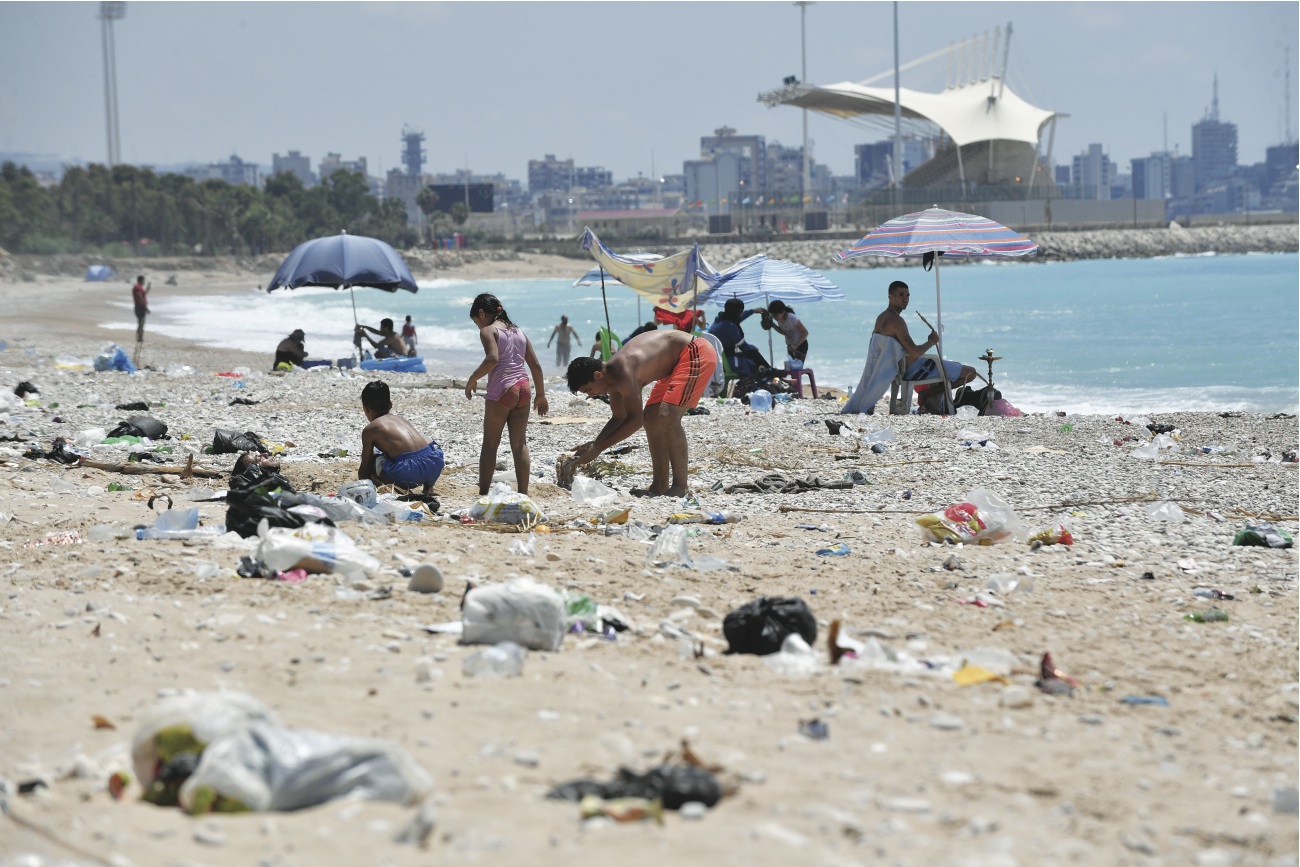
For those who cannot afford beach club or resort entry fees, public beaches are the only option to enjoy the sun and sand in Lebanon. Unfortunately, the majority of these spaces are unmanaged and unsupervised. As a result, you can see people swimming and fishing amongst floating trash. While it is certainly a horrid sight—which lessens the attractiveness of any beach day—the hidden pollution in the form of untreated sewage renders a significant portion of the sea around Lebanon unsafe to swim in. The responsibility for managing these beaches and the waste on the shore falls to the Ministry of Public Works and Transport. The ministry did not respond to Executive’s requests for interviews, but Jean Beiruti, the head of the syndicate of seaside resort operators, said the ministry does not have the budget to manage public beaches and has left them without supervision or maintenance. As such, it seems that those who lack the funds are destined to either swim among the trash, or take matters into their own hands by not littering and cleaning up after themselves.

Sparkling precious stones? No, just pieces of plastic—Maameltein, Jounieh
It's a nice day for a plastic BBQ—Ain el-Mraisseh, Beirut
Fresh water from Lebanon's natural springs—Ain el-Mraisseh, near AUB beach, Beirut
Scuba diving on the corniche—Ain el-Mraisseh, Beirut
My little corner of paradise—Ain el-Mraisseh, Beirut
Burying dad with garbage—Saida, Lebanon
Don’t look down—Raouche, Beirut
Thank God pictures don’t come with scents—Tripoli
Drive-in beach—Near Halat, Kesrouan
Littering our own backyard—Tabarja, Kesrouan
Flush the toilet—Ramleh el-Baida, Beirut
A million dollar view —Ramleh el-Baida, Beirut
Lebanese dolce vita—Raouche, Beirut
This black water looks like the perfect fishing spot!—Ain el Mraisseh, Beirut
Lebanese sea food—Raouche, Beirut
The symbol of Lebanon’s tourism—Raouche, Lebanon
July 13, 2018 2 comments
0 FacebookTwitterPinterestEmail
Beach clubsHospitality and tourism 2018Special Report

Slice of heaven

by Ralph Nader July 13, 2018
written by Ralph Nader

Nothing feels better than spending a day or two, a month, or even an entire summer right on the coastal shore of the sparkling waters of the Mediterranean Sea. It is one of life’s priceless pleasures, but for Lebanon’s beach resorts and clubs, it is not just the weather that is heating up—competition and rivalry among them is also fierce.

The first private beach club in the Middle East, the Saint-Georges Yacht Motor Club, was founded in Beirut in 1936 by Michel Nader, sparking a domino effect. Beach clubs experienced a golden period pre-1975, followed by a dormancy period post-war, with a greater focus on publicly accessible beaches between 1990 and 2002. From 2003 until today, beach clubs started to develop both inside and outside the capital, until an estimated 300 had been constructed along the country’s 225 km coastline. With more competition to win over beachgoers from a population of just 4 million, and around 2 million tourists annually, operators have been forced to change up their offerings to stand out in an increasingly saturated market.

Story of survival

In a round table organized at Horeca Lebanon 2018 with five beach club and resort owners and managers, it was confirmed that beach clubs and resorts (the latter distinguished by offering accommodation) would not be able to rely on entrance fees alone to survive in the crowded market. Instead, they must differentiate themselves. All of the operators agreed that basic beach facilities were no longer satisfying customers, who are looking for a memorable experience worth sharing on social media.

While some clubs/resorts have developed new facilities to attract customers of all ages—such as the inflatable play area for children introduced this season by family resort La Siesta in Khalde—others followed market demand. For example, CFlow in Jbeil, shifted their entire concept from an adult-only resort to a family friendly destination. Allocating a budget for concept enhancement was also a strategy followed, for example, by Lazy B when it undertook an extensive enhancement of its facilities.

Hiring seasonal staff is one of the main challenges in the beach club industry, which is why some businesses that operate year-round rotate staff through their various outlets to ensure trained individuals are always available depending on each outlet’s needs. With Eddésands leading the way in 2003, an increasing number of beach resorts have been boosting their revenues by offering additional services such as beds, huts, and cabins for daily rental. Today, according to Amber Consulting’s market research in 2018, about 55 percent of all Lebanese resorts offer private zones and beds.

This market research also showed that food and drink represent 70 percent of beach clubs’ revenues. Thus, the majority of Lebanon’s beach clubs are focusing on their food and beverage offerings by adding new outlets and catering events, such as beach bars, grills, snacks, and sunset parties. An increasing number of beach resorts—especially those in Beirut such as Riviera, Kempinski, La Plage, Saint-Georges Yacht Motor Club, La Siesta, and Mandaloun—also choose to operate year-round, especially through their restaurants.


Concepts for all

To accommodate the shift in people’s needs and habits, beach clubs as well as beach resorts have tried to target different market segments. Starting in 2010, these attempts have seen “ladies only” clubs and resorts open south of Beirut, such as The Palms and Bella Mare, as well as those aimed at the family market. An example of the latter is Aqua Ville, which opened in Jiyeh in 2014 and draws in Lebanese families with attractions targeted at children. Heading north, you find a different concept: beach bars that are also considered the ideal spot for water sports. There are also a growing number of clubs and resorts that are adult-only, such as Orchid Beach, which has an over 21 policy, and Mandaloun Beach Club, which also targets adults. Moreover, Eddésands, Laguava, CFlow, Janna Sur Mer, and La Siesta offer amenities for overnight stays (for more on resorts see article page 22).

However, adopting a unique concept is not enough to ensure the success and survival of a beachside operation. In this highly competitive market, attracting the largest share of customers demands the offering of discounts—particularly on entry fees. Beach clubs and resorts use these discounts as marketing tools to promote their premises on social media and to target different customer segments by offering, for example, special prices for women, children, or early birds.

Other beach clubs and resorts offer free entry, counterbalancing their profits by focusing on the food and beverage incomes that are mainly generated by young clients. A third strategy designed to draw in customers is the use of online offers, available on platforms such as Makhsoom or Gosawa.

Complications and challenges

Dealing with competition for customers is not the sole challenge for beach clubs/resorts in Lebanon. Complicated construction and operational permits still constitute a barrier for owners, and, more recently, the challenge of securing subsidized loans has surfaced.

Since early 2018, financial institutions have been reluctant to grant long-term subsidized loans to the hospitality industry, as the deposit interest rate is increasing while interest rates on subsidized loans are capped by Banque du Liban, Lebanon’s central bank. In addition, limited financial encouragement from the government, such as the reduction of electricity fees, municipality taxes on rent, and taxes on profit, constitutes another financial challenge for owners. Meanwhile, IDAL, the Investment Development Authority of Lebanon, requires businesses to employ a minimum of 200 annual NSSF-registered  workers in order to be considered for funding. This requirement tends to block applications from beach clubs/resorts, as their seasonal nature makes it near impossible for them to meet this target.

Meanwhile, the outdated categorization of these operations limits the ability of customers to identify the level and standards of their offerings and of their in-house facilities, such as spas, wedding venues, and food outlets.

Priced out

Paying a fortune to spend a day at the beach has become less appealing for Lebanese families, who are nowadays thinking twice about spending a day on Lebanon’s coast. Public beaches are not a viable alternative to private clubs, since, for the most part, they are not maintained and managed by municipalities and lack basic beach facilities, such as sunbeds and sunshades. As such, nearby countries such as Egypt, Turkey, Greece and its islands, to name only a few, are gaining in popularity among Lebanese families.

With the extensive offers from Lebanese travel agencies, which are aggressively promoting foreign beach destinations with direct charter flights, traveling abroad for vacation has become a sought-after alternative. From affordable destinations with all-inclusive resorts to fancy islands with internationally renowned beach clubs, all demands can be met by the various and diversified packages.

Is it necessary for Lebanon’s beach clubs and resorts to adapt their concepts to market trends and needs? According to those who have adopted various strategies to stand out in this highly competitive market, it is. Some of them have shifted their offerings to draw in more customers, others have used price reductions to achieve the same. As for those who decided to bunker down and wait for “market prosperity”—where are they now?

July 13, 2018 0 comments
0 FacebookTwitterPinterestEmail
  • 1
  • …
  • 81
  • 82
  • 83
  • 84
  • 85
  • …
  • 691

Latest Cover

About us

Since its first edition emerged on the newsstands in 1999, Executive Magazine has been dedicated to providing its readers with the most up-to-date local and regional business news. Executive is a monthly business magazine that offers readers in-depth analyses on the Lebanese world of commerce, covering all the major sectors – from banking, finance, and insurance to technology, tourism, hospitality, media, and retail.

  • Donate
  • Our Purpose
  • Contact Us

Sign up for our newsletter

    • Facebook
    • Twitter
    • Instagram
    • Linkedin
    • Youtube
    Executive Magazine
    • ISSUES
      • Current Issue
      • Past issues
    • BUSINESS
    • ECONOMICS & POLICY
    • OPINION
    • SPECIAL REPORTS
    • EXECUTIVE TALKS
    • MOVEMENTS
      • Change the image
      • Cannes lions
      • Transparency & accountability
      • ECONOMIC ROADMAP
      • Say No to Corruption
      • The Lebanon media development initiative
      • LPSN Policy Asks
      • Advocating the preservation of deposits
    • JOIN US
      • Join our movement
      • Attend our events
      • Receive updates
      • Connect with us
    • DONATE