
According to a recent report, poverty is on the rise in
Lebanon. What is the World Bank doing to address
that issue?
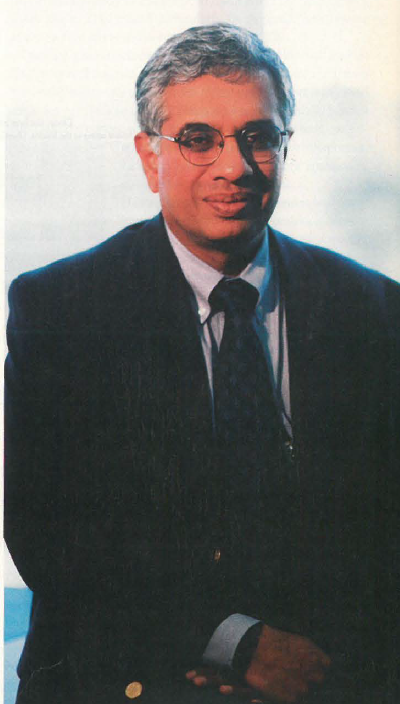
PRASAD: Poverty alleviation is the fundamental driving orientation
of the bank, not just in terms of specific projects but in terms of everything
we do — our policy advice, the sectoral focus. In Lebanon, the
poverty issue should be seen in two ways: one is what I would call the
structural, longer-term issue, and the other is in terms of economic difficulties
which have worsened employment prospects. With the structural
issue, there has been progress, with a lot of good work done by
the UNDP in raising awareness and then focusing on where poverty
is more concentrated. We have certainly collaborated in that type of
work. We have tried to focus on that issue in our dialogue, most recently
by organizing a series of discussions. The idea is not just to report,
but to increase awareness, to sharpen the focus on the nature of the issue,
and to reach consensus on how best to deal with it.
We have told the government that we would be happy to intervene
operationally. If the issue is money, we are quite happy to contribute
more. If the issue is deciding what the institutional channels should be
for intermediation to prove more successful, or what should be done
with that money, then we would be happy to work on defining the
answers. We’re trying to get clarity on that type of question.
So at this point, the projects are still at the planning stage?
PRASAD: Yes and no. We have ongoing projects as well as projects
that will be approved soon that deal with the poorer sections of society.
For example, we have an education project which has just gone to
the board — and public education is really for the poorer sections of society.
So that, and a vocational training project, should help to provide
improved access by rehabilitating and building schools, as well as
improving the quality of education.
Similarly, in the health sector, we have a project to finance accreditation
and the software part of reforming the healthcare system. In a system
that is not very efficient or equitable, it’s the poor who are deprived.
So if healthcare becomes more accessible in terms of cost, services,
and insurance coverage, then the less well-off sections of society will
find their needs are better answered.
We’re always conscious of the poverty dimension, and we try to make
that guide our strategic advice.
A number of World Bank projects are behind schedule and have a low
disbursement level. Why, and how is that being addressed?
PRASAD: We have ten ongoing projects in the portfolio. Of those ten,
five are classified by our worldwide standards as not satisfactory.
We’ve been discussing all the projects — those live especially — with the authorities.
Why don’t we think we can have the results that people expect? One short
indicator is to look at how they are disbursing. When you go into the
reasons behind that, you find substantive institutional difficulties.
What do you mean?
PRASAD: Lebanon is restructuring its institutions after a difficult
recent history. You have a civil service that is antiquated in structure.
I’m sure there are a lot of good people, but if you don’t have the system
and procedures that can help them, and people are afraid to make
decisions because the laws within which they work are old, then it’s
not a system which can work very well.
I think it’s also due to a lack of focus. When you have few capable
people in institutions, it’s difficult for them to devote the energy and
time to get something done. Part of the reason for setting up the
office is to help people focus.
There has been criticism that when you add the
bureaucracy of ministries and the CDR to that of the
World Bank, it slows things down. Is the bank trying to
streamline the process?
PRASAD: Yes, we’ve tried to over the past several years, and we continue
to do that. But this will not be a bank that can just write checks
without analysis and follow-up. It would be very disturbing to our shareholders
if projects did not permit transparency, accountability, competition,
economic efficiency, and so on.
The paperwork needed for a project has been reduced. It has
become much more standardized and is much easier to present
justification for a project. There are some basic questions that one has to
answer. And it’s not for us; the risks are for the countries because they
take out loans. If people think that is bureaucracy, I don’t think we’ll
ever get away from it, but we can try to ask the right questions more
quickly and do our operations even if we don’t get perfect answers.
How is the World Bank handling a government that is
notoriously slow-moving? One example is administrative
reform, an area the bank is working on.
PRASAD: The borrowing country is in the driver’s seat. That
means we should offer our best professional advice because of
our experience in other countries. On a subject like administrative
reform, given what they call in Lebanon “confessional distribution,”
which is so intimately connected with the fabric of society, decisions
need to be taken at high levels. It’s not for the bank to thrust that kind
of decision upon the country. We can say that if they don’t make the
public sector more efficient, it will make it more difficult for the country
to grow and for the private sector to invest productively or to get
the kind of social stability in the longer term which only steady
growth can provide.
Meanwhile, we do try to help establish systems and procedures so
that if and when the political decisions are made, it will be much easier
to make the changes. At the same time, when we work on sectors
through operations, we do try to address institutional issues.
Many analysts complain that the move towards privatization is painfully slow. Compared to World Bank experience, is that true?
It takes time to move from one way of thinking to another and to set up the institutional context in which privatization can lead to the desired benefits. Privatization badly done can be scandalous, can lead to a lot of money being siphoned off, and can represent a monopoly
that is not necessarily better than the previous state monopoly.
Properly done, privatization can lead to real benefits for society.
Previously, there were other priorities, such as rebuilding physical
infrastructure that had been damaged during the war.
So is it too long? I don’t think so, but I think everyone is waiting for
actual transactions, for the results to be visible, and meanwhile people
are feeling the frustrations.
What would be the World Bank’s role in privatization?
PRASAD: First, it brings the experience of other countries. Second,
when requested, we try to analyze the specifics to indicate what
might be the cost. Third, we help financially, if requested, through loans,
including setting up regulatory systems or easing the costs of separation
of workers. We have told the authorities that we are prepared to
support some of the costs of the lay-offs involved, provided those separation
packages conform to international standards.
Is the concept of the World Bank and aid outdated, and
isn’t it more effective when private companies enter the
market and invest?
PRASAD: Let’s not become ideological. Even people who want to
throw away the state are not prepared to throw away the improvements
thanks to the state, for example the protection of the rights of workers
and decent conditions for work. The bank always tries to respond to
our member countries.
I’m glad we’ve had our critics — they’ve made us more conscious of
certain issues. We understand that we need to be more conscious of what
communities want or don’t want, and the need for greater participation,
or that governments may be non-transparent or may not be fully representative
of the people.
We are convinced that we have no role in financing the state in activities
that the private sector can do better. Over the last 15 years, the bank
has promoted the liberalization of trade and financial sector policies
and the opening up of government areas in the interests of greater welfare.
Not only have we advised, but also we have provided large sums
of money for the private sector to be able to compete so that, in the end,
the people could benefit.
Suppose you’re in a developing country and
you have to work your way through a maze of government regulations
that are old-fashioned? That’s where the bank comes in: it tries to reform
these societies, to offer advice or financial support. It’s difficult to be
competitive internationally in today’s world without skilled and educated
workers and reliable public sectors — health, transport, and so
on. Does the bank have a role or not? I think it still does and will have
in many parts of the world as long as these development challenges are
waiting to be met. Modernization is really what economic development
is about. It’s only as societies become more modern that they can also
have a large and efficient private sector.
