• Donate
  • Our Purpose
  • Contact Us
Executive Magazine
  • ISSUES
    • Current Issue
    • Past issues
  • BUSINESS
  • ECONOMICS & POLICY
  • OPINION
  • SPECIAL REPORTS
  • EXECUTIVE TALKS
  • MOVEMENTS
    • Change the image
    • Cannes lions
    • Transparency & accountability
    • ECONOMIC ROADMAP
    • Say No to Corruption
    • The Lebanon media development initiative
    • LPSN Policy Asks
    • Advocating the preservation of deposits
  • JOIN US
    • Join our movement
    • Attend our events
    • Receive updates
    • Connect with us
  • DONATE
Climate changeEconomics & Policy

We don’t need no explanations

by Thomas Schellen November 2, 2016
written by Thomas Schellen

We know that growth of the global economy is not as it was in earlier eras – and International Monetary Fund (IMF) chief Christine Lagarde last month warned explicitly of a “low-growth trap” or the danger of disappointing growth being with us for a long time. “Forceful policy actions are needed to reinvigorate growth and share its benefits more widely,” she said in a blog at the beginning of September.

Linking her message to the then impending G20 Summit meeting in China, she pointed out that “2016 will be the fifth consecutive year with global GDP growth below its long-term average of 3.7 percent (1990-2007), and 2017 may well be the sixth”. And it is not the first time this year that the club of central bank governors is ringing the alarm bells. In the World Economic Outlook update in July, the IMF said that “Growth in most advanced economies remained lackluster,” with limited potential.

How did the G20 respond? Our growth must be “shored up by well-designed and coordinated policies,” the G20 communicated in its closing statement published on September 5. What we didn’t already know, one assumes. Not only that, but the leaders of the most powerful nations in the world informed us that “our growth, to be dynamic and create more jobs, must be powered by new driving forces”. No shit. And “to be resilient, [it] must be underpinned by effective and efficient global economic and financial architecture”. You don’t say.

Going even further, the statement affirmed, “to be strong, [the growth] must be reinforced by inclusive, robust and sustainable trade and investment growth”. Oh yes, and it must be “innovation-driven”. And last but not least, a final section leader in the communique again combines the g-word with an archaic but grave sounding syntax: “Our growth, to be strong, sustainable and balanced, must also be inclusive.”

The more one lends her or his mind to it, it is indeed a “narrative” that the G20 have “forged” in their “Hangzhou Consensus”, as the communique reads fairly high up, in point six (of 48). A narrative, according to one definition, is any story, whether true or fictitious. While it is an alluring term, it has an undertone of fairy tale. And that is what the G20 seems to be serving us. A story to put us to sleep by its sheer verbosity. The press statement, which elaborated on each growth parameter, contains almost 7,200 words, or (as German journalist Henrik Müller has pointed out) six times more than the first Group of Six communique in 1975 – and repeats, ad nauseam, tired phrases and terms such as inclusiveness and innovation.

Notably, last month was, in developed nations, a month for existential concerns. European leaders of the EU 27 – for the first time without the UK – met on September 16 in Bratislava and reviewed “the European project” at what they called “a critical” time. The resultant Bratislava declaration and road map were refreshingly concise when compared with the G20 communique, but still contained outpourings of artificial unity and unrealistic theories. Just to give one example of the theoretical nature of the “road map”, it set as top objectives to never allow the uncontrolled flow of migrants as in 2015, and “to ensure full control of our external borders” – as if Europe’s borders were going to stop the larger world from falling into crises.   

If the world economy wasn’t in jeopardy, the meetings in Bratislava and Hangzhou would be something to interpret as signs that “world leaders” are infinitely more busy these days than they were in the middle of the Cold War – but given the simply bad status quo one can take them as proof that the big players of today are as lost for answers to global questions as people in smaller countries are.

Taking a local perspective, the G20 meeting reminds us of two things: a) that Lebanese politicians are of the same ilk as the leaders of much bigger nations; and b) that the Lebanese economy is in a difficult state for reasons of its own – not because of a systemic crisis. It thus is perhaps easier to rescue than other economies.

We are used to the not-entirely-elected Lebanese officials saying little to nothing whenever they open their mouths. Yet what can politicians say about crises that are too large or too complex for anyone to solve? Only a politician’s wisdom comes to mind, often exhausted in statements such as the one reported from one Lebanese government official – the foreign minister – last month: “The current period is tough and it needs big minds and we will not respond to those who have small souls.” Such insights are not enlightening.

This publication is the last institution to blow the horn for brevity if a complex issue needs elaboration. We stand for exactitude and thoroughness. But when a press statement turns into a narrative of a dozen pages, we sense a smoke screen. We need to go back to the beginning, to decisive policy and to action in the face of weak output growth and low productivity growth. We don’t need explanations that are more than 23 times wordier than the Ten Commandments.
November 2, 2016 0 comments
0 FacebookTwitterPinterestEmail
BankingBusiness

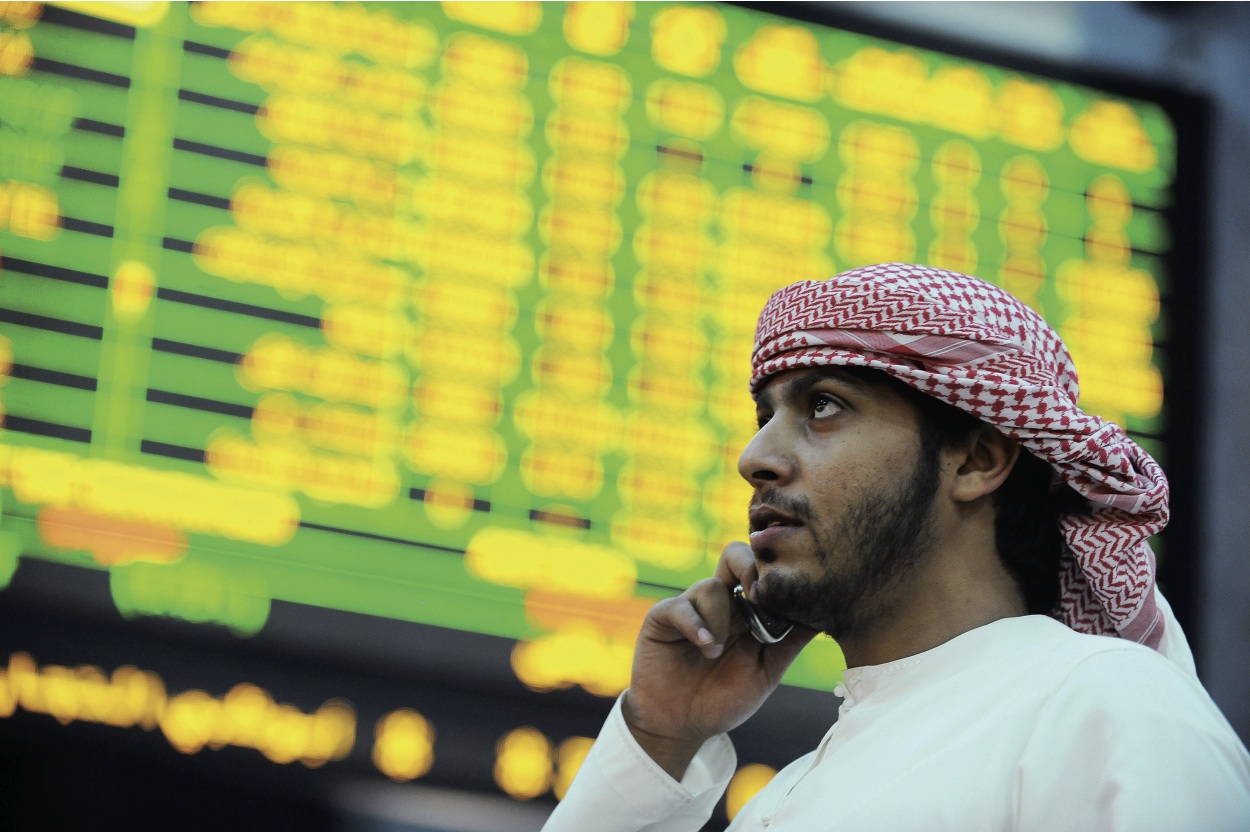
The Gulf after oil

by Thomas Schellen November 2, 2016
written by Thomas Schellen

It is timely and prudent to review the policies of Gulf Cooperation Council countries. The region, which is known for deriving much of its economic revenues from the exporting of oil, entered difficult fiscal waters around 2014. It is in need of new ideas for economic development, given the confluence in 2016 of uncertainty about oil price developments, planned implementation of sweeping reforms in the Saudi financial markets and overall rethinking of the global economy.

The persistent weakness of stock markets in the GCC in 2016 is also part of the bold argument that venture capital instruments and companies “are the only investment vehicles capable of securing long-term economic growth and job creation in the GCC”. This is the perspective put forth in a paper that is accessible via the website of Executive Magazine. It notably discusses venture capital as a catalyst for economic growth in the GCC, with a focus on small and medium enterprises (SMEs) as drivers of development.

Written by Jessica Saade, an undergraduate degree holder in economics from AUB in Lebanon and Executive contributor who recently took up a post as a member of the commercial banking team with a bank in the Gulf region, the paper reasons that the banking system with high reliance on oil-related governmental deposits and the overall oil dependency of GCC economies are not conducive to help SMEs in their financing or business development, just as stock markets have disappointed in this regard.

The performance of Gulf securities during this year is a case in point. In 2016, GCC stock market indices are lower for the year to date (as of September 9) in Bahrain (-7.9 percent), Kuwait (-3.3 percent), and – most importantly – the largest Arab securities exchange, Saudi Arabia’s Tadawul (-10.6 percent). Markets are improved for the same period in Muscat (+6.9 percent), Abu Dhabi (+4.9 percent) and Dubai (+11.7 percent). The year-to-date picture, however, is misleading on the positive side as one has to consider that, for example, the Dubai financial market as the GCC’s strongest gainer is still about 100 points lower than one year ago, in early September 2015.

This mixed performance of 2016 gets reinforced by the perspective that market capitalization of all exchanges in the GCC has been on a downward trend since 2014. As Saade elaborates in her paper, market caps of all six GCC stock markets save one (the, rather small, Muscat Securities Market) dropped from 2014 to 2015. The total market cap for all GCC markets deteriorated by 11.1 percent to $916 million between the fourth quarter of 2014 and the same period in the following year.

Declining market capitalizations in combination with weak flows of initial public offerings (IPOs) and low ratios of stock market capitalization to Gross Domestic Product (GDP) all speak against the equity markets’ viability for hosting SMEs, Saade argues. Seeking equity on public markets is moreover not a finance option for SMEs, she says, because of “a chicken and egg problem” in improving the efficiency of GCC stock markets. The lack of listings deters investors whereas the high listing requirements discourage SMEs from going public.

[pullquote]SMEs contribute significantly to GDP and their contributions to GCC economies could be larger than they currently are[/pullquote]

This presents a problem, because SMEs and family owned enterprises (FOEs) account for an estimated 90 percent of the region’s businesses and “are the backbone of the GCC’s economy,” according to Saade. She notes that the governments have taken measures to improve operating conditions for SMEs, but calls for more: “If GCC governments…are genuinely interested in diversifying their economies away from oil, meaning are concerned about increasing SMEs’ contribution to GDP, more transparency and corporate governance should be enforced, especially for small companies. Moreover, to prevent listing from being perceived as a sign of underperformance, education should revolve around the real role of stock exchanges.”

There is no arguing against the importance of SMEs in any Arab country, just as anywhere. SMEs contribute significantly to GDP and their contributions to GCC economies could be larger than they currently are, according to evidence quoted in the paper. The development of diversified knowledge economy structures by focused promotion of “innovative” startups as creators of value-added, technology-intensive products, which the author advocates for the GCC, is also accepted as a broad priority for advanced or advancing economies. 

It seems to be a stretch, however, when Saade claims that venture capital (VC) funds are the “sole investment vehicle capable of solidifying the entrepreneurship ecosystem in the region”. While she cites economic numbers from the Middle East and North Africa Private Equity Association (MENAPEA) in support of her views, the efficacy of VC investments in the GCC’s economic context has not yet been ascertained by years of macro-economically significant returns. The paper’s distinction between PE firms and VCs, with a focus on the VC proposition, also seems at least somewhat spurious.

Moreover, whereas the paper cited market data in support of its assessments of the banking sector role or the stock market, some of its later assertions seem speculative since they lack numerical evidence. Attributing the region’s low count of “discoveries or patents” to ever-increasing demographics of immigrants from low-income regions or concluding that encouragement of economic diversification through support for innovative SMEs would have helped the region to “not been as severely hit by the plunge in oil prices”, are statements that are not or cannot be supported by data.

Some methodological questions notwithstanding, Saade rightly asks sovereign wealth funds, HNW individuals and family businesses to understand the importance of allocating their portfolio’s funds to VCs. She concludes with a valid call that VC funds in the GCC should be “well equipped with professional mentors and a respectful professional network”, and receive governmental support making sure that the regional startup environment is “free from any roadblock”.

To read Jessica Saade’s original thesis, please see here.

November 2, 2016 0 comments
0 FacebookTwitterPinterestEmail
Banking & Finance

Negative interest rates

by Talal F. Salman October 25, 2016
written by Talal F. Salman

Over recent years, central bankers of the world have tried several conventional measures to revive economic growth in the aftermath of the Great Recession and re-establish trust in the financial system, but they have not reaped the results they were hoping for. A few of them decided to go beyond conventional measures and venture into unchartered territory by setting interest rates below zero, hoping that the measure would help them fight the recessionary environment. There are no guarantees that aggressive monetary policies such as introducing negative interest rates will be the solution for economic revival, especially since governments and politicians have partially ignored the importance of fiscal tools that go hand in hand with monetary tools.

How interest rates impact price levels, currency power and economic activity

Interest rates are the price of money; in other words the price of consuming today versus tomorrow. Depositors will have an incentive to save more when interest rates are high, and will have an incentive to spend or invest more when interest rates are low. Central banks use the interest rate level, in addition to money supply in the economy, as a major tool for managing inflation and hence the health of the financial and economic system. Inflation targeting is at the heart of central banks’ strategies in most developed economies, to ensure an inflation level low enough to protect the purchasing power of depositors, but high enough to avoid deflation that leads to economic stagnation.

Economic theory teaches that in a deflationary price environment, consumers will delay major purchases in anticipation of further price declines, which in turn decreases prices further because of depressed demand. This vicious circle will lead to recession caused by low demand, which will in turn cause companies to invest less, hire less and hence produce less, and this is what the industrialized world has been suffering from since the credit crisis of 2008.    

The connections between interest rates, exchange rates, trade and capital flows are also very important to understand when choosing an interest rate policy. A high interest rate on deposits in a certain currency leads to an inflow of capital toward the country’s financial system, which leads to the strengthening of the currency vis-a-vis its trading partners, which in turn renders its exports more expensive. Central banks sometimes cut interest rates lower than their main trading partners so they make their currency less attractive to depositors to weaken it and make their exports more attractive, hence stimulate economic activity. This is referred to as a currency war.

Monetary policy vs. fiscal policy

In the aftermath of the financial crisis in 2008, besides keeping interest rates very low, central banks around the world used a common monetary policy tool called quantitative easing, which essentially means printing money to expand the supply of money available for companies and individuals to borrow, a measure meant to stimulate investments and consumption and pull the world out of recession. This has not happened because of general fears of deflationary pressures, continued slowdowns in growth in large economies and low demand for commodities by large importers such as China. This brings us back to the question of the effectiveness of monetary policy vs. fiscal policy, a key debate among economists for centuries.

Expansionary fiscal policy entails large direct spending by governments to stimulate economic growth (mainly on infrastructure, education, healthcare and energy) and/or tax cuts, which would cause a fiscal deficit and increase debt. However, this would be compensated later with larger tax collections as a result of an increase in the size of the economy, higher employment and higher wages. This would fill the temporary shortage in demand within the private sector, and consequently help the private sector recover more rapidly. The biggest proponent of fiscal government interventions is the famous economist John Maynard Keynes, who believed in markets’ inefficiency in the short-term and thus the necessity of government intervention, in contrast to classical economists who believe markets are efficient in the long run, and should be left to operate freely. Keynes’ position on this laissez-faire concept was that “in the long run, we are all dead”.

Negative interest rates and their limitations

The first country to introduce negative interest rates was Denmark in 2012 with the objective of repelling inflows into the Danish krone that were threatening its currency peg to the euro. Switzerland followed suit in 2015 for the same reasons, as investors were rushing to buy Swiss francs as a safe haven, and when printing francs was not enough to tame the appreciation of the currency, the Swiss National Bank decided to start punishing depositors with negative interest rates. Shortly after, Sweden went into negative territory to weaken the Swedish krona relative to the euro which would render imports more expensive, exports cheaper and hence push inflation up. The European Central Bank (ECB), the monetary authority on the euro currency, went negative in 2014 to stimulate lending by commercial banks, which subsequently preferred to lend rather than deposit their excess money in the ECB.

[pullquote]What governments need to do is take back that cash in the form of long-term debt, and spend it on large infrastructure, education, health and energy projects, because clearly central bankers are running out of ideas[/pullquote]

Central bank interest rates are currently -0.4 percent in the Eurozone, -0.5 percent in Sweden, -0.65 percent in Denmark and -0.75 percent in Switzerland. That means that, in order to stimulate growth, Sweden, Denmark and Switzerland need lower rates than their main trading partner, the EU, and the EU needs lower rates than its main trading partner, the United States. For instance, the euro has weakened by 22 percent against the US dollar since introducing the new policy in June 2014. The question becomes, what happens if the Federal Reserve were to go into negative territory to weaken the dollar and make American products more competitive? The result would be a currency war that renders the original objective of the policy less impactful since demand would be shifting from country to country rather than global demand collectively increasing through fiscal stimulus.

The latest country to join the party was Japan, which has been struggling with the ineffective impact of expansionary monetary policy for more than two decades, a concept known as the liquidity trap. The Bank of Japan cut rates on new bank reserves to -0.1 percent in January this year, hoping this will show companies and individuals its seriousness in battling deflation. However, if wages don’t rise in Japan, economic activity will not pick up, and with the slowdown in China, its largest trading partner, Japanese companies are worried about future sales, and hence wary of raising wages.

Banks are not currently passing the negative rates on to consumers, but if they were to start, many would rush to buy gold or to pre-pay for future products or services in response.

In a world of negative rates, people’s incentives to hold money changes; a consumer would now prefer to pay upfront their taxes, gym membership, insurance policy, transport passes, mobile phone vouchers, etc.,  something previously unheard of. Companies that usually negotiate terms of payment to delay their payables will now pay large sums upfront, and purchase their production needs, which will in turn cause inventories to grow, and that is usually bad for companies’ profits.

The renewed need for new stimulus packages and structural reforms

There is no shortage of liquidity in the system following the quantitative easing that governments have followed. What governments need to do is take back that cash in the form of long-term debt, and spend it on large infrastructure, education, health and energy projects, because clearly central bankers are running out of ideas.

Upon taking office in 2009, the incoming US President at the time, Barack Obama, designed a stimulus package worth $787 billion (5.5 percent of 2009 GDP but 2 percent of GDP in the years it was spent) called The American Recovery and Reinvestment Act, to be spent on infrastructure, education, training, healthcare benefits, alternative energy, unemployment and child support benefits, and technology, in addition to tax cuts over several years. Numbers show that Obama’s plan did stimulate the economy temporarily, but the fiscal package was too small to have a lasting impact and a larger package wasn’t possible due to resistance from Republican members of Congress.

In 2009, the 19 countries that compose the G20, plus the EU, agreed on the need for a fiscal stimulus to the world economy and collectively committed to spending $1.64 trillion. However, when the ministers of finance and central bank governors of the G20 countries met in Shanghai in February 2016, they failed to agree on a new fiscal expansionary package to lift the global economy from the current recession, a policy highly encouraged by the International Monetary Fund and several renowned economists.

Large and influential economies need to use a combination of monetary policy, fiscal policy and structural reforms, sometimes separately and sometimes concurrently. With the daring introduction of negative interest rates, politicians should not sit back and watch central bankers try to save the day by themselves; they should take the lead in supporting the markets in the short term, in order to avoid a negative long lasting impact of an output gap in the economy.

October 25, 2016 0 comments
0 FacebookTwitterPinterestEmail
BankingBusiness

Rocky relations

by Jeremy Arbid October 17, 2016
written by Jeremy Arbid

Just a few years ago Lebanese banks were apprehensively awaiting regulations they expected would impact business. These arrived with the United States’ introduction of the Foreign Account Tax Compliance Act (FATCA), alongside international standards for anti-money laundering and counter-terrorism financing (AML/CTF), as well as the implementation of Basel 3 regulations – a framework for basically every aspect of banking, from corporate governance to working capital based on risk profiles, with rules more stringent than previous Basel frameworks. However, irrespective of their compliance in implementing those measures, Arab banks have complained that there have been a high number of closures or interruptions of correspondent banking relations (CBR) with banks in the rest of the world, primarily those in the United States and European Union.

Interruptions of CBRs cause more difficulty in banking relations and transactions, and can make business unprofitable for the banks. The main question is not why, but how much? A September report published by the International Monetary Fund (IMF), along with the Arab Monetary Fund and the World Bank, did not identify which banks in which countries were affected, but in total over 40 percent of banks in the region indicated a significant reduction in correspondent banking relationships. “We’re still trying to understand the true economic impact of this issue,” says Allison Holland, the IMF’s country director for Oman.

From an advocacy standpoint it is of less concern if Arab banks have a reduction in profits since they make enough money. But when the relationship with correspondent banks becomes more difficult, it impacts people’s lives and businesses. “The types of services and clients that have been reportedly most affected are, for example, in the trade and finance sphere, and small and medium enterprises (SMEs); so this could increase the cost of business for small and medium exporters,” Holland told Executive.

It is hard to judge the true scale of the CBR problem, because what the survey does, as much as it can do, is show its magnitude without much comparison to previous closures or interruptions. So while the results of the survey do provide an indication from this period, it does not feel very conclusive.

That more than half of the region’s banks experienced some level of interruption is an indicator that the banks were not lying about the fact that regulations made it harder and more costly for them to conduct transactions, and ultimately impacted services to business and private customers.

The number of banks reporting CBR interruptions has also increased. A 2015 survey by the Union of Arab Banks, in cooperation with the IMF, suggested at that time that the problem was not very significant for the region. The response rate for that survey, Executive reported last year, was not high, though the banks that did respond indicated that CBRs were becoming “more demanding, more time-consuming, more complex and more expensive to maintain.” By comparison, the latest IMF study shows that CBR interruptions are now a significant issue for many of the banks in the region, and that it has become more challenging.

Finding the drivers behind Arab banks’ CBR interruptions is difficult, says Holland. This past June the IMF issued a staff discussion note on the broader issue of correspondent banking relations that found interruptions were generally driven by banks conducting a review of the cost-benefit of different business lines and, based on their own risk perceptions, how they choose which business lines to maintain and which to pull out of. In international monetary policy lingo the IMF stated that: “cost-benefit analyses have been shaped by the re-evaluation of business models post-global financial crisis, including changes in the regulatory and enforcement landscape. The new macroeconomic environment, more stringent prudential requirements and higher compliance costs are putting pressure on banks’ profitability and weighing on their decisions to withdraw CBRs.”

From an operational perspective, it doesn’t matter why CBRs are closing accounts, but as an adjustment to strategy what can be done about it? One might assume that if a CBR becomes more expensive or is closed, customers might look for competitive channels outside the traditional financial system such as FinTech, Bitcoin or underground. The extent that these flows move from the formal financial sector into an informal financial sector raises broader issues of financial stability. “So the question is how do we do this in a way that achieves [stability] without creating too many unintended consequences,” Holland says.

October 17, 2016 0 comments
0 FacebookTwitterPinterestEmail
Economics & PolicyOil and gas

Selling a national oil company

by Matt Nash October 17, 2016
written by Matt Nash

The National Oil and Gas Company of Lebanon. Sounds official. It isn’t. But not for a lack of trying.

Many countries with revenue from mining the “Devil’s excrement” (or Satan’s flatulence, to extend the metaphor and fully capture the industry) have a state-owned company participating in oil and gas operations (a working interest, as it’s known). Why doesn’t Lebanon, asks Fuad Jawad, owner of the National Oil and Gas Company of Lebanon (NOGLC), who is trying to sell his company to the state.

Governments use national oil companies (NOCs) to capture hydrocarbon revenues. Not every country with oil and gas reserves has one (meaning rents can be obtained by other means) and their roles vary from country to country (some are passive partners, focused on regulation, not putting boots on rigs; some actively participate in exploration and production, but only on local developments – often as a mandatory partner; some have outgrown their borders, trotting the globe for investment opportunities like their privately owned counterparts). Jawad has his own model in mind. Operations. Lebanon needs a team of people with industry experience to kickstart a sector held hostage by politics, keep it free from corruption and negotiate with international companies keen to get their own cut from Lebanon’s potential wealth. For Jawad, the republic needs not an NOC. It needs his NOC.

A noble cause

His boots say Texas, but he earned his spurs in Oklahoma in the 1980s. More than once he’s questioned Executive’s credentials. “Have you smelled oil?” Jawad has seen and heard as much as any close observer about Lebanon’s offshore oil and gas prospects. There’s serious potential. Beyond that, the journalist and the oil man differ. The geologist in Jawad is certain Lebanon will actually change the game. Based on publically available data, he predicts Lebanon will surpass Kazakhstan to become the country with the 15th largest proven gas reserves in the world. Today it has none. Jawad agrees final proof comes only from drilling, but decades of experience convince him he is right to make assertions that a journalist, in good faith, cannot.

He persists with the zeal of a true believer, pledging the NOGCL will make an offshore natural gas discovery in three years. A bit more data will be necessary. Ocean-bottom seismic, he recommends. Discoveries will be headline grabbing, he promises. And a national oil company is the only way Lebanon can keep the rats away from the cheese. “Corruption follows the money,” he repeats.

No turnkey solution

The history of oil is voluminous. “Black Gold” has been fueling wars, economies and conspiracy theories for over 100 years. By today’s standards, Lebanon – as a sovereign state – would be best advised to claim ownership of any off- or onshore oil and gas it may have and make the highest profit possible from the sale of any resources that may be found. Claiming ownership is easy (as many countries before it, Lebanon did so by law in 2010). Maximizing profit is not as straightforward.

[pullquote]Decades of experience convince [Fuad Jawad] he’s right to make assertions that a journalist, in good faith, cannot[/pullquote]

States can extract their share of resource revenues in a number of ways (including, but not limited to, imposing royalties, taxes, revenue sharing mechanisms, or participation in operations through an NOC). The mix of instruments states use vary widely, and in a 2007 book analyzing oil and gas contracts around the world, consultant David Johnston concluded: “Contrary to popular belief … the type of system used is of minor importance relative to other design concerns. Governments can achieve their fiscal objectives with whichever fiscal system they choose as long as the system is designed properly.”

The Lebanese Petroleum Administration (LPA) – the sector’s regulator with a six-member board appointed to a six-year term in late 2012 – has a state revenue strategy that largely follows international norms. The headline fiscal instruments that the LPA is pushing for include a new tax law applying only to oil and gas companies (a common practice impeded in Lebanon by the need for parliament to pass said law), royalties and revenues sharing (the details of which are subject to company offers during the bidding process for drilling rights).

The 2010 law regulating Lebanon’s offshore addresses a national oil company only briefly. Section two of article six reads: “When necessary and after promising commercial opportunities have been verified, the Council of Ministers may establish a national oil company on the basis of a proposal by the Minister based upon the opinion of the Petroleum Administration.”

For Jawad this is heresy. And he doesn’t hesitate to slam anyone who disagrees as ignorant about operations. In email exchanges, he heaped particular scorn on Valerie Marcel, an expert at Chatham House, who recently argued Lebanon should not establish an NOC, at least at this time, in both an article and longer paper published by the Lebanese Center for Policy Studies. NOCs can be beneficial for governments (many are even serious international players) but they can also be cost centers (especially when staffed before revenues begin to flow) and vehicles for corruption, Marcel argued. Jawad largely dismisses this as academic hogwash.

At first, Jawad’s argument against Lebanon’s proposed fiscal regime for the sector sounds like a flawed one that was first made back in 2014 by Nicolas Sarkis, a Lebanese energy expert. As Executive noted at the time – and pointed out in a meeting with Jawad – the Sarkis argument (that royalties in Lebanon are too low) ignores all of the other fiscal instruments the LPA proposed using to capture resource revenues.

Sarkis’ oft repeated critique gets consistently recycled by a press corp apparently lacking in understanding and the ability to fact-check an argument before presenting it to their readers.

Where Sarkis’ argument ends, Jawad’s picks up. He starts by insisting that the LPA’s plan would leave Lebanon with the smallest share of revenues possible, whereas his plan for an NOC would guarantee a state take of revenues north of 70 percent. The research cited above, however, suggests that the LPA can achieve the same result. Jawad eventually concedes the point, but then swiftly changes tact.

“How do you pull your ear,” he asks. Executive reaches straight up, right hand to right earlobe. “Why do this,” he queries, crowning his head with his left elbow to grab the top of his right ear. Complexity will lead to corruption, he now argues. Worse, he says the LPA is not qualified to assess costs on oil and gas projects, meaning companies may well overbill, which would cut into state revenues as company costs are important in determining the state’s take under the LPA’s proposed fiscal regime. Only someone with operations experience can assess costs accurately and only the right personality (here he means himself) can stand up to and successfully negotiate with international oil companies. (The LPA, as one would expect, disputes this.)

Still pitching

Jawad registered the NOGLC locally back in 2013. He owns 99 percent of the company (4,950 of 5,000 shares), according to the commercial registry’s online database. He’s been trying to sell it to the Lebanese government since 2013. He claims support from various Lebanese politicians (though he avoids name dropping) even as he voices hope that most of the country’s leaders (particularly the war generation) peacefully retire, the sooner the better.

[pullquote]Jawad is trying to convince people he believes are corrupt to support him against their own interests[/pullquote]

With himself at the helm, Jawad insists Lebanon’s NOC would be free from corruption – his own strength of will and personality preventing the company from becoming bloated with political appointees. He proposes the company retain only 20 to 25 percent of its earnings for budgetary purposes, with the rest deposited with Banque du Liban, the country’s central bank. He believes in the institution, he says, and hopes revenues would be theft-proof there.

Not alone, but little support

Jawad has been making his argument for an NOC with little progress since 2013. Now that his is not the only voice calling for its establishment, it begs the question – what has changed?

In May, local consultant and sector analyst Mona Sukkarieh questioned increasing calls in the Lebanese press for an NOC, even though existing law clearly says this is a decision to be made years in the future. She criticized the “debate” surrounding an NOC as too shallow, specifically in failing to detail how an NOC would avoid becoming full of political appointees. While she didn’t say it directly, one comes away from the piece with the notion there might be political motives behind these recent calls for an NOC, similar to how the Sarkis argument seems aimed more at undermining the LPA for political reasons as opposed to offering genuinely constructive criticism.

The LPA has been relatively open to press requests, but the fate of the sector (and why there hasn’t been a single meaningful development on the licensing process in over three years) is shrouded in mystery. The July 1 “deal” on moving forward with contracts announced after a meeting between Gebran Bassil and Nabih Berri has still not produced any public results.

Is Jawad a pawn in the game, his NOC argument now hijacked for unknown and possibly nefarious purposes? Not willingly, he insists.

Could his argument (ultimately noble: “protecting the people’s money from theft”) be hijacked to achieve what he’s trying to avoid? Again, he first insists the scientific nature of the oil and gas business inherently prevents unqualified people from working at an NOC. He genuinely seems to believe his argument.

But by his own admission, the state has ignored his sale offer. He’s convinced it’s the best way forward for Lebanon, but doesn’t seem hopeful his dreams will be realized. In the end, Jawad is trying to convince people he believes are corrupt to support him against their own interests. “Who agrees with you? Don’t they want to kill you?” Executive asks.

“Exactly,” Jawad replies. “I’m with you on that.”

October 17, 2016 0 comments
0 FacebookTwitterPinterestEmail
DevelopmentEconomics & Policy

Preserving the heart of Mar Mikhael

by Leila Kabalan October 17, 2016
written by Leila Kabalan

In just a few years, the area of Mar Mikhael has gone from being a small industrial neighborhood to Beirut’s nightlife destination par excellence. Today, Vogue magazine’s recommendations for “Four Perfect Days in Beirut” are mostly centered around Mar Mikhael and its vicinity.

Yet, it is important to contextualize and study such changes without taking them at face value. In partnership with GAIA-Heritage, the Issam Fares Institute for Public Policy and International Affairs at the American University of Beirut hosted a workshop for graduate students from Sciences-Po Paris and the Masters in Urban Planning and Policy program at American University of Beirut to study the creative industries and the changes that occurred in the neighborhood over the past seven years. The collaboration was held under the Social Justice and the City Project at the institute, and the workshop findings were synthesized into two publications: Linking Economic Change with Social Justice in Mar Mikhael and Creative Economy, Social Justice, and Urban Strategies: The case of Mar Mikhael. The narrative on Mar Mikhael below uses the data generated from these reports, unless otherwise stated.

Boom comes at a price

Mar Mikhael does possess a unique social and urban fabric. For the past 50 years, the predominantly Armenian quarter was characterized as a closely knit communal fabric, dominated by light industries. According to a study by GAIA-Heritage, the arts, crafts and design (ACD) community started relocating to Mar Mikhael in early 2007 after designers, architecture firms and art galleries were pushed out of Gemmayzeh due to soaring rent prices. Just down the street, the ACDs were attracted to the area’s affordable rents and proximity to industry suppliers such as carpenters, mechanics and masons. Predictably, restaurants and bars followed in late 2010. On Armenia Street alone (the neighborhood’s main thoroughfare), more than 20 new bars and restaurants have opened their doors since 2012. For many, that meant a boom in economic activities which attracted young professionals to an affordable urban lifestyle that provides access to nightlife, restaurants, art and cultural activities. Sammy, who moved to Mar Mikhael around five years ago, sees that due to “the shifting identity [of the neighborhood], no one can ever call it their own.”

The neighborhood slowly started attracting new, state-of-the art projects from the real estate sector. Architecturally, low-rise buildings of no more than five stories mostly built in the 1950s–70s dominate Mar Mikhael, rendering potential construction a lucrative business. Since 2013, three new high-rises were constructed and five more are under construction, while 20 new building permits have been issued for the neighborhood in total.

[pullquote]Continuous unplanned development will only make the neighborhood feel nondescript, stripping it of what made it attractive to begin with[/pullquote]

However, Mar Mikhael’s story can also be told from another perspective. The neighborhood’s 20,000 residents are mostly above the age of 55 and 51.8 percent of them are renters who mostly benefit from old rent-controlled rates, compared to a national average of 29 percent. For these long-term elderly residents, the boom means displacement without any real alternatives. The flourishing service economy and nightlife have translated into the encroachment of valet parking into every possible spot. Sidewalks are transformed into crowded places rendering their already challenging accessibility to the neighborhood even harder. Interviews with long-term residents and shop owners reflect both economic and social loss. For instance, a hairdresser in the neighborhood said that he has lost between 700 to 900 clients since 2000. Another home appliance shop owner hopes that he can sublet his shop to a restaurant since he no longer has many customers. Other residents have felt pressured to evacuate their apartments and seek refuge in their village residencies, places where many have never lived.

Trauma for the locals

Marieke Krijnen, a postdoctoral scholar at Orient Institut Beirut whose research focuses on capital investment in Beirut’s built environment and who led the workshops, argues that “ultimately it is a political choice and some people might say it is not realistic to only view an area in terms of its social function.” She goes on to lament the traumatizing effect that displacement can have on long-term residents of the neighborhood, as well as the physical and economic effects. “These people are socially embedded and have many claims to the neighborhood, yet the legal framework recognizes none of these claims because perhaps they don’t own their apartment, or they don’t own a large enough share of it,” she says.

Many criticize this counter-narrative as the result of nostalgic longing that halts the development of cities. Cities are, by nature, dynamic and any attempt to offer a static solution would only decrease a city’s competitiveness in the global economy. However, the debate does not have to paint such a black or white narrative on urban development. In fact, under the Social Justice and the City Project at the institute, led by Professor Mona Fawaz, we launched a series of workshops to discuss the proper planning and policy tools that foster economic activities in the city without excluding and uprooting the most vulnerable. We also acknowledge that it is these communities who predominantly created the attractiveness and uniqueness of the neighborhoods. Continuous unplanned development will only make the neighborhood feel nondescript, stripping it of what made it attractive to begin with. There are several available tools for Beirut’s municipality, planners and real estate developers that can offer a vision of the neighborhood that is fair for everyone. They range from modifications to building regulations, re-zoning and protecting local heritage sites, to reutilizing Mar Mikhael’s abandoned train station.

These challenges are a reflection of the competing visions of Beirut’s future and who lives to tell the stories of neighborhoods.

October 17, 2016 0 comments
0 FacebookTwitterPinterestEmail
LeadersOpinion

Health kick

by Executive Editors October 13, 2016
written by Executive Editors

As parents, we often struggle to keep our children fit and healthy in the consumer society we live in. We do our best to feed them nutritious meals and educate them on the importance of healthy eating habits, yet temptations are everywhere and frequently make a mockery of our best efforts.

From TV campaigns and billboards advertising delicious looking candy or crunchy chips – typically utilizing a vibrant cartoon character to appeal to the younger demographic – to bright and attractive packaging or toys as giveaways, children are constantly bombarded with messages that make unhealthy foods seem fun and exciting.

And while we might somehow manage to limit how many of these nutritionally-lacking snacks our children consume at home – despite the dramatic meltdowns in the supermarket’s junk food aisle or in front of the fast food outlets – we unfortunately have no control over their eating habits in the place where they spend more than half their day: school.   

While schools in Lebanon teach children about healthy eating habits and nutrition as part of the curriculum, more often than not they do not practice what they preach. Most school cafeterias sell chips, chocolates and other unhealthy snacks alongside the sandwiches and packaged salads.    

When an elementary school student is given a few thousand Lebanese liras to spend on lunch and has the choice between a sensible labneh sandwich or a bag of crunchy potato chips, it is not hard to predict the outcome.

Children are too young to be aware of the advertising tricks and techniques utilized by producers of junk food to entice them into buying their goods and so often fall victim of wanting the coolest new snack or that cute giveaway, buying these products at every opportunity.

Until children are mature enough to make their own nutritional choices, schools should remove the temptation of unhealthy snack foods such as chips that are so easily available in their vending machines and their cafeteria shelves.

Instead, schools should put their money where their mouth is. They boast about educating the child as a whole, meaning they develop a child’s social, emotional, cognitive and physical health.

And while they do provide physical education classes and teach about healthy eating habits, developing the child’s physical well being takes more effort. It is by making sure that the child is surrounded by healthy foods and encouraged to make the right choices that schools can encourage the best attitude toward nutrition.

Schools in France are forbidden to sell unhealthy foods in the canteens and Lebanese schools should follow suit.

For schools to suddenly take initiative in this regard is unlikely, but it can start with parents’ committees demanding that their efforts to keep their children as healthy as possible on their watch is not undermined once they enter the school grounds. Parents’ committees can demand that unhealthy foods no longer be sold in schools. We owe it to our children’s health.

October 13, 2016 0 comments
0 FacebookTwitterPinterestEmail
IssuesOctober 2016

October 2016 table of contents

by Executive Staff October 10, 2016
written by Executive Staff
space

[media-credit name=”Cover illustration: Ivan Debs | Executive” align=”alignright” width=”282″]october-2016-cover[/media-credit]

EDITORIAL

Time to fight back


LEADERS
Making green affordable

Health kick


COVER STORY

Meet the megas


ECONOMICS & POLICY

It’s not easy being green

Selling a national oil company

Preserving the heart of Mar Mikhael


BANKING & FINANCE

The twisted tale of the Lebanese Canadian Bank

Rocky relations

Negative interest rates

The Gulf after oil


HOSPITALITY AND TOURISM

The spud kings

When chips meet innovation


LAST WORD

We don’t need no explanations

October 10, 2016 0 comments
0 FacebookTwitterPinterestEmail
EditorialOpinion

Making green affordable

by Executive Editors October 10, 2016
written by Executive Editors

Lebanon’s real estate sector is going green, with more than a little help from a powerful friend, Banque du Liban (BDL), the country’s central bank. Since BDL made subsidized loans for energy efficient projects available in 2010, developers have been making use of them, building to various international standards. Building green increases construction costs, which is why the subsidized loans are a great incentive for more eco-friendly developments in the country. We must, however, do a better job understanding what we’re getting for our money (i.e., what CO2 emission reduction does building green have in Lebanon). More importantly, we need to explore a larger basket of incentives for developers to meet a more pressing social need – affordable housing. And these new buildings must also meet modern environmental standards. Building an affordable home on the cheap is ultimately counter productive.

Evidence for the impact of green buildings in reducing carbon emissions is anecdotal in Lebanon. For starters, we simply have no data on greenhouse gas emissions for Lebanon’s building stock in general. Executive has found no accounting for greenhouse gas emissions reductions as a result of green buildings completed or under construction in the past six years. That said, Lebanon has poured some $450 million into renewable energy, energy efficiency and green buildings in the period 2012 – 2015, with most of that money heading toward the latter two. We need reliable numbers to measure the efficacy of spending on energy efficiency and green buildings to put a dollar figure on emission reduction.

We do know that investments in solar photovoltaic (PV) systems result in savings for the investor – to the tune of $2 million off $15 million invested last year ($30.5 million cumulatively since 2010). And we know the estimated emissions savings from all PV projects in Lebanon reached 6,000 tons of CO2 in 2015 at a cost of $87 per ton reduced, according to a newly published report from the United Nations Development Program’s Small Decentralized Renewable Energy Power Generation Project (DREG).

Number crunching

But from the $450 million, we neither have an indication of the amounts going to each energy efficiency project or green building, nor do we know what benefit the investments have in terms of emitting less carbon. We need to quantify the cost emission reductions in Lebanon’s real estate because international donors look for cost competitive ways to emit less CO2. For Lebanon to meet the agreed upon carbon emission reduction targets, part of last year’s climate change agreement in Paris, we need to accurately and fully capture data that point out how much emissions are reduced and at what cost. Whether here or elsewhere in the world, donors demand projects that can clearly indicate the cost of removing a ton of CO2. Lebanon must show that that cost is competitive with other countries because the impact of donors’ funding will be the same globally whether a ton of carbon is no longer being emitted in Lebanon or in another country.

[pullquote]If homeownership is reserved for a certain salary scale, we’re sowing the seeds of future social conflict[/pullquote]

We know from other countries that building stock emissions can be quantified. The United States Green Building Council (USGBC), an American non-profit that developed the LEED green building rating system, in a 2015 fact sheet found that the “commercial and residential building sector accounts for 39 percent of carbon dioxide (CO2) emissions in the United States per year”. The fact sheet also points out that if half of the 15 million new buildings forecasted for construction in 2015 used 50 percent less energy, carbon emissions would drop by 6 million tons of CO2 annually over the next 50 to 100 years, the estimated lifespan for new buildings. USGBC also says that the average for new LEED certified constructions use 32 percent less electricity while saving 350 tons of CO2 emissions per year.

Developers in Lebanon also apply for LEED certification (although the developer of SAMA Beirut, Lebanon’s tallest building, told Executive last year that because of dependency  on private electricity generators, many local projects cannot fully qualify for certification), but Lebanon should go a step further and incorporate environmental rules in its building code so developers can legally be held accountable to what they might call “green” benchmarks. On a positive note, the government did announce last month that it would prepare green building standards, an effort trumpeted before but not followed through on.

Real talk on real estate

Additionally, though, the central bank should be a bit more socially equitable in attempting to stimulate the economy. Developers have been given low-interest loans to build green. They have also been given a chance to restructure their loans if facing cashflow problems. Consumers have been given low-interest loans to buy property (inadvertently propping up prices that skyrocketed a few years ago yet remained in the stratosphere as everyone in town talked about a real estate slump).  Real estate is fundamentally important for the Lebanese economy, but we must think of all participants in that economy. If homeownership is reserved for a certain salary scale, we’re sowing the seeds of future social conflict.

Normally, we might call on parliament or cabinet to wake up and act. The new rent law – which was supposed to help subsidize affordable housing – is only partially being implemented. Aspects of the law related to affordable housing are among the provisions being ignored. It’s clear neither parliament nor cabinet will rectify this any time soon. The central bank, therefore, should step in. There are plenty of examples of how to incentivize the construction of low-cost housing (subsidized loans, tax breaks, etc) and plenty of lessons to learn from failures in other jurisdictions (building cheap being counterproductive, as noted above). In recent years, the central bank has taken an increasingly liberal approach to what is included in “monetary policy”. It can act on this. And it must. Soon.

October 10, 2016 0 comments
0 FacebookTwitterPinterestEmail
Hospitality & Tourism

When chips meet innovation

by Nabila Rahhal October 7, 2016
written by Nabila Rahhal

The Lebanese potato chips market is dominated by two main local producers. But small scale productions – such as the chips produced by supermarkets Dfouni or Goodies – have always had their loyal consumers who say they prefer the artisanal homemade taste of these chips to the mass produced ones.

Recently, two reputable food establishments joined the small scale potato chips production industry, hoping to add innovation and dynamism to the sector.

The introductions

Biomass, producer and importer of organic foods since 2007, began its first trials for organic potato chips in April 2015 and introduced two flavors of classic cut potato chips (thyme and garlic) in 125 gram transparent bags in late 2015. 

In July 2016, Biomass introduced two new cuts of potato chips (the waffle and the sticks cut) along with a new flavour (rosemary). Mario Massoud, executive manager at Biomass, has said that they plan to further develop the Biomass potato chips line.

Classic Burger Joint (CBJ) – a popular Lebanese burgers restaurant with branches in Kuwait, United Arab Emirates and Cyprus – introduced a potato chips brand under their name during the opening of The Backyard Hazmieh in June 2016.

CBJ potato chips are flavored with its “secret” signature spices, also used for its French fries, and come in the classic cut in a one size 75 gram bag.

No competition

Neither of these establishments have plans to compete with the big chips producers, insisting they only introduced potato chips to complement their main line of business. Massoud explains that while the biggest share of Biomass’s products is in the fresh foods category, 15 percent of their business comes from dry goods. He goes on to say that within the organic dry goods category, organic snack food is the fastest growing internationally. As a result, Biomass decided to enter this market by introducing potato chips to their line, the most logical choice for them to produce, given their naturally grown resources.

“The whole concept of organic snacks is that it brings a healthier component to the product. In the case of Biomass chips, the potato we use is the one we plant here and it is organic and fresh,” says Massoud, adding that the spices used to flavor the chips are also organic and sold by Biomass.

The CBJ food truck has been touring the country, participating in many festivals and events, explains Donald Battal, founder of the restaurant management company Ministry of Food, which operates CBJ and Tomatomatic. Many of these food truck events have restrictions on frying french fries on site, so CBJ would distribute Lay’s chips instead of fries, says Battal. This is how the idea to create CBJ’s own brand of chips was born.

[pullquote]They are more expensive because they are produced in a different way with good quality potatoes and have our signature imported spices on them[/pullquote]

“We have our own signature spices which we put on our fries so I thought of using them to make potato chips. That way, whenever we go to an event, we can link our own brand name with our signature recipe.”

CBJ chips are produced in MALCO’s factory, the company which produces Fantasia chips and savory snacks, under the specifications of CBJ, says Battal. “We own the brand and recipe but we don’t want to have our own factory because the MALCO factory already provides the potato chip producing experts I need, so it is not worth the investment as I wouldn’t be able to reach their expertise in this field.”

Gourmet chips at gourmet prices

Both producers admit that their chips are more expensive than the mass produced chips but claim this is due to higher costs.

CBJ produces 30,000 bags of potato chips per quarter and retails at $1 per 75 gram bag. Because of their higher price, Battal is taking his time to find the right distributor to introduce CBJ chips to the retail market. Currently the chips can only be bought at all CBJ venues, and at the festivals and events that CBJ participates in.

“I don’t want them to be treated like other chips since they are more expensive than all the other local chips. They are more expensive because they are produced in a different way with good quality potatoes and have our signature imported spices on them. It’s not produced en masse and the quantity produced is minimal in comparison to those of Fantasia. This low production quantity is also an added expense. On top of all this, there is the brand name,” explains Battal.

Massoud says Biomass utilizes 40 tons of potatoes per season to make their chips (since each ton of chips needs 4 tons of potatoes, Biomass therefore produces 10 tons of chips per season) explaining that it is a relatively small quantity which they plan to grow gradually.

Massoud justifies the chip’s price tag – $2.60 for a 125 gram bag – by saying that organic ingredients are typically more expensive than mass produced ones. “Our chips are handmade and producing through the kettle process is already more expensive than a machine, plus we are not a huge production facility. We know it’s much more expensive than the mass produced chips but we like to offer something that tastes good,” says Massoud.

Currently Biomass chips can be bought in 100 outlets across the country, ranging from the chain supermarkets which already carry Biomass products to the small grocery shops and health stores. Still, Massoud says their distribution has been rather low so far but that they are planning to increase it within two months.

“The first step was to develop the portfolio, which is what we did, and the second step is distributing and promoting the chips. We are not fully launched yet and even the portfolio is not fully completed. We will be more and more in supermarkets, and maybe in schools or restaurants,” says Massoud.

While their beginnings may be slow, both Biomass and CBJ have opened the path for food establishments to think outside of the box and develop products that only strengthen the local market.

October 7, 2016 0 comments
0 FacebookTwitterPinterestEmail
  • 1
  • …
  • 116
  • 117
  • 118
  • 119
  • 120
  • …
  • 685

Latest Cover

About us

Since its first edition emerged on the newsstands in 1999, Executive Magazine has been dedicated to providing its readers with the most up-to-date local and regional business news. Executive is a monthly business magazine that offers readers in-depth analyses on the Lebanese world of commerce, covering all the major sectors – from banking, finance, and insurance to technology, tourism, hospitality, media, and retail.

  • Donate
  • Our Purpose
  • Contact Us

Sign up for our newsletter

[contact-form-7 id=”27812″ title=”FooterSubscription”]

  • Facebook
  • Twitter
  • Instagram
  • Linkedin
  • Youtube
Executive Magazine
  • ISSUES
    • Current Issue
    • Past issues
  • BUSINESS
  • ECONOMICS & POLICY
  • OPINION
  • SPECIAL REPORTS
  • EXECUTIVE TALKS
  • MOVEMENTS
    • Change the image
    • Cannes lions
    • Transparency & accountability
    • ECONOMIC ROADMAP
    • Say No to Corruption
    • The Lebanon media development initiative
    • LPSN Policy Asks
    • Advocating the preservation of deposits
  • JOIN US
    • Join our movement
    • Attend our events
    • Receive updates
    • Connect with us
  • DONATE