• Donate
  • Our Purpose
  • Contact Us
Executive Magazine
  • ISSUES
    • Current Issue
    • Past issues
  • BUSINESS
  • ECONOMICS & POLICY
  • OPINION
  • SPECIAL REPORTS
  • EXECUTIVE TALKS
  • MOVEMENTS
    • Change the image
    • Cannes lions
    • Transparency & accountability
    • ECONOMIC ROADMAP
    • Say No to Corruption
    • The Lebanon media development initiative
    • LPSN Policy Asks
    • Advocating the preservation of deposits
  • JOIN US
    • Join our movement
    • Attend our events
    • Receive updates
    • Connect with us
  • DONATE
DevelopmentEconomics & Policy

Preserving the heart of Mar Mikhael

by Leila Kabalan October 17, 2016
written by Leila Kabalan

In just a few years, the area of Mar Mikhael has gone from being a small industrial neighborhood to Beirut’s nightlife destination par excellence. Today, Vogue magazine’s recommendations for “Four Perfect Days in Beirut” are mostly centered around Mar Mikhael and its vicinity.

Yet, it is important to contextualize and study such changes without taking them at face value. In partnership with GAIA-Heritage, the Issam Fares Institute for Public Policy and International Affairs at the American University of Beirut hosted a workshop for graduate students from Sciences-Po Paris and the Masters in Urban Planning and Policy program at American University of Beirut to study the creative industries and the changes that occurred in the neighborhood over the past seven years. The collaboration was held under the Social Justice and the City Project at the institute, and the workshop findings were synthesized into two publications: Linking Economic Change with Social Justice in Mar Mikhael and Creative Economy, Social Justice, and Urban Strategies: The case of Mar Mikhael. The narrative on Mar Mikhael below uses the data generated from these reports, unless otherwise stated.

Boom comes at a price

Mar Mikhael does possess a unique social and urban fabric. For the past 50 years, the predominantly Armenian quarter was characterized as a closely knit communal fabric, dominated by light industries. According to a study by GAIA-Heritage, the arts, crafts and design (ACD) community started relocating to Mar Mikhael in early 2007 after designers, architecture firms and art galleries were pushed out of Gemmayzeh due to soaring rent prices. Just down the street, the ACDs were attracted to the area’s affordable rents and proximity to industry suppliers such as carpenters, mechanics and masons. Predictably, restaurants and bars followed in late 2010. On Armenia Street alone (the neighborhood’s main thoroughfare), more than 20 new bars and restaurants have opened their doors since 2012. For many, that meant a boom in economic activities which attracted young professionals to an affordable urban lifestyle that provides access to nightlife, restaurants, art and cultural activities. Sammy, who moved to Mar Mikhael around five years ago, sees that due to “the shifting identity [of the neighborhood], no one can ever call it their own.”

The neighborhood slowly started attracting new, state-of-the art projects from the real estate sector. Architecturally, low-rise buildings of no more than five stories mostly built in the 1950s–70s dominate Mar Mikhael, rendering potential construction a lucrative business. Since 2013, three new high-rises were constructed and five more are under construction, while 20 new building permits have been issued for the neighborhood in total.

[pullquote]Continuous unplanned development will only make the neighborhood feel nondescript, stripping it of what made it attractive to begin with[/pullquote]

However, Mar Mikhael’s story can also be told from another perspective. The neighborhood’s 20,000 residents are mostly above the age of 55 and 51.8 percent of them are renters who mostly benefit from old rent-controlled rates, compared to a national average of 29 percent. For these long-term elderly residents, the boom means displacement without any real alternatives. The flourishing service economy and nightlife have translated into the encroachment of valet parking into every possible spot. Sidewalks are transformed into crowded places rendering their already challenging accessibility to the neighborhood even harder. Interviews with long-term residents and shop owners reflect both economic and social loss. For instance, a hairdresser in the neighborhood said that he has lost between 700 to 900 clients since 2000. Another home appliance shop owner hopes that he can sublet his shop to a restaurant since he no longer has many customers. Other residents have felt pressured to evacuate their apartments and seek refuge in their village residencies, places where many have never lived.

Trauma for the locals

Marieke Krijnen, a postdoctoral scholar at Orient Institut Beirut whose research focuses on capital investment in Beirut’s built environment and who led the workshops, argues that “ultimately it is a political choice and some people might say it is not realistic to only view an area in terms of its social function.” She goes on to lament the traumatizing effect that displacement can have on long-term residents of the neighborhood, as well as the physical and economic effects. “These people are socially embedded and have many claims to the neighborhood, yet the legal framework recognizes none of these claims because perhaps they don’t own their apartment, or they don’t own a large enough share of it,” she says.

Many criticize this counter-narrative as the result of nostalgic longing that halts the development of cities. Cities are, by nature, dynamic and any attempt to offer a static solution would only decrease a city’s competitiveness in the global economy. However, the debate does not have to paint such a black or white narrative on urban development. In fact, under the Social Justice and the City Project at the institute, led by Professor Mona Fawaz, we launched a series of workshops to discuss the proper planning and policy tools that foster economic activities in the city without excluding and uprooting the most vulnerable. We also acknowledge that it is these communities who predominantly created the attractiveness and uniqueness of the neighborhoods. Continuous unplanned development will only make the neighborhood feel nondescript, stripping it of what made it attractive to begin with. There are several available tools for Beirut’s municipality, planners and real estate developers that can offer a vision of the neighborhood that is fair for everyone. They range from modifications to building regulations, re-zoning and protecting local heritage sites, to reutilizing Mar Mikhael’s abandoned train station.

These challenges are a reflection of the competing visions of Beirut’s future and who lives to tell the stories of neighborhoods.

October 17, 2016 0 comments
0 FacebookTwitterPinterestEmail
LeadersOpinion

Health kick

by Executive Editors October 13, 2016
written by Executive Editors

As parents, we often struggle to keep our children fit and healthy in the consumer society we live in. We do our best to feed them nutritious meals and educate them on the importance of healthy eating habits, yet temptations are everywhere and frequently make a mockery of our best efforts.

From TV campaigns and billboards advertising delicious looking candy or crunchy chips – typically utilizing a vibrant cartoon character to appeal to the younger demographic – to bright and attractive packaging or toys as giveaways, children are constantly bombarded with messages that make unhealthy foods seem fun and exciting.

And while we might somehow manage to limit how many of these nutritionally-lacking snacks our children consume at home – despite the dramatic meltdowns in the supermarket’s junk food aisle or in front of the fast food outlets – we unfortunately have no control over their eating habits in the place where they spend more than half their day: school.   

While schools in Lebanon teach children about healthy eating habits and nutrition as part of the curriculum, more often than not they do not practice what they preach. Most school cafeterias sell chips, chocolates and other unhealthy snacks alongside the sandwiches and packaged salads.    

When an elementary school student is given a few thousand Lebanese liras to spend on lunch and has the choice between a sensible labneh sandwich or a bag of crunchy potato chips, it is not hard to predict the outcome.

Children are too young to be aware of the advertising tricks and techniques utilized by producers of junk food to entice them into buying their goods and so often fall victim of wanting the coolest new snack or that cute giveaway, buying these products at every opportunity.

Until children are mature enough to make their own nutritional choices, schools should remove the temptation of unhealthy snack foods such as chips that are so easily available in their vending machines and their cafeteria shelves.

Instead, schools should put their money where their mouth is. They boast about educating the child as a whole, meaning they develop a child’s social, emotional, cognitive and physical health.

And while they do provide physical education classes and teach about healthy eating habits, developing the child’s physical well being takes more effort. It is by making sure that the child is surrounded by healthy foods and encouraged to make the right choices that schools can encourage the best attitude toward nutrition.

Schools in France are forbidden to sell unhealthy foods in the canteens and Lebanese schools should follow suit.

For schools to suddenly take initiative in this regard is unlikely, but it can start with parents’ committees demanding that their efforts to keep their children as healthy as possible on their watch is not undermined once they enter the school grounds. Parents’ committees can demand that unhealthy foods no longer be sold in schools. We owe it to our children’s health.

October 13, 2016 0 comments
0 FacebookTwitterPinterestEmail
IssuesOctober 2016

October 2016 table of contents

by Executive Staff October 10, 2016
written by Executive Staff
space

[media-credit name=”Cover illustration: Ivan Debs | Executive” align=”alignright” width=”282″]october-2016-cover[/media-credit]

EDITORIAL

Time to fight back


LEADERS
Making green affordable

Health kick


COVER STORY

Meet the megas


ECONOMICS & POLICY

It’s not easy being green

Selling a national oil company

Preserving the heart of Mar Mikhael


BANKING & FINANCE

The twisted tale of the Lebanese Canadian Bank

Rocky relations

Negative interest rates

The Gulf after oil


HOSPITALITY AND TOURISM

The spud kings

When chips meet innovation


LAST WORD

We don’t need no explanations

October 10, 2016 0 comments
0 FacebookTwitterPinterestEmail
EditorialOpinion

Making green affordable

by Executive Editors October 10, 2016
written by Executive Editors

Lebanon’s real estate sector is going green, with more than a little help from a powerful friend, Banque du Liban (BDL), the country’s central bank. Since BDL made subsidized loans for energy efficient projects available in 2010, developers have been making use of them, building to various international standards. Building green increases construction costs, which is why the subsidized loans are a great incentive for more eco-friendly developments in the country. We must, however, do a better job understanding what we’re getting for our money (i.e., what CO2 emission reduction does building green have in Lebanon). More importantly, we need to explore a larger basket of incentives for developers to meet a more pressing social need – affordable housing. And these new buildings must also meet modern environmental standards. Building an affordable home on the cheap is ultimately counter productive.

Evidence for the impact of green buildings in reducing carbon emissions is anecdotal in Lebanon. For starters, we simply have no data on greenhouse gas emissions for Lebanon’s building stock in general. Executive has found no accounting for greenhouse gas emissions reductions as a result of green buildings completed or under construction in the past six years. That said, Lebanon has poured some $450 million into renewable energy, energy efficiency and green buildings in the period 2012 – 2015, with most of that money heading toward the latter two. We need reliable numbers to measure the efficacy of spending on energy efficiency and green buildings to put a dollar figure on emission reduction.

We do know that investments in solar photovoltaic (PV) systems result in savings for the investor – to the tune of $2 million off $15 million invested last year ($30.5 million cumulatively since 2010). And we know the estimated emissions savings from all PV projects in Lebanon reached 6,000 tons of CO2 in 2015 at a cost of $87 per ton reduced, according to a newly published report from the United Nations Development Program’s Small Decentralized Renewable Energy Power Generation Project (DREG).

Number crunching

But from the $450 million, we neither have an indication of the amounts going to each energy efficiency project or green building, nor do we know what benefit the investments have in terms of emitting less carbon. We need to quantify the cost emission reductions in Lebanon’s real estate because international donors look for cost competitive ways to emit less CO2. For Lebanon to meet the agreed upon carbon emission reduction targets, part of last year’s climate change agreement in Paris, we need to accurately and fully capture data that point out how much emissions are reduced and at what cost. Whether here or elsewhere in the world, donors demand projects that can clearly indicate the cost of removing a ton of CO2. Lebanon must show that that cost is competitive with other countries because the impact of donors’ funding will be the same globally whether a ton of carbon is no longer being emitted in Lebanon or in another country.

[pullquote]If homeownership is reserved for a certain salary scale, we’re sowing the seeds of future social conflict[/pullquote]

We know from other countries that building stock emissions can be quantified. The United States Green Building Council (USGBC), an American non-profit that developed the LEED green building rating system, in a 2015 fact sheet found that the “commercial and residential building sector accounts for 39 percent of carbon dioxide (CO2) emissions in the United States per year”. The fact sheet also points out that if half of the 15 million new buildings forecasted for construction in 2015 used 50 percent less energy, carbon emissions would drop by 6 million tons of CO2 annually over the next 50 to 100 years, the estimated lifespan for new buildings. USGBC also says that the average for new LEED certified constructions use 32 percent less electricity while saving 350 tons of CO2 emissions per year.

Developers in Lebanon also apply for LEED certification (although the developer of SAMA Beirut, Lebanon’s tallest building, told Executive last year that because of dependency  on private electricity generators, many local projects cannot fully qualify for certification), but Lebanon should go a step further and incorporate environmental rules in its building code so developers can legally be held accountable to what they might call “green” benchmarks. On a positive note, the government did announce last month that it would prepare green building standards, an effort trumpeted before but not followed through on.

Real talk on real estate

Additionally, though, the central bank should be a bit more socially equitable in attempting to stimulate the economy. Developers have been given low-interest loans to build green. They have also been given a chance to restructure their loans if facing cashflow problems. Consumers have been given low-interest loans to buy property (inadvertently propping up prices that skyrocketed a few years ago yet remained in the stratosphere as everyone in town talked about a real estate slump).  Real estate is fundamentally important for the Lebanese economy, but we must think of all participants in that economy. If homeownership is reserved for a certain salary scale, we’re sowing the seeds of future social conflict.

Normally, we might call on parliament or cabinet to wake up and act. The new rent law – which was supposed to help subsidize affordable housing – is only partially being implemented. Aspects of the law related to affordable housing are among the provisions being ignored. It’s clear neither parliament nor cabinet will rectify this any time soon. The central bank, therefore, should step in. There are plenty of examples of how to incentivize the construction of low-cost housing (subsidized loans, tax breaks, etc) and plenty of lessons to learn from failures in other jurisdictions (building cheap being counterproductive, as noted above). In recent years, the central bank has taken an increasingly liberal approach to what is included in “monetary policy”. It can act on this. And it must. Soon.

October 10, 2016 0 comments
0 FacebookTwitterPinterestEmail
Hospitality & Tourism

When chips meet innovation

by Nabila Rahhal October 7, 2016
written by Nabila Rahhal

The Lebanese potato chips market is dominated by two main local producers. But small scale productions – such as the chips produced by supermarkets Dfouni or Goodies – have always had their loyal consumers who say they prefer the artisanal homemade taste of these chips to the mass produced ones.

Recently, two reputable food establishments joined the small scale potato chips production industry, hoping to add innovation and dynamism to the sector.

The introductions

Biomass, producer and importer of organic foods since 2007, began its first trials for organic potato chips in April 2015 and introduced two flavors of classic cut potato chips (thyme and garlic) in 125 gram transparent bags in late 2015. 

In July 2016, Biomass introduced two new cuts of potato chips (the waffle and the sticks cut) along with a new flavour (rosemary). Mario Massoud, executive manager at Biomass, has said that they plan to further develop the Biomass potato chips line.

Classic Burger Joint (CBJ) – a popular Lebanese burgers restaurant with branches in Kuwait, United Arab Emirates and Cyprus – introduced a potato chips brand under their name during the opening of The Backyard Hazmieh in June 2016.

CBJ potato chips are flavored with its “secret” signature spices, also used for its French fries, and come in the classic cut in a one size 75 gram bag.

No competition

Neither of these establishments have plans to compete with the big chips producers, insisting they only introduced potato chips to complement their main line of business. Massoud explains that while the biggest share of Biomass’s products is in the fresh foods category, 15 percent of their business comes from dry goods. He goes on to say that within the organic dry goods category, organic snack food is the fastest growing internationally. As a result, Biomass decided to enter this market by introducing potato chips to their line, the most logical choice for them to produce, given their naturally grown resources.

“The whole concept of organic snacks is that it brings a healthier component to the product. In the case of Biomass chips, the potato we use is the one we plant here and it is organic and fresh,” says Massoud, adding that the spices used to flavor the chips are also organic and sold by Biomass.

The CBJ food truck has been touring the country, participating in many festivals and events, explains Donald Battal, founder of the restaurant management company Ministry of Food, which operates CBJ and Tomatomatic. Many of these food truck events have restrictions on frying french fries on site, so CBJ would distribute Lay’s chips instead of fries, says Battal. This is how the idea to create CBJ’s own brand of chips was born.

[pullquote]They are more expensive because they are produced in a different way with good quality potatoes and have our signature imported spices on them[/pullquote]

“We have our own signature spices which we put on our fries so I thought of using them to make potato chips. That way, whenever we go to an event, we can link our own brand name with our signature recipe.”

CBJ chips are produced in MALCO’s factory, the company which produces Fantasia chips and savory snacks, under the specifications of CBJ, says Battal. “We own the brand and recipe but we don’t want to have our own factory because the MALCO factory already provides the potato chip producing experts I need, so it is not worth the investment as I wouldn’t be able to reach their expertise in this field.”

Gourmet chips at gourmet prices

Both producers admit that their chips are more expensive than the mass produced chips but claim this is due to higher costs.

CBJ produces 30,000 bags of potato chips per quarter and retails at $1 per 75 gram bag. Because of their higher price, Battal is taking his time to find the right distributor to introduce CBJ chips to the retail market. Currently the chips can only be bought at all CBJ venues, and at the festivals and events that CBJ participates in.

“I don’t want them to be treated like other chips since they are more expensive than all the other local chips. They are more expensive because they are produced in a different way with good quality potatoes and have our signature imported spices on them. It’s not produced en masse and the quantity produced is minimal in comparison to those of Fantasia. This low production quantity is also an added expense. On top of all this, there is the brand name,” explains Battal.

Massoud says Biomass utilizes 40 tons of potatoes per season to make their chips (since each ton of chips needs 4 tons of potatoes, Biomass therefore produces 10 tons of chips per season) explaining that it is a relatively small quantity which they plan to grow gradually.

Massoud justifies the chip’s price tag – $2.60 for a 125 gram bag – by saying that organic ingredients are typically more expensive than mass produced ones. “Our chips are handmade and producing through the kettle process is already more expensive than a machine, plus we are not a huge production facility. We know it’s much more expensive than the mass produced chips but we like to offer something that tastes good,” says Massoud.

Currently Biomass chips can be bought in 100 outlets across the country, ranging from the chain supermarkets which already carry Biomass products to the small grocery shops and health stores. Still, Massoud says their distribution has been rather low so far but that they are planning to increase it within two months.

“The first step was to develop the portfolio, which is what we did, and the second step is distributing and promoting the chips. We are not fully launched yet and even the portfolio is not fully completed. We will be more and more in supermarkets, and maybe in schools or restaurants,” says Massoud.

While their beginnings may be slow, both Biomass and CBJ have opened the path for food establishments to think outside of the box and develop products that only strengthen the local market.

October 7, 2016 0 comments
0 FacebookTwitterPinterestEmail
Hospitality & Tourism

The spud kings

by Nabila Rahhal October 6, 2016
written by Nabila Rahhal

Potatoes are a staple of Lebanese cuisine. When boiled, they are often eaten as a remedy for stomach ache. When fried, they serve as a quick and cheap meal as the filling of a sandwich or as an accompaniment to the traditional Sunday barbeque lunch.

About 20 years ago, serious contenders in locally produced potato chips, known as crisps in the UK, first entered the market. Ever since, they’ve been working hard to habituate Lebanese consumers to this globally popular snack, with positive implications for the country’s agricultural sector.

Chips’ early history

Following the end of the Lebanese Civil War in the early 1990s, 85 percent of chips consumed in Lebanon were imported, according to Hachem El Koussa, president and general director of MALCO Holding, which owns Fantasia chips and Pain D’Or.

While there were 18 local chips producers back then, they were either small or medium sized productions and, according to Koussa, operated below the basic standards of hygiene, quality and after production care. “The local variety of chips back then were very badly produced, in that they were too oily and used poor quality potatoes. They were also treated carelessly in terms of packaging and shelf display,” he says.

It was understandable then that those consumers who could afford it preferred to pay extra for the better tasting, imported chips that also came in a wider variety of flavors.

Eye for opportunity

Koussa saw, in the dismal locally produced chips market, an opportunity to introduce quality chips that would be competitive against the imported variety. “We refused to believe that Lebanon could not produce something as easy as a tasty bag of chips,” he says.

In 1992, MALCO introduced Fantasia to the Lebanese market starting with the pellet and extruded varieties of chips. (Pellet chips are those produced with potato flour,  potato starch or other grains, while extruded chips are similar to pellets but with hollow insides, such as cheese balls). Both were produced under license from General Mill, with imported potato flour and starch.

Being linked to an international company like General Mills, explains Koussa, helped garner initial trust in the locally produced item. MALCO also made sure to differentiate Fantasia from other locally produced chips through its packaging and display on supermarket shelves.

Another factor in Fantasia’s decision to enter the market with pellets and extruded chips, rather than with chips made from whole potatoes (commonly referred to as real or natural potato chips), was that it made it possible for them to break into the market with a quality product, while at the same time developing and researching techniques and potato varieties that allowed them to introduce new potato chips to their line in 1995.

The real deal

Michel Daher, Chairman of Daher Foods, which owns Poppins (breakfast cereal brand) and Master snack foods, says he launched Master chips in the early 1990s as a means of revitalizing potato farming in the Bekaa Valley and creating employment in his hometown Ferzol.

“I left Lebanon when I was 18 to work abroad but it had always been my dream to come back to my hometown Ferzol and start a business there, because I love it. I thought of doing something related to agriculture and that’s how the idea of chips came along. At first, I wanted to create something small that I could enjoy and that would create jobs,” explains Daher, adding that the company quickly grew into a major venture which currently employs 1,500 people (80 of which are farmers).

Made in Lebanon

While it took some time for Lebanese consumers to switch to locally produced chips, Daher and Koussa explain that both Master and Fantasia had two competitive advantages over imported chips. Affordability was the first, with the companies able to sell their chips at a lower price than the imported variety; they were produced in Lebanon and largely from potatoes grown in the country, meaning they saved on import costs.

Even today, locally produced chips are generally cheaper than imported brands of the same variety (compare for example Master Kettle Cooked chips, which are priced at $2 for a 170 gram bag, with the British Kettle Chips brand of the same size that is sold at $4.50).

However, regionally produced international brands, such as Frito-Lay’s Doritos and Lay’s Classic Potato Chips, are the exception, since they are produced by PepsiCo in Saudi Arabia and as part of a multinational company have the advantage of mass production over the Lebanese produced chips.

Not all about the money

The second advantage was quality. History has proven that price alone is not necessarily a decisive factor for Lebanese consumers. But the fact that both domestic companies’ products were arguably at least comparable to the imported variety in terms of quality made them a worthy option.

Both Daher and Koussa claim that locally produced chips have the advantage of freshness over the imported brands, explaining that local chips can be eaten within a week of production, while international brands take at least a few months before making it from their factory to Lebanese supermarket shelves.

Success by numbers

The local chips producers’ strategy looks like it might have paid off, with Koussa estimating that more than 75 percent of the chips (this includes corn, pellet and extruded chip varieties) consumed in Lebanon today are locally produced, while less than 25 percent are international imports.

[pullquote]International brands take at least a few months before making it from their factory to Lebanese supermarket shelves[/pullquote]

Placing a monetary value on the market, Daher says that sales from the Lebanese chips industry, including all types of savory snacks defined as chips, from the ones made with quinoa to those made with potatoes  are close to $75 million, of which $60 million are generated by local snack producers.

Taking into consideration the percentages and dollar values above, it seems that the more expensive, internationally produced chips are finding it hard to remain competitive in the Lebanese chips market.    

Room for growth

Despite this success, both Daher and Koussa say the local market can stand to grow even further. 

Daher explains that when they first introduced potato chips, total national consumption was around 100 tons per year (approximately 4 grams per capita) but has now reached one kilogram per capita per year. Considering that the international consumption level is 2.2 kilograms per capita in Europe and 3.5 in the US, Lebanon has room to grow and Daher hopes consumption will reach 2 kilograms per capita.

Although Master produces a wide variety of snack foods, including pellet and tortilla chips, Daher believes growth opportunities lie in the natural or real potatoes line. “My company Stock Keeping Unit (SKU) shows me that, in the end, potato chips will be the most consumed [product], but I cannot sit around and wait for that. I need to work and have a variety of products, but my push is for the real potato chips,” says Daher.

Chips by market share

Today, Daher explains, potato chips constitute only 40 percent of local consumption while pellet chips make up 50 percent and tortilla chips (produced from maize) account for the remaining 10 percent.

Daher aims to grow the natural potato chips’ share to 70 percent by changing the habits of adult Lebanese consumers. Lebanese adults, explains Daher, are currently more likely to enjoy mixed nuts at a cocktail bar rather than open up a bag of chips. Although Master will be launching their own brand of mixed nuts by March 2017, Daher says he plans to eat slowly into that share.

Daher has already laid the groundwork for this change with the introduction of Kettle Cooked chips – following the spike in international demand for kettle chips, which are made to be less oily and more crunchy than those that are air popped. Both lines have been heavily promoted and been met with a positive consumer response.

Master has also made deals with several local fast food restaurants to serve their Kettle Cooked chips instead of French fries, in a bid to wean consumers off fries and onto chips.

The super potato

If Daher succeeds in growing the potato chips market, both his company and the agricultural sector in Lebanon will benefit. “Potato chips are our market and strength because we are in the Bekaa, the land of potatoes. Therefore we have a clear competitive edge over others in potato chips,” he explains.

Every kilogram of potato chips requires four kilograms of potatoes to produce. Master currently consumes 30,000 tons of potatoes per month to produce 6,250 tons of chips monthly, but Daher aims to eventually double those numbers.

Daher is already putting his money where his mouth is and has invested $40 million into a new 22,000 square meters factory; an assembly line that can produce 15 tons of potato chips per hour and has cold storage equipment (to store potatoes during the winter when they are not in season).

[pullquote]Both producers complain of the increasingly high cost of business, be it the increased cost of labor, electricity, water, land, importation or taxation[/pullquote]

Daher claims Lebanon produces 200,000 tons of potatoes per year and so if he reaches his production goals, the company would be significantly contributing to the betterment of the agricultural sector in the Bekaa Valley, which was his original aim when launching Master.

Woes in potato heaven

However, as in almost every other industry in Lebanon, chip producers have been finding it increasingly hard to operate in light of the regional and local instabilities that have plagued Lebanon for almost five years now.

Both producers complain of the increasingly high cost of business, be it the increased cost of labor, electricity, water, land, importation or taxation.

Daher says they had a turnover of minus six percent last year and blames it on the flat local market. But despite this, Master has managed to break even profits wise – while Koussa says they are still managing to grow “but the expenses are growing as well and it is a race between them.”

For Master, the biggest challenge is the difficulties encountered in the exports market. “The difficulty is in the logistical challenge of continuing to export to these markets and the cost of shipping by sea,” says Daher, who used to export to Syria – a $20 million dollar annual market – before the war. Master continues to export to Iraq and Jordan.

Koussa views international, and sometimes even local, competitors’ flooding of the market – where an excess amount of chips for sale causes a drop in pricing – and under costing – where goods are sold at below production cost – as a major challenge and an unfair competitive practice that harms the entire sector.

Despite these challenges, Lebanon’s chips producers are to be commended for turning the potato into a profitable enterprise that has benefited the many families working within it and given Lebanese consumers something tasty to snack on.

October 6, 2016 0 comments
0 FacebookTwitterPinterestEmail
Climate changeEconomics & Policy

It’s not easy being green

by Jeremy Arbid October 5, 2016
written by Jeremy Arbid

While the climate change agreement at Kyoto took nearly a decade to achieve binding status for ratifying countries, l’Accord de Paris (nearly) accomplished this feat in a mere 10 months. As Executive goes to print, 61 countries have adopted the Paris Agreement, covering some 48 percent of global carbon dioxide (CO2) emissions, as the one-year anniversary of the agreement nears. The double threshold for the treaty to enter force requires at least 55 signatory countries that produce a combined 55 percent of the world’s emissions – very close but not quite there.

More promising – and a demonstration that the climate change deal agreed to at Paris is different, and gaining momentum moving forward – is that the world’s two biggest economies, the United States and China, also the two biggest emitters of greenhouse gases, agreed to ratify the treaty in front of the world’s other leading economies at September’s China-hosted G20 meeting.

That momentum at the global level has arguably already trickled down. In late August, the Lebanese government decree #3987 ratified the Paris Agreement, agreeing to targeted reductions in carbon emissions that it will have to reach once parliament formalizes the decree into local law. To follow through on its Paris promise will require Lebanon to make major structural changes to many of the services offered by the public sector. More immediately, the different stakeholders will need to improve data collection, and the transparency of that data, to measure emission reductions and quantify the costs of those reductions.

A long time coming

It took more than 20 years to get the world’s biggest carbon emitters to agree to a reduction, with schemes for project finance in developing countries being the biggest hurdle to overcome. The Paris Agreement abandoned earlier ideas of a formal carbon market, whereby big emitters could fund projects in far-flung parts of the world to avoid actual emission reductions at home, and instead put forth the notion of collective responsibility.

Part of the reason that Kyoto fell short was when it came time to talk money. In the Paris Agreement there is no longer a stark distinction between richer and poorer nations. Wealthy economies, like the United States and the European Union, have promised to channel at least $100 billion per year to help developing countries mitigate climate change.

[pullquote]In the Paris Agreement there is no longer a stark distinction between richer and poorer nations[/pullquote]

The annual $100 billion pledge will work to narrow the gap between countries’ ability to invest in emission-reducing technology, like renewables and energy efficient projects. Investment will come from the financial community too. More and more financial institutions are recognizing the threats posed to business by climate change and also its commercial opportunities, the United Nations found ahead of Paris. Before last year’s conference, the United Nations reported that “portfolio decarbonization is on track”, and insisted that “measuring assets’ carbon footprint must become common practice.”

The cash pledged and initiatives by private financiers incentivizes countries to reduce emissions and pushes them to kickstart local investment. The price per ton of emission reduced is most salient to the international donors because to them it doesn’t matter where in the world reductions occur as long as it’s done at competitive costs. To donors the impact of their funding will be the same globally whether a ton of carbon is no longer being emitted in Lebanon or elsewhere. So in this sense the importance of data on how money is being spent – it’s efficacy in other words – and accurate reporting of emission reductions, cannot be underemphasized.

Can solar plug the gap?

When it comes to the solar photovoltaic (PV) megawatts that Lebanon says it has or plans to install, we get one number that seems to be inflated, a rosy projection for 2016 and no information on what those megawatts mean in terms of emissions reduced. If that’s the criteria, then Lebanon is doing a poor job.

Pierre Khoury of the Lebanese Center for Energy Conservation, a public institution under the tutelage of the Ministry of Energy and Water, told Executive in August 2015 that Lebanon would install 15 megawatts of solar by the end of 2015, and in December 2015 wrote in an op-ed for Executive that the country had by the end of 2015 already installed “around 20 megawatts (MW) of solar photovoltaic systems”, while promising to install another 50 megawatts in 2016. He didn’t mention the cost, or the carbon offset.

Those figures are exciting but in reality are inflated, according to a report published by the United Nations Development Programme’s (UNDP) Small Decentralized Renewable Energy Power Generation (DREG) Project that was presented at the annual Beirut Energy Forum late last month. By the end of last year Lebanon had actually installed only 9.45 megawatts. With each passing year, solar technology costs have declined. Last year resulted in $2 million in savings for the operators of PV systems off $15 million invested with operating costs falling as low as $0.06 per kilowatt hour, says the UNDP’s Jil Amine. The estimated emissions savings from all solar PV projects in Lebanon, the UNDP report points out, reached 6,000 tons of CO2  in 2015 at a cost of $87 per ton reduced.

Until recent years the technologies to reduce carbon emissions, like photovoltaic, were too expensive for companies to install and operate – it just didn’t make business sense. For solar power generation those costs are now competitive with traditional power sources such as coal or natural gas powered electricity generation and, for Lebanon, are in the long run much cheaper than diesel powered private generators that have filled the gap in electricity demand that Lebanon’s public utility, Electricite du Liban (EdL), has long failed to provide.

[pullquote]For solar power generation, those costs are now competitive with traditional power sources such as coal or natural gas[/pullquote]

But for electricity generation, at the national level, solar is not reducing carbon emissions because of the large gap in EdL-supplied electricity. The electricity grid needs a major fix and since it is not distributing 24-hour electricity anyway, the cleaner electricity generated by renewables cannot displace more expensive and dirtier electricity produced by private generators that many homes and businesses connect to off grid. The electricity sector demands reform, but, as it stands now, there is simply no will. Without a restructuring, foreign donors will have zero appetite for fixing the grid, and private investors see no upside in pouring money into the bankrupt utility.

“Renewables make more sense than anything else. We’ve been developing the benefits of going renewable on the macroeconomic scale, primarily because of the $2 billion in [subsidies to EdL for] fuel costs – so imagine investing that money in renewables in one year. You can’t integrate [renewable-generated electricity] into the grid because it is weak, so you need to invest in the grid first and no one wants to invest in a bankrupt utility. And that’s where we are; a sort of chicken and egg thing,” says the Ministry of Environment’s climate change lead, Vahakn Kabakian. With no net-metering scheme (a billing mechanism crediting renewable energy providers for feeding electricity into the public grid) private financiers will resist funding large-scale renewables.

Encouraging renewables

To kickstart a local market the central bank last year promised up to $1 billion for productive sectors of the Lebanese economy, including sustainable energy: that is, renewables plus energy efficiency features found in green buildings. Khoury had forecasted in last December’s op-ed that between 2011 and 2015 “the overall direct investments in renewable energy, energy efficiency and green buildings in Lebanon exceeded $450 million.” But neither the government nor the central bank has been forthcoming in saying where exactly this money went and what effect, in terms of the reduction price per ton of emission, it’s had toward Lebanon’s climate change targets. 

Lebanese businesses have the option of getting subsidized loans to finance renewables and energy efficiency projects through low interest rate loans distributed by commercial banks – a funding mechanism known as the National Energy Efficiency and Renewable Energy Action (NEEREA). The money comes from a portion of reserves that commercial banks are already required to hold with the central bank for issues of liquidity.

Khoury wrote in the op-ed that “NEEREA alone has financed more than $350 million worth of investments in sustainable energy projects between 2012 and 2015.” The UNDP report also highlighted the important role that the funding mechanism has played in spurring renewable and energy efficiency projects, noting investment’s “exponential growth starting in 2012-2013 and carrying forward.”

Some businesses are finding the cost savings of solar rooftop installations so attractive that they’re willing to forego the subsidized financing to avoid the lengthy application process. The evidence however is anecdotal and the central bank, which presumably compiles data on NEEREA loans, has not agreed to hand over this data to Executive or even grant an interview on the subject. Nevertheless anecdotes that factory-owners are foregoing the subsidized money is both a promising sign for local momentum and an indication that solar, at least, is saving money for some Lebanese businesses in energy intensive sectors, like manufacturing. For those businesses the cost of supplementary electricity supply via pollution belching diesel generators is now more expensive (sometimes as high as $0.30 per kilowatt hour) than solar energy over a 20-year period.

A need for investment data

Of the more than $350 million that NEEREA is said to have channeled into renewables and energy efficiency between 2012 and 2015, solar photovoltaic (the installed megawatts that the government was inflating) reached only $30.5 million cumulatively since 2010, according to the UNDP report. In large part, the small amount of money put toward solar may be due to the legal obstacles blocking its scalability and because of the political and financial risks in reforming the electricity sector. Then again, the limited use of NEEREA funding for solar may suggest that energy efficiency projects are crowding out more worthy emission reduction investments, surely a microeconomic point at this stage but a question worth asking.

The liquidity reserves freed up for commercial banks to use for NEEREA-qualifying projects are loaned at attractive rates, less than one percent interest, so for banks the incentive to fund small solar projects may be less appetizing than for larger-scale energy efficient green buildings. Rather than dealing with a bunch of smaller loans for photovoltaic installations, the banks might eye higher profits by loaning out larger sums of money to real estate developers promising home and office buyers smart features that reduce a building’s carbon footprint.

[pullquote]“Most green buildings are expensive luxury developments, so who is benefiting? In terms of money, the developer.”[/pullquote]

Green buildings they certainly are when meeting standards of construction, but Lebanon has no building code that is environmentally-specific so developers are not really accountable to what they might call “green” benchmarks (The Daily Star reported in September that the government is preparing green building standards). As one conference attendee reasoned to Executive on the sidelines of last month’s energy forum: “Most green buildings are expensive luxury developments, so who is benefiting? In terms of money, the developer. They’re not reducing their costs because they have a low interest loan of $10 million. If you want to throw around money to say you’re supporting green building construction, obviously the banks are doing that. But when it comes to CO2 reduction, who is checking?”

A boom in green building in the short-to-medium term might be too much of a good thing because of the market absorption capacity for those buildings. But with no clear economic indicators on the energy saving potential of green buildings and value potential, it might mean Lebanon has oversupply coupled with uncertain demand. It might also mean that more worthwhile projects are being crowded out from accessing subsidized financing – but this can’t be verified as the data is not available.

The positive effect may still be considerable because testing the green building proposition helps people understand that green buildings have a benefit, just one that has yet to be quantified. In this sense, there are three elements to the business equation: job creation, capacity building in the future oriented market and actual savings in terms of making energy efficiency translate into business efficiency. For the first two, indications are that this is viable but on the third we still need to get the actual quantification to measure the efficacy of spending on energy efficiency and green buildings to put a dollar figure on emission reduction. The lack of data begs the question: is it really green?

October 5, 2016 0 comments
0 FacebookTwitterPinterestEmail
EditorialOpinion

Time to fight back

by Yasser Akkaoui October 4, 2016
written by Yasser Akkaoui

It really bothers me when people say things they don’t actually understand. “The economy is dead.” I’ve heard it over and over the past few years. Growth is low, fine, but it’s not completely absent. Let’s remember Economics 101. If a manaoushe shop sells 1,000 manaeesh in September and then sells 1,020 in October, that’s 2 percent growth. Granted, those extra 20 manaeesh won’t buy our shopowner a villa, but that shop owner is still selling more than 1,000 manaeesh. He’s not moving to the poorhouse. 

There was an external shock to our economy when unrest in Syria broke out in 2011, quickly evolving into a full-blown civil war. We needed to adjust. Tourists from the Gulf were no longer coming, nor were they buying 500-square-meter luxury apartments in Beirut. Today, hotels outside the capital are near fully booked with locals discovering their own country, and developers are building housing for people who actually live here year-round. They’re building green, and they’re building architecturally pleasant structures respecting the four elements of life. This month we feature four megaprojects that, for the most part, will target Lebanese buyers. To the public, a large-scale project earns the mega moniker based on the area of land it covers. For developers, it’s probably more accurate to call them megaprofits than megaprojects. A large tract of land appreciates from the time the first road is paved until the last unit is sold (and the truly savvy keep a few plots outside the actual development to sell at a profit once the “neighborhood” created raises prices adjacent to it). A perfect opportunity for anyone with the cash to make it happen – and it certainly beats building in Beirut.

We adapt here in Lebanon, but that’s not always the most useful strategy. Sometimes, we need to be pre-emptive. This month we’re also reminded that accusations leveled by strong enough countries can stick. The Lebanese Canadian Bank is once again in the legal spotlight. Although this time, the motives are purely aimed at defamation, and a lazy press corps is falling for the tricks of a cheeky UK PR house. The newest case will likely not proceed very far. But the spurned minority shareholder behind the suit levelling charges against the central bank remind us how quickly the rug can get pulled out from beneath our feet. The West increasingly views this part of the world with suspicion. Correspondent banking is more problematic for Arab banks than others. We Lebanese will make the only choice we think we have: adapt. As these problems become bigger and bigger, hitting closer and closer to home, it’s time for the honest, hardworking people and corporates in this country to pre-empt. 

It’s time to stop adapting. We need to stand up for our rights. Banking and the free flow of capital are rights we have to fight for. We play by the rules, we should be treated with fairness, dignity and respect. When a father’s attempt to send his son in Canada life support money is thwarted by some clown in New York who doesn’t even give a reason for refusing a transfer, we’re all in trouble. Remittances – inbound or outbound – are the oxygen of our country. We can’t let ourselves be suffocated. 

October 4, 2016 1 comment
0 FacebookTwitterPinterestEmail
BusinessReal Estate

Meet the megas

by Matt Nash October 3, 2016
written by Matt Nash

The confidence many developers have in the Lebanese real estate market is certainly not inspired by the numbers. On paper 2015 and 2016 look like the two worst years since 2007, yet this year and last have seen the launch of a handful of large-scale residential projects – one of which is the largest development in the country’s history and will easily clear the $1 billion mark.

Missing metrics

The first seven months of 2016 saw slight growth (2.62 percent) in the number of real estate transactions (which include the sale of land and built property as well as inheritances) compared to the same period of 2015, according to BlomInvest Bank. Looking back a bit further, however, the situation looks more dire. Compared to the first seven months of 2014, 2013 and 2012, transactions are down by 13, 11 and 15 percent, respectively, for January-July 2016, BlomInvest reports. Additionally, 2015 ended with transactions down just over 10 percent compared with 2014. Like looking up at stars twinkling in the night sky, however, these numbers provide a hazy glimpse into the past, not a snapshot of the current market reality. Sales transactions for built property only show up in the statistics once the property is registered by its new owner, meaning all of the sales figures cited in the rest of this article are not captured in the numbers (which also means they’re impossible to independently verify).

[pullquote]After blazing growth in the price and sale of both land and property … between 2005 and 2010, things have since cooled off[/pullquote]

After blazing growth in the price and sale of both land and property (or property pledged to be built) in Beirut and its environs between 2005 and 2010, things have since cooled off. Developers have been talking for years about being cautious about new investments and shrinking unit sizes to accommodate local salaries in an effort to boost sales. This hasn’t dramatically changed, especially in the old hot spot of Beirut and its immediate surroundings. Central bank stimulus money is still welcome assistance for both developers with existing stock to move and those pushed to execute construction permits under pressure of hefty extension fees. But not everyone’s in the same boat.

There’s something happening here

Executive tried in vain to get a breakdown of outdoor advertising spending dedicated to residential real estate projects. A drive from Damour to Tripoli, suggest the ad dollars are flowing. Without reliable real estate data on multiple fronts, conclusions can be difficult to draw, but the digital age is changing the world in often unnoticed ways. Unlike ten years ago, developers today disclose the percentage of their projects sold (this could be a marketing ploy and official statistics would always be welcome) and upload photos of construction progress on their websites. Gated villa communities further and further from the capital are trending (there are at least six currently under development), after years when developments tended to be within 20 kilometers of Beirut and consisted of apartment blocks – gated or otherwise. This is not to say the Lebanese residential property market has fundamentally changed. In August, HEC Holding launched Dreamville, 174 apartments dispersed among 19 buildings in a gated community in Metn. And small investors are still ubiquitous. You can find a “Brand New Apartment” in a low-rise building (or at maximum a cluster of three) on any number of websites listing property in Lebanon.

In the past two years, six projects were announced, each with plans for at least 100 units and an estimated value near $500 million or above, based on interviews and project websites. Executive spoke with four of them and found a diverse group. Two projects (Medyar and Mirador, see below) belong to owners new to development in Lebanon. All interviewees Executive met with for this article describe a vision of creating an exclusive community where like-minded people want to live, and each is building that vision in a different way.

The Whopper, with cheese

Robert Mouawad, a Lebanese jeweler who took his family’s business global, built himself a country club in the Chouf mountains with an olympic sized-pool and panoramic views of the coast, including Beirut to the north-east. If he had plans to use it commercially, they remained unfulfilled by the time he sold the land it was built on, according to Firas Abdel Rahman, sales director for the Medyar project in the Chouf district. Attempts to interview the project’s owners – Youssef Tajieddine and his family – were unsuccessful, but Abdel Rahman says the land was purchased from Mouawad and a few other landowners in the area (facts confirmed off-record by other players in the market) in 2010. The purchase was memorable because it was so large – 2.1 million square meters of land (or 2 square kilometers). That’s three times the area of Lebanon’s previous largest megaproject, Beit Misk, which Medyar resembles in terms of housing mix (villas, townhomes and apartments). The under-used but surprisingly new looking country club was part of the land deal, and will eventually be incorporated into the “centerpiece” of Medyar – the “Old City,” according to a project brochure.

[pullquote]“The market needs cheaper units and cheaper land … this is a market need.”[/pullquote]

Abdel Rahman explains the “Old City” will be an open-air retail, food and beverage, and entertainment cluster accessible by the public (and, of course, a selling point for trying to convince potential residents to buy). While infrastructure started back in 2013, the formal project launch was this year at the DREAM exposition in July. The working plan envisions the project fully delivered in 10 years, but Abdel Rahman explains that it’s still too soon to speak of project residents.

“At the moment, we’re focusing on B-to-B sales,” he says, elaborating that project owners are currently courting clients among the well-known developers across Lebanon to build a still undetermined percentage of the project. Medyar will include apartment buildings (to be built by the corporates currently being pitched to), townhomes and private villas. Medyar is selling land in the apartment building and townhome zones for $400 to $600 per square meter, Abdel Rahman says. Villa land prices will presumably be higher. Abdel Rahman expects land value to appreciate 20 to 30 percent per year and anticipates 15 to 20 percent of buyers to do so speculatively. However, he notes “we control” speculation and insists “we want buyers to build.” As for concerns about launching now, he offers: “The market needs cheaper units and cheaper land [than one finds in and immediately surrounding Beirut]. This is a market need.” He says the project has so far reached 12 percent land sales.

The forgotten north

Twelve years ago Ahmad Alameddine made a large investment. He bought over 800,000 square meters of land on both sides of the mountain overlooking Tripoli. He’s finally ready to develop (after a 2009 idea failed to entice buyers). Like a number of smaller projects also in the north – Dream Land by Tom Construction, Deddeh Hills and Happy Lands – Alameddine’s El Mirador is a gated villa community. Like many other developers Executive spoke with for this and previous articles, he says part of his target market are Lebanese expatriates used to living in single-family homes with a yard. Unlike many others, however, he has a laser focus for his marketing campaign: Lebanese in Australia. He claims tens of thousands of people from his native town of Minyeh, north of Tripoli, live Down Under. When including all of the North Lebanon governorate, he says the number reaches hundreds of thousands (it’s worth noting that no accurate data on the size and location of Lebanon’s diaspora exists). He’s investing in space at property expositions in Australia and considering opening an office there.

[pullquote]He wants to keep forests unspoiled and plans to build a bio-farm that will help feed chalet owners as well serve as an educational attraction for school kids[/pullquote]

Infrastructure works are nearly complete in phase one, on the east-facing slope of the mountain near the town of Terbol, he says. Alameddine put 41 plots up for sale and 38 were bought up in seven months, he says. Buyers will own the land they purchase, and Alameddine is working with a contractor to build the villas, offering four types to choose from (with sizes ranging between 212 and 800 square meters with an accompanying garden – sizes of which also vary). He’s selling at $1,200 to $1,500 per square meter. Future plans for Mirador are ambitious. He never plans to put townhomes or apartment blocks in the development, but does hope to attract a school, a small hospital, and various retail, food and beverage and entertainment venues, including an “old souk” as a heritage attraction. A brochure touts the project as a future tourist magnet. Like Medyar, he wants Mirador to become a destination for people living in the north. He says the final project will consist of 720 to 730 villas.

Finding a niche

While the projects previously mentioned are suitable for year-round residency, two big projects announced in 2015 are decidedly not. Kye – a resort including more than 700 chalets spread over 200,000 square meters near Tabarja (at the top of Jounieh Bay) – and Red Rock – a project that aims for 500 chalets on 500,000 square meters of land near Faqra – are seasonal retreats for the wealthy. Because they are not primary residences, buyers of chalets in these projects cannot benefit from subsidized loans offered as part of the central bank’s stimulus package. Claude Sakr, VP of sales and marketing with Rise Properties – a partner in Kye – describes the project as “recession proof” given that it targets “a select group of people”. Kye is being sold in phases, although plans are to deliver all at once. Owners are still waiting on final approval for a marina they’d like to build (which requires a presidential decree or – in the absence of a head of state – a unanimous decision from the council of ministers, Sakr explains). Sales phase one (totaling 312 chalets) is 90 percent sold and sales phase two is 50 percent sold, he adds. Like many beachfront developments, Kye will feature attractions for chalet owners, residents and visitors, but will not allow “public or paid access,” he explains. Chalets are 45 to 85 square meters and start at $4,800 per square meter. The land is privately owned by Rise and JV partner Saab Marina, who together self-financed the land purchase in 2014.

Red Rock is similarly targeted at buyers looking for a second or third property, but Alex Demirdjian – CEO of Demco Properties – says he’s not expecting to profit much from it. He says he’d be happy to break even, even as he bounces potential project slogans off of Executive and Demco’s Managing Director Alain Dibo, who sits in on an interview. Demirdjian bought 500,000 square meters of land (relying on a mix of personal and debt finance instead of bringing in outside partners as Demco does with its other projects), but will build on only 20 or so percent of the land (he claims to regularly rebuff offers to buy some of the land he won’t be building on). He wants to keep forests unspoiled and plans to build a bio-farm that will help feed chalet owners as well as serve as an educational attraction for schoolkids. The masterplan calls for two phases with phase one – currently underway – including 212 chalets. Chalets range in size from 40 to 150 square meters and start at $2,800 per square meter with phase one 70 percent sold.

October 3, 2016 1 comment
0 FacebookTwitterPinterestEmail
Banking & Finance

“To move or not to move?”

by Philip Karam September 28, 2016
written by Philip Karam

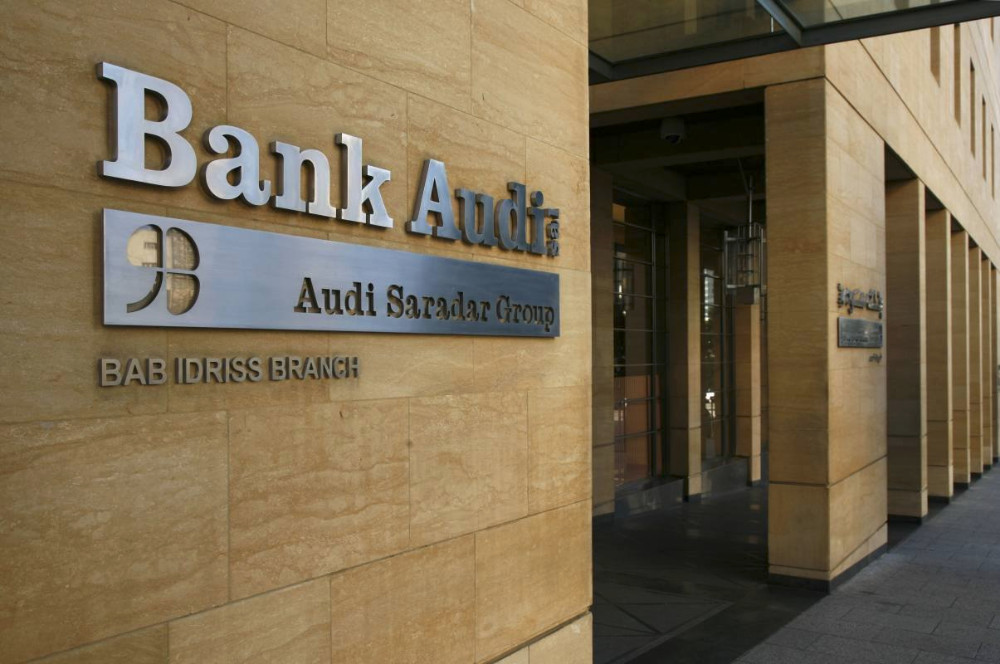
This spring there was considerable commotion in Lebanese economic and financial circles as rumors surfaced that the country’s largest bank was engaged in scenario exercises about moving its corporate head office to Abu Dhabi in the United Arab Emirates.

The question of the advantages and disadvantages of such a significant relocation decision motivated Philip Karam, who studies economics at the John Molson School of Business, Concordia University, in Montreal, Canada, to execute research from the viewpoint of what advantages a move could provide to the bank and how the Lebanese government could incentivize the bank to remain in the country.

Executive attained access to the research paper, of which we bring you a shortened version. We note that the paper does not address questions such as employment and job creation. We also acknowledge that Bank Audi, which recently increased its footprint in Lebanon by taking up additional office space in downtown Beirut and also through launching a new SME division at its Lebanon unit on August 25, emphasized already in May that nothing was decided in terms of moving.

“If and when a decision is made, in keeping with its disclosure policy and applicable legal requirements, Bank Audi will make an announcement. Until that time, any discussion is pure speculation,” the group stated in an announcement.

The pros and cons of relocation

The possibility of a headquarters relocation by Bank Audi, the largest bank in Lebanon and a lender with operations in 12 countries, is the subject of our investigation. The analysis will be based on established ideas in the field of organisational theory on headquarters relocation. These ideas contend that HQs move overseas in response to changes in the internal configurations of the firm’s activities and the demands of the product markets in which it operates; or as a response to changes in external factors that have to do with global financial markets and shareholders’ composition and concerns.

Additionally, the HQ move must make sense by involving three sets of gains: efficiency gains arising from being close to the center of gravity of the business; strategic gains that stem from knowledge spillovers and access to better technical and financial resources, especially if the new location is a leading-edge cluster; and symbolic gains that accrue to the firm by demonstrating to stakeholders that the business is global in its location and outlook.

Bank Audi’s presence in the UAE is currently limited to a representative office in the capital Abu Dhabi, which is where it is thinking of moving its HQ. The UAE has of course become the financial and business hub, not just for the Gulf region, but also for the Arab World and probably for South and Central Asia. So as a first impression, it sounds like a good move to relocate Bank Audi’s HQ to the UAE capital. But such a momentous step should not be based on first impressions, but rather be subject to rigorous evaluation of the factors that could be driving it, internal and external.

Of the internal factors, the most plausible is that the bank should move in the direction where its business is increasingly concentrated: the greater the share of business activities located overseas, the greater the possibility of HQ moving there. However, on closer inspection, this factor is not good enough in the case of Bank Audi. Lebanon remains the place where the bulk of the bank’s activities and profits are generated: 52 percent of assets and 49 percent of profits, to be exact. If anything, the bank should be considering moving its HQ to Turkey, as it is its fastest growing and second biggest market, with assets exceeding $10.5 billion. Moving to Abu Dhabi, where the bank has hardly any presence, does not make much sense in this regard and the bank’s chances of reaping any firm-specific advantages are minimal.

Another crucial internal factor is the attraction of a new location characterized by growing possibilities, hub-like economic advantages, and a hospitable investment environment. In this sense, the more attractive the host country’s business climate is perceived to be, the greater the likelihood of the firm moving its HQ overseas. This is surely true of the UAE and its capital city, for their magnetism is multifaceted: an agglomeration of related business activities, a supporting political and regulatory environment, and a high quality of life for the employees. It is also a city with no corporate income taxes on domestic banks and is rated at investment grade AA-.

The bank can thus leverage the UAE’s or Abu Dhabi’s location-specific advantages to enhance its efficiency and strategic benefits. However, it is wise not to grossly exaggerate these benefits in relation to Lebanon. Though the business climate in Lebanon leaves a lot to be desired, its monetary and financial regulation and compliance is considered world class. And, in the final analysis, the UAE is still in the same “neighborhood” as Lebanon, with a fairly notable degree of direct correlation in economic shocks – and perhaps political shocks – between the two countries.

[pullquote]Though the business climate in Lebanon leaves a lot to be desired, its monetary and financial regulation and compliance is considered world class[/pullquote]

Although the internal drivers do not seem to strongly support Bank Audi’s relocation to Abu Dhabi, it is the external factors that could carry more weight in supporting that decision – factors that have gained more prominence with the globalization and opening of the world economy. This means that corporate HQ should give higher priority to managing its interface with external stakeholders, primarily with financial markets and foreign shareholders. And with the rapid developments in information and communication technologies (ICT) making it naturally easy for HQ to be mobile, such mobility is increasingly towards places where these salient and beneficial relationships with external stakeholders can be optimized, and the three expected gains – efficiency, strategic, and symbolic – can be adequately reaped.

For Bank Audi in AA- rated Abu Dhabi, the bottom line is that the bank will shed the disadvantage of being Lebanese with its associated negative and risky perceptions when dealing with international markets. This would translate to more efficient communication with institutional shareholders and analysts and, more importantly, facilitate better access and quality of financial services, in terms of wholesale loans, bond issues and capital infusion. Add to that the strategic and symbolic gains that arise from operating in a growing financial center that is also loaded with a pool of specialized talent; and from being no longer constrained by local norms and markets, but instead becoming a recognized player in regional or global financial markets.

Equally important is the external driver that deals with the composition and concentration of shareholders. Shareholders that are more international and dispersed are not strongly tied to local HQs in the way that domestic and family shareholders are. As a result, one expects that the higher the share of foreign shareholders and the less concentrated the ownership, the greater the chance of HQ moving abroad is. A look at the composition of major owners of Bank Audi could potentially confirm that: 6.9 percent is owned directly by the Audi family (Lebanon); 5.94 percent by Sheikha Suad Al Homaiz (Kuwait); 4.97 percent by Sheikh Dhiab Al Nehyan (Abu Dhabi, UAE); 4.71 percent by Al Sabah family (Kuwait); 2.55 percent by Al Hobayb family (Saudi Arabia); 2.5 percent by the International Finance Corporation (World Bank); and 29.1 percent by Deutsche Bank Trust Company Americas (as a custodian for all GDR holders).

There is, however, one external driver that might not support Bank Audi’s relocation to Abu Dhabi. Becoming a regional player with fluid access to regional and international financial markets and with a rising share of foreign ownership also involves dealing with international customers and competitors. Under ideal conditions, this should act as an opportunity for the bank to enlarge its customer base and to improve its product offerings. But in Bank Audi’s case that is going to be more of a challenge. The bank has practically no footing in the country, and it is fair to assume that competition is going to be very tough in a banking market with very big players and close to $675 billion in assets.

Although this external factor might impede Bank Audi’s move, there are at least two external stimuli that could expedite the relocation. First, a merger or acquisition by a UAE bank that would have the added benefit of giving Bank Audi or the new merged entity the crucial established presence in the UAE. Second, a threat in the home country driven by concerns over the regulatory regime, the best example of which is a flare up between the US authorities and the Lebanese banking system in relation to compliance with HIFPA, the law concerning Hezbollah.

On balance, then, our preliminary analysis has shown that external drivers mostly favor Bank Audi’s move to Abu Dhabi, whereas the internal drivers do not. The interesting thing is that there is increasing evidence from around the world that external drivers are more important in determining corporate HQ relocation than internal ones, which does not bode well for Lebanon. Besides the damage to its national financial pride, with Bank Audi’s decision to relocate, the country would stand to lose – as far as its banking sector is concerned – from forgone employment, corporate taxes, profit repatriation, financial innovation and dynamism, and market competition.

[pullquote]On balance, then, our preliminary analysis has shown that external drivers mostly favor Bank Audi’s move to Abu Dhabi, whereas the internal drivers do not[/pullquote]

How can we prevent this from happening? We suggest, tentatively, two possible ways out that are not mutually exclusive. One puts the onus on Bank Audi and the other on the government. It is reasonable to argue, given Bank Audi’s difficulty in realizing its first-best strategy of moving its corporate HQ to the UAE because of the extra-tough competition in the commercial banking market, that the bank pursues a second-best strategy of relocating its business units HQ, especially those of its non-traditional banking services that are currently dormant in Lebanon.

The two business units that could be prime candidates for such HQ relocation are private and investment banking, since moving these units seems to agree the most with the bank’s long-term financial interests. To elaborate, private banking HQ could relocate to Abu Dhabi to take advantage of the millions of high net worth individuals in the Gulf which has become a very fertile region for wealth management services; while investment banking HQ could move to Jeddah, the commercial center of the biggest economy in the Arab world that will be undergoing major financial and real sector reforms under the New Vision 2030 outlined by the second crown prince, Mohammad bin Salman. Such moves would naturally benefit from the synergies across products and countries that the bank can derive from its operations in the region and beyond; and they are undoubtedly feasible given developments in ICT that makes it easier for corporate HQ and business units HQ to exist in separate localities.

As for what the Lebanese government can do to incentivize Bank Audi to retain its headquarters in Beirut, there is really no shortage of proposals to put the country back on track and transform it to a viable host for business. This requires a set of reforms and initiatives such as: public private partnerships, infrastructure development, oil and gas exploration, public sector reorganization, and improvements to doing business and the investment climate. These structural changes will not only provide a sustainable lift to the economy, but they will also create a promising environment for banks to prosper and keep their HQ in the country, and even invite new HQs to settle here.

September 28, 2016 0 comments
0 FacebookTwitterPinterestEmail
  • 1
  • …
  • 117
  • 118
  • 119
  • 120
  • 121
  • …
  • 691

Latest Cover

About us

Since its first edition emerged on the newsstands in 1999, Executive Magazine has been dedicated to providing its readers with the most up-to-date local and regional business news. Executive is a monthly business magazine that offers readers in-depth analyses on the Lebanese world of commerce, covering all the major sectors – from banking, finance, and insurance to technology, tourism, hospitality, media, and retail.

  • Donate
  • Our Purpose
  • Contact Us

Sign up for our newsletter

    • Facebook
    • Twitter
    • Instagram
    • Linkedin
    • Youtube
    Executive Magazine
    • ISSUES
      • Current Issue
      • Past issues
    • BUSINESS
    • ECONOMICS & POLICY
    • OPINION
    • SPECIAL REPORTS
    • EXECUTIVE TALKS
    • MOVEMENTS
      • Change the image
      • Cannes lions
      • Transparency & accountability
      • ECONOMIC ROADMAP
      • Say No to Corruption
      • The Lebanon media development initiative
      • LPSN Policy Asks
      • Advocating the preservation of deposits
    • JOIN US
      • Join our movement
      • Attend our events
      • Receive updates
      • Connect with us
    • DONATE