• Donate
  • Our Purpose
  • Contact Us
Executive Magazine
  • ISSUES
    • Current Issue
    • Past issues
  • BUSINESS
  • ECONOMICS & POLICY
  • OPINION
  • SPECIAL REPORTS
  • EXECUTIVE TALKS
  • MOVEMENTS
    • Change the image
    • Cannes lions
    • Transparency & accountability
    • ECONOMIC ROADMAP
    • Say No to Corruption
    • The Lebanon media development initiative
    • LPSN Policy Asks
    • Advocating the preservation of deposits
  • JOIN US
    • Join our movement
    • Attend our events
    • Receive updates
    • Connect with us
  • DONATE
Wine

Of competition and promotion

by Nabila Rahhal September 26, 2016
written by Nabila Rahhal

There are arguably few things more enjoyable than sipping on a good glass of wine after a long day. Selecting a brand of wine for that pleasure is not as simple as it seems though: from the quality to the appearance and the image that a specific wine invokes in your mind as a consumer, a lot goes into the choice of bottle.

Amidst a dynamic wine sector, Lebanese wineries are honing their marketing strategies to make sure their wine is the one that gets picked at the end of the day.     

The more the merrier

Following the end of the Lebanese Civil War in 1990, Lebanon had only eight wineries. Today it boasts approximately 50.

The playing field has certainly expanded, yet older wineries insist that they welcome the addition of boutique wineries, explaining that it has benefited the Lebanese wine industry as a whole.

According to Zafer Chaoui, chairman and CEO of Château Ksara, and Edouard Kosremelli, director general of Château Kefraya, the growing number of wineries is a positive development because it has led to the increase of wine consumption in Lebanon.

Kosremelli explains that the increase in wineries has led to curiosity about wine among Lebanese, which in turn has increased consumption. He therefore doesn’t view the new wineries as competition to Château Kefraya. “Having more wineries in Lebanon is balanced by more demand for wine so this competition is not affecting Kefraya. The market is still growing and we’re not the only ones to have growth,” he says.

[pullquote]The growing number of wineries is a positive development because it has led to the increase of wine consumption in Lebanon[/pullquote]

Still, Chaoui sees that the rate of wine consumption in Lebanon is not on par with other wine producing countries and believes that a further increase would lead to a more dynamic wine sector. “As a country, we should focus on increasing local consumption per capita as this would be the best solution to an increased number of producers and would be a huge potential for the sector to develop in the future. Each winery has contributed to increasing the consumption per capita by pushing, relative to its size and capacity, for its wine to be tried all over,” says Chaoui.

Foreign is not necessarily better

The real competition for Lebanese wine in the local market, according to those interviewed, comes from foreign wines which are being imported into Lebanon at a higher rate than five years ago, fueled by the increased interest in wine and by the growing number of specialized wine retailers in the country (at least three have opened in the last five years alone).

The wineries interviewed explain that many Lebanese still believe foreign wine is better than local wine. “Some [Lebanese wines] are not good while others are great but on average we have really good wine and every single sommelier or wine specialist that has come to Lebanon is really surprised by this,” says Ixsir’s General Manager Hady Kahale.

The power of the vineyard

While each winery Executive spoke to has its unique marketing strategy, a few common themes emerged.

To begin with, all wineries agreed that, for a marketing campaign to succeed, first and foremost the wine has to be of high quality. “Wine is not only about marketing. If you don’t have a high quality product, you will sell well in the first year but then stop,” says Kahale.

Another common theme among the wineries interviewed is their belief in enotourism, or wine tourism, as an effective means of communicating their message. Those interviewed explained that, through visits to wineries, consumers get a feel for the winery’s unique philosophy and understand how wine is made while having a good time. By association, they will be more likely to select it in a store or at a restaurant.

The wineries also have their own marketing and development strategies based on assessments of their individual strengths and selling points.

Word of mouth

For Ixsir, according to Kahale, the most efficient marketing strategy is word of mouth where the consumers themselves talk about Ixsir and essentially promote it among their contacts.

To achieve this, Ixsir made sure it was where their target consumer would be most likely to consume wine. “For me, the best ambassador of Ixsir is Ixsir itself; people need to taste wine. The way we reached people is through having them taste the wine in a good setting – not supermarkets – such as exhibitions or events when they are ready to drink or eat,” says Kahale, citing Ixsir’s presence at bistro style restaurants, private and charity events.

[pullquote]All wineries agreed that, for a marketing campaign to succeed, first and foremostthe wine has to be of high quality[/pullquote]

Ixsir also created an association for itself with the arts, explains Kahale, making sure to be present at exhibition openings and art events across the city and also dedicating a section of their winery to exhibitions.

Ixsir was also among the first wineries to become active on social media, according to Kahale, who says it was a very important step for marketing their wine to younger consumers.

Ixsir’s marketing team is made up two people, including Kahale, who describes himself as a Jack-of-all-trades. While Kahale did not disclose the exact percentage earmarked for marketing from the winery’s budget, he placed it at somewhere between 10 to 20 percent.

A terrior, a soul, a great wine

For Kosremelli, Château Kefraya’s tagline “a terrior, a soul, a great wine” sums up their marketing strategy, which focuses on communicating the fact that Château Kefraya owns their vineyards, meaning it does not buy grapes from contracted farmers. This, according to Kosremelli, allows them to better control their grapes, in turn leading to the production of a higher quality wine.

Kosremelli explains that the idea of producing wine came to the late Michel De Bustros (he passed early August 2016) following the good feedback he received regarding the quality of the grapes he had been growing and selling to wineries since the 1950s. “Until now, we use only our grapes. This is what gave consistency to Château Kefraya and allowed the brand to grow. We have full control over our terrior, we understand them and each year we have a better understanding of what they can give,” says Kosremelli, explaining how the winery invests heavily into studying their soil in order to yield to the best wine possible. “The rest can take care of itself,” he says.

[pullquote]Château Ksara’s history, and consequently its reputation, is its strongest marketing strength, according to [Zafer Chaoui, chairman and CEO of Château Ksara][/pullquote]

Château Kefraya also engages in advertisements and promotions, spending 15 percent of its annual budget on marketing which Kosremelli says is “important for maintaining market share and increasing wine consumption per capita”.

Château Kefraya’s marketing is done through both traditional means – such as newspaper and magazine advertisements and some billboards – and the nontraditional means such as social media, tastings and events.   

Banking on history

Founded in 1881 by the Jesuit monks, Château Ksara’s history, and consequently its reputation, is its strongest marketing strength, according to Chaoui. “We have an excellent quality, reputation and history and this cannot but be taken into consideration,” enthuses Chaoui.

Being in operation for almost 160 years, Château Ksara’s challenge, according to Chaoui, is maintaining their position in the market. He explains that, “We maintained [market position] through investment and continuity. We invest wherever needed in a very good marketing strategy, a committed sales team, good quality and reputation,” says Chaoui.

Château Ksara spends 8 percent of its annual turnover on marketing, a percentage which Chaoui describes as “healthy”. The winery has a marketing manager with a team of three employees who all work closely with the sales team. Château Ksara does its own distribution which has the advantage of allowing them to be closer to their consumer base compared to those employing a third party distributor, according to Chaoui. “This costs more than if we had a distributor but it allows for a closer relationship between the customer and Ksara, which wouldn’t be the case if we had a third party distributing,” explains Chaoui.

Château Ksara also invests heavily in traditional advertisements such as billboards, newspapers, TV and radio ads and magazines, but doesn’t ignore the non-traditional ones such as social media, explains Chaoui.

September 26, 2016 0 comments
0 FacebookTwitterPinterestEmail
Wine

Keeping it small

by Nabila Rahhal September 23, 2016
written by Nabila Rahhal

There’s a popular joke in the wine industry which goes: “Do you know how to make a million dollars out of a small winery? Start out with five million!”

The joke illustrates why owning a small winery is perceived more as an expensive hobby or an act of passion than a money making venture. At the end of the day, however, a winery of any size is a business, albeit one that might not be easy to manage or profit from, especially in a country like Lebanon.

Small wineries by definition

The past 10 years has seen the number of wineries in Lebanon grow from around seven to almost 50. Many of these wineries, according to wine shop Les Caves De Taillevent’s General Manager Paul Choueiry, are considered small or boutique.

Although there isn’t one absolute definition for small or boutique wineries, the wine specialists Executive spoke to believe a small winery is defined by a low production (around 20,000 bottles or less per year) often with only one or two labels (or wines). They also tend to be family run.

Karim El Ghazzi, general manager of Zawya, a wine shop in Mar Mikhael selling only Lebanese wines, believes small or “independent wineries”, as he calls them, are also characterized by the winemaker being involved in the whole process from harvest to distribution. “There is something beautiful about the winemaker coming to distribute their wine to us with their finger stained red from having personally pressed the wine earlier that morning,” muses Ghazzi.

Good things come in small packages

Producing only a small quantity of wine usually translates to being able to better control the production process and wine quality. “Boutique wineries are interesting because producing 10,000 liters is different than producing 10 million liters. Micro-wineries work on a small scale so they can control every single kilo, every single bottle, the whole process,” explains Choueiry, adding, however, that without government regulated appellations on wine, the only way one can evaluate the vintage is through tasting it, comparing it to “Russian roulette”.

Micro-wineries have the benefit of working at an artisanal level in contrast to the large wineries, explains El Ghazzi. “When the winery grows with a production of over 50,000 they find themselves at a position of a corporation or company and then might have to take decisions at that level, such as sourcing the grapes from a cheaper source. The winery then becomes detached from the agricultural side of its production,” elaborates El Ghazzi, adding that it’s not wrong for a winery to function like that, but that it would not fit into the criteria Zawya has set for its selection of independent wineries.

While still considered a small crowd, Lebanon’s wine drinkers are showing an increasing interest in these boutique wineries, influenced by the global trend for the artisanal and independent wine producers. “There is a worldwide trend towards this small artisanal way of production, even in beer or food; there’s a different spirit and style of making or producing,” says Choueiry.

Najib Moutran, owner of the Wine Teller, features 35 boutique and medium-sized Lebanese winery brands in his shop and says he has seen demand for them increase in the past five years. “There is a great interest among the Lebanese for micro-wineries, though at the beginning they were a little afraid to try something new. But now these wineries have proven themselves in quality and consistency so people are trying them more,” explains Moutran.

Money woes

Owning a small winery, however, is not a smooth sailing course.

To begin with, there is the issue of expenses. Starting up a winery in Lebanon requires an investment of between $500,000 and a million dollars, according to the winery owners Executive spoke to.

[pullquote]While still considered a small crowd, Lebanon’s wine drinkers are showing an increasing interest in these boutique wineries[/pullquote]

Aside from owning the land, securing the grapes and contracting winemakers or specialists, which requires a sizable amount by itself,  this budget is spent on winemaking equipment, from the tanks to the bottling machine to the barrels themselves, all of which have to be imported, according to Moutran.

The cost of winemaking machinery does not change depending on the quantity of wine made, meaning that a small winery has to divide that cost among the limited amounts of bottles it produces annually, explains Choueiry.

Micro-winery owners face another problem when importing bottles, corks and barrels in that they only need small amounts of them, which makes the costs much higher in comparison to that of larger wineries which order these products en masse. “Costs for small wineries are [relatively] much higher than the big ones because we acquire small quantities. Everything is imported here,” laments Sebastian El Khoury, winemaker and owner at Domaine de Baal.

Managing finances

All the small winery owners Executive spoke to say they have discussed coming together to cooperate on reducing costs by investing in a mobile bottling truck (a common service for small wineries in countries such as France) and splitting the cost or even ordering materials together in bulk and dividing the shipping expenses.

However, according to Iris Domain’s Sarmad Salibi, this talk has not been followed up by action. “I’ve been looking at ways to collaborate together with some small wineries to cut down on expenses related to bottling and corking and collaborate on marketing issues. The intent is there, but when it comes to taking action, things are slow simply because everyone is busy with their own work and they each have their own financial capabilities,” says Salibi.

Although Kafalat offers start up loans to small wineries, which several of the wineries Executive spoke to have benefited from, other payment facilities or government support for this agroindustry sector is not available. Also, with Kafalat, loan beneficiaries are given up to six years to pay back the amount, a time period which, according to El Khoury, is too tight for wineries. He compares this with wine producing countries abroad where wineries are given up to 20 years to repay their loans.

Spreading the wine

Distribution is another area where small wineries face difficulties, again financially related. “As a small winery, you don’t have the same budget as the big wineries. We cannot afford the same marketing campaign, and distribution and marketing pose the main financial challenges,” explains El Khoury, adding that for wine, not only is the Lebanese market saturated, but the international one is also highly competitive.

One of the main problems with distribution of micro-wineries is that, because of their high cost of production, their prices are also high when compared to the bigger Lebanese wineries. “The high production cost is a big challenge in that it puts you in a price bracket which is sometimes a disadvantage. Some Lebanese consumers think that Lebanese wines are not synonymous with quality. So when they see a bottle at our price, they think it is too expensive and opt for foreign wine at a slightly more expensive price tag thinking it is of better quality, which is not necessarily the case,” explains Jennifer Massoud, communications and productions manager at Atibaia.

Moutran explains that alcohol distribution in Lebanon is typically done through big companies, which is a problem for small wineries. “The way distribution is being done in Lebanon is that you have this link between big distributors and brands of wine; if you don’t have this big distribution company, you don’t have penetration power in the market especially with the Syrian border closed and with a minimal export market for small wineries,” says Moutran.

Although some of the small wineries Executive spoke to have distributors, they say it is not enough to be competitive with the bigger wineries in the country. “While we have a distributor, we have an issue with how wine sales happen in Lebanon. The majority of wine sales happen in supermarkets and supermarkets want a product with a high turnover in order to maximize the dollar profit per square meter; so they want to have tastings, promotions…a boutique winery will not provide them with those things so they don’t list it or give you a small space with no visibility,” explains Massoud, adding that in the on trade sector (namely restaurants) the issue is mainly with restaurant owners pushing imported wine over the local wines because they can make higher margins.

Some of the wineries interviewed do have an export market abroad, but all wineries say they prefer selling in the local market as they make higher profits. “To us, we benefit more when we sell here because we can sell them at a higher price; outside we have to lower our prices because we have customs and transportation expenses,” explains El Khoury.

Some support, please

Again, the government offers no support for small Lebanese wineries. Boutique wineries that have paid the fees to be part of the Union Vinicole du Liban (UVL) (fees are proportional to the size of the winery) benefit from attending the international wine exhibitions with them under the Lebanese wines pavilions, explain El Khoury and Massoud.

Fees for these exhibitions are often subsidized by the Chamber of Commerce or the Ministry of Agriculture (the subsidies exclude airfare and accommodation) and so could be the only chance for small wineries to attend such events.

Locally, small wineries can market their wines through consumer festivals such as Vinifest or others which take place before Christmas and have a focus on wine, suggests Choueiry.

A different playing field

Small winery owners describe their venture as something they started out of passion, giving the impression that their wineries might not be all about the bottom line, and that they are content to stay at the size they are at.

Others assess the market as they go along, evaluating whether or not they will take the leap to become a medium sized winery. “This is why I started with only 5,000 bottles,” says El Khoury. “I started small so as not to have any left and increased the product number as the demand increased.” He now produces 15,000 bottles annually.

Regardless of their personal benefit, small and medium-sized wineries have brought dynamism into the Lebanese wine industry. “Before boutique wineries, all wine production in Lebanon was in Bekaa, but the nice thing was that with the new wineries mushrooming across the country, wine now has different microclimates and soils which lead to different profiles and tastes of Lebanese wine,” says Choueiry.

Now that is something we can all raise a glass to.

Atibaia

Production: 16,000 bottles per year

Region: Batroun

atibaia2

Jean Massoud’s family already owned a house in the mountains of Batroun but “fell in love” with a 17th century house in the vicinity and decided to buy it.

Daughter and communications manager Jennifer Massoud recounts that, because the family was passionate about wine, they decided to transform the house into a winery named Atibaia. They sent soil samples to France to see what grape varieties would work in the Batroun climate as there were few wineries in the areas back then.

atibaia1

“It was 2005 so there were still very few wineries if any in Batroun. It was quite a challenge for us, but at the same time we wanted to do a wine that we enjoy drinking and are passionate about,” recalls Massoud, stressing that their family’s interest in the winery was not commercial.

Indeed, Jean Massoud, who is in the distribution business, saw Atibaia as more of a chance for him to work in agriculture, a subject he is passionate about and had studied at university, and as a retirement project of sorts.

atibaia3

Today, Atibaia has three vintages under one red wine label, produced by winemaker Diana Salameh, and plans to release a white wine by next year. Sixty percent of Atibaia’s production is exported while 40 percent is distributed locally through their distribution company.

Atibaia can be found in the major wine retailers, select restaurants and a few upscale supermarkets. Massoud explains their presence in supermarkets with the following: “We are in high end supermarkets because it is a one stop shop for many clients who don’t go to wine retailers or cavists and just buy their wine from there. We are also in supermarkets in areas where you cannot find cavists.”

Domaine de Baal

Production: 15,000 bottles per year

Region: Zahleh, Bekaa Valley

baal1

Sebastian El Khoury says his family has always been fans of wine, having lived in Bordeaux, France for many years.

 In Lebanon, starting from 1994, his father had vineyards and used to sell grapes to wineries such as Château Ksara which furthered El Khoury’s fascination with wine.

As he recounts, he had studied business in university and thought of entering the wine export/import business, but decided to focus on winemaking instead. He went to back to Bordeaux for seven years where he worked in a winery out of the belief that hands-on experience would be the most useful.

baal2

In 2005, El Khoury returned and prepared his first vintage of 5,000 bottles. “Today, we produce 15,000, but we started out with only 5,000 and grew slowly. I plan to reach a maximum of 25,000 bottles because for me small is better: risk wise it’s more manageable that way as I have to think of distribution,” says El Khoury explaining that many wineries make the mistake of producing as many bottles as they can afford-sometimes up to a 100,000 from the first vintage without securing a market for them first.

Domaine de Baal is close to an organic wine although El Khoury prefers the term natural wine, meaning there are barely any additives to the wine (low in sulfur, no yeast or additives) and has both red and white vintages.

Forty percent of the wine is distributed locally by Fawaz Holding through their wine shop La Cave de Joël Robuchon and the remaining is exported.

Domaine Iris

Production: 6,000 bottles per year

Region: Bhamdoun

Being around vineyards has always relaxed Sarmad Salibi. Growing up, he would hang out with his father while he tended to his vineyards and while living in South California, USA, he would always head to Napa Valley and stroll around the vineyards whenever he wanted a relaxing taste of home.

It is no wonder then that Salibi loved wine. Upon his return to Bhamdoun, he would often visit a friend who was producing wine and enjoy the smells and sights of wine making. That friend gifted him several hundred grape vines and this is what began pushing Salibi into starting Domain Iris.

iris

The final shove, says Salibi, was that he had land and a house in Bhamdoun that were abandoned during the Lebanese civil war, but that he wanted to revive, lest they be bought by investors.

So, in 2003, planting for Domain Iris started, and soon after Salibi was able to enjoy the first vintages of his hard work. Today Salibi produces 6,000 bottles which he distributes locally at the major wine shops, a few premium restaurants and what he calls the five major hotels in Beirut.

Salibi handles market and distribution himself and says that times have been hard, in line with the economic situation in Lebanon, since, at the end of the day, he is selling a luxury item and not a basic necessity.

Salibi admits that the winery is taking up most of his time “because I love it” but says he has another line of business which helps make ends meet. “Small winery owners can be called passionate fools. If the project is self-sufficient and financed then it is enough for me; it is something for the soul,” concludes Salibi.

September 23, 2016 1 comment
0 FacebookTwitterPinterestEmail
Wine

Grapes of change

by Nabila Rahhal September 22, 2016
written by Nabila Rahhal

Deir El Ahmar, a Christian village in the northern Bekaa valley’s Hermel-Baalbek region, is more notorious for its marijuana plantations than it is for great wines. But winemaking is precisely what the Coteaux d’Heliopolis Cooperative now wants their village to become known for.

The birth of the Cooperative

Having never really felt the government’s support or presence, planting hemp was just “the way things have always been done in Deir El Ahmar”, explains Charbel El Fakhri, the legal representative of the Cooperative and the son of its current president. It was also among the few choices of livelihood in the region: “Before it was either planting tobacco or weed or you leave the village because there is nothing else to do, and if you didn’t find a seller [for the weed], it would be a disaster,” recounts Fakhri.

Since marijuana is illegal in Lebanon, profits from its sales were inconsistent and fraught with risk; for a period of time, for instance, police would destroy the growers’ crop on an annual basis. So, in 1999, four hemp growers thought of substituting their plantations for wine producing grapes which they could sell to wineries. They formed the Coteaux d’Heliopolis Cooperative which was supported technically and through grants by the French region of Oise and encouraged by Zahle’s Chamber of Commerce and Agriculture.

Grape statistics

From the start, Deir El Ahmar’s hemp growers were intrigued by the Cooperative which grew more or less steadily each year reaching a total of 207 grape farmers in 2016. Among them, they farm approximately 240 hectares of land and produce 700 tons of grapes.

While the Cooperative first started distributing grapes only to the wineries in their immediate vicinity, demand quickly grew and they began to provide grapes to wineries in Zahleh, Qanafar and Bhamdoun. Today, 80 percent of their production is sold to wineries across Lebanon.

According to Fakhri, the Cooperative’s grapes are in high demand because of their superior quality due to the region’s altitude (which varies from 1,050 meters to 1,600 meters), its climate and its lack of pollution, compared to areas such as Zahle and the West Bekaa where vineyards are often adjacent to the street.

This quality comes with a high price tag with prices ranging from $1.05 per kilogram to $1.45 per kilogram, depending on the grape variety and style of planting. “Lots of wineries complain about the prices and not all of them buy from our cooperative, but what we stand for is quality and this is what we tell them,” insists Fakhri.

Change of guards

For this high quality to be consistently maintained, an organized management team was needed, something that was lacking in the early days of the Cooperative. While Fakhri is appreciative of the Cooperative’s first board of directors’ success in starting it up and recruiting growers, he says more organization is now needed for further development.

[pullquote]“It’s good to sell grapes but it’s more interesting to have your own wine as a cooperative and be able to export it around the world.”[/pullquote]

In 2013, the current board of directors was elected and immediately set to work restructuring the Cooperative. They hired a full-time financial auditor to keep track of their accounts and a six-person management team to handle quality control, distribution and marketing. They also set in place standards that differentiated the selling price of grape varieties according to which produced better wine and which were grown in a more efficient manner (instead of having all grapes at the same price, regardless of their quality or varietal significance). “These may be small details but they are very important for the Cooperative to keep on growing correctly,” says Fakhri.

The need for wine

As Fakhri puts it, it is almost a must for a wine grape growing cooperative to have its own wine and winery. “It’s good to sell grapes but it’s more interesting to have your own wine as a cooperative and be able to export it around the world,” enthuses Fakhri.

A more practical reason for having a cooperative wine is having a ready and reliable market for the grapes produced. “At a certain point in 2012, a ton of grapes were thrown away because there weren’t enough deals with wineries to sell them and the growers were not paid; it was almost a disaster. So we saw it as a necessity to have a winery that would ensure that the grapes produced would actually be used,” explains Fakhri.

The cooperative dabbled with wine in early 2009, producing it in wineries whose space they rented, but there was at first some inconsistency in production (with several years being skipped) and the wine was rebranded Coteaux des Cedres in 2013.

Having a winery in the region is also important, according to Fakhri, in order to conduct the tests needed on the grapes to assess alcohol levels and determine prime harvest time. While they used to send the grapes to Zahle for this, having a winery on the premises would definitely make the process both faster and smoother, says Fakhri.

Deir El Ahmar’s winery

However, the Cooperative’s budget was too tight and its time too stretched with its existing duties (such as managing the vineyards and maintaining standards) to add starting and running a winery to its agenda – Coteaux Des Cedres continued being produced in rented wineries at that time.

Fakhri and his partner Walid Hobchy (one of the original members of the Cooperative) needed a winery for their own private label, Couvent Rouge (which translates to Deir El Ahmar) which they started producing in 2010 – in a Zahle winery called Coteaux du Liban that they had rented – following Fakhri’s return from studying winemaking in Bordeaux. Their idea for this private label was borne out of curiosity for what could be done with the grapes they were already planting as part of the Cooperative.

So, in 2014, they decided to set up a winery in Deir El Ahmar which could also be used by the Cooperative. They secured the $1 million needed for the construction and equipment by taking loans from Kafalat and a private bank, selling shares (5 percent were sold to the Cooperative) and contributing some of their personal funds.

The winery, which is in its final stages of construction and will be ready to welcome guests in 2017, has been producing Coteaux Cedres and Couvent Rouges since 2014.   

Wines of Deir El Ahmar

Couvent Rouge produces 20,000 bottles per year and are mainly distributed locally in restaurants. Fakhri says they still want to enter the local wine shops and delicatessen market, as well as the export market through their website and online commerce.

But the duo is not in a hurry and want to play their cards right with their wine. “We want to finish the winery and so [we] are taking it slow. We want to be able to receive people [at the winery] and teach them about the wine; we don’t want to be present in the market just for the sake of being present,” says Fakhri, explaining that working with wine has taught them to be patient.

Fairtrade

Meanwhile, Couteaux Des Cedres has been going strong with 100,000 to 140,000 bottles produced annually. The Cooperative’s wine is Fairtrade certified and Fakhri himself has been appointed chairman of Fairtrade Africa and is a member of Fairtrade International.

According to Fakhri, Fairtrade provides an eager international market which he prefers to the saturated Lebanese market-centered in Greater Beirut. “Beirut is an interesting but challenging market since there is a wine culture, but it’s a small city with low consumption, even when compared to another small city abroad. We are aiming for more than that because we have a village behind us; we have many advantages. If we have the demand for it, we can go up to 600,000 bottles from one year to another because we have the village vineyards, so instead of selling the grapes to a winery that year we keep them for the Cooperative and produce more wine,” explains Fakhri, adding that it is currently distributing to the UK, Japan and Sweden.

The village’s label

While Deir El Ahmar’s growers may have embraced wine grape production, their alcoholic beverage of choice remains whisky.

In order to promote a culture of wine drinking and show the growers that there is more to their vineyards than just a source of income, the Cooperative introduced in 2015 an Arabic wine label El Day’a, fully labelled in Arabic, and made it available only in their region. “We wanted the villagers to have pride in their product and be aware of what they are doing in the process,” explains Fakhri, adding that the locals are enjoying that wine and consuming it on an almost daily basis, not just on special occasions.

With the satisfied farmers working with the Cooperative, the winery and the three wine labels, the Cooperative and its board can sleep well knowing that their initial dream of transforming Deir El Ahmar into a wine producing village instead of a hash producing one is well on its way to being realized.

September 22, 2016 0 comments
0 FacebookTwitterPinterestEmail
Economics & PolicyWildlife trafficking

Confined to misery

by Greg Demarque & Jeremy Arbid September 21, 2016
written by Greg Demarque & Jeremy Arbid

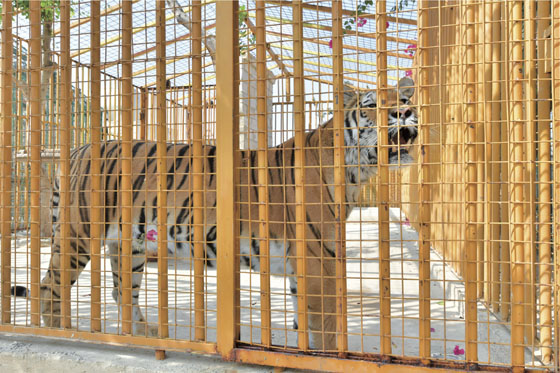
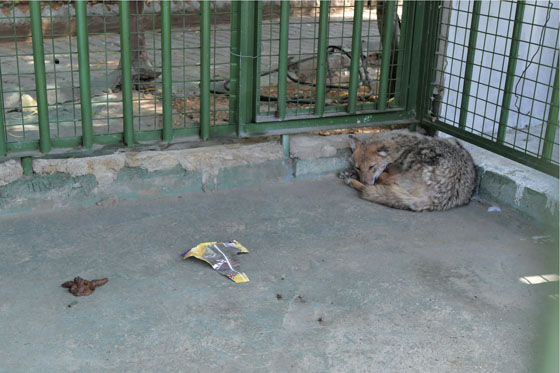
Executive visited ZaZoo City in Hazmieh disguised as tourists in order to collect photographic evidence of the conditions of the animals held captive there. What we found was appaling: ducks lying in a waterless pool, a tiger trapped in a shade-less cage and a fox asleep next to litter and a pile of its own feces. Several of the animals were suffering from untreated wounds, the cages were dirty, no information was provided about the animals present and no one was available to tour us around. Interview requests by Executive went unanswered.

One of several neglected monkeys kept in one of ZaZoo City’s cages. The cage does not come close to simulating the monkey’s natural habitat; the cage flooring is concrete and lacks branches and plants.
A ZaZoo City tiger is held in a small cage with a cement floor, unable to play, run or freely move around. It faces the risk of dehydration with no water or shelter from the sun.
Two lions, one male and one female, share a cement-floored cage, with no greenery and barely enough room for either to move around freely.
A fox shares its barren cage with only litter and its own feces. It has severe, untreated wounds covering both its ears.
Their wings clipped, two breeds of ducks and two pelicans inhabit a squalid, drained pool, strewn with their feces.
A theme park-style kiosk provides visitors with meager food offerings to distribute to the animals.
A badger with untreated wounds on its back shares its cage with a well of stagnant water.
September 21, 2016 2 comments
0 FacebookTwitterPinterestEmail
Economics & PolicyWaste Management

Trash and the towns

by Matt Nash September 15, 2016
written by Matt Nash

Lebanon’s garbage crisis predates independence. Case in point, the country’s first sanitary landfill was built in the 1990s even though the technology emerged around the 1920s. Despite repeated policy failures by successive governments, however, the situation could be turning around.

Their own devices

By law, municipalities in Lebanon have the authority to handle their own garbage. Beginning in the mid-1990s, the central government contracted waste management in the country’s most populous areas (Beirut and the coastal districts from Jounieh in the north down to the Chouf) to the Averda companies Sukleen and Sukomi. This service area accounts for around 50 percent of the waste Lebanon generates. The rest of the country has mostly been managing its own trash (which means relying on foreign grants or – as is the case in Saida – a mix of grants with foreign and local private investment). Waste collection in Lebanon has long been reported to be 99 percent, according to the Ministry of Environment. Picking it up is relatively cheap. In areas outside of the Sukleen/Sukomi service zone, disposal has been the big problem. There are hundreds of open dumps in the country and uncontrolled garbage fires are still a part of waste management strategy in some places. Sorting facilities to recover recyclables, composting facilities for organic waste and sanitary landfills for what’s left are expensive to build and often don’t make sense if they are servicing too small a population (meaning municipalities can most efficiently manage their trash by sending it to facilities that serve more than one locale).

waste-jbeil

Because of financing troubles, donors and non-governmental organizations have largely filled Lebanon’s waste management gaps. Following the 2015 waste crisis in the Sukleen/Sukomi service area, more of the country’s municipalities have been exploring their options.

Inefficiency in Jbeil

Ayoub Bark smiles at the question. “We’re rich,” the vice president of the Jbeil Municipality tells Executive when asked about the city’s finances. He then quickly clarifies that development projects are budget breakers beyond the city’s means. Bark says local banks with corporate social responsibility (CSR) dollars to burn as well as Mexican-Lebanese billionaire Carlos Slim have helped co-finance big-ticket projects. When it came to waste management in the city outside of the Sukleen/Sukomi service zone, however, private sector donors were impossible to find, he says. So the city turned to the European Union via the Med 3-R Project, a sustainable waste management initiative focused on the Mediterranean region.

[pullquote]Because of financial troubles, donors and non-governmental organizations have largely filled Lebanon’s waste management gaps[/pullquote]

While the wider Jbeil district was hailed in the local news as a model waste manager during the stinkiest days of the summer 2015 waste crisis in Beirut and its five environs, the truth is not so clean cut. Bark confirms the district sends most of its waste to an open dump, not a sanitary landfill, in Hbaline, some 550 meters above sea level. He also confirms that sorting and composting facilities near the dump has not been operating for over a year.

chouf-1

Bark says that in early September, the city will break ground on its own sorting and composting facilities, intended for use by four neighboring municipalities. Jbeil is on the hook for 20 percent of the cost, and the 400,000 or so euros coming from Med 3-R is separate from the nearly 78 million euros in EU grants for waste management in Lebanon. Bark explains the city secured other funding for more bins and will soon begin demanding city residents sort at source. As Executive spoke to him in late August, an awareness raising campaign was about to kick off, with maps of the city’s neighborhoods for door-to-door message delivery brought to Bark’s office during the interview. He explains that six months after recycling bins are distributed to each household in the city, fines will be issued for those not sorting (the amount of fine had yet to be determined, he says). Should the plan for fining residents who shun sorting actually be implemented, it will be the first time in Lebanon such a fine is levied. (The 1977 law governing municipalities lists fines as a potential source of revenue, but does not detail what municipalities can and cannot impose monetary penalties for).

Higher ambitions

If imitation is the highest form of flattery, Sukleen should be blushing. The waste management company’s name is a hybrid of the family name of the firm’s founder (Sukkar) and a misspelling of the world “clean.” When Sukleen stopped collecting waste because the government closed the country’s largest sanitary landfill in July 2015, some customers decided they’d finally had enough and chose to sort their own garbage. Literally. Three months into the waste crisis, up in the Chouf, the “Chou-clean” project was in full swing.

With donations of an undisclosed sum from Chouf MPs Walid Jumblatt and Nehme Tohme, the Union of Municipalities of the Higher Chouf bought 5,000 square meters of land and built a trash sorting facility as well as a hangar for composting organic waste, Union President Roger Ashi tells Executive. The union comprises 15 villages (including Moukhtara) with a total population of around 25,000 and a waste stream of between 22 and 25 tons per day, Ashi explains.

waste-chouf-2

Ashi also aims for sorting at source in the union’s villages, but says no fines are planned for violators. He envisions the villages soon sending no waste to a landfill. The union is currently not handing any of its waste to Sukleen, he says, recycling and composting as much as possible and storing the rest until the union can purchase a baler (or a machine to compress the “reject” waste, which would end up in a landfill in many other jurisdictions). While he insists the rejects won’t be landfilled, he only smiles when asked where the trash will end up (remember: there are potential commercial uses for this garbage).

For now, the Union of Municipalities of the Higher Chouf “is not accepting waste from any outside area” and the success of the project has the union thinking of scaling up. He says they may buy more land to build new facilities to service other cities and villages nearby. Given the right scale, waste management can be a very lucrative business.

Correction:

This article has been amended. Orignally, Executive incorrectly wrote that the Union of Municipalities of the Higher Chouf sued Sukleen, resulting in a third party weighing the waste Sukleen collects from the union. In fact, the company says, weighing the union’s waste separately resulted from a 2013 decision by the Ministry of Interior and Municipalites, not a court case. Executive regrets the error.

September 15, 2016 0 comments
0 FacebookTwitterPinterestEmail
Economics & PolicyWaste Management

Wasting time

by Matt Nash September 14, 2016
written by Matt Nash

There, blocking the right-hand lane of traffic, was history repeating itself. Four days after the municipality of Bourj Hammoud blocked access to a temporary waste storage facility on August 24, uncollected garbage was spilling onto the Mirna Chalouhi Road in an eastern suburb of Beirut. If the latest pile-up of trash on the ground suggests anything, it’s that the government’s most recent waste management plan (agreed to in March) is not going well.

Less ambitious than previous policy attempts in the past 18 months, the plan focuses on Lebanon’s most populous areas (Beirut and the districts of Keserwan, Metn, Baabda, Aley and Chouf – a.k.a. Sukleen country), not the entire nation. It also relies on a popular technology that faced stiff local opposition in the past. By 2020, in theory, the burden of daily national power cuts will be a bit easier to bear as waste incineration is expected to provide a new source of electricity production, according to the plan. The last functioning incinerator near Beirut (at Amroussiyeh, south of the capital) was burned to the ground by angry residents convinced it was unclean back in the late 1990s. A 2010 plan to build three waste incinerators along the country’s heavily populated coast went up in smoke because of activist opposition to incineration and resident opposition to living near an incinerator. Despite this, waste to energy is back on the books. And the government’s given itself a four-year deadline to get there.

In the medium term, the plan is to build three sanitary landfills (one off the coast near Bourj Hammoud, one off the coast south of the airport – in an area called Costa Brava land – and one to service the districts of Chouf and Aley, the site of which has not yet been determined). Only one of the three has been successfully contracted for construction (Bourj Hammoud), but work is on hold. The landfills are expected to have a lifespan of four years (offshore stopgap measures until the bitterly opposed incinerators fire up on schedule). Meanwhile, semi-sorted garbage is being wrapped up (bailed, in industry parlance) and parked next to the soon-to-be landfills in Bourj Hammoud and Costa Brava (Executive has not been given an answer as to where the trash from Aley and Chouf ends up).

2

Semi-sorted garbage piles up next to the soon-to-be landfill in Bourj Hammoud

More immediately (as in, it was originally scheduled to have been finished by now), the government should sign new contracts for waste management in the capital and five surrounding districts. For years, Averda companies Sukleen and Sukomi have monopolized waste in this service zone. Sukleen collects it from stinking road-side bins, and Sukomi sorts out what’s still valuable, composts a small fraction of the organics (the company was promised more land for a larger-capacity composting facility in the 1990s but the government never delivered), and used to send the rest of the waste to the Naameh sanitary landfill, which Sukomi operated and maintains. All contracts with the companies expired in July 2015, but a clause of those agreements stipulates they must continue work if no alternate waste manager is in place, Sukleen’s Executive Director Anthony Kurban told Executive at an April press conference. In late July, after several delays, the Council for Development and Reconstruction (CDR), in charge of organizing these tenders, closed bids on a sorting facility contract and a composting facility contract for the Sukleen/Sukomi service area (it’s unclear if the government was requesting new facilities be built or whether it was simply seeking a new operator for the facilities it technically owns, currently operated by Sukomi). CDR also closed bids, in late July, on waste collection contracts, one covering Beirut, Metn and Keserwan, and a second covering Baabda, Aley and Chouf (splitting the collection zone in two, with a condition of thebid being that each must have a different contractor, according to Beirut daily Al-Akhbar). CDR is not granting interviews concerning waste management, a representative tells Executive. No winners for any of the aforementioned contracts have been announced.

[pullquote]If a municipality – or union of municipalities – wants a solution, the ministry will help them find donors to finance the project[/pullquote]

Foreign funding

While numerous plans have been written, Lebanon has never attempted to implement a national waste management strategy. Areas outside of the Sukleen/Sukomi service zone have largely been left to fend for themselves. Beginning in 2003, the European Union began to step in, earmarking grant money for waste management in Lebanon. Through various projects that are scheduled to last until 2017, the EU is financing the construction or rehabilitation of 15 recycling or waste sorting facilities, 16 composting facilities and 8 sanitary landfills to the tune of 77.6 million euros. Taken all together, the EU-financed projects will serve a “population of over 3.5 million in 540 municipalities,” with total waste treatment capacity at “more than 2,395 [tons per day] (against the 5,500 [tons per day] generated in Lebanon,” according to a Fact Sheet the EU sent Executive. According to a September 2014 report by the Ministry of Environment, the EU projects will create modern waste management solutions for nearly the entire country outside of the Sukleen/Sukomi service area. Still left to their own devices, according to the 2014 report, will be the districts of Jbeil, Batroun, Bcharre and Hermel in the north as well as Jezzine, Rachaya, Hasbaya and Marjayoun in the south/south-west.

1

A plan approved by the government back in September 2015 called for providing municipalities with training and financing to handle waste management on their own. Nearly one year later, a committee that was supposed to spearhead the training aspect of this plan established under the umbrella of the Ministry of Interior and Municipalities met only once, confirms Khalil Gebara, an advisor to Interior Minister Mohammad Mashnouk. Asked if the committee is effectively dead, Gebara insists it is not. Pressed on what the ministry is doing to facilitate municipality-owned solutions to waste management problems, he says, “we respond to demand.” If a municipality – or union of municipalities – wants a solution, the ministry will help them find donors to finance the project. And while he as well as representatives of the EU and the World Bank (which is also financing two waste management facilities in Lebanon) insist donors are not wasting money by building redundant infrastructure, Gebara admits “the central government needs to do proper coordination.”

Clarification:

In writing that “Sukleen and Sukomi have monopolized waste in the capital and five surrounding districts,” Executive meant that the companies are the only providers in their service area and they handle the waste stream from collection and sweeping to treatment and final disposal. The magazine did not mean to imply the company broke any laws.

September 14, 2016 0 comments
0 FacebookTwitterPinterestEmail
Economics & PolicyWildlife trafficking

Lebanon’s wildlife villain

by Jeremy Arbid September 9, 2016
written by Jeremy Arbid

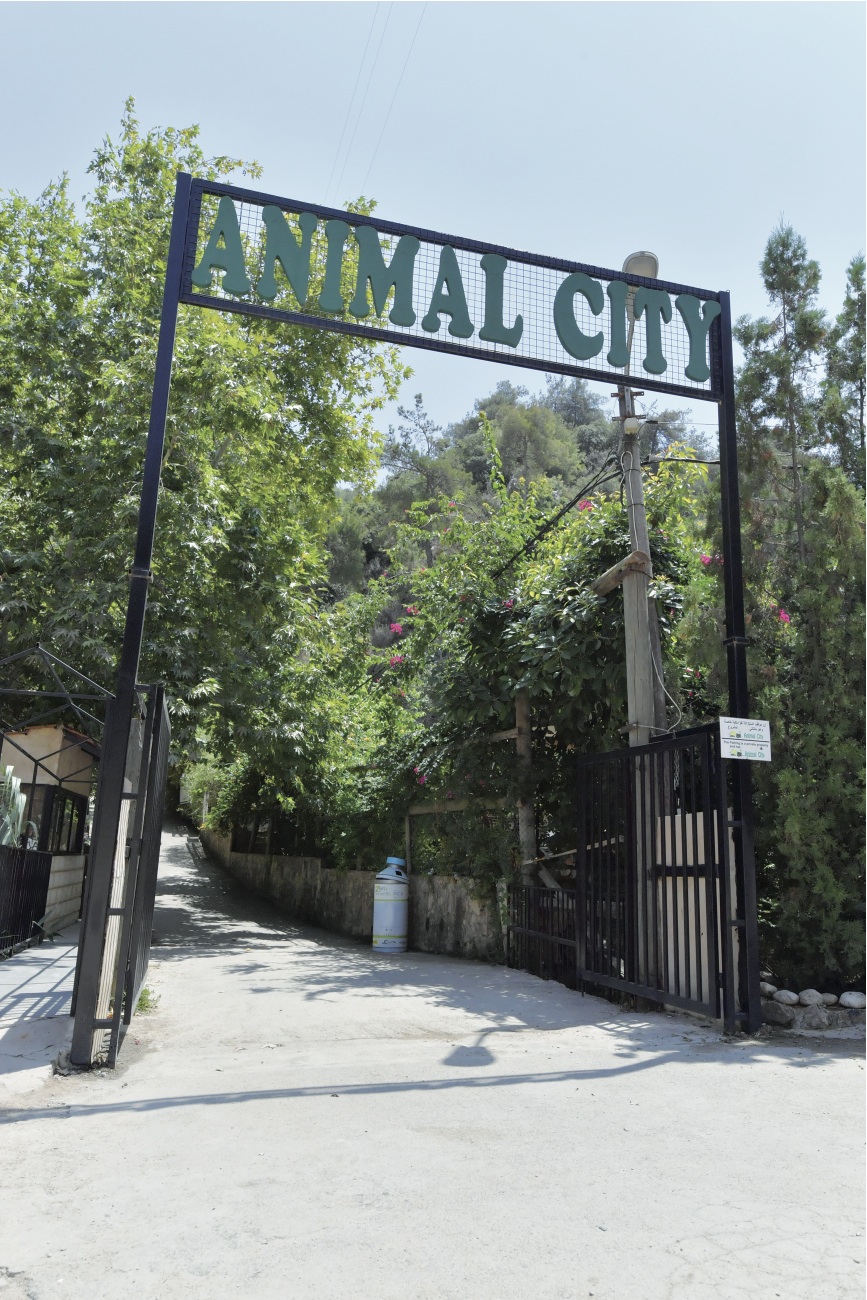
In the shade the temperature reached 34 degrees celsius as Executive met Samir Ghattas at Animal City for an interview in early August. “I turned this place into nature,” he said, “the zoo is my baby.” Executive had visited the zoo two weekends prior to this meeting, first posing as tourists in order to photograph conditions at Animal City and later to take photographs by invitation. What was clear was that conditions of captivity were less than ideal: wildlife lacked water in the sweltering heat and cages hardly provided shade from the sun. Executive also wanted to learn whether allegations of wildlife trafficking were true and wanted to find out more about the zoo’s business model.

It is not profitable, Ghattas says of Animal City, but how much money the zoo is losing is not clear. Over the course of a 90 minute interview Ghattas declined to give many specifics on the zoo’s financial performance or its expenses. He did claim that he subsidizes the zoo with cash from his other businesses or his own pocket, though he wouldn’t say how much. He also said that average attendance per year stood at 70,000 visitors. With each visitor paying $5 entry, that would amount to a total of up to $350,000 in annual revenue.

[pullquote]Conditions of captivity were less than ideal: wildlife lacked water in the sweltering heat and cages hardly provided shade from the sun[/pullquote]

As for expenses, Animal City rents 26,000 square meters of land along the Nahr el Kalb river from the Melkite church at the rate of $3 per square meter per year, or $78,000 annually. Ghattas also says he shells out $12,000 per year to a company managing only the zoo’s Facebook page and there are media costs too like a program OTV was filming when Executive first visited incognito. No figures were given for food, veterinary care or maintenance expenses at the zoo.

The lack of data is not isolated to the zoo alone. Until August the government officially had no idea Animal City existed. Executive was not able to obtain an inventory of the zoo’s wildlife stock. Without knowing the total number of animals kept at the zoo, and with no clear picture of revenues and expenses it’s impossible to pinpoint how much is spent on food and health for those animals, or to evaluate whether that amount is appropriate. No knowledge of how much money actually goes toward animal care obscures the quality of that care. This leaves only anecdotes of conditions: lack of water and shade in the heat of summer, small cages with concrete flooring, the poor health of a chimpanzee, the death of a lion cub. Visual confirmation backs up those anecdotes, and even Ghattas admits the conditions at Animal City fall far short of international standards for captivity (see explainer on standards).

No law, no consequences

What is more troubling is his admission to Executive of the zoo’s implicit participation in wildlife trafficking. He points blame at the government for not having rules that legitimize his zoo, and says how suppliers import wildlife into Lebanon is none of his concern. That line of reasoning was partly true. A January decision issued by the Ministry of Agriculture that went into effect last month asked animal businesses (zoos, pet shops and veterinarians) to self-report on the animals in their possession.

ac1

Conditions for wildlife at Animal City zoo in Nahr El Kalb are far below international standards

But Animal City itself is not registered as a business in Lebanon. Instead it is a tourist attraction operated by a Ghattas-owned business called Gesco Entertainment sarl. In its commercial registration, Gesco describes its business activities in part as importing, exporting, breeding and selling animals.

Ghattas says Animal City cannot import wildlife directly because Lebanon’s government did not recognize the zoo, blocking it from obtaining permits required by international conventions affecting animal welfare (see explainer on conventions). But the bigger complication could be its registration as Gesco, an entertainment company, instead of soley as a business with a zoo description, or as a nonprofit in line with best practice where wildlife are no longer bought or sold by zoos but instead ‘loaned’.

In the United States, for example, the practice of one zoo loaning an animal to another addresses both ethical and business concerns: placing a dollar figure on animals reduces their value to education and conservation purposes, increases their value to traffickers in black markets and avoids a lengthy and costly permitting process required by US law when wildlife is exchanged for money. So despite now being recognized by the government, the way Ghattas has set up his company may hinder the zoo’s ability to comply with the international rules of animal trade.

Because there are so few indicators, the best picture of wildlife imports and exports comes from Customs data, totalling less than one percent by value of all live animals entering or exiting Lebanon since 2012. That data doesn’t catch the extent of wildlife trafficking because traders skirting international conventions assumedly also bypass Lebanese Customs. In 2014 the United Nations Environment Program valued global wildlife trafficking at anywhere between $50 to $150 billion every year, describing the illegal trade as “often carried out by criminal groups operating across borders…[that] are attracted by high profits and low risks associated with weak governance and lax penalties”.

An August decision by Cabinet should control the trafficking of big cats like this tiger at Animal City

Ghattas admits to buying wildlife from traffickers but insists he does not sell his animals, except for the time he was caught this summer when news broke that a lion cub sold by Animal City to a private owner had died. In trading wildlife, Ghattas says he only deals with third-parties, but the zoo as a cash business and the way Gesco is structured under holding company Gatas Group (a holding of companies across Africa, Lebanon, Iraq and Canada) enables the potential for further involvement in the illicit trade. Whether Gesco directly imports or exports wildlife was not clear from the interview, and Ghattas did not respond to follow up questions seeking clarification.

[pullquote]Ghattas was comfortable operating in such a lawless climate because there were no consequences[/pullquote]

Before, Animal City never had to play by the rules. Ghattas could do what he wanted because Lebanon has no law, was not, until recent years, a signatory to conventions, and until August had few regulations. Ghattas was comfortable operating in such a lawless climate because there were no consequences. He only needed to shell out extra cash to get the next exotic animal for his collection. Now that the zoo has registered with the Ministry of Agriculture, and with another just-issued decision to control big cat trafficking, Animal City can no longer plead ignorance of wildlife trading rules.

INTERVIEW WITH SAMIR GHATTAS OF ANIMAL CITY

You say the government does not legally define what a zoo is in Lebanon, leaving Animal City to operate in a sort of gray zone. How does that affect your business?
Not being legalized means we cannot contact other zoos worldwide to buy animals they reproduce. Zoos don’t allow animals to go to other zoos that are not legally recognized. So we are stuck here: you cannot collaborate with other zoos and you are stuck because you have to buy your animals from smugglers.

Is the business model for Animal City a sustainable one, is the zoo profitable?
It is not profitable and financially it is not a good business. But it doesn’t mean that I will give up. It needs to be improved. If someone will come to adopt and sponsor this place, I am ready. The more people that come the more income.

Does the revenue from Animal City even factor into the earnings of the zoo’s holding company, Gatas Group?

In terms of revenue, it’s not a big deal when compared to the catering that we do for Chevron – we’re feeding 3,000 people per day. You cannot compare Animal City to that. I have a hotel in Zimbabwe where all the mines are, you cannot compare it to that either. I have a construction business in Faqra, one small chalet that I’m selling for $1.2 million and you cannot compare that to Animal City. Animal City is my baby and I am not looking to make money from it. It’s a baby that needs me to invest and inject money in it. It’s my baby you see, it’s something I’m attached to.

Does the zoo need help financially?

No. Let me explain what I said. At the legal level, why am I paying $10,000 for a lion from a local business that smuggles it, when I can send an email to a registered legal zoo asking them to send me two lion cubs via the international airport of Beirut and Customs to Animal City for a few hundred dollars? Why are you pushing me to deal with smugglers when you can tell me these are the rules? Comply with them and they could give you the papers to buy animals the legal way. This is my problem.

So because the government doesn’t have rules to classify zoos you have to do business with illegitimate sources?
I am buying according to an invoice signed by the supplier inside Lebanon. Now the problem of how he brought this [wildlife] in is his problem. But I don’t buy it under the table. I don’t buy it during nighttime. I buy from a petshop that has an address, a telephone number, an owner and an invoice.

When you sell offspring are you not contributing to trafficking?
This was one case, and I defy anybody who can say he went to Animal City and bought a lion. I’m not selling. For me it’s nonsense to focus on such incidents, I don’t understand why they are focusing on it. [Editor’s note: Here Ghattas is referring to the August 2015 death of a lion cub sold by Animal City to a private owner. The question was not specific to lions and activists allege the zoo has sold other wildlife].

September 9, 2016 1 comment
0 FacebookTwitterPinterestEmail
Economics & PolicyWildlife trafficking

Animal rights activists to the rescue

by Jeremy Arbid September 7, 2016
written by Jeremy Arbid

When the August 2015 death of a lion cub finally made news this past July, one could tell that Lebanon’s perception of animal welfare had changed. Not in recent memory had one animal’s death made so profound an impact on the country, the public’s outrage harnessed by activists demanding new rules for their protection. Late last month, the Ministry of Agriculture delivered, issuing a ministerial decision regulating the ownership of big cats. Just how the nonprofit behind it all, Animals Lebanon, was able to lobby the government toward regulation and attract wealthy backers (like the owner of this publication, Antoun Sehnaoui) is an interesting story that serves as an example to other nonprofits looking for change.

Last August, the lion cub, Queen, died of complications resulting from severe malnourishment. In the care of a private owner, the cub had shattered its legs jumping from a couch before being sent back to the zoo it was purchased from, Animal City. This year in July, AFP reported that Agriculture Minister Akram Chehayeb pledged rules that would clamp down on big cat ownership. The minister delivered, issuing a decision at the end of August that would limit possession of big cats (tigers, lions, jaguars, leopards, cheetahs and cougars) to zoos and rescue centers registered with the government. Those owners not qualifying to possess big cats are to turn the animals over to the ministry or other accredited facilities.

Even into August, there was not much hope the government could, or would, do much about wildlife trafficked into the country and held in subpar conditions. A draft law by Animals Lebanon had been stuck in parliament since the beginning of 2015, and without it not much could be done in way of protecting the animals. In recent years, Lebanon has become a signatory to international conventions affecting animal welfare (see explainer on conventions below), but those rules have limited effect without local legislation in place. Regulation was the only remaining option, but with the minister overseeing the waste management file and garbage threatening to spill once again onto the streets of the capital, animals just did not seem like much of a priority.

EXPLAINER ON INTERNATIONAL CONVENTIONS

Lebanon has no law protecting animals. Instead, it is signatory to several conventions that affect animal welfare through frameworks for countries to adopt legislation protecting animal health, controlling their trade and prescribing international standards for how they’re obtained, kept and cared for. Without a local law these conventions do not achieve full effect, but they do provide the necessary foundation that Lebanon needs were it to one day pass legislation.

OIE
The importance of animal health has long been recognized as safeguarding the international trade of animals and their byproducts, thereby protecting human health. Still known as OIE since its first agreement in 1924, the World Organization for Animal Health today is the responsible authority coordinating global standards of animal health and welfare relating to breeding and healthcare, transit of animals and food and byproduct safety. In 2004 OIE began codifying animal welfare standards into the agreement, and is slowly expanding into new areas of animal welfare. OIE complements other conventions in at least two ways: it more broadly affects endangered species in its standards for animal transport and in its standards for animal health. Like other OIE member countries, Lebanon needed to establish an animal vaccination contingency plan to prevent or isolate the outbreak of infectious diseases. To do so Lebanon first needed to know what animals were in the country and where they were. A January decision by the Ministry of Agriculture asking animal businesses to self-report their animal stock accomplishes that data collection. Knowing what animals are where is useful to control the spread of disease from one country to another, but the data can also be used to combat wildlife trafficking.

CITES
The main legislation in the fight against wildlife trafficking is an international convention commonly referred by its acronym CITES, the United Nation Convention on International Trade in Endangered Species of Wild Fauna and Flora. First agreed upon in 1975, CITES protects endangered plant and animal species from exploitation by regulating their trade. Lebanon only became a signatory to this treaty in 2013.
The illicit trade in wildlife is largely driven by demand and disproportionately affects developing nations rich in natural resources that have gaps in the management of those resources along with law enforcement and trade control deficiencies. The numbers on the size of trafficking varies. The United Nations says it may total up to $150 billion every year, including endangered wildlife, logging and fishing. A report prepared for the US government estimates the trafficking of endangered wildlife and their by products between $7 to $10 billion annually, plus an additional “$30 billion to $100 billion annually and $10 billion to $23 billion annually” for illegal logging and fishing respectively. “Such figures may place illegal wildlife trafficking among the top 10 most lucrative criminal activities worldwide,” the report concludes.
The international agreement specifies the conditions under which endangered species can be traded, creates a licensing system and database to track the movement of species as they’re bought and sold, and defines conditions for shipping live animals to minimize risks of injury, sickness or cruelty during transit in line with OIE standards.
At the time of its introduction, regulating the trade was not a priority partly because there were few parameters quantifying its size. With a permitting process in place it became clear that their legal trade was a big business. A 2005 study by TRAFFIC, a monitoring NGO, estimated the value of legal international wildlife trade at $279 billion for live animals and plants and the products derived from them, for example: food products, leather, luxury furniture or medicines. CITES has arguably not slowed down their trade but instead works to protect endangered species from overexploitation by keeping their trade above the table away from traffickers in black markets that might sling species for cash to criminal groups moving drugs, weapons or other illicit products.

UNTOC
The United Nations connects the protocols of CITES to a convention under the mandate of the UN Office of Drugs and Crime (UNODC), the UN Convention on Transnational Organized Crime (UNTOC). UNTOC was adopted by Lebanon in 2005 and while it is geared toward curbing the activities of global organized criminal groups (such as money laundering, narcotics trafficking or human trafficking) it does have implications for endangered species. UNTOC indirectly affects endangered species because the UNODC prescribes wildlife exploitation as a criminal offense, works with local and national authorities to prevent environmental crimes, and is a member of the International Consortium on Combating Wildlife Crime.

The ministry had issued decision #1238 at the beginning of this year asking animal businesses (zoos, pet shops and veterinarian clinics) to register and list the animals in their, or their clients’, possession. That decision set the stage for the big cat rules, but it also satisfied another need. Without a national count of all wildlife and livestock in the country, Lebanon did not have the baseline data needed to develop a vaccine contingency plan were an infectious disease to occur. That lack of preparation was put to the test earlier this year when avian flu threatened some 300,000 chickens. The government was eventually able to stem the outbreak by isolating the diseased birds and vaccinating chickens at nearby farms. Without the January decision the government officially had no idea zoos like Animal City (see Animal City story) existed. Until early August most of the animal businesses required to register with the ministry had not yet done so, calling into question whether Agriculture Minister Chehayeb would be able to deliver on his July promise of a big cat decision.

a

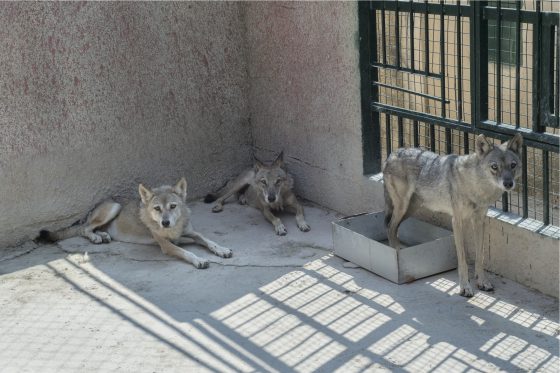
Three malnourished wolves lie in the only shaded area of their dusty cage at Animal City

Animals Lebanon counts some 50 pet shops within the Beirut Municipality, but the total number of pet shops in the country is not known. The Ministry of Agriculture has not yet finished registering the stores as per the January decree, and it’s questionable whether a system of self-reporting will fully capture the size of the industry. One of Lebanon’s larger chain of pet stores, Pet Mart, did not respond to requests for comment on how the new rules might affect their business, and neither did Lebanon’s other zoo, ZaZoo City. It’s not clear whether Pet Mart actually trades big cats, so the big cat rule may not affect the chain. But ZaZoo City does hold lions and tigers and, according to the text of the decision (unofficial English translation), it will have to give those animals up to the ministry if the zoo does not receive accreditation or ensure their appropriate welfare. Private owners in possession of big cats are also required by decision to turn their felines over.

[pullquote]The government will rely on Animals Lebanon to find rescued big cats homes abroad and cover the cost of their relocation[/pullquote]

But there are two problems. The decision does not specify what those welfare conditions are exactly, and there is no national legislation defining them either. That leaves standards prescribed in the international conventions (see explainer on standards below), but those are not always binding without local laws. One exception was Charlie, a chimpanzee first trafficked into the country over a decade ago. Animals Lebanon was able to point to international rules requiring trade permits for wildlife like Charlie. Lebanon’s judiciary agreed, ordering the chimp’s seizure from Animal City.

Saving the animals

The other hurdle is that the Ministry of Agriculture does not have the resources to rescue these animals. Ali el-Romeh of the ministry’s animal resources directorate confirmed there was no money for such a purpose in the ministry’s budget. Instead, he said, the government will rely on Animals Lebanon to find rescued big cats homes abroad and cover the cost of their relocation – for an adult lion or tiger, that cost per animal, could be anywhere from $5,000 to $7,000, says the NGO’s director, Jason Mier. For his part, el-Romeh explained to Executive that, “I will ask this question to Animals Lebanon: ‘are you able to do it?’ If they say yes we will start with this procedure: register the animal, insert a microchip and send them to Europe or South Africa. If they tell us ‘no we don’t have the resources to rescue this animal’ then we will go with Plan B: keep the animal here, register them and keep it under our oversight.”

A hyena hiding in a shaded corner of its cage near what appears to be a pool of urine at Animal City

A hyena hiding in a shaded corner of its cage near what appears to be a pool of urine at Animal City

Animal City has borne the brunt of criticism from Animals Lebanon and other animal welfare activists that allege poor conditions at the zoo and the trafficking of wildlife, accusations that are not new but stretch back several years. Attention has centered in part on Animal City because its owner, Samir Ghattas, has chosen to publicly quarrel with activists, telling The Daily Star in early August that activists were starting a war. Activists insist the zoo has not been singled out and say the welfare of all animals, domestic and wildlife, needs to improve across the country and that trafficking must be stopped.

Fairly or not, the spotlight has shone more on Animal City because it is one of the few public places in Lebanon to view wildlife, whereas conditions at other facilities or in the homes of private owners allow for less visibility. Ghattas acknowledged to Executive, to other media outlets and in meetings with activists and the government, that his zoo does not meet the standards of captivity found at zoos in other parts of the world, though it is far from the worst, even in Lebanon (see ZaZoo City photo essay). Ghattas has also gone on record, telling Executive and others, that he buys wildlife from traffickers (except for Queen, he denies selling animals).

For several years the zoo has been at the center of controversy because it has been directly linked to incidents that have sparked public outrage. A couple years ago it was Charlie, the chimpanzee, that was rescued from Animal City (Animal City’s website still lists Charlie as an attraction at the zoo). Queen, the lion cub, is the latest example, whose death and the delayed public outrage that followed fueled efforts to pass the big cats regulation. With the weight of public dismay behind them, activists lobbied the government to pass the new rule.

Leveraging the public’s outrage over wildlife conditions has become something of a speciality of Animals Lebanon. Their strategy goes like this: once individuals get personal with an animal, they embrace it and identify with its suffering. Then you can use that connection to essentially wrench their hearts when a baby lion dies.

This lioness’ cement-floored cage at Animal City is too small for her to be able to run around or do any exercise

This lioness’ cement-floored cage at Animal City is too small for her to be able to run around or do any exercise

“You have to pick the species which people are going to care about and have some interest in. With baboons, for example, you can demonstrate those problems just as easily or, possibly, even more easily than what we have with big cats. But [the Lebanese public doesn’t feel] a connection to baboons. The vast majority of animals [at Animal City] are not in that great of condition but with lions and tigers you can see it much easier,” Mier told Executive.

[pullquote]Once individuals get personal with an animal, they embrace it and identify with its suffering[/pullquote]

Though its owner surely doesn’t see it that way, Animal City has become the poster child of poor captivity conditions and wildlife trafficking, a sort of villain opposite animal rights crusaders. With the battle for big cat legislation won, Animals Lebanon will look for what can be achieved moving forward. “We can’t get the law passed yet. That’s less strong but it’s better to work through decisions even if they’re somehow weaker, than to just sit and wait. Let’s see what we really believe could be improved over the course of the next five to 10 years. But not that all of a sudden your zoo should be this sparkly, fancy place – that’s not how we work and it’s not possible.”

EXPLAINER ON STANDARDS OF CAPTIVITY

At a high level there are several important standards for captivity that are all interrelated. The question of how animals should be held in captivity informs the question of what contribution their captivity can make to education and the preservation of endangered species. How animals are obtained affects their value to education and conservation efforts, discouraging overexploitation and illicit trading.
Once on display as the prized trophy collections of big game hunters or as a menagerie of some distant, exotic land in, say, a P.T. Barnum traveling circus. Over the late 19th and early 20th centuries, animal welfare organizations in the United States slowly worked to enact anti-cruelty laws and other legislation that affected how animals could be kept in captivity. Later legislation, following international conventions (see explainer above) pushed standards from caged captivity to enclosures and animal sanctuaries. The question asked amongst standard-bearers in the United States today is whether wildlife should be kept in captivity at all. Beyond entertainment, the expectation is that captivity should advance knowledge of animal behavior and, more broadly, our planet’s environment.
The most recent example comes from the Cincinnati Zoo, where earlier this year a gorilla, Harambe, was shot and killed in order to protect a child that had climbed into the gorilla’s enclosure. The gorilla’s shooting sparked a flurry of memes criticizing the zoo, creating more awareness of and empathy toward animals kept in captivity. In March, Seaworld, an oceanarium and animal theme park with several locations throughout the United States, announced an end to their orca whale breeding program as well as plans to reinvent how visitors will experience killer whales at the park. Instead of choreographed theatrical shows, visitors, according to Seaworld’s website, will one day view orcas in “more natural looking habitats, and with a focus on the whales’ natural behaviors…with an added emphasis on education and conservation.”
Zoos must contribute to conservation efforts and serve educational purposes. Part of how zoos in the United States contribute to conservation is in preserving populations of endangered species, fostering research of those species to broadly understand animal behavior and the impact of human encroachment on their natural habitats. Hosting researchers at zoos contributes to conservation in that sense and also adds to visitors’ educational experience. In-house or visiting experts give lectures that are seen live or replayed for future visitors. They also inform descriptions of the animals’ behavior in natural habitats as well as other materials delivered via digital mediums at the zoo or remotely.
Another important standard to note is how zoos in the United States obtain animals. Developed in response to legislation, wildlife are no longer bought or sold by zoos but instead ‘loaned’. For example, the practice of one zoo loaning an animal to another addresses both ethical and business concerns: placing a dollar figure on animals reduces their value to education and conservation purposes, increases their value to traffickers in black markets and avoids a lengthy and costly permitting process required by the US’ Endangered Species Act of 1973 when wildlife are exchanged for money.

September 7, 2016 1 comment
0 FacebookTwitterPinterestEmail
LeadersOpinion

More work needed

by Executive Editors September 7, 2016
written by Executive Editors

Two new rules regulating animal businesses and the ownership of big cats are a welcome step forward, but alone they are not sufficient. Lebanon needs a law governing if and how all types of animals can be brought legally into the country, the conditions in which they’ll be kept and prescribing how violators of such a law will be penalized. More rules are necessary to formalize an industry that, as a whole, has operated without government oversight and with impunity, where poor standards of captivity are the norm, where trafficking is seemingly ubiquitous.

If, as several stakeholders hope, Lebanon could one day have a zoo as a sort of national attraction, drawing visitors from all over the country and from neighboring ones too, then it needs an appropriate legislative framework. Such a concept requires long-term thinking, government oversight and demands clear rules for such a business, all while ensuring high standards for animal welfare and eliminating trafficking concerns. Lebanon may never approach the per animal potential of say, Uganda, whose native gorillas pull in some $1 million each per year in tourism revenues, and it probably wouldn’t compete, in terms of tourist numbers, with regional animal attractions like the Dubai Aquarium & Underwater Zoo. But a national zoo could help diversify Lebanon’s tourism sector, contributing eco-tourism dollars and creating potential opportunities for other players, such as travel agencies offering package deals including a visit to the zoo, airfare or other local transportation options like buses as well as hotel accommodation.

That may be a far off dream, and Lebanon must first get its house in order by ratifying a law and issuing the necessary regulations. Such legislation is not likely to be forthcoming given the political impasse that has frozen work in parliament, and rolling out additional regulations to fill legal gaps is patchy at best and will take time. But there are a number of issues Lebanon can confront without legislation; measures that the government, judicial system and private sector can take to address the ethical and business concerns of subpar conditions and trafficking.

In 2014 Lebanon’s judiciary showed some receptivity toward protecting animals suffering in poor conditions, citing a violation of administrative protocols. An update to the criminal code is necessary by first adding penalties in line with the government’s new regulations for animal businesses and big cat ownership. To go further, the government must issue rules defining animal cruelty and the trafficking of all species, the violations of which must be prosecutable.

To contain animal trafficking the government needs to gain more control of the country’s entry and exit points. Part of that does need to come through legislation and regulation, but administrations can do more. One positive move was the recent expansion of customs at Beirut’s Rafic Hariri International Airport, and the installation of new technology and procedures for cargo inspection. The late August upgrade should curb trafficking at the airport, the minister of finance said in a press release.

But it is fair to point out that customs would be more effective with trained agents with a solid understanding of wildlife species, perhaps working alongside inspectors from the ministry of agriculture, that can distinguish between what may be written on import forms and what is actually being transported. The sheer volume passing through airport customs might demand more agents or ministry inspectors, and manpower deficiencies are not exclusive to Lebanon. One US airport was targeted by elephant ivory traffickers exploiting such weakness, the Washington Post found in 2014.

Customs officials are the gatekeepers of our borders and should be well-positioned to not only limit tax and duties evasion, the smuggling of drugs or counterfeit goods but also wildlife trafficking. According to a 2014 survey commissioned by the World Customs Organization, the MENA region’s customs administrations (the results were not country specific) ranked wildlife trafficking as their lowest priority. The study concluded that “Customs administrations with special investigation units tailored to wildlife smuggling have more interest in combating it than those relying on basic regular check-ups at borders”. If Lebanon’s customs does not already have such an investigation team then it needs to establish one. To have specialized agents or an investigative unit, alongside ministry of agriculture inspectors, may require additional financial resources and, without a budget being passed, that may not be feasible.

But at the airport, businesses too can have an impact. For starters, airlines and shipping firms hosted at Beirut’s airport can commit to an industry promise to shut down the illicit trade of endangered species and their products. Middle East Airlines must join regional carriers, such as Qatar Airways, Etihad Airways and Emirates Airline, pledging to the commitment set forth by the industry’s trade body, the International Air Transport Association (IATA). Freight forwarders too can commit to the IATA pledge. Local companies like BCC Logistics and global shippers like DHL or Aramex moving freight via the airport can improve cargo screening before it leaves sorting facilities, and they should also share cargo information more freely with customs and law enforcement officials at the points of departure, transit and destination.

Lastly, Lebanon’s flag carrier can contribute to the public’s awareness of wildlife trafficking and its consequences to the environment with a short public service announcement on flights arriving to and leaving Beirut. Other companies in the transport business can play their part by sponsoring awareness programs through, for example, social media to reach younger audiences or by increasing clients’ and customers’ awareness of wildlife trafficking. A law is needed, but these small steps can have positive results for animal welfare and to limit trafficking.

September 7, 2016 0 comments
0 FacebookTwitterPinterestEmail
EditorialOpinion

Picking a proxy

by Yasser Akkaoui September 6, 2016
written by Yasser Akkaoui

Lebanon’s economy only grows when the country is given a geopolitical purpose bigger than its size. This country’s first “Golden Era” was arguably ushered in during the presidency of Fouad Chehab. The US loved him and – up until 1967 – viewed Lebanon as a key partner in the fight against Communism in the Middle East, while of course keeping a close watch over our northern pipelines and refineries of the time. The US lost interest after the 1967 Arab-Israeli war and our then nascent banking industry was used by different foreign backed militias to pile up cash that financed their 1975 civil war. We, the people, paid the price.

Skipping our dark days, the proverbial Lebanese economic phoenix began rising again in 1992 only a couple of years after the fall of the Berlin Wall. Once again, the US had a man they could work with in the late Rafik Hariri. Peace in the region actually seemed like a real possibility, and Lebanon once again was part of the bargain. The death of both the peace process and Hariri took its toll and today our economy is barely limping along.

Today, I have the sneaking suspicion that an offer is being put on the table. Last May, US Ambassador to Lebanon David Hale announced his government would be building a new embassy here in Lebanon. The price tag? Nearly $1 billion, up from the $111 million previously announced in 2008. That’s a megaproject equal to around 2 percent of Lebanon’s GDP. Factor in a multiplier for that sort of investment, and the new embassy could boost growth by nearly a percentage point.

I see it as a message. Remember, the announcement of a new embassy came as the Iran deal was being sealed. The Americans like to choose whoever is ruling the roost in the region to push their agenda. Saudi Arabia played that proxy role until the crisis in Syria. With a resurgent Iran, the times are changing. The embassy plans coupled with the Iranian central bank’s decision late August to open an account at our central bank are competing signals. We hope that the US wants stability in this region, and found the Iranians to be reliable partners, but we are always in fear that both countries could be gearing toward another war on our soil.

People here talk with great fear about the Iranian era in the Middle East. I think we’re a few years into it, and it seems the Americans – however reluctantly – are on board. While we remain skeptical of this new reality and our new bigger purpose, poverty rates are growing among resident Lebanese and our various refugee populations.

Unless our economy picks up again soon, no deal will save us from the imminent socio-economic troubles ahead.

September 6, 2016 1 comment
0 FacebookTwitterPinterestEmail
  • 1
  • …
  • 118
  • 119
  • 120
  • 121
  • 122
  • …
  • 691

Latest Cover

About us

Since its first edition emerged on the newsstands in 1999, Executive Magazine has been dedicated to providing its readers with the most up-to-date local and regional business news. Executive is a monthly business magazine that offers readers in-depth analyses on the Lebanese world of commerce, covering all the major sectors – from banking, finance, and insurance to technology, tourism, hospitality, media, and retail.

  • Donate
  • Our Purpose
  • Contact Us

Sign up for our newsletter

    • Facebook
    • Twitter
    • Instagram
    • Linkedin
    • Youtube
    Executive Magazine
    • ISSUES
      • Current Issue
      • Past issues
    • BUSINESS
    • ECONOMICS & POLICY
    • OPINION
    • SPECIAL REPORTS
    • EXECUTIVE TALKS
    • MOVEMENTS
      • Change the image
      • Cannes lions
      • Transparency & accountability
      • ECONOMIC ROADMAP
      • Say No to Corruption
      • The Lebanon media development initiative
      • LPSN Policy Asks
      • Advocating the preservation of deposits
    • JOIN US
      • Join our movement
      • Attend our events
      • Receive updates
      • Connect with us
    • DONATE