• Donate
  • Our Purpose
  • Contact Us
Executive Magazine
  • ISSUES
    • Current Issue
    • Past issues
  • BUSINESS
  • ECONOMICS & POLICY
  • OPINION
  • SPECIAL REPORTS
  • EXECUTIVE TALKS
  • MOVEMENTS
    • Change the image
    • Cannes lions
    • Transparency & accountability
    • ECONOMIC ROADMAP
    • Say No to Corruption
    • The Lebanon media development initiative
    • LPSN Policy Asks
    • Advocating the preservation of deposits
  • JOIN US
    • Join our movement
    • Attend our events
    • Receive updates
    • Connect with us
  • DONATE
Entrepreneurship

The rocky road from inventor to businessman

by Matt Nash July 27, 2016
written by Matt Nash

Antoine Sayah is learning how to actually build a business. Two years ago, he was an undergraduate studying architecture and working on an assignment for a design class. Students were tasked with building a product that was “useful in your everyday life,” he recalls. A Jounieh native, Sayah loves the beach. He made a foldable beach mattress with a triangular headpiece for comfortable lounging which offers far more than just support. With an embedded 7-watt solar panel, it has USB ports for charging electronics (tablets, mobile phones, etc.) and a small refrigeration system to keep beverages cold (with 2-liter storage on the standard-sized model). For a year after he passed the class, he used his crude prototype to tan in his garden at home, he says. Friends kept encouraging him to make more and sell. By July 2015, he was convinced and started marketing the product – dubbed Beachill – on social media (mainly Facebook and Instagram).

He was overwhelmed by the response and soon drew the attention of local and international media. He received interest from around the world, he says. Indeed, Beachill’s second Facebook post garnered the comment: “Please inbox the price… and is there shipping to Egypt”. Speaking to Executive in mid-May 2016, Sayah explains with a “not-sure-if-you-know-this” tone that shipping individual units with a commercial delivery service is expensive. From a cost standpoint, he would need to ship an entire container, a scale of production he had not yet reached. He did, however, manage to export dozens of units to Australia and the U.S.A., though he concedes that “the shipping cost more than the mattress itself.” Between July 2015 and June 2016, he says production expanded from 21 units per week to 200 per week under a contract with a manufacturer with whom he is friends. Six of the manufacturer’s 50 employees are now working exclusively on Beachill units, Sayah says, noting that raw materials are imported with each unit being hand made in Lebanon.

The exposure helped him learn, he says. Sayah claims that early on, a client in Dubai wanted two cargo containers of Beachills. While he wasn’t able to fill the order, he got a lesson in fabrics. “I learned a lot more about how to develop the product,” he says. With a desire now to focus first on building his brand in Lebanon, his thinking on local distribution has also evolved. In May, he chafed at the idea of distributing through retailers. “They’d have to take their cut,” he said, explaining that the $150 price tag on a Beachill was already a bit high, he felt, and he  had aimed to sell it for more, not less. He spoke of personally manning kiosks at beach resorts or malls, maybe even renting space for his own dedicated outlet. When Executive checked back in with Sayah in late June, he was days away from meeting with a major local retailer in the outdoor goods segment. Explaining that renting involves a long-term commitment (three to five years) and more overhead than the business can afford (especially considering he expects sales to be strictly seasonal), Sayah concludes, “I can give away $10” for the retailer’s margin, “It doesn’t matter if I’m selling more units.”

He’s sold around 500 units to date and is working on building up stock and working out local distribution kinks. He also still eyes expansion to Dubai by September but hasn’t made any concrete moves in that direction yet. Indeed, Sayah says there still isn’t a corporate entity behind Beachill, something that should change soon as he prepares to incorporate with the six-person team of friends he has assembled. To date, Beachill’s sole investor is Sayah’s dad. He’s had plenty of offers from potential investors, he says, but everyone wanted to buy him out, taking more than 50 percent of his company in exchange for a capital infusion. He says he’s keen to pursue debt finance to fuel growth unless he can find a strategic investor with more to offer than cash. “[Potential investors] are only offering money,” he says. “I can take a loan from a bank.”

July 27, 2016 0 comments
0 FacebookTwitterPinterestEmail
Hospitality & Tourism 2016Special Report

As old as Byblos

by Thomas Schellen July 26, 2016
written by Thomas Schellen

Many essential parts of life that we perceive as “can’t do without” are quite recent. Inventions such as the elevator, motor car, air conditioning units, frozen food and of course the dreaded smartphone are between 150 and 15 years of age, at least in their modern mechanized/electronic versions, even as the ideas behind them date back 10 or 20 centuries.

Wellness is an essential living concept that has been around for even longer; Indian and Chinese recipes for making the body and mind unite in a healthy and mutually enriching relationship have a history of up to five millennia. According to the Global Wellness Institute (GWI), Ayurveda and traditional Chinese medicinal treatments have been around since 3,000 years before our Common Era or before Christ (BC), and ancient Greek and Roman therapists began practicing wellness in the fifth and first centuries BC, respectively. That sounds almost as old as Byblos, the pre-Phoenician port that we celebrate as Lebanon’s (and one of the world’s) oldest continuously inhabited city.

[pullquote]“You have trendy words in Lebanon, like detox, which is very fashionable, you have gluten-free, which is trendy, and wellness is now becoming trendy as well”[/pullquote]

Wellness as a consolidated, marketing-savvy international industry by contrast is a new trend – young in global terms and just emerging in these parts of the world. It is even young compared with the first smartphones such as the Communicator by Nokia, the BlackBerry, Japan’s DoCoMo and the first iPhone generation, which were all born in the 1990s or later. A Global Wellness Summit as the precursor of GWI was incorporated ten years ago and its International Wellness Day was celebrated for the first time in 2012 in some countries and last month at the Edde Sands Resort in Lebanon.

“We decided to focus on this global wellness day because it is celebrated throughout the world on the second Saturday in June. You have trendy words in Lebanon, like detox, which is very fashionable, you have gluten-free, which is trendy, and wellness is now becoming trendy as well,” says Alice Edde, co-founder of the resort with her husband Roger.

3

Edde has organized wellness weeks at Edde Sands since 2009. During the past few years her resort has morphed from a top address for summer partying and weddings to a place that is in equal proportions oriented towards weekend relaxation seekers and revelers between May and October and to wellness in the rest of the year. “We started off as a party destination and now we have become a wellness destination and a place for children,” Edde says. This is reflected in the brand, which has expanded its name to Edde Sands Hotel and Wellness Resort. 

For this year’s wellness day the resort invited advisors on issues such as nutrition or pediatrics, and even an optometrist and a life coach to set up booths where they explained to visitors why wellness is important. The exposure was so convincing that a member of the Executive editorial team decided on the spot to make another try at kicking his cigarette habit. 

According to Edde, the occasion was also able to attract two relevant ministries. “We got the minister of health interested in this and the minister of tourism, so we had both their logos on our flyers because they are backing us. This is important for Lebanon. It is a form of diversification of tourism; you have religious tourism, wine tourism, rural tourism and now wellness tourism,” Edde says.

Unsurprisingly, international wellness advocates and operators are full of cheer for the potential of all things wellness with market assessments that speak of trillions of dollars, not just billions. The numbers come from research conducted in 2014 by GWI and it is a reasonable expectation that they are self-serving and possibly exaggerated. They nonetheless leave little doubt that wellness is a sizeable business realm. In GWI’s view, the three largest elements of the wellness market are beauty and anti-aging, worth $1.03 trillion worldwide, followed by healthy eating and weight loss ($574 billion) and wellness tourism, worth a supposed $496 billion. In total, comprising hundreds of billions of additional dollars in sectors ranging from fitness, alternative medicine and lifestyle to wellness real estate and workplace wellness, the sector’s advocates see a global market of $3.4 trillion.

A high-potential destination concept

As a wellness destination, Edde Sands on this Saturday in June mobilizes all the offerings – except crowds, that is. Attractions like Zumba, dance and aerobics exercises performed to energetic music, runs at noon in fitness studios, at 2 pm water gymnastics are held in the pool and at 6 pm there is yoga.

[pullquote]All evidence suggests that the visitor moreover doesn’t have to worry about looking the part of either the proverbial Aphrodite or Adonis to fit in and be accepted[/pullquote]

At the large lunch table for invited guests and celebrities, a three-course wellness meal with greens, fruits, fish filet or veggie burgers and healthy sweets is served in a relaxed and tasty fashion. This is framed by the resort’s calm and easygoing atmosphere where one can sit back and let the soul wander, taking a break from thinking about waste management or other political issues of the day. All evidence suggests that the visitor moreover doesn’t have to worry about looking the part of either the proverbial Aphrodite or Adonis to fit in and be accepted (Adonis and Aphrodite are present, though, but as monikers to denote the facilities.) Although it has strong ties to physical attractiveness, or the longing for it, a wellness seeker here does not have to obsess over fitness and body-shape stereotypes, or particular practices that have come up during the last 100 years of the wellness movement – such as radical vegans, preachers of various abstinences, and prophets of New Age and alternative medicine – that have the tendency to turn into quasi-religions.

1

The look taken by the Edde Sands team is undogmatic. The week-long program is adjusted to local habits, where discipline is not a prominent pattern and food proscriptions aren’t extreme. “Wellness food is not just about dieting. There are so many body types and we prepare our meals to be in line with people’s real needs,” explains Yara Younes, who oversees the wellness operation at Edde Sands.

The number of people who attend this first wellness day celebration at the resort is not large (Ramadan always makes a dent here) but also not impossibly small. The event, according to Edde, aims to give people a taste for wellness whereas wellness week is a serious endeavor during which “you spend nights and you come with a goal like relaxing, or doing detox or losing weight.”

The costs

Such self-improvement goals have a cost. A full stay during wellness week will set a participant’s purse back over $1,600, according to Younes. Attendance of a wellness week depends on the season but participation ranges anywhere between 15 and 40 regulars. “What we have seen over the past few years is that there is a greater awareness of the health benefits of retreats, and those that try our wellness week once tend to become regular clients. This has created a large wellness database,” Younes enthuses, adding, “Our maximum capacity is 25 full-week clients. We prefer providing customized attention and personalized service for a better client experience.”

As Alice Edde acknowledges, a stay in a European wellness hotel will be less pricy than at the resort. She argues that this is because of specializations in Europe where an entire branch of the hospitality industry has already focused on this theme for a long time in countries like Austria, Czech Republic (where the famous Karlovy Vary spa town was established in the 14th century and named after Emperor Charles IV) or Germany. Booking a wellness week at Edde Sands on the other hand is not expensive when compared with a conventional stay at a five-star hotel in Lebanon. “It is not cheap but relatively speaking, it is very reasonable,” Eddie claims.

5

According to Edde Sands marketing manager Nathalie Maljian, the property has two hotels with a current capacity of over 50 rooms and suites, which was developed between 2006 and 2016. The average room rate is $376 and $92 in the high and low seasons respectively, with an occupancy rate at the hotels of 60 percent.

Younes says it is difficult to compare the package cost of a stay during wellness week with an average week during the low season. Including stay, meals, resort entry and various activities, the cost will be $1,627, which can grow higher by purchasing other options. This is juxtaposed with a $825 fee for six days of accommodations alone, in addition to which guests would have to buy meals ($35 for each meal) and treatments for between $15 and $145 each. A single-day complete participation in the wellness program sells for $195, she adds. It is unmistakable, however: a bargain proposition for backpackers, wellness week is not.

[pullquote]For the next wellness week in October 2016 Younes expects to boost revenue by 30 percent from the previous year[/pullquote]

For the next wellness week in October 2016 Younes expects to boost revenue by 30 percent from the previous year. In measures to support economic performance, her targets include attracting a younger clientele and benefiting from new partnerships, such as “a collaborative relationship with the AUB Wellness Center and the AUB Nature Conservation Center”, details of which are to be determined in the latter part of the year.

Alice Edde’s strategy is to develop Edde Sands as a wellness destination in equal parts for domestic and foreign clienteles. She sees wellness tourism as a growth trend with increasing numbers of institutions and operators, like small hotels in the countryside and bed & breakfasts, joining the ranks. “This will be the tourism of the next ten years,” she says confidently.

2

For this upscale resort that has been standing its ground in the challenging Lebanese hospitality landscape for more than ten years now, wellness is a promise to reinvent and upgrade itself in a maturing market. However, while wellness tourism has the potential of contributing to the diversification of tourism in Lebanon and could tie in with other specialties such as medical tourism, this potential will be lessened if known deficiencies in areas such as political stability, infrastructure and security are not addressed. “In their absence, the growth rate will be impeded, but we won’t stop. We believe in what we are doing and we think it is the future,” Edde says. For her, wellness is more than business, she professes with a smile: “It is a lifestyle.”   

July 26, 2016 0 comments
0 FacebookTwitterPinterestEmail
Hospitality & Tourism 2016Special Report

The franchisor and the direct operators

by Nabila Rahhal July 25, 2016
written by Nabila Rahhal

It is part of human nature to be dissatisfied with what we have, always wanting and working to gain more. At the corporate level, this can manifest itself in the growth of one’s enterprise, be it in size, services provided or expansion into new markets. 

Businesses in Lebanon are no strangers to growth into new markets, whether locally or abroad, through the opening of new branches of existing operations. A quick glance at the Lebanese Franchise Association (LFA)’s list of franchisors reveals that businesses of listed members range from retail stores to a children’s daycare center to service providers (such as copy and design services) and even to a gas station.

Who franchises and where

Malik’s, a copy center and services retailer, boasts five franchises in Lebanon since the inception of the concept two years ago and actively promotes becoming a franchise owner through banners displayed at their stores’ entrances.

However, despite examples such as Malik’s, the majority of franchisors and franchisees listed on the LFA website are in the hospitality business, be it eateries or retailers that sell food and beverage (F&B) products. Indeed, Lebanese F&B investors have become increasingly seasoned in developing solid brands whose value increases by opening multiple outlets locally, and often abroad as well. 

The first choice to be made when opening a new branch is location, according to Donald Batal, founder of the restaurant management company Ministry of Food which operates Classic Burger Joint (CBJ) and Tomatomatic, in terms of making sure it’s a high traffic area which would have a good revenue stream. 

4

What works best?

Once the location is set, F&B operators have to decide whether they want to directly operate the outlet or sell it as a franchise. If directly operated, the company invests in constructing the branch and manages it itself, keeping all future profits within the company. As a franchise, the company sells the branch’s license to a franchisee who invests in constructing the venue and managing the outlet. The franchisee then keeps future profits minus the annual royalty fees paid to the brand owner or franchisor.

Within Lebanon, most F&B outlets are company owned and operated, as it is a more profitable model for the owners, according to Marwan Ayoub, copartner in Venture Group. “If your outlet is profitable, and most local chains in Lebanon are, it’s better for the owners to open branches than to sell them to someone else, especially since there are always ways, such a kafalat loan, to support the opening investment,” says Ayoub, adding that such companies tend to grow the value of their brand locally by opening several branches and later consider selling the brand abroad as franchise.

Show me the money

When it comes to profitability, Battal, who is starting to locally franchise CBJ and plans to have Tomatomatic be a purely franchise model locally, believes the two models end up being equally lucrative. “Both models are profitable, [but return] depends on the investment size. When you have a company owned store, you invest money into its construction but you have a higher return. When you sell a franchise you don’t invest but you get royalty fees which are less of a return,” explains Battal.

[pullquote]When expanding abroad, having an operator from the country in question becomes even more important[/pullquote]

Christine Sfeir, CEO of Treats Holding and Meeting Point, which holds the Dunkin Donuts franchise in Lebanon and operates Lebanese eatery Semsom locally, in the region and, most recently in New York, explains that while it takes a lot of time for franchising to be financially lucrative, when a branch becomes successful, the profits roll in. Sfeir says that franchisers put in a lot of effort at the beginning to get their franchisee stores to work. 

Bring in the locals 

For Kababji, direct operation makes more sense since their main catchment area is Beirut and Mount Lebanon, which is an area they know well and is well positioned for their brand, explains its general manager Eddy Massad. “Beyond these markets, within Lebanon, we don’t see Kababji as being well positioned. While it is possible to do so, it’s tricky and has price sensitivities,” says Massad, adding that in this case, since they are unfamiliar with operating in regions outside of Beirut and Mount Lebanon, franchising the concept to an operator from the local area would be an option.

2

Having an operator from the region that would know how to promote the brand among the community is exactly why Battal franchised CBJ to an operator in the north who opened the first branch in Ehden in the summer of 2015 and will be opening branches in Zgharta and Batroun this summer. “We decided to give the north to someone from there who, with a brand like Classic Burger Joint, will attract all the north – and this is what happened. So the match of a good operator from the area and a good brand is a success by itself,” explains Battal.

When expanding abroad, having an operator from the country in question becomes even more important. “I want a local partner in every city because I want an expert in the city; we cannot personally become experts in every city in the United States,” explains Sfeir in describing Semsom’s franchising plans going forward in the US, where the company so far has two directly operated branches in New York through the head office based there. 

What’s in a name?

All franchising F&B operators interviewed for this article stressed the importance of having the franchisee be very experienced in the hospitality business and already operating several eateries. “The experience of franchisor is excellent when you have the right operator as franchisee, meaning one with a background, experience and skills in F&B. Otherwise, it is the worst experience ever. Therefore, the skill lies in finding the right operator,” says Kababji’s Massad.

Indeed, fear of having a franchisee unintentionally harm the reputation of an F&B brand, through bad management or lack of experience, is a reason cited by some of those interviewed by Executive for delaying franchising plans until their company is more structured.

[pullquote]Operators who are franchising their brand have circumvented [possible] risk by investing a lot of time and money into developing their franchise manuals and into following up with their franchisees[/pullquote]

“At this point in Boubess Group we are not franchising for one simple reason: it’s true that we are a big company in hospitality but we are still building and developing our portfolio so when we franchise our brands, our infrastructure as a company will be ready in terms of the system, the brand and manuals,” says Boubess Group’s corporate marketing manager Hady Fadel. Fadel explains that, if the right control does not exist, a franchisee might introduce elements which are not in harmony with the brand, potentially jeopardizing the brand’s name in that country, which in turn would reflect negatively on its overall performance.

The power of control

Operators who are franchising their brand have circumvented [possible] risk by investing a lot of time and money into developing their franchise manuals and into following up with their franchisees. “What we did before franchising is establish a very solid structure: we enrolled in the biggest associations for franchising such as the International Franchise Association and we invested in our operation manuals. We are not worried about losing control of our brand because we have this very solid structure and on top of that we control the quality from A to Z,” says Batal.

According to Sfeir, having experience as a franchisee with Dunkin Donuts has made her a better franchisor. “We are very hands on. For example, we have two mystery shoppers who go twice a month to all venues. We know what is important in order to support franchisees since we are franchisees ourselves,” she enthuses.

3

Skills needed

In terms of soft and management skills needed, some see that being a franchisor requires a different mindset than being a manager of several outlets. “When operating you need to go into detail and be more customer service oriented, while as franchisors you are working as consultants more or less so you need to adapt and be more flexible,” says Sfeir, drawing on her experience both as a franchisor and a direct operator.

Others see that the two models require similar management skills: “Maintaining consistency and quality of the brand is a common challenge between franchisors and direct operators, and requires the same management skills for having the proper systems in the food supply chain and the operational standards,” says Kababji manager Massad, adding that another common challenge is finding qualified employees in Lebanon. Kababji has addressed this by having an in-house professional development system through which both direct staff and franchisee employees must pass in order to advance into key positions.

It is up to the F&B operators to decide whether they want to franchise their brand or develop it themselves, but what is certain is that they will always continue to strive for more growth. It’s only human.

July 25, 2016 0 comments
0 FacebookTwitterPinterestEmail
Business

Finding the funding for big tech dreams

by Yasser Akkaoui July 22, 2016
written by Yasser Akkaoui

Aasim Saied has some unorthodox ideas about how technology entrepreneurs should fundraise and how best to structure a board of directors. Saied founded Akyumen, a self-described “digital products company committed to opening the door to innovation and advancing access to education through state of the art niche products that bring technology directly to your hands.” Executive spoke with him about raising capital and governance.

E   You mentioned barriers of entry to the United States. What are the main or most challenging barriers you have to deal with?

In the beginning the biggest barriers to entry were people. In the US when we spoke to venture capitalist companies, they are the biggest barriers. And in fact we didn’t know better when we were in college about who to go to in order to raise capital. But then, I did meet certain people who told me ‘Venture capitalists are nothing but vultures’. So you go to individual investors, people who understand technology.

E   Corporate or individuals?

Individuals. And not go to venture capitalist firms. Venture capitalist firms are the biggest downside of the entire industry. They trick people and take advantage of them.

E  In what way?

In every possible way. They in fact, are, pump and dump technologies. I figured it out early in life so I was able to avoid them entirely and challenge them to their face. So we were able to break that barrier, through raising money from individual high net worths and take that approach and get rid of the need for having venture capitalists. That was the first barrier to entry.

E   What are the conditions of individual investors? How are they different, in terms of expectations, than venture capitalists?

Individual investors, number one, actually invest in the person, rather than just in the technology itself. Secondly, they understand. They have a want for technology, meaning they like the technology. They invest because they like something. Venture capitalists invest just to make profit. In fact, the individual high net worth investors, they are able to follow you. But venture capitalists, they are like ‘you should follow us’. There’s a difference.

E   How do you find these individual investors, these high net worth individuals?

You need let them find you. So what we did was, we did tradeshows. And then we went into colleges and institutions, we asked around, and did it through word of mouth. So through this people came to us. We didn’t have to approach anybody.

E   When you raise capital, I totally agree that you first go to private investors who have a high propensity to invest. Call them angel investors. But at a certain size, you need bigger investors to come aboard – institutional investors. Whether you call them VC, PE. Are you still able to dodge these and keep on growing with your individual investors?

We used individual investors to start with and after that we went forward with tech funds, which are different than venture capitalists.

E   Tech funds?

Tech funds are totally different than venture capitalists. Technology funds are backed by technology companies who understand the technologies. Venture capitalists are backed by hot air balloons that use other people’s money to invest. Why would we use a venture capitalist firm that uses other people’s money to invest from when we can do that ourselves? However, we did use technology funds at a later stage.

E   But these technology funds, are also interested in taking over your business, aren’t they?

Not at all. They sign our documents. We said ‘take it or leave it’. We have the technology that nobody else does.

E   Okay. So what’s after that? First there are the initial investors, and then there are the technology funds. What’s next?

The thing is our company works differently. We are not following the same route as others. Our route is, we want to manage to the risk of our investors very well. We have implemented strategies in which our shareholders get amazing returns. In fact, our shareholders would make more than if the same investors put their money in top companies in the world like Apple or Samsung in the public market. They have a much better rate of return because we are a growing company. We are not saturated like others. So because of the possibility of growth and the way in which we structured our business model for them to get returns, they badly want to be a part of us. And also, we are very open-minded and a learning company, meaning our company changes it business model according to trends in the market.   We don’t get stuck to just one trend or else we’ll become another BlackBerry. So we have a business model that changes according to trends and we also have several industries spread on our business model, meaning we just don’t stick to one industry. We have over 6 industries that we focus on. So if one industry is going down, another industry is going up. So we have the stability set up within our company. And the investors love it.

E   What is your ambition? To become a technology developer or do you want to develop your own devices and compete with the likes of Samsung and Apple… and Huawei, who is now growing very fast?

There can only be two companies: ones that go for a buyout and ones that buy others out. We want to be the company that buys others out. So we have structured ourselves to grow. One reason we don’t want to be bought out is because we have certain technologies that we want the world to have and enjoy. If we don’t do it, nobody else is going to do it. So these technologies are life changing and life saving.

E   Are you thinking of going public soon?

We are planning on going public in the future. We want to, but however, I won’t use the word soon. I want to do it right. And our team wants to do it right. It’s all about timing and how we do it.

E   For the current ownership structure of the firm, how is the composition of the shareholders today?

We have several shareholders, I hold a majority, and I would say, a lot bigger majority than what Mark Zuckerberg held in his company, and because we don’t use VCs there is nobody who can munch a bigger chunk just to take it public, because we have our strategies that we can do it ourselves.

E   But who sits on your board of directors?

Because its private, I don’t want to name drop them. They are big industry experts. And we have four people on our board.

E   So it’s a board of four. How big is your investment today?

In terms of valuation we are 9 billion dollar company.

E   So $9 billion company and the board is only four people?

Yes. See one of the biggest problems big companies have is they have really irritating people sitting on their boards, poking pins at everybody. From the beginning I made sure we have a board that works together, that understands what we are doing and…

E    Is it a board that says what you say or a board that provides you with advice?

A board that jointly makes good decisions and we look at the users’ point of view, the investors’ point of view and the employees’ point of view. We look at all the stakeholders. It’s a very open-minded and working together problem solving board. And, on top, we have a whole bunch of board of advisors who we get advice from to help us make our decisions.

E   So it’s a two-tiered type of governance?

That’s right. For example, there are lot of venture capitalists who will come to you and say ‘oh I’ll give you $10 million or $20 million but I want that guy to sit on the board’. I’ll say ‘Great. Give us your money and he can sit on as an advisor. We don’t want them on our board because they are too irritating. That’s how we do it.

E   So the board, in your case, is a board of technical people.

No. Each one is an expert in their own industry. A different industry.

E   But they are responsible for strategy formulation? The strategy is set up by four people?

Actually the main strategy comes from me and the board members combined, but also the board of advisors too. The advisors come up with a lot of amazing strategies too.

E   But they don’t have official duties, the advisors?

No. But, however, we listen to people. For example, if a janitor at the company comes up with a better idea than me, I will take that idea. We will not close the door in anybody’s face.

E   And how does this idea make it to the board?

Well, we have a system within our employee pipeline…

E   How many employees do you have?

We have close to 120 employees globally. So we have a system for people to give their ideas and not wait too long. It comes into a system where anybody can see people’s ideas or recommendations. Sometimes the ideas are gold, sometimes they are trash, but sometimes the idea that is trash now might become gold later. So we make sure we have a log of everything. And we chose to implement or not implement.

E   Who’s on your audit committee?

Well, we have our CFO, we have bookkeepers…

E   Any of your advisory committee?

When it comes to your financial side we are very, very strong. The financial arm is the one of the strongest in our company.

E   But who oversees….?

Final decisions are made by me, but we have our CFO and a whole line of bookkeepers and accountants who handle things.

E   Is there anybody independent that sits there, just to make sure?

No, we don’t want those irritating independent people in our company. We like to make decisions that are appropriate and quick. We are a very strategic company.

July 22, 2016 0 comments
0 FacebookTwitterPinterestEmail
Economics & PolicyRefugees

Four years and no longer counting

by Thomas Schellen July 20, 2016
written by Thomas Schellen

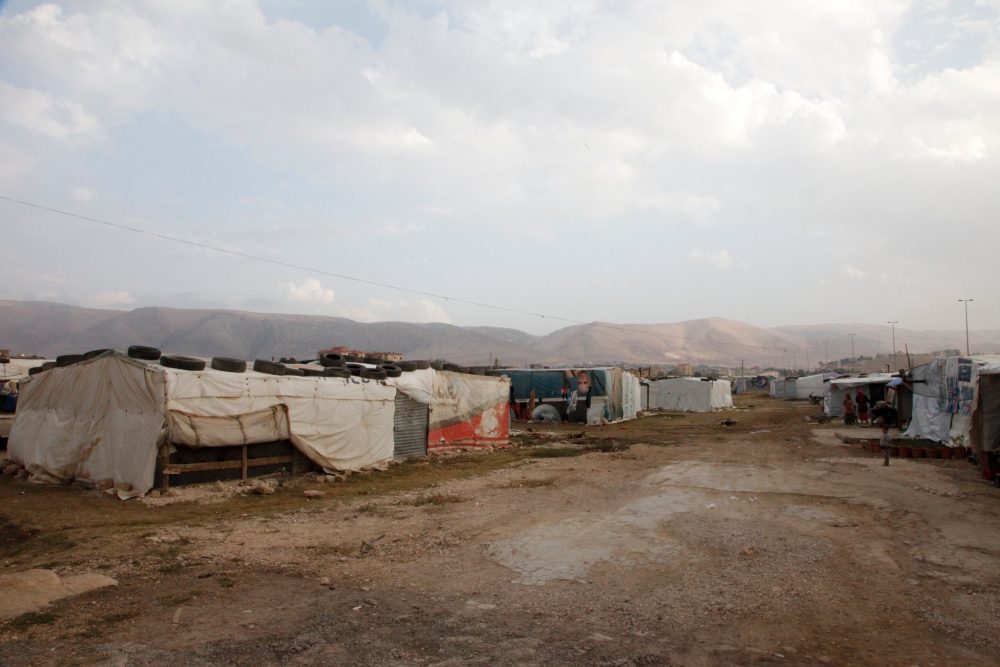
It is another anniversary. Four years ago this month the Syrian uprising of 2011 escalated into the civil war phase, with internal conflict officially declared in July 2012 by the International Committee of the Red Cross. Around this time, the outflow of refugees swelled to unprecedented numbers: from thousands and tens of thousands in mid-2012 the human stream of misery has grown to 4.8 million people who are currently registered as refugees outside of Syria, according to UNHCR figures. Among them are half a million people residing in camps. In Lebanon today the Syrian refugee crisis affects, by UN reckoning, an estimated 3 million people: half of them Syrian and half of them Lebanese. 

For some time going on a year now, however, the inflow of refugees into main recipient countries around Syria has moderated. Probably it has not abated as greatly as data suggest in Lebanon simply because the government in Beirut asked UNHCR over one year ago to stop registering new refugees. But in Turkey, Lebanon, Jordan and Iraq the numbers of incoming refugees have all lessened; last of all in Turkey which in absolute numbers has now the highest refugee count at 2.7 million, mostly in urban areas and in camps that witnesses describe as better-run and freer than camps in Jordan.

This assessment was part of what researchers of Ankara-based, and clearly government-friendly, think tank ORSAM, or Center for Middle Eastern Strategic Studies, presented last month in a workshop at the American University of Beirut’s Issam Fares Institute (IFI) and what other academics confirmed. ORSAM had conducted field research and produced a report titled “Effects of the Syrian Crisis on the Neighboring Countries”, assessing among other factors the effects on state structure, on radicalization of human behavior, and on economics in the four neighboring countries: Iraq, Turkey, Jordan, and Lebanon.

The regional role

The report said that radicalization within religious and ethnic groups and negative impacts on state structure as well as social and economic effects of the crisis were evident in all four countries but were met with different responses.

Discussion among academic responders showed that the impacts of the Syrian crisis are clearly influenced by each of the four countries’ economic or historical contexts and also influenced by the interests of regional and international players.

It is not yet clear if the social and political impact wave will amplify around the world in an exponential form or by a slower pattern, but it will widen and at the same time probably dilute. From the vicinity of its focal point, however, we must expect the effects to be impacting the four immediate neighbors with no prospect of ending even in the medium term.

All of us practice denial at different times and with good rationalizations like that one should not hand money over to the children who have been sent to beg at the traffic lights instead of partaking in – however imperfect – schooling, a symptom of what the UN describes as the increasing negative coping strategy on the part of refugees. 

What we can also see now beyond question is that we need billions of dollars in humanitarian and development aid. The funding hole for this year according to UNHCR is 70 percent (or $1.2 billion missing) of the targeted $1.8 billion.

After five years of unrest and four years of civil war in our large eastern neighbor country, it is high time we move into more long-term strategies, which means on the one hand preparing for better times of people returning to Syria without actually waiting for peace to arrive there but rather investing in their capacity building and skills development (as was the message at another IFI conference last month). On the other hand, it means accepting that the problem will be around for much longer and cannot be made to disappear by even the smartest rhetoric or populist but counterproductive “solutions” like barrier residence fees, denial of work or closing entire Lebanese towns to Syrians. 

Nobody needs to lecture the Lebanese on the security risks and social burdens of harboring large refugee populations. Lebanon is the case study for that (and even as the Lebanese carry this burden, they are piling up reputation assets that will be their reward in future). With no end of the crisis in sight, it is time for Lebanese to repeat to themselves that they must not forget and must not deny. They must not forget to remain compassionate and they must not deny our responsibility of active care.

July 20, 2016 0 comments
0 FacebookTwitterPinterestEmail
Economics & Policy

Pushing for a little more equality

by Thomas Schellen July 18, 2016
written by Thomas Schellen

Titled Capital in the 21st Century, the book by French economic historian Thomas Piketty is a versatile and useful tome.

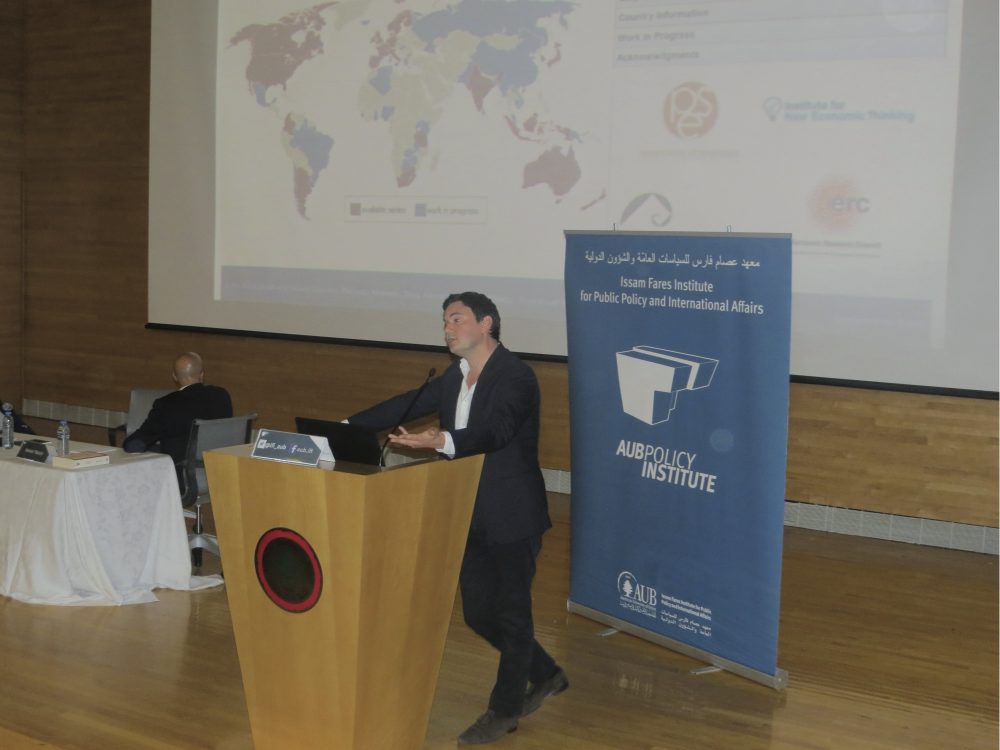
Author Thomas Piketty came to pay his inaugural visit to Beirut and a repeat visit to Cairo last month as part of a promotional tour for his book’s Arabic translation, available in soft cover but with the same distinctive look as the English-language hardcover edition that became such a surprise bestseller.

He noted in numerous presentations and interviews during his tour (as he had said already in interviews in previous years) that the Middle East is probably the world region with the greatest economic inequality and that the deficiencies in data collection and verification make this region difficult to assess from the point of view of an economic historian.

Executive sat down with Thomas Piketty on the occasion of his visit – which unexpectedly entailed three lectures in a single afternoon. Talk about what Nick Taleb – who, like Piketty, benefits in irrational terms from scalability of social matters and, presumably, book royalties – calls Extremistan, where “inequalities are such that one single observation can disproportionately impact the aggregate”.

E   Including the original French, how many languages has Capital in the 21st Century been published in?

I think it is 45 languages.

E   So Arabic is pretty much the last?

Among the major languages, it is the last. There are a few small languages [scheduled to be translated into], but if you take the main ones, it is the last language.

E   How many copies of the book are in circulation?

We have about 2.5 million.

E   When the American translation became a bestseller there was some speculation that few buyers read through the book and that many readers made it only to page five or ten. Where do you see the ratio?

I think most people read a lot; they read more than five, ten or twenty pages. Of course it takes time to read this book and it is okay for me if people read the introduction. There is a lot in the introduction, 50 or 60 pages, and then they read part one and stop and come back in one year. I have no problem with this. It is the kind of book that you can read that way.

E   The American edition was copyrighted to the president and fellows at Harvard University. Is there a similar copyright to the Arabic edition that represents a collaboration with an academic institution?

I don’t think that the Arabic publisher is tied to any academic institution. What happened is that I sold the English rights to Harvard University Press but for all other languages they are dealt with by [Editions] du Seuil, which is my French publisher.

E   Are royalties going to you in France then for all the other editions?

Exactly.

E   Did you make any changes or updates in the Arabic edition?

No (shakes head).

E   So statements like the one (on page 14 in the American edition) that people might by 2050 be paying rent to the emir of Qatar, which might not be seen as very friendly to the Emir, are still in there?

Yes, they are still in there.

E   What relevance do you see in the Arabic edition and what is your expectation?

Each region in the world has its own unique history of inequality and the Middle East, as I tried to say in my presentation, is probably the most unequal region in the world. Even though it doesn’t have this legacy of extreme inequality, like apartheid in South Africa or slavery in Brazil or the south of the United States of America, the oil and the very peculiar system of states that were put in place in the Middle East in the 20th century have in the end created a level of inequality and concentration of resources which is probably the most extreme that we have ever seen in history. And in my opinion it is pretty much related to the instability and to the difficulties in the region with the state formation process.

E   Some people are still blaming this on Sykes-Picot which was signed 100 years ago.

Look, there was no easy solution to Sykes-Picot and we should forget about Mr. Sykes and Mr. Picot and look to the future. But it is clear that the system of frontiers in this region is probably going to change in the future. The best we can hope for is to have some peaceful regional integration with some kind of sharing of resources. I am not saying we should have full sharing of resources. Even in the European Union, Germany and France keep their tax revenues, but they share a little bit through regional funds, through the rule of law and the European Central Bank. This is not perfect but it is better than having merely interstate relations where you have to beg. Right now we have a situation where we have a sort of beggar relationship where Egypt has to beg Qatar or Saudi Arabia. This is not good.

E   Do you want to contribute with your book to an academic debate or a debate involving politicians?

You don’t write books for politicians. You write books for everybody who reads books, for normal people and normal citizens. I believe in the power of ideas and the power of books, because politicians very often just follow what they feel is the dominant public opinion at the time. I think politicians are very often the slaves of public opinion. So I think it is much more interesting to try to influence the development of public opinion through books and other media interventions, than to have breakfast with politicians.

E   Many people I contacted wanted to know if you see the data paucity in the Middle East as a major barrier and in that sense if you regard your book as a call for more data transparency and better data collection in Middle Eastern countries?

The lack of data transparency in the Middle East is at the same time a symptom and a catalyst of the difficulties with the state formation process. It is difficult to build trust in public institutions and in the tax system if you dissimulate some of the tax data. I think it is not good that you have official income taxes in pretty much every Middle Eastern country but it is the only region in the world where you don’t have access to data in any country. That is a symptom which will always create some suspicion that the system will not be administered in a fair and equitable manner. To me, this is a really important issue.

E   Sometimes it seems that inequality in this region is accepted more than elsewhere. Is that in your view an obstacle to development?

I would not talk of acceptance of inequality. When the youth are demonstrating in Egypt and Tunisia, they are demonstrating against the fact that they feel that they don’t get the kind of jobs and the kind of future that they deserve considering the efforts they have put in, particularly as compared with other youth in the West but also in comparison with all these oil countries where some people have so much money that they don’t know what to do with it. I think this is part of the feeling of injustice.

[pullquote]I prefer a global wealth tax, a tax that must be on all forms of wealth, such as financial assets and real estate[/pullquote]

E   But didn’t the eruption of complaints over economic injustice that was part of the Arab Spring soon change into something else? You don’t see an Occupy Wall Street or an anti-IMF gathering for ideological reasons here. That is why I am asking if inequality is still more accepted in countries of this region as opposed to other regions?

Well before you can solve inequality you need to make progress in the process of state formation and institution building. Democracy is always a miracle; the fact that in a country of 90 million people like Egypt we decide on government by a majority decision and accept their decision even if we disagree. We have seen this in Egypt after the 2012 elections, which was for the first time a highly contested election, but then one year later the democratic process was interrupted. I think this was a very sad end to this but it is not final. There will be other attempts. We know from experience in other parts of the world that this kind of process can take a long time. When we used the electoral process in Europe for the first time for deciding which government we should have, in Germany it didn’t work so well. Then finally it worked. We should be realistic about this. It cannot be done in one year.

E   You wrote in your book several times that you see patrimonial capitalism on the rise and that the recession of 2008 was in your view the first crisis of patrimonial capitalism in the 21st century. How do you define patrimonial capitalism and is it in your view still a problem?

I define it in comparison to previous periods particularly in European history. We had a first stage of patrimonial society in the 19th century and until World War I, with a very high level of assets and wealth relative to income. Then there was a complete change with the World War and it took a very long time – ideologically, politically and economically – to recover from this. What I mean by the return of patrimonial capitalism today is that we have for instance the market value of real estate and housing, of stock market assets which is now back to very high levels relative to one year of average wages or average income. Not everything is bad about this. We should not be nostalgic about the 1950s where everything was [socialized]. This was not just a positive policy compromise with wealth owners. It was also negative and [accompanied with] many disruptions. The return of patrimonial capitalism is something which is almost unavoidable but we need to regulate it and need to develop ways to prevent financial crises and housing bubbles and give access to property to broader segments of the population. This is a long-run evolution.

E   So patrimonial capitalism for you is not concentration of capital in the hand of a predefined class?

Not necessarily. I think there are different ways to regulate patrimonial capitalism, so even if we are still [living] in patrimonial capitalism, there are different forms of patrimonial capitalism and I want to push toward a more equitable [version].

E   Would you favor a land value tax to balance the inequalities of ownership in real estate?

I prefer a global wealth tax, a tax that must be on all forms of wealth, such as financial assets and real estate. It is very difficult to separate the land value from the real estate value from the value of financial assets of a company which are then used to buy real estate assets. I think the concept of a land tax doesn’t work. I want a tax on global wealth.

E   A tax on global wealth demands transparency on numbers, as you also stated in your book. But in this region, where transparency on numbers is very low, doesn’t this look to be a more than utopian concept when you can’t obtain the data on even the basic level such as tax records?

It is difficult [to remedy the lack of data] but even in the Middle East you have systems of property tax, which sometimes exist, and you have systems of inheritance tax, which sometimes exist or existed in the past in Egypt until the 1970s. We have to improve the system but don’t have to start from zero.

E   The notion of equality looks fanciful when we consider that we’ve never had equality in history. Is it like the virgin birth, which some faiths determined as a dogma but which is not of practical applicability?

The problem is not to have full equality but rather to moderate inequality.

July 18, 2016 1 comment
0 FacebookTwitterPinterestEmail
Economics & PolicyWaste Management

No high-tech fix for our millennia-old garbage problem

by Matt Nash July 15, 2016
written by Matt Nash

Here’s a question no one asks: What did Adam and Eve do with the apple core? Did they compost it or simply toss it into the nearest river or valley? Waste has been with humanity since the very beginning. And while we might survive in a post-apocalyptic future without coffee, the Kardashians or wearables, garbage will be right there with us (and cockroaches, most probably). The way we view garbage has changed in the past 50 years, and more recently the disruptive power of new technology is altering how we handle waste. But there will never be an app that can stop us from generating garbage.

OUR WASTE: YESTERDAY, TODAY AND FOREVER

For both a synopsis of how trash evolved from refuse to resource and a lesson in newspeak, consider a passage from the UN Environment Programme’s 2015 “Global Waste Management Outlook” report: “Many developed countries have made great strides in addressing waste management, particularly since the environment came onto the international agenda in the 1960s, and there are many good practice examples available for the international community to learn from. However, the initial focus was on waste after it had been discarded, whereas at present attention has moved upstream, addressing the problem at its source through, for example, designing out waste, preventing its generation, reducing both the quantities and the uses of hazardous substances, minimizing and reusing, and, where residuals do occur, keeping them concentrated and separate to preserve their intrinsic value for recycling and recovery and prevent them from contaminating other waste that still has economic value for recovery. The goal is to move the fundamental thinking away from ‘waste disposal’ to ‘waste management’ and from ‘waste’ to ‘resources’ – hence the updated terminology ‘waste and resource management’.”

Trash can, or treasure chest?

Waste is not worthless. But the business model that best turns trash to cash is service provision, not material recovery. Yes, your empty Pepsi can has value, but likely not as much as you think. In June, recyclers could sell a ton of aluminum on the local market for $400 to $500, Yvonne al-Hajj, who runs a for-profit recycling business, tells Executive. The price is particularly low at the moment (as are prices for all recovered commodities, she says), and can reach up to $800 or $900. The trick with aluminum cans, however, is that they’re light as feathers. Almost. While Executive does not have access to a scale precise enough to conduct an in-house experiment, the internet says an empty pop can weighs 14.9 grams. That means you need slightly over 67,114 cans to cash in a metric ton. For a household hoping to recover a bit of their soda purchases, it would have to either be very, very thirsty or committed to long-term can storage. In one year, it would require emptying around 183 cans per day to reach a ton (not to mention that, at the current market price, the cost to buy a ton of full cans is $33,557). For a household that drinks five cans per day, it would take nearly 37 years to amass a ton. Volume is key, and the same is true of other valuable recyclables like paper, cardboard and various types of plastics.

Hajj is the brain behind Zero Waste Act, a commercial enterprise run under Contra International, a local company involved in the waste and construction sectors. Zero Waste collects and sells recyclables from schools, business (including ABC malls) and individual households. Although it’s been up and running since 2011, Hajj admits the company is “so far not that profitable.” In May of last year, before the government closed the Naameh landfill with no alternative in place, Zero Waste began charging households a monthly collection fee to help cover its own operations costs, Hajj explains. The fee starts at $10 per month and varies depending on collection frequency. Zero Waste had more than 800 members prior to imposing the fee, and has “over 600” today, Hajj says. The company opted for a fee in part, she explains, because picking up small volumes of plastic, aluminum and other materials from individual residences can cost more than what the recyclables are worth. 

Both locally and abroad, collecting recyclables is typically a non-profit business unless it is part of the informal market (think a few individuals sifting through unsorted waste in large containers for valuables or driving around to source old refrigerators). As individual collectors try to scale their enterprises, overheads (employees, vehicles, compressing equipment) quickly eat away profits. Not to mention, as Hajj notes, that collected recyclables often need further, non-automated sorting and treatment (caps removed from water bottles, plastics and metals divided into their various types).

Companies making real profit from garbage are the ones removing and disposing of big volumes (regardless of whether treatment technology is state-of-the-art or last century, garbage doesn’t disappear from our doorsteps for free). Waste Management, the creatively named service provider which is the largest trash handler in the US, reported revenues of $13 billion in 2015 (down from $14 billion the year before). Ziad Abi Chaker – founder of Cedar Environmental, which builds waste management facilities locally – explains, “The garbage business is just an industry,” adding: “Waste management costs money for the government that is running [the service]. The one who makes money is the one dealing with the problem because the infrastructure is very expensive. People ask me, ‘Why do you have to collect money from municipalities [to send their waste to your facilities]?’ Because that’s the only way it will be profitable.” Cleaning up after ourselves seems to be a cost humanity will always have to bear.

Innovation, not revolution

The sanitary landfill was an innovation of the 20th century. It was born from the realization that trash left alone to rot in a pile damaged the surrounding environment and posed a public health risk. While this most basic of waste management technologies is still not used worldwide, the pace of innovation in the field of waste disposal is nonetheless in constant mode of development. Waste can be burned in a controlled environment to produce energy. It can be transformed into refuse-derived fuel – a cheap energy source for some industries, like cement manufacturing. Waste can be recycled and up-cycled. There are even smart waste bins (large containers with sensors and an internet connection which alert waste collection companies when a bin is full, optimizing the design of pick-up routes and schedules). A brief Google search reveals that self-sorting trash cans are popular inventions among university students (and Executive met two from Lebanon – Jamil Ballout and Gabriel al-Hakim), yet for individual households no such product is commercially available.

Green Glass Recycling Initiative – Lebanon, a local organization, has put bins in parts of Beirut (Photo: Greg Demarque | Executive)

Lebanon’s entrepreneurs are not ignorant of waste management, but the handful Executive spoke with this month are all pursuing ventures too young to properly evaluate (most only thought of their potential companies as the result of startup competitions with a garbage focus held earlier this year). A new “green” fund, however, recently entered the market with a goal of financing only environmentally friendly startups, pumping more capital for social entrepreneurship into the ecosystem and bringing with it the associated competition for said capital. The fund comes from Foundation Diane, an NGO started by Diana Fadel. Cyril Rollinde, the fund’s manager, and Tracy El Achkar, of the foundation, explain to Executive that waste management will be one area of investment focus. While Rollinde won’t reveal the size of the fund, he explains that it won’t behave like other venture capitalist war chests on the market.

“We want to be liquid,” Rollinde says, noting the fund will exit all investments within five years and does not plan follow-on funding. It is eyeing ticket sizes between $50,000 and $300,000, but Rollinde says there is “no real limit.” The fund does not want to lose money, but is not looking for astronomical returns. Instead, Rollinde and Achkar confirm, the idea is pushing a green agenda into the entrepreneurship ecosystem with an end goal of making the green industry “as competitive as the tech industry.”

July 15, 2016 0 comments
0 FacebookTwitterPinterestEmail
Economics & PolicyWaste Management

Clearing up the mess

by Matt Nash July 14, 2016
written by Matt Nash

This article has been updated from the print edition to reflect news developments. 

There’s a landfill in Lebanon people usually forget about. It’s around 15 kilometers northeast of Beirut in a town called Bsalim. It draws no ire. Nearby residents do not burn tires to demand its closure. Unlike the now-shuttered Naameh sanitary landfill southwest of Beirut, Bsalim only accepts what is known as inert waste – meaning garbage that will not decompose and cause damage to the surrounding environment, like concrete, for example. In the heat of operation, it smells just fine. This was not the original plan. Bsalim was intended to be a second Naameh. However, according to both Averda CEO Malek Sukkar, whose company built both landfills, and a 2001 report commissioned by the Ministry of Environment, plans for Bsalim to become a sanitary landfill for municipal solid waste (MSW) – a stinking, co-mingled garbage stew in a country with nearly no sorting at source – fell through after an environmental impact assessment found that groundwater at the site was too close to the surface. This was back in the 1990s. Flash-forward to July 2015. A few hundred meters away from the Bsalim inert materials sanitary landfill, nearby municipalities began dumping their garbage into the valley. They did not install liners to keep the waste in place nor a drainage system to collect leachate (a toxic sludge produced by decomposing MSW which pollutes groundwater). They created an open dump. Recent trips past the valley reveal that it still has not been cleaned up, no doubt to the detriment of the shallow aquifer.

The garbage crisis: a lasting legacy

The Naameh landfill served Beirut and the districts of Chouf, Aley, Baabda, Metn and Kesourwan (which collectively account for around half the country’s waste, according to the Ministry of Environment). It used to receive a staggering amount of garbage each day – nearly five full trucks per hour, according to information Executive received on a tour of the facility in August 2015. Cabinet closed the landfill in July 2015 without an alternative lined up. As rubbish piles grew in areas that used to depend on Naameh, the Ministry of Environment issued an order to affected municipalities: Tell Sukleen (the service area’s trash collector) where to park your waste. Not all of them did.

This temporary solution ended up lasting nearly eight months. And how much of the “old” waste was collected? The answer is not entirely clear. As noted above, not every municipality in the service area found Sukleen a parking spot. In an email exchange with Executive, a Sukleen spokesperson says 159 of 268 municipalities (59 percent) had their “old” garbage picked up. The “total amount exceeded 900,000 tons.” The remaining 109 municipalities in Sukleen’s service area “did not request the collection service” and the company has “no data nor documentation regarding their accumulated waste,” the spokesperson says.

What comes next?

The waste crisis prompted mass demonstrations in downtown Beirut in 2015. Protesters wanted municipalities – which have a legal right to manage their own garbage – to be financially empowered by the central government to sort their trash worries out themselves. While the government promised to do just that in the wake of a summer of discontent, plans have since changed. The Council for Development and Reconstruction (CDR) – part of the prime minister’s office – is again handling waste management from the contracting side. CDR is Sukleen and Sukomi’s contractual partner in Lebanon, an arrangement much decried last year, and is in the process of tendering new garbage deals as “the street” remains silent. The first tender, which closed in mid-May and called for building a sanitary landfill in the sea near the airport on land known as Costa Brava, was canceled for allegedly high costs on June 24 (the project is being re-tendered with a new deadline of July 15, according to CDR’s website). Bids to build a second landfill in the sea near Bourj Hammoud were due on June 14, according to one contractor who bid. The contractor explained that both landfills will be protected by breakwaters and include multiple types and technologies of liners to prevent waste and leachate from entering the sea. CDR refused repeated interview requests, and Executive was unable to independently verify the contractor’s information. These two contracts only cover landfilling, however. CDR’s website says that a tender to build composting and sorting facilities to handle waste from the Sukleen/Sukomi service area will close on July 25. As for waste collection and street sweeping, CDR’s website lists two tenders, meaning the Sukleen/Sukomi service area is being divided. The first new service zone covers Beirut, Metn and Kesourwan while the second covers Baabda, Chouf and Aley. Bids for these contracts are scheduled to close on July 19, but the website notes the closure date has already been delayed three times.

The new plan, unlike the tenders last year, only covers the Sukleen/Sukomi service area. And Beirut might potentially opt to bow out of the scheme. United Nation’s Development Programme’s Gharib confirms that the outgoing municipal council signed a memorandum of understanding with UNDP in April 2016 to find solutions for the capital’s garbage. With the recent swearing-in of a new municipal council, Gharib says he’s not sure what the future of coordination between the two will be, and notes that no actual plan has yet been written. Indeed, he says the plan will not offer one concrete solution, but rather various options for the city to weigh given its many constraints, the most obvious being lack of land for waste management facilities. He could well be speaking of the fate of the government’s plan in general. The insurmountable obstacle facing government waste plan after government waste plan over the past decade has been resident opposition to living near a management facility. How that will change is a question no one Executive has asked in the past year has been able to answer.

THE BEST LAID PLANS

Choosing a way to clean up after the July 2015 crisis proved no quick task for Prime Minister Tammam Salam’s government. A plan in motion before the crisis erupted called for dividing the entire country into six service zones, each with a comprehensive solution. While the plan did not make demands on what type of technologies had to be employed to manage waste (i.e., incineration, composting, etc), it did call for a significant reduction in the volume of waste sent to landfill. Over 80 percent of the waste Sukleen was collecting got landfilled, according to the Ministry of Environment. Under the now-canceled contracts, winners would have been allowed to landfill 40 percent of collected waste in the first three years and only 25 percent thereafter. While the tendering should have logically been concluded months prior to closing Naameh (so alternatives could be in place), winners were announced a month after the crisis began. The new contracts were then canceled less than 24 hours later. “At least we would have had infrastructure,” laments Nicolas Gharib, who works on waste management issues in Lebanon for the United Nations Development Programme (UNDP), referring to the various sanitary landfills, composting, sorting, waste-to-energy and refuse-derived fuel facilities contractors had agreed to build.

With the contracts canceled, a new plan for trucking waste from the Sukleen/Sukomi service area to other parts of the country gained currency but never came to fruition. Exporting garbage was next on the list, but that idea also fell apart. The most recent plan (approved in March 2016) seems to have stuck. It first tasked Sukleen and Sukomi with collecting some of the waste that had accumulated during the crisis. This “old” garbage was sent to Naameh. All “new” garbage – meaning trash generated after the plan’s approval – was collected by Sukleen, sorted and baled by Sukomi, and parked next to soon-to-be-built offshore landfills near Costa Brava, south of the airport, and Bourj Hammoud. The plan calls for a third landfill to accept waste from the Aley and Chouf districts but the final location of that landfill has not yet been determined.

July 14, 2016 0 comments
0 FacebookTwitterPinterestEmail
LeadersOpinion

Wasted opportunities

by Executive Editors July 14, 2016
written by Executive Editors

The lack of transparency in finding a way out of the July 2015 garbage crisis is appalling. Last August, the private sector put forward offers that would have seen modern waste solutions put in place all over the country. The volume of Lebanon’s waste being sent to landfill would have dramatically fallen (see policy story). Contracts for private companies to build real waste solutions, however, were canceled on a whim with a false cry that they were too expensive.

Today, we’re worse off than we were a year ago. Beirut and the districts of Chouf, Aley, Baabda, Metn and Kesourwan are still preparing around 80 percent of their waste to be sent to a landfill. Those landfills (one at Costa Brava, south of Beirut airport, and one near Bourj Hammoud) have not yet been built. And the contract for the Costa Brava landfill was suspended on June 24. It’s only a matter of time before the temporary storage locations fill up and trash once again floods the streets. In the rest of the country (save for Zahle and Sidon), most residents’ waste is being burned or dumped. While a few municipalities are working on or actually implementing their own solutions, they are doing it without assistance from the central government. This is despite the government having approved a plan last September that called for training municipalities – and empowering them financially – to handle their own waste in a sustainable way. The committee that should have helped municipalities prepare for waste devolution met exactly once, according to Nicolas Gharib, who attended as a representative of the UN Development Programme. So much for long-term planning and awareness raising.

Waste management is expensive. The only real way to reduce your garbage bill is to generate less trash. This is not a difficult concept to understand, so it is mind boggling why the government is not doing anything to raise awareness. For example, the government could have the various experts (and they do exist) working inside different ministries on tours of TV stations and town halls to fully explain this to people – but they don’t. When journalists call with real questions, interview requests are ignored or outright denied. Instead of concrete information, we get half-truths and the standard horseshit. After the Council for Development and Reconstruction (CDR) suspended the Costa Brava contract (the winner of which has still not been publically announced), it claimed in a statement that the price was too high. Soon after, a voice of dissent arose. Walid Safi, the government representative working with CDR, claims the cost argument is a red herring. French daily L’Orient du Jour quotes him saying CDR must rescind its statement or else Safi will disclose “many hidden truths” about CDR’s contracting processes. Think about that for a second. He’s claiming special knowledge seemingly related to corruption. Instead of simply exposing it, he’s trying to pressure the CDR.

Safi is as much a part of the problem as every other minister, MP or person of influence who makes the same threat (this formulation of “I know about corruption but will only tell if…” is unfortunately common in this country). We need accountable governance in this country. In the 26 years since the Lebanese Civil War ended, we’ve mismanaged our waste at every opportunity. The only way to move forward is putting in place sustainable systems that involve waste reduction, sorting at source and modern treatment facilities that will have to be built near someone’s back yard. If we don’t we’ll be doomed to choke on our trash every time a landfill is filled to capacity. Executive has said this all before, and we’ll keep saying it until someone in power decides to listen.

July 14, 2016 0 comments
0 FacebookTwitterPinterestEmail
Hospitality & Tourism 2016Special Report

Municipality matters

by Nabila Rahhal July 12, 2016
written by Nabila Rahhal

May 2016 was municipal council election time in Lebanon and so, every Sunday of that month, many Lebanese headed to their area of origin and cast their vote for who would essentially be in charge of their native town’s internal affairs for the following six years.

While most voters were probably primarily concerned with issues such as waste management or electricity, the development of their city or village’s touristic potential is a factor that should have also featured in their choice of candidate, given the potential benefits tourism, even when locally driven, could bring to an area.

Although most rural villages and towns generally have small municipal budgets, active municipal councils can still work on promoting tourism in their areas in terms of planning, attracting investors and securing donations towards touristic projects.

Please don’t go

According to the municipalities Executive spoke to, one of the the main goals of developing tourism in their city is to keep people in it all year.

One of the activities the municipality of Ehmej has organized to achieve this goal is the development of fifteen hiking trails, also open for snowshoeing in winter.

This project began slowly in 2004, through funding and support from USAID, but grew in earnest over the last three years. In 2015, the trails welcomed 1,500 visitors, including students on school trips as well as Lebanese and expat nature enthusiasts, and 560 visitors in the first four months of 2016 alone.

“Our end goal from all those activities, as a municipality, is to keep people in Ehmej during the winter as well, decreasing migration to the coastal cities. Those who come from Beirut spend money here and enrich local businesses: they eat, they get gas for their cars, they sleep in one of our four guesthouses, and when they have fun on their visit, they will come back again,” says Abi Semaan, boasting that 55 percent of Ehmej’s citizens live there yearlong, working in the area’s schools, hospitals, hotels and restaurants or as guides for the hiking trails.

[pullquote]“It is actually very hard to have tourism without the involvement of the municipality because, for example, you need access to public natural resources, which belong to the baladiyeh [municipality]”[/pullquote]

Generating employment

The creation of job opportunities is one of the reasons Pierre Achkar, mayor of Broumana, cited for encouraging and supporting investments into food and beverage (F&B) outlets in his town, including an eight-restaurant cluster developed and operated by his son George Achkar last year and the addition of another cluster, Printania Villa, this year, also developed by his son.

“Twenty three restaurants will open in Broumana this summer; for Broumana this means creating employment opportunities in the restaurants themselves, mainly university students who would be working part time in these places, and also in the pre-opening phase in terms of construction and back end work, not to mention the money that has been invested in the city itself,” says Achkar proudly.

Seeking out the money

Some municipalities clearly see the financial value of hospitality and tourism activities in their cities and so seek out investors that would develop such projects in their area.

This was the case with The Backyard in Hazmieh, a multipurpose cluster project with a focus on F&B outlets. The mayor’s son suggested to Venture Group – the developers of the project – that it create such a project in Hazmieh instead of the office structure the developers had in mind.

“This is not usually the case but now that Hazmieh did it, I’ve had municipalities who are interested in facilitating similar projects and even considering developing such projects on government owned land. Because these projects bring job opportunities, further tax revenue in the long run, increase the real estate value of the neighborhood and could put a small lesser known area on the tourist map,” explains Marwan Ayoub, copartner in Venture Group.

The Backyard Hazmieh (Photo: Greg Demarque | Executive)

The Backyard Hazmieh (Photo: Greg Demarque | Executive)

The power of local support

Developing the touristic appeal of a town or village does not happen by itself, no matter how beautiful or culturally relevant the area is. According to Kanj Hamade, senior consultant at Lebanese Industry Value Chain Development Program – funded by USAID and currently working on 25 projects related to rural tourism in Lebanon – there is a clear significant difference between a municipal council that is working for a village and one that is not working, calling the municipality a “generator for local development”.

“It is actually very hard to have tourism without the involvement of the municipality because, for example, you need access to public natural resources, which belong to the baladiyeh [municipality]. If you want to build sustainable holistic tourism based on a coalition or network, and not just an individual project, then you need the support of the local authorities,” says Hamade, referencing the examples of areas in Lebanon which have high historical significance but refused to work with the LIVCD on marketing their assets.

Speaking as a private sector investor, Ayoub says their hospitality cluster projects would be much more difficult to actualize without the support of local municipalities. “It would be nearly impossible to have such a project without the support from the local community. They can put obstacles for you every step of the way from the space you need to pour concrete, to the facilities you need when receiving customers, to the tricks that would devalue the size of the land,” says Ayoub.

Finding your niche

[pullquote]The festival was a success for the local cherry growers, as the 7,000 kilograms of cherries picked in one day sold for 7,000 Lebanese lira per kilogram[/pullquote]

Hamade explains that a municipality’s first concrete role is to survey its territorial capital – be it agricultural, historical or natural – and build a story or brand around that asset which would attract visitors. The municipality of Ehmej, for example, did just that: “We looked at our assets and saw that we don’t have industrial areas or agricultural areas in our village, but we do have beautiful forests which we utilized through the development of the hiking trails,” says Abi Semaan.

The municipality of Hammana developed a tourism strategy that capitalized on the fame of their cherries through resurrecting the cherry picking festival three years ago, a tradition that had been very popular before the civil war.

In 2015, the one-day festival attracted 5,500 people to Hammana and this year, when Executive spoke to the organizers at around noon on the day of the event, the festival had already welcomed 5,000 visitors. The festival was a success for the local cherry growers, as the 7,000 kilograms of cherries picked in one day sold for 7,000 Lebanese lira per kilogram. Visitors to the festival – 90 percent of whom are not from Hammana – got to discover the town through fun activities, explains its mayor Bachir Farhat.

Hammana (Photo: Greg Demarque | Executive)

Hammana (Photo: Greg Demarque | Executive)

According to Achkar, Broumana saw its potential in being the closest and most accessible masyaf – or a destination for summering – to Beirut, via the Metn highway (for more on infrastructure and hospitality development, see explainer). As such, they supported the development of F&B operations mainly through facilitating and speeding up paperwork and by developing a marketing campaign that would brand Broumana as a summer destination.

When a plan goes downhill

Sometimes a municipality’s tourism strategy backfires. One example is Bhamdoun El Mhatta, where their branding of being a family oriented town catering to tourists from the Gulf left them with no tourists once GCC nationals decreased their visits to Lebanon.

“Tourists from the Gulf like Bhamdoun because it is well maintained and family oriented. Some people suggested we have nightclubs or things like that to attract people but we don’t agree; we are patient and will wait and preserve Bhamdoun until the Kuwaitis come back,” says Bhamdoun El Mhatta’s Mayor Osta Abu Rjeily, explaining that since Kuwaitis own more than 45 percent of the property in Bhamdoun, there is actually not a lot more they can do to promote tourism there beyond waiting.

[pullquote]Once a branding strategy is set, the municipality’s role turns to supporting its application through identifying and coordinating between potential investors and donors[/pullquote]

Phase two

Once a branding strategy is set, the municipality’s role turns to supporting its application through identifying and coordinating between potential investors or donors. Most municipalities in rural areas have small budgets and cannot afford to finance touristic projects and as such play the role of facilitators.

“The municipality has a leadership role to play, meaning it can coordinate between the local and regional key players, facilitate communication between them, and represent the local community in meetings with donors and the government when it comes to tourism,” says Hamade, admitting that when municipalities have a strong enough budget to fund projects, their work as Lebanon Industry Value Chain Development (LIVCD) becomes easier and faster.

Abi Semaan explains that at first they, as the municipality of Ehmej, had to find and then apply for grants that would support their tourism projects.

The municipality of Hazmieh felt that a project like The Backyard was needed in their community and so provided the incentives needed to facilitate its development. “We needed such a project for the community and we were prepared to offer incentives to get it. Part of the incentives were to do with taxation in that we only started collecting taxes from the restaurants after the project’s first day of operation and not from the first day of rent. But this was not the main incentive for this project: such a project needs our coordination and facilitation with every governmental office that is related to the municipality (technical office for architectural drawing, licensing ….),” says Michel Asmar, a representative of the Hazmieh municipality.

All the efforts made by any municipality cannot circumvent the need for internal stability and regional security in order for international tourism – and not just domestic – to truly flourish in Lebanon, but that does not mean they cannot lay the groundwork while waiting for that day.  “The challenge is to work on projects while there is little demand. The demand is increasing but it’s mainly locally driven; the internationals will eventually come so we are getting ready for that while working with increasing local demand,” concludes Hamade.

July 12, 2016 0 comments
0 FacebookTwitterPinterestEmail
  • 1
  • …
  • 120
  • 121
  • 122
  • 123
  • 124
  • …
  • 691

Latest Cover

About us

Since its first edition emerged on the newsstands in 1999, Executive Magazine has been dedicated to providing its readers with the most up-to-date local and regional business news. Executive is a monthly business magazine that offers readers in-depth analyses on the Lebanese world of commerce, covering all the major sectors – from banking, finance, and insurance to technology, tourism, hospitality, media, and retail.

  • Donate
  • Our Purpose
  • Contact Us

Sign up for our newsletter

    • Facebook
    • Twitter
    • Instagram
    • Linkedin
    • Youtube
    Executive Magazine
    • ISSUES
      • Current Issue
      • Past issues
    • BUSINESS
    • ECONOMICS & POLICY
    • OPINION
    • SPECIAL REPORTS
    • EXECUTIVE TALKS
    • MOVEMENTS
      • Change the image
      • Cannes lions
      • Transparency & accountability
      • ECONOMIC ROADMAP
      • Say No to Corruption
      • The Lebanon media development initiative
      • LPSN Policy Asks
      • Advocating the preservation of deposits
    • JOIN US
      • Join our movement
      • Attend our events
      • Receive updates
      • Connect with us
    • DONATE